Harold’s Square Construction Update, 12/2018

27 12 2018

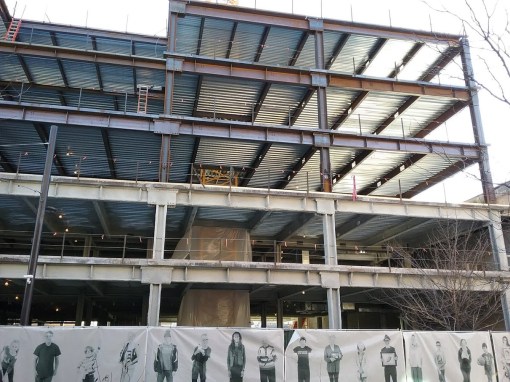
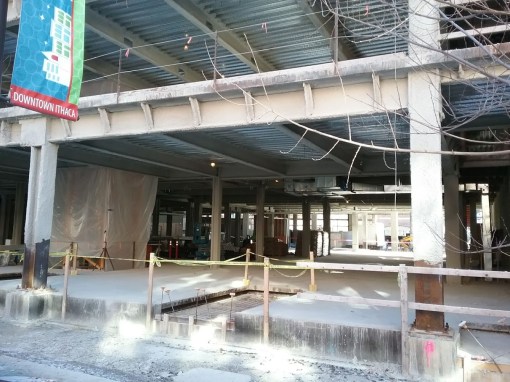
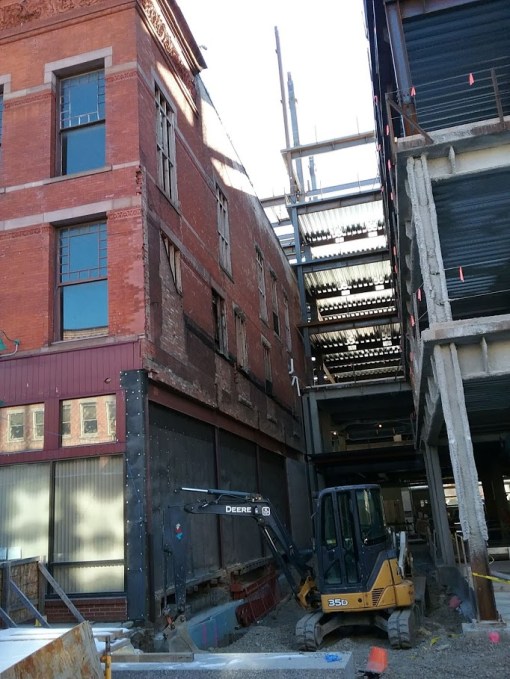
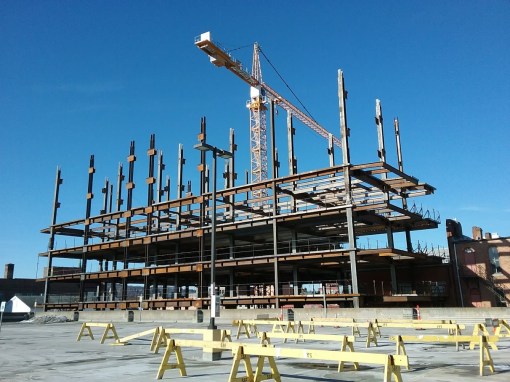
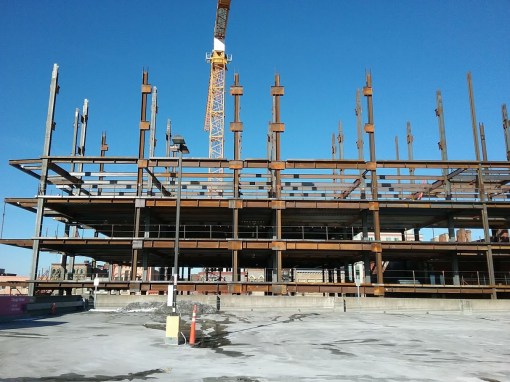
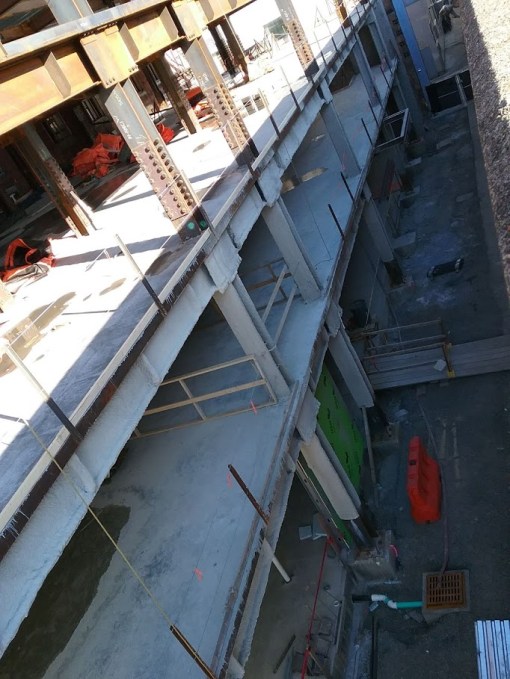
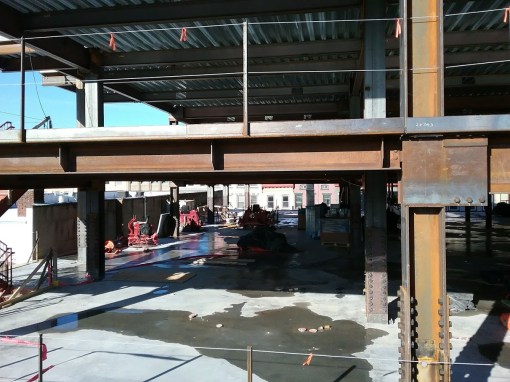
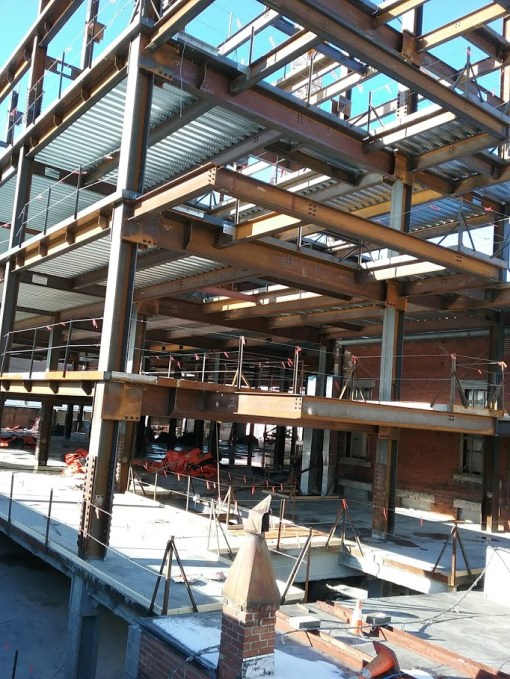
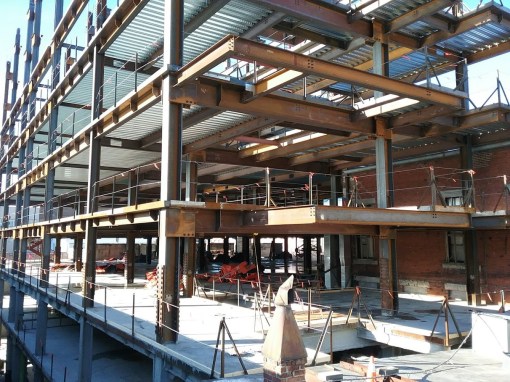
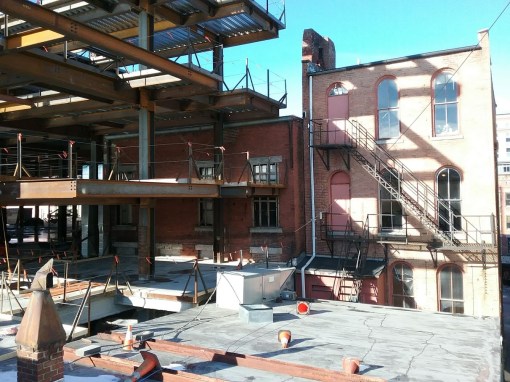
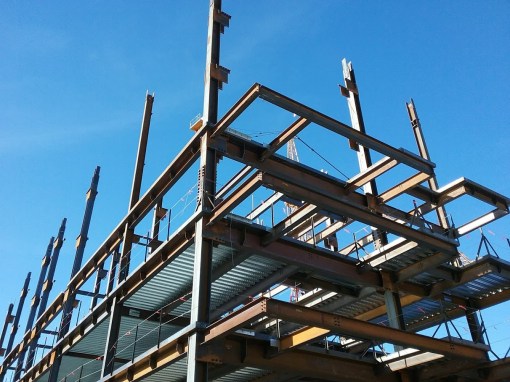
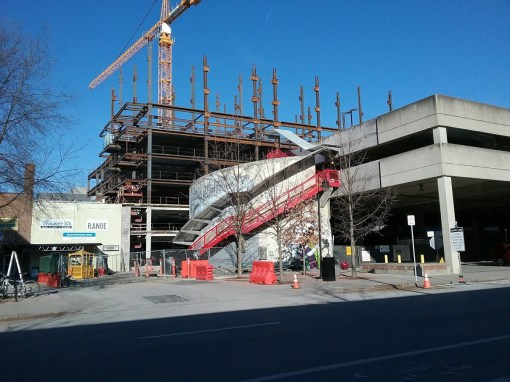
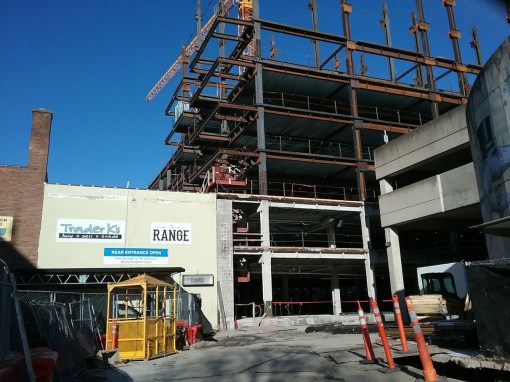
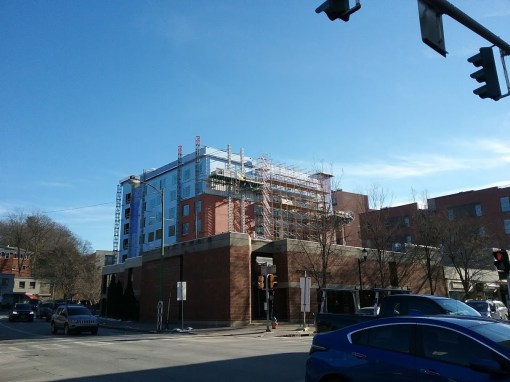
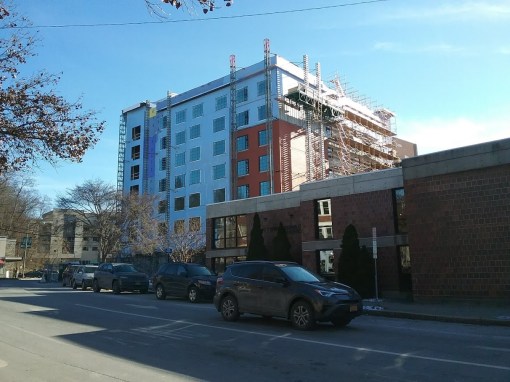
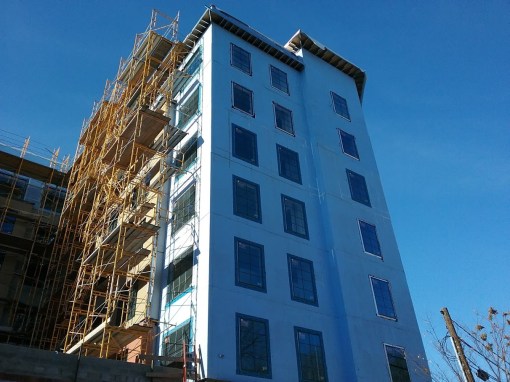
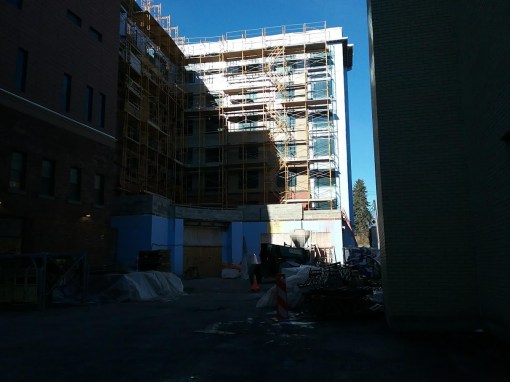
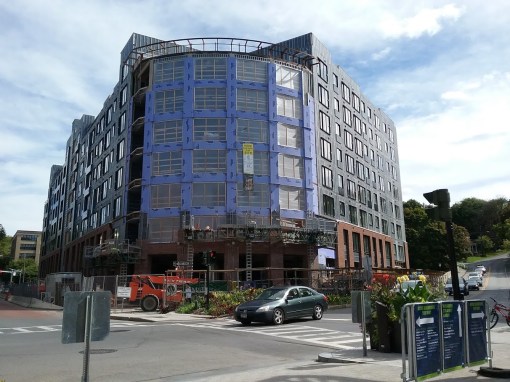
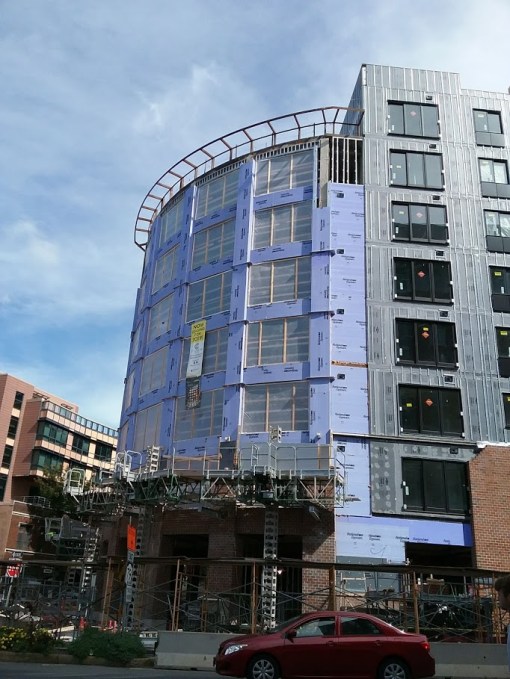
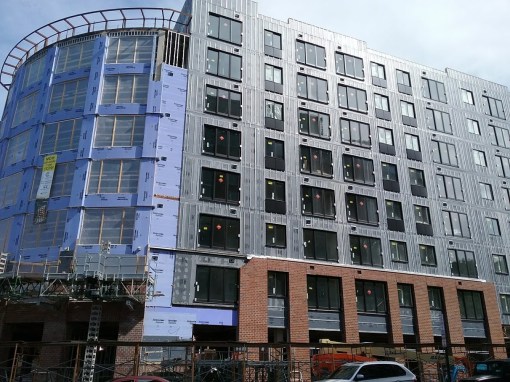
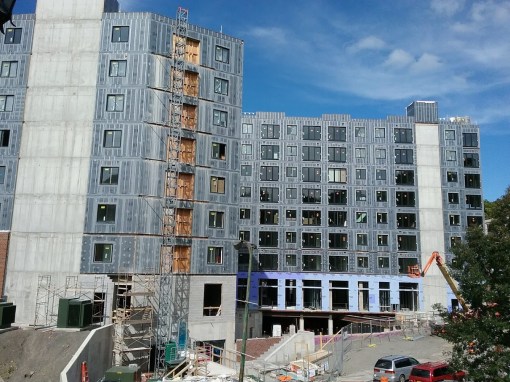
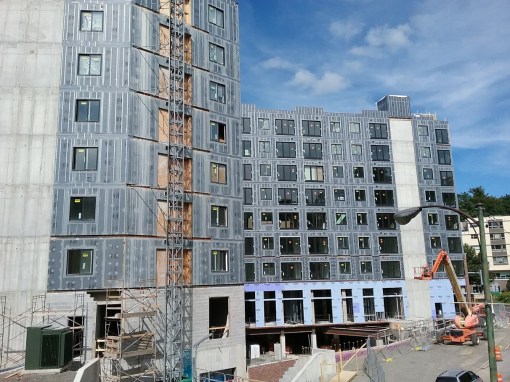
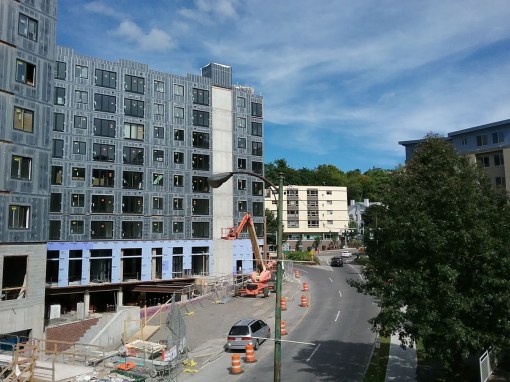
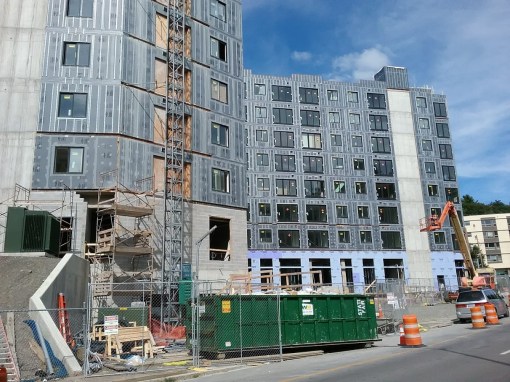
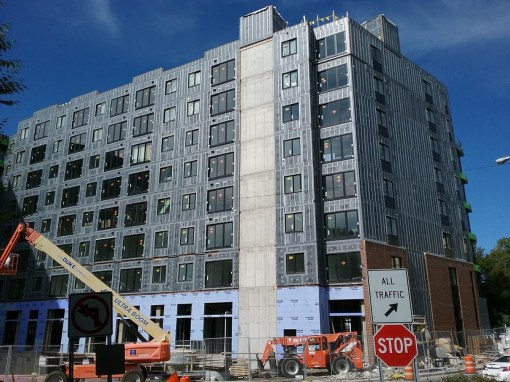
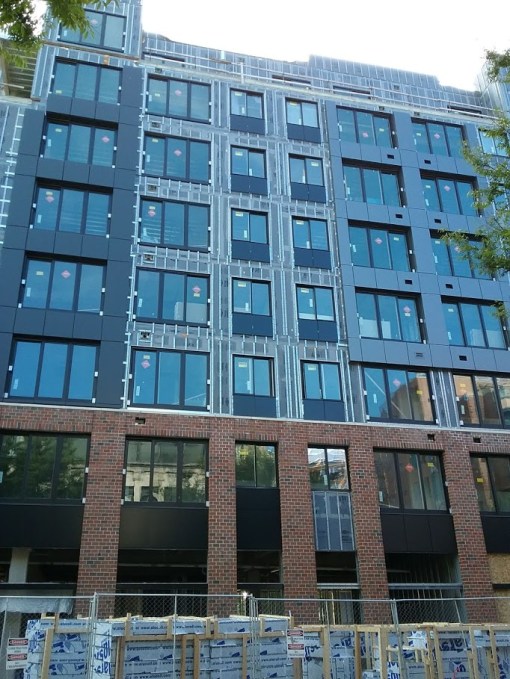
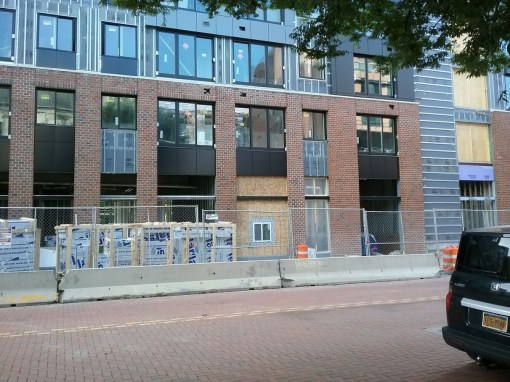
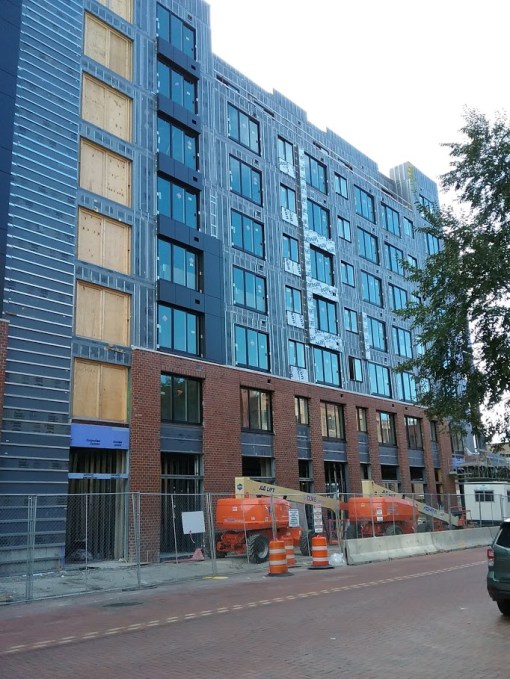
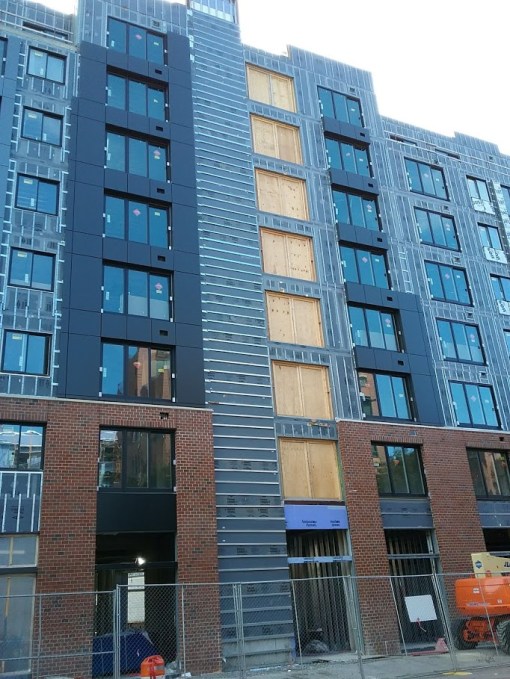
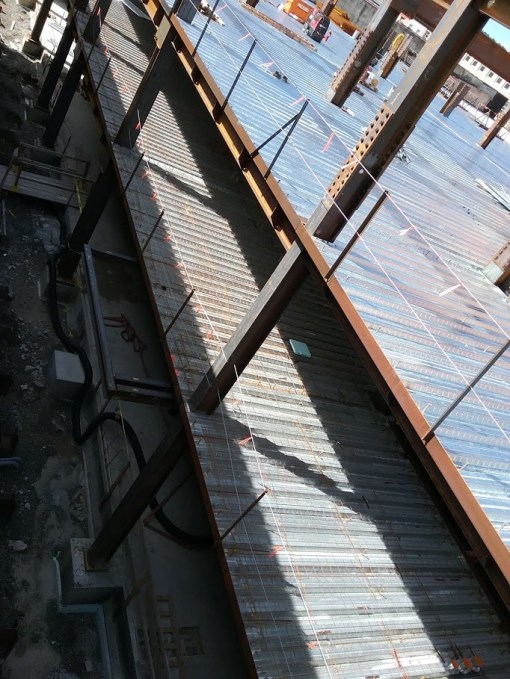
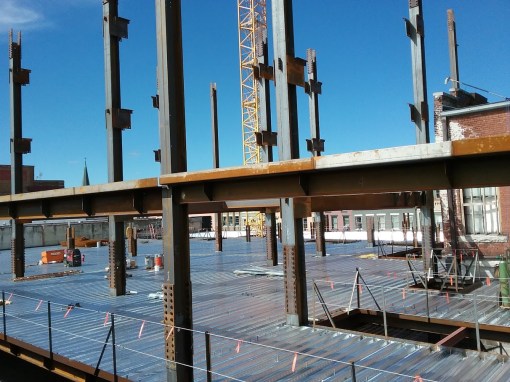
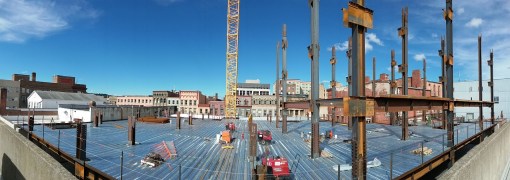
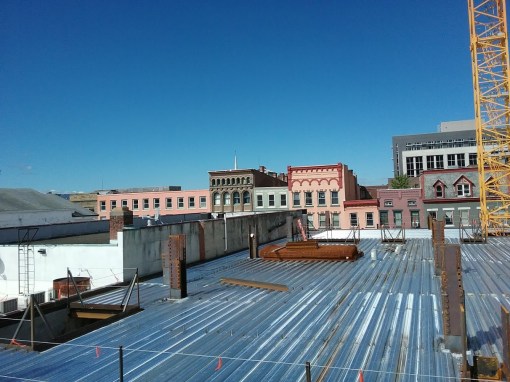
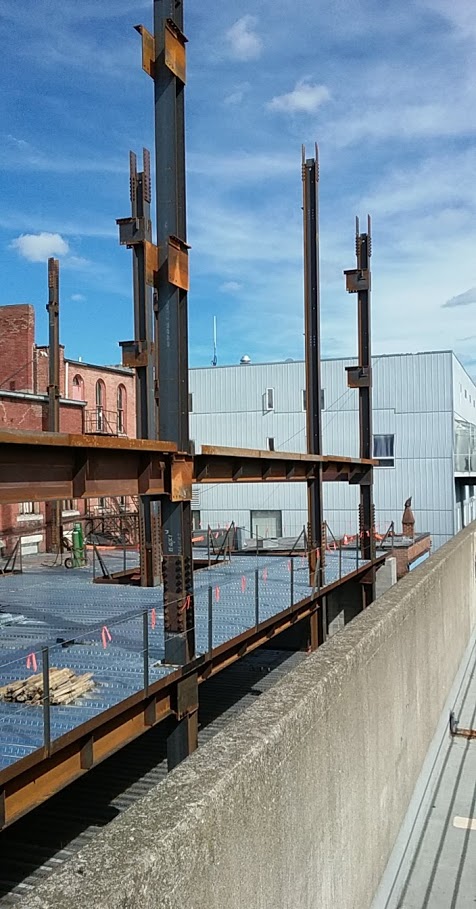
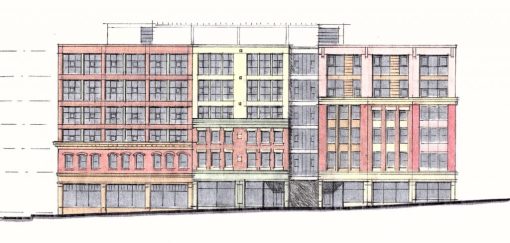
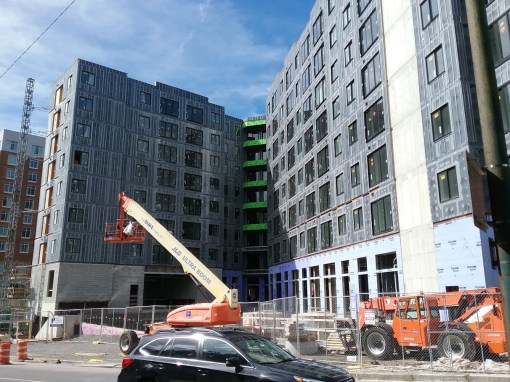
Just noting that the structural steel frame is fully built out up to the fifth floor and that fireproofing and sprinkler system installation is underway. The project utilizes SidePlate Systems for lateral steel connections, which utilizes a lighter frame design that is still durable. This has a higher upfront cost in design, but may balance out much of that with reduced materials and labor costs, as well as being able to stick to a tight buildout schedule. The IBEW (International Brotherhood of Electrical Workers) Local 241 is proudly touting their involvement with the buildout, and local labor advocates will be pleased by the commitment to local union labor. Taylor the Builders is the general contractor.

The apartment units have begun showing up online, though they are not able to be reserved just yet and no prices are given. The units come in the following sizes:

Studio 1 Bath 42 units 435 SF
1 Bed 1 Bath 32 units 686 SF
2 Beds 2 Baths 34 units 945 SF

Retail and office spaces are available for lease through Pyramid Brokerage’s David Huckle. The first floor Commons-facing units are being offered at $24/square foot (3-5 year lease), and the second and third floor office space is being offered for $22.50-$24/square foot. The retail spaces are 2,674 SF, 2,900 SF and 9,210 SF, which can be combined by a deep-pocketed lessee for a maximum of 16,241 SF. The minimum leaseble office space is 2,900 SF (which Pyramid describes as being about enough for seven people in a Class A environment), and the maximum is 33,832 SF (enough for 135 workers). The online as says a 2022 completion, which is overly, overly conservative. I would take a guess at Q4 2019 or Q1 2020. Obviously not the Spring 2019 they originally hoped for, but there have been numerous weather issues that delayed the concrete pours for weeks. The rest of the steel frame should rise faster since the tower portion (floors 6-12) is only a fraction of the building’s overall footprint.


Press Bay Court Construction Update, 12/2018

21 12 2018

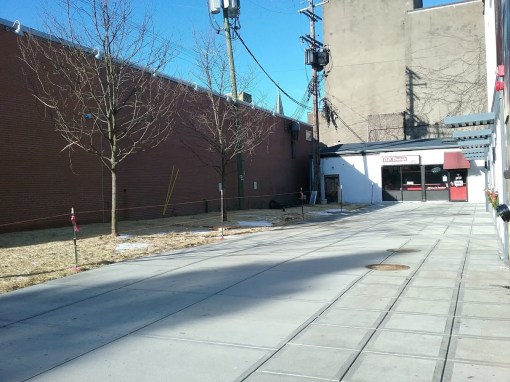
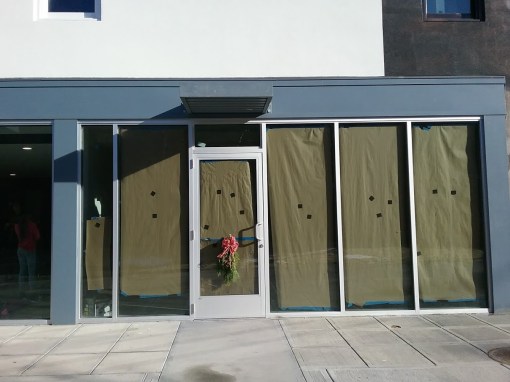
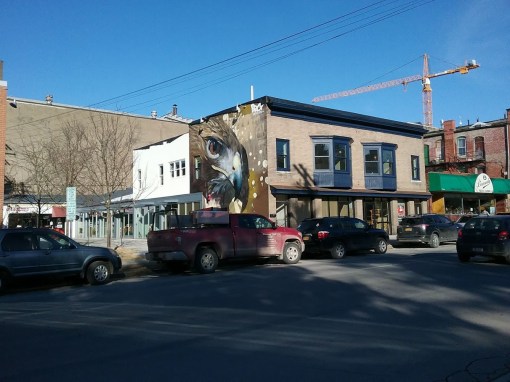
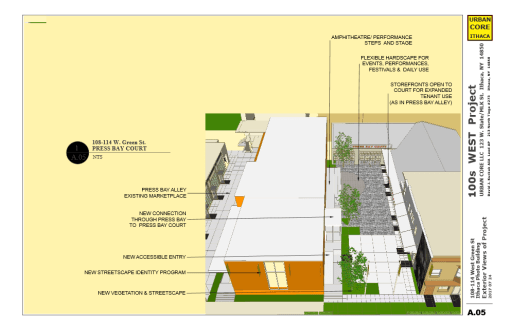
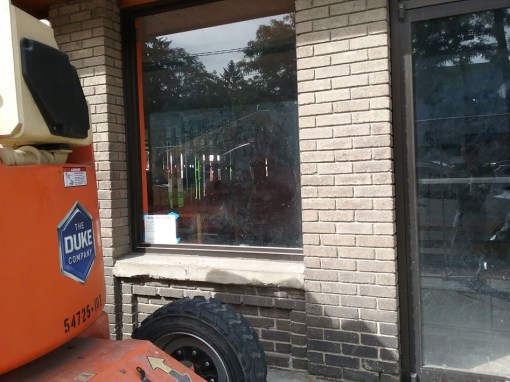
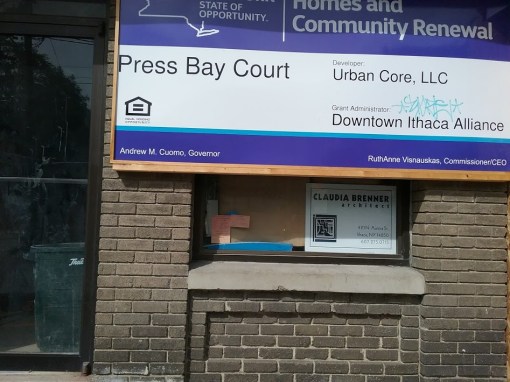
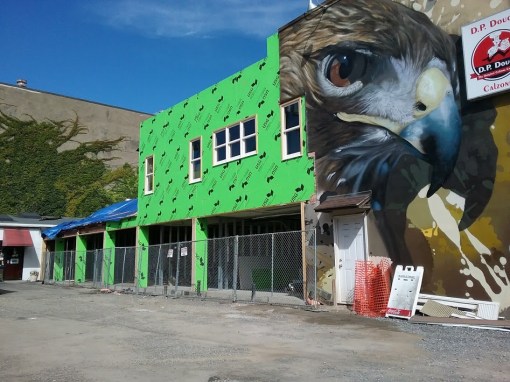
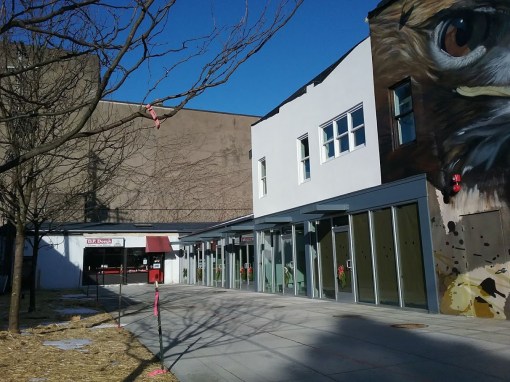
For practical purposes, I’m calling this one complete as of the end of this year. At least one of the new stores was set up and ready for opening (Gee June Bridal) while a couple others were just starting to fit out their spaces with equipment for their own launches. Among them will be Halal Meat and Groceries, One Ring Donuts, Hair • Color • Art and Bramble, an herbal retailer, moving from its Press Bay Alley slot. Calzone restaurant D.P. Dough will move from the rear storefront to the front of the 108-114 West Green retail strip, right along West Green Street in the former Hausner’s Garage. The hawk mural was given a touch up courtesy of Connecticut-based street artist Ryan ‘ARCY’ Christenson.

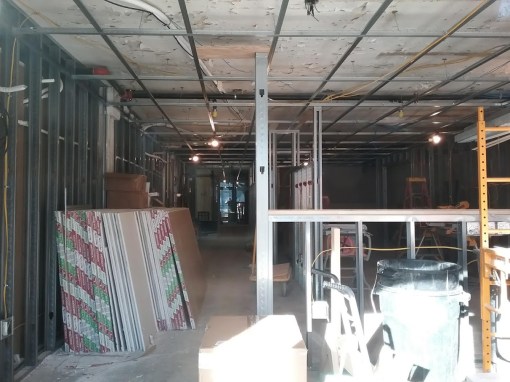
The fitting out of the West Green Street retail units is ongoing, but the four apartment units are nearly complete with only minor finishing details left, and based off Press Bay Alley’s Instagram, it’s quite the transformation. From their facebook page:

Beautiful historic spaces with modern amenities. These apartments are truly unique. Original 1914 wood rafters and exposed wood deck ceilings, steel beams, and brick surfaces paired with completely new utilities and modern design features

• super-efficient air source heat pumps (heat and AC)
• all LED lighting
• brand new appliances (including dish washer and garbage disposal)
• tasteful modern cabinets with soft close hardware
• beautiful tile bathrooms with modern frameless glass shower enclosures
• freshly refinished original distressed hardwood floors
• Air tight spray foam insulation and high-performance rigid foam on the roof
• Sprinkler system for fire safety

Prices range from $1200-1300/month plus electric*

Included in the rent:

• WiFi Internet**
• Garbage and recycling disposal
• Water service

Apartments are substantially complete and available for a January 1 occupancy

*heat/AC and cooking are all electric, this is a fossil fuel free building

**building is NOT equipped with cable, internet is provided by high speed fiber optic line

$1200-$1300/month is more than the 75% AMI below-market units they were originally aiming for, but not by much – $1200/month works out to $48k-$52k/year, or 80-90% of the local AMI of $59k. “Workforce housing”, to borrow a Visum Development Group term for the 80-90% bracket.

The biggest deviation from the plans appears to be that the passage into the former Ithaca Journal press building has not been built, and instead of vegetation and hardscaping for the amphitheater and court pavers, it’s only vegetation. It’s not clear if the amphitheater and west entry to the press building will be built at a later time.

All in all, this is a great project to have in Ithaca’s Downtown. It extends the vitality of the Commons westward in a form sympathetic to the neighborhood and physical surroundings, making use of a vacant building. It also enhances Press Bay Alley by generating more foot traffic next door. It will provide complementary attractions to make downtown a more engaging place for visitors, and supplies a bit of new moderate-income housing. A big win for the city of gorges.

More info on the development of the project can be found here.

//www.instagram.com/embed.js


Hilton Canopy Hotel Construction Update, 12/2018

20 12 2018

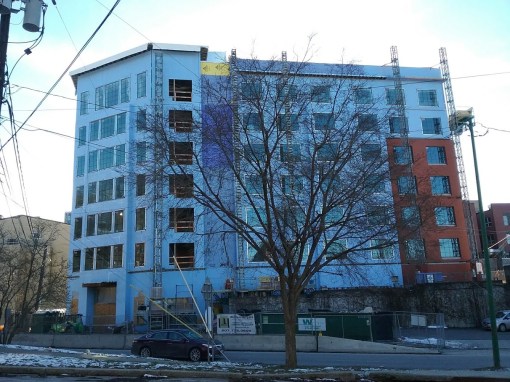
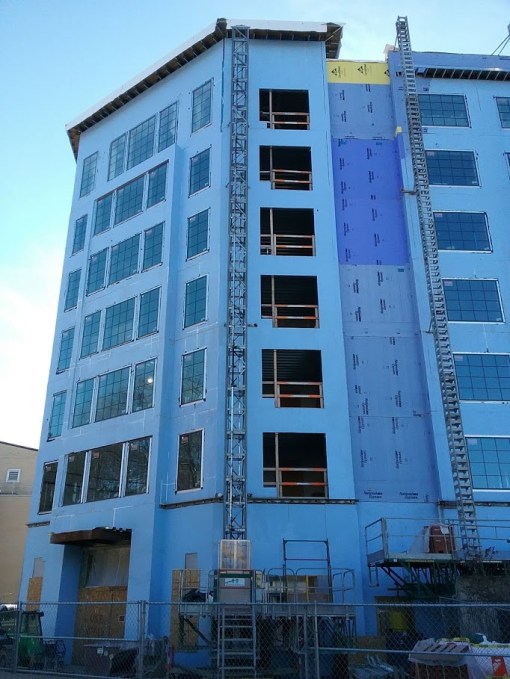
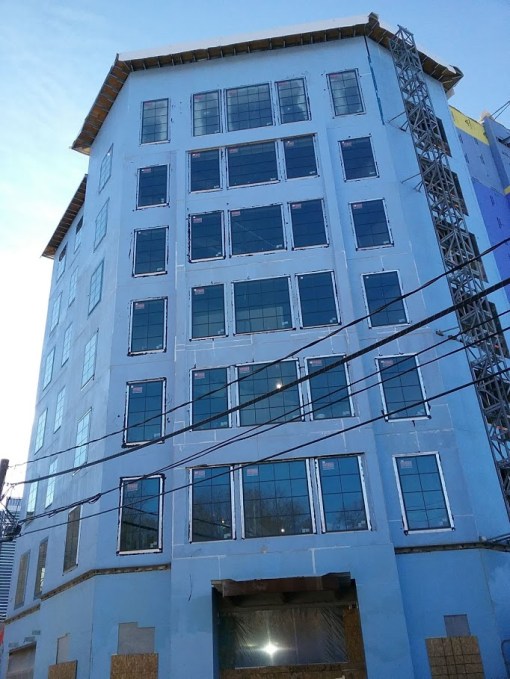
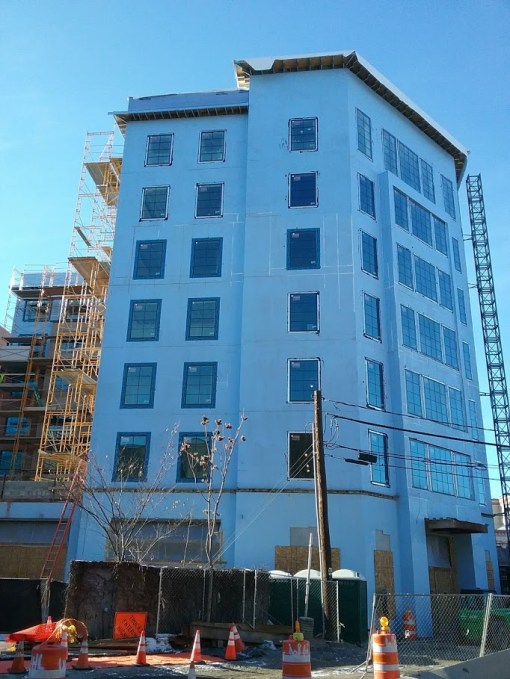
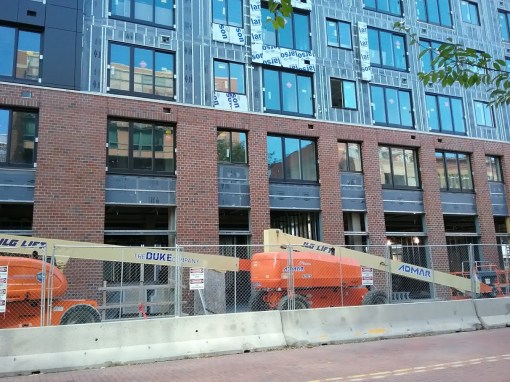
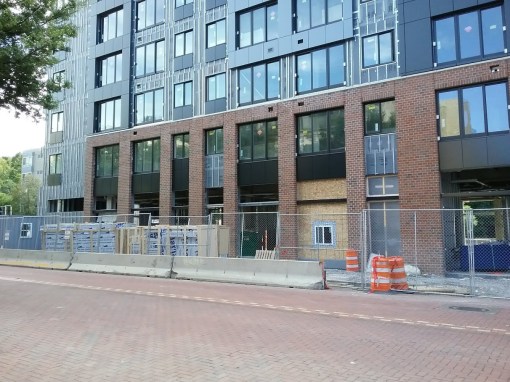
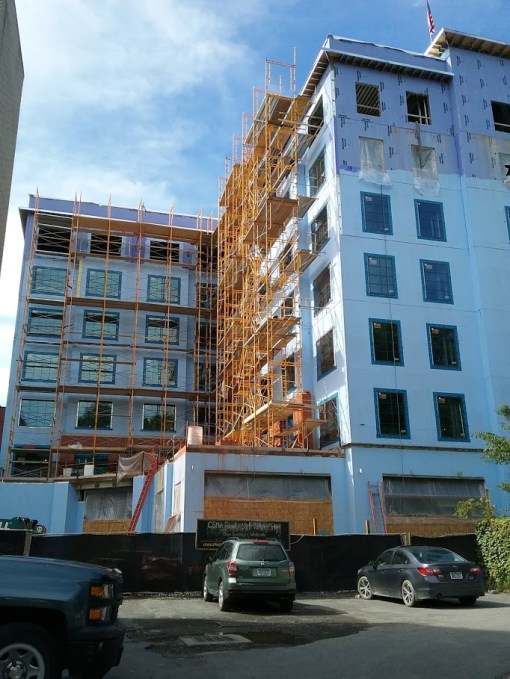
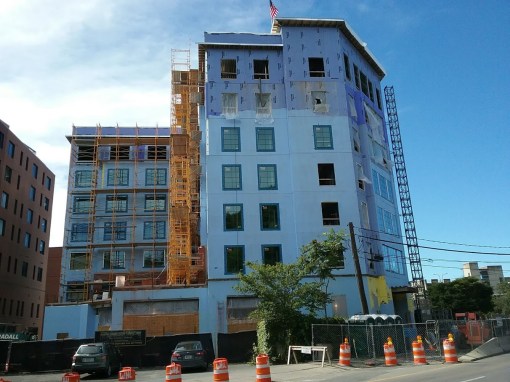
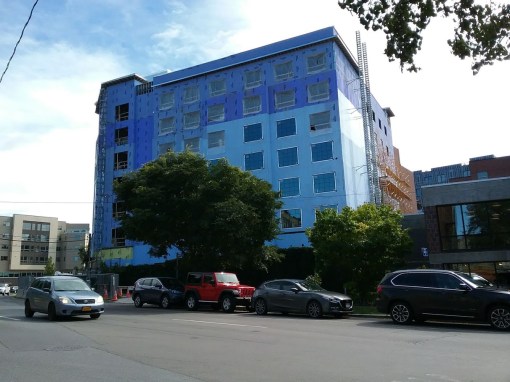
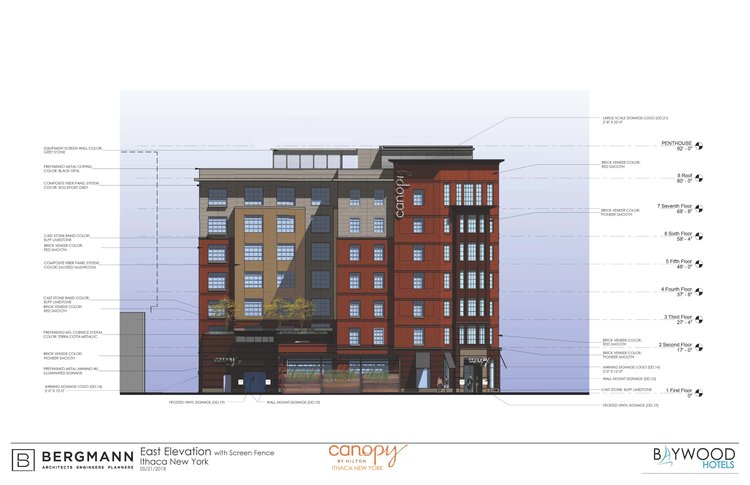
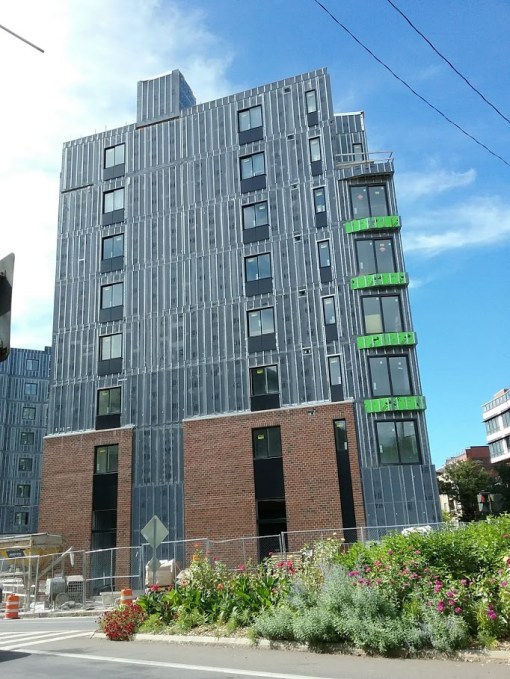
We’re starting to see some of the face materials being attached to the Canopy Hilton’s exterior.The brick veneer is Bowerston Shale Company Red Smooth blend. The bumpout with the industrial-style bay windows will use a darker and browner blend called “Pioneer Smooth”. Some of the “Sauteed Mushroom” fiber cement panels are also visible underneath the scaffolding. “Rockport Grey” and “Dark Ash” (light grey and dark grey) fiber cement panels will be used on the upper levels and to provide visual interest being the bricked spaces. Most of the sheathing is in place, as are most of the windows.The bridge blue bands around some of the windows is probably sealant/waterproofing material.

An interesting little detail here – during the excavation, some remnant fragments were found from the former Stand Theater, which occupied the site from 1917 until its demolition in 1993. It was a grand building in its time, designed in an Egyptian Revival theme (which the Carey Building emulated when it was built a few years later) and capable of sitting 1,650 in golden age splendor. But the theater was never well designed for the transition from stage to screen, and after decades of decay, it closed first in 1976, and then reopened for a few years at the end of the 1970s into the 1980s for live shows, but the expense of maintenance proved a burden on shoestring budgets. Although on the tail end of urban renewal, the car was still king in the early 1990s, and a parking lot was deemed a better alternative to a decaying theater whose revitalization attempts had failed. A few of the more decorative pieces that were found will be put on display in an exhibit inside the hotel lobby.

The 131-room hotel, on the east end of Downtown on the 300 Block of East State Street, is expected to open in 2019. Baywood Hotels, the developer, has been quite busy lately, purchasing the five year-old Fairfield Inn at 359 Elmira Road a few weeks ago. Rather curiously, the $5.9 million purchase of the 106-room hotel was $1.1 million below assessment. The sale used a “bargain and sale deed”, which one often sees with foreclosures. Bargain and sale deeds are riskier than standard deeds. It basically means that if the property has an issue or unpaid bill, you’re on the hook, not the seller.

The curious details of that sale makes me think of a never-completed story the Voice was working on involving the Fairfield. Not long after the Voice launched, the then-owners reached out in an email, saying they had constructed and opened the Fairfield, and after being open almost two years, “we can attest that there is no need for hotel rooms since demand is on a downward slide and we are having trouble servicing our debt. We also feel the Ithaca City officials are artificially generating demand hype to attract more hotel developers along with promises of tax abatement.” We had worked out this idea where their story would be part one, and getting the city and business officials to respond would be part two.

I did an interview with the Fairfield owner and manager, but to prove their claim wasn’t just their hotel and that it was a citywide/regional problem, we needed hard data, proprietary information on occupancy rates and things like Revenue Per Available Room (RevPAR). The regional data of all hotels combined did not back up the claim, and with none of the Fairfield’s peer hotels were willing to take part or even support or refute the Fairfield owners’ claims, there was an inability to expand the story beyond the Fairfield’s anecdotal experience, and so it never moved beyond a first draft. It was the first in-depth story I had worked on that failed to pan out.

In retrospect, I suspect the truth was somewhere in the middle. Given that one of the boutique hotels was cancelled, and how much time was needed for the new downtown hotels to obtain financing, there was clearly some concern from lenders about what the market could support. But because those new hotels are opening over a period of a few years, and local economic growth has continued, the worst fears of the hotel “boom” have been avoided.

Further information on the Canopy hotel can be found here.


News Tidbits 11/26/18

27 11 2018

Just to get this out in time, he’s a look at what will be a rather long but very interesting city of Ithaca Planning Board meeting tomorrow evening.

1 Agenda Review 6:00

2 Special Order of Business – Planning Report on ILPC recommendation to designate the former Delaware, Lackawanna, & Western Railroad Station at 701 West Seneca Street. 6:05

3 Privilege of the Floor 6:20

4 Approval of Minutes: October 23, 2018 6:35

5 Site Plan Review
A. Project: Chain Works District Redevelopment Plan (FGEIS) 6:40
Location: 620 S. Aurora St.
Applicant: Jamie Gensel for David Lubin of Unchained Properties
Actions: Distribution of FGEIS & Review of Schedule – No Action
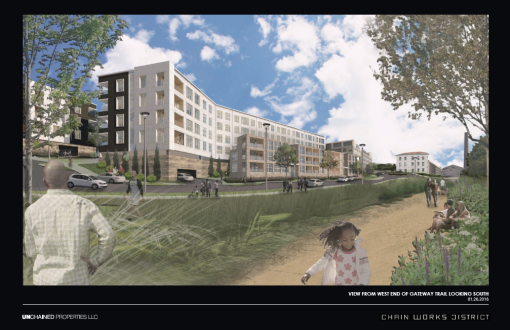
Project Description: The proposed Chain Works District seeks to redevelop and rehabilitate the +/-800,000 sf former Morse Chain/Emerson Power Transmission facility, located on a 95-acre parcel traversing the City and Town of Ithaca’s municipal boundary. The applicant has applied for a Planned Unit Development (PUD) for development of a mixed-use district, which includes residential, commercial, office, and manufacturing. The site’s redevelopment would bridge South Hill and Downtown Ithaca, the Town and the City of Ithaca, by providing multiple intermodal access routes including a highly-desired trail connection. The project will be completed in multiple phases over a period of several years with the initial phases involving the redevelopment of the existing structures. Current redevelopment of this property will focus on retrofitting existing buildings and infrastructure for new uses. Using the existing structures, residential, commercial, studio workspaces, and office development are proposed to be predominantly within the City of Ithaca, while manufacturing will be within both the Town and City of Ithaca.

No decisions expected tonight, but the distribution of the FGEIS (Final Generic Environmental Impact Statement) is a major step forward. From here, the Planning Board will review and critique the document, and when satisfied, it will vote for a resolution of completion. A recommendation to adopt the Chainworks PUD zoning and the FGEIS findings will follow, and if successful, the Common Council will also vote to adopt the PUD zoning. That would complete generic review for the site – new builds would still come to the board as necessary, but renovations could potentially begin not long afterward. Timing-wise, the final approvals are still a few months out, but this massive 910+ unit project is slowly closing in on approvals, and potentially, construction.
B. Project: North Campus Residential Expansion (NCRE) 6:55
Location: Cornell University Campus
Applicant: Trowbridge Wolf Michaels for Cornell University
Actions: Review of FEAF Part 3
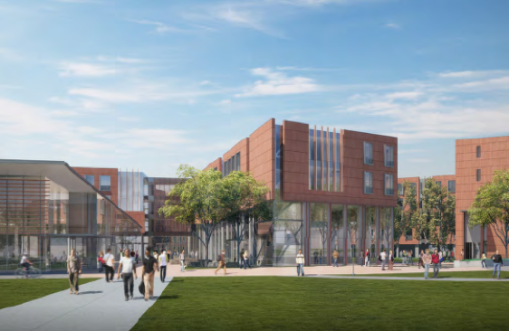
Project Description: The applicant proposes to construct two residential complexes (one for sophomores and the other for freshmen) on two sites on North Campus. The sophomore site will have four residential buildings with 800 new beds and associated program space totaling 299,900 SF and a 59,700 SF, 1,200-seat, dining facility. The sophomore site is mainly in the City of Ithaca with a small portion in the Village of Cayuga Heights; however, all buildings are in the City. The freshman site will have three new residential buildings (each spanning the City and Town line) with a total of 401,200 SF and 1,200 new beds and associated program space – 223,400 of which is in the City, and 177,800 of which is in the Town. The buildings will be between two and six stories using a modern aesthetic. The project is in three zoning districts: the U-I zoning district in the City in which the proposed five stories and 55 feet are allowed; the Low Density Residential District (LDR) in the Town which allows for the proposed two-story residence halls (with a special permit); and the Multiple Housing District within Cayuga Heights in which no buildings are proposed. This has been determined to be a Type I Action under the City of Ithaca Environmental Quality Review Ordinance (“CEQRO”) §176-4 B.(1)(b), (h) 4, (i) and (n) and the State Environmental Quality Review Act (“SEQRA”) § 617.4 (b)(5)(iii). All NCRE materials are available for download at: http://www.cityofithaca.org/DocumentCenter/Index/811

Materials provided indicate that city planning staff are reasonably satisfied that the energy impacts of the massive North Campus housing plan have been mitigated. The only new letter on record this month is a letter of concern from the City Historic Preservation Planner about the project’s visual and aesthetic impacts on the Cornell Heights Historic District to the west.

C. Project: Apartments (12 Units) 7:25
Location: 327 W. Seneca Street
Applicant: Noah Demarest for Visum Development
Actions: Consideration of Preliminary & Final Site Plan Approval
Project Description: The applicant is proposing to construct a three-story apartment building with 12 units. Project development requires the removal of the exiting building and parking area. The project will include exterior bike storage, a trash enclosure, walkways, landscaping, signage, and lighting. The project is in the B2-d Zoning District and has received the required variances for front-, side-, and rear-yard setbacks. A small portion at the rear of the property is in the CDB-60 District. The project has received Design Review. This is an Unlisted Action under the City of Ithaca Environmental Quality Review Ordinance (“CEQRO”) and the State Environmental Quality Review Act (“SEQRA”), for which the Lead Agency made a Negative Determination of Environmental Significance on September 25, 2018.

Not much to add regarding Visum’s workforce housing (80% area median income) proposal for the State Street Corridor. The project is expected to receive $200,000 from the latest round of the Community Housing Development Fund, the affordable housing fund jointly paid into by the city, county and Cornell. In this case, Cornell will cover $170,000 and the city $30,000. Cornell doesn’t have any hand in this project, but having one entity pay most of the grant for a given project makes it less complex to administer. 
D. Project: Falls Park Apartments (74 Units) 7:35
Location: 121-125 Lake Street
Applicant: IFR Development LLC
Actions: Public Hearing, Review of FEAF Parts 2 & 3
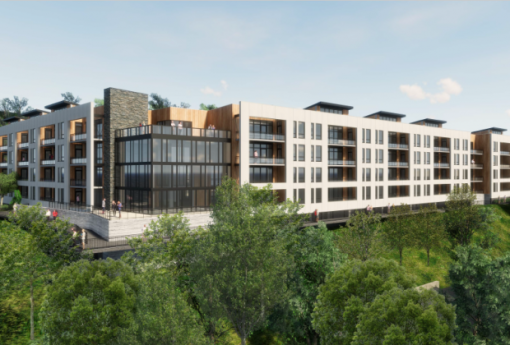
Project Description: The applicant proposes to build a 133,000 GSF, four-story apartment building and associated site improvements on the former Gun Hill Factory site. The 74-unit, age-restricted apartment building will be a mix of one- and two-bedroom units and will include 7,440 SF of amenity space and 85 parking spaces (20 surface spaces and 65 covered spaces under the building). Site improvements include an eight-foot wide public walkway located within the dedicated open space on adjacent City Property (as required per agreements established between the City and the property owner in 2007) and is to be constructed by the project sponsor. The project site is currently in the New York State Brownfield Cleanup Program (BCP). Before site development can occur, the applicant is required to remediate the site based on soil cleanup objectives for restricted residential use. A remedial investigation (RI) was recently completed at the site and was submitted to NYSDEC in August 2018. The project is in the R-3a Zoning District and requires multiple variances. This is a Type I Action under the City of Ithaca Environmental Quality Review Ordinance (“CEQRO”) §176-4 B(1) (h)[2], (k) and (n) and the State Environmental Quality Review Act (“SEQRA”) §617-4 (b) (11).

Note that IFR is a Travis Hyde Properties business entity. The attempt to gain approval for an environmentally compromised project site is likely going to be more heavily scrutinized given the recent controversy regarding proposed demolition procedures for the Old Library site.

E. Project: New Two-Family Dwellings 7:55
Location: 815-817 N Aurora
Applicant: Stavros Stavropoulos
Actions: Declaration of Lead Agency, Review of SEAF Parts 2 & 3
Project Description: The applicant proposes to demolish an existing two-family residential structure and construct two new 1,290 SF two-family dwellings on a 9,590 SF lot. The existing residential building is a legally nonconforming building with a side setback deficiency (2.9 feet instead of the required 5 feet). The proposed redevelopment will include four parking spaces for four three-bedroom apartments. The applicant is requesting the Board’s approval to use the landscaping compliance method for parking arrangement. The project site is located in the R-2b Zoning District and meets all applicable zoning lot and setback requirements. This is an Unlisted Action under the City of Ithaca Environmental Quality Review Ordinance (“CEQRO”) and the State Environmental Quality Review Act (“SEQRA”).
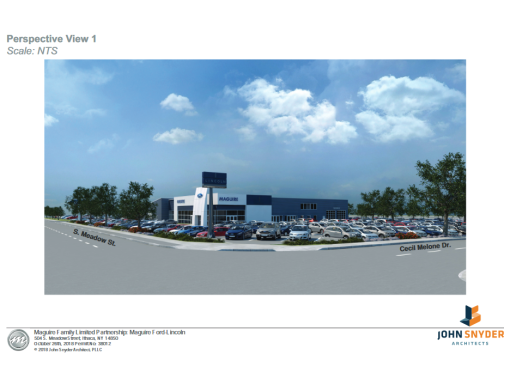
F. Project: Maguire Lincoln 8:15
Location: 370 Elmira Road
Applicant: John Snyder Architects PLLC
Actions: Declaration of Lead Agency, Review of FEAF Parts 2 & 3
Project Description: The applicant proposes to demolish a portion of the existing building and construct two additions with updated exterior materials. The existing building is 18,500 GSF, with 2,265 GSF proposed for demolition. The new building will be 24,110 GSF. Site improvements include incorporation of a new pedestrian walking path, and site connections to Wegmans. Approximately 311 parking spaces are proposed to accommodate customer, service parking, employee, and display parking. Landscape design will improve vegetative cover; however, it will not meet the City of Ithaca’s impervious/pervious requirements (12%). The project site is located in the SW-2 Zone, is subject to the 2000 Southwest Design Guidelines, and will require a zoning variance for a front yard that exceeds the maximum permissible in the SW-2 district (34 feet maximum permitted, 69-feet 3-inch setback proposed). This is an Unlisted Action under the City of Ithaca Environmental Quality Review Ordinance (“CEQRO”) and the State Environmental Quality Review Act (“SEQRA”); however, it will be treated as a Type I Action for the purpose of environmental review.

G. Sketch Plan – 312 E Seneca Street, Jagat Sharma 8:35

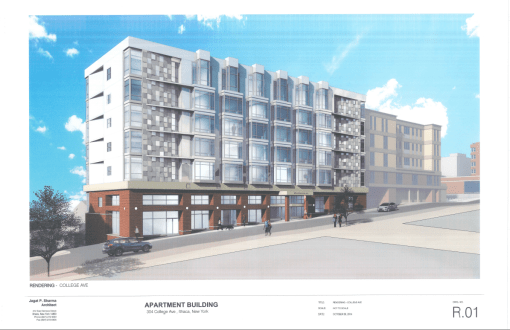
312 East Seneca is a 4,482 SF three-story mixed-use building on the edge of Downtown Ithaca. The building was long-owned by Ithaca architect Jagat Sharma, who ran his practice from the building (1416 SF), the Alley Cat Cafe (1926 SF), and a four-bedroom apartment (1140 SF) on the upper floors.

A few years ago, the site was floated as part of the potential footprint for Visum Development’s Seneca Flats mixed-use project, though at the time it was made clear that it was not an essential property to the development, and simply a possibility if Sharma chose to sell to Visum. Sharma didn’t – in September, he sold the building to an LLC associated with the Stavropoulos family for $800,000, double the assessed value. That lofty price relative to assessed value was a big clue something was planned here, and it looks like the first glimpse of that will come tomorrow night. The Stavropoli of West Hill have been growing their assets through acquisition or development for the past several years, including the 4-unit North Aurora project in item E. above.

Normally, the Stavropoulos family is low-key about development, preferring lower-profile infill builds in established neighborhoods – the largest project of theirs to date is the 11-unit 107 South Albany project. They often turn to local architect Daniel Hirtler, but this time, Collegetown favorite Jagat Sharma will have a hand in redeveloping the building that housed his office for so many years. This would be Sharma’s first building downtown since the Greenstate Building (127 West State Street) in 1991. For the record, this would be their second Sharma commission, with a duplex planned for 209 Hudson Street being the other (granted, that’s also a modular structure).

Zoning-wise, this is CBD-60. Within that zone, Sharma can design a five-story building up to 60 feet tall, no parking required, with any variety of commercial or residential uses. Any design will have to conform with the recently-adopted Downtown Design Guidelines. The Stavropoli are likely to do all-residential or residential with ground-floor retail. The current building is quite narrow, but it also only occupied the east half of the lot – a new structure could practically touch the neighboring building at 308 East Seneca.

H. Sketch Plan – 114 Catherine Street, Jagat Sharma 8:55

Things are about to get a bit confusing. A few years ago, the Lambrou family, mid-sized Collegetown landlords and developers of Collegetown Park, presented and built an infill project at 114 Catherine Street – while all the working docs used 114 Catherine Street, the address of the existing building set back into the lot, the new 3-unit, 17-bedroom building was christened 116 Catherine Street.

This new building is expected to be a replacement for the existing 114 Catherine Street, the Mission Apartments, and is expected to complement 116 Catherine in appearance (Jagat Sharma designed that as well). Zoning here is CR-4, up to four floors, with a maximum of 50% lot coverage (but not parking required). Expect this to be student housing – probably not too big, a few dozen beds at most, but something to take note of nevertheless.

I. Sketch Plan – 130 Cherry Street, Residential, Vecino Group 9:15

130 Cherry Street is a 4,600 SF auto body shop that’s been for sale for quite a while now. The rumor mill says Vecino CEO Rick Manzardo was walking around the area a couple of weeks ago, and it looks like there was a reason for that. The plan being floated is affordable “artist housing”. This wouldn’t be a new concept to Vecino, who renovated a vacant warehouse in Troy into the 80-unit Hudson Arthaus. What makes the Arthaus unique among affordable housing is that it offers on-site amenities geared to artists, as well as income-based rents for those who make only a modest living while engaged in their creative pursuits.  Those amenities include a wood shop, on-site storage units, gallery spaces managed by a local non-profit, and a computer/digital work suite.

Zoning here is “Cherry Street District” Waterfront Zoning. Since it’s north of Cecil Malone Drive, housing is allowed – but not on the first floor. The first floor is for light industrial and many commercial uses, including restaurants, stores and offices. No ground-level storage permitted, however. In this “artist housing” format, the first floor would likely be the exhibition/gallery.workshop space. The building may be up to five floors with 100% lot coverage once setback requirements are met. Bonus for this site, the Cherry Artspace is a few hundred feet away. With about 179,000 SF in building capacity offered by the site and zoning before setbacks are considered, a potential project could be fairly sizable.

6. Old/New Business 9:35

7. Reports 9:40
A. Planning Board Chair
B. BPW Liaison
C. Director of Planning & Development

8. Adjournment 10:00


Press Bay Court Construction Update, 9/2018

3 10 2018

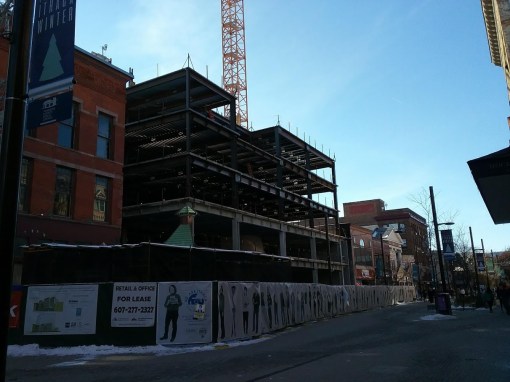
Press Bay Court, a project by local businessmen John Guttridge and David Kuckuk d/b/a Urban Core LLC, is moving along at a good clip. In what could be seen as an expansion of Press Bay Alley, the plan reuses a dilapidated 1920s building and renovates it into several small-scale retail spaces, ranging from 320 – 2,200 square-feet. Among them will be Halal Meat and Groceries, One Ring Donuts, Gee June Bridal Shop and Hair • Color • Art. Bramble, an herbal retailer, will move from its Press Bay Alley slot into one of the Press Bay Court storefonts.
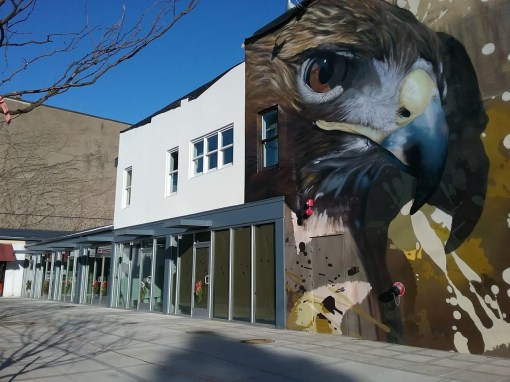
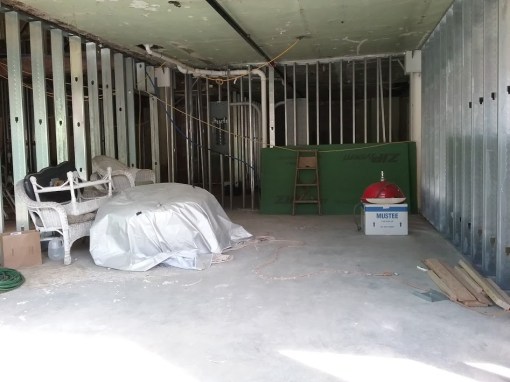
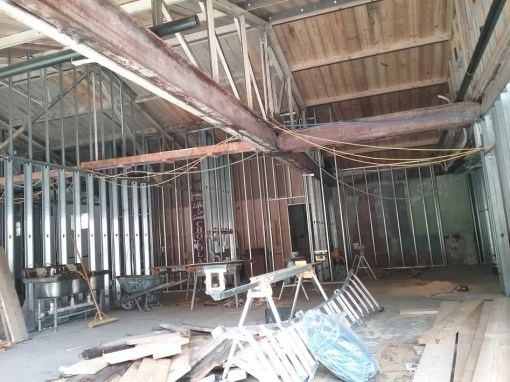
The business websites for Gee June and Hair • Color • Art both indicate October 2018 openings in Press Bay Court (October 16th, in Gee June’s announcement), and there’s a lot of work to be done between now and then. The interior of the building was gutted and new steel stud walls have been erected, as well as fresh gypsum sheathing on the outside. The four second floor one-bedroom apartments are also being renovated, which will be rented at below-market rates (Urban Core is aiming for 75% area median income, which roughly equates to a household salary in the $42,000/year range for a single person, $48,500 for couple). Expansive windows will be installed at ground level to provide a better sense of the activity indoors, and an awning will be erected as the exterior is finished out. The exterior parking lot will be turned into a landscaped pedestrian gathering space for impromptu social events as well as festivals and small concerts or shows.
//www.instagram.com/embed.js


View this post on Instagram


These are going to be the coolest apartments in downtown…

A post shared by PressBayAlley (@pressbayalley) on

//www.instagram.com/embed.js


City Centre Construction Update, 9/2018

2 10 2018

Along with the usual bevy of construction photos, I popped inside the sales office, which opened on the Commons last month. There might have been a little reservation from the two guys staffing the office when I introduced myself and said “I’ve been reporting on the project and do a real estate and construction blog on the side”, but once one of the leasing representatives, Anthony, mentioned he had checked out a blog called “Ithacating” to help him prepare for the job, we hit it off pretty well.

The second photo shows the reserved apartments as of September 23rd. As mentioned in the Voice article, every one of those top-end $3,265/month two-bedroom units facing the Commons are taken, and the project is still over eight months out from completion. 47 of the 192 units have deposits down, about 25% of total. A disproportionate number of those are two-bedroom units, 16 of 39 (41%). According to Anthony, the tenant mix is fairly diverse – some students, some young working professionals with downtown or Cornell jobs, and a substantial number of seniors looking to downsize and be downtown. The office has received a number of calls inquiring if the units are for sale, but unfortunately for those interested, condos are scarce in Ithaca.

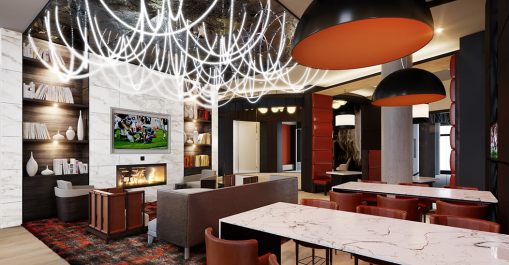
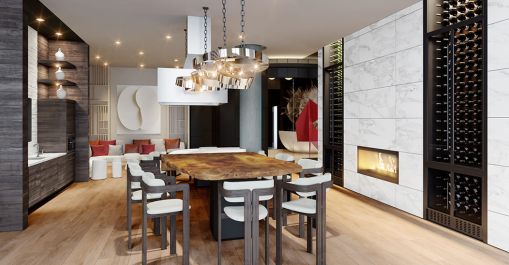
The project website has been updated to include a number of interior renderings, included here at the end of the post. The first four in the set are apartment interior images, showing two bathroom finishes (modern aesthetic with a neutral palette), a larger unit’s living room and kitchen, and a studio unit, which they market as a “junior apartment”. The last three images are common spaces, two lounge spaces and the lobby. The lobby will in fact have a circular reception area, as shown in the ground-level floor plan.

Newman Development Group (NDG) had previously mentioned in a response to Green Street Garage questions that they had secured tenants for all three ground-level commercial spaces, the Ale House restaurant and two other tenants whom Anthony was not allowed to discuss per confidentiality agreements, but they hope to go public with the future tenants “in about a month”. The spaces clock in around 10.600 square-feet in total.
“NDG has recently signed three superior quality tenants for the City Centre project and had a high level of interest from a number of additional tenants that had to be turned away. NDG believes that these and other prospective tenants seeking 3,000 to 5,000 square foot spaces will find the Green Street location to be highly attractive based on the high traffic counts, pedestrian activity, mass transit access, proximity to The Commons, adjacency to significant downtown residential neighborhoods and availability of convenient parking, ” said NDG in the Green Street Q&A.
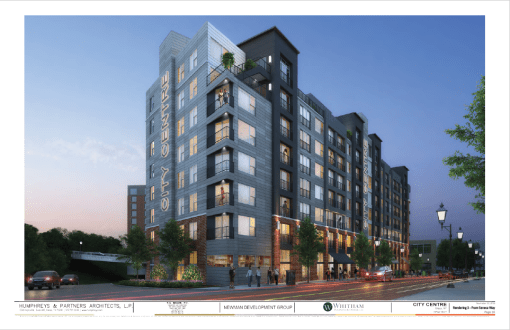
Construction is moving along at a good clip, with most of the windows fitted and work continuing on the aluminum panels and brickwork that will comprise most of the facade. For the sake of brevity, we’ll dig more into the exterior finishes and details in the next update in November.

Side note to the Ithacan – the effort is appreciated in your downtown write-up, but you guys flubbed one critical detail. City Centre and State Street Triangle were two separate projects with two separate development teams. The only common bond is location. The story that I’m familiar with is that the Colberts, who owned the Trebloc site, dropped Campus Advantage as a partner because CA wanted a lower sale price for the land when they were forced to submit smaller project designs, while NDG was willing to pay the premium, and so they were able to snatch themselves the purchase option for the site when it opened for renegotiation.

In keeping with the theme of development controversy, here it’s been the high price of the units – $1,545 – 1,625/month for a studio, $1,745 – 2,595/month for a one bedroom unit, and $2,460 – 3,265/month for a two-bedroom unit. There has been substantial blowback from some local activists and community groups as a result, and even other landlords have expressed off-record that they are incredulous of the asking prices Newman Development Group was aiming for with the City Centre project. So far, however, lease-up seems to be going well. City Centre will open for occupancy in June 2019.


Masonic Temple Renovation Update, 9/2018

30 09 2018

To be honest, I had to double-check my older photo sets to make sure there had been progress on the Masonic Temple renovation. Upon close inspection, the short answer is yes. Windows have been replaced with near-replicas of the originals, as is required for a locally-recognized historic landmark. The concrete borders for the basement light wells is fresh, and most of the work at present has moved to the rear of the building, where windows are being replaced and a new concrete ramp is being built for the auditorium space. A new elevator is being installed on the southwest of the building.

There has not been any news regarding commercial tenants signed up to fill the renovated space once it’s complete. This is not a surprise, the Fane Organization tends to be very tight-lipped about their business deals.


Harold’s Square Construction Update, 9/2018

29 09 2018

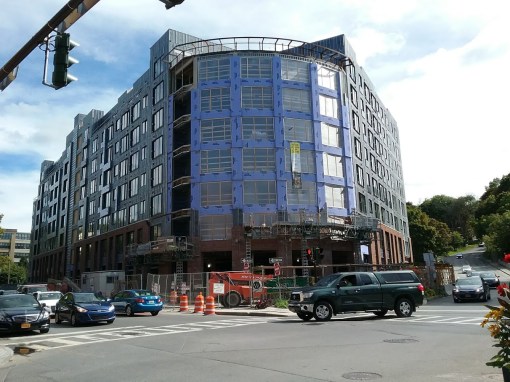
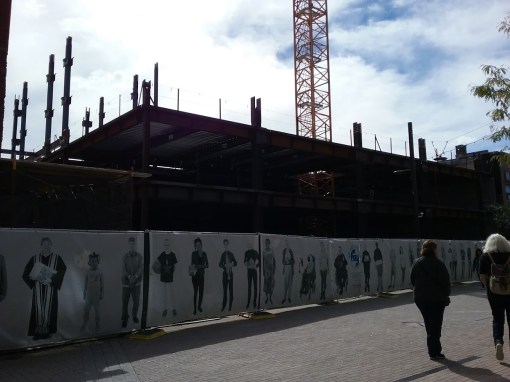
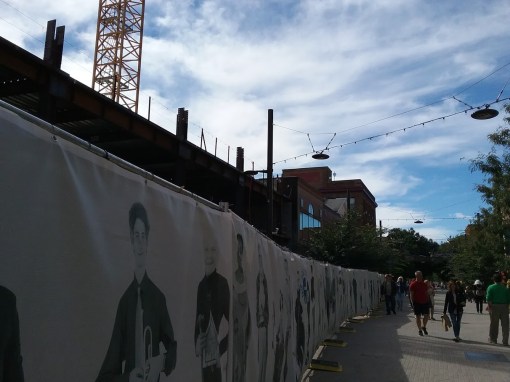
With the Commons Playground issue seemingly settled, the Harold’s Square project continues to rise on the Commons (more specifically, 133-139 East State Street). The full floor area has been built out for the first and second floors, the third floor is partially assembled, and a few steel beams and joints have been erected for what will become the fourth and fifth floors. Note that the floor plate will only cover the full footprint of the building for the lowest four floors – the fifth has some modest setbacks from the Commons to create the impression of multiple structures and break up the massing, while floors six through twelve are the tower portion, where most of the apartments will be located.

Granted, the south views from those apartments are likely going to be for only a limited time. The two proposals that have garnered the most positive feedback and initial scoring for the Green Street Garage Redevelopment are the Vecino proposal and the Visum/Newman proposal, each of which calls for a tower similar in height to Harold’s Square. My impression is that, if forced to advocate for one or the other, the Harold’s Square development team might be slightly warmer to the Visum/Newman proposal because it provides for a wider alley between the buildings as well as aesthetic improvements to that alleyway.

Quick aside, in pitching the Little Commons proposal for the Green Street Garage, I had a mixed reaction to the IURA submission. The elephant in the room was always that whatever design he and his partners submitted would be sufficiently short so that the Harold’s Square owners (L Enterprises and McGuire Development) would retain the ability charge a premium for the upper-story units in the market-rate Harold’s Square building. The proposal’s website, which STREAM Collaborative put together, does a very good job stepping around that and emphasizing other potential benefits of a modestly-scaled structure. The written submission, however, stated the importance of protecting the Harold’s Square viewshed, which is readily recognized, but maybe not something that should have been explicitly acknowledged, because it could easily be twisted and rub reviewers the wrong way – “views are only for those with deep pockets” or “catering to the wealthy tenants next door”. It’s the kind of comment that reads better to developers than to the general public, and my personal take is that, however true, they just shouldn’t have brought it up.

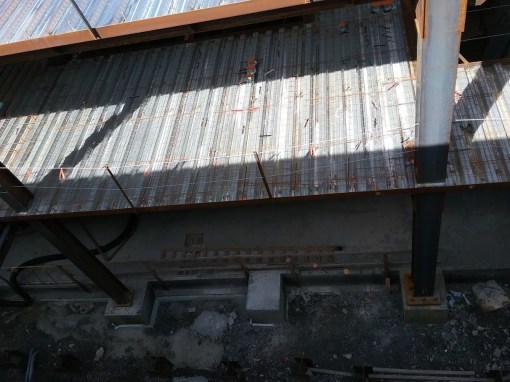
Anyway, as seen in the Harold’s Square photos, once the structural steel is laid out, the corrugated steel decking is attached and a rebar mesh laid atop the decking for the concrete pour of the subfloor. As with foundations, the mesh provides stability and strength to the concrete as it cures. The openings between floors are for elevator cores and stairwells. The skeleton will rise at a fairly quick pace given the effort to take advantage of the relative meteorological calm that early fall provides, but I don’t see anything on the project website that indicates a ballpark estimate of when topping out might occur – the crane isn’t expected to be down until March, if I have my notes right, and after that happens, the structure should be closed up enough / far enough along with exterior work such that the Commons playground can be returned to active use. A mid-2019 opening is planned; no word on potential commercial tenants on the lower floors.

The WordPress for the project can be found here, and the Ithacating project description here.


Hilton Canopy Hotel Construction Update, 9/2018

29 09 2018

The past couple of months haven’t been the best for Ithaca development. Apart from the recent lull, most of the high-profile projects have engendered some animosity or involved in a publicly relations mess. In the case of the Hilton Canopy, that would be the incident with the sure-footed construction work on the scaffolding. My goal when reporting it back in August was to be impartial and thorough and I still I don’t know enough about the work environment to make a comment. From the public comments and my emails, it’s not 100% clear if there were violations and how severe they were; there’s some subjectivity in their application (harnesses are to set up in ways that don’t pose other safety concerns or obstacles, for instance, so if it could be proven that it would have been a risk a harness wouldn’t have been required). OSHA is reviewing and will make their judgement calls as they see fit, even if it takes up to six months to hash out.

On the bright side, the Hilton is moving along, the warehouse-style windows are being fitted and most of the sheathing has been attached to the exterior steel studs. The water-resistive barrier will prevent moisture seepage from damaging the gypsum sheathing panels. The yellowish Behr paint “applesauce cake” colored fiber cement panels were replaced with a somewhat darker and browner tone, “sauteed mushroom” from rival Glidden. As Glidden Paints says, a “(m)id-toned warm beige, this color makes a statement as an exterior body color as well as an interior accent wall or warm meditation space.” I don’t make these names up, I just report them.

There hasn’t been too much news about the project apart from the scaffolding controversy; the Canopy brand has been touting Ithaca-area attractions on its facebook page and the brand website states a mid-2019 opening.


News Tidbits 9/18/18

19 09 2018

1. Unofficially, here are the Ithaca Urban Renewal Agency’s Economic Development Committee ratings for the four Green Street Garage proposals, with a screenshot courtesy of Councilor Steve Smith (D-4th Ward). I’m not quite sure how the total score was calculated, but overall, the Vecino Group’s proposal was the most highly rated, followed by the Visum/Newman Group submission. The general consensus was that the Harold’s Holdings plan was aesthetically pleasing but didn’t include enough of the benefits that the city was seeking, and the Ithaca-Peak proposal was underwhelming in terms of affordability and community benefits.

2. So here’s an interesting little item that came out of last week’s PEDC Meeting. A developer had apparently approached Committee Chair Seph Murtagh (D-2nd Ward) with the idea of redeveloping the Family Medicine site for an eight-story building. Murtagh did not state the intended mix of uses if any was stated (probably ground-level commercial with residential above), but he did express strong reservations for their plan, which would have required a PUD, the D-I-Y zoning the city uses to allow more flexible project design in exchange for community benefits signed off by the Common Council as well as the Planning Board.

Few would argue with the statement that the Family Medicine site, located on the 200 Block of West State Street just west of Downtown Ithaca, is underutilized. It’s a one-story ca. 1980 structure with surface parking. The Cornell Baker Program has used the site among others for student projects to come up with cost-efficient proposals in various parts of the city (officially for academic purposes, but no doubt the local development scene pays at least some attention to the final presentations). I remember one project that showed a seven-story building would be just enough of a return on investment to possibly entice redevelopment with Family Medicine remaining in the ground-level of the new structure. This theoretical proposal did make use of a tax abatement. By this argument, an eight-story proposal could be a better sell, or it could be the result of an attempt to work in an affordable housing component while still making enough money per square foot to appeal to lenders. Regardless of what the circumstances were to push eight floors, this idea likely won’t be coming to the planning board anytime soon.

3. It looks like the Ivy Ridge apartment project in Dryden has been sold to a new developer. An LLC associated with local real estate firm Modern Living Rentals (Charlie O’Connor) sold 802-812 Dryden Road for $2,075,000 on September 12th. Filed on the same day was a construction loan from M&T Bank to pay for construction of the project – a rather substantial $8.6 million for the 42-unit townhouse complex.

The buyer’s LLC could be traced back to a suburban Pittsburgh address for Matthew Durbin, and a little online searching indicates Durbin is a Cornell Johnson School (MBA) Alumnus, a former investment banker turned business executive. In short, he has a demonstrated familiarity with the Ithaca area, business acumen and the money to make things happen. Site prep is underway and no changes to the project design or timeline are indicated. As for O’Connor, he’s now a much wealthier man, and we’ll see if any of those recent gains are turned into equity for future MLR projects.

If anyone else is still looking for shovel-ready multi-family projects, 1061 Dryden is still for sale.

4. On a somewhat related note, 312 East Seneca Street was sold by Jagat Sharma (better known for his architecture firm, but 312 East Seneca house his office) for $800,000 on September 14th. The buyer was an LLC that traces back to the Stavropoulos Family on West Hill, who have undertaken a number of small to medium-sized development projects in the Ithaca area over the past several years.

This purchase would impact MLR and Visum Development’s plan for Seneca Flats, a 42,000 SF multi-story mixed-use structure at the corner of East Seneca and North Aurora. The two firms based their initial drawings on the presumed purchase of this building. However, they had also drawn up floor plans for options that did not include 312 East Seneca – offhand, the plan with the site had 85 units, the plan without had 60 units. Basically, lop off the rightmost (northern) quarter of the above drawing. As for the Stavropouloses Stavropoli, they paid more than double the assessed value ($390,000), so there’s a good chance they have their own plans.

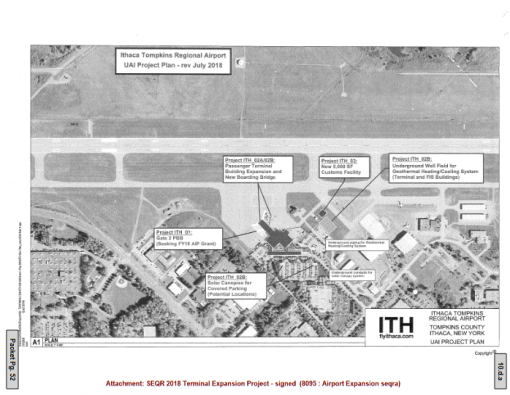
5. This blog gravitates towards hard/quantitative data, so here are a few facts about the airport expansion from the SEQRA environmental forms:

– The Passenger Terminal Expansion. will consist of three additions totaling 15,600 SF. 8.500 SF is an addition to the passenger holding area (which makes flying sound about as comfortable as it feels), 5,400 SF for additional bagging screening space and office space for the TSA and for airlines, and 1,700 SF by the main entrance for expanded passenger circulation and ticket counter space.

– Apron reconstruction, 40,000 SF. The apron is the area where planes park, refuel, and where some passenger loading/unloading takes place.

– Utilities replacement, interior “building enhancements”, one new passenger boarding bridge, and refurbishment of the existing boarding bridge.

– Installation of a geothermal heating and cooling system using 40 underground wells, 350-400 feet deep, and a closed-loop piping system. The operation is similar to a heat pump system, using the earth’s latent heat as a reservoir. The ground disturbance area to install the wells will be about 15,000 SF (~0.35 acres).

– Installation of overhead canopies with solar panels in the airport parking lot.

-Construction of a new 5,000 SF customs facility. The facility will be a one-story masonry structure with steel framing. The facility will accommodate no more than twenty passengers, and is exclusively tailored towards international business visitors – it’s been previously stated that business executives and Asian visitors, who often come in via Canada, have expressed a strong interest in private jet accommodations.

– Approximately ten new employees as a result of the terminal expansion, and six more from the construction of the new customs facility, for a total of sixteen new full-time jobs.

6. Thanks to reader Alec for this tip – a collection of contiguous Avramis Real Estate-owned Collegetown rental properties at 120 Catherine, 122 Catherine, 124 Catherine, 128 Catherine, 302 College, 304 College, and 306 College were not made available for rent for the 2019-2010 academic year. A check with sources indicates that according to the rumor mill, a buyer has them under contract, but the sale has yet to be finalized.

This is worth noting because we’re talking about a multi-million set of properties with 68 existing beds, but more importantly they have significant redevelopment potential – the lots can be consolidated into a large MU-2 zoned parcel (six floors, 100% lot coverage no parking) and a large CR-4 zoned parcel (four floors, 50% coverage, no parking)In fact, back in 2014, the Avramises proposed a two-building development that would have resulted in about 102 units and 202 beds. The Jagat Sharma-designed proposal never began formal review. The off-record commentary was that the Avramises got cold feet during the heat of the Collegetown building boom, though given their central location, these properties would be better insulated from a downturn in the student rental market than Outer Collegetown or fringe neighborhoods. Definitely worth keeping an eye on.

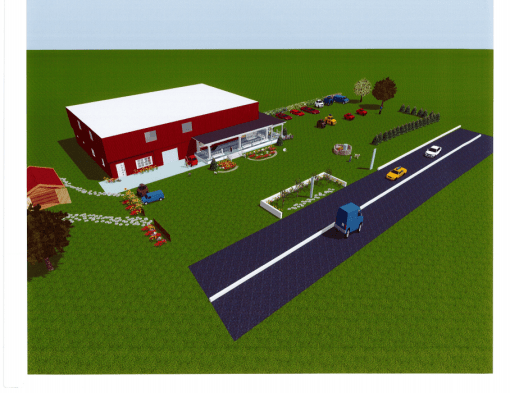
7. We’ll wrap this up with a pair of Dryden projects. The first, 1610 Dryden Road. Most folks better remember this barn as the former Phoenix Old Used and Rare Books, which closed in 2015 after a 30-year run. In early 2017, a proposal came along to use the barn as a trailer sales dealership, but it did not come to be. Now, for the second time in as many months, the proposal is a veterinary clinic, “Elemental Pet Vets”. Local veterinarian Curtis Dewey and his wife Janette are proposed to renovate the 6000 SF barn with accessory parking and landscaping. The property is zoned rural residential, so any commercial plan needs a Special Use Permit (SUP) from the town of Dryden. The town planning department is generally amenable to the reuse even if out of sync with zoning, so long as the parking and accessory structures are approved by the town, the curb cut meets NYS DOT regulations, and a landscaping buffer is in place. Ithacor of Cortland will be the general contractor.

The rendering is a bit…strange, so strange that I’m still not sure if they plan on taking down the pitched roof for a flat one, or if they decided thirty minutes in their late 1990s rendering software would convey enough to get approval. Seriously, this might be one of the worst renders I’ve seen for a project, and that’s saying a lot given the number of low budget drawings that go through the boards for small projects.

Meanwhile, as previous covered by the Journal, the Laser Brewer fashion boutique at 1384 Dryden Road has closed with the retirement of Peggy Laser after forty years of business, and her son Riley is expanding his Brew 22 coffee bar, kitchen and beer taproom to fill out the 3248 SF space. This project also requires an SUP because the younger Laser is adding a drive-through window (for the coffee and baked goods, brew-thrus are illegal in New York but okay in plenty of other states). Other than that and an exterior paint job, no further structural changes are planned.