238 Linden Avenue Construction Update, 9/2018

9 10 2018

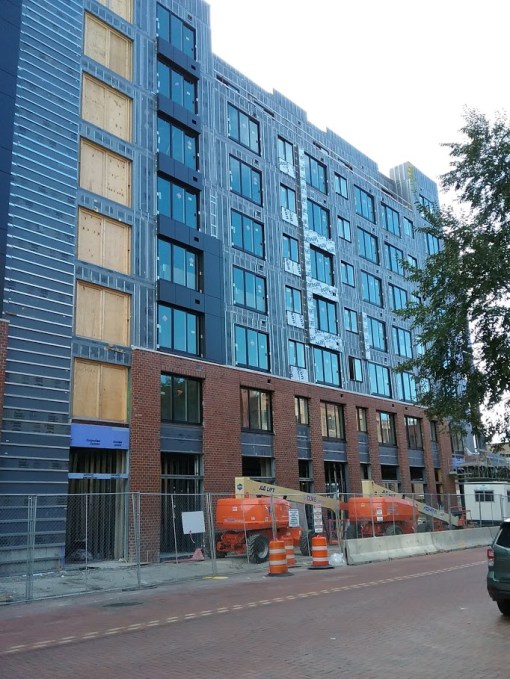
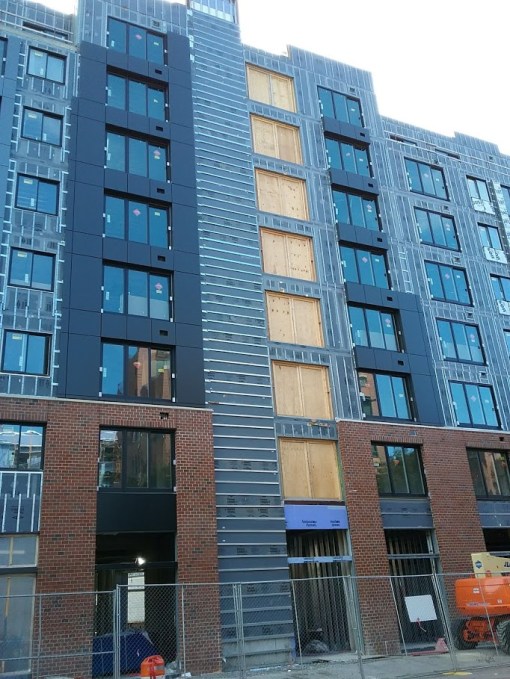
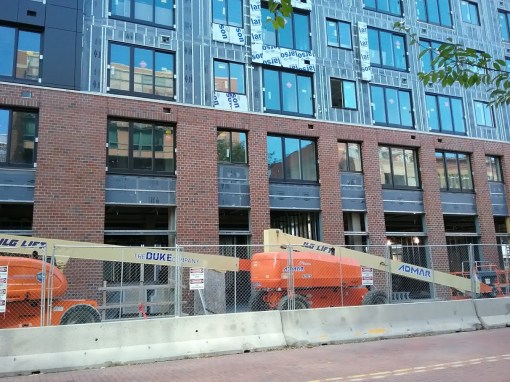
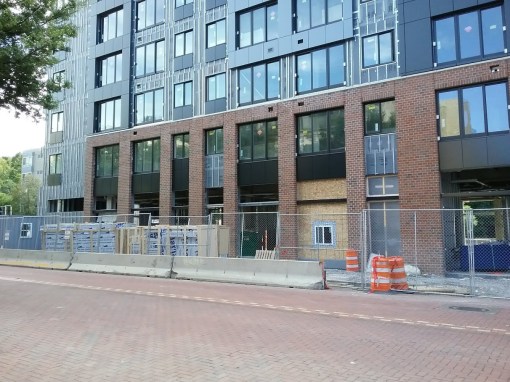
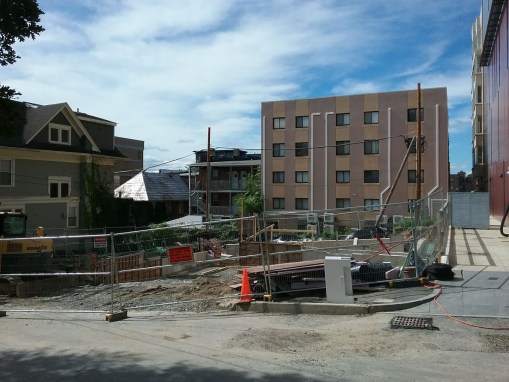
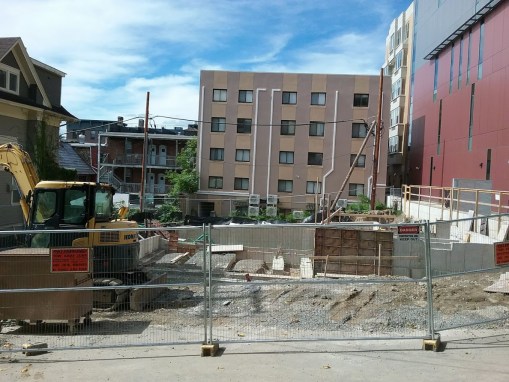
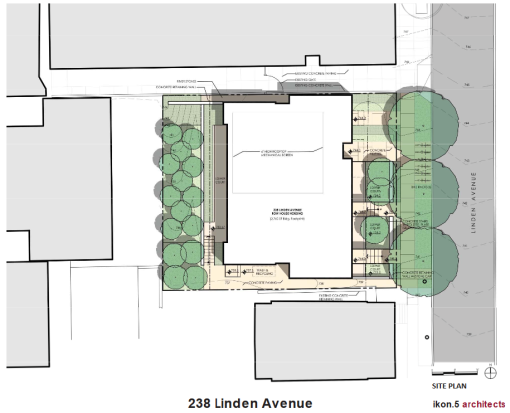
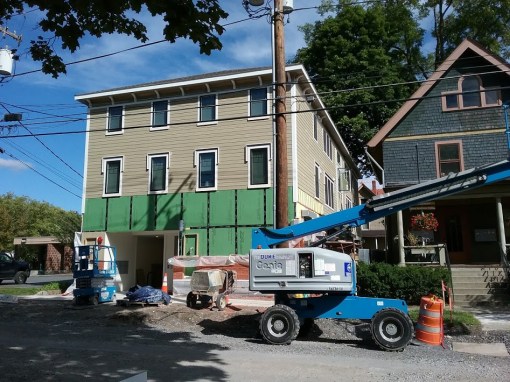
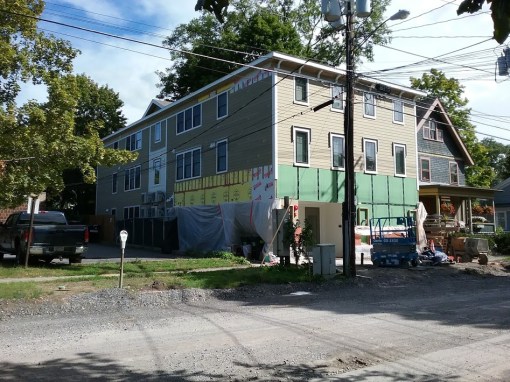
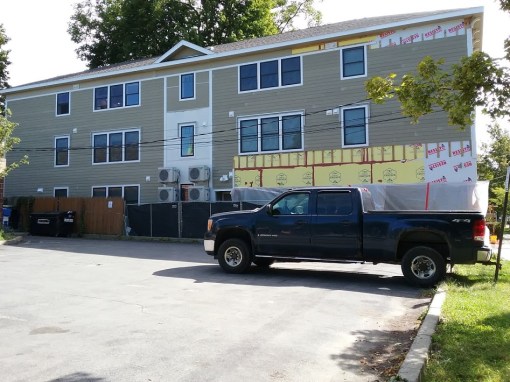
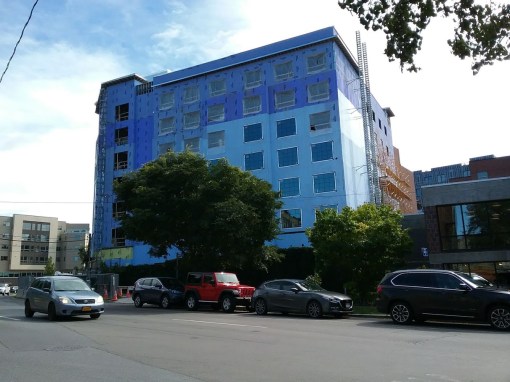
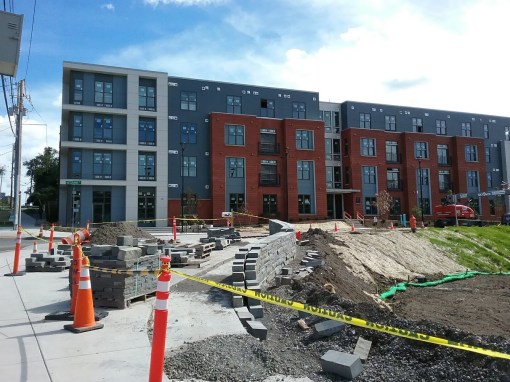
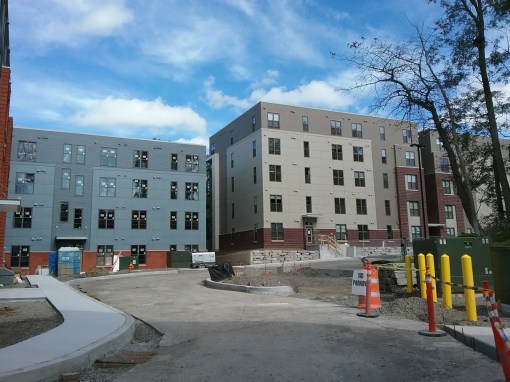
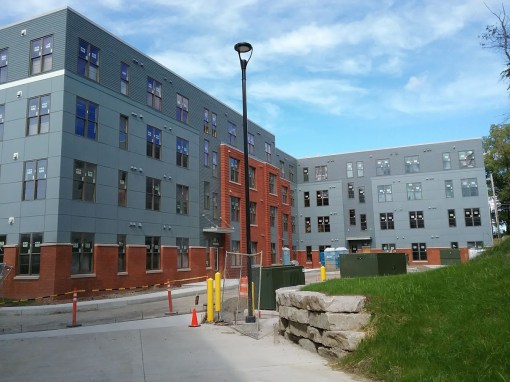
The foundation walls are being poured at Novarr-Mackesey’s 238 Linden Avenue project. The footers and some of the foundation walls are poured and cured, with steel rebar sticking out of the surface, waiting to be tied into the skeleton of the structure as it starts to be assembled. Other concrete walls are still being formed and poured. It looks like wood with steel bracing, my first thought was all wood but a closer look shows the bracing is thin steel, with the plywood from Pacific Wood Laminates and likely procured through a supplier, and the bracing probably from the same supplier. Forms are typically plywood, sometimes aluminum or steel, and are braced to resist the pressure from the concrete as it is poured to make the foundation walls – basically, to keep the walls in shape while they cure. And once the wall is cured and checked for any issues, workers move the forms to the next section until the walls are complete.

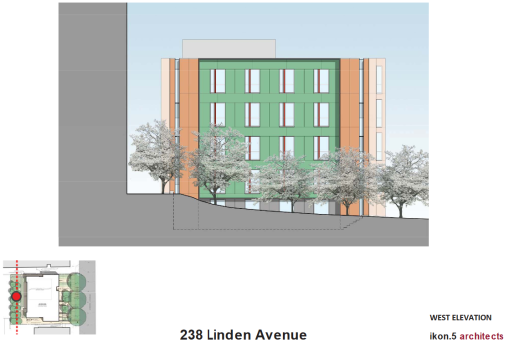
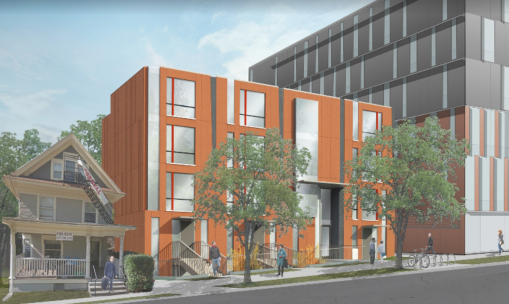
The sloping rear wall is probably not a part of the building foundation. Looking at the footprint of the building, it’s more likely a retaining wall intended to hold back the soil. 238 Linden will have a habitable basement with lower “courts” to let light and air below ground level (offhand, I think the layout is five studio units per floor on the four floors above ground level, and four studio apartments on the basement level, for a total of 24 units). The front retaining wall will have a similar slope as it is built out.


210 Linden Avenue Construction Update, 9/2018

6 10 2018

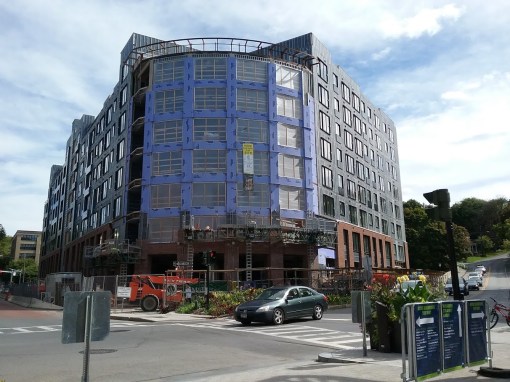
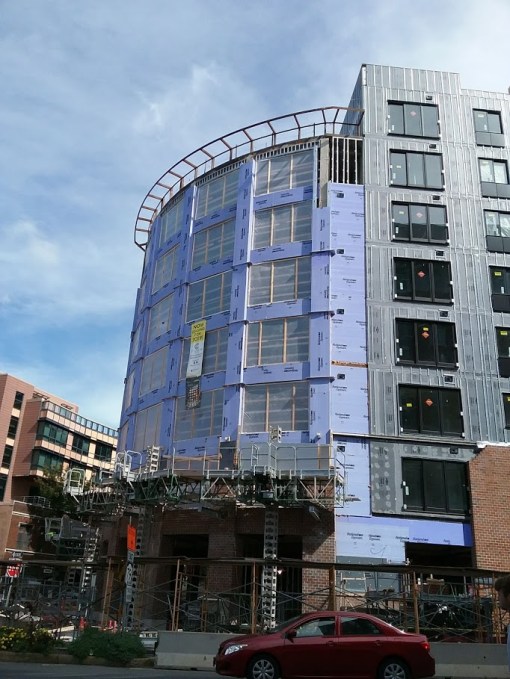
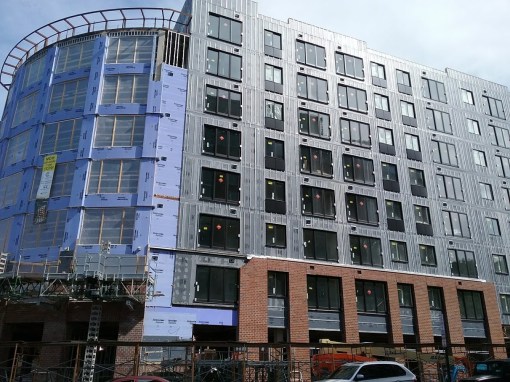
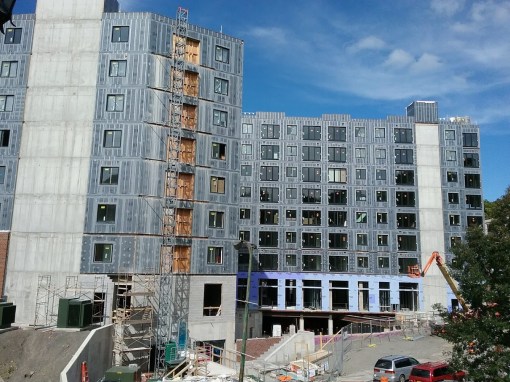
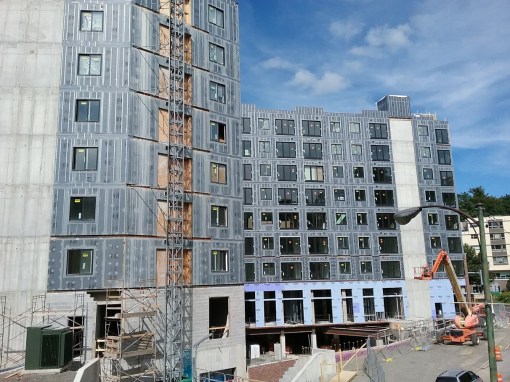
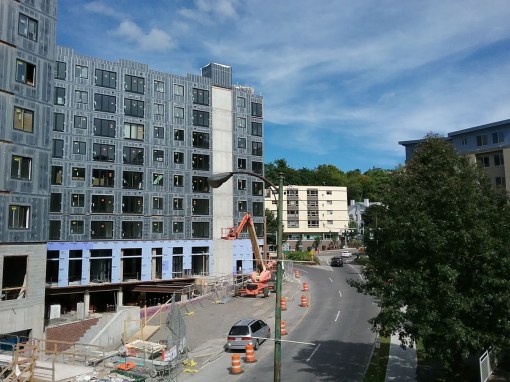
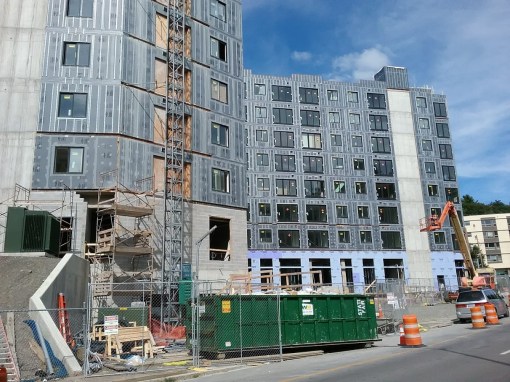
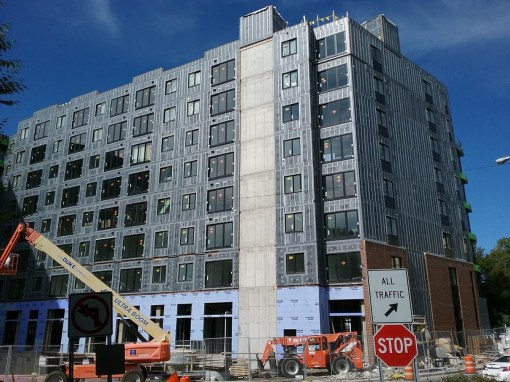
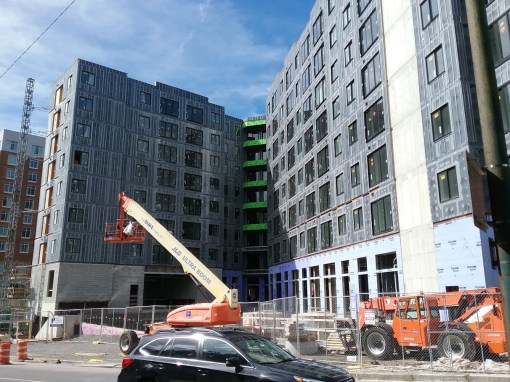
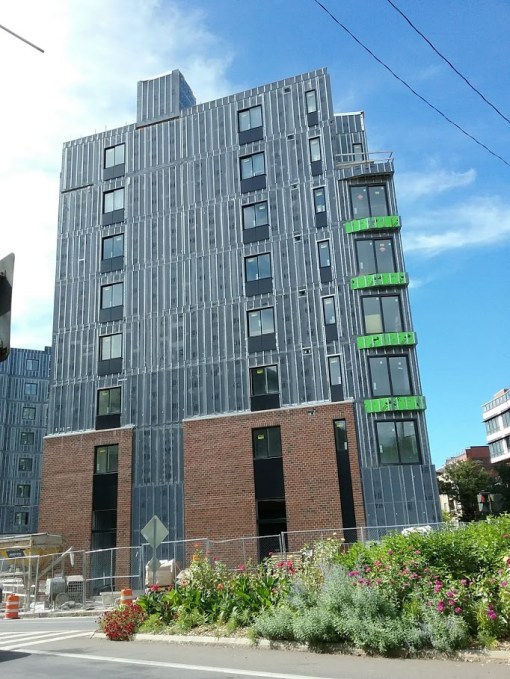
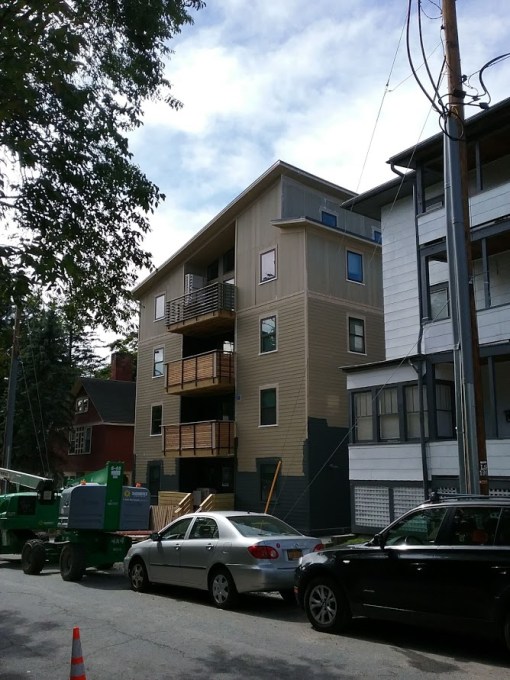
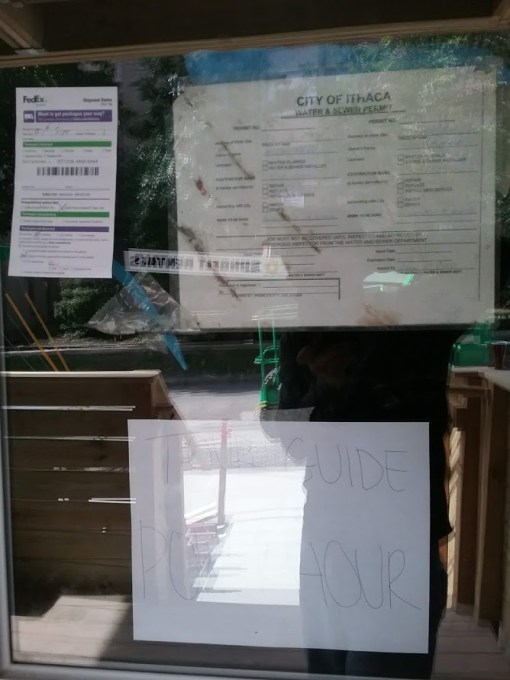
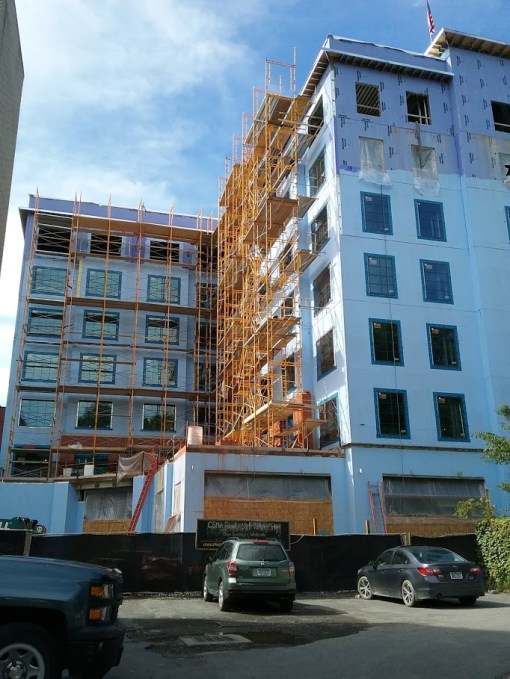
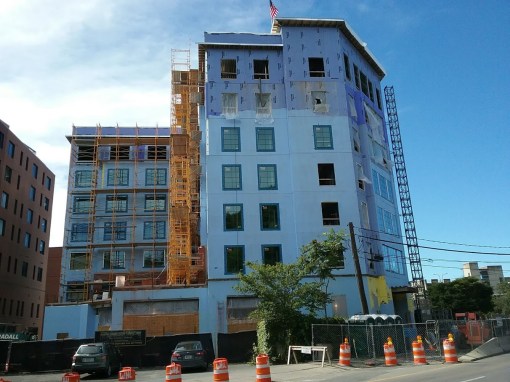
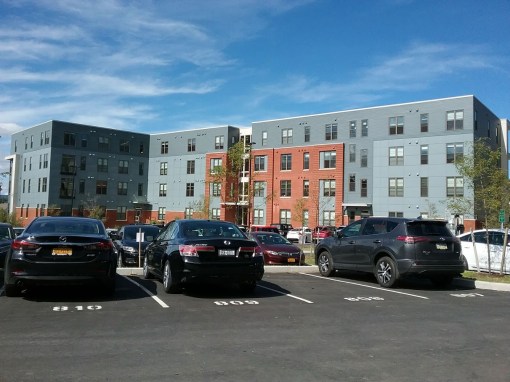
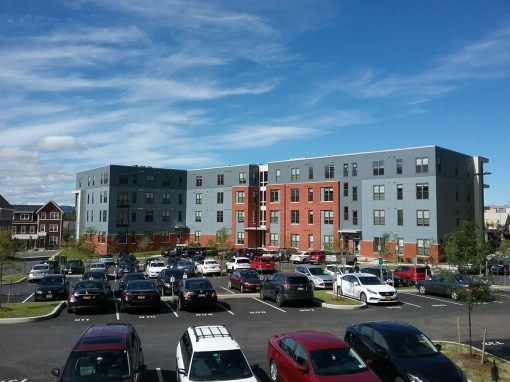
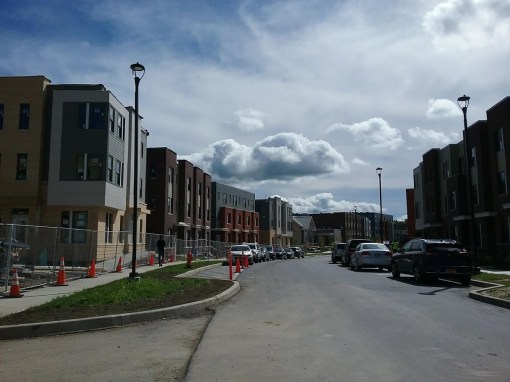
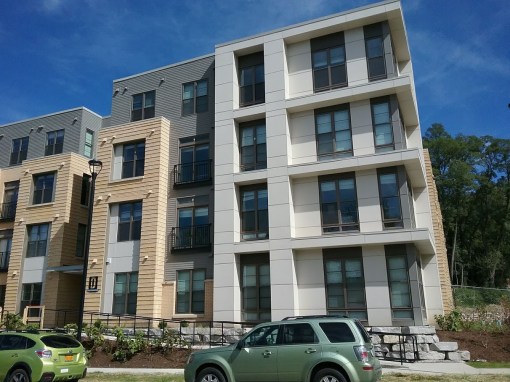
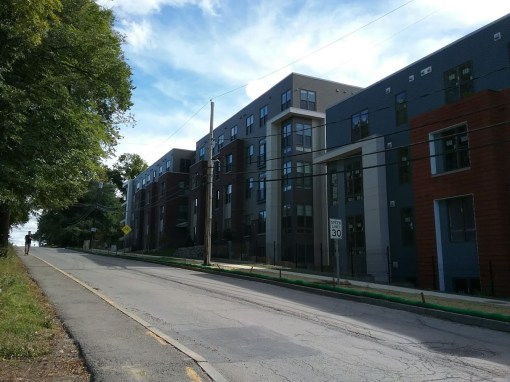
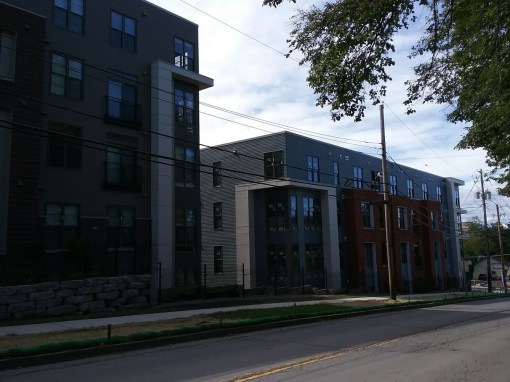
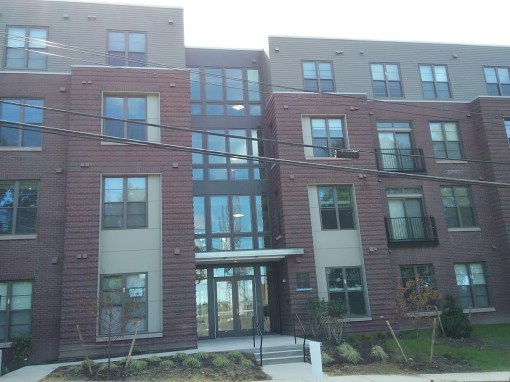
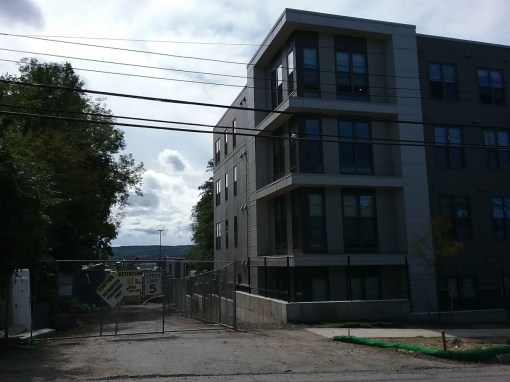
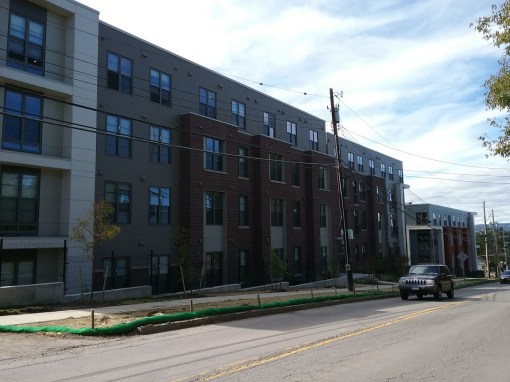
Tying into the 107 South Albany example from earlier this week, 210 Linden is not a finished building, but still certified for occpancy. My impression is that some units are ready for occupancy, but not all. Tenants of The Lux had emailed in to say that it wouldn’t be open until the Spring, and the Craigslist ads tout Spring 2019 leasing. But there are photos advertising units in the building that show the building is occupied; the front facade’s window arrangement is unique among Visum’s buildings, and can be clearly seen in this living room photo. I’m assuming that from the FedEx delivery slip and the “TOUR GUIDE POWER HOUR” are related to the residents.

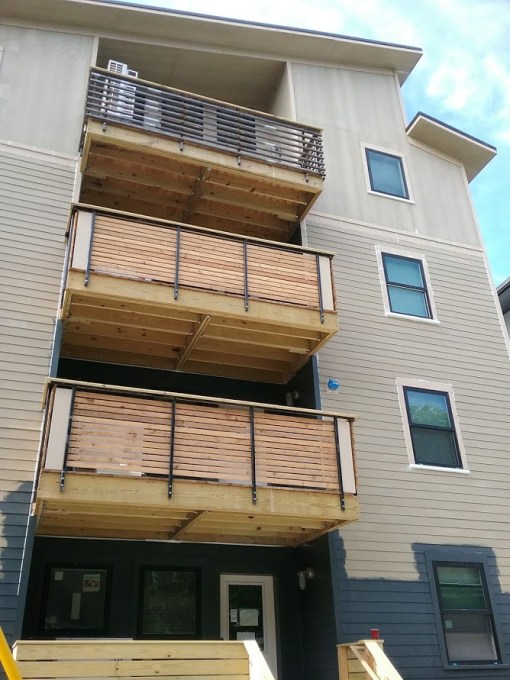
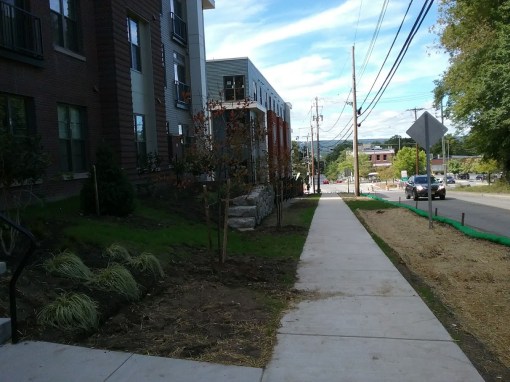
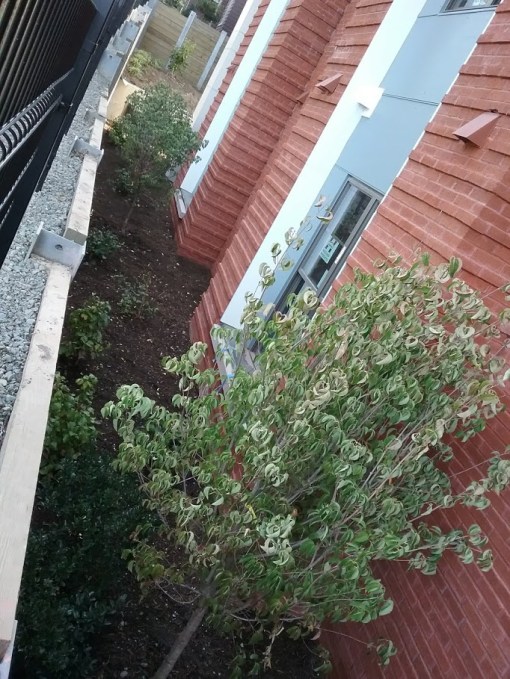
That noted, if the interior is largely complete, the exterior still needs fiber cement siding on the north and south walls, painting (the charcoal grey is going on now, with light grey presumed for the panels on the top floor), trim/finish work and seeding/landscaping. TYPAR is being used for the housewrap / weather resistant barrier to keep the sheathing from getting damaged by moisture, and wood rails atop the TYPAR are used to attach both the lap siding and the panel siding. the panels look to be another change on the fly, as the original renderings called for lap siding on the top floor as well. Interestingly, the balcony treatment is largely finished and accurate to renders – wood slats on the lower levels, and steel rails on the fourth floor. Not sure if that’s for visual interest, or to accommodate building codes.


Press Bay Court Construction Update, 9/2018

3 10 2018

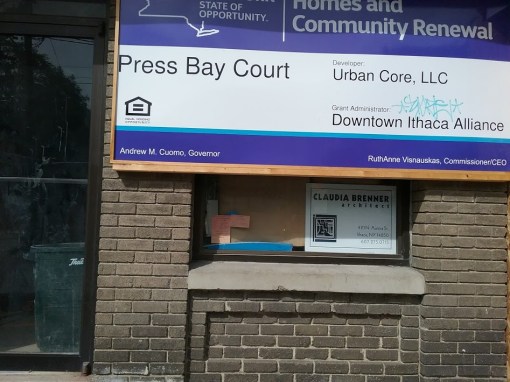
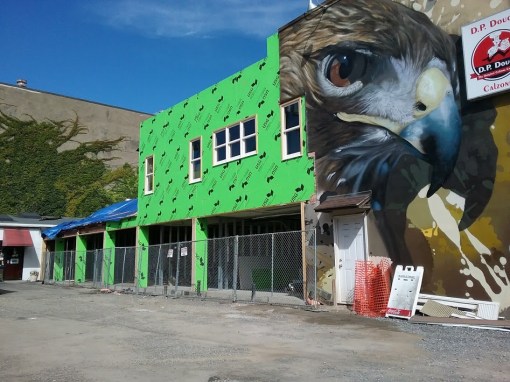
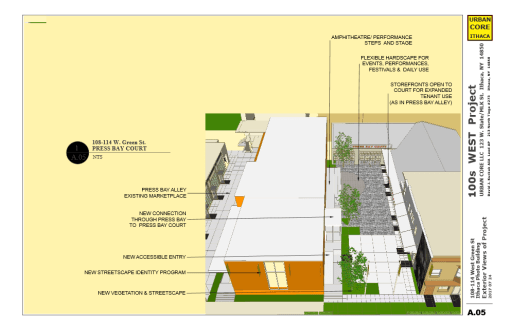
Press Bay Court, a project by local businessmen John Guttridge and David Kuckuk d/b/a Urban Core LLC, is moving along at a good clip. In what could be seen as an expansion of Press Bay Alley, the plan reuses a dilapidated 1920s building and renovates it into several small-scale retail spaces, ranging from 320 – 2,200 square-feet. Among them will be Halal Meat and Groceries, One Ring Donuts, Gee June Bridal Shop and Hair • Color • Art. Bramble, an herbal retailer, will move from its Press Bay Alley slot into one of the Press Bay Court storefonts.

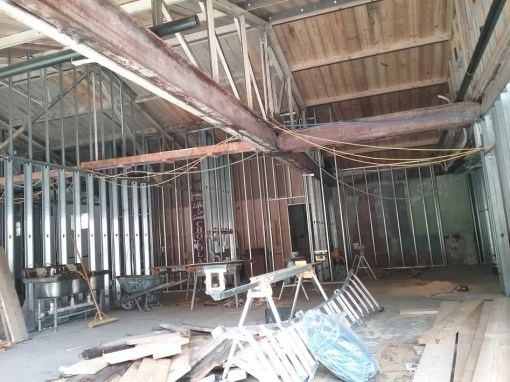
The business websites for Gee June and Hair • Color • Art both indicate October 2018 openings in Press Bay Court (October 16th, in Gee June’s announcement), and there’s a lot of work to be done between now and then. The interior of the building was gutted and new steel stud walls have been erected, as well as fresh gypsum sheathing on the outside. The four second floor one-bedroom apartments are also being renovated, which will be rented at below-market rates (Urban Core is aiming for 75% area median income, which roughly equates to a household salary in the $42,000/year range for a single person, $48,500 for couple). Expansive windows will be installed at ground level to provide a better sense of the activity indoors, and an awning will be erected as the exterior is finished out. The exterior parking lot will be turned into a landscaped pedestrian gathering space for impromptu social events as well as festivals and small concerts or shows.

//www.instagram.com/embed.js


View this post on Instagram


These are going to be the coolest apartments in downtown…

A post shared by PressBayAlley (@pressbayalley) on

//www.instagram.com/embed.js


107 South Albany Street Construction Update, 9/2018

3 10 2018

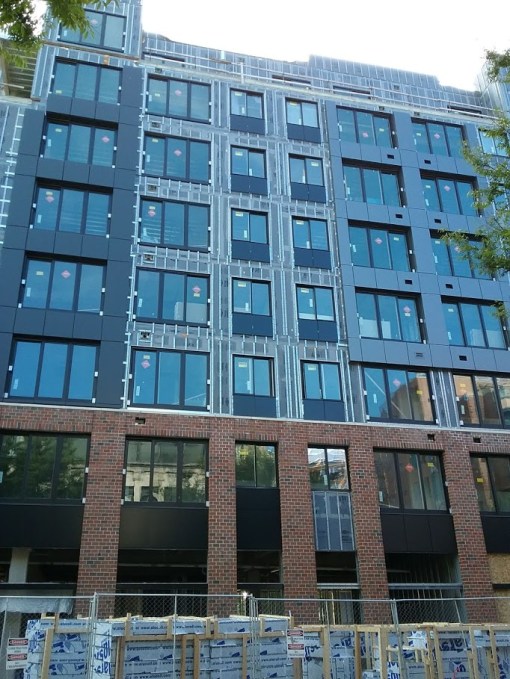
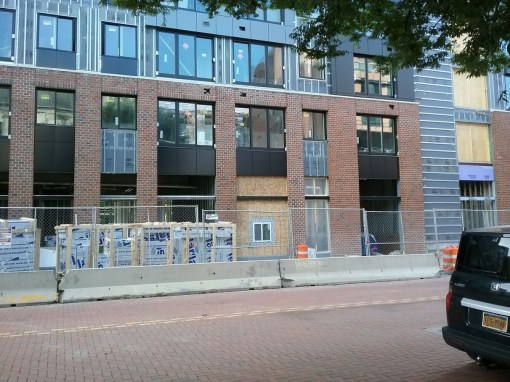
I briefly touched on this in the Voice write-up, but a Certificate of Occupancy doesn’t require a property to be finished with construction work – only that it be safe for tenants and meeting codes and standards, meaning utilities are on, interiors are complete to a satisfactory degree, and the exterior work poses no regular threat, neither outside of work hours or during the course of normal labor. It’s not uncommon to see this in Collegetown thanks to the hard deadline of student tenants (and the dread of paying for alternative accommodations if a CO can’t be obtained), but 107 South Albany is a rare case outside of the more student-heavy neighborhoods.

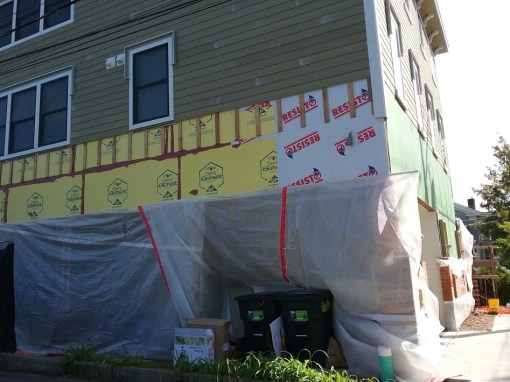
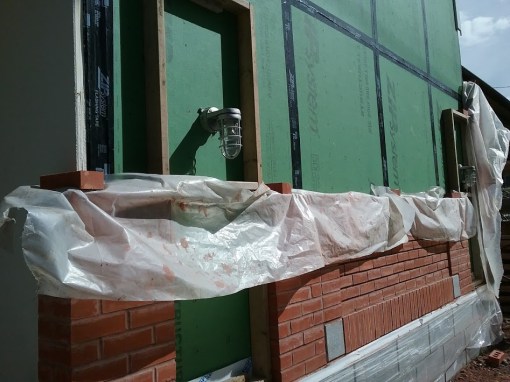
The lights are on and a glance through the common space window suggest that the building is largely complete on the inside. Clearly, work continues on the outside, with fiber cement boards going over the plywood sheathing (both George Pacific and Huber ZIP plywood sheathing varieties, some of which is covered with a Resisto air/vapor barrier). The brick facade work on the front ground-level continues. I’d expect both to be finished before the first snow flies.

Renting Ithaca (Nick Stavropoulos) is the developer, and Flatfield Designs (Daniel Hirtler) is the architect. This is not likely to be their last project. The Stavropoulos Family has undertaken several progressively larger projects over the past several years, and purchased the Alley Cat Cafe building at 312 East Seneca Street for $800,000 in mid-July.

While I can’t say I’m a fan of the demolition of the previous structure, I can appreciate the subtle densification and addition of housing of the State Street Corridor with a contextually-appropriate structure. There will likely be more to come, so if this is setting the bar, it’s a good standard to have. The introductory article, and background about the project, can be found in the June 2017 post here.


City Centre Construction Update, 9/2018

2 10 2018

Along with the usual bevy of construction photos, I popped inside the sales office, which opened on the Commons last month. There might have been a little reservation from the two guys staffing the office when I introduced myself and said “I’ve been reporting on the project and do a real estate and construction blog on the side”, but once one of the leasing representatives, Anthony, mentioned he had checked out a blog called “Ithacating” to help him prepare for the job, we hit it off pretty well.

The second photo shows the reserved apartments as of September 23rd. As mentioned in the Voice article, every one of those top-end $3,265/month two-bedroom units facing the Commons are taken, and the project is still over eight months out from completion. 47 of the 192 units have deposits down, about 25% of total. A disproportionate number of those are two-bedroom units, 16 of 39 (41%). According to Anthony, the tenant mix is fairly diverse – some students, some young working professionals with downtown or Cornell jobs, and a substantial number of seniors looking to downsize and be downtown. The office has received a number of calls inquiring if the units are for sale, but unfortunately for those interested, condos are scarce in Ithaca.

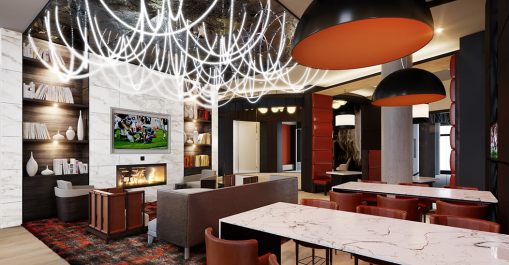
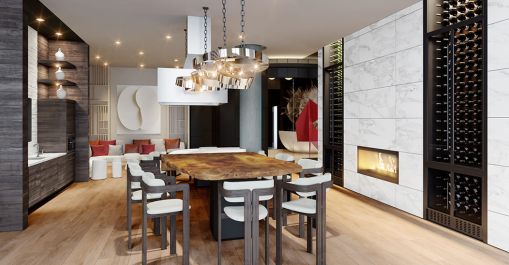
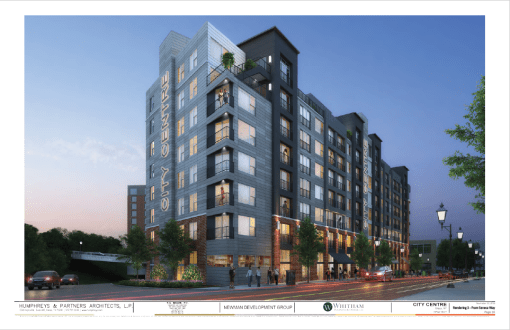
The project website has been updated to include a number of interior renderings, included here at the end of the post. The first four in the set are apartment interior images, showing two bathroom finishes (modern aesthetic with a neutral palette), a larger unit’s living room and kitchen, and a studio unit, which they market as a “junior apartment”. The last three images are common spaces, two lounge spaces and the lobby. The lobby will in fact have a circular reception area, as shown in the ground-level floor plan.

Newman Development Group (NDG) had previously mentioned in a response to Green Street Garage questions that they had secured tenants for all three ground-level commercial spaces, the Ale House restaurant and two other tenants whom Anthony was not allowed to discuss per confidentiality agreements, but they hope to go public with the future tenants “in about a month”. The spaces clock in around 10.600 square-feet in total.

“NDG has recently signed three superior quality tenants for the City Centre project and had a high level of interest from a number of additional tenants that had to be turned away. NDG believes that these and other prospective tenants seeking 3,000 to 5,000 square foot spaces will find the Green Street location to be highly attractive based on the high traffic counts, pedestrian activity, mass transit access, proximity to The Commons, adjacency to significant downtown residential neighborhoods and availability of convenient parking, ” said NDG in the Green Street Q&A.

Construction is moving along at a good clip, with most of the windows fitted and work continuing on the aluminum panels and brickwork that will comprise most of the facade. For the sake of brevity, we’ll dig more into the exterior finishes and details in the next update in November.

Side note to the Ithacan – the effort is appreciated in your downtown write-up, but you guys flubbed one critical detail. City Centre and State Street Triangle were two separate projects with two separate development teams. The only common bond is location. The story that I’m familiar with is that the Colberts, who owned the Trebloc site, dropped Campus Advantage as a partner because CA wanted a lower sale price for the land when they were forced to submit smaller project designs, while NDG was willing to pay the premium, and so they were able to snatch themselves the purchase option for the site when it opened for renegotiation.

In keeping with the theme of development controversy, here it’s been the high price of the units – $1,545 – 1,625/month for a studio, $1,745 – 2,595/month for a one bedroom unit, and $2,460 – 3,265/month for a two-bedroom unit. There has been substantial blowback from some local activists and community groups as a result, and even other landlords have expressed off-record that they are incredulous of the asking prices Newman Development Group was aiming for with the City Centre project. So far, however, lease-up seems to be going well. City Centre will open for occupancy in June 2019.


Harold’s Square Construction Update, 9/2018

29 09 2018

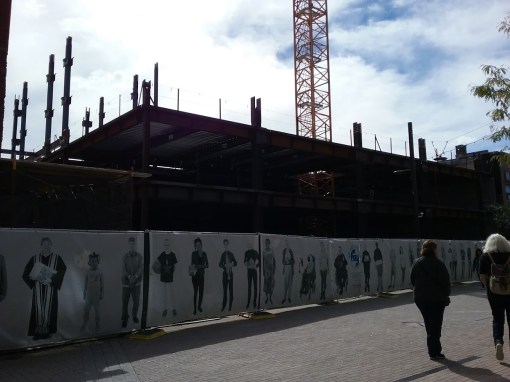
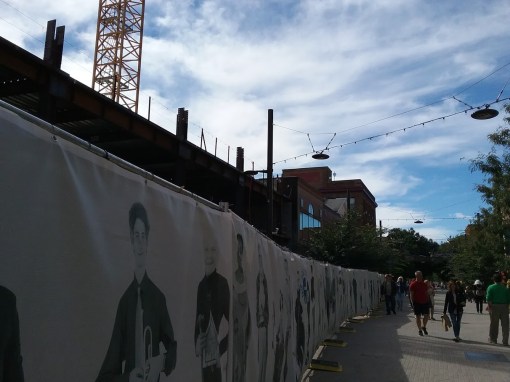
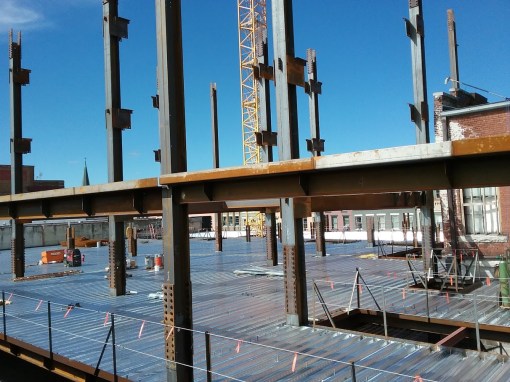
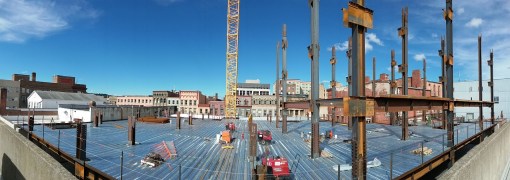
With the Commons Playground issue seemingly settled, the Harold’s Square project continues to rise on the Commons (more specifically, 133-139 East State Street). The full floor area has been built out for the first and second floors, the third floor is partially assembled, and a few steel beams and joints have been erected for what will become the fourth and fifth floors. Note that the floor plate will only cover the full footprint of the building for the lowest four floors – the fifth has some modest setbacks from the Commons to create the impression of multiple structures and break up the massing, while floors six through twelve are the tower portion, where most of the apartments will be located.

Granted, the south views from those apartments are likely going to be for only a limited time. The two proposals that have garnered the most positive feedback and initial scoring for the Green Street Garage Redevelopment are the Vecino proposal and the Visum/Newman proposal, each of which calls for a tower similar in height to Harold’s Square. My impression is that, if forced to advocate for one or the other, the Harold’s Square development team might be slightly warmer to the Visum/Newman proposal because it provides for a wider alley between the buildings as well as aesthetic improvements to that alleyway.

Quick aside, in pitching the Little Commons proposal for the Green Street Garage, I had a mixed reaction to the IURA submission. The elephant in the room was always that whatever design he and his partners submitted would be sufficiently short so that the Harold’s Square owners (L Enterprises and McGuire Development) would retain the ability charge a premium for the upper-story units in the market-rate Harold’s Square building. The proposal’s website, which STREAM Collaborative put together, does a very good job stepping around that and emphasizing other potential benefits of a modestly-scaled structure. The written submission, however, stated the importance of protecting the Harold’s Square viewshed, which is readily recognized, but maybe not something that should have been explicitly acknowledged, because it could easily be twisted and rub reviewers the wrong way – “views are only for those with deep pockets” or “catering to the wealthy tenants next door”. It’s the kind of comment that reads better to developers than to the general public, and my personal take is that, however true, they just shouldn’t have brought it up.

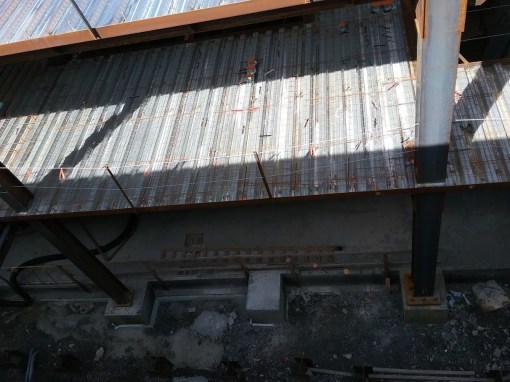
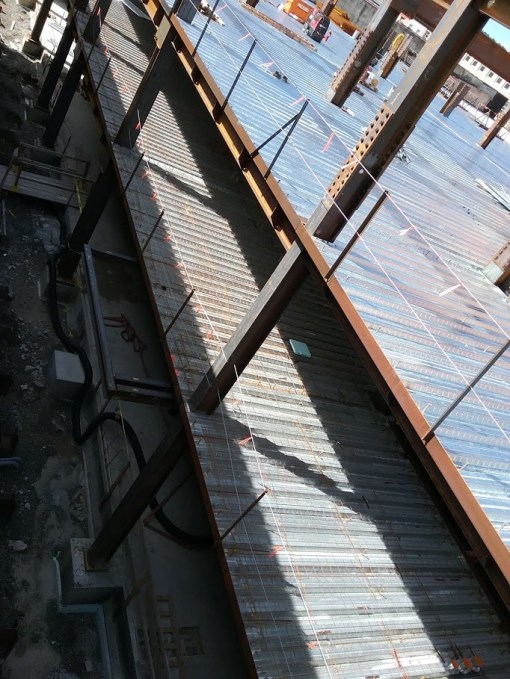
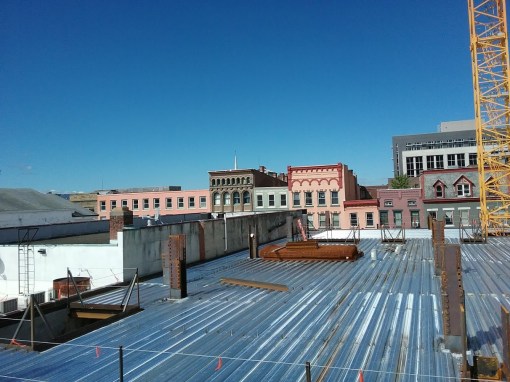
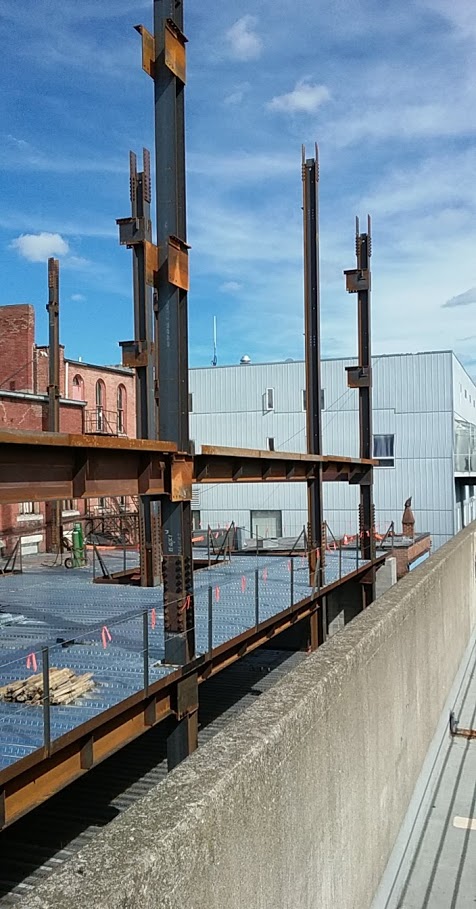
Anyway, as seen in the Harold’s Square photos, once the structural steel is laid out, the corrugated steel decking is attached and a rebar mesh laid atop the decking for the concrete pour of the subfloor. As with foundations, the mesh provides stability and strength to the concrete as it cures. The openings between floors are for elevator cores and stairwells. The skeleton will rise at a fairly quick pace given the effort to take advantage of the relative meteorological calm that early fall provides, but I don’t see anything on the project website that indicates a ballpark estimate of when topping out might occur – the crane isn’t expected to be down until March, if I have my notes right, and after that happens, the structure should be closed up enough / far enough along with exterior work such that the Commons playground can be returned to active use. A mid-2019 opening is planned; no word on potential commercial tenants on the lower floors.

The WordPress for the project can be found here, and the Ithacating project description here.


Hilton Canopy Hotel Construction Update, 9/2018

29 09 2018

The past couple of months haven’t been the best for Ithaca development. Apart from the recent lull, most of the high-profile projects have engendered some animosity or involved in a publicly relations mess. In the case of the Hilton Canopy, that would be the incident with the sure-footed construction work on the scaffolding. My goal when reporting it back in August was to be impartial and thorough and I still I don’t know enough about the work environment to make a comment. From the public comments and my emails, it’s not 100% clear if there were violations and how severe they were; there’s some subjectivity in their application (harnesses are to set up in ways that don’t pose other safety concerns or obstacles, for instance, so if it could be proven that it would have been a risk a harness wouldn’t have been required). OSHA is reviewing and will make their judgement calls as they see fit, even if it takes up to six months to hash out.

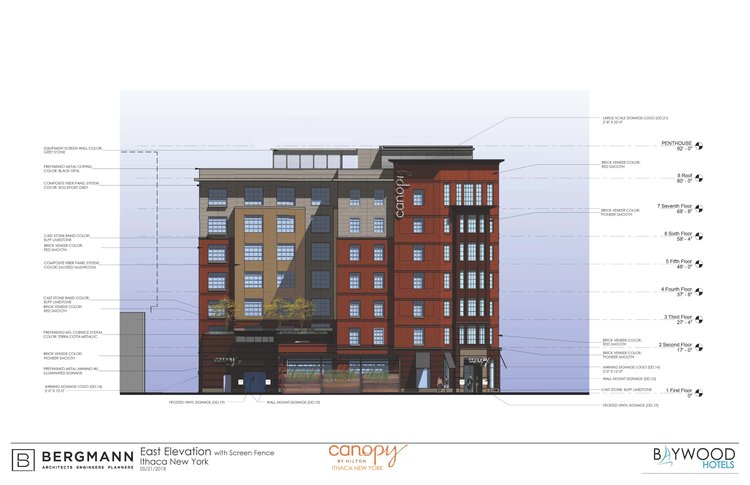
On the bright side, the Hilton is moving along, the warehouse-style windows are being fitted and most of the sheathing has been attached to the exterior steel studs. The water-resistive barrier will prevent moisture seepage from damaging the gypsum sheathing panels. The yellowish Behr paint “applesauce cake” colored fiber cement panels were replaced with a somewhat darker and browner tone, “sauteed mushroom” from rival Glidden. As Glidden Paints says, a “(m)id-toned warm beige, this color makes a statement as an exterior body color as well as an interior accent wall or warm meditation space.” I don’t make these names up, I just report them.

There hasn’t been too much news about the project apart from the scaffolding controversy; the Canopy brand has been touting Ithaca-area attractions on its facebook page and the brand website states a mid-2019 opening.


Maplewood Construction Update, 9/2018

27 09 2018

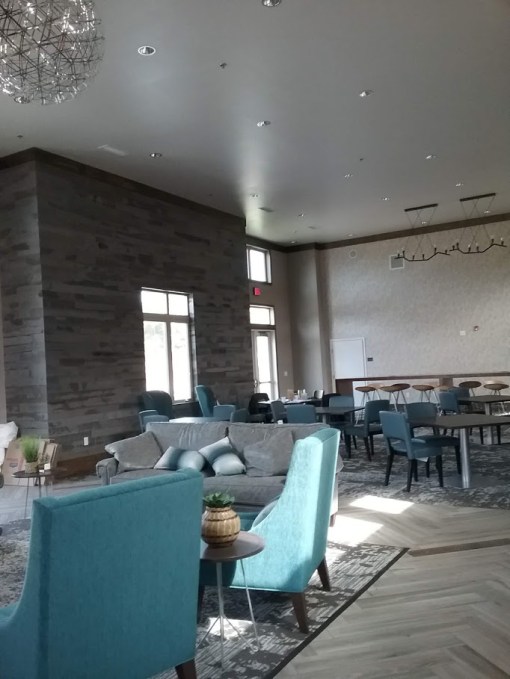
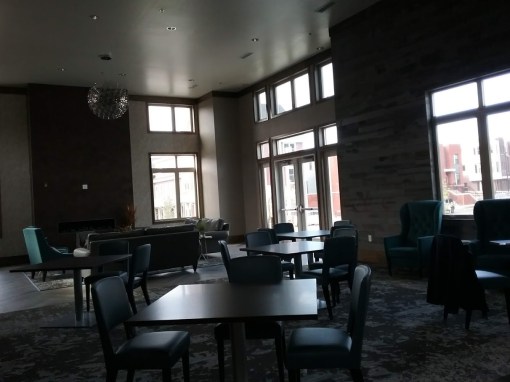
Maplewood is an example of a well-intentioned and thoughtfully-designed project whose execution hasn’t been so great. It was clear from the start that the timetable was aggressive, but with 20/20 hindsight, it has come clear just how overly optimistic it was – even with multiple daily and weekly work schedule extensions, six townhouse strings were so far behind they were never even marketed for the fall semester (At, Bt, Ct, Dt, Jt-1 and Kt-1 ~140 beds), and at least one apartment building (Building E, 106 beds) won’t be delivered for a few more weeks. The move-in of over 600 students was delayed. LeChase is taking subcontractors to court. The students aren’t happy, Cornell’s not happy, EdR’s not happy, the contractors aren’t happy, labor groups aren’t happy, local governments aren’t happy.

With the issues of construction well noted, I still think the project was a needed asset that increases the housing supply and provides some relief to the ongoing housing affordability issues. The design team was responsive during the development process and the EIS review was thorough. The project will pay 100% of its property value in taxes. The project uses air-source heat pumps, and is a “living laboratory” experiment because an all electric heat pump project of this scale had yet to be attempted in a colder climate like Ithaca’s. Basically, things started going wrong after approval was granted and the construction work went out for bid. For what it’s worth, the students seem to satisfied with the apartments, construction aside.

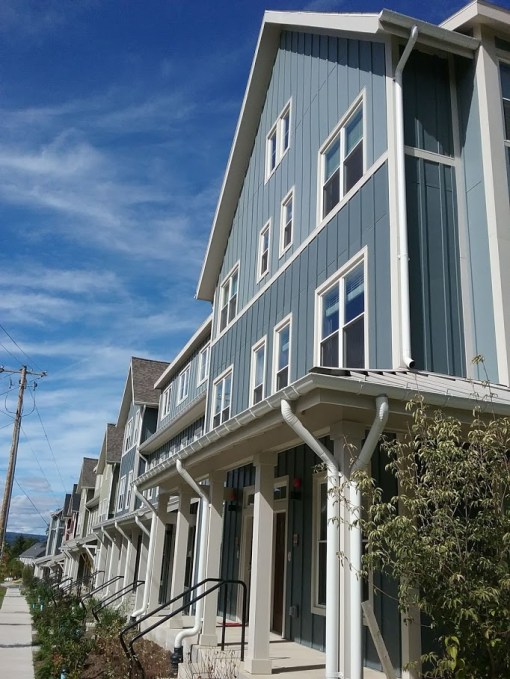
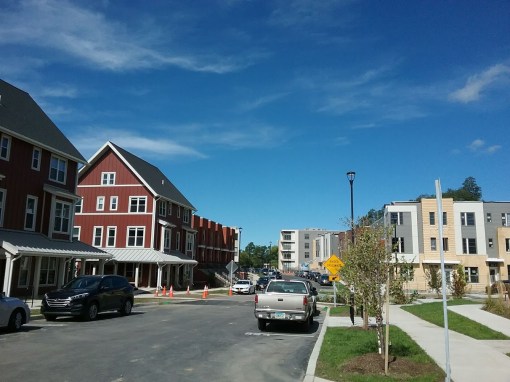
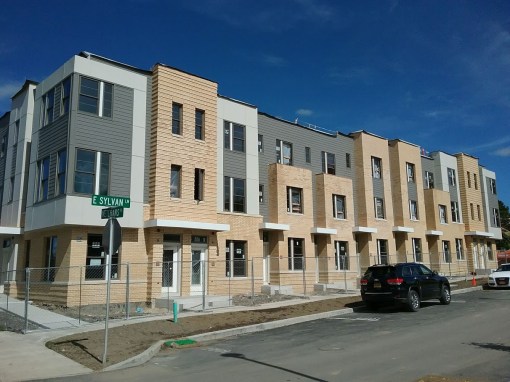
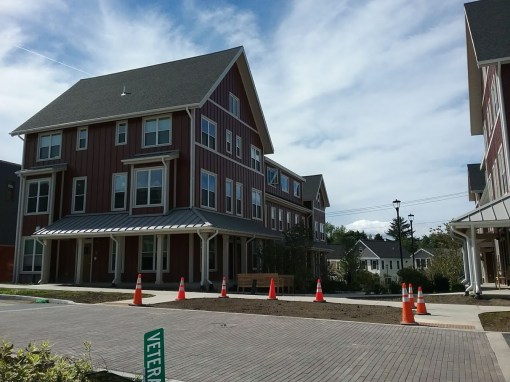
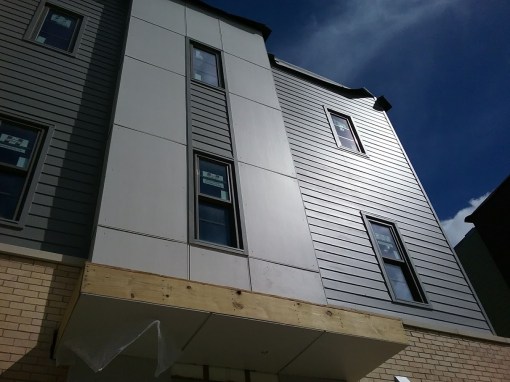
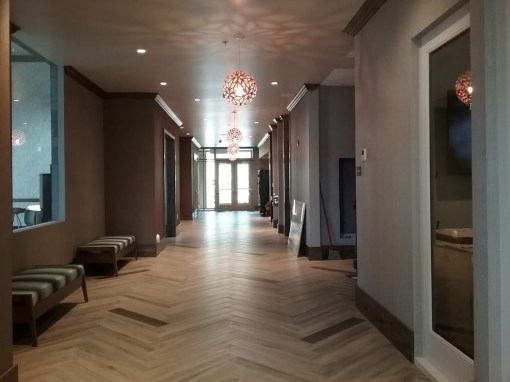
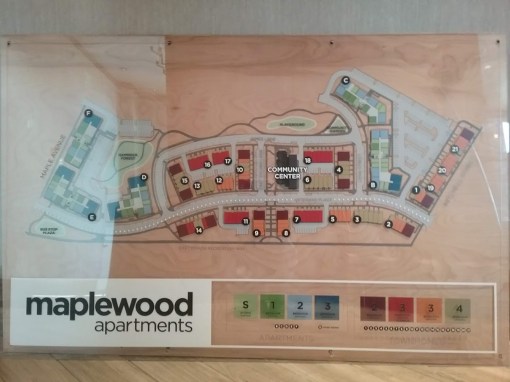
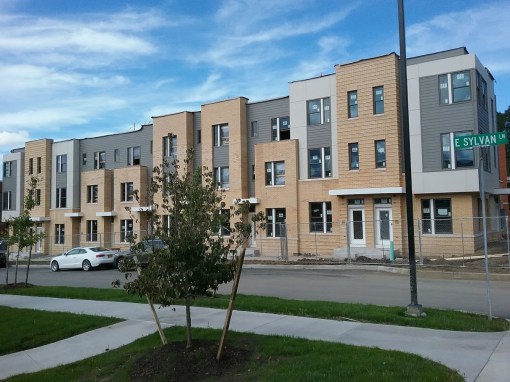
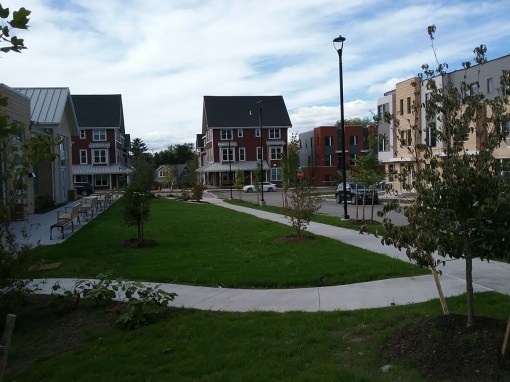
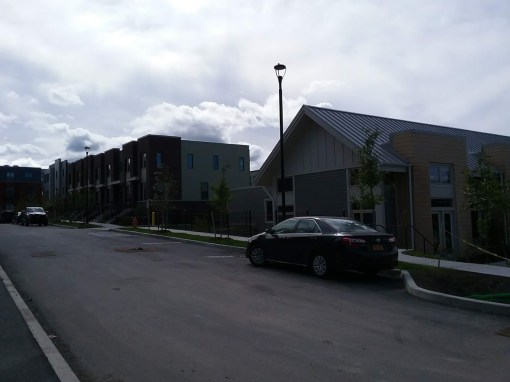
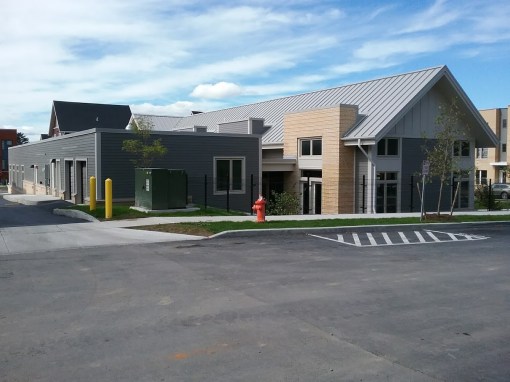
The 78 photos below (a blog record) go from south to north along Veterans Place, and back south along James Lane. Some of the units were just starting move-in, a couple strings of townhomes were undergoing a final cleaning, and others are still undergoing finish work on the inside and outside. The townhouses and apartment building E haven’t had all their windows fitted and the roof membrane isn’t complete, so they’re definitely still a few weeks out from completion. The bus stop plaza is still a work in progress with stone walls/seating areas underway, and the landscaping is really only complete south of Sylvan Mews, the small through street north of the Community Center. It’s unpolished and unfinished, but it’s coming along, albeit later than expected.

For project background and planning, click here.

For a site plan breakdown, click here.

For a construction timeline, click here.

Webcam link 1 here (updated ~15 minutes).

Webcam link 2 here (updated ~15 minutes).

Serious question – are these trees going to able to survive down here?

I think someone needs to recheck the base of this lightpole and see if it’s actually plumb.

This space will become a playground.


Amici House Construction Update, 8/2018

10 08 2018

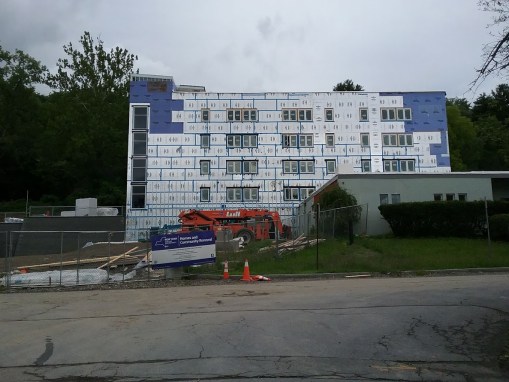
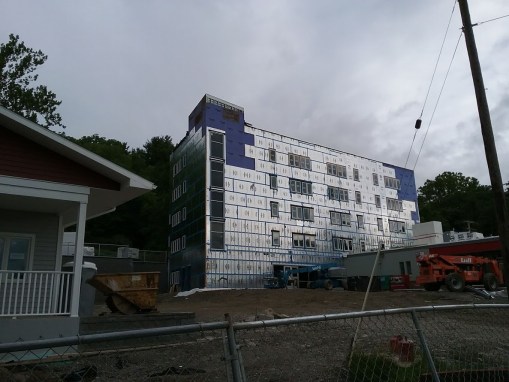
One of the things that stands out about the new Amici House project – or rather, doesn’t – is that the five-story residential building under construction doesn’t really stand out for a structure of its size. The hillside to the east keeps it from being prominent, and the section of Spencer Road on which its sits is tucked away from most neighboring structures – the building is hardly noticeable from South Meadow Street.

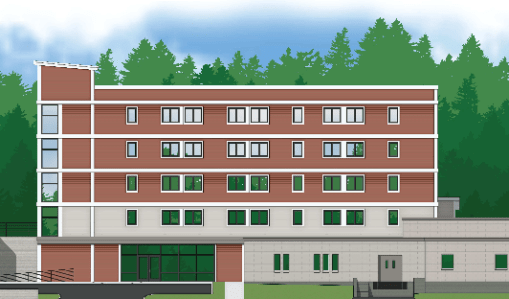
The structure is fully framed, nearly fully sheathed with fire-resistant National Gypsum eXP panels, and then layers with Dow Thermax panels, which stand out somewhat because of the reflective aluminum facer. The Thermax panels are glass-fiber reinforced polyiso insulation, a lighter duty but fire-resistant material, and bonus, it’s made at facilities powered by 100% renewable energy and has “zero ozone depleting potential”. The blue material is a liquid sealant to fill the spaces between panel edges (Dow LIQUIDARMOR), and it looks like metal rails are being attached at the ground level, where the exterior finish will be attached. I’ve kinda assumed this will be fiber cement panels, but to be honest I have not seen a materials sheet in the city’s online files.

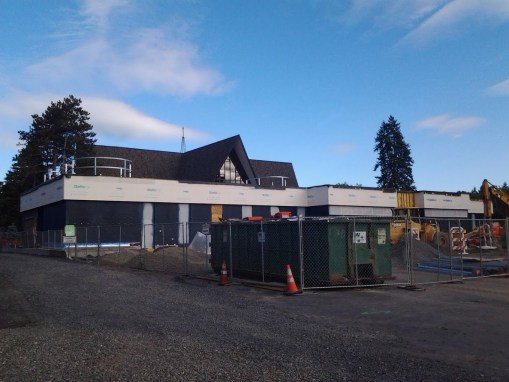
The same could be said for the new Harriet Giannelis Childcare Center, which looks nothing like the plans on file and presumably is filed somewhere, just not online. To be fair, it doesn’t look bad at all. Perhaps a bit plain, which isn’t a surprise given TCAction’s tight budget, but Schickel Architecture did attempt to dress it up by varying the colors and playing with the architectural details. Given the goals of the project, as long as its appearance doesn’t actively repel visitors and scare the kids, then it’s A-OK. Landscaping, colorful children’s projects and plantings will make it even better.

Note that one of the primary parking areas will be behind the new stone retaining wall at the rear of the property. Another will be along the section of Spencer Road across from the TCAction offices.

More info about the project can be found here.


Cayuga Medical Associates Construction Update, 8/2018

7 08 2018

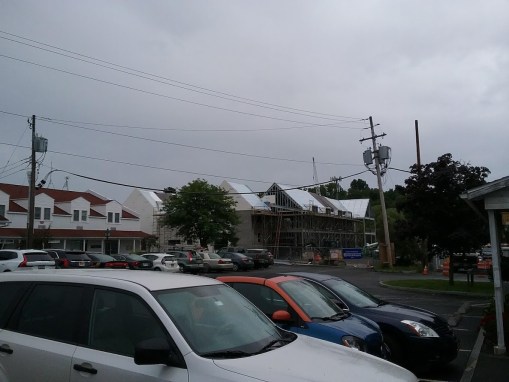
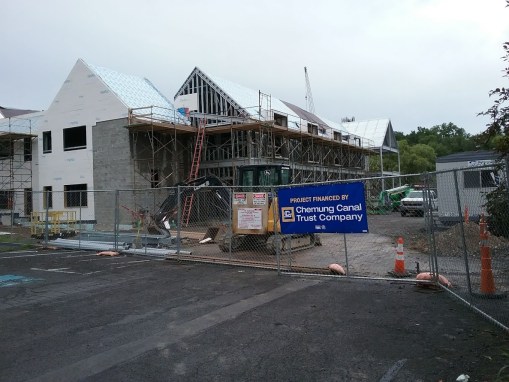
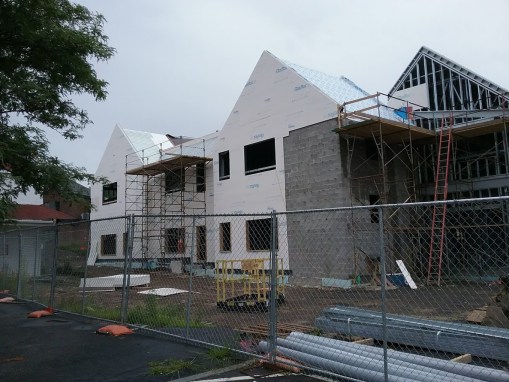
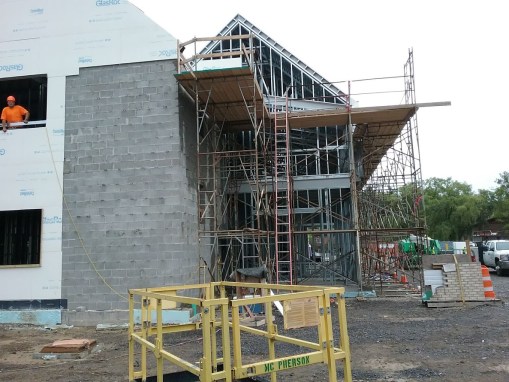
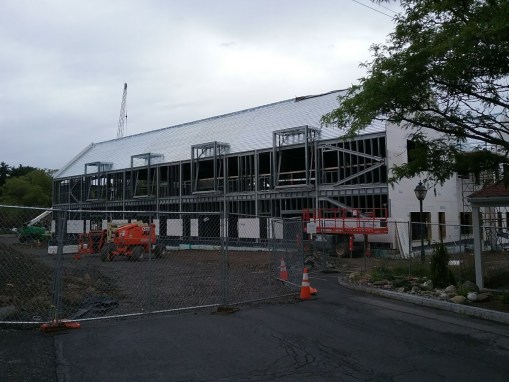
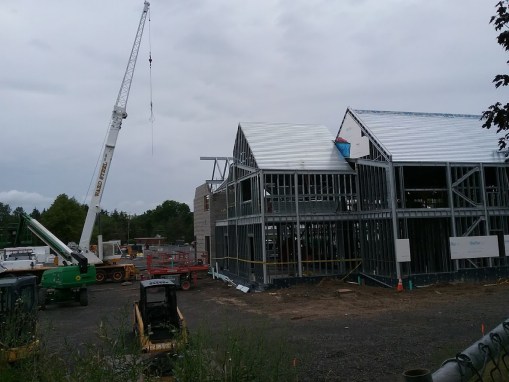
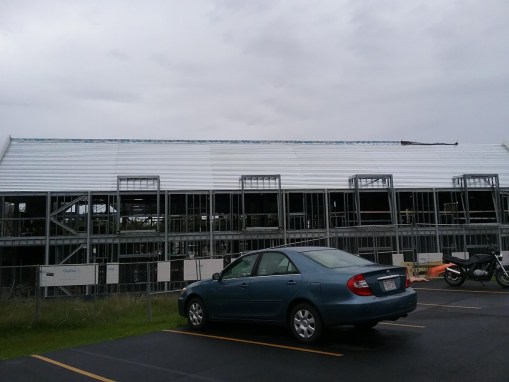
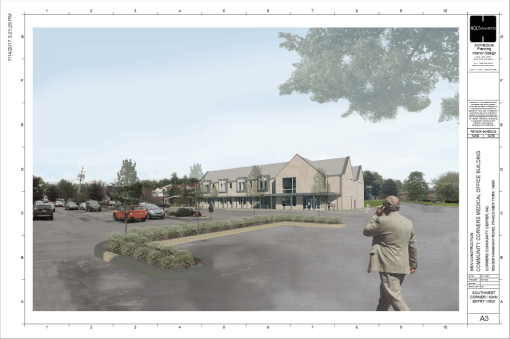
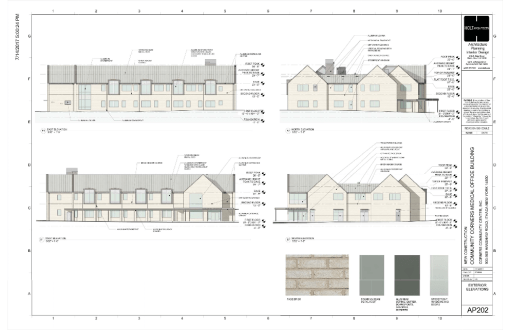
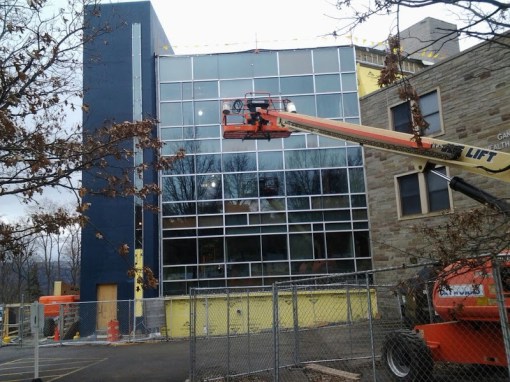
The new Cayuga Medical Associates office building at Community Corners is topped out – I’m a little hesitant to call it fully framed since it appears some minor work remains at the southwest corner of the new 28,000 SF building. Steel stud walls are being sheathed in Saint-Gobain CertainTeed GlasRoc, one of the major suppliers of fiberglass mat gypsum board. True to name, the boards consist of a sheet of woven fiberglass sandwiched between gypsum panels; brands like GladRoc and Georgia-Pacific DensGlass are fairly common for commercial construction where fire-rated walls are a necessity, like medical spaces, offices and hotels, and it does show up in some apartment buildings. The exterior will be finished with an off-white brick veneer, a nod to neighboring structures. Interestingly, the entirety of the gable roof sections appears to be standing seam metal over some kind of base layer. More expensive, but definitely making it such that in the event of fire, there is as minimal ability to spread and put vulnerable individuals at risk. Ward Steel of Liverpool appears to be the subcontractor for the structural steelwork.

The interior work doesn’t seem to be too far along yet, with interior framing underway, and maybe fireproofing of the structural steel or sprinkler installation underway. The construction work hanging out by the rough window opening in the photos below said that they hoped to have the building finished by late fall. McPherson Builders of Ithaca is the general contractor for this project, and Chemung Canal is financing it to the tune of $7.8 million – a better use of funds than the million bucks they had to pay out to Jason Fane when they lost the Bank Tower lawsuit last year.