South Meadow Square Construction Update, 6/2018

18 06 2018

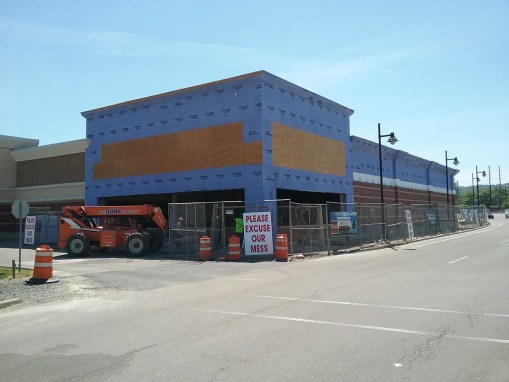
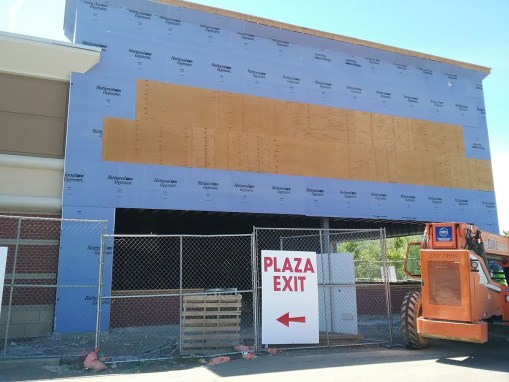
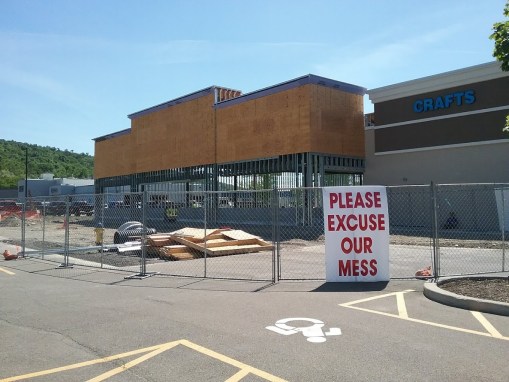
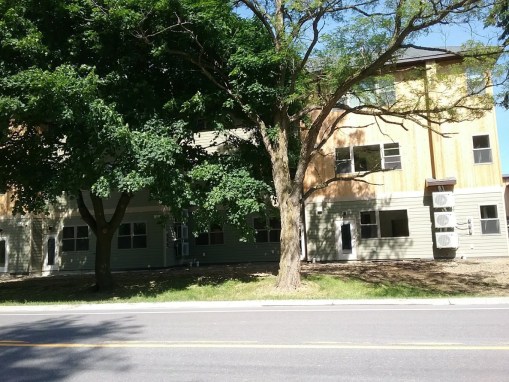
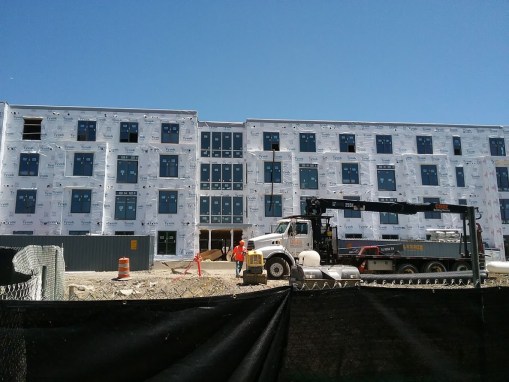
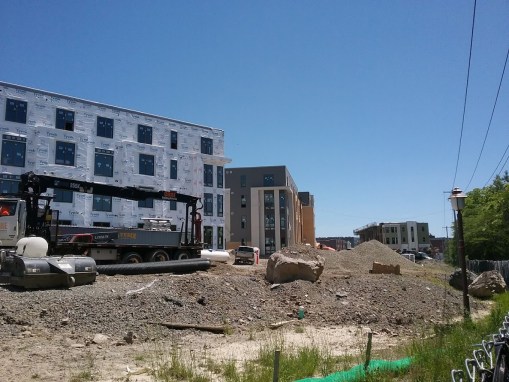
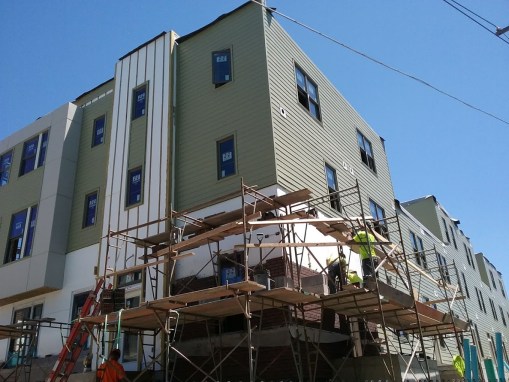
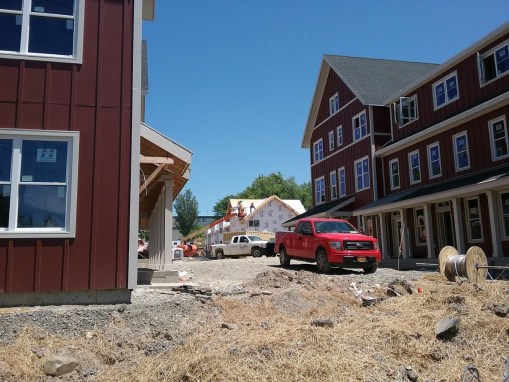
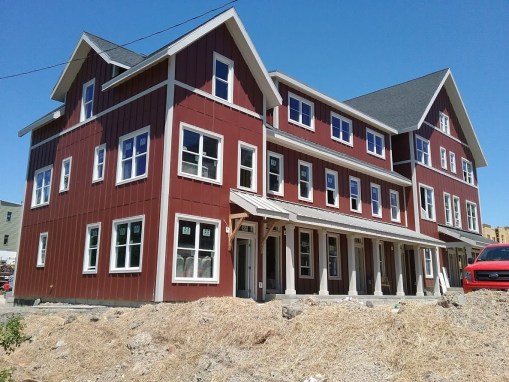
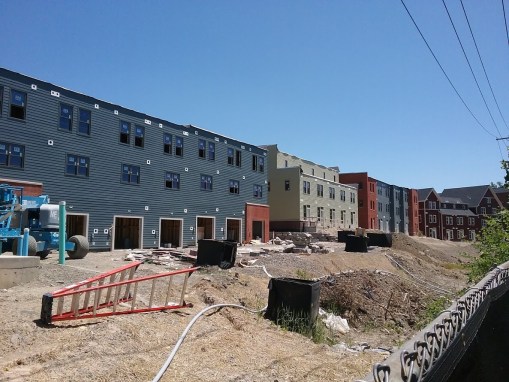
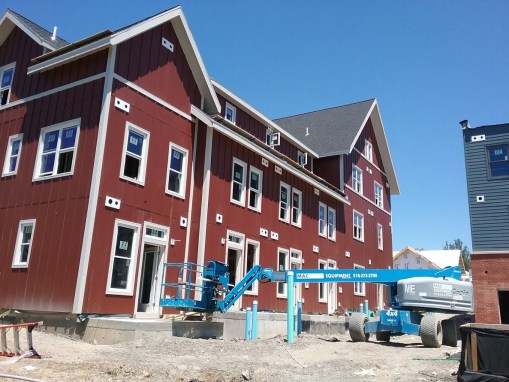
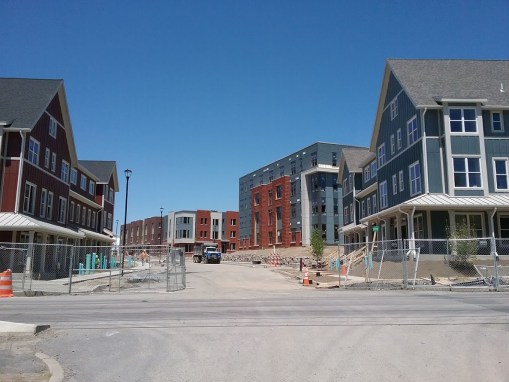
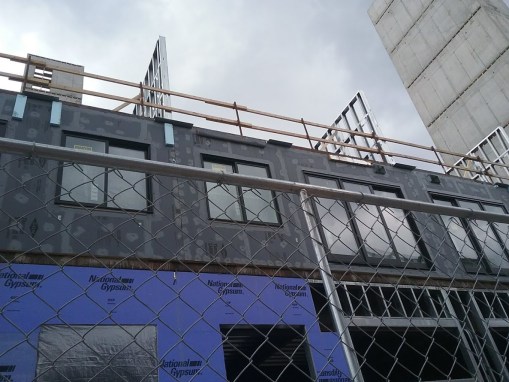
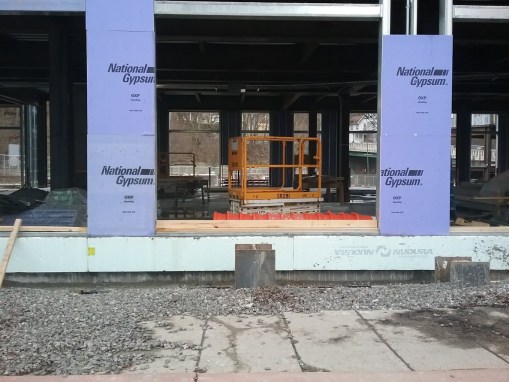
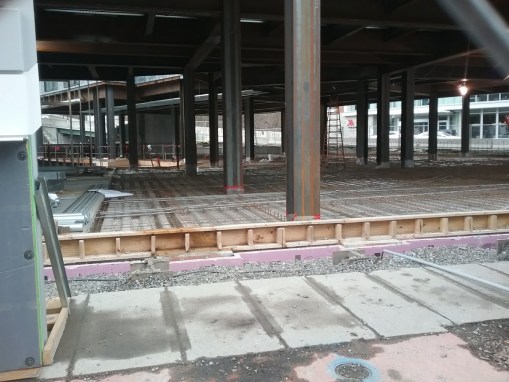
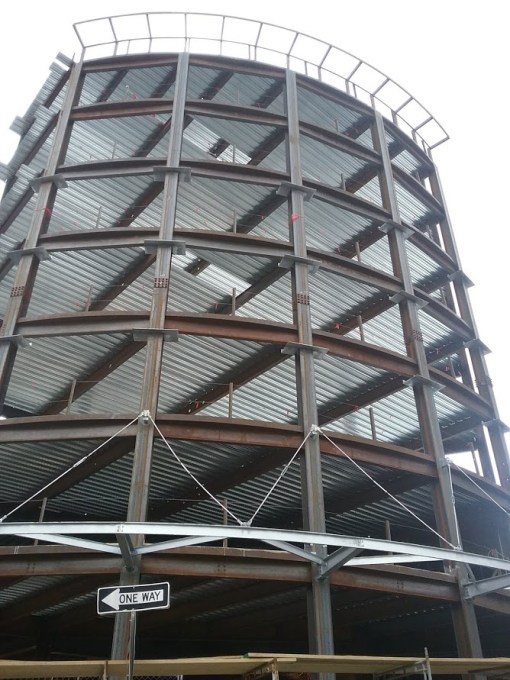
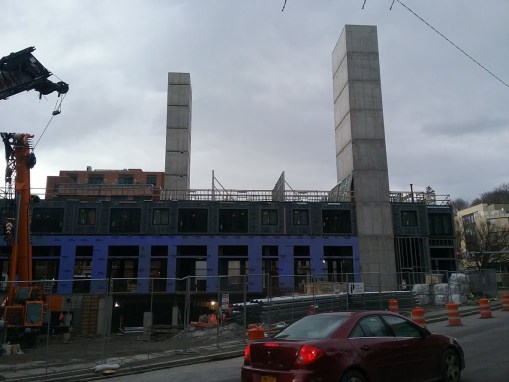
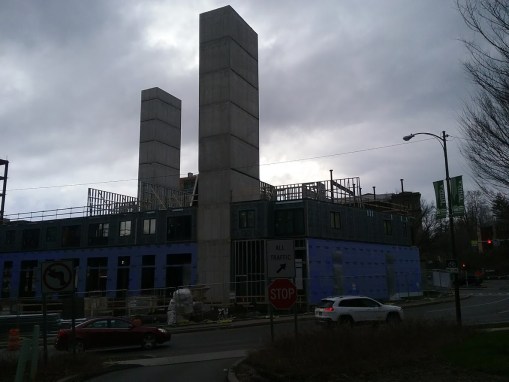
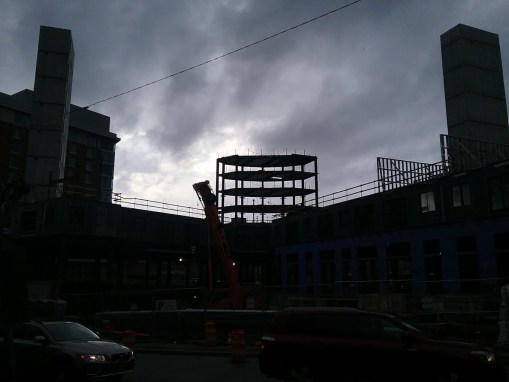
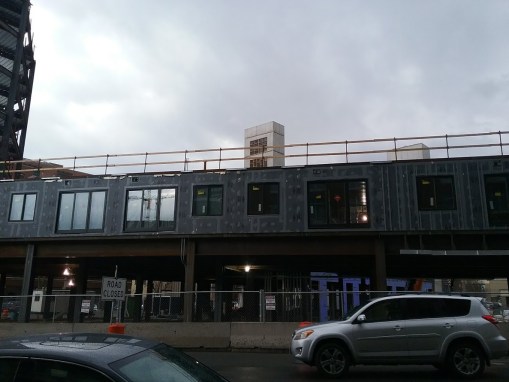
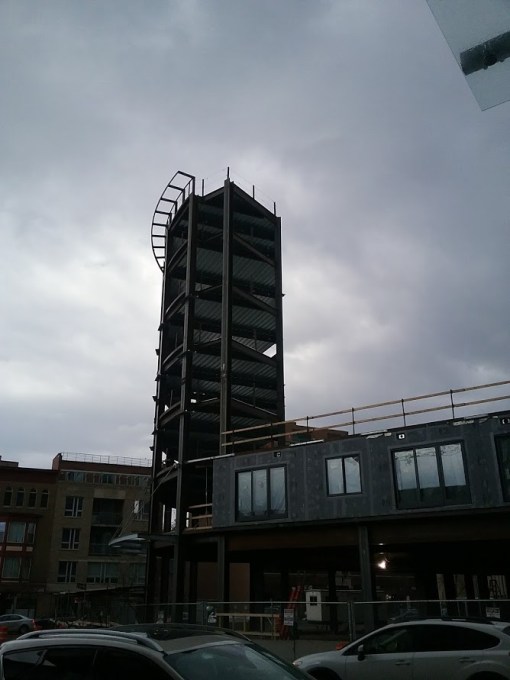
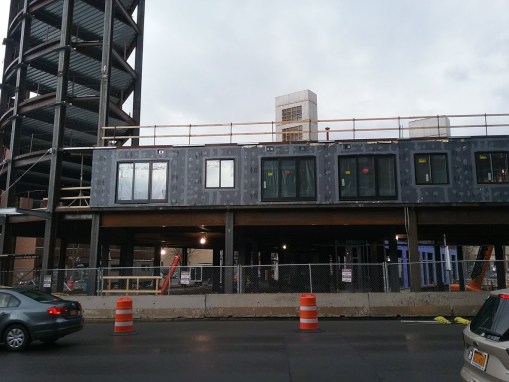
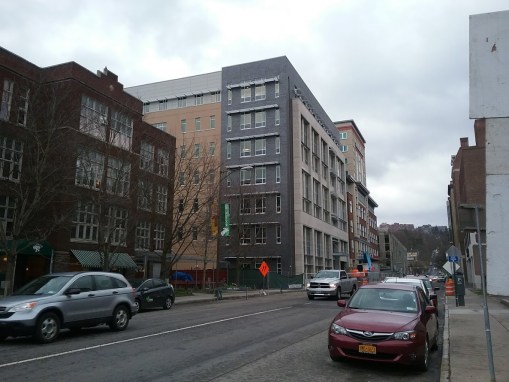
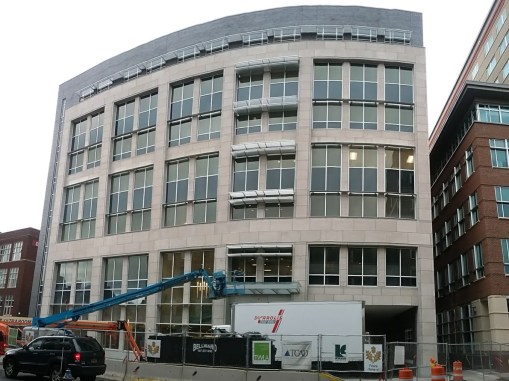
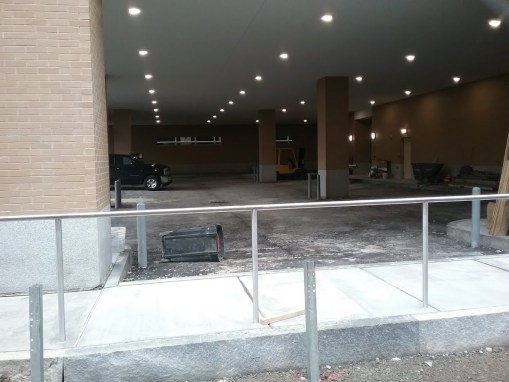
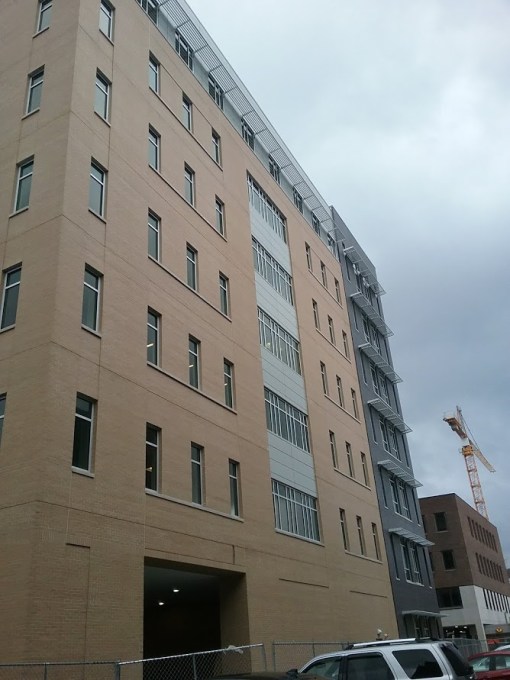
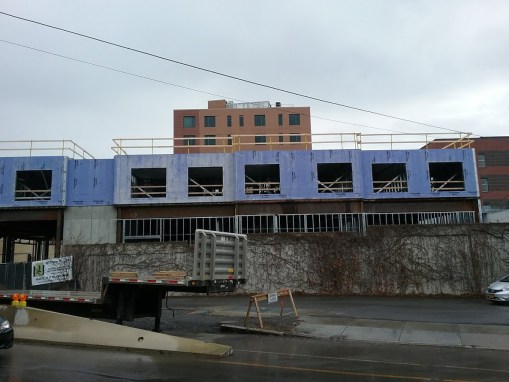
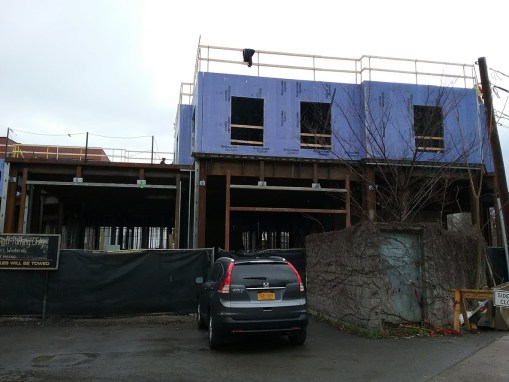
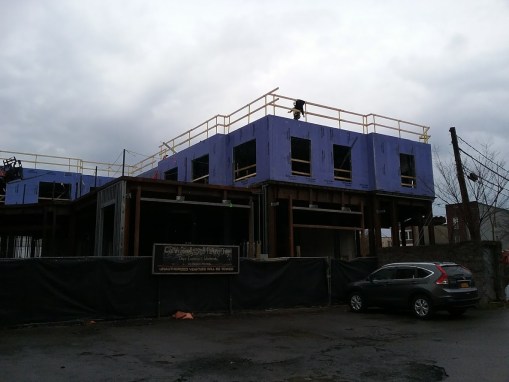
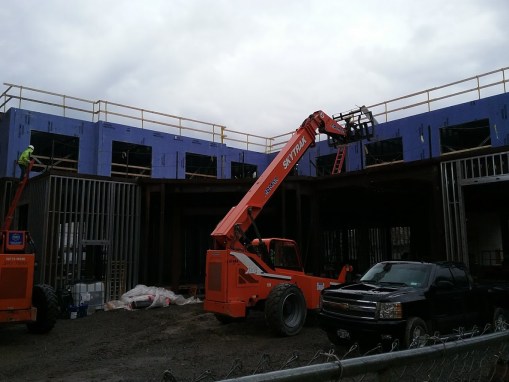
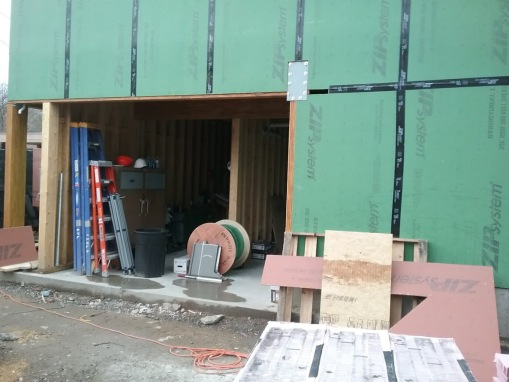
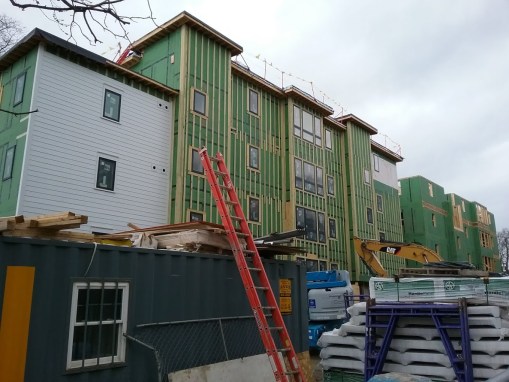
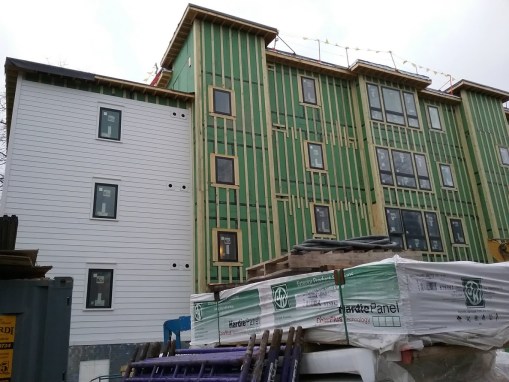
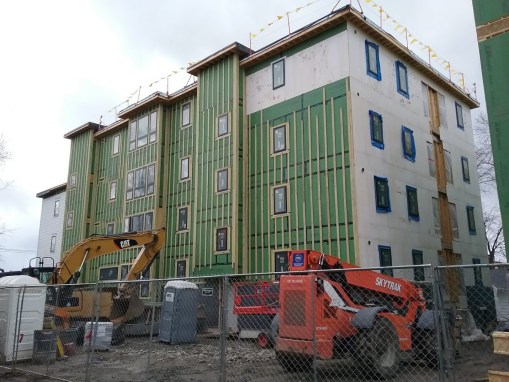
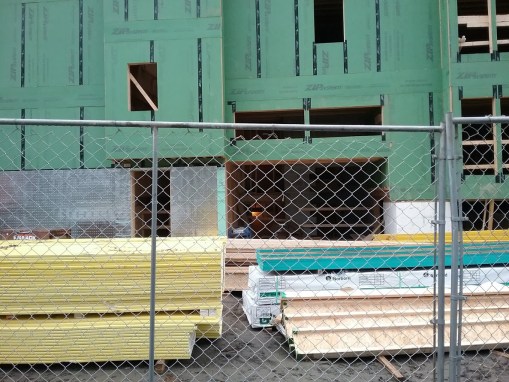
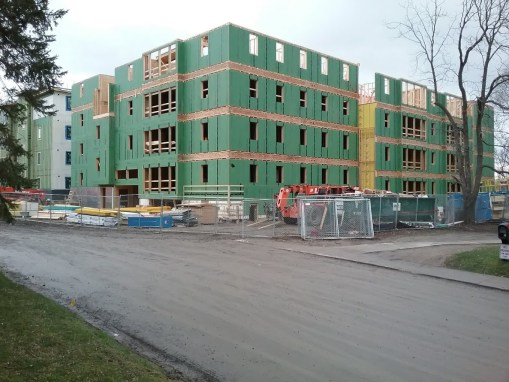
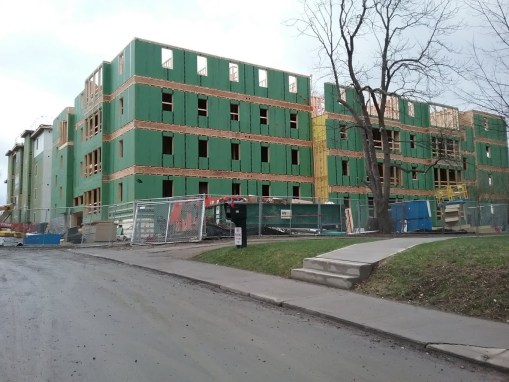
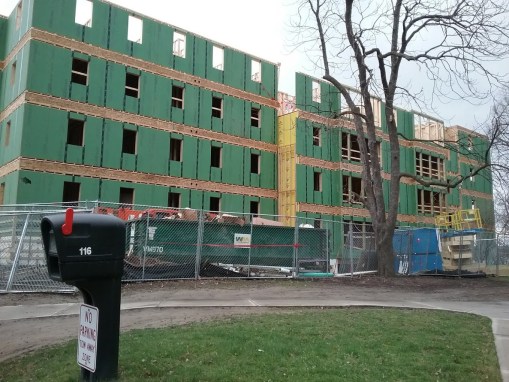
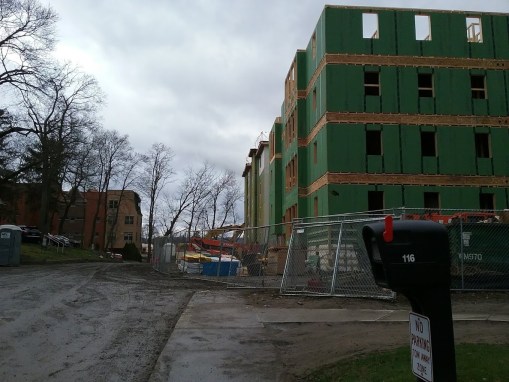
The new endcap spaces on the former KMart (now Hobby Lobby) Plaza at 742-744 South Meadow Street. The first set of photos are the northern endcap with 7,315 SF of retail space, next to PetSmart. The southern endcap is a 14,744 SF space being built where K-Mart’s garden center used to be, which I think explains the huge chunks of concrete slab piled out in front.

With no tenants formally announced, these spaces will not be completely finished on the inside – all utilities will be in as well as structural supports and insulation, but the space will be fitted out to the needs of the tenants, so things like flooring, fixtures and interior finishes will wait until someone has signed a lease with Benderson Development. I did not see anything on file for a fit-out in the city of Ithaca’s building permits paperwork (however, I did see last week that Elmira Savings Bank landed an unnamed tenant for its second floor office space at 602 West State Street).

Oftentimes you’ll see retail real estate managers try to find tenants that complement each other, say a salon and a cafe, or a sporting goods store with a women’s clothing store (the somewhat sexist argument there is that the ladies go to one while their male partners go to the other). Increasingly, entertainment and recreation options are becoming tenants – take for instance the announcement that a live theatre company will be taking 12,000 SF of space in the Shops at Ithaca Mall. That can help existing tenants by drawing in unique customer traffic that may choose to browse, shop and dine at other mall venues.

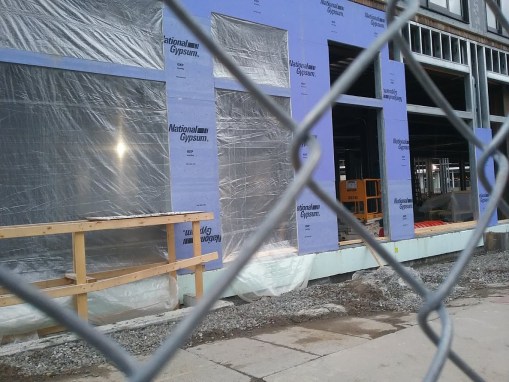
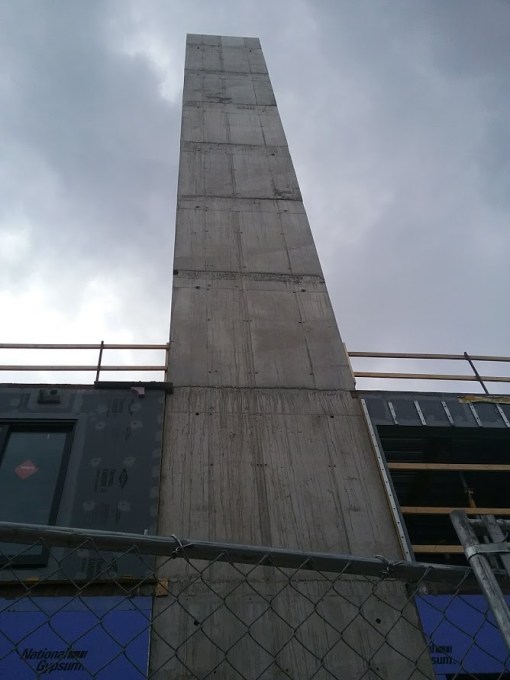
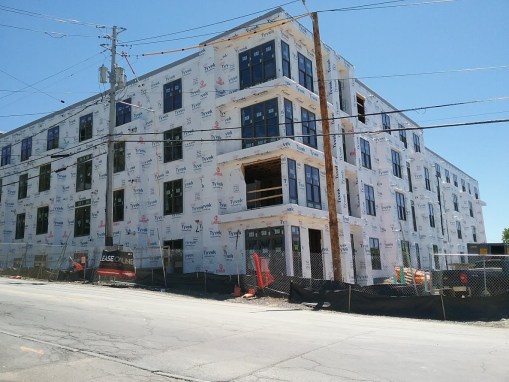
Back to the site at hand, the decorative facade appears to be initially shaped with plywood over steel stud walls, with a layer of fireproof gypsum laid over the top of that (except toe cornices, which appear to have no plywood layer, only gypsum). The bases are concrete masonry walls. The textured stone veneers and fiber cement panels will come later.


Village Solars Construction Update, 6/2018

16 06 2018

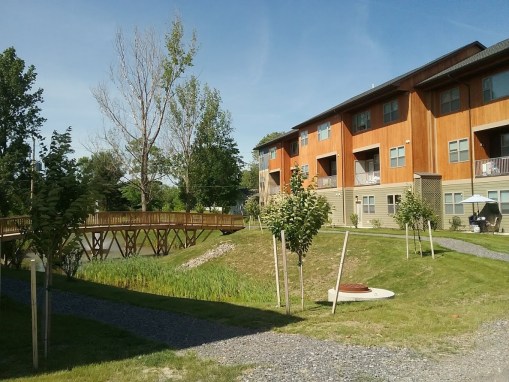
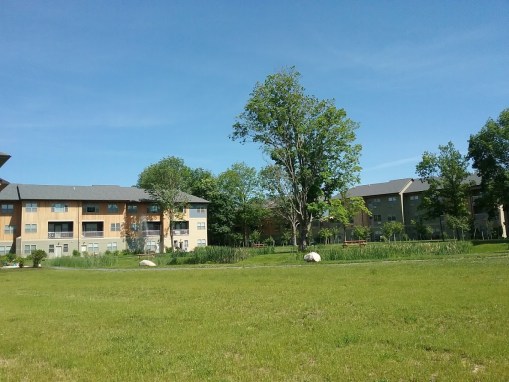
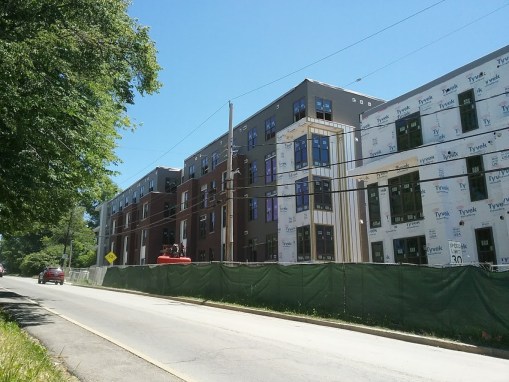
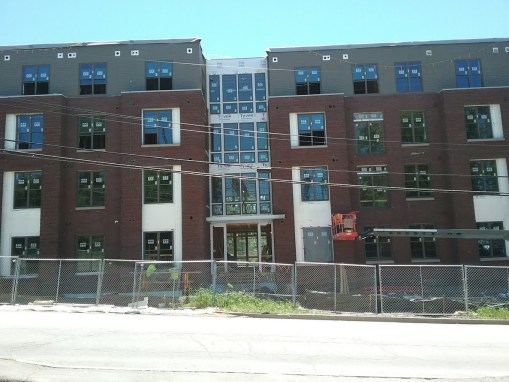
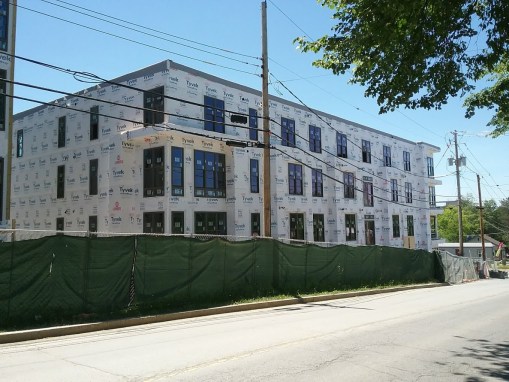
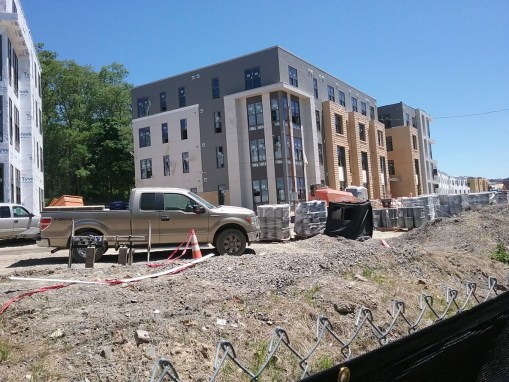
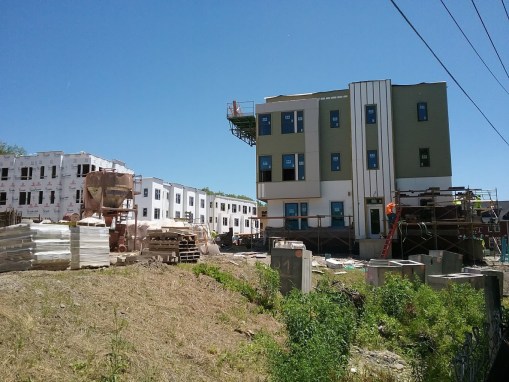
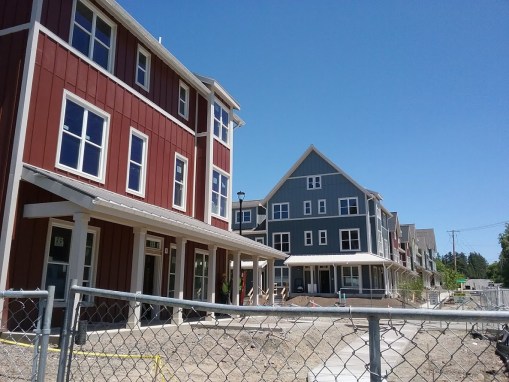
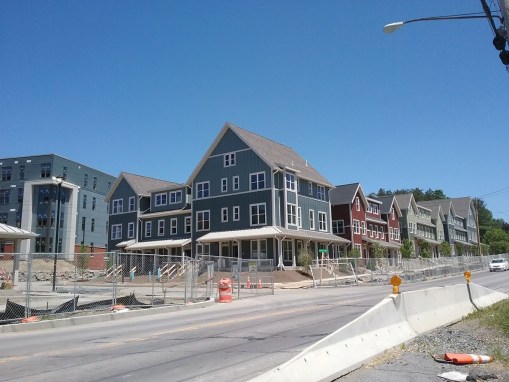
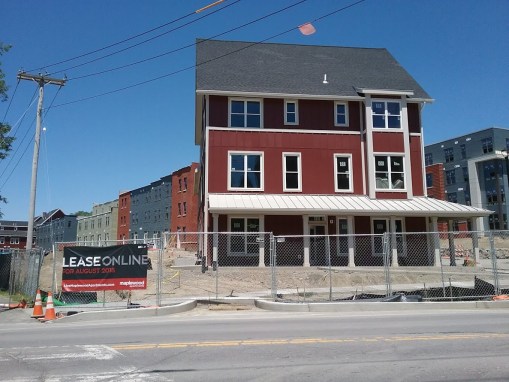
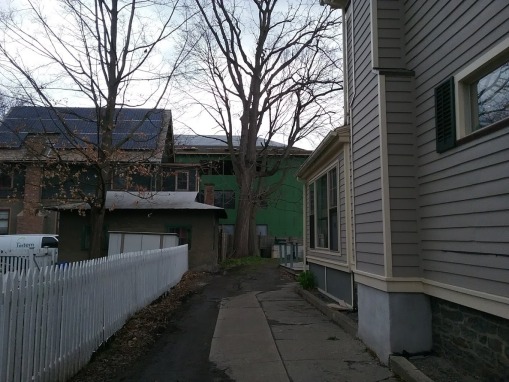
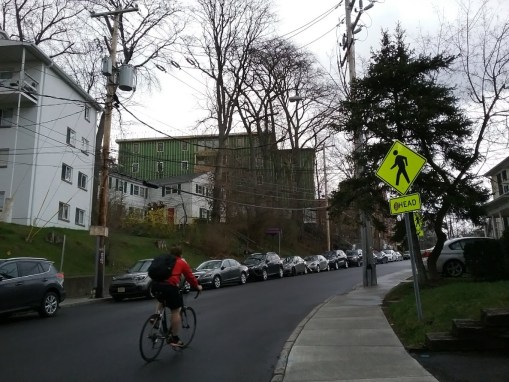
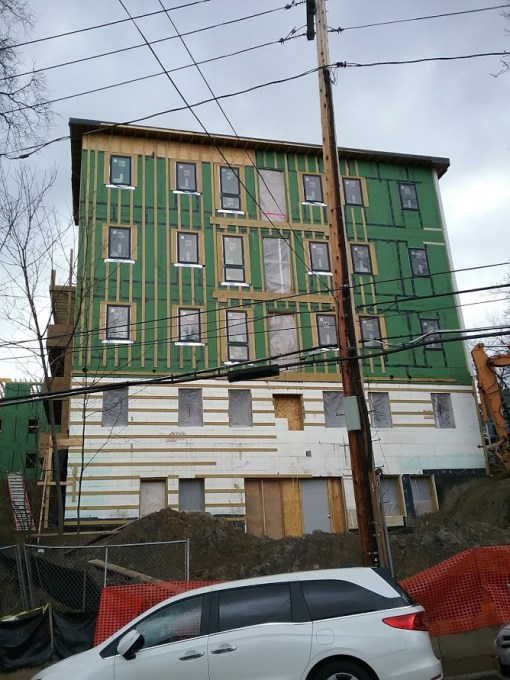
It looks like there’s a lull in the construction at the moment. Both 102 Village Place and 116 Village Circle appear to be complete, though a quick guess would be that 102 Village Place is already occupied, and 116 Village Circle will be ready for its first tenants at the end of the month. The two have a total of 42 units, 24 in the former and 18 in the latter. TCAT is in discussions to add or modify a bus route to service the growing apartment complex, which has already added a couple hundred residents to the area since 2013, with plans for hundreds more over the next several years.

According to the phasing plan, the next phase is to replace 2 Village Circle and 22 Village Circle with a pair of 18-unit buildings. Those would be twelve studios and six two-bedrooms each, replacing two ten one-bedroom unit buildings (net gain of 28 residents, for those keeping in track). Demolition has not yet started on the existing structure, but the most likely plan is to start a little later in the early summer, and have the new pair of buildings ready for a spring 2019 occupancy.


Maplewood Redevelopment Construction Update, 6/2018

15 06 2018

There was an interesting story going around that Maplewood was in serious trouble due to water pressure issues, to the point where its ability to legally house its residents was at risk (no water pressure would have made for a hazardous fire risk). That would have been a huge story had it panned out, but a little bit of checking with the town of Ithaca codes department and the development team turned up no dire situations unfolding, all is going as planned (a welcome change given all the weather and contractor issues that have plagued the project’s tight work schedule so far). There was some worry about water pressure back when the project was first proposed, which is why a new 600,000 gallon water tower is going up on Hungerford Hill Road.

It’s a little sad to see the French Lavender florist and gift shop is closing down after eleven years. It’s not clear if it’s related to construction, or if the timing was coincidental. Coal Yard Cafe was doing a brisk mid-day business at the opposite end of the Maplewood site. With 872 new residents expected by the end of the summer, the site will have appeal to retailers and service providers.

For project background and planning, click here.

For a site plan breakdown, click here.

For a construction timeline, click here.

Webcam link 1 here (updated ~15 minutes).

Webcam link 2 here (updated ~15 minutes).


118 College Avenue Construction Update, 4/2018

13 05 2018

Finally, clearing out the last of that late April photo stash. Not many here, but a new, small Collegetown project is underway at 118 College Avenue.

This is a Visum project, and probably their lowest profile plan. In fact, this one never even went through the sketch plan part of the city review process, the project team went straight to asking for the city planning to declare itself lead agency for environmental review in March 2017. Approval was a short time later as Ithaca goes, in May 2017. Building permits were issued this past winter.

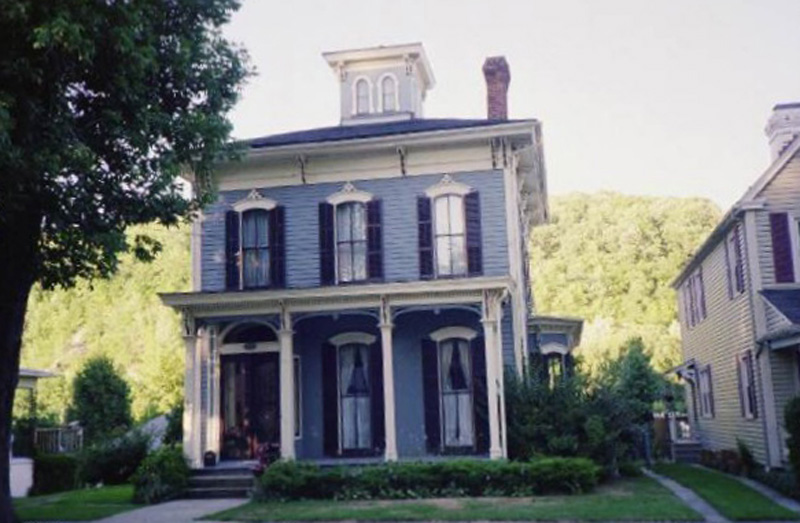
It wasn’t a rash decision by any means – the project is largely similar to a previously-approved plan a few houses up at 126 College Avenue, and there is very little difference between the two properties in terms of context. They are both CR-4 zones allowing 4 floors and 45′ heights. The original 118 College Avenue was a two-story, early 20th century rental house with six bedrooms and marginal historic value, though I imagine the house was rather pretty before some unfortunate additions threw off its symmetry. The property was purchased by Red Door Rentals (Greg Mezey and Ryan Mitchell) in April 2014, transferred to another Mezey/Mitchell company, “MPB Capital LLC” in October 2017, and then to an LLC associated with Visum on the same day as the MPB Capital transfer. It seems plausible Ryan and Mitchell are project investors, with Visum as developer.

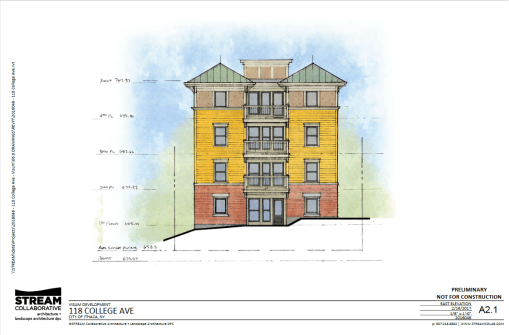
Plans call for a new 4-story, 45′ building on the sloped lot. With that slope, the basement is exposed on the west face, so it has the appearance of five floors from the rear and sides. A back of the envelope calculation says this building is about 9,000 SF. The roof hosts a 6′ architecturally-integrated mechanical screen; hides the mechanicals, but gives the apartment building an Italianate aesthetic. The building uses electric heat pumps and is designed to be net-zero energy compatible. The hard construction cost rings in $1.415 million, according to the SPR filing – it would be assessed at a substantially higher amount. Unabated taxes her, so while people may dislike Collegetown, projects like this help fill the city coffers.

There will be 5 apartment units with 28 bedrooms – 4 six-bedroom units, 1 four-bedroom unit on the basement level. The project comes with five new trees, lush landscaping for its small lot, an outdoor bike rack, screened trash area, and bike storage and mechanical rooms in the basement. Tenants with valid licenses will be given membership in Ithaca Carshare, to try and dissuade them from bringing personal vehicles. Not a surprise here, but college students are the intended market.

Only a couple minor changes occurred from start to finish – the window on the northeast face was replaced with a patterned trimboard to keep visual interest. The rooflines ware adjusted in the render below, but not the building plan, so we’ll see which is correct.

For materials, the basement-level will use stucco mixed with Sherwin-Williams “Sawdust” paint, the first level is a combination of Belden face brick (Belcrest) and S-W “Truepenny” fiber cement clapboards, more fiber cement clapboard on the mid-section in S-W “Overjoy“, trimboards, balcony trim and window casing colored S-W “Svelte Sage”, black window frames, stucco (in S-W “Favorite Tan”) with more fiber cement trim and frieze boards on the top level, and the pyramidal roof caps will be standing seam metal, Pac-Clad “Aged Copper”. Mix of materials, mix of colors – should stand out nicely.

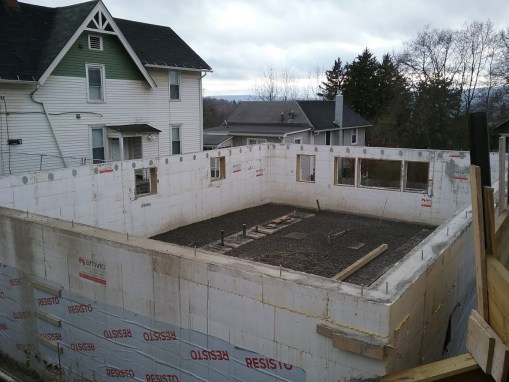
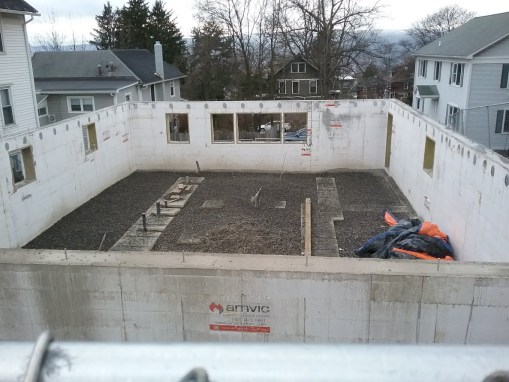
Expect buildout to look similar to 210 Linden and The Lux – Amvic insulated concrete forms at the basement level, double-stud Huber ZIP panel plywood sheathing, scratch coats on the portion to be covered in stucco, perhaps wood furring to raise the exterior clapboard and prevent dampness, and probably Anderson windows. The project is expected to be complete by August – units are going for $950/bedroom, plus utilities. Pricey, but at least they allow large dogs.

Along with Visum and Red Door Rentals for this ride through the development process is STREAM Collaborative as the building and landscape architect. Since they’re GC at 210 Linden Avenue, Romig General Contractors may be the manager of the construction crew here as well.


City Centre Construction Update, 4/2018

12 05 2018

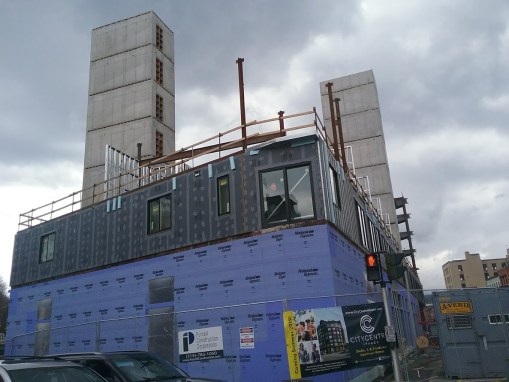
Mostly just clearing out my stash at this point; as the webcam shows, exterior framing is up to the third floor.

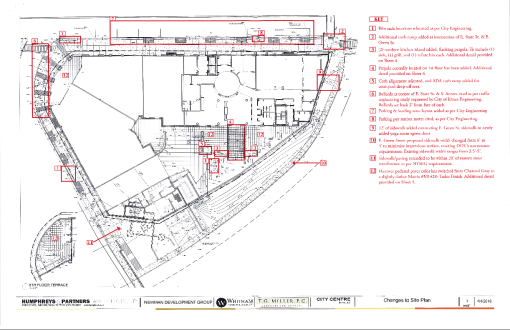
A number of changes have been made to the City Centre project, inside and out. Whitham Planning and Design shepherded the alterations through the planning board, which was generally okay with them. Among the revisions:

-Landscaping Changes. Among them, street tree species and layout, and tree grates are being replaced with FlexiPave porous paved covers. The number of shrubs was decreased, perennial flowers increased. Bike racks were relocated, street lights, curbing and curb ramps were adjusted, concrete planters were added by the parking drop-off area, a pergola with string lights was added, bollards were added, the sidewalk width along East Green Street was reduced from 6′ to 5′, and pavers were changed to a slightly darker shade of grey.

-On the first floor, the lobby layout was reconfigured, and some exterior doors were relocated for ease of access. The number of retail spaces was reduced from four to three, but the total square footage for the retail is about the same (11,000 SF). A storm water vault and fire pump room were added in the underground garage, and the parking spaces were reconfigured slightly to accommodate (still about 71 spaces).

-The unit mix has changed from 61 studios, 78 one-bedrooms, and 53 two-bedrooms, to 33 studios, 120 one-bedrooms, and 39 two-bedrooms. Still 192 units total, but with fewer studios and two-bedrooms and more one-bedrooms, basically. This might have to do with what’s easiest to rent to the target market (young professionals, a few downsizers, deep-pocketed students). Perhaps studios aren’t seen as having enough space for the upmarket market segment.

-The exterior facing materials have been changed from Nichiha aluminum panels to Overly Dimension XP Metal Systems, and Alucoil Larson ACM aluminum panels. The color palette is generally the same, perhaps slightly greyer with the revised paneling. Air intake vents were added to the building facade. Fenestration (window size/arrangement) was also changed up.

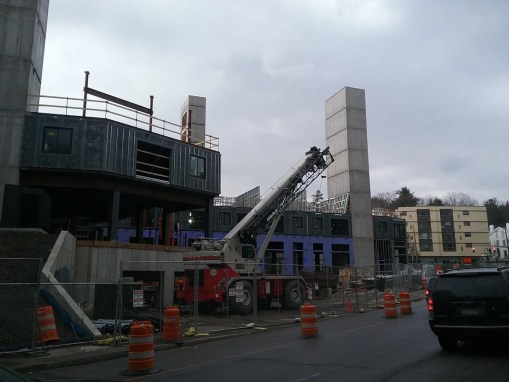
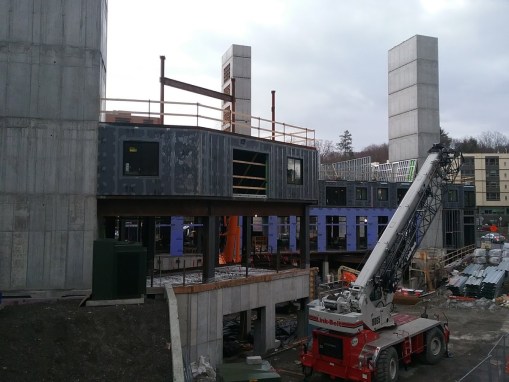
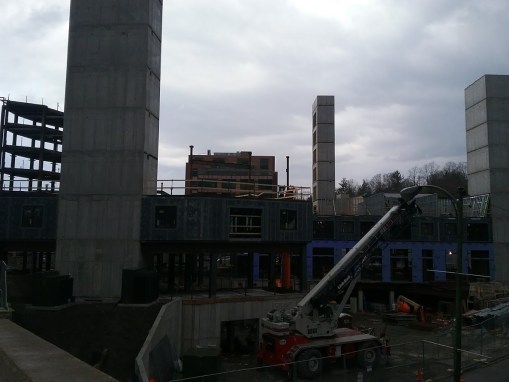
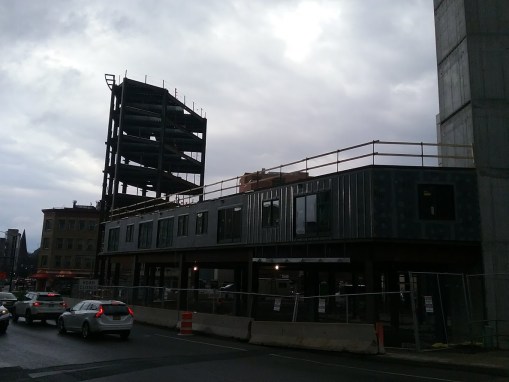
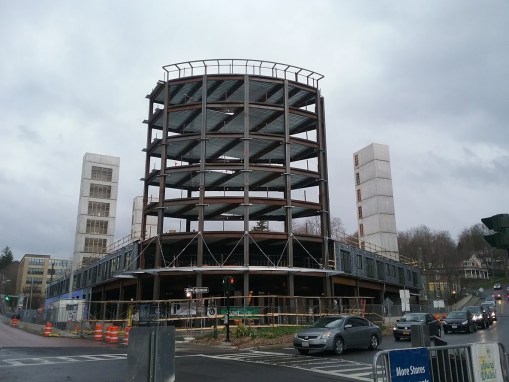
The floor buildout is a rather interesting process, because they’re practically building from the inside-out as each floor is added. The interior steel stud walls and structural steel supports go up first, then roof decking overhead, and then what appear to be prefabricated modular exterior wall panels with Marvin Windows already fitted. The dark panel is Dow Thermax Xarmor, which apart from sounding like a Star Wars extra, is a heavy-duty fire-rated fiberglass insulation board covered with a dark exterior facer that serves as a water barrier. These panels can be set into place very quickly, saving time and labor costs. The ground-level is more typical fireproof gypsum sheathing. The steel rails on the upper floors are likely for the aluminum exterior panels, so they may clipped into place.


Harold’s Square Construction Update, 4/2018

10 05 2018

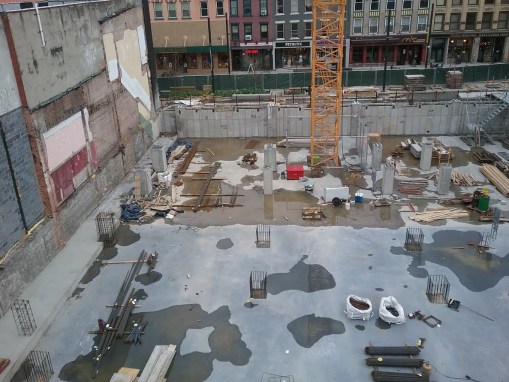
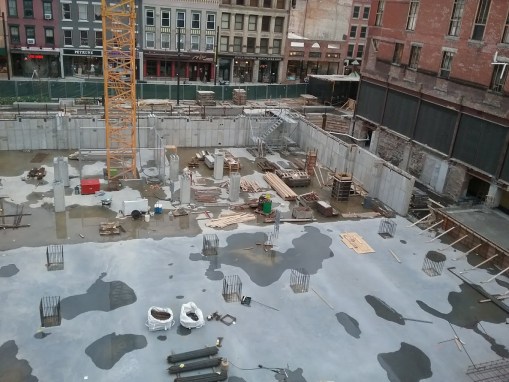
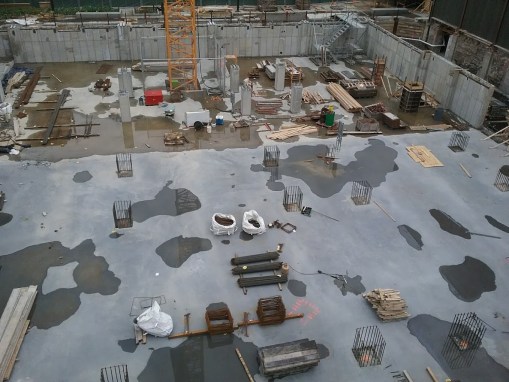
Ithaca weather is not accommodating. Originally, the pour for the concrete slab was supposed to take place on April 3rd. It’s tricky, because this is a large footprint and the building is very heavy, necessitating a thick slab – 30 inches thick. That has to all be poured at once, without any potential interruptions like rain or snow, which can weaken the concrete as it cures (upsets the mix and water balance). That was rescheduled the first time due to winter weather, and was expected to take place on the 11th, which was rained out. 4/16 was also cancelled due to winter weather. Finally the concrete was able to be poured on the 23rd.

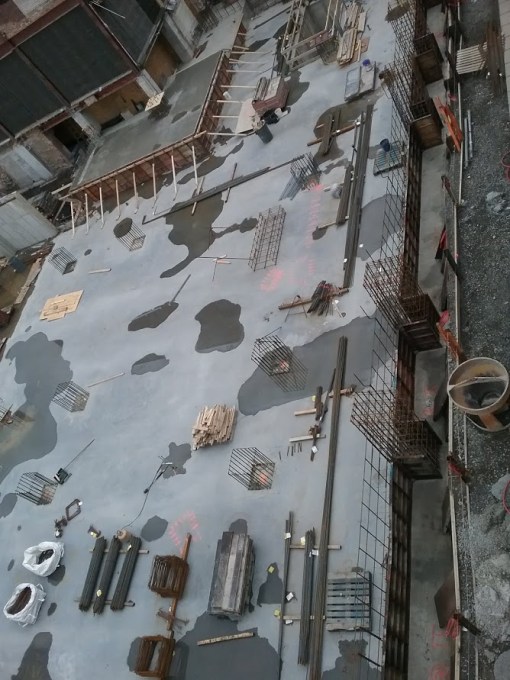
In the photos below, you can see some wood forms are still in place for smaller sections (entryway, lower right of site). The vertical concrete column bases are being poured (note the squares of vertical rebar in the sections yet to be encased), with steel plates atop the finished column to tie into the steel beams. The hole in the lower right (southeast) corner is for one of the elevator cores. Taylor the Builders will have this heading skyward in short order.


Tompkins Financial Corporation HQ Construction Update, 4/2018

7 05 2018

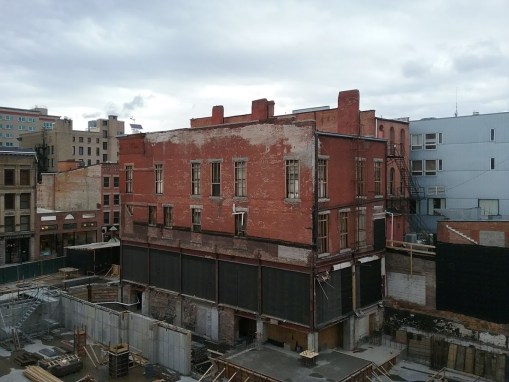
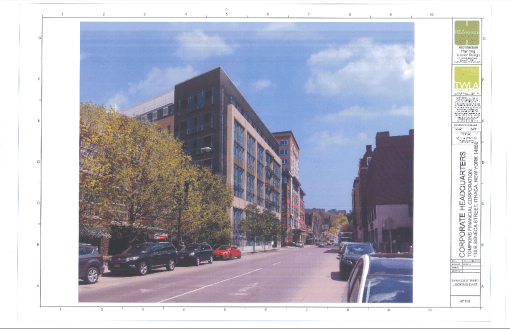
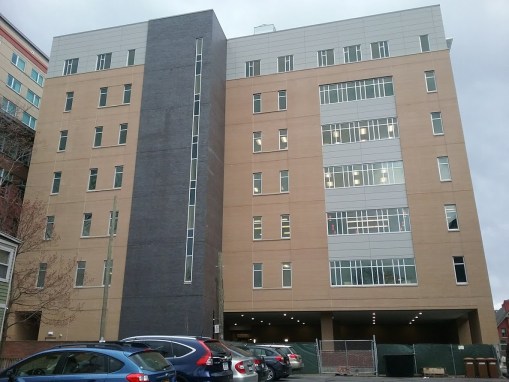
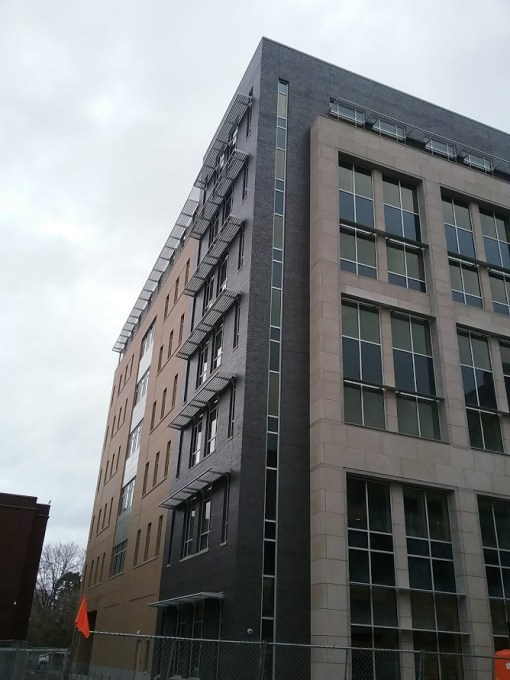
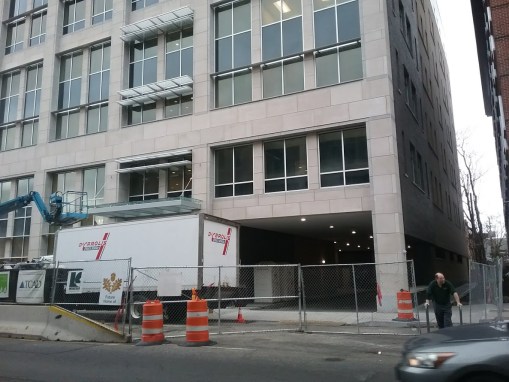
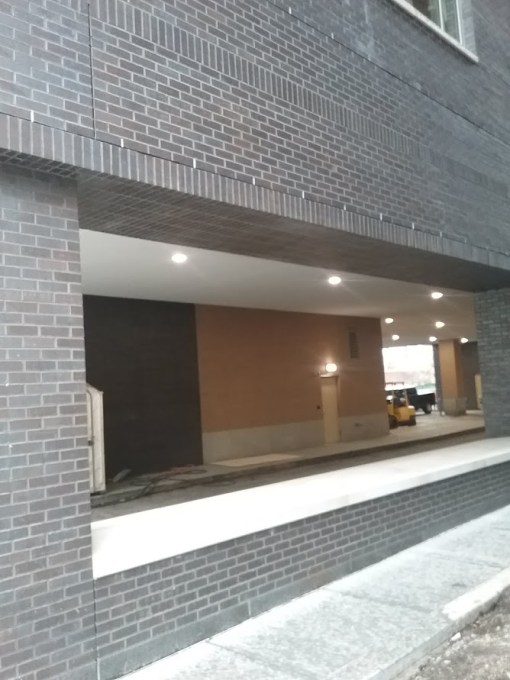
It appears that TFC’s new headquarters is just about done – from the outside, paving, landscaping and signage is about all that’s left. The signage plan, a fairly conservative “halo” style courtesy of Ithaca Sign Works, can be seen on the city’s website here.

As these photos were taken, a moving crew was busy carting office materials from TFC’s office space across the street. Corporation staff should be moved into the new building by the end of May. Tompkins Trust Company Division CEO Greg Hartz has said that 119 and 121 East Seneca would be held onto and rented out, with the bank retaking space in those buildings as it needs. Meanwhile, the historic 2 and 3-story buildings on Bank Alley just south of the M&T Building have been sold to the county for use as the new Tompkins Center for History and Culture, which will open in 2019.

On the whole, a project like this is a big net positive for the city. As opposed to the tried-and-true suburban office park route, TFC’s commitment to the city, and the work of city personnel as well as TCAD to keep them in downtown results in a major addition to the city’s tax base ($3,782,311 in new tax revenue over 10 years), the retaining of hundreds of workers downtown who by proximity would be more likely to shop, dine or live nearby, and the prospect of dozens of well-paying jobs being created at the new headquarters over the next several years. It looks like that the company added 22 employees system-wide in 2017, for a total of 1,041. A little over 300 of those will work in the new headquarters, the vast majority moving from the other offices in downtown Ithaca, with another 18 or so from the Lansing office.

Design-wise, it has a solid if conservative appearance, befitting of a stable, button-up corporation. HOLT Architects added a modern touch with the windows, and created visual interest by contrasting the dark grey brick with the tan brick, beige face stone and grey aluminum panels. The building height and dimension occupy an intermediate size between the DeWitt Mall and Seneca Place, which allows it to be imposing without being overbearing.

Other firms involved in the bringing this project from vision to reality include the engineers and surveyors at Elwyn & Palmer, Trowbridge Wolf Michaels Landscape Architects, and Rochester’s LeChase Construction. Credit also goes to JPW Erectors for the steel framework, the Carpenters’ Union Local 277 and the IBEW (International Brotherhood of Electrical Workers) Local 241.


Hilton Canopy Hotel Construction Update, 4/2018

5 05 2018

Construction continues on the Canopy, but the plans are in a state of modest flux. The fiber cement panels were changed to a different manufacturer, which uses a different paint supplier. The original Cem5 fiber cement panels use Swiss Pearl paints, while the revision proposes Nichiha panels using PPG paints. The replacement colors are very similar.

However, the dull yellow “Applesauce Cake” accent panels (itself a replacement for Cem5 “Carat Topaz”), was rejected by Canopy. The replacement color, a charcoal grey “Dark Ash”, was disliked by the board, so the project team is still trying to determine a suitable color replacement with enough to get the order filed with the manufacturer without delaying the construction timeline. I wonder if, given the orange Canopy logo and branding, if a soft “rustic” orange shade might be available? The thought being that it would tell visitors quickly that this building is a Hilton Canopy, and a warm, subtle shade would brighten the facade without being obnoxious. From what I see, one can custom order panels, which is no doubt more expensive, but I’m not seeing a list of standard colors anywhere.

While excavating, the project team did find some small fragments of the Strand Theater, which stood on the site until its demolition in 1993. The “most decorative” pieces are going to be used in a display inside the hotel lobby, and further consideration is being made for an exterior mural.

The landscaping is being tweaked to extend a sidewalk through the property to Seneca Way, as well as a curb-cut and smaller planters to fit within the property line. A pair of ginkgo trees planned for the property are being replaced with some dense shrubs and perennial instead. This is the eleventh version of the project I now have on file. Background info and specifications can be found here.
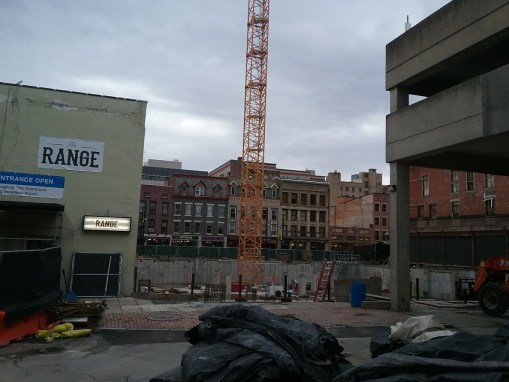
The hotel has completed foundation work and is up to the second floor. The steel skeleton and elevator cores/stairwells continue to rise, with thinner exterior steel stud walls on the ground floor and fireproof gypsum panels on the second floor. The finished product should be coming onto the market in about a year.


107 South Albany Street Construction Update, 4/2018

4 05 2018

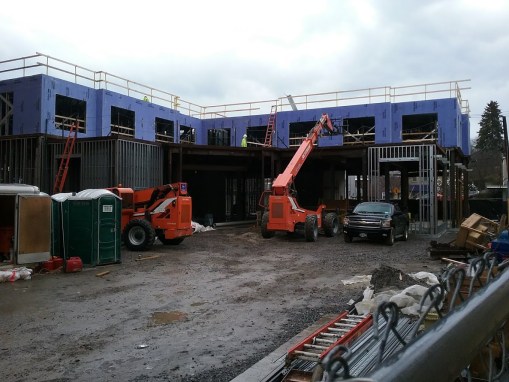
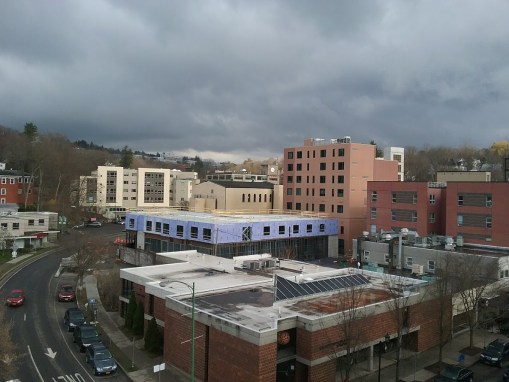
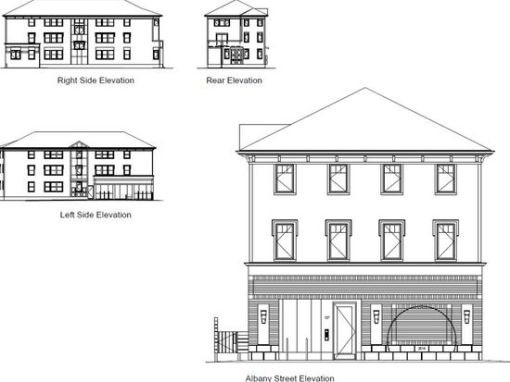
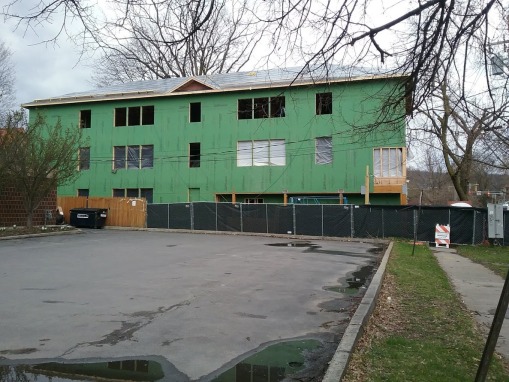
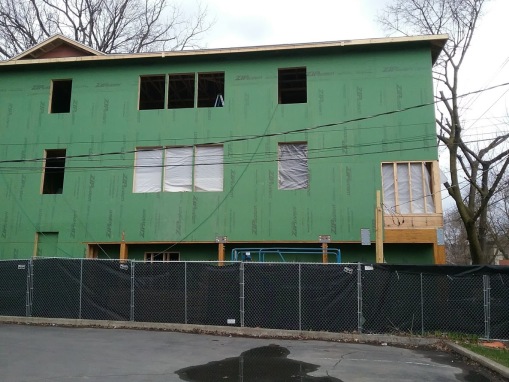
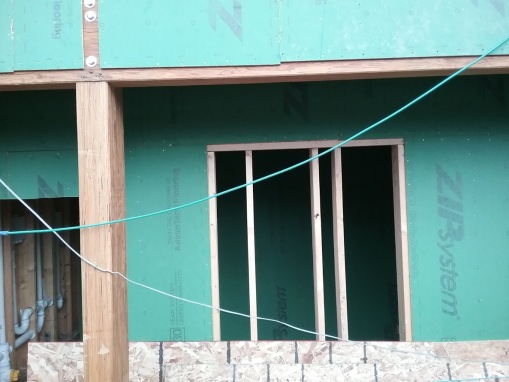
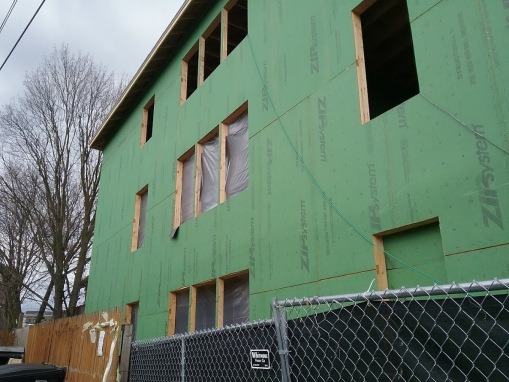
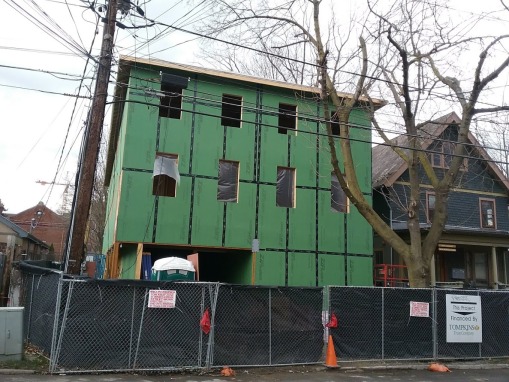
The new 11-unit apartment building at 107 South Albany Street is fully framed and roofed. It looks like the roof underlayment is down and the shingles are starting to go on -the photos below show plumbing and electrical boxes already installed on the first floor. Most of the sheathing is in place, and given the plastic, utilities roughs-ins are likely ongoing inside the new structure. From the listing on Zillow:

“Brand new luxury 1 bedroom apartment in Ithaca’s newest development available August 1, 2018. One block from the Ithaca Commons and a bus stop with multiple routes at your door.
The Unit:
– Is beautifully furnished
– Boasts high end finishes throughout including: custom cabinetry, quartz counter-tops, stainless appliances and a beautiful tiled bath.
– Has laundry in building
– Includes indoor bike storage
– Water, high speed internet, common area maintenance and snow removal included in this professionally managed 11-unit building
The exterior, with cornice and orthodox windows are additional architecturally designed items that add to the beauty of the building. No detail has been overlooked. A must see as downtown Ithaca continues to grow. Photos are from other recent projects and are for illustrative purposes. They represent the types of finishes you will find within apartment.”
 

I have never heard the phrase “orthodox windows” unless the topic was a church.

An August 1st opening means this building’s going to have to move at a fairly quick pace over the next few months. I don’t see any current information on rent, but the last I had seen was $1,100/month for a 1-bedroom, which isn’t Collegetown extreme, but it’s premium-priced for the State Street Corridor, and not unusual for new construction. Apartments.com seems to suggests that all the units are spoken for.

Background information on the project and its specifications can be found here. Renting Ithaca (Nick Stavropoulos) is the developer, and Flatfield Designs (Daniel Hirtler) is the architect.


The Lux (232-236 Dryden Road) Construction Update, 4/2018

3 05 2018

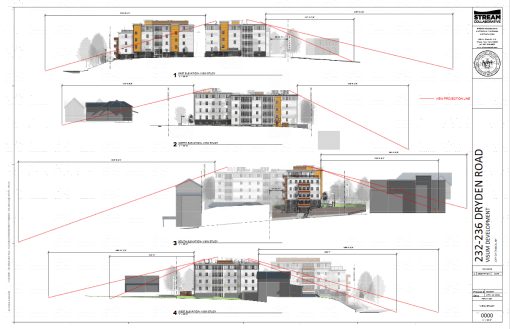
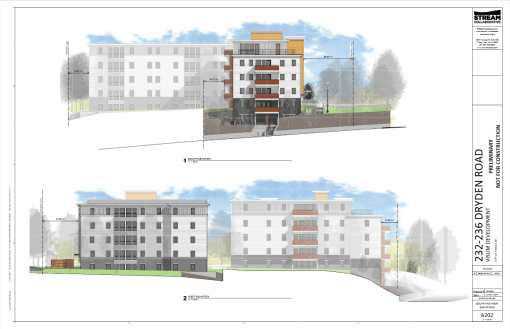
At the site of The Lux at 232-236 Dryden Road, framing continues on the new apartment buildings. I’m under the impression that, like the Ithaka Terraces project also designed by STREAM, these are thick double-stud exterior walls. Double-stud walls are built using two sets of wood stud walls used in the exterior frame, parallel to each other but spaced apart by about 5 inches. That space is then filled (if like STREAM’s other projects) with R39 densely-packed cellulose insulation. The result has its pros and cons. The cons are that it’s more expensive to build, and it reduces the interior space a little bit. The pro is that it’s very energy efficient, which comes in handy for a project trying to achieve net-zero energy use.

On top of that appears to be wood furring strips for the cladding. I think the white panels on the north side might be boards with some kind of waterproofing? The roof on 232 Dryden appears to have had underlayment applied, but no EPDM (synthetic rubber) or similar finish yet.

The Amvic ICF will be faced with grey stucco and a black brick veneer, while the upper levels will use LP SmartSide white and marigold yellow fiber cement lap siding. The reflective material is likely insulation that’s also intended to keep out the moisture from the exterior brick.

The top floor will be finished with fiber cement panels with LP SmartTrim laid out patterned to give some visual interest to the top of the structures. The windows are Anderson 100 series units with black frames, and what will be white casings. Still rough openings in some of the walls, and the balconies are just starting to get built on the west face. 236 Dryden has yet to be fully framed, but the roof trusses are underway.

In its March email blast, the developer, local firm Visum Development group, announced that the contest to design lounge, gym and study rooms was won by two graduate architecture students from Cornell – for that, they win $2500 and will have a lounge named after them. The winning designs are here. As of February, about half of the 207 bedrooms were leased.

The project did pay a quick visit to the planning board recently to ask if they would could have permission to not screen some of the rooftop utilities – though less attractive and meant as a cost efficiency, these are less visible parts of the roof per the diagrams provided to the city. I didn’t hear any issues with it, so I assume it was deemed acceptable by the board.