Village Solars Construction Update, 6/2017

17 06 2017

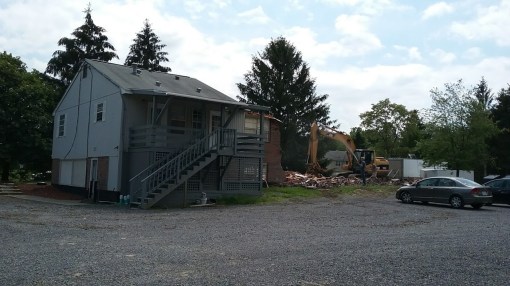
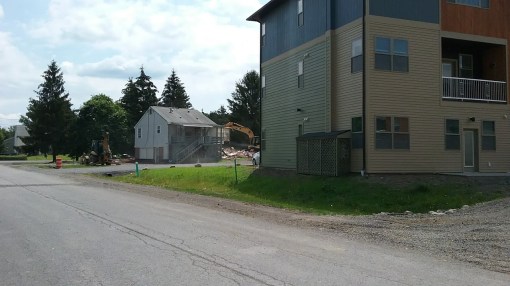
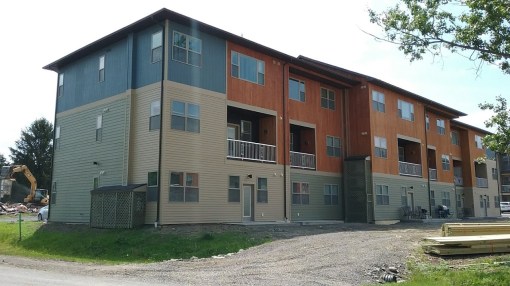
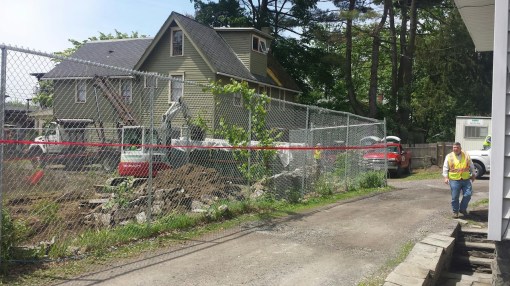
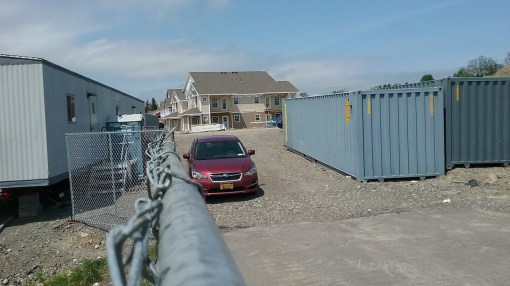
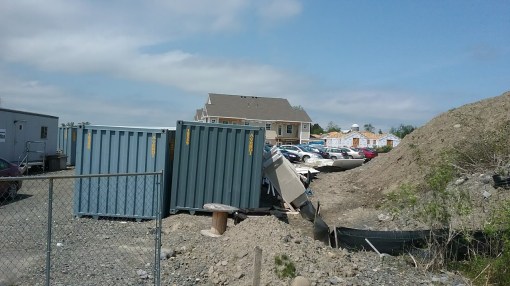
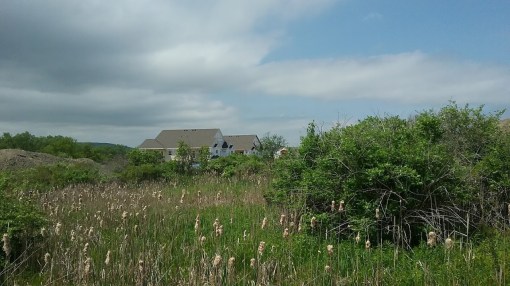
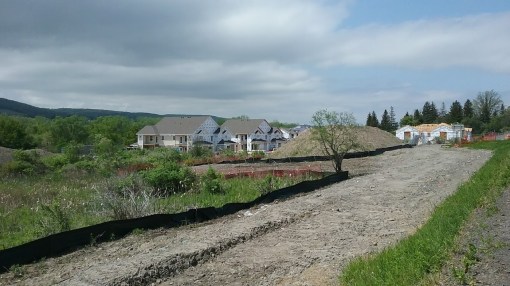
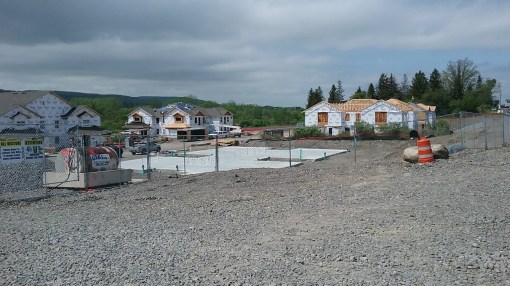
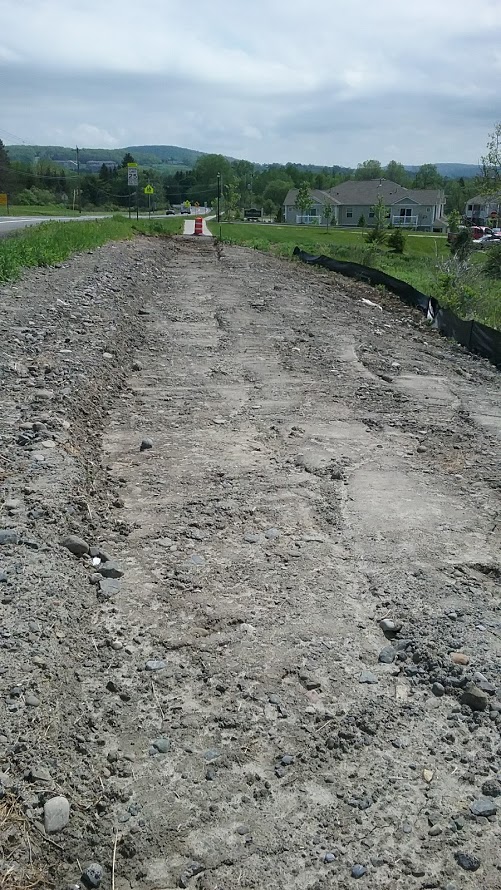
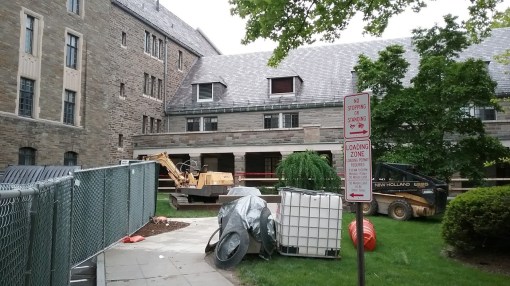
It’s not often that I run into someone who’s aware of this blog, let alone while taking site photos. When I arrived at the Village Solars property off of Warren Road in Lansing, I was immediately surprised to see they were taking down one of the older 1970s 10-unit properties, 102 Village Place. A salvage job this is not; the excavator was actively tearing through the brick veneer and wood window frames, leaving them in a pile as it slowly worked its way through the building. A gentlemen with a hose was spraying the fresh debris down to keep airborne dust to a minimum. To be honest, even if the building has little historic value, there’s always a bit of a bittersweet feeling to see a place that hundreds called home fall to the march of progress.

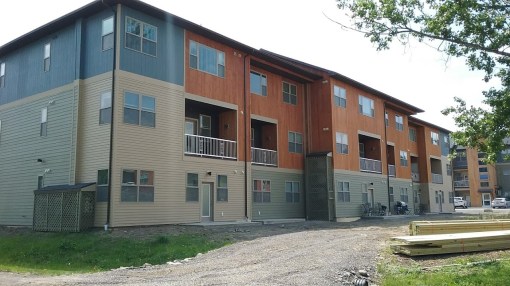
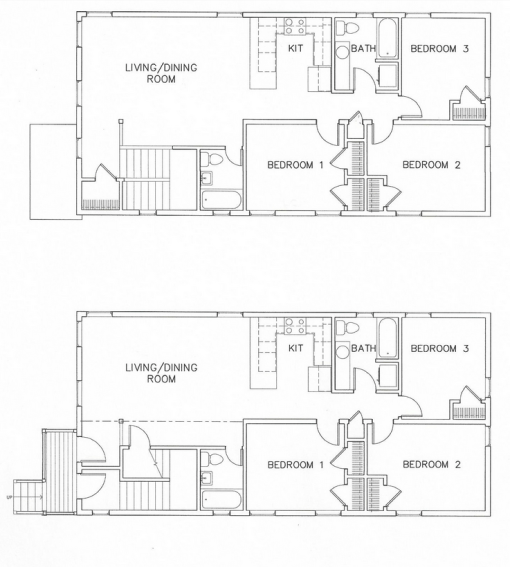
And the march of progress it is. As readers of the Voice may be aware, the plan for the Village Solars has been changed up. The next few phases will remove the 1960s-1970s 8-unit and 10-unit (all 1-bedroom) buildings and build new Village Solars buildings on their foundations. The net gain in units will be 70, bringing the number built and to be built from 502 to 572, and a gain in bedrooms of about 124.

It’s a bit complicated of a breakdown – four of the new building planned – 24-unit “K”, 24-unit “L”, and 18-unit “M” – were originally to be the next phase. When all that was said and done, Building “F”, which will host retail components, a community center and 20 studio units, was to be built. Those are being pushed off in favor of the replacement units. For example, 102 Village Place, coming down in the photos below, will be replaced with a 24-unit building that will also be called 102 Village Place. It’s five peers closest to the Village Solars will also be coming down for the construction of 18 or 24 unit apartment buildings on their footprints. There will be five phases, and it looks like two older buildings will come down and have replacements built each year for the next three years, with the last two being the all-new K/L/M and F. The designs for the six new buildings will be similar to the existing Village Solars.

So while taking photos, I happened to see a gentleman in a wide-brimmed hat and loafers, drinking a couple beers. I intended to not make waves and to just walk past when he broke the ice by saying “I’m surprised there aren’t more neighbors out watching. You don’t see something like this everyday.” I ended up making my acquaintance with Jon Lucente, the son of Rocco Sr., brother of Steve and uncle to Rocco Jr. – so, not as directly involved as the others, but still aware and knowledgeable. Turns out he lives in the Village Solars.

One of our conversation topics swirled around the hassles of regulation – a little talk on the Briarwood mess ten years ago, a little bit about Varna, and a lot about the Village Solars. To be frank, he had nothing but great things to say about Lansing town government. But he complained some of the building code regulations created headaches for his family and their in-house contracting team. For example, the buildings had be earthquake-proof, and the expensive sprinkler systems over the balconies are only legal until 2022 but they were the only type approved for use. Interestingly, they originally wanted to do four floors but building codes say an elevator is required for 4 or more floors (this tripped up Ecovillage as well as few years back). Jon brought this all back to the cost being passed on to tenants.

On my end, it was mostly just polite acknowledgement. I understand his point, but details like the elevator rule are in the building code for safety reasons. The thing is, building codes are an imprecise science – they may be too stringent in some circumstances, but lacking in others, so as a result they’re constantly re-evaluated. Given an event like the London Grenfell Tower fire disaster, where the Reynobond aluminum panels were stuffed with polyiso insulation, which is a risk because it can produce toxic fumes if it burns, there’s always good reason to take a hard look at the codes and reassess. For the record, polyiso is a common insulation material, although in the local cases I’m aware of, it goes on over the fireproofing and under the cladding, meaning it would be very difficult to set it on fire, and the Grenfell case implies the panels may have created a tunnel effect for heat and flame. The specific cladding that was used on Grenfell Tower is banned for use on buildings taller than 40 feet in the U.S.  

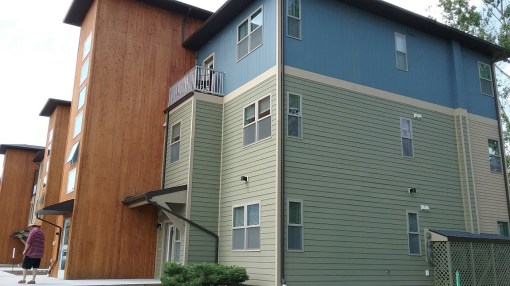
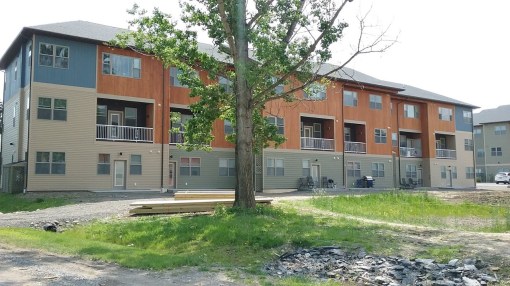
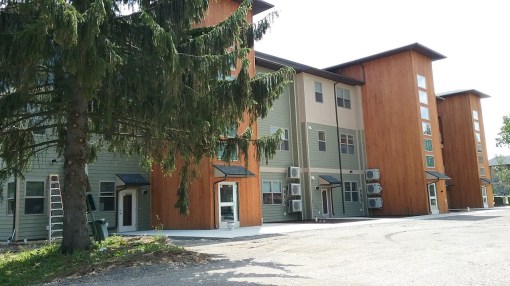
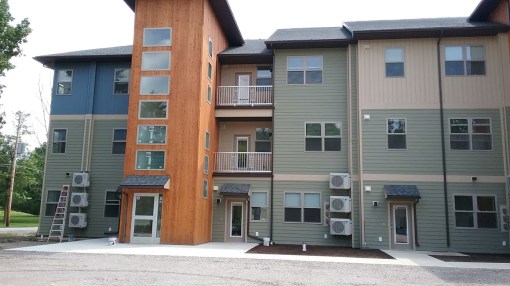
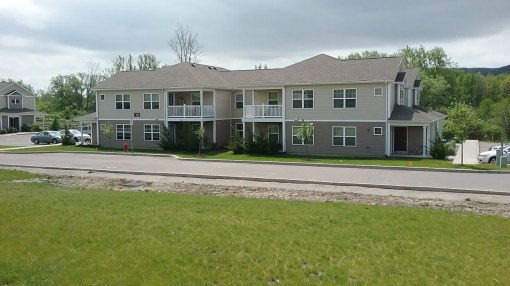
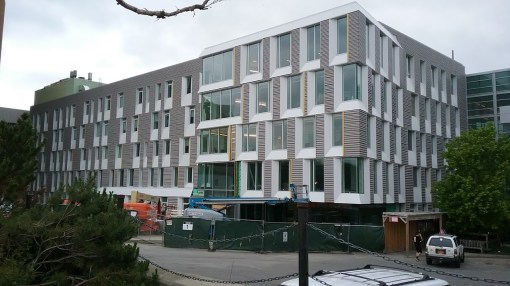
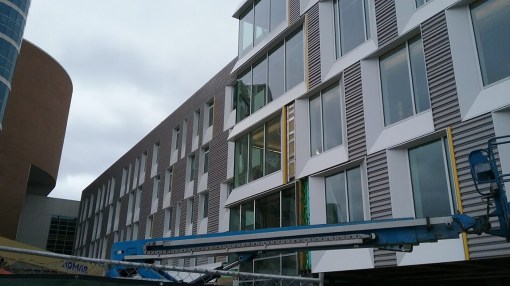
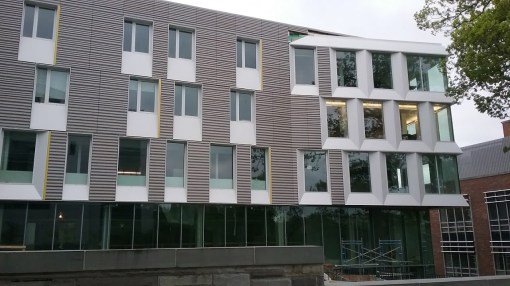
Anyway, I still enjoyed an opportunity to chat with one of the Lucentes. Building “I” is occupied and Building “J” will be open for occupancy at the start of July – just a little exterior trim left to do on the outside. The photos below have a close-up of the fiber cement board used on the Village Solars, which apropos to this post, doesn’t burn because it’s basically sand and concrete mixed with wood pulp. Won’t make the same claim about those wood-grain trim boards though.


Chapter House / 406 Stewart Avenue Construction Update, 6/2017

16 06 2017

The funny thing about this project is, I already did the synopsis back in February 2016, the first time that it seemed to be under construction.

At the time, the construction seemed ready to move forward, but then, well…it didn’t. Former 400-404 Stewart Avenue owner Sebastian Mascaro sold the property and plans over to neighbor Jim Goldman, who intended to carry them forward. However, citing unfavorable cost estimates, Goldman decided to wait, and only recently has the project obtained favorable terms that would allow it to proceed.

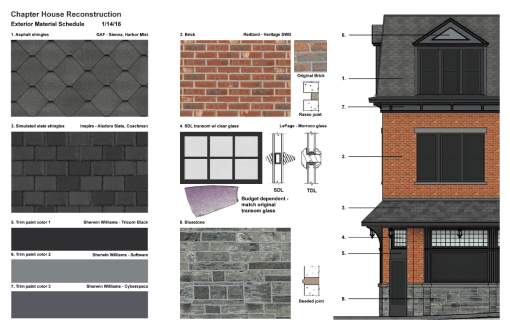
The plans are still the same, although the project manager has changed. CSP Management (Jerry Dietz) will still manage the apartment rentals, but the commercial component is under the control of Pyramid Brokerage, Syracuse-based Hayner Hoyt will be the general contractor, and the construction manager representing Goldman is not with Hayner Hoyt and does not appear to be from the Ithaca area.

As a frank aside, it has been a rare degree of frustration to dig up information about this project. Goldman, for whatever reason, is incredibly publicity-averse, and everyone involved with the Chapter House has been asked or told to not talk about it. The little bit of information the Voice and 14850 have been able to get has come from CSP Management, which in itself comes with lots of cautions and uncertain language. The one occasion I spoke with Goldman, he told me he knew nothing and no longer owned the site, which if true, isn’t in the county’s records.

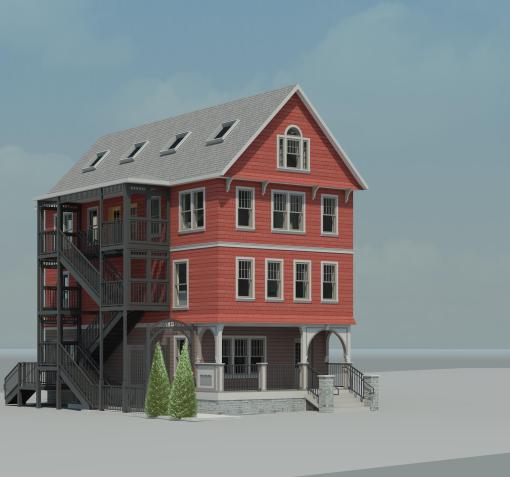
Here’s what is known. 406 Stewart Avenue will be 4 units, 7 bedrooms, replacing a similar-looking 1898 structure destroyed by fire in April 2015. 400-404 Stewart Avenue is about 9,000 SF with first floor retail with two floors of apartments – the number of bedrooms and units is not clear, as the number has been in flux. Note that calling it “the Chapter House project” is inaccurate – John Hoey, who owns the right to the Chapter House name, has not committed to reopening on the site, and the first-floor is being offered at a rather hefty $35/SF. For comparison’s sake, most downtown rates I’ve seen come in at about half that, although Pyramid is playing up its proximity to Cornell and the inner Collegetown market. A potential interior layout for a bar is included in the marketing material.

The current plan is to have 400-404 Stewart open by the end of the year, and 406 Stewart by Summer 2018. Jason K. Demarest is the architect for both buildings.

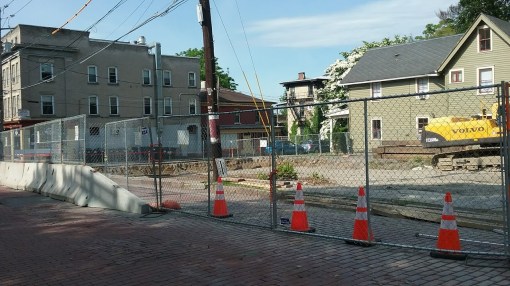
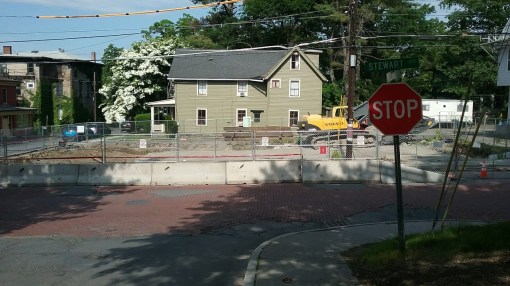
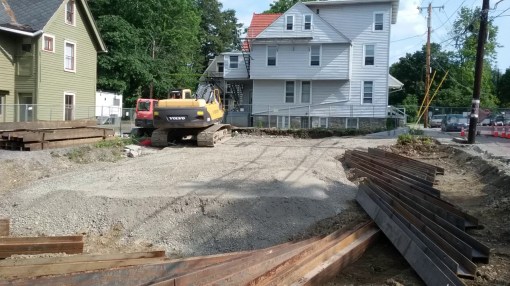
The first photo below is from my colleague Mike Blaney on May 23rd, as environmental remediation company ERSI was finishing clean-up of the fire-damaged site. In the following photos from this past weekend, the property has been leveled and graded, and a foundation is being excavated. The steel H-beams will be used as support for a retaining wall to shore up the soil, protecting the foundation and providing stability as the concrete is poured and cured.


209-215 Dryden Road Construction Update, 6/2017

13 06 2017

For news about today’s event, please go to the Voice.

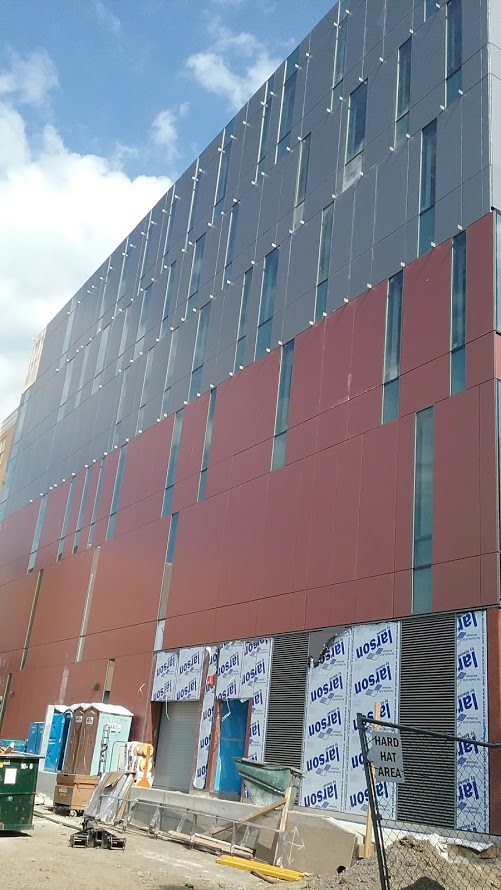
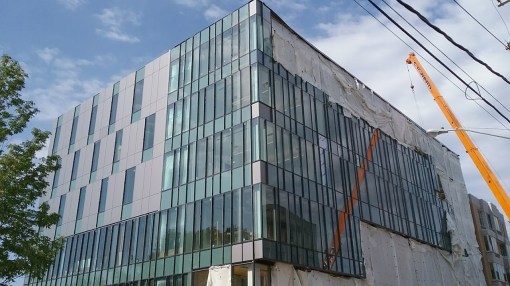
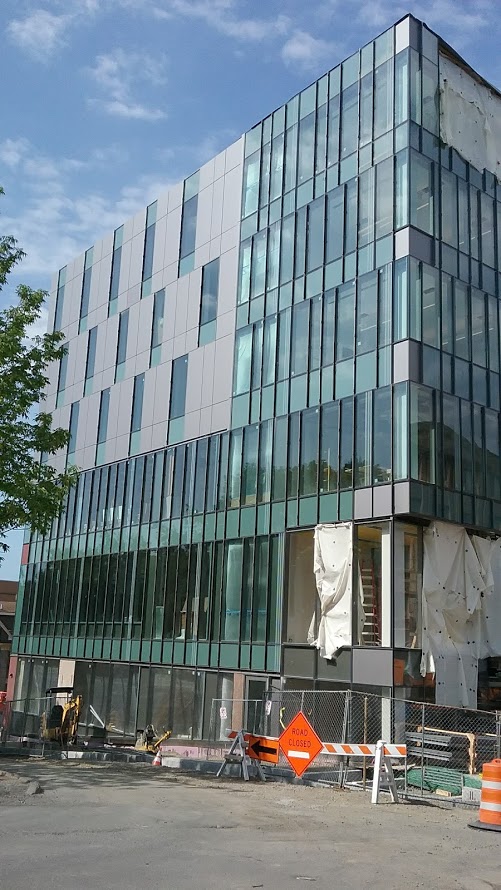
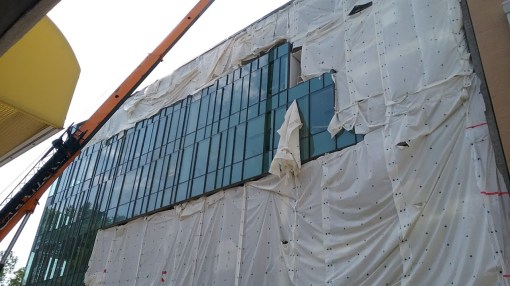
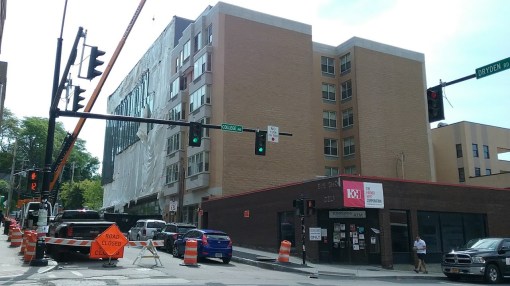
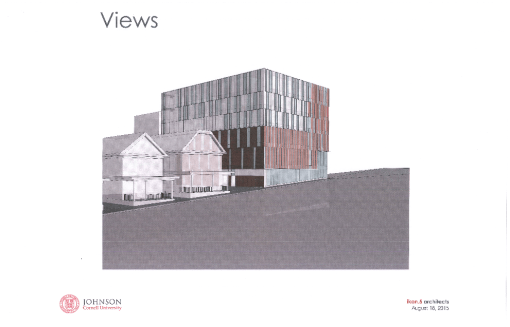
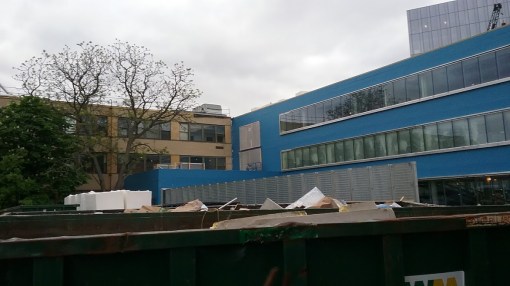
Most of the rear and east facade are complete on the Breazzano Center at 209-215 Dryden Road. The Larson sheeting on the utility/loading dock refers to Larson Alucoil, the brand name of the aluminum metal panels being used to complete the less photogenic vantage points of the new 6-story building. The clips on the rear wall will be used as hinges for architectural sunshades.

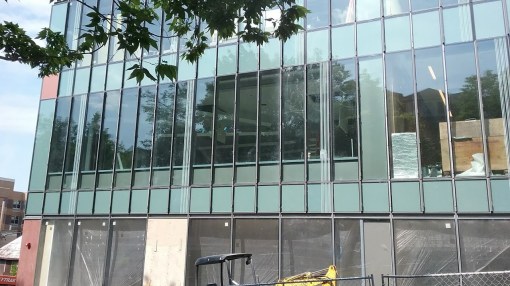
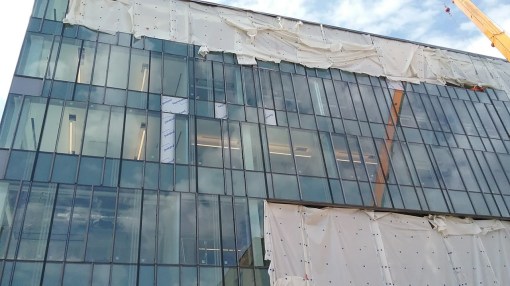
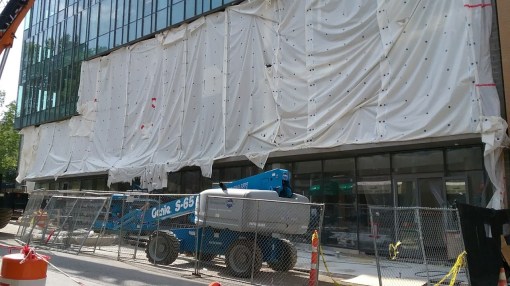
Most of the windows and spandrel glass has been installed on the read and east facade. Note that spandrel glass is purely decorative, and there are metal panels between the glass and the lip of the floor plate. The white stripes indicate where the salmon-colored metal panels will be installed over the glass, although I personally would be just as happy to see them go without; the glass curtain wall gives the building an airier, less overbearing appearance. The bottom floor uses clear glass to give the building greater transparency at street level, and is meant to enliven (“activate”) the block. In photo 9, you can see the ceiling of one of the large group instruction classrooms, meaning that the drywall has been hung on at least the lower floors, and utilities rough-ins have been completed.

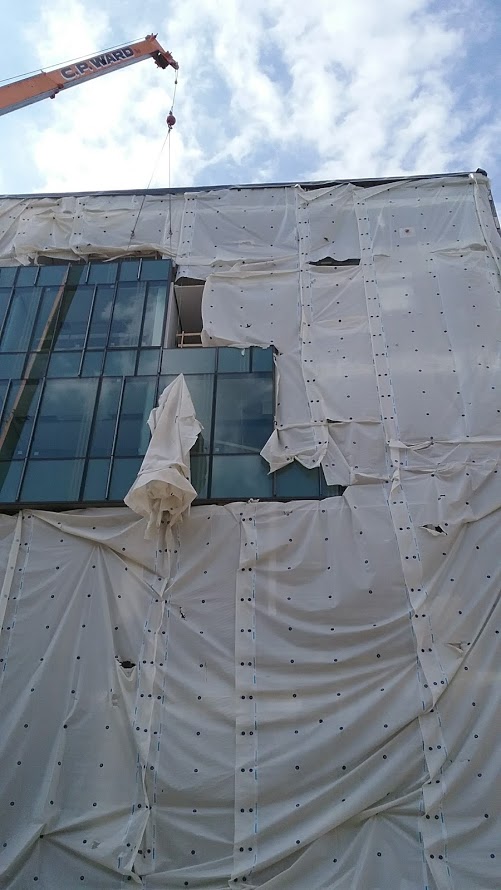
At the time these photos were taken, workers were easing a new panel section of the front curtain wall into place – it’s a bit of a delicate process to hoist the glazing with the crane and line everything up just right, and then quickly fasten it into place so they can move on with the next section, pulling the tarp back and continuing down the line. One imagines it must get a bit stuffy under the plastic sheeting this time of the year. More complicated exterior sections like the projecting atrium wall have yet to be tackled.

The Breazzano Center should be open in time for the fall 2017 semester. Not long thereafter, the staging area next door at 238 Linden will becoming a project of its own with the erection of a 4-story, 24-studio apartment building. That project is up for final approval later this month.


607 South Aurora Street Construction Update, 5/2017

2 06 2017

Projects are a bit like politicians in that the higher profile or most controversial ones get the vast majority of attention. 607 South Aurora Street fills neither of those specifications, and as a result, relatively few people are even aware of it.
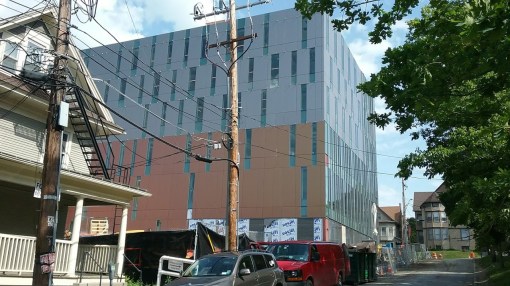
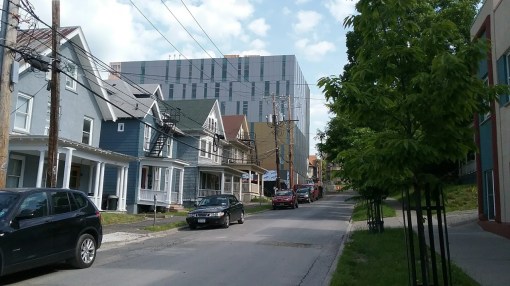
The South Hill infill apartment project is located on an unusually large 0.73 acre lot. The property consists of an existing 5-bedroom, 2,300 SF home dating from about 1910, and had been in the possession of the Cassaniti family since at least the 1960s, legally split among the six Cassiniti brothers. If you’ve visited the hot dog and soda vendor on the Commons, you’ve met one of the Cassanitis.

Enter Charlie O’Connor of Modern Living Rentals (MLR). MLR is a young and ambitious rental company based out of Ithaca, a partnership primarily led by O’Connor and business partner Todd Fox. However, each has had their own ideas on how best to approach development – while Fox likes to think big and aim for high-profile projects, O’Connor is much more low-key and incremental in his approach. The two differ enough that they developer under different entities – Fox under his firm, Visum Development, and O’Connor as MLR. However, regardless of who develops, all their rental units are managed by MLR.
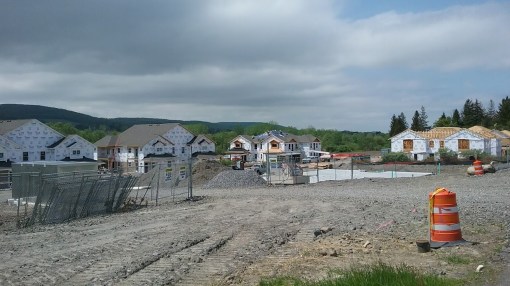
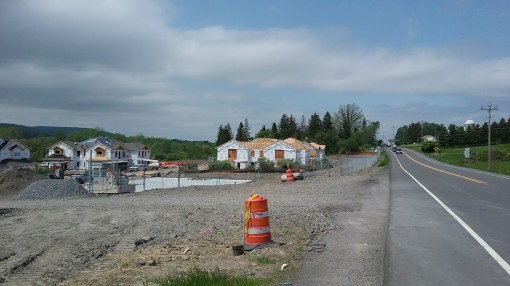
So while Fox is dreaming big with projects such as 201 College Avenue and 232-236 Dryden Road, and potentially sets off heated debates, O’Connor prefers to avoid controversy and take on less risk. His first project, with behind-the-scenes business partner Bryan Warren, was a pair of two-family houses at 312 West Spencer Road about half a mile southwest of 607. A bit of an unusual location, but close enough to urban destinations and Ithaca College that it was potentially viable, and after getting approvals last year, the project moved forward and is at least partially if not fully rented. Two existing houses that shared the original lot are being renovated as part of the project.

With those basically finished, O’Connor and Warren have moved onto MLR’s next project, 607 South Aurora. First proposed in August 2016, the location near downtown and IC makes it an easy sell, and in an area of 1.5-2.5 story owner-occupied and rental homes, four more two-family homes aren’t going to cause a big debate. In fact, in a city that loves giving its input, there were only ever a couple of neighbor comments about the project, and they were generally amenable – ‘better these than a large apartment building’ was the gist of it.

There were a few stipulations and revisions that were required, however. The original plan called for two homes near the street and two in the back of the L-shaped lot, with the renovated existing house in the middle. This was especially well received for aesthetic reasons (the city is still quite sore about the poorly-sited house MLR did two years before on the lot next door), so the site plan was redesigned to have three buildings on the interior side of the “L”, and one on the street to better match the curbside context. An internal driveway and clustered parking were added to help traffic and emergency vehicle circulation.

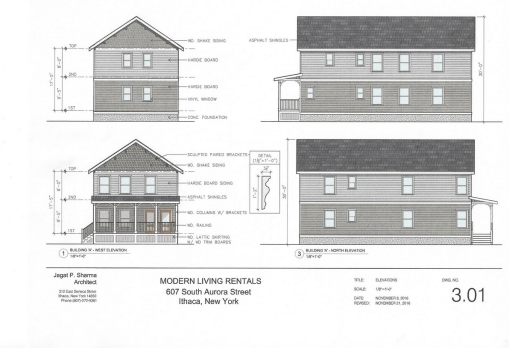
The building themselves didn’t change much – like 125 and 129 Elmira, they’re modular units on Superior Wall foundations. The unit facing Aurora has fiber cement siding and nicer details like a full lattice porch with railings, columns and brackets on the porch and roof. The rear units have small entry porches and use vinyl lap and shake siding.

With those details noted, the project was approved in November, and through an LLC, O’Connor and Warren bought 607 South Aurora, valued at $220,000 by the county, for $452,776 back in March (rule of thumb – if development is planned, expect a hefty premium).

Each of the eight new rental units will be three bedrooms and about 1,128 SF. The existing house will also be renovated and expanded slightly, raising the rear roof-line to add interior space. Expect occupancy by the start of the new academic semester in August. The apartments are being marketed at $2250/month, which works out to $750/bedroom.

According to county docs, the construction loan from Tioga State Bank was for $1.92 million and filed the day the house was sold. That figure is a combo of hard (materials, labor) and soft costs (acquisition, marketing, legal); by itself, the hard cost for the new construction and the renovation looks to be about $1.04 million.  Rochester’s Taylor the Builders, who will be doing Harold’s Square at some point, is the project’s general contractor.

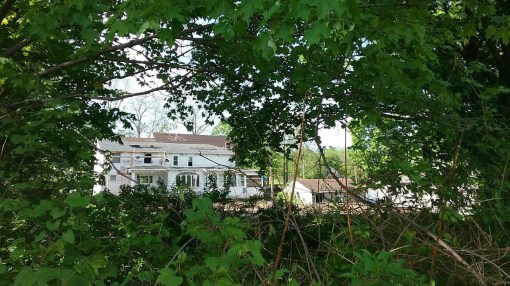
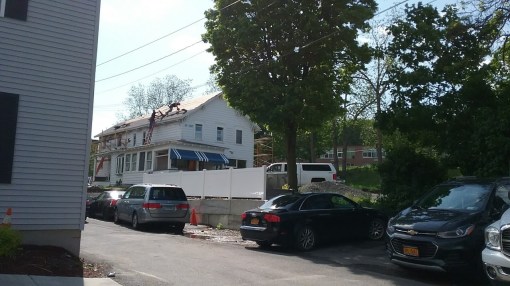
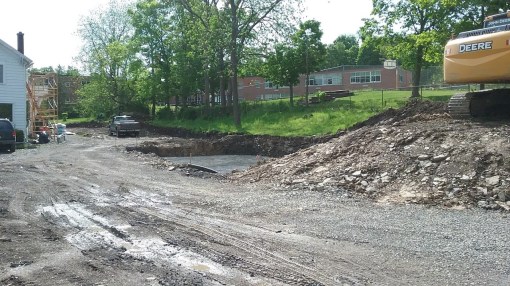
Looking at the site last month, a new roof is underway, and you can clearly see where the roof was raised in the roof by looking at the trim boards; the new section is housewrapped, and presumably the whole house will receive a new exterior finish at a later date. The windows in the rear are just rough openings for now, new windows will come along shortly. The soil has been excavated for the slab foundation of Building “A”, but due to the angle and slope of the site from the roads, it’s hard to tell how much of the site prep for “B”, “C” and “D” has been completed in the rear, apart from some disturbed soil.


Ithaka Terraces Construction Update, 5/2017

1 06 2017

Taking a look at the Ithaka Terraces site at 215-221 West Spencer Street, one question immediately comes to mind – is Building “D” still happening? The other three are far along, and yet there appears to be no sign of Building “D”, a mirror of Building “C”, starting construction. It could be cost concerns or pre-sales worries, or simply a matter of timing. The website doesn’t look like it’s been updated recently, and marketing for the condo units doesn’t seem to have started yet.

Apart from the completion of the roofing, not much additional work has occurred on the exterior of Building “A”. Its twin, Building “B”, has finished framing, sheathing, windows are being fitted and the roofing is well underway, sheathed and covered in Certainteed DiamondDeck and WinterGuard underlayments, but not yet shingled. Building “C” has had its multi-story porch erected and it looks like the R39 cellulose insulation is underway. New to this update are the Bituthene sheets on the concrete foundation walls of “C” – Grace Bituthene Membrane is a two-component system, the first is a sticky, liquid rubberized asphalt compound, the second a laminated HDPE film, and together they’re used for weather and moisture protection, handy when your walls will be exposed to moist soil uphill and several feet deep. The white walls facing the future grand staircase are water-resistive barriers to protect the plywood ZIP panels from the mositure-absorbing stucco finish.

Local eco-builder AquaZephyr LLC (run by Kendall and Mike Carpenter) is the general contractor, Taitem’s doing the structural engineering, T.G. Miller is in charge of civil engineering, STREAM’s the architect, and Ed Cope (PPM Homes) is the developer. Side note, I dropped by the Wyllie site and didn’t see work on the renovation underway, although it’s not clear if the state grant funding has been disbursed yet. It and the PPM’s Ithaca Glass Apartments are expected to get underway this spring.

Also, let’s not forget the ’80s hair metal blasting over the stereo on-site. I guess nothing gets the work done like Whitesnake and Twisted Sister.

UPDATE: From the architect, Noah Demarest, on the status of Building “D”: “It’s a logistic issue. Couldn’t get all the foundations in at the same time. Should be starting soon.”


Poet’s Landing Phase II Construction Update, 5/2017

26 05 2017

Continuing the theme of affordable housing from Conifer, here’s their other current local project, the $10.8 million second phase of the Poet’s Landing apartment complex in the village of Dryden. Six buildings, eight units per building – it looks like Conifer utilizes three unique two-story designs from NH Architecture with differing unit configurations.

Going counterclockwise, one sees the slab foundation of the latest building (which we’ll call “A”) to begin construction. The next building, “B”, is still being framed, its roof trusses nearly finished, while “C” is further along, roofed in sheets of plywood sheathing. All structures make use of a Tyvek-like housewrap for a vapor and moisture barrier. Building “D”, furthest from the road, is being papered and shingled, and windows have been installed in some of the rough openings. Building “E” and “F” are being sided (probably Saint-Gobain CertainTeed vinyl siding, if it’s like other Conifer projects). Taking a guess at what’s going on indoors, it’s bare stud walls in “B” and “C”, utility rough-ins (plumbing, electrical) in “D”, and drywall, paint priming and perhaps interior fixtures/trim in “E” and “F”.

As with most of Conifer’s affordable housing projects, LeChase Construction serves as general contractor through a joint venture partnership called Conifer-LeChase. Expect the units to come online building-by-building from September 1st through the fall. Information on income limits can be found in the summary post here, and rental inquiries can be sent through the contact page here.

Side note, it’s going to be really nice when they put the new sidewalk in – walking along Freeville Road is a bit of a harrowing experience.


Cornell Law School Renovation Update, 5/2017

24 05 2017

Externally, not much has changed since March, although it looks like work is starting on enclosing the north loggia. The Fork and Gavel Cafe is closed for renovations through September, but a carry-out offshoot will serve in its place. Most of the work on this $10.2 million project is internal, converting former dorms into academic office and support space. With any luck, the next visit will be from the inside.


Cornell Veterinary School Expansion Construction Update, 5/2017

24 05 2017

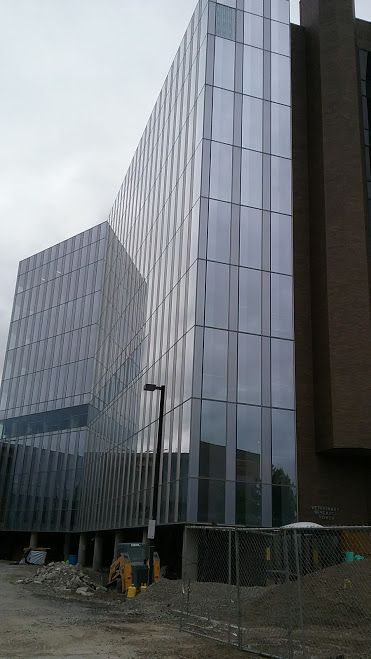
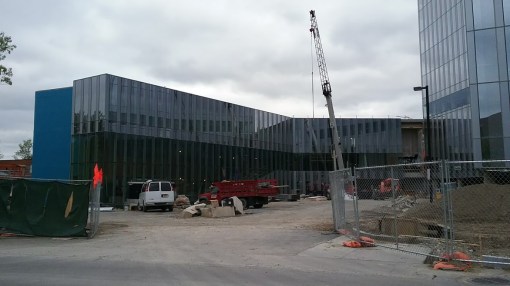
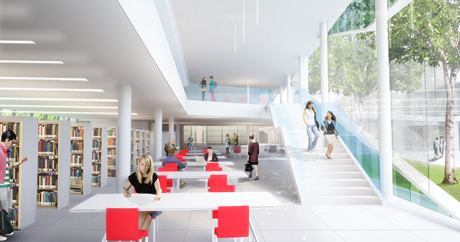
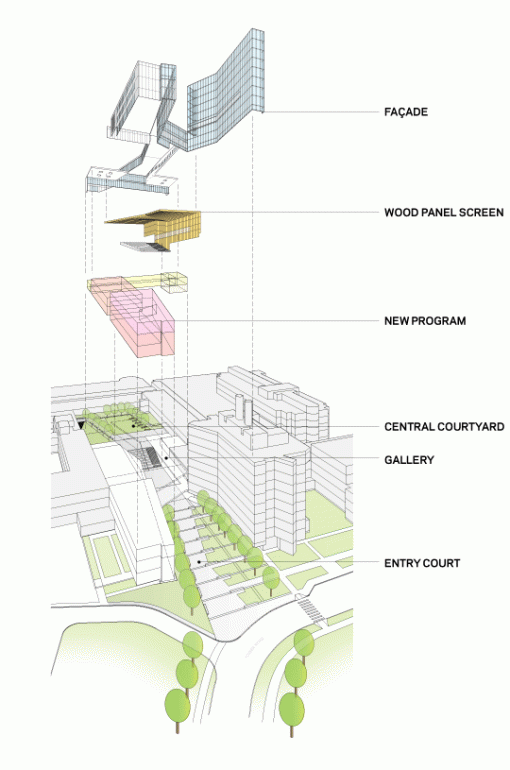
So many projects in the final stretch up on East Hill. The Vet School expansion’s multipurpose atrium is in the process of being closed up with its curtain wall glazing. An interior shot from the start of May shows interior stud walls are up and utilities rough-ins taking place, but drywall, interior trim and fixtures had not been undertaken.The concrete for the “grand staircase” had just been poured.

The atrium will be called “Takoda’s Run“, in honor of a greyhound adopted by alumna Janet Swanson (for whom Cornell’s wildlife rehabilitation center is named). The Swanson family are major university benefactors – Janet, Class of 1963, has given millions of dollars to the Vet School since the mid-2000s. Husband John (BS 1961, B.M.E. 1962, M.M.E. 1963), an engineer and tech executive, has given tens of millions to the university. The atrium in Duffield Hall and a lab suite in Weill are named for him, as well as several endowed professorships, fellowships and scholarships. Not just leaving it to Cornell, the couple has buildings named after them at Washington and Jefferson College in Pennsylvania, and a $41 million donation to the University of Pittsburgh led to the Swanson School of Engineering. My former editor at the Voice is definitely not a fan of this practice, but for those with a lot of money to burn, naming opportunities can be found or scoffed at here.

From the outside, the new administrative and library wing haven’t changed much since March, but at this point all Welliver has left is some window installs, exterior panels and finishes. Since I’m on a kick at the moment, the Flower-Sprecher library is named for former governor Roswell Flower (1892-94) for allocating funding, and in the early 1990s, Dr. Isidor Sprecker ’39 (Americanized from Sprecher) donated a substantial sum for renovation. It looks like some underground utilities work is going on out by the curb, possibly in preparation for the new landscaping and lighting fixtures.

The new Community Practice Service Building is underway, although I don’t have photos – the Poultry Virus Building has been demolished and the site was being cleared and readied for new construction. The timeline for the new 12,000 SF HOLT Architects-designed building is May 2017-May 2018, a couple months later than originally programmed.

The project seems to be a little bit behind schedule. The project team was initially aiming for a June completion, which was a little optimistic. The new schedule calls for an August opening.


Upson Hall Construction Update, 5/2017

22 05 2017

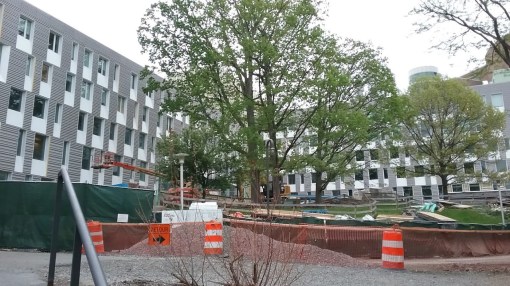
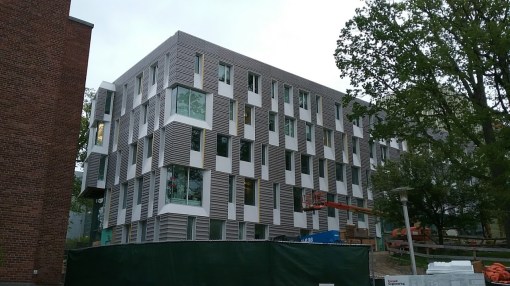
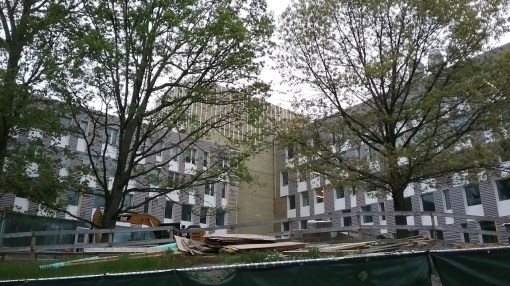
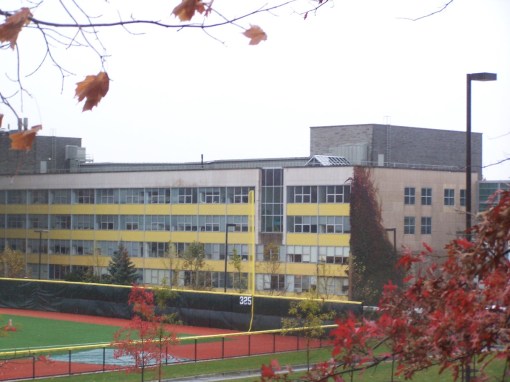
Home stretch for Upson Hall’s $74 million makeover. Nearly all of the turquoise water-resistive barrier (WRB) has been covered up with terracotta panels and aluminum inserts at this point. The utilities shaft and mechanical penthouse have been faced with a water resistant base layer and aluminum clips, and will be faced with grey metal panels. Note that those thin yellow aluminum plates on the exterior are a finished design featurethey’re intended to be a nod to the original canary yellow aluminum curtain bands that once lined Upson Hall’s facade. At this point, the upper three floors are occupied, the lower two floors and basement are being finished out, the exterior is nearly complete and interim landscaping features will be installed by The Pike Company before the building opens for full occupancy in August.

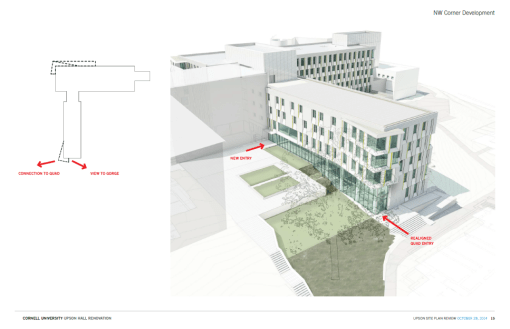
Over the next ten years, Cornell would like to utilize LTL Architects and Perkins + Will to redo the rest of the Engineering Quad with designs similar to Upson Hall. The $300 million plan also calls for the demolition of Carpenter Hall and a new multi-story building on the corner of Campus Road and College Avenue. Whether or not those things happen remains to be seen. The earliest renders of the Upson Hall plan are included at the end of this entry, and while the general design has remained the same, some of the design features, such as the shape of the bump-outs, the fenestration, and the emphasis on the south terrace were revised before the final plan was drafted.


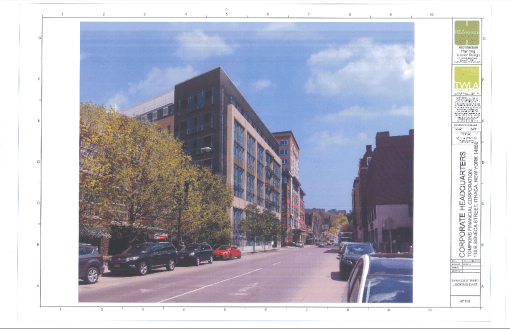
Tompkins Financial Corporation HQ Construction Update, 4/2017

25 04 2017

I could see the clouds to the north and west, I knew the rain was coming. I even glanced at a radar still on my phone and assumed that, as most fronts tend to do, it was moving west to east in a diagonal SW-NE band – by that logic, I had about fifteen minutes to take photos, run to my car and get my umbrella. As it turns out, the front was pushing north to south. So I did not have fifteen minutes. I had five. Oops.

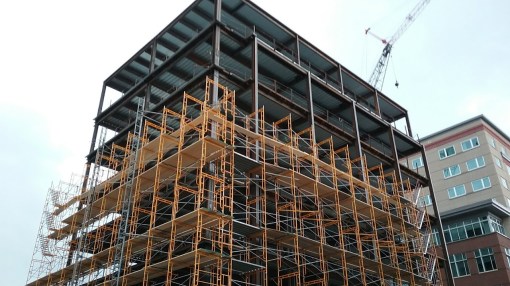
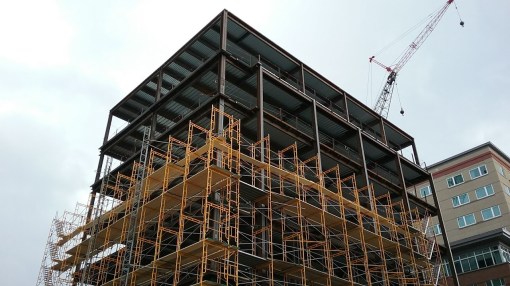
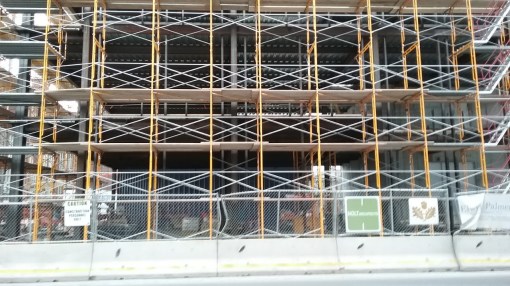
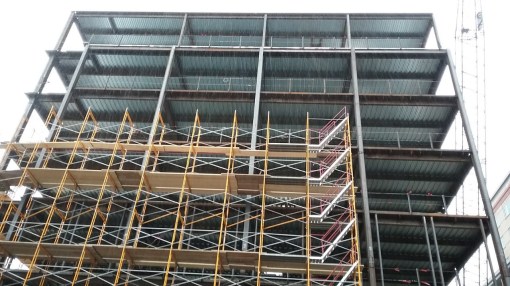
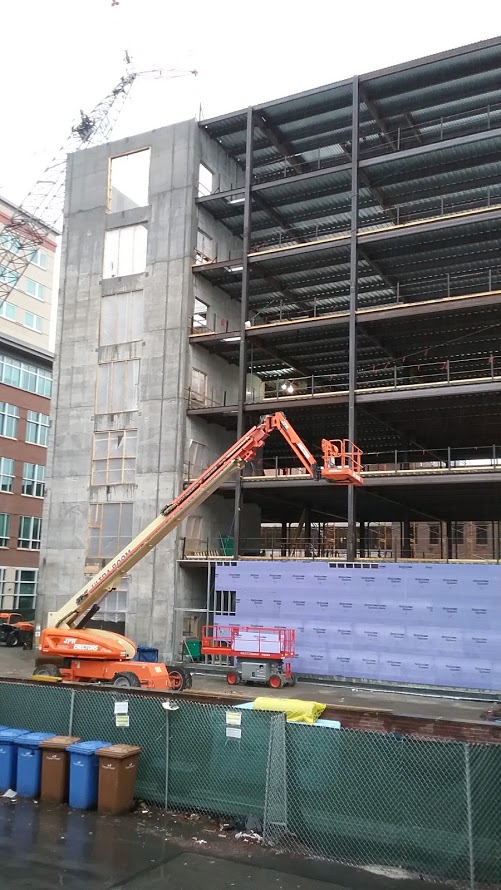
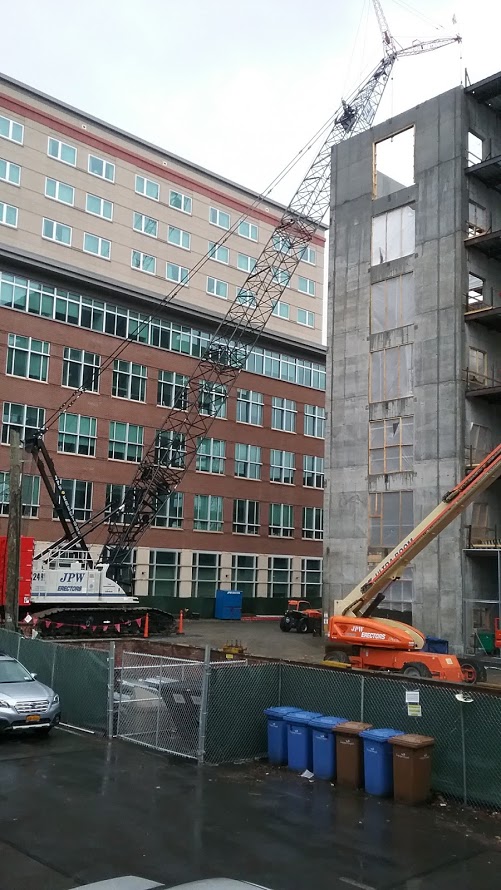
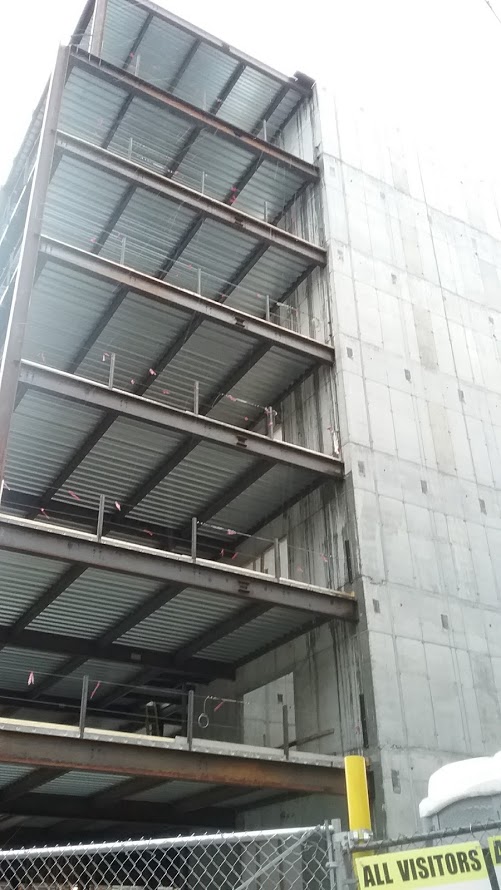
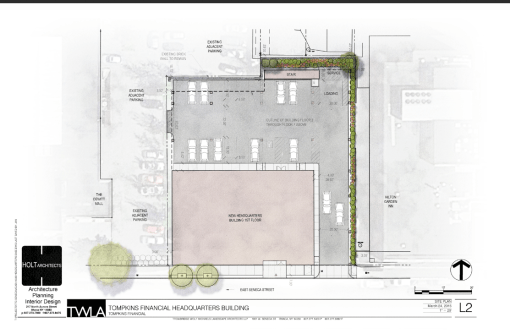
Anyway, TFC’s new HQ is topped out and decked with corrugated steel (a bit sooner than anticipated), though it’s not built out – the rear (north) flank and the east flank are missing. Those are the portions that will be built over the surface parking. You can make out a couple of the support piles in the pics below, and those will tie into the structural columns in the garage area, and into the structural steel of the upper levels. As noted with 201 College, it’s a bit unexpected that the structure would top out before even a single floor is built out, but it is what it is. The building’s height is there, but in terms of breadth, it’s less than half of the final product. The elevator core is at full height, and the steel stud wall and gypsum sheathing on the back separate the future ground-floor bank branch from the rear parking, which will be reserved for customers and clients. Pipe scaffolding has been erected as workers begin work on the interior (sprinkler system, utilities rough-ins).

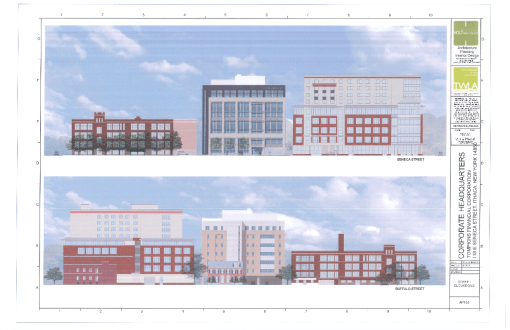
Occupancy is intended by March 2018. JPW Erectors, a division of the JPW Companies of Syracuse, is in charge of the framing, while LeChase Construction is the general contractor. HOLT Architects penned the 110,000 SF building’s design.