Masonic Temple Renovation Update, 3/2019

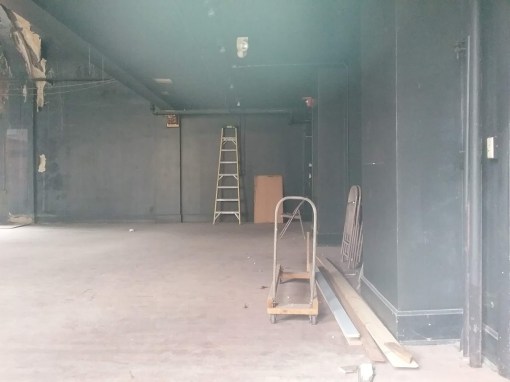
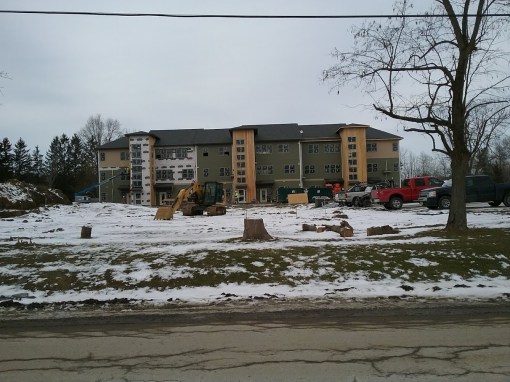
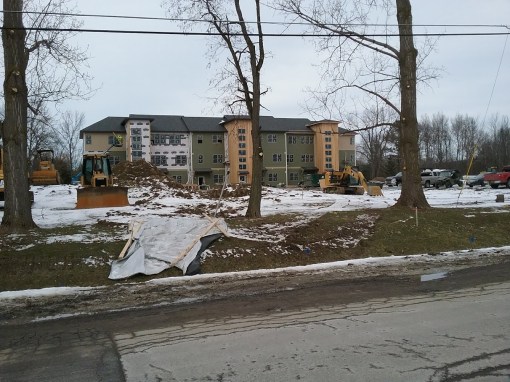
23 03 2019

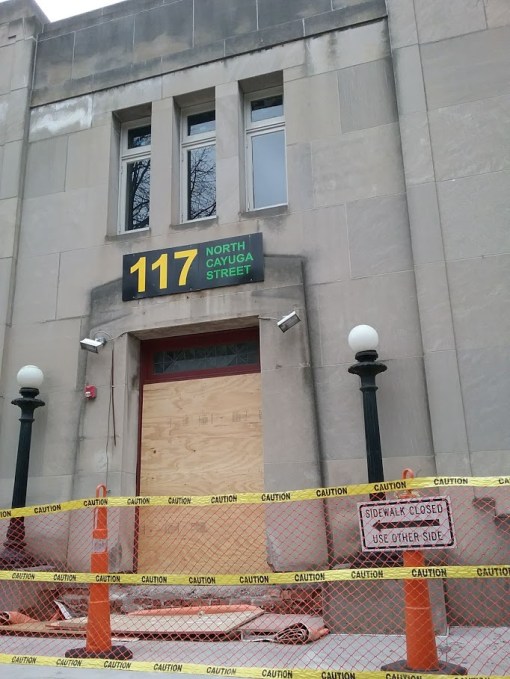
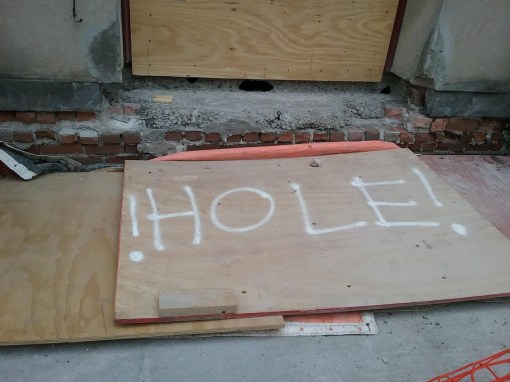
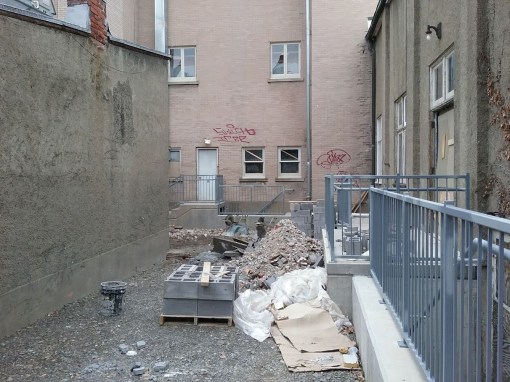
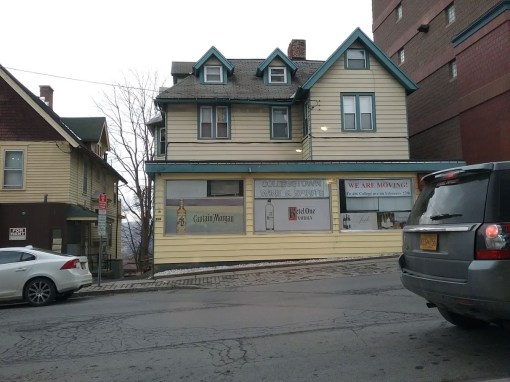
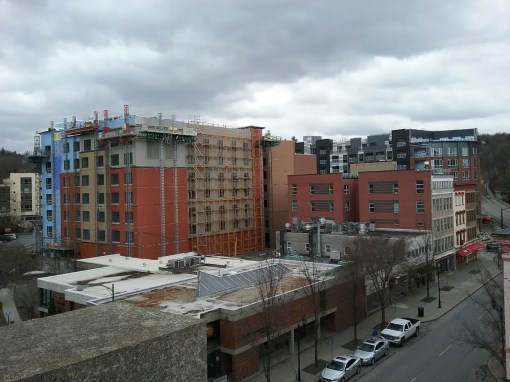
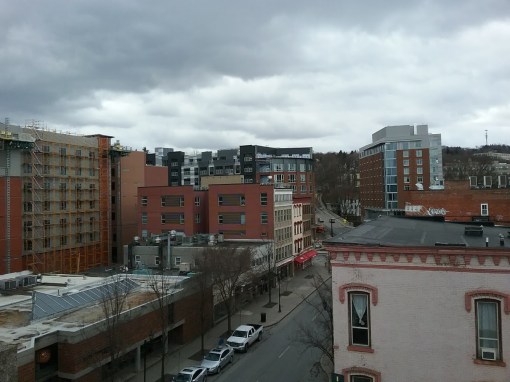
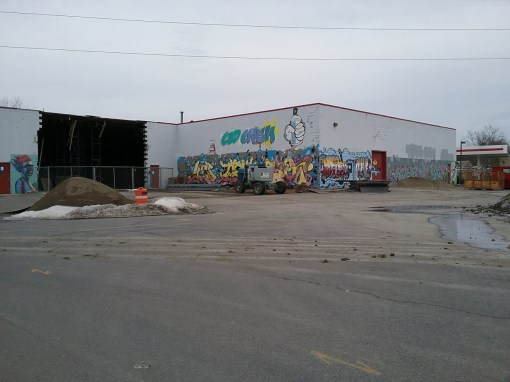
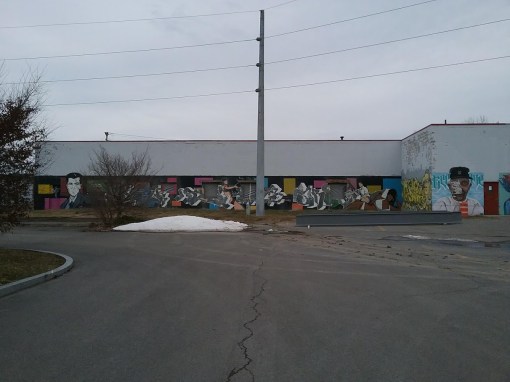
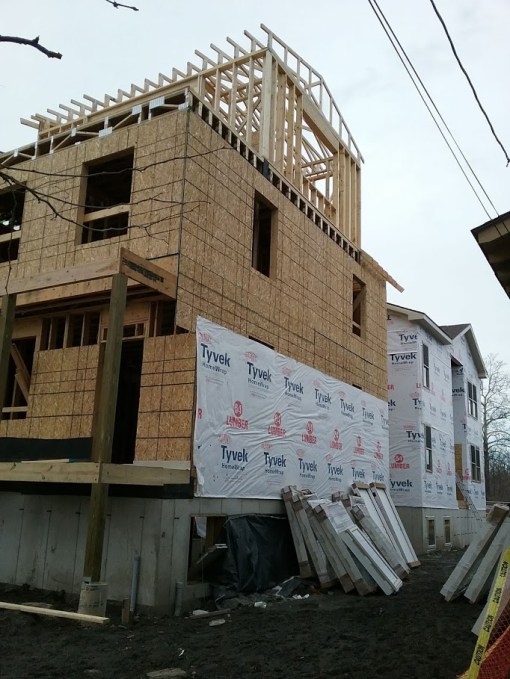
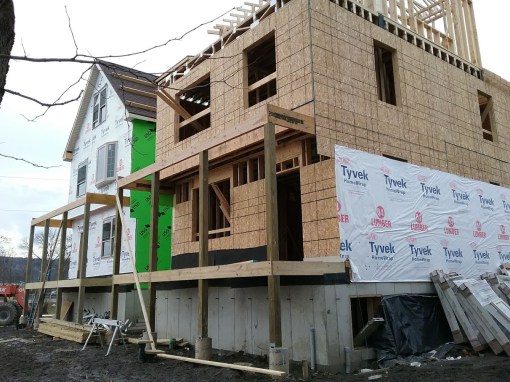
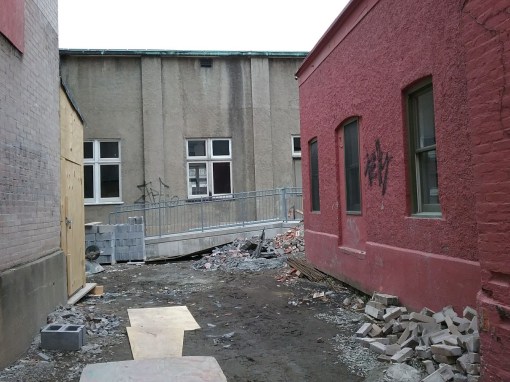
This project continues to crawl along at its slow if steady pace. It appears that the deteriorated concrete steps are being replaced. Seems reasonable to think the door is covered over because there happens to be a gaping hole on the exterior side; sure, there’s a slapstick comedy aspect to that, but I still remember when two workers fell through an elevator shaft at the Fairfield Inn when that was under construction six years ago, and not only were there severe injuries, the lawsuit put the local living-wage contractor out of business.

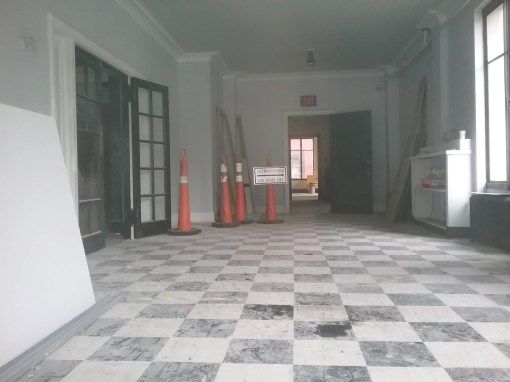
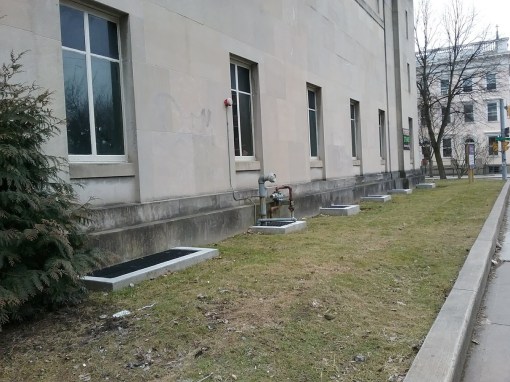
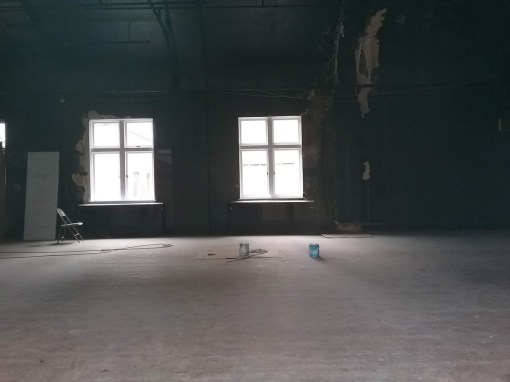
It also appears that new historically-appropriate windows have been installed, and the railings have been installed for the new cellar stairs and the wheelchair ramp to the auditorium space. The graffiti has been there. It’s not clear if the roof membrane has been replaced yet, and the exterior will be cleaned at a later date. The outside is fairly far along, but from the windows there appear to be few if any signs of significant interior work underway.

As before, there has not been any news regarding commercial tenants signed up to fill the renovated space once it’s complete – a January posting on Loopnet listed a 4,000 SF space on the first floor, a 6,668 SF space on the first floor, and 6,666 SF space split between the second and third floors. A retail renter of the whole building gets a discounted price of $8 per square foot for a five-year lease, whilerenting just one of the spaces will cost $10-$14 per square foot for a five-year lease. The Fane Organization tends to be very tight-lipped about their business deals, so no word on any potential tenants. The $1.5 million renovation is being designed by architectural preservation specialists Johnson-Schmidt & Associates of Corning, and renovated by McPherson Builders of Ithaca.


238 Linden Avenue Construction Update, 3/2019

22 03 2019

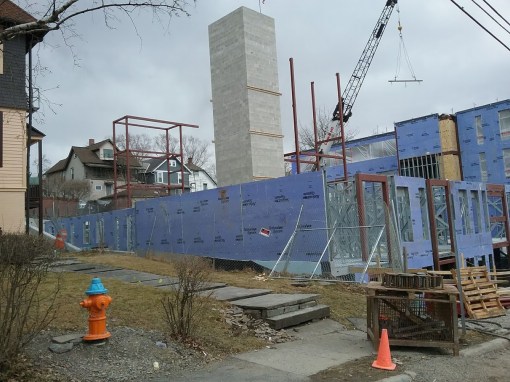
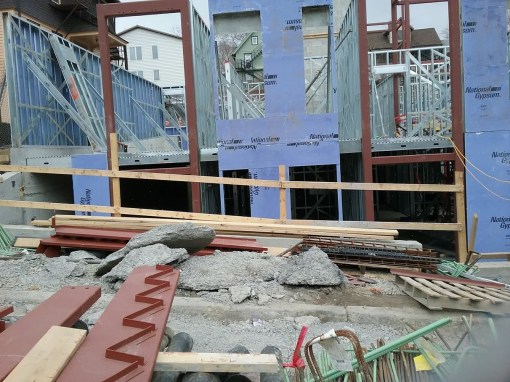
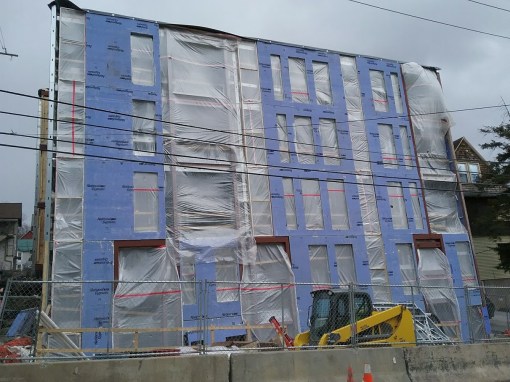
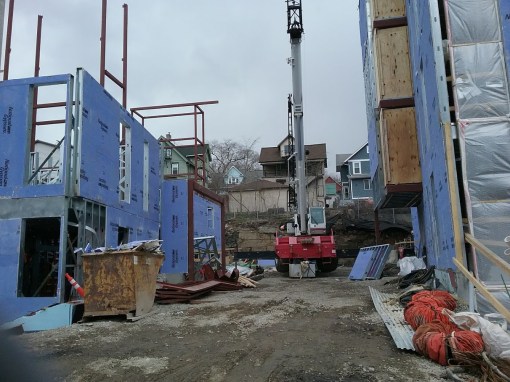
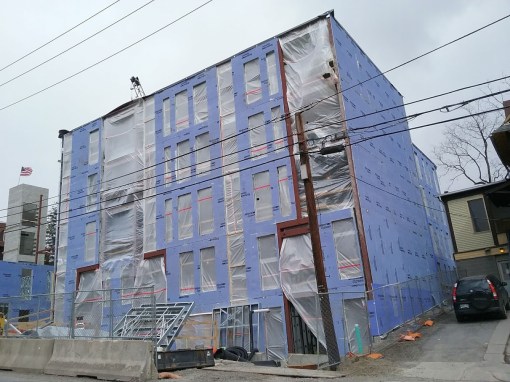
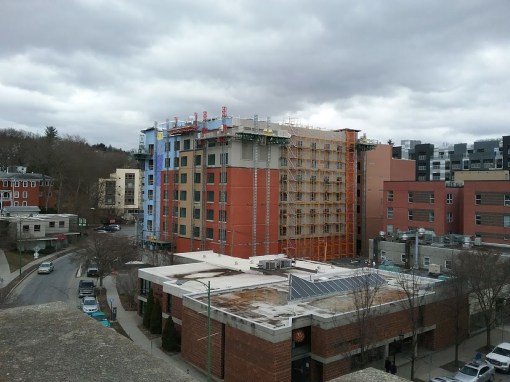
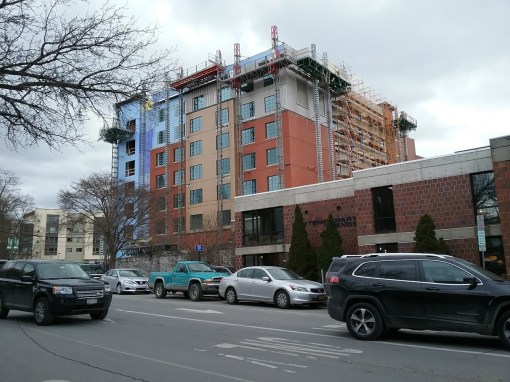
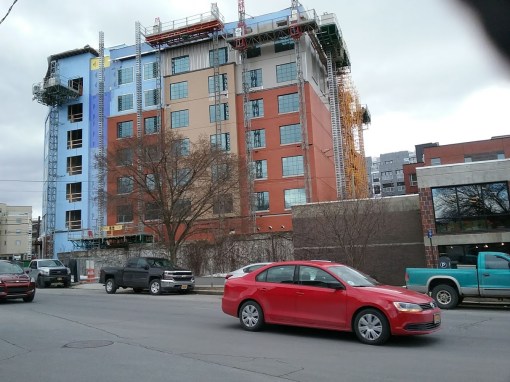
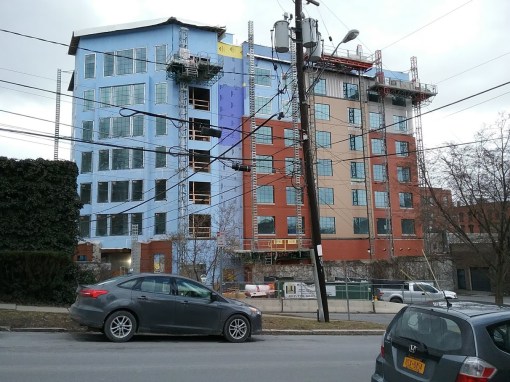
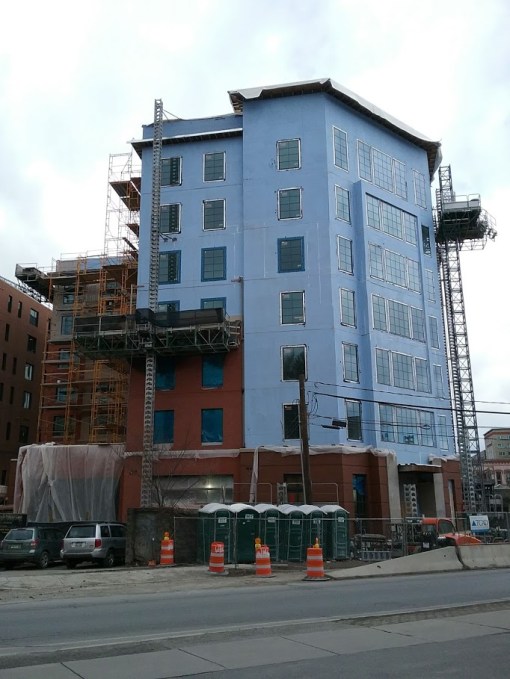
Like 119-125 College Avenue, 238 Linden is being designed by ikon.5 Architects, With similar aesthetics and structural design (and more than a passing similarity to the 2,000 bed Cornell North Campus dormitory expansion, which has the same development team) looking at this project is essentially like looking at the next steps for its larger sibling a couple blocks away. However, while 119-125 College Avenue uses Welliver as its general contractor, Hayner Hoyt is in charge of buildout for the 238 Linden site, with several subcontractors on site (for example, the roofing is being done by Hale Contracting of Horseheads). Like its sister building, this project has no online presence apart from what was documented by the city or reported by the Voice and Times.

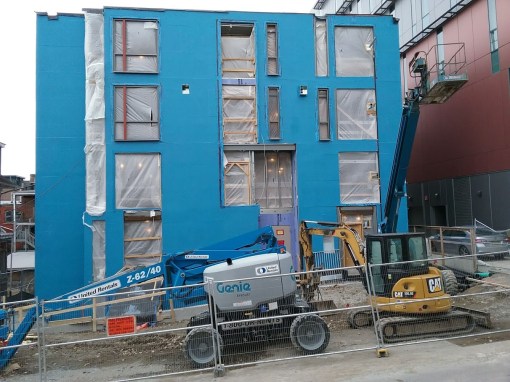
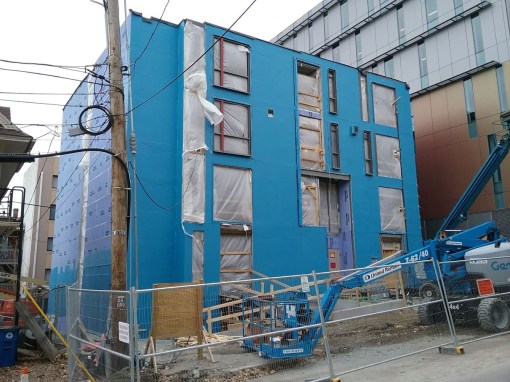
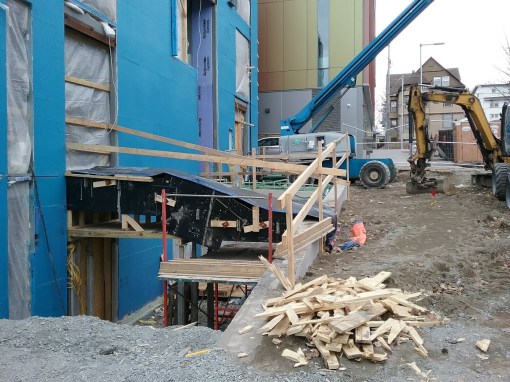
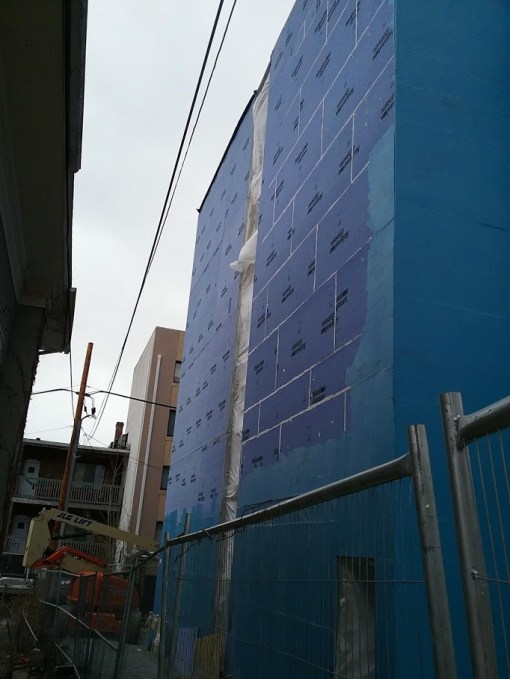
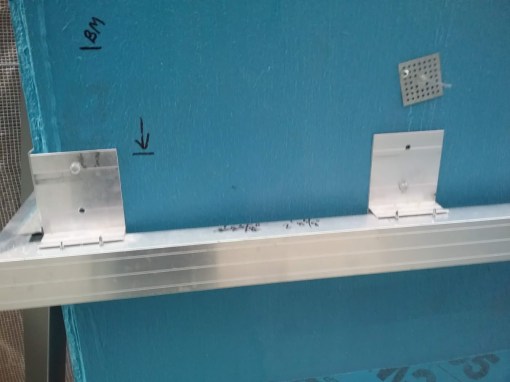
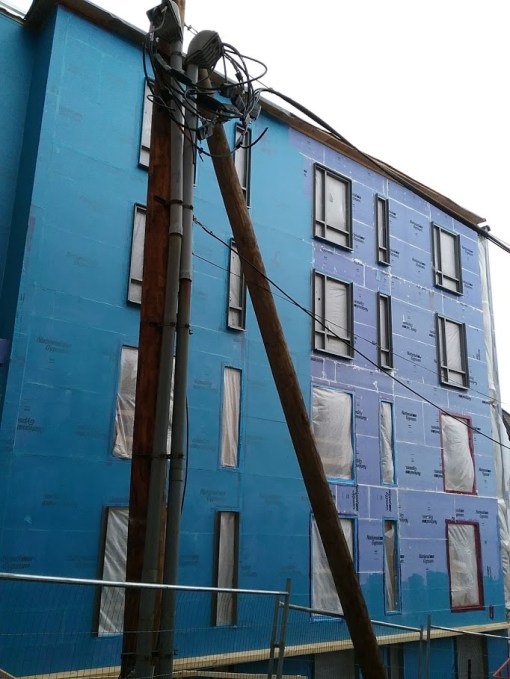
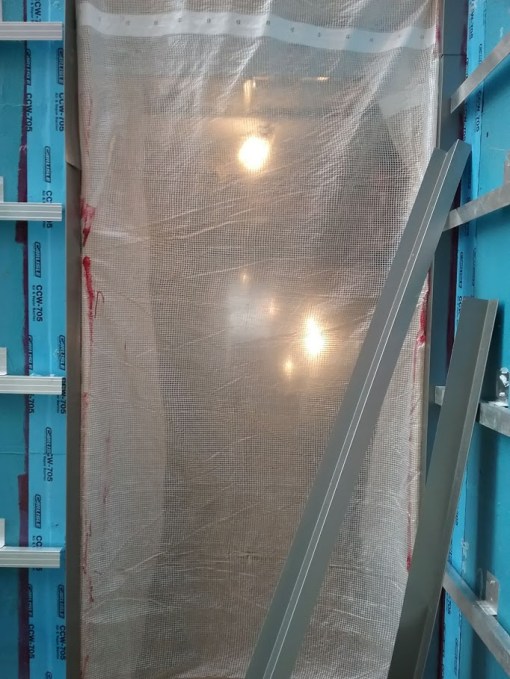
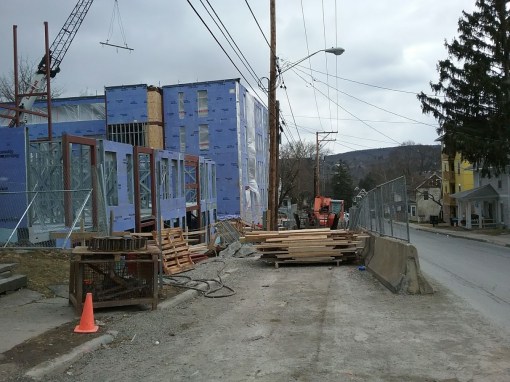
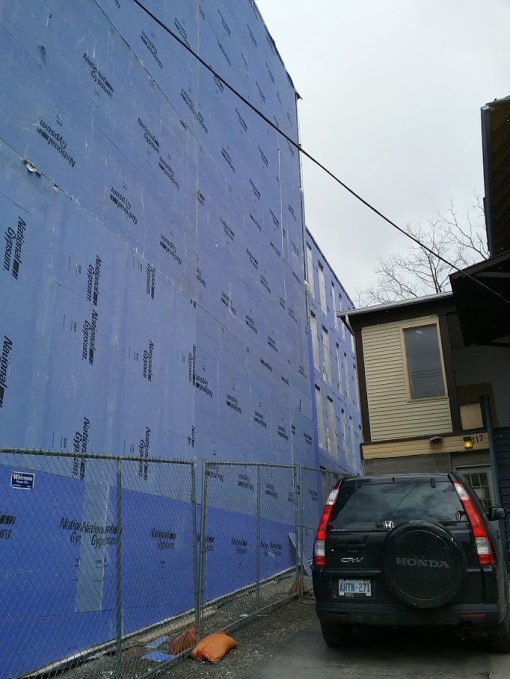
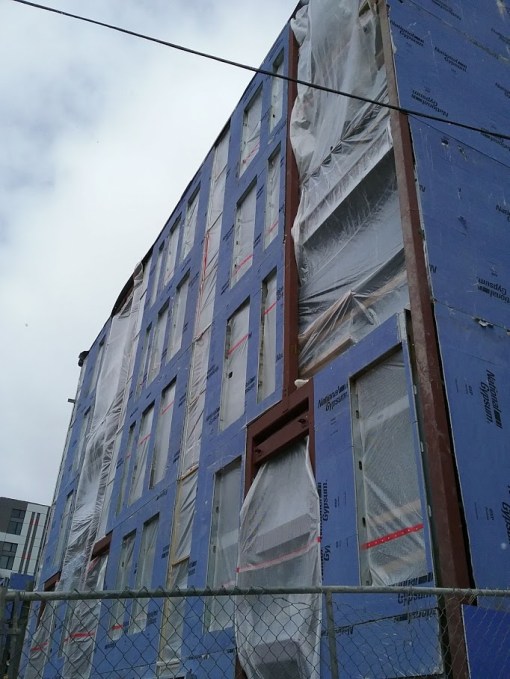
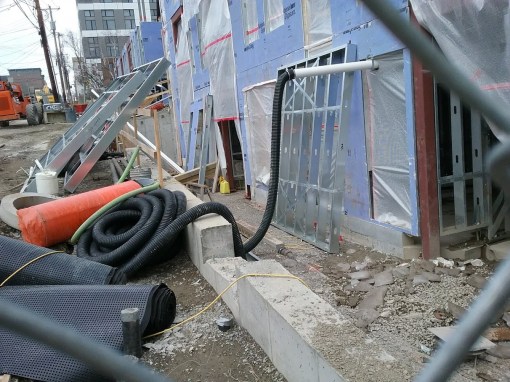
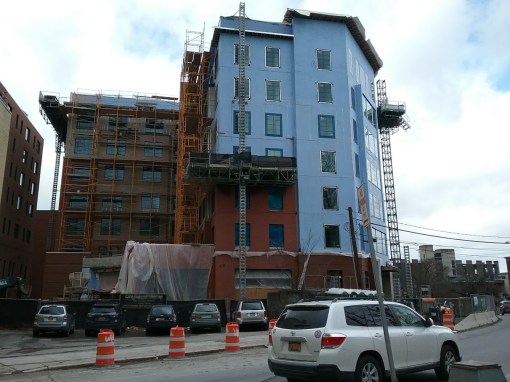
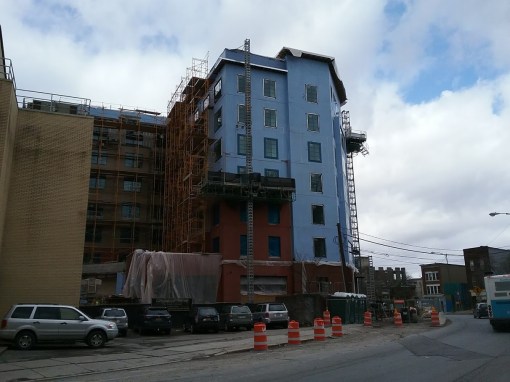
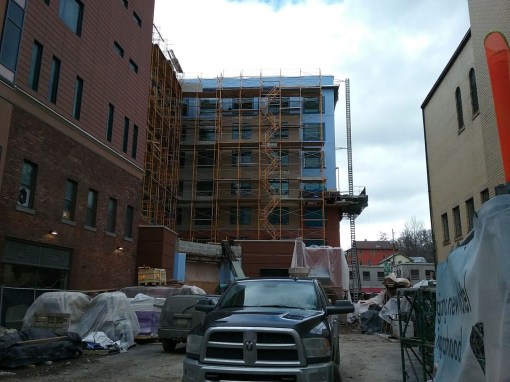
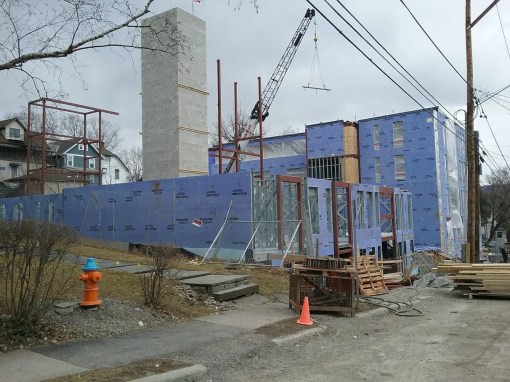
Interestingly, the window frames protrude from the wall rather then sitting flush with the set opening. The waterproof barrier is on over the gypsum panels, and the metal rails for the fiber cement and zinc panels are in the process of being installed on the north and west faces.

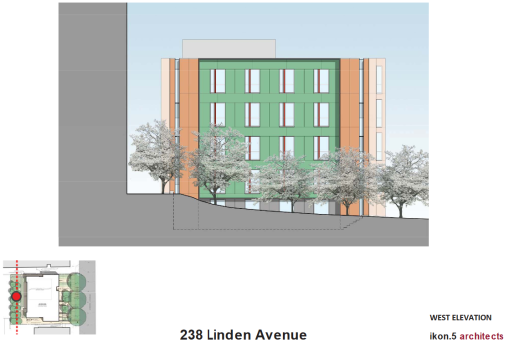
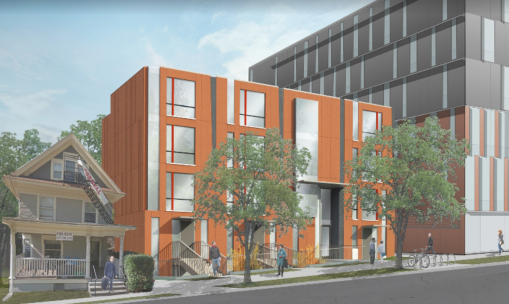
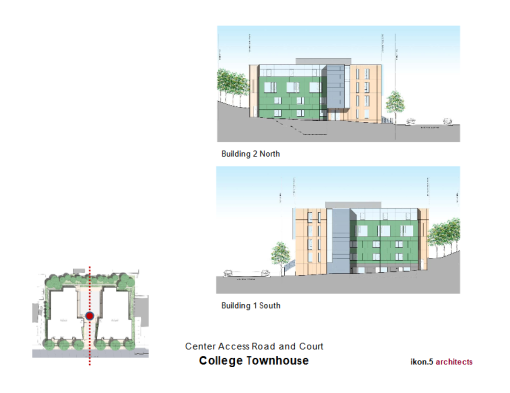
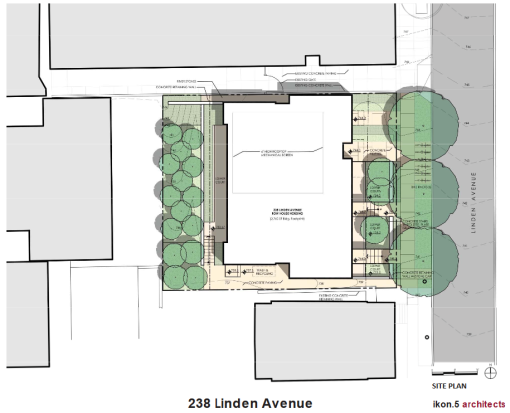
It was clear at first glance that the footprint of the building is markedly different, and the fenestration is nothing like the approved renders at the bottom of the post – there are fewer windows overall, and honestly I’m not sure if the building footprint was reduced in size. It was supposed to be 24 studio units, but I wouldn’t be surprised if it were only eighteen now. There was no public reviews for these changes, and these are by no means minor tweaks. The line between a large new construction project redesign requiring board re-approval, and a redesign only needing staff approval is rather murky.

A history and overall description of the 238 Linden Avenue project can be found here.


119-125 College Avenue (College Townhouses) Construction Update, 3/2019

21 03 2019

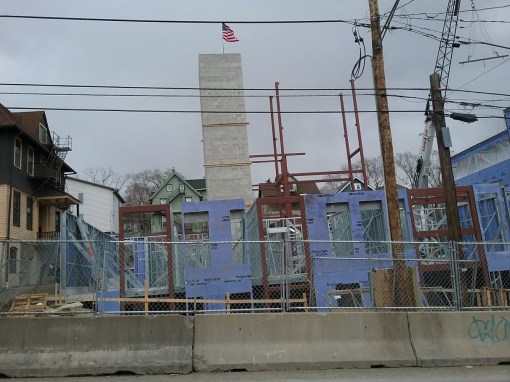
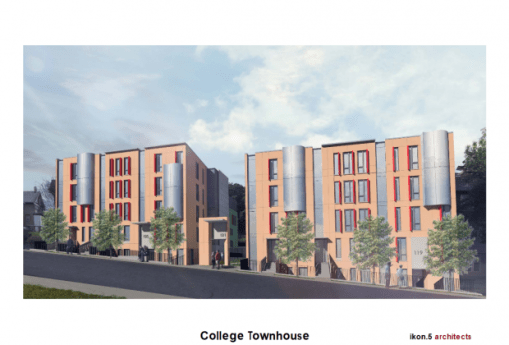
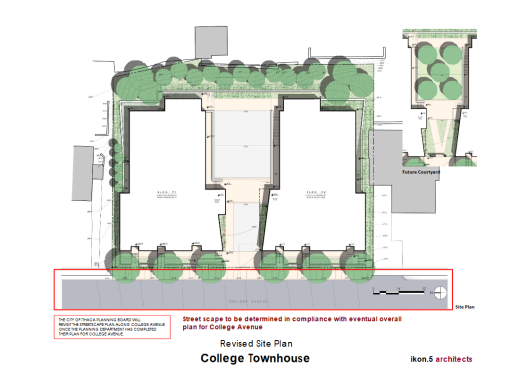
No recent online presence for John Novarr and Phil Proujansky’s 119-125 College Avenue project, the College Townhouses (which, as covered in the summary page, were townhouse-like until the fire code was changed). The south building is fully framed, a steel frame with gympsum sheathing, a more expensive design but also fireproof. The north building is framed up to the first-floor (the basement is partially above-grade), but the elevator core is topped out, and Welliver’s construction team planted left their mark with an American flag perched at the top. If it’s like it’s neighboring a couple blocks away, the sheathing will get a roll-on waterproof barrier, and perhaps metal rails and clips for installation of fiber cement and zinc panels.

The project, intended for visiting Cornell faculty and staff (so far, there are no online apartment postings to support of refute that plan) will bring 67 units/90 bedrooms to the market, and still looks to be on track for an August 2019 opening.

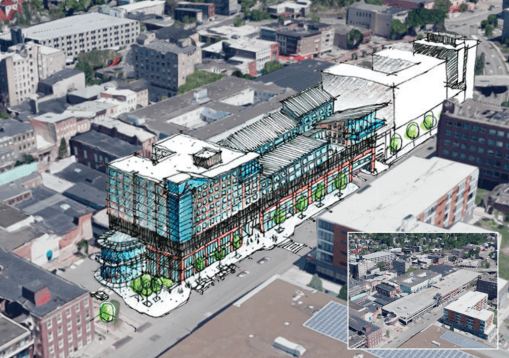
Quick aside – is everyone clear that it’s Novarr and Proujansky who are planning that Collegetown megaproject? There are so many rumors flying around that even the beat cops are asking my editor at the Voice about it. The project has been delayed twice, but is supposed to make an appearance before the city Planning Committee next month.

There have been some very scary rumors about this project, and one of the big problems right now is that these rumors aren’t being refuted because everything is “a secret”, no one really knows what the truth is. Only JoAnn Cornish, the city Planning Director, has been willing to put anything on the record, and even then it was just a brief description. Since January, this project has managed to be the worst-kept development secret in Tompkins County, which arguably Novarr and Proujansky could try to blame on the mayor for his State of the City address, but really if they had wanted him to not say something, they would have said something to him or said something themselves. I give Newman Development and Scott Whitham a lot of credit for “taking the bull by the horns” and issuing a press release about City Centre before rumors could circulate. I think this project would have benefited from a similar approach.

It’d be one thing if it was a relatively modest proposal. If we were talking about 119-125 College Avenue, it wouldn’t be such a big deal. But with this megaproject being described as a $600 million endeavor, there are multiple real estate and related business decisions around the city and county that are in a holdover pattern because everyone’s heard about “John and Phil’s plans” but no one knows what’s going on, not to mention community groups fearing the worst. We’ll see if the big reveal gets delayed again, but for a lot of reasons, I really hope not.


Hilton Canopy Hotel Construction Update, 3/2019

21 03 2019

It appears that the Hilton Canopy hotel developers put an in-house restaurant back into the mix late in the development process. The new eatery, to be called “Ezra” in what’s ostensibly a nod to Ezra Cornell. Dunno how large the new restaurant will be, but the early designs called for about 2,000 SF of space. In keeping with the Canopy theme, the restaurant logo incorporates Pantone PMS165 orange, with aluminum letters, faced in matte black base vinyl print, and on a wood laminate background intended to mimic Brazilian Walnut. The address for the new 131-room hotel will be 310 East State / Martin Luther King Jr. Street. The signage will be built and installed by Lauretano Sign Group of Connecticut. Outdoor dining spaces will have chic industrial aesthetic tables and chairs and contemporary, durable outdoor furniture.

For those interested, some job openings have been posted for those who wish to be hotel staff. The General Manager has the co-title of “Chief Enthusiast”. Management can expect to make up to $80k/year, but most staff will fall in the $11-$15/hour range, with a bit more for some titles and a bit less ($7.50/hour + tips) for those who will be working in the restaurant. They might be a little higher given those were 2014 figures, but it looks likes only management jobs are being filled at the moment.

As for the construction itself, work on the fiber cement panel and brick veneer installation continues. It looks like a waterproof materials might be going on over the gypsum sheathing, laid over with metal rails and then faced with the exterior material of choice. The rails would allow for any outside moisture absorbed to drain down and off the building. Some of the industrial-style windows are in,with flashing tape surrounding the window to prevent water and air penetration. We also now know what “sauteed mushroom” looks like as an exterior siding color. The hotel is expected to open in “Mid 2019”, probably too late for the May graduations but Q3 2019 looks plausible. The Canopy website comes with a thumbnail interior render, though the resolution isn’t so great:

Further information on the Canopy hotel can be found here.


News Tidbits 3/11/19

12 03 2019

1. The city of Ithaca and The Vecino group have come to a tentative agreement. The two have been negotiating since entering into a 90-day Exclusive Negotiating Agreement at the end of last year. While Vecino is still looking at the financial models for the conference center space, it appears that the city is ready to move forward with a formal agreement to be voted on by the Ithaca Urban Renewal Agency (IURA) and the Common Council, and then to have the building plans reviewed by the Planning Board, and then the sale of the property to be brokered by the IURA and agreed to by the Common Council. If approval is granted in good order and state funding is obtained (Vecino is pursuing 4% low income housing tax credits, vs. the more competitive 9% variety), then construction could start on the $95 million mixed-use project by late 2020.

2. GreenStar will be asking the IURA for a $400,000 loan to assist in the construction of their new flagship location at 770 Cascadilla Avenue. It does not seem to be related to their construction woes, as the initial paperwork was filed in January, but it makes for rather awkward timing. The loan is likely to be approved without significant reservation thanks to GreenStar’s reputation and the promise of dozens of living wage jobs, though the IURA is unhappy with what is described as “weak collateral”, and it has some concerns with GreenStar’s ability to fundraise.

Important note – the paperwork mentions one of GreenStar’s funding sources will be the buyer of the current Space A Greenstar at 700 West Buffalo Street, who so happens to be “the owner of the Cascadilla Street property”. This buyer will pay $2 million for the building when GreenStar moves out in early 2020.

At first glance, one might think that’s Guthrie. But Guthrie transferred ownership of the parcel to “Organic Nature LLC” last month. Organic Nature LLC is a company owned by the project team building City Harbor. In short, the City Harbor developers are buying the Space @ Greenstar, and likely have plans for the property.

3. If you’re an urban planner – and I hope this blog is interesting to you if you are – the IURA is issuing a request for qualifications for a parking study. The project will include three major tasks: analysis of the current parking system; determination of possible scenarios of programs and actions for the future direction of the parking system that are financially sustainable; and preparation of a strategy and an implementation plan, with estimated costs and a schedule. TLDR; look at existing operations, describe future directions (ten year period), make parking-related recommendations and implementation recommendations. Knowledge of transportation demand management and experience with designing strategic initiatives to handle parking needs will be a big plus. Submission packets due April 12th to Director of Parking Pete Messmer, more info at the end of the agenda packet here.

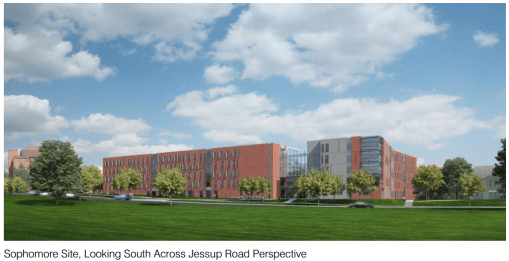
4. Quick note – the North Campus housing proposed by Cornell was modified slightly at the request of city boards. The new design adds “break points” in the facade to activate the central wings of the buildings and make the building masses seem less imposing. The general massing and material choices remain unchanged.

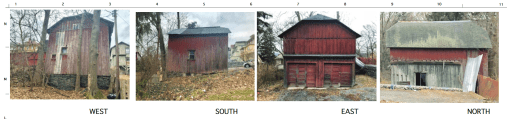
5. Mid-sized Collegetown landlords Greg and Mataoula Halkiopoulos (of Matoula’s Houses) have decided to renovate a decrepit 19th century carriage house at the rear of their property at 214 Eddy Street, and turn it into a three-bedroom, 839 SF rental. 214 Eddy is in the East Hill Historic District, so the design, by local architect John Barradas, will need to be approved by the Ithaca Landmarks Preservation Commission. It looks like a practical renovation, respectful of the carriage house’s form but also with a modern touch. Early Design Guidance will be offered at the March ILPC meeting, and any decisions on a Certificate of Appropriateness are still a few months out.

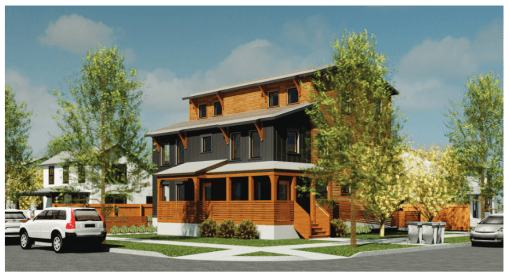
6. There have been some major changes to the Perdita Flats plan at 402 Wood Street. Previous version here. For one, it now has frontage on Fair Street and will have a Fair Street address. The building and garden have been re-positioned, the footprint reduced slightly (38’x36′ to 36’x36′), larger porch, modified exterior cladding materials, and the driveway has been removed at the Planning Board’s suggestion. The building remains 4 units and 7 bedrooms, and STREAM Collaborative penned the redesign.

The wood shiplap siding and standing-seam black metal siding are a bit of an acquired taste, especially with the wood oiled or left to grey naturally. But the house is still planning to be a net-zero energy showcase of what can be done with environmentally sustainable multifamily housing, and that’s the real statement to developers (Courtney Royal and Umit Sirt) are trying to make. The owners will be applying for incentives from the NYSERDA Low-Rise Residential New Construction Program and are hoping to attain the Zero Carbon Petal of the Living Building Challenge.


News Tidbits 3/10/19

11 03 2019

1. Next Tuesday, Tompkins County is planning to present a “progress report” on its study on whether or not to buy 408-412 North Tioga Street and redevelop the site. First, let’s not be coy – Tompkins County isn’t really considering any other sites, and staff and officials are pretty strongly inclined towards purchase of the vacant site.

That doesn’t mean they want to tick off the city in the process. It looks like a few different configurations are being considered, but the plans crafted by HOLT Architects essentially call for a new 3-story, 37,000 square-foot building (10,500 SF floor plates with basement space) to replace the 11,000 SF 1950s office structure on the site, restoration of the 19th century building at 408 North Tioga, at least 27 parking spaces in an internal lot, and the selling of land along Sears Street for the construction of two, two-family homes. The county has been in talks with potential developers for those homes, which are likely to be affordable housing since they’ve been in touch with INHS as well as an undefined “others”.

The county has to make its decision by next month, and while there are no hard plans, chances are looking good that the county will be buying the property. A bit more mild speculation off that, I’d wager HOLT will have an inside track in getting the contract to design of the new office building, because they’ll already have an intimate familiarity with the site. While HOLT tends towards modern design, I’d imagine that an office proposal that borders a historic district, whether from their drawing boards or someone else’s, will be more toned town in an effort to fit into the neighborhood.

2. Although speculating is never a good idea, looking at the features of the Immaculate Conception School Redevelopment, I think INHS is in very good shape for getting a Planned Unit Development zone approved by the Ithaca Common Council. Right now, it’s 75 units of affordable housing, with four of those for-sale (if there are unit changes moving forward, it seems to be for more for-sale units and fewer rentals), ~5% will be enabled for physical handicap, ~15% set aside for a special needs group (previously homeless and units for the developmentally disabled is one idea being floated),  non-profit office space for family and childrens’ social services, protection of the Catholic Charities Building, sale of the school gymnasium to the city for use by the Greater Ithaca Activities Center, and changes to design (reduction of a floor and inclusion of a few larger 3-4 bedroom rental units) that demonstrate responsiveness to community concerns as well as transparency with its pre-application community meeting process. Probably the one thing that will remain a sore spot is parking, but this is within several blocks of Downtown Ithaca and close to existing community services, and

Reading down that list, there are a lot of community benefits involved with this plan, and honestly, I think this is exactly what the city hoped to achieve with the PUD Overlay District. The existing zoning would not be amenable to the design as-is, or to the office space alongside the housing. But INHS is putting something out there that appears to make the PUD review process well worth the city’s time and effort.
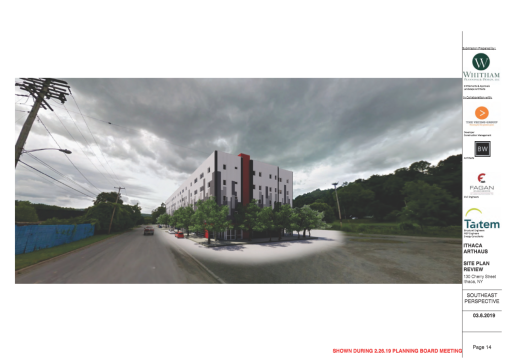
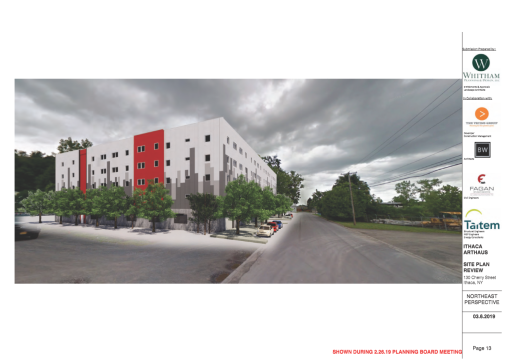
 

3. Here is the February redesign of the Arthaus Ithaca project by the Vecino Group. This is the 120-unit affordable housing project planned for 130 Cherry Street, a mostly industrial/post-industrial area that’s starting to see some major reinvestment as attention turns towards the waterfront and the new mixed-use zoning that makes projects like this possible.

I’ve already taken to Twitter to vent about this, but this is just a flat-out unattractive design. The windows are a tough reality of affordable housing – larger window areas raise utilities costs and construction costs, so affordable housing tends to have lower wall-to-window ratios. But the paneling, which can easily be swapped out for different colors and patterns, is just downright ugly. I know it’s a light industrial area, but faux-grunge/faux-decay is not a good look for affordable housing, whether “artistically-inclined” or not. Plus, it’s mostly whites and greys, which for anyone who’s been through a long, dreary Ithaca winter, knows that’s a very depressing combination. So, long story short, like the intended use/program, don’t like the “aesthetics”.
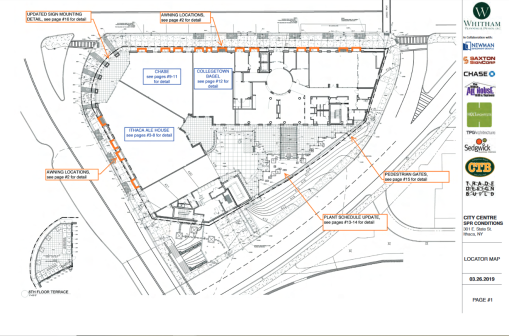
4. In the finishing stretch, the Hilton Canopy Hotel and City Centre have submitted sign packages to the city for approval. The Hilton has something called “Ezra”, ostensibly a nod to Ezra Cornell, but unclear from the submission if Ezra is the name of the hotel or something else; pretty sure the restaurant space was omitted late in the approvals process, so I don’t think it’s an eatery of some sort. Correction: per phone call from project representative Scott Whitham, they added a restaurant back into the plans late in the design process, so Ezra is the small in-house restaurant within the hotel.

As for City Centre, its signage for the Ale House, Collegetown Bagels and Chase Bank. Although two of three are cannibalizing other Downtown locations, the move comes with some benefits – it’s an expansion for CTB and the Ale House, and the Ale House is expecting to add 20 jobs, and CTB will likely add a few new positions as well. Chase is totally new, and if the average bank branch is 2,000 SF and 6.5 staff, it seems safe to assume that a 5,357 SF branch/regional office is probably 12-15 staff. Ithaca’s own HOLT Architects is engaged in some minor building design work and Whitham Planning and Design is doing the landscaping (including the heat lamps, string lighting and fire pits), Saxton Sign Corporation of Auburn will make the signage, Trade Design Build of Ithaca and TPG Architecture of New York will flesh out the interiors, and East Hill’s Sedgwick Business Interiors will provide furnishings. Clicking here will allow you to scroll through the interior layouts for the retail spaces.
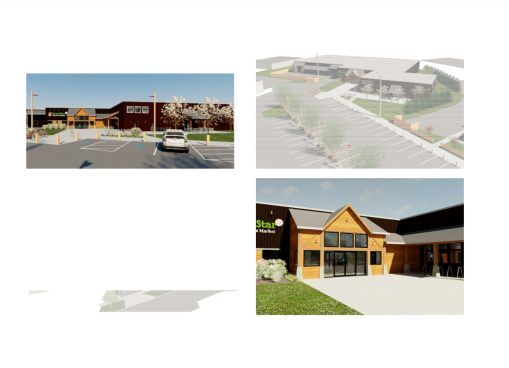
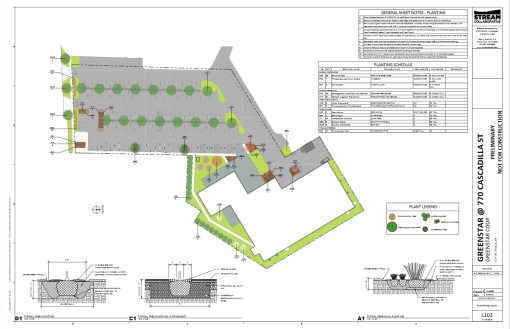
5. Now for some bad news. The GreenStar project is in bad financial straits because the construction bids came in well over budget. As a result, they’re rebidding the construction contracts, and “value-engineering”, the dreaded “V” word. Deleted farm stand, deleted forklift shed, deleted some windows and awnings, cheaper siding, reduced Electric Vehicle chargers, smaller mezzanine, and reconfigured trees and dumpster areas at NYSEG’s request. These changes will be reviewed by the city Planning Board at this month’s meeting, and are likely to pass without much issue; it’s frustrating but no one wants to see GreenStar’s project fail.
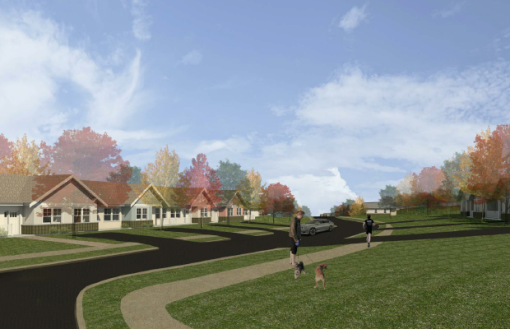
6. A few interesting notes from the IURA’s Neighborhood Investment Committee meeting:
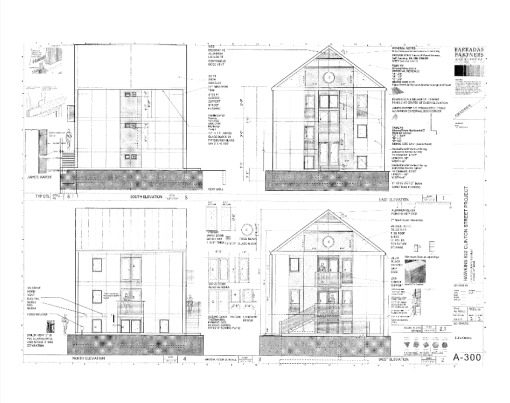
7. Here’s a project that was submitted the IURA for possible grant funding, but later withdrawn: the second coming of 622 West Clinton Street.

The first time around in 2016, applicant Jerame Hawkins applied to build an affordable, modular duplex at the rear of the property, but the plans weren’t fleshed out and secure enough for the IURA to consider funding. Since then, Hawkins has bought the property and is once again considering a partially-affordable duplex, this time an infill addition by local architecture firm Barradas Partners and construction by Rick May Builders. One unit would be 2 BD/1.5 BA and fair-market value (another way to say market-rate), and a 4 BD/1.5 BA targeted at 60% LMI. The request was $37,000 towards a $237,000 project. In my mind, the issue is the same as the old proposal – the LMI unit was officially limited to one year, which means he could make it market-rate afterward. The IURA would want more bang for their buck, and long-term affordability would be necessary for funding. Still something to keep an eye on in case Hawkins pursues it further.
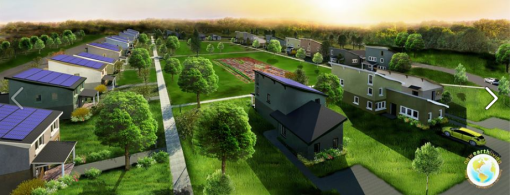
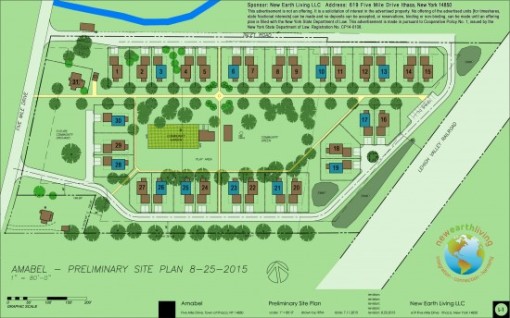
8. The Amabel project is still being worked out, but there is movement. the plan for 31 units of sustainable for-sale housing has been beset with issues. The city of Ithaca is planning to sell land to New Earth Living to let the project move forward, but that sale is contingent on the politically distinct town of Ithaca’s approval. Back in the 1990s, when Southwest Park was designated for development, 26 acres of land was bought in the town of Ithaca as substitute park land. That includes the eastern third of the Amabel property, which was bought with the parcel on the other side of the Lehigh Valley Railroad, but not intended as park space. However, when the deed was written in 1999, it had a restriction saying that all 26 acres could only be used as park space. It now needs to get straightened out, with the town lifting the restriction on the Amabel subsection so that the sale can move forward, and hopefully, Amabel can finally get underway.


Village Solars Construction Update, 2/2019

3 03 2019

It was with some surprise that the latest trip to the never-ending Village Solars construction site yielded significant progress on only one apartment building, instead of the usual two or three. The 24-unit Building “L” is mostly complete from the outside, and likely to open for occupancy this spring, adding another 3 three-bedrooms, 6 two-bedrooms, 3 one-bedrooms and 12 studios to the market. 24-unit Building “K”, just to its east (right, in the photos), appears to have not made much progress; excavation was completed, and it looks like there are wood forms for the foundation on site, though with the snow and active work underway, it was hard to tell if the concrete slab had been poured – judging from the dirt piles, that’s a no.

Local Law #6 (2017) of the Village Solars PDA permitted three additional buildings to be built before Lifestyle Properties (the Lucente Property) was legally obligated to build the community center building (Building “F”), which is to contain a small amount of commercial space (restaurant), service space (gym, laundry, rental office) and up to twenty one-bedroom units. If “L” and “K” are completed this year, that will allow one more building to receive a building permit before the community center must be built and receive a certificate of occupancy (i.e. habitable and practically complete). Until then, no additional building permits are allowed. The law also stipulates that the community center has to be completed, regardless of the status of other apartment buildings, by the end of 2020.  Like other apartments, it won’t be subject to site plan review, bu any potential commercial applicant would have to undergo site plan review.


GreenStar Co-Operative Market Construction Update, 2/2019

2 03 2019

We’re going to rewind the clock a bit on this to before GreenStar. It’s early 2017. Two major regional medical service providers are eyeing locations in the affluent and growing city of Ithaca. The first is Cayuga Medical Center / Cayuga Medical Associates. The second is Guthrie Clinic / Guthrie Medical Group.

How bad did these two want to outdo each other and lock their rival out of the city? So much so that Cayuga Medical Center paid several times the value on Carpenter Business Park. So much so that Guthrie bought a site that would fail to meet their needs.

For neither CMC or Guthrie was it the best of moves, but not everything is done rationally. In June 2017, Guthrie paid $2.85 million for the properties at 750 and 770 Cascadilla Street, over the asking price of $2.7 million. For those millions they purchased 3.12 acres, with a 37,422 SF printing press/ warehouse built in 1980, and a 30,000 SF storage facility built in 1988. Cornell University had previously used the facilities as part of its printing press operations, and had been seeking to sell the properties since July 2016.

Guthrie started looking at its options at that point, and wasn’t liking them. But there appeared to be an opportunity. The developers of City Harbor, working on their mixed-use proposal a couple of blocks away, would provide Guthrie a convenient escape hatch to Pier Road, where they could build a structure from scratch that would suit their needs. In return, Guthrie would offer up its recently-purchased Cascadilla properties to GreenStar on a long-term lease, with an option to buy.

For GreenStar Co-Op Market, the site was a welcome opportunity of its own, a real estate version of “one man’s meat is another man’s poison”. Founded in 1971, GreenStar has been leasing its current location at 701 West Buffalo Street since the fall of 1992, following a fire that destroyed their store on North Cayuga Street. Satellite stores operate out of the DeWitt Mall at 215 North Cayuga Street in Downtown Ithaca, and at 307 College Avenue in Ithaca’s Collegetown neighborhood. Specializing in locally-sourced and organic foods, the co-op has enjoyed significant market growth in the past decade, with sales increasing by nearly 50% since 2011, to over $22 million annually.

That was both a good and a bad thing. As I wrote for the Voice back in April 2018, GreenStar makes a very small profit on sales, and relies on membership growth as a supplement. But their West End store was jam-packed, all built out with no more room and increasingly agitated co-op members. With other grocers moving in on the organic and natural food market, it was going to be grow, or perish, taking 200 jobs with it. GreenStar had been in talks with landlords and developers for a new space, and City Harbor’s project team was one of those who listened. Just as City Harbor’s Pier Road was Guthrie’s escape hatch, 770 Cascadilla Street was going to be GreenStar’s.

Plans were first announced in December. As a Co-Operative food market, GreenStar has to put any kind of move of this scale out to its shareholders for a vote, through paper and electronic ballots with a three week voting period in March of 2018. The vote for the move was 92% in favor. The project was approved by the city last July, and the groundbreaking was this past November. If all goes well, the lease agreement will allow GreenStar to buy the property from Guthrie in 2030; this passed the member vote with 97% saying yes.

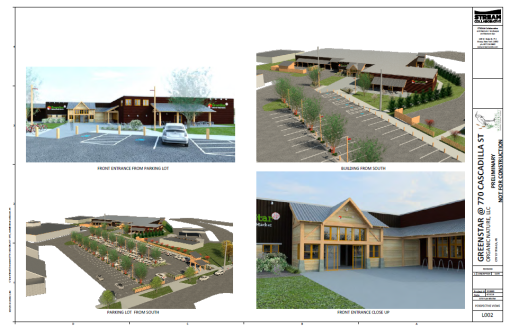
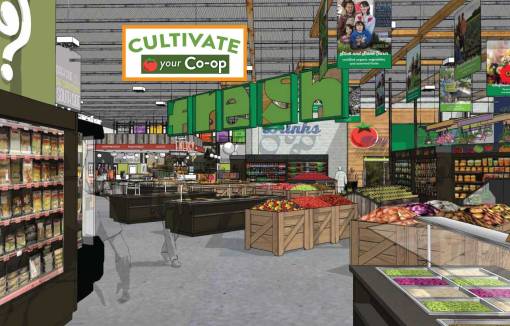
The plan is to renovate 770 Cascadilla into the latest and greatest GreenStar flagship. 750 Cascadilla would come down for a 160-space store parking lot and landscaping. The new space would have an edible garden, outdoor cafe, mezzanine stairway and classrooms. The building would be refinished, insulated, and potentially net-zero energy compatible, meaning all the energy it consumes comes from renewable sources. Breaking it down, the new retail area will be 16,500 SF, there will (well, was, see the last paragraph in this entry) be 5,200 SF mezzanine space for office and administrative functions, and a 13,000 SF kitchen and events space. With the addition of the mezzanine, the warehouse will be expanded in square footage from about 30,000 SF to 35,219 SF. The Space @ GreenStar would be moved to within the new store, and shrink from a 225-person capacity, to 125, and once moved in the old Space @ GreenStar location will be put up for sale. The Space isn’t much of a revenue generator for the Co-Op, and is rarely utilized at full capacity.

The project will take a little over a year, from November 2018 to December 2019 (the store itself wouldn’t open until February 2020, after the equipment is in, shelves are stocked and electronics are tested). Local architecture firm STREAM Collaborative is in charge of exterior design, and architect Pam Wooster will handle the interior layout. Elmira’s Edger Enterprises will be the general contractor for the buildout. Delaware River Solar will supply the solar energy to power the building via an off-site array.

GreenStar, which is carrying out the project with its City Harbor partners (Edger Enterprises, Morse Construction and Lambrou Real Estate) as Organic Nature LLC, did apply for and receive a standard seven-year tax abatement worth about $625k, about 4% of the project cost. $130k in new taxes would be paid over the period. GreenStar’s project would add at least 40 full-time equivalent positions with most jobs in the $15-$16/hour range plus benefits (Starting pay will be about $13.50/hour plus benefits; GreenStar has previously been certified as a living wage employer, though they appear to have been just below it in 2017). Generally speaking, the abatement application was one of the less contentious public hearings, which could be due to GreenStar’s stature in the Ithaca community, its labor and environmental practices, and because dedicated opposition could put 200 jobs and the whole Co-Op at risk of closure.

According to GreenStar’s TCIDA tax abatement application, while the project is $4.9 million to build (hard costs), the overall project costs are $14.8 million. Other sources have said $3.7 million in hard costs, so YMMV. Along with $8.7 million in bank and credit union financing, and $4.6 million in cash equity, the Co-Op has launched a $2.5 million capital campaign to sell investment shares to owners to help cover the project costs.

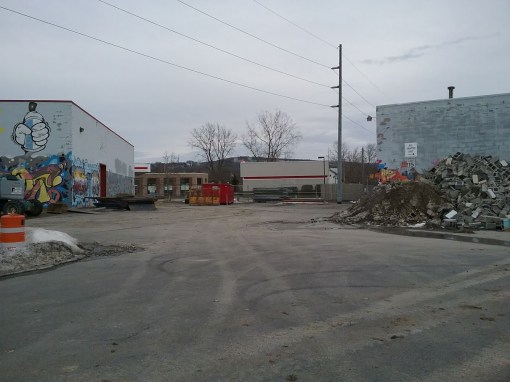
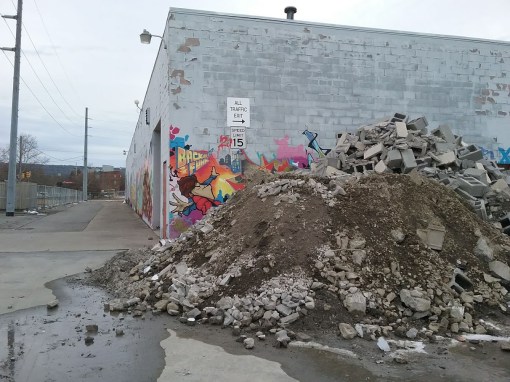
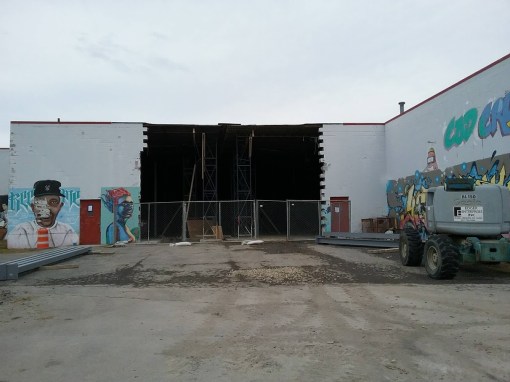
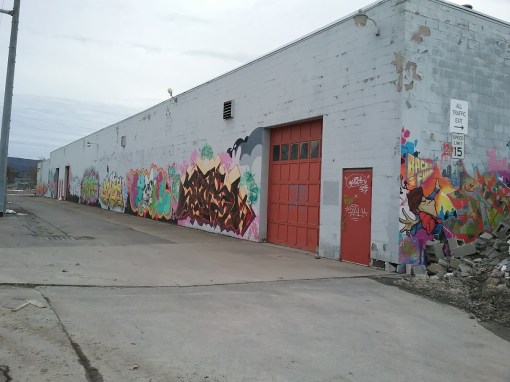
At present, a large gap has been opened in the exterior of 770 Cascadilla’s CMU facade. This is where the entrance of the new GreenStar will be, and it was practically the only major design change during the review process. The steel sitting aside the building may be for building out the mezzanine. A pile of debris sits next to 750 Cascadilla, which will itself be a pile of debris in due course. About the biggest loss here will be some pretty fantastic street art.

In the past couple of weeks, the interior was revised as a cost-cutting measure, shrinking the mezzanine by roughly half and reducing the size of the classrooms from 108 seats to a single room of 33, with the former first-floor classroom space now replaced by offices for GreenStar staff. The opening also appears to have been pushed back by 1-2 months, to “early spring 2020”.


Early render

early render

final render


105 Dearborn Place Construction Update, 2/2019

26 02 2019

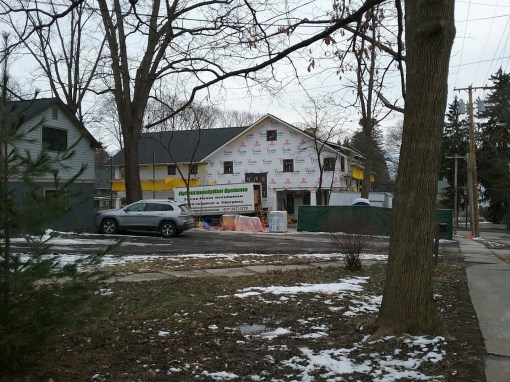
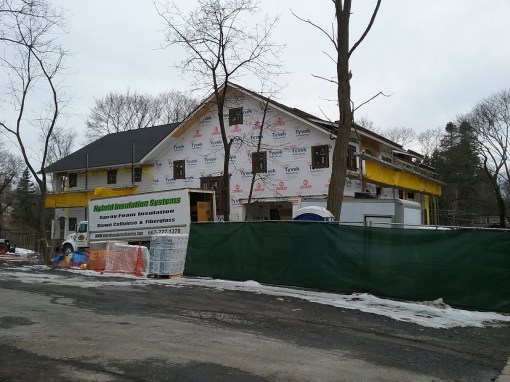
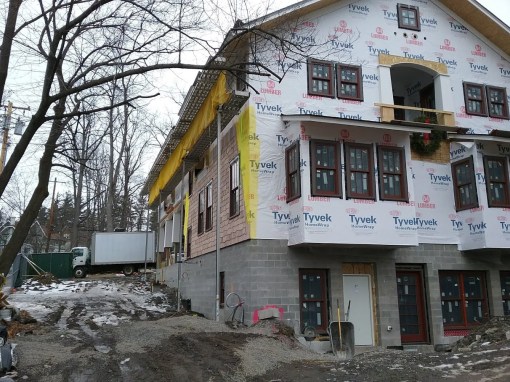
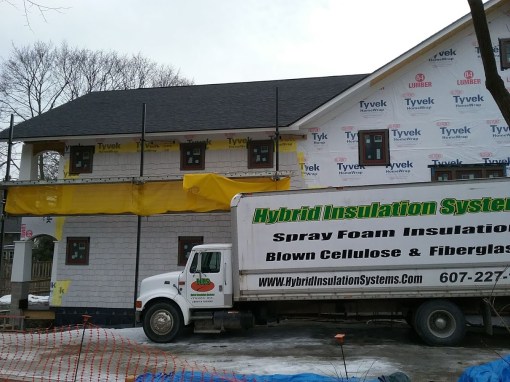
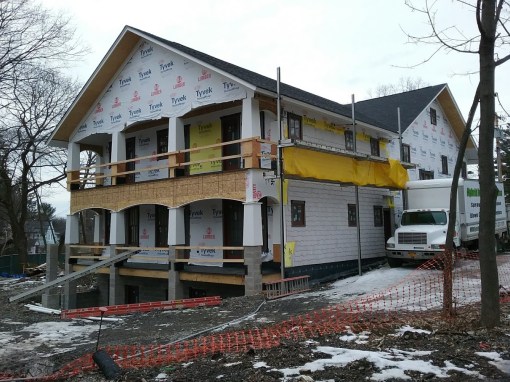
When you’re building a $4.2 million, 12-bedroom/16-person mansion for wealthy seniors, the material choices tend to be somewhat more upscale. At 105 Dearborn Place, over the typical Tyvek are a yellow waterproof barrier and traditional cedar shingles. These will be painted at a later time. The CMU block walls of the partially-exposed basement level will be layered over with cultured stone.

With the house fully-framed, the structural details are starting to show; along with banks of windows and shed dormers, and there are no less than five porches on the second level, four recessed and a more traditional open porch at the rear of the 10,930 SF building. Some of the architectural details will show up later (roof brackets, railings and balconies), and the porte-cochere has yet to be assembled.

A truck on site and crew in full plastic suits suggested that spray foam insulation was underway inside, so the utilities rough-ins (electrical, plumbing, HVAC) are probably in place, but drywall, cabinetry/fixtures, and flooring are not. The insulation is being applied by Hybrid Insulation Systems of Ithaca.

There don’t appear to be any promotional advertisements for the new building yet, but keep an eye out as it moves closer to completion later this year. Owner Elizabeth Classen has been quite busy in the past year, signing on as a partner in Travis Hyde Properties’ Library Place project on the 300 Block of North Cayuga Street.

More information on 105 Dearborn Place can be found here.


128 West Falls Street Construction Update, 2/2019

26 02 2019

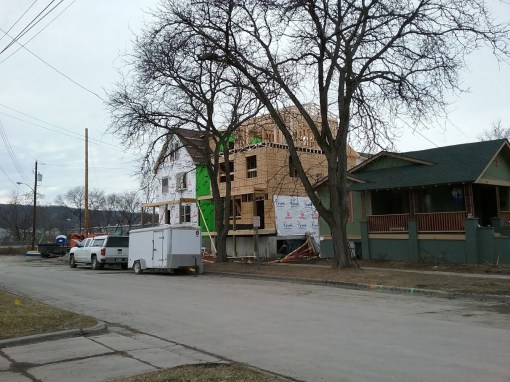
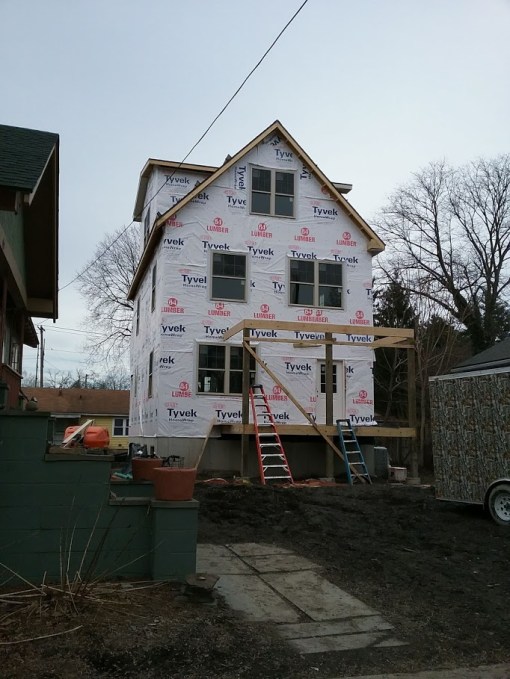
At a city planning committee meeting on infill housing, a Common Councillor well known for his dislike of nearly all things development described these houses at 128 West Falls Street as “an affront to the community” and “a monstrosity”. It seems rather misguided. This was a vacant lot, and the owners designed it with the possibility of future sale, either a small condo community, or in four separate lots if one includes the existing rentals between the new builds. As an argument over the issue of infill, this isn’t a good example anyway. The greater concern is adding new units to the rear yards of existing deep lot homes, not the development of vacant lots.
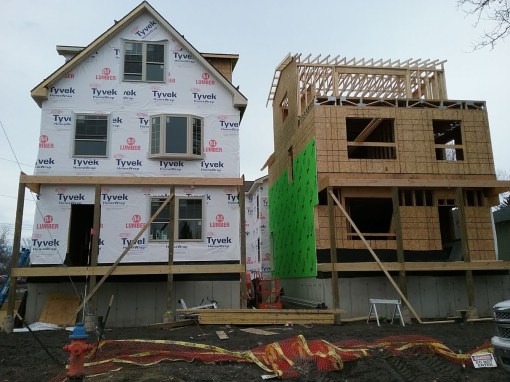
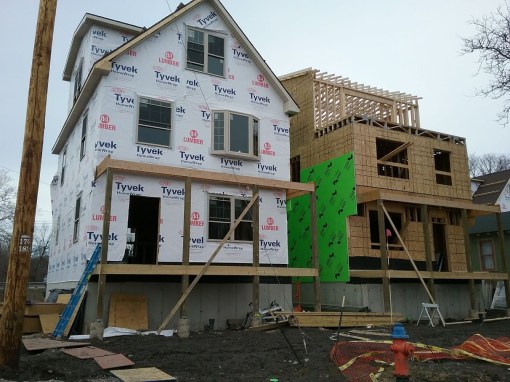
By and large, the built products are looking close to the original drawings, but not exact. The fully framed and sheathed out on the eastern end of the parcel was designed with its entry on the left side of the house, but the building under construction has its door on the right. Otherwise, the overall shape is true to plan, with dormers, gables, and porches, which are being framed after the primary structural frame has been built. The houses use Tyvek housewrap over plywood for the most part, except for the two-family structure with the breezeway; for fire safety, the walls facing each other in that pair have been sheathed with gypsum panels. The east hald of that building is still in the framin stages, with roof trusses yet to be fully assembled, but the other wind and other structures are framed, sheathed, and have most of their doors and windows fitted.The only worker on-site appeared to be working on utilities rough-ins in the unit with the bay window.

A summer occupancy seems fairly plausible. I haven’t seen any rentals for these yet, but Heritage Builders tends to go for the premium/upper-middle market bracket; the renovated two-bedroom house in the middle is going for $1800/month.

More info about the project can be found here.