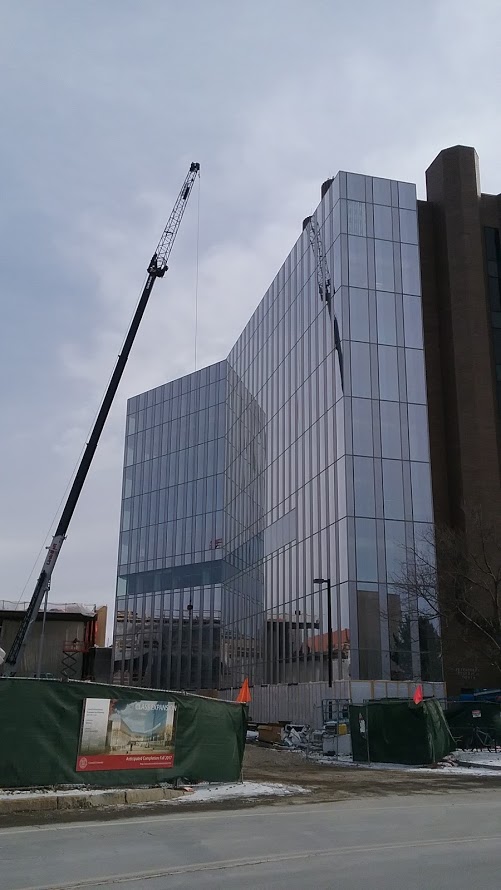
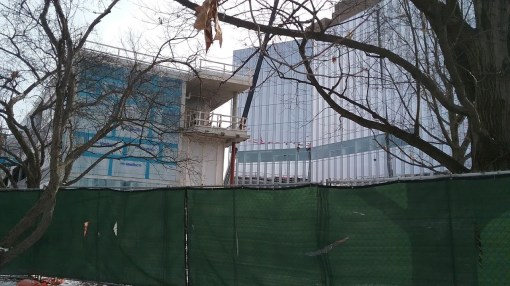
209-215 Dryden Road Construction Update, 2/2017

1 03 2017

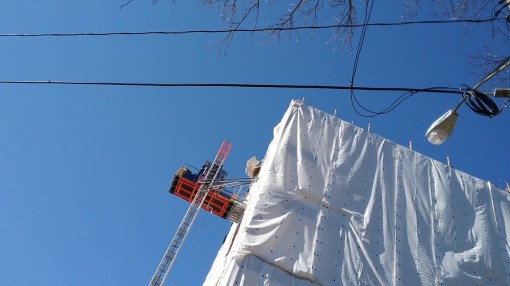
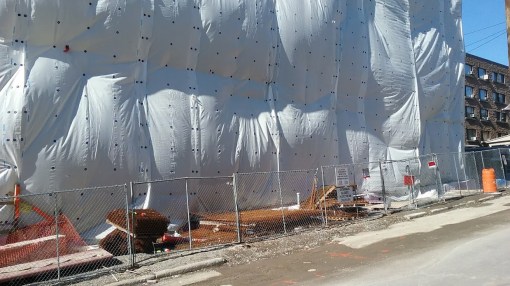
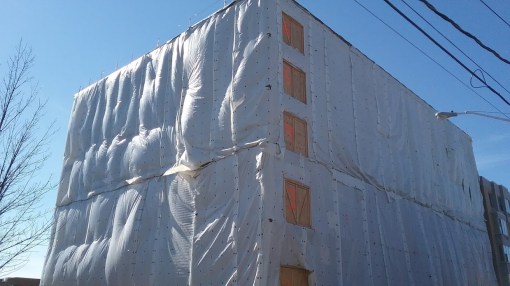
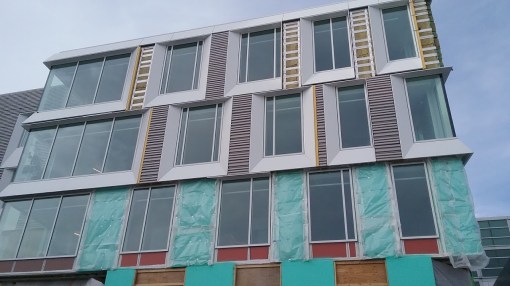
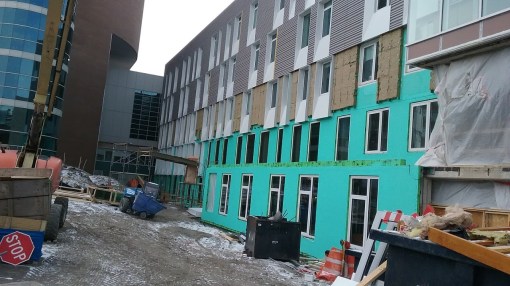
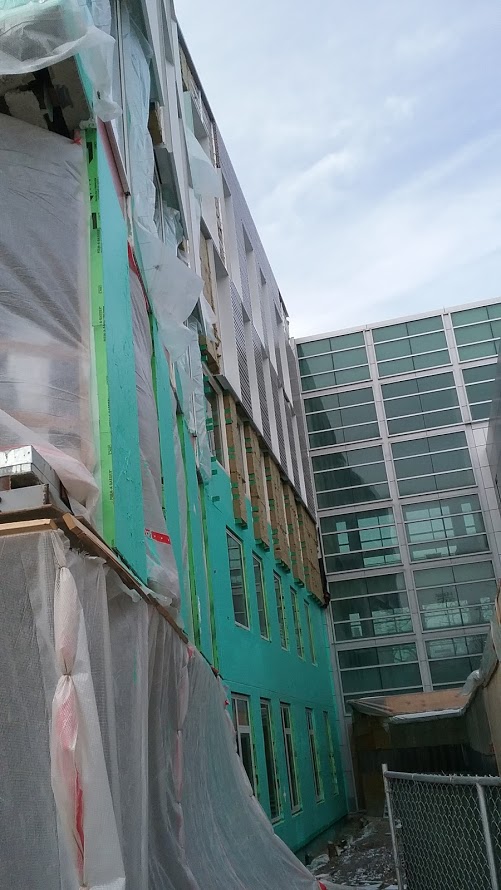
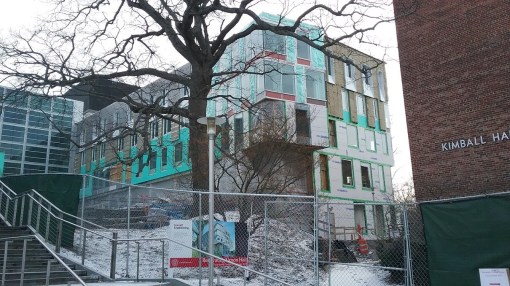
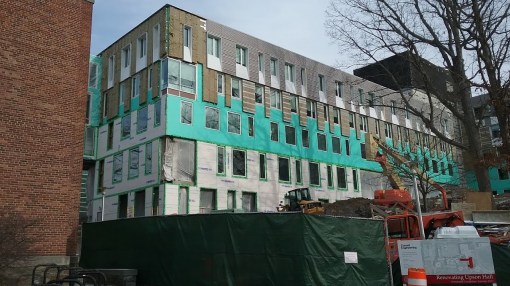
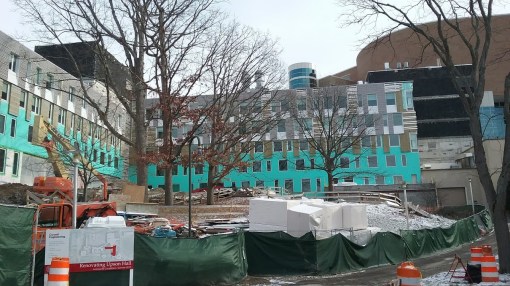
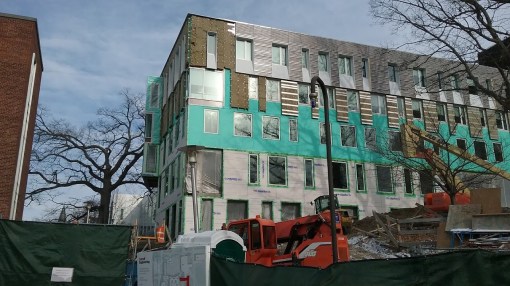
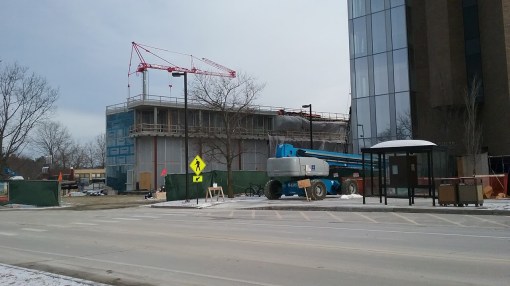
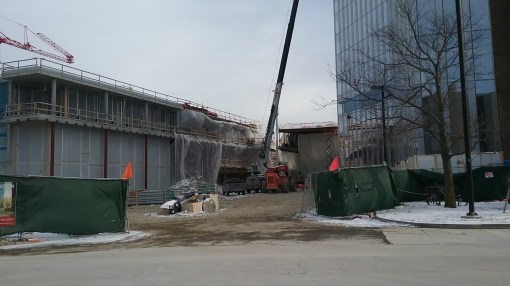
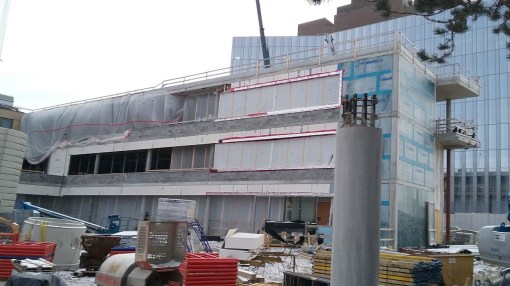
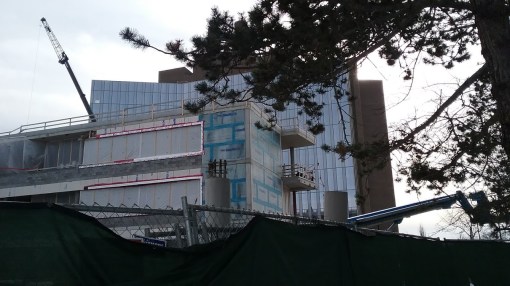
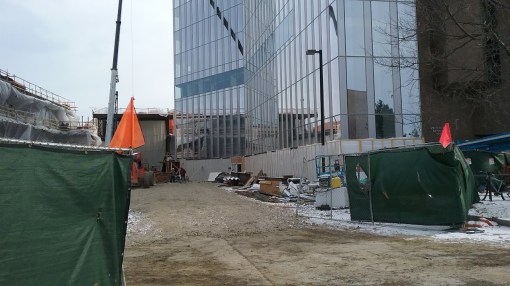
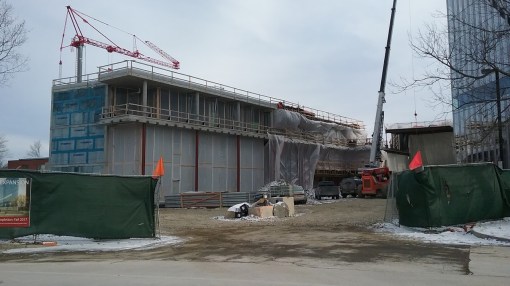
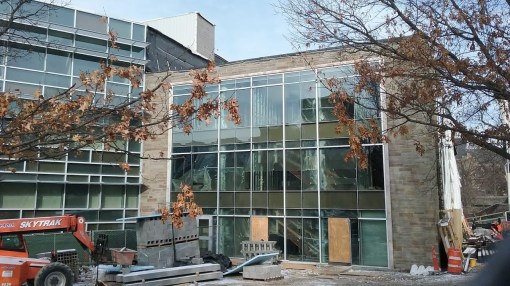
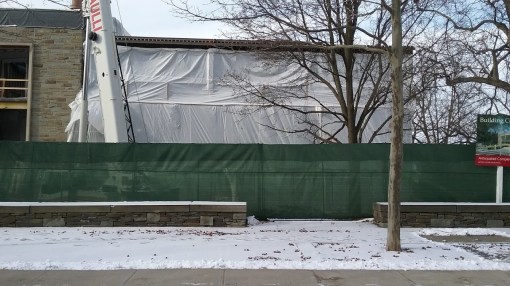
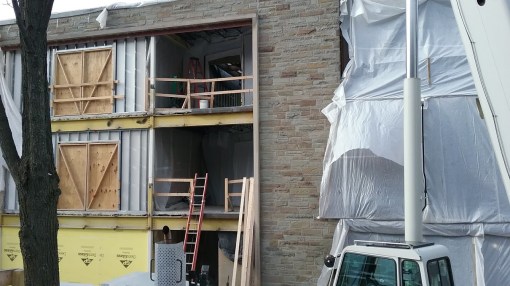
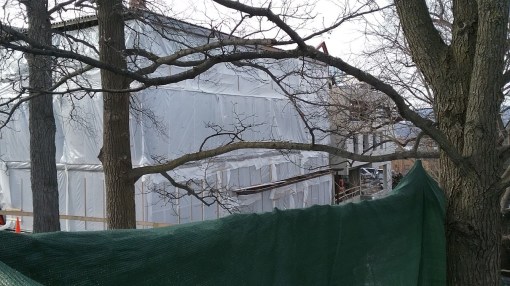
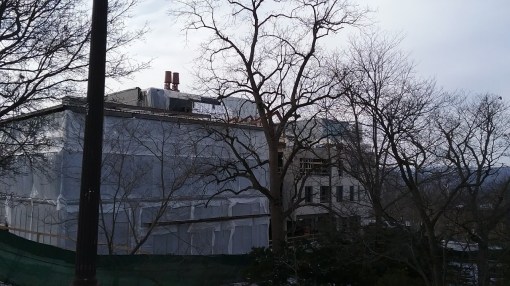
Admittedly, when the entire building is sealed up in opaque plastic covers, it makes for a less-than-interesting construction update. The plywood doors are for the loading and unloading of materials via lifts, and apart from those, there isn’t much to break up the monotony of white plastic sheets. Note that the access doors are not the same as the elevator shaft, which is located about midway along the west wall next to 205 Dryden/Dryden South.

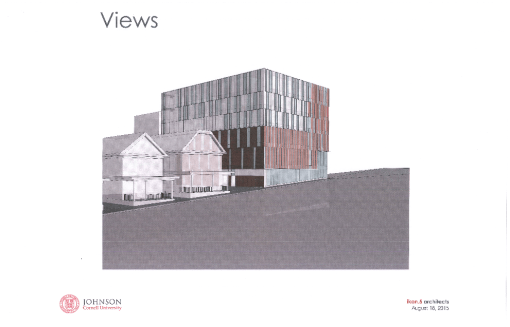
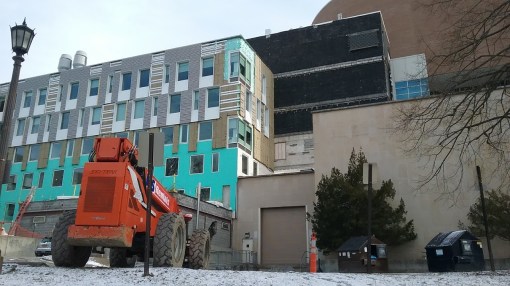
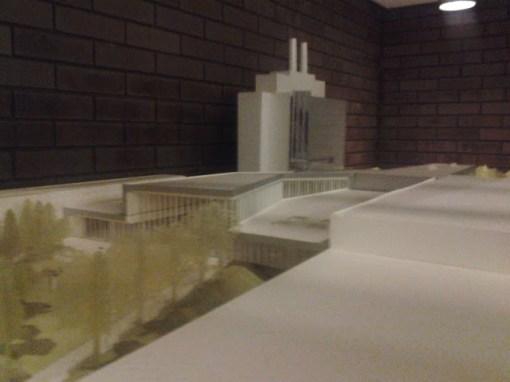
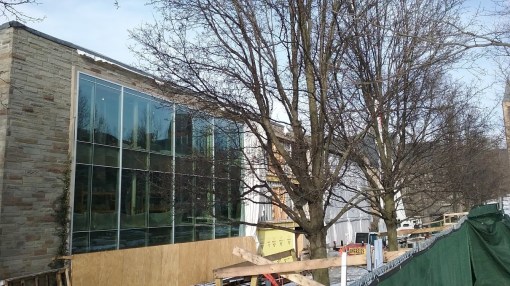
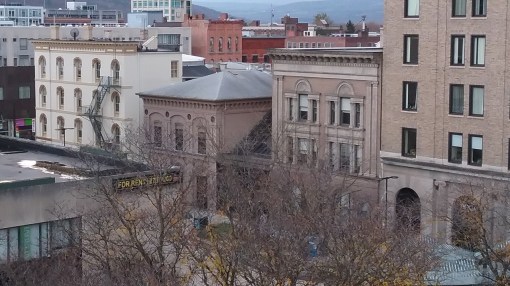
However, it does look like some exterior facade work is starting to get underway. Brown and grey metal panels are beginning to be installed on the building’s rear face – this is the side that will have the least amount of glass, as occupants won’t have much to see if developer John Novarr moves forward with his plans for townhomes on the double-lot of a house that came down to allow a construction staging area for the Breazzano Center. With the new home to the Executive MBA expected to open up this Spring, Novarr can proceed with options for that double-lot. 238 Linden is zoned CR-4, four floors with no required parking. The proposed townhouses could provide a visual transition between the 80-foot Breazzano and the 2.5 story houses that comprise most of the housing stock on this block of Linden Avenue, some of which are for pending sale.

In further detail, the rear facade windows are 1″ insulated glass with aluminum frames, and translucent insulated spandrel glass below the panes. The metal panels are insulated aluminum and are installed using a framing system – you can see the grey insulated panels with clips along the top edge of the panels. The plastic covers on the panels are to protect against scratches and scuffs prior to installation. ikon.5 sought to provide differentiation with mahogany brown panels on the south (Linden Avenue) side, with lighter salmon-peach panels planned for the north (Dryden Road). The west and east sides will be a little bit of of both. The first floor the street facing sides, and the atrium will be glass curtain walls. The dark panels are intended “to differentiate upper from lower and facilitate a relationship with the smaller scale of adjacent buildings,” per the application. Some of the later documents show a lighter shade of gray for the south side of the top floors, but to be frank, I am uncertain what is accurate.

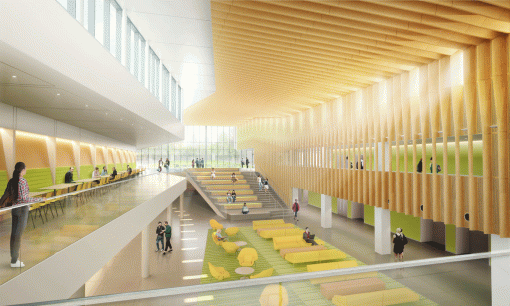
Note that the fourth floor’s back side will have few windows because that is where the 1,990 SF video production studio will be located, and this requires a controlled-light environment. Presumably, with the green room and studio rooms, the intent is to have a comfortable and efficient interview space for live videos recorded for or streamed to students at remote campuses. The large flank of plywood panels at ground level is the service exit, with future loading dock and trash/recyclables enclosure.

20170218_120030 20170218_120120 20170218_120144 20170218_120149 20170218_120207 20170218_120254 20170218_120309 20170218_120351 20170218_120401 20170218_120408 20170218_120535

209_215_2

209_215_3


News Tidbits 2/25/17: Creating a Place to Call Home

25 02 2017

is2r5l9l9byvab0000000000
1. It looks like the homes designed for Tiny Timbers won’t just be limited to Tiny Timbers. The company has partnered with realtor Brent Katzmann for a to-be-built house in Lansing’s Farm Pond Circle housing development touts a Tiny Timbers-based home design by STREAM Collaborative. 1.09 acres and a 2 bed, 2 bath 1,430 SF house for $219,400. The relatively low price compared to most new builds is in part due to Tiny Timbers’ modular approach – the “Big Cube” retails for $156,900 with a finished basement, and the Farm Pond parcels go for $39k-$45k, so not counting the soft costs (permits/marketing), that pretty much sums up the costs.

Farm Pond Circle is a 19-lot subdivision in Lansing town that was the brainchild of the late Jack Jensen. All homes have to exceed state energy code by 20%, cannot exceed 2600 SF, and cannot use aluminum or vinyl siding. A couple lots have been aside for affordable single-family home construction. After Jensen’s passing in 2014, another local homebuilder, Bruno Schickel (Boiceville Cottages), picked up the undeveloped lots (10 of the 19) for about $165k last February, and intends to follow through on Jensen’s plans.

tiny_tims_7

2. Speaking of Tiny Timbers, it appears the budding modular timber-frame builder is expanding their offerings into a full line of homes. Tiny Timbers now has 16 different models in five series. Prices range from a completed 600 SF model with no basement at $109,900, to a 1,950 SF model with finished basement at $197,900, land and well/septic not included.

In a blog post on their website, Caleb Dolph, builder Buzz Dolph’s son and the guy in charge of marketing, says that the first sold house is underway in Hector (if Ithaca had exurban areas, Hector would be it), at least five others are in contract, though it’s not clear if any of those are for the 15-lot Varna site. Given that they planned for ten houses in 2017, the Tiny Timbers staff might have underestimated the market, which is more a fortunate challenge than a complaint.

3. A local non-profit is looking to expand its real estate footprint a little bit. Tompkins County Opportunities, Alternatives, and Resources (OAR) is seeking to buy a run-down house at 626 West Buffalo Street and renovate it into five beds of transitional housing for those getting out of jail and trying to get back on their feet. The intent is to provide, safe, secure housing to better help with the transition process, which can include education, job training and mental health and/or addiction treatment. The county would provide $100,000 in a one-time allotment – the house is for sale for $99,999, the purchase offer is for $95,000, and a further $60,000 would be spent on renovations. The rest of the money ($55,000) comes from grants, donations and a mortgage. Ultimately, the goal is to provide decent housing that helps reduce the recidivism rate (convicted persons committing more crimes), ideally saving the county on future court and incarceration costs, as well as what they hope pans out to a lower crime rate.

swd_websitelogo

4. Staying on the topic of special needs housing, the Second Wind Cottages is looking to add another three cottages in Newfield this year. The cottages are modest, ~200 SF and costing $12-$15k each to build. As reported by the Times’ Jaime Cone, every unit provides shelter to a formerly homeless male. Rents are “pay as you can”. A small community facility provides services like a kitchenette, office, washer and dryer. Three more cottages are planned for 2018, which will round out the “campus” with 18 units. A similar facility is planned up the road, one that will house homeless women and children. Although Newfield is a ways out, both sites are on the bus line into Ithaca.

The Second Wind Cottages are a private endeavor by businessman Carmen Guidi, and paid for through grants, fundraisers, and donations (money, furniture, etc). Volunteer labor similar to that used for Habitat for Humanity is utilized and welcomed. Like with the OAR house, by providing a safe, warm space to live, these units may help reduce homelessness and the issues homelessness creates.

123_eddy_street_2

lambrou_123_eddy_craigslist

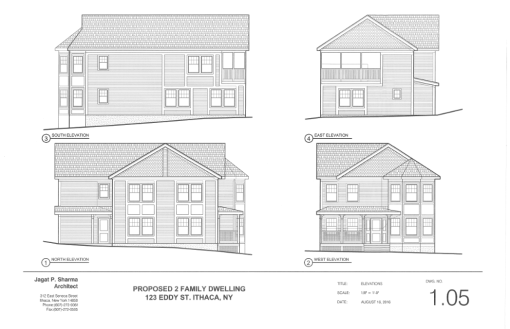
5. Work has yet to start on the new two-family home planned at 123 Eddy Street in Collegetown, but it looks like developer/landlord Nick Lambrou is seeking major changes to the project. Lambrou wants to replace the approved design at top, with the one below, which is copied from a Craigslist posting. The designs are both by Jagat Sharma, but the new plan is a variant of the two-family homes that Sharma’s doing for Charlie O’Connor at the recently-approved 4-building 607 South Aurora project.

The property falls into the East Hill Historic District, which is under the ILPC’s jurisdiction. According to Bryan McCracken, the city’s Historic Preservation Planner, the design will be heading for review within the next month or two.

The design has been used before so there’s familiarity with the design and lower risk, plus there are possible cost efficiencies if using the same contractors as O’Connor, because they’ll move quicker as they’ve done it before. On the other hand, unlike 607 South Aurora, this property is in the East Hill Historic District, and full-time neighbors on Orchard Place have been watching these plans very closely – they’re wary of students, and will likely not be fans of the projecting second-floor porch, as the previous version was tucked into the building. Not sure using a slightly more decorated version of a design being deployed elsewhere will get the ILPC’s blessing, but we’ll see what happens.

cayugafarms_2

6. Why yes, Lansing town is still hopping mad about the natural gas issue. The town supervisor cites the tap-out as the cause of delay for Robert Weinstein’s 102-unit Cayuga Farms project, although the previous documentation says it’s a sewer issue – the developer has to deploy an Orenco modular sewer system, which has to be approved by the NYS DEC.

maplewood_v7_4

7. Here’s a copy of Maplewood’s buildout timeline. The first Maplewood apartments should start construction in May 2017, pending no issues. Generally, the crews will be working from the outside in; buildings closer to Maple Avenue and Mitchell Street have earlier construction schedules, while those interior to Maplewood will start in the fall or early winter. Also, street names. Veteran’s Place will continue to be the main thoroughfare, but from north to south, it will intersect with “James Lane”, “East Sylvan Mews”, and “Lena Street”. James Lane wraps around to form the secondary N-S thoroughface on the east side of the parcel. James and Lena Mitchell were the original owners of the property when Ithaca was first settled in the early 1800s.

The Stormwater Property Protection Plan (SWPPP) still needs to be okayed by the town of Ithaca, but that’s about the only thing left before final approval is granted.

107_s_albany_rev_1

8. It looks like the Planning Board meeting should be interested. Not a whole lot being decided, but some sketch plans have been submitted. For rental projects aiming for August 2018 openings, Feb-Apr is going to be the primary submission period, as they seek approvals by May or June so that construction can run on a Summer 2017 – Summer 2018 schedule.
AGENDA ITEM Approx. Start Time
1.Agenda Review 6:00

2. Privilege of the Floor 6:01

3. Subdivision Review
A. Project: Minor Subdivision 6:10
Location: 109 Dearborn Place, Tax Parcel 9.-3-11
Applicant: Lee and Elizabeth Ambrose
Actions: Declaration of Lead Agency, Public Hearing, Determination of Environmental Significance, Recommendation to BZA

4.Site Plan Review
A. Project: Apartments (11 Units) 6:30
Location: 107 S Albany Street
Applicant: Stavros Stavropoulos
Actions: Declaration of Lead Agency, Public Hearing, Determination of Environmental Significance

B. Schwartz Plaza Redesign- Sketch Plan 6:50

More on that here.

C. 238 Linden Avenue – Townhomes – Sketch Plan 7:10

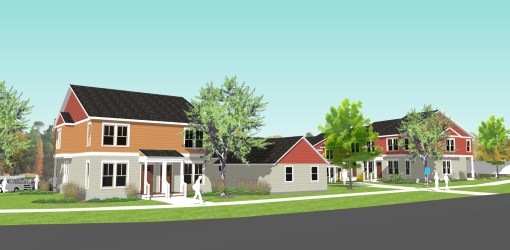
238 Linden is a non-historic student rental house, and a John Novarr property in a CR-4 zone – 4 floors, no parking required. Further to that, 240 Linden to its north was taken down for staging space for the Breazzano Center, but as that will be finishing up this Spring, it leaves an MU-2 (six floors, no parking) parcel open for development. A townhomes plan suggest one or both of these parcels will host something not unlike the ikon.5-designed townhouses plan Novarr plans to build at 119-125 College Avenue.

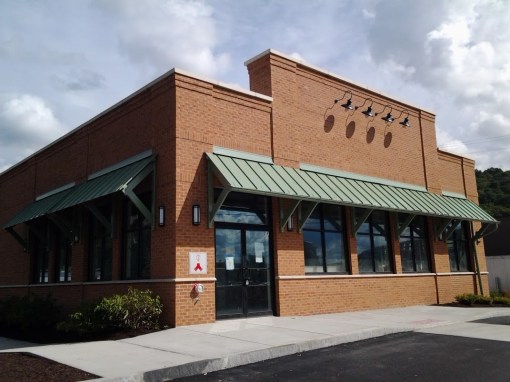
D. 372 Elmira Road – McDonalds Rebuild – Sketch Plan 7:30

If Ithaca’s lucky, it’ll have upscale features like the one finishing up in Dryden. Otherwise, a modern update to the 1980s design is plausible. A number of older McD’s restaurants nationwide have been upgraded to the new design in the past few years.

E. 301 Eddy Street – Student Apartments 7:50

This is intriguing. 301 Eddy is a Nick Lambrou property in an MU-2 zone – a four-story, 8-unit/37 bed apartment building built in 1995, and it’s also the address for Collegetown Park’s parking lot. One possibility is replacing part of the parking lot with another apartment building – Lambrou may push to six floors, but it’s not his style. He’s described his offerings as “boutique” buildings, properties with less than 20 units and 20-50 bedrooms. Recent examples include 2015’s 116 Catherine Street, and 2012’s 309 Eddy Street. If the past is any precedent, this will be a Jagat Sharma design.

5. Zoning Appeal: #3057, Area Variance, 109 Dearborn Place 8:10

6. Old/New Business: Special Meeting Chainworks District DGEIS – Transportation 8:20

7. Reports
A. Planning Board Chair (verbal) 8:30
B. Director of Planning & Development(verbal)
C. Board of Public Works Liaison (verbal)


News Tidbits 2/11/17: Cooperation Required

11 02 2017

107_s_albany_rev_1

1. It looks like the plans for 107 South Albany Street are getting a major revision. Readers might recall that previously approved plans called for a rear addition onto an existing house to create a 9-unit, 11-bedroom apartment building. The latest plans are a little more substantial.

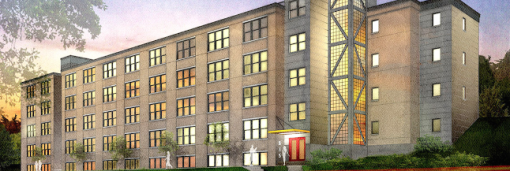
For one thing, the existing house would be no more under the new plan. In its place looks to be a 3.5 story, 8,427 SF, 11-unit apartment building, all one-bedroom apartments. Developer Stavros Stavropoulos has once again turned to local architect Daniel Hirtler for design work; for each of them, this is the largest project they’ve worked on to date. Hirtler came up with a design that offer contextual features like a cornice and an orthodox window arrangement, but adds a modern vertical stair element in the middle of the structure to keep the design from being an imitation. Zoning is CBD-60, so no parking is required, 100% lot coverage is allowed, and the 40.5′ proposal is comfortably within the 60-foot height limit.  According to the SPR filing, the construction cost will be about $900k and the construction period will be from September 2017 to June 2018.

As much as I dislike seeing attractive old houses come down, the new design fits well into an older urban context. Plus, if the medical practice on State ever gets redeveloped, 3.5 floors offers a nice transition to the lower-density structures further south. I’m not a super big fan of the blank wall next to the recessed entry, although the intent is to make it interesting with light fixtures, a brick pattern and an iron trellis that will be grown over with vines. Fiber cement will be used on the upper floors, with brick veneer and granite accents at street level.

On another note, it looks like the city will be looking at a one-lot subdivision next month at 109 Dearborn Place in the Cornell Heights Historic District – the owners, a married couple who are renovating the old PRI into a historically appropriate two-family residence, are looking to sell some of the land as part of the “partnership dissolution”. The PRI renovation is expected to continue. The application says a house was previously located on the undeveloped portion of the property (a glance at old maps indicate a schoolhouse was located on-site in the 1920s). It’s worth noting that the wife is also the owner of Bridges Cornell Heights, a high-end senior living facility on the next block. Bridges previously subdivided a Cornell Heights lot in 2005 to build a second residence to serve its deep-pocketed clients. Any new house would need to go through ILPC review.

323_taughannock_townhouses_2

2. Meanwhile, the Ithaca Common Council had their monthly Planning and Economic Development Committee meeting. It looks like the revised 323 Taughannock project has been caught up in the TM-PUD, so it will have to get Common Council approval. Apart from a certain councilor’s general objections to housing near or on the waterfront, this one isn’t likely to stir up much controversy. The construction timeline for Steve Flash’s 8-unit , 16,959 SF owner-occupied townhouse project is June 2017 – January 2018, with an estimated value of $2-$3 million. Potentially, there could be 16 units, since each townhouse comes with a live/work space that could be converted to a separate studio apartment unit.

Also included at the meeting was a session on electric car infrastructure, votes to send laws allowing dogs in Stewart Park and a temporary altar to the Common Council, votes to circulate a zoning amendment to allow brewpubs in business zones, and a discussion of tree plantings. The Maguires also discussed possibly shifting their project to Southwest Park behind Wal-Mart, which is covered on the Voice here.

3. The city of Ithaca has been awarded funding to build a replacement bridge for North Aurora Street over Cascadilla Creek. Continuing the city’s heavy infrastructure investments of the past few years (for instance, the bridges as Lake Street, East Clinton Street, and the work planned for Brindley Street/Taughannock Boulevard), the state is giving $1.178 million towards the replacement span. Engineering work and public meetings will take place in 2017 and early 2018, with construction and completion by 2019.

maplewood_v7_3

4. Over in the town of Ithaca, final approval has been granted to Cornell and EdR’s Maplewood project, meaning that everything is good to go and barring any unforseen circumstances, the 441-unit, 872-bed complex should be open for graduate and professional students by the end of July 2018. The difference between preliminary and final approval is that in preliminary, the concept is greenlighted but there needs to be additional filings completed – tree planting schedules, revised labels on diagrams, construction staging plans, and proof of final approval from the city for their portion. For those who are wondering, the 150-200 workers on-site will be parking at a temporary lot behind the Kinney Drugs at East Hill Plaza, and will be walking the five minutes down Mitchell Street to get to the job site. The first building should start to rise in late Spring of this year, with new structures rising in stages as we go through the rest of 2017.

rodeway_revision_1

The town planning board also reviewed revised plans for the Rodeway Inn at 654 Elmira Road, where the old wings will now be torn down and rebuilt on the same footprint and an enclosed corridor will be built into the new wings. The final result will have a net increase of four motel rooms, to 44 (the previous plan added only two motel rooms). The plan for renovating the single-family home on the property into a community center is unaffected by these changes and moving forward as originally planned.

20160918_151026
5. It’s been behind schedule a few months, but DiBella’s Subs is expected to open at 222 Elmira Road on February 16th.

thecomputingctr_2

thecomputingctr_3

6. It seemed a little odd when The Computing Center stated in their IDA application that their plans had already been approved, and there was nothing on file. Turns out they’re hoping to get approval for their 4,600 SF HQ from the town of Lansing next week.

The full suite of documents can be found on the town of Lansing’s website here. It looks like the farmhouse next door to 987 Warren Drive will be spared from the wrecking ball; although The Computing Center bought the property, it’s being subdivided and the barn-turned-garage is the only building that will be torn down. Lansing has one of the more lenient planning boards, so although this probably won’t be fully approved next week, there’s a good chance this project will receive final approval by the end of March.

204260_56b8b8a8c98ee1-47810900_full

7. Over on West Hill, a large vacant parcel on Bundy Road just exchanged hands. The 66.98 acre parcel has been marketed for the past few years as a development opportunity – it has municipal water and sewer, and it’s a stone’s throw from Cayuga Medical Center, Overlook and the Conifer/Cornell developments off of Route 96/Trumansburg Road. Its previous ownership, a family that has owned it in some form since 1964 (moving between members in 1984 and 1991), had it on the market for $359,900.

The buyers, a husband-and-wife pair of medical doctors who live nearby, paid $305,000 for the deed, according to a filing on the 9th. An online search for future hints doesn’t really give much guidance – the doctors have donated modest amounts to Finger Lakes Land Trust and have signed some anti-fracking petitions, and while they own undeveloped properties around them, this parcel isn’t adjacent to their house. It doesn’t really fit the Land Trust’s ideal land donations either, since it’s been substantially subdivided with medium-density residential, and borders a growing corridor. So, it’s hard to gauge just what exactly is planned here. For the record, the land is currently zoned medium density residential (max 3 floors, up to 2.9 lots/acre), but the town’s new comprehensive plan sees the property as new urbanist medium density (5-8 units/acre small-scale mixed-use), with undeveloped open space towards the southwest corner of the parcel.

cornell-project-dsun

8. Let’s finish this week off with a talk about energy. Good news first – there might be a solution to the West Dryden pipeline issue. Background here, but the nutshell is, Lansing has tapped out their natural gas capacity, and in order to accommodate new development that would need natural gas, NYSEG needs to build a higher capacity pipeline from their current facilities in the town of Dryden. This new pipeline would go along West Dryden Road, but has run into fierce opposition, mostly because Dryden residents are famous for being anti-natural gas – this was the town that took on the fracking companies and won. Keep in mind, these folks aren’t just disdainful of natural gas, they are adamantly opposed. So using their property to accommodate something they don’t like is a bit like asking to build an abortion clinic next to an evangelical church because that just happens to be where the land is cheapest, but they would have to share a driveway.

Unsurprisingly, the town of Dryden enacted a moratorium on large-scale pipeline installation. The town of Lansing is not happy because it stymies their development, and they’re extra-concerned that their biggest property taxpayer, the Cayuga Power Plant, is about to go belly up and leave the town with $100 million less on its tax rolls. The county wants to move away from fossil fuels, but it also wants to encourage development and not leave Lansing in the lurch.

This week, a plan was put forth that might accommodate both needs. A small compressor station would be built to keep pipe pressure from falling too low during times of peak demand, so that guarantees service for existing customers. The second prong is to wean existing development off natural gas and encourage new development to use other means – electric heat pumps, like those to be used in Maplewood and City Centre. This encouragement would be given through subsidies or tax breaks. The compressor station and the incentives would be in effect by late 2018.

It looks promising, but the feasibility studies are still ongoing, and Lansing is not totally on board. Both Lansing Village and Lansing Town feel they were not represented during these discussions with NYSEG, and that heat pumps are a major financial burden to saddle homebuilders with. They also wonder if the electrical grid would be capable of supporting so many heat pumps.

Speaking strictly from my experience, I’ve visited construction projects with heat pumps, and while they are a cost increase, it’s a couple percent more than the same structure with conventional heating – there’s a recently-built single-family house I can think of offhand where the cost of heat pumps was about $5,000 more on the $200,000 construction cost. If it’s incentivized, one could make it financially sensible, at least for residential options if not all. Also, I’m wary of Lansing’s reasoning because they piddled away the three town center projects five years ago – if they had stayed on top of it, they’d have $50 million more in property value and this wouldn’t be such a pressing issue now.

That being said, there are problems with this area’s approach to alternative energy. Newfield is the big culprit here – they’re about to put in a moratorium on commercial solar panel installations, which is worrying since this is the same town that redesigned their wind turbine law to ban them in essence. If municipalities are limiting residents’ abilities to turn to alternative energy sources (many urban areas have to turn to commercial arrays or turbines because there’s not enough room/too much demand on-site), then the community will be unsuccessful in weaning the population off of fossil fuels. But Dryden, which is in the process of changing their laws to accommodate large-scale solar arrays, is at the forefront of this issue – those panels could provide the electricity for the heat pumps and help turn the tide on energy sources. It only works if everyone cooperates.


Upson Hall Construction Update, 1/2017

18 01 2017

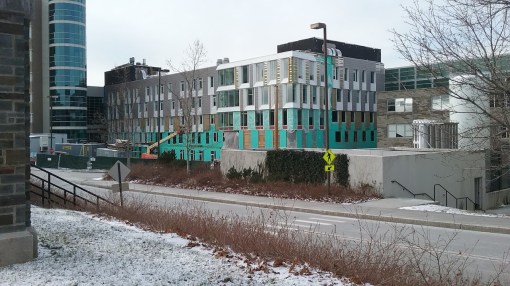
It’s become a little more difficult to shoot photos from certain angles, now that one of the previously-open sidewalks has been closed off. But, it’s not a surprise, they’ve been working on Upson’s new face. The exterior stud framing has been underway on the lowest floors of the west face. Sheathing is being attached, and the rough openings indicate future windows. The lowest floors of the east side, a little further along, have already been coated in turquoise waterproofing material, and are being fitted with windows. On the upper floors, there’s been considerable progress with the terra-cotta and the aluminum surrounds. It doesn’t look like there’s been much progress with attaching new mineral wool and clips, the current work is either finishing up what was well-underway (the upper floors), or getting started with the new exterior (the lower floors), not a whole lot of work going for the in-between stages at the moment.

Inside, you can see the new interior framing being built inside the fully-gutted and renovated interior. According to Cornell’s last update in December, interior demolitions are complete, mechanical rough-ins are ongoing in the basement, and electrical and plumbing are underway on the first and second floors.

Like Gannett, The Pike Company is the general contractor in charge. LTL Architects and Perkins+Will are in charge of design.

20170107_103946 20170107_104030 20170107_104052 20170107_104055 20170107_104104 20170107_104120 20170107_104139 20170107_104430 20170107_104456 20170107_104540 20170107_104555 20170107_104906 20170107_104910 20170107_104921 20170107_104955


Cornell Law School Renovation Update, 1/2017

17 01 2017

From the outside, it doesn’t look like much is happening. But, given all the steel beams on site, the safe bet is that the former dorms inside are still being gutted to nothing but the load-bearing walls, and those beams will become a part of the new interior partitions, new stud walls for the enhanced faculty office and professional space. This is by and large an interior renovation, but perhaps after the deepest cold of the season passes, we’ll see more progress towards enclosing the loggia and the new stairwell on the west face. The wire mesh over the exposed west wall is for safety reasons.

20170107_105312 20170107_105321 20170107_105342 20170107_105408 20170107_105424 20170107_105432 20170107_105542 20170107_105624

hughes_cornell_4 hughes_cornell_3


Cornell Veterinary School Expansion Construction Update, 1/2017

17 01 2017

Starting to see more progress on the structural frame of the $74.1 million Vet School additions. The reinforced concrete frame of the new library and administrative offices now extends all the way back to the rest of the Vet School complex; the new section is draped over with plastic sheets. Also, as the new wing gets fleshed out, the rough openings of the windows are taking shape. It doesn’t look like there’s been too much exterior progress on the new atrium.

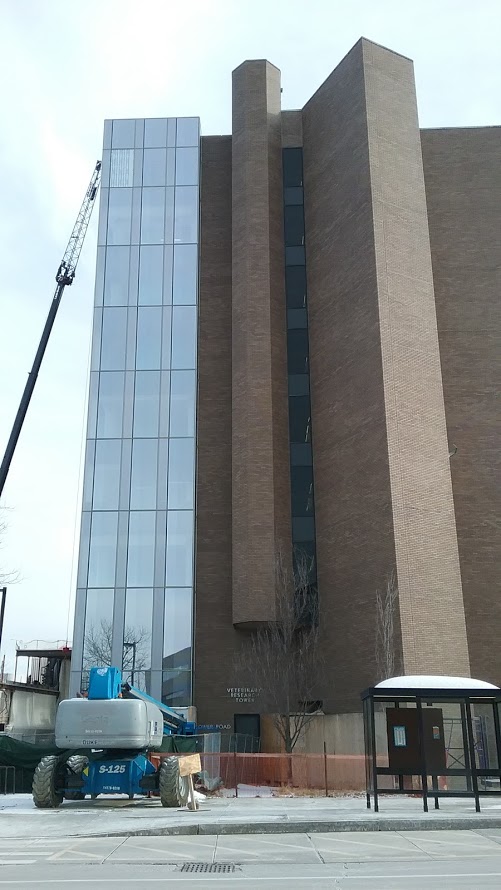
According to the project webpage (last updated two weeks ago), interior framing (metal stud walls probably) is underway, rough-ins are underway, and the new cafeteria is under construction. Welliver will have the new atrium and lecture hall fully closed up by the end of January. Most of the Vet Research Tower work has been completed, but new office layouts are still in the works for the sixth and seventh floors, and that work won’t get underway until this Spring.

The new $7 million ($4.9 million hard cost) Community Practice Service Building is out for bid, with a march demo planned for the Poultry Virus Building currently on site, and a March 2018 opening, about seven months after the bulk of the new Vet School structures. It is a wood-frame 12,000 SF building designed by HOLT Architects, and I still have yet to find an image of the design.

20170107_102456 20170107_102508 20170107_102521 20170107_102540 20170107_102615 20170107_102640 20170107_102646 20170107_102708 20170107_102740 20170107_102838 20170107_102846

cad048742a281097e5667382eced42333f5656954f5a3ef1021519c03b4abe9f

20160522_131445 20160522_131417 20160522_131344

20160522_131403


Gannett Health Center Construction Update, 1/2017

15 01 2017

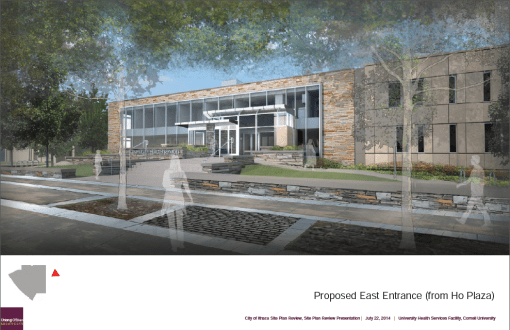
Okay, for as much as I miss the old banded concrete and glass, the large window panes, clear glazing and thin aluminum frames designed by Ithaca’s Chiang O’Brien Architects do have a certain modern chic going. However, this armchair critic still has yet to decide if he likes the offset between the outer and interior frames of the curtain wall. The windows have made their way north along the old east wing. Peering through, you can make out some of the new metal stud walls, so utilities rough-ins for the gutted 1950s structure are underway.

The new entry canopy has yet to be built out. Pike, the contractor, could soon insert the northernmost panes where the old east wing’s interior is exposed, but the curtain wall glazing won’t be finished until the canopy has been constructed.

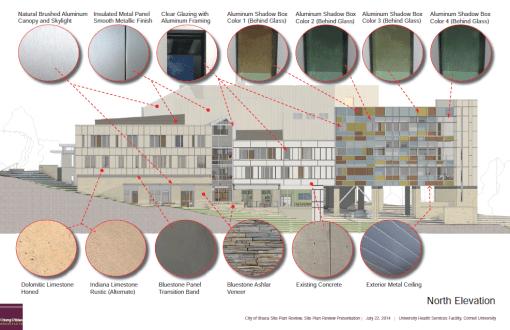
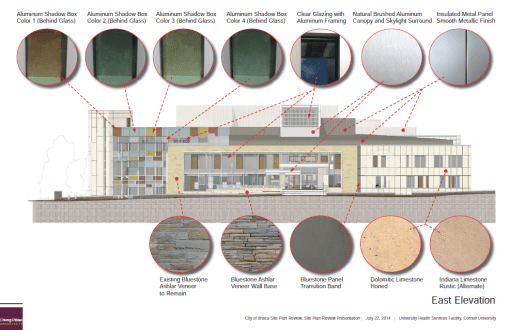
The new three-story 18,000 SF northeast wing, which replaces the former Ho Plaza entry, rose pretty quick – like the Breazzano Center, it’s wrapped up in plastic to limit workers’ exposure to the cold. The outside of the new wing will be faced in a couple types of limestone, with a bluestone transition panel and bluestone veneer at its base – the 1979 west wing is being updated so that the two will look similar, although the 1979 wing will retain its concrete exterior, giving the two wings some visual contrast.

According to Cornell’s revamped project website, the Gannett project is 70% complete. Whether that included the new addition that opened last year is not clear. The entire project should be finished by this fall.

20170107_105817 20170107_105841 20170107_105904 20170107_105908 20170107_105926 20170107_105950 20170107_110000 20170107_110007 20170107_110038 20170107_110100 20170107_110108

gannett_northeast_persp gannett_north_final gannett_eat_persp gannett_east_final gannett4


News Tidbits 1/7/17: Storage and Storefronts

7 01 2017

1. Like a phoenix, it looks like Wings Over Ithaca is coming back. The franchise, whose Ithaca location was shut down after the owner was charged with 26 counts of tax evasion, will be operated under a new ownership consisting of four young Cornell alumni from the New York City area. However, while the ownership is changing, the management team for the eatery will be largely the same. The new incarnation will also be in a new location – Wings, which called East Hill Plaza its home for fifteen years, will now be located in a 1,743 SF retail storefront at 119-121 Dryden Road in Inner Collegetown. The property, owned by Ithaca Renting, previously held a Greek restaurant and then a tobacco shop, but it’s been more often vacant than occupied over the past ten years. A new kitchen is being installed in the retail space to accommodate. Expect an early Spring opening.

distributed_sun

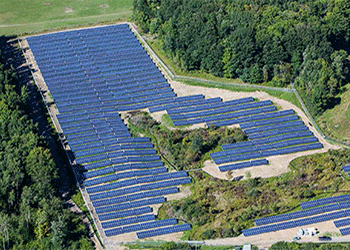
2. This sounds promising, but I’m not comfortable with the precision of the details. According to Cassie Negley over at the Times, Washington D.C.-based Distributed Sun LLC, a rapidly-expanding solar energy company, wants to build two large-scale solar installations in the town of Dryden. One would be on Cornell land south of Route 366 on Turkey Hill Road, the other near the Willow Glen Cemetery on non-Cornell private land. The company is familiar with the area, as they are Cornell’s partner on the large-scale array recently installed near the county airport. The company also has plans for seven arrays on four parcels in Spencer in Tioga County, and they’re working with Cornell on solar installations for the tech school down on NYC’s Roosevelt Island.

The topic of discussion is whether or not a PILOT (Payment In Lieu Of Taxes) could be reached for the installation – solar installations are already exempt from NYS taxes, but school districts and towns can levy their own. Since the Cornell property doesn’t pay taxes, a lump PILOT that covers both could actually pay more than taxing the non-exempt proposal at full value. The construction timeframe at present is April-October 2017; and, here’s the imprecise part, the arrays would create 200-250 local jobs and another 100 jobs nationwide – and, from the town minutes, that doesn’t appear to be a typo. Presumably, most of that is construction, and a few in maintenance. I’d like to see the numbers for permanent local jobs, because along with the renewable energy growth and reduced electricity costs for nearby residents, the permanent jobs would be one of the big economic selling points. Given the Mettler Toledo news a few months ago, new jobs in Dryden would be welcome.

100_13701

3. Time for some sad news – 722 University Avenue is gone. The university demolished the 5,738 SF, 116 year-old house it earlier this week. The property has a storied history as the home to several fraternities and sororities; it’s kind of a shame it wasn’t renovated to provide student housing. The university has no long-term plans to redevelop the lot.

20170101_152251 20170101_152310 20170101_152348 20170101_152359

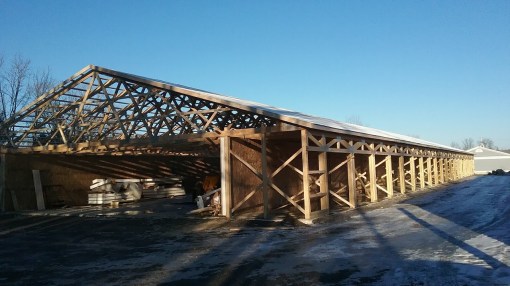
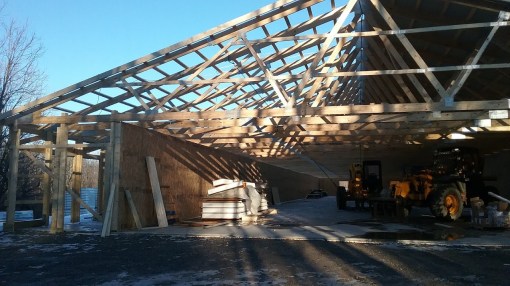
4. Dryden, the storage capital of Tompkins County. Across the street from the 79,000 SF Storage Squad self-storage facility under construction, 4 Season Storage is busy putting up their own addition. According to a loan filing on the 3rd, 4 Season’s new building is 12,000 SF, and the hard construction costs come in at $481,172. CFCU is the lender. The structure is already framed and is being roofed, the cross trusses already separate the exterior units (not sure if those will be climate-controlled like the interior ones). Storage Squad is further behind, a graded site and a couple of reinforced concrete walls at the moment.

20161119_145216

5. In case you were wondering, here are some of county administrator Joe Mareane’s planning and development goals for 2017 –

– Negotiate the purchase of the Tompkins Trust Building for use by the History Center and Heritage Education Center. Also, develop a “governance”, or operations, plan for how the facility will be managed and maintained; how space will be allocated; how rent will be determined, etc.
– Work with NYS DOT and local agencies (Planning and ITCTC) to secure funding for a Route 13 traffic study.
– Facilitate the development of a realistic business strategy that allows the Airport to continue to
serve the community and be financially self-sufficient.
– With TCAction, put plans in place for a new residential project aimed at providing a meaningful
amount of housing for the chronically homeless.
– Bring alternative plans to re-use the rear portion of the Human Services Annex to the Legislature; implement its recommendation.

There’s a possibility, based on the 2016 notes that follow, that the 24-unit Re-Use project and the housing for the chronically homeless may be two different projects – the Re-Use housing project is described as transitional re-entry housing, while the housing for the chronically homeless is said to be in the property acquisition phase – i.e. still scouting out sites, with the goal of construction within two years. They might be the same, they might not, it’s not 100% clear from the notes. As for the Human Services Annex, there have been talks for additional space for Cayuga Medical Center’s services, or space for courthouse functions, and a decision is expected in Q1 2017.


News Tidbits 12/31/16: For Ithaca, This Wasn’t A Half-Bad Year

31 12 2016

902_dryden_final
1. Another fairly quiet week for that Christmas-New Year’s lull. There wasn’t anything too noteworthy in real estate transactions, but thanks to a construction loan filing, we have a figure for the construction cost of Modern Living Rentals’ 902 Dryden Road project – $1,192,550. The 8-unit, 26-bedroom townhouse project is being financed by Elmira’s Chemung Canal Trust Company, a regional bank which has been looking to expand its presence in the growing Ithaca market. Most mid-sized building loans like this are financed by Tompkins Trust, and this appears to be the largest project CCTC has financed locally; checking the records for the past 12 months, they’ve previously financed a few single-family homes and that’s it. A larger loan like this might be a sign that they’re building confidence in the project and the market.

815_s_aurora_night

2. Sticking with MLR, a glance at their webpage gives an interesting detail – the 87-unit, 87-bedroom 815 South Aurora project is now described as having 125 bedrooms. The multi-story apartment project sought and persuaded the city to reduce cellphone tower no-build radii last spring so that it could be built near the South Hill telecommunications mast, but because the city only reduced to 120% of height instead of tower height plus 10 feet (meaning 206 feet instead of 180 feet in this case), the project has to be tweaked. No revised designs have been released, but should something come along, you’ll see it here.

Side note, the website has an easter egg – clicking on MLR’s Commons placeholder gives you the 2015 downtown market summary from the DIA.

cornellspace-771x394

3. For those interested in learning more about Cornell’s north campus plans, video from one of their meetings can be found online here. The key takeaways – the first building, when it is built, has to be larger enough to function as swing space for Balch Hall, which appears to be first in line for renovations. Balch has 437 bedrooms, to give an idea of the potential capacity of the first new dorms. Dickson is larger (527 beds), but its renovation will be split up over two summers, allowing for partial occupancy while renovations are underway. Lot CC could potentially be replaced with 1,000 beds in multiple buildings, as well as a dining facility (a new dining facility is seen as less urgent and would be further down the line). Those new dorms would eventually be geared towards sophomores, multi-story but “contextual” in height. It sounds like the first concrete plans are expected to be ready by the end of the 2016-17 academic year.

4. The Common Council will be voting on some bond issues next week that will fund several municipal projects. $500k for street reconstruction, $367k for municipal building renovations, $653k for street lights, $600k for a replacement water tank on Coddington Road, $101k for bridge inspections, $181k for the Stewart Park pavilion, $51k for site improvements to the Hangar Theatre property, $134k for design and scoping costs for the Brindley Street bridge replacement, $340k for the Cascadilla Creekway project and a replacement ped bridge at Sears Street, water mains, traffic lights, traffic calming, new police cars, all totaling $6,464,450. A separate measure calls for an additional $950k in bonds to cover the costs of the Stewart Avenue bridge repainting and reconstruction.

Some of the money covers design studies for intersections – of particular note is a study considering a roundabout at the “five corners” intersection at Oak Ave/Dryden Rd/Maple Ave, which could be a welcome change from that awkward traffic light currently there.

The city issues bonds twice a year, in January and July, to cover its various construction projects. Some of it gets reimbursed with state and federal dollars.

city-center-v4-1

5. I cheaped out on my Voice summary of the top development stories of 2016 – there are only 5, but only because there was no way I had time to do ten this week. Here are five that missed the cut – the cancellation of State Street Triangle and the rise of its replacement, City Centre; the Tompkins County Housing Summit and the Danter Study, which are important but not really attention-grabbing; some progress in affordable housing, with Cayuga Meadows, 210 Hancock, Amici House and Poet’s Landing; the continued growth of Collegetown, with the opening of Dryden South, Dryden Eddy and Collegetown Crossing, and the entrance of the College Townhouses, 210 Linden and 126 College; and the growth of the local economy, which if the numbers hold up to revisions, 2015-2016 will have the second highest year-over-year gain in jobs since 2000 (#1 is 2011-2012).

When thinking about what’s in store next year, it’s a little sketchy because of impacts from the incoming Trump administration, and how that could impact the national economy – but if things stay consistent on a large-scale, than Ithaca can expect continued modest but steady growth, mostly in meds and eds, with a bit in tech and hospitality. We’ll probably see a couple new projects proposed in downtown and Collegetown, and maybe some smaller residential and commercial projects in other neighborhoods, like the Elmira Road strip and State Street Corridor. The town of Ithaca, it’ll depend on if they get their new zoning sorted out; if they do, there might be a burst of new proposals in some areas. The other towns, it’ll be hit or miss, maybe a larger proposal in Lansing or Dryden but otherwise scattered-site single-family, par for the course. Also, keep an eye out for more housing proposals from Cornell.

masonic_temple_1-771x595

6. It’s quiet week, so let’s finish this up with a little water cooler gossip. From the rumor mill, some of the potential tenants being discussed for the Masonic Temple include a microbrewer (good thing the city just updated their zoning to allow microbreweries), professional event space, and a church. That last one seems a little unusual, but to each their own. The renovation plans call for three rental spaces, one of which is geared towards restaurant tenants.


News Tidbits 12/17/16: So Much In One Week

17 12 2016

1. For the developers out there, it looks like your next opportunity just opened up in Collegetown. For sale are three houses on Linden Avenue – 6-unit, 8-bedroom 230 Linden, for sale at $675,000 (taxed at $350,000), neighboring 4-unit, 8-bedroom 228 Linden at $700,000 (taxed at $460,000), and two doors down, 2-unit, 11-bedroom 224 Linden at $525,000 (taxed at $400,000). All three are somewhat run-down student apartment houses on the cusp of inner and outer Collegetown – as such, their zoning is CR-4, which allows four floors, 50% lot coverage, and has no parking requirement.

The properties were all purchased in the mid-1970s by a small-time local landlord, who was killed in a car accident two years ago. According to the listings, the seller’s agent is a family member, and the units are leased until late 2017 or 2018, meaning that if one were to purchase with an eye towards rapid redevelopment, they would have to negotiate with the tenants, or wait it out. That being said, there’s a lot of potential here, particularly if a buyer combines 228 and 230 into one lot. The city designed the CR-4 zoning with Linden Avenue specifically in mind – the concept render is a northward perspective of a revitalized Linden Avenue. They’re a lot of money, but there could be some interesting news down the line.

210linden_126college

2. Also in Collegetown, here are a couple of concept color renders of 210 Linden Avenue (left) and 126 College Avenue, courtesy of Visum Development’s webpage (currently down, cached link here). I confess to be more of a warm colors person, but assuming these are fiber cement boards and wood trim (or fiber cement that looks like wood), they could turn out quite nice.

On a related note, Visum’s Fox and partner Charlie O’Connor have started earth moving for their townhouse project at 902 Dryden Road in Varna. As it turns out, it is a very difficult site to get photos of, despite its easily accessible location. I’ll do a more in-depth shortly, but the units should be ready by August.
20161211_131919 20161211_131943

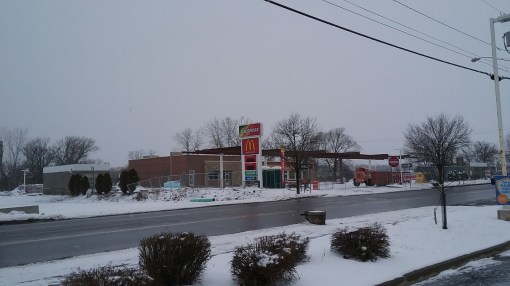
3. Fulfilling a promise to Fred, here’s the rather upscale McDonald’s/Fasttrak combo under construction North Road in the village. There is a billboard on 366 advertising for new hires for when they reopen, but unfortunately, it was too difficult to attempt a photo of the board and render. The building’s exterior is largely complete, and the gas station canopy is framed – late winter opening? The new construction has a price tag of about $500k. Honestly, for a roadside stop, it looks pretty nice.
20161211_131533

20161211_131514

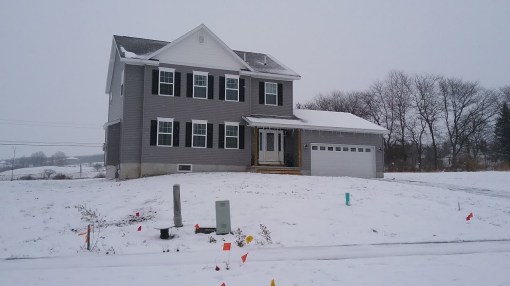
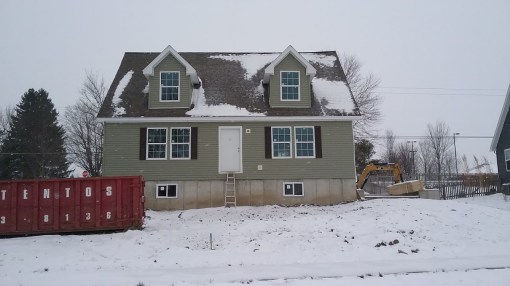
4. More on Dryden, with a couple houses of the week. Looks like some modulars are going into the Maple Ridge development – one recently completed, one in the works. The open space to the right of house number two, the Cape Cod, will host a garage. The land for house one sold to Kenn-Schl Inc, a regional modular home builder and seller, in June for $48k. House two’s land was sold to a Rochester man for $39k in October. At this rate, Maple Ridge is going to fill out their 15-lot phase one in another year or two. Although waylaid by the Great Recession, the big plan is for three phases and 51 lots.

20161211_133227

5. On the 15th, the construction loan for the William George Agency’s new 1-story, 24-unit dormitory was filed to the county records office. The $3 million loan comes courtesy of …. A trip to the property didn’t pan out, it didn’t look like anything was underway even though the building permits were filed with the town of Dryden a few months ago. Then again, as a facility for troubled youth, it’s not the most welcoming place for a random visitor to be taking photos.

maplewood_v7_4

6. So what’s being discussed by the towns? In the town of Ithaca next week, a lot line adjustment between two houses, and more Maplewood discussion, with consideration of preliminary site plan approval. Meanwhile, the town of Dryden has cell towers galore, as well as revised approvals for Storage Squad (1401 Dryden) and Tiny Timbers; plans are in the pipe line for a 7-lot subdivision of the Dryden Lake Golf Course, and a possible sewer extension study for NYS Route 366 east of the NYSEG building.

Image Property of HOLT Architects

7. Speaking of sewer, the town and village of Lansing are negotiating sewer deals so that the town can use village lines to help accommodate future growth. Dan Veaner at the Lansing Star has the story. the report says the town is asking for 700 units of capacity, where a unit is 328 gallons. 700 units would also put the Cayuga Heights plant at capacity. The town’s intent is to extend sewer capacity to encourage development along Triphammer Road (as in the town center concept shown above), with the reasoning that it’s a natural extension of established development, and would help grow the tax base in the event of the power plant closing. Not as grand as the plans that were shot down in 2007, but like the Warren Road sewer built a few years ago, it’s seen as a more organic and cost-efficient approach.

20161209_123851

20161209_123931

8. There might be some of movement on Jason Fane’s Bank Tower $4 million renovation from office space to 32 apartments. The windows were inspected and tagged recently, possibly to determine what needs to be replaced where. Most of the exterior of the Commons-facing building will receive a cleaning and re-freshening, with the bulk of the work geared towards the interior.

20161210_140231

9. In economic news, 24/7 Wall Street is reporting that Ithaca has the 25th best job growth in the nation from November 2015 – November 2016. 2,200 jobs equates to 4.4%, by their measure.

Hate to burst the bubble, but don’t buy into it just yet. Initial estimates can be way off due to statistically insignificant sample size for small communities. It may hold, it may not. Wait until March and see if the numbers get revised.
city-center-v4-1

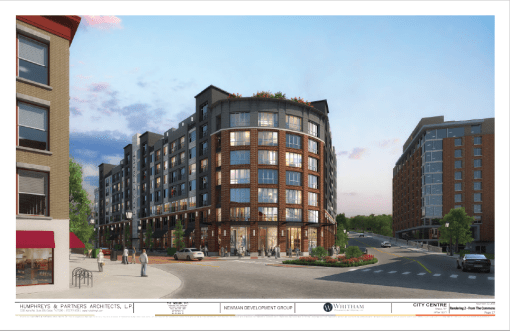
10. Interesting meeting next week for the city Planning Board. Amici House and Maplewood are up for final approval, and a couple revitalized or new projects. Here’s the scoop:

1. Agenda Review 6:00
2. Privilege of the Floor
3. Site Plan Review

A. Project: Maplewood Redevelopment Project 6:10
Location: Veteran’s Ave. (between Maple Ave. & Mitchell St.)
Applicant: Scott Whitham, Whitham Planning & Design, LLC, for Cornell University
Actions: Adoption of Findings, Public Hearing, Consideration of Preliminary & Final Site Plan Approval

The Town Planning Board filed a Notice of Completion on November 30th, 2016, which can be viewed here: http://www.town.ithaca.ny.us/major-projects/maplewood. The Town Board will consider adoption of a Findings Statement on December 20, 2016.

The city will specifically sign off on the bus stop and landscaped area at the northwest corner. STREAM Collaborative is the landscape architect.

B. Project: City Centre — Mixed Use Project (Housing & Retail) 6:30
Location: 301 E. State/M.L.K., Jr. St.
Applicant: Jeff Smetana for Newman Development Group, LLC
Actions: Determination of Environmental Significance, Recommendation to BZA
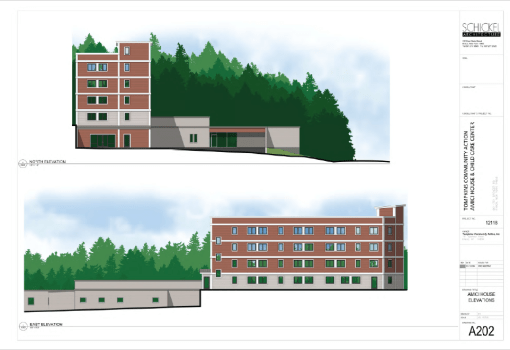
amici_v3_1

C. Project: Amici House & Childcare Center 6:50
Location: 661-701 Spencer Rd.
Applicant: Tom Schickel for Tompkins Community Action (“TCAction”)
Actions: Consideration of Preliminary & Final Approval

Tweaked since last time – a little more glass in the stairwell, and the roofline of the classroom building has been broken up with three distinct gables.

college_townhouses_v2_1

D. Project: College Townhouse Project 7:10
Location: 119, 121, & 125 College Ave.
Applicant: Kathryn Wolf, Trowbridge Wolf Michaels Landscape Architects, LLP
Actions: Public Hearing Determination of Environmental Significance

The big changes appears to be the switch from boxy bay window projections to curvy ones. Not sure if it works, given all the other boxiness. But on the bright side, we now know what the rear apartment building looks like:

college_townhouses_v2_2

E. Project: Apartments (5 Units) 7:30
Location: 126 College Ave
Applicant: Visum Development Group
Actions: Declaration of Lead Agency, Potential Determination of Environmental Significance

This is what I get for writing things over the week rather than all at once. Confirmed fiber cement panels (wood-like and Allura olive green) and a very light yellow Nichiha panel.

F. Project: Apartments (9 Units) 7:50
Location: 210 Linden Ave
Applicant: Visum Development Group
Actions: Declaration of Lead Agency, Potential Determination of Environmental Significance

Charcoal grey fiber cement panels, light grey panels, natural wood trim and red doors. The base will be stucco.

G. 323 Taughannock – Apartment (Redesign) – Sketch Plan 8:10

Steve Flash’s 21-unit apartment building for Inlet Island was approved two years ago, but has not moved forward due to soil issues and parking costs. This new version is still a housing proposal, but I’m hearing for-sale units that may be condo-like. The design will also be new, but the aesthetic will be similar – it will once again be crafted by STREAM Collaborative.
H. Ithaca Reuse Center – Sketch Plan 8:30

I know about this project because a county staffer emailed me by accident. But without official docs, I wasn’t about to report on anything. The plan calls for a mixed-use building, not unlike that seen in design concepts a couple of years ago. TCAction and INHS are involved, so there is an affordable housing component – probably looking at mixed-use overall.

4. Zoning Appeals 8:50
• 3053, Sign Variance, 310 Taughannock Blvd.
• 3055, Area Variance, 113 Farm St.
• 3056, Area Variance, 301 E State St.

5. Old/New Business:
A. Update — Chainworks DGEIS – Transportation Comments/Responses – yes, it’s still going.
B. Update — City/Town Joint Planning Board Meeting Jan 31, 2017 – Maplewood?
C. Update — Joint Planning Board/ILPC Meeting (DeWitt House) – Let’s see how this goes…