News Tidbits 3/31/18: A Bit of a Lull

31 03 2018

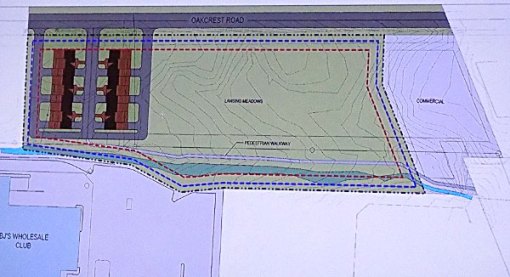
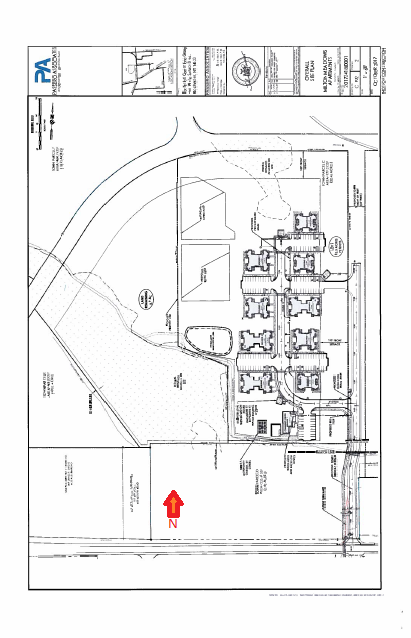
1. In Lansing, a local developer seems to have gotten the message when it comes to a small senior housing project. As reported by Dan Veaner at the Lansing Star, the latest version of Eric Goetzmann’s Lansing Meadows calls for 20 2-bedroom units ~1500 SF (square feet) each in ten buildings along a loop road, “Lansing Meadows Drive”. The project uses the entire parcel, with the eastern end set aside for a small (less than 2500 SF) neighborhood retail component.

Goetzmann is less than happy with the latest version, saying that financially it doesn’t work, but he needs to get something built to fulfill the requirements of the BJ’s tax abatement in 2011 – the senior housing component of the project has been delayed so long, the county has prepared legal action to recuperate abated taxes if Goetzmann doesn’t get the senior housing started ASAP. The answer at the last pair of meetings went from “I just want to get this done” to “We’re looking to build 12 units and if we’re successful we’re looking to build some more, which really didn’t bode well for negotiation – at this point, a low or breakeven ROI is a price Goetzmann is willing to pay over paying the county and village millions. The Planning Board is satisfied with the newest design, and a vote to approve a special permit to start construction could be as soon as April 9th. The actual construction docs would take ten weeks and the project has to go out to bid contractors, but Goetzmann is optimistic the units will be built this year.

It’s a quiet month otherwise for the village, with a cell tower and a parking lot expansion the only other things on the latest agenda.

2. Let’s take a quick look at some noteworthy sales from the past month:

The Belleayre Apartments at 702 Stewart Avenue sold for $5,434,500 on the 22nd. The seller was Sebastian Mascaro, who some readers might remember because he previously owned the Chapter House before it burnt down. The buyer was Kimball Real Estate. The 44-unit building, which retains classic Collegiate Gothic details popular when it opened in 1933, is assessed at $3.85 million. Mascaro had paid $4.25 million for the building in November 2011. Don’t expect any big changes here, but it’s evidence of the strength of the local multi-family market.

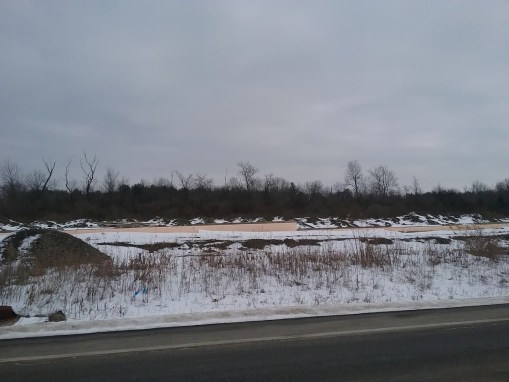
9 Dart Drive, a 4.56-acre vacant parcel in the village of Lansing, sold for $52,500 to VPA Development on March 22nd. Yes, there is something planned here – the village Board of Trustees is aware. VPA Development’s mailing address is the same as local businessman Nick Bellisario, who is building warehouses on Hall Road in Dryden, and is a partner in the Varna Tiny Timbers (The Cottages at Fall Creek) project. Zoning here is the village’s Medium Density Residentialsingle-family and two-family homes, schools and religious facilities. Zoning is one unit per 20,000 SF for a single-family home, 25,000 SF for a duplex. So in theory, perhaps 8 or 9 home lots if single-family.
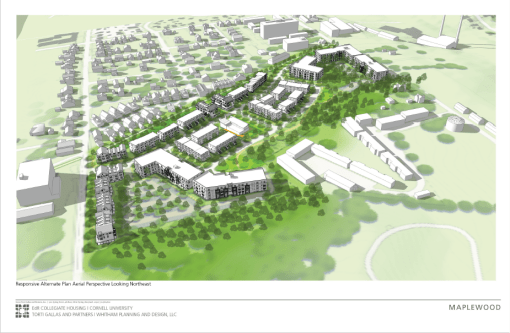
3. One of the questions that makes a fairly regular appearance in the inbox – will Maplewood finish on time in July 2018? It’s a good question, one that Cornell and EdR are damn determined to give a yes answer for. To make up for weather delays and other issues, the Maplewood construction team is requesting to do interior work to as late as 10:30 PM Monday-Friday. Keep in mind, this is on top of the Saturday hours and previous workday extension (four hours, two on both sides, to 7 AM – 7 PM). The town of Ithaca, which has to approve these changes, seems amenable to it so long as no generators are operating, doors and windows are closed, and supervisory staff is present – basically, don’t disturb the neighbors.

At last check, unseasonably cold and wet weather over the past several months had led the project to fall behind, and subcontractors to move to steadier jobs elsewhere. The project has fallen as much as 25 days behind schedule. The extensions, if approved, would create an 85.5 hour construction week, manned by different crews.

Side note, the town of Ithaca hasn’t had much else to review lately – the planning board has only had two meetings out of the scheduled six so far this year. The other projects were a single-family home lot subdivision on Trumansburg Road, and renewing the approvals for New Earth Living’s 31-unit Amabel single-family ecohousing development on Five Mile Drive. I have not seen anything underway when I’ve driven by, and the website has not been updated in a while, so it’s nice to know that something is still in the works.

4. For good housekeeping – things are slow in Dryden, so slow they cancelled their monthly planning board meeting. Things are also fairly slow in the town of Lansing, where the big controversy is a plan to relocate the shooting range for Lansing Rod & Gun. The issue is that environmentalists have criticized the gun shot’s proposal for lead shot remediation, as well as saying the range is too close to Salmon Creek. The town is still reviewing documents and has yet to make a decision.
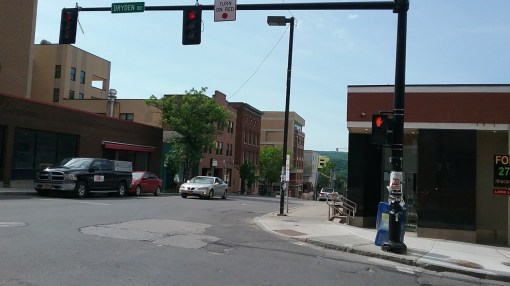
5. Recently, the Collegetown Neighborhood Council floated a Business Improvement District (BID) similar to the Downtown Ithaca Alliance. The reception was lukewarm, according to the Times’ Matt Butler. It’s not that the concept is disliked, although some smaller property owners are a bit nervous about being outvoiced by bigger players. It’s more a concern that a BID would likely be financed by a property tax surcharge, something that the county’s (and arguably, one of upstate’s) most expensive neighborhoods would rather not have to deal with. A DIA-type group may engage in security, local beautification, event planning, or other needs as the business owners as we see fit; as of now, it’s still just a hazy idea, but we’ll see what happens with it.

6. The relative quiet in the project pipeline extends to Ithaca City. At the February planning board meeting, U-Haul corporate had submitted plans for a 5-story building that, in the words of Matt Butler, “they kicked that idea to the curb….just bludgeoned the dude.” Apparently it was too much – too big, too tall, no attractive. Also, the project for 207-209 First Street is not as bad as initially feared. Both existing two-families will be renovated, but not torn down, and a new duplex would be built at the rear of the property lots. The board says it could be similar to the Aurora Street Pocket Neighborhood, and was supportive of the plan overall.

This month was one of the quietest meeting agendas I’ve seen in years – the only project up for formal review and approval was the Stewart Park Inclusive Playground, as well as updates on the Chain Works District zoning, and the City Harbor plans. City Harbor was a late addition. There is plenty in the pipeline, some of which will come forward in the next few months; just seems there’s a bit of a lull at the moment.
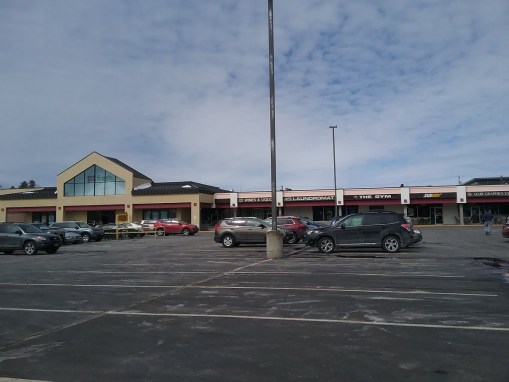
7. Just a reminder – meetings for the East Hill Village neighborhood-scale proposal will be held at the The Space @ Greenstar on Monday 4/9 (an update of the past several months, 4/11 (workshops for concept designs), and 4/12 (presentation of preferred concept designs and alternatives). All meetings will be 6-8 PM, and the public is encouraged to attend.

Here’s a copy of the presentation from last May’s meeting – not anything groundbreaking, but it makes it clear that Cornell’s land holding are much more patchwork than folks might realize. I suppose the owner of the East Hill Car Wash stands to make a pretty penny at some point.


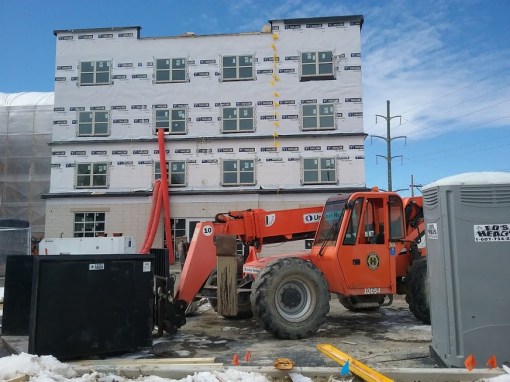

Cayuga View Senior Living Construction Update, 3/2018

20 03 2018

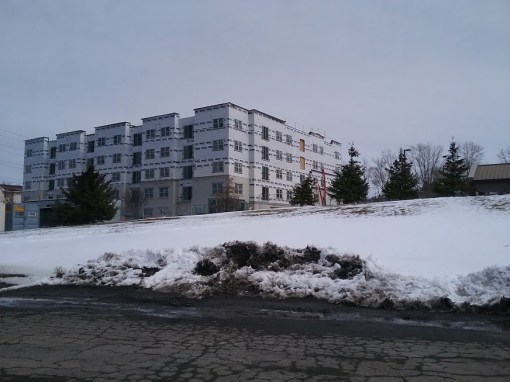
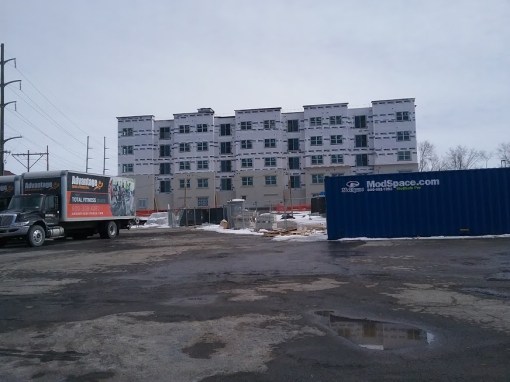
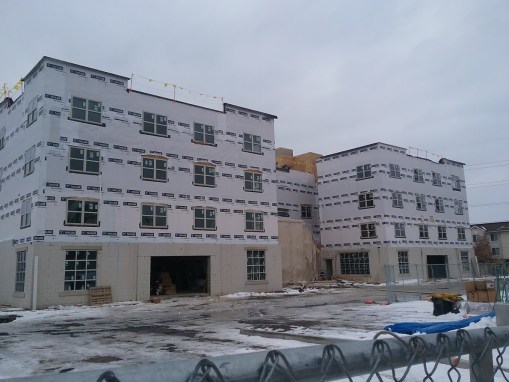
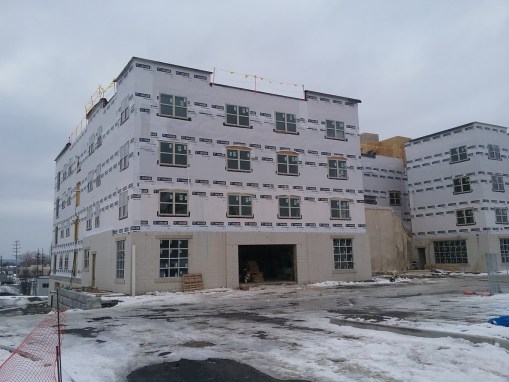
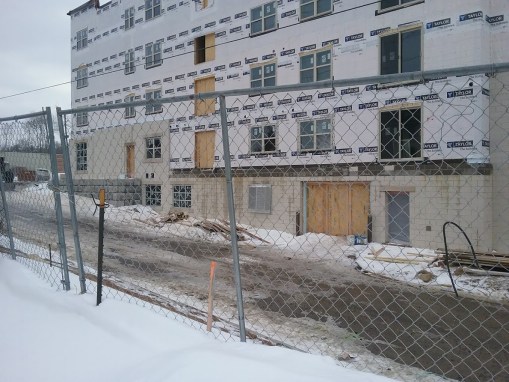
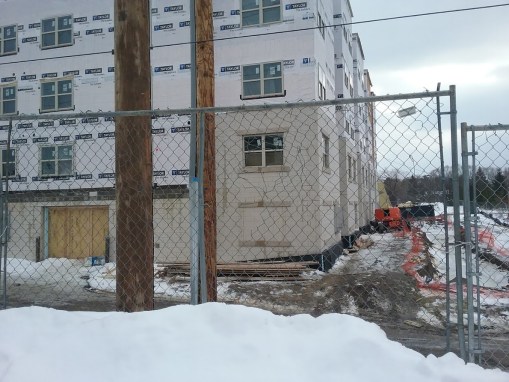
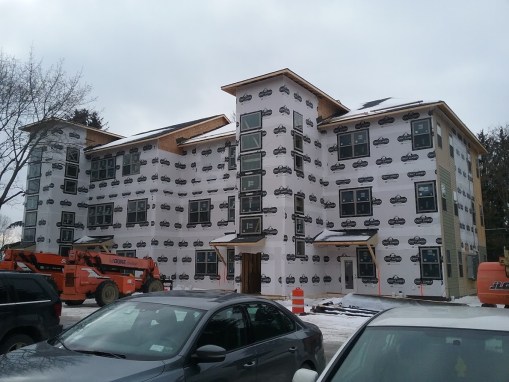
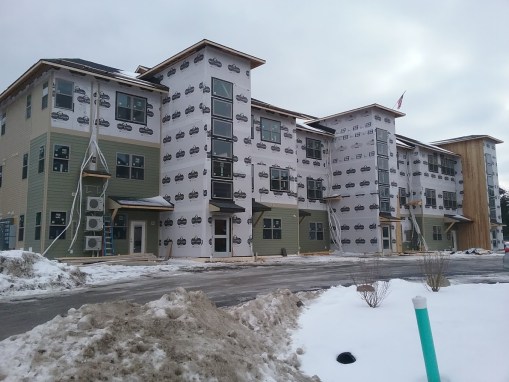
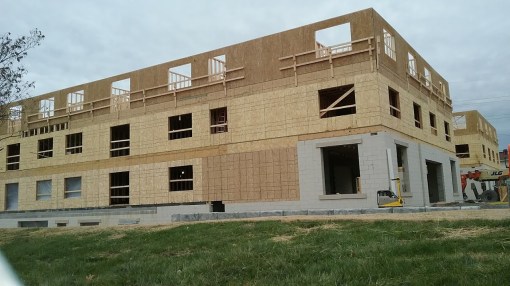
It looks like Taylor the Builders has started attaching exterior finishes to the Cayuga View Senior Living apartment building. That includes decorative cornices, brick veneer, and what appears to be a few different shades of EIFS panels. EIFS (Exterior Insulation Finishing System), sometimes called synthetic stucco or by commercial brand names such as DryVit, is a lightweight, waterproof finishing material – usually it’s two-inch thick polystyrene (rigid foam) insulating panels with an acrylic finish to mimic the appearance of stucco, along with adhesive and drainage structures. EIFS is low-maintenance; it gained popularity in the 1970s and 1980s, but developed an infamous reputation for water damage due to improper installation, which is why so many building codes are stringent about adequate drainage systems for new builds. The boards can also be damaged fairly easily by blunt-force impacts. It tends to be more common on commercial buildings than residential structures, but it is not an uncommon choice of finishes for wood-frame multi-family buildings. Other recent builds using EIFS include the Holiday Inn Express on Elmira Road, and the Seneca Way Apartments on the edge of Downtown Ithaca.

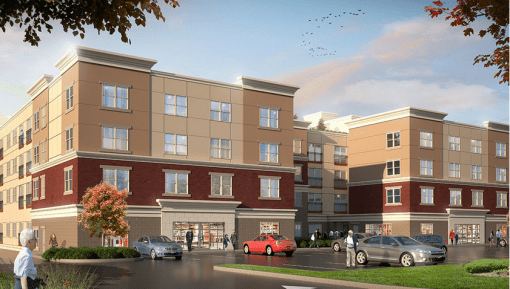
Interestingly, the top floor’s panel boards are a lighter color than the third floor – renderings have them both being the same color.

Also, note the poles and flags on the roof – that’s a good indicator that some material is being applied, probably EPDM, which is a synthetic rubber. The project team recently announced that the 87,500 SF building will not only host a rooftop garden, but a 46kW, 151-panel solar array courtesy of installer SunCommon NY of Rochester.

Current plans call for the first occupants to begin moving into its 60 apartments by the end of May (the website advertises a summer occupancy, and a leasing office is present on-site). Cornerstone Group, also of Rochester, has been selected to manage the building, whose units are reserved for those aged 55+. I’ve been in touch with the project team, and there might be a sneak preview article in the Voice a few weeks before opening.


News Tidbits 2/26/2018: One, Two, Many Tweaks

26 02 2018

1. Let’s start off with some bad news. Than Lansing Star is reporting that developer Eric Goetzmann is in serious trouble. The village of Lansing Planning Board rejected his latest request for the Lansing Meadows senior housing component, which was to build twelve units on a fraction of the lot, and leave the rest vacant. Frankly, they liked the units, but the vacant and potentially saleable lot was too much for them to overlook. To be honest, they and the village Board of Trustees have been fairly accommodating to his other requests, but this seems to be the last straw, and they let him know it.
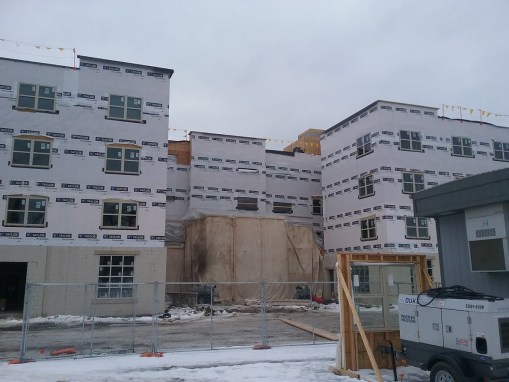
They will consider the latest revision, but only as a major revision, not as the minor change Goetzmann had hoped for. That means it will take months to go through the procedural review and vote. Meanwhile, the IDA has initiated legal action because Goetzmann failed to hold up his end of the deal they agreed to when he received his abatement back in 2011.

Some projects are successes. Some break even, some don’t turn out as well as hoped. But as Lansing Meadows goes, this is neigh close to a disaster.

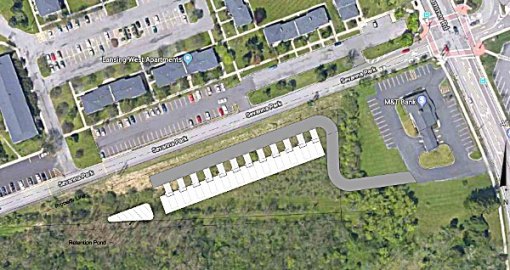
2. On a more positive note, Lansing will be considering, coincidentally, another 12-unit townhouse project. Called “Triphammer Row”, the market-rate units are planned for the vacant rear portion of a Cornell-owned parcel at 2248 North Triphammer. This blog reported on the parcel in a news roundup back in July 2016, when it went up for sale:

“Hitting the market this week is a potential opportunity for the deep-pocketed investor/developer. The property is 2248 North Triphammer Road in the village of Lansing. The sale consists of two parcels totaling 3.42 acres – a 1.53 acre parcel with a 2,728 SF M&T Bank branch built in 1992 and holding a long-term triple-net (NNN) lease; the other, an undeveloped 1.89 acre parcel to the rear that the listing notes could be developed out into 13 housing units. The price for the pair is $2,125,000.”

The plan calls for roughly 1,350 SF units with ground-floor garages. They’re intended to be marketed towards seniors looking to downsize, and young families. The developer is Robert Poprawski, who runs a small hotel group (Snooze Hotels) in metro Fort Lauderdale, Florida. Poprawski is a 2005 Cornell graduate, so there’s the likely local connection.

The planning board is supportive, but the big issue will be the driveway – they would prefer the townhomes share Sevanna Park’s driveway. That’s tricky because Sevanna Park’s road is privately owned. Not impossible to make a deal, and it would likely have the village’s benediction, but it’ll take a little while to see if a deal can be made between Sevanna Park’s HOA and Poprawski (all things considered, given that a much larger retail/office building and parking lot could be built on the combined lots, 12 more homeowners doesn’t sound like a bad option).

The village is also reporting there are development plans for the balance of the Millcroft property (the 32-acre remainder of the parcel, once intended for luxury single-family homes, has been for sale for a while), and vacant 4.56-acre 9 Dart Drive. The Ramada Inn (correction: the new extended-stay hotel proposed behind the Ramada) and Target are the only businesses interested in buying their properties from the mall’s owner, and Bon-Ton’s on deathwatch. The town’s code and planning officer notes that if it weren’t for Namdar Realty buying the mall, it would have failed, which would have forced the remaining tenants out and turned the mall into a vacant husk, to say nothing of the property tax implications.

3. Let’s shift over to Dryden. It’s been rumored for a little while that 1061 Dryden, aka the “Evergreen Townhouses”, would be trying to shift towards a smaller footprint – here’s the plan. The approved proposal calls for 36 3-bedroom units, six strings of six units. The reduced size plan still has six strings of six units, but the middle four have been reduced to two-bedroom units. The total occupancy goes from 108 to 84, and the footprints have shrunk as bit. Old render at top, new renders at middle, new site plan at bottom with new footprints in red. HOLT Architects’ design is generally the same, though I have an armchair critique with the rear flanks of the strings – a window opening would do a lot for aesthetics, if the floor plans permit.

(You can check the town’s website for docs, but some webpages have been hacked and replaced with a phishing scam, so use caution).

According to Dryden town planner Ray Burger, the developer, Lansing businessman Gary Sloan, would like to start construction this summer. That would put these units on track for an opening in time for the 2019-2020 academic year (in other words, about 12-14 month constriction timeline).

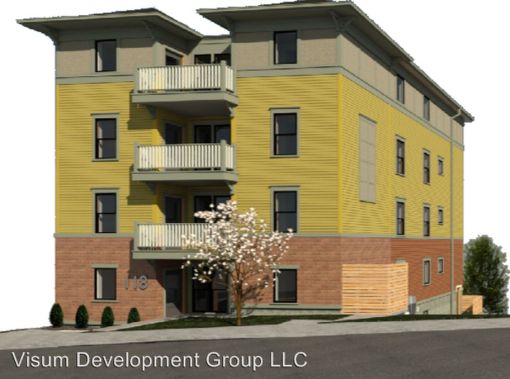
4. Another project moving forward – 118 College Avenue in Collegetown. This is a Visum proposal to replace a five-bedroom house with a 5-unit, 28-bedroom apartment building. The project was approved by the city early last year. According to the advertisements on Zillow, rents are expected to be $1,200/person, plus utilities.

I asked Visum’s Patrick Braga to confirm, and he replied that building permits would be approved “any day now”, so they’re probably looking at an August 2018 opening. With regards to a follow-up inquiry about its near-identical twin planned for 126 College Avenue, Braga replied they he does not “have any information on the status” for that project.

5. The new Greenstar West End store. Maybe coming soon. According to the news release, if the membership approves the move, the new store would be open at 750 Cascadilla Street by November 2019. The expansion would more than double their floor space, and add sixty living-wage jobs. Membership will vote on the plan next month.

The above render is courtesy of STREAM Collaborative – even without their logo, their software relies on the same pack of white Priuses, Volvos, and Touraegs to fill parking spaces (my family of mechanics would be proud I use vehicle models as a telltale attribute). The design is attractive for a big box – it has shed roofs and exposed wood trusses that give it a warmer, less industrial appearance. For the record, STREAM also did 118 College Avenue in the previous tidbit.

6. Honda of Ithaca has been sold to the Maguires for $3.5 million. The sale was recorded with the county clerk on the 20th. The acquisition means that Maguire represents just about every major vehicle make in the Ithaca area. It also drew some impassioned responses regarding customer service experiences, which given Maguire’s very visible presence, is not to be unexpected.

According to county records, the 27,558 SF dealership was built in 1985 as Cutting Motors Buick-Pontiac-GMC, and sold for $1.8 million in 2009. It was renovated and expanded in 2012; the portion closest to Elmira Road is the expansion space.

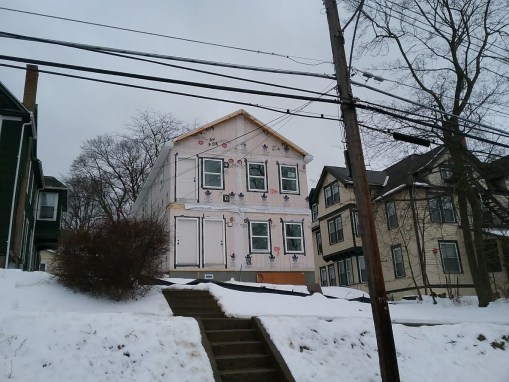
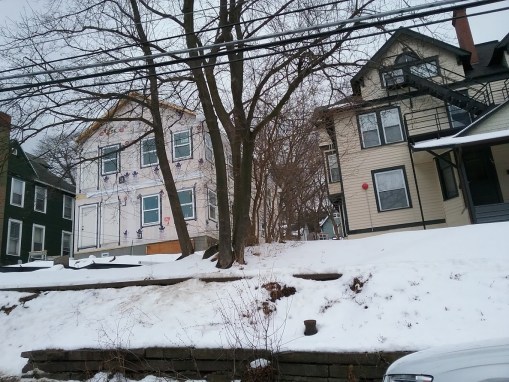
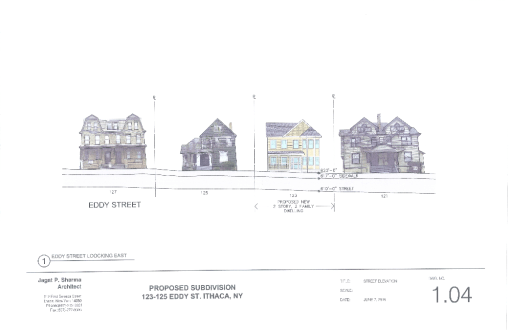
7. The Lambrou family’s latest project is coming along. Being built at 123 Eddy is a contextually-sensitive two-family home at 123 Eddy Street. While modular, the home was designed to have features respectful to its location in the East Hill Historic District – this includes a double-decker porch, roof brackets, shake siding and decorative columns and railings. The new three-bedroom units should be ready in time for the 2018-19 academic year.

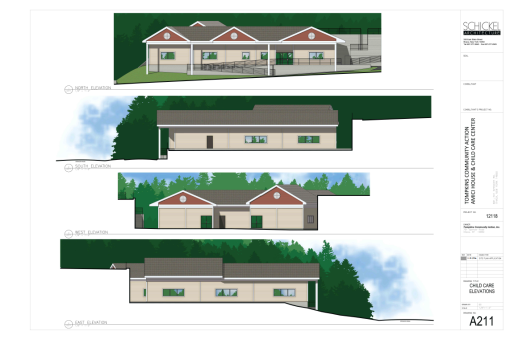
8. Quick note – building permits for both the Amici House residential and head start/daycare buildings have been filed and granted by the city. The Harriet Giannellis Childcare Center’s hard costs are estimated at $1,267,479, while the 23-unit residential portion’s hard costs are estimated at $3,627,333. Welliver will be the general contractor.

9. Looks like a pretty quite planning board agenda for this month. A pair of new projects, but they’re small ones. Let’s have a look:

I. Agenda Review 6:00

II. Privilege of the Floor 6:05

III.A. Stewart Park Inclusive Playground 6:15

B. College Townhouses – Modified Site Plan approval 6:35

C. Proposed U-Haul Self-Storage Project – Sketch Plan 7:10

Although vague, this is like for the former Salvation Army property at 339 Elmira Road. U-Haul purchased the lot in January 2016 from the development group that planned and cancelled a hotel for the property. As noted on the Voice recently, there’s been a building boom in self-storage facilities lately.

The most plausible guess for this corporate-owned property is that this will likely take after the chain’s default design for self-storage facilities, with maybe some modest aesthetic differences. Not especially pretty, but the city would probably prefer that over a parking lot for U-Haul trucks.

D. Proposed duplex and parking – 207 and 209 First Street 7:30

207 and 209 are a pair of run-down rental two-family homes in Ithaca’s Northside. After the previous owner passed away, they were sold to local businessman David Barken in June 2017. Barken previously caused a stir in Fall Creek when he bought, renovated and sold a Utica Street home for a much higher price (he said on the list-serve it wasn’t intended to be a flip, it was intended for a family member who decided to live elsewhere). Barken purchased the home for $160,000 in September 2016, and it sold for $399,500 in June 2017. He also rents out a couple other units in Fall Creek.

EDIT 3/8: Rather than a tear-down and replacement, the scope of the project appears to be that the homes would be renovated, and a new duplex would be built towards the rear of the lots. Per email after the meeting from David Barken:

“While in its beginning phases and still taking shape, I have no intention to tear down the existing homes. Instead, I plan to steadily improve these properties, working on both the exteriors and interiors as the planning phases for any future project moves forward.

Rather than de-densification, my aim is to add more fair market rate, non-student housing to the downtown market and add to urban density in our city’s core. I am designing the site for a total of 6 apartments, with an emphasis toward communal interaction, landscaping, and urban gardening. I envision a pocket community for renters, complete with the 4 renovated units in the front of the lot and an additional duplex placed in the rear of the parcel.”

IV. Old/New Business 8:00

A. Chainworks FGEIS

B. Planning Board Report Regarding the Proposed Local Historic Landmark Designation of 311 College Avenue – The Number Nine Fire Station

6. Reports 8:20

7. Approval of Minutes (1/23 and 1/30) 8:40

8. Adjournment


News Tidbits 2/10/18: It’s In The Minutes

10 02 2018

1. It’s round four of the senior housing proposed as part of the Lansing Meadows PDA. This time, developer Eric Goetzmann is proposing two six-unit strings, two stories, all units two-bedrooms with enclosed garages. The Lansing Star notes that the site plan is very unusual in that all the housing is clustered at one end of the property, leaving a big vacant space that could in theory be sold off. Apparently it also caught the Lansing village planning board’s attention.

“It just looks too obvious,” said Planning Board Chair Mario Tomei. “There’s got to be some other thought going through your head about what that green area is going to be. Are you willing to share it?”

Goetzmann replied, “I don’t have anything, Mario. I need to get these 12 built. To get these things done, and then I’m going to be done with this. I don’t have any other plans for the future. I’ve listened to what you’ve said. I’ve never pushed anything. The last plan I brought here was 100% within the code. If I wanted to come back and fight it I could have done that. You had a reaction to it, and I understand. I do commercial development, not residential. But I agreed to it as part of (the overall plan to build BJ’s). I made a commitment to get these things done, and I want to get them done.”

That much is correct. The county IDA granted Goetzmann a tax abatement on the construction of BJ’s in 2011, on the provision of the wetlands and senior housing being built. After several extensions, the IDA had told him no more, the housing either starts this year, or they’ll consider him to have breached their contract. So if Goetzmann doesn’t start work on the senior housing soon, they’ll consider legal action, possibly a “clawback” on the abated taxes. As a result, this has a whiff of desperation, although the vacant land is still a question mark to just about everyone. The planning board will continue to review the plans later this month.

2. So here are a few other interesting little tidbits out of the village of Lansing:

– At the Crystal’s Salon and Spa site at 2416 North Triphammer Road, there is an early concept plan being considered for redevelopment into mixed uses with about sixty housing units. There are wetlands on the property, which the developers (as yet unknown) have said will be avoided. Zoning for the property is Commercial Low Traffic (CLT), which allows multi-family housing with a special permit. CLT is otherwise limited to office space and low-traffic operations, non-retail and non-food service. The spa might be permitted as a “clinic” health facility, the code’s a little vague at points. Crystal’s is 3.42 acres, which seems a little small for a Lansing project, though not impossible, and it’s certainly more plausible if it includes the vacant 5.61 acres next to it. Maximum height is 3 floors/35 feet., no limit on lot coverage so long as it meets setbacks and parking requirements.

1020 Craft Road, a former manufacturing facility, is being renovated by Marchuska Brothers Construction for a medical office tenant. Pyramid Brokerage has a site plan concept sketch up on their website.
The 140-unit Bomax Road apartments plan had a litigation hearing on February 2nd. It appears the developer of the proposed complex has won? If so, the plan could legally move forward.

Cayuga View might be a summer or even an early fall opening, rather than Spring 2018.

3. Over in Dryden, not a whole lot going on at the moment. The town will be reviewing the plans for Nick Bellisario’s second warehouse at 57 Hall Road. The 10,800 SF structure is a 60′ x 180′ x 20′ pole barn with a corrugated metal finish, garage bays, four parking spaces and some modest landscaping. It’s designed to complement the 12,000 SF warehouse next door, which is used by Tiny Timbers for manufacturing the components of their modular home kits. However, it’s not clear if there is a tenant in mind here.

4. It appears that there’s been some movement on the Cornell North Campus dorms. From the Student Assembly’s Campus Planning Committee fall notes:

Aspiration – 2000 new beds, 275 new freshman/year for 4 years

Process

  • Housing Master Plan will be shared with CPC in two weeks
  • Early site review: North Campus the area of focus – existing freshman and number of sophomores, and area with developable sites
  • RFP Process: 24 developers, 9 responses,  interviewed 4
  • Cornell funding decision: this will be owned and operated by Cornell
  • Fee developer to construct
  • Board of Trustees approved this early portion of the process over summer

Paul Stemkowski, serving as the North Campus Housing Expansion project manager reported:

  • We have a developer
  • Site analysis has commenced, reviewing municipal zoning and boundaries in the site areas, natural features, and a noted historic district   
  • Phase 1: proposed as 800 beds on CC Lot (1200 beds initial studies) 4 and 5 story buildings and new dining element
  • Sophomore and freshman villages
  • Appel Fields: housing proposed here for 3 to 4 stories

Timeline: August 2020 goal for phase 1 phase 2: 2021

Phase I will open spaces for deferred maintenance work- Balch Hall needs lots of restoration, rehabilitation

So, we’re looking at 4-5 floors and at least 800 beds in multiple structures on what is CC lot (the leftmost blue patch in the map), and 3-4 stories in multiple structures on the Appel Fields (rightmost blue patch). It will be Cornell owned and operated, but that makes the RFP part a bit confusing – tapping someone to build and sell Cornell the final product, or what exactly? If August 2020 is the goal, then summer 2019 is probably the hard deadline for a construction start, so expect formal site plan review to begin this fall at the latest (sooner if an in-depth Environmental Impact Statement (EIS) is expected by city planning staff). The only commercial component appears to be new dining facilities, though they are considering additional carryout food service options. No new parking will be added, and work on the Helen Newman Hall athletic facility is not a part of the expansion plans.

The October minutes cover plans for the College of engineering, with a gut renovation of Hollister and demolition of Carpenter Hall and Ward Labs. However, these appear to already be outdated, given Cornell’s state-funded plans to renovate Ward into the CEPSI+ business incubator.

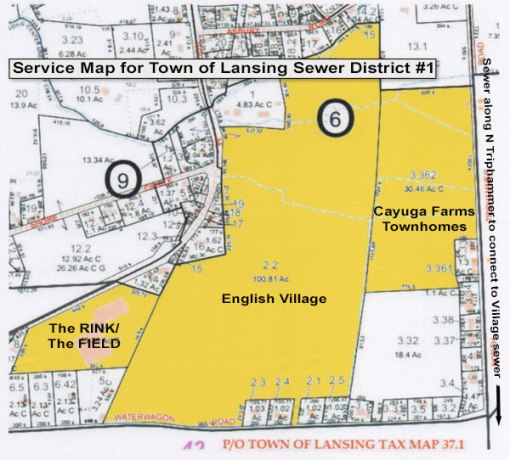
5. Lansing is finally getting that sewer line, though it won’t be along North Triphammer Road. According to the Lansing Star, the new sewer will go along East Shore Drive and Cayuga Heights Road because it appeared more feasible, and gave the village of Lansing an opportunity to reconfigure a difficult intersection. The current treatment facilities are not far from maximum capacity, and as a result, the village is expanding the lot size needed for a single-family home with a sewer connection, from 30,000 SF to 45,000 SF (just over an acre). An unsewered lot requires 60,000 SF. for the record.

Relevant to this blog, the line will terminate at a trio of lots under development or redevelopment in the town – the RINK, which is adding a climbing wall, as well as the 117-unit and 102-unit English Village and Cayuga Orchard housing developments. The village mayor, Donald Hartill, says the sewer project is in good financial shape, and that a revised land survey will allow final engineering to commence, ultimately leading to construction later this year.


6. City Harbor updated its website with additional info. Most of it has been shared previously, but the developers note that the project would create 120 new jobsGreenstar would be responsible for about 60 of those positions, while Guthrie, the waterfront restaurant and a few management/maintenance roles would compose the rest.

7. Not a whole lot going on at the moment. The city of Ithaca Landmarks Preservation Commission (ILPC) will host its monthly meeting next Tuesday evening to continue consider of historic designation of the Nine, and provide design guidance to a smaller proposal for the adult co-op planned at 314 West State Street. The original nine-bedroom proposal was considered too big to adequately defer to this existing historic building, so the structure was reduced to a similarly-designed six-bedroom building.

Meanwhile, the city planning board will host its Project Review meeting next week as well, but only two projects are on the agenda – Novarr’s revised College Townhouses project at 119-125 College Avenue (on the Voice here) and the Stewart Park inclusive playground.


Cayuga View Senior Living Construction Update, 1/2018

3 02 2018

Somehow, these sat in my drafts folder for a week after they slipped off the radar. Anyway, Cayuga View Senior Living is topped out, most of the windows and entryways have been fitted, and much of the exterior has been wrapped. Exterior finishes include concrete masonry unit (CMU), face brick and fiber cement panels.

Worth a quick note, the property management here will be from Cornerstone Group of Rochester, the same firm developing the 72-unit Milton Meadows affordable housing at the Lansing town center. Some properties they own and manage, others like Cayuga View are managed on behalf of a client (the Thalers, in this case).

Touted amenities include “Hot Water, Basic/Standard Cable, Designer Kitchens, Energy Efficient New Construction, Trash Removal, Rooftop Garden Access, 24/7 Maintenance, Community Room, Fitness Center, Library/Computer Room, Secure Intercom, Wi-Fi Campus, [and] 24/7 Site Monitoring”, under the marketing moniker “Discover New Freedom”. One of the senior sub-markets the Thalers hope to target are snowbirds (like themselves), for whom they expect to rent the units year-round but only spend the warmer months and holidays up in Lansing. For $1,500-$2,775/month, that’s a lot of money to give up for a place to not live in all-year round. But that’s just one millennial’s shallow-pocketed perspective.

Taylor the Builders plans to deliver the 87,359 SF, 60-unit building sometime this spring – probably later in the season, perhaps May or June. No details are publicly available on the percent of units pre-leased, or for occupants of the twin 1,340 SF commercial spaces on the first floor. Background info on the project can be found here.


News Tidbits 1/27/18: The Shutterbug

28 01 2018

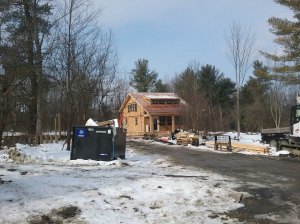
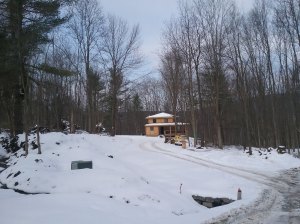
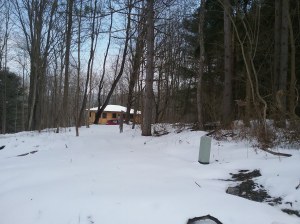
1. Let’s do some houses of the week. Above, the four new homes Tiny Timber has constructed at 1624 Ellis Hollow Road in Dryden. Each home lot is a little over an acre. The subdivision was approved last spring for the wooded parcel a couple miles east of Ithaca, and since then, Tiny Timbers has been busy selling units and lots to buyers. Two were sold in August, one in September, and the last in December. Therefore, this is 100% built out, since the last lot is a conservation lot at the rear (north) end of the property, designed to protect Cascadilla Creek. The units utilize a shared driveway, with spurs for each home. If you want to look at the homes more closely, click to enlarge the photos.

A similar plan is underway just up the road at 1540 Ellis Hollow Road, where Tiny Timbers will take a long, narrow undeveloped property and subdivide the land into five home lots and a rear (north) lot protected by a conservation easement. These homes will also be served by a common driveway. This proposal is still going through the review process, and when approved, the time frame for build-out will probably be similar. The home designs are the work of local architecture firm STREAM Collaborative.

2. Over in the village of Lansing, work has started on the next six-unit (hexplex?) at the Heights of Lansing property off of Bomax Drive. It appears that the foundation slab and footers have been formed, poured and insulated with foam boards. This is the first new townhouse string to be built in the development in six years.

Several reasons have been given for the long pause. The developers have said that the natural gas moratorium disrupted and delayed build-out plans. Secondly, the patriarch of Forest City Realty/IJ Construction, Ivar Jonson, passed away in 2014. More recently, the Jonson family (his wife Janet and daughter Lisa Bonniwell) were embroiled in a lawsuit to prevent a zoning change that would allow a market-rate apartment complex to be built down the road. Bonniwell was incensed enough to run for mayor in 2017 in an effort to stop the proposal, but did not win the election. The zoning change has been approved and the apartments were approved in October, but the Park Grove project has yet to move forward.

The townhouses were approved along with the last single-family home permit; there were some rather testy exchanges regarding sewer line easements and the installation of street lighting in conjunction with those permits. The lighting has to be in by March 2019.

Assuming these are like the other townhouses, expect them to be 3-bedroom units, low 2000s SF with garages, and to go for $350-$450k when they’re finished several months from now.

3. Dryden’s new Rite Aid is coming along. Fully framed, and the plastic in the window openings is likely intended to allow construction crews to work indoors without exposure to the fierce winter elements. The curbing and paving is complete in the parking lot, and it looks like they install metal bollards all around the lot’s perimeter to keep the less-than-attentive from driving into the wall (something that happened to the Nice N’ Easy in my hometown no less than three times before they finally put some in). It is still planned to open in March.

4. Over in Fall Creek, it appears a small apartment building is in line for some major renovations. 1002 North Aurora, a four-unit building built in 1898, had been on the market for $395,000. The seller had owned the property for 24 years, and the price was only slightly above the assessed value of $375,000.

On Friday, the property sold for $400,000 to an LLC associated with local developer Modern Living Rentals (Charlie O’Connor et al.). The same day, a building loan agreement was filed from Tioga State Bank to the LLC for $712,000. A lot of that was going towards the land acquisition, and once soft costs are deducted as well, the loan is $287,000.

MLR tends to be very transparent about their plans, and a glance at their recently updated website shows the purchase and a ‘information on this project coming soon’. However, they already uploaded the interior renovation plans from STREAM Collaborative. It’s a very thorough interior renovation, and it appears to complete change interior floor plans, with new bedrooms (net gain of one?) as well as new kitchens, bathrooms, and fire rated ceilings. Exterior changes appear to include a renovated fire escape staircase, a couple new windows on the third (top) floor), and a new skylight. While old, this apartment building is a hodge-podge of additions from decades past, so let’s see what a renovation can do to clean things up. It’s plausible the renovations would be complete by August, so they can appeal to students as well as the general market.

Quick aside, MLR has a few other “future developments” posted, though none that readers here aren’t already aware of – the 42 townhouse units at 802 Dryden, the proposed 201 North Aurora / Seneca Flats that isn’t moving forward for a while yet, and 217 Columbia, the duplex that unintentionally set South Hill into an uproar. 217 Columbia should be completed this year, and 802 Dryden in summer 2019.

5. It looks like Amici House is finally moving forward. The project, located at 661-701 Spencer Road, received a $3,732,469 loan from the New York State Homeless Housing and Assistance Corporation. The money was announced back in April, and appears to be getting disbursed now.

The five-story, 20,710 SF (square-foot) project, approved by the city of Ithaca last January, calls for 23 studio housing units for homeless or vulnerable young individuals in the 18-25 age range. Along with the units and office/function space for local social services non-profit TCAction, the plan also calls for a 7,010 SF early heard start facility, called the “Harriet Gianellis Childcare Center”, that will house five classrooms, kitchen and restrooms, and an outdoor play area. The childcare facility will serve 48 low-to-moderate income families and create up to 21 jobs.

Recently, the HGCC applied for a low-interest loan from the IURA, $90,690 to help cover unanticipated moving expenses associated with the project. TCAction thought they could stay on-site during construction, but the contractor said otherwise, so they’ll be 609 W. Clinton while the new Amici House is built. The loan says it will generate three jobs, but that’s more a technical stipulation than an actual figure associated with the project. The funding for the childcare appears to be separate, $1,325,000 already approved by the state, $603,000 from M&T Bank, and $84,200 from a standing IURA loan. It is fully funded, although it is not completely clear if it will be built concurrently with the housing (the likely answer is yes).


Village Solars Construction Update, 1/2018

24 01 2018

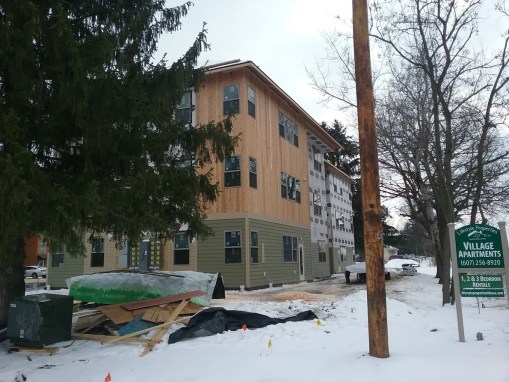
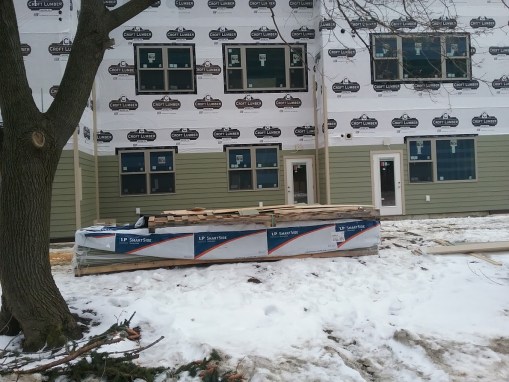
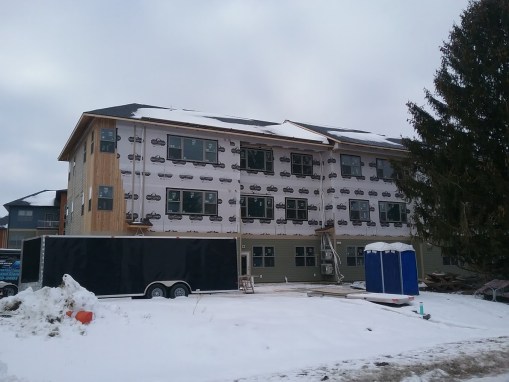
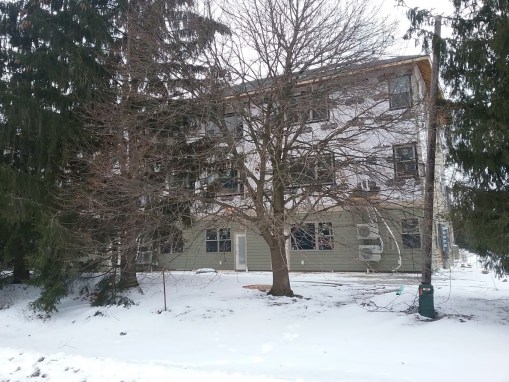
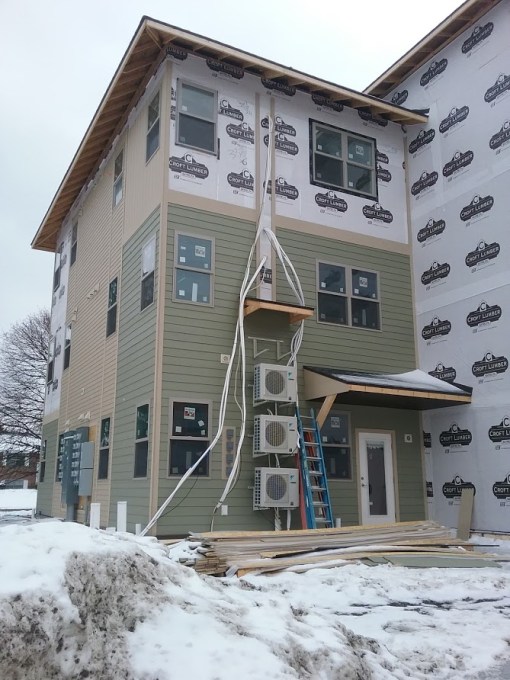
Work continues at the Village Solars apartment project in Lansing, though it’s mostly been interior construction these past couple months. 102 Village Place has had some of its composite wood siding applied (LP SmartSide treated and engineered wood siding), and the electrical wiring and air-source heat pump units are in place, though not fully connected just yet.

102 VP was already framed, roofed and fitted by the November visit, so chances are, they’ve already done utilities rough-ins and insulation, and they’ve moved on to drywall, baseboards and interior trim boards, priming and painting, and maybe some plumbing fixture and cabinetry installs. The three-story apartment building, which replaces a ten-unit 1970s structure, will have 24 units – 12 studios, three 1-bedroom, six 2-bedroom, and three 3-bedroom. If one wants to look at this from a population perspective, each of the ten units was a 1-bedroom, so the back of the envelope says there will be a net gain of 26 residents (one per bedroom, 36 – 10). And presumably, a couple million dollars in assessed value.

116 Village Place, the younger of the pair, is not as far along but has been fully framed, wrapped and shingled since November, and some siding has been attached. It looks like not all the windows have been fitted, given the wrapped rough opening on the third floor in the first photo below. Based off the open door in that same photo, it looks like framing, insulation and utilities rough-ins (plumbing, electrical, HVAC) are ongoing. 116 is the smaller building of the two, with 18 units, 12 studios and six 2-bedrooms. Like 102, it also replaces an older apartment building, an eight-unit structure of one-bedroom units (and 14 more residents on-site, using the same math as before).

Lifestyle Properties is the developer, with their in-house contractor in charge of construction. It doesn’t look like the new units are being marketed yet, but existing 2-bedrooms are going for $1,325/month, and 3-bedrooms for $1,375-$1,720/month. Anecdotally, Lifestyle has had an easier time filling the smaller units than the larger 3-bedroom units.


News Tidbits 1/20/18: Here We Go Again

20 01 2018

1. It looks like Cayuga Orchard will be moving forward this spring. At the moment, the 102-unit apartment project is going up for a few tweaks to the town of Lansing planning board, mainly just to get approvals for a pair of monument signs. Whitham Planning and Design is handling those last details. The project already went out for construction bids, and with a cost estimated at $25 million, which will surely help Lansing’s bottom line. With no tax abatements, and about $26.50/$1,000 assessed, the back-of-the-envelope suggests about $660,000 in taxes (however, using the hard costs alone is likely low-balling the tax assessment). The project is able to move forward thanks to a plan to pay for a sewer line extension to meet the needs of residents; the plans had long been held up by issues and red tape regarding a modular on-site sewer treatment system.

On the site plan, from left to right, are three roads – to be named “Harvest Drive”, “Blossom Road” and “Liberty Lane”. Positive connotations as most are, except one case I know – here’s a story of a downstate project where the Staten Island borough president used his right to rename roads to give a project names meaning deceit and greed. Liberty Lane is designed to be extended for whenever local developer Jack Young decides to go ahead with his 117-unit “English Village” single-family home and townhouse project on the 100-acre property to the west of Cayuga Orchards. Right now, Young’s focus is on a few home lots he’s subdividing on East Shore Circle.

The housing is intended to be rentals in the upper-middle (premium) market, and the 26 1-bedroom and 76 2-bedroom units are welcome in a community with a tight housing supply. As for the design…meh. It’s not terrible, but the dispersed home strings and front-facing garages over-emphasize suburban aesthetics (nothing against Stampfl Associates, they actually have some neat projects). Look for the first units to come onto the market in Spring 2019.

2. For sale, another chunk of Ithaca’s near-waterfront. 798 Cascadilla is a 18,271 SF one-story flexible office space building that was renovated in the 2000s, and is home to Palisade Corporation, a software firm specializing in decision making/risk analysis tools. Palisade is doing just fine, but this is a case where they might be sniffing out an opportunity.

Consider the location. It’s next to Carpenter Business Park, which was just picked up by a team of businesses led by Cayuga Medical Center and Park Grove Realty, ultimately expected to be a large mixed-use development. That purchase was $10 million on a property that had sold for just $2.7 million less than two years earlier; a bidding war drove the purchase sky high. Next door, Guthrie Clinic picked up Palisade’s neighbors, a storage facility and a former printing press/warehouse of Cornell University, for $2.85 million, $150,000 over asking price. Paying at full or above asking price is pretty rare for commercial real estate in Ithaca. Guthrie has recently been in talks with Greenstar Co-Op to convert the storage facility into a new grocery store and cafe. In the City Harbor plans, where Guthrie and Greenstar are involved, there have been some site plan concerns note around issues like parking, that a purchase here could help solve.

Zoning on the site is newly-minted “Market District”. Hotels, restaurants, retail, housing, healthcare facilities, food production facilities, and housing. Up to five floors/63 feet, 100% lot coverage. But honestly, given the recent PUD-OD proposal, zoning regulations are not the end-all, be-all; if someone wants to try for an additional floor by throwing in a few affordable housing units, they could. Not saying that’s a great idea, but they could.

If I had to take a guess, Palisade is feeling out the market and seeing what kind of deal they can get for their building. It was an unusual choice of locations when they bought it in 2004, but they might make a tidy sum for being in the right place at the right time. Maybe.

The asking price for 798 Cascadilla is $2.7 million. The tax assessment is for $2 million. Pyramid’s David Huckle is the sales agent in charge.

3. A long time ago, back in 2009, a West Hill property was talked of as a potential development site. Now that property has exchanged hands. For the moment, its future is still fairly murky.

Kaderli Trade, a Panamanian business with Swiss ownership has owned a 68.5 parcel of land just west of Warren Place since 1977. The property is vacant, and assessed at $320,000. It just sold on Thursday to the Rancich Family for $360,000, a modest gain, and a pretty good price for vacant land.

The Ranciches are probably best known for being the original planners of the Enfield Wind Farm, and for Carrowmoor, a mixed-use project that would have had retail space, office space and up to 400 units in clustered housing on a 158-acre parcel just northwest of Kaderli’s parcel. The motif was a traditional English village. Buildings would have aesthetic half-timbers and gable roofs. It would have used alternative energy (heat pumps were practically unheard of at the time) and been priced mid-market for for-sale units. However, this was 2008-09, the recession was biting hard, and Carrowmoor never moved beyond the drawing board. Most of the renders have disappeared, but I still have one from 2009, before I knew how to crop screenshots. Less known but still important, the Ranciches also played a role in the development of the Conifer Linderman Creek affordable housing.

If someone were to ask what the development likelihood were based on the above information, it would get a shrug from me. The Ranciches haven’t had much success, but this purchase suggests they have some sort of interest, and the location is one the town has noted for potential development – existing zoning is Medium Density Residential, and the 2014 Comprehensive Plan plans traditional/new urban design medium density. That’s T3-T5 for the New Urban transect buffs, averaging 5-8 units/acre by the town’s count. It’s close enough to the municipal water that new pump stations and tanks wouldn’t necessarily be needed. In sum, the town would be open to something substantial. But who knows.

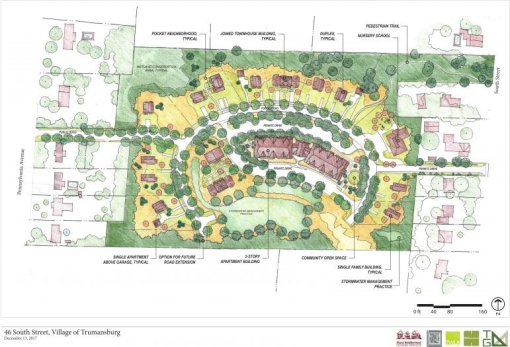
4. 46 South Street, this Claudia Brenner/INHS mixed-income mixed-use project in Trumansburg (Hamilton Square is no longer the official name) continues to go through the boards. My Voice colleague Kelsey O’Connor covered the Planning Board meeting on Thursday, where about ten people spoke for an against the proposal. It’s probably better that she cover 46 South, because I would find it hard to maintain impartiality.

On the one hand, there is the opposition. The “Trumansburg Neighbors Alliance (TBNA)” turned in a Change.org petition with 492 signatures, along with paper petitions they say brings the number up to 669. They say 432 are in Trumansburg, Ulysses, or the Trumansburg school district, which includes large sections of Schuyler County and Seneca County. From their Facebook page, they don’t have accurate numbers.

At this time, there are actively trying to re-impose a village-wide moratorium after the previous decade-long moratorium expired. The zoning was revised in 2012 and re-analyzed in 2016. The South Street housing fits its zoning.

There are plenty of others who have already spoken in favor of this proposal – the Lansing Star has had a harsh word for the opposition, and some residents in Trumansburg are speaking out in favor of the South Street housing.

Let’s go through some of the fallacies with the opposition’s issues:

Too many rental units, not home ownership, out of balance and character with the neighborhood .

46 of the 73 units are affordable (LMI) rentals – most (40 of 46) are in the two story building in the middle of the property. Here’s the thing with lower-moderate income families; a lot of folks are getting by paycheck-to-paycheck. They don’t have the money for a 15% or 20% down payment on a house, for which the median sales price in Trumansburg in 2017 was $255,000, up 38% from the $184,500 in 2012. Thankfully, groups like INHS will work to cover the down payment and sell homes to LMI buyers well below market-rate, like the townhouses on Hancock going in the $110-$145k range, about half of the market rate for a new townhouse in Ithaca.

However, funding for purchasable units is much more difficult to get. A bank isn’t going to fund a plan that doesn’t generate a good profit, so they have to turn to state and federal funds. The government is more likely to disburse a grant if it knows there are buyers waiting in the wings. And for low and moderate-income households, far more are capable of renting versus buying. In short, this argument boils down to ‘these people are too poor to live in our village’.

Does not fit ‘village character’ and 2008 Village Comprehensive Plan priorities

Character is always a bad argument to give a planning board; it overly relies on demographic perceptions, which include details like age, income and race. The 2008 Comp Plan notes historic buildings, non cookie-cutter design, and tree-lined streets. Homes are 1-3 floors. Well-designed multi-family buildings that fit the village fabric, especially those with design features friendly to seniors, were encouraged. Affordable housing is strongly encouraged.

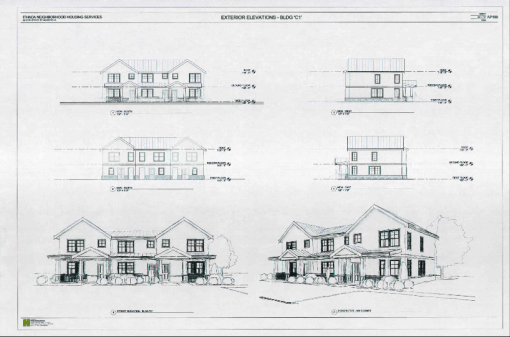
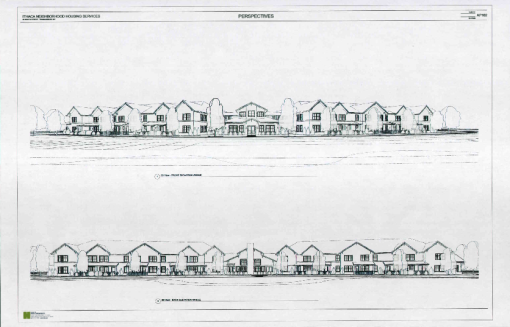
Below are some of the building elevations, pulled from the submission here. Let’s gauge based off the Comp Plan statements – there are no historic buildings on site, it’s vacant land surrounded by housing of varying ages. Designs incorporate porches, gables, bracketed eaves, dormers and other features of Trumansburg’s older housing stock. They are generally two floors. There will be several townhouse and single-family home designs interspersed throughout the site.

At 40 units, the apartment building is not unlike the existing Juniper Manor; as with other INHS projects like Breckenridge Place and 210 Hancock, many of these units are expected to rent to seniors – about 60% of Breckenridge is seniors, and although I don’t have stats for 210, I’d say it’s a generous percentage. The project is 72 units, 140 residents, over a 19.12 acre parcel. That is 3.77 units/acre, 7.3 residents/acre. That is less dense than the older part of the village.  Even the Tamarack/Larchmont housing, which is one of the areas of strongest opposition, has about 2.5 units and 7-9 residents per acre.

So density’s in line, it has affordability within a mixed-income layout, the apartments are senior-friendly and designed to blend in; it meets the goals of the Comprehensive Plan.

The developers did not ask residents how best to fulfill Village needs…they just decided!

No, they didn’t. Remember the community meetings to get ideas and feedback last July? The August listening sessions? The major plan revisions in response to community concerns? They’ve been listening.

Now that we have that covered, let’s take a look at some of the comments from the folks who are opposed:

From the petition:

“…we do not have the police to keep track of this ridiculous project.”

Ithaca problems must remain in Ithaca and not be spread to us

“These kind of “developments” only bring low income, low quality people.”

From the TBNA facebook page:

there is enough drug dealing on the other end of town probably not a good idea to add to it”.

“Turning trumansburg in to [sic] ithaca have fun with that will have a lot of crime”

I’ve not hidden the fact that I grew up in affordable housing. So these comments that say its occupants are drug addicts, criminals, problems and burdens is very hurtful. I can appreciate TBNA’s attempts on their page to celebrate when housing is announced in Ithaca, but honestly in this context it just reads as a selfish desire that those less well-off will go elsewhere and stay out of the village. For a community that prides itself on its social progressiveness, it’s very disappointing.


Cayuga View Senior Living Construction Update, 11/2017

29 11 2017

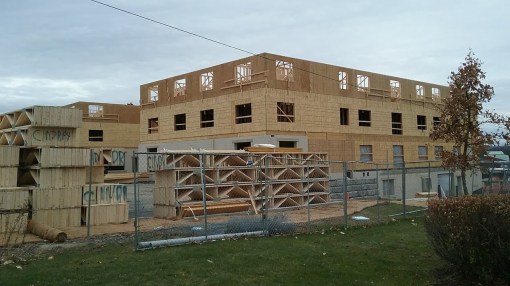
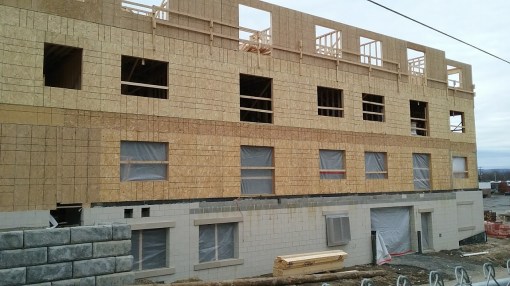
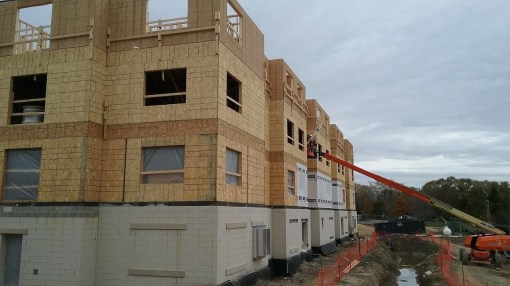
Framing for the new Cayuga View Senior Living building is one floor short of topping out. A stack of floor joists sits at the front of the construction site, as framing for the fourth floor continues. The last couple photos show how the joists are assembled between floors, typically attached to the exterior wall through joist hangers and braced with additional metal straps. Bracing has been temporarily built as the continuous plywood structural panel wall is nailed together. On the third floor they’ve started rough-ins (I see an industrial spool through the window, implying cables for electrical work), but the meat of the interior work is on the second, first and basement levels. A bit of housewrap has been applied to the rear face.

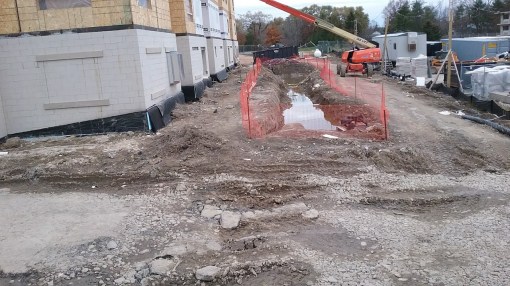
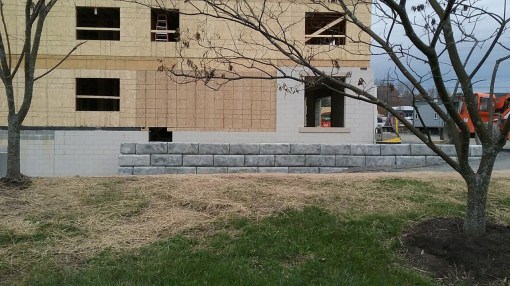
The commercial spaces are built out with masonry (CMU) walls, in contrast to the wood framing of the upper levels, and may be the result of fire code. The basement, also assembled with masonry blocks, will host utility space and some amenities. Decorative stonework provides aesthetic relief to the sloping site. Curbing has been extruded, and foundations for the light poles have been laid and wired. Not certain why there’s a moat at the rear of the building, although it may have something to do with underground utility lines.


News Tidbits 11/25/17: Not Going to Plan

27 11 2017

1. It looks like the Lambrous have started work on the new duplex they’ve long planned at 123 Eddy Street in Collegetown. Foundation work is underway for the two-unit, six-bedroom home, which utilized Superior Foundation Walls and modular units. The building sits on the edge of the East Hill Historic District, so to make the building compliant with the ILPC’s wishes, it features Hardie Board siding, simulated shakes, scuplted brackets and an attic vent, and detailed railings and porches. The design went through a couple iterations, with the first being historically appropriate but expensive stick-built design, and the second a modular scheme that was non-compliant with the ILPC. The Lambrous plan to have the new three-bedroom units available for rent by August.

2. Lansing’s Milton Meadows affordable housing project is up for final approval next Monday, and it looks like the first 72-unit phase will be the only phase. According to documentation filed with the town, the presence of poorer soils and more wetlands than anticipated means that Cornerstone will not be undertaking a second phase. It does raise further questions regarding adjacent parcels and the amount of money the town of Lansing can reasonable gain since this sounds like a recent discovery. The final site plans here show no indication of Cornerstone Development Group buying the remaining 8.9 acres that were intended for phase two.

There are no huge obstacles to prevent approval, although some town officials are unhappy that they didn’t apply a stronger hand to the town center development plan (i.e. laying the roads and infrastructure as they wanted, and charging a higher price for the parcels). While most of the darts have been levied towards Cornerstone (some perhaps unfairly due to it being affordable housing), the town planning chair has also targeted Tiny Timbers for using Conlon Road as its primary ingress/egress in their sketch plan. But with sales already negotiated and approved, the town’s legal options are limited, and since they already dropped the ball on the town center once, the optics aren’t pretty. Any work Cornerstone does is dependent on state and federal grants that are highly competitive and awarded only a few times per year, so don’t expect much for at least a year or two after approval.

3. It looks like the land for the proposed extension of South Meadow Square has been fenced off. A query to the folks in PetSmart next door didn’t turn up much, although they said there had been some water and sewer work to prep for the new 7,315 SF addition approved earlier this year. I did not see what the current conditions are for the approved 14,744 SF addition on the south end.

4. The county and the city have competing views of the NYS DOT’s future in Tompkins County. The county has reiterated its hope that the DOT relocates to a location next to the county airport. The city would prefer a location in Southwest Park behind Wal-Mart and the proposed Maguire dealership campus. The request for state grant dollars depends on the airport proposal, and the DOT has stated preference for a site near the airport.

However, if grants are not awarded, the airport is still considering a plan to build a $1-2 million customs facility that would allow to become an international airport, servicing passenger jets from Canadian hubs (Toronto, Montreal). In the short-term, work is underway to add service to Chicago, which has an on-time percentage comparable to Detroit (80%), and better than Newark (60%) and Philadelphia (70%). Cornell is actively assisting, trying to persuade airlines as part of its “Global Cornell” initiative.

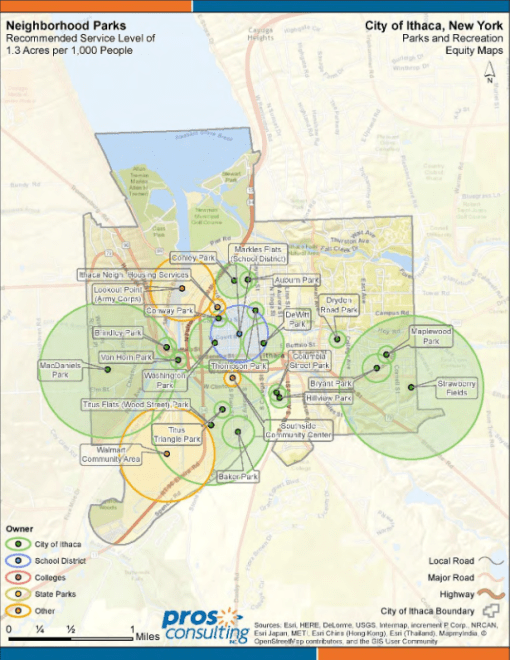
5. So here’s the city of Ithaca’s parks master plan. There’s a few interesting things of note in terms of acquisitions and de-classifications (sale).

First, a quick note – the city is legally required to replace any park land it sells off with newly acquired park land. So with that in mind, the city looked at its parks and found five that are “vastly underutilized” – Columbia Street Park (0.25 acres), Dryden Road Park (0.08 acres), Hillview Park (0.74 acres), Maple Grove Park (0.47 acres), and Strawberry Fields (9.16 acres).

The city would like to sell off the first four on that list, and replace them with a new acquisition somewhere in the city that has at least 1.54 acres, but the city is looking for up to 12 acres. Proximity to population centers, arterial roads, pedestrian access and minimal site prep are some of the big deciding factors in that acquisition process. Meanwhile, Strawberry Fields would be held for either designation as a “school park” to be managed in conjunction with the ICSD, or as a “teaching preserve” for practice field research and instruction.

If the city did opt to sell those four parks, well, there’s some development potential, though they wouldn’t be prime. Maple Grove is a Belle Sherman cul-de-sac surrounded by single-family homes. Dryden Road Park is a small triangle next to the parking garage, and while technically an MU-2 zone for six floors, it’s just as likely Cornell would pick it up amd add it to its tax-exempt rolls since it’s next to Cascadilla Hall. Hillview and Columbia Street on South Hill (R-2a zone) could potentially become a few home lots or a small apartment complex, but the land’s sale would be a political challenge.The city procedure would be an advertised sale offering through the IURA, followed by a grading system of applicants that meet the city’s specified price, as they did with foreclosed lots that became the Ithaka Terraces and 203 Third Street.

Not too keen to get in the weeds on this, since this would be controversial with neighborhood groups, but it’s really just a thought exercise at this point – any potential land sale would be on a long-term, 5 year+ time scale, and the city would need to have new land ready to be acquired for recreational uses. Even thatcould cause problems when neighbors complain that an untouched property becomes a public park that attracts people (this has been an issue with proposed extensions of the South Hill Rec Trail). There is plenty of time to debate the merits and drawbacks of long-term property assets. Right now, the focus is repair and renovating existing facilities in city parks.

6. Looking at the city’s planning board agenda for next week, it’s a short one. The duplex at 601 South Aurora and the Brindley Street Bridge are up for final approval, and a pair of new sketch plans will be reviewed – one is likely to be small, and the other a revision, potentially a downsizing. I’ve heard through the grapevine that several rental developers are holding off or even cancelling plans because they’re concerned about the impacts of Cornell’s 2,000 new beds for their North Campus – although right now there’s nothing formal apart from a statement of intent. Ideally, Cornell puts some concept forth soon, with plans not long thereafter; otherwise, there’s the risk that the local housing situation gets worse. Perhaps the reasonable worst case scenario is that, with recent federal attacks on higher education, Cornell is forced to trim its budget and cancels the housing plans, while still adding students to compensate for financial losses – basically, a sudden large growth in demand without growth in supply.

First, 209 Hudson. This was previously mentioned in a Voice article, it’s potentially a small-scale infill project by frequent infill developer Stavros Stavropoulos. The early plan for two of three rental buildings was shelved due to the South Hill overlay, and its possible that, given the relatively large lot, Stavropoulos may be planning a subdivision to build an additional two-family rental unit. Dunno if he can legally pull off more than that, however. R-2a with overlay allows a 1-2 family structure as a primary, with an accessory apartment in a secondary structure.

The second is 119-123 College Avenue. This is unusual in that this was the site for John Novarr’s College Townhouses project, a 67-unit, multi-building plan for rentals geared towards visiting Cornell faculty and staff. However, the recent NYSEG power line issue has proven problematic, and the last I checked, the project team was supposed to go before a state building codes board in Syracuse this month to get a variance to allow construction, on the basis that the power lines will soon be buried. The minutes are not online, so it’s not clear what the ruling was. While CR-4 zoning allows 45 feet as the plan is currently designed, a variance denial by the state would limit structural height to 30 feet, and would substantially impact the project’s feasibility in pricey Collegetown, as well as alter the design. For the record, 119-123 does not imply a smaller project; 123 College Avenue never existed, the three homes removed for this project were 119, 121 and 125. We’ll see what the revised plans look like next week.

1. Agenda Review 6:00
2. Privilege of the floor (3-minute maximum per person) 6:05
3. Site Plan Review

A. Project: Duplex 6:15
Location: 601 S Aurora Street
Applicant: David Putnam
Actions: Public Hearing, Consideration of Preliminary and Final Site Plan Approval
Project Description:
The applicant is proposing to construct a duplex on the .186 acre (8,114 SF) vacant lot. Site development includes parking for two cars, walkways, landscaping, a continuous sidewalk along the property frontage, drainage improvements and a trash enclosure. The applicant has designed curbing and on-street parking on Hillview Place in cooperation with the City Engineering Division. The project is in the R-2a Zoning district. This is a Type II Action under the City of Ithaca Environmental Quality Review Ordinance (“CEQRO”) §176-5. (C.)(8) and the State Environmental Quality Review Act (“SEQRA”) § 617.5 (c)(9) and is not subject to environmental review.

B. Project: Brindley Street Bridge Rebuild and Relocation 6:35
Location: Intersection of W State Street and Taughannock Blvd
Applicant: Addisu Gebre for the City of Ithaca
Actions: Consideration of Preliminary & Final Approval
Project Description:
The project will relocate current Brindley Street Bridge to align with W. State St./Taughannock
Blvd. intersection through the construction of a new single span extending Taughannock Blvd. over
the Cayuga Inlet to Taber Street. The project will retain existing Brindley Street Bridge and south approach road for pedestrian and bike use. This is a Type I Action under the City of Ithaca Environmental Quality Review Ordinance (“CEQRO”) §176-4 B.(1)(k) and the State Environmental Quality Review Act (“SEQRA”) § 617.4 (b)(11) for which the Board of Public Works, acting as Lead Agency made a Negative Determination of Environmental Significance in 2016.

C. 209 Hudson Street – Subdivision & Site Plan Review – Sketch Plan 7:05

D. 119-123 College Avenue – Sketch Plan 7:35

4. Old/New Business 8:00
A. Collegetown Design Guidelines – Megan Wilson
B. Parks Master Plan – Megan Wilson

5. Reports 8:40
A. Planning Board Chair (verbal)
B. Director of Planning & Development (verbal)
C. Board of Public Works Liaison (verbal)