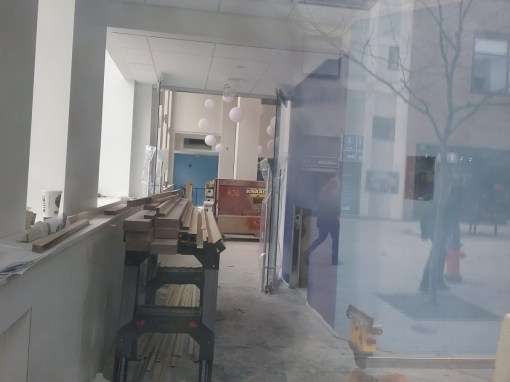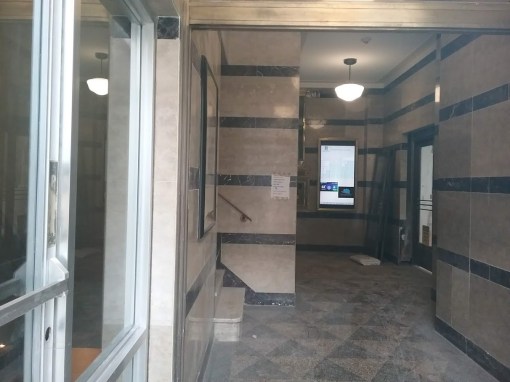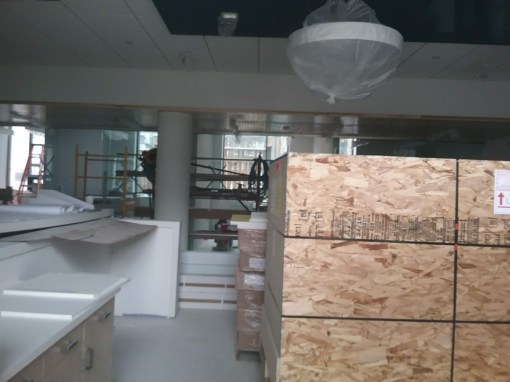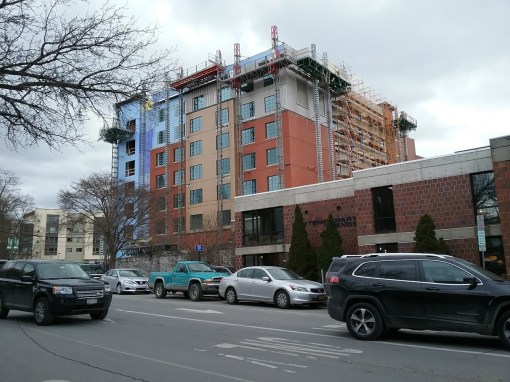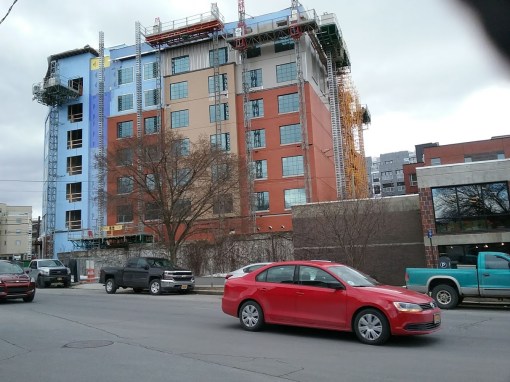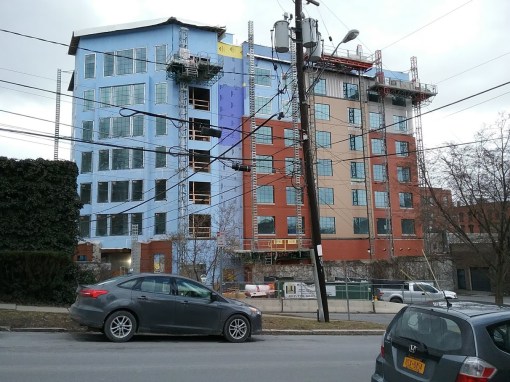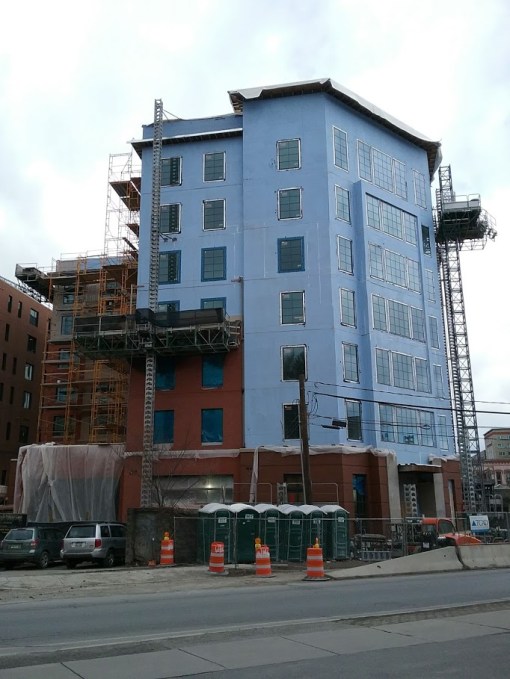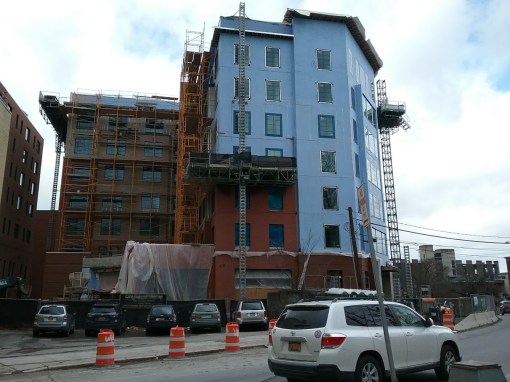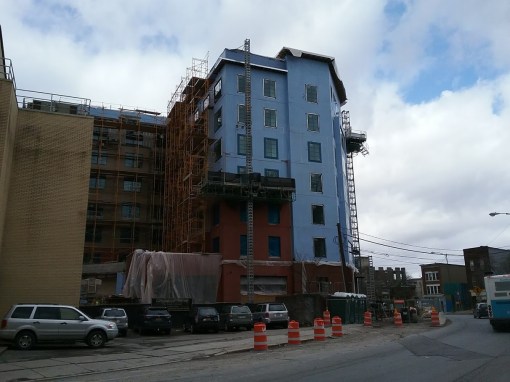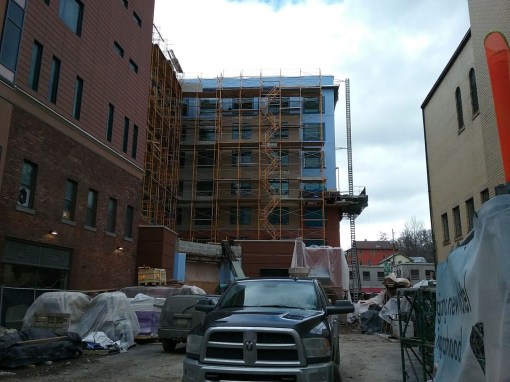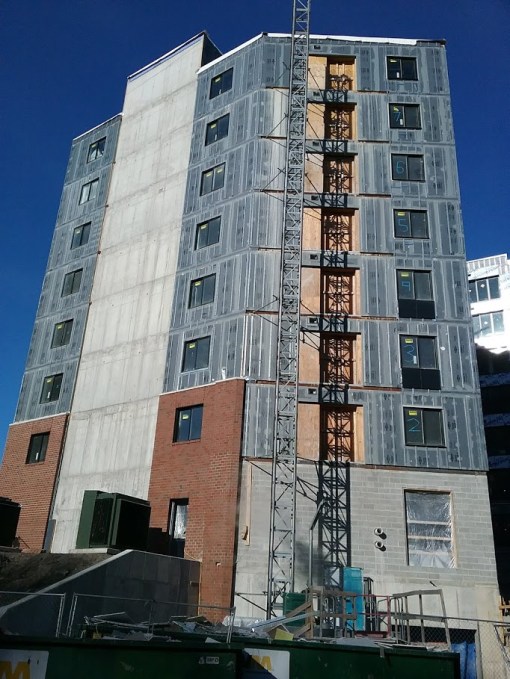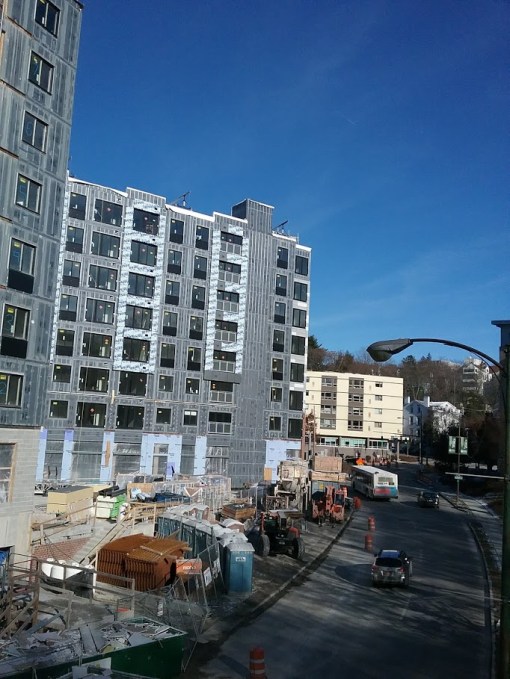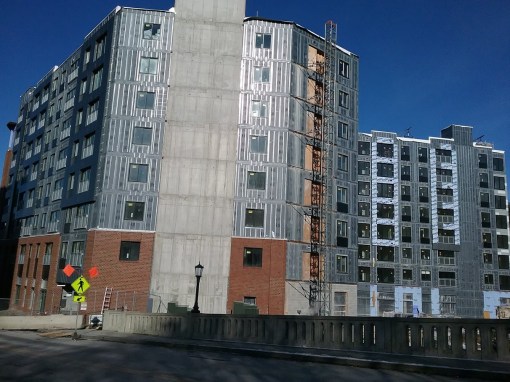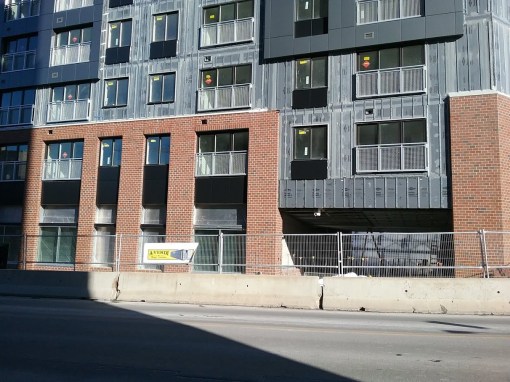
Harold’s Square Construction Update, 3/2019

24 03 2019

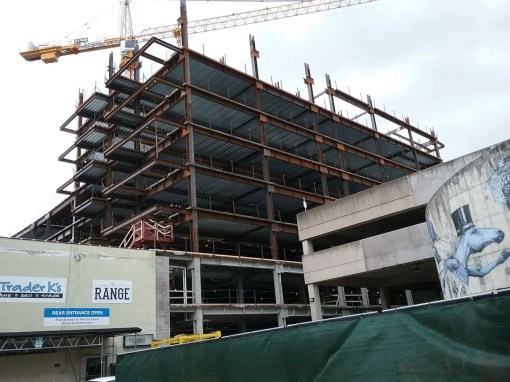
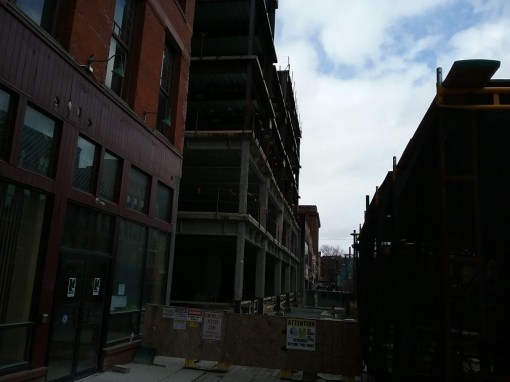
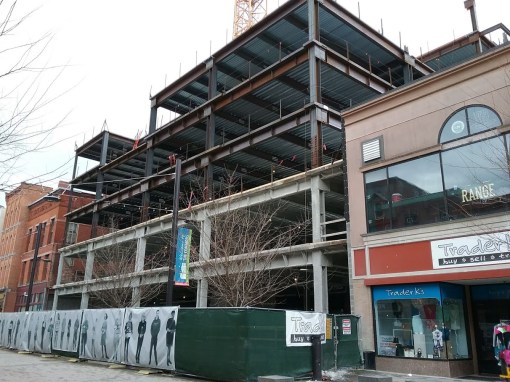
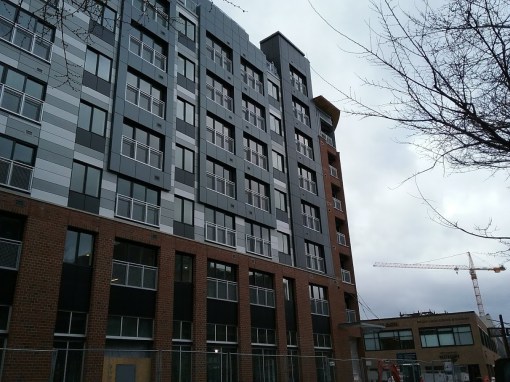
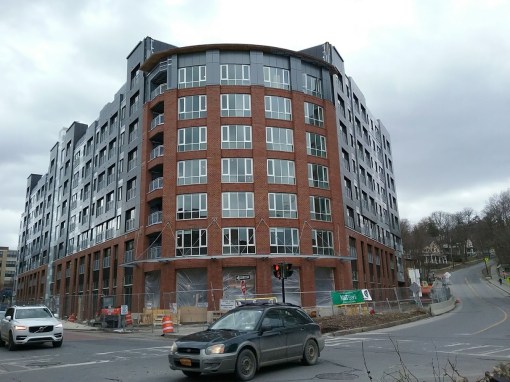
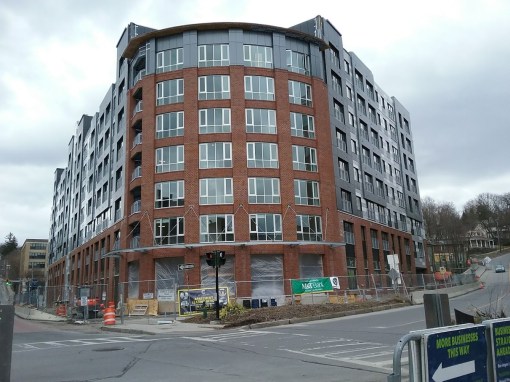
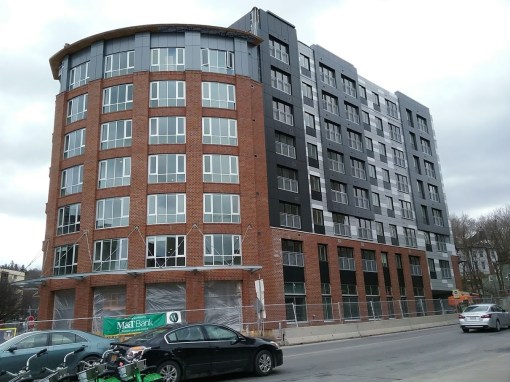
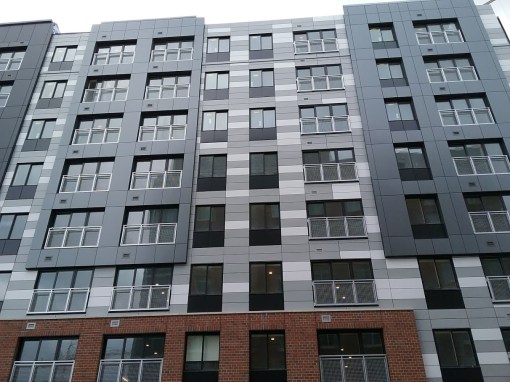
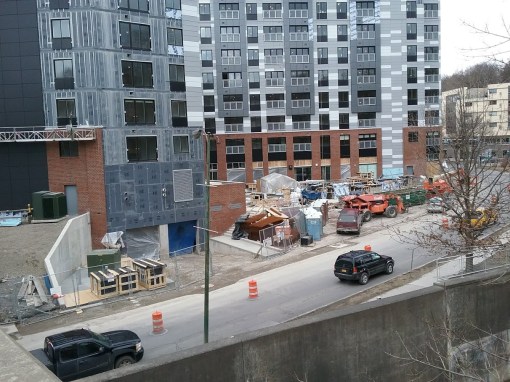
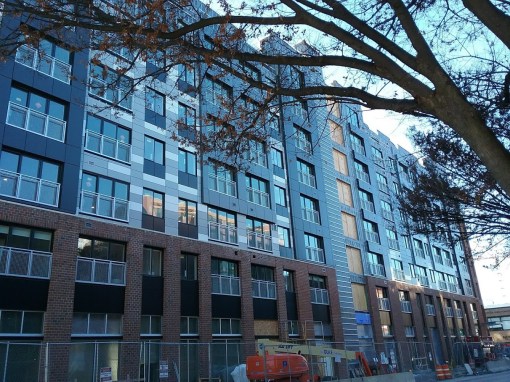
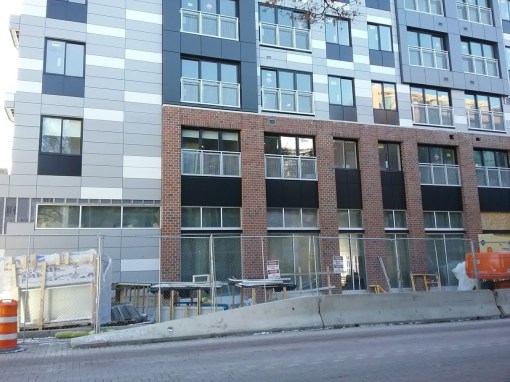
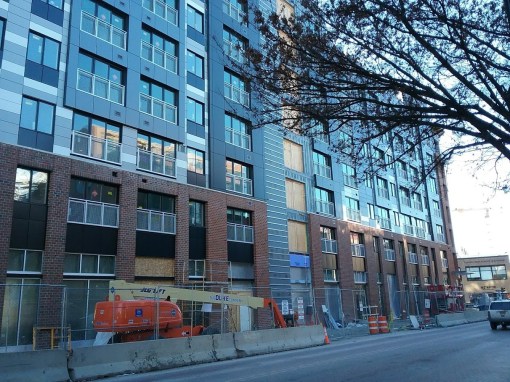
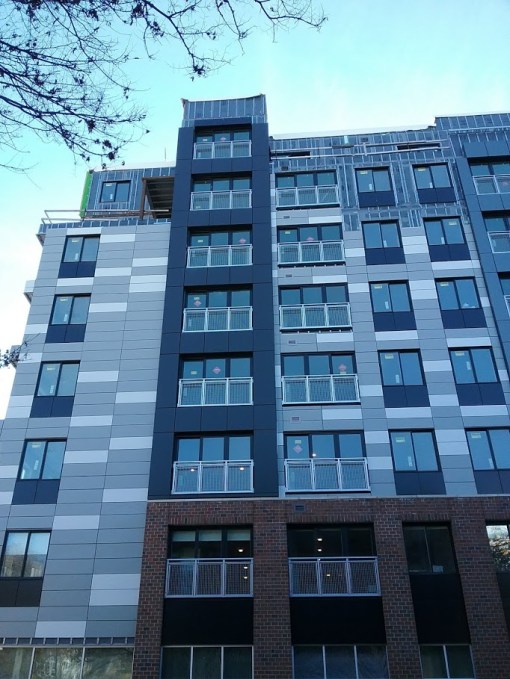
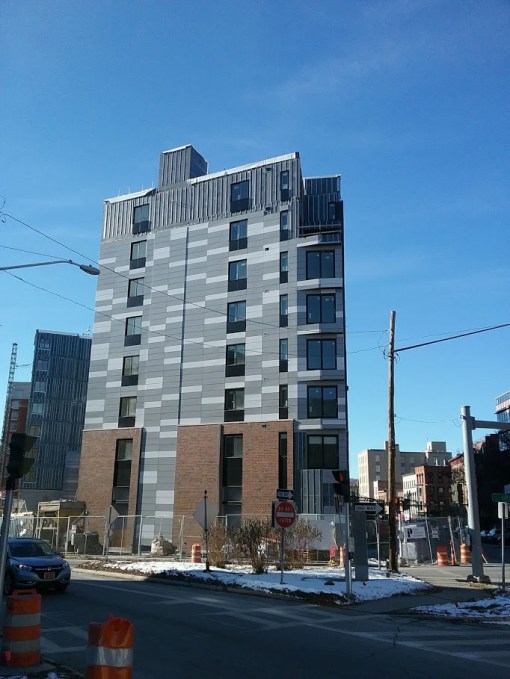
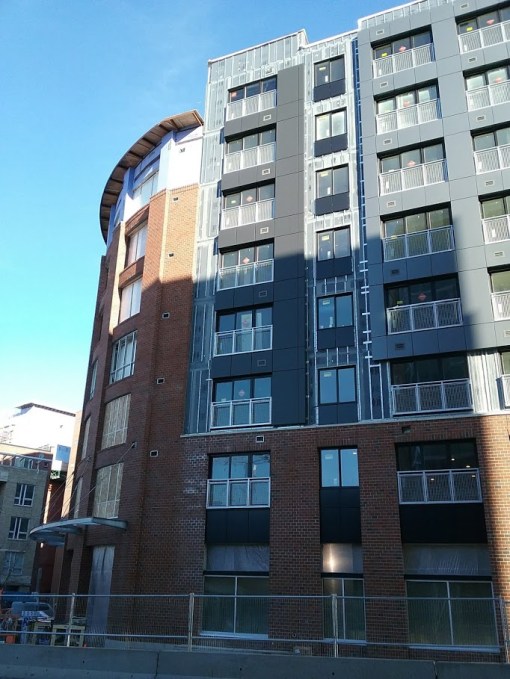
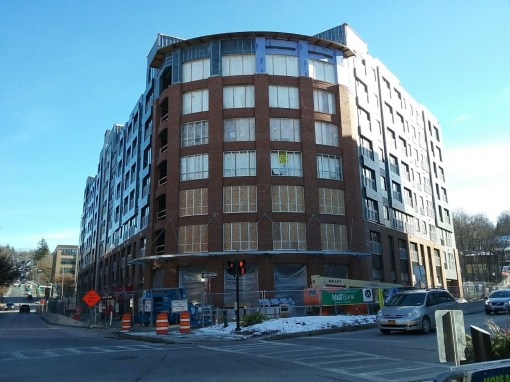
It seems we can move this one back into the under construction column? It’s been a weird few months.

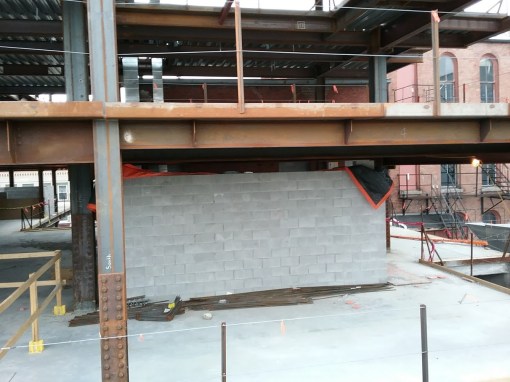
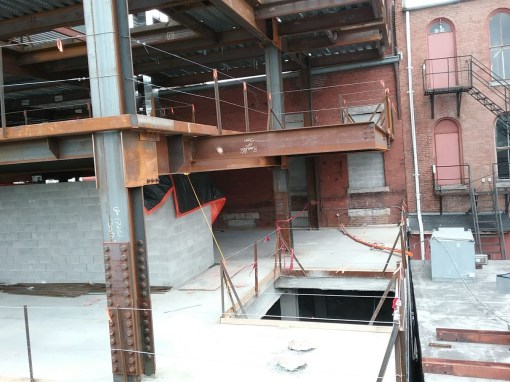
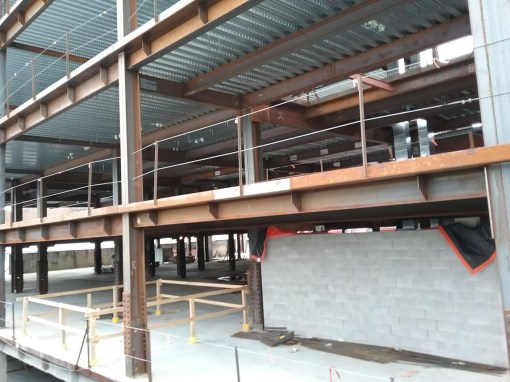
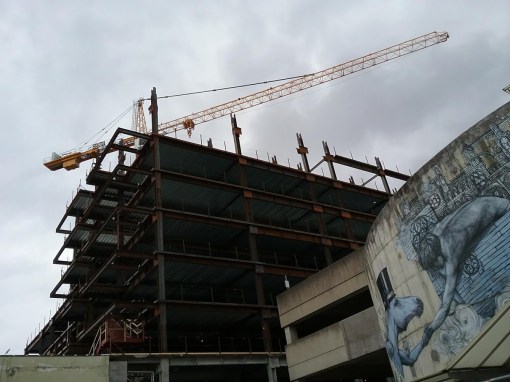
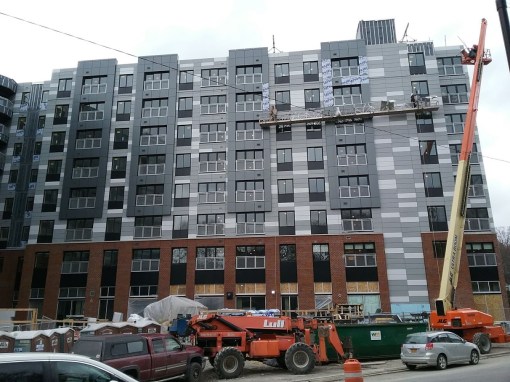
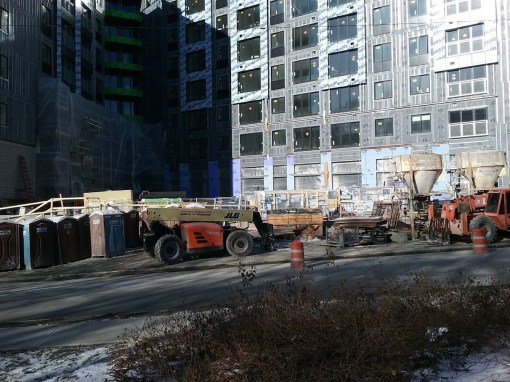
The developers, L Enterprises (David Lubin) and Mcguire Development of Buffalo, parted way with Taylor the Builders, the construction manager, back in January. They were able to line up another construction manager in LeChase Construction of Rochester, which has done its fair share of work around Ithaca and Tompkins County. Issues with transferring control and insurance paperwork of the 300-ton crane, however, delayed the project’s construction by several weeks, but the project did finally resume in early March.

I can tell you that whole “craziness”, as project rep Vicki Taylor Brous put it, gave a lot of city staff and elected officials heartburn. Given the city’s recent policy of advocating for density and downtown development, a hulking, stalled steel skeleton was the type of thing that was going to really make any future project a difficult sell.

It was also very upsetting for neighboring business owners. The project has already created some frustration with its blockading of the Commons playground out of safety concerns. The construction, and lack thereof, created an unattractive nuisance, with people steering away from neighboring businesses and taking their money elsewhere. The abatement was shifted forward a year, but not without significant blowback from members of the general public who had taken the opportunity to air their grievances with the development team. The current plan is to have the office and retail space available for occupancy by the end of the year, with housing occupancy by spring 2020.

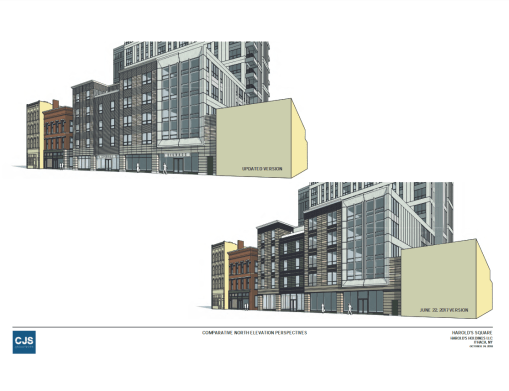
At the crux of the issue are claims by Taylor that the project had undergone significant changes and that Taylor wanted to be compensated for the late changes. Although downplayed at the time, it became clear in the months since that there were major programmatic and minor aesthetic changes. The programmatic change was the reduction of 30 micro units (for a new total of 78) to make way for an additional 10,000 SF of office space for an unspecified tech tenant, as mentioned in the revised IDA application. (For those curious, the rumor mill says it’s a growing local tech firm; 10,000 SF is about the right size for a 40-50 person operation). Most of its commercial spaces appear to still be on the market.

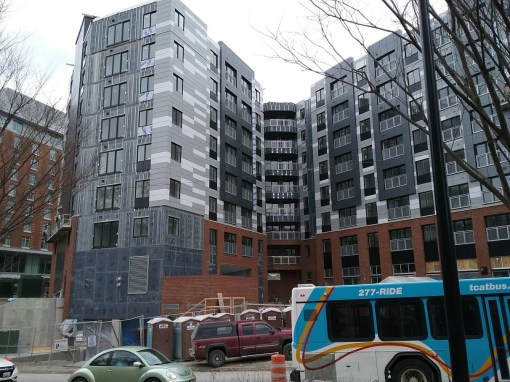
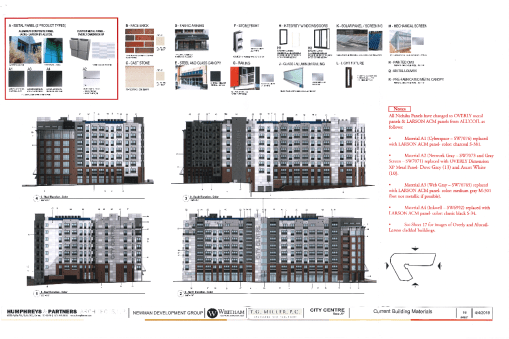
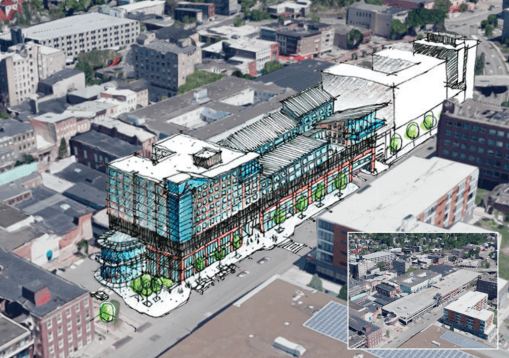
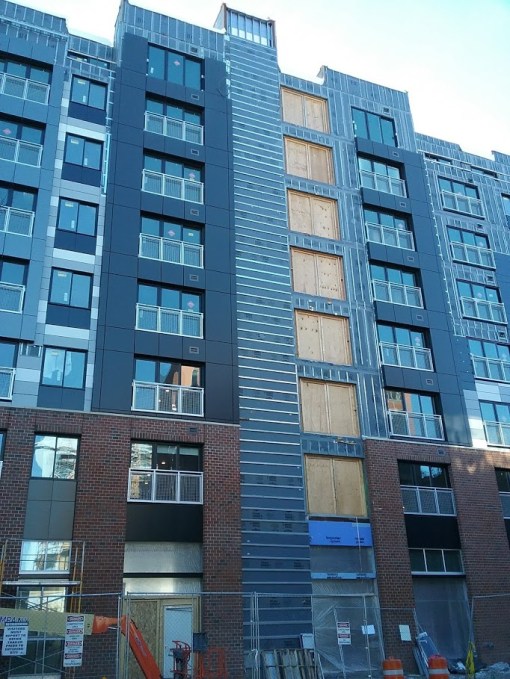
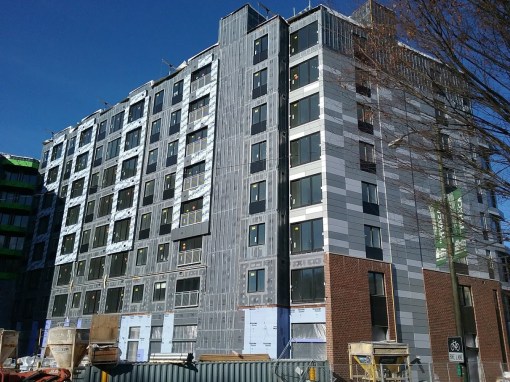
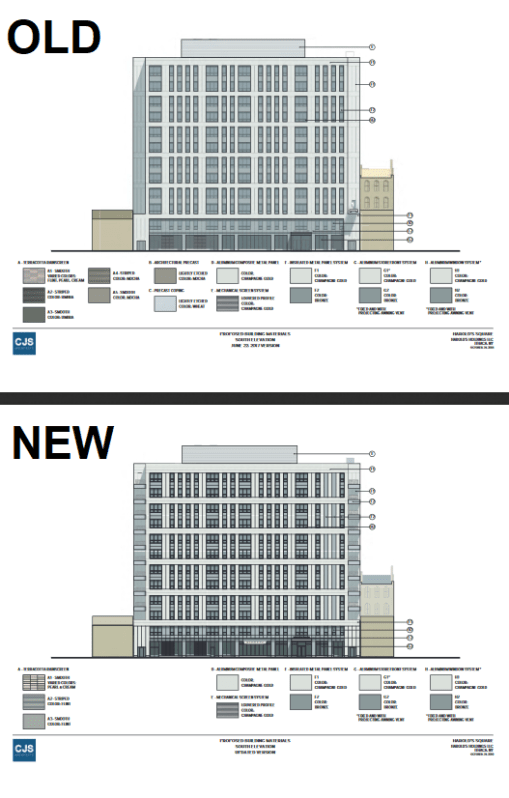
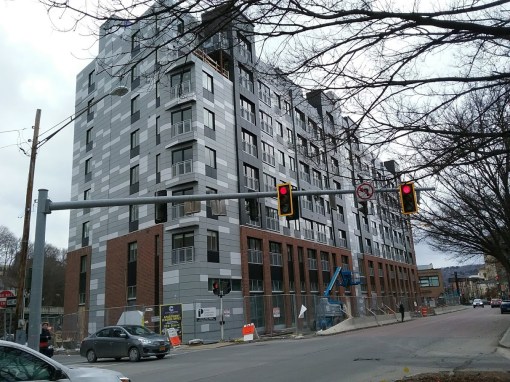
There have also been some substantial if overall minor aesthetic changes, partially as a result of transitioning some residential space back to commercial offices. Some of the metal panels are being replaced with a terra cotta exterior finish, elimination of a mechanical screen because the equipment was smaller than first anticipated, the addition of balconies on the corners, the elimination of two windows per floor on the south face in order to comply with International/NYS Building Code, and window revisions on the fifth floor for the new tenant.

The renderings at the end of this post were published in 2018. The designs are for the revisions that were reviewed by the planning board last month, with the exception of the fifth floor office tenants and changes to suit them. The only reasons I can come up for waiting to submit these changes, was that either they didn’t have to (as mentioned before, after approval, the circumstances required for re-approval are rather murky), or that they weren’t sure what was going to happen with the fifth floor and wanted to have all their revisions in one package to avoid further trips to the board. It’s not clear when they began negotiating with the tech tenant, and when Taylor started to have issues working with the developers.

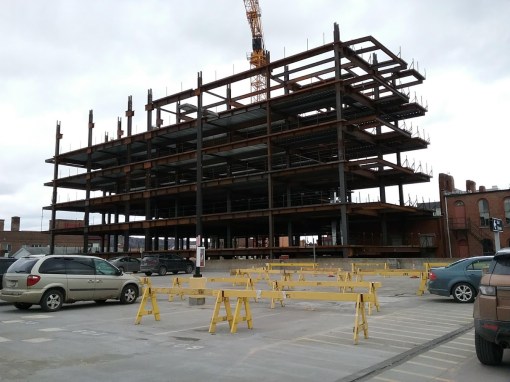
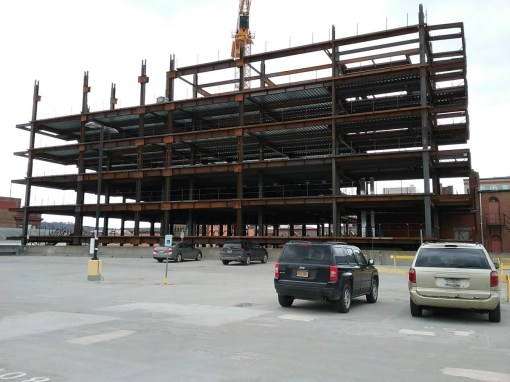
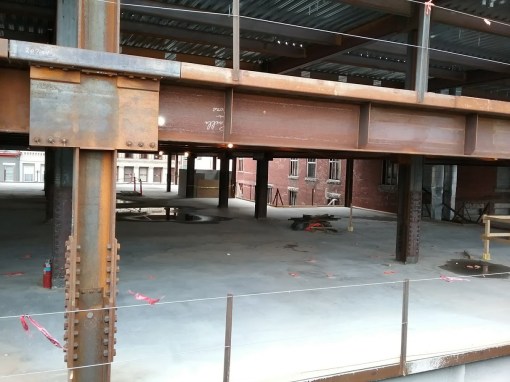
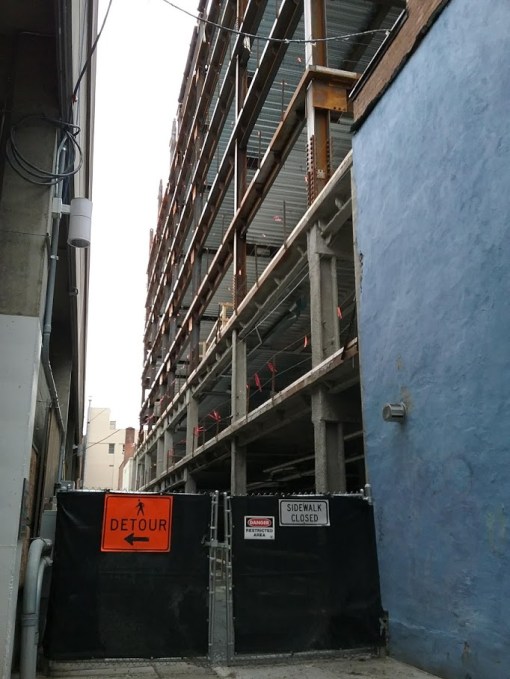
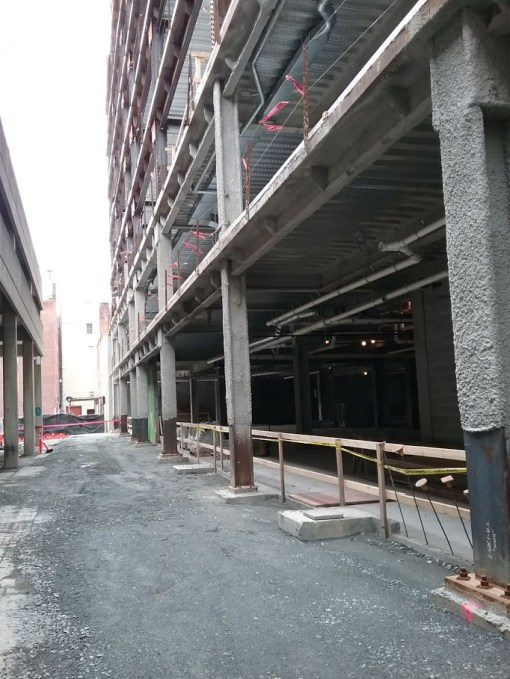
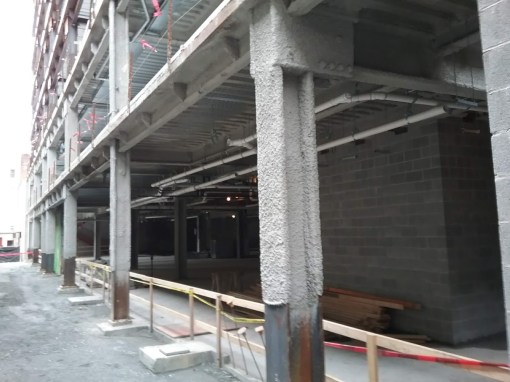
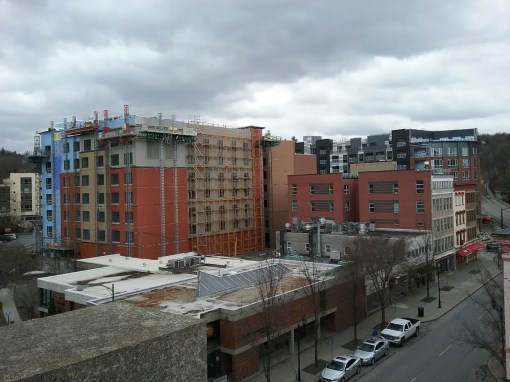
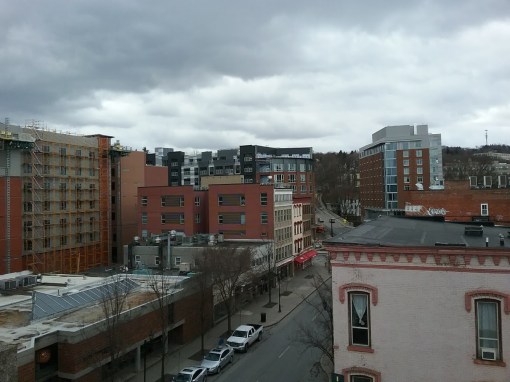
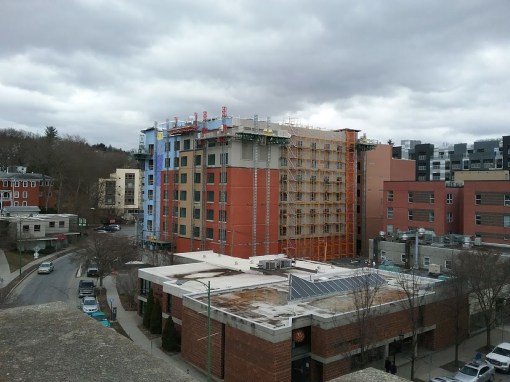
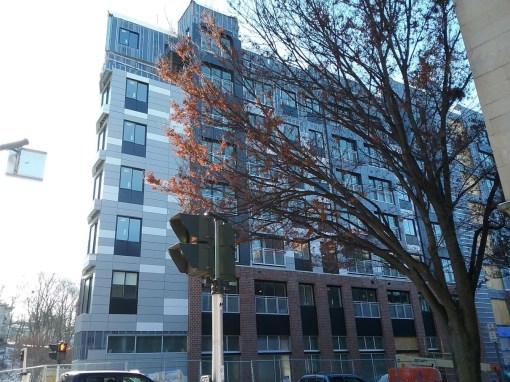
Anyway, work has recommenced on the steel structure, as the eighth floor is built out. Since the upper floors have small floorplates, the building’s steel structure will likely top out before the start of summer. From there, it’s fireproofing, sprinkler systems, exterior and interior wall framing, rough-ins, sheathing, and all the fun stuff that makes a building begin to look like its final product.


City Centre Construction Update, 3/2019

24 03 2019

All of City Centre’s retail occupants have been identified – The Ale House, Collegetown Bagels and Chase Bank. Although two of three are cannibalizing other Downtown locations, the move comes with some benefits – it’s an expansion for CTB and the Ale House, and the Ale House is expecting to add 20 jobs, and CTB will likely add a few new positions as well. Chase is totally new, and if the average bank branch is 2,000 SF and 6.5 staff, it seems safe to assume that a 5,357 SF branch/regional office is probably 12-15 staff. Ithaca’s own HOLT Architects is engaged in some minor building design work and Whitham Planning and Design is doing the landscaping (including the heat lamps, string lighting and fire pits), Saxton Sign Corporation of Auburn will make the signage, Trade Design Build of Ithaca and TPG Architecture of New York will flesh out the interiors, and East Hill’s Sedgwick Business Interiors will provide furnishings. Clicking here will allow you to scroll through the interior layouts for the retail spaces.

A glance at their Instagram suggests that as of a week ago, about 100 of the 192 apartment units have been reserved. There don’t appear to be any particular trends in the unit selection, an off-the-cuff suggests a similar occupancy rate for studios, one-bedroom and two-bedrooms, and there’s no strong preference in floors, though perhaps there’s a slight preference towards interior-facing units (I wouldn’t call it statistically significant). It appears they’re filling at a good clip now that graduate and professional students are making their commitments to Cornell (professional students, for example business/MBA and law/JD students, tend to be older and wealthier, and are one of the target markets for the project). If trends continue, the project will be in good shape for its June opening, with full retail occupancy and high residential occupancy, even at City Centre’s decidedly upmarket prices.

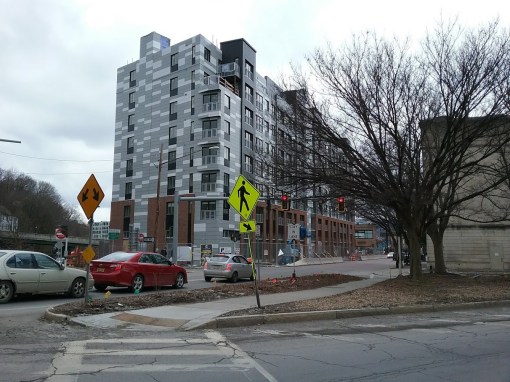
On the exterior, some of the Overly and Larson ACM metal panels have yet to be installed (mostly on the back./interior side), trim and exterior details are partially in place, and the ground level is still being built out with commercial doors and utility fixtures (garage doors for commercial deliveries, for example). The roof membrane doesn’t appear to be in place yet either. Overall, though, the exterior is substantially complete, and it looks like the will finish out over the next several weeks on schedule, which is a pretty big deal for a 218,000 SF $53 million project. Kudos to Purcell Construction and their subcontractors on that. Signage and landscaping will also go in this spring. I’m not big on the patterning of the metal panels (which looks like design by MS Paint), but it seems to be the go-to exterior material of choice.

Background information and the history of the project can be found here.


Bank Tower Renovation Update, 3/2019

23 03 2019

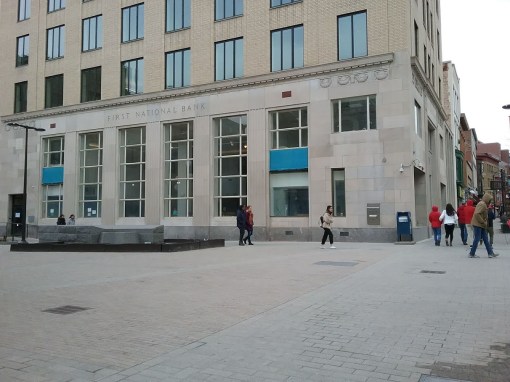
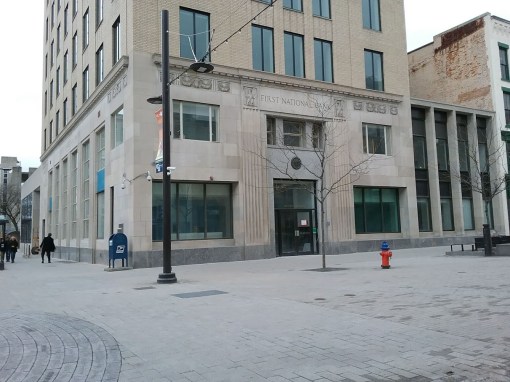
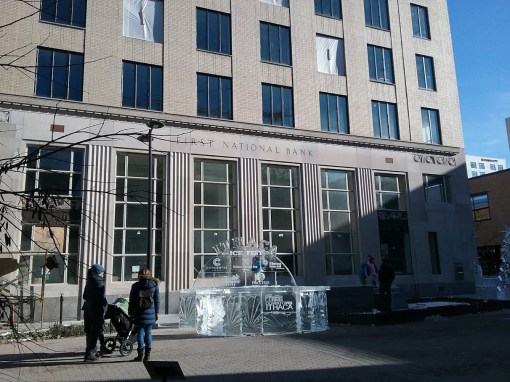
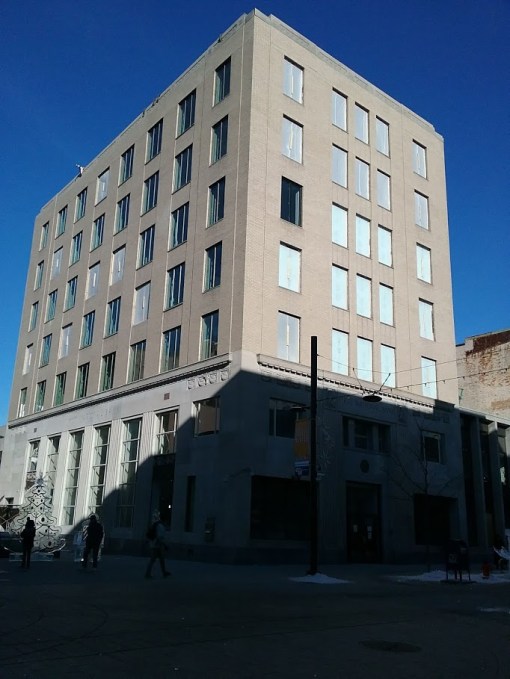
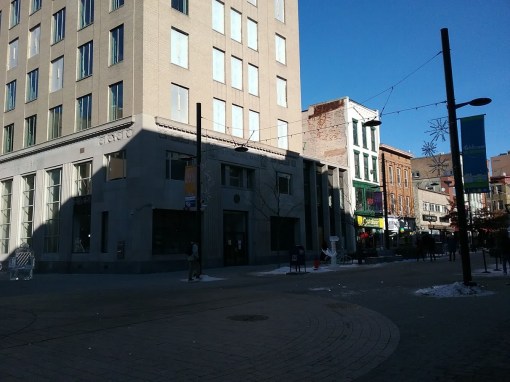
It looks like interior cabinetry, fixtures and trim are being installed in the renovated Bank Tower’s first floor. As readers may recall, the first and second floors of the building will serve as the new headquarters for CFCU credit union. According to the Fane Organization’s Bank Tower website, renovated office space on the upper levels became available for occupancy in December. It doesn’t look like the website was recently updated, but the Loopnet listing was, and the put they offices on Craigslist as well. Here’s the ad:

“Locate your office in the best space on the Ithaca Commons. Bank Tower Offices, at the intersection of E. State Street and N. Tioga Street. Office suites on floors 3 – 7.

Completely renovated, with energy efficient VRF HVAC throughout, new windows, all LED lighting, high speed internet, luxury marble bathrooms and break room on each floor in a two elevator building. Secure access and security cameras.

Conference rooms with large video displays available.

Floors 6 and 7 feature open floor plan promoting community and collaboration in the workplace.

Floors 4 and 5 utilize historic building features of tall ceilings, big windows and inter-suite door systems so your space can be as large or as small as you need.

Floor 3 is newly configured with the conference rooms, spacious offices, and lots of interior glass for a bright workplace.

Contact us today for your personal showing. Available March 1, 2019.”

Taking a guess here, the webpage hasn’t been updated in a little while. The Loopnet posting is more informative.

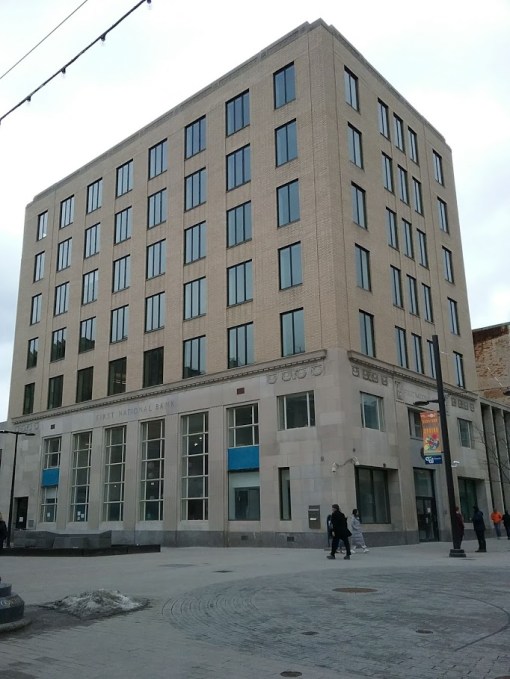
“Bank Tower Offices is a rectangular, seven-story building that is constructed in the Art Deco style. The main commercial building was built between 1932-1933, with three additions in 1965, 1974 and 1982. It is being completely renovated, with completion date of March, 2019. The first and second floors are being occupied by CFCU Credit Union, with floors 3 – 7 available for lease. Renovation features include energy efficient VRF HVAC throughout, new windows 3 – 7, all LED lighting, high speed internet, luxury marble bathrooms and break room on each floor in a two elevator building. Secure access and security cameras, conference rooms with large video displays. […]”

The ad then repeats the Craigslist post, which seems like a subtle nod to Loopnet being the place for serious commercial leasing opportunities, while Craigslist is where you go looking for used couches. The attachments on Loopnet show that all five of the upper levels are available, with spaces ranging from 225 SF to 20,000 SF. Internal doorways between office suites give some flexibility on the lower floors for an almost-modular office space approach to expand and contract as needed, while floors six and seven go with the more fashionable open office floorplan. The ads suggest that, if 20,000 SF is the max available, and there’s 37,151 SF of leasable space, then CFCU is taking 17,151 SF. Interior photos below are from the Loopnet post, and show a suite arrangement on the fifth floor and the open plan on the sixth floor. No price per SF is listed, but phone inquiries can be made with Fane’s management firm, Ithaca Renting.

The project website itself, which is a bit hard to find (www.banktoweroffices.us), shows updated renderings for break rooms, bathrooms and state-of-the-art conference space on the third floor. Renders for the new first floor interior and exterior signage/decor are included in this post. The 1970s addition on the north side appears to get a hanging living wall treatment. Doing a cross-comparison, the new windows and cleaned exterior do a nice job sprucing up the nearly 100 year-old building.


Masonic Temple Renovation Update, 3/2019

23 03 2019

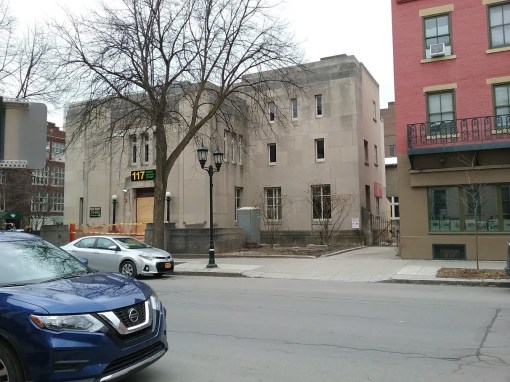
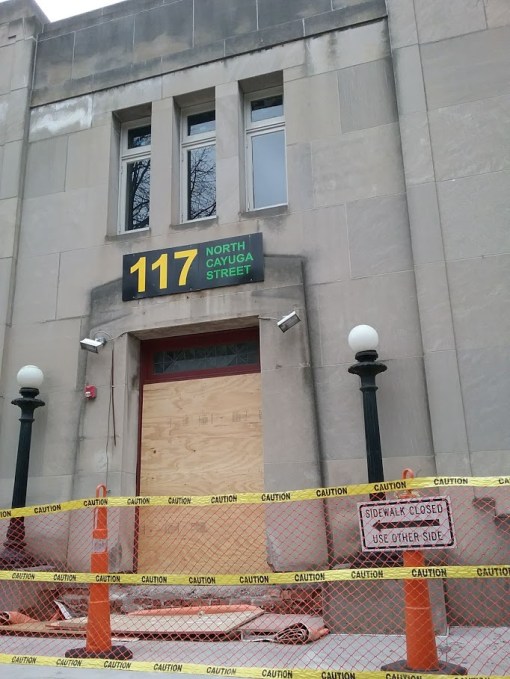
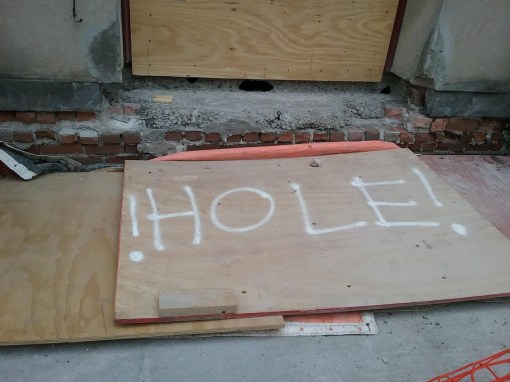
This project continues to crawl along at its slow if steady pace. It appears that the deteriorated concrete steps are being replaced. Seems reasonable to think the door is covered over because there happens to be a gaping hole on the exterior side; sure, there’s a slapstick comedy aspect to that, but I still remember when two workers fell through an elevator shaft at the Fairfield Inn when that was under construction six years ago, and not only were there severe injuries, the lawsuit put the local living-wage contractor out of business.

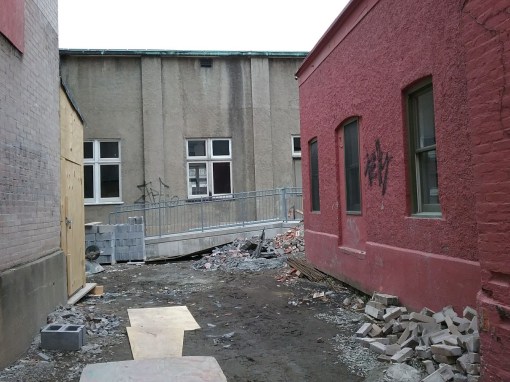
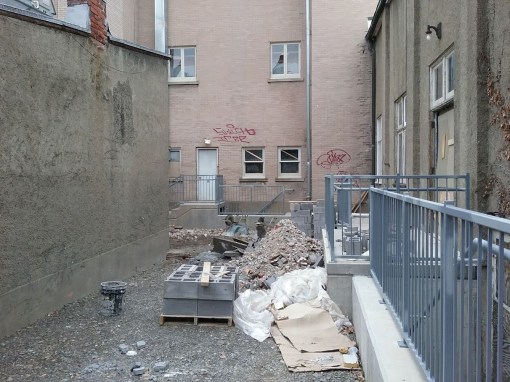
It also appears that new historically-appropriate windows have been installed, and the railings have been installed for the new cellar stairs and the wheelchair ramp to the auditorium space. The graffiti has been there. It’s not clear if the roof membrane has been replaced yet, and the exterior will be cleaned at a later date. The outside is fairly far along, but from the windows there appear to be few if any signs of significant interior work underway.

As before, there has not been any news regarding commercial tenants signed up to fill the renovated space once it’s complete – a January posting on Loopnet listed a 4,000 SF space on the first floor, a 6,668 SF space on the first floor, and 6,666 SF space split between the second and third floors. A retail renter of the whole building gets a discounted price of $8 per square foot for a five-year lease, whilerenting just one of the spaces will cost $10-$14 per square foot for a five-year lease. The Fane Organization tends to be very tight-lipped about their business deals, so no word on any potential tenants. The $1.5 million renovation is being designed by architectural preservation specialists Johnson-Schmidt & Associates of Corning, and renovated by McPherson Builders of Ithaca.


Hilton Canopy Hotel Construction Update, 3/2019

21 03 2019

It appears that the Hilton Canopy hotel developers put an in-house restaurant back into the mix late in the development process. The new eatery, to be called “Ezra” in what’s ostensibly a nod to Ezra Cornell. Dunno how large the new restaurant will be, but the early designs called for about 2,000 SF of space. In keeping with the Canopy theme, the restaurant logo incorporates Pantone PMS165 orange, with aluminum letters, faced in matte black base vinyl print, and on a wood laminate background intended to mimic Brazilian Walnut. The address for the new 131-room hotel will be 310 East State / Martin Luther King Jr. Street. The signage will be built and installed by Lauretano Sign Group of Connecticut. Outdoor dining spaces will have chic industrial aesthetic tables and chairs and contemporary, durable outdoor furniture.

For those interested, some job openings have been posted for those who wish to be hotel staff. The General Manager has the co-title of “Chief Enthusiast”. Management can expect to make up to $80k/year, but most staff will fall in the $11-$15/hour range, with a bit more for some titles and a bit less ($7.50/hour + tips) for those who will be working in the restaurant. They might be a little higher given those were 2014 figures, but it looks likes only management jobs are being filled at the moment.

As for the construction itself, work on the fiber cement panel and brick veneer installation continues. It looks like a waterproof materials might be going on over the gypsum sheathing, laid over with metal rails and then faced with the exterior material of choice. The rails would allow for any outside moisture absorbed to drain down and off the building. Some of the industrial-style windows are in,with flashing tape surrounding the window to prevent water and air penetration. We also now know what “sauteed mushroom” looks like as an exterior siding color. The hotel is expected to open in “Mid 2019”, probably too late for the May graduations but Q3 2019 looks plausible. The Canopy website comes with a thumbnail interior render, though the resolution isn’t so great:

Further information on the Canopy hotel can be found here.


News Tidbits 3/11/19

12 03 2019

1. The city of Ithaca and The Vecino group have come to a tentative agreement. The two have been negotiating since entering into a 90-day Exclusive Negotiating Agreement at the end of last year. While Vecino is still looking at the financial models for the conference center space, it appears that the city is ready to move forward with a formal agreement to be voted on by the Ithaca Urban Renewal Agency (IURA) and the Common Council, and then to have the building plans reviewed by the Planning Board, and then the sale of the property to be brokered by the IURA and agreed to by the Common Council. If approval is granted in good order and state funding is obtained (Vecino is pursuing 4% low income housing tax credits, vs. the more competitive 9% variety), then construction could start on the $95 million mixed-use project by late 2020.

2. GreenStar will be asking the IURA for a $400,000 loan to assist in the construction of their new flagship location at 770 Cascadilla Avenue. It does not seem to be related to their construction woes, as the initial paperwork was filed in January, but it makes for rather awkward timing. The loan is likely to be approved without significant reservation thanks to GreenStar’s reputation and the promise of dozens of living wage jobs, though the IURA is unhappy with what is described as “weak collateral”, and it has some concerns with GreenStar’s ability to fundraise.

Important note – the paperwork mentions one of GreenStar’s funding sources will be the buyer of the current Space A Greenstar at 700 West Buffalo Street, who so happens to be “the owner of the Cascadilla Street property”. This buyer will pay $2 million for the building when GreenStar moves out in early 2020.

At first glance, one might think that’s Guthrie. But Guthrie transferred ownership of the parcel to “Organic Nature LLC” last month. Organic Nature LLC is a company owned by the project team building City Harbor. In short, the City Harbor developers are buying the Space @ Greenstar, and likely have plans for the property.

3. If you’re an urban planner – and I hope this blog is interesting to you if you are – the IURA is issuing a request for qualifications for a parking study. The project will include three major tasks: analysis of the current parking system; determination of possible scenarios of programs and actions for the future direction of the parking system that are financially sustainable; and preparation of a strategy and an implementation plan, with estimated costs and a schedule. TLDR; look at existing operations, describe future directions (ten year period), make parking-related recommendations and implementation recommendations. Knowledge of transportation demand management and experience with designing strategic initiatives to handle parking needs will be a big plus. Submission packets due April 12th to Director of Parking Pete Messmer, more info at the end of the agenda packet here.

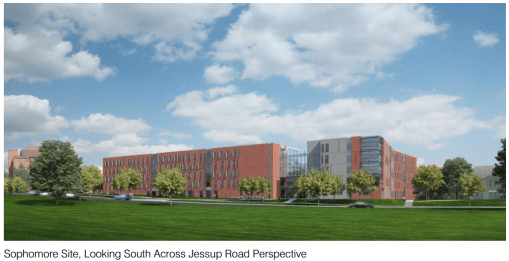
4. Quick note – the North Campus housing proposed by Cornell was modified slightly at the request of city boards. The new design adds “break points” in the facade to activate the central wings of the buildings and make the building masses seem less imposing. The general massing and material choices remain unchanged.

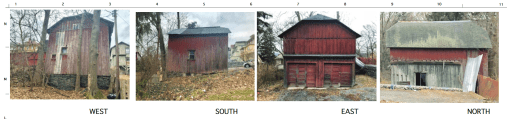
5. Mid-sized Collegetown landlords Greg and Mataoula Halkiopoulos (of Matoula’s Houses) have decided to renovate a decrepit 19th century carriage house at the rear of their property at 214 Eddy Street, and turn it into a three-bedroom, 839 SF rental. 214 Eddy is in the East Hill Historic District, so the design, by local architect John Barradas, will need to be approved by the Ithaca Landmarks Preservation Commission. It looks like a practical renovation, respectful of the carriage house’s form but also with a modern touch. Early Design Guidance will be offered at the March ILPC meeting, and any decisions on a Certificate of Appropriateness are still a few months out.

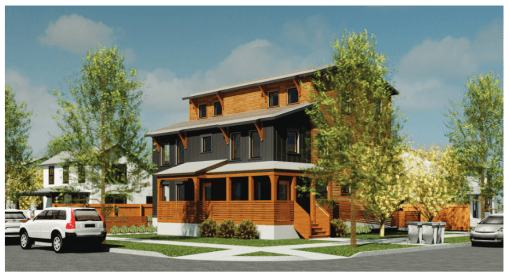
6. There have been some major changes to the Perdita Flats plan at 402 Wood Street. Previous version here. For one, it now has frontage on Fair Street and will have a Fair Street address. The building and garden have been re-positioned, the footprint reduced slightly (38’x36′ to 36’x36′), larger porch, modified exterior cladding materials, and the driveway has been removed at the Planning Board’s suggestion. The building remains 4 units and 7 bedrooms, and STREAM Collaborative penned the redesign.

The wood shiplap siding and standing-seam black metal siding are a bit of an acquired taste, especially with the wood oiled or left to grey naturally. But the house is still planning to be a net-zero energy showcase of what can be done with environmentally sustainable multifamily housing, and that’s the real statement to developers (Courtney Royal and Umit Sirt) are trying to make. The owners will be applying for incentives from the NYSERDA Low-Rise Residential New Construction Program and are hoping to attain the Zero Carbon Petal of the Living Building Challenge.


News Tidbits 3/10/19

11 03 2019

1. Next Tuesday, Tompkins County is planning to present a “progress report” on its study on whether or not to buy 408-412 North Tioga Street and redevelop the site. First, let’s not be coy – Tompkins County isn’t really considering any other sites, and staff and officials are pretty strongly inclined towards purchase of the vacant site.

That doesn’t mean they want to tick off the city in the process. It looks like a few different configurations are being considered, but the plans crafted by HOLT Architects essentially call for a new 3-story, 37,000 square-foot building (10,500 SF floor plates with basement space) to replace the 11,000 SF 1950s office structure on the site, restoration of the 19th century building at 408 North Tioga, at least 27 parking spaces in an internal lot, and the selling of land along Sears Street for the construction of two, two-family homes. The county has been in talks with potential developers for those homes, which are likely to be affordable housing since they’ve been in touch with INHS as well as an undefined “others”.

The county has to make its decision by next month, and while there are no hard plans, chances are looking good that the county will be buying the property. A bit more mild speculation off that, I’d wager HOLT will have an inside track in getting the contract to design of the new office building, because they’ll already have an intimate familiarity with the site. While HOLT tends towards modern design, I’d imagine that an office proposal that borders a historic district, whether from their drawing boards or someone else’s, will be more toned town in an effort to fit into the neighborhood.

2. Although speculating is never a good idea, looking at the features of the Immaculate Conception School Redevelopment, I think INHS is in very good shape for getting a Planned Unit Development zone approved by the Ithaca Common Council. Right now, it’s 75 units of affordable housing, with four of those for-sale (if there are unit changes moving forward, it seems to be for more for-sale units and fewer rentals), ~5% will be enabled for physical handicap, ~15% set aside for a special needs group (previously homeless and units for the developmentally disabled is one idea being floated),  non-profit office space for family and childrens’ social services, protection of the Catholic Charities Building, sale of the school gymnasium to the city for use by the Greater Ithaca Activities Center, and changes to design (reduction of a floor and inclusion of a few larger 3-4 bedroom rental units) that demonstrate responsiveness to community concerns as well as transparency with its pre-application community meeting process. Probably the one thing that will remain a sore spot is parking, but this is within several blocks of Downtown Ithaca and close to existing community services, and

Reading down that list, there are a lot of community benefits involved with this plan, and honestly, I think this is exactly what the city hoped to achieve with the PUD Overlay District. The existing zoning would not be amenable to the design as-is, or to the office space alongside the housing. But INHS is putting something out there that appears to make the PUD review process well worth the city’s time and effort.
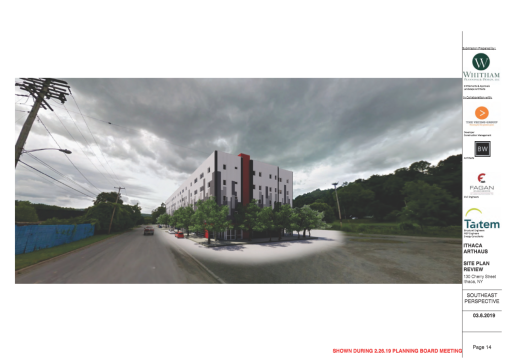
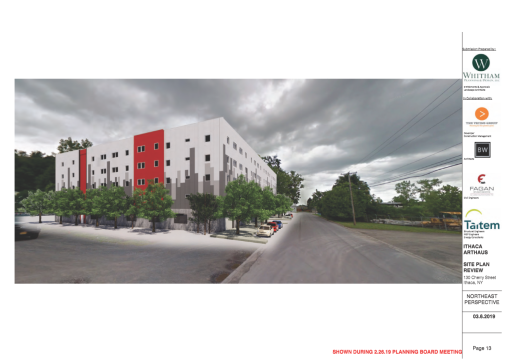
 

3. Here is the February redesign of the Arthaus Ithaca project by the Vecino Group. This is the 120-unit affordable housing project planned for 130 Cherry Street, a mostly industrial/post-industrial area that’s starting to see some major reinvestment as attention turns towards the waterfront and the new mixed-use zoning that makes projects like this possible.

I’ve already taken to Twitter to vent about this, but this is just a flat-out unattractive design. The windows are a tough reality of affordable housing – larger window areas raise utilities costs and construction costs, so affordable housing tends to have lower wall-to-window ratios. But the paneling, which can easily be swapped out for different colors and patterns, is just downright ugly. I know it’s a light industrial area, but faux-grunge/faux-decay is not a good look for affordable housing, whether “artistically-inclined” or not. Plus, it’s mostly whites and greys, which for anyone who’s been through a long, dreary Ithaca winter, knows that’s a very depressing combination. So, long story short, like the intended use/program, don’t like the “aesthetics”.
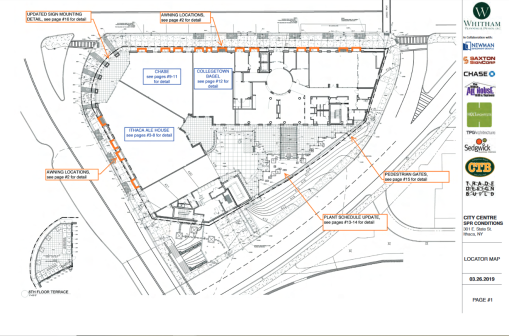
4. In the finishing stretch, the Hilton Canopy Hotel and City Centre have submitted sign packages to the city for approval. The Hilton has something called “Ezra”, ostensibly a nod to Ezra Cornell, but unclear from the submission if Ezra is the name of the hotel or something else; pretty sure the restaurant space was omitted late in the approvals process, so I don’t think it’s an eatery of some sort. Correction: per phone call from project representative Scott Whitham, they added a restaurant back into the plans late in the design process, so Ezra is the small in-house restaurant within the hotel.

As for City Centre, its signage for the Ale House, Collegetown Bagels and Chase Bank. Although two of three are cannibalizing other Downtown locations, the move comes with some benefits – it’s an expansion for CTB and the Ale House, and the Ale House is expecting to add 20 jobs, and CTB will likely add a few new positions as well. Chase is totally new, and if the average bank branch is 2,000 SF and 6.5 staff, it seems safe to assume that a 5,357 SF branch/regional office is probably 12-15 staff. Ithaca’s own HOLT Architects is engaged in some minor building design work and Whitham Planning and Design is doing the landscaping (including the heat lamps, string lighting and fire pits), Saxton Sign Corporation of Auburn will make the signage, Trade Design Build of Ithaca and TPG Architecture of New York will flesh out the interiors, and East Hill’s Sedgwick Business Interiors will provide furnishings. Clicking here will allow you to scroll through the interior layouts for the retail spaces.
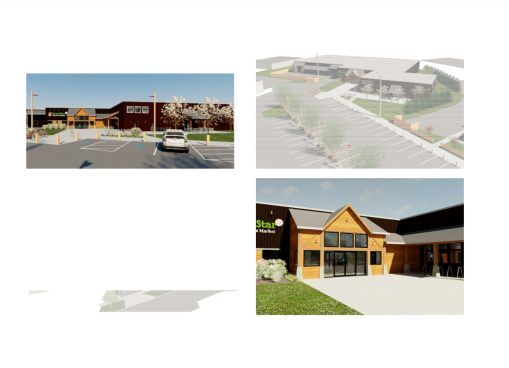
5. Now for some bad news. The GreenStar project is in bad financial straits because the construction bids came in well over budget. As a result, they’re rebidding the construction contracts, and “value-engineering”, the dreaded “V” word. Deleted farm stand, deleted forklift shed, deleted some windows and awnings, cheaper siding, reduced Electric Vehicle chargers, smaller mezzanine, and reconfigured trees and dumpster areas at NYSEG’s request. These changes will be reviewed by the city Planning Board at this month’s meeting, and are likely to pass without much issue; it’s frustrating but no one wants to see GreenStar’s project fail.
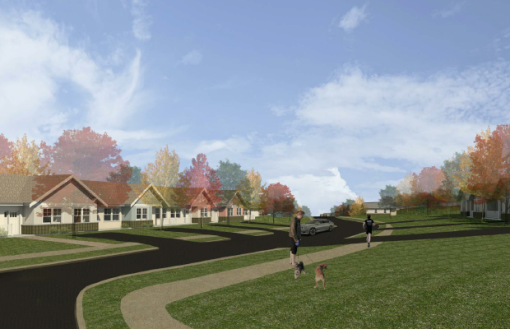
6. A few interesting notes from the IURA’s Neighborhood Investment Committee meeting:
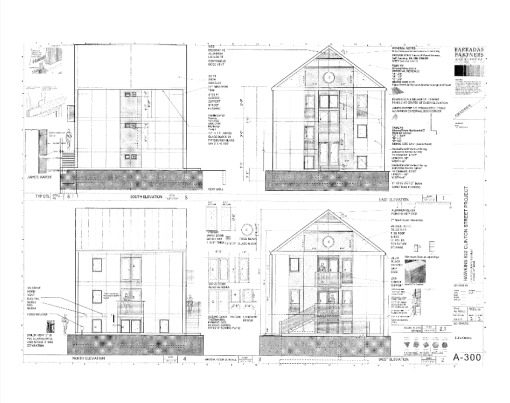
7. Here’s a project that was submitted the IURA for possible grant funding, but later withdrawn: the second coming of 622 West Clinton Street.

The first time around in 2016, applicant Jerame Hawkins applied to build an affordable, modular duplex at the rear of the property, but the plans weren’t fleshed out and secure enough for the IURA to consider funding. Since then, Hawkins has bought the property and is once again considering a partially-affordable duplex, this time an infill addition by local architecture firm Barradas Partners and construction by Rick May Builders. One unit would be 2 BD/1.5 BA and fair-market value (another way to say market-rate), and a 4 BD/1.5 BA targeted at 60% LMI. The request was $37,000 towards a $237,000 project. In my mind, the issue is the same as the old proposal – the LMI unit was officially limited to one year, which means he could make it market-rate afterward. The IURA would want more bang for their buck, and long-term affordability would be necessary for funding. Still something to keep an eye on in case Hawkins pursues it further.
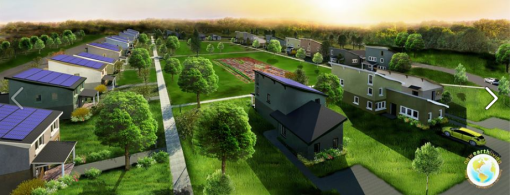
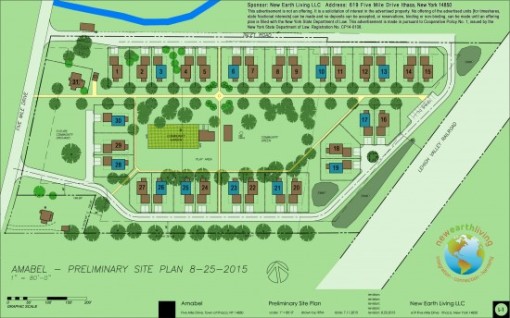
8. The Amabel project is still being worked out, but there is movement. the plan for 31 units of sustainable for-sale housing has been beset with issues. The city of Ithaca is planning to sell land to New Earth Living to let the project move forward, but that sale is contingent on the politically distinct town of Ithaca’s approval. Back in the 1990s, when Southwest Park was designated for development, 26 acres of land was bought in the town of Ithaca as substitute park land. That includes the eastern third of the Amabel property, which was bought with the parcel on the other side of the Lehigh Valley Railroad, but not intended as park space. However, when the deed was written in 1999, it had a restriction saying that all 26 acres could only be used as park space. It now needs to get straightened out, with the town lifting the restriction on the Amabel subsection so that the sale can move forward, and hopefully, Amabel can finally get underway.


Tompkins Center for History and Culture Renovation Update, 12/2018

28 12 2018

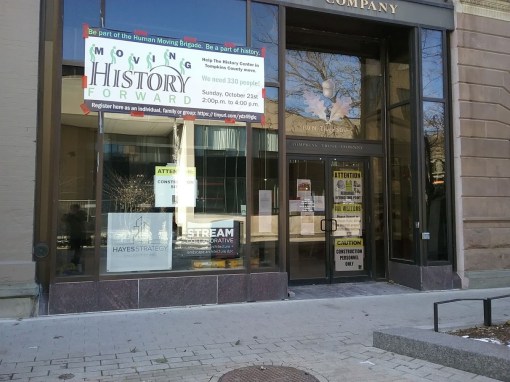
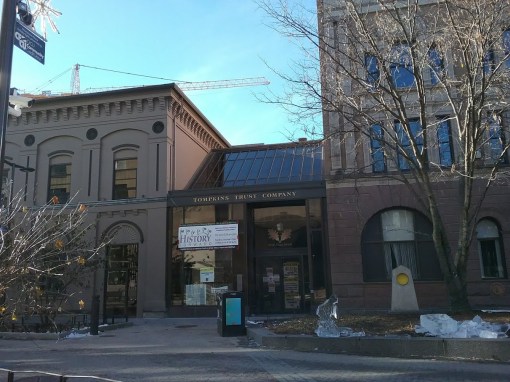
The new Tompkins Center for History and Culture is progressing towards its April 2019 opening. There’s not much to see from t he outside, since this is an interior renovation, albeit a major, to-the-studs renovation. Some non-load bearing walls have been removed and the interior has been opened up. Back in October, the History Center spearheaded a community effort, called “Moving History Forward”, to move its thousands of historical artifacts from their old location in Gateway Center to the new TCHC a couple blocks away. Not only did it engage the community (the move required 330 volunteers), it also saved about $40,000 in moving expenses.
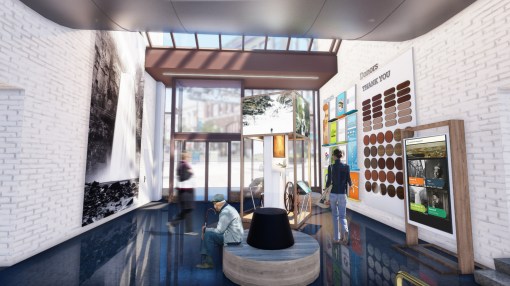
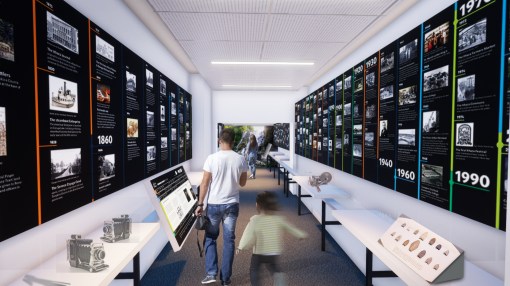
According to the building permit from October, LeChase Construction is on board as the general contractor for the $1.8 million project. Although based out of Rochester, LeChase maintains offices throughout the state – the firm opened an office in Ithaca, but the company website does not suggest it’s full-service, if it’s still used at all. Most Ithaca work is overseen by the Syracuse office. Matco Electric Corporation of Vestal is in charge of electrical work and rewiring, Lansing’s DFM Mechanical is doing the plumbing, and Eagle Mechanical of Wolcott (Wayne County) is doing the general mechanical work. Local firm Hayes Strategy is serving as the construction project manager, and STREAM Collaborative is designing the interior renovation. New York’s Tessellate Studio is designing the new exhibit area within the renovated space, and some of those images are included below. From Tessellate’s website:

“The intent of the exhibits at the History Center in Tompkins County is to connect audiences to meaningful history and narratives about the past, present and future of the region through the use of interactive, immersive, media and object-based experiences. For this project, Tessellate designed a flexible series of modular Story Pods to work as a physical, visual, and technical system to accommodate current and future needs of the museum. This allows for an open floor plan, use of vertical space and height, dynamic header text/images, visitor seating, accommodating for groups, and the blend of physical, interactive and media design offered an optimal storytelling experience.”

Quick aside, Marchuska Brothers Construction was the county’s general contractor, Johnson Controls had the mechanical contract and Richardson Brothers the electrical contract for the initial renovation work. Not sure why there was a switch. The switch was because the History Center hired their own set of contractors for their buildout needs. From the architect, Noah Demarest: “The county owns the building so they had a contract to deal with some core facilities issues. Now the History Center is using their own contractors for the tenant build out. So it wasn’t a change, just the result of the open bidding process of two different entities working in the same space.”

A project description and development timeline can be found here.


City Centre Construction Update, 12/2018

28 12 2018

Facade installation continues on the exterior of the City Centre project on the 300 block of East State Street. According to project representatives, all three commercial retail spaces on the ground level have been reserved. Along with the Ale House, the other spaces will be “a financial institution and a new dining experience from a beloved local restaurateur”. The rumor mill has suggested a couple of names for that restaurateur, and that the initial concept was to be Italian, but with the opening of Pasta Vitto across the street, the tenant is taking the restaurant in a new direction.

For those interested (and not necessarily looking for a new apartment), City Centre has finished out a few model units for hard hat tours. You can stop by the leasing office on the Commons to schedule a walkthrough.

Some of the project team members have started to tout their involvement with the project, which is generally a good sign (it means they’re proud of their work). The image above comes from Whitham Planning and Design, of which I’m kinda jealous. Meanwhile, the regional Carrier equipment dealer is touting the project’s use of a Toshiba-Carrier VRF HVAC systemVariable Refrigerant Flow, the technical name for the electric heat pumps the building utilizes. The heat pump system and its units are being installed by Petcosky and Sons, a heating and plumbing subcontractor out of Vestal. Purcell Construction is the general contractor (and their City Centre webcam is here).

The project is still on target for a June 2019 opening. The project background and description can be found here.


Bank Tower Renovation Update, 12/2018

27 12 2018

Plodding along here; it’s been a year since the project description and introductory post was written. The Fane Organization, which owns the building, is touting January 2019 availability for office suites on Floors 3-7. Floors 1 and 2 are “the new world headquarters for CFCU Credit Union”. Given the windows opening tarped over and awaiting replacement, and the state of the ground level (drywall and rough-ins ongoing, but fixtures and finishes still a ways out), that seems a bit optimistic. I have not heard of any changes to the original plan for CFCU to open at 202-204 East State Street next spring.

The new building logo, courtesy of the Fane Organization.