City Centre Construction Update, 12/2017

21 12 2017

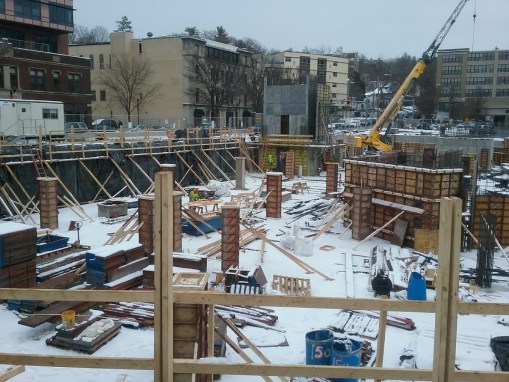
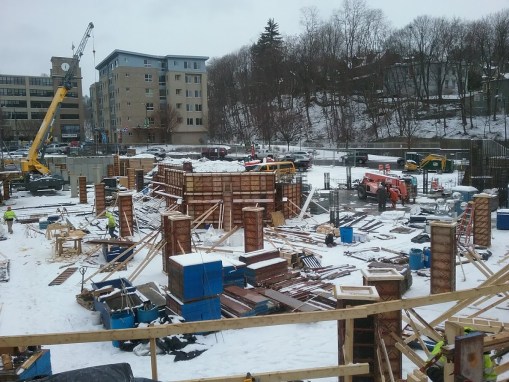
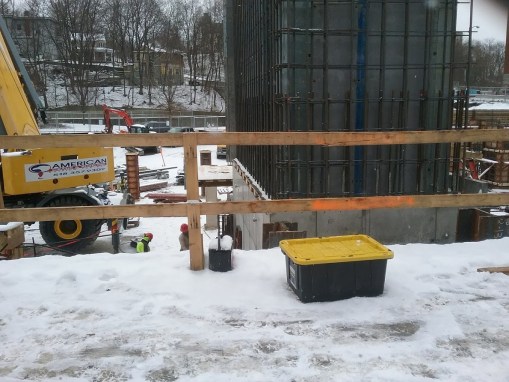
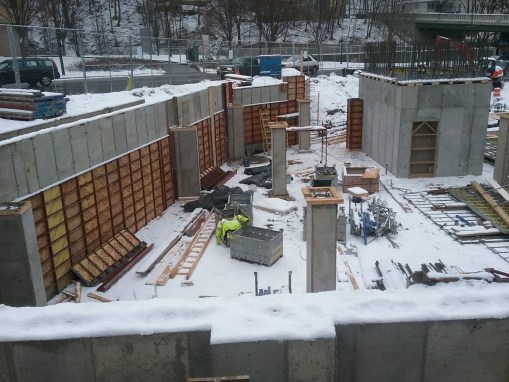
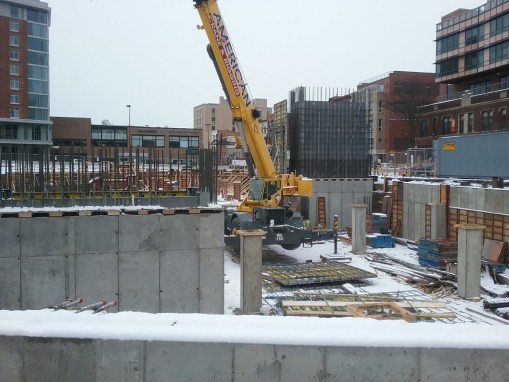
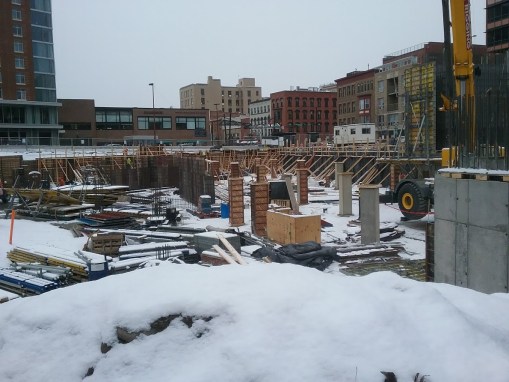
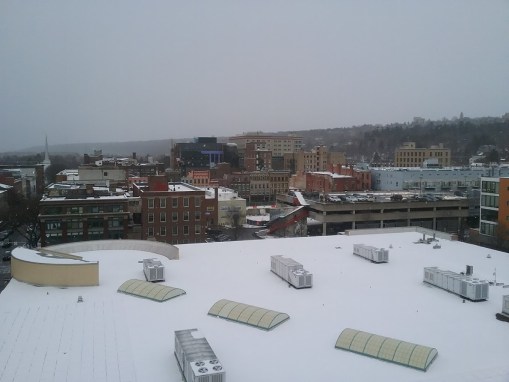
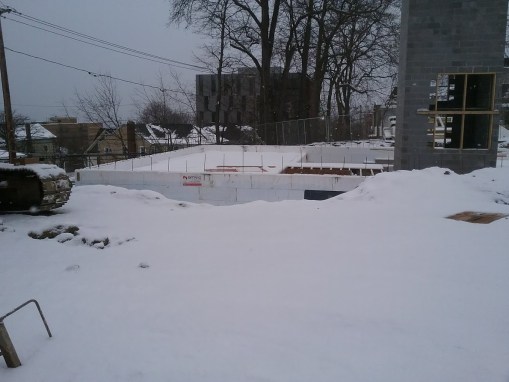
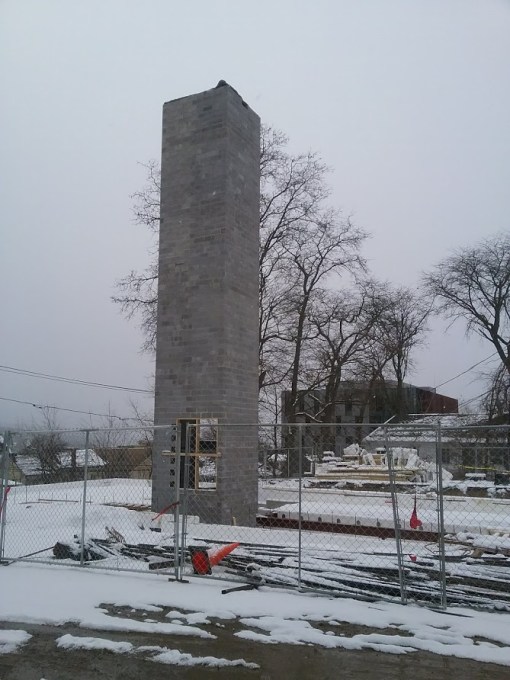
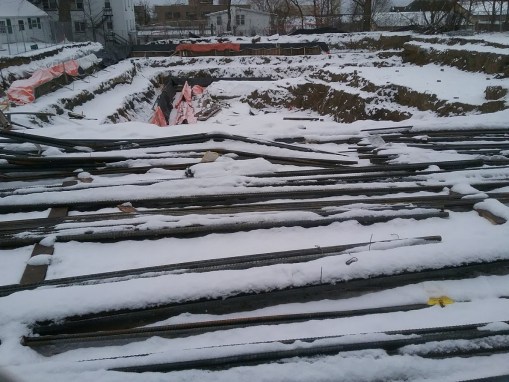
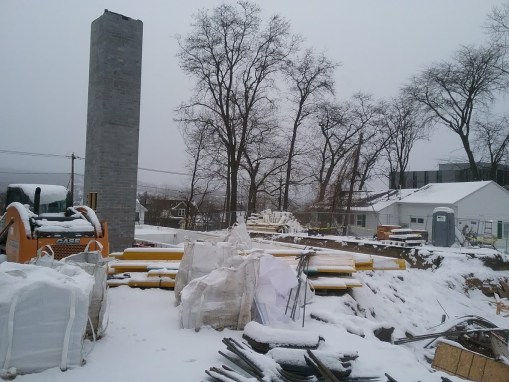
As with the Hilton Canopy Hotel under construction just across the street, City Centre is in the middle of foundation work. Steel forms with plywood facing have been erected and braced along the perimeter of the building footprint. In fact, it looks like the project team is using the same Symons Steel-Ply system being deployed at the Canopy site. The piles have been driven and the foundation slab is poured. The team is slowly making their way to the steel frame of each pile, encasing it within forms before pouring the concrete, letting it cure, and then removing the forms to reveal a concrete/steel column ready for vertical additions. The elevator cores and stairwell columns are also on the rise. – the elevator core facing East State Street appears to be the furthest along.

We finally have a named general contractor, and like the architect for the City Centre team (Humphreys & Partners of Dallas), its a new entrant to the Ithaca area – Purcell Construction Corporation, with offices in Richmond, Virginia and Watertown, New York (an hour’s drive north of Syracuse). It appears that they have plenty of experience with multi-story towers and large structures, which is no doubt an asset for the project team.

As I previously said, as structural steel takes height here and with the Canopy and Harold’s Square, downtown Ithaca is going to look like one big advertisement for TCAD.


Tompkins Financial Corporation HQ Construction Update, 12/2017

19 12 2017

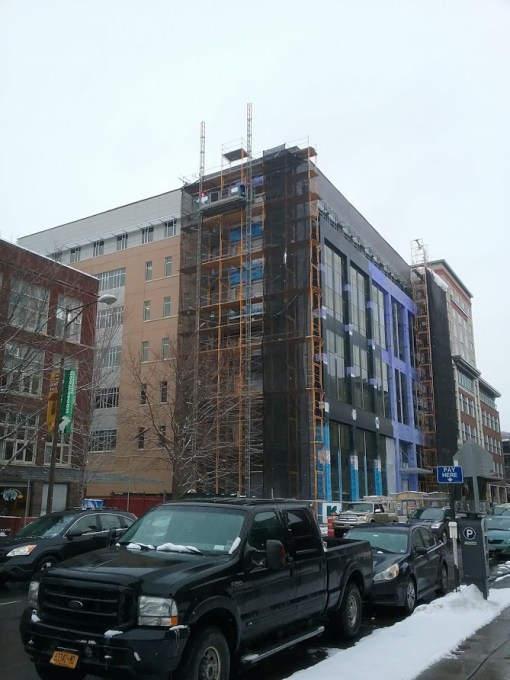
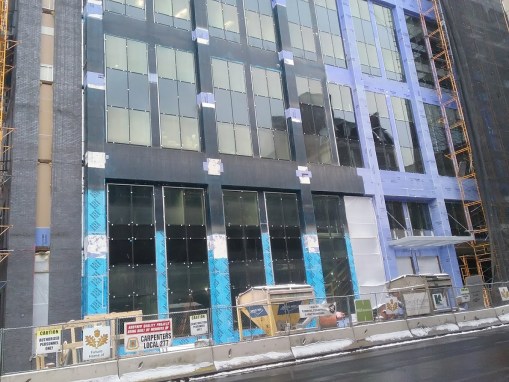
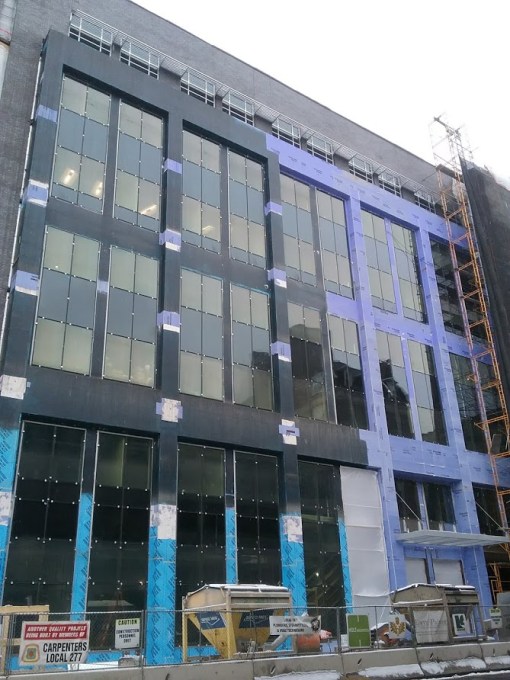
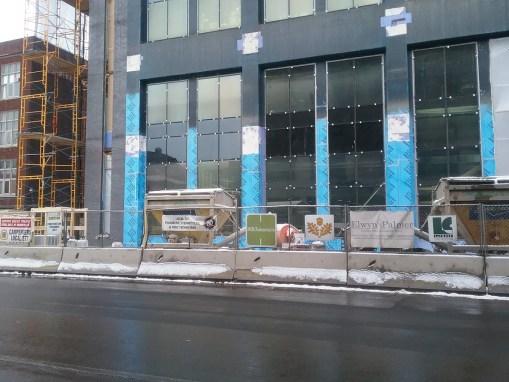
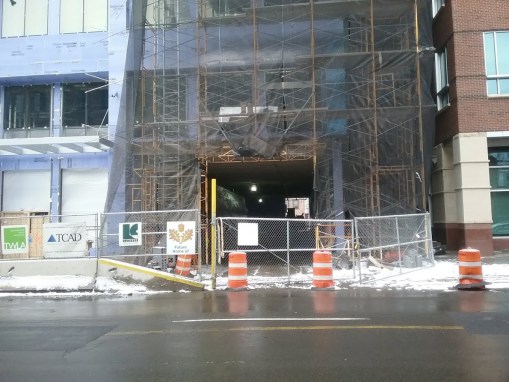
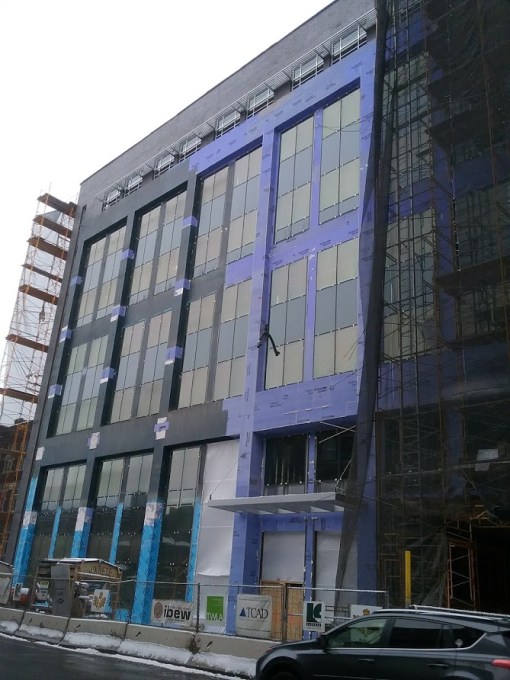
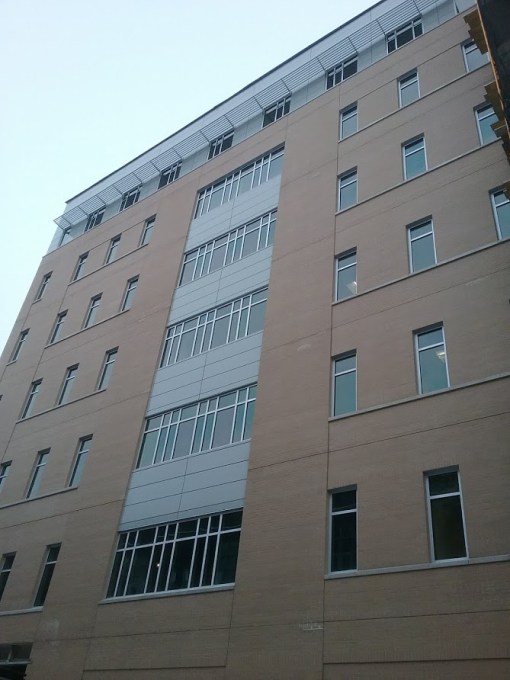
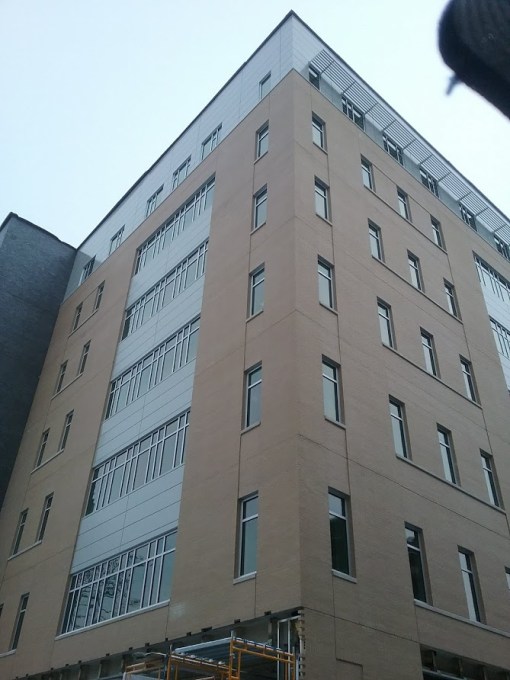
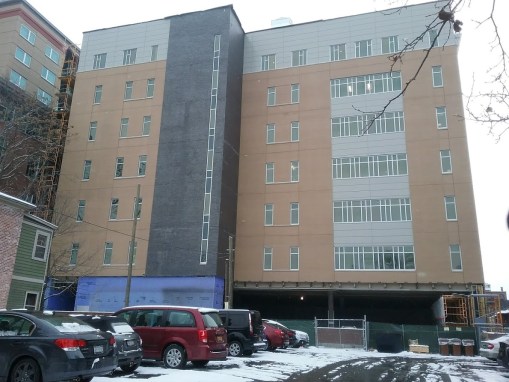
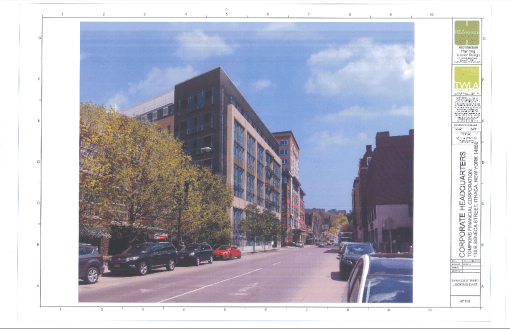
Most of the scaffolding and netting has been taken down on the Tompkins Financial Headquarters in downtown Ithaca. Most of the glazing has been completed, and the Endicott “manganese ironspot” brick veneer is being attached, which isn’t so much a jet black as it is a dark grey. Definitely not as dark as the waterproof coat going on over the gypsum sheathing on the front facade, which will be finished with a grey stone veneer. Not sure why the change of materials on the front facade between U.S. Gypsum panels and Carisle CCW-705 air/vapor barrier, since it doesn’t look like barrier is being applied over the whole of the front before the coating is applied. If someone from HOLT Architects or LeChase Construction knows, feel free to chime in.

It appears there was one design change made late in the process – the rear stairwell, which was initially face with light grey aluminum panels, has instead been faced with the dark Endicott brick. Adds more variety perhaps, but I think the panels made for a less imposing rear face. We’ll be seeing the exact same color and brand of brick on another project, The Lux in Collegetown, where it will face the lower floors of the Dryden Road facade.

There’s still plenty of work left with the exterior finish work, stone veneer and granite base, not to mention interior work like drywall, fixtures and finishes. TFC staff should be moving into the new digs by the end of May.


The Lux (232-236 Dryden Road) Construction Update, 12/2017

18 12 2017

Some progress on Visum’s latest project, “The Lux” at 232-236 Dryden Road in Collegetown. 232 Dryden, the building closer to Dryden Road, has started work on exterior framing – the partially-above grade basement level, built into the slope of the site, appears to have been framed with Amvic insulated concrete forms (ICFs), similar to those seen at the Ithaka Terraces and the Fox Blocks at the Thurston Avenue Apartments. These are thermally insulated plastic blocks filled with concrete – they tend to be a more expensive approach, but they also tend to have a higher grade of insulation (higher R-value), making for a more energy-efficient structure. There has been talking of making the complex net-zero energy capable, provided that the energy of an off-site solar array can be procured. STREAM, the architect of The Lux, also did the Ithaka Terraces. The exterior walls will be assembled block by block, with new pours as rows of blocks are set in place. The rebar provides additional stability. It appears the cinder block elevator core/stairwell has been assembled as well.

232 Dryden might be the more visually prominent of the two building, but it is also the smaller one – it will have 20 units and 53 bedrooms. 236 Dryden will host 40 units and 138 bedrooms.

Speaking of 236 Dryden,  Welliver has the foundation excavated, and the steel piles are in. However, judging from the steel rebar sitting on the edge of the site, the concrete pours have yet to take place, and it looks like the wooden forms are just now being built on the far side of the footprint.

Pessimistically, I could note that this is one of the few Collegetown projects that was able to move forward after the building code change that brought multiple other projects to a halt – the power lines on Dryden Road aren’t close enough for the project to infringe on the new regulations. I had heard Visum might actually pay for the burial of power lines on the 200 Block of Linden Avenue, but even if they did, they would still have to deal with NYSEG’s slow schedule.


400-404 & 406 Stewart Avenue Construction Update, 12/2017

17 12 2017

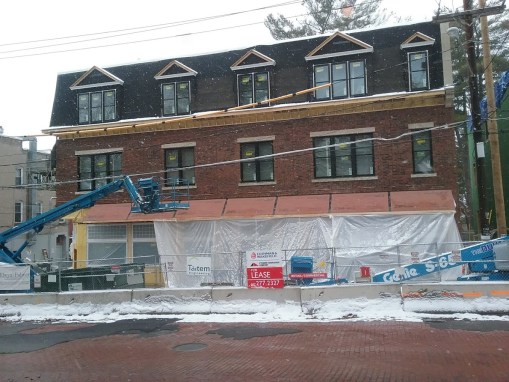
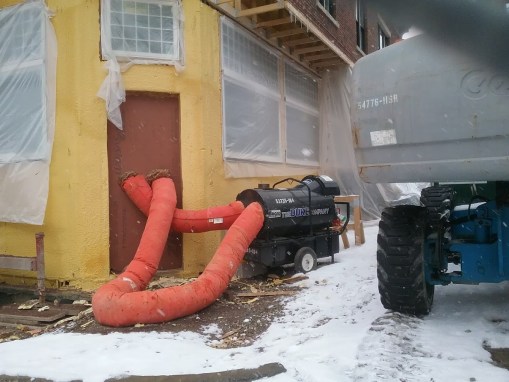
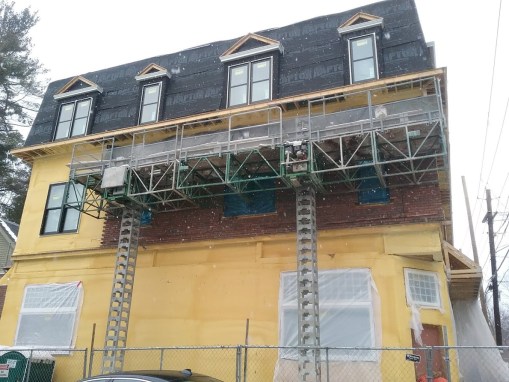
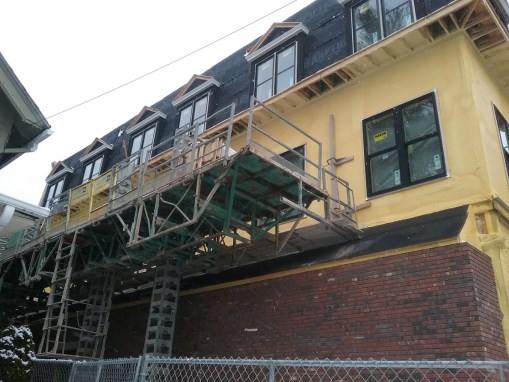
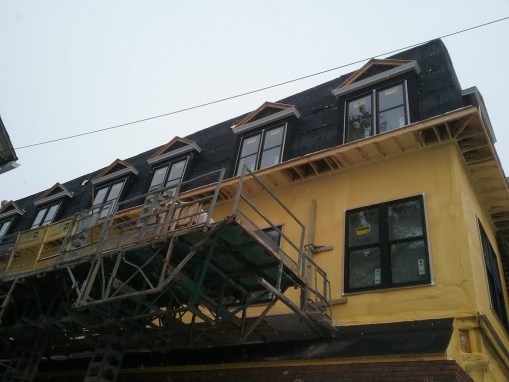
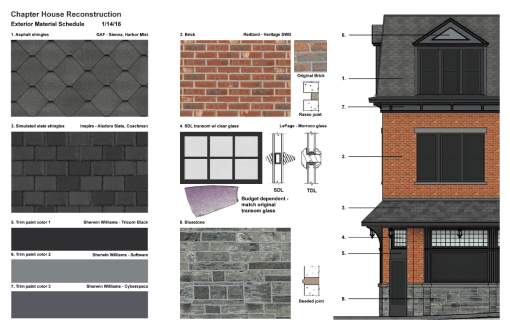
400-404 Stewart Avenue, a.k.a. the former Chapter House site, is fully framed and the brickwork is in progress. The brick veneer is Redland Brick Inc.’s Heritage SWB, and is similar in appearance to the original brick of the Chapter House, which was damaged beyond repair in an April 2015 fire. So the way this has gone is that yellow closed-cell spray foam was applied over the sheathing, probably by a subcontractor such as Goodale Spray Foam out of King Ferry. Closed-cell spray foam, made with polyurethane and applied a few inches thick, provides insulation under the brick. Brick is a tricky material in some ways – the plywood ZIP Panels are great for sealing a structure to make it air-tight, but brick absorbs moisture, so the spray foam not only serves as an insulator, it also provides a protective moisture barrier between the plywood and the brick. It’s typical to have a drainage gap underneath the brick so that they can dry out, otherwise the uninsulated brick is at risk of long-term moisture damage.

The roof looks to be covered in tar paper or similar material; this will eventually be layered over with chamfered asphalt shingles. The roof ZIP panels that make up the “awning” being built over the first floor will be covered in shingles as well, but those will be more expensive simulated slate. The trim pieces like the cornice may be cast stone or fiberglass over wood, and it looks like the window sills and heads might be cast stone. It looks like they’re using Marvin Windows for the windows themselves.

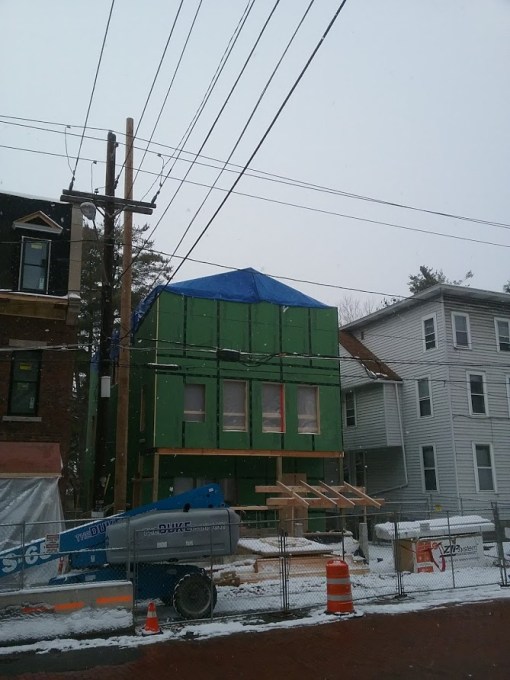
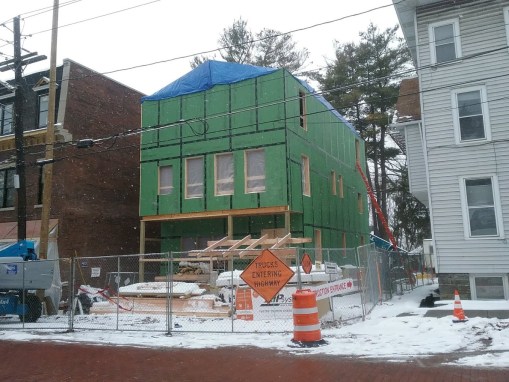
406 Stewart Avenue is still being framed with ZIP panels, now up to the third floor with just the roof trusses left. The drawings I have on file suggest the fenestration has been changed – the position and size of the second floor windows are different from the renderings, in particular the window on the far left of the front face, and one of the windows on the north side was moved further back from the street. It suggests some modest interior alterations, but the ILPC will be watching this like a hawk since these builds are under their jurisdiction (the East Hill Historic District).


News Tidbits 12/9/17: Not Enough Time in the World

9 12 2017

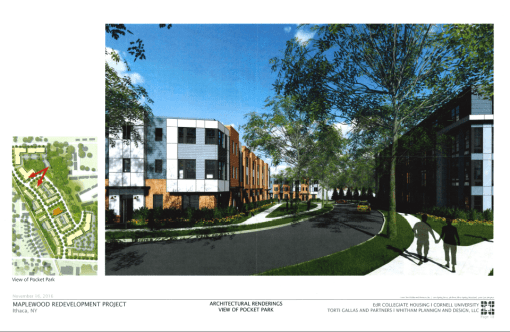
1. The good news is, Maplewood is progressing. The bad news is, it is not progressing fast enough. A combination of bad weather (rain-outs), and staffing issues. The weather delays had been so bad (with rain 2.5x monthly normals in October) that some subcontractors walked away to take other jobs – while the ~200 Maplewood construction jobs are quality union labor, it’s been difficult to get a full week’s work in. It’s a Monday-Friday job; with a rain-out, they lose a day in the week. That means they also lose out on a day’s pay. Over the past year, 37 days have been partially or fully rained out. A provision in the subcontractors’ contracts allows them to leave for other jobs id the issue becomes too severe, so some have done just that. Not hard feelings, just a tough situation for everyone.

Now about 25 days behind a very tight schedule, EdR and LeChase are asking to be allowed to regularly work 8 AM – 4 PM Saturdays. The town is open to this, but wants more documentation before signing off. So, expect a six-day workweek during the winter and spring. The goal is still to deliver the $80 million, 872-bed project by July.

2. The Seneca Street Garage is “showing its age”. As the garage is now about 45 years old and is designed to last about 50 years, some components are starting to deteriorate. The city has constructed some shoring posts to keep the concrete pillars relatively stable. They are not at risk of collapse, but the tension cables, which are used in combination with rebar to provide for a heavy-duty concrete structure with fewer columns, are starting to wear out. Decades of salt, water and corrosion will do that.

The city will lose about 20 parking spaces from the life-extension measures. The Times is reporting that the city hopes to get another ten to fifteen years out of the garage, and hope to have a plan for replacement parking in place within ten years. That could be a demo and rebuild of the garage, or it could be something more substantial, like the Green Street Garage project. It’s something to mull over now, but there are no big decisions planned anytime soon. Perhaps a Seneca Street rebuild with mixed uses ends up being one of the big urban developments of the late 2020s.

3. A development site on West Hill has exchanged hands. As covered previously, Bella Vista was a planned 44-unit condominium project on Cliff Street that was approved in 2007, and never came to fruition. The site it was proposed for, an 11.71 acre property at 901-999 Cliff Street, was put up for sale in December 2015 for $395,000. Finally, it has been sold.

The developer, Mauro Marinelli as Primary Developers Inc., sold the land to American Blue Sky Holdings LLC for $330,000 on the 5th. The LLC is owned by local businessman Greg Mezey, who previously bought the 12,000 SF medical office building next door at 821 Cliff Street for $945,000 in February 2015. Since then, he and realtor Ryan Mitchell have undertaken some modest building and site improvements. As Red Door Rentals, they own and manage a few apartment houses with a total of about 25 bedrooms.

So what does that portend here? Good question. Watch and wait, for now. The Bella Vista project could still be built, but it must be re-approved by the city of Ithaca, since project approval is only good for two years. Zoning is R-3a, primarily residential uses with up to 4 floors and 35% lot coverage. Parkin is one space per unit or three bedrooms (whichever produces more), and small-scale commercial is allowed with a special permit. The site’s topography is a challenge, but the size of it and its proximity to downtown and the West End make it an interesting opportunity.

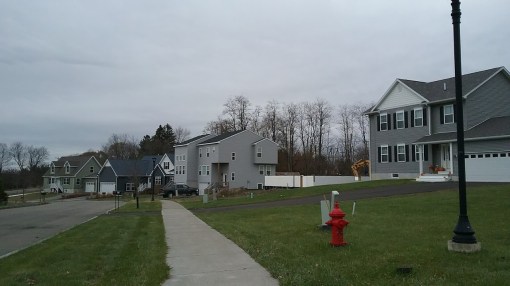
4. It looks like the first phase of Dryden’s Maple Ridge subdivision has just about filled out. For owner/developer Paul Simonet, it’s been a long time coming – the development launched right before the recession in 2008, and development didn’t really take off until the economy recovered. In 2013, there were three houses. By November 2014, only four houses had been built, with a duplex underway. Now, there are ten homes, and just about all one of the home lots have been sold. Some of the lots in phase one were combined by buyers.

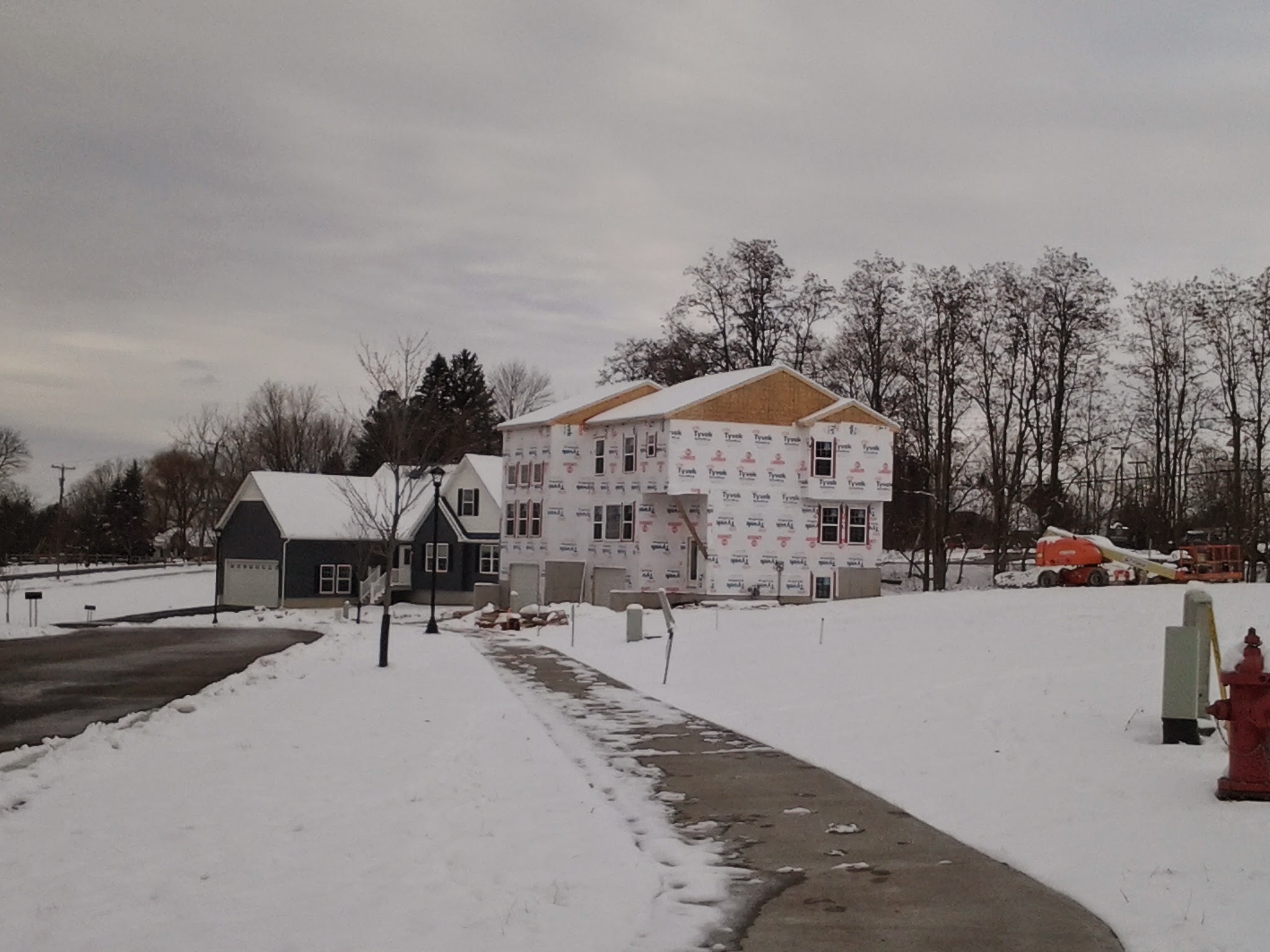
Interesting, many of the homes built in Maple Ridge are modulars – I half-jokingly suggest that Carina Construction take prospective buyers through here to show them the variety of options one can pursue with modulars. It looks like this latest build on Applewood Lane will also be a modular – the foundation is built (note the dark Bituthene membrane for moisture protection), and the pieces will be trucked over and craned and assembled shortly, if they haven’t been already.

Ultimately, Maple Ridge is supposed to be three phases and 50 lots, and phase two will have about 29 lots, and since these are larger, they’re less likely to consolidated as phase one’s were. Given the need for a new road and infrastructure, sales seem unlikely until well into next year. The village minutes (the few they upload) does show that Simonet is actively pursuing the second phase.

It also answers a question from last week – the Elm Street office/warehouse complex will be the new home of the Ithaca Ice company, after some modest renovations.

5. The Lakeview affordable housing plan for the 700 Block of West Court Street, now called “West End Heights” was selected to receive a $100,000 grant from the inter-municipal and Cornell affordable housing fund (CHDF), but the funds will be delayed a little bit because they need to be moved into the 2018 budget, as the check will be going out in 2018.
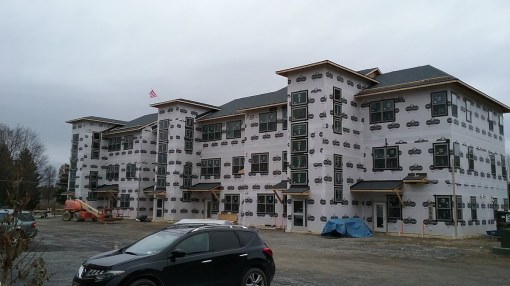
6. The latest phase of the Village Solars (the reconstruction of 102 and 116 Village Circle) is being built with a $6 million construction loan from Tompkins Trust Company. The agreement was uploaded to the county’s records on the 7th. The contractor is “Actual Contractors LLC” with an address at Stephen Lucente’s home on the lake – it’s their in-house construction crew. Albanese Plumbing will be rigging sprinklers, heating and water pipes, T.U. Electric will be doing electrical and fan installations, and Bomak Contractors of Pennsylvania is the subcontractor for excavation, bedding and foundation work. Apparently Larry Fabbroni, the consulting architect, charges $90/hour for design work, while engineering/surveying is $107.50/hour.

102 and 116 comprise 42 units (24 and 18 units respectively), but if you’ve been reading the construction updates for the project, then you already knew that. The loan says both buildings have to be completed by August 15th, 2018.

7. Not a whole lot going on at the moment. Lansing town will be hosting a Planning Board to look at a telecommunications tower, and three new 1-acre home lots to be carved from a larger lot off East Shore Circle. The city’s project review meeting is so slim, they didn’t need to attach any files – just the old business with the Sophia House addition on the Knoll, and that’s it. The city Board of Public Works will be looking at plans for a new inclusive playground at Stewart Park.



Cayuga View Senior Living Construction Update, 11/2017

29 11 2017

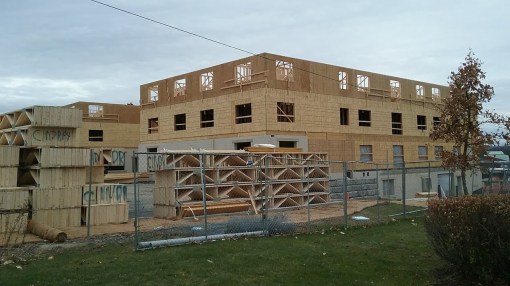
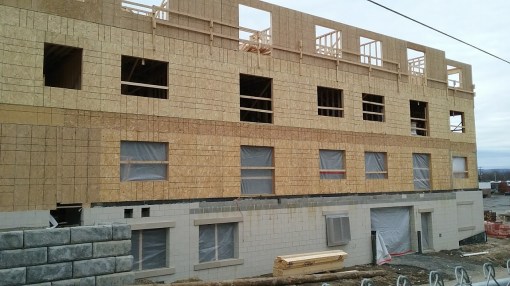
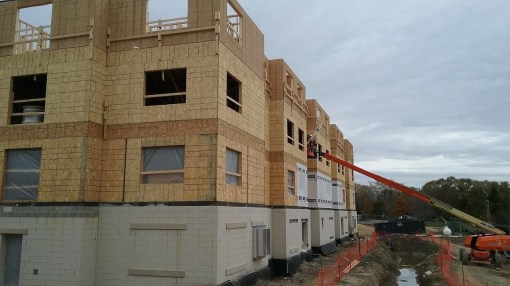
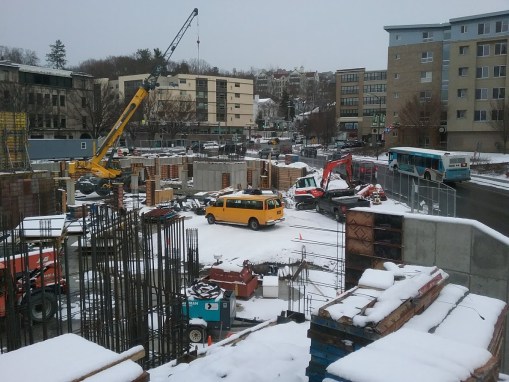
Framing for the new Cayuga View Senior Living building is one floor short of topping out. A stack of floor joists sits at the front of the construction site, as framing for the fourth floor continues. The last couple photos show how the joists are assembled between floors, typically attached to the exterior wall through joist hangers and braced with additional metal straps. Bracing has been temporarily built as the continuous plywood structural panel wall is nailed together. On the third floor they’ve started rough-ins (I see an industrial spool through the window, implying cables for electrical work), but the meat of the interior work is on the second, first and basement levels. A bit of housewrap has been applied to the rear face.
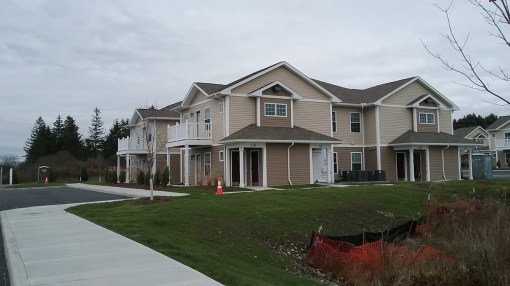
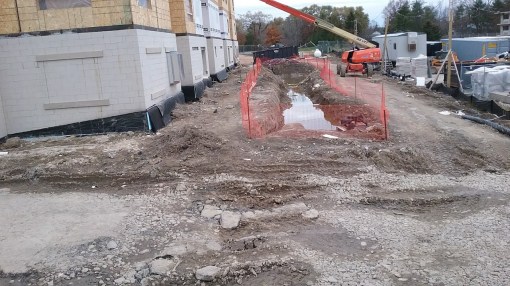
The commercial spaces are built out with masonry (CMU) walls, in contrast to the wood framing of the upper levels, and may be the result of fire code. The basement, also assembled with masonry blocks, will host utility space and some amenities. Decorative stonework provides aesthetic relief to the sloping site. Curbing has been extruded, and foundations for the light poles have been laid and wired. Not certain why there’s a moat at the rear of the building, although it may have something to do with underground utility lines.


Poet’s Landing Phase II Construction Update, 11/2017

26 11 2017

For this blog’s practical purposes, Poet’s Landing Phase II is complete. At least one of the six eight-unit buildings is occupied, but perhaps only one – a woman arrived while the photos were being taken and was moving chairs out of her car. To ward off the emails pointing out its an Audi – its a 15-year old Audi, and as my buy-American family of mechanics happily relay, older Audis depreciate like stones in a pond thanks to shoddy electrical systems and high repair costs.

Even the youngest buildings in the second phase have been completed from the outside, and appear to be undergoing finish work in the interior. The last of the sidewalks are being poured and much of the lawn has grown in. With the fire-damaged building in phase one, the rebuilt units are missing some of their trim boards and architectural details (railings/column covers), but are likely to be finished before the end of the year. The inquiry page for rentals is here.

The affordable housing is much welcomed given the county’s housing woes, although a location closer to the urban core would be preferable given proximity to jobs and services. At least the site is walkable to the village. Kudos to Conifer Realty and LeChase Construction. The ceremonial opening is November 29th.


Village Solars Construction Update, 11/2017

25 11 2017

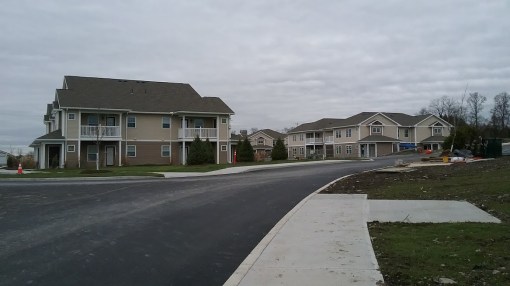
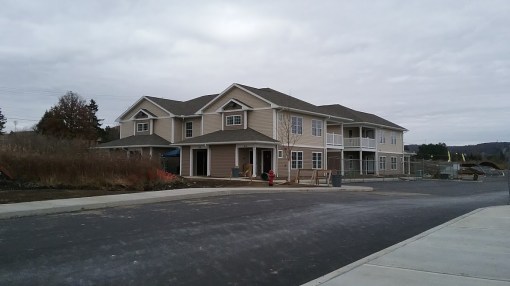
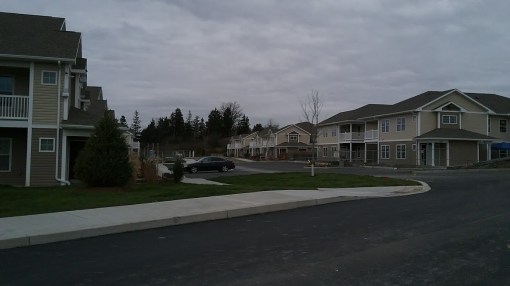
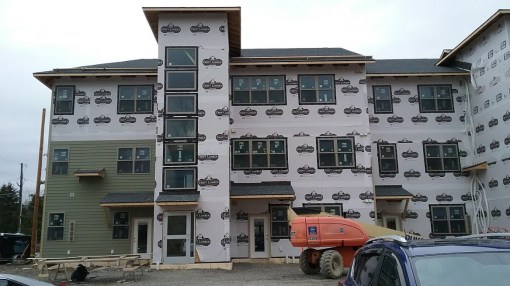
Another redeveloped building is underway at the Village Solars property along the 1000 Block of Warren Road in Lansing. The original 8-unit, 8-bedroom 116 Village Circle is no longer of this world; the early 1970s structure was torn down to make way for a new three-story building with 6 2-bedroom units and 12 microunits (400-600 SF). Along with the framed and sheathed 102 Village Place, that means that Lifestyle Properties does in fact have two buildings underway at the site; perhaps the last visit in September just happened to catch the project during a brief lull.

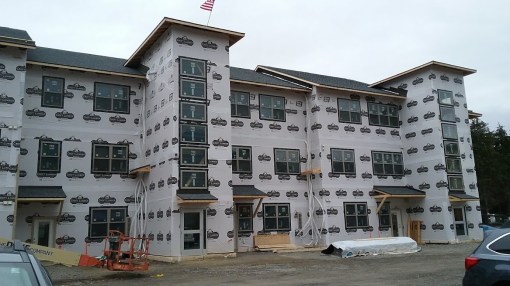
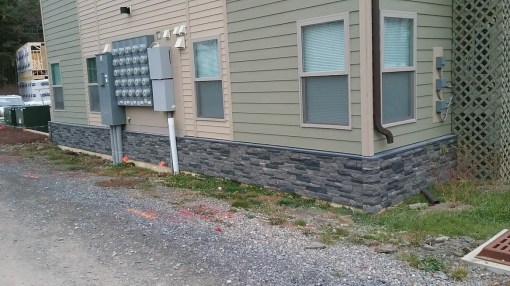
102 Village Place has been fully framed, sheathed, roofed, windows and doors have been fitted, and the fiber cement siding is just beginning to be installed (possibly by T&J Contractors of Auburn; most construction work by Lifestyle Property/the Lucente family is handled by an in-house crew). On the inside, expect electrical, plumbing, and HVAC to be underway; with no open doors or windows, it was not clear if they’re hanging drywall yet. In comparison to the “older” new apartment buildings, these new ones have different fenestration and even have stone veneer at the bases, though the overall building designs are generally similar. It’s not completely certain what the purpose of all the eaves (eavelets?) are on the walls of 102, though given the utility lines, it may have something to do with weather/ice protection for the air source heat pumps, which are shielded by small eaves and wood lattice on the latest completed apartment buildings.

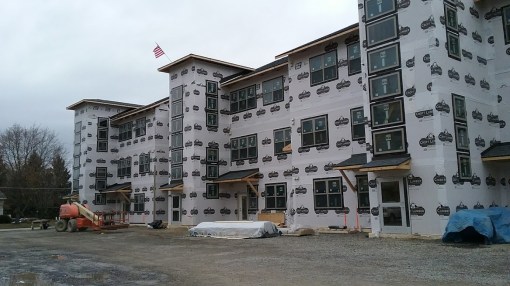
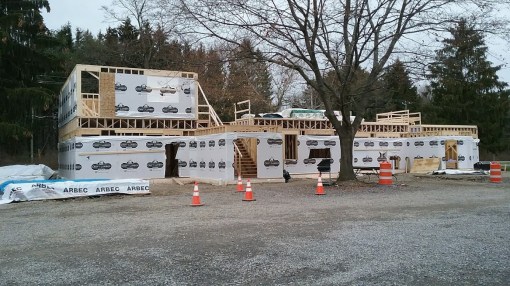
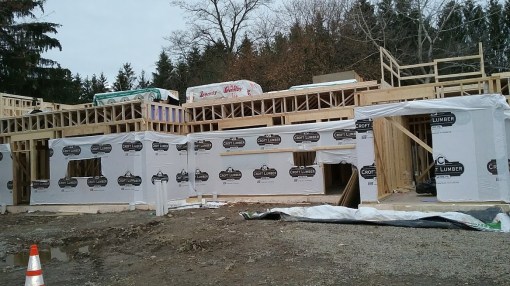
The replacement structure for 116 Village Circle is just starting the framework for the second floor. As previously noted, it’s not uncommon to just housewrap over the rough openings, and cut out the holes later. The excess will be trimmed off and the edges will be fastened back to the inside wall, allowing for a tight and complete wrapping of the rough opening. Taking a guess, 102 will probably be done by the end of March, and 116 the end of June perhaps.

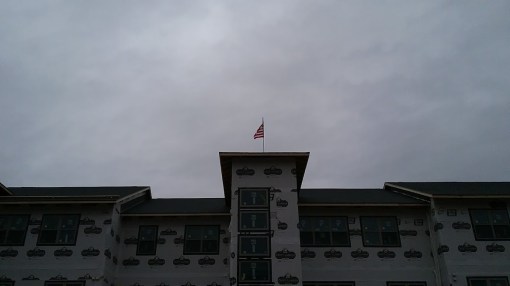
Side note, I’ve never noticed the Village Solars construction crew put a flag up on topped-out structures before.


Ithaka Terraces Construction Update, 11/2017

23 11 2017

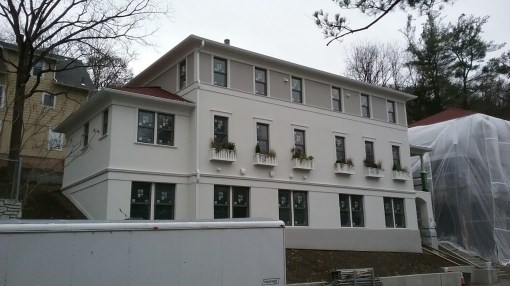
These are turning out quite nice. Building “A” is practically complete from the outside. The plant boxes outside the windows have even been stocked with small ornamentals. About the only thing left are the exterior finishes on the front facade columns. Building “C”, the smaller building to its east, is also nearly finished from the outside. I suspect the wiring coming out of Building “C” just above the parking area is for electric car charging stations.

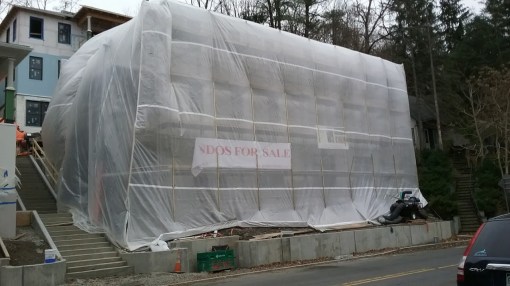
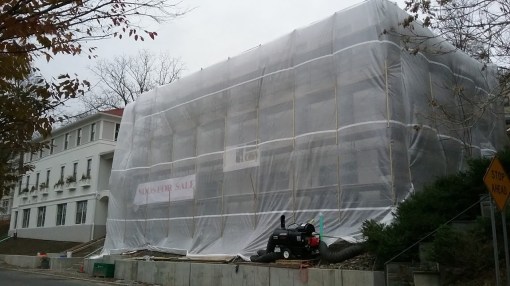
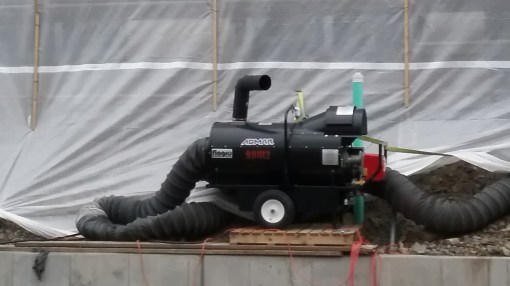
Building “B”, the other large condo structure, is fully encased in plastic sheeting and wood ribbing. Stucco generally needs to be applied in dry, temperate weather conditions, above 40 F at a minimum. Given Ithaca Novembers, that means McPherson Builder has basically turned the building into a dry, heated bubble so that can apply the stucco properly. Building “D” is still being roofed, and is just getting its windows fitted. It looks like the scratch coat for the stucco is being applied over the water barrier, and the brown coat and the finish coat will come later, meaning that “D” will eventually be bubbled in as well.

Most of the concrete curbs and steps have been formed, poured and cured at this point. The grand staircase will make for a nice shortcut from South Cayuga Street to West Spencer Street.

The marketing material appears to be using the phrase “Arriving here is what you are destined for“. Tje website doesn’t indicate how many of the twelve units are spoken for (if any; the project is in the soft marketing stage, where they’re accepting inquiries but there aren’t any formal real estate listings). The two-bedroom and three-bedroom units go for $299-$434k, depending on size and location.


McDonald’s Rebuild Construction Update 11/2017

21 11 2017

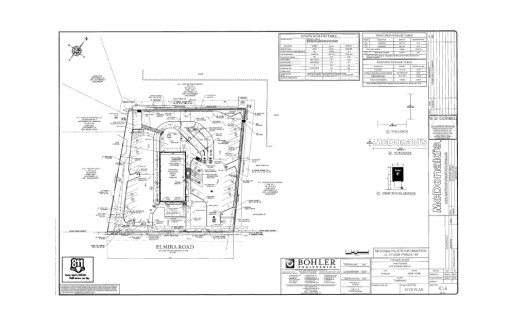
The new 4,552 SF Ithaca McDonald’s is framed, waterproofed and faced in a couple different shades of Belden Brick and Boral USA stone veneer. The aluminum metal accents have yet to be applied. Much of the work has shifted inward with plumbing, electrical and HVAC installation. The McDonald’s signage, including the modern take on the “golden arches”, will help to break up the blank spaces at the front (east) and side (north) faces. Shirt brick walls have also been mortared together for decorative landscaping, and to block off the parking and patio areas from South Meadow Street. Mulvey Construction seems to be motoring through this project quickly. The plumbing subcontractor appears to be Donofrio Mechanicals of Auburn.

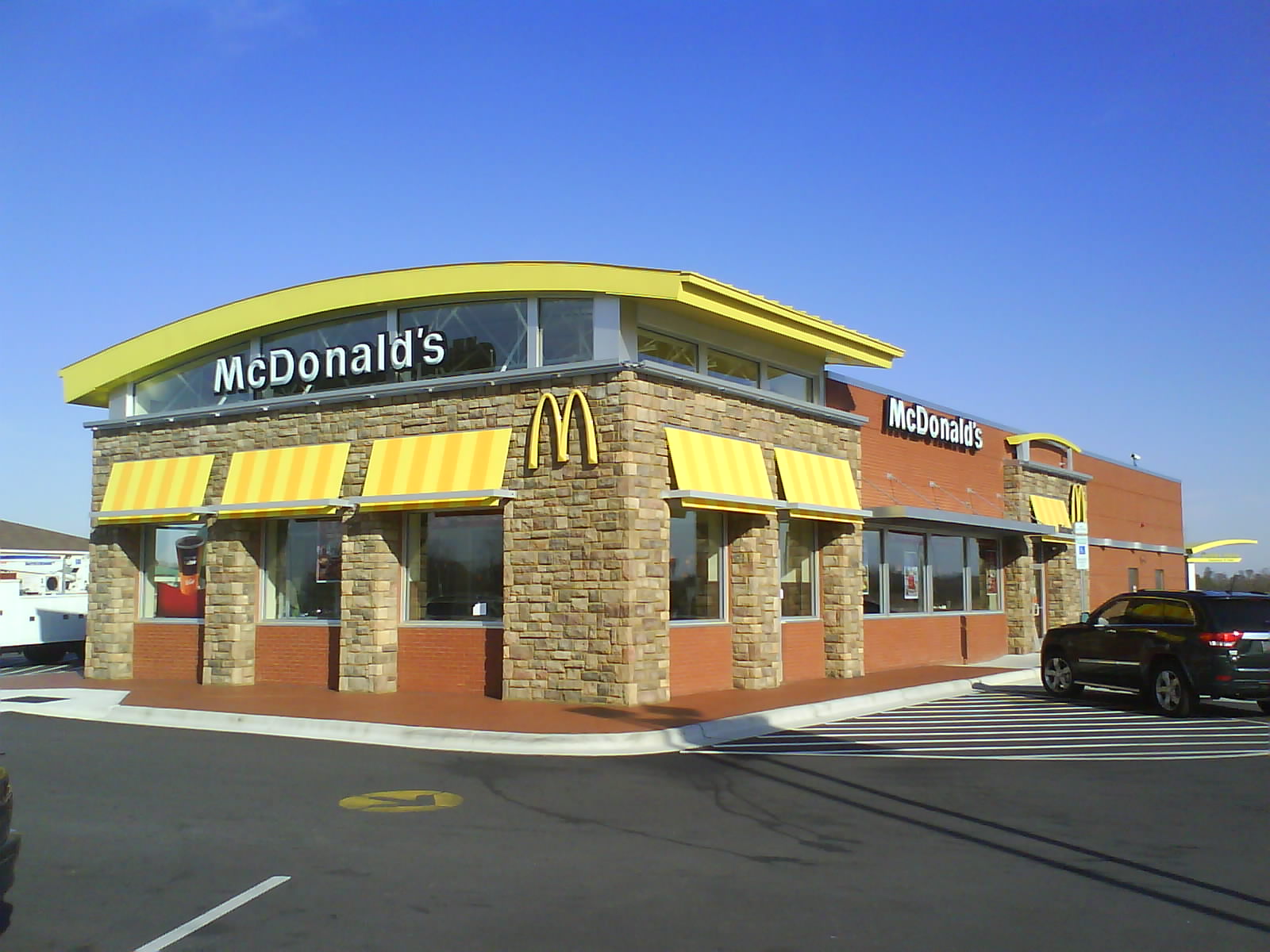
If one really wants to dig around for something that makes this McDonald’s unique from all the others with the new design language, it appears that many incorporate Dry-Vit (artificial stucco) or architectural aluminum panels, but neither of those finishes are present here. The version with an elevated arch canopy and glazing is a design language feature that didn’t make the cut for the Ithaca location. Maybe it’s just too cloudy.

The new $1.375 million restaurant should be open by Christmas. Project information can be found in the introductory post here.