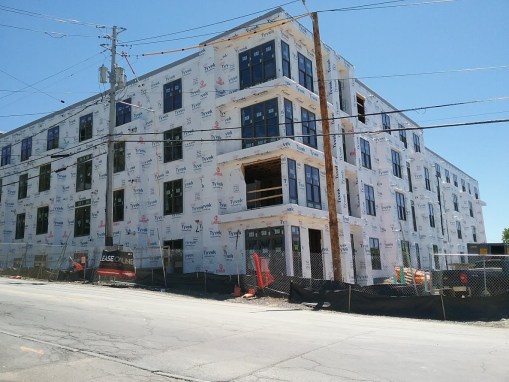
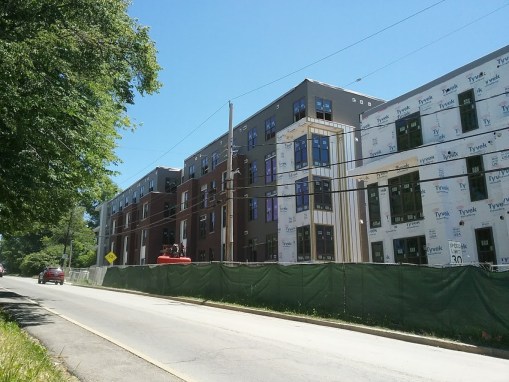
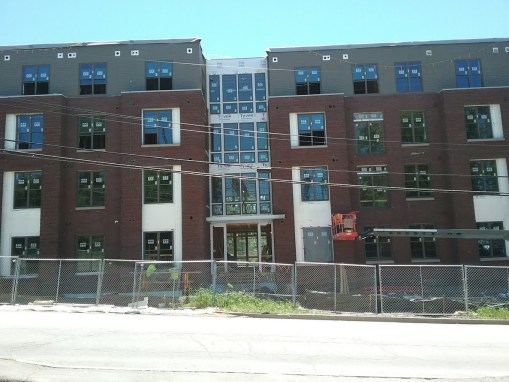
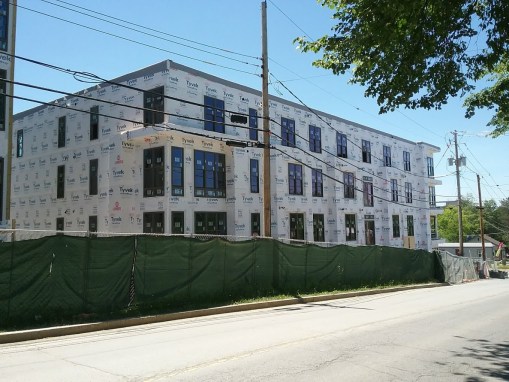
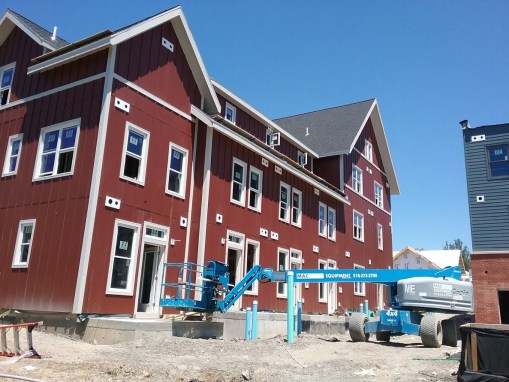
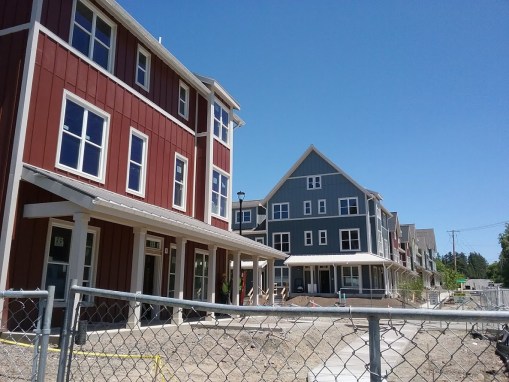
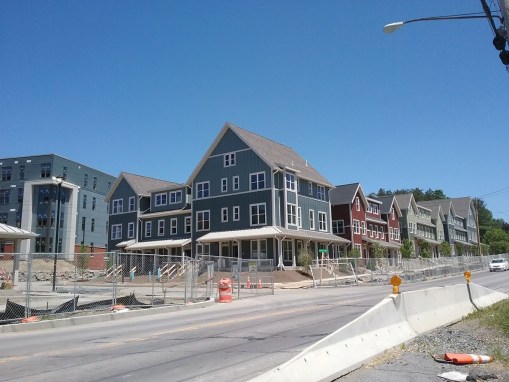
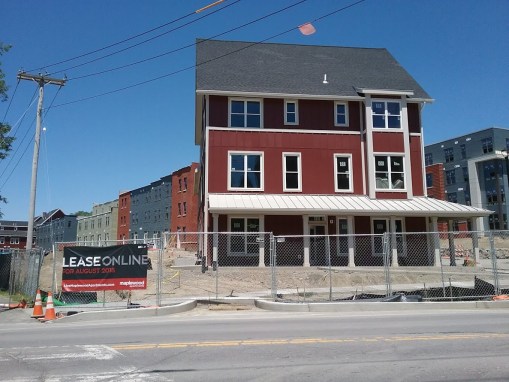
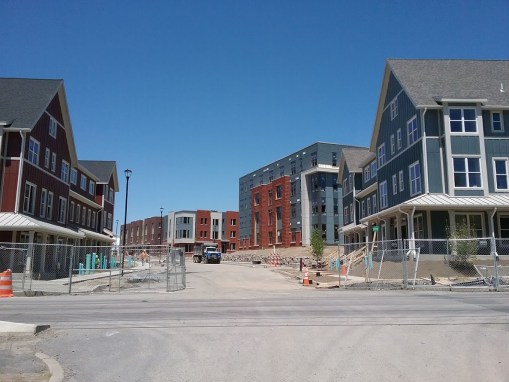
East Pointe Apartments Construction Update, 6/2018

24 06 2018

If the name doesn’t sound familiar, that’s okay. For the past two years, the common reference to these was either “The Bomax Drive Apartments” or the “Park Grove Realty Apartments”, either of which was used interchangeably. The official name according to Park Grove Realty’s webpage is “East Pointe Apartments”. East of what, I dunno.

Park Grove Realty is a new company headed by a group of long-time developers and real estate professionals. Andrew Crossed and Andrew Bodewes cut their teeth at Conifer Realty, a regional affordable housing developer based out of Rochester (readers might be familiar with some of their local projects, including Linderman Creek, Cayuga Meadows, and Poet’s Landing). They knew their way around development and had familiarity with the area. Not only that, they were working with Tom LiVigne, who has been on the board of many local projects and recently retired as the president of real estate operations at Cornell.

While LiVigne was at Cornell in 2008, the university purchased a 19.46 acre parcel on Bomax Drive. The property was zoned for business and technology, which is intended for commercial office, warehousing or tech-focused industrial space, which is what Cornell originally had in mind. But, with the onset of the Great Recession, and a re-assessment of Cornell’s needs, nothing ever came forth for the property.

A little bit of speculating here, but because Conifer’s Cayuga Meadows had been floating around since the late 2000s, LiVigne would have been professionally familiar with Crossed and Bodewes. It seems likely that as LiVigne retired in early 2015, and Crossed and Bodewes launched their company a few months later, they might have approached him with the idea of an Ithaca project, knowing the market’s strong economics and housing deficit. LiVigne was familiar with Cornell’s excess holdings, and whatever discussions he had with Park Grove post-retirement led to the idea of a project on this property.

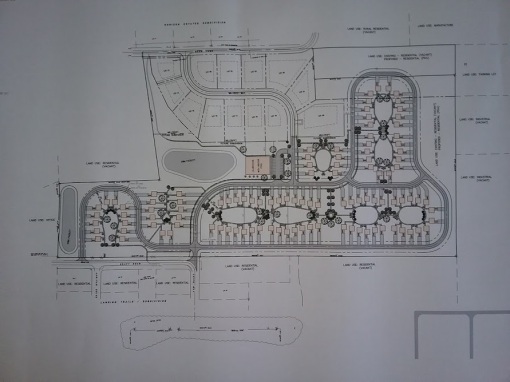
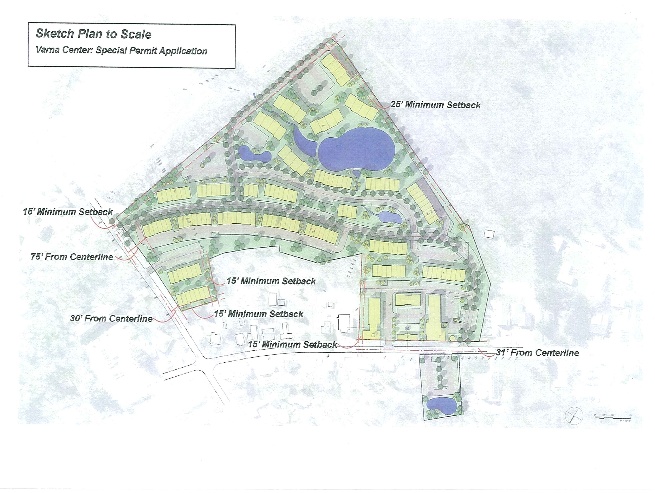
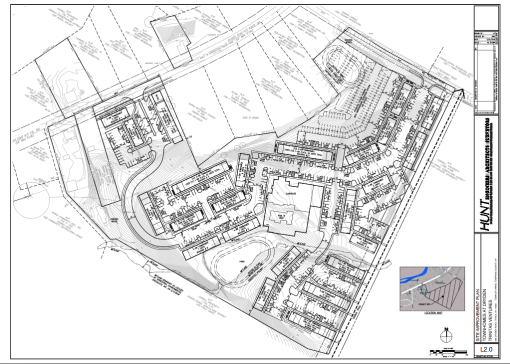
The project was first conceived and brought before the village of Lansing in July 2016. East Pointe is a 140-unit townhouse complex, fourteen strings of ten units, plus a community building, situated on a wooded vacant parcel on Bomax Drive. The intent was to explicitly avoid Collegetown and Downtown, and do a project geared towards the upper-middle class market segment, more specifically empty nesters and young professionals who may be moving in for work, but have yet to buy a house (this is exactly the same sub-market and words used by the developers of the 102-unit Cayuga Orchard project over in the town of Lansing, and even bears a passing resemblance). Arguably, a modest slice of graduate/professional students is possible as well.

To make the project possible, the zoning would have to be changed to high-density residential – the village planning board wanted a traffic study and wasn’t excited that there was no affordable housing here (the project team argued the asking price Cornell wanted made affordable housing infeasible), but was otherwise open to the idea of the zoning change; no one had developed a business and technology space since 2005, and residential was seen as a downzoning from what could have been done there, should Cornell have really pushed for a large office of research building. The neighboring developer, however, was not okay with the rezoning.

I don’t intend to rehash Forest City Realty and the Jonson family’s attempt to stop the project, but the argument was that it was a “spot rezoning” and that it was illegal. The Jonsons felt the units would decrease the desirability of their own project, the luxury for-sale townhomes in the Heights of Lansing. It became so impassioned that Lisa Bonniwell (Ivar and Janet Jonson’s daughter) ran herself and allies to try and take over the village Board of Trustees and mayorship last year in an effort to stop the proposal – they lost by a large margin. They also took the village to state court, lost, appealed, and lost again. The village estimates, with considerable distaste, that although they won, the court cases cost them close to $50,000.

It’s because of the lawsuit that the timeline gets a little muddled. The rezoning request was filed in September 2016, the public hearing in October, and the zoning change was made in November 2016 – to make it clear, that was the rezoning, not the project. The project wasn’t approved until November 2017, after the lawsuit was rejected and had gone to an appeals court. For a little while, Park Grove had a “continue at your own risk” for preparing final drawings and legal paperwork, given that the appeal was not declined by the state court until February 2nd 2018. The first real sign the project was moving forward came on March 16th of this year, when Cornell sold the land to Park Grove for $1.5 million, $300,000 more than what the university paid in August 2008.
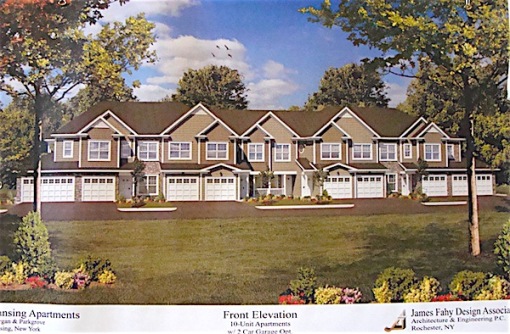
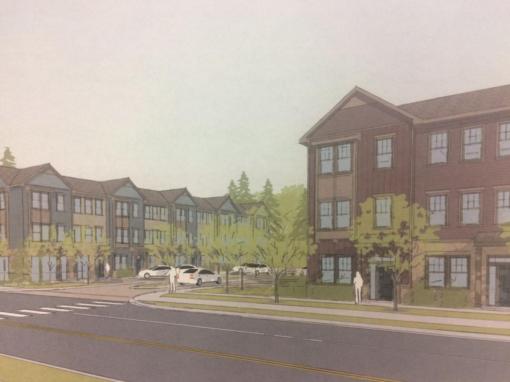
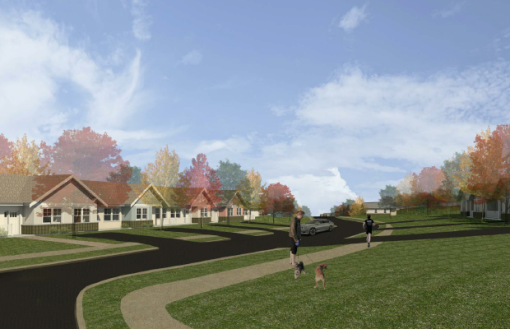
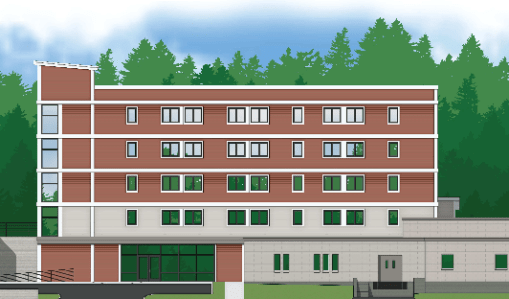
Each string will have four units on the first floor, and six units on the second floor. Each unit has their own entrance, and the project is being described by the developer as “walk-up garden style“. The mix of units is 36 one-bedroom units, 90 two-bedroom units, and 14 three-bedroom units – since 36 and 90 don’t break down evenly by 14, I’d expect slightly difference unit mixes per building, and perhaps that will result in some slight design differences for things like window and door placement. However, they’ve only ever shown one apartment string in their official renders. The renders above are from early in the process (top), and the one they uploaded to the company website last week (bottom) – note the differences in the end garages and in the second floor/roof on the right side of the image. it may be a change in design, or it may be two different building designs they plan to utilize depending on unit layout. Have to wait and see on that one.

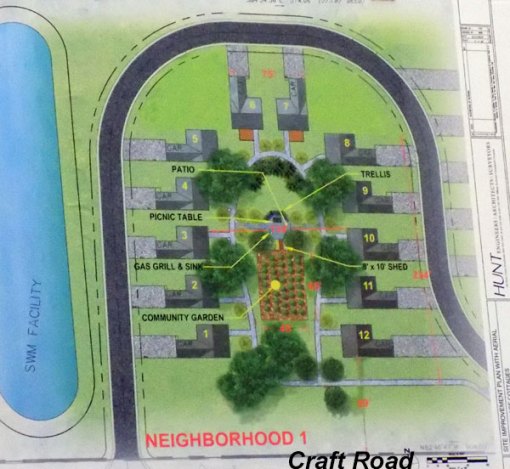
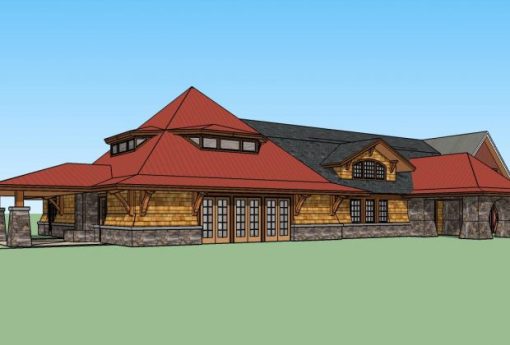
The one-bedrooms will be about 900 square feet and go for $1,400/month, according to an early interview with the Ithaca Times. The 1,300 SF two-bedroom units will go for $1,700/month, and the three-bedrooms, which will be about 1,400 SF, will for $1,900/month. The Lansing Star gives similar stats. Renters will get “high end finishes and amenities”, with possible amenities including  the community building with swimming pool, bocce ball court, walking trails, a community garden and a dog park.

I have not seen any building costs or local lending activity associated with the project, but if it’s in the ballpark of the nearby Village Solars (which is $2-$3 million per building), then it would not be unreasonable to expect something in the range of $30 million (of course, I am not the county tax assessor, so don’t take my word as gospel).

The architect, James Fahy Design Associates of Rochester, has a lot of experience with newer suburban developments, both single-family and multi-family. A google search (their website hasn’t been updated) shows similar gable-loving, shake siding and stone veneer embracing projects in the Buffalo, Rochester, Syracuse and Albany areas. Jess Sudol of Passero Associates is the engineering consultant.

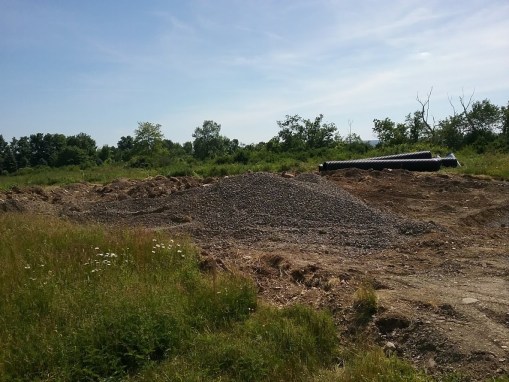
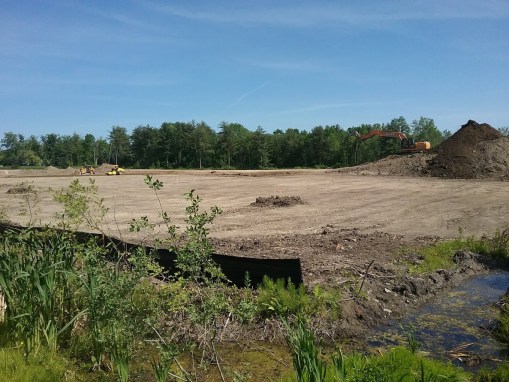
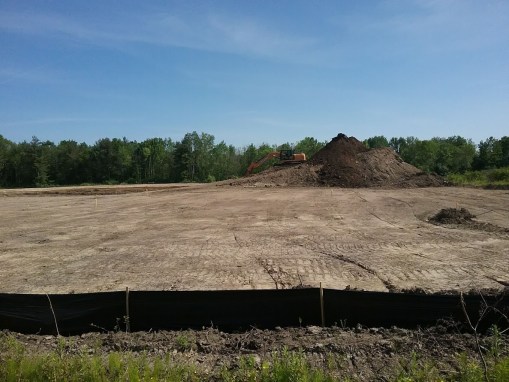
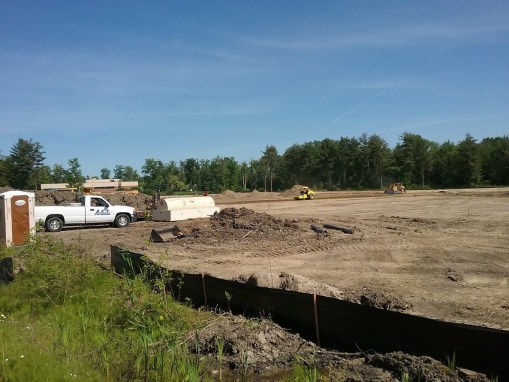
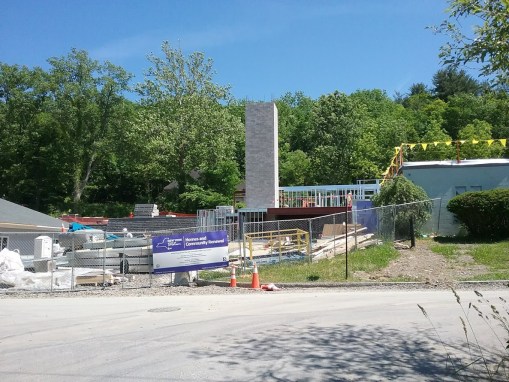
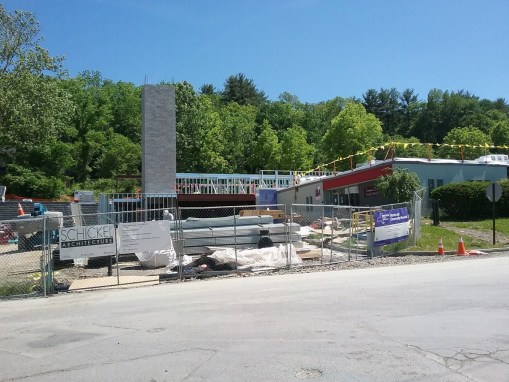
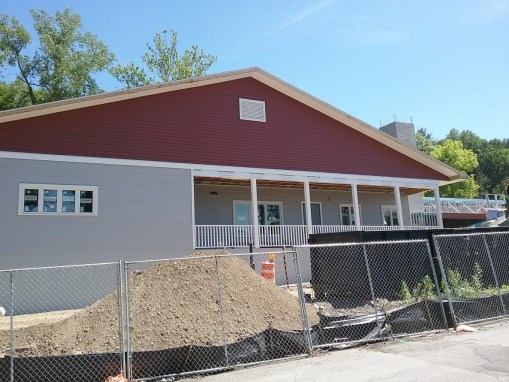
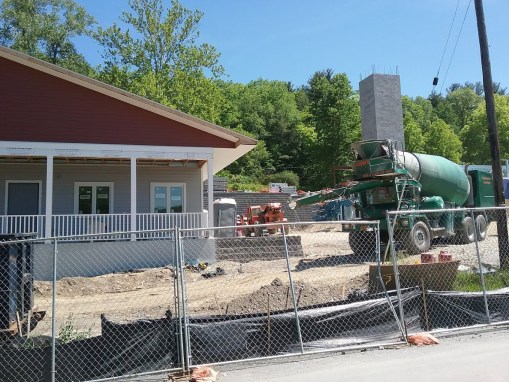
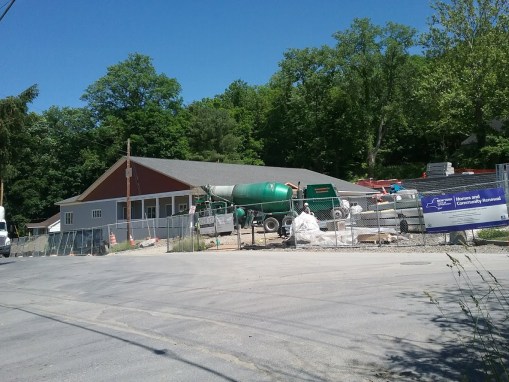
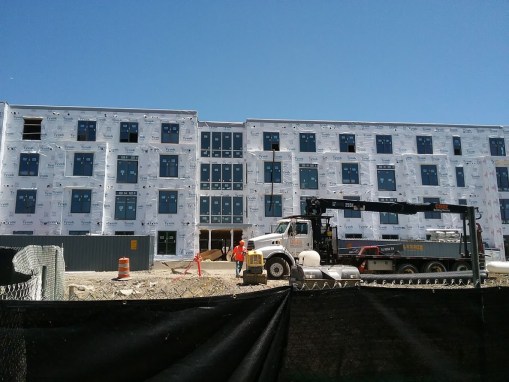
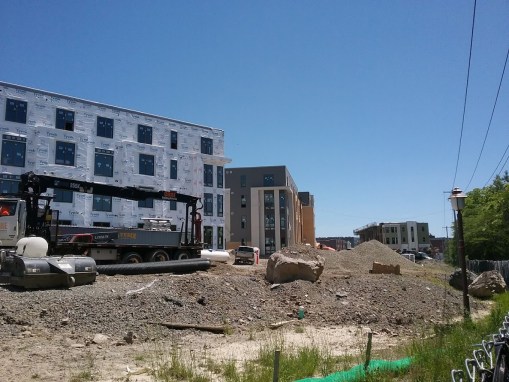
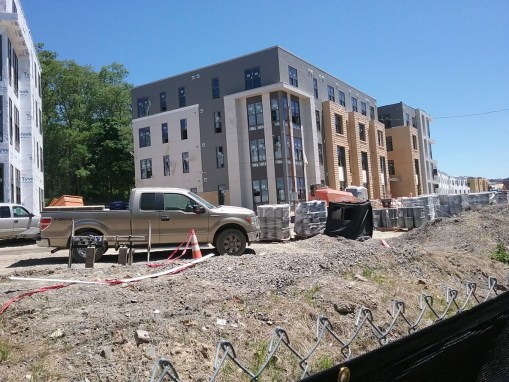
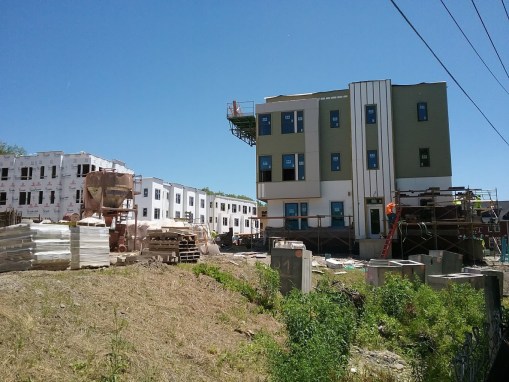
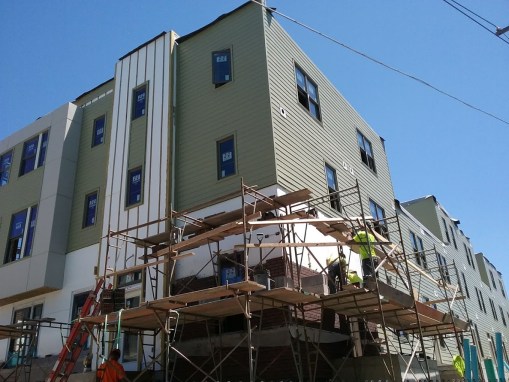
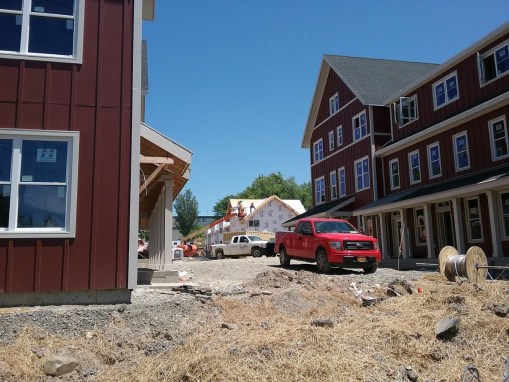
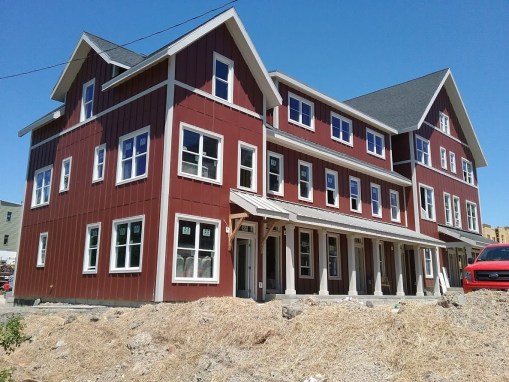
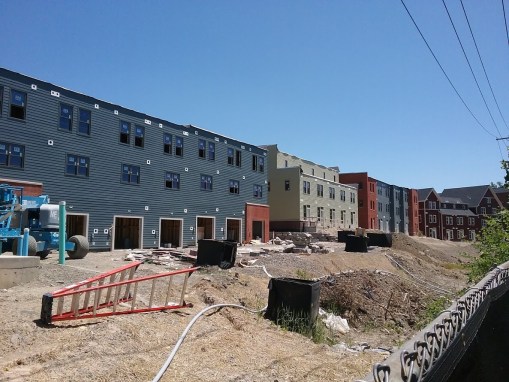
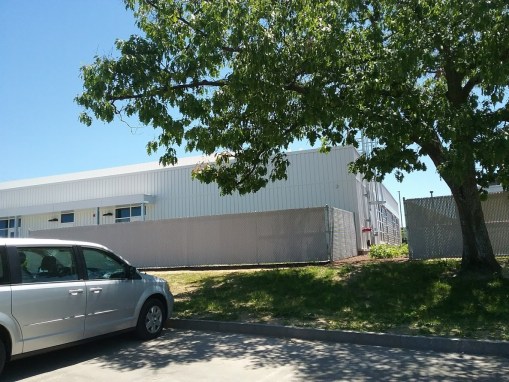
Right now, the site is being cleared and graded, with subterranean utilities installs (water/sewer) and early foundation excavation work is underway. The first two apartment strings are expected to be ready by Spring 2019. DGA Builders of Pittsford (suburban Rochester), a division of Pennsylvania-based DGA Construction Group, appears to be the general contractor, and A.E.Y. Enterprises of Macedon (Wayne County) is the site work subcontractor.


News Tidbits 6/23/2018

23 06 2018

1. The Town of Dryden has rejected the Planning Board’s suggestion for a Varna moratorium. The vote was 3-1, with one absent. This means that Trinitas may continue with the project review process – it does not mean Trinitas will automatically be able to build their proposal as currently drawn up, since planning board review, town board approval (Special Use Permit) and zoning board approval are still required.

Unfortunately no members of the press were present at the meeting – I found out through reader email. Most were covering the Democratic Party NY-23 candidate forum, and the first mention of the moratorium vote online was in the uploaded board agenda that went up just a day earlier.

Image courtesy of the Lansing Star

2. When I first broke the Lansing Senior Cottages story for the Voice, there was something I was concerned would happen, but didn’t include in the write-up, because speculating gets me in trouble. But these are homes looking at middle-class seniors, placed next to $500,000-$700,000 homes. The residents of those luxury homes aren’t happy, as reported by Dan Veaner at the Lansing Star.

They’re angry, which is fair in the perspective that when the property was plated, there was no sewer available here, and the plan was to keep it all high-end 2500+ square-foot homes. But the owner/developer of the land is selling off the future phases without any of the old covenants in place, meaning it’s subject to standard village zoning. 800-1200 SF cottages for seniors, some of which may potentially be for sale, is a welcome proposal to the eyes of the county. It seems unlikely this is going to hurt their home values; this is mid-market senior housing, not college student apartments (the only beer on the front lawn you’re going to see is if developer Beer Properties puts up signage). Plus, if you’re going to poll public opinion on this one, wealthy homeowners vs. middle-class seniors is not going to engender support for the homeowners. They could try a lawsuit against the landowner, but I’m doubtful it’s much of a case unless their covenants explicitly said what the undeveloped land would be used for.
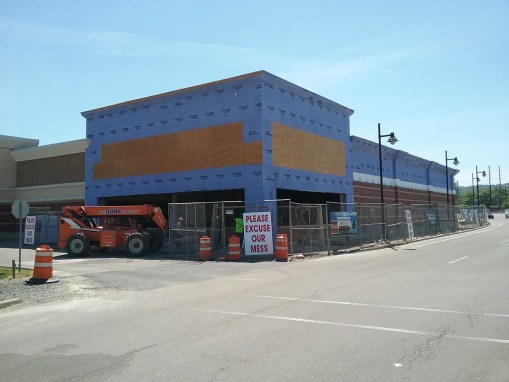
The project is currently 107 units over multiple phases, about twenty more than allowed by zoning as-of-right, so it will need to go through a PDA with the village Board of Trustees’ consent, and Planning Board approval.

3. The Crossroads Life Center planned for the 100 Block of Lansing’s Graham Road is no longer alive. The project, which called for a meeting and retreat space to be owned and maintained by the Cornell International Christian Fellowship, fell through, and the land it was proposed for is once again up for sale. The 9.35 acre property (about 3-4 acres were to have been subdivided for the project) is for sale for $239,000. A couple half-acre home lots could be easily subdivided off along Dart Drive, but further development would have to address an old family cemetery towards the rear of the property. Zoning is medium density residential. Maximum buildout without special planned development area (PDA) rules is about 20 units under the village’s Medium Density Residential zoning.

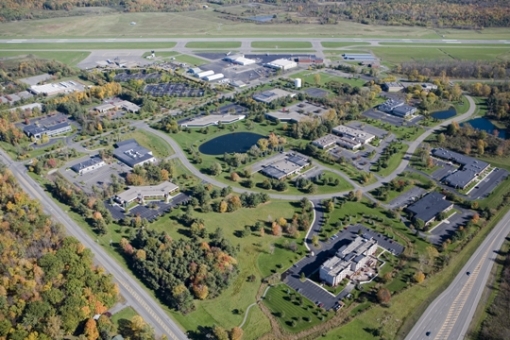
4. Speaking of land for sale in Lansing, Cornell is actively marketing the remaining vacant parcels in its Business Park. Most of the park was built out in the 1980s and 1990s, with only a few building additions in recent years. A 5-acre parcel is available between 20 and 33 Thornwood (foreground in the aerial) for $63,000, and a 22-acre parcel is available for $276,000 (it may be subdivided further), and a 6.89 acre parcel next to airport is available for $86,500.  Lansing zoning doesn’t allow housing here, and so a commercial or industrial project will need to deal with the gas moratorium. A run-of-the-mill office building might be able to make the finances work, but an industrial or lab building with high energy needs is probably is out of the question until some gas is freed up (i.e. the airport renovation), or energy alternatives become more cost efficient.  The county is working on financing a Business Energy Navigator Program to help interested businesses determine their needs and options. Should something happen up here, look for an update.

5. The town of Ithaca is looking at expanding their Public Works Facility at 106 Seven Mile Drive “to better accommodate [their] growing employee base”, and is doing a feasiblity study to see how much and what costs they can expect. The study would be conducted by HOLT Architects with several engineering and landscaping partners (the usual retinue of T. G. Miller (Civil Engineering), Elwyn Palmer (Structural Engineering), TWMLA Landscape Architects, and a mechanical/electrical engineering firm, Sack Associates), and is projected to cost about $21k for all parties. The town board will vote to authorize the study next Tuesday.

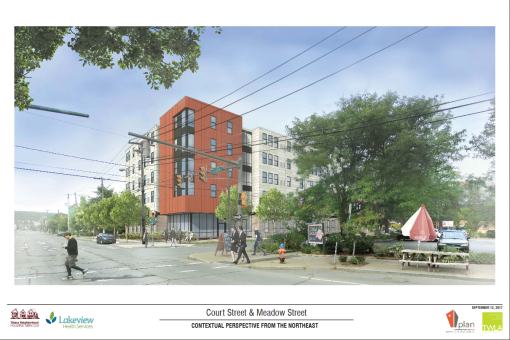
6. The good news for the county was that the state gave Milton Meadows a big grant to move forward. The bad news is, they were hoping for three grants, the others for NRP’s Ithaca Townhouses and Lakeview’s West End Heights (709-713 West Court Street). The county is trying to find other funding streams with which to get these affordable housing projects to move forward this year.

The Ithaca Townhomes would add 106 units in two phases near Cayuga Medical Center. West End Heights would add 60 units, including units for those with special mental health needs, and units for those currently experiencing homelessness.

7. Not a big city planning board agenda meeting this month, but still some interesting details. Here’s the rundown.

1. Agenda Review 6:00
2. Privilege of the Floor 6:01

3. Subdivision Review

A. Project: Minor Subdivision 6:15
Location: 508-512 Edgewood Place
Actions: PUBLIC HEARING – Potential Determination of Environmental Significance – Potential consideration of Preliminary and Final Approval

This subdivision at the end of a private street in the East Hill neighborhood would re-subdivide a double lot that had been consolidated after the original house burnt down in the late 1930s. Any news structure on the newly created .326 acre lot would be subject to Ithaca Landmarks Preservation Commission design review. No specific plans are on file.

B. Project: Minor Subdivision 6:30
Location: 101 Pier Road
Actions: PUBLIC HEARING – Determination of Environmental Significance – Potential consideration of Preliminary and Final Approval

This subdivision is to partition out the square of land Guthrie Clinic would be using for their new medical office building as part of the City Harbor development – they want to own their own building and parcel.

4. Site Plan Review

A. Project: Major Subdivision (3 Lots), Two Duplexes, One Single Family Home & Site Improvements 6:45
Location: 128 West Falls Street
Applicant: Ron Ronsvalle
Actions: PUBLIC HEARING – Consideration of Preliminary Subdivision Approval – Recommendation to BZA

This project came up earlier this month in a previous news roundup – a five-unit infill project in Fall Creek, originally approved in February 2015, and revived now that the developer has found a way to continue working after a debilitating accident. Don’t foresee any issues here.

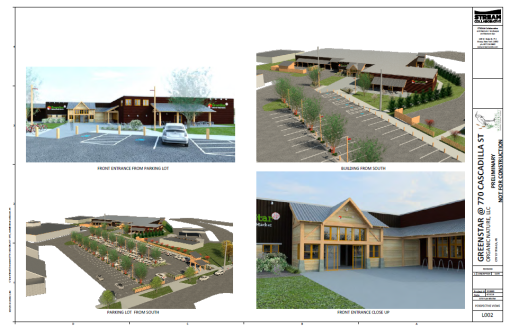
B. Project: GreenStar Cooperative Market 7:15
Location: 750-770 Cascadilla Street
Applicant: Noah Demarest for the Guthrie Clinic (Guthrie owns the land)
Actions: Consideration of Preliminary and Final Site Plan Approval

Since the last round, plantings were added, the lighting and front entrance was revised, and the project team is in discussions with the gas station next door to add planting and landscaping there as well.

C. Project: Apartments (60 units) 7:35
Location: 232-236 Dryden Road
Applicant: STREAM Collaborative for Visum Development Group
Actions: Consideration of Approval of Revised Transportation Demand Management Plan

“The applicant has revised the site plan such that the previously proposed off-site parking is no longer included in the project and has updated the TDMP narrative to reflect this.”
D. 327 W Seneca St- Housing 7:45
The new shiny. 327 West Seneca is a B-2d-zoned property on the edge of the State Street Corridor – B-2d allows multi-family housing up to 4 floors and 40 feet with 75% lot coverage. It is currently a nondescript 3-unit apartment building, that’s been for-sale for almost a year now (asking price $264,900).
A cursory search of LLC filings finds 327 W. Seneca LLC was recently registered in Tompkins County, and the address it is registered to, is the business office of Todd Fox, CEO of Visum Development Group. This may be the project alluded to in the New York Main Street grant to be written by the Downtown Ithaca Alliance, which talks about a 12-unit project by Visum planned somewhere in the State Street Corridor. No guarantees, but this seems likely to be that project.
5. Zoning Appeals 8:10
#3099, 314 Taylor St, Special Permit
#3100, 128 Falls St., Area Variance
#3101, 437 N Aurora St, Area Variance


Amici House Construction Update, 6/2018

19 06 2018

There has been significant progress at the Amici House construction site at 661-701 Spencer Road. The 7,010 SF Harriet Giannelis Childcare Center (which will host headstart classrooms and daycare facilities) is fully framed, roofed, fitted with windows, and most of the exterior siding (unsure at a glance if it’s CertainTeed vinyl or fiber cement lap siding, though the top color looks like CertainTeed “Autumn Red”) has been attached. Even some of the trimboards have already been attached along the front entry/porch. It would seem likely that, if logistics provide for it, the building could be open for its first students in the fall.

To be honest, the design is a bit of a surprise – the original building design by Schickel Architecture was the same size but looked quite different, and the revisions were never uploaded (maybe the planning and building department had something on file, but there was nothing online). Note that most of that front-facing concrete slab is going to backfilled (partial refilling of the excavated area).

As for the five-story mixed-use structure, that is just getting underway with structural framing. The first floor, which will have offices and meeting space, has its steel skeleton and some of its exterior stud walls have been attached. The second floor is just getting underway, and the masonry blocks for the elevator core have been assembled. It appears the existing TCAction building will be getting a new roof as part of the construction work – note that they are not able to work here while construction is ongoing, and have temporarily relocated to 609 West Clinton Street. The 20,712 SF building, with its offices and 23 efficiency units for homeless and/or vulnerable young adults, will be completed early next year.

The background information and planning for the project can be found in the March introductory post and photo set here. Prolific regional contractor Welliver is the construction manager for the $8.25 million project.


South Meadow Square Construction Update, 6/2018

18 06 2018

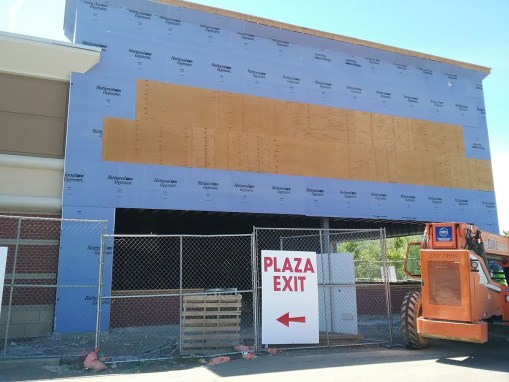
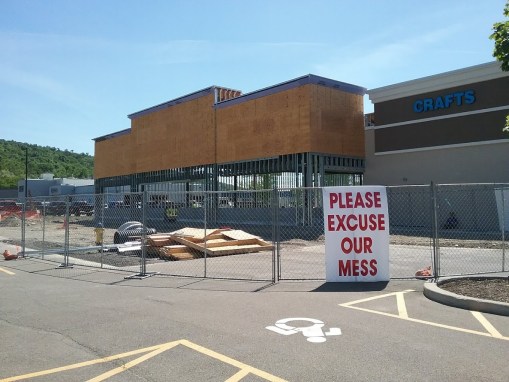
The new endcap spaces on the former KMart (now Hobby Lobby) Plaza at 742-744 South Meadow Street. The first set of photos are the northern endcap with 7,315 SF of retail space, next to PetSmart. The southern endcap is a 14,744 SF space being built where K-Mart’s garden center used to be, which I think explains the huge chunks of concrete slab piled out in front.

With no tenants formally announced, these spaces will not be completely finished on the inside – all utilities will be in as well as structural supports and insulation, but the space will be fitted out to the needs of the tenants, so things like flooring, fixtures and interior finishes will wait until someone has signed a lease with Benderson Development. I did not see anything on file for a fit-out in the city of Ithaca’s building permits paperwork (however, I did see last week that Elmira Savings Bank landed an unnamed tenant for its second floor office space at 602 West State Street).

Oftentimes you’ll see retail real estate managers try to find tenants that complement each other, say a salon and a cafe, or a sporting goods store with a women’s clothing store (the somewhat sexist argument there is that the ladies go to one while their male partners go to the other). Increasingly, entertainment and recreation options are becoming tenants – take for instance the announcement that a live theatre company will be taking 12,000 SF of space in the Shops at Ithaca Mall. That can help existing tenants by drawing in unique customer traffic that may choose to browse, shop and dine at other mall venues.

Back to the site at hand, the decorative facade appears to be initially shaped with plywood over steel stud walls, with a layer of fireproof gypsum laid over the top of that (except toe cornices, which appear to have no plywood layer, only gypsum). The bases are concrete masonry walls. The textured stone veneers and fiber cement panels will come later.


Maplewood Redevelopment Construction Update, 6/2018

15 06 2018

There was an interesting story going around that Maplewood was in serious trouble due to water pressure issues, to the point where its ability to legally house its residents was at risk (no water pressure would have made for a hazardous fire risk). That would have been a huge story had it panned out, but a little bit of checking with the town of Ithaca codes department and the development team turned up no dire situations unfolding, all is going as planned (a welcome change given all the weather and contractor issues that have plagued the project’s tight work schedule so far). There was some worry about water pressure back when the project was first proposed, which is why a new 600,000 gallon water tower is going up on Hungerford Hill Road.

It’s a little sad to see the French Lavender florist and gift shop is closing down after eleven years. It’s not clear if it’s related to construction, or if the timing was coincidental. Coal Yard Cafe was doing a brisk mid-day business at the opposite end of the Maplewood site. With 872 new residents expected by the end of the summer, the site will have appeal to retailers and service providers.

For project background and planning, click here.

For a site plan breakdown, click here.

For a construction timeline, click here.

Webcam link 1 here (updated ~15 minutes).

Webcam link 2 here (updated ~15 minutes).


Cornell Veterinary School Expansion Construction Update, 6/2018

14 06 2018

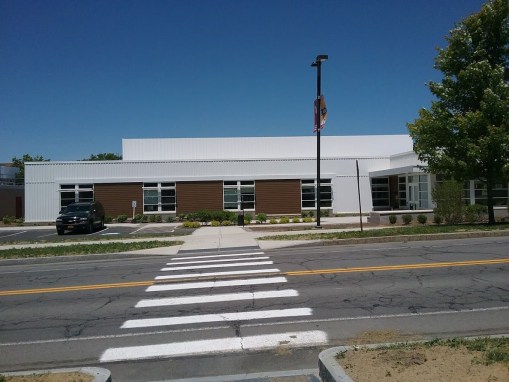
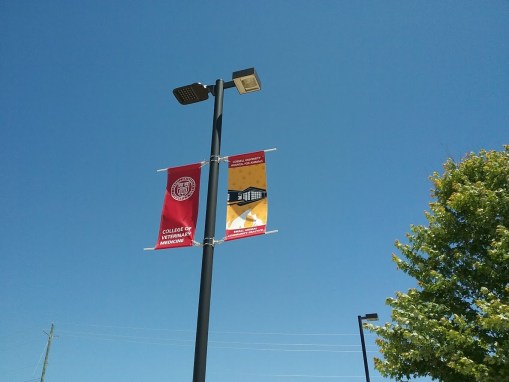
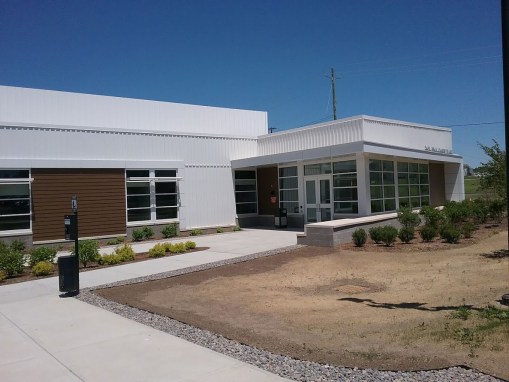
Looks like we can move this project into the “completed” column. The 12,000 SF, $7 million building is open and occupied – in fact, there appeared to be a couple of folks transferring crates of paperwork into the building as these photos were being taken.

HOLT Architects designed a modest LEED Silver structure with clean, modern lines, and G. M. Crisalli and Associates Inc. did a bring job bringing that design into reality. At this point, the four years of construction at the Cornell University Veterinary School appears to finally be complete. The school will gradually build up to its expanded size (102 to 120 students per class), expand its lab and research capabilities, and through the Community Practice Service building, serve the community in which it resides. The state released its press announcement calling the Vet School Expansion complete last week – and noted that the final price tag for all the phases was $91.5 million.

Before:

Render:

After:


News Tidbits 6/10/2018

11 06 2018

1. For those of you looking out for something interesting next week, here’s your notice. In the village of Lansing Monday night, a sketch plan is set to be shown involving a cluster home development on the remaining phases of the Millcroft property, about 40 acres off of Millcroft Lane and Craft Road. According to the agenda, the proposal comes from Ithaca-based landlord/developer Beer Properties in partnership with Hunt Engineers.

The back story here is that the Millcroft subdivision was approved in the mid 2000s as a three-phase, 31-lot development for high-end ($500k+ homes). As it turns out, the market for that, absent lake views and on relatively small lots, isn’t so great. The Great Recession didn’t help either. The first phase of 14 lots is mostly built out, and the second phase was approved and shows up on town maps, but no construction has taken place. The village has been aware of a project in the works since at least February.

Unfortunately, I can’t seem to find the property listing for the land, which was on Zillow for quite a while – I recall a figure around $850-$950k. The property falls in the village’s medium density residential zone, Cluster zoning means the lots themselves are smaller to preserve natural space. However, the maximum number of units is the same as maximum allowed by regular zoning – 40 acres in sewered Lansing village MDR means up to 87 units, if I’m doing the math right. Not sure if single-family, townhome or otherwise, so keep an eye out for a follow-up.

2. For sale, 15.31 acres off of Wellsley Drive in the village of Dryden. Sewered, watered, and originally planned for 36 homes but never approved. Price of the land $149,900.

Here’s maybe the more interesting part – this borders Maple Ridge. Maple Ridge’s first phase is built out, and the developer, Paul Simonet, would like to build the roads and lay out phase two (and eventually phase three). However, the village’s issue is that there’s only one entry and exit into the development – something they’ve been hesitant to sign off on because of possible safety/access issues.

Now, this may have already been resolved – the village of Dryden has only updated their website twice since February, with legal paperwork for keeping fowl – but if not, there’s the option of buying the Wellsley Drive property and routing a road through there. Maybe $150k plus the extra road work isn’t in Simonet’s price range, but it’s at least an option.

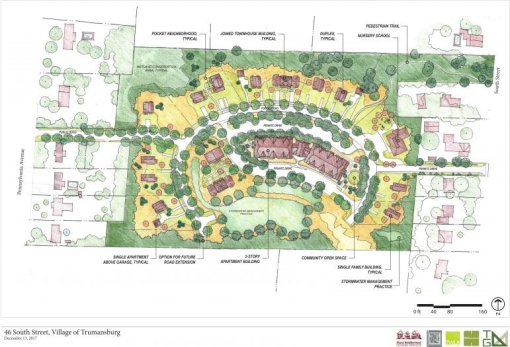
3. The village of Trumansburg commissioned an independent study from Camoin Associates (the same folks who did the Airport Business Park study) looking at the financial impacts of 46 South (formerly Hamilton Square) on the village. I’ve been told this wasn’t public yet, but it’s on the village’s planning board webpage, so I dunno about that.

Quick refresher: 73 units. 56 affordable, 17 market-rate. 6 affordable rental townhomes, 40 apartments, 10 affordable for-sale townhomes, and 17 market-rate units, single-family and townhome style. 140 residents at full buildout in 2023, assuming one per bedroom.

Here’s the TL;DR on the finances. The net income to the village itself is -$23,757/year when fully built out. The unfortunate truth of residential development is that, frankly, people have needs. They use roads, they call police and fire, they use municipal power lines and water pipes and sewer mains. It is not offset by the village’s share of property taxes, here in this mixed-income example, or in the vast majority of cases. This is a reason to advocate housing density, because the impacts on, say, building new roads or infrastructure is often less per unit.

On the flip side, the school district, which makes up a greater share of the property taxes, sees a net increase of $97,669/year when fully built. Tax revenue more than offsets the expenditure of approximately 33 new students. Not everyone living in has a child, but everyone pays school taxes. This money not only helps the district, the incoming students help ameliorate concerns that declining enrollment may soon lead to consolidation with a neighboring district.

Economic impacts can be broken down into three components – the construction jobs, long-term operation/maintenance, and growth induced by the new residents, who will not just live locally, they will also shop, dine and spend money in the village. There will be an estimated $18.17 million spent on construction, $1.45 million will be spent within the County, creating 20 construction job-years in total (note there are multiple guys on site once, the project is expected to be fully complete within five years), and nearly $695,000 in total earnings. Operation/maintenance in perpetuity creates the equivalent of two jobs, creating $60,732 in earnings and $229,782 in sales. The households will spend nearly $1.7 million yearly within the County, which will support 20 total jobs with over $676,500 in earnings per year. In other words, $2 million spent in the county, 22 jobs and $737,500 in net new earnings from having those 140 more residents in the village.

By the way, if one was inclined to read 289 pages of public comments about 46 South, that can be found here. The project will be discussed at the village board’s meeting Monday evening.

4. Let me note this before I forget again – Park Grove’s Bomax Drive Apartments have started construction. The first two strings of 10-unit, three-bedroom townhomes are expected to be completed by Spring 2019. I’ll make a site visit soon for a longer write-up.

5. Meanwhile, the Triphammer Row townhomes are on pause until the road situation gets worked out. The village won’t sign off on using M&T Bank’s parking lot as an entry route, and the Sevanna Park condos don’t want to allow access to the 15 units through their private road. As a result, the village is seeking to have the road turned over to them, in part to encourage this for-sale plan, and in part because will ownership of the entry road to Sevanna Park will allow them to install better curb cuts and traffic control.

6. Here’s a for-sale property with some small-scale redevelopment potential, this one in the city of Ithaca. A dilapidated house is for sale at 815-17 North Aurora Street in Fall Creek. thanks to unsympathetic additions, the historic value is marginal. A buyer could restore it, or if interested, since it’s a double-lot, they could split the lot in two and do a two-family home on each property. Given other recent projects in the area such as 202 and 204 Queen Street and 128 West Falls Street, it appears to be an opportunity to do some modest densification keeping with Fall Creek’s fabric without upsetting the community too much in the process. The property is for sale for $269,000.

7 Let’s tie this up with something intriguing. Next week, the city’s Planning and Economic Development Committee is being asked to support a grant application by the Downtown Ithaca Alliance to the New York Main Street (NYMS) grant program. They are seeking $322,500 from the state to leverage work on four downtown projects – a commercial project in the Clinton House, a commercial project in the Boardman House, a “commercial and housing project” at 108 West State Street (the Ithaca Agency Building), and a 12-unit development by Visum Development in the West State Street Corridor. Any rehabbed housing units will be required to be 90% area median income for at least five years, but I dunno if either housing plan has existing units, I think the Ithaca Agency Building was all office space. STREAM Collaborative just moved into the second floor, so they would know best.

Quick postscript here – there’s nothing but an outline according to the DIA’s Gary Ferguson, so no Voice writeups for a while yet.


News Tidbits 6/9/2018

9 06 2018

1. Let’s start off with some eye candy. Behold, the latest and probably last major revisions to Modern Living Rental’s planned apartment complex at 802 Dryden Road. We also have a name for the 42-unit apartment complex to be built there – “Ivy Ridge“. This latest design received a little bit of STREAM’s touch to complement the work previously undertaken by John Snyder Architects. The six building are generally but not exactly the same – the gables are mirrored, some additional trim piece are used on the gables for the Dryden Road pair, and they alternate between a dark blue vertical fiber cement panel (probably HardieBoard), and a dark green panel (it’s a little sad they reworked the profiles and did away with the visually interesting mix of hipped and gabled roofs). Units were downsized about 35 square-feet per unit per floor, and overall the town planner thought the buildings looked “a lot more friendly”. Some more renders can be found here. Units are a mix of 24 2-bedrooms, 12 3-bedrooms and six 4-bedrooms, for a total of 108 bedrooms.

There’s a little bit of pre-building infrastructure work that needs to take place, because this is a sort of no man’s land between the settled parts of the town of Ithaca and the town of Dryden where no municipal water service was available. The public water main will be extended to service the project, and the main will be deeded over to the town. This will go under Dryden Road, so the DOT is in the loop. The planned buildout is August 2018 – August 2019.

2. Staying in Dryden for the moment, a bit eastward to Varna – I have not spoken to a single person who thought highly of Trinitas first swing at the Lucente property on Dryden and Mount Pleasant Roads. The building scale seems okay for Varna’s core, and the Varna Plan actually okays this kind of layout and says the community was comfortable with it on arguably a smaller overall project scale, something that caught me by surprise when I did my writeup for the Voice. The issue is that it’s a lot to see at once, and it makes me wonder if Trinitas really had its eyes open and ears listening and just went forward anyway, or if they were caught off guard. After swings and misses in Ann Arbor and Ames, I’d hope Trinitas would be a little more cautious.

This is asking a lot of Dryden, 224 units with 663 beds at the moment. However, I’m doubtful a moratorium is the answer. I think there is potential to have more conversations if both sides are willing to talk, and Trinitas should be firmly aware that this plan is not likely to go through as currently proposed. I don’t know what the financial statement looks like here, but elsewhere Trinitas has tried (if unsuccessfully) with incorporating affordable housing with its market-rate units, and they also do have projects that seem more like the Varna Plan’s thoughts for that parcel, like their Pullman project, which is a combination of townhouse strings and duplex buildings. The town of Ithaca and EdR agreed to have EdR fund local road improvements as part of the Maplewood project, so that’s another idea.

One of the reasons cited for a potential moratorium in Dryden is the need to balance the rental development with for-sale housing. It is very tough to effectively encourage owner-occupied housing at a price range affordable to middle-income households. For one, no tax breaks – state law says it is illegal for the IDA to give tax abatements to owner-occupied developments (for-sale homes, condos). Building codes and complicated condo rules drive up housing costs and make existing state subsidies for affordable for-sale ineffective, and for-sale housing is seen with greater uncertainty by lenders (there are more people able and willing to rent than to buy, especially in a college-centric community). It’s difficult! That’s why the county’s Housing Committee is keenly focused on trying to come up with solutions. There’s a fantastic senior research project by newly-minted Cornell graduate Adam Bronfin that looks at the condo problem in excellent detail, and a PDF of that study can be found here.

The other suggestion, making rental housing more difficult to do, comes with its own perils – namely, by cutting off the supply while demand continues to grow, you force out lower-income households in an attempt of trying to limit the student rentals. There is conceptual discussion of affordable for-sale and rental mixes (similar to Trumansburg’s Hamilton Square) being talked about east of Varna, and it would be really unfortunate if a town law gets drafted up that inadvertently but effectively prevents those kind of projects from happening.

Another risk is that strictly limiting development in Varna only encourages it on rural parcels to the east, or even in Cortland County, promoting sprawl and its detrimental environmental impacts (tax burden of new infrastructure, traffic, additional commuter burden on the Freese Road Bridge, loss of farms and natural space to low-density housing, etc). One can push laws that prohibit students either through zoning, but smaller mom-and-pop landlords may feel the pain and it might get argued in court as an illegal attempt at “spot zoning”.

The TL;DR is that there is no easy answer, but the county is trying. Since it’s so difficult on the brand new side, the county is looking at incentives to encourage renovation of existing rental housing into for-sale units, which would need state approval.

Lastly, I don’t really understand the argument that tacitly advocates for capping Varna’s population. The sewer is a limit, but more capacity could be negotiated if necessary or prudent. The argument over Varna should be focused on quality of new additions, not an argument that the Sierra Club rejected because of its association with racial and income-based eugenics.

3. Surprise, surprise. An infill project in Fall Creek has been revived three and a half years after it was approved. The project calls for five rental buildings, three single-family homes and a duplex. The developer is Heritage Homes, led by Ron Ronsvalle; Ronsvalle was badly injured in an accident, and the injuries left him paralyzed and unable to use his limbs; he is reliant on assistance and voice commands. It was a shame as the project been heralded as a successful example of meeting with neighbors and redesigning a plan to address their concerns; didn’t win over everyone, but a lot of them were satisfied with the approved February 2015 plan. As the letter from project architect/engineer Larry Fabbroni states, “certain life events prevented the owner from resuming full business activities until a support system was running smoothly.”

With a support system in place, Ronsvalle intends to move forward with the approved plan. The project does have to go back before the Planning Board and Zoning Board of Approvals because approvals expire after two years (i.e. February 2017). With nothing changed, the project is likely to sail through re-approval.

The revised SPR states $665,000 in hard costs with a construction period of August 2018 to August 2020 – basically, a couple homes in year one, and a couple in year two.

4. This is rather odd, but in Northside, there seems to be a push for a moratorium because they’re unhappy with the possibility of multiple primary structures on a single lot, which is what local developer David Barken is proposing with the lot consolidation and addition of a two-family home at the rear of 207 and 209 First Street. The concerns cited are similar to South Hill’s, loss of character and increases in density, and came up during the marathon public comment period at the last Common Council meeting.

This seems…baffling? South Hill’s made sense because of the high number of student rentals being built, which was leading to major quality of life issues. Northside doesn’t have that issue, it’s too far from the Cornell and Ithaca College campuses. For evidence, here’s the Cornell map of where students live, taken from their 2016 housing study. A handful of grad students live near the creek, but otherwise not much, and undergrads are virtually non-existent. It and West End and West Hill just tend to be too far away for students’ convenience.

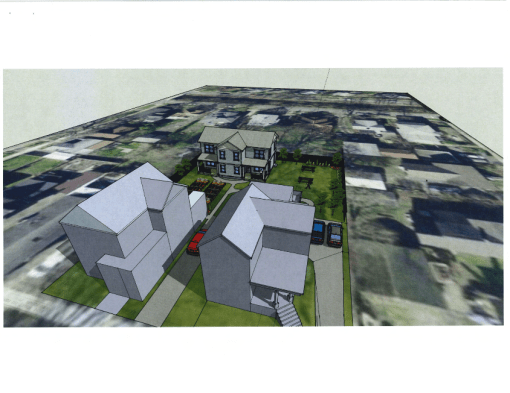
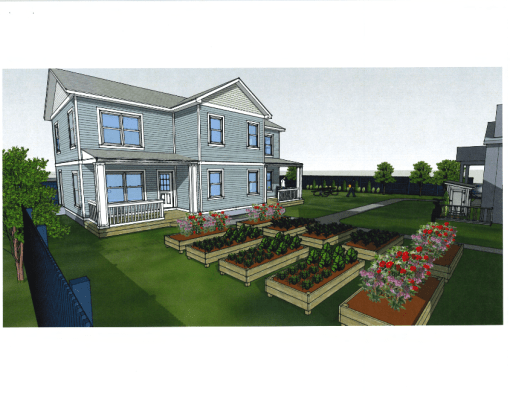
To be honest, 207-209 First Street actually seems like a thoughtful project – similar to the Aurora Street pocket neighborhood by New Earth Living. The infill is scaled appropriately, it has features like the raised beds that enhance residents’ quality of life, and it doesn’t tear down existing housing. To my knowledge, there isn’t anything on the radar for Northside unless one counts Immaculate Conception in adjacent Washington Park being converted to housing at some point. It’s not clear what a moratorium or a South Hill-like overlay would achieve here. If anything, students aren’t the risk for Northside – the risk is gentrification spilling over from Fall Creek. This would encourage that, so…this is counterproductive.

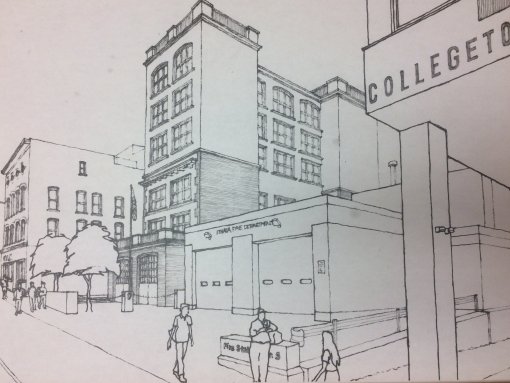
5. With the contentious 309 College Avenue / No. 9 fire station debate having met its dramatic conclusion, this render of a proposed redevelopment has been released by its owners. It would appear that the plaza and newer west (front) wing has its exterior walls retained while the rest of the structure is removed, a facadectomy. One could argue this is better than Visum’s plans because it saves large portions of the original structure, vs. the complete removal in Visum’s first version, and emulation of elements in the second. This iteration has decorative roof elements, arched windows in the shape of the fire engine bay doors, and a dumbbell shape characteristic of New York City “Old Law Tenement” buildings built in the late 1800s. The armchair architecture critic typing here would ask for elements of visual interest in the blank walls of the addition, but overall this looks like a good first swing. This is probably intended as first-floor commercial restaurant/retail with apartments above. No architect is listed with the sketch.


News Tidbits 5/14/18

15 05 2018

1. Let’s start off with the new entrant to the Ithaca development scene – Trinitas Ventures. The Indiana-based firm is scouting out Varna for a potentially large rental project geared towards students (but, to be clear, open to anyone).

I’ve already filed my report, and unfortunately will not be at the open house this Monday (there was initial confusion over what say it was, so I’m honestly not sure any reporter made it). Trinitas appears to do everything from multi-story mixed-use urban living to more suburban duplexes and townhouse strings. To be frank, for Varna, they’d be better off going with the latter for size and scale. There’s this running joke among Ithaca developers that Varna is the next frontier for development, but only recently has there been much movement in that direction, and even then, it’s a ‘tread with caution’ approach. Recall the struggles of Varna II and 902 Dryden.

According to the town of Dryden planning board minutes posted after my article, the Lucentes’ vacant Varna II lands are the proposed site for Trinitas project (and which they likely already have a purchasing option on). From their portfolio, their independently-developed project appear to be in the ballpark of 600-700 beds in 150-300 units. Even the more suburban properties look to be on 20 acres or less. A rough estimate of the old Varna II plan is 15+ acres. Most of it is Varna Hamlet Residential, with small amounts of Varna Hamlet Traditional Zoning and Varna Hamlet Mixed-Use. VHRD is 6 duplexes, 4 apartments or 11 townhouses per acre, with potential density bonuses for green energy or redevelopment. This means that if they do mixed-use retail/apartments along 366, and townhouses in the rear along Mount Pleasant Road, they’ve got the space they need for one of their projects. Through the off-record chatter I’m hearing 225 units, mid-600s for total number of beds.

On the bright side, at least they’re being transparent with the open house approach – Trinitas seems to have some awareness of community concerns (maybe after their Ann Arbor debacle), so we’ll see what they propose in a formal submission.

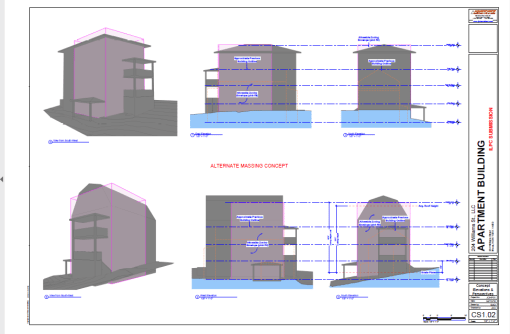
2. Moving to something smaller, the Ithaca Landmarks Preservation Commission is providing early guidance for a new apartment house at 204 Williams Street, on the west edge of Collegetown in the East Hill Historic District. Beyond the massing concepts (hipped vs gambrel roof), it looks like 14 bedrooms and perhaps four units, ostensibly geared towards students. Mid-sized Collegetown landlord Pam Johnston has owned the property since 2002, and she’s more of renovator than a developer, but this is unique – the original house burnt down in the 2000s, and the space has been an informal parking lot ever since. With rising land values, redevelopment looks like a better financial prospect. Historic design specialist Jason K. Demarest is in charge of design for the small infill project.

3. Caution light turned on. The Tompkins Center for History and Culture requested and received an extra $445,100 in appropriations, raising the county’s investment to $3,345,100. The extra cost is attributed to bids coming in over projections and additional design costs. The vote was 12-1 with Legislator Leslyn McBean-Clairborne voting no, but this is probably about as much as the county legislature and general public will be willing to accede without significant backlash or denial of funds.

The Legislature unanimously awarded construction contracts for the Tompkins Center improvement project to Marchuska Brothers Construction, LLC, of Endicott, for the General Work Contract ($561,000); Johnson Controls, Inc., of Rochester, for the Mechanical Contract ($502,638); and Richardson Brothers Electrical Contractors, Inc., of Ithaca, for the Electrical Contract $135,550). Marchuska is a fairly recent addition to the Ithaca area, and is finishing up a gut renovation of a manufacturing facility into medical offices in Lansing village.

4. Whether or not one approaches this with some election year political cynicism, the proposed $22 million expansion of the airport, largely funded by the state;s recently-announced $14.25 million grant, has significant potential to bolster the local economy. Given Ithaca’s relative isolation and definite distate for new highways, an expanded airport, sometime pushed by airlines rather than quixotic bureaucratic dreams, can help retain existing business and grow the leisure/hospitality trade. The announced move of the NYS DOT from its prime waterfront property to a vacant parcel next to the airport is an added bonus, because once they move, the space will be turned over to the county to do as it wishes – which in this case means an RFP for mixed-use development that could create over $40 million in new private investment, according to the 2015 study.

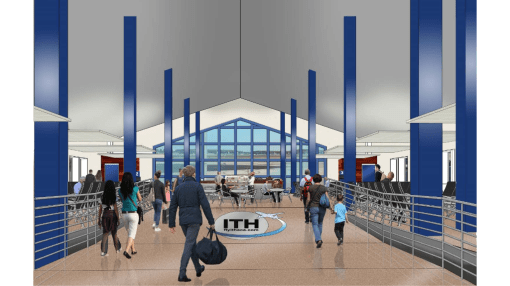
Plans call for the expansion to start construction this fall and open a year later, which sounds a bit ambitious. The expansion would likely have its environmental review conducted by the village of Lansing, which is not known for its haste or ease of process. Renders of the project (all interior) can be found here.

5. Going back to Varna – 1061 Dryden is for sale, blueprints and all. The asking price is a fairly optimistic $2 million – Gary Sloan, the current owner/developer paid $285,000 for the property in October 2015, which contains an existing home. To quote the ad:

“Shovel ready development site within 1.7 miles or 3 minutes from Cornell University Vet College! Very rare opportunity in the Ithaca area and already approved to build 36 Townhouses. Unit configuration; A Unit (12) 3 bedroom 2.5 baths One car garage. B unit (24) 2 Bedroom 2.5 Baths One car garage. Financial analysis are available to Qualified developers indicating a CAP rate of 7! Confidentially agreement required to obtain financial information on the development.”

CAP rate, or capitalization rate, is a measure to evaluate the potential return on investor for a real estate developer. It’s basically Net Operating Income / Property Asset Value. So if I make 50,000 a year in net operating income on a $1 million property, my cap rate is 5%. In general terms, higher cap rates mean high potential return, but are generally seen as indices of higher risk projects as well.

However, because different markets have different risks and amounts of risks, what is an acceptable cap rate in one area may not work in another. For office space for example, a cap rate of 3-4% in Los Angeles or New York would be sufficient, but for Phoenix it’s 6%, and Memphis 8%, because the stability and growth of the market isn’t as great. Also, CAP rates for multi-family properties are generally among the lowest in asset classes because they’re often the most stable. So CAP rate is a valuable indicator, but it doesn’t tell the whole story.

I hadn’t heard of any issues before this hit the market, and all the approvals are there. The town of Dryden was told not to expect construction to start on this 36-unit property for at least a year. Whether it actually happens is anyone’s guess.

6. Also new to the market this week, a commercial building with redevelopment potential. 622 Cascadilla Street is a one-story, 4.896 SF commercial building occupied by the upscale Zaza’s Cucina restaurant. It also sits in WEDZ-1b zoning, West End Mixed-Use, allowing for a second floor and 90% lot coverage.Nearby, several major projects are approved or in the concept stages, including West End Heights, City Harbor, and the Carpenter Business Park (Cayuga Med) development.

The property is assessed at $875,000, and its current owner, a Massachusetts-based businessman who has been controversial, has been steadily offloading his properties. Should the buyer look like something or someone interesting, expect a follow-up.

7. This is running rather late, but longtime local developer Rocco Lucente passed away earlier this year at the age of 88. The patriarch of the Lucente family of developers (Lucente Homes, later Lifestyle Properties), Lucente started in 1950 as a builder of modest homes and apartments – not ostentatious, but well-suited for Ithaca’s growing middle-class. While it may not have been as profitable per unit, it allowed Lucente to survive the local market crash of the late 1960s, when many of his competitors did not. Lucente also pioneered the idea of renting his newest houses out for a few years before selling them at higher prices thanks to tight supply and value appreciation. With over 700 homes and apartments to his name, much of Cayuga Heights and Northeast Ithaca exists because of Lucente Homes – the town dedicated a section of Briarwood Drive “Rocco Lucente Way” in 2014.

Lucente was not without his controversies, however – the last of his Northeast Ithaca subdivisions, the 47-lot Briarwood II, which was halted by the town over stormwater drainage concerns in the late 2000s, first via moratorium in 2006-07, and then in 2014 by SEQRA concerns and changes to best practices, which led to a lawsuit from Lucente that he lost. This is the forested space between Sapsucker Woods Road and Briarwood Drive.

I had a chance to speak with Rocco a couple of times in my work with the Voice (it started with the Village Solars), and I always found him to be engaged and animated, more than I’d expect for a gentleman of his age. He’d often extol the features of his properties, which I would respond with a polite laugh, because it wasn’t my place to sell them, but he was a businessman through and through. But generally, I found talking with him to be a pleasure. Rocco was a capable developer, working up until the end not out of need but for a love of the work. He will be missed.


118 College Avenue Construction Update, 4/2018

13 05 2018

Finally, clearing out the last of that late April photo stash. Not many here, but a new, small Collegetown project is underway at 118 College Avenue.

This is a Visum project, and probably their lowest profile plan. In fact, this one never even went through the sketch plan part of the city review process, the project team went straight to asking for the city planning to declare itself lead agency for environmental review in March 2017. Approval was a short time later as Ithaca goes, in May 2017. Building permits were issued this past winter.

It wasn’t a rash decision by any means – the project is largely similar to a previously-approved plan a few houses up at 126 College Avenue, and there is very little difference between the two properties in terms of context. They are both CR-4 zones allowing 4 floors and 45′ heights. The original 118 College Avenue was a two-story, early 20th century rental house with six bedrooms and marginal historic value, though I imagine the house was rather pretty before some unfortunate additions threw off its symmetry. The property was purchased by Red Door Rentals (Greg Mezey and Ryan Mitchell) in April 2014, transferred to another Mezey/Mitchell company, “MPB Capital LLC” in October 2017, and then to an LLC associated with Visum on the same day as the MPB Capital transfer. It seems plausible Ryan and Mitchell are project investors, with Visum as developer.

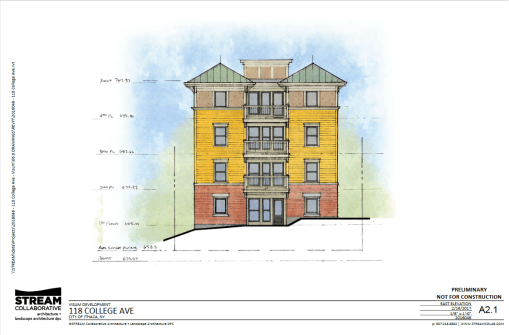
Plans call for a new 4-story, 45′ building on the sloped lot. With that slope, the basement is exposed on the west face, so it has the appearance of five floors from the rear and sides. A back of the envelope calculation says this building is about 9,000 SF. The roof hosts a 6′ architecturally-integrated mechanical screen; hides the mechanicals, but gives the apartment building an Italianate aesthetic. The building uses electric heat pumps and is designed to be net-zero energy compatible. The hard construction cost rings in $1.415 million, according to the SPR filing – it would be assessed at a substantially higher amount. Unabated taxes her, so while people may dislike Collegetown, projects like this help fill the city coffers.

There will be 5 apartment units with 28 bedrooms – 4 six-bedroom units, 1 four-bedroom unit on the basement level. The project comes with five new trees, lush landscaping for its small lot, an outdoor bike rack, screened trash area, and bike storage and mechanical rooms in the basement. Tenants with valid licenses will be given membership in Ithaca Carshare, to try and dissuade them from bringing personal vehicles. Not a surprise here, but college students are the intended market.

Only a couple minor changes occurred from start to finish – the window on the northeast face was replaced with a patterned trimboard to keep visual interest. The rooflines ware adjusted in the render below, but not the building plan, so we’ll see which is correct.

For materials, the basement-level will use stucco mixed with Sherwin-Williams “Sawdust” paint, the first level is a combination of Belden face brick (Belcrest) and S-W “Truepenny” fiber cement clapboards, more fiber cement clapboard on the mid-section in S-W “Overjoy“, trimboards, balcony trim and window casing colored S-W “Svelte Sage”, black window frames, stucco (in S-W “Favorite Tan”) with more fiber cement trim and frieze boards on the top level, and the pyramidal roof caps will be standing seam metal, Pac-Clad “Aged Copper”. Mix of materials, mix of colors – should stand out nicely.

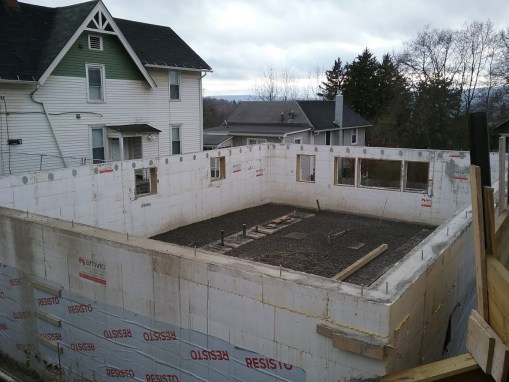
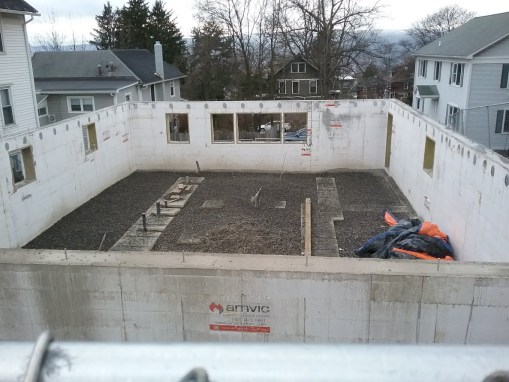
Expect buildout to look similar to 210 Linden and The Lux – Amvic insulated concrete forms at the basement level, double-stud Huber ZIP panel plywood sheathing, scratch coats on the portion to be covered in stucco, perhaps wood furring to raise the exterior clapboard and prevent dampness, and probably Anderson windows. The project is expected to be complete by August – units are going for $950/bedroom, plus utilities. Pricey, but at least they allow large dogs.

Along with Visum and Red Door Rentals for this ride through the development process is STREAM Collaborative as the building and landscape architect. Since they’re GC at 210 Linden Avenue, Romig General Contractors may be the manager of the construction crew here as well.