Poet’s Landing Phase II Construction Update, 10/2016

22 10 2016

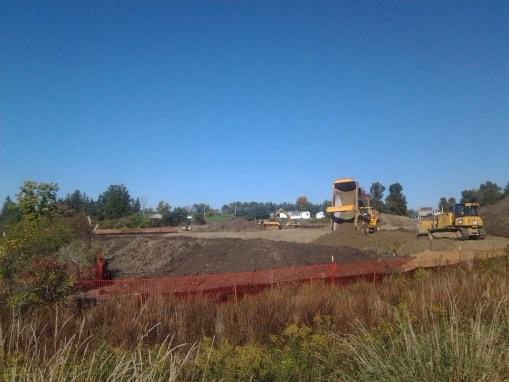
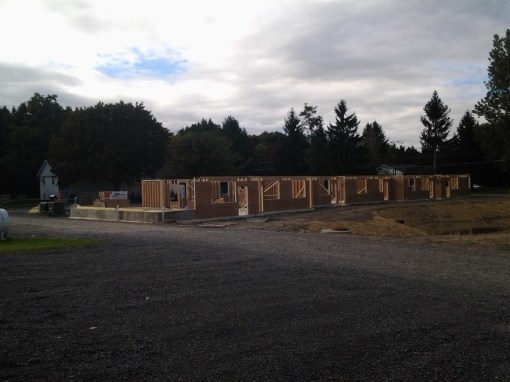
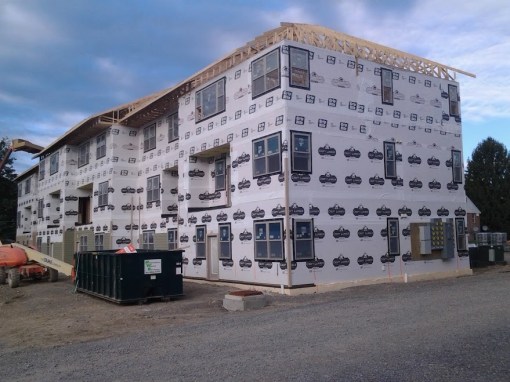
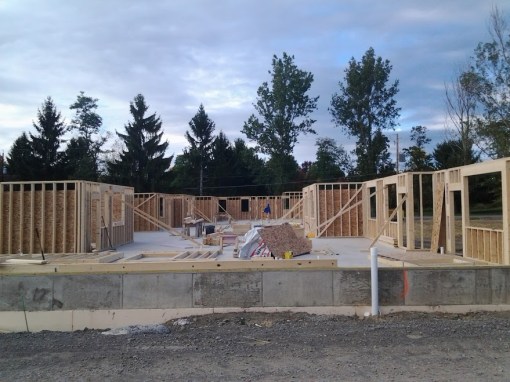
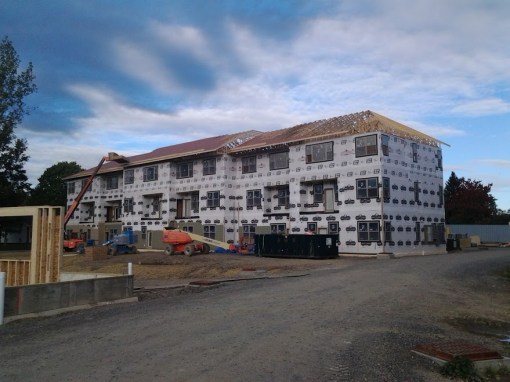
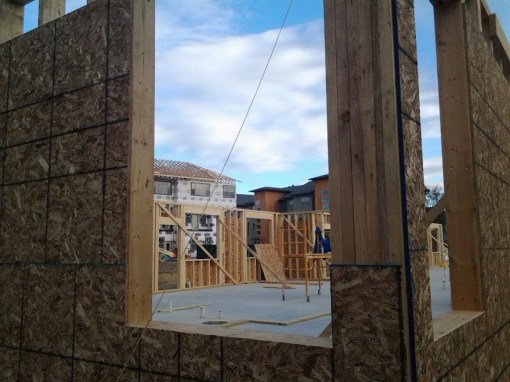
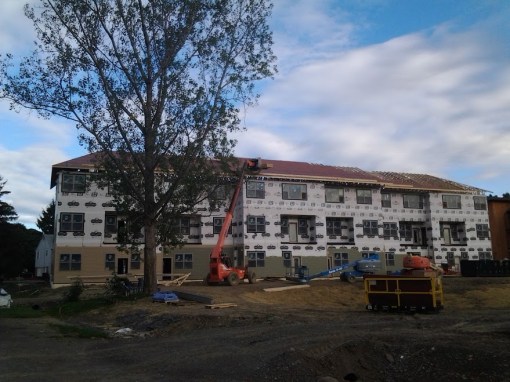
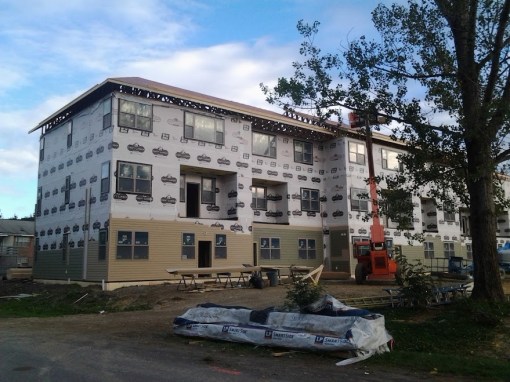
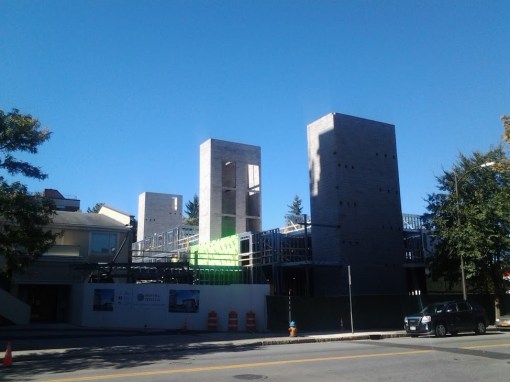
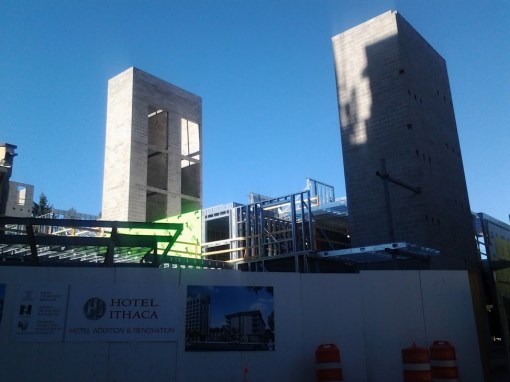
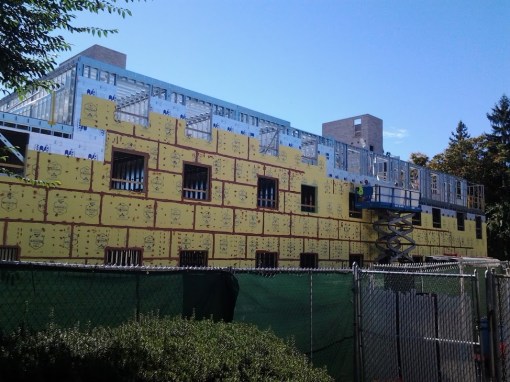
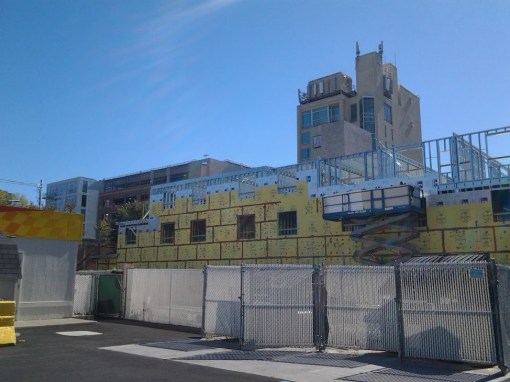
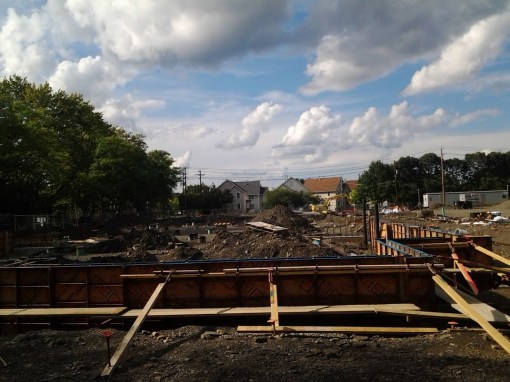
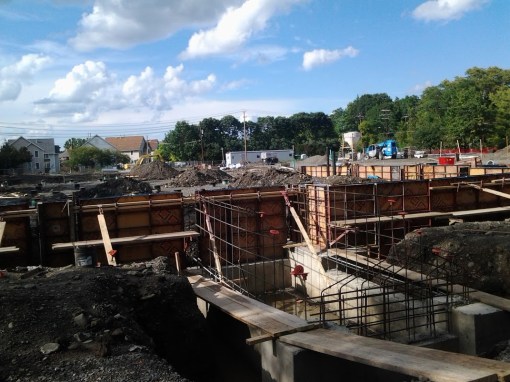
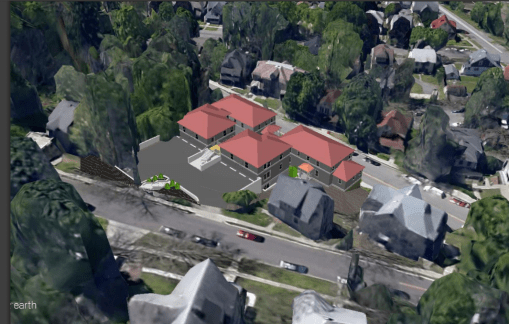
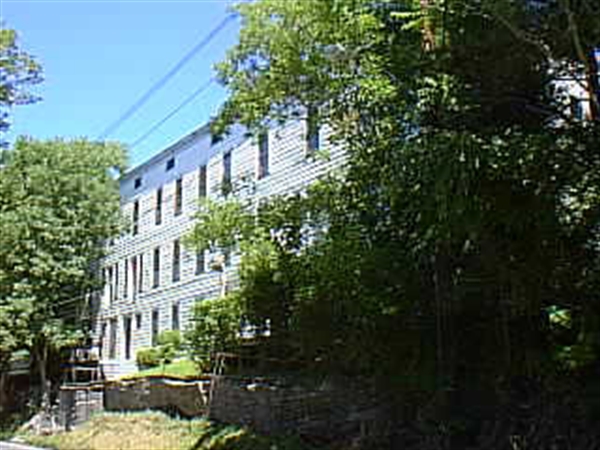
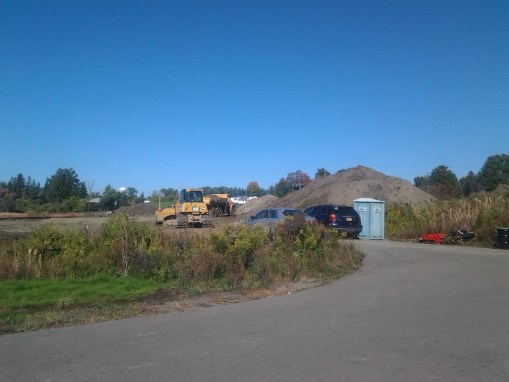
Site clearing and grading is underway for the second phase of the Poet’s Landing affordable housing in Dryden village. Developed by Rochester-based Conifer LLC (the same company developing Cayuga Meadows on West Hill), the plan is to build an additional 48 units of housing to complement the existing 72 units of housing built in the first phase. As with many of Conifer’s affordable housing projects, Rochester-based LeChase Construction serves as general contractor through a joint venture partnership, called Conifer-LeChase.

Plans for Poet’s Landing date back to at least 2010. The original plan called for a 72-unit first phase that was built out, but the second phase was initially planned as a 72-unit apartment building for those 55 and older, not unlike the Cayuga Meadows and Conifer at Ithaca projects. Conifer hasn’t publicly stated why the plan changed, but given that the company had major difficulties getting financing for Cayuga Meadows, they may have decided to go a different approach in Dryden and revised their plans to address general population affordable housing. Previous to Conifer’s proposal, there had been earlier talks for housing at the Freeville Road site, but plans did not move forward in part because during the 2000s, there was a moratorium on new water connections in Dryden village, which severely limited multi-family building development. Development potential is also limited by extensive wetlands towards the rear of the property – by state law, any wetlands removed would have to replaced, which is an expensive process. As a result, only 14 of the 46 acres are being developed. Although facing some opposition due to traffic, flooding and that it’s affordable housing, the plans were approved in January 2011 and the first phase opened in early 2013.

Poet’s Landing does suffer somewhat from a classic affordable housing conundrum – location. Generally, affordable housing is most effective when placed in locations with easy access to goods, services and community resources. But, because of land costs, stricter approvals processes and more intense neighbor opposition, affordable housing developers often procure rural properties, since they’re less expensive and easier to develop. However, that may force residents to maintain cars, which can be a burden on tight incomes. In extreme cases, it can also leave residents isolated and frustrated, leading to health and safety concerns. In the case of Poet’s Landing, it’s walkable to the village and its shops and services, but it’s not really integrated into the fabric of the village and its location isn’t all that pedestrian friendly. The affordable housing is certainly welcome, but this isn’t an ideal solution.

The project will consist of six 2-story, 8-unit buildings in two design layouts by NH Architecture. These are a standard pair of designs that Conifer uses with many of their new multifamily builds – these units will look just like Poet’s Landing Phase I, just like Linderman Creek, and just like the dozen or so other examples Conifer has built around the Northeast and Mid-Atlantic. As a result, proxy floorplans and interior shots can be found on apartments.com here. Although not as architecturally interesting, this helps them save on material costs and can help the contractor maintain high quality control because they have a strong familiarity with the design. Each unit will have its own exterior entrance, fully equipped kitchens, central air, closet-size storage unit, sliding glass doors and a small private balcony or patio. The residents will share the community center (exercise rooms, meeting rooms, laundry facilities and a computer lab) with the first phase residents.

Of the 48 units, 24 will be 1-bedroom, 16 2-bedroom, and 8 will be 3-bedroom units. Three units will be adapted for mobility-impaired residents, and a fourth unit will be adapted to individuals who are hearing or vision-impaired. According to a filing with the state as part of the grant application, the gross rents (rent plus utilities) will range from $724 to $1,070 a month, to be occupied by households with incomes 50% to 60% of area median income.

2015 AMI in Tompkins County is $54,100 for a single person, and $61,800 for a two-person household, and $69,500 for a three-person household. Therefore, the income limits are $27,050-$32,460 for a single person, $30,900-$37,080 for a two-person household, and $34,750-$41,700 for a three-person household. Assuming the project is completed on-time on or close to September 1, 2017, Conifer will likely start accepting applications and scheduling tenant interviews for the units sometime in the late spring or early summer.

The overall project cost is about $10.8 million. Financing for phase II comes from a variety of public and private sources – the ever-complicated jigsaw puzzle of affordable housing financing. $7,702,326 comes from Citibank. On the public end, Conifer was awarded $1.6 million in a Housing Trust Fund grant from the State of New York’s Homes and Community Renewal division, and $734,956 in low-income housing tax credits (LIHTCs) to help finance construction of the new apartments.
 

20161007_104907 20161007_104924 20161007_104932 20161007_105002


St. Catherine of Siena Parish Center Construction Update, 10/2016

19 10 2016

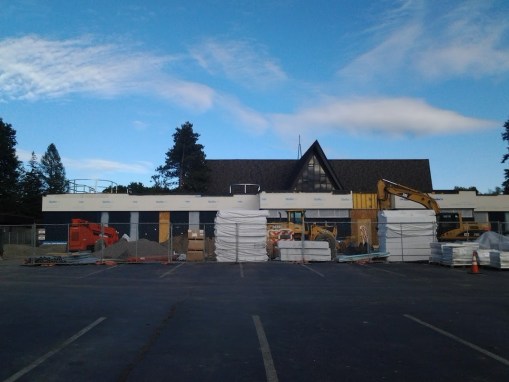
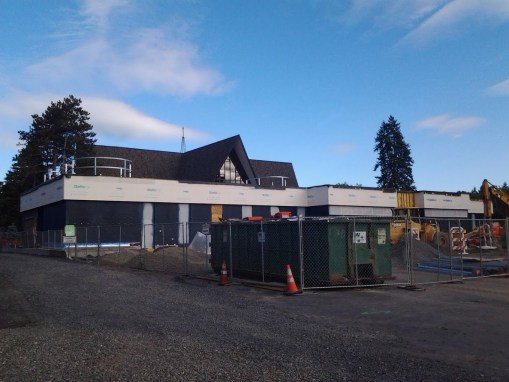
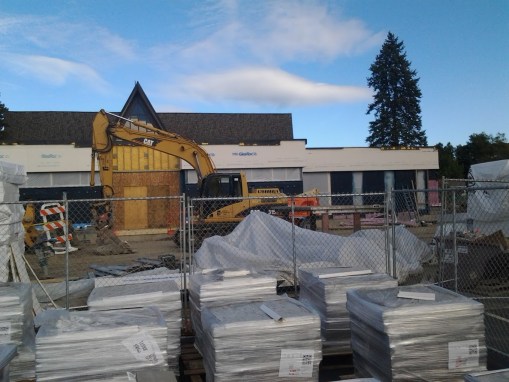
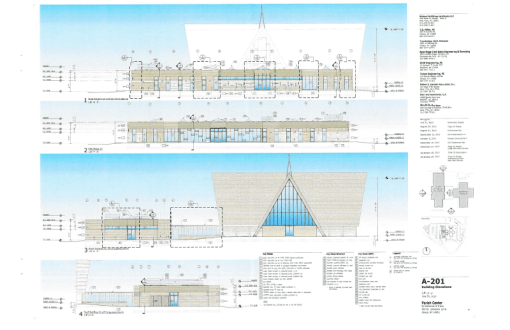
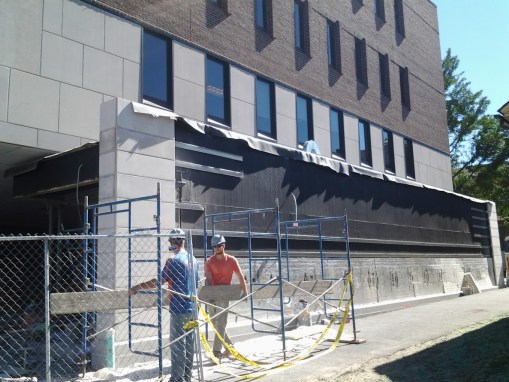
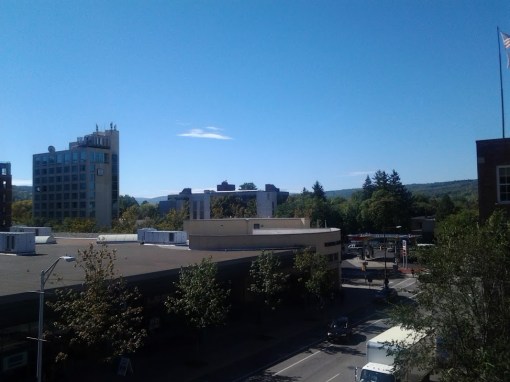
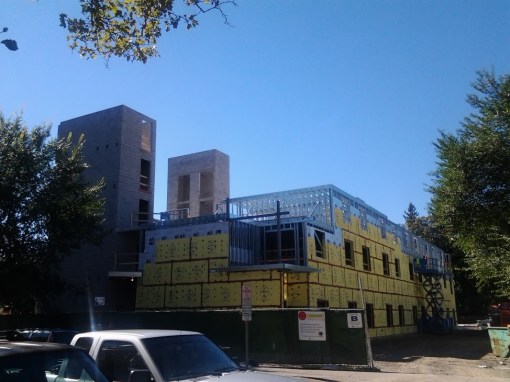
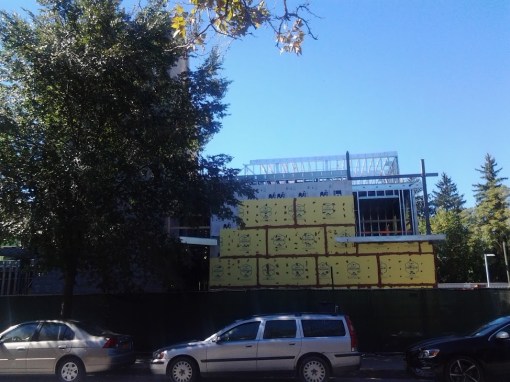
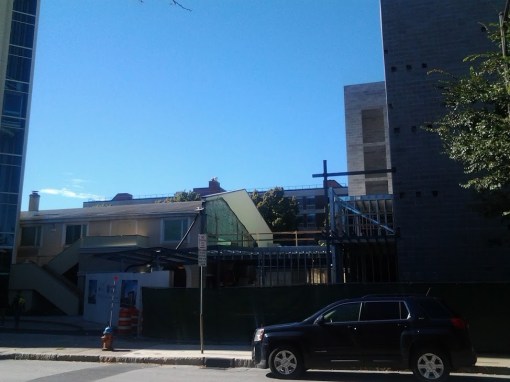
Work continues on the new Parish Center for St. Catherine of Siena in Northeast Ithaca. Edger Enterprises of Elmira has framed the structure, and a water-resistant spray barrier has been applied. Windows still have yet to be fitted. It looks like sheathing is going on over the water barrier, and then the stone veneer is attached. The white boards are GlasRoc fiberglass mats layered with gypsum, over metal stud walls with cavities filled by spray insulation. The exposed plywood section will eventually be replaced with a floor-to-ceiling glass entryway.

Although the diocese doesn’t allow the parish to carry long-term debt, Tompkins Trust lent the church $3 million earlier this month.

20161007_162128 20161007_162132 20161007_162203 20161007_162236 20161007_162258 20161007_162313 20161007_162538

st_catherine_v2


Villages Solars Construction Update, 10/2016

18 10 2016

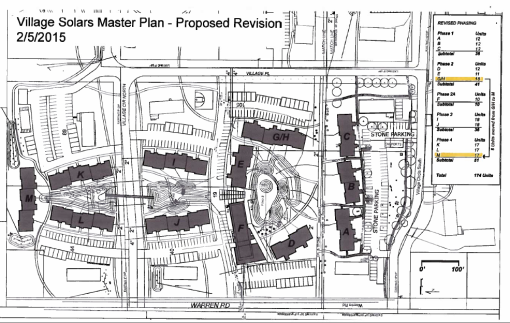
Due to picture constraints with non-gallery Voice articles, the blog ends up being the photo repository for all the photos that don’t make the article [here]. There’s not too much more to add beyond the voice write-up. The project is in the midst of phase III, 18-unit Building “I” and 18-unit Building “J”. Those numbers are estimates and subject to change – Lifestyle Properties converted a couple of larger units into smaller units (hopping on the micro-apartment trend), so the final total for phase II ended up being 43 instead of 41.

Phase I had 36 units, and phase IV will be the largest single phase, 51 units in three 17-unit apartment buildings – they’re likely to start after these two wrap up next year. Around 2017, we may also see plans come forward for the second neighborhood, which would add another 130+ units to the complex.

In the meanwhile, Building “I” is framed and sheathed in housewrap, but the building has yet to be closed up. Building “J” is just starting framing of the first floor, although rather curiously there appears to be an elevated concrete wall on the south end, separate from the foundation. It doesn’t appear that slope is a factor, so what’s actually going on there is anyone’s guess. Ballparking it here, but since the 12-unit buildings cost about $2 million each, it doesn’t seem unreasonable to guess these 18-unit structures cost about $3 million each. The buildings are 15,000-20,000 SF.

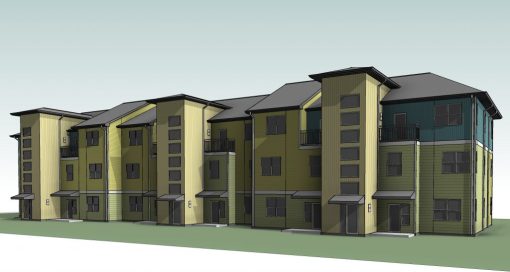
Rather unusually, local architect Larry Fabbroni partnered with a Salt Lake City, Utah firm to help design the buildings. That firm, Process Studio PLLC, notes that the community center and retail stores (Phase 2A, mixed-use building “F”) will follow in later phases, and that the Lucentes are looking to extend bus routes to a new transit stop to be located within the apartment complex. Here’s a description of the design overview from Process Studio’s website:

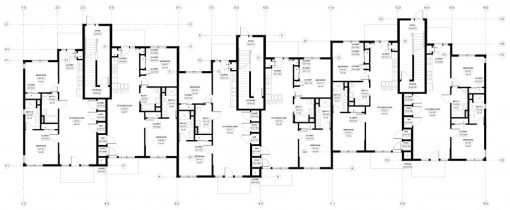
“Each building is designed as a series of standard modules containing two units per floor on three floors.  The modules are then shifted off of one another and manipulated to create interest and variation.  Stair towers become the feature elements for each module, connecting the floors both physically and visually.”

20161007_163426 20161007_163502 20161007_163523 20161007_163544 20161007_163555 20161007_163619 20161007_163739 20161007_163842 20161007_163922 20161007_163936 20161007_163955 20161007_163959 20161007_164032

village_solars_2 village_solars

exterior-1024x548 plan-01-1024x423


News Tidbits 10/15/16: Stoops and Stumbles, Growth and Gables

15 10 2016

maguirebirdseye-620x420

1. The Maguire proposal for Carpenter Business Park will be heading to the Common Council next month, but the prognosis isn’t good. The city council’s Planning Committee voted 4-0 to say that the proposal didn’t fit with the city’s Comprehensive Plan for the near-Waterfront property – the plan calls for walkable, urban mixed-uses, preferably with residential components. The discussion wasn’t unanimous in its logic – 2nd Ward Councilmen Nguyen and Murtagh were stronger adherents to the plan, while the 1st Ward’s Cynthia Brock doesn’t think housing is appropriate – but they all disagreed with the multi-brand car dealership plan as-is. Maguire has asked for a delay in vote so that the plan could be tweaked, but the Committee voted to move forward.

Because of the 18-month TMPUD in place, the Common Council has to vote to approve all projects in the waterfront area, so the resolution to decline further review of the project will be voted on at the next non-budget Council meeting. It will not be unanimous – the 3rd Ward’s Donna Fleming wrote a letter of support for the project, and the 1st Ward’s George McGonigal voiced support for the concept though not this particular plan. But the chances of approval are pretty slim at this point.

119_125_college_avenue_2

2. Judging from the site photos John Novarr’s project team sent along, it looks like environmental remediation has already commenced at the site of his faculty townhouse project at 119-125 College Avenue in Collegetown. 121 College, in particular, is already in the early stages of remediation. It’s a pretty extensive photo documentation, one that might have to do with historic preservation aspects, like determining what can be salvaged and reused. It’s pretty clear that the properties, which were recently acquired from an Endicott-based landlord who held the properties for decades, are in rough shape. Novarr seems to have a preference for prepping sites before plans are approved (ex. 209-215 Dryden), so it’s uncertain how much time these three boarding houses have left.

202_hancock_1

3. Courtesy of the Ithaca Urban Renewal Agency’s Neighborhood Investment Committee, we get to see a pretty thorough breakdown of the expenses and revenues of an owner-occupied affordable housing project.

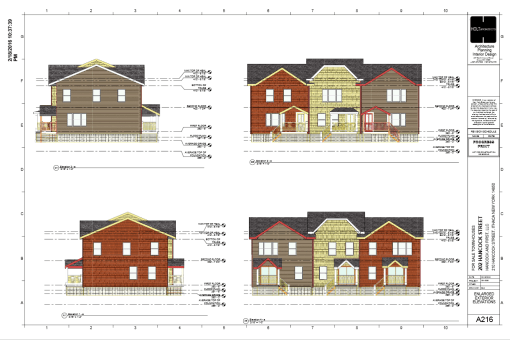
The details come as part of INHS’s application for $314,125 in Federal HUD HOME funds, to be used for the 7 for-sale townhouse units included with the 210 Hancock project, collectively called 202 Hancock. The funds would be used to cover soft costs, like project management, engineering and architecture fees, legal fees, and site inspections.

inhs_202_financials

The 202 Hancock project construction cost is estimated at $1,754,860, about $344,000 per unit, or about $198/SF. That’s expensive, but not unusual – 203 Third Street was about $190/SF. The cost is high due to rapidly rising construction costs, and due to federal guidelines and lender specifications, INHS is required to hire contractors with extensive insurance. Add in soft costs and it jumps to $2,408.371.

Now let’s consider the sales. The five two-bedroom units are expected to sell for $130,052 to a household making no more than $38,046. The two three-bedrooms will sell for $164,979, to households making $42,428/year or less. Those incomes don’t meet the rule-of-thumb of 3.4x annual income, but HOME funds cover part of the cost ($24,000 for the 2-bedrooms, $36,000 for the three-bedrooms). INHS gets $960,218 in the project sales – and that’s the same amount Tompkins Trust Company is willing to cover with a construction loan. So the initial gap is $1,448,155. Now we’re starting to see why new housing can be so expensive.

INHS gets $7,000 in revenue from Energy Star rebates on appliances, and has up to $351,153 equity they can put towards the project, most of that being the value the of 202 Hancock’s land. The IURA would issue a low-interest bond for $215,875 to be paid back by INHS, and the non-profit has secured $280,000 in grants directly from the state (NYS AHC), and $280,000 in NYS CDBG funds awarded by local governments (this tactic is known as “subsidy layering“). This complicated puzzle of funding sources is why so many developers are not interested in doing affordable housing.

Side note, one of the pre-development costs is market analysis. Might seem silly, but grant reviewers want proof the housing crisis isn’t just bluster, and that these units won’t sit empty. An analysis by Randall/West determined that at a sale price of $136,000 for a 2-bedroom, and $162,000 for a 3-bedroom, qualified buyers would be found and under contract within 4.6 months. The units should be available for occupancy by June 2017.

202_hancock_2

Secondly, thanks to a legal settlement between the state and Morgan Stanley, a $4 million affordable housing grant is available for renovations of existing INHS scattered site rentals (98 units in 44 buildings across the city). Most of these units are rented to individuals making 60% or less of the area’s median income (about or less than $32k/yr). The funds would go towards major, long-term renovations, such as new roofs, windows, siding, and energy efficiency improvements. INHS could also use the funds, disbursed via the city, to refinance its portfolio, acquiring some of the properties and paying off $1.8 million in loans on already-purchased properties.
Here’s the short of it – the goal is to buy/pay off the scattered rental sites they manage, renovate and make them energy efficient and comfortable, lock them into the Community Housing Trust so that they become permanently affordable, transfer the land to a wholly-owned Housing Development Fund Corporation, and then sell some of the buildings to an LLC while INHS continues as property manager. The funds from sales would finance new affordable housing. This is all set up as it is to take advantage of legal and tax benefits of different corporate tax structures, while minimizing the drawbacks. Potentially, the Morgan Stanley settlement money could be used to leverage an additional $15 million in tax credits and affordable housing grants from the state.

Correction, per INHS’s Scott Reynolds in the comments section: rentals aren’t in the Community Housing Trust, but affordability would be required for 50 years.

Rochester-based SWBR would be in charge of renovation design plans, and 2+4 Construction will be general contractor. Tenants may need to be relocated as renovations occur, which will be coordinated by INHS staff. The goal is to have the settlement money accepted by the city by the end of the year, financing by April 2017, and renovations completed by the end of 2018.

cwd_bldg24_1

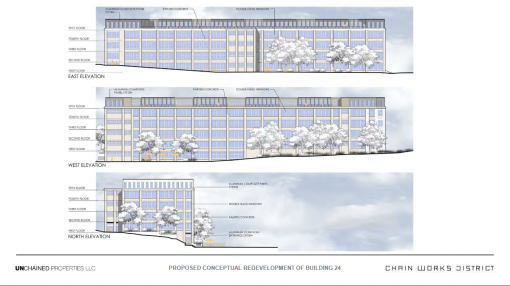
4. It’s another one of those special meetings – the city Planning Board will be sitting down next Tuesday to go over comments and sort another batch of public comments regarding the Chain Works DEIS, this time on public health. Once you get past the few pages of “this will never work and don’t bother trying”, there’s actually some interesting back and forth about remediation and what that entails. Also on the agenda are revisions to the Holiday Inn Express down in Southwest Ithaca – namely, they’re trying to avoid building the stairs to Spencer Road, as well as some other landscaping issues. At the second meeting later this month, the board is expected to Declare Lead Agency, open public hearings and review parts of the FEAF for TCAction’s Amici House, 8-unit 607 South Aurora, and the 8-story City Centre project on the Trebloc site downtown.

maplewood_v7_1

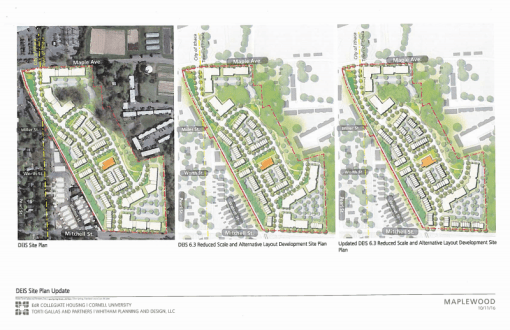
5. The plans for Maplewood have been modified yet again, in a change that the project team hopes will please neighbors and the town of Ithaca planning board. In revised plans submitted this past Wednesday, the 4-story apartment building planned for Mitchell Road has been replaced with a few sets of 2.5 and 3.5-story townhouses and stacked flats, and Building B to its north was extended slightly to compensate for the loss of bedrooms. Even so, the accompanying letter from Scott Whitham states that the unit and bed count have decreased slightly, from 473 units and 887 beds, to 442 units and 872 beds.

maplewood_v7_2 maplewood_v7_3

Also modified was their appearance – stoops, porches, dormers and gable roofs were added to give them a more harmonious appearance with the rest of the neighborhood. It’s not clear if the rest of the units were aesthetically modified as well.


209-215 Dryden Road Construction Update, 10/2016

14 10 2016

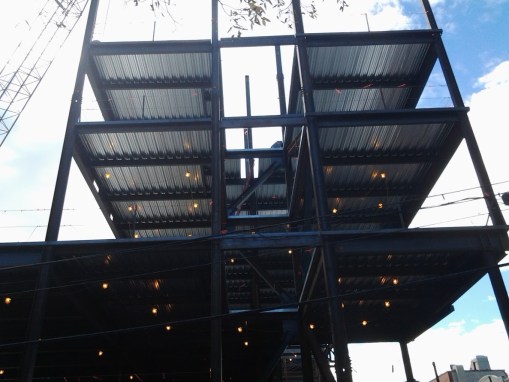
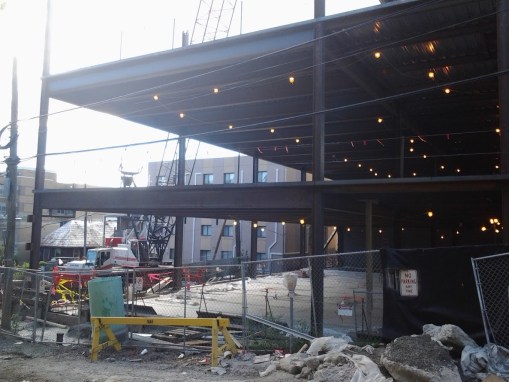
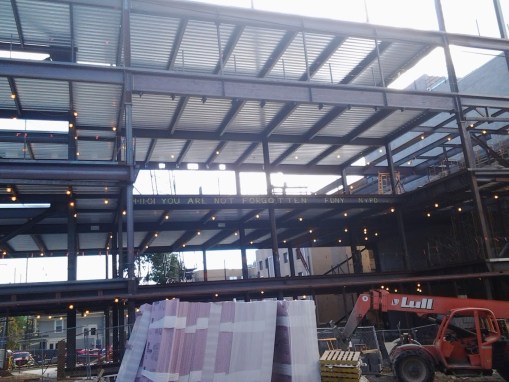
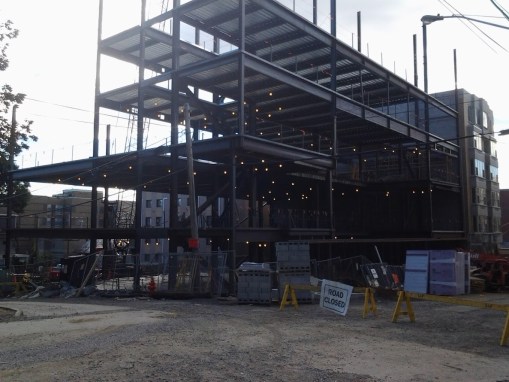
With the rise of the structural steel, 209-215 Dryden Road (aka the Breazzano Family Center for Business Education) is starting to make a significant dent in the Collegetown skyline.

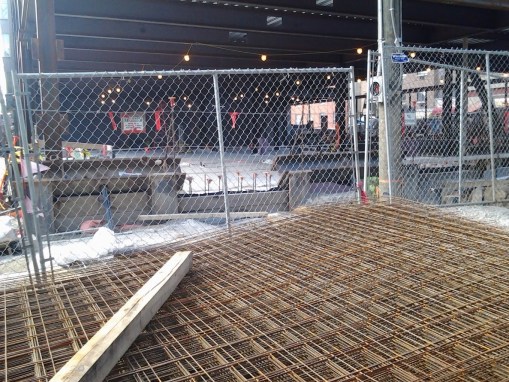
The floorplates are up to the fourth level, and the vertical steel columns indicate just how tall the building will be when the steel skeleton is built out. The concrete floor has been poured on the ground level, and corrugated steel decking has been laid on the upper floors – note that only the first and second floors have reached their full dimensions, the upper floors are waiting for the delivery of additional steel columns and cross beams for the crane to hoist into place. The sheets of wire grid seen outside the fence are for future concrete floor pours, providing strength and rigidity for the concrete, just as rebar does for foundations.

The large gap in the front of the building is the multi-story atrium space – the lower three floors are academic class space, while the upper three floors are academic office functions for the Cornell Executive MBA program. The smaller gap towards the north (right) side is for a stairwell.

Nice touch with the subtle commemoration of 9-11 emergency responders. It’s not uncommon to see these tributes when steel work is underway during the fall.

20161007_154941 20161007_155001 20161007_155014 20161007_155017 20161007_155050 20161007_155054 20161007_155100 20161007_155116 20161007_155139 20161007_155206 20161007_155234 20161007_155255

209-215_2 209-215_basement


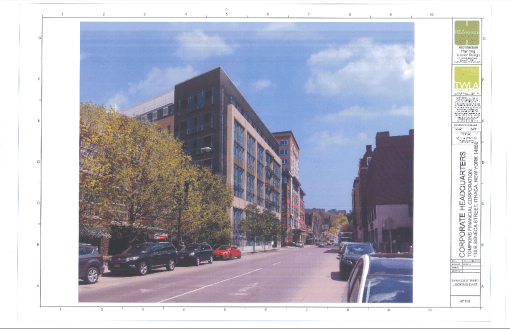
Tompkins Financial Corporation HQ Construction Update, 10/2016

13 10 2016

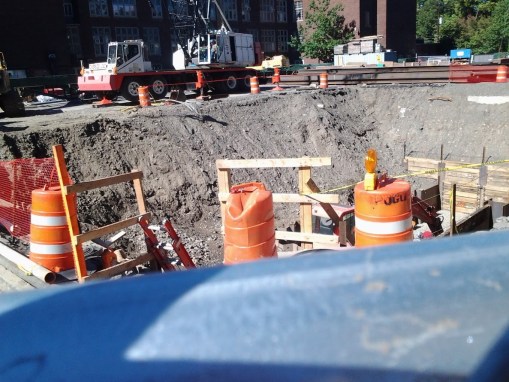
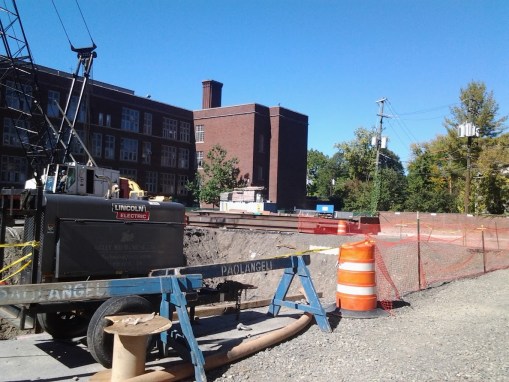
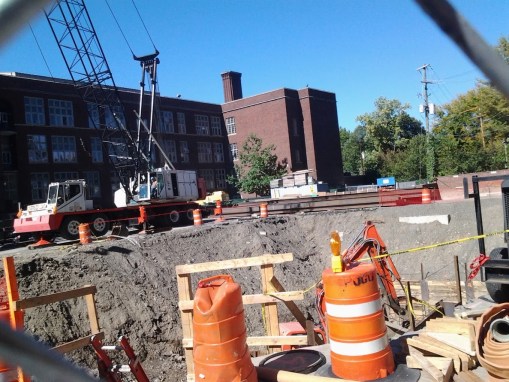
Normally, the phrase “wow, what a hole” isn’t a good thing. Here, it’s fine. Since this is a large, heavy building, and the soil near the surface is liable to settle and risk upsetting the building foundation, a deep foundation is required. According to the geotechnical report by Elwyn & Palmer, the end bearing piles will penetrate 65-70 feet into the ground. At this depth, the material is stable enough to allow each pile to handle the required heavy weight. The basement floor slab will be about 12 or 13 feet below street-level.

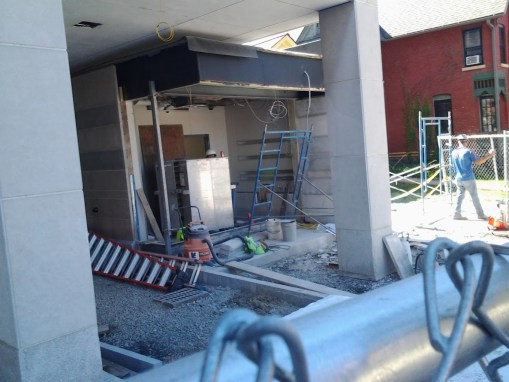
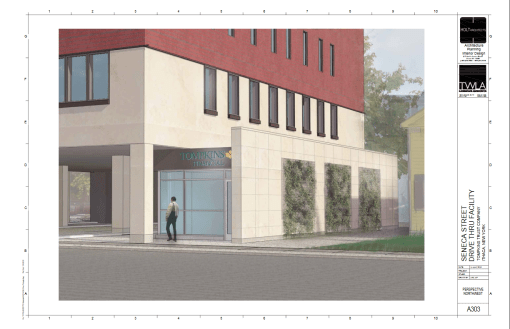
Across the street, the new 965 SF drive-thru building is moving right along. The much smaller building sits on a much easier, quicker and cheaper concrete slab-on-grade foundation. The metal clips on the west wall are for the limestone veneer, just like the panels on the corners. The wall will have metal screens with which vine-spreading plants will grow up and through, creating a green screen intended to make the otherwise blank wall more attractive to neighbors and passerby. The area by the front will have a glass-encased entryway and dark metal panels overhead.

More information about the project can be found here.

20161007_130747 20161007_130821 20161007_130827 20161007_130849 20161007_130919 20161007_130934 20161007_131000 20161007_131017

tfc_final_1 tfc_v3_3

tfc_v3_4


Hotel Ithaca Construction Update, 10/2016

12 10 2016

The Hotel Ithaca is moving at a pretty good clip. The stud walls are up to the third floor. If my notes from the August interview are right, the walls are assembled in sections off-site and trucked in for installation.

Most of the building uses R-Max polyiso insulation covered with Georgia-Pacific DensElement sheathing. The polyisocyanurate, a thermal plastic foam board, helps limit heat loss, and the DensGlass is gypsum panel coated with fiberglass mat, eliminating the need for spray-on waterproofing and fire-rated for the safety of guests (polyiso is a fire risk). The first floor by the elevator and mechanical spaces, and the areas under renovation by the lobby use US Gypsum Securock, and do not appear to have the polyiso layer. The change in sheathing, and use of R-Max might have to do with the expected heat loss from certain parts of the hotel, perhaps greater energy loss is expected from the hotel rooms than from the mechanical spaces. A peek inside shows exposed interior stud walls. The large space in the in the ninth photo will be a new entry area, coatroom and prefunction space.

A filing with Tompkins County indicates that M&T Bank is providing a $13,765,000 construction loan to finance construction, of which $1.6 million is going towards soft costs like legal fees and pre-opening administrative costs. The cost to furnish and equip the 90 new rooms and function/conference space is about $1,393,400.

20161007_124853 20161007_125437 20161007_125453 20161007_125510 20161007_125527 20161007_125553 20161007_125720 20161007_125725 20161007_125741 20161007_125826 20161007_125903 20161007_125910


Ithaca Marriott Construction Update, 10/2016

11 10 2016

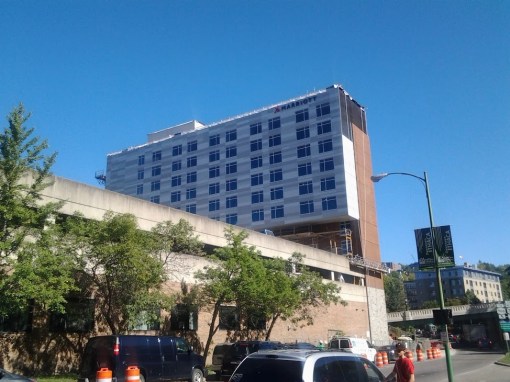
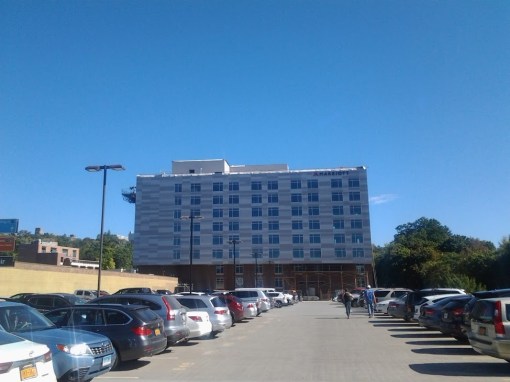
Home stretch for the Marriott. Official opening is November 15th. Although that means they’ll be opening towards the start of the slow season for the local hospitality industry, the general manager says they hope that it’ll give them a chance to work out any wrinkles in service before the lodging season perks up again in March. Hiring has been underway for service staff, with full employment expected to be somewhere between 50 and 60, 75% full time, with wages starting at $10 plus tips for restaurant wait staff, up to $18-$19/hour for other service positions.

From what can be found by playing on the Ithaca Marriott Downtown on the Commons webpage, a mid-week one-night stay in a king or double queen will set you back $195 at a minimum, while the weekends start around $269/night. A run-down of some of the amenities can be found on the website, or in the August construction update. The hotel will have 151 regular guest rooms and 8 suites, which are the rooms with the floor-to-ceiling glass at the corner of State and Aurora.
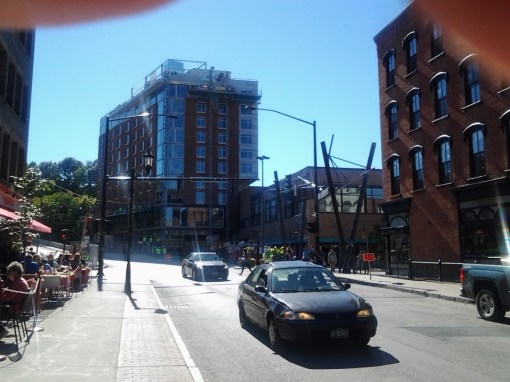
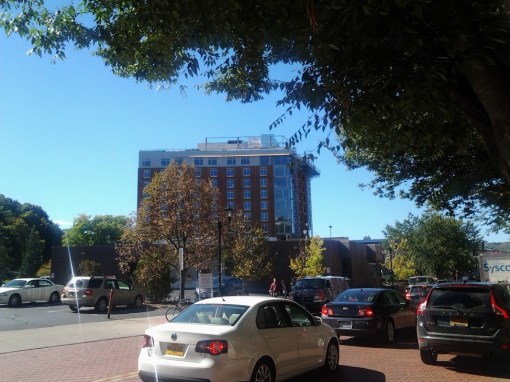
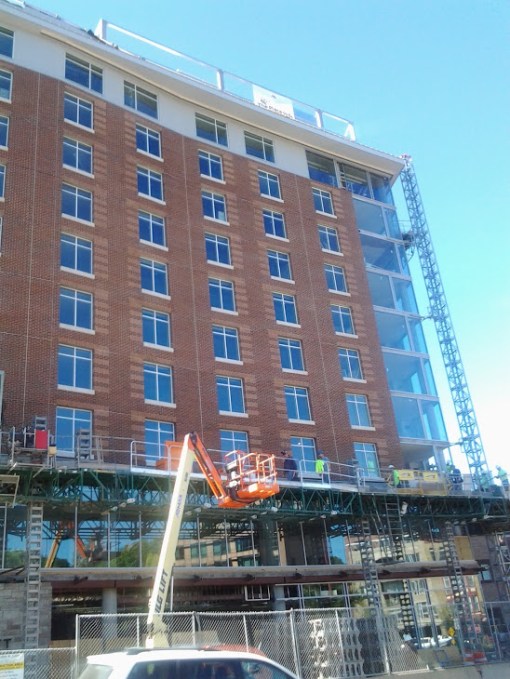
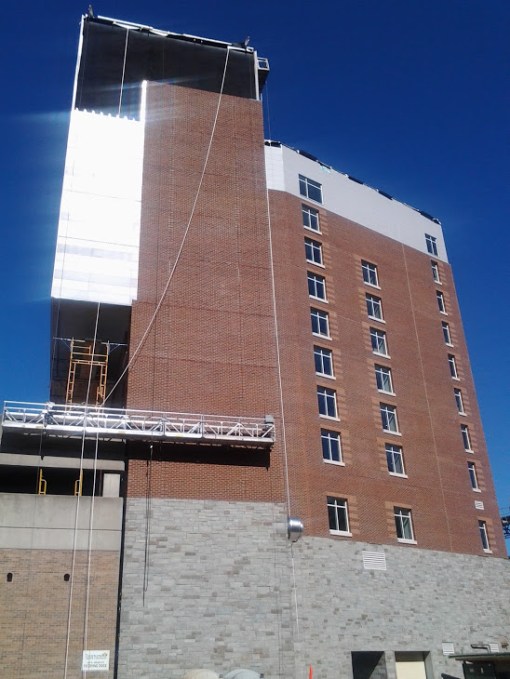
The Nichiha metal panels are almost complete, with just the west face exposed at this point. I did not expect them to be so bright, beyond the unintended gleam-o-vision of my camera. The rooftop mechanical penthouse has been framed but has yet to have its exterior panels attached. Some of the Marriott signage has been attached already. Most of the stone veneer has been attached, although the finishes for the Commons entrance are still a work in progress. Judging from the plastic sheets on the roof, the synthetic rubber membrane still has yet to be applied. Photos on the hotel’s facebook page show that the front desk is in and sheetrock has been hung and mudded in some places (the “mud” is a premixed joint compound used to cover joints and seams and to allow for a smooth finish for painting). The banner at the top of the penthouse says “The Place To Be”, with the Marriott logo at top.
20161007_123659 20161007_123741 20161007_123852 20161007_123941 20161007_124018 20161007_124049 20161007_124115 20161007_124119 20161007_124236 20161007_124312 20161007_124358 20161007_124615 20161007_124706


210 Hancock Construction Update, 9/2016

6 10 2016

I try not to sit on these for too long, but it’s been a busy week with the Voice.

The main apartment building is in the process of having its foundation walls dug, formed and poured. The forms are put in place to hold the concrete as it is poured and cured, and then the construction team (led by Lecesse Construction) moves on to the next section. The rebar grid sticking out of the concrete gives it additional strength and rigidity. The steel piles are being inserted with the hydraulic hammer, which should be wrapping up any day now if it hasn’t already. The four-story apartment building is divided into four sections – the two with concrete pours underway, the southern two, will host TCAction’s daycare and non-profit office space. The northern two will host indoor ground-level parking.

The soil in Northside is not so great, much of it lies in the 100 or 500-year flood zone and is too unstable for less expensive slab/shallow foundations like what they use in many of the projects on the hills. For a large project like this, the safe, albeit more expensive and intrusive approach is to do a deep foundation. However, the wood-frame townhouses are small enough and light enough such that a shallow foundation can be used – you can see foundation work for the five rental townhouses in the last two photos. The seven for-sale townhouses will follow a little later this November, the original plan was to have them open in June 2017, but they have been pushed back to late fall 2017 as a result of the contractor switch.

It looks like, however, they have added the interest form for buying a townhouse to their website here. Under the working name “202 Hancock”, this $2.36 million project will have five two bedroom units (1,147 SF) to be sold for about $114,000, and two three-bedroom units (1,364 SF) for $136,000. They will be available to those making 60-80% of local AMI, or $37,000-$49,000/year. The townhouses would be a part of the Community Housing Trust (CHT), keeping them affordable even as they are sold to others in later years. More info on those units here. For those qualified and preferring to rent an apartment or townhouse, the form is here.

20160918_160842 20160918_160856 20160918_160915 20160918_160949 20160918_161026 20160918_161049 20160918_161140 20160918_161218 20160918_161258


Ithaka Terraces (215-221 West Spencer Street) Construction Update, 9/2016

4 10 2016

I wanted to wait until the Voice condo piece was published before putting these photos up. Work has started on the twelve condominiums planned for 215-221 West Spencer Street. The project, dubbed “Ithaka Terraces”, is the idea of Ed Cope, a retired Cornell biologist who owns the local property management firm PPM (Premium Property Management) Homes.

215-221 West Spencer Street is a steeply sloped 0.47 acre site that was previously home to a multistory apartment building. The building had fallen into disrepair by the early 2000s, and the city bought the property for $530,000 in 2003 with plans to turn it into affordable housing. However, that plan was thrown off track after the building burned down not long afterward. The site was then used as an informal parking lot by nearby residents for a number of years while the city figured out what they wanted to do with it. The city deeded the property to the Ithaca Urban Renewal Agency in 2013, who attempted to sell it as affordable housing, but found no takers at the $100,000 starting bid. Cope picked up the property when it was offered for sale to general housing, paying $110,000 in March 2015. Sketch plans were presented a few weeks later at the March Planning Board meeting.

The parcel is zoned R-3a, and the property required some variances for having parking within rear yard setback, which the planning board and BZA were comfortable with given the steep topography of the site. The property was approved by municipal boards last fall. Long story short, it’s classically-inspired urban infill.

The plan is to have the buildings ready for occupancy by September 2017. Units range from $265,000-$390,000, depending on size and location. Two of the units are 3-bedrooms, and the other ten are two-bedrooms, ranging from 637-1311 SF. For those interested, more information can be found at the just-activated website for the project here.

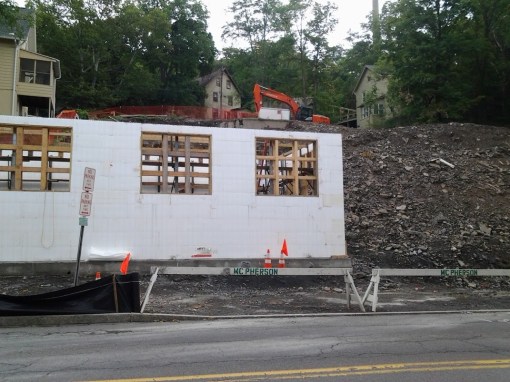
Along with Ed Cope (operating as “Net Zero NRG LLC”) on the project team is architect Noah Demarest of STREAM Collaborative, Taitem Engineering for structural engineering, T.G. Miller P.C. for site surveying and civil engineering, and green building expert AquaZephyr as general contractor. All of those businesses are local. The sawhorses in the photos say McPherson Builders, but they could be a subcontractor, or on loan.

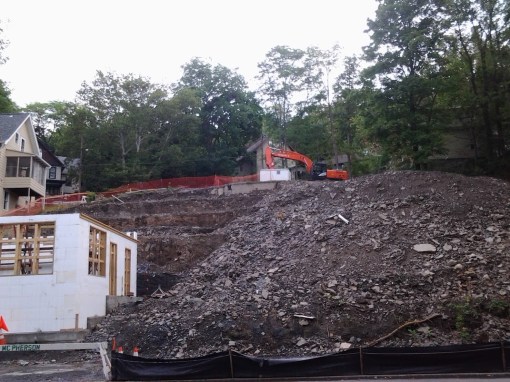
In the now two-week old photos below, Building A is already under construction, while the site for building C has been leveled. More specifically, the foundation has already been dug, formed and poured for Building A, and the first-floor walls have been erected. Like their little pioneer across the street, The buildings are designed to be net-zero energy capable. The slab foundations will be insulated with R15 rigid foam, and the first floor walls use insulated concrete forms (ICFs) similar to the Fox Blocks used for the Thurston Avenue Apartments a couple of years ago. The walls are put together block-by-block, with concrete poured into the inside gaps. This provides insulation on both the interior and exterior of the wall.  The building will use electric air source heat pumps for winter heating and summer cooling, with the electricity provided from a solar array Cope owns in the town of Caroline. The buildings will seek net-zero certification once they are completed.

Here’s the press release from Ed Cope that I received as part of our Q&A:

One of my primary interests in Ithaca housing is to help improve the overall community. My development goals all come from that objective, and so for the past few years I have worked to identify sites that are a very inefficient use of space, and are therefore mostly vacant and difficult to build on which is why they are still in need of development.

This combines with my longtime interest in efficient use of energy which includes building energy-efficient buildings. This interest leads me into risky but rewarding projects and works well with the city’s infill development initiatives. At PPM Homes we have transformed many of the older houses that we have acquired into much more energy-efficient dwellings.

One of our successes was the complete rebuild of a rundown property on a steep and difficult site at 201 S. Aurora. We were able to transform this property into a beautiful and more appropriate “gateway” to South Hill, a sharp contrast to the decrepit and crumbling house it once was.

The Ithaka Terraces project is our second effort at completely new development, the first being across the street at 228 W. Spencer where we took an impossibly small and impossibly steep postage stamp of a site and built a netzero energy 2-bedroom house.

This house, which is now on the market, is currently powered completely by PPM Homes offsite solar array which incredibly also provides all of the electricity for many of the properties that PPM Homes manages.

The condos at Ithaka Terraces will also be powered by an additional solar array that we will be built by Renovus Energy next to our current array which is 15 miles outside of Ithaca.

Both of these properties on West Spencer Street are built on sites that are extremely difficult on which to build. They have been vacant for years and would probably have remained vacant for years to come. Special engineering consideration due to the peculiarities of building on the sites has been handled by Tatiem Engineering.

The Ithaka Terraces project also responds to the recognized need for condominiums downtown. Three blocks from the Commons and consisting of 12 two and three bedroom units, these condominiums will provide upscale quality and energy-efficient living.

In the interest of reflecting Ithaca’s namesake our design will add a pleasing Greek aesthetic to this part of West Spencer Street. The project should be complete by this time next year and be available for reserving units by early summer. Our website for the project is up and running at IthakaTerraces.com .

20160918_144152 20160918_144204 20160918_144222 20160918_144249 20160918_144307 20160918_144337 20160918_144604

215-221_spencer_v3_1 215-221_spencer_v3_2

215-221_spencer_v2_1