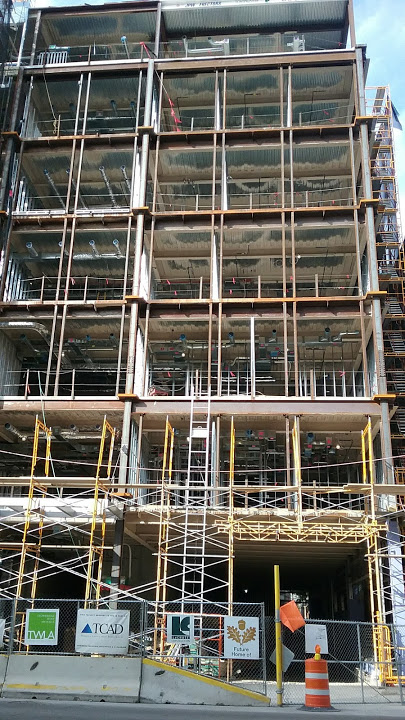
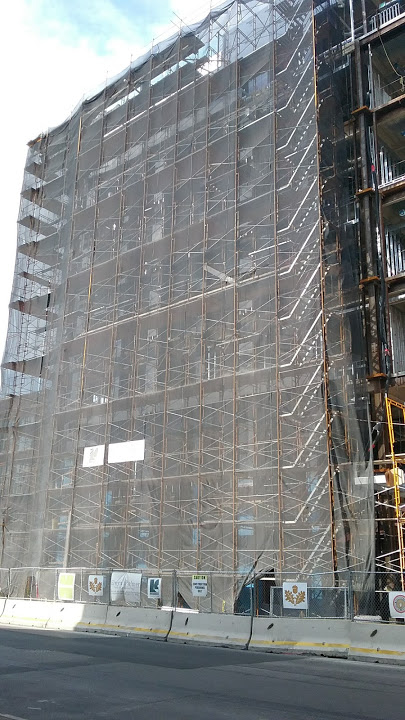
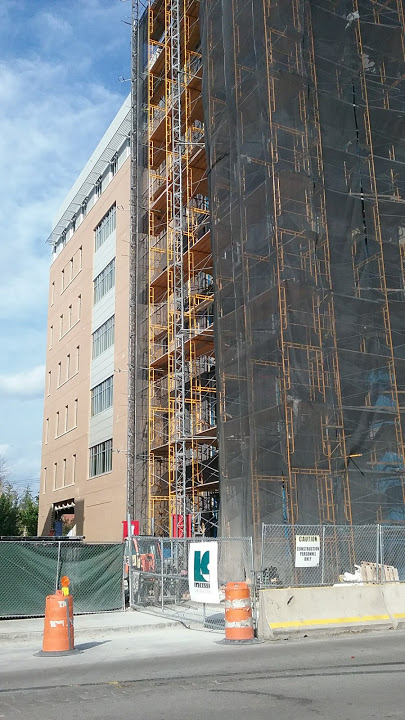
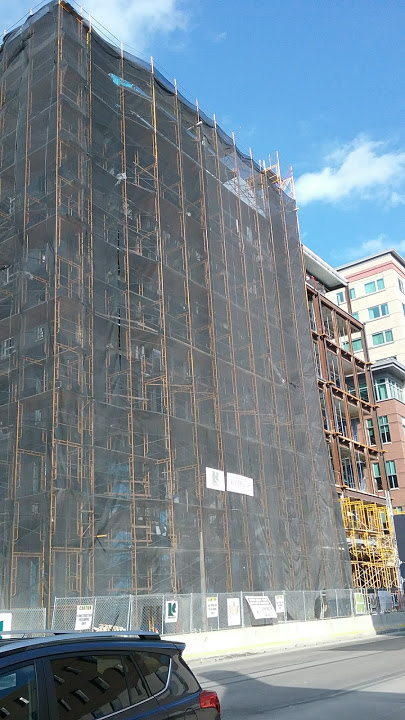
Technically, 210 Linden Avenue has been stopped for the time being, but just for the sake of having it, here’s the project description post for future reference.
One of the intents of the Collegetown Form Districts was to encourage redevelopment in portions of Collegetown that the city saw as less desirable – the really stereotypically poor-quality housing that Cornell just called out in its state of the university address. These properties are generally unsuitable for families since most of them were purpose-built boarding houses, often with haphazard additions and renovations over the years to make the bare minimum of city building and fire code. With a captive market in Cornell students, many landlords didn’t see the need for quality because the prevailing logic was that it decreased profitability. Only during the first luxury developments of the 1980s (Fane’s Collegetown Court in 1985, Mack Travis’s Eddygate in 1986) did that really start to change, and even then, many older landlords clung to the old ideas, hesitant to change from a time-tested if ethically questionable formula.
Since then, it’s been something of a development see-saw; developers see greater profit potential, but typically they need to build big to ensure a good return on investment (balancing soft construction costs, hard construction costs, interest on construction loans and current/future taxes against the revenue from renters). A large project comes along and drives discontent from East Hill and Belle Sherman, who have long clashed with the different lifestyles of students, as well as a longstanding sense of wariness from the old-style landlords who would try to buy homes and turn them into student slums. The city places a moratorium, tweaks the zoning, process starts anew. From a municipal perspective, it’s always been a delicate balance between the substantial taxes generated from Collegetown, and quality of life issues (traffic, rowdiness).
In general, the 2014 form-hybrid zoning, which removed some parking regulations and put the focus on Collegetown’s core, has had favorable outcomes; the only real debate has been 201 College Avenue, which was a rather unique situation. 210 Linden Avenue is a textbook example of a shared goal between city and developer – the 200 block of Linden has many properties in poor condition, and the city would like redevelopment mixed among the better-maintained older houses. With that in mind, zoning is generally CR-4 – 4 floors, and no parking required as long as a Transportation Demand Management (TDM) plan is received and approved by city staff. New buildings wouldn’t be large or oppressive since most buildings are 2.5-4 floors on this block, and with planning board input, high quality designs would enhance the walkable environment, build the tax base, and add some housing to reduce pressure on adjacent streets. Developers in turn would have more flexibility, and removing the parking rules really opens up the possibility for new builds on Linden’s small lots.
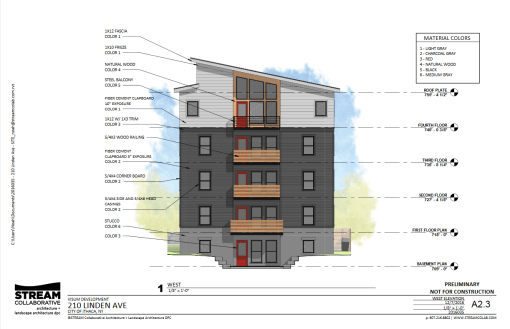
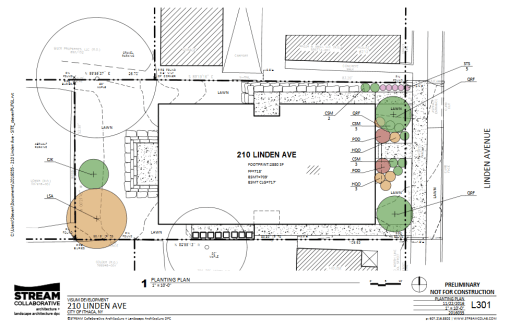
Previously, 210 Linden was a rather ramshackle 12-bedroom apartment house. Visum Development Group (VDG), led by local businessman Todd Fox, saw a potential opportunity for a new build and established a purchase option with the then-owners, a pair of small local landlords. The redevelopment is not an especially large project, medium-sized by Collegetown standards. It is 14,400 SF with 9 units, all of which are 4-bedroom, 2-bath, for a total of 36 bedrooms. Each floor has two units, except for the partially-above grade basement, which has one unit and space for the bike room, trash room and mechanicals. The project will use electric air-source heat pumps, and be net-zero energy capable with the use of an off-site renewable energy source.
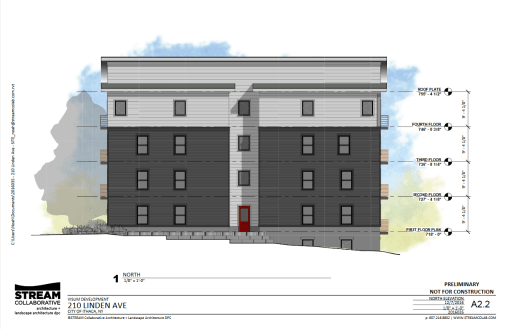
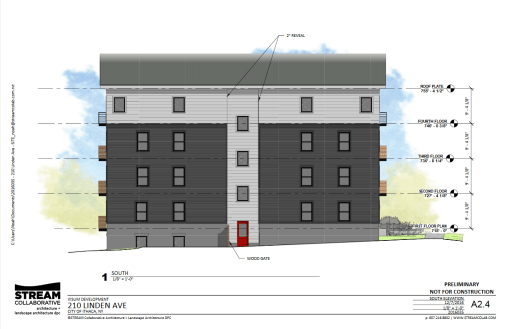
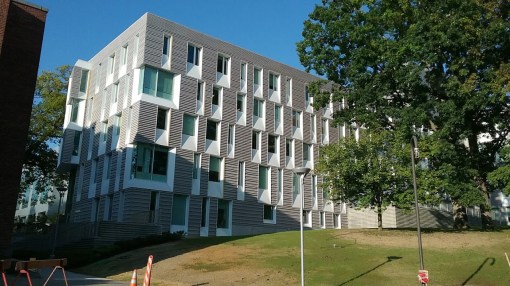
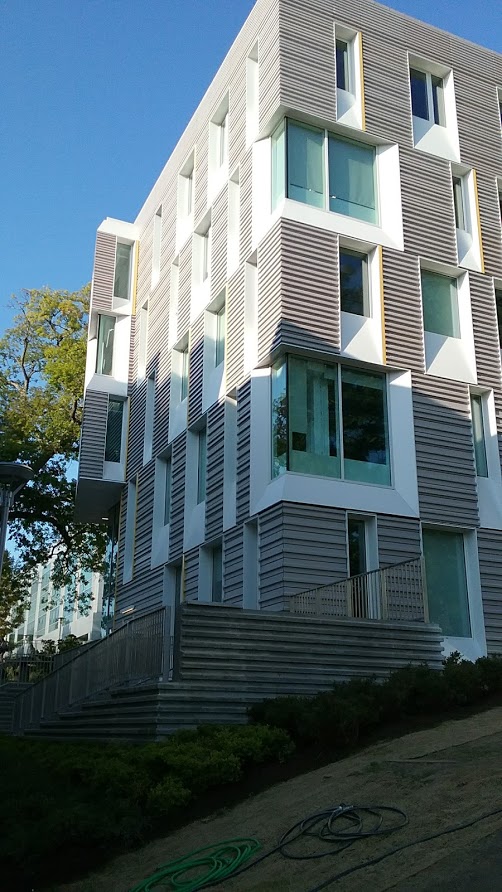
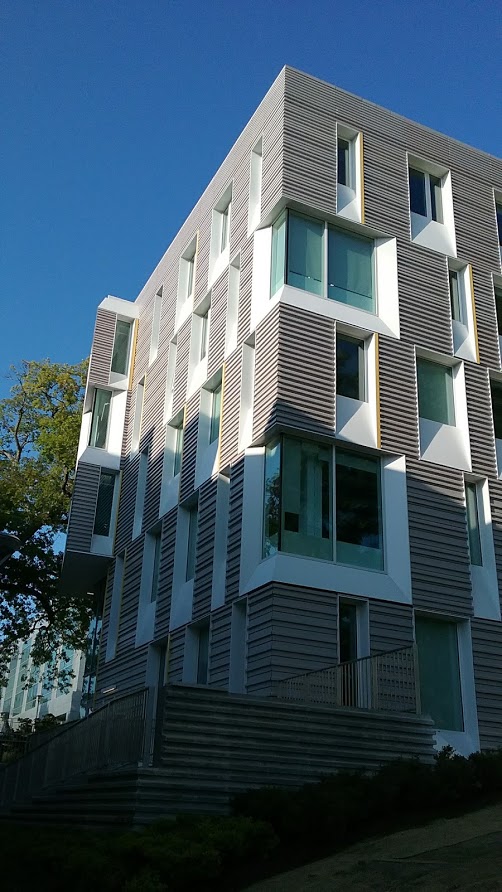
210 Linden was first proposed in November 2016. With basically no opposition, and a design that the planning board found perfectly appropriate, it sailed through the review process, and approval was granted in January 2017. In something of a rarity for city projects, no zoning variance was required. 210 Linden fits the maximum length, width and building lot coverage allowed under the Collegetown Area Form District’s CR-4 zoning, and comes in at or just under the 45-foot height maximum – the sites are sloped, and the 45′ height is defined as the average above grade plane. Exterior finishes includes stucco at basement level, a couple shades of grey fiber cement lap siding above, red doors, metal balconies and natural wood trim.
There were virtually no design changes from beginning to end – the only noticeable change was that the doors were moved from the left side of the balcony/terrace to the right. The project was a fraternal twin to another infill development Visum has planned, 126 College Avenue. One has to give credit to the architect, Noah Demarest of STREAM Collaborative, for being able to provide cost-efficient and well-received designs.
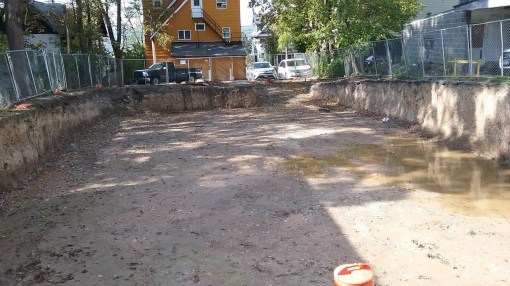
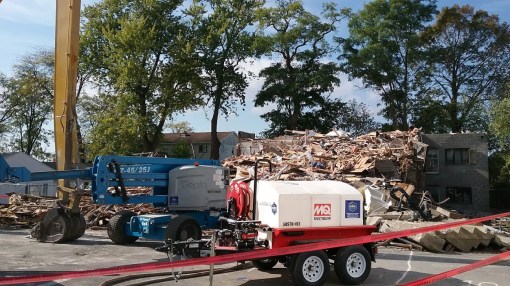
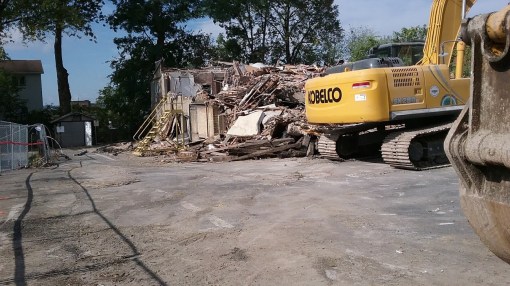
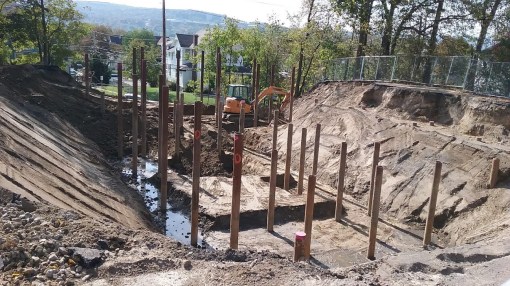
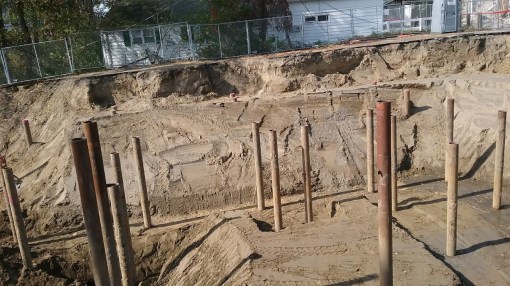
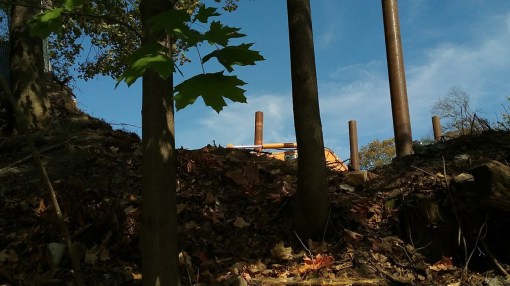
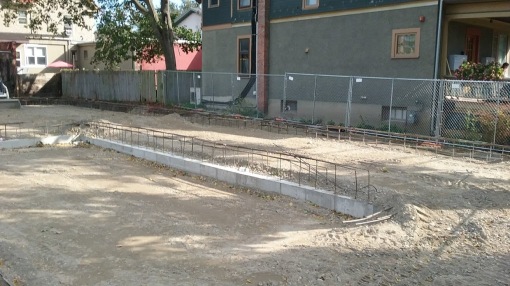
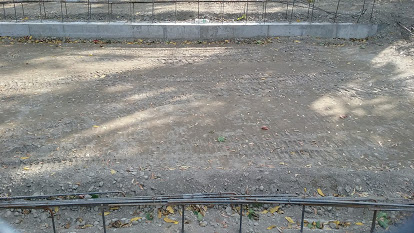
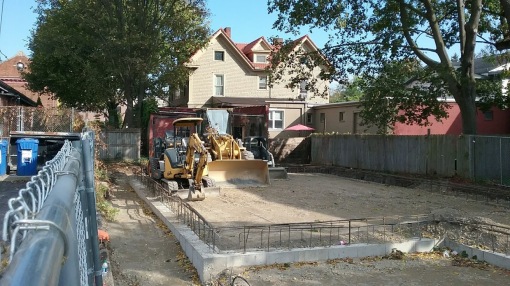
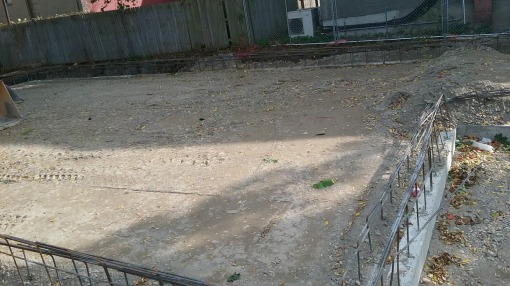
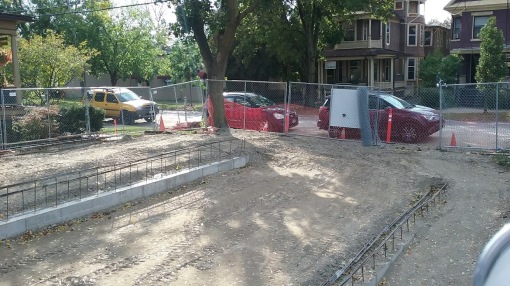
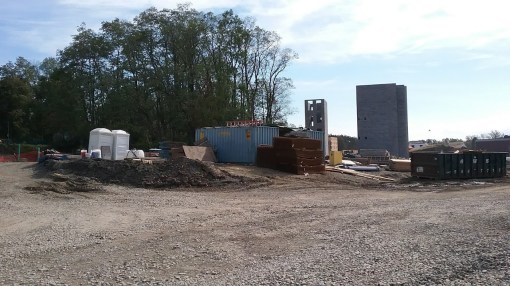
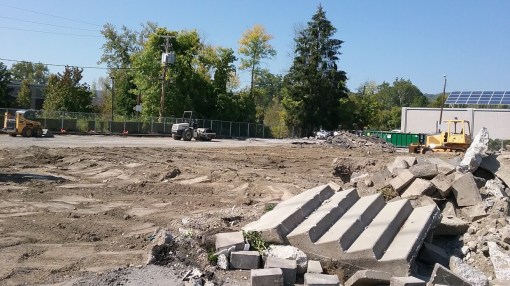
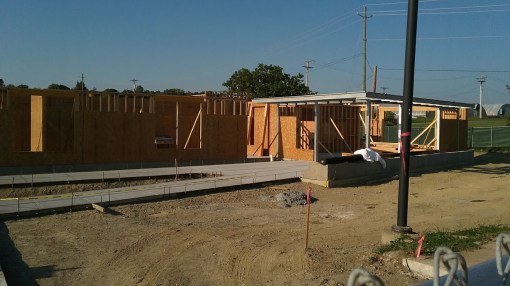
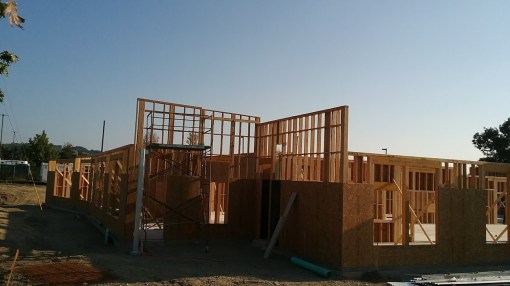
A frequent partner of VDG, William H. Lane Inc. of Binghamton, is the general contractor. Right now, only the demolition and foundation excavation have been completed. Once the power lines have been buried out front by NYSEG, construction of the building can begin. The intent is to have the building completed in time for Cornell’s 2018-19 academic year, which starts in late August. Elmira Savings Bank gave VDG a $3.15 million construction loan in July to complete the project.
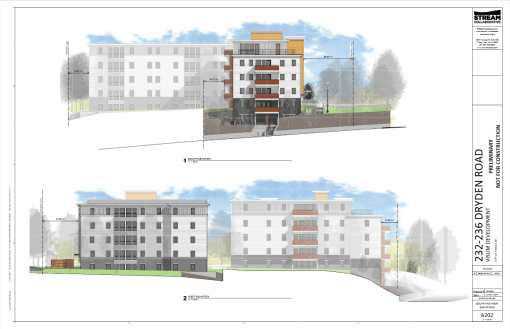
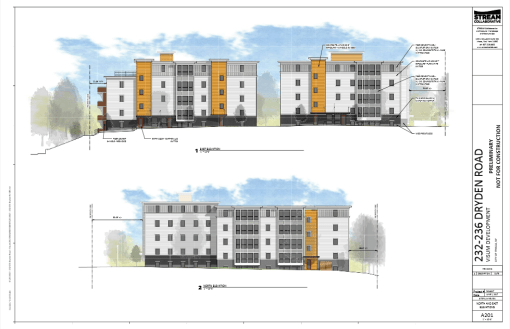
As one might expect with new units less than two blocks from Collegetown’s core, the cost per room is not cheap. Advertisements online say $5,000/month, or $1,250 per month per bedroom. Units come with 9′ ceilings, air conditioning, internet/cable, stainless steel appliances, quartz countertops, washer/dryer in-unit, balconies, and a security system, among other bullet points and exclamation points. A fitness room and other luxury amenities will be accessible to tenants at another Visum project, 232-236 Dryden Road.























































































 Ithacating in Cornell Heights


