107 South Albany Street Construction Update, 12/2017

22 12 2017

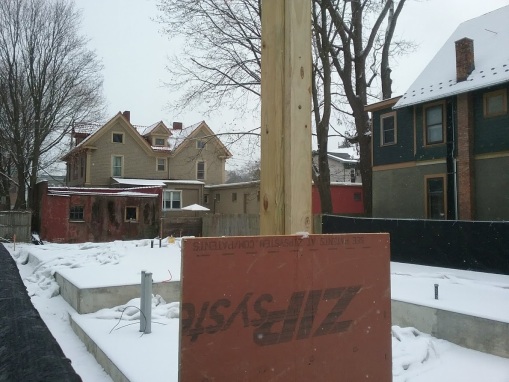
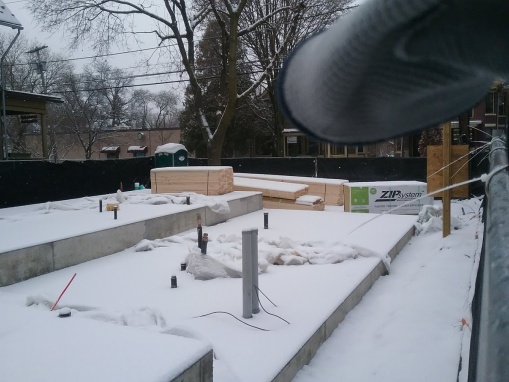
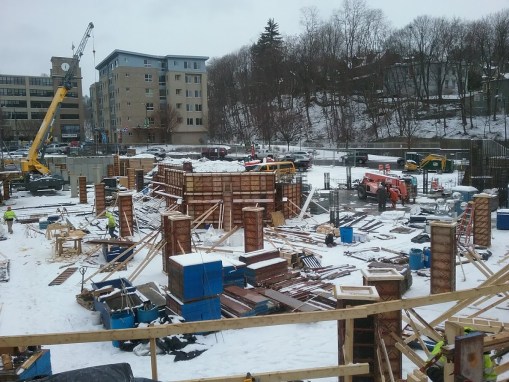
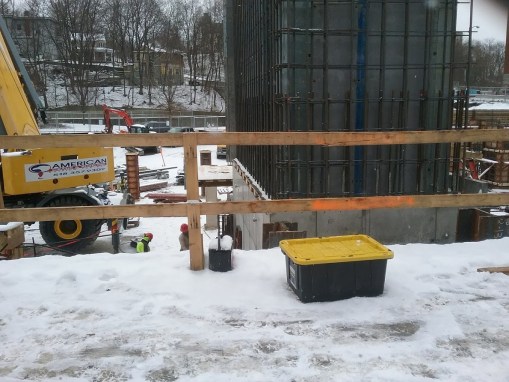
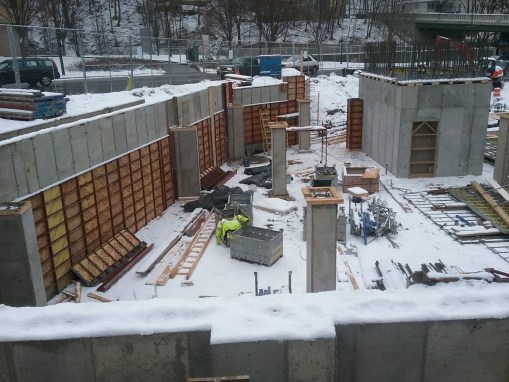
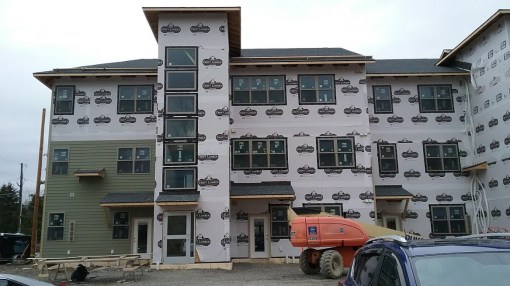
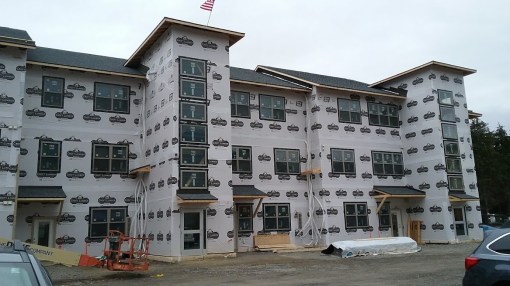
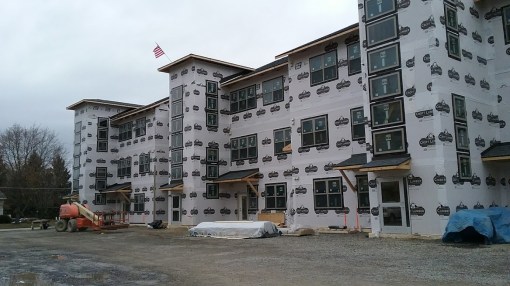
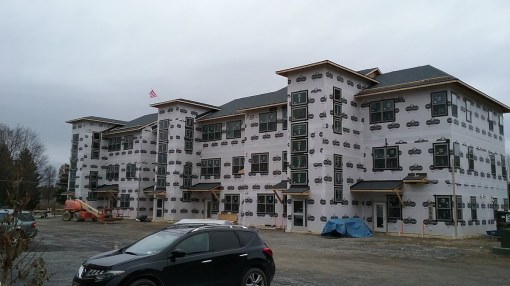
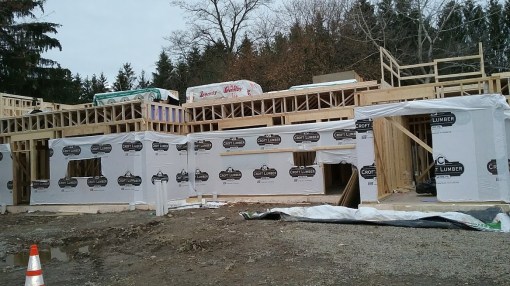
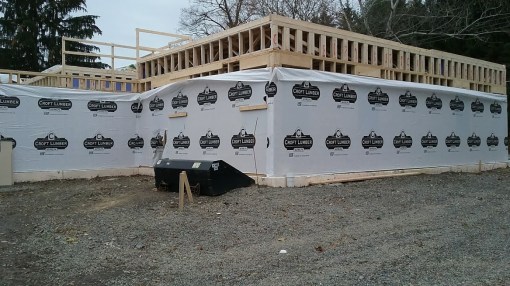
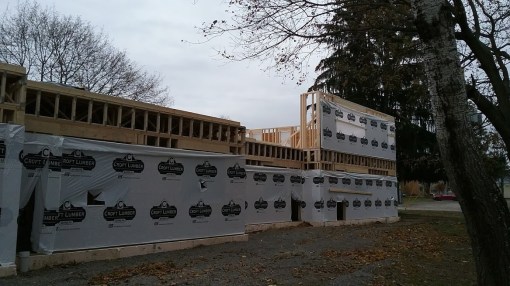
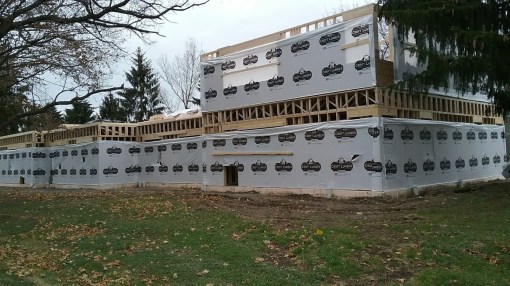
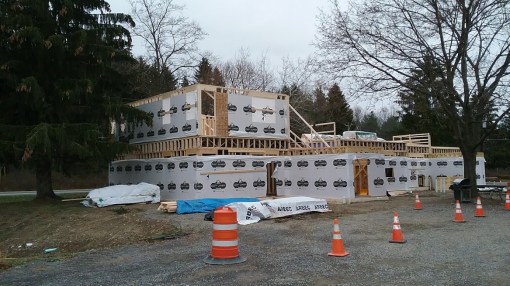
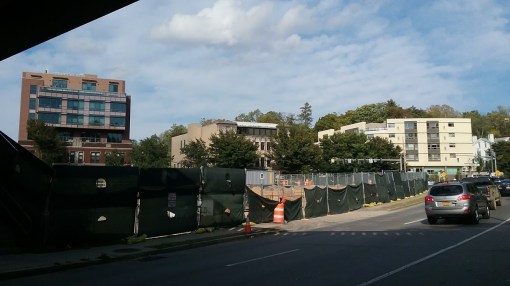
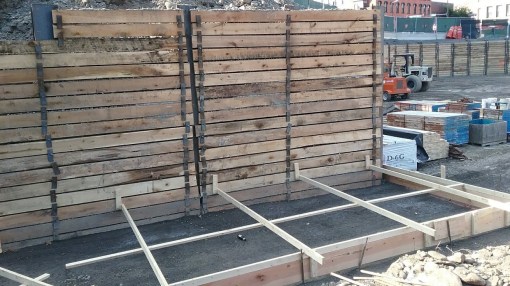
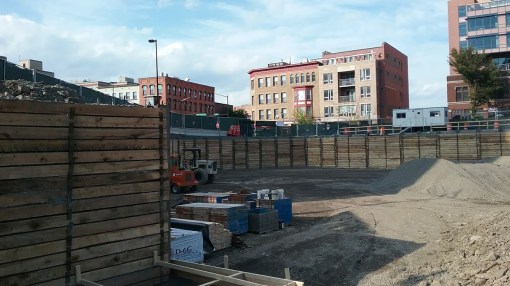
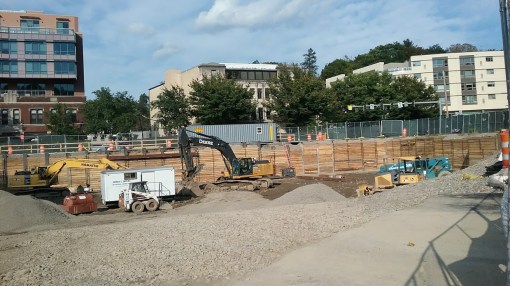
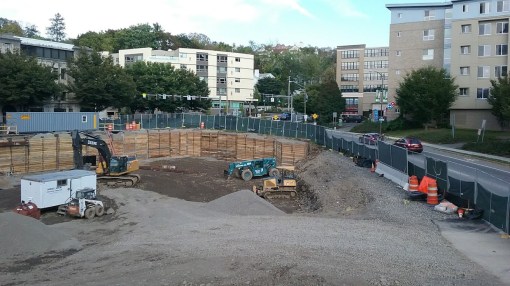
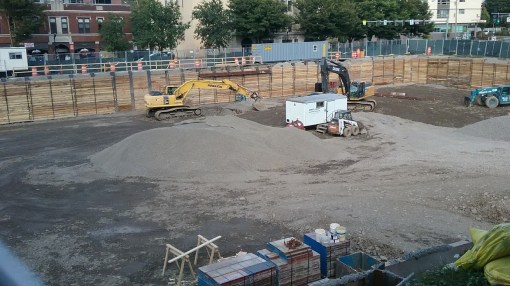
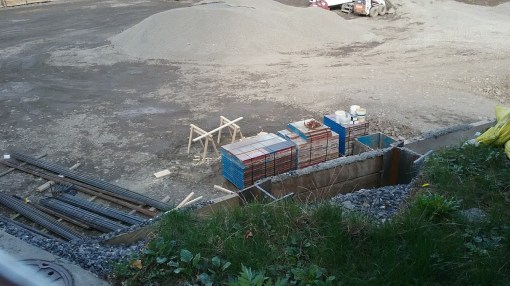
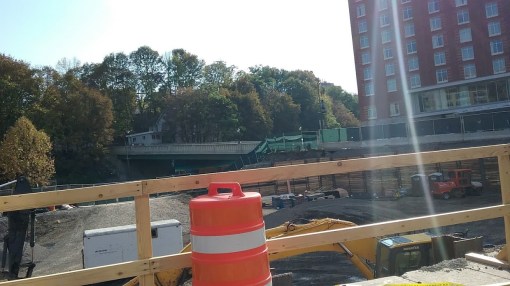
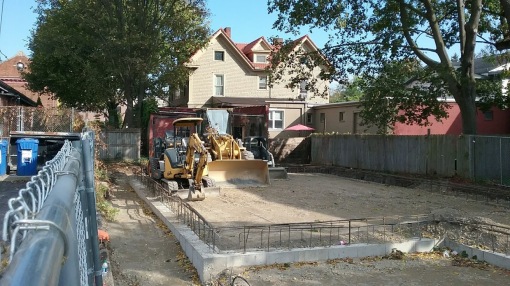
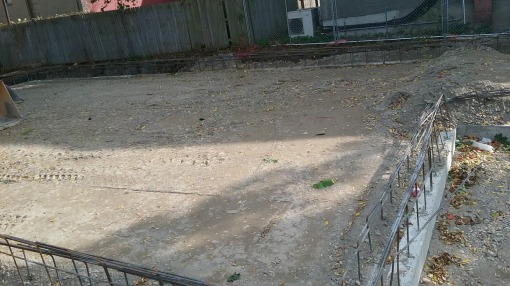
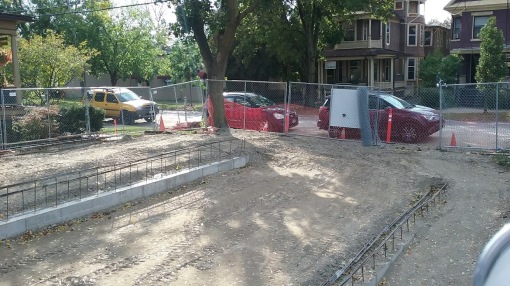
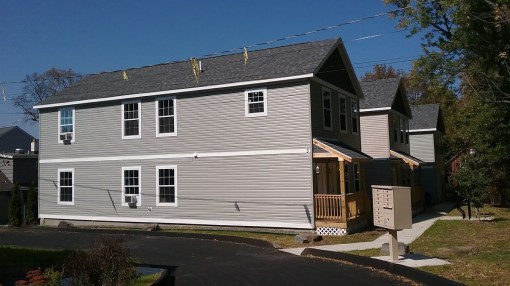
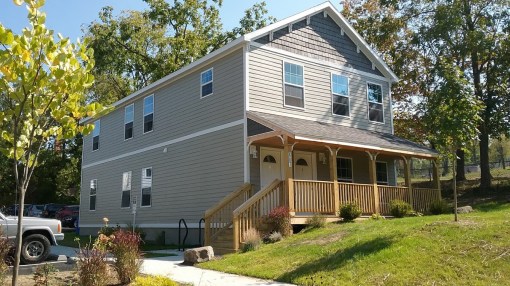
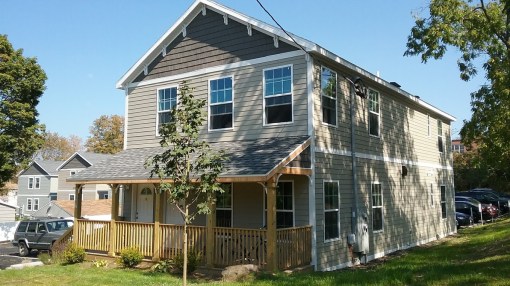
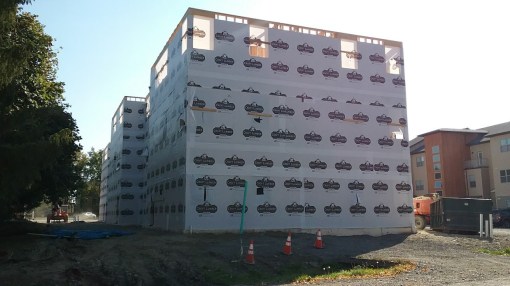
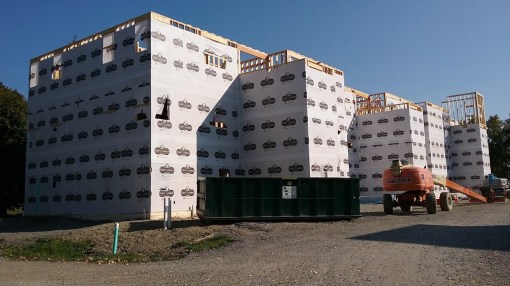
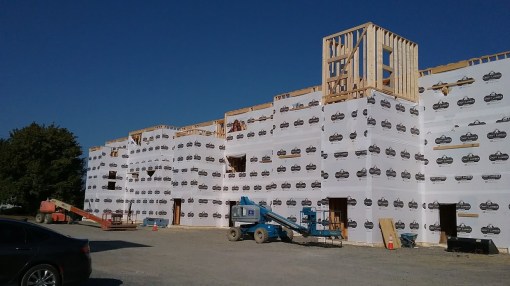
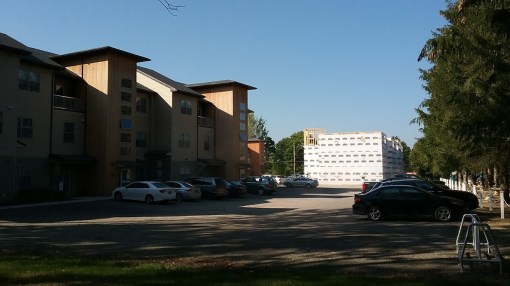
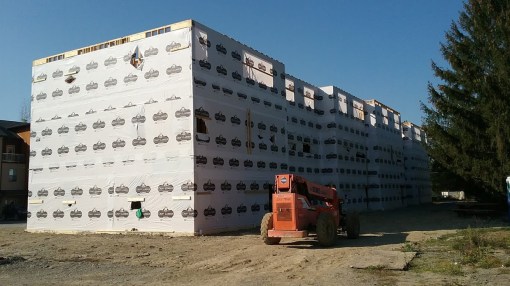
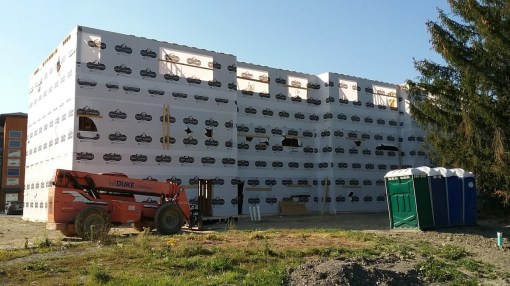
Since October, it looks like the foundation slab has been poured over the footers, and the construction crew is preparing to start work on framing. Judging from the materials on-site, it looks like wood-frame with Huber ZIP panels. Wood-frame structures tend to rise quickly, so once the project team is ready, it should go up at a rapid pace, and probably top out in within just a few weeks. The 11-unit, $1.1 million apartment building is expected to be ready for occupancy by July.

It’ll be interesting to find out what Stavros Stavropoulos’s next project is, since the plan for a pair of duplexes at 209 Hudson Street was kiboshed by the city after the South Hill zoning overlay went into effect. If he’s looking at other locations along the State Street Corridor, he’d likely find the planning department and Common Council more amenable. If his name shows up in any sales, I’ll note it in the round-up.

On that note, expect a brief holiday pause in the daily posts. They’ll be back next week.

For reference, project summary here.


City Centre Construction Update, 12/2017

21 12 2017

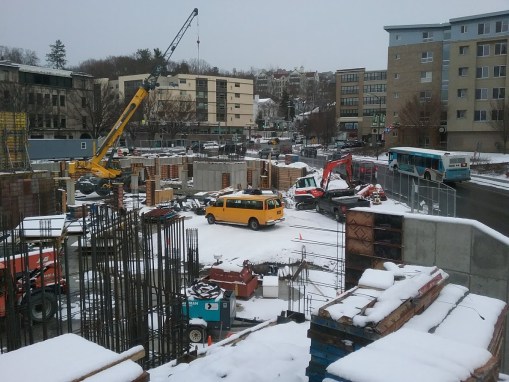
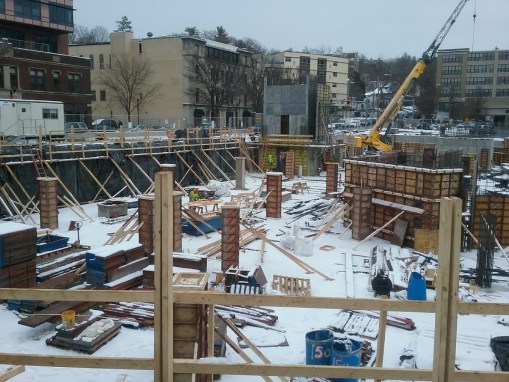
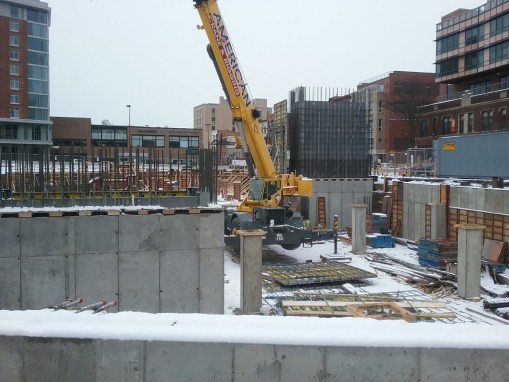
As with the Hilton Canopy Hotel under construction just across the street, City Centre is in the middle of foundation work. Steel forms with plywood facing have been erected and braced along the perimeter of the building footprint. In fact, it looks like the project team is using the same Symons Steel-Ply system being deployed at the Canopy site. The piles have been driven and the foundation slab is poured. The team is slowly making their way to the steel frame of each pile, encasing it within forms before pouring the concrete, letting it cure, and then removing the forms to reveal a concrete/steel column ready for vertical additions. The elevator cores and stairwell columns are also on the rise. – the elevator core facing East State Street appears to be the furthest along.

We finally have a named general contractor, and like the architect for the City Centre team (Humphreys & Partners of Dallas), its a new entrant to the Ithaca area – Purcell Construction Corporation, with offices in Richmond, Virginia and Watertown, New York (an hour’s drive north of Syracuse). It appears that they have plenty of experience with multi-story towers and large structures, which is no doubt an asset for the project team.

As I previously said, as structural steel takes height here and with the Canopy and Harold’s Square, downtown Ithaca is going to look like one big advertisement for TCAD.


News Tidbits 11/25/17: Not Going to Plan

27 11 2017

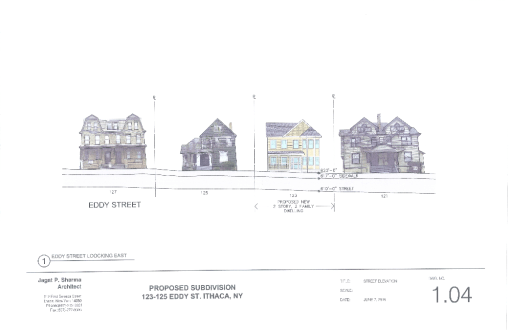
1. It looks like the Lambrous have started work on the new duplex they’ve long planned at 123 Eddy Street in Collegetown. Foundation work is underway for the two-unit, six-bedroom home, which utilized Superior Foundation Walls and modular units. The building sits on the edge of the East Hill Historic District, so to make the building compliant with the ILPC’s wishes, it features Hardie Board siding, simulated shakes, scuplted brackets and an attic vent, and detailed railings and porches. The design went through a couple iterations, with the first being historically appropriate but expensive stick-built design, and the second a modular scheme that was non-compliant with the ILPC. The Lambrous plan to have the new three-bedroom units available for rent by August.

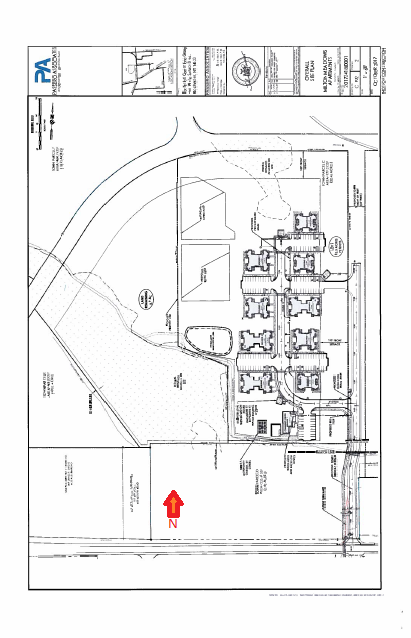
2. Lansing’s Milton Meadows affordable housing project is up for final approval next Monday, and it looks like the first 72-unit phase will be the only phase. According to documentation filed with the town, the presence of poorer soils and more wetlands than anticipated means that Cornerstone will not be undertaking a second phase. It does raise further questions regarding adjacent parcels and the amount of money the town of Lansing can reasonable gain since this sounds like a recent discovery. The final site plans here show no indication of Cornerstone Development Group buying the remaining 8.9 acres that were intended for phase two.

There are no huge obstacles to prevent approval, although some town officials are unhappy that they didn’t apply a stronger hand to the town center development plan (i.e. laying the roads and infrastructure as they wanted, and charging a higher price for the parcels). While most of the darts have been levied towards Cornerstone (some perhaps unfairly due to it being affordable housing), the town planning chair has also targeted Tiny Timbers for using Conlon Road as its primary ingress/egress in their sketch plan. But with sales already negotiated and approved, the town’s legal options are limited, and since they already dropped the ball on the town center once, the optics aren’t pretty. Any work Cornerstone does is dependent on state and federal grants that are highly competitive and awarded only a few times per year, so don’t expect much for at least a year or two after approval.

3. It looks like the land for the proposed extension of South Meadow Square has been fenced off. A query to the folks in PetSmart next door didn’t turn up much, although they said there had been some water and sewer work to prep for the new 7,315 SF addition approved earlier this year. I did not see what the current conditions are for the approved 14,744 SF addition on the south end.

4. The county and the city have competing views of the NYS DOT’s future in Tompkins County. The county has reiterated its hope that the DOT relocates to a location next to the county airport. The city would prefer a location in Southwest Park behind Wal-Mart and the proposed Maguire dealership campus. The request for state grant dollars depends on the airport proposal, and the DOT has stated preference for a site near the airport.

However, if grants are not awarded, the airport is still considering a plan to build a $1-2 million customs facility that would allow to become an international airport, servicing passenger jets from Canadian hubs (Toronto, Montreal). In the short-term, work is underway to add service to Chicago, which has an on-time percentage comparable to Detroit (80%), and better than Newark (60%) and Philadelphia (70%). Cornell is actively assisting, trying to persuade airlines as part of its “Global Cornell” initiative.

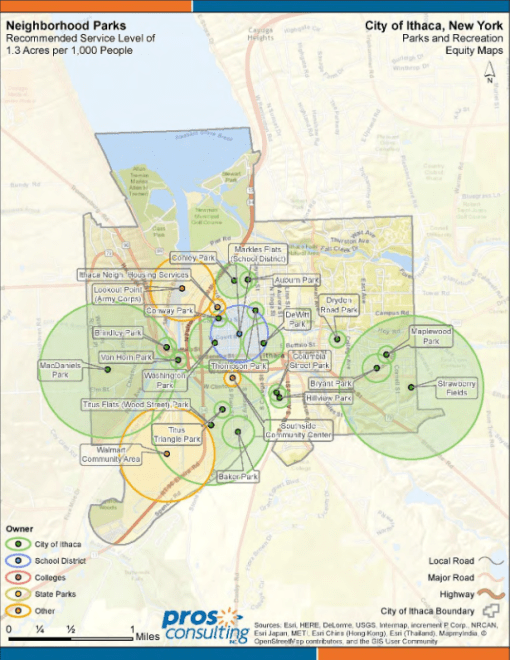
5. So here’s the city of Ithaca’s parks master plan. There’s a few interesting things of note in terms of acquisitions and de-classifications (sale).

First, a quick note – the city is legally required to replace any park land it sells off with newly acquired park land. So with that in mind, the city looked at its parks and found five that are “vastly underutilized” – Columbia Street Park (0.25 acres), Dryden Road Park (0.08 acres), Hillview Park (0.74 acres), Maple Grove Park (0.47 acres), and Strawberry Fields (9.16 acres).

The city would like to sell off the first four on that list, and replace them with a new acquisition somewhere in the city that has at least 1.54 acres, but the city is looking for up to 12 acres. Proximity to population centers, arterial roads, pedestrian access and minimal site prep are some of the big deciding factors in that acquisition process. Meanwhile, Strawberry Fields would be held for either designation as a “school park” to be managed in conjunction with the ICSD, or as a “teaching preserve” for practice field research and instruction.

If the city did opt to sell those four parks, well, there’s some development potential, though they wouldn’t be prime. Maple Grove is a Belle Sherman cul-de-sac surrounded by single-family homes. Dryden Road Park is a small triangle next to the parking garage, and while technically an MU-2 zone for six floors, it’s just as likely Cornell would pick it up amd add it to its tax-exempt rolls since it’s next to Cascadilla Hall. Hillview and Columbia Street on South Hill (R-2a zone) could potentially become a few home lots or a small apartment complex, but the land’s sale would be a political challenge.The city procedure would be an advertised sale offering through the IURA, followed by a grading system of applicants that meet the city’s specified price, as they did with foreclosed lots that became the Ithaka Terraces and 203 Third Street.

Not too keen to get in the weeds on this, since this would be controversial with neighborhood groups, but it’s really just a thought exercise at this point – any potential land sale would be on a long-term, 5 year+ time scale, and the city would need to have new land ready to be acquired for recreational uses. Even thatcould cause problems when neighbors complain that an untouched property becomes a public park that attracts people (this has been an issue with proposed extensions of the South Hill Rec Trail). There is plenty of time to debate the merits and drawbacks of long-term property assets. Right now, the focus is repair and renovating existing facilities in city parks.

6. Looking at the city’s planning board agenda for next week, it’s a short one. The duplex at 601 South Aurora and the Brindley Street Bridge are up for final approval, and a pair of new sketch plans will be reviewed – one is likely to be small, and the other a revision, potentially a downsizing. I’ve heard through the grapevine that several rental developers are holding off or even cancelling plans because they’re concerned about the impacts of Cornell’s 2,000 new beds for their North Campus – although right now there’s nothing formal apart from a statement of intent. Ideally, Cornell puts some concept forth soon, with plans not long thereafter; otherwise, there’s the risk that the local housing situation gets worse. Perhaps the reasonable worst case scenario is that, with recent federal attacks on higher education, Cornell is forced to trim its budget and cancels the housing plans, while still adding students to compensate for financial losses – basically, a sudden large growth in demand without growth in supply.

First, 209 Hudson. This was previously mentioned in a Voice article, it’s potentially a small-scale infill project by frequent infill developer Stavros Stavropoulos. The early plan for two of three rental buildings was shelved due to the South Hill overlay, and its possible that, given the relatively large lot, Stavropoulos may be planning a subdivision to build an additional two-family rental unit. Dunno if he can legally pull off more than that, however. R-2a with overlay allows a 1-2 family structure as a primary, with an accessory apartment in a secondary structure.

The second is 119-123 College Avenue. This is unusual in that this was the site for John Novarr’s College Townhouses project, a 67-unit, multi-building plan for rentals geared towards visiting Cornell faculty and staff. However, the recent NYSEG power line issue has proven problematic, and the last I checked, the project team was supposed to go before a state building codes board in Syracuse this month to get a variance to allow construction, on the basis that the power lines will soon be buried. The minutes are not online, so it’s not clear what the ruling was. While CR-4 zoning allows 45 feet as the plan is currently designed, a variance denial by the state would limit structural height to 30 feet, and would substantially impact the project’s feasibility in pricey Collegetown, as well as alter the design. For the record, 119-123 does not imply a smaller project; 123 College Avenue never existed, the three homes removed for this project were 119, 121 and 125. We’ll see what the revised plans look like next week.

1. Agenda Review 6:00
2. Privilege of the floor (3-minute maximum per person) 6:05
3. Site Plan Review

A. Project: Duplex 6:15
Location: 601 S Aurora Street
Applicant: David Putnam
Actions: Public Hearing, Consideration of Preliminary and Final Site Plan Approval
Project Description:
The applicant is proposing to construct a duplex on the .186 acre (8,114 SF) vacant lot. Site development includes parking for two cars, walkways, landscaping, a continuous sidewalk along the property frontage, drainage improvements and a trash enclosure. The applicant has designed curbing and on-street parking on Hillview Place in cooperation with the City Engineering Division. The project is in the R-2a Zoning district. This is a Type II Action under the City of Ithaca Environmental Quality Review Ordinance (“CEQRO”) §176-5. (C.)(8) and the State Environmental Quality Review Act (“SEQRA”) § 617.5 (c)(9) and is not subject to environmental review.

B. Project: Brindley Street Bridge Rebuild and Relocation 6:35
Location: Intersection of W State Street and Taughannock Blvd
Applicant: Addisu Gebre for the City of Ithaca
Actions: Consideration of Preliminary & Final Approval
Project Description:
The project will relocate current Brindley Street Bridge to align with W. State St./Taughannock
Blvd. intersection through the construction of a new single span extending Taughannock Blvd. over
the Cayuga Inlet to Taber Street. The project will retain existing Brindley Street Bridge and south approach road for pedestrian and bike use. This is a Type I Action under the City of Ithaca Environmental Quality Review Ordinance (“CEQRO”) §176-4 B.(1)(k) and the State Environmental Quality Review Act (“SEQRA”) § 617.4 (b)(11) for which the Board of Public Works, acting as Lead Agency made a Negative Determination of Environmental Significance in 2016.

C. 209 Hudson Street – Subdivision & Site Plan Review – Sketch Plan 7:05

D. 119-123 College Avenue – Sketch Plan 7:35

4. Old/New Business 8:00
A. Collegetown Design Guidelines – Megan Wilson
B. Parks Master Plan – Megan Wilson

5. Reports 8:40
A. Planning Board Chair (verbal)
B. Director of Planning & Development (verbal)
C. Board of Public Works Liaison (verbal)


Village Solars Construction Update, 11/2017

25 11 2017

Another redeveloped building is underway at the Village Solars property along the 1000 Block of Warren Road in Lansing. The original 8-unit, 8-bedroom 116 Village Circle is no longer of this world; the early 1970s structure was torn down to make way for a new three-story building with 6 2-bedroom units and 12 microunits (400-600 SF). Along with the framed and sheathed 102 Village Place, that means that Lifestyle Properties does in fact have two buildings underway at the site; perhaps the last visit in September just happened to catch the project during a brief lull.

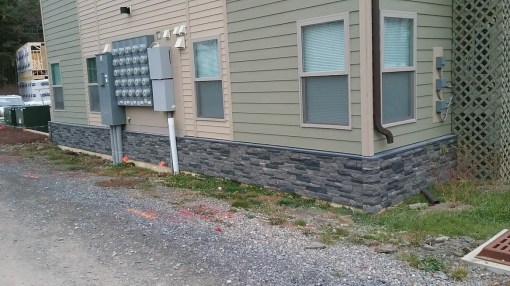
102 Village Place has been fully framed, sheathed, roofed, windows and doors have been fitted, and the fiber cement siding is just beginning to be installed (possibly by T&J Contractors of Auburn; most construction work by Lifestyle Property/the Lucente family is handled by an in-house crew). On the inside, expect electrical, plumbing, and HVAC to be underway; with no open doors or windows, it was not clear if they’re hanging drywall yet. In comparison to the “older” new apartment buildings, these new ones have different fenestration and even have stone veneer at the bases, though the overall building designs are generally similar. It’s not completely certain what the purpose of all the eaves (eavelets?) are on the walls of 102, though given the utility lines, it may have something to do with weather/ice protection for the air source heat pumps, which are shielded by small eaves and wood lattice on the latest completed apartment buildings.

The replacement structure for 116 Village Circle is just starting the framework for the second floor. As previously noted, it’s not uncommon to just housewrap over the rough openings, and cut out the holes later. The excess will be trimmed off and the edges will be fastened back to the inside wall, allowing for a tight and complete wrapping of the rough opening. Taking a guess, 102 will probably be done by the end of March, and 116 the end of June perhaps.

Side note, I’ve never noticed the Village Solars construction crew put a flag up on topped-out structures before.


News Tidbits 11/11/17: It’s Back

12 11 2017

1. One of the reasons for the lull in weekly round-ups has been the lack of smaller news items to fill it with. A few larger items made it into Voice articles, but there wasn’t much of a middle ground between “expand into article” and “not newsworthy”. I’m happy to take comments here about Voice articles, although the blog is intended to cover topics that may not be ready for a full write-up.

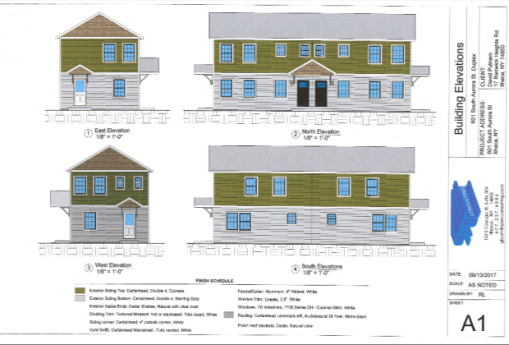
As noted in the Voice, there isn’t much before the city of Ithaca at the moment. A sketch plan for infill rental housing at 209 Hudson Street is likely dead in the water as a result of the new South Hill Overlay, and a modest infill plan calls for a duplex at 601 South Aurora on the corner with Hillview Place, which can only be an improvement from the informal parking lot currently there. The modular unit design is thoughtful (varied materials, plenty of windows) if unexciting, and the sidewalks are a plus. The units are physically structured as townhouses, but technically they aren’t, since townhouses are defined by International Building Code as strings of units of three or more.

Meanwhile, things are so slow in the town at the moment that they cancelled their last Planning Board meeting. Before that, the only notable item on the agenda was the Cayuga Ridge renovation, which is primarily internal. Their October Building and Codes Department report indicates a single two-family home was approved, in the Cleveland Estates housing subdivision; virtually all of those duplexes have been intended as student housing.

2. If there is one town that is rather busy next week, it would have to be Lansing. The surface facilities for the new Cargill mine shaft are up for final approval at the Planning Board meeting next Tuesday, more discussion is expected about the Milton Meadows affordable housing plan at the town center, and a couple of minor projects (communications tower, illuminated free-standing sign) are up for review and vote. Neither Cargill not Milton Meadows appear to have changed significantly since their last presentations.

Also scheduled is review of public comments regarding the Comprehensive Plan, which cover several topics, with the most frequent being the Bell Station zoning (park vs. lakeshore low density) and some individuals unhappy with the potential for mixed-use or residential development near their homes or farms. Joe Wetmore has a pretty thorough critique, ranging from unrealistic expectations to discomfort with what he calls “segregated housing” based on income and age. Going political for a moment, I suspect if it weren’t for many progressive town and village boards rushing to join the Article 78 on Cargill, with less than careful thought and discussion of Cargill’s blue-collar workers and their family/friends, Wetmore would be an incoming town councilman (and to be fair, he may end up winning when the absentee ballots are counted and tallied next week).

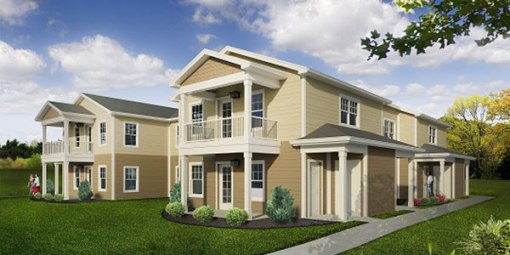
3. Over in Dryden, just about everything is good to go with Modern Living Rentals’ 42-unit rental complex planned for 802 Dryden Road, next to the Cornell arboretum. The November tweaks were for lighting, landscaping and sidewalk details. The designs of the townhouse strings were reworked in October to include three different designs, to be used twice each (six buildings, seven units each, 42 units/108 bedrooms total). While the materials remain the same, the designs differ substantially in roof lines, architectural detailing and fenestration pattern. At this point, no one would mistake for a recycling of 902 Dryden as they started off as; John Snyder and his team have had the chance to express themselves, and the designs are contemporary and visually interesting. It looks like final approval will be coming potentially soon, which will permit a Spring 2018 – Summer 2019 construction time-frame.

Other than that, the town is reviewing another Tiny Timbers subdivision, this one for 1540 Ellis Hollow Drive. Similar to its counterpart just down the street at 1624 Ellis Hollow Drive, the long, narrow lot would be serviced with an internal driveway for five homes with a little over an acre each, and the rear (northern) 5 acres would be granted a conservation easement, to remain natural space and help protect the Fall Creek watershed. The original plan was a deed restriction, but the town’s conservation board is pushing the easement so that future owners of the land can’t just lift the restriction. They also requested an S-shaped driveway because they feel the slope is greater than Dolph states; an S-shape would also throw the plans out of whack, so let’s see what happens.

On a final brief note, review and discussion is ongoing for a pair of solar arrays off of 2243 Dryden Road, one of 1.3 MW and one of 2 MW.

4. Looking at what’s on the market this week, here’s something for the deep-pocketed investor/landlord who wants to start with an all-new, low-maintenance building. 6-unit 707 East Seneca Street is on the market for $2,999,000. The 6,469 SF apartment building was built just two years ago, after developer Todd Fox bought city surplus land that was once a playground for the closed East Hill Elementary, deeded to the city in 1982 and promptly forgotten for decades until potential liability risks convinced the city to put it up for sale. Each unit is three bedrooms, and according to the advertisement, it generates over $220k in revenue each year, which is not shabby.The property is assessed at $1 million.

It’s a bit surprising that Fox would want to part with a nearly-new building with solid rental potential, and it makes me curious if the funds would be used to fund other Visum projects planned or approved. While Fox did take a financial hit from the cancelled 311 College Avenue project, the amount invested was far less than the sale price for 707 here.

5. Also worth noting, though it’s not good news – The Computing Center’s plans to build a new 4,600 SF headquarters appear to be over. The building site and the approved building plans at Lansing’s 987 Warren Road are up for sale. $499,000 gets you 1.57 acres, the plans, and a single-family home on the eastern end of the property that generates $2,000/month. The project had received an $85,084 tax abatement for the $1.394 million project, which was expected to create six new jobs. For the record, any buyer would need to re-apply for an abatement; the one granted will go unused. At least offhand, it looks like they may have added the jobs (retain 14, add 6, and the website shows nineteen plus the retired founder, and two job postings), but it’s uncertain – they acquired a competitor (Sherpa Technologies) in September, which increased staff to 22. Based off the time of the listing, with the acquisition of Sherpa they may have just led TCC to go a different direction with a new headquarters. What will be, will be.

6. According to construction loan documents filed with Tompkins County, the new 11,180 SF Rite Aid being built at 79 North Street carried with it a $2.71 million price tag. Chemung Canal Trust Company, an Elmira-based bank with branches in Tompkins County, is providing the loan to Dryden Group LLC/Ellicott Development. Ellicott, a major developer out in Buffalo, will be using an in-house contractor team to build out the retail space.

A couple of emails came in asking if this would be a Walgreen’s. On paper, that’s a no – everything filed and documented says Rite Aid, and this was confirmed with the town planning staff. However, Walgreen’s is in the process of acquiring 1,932 Rite Aid stores (leaving Rite Aid with 2,600), and closing several hundred stores that are within close proximity to existing Walgreen’s. It’s possible that the existing Dryden Rite Aid is one of those to be “shut down as part of the sale” as the new Rite Aid-turned-Walgreen’s is being built on the north end of the village. Keep an eye on it.

7. Quick little side note – Ithaca Associates LLC, the development team behind the $110 million Green Street Garage project, is apparently in talks with INHS to manage its affordable housing component. That’s according to Ithaca Urban Renewal Agency (IURA) meeting minutes. So they are serious about meeting the city’s demand for affordable housing with some undetermined percentage of the 365 units. Heck, 60 or 70 units would be a sizable contribution, should it pan out, and it would make the project more palatable since it would clearly have a mixed-income aspect to go with its mixed uses.

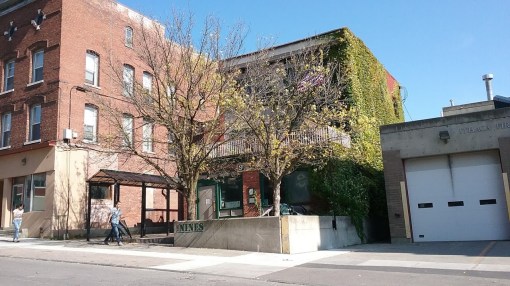
8. The Ithaca Landmarks Preservation Commission will be taking up discussion again on the Nines, though they are less than pleased with the recent 5-5 tie vote the Common Council had on the Chacona block, broken by the mayor’s vote against historic designation. For me, the fascinating part was having someone like Cynthia Brock, typically opposed to greater density, speak in favor, while pro-development councilors like Ducson Nguyen and Seph Murtagh voted in favor of historic designation. So, it was an unusual breakdown of votes that I would not have predicted, although I had heard before the meeting that it would likely be a close vote.

There is no doubt that anything Student Agencies submits will be scrutinized extra closely, especially if they try to maximize square footage or incorporate design features that don’t mesh with neighboring structures. It’s fair to say that while they lucked out with being allowed to redevelop, the resentment already stirred up means anything proposed will be starting behind the proverbial eight ball, and they would be wise to really put their best foot forward and not rush plans.

Interestingly, it looks like someone, likely but not confirmed to be the Reach Project social service group, plans to submit concept designs for the carriage house that once stood behind the house at 310 West State Street. This is a historic district, so any designs for the drug treatment and potential safe heroin injection “harm reduction” site would need to be approved by the ILPC.

It’s been amusing and a bit excruciating to see some of the comments on the Voice – some people are all about historic buildings; but it tortures them to see these venerable structures used for what they see as a less-enlightened cause than a high-end B&B or boutique office. If zoning laws (and higher authorities, in this case) okay it, so be it. Many historic buildings have humdrum or low-brow histories as factories, home businesses or tenements, and to say they can’t be used for something permitted just because it seems icky is not only illegal, it denies part of the historical element.

7. Intriguing, though I have questions – the city is looking at expanding the use of PUDs from beyond the few industrial zones to city-wide so long as properties are 2 acres. They’re also looking at expanding CIITAP to allow 1-story industrial and waterfront projects, as well as an affordable housing component of 20% on all residential or mixed-use projects with residential components of 10 units or more.

The PUD plan comes on the heels of the new Waterfront zones, which allow residential uses on a greater number of parcels, and is in fact the recommendation of the Waterfront Working Group (WWG), a 17-member group of staff and public who reviewed planned zoning changes to the Waterfront. The city planning staff are amenable, though they suggest a minimum acreage of 2 acres.

With the proposed CIITAP change, the reasoning makes sense, although its effectiveness is questionable. Industrial construction is locally limited and is usually build-to-suit for a specific client. There’s also a strong preference to less dense areas with easy access with lower land values, like Lansing or Dryden. More power to the city I guess, I just don’t see it being utilized. As for the housing component, the intent is good, but the issue always ends up being an issue of “moreness”. Developers often have to build bigger to re-balance expenses and revenue within mixed-income structures. This can make it tougher for them to get financing since it’s a larger, more costly build-out (a bigger financial risk, all other things being equal). Residents in turn balk at a bigger project with the traffic, aesthetic changes and other impacts it creates, not to mention some still instinctively sneer at affordable housing, mixed-income or not. It’s not an outright deal-breaker, but it is something to keep in mind.

The PUD can be troublesome since it’s a sort of “DIY zoning”, which would make existing rules pointless and a lot of upset voters if allowed without some big stipulations. 2 acres would limit many projects in the core of the city, but if you happen to be, say, a major landowner along the Waterfront or in the vicinity, like Guthrie or Cayuga Medical Center, it’s basically a red carpet invitation, as it allows them to set the bounds for a project. Notably, neither of those two fall within CIITAP’s boundaries, so while they wouldn’t be eligible for the tax abatement, they also don’t have to worry about the affordable housing component if they choose to do something with housing in the mix.


City Centre Construction Update, 10/2017

26 10 2017

As described in the Voice summary, City Centre is digging deep.

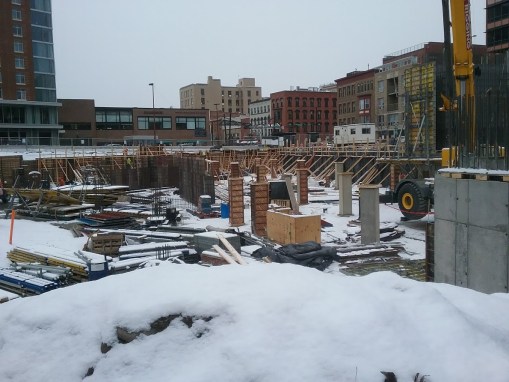
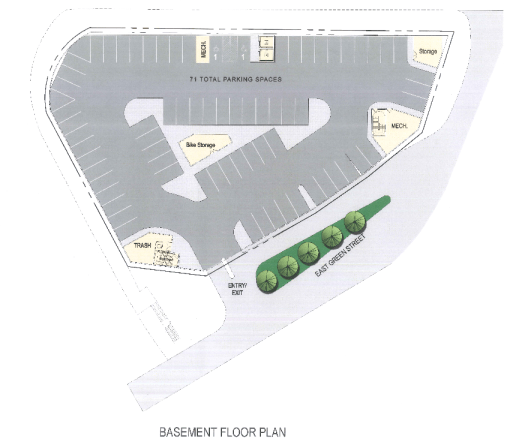
“Unlike the Hilton Canopy, City Centre will have a basement, or more specifically, a 71-space underground garage. The plan here is to use a mat foundation, which is a shallow foundation that doesn’t make use of piles or pile drivers. The company that did the geotechnical report for City Centre reported that a 26-inch mat foundation was feasible based on soil borings, and would be less expensive than a deep pile foundation like the one being used for the Canopy. So basically, excavate some trenches, build some big footers with a lot of rebar, and pour a 26″ concrete slab. Support columns will transfer the weight of the building through the garage and into the slab beneath.

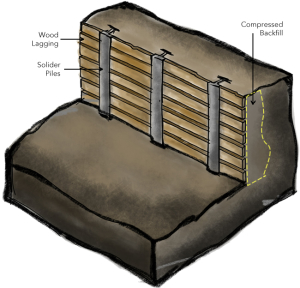
Going past the site right now, excavation work continues, with timber lagging, steel H-beam soldier piles, and steel tieback anchors that extend underneath the streets. The whole point is to reinforce the soil, because no one wants East State or South Aurora Street collapsing into the construction site. Foundations can be complex and time-consuming, and the building may not rise above street level until sometime late in the winter or early next spring. Occupancy of the eight-story mixed-use building won’t be until 2019. According to a construction loan filed with the county this week, M&T Bank is lending $47.9 million to Newman Development Group to complete the project.”

On a hunch while exploring Newman’s project-specific websites, I was able to find City Centre’s website. Morgan Communities of suburban Rochester will be the site manager, and is apparently also hosting the webpages; they’re live, but you can’t find City Centre on their search page yet.

Units will range from a 508 SF studio unit, to a 2 bed/2 bath 1319 SF units with coveted Commons views. Apartment features include quartz countertops, electric stove, microwave, dishwasher, and stainless steel appliances. On-site amenities include fitness center, “E-Lounge”, bike storage, controlled access, optional garage space rentals, electric car charging stations and furnished apartments if requested. Dogs and cats will be allowed. Rents have yet to be listed, though they’re expected to be on the medium-high side (premium, not luxury). The webpage touts Summer 2019 occupancy, which seems to be a split of the Spring 2019 and November 2019 dates used previously. Inquiries are being taken to CityCentreIthaca@morgancommunities.com, if you know someone planning that far ahead.

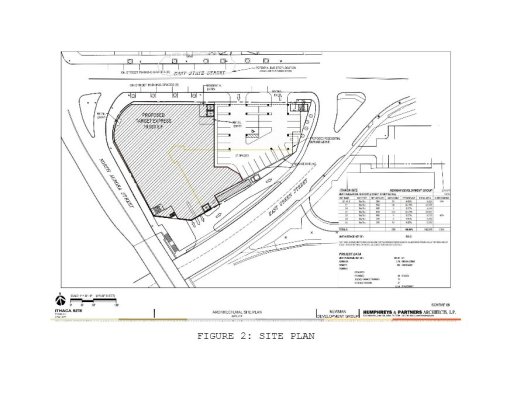
On another note, while poking around the geotechnical report, it turns out that early plans called for the entirety of the first floor to be occupied by a 19,900 SF “Target Express“, the smaller urban cousin to the Target general merchandise retail chain. This had to have been early on, because the parking had a much different configuration than the formal site plan, with an East State Street entrance vs. the South Aurora entrance in all the later revisions. With only nine stores as of mid-2016, Target is pretty selective about new Target Express locations. Why it was removed from City Centre is unclear.


107 South Albany Street Construction Update, 10/2017

20 10 2017

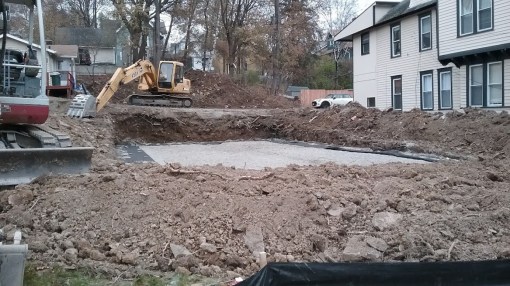
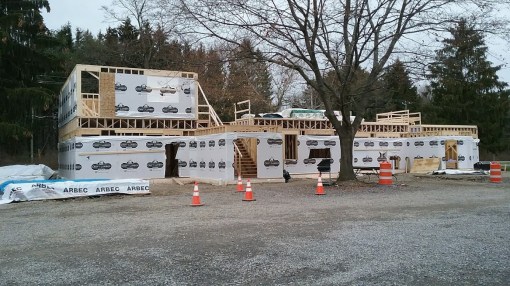
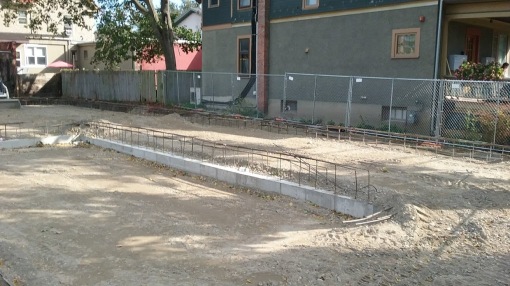
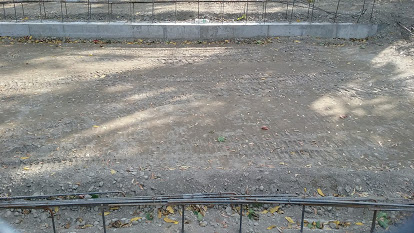
With the twin duplexes on the corner of Aurora and Queen completed, local developer Stavros Stavropoulos and his local contractor Northeast Renovations Inc. have been able to turn their focus towards building out 107 South Albany Street. At this stage, the spread concrete footers, also called formwork or footings, have been finished.

As in this case, footers are usually of concrete with steel rebar reinforcement that has been poured into an excavated trench and confined by wood forms. The purpose of footings is to support the foundation and prevent settling. The portion of rebar sticking out of the footers will be bent and wired into the foundation’s horizontal rebar, tying the two components together. I’m not sure if they simply filled in the basement of the old house or if they tore the walls out before bringing in clean fill and digging trenches for the new footers (I’d guess the latter for simplicity’s sake).

It looks like the outer footings for the ground-level common space (entry, bike storage, meter room) are at a slightly lower grade than the rest of the structure, so there might be two separate sections that comprise foundation, with one at a slightly higher elevation than the other.

The next steps involve a rebar grid being ssembled and tied per specifications, elevated a few inches from the ground by plastic rebar chairs that allow concrete to get underneath the steel rods. The concrete will be poured over the rebar, and as long as the bars stay in place, the new pour is left to dry into a solid, reinforced slab foundation upon which the building frame can be built. The building itself will have a wood-frame, so when it starts to rise, it should move at a pretty fast pace.

A summary of the project can be found here.


607 South Aurora Street Construction Update, 9/2017

2 10 2017

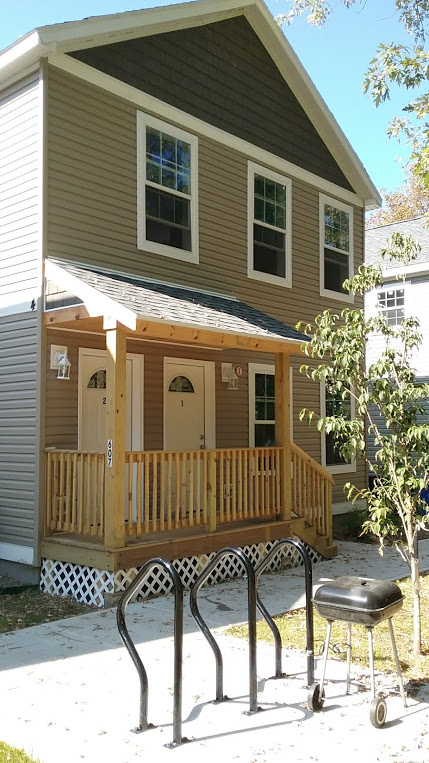
Landscaped, occupied, done. Modern Living Rentals’ infill project at 607 South Aurora Street on South Hill adds another 25 beds to the market, in four new two-family homes and a renovated existing home.

Strictly looking at the project, it’s pretty unassuming. This armchair critic thinks these turned out nicer than the ones on Elmira Road, though a greater splash of color on the siding would have been nice. The brackets and full-length porch are welcome additions on the Aurora Street structure.

If someone had told me 217 Columbia’s two-family infill would cause such a stir, I would have been surprised, since it’s a small project, and this and the Elmira Road pair didn’t create much a stir during the review process. But sometimes, after multiple projects of similar format, all it takes is one more to stir up enough consternation to snowball into a full-blown controversy.

I’m not going to fault anyone there. MLR’s Charlie O’Connor saw an opportunity and went for it. He is arguably one of the most reticent developers in Ithaca, preferring unobtrusive projects that he hopes will create as little debate as possible. It’s kinda funny in a way, because although he’s a business partner with Todd Fox (Visum’s property management is handled by MLR), the two of them are near-opposites in that regard. He paid a fair sum for 217 Columbia Street, so he doesn’t want to walk away from the investment, but he’ll do whatever it takes to make the neighbors happy short of cancelling the project. At last check, there was a proposal to stipulate the two three-bedroom units would not be permitted to student renters, and that the building would be stick-built and designed to better fit with the older structures of the neighborhood.

On the other side, permanent residents have a right to be annoyed if the perceived balance between students and non-students starts to shift and harm their quality of life. The neighborhood, like many of Ithaca’s more walkable parts, has experienced significant upward pressure on housing prices, and rental infill units can be a double-edged sword because the individual property is priced out of reach for homeowners (for-sale infill would be a different story). Even with the owner-occupied properties, there’s a strong whiff of gentrification, turning what was once a blue-collar neighborhood serving downtown shoppers and Morse Chain into a hodgepodge of increasing number of student rentals, and more white-collar, deep-pocketed households.

Somewhat incongruous to all this is that Ithaca College’s student population has declined almost 10% since 2010, which would suggest less pressure for student rentals; however, many of the college dorms date from the 1960s, and the utilities systems need replacement – some are already on their last legs, and that may limit occupancy as they sputter into obsolescenceThe college and students are aware of the discord and are trying to address it gently; more extreme measures like curtailing the ability or capping the number of students who can live off-campus might create major blowback, something the college may be actively trying to avoid after last year’s turmoil. A new dorm or two would help, but even modular temporary dorms can cost a fair sum, and there is nothing planned in the short-term. A long-term question mark is the impact of the Chain Works District, but that’s a few years out at best.

Landlords should at least be cognizant of this tension (and the ones on South Hill tend to be a mixed bag, to be honest), because if things turn south and the college does take drastic measures, units are going to become much harder to fill at current monthly rates. Town officials and voters were unhappy with the quality and appearance of new housing built in the Birdseye View development and in the Pennsylvania-Kendall Avenue corridor, and that contributed to the push to curtail student housing in the town’s portion of South Hill.

The local community is not easygoing or forgiving. If you do crap work, crap will hit the fan sooner or later. Even if you do good work like 607 South Aurora here, it pays to be attentive and flexible.

While legal language is being prepared for an overlay that would prevent more than one primary structure on South Hill properties until a new neighborhood plan is developed (2-3 years minimum), 217 Columbia had already started review before that was considered, so in effect it’s grandfathered in, even if it hasn’t started construction before the overlay likely gets passed by PEDC this month and Common Council in November.


Village Solars Construction Update, 9/2017

1 10 2017

It looks like the Village Solars are moving along, albeit at the slowest pace in years. Since 102 Village Place was torn down back in June, the site was cleared, the foundation and underground utilities reconfigured, and framing has begun on its replacement. The wood frame was up to the top floor by the time of this late September site visit, and erection of the roof trusses was due to take place in just a few days. The housewrap is already in place, and as the interior receives its frames, pipes, wiring and rough-ins, work will being on window and door fittings. Probably looking at an early spring finish here.

Note that it’s not uncommon to just housewrap over the rough openings, and cut out the holes later. The excess will be trimmed off and the edges will be fastened back to the inside wall, allowing for a tight and complete wrapping of the rough opening.

Interestingly, none of the other tear-downs or new building sites have started, meaning that only one building is currently under construction. That’s rather unusual for Lifestyle Properties, whose in-house construction crew typically works on 2 or 3 buildings at a time. There was a dirt pile near one of the future building sites, but it’s been that way for a while, so it’s likely being used as a staging area. The limited construction suggests that the Lucentes may be falling behind their anticipated construction timeline, which generally calls for two or three buildings a year in order to stay on track.


News Tidbits 9/16/17: The Big Surprise

16 09 2017

1. Ostensibly, the biggest newsmaker of the past week was the announcement of the Green Street redevelopment in Ithaca’s downtown core. To be frank, I was freaking out at my desk. Even more astounding was that the city slipped it out so casually, embedding it in a monthly PEDC meeting file that typically focuses on more mundane legal and planning concerns.

All photos that follow are from Jolene – pardon the marginal quality, we were both in note-taking mode, and these presentation papers weren’t given out to the public. North is towards the top of the floor plan images.

While the documents have yet to be uploaded to the city’s website, some basic details were released during the meeting – the number of parking spaces for the whole complex is 525. There would be two towers with residential units, a U-shaped west tower and a boxy east tower with projecting corners. 15 floors apiece. 350 units, “designed to appeal to a broad demographic”. Abatement likely, with the details to be ironed out as the percentage of affordable units is determined. The middle portion will also have residential units on top of the existing garage. 30,000 SF of conference space is planned under the eastern tower, if my notes are right.
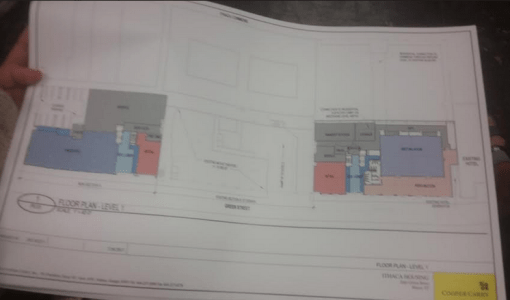
The first floor appears to have at least two retail spaces, a lobby area, and an office, probably for management of the complex. The middle section will retain access to Cinemapolis and the garage. On levels two and three would be rebuilt garage sections (note the center section was rebuilt ten years ago and unlike the ends, is in good shape). Another floor of parking will be added.

Cooper Carry is the architect, and the initial design looks fairly safe, attractive if not particularly inspired. After the Marriott, it’s good to be wary of potential value engineering. It appears to use brick veneer, Nichiha-like metal panels and maybe fiber cement. Also, with Harold’s Square and City Centre off to the left, this would arguably create a broad-shouldered if stubby skyline for downtown Ithaca, more impressive than many communities Ithaca’s size.

My notes are that Marriott co-developer Jeff Rimland had non-public information about the Green Street garage because he owns the ground facilities under the garage’s eastern deck, and would be impacted by renovations. He was made aware of city looking at their options and put something together. The city only learned about the plan four weeks ago, and mayor Myrick wanted to make sure it was brought forward for public discussion and to determine if it was a wise choice to move froward. Ostensibly, if this came out as a surprise, a hornet’s nest of opposition would be stinging. Being transparent now helps later.

It seems the intent is an RFP for the garage for the sake of fairness, but I dunno how effective that will be. Rimland has a big advantage as owner of a portion of the parcel, since any other developer would need to arrange legal agreements with him in order to carry out a project. It was suggested by Brock, who has never been a fan of development, and I cynically wonder if this was an attempt to ensnare or at least stall the proposal. An RFP does put the city in a more legally comfortable position, perhaps. On the flip side, I cringe at the thought of another Old Library-like mess.

On a final note, there’s also a name, seen in the lower right of the rendering – “Village on the Green”. Very punny guys.
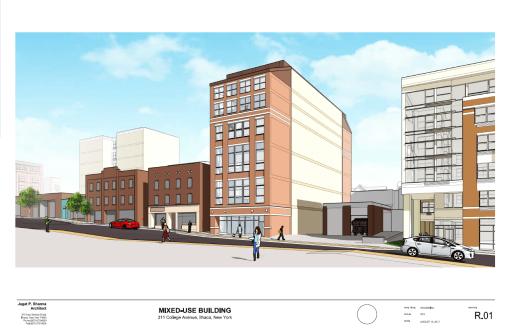

2. The other big news item of the week was 311 College Avenue, more commonly referred to as “The Nines replacement”. The Nines is a much-loved restaurant and bar that has long been a part of Collegetown’s drinking and musical scene – in the late 2000s, if I had to describe Collegetown bars, where Johnny O’s was the “fratty frat” bar and Chapter House the erudite tweed-clothed crowd, The Nines was the laidback, indie band geek-turned-rocker. Add in its location in a ca. 1908 fire station, and one of the few sizable outdoor patios in Collegetown, and one can understand that a project on this site was never going to be warmly received.

Granted, I’ve been raked over the coals a couple of times for the article, whose first headline said The Nines was being kicked out. It was an honest copy-editing mistake. For breaking news I publish ASAP, like with the Green Street development. However, that’s discouraged because the business pieces are useful for filling slow periods during the day, or to give time for others to prep articles during the early morning. Many of my articles are written in the late evening, submitted to the schedule, and skimmed through before hitting the website. In this case, I submitted Sunday night, my editor Jolene read through it early Monday morning, she thought the opening lines implied an eviction and changed the title (the original was a generic “Apartments Proposed for The Nines”). Sometimes title get changed for clarity or Search Engine Optimization (SEO), but this particular time it created a false statement. I didn’t see it until I was at work on Monday, and uncomfortable conversations ensued. Sorry all. The next article won’t wax poetic.

Anyway, with that error noted, it makes this next opinion segment more uncomfortable. I’m not a developer. But if I were one, and heard the property was being put up for sale, I’d probably have steered clear. With all due respect to Todd Fox, my gut feeling is that the cons outweigh the pros.

Ithaca is not an easy city to do a project in. A developer has to pick and choose their battles. In this case, the battle is taking a building with some degree of historic value, but more importantly a lot of local sentiment attached, and proposing to replace it with, frankly, a mediocre design with high-end student units. I understand the economics of the site, the market, and the unfortunate though economically necessary impacts building flush to lot lines has on the ability to install windows on the sides. My concern is external impacts, by creating an emblem for opposition to organize around, because it wraps several perceptibly negative impacts into one proposal. That may make future projects that much more difficult. I worry that whenever a controversial plan is brought forth in years ahead, it will be pejoratively described by NIMBY types as “just like that Nines replacement”.

It has taken years for Ithacans to become slowly more amenable to density and development. Proposals that inadequately address community concerns threaten that progress. Consider the case of Jason Fane. He toyed with the city plenty of times. Eventually it caught up to him and he got burned. The sad part is, 130 East Clinton was a solid project, and to this day I believe that had it been another developer, those apartments would have been built.

Anyway, the ILPC would like to preserve it as-is, which draws the question why the discussion never moved forward 18 months ago when they had the chance. I don’t think that’s likely at this stage, and an overbuild probably wouldn’t work due to development costs (foundation shoring, elevator if 4+ floors) with respect to developable area – the big front yard setback is an impediment to that. I heard that an offer was floated to Neil Golder to move his house at one point during the 201 debate, so maybe moving all or at least the front (1908 wing) of the old station No. 9 is possible, but the expense would be great. As for the new building’s design, maybe modest fixed windows in the north/south brick faces, or glass block features like on Sharma’s 307 design, or even something as minor as a mural on the CMU blocks would help.

But, all that might be grasping at straws. This was always going to be controversial. I won’t fault someone for seeing an opportunity, even if it’s not a plan I’d advocate. It all depends on one’s appetite for development opportunities, and sensitivity to potential blowback.

3. For sale: 405 Elmira Road. 0.74 acres of parking lot next to Buttermilk Falls Plaza. List price: $465,000, courtesy of Pyrmaid Brokerage. Also noting – the chain hotelier who bought the former Tim Horton’s next door from the same seller for $640k in January 2016. Timmy Ho’s 0.75 acres is a little small for a hotel on its own, but combined with this lot, suddenly plans start to look quite viable for a mid-sized chain in the city’s suburban-friendly SW-2 zoning. Someone else may come along and buy it, but let’s see what happens.

4. It appears the 24-unit Pineridge Cottages project is off the table. The project, planned for the corner of Mineah and Dryden Roads in Dryden town, was greatly scaled back by developer Ryzward Wawak after water tests led to concerns about having enough to supply all the units. At this time, the plan is for four cottages, each a two-bedroom unit.

5. The Times’ Matt Butler has a nice summary and brief interview with Lakeview Health CEO Harry Merriman regarding the 60-unit affordable housing plan for 709-713 West Court Street. Some of the obstacles the project faced wouldn’t be a surprise to readers of this blog – the soils require a more expensive deep (pile) foundation, and land acquisition costs are climbing, which increases the overall costs involved with bringing a proposal into reality, let alone a plan that focuses on affordable housing. The increase in units from 50 to 60 was driven by the need to balance out revenue with expenditures and make the affordable housing economically feasible. Incremental cost increases per unit are significantly less than overall structural costs, so the per-unit expense for 60 units is less than 50, making the project more appealing in competitive grant processes.

Of the 22 units to be set aside for formerly homeless individuals, six will be reserved for HIV-positive clients of STAP, the Southern Tier Aids Programs. Those infected with HIV tends to experience much higher homelessness rates than the general population, with at least 81 homeless HIV-positive individuals in Tompkins County alone. This makes it hard to do things like refrigerate medication. These six units are a small number perhaps, but for those six folks it will make a huge difference.

6. Another feather in the cap of the local STEM sector of the economy. Biotech startup Jan Biotech Inc., based out of the Cornell Business Park by the airport, has received a $3 million grant from the National Institute of Health (NIH) that will be used in the research and production of an HIV diagnostic for detection and quantification of latent HIV-infected reservoirs in patients –  cells that have the virus but aren’t actively producing HIV, which current anti-retroviral therapies struggle with. Potentially, the diagnostic could help test new medicines for their ability to target those cells, and lead to a true cure for the virus before AIDS can occur.

Along with new equipment and renovated facilities, the grant is expect to result in the hiring of another 5 to 10 scientists and engineers for the four-person firm. Which is great, but truly, it’s their work to try and improve our treatment and medicine of a deadly virus that’s more important. The very best of luck to them.

7.  A bit of news from the Cornell Daily Sun regarding the additional 2,000 beds Cornell would like to build on its North Campus, as part of its freshman expansion and “Sophmore Village” plan. The university would like to begin construction on the first dorms in 2018, and start increasing student enrollment by 2020. For that to happen, the plans pretty much need to come forward for formal planning board review within the next few months. Presumably, they’d like to have the dorms ready by August 2019 – these will be used as flex space initially, so that existing dorms like Balch and Clara Dickson can start renovation. At a bare minimum, it takes three months to go through the city planning board. Given this project’s proximity to Cayuga Heights, the local patricians will want to have their say as well, even if it is just outside village lines. With the size of the project and a minor amount of inter-municipal complexity, four months from sketch plan to approval seems realistic. Considering the need to request and award contract bids, it would seem plausible that Cornell puts the dorms forward this fall for review, with approval expected by late winter. Bids would be requested and awarded during the Spring, and construction would start by June. Whatever the case, the first construction plans are likely not far off.