News Tidbits 12/17/16: So Much In One Week

17 12 2016

1. For the developers out there, it looks like your next opportunity just opened up in Collegetown. For sale are three houses on Linden Avenue – 6-unit, 8-bedroom 230 Linden, for sale at $675,000 (taxed at $350,000), neighboring 4-unit, 8-bedroom 228 Linden at $700,000 (taxed at $460,000), and two doors down, 2-unit, 11-bedroom 224 Linden at $525,000 (taxed at $400,000). All three are somewhat run-down student apartment houses on the cusp of inner and outer Collegetown – as such, their zoning is CR-4, which allows four floors, 50% lot coverage, and has no parking requirement.

The properties were all purchased in the mid-1970s by a small-time local landlord, who was killed in a car accident two years ago. According to the listings, the seller’s agent is a family member, and the units are leased until late 2017 or 2018, meaning that if one were to purchase with an eye towards rapid redevelopment, they would have to negotiate with the tenants, or wait it out. That being said, there’s a lot of potential here, particularly if a buyer combines 228 and 230 into one lot. The city designed the CR-4 zoning with Linden Avenue specifically in mind – the concept render is a northward perspective of a revitalized Linden Avenue. They’re a lot of money, but there could be some interesting news down the line.

210linden_126college

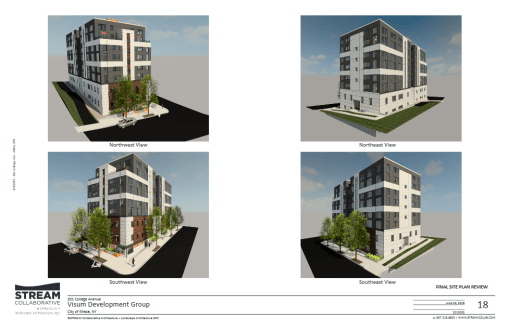
2. Also in Collegetown, here are a couple of concept color renders of 210 Linden Avenue (left) and 126 College Avenue, courtesy of Visum Development’s webpage (currently down, cached link here). I confess to be more of a warm colors person, but assuming these are fiber cement boards and wood trim (or fiber cement that looks like wood), they could turn out quite nice.

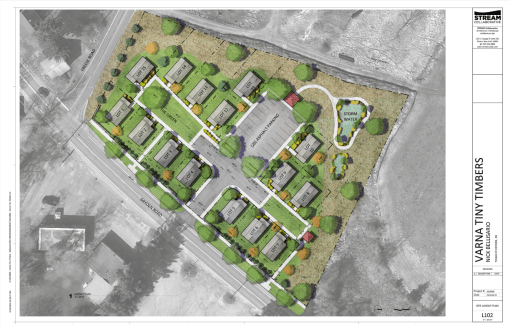
On a related note, Visum’s Fox and partner Charlie O’Connor have started earth moving for their townhouse project at 902 Dryden Road in Varna. As it turns out, it is a very difficult site to get photos of, despite its easily accessible location. I’ll do a more in-depth shortly, but the units should be ready by August.
20161211_131919 20161211_131943

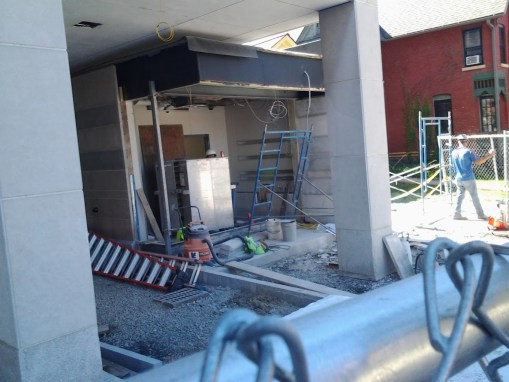
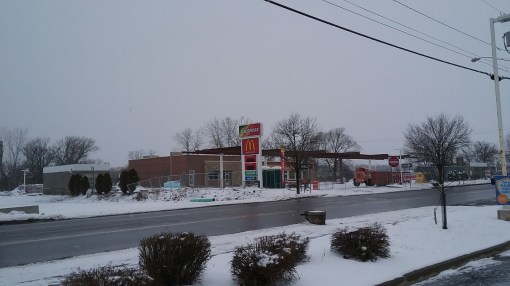
3. Fulfilling a promise to Fred, here’s the rather upscale McDonald’s/Fasttrak combo under construction North Road in the village. There is a billboard on 366 advertising for new hires for when they reopen, but unfortunately, it was too difficult to attempt a photo of the board and render. The building’s exterior is largely complete, and the gas station canopy is framed – late winter opening? The new construction has a price tag of about $500k. Honestly, for a roadside stop, it looks pretty nice.
20161211_131533

20161211_131514

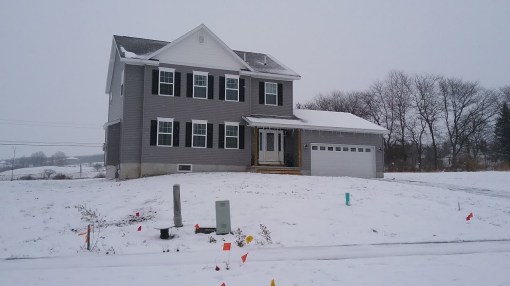
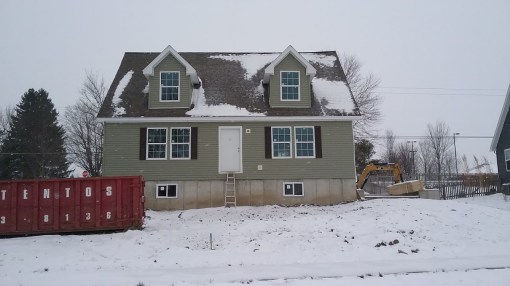
4. More on Dryden, with a couple houses of the week. Looks like some modulars are going into the Maple Ridge development – one recently completed, one in the works. The open space to the right of house number two, the Cape Cod, will host a garage. The land for house one sold to Kenn-Schl Inc, a regional modular home builder and seller, in June for $48k. House two’s land was sold to a Rochester man for $39k in October. At this rate, Maple Ridge is going to fill out their 15-lot phase one in another year or two. Although waylaid by the Great Recession, the big plan is for three phases and 51 lots.

20161211_133227

5. On the 15th, the construction loan for the William George Agency’s new 1-story, 24-unit dormitory was filed to the county records office. The $3 million loan comes courtesy of …. A trip to the property didn’t pan out, it didn’t look like anything was underway even though the building permits were filed with the town of Dryden a few months ago. Then again, as a facility for troubled youth, it’s not the most welcoming place for a random visitor to be taking photos.

maplewood_v7_4

6. So what’s being discussed by the towns? In the town of Ithaca next week, a lot line adjustment between two houses, and more Maplewood discussion, with consideration of preliminary site plan approval. Meanwhile, the town of Dryden has cell towers galore, as well as revised approvals for Storage Squad (1401 Dryden) and Tiny Timbers; plans are in the pipe line for a 7-lot subdivision of the Dryden Lake Golf Course, and a possible sewer extension study for NYS Route 366 east of the NYSEG building.

Image Property of HOLT Architects

7. Speaking of sewer, the town and village of Lansing are negotiating sewer deals so that the town can use village lines to help accommodate future growth. Dan Veaner at the Lansing Star has the story. the report says the town is asking for 700 units of capacity, where a unit is 328 gallons. 700 units would also put the Cayuga Heights plant at capacity. The town’s intent is to extend sewer capacity to encourage development along Triphammer Road (as in the town center concept shown above), with the reasoning that it’s a natural extension of established development, and would help grow the tax base in the event of the power plant closing. Not as grand as the plans that were shot down in 2007, but like the Warren Road sewer built a few years ago, it’s seen as a more organic and cost-efficient approach.

20161209_123851

20161209_123931

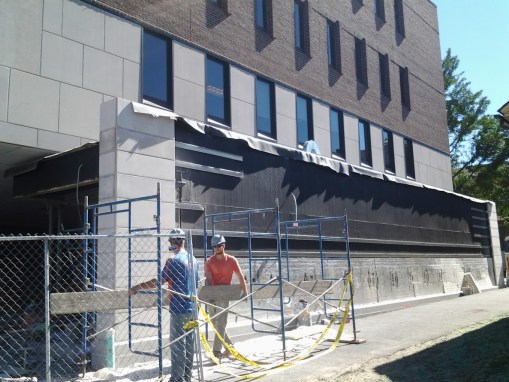
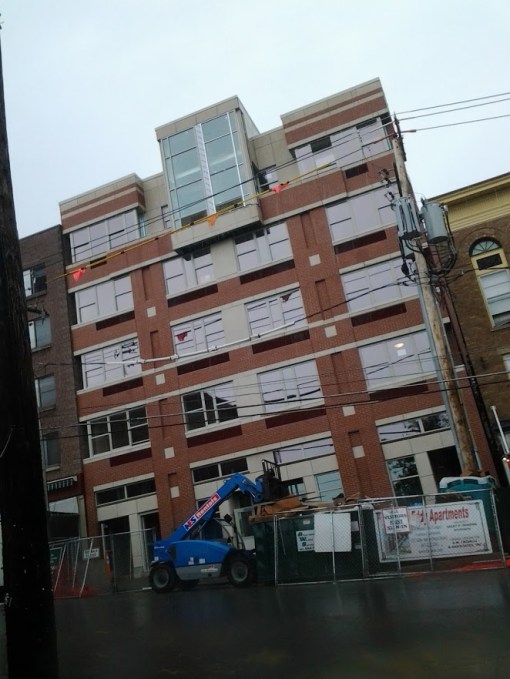
8. There might be some of movement on Jason Fane’s Bank Tower $4 million renovation from office space to 32 apartments. The windows were inspected and tagged recently, possibly to determine what needs to be replaced where. Most of the exterior of the Commons-facing building will receive a cleaning and re-freshening, with the bulk of the work geared towards the interior.

20161210_140231

9. In economic news, 24/7 Wall Street is reporting that Ithaca has the 25th best job growth in the nation from November 2015 – November 2016. 2,200 jobs equates to 4.4%, by their measure.

Hate to burst the bubble, but don’t buy into it just yet. Initial estimates can be way off due to statistically insignificant sample size for small communities. It may hold, it may not. Wait until March and see if the numbers get revised.
city-center-v4-1

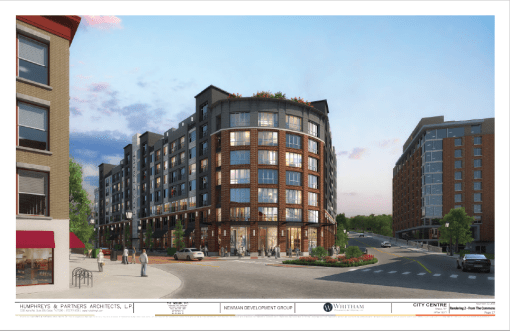
10. Interesting meeting next week for the city Planning Board. Amici House and Maplewood are up for final approval, and a couple revitalized or new projects. Here’s the scoop:

1. Agenda Review 6:00
2. Privilege of the Floor
3. Site Plan Review

A. Project: Maplewood Redevelopment Project 6:10
Location: Veteran’s Ave. (between Maple Ave. & Mitchell St.)
Applicant: Scott Whitham, Whitham Planning & Design, LLC, for Cornell University
Actions: Adoption of Findings, Public Hearing, Consideration of Preliminary & Final Site Plan Approval

The Town Planning Board filed a Notice of Completion on November 30th, 2016, which can be viewed here: http://www.town.ithaca.ny.us/major-projects/maplewood. The Town Board will consider adoption of a Findings Statement on December 20, 2016.

The city will specifically sign off on the bus stop and landscaped area at the northwest corner. STREAM Collaborative is the landscape architect.

B. Project: City Centre — Mixed Use Project (Housing & Retail) 6:30
Location: 301 E. State/M.L.K., Jr. St.
Applicant: Jeff Smetana for Newman Development Group, LLC
Actions: Determination of Environmental Significance, Recommendation to BZA
amici_v3_1

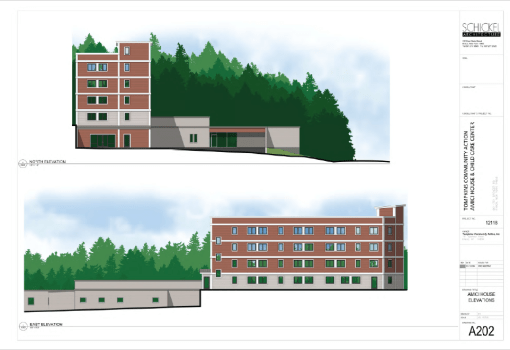
C. Project: Amici House & Childcare Center 6:50
Location: 661-701 Spencer Rd.
Applicant: Tom Schickel for Tompkins Community Action (“TCAction”)
Actions: Consideration of Preliminary & Final Approval

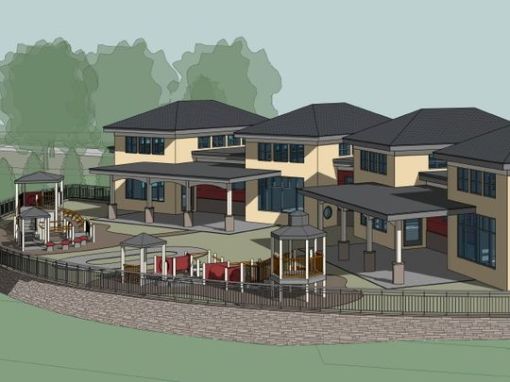
Tweaked since last time – a little more glass in the stairwell, and the roofline of the classroom building has been broken up with three distinct gables.

college_townhouses_v2_1

D. Project: College Townhouse Project 7:10
Location: 119, 121, & 125 College Ave.
Applicant: Kathryn Wolf, Trowbridge Wolf Michaels Landscape Architects, LLP
Actions: Public Hearing Determination of Environmental Significance

The big changes appears to be the switch from boxy bay window projections to curvy ones. Not sure if it works, given all the other boxiness. But on the bright side, we now know what the rear apartment building looks like:

college_townhouses_v2_2

E. Project: Apartments (5 Units) 7:30
Location: 126 College Ave
Applicant: Visum Development Group
Actions: Declaration of Lead Agency, Potential Determination of Environmental Significance

This is what I get for writing things over the week rather than all at once. Confirmed fiber cement panels (wood-like and Allura olive green) and a very light yellow Nichiha panel.

F. Project: Apartments (9 Units) 7:50
Location: 210 Linden Ave
Applicant: Visum Development Group
Actions: Declaration of Lead Agency, Potential Determination of Environmental Significance

Charcoal grey fiber cement panels, light grey panels, natural wood trim and red doors. The base will be stucco.

G. 323 Taughannock – Apartment (Redesign) – Sketch Plan 8:10

Steve Flash’s 21-unit apartment building for Inlet Island was approved two years ago, but has not moved forward due to soil issues and parking costs. This new version is still a housing proposal, but I’m hearing for-sale units that may be condo-like. The design will also be new, but the aesthetic will be similar – it will once again be crafted by STREAM Collaborative.
H. Ithaca Reuse Center – Sketch Plan 8:30

I know about this project because a county staffer emailed me by accident. But without official docs, I wasn’t about to report on anything. The plan calls for a mixed-use building, not unlike that seen in design concepts a couple of years ago. TCAction and INHS are involved, so there is an affordable housing component – probably looking at mixed-use overall.

4. Zoning Appeals 8:50
• 3053, Sign Variance, 310 Taughannock Blvd.
• 3055, Area Variance, 113 Farm St.
• 3056, Area Variance, 301 E State St.

5. Old/New Business:
A. Update — Chainworks DGEIS – Transportation Comments/Responses – yes, it’s still going.
B. Update — City/Town Joint Planning Board Meeting Jan 31, 2017 – Maplewood?
C. Update — Joint Planning Board/ILPC Meeting (DeWitt House) – Let’s see how this goes…


Hotel Ithaca Construction Update, 12/2016

15 12 2016

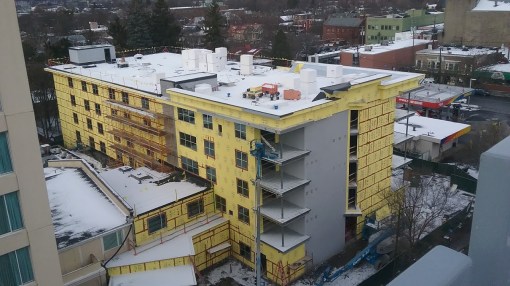
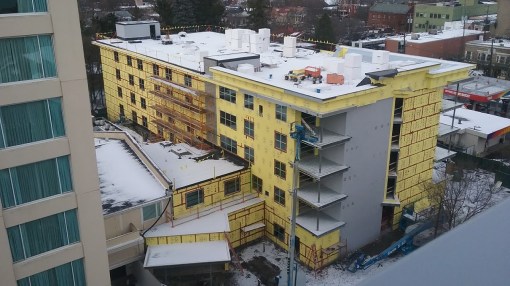
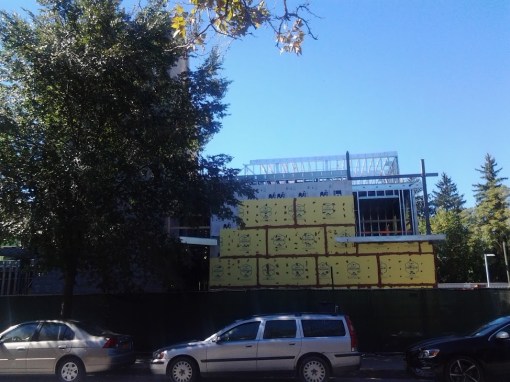
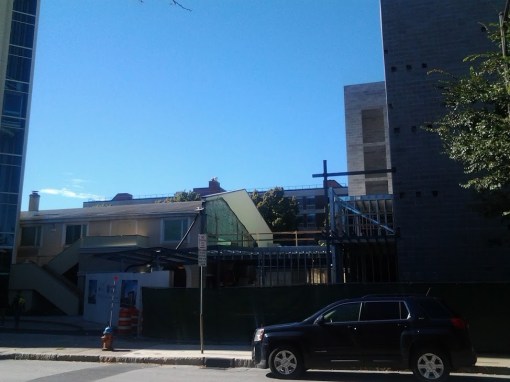
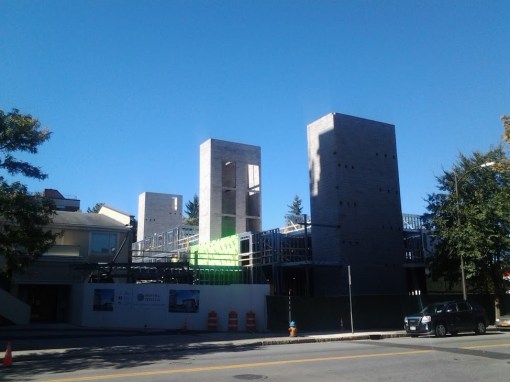
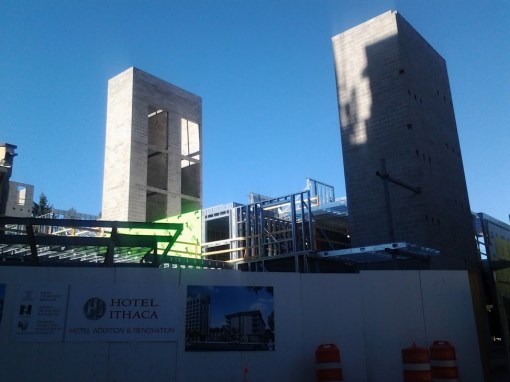
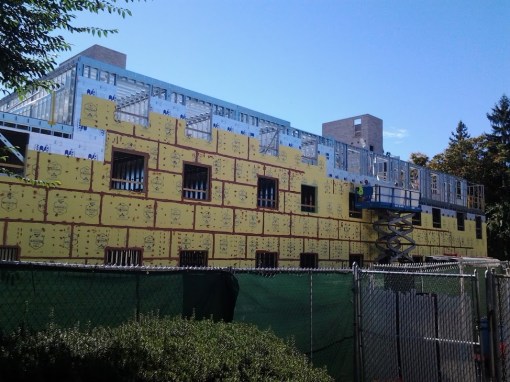
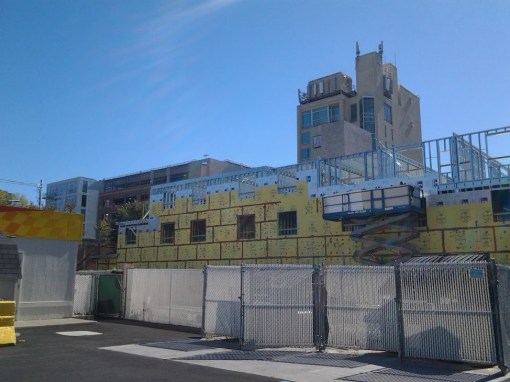
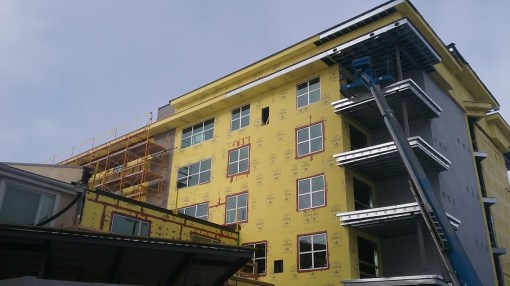
The Hotel Ithaca addition at 222 South Cayuga is topped off and has taken the shape of the final product. Most of the new windows have been fitted into the exterior walls. Air conditioning units will be installed in the smaller openings. Peering inside, it looks like the interior framing is all set, and utilities rough-ins are underway.

In most places, the DensGlass fiberglass mat sheathing is being sealed up with R-Guard FastFlash liquid flashing, to close up the seams, joints and fasteners. Some of the newer sections, like the south wall, have yet to be sealed – in fact, workers were cutring and installing the DensGlass boards on the balconies while these photos were being taken. Since the balconies aren’t meant for full-time occupancy, the fiberglass mats are going directly onto the steel studs, without the R-Max polyiso. Taking a guess here, the gray coat on the front (east) wall might be a primer material for the exterior facade.

Along with general contractor and frequent Hart Hotels partner Krog Corp, it looks like Henderson Johnson Inc. of Syracuse was tapped for some subcontracting, and IBEW-sponsored John Mills Electric of Ithaca is handling the electrical rough-ins for the new wing.

The new $13.77 million addition should open in May 2017, just in time for the big graduation weekends. More background info on the Hotel Ithaca project can be found here.
20161209_122235 20161209_122240 20161209_122252 20161209_122341 20161209_122350 20161209_122356 20161209_122509 20161209_122807 20161209_122819 20161209_122840

hotel_ithaca_final_1


News Tidbits 12/10/16: Missing Out On the Fun

10 12 2016

reach_works_1
1. We’ll start off out in the town of Lansing this week with a new business startup looking to climb to the top of the pack. Reach Works, the brainchild of an academic family that relocated to Ithaca, just earned final site plan approval to build a professional-grade climbing wall and facility at 1767 East Shore Drive, next to The Rink. The $1.2 million, 10,400 SF building will have a noticeable impact on the Lansing shoreline, as the building will reach 56 feet in height. South Hill’s George Breuhaus will be the architect in charge.

According to the Times’ Cassandra Negley, the owner looked at Chain Works for an opportunity, but those plans fell through. The finalizing of the wall design is underway now, and Reach Works hopes to begin construction in March and be open by next fall. Between the pro shop and the wall, they hope to employ five full-time and ten part-time, with most making about the living wage of $15/hour (although, the application on file with the town says six employees). The hope is that it also becomes a regional attraction, drawing in hardcore climbers from the Rochester, Syracuse and Binghamton metros. Best of luck to them.

maplewood_v7_4

2. Maplewood is almost ready. The city is set to give its final approval this month, and the town is expected to give preliminary approval before the Christmas holiday. The latest changes to the FEIS include the following details:

– The amount of money for traffic calming measures has been increased from $20,000 to $100,000. $30,000 goes to the city and town, and $70,000 will be allocated by EdR and Cornell for streetscape improvements that they will build.
– Recycled building materials will be incorporated into the buildings.
– A revised estimate states that 100 to 150 construction staff will be on site during construction. They will park behind the East Hill farmer’s market space and are expected to walk over to the site. They will work on weekends, with noisy work commencing after 8 AM.
– The units closest to the East Hill Rec Way have been moved another four feet back from the trail.
– Initial property taxes in 2018 will be $2.25 million. IT is assumed they will go up 3% each year thereafter.

Oh, and the questioner who freaked out over the East Hill Village plan online – that SWA plan dates from about 2007.

cayuga_med_behavioral_sciences_1-620x420

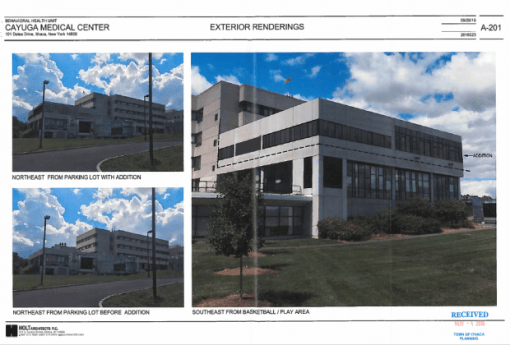
3. Cayuga Med’s plans for a 6,000 SF addition to their Behavioral Health Unit has been approved. At this point, the project needs a minor zoning variance for height,and then CMC has to apply for certification from the New York State Office of Mental Health for the facility to be approved- specialized medical facilities, like CMC and Brookdale, have to prove there is a need before they’re allowed to build. The hospital hopes to open the project to bidding early next year.

masonic_temple_1-771x595

4. So ICYMI, the Masonic Temple rehabilitation is moving forward. Six months later than anticipated, but it is moving forward. The project is valued somewhere north of $1 million. There is one other project on the Ithaca Landmarks Preservation Commission (ILPC) agenda that I thought of writing an article about, but decided it was too minor – the Alpha Phi Alpha house at 421 North Albany will be doing a reconstruction of a non-historically significant rear porch. If it were a full reno, I’d do a write-up for the Voice.

Also on the ILPC agenda – a discussion of Collegetown Historic Resources. I have the feeling this is being spurred by Novarr’s 119-125 College Avenue project, the College townhouses. Three historically significant but non-landmarked apartment houses were taken down to make way for the project, which is expected to go up for preliminary approval later this month. The city did a review after the document was first published in 2009, and landmarked the Snaith House at 140 College and Grandview House at 201 College – they could be considering making a move towards landmarking other properties – some of the historic structures on the 400 Block of College Avenue, and the 100 blocks of Oak Avenue, College Avenue and Linden Avenue are possibilities. Novarr has another project rumored for 215 College Avenue, but that building, dating from the 1870s and renovated/expanded numerous times, was not on the 2009 list.

5. Staying Collegetown, a big sale this week – 113 College Avenue sold for $1.7 million. That’s a very impressive price for an outer Collegetown apartment house – the tax assessment has it pegged at $610,000. The bones of the 13-bedroom, 3,738 SF building date from the late 1800s, but like its twin next door, it’s been the subject of a very unsympathetic renovation (records suggest the renos were done around 1980). The house has been owned by the Tallman family since 1987.

The property is zoned CR-4 – four floors, no parking required. CR-4 is the same zoning as Novarr’s townhouses and Visum’s latest pair of proposals. And, because what goes around comes around, the buyer is the same LLC that sold Visum’s Todd Fox 201 College Avenue for $2.65 million back in June – Russell Johnson’s PBC & Associates LLC. He also picked up a CR-3 building at 233 Linden Avenue for $750k back in the fall. Price suggests redevelopment, but the buyer isn’t known for that – he might have just paid big for a long-term investment. TL;DR, he might be planning something, he might not; we’ll see.

On a side note, the county’s going to make some money raising the property tax assessment on this one – offhand, I’ve noticed most of the houses sold this week (excluding a couple in Ithaca city) have gone at or well under assessment, which is a bit unusual, and probably not something that the tax assessor’s office wants to see.

20160630_142619

6. Good news and bad news from the Regional Economic Development Council awards. The good news is, the area’s getting money. Cargill gets $2 million towards their salt mine project (they requested $5 million), Cornell gets $250,000 for a startup business alliance, County Waste gets $355k for a food waste transfer station at the recycling center site, and the Sciencenter gets $150k for renovations. Several smaller awards are to hire staff for cultural and arts programs.

Now the bad news – one project, marked priority, was not funded – the Collegetown Travel Corridor proposed by the city of Ithaca to connect Downtown and Collegetown. I asked to make sure, and the Planning Department was just a little deflated in their response. Major bummer. I don’t doubt the value of arts programs, but $38,500 for a theatre director and $41,000 for a workforce expansion isn’t sustainable, it’s one year’s salary. That’s nice, but how does that benefit the area in the long-term? The Travel Corridor would have further encouraged urban development downtown and Collegetown that could have indirectly supported the arts through patronage, or directly through taxes that are used to fund local-level grants.


News Tidbits 12/4/2016: Not Forgotten

4 12 2016

old_libe_v7_1

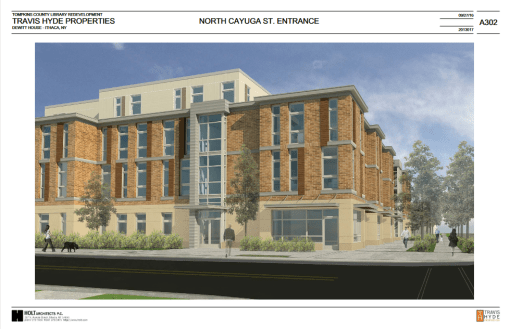
1. It looks like the Old Library proposal will be coming up to bat one last time. Developer Travis Hyde Properties and its project team will present one last major revision at the January Ithaca Landmarks Preservation Commission (ILPC) meeting. Things are well behind schedule at this point, as the ILPC continues to take issue with the old library proposal – which at last check, has had seven separate designs proposed and shot down for one reason or another. The Times reports that senior services non-profit Lifelong is one again involved in the project, although it had never really left – they will control the community room on the first floor, and will receive the revenues generated from renting it to outside entities. The last iteration may once again include first-floor interior parking, since that was the sticking point at the October ILPC meeting – the plan for design #8 is to increase parking from the proposed 10 spaces, to 25-30 spaces. If the January concept is acceptable, or at least close to ILPC approval, Travis Hyde will pursue the 55-60 unit plan; otherwise, it’s over.

The county had hoped that the sale of the property would generate $925,000 at the outset, as well as future tax revenues; the current building’s mechanical systems are past their useful life and in need of replacement, a cost likely to exceed a million dollars. With no sale, and a perceived “toxic” site for development due to opposition both during the RFP stage and during this review process, the county and city will be in a less than enviable position if things fall through.

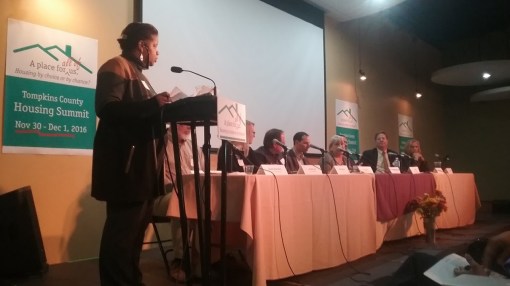
At the housing summit, the old library came up as a point of concern and contention; JoAnn Cornish, the city’s planning director, suggested at one that if the county had been willing to part with the property for a token $1, than the need to build up on the site wouldn’t be so great. I happened to be taking notes next to a county legislator and Old Library Committee member who muttered that that was a terrible idea and Cornish had no idea what she was talking about. Anyone looking for common ground is going to have a real hard time finding it.

cma_v2_2

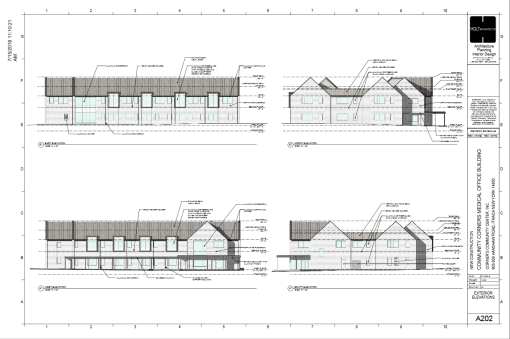
2. It looks like Cayuga Medical Associates’ plan for Community Heights is nearly good to go. Only a couple minor revisions were presented at the Cayuga Heights Planning Board’s meeting on the 28th – a rear (east) driveway, sidewalk work and a detention basin. Cover letter here, updated site plan here, and a letter noting a potential change in hosted medical specialties here. The $5.6 million medical office building at 903-909 Hanshaw Road is 2 floors and 28,000 SF (square-feet), of which 23,200 SF will be lease-able space. The initial presentation in March called for a 3-story, 39,500 SF structure. Two buildings, a one-story office building and a vacant drive-thru bank branch, would be demolished.

chapter_house_reconst_v5_1
3. Now for something that’s a little less certain – the 400-406 Stewart Avenue reconstruction. One can’t call it the Chapter House reconstruction, because there’s no certainty that that is what will happen. Nick Reynolds has the full story over at the Times. The Chapter House’s intended space on the first floor is being advertised by Pyramid Brokerage for $35/SF, double the bar’s rent from before the fire. The owner of the Chapter House referred to all this pre-development as a “money pit” as the building still has no anchor tenant, but he was still open to being a part of the rebuild. In short, it looks like we’re seeing some bickering between the developer and potential tenant spill out into the public domain, and we’ll see how it plays out.

amici_house_v3_1

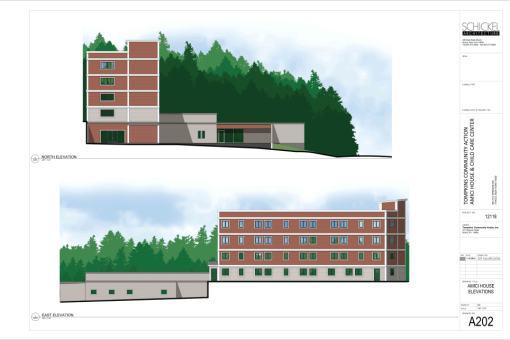
4. At the city planning board meeting last week, preliminary approval was granted to Charlie O’Connor’s four two-family homes at 607 South Aurora. City Centre also continued with its review, with comments focusing on sustainability and solar panels. Changes to the project are minor at this point, and we’re probably close to the final product at this stage. Amici House was also debated, with neighbors expressing concerns about the size, and uncertainty on whether TCAction can handle 23 homeless or vulnerable youth.

I’ll register a small complaint – the north stairwell of the residential building. I’d encourage TCAction and Schickel Architecture to explore using smoked or tinted glass to reduce glare, rather than bricking it in. It makes the building look cold and industrial, which seems just as unfriendly to neighbors as glare would be.

The board also went ahead with lead agency on Novarr’s College Townhouses project, and was shown brief presentation on two Visum Development Group projects, 126 College and 210 Linden. More on those here.

20160630_142619

5. The Times included a quick Collegetown construction rundown about a week and a half ago. Two quick addendums –
A. Still no plan for 330 College Avenue, since Fane did the development version of trolling by proposing a 12-story building in a 6-story zone, and was told there was “no way in hell” it would happen;
B. Nothing scheduled for 302-306 College Avenue, aka “Avenue 102”, until at least mid-2018. The rumor mill says the Avramis family, who proposed a two-building, 102-unit sketch plan in October 2014, are concerned about market saturation. Given Cornell’s plans to increase their enrollment by raising their incoming freshman class size from 3250 to 3500, it might be worth another look.

downtown_design_guidelines_1

6. The city has released the preliminary design guidelines from Winter & Company. The Collegetown guidelines are here, Downtown’s here. Although there are suggested rather than mandatory, in theory, a project team could use these guidelines to formulate plans that would be less likely to get hung up in the city’s project review process – one could call it “form-based code lite”. There’s nothing particularly groundbreaking in here, but the guidelines do promote urban-friendly and contextual designs. These are draft open to public comment – those who would like to can send their thoughts to city planner Megan Wilson at mwilson*at*cityofithaca.org by December 15th. there are some differences between existing zoning and these guidelines (for example, setbacks) that will need to be addressed at some point – the revised drafts will roll out in mid-January.

20161201_121840

7. Now that the county housing summit is behind us, I think that while there wasn’t any sort of huge breakthrough at the event, it was helpful to the community to have the obstacles and suggested goals shared with a large audience. Although, as county legislator Anna Kelles pointed out, it wasn’t necessarily a wide audience – renters, younger residents and lower-income individuals were not well-represented. At least for me, the big, exciting news was Cornell’s plans for new housing, which I will be writing about for the Voice later this week. While not perfect, the event did bring to light certain issues – NIMBYism can be a delicate topic in an audience like this, but one of the points that was stressed at the summit was, if you support a project, then let the governing body in charge know you support it and why. Heck, JoAnn Cornish was saying the city gets opposition emails from residents of California and Oregon. A little support from local residents, even students, reminds city staff and board members that there a variety of opinions.

I can definitely say that not everyone who attended was pro-development – after the woman behind me asked if I was a reporter (I said yes, for the Voice), she kept passing me notes like “since when did development bring property taxes down”, “developers are just in it for the money” and “Ithaca shouldn’t have to change”. I don’t think she liked my replies – the first one I wrote back a response about spreading the tax burden out with new infill development, the second I wrote “strictly speaking perhaps, but they don’t want to turn out a terrible product”, and the last, I perhaps unkindly wrote “[t]ell that to the families being priced out. Something has to change.” She got up and left shortly afterward.


News Tidbits 11/19/16: Winter Is Coming

19 11 2016

executive-education-center-and-hotel-777x622

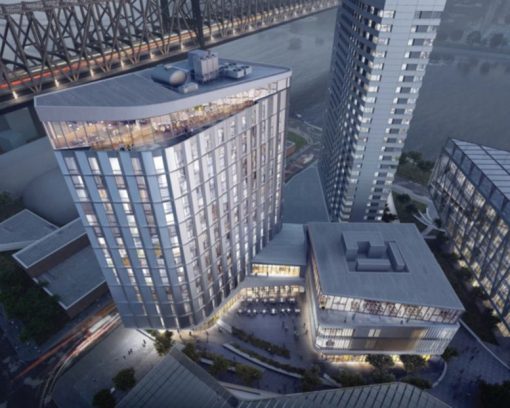
1. We’ll start off in the Big Apple this week. Cornell and its development team have released plans for the fourth and last building in the first phase of the Cornell Tech buildout. The Verizon Executive Education Center and Hotel consist of two buildings connected by a shared hall, and will include four 50-75 seat classrooms, small breakout rooms, and a 195-key hotel for visitors to the school. The plans also call for a restaurant, rooftop lounge and cafe – none of which sound very academic, but the building is meant to be an event center and gateway to the nascent school.

The exterior will be encased in aluminum and wood planks. There will be no parking, but there will be pedestrian courtyards, bike lanes and green space. The facilities are part of the campus’s first phase, which also includes a 26-story student and staff residential building; the Bridge, an incubator for researchers and small businesses; and the Bloomberg Center academic building. Those buildings will open in summer 2017, while the Verizon Center will probably be a 2018 opening, assuming the final designs are approved by the city of New York.

hopshire_1

2. Now to turn to something much closer to Ithaca. Dryden’s Hopshire Brewery is in the midst of a two-phase expansion, reports the Times. The first phase, shown above, consists of a 1,200 SF addition to the west side of the structure, and the new addition is already framed and closed up, with the expectation of being completed by the start of 2017. The space will be used to host events for as many as 100 attendees. the second phase, a 1,300 SF addition to the brewery and storage area, will start next year. The work is partially funded with an Empire State Development grant.

Speaking of drinks, the Watershed, a new bar and coffee lounge, will open by Thanksgiving. It replaces Rumble Seat Music at the former telephone exchange building at 121 West State Street in Downtown Ithaca. The Watershed owners expect to create eight living-wage jobs.

3. From county records, we can see just how much the Rodeway Inn renovation is going to cost local businessman Pratik Ahir – $2,095,000, but the hard costs are only $926,000. The difference is due to the existing mortgage on the property. The lender is Generations Bank, a small bank based out of the Seneca Falls. Anecdotally, we seem to be seeing an uptick in small upstate lenders looking to stake claims on the growing Ithaca market, which could be a real asset for the region – with a limited number of local lenders, financing is often a big hurdle with Ithaca-area projects.

maplewood-v7_8-planning-board maplewood-v7_6

4. As noted earlier this week in the Voice, lots of new Maplewood renders to take a gander at. Going through all the emails from the public comment period, I’d say that overall most are positive and positive-constructive – there are a few sour grapes, but they’re in the minority. For this area, that’s actually a pretty big accomplishment, and it means Cornell and EdR have successfully addressed most of the concerns raised by neighbors and community members. The big changes in respone to public comment have been a a commitment to 50% off-site solar energy, $20,000 to the town for traffic calming measures on Mitchell Street (raised crosswalks, speed bumps), and the two townhouse strings facing Walnut Street and the Belle Sherman Cottages have been redesigned to look more traditional and fit in better with their non-student neighbors. We’re probably very close to the final design at this point, if not already there.

Once preliminary approval has been granted, demolition will start on the south side of the Maplewood property and make its way northward in four phases. The first townhouse strings and apartment buildings will begin construction on the south side of the property in the March-April timeframe, depending on overall progress and external factors. The first completed buildings will be ready by October/November 2017, but it looks like occupancy will happen all at once in August 2018.

wegmans_pad_parcel-1116

5. The City Planning Board Agenda is pretty busy next week – Todd Fox will be presenting two new mid-sized Collegetown projects, Wegman’s is seeking a renewal on the approvals for their pad parcel building, and several other projects had major or minor redesigns. Here’s the rundown on the Voice, and the schedule here:

AGENDA ITEM                 APPROX. START-TIME

1. Agenda Review              6:00

2. Privilege of the Floor   6:01

3. Site Plan Review
A. Project:  Maplewood Redevelopment Project                               6:10
Location: Veteran’s Ave. (between Maple Ave. & Mitchell St.)
Applicant: Scott Whitham, Whitham Planning & Design, LLC, for Cornell University
Actions: Update & Schedule
B. Project:  City Centre — Mixed Use Project (Housing & Retail)     6:25
Location: 301 E. State/M.L.K., Jr. St.
Applicant: Jeff Smetana for Newman Development Group, LLC
Actions: PUBLIC HEARING    Review of Full Environmental Assessment Form (FEAF), Part 3

C. Project:  Amici House & Childcare Center                                6:50
Location: 661-701 Spencer Rd.
Applicant: Tom Schickel for Tompkins Community Action (“TCAction”)
Actions: Declaration of Lead Agency, PUBLIC HEARING, Determination of Environmental Significance, Recommendation to BZA

D. Project:  Four Duplexes                                                         7:20
Location: 607 S. Aurora St.
Applicant: Charles O’Connor
Actions: Determination of Environmental Significance, Consideration of Preliminary Approval
E. Project:  College Townhouse Project                                      7:45
Location: 119, 121, & 125 College Ave.
Applicant: Kathryn Wolf, Trowbridge Wolf Michaels Landscape Architects, LLP
Actions: Declaration of Lead Agency, Review of Full Environmental Assessment Form (FEAF), Part 2
F. 126 College Ave. — Sketch Plan            8:00
G. 210 Linden Ave. — Sketch Plan              8:20
H. Wegmans Retail Building – Extension of Site Plan Approval     8:40
4. Zoning Appeals                                                                     8:50
• 3049, Special Permit, 908 N. Cayuga St.
• 3050, Area Variance, 528 W. Green St.
• 3051, Area Variance, 661-665 Spencer Rd.
• 3052, Area Variance & Special Permit, 701 Spencer Rd.
• 3054, Sign Permit, 222 Elmira Rd.
5. Old/New Business                                                                 9:00
A.  Special Planning Board Meeting: 11/29/16
B.  Update — City/Town Joint Planning Board Meeting
C.  Update — Joint Planning Board/ILPC Meeting (DeWitt House)
D.  Changes/Corrections to Collegetown Area Form Districts (CAFD)
E.  Building Materials — Discussion on Potential Restriction on Vinyl Siding
6. Reports                                                                                 9:20
A.  Planning Board Chair (verbal)
B.  Director of Planning & Development (verbal)
C.  Board of Public Works Liaison (verbal)

7. Approval of Minutes: May 24, 2016, June 28, 2016, July 26, 2016, and/or October 25, 2016 (time permitting)      9:30

8. Adjournment      9:31


Tompkins Financial Corporation HQ Construction Update, 10/2016

13 10 2016

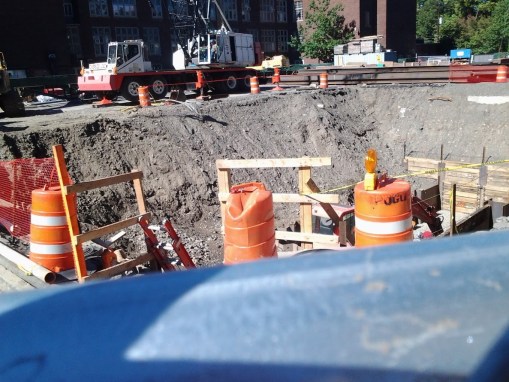
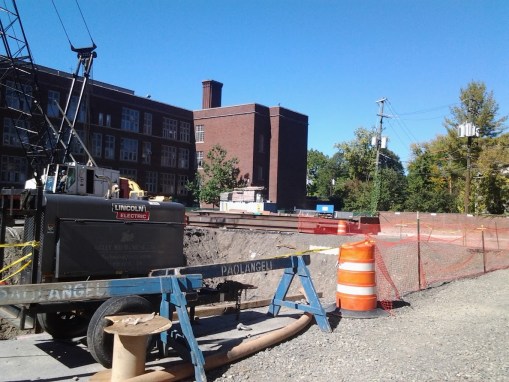
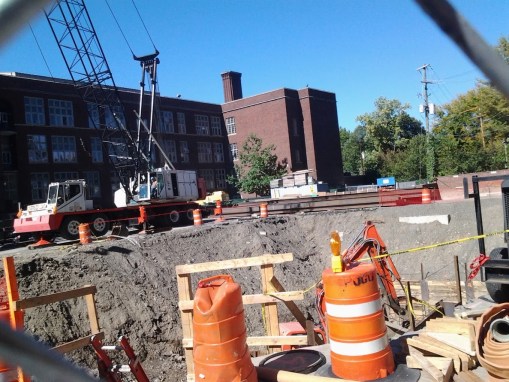
Normally, the phrase “wow, what a hole” isn’t a good thing. Here, it’s fine. Since this is a large, heavy building, and the soil near the surface is liable to settle and risk upsetting the building foundation, a deep foundation is required. According to the geotechnical report by Elwyn & Palmer, the end bearing piles will penetrate 65-70 feet into the ground. At this depth, the material is stable enough to allow each pile to handle the required heavy weight. The basement floor slab will be about 12 or 13 feet below street-level.

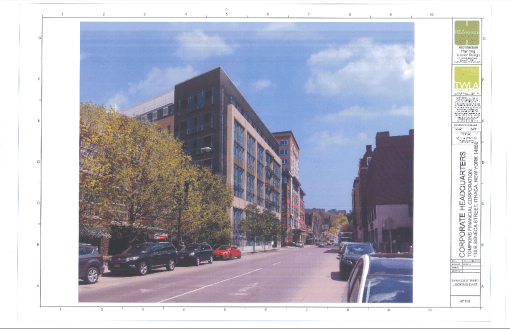
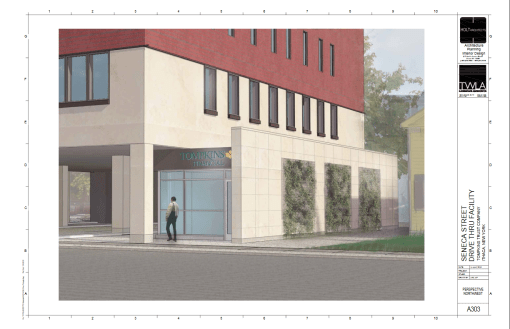
Across the street, the new 965 SF drive-thru building is moving right along. The much smaller building sits on a much easier, quicker and cheaper concrete slab-on-grade foundation. The metal clips on the west wall are for the limestone veneer, just like the panels on the corners. The wall will have metal screens with which vine-spreading plants will grow up and through, creating a green screen intended to make the otherwise blank wall more attractive to neighbors and passerby. The area by the front will have a glass-encased entryway and dark metal panels overhead.

More information about the project can be found here.

20161007_130747 20161007_130821 20161007_130827 20161007_130849 20161007_130919 20161007_130934 20161007_131000 20161007_131017

tfc_final_1 tfc_v3_3

tfc_v3_4


Hotel Ithaca Construction Update, 10/2016

12 10 2016

The Hotel Ithaca is moving at a pretty good clip. The stud walls are up to the third floor. If my notes from the August interview are right, the walls are assembled in sections off-site and trucked in for installation.

Most of the building uses R-Max polyiso insulation covered with Georgia-Pacific DensElement sheathing. The polyisocyanurate, a thermal plastic foam board, helps limit heat loss, and the DensGlass is gypsum panel coated with fiberglass mat, eliminating the need for spray-on waterproofing and fire-rated for the safety of guests (polyiso is a fire risk). The first floor by the elevator and mechanical spaces, and the areas under renovation by the lobby use US Gypsum Securock, and do not appear to have the polyiso layer. The change in sheathing, and use of R-Max might have to do with the expected heat loss from certain parts of the hotel, perhaps greater energy loss is expected from the hotel rooms than from the mechanical spaces. A peek inside shows exposed interior stud walls. The large space in the in the ninth photo will be a new entry area, coatroom and prefunction space.

A filing with Tompkins County indicates that M&T Bank is providing a $13,765,000 construction loan to finance construction, of which $1.6 million is going towards soft costs like legal fees and pre-opening administrative costs. The cost to furnish and equip the 90 new rooms and function/conference space is about $1,393,400.

20161007_124853 20161007_125437 20161007_125453 20161007_125510 20161007_125527 20161007_125553 20161007_125720 20161007_125725 20161007_125741 20161007_125826 20161007_125903 20161007_125910


Ithaca Marriott Construction Update, 10/2016

11 10 2016

Home stretch for the Marriott. Official opening is November 15th. Although that means they’ll be opening towards the start of the slow season for the local hospitality industry, the general manager says they hope that it’ll give them a chance to work out any wrinkles in service before the lodging season perks up again in March. Hiring has been underway for service staff, with full employment expected to be somewhere between 50 and 60, 75% full time, with wages starting at $10 plus tips for restaurant wait staff, up to $18-$19/hour for other service positions.

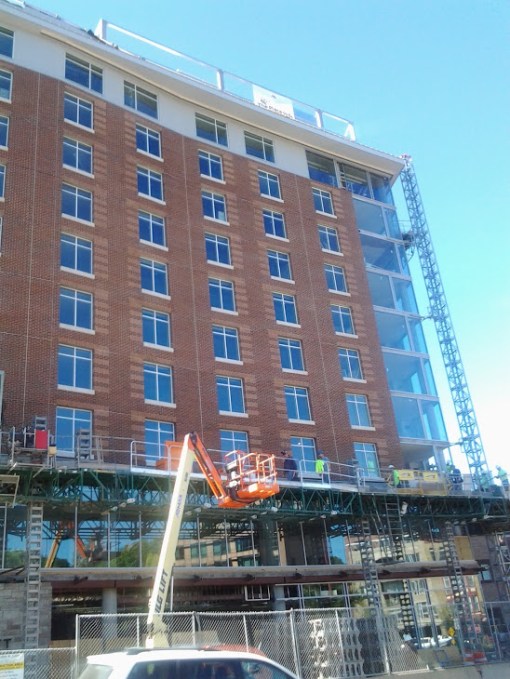
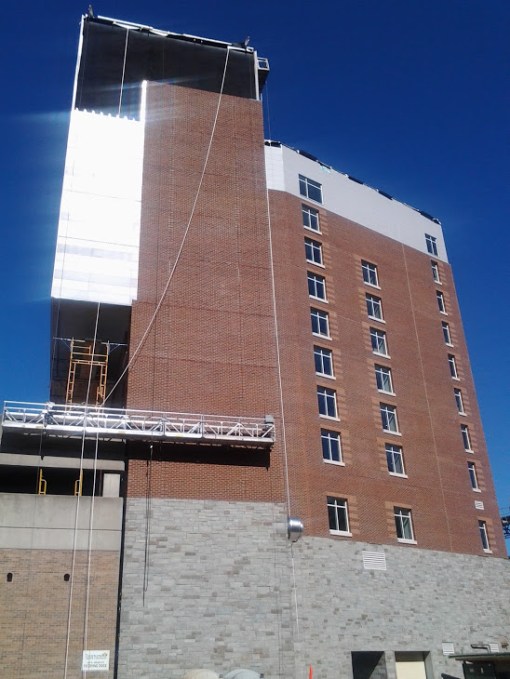
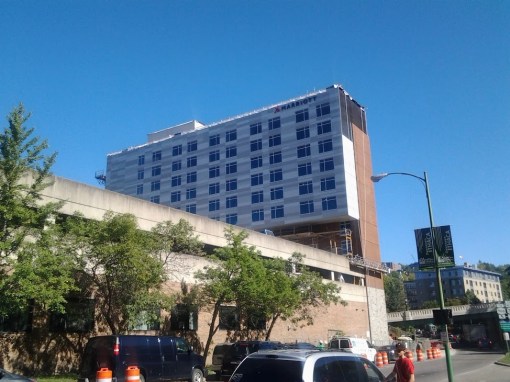
From what can be found by playing on the Ithaca Marriott Downtown on the Commons webpage, a mid-week one-night stay in a king or double queen will set you back $195 at a minimum, while the weekends start around $269/night. A run-down of some of the amenities can be found on the website, or in the August construction update. The hotel will have 151 regular guest rooms and 8 suites, which are the rooms with the floor-to-ceiling glass at the corner of State and Aurora.

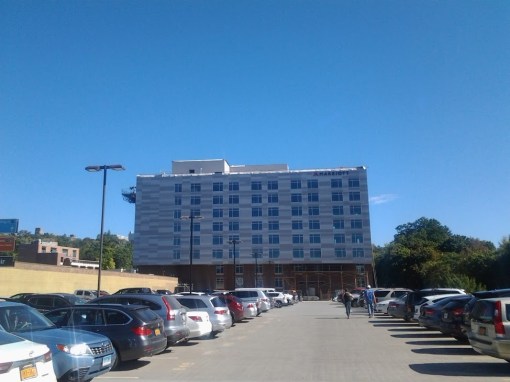
The Nichiha metal panels are almost complete, with just the west face exposed at this point. I did not expect them to be so bright, beyond the unintended gleam-o-vision of my camera. The rooftop mechanical penthouse has been framed but has yet to have its exterior panels attached. Some of the Marriott signage has been attached already. Most of the stone veneer has been attached, although the finishes for the Commons entrance are still a work in progress. Judging from the plastic sheets on the roof, the synthetic rubber membrane still has yet to be applied. Photos on the hotel’s facebook page show that the front desk is in and sheetrock has been hung and mudded in some places (the “mud” is a premixed joint compound used to cover joints and seams and to allow for a smooth finish for painting). The banner at the top of the penthouse says “The Place To Be”, with the Marriott logo at top.

20161007_123659 20161007_123741 20161007_123852 20161007_123941 20161007_124018 20161007_124049 20161007_124115 20161007_124119 20161007_124236 20161007_124312 20161007_124358 20161007_124615 20161007_124706


News Tidbits 9/24/16: The Implicit and the Explicit

24 09 2016

tiny_timbers_1

1. Over in the town of Dryden, it looks like Buzz Dolph and STREAM Collaborative’s Tiny Timbers project is up for preliminary approval. The site plan hasn’t changed much, just slight modifications for a dumpster/recycling enclosure and a bus pull-off. However, the home options have been expanded a bit. There will be five options, ranging from a 1-story 525 SF home starting at $99,500, to a 1,050 SF model priced at $184,500. Design specs (flooring, finishes, HVAC) can be found here.

Along with Tiny Timbers, Dolph is planning a similar, smaller project near his house on Quarry Road in Dryden town. That $800,000 project, called “Quarry Ridge Cooperative“, consists of two duplexes (four units), all owner-occupied. The homes will be connected to a shared driveway and carport through breezeways. Back of the envelope calculations suggest these units will be around 1,000 SF each. The 2.26 acres will be collectively owned by the four homeowners.

2. On a related note, another sister project to Tiny Timbers is being prepped for a site on the city’s portion of West Hill. Dolph et al. are looking to do a similar development to the one in Varna on a 5.45 acre parcel at the south end of the 400 Block of Campbell Avenue, which was noted in a weekly news roundup when it hit the market back for $195k in August 2015. The Journal’s Nick Reynolds touched on it in a through write-up he did earlier this week. The comprehensive plan calls this portion of West Hill low-density residential, less than 10 units per acre. Current zoning is R-1a, 10000 SF minimum lot size with mandatory off-street parking, although maybe a cluster subdivision would come into play here. The Varna property is a little over 6 units per acre. If one assumes a similar density to the Varna project, the ballpark is about 35 units, if sticking to the 10000 SF lot size, then 23 units.

On the one hand, expect some grumbling from neighbors who won’t be thrilled with development at the end of their dead-end street. On the other hand, these small houses are modestly-sized and priced, they’ll be owner-occupied, and if the Varna site is any indication, the landscaping and building design will be aesthetically pleasing.

201_college_v5_1

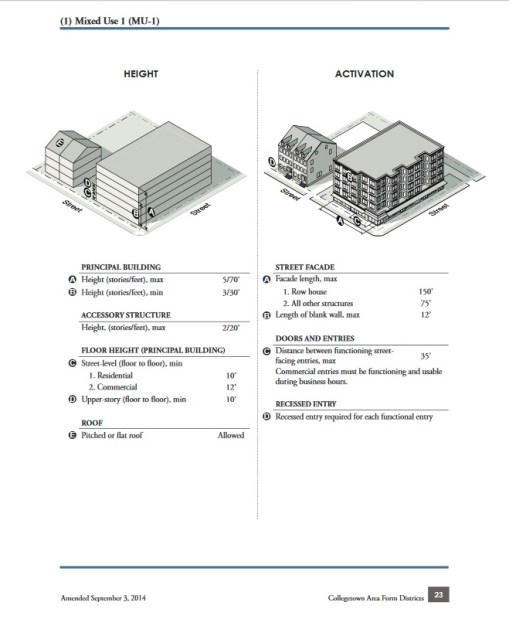
3. I dunno if I’ve ever seen such strenuous contention between the planning board and the city’s planning department. The planning board’s objected to Zoning Director Phyllis Radke’s determination that the project is legal per the Form District MU-1 Zoning.

The document put forth by John Schroeder and approved by the board rests on the following interpretations:
-in cases where the zoning isn’t explicitly stated in denser zones, it should rely on what is stated in less dense codes, and interpretations of the introductory “purpose and intent” section of the code, which qualifies similarities of form and scale if the numbers and dimensions for facade length aren’t explicitly stated.

-The argument also draws debate towards the unstated but implied interpretation of street facade, which refers to the building’s primary face, vs. building facades facing both streets. The board’s filing argues that the Bool Street facade was intended as a primary facade early on.

cafd_mu1

-Unlabeled parts of the diagram, such as MU-1’s, have no meaning. Even if they could give the impression of longer facades, it’s not the intent of the code.

The document goes on to say that Radke “invented claims unsupported by the text”, uses “tortured logic” and “silly conclusions”. Ouch.  Since interpretation is not a cut-and-dry matter of clear definitions, so we end up with an argument from both sides that relies on an interpretation of ambiguities, something more akin to a court room. A curious result of this discussion is that the Planning Board had to send out a letter to neighbors saying they would be arguing zoning determinations, which are going to be far out of most readers’ expertise, as the precise details and intent of the 2014 zoning will be the primary driver of this debate.

20160821_134831

4. The Ithacan is reporting a mid-to-late October opening for the Marriott, the Journal is reporting November. Presumably, one of them is correct. The delay from the original August opening is attributed to a labor shortage. Hiring is currently underway for the 159-room hotel and its restaurant, which according to the IJ, are expected to employ 50 to 60 in total. About 75% will be full-time, and wages are expected to run from $10/hr + tips for wait staff, to $18-$19/hour, with the hope that a premium paycheck compared to similar positions at other local hotels will translate to a premium experience for guests.

tc3_daycare

5. It looks like TC3’s Childcare facility is well on its way to reality. At least $4.5 million has been secured for the $5.5 million project and its scholarship endowment for students with children. $2.5 million for that was recently received in a set of state grant and funds, according to WHCU. Another $2 million comes from benefactor Arthur Kuckes, for whom the new facility will be named.

20160918_141051 20160918_141131

6. It’s been a while since I’ve done house of the week. So, here’s a new house underway on the 200 Block of Pearl Street in the city’s Bryant Park neighborhood. Ithaca’s Carina Construction is doing their modular magic here, the pieces have been assembled and most of the siding and roof trim has been attached. Not 100% sure if there will be a porch, the lack of siding above the door suggests it’s a possibility.

To be honest, when I was going through my list of single-families underway, I was mostly finding that Carina dominated the list. Since Avalon Homes went under, and most stick-builds are beaucoup bucks due to higher labor and materials costs, Carina’s offerings have broad appeal in Ithaca’s isolated, tight home market.

The lot was created four years ago by a subdivision of 222 Miller across the street. Since then, it exchanged hands a few times before a local realtor sold the property for $130,000 in July to a family who relocated to the area from Texas.

119_125_college_avenue

7. The Planning Board Agenda is up, and it’s the shortest in ages, thanks to that special meeting last week. Here’s the rundown:

1.  Agenda Review                                                      6:00
2.  Privilege of the Floor                                              6:01

 3.  Subdivision Review

A. Project:  Minor Subdivision                                      6:15
Location: 404 Wood St.
Actions: Declaration of Lead Agency  – PUBLIC HEARING – Determination of Environmental Significance – Recommendation to BZA

A minor subdivision to split a double-lot in Ithaca’s South Side neighborhood into two lots, one with the existing house and one that would be used for a new house or small apartment building. A variance for an existing rear year deficiency of the house would need to be approved (the rear deficiency wouldn’t be affected by the new lot which is on the east side, but it’s a legal technicality).
B. Project:  Minor Subdivision                                          6:30
Location: 1001 N. Aurora St. (Tax Parcel # 12.-6-13)
Actions: Declaration of Lead Agency – PUBLIC HEARING – Determination of Environmental Significance
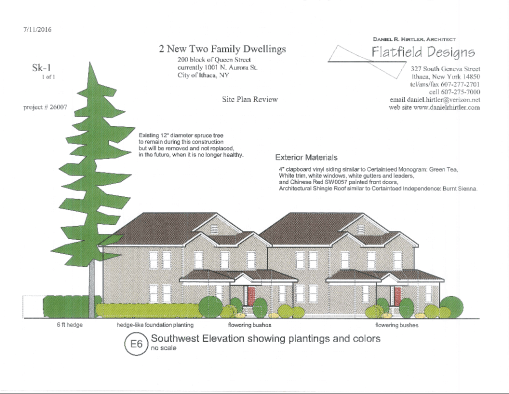
Touched on this one last week. Deconstruction of an existing single-family home for two two-family homes, each on its lot.

4. Site Plan Review

A. Project:  Two Duplexes                                              6:45
Location: 1001 N. Aurora St. (Tax Parcel # 12.-6-13)
Applicant: Dan Hirtler for Stavros Stavropoulos
Actions: Declaration of Lead Agency – PUBLIC HEARING – Determination of Environmental Significance – Consideration of Preliminary & Final Site Plan Approval

B. SKETCH PLAN:  Townhomes & Apartments at 119-121 & 125 College Ave.        7:00

I’ve spilled some electronic ink on this project before – Novarr’s $10 million project for faculty townhomes and apartments. Rumor mill says “modern-looking” and “glassy”, which given Novarr’s fondness for ikon.5 architects (his guest house is on the main page of their portfolio), that isn’t a surprise. The three parcels are CR-4 zoning, so 4 stories and 50% lot coverage allowed. Previous estimates were for 50-60 units. I’d say the biggest uncertainty in approvals comes from the existing apartment houses, which haven’t been declared historic, but former councilwoman Mary Tomlan and the Planning Board’s John Schroeder recommended for consideration in 2009 (only 15 of the 31 suggestions were considered, and only 2 received historic designation, Snaith House and Grandview House). Novarr’s been amenable to compromises before (see Collegetown Terrace), so we’ll see what happens here.

5. Zoning Appeals
• #3044, Area Variance, 170 Pearsall Pl.
• #3046, Area Variance, 404 Wood St.
• #3048, Appeal of Zoning Determination, 201 College Ave.                                 7:30


News Tidbits 9/10/16: Situations To Be Avoided

10 09 2016

Pardon the week hiatus. Sometimes, by the time there’s enough news to share, it’s already the weekend, so it just makes more sense to fun a longer feature the following week.

maguirebirdseye-620x420

1. The Maguire dealership proposal for Carpenter Business Park had a lukewarm reception at its public info session a week and a half ago. A copy of the application can be found here, and Second Ward Councilman Ducson Nguyen was kind enough to upload a 90-minute video of the meeting on his facebook page, and a transcript of the meeting can be found here. A second public info meeting will be held on the 14th.

You might recall news of the project broke last winter, followed shortly thereafter by a vote of the city Common Council to subject waterfront and waterfront-vicinity properties to a “Temporary Mandatory Planned Unit Development” (TM-PUD), meaning that any building proposal would be subject to a vote of the Common Council as a stipulation of approval (typically, projects only need the Planning Board’s consent, plus the BZA and/or ILPC if needed). One other project has gone through the TM-PUD process since then, the Cherry Artspace performing arts building. The small experimental theater held its public info meetings at the end of March and mid-April. It enjoyed fairly broad  public support, but two of the eight voting councilmen still voted against its construction at the May meeting. If a a project with widespread support has some trouble getting passage, you can already guess what will happen with the Maguire proposal.

There’s only about a year left in that TM-PUD. But for the Maguires, it was too late as soon as the TM-PUD was passed. Perhaps more concerning, this is creating one of those cases where everybody’s opinion is coming out of the woodwork – some demand it be a park, some say industrial space only, Form Ithaca advocates walkable mixed-uses, and then there was that verbal brawl on the Ithaca West list-serve about the evils of the Ithaca Community Garden. A lot of folks think their idea is the only reasonable option, so if this plays out like the old library site, there’s going to be a lot of acrimony in the long run. Hopefully when the TM-PUD expires, the city will have the new urban mixed-use zoning ready for implementation, so situations like this can be avoided in the future.

20160821_123800

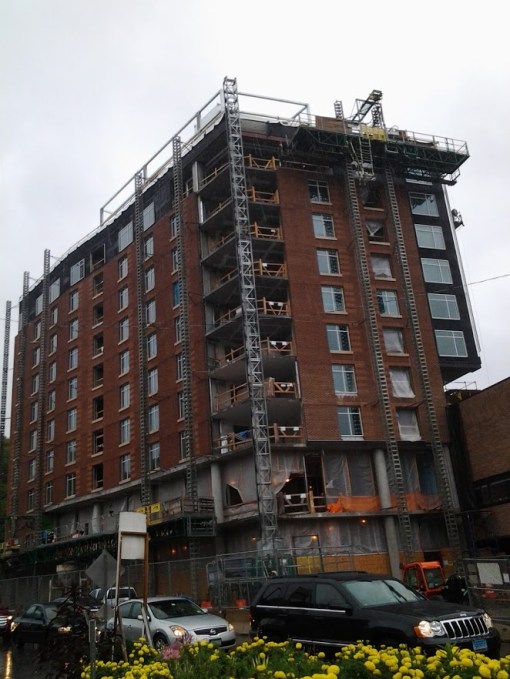
2. Can’t help but feel just a little sympathetic towards Steve Fontana – he tried to have this project open for move-in, and everything that could go wrong, was going wrong. The Journal’s Nick Reynolds reports that first it was a safety systems issue with the elevator holding up the certificate of occupancy, and then a water main burst. The latest planned opening date is September 9th, when the initial date was August 1st. Now it’s a financial issue, a public relations issue, and a mess for all involved. This could be used as an example of why Todd Fox put the 201 College site up for sale – it became clear that August 2017 opening wasn’t going to happen.

201_college_v5_1

3. On that note, I’m going touch on 201 College real quick. Given the amount of time that went into the Collegetown Form District – six years – this just looks bad all around. On the one hand, Todd Fox could benefit from more patience (granted, we don’t know what the financing situation was), and the character attack on Neil Golder in his supporting documentation turned some people off to his cause. But what John Schroeder did also deserves strong scrutiny. It’s odd to claim a zoning code issue when the MU-1 code is only three pages, and he helped write it. He was also aware that 201 College went through pre-site plan review with the city’s Planning Department, and they gave it the okay to proceed with review. This looks very suspiciously like Schroeder was explicitly looking for anything he could to help out his old colleague Neil, and that small ambiguity was the best he could do, which he was able to parlay with success.

This continues an uncomfortable pattern we’ve seen with other projects like the Old Library where one government body gives the OK, and another stops it after the consent is given. The whole point of these laborious review processes is to prevent controversy from arising. Who wants to take on the risk of proposing condos, mixed-use and affordable housing when, given that many projects require the approvals of multiple boards and committees, there’s a track record of mixed signals?

Rezoning has come up as an idea, but it’s not as simple as it sounds. Spot rezoning (single-lot rezoning) would likely be deemed illegal because the current zoning is consistent with the recently-passed Comprehensive Plan, something the courts look for in zoning lawsuits. Thinking slightly broader, Collegetown’s MU-1 is nine parcels – Fox, Josh Lower and John Novarr, all major local developers, own seven of them. If 20% of those affected by a rezoning proposal file a protest petition, a super-majority of the Common Council – 75%, 8 of 10 in practice – is required for rezoning approval. That is what stopped the first Collegetown rezoning during the Peterson administration. If it couldn’t pass then, a similar super-majority event is unlikely to pass now.

4. On the edge of Ithaca’s South Side neighborhood, the CVS Pharmacy sold for a pretty penny – or rather, $4.09 million, on the 1st. The property is assessed at $1.8 million, but sold for $3.6 million in 2006. The buyer is an LLC traceable to a suburban Boston firm with a broad retail space portfolio, so whether they plan to keep things as they are, or propose something new, is anyone’s guess.

trebloc-future2-1-620x420

5. Finally, a copy of the Site Plan Review application for Newman Development Group’s City Centre project at 301 East State Street in Downtown Ithaca. Keep in mind, this is from the June filing, so things are likely to have been updated or revised in response to the planning board. The 9 story building tops out at 96 feet. The approximate construction cost at the time of the filing was $32 million, with a proposed build-out from February 2017 to October 2019, which seems lengthy, and in another part of the document it says construction will last only 20 months. 400 construction jobs, 50 permanent jobs by tenants in the 10,600 SF of first floor retail, and building service staff. Overall square footage isn’t given, but given the retail and 7,225 SF of amenity space, 160,000 SF probably isn’t a bad first guess. For comparison, State Street Triangle was 288,000 SF, later reduced to the same height and similar dimensions as City Centre. In a sense, City Centre started off where SST required months to get to. Hopefully that bodes well for the proposal.

arpt_pk_1

6. Remember that airport business park study from a while back? There’s no strong demand for a business park. But the NYS DOT wants to move their waterfront office and storage facility to the site. So removing those salt sheds and replacing them with mixed-use waterfront property won’t happen until the state buys whatever it needs here, builds and moves in to a new facility. Not sure what they’ll do with the property on Ellis Drive in Dryden that they’ve owned for the past decade; presumably sell it as surplus, but who knows?

chain_works_rev3_3

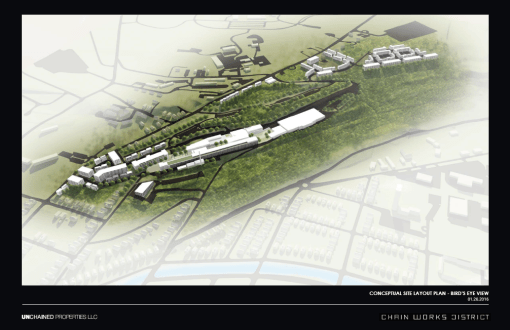
7. From the Ithaca Times: The Al-Huda Islamic Center hopes to start construction on their Graham Road mosque in 2017, and then obtain land for burials later this decade. In other news, new Times reporter Lori Sanken is reporting on the Chain Works progress, the Planning Board requesting color changes, careful consideration of heights, and debates about forest [preservation and Route 96B. Developer Dave Lubin of UnChained Properties wants to do renovations to existing buildings first, but seeing as they have yet to have the state sign off on a remediation place, they’re considering the construction of new buildings first, if NYS DEC approval for remediation gets delayed. And Catholic Charities and non-profit group Ithaca Welcomes Refugees are actively trying to procure affordable living space for 50 refugees who will be arriving in the Ithaca area after October 1st.

pinney_peruville_1
8. It’s been incubating for a while, but it looks like former Lansing town supervisor A. Scott Pinney’s plan for 15 duplexes (30 units) is moving forward. A gravel road will be extended from 4 existing duplexes at 390 Peruville Road (NYS 34B), looping through the property from Scofield to Peruville. The “Developer’s Conference” to talk about the project will be a part of the Lansing town planning board’s meeting next Monday. Also up for discussion are slight revisions to the Village Solars PDA, related to the community center and first-floor commercial space in the proposed Building F.

1001_n_aurora_1

9. From the Ithaca city Projects Memo for September, it looks like there’s a couple of subdivisions planned. One is for 404 Wood Street in the South Side neighborhood, where the owner wants to subdivide a double-lot he has for sale, allowing the vacant lot to be developed for a house or small apartment building. Quoting the application, “Instead of an empty grassy lot, there would be a building on it”. Points for simplicity.

The other is a double lot at 1001 North Aurora Street in Fall Creek. This came up a couple of weeks ago in a weekly tidbits round-up, because the new owner, Stavros Stavropoulos, received a $400,000 loan to build a duplex. Turns out it’s actually two duplexes, which require a lot subdivision, and will trigger planning board review. The application notes that even with the density increase, it’s still less than the surrounding neighborhood. The two two-family homes with have 3 bedrooms and about 1200 SF per unit, and are designed by local architect Daniel R. Hirtler to fit in with the neighborhood. Unusually, the application includes documentation of the previous owner signing off on the redevelopment plan. Construction is estimated to run from this month through May 2017.