News Tidbits 8/18/18

18 08 2018

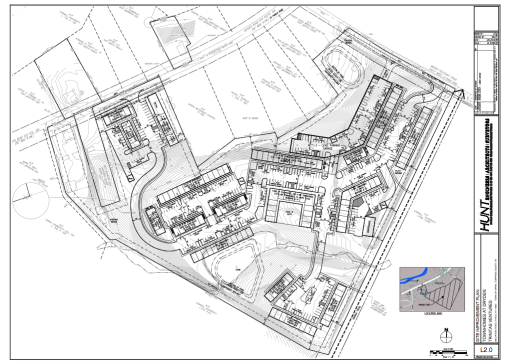
1. Here’s the latest update to “The Village at Varna” the Trinitas proposal for the hamlet of Varna. The project had originally started with 224 units and 663 beds, and this latest iteration is down to 219 units and 602 beds. The most notable changes in this new layout are the incorporation of a three-story parking garage to conserve green space, and a larger retail area fronting Dryden Road – there’s nothing in the filing, but at a glance it’s about double the previous size, so from 800 to something around 1600 SF.

With the inclusion of a garage, that frees up more green space – at 55% of the site, it’s now only 4% lower than the requirement (59%, the site is a mix of Varna Hamlet zone types). 541 parking spaces are provided, vs. the 549 required by zoning, and there are some setback variances requested for setbacks from the property line buffers (the buffers themselves are the required 20′ width).

One thing that stands out to me as a potential issue isn’t shape or scale, but unit mix. Of those 219 units, 110 are four-bedroom units. Beyond the argument that four-bedroom units are clearly student oriented (the demand simply isn’t there within the general market), I’m doubtful the demand for 110 four-bedroom units exists outside of Collegetown. Most grad students who take a shine to Varna also opt for smaller spaces, and the undergraduates who fill 4 bedroom+ units generally aren’t interested in living this far out. What modest demand there is for four-bedroom units, is identified and met – projects like 802 Dryden have already incorporated a number of four-bedroom units in their plans. I understand that from a cost per square foot perspective, it’s more efficient to do four-bedroom units (one four-bedroom doesn’t need two kitchens, living rooms and bathrooms like two two-bedroom units would). But it would likely be tougher sell than Trinitas realizes, especially with Cornell planning to expand their campus offerings in the next few years.

To be frank, I’m firmly in the camp that Trinitas could do something good here, but I’m not sure this is it.
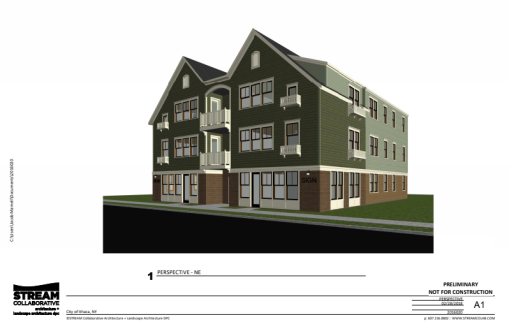
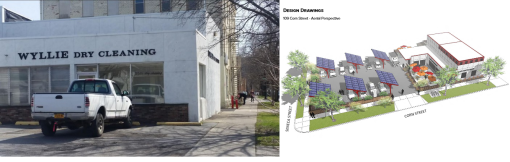
2. Let’s just throw another piece of bad news out there – even with the project redesign, PPM Homes cannot make the Ithaca Glass redevelopment work financially. That’s unfortunate not just because of the ten units of infill housing that may not be built, but it and the Wyllie Dry Cleaner redevelopment had received a $500,000 RESTORE NY grant. While that money is untouched, it doesn’t look good to the state that a project that the city vetted and advocated over competing projects has stalled out. To be fair, apparently not even Ed Cope knew of the structural issues at the time of application. The later revision for the Ithaca Glass site removed Wyllie’s from the grant award, and the status of that project isn’t clear. The IURA notes that Cope has talked with INHS about possibly selling them the site so they could go through with the original smaller and modern-looking overbuild, but the issue was that the overbuild wasn’t structurally feasible without a huge investment, and INHS has a lot of coals in the fire at the moment (offhand there’s the Salvation Army site, 209-213 Elm Street, 402 South Cayuga, the Green Street Garage, and Hamilton Square). It’s not looking good at the moment.
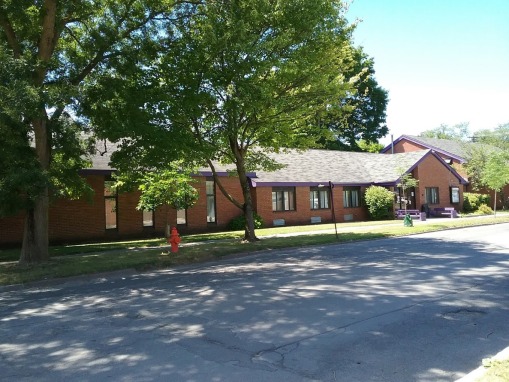
3. Speaking of which, quick update on the Salvation Army rebuild and expansion – it’s still in the works between them and INHS, but going slower than first anticipated. The project probably won’t be applying for construction funding this fall, but instead it’s expected to be reviewed by the city, approved and seeking affordable housing funds sometime next year.
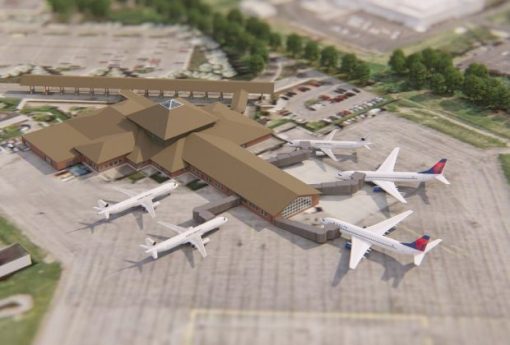
 

4. At least the airport expansion project seems to be moving along. According to airport staff, the state has a heavy hand in it, and there have been weekly meetings to source fund to fill the $8 million gap needed to bring the $22 million project forward. Bids have already opened on phase one, the construction of the new main terminal, and the bidding period will close by the end of the month. Phase two, the geothermal power and new concourse, will be bid in early 2019, as will the third phase, the new solar array and U.S. customs facility.
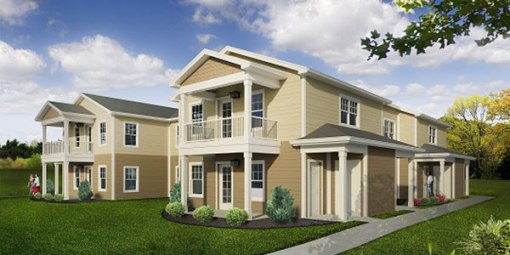
5. Some good news on the affordable housing front, the county is set to disburse joint Cornell-Ithaca-Tompkins Community Housing Development funds funds to help Cornerstone Group’s Milton Meadows proposal move forward in Lansing, eventually totaling $256,875 towards the 72-unit apartment project. Milton Meadows would serve 14 households at up to 50% AMI (area median income, 100% = $59,000/year for a single person), 42 at 60% AMI, and 16 at 80% AMI.

In the next round of funding to be awarded this fall, it looks like the county will award two grants – one to INHS, $140,000 from the CHDF to help pay for two of the four for-sale townhouses at 402 South Cayuga Street (the 80% AMI ones, as the two 100% AMI middle-income units aren’t eligible), and $300,000 to Visum for the twelve units of affordable housing planned at 327 West Seneca Street. The Visum project is conditional since the administrative committee for the funds is awaiting additional details, and the project needs to be approved by the city. Perhaps PPM Homes should reach out for a discussion about whether an application could make its West Seneca project (item #2) work.
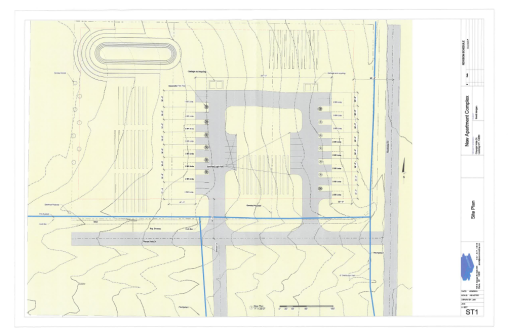
6. Developer Scott Morgan’s 16-unit Cayuga Vista Townhomes aren’t in formal review yet, but the land has exchanged hands – $139,500 on the 15th, every penny the sellers wanted. This makes it considerably more likely that the rental project (2 one-bedroom, 12 two-bedroom, 2 three-bedroom) will be coming forward to the town of Lansing planning board over the next few months.
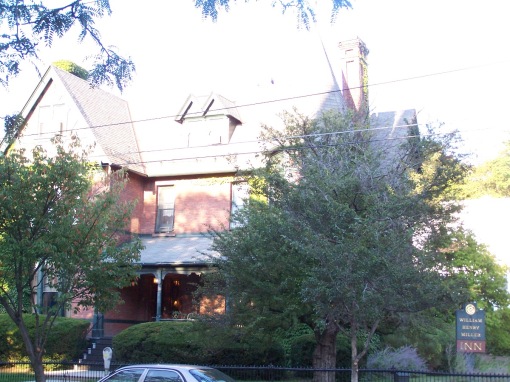
7. For those who dream of owning a B&B, the William Henry Miller Inn is for sale. The building dates from 1878 and served as the private residence of the Osborn family from 1914 to 1996. In 1998, innkeeper Lynette Scofield purchased the property and renovated it into the Inn, which opened the following year. The Inn has enjoyed rave reviews on travel advising websites.

For $1.499 million, you too can be an innkeeper – the sale includes all furnishings, future bookings and  “infinite good will”. It definitely reads as if a very strong preference will be given to those who maintain the inn and its high standards vs. other uses. The inn has nine beds and eleven bathrooms, with an accessory owner’s cottage with one bed and bath. It’s something to fill out your daydreams this weekend.


News Tidbits 8/11/18

11 08 2018

News Tidbits 8/11/18

1. It looks like the Mettler-Toledo facility has a buyer. Ongweoweh Corporation bought the 27,000 SF property at 5 Barr Road in Dryden for $3.24 million on August 3rd. Readers may remember that Mettler-Toledo decided to consolidate the Hi-Speed Dryden plant with a new facility in the Tampa Bay metro, taking 185 jobs with it. Founded in 1978 in Spencer, Ongweoweh Corporation is a Native American-owned pallet management company providing pallet & packaging procurement and design services, recycling services and supply chain optimization programs. The firm had only recently bought its existing 17,577 SF headquarters at 767 Warren Road in Lansing, for $2 million in September 2016 – as Ongweoweh moves to the larger space, it’s putting 767 Warren up for sale for $2.3 million. It’s not clear if this physical expansion will add jobs, and a request for comment was not returned. The company employs a little over 100 people according to a third-party profile, and 58 are based in the Ithaca area.

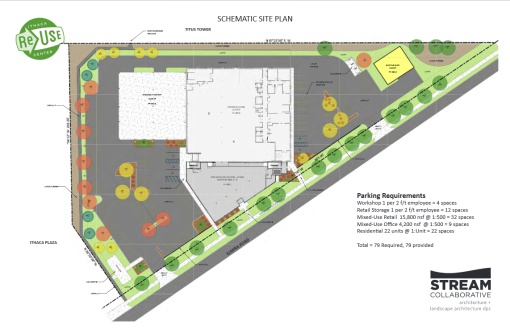
2. Let’s talk about another business expansion – Emmy’s Organics. The organic cookie producer’s new warehouse and HQ came one step closer to reality this week when the city’s Planning Committee gave its approval to let the full Common Council vote on the sale of 2.601 acres of IURA land to Emmy’s for $242,000. The land is towards the south end of Cherry Street, it’ll be the terminus of the extended Cherry Street, which will be lengthened 400 feet and create two new one-acre lots to sell to business that contribute to the IURA’s goals of job creation for LMI individuals. Examples include drilling tech firm Vector Magnetics, lab electronics manufacturer Precision Filters and the Crossfit Pallas gym. A fourth lot on the west side of the newly extended road would be deeded to the city as a natural buffer between development and the waterfront/Black Diamond Trail.

The initial phase of the $1.25 million development includes 4,000 SF of office/breakroom/entrance area, a 4,500 SF production area, and a 5,500 SF warehouse (14,000 SF total). If growth continues as it has, the plan is to implement a second phase in 2-3 years for a 20,000 SF expansion. The new facility will create at least five new jobs (total staff 24), and the potential expansion would likely add at least another twenty given that phase two called for the parking lot to grow from 22 to 41 spaces.

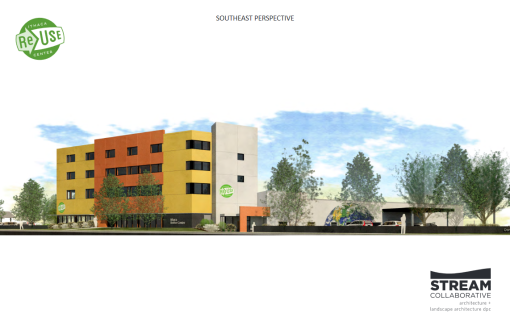
The rendering of the new HQ above, which is a STREAM Collaborative design, shows both phases. The section in the foreground is phase one, the shed roof structure at back is phase two. The section of parking lot towards the left is a phase two addition as well. No zoning variances are required. Whitham Planning and Design is leading the project through the city review process.

3. Let’s linger on Whitham for a moment. From their website is likely one of the runner-up proposals for the North Campus Residential Expansion over at Cornell. They were partnered with Ann Beha Architects and Baltimore-based Design Collective for a competing design that was ultimately not selected. Cornell interviewed four development teams before going with their final choice, Integreated Acquisition and Development, a firm associated with John Novarr and Phil Proujansky who did the Breazzano in Collegetown. Although owned and operated by Cornell, there is a developer’s fee IAD will earn for developing the NRCE project on behalf of Cornell. That fee varies per project and is usually confidential, but 3-6% is common in commercial builds, and by that yardstick, for a $175 million project IAD stands to make several million dollars.

With nothing more than a site plan, I’d be willing to guess that given the team members, the plan would have been a contemporary design, though perhaps more conservative than ikon.5 – Ann Beha designed the elegant if subdued first phase of the Cornell Law School addition.

4. The Hotel Ithaca is moving forward with the next phase of plans for its South Cayuga Street property. The next project is to tear down the vacated south wing, a 2-story structure built in the 1970s, and replace it with a surface parking lot. At a glance, this is not at all a welcome proposal for a downtown street corner. However, it comes with some promise of a hotel addition down the line. A development pad will be created for a “future market-driven addition”, meaning that if business grows and they decide to expand the hotel, they’ll have a level, stable, shovel-ready site. Until then, it’s seventeen fewer parking spaces the hotel will need in the Cayuga Street parking garage. The $550,000 project would be carried out from August to November, and NH Architecture is handling the landscaping, refinishing of the tower wall and overall application on behalf of owner Hart Hotels.

5. Visum’s not wasting any time on its affordable housing proposal for 327 West Seneca Street. The three-story, 12-unit building is planned for an October start and an April 2019 finish, and will be going before the planning board this month Declaration of Lead Agency and review of Parts 2 and 3 of the Environmental Assessment Form.

The project is an interesting little case study of how maximum height isn’t necessarily optimal. The zoning allows four floors; they want to serve 70-80% area median income, which requires 18 bedrooms for economic feasibility at this site. But to have four floors, the materials need to be fire-rated, and the units would need either emergency exit stairs, or an elevator. Since it’s a small building lot, an elevator would eat into the square footage of units, about a bedroom per floor, so there’s no net gain in rentable space with a fourth floor, but there would be an increased project cost. One could save costs by putting in the stairs vs. the elevator, but the fourth floor units would be harder to fill because they would pose greater access difficulties – ask around and see how many people want to walk up four flights everyday. This is actually one of the major reasons why the Village Solars in Lansing are also three floors, the expense of elevators would have driven their budget higher than the mid-market segment Lifestyle Properties wanted to serve.

Net-zero energy use is being explored (electric heat pumps powered by off-site renewables), and yard and setback variances are being sought after the city seemed receptive to a variant sketch plan with a few more square feet in the units for the sake of livability. STREAM penned a traditional design fitting with the block, and the revisions added a few more windows into the sides of the structure.

Also in the projects memo for this month are final approval for Benderson’s 3,200 SF addition at 744 South Meadow Street and the Declaration of Lead Agency for Cornell’s new north campus dorms. The Benderson project’s landscaping plan was modified slightly, and a new rear exit door and front awning are being considered.

6. Out in the towns there’s not much going on next week. A special meeting of the Town of Ithaca’s Planning Board will decide whether or not to defer to the city as lead agency in the environmental review of Cornell’s north campus expansion. The town of Lansing will be holding public hearings for a one-lot subdivision and a four-lot subdivision for single-family homes.

7. The Lansing Village Cottages plan has its work cut out for it. The design has been tweaked such that the first two home clusters were combined, and the road connecting to Craft Road was realigned. The Millcroft Way connection will have a vegetative buffer and the road would be for emergency vehicle only. However, Millcroft Way residents are still seething – they have $500,000-$700,000, 2,500 SF+ homes locked under a covenant, while the same person who sold their lots is now selling to a developer planning 800-1200 SF cottages. Concerns include traffic, home values, density, and too many senior housing developments, which is a bit of an odd one. Logan’s Run isn’t just a street in Dryden.

The village is pretty hesitant to support this – the Board of Trustees sent the proposal back over to the Planning Board, hoping that they could make some recommendation as to whether it meets the goals of the village. On the one hand, that would seem an easy yes at a glance, it’s senior housing close to urban areas in an affordable price range. However, after shelling out close to $50,000 for lawyers to fight Lisa Bonniwell over her lawsuit to stop the East Pointe Apartments, money that won’t be paid back (perhaps indirectly in property taxes in a few years), the village is afraid of another Article 78 lawsuit, and the residents of Millcroft are very deep-pocketed and willing to go to court. This is vaguely reminiscent of a study that shows wealthier areas are much more adept at stopping density and new housing in general because they have more leverage – one of those being that a fear of costly litigation is a strong municipal deterrent.

8. We’ll end on a positive note – after eight years of back and forth, it appears site prep has begun on the 20 senior housing units planned as part of the Lansing Meadows project. Since developer Eric Goetzmann had until July 31st or else face significant legal action (Goetzmann applied for and received a tax abatement for the BJ’s that was contingent on the housing, and it was at risk of being clawed back), I had dropped by August 3rd. After looking around, it did not seem to be under construction; a bit of upturned dirt and a bulldozer on site. The village decided it was, if barely, according to the Lansing Star:

Yes, he scratched the earth. Yes, he does have the soil fencing in,” {Village Code Enforcement Officer Adam} Robbs said. “He has hired a dedicated contractor at this time to do the site work. He has a culvert permit and approval to install a temporary culvert for construction use. I do have a preliminary set of plans. I am hesitant to say he has begun a significant amount of work… but he has begun work.”

>We’ll see if it merits an update in October.


Amici House Construction Update, 8/2018

10 08 2018

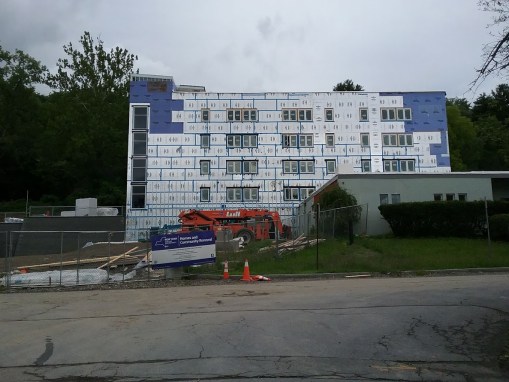
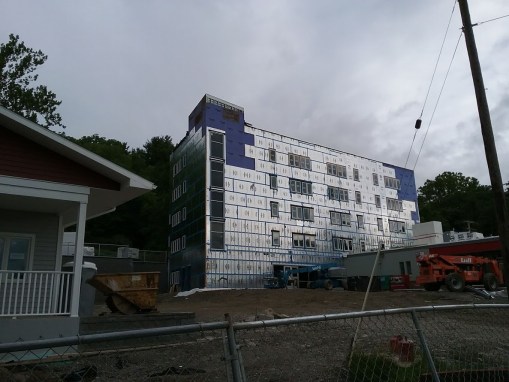
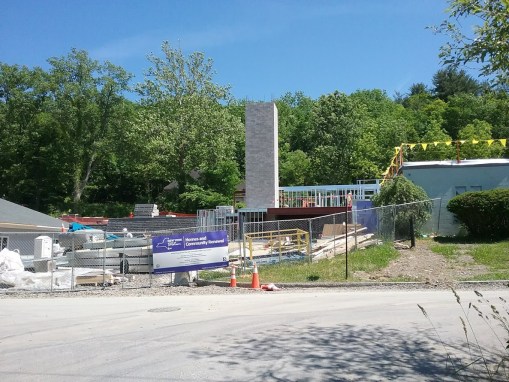
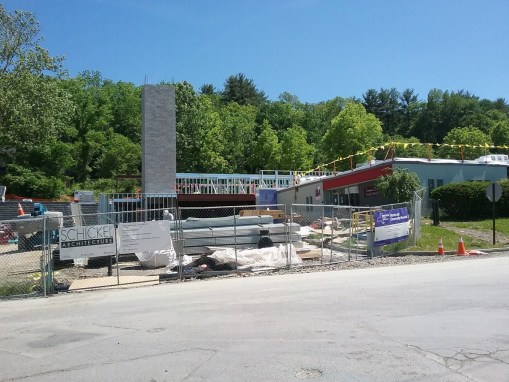
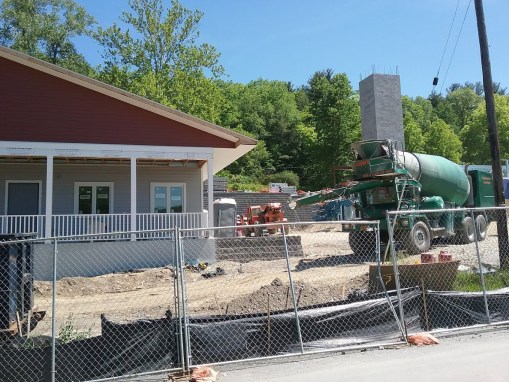
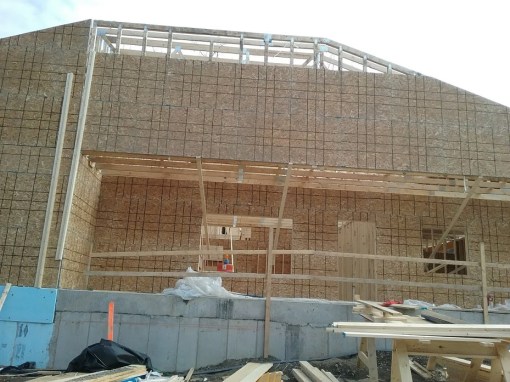
One of the things that stands out about the new Amici House project – or rather, doesn’t – is that the five-story residential building under construction doesn’t really stand out for a structure of its size. The hillside to the east keeps it from being prominent, and the section of Spencer Road on which its sits is tucked away from most neighboring structures – the building is hardly noticeable from South Meadow Street.

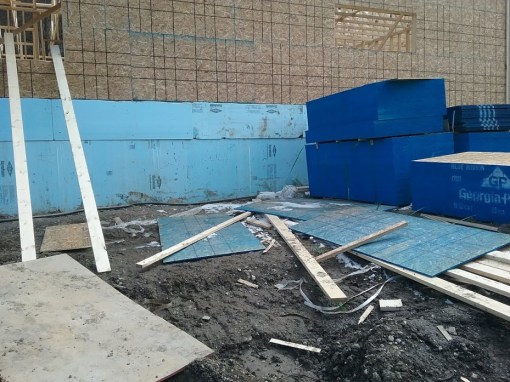
The structure is fully framed, nearly fully sheathed with fire-resistant National Gypsum eXP panels, and then layers with Dow Thermax panels, which stand out somewhat because of the reflective aluminum facer. The Thermax panels are glass-fiber reinforced polyiso insulation, a lighter duty but fire-resistant material, and bonus, it’s made at facilities powered by 100% renewable energy and has “zero ozone depleting potential”. The blue material is a liquid sealant to fill the spaces between panel edges (Dow LIQUIDARMOR), and it looks like metal rails are being attached at the ground level, where the exterior finish will be attached. I’ve kinda assumed this will be fiber cement panels, but to be honest I have not seen a materials sheet in the city’s online files.

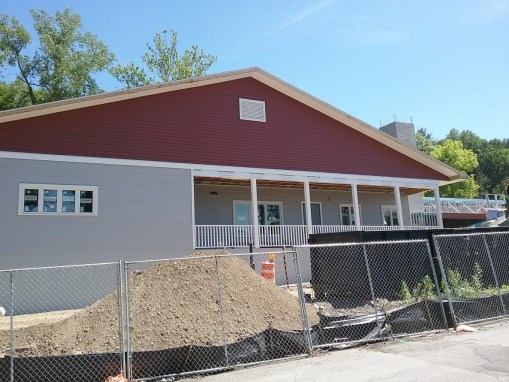
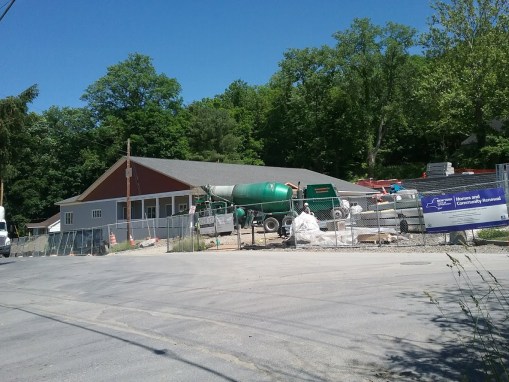
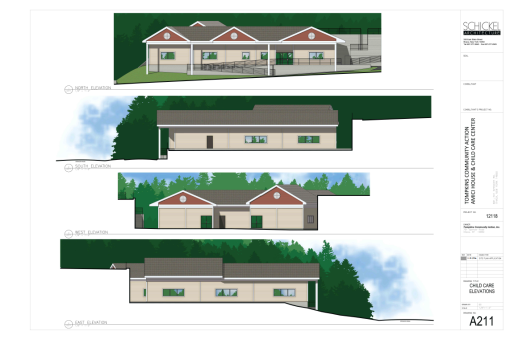
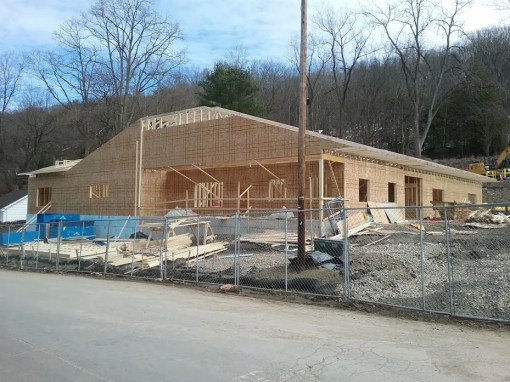
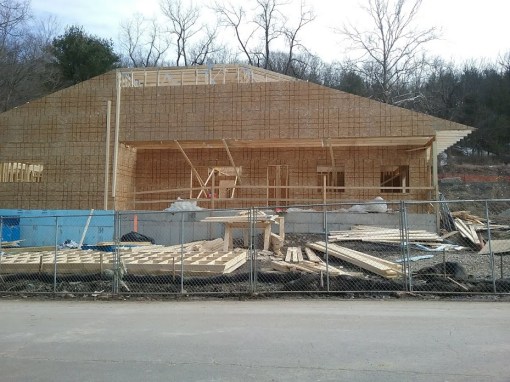
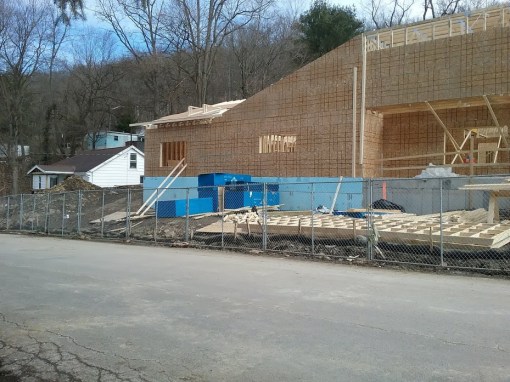
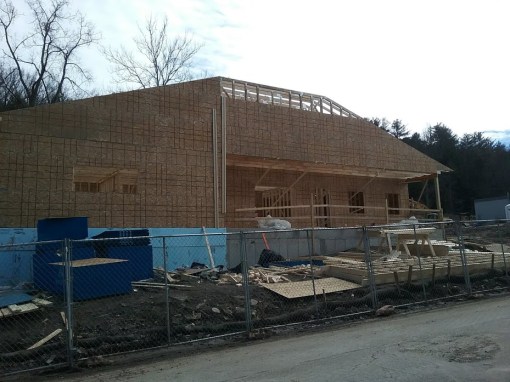
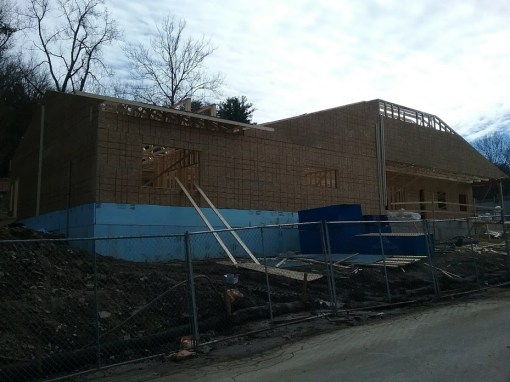
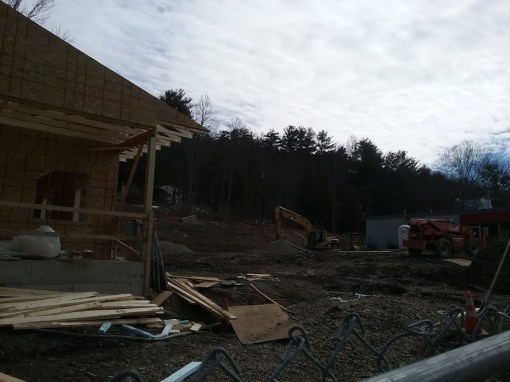
The same could be said for the new Harriet Giannelis Childcare Center, which looks nothing like the plans on file and presumably is filed somewhere, just not online. To be fair, it doesn’t look bad at all. Perhaps a bit plain, which isn’t a surprise given TCAction’s tight budget, but Schickel Architecture did attempt to dress it up by varying the colors and playing with the architectural details. Given the goals of the project, as long as its appearance doesn’t actively repel visitors and scare the kids, then it’s A-OK. Landscaping, colorful children’s projects and plantings will make it even better.

Note that one of the primary parking areas will be behind the new stone retaining wall at the rear of the property. Another will be along the section of Spencer Road across from the TCAction offices.

More info about the project can be found here.


News Tidbits 7/21/18

21 07 2018

1.. I rarely check in on Groton, but here’s an interesting little rehabilitation. Back in August 2017, I noted that a historic village church at 113 Church Street was for sale. The buyers last February were David and Delsy DeMatteo, who own and rent out a number of Groton-area properties. The DeMatteos appear to have submitted and received approval for a plan to renovate the structure into a 12-unit apartment building, replacing the religious-turned-commercial space with ten apartment units (two units already exist). From the look of it, the ten new units would consist of eight one-bedroom and two two-bedroom units. The plan was approved in late fall when the DeMatteo likely had a purchase option on the property, and the sale closed on February 8th. Always nice to see new life breathed into a place that played a role in the lives of many.

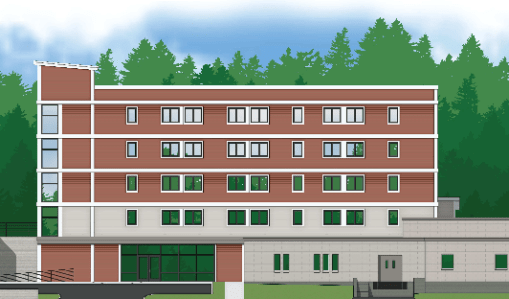
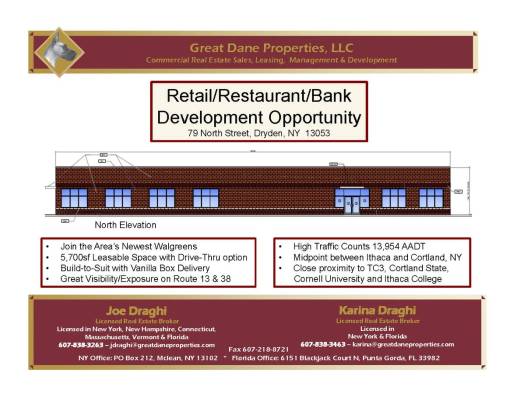
2. Over in Dryden village, the second phase of the new Rite Aid-turned-Walgreens development site is being marketed. Great Dane Properties is touting 5,700 SF of space for lease, with a drive-thru option should one desire it. The spec site plan can be seen here – the render above is likely the north elevation. Early conversations stated a 3,800 SF restaurant space (typical for a fast food /chain coffee shop), 1,900 SF of other retail space, and 33 parking spaces, but the plan is vanilla box, meaning minimally finished interior – it’s a shell with the exterior complete and all the utilities are good to go, but the build-out of fixtures, finishes and partitions is up to the tenant. A second commercial real estate posting suggests a 2019 build-out, though it’s more likely based on the ability to secure a primary tenant.  That listing also floats a hotel as another possible use of the location.

The first post came from Craigslist, which as a matter of personal opinion, that seems a bit unbecoming for high-value commercial listings, and may not effectively reach the target market of business owners and RE corporate development teams. You’re trying to fill 5,700 SF of new retail space, not sell Grandma’s old couch.

3. Also in Dryden, plans for a new veterinary office building at 1650 Hanshaw Road. Existing site plan here, proposed site plan here, elevations here. It’s not a particularly large project – a one-story metal building 4,800 SF in size, with revised landscaping 14 new parking spaces. The new building would go in front of the existing building on the property, so not much in the way of site prep required. The plans are being drawn up and led through review by local architect George Breuhaus.

4. It looks like the gut renovation and expansion of 1020 Craft Road is complete. The $1.88 million project involved taking the existing 10,500 SF car dealership-turned-industrial building, tearing out everything except the support beams, and fully rebuilding the interior along with constructing an additional 4,400 SF of space. Three commercial office spaces were completed, and it appears Cayuga Medical has leased two of the spaces for medical offices. The project was developed and built by Marchuska Brothers Construction of Binghamton.


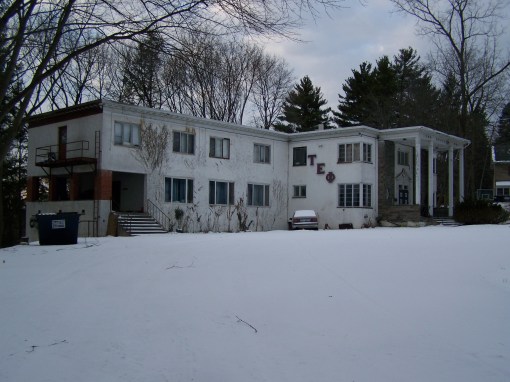
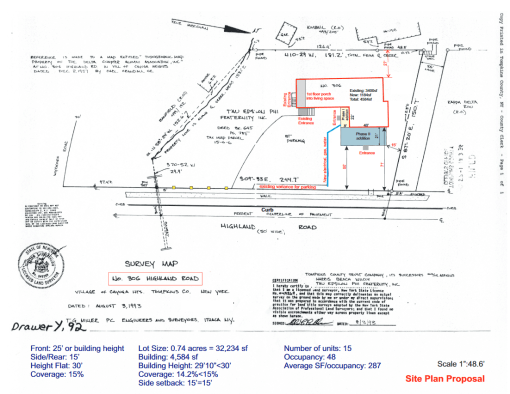
5. Speaking of renovations, it looks like someone is interested in the former Tau Epsilon Phi house at 306 Highland Road in Cayuga Heights. The plans show 15 “units” and potentially up to 48 beds, which sounds like a group living situation, but the plans do not identify the developer. The first phase would involve exterior and interior renovations for 36 beds in the 3,400 SF building, enclosing the side porch and constructing a small addition on the southeast face to create a new entrance. A second phase is shown in the documents that would seek a 1134 SF, 12-bed addition at what is currently the front entrance of the early 1960s building, the east facade. It was previously noted that 306 Highland was for sale for $1.385 million, which was steadily reduced to $1.025 million before being taken off the market at the start of June. The village will begin site plan review of the project at its Planning Board meeting on July 23rd.

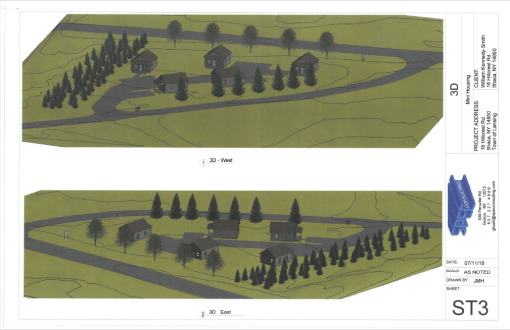
6. On to Lansing. Here’s a little more about the Hillcrest Tiny House project -memo here, application here, drawings by architectural firm SPEC Consulting here,  . The five homes would be built on 16 Hillcrest Road, a parcel split by Hillcrest Road where it intersects with Warren Drive – the developer is the home owner who lives on the other half of the parcel, south of the intersection. The triangular northern piece would host the rather traditional-looking cottages, which would be one-bedroom units, about 450 SF each, and have two parking spaces apiece. The land is zoned industrial/research, which allows commercial and industrial uses – the owners argue that its location on the west side of Warren Road near other residential development along Hillcrest means that a commercial or industrial use would be out of character.

One could make an argument that this is desirable in that their small size would help address the  middle-market for housing demand, which has been lacking in new options, resulting in existing options being pressured upward in price. The project would cost about $200,000 to build and the owner/developer estimates two months to build each cottage, though it’s not clear if construction of each cottage would be concurrent, or one at a time.

Quick side note, Milton Meadows has submitted a construction plan for the new access road in tandem with the town’s realignment of the Woodsedge Drive/Route 34 intersection. Taylor the Builder, the general contractor for the project, is planning for November 2018 – September 2019 for the 72-unit affordable apartment complex.

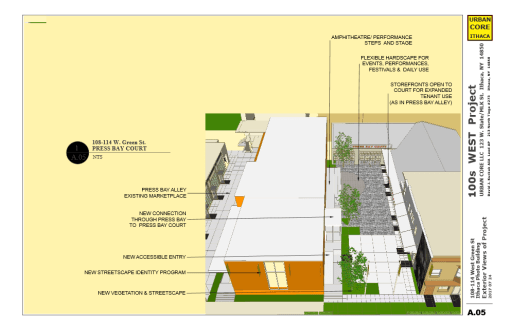
7. Urban Core LLC has started exterior demolition and reconstruction work for the Press Bay Court project. I’ve been waiting to officially move this into the construction column for a while, could never quite be sure when walking past – the full rundown and description of the project can be found in the October introduction here. To quote part of it:

“What Urban Core’s latest plans would do is expand that “experiential” micro-retail mix eastward towards the corner of Green and Cayuga Streets, the Commons and the downtown core. The parking lot in front of D. P. Dough would be converted into a plaza much like Press Bay Alley’s, and the first floor of 108-110 West Green would be renovated into 5-8 micro-retail units facing the new plaza (the Green Street entrances would be retained), with 320-2200 SF per unit. The second floor would be renovated into four below-market rate one-bedroom apartments with 510-660 SF of living space, and the exterior masonry would be cleaned and repaired. The hawk mural will be preserved. New signage, bike infrastructure, curbing, sidewalks and a parklet are included in the plans. The total square footage in phase two is about 9,000 SF.”

8. 105 Dearborn has received a construction loan to move forward. The 10,930 SF, 12-bedroom, 16-person high-end skilled care facility will cost $4.2 million to build according to the loan filed this Friday the 20th, and over the next year it’ll slowly take form on what is now a vacant corner in leafy Cornell Heights. Bridges Cornell Heights will run the facility, and add a handful of news jobs as a result of the new addition. Tompkins Trust Company is the lender, and the historically-inspired design was penned by Rochester-based Bero Architecture.

7. Looks like a fairly interesting monthly meeting ahead for the Ithaca City Planning Board. Here’s the agenda:

1. Agenda Review 6:00
2. Privilege of the Floor 6:01

3. Subdivision Review

A. Project: Minor Subdivision 6:15
Location: 508-512 Edgewood Place
Actions: Determination of Environmental Significance – Consideration of Preliminary and Final Approval

This subdivision at the end of a private street in the East Hill neighborhood would re-subdivide a double lot that had been consolidated after the original house burnt down in the late 1930s. Any news structure on the newly created .326 acre lot would be subject to Ithaca Landmarks Preservation Commission design review. No specific plans are on file.

4. Site Plan Review

A. Project: Stewart Park Inclusive Playground 6:30
Location: Stewart Park
Applicant: Rick Manning for the City of Ithaca
Actions: Consideration of Project Changes

Project Description: The project was approved by the Planning Board on March 27, 2018. The applicant is now requesting project changes, including relocation and redesign of the bathrooms and parking area, and layout and programming changes to the overall playground.
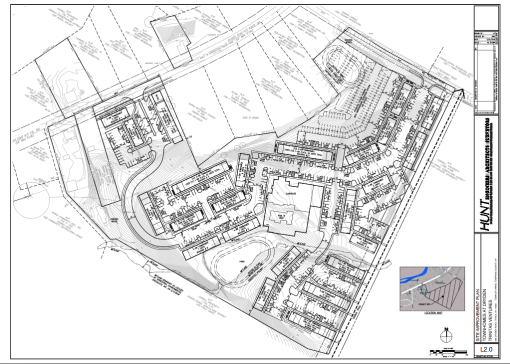
The bathroom building was to be combined with a pavilion, but that proved to be expensive and the playground architects had bad experiences with the original structural supplier, so local architecture firm STREAM Collaborative stepped in to design a separate 24′ x 24′ bathroom building with utility rooms and storage space. The pre-school playground and sand garden were moved, the splash pad tweaked, some swings were added and the adult wellness area was deleted for this initial buildout.

B. Project: Minor Subdivision & Construction of a Duplex 6:45
Location: 209 Hudson Street
Applicant: Jagat Sharma, architect, for Bia Stavropoulos, owner
Actions: Determination of Environmental Significance

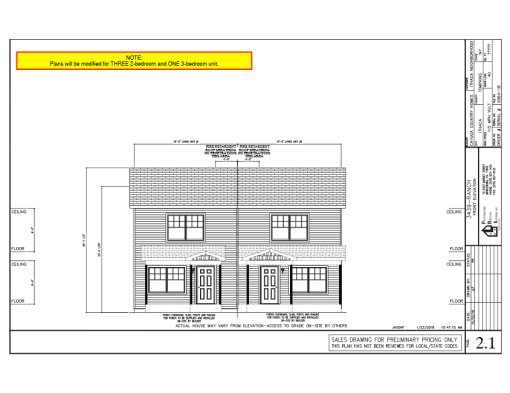
Touched on this one a couple of weeks ago – the project was revised from two duplexes to just one, with three bedrooms per unit. Even development-averse councilwoman Cynthia Brock offered support for the plan (with minor aesthetic tweaks), which is about as good as one can hope for a green light to proceed. Note no approvals are planned because this has to go to the Board of Zoning Appeals for a lot size variance.
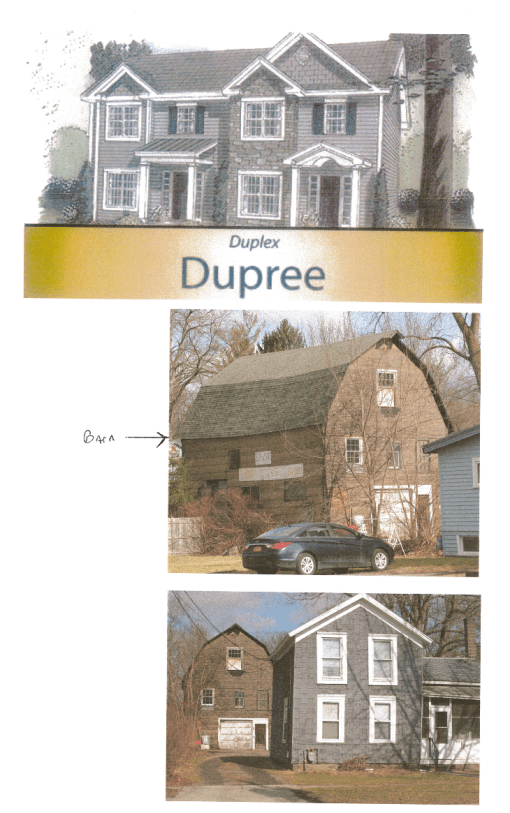
C. Project: Major Subdivision (3 Lots), Two Duplexes, One Single Family Home & Site Improvements 7:00
Location: 128 West Falls Street
Applicant: Ron Ronsvalle
Actions: Consideration of Preliminary and Final Subdivision Approval and Site Plan Approval

BZA gave Ronsvalle’s five-unit rental project in Fall Creek the all-clear. This project came up earlier this month in a previous news roundup – a five-unit infill project in Fall Creek, originally approved in February 2015, and revived now that the developer has found a way to continue working after a debilitating accident. Don’t foresee any issues here.

D. Project: North Campus Residential Initiative (NCRI)
Location: Cornell University Campus
Applicant: Trowbridge Wolf Michaels Landscape Architecture on behalf of Cornell
Actions: Intent to Declare Lead Agency

This will be huge – 766,000 SF of space for 2,000 student dormitory beds and associated program space, including a 1,200 seat dining hall. I’ll have more coverage next week. John Novarr favorite ikon.5 is the project architect.

E. Hudson Street Townhomes – 117-119 Coddington Road –Sketch Plan 7:50

One of this week’s new shinies. This project appears to be slated for a parking between two apartment complexes and across the street from the Elks Lodge just north of Ithaca College’s campus. Depending on how they reconfigure the existing parking lot, they could do a high single-digit or low double-digit number of townhomes. Zoning here is R-3b. Up to four floors/40 feet, 40% lot coverage, one parking space per unit of per three bedrooms (two spaces for 4-5 bed units). Lot coverage may end up being based on a subdivision, since this falls into the South Hill Zoning Overlay and no additional primary structures are allowed on a lot. The property has been owned by the Dennis family since 1979, but the developer may be someone else with a purchase deal on the subdivided lot.

F. Falls Park Project – 121-125 Lake Street – Sketch Plan 8:05

This would be whatever Travis Hyde Properties is planning for the former Ithaca Gun site on Gun Hill. I have been told this is “substantially different” from the earlier Ithaca Falls Residences plan. Assume residential. This was rezoned R-3a not long back, up to four floors/40 feet, 35% lot coverage, one parking space per unit of per three bedrooms (two spaces for 4-5 bed units). I would expect a fair number of units for a 1.42 acre property; the IFR plan was 45 units.

5. Zoning Appeals 8:10
#3102, 209 Hudson St., Area Variance
#3103, 216 University Ave., Area Variance
#3104, 737 Willow Ave., Area Variance


News Tidbits 7/14/2018

14 07 2018

1. We’ll start of in Dryden with some revisions to the Trinitas project. This project has slowly but steadily been winnowed down in size. The original proposal in late May was 224 units and 663 beds. The June revisions dropped that figure to 22 units and 649 beds. Now with the latest set of revisions, the unit and bed count has fallen to 220 units and 610 beds. In other words, capacity has dropped by about 8% so far. A copy of the presentation Trinitas gave to the town board last month can be found in their minutes on the town website here.

From a site plan perspective, you can see a number of substantial changes – some townhouse buildings were lengthened in the southern corner, other strings shortened or broken up, the clubhouse/community building is now a mixed-use structure, and a couple of townhouse strings were deleted outright. About the only portion that was unchanged was the trio of structures closest to Dryden Road.

The early working name for this project was “Fall Creek Village”, which while referencing Fall Creek just to its north, may not have been a wise choice given the neighborhood of Fall Creek in Ithaca, which has been the epicenter for Ithaca’s gentrification. It was suggested they change the name, ideally to something with “Varna” in it. There’s about a hundred other pros, cons and general thoughts shared during the meeting, which can be read here. The project team would like to have approvals by the end of the fall, for a Spring 2019 – August 2020 construction period. As all the paperwork is filed, reviewed and discussed, expect more revisions to the project before any final approval is considered and granted.

2. Tompkins Financial may have relocated all its operations to its new headquarters, but that doesn’t mean its the end of the road for its old properties. 1051 Craft Road, formerly home to the Tompkins Insurance Agency, was sold to Ithaca Dermatology Associates of Ithaca on June 5th for $1.2 million. The 7,541 SF building was built in 1995 and assessed at $990,000, so Tompkins Trust did okay with the sale price – they purchased the building for $965,000 in 2007.

The new chapter is, as you might’ve already guessed, medical office and service space. With the assistance of a $1.5 million construction loan from Tompkins Trust, the Ithaca Dermatology is renovating the building for its new clinic. The hard cost of the renovations (materials/labor) is $1.025 million, and the spruced up facilities are expected to be open by January. Local architecture firm Chiang O’Brien, who have a specialty in medical facilities (they did Cornell Health’s new building and Planned Parenthood’s new regional HQ) is designing the renovated space, and Hammond Heating and Plumbing is the contractor.

3. If you’re looking for something interesting in local planning board agenda, there isn’t much to see at the moment. The town of Ithaca’s PB will be looking at a vacant lot subdivision between 721 and 817 Elmira Road (no future plans stated), and a lot subdivision on Enfield Falls Road to create three home lots and a large wooded parcel to be conveyed to the state as a conserved natural area. Over in Lansing, they’ll be looking at a plan for five micro-sized rental cottages at 16 Hillcrest Road.

4. The near-waterfront office building at 798 Cascadilla Street has been sold. 798 Cascadilla LLC made a deal with the too-similarly named Cascadilla 798 LLC for $2.55 million on Thursday the 12th.  As reported when then building went on sale, the 18,271 SF office building is home to Palisade Corporation, a software firm specializing in decision making/risk analysis tools. 798 Cascadilla LLC is the managing company for Palisade co-founder Sam McLafferty, who recently passed away. Cascadilla 798 LLC is a bit of a question mark – they were created in May and registered to this address, so maybe someone else associated with Palisade is buying it. The asking price for 798 Cascadilla was $2.7 million, and the tax assessment is for $2 million. Pyramid Brokerage’s David Huckle conducted the sale.

5. Maybe something the infill folks in the city want to watch – 622 West Clinton Street just sold to Jerame Hawkins, who two years ago wanted to do an affordable duplex (60% Area Median Income) to replace the old barn (yes, barn) at the rear of the property, as well as keep the existing house locked in as affordable housing. Carina would have supplied the modular units for the three-bedroom townhomes, and Finger Lakes ReUse would have salvaged the barn. Hawkins had applied for $135k in IURA federal grant funds, but the proposal was not funded. However, his purchase of the property now makes a potential affordable infill project somewhat more likely, though we’ll have to wait and see.

6. Color me intrigued – does Pat Kraft have a tenant lined up for the ground level of his Dryden South building at 205 Dryden Road? I have yet to see paperwork, but we’ll see.

7. It appears the Stavropoulos family, local landlords who have undertaken several smaller-scale projects in recent years, are about to add to their holdings. It would appear they are buying out Jagat Sharma’s properties as the well-known Collegetown architect heads into retirement (since he’s almost 80, I can’t blame him). The Stavropoulos purchased a four-unit house at 208-210 Prospect Street from Sharma this week (for $480k, well above the $350k assessed), and an LLC notice was posted recently for 312 East Seneca LLC, which is registered to the Stavropouloses’ home address. 312 East Seneca is also the office of Sharma Architecture (and the cat cafe), and was eyed as a potential Visum acquisition for its Seneca Flats mixed-use plan at 201 North Aurora Street (Visum has conceptual plans for versions with and without Sharma’s lot, so this sale doesn’t kill their plans, though not having the property shrinks it somewhat).

Slowly but steadily, the Stavropoulos are buying and building their way to significantly-sized landlords. Current projects include the 11-unit building finishing up at 107 North Albany Street, and the infill duplex planned for 209 Hudson Street. Last year, they developed four units at 1001 North Aurora Street, and they have a dozen other properties throughout the city under the business name “Renting Ithaca“.

8. We’ll leave this off with some thoughts from the Tompkins County Housing Committee, with four initiatives it will be pursuing to help address the lack of affordable housing in Ithaca and its surrounding environs:

I. Solicit the state attorney general for ways it might be able to legally expand or enhance its Community Housing Development Fund with Cornell and the city of Ithaca. The CHDF is the only way the county can fund housing development since it can’t legally fund housing development directly, but CHDF is relatively limited in its scale and abilities.

II. Develop a proposal for a municipal matching fund to help with grant writing for affordable housing, zoning improvement and infrastructure to serve affordable housing.

III. Planning staff will conduct an infill site analysis in development focus areas (Downtown, State Street Corridor). This would potentially find opportunities in surplus or underused county property that may be developed as affordable housing through an RFP process.

IV. Planning Staff will participate in the Policy Lab Study (“Jennifer and George’s Study”) to provide data and help inform the client committee. I honestly have no idea what this refers to.


Amici House Construction Update, 6/2018

19 06 2018

There has been significant progress at the Amici House construction site at 661-701 Spencer Road. The 7,010 SF Harriet Giannelis Childcare Center (which will host headstart classrooms and daycare facilities) is fully framed, roofed, fitted with windows, and most of the exterior siding (unsure at a glance if it’s CertainTeed vinyl or fiber cement lap siding, though the top color looks like CertainTeed “Autumn Red”) has been attached. Even some of the trimboards have already been attached along the front entry/porch. It would seem likely that, if logistics provide for it, the building could be open for its first students in the fall.

To be honest, the design is a bit of a surprise – the original building design by Schickel Architecture was the same size but looked quite different, and the revisions were never uploaded (maybe the planning and building department had something on file, but there was nothing online). Note that most of that front-facing concrete slab is going to backfilled (partial refilling of the excavated area).

As for the five-story mixed-use structure, that is just getting underway with structural framing. The first floor, which will have offices and meeting space, has its steel skeleton and some of its exterior stud walls have been attached. The second floor is just getting underway, and the masonry blocks for the elevator core have been assembled. It appears the existing TCAction building will be getting a new roof as part of the construction work – note that they are not able to work here while construction is ongoing, and have temporarily relocated to 609 West Clinton Street. The 20,712 SF building, with its offices and 23 efficiency units for homeless and/or vulnerable young adults, will be completed early next year.

The background information and planning for the project can be found in the March introductory post and photo set here. Prolific regional contractor Welliver is the construction manager for the $8.25 million project.


Amici House Construction Update, 3/2018

24 03 2018

Ithaca’s housing woes are fairly well-documented at this point. As in any broad situation, some have fared worse than others. If you’re fairly well off, the rapidly increasing housing prices are a nuisance, a vague political “issue” or perhaps even an opportunity if one thinks they know the market. For those will meager or no means, it’s more dire than that.

Take for instance those who are housing insecure or homeless. With a scarcity of options in Ithaca, many of Ithaca’s most vulnerable are at risk of living on the streets, with many ending up in “the Jungle” encampment behind Wal-Mart. Local shelters and supportive housing facilities are at full capacity, with dozens more turned away. This can perpetuate unemployment by reducing life stability, and it contributes to substance abuse and mental health issues. The high cost of housing has contributed to a much higher homeless rate in Tompkins County – up to five times the rate of Onondaga County (Syracuse), according to a 2016 Ithaca Voice study.

Tompkins Community Action, T.C.Action/TCAction for short, is well-aware of the issues faced by the less well-off in the Ithaca community. The non-profit started as the local unit of Lyndon Johnson’s “War on Poverty” programs in the 1960s. It administers early childhood education programs (Head Start), GED assistance, energy service programs (home weatherization), food pantries, family reunification services, housing vouchers, a fiscal literacy program, employment help – basically, social support services for thousands of low-income individuals in Tompkins County and adjacent communities, helping them succeed in their educational, professional and family endeavors.

In the past few years, Tompkins Community Action has made significant efforts to try and create more housing for those vulnerable, so that they’re less likely to end up in the Jungle or a back alley. In safe, secure housing, they are more likely to get clean, they are more likely to earn and keep steady employment, and they are more likely to take advantage of TCAction’s other supportive services, hopefully continuing on to better, more productive lives.

One of these efforts is a partnership with Finger Lakes ReUse – the pair, with consultation from affordable housing provider INHS, are entering the grant-writing phase for 22 studio units for those transitioning out of jail as well as the formerly homeless at FLR’s property at 214 Old Elmira Road. The other major project is Amici House.

Going through my archived notes, the first reference to what would become Amici House shows up all the way back in September 2014 as a 14 or 15-unit townhouse proposal, but it wasn’t until June 2016 that the first plans were presented, after a feasibility study was completed. Site plan review began in October 2016, and the project was approved in January 2017.

The plans, drawn up by Schickel Architecture of Ithaca, call for a narrow five-story, 20,785 SF (later 20,712 SF) building for housing, and an adjacent one-story, 7,010 SF building that will host classrooms and daycare facilities. The facilities would be a part of TCAction’s campus at 661-701 Spencer Road on the south end of the city. Two small houses would be deconstructed to make room for the classroom building, while the residential building, planned to house homeless or vulnerable youth aged 18-25, would be an addition onto the non-profit group’s existing office building.

On the first floor of the new residential building would be a children’s playroom (for homeless youth with children), case conferencing rooms, training rooms and kitchen space. 23 efficiency (studio) apartments would be built on the second through fifth floors.

The childcare building, later called the Harriet Giannelis Childcare Center in honor of a late staff member of TCAction, will provide five classrooms for Head Start and Early Head Start programs, as well as support space and staff training space. The building will host a playground, which is the blue space in the site plan above. The facility would have space for 42 children, and create about 21 living-wage jobs. The numbers were more recently revised to 48 children and 24 jobs. TCAction, which employs 104 people, is a certified living-wage employer.

During the review process, not much changed. On the residential building, the planning board thought a glass-encased stairwell was thought to produce too much light, so the next iteration had it completely bricked in, which the Planning Board also disliked, as was a plan with small windows. Eventually, a “happy” medium was reached for medium-sized windows in the stairwell.

The project required a couple of zoning variances. The first one was for parking spaces (72 required, 65 planned). TCAction suggested that from a practical standpoint, they wouldn’t need a parking space for every housing unit, but the classrooms and office space will meet their parking requirements. Another variance was for operation of a child care facility is a residential zone, and there were three area variances related to building size and the driveway/drop-off area.

The initial estimated construction costs are $8.25 million. Per city building permit docs, The Harriet Giannellis Childcare Center’s hard costs are estimated at $1,267,479, while the 23-unit residential portion’s hard costs are estimated at $3,627,333. However, city IURA statements sat the HGCC will cost $1,774,470 to build, with $153,450 in soft costs, and a total of about $2,103,000. The residential portion comprises $6,115,000 in hard/soft costs and land acquisition (total for both $8,218,000). Welliver of Montour Falls is the general contractor.

As one might tell from above, financially it’s a bit confusing. This isn’t a traditionally-financed project with concerns about a lender’s Return On Investment. To make it become a reality, it uses a fair amount of subsidy layering – different funding grants from the city, county, NYS and the Federal HUD.

One grant, awarded in June 2016, was for $118,000 from the county that would purchase the small house next door to their headquarters – 661 Spencer, built in 1950 by the Amici family – thus allowing them to procure the land needed for developmentA later “grant” forgave the remaining $75,000 loan balance on their headquarters, and $225,000 was awarded to the project by the Tompkins-Ithaca-Cornell Community Housing Development Fund (CHDF).  TCAction first acquired their HQ with the help of the county back in 2001, and the cost of the purchase was being paid back to the county in the form of a 20-year lease. $84,200 was awarded to the Childcare Center by the Ithaca Urban Renewal Agency in 2017.

New York State awarded the project $3.732 million in April 2017, and the state’s HUD equivalent, NYS HCR, supplied another $3.26 million in two other grants, the Community Investment Fund (CIF) for the childcare center, and the Housing Trust Fund (HTF) for the housing. M&T Bank is providing a $501,883 construction loan, and another $300,000 came from a Federal Home Loan Bank.

More recently, the numbers were revised to $603,000 for M&T Bank and the NYS HCR CIF was reduced from $1.499 to $1.325 million – probably a case where the state decided not to award the full request, and TCAction had to make it up elsewhere. Funding for the Head Start operation comes from the Federal Department of Health and Human Services, and other funding comes from state and local allocations. The facilities are tax-exempt. A look at the finances, which practically break even (slight profit actually) can be found here.

Initially, construction was supposed to be from August 2017 to October 2018, but the time frames were shifted back a few months due to financial and bureaucratic snags. TCAction also discovered they couldn’t stay in their headquarters as construction went on, so they needed an emergency $90,690 loan from the IURA to rent temporary offices at 609 West Clinton Street.

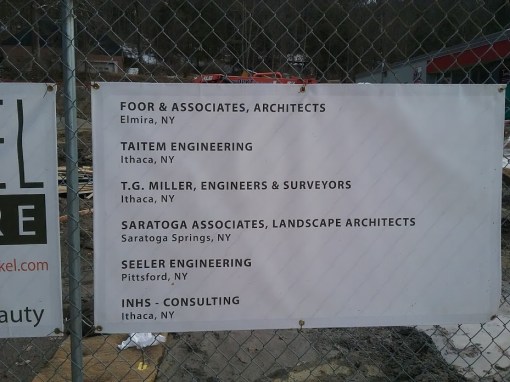
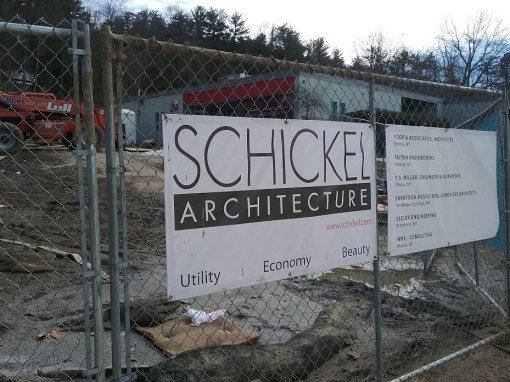
Along with Schickel Architecture and Welliver, the project team includes Taitem Engineering for structural engineering work, Foor & Associates of Elmira assisting in the design work, T. G. Miller P.C. for civil engineering and surveying, Saratoga Associates Landscape Architects, Seeler Engineering of suburban Rochester, and INHS as a consultant.

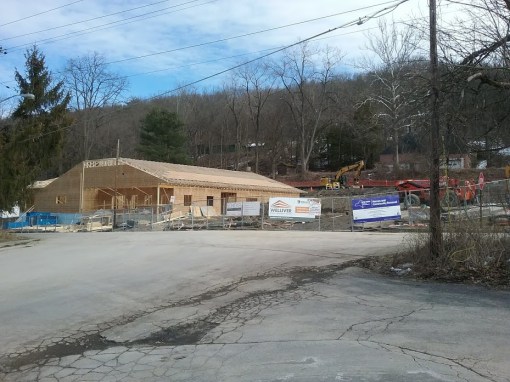
In the photos below, construction has been well underway, and has been since at least the tail end of January. The childcare center’s slab foundation and footers have been excavated, poured and insulated with rigid foam boards (the soil will be backfilled later to cover the base). The wood-frame is well underway, and it appears most if not all of the roof trusses are in place, as are many of the walls – I suppose these guys are going with housewrap instead of ZIP sheets. Although the size seems correct, the design does not look like what I have on file from , much to my chagrin. Foundation work seems to be underway for the residential portion.


News Tidbits 3/10/18: Affordable Housing Week 2018

11 03 2018

For today, let’s take a look at the entrants competing for the city’s affordable housing funds.

The Ithaca Urban Renewal Agency will be holding public hearings on Thursday 3/22 and Thursday 3/29 s part of the process to determine who will receive money from the Housing and Urban Development (HUD) grants awarded to the city. The 28 applications, three more than last year, range from jobs training to community services to the development of affordable housing.

In aggregate, there is $2,042 million requested, and about $1.239 million available. For the sake of comparison, that’s a 60.6% funding vs. request ratio, slightly more than last year’s 58%, but less than the 83.2% ratio of 2016, and the 67% ratio in 2015. 2016’s ratio was high because of $273k in unspent money originally earmarked for the earlier INHS plan for 402 South Cayuga Street.

Roughly speaking:

Year    Request    Amount Available

2015 / $1.78m / $1.215m

2016 / $1.85m / $1.54m

2017 / $1.982m / $1.149m

2018 / $2.042m / $1.239m

Unfortunately, HUD funding is not going up – of that $1.239m, about $184k is carried over from 2017 – Finger Lakes ReUse decided to decline last year’s $50k award, as did 402 South Cayuga Street ($80k, Habitat for Humanity’s cancelled project) and Housing for School Success (~$34k). The other roughly $20k was unallocated funds. In truth, the award for 2018 is $1.055 million, while requested amounts continue to rise, and the head of HUD gets embroiled in scandal for, among several reasons, ethics issues involving HUD business dealings with his family, and trying to spend $31k on a dining set for his office.

Without discounting the value of the other applications, the focus here will be on the real estate development projects. A full rundown is provided by my Voice colleague Kelsey O’Connor here. For the record, writing about a project is neither an endorsement or opposition from this blog.

1. First, 402 South Cayuga Street. This site has had a rough history, unfortunately. It’s a small vacant lot just south of Downtown Ithaca that has had little good luck in the past several years. Five years ago, INHS originally attempted to build four units of for-sale housing on the property, but could not make it financially viable, as construction costs rose beyond what they could do within budget. Another developer proposed a market-rate plan, but the city, which owns the lot, has a strong preference for affordable for-sale housing. Habitat for Humanity also made an effort to build for-sale housing on the site, but it too saw construction costs rise beyond their capacity.

The grant application, $150,000 towards that $1.057 million project, would revive the INHS plan the planning board approved a few years ago. Two of the townhomes would sell to households making at or below 80% of Area Median Income (AMI, at or below $42,400/year for a single person), while the other two would sell to those making at or below 100% AMI (at or below $53,000/year), sometimes called “missing middle” housing. The funds would be used for construction and soft costs (legal paperwork, permit fees) on the two lower-priced units.

The reason why this is feasible now is that for one, the planning and design costs from 2013 have been paid off and the design is nearly the same, and two, the project will be modular instead of stick-built. INHS would partner with Cayuga Country Homes to build the four units. The units would be locked into the Community Housing Trust, and include features not in the previous plans, such as air-source heat pumps. However, the bay windows on the north and south walls have been removed from the new plans.

Breaking it down a little more, the construction cost would ring in at around $177/SF, about 10-15% less than stick-built. The three 2-bedroom units are 1190 SF and will cost about $210k to build, while the three-bedroom will be 1352 SF and cost about $239k to build (total about $870k, of which $830k is consumed by hard costs, materials and labor).

INHS will sell the 80% AMI two-bedroom at $121k, and the 80% AMI three-bedroom at $139k. The two 100% AMI units will sell at $159k. INHS will need to cover the remaining $291,000 with grants and subsidies just to break even. It is possible to build marginally cheaper, but insurers require INHS has to use contractors with at least $1 million in workplace liability coverage.

If funding were awarded later this spring, the units could be ready by April 2019. Although the construction method is different, the exterior changes are generally cosmetic – slightly different window arrangements, deleted bay windows, and porch details. It’s still at its essence four 2.5 story townhomes with ground-level rear garages and cantilevered rear decks. It is possible they could be signed off on at the staff level, but it’s more likely they would need to pay a quick visit to the planning board. The exterior changes could be reviewed and approved in one meeting.

2. The other INHS submission is titled “Scattered Site Phase 2: New Construction”. The request is for $100,000 to help cover soft costs (architectural and engineering fees) associated with the projects in the application. Calling them “scattered” is a little bit of a stretch – it’s two sites. One is 203-209 Elm Street on West Hill. That will have thirteen units, replacing twelve existing units, a count that includes 4-unit 203 Elm Street, currently vacant due to structural concerns. Six of the thirteen will be targeted to households at 50% AMI ($26,500/year for a single person), and the other seven at 60% AMI ($31,800/year). Ten of the units are one-bedrooms, and the remaining three are two-bedrooms.

The big question is the $16 million project planned for Downtown Ithaca. Although INHS cannot name the applicant, there were enough hints to figure it out with a fairly high degree of certainty. I can’t run conjecture on the Voice, but here, well, take the disclaimer that I could always be wrong. But consider the following:

From the notes in the application, we know it is:

  • In census tract one – mostly Downtown and the State Street Corridor.
  • The current site is a small commercial building.
  • It is in the CBD – Central Business District.
  • The site would host 20,000 square-feet of commercial space, and 40 housing units. The 30 one-bedroom and 10 two-bedroom units would be set aside for those making 30-60% AMI ($15,900-$31,800/year).
  • An unknown number of units would be set aside for formerly homeless individuals or those in need of supportive housing. The current owner would provide supportive services in the first-floor of the commercial space.
  • The partner in the project has provided services for over 150 years.
  • INHS would buy the land for $750,000.

The only site that checks off all the boxes is the Salvation Army property at 150 North Albany Street. It is currently valued at $800,000, following a $100,000 bump upward last year. A back of the envelope suggests a gross square footage of 55,000 SF, plus or minus a few percent. That would put the new build at roughly the same size as Breckenridge Place (55,300 SF).

Zoning at the site is a little odd – it’s a split, CBD-60 on the southern two-thirds, and more restrictive B-2d on the northern third. CBD allows up to 60 feet in height, 100% lot coverage no parking requirement. B-2d allows four floors, 40 feet in height, and has no parking requirement if a building is more than 60% residential use – which there’s a fairly high chance this project would exceed. I’m picturing something five or more likely six stories on State, and stepping down to four on West Seneca Street. But, there’s still a chance I could be wrong, and this may isn’t the right site.

An approximate construction time frame for the mystery project appears to be October 2019 through January 2021. A sketch plan revealing the mystery partner and site is expected to be shown to the city planning board in June. SWBR Architects of Rochester is in charge of design.

3. The last one I’ll cover is the Finger Lakes ReUse expansion. Let’s preface this by saying they don’t own the site – the former grocery store turned BOCES turned eco-services non-profit entered into a purchase agreement with John Novarr in February 2014 to purchase the building for $1.25 million (below the assessment of $1.35 million), which they will do exactly five years after the agreement was signed, in February 2019. The $100,000 requested would be assistance towards the purchase of the property, freeing up their money to work on their upcoming construction projects.

As is, the site is a 17,000 SF retail building, and a 1,330 SF former garage/repair shop. Plans have been proposed for major additions – 6,500 SF of retail, 65,000 SF of office space, and 12,000 SF of supportive housing, which consists of 22 studios for low-income individuals, with emphasis on formerly homeless and/or incarcerated individuals. Welliver, INHS and TCAction have provided guidance and assistance; Welliver may be the general contractor as construction proceeds, and TCAction may manage the housing units. STREAM Collaborative is the architect.

Point of confusion – the approved plans call for a 26,100 SF, 4-story building with mixed-use retail, office and living space components, and an 8,100 SF open-air metal warehouse for reclaimed wood processing and storage. That all totals 34,200 SF, not 83,500 SF. There’s 49,300 SF that is not clearly spoken for.

The warehouse is phase one, will cost about $500,000, and be ready by Q3 2018. It will generate at least three living-wage jobs (an estimate Finger Lakes ReUse says is conservative). Phase two is funding dependent on the affordable housing component, and will provide at least six new living-wage jobs. Although NYS HCR affordable housing grants don’t typically cover commercial space, they can be applied to mixed-use structures.

The total project cost is $10.521 million. $1.89 million of the costs are covered with a NYSERDA grants, and Empire State Development has also offered a $500,000 economic development grant. Add in other grants and awards received or being pursued, and it appears that only about $3 million will be covered through loans. IURA funding an extra $100k makes the project more competitive for other grants, since FLR will have demonstrated they have more secured funds, and a higher chance of moving forward. The idealized time frame calls for a late summer 2019 construction on Phase II with completion a year later, but sit back and see what happens with applications and awards first.


304 Hector Street Courtesy Post

7 03 2018

The following is a courtesy post sent in by Lynn Truame, Senior Real Estate Developer for INHS. 304 Hector Street, on Ithaca’s West Hill, was built in 2017 with the help of IURA-awarded HOME federal grant dollars. The 1,223 SF home is for sale for $149,000 to households making at or below 80% AMI ($42,400 for a single person, $60,500 for a family of four).

***

304 Hector Street:  Green Affordable Homeownership in the City of Ithaca

The single family home at 304 Hector Street looks like dozens of homes all over Ithaca:  an American Foursquare design with a broad front porch, located on a small landscaped lot.  But beneath that modest exterior lies something special:  a brand new LEED Gold Certified home that is affordable to the “Missing Middle”:  households earning around 80% of the Area Median Income, or less then $60,500 for a family of four.

304 Hector is the latest addition to Ithaca Neighborhood Housing Service’s Community Housing Trust (CHT).  The CHT program ensures long-term affordability for purchasers by allowing the homebuyer to only purchase the house. The land is leased from INHS under a very affordable 99-year lease, reducing the initial purchase price by excluding the cost of the land. Subsidies bring the cost to the buyer down even further, allowing CHT homes to be sold at prices that are up to 50% below market value. As the land owner, INHS retains stewardship over the project, ensuring the home remains affordable for future purchasers.

Like all of INHS’ CHT properties, 304 Hector is a “green” building. LEED for Homes, Indoor AirPlus, and Energy Star certified, this house well exceeds the minimum requirements of the building code, with special attention being paid to indoor environmental quality and resource efficiency. This green home surpasses conventional homes in four major areas:  greater energy efficiency, improved indoor air quality, better use of natural resources, and lower impact development. Building to these standards results in a home that is less expensive to heat and cool, more environmentally friendly, more durable, less polluting, and less wasteful to build.

Some of the most notable “green” characteristics of 304 Hector include:

  • Densepack cellulose insulation, made from recycled newspapers
  • EnergyStar appliances
  • Advanced air sealing and mechanical ventilation
  • High efficiency sealed-combustion boiler providing both heat and hot water
  • Low VOC paints
  • Green Label certified carpet
  • High efficiency, low-flow faucets and fixtures
  • Reduced construction waste
  • No tropical hardwoods
  • Triple pane EnergyStar windows

Completed in December 2017, 304 Hector was designed by architect Noah Demarest of STREAM Collaborative, and built by a local contractor, D-Squared Construction.  EnergyStar and LEED Rating services were provided by Steven Winter Associates, Inc.


News Tidbits 1/27/18: The Shutterbug

28 01 2018

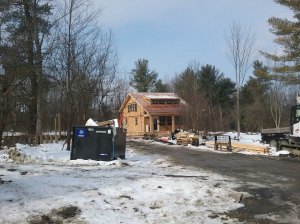
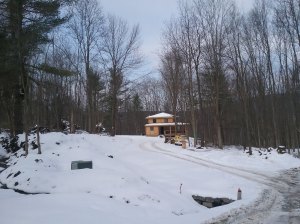
1. Let’s do some houses of the week. Above, the four new homes Tiny Timber has constructed at 1624 Ellis Hollow Road in Dryden. Each home lot is a little over an acre. The subdivision was approved last spring for the wooded parcel a couple miles east of Ithaca, and since then, Tiny Timbers has been busy selling units and lots to buyers. Two were sold in August, one in September, and the last in December. Therefore, this is 100% built out, since the last lot is a conservation lot at the rear (north) end of the property, designed to protect Cascadilla Creek. The units utilize a shared driveway, with spurs for each home. If you want to look at the homes more closely, click to enlarge the photos.

A similar plan is underway just up the road at 1540 Ellis Hollow Road, where Tiny Timbers will take a long, narrow undeveloped property and subdivide the land into five home lots and a rear (north) lot protected by a conservation easement. These homes will also be served by a common driveway. This proposal is still going through the review process, and when approved, the time frame for build-out will probably be similar. The home designs are the work of local architecture firm STREAM Collaborative.

2. Over in the village of Lansing, work has started on the next six-unit (hexplex?) at the Heights of Lansing property off of Bomax Drive. It appears that the foundation slab and footers have been formed, poured and insulated with foam boards. This is the first new townhouse string to be built in the development in six years.

Several reasons have been given for the long pause. The developers have said that the natural gas moratorium disrupted and delayed build-out plans. Secondly, the patriarch of Forest City Realty/IJ Construction, Ivar Jonson, passed away in 2014. More recently, the Jonson family (his wife Janet and daughter Lisa Bonniwell) were embroiled in a lawsuit to prevent a zoning change that would allow a market-rate apartment complex to be built down the road. Bonniwell was incensed enough to run for mayor in 2017 in an effort to stop the proposal, but did not win the election. The zoning change has been approved and the apartments were approved in October, but the Park Grove project has yet to move forward.

The townhouses were approved along with the last single-family home permit; there were some rather testy exchanges regarding sewer line easements and the installation of street lighting in conjunction with those permits. The lighting has to be in by March 2019.

Assuming these are like the other townhouses, expect them to be 3-bedroom units, low 2000s SF with garages, and to go for $350-$450k when they’re finished several months from now.

3. Dryden’s new Rite Aid is coming along. Fully framed, and the plastic in the window openings is likely intended to allow construction crews to work indoors without exposure to the fierce winter elements. The curbing and paving is complete in the parking lot, and it looks like they install metal bollards all around the lot’s perimeter to keep the less-than-attentive from driving into the wall (something that happened to the Nice N’ Easy in my hometown no less than three times before they finally put some in). It is still planned to open in March.

4. Over in Fall Creek, it appears a small apartment building is in line for some major renovations. 1002 North Aurora, a four-unit building built in 1898, had been on the market for $395,000. The seller had owned the property for 24 years, and the price was only slightly above the assessed value of $375,000.

On Friday, the property sold for $400,000 to an LLC associated with local developer Modern Living Rentals (Charlie O’Connor et al.). The same day, a building loan agreement was filed from Tioga State Bank to the LLC for $712,000. A lot of that was going towards the land acquisition, and once soft costs are deducted as well, the loan is $287,000.

MLR tends to be very transparent about their plans, and a glance at their recently updated website shows the purchase and a ‘information on this project coming soon’. However, they already uploaded the interior renovation plans from STREAM Collaborative. It’s a very thorough interior renovation, and it appears to complete change interior floor plans, with new bedrooms (net gain of one?) as well as new kitchens, bathrooms, and fire rated ceilings. Exterior changes appear to include a renovated fire escape staircase, a couple new windows on the third (top) floor), and a new skylight. While old, this apartment building is a hodge-podge of additions from decades past, so let’s see what a renovation can do to clean things up. It’s plausible the renovations would be complete by August, so they can appeal to students as well as the general market.

Quick aside, MLR has a few other “future developments” posted, though none that readers here aren’t already aware of – the 42 townhouse units at 802 Dryden, the proposed 201 North Aurora / Seneca Flats that isn’t moving forward for a while yet, and 217 Columbia, the duplex that unintentionally set South Hill into an uproar. 217 Columbia should be completed this year, and 802 Dryden in summer 2019.

5. It looks like Amici House is finally moving forward. The project, located at 661-701 Spencer Road, received a $3,732,469 loan from the New York State Homeless Housing and Assistance Corporation. The money was announced back in April, and appears to be getting disbursed now.

The five-story, 20,710 SF (square-foot) project, approved by the city of Ithaca last January, calls for 23 studio housing units for homeless or vulnerable young individuals in the 18-25 age range. Along with the units and office/function space for local social services non-profit TCAction, the plan also calls for a 7,010 SF early heard start facility, called the “Harriet Gianellis Childcare Center”, that will house five classrooms, kitchen and restrooms, and an outdoor play area. The childcare facility will serve 48 low-to-moderate income families and create up to 21 jobs.

Recently, the HGCC applied for a low-interest loan from the IURA, $90,690 to help cover unanticipated moving expenses associated with the project. TCAction thought they could stay on-site during construction, but the contractor said otherwise, so they’ll be 609 W. Clinton while the new Amici House is built. The loan says it will generate three jobs, but that’s more a technical stipulation than an actual figure associated with the project. The funding for the childcare appears to be separate, $1,325,000 already approved by the state, $603,000 from M&T Bank, and $84,200 from a standing IURA loan. It is fully funded, although it is not completely clear if it will be built concurrently with the housing (the likely answer is yes).