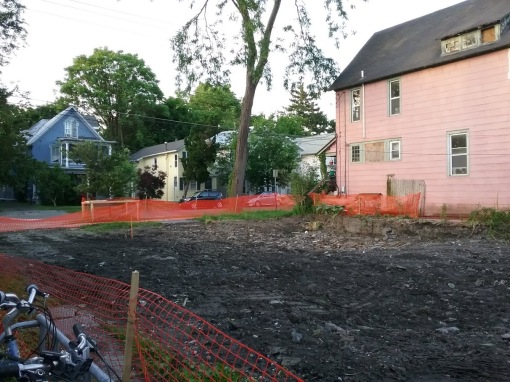
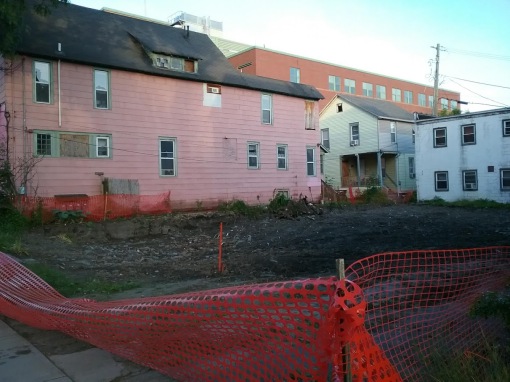
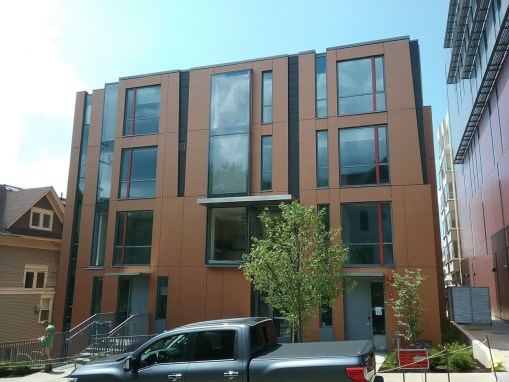
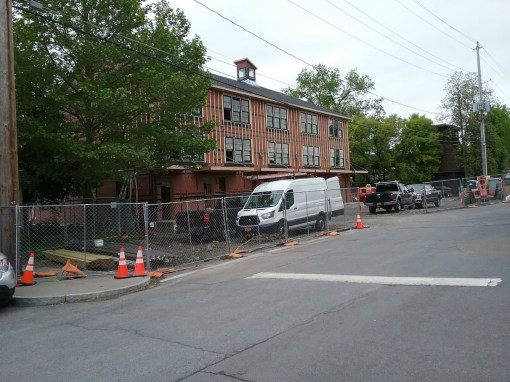
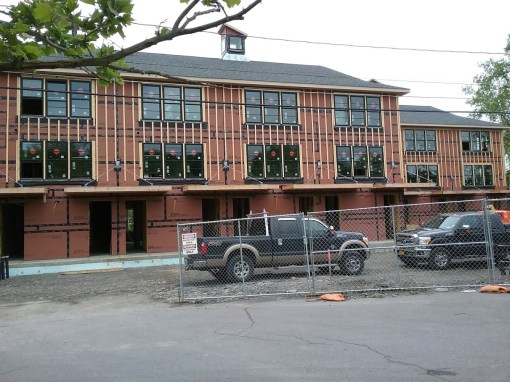
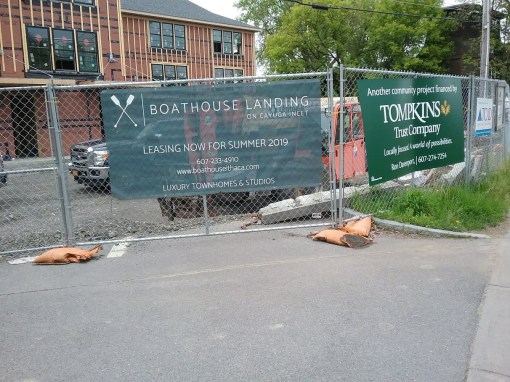
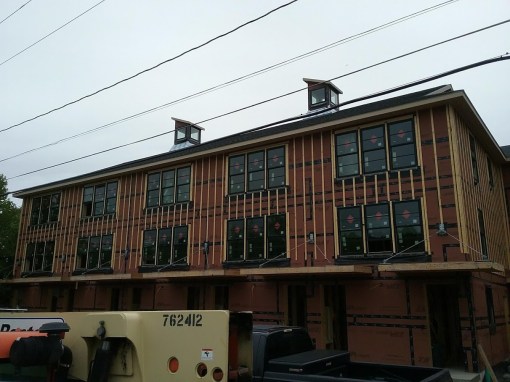
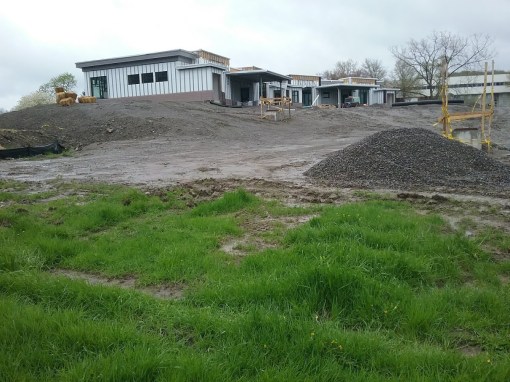
238 Linden Avenue Construction Update, 5/2019

6 08 2019

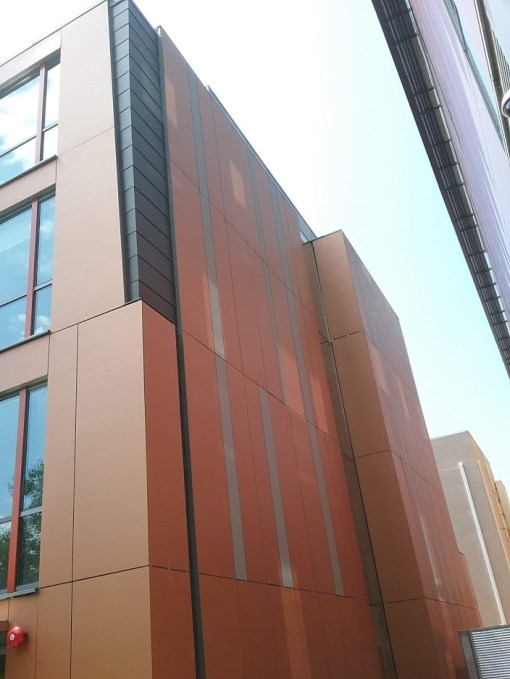
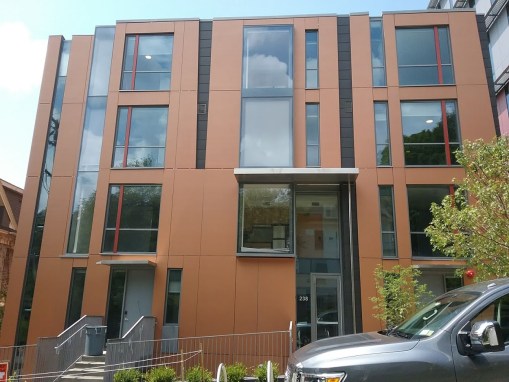
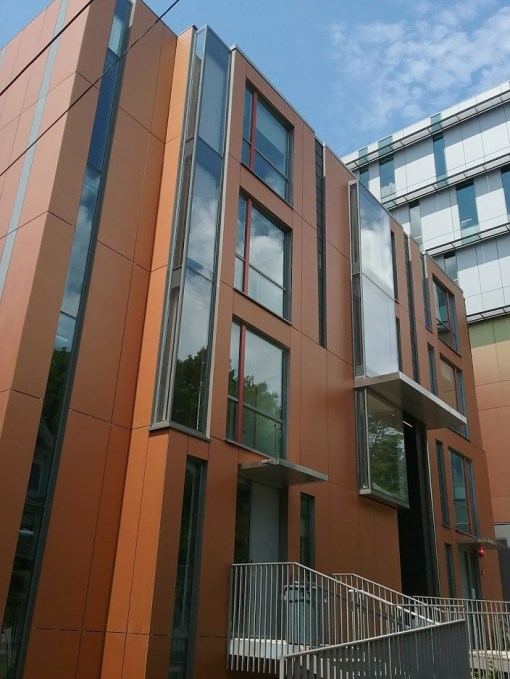
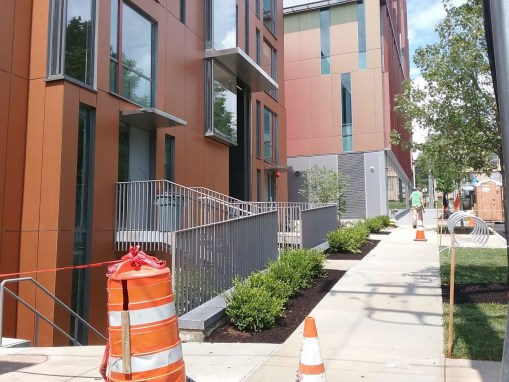
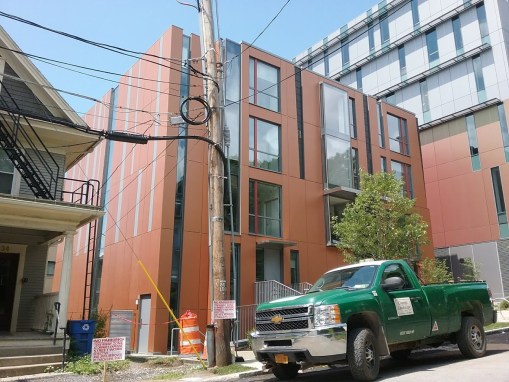
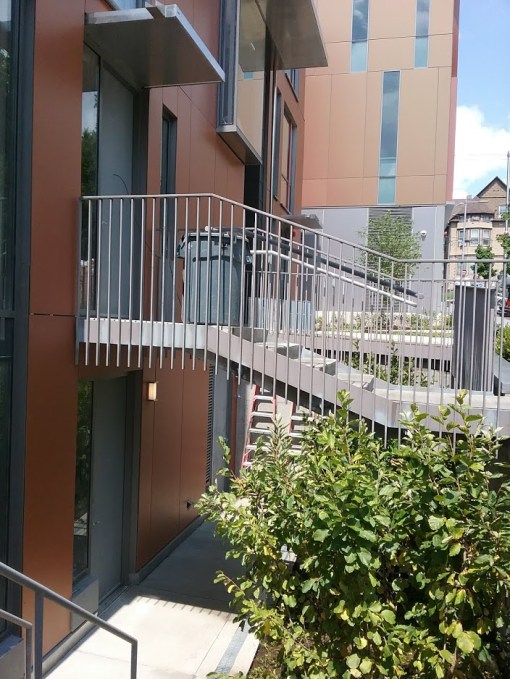
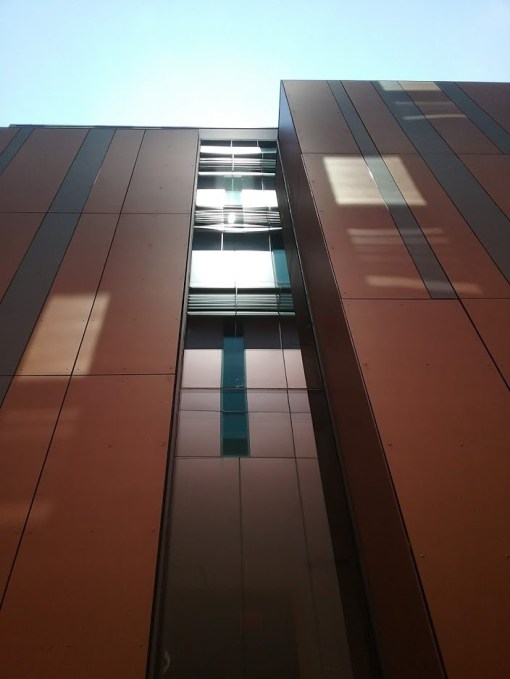
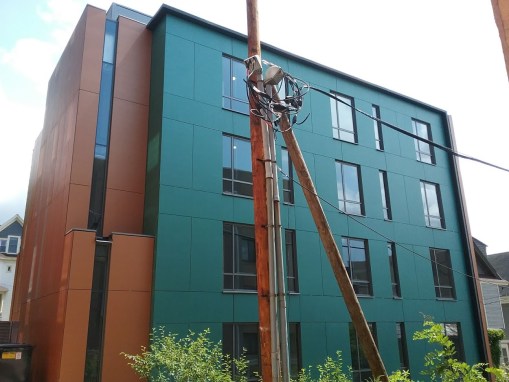
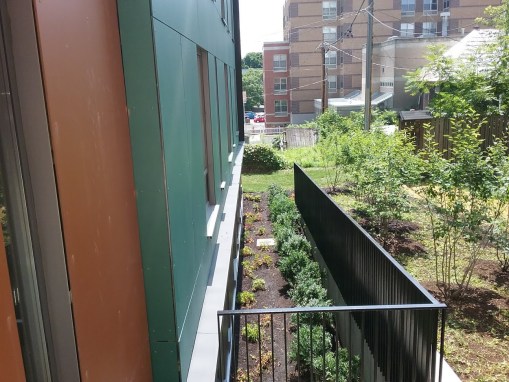
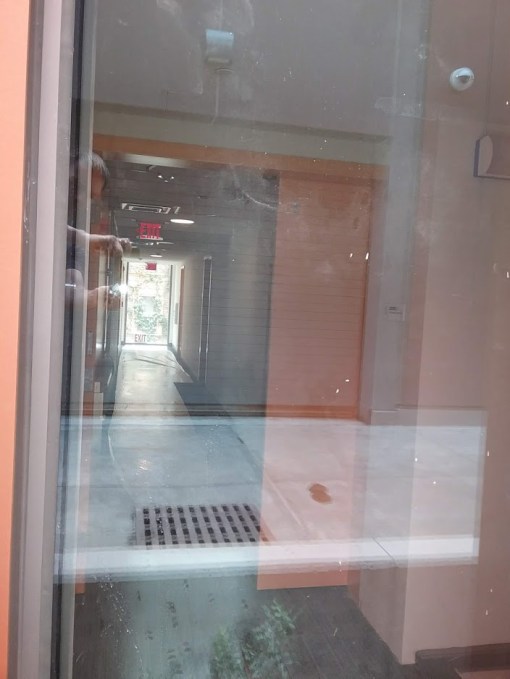
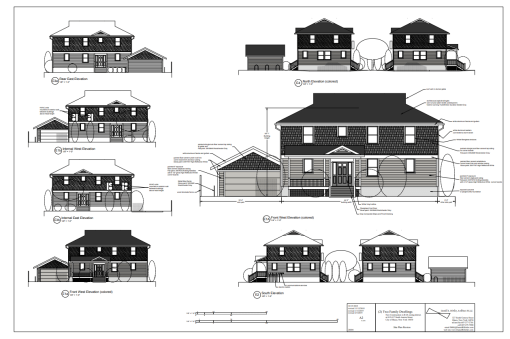
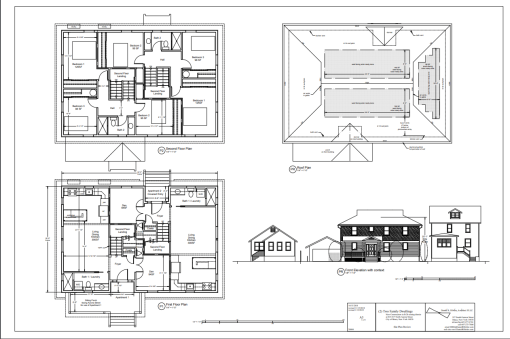
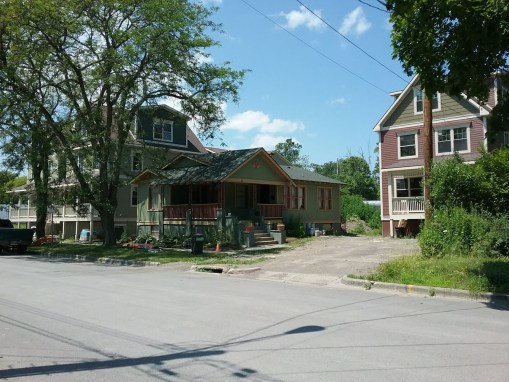
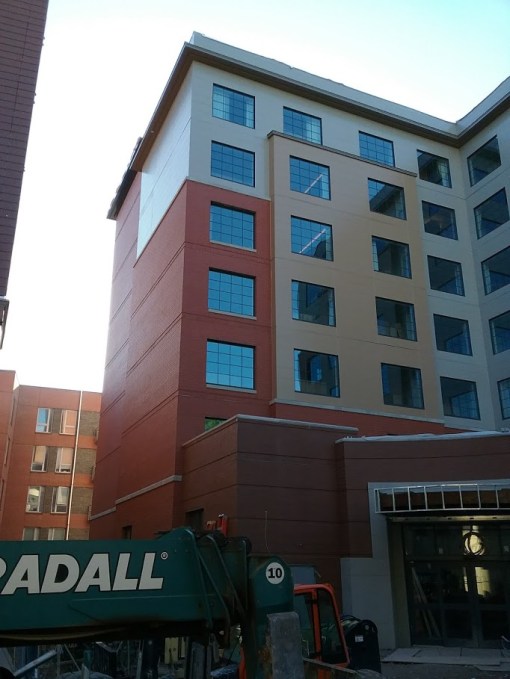
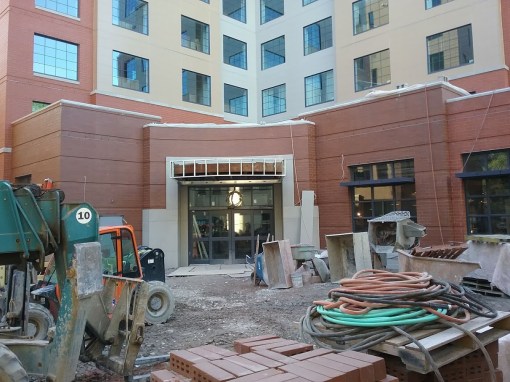
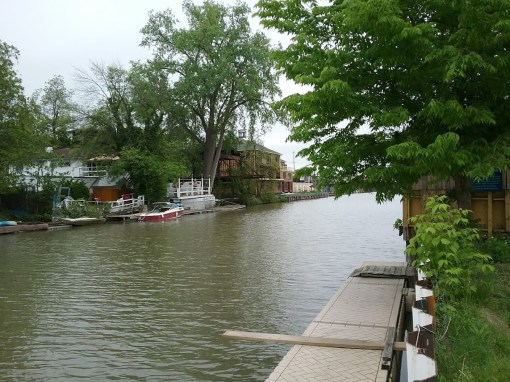
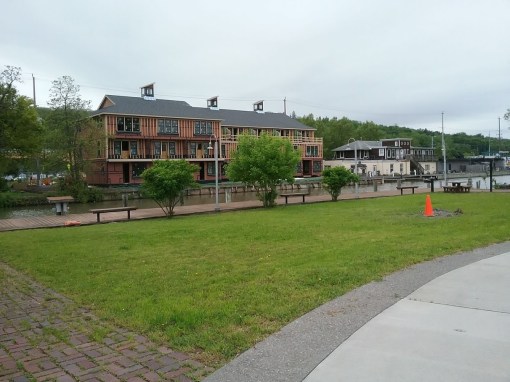
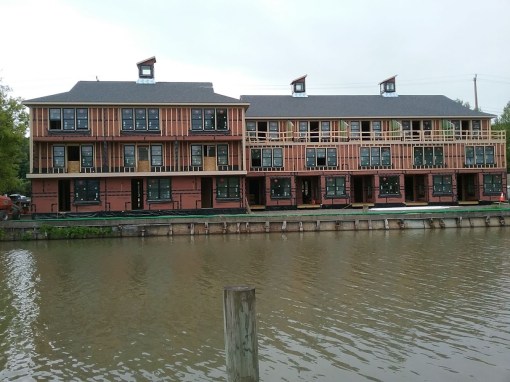
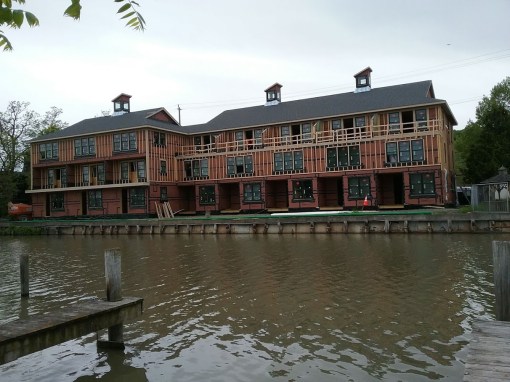
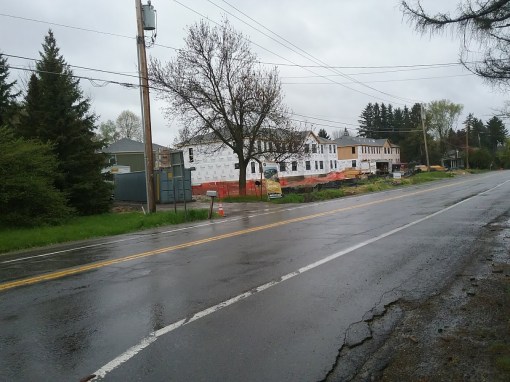
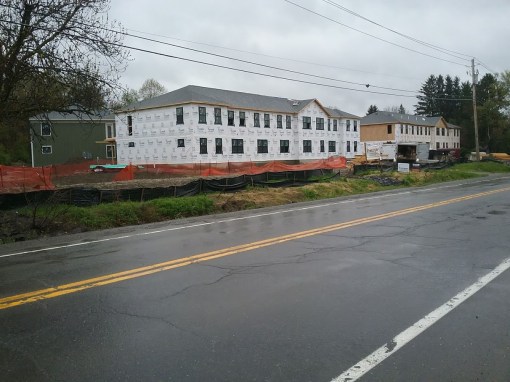
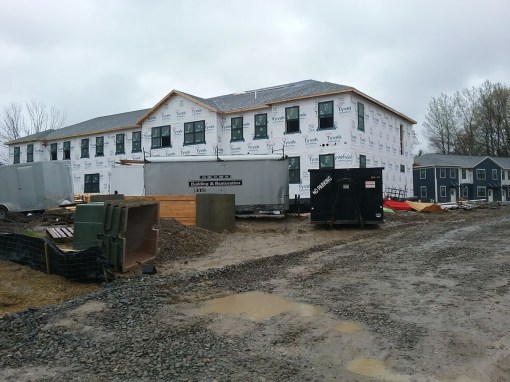
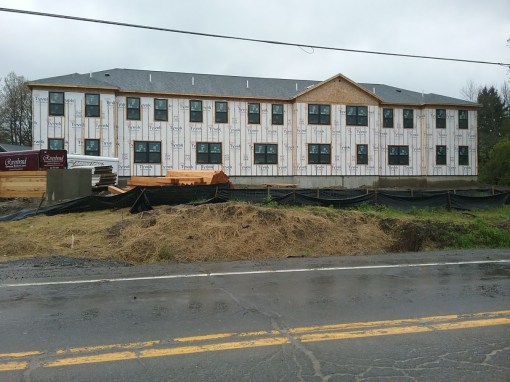
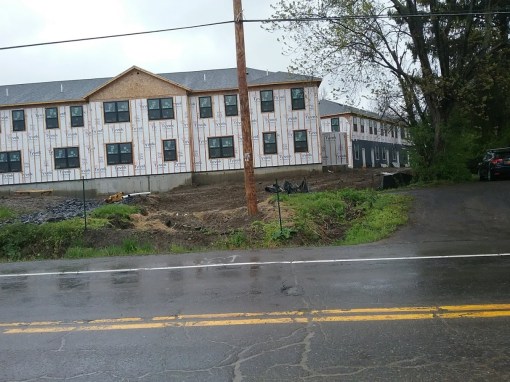
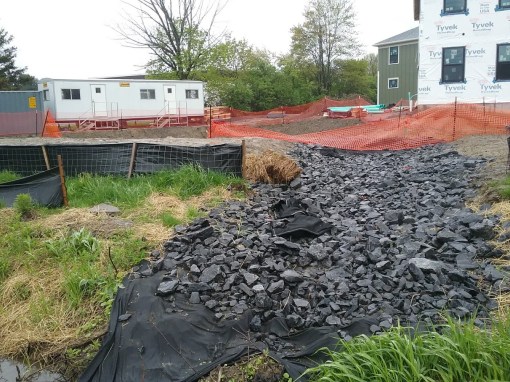
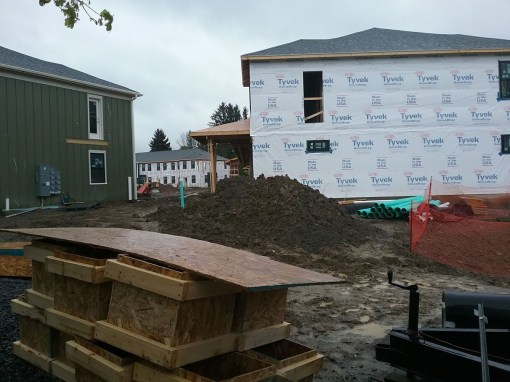
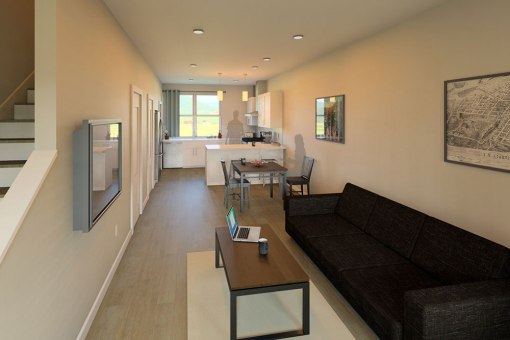
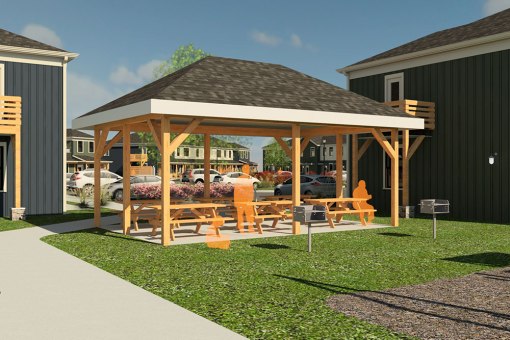
It appears John Novarr and Phil Proujansky’s housing project on Collegetown’s Linden Avenue is practically complete, and this will be its last post on the blog. The fiber cement and zinc panels are in place, the landscaping is nearly complete, and the inside is furnished – someone’s kitchen gets a lofty direct view of the street below. Oddly enough, this project has virtually no online presence, not even to advertise rentals. Granted, Executive MBA students are a very niche market, but if it weren’t for the approvals process, it would be as if this project didn’t exist. Even then, there have been major design changes since approval.

In a Facebook post, general contractor Hayner Hoyt states the project still contains 24 studio housing units, but geared towards Cornell faculty and staff. I honestly don’t know who the target market is, it may have changed from MBA students to visiting faculty and staff like its counterpart the College Townhouse at 119-125 College Avenue.

The architect is ikon.5 of Princeton, with local firm Trowbridge Wolf Michaels Landscape Architecture serving as the project team representatives, and T.G. Miller P.C. providing the civil engineering work. Background information about the project can be found here.


815-17 North Aurora Street Construction Update, 7/2019

18 07 2019

This project rose quietly and quickly. 815-17 North Aurora is a small infill project in Fall Creek, replacing what was previously a significantly deteriorated two-family house. It was one of the typical “urban farmhouses” popular in Ithaca in the late 1800s and early 1900s, with major, unsympathetic additions tacked on at a later date. Under its previous owner, who purchased the property in 1999, the house started a gut rehab, but only got through through the “gut” part and never got to the “rehab”.

In June of 2018, the property was placed on the market for $269,000, and the listing noted small-scale redevelopment potential, that the city could conceivably allow the dilapidated house currently on the lot to be taken down and redeveloped into two two-family homes per zoning. For smaller developers, this was an opportunity. Fall Creek has become Ithaca’s walkable, urban darling in recent years so the market would support a plan, provided that the neighborhood or city didn’t object. The site could never host some grand multi-million dollar project, but it was a chance to build something complementary to the neighborhood, and add density through modest urban infill (Historic Ithaca objects to anything involving a teardown being called infill, but the textbook definition is more accommodating).

The opportunity the site held was right up the alley of a family of local owner/developers, the Stavropoulos family of West Hill, who own the State Street Diner and a growing portfolio of rental units under the name “Renting Ithaca”. The Stavropoli have redeveloped several properties in the past few years, including 1001 North Aurora Street (4 units), 107 South Albany Street (11 units), a two-family home at 514 Linn Street, and a two-family unit planned for 209 Hudson Street (they originally applied to build two two-family buildings, but reduced it to one after neighborhood pushback). Their M.O. is basically small-scale rental infill, nothing especially large or ostentatious, and with that they go under the radar for the most part. In short, this R2b-zoned site is a perfect fit for them. They purchased it for $235,000 on March 7th.

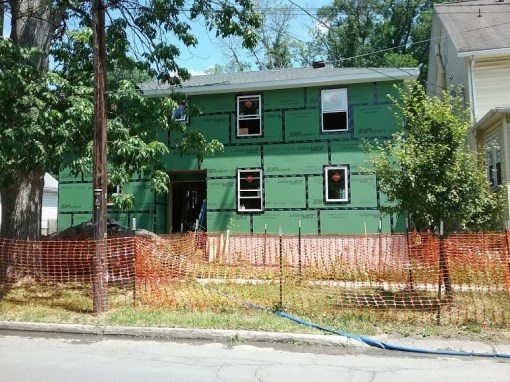
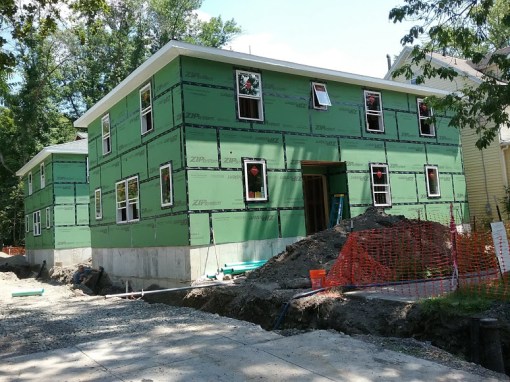
The project involves teardown of the original structure, and replacing it with two two-family structures, four units total. Each will be three bedrooms and 1,290 SF. Their usual architect of choice, Daniel Hirtler, has designed the structures to fit in with the Fall Creek vernacular, with recessed entries and aesthetic details (such as a transition between fiber cement shakes and clapboard siding) for visual interest. The buildings are positioned so that one is in the front of the lot, one at the rear, and only the front structure is visible from most public viewsheds. The site includes two parking spaces and a two-car wood-frame garage with new landscaping and utilities. Heating will come from electric heat pumps, and while the roofs will be capable of hosting solar panels, those aren’t expected to be included as part of the initial build. LED lighting, energy efficient appliances and water heaters, and high-efficiency spray foam insulation are included. This project would very likely meet the new Green Building Policy Requirements if in place.

The $627,000 development should be complete by August per Site Plan Review documents, a clear nod to having the units ready in time for the next academic year. Fall Creek tends to be less desirable to undergrads at Cornell because of the distance (<1% of total population), but graduate and professional students often rent in the neighborhood (~9% of graduate/professional students at Cornell live in Fall Creek).

Rather unusually, this project actually got some significant pushback from the Planning Board, which tends to be more acquiescent towards smaller projects; some of it had to do with the project itself, but it was also proposed while the city was hotly debating the merits of infill, a discussion that still continues. The argument was that the project will be rentals, would probably never be owner-occupied, and the board was questioning the merits of approving a project that would likely bring in students to the neighborhood and detract from Fall Creek’s “character”. In response, the initial plan for four parking spaces was replaced with two spaces and a two-car garage, with the newly freed space turned into an outdoor common area. A porch was added to the street-facing duplex, and a den in each unit to make them more family-friendly. All in all, there were four revisions from the first submission in October 2018, to final approval in February.

If you’re wondering about the color swatches – the lower level fiber-cement lap siding will be Sherwin-Williams “Knitting Needles” (light grey), and the front door and shake siding on the upper levels will be S-W “Westchester Grey”. Personal opinion, Ithaca is naturally grey enough as it is, but that’s just one guy’s take. Trim boards will be gloss white and the roof shingles will be Owens-Corning TruDefinition Duration Estate Grey. The concrete base, naturally grey, will remain exposed or potentially get a parge coat, the design plans left either option on the table.

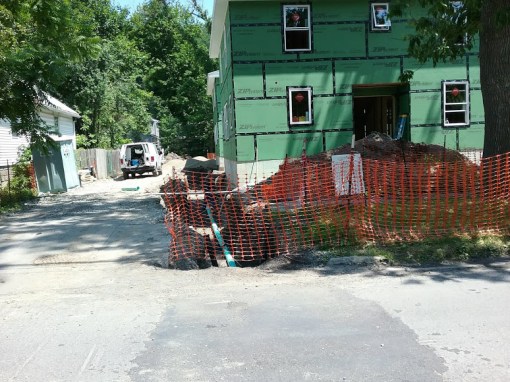
The slab foundation is in, and the buildings are framed, sheathed in plywood ZIP Panels, roofed, shingled, some roof trim boards have been attached, fiberglass windows have been fitted, and the PVC sewer line is clearly visible in its trench. The inside of the wood-frame structure is framed out, and utilities roughs-in (mechanical/electrical/plumbing) are underway. Sorry folks, this one sneaked up on me – demo permits were filed in March, building permits May 20th. Hopgart Construction of Horseheads is the construction manager.

Early drawing.

Final design.


128 West Falls Street Construction Update, 7/2019

12 07 2019

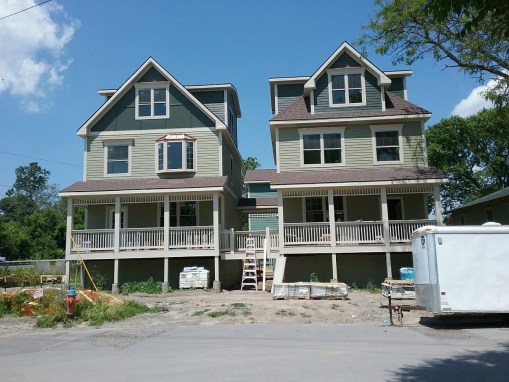
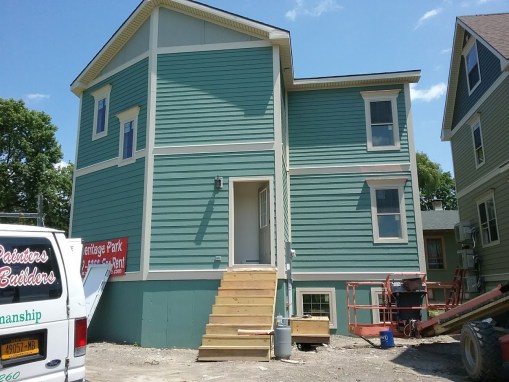
Looks like it’s safe to say that the infill project at 128 West Falls Street is completed. With the exception of some interior finish work and landscaping, the project is largely finished and will be ready for occupancy for the start of August. The guys at Plumb Level and Square were hard at work so the photos are a bit limited, but I do appreciate them allowing me to wander around a bit. Heritage Builders is the developer for the five-unit project, with three three-bedroom and two two-bedroom units. The construction crew said the units were designed to be easily reconfigured if desired.

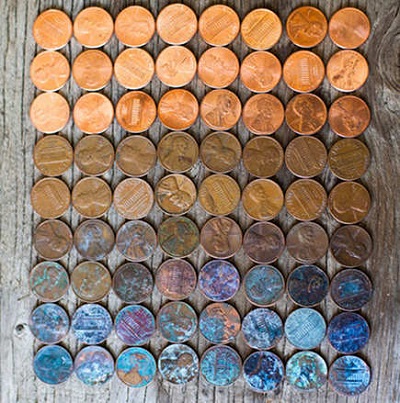
One of the guys expressed disappointment that the copper exterior finishes were already discoloring, but that’s kinda the point of copper. As it oxidizes, the copper darkens and takes on a grey-green patina that also waterproofs and protects the copper below the surface. A nice detail to have if you’re trying to fit into a neighborhood of much older homes.

The addresses are 126 West Falls Street, 132A West Falls Street, and 132B West Falls Street. 126 is the stand-alone single-family unit on the east side of the lot, a 3 bedroom, 3 bath asking $2,680/month. 132A is the duplex in the middle – Unit 1 is the east (right) unit, Unit 2 the west (left) unit, with asking prices of $2,750/month for Unit 1 and $2,650/month for Unit 2, discounted slightly perhaps because it’s next to Route 13. The two-family unit at 132B West Falls Street is asking $1,650/month and $1,850/month for its units. The units come with electric fireplaces ans dishwashers, but surprisingly for their premium p[rice point, they don’t have washers and dryers included, just the hookups.

More info about the project can be found here.


327 West Seneca Street Construction Update, 6/2019

23 06 2019

This project combines a pair of things that are up and coming. One is development along the State Street Corridor, the other is Visum Development Group.

Visum (Vih-SUM) is the startup firm launched by local businessman Todd Fox. Fox doesn’t really fit the normal profile of Ithaca real estate landlords. Most are older, more formal in attire and appearance, and reluctant to engage with news media and the public – “everyone’s been burned over at least once,” one 70-something year old developer once told me. Fox, on the other hand, is a different culture. He’s in his mid 30s, eschews the suit and tie for buttondowns and casual shoes, and sports what I suspect is a half sleeve tattoo on his left arm. One of Ithaca’s few millennial developers, he’s also more inclined to speak out than most – that doesn’t always make for the best headline for him, but it makes my job for the Voice easier.

However, even though Fox is a different vibe, there’s no doubting he’s good at what he does. Visum is one of the fastest growing firms in Upstate New York. 501st nationwide in 2018, and 610th this year, according to Inc., with a three-year growth of 820%. The small if growing firm got its start in 2015 as a spin off of Modern Living Rentals, which was led by Fox with developer Charlie O’Connor. But Fox and O’Connor have different approaches to development, so they pursued their own interests, O’Connor as MLR, and Fox as Visum. Since that time, Visum has developed tens of millions of dollars’ worth in property, and has tens of millions more in the development pipeline. Projects include 201 College Avenue, the Lux (232-236 Dryden Road), 210 Linden Avenue, 118 College Avenue, 707 East Seneca Street, and several smaller projects. More recently, the company is pursuing projects beyond Ithaca – a residential conversion project in Downtown Elmira, a 75-unit building in Boise, and recent signals that they’re scouting locations for a project in Raleigh.

Generally speaking, most of its projects have been geared towards students, and from a purely business standpoint that makes sense. Students are a lucrative, stable market in Ithaca – as long as your location is good, you’ve got a safe real estate investment. But with Cornell’s Maplewood and North Campus Residential Expansion, most local developers are shying away from the student market. Some are sitting on their earnings and just hoping to roll with the punches, others are pursuing new opportunities. Travis Hyde Properties is planning new senior housing, Lambrou Real Estate is pursuing a waterfront project, and Visum, the low-moderate income (LMI) affordable/workforce housing bracket.

That’s pretty unusual for a for-profit entity. Frankly, the complicated process to assemble financing to build LMI housing is exhausting and often uncertain, so most avoid it. About the only other ones I can think of with a local presence are Cornerstone Group and Vecino Group, both much larger firms than Visum.

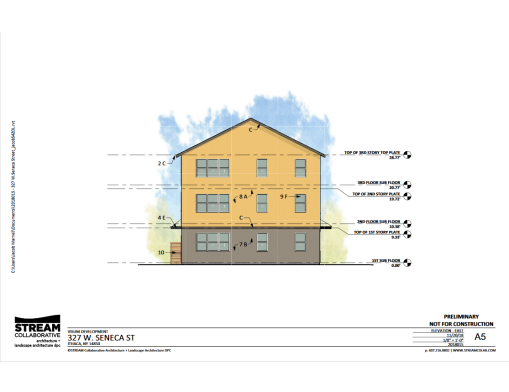
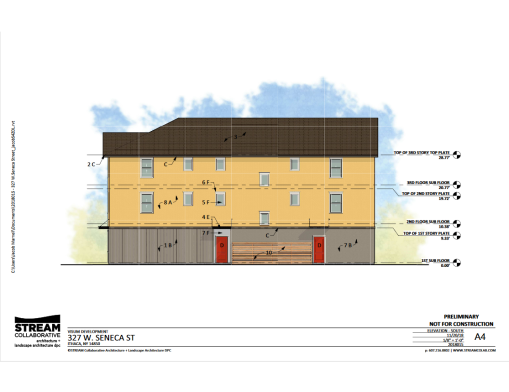
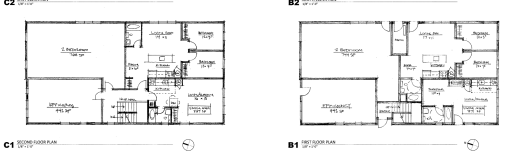
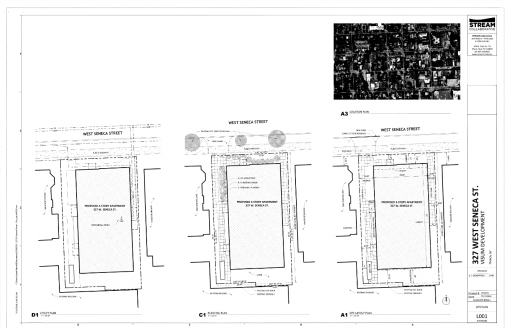
Visum is serious about it, though. 327 West Seneca would be their first affordable LMI project (at least two more are planned, though the city appears to be actively trying to kill one of them). As planned, it’s smaller-scale urban infill (yes Historic Ithaca, I’m aware you don’t like me calling any project that involves a demolition/deconstruction “infill”). A humdrum two-story, three-unit apartment house replaced with a three-story, 12-unit apartment building totaling 7,845 SF, with six studios (442 SF) and six two-bedroom units (708-744 SF), to be priced in the 70-80% area median income (AMI) bracket, so around $1,200/month for the two-bedroom units and $900/month for studios.  Zoning on the site is B-2d, which allows 4-story buildings with 75% lot coverage, and no vehicle parking requirement for all-residential structures like this one. It will have a bicycle rack. While a 4-story building was allowed, they would have needed a second set of fire stairs per state fire code, which made the extra floor cost-prohibitive. The target market is one-person and two-person working-class households.

Yard setback variances were required, and early on two versions of the building were presented, one with smaller units and no need for setbacks, and the larger version, which has marginally larger units but in need of variances. The Planning Board let the project team know early on that they encouraged the larger workforce housing units and would support variances, which is a strong voice of support to the Board of Zoning Appeals, and though self-created, the BZA accepted the Planning Board’s advice and granted the variances.

As with many Visum Projects, STREAM Collaborative is the architect (the filing docs suggest architect Jacob Marnell‘s work). The relatively simple design is intended to quietly fit in with the apartment houses that neighbor it on either side. The new structure would be finished in Dryvit synthetic stucco (color Benjamin Moore “Sunny Days”) and fiber cement clapboard and batten board (color Benjamin Moore “Indian River”). Certainteed 3-tab asphalt shingles (Timber color) will be used on the gable roof, Anderson 100 and 400 Series windows with off-white trim, black steel canopies and unpainted larch wood screening will also be used. Keeping with the warm colors, the doors will be painted BM “Jupiter Glow”. Main entries are on the sides, but one apartment is accessed via the front entrance. Heating is electric baseboard, but I don’t see anything about heat pumps in the planning docs.

The project was first proposed in June 2018, and approved in November. By Ithaca standards, the process was fairly quick and painless; there was practically no opposition to the proposal, and the design remained pretty much the same from start to finish, with the exception of some window treatments and finishes (gutters). The SIte Plan Review document suggests a six-month buildout, though I dunno if that includes the demolition; either way, a completion by the end of this year is likely, given that it’s a concrete slab and wood-framed buildings like this tend to go up quickly.

Construction costs are estimated at $1,275,330. At least $200,000 of that is covered with a joint city-county-Cornell Community Housing Development Fund (CHDF) grant – as they split it up, $170,000 from Cornell, $30,000 from Ithaca, though to be clear, the project is not Cornell-affiliated in any way. Developer equity and bank financing will cover the rest. As one city official told me with 510 West State Street, the city is nervous about its ability to lock in affordability from for-profit developers; but given that Visum plans to pursue a CHDF there as well, the threat of a costly clawback of funds plus legal costs is a pretty strong deterrent to that kind of behavior. By pursuing housing a notch above the usual 50-60% area median income sought with affordable housing, Visum doesn’t need as many grants to make a project work, and their ample developer equity (i.e. existing cash on-hand) makes affordable lower-middle income projects like this appealing for lenders and their construction loans.

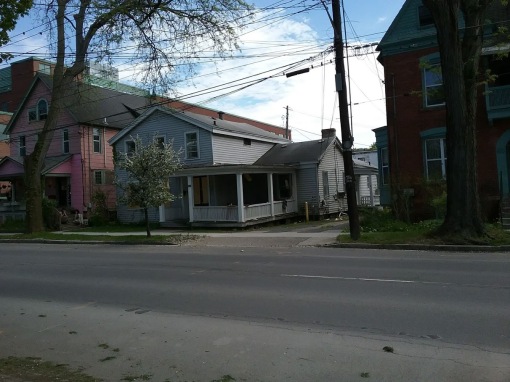
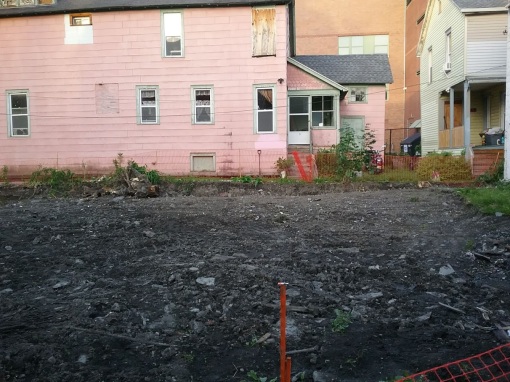
Demolition permits were granted in late May. The existing house has been cleared and the site is graded. Keep an eye out for footer excavation and foundation pours in the coming weeks.
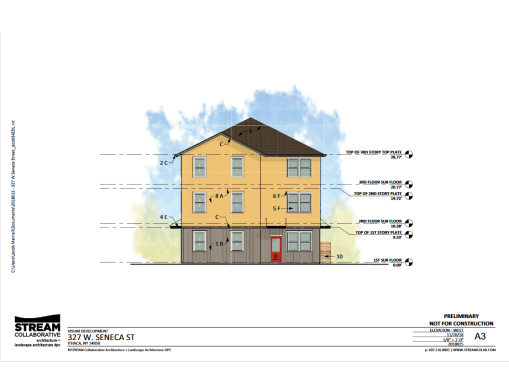
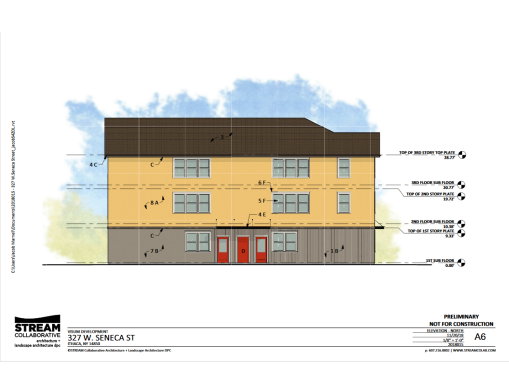
May 18th, 2019
June 14th, 2019


Harold’s Square Construction Update, 6/2019

20 06 2019

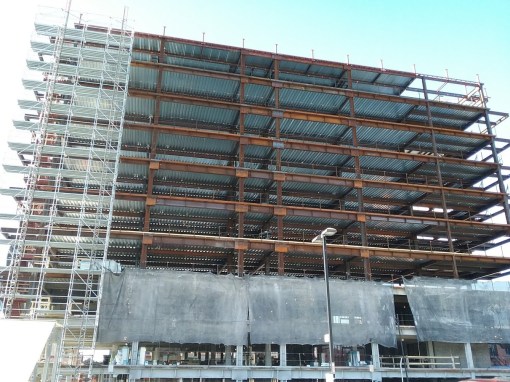
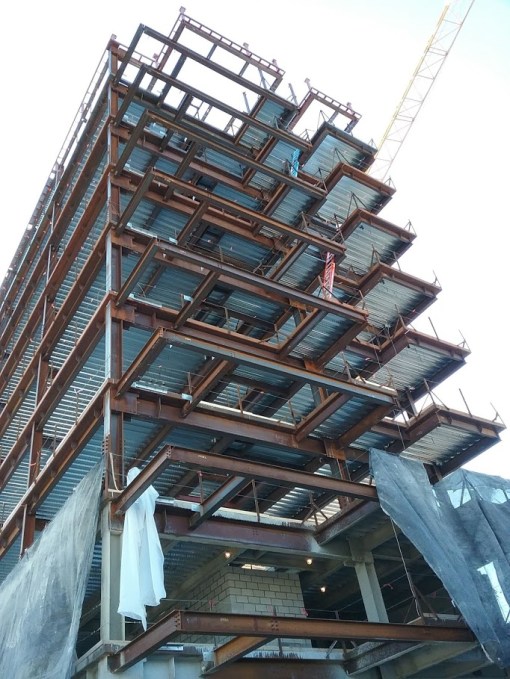
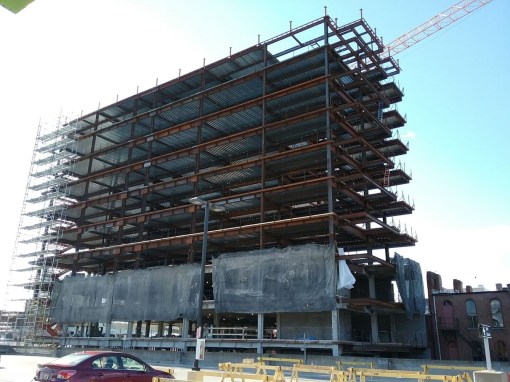
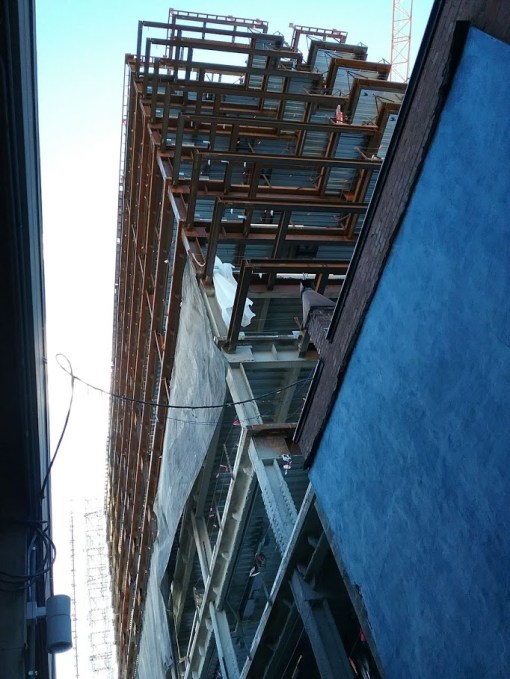
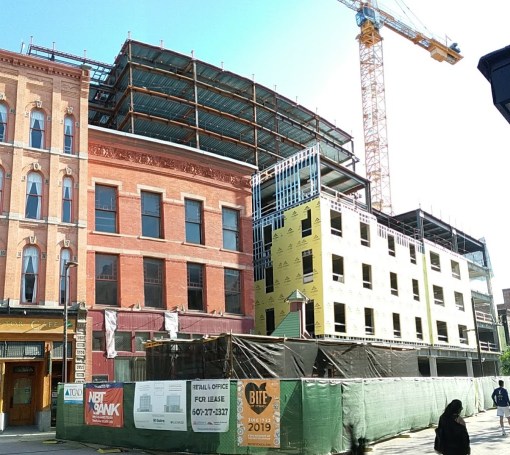
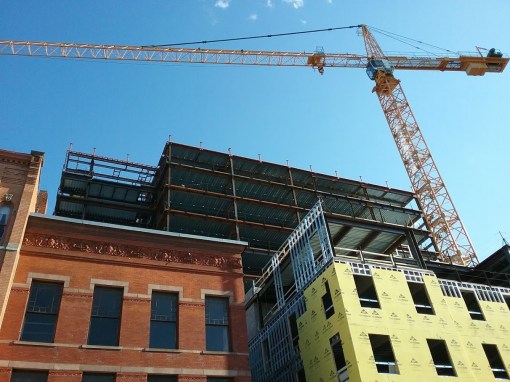
It’s not quite topped out, but it looks like all the floors have been framed for the Harold’s Square project. The steel skeleton makes quite the presence on the Ithaca skyline, and when the edge of the roof is framed and cladded, height should come in at just under 140 feet. The building may for aesthetic purposes appear a few feet higher because rooftop mechanical equipment isn’t included in height measurements, as it’s not considered part of the habitable space of the building. A formal “topping off” ceremony is planned for tomorrow next Thursday the 27th. (Sorry, wrong Thursday in the notes).

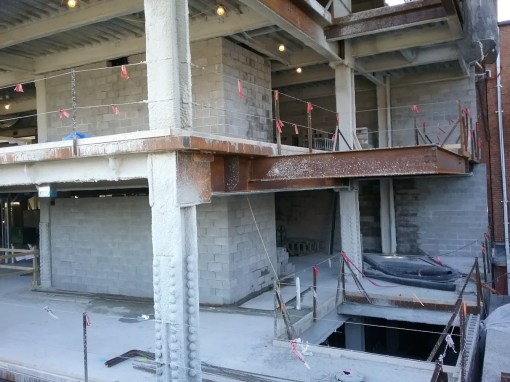
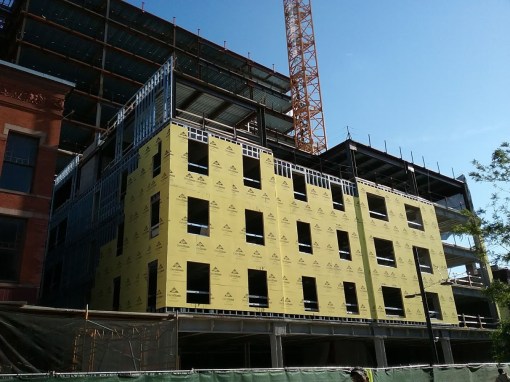
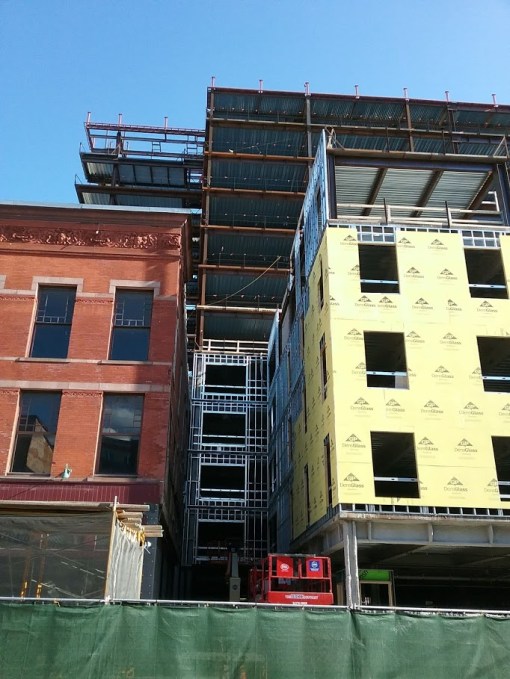
Most but not all of the corrugated steel decking is in place and concrete pours have been ongoing for the future floors. The black tarp hanging from the fifth floor is probably a barrier to keep the flame retardant from accidentally blowing out while it’s being sprayed onto the skeleton. On the lower levels, some interior steel stud walls can be seen, indicating that sprinkler systems are in and interior framing is underway. From the front, exterior steel stud walls are being bolted to the skeleton, establishing the rough openings for the windows, and Georgia-Pacific DensGlass fiberglass mat-faced gypsum sheathing is being attached – fire-proof and mold-proof, DensGlass sheathing is common for commercial and mixed-use structures.

Unfortunately, until that front face is substantially complete, it’s unlikely the Commons playground will be made available, due to the safety hazards – a piece of building material or a tool falling just the wrong way is the risk that neither the developer nor city codes is willing to take. The risk of small debris, like metal shavings or nails, also means that the playground will need to be thoroughly inspected before any reopening can take place. The hope was that it would be reopen for this summer, but the switch of contractors delayed that.

I’ll be frank. This project has an image problem, and not just because of the grumblings of its retail neighbors. I don’t have a single conversation that doesn’t have the other person trying to turn this project into a running joke that it will never be done. There is a lack of faith in L Enterprises. It may be that the only way to rectify that image issue is to keep the project moving forward as quickly and smoothly as possible and assuage people’s concerns as they see the building take shape with their own eyes. Occasional public engagement helps, like the “Wear a Word Day” banner, project updates to the city planning committee, and keeping the project blog updated)

Quick reminder, the program mix has changed to accommodate the needs of a  major tech firm office tenant. The 12-story, roughly 180k SF structure brings 12,000 SF retail on the Commons level, 41,000 SF of office space, and 12 floors with 78 dwelling units (down from 108; 30 micro-units were deleted for more office space). At a recent PEDC meeting ,the project team stated a spring 2020 occupancy for the apartments, and summer 2020 for the retail and office portions.

The WordPress for the project can be found here, and the Ithacating project description here.


Hilton Canopy Hotel Construction Update, 6/2019
19 06 2019

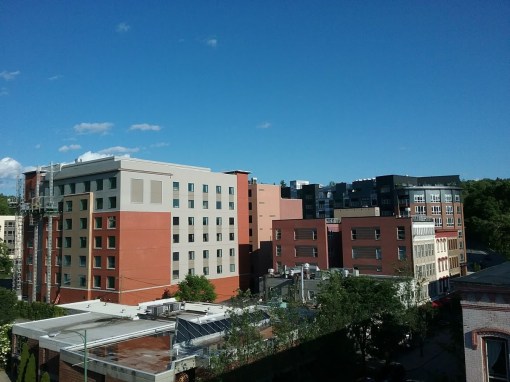
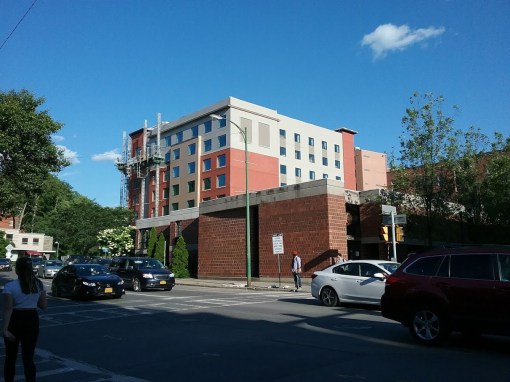
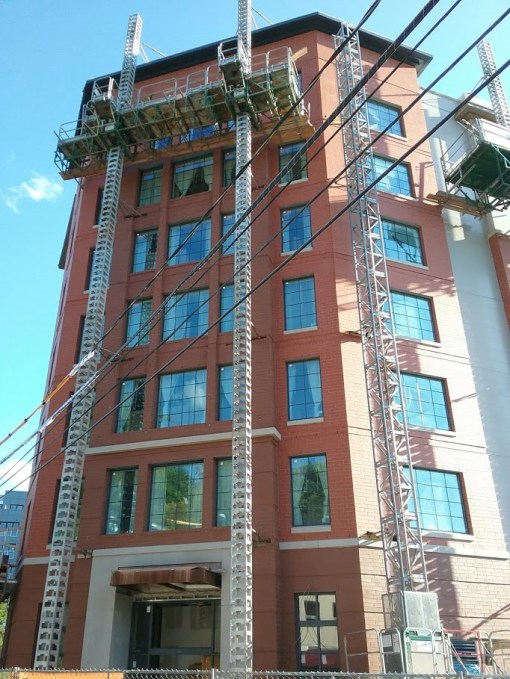
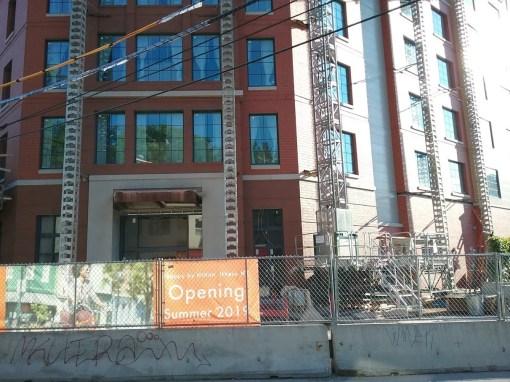
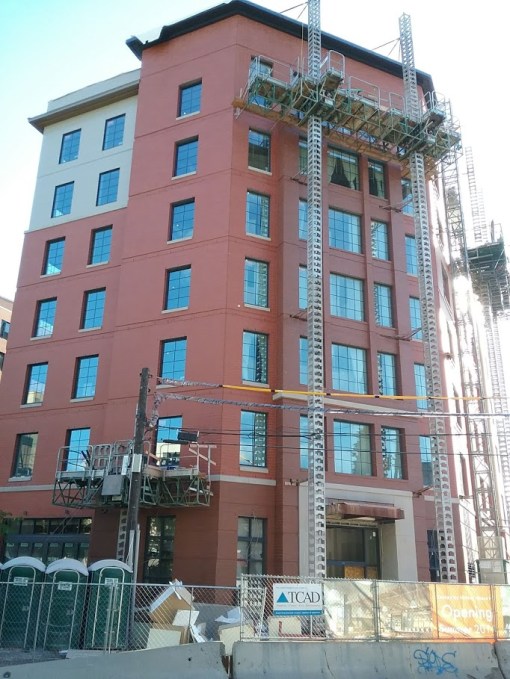
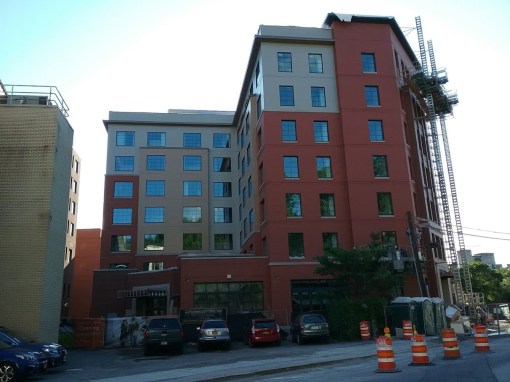
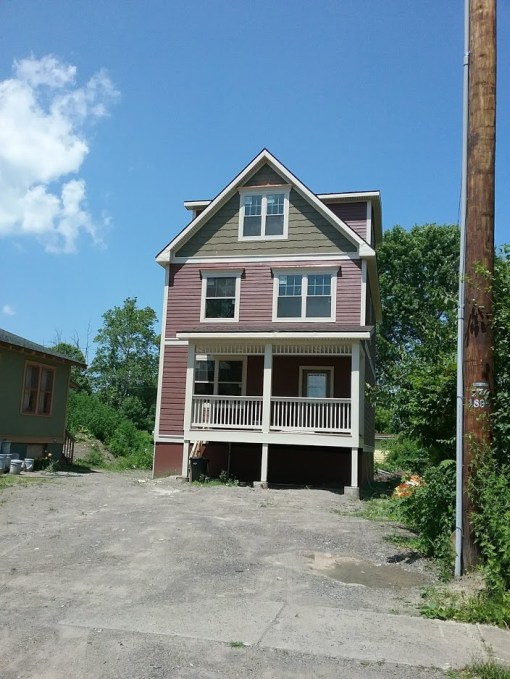
In the home stretch now. The exterior is largely complete apart from some minor trim and finishes, with the entrance canopy in the process of being framed out. Inside, it looks like the drywall has been hung based on what little can be seen from the windows. Exterior lighting and landscaping features, as well as paving and plantings, will come later in the summer. As described by the advertisements being posted on local tourism websites:

“The brand-new Canopy by Hilton is a 131 room Downtown hotel inspired by our “Gorges” surroundings, opening Summer 2019.

Enjoy a meal and a handcrafted cocktail at our full-service restaurant, featuring indoor/ outdoor seating.  Or venture out to restaurant row and the Ithaca Commons, located just steps away from our front door.

Delight in the views of Downtown Ithaca from one of our “Just-Right Rooms” and enjoy comforts like a large HDTV, refrigerated drawer, Nespresso® machine, ergonomic workspace, and our exclusive Canopy Bed.

Stay in shape in our state of the art Fitness Center. Filtered water stations on each floor will keep you refreshed.”

It’s not 100% clear when they’ll open, but their new Director of Sales previously worked at the Marriott down the street, so they’re getting knowledgeable staff on board. A hiring event for entry level staff was held at Coltivare at the end of May. While all the signage says Summer 2019, but the Hilton website says it will start taking reservations for the hotel on November 13th, which is not a good time for a new hotel being that it’s right at the onset of the slower winter season. Rates for a standard room are listed as $166 during the week and $246 for weekend nights.

Complimentary features will include (non-electric) bikes available to guests, an airport/college shuttle for guests, free Wi-Fi, 55″ TVs, built-in refrigerator drawers, bathrobes and socks in the suites, filtered water stations on every floor, serviced and to-go breakfasts, and two meeting rooms for up to fifty guests. The hotel will welcome animal guests weighing 50 pounds or less. A full list of features and amenities is here.

The ground-level restaurant, to be called the Strand Cafe after the theater that once stood on the site (the first proposal referred to it as “Ezra”, presumably for Ezra Cornell but probably too vague for its own good), will serve both “American fare and handcrafted cocktails” and feature a retractable garage-style door to let the outside air in on nicer days. A render of the cafe is at the end of the post.

MARKZEFF Design of Brooklyn will be in charge of interior layouts (render at the end of this post) and room furnishings. PID Floors of New York is supplying the hardwood for the flooring.

On a less kind note, the scaffolding incident with the fearless construction worker seems to have netted the general contractor, William H. Lane Inc. of Binghamton, a $4,000 fine for unsafe working conditions. The scaffolding subcontractor, CFI Sales and Service of Pennsylvania, received three fines totaling $22,542, since they were the perpetrators of the incident. The firm was also let go from the project after the violations.


Maguire Ford-Lincoln Construction Update, 5/2019
2 06 2019
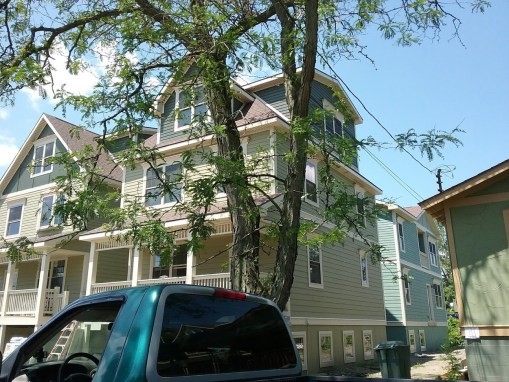
When the Maguire Carpenter Park proposal was shot down in November 2016, that wasn’t the end of the company’s expansion plans. Maguire is by far the largest auto sales firm in the county, and is the 11th-largest employer with about 440 employees as of 2018. Auto makers expect constant refreshing of facilities to keep up with their designs; a failure to maintain the preferred aesthetics and desired features in a sales facility could result in the loss of privileges to sell the latest models rolling off the assembly line.

There’s also another factor that goes into vehicle sales, that being vehicle service, which is a large share of Maguire’s business (something like 40%). People don’t like to travel far to get their vehicles inspected and repaired. This limits Maguire’s ability to move to just the urban and inner suburban parts of the county; the town of Lansing might have offered them land at the Town Center, sure, but the Town Center site is too far away from most of the county’s population for the Maguires to maintain a viable business operation.

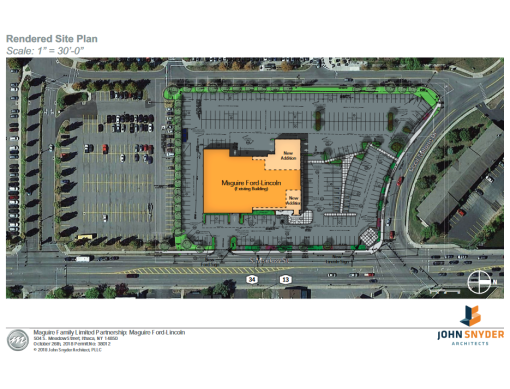
While the Chrysler-Fiat dealership was refreshed and modestly expanded a few years ago, the next phase of projects is more substantial. Maguire Ford-Lincoln-Nissan will be the first of those projects. Located at 504 South Meadow Street on the southwest side of the city, it is a two-story auto dealership on 3.11 acres, originally built in 1983 and expanded in 1999. Maguire will be demolishing some of the older portions and building new additions – the southern half of the building, used more for service, will remain largely intact from the outside, though the interior will be renovated. The northern half is where the bulk of the work will take place. The existing building is 18,500 SF, with 2,265 SF proposed for demolition and 7,865 SF of additions. The new building will be 24,110 SF.

The goals of the project are to meet Ford’s revised corporate standards and customer experience requirements, and improve interior circulation while expanding the Ford/Lincoln sales area (quick note for those unaware, Lincoln is the luxury sister brand to Ford; Mercury was the upscale in-between brand, before it was shut down a decade ago). The Nissan dealership will move to a brand new 25,300 SF location to be built off of Cinema Drive in the village of Lansing.

The western addition includes a service drive through addition to the rear (west side) of the building, including the expansion of the existing second floor for additional offices displaced from the first floor. This addition replaces an existing canopy (open air) structure currently used for car parking. The first floor will be renovated to include a new service waiting area for customers.

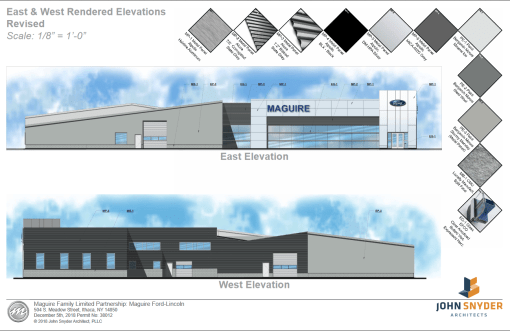
The northeastern addition includes expansion of the showroom end of the building (north and east side), aligning the building with the existing service bay portion of the building currently located on the south side of the building. Also included in this addition is a new entrance to the showroom meeting Ford corporate branding requirements. On the outside, Ford corporate requirements dictate new metal exterior panels that will encompass all sides of the building. The showroom (north side) will be differentiated from the service side of the building with differing types of metal panels. The showroom addition also includes the new Ford “foil” curved form vestibule. The interior will also feature new plumbing, electrical, mechanical and HVAC. To quote the application, “(t)his will transform the exterior appearance of the building making the exterior of this “utilitarian” car dealership into a modern, contemporary car showroom and service center.”

On the outside, new striping, LED lighting and landscaping will be deployed. During the review process, the planning board had issues with the lack of green space, so the lot attempts to use as much as possible within the limited size of the lot and Ford’s corporate requirement for parking spaces on-site (brands dictate a lot of the programming). The site will host 311 spaces, the vast majority (207) for new car display, and a smaller number for staff, customers and on-site service parking, but it also meets the 12% green space requirement for the SW-2 zone.

It’s a pretty tight timeline for construction, and Ford was pressuring Maguire quite a bit on the lengthy approvals process (the BZA wasn’t planning meetings in December 2018 or January 2019 due to lack of quorum, so the project team was practically begging the planning board to approve the front yard variance at the same time as preliminary approval). The project is expected to be completed by the end of the fall at the latest (this says September, but I dunno when the permits were issued in March as planned). During review, the project added more windows as requested, but did not employ masonry as suggested by the board because Ford rejected it.

John Snyder Architects of Ithaca is the project architect, and local firm Elwyn and Palmer is the structural engineer for the project. Saratoga Associates (of Saratoga Springs, fittingly) is the site and civil engineer. According to a tipster, G. M. Crisalli of Syracuse is the general contractor – and it’s not their first Ithaca rodeo, as they were GC for the Dryden Eddy Apartments and the Top of the Hill Apartments in Collegetown. The project cost is estimated to be $1.5 million, according to the Site Plan Review filing.

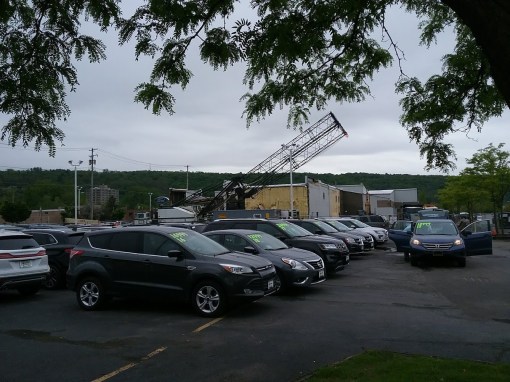
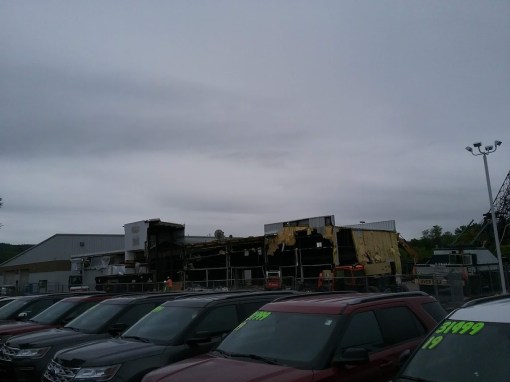
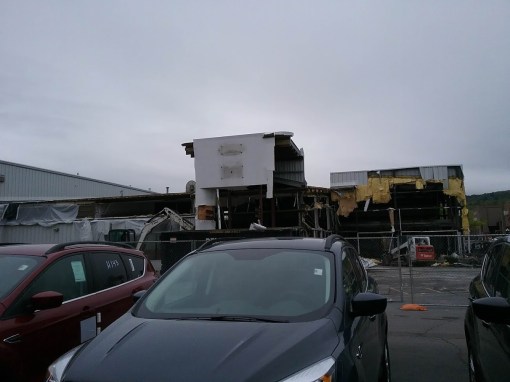
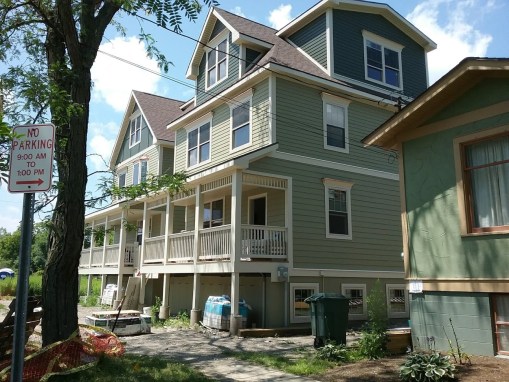
At this time, demolition is underway, and it looks like Bellisario Excavation and Drainage is the demo/site prep subcontractor. Some of the exterior facade has been stripped in the areas to be refaced and/or built out, while the northern wing is largely exposed thanks to the selective tear-downs. Props to the car salesmen who were working while all of this was going on.


Gosh, have trucks gotten expensive…

Early site plan.

Final site plan.


323 Taughannock Boulevard Construction Update, 5/2019
2 06 2019

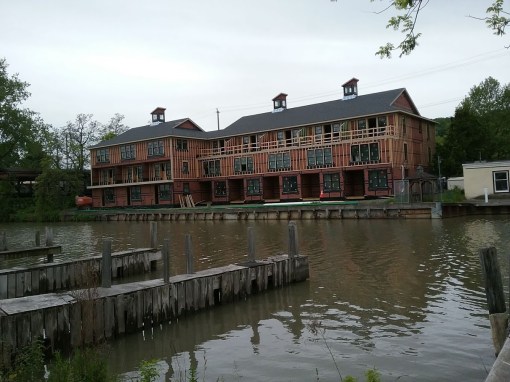
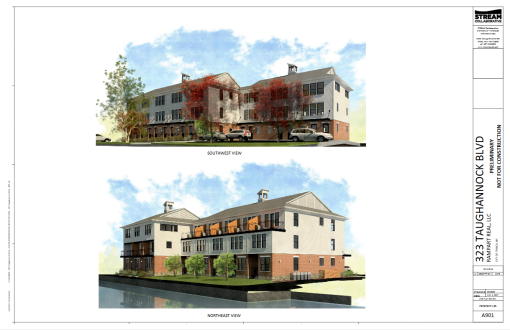
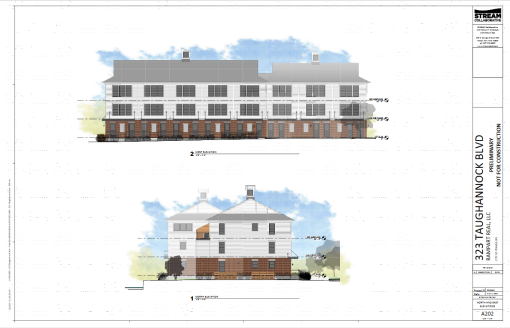
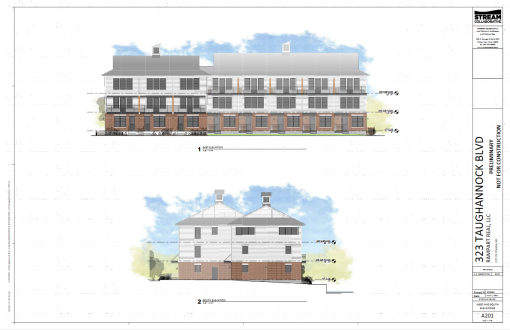
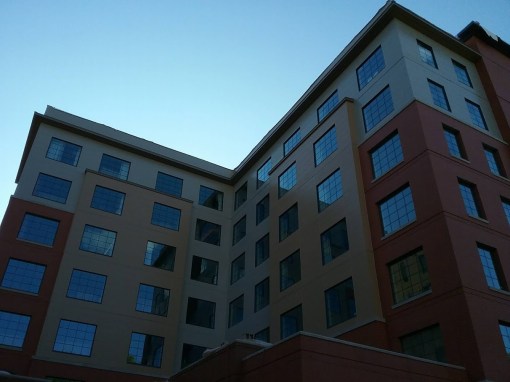
If you think these went up fast, it’s because they did. The modular pieces from Bensonwood were installed in just a couple of weeks; the group of three one week, and the group of five the next (note that the two substrings are slightly offset from each other). The units came with windows fitted and ZIP panel plywood sheathing already in place. The wood rails for the lap siding came after installation onto the foundation. The first floor will be faced with brick, the top two floors with fiber cement lap siding.

The 323 Taughannock project has a name “Boathouse Landing on Cayuga Inlet“. It’s a mouthful. The website is full of the typical heavy, pretentious marketing that defines high-end residential real estate – the reference to “private lifts”, for instance, because calling it an elevator is too plebeian. There’s a substantial possibility that STREAM Collaborative designed the website and branding as they’ve done with some of their projects like the Cottages at Fall Creek Crossing, especially since the layouts are similar, but I doubt any of their staff would employ such overly florid language. It might have been someone at the developer (Arnot Realty) office or a marketing team they contracted out to.

Features and amenities include private patios and balconies, cable and high-speed internet, stainless steel Energy Star appliances, off-site solar power, in-unit laundry, LED lighting, plank flooring on the upper levels, radiant floor heating in the bathrooms, A/C and heat that can be controlled for each room in the unit, private elevators and smart video doorbell systems on certain units, and fully accessible units for those who may have mobility or physical impairment issues. Pets are permitted, and there appears to be an on-site fitness center in the works.

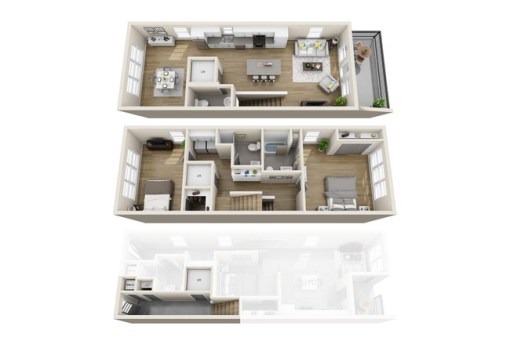
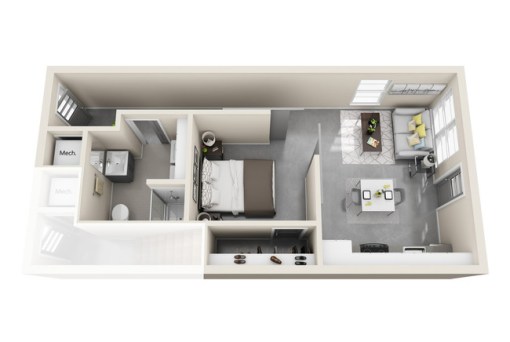
The floor plans can be seen here. The eight two-bedroom units come in three flavors, dubbed “Catalina”, “Hinckley” and “Garwood”. Catalinas have the elevators, and are the largest at 1,750 SF.  Hinckleys are slightly smaller at 1700 SF and lack the elevators, while Garwoods are the smallest at 1,360 SF. All are 2 bedroom, 2.5 bath units. The eight studios come in three flavors as well – “Crosby” (670 SF), “Hobie” (630 SF), and “Laser” (600 SF). It is not clear how those names were selected.

According to online listings, the top-of-the-line Catalinas are listed at $3600-$3700/month, while the other two-bedroom units are $3,400-$3,500/month. Studios go for $1,500-$1,850/month. The project team is aiming to be ready for occupancy by July 29th.

More about the project history and features can be found here.


Absolutely not.

The Catalina two-bedroom floorplan.

The Laser studio floor plan.


802 Dryden Road Construction Update, 5/2019

2 06 2019
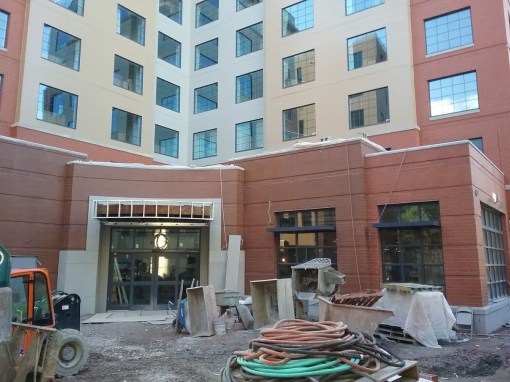
Still clearing the photo cache. From the Voice, with the abridged photo set:

“Next to the Cornell Arboretum, the 42-unit, $7.5 million Ivy Ridge Townhomes are fully framed, and two of the townhouse strings are practically complete from the outside. The website for the project touts that two of the buildings are 100% leased, which doesn’t give any clues about what percentage of all the units are leased — I could tell you the first two houses on my street are occupied, but if the other five are vacant, then that paints a substantially different picture of my street. But hey, apparently they’re giving $20 lunch gift card as a thank you for doing tours, so we know it’s not 100%.

Looking at the website FAQ, it’s clearly geared to Cornell students, and though rents haven’t been posted on most websites, it looks like C.S.P. Management has discreetly posted the figures online. A two-bedroom will be $1,800/month, a three-bedroom $2,500/month, and a four-bedroom $3,200/month. Cable and most utilities (all except electric) are included in the rent, the units come partially furnished, and pets, include large dogs, are allowed. Stainless steel appliances, in-unit washer and dryer, and marble tile are also planned. Exterior features include 70 parking spaces, bike racks, stormwater ponds, bioretention areas, a children’s playground, and a dog park. Occupancy/project completion is expected by mid-August, in time for the fall academic semester.”

***

It looks like once the buildings are framed, sheathed and fitted with windows and doors, wood rails are attached over the housewrap for the vertical siding, which is attached in segments. Two of the seven-unit apartment strings (“E” and “F”, using the earlier nomenclature) are largely complete from the outside with the exception of structural trim and finish work (porches/balconies/awnings), two others (“D” and “C”) have exterior siding being applied, one was sheathed but not fitted with rails (“A”), and the last one, on the right in the first image (“B”), is still in the process of being sheathed, though I believe it started construction before “A” did. This is all work that can be finished in time for the school year. The website FAQ claims June; dunno about that.

While landscaping won’t come until the end, it looks like the wood and concrete bases for the “Ivy Ridge” monument signs are in place out front.

Units will come partially furnished, as many student-oriented and young professional residential facilities do. Bedrooms include a queen-size bed, a four-drawer dresser, a desk and a chair, and a headboard with an integrated shelf and a USB charger. In the commons area, there will be a dining table with chairs, a couch, a living room chair, a coffee table, an entertainment center, and a side table. Included in the rent are water, sewer, high-speed internet, cable, trash, and recycling. Residents are only responsible for electricity. The website seems to be making a bit of an effort to downplay the student side of it, probably for Dryden’s sake, but being right on the eastern edge of Cornell will certainly give them and edge over most of the rentals in the Varna and West Dryden areas.

More information about the project and its recent sale between developers can be found here and here.


TC3 Arthur Kuckes Childcare Center Construction Update, 5/2019

27 05 2019

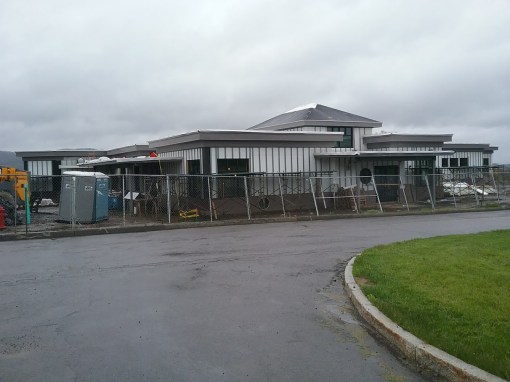
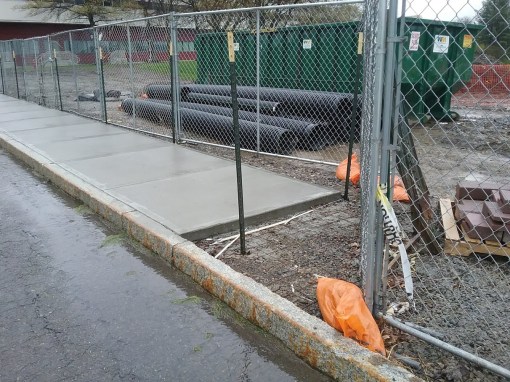
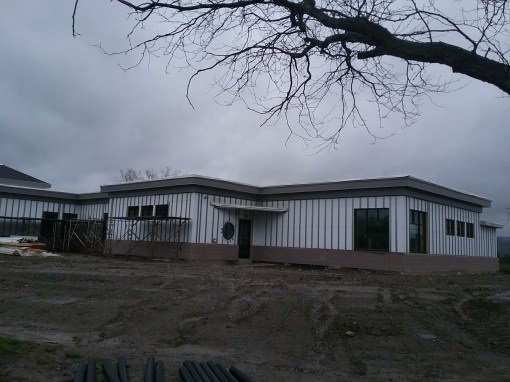
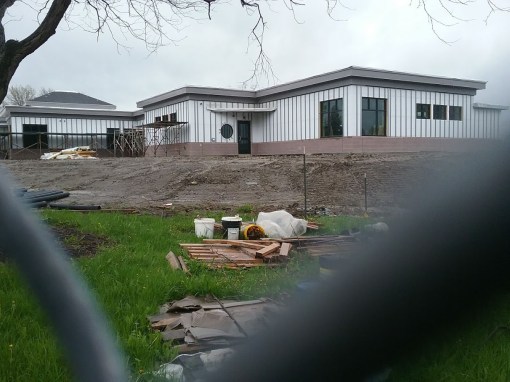
It’s been just about a year now since ground was broken on the $6.5 million, 9,875 square-foot project over at TC3. Construction continues at its steady pace. The steel rails being installed over the fireproof gypsum panels will allow for the attachment of exterior finishes, metal, and fiber cement panels. The whole process is about keeping moisture from seeping inward and damaging the more sensitive building materials like the gypsum boards while allowing any latent moisture in the materials (having been exposed to the elements during construction) to escape outward. Meanwhile, the doors and windows have been fitted, and the roof membrane has yet to be fully applied.

The new child care facility will serve students and staff first, with community spaces open after that. The doors are expected to open in time for the fall semester.