205 Dryden (Dryden South) Construction Update, 10/2016

16 10 2016

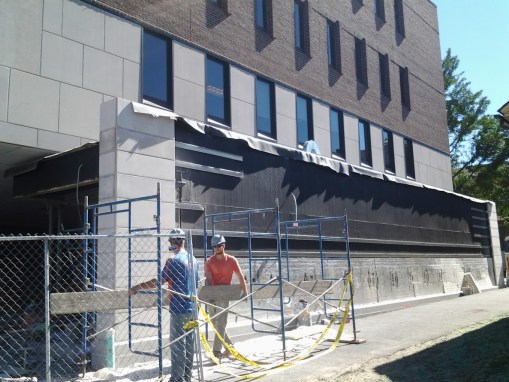
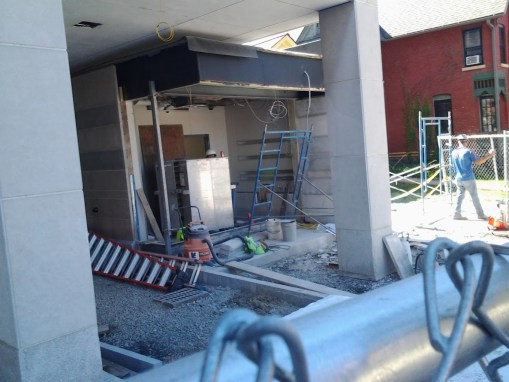
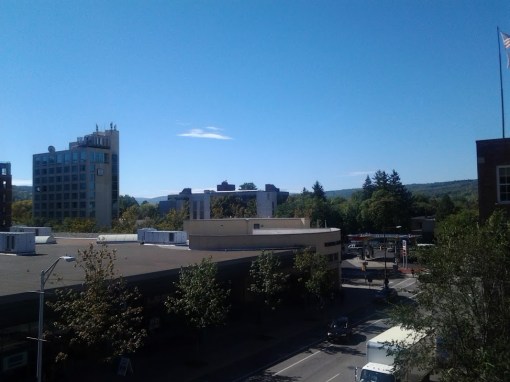
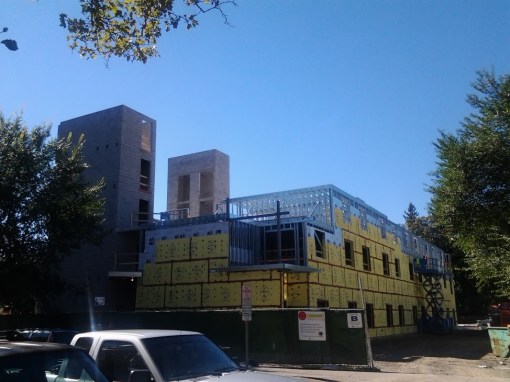
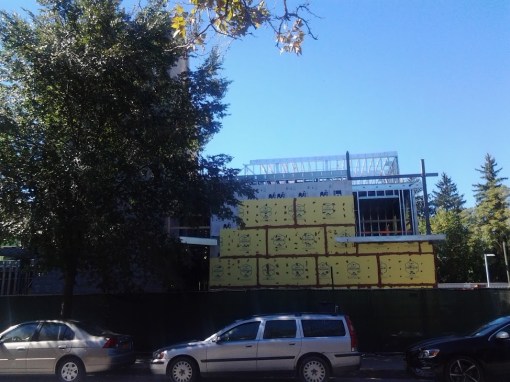
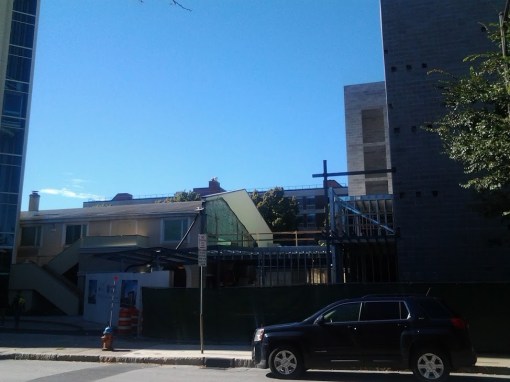
205 Dryden is practically finished from the outside. There may still be some work on interior finishes for spaces like the basement gym. It appears that the decorative pre-cast concrete crown has been modified, so that of a slightly projecting cornice, the crown is flat. That might be the result of value engineering, the rush to have the building finished, or both. The exterior wall facing the College/Dryden intersection might seem a bit stark, but chances are, that corner will be the site of its own construction project at some point in the near future. Photos of the furnished rooms can be found on the project’s website here.

20161007_155245 20161007_155313 20161007_160313

205_dryden_-_rendering


209-215 Dryden Road Construction Update, 10/2016

14 10 2016

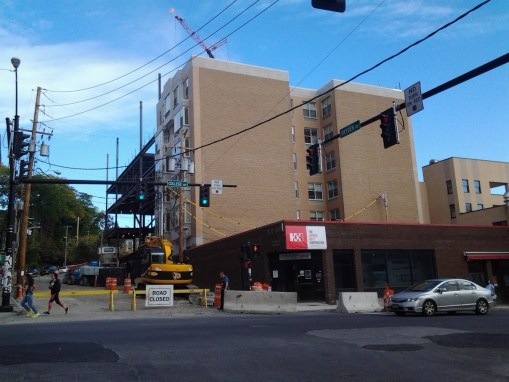
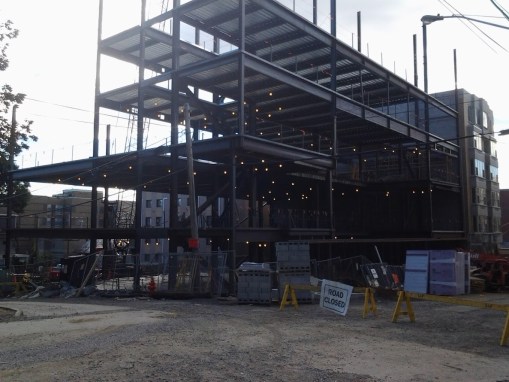
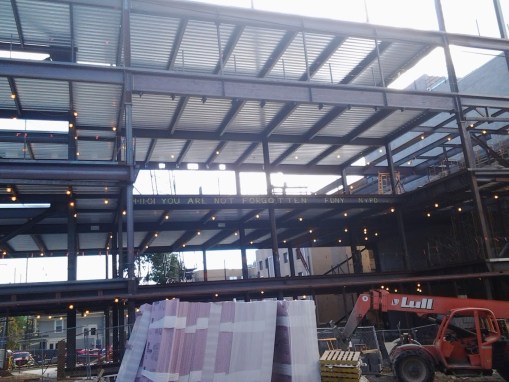
With the rise of the structural steel, 209-215 Dryden Road (aka the Breazzano Family Center for Business Education) is starting to make a significant dent in the Collegetown skyline.

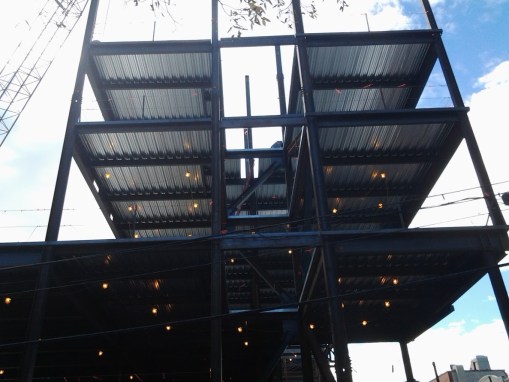
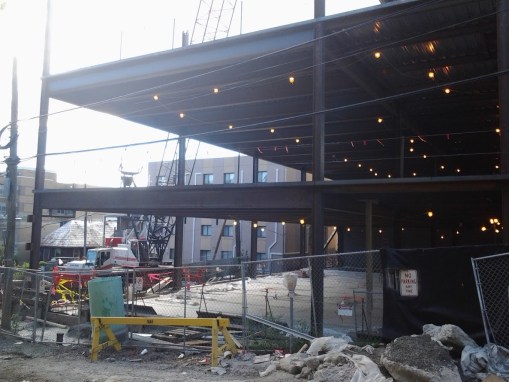
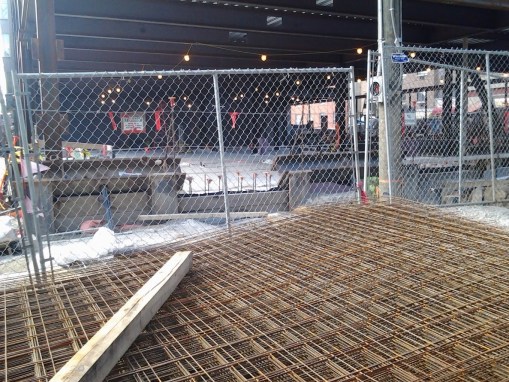
The floorplates are up to the fourth level, and the vertical steel columns indicate just how tall the building will be when the steel skeleton is built out. The concrete floor has been poured on the ground level, and corrugated steel decking has been laid on the upper floors – note that only the first and second floors have reached their full dimensions, the upper floors are waiting for the delivery of additional steel columns and cross beams for the crane to hoist into place. The sheets of wire grid seen outside the fence are for future concrete floor pours, providing strength and rigidity for the concrete, just as rebar does for foundations.

The large gap in the front of the building is the multi-story atrium space – the lower three floors are academic class space, while the upper three floors are academic office functions for the Cornell Executive MBA program. The smaller gap towards the north (right) side is for a stairwell.

Nice touch with the subtle commemoration of 9-11 emergency responders. It’s not uncommon to see these tributes when steel work is underway during the fall.

20161007_154941 20161007_155001 20161007_155014 20161007_155017 20161007_155050 20161007_155054 20161007_155100 20161007_155116 20161007_155139 20161007_155206 20161007_155234 20161007_155255

209-215_2 209-215_basement


Tompkins Financial Corporation HQ Construction Update, 10/2016

13 10 2016

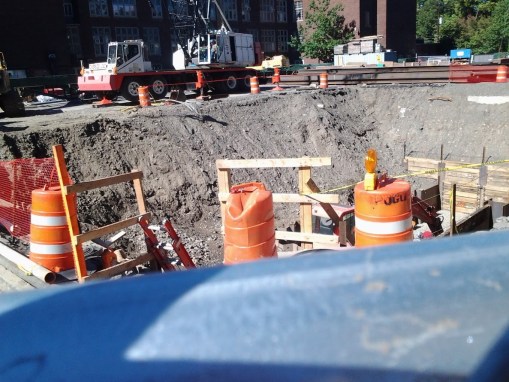
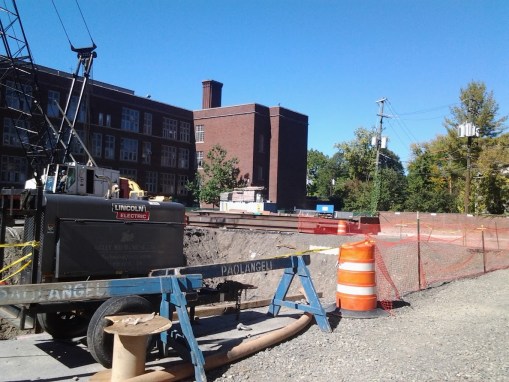
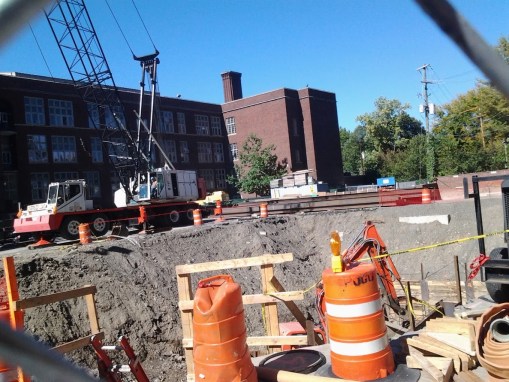
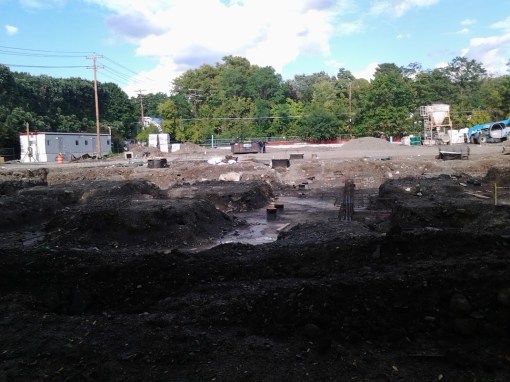
Normally, the phrase “wow, what a hole” isn’t a good thing. Here, it’s fine. Since this is a large, heavy building, and the soil near the surface is liable to settle and risk upsetting the building foundation, a deep foundation is required. According to the geotechnical report by Elwyn & Palmer, the end bearing piles will penetrate 65-70 feet into the ground. At this depth, the material is stable enough to allow each pile to handle the required heavy weight. The basement floor slab will be about 12 or 13 feet below street-level.

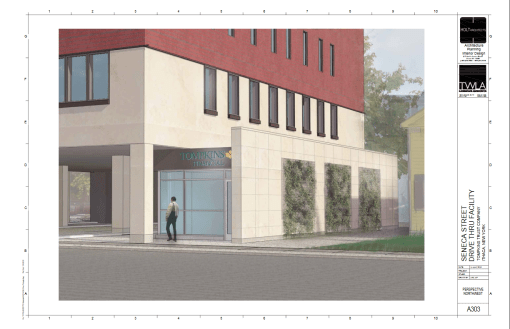
Across the street, the new 965 SF drive-thru building is moving right along. The much smaller building sits on a much easier, quicker and cheaper concrete slab-on-grade foundation. The metal clips on the west wall are for the limestone veneer, just like the panels on the corners. The wall will have metal screens with which vine-spreading plants will grow up and through, creating a green screen intended to make the otherwise blank wall more attractive to neighbors and passerby. The area by the front will have a glass-encased entryway and dark metal panels overhead.

More information about the project can be found here.

20161007_130747 20161007_130821 20161007_130827 20161007_130849 20161007_130919 20161007_130934 20161007_131000 20161007_131017

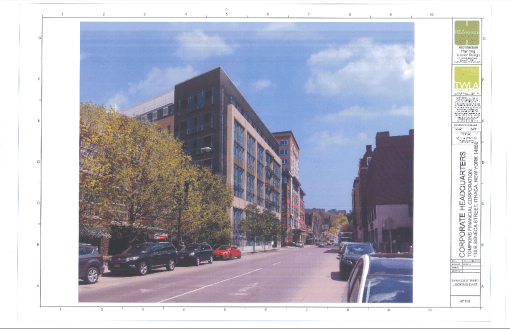
tfc_final_1 tfc_v3_3

tfc_v3_4


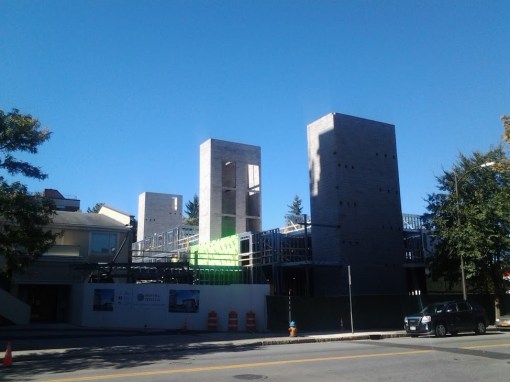
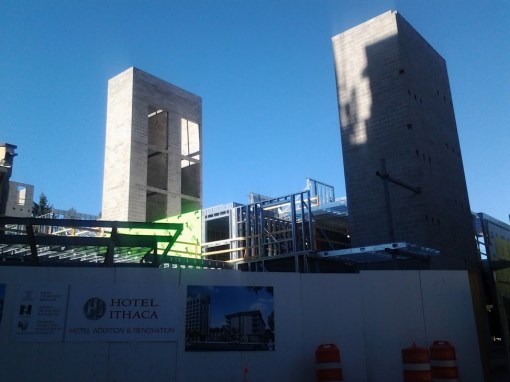
Hotel Ithaca Construction Update, 10/2016

12 10 2016

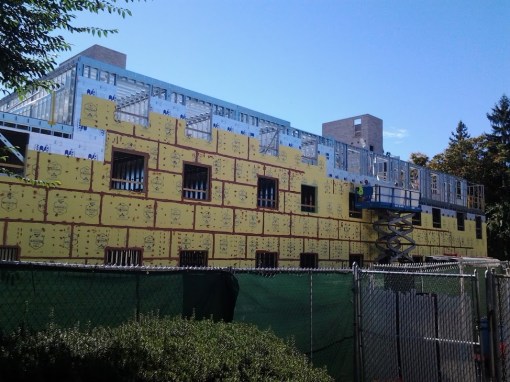
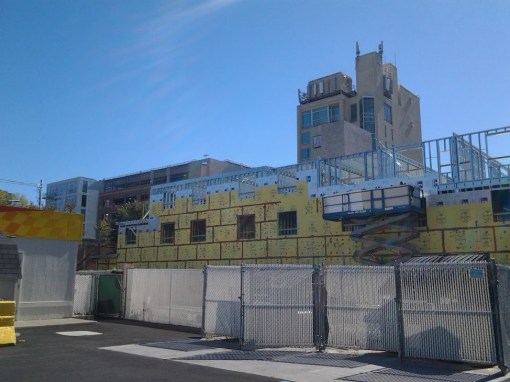
The Hotel Ithaca is moving at a pretty good clip. The stud walls are up to the third floor. If my notes from the August interview are right, the walls are assembled in sections off-site and trucked in for installation.

Most of the building uses R-Max polyiso insulation covered with Georgia-Pacific DensElement sheathing. The polyisocyanurate, a thermal plastic foam board, helps limit heat loss, and the DensGlass is gypsum panel coated with fiberglass mat, eliminating the need for spray-on waterproofing and fire-rated for the safety of guests (polyiso is a fire risk). The first floor by the elevator and mechanical spaces, and the areas under renovation by the lobby use US Gypsum Securock, and do not appear to have the polyiso layer. The change in sheathing, and use of R-Max might have to do with the expected heat loss from certain parts of the hotel, perhaps greater energy loss is expected from the hotel rooms than from the mechanical spaces. A peek inside shows exposed interior stud walls. The large space in the in the ninth photo will be a new entry area, coatroom and prefunction space.

A filing with Tompkins County indicates that M&T Bank is providing a $13,765,000 construction loan to finance construction, of which $1.6 million is going towards soft costs like legal fees and pre-opening administrative costs. The cost to furnish and equip the 90 new rooms and function/conference space is about $1,393,400.

20161007_124853 20161007_125437 20161007_125453 20161007_125510 20161007_125527 20161007_125553 20161007_125720 20161007_125725 20161007_125741 20161007_125826 20161007_125903 20161007_125910


Ithaca Marriott Construction Update, 10/2016

11 10 2016

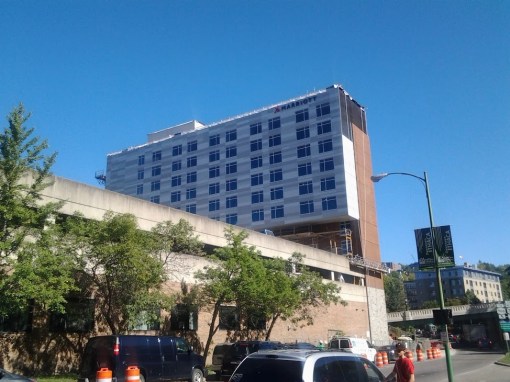
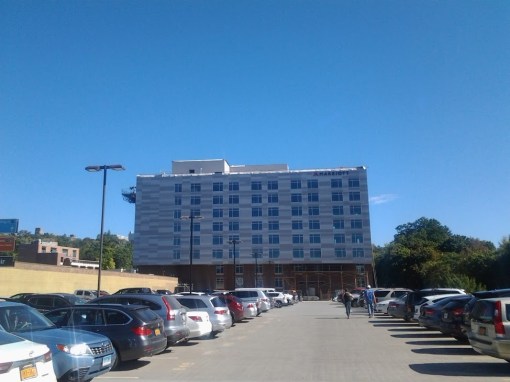
Home stretch for the Marriott. Official opening is November 15th. Although that means they’ll be opening towards the start of the slow season for the local hospitality industry, the general manager says they hope that it’ll give them a chance to work out any wrinkles in service before the lodging season perks up again in March. Hiring has been underway for service staff, with full employment expected to be somewhere between 50 and 60, 75% full time, with wages starting at $10 plus tips for restaurant wait staff, up to $18-$19/hour for other service positions.

From what can be found by playing on the Ithaca Marriott Downtown on the Commons webpage, a mid-week one-night stay in a king or double queen will set you back $195 at a minimum, while the weekends start around $269/night. A run-down of some of the amenities can be found on the website, or in the August construction update. The hotel will have 151 regular guest rooms and 8 suites, which are the rooms with the floor-to-ceiling glass at the corner of State and Aurora.

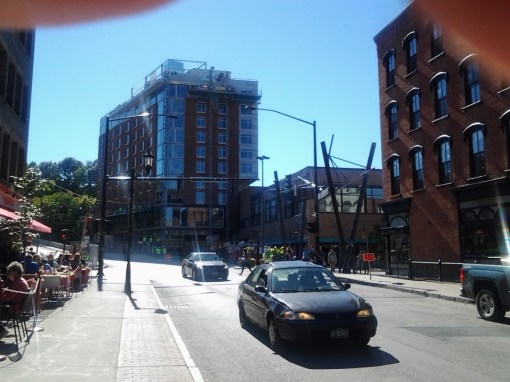
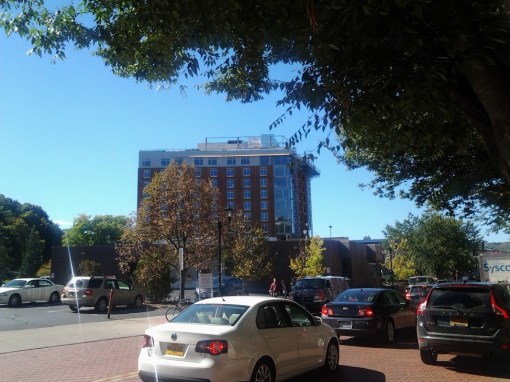
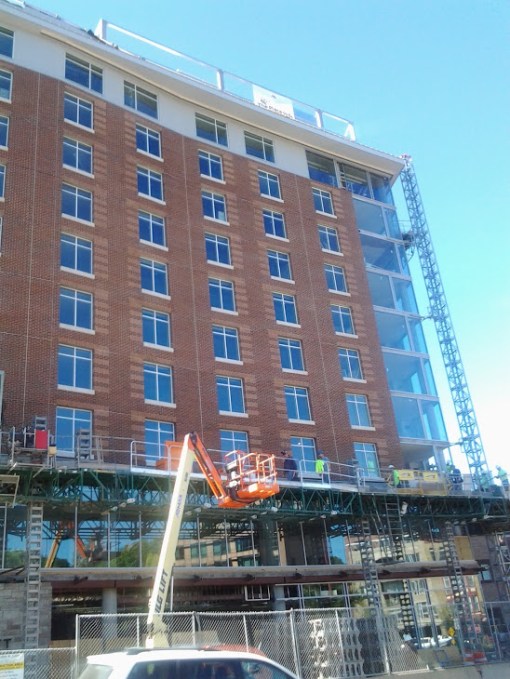
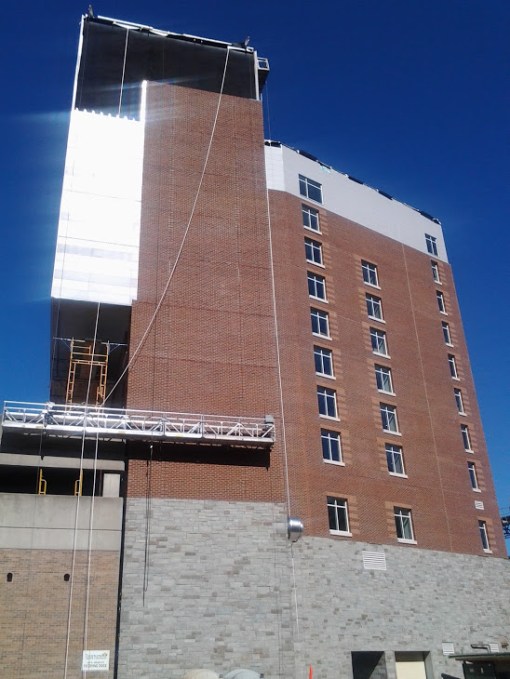
The Nichiha metal panels are almost complete, with just the west face exposed at this point. I did not expect them to be so bright, beyond the unintended gleam-o-vision of my camera. The rooftop mechanical penthouse has been framed but has yet to have its exterior panels attached. Some of the Marriott signage has been attached already. Most of the stone veneer has been attached, although the finishes for the Commons entrance are still a work in progress. Judging from the plastic sheets on the roof, the synthetic rubber membrane still has yet to be applied. Photos on the hotel’s facebook page show that the front desk is in and sheetrock has been hung and mudded in some places (the “mud” is a premixed joint compound used to cover joints and seams and to allow for a smooth finish for painting). The banner at the top of the penthouse says “The Place To Be”, with the Marriott logo at top.

20161007_123659 20161007_123741 20161007_123852 20161007_123941 20161007_124018 20161007_124049 20161007_124115 20161007_124119 20161007_124236 20161007_124312 20161007_124358 20161007_124615 20161007_124706


Previews and Reviews From the AIA Design Crawl

10 10 2016

Last Friday, several Ithaca-area architecture and engineering firms banded together to co-host an open house night at their locations across the city. Here are some of the latest and greatest plans are from some of the local designers.

The first stop was John Snyder Architects in Ithaca’s West End. On display were the Carey Building plans and other recent works, like the internal renovation of the South Hill Business Campus for CBORD.

The second location on the list was HOLT Architects at 619 West State, which was probably the most family-friendly of the hosts, based off of the pizza bar and the children’s play-room. HOLT had several new and in-progress projects they shared with the public that evening.

20161007_175436 20161007_175444

The Computing Center is looking to move out of the Cornell Business Park and into a new property to be built at 987 Warren Drive in the town of Lansing. The property is currently a two-story farmhouse and includes a vacant lot on the corner of Warren Road and Warren Drive, purchased by its current owner (an LLC) in December 2014. The new building appears to be a one-story structure.
20161007_175504 20161007_182158
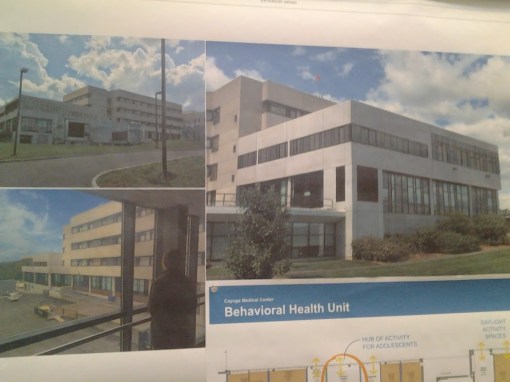
HOLT is arguably the local specialist for medical facilities and lab structures. Here’s a pair of projects recently completed at Cayuga Medical Center. The Surgical Services Renovation is a renovation and addition that includes space next to the front entrance, creating a new “face” for the complex. The Behavioral Health Unit is an addition on the northwest side of the building, and isn’t visible from most nearby roads and structures.

20161007_182103
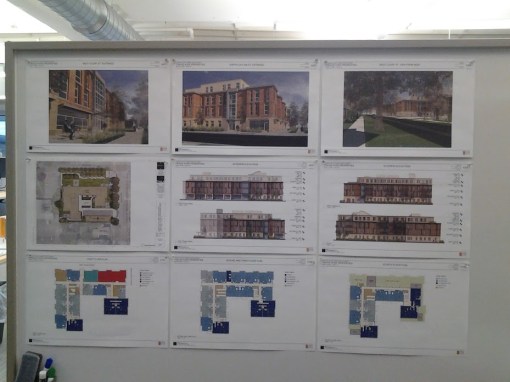
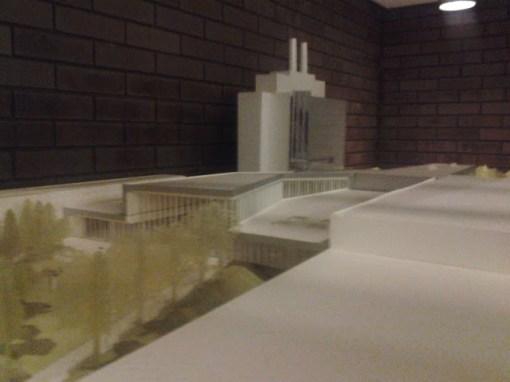
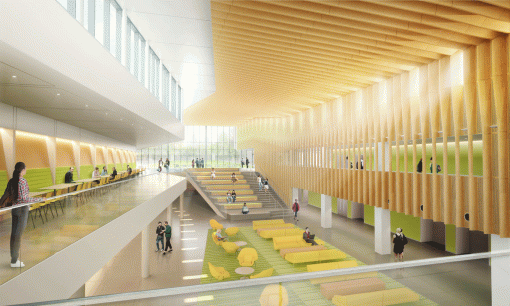
The online version of these will be showing up in the Voice soon enough, but here are the latest design plans for the Old Library site. The indoor parking was eliminated so that the fourth floor could be set further back, and the entire building has been pulled away from West Court Street. The building still has 57 apartment units for the 55+ crowd.

The next stops were at Taitem Engineering and SPEC Consulting. Taitem (which stands for “Technology As If The Earth Mattered”) serves as structural engineering for many local projects, focusing heavily on renewable energy sourcing and energy efficiency. The focus of their open house was a tour of their LEED Platinum, 120-year old building at 110 South Albany Street, which they said was only the fourth renovation of its kind to achieve Platinum designation. I snapped a photo of Taitem’s staff, but that was taken for the IV Twitter account.

SPEC Consulting had on display a couple of home renovations they have underway, a mixed-use building in Johnson City, as well as rehab of a vacant commercial building in downtown Binghamton into a 70-unit mixed use building. To be honest, I was more focused on the personal than professional when I was at SPEC – I ran into someone I knew from undergrad whom I hadn’t seen in nine years, who apparently settled in the area and married a SPEC architect.

20161007_193020

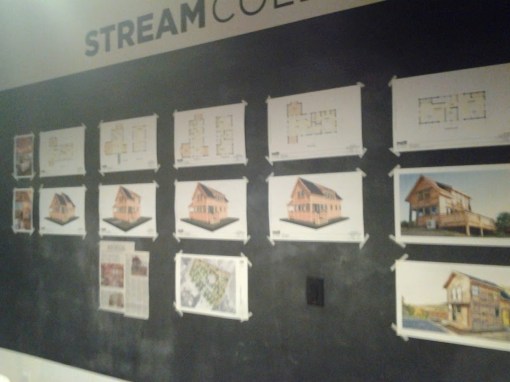
At STREAM, several projects were on display – 201 College Avenue, State Street Triangle concept drawings, and a room showcasing Tiny Timbers. According to Noah Demarest, this was the first time they had shown all the home plan designs together. Also there was Buzz Dolph, the entrepreneur behind Tiny Timbers.

Not shown here but on display were a pair of attractive design concepts for CR-4 zoning in Collegetown. They might become more than concepts at some point.

20161007_211521
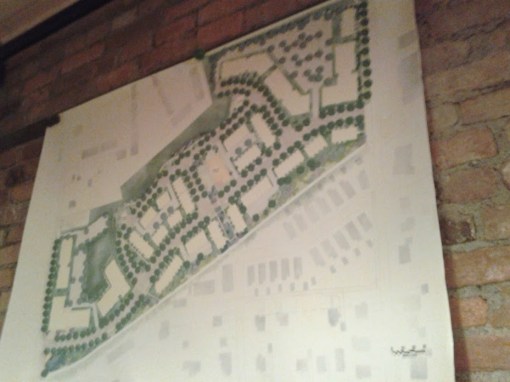
This is the latest Maplewood site plan, courtesy of Whitham Design and Planning. Here are the two big changes (previous site plan here) –

1. The Maple Avenue building has been broken up into two separate buildings.
2. Townhouses sit on Mitchell at the southwest corner of the site, replacing the multi-story apartment building previously planned.

The number of beds, previously 887, has probably decreased a little bit as a result.

I did not make it to Chiang O’Brien Architects, unfortunately. It looks like from their website they have a new project underway at SUNY Oneonta.


210 Hancock Construction Update, 9/2016

6 10 2016

I try not to sit on these for too long, but it’s been a busy week with the Voice.

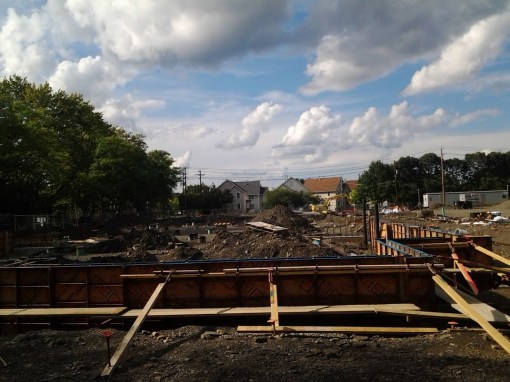
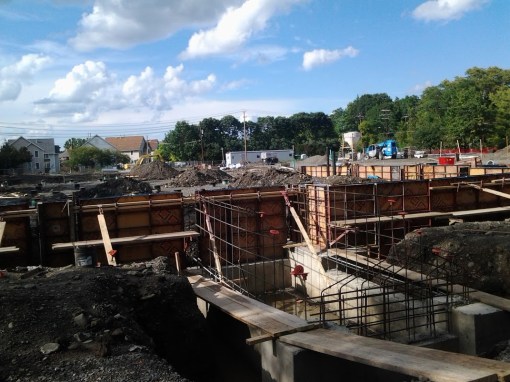
The main apartment building is in the process of having its foundation walls dug, formed and poured. The forms are put in place to hold the concrete as it is poured and cured, and then the construction team (led by Lecesse Construction) moves on to the next section. The rebar grid sticking out of the concrete gives it additional strength and rigidity. The steel piles are being inserted with the hydraulic hammer, which should be wrapping up any day now if it hasn’t already. The four-story apartment building is divided into four sections – the two with concrete pours underway, the southern two, will host TCAction’s daycare and non-profit office space. The northern two will host indoor ground-level parking.

The soil in Northside is not so great, much of it lies in the 100 or 500-year flood zone and is too unstable for less expensive slab/shallow foundations like what they use in many of the projects on the hills. For a large project like this, the safe, albeit more expensive and intrusive approach is to do a deep foundation. However, the wood-frame townhouses are small enough and light enough such that a shallow foundation can be used – you can see foundation work for the five rental townhouses in the last two photos. The seven for-sale townhouses will follow a little later this November, the original plan was to have them open in June 2017, but they have been pushed back to late fall 2017 as a result of the contractor switch.

It looks like, however, they have added the interest form for buying a townhouse to their website here. Under the working name “202 Hancock”, this $2.36 million project will have five two bedroom units (1,147 SF) to be sold for about $114,000, and two three-bedroom units (1,364 SF) for $136,000. They will be available to those making 60-80% of local AMI, or $37,000-$49,000/year. The townhouses would be a part of the Community Housing Trust (CHT), keeping them affordable even as they are sold to others in later years. More info on those units here. For those qualified and preferring to rent an apartment or townhouse, the form is here.

20160918_160842 20160918_160856 20160918_160915 20160918_160949 20160918_161026 20160918_161049 20160918_161140 20160918_161218 20160918_161258


Ithaka Terraces (215-221 West Spencer Street) Construction Update, 9/2016

4 10 2016

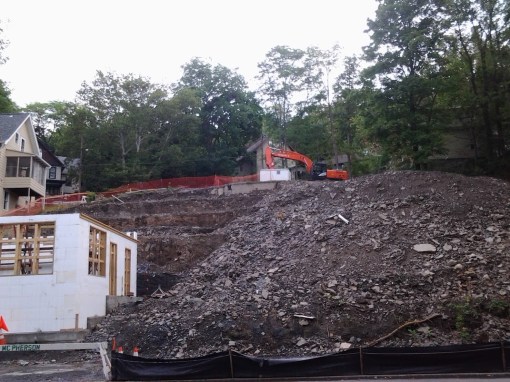
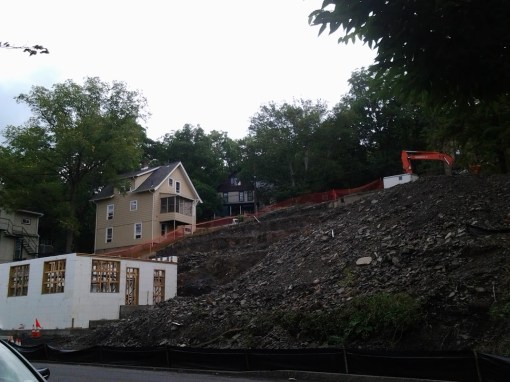
I wanted to wait until the Voice condo piece was published before putting these photos up. Work has started on the twelve condominiums planned for 215-221 West Spencer Street. The project, dubbed “Ithaka Terraces”, is the idea of Ed Cope, a retired Cornell biologist who owns the local property management firm PPM (Premium Property Management) Homes.

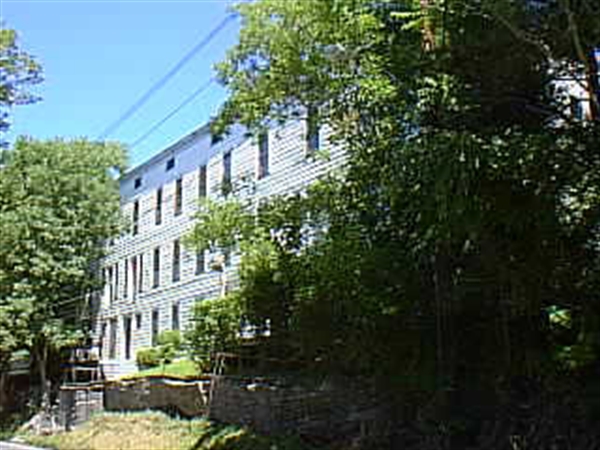
215-221 West Spencer Street is a steeply sloped 0.47 acre site that was previously home to a multistory apartment building. The building had fallen into disrepair by the early 2000s, and the city bought the property for $530,000 in 2003 with plans to turn it into affordable housing. However, that plan was thrown off track after the building burned down not long afterward. The site was then used as an informal parking lot by nearby residents for a number of years while the city figured out what they wanted to do with it. The city deeded the property to the Ithaca Urban Renewal Agency in 2013, who attempted to sell it as affordable housing, but found no takers at the $100,000 starting bid. Cope picked up the property when it was offered for sale to general housing, paying $110,000 in March 2015. Sketch plans were presented a few weeks later at the March Planning Board meeting.

The parcel is zoned R-3a, and the property required some variances for having parking within rear yard setback, which the planning board and BZA were comfortable with given the steep topography of the site. The property was approved by municipal boards last fall. Long story short, it’s classically-inspired urban infill.

The plan is to have the buildings ready for occupancy by September 2017. Units range from $265,000-$390,000, depending on size and location. Two of the units are 3-bedrooms, and the other ten are two-bedrooms, ranging from 637-1311 SF. For those interested, more information can be found at the just-activated website for the project here.

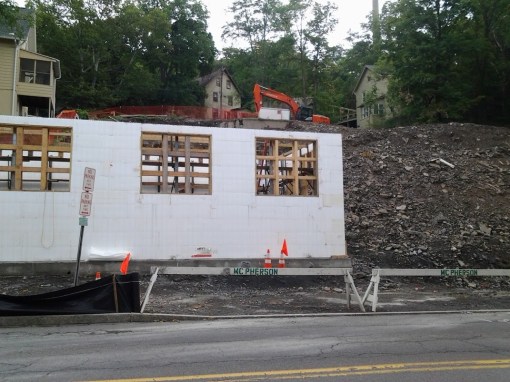
Along with Ed Cope (operating as “Net Zero NRG LLC”) on the project team is architect Noah Demarest of STREAM Collaborative, Taitem Engineering for structural engineering, T.G. Miller P.C. for site surveying and civil engineering, and green building expert AquaZephyr as general contractor. All of those businesses are local. The sawhorses in the photos say McPherson Builders, but they could be a subcontractor, or on loan.

In the now two-week old photos below, Building A is already under construction, while the site for building C has been leveled. More specifically, the foundation has already been dug, formed and poured for Building A, and the first-floor walls have been erected. Like their little pioneer across the street, The buildings are designed to be net-zero energy capable. The slab foundations will be insulated with R15 rigid foam, and the first floor walls use insulated concrete forms (ICFs) similar to the Fox Blocks used for the Thurston Avenue Apartments a couple of years ago. The walls are put together block-by-block, with concrete poured into the inside gaps. This provides insulation on both the interior and exterior of the wall.  The building will use electric air source heat pumps for winter heating and summer cooling, with the electricity provided from a solar array Cope owns in the town of Caroline. The buildings will seek net-zero certification once they are completed.

Here’s the press release from Ed Cope that I received as part of our Q&A:

One of my primary interests in Ithaca housing is to help improve the overall community. My development goals all come from that objective, and so for the past few years I have worked to identify sites that are a very inefficient use of space, and are therefore mostly vacant and difficult to build on which is why they are still in need of development.

This combines with my longtime interest in efficient use of energy which includes building energy-efficient buildings. This interest leads me into risky but rewarding projects and works well with the city’s infill development initiatives. At PPM Homes we have transformed many of the older houses that we have acquired into much more energy-efficient dwellings.

One of our successes was the complete rebuild of a rundown property on a steep and difficult site at 201 S. Aurora. We were able to transform this property into a beautiful and more appropriate “gateway” to South Hill, a sharp contrast to the decrepit and crumbling house it once was.

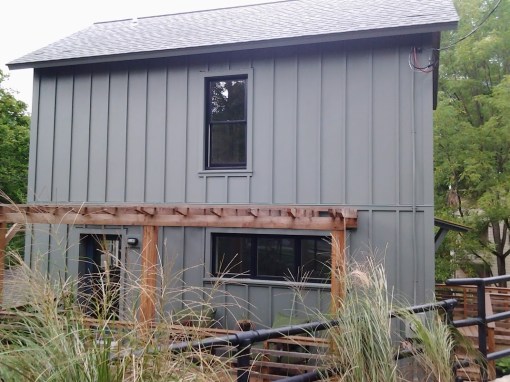
The Ithaka Terraces project is our second effort at completely new development, the first being across the street at 228 W. Spencer where we took an impossibly small and impossibly steep postage stamp of a site and built a netzero energy 2-bedroom house.

This house, which is now on the market, is currently powered completely by PPM Homes offsite solar array which incredibly also provides all of the electricity for many of the properties that PPM Homes manages.

The condos at Ithaka Terraces will also be powered by an additional solar array that we will be built by Renovus Energy next to our current array which is 15 miles outside of Ithaca.

Both of these properties on West Spencer Street are built on sites that are extremely difficult on which to build. They have been vacant for years and would probably have remained vacant for years to come. Special engineering consideration due to the peculiarities of building on the sites has been handled by Tatiem Engineering.

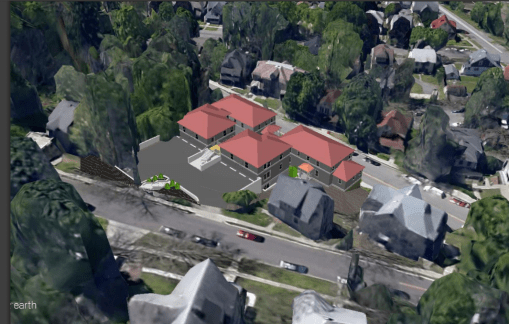
The Ithaka Terraces project also responds to the recognized need for condominiums downtown. Three blocks from the Commons and consisting of 12 two and three bedroom units, these condominiums will provide upscale quality and energy-efficient living.

In the interest of reflecting Ithaca’s namesake our design will add a pleasing Greek aesthetic to this part of West Spencer Street. The project should be complete by this time next year and be available for reserving units by early summer. Our website for the project is up and running at IthakaTerraces.com .

20160918_144152 20160918_144204 20160918_144222 20160918_144249 20160918_144307 20160918_144337 20160918_144604

215-221_spencer_v3_1 215-221_spencer_v3_2

215-221_spencer_v2_1


Upson Hall Construction Update, 9/2016

2 10 2016

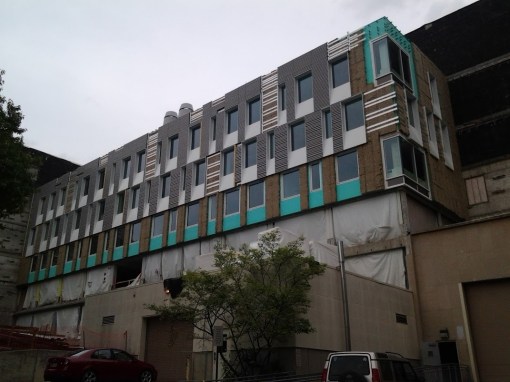
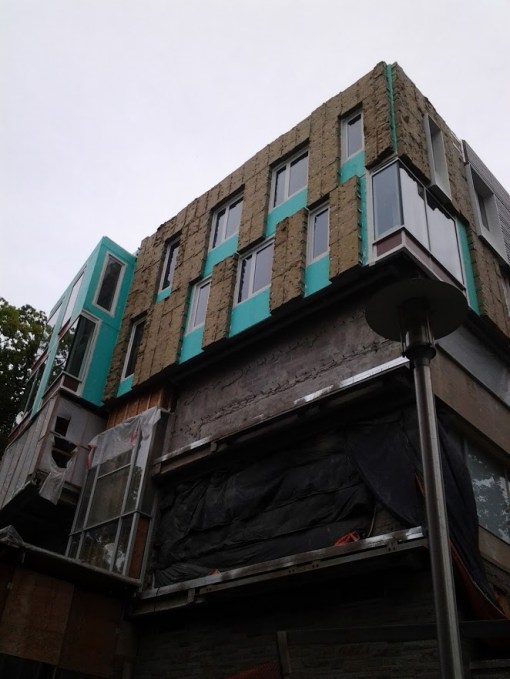
Work on the upper levels is progressing. Slowly but steadily, mineral wool is being laid and aluminum clips are being installed for the terra cotta panels. It looks like the most progress has been made on the east facade. The windows in the bump-outs have received aluminum trim. Although the project update page hasn’t had a fresh post since early August, the upper floors (3-5) should be occupied by this point and many of the utilities systems have been overhauled. Most of the interior work is now focused on the lower levels (Basement, and Floors 1 and 2). The Pike Company of Rochester will continue the interior renovations during the academic year, but as long as all goes to plan, the building should be wrapped up by August (landscaping is another matter).
20160918_135255 20160918_135339 20160918_135401 20160918_135507 20160918_135535 20160918_135628 20160918_135742 20160918_135846


Cornell Veterinary School Expansion Construction Update, 9/2016

1 10 2016

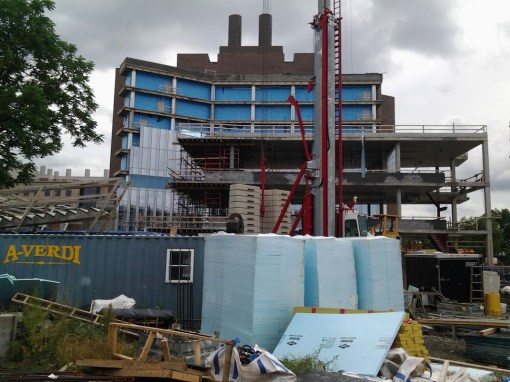
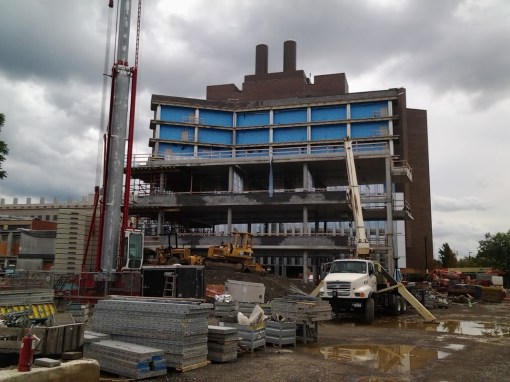
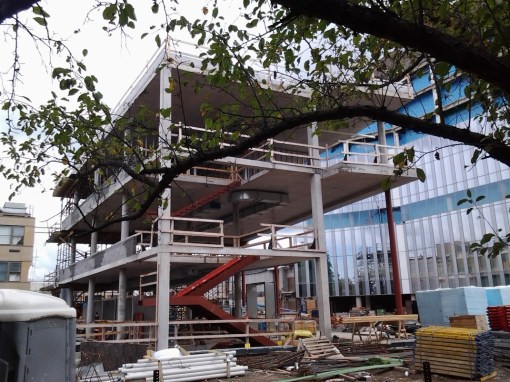
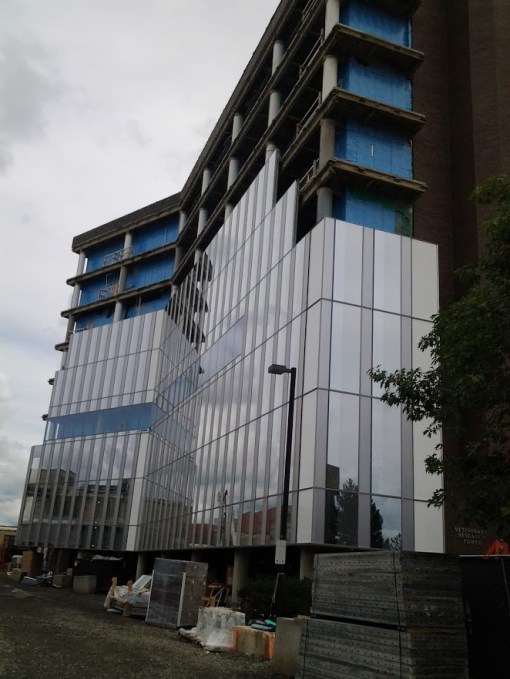
Check out that glass curtain wall going up on the Vet Research Tower. The lighter hues vs. the original dark glass gives the building a airier, less ominous presence. We’re starting to see some HVAC rough-ins going in the new library/administration building. The deconstruction of existing wings appears to be wrapped up and it looks like works has started on the frame of the new academic building to go between Schurman Hall and the VRT. Although not visible from these photos (because it is a pain to maneuver around the vet school), Cornell and its contractor Welliver have been working on the foundation and underground utilities, and construction of a new second-floor cafeteria space.

A separate project, the Community Practice Service Building, is in the design phase. CPS is what you think it is – fourth-year students, as part of their final year of education, provide low-cost veterinary services to the greater Ithaca area. It will replace the Poultry Virus Lab, which will come down in December. The CPS Building will take just under a year to build.

For those with some serious dough lying around, the new academic building’s naming rights are available for $20 million, and the administration building’s naming rights are being offered for $7 million. For the rest of the 1%, a lecture hall goes for about $1.5 million, and regular classrooms for $250,000. The most inexpensive options appear to be tutorial rooms for $75,000.

20160918_130307 20160918_130105 20160918_130035 20160918_130024 20160918_130005 20160918_125934 20160918_125838 20160918_125829 20160918_125806 20160918_125726

20160522_131445 20160522_131417

3f5656954f5a3ef1021519c03b4abe9f

cad048742a281097e5667382eced4233 eea787361994de9625f74b19aa50d91e