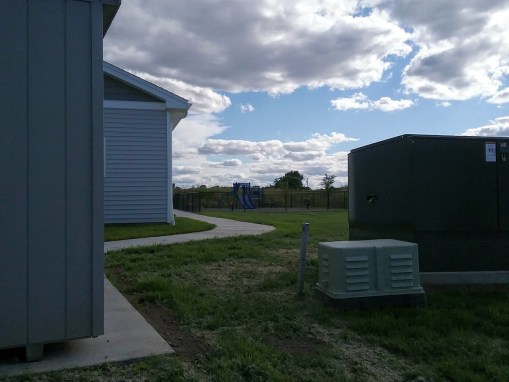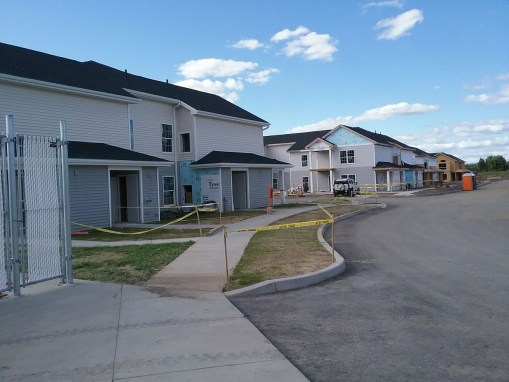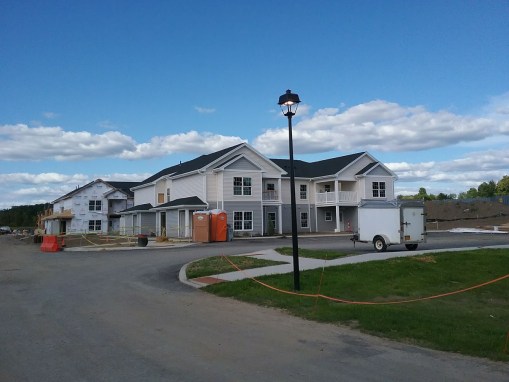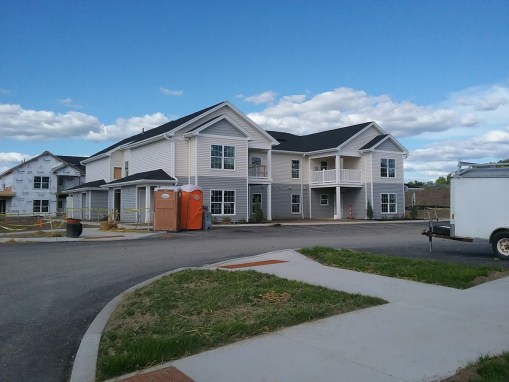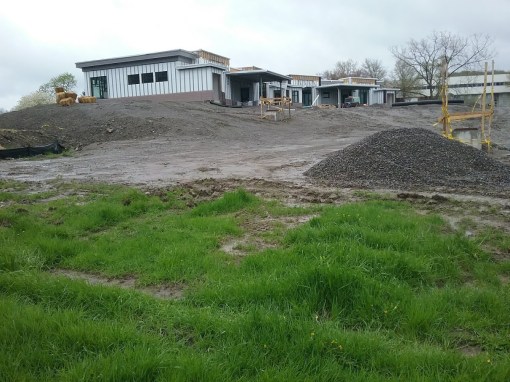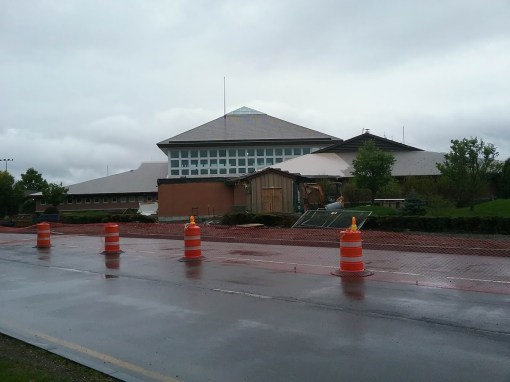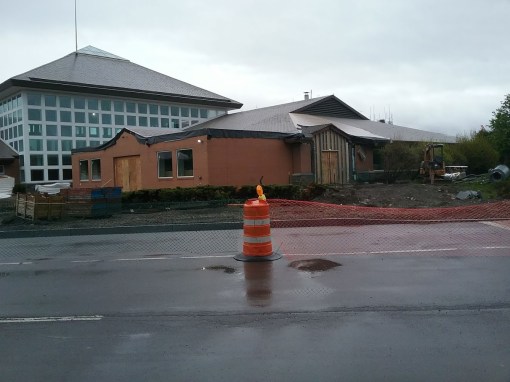
Village Solars Construction Update 9/2019

13 09 2019

So there’s been some news regarding the Village Solars buildout. The community center is in flux. The original proposal was for a mixed-use building with ground-level commercial and community amenities, and 20 one-bedroom apartments on the upper levels. Now, it’s an unknown. Per the Lansing Star:

“(T)hey will relocate the community center site to a location more central what will become an enlarged, single development. The lower floor would have amenities like a restaurant, a work-out center, and other features, with apartments on the upper floors. If not, they would build the smaller community center as already accepted by the Town.”

That means that the community center is being moved to another location on the site, and potentially take a different physical form, though programmatically it remains the same (commercial/community use on the ground level, residential above).

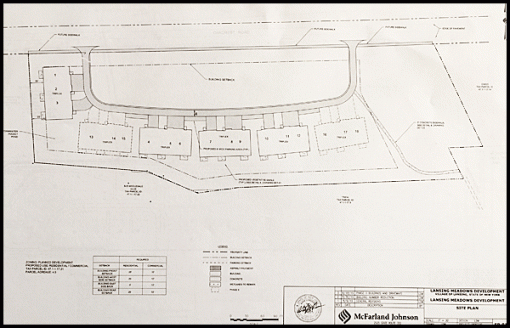
When the article says a more central location, it refers to the 96.44 acres of land east of the complex. The Village Solars are owned by Steve Lucente, and the undeveloped land to the east by his father Rocco, who had purchased it in 1960 and was recently planning his own apartment complex (schematic in the early Village Solars site plan below). My understanding is that the two Lucentes didn’t get along at all – I was warned to never bring up Steve when interviewing Rocco. After Rocco passed away about 18 months ago, Steve saw an opportunity to purchase the vacant land to the east from Rocco’s estate, and build a bigger complex in future phases (as yet unapproved). The purchase offer, at least check, is still being reviewed by Rocco’s Executors.

However, this created a problem. Local Law #6 of 2017, the Planned Development Area (PDA, like Ithaca’s PUD it’s D-I-Y zoning) with the town, stipulated that the community center had to be built and open by the end of 2020, and only one more apartment building could be built before it was done. So Steve Lucente and his project team had to make the case to the town of Lansing Planning Board and Town Board give them time to purchase the land and design the new community center, and let them do three more apartment buildings in the meanwhile to keep on pace with their construction plans. If the offer feel through, he’d build the community center starting next summer and finishing in 2021, a year later than initially planned. Generally, of all the communities to have to make such a request, Lansing would be one of the most accommodating.

Officially, only the Town Board really decides PDA amendments. But here, the Town Board was uncomfortable with the request at first, referred it to the Planning Board for guidance, and then after the Planning Board weighed in, it returned to the town board with a recommendation to consider during voting.

This caused some debate, with some of the planning board feeling like their credibility was taking a hint with this latest delay (the community center was delayed at least once, hence why it was explicitly stated in the 2017 PDA revision), and at least one member of the town board feeling as if they were purposely misled since banks would have received the notice of intent to modify the plans several months ago, but Steve Lucente countered that it was not a firm plan and only became firm later in the year when the offer looked like it had a good chance of being accepted. On a 3-1 vote, the town is permitting three more apartment buildings and only two more, and expects a community center to start next year in either the old or the new location.

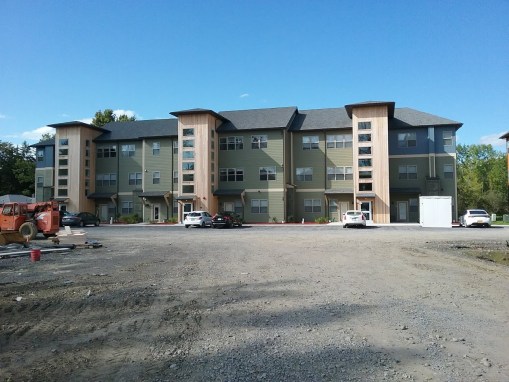
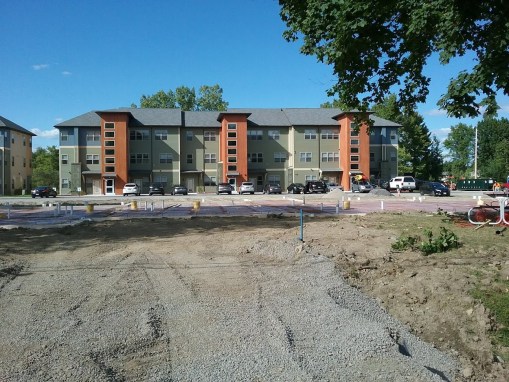
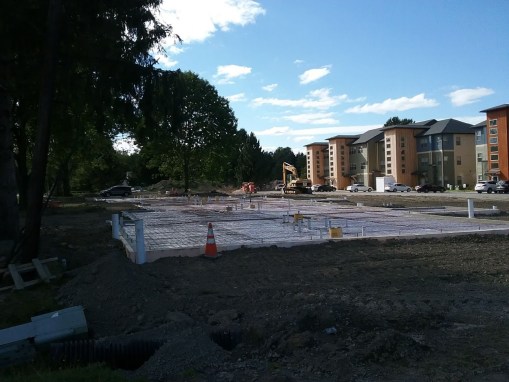
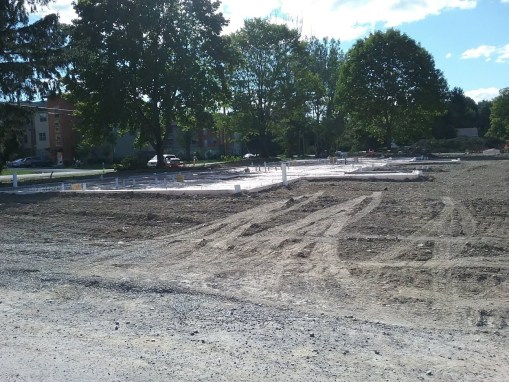
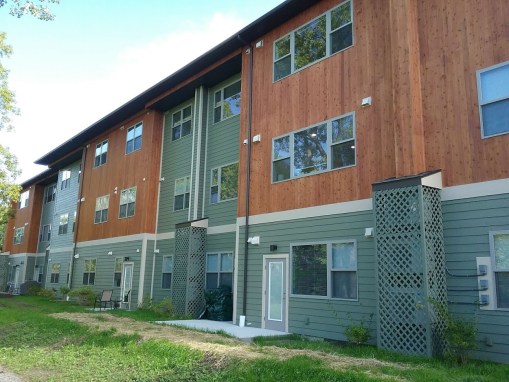
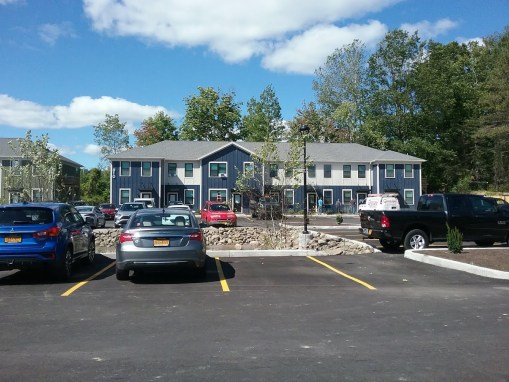
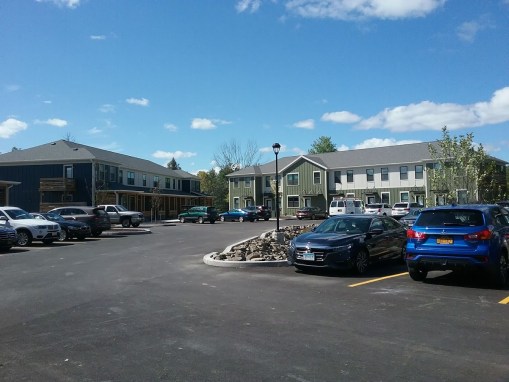
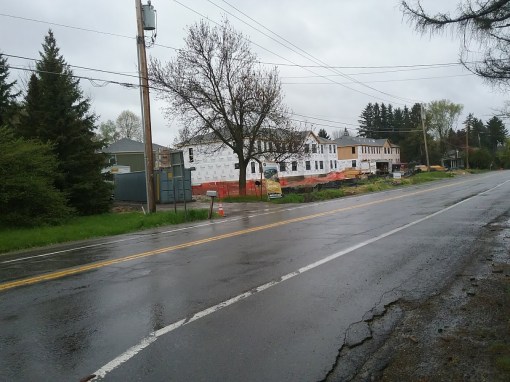
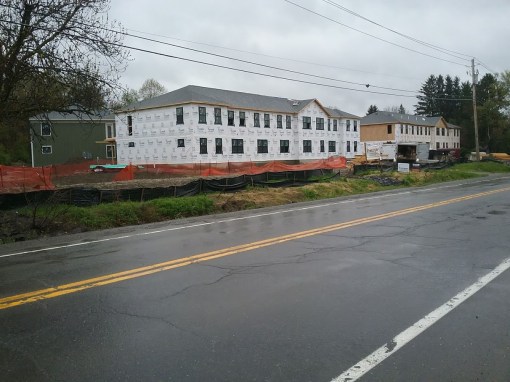
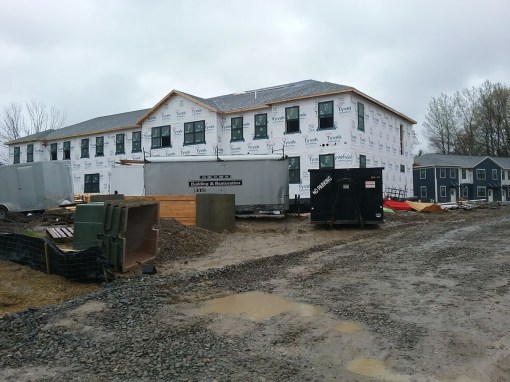
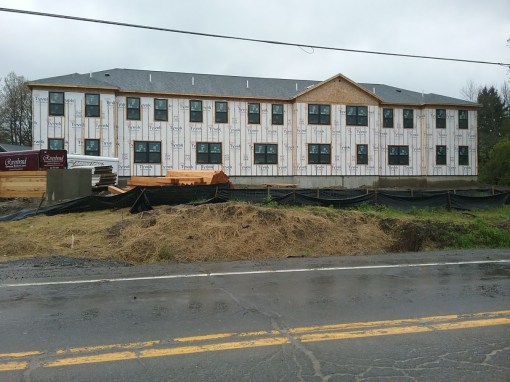
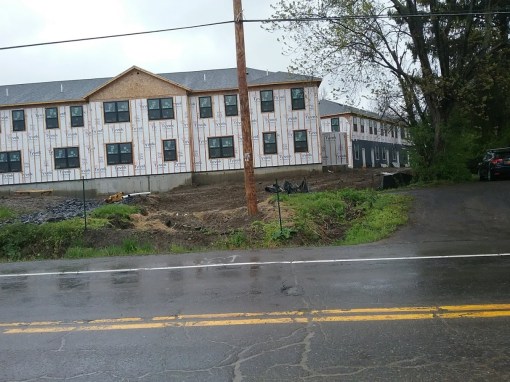
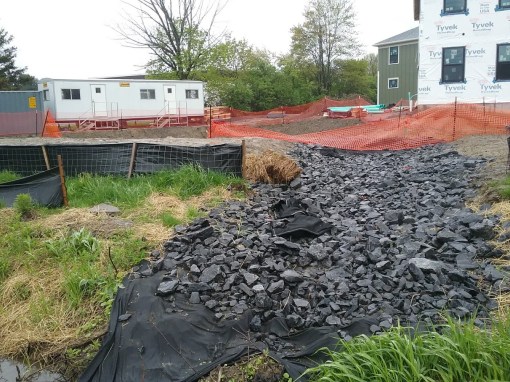
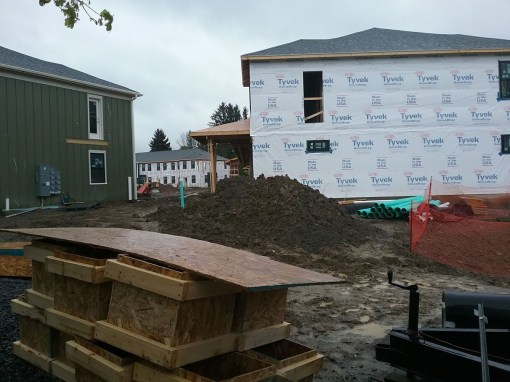
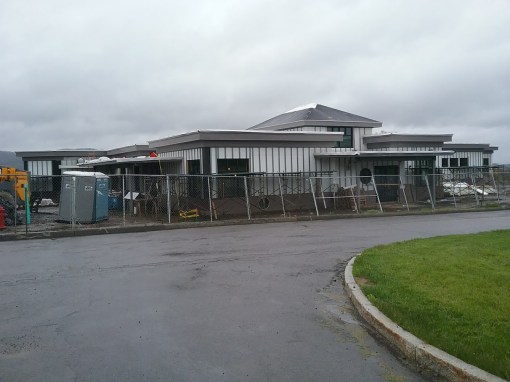
At this point, the last of the originally permitted buildings, 24-unit 36 Village Circle North (3 three-bedrooms, 6 two-bedrooms, 3 one-bedrooms and 12 studios) has had its foundation footers poured and is awaiting the concrete slab pour. The tarp and mesh are in place for stability and added strength respectively, and you can see the below-ground utilities poking out, capped for the time being. A surveyor was on site during this visit to make sure everything was level and in good order before the wood frame starts to rise. The three newly permitted buildings are all reconstruction of existing 8-10 unit buildings, into two 18-unit buildings (2 Village Place, 22 Village Place) and one 24-unit building (117 Village Circle North).

Apparently, occupancy rates have been strong. Building “L” (113 Village Circle North) opened in June, and 22 of its 24 units were spoken for, with the other two rented shortly after.

As for the future, it’s not clear. Something will be proposed that may very well require more PDA amendments, but we’ll see. The elder Lucente’s complementary apartment complex was supposed to be around 300 units in size (built over several years), and it wouldn’t be a surprise if the Village Solars plan expands by a similar amount.


Milton Meadows Construction Update, 9/2019

9 09 2019

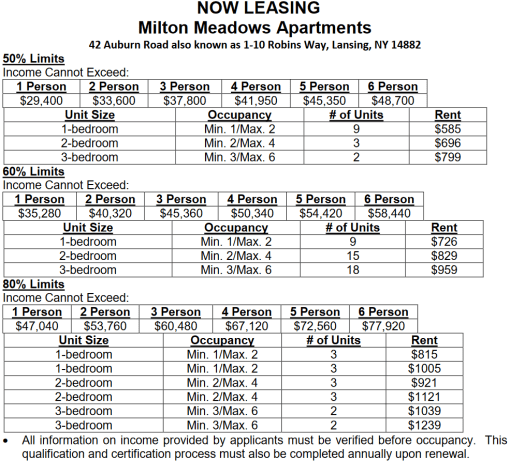
The buildings are not yet complete, but Milton Meadows is accepting applications for its 71 units (the 72nd is for an on-site manager). Income qualifications are 50-80% of area median income with first preference to veteran’s; specific on the income levels, monthly rent and associated details can be found at the end of this post, and online on the NYS Homes and Community Renewal website here.

The initial application round was from June 9th to July 9th, and applications were selected by a housing lottery. What that means is that once applications are gathered, those that qualify are put in random order and given a log number. From there, the developer begins the review process starting with the lowest log number as well as any preferential applicants. The lower one’s log number is, the more likely one is to hear back from the lottery. If there are any units remaining after the lottery is complete, those will be filled with later applications. If they’re all full, then applicants will be hanging out on a waiting list. That could be a few months, or longer. INHS has been known to take a couple years to make it all the way through its backlog for its more desirable unit sizes and locations.

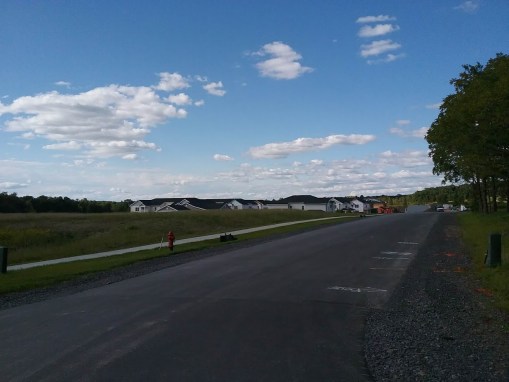
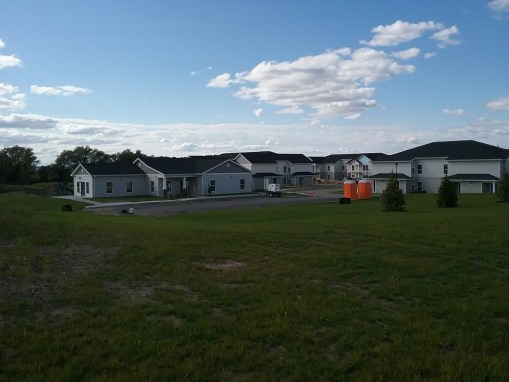
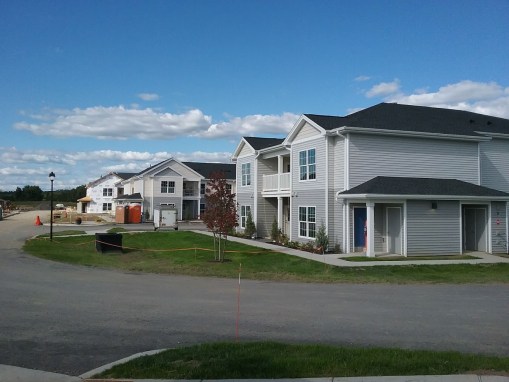
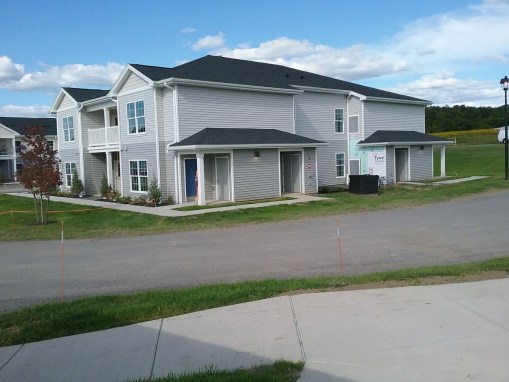
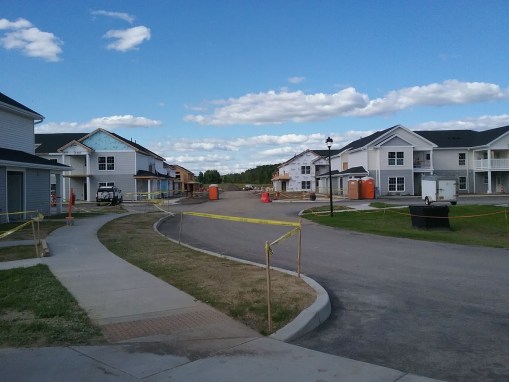
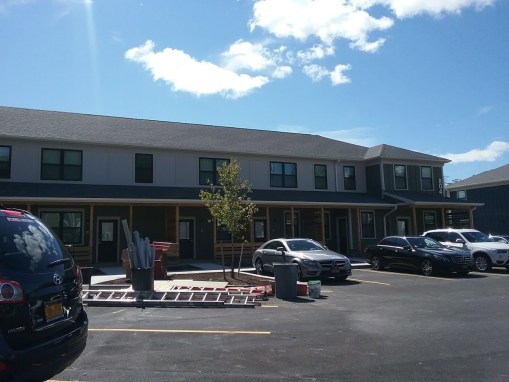
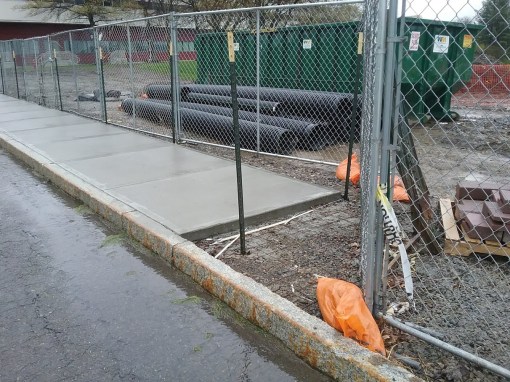
The nine apartment buildings generally progressed in the same order as their addresses. 1 Robin’s Way (42 Auburn Road), the community center, is essentially done. 2 Robin’s Way, the southeast corner building with eight 1-bedroom units, will be ready for occupancy by the end of the month. In this southern portion, the lighting and sidewalks have been installed/poured and even the grass seed has been laid. From there, buildings go backwards in the construction timeline – vinyl siding (probably Certainteed), a couple varieties of housewrap (Tyvek and a second blue-faced material), window and door fitting, and framing. 10 Robin’s Way, another building with eight 1-bedroom units, is just getting its shingles attached to the roof, and is otherwise fully framed but not much further along than that. 10 Robin’s Way will be ready for occupancy in the December time-frame, about three months later than first anticipated.

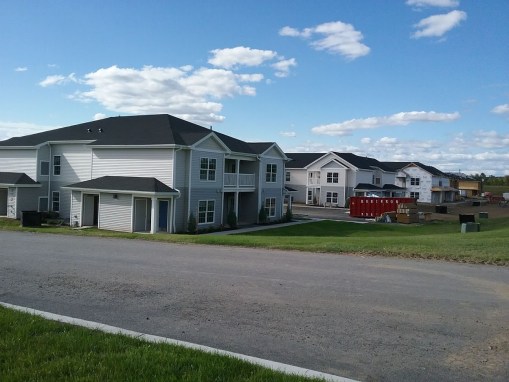
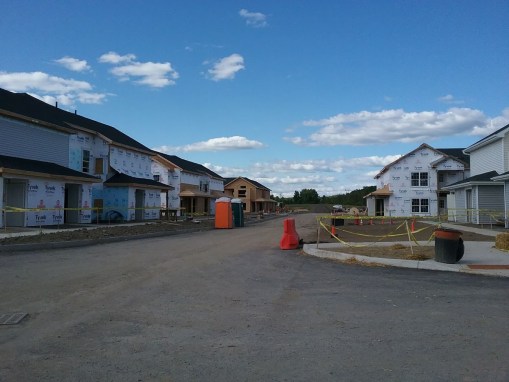
To give an idea of the visual differences between the building configurations, which come in eight one-bedroom, eight two-bedroom and eight three-bedroom flavors, the first photo shows a three-bedroom building on the left, a two-bedroom building in the middle, and a one-bedroom building on the right.

One kinda wishes they had gone with a more visually interesting color palate for the vinyl siding, which is two shades of grey and a tan, but chances are, it was whatever they could get that was durable and cheap in bulk. The early renders showed a different if still soft color palate.

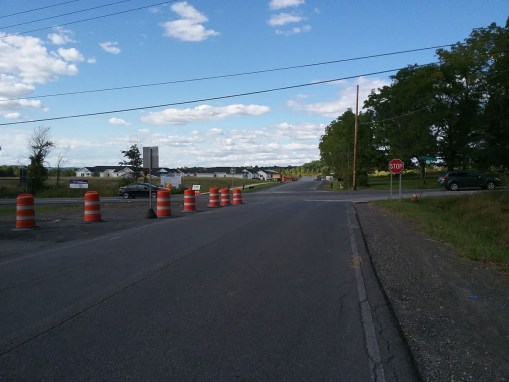
Also in progress is the realignment of Woodsedge Drive with Louise Bement Lane, to make them a proper four-corner intersection. This is being paid for with a $75,000 state grant with in-kind labor from the town.


TC3 Arthur Kuckes Childcare Center Construction Update, 9/2019

8 09 2019

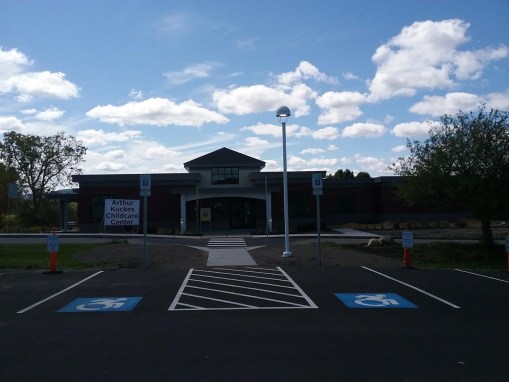
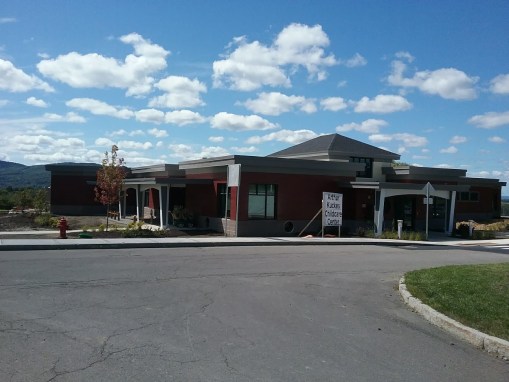
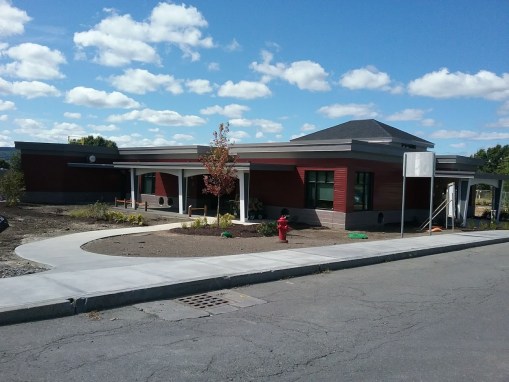
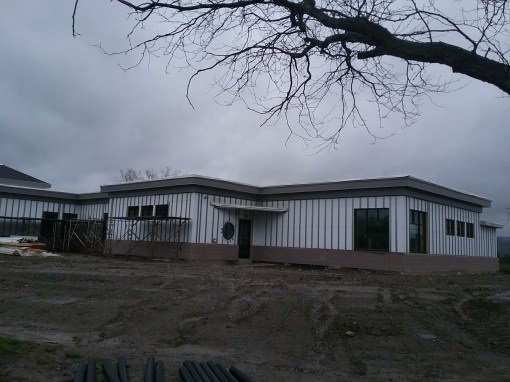
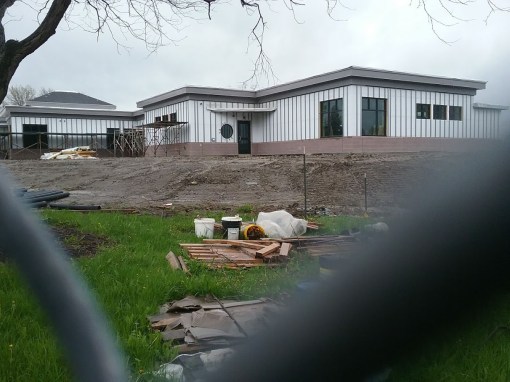
Another project to move into the “complete” column. The $6.5 million, 9,875 SF Arthur Kuckes Childcare Center has opened its doors for its young occupants. Interest in the new childcare facility has been strong enough that the facility is already full and has a waiting list, proof positive that affordable and flexible childcare options are in great need in Tompkins County.

Only signage, exterior landscaping and play areas remain on the to-do lists. Photos are limited because construction workers don’t mind their photos being taken, but parents with their young kids do.

Local architect Claudia Brenner designed the new facility, with Lansing’s Dende Engineering on board as a structural engineering consultant, T.G. Miller for surveying and civil engineering work, Jade Stone Engineering PLLC of Watertown for mechanical, electrical and plumbing design and engineering, Ithaca’s TWMLA for landscape architecture and Albany’s Ran Fire Protection Engineering for the sprinklers and other fire suppression systems.

More information about the project and Arthur Kuckes can be found here.


802 Dryden Road Construction Update, 9/2019

8 09 2019

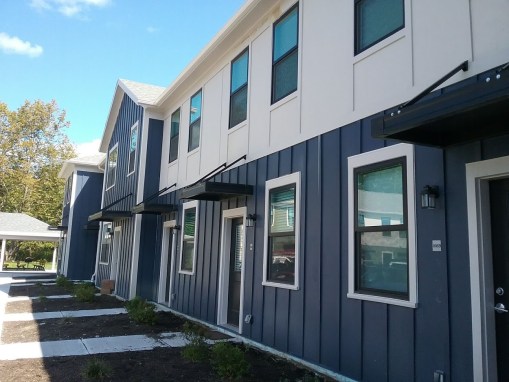
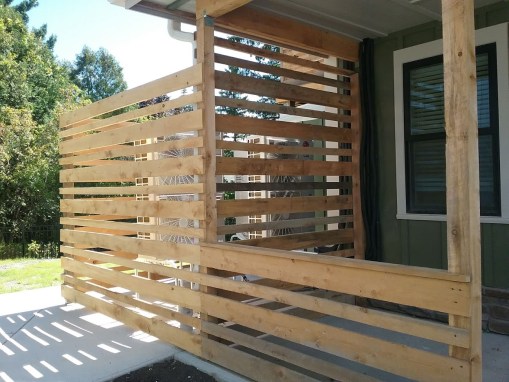
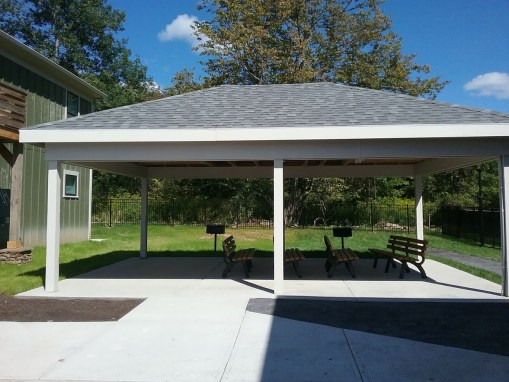
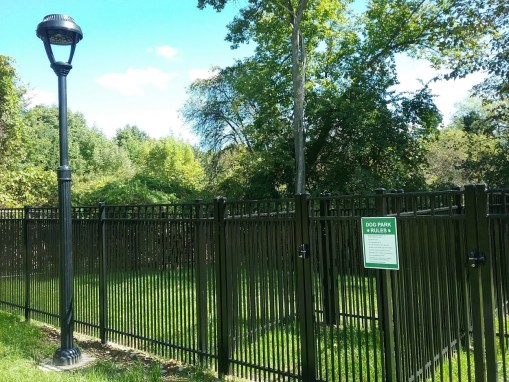
It’s safe to declare this project as done. A site visit on Friday had some landscapers on site, and a small crew powerwashing the construction dust off the vertical lap siding. The final product is true to the renderings (that’s less common than one might think), the biggest difference I can see is that the pavilion used unpainted wood and corner brackets in the renders, and it’s painted without brackets here. Since the website for the apartments uses renderings in place of its “photos” page, let me be the one to supply the first photos of the finished product.

All things considered, the design is fine, and by being in a less settled part of Dryden right next to Cornell, it draws less attention from Varna residents who might otherwise not be fans if it were closer, and it’s right next to its primary place of “employment”, making for a minimal commute and lower vehicular traffic presence. In addition, with 108 bedrooms, that’s about 108 fewer students and student family members competing on the rest of the local market (these are geared a little more towards graduate/professional students, and some of those come to Cornell with spouses or children in tow).

The developer, Maifly Development of suburban Pittsburgh, did explore purchasing neighboring lots for a second development, but there are no indications that this has been pursued further. Maifly is in growth mode and purchased the under-construction project from the original developer, Modern Living Rentals, in a $2.075 million deal in September 2018.

For the sake of noting it since the emails come in regularly, the Trinitas plan down the road is in a holding pattern while they complete a study of infrastructure needs and impacts as part of the State Environmental Quality Review (SEQR). Other than that, I’m not aware of any other projects undergoing or close to undergoing site plan review in the Varna/366 Corridor.

Granger Construction of East Syracuse led the buildout, STREAM and John Snyder Architects designed the townhouse strings, GMB Consulting Services did the LEED score analysis, T.G. Miller P.C. handled land surveying and Marathon Engineering tackled the civil engineering work – Marathon’s Adam Fishel shepherded the project through the town boards. M&T Bank provided the $8.6 million construction loan.

Before:

After:


News Tidbits 7/4/19

4 07 2019

1. According to the village of Lansing Code Enforcement office, IJ Construction (the Jonson family) will be starting construction on another “6-plex”, or another six-unit string of for-sale townhomes on the southwest corner of the intersection of Bomax Drive and Nor Way. The units being completed now have sold at a decent clip, with two units sold and a third pending. I believe offhand they have to do streetscape / street lighting improvements before the other three can be sold.

In all probability, while the finishes and details will likely differ as they have in all of the townhome strings at the Heights of Lansing development, these will likely be 3-bedroom, 3.5 bath 2200-2400 SF units intended for sale in the upper 300k – lower 400k range. Previous units have included granite countertops, stainless steel appliances, electric heat pumps and other premium and/or eco-friendly features. Expect these stick-built units to be ready for occupancy sometime next spring.

Meanwhile, the Pizza Hut at 2301 North Triphammer Road is for sale, and the code enforcement officer had heard a rumor a hotelier was looking at it. However, at present, the 3,003 SF 1990s building is still for sale, with a listing price of $995,000. At 1.29 acres, the property could comfortably accommodate a 60-80 room hotel provided it was 3 floors, which is what the village allows. The more recent minutes suggest that the owners are looking for ideas, and that Pizza Hut will be calling it quits regardless.

https://platform.twitter.com/widgets.js

2. The proposed downzoning for the 300-500 Blocks of West State Street is being sent back to the Planning and Economic Committee for further revisions. The Common Council voted 8-2 (1st Ward councilors Cynthia Brock and George McGonigal opposed) to explore proposed amendments by councilor and 2nd Ward/State Street Corridor rep Ducson Nguyen. The amendments include maximum facade length, a hard limit on maximum footprint, and a 4 floor setback / 6 floor max vs. the 3 floor setback / 5 floor allowed.

3. Common Council also voted unanimously to support the INHS PUD for the Immaculate Conception Site. While some quibbles were had for more for-sale units and for larger apartment units for families (3 bedroom+ units are historically the hardest units to fill because of the limited number of applicants), the board expressed appreciation for the project on its merits and gave them the green light to go ahead with review by the Planning Board. The $17 million mixed-use project, which will include several thousand square feet of non-profit office space (the exact amount is in flux) and 78 housing units, is aiming for a Q4 2019 – Q1 2022 buildout, pending grant funding.

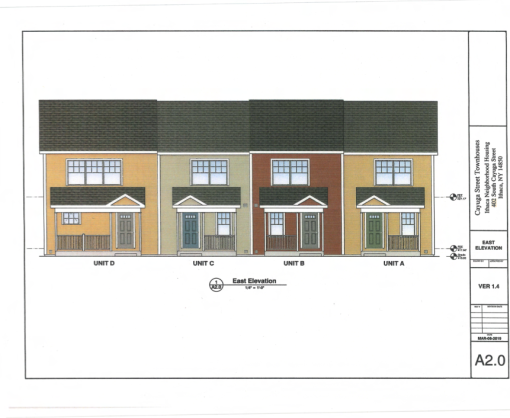
4. Also unanimous votes – a vote to support City Harbor’s funding application to the state for grants to fund the public proemande to be built at the development; the award of $70,000 in CHDF affordable housing grant funds to the 4-unit 402 South Cayuga Street for-sale townhome project by Ithaca Neighborhood Housing Services (INHS); cleanup of accessory dwelling code language and some law tweaks (not the same as infill), and a resolution to continue looking at a joint city-county police facility.

5. In potentially big news, thanks to a bipartisan effort of Democratic Assemblywoman Barbara Lifton and Republican State Senator Tom O’Mara, Tompkins County (and only Tompkins County) is now legally permitted to use county funds to support affordable housing development and preservation.

Here’s why that matters. Some of you might be familiar with the joint city-county-Cornell Community Housing Development Fund, which disburses a few hundred thousand dollars each year towards affordable housing projects, up to $400k for an owner-occupied project, and $300k for a rental, supporting the renovation or construction of 556 units since the program launched in 2009. A year might see $600-800k in grants disbursed.

Now here’s the caveat to the city and county contribution; it’s limited because those are federal and state grant funds. They were never allowed to fund a project directly, another government body was the middleman, and it takes time and effort to get those grant dollars back down the line. That slows down the development of affordable housing, and if the grants aren’t awarded for whatever reason, it could greatly curtail the CHDF, which creates the kind of uncertainty that developers seek to avoid, and less likelt to hash out a plan if they think the fund is ever at risk.

CHDF funds are often seed money; they’re hardly ever large enough to fund the development of an affordable housing project on their own. But the awarding of funds shows the community is interested in a certain project, and that development team can then pursue complementary (and usually much bigger) funding sources with a greater chance of being awarded grants. Typically, the funds aren’t disbursed until the project has all of its funding assured and is ready to go – for example, the county’s $100k portion of the $250k awarded to Lakeview Health Services for their 60-unit West End Heights projects in Round 16, is only being voted on to be disbursed now since the project has finally obtained all the funding it needs.

So what does this change mean? The county is expecting to have several applicants with affordable housing plans over the next few years, seeking up to $2.5 million in CHDF funds. Tompkins County is looking to put together a $3 million Housing Capital Reserve Fund with dollars from the county’s general fund, which could then be used as grant money to support infrastructure, development of affordable housing, studies to examine where it would best be built and make the greatest contribution (i.e. bang for the buck) and so forth. Potentially, this new fund that they are now to legally allowed to set up could assist in the development and preservation of another 400 units of affordable housing across the county.

6. On that note, the latest CHDF funding round appears to be a modest one; $80,000 to Habitat for Humanity for the construction of two new homes (30-60% area median income, or AMI) alongside the property under renovation at 1932 Slaterville Road in Dryden, $38,940 to INHS for the renovation of an existing house at 28 Crystal Drive in Dryden, which will sell to a family making 80% AMI and incorporated into the Community Housing Trust to keep it affordable, and $27,800 for an 80% AMI rental unit to be built in the back yard of 622 West Clinton Street in the city of Ithaca.

Quick update on the soon-to-be-built INHS apartment development at 203-209 Elm Street. They’re calling it “Cayuga Flats”. Sure, British English is hip/cosmopolitan, but there’s a bit of well-deserved eye roll. Also, play on words here, that site is by no means flat. The building two stories in the front, three in the back.

The project replaces 14 housing units of varying age and ownership, four of which were condemned because the foundation was crumbling, with a 12,585 SF, 13-unit apartment building containing ten one-bedroom and three two-bedroom units, in the 30-60% AMI range. The project cost for this development comes in at around $2.76 million and the design is by SWBR Architects of Rochester. Build out will take about 12 months.

On a related note, as INHS grows into a regional affordable housing developer, it will be tackling its second project outside of Tompkins County, a mixed-use project on a large vacant lot in the village of Watkins Glen. The project on Second Street will include 34 apartments for those making 47-80% county AMI, and a 7,341 early childhood education center on the ground level.


News Tidbits 6/30/19

30 06 2019


1. We’ll start off at the waterfront. A rundown single-family home and an antique store / former printshop at 313-317 Taughannock Boulevard sold on the 28th to an LLC at the same address as the City Harbor development site. The development team, which includes Lambrou Real Estate, Morse Constriction, Edger Enterprises, and businesswoman Elizabeth Classen, has been active beyond the boundaries of their Pier Road project. They intend to buy The Space at GreenStar when GreenStar is moving in to their new flagship up the road at the end of the year, and now there’s this purchase to consider.

Zoning (Waterfront “Newman District”) allows for up to five floors and 100% lot coverage with no parking required, but like the 323 Taughannock townhouse project a couple doors down, it’s difficult to build that high along Inlet Island’s waterfront because the soils are waterlogged, and the costs for a deep pile foundation typically outweigh the benefits of going up to five floors. The need for an elevator above three floors is another potential inhibiting factor for a small site like this. The rumor mill says that it was one of the partners that purchased the property, and that there is a small redevelopment planned, so keep an eye out for further news in the coming months.

2. Meanwhile, just a few blocks away, a potential prime opportunity just came onto the real estate market. 720-728 West Court Street is Wink’s Body Shop and Collision Center, and Wink’s Hobbies. Previously a storage and equipment facility for Verizon and the Hearth & Home wood stove and fireplace store, the Winklebacks moved their shop there about a decade ago and have expanded to fill out both buildings in the years since. They purchased the property for $1.7 million in 2014, and the current assessment has them at $1,387,500.

As of now, the asking price is $4.5 million. That high asking price is essentially an expectation of redevelopment, and to be fair, the site comes with a lot of potential. The zoning here is WEDZ-1a, 5 stories maximum, no parking requirement and 90% lot coverage. In terms of gross square footage, someone could build out about 215,000 square feet, though any practical proposal would likely be substantially less. If there’s a deep-pocketed developer who wants to get in on the West End with a large footprint and a lower amount of pushback compared to some other locations, this is a good prospect. David Huckle of Pyramid Brokerage is handling the listing.

Side note, the yellow shaded area above is not developable – it’s city-owned with an easement conveyed to allow non-structural uses, like parking or green space, unless they decide to expand Route 13.

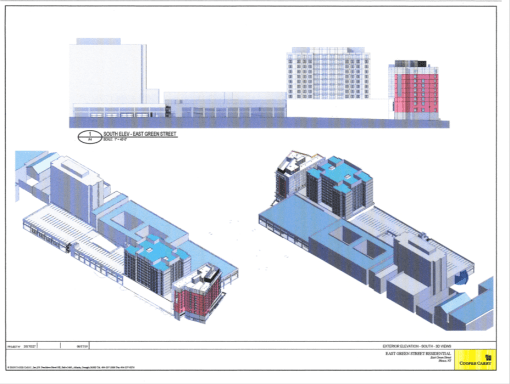
3. While not totally unexpected, Jeff Rimland’s 182-unit, 180-space redevelopment proposal for the eastern third of the Green Street Garage was unsolicited. The IURA’s Economic Development Committee did consent to Rimland’s request to being the preferred developer for the site, but before anyone starts typing up those scathing emails, there’s a crucial difference between this portion of the site, and the western and central sections that filled up so many headlines last year and led to the Vecino Group’s Asteri Ithaca project.

There is ground floor commercial space under the garage on the ground level of the eastern section. Rimland owns the ground floor, part of his purchase of the former Rothschild’s back in 2003, and he also has a 30% stake in the Hotel Ithaca (the remainder being Urgo Hotels). Basically, no one else would be able to do anything with that site without his permission. Meanwhile, because the garage above the commercial space is public, the air above the garage is public, so he has to seek an easement from the city for any skyward projects. So while he could stop any other projects, the city has its own hand of cards to try and get what they want out of his project, like an affordable housing component or other desired features. By the way, and this detail is for reader Tom Morgan – the height will be 126′ 8 1/4″. A bit less than Harold’s Square, but a few feet more than Seneca Place.

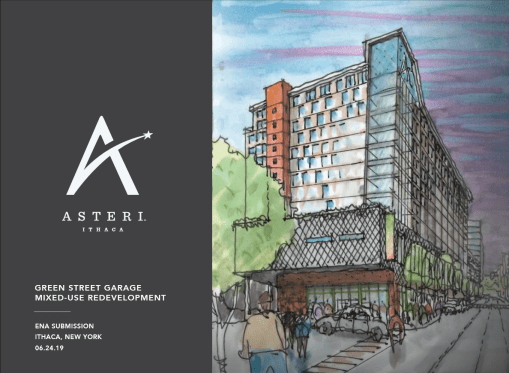
4. The latest Asteri submission still consists of rather vague watercolor renders, but it show some substantial design differences from the original submission. Among the changes include design revisions to the conference center space, the addition of a stairwell, a setback at the northwest corner, and different window patterns.

As part of the revisions, Vecino actually pitched three different ideas to the city – an eight-story, 173-unit apartment building with a 9,000 SF grocery store; a 12-story, 273-unit apartment building with a 9,000 SF grocery store; and an eleven-story, 218-unit building with the two-story, 45,000 SF conference center space, including a 12,000 SF ballroom. All host 350 parking spaces. The IURA made it clear its preference is for the conference center option.

Construction looks like it would be from June 2021 – July 2023; and Cinemapolis would have to temporarily relocate during the demolition phase, June 2021 – January 2022. A number of units would be set aside for those with developmental disabilities, with support services provided by Springbrook Development Disability Services.

5. Visum seems fairly confident it will soon earn city approval for its 49-unit, 141-bed rental project at 815 South Aurora Street. To quote the Facebook post: “815 South Aurora St is coming along! Hopefully should have final site plan approval and be breaking ground in August!” The project is slated for a Fall (really late August, since that’s the start of academic fall) 2020 opening.

At the planning board meeting last week, the board voted 6-1 (Jack Elliott opposed) to final approval for Cornell’s 2,000 bed North Campus Residential Expansion, and that will be rapidly getting underway over the next few weeks. Vecino’s Arthaus project was pulled at the last minute because the results of the air quality study weren’t ready in time. According to Edwin Viera at the Times, the board reacted favorably to the Visions Federal Credit Union branch / amphitheater proposal at 410 Elmira Road, and declared itself lead agency for environmental review.

Some design tweaks (larger and better integrated townhouse porches) were suggested for the Immaculate Conception School redevelopment project, and like the council and community group did before them, the board asked the Carpenter Park team to explore integrating affordable units throughout the site rather than having them all in one building. That last one is always going to be tough, because state-administered affordable housing grants like those that the Carpenter developers are pursuing don’t allow affordable units to be spread out among the market rate out of concern the market-rate section goes bankrupt; you could put them in the same building as market-rate, but they would have to be one contiguous entity within the building, as with Visum’s Green Street proposal.

6. Surprise surprise. According to Dan Veaner at the Lansing Star, the Lansing village planning board voted to name the latest Lansing Meadows revisions a “minor change” after the developer submitted revisions calling for 12 units in four triplexes by July 31, 2020, and another two triplexes by December 31, 2020, for a total of 18 units, two less than the 20 initially approved. All infrastructure (water, sewer, one-way road) would be completed in the initial phase, and having those 12 units completed will satisfy the TCIDA’s agreement for the tax abatement awarded to the project back in 2011. The vote will allow the code enforcement office to issue the building permits necessary to get underway next week.


News Tidbits 6/23/19

23 06 2019

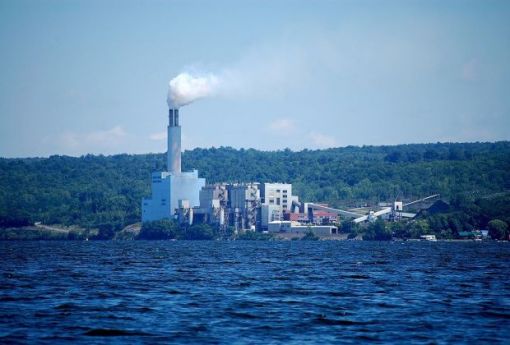
1. The good news in Lansing is that there’s a future for the power plant, though not as a power plant. The former coal plant would be reconfigured into a data center powered by renewable energy. Data centers use a lot of energy and have heavy energy loads, so old power plants are surprisingly suitable choices. The center’s computing power would demand about 100 megawatts at full capacity, according to reports, roughly equivalent to the power demand of 75,000 homes. They also produce large amounts of heat, so having a cold water intake from the lake comes in handy for supplying cooling systems. 15 megawatts would be produced on site, and the rest from off-site solar arrays. According to the Cayuga Operating Company’s memo, the conversion would provide $100 million in capital investments, 30 to 40 full-time jobs in the $40-60,000 range, as well as about 100 construction jobs.

In an interesting twist, the other plant slated to become a data center, in the town of Somerset in Niagara County, was the “Plan B” plant built after years or local protests and stonewalling shelved plans for a nuclear power plant in the town of Lansing near the Cayuga plant. The discovery of an ancient fault line near the Somerset site led to the operating company switching out its nuclear plans for coal. Suffice it to say, this data center plans also nullifies the plan to convert the power plant to a natural gas-fired facility.

While it’s a lower number of permanent jobs than the power plant (which was around 70 staff in 2016), it does provide a viable future for the town of Lansing’s biggest taxpayer, and comes as something of a relief in that regard. The county supports the proposal but the town is tabling support at the moment at the insistence of its Democratic bloc, which wants to ask questions at an informational meeting Wednesday before offering a voice of support. The state is not likely to support the plan unless the town has voiced support, so the vote is a rather urgent matter. It’s a bit tricky due to public notice guidelines, but the town board will hold a special meeting right after the presentation to vote on whether or not to support the plan.

For the record, the informational meeting is open to the general public – Lansing Town Hall at 29 Auburn Road, 6 PM Wednesday 6/26.
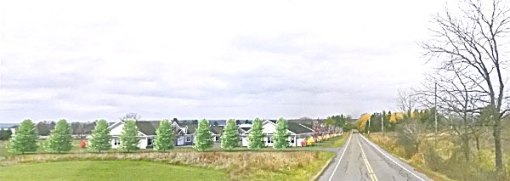
2. The bad news in Lansing is that the Lansing Meadows senior housing is in limbo. Unsurprisingly, the requested change from 20 to 30 units was considered a major change to the Planned Development Area. Developer Eric Goetzmann’s argument is that the 20-unit proposal proved too costly to build, and is seeking 30 units on roughly similar footprints. No dice, the IDA and village planning board would have to reopen their process to approve the changes, and the project is legally bound to be completed by the end of next July; another few months of review would cause it to miss that deadline.

Then came the latest proposal. Twelve units (four triplexes), just as originally intended when first proposed nine years ago. But the plan is clearly designed to be filled out with more units, the U.S. Army Corps of Engineers permits that required years to obtain have been left to expire. This too, would be a major change to the PDA, which is 20 units in 10 duplexes. A minor change would be shifting garages or marginal adjustments to building footprints. This is not minor.

This project has been before the planning board 57 times over the years and nine iterations. The village and the IDA have been very accommodating, from the unusual retail-building abatement for BJ’s, to the commercial space on the eastern end of the parcel, and all the residential changes over the years. I will be the first to acknowledge that some of the communities, Lansing village included, can be bureaucratically burdensome. But it’s time to point out that this developer is acting in bad faith. The village and the IDA have tried to make this work, bending over backwards to accommodate Goetzmann. He did not hesitate to get BJ’s built, which he sold in 2015 for a healthy $16.8 million. But the housing and the wetlands protection have always been afterthoughts, boxes checked in an effort to get that BJ’s abatement. It’s time that the village and IDA put their feet down and demand he either start building, or start making plans to pay back his tax abatement. The years of dickering have gone on long enough.

The concern is that by pursuing a clawback, the housing may never happen. But honestly, nine years on, is there an expectation that it will ever get done?


3. Sticking with bad faith for the moment – the IAWWTF proposal creates some uncomfortable questions. The first proposal was everything within a 1200 foot radius of the plant. The new one is everything west of Route 13 within that 1200 foot radius.

That doesn’t logically make sense. the prevailing wind direction for the offensive odors that the disclosure ordinance seeks to inform buyers and renters about? It’s NW-SE, due to a combination of storm tracks and the local topography, the hills create a channeling effect. Most of the areas covered under the new bounds aren’t in the downstream path of the winds, and odors carried by those winds.

Why were the established neighborhoods to the southeast of the plant left out, even if they are in one of the more prone locations? Officially, “because they’re already aware of the risks”, according to the explanation provided by the councilor spearheading the ordinance proposal, West Hill’s Cynthia Brock. That explanation neglects the fact that over time, tenants move and homeowners sell. As proposed, the cutoff is an excuse because existing homeowners in Fall Creek and Northside would have likely seen their home values and rental prices take a hit from her mandatory disclosure document, which another councilor described as “terrifying”. It would quickly lead to a lawsuit and the perception that Common Council is actively undermining the home equity and financial well-being of working class Northsiders and politically active Creekers. No other councilor on the committee would likely support the proposal in those circumstances.

So what does the IAWWTF disclosure ordinance impact as currently proposed? The revised version targets the Carpenter Park property, City Harbor, the NYS DOT site the county wants to have developed, the Farmer’s Market and a few other waterfront and near-waterfront properties. In general, mixed-use developments or potential developments that councilor Brock has regularly spoken out against.

This is being carried out on the auspices of health and welfare concerns, but as designed, the IAWWTF disclosure ordinance doesn’t adequately protect health and welfare, and appears to explicitly target waterfront projects councilor Brock dislikes. How would this withstand  the inevitable lawsuit filed by either the City Harbor developers, the Carpenter Park development group, or the county?

Literally and figuratively, this doesn’t pass the smell test.

4. Here’s a look at the Planning and Development Board agenda for next Tuesday. Apart from a one-lot subdivision for a new home at 243 Cliff Street, everything else is a familiar item:

AGENDA ITEM
1. Agenda Review 6:00
2. Privilege of the Floor 6:05
3. Approval of Minutes: May 28, 2019 6:20
4. Subdivision Review


Project: Minor Subdivision and Construction of a Single Family Home 6:25

Location: 243 Cliff Street
Applicant: Laurel Hart & Dave Nutter
Actions: Declaration of Lead Agency, Public Hearing, Determination of Environmental Significance

Project Description: The applicant proposes to subdivide the .36 acre site into two parcels and build one single family home. The subdivision will result in Parcel A measuring .152 acres (6,638 SF) with 66 feet of frontage on Cliff Street and containing an existing single family home and garage, and Parcel B measuring .218 acres (9,484 SF) with 97 feet of frontage on Park Road. The property is in the R-3a Zoning District, which has the following minimum requirements: 5,000 SF lot size and 40 feet of street frontage for single-family homes, 10-foot front yard, and 10- and five foot side yards and a rear yard of 20% or 50 feet, but not less than 20 feet. Access to the proposed home on Parcel B will be via a new access drive connecting to Park Road. This has been determined to be a Type 1 Action under the City of Ithaca Environmental Quality Review Ordinance §176-4(B)(2), and the State Environmental Quality Review Act (“SEQRA”) §617.4(b)(11).

Project materials are available for download from the City website:
https://www.cityofithaca.org/DocumentCenter/Index/1028 (Site Plan Review)
https://www.cityofithaca.org/DocumentCenter/Index/1030 (Subdivision)

The property owners want to build a new home that will allow them to age in place; their current century-old home isn’t adaptable for the wheelchair accessibility they seek, but they want to stay in their neighborhood, so the plan is to work with local homebuilder Carina Construction to build a new modular unit (2 floors + partially built-out basement, 26’x28′ footprint) on a subdivided piece of their land. It’s a multistory home, but the upstairs can be converted into a unit for a live-in caretaker, and all their living needs can be handled on one floor. The home will be solar-powered. The new home, downslope from the existing house, will be accessed from Park Road.
5. Site Plan Review

A. Project: North Campus Residential Expansion (NCRE) 6:45
Location: Cornell University Campus
Applicant: Trowbridge Wolf Michaels for Cornell University
Actions: Consideration of Final Site Plan Approval

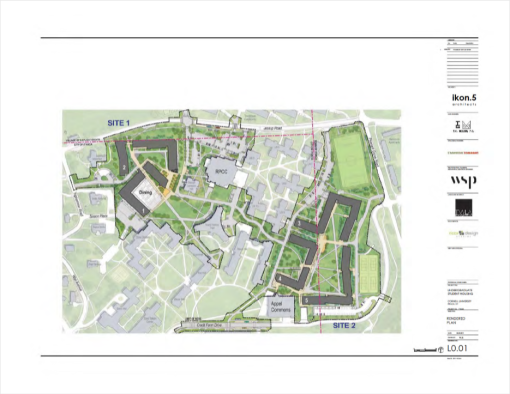
Project Description: The applicant proposes to construct two residential complexes (one for sophomores and the other for freshmen) on two sites on North Campus. The sophomore site will have four residential buildings with 800 new beds and associated program space totaling 299,900 SF and a 1,200-seat, 66,300 SF dining facility. The sophomore site is mainly in the City of Ithaca with a small portion in the Village of Cayuga Heights; however, all buildings are in the City. The freshman site will have three new residential buildings (each spanning the City and Town line) with a total of 401,200 SF and 1,200 new beds and associated program space – 223,400 of which is in the City, and 177,800 of which is in the Town. The buildings will be between two and six stories using a modern aesthetic. The project is in three zoning districts: the U-I zoning district in the City in which the proposed five stories and 55 feet are allowed; the Low Density Residential District (LDR) in the Town which allows for the proposed two-story residence halls (with a special permit); and the Multiple Housing District within Cayuga Heights in which no buildings are proposed. This has been determined to be a Type I Action under the City of Ithaca Environmental Quality Review Ordinance (“CEQRO”) §176-4 B.(1)(b), (h) 4, (i) and (n) and the State Environmental Quality Review Act (“SEQRA”) § 617.4 (b)(5)(iii) for which the Lead Agency issued a Negative Declaration on December 18, 2018 and granted Preliminary Site Plan Approval to the project on March 26, 2019.

Project materials are available for download from the City website: http://www.cityofithaca.org/DocumentCenter/Index/811

Cornell’s 2,079-bed North Campus Residential Expansion looks ready for final approval. Apart from some details regarding the planting plan and rooftop fans, there are no changes to report. Cornell would start construction shortly after approval is granted, with the first phase (sophomore housing, west/left) ready by August 2020, and the second phase (freshman housing, east/right) complete by August 2021.

B. Project: Arthaus on Cherry Street 7:05
Location: 130 Cherry Street
Applicant: Whitham Planning & Design

Actions: Consideration of Amended Negative Declaration of Environmental Significance, Potential Consideration of Preliminary & Final Site Plan Approval

Project Description: The applicant proposes an as-of-right five-story building approximately 63 feet of height with gallery, office and affordable residential space at 130 Cherry Street, on the east side of the Cayuga Inlet. The site is currently the location of AJ Foreign Auto. The program includes ground floor covered parking for approximately 52 vehicles, plus 7,000 SF of potential retail/office and amenity space geared towards artists’ needs. Building levels two through five will house approximately 120 studio, one-bedroom and two-bedroom residential units. The total building square footage is 97,500 SF. All residential rental units will be restricted to renters earning 50 to 80 percent of the Area Median Income. The north edge of the property will include a publicly-accessible path leading to an inlet overlook. This has been determined to be a Type 1 Action under the City of Ithaca Environmental Quality Review Ordinance § 176-4B(1)(k), (h)[2], (n), and the State Environmental Quality Review Act (“SEQRA”) § 617.4(b)(11).

Project materials are available for download from the City website: https://www.cityofithaca.org/DocumentCenter/Index/946

Project approval was delayed by a month because the city wanted to make sure that the Weitsman scrap metal facility wouldn’t pose any air quality risks. In a letter to the city, the firm doing the environmental work says the did some outreach to Ben Weitsman, and the Ithaca facility doesn’t do many of the processing, it just collects, sorts and transports the scrap metal out to other sites. Also, Weitsman states the facility will be be closing soon – it’s been rumored for a while that another mixed-use project in the works for the Weitsman site.

C. Project: Student Housing 7:25
Location: 815 S. Aurora Street
Applicant: Stream Collaborative, Noah Demarest for Project Sponsors Todd Fox & Charlie O’Connor
Actions: Project Updates, Review of FEAF Part 3

Project Description: The project applicant proposes a new 49-unit student housing complex (16,700 SF footprint) comprised of three buildings constructed on a hillside on the east side of Route 96B, overlooking the proposed Chain Works District. The proposed buildings will contain (2) efficiency units, (3) one-bedroom units, (10) two-bedroom units, (20) three-bedroom units and (14) four-bedroom units. Amenities will include a gym and media room, with access to an outdoor amenity space on the first floor of Building B, and a roof terrace and lounge on the fourth floor of Building B. The project site shares the 2.85 acre site with an existing cell tower facility, garages, an office and a one-bedroom apartment. Site improvements will include walkways and curb cuts to be tied into a public sidewalk proposed by the Town of Ithaca. Fire truck access is proposed at the existing site entry at the south end of the property, with a new fire lane to be constructed in front of the ends of buildings A & B at the northern end of the site. The project will include 68 parking spaces, as required by zoning. The property located in the R-3b zoning district. A variance will likely be required for a rear yard setback deficiency. This has been determined to be a Type 1 Action under the City of Ithaca Environmental Quality Review Ordinance §176-4(B)(1)(k), (n), (B)(2), and the State Environmental Quality Review Act (“SEQRA”) §617.4(b)(11).

Project materials are available for download from the City website: https://www.cityofithaca.org/DocumentCenter/Index/982

At the last meeting, the board and the city planning director had issues with the facade materials and that given the small size of the units, the project was “too focused on profit” (generally it’s not a good idea to make these comments because of their subjective nature, but here they were qualified with the concerns over facade material and unit size). In the updated submission document, the design stays the same, and it’s not clear if the materials were updated. It does not appear the unit sizes were changed.

D. Project: Commercial Building – 3,450 SF 7:45
Location: 410 Elmira Road
Applicant: PW Campbell for Visions Credit Union
Actions: Project Presentation, Declaration of Lead Agency

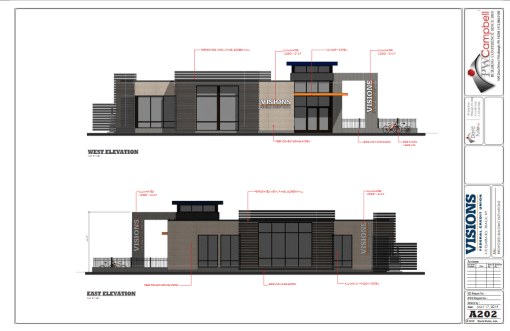
Project Description: The applicant proposes to construct a 3,450 SF commercial building with a drive-through, parking area for 20 cars, a 940 SF amphitheater, and associated site improvements on the 1.56 acre project site. The site is currently vacant. The project site is in the SW-3 Zoning district and will likely require an area variance. The project is subject to the Southwest Area Design Guidelines. This has been determined to be a Type 1 Action under the City of Ithaca Environmental Quality Review Ordinance §176-4(B)(2), and the State Environmental Quality Review Act (“SEQRA”) §617.4(b)(11).

Project materials are available for download from the City website: https://www.cityofithaca.org/DocumentCenter/Index/1019

This is the Visions Federal Credit Union branch proposal. Generally, the public reaction has been favorable to the plan, which includes an amphitheater for outdoor shows and events. The Voice article about the project is here.
E. Project: Immaculate Conception Redevelopment Project (Mixed Use Housing) 8:00
Location: 320 W Buffalo Street
Applicant: Ithaca Neighborhood Housing Services Actions: Project Presentation, Declaration of Lead Agency

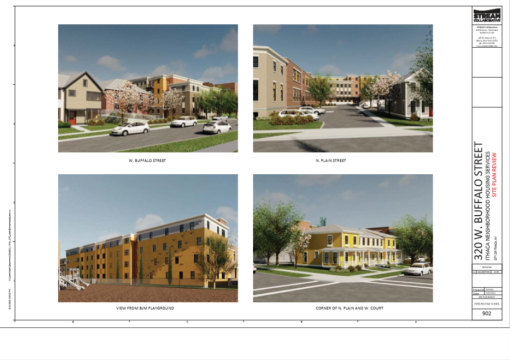
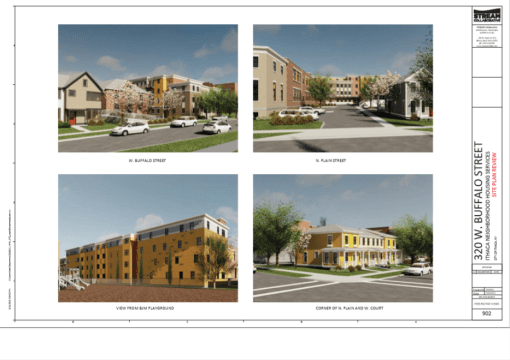
Project Description: The project involves the renovation/conversion of the existing two-story former school building into a mixed-use building with a two-story addition along North Plain Street, a new four-story apartment building, (2) three-unit townhome buildings, (1) four-unit townhome building, the renovation/conversion of a single family home into a two-family home, and the renovation of the “Catholic Charities” Building. The overall project will contain 78 dwelling units with 127 bedrooms. Total increase in square footage on the site will be 49,389 SF, from 62,358 to 111,747 SF. 9,274 SF of new and existing space in the former school will be commercial use. Site development will require demolition of one wing of the existing school building and one single-family home. The project also includes greenspace areas, 45 surface parking spaces, and other site amenities. The property is located in the R-2b zoning district; however the applicant has applied to Common Council for a Planned Unit Development (PUD). This has been determined to be a Type 1 Action under the City of Ithaca Environmental Quality Review Ordinance §176-4(B)(1)(k), (n), (B)(6), and the State Environmental Quality Review Act (“SEQRA”) §617.4(b)(11).

Project materials are available for download from the City website: https://www.cityofithaca.org/DocumentCenter/Index/1016

INHS’s $25.3 million redevelopment of the Immaculate Conception School has had some design tweaks, but the general site program remains the same. The Planning Board will be seeking answers regarding energy use/sources, pile driving, and aesthetic impacts on the neighborhood/consistency with neighborhood architectural character.
 

F. Project: Carpenter Circle Project 8:20
Location: Carpenter Park Road
Applicant: Andrew Bodewes for Park Grove Realty LLC
Actions: Project Presentation, Declaration of Lead Agency

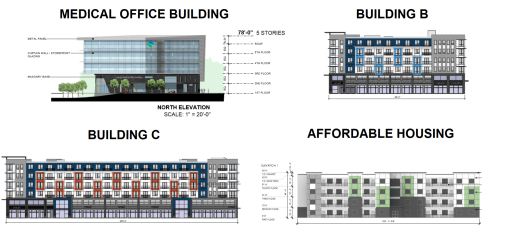
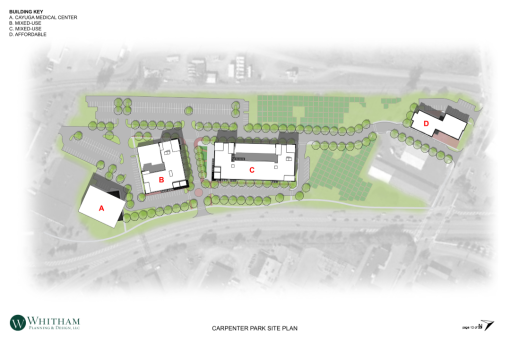
Project Description: The project seeks to develop the existing 8.7-acre vacant parcel located adjacent to Route 13 and off of Third Street. The proposal includes a 64,000 SF medical office; two mixed-use buildings, which will include ground-level retail/restaurant/commercial uses of 23,810 SF, interior parking, 166 market-rate apartment units, and 4,652 SF of amenity space; and a residential building offering +/-42 residential units for residents earning 50-60% AMI. Site amenities will include public spaces for residents and visitors, bike parking, transit access for TCAT, open green space, a playground, and access to the Ithaca Community Gardens. The project includes 400 surface parking spaces and an internal road network with sidewalks and street trees. The project sponsor is seeking a Break in Access from NYS DOT to install an access road off of Rte 13. The property is located in the Market District; however, the applicant has applied to Common Council for a Planned Unit Development (PUD). The project will require subdivision to separate each program element. This has been determined to be a Type 1 Action under the City of Ithaca Environmental Quality Review Ordinance §1764(B)(1)(d), (i), (k), and (B)(6) and (8)(a) and the State Environmental Quality Review Act (“SEQRA”) §617.4(b)(11).

Project materials are available for download from the City website: https://www.cityofithaca.org/DocumentCenter/Index/1014

Interesting note from Part 1 of the Full Environmental Assessment Form (FEAF) – the phased buildout. Phase one is Cayuga Medical Center’s new office building. It would start construction in the fall and be completed in Spring 2021. The mixed-use building would begin construction the winter of 2019-20 and take about 20 months complete (so, a summer/fall 2021 timeframe). The affordable housing is phase three, and contigent on an affordable housing grant from the state. Once awarded, it would take about a year to build out.

The updated site plan indicates more tree plantings throughout the site, and the addition of a playground and plaza next to the affordable housing structure on the northern end of the site.

5. Old/New Business: July PRC, PRC Meeting start time 9:00
6. Reports 9:10
A. Planning Board Chair
B. BPW Liaison
C. Director of Planning & Development

7 Adjournment 9:30


802 Dryden Road Construction Update, 5/2019

2 06 2019

Still clearing the photo cache. From the Voice, with the abridged photo set:

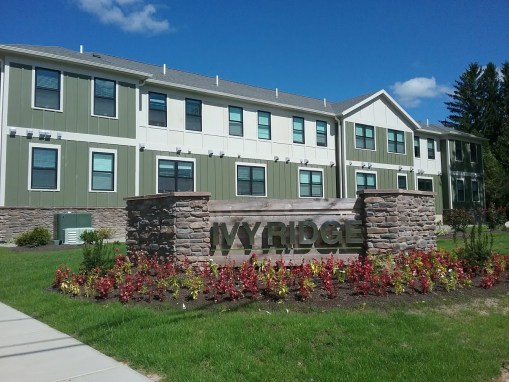
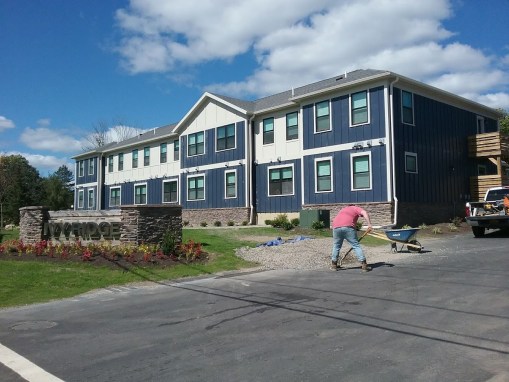
“Next to the Cornell Arboretum, the 42-unit, $7.5 million Ivy Ridge Townhomes are fully framed, and two of the townhouse strings are practically complete from the outside. The website for the project touts that two of the buildings are 100% leased, which doesn’t give any clues about what percentage of all the units are leased — I could tell you the first two houses on my street are occupied, but if the other five are vacant, then that paints a substantially different picture of my street. But hey, apparently they’re giving $20 lunch gift card as a thank you for doing tours, so we know it’s not 100%.

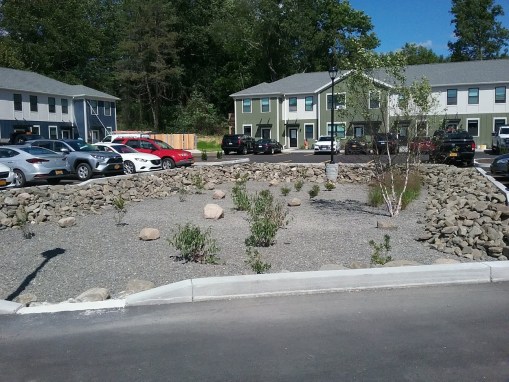
Looking at the website FAQ, it’s clearly geared to Cornell students, and though rents haven’t been posted on most websites, it looks like C.S.P. Management has discreetly posted the figures online. A two-bedroom will be $1,800/month, a three-bedroom $2,500/month, and a four-bedroom $3,200/month. Cable and most utilities (all except electric) are included in the rent, the units come partially furnished, and pets, include large dogs, are allowed. Stainless steel appliances, in-unit washer and dryer, and marble tile are also planned. Exterior features include 70 parking spaces, bike racks, stormwater ponds, bioretention areas, a children’s playground, and a dog park. Occupancy/project completion is expected by mid-August, in time for the fall academic semester.”

***

It looks like once the buildings are framed, sheathed and fitted with windows and doors, wood rails are attached over the housewrap for the vertical siding, which is attached in segments. Two of the seven-unit apartment strings (“E” and “F”, using the earlier nomenclature) are largely complete from the outside with the exception of structural trim and finish work (porches/balconies/awnings), two others (“D” and “C”) have exterior siding being applied, one was sheathed but not fitted with rails (“A”), and the last one, on the right in the first image (“B”), is still in the process of being sheathed, though I believe it started construction before “A” did. This is all work that can be finished in time for the school year. The website FAQ claims June; dunno about that.

While landscaping won’t come until the end, it looks like the wood and concrete bases for the “Ivy Ridge” monument signs are in place out front.

Units will come partially furnished, as many student-oriented and young professional residential facilities do. Bedrooms include a queen-size bed, a four-drawer dresser, a desk and a chair, and a headboard with an integrated shelf and a USB charger. In the commons area, there will be a dining table with chairs, a couch, a living room chair, a coffee table, an entertainment center, and a side table. Included in the rent are water, sewer, high-speed internet, cable, trash, and recycling. Residents are only responsible for electricity. The website seems to be making a bit of an effort to downplay the student side of it, probably for Dryden’s sake, but being right on the eastern edge of Cornell will certainly give them and edge over most of the rentals in the Varna and West Dryden areas.

More information about the project and its recent sale between developers can be found here and here.


TC3 Arthur Kuckes Childcare Center Construction Update, 5/2019

27 05 2019

It’s been just about a year now since ground was broken on the $6.5 million, 9,875 square-foot project over at TC3. Construction continues at its steady pace. The steel rails being installed over the fireproof gypsum panels will allow for the attachment of exterior finishes, metal, and fiber cement panels. The whole process is about keeping moisture from seeping inward and damaging the more sensitive building materials like the gypsum boards while allowing any latent moisture in the materials (having been exposed to the elements during construction) to escape outward. Meanwhile, the doors and windows have been fitted, and the roof membrane has yet to be fully applied.

The new child care facility will serve students and staff first, with community spaces open after that. The doors are expected to open in time for the fall semester.


Ithaca Tompkins Regional Airport Construction Update, 5/2019

27 05 2019

U.S. Senator Chuck Schumer dropped by earlier this month to make the formal announcement that the U.S. Department of Transportation had awarded the Ithaca-Tompkins Airport a $9,999,990 grant toward the airport renovation and expansion project. This money was not unexpected, though never a given; along with the $14.4 million New York State grant, the county’s portion of the bill is expected to only be about $260,000 (out of $24.7 million) assuming costs remain stable.

Now underway is Phase 2 of the project, which involves renovation and expansion of the passenger screening checkpoint of the departure lounge and the terminal’s gate area. Gone is the airport entrance canopy, and coming soon are a new concourse for arrivals and departures, and new jet bridges to contribute to the 6 gates that will operate at ITH. (Want more details? Click here). Streeter Associates of Elmira, who built Phase 1, will also be in charge of the buildout of Phase 2. The airport project is expected to be finished before the end of the year.

Oof. Hope you have a jack kit in the trunk.