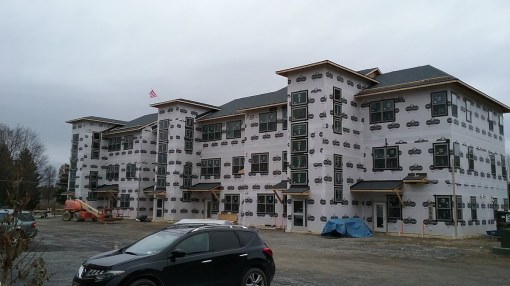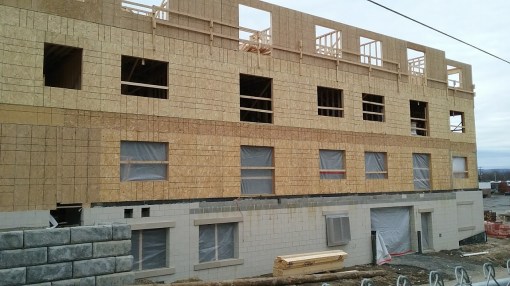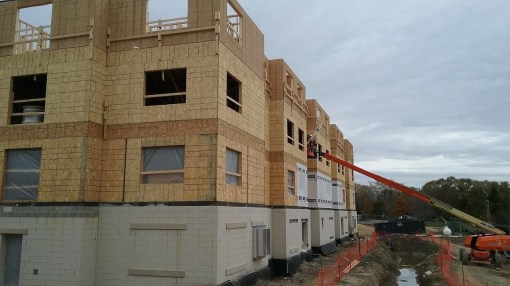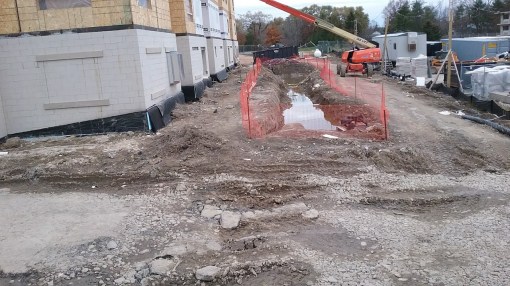
107 South Albany Street Construction Update, 12/2017

22 12 2017

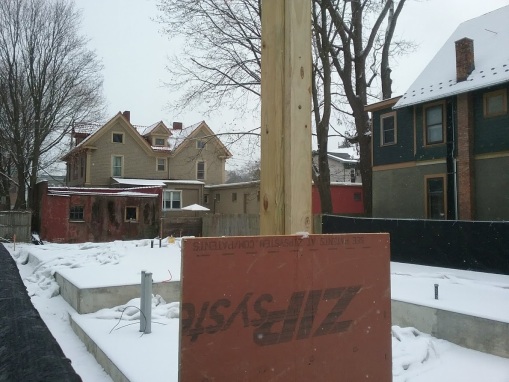
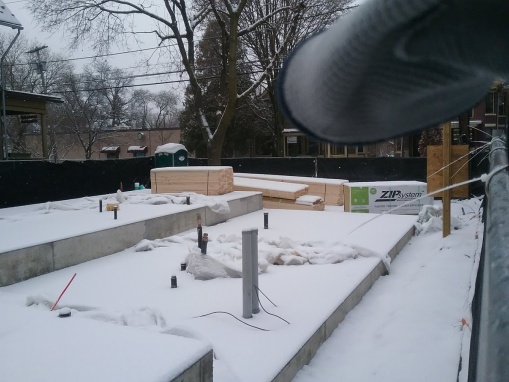
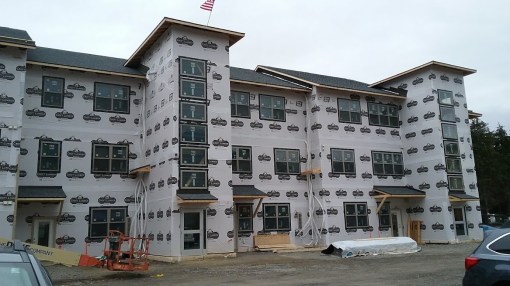
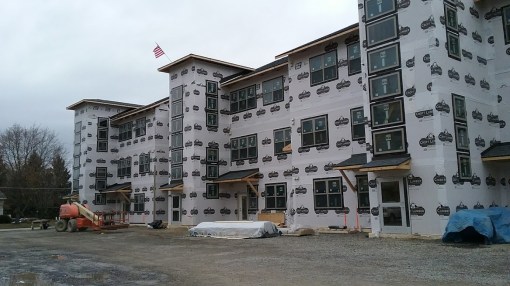
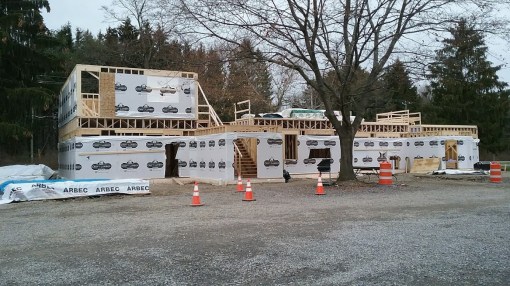
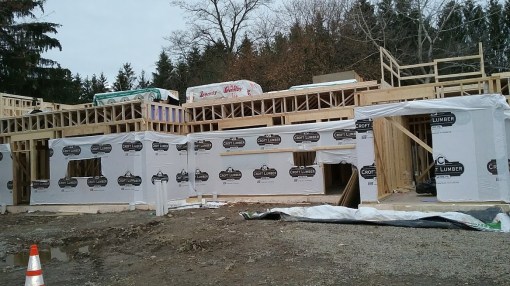
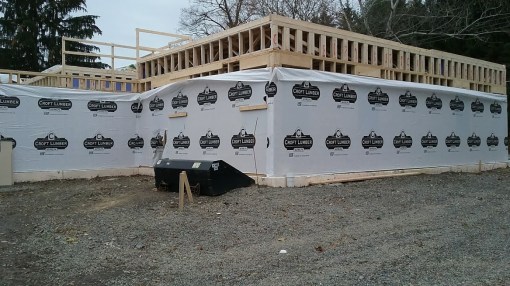
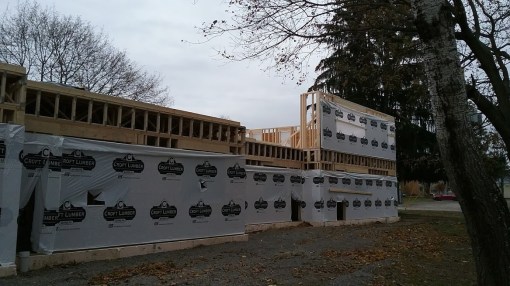
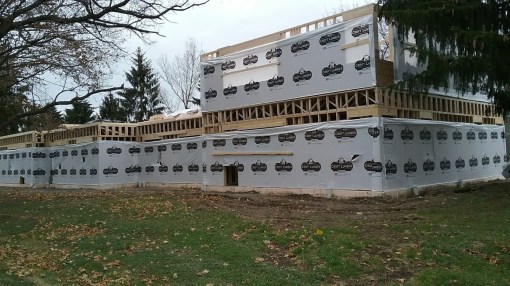
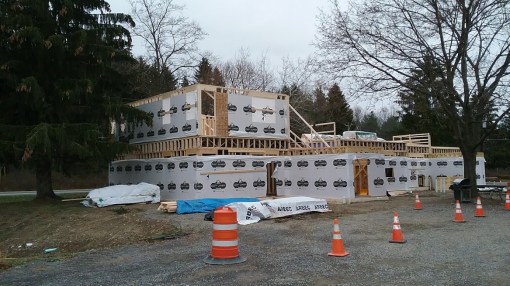
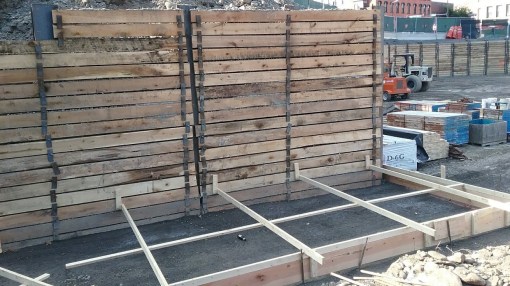
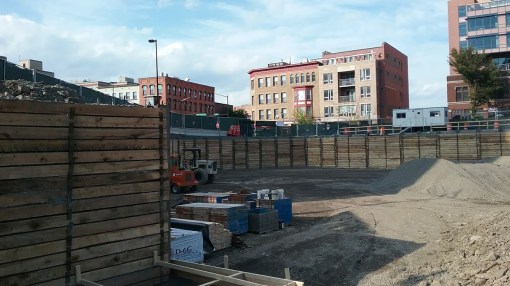
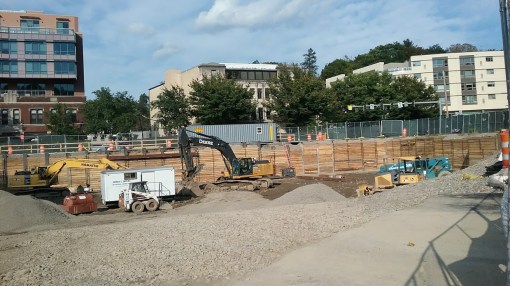
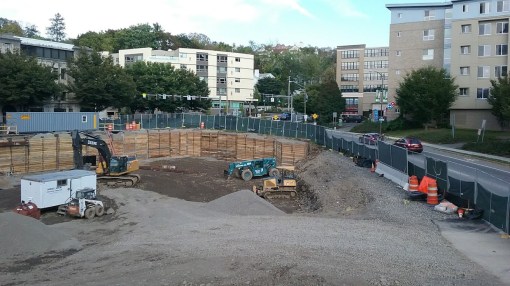
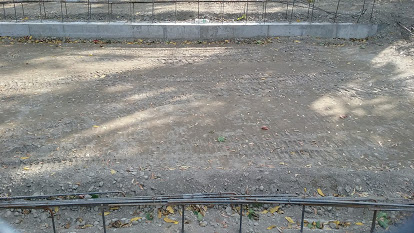
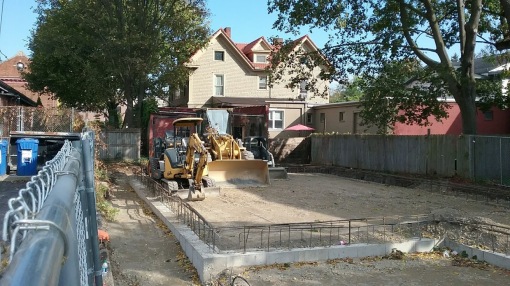
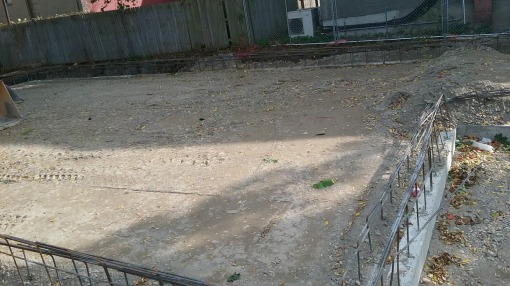
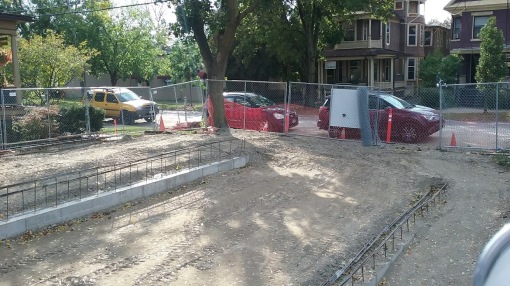
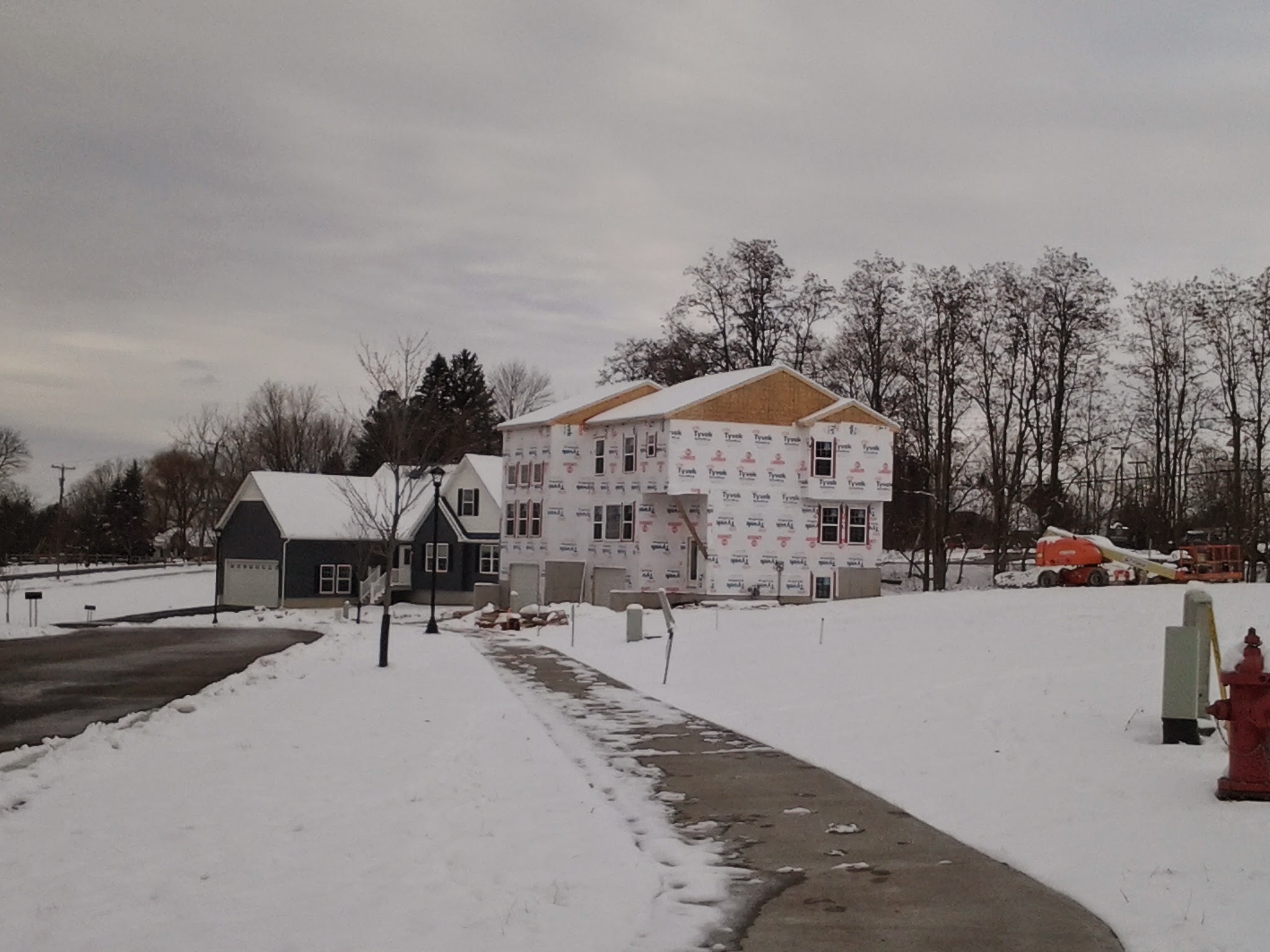
Since October, it looks like the foundation slab has been poured over the footers, and the construction crew is preparing to start work on framing. Judging from the materials on-site, it looks like wood-frame with Huber ZIP panels. Wood-frame structures tend to rise quickly, so once the project team is ready, it should go up at a rapid pace, and probably top out in within just a few weeks. The 11-unit, $1.1 million apartment building is expected to be ready for occupancy by July.

It’ll be interesting to find out what Stavros Stavropoulos’s next project is, since the plan for a pair of duplexes at 209 Hudson Street was kiboshed by the city after the South Hill zoning overlay went into effect. If he’s looking at other locations along the State Street Corridor, he’d likely find the planning department and Common Council more amenable. If his name shows up in any sales, I’ll note it in the round-up.

On that note, expect a brief holiday pause in the daily posts. They’ll be back next week.

For reference, project summary here.


City Centre Construction Update, 12/2017

21 12 2017

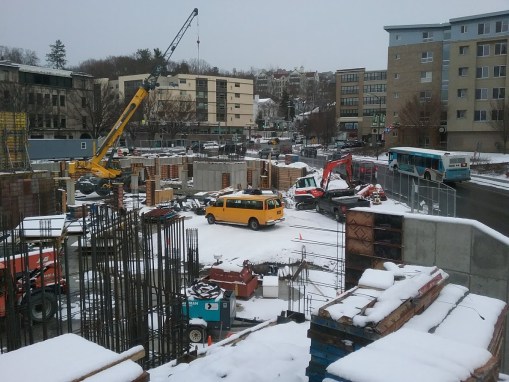
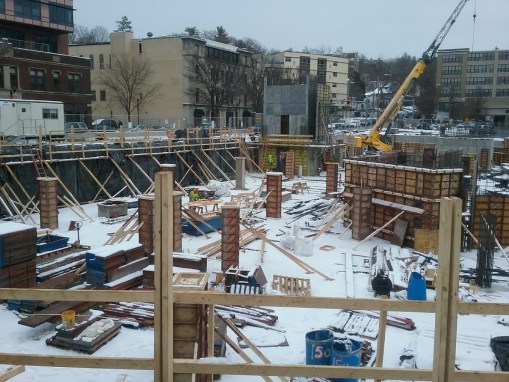
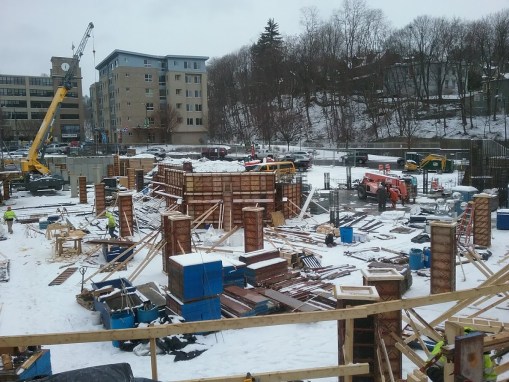
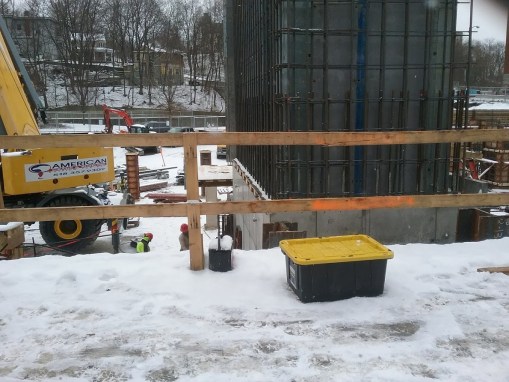
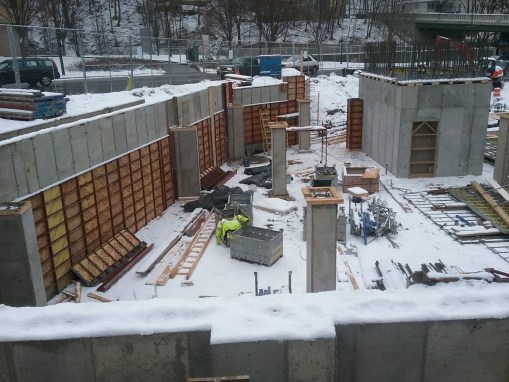
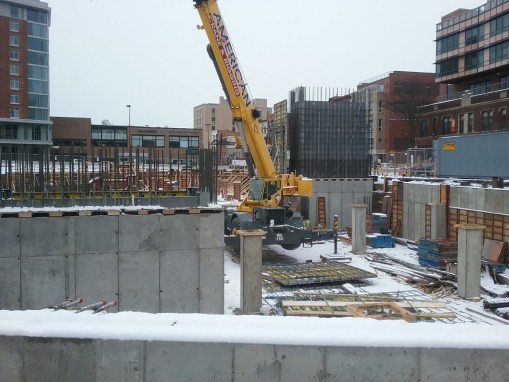
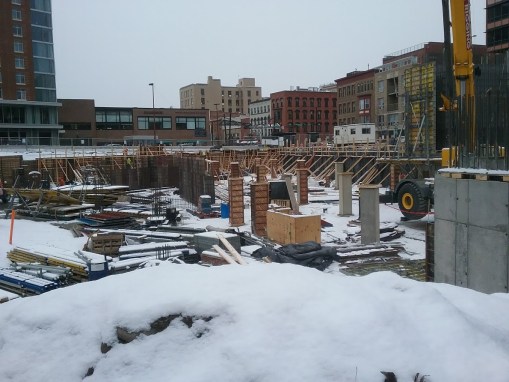
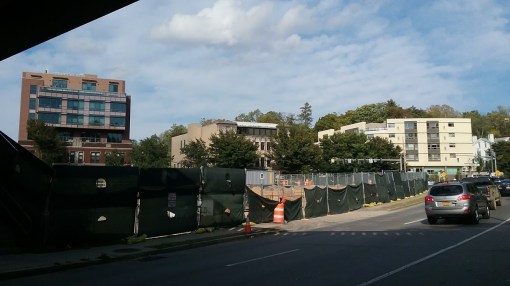
As with the Hilton Canopy Hotel under construction just across the street, City Centre is in the middle of foundation work. Steel forms with plywood facing have been erected and braced along the perimeter of the building footprint. In fact, it looks like the project team is using the same Symons Steel-Ply system being deployed at the Canopy site. The piles have been driven and the foundation slab is poured. The team is slowly making their way to the steel frame of each pile, encasing it within forms before pouring the concrete, letting it cure, and then removing the forms to reveal a concrete/steel column ready for vertical additions. The elevator cores and stairwell columns are also on the rise. – the elevator core facing East State Street appears to be the furthest along.

We finally have a named general contractor, and like the architect for the City Centre team (Humphreys & Partners of Dallas), its a new entrant to the Ithaca area – Purcell Construction Corporation, with offices in Richmond, Virginia and Watertown, New York (an hour’s drive north of Syracuse). It appears that they have plenty of experience with multi-story towers and large structures, which is no doubt an asset for the project team.

As I previously said, as structural steel takes height here and with the Canopy and Harold’s Square, downtown Ithaca is going to look like one big advertisement for TCAD.


News Tidbits 12/9/17: Not Enough Time in the World

9 12 2017

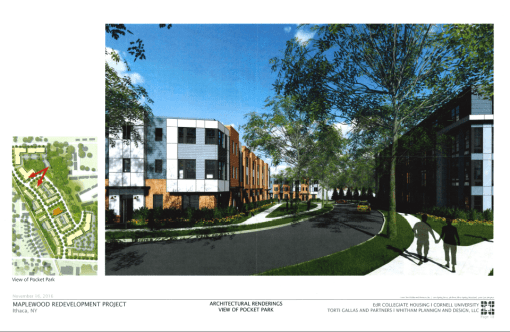
1. The good news is, Maplewood is progressing. The bad news is, it is not progressing fast enough. A combination of bad weather (rain-outs), and staffing issues. The weather delays had been so bad (with rain 2.5x monthly normals in October) that some subcontractors walked away to take other jobs – while the ~200 Maplewood construction jobs are quality union labor, it’s been difficult to get a full week’s work in. It’s a Monday-Friday job; with a rain-out, they lose a day in the week. That means they also lose out on a day’s pay. Over the past year, 37 days have been partially or fully rained out. A provision in the subcontractors’ contracts allows them to leave for other jobs id the issue becomes too severe, so some have done just that. Not hard feelings, just a tough situation for everyone.

Now about 25 days behind a very tight schedule, EdR and LeChase are asking to be allowed to regularly work 8 AM – 4 PM Saturdays. The town is open to this, but wants more documentation before signing off. So, expect a six-day workweek during the winter and spring. The goal is still to deliver the $80 million, 872-bed project by July.

2. The Seneca Street Garage is “showing its age”. As the garage is now about 45 years old and is designed to last about 50 years, some components are starting to deteriorate. The city has constructed some shoring posts to keep the concrete pillars relatively stable. They are not at risk of collapse, but the tension cables, which are used in combination with rebar to provide for a heavy-duty concrete structure with fewer columns, are starting to wear out. Decades of salt, water and corrosion will do that.

The city will lose about 20 parking spaces from the life-extension measures. The Times is reporting that the city hopes to get another ten to fifteen years out of the garage, and hope to have a plan for replacement parking in place within ten years. That could be a demo and rebuild of the garage, or it could be something more substantial, like the Green Street Garage project. It’s something to mull over now, but there are no big decisions planned anytime soon. Perhaps a Seneca Street rebuild with mixed uses ends up being one of the big urban developments of the late 2020s.

3. A development site on West Hill has exchanged hands. As covered previously, Bella Vista was a planned 44-unit condominium project on Cliff Street that was approved in 2007, and never came to fruition. The site it was proposed for, an 11.71 acre property at 901-999 Cliff Street, was put up for sale in December 2015 for $395,000. Finally, it has been sold.

The developer, Mauro Marinelli as Primary Developers Inc., sold the land to American Blue Sky Holdings LLC for $330,000 on the 5th. The LLC is owned by local businessman Greg Mezey, who previously bought the 12,000 SF medical office building next door at 821 Cliff Street for $945,000 in February 2015. Since then, he and realtor Ryan Mitchell have undertaken some modest building and site improvements. As Red Door Rentals, they own and manage a few apartment houses with a total of about 25 bedrooms.

So what does that portend here? Good question. Watch and wait, for now. The Bella Vista project could still be built, but it must be re-approved by the city of Ithaca, since project approval is only good for two years. Zoning is R-3a, primarily residential uses with up to 4 floors and 35% lot coverage. Parkin is one space per unit or three bedrooms (whichever produces more), and small-scale commercial is allowed with a special permit. The site’s topography is a challenge, but the size of it and its proximity to downtown and the West End make it an interesting opportunity.

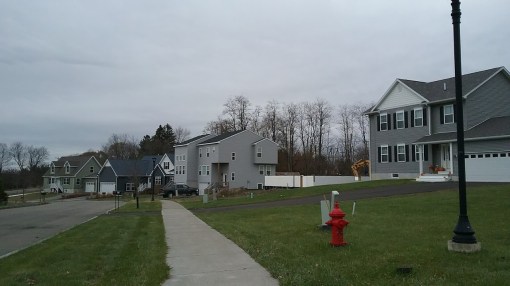
4. It looks like the first phase of Dryden’s Maple Ridge subdivision has just about filled out. For owner/developer Paul Simonet, it’s been a long time coming – the development launched right before the recession in 2008, and development didn’t really take off until the economy recovered. In 2013, there were three houses. By November 2014, only four houses had been built, with a duplex underway. Now, there are ten homes, and just about all one of the home lots have been sold. Some of the lots in phase one were combined by buyers.

Interesting, many of the homes built in Maple Ridge are modulars – I half-jokingly suggest that Carina Construction take prospective buyers through here to show them the variety of options one can pursue with modulars. It looks like this latest build on Applewood Lane will also be a modular – the foundation is built (note the dark Bituthene membrane for moisture protection), and the pieces will be trucked over and craned and assembled shortly, if they haven’t been already.

Ultimately, Maple Ridge is supposed to be three phases and 50 lots, and phase two will have about 29 lots, and since these are larger, they’re less likely to consolidated as phase one’s were. Given the need for a new road and infrastructure, sales seem unlikely until well into next year. The village minutes (the few they upload) does show that Simonet is actively pursuing the second phase.

It also answers a question from last week – the Elm Street office/warehouse complex will be the new home of the Ithaca Ice company, after some modest renovations.

5. The Lakeview affordable housing plan for the 700 Block of West Court Street, now called “West End Heights” was selected to receive a $100,000 grant from the inter-municipal and Cornell affordable housing fund (CHDF), but the funds will be delayed a little bit because they need to be moved into the 2018 budget, as the check will be going out in 2018.

6. The latest phase of the Village Solars (the reconstruction of 102 and 116 Village Circle) is being built with a $6 million construction loan from Tompkins Trust Company. The agreement was uploaded to the county’s records on the 7th. The contractor is “Actual Contractors LLC” with an address at Stephen Lucente’s home on the lake – it’s their in-house construction crew. Albanese Plumbing will be rigging sprinklers, heating and water pipes, T.U. Electric will be doing electrical and fan installations, and Bomak Contractors of Pennsylvania is the subcontractor for excavation, bedding and foundation work. Apparently Larry Fabbroni, the consulting architect, charges $90/hour for design work, while engineering/surveying is $107.50/hour.

102 and 116 comprise 42 units (24 and 18 units respectively), but if you’ve been reading the construction updates for the project, then you already knew that. The loan says both buildings have to be completed by August 15th, 2018.

7. Not a whole lot going on at the moment. Lansing town will be hosting a Planning Board to look at a telecommunications tower, and three new 1-acre home lots to be carved from a larger lot off East Shore Circle. The city’s project review meeting is so slim, they didn’t need to attach any files – just the old business with the Sophia House addition on the Knoll, and that’s it. The city Board of Public Works will be looking at plans for a new inclusive playground at Stewart Park.


Cayuga View Senior Living Construction Update, 11/2017

29 11 2017

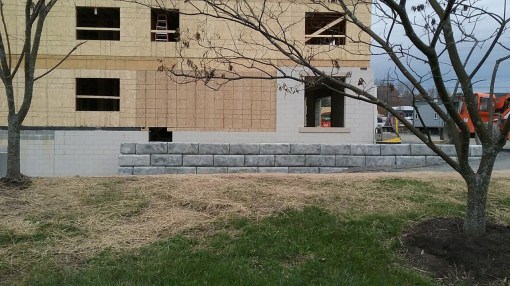
Framing for the new Cayuga View Senior Living building is one floor short of topping out. A stack of floor joists sits at the front of the construction site, as framing for the fourth floor continues. The last couple photos show how the joists are assembled between floors, typically attached to the exterior wall through joist hangers and braced with additional metal straps. Bracing has been temporarily built as the continuous plywood structural panel wall is nailed together. On the third floor they’ve started rough-ins (I see an industrial spool through the window, implying cables for electrical work), but the meat of the interior work is on the second, first and basement levels. A bit of housewrap has been applied to the rear face.

The commercial spaces are built out with masonry (CMU) walls, in contrast to the wood framing of the upper levels, and may be the result of fire code. The basement, also assembled with masonry blocks, will host utility space and some amenities. Decorative stonework provides aesthetic relief to the sloping site. Curbing has been extruded, and foundations for the light poles have been laid and wired. Not certain why there’s a moat at the rear of the building, although it may have something to do with underground utility lines.


Village Solars Construction Update, 11/2017

25 11 2017

Another redeveloped building is underway at the Village Solars property along the 1000 Block of Warren Road in Lansing. The original 8-unit, 8-bedroom 116 Village Circle is no longer of this world; the early 1970s structure was torn down to make way for a new three-story building with 6 2-bedroom units and 12 microunits (400-600 SF). Along with the framed and sheathed 102 Village Place, that means that Lifestyle Properties does in fact have two buildings underway at the site; perhaps the last visit in September just happened to catch the project during a brief lull.

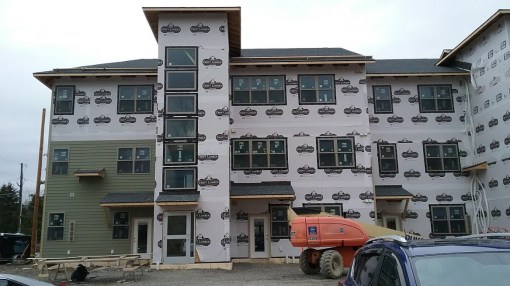
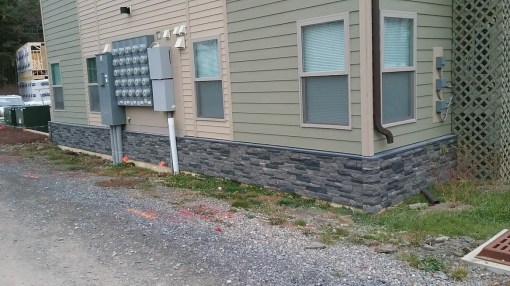
102 Village Place has been fully framed, sheathed, roofed, windows and doors have been fitted, and the fiber cement siding is just beginning to be installed (possibly by T&J Contractors of Auburn; most construction work by Lifestyle Property/the Lucente family is handled by an in-house crew). On the inside, expect electrical, plumbing, and HVAC to be underway; with no open doors or windows, it was not clear if they’re hanging drywall yet. In comparison to the “older” new apartment buildings, these new ones have different fenestration and even have stone veneer at the bases, though the overall building designs are generally similar. It’s not completely certain what the purpose of all the eaves (eavelets?) are on the walls of 102, though given the utility lines, it may have something to do with weather/ice protection for the air source heat pumps, which are shielded by small eaves and wood lattice on the latest completed apartment buildings.

The replacement structure for 116 Village Circle is just starting the framework for the second floor. As previously noted, it’s not uncommon to just housewrap over the rough openings, and cut out the holes later. The excess will be trimmed off and the edges will be fastened back to the inside wall, allowing for a tight and complete wrapping of the rough opening. Taking a guess, 102 will probably be done by the end of March, and 116 the end of June perhaps.

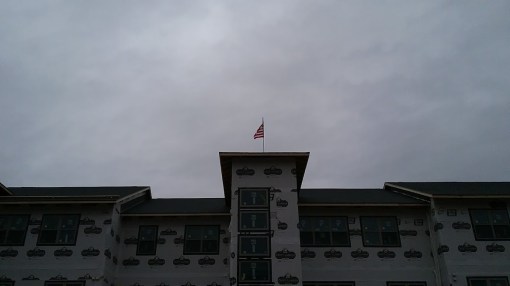
Side note, I’ve never noticed the Village Solars construction crew put a flag up on topped-out structures before.


News Tidbits 11/18/2017: Fears and Hopes for the Future

18 11 2017

1. Here’s an interesting sale – a 62.1 acre parcel on Troy Road sold for $380,000 on the 13th, less than half the original asking price. The buyer, “Troy Heights LLC”, is registered to the same address as Giora and Limor Fix, a semi-retired husband and wife couple who have acquired a number of rental properties around the area over the past decade, with 43 or so units worth something in the ballpark of several million dollars (units are marketed by the Fixes under the name “Homes-for-you Rental Properties”).

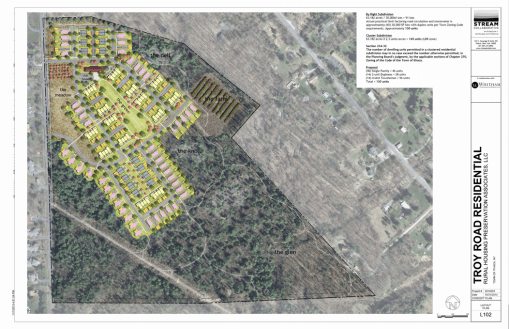
The Troy Road property is intriguing because there was a development proposal floated there a few years ago. Rural Housing Preservation Associates LLC had proposed a 130-unit combination of middle-market single family homes, townhouses and small apartment buildings for the site back in 2014; it started as 206 units, the town and neighbors complained it was too big, the project was whittled down to 130, and then the proposal was cancelled by September 2015. Using cluster zoning, the project could have built out 145 units in the low-density residential (LDR) zone, since the town’s cluster zoning allows 2.3 units/acre. STREAM was in charge of the project design, and some of the renders of the never-built apartments can be found here on their website.

So here is a log lot, bought by folks involved in local real estate and with significant assets, under the name “Troy Heights”, which sounds like a project title if anything. I reached out to Giora Fix, and he was kind enough to respond:

“[C]urrently we do not have any concrete plans to develop Troy Road. Once we have them I will be happy to share with you.”

So something to keep an eye on, though it might be a while.

2. Here’s a piece of news from the Times’ Nick Reynolds. With regards to the police consolidation debate, the city wants to have the headquarters downtown on Green Street (likely in that proposed centralized government facility floated for the Central Fire Station site), while the towns would prefer something near the current BPW on the north end of the Northside neighborhood, which offers easy access to Route 13. Consolidation is still a rather unlikely prospect at this time, and there’s little enthusiasm from the more rural parts of the county. But it sounds like the sheriff is keen on killing the city’s ideas before they take off.

3. Bad jobs month for the state, good for Ithaca. The Ithaca metro (Tompkins County) added 1,800 jobs (all private sector) from October 2016 to October 2017, bringing the total to 67,800. The 3.2% increase was the largest gain by percentage in the state over the time period. Unfortunately, the state as a whole lost 11,900 jobs last month, which falls even more to 14,600 jobs when taking away those added by the public sector (government jobs). A study from the Federal Reserve Bank last month notes that upstate economic growth in general has been losing steam over the past year, with exceptions for Ithaca and Albany. New York City is performing reasonably well.

While it’s well and good that Ithaca is doing well, I have concerns about the recent tax reform bill going through Congress. With the potential hit to SALT deductions and the taxation of graduate student tuition waivers, I could see significant negative impacts on the local economy. Given that most communities have property taxes in the range of $2500-$4000/$100,000, a cap of $10,000 as proposed by the House would hit many middle-class and upscale neighborhoods hard. A typical home in Ithaca city is worth about $230,000-$270,000 range at this point, and with about $3779 per $100,000 in property taxes, that means that homeowners with properties valued over $265,000 will take a financial hit, close to half of the homes sold. The Senate’s version removes the SALT deduction completely, affecting all local home buyers. Either case would be a severe blow to the home buying market.

Another concern is the taxation of graduate student tuition waivers as proposed by the House plan. Speaking from experience, I had a waiver that saved me about $14,000/year at the public university where I did my master’s. In my case, seeing that taxes would have cost an extra couple thousand in theory, though the doubling of the standard deduction might have limited its impact on me. A Cornell graduate student is looking at $20,800-$29,500, and could see a tax bill larger than any savings from the standard deduction increase. The Senate version does not tax tuition waivers. Another, lesser factor to consider is that the student loan interest deduction for borrowers on-time with their payments would be eliminated.

On a final note, Cornell’s endowment would be taxed an extra 1.4% under the House bill, as would any college whose endowment is worth more than $250,000 per full-time student. Cornell’s endowment is $6.8 billion, and the school has 23,016 students across all campuses as of Fall 2017. That is over the allowed cap of $5.75 billion as calculated by the bill’s guidelines.

The long story short is that Cornell recruitment takes a hit, as does its endowment, and that could impact current employment as well as future hiring. Politics aside, these “reform” bills are definitely a cause for concern from Ithaca and Tompkins’ economic standpoint.

4. A separate note not so much economic, but something many Ithacans care about – the House bill takes away the historic building rehabilitation tax credit. The renovation of 310 West State Street that I reported in the Voice earlier this week would be off the table without them, and the building will likely be demolished if the credits are eliminated. So the impacts aren’t just economic, but perhaps aesthetic as well.

5. This is looking to be a very quiet late November. For the first time in over a year, the town of Ithaca has cancelled two planning board meetings in a row. Meanwhile, in the city, the only “old business” reviews are final site plan approval for the 601 South Aurora duplex, and final approval for the Brindley Street Bridge replacement.

6. So technically, the Request for Proposals went out for the Green Street Garage site. A site tour for interested applicants is scheduled for December 4th, applications are due by January 23, 2018, and no timetable is given for the selection of the preferred developer. The applications are to include a cover letter, application form, description of project team members with relevant experience, proof of ability operate in NYS, good reputation, financial status, marketing plan, tenant management plan, conceptual designs, financing plan and demonstrated capacity to obtain financing, purchase price, project schedule, community impact benefits statement, schedule, and specific concerns (acknowledgement of site issues and plan to resolve them). A $500 application fee is also required.

Obviously, Ithaca Associates LLC has a huge leg up on the competition, since they not only have a plan fleshed out, they own the ground lease under the eastern end of the garage that everyone else would have to negotiate to obtain. About the only legitimate opening to another developer would be for the western and central portions of the garage, though the city’s requests make it such that anyone else interested had better be thinking big with housing, parking, and other site uses. Saying you’d leave things as-is would be an immediate disqualifier. Unless Fox or Lubin are dreaming up multi-story apartment buildings, it isn’t likely many developers will entertain this RFP. This really feels like it’s just the city stalling for time so they can fully absorb the immensity of the 365-unit, $118 million “Village on the Green” proposal.


News Tidbits 11/11/17: It’s Back

12 11 2017

1. One of the reasons for the lull in weekly round-ups has been the lack of smaller news items to fill it with. A few larger items made it into Voice articles, but there wasn’t much of a middle ground between “expand into article” and “not newsworthy”. I’m happy to take comments here about Voice articles, although the blog is intended to cover topics that may not be ready for a full write-up.

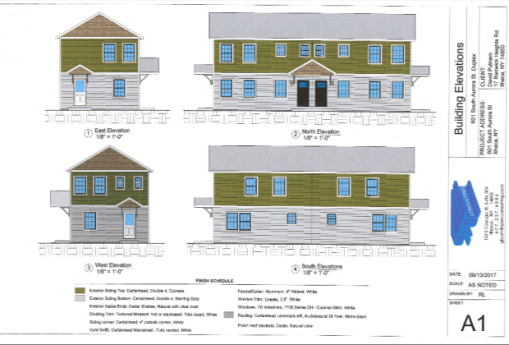
As noted in the Voice, there isn’t much before the city of Ithaca at the moment. A sketch plan for infill rental housing at 209 Hudson Street is likely dead in the water as a result of the new South Hill Overlay, and a modest infill plan calls for a duplex at 601 South Aurora on the corner with Hillview Place, which can only be an improvement from the informal parking lot currently there. The modular unit design is thoughtful (varied materials, plenty of windows) if unexciting, and the sidewalks are a plus. The units are physically structured as townhouses, but technically they aren’t, since townhouses are defined by International Building Code as strings of units of three or more.

Meanwhile, things are so slow in the town at the moment that they cancelled their last Planning Board meeting. Before that, the only notable item on the agenda was the Cayuga Ridge renovation, which is primarily internal. Their October Building and Codes Department report indicates a single two-family home was approved, in the Cleveland Estates housing subdivision; virtually all of those duplexes have been intended as student housing.
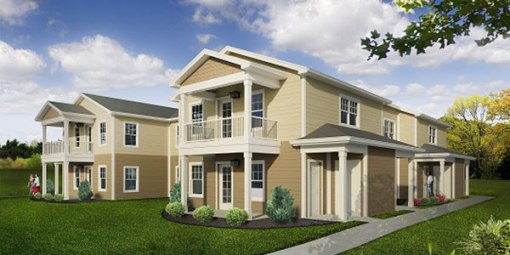
2. If there is one town that is rather busy next week, it would have to be Lansing. The surface facilities for the new Cargill mine shaft are up for final approval at the Planning Board meeting next Tuesday, more discussion is expected about the Milton Meadows affordable housing plan at the town center, and a couple of minor projects (communications tower, illuminated free-standing sign) are up for review and vote. Neither Cargill not Milton Meadows appear to have changed significantly since their last presentations.

Also scheduled is review of public comments regarding the Comprehensive Plan, which cover several topics, with the most frequent being the Bell Station zoning (park vs. lakeshore low density) and some individuals unhappy with the potential for mixed-use or residential development near their homes or farms. Joe Wetmore has a pretty thorough critique, ranging from unrealistic expectations to discomfort with what he calls “segregated housing” based on income and age. Going political for a moment, I suspect if it weren’t for many progressive town and village boards rushing to join the Article 78 on Cargill, with less than careful thought and discussion of Cargill’s blue-collar workers and their family/friends, Wetmore would be an incoming town councilman (and to be fair, he may end up winning when the absentee ballots are counted and tallied next week).

3. Over in Dryden, just about everything is good to go with Modern Living Rentals’ 42-unit rental complex planned for 802 Dryden Road, next to the Cornell arboretum. The November tweaks were for lighting, landscaping and sidewalk details. The designs of the townhouse strings were reworked in October to include three different designs, to be used twice each (six buildings, seven units each, 42 units/108 bedrooms total). While the materials remain the same, the designs differ substantially in roof lines, architectural detailing and fenestration pattern. At this point, no one would mistake for a recycling of 902 Dryden as they started off as; John Snyder and his team have had the chance to express themselves, and the designs are contemporary and visually interesting. It looks like final approval will be coming potentially soon, which will permit a Spring 2018 – Summer 2019 construction time-frame.

Other than that, the town is reviewing another Tiny Timbers subdivision, this one for 1540 Ellis Hollow Drive. Similar to its counterpart just down the street at 1624 Ellis Hollow Drive, the long, narrow lot would be serviced with an internal driveway for five homes with a little over an acre each, and the rear (northern) 5 acres would be granted a conservation easement, to remain natural space and help protect the Fall Creek watershed. The original plan was a deed restriction, but the town’s conservation board is pushing the easement so that future owners of the land can’t just lift the restriction. They also requested an S-shaped driveway because they feel the slope is greater than Dolph states; an S-shape would also throw the plans out of whack, so let’s see what happens.

On a final brief note, review and discussion is ongoing for a pair of solar arrays off of 2243 Dryden Road, one of 1.3 MW and one of 2 MW.

4. Looking at what’s on the market this week, here’s something for the deep-pocketed investor/landlord who wants to start with an all-new, low-maintenance building. 6-unit 707 East Seneca Street is on the market for $2,999,000. The 6,469 SF apartment building was built just two years ago, after developer Todd Fox bought city surplus land that was once a playground for the closed East Hill Elementary, deeded to the city in 1982 and promptly forgotten for decades until potential liability risks convinced the city to put it up for sale. Each unit is three bedrooms, and according to the advertisement, it generates over $220k in revenue each year, which is not shabby.The property is assessed at $1 million.

It’s a bit surprising that Fox would want to part with a nearly-new building with solid rental potential, and it makes me curious if the funds would be used to fund other Visum projects planned or approved. While Fox did take a financial hit from the cancelled 311 College Avenue project, the amount invested was far less than the sale price for 707 here.

5. Also worth noting, though it’s not good news – The Computing Center’s plans to build a new 4,600 SF headquarters appear to be over. The building site and the approved building plans at Lansing’s 987 Warren Road are up for sale. $499,000 gets you 1.57 acres, the plans, and a single-family home on the eastern end of the property that generates $2,000/month. The project had received an $85,084 tax abatement for the $1.394 million project, which was expected to create six new jobs. For the record, any buyer would need to re-apply for an abatement; the one granted will go unused. At least offhand, it looks like they may have added the jobs (retain 14, add 6, and the website shows nineteen plus the retired founder, and two job postings), but it’s uncertain – they acquired a competitor (Sherpa Technologies) in September, which increased staff to 22. Based off the time of the listing, with the acquisition of Sherpa they may have just led TCC to go a different direction with a new headquarters. What will be, will be.

6. According to construction loan documents filed with Tompkins County, the new 11,180 SF Rite Aid being built at 79 North Street carried with it a $2.71 million price tag. Chemung Canal Trust Company, an Elmira-based bank with branches in Tompkins County, is providing the loan to Dryden Group LLC/Ellicott Development. Ellicott, a major developer out in Buffalo, will be using an in-house contractor team to build out the retail space.

A couple of emails came in asking if this would be a Walgreen’s. On paper, that’s a no – everything filed and documented says Rite Aid, and this was confirmed with the town planning staff. However, Walgreen’s is in the process of acquiring 1,932 Rite Aid stores (leaving Rite Aid with 2,600), and closing several hundred stores that are within close proximity to existing Walgreen’s. It’s possible that the existing Dryden Rite Aid is one of those to be “shut down as part of the sale” as the new Rite Aid-turned-Walgreen’s is being built on the north end of the village. Keep an eye on it.

7. Quick little side note – Ithaca Associates LLC, the development team behind the $110 million Green Street Garage project, is apparently in talks with INHS to manage its affordable housing component. That’s according to Ithaca Urban Renewal Agency (IURA) meeting minutes. So they are serious about meeting the city’s demand for affordable housing with some undetermined percentage of the 365 units. Heck, 60 or 70 units would be a sizable contribution, should it pan out, and it would make the project more palatable since it would clearly have a mixed-income aspect to go with its mixed uses.
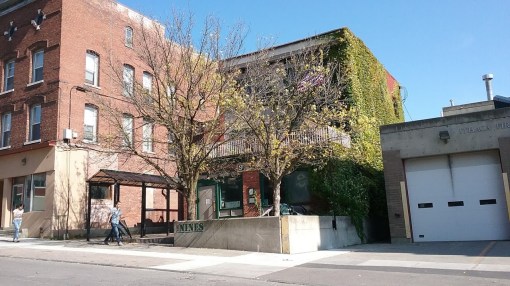
8. The Ithaca Landmarks Preservation Commission will be taking up discussion again on the Nines, though they are less than pleased with the recent 5-5 tie vote the Common Council had on the Chacona block, broken by the mayor’s vote against historic designation. For me, the fascinating part was having someone like Cynthia Brock, typically opposed to greater density, speak in favor, while pro-development councilors like Ducson Nguyen and Seph Murtagh voted in favor of historic designation. So, it was an unusual breakdown of votes that I would not have predicted, although I had heard before the meeting that it would likely be a close vote.

There is no doubt that anything Student Agencies submits will be scrutinized extra closely, especially if they try to maximize square footage or incorporate design features that don’t mesh with neighboring structures. It’s fair to say that while they lucked out with being allowed to redevelop, the resentment already stirred up means anything proposed will be starting behind the proverbial eight ball, and they would be wise to really put their best foot forward and not rush plans.

Interestingly, it looks like someone, likely but not confirmed to be the Reach Project social service group, plans to submit concept designs for the carriage house that once stood behind the house at 310 West State Street. This is a historic district, so any designs for the drug treatment and potential safe heroin injection “harm reduction” site would need to be approved by the ILPC.

It’s been amusing and a bit excruciating to see some of the comments on the Voice – some people are all about historic buildings; but it tortures them to see these venerable structures used for what they see as a less-enlightened cause than a high-end B&B or boutique office. If zoning laws (and higher authorities, in this case) okay it, so be it. Many historic buildings have humdrum or low-brow histories as factories, home businesses or tenements, and to say they can’t be used for something permitted just because it seems icky is not only illegal, it denies part of the historical element.

7. Intriguing, though I have questions – the city is looking at expanding the use of PUDs from beyond the few industrial zones to city-wide so long as properties are 2 acres. They’re also looking at expanding CIITAP to allow 1-story industrial and waterfront projects, as well as an affordable housing component of 20% on all residential or mixed-use projects with residential components of 10 units or more.

The PUD plan comes on the heels of the new Waterfront zones, which allow residential uses on a greater number of parcels, and is in fact the recommendation of the Waterfront Working Group (WWG), a 17-member group of staff and public who reviewed planned zoning changes to the Waterfront. The city planning staff are amenable, though they suggest a minimum acreage of 2 acres.

With the proposed CIITAP change, the reasoning makes sense, although its effectiveness is questionable. Industrial construction is locally limited and is usually build-to-suit for a specific client. There’s also a strong preference to less dense areas with easy access with lower land values, like Lansing or Dryden. More power to the city I guess, I just don’t see it being utilized. As for the housing component, the intent is good, but the issue always ends up being an issue of “moreness”. Developers often have to build bigger to re-balance expenses and revenue within mixed-income structures. This can make it tougher for them to get financing since it’s a larger, more costly build-out (a bigger financial risk, all other things being equal). Residents in turn balk at a bigger project with the traffic, aesthetic changes and other impacts it creates, not to mention some still instinctively sneer at affordable housing, mixed-income or not. It’s not an outright deal-breaker, but it is something to keep in mind.

The PUD can be troublesome since it’s a sort of “DIY zoning”, which would make existing rules pointless and a lot of upset voters if allowed without some big stipulations. 2 acres would limit many projects in the core of the city, but if you happen to be, say, a major landowner along the Waterfront or in the vicinity, like Guthrie or Cayuga Medical Center, it’s basically a red carpet invitation, as it allows them to set the bounds for a project. Notably, neither of those two fall within CIITAP’s boundaries, so while they wouldn’t be eligible for the tax abatement, they also don’t have to worry about the affordable housing component if they choose to do something with housing in the mix.


City Centre Construction Update, 10/2017

26 10 2017

As described in the Voice summary, City Centre is digging deep.
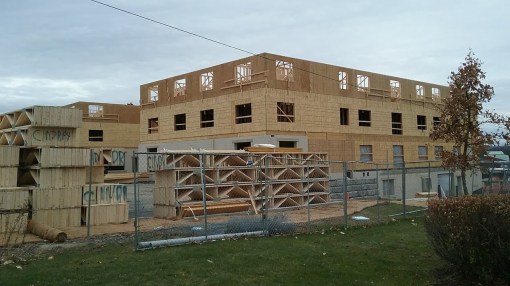
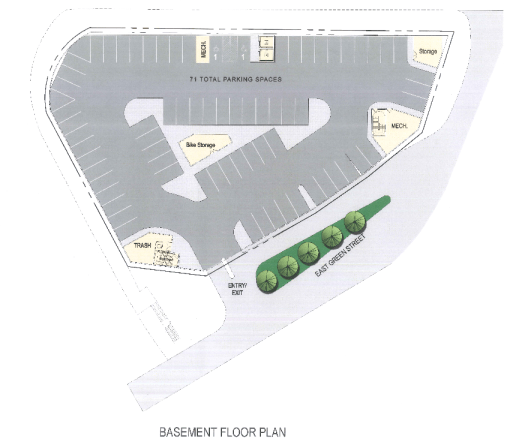
“Unlike the Hilton Canopy, City Centre will have a basement, or more specifically, a 71-space underground garage. The plan here is to use a mat foundation, which is a shallow foundation that doesn’t make use of piles or pile drivers. The company that did the geotechnical report for City Centre reported that a 26-inch mat foundation was feasible based on soil borings, and would be less expensive than a deep pile foundation like the one being used for the Canopy. So basically, excavate some trenches, build some big footers with a lot of rebar, and pour a 26″ concrete slab. Support columns will transfer the weight of the building through the garage and into the slab beneath.
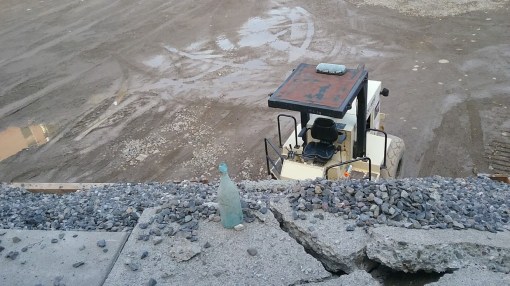
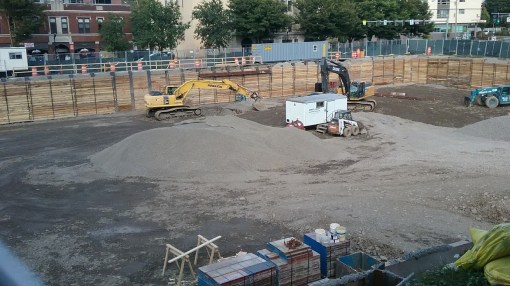
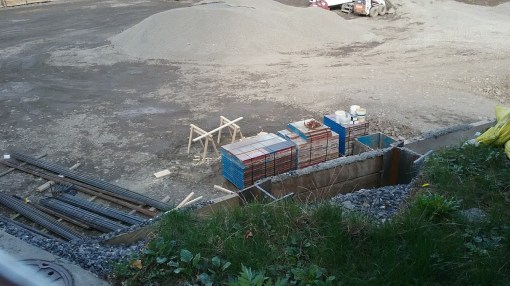
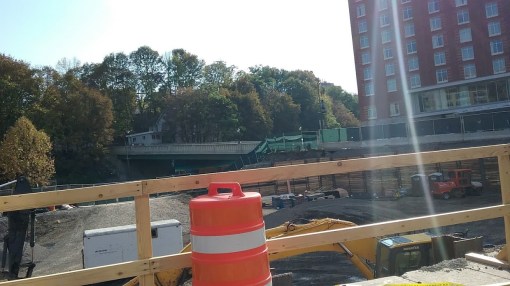
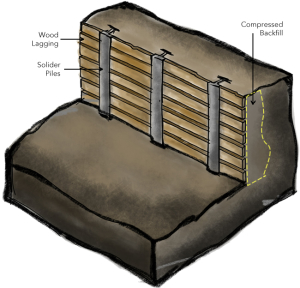
Going past the site right now, excavation work continues, with timber lagging, steel H-beam soldier piles, and steel tieback anchors that extend underneath the streets. The whole point is to reinforce the soil, because no one wants East State or South Aurora Street collapsing into the construction site. Foundations can be complex and time-consuming, and the building may not rise above street level until sometime late in the winter or early next spring. Occupancy of the eight-story mixed-use building won’t be until 2019. According to a construction loan filed with the county this week, M&T Bank is lending $47.9 million to Newman Development Group to complete the project.”

On a hunch while exploring Newman’s project-specific websites, I was able to find City Centre’s website. Morgan Communities of suburban Rochester will be the site manager, and is apparently also hosting the webpages; they’re live, but you can’t find City Centre on their search page yet.

Units will range from a 508 SF studio unit, to a 2 bed/2 bath 1319 SF units with coveted Commons views. Apartment features include quartz countertops, electric stove, microwave, dishwasher, and stainless steel appliances. On-site amenities include fitness center, “E-Lounge”, bike storage, controlled access, optional garage space rentals, electric car charging stations and furnished apartments if requested. Dogs and cats will be allowed. Rents have yet to be listed, though they’re expected to be on the medium-high side (premium, not luxury). The webpage touts Summer 2019 occupancy, which seems to be a split of the Spring 2019 and November 2019 dates used previously. Inquiries are being taken to CityCentreIthaca@morgancommunities.com, if you know someone planning that far ahead.

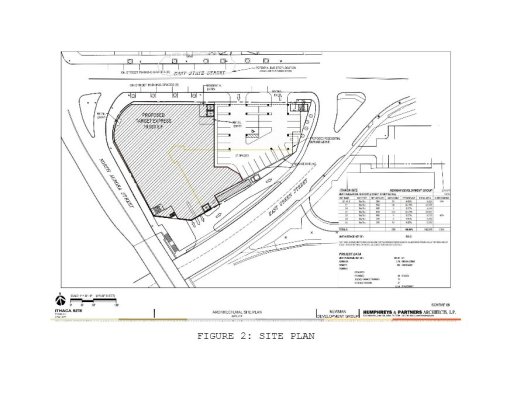
On another note, while poking around the geotechnical report, it turns out that early plans called for the entirety of the first floor to be occupied by a 19,900 SF “Target Express“, the smaller urban cousin to the Target general merchandise retail chain. This had to have been early on, because the parking had a much different configuration than the formal site plan, with an East State Street entrance vs. the South Aurora entrance in all the later revisions. With only nine stores as of mid-2016, Target is pretty selective about new Target Express locations. Why it was removed from City Centre is unclear.


Press Bay Court (108-114 West Green Street) Construction Update, 10/2017

25 10 2017

The tagline used on the Voice was “Press Bay Alley is as quirky as Ithacans like to think they are.” But it’s not just a quip. Press Bay Alley and its upcoming sibling, Press Bay Court, are unusual developments.

Completed in 2014, spaces at the micro-retail plaza on West Green Street range from a 160 SF barbershop to a 2,000 SF confectioner. Other tenants include a novelty store, a cafe, a circus school, an herb/spice shop, a high-tech workshop and electric bikes. Around Halloween, it becomes Harry Potter’s Diagon Alley. It’s an eclectic development by any regard.

Micro-retail is a growing retail trend that offers a unique niche product or a very limited selection of convenience products and services. A shop like Amuse or a service like Ithaca Generator may not need a large space to achieve its business goals, and can save on rental expenses with a limited footprint, compensated by being in a high pedestrian-traffic areas, in this case a couple blocks from The Commons. Similar examples include Memphis’s Edge Alley and Denver’s Dairy Block.

Granted, Ithaca is smaller than Memphis or Denver, but the underlying dynamics of active-use blocks and high foot traffic are present nevertheless, and businessmen John Guttridge and David Kuckuk of Urban Core LLC identified a potential market for the concept in Ithaca. Seeing an opportunity in the former printing press and garages of the shrinking Ithaca Journal, Urban Core, who had recently bought the Journal Building, decided to move forward with a renovation and see if they could make the concept work locally. The risk seems to have paid off, as Press Bay Alley is fully occupied.

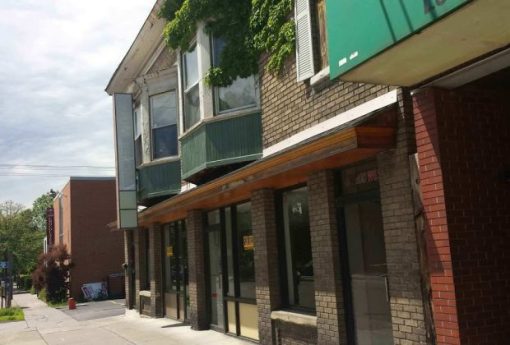
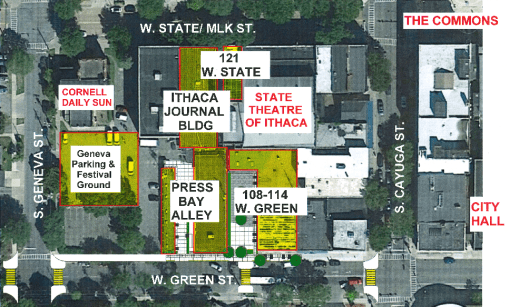
With that under their belt, and with renovations to 121 West State partially completed (waiting on fit-out for a potential restaurant tenant), Urban Core has committed to a second phase of the project at 108-114 West Green Street. Currently vacant, 108-110 West Green housed Hausner’s Garage and a Chevy car dealership in the 1920s (see photo below), a DeSoto-Plymouth dealer in the 1940s, Ithaca Photo from at least the 1950s through the late 2000s, and from 2012-2017, McNeil Music. In the rear where D.P. Dough is (114), The Haunt nightclub called it home from 1969-1997 before moving across town.

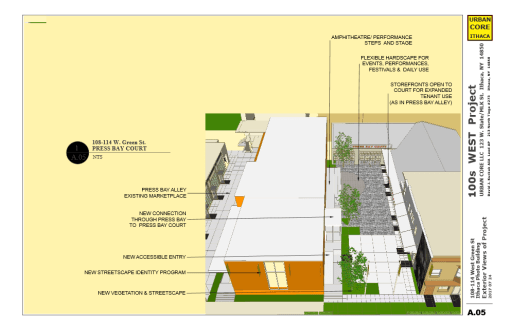
What Urban Core’s latest plans would do is expand that “experiential” micro-retail mix eastward towards the corner of Green and Cayuga Streets, the Commons and the downtown core. The parking lot in front of D. P. Dough would be converted into a plaza much like Press Bay Alley’s, and the first floor of 108-110 West Green would be renovated into 5-8 micro-retail units facing the new plaza (the Green Street entrances would be retained), with 320-2200 SF per unit. The second floor would be renovated into four below-market rate one-bedroom apartments with 510-660 SF of living space, and the exterior masonry would be cleaned and repaired. The hawk mural will be preserved. New signage, bike infrastructure, curbing, sidewalks and a parklet are included in the plans. The total square footage in phase two is about 9,000 SF.

One of the more unusual quirks of Press Bay Court is part of the plaza would be convertible into an amphitheater/stage space for outdoor performances. So if some comedy improv group or local dance troupe wants to perform for an audience of several dozen, that’s an option. The next day, it might revert back to an outdoor seating space with movable furniture and display space for retail tenants. That weekend, it might host hungry or browsing festival goers spilling out from Press Bay Alley, which will be connected through the Press Bay Building. The space will be adaptable and multi-use, which will hopefully provide exposure for tenants.

Later plans call for renovations to the 15,000 SF Ithaca Journal (Market Bay) Building for an indoor arcade and second-floor office tenants, and a 2,400 SF new restaurant tenant in 121 West State Street, in the basement below The Watershed coffee lounge and bar. Ultimately, the goal is to build a thriving, synergistic environment where the businesses create a natural flow of customers and clients between the various shops and services offered on the block, and the outdoor space’s active uses contribute to and help sustain small local enterprises.

The project cost is estimated at about $900,000, most of which went into property acquisition. Financing comes from a Tompkins Trust Company loan, cash/equity, and a $200,000 low-interest loan from the Ithaca Urban Renewal Agency. One of the tenant spaces is being offered in the Downtown Ithaca Alliance’s “Race for Space II” competition, with the specific unit to be selected by the winner.

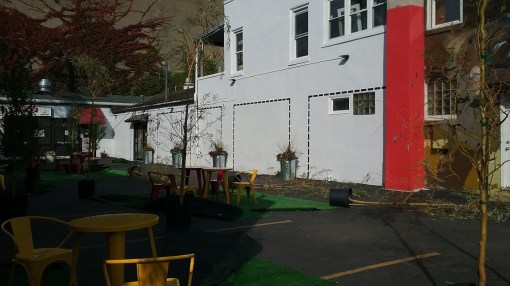
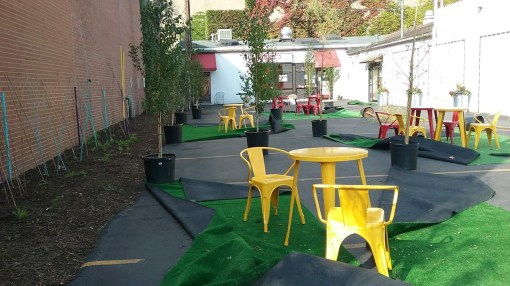
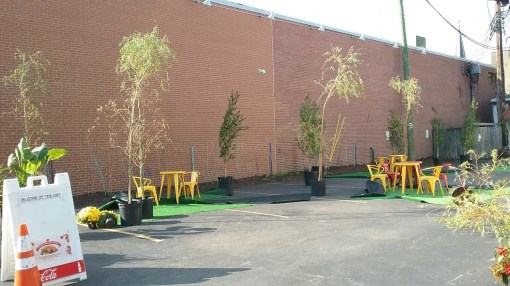
At the moment, not much appears to be happening. The “cut-out” lines are a clever advertisement for the future micro-retail storefronts, while the parking lot is a pop-up park for the time being. According to Press Bay Alley’s Facebook page, “Urban Core popped up a temporary installation to experiment with several design elements and gather public feedback.” Previous plans called for a spring opening, but with the Restore NY Grant under consideration, the project may not start until the Spring, in which case this entry saves the trouble of writing one next March. However, the later start date might force changes to Race for Space II, which asked for the selected tenant to be ready to move in by spring 2018, the same time construction was pushed back to in order to be eligible for Restore NY funds.


107 South Albany Street Construction Update, 10/2017

20 10 2017

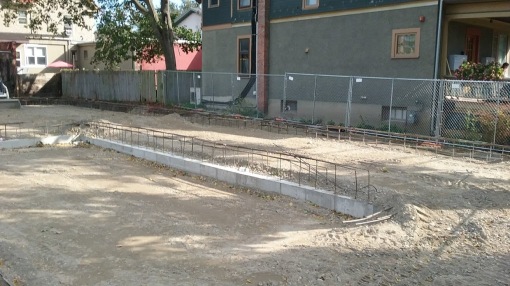
With the twin duplexes on the corner of Aurora and Queen completed, local developer Stavros Stavropoulos and his local contractor Northeast Renovations Inc. have been able to turn their focus towards building out 107 South Albany Street. At this stage, the spread concrete footers, also called formwork or footings, have been finished.

As in this case, footers are usually of concrete with steel rebar reinforcement that has been poured into an excavated trench and confined by wood forms. The purpose of footings is to support the foundation and prevent settling. The portion of rebar sticking out of the footers will be bent and wired into the foundation’s horizontal rebar, tying the two components together. I’m not sure if they simply filled in the basement of the old house or if they tore the walls out before bringing in clean fill and digging trenches for the new footers (I’d guess the latter for simplicity’s sake).

It looks like the outer footings for the ground-level common space (entry, bike storage, meter room) are at a slightly lower grade than the rest of the structure, so there might be two separate sections that comprise foundation, with one at a slightly higher elevation than the other.

The next steps involve a rebar grid being ssembled and tied per specifications, elevated a few inches from the ground by plastic rebar chairs that allow concrete to get underneath the steel rods. The concrete will be poured over the rebar, and as long as the bars stay in place, the new pour is left to dry into a solid, reinforced slab foundation upon which the building frame can be built. The building itself will have a wood-frame, so when it starts to rise, it should move at a pretty fast pace.

A summary of the project can be found here.