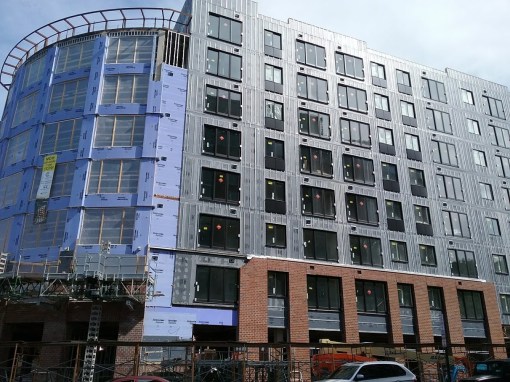
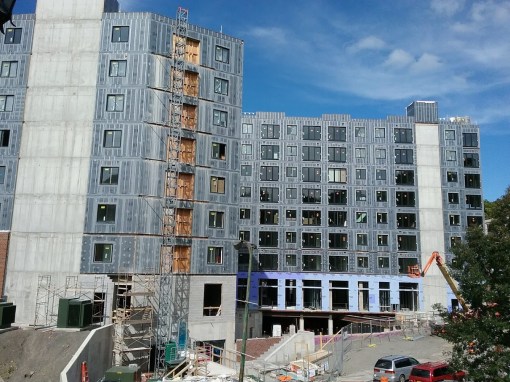
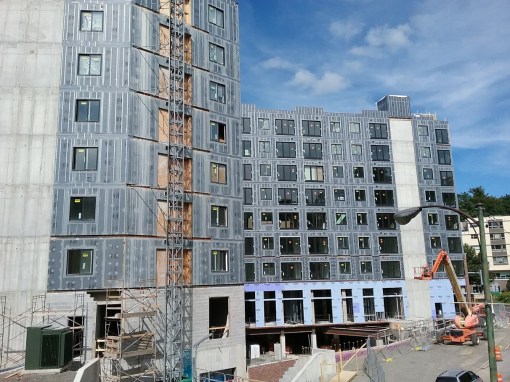
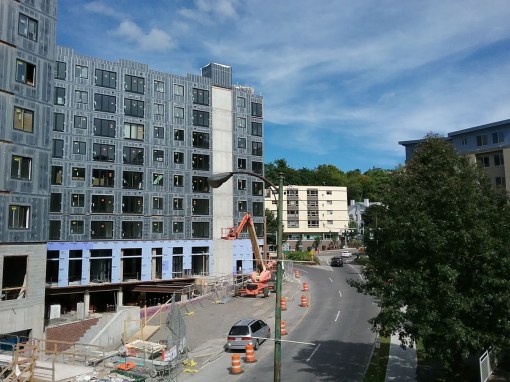
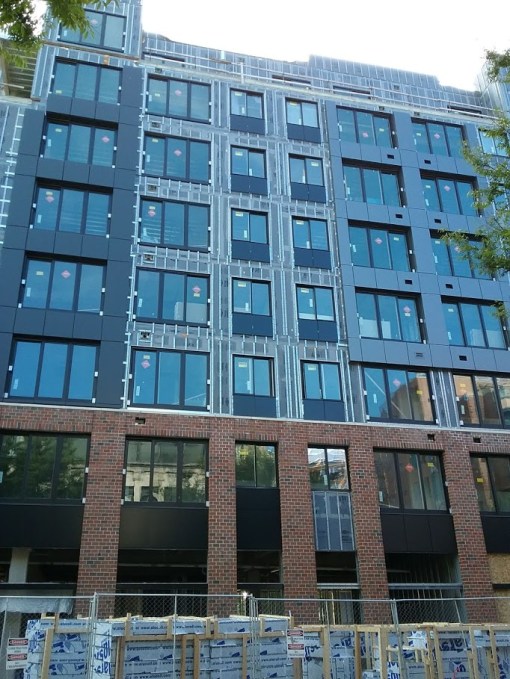
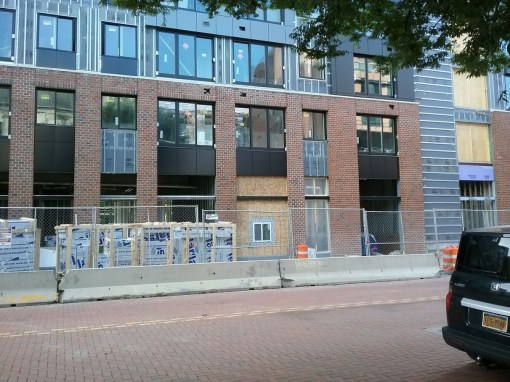
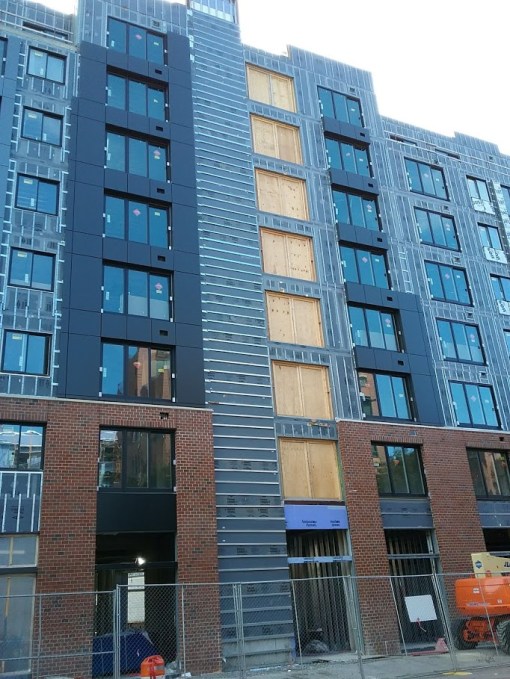
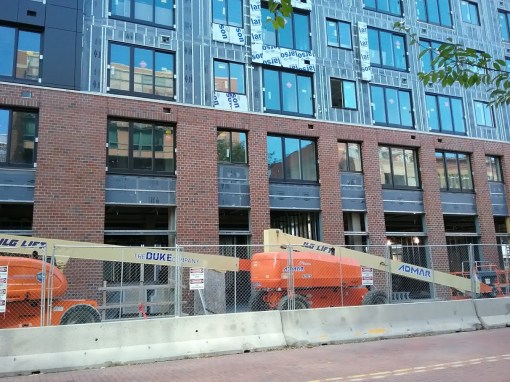
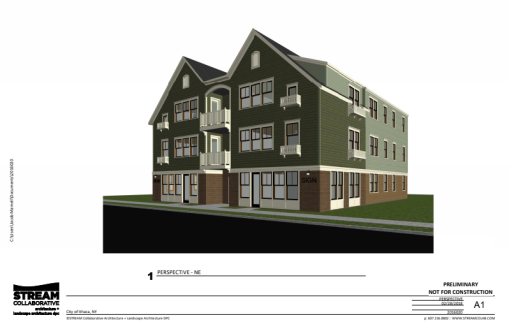
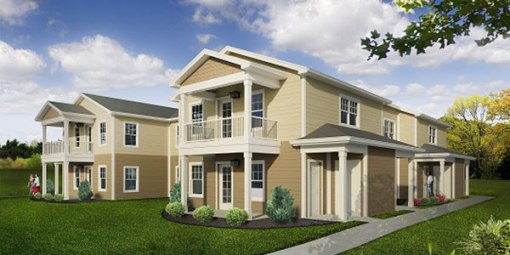
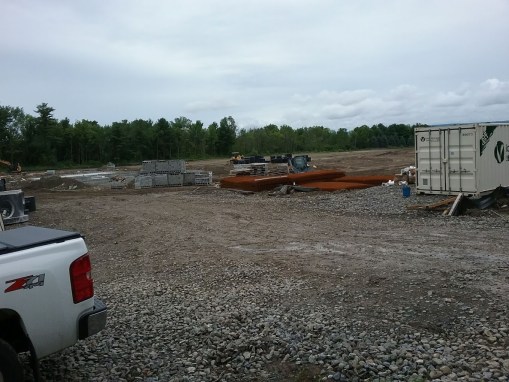
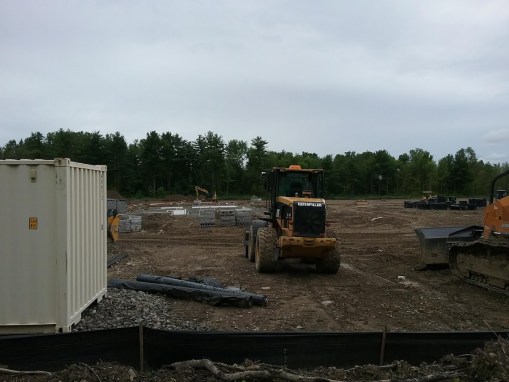
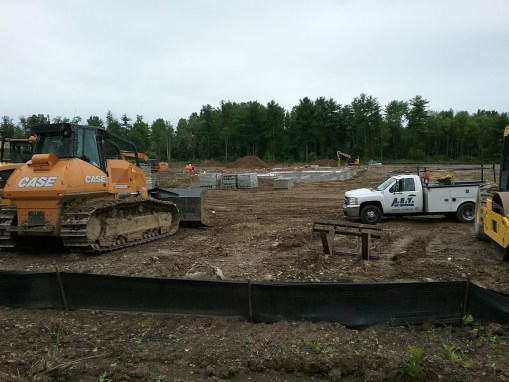
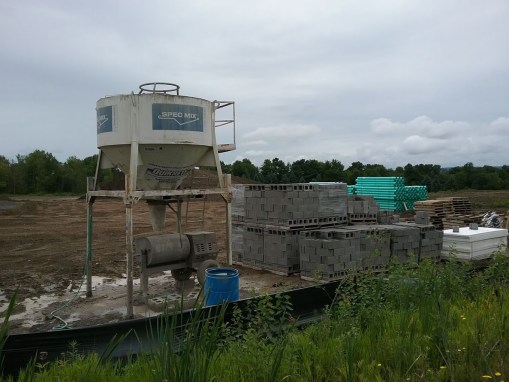
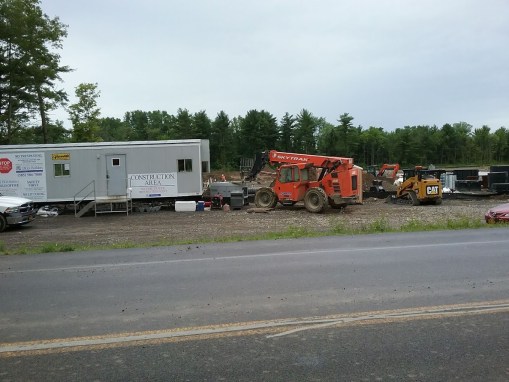
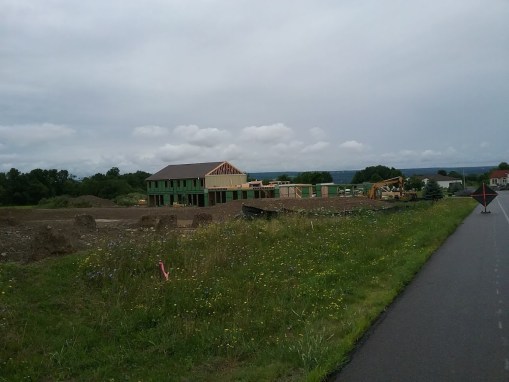
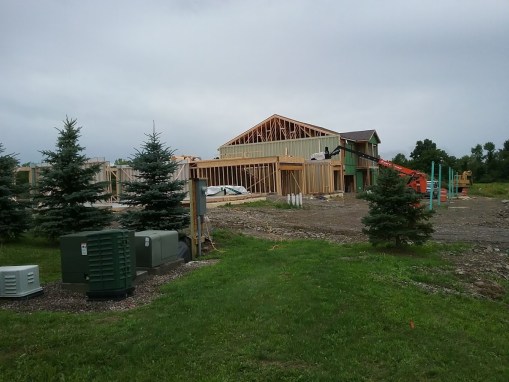
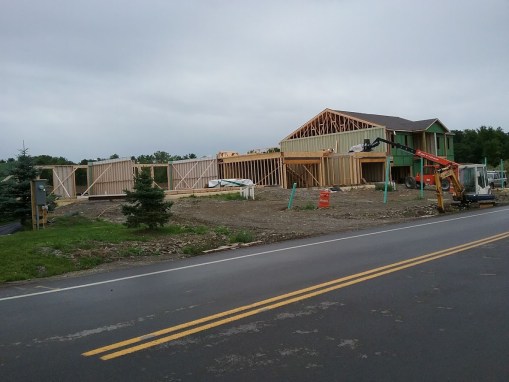
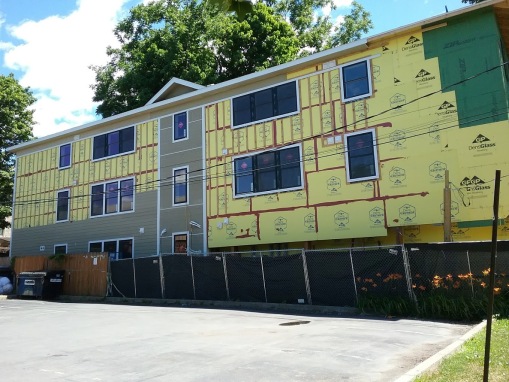
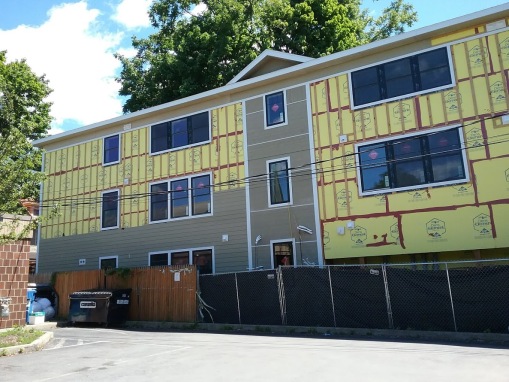
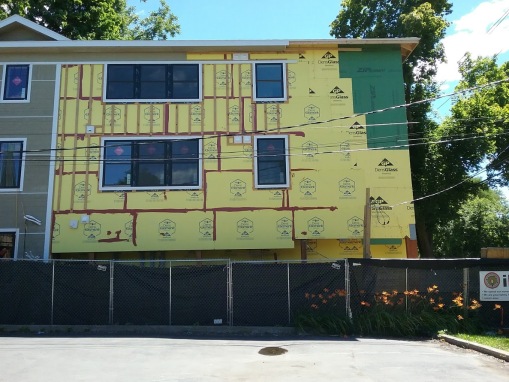
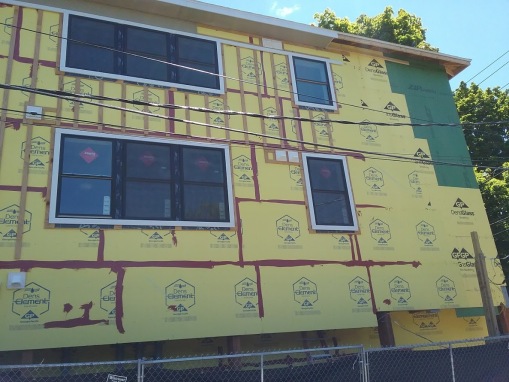
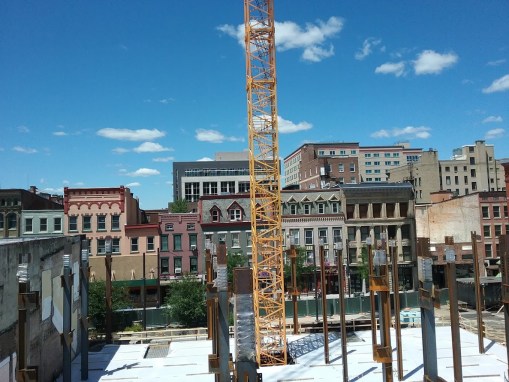
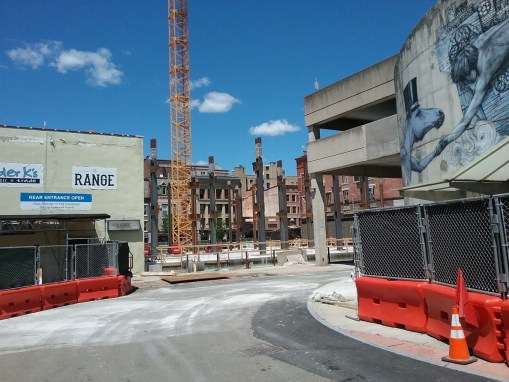
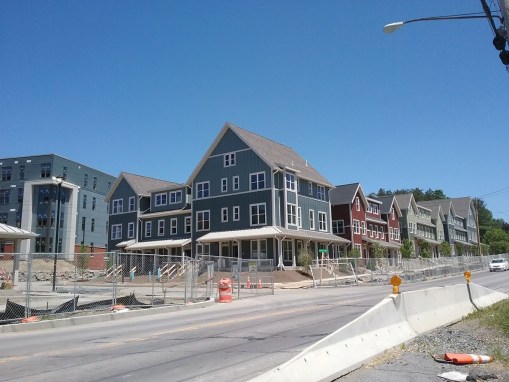
107 South Albany Street Construction Update, 9/2018

3 10 2018

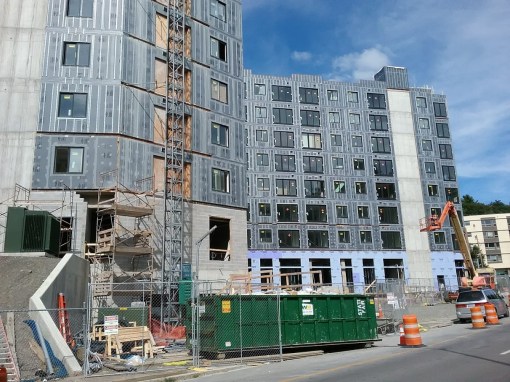
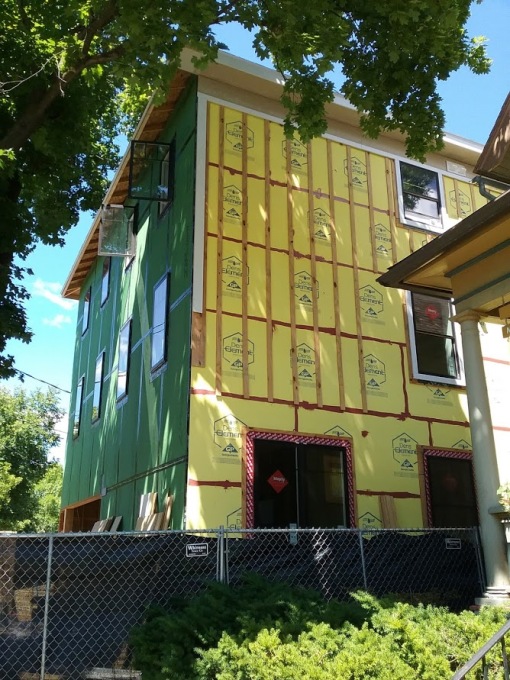
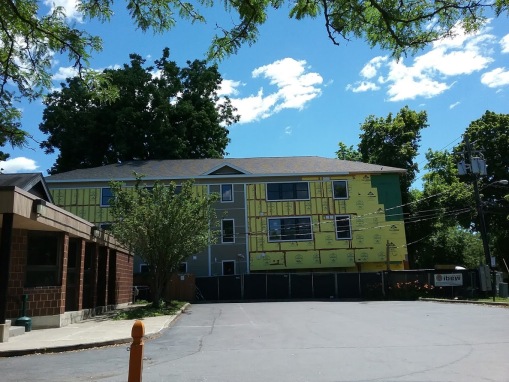
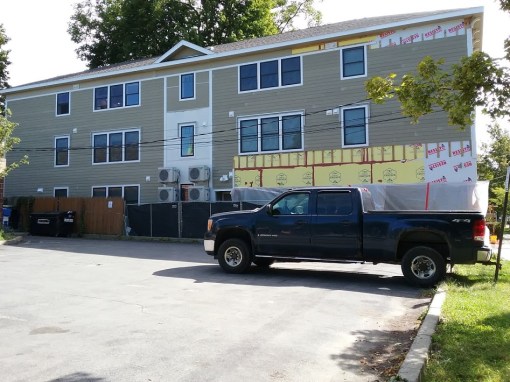
I briefly touched on this in the Voice write-up, but a Certificate of Occupancy doesn’t require a property to be finished with construction work – only that it be safe for tenants and meeting codes and standards, meaning utilities are on, interiors are complete to a satisfactory degree, and the exterior work poses no regular threat, neither outside of work hours or during the course of normal labor. It’s not uncommon to see this in Collegetown thanks to the hard deadline of student tenants (and the dread of paying for alternative accommodations if a CO can’t be obtained), but 107 South Albany is a rare case outside of the more student-heavy neighborhoods.

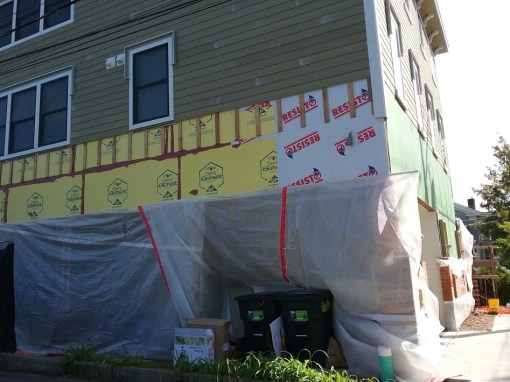
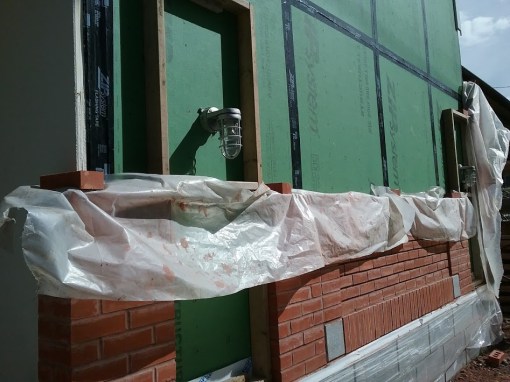
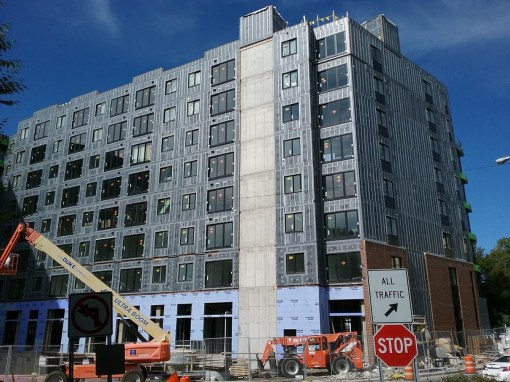
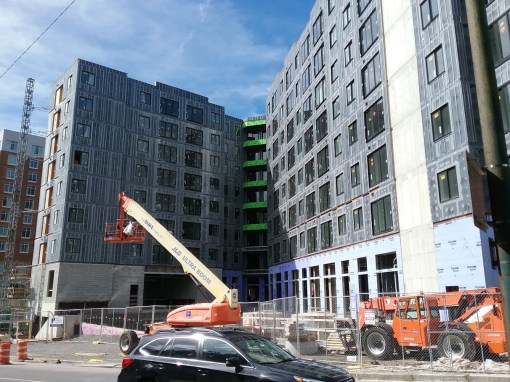
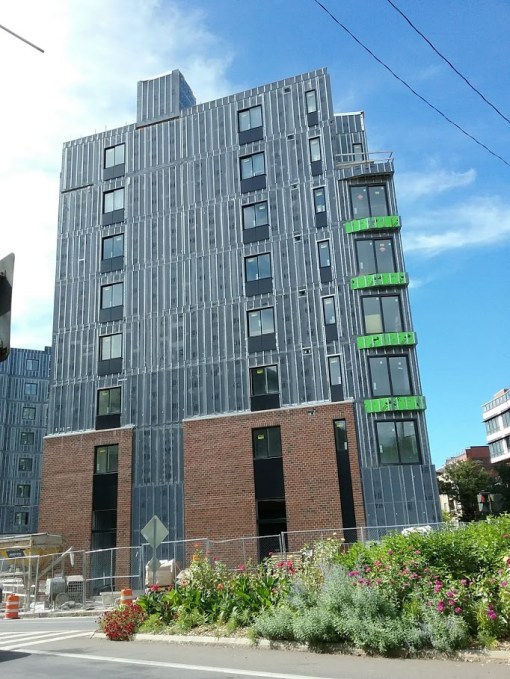
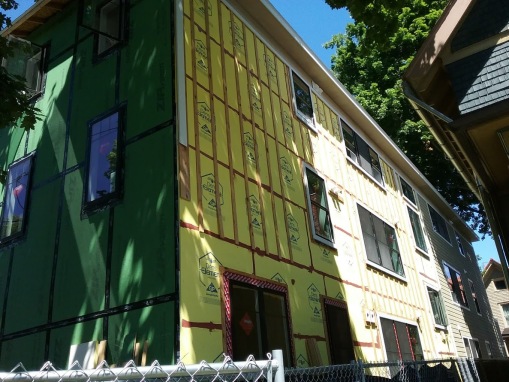
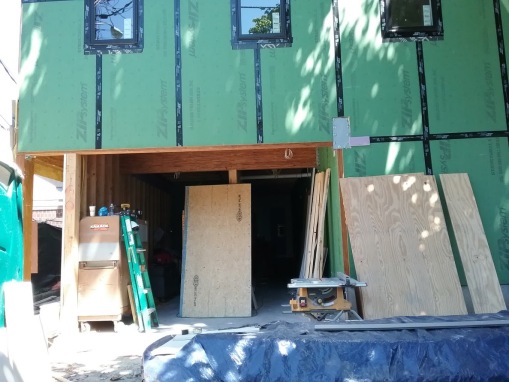
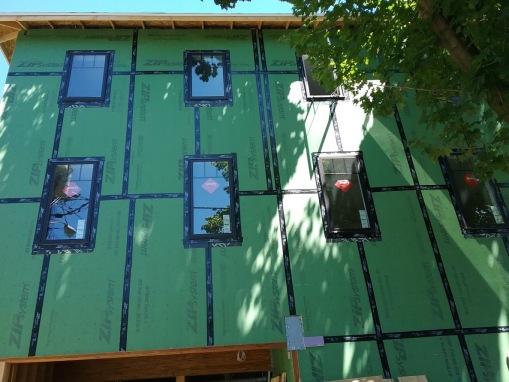
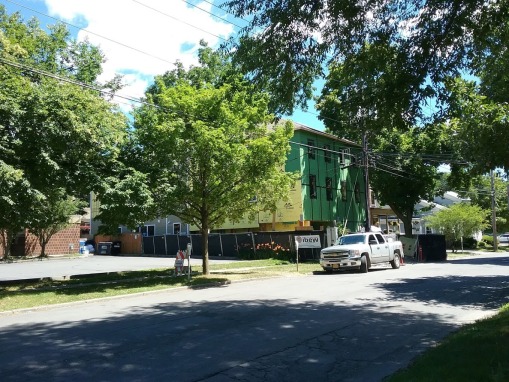
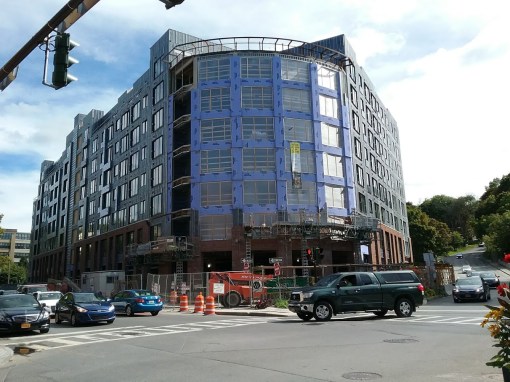
The lights are on and a glance through the common space window suggest that the building is largely complete on the inside. Clearly, work continues on the outside, with fiber cement boards going over the plywood sheathing (both George Pacific and Huber ZIP plywood sheathing varieties, some of which is covered with a Resisto air/vapor barrier). The brick facade work on the front ground-level continues. I’d expect both to be finished before the first snow flies.

Renting Ithaca (Nick Stavropoulos) is the developer, and Flatfield Designs (Daniel Hirtler) is the architect. This is not likely to be their last project. The Stavropoulos Family has undertaken several progressively larger projects over the past several years, and purchased the Alley Cat Cafe building at 312 East Seneca Street for $800,000 in mid-July.

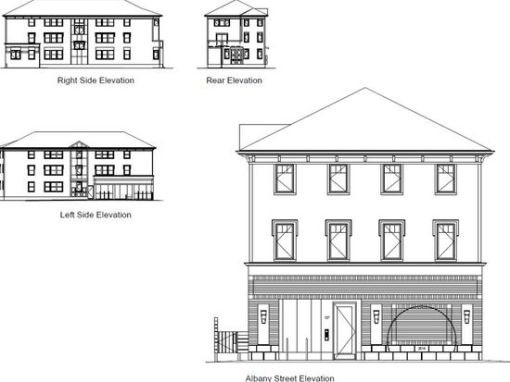
While I can’t say I’m a fan of the demolition of the previous structure, I can appreciate the subtle densification and addition of housing of the State Street Corridor with a contextually-appropriate structure. There will likely be more to come, so if this is setting the bar, it’s a good standard to have. The introductory article, and background about the project, can be found in the June 2017 post here.


City Centre Construction Update, 9/2018

2 10 2018

Along with the usual bevy of construction photos, I popped inside the sales office, which opened on the Commons last month. There might have been a little reservation from the two guys staffing the office when I introduced myself and said “I’ve been reporting on the project and do a real estate and construction blog on the side”, but once one of the leasing representatives, Anthony, mentioned he had checked out a blog called “Ithacating” to help him prepare for the job, we hit it off pretty well.

The second photo shows the reserved apartments as of September 23rd. As mentioned in the Voice article, every one of those top-end $3,265/month two-bedroom units facing the Commons are taken, and the project is still over eight months out from completion. 47 of the 192 units have deposits down, about 25% of total. A disproportionate number of those are two-bedroom units, 16 of 39 (41%). According to Anthony, the tenant mix is fairly diverse – some students, some young working professionals with downtown or Cornell jobs, and a substantial number of seniors looking to downsize and be downtown. The office has received a number of calls inquiring if the units are for sale, but unfortunately for those interested, condos are scarce in Ithaca.

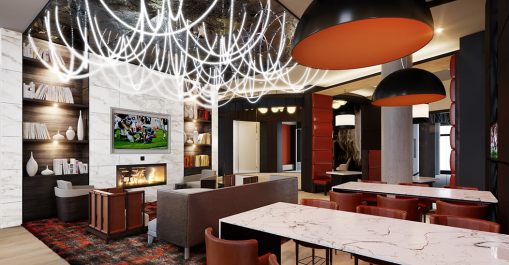
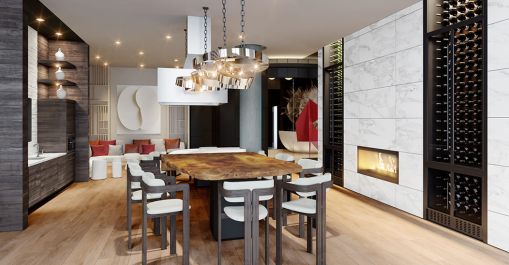
The project website has been updated to include a number of interior renderings, included here at the end of the post. The first four in the set are apartment interior images, showing two bathroom finishes (modern aesthetic with a neutral palette), a larger unit’s living room and kitchen, and a studio unit, which they market as a “junior apartment”. The last three images are common spaces, two lounge spaces and the lobby. The lobby will in fact have a circular reception area, as shown in the ground-level floor plan.

Newman Development Group (NDG) had previously mentioned in a response to Green Street Garage questions that they had secured tenants for all three ground-level commercial spaces, the Ale House restaurant and two other tenants whom Anthony was not allowed to discuss per confidentiality agreements, but they hope to go public with the future tenants “in about a month”. The spaces clock in around 10.600 square-feet in total.

“NDG has recently signed three superior quality tenants for the City Centre project and had a high level of interest from a number of additional tenants that had to be turned away. NDG believes that these and other prospective tenants seeking 3,000 to 5,000 square foot spaces will find the Green Street location to be highly attractive based on the high traffic counts, pedestrian activity, mass transit access, proximity to The Commons, adjacency to significant downtown residential neighborhoods and availability of convenient parking, ” said NDG in the Green Street Q&A.

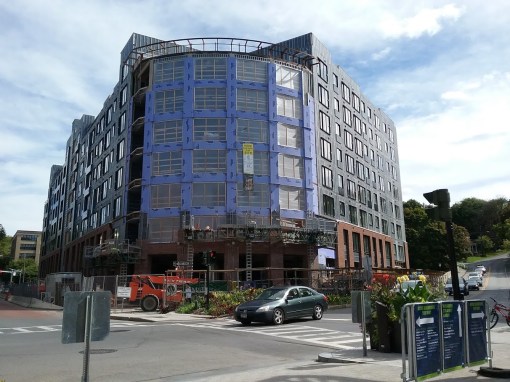
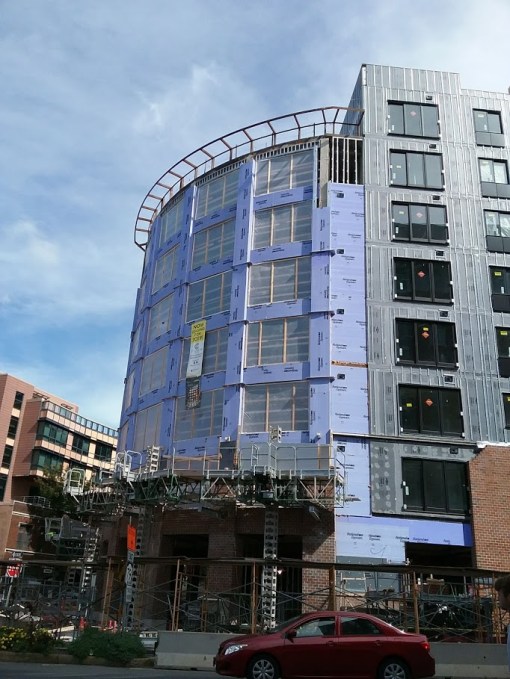
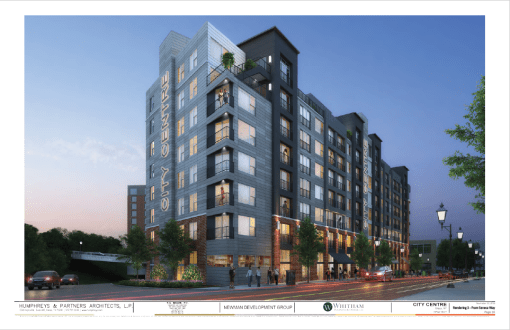
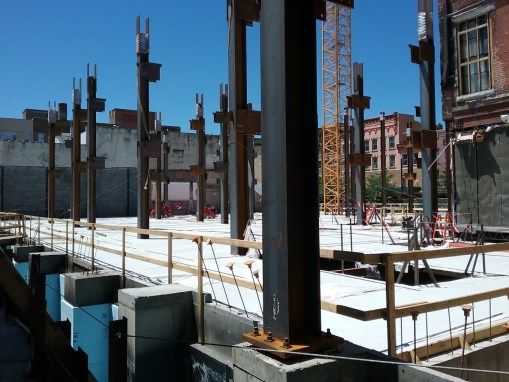
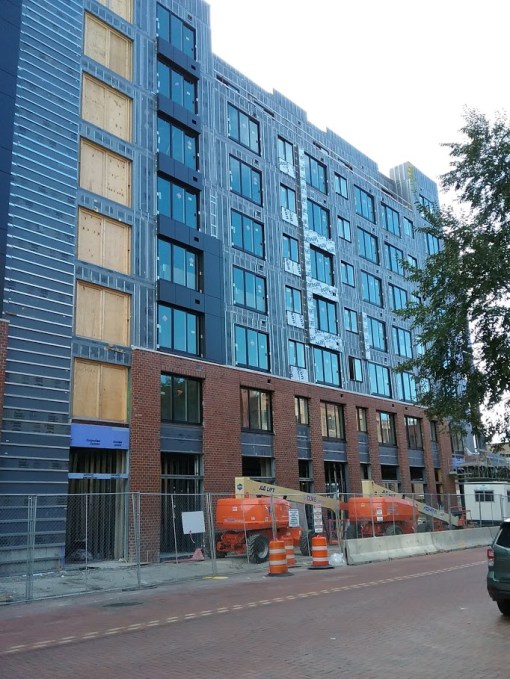
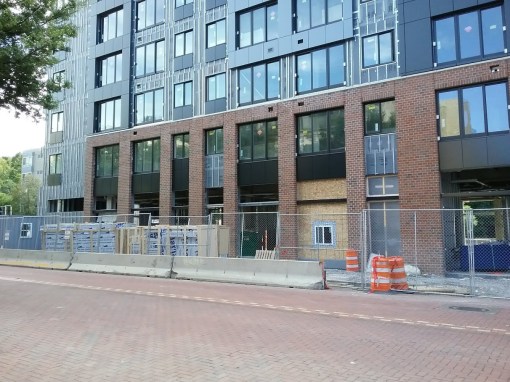
Construction is moving along at a good clip, with most of the windows fitted and work continuing on the aluminum panels and brickwork that will comprise most of the facade. For the sake of brevity, we’ll dig more into the exterior finishes and details in the next update in November.

Side note to the Ithacan – the effort is appreciated in your downtown write-up, but you guys flubbed one critical detail. City Centre and State Street Triangle were two separate projects with two separate development teams. The only common bond is location. The story that I’m familiar with is that the Colberts, who owned the Trebloc site, dropped Campus Advantage as a partner because CA wanted a lower sale price for the land when they were forced to submit smaller project designs, while NDG was willing to pay the premium, and so they were able to snatch themselves the purchase option for the site when it opened for renegotiation.

In keeping with the theme of development controversy, here it’s been the high price of the units – $1,545 – 1,625/month for a studio, $1,745 – 2,595/month for a one bedroom unit, and $2,460 – 3,265/month for a two-bedroom unit. There has been substantial blowback from some local activists and community groups as a result, and even other landlords have expressed off-record that they are incredulous of the asking prices Newman Development Group was aiming for with the City Centre project. So far, however, lease-up seems to be going well. City Centre will open for occupancy in June 2019.


News Tidbits 9/18/18

19 09 2018

1. Unofficially, here are the Ithaca Urban Renewal Agency’s Economic Development Committee ratings for the four Green Street Garage proposals, with a screenshot courtesy of Councilor Steve Smith (D-4th Ward). I’m not quite sure how the total score was calculated, but overall, the Vecino Group’s proposal was the most highly rated, followed by the Visum/Newman Group submission. The general consensus was that the Harold’s Holdings plan was aesthetically pleasing but didn’t include enough of the benefits that the city was seeking, and the Ithaca-Peak proposal was underwhelming in terms of affordability and community benefits.

2. So here’s an interesting little item that came out of last week’s PEDC Meeting. A developer had apparently approached Committee Chair Seph Murtagh (D-2nd Ward) with the idea of redeveloping the Family Medicine site for an eight-story building. Murtagh did not state the intended mix of uses if any was stated (probably ground-level commercial with residential above), but he did express strong reservations for their plan, which would have required a PUD, the D-I-Y zoning the city uses to allow more flexible project design in exchange for community benefits signed off by the Common Council as well as the Planning Board.

Few would argue with the statement that the Family Medicine site, located on the 200 Block of West State Street just west of Downtown Ithaca, is underutilized. It’s a one-story ca. 1980 structure with surface parking. The Cornell Baker Program has used the site among others for student projects to come up with cost-efficient proposals in various parts of the city (officially for academic purposes, but no doubt the local development scene pays at least some attention to the final presentations). I remember one project that showed a seven-story building would be just enough of a return on investment to possibly entice redevelopment with Family Medicine remaining in the ground-level of the new structure. This theoretical proposal did make use of a tax abatement. By this argument, an eight-story proposal could be a better sell, or it could be the result of an attempt to work in an affordable housing component while still making enough money per square foot to appeal to lenders. Regardless of what the circumstances were to push eight floors, this idea likely won’t be coming to the planning board anytime soon.

3. It looks like the Ivy Ridge apartment project in Dryden has been sold to a new developer. An LLC associated with local real estate firm Modern Living Rentals (Charlie O’Connor) sold 802-812 Dryden Road for $2,075,000 on September 12th. Filed on the same day was a construction loan from M&T Bank to pay for construction of the project – a rather substantial $8.6 million for the 42-unit townhouse complex.

The buyer’s LLC could be traced back to a suburban Pittsburgh address for Matthew Durbin, and a little online searching indicates Durbin is a Cornell Johnson School (MBA) Alumnus, a former investment banker turned business executive. In short, he has a demonstrated familiarity with the Ithaca area, business acumen and the money to make things happen. Site prep is underway and no changes to the project design or timeline are indicated. As for O’Connor, he’s now a much wealthier man, and we’ll see if any of those recent gains are turned into equity for future MLR projects.

If anyone else is still looking for shovel-ready multi-family projects, 1061 Dryden is still for sale.

4. On a somewhat related note, 312 East Seneca Street was sold by Jagat Sharma (better known for his architecture firm, but 312 East Seneca house his office) for $800,000 on September 14th. The buyer was an LLC that traces back to the Stavropoulos Family on West Hill, who have undertaken a number of small to medium-sized development projects in the Ithaca area over the past several years.

This purchase would impact MLR and Visum Development’s plan for Seneca Flats, a 42,000 SF multi-story mixed-use structure at the corner of East Seneca and North Aurora. The two firms based their initial drawings on the presumed purchase of this building. However, they had also drawn up floor plans for options that did not include 312 East Seneca – offhand, the plan with the site had 85 units, the plan without had 60 units. Basically, lop off the rightmost (northern) quarter of the above drawing. As for the Stavropouloses Stavropoli, they paid more than double the assessed value ($390,000), so there’s a good chance they have their own plans.

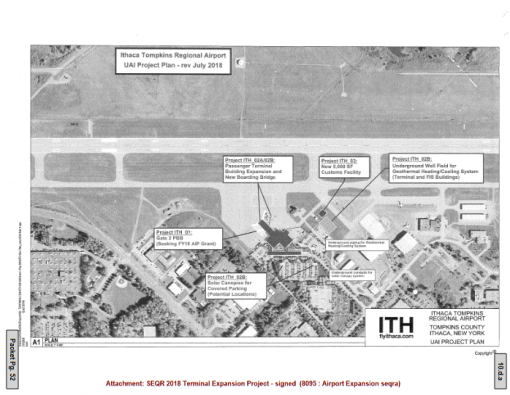
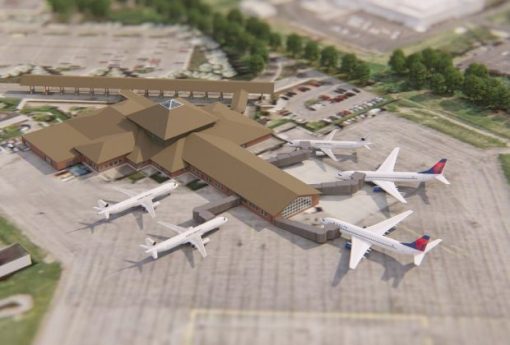
5. This blog gravitates towards hard/quantitative data, so here are a few facts about the airport expansion from the SEQRA environmental forms:

– The Passenger Terminal Expansion. will consist of three additions totaling 15,600 SF. 8.500 SF is an addition to the passenger holding area (which makes flying sound about as comfortable as it feels), 5,400 SF for additional bagging screening space and office space for the TSA and for airlines, and 1,700 SF by the main entrance for expanded passenger circulation and ticket counter space.

– Apron reconstruction, 40,000 SF. The apron is the area where planes park, refuel, and where some passenger loading/unloading takes place.

– Utilities replacement, interior “building enhancements”, one new passenger boarding bridge, and refurbishment of the existing boarding bridge.

– Installation of a geothermal heating and cooling system using 40 underground wells, 350-400 feet deep, and a closed-loop piping system. The operation is similar to a heat pump system, using the earth’s latent heat as a reservoir. The ground disturbance area to install the wells will be about 15,000 SF (~0.35 acres).

– Installation of overhead canopies with solar panels in the airport parking lot.

-Construction of a new 5,000 SF customs facility. The facility will be a one-story masonry structure with steel framing. The facility will accommodate no more than twenty passengers, and is exclusively tailored towards international business visitors – it’s been previously stated that business executives and Asian visitors, who often come in via Canada, have expressed a strong interest in private jet accommodations.

– Approximately ten new employees as a result of the terminal expansion, and six more from the construction of the new customs facility, for a total of sixteen new full-time jobs.

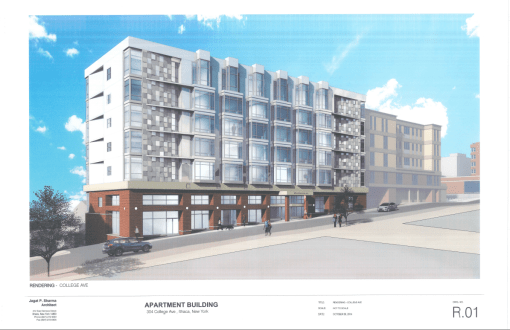
6. Thanks to reader Alec for this tip – a collection of contiguous Avramis Real Estate-owned Collegetown rental properties at 120 Catherine, 122 Catherine, 124 Catherine, 128 Catherine, 302 College, 304 College, and 306 College were not made available for rent for the 2019-2010 academic year. A check with sources indicates that according to the rumor mill, a buyer has them under contract, but the sale has yet to be finalized.

This is worth noting because we’re talking about a multi-million set of properties with 68 existing beds, but more importantly they have significant redevelopment potential – the lots can be consolidated into a large MU-2 zoned parcel (six floors, 100% lot coverage no parking) and a large CR-4 zoned parcel (four floors, 50% coverage, no parking)In fact, back in 2014, the Avramises proposed a two-building development that would have resulted in about 102 units and 202 beds. The Jagat Sharma-designed proposal never began formal review. The off-record commentary was that the Avramises got cold feet during the heat of the Collegetown building boom, though given their central location, these properties would be better insulated from a downturn in the student rental market than Outer Collegetown or fringe neighborhoods. Definitely worth keeping an eye on.

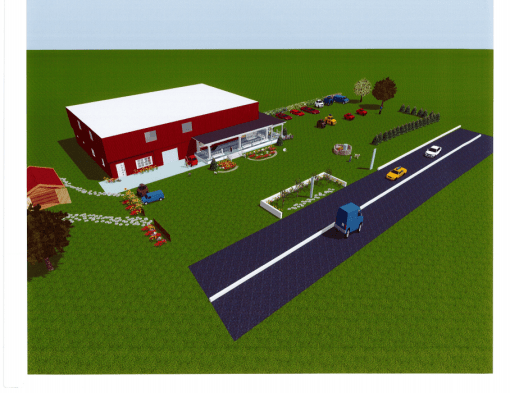
7. We’ll wrap this up with a pair of Dryden projects. The first, 1610 Dryden Road. Most folks better remember this barn as the former Phoenix Old Used and Rare Books, which closed in 2015 after a 30-year run. In early 2017, a proposal came along to use the barn as a trailer sales dealership, but it did not come to be. Now, for the second time in as many months, the proposal is a veterinary clinic, “Elemental Pet Vets”. Local veterinarian Curtis Dewey and his wife Janette are proposed to renovate the 6000 SF barn with accessory parking and landscaping. The property is zoned rural residential, so any commercial plan needs a Special Use Permit (SUP) from the town of Dryden. The town planning department is generally amenable to the reuse even if out of sync with zoning, so long as the parking and accessory structures are approved by the town, the curb cut meets NYS DOT regulations, and a landscaping buffer is in place. Ithacor of Cortland will be the general contractor.

The rendering is a bit…strange, so strange that I’m still not sure if they plan on taking down the pitched roof for a flat one, or if they decided thirty minutes in their late 1990s rendering software would convey enough to get approval. Seriously, this might be one of the worst renders I’ve seen for a project, and that’s saying a lot given the number of low budget drawings that go through the boards for small projects.

Meanwhile, as previous covered by the Journal, the Laser Brewer fashion boutique at 1384 Dryden Road has closed with the retirement of Peggy Laser after forty years of business, and her son Riley is expanding his Brew 22 coffee bar, kitchen and beer taproom to fill out the 3248 SF space. This project also requires an SUP because the younger Laser is adding a drive-through window (for the coffee and baked goods, brew-thrus are illegal in New York but okay in plenty of other states). Other than that and an exterior paint job, no further structural changes are planned.


News Tidbits 8/18/18

18 08 2018

1. Here’s the latest update to “The Village at Varna” the Trinitas proposal for the hamlet of Varna. The project had originally started with 224 units and 663 beds, and this latest iteration is down to 219 units and 602 beds. The most notable changes in this new layout are the incorporation of a three-story parking garage to conserve green space, and a larger retail area fronting Dryden Road – there’s nothing in the filing, but at a glance it’s about double the previous size, so from 800 to something around 1600 SF.

With the inclusion of a garage, that frees up more green space – at 55% of the site, it’s now only 4% lower than the requirement (59%, the site is a mix of Varna Hamlet zone types). 541 parking spaces are provided, vs. the 549 required by zoning, and there are some setback variances requested for setbacks from the property line buffers (the buffers themselves are the required 20′ width).

One thing that stands out to me as a potential issue isn’t shape or scale, but unit mix. Of those 219 units, 110 are four-bedroom units. Beyond the argument that four-bedroom units are clearly student oriented (the demand simply isn’t there within the general market), I’m doubtful the demand for 110 four-bedroom units exists outside of Collegetown. Most grad students who take a shine to Varna also opt for smaller spaces, and the undergraduates who fill 4 bedroom+ units generally aren’t interested in living this far out. What modest demand there is for four-bedroom units, is identified and met – projects like 802 Dryden have already incorporated a number of four-bedroom units in their plans. I understand that from a cost per square foot perspective, it’s more efficient to do four-bedroom units (one four-bedroom doesn’t need two kitchens, living rooms and bathrooms like two two-bedroom units would). But it would likely be tougher sell than Trinitas realizes, especially with Cornell planning to expand their campus offerings in the next few years.

To be frank, I’m firmly in the camp that Trinitas could do something good here, but I’m not sure this is it.

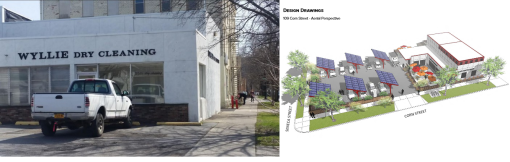
2. Let’s just throw another piece of bad news out there – even with the project redesign, PPM Homes cannot make the Ithaca Glass redevelopment work financially. That’s unfortunate not just because of the ten units of infill housing that may not be built, but it and the Wyllie Dry Cleaner redevelopment had received a $500,000 RESTORE NY grant. While that money is untouched, it doesn’t look good to the state that a project that the city vetted and advocated over competing projects has stalled out. To be fair, apparently not even Ed Cope knew of the structural issues at the time of application. The later revision for the Ithaca Glass site removed Wyllie’s from the grant award, and the status of that project isn’t clear. The IURA notes that Cope has talked with INHS about possibly selling them the site so they could go through with the original smaller and modern-looking overbuild, but the issue was that the overbuild wasn’t structurally feasible without a huge investment, and INHS has a lot of coals in the fire at the moment (offhand there’s the Salvation Army site, 209-213 Elm Street, 402 South Cayuga, the Green Street Garage, and Hamilton Square). It’s not looking good at the moment.

3. Speaking of which, quick update on the Salvation Army rebuild and expansion – it’s still in the works between them and INHS, but going slower than first anticipated. The project probably won’t be applying for construction funding this fall, but instead it’s expected to be reviewed by the city, approved and seeking affordable housing funds sometime next year.


4. At least the airport expansion project seems to be moving along. According to airport staff, the state has a heavy hand in it, and there have been weekly meetings to source fund to fill the $8 million gap needed to bring the $22 million project forward. Bids have already opened on phase one, the construction of the new main terminal, and the bidding period will close by the end of the month. Phase two, the geothermal power and new concourse, will be bid in early 2019, as will the third phase, the new solar array and U.S. customs facility.

5. Some good news on the affordable housing front, the county is set to disburse joint Cornell-Ithaca-Tompkins Community Housing Development funds funds to help Cornerstone Group’s Milton Meadows proposal move forward in Lansing, eventually totaling $256,875 towards the 72-unit apartment project. Milton Meadows would serve 14 households at up to 50% AMI (area median income, 100% = $59,000/year for a single person), 42 at 60% AMI, and 16 at 80% AMI.

In the next round of funding to be awarded this fall, it looks like the county will award two grants – one to INHS, $140,000 from the CHDF to help pay for two of the four for-sale townhouses at 402 South Cayuga Street (the 80% AMI ones, as the two 100% AMI middle-income units aren’t eligible), and $300,000 to Visum for the twelve units of affordable housing planned at 327 West Seneca Street. The Visum project is conditional since the administrative committee for the funds is awaiting additional details, and the project needs to be approved by the city. Perhaps PPM Homes should reach out for a discussion about whether an application could make its West Seneca project (item #2) work.

6. Developer Scott Morgan’s 16-unit Cayuga Vista Townhomes aren’t in formal review yet, but the land has exchanged hands – $139,500 on the 15th, every penny the sellers wanted. This makes it considerably more likely that the rental project (2 one-bedroom, 12 two-bedroom, 2 three-bedroom) will be coming forward to the town of Lansing planning board over the next few months.

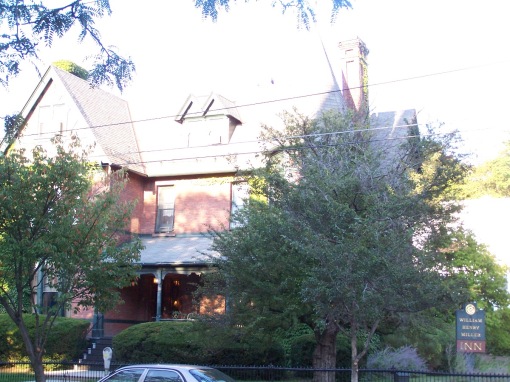
7. For those who dream of owning a B&B, the William Henry Miller Inn is for sale. The building dates from 1878 and served as the private residence of the Osborn family from 1914 to 1996. In 1998, innkeeper Lynette Scofield purchased the property and renovated it into the Inn, which opened the following year. The Inn has enjoyed rave reviews on travel advising websites.

For $1.499 million, you too can be an innkeeper – the sale includes all furnishings, future bookings and  “infinite good will”. It definitely reads as if a very strong preference will be given to those who maintain the inn and its high standards vs. other uses. The inn has nine beds and eleven bathrooms, with an accessory owner’s cottage with one bed and bath. It’s something to fill out your daydreams this weekend.


East Pointe Apartments Construction Update, 8/2018

6 08 2018

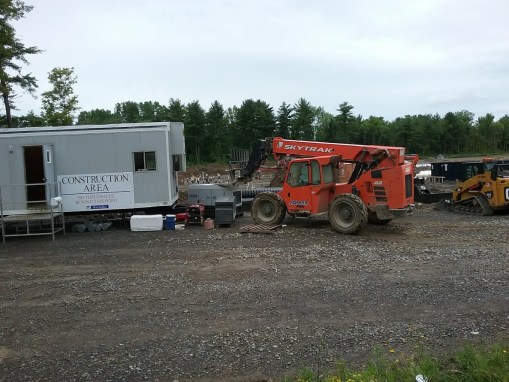
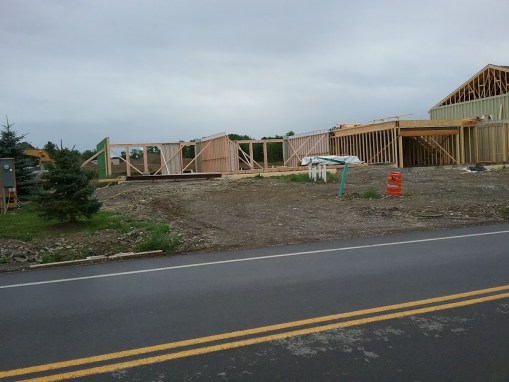
No one can say DGA Builders is wasting time. A visit on Friday showed three sets of CMU foundation walls have been assembled and mortared, each for a ten-unit townhouse string. A few crewmen kept an eye on a material placement truck, also known as a stone slinger, as it launched rocks into the footprint encased by the foundation walls. This may be a crushed stone base (hardfill) for a concrete slab pour, given the stacks of rebar with surface rust sitting nearby. A shallow foundation would work fine here because two-story buildings aren’t especially heavy as structures go, and it would be less expensive and time consuming than a deep foundation. Elsewhere around the site one sees PVC sanitation pipes (sea green), water pipes (blue), and pieces for utility junctions.

Meanwhile just a stone’s sling away on Nor Way, Forest City realty continues work on the six-unit string (hexplex?) of townhouses. Two are fully framed and roofed, two have had their first floor framed though not fully sheathed, and the other two are only partially framed on the first floor. As with all the townhouse strings, these will incorporated some unique design features while keeping the general unit layout the same. I know they’re not happy about the East Pointe townhomes, but it could be a good synergy – the price points ($1,400-$2,000/month fr East Pointe, $350k for the Heights of Lansing townhouses) are such that renters who may wish to stay in that neighborhood may look at the Heights townhomes as an option.

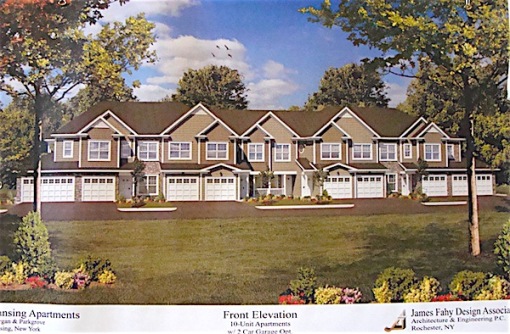
A website is now up and running for East Pointe. It’s mostly stock images and bland corporate-speak, but they do have floor plans and some new renders. Here’s the advertising pitch:

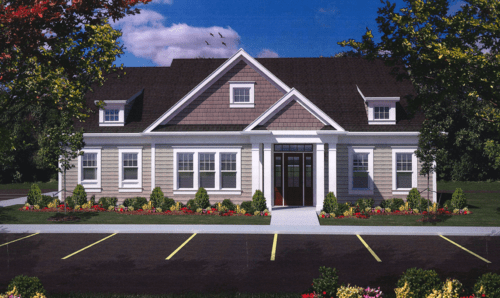
“This apartment community is located on 20 acres in Lansing, NY, which is part of the Ithaca, NY, market. This is new construction of 140 state-of-the-art apartments. There will be 36 one-bedroom units, 90 two-bedroom units, and 14 three-bedroom units. The project will include fourteen apartment buildings with 10 units in each building that will be walk-up garden style with private entrances and a community building. All units will have high end finishes and amenities, including stainless finish appliances, microwave, dishwasher, washer and dryer, ice maker, granite counter tops, wood cabinets, vinyl plank flooring and wall-to-wall carpeting, tile showers, high end plumbing fixtures and lighting fixtures. All apartments will include a patio or deck. The community building will include the leasing and maintenance office, Great Room and warming kitchen for gatherings, and a fitness center. The project also includes an outdoor pool with changing rooms and shower.”

I have no idea what a warming kitchen is, but my very Sicilian mother is pretty good at turning kitchens into warming spaces around the holidays. A photo of the community center is included below.

UPDATE: I’m just going to add this here since the timing was ever so slightly off- on Monday the 6th, the construction loan was filed with the county. M&T Bank is lending Park Grove (represented by an LLC) $22.6 million for construction of the East Pointe project.


802 Dryden Road Construction Update, 8/2018

5 08 2018

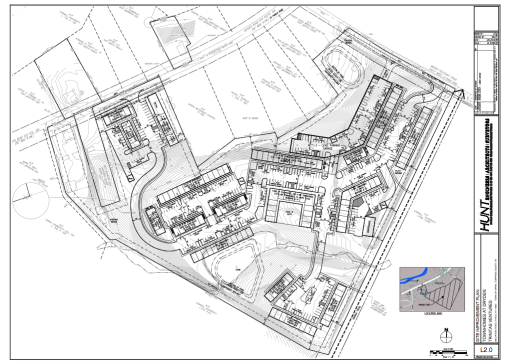
Not a high-profile project here, but sizable. 802 Dryden Road, also called “Ivy Ridge”, is the latest project to come out of Modern Living Rentals (MLR). MLR is led by local developer Charlie O’Connor, and as I noted previously, “[h]e is arguably one of the most reticent developers in Ithaca, preferring unobtrusive projects that he hopes will create as little debate as possible. It’s kinda funny in a way, because although he’s a business partner with Todd Fox (Visum’s property management is handled by MLR), the two of them are near-opposites in that regard.”

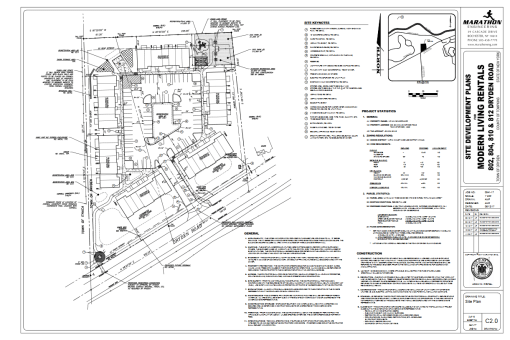
True to form, while 802 Dryden is a sizable 50,000 SF, $7.5 million project, it was the subject of relatively little public debate during its approvals process. It’s located next to arboretum, replaces four rental houses and a motorcycle repair shop, and the number of residences within 500 feet could be counted on two hands. The project consists of 42 two-story townhouse rental units on three acres, six strings of seven units in a right trapezoid layout. Each string contains four two-bedroom units, two three-bedroom units and a four-bedroom unit (108 beds total). It’s a two-minute drive from the east end of Cornell’s campus (B Lot), and an easy sell to students and staff looking to live in a quieter location near campus.

Zoning on the site is fairly dense, all things considered. Although rather far from Varna’s core, the project does fall under Varna Hamlet Mixed Use District zoning, which allows ten units per acre. A redevelopment bonus of dilapidated properties gave another two units per acre, and a green bonus of two units an acre was also permitted. The green features part required some debate and confirmation. The project seeks LEED Certification and will apply LEED standards for neighborhood design.

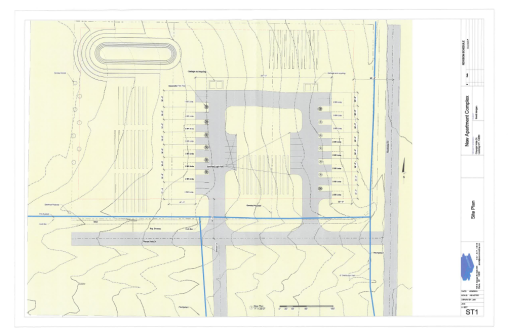
The project was first proposed in June 2017. At the time, its design was a virtual clone of another MLR project, 902 Dryden Road, albeit with different colors. The designs were revised at least three times. The design work was passed from STREAM Collaborative to John Snyder Architects, who did substantial alterations, and then again, and then STREAM once again did some work on it. The final set of renders are here, with the site plan docs here. Originally there were three townhouse string designs, but it looks like it was reduced to two in the final round. The six buildings are generally but not exactly the same – the gables are mirrored, some additional trim pieces are used on the gables for the Dryden Road pair, and they alternate between a dark blue vertical fiber cement panel (probably HardieBoard), and a dark green panel. Original approvals may have been issued in November 2017, but the last revisions were approved this past May.

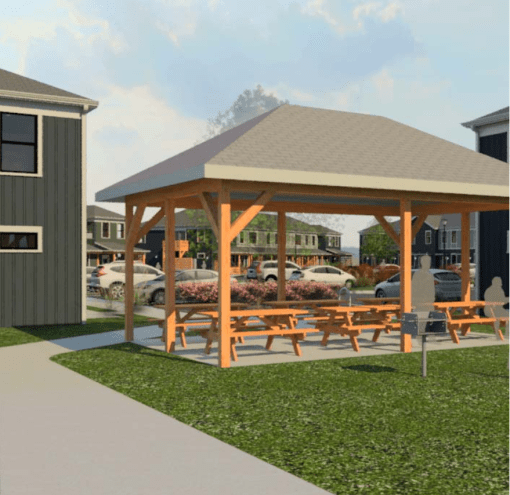
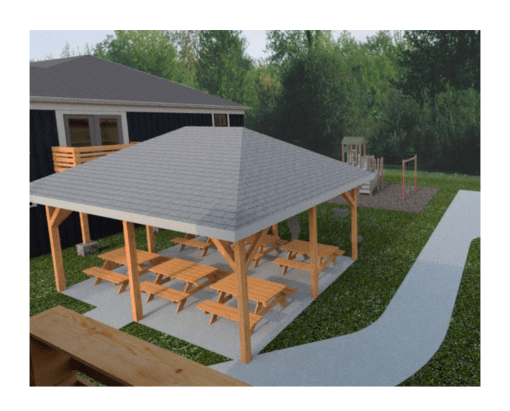
Exterior features include 70 parking spaces, bike racks, trash/recycling enclosure, stormwater ponds, bioretention areas, signage, a childrens’ playground, pavilion and a dog park split up for large and small breeds. Planned interior features include granite counter tops, stainless steel appliances, a washer and dryer in each unit, contemporary lighting, and marble tile. Expect these to be in the same price range as the other recent MLR units, which have been in the $650-$750/bedroom range. The units are expected to be ready for occupancy by June 2019.

There’s a little bit of pre-building infrastructure work that had to take place before construction, because this is a sort of no man’s land between the settled parts of the town of Ithaca and the town of Dryden where no municipal water service was available. The public water main had to be extended to service the project, and the main will be deeded over to the town. At this time, the existing buildings have been removed, but the land has yet to be cleared; we’re really just at the initial phases of the project.

Along with MLR, STREAM and John Snyder Architects, GMB Consulting Services did the LEED score analysis, T.G. Miller P.C. handled land surveying and Marathon Engineering tackled the civil engineering work – Marathon’s Adam Fishel shepherded the project through the town boards. I don’t have a contractor listed, but will share it when I do.

Pre-construction (Google Maps, Nov. 2015)

Renders:

August 3rd:


News Tidbits 7/21/18

21 07 2018

1.. I rarely check in on Groton, but here’s an interesting little rehabilitation. Back in August 2017, I noted that a historic village church at 113 Church Street was for sale. The buyers last February were David and Delsy DeMatteo, who own and rent out a number of Groton-area properties. The DeMatteos appear to have submitted and received approval for a plan to renovate the structure into a 12-unit apartment building, replacing the religious-turned-commercial space with ten apartment units (two units already exist). From the look of it, the ten new units would consist of eight one-bedroom and two two-bedroom units. The plan was approved in late fall when the DeMatteo likely had a purchase option on the property, and the sale closed on February 8th. Always nice to see new life breathed into a place that played a role in the lives of many.
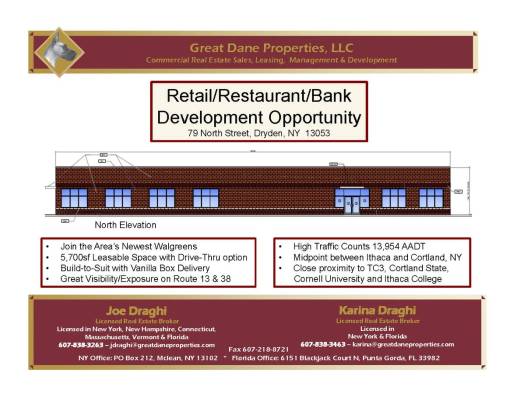
2. Over in Dryden village, the second phase of the new Rite Aid-turned-Walgreens development site is being marketed. Great Dane Properties is touting 5,700 SF of space for lease, with a drive-thru option should one desire it. The spec site plan can be seen here – the render above is likely the north elevation. Early conversations stated a 3,800 SF restaurant space (typical for a fast food /chain coffee shop), 1,900 SF of other retail space, and 33 parking spaces, but the plan is vanilla box, meaning minimally finished interior – it’s a shell with the exterior complete and all the utilities are good to go, but the build-out of fixtures, finishes and partitions is up to the tenant. A second commercial real estate posting suggests a 2019 build-out, though it’s more likely based on the ability to secure a primary tenant.  That listing also floats a hotel as another possible use of the location.

The first post came from Craigslist, which as a matter of personal opinion, that seems a bit unbecoming for high-value commercial listings, and may not effectively reach the target market of business owners and RE corporate development teams. You’re trying to fill 5,700 SF of new retail space, not sell Grandma’s old couch.

3. Also in Dryden, plans for a new veterinary office building at 1650 Hanshaw Road. Existing site plan here, proposed site plan here, elevations here. It’s not a particularly large project – a one-story metal building 4,800 SF in size, with revised landscaping 14 new parking spaces. The new building would go in front of the existing building on the property, so not much in the way of site prep required. The plans are being drawn up and led through review by local architect George Breuhaus.

4. It looks like the gut renovation and expansion of 1020 Craft Road is complete. The $1.88 million project involved taking the existing 10,500 SF car dealership-turned-industrial building, tearing out everything except the support beams, and fully rebuilding the interior along with constructing an additional 4,400 SF of space. Three commercial office spaces were completed, and it appears Cayuga Medical has leased two of the spaces for medical offices. The project was developed and built by Marchuska Brothers Construction of Binghamton.
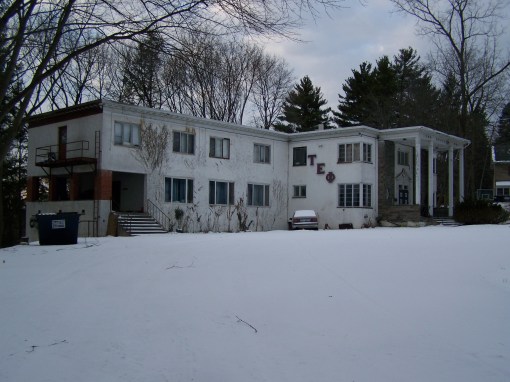
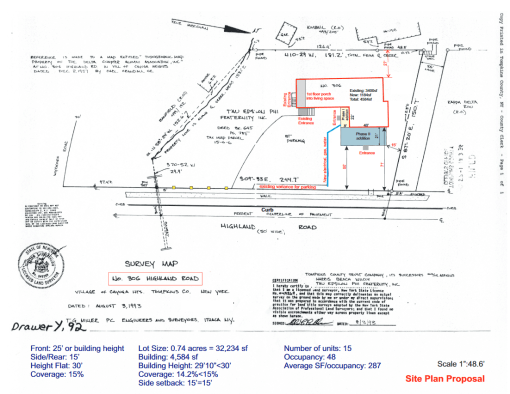
 

5. Speaking of renovations, it looks like someone is interested in the former Tau Epsilon Phi house at 306 Highland Road in Cayuga Heights. The plans show 15 “units” and potentially up to 48 beds, which sounds like a group living situation, but the plans do not identify the developer. The first phase would involve exterior and interior renovations for 36 beds in the 3,400 SF building, enclosing the side porch and constructing a small addition on the southeast face to create a new entrance. A second phase is shown in the documents that would seek a 1134 SF, 12-bed addition at what is currently the front entrance of the early 1960s building, the east facade. It was previously noted that 306 Highland was for sale for $1.385 million, which was steadily reduced to $1.025 million before being taken off the market at the start of June. The village will begin site plan review of the project at its Planning Board meeting on July 23rd.
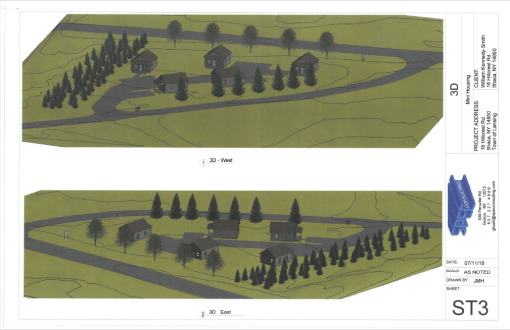
6. On to Lansing. Here’s a little more about the Hillcrest Tiny House project -memo here, application here, drawings by architectural firm SPEC Consulting here,  . The five homes would be built on 16 Hillcrest Road, a parcel split by Hillcrest Road where it intersects with Warren Drive – the developer is the home owner who lives on the other half of the parcel, south of the intersection. The triangular northern piece would host the rather traditional-looking cottages, which would be one-bedroom units, about 450 SF each, and have two parking spaces apiece. The land is zoned industrial/research, which allows commercial and industrial uses – the owners argue that its location on the west side of Warren Road near other residential development along Hillcrest means that a commercial or industrial use would be out of character.

One could make an argument that this is desirable in that their small size would help address the  middle-market for housing demand, which has been lacking in new options, resulting in existing options being pressured upward in price. The project would cost about $200,000 to build and the owner/developer estimates two months to build each cottage, though it’s not clear if construction of each cottage would be concurrent, or one at a time.

Quick side note, Milton Meadows has submitted a construction plan for the new access road in tandem with the town’s realignment of the Woodsedge Drive/Route 34 intersection. Taylor the Builder, the general contractor for the project, is planning for November 2018 – September 2019 for the 72-unit affordable apartment complex.
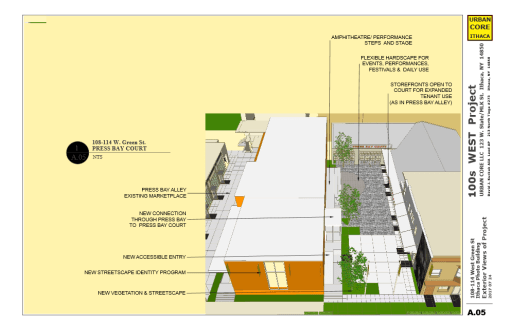
7. Urban Core LLC has started exterior demolition and reconstruction work for the Press Bay Court project. I’ve been waiting to officially move this into the construction column for a while, could never quite be sure when walking past – the full rundown and description of the project can be found in the October introduction here. To quote part of it:

“What Urban Core’s latest plans would do is expand that “experiential” micro-retail mix eastward towards the corner of Green and Cayuga Streets, the Commons and the downtown core. The parking lot in front of D. P. Dough would be converted into a plaza much like Press Bay Alley’s, and the first floor of 108-110 West Green would be renovated into 5-8 micro-retail units facing the new plaza (the Green Street entrances would be retained), with 320-2200 SF per unit. The second floor would be renovated into four below-market rate one-bedroom apartments with 510-660 SF of living space, and the exterior masonry would be cleaned and repaired. The hawk mural will be preserved. New signage, bike infrastructure, curbing, sidewalks and a parklet are included in the plans. The total square footage in phase two is about 9,000 SF.”

8. 105 Dearborn has received a construction loan to move forward. The 10,930 SF, 12-bedroom, 16-person high-end skilled care facility will cost $4.2 million to build according to the loan filed this Friday the 20th, and over the next year it’ll slowly take form on what is now a vacant corner in leafy Cornell Heights. Bridges Cornell Heights will run the facility, and add a handful of news jobs as a result of the new addition. Tompkins Trust Company is the lender, and the historically-inspired design was penned by Rochester-based Bero Architecture.

7. Looks like a fairly interesting monthly meeting ahead for the Ithaca City Planning Board. Here’s the agenda:

1. Agenda Review 6:00
2. Privilege of the Floor 6:01

3. Subdivision Review

A. Project: Minor Subdivision 6:15
Location: 508-512 Edgewood Place
Actions: Determination of Environmental Significance – Consideration of Preliminary and Final Approval

This subdivision at the end of a private street in the East Hill neighborhood would re-subdivide a double lot that had been consolidated after the original house burnt down in the late 1930s. Any news structure on the newly created .326 acre lot would be subject to Ithaca Landmarks Preservation Commission design review. No specific plans are on file.

4. Site Plan Review

A. Project: Stewart Park Inclusive Playground 6:30
Location: Stewart Park
Applicant: Rick Manning for the City of Ithaca
Actions: Consideration of Project Changes

Project Description: The project was approved by the Planning Board on March 27, 2018. The applicant is now requesting project changes, including relocation and redesign of the bathrooms and parking area, and layout and programming changes to the overall playground.

The bathroom building was to be combined with a pavilion, but that proved to be expensive and the playground architects had bad experiences with the original structural supplier, so local architecture firm STREAM Collaborative stepped in to design a separate 24′ x 24′ bathroom building with utility rooms and storage space. The pre-school playground and sand garden were moved, the splash pad tweaked, some swings were added and the adult wellness area was deleted for this initial buildout.

B. Project: Minor Subdivision & Construction of a Duplex 6:45
Location: 209 Hudson Street
Applicant: Jagat Sharma, architect, for Bia Stavropoulos, owner
Actions: Determination of Environmental Significance

Touched on this one a couple of weeks ago – the project was revised from two duplexes to just one, with three bedrooms per unit. Even development-averse councilwoman Cynthia Brock offered support for the plan (with minor aesthetic tweaks), which is about as good as one can hope for a green light to proceed. Note no approvals are planned because this has to go to the Board of Zoning Appeals for a lot size variance.

C. Project: Major Subdivision (3 Lots), Two Duplexes, One Single Family Home & Site Improvements 7:00
Location: 128 West Falls Street
Applicant: Ron Ronsvalle
Actions: Consideration of Preliminary and Final Subdivision Approval and Site Plan Approval

BZA gave Ronsvalle’s five-unit rental project in Fall Creek the all-clear. This project came up earlier this month in a previous news roundup – a five-unit infill project in Fall Creek, originally approved in February 2015, and revived now that the developer has found a way to continue working after a debilitating accident. Don’t foresee any issues here.
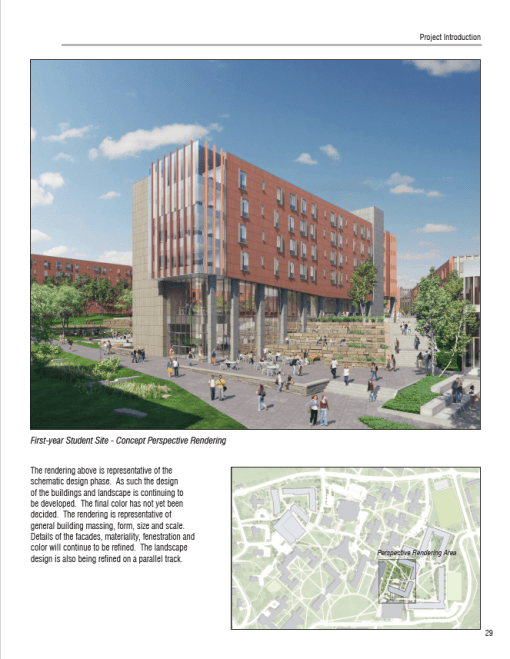
D. Project: North Campus Residential Initiative (NCRI)
Location: Cornell University Campus
Applicant: Trowbridge Wolf Michaels Landscape Architecture on behalf of Cornell
Actions: Intent to Declare Lead Agency

This will be huge – 766,000 SF of space for 2,000 student dormitory beds and associated program space, including a 1,200 seat dining hall. I’ll have more coverage next week. John Novarr favorite ikon.5 is the project architect.

E. Hudson Street Townhomes – 117-119 Coddington Road –Sketch Plan 7:50

One of this week’s new shinies. This project appears to be slated for a parking between two apartment complexes and across the street from the Elks Lodge just north of Ithaca College’s campus. Depending on how they reconfigure the existing parking lot, they could do a high single-digit or low double-digit number of townhomes. Zoning here is R-3b. Up to four floors/40 feet, 40% lot coverage, one parking space per unit of per three bedrooms (two spaces for 4-5 bed units). Lot coverage may end up being based on a subdivision, since this falls into the South Hill Zoning Overlay and no additional primary structures are allowed on a lot. The property has been owned by the Dennis family since 1979, but the developer may be someone else with a purchase deal on the subdivided lot.

F. Falls Park Project – 121-125 Lake Street – Sketch Plan 8:05

This would be whatever Travis Hyde Properties is planning for the former Ithaca Gun site on Gun Hill. I have been told this is “substantially different” from the earlier Ithaca Falls Residences plan. Assume residential. This was rezoned R-3a not long back, up to four floors/40 feet, 35% lot coverage, one parking space per unit of per three bedrooms (two spaces for 4-5 bed units). I would expect a fair number of units for a 1.42 acre property; the IFR plan was 45 units.

5. Zoning Appeals 8:10
#3102, 209 Hudson St., Area Variance
#3103, 216 University Ave., Area Variance
#3104, 737 Willow Ave., Area Variance

107 South Albany Street Construction Update, 7/2018

18 07 2018

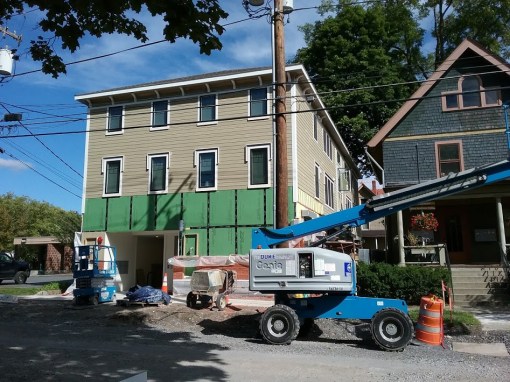
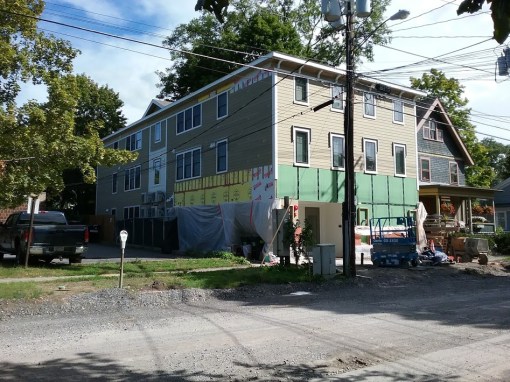
107 South Albany is a curious mix of sheathing. The front and part of the sides consists of standard Huber ZIP System plywood panels, while the sides use GP DensElement fiberglass mat sheets with maroon liquid flashing. Atop that, wood furring is being attached, and trimboards and fiber cement lap siding (or panels, for the wall next to the central staircase) are added to finish out the exterior. The front entry will have a brick veneer, but only on the first floor, so that doesn’t explain the difference in sheathing. The windows are fitted, but the front entry is not.

These apartments should be open for occupancy in time for the new academic semester. Advertisements say August 1st, but that might be a stretch. Still, these are coming in at a more modest cost than other new market additions ($1,100/month), and adds some density to the State Street Corridor.

Background information on the project and its specifications can be found here. Renting Ithaca (Nick Stavropoulos) is the developer, and Flatfield Designs (Daniel Hirtler) is the architect.


Harold’s Square Construction Update, 7/2018

17 07 2018

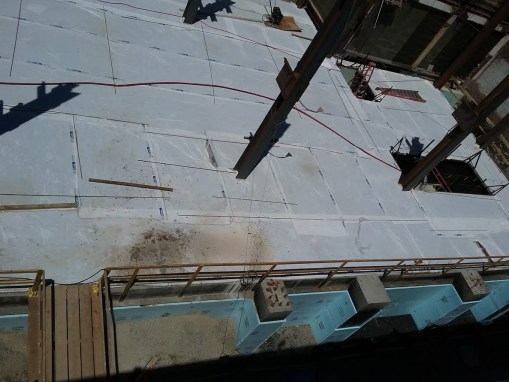
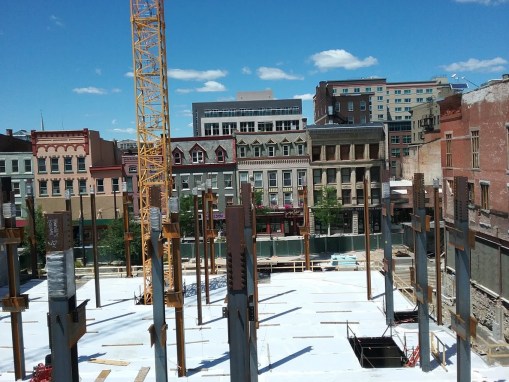
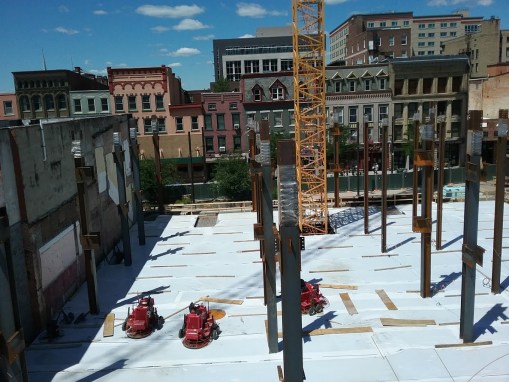
Harold’s Square is starting to take shape. The white sheets on top of the basement level are Sika Corporation UltraCure NCF curing blankets. When the steel was laid, corrugated decking was laid on top to create the base of the floor. A rebar wire mesh was then laid and tied into place, and the concrete was poured into the floor cavity, with wood forms to keep the pour in place. The rebar strengthens the concrete and ensures structural integrity. In this mid-June Facebook photo from the Harold’s Square page, you can see the decking going over the structural steel. A week and a half later, you can see the rebar grid over the completed decking. The concrete was poured in early July, the slab was covered in the cellulose fiber blankets to promote an even and structurally sound cure, and after seven days they tested the concrete and the results came back all-clear, meaning they can start to put weight on the concrete and work their way up.

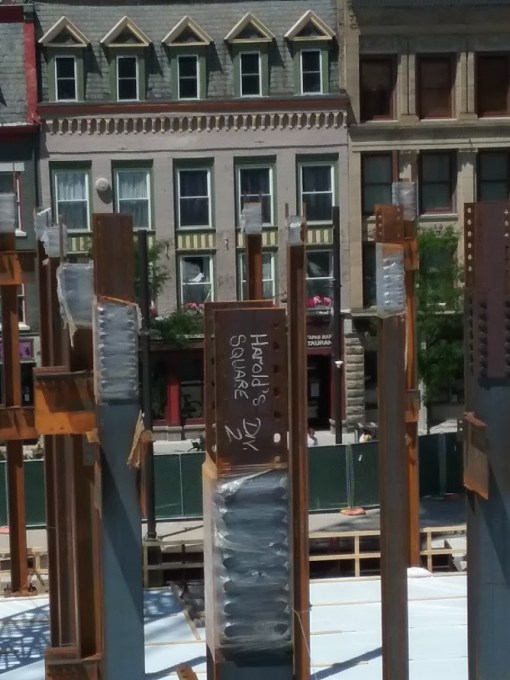
Meanwhile, structural steel erection will be taking a short break as masonry work begins on the Commons-facing side of the project, followed by masonry work on the Sage Building. The steelwork will resume in late July. Subcontractor Paolangeli will be doing backfilling (earthwork to cover up the foundation) on the Green Street (south) side of the project now that the shell of the basement has been built.

The WordPress for the project can be found here, and the Ithacating project description here.


News Tidbits 7/7/2018

7 07 2018

1. The infill project at 209 Hudson has been revised and reduced in size. The new plan from the Stavropoulos family of developers calls for just one new duplex at this time, on the existing lawn and swimming pool of the extra-large lot. The rear duplex was eliminated in the revised plan. A small zoning variance is still required for the subdivision (side yard deficiency), but it’s less likely to catch the ire of BZA members this time around because more mature trees are preserved in this reduced-size iteration. Modest bay window projections, fiber cement panels and wood trim will help create a higher quality product.
The duplex would be a quick build since it’s modular, but it’s not going to be ready in time for fall semester – spring (January) would be feasible, if the individual units are assembled before the snow flies. The Planning Board will make their recommendation this month, and the BZA will have their vote in early August, with potential final approval in late August. Quick note, as this has fallen under the threshold for the Ithaca project map (3 units or more), it has been removed.

Also due for review this month are final approvals for 128 West Falls Street (above) and a 3,200 SF endcap addition at South Meadow Square, and approval of a subdivision at 508-512 Edgewood Place.

2. Recently, Visum Development posted photos on their Facebook/Instagram taken during setup for an interview with Park Productions, and Ithaca College student media group. Normally, that’s not something to write about, but this caught my attention:

327 West Seneca is the new all-affordable project they introduced at last month’s planning board meeting. As for the others, I don’t have much of a clue. Ithaca does not have a Main Street, so that’s likely another community. 409 State may refer to an older building at 409 West State or 409 East State, but 409 East State is Travis Hyde’s Gateway Center property (and who at last check had no plans to sell).

As for the others, it looks like the first number was erased. Also of note, there is no East Cayuga, it’s just North and South. So I dunno quite what to make of it – hints of projects with some red herrings, it seems. Worth a look, but it’s not much to work with just yet.

3. Time for a little more speculation. A vacant lot east of 404 Wood Street in the city of Ithaca’s Southside neighborhood sold for $70,000 on June 26th. The buyers were a husband-and-wife pair who also happen to work for Taitem Engineering, a prominent local consulting engineering firm with specialties in structural engineering and associated branches in the context of green/sustainable building operation. The pair previously did a LEED Platinum, net-zero energy home in Ulysses two years ago. The likely guess here is that they’ll be building their next net-zero energy residence on this lot.

As previously noted when the property went up for sale in January 2016 (it was later subdivided from 404 Wood, which was sold a while ago), “(p)laying with some numbers a little bit, there are a couple of options if a buyer wanted to build something. The first and probably easier option would be to subdivide the lot and build on the vacant corner parcel. That would give, per R-3b zoning regulations of 40% lot coverage and 4 floors, about 1400 SF per floor. That gives 5600 SF, and if one assumes 15% off for circulation/utilities and 850 SF per unit, you get a 5 or 6 unit building at theoretical maximum.”

TL;DR – if they want to do a small infill net-zero apartment building, they can. If they want to do a sizable single-family residence, they can do that as well. We’ll just have to wait and see what happens.

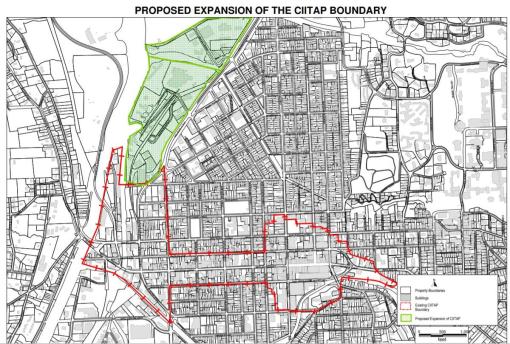
4. On the policy side, the Ithaca Common Council voted Wednesday night to move forward with a CIITAP stipulation stating projects pursuing the tax abatement must have a mandatory affordable housing component of 20%, available to those making 75% Area Median Income, affected all residential projects with ten units or more.The extension of CIITAP applicable properties along the Waterfront was also approved.

The policy comes forth after considerable debate over the right percentage and right income to apply. It’s the Goldilocks principle – too little and you don’t add an appreciable amount of affordable housing and may even decrease the amount once redevelopment occurs in lower-income blocks, too much and developers just won’t build (the Portland problem), and those who stick around will renovate existing buildings instead, meaning less supply overall, fewer existing lower-income units and accelerated gentrification. Among things discussed Wednesday night, a proposal to modify the mandatory size requirement of affordable units from a minimum of 80% the square-footage of the market-rate to 100% failed 5-4 (needed six), the % of affordable units went from 10% to 25% (the 25% was the First Ward’s George McGonigal, who has a history of being opposed to new market-rate and affordable housing, and did not get a second to open discussion).

It’s too early to say if this is too much or not enough – the City Harbor folks were in attendance for the discussion (they were at the meeting for a different topic), but didn’t raise concerns to 20%, so it seems likely their project is able to continue. The county IDA is the grantee of abatements with the city in an advisory role only, so they’ll have the final say on the application of the new law.
5. Tompkins Cortland Community College’s Childcare Center has the funds it needs to move forward. The project, first proposed in February 2016, calls for an 8,000 SF, $4 million building, plus a $1.5 million endowment for operating costs. State funds support much of the cost, as well as a $2 million donation from Ithaca CEO and major TC3 donor Arthur Kuckes, for whom the center will be named.

According to Jamie Swinnerton over at Tompkins Weekly, the project includes six classrooms with two infant rooms, three playgrounds, and be, in part, staffed by students studying to be teachers and childcare providers. 12 jobs will be created, and since it’s for faculty, students and staff, those jobs are expected to be full-time and all year-round. The building is expected to be partially opened by the start of the Spring semester, and fully occupied by the Fall 2019 semester.

Design-wise, the latest design in Tompkins Weekly shows smaller windows and the loss of some hipped roof bumpouts at the rear of the building (older version here). Value engineering noted, but the goal of helping students with children stay in school, and get the degrees they want to build their professional foundations on outweighs any shade thrown at the design changes.

6. Also finally moving forward – Lansing Meadows. There was an 11th-hour holdup for the 20-unit senior housing project when the village expressed discomfort with accepting future ownership of Lansing Meadows Drive, feeling the turns were too sharp and posed a liability. Developer Eric Goetzmann relented and agreed to maintain the road as a private road, and the village board approved the project 3-2; there are still a lot of sore feelings about the often-delayed and arguably underwhelming final proposal. Goetzmann has until July 31st to obtain permits to begin construction, or else the county IDA will recommence seeking clawback reparations from abated taxes, most of which went toward the BJ’s that was built in 2011-12.
7. Let’s slay some inbox rumors. East Hill Village is not cancelled. Nor is Trinitas’ Dryden Townhomes project. I checked with the project teams – both are still active projects. However, East Hill Village is waiting on the town of Ithaca to finish updating its zoning to a more form-based code, and the project will not move forward until that happens.

8. For fun: here’s a Google Docs spreadsheet on how the Ithaca metropolitan area lines up with other metros on new home construction permits since 1980. Key takeways – Ithaca/Tompkins County was in the top 10% of metros in 2017 for multi-family housing permits per capita (30th of 381), but it lags quite a bit in the construction of single-family homes, so its overall rank is only the 64th percentile (137th of 381). Even then, it’s still one of the fastest growing housing markets per capita in the Northeastern United States. 2016 and 2017 have been strong years, while 2015 and earlier were generally well below the national average.
The multi-family number per capita is arguably skewed higher than a typical year thanks to large projects like 441-unit/872-bed Maplewood, but the message seems to be that the community is seeing real results from its push for housing. However, with a lack of single-family being built, Ithaca and Tompkins County need to figure out ways to compensate for what single-family provides (i.e. home ownership). It’s not necessarily “we should build more single-family homes” although that is part of the answer. It’s also encouraging suitable single-home substitutes (condos) in desirable areas while maintaining a strong, steady flow of new units as the local economy continues to grow.