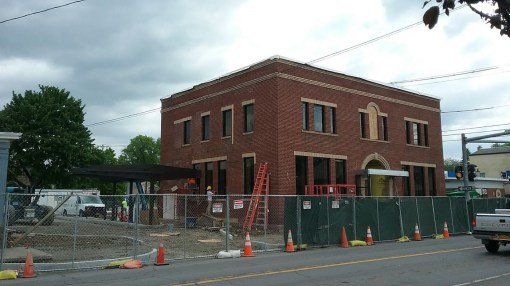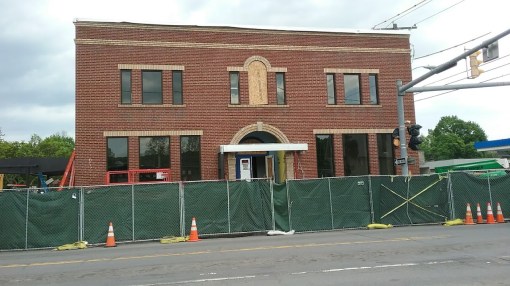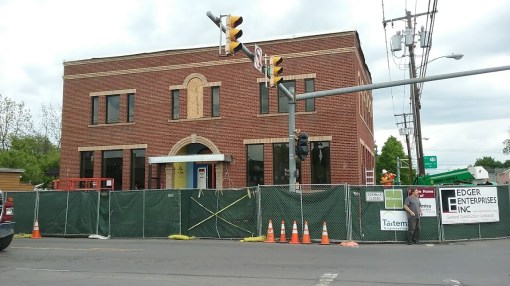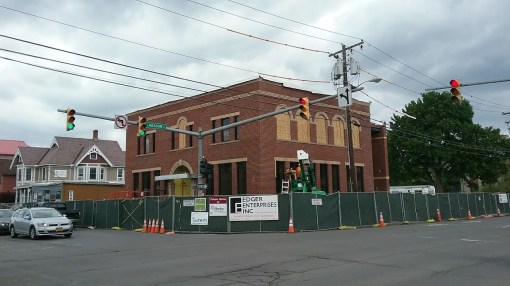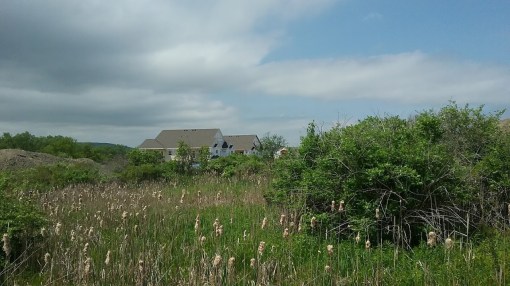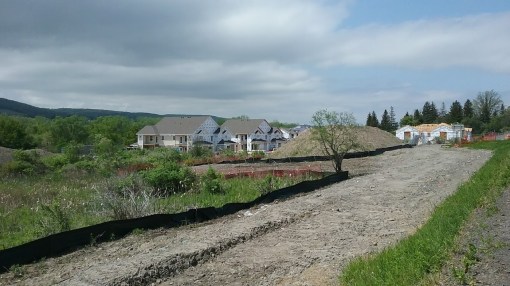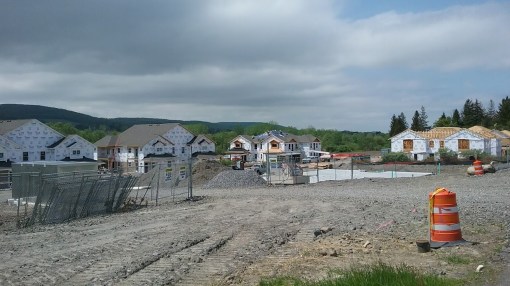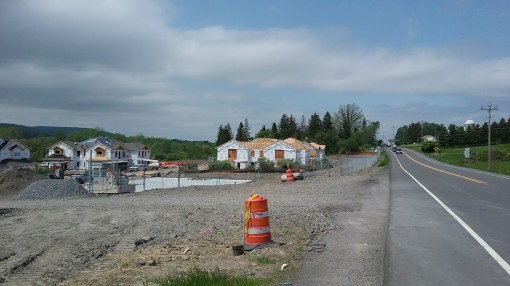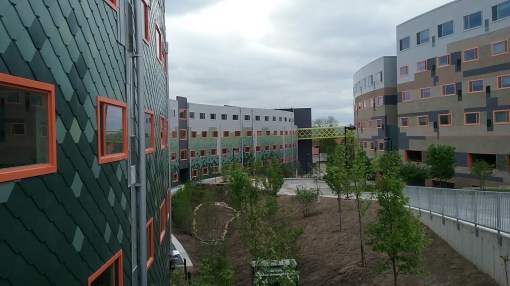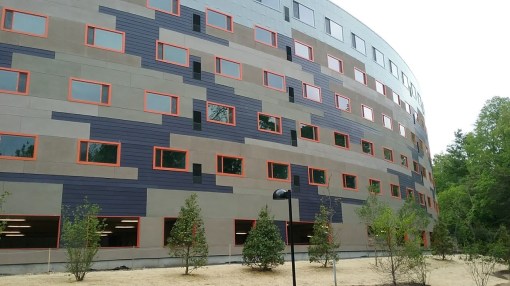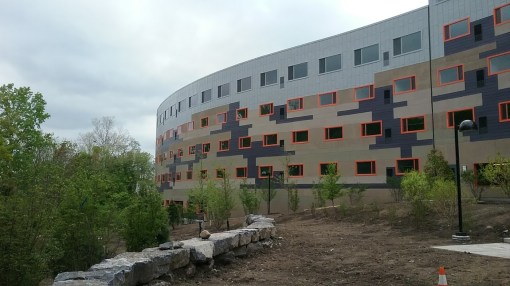
Ithaka Terraces Construction Update, 5/2017

1 06 2017

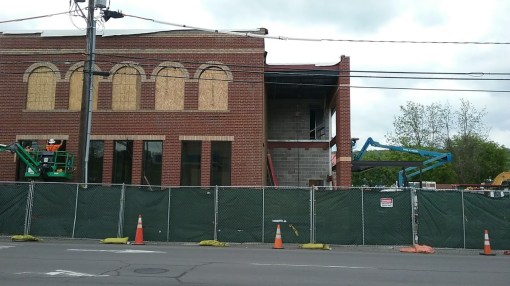
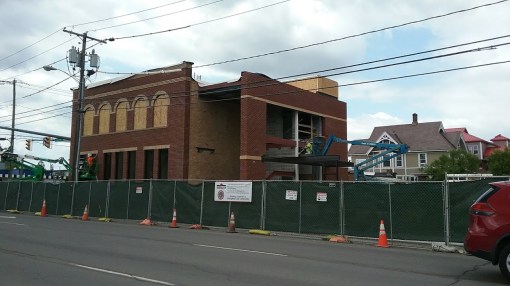
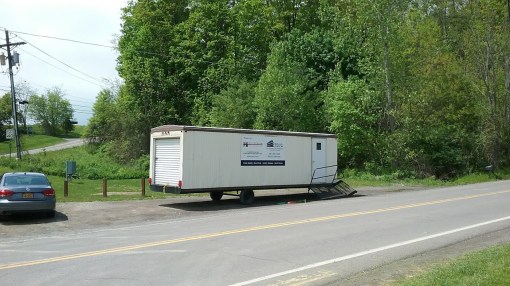
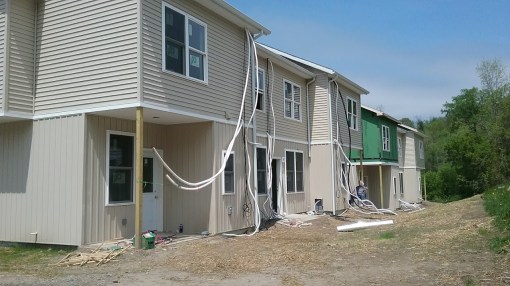
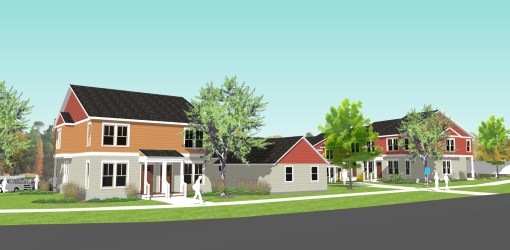
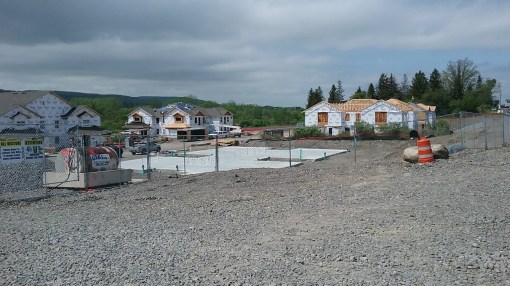
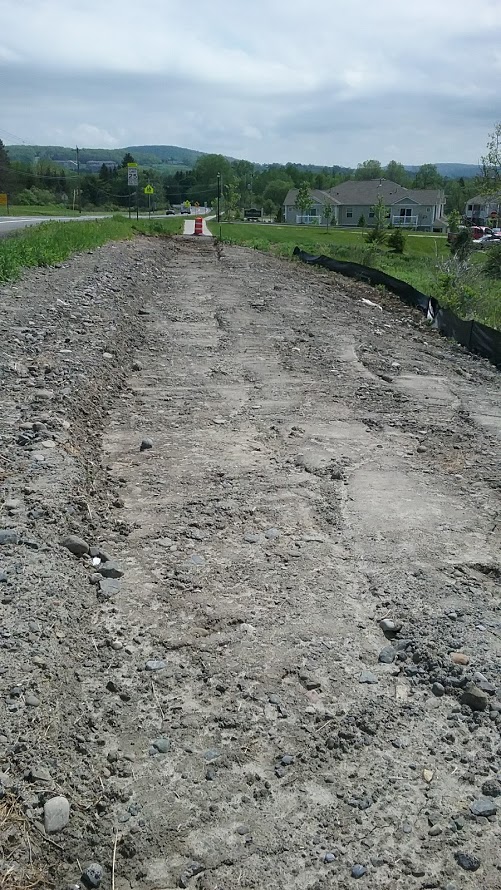
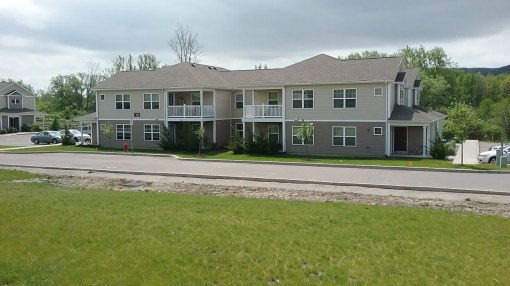
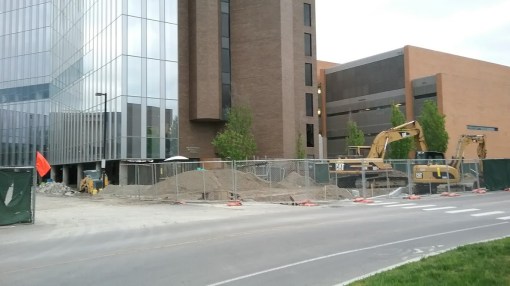
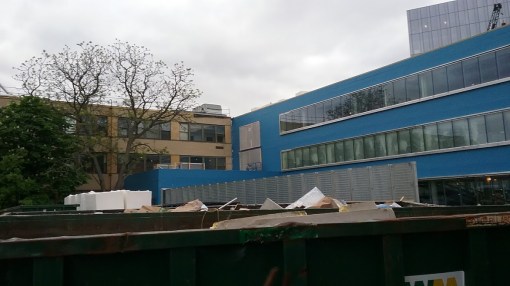
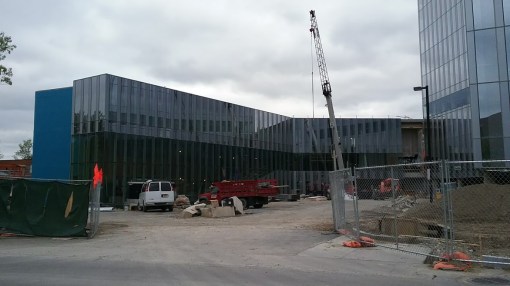
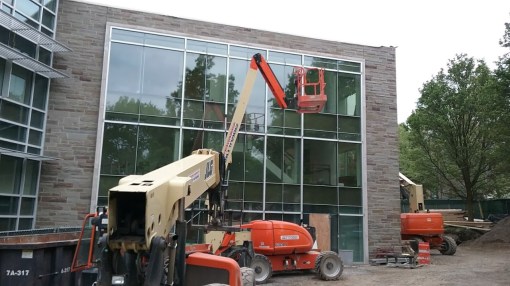
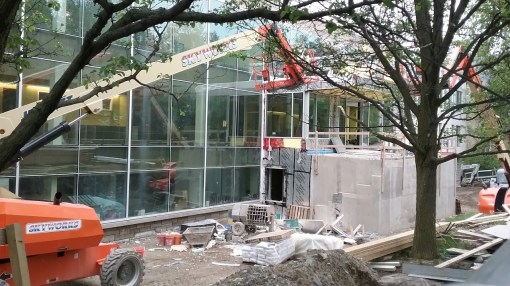
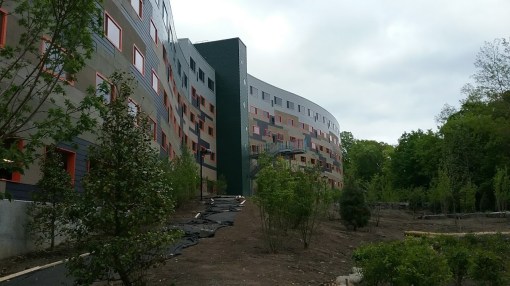
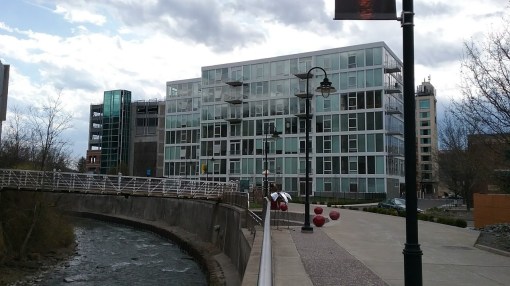
Taking a look at the Ithaka Terraces site at 215-221 West Spencer Street, one question immediately comes to mind – is Building “D” still happening? The other three are far along, and yet there appears to be no sign of Building “D”, a mirror of Building “C”, starting construction. It could be cost concerns or pre-sales worries, or simply a matter of timing. The website doesn’t look like it’s been updated recently, and marketing for the condo units doesn’t seem to have started yet.

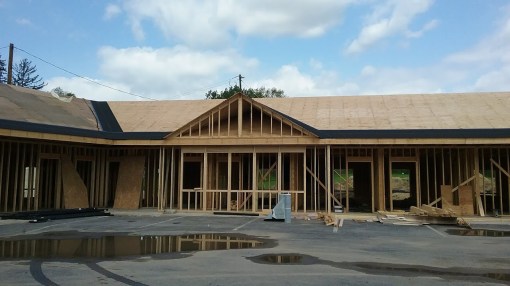
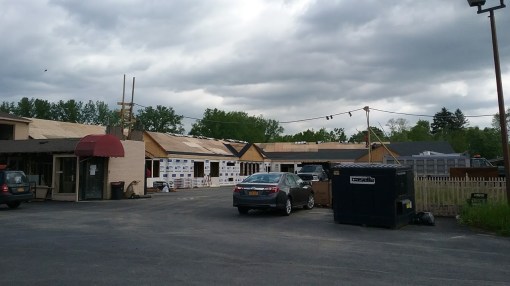
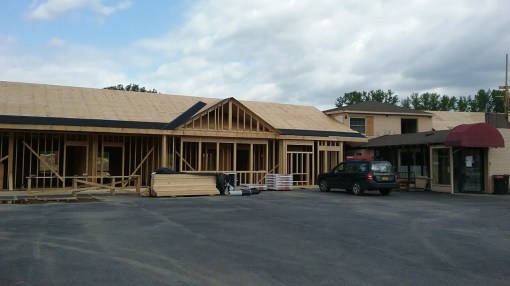
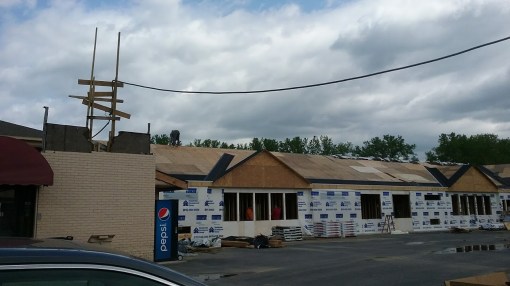
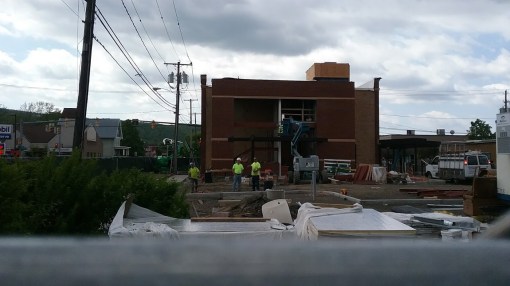
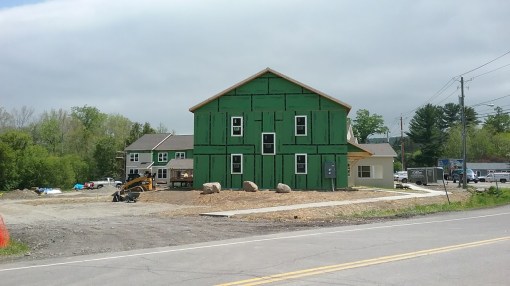
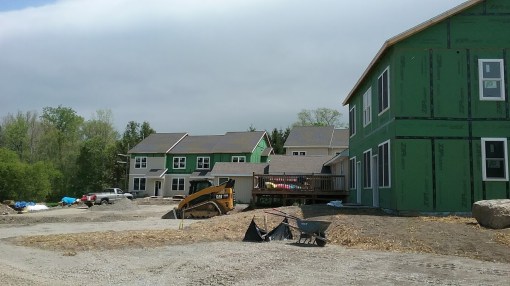
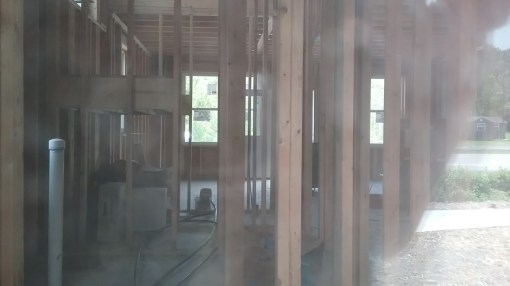
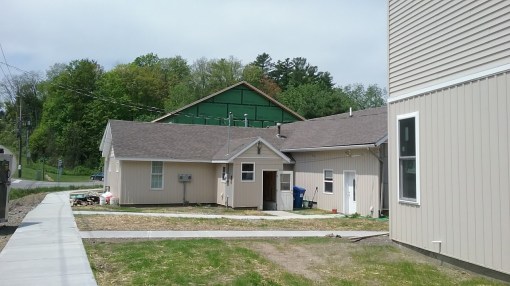
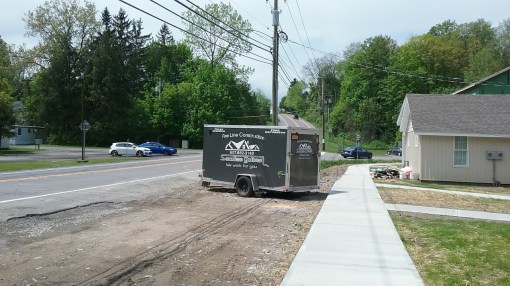
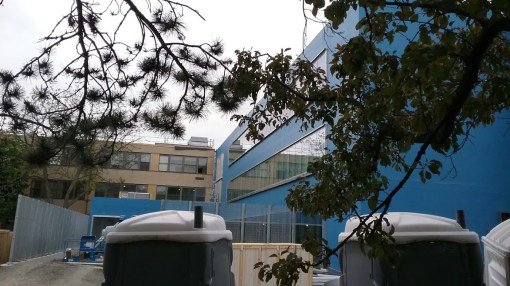
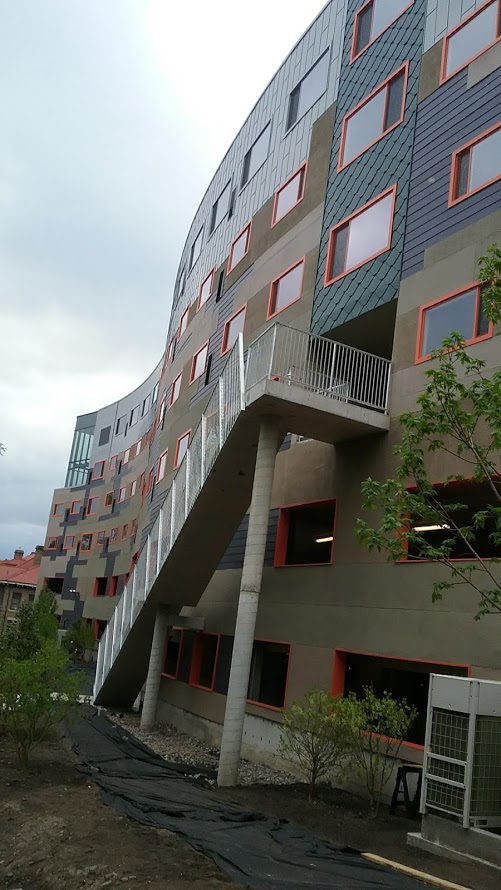
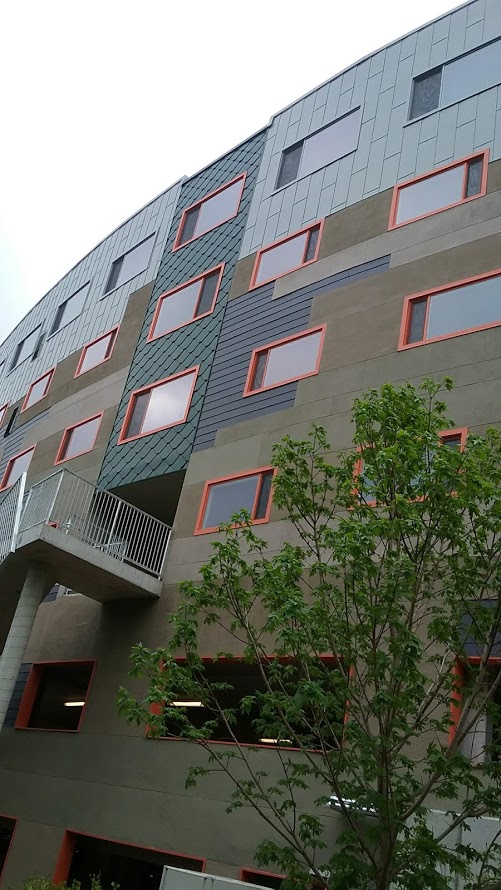
Apart from the completion of the roofing, not much additional work has occurred on the exterior of Building “A”. Its twin, Building “B”, has finished framing, sheathing, windows are being fitted and the roofing is well underway, sheathed and covered in Certainteed DiamondDeck and WinterGuard underlayments, but not yet shingled. Building “C” has had its multi-story porch erected and it looks like the R39 cellulose insulation is underway. New to this update are the Bituthene sheets on the concrete foundation walls of “C” – Grace Bituthene Membrane is a two-component system, the first is a sticky, liquid rubberized asphalt compound, the second a laminated HDPE film, and together they’re used for weather and moisture protection, handy when your walls will be exposed to moist soil uphill and several feet deep. The white walls facing the future grand staircase are water-resistive barriers to protect the plywood ZIP panels from the mositure-absorbing stucco finish.

Local eco-builder AquaZephyr LLC (run by Kendall and Mike Carpenter) is the general contractor, Taitem’s doing the structural engineering, T.G. Miller is in charge of civil engineering, STREAM’s the architect, and Ed Cope (PPM Homes) is the developer. Side note, I dropped by the Wyllie site and didn’t see work on the renovation underway, although it’s not clear if the state grant funding has been disbursed yet. It and the PPM’s Ithaca Glass Apartments are expected to get underway this spring.

Also, let’s not forget the ’80s hair metal blasting over the stereo on-site. I guess nothing gets the work done like Whitesnake and Twisted Sister.

UPDATE: From the architect, Noah Demarest, on the status of Building “D”: “It’s a logistic issue. Couldn’t get all the foundations in at the same time. Should be starting soon.”


Rodeway Inn Construction Update, 5/2017

30 05 2017

So this is one of those small projects that would probably be missed unless someone were explicitly looking for it. At 654 Elmira Road south of the city-town line, hotelier Pratik Ahir has commenced with reconstruction and expansion of the Rodeway Inn motel.

The Rodeway Inn is one of Ithaca’s less-expensive, quirkier lodging options. A collection of four buildings dating from 1950s-1980 with later renovations, three buildings hosted 40 motel-style rooms with a dining/lobby space, and a detached house was home for a live-in manager.  With it came outdoor gazebos, a playground, and well-appointed if careworn rooms – an unusual blend of budget appearances and mid-tier amenities. Motels have been on the property since the Wonderland Motel was built in the 1950s, and the buildings have been owned by JAMNA Hospitality since 2005.

Reviews of the Rodeway generally note welcoming staff and clean units, but dated layouts and buildings in need of a serious upgrade. That is what JAMNA’s Pratik Ahir has set out to do here. The initial plan was to enlarge the rooms with a rear addition for more spacious bathrooms, and add new corner units to former mechanical closets on either end of the U-shaped “Building 1”. These plans were approved in December 2013.

After the approval, however, the plans were shelved. In 2014, the Maguires were seeking to do their “artisanal” dealerships and HQ down there, and that plan would have involved buying out and demolishing the Rodeway Inn. JAMNA was prepared to sell the property to the Maguires, but after the Maguire plan was cancelled following disagreements with the town over zoning, the motel owners were once again given a chance to re-evaluate their plans.

Revision number two to come before the town asked for the renovations as before, but added internal and external modifications, parking lot adjustments, and called for an additional 1,146 SF to the single-family home (“Building 2”) to turn it into a community center for guest recreation and dining. This was also approved.

Then we get to the final version, number three. This plan asked for the 1,146 SF addition as in Plan 2, but instead of Plan 1’s addition, JAMNA requested approval to tear down both arms of Building 1 and replace them with larger arms on the same footprint that would host an internal hallway – so less motel and more hotel. The work would also add four rooms, bringing the total to 44. Perhaps related to this confusion, JAMNA had already started demolition when the town issued a stop-work notice in January, requiring the new plans to be approved before work could continue.

Joe Turnowchyk of Pennsylvania-based Hex 9 Architects is the architect for the project; he’s also the guy behind JAMNA’s future plans for a 37,000 SF, 70-room Sleep Inn up the road. Anatoliy Bezpalko of “Time 4 Improvement LLC” is the general contractor. It’s a little odd that the architect’s from Southeast PA, and the contractor from Stroudsburg in the northeast near the Delaware Water Gap, as they are neither close to each other or to Ithaca. According to county records, the Rodeway Inn has a hard cost of $926,000. The lender is Generations Bank, a small bank based out of the Seneca Falls.

Looking at the site below, a fair amount of progress has already been made – stone veneer and some exterior finishes are up on the new community center, and wood framing is ongoing for the new motel wings. The large blank wall on the “tower” will be occupied by metal awnings, matching the metal roof. Some housewrap has already been adhered to the plywood sheathing. The roof has been sheathed and the underlayment is being attached. Buildings 3 and 4 will be renovated, but their square footage and layout should stay the same.


602 West State Street Construction Update, 5/2017

30 05 2017

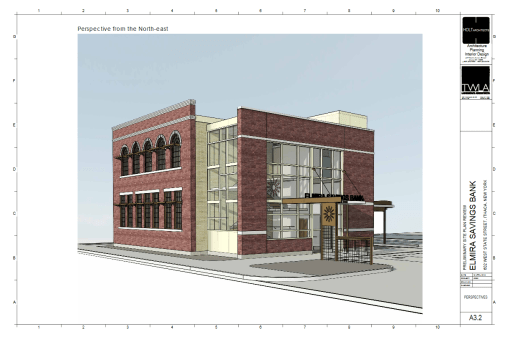
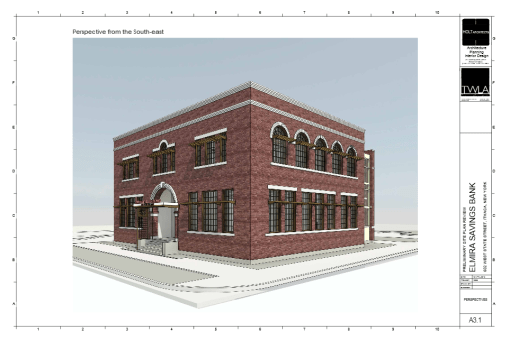
Starting to get a good idea of what the final product will look like at the future Elmira Savings Bank location at 602 West State Street. The structural steel for the drive-thru canopy is up, the new front and rear entrance canopies are being erected, and the new curbing is down. The new north addition has its steel and masonry with matching belt course, but it looks like the new interior stairs have yet to be built (the floor plan of the new addition is basically a stairwell albeit an imposing one, an elevator lobby and the elevator). the two-story opening facing Meadow Street will be framed with metal panels and fitted out with a contemporary glass curtain wall.

The early renders suggested a beige color for the aluminum panels, but according to the final materials submission, the panels will be Alucobond “Anodic Satin Mica”, which most folks would describe as a soft tan/dull tan. The alumnium roof coping, flashing and gutters/downspouts will be Hickman Sandstone, and the stucco will be painted Benjamin Moore Horizon Greyboth are close approximations of the building’s historic paint colors.

Taking a guess, the arched windows have to be custom-made, and given the time that takes, it might explain why they’re the last replacement windows to be inserted. The windows will be fitted with metal sunshades towards the end of the construction period.

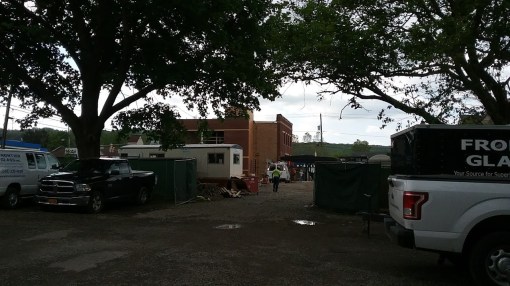
Construction on the $1.7 million renovation/addition (5,000SF/1,600 SF, total 6,600 SF) is due to wrap up in August. Elmira Savings Bank will occupy 3,300 SF on the first floor. The second floor, also about 3300 SF, will host for-rent office space (a little too big for the Voice though, which I’d wager at 800 SF off the cuff). HOLT Architects is in charge of design, and Elmira’s Edger Enterprises is in charge of the buildout. It looks like glazing has been subcontracted to Frontier Glass Inc. of Rochester.


902 Dryden Road Construction Update, 5/2017

27 05 2017

Visum Development/Modern Living Rentals’ project at 902 Dryden Road in Varna is coming along. Dropping by the site a few days ago, one of the things that stands out to be is that the design of the pair of townhouses closest to Forest Home Drive have been redesigned from the render that was shown when the project was approved by the Dryden town board in March 2016. Legally, this isn’t a big deal, since as long as the board stipulations have been met and it doesn’t affect the SEQR determination, then the modification is allowed. To be 100% honest, this armchair critic likes the redesign more, since it avoids the blank space near the party wall. Comparing the render to the other townhouse strings, it looks like there were some elevation adjustments and changes in fenestration, but the general appearance remains the same as approved.

However, one thing that I’m a little concerned about is the siding being all one color. It’s not a critical issue, but I think the monochrome makes the project bland and less pleasing to the eye. All the renders I’ve seen have shown a mixed palate, whether it be the grey/red/orange below, or the beige/blue/brown combination shown on MLR’s website. The mixed forms of siding – vertical, lap and shingle – but I hope that this isn’t the final exterior color.

Anyway, the buildings have all been roofed and sheathed with ZIP panels, doors and windows have been fitted, the interior stud walls are good to go and rough-ins are underway. On the older strings, some of the siding is up and trim boards have been attached. The wiring and tubes coming out of the eaves on the rear face are connections for the electric air-source heat pumps. Although not a part of the initial build-out, Visum is exploring the installation of an offsite photovoltaic grid that would make the project net-zero energy, meaning that all the energy used is generated from renewable resources.

The site will have 26 parking spaces for its 32 bedrooms (2 existing 3-bedroom units, 6 new 3-bedroom units, 2 new 4-bedroom units), well above the one parking space per unit required by zoning. The site will also be a “flag stop” for TCAT buses and have bike racks to serve 20-24 bikes. The units, which are going for about $600-$700/bedroom, will be ready for occupancy in time for the 2017-18 academic year. Bella Faccia Construction, who did 707 East Seneca, is the general contractor, and STREAM Collaborative is the architect. AJH Design and Fine Line Construction also serve on the project team.

Side note, Bella Faccia’s website claims they’re doing a Cici’s Pizza in Ithaca – that would have been news to me, and my editor at the Voice would have been over the moon, but it turns out it was a typo and they meant Horseheads.


Poet’s Landing Phase II Construction Update, 5/2017

26 05 2017

Continuing the theme of affordable housing from Conifer, here’s their other current local project, the $10.8 million second phase of the Poet’s Landing apartment complex in the village of Dryden. Six buildings, eight units per building – it looks like Conifer utilizes three unique two-story designs from NH Architecture with differing unit configurations.

Going counterclockwise, one sees the slab foundation of the latest building (which we’ll call “A”) to begin construction. The next building, “B”, is still being framed, its roof trusses nearly finished, while “C” is further along, roofed in sheets of plywood sheathing. All structures make use of a Tyvek-like housewrap for a vapor and moisture barrier. Building “D”, furthest from the road, is being papered and shingled, and windows have been installed in some of the rough openings. Building “E” and “F” are being sided (probably Saint-Gobain CertainTeed vinyl siding, if it’s like other Conifer projects). Taking a guess at what’s going on indoors, it’s bare stud walls in “B” and “C”, utility rough-ins (plumbing, electrical) in “D”, and drywall, paint priming and perhaps interior fixtures/trim in “E” and “F”.

As with most of Conifer’s affordable housing projects, LeChase Construction serves as general contractor through a joint venture partnership called Conifer-LeChase. Expect the units to come online building-by-building from September 1st through the fall. Information on income limits can be found in the summary post here, and rental inquiries can be sent through the contact page here.

Side note, it’s going to be really nice when they put the new sidewalk in – walking along Freeville Road is a bit of a harrowing experience.


Cornell Law School Renovation Update, 5/2017

24 05 2017

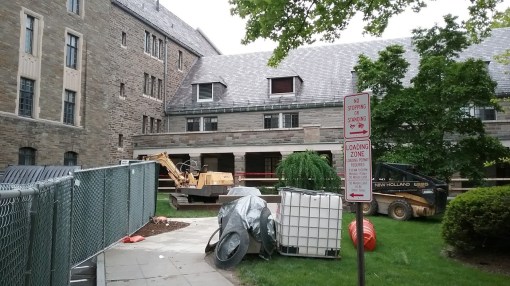
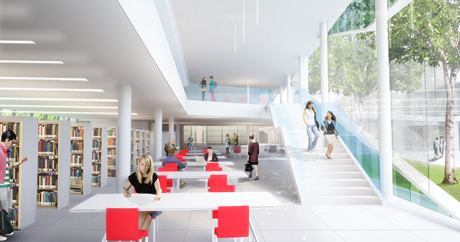
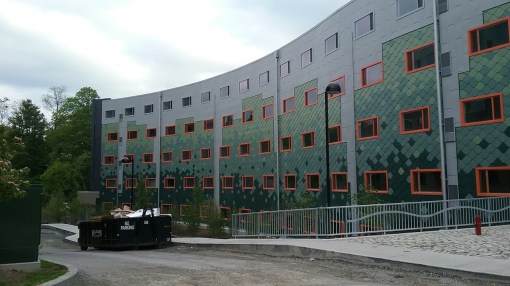
Externally, not much has changed since March, although it looks like work is starting on enclosing the north loggia. The Fork and Gavel Cafe is closed for renovations through September, but a carry-out offshoot will serve in its place. Most of the work on this $10.2 million project is internal, converting former dorms into academic office and support space. With any luck, the next visit will be from the inside.


Cornell Veterinary School Expansion Construction Update, 5/2017

24 05 2017

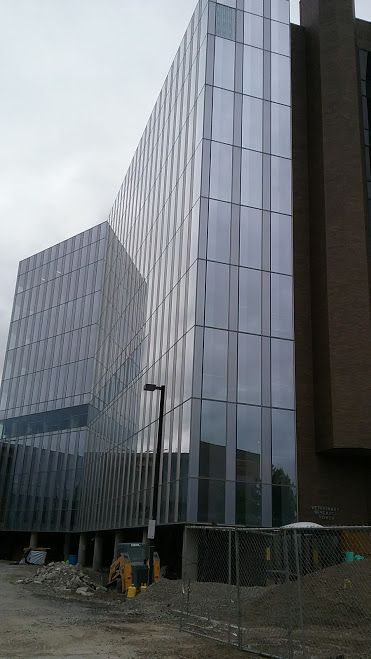
So many projects in the final stretch up on East Hill. The Vet School expansion’s multipurpose atrium is in the process of being closed up with its curtain wall glazing. An interior shot from the start of May shows interior stud walls are up and utilities rough-ins taking place, but drywall, interior trim and fixtures had not been undertaken.The concrete for the “grand staircase” had just been poured.

The atrium will be called “Takoda’s Run“, in honor of a greyhound adopted by alumna Janet Swanson (for whom Cornell’s wildlife rehabilitation center is named). The Swanson family are major university benefactors – Janet, Class of 1963, has given millions of dollars to the Vet School since the mid-2000s. Husband John (BS 1961, B.M.E. 1962, M.M.E. 1963), an engineer and tech executive, has given tens of millions to the university. The atrium in Duffield Hall and a lab suite in Weill are named for him, as well as several endowed professorships, fellowships and scholarships. Not just leaving it to Cornell, the couple has buildings named after them at Washington and Jefferson College in Pennsylvania, and a $41 million donation to the University of Pittsburgh led to the Swanson School of Engineering. My former editor at the Voice is definitely not a fan of this practice, but for those with a lot of money to burn, naming opportunities can be found or scoffed at here.

From the outside, the new administrative and library wing haven’t changed much since March, but at this point all Welliver has left is some window installs, exterior panels and finishes. Since I’m on a kick at the moment, the Flower-Sprecher library is named for former governor Roswell Flower (1892-94) for allocating funding, and in the early 1990s, Dr. Isidor Sprecker ’39 (Americanized from Sprecher) donated a substantial sum for renovation. It looks like some underground utilities work is going on out by the curb, possibly in preparation for the new landscaping and lighting fixtures.

The new Community Practice Service Building is underway, although I don’t have photos – the Poultry Virus Building has been demolished and the site was being cleared and readied for new construction. The timeline for the new 12,000 SF HOLT Architects-designed building is May 2017-May 2018, a couple months later than originally programmed.

The project seems to be a little bit behind schedule. The project team was initially aiming for a June completion, which was a little optimistic. The new schedule calls for an August opening.


Gannett Health Center Construction Update, 5/2017

23 05 2017

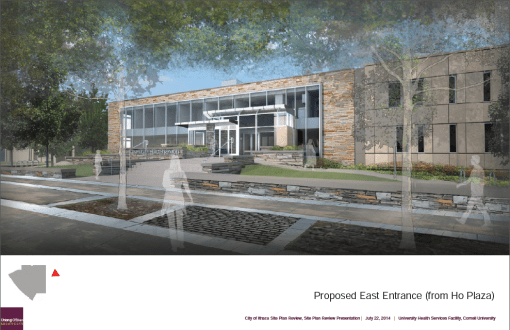
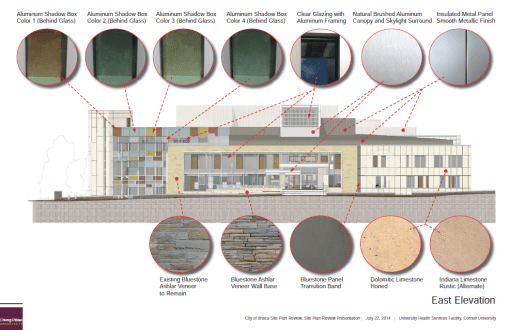
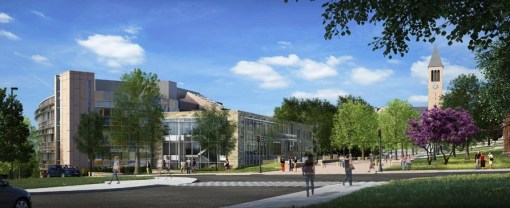
Another Cornell project in the final stretch is the second phase of the $44 million Gannett Health Services reconstruction, now known as “Cornell Health“. The new entrance is being fleshed out with fiberglass mat sheathing, and will be finished out with stone and brushed aluminum. The silvery material is a Carisle 705FR-A fireproof air/vapor barrier, which is made of aluminum and HDPE (plastic) sheets. The entrance canopy will be enclosed in glass, and the concrete podium will be concealed when the front entrance is backfilled to the height of Ho Plaza. The new northeast wing is being clad in limestone panels atop a continuous anchor system, because stone is dense and it needs a system able to support its weight. OCD-inducing Side note, that “Cornell Health” lettering signage is a different font than the rest of campus, Arial versus the campus’s usual Kabel font.

Like with Upson, the plan is to have the building open by August, although the landscaping could take another couple of months, wrapping up by October 2017.


Collegetown Terrace Construction Update, 5/2017

21 05 2017

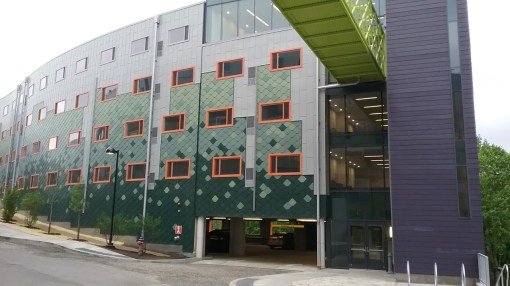
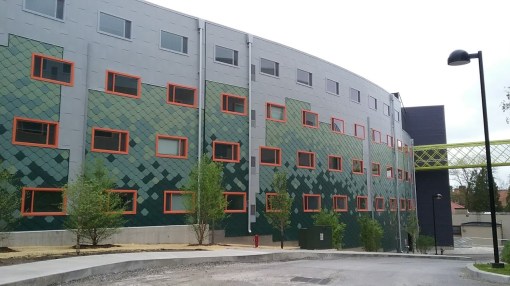
Collegetown Terrace phase 3 is actually opening this month. Speaking to John Novarr a few weeks ago, he mentioned that the first units would actually be welcoming tenants this month, to take advantage of the modest June-June 12-month market that comes before the typical August-June 10-month period that dominates the students calendar. From yesterday, it looks like the first tenants have indeed moved into the Building 7’s 247 units and 344 bedrooms. Units range from 218 SF studio suites with shared baths, kitchen and laundry (5-10 studios per suite), to 1266 3-bedroom units. For the record, the official address will be “120 Valentine Place”. The listed amenities include:

  • Heat included in rent
  • Upper floor large windows for expansive view
  • High speed data access throughout included in rent
  • Kitchen appliances: dishwasher, garbage disposal, microwave, stove and refrigerator
  • Custom-made cabinets
  • Granite counter surfaces in kitchen and bathroom
  • Limestone floors in kitchen, bathroom, and entries
  • Air conditioning in all apartments
  • Elevators
  • Monitored heat detectors, smoke detectors, CO detectors, and sprinklers
  • Fully furnished with blinds, leather sofa, and full/queen beds. Some with work stations and walk in closets
  • Prox/reader security system
  • Washers and dryers in all apartments.
  • Covered parking available for a fee
  • Free shuttle to Cornell. The free shuttle runs to and from campus weekdays throughout the academic year.

Rents clock in at a premium of around $1,000+/bedroom, but the studio suites will come in around $700/bedroom. It does seem like there are some mixed opinions on living there, if the Yelp reviews are any indication.

One slight modification that was sought recently was an approval considerations variance to allow tenants from other Novarr-Mackesey properties to park their cars in the Terrace’s garage. This has been something of a long-running issue with Terrace, which built more parking than it needed in the earlier phases, and as a result requested and received a variance to convert a floor intended for parking into dorm-style living quarter for students on more modest budgets. Even with the original variance, it seems that there are still an excessive number of unused parking spaces, ones that Novarr-Mackesey sees as potential rentable tenant spaces for residents in some of their nearby structures, including two housing projects due to get underway in the next year, 119-125 College Avenue (College Townhouses) and 238 Linden Avenue.

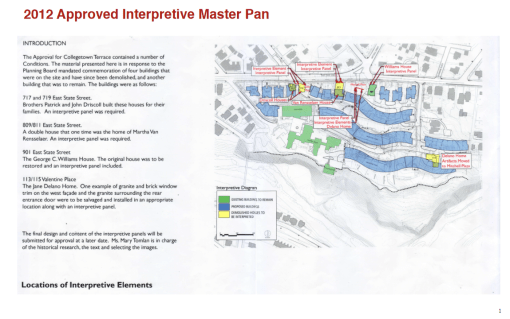
As part of the final stages of project completion (and stipulations of its original approval back in August 2011), some interpretive signage and features will be included in the landscaping, recognizing a few of the homes and the nurses’ dormitory that once stood on the site (recall that Casa Roma was once the city hospital). Thankfully the google street view archives are but a click away, so that the curious can go back and look at what was there prior. Some of the homes were architecturally interesting, if not necessarily historic.

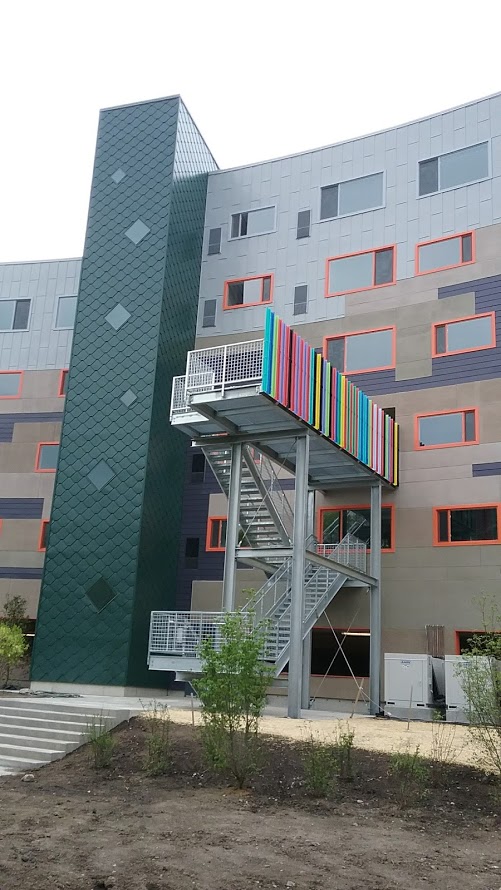
Note the stair railing art in photo ten. It’s as if someone looked at modern buildings, said they weren’t colorful enough, and designed that art feature to have ALL THE COLORS. Holy rainbow explosion. More seriously, it’s quite unusual, and kinda neat, since it’s not often you see a visual feature of interest so tucked away from public viewsheds.

So that pretty much wraps this up. In terms of private non-institutional projects, I dunno if there’s been a project that’s had an impact like this. It’s been a long time since the first presentation back in April 2009. In terms of numbers, it’s enormous – $190 million investment, 1,250+ beds (net gain of over 600), 16 acres. Certainly the latest few hundred beds will help to make a dent in the rental market, it’s by far the biggest project opening for occupancy this year. The trade-off will be a possible softening in some rental segments (e.g. small landlords in fringe student markets), but given the city’s push towards turning rentals back into owner-occupied units, and getting rent appreciation under control, it’s not something that will elicit much concern, especially as Cornell’s student population continues to grow.

In some ways, this project is many good things; growing the tax base, and addressing the need for housing in a somewhat inconspicuous manner, the buildings stepping downward into the hillside. With 344 new residents in the core of Ithaca, it may also give a healthy boost to nearby businesses in Collegetown and Downtown. But CTT has its detractors and criticism – the size still makes unnerves some permanent residents nearby, and the architectural design is a bit polarizing. There’s a tendency to look at building projects in black and white, but it’s never a cut-and-dry process. In reality, it’s a delicate balance of costs, capabilities, the market and the community’s wants and concerns.

Novarr deserve credit in that, unlike many projects, this project has stayed largely true to approved form over the years with the exception of the parking variances. There’s an uncomfortable trend with last-second revisions in more recent plans, but Collegetown Terrace has stuck fairly closely to the original plan as explicated in its Environmental Impact Statement years ago. City staff and elected officials also deserve credit for seeing the potential here for something that could contribute to Ithaca, rather than just saying “this is too much” and turning their backs on it. Credit is also due to ikon.5 and Welliver for their work in designing this massive project, and building it out (which included many local unions and their tradespeople).


News Tidbits 4/29/17: Happy Birthday Mom

29 04 2017

1. The Times’ Matt Butler has written a great summary of almost everything you wanted to know about the Ithaca development approvals process (formally called entitlements). Basically, Ithaca’s high standards and arduous review process come with pros and cons. On a positive note, the city is more likely to get a nice product, the drawback is that it scares developers off. For those who do give the city a spin, the city is a desirable investment for a number of reasons (affluent residents, steadily growing economy), but the lengthy process generates uncertainties (bad for financing) and requires more money (bad for affordability).

There’s nothing wrong with high standards, but it really helps if the city gives developers a set of guidelines for what they’re looking for in a design, rather than forcing them to rely on antiquated zoning. Design guidelines were recently approved for Downtown and Collegetown, which should help, although an overhaul of the zoning would be much welcomed. However, in a city famous for its activism, even the most well-orchestrated plans can be broadsided by NIMBY grassroots, so even with these heavily-structured guidelines, building in Ithaca is likely to have uncertainties and challenges into the foreseeable future.

2. A couple of grants worth noting – Tompkins Community Action was awarded $3.7 million by the state to go towards construction of their Amici House project at 661-701 Spencer Road in Ithaca. The funds will cover about 45% of the $8.25 million construction cost. Work is supposed to begin this summer on the mixed-use project, which includes 23 studio units for vulnerable or previously homeless youth, and a 7,010 SF daycare/early education facility.

In other news,the Alcohol & Drug Council of Tompkins County was awarded $500,000 by the Care Compass Network Innovation Fund to use towards the establishment and operation of a 20-24 bed detox facility, much needed resource as the heroin epidemic continues to grip the nation. CCN is a non-profit consortium funded by Southern Tier health centers like Guthrie, Cayuga Med and Binghamton General. ADC-TC is a non-profit that focuses on substance abuse education, prevention and outpatient treatment. No facility was named in the announcement.

On a third note, the sale of 626 West Buffalo Street was completed. Tompkins County Opportunities, Alternatives, and Resources (OAR) intends to renovate the house into five beds of transitional housing for those getting out of jail and trying to get back on their feet. The intent is to provide, safe, secure housing to better help with the transition process, which can include education, job training and mental health and/or addiction treatment. The house was purchased for $95,000, and an additional $60,000 would be spent on renovations. The county voted to provide $100,000 in a one-time allotment – the rest of the money ($55,000) comes from grants, donations and a mortgage. Ultimately, the goal is to provide decent housing that helps reduce the recidivism rate (convicted persons committing more crimes), ideally saving the county on future court and incarceration costs, as well as what they hope pans out to a lower crime rate.
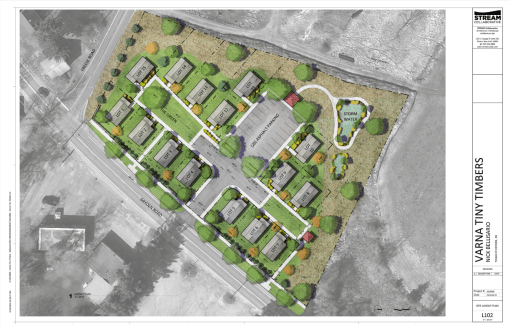
3. Tiny Timbers seems to be to a good start. The fledging modular timber-frame company run by the Dolph Family has added several members to its construction crew, and they will build the frame components out their newly-adapted warehouse-mill on Hall Road in Dryden. The house in Hector is nearly complete, two more are being prepared (both big cubes), and the gravel road is being constructed for their just-approved five-lot subdivision at 1624 Ellis Hollow Road. Going off the wording of their last blog post, it looks like three of those lots are already reserved or purchased (one lot is a conservation area).
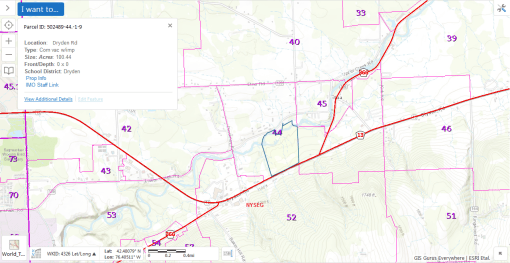
4. Let’s not beat around the bush – you’re coming here for a bit of inside information, not just a news round-up. One of the reasons Dryden and Tompkins County have each committed $1,750 to an infrastructure study of the Route 13 corridor is that there is a concept proposal on the table from INHS for a mixed-use development with retail and 250 affordable housing units, on approximately 50 acres of a 100 acre parcel – half of it is north of the rail trail and would be conserved, possibly through Finger Lakes Land Trust. At 5 units/acre, it’s below Varna’s highest densities, but it’s about the rural threshold of about 2 units/acre.

As it so happens, a quick check of the county’s property tax map shows a 100.44 acre parcel of vacant farmland across the street from 1477 Dryden Road, outlined in blue above. The back half is Fall Creek, so given buffers and general environment concerns, it’s good sense to leave it alone. The land has been owned by the Leonardo Family (the ones who ran The Palms) since 1942.

I asked Dryden Town Planning Director Ray Burger about it, and he knew only what the county said. But it’s something to keep an eye on as the town figures out whether or not to extend sewer to that parcel.

5. It seems like there’s quite the tempest going on in Lansing. Let’s review. All this comes courtesy of the Lansing Star (not for lack of trying on my part. Almost all Lansing staff and officials ignore my phone calls and emails, except zoning officer Marty Moseley. Thanks Marty.).

I. Over in the village, the “Preservation Party” lost the village election by a large margin to the incumbent Community Party by a roughly 75/25 split (240 votes vs 80 votes). This result should settle the Bomax Drive rezoning from commercial tech space to residential once and for all.
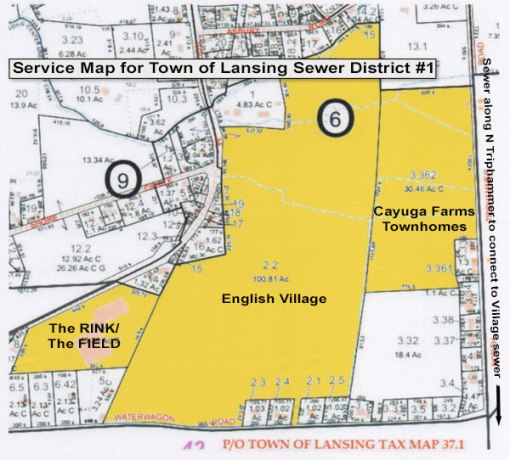
Image courtesy of the Lansing Star

II. Lansing town has inked an MOU with Cayuga Heights and Lansing village to install a sewer line up Triphammer Road to create a small sewer district. However, it’s impacts would be substantial – it would have three primary users – the 102-unit Cayuga Farms project, the 117-unit English Village project, and the RINK, which is expanding its facility. The developers want the sewer so much, they’re paying for it in what town supervisor Ed LaVigne is calling a “public/private partnership”. Properties that do not hook up would not be hit with an increased assessment, according to LaVigne and county assessor Jay Franklin.

A back of the envelope estimate suggests $50-$60 million in increased land assessment, and $1.5 million+ in property taxes. Perfect for offsetting a rapidly devaluing power plant that was once your town’s biggest taxpayer. The village boards still need to sign off on the MOU, but Lansing town is desperate to make a deal.

III. The Lansing Meadows senior housing seems to be worked out, and it includes the  small community-focused food retail component desired by developer Eric Goetzmann. The public hearing is on the 1st; if approved next month, the construction bids will be posted shortly thereafter with an intended summer start on the 20-unit mixed-use project.

IV. Just…wow. On the one hand, LaVigne et al. have a right to be upset. Their town’s biggest taxpayer is faltering, they’re trying encourage as much development as they can to offset the plunge in property taxes, and with debates like the West Dryden pipeline, they have a right to be frustrated. But to say the county’s sabotaging your town is a whole different ball game. To say “[r]ight now The County is on the sh** list as far as I’m concerned,” well…

He deserves sympathy. There’s a lot of BS mixed in with the good of Tompkins County, and his town and its schools are in a real bind. Poo pooing them isn’t helping anybody. But…he can’t magically change how people in Dryden or Ithaca think. Ask solar companies if they’d be interested in town properties, find a way to make residential heat pumps and renewables work. Hell, work with TCAD, talk with Heather McDaniel and the green groups and come up with ideas. I had a professor in grad school tell me that “you lure more flies with honey than vinegar”. LaVigne has a right to be upset, but this isn’t a good look.

6. Now that a few people at INHS and County Planning have been annoyed (sorry guys), back to the news. The Journal is reporting that the town of Ulysses has acquired three Jacksonville properties from Exxon Mobil, in what they hope is the next step in closing a disastrous chapter in the town’s history. Back in the 1970s, the former Mobil gas station at the corner of Jacksonville Road and Route 96 leaked enormous amounts of gasoline and poisoned the hamlet’s groundwater – one report says a person passed out from noxious fumes when they turned on their shower.

The state DEC became involved and ordered Exxon Mobil to clean up the mess, which was carried out from 1984 to 1988, and the multinational gas company purchased most of the affected properties and demolished them – an 1827 church was left intact. The DEC’s case file was finally closed in 2005 after the test levels had receded to more acceptable readings, but Exxon Mobil has continued to own the property, letting the church fall into disrepair.

The town is buying the church at 5020 Jacksonville Road, a 0.275 acre vacant lot at 5036 Jacksonville Road, and a 0.656 acre vacant lot at 1853 Trumansburg Road for $5,001 (the trio’s total assessed value is $84,700). The plan is to install a septic for the church at 5036, renovate the church just enough to keep it from rotting out, and once the building is stable, the plan is to resell to someone looking for a unique fixer-upper. If no buyer is found, the town plans to eventually restore the church on their own. The larger lot on Trumansburg Road is being considered for resale towards private development, or use as a TCAT park-and-ride.

7. Is the Canopy Hilton underway or isn’t it underway? Still kinda hard to tell.
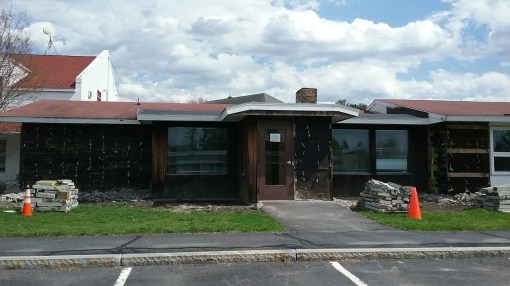
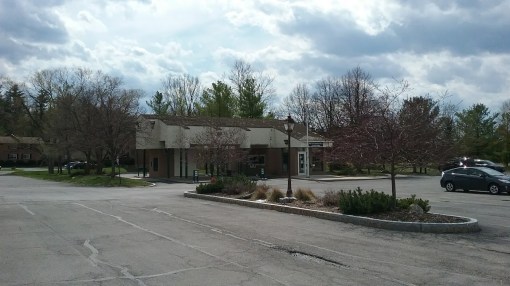
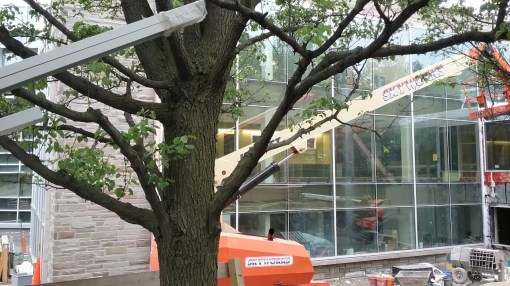
8. On the other hand, it looks like the new medical office building planned for Community Corners in Cayuga Heights, is starting demo work. The stone is being stripped from the existing buildings, to be reused on other structures. The Cayuga Medical Associates plan calls for a $5.6 million medical office building at 903-909 Hanshaw Road, 2 floors and 28,000 SF (square-feet), of which 23,200 SF will be lease-able space.
9. Nothing too exciting from the planning board agendas around the county – Lansing has nothing up, Cayuga Heights has nothing of note. Over in the town of Ithaca, Cornell plans to try again with its Peterson Parking Lot replacement (after the disastrous first try last April), the 15-lot Monkemeyer subdivision on East King Road continues review, and a 2-lot modification is up for consideration. In Dryden, the advisory planning board will continue review for the Tiny Timbers Ellis Hollow subdivision mentioned earlier, and a 7-lot subdivision of the former Dryden Lake golf course; there will also be some solar panel discussion, and possibly some info on the ~20 unit Pineridge Cottages project planned for Mineah Road.