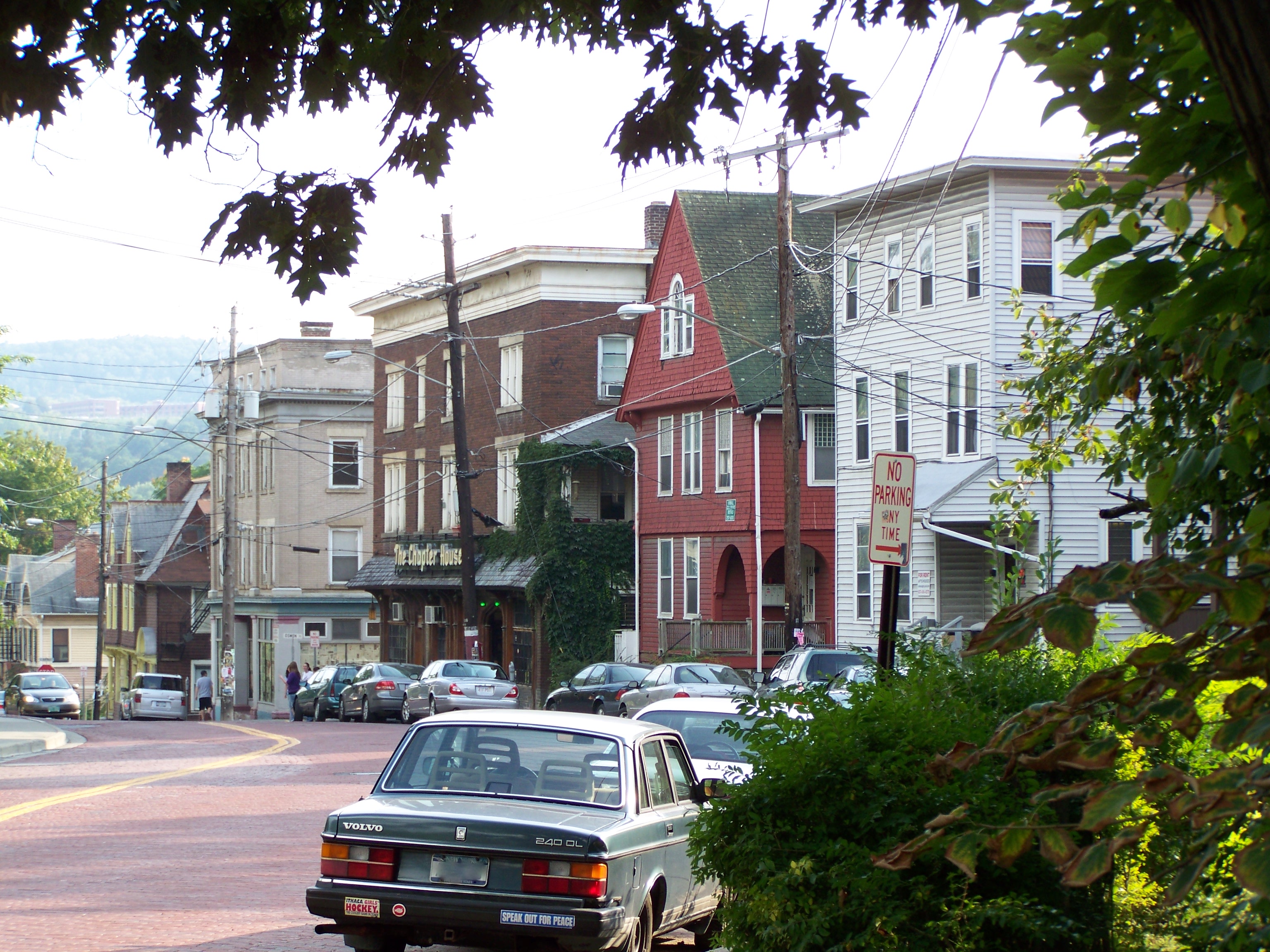
619 West State Street Construction Update, 3/2016

23 03 2016

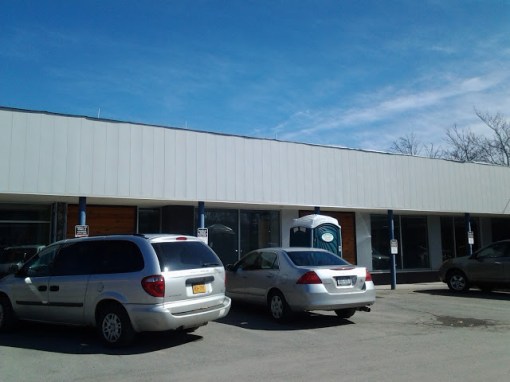
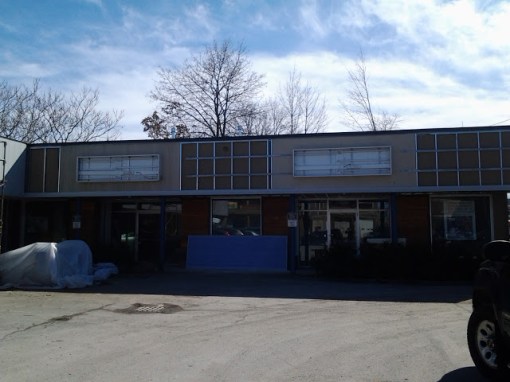
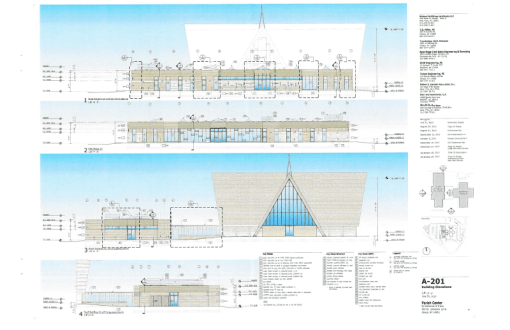
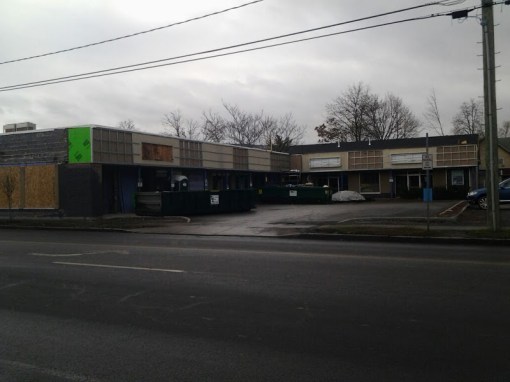
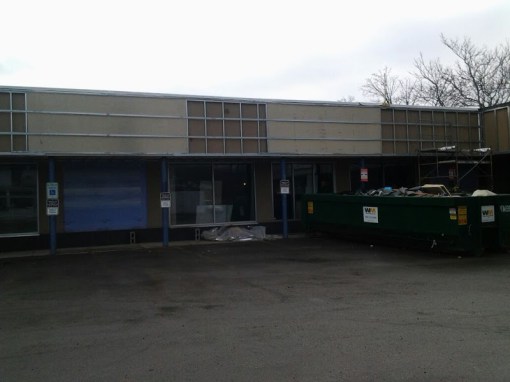
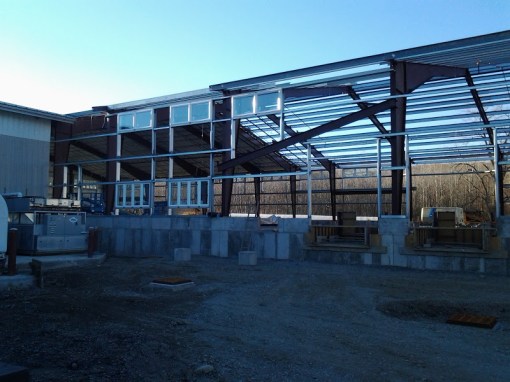
Not much left to go here. 619 West State Street, the future home of HOLT Architects, is near the finish line. The wood siding has been attached, although it’s hard to tell if the (dormer? periscope window?) will be sided with wood or the off-white metal paneling like most of the plaza. It doesn’t look like the rooftop solar panels have been installed yet, but they’re on the to-do list. Exterior and interior work is a little further behind on the rental portions of the building, where two smaller commercial spaces will be available to tenants. Someone from HOLT feel free to comment, but I think one of the spaces is already spoken for.

I can vouch from being that that HOLT’s interior space is nearly complete, and looks great. The lime green paint in the entrance area stands out and gives it a certain liveliness. I was tempted to take photos, but there were multiple people working inside finishing up HOLT’s space last Saturday, and I felt uneasy with the idea of interrupting for an impromptu tour. So I was that guy, staring inside, awkwardly holding his camera phone, before giving in to preconceived social mores and leaving them be. I guess I’m a lot more comfortable bothering people when they’re outdoors.

Tompkins Trust Company is providing the financing, and local company McPherson Builders is in charge of general construction. The project cost for the net-zero energy structure comes in at about $482,500, based off the construction loan on file with the county. More discussion about the net-zero features can be found here, and HOLT’s move to the West End here.

20160319_144706 20160319_144734 20160319_144737 20160319_144811 20160319_144822


619_w_state_st_1


News Tidbits 2/27/16: A Leap Year, But Not A Leap Forward

27 02 2016

1. Let’s start this week off with some maps. The two below come courtesy of the Ithaca Urban Renewal Agency (IURA) agenda, submitted by INHS Director of Real Estate Development Scott Reynolds.

iura_inhs_map_1

iura_inhs_map_2
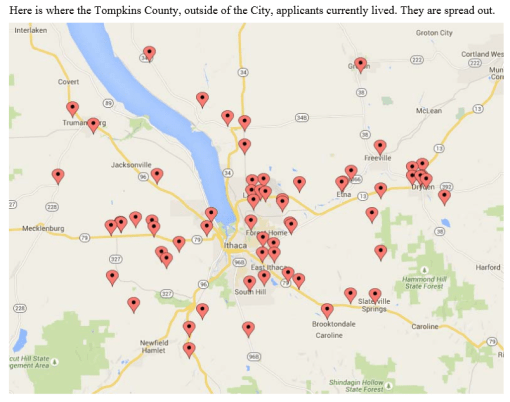
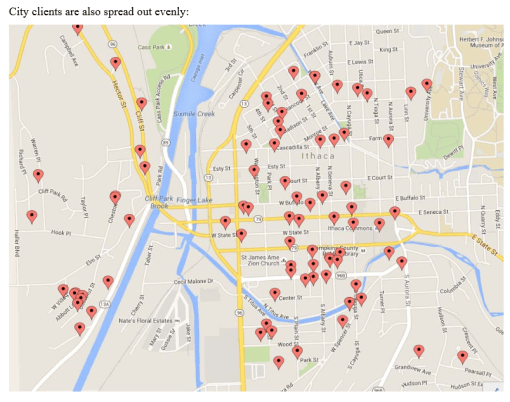
Each marker is the approximate location of current of an individual on Ithaca Neighborhood Housing Services’ (INHS’s) apartment wait-list. Dozens and dozens. As breakdowns go, 48% of waitlisted applicants live in the city of Ithaca, 38% outside of Ithaca but somewhere within Tompkins County, 8% live in other counties of New York State, and 6% come from outside the state. Counting the markers, my back-of-the-envelope calculation comes out to about 160 households.

The map implicitly describes the wealth of Ithaca’s neighborhoods – an increased number of applicants for affordable apartments come from South Side, the West Village area, and Northside, and further out, Dryden village and the apartment complexes in Lansing village. Wealthier areas like Fall Creek, East Hill, South Hill and Belle Sherman have very few or no individuals on the wait list.

The next time someone says affordability isn’t an issue, think of each dot on this map, and remember that’s someone, maybe even a while family, struggling but hoping to find decent, affordable housing.

Farm Pond Site RES'D & LOT s 010414

2. The Farm Pond Circle development in Lansing has finally sold on the 23rd for $164,840, well above both asking prices from last year. The purchaser was Dryden-based Schickel Construction, the same company responsible for the Boiceville Cottages. The restrictions on the ten for-sale lots carry over with the deeds. All things considered, Bruno Schickel knows this area well and his company could be one of the very few in the region interested but also capable in fulfilling Jack Jensen’s vision.

The development first went up for sale for $155,000 last March after the owner/developer, Jack Jensen, passed away suddenly in October 2014. In October, the price was knocked down to $125,000. Along with the lots Schickel picked up in the primary sale, a second purchase of $39,160 gave him three more undeveloped lots owned by other members of the Jensen family.

1015_dryden_1

3. On the other end of the sale scale, Ithaca real estate developer Modern Living Rentals has put their multi-family property at 1015 Dryden Road up for sale.  The asking price for the 5-unit property is $650,000. 1015 Dryden is home to a single-family home built in 1938, and a 4-unit apartment building from about 1980. The apartment building was badly damaged in a fire in 2011, renovated, and the site was sold to MLR for $425,000 in March 2014. The tax assessment is also $425,000.

Plans on MLR’s website shared a to-be-built 2,790 SF triplex designed by STREAM Collaborative, but the real estate listing notes plans filed for two side-by-side duplexes (4 units). All units when built would equal 24 bedrooms, but the bungalow house is just one bedroom, and although I can’t find total number of beds for the 4-unit, at 4,032 SF it’s probably 2 beds per unit, so…that’s 9 exisiting, plus six from the triplex, plus 9 bedrooms from the two side-by-sides? Not 100% sure. Potential landlords can contact the listing agent here.

elmira_savings_v1

4. As noted by the Ithaca Journal this week, Elmira Savings Bank now has regulatory approval to move its bank branch from 301 East State Street to the old Pancho Villa Building at 602 West State Street. The project would still need site plan review for the renovation of 602 alone, even if the rest of the site isn’t altered. However, if less than 10,000 SF, a non-residential structure may only need limited SPR, staff-level like a single-family house (I was a bit uncertain, but I have confirmed with a member of the planning board). So although the move is okayed, the bank may still have to go through the board before renovations can begin. In theory, they could move into the un-renovated building without board approval, since it would only be when substantial exterior alterations are planned that it would then fall under the board’s purview.

The bank still has no plans for the other properties acquired in their December purchase.

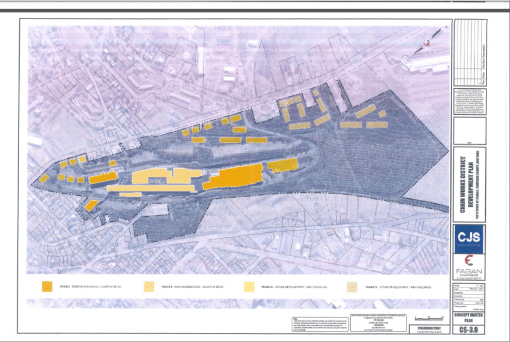
chain_works_rev3_3 chain_works_rev3_4

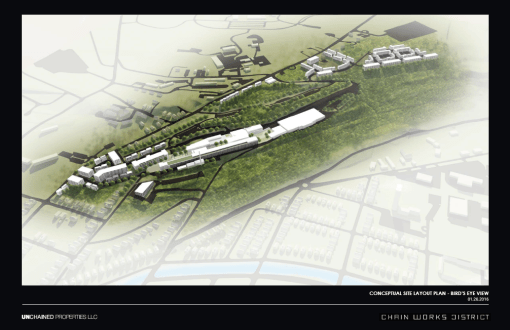
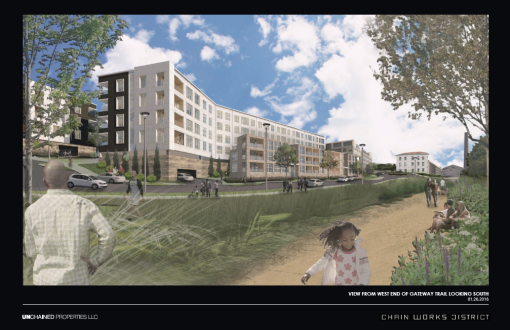
5. Now for some weekly eye candy. Additional images from Monday’s Ithaca Voice on the Chain Works District redevelopment, PDF here. These were left out because although these images are strictly conceptual and years away from reality, they show many new buildings, up to 5 floors in places, which could have had people freaking out that Chain Works was a Manhattan-izing of Ithaca and that a derelict brownfield was a suitable alternative. What gets written is tailored for its audience, and I didn’t think the Voice’s more general and broader reader base would handle these images well. Case in point, the ICSD shutting off drinking water in all of the schools as a precaution sent people into the Voice’s comment section panicking that every household on the municipal water system was contaminated with toxic levels of lead a la Flint. So, here are some visual extras to the much more rational readers of this blog.

The conceptual renderings are by Rochester-based Chaintreuil Jensen Stark Architects, the same group behind the design of Harold’s Square.

20160220_111241 20160220_111313 20160220_111336

424_dryden_rd_1

6. House of the week. Or rather, duplex of the week. From the outside, William and Angie Chen’s 2-unit, 6-bedroom duplex at 424 Dryden Road is nearly complete. Trim details like the porches have yet to be attached, and the foundation still needs to be backfilled, but most of the exterior looks good to go.

However, the parking lot has been a source of some BZA debate. The lot would require five off-street parking spaces, which the Chens can do with the construction of a three-car garage that tears down mature trees, but they would prefer to create uncovered five spaces that include two in the rear yard. CR-2 Zoning doesn’t allow for rear yard parking, so an area variance is required. The application also comes with a letter of opposition from a neighbor who seems to have mixed up the choices, asking for the variance to be denied for tearing down trees, when it’s the non-variance option that tears down trees.

Local architect Daniel Hirtler of Flatfield Designs is handling the duplex and the zoning variance.

341_coddington_1

341_coddington_2

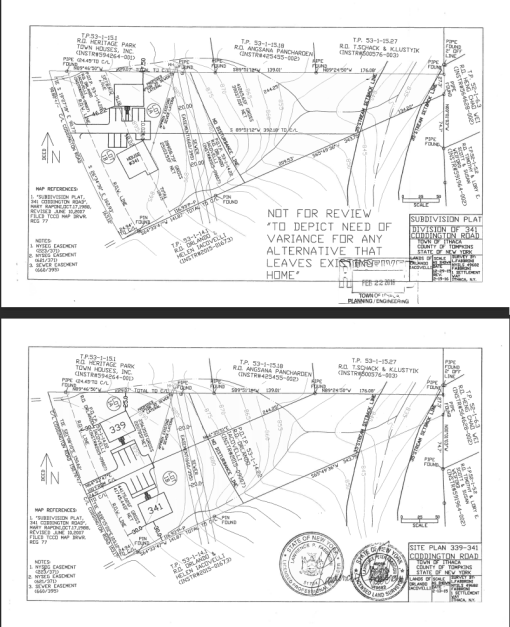
7. Status: It’s complicated. In Ithaca town, the Iacovelli family, longtime local landlords/builders, want to tear down a ca. 1845 house at 341 Coddington Road to put up two duplexes, which from the schematic appear to be the Iacovelli student special. To do so, they need to subdivide the property, one for each duplex.

On the one hand, the Iacovellis, who have been on South Hill since the 1920s (they’re the namesakes of Iacovelli Park at the end of Juniper Drive) and bought the property last year, have a right within existing law to do what they want with the property, which is next door to Orlando Iacovelli’s house. They want to subdivide the land into two parcels, and the only way to create two legal lots is to go right through the existing house.

On the other hand, it would be a shame to lose a 170-year house that’s in fair shape and has many of its original features intact, just so two fairly spartan duplexes can be built.

The town’s planning board seems to be cognizant of both sides in this dilemma. They asked at the last meeting to examine an alternative to allow subdivision and keep the 1845 house intact. The engineer for the project, Larry Fabbroni, did so, but the applicant is uncomfortable with trying to get zoning variances for the non-conforming setup, area, setback and a third claim about use for unrelated occupants (which the town planning department disputes).

This all comes at a time where the town is weighing a moratorium on 2-unit properties, and if this house comes down, there’s a good chance the town will vote the moratorium. Then Iacovelli won’t be able to build any duplexes, and no one else in the town of Ithaca would be able to either. But even if Mr. Iacovelli couldn’t build, he could still demolish the house and wait, should disagreements came to a boil.

Ideally, there would be a compromise where the 1845 house is preserved (by planning board/BZA stipulation or otherwise), and Iacovelli gets to subdivide so he can build a duplex on the other parcel. That way, he gets some economic return, and the town gets to keep an undesignated but arguably historic house. Few town board members want to come off as being anti-business to local families, and few developers want to come off as greedy or exploitative. A concession on both sides and some good will could go a long way in a time where tensions about student-focused housing are rising.

Comments can be sent to the board via the town clerk (Paulette Terwilliger) at townclerk@town.ithaca.ny.us . The board is expected to take a vote on the subdivision on Tuesday the 1st at 7 PM in the town hall.


News Tidbits 2/6/16: Good Ideas and Bad Ideas

6 02 2016

maplewood_site_plan_concept
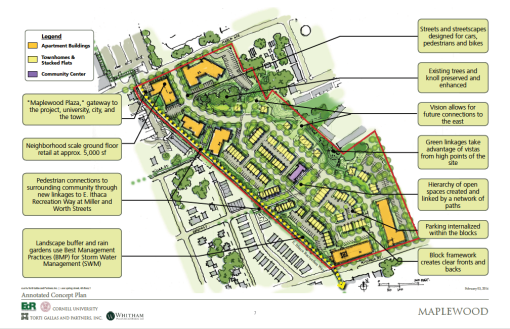
1. Let’s start with the big news this week, Cornell’s long-incubating plans to redevelop Maplewood Park. Official write-up on the Voice here. Personally, looking at the viewer stats, I’m a little disappointed that this has gotten as little attention as it has, since it’s a very large, very important project. But I suppose it’s a double-edged sword, because invariably, when a project does get a lot of attention, it’s because it’s a huge controversy (State Street Triangle, Black Oak wind farm, 210 Hancock, and so on).

There’s a lot to like about the plan (found here on the town’s website). Dense, walkable, a little mixed-use (more office or retail would be nice, but given that it’s tax exempt space, the more space there is the more controversial this project would likely be). Buildings aren’t too likely to cause controversy, since they’re 4 floors at most and they’ll be designed to blend in (“echo the surrounding neighborhood with the use of contemporary features”, per the narrative). Most of the comments on the Voice article describe Cornell as the great Satan, but one reader did express desire for the bigger, taller buildings to be central to the parcel, with townhouses on the outside. As a relatively untrained observer, it would seem that would be best from the perspective of trying to minimize appearance as much as possible, but it would also encourage vehicular traffic towards the center of the parcel, and negatively impact its pedestrian orientation. I haven’t seen any reactions from local planners, but I am curious what their first impressions are.

When writing up Tuesday’s article, my thought was that this was “Phase I”, Ithaca East/Maple Hill was “Phase II”, and East Hill Plaza/East Hill Village was “Phase III” with a 2019 or later start; but the rumor mill is circulating that work on the first parts of East Hill Village may be concurrent with Maplewood Park. We’ll see what arises in the coming months.

304_hector_inhs

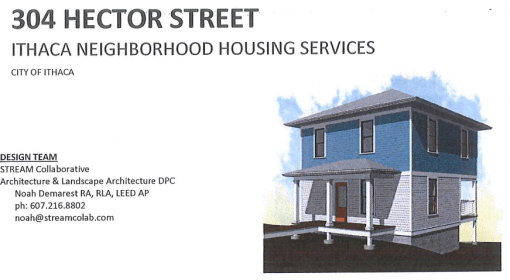
2. When those units come online in 2018, it’ll be a big step towards reducing the deep housing deficit. But in the meanwhile, the housing market will be uncomfortably tight. Which is why it’s good to see some pooled city/county/Cornell money being disbursed for affordable owner-occupied housing. The Community Housing Development Fund proposes that the city give $80,000 towards Habitat for Humanity‘s “Breaking Ground” duplex at 101-107 Morris Avenue in Northside (208/201 Third Street), and $85,000 to INHS for the seven moderate-income owner-occupied townhouses at 210 Hancock, and an affordable 1368 SF single-family home at 304 Hector Street on West Hill. Cornell will give $235,000 towards the townhouses and Hector Street home, but $100,000 of that is a re-allocation of funds from the cancelled Greenways project. The county is giving $100,000 towards six rental units at 210 Hancock.

Claudia Brenner has designed most of INHS’s homes in recent years, but this time around it looks like Noah Demarest of  STREAM Collaborative penned the home design. This is a revision of the previous render, if memory serves correctly; INHS had wanted to build the home last year, but construction costs as high as they are, the non-profit held off.

biggs_2

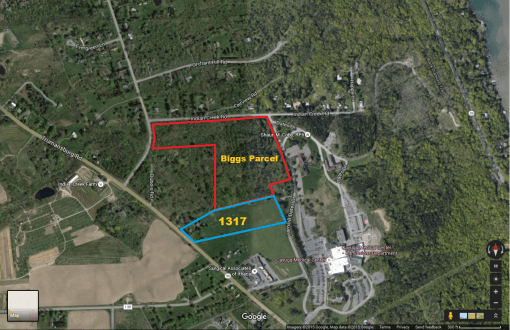
3. In other news, the county’s Government Operations Committee was to make a decision on the Biggs Parcel this week, but decided not to. It’s set to the return to the county’s agenda at the meeting on March 2nd. The ICNA has submitted a purchase offer (sum undisclosed) for the 25.5 acre parcel. The offer from Roy Luft to combine the parcel’s cluster zoning rights to build senior housing on his property at 1317 Trumansburg Road still stands, as far as I’m aware. Update – From the ICNA’s Linda Grace-Kobas, the Luft proposal has been dropped due to “size and complexity”.

Pg-3-Rendering

ag_quad_2

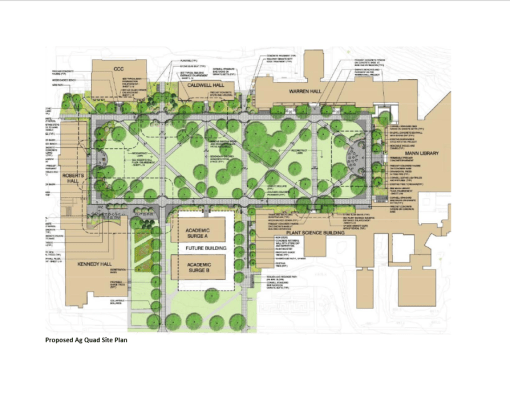
4. Courtesy of the city, some more details on Cornell’s Ag Quad renovation. Site Plan Review (SPR) application here, Full Environmental Assessment Form (FEAF) here, project specs here, drawings here. Formally, the project is referred to as the “Cornell Ag Quad Utility & Landscape Project”, since the project also involved major utility upgrades and repairs under the quad. The work planned calls for new steam lines, a telecom duct bank, new sanitary piping and water lines underground, and above ground there will be new paths, light posts, pedestrian plazas with stone benches, fire apparatus access path, blue light phones and a loosening of the soil compacted by other construction projects (such as the staging area for Warren Hall while it was under renovation). Most trees will be preserved, except for a few that stand where the new utilities and fire lane will go.

The project cost is $3 million on the SPR, with a rehabilitation period from April 2016 to July 2017, divided into two phases. No new permanent jobs, but about 25 construction jobs will be created. MKW + Associates LLC of New Jersey is serving as the consulting landscape architect.

On a side note, at least we can be fairly sure now that Cornell does plan on taking down the surge academic buildings at some point for a future permanent building.

5. Ithaca wants to build bridges. Physically, anyway. The city will hold a public information meeting next week 2 PM Wednesday on replacing the deteriorated single-lane Brindley Street bridge on the west side of the city. The bridge, which dates from 1938 and was last modified in 1952, is functionally obsolete and in dire need of rehabilitation.

Currently, the city is weighing two plans – a $2.43 million replacement of the old one-lane steel bridge with a two-lane bridge with sidewalks and shoulders for walkers and bikers, and a $2.59 million plan that extends two-lane Taughannock Boulevard through a parking lot, over a wider span and intersecting with Taber Street, leaving Brindley a single-lane bridge. While more expensive, this option diverts most traffic away from the awkward six-way intersection Brindley has with West Seneca and West State Streets. The nitty-gritty can be found in the design report here. It would also be of significant benefit to the Cherry Street industrial park and future waterfront development by improving access to the area.

Whichever plan moves forward will be decided by April, with construction from May-November 2017. Most of the project costs will be covered with federal funds, with some state funds and municipal bonds covering the balance (80/15/5% respectively).

902_dryden_v3
6. Some progress on 902 Dryden, perhaps. From the town of Dryden Town Board minutes, The number of new units is down, from 12 to 8, and only 26 new bedrooms from the previous 38. The overall square footage is also down, from 18,000 to 11,000 SF, with 26 parking spaces, 1 per bed. So that render above from December is outdated (although the color scheme is nice and bright, hopefully that carried over), there are two units on the right and six on the left, as well as the existing duplex.

As a result of the smaller project, one of the casualties is the net-zero aspect, because the initial cost for installing the solar panels outweighs the decreased revenue. Heat will be all-electric with the opportunity to install solar at a later date, if it pencils out. As for the opposition, it definitely sounds more muted in the town minutes, one neighbor seems intent on forcing enough site studies to break the bank, but overall the commentary reads muted to positive. The minutes don’t indicate if the public meeting is finally closed and if a vote to approve the project can be taken later this month.

7. Looks like Josh Brokaw at the Ithaca Times was able to get the Maguires to open up about their plans for Caprenter Business Park. In a phone call with Brokaw, Phil Maguire confirmed plans for a $12 million, 40,000 SF Ford/Lincoln/Nissan dealership, which will then allow them to proceed with renovations of their properties down by Wegmans. While they estimate about 70 jobs would be created and that it will be designed to be “inlet-worthy”, the problem remains that a car dealership flies in the face of the mixed-use urban environment that the city had been envisioning for the waterfront. One valid point does get raised though – side-by-side NYSEG power lines overhead would have to be buried for many building projects on the Circle (but not for parking lots), which gives any developer an extra several hundred thousand dollar expense in the development process.

Sketch plans are expected to be shown at the March Planning Board meeting later this month, about the same time the Common Council is expected to adopt the temporary PUD zoning that would give them say over any projects proposed in the waterfront area. Expect this dealership proposal to be a very heated and occasionally uncomfortable debate.

cherry_2

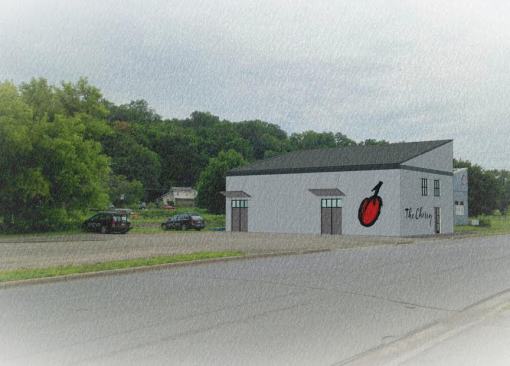
8. What’s on the agenda for next week? Not a whole lot new. The city’s projects memo doesn’t have any new projects, unless you count Island Fitness redoing their parking lot. There are a few more renders for the Cherry Artspace, as well as some project details – $200,000 construction cost, 1,944 SF building by Claudia Brenner with seating for up to 164 on the lower level, 2 jobs created, May – October 2016 buildout.

The Ithaca Landmarks Preservation Commission has some minor old business to attend to, and what likes some discussion over the recently-purchased home at 410 North Cayuga will be introduced (chances are, it’s something like window or roof replacement, maybe an add-on room). Discussion is planned for 311 College Avenue, the old firehouse home of the Nines, but this is also likely to be minor.

The town of Lansing’s planning board also has a meeting next week, but the only item of discussion is the Mirabito petroleum storage facility on Town Barn Road.


News Tidbits 1/30/2016: A Doozy of a Week For All the Wrong Reasons

30 01 2016

I’m not going to lie – this was a rough week. For those who like old buildings, the city tore down 404 West Green and 327 West State this week. For those who are consider themselves eco-activists, Black Oak wind farm is on life support. State Street Triangle is likely cancelled, the Printing Press Lounge is off the table, Cornell continues to pour most of its attention on its new New York City campus, and a grocery store and a downtown shop are closing their doors and putting people out of work. There have been better weeks for news round-ups.

state_st_triangle_v6_1

1. State Street Triangle isn’t dead per se, but it’s indefinitely stalled. I think the best headline goes to the Ithaca Times since they’re the most accurate. From chatting with planning consultant Scott Whitham, who’s involved with the project, it sounds like the impasse is the result of Campus Advantage wanting to pay less for the site since they can’t build as large of a project, which would decrease their revenue. The contract for the land purchase from Greenstate Properties/Trebloc Development (Rob Colbert) was up for re-negotiation after the December expiration, but neither side wants to budge on what they feel the price should be. So nothing can move forward without a deal between the two parties. I reached out to Colbert Wednesday, but the secretary paused for a minute and then said “he’s, uh, busy in a meeting, care to leave a message?” So he’s probably not going to say anything further.

Could it move forward? Possibly, it could be revived if a deal is made. But as things are, it’s stalled and it’s outside the control of any community group or government authority. It’s definitely a shame from the standpoint of Ithaca’s worsening housing crisis because it’s less that will be entering a market flooded with students, people moving here for work, and wealthy retirees who have apparently decided this is the Asheville of the north. And given the battles of “structural racist gentrification” and “uncivilized crime-producing trouble-making affordable housing“, where everything is accused of being one or the other, I’m not especially hopeful at the moment.

416_e_state_v2_1

2. Now for something that is definitely dead in the water – The Printing Press Lounge. Developer Ben Rosenblum had wanted to put a jazz lounge in a 7700 SF industrial warehouse at 416 East State Street, but neighbor objections to noise and traffic proved a little too much for the Board of Zoning Appeals, whose members appeared unlikely to support necessary variances for the vacant facility. So the developer pulled the lounge proposal, but the office space and apartment are still under consideration.

canopy_comparo_elevations_new_1

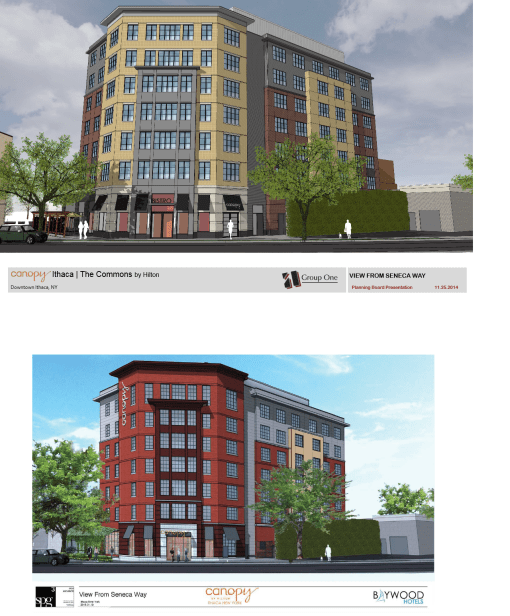
3. Also from the same phone conversation as State Street and Printing Press – the Canopy revisions were approved, so at least there’s a good chance that will be breaking ground this Spring. The Chain Works review schedule was also approved, although given the couple emails from the Voice article, the public review period is going to be groan-inducing. One of the letters commanded that nothing should be done there and it should be kept as is because it encourages traffic and “its density is ruining Ithaca”. They might have meant size, but density is a buzzword at the moment. Apparently, they also overlooked the fact that it’s already built and won’t be fully cleaned of toxic chemicals until a reuse plan is in place. The development team will have to respond to all of these comments, perceptive or not.

4. In real estate sales, an LLC in suburban Corning picked up the former Tim Horton’s and Cold Stone Creamery space on Elmira Road. 0.74 acre 407 Elmira sold for $640,000 on January 22nd. A little research into the rather exotically-named “Armiri LLC” shows that they were previously registered at an address home to an Econo Lodge, and that the owners have about 70 or so other LLCs related to hotels and the hospitality industry. A little more digging, and the owner turns out to be Corning-based Visions Hotels, a developer of suburban chain hotels with locations from Albany to Buffalo. So if I were to make a guess, the five-year old Tim Ho’s building won’t be long for this world, and a suburban hotel is likely to rise in its place in a couple years. But we’ll see what happens.

5. Meanwhile, just up the road, Maines will be shutting down their store at 100 Commercial Avenue. The 26,146 SF building was built for the Binghamton-based grocery chain in 2010. February 7th will be the last day. Although there don’t seem to be any figures online, the move will likely put at least a couple dozen people out of work. A phone call and email to Maine’s asking for employee totals and reasons for closure were not returned.

ctown_terr_phase3

6. Let’s talk about money. The construction loan docs for Collegetown Terrace Phase III were filed with the county this week. The price? A cool $39.25 million, from PNC Bank. That’s just for 247-unit, 344-bed Building 7. Previously Valentine Vision Associates LLC (John Novarr/Philip Proujansky) received $50 million on 8/22/13, $50 million on 7/1/2014, and $50 million on 11/20/14. Do the math out, and $189.25 million in loans is a lot of money. Then again, this is also a 1,200+ bed project.

The latest loan docs require an opening by fall 2018, but expect it to be about a year sooner than that, August 2017.

chapteR_house_reconst_v4_2

7. The Ithaca Landmarks Preservation Council has approved the Chapter House plans. All that’s needed at this point are the Building Department permits, which are technical and just require that everything will be built up to code. Things are looking good for that February construction start.

hughes_cornell_3

8. Something to look forward to at next month’s Planning Board meeting – further discussion of Cornell’s renovations to Hughes Hall. Planning Board Presentation here, drawings here, Site Plan Review application here. KSS Architects, with offices in Philadelphia and Princeton, will be in charge of design. KSS has been to Cornell’s campus before, having designed some of the Hotel School additions and part of the previous phase of law school renovations. Local firm TG Miller is handling the engineering work. The project is expected to cost $10.2 million and construction would go from June 2016 to July 2017.

Quick refresher, the plan is to renovate 4 floors of what were previously student dorms into academic office, admin and student organization space. Cornell anticipates about 200 construction jobs will be created, but nor more than 80 at any one time, and 20-40 on-site most days. No new permanent jobs, limited visibility, and minimal transportation/ground impacts will limit much of the customary Planning Board debate.

cornell_tech_v2

9. Meanwhile, New York City outlets are reporting on the progress of Cornell’s massive new tech campus in New York City. The Real Deal is reporting Snøhetta, an Oslo/NYC architectural firm, will design the Verizon Executive Education Building. The other three buildings underway are the Bloomberg Center, The Bridge, and CornellTECH Residential, which are the work of Morphosis Architecture, Weiss/Manfredi Architecture, and Handel Architects respectively.  300 students and 200 faculty/staff  will move into the new 26-story dorm by August 2017. Verizon paid $50 million for their naming rights, and billionaire former NYC mayor Michael Bloomberg paid $100 million, making up a sizable portion of the $590.6 million donated to Cornell over the past year. Once the initial wave of construction is complete, it’ll be worth seeing how donations break down – years ago, MetaEzra noted that Weill Medical received an outsized proportion of charitable giving.

Not to go all conspiracy theorist, but there are times when Living in Dryden blogger Simon St. Laurent’s thought piece seems uncomfortably relevant.

arpt_pk_1

10. At the county’s PEDEEQ Committee meeting Friday (PEDEEQ being the acronym for the unnecessarily long Planning, Economic Development, Energy, and Environmental Quality Committee; agenda here), the county did two things worth mentioning here. One, they awarded the $35,000 airport industrial park feasibility study to the team of Clark Patterson Lee of suburban Albany, and Saratoga Springs-based Camoin Associates. Two, they passed a resolution calling for “the Timely Development of the Black Oak Wind Farm” project in Enfield.

The Black Oak opposition really seems to have picked up momentum after one the major landowners involved with the project pulled out. Neighbors in the area are actively attacking the project by calling it a danger to human health and a destructive environmental menace financed by wealthy out-of-towners (a shot at Ithaca), and the wind farm’s executive board is struggling to address these accusations in the revised environmental review due to be completed in April. For the local eco-activist crowd, this is an unwelcome and unusual position to be in because more often than not, they’re the ones opposed to development. The county legislature, which has several green activists, is doing what they can by giving verbal support, and a subtle sort of wrist-slap to the opposition. Dunno if it will work, but we’ll see what happens this spring.

elmira_savings_v1

11. Here’s the sketch drawing for Elmira Savings Bank’s new West End Branch at 602 West State Street. It would appear the plans call for a modern addition to the north side of the building, and renovation of the rest of the two-story restaurant into office/service space. Local companies TWMLA and HOLT Architects are handling the design.

According to the Twitter feed of the IJ’s Nick Reynolds, the building plan was received well enough at the Planning Board meeting, but the rest of the plans call for demo of the other buildings, including the affordable housing that had some folks up in arms, for a parking lot. That didn’t go over very well. Demolition of low-cost housing for parking is going to be about as welcome as a Hitler costume at a bar mitzvah. Expect another trip to the board with some revised plans.

12. The Dewitt Park Inn is for sale for $950,000. Owners Tom Seaney and Nancy Medsker are selling the property they purchased for $320k in January 2012 and renovated into a high-end bed and breakfast. The two were vocal advocates for the popular though foregone Franklin/STREAM condo proposal for the Old Library site, although Medsker didn’t do the debate any favors when she decided to trash her rear neighbor, senior services non-profit and Travis Hyde project partner Lifelong in a letter to the Ithaca Journal. The county has the Dewitt Park Inn assessed at $575,000.

st_catherine_v2
13. Nothing too exciting for the town of Ithaca planning board agenda next week. The town’s planning board will choose whether or not to sign off on the review schedule for Chain Works, and they have to re-approved plans for a smaller parish center at St. Catherine of Siena in Northeast Ithaca. According to the provided docs, the parish center has been reduced from 10,811 SF to 8,878 SF due to rapidly rising construction costs (seems to be a common refrain these days).


News Tidbits 1/23/2016: A Doozy of A Week Ahead

23 01 2016

1. Over in the town of Ithaca, an update is being considered for the Rodeway Inn budget motel at 654 Elmira Road. Previously, the motel had been approved for renovations that would expand the size of the 25 existing units and provide 2 new inside corner units, along with the associated landscape and site improvements. This proposal was originally approved by the town in December 2013, but then the project never went forward, partially because the Maguire group was looking at buying the property and tearing it down to make way for their artisanal car dealerships and headquarters. With the Maguire’s plan filed away in the circular drawer, the owners of the Rodeway Inn have decided to reconsider the renovation project.

rodeway_1
Along with the room expansion, the new plan also calls for renovating an existing on-site residence into a new office by building an 1146 SF addition, while the existing motel office is renovated into a community room to serve travelers. Variances for side-yard setbacks granted for the previous proposal must also be re-approved, since zoning variances in the town of Ithaca are only valid if construction starts within 18 months of being granted (in other words, the variance expired last June).

Pennsylvania-based HEX 9 Architects is in charge of design, and JAMNA Hospitality is the developer.

chapteR_house_reconst_v4_2

chapteR_house_reconst_v4_1

2. From the city of Ithaca Landmarks Preservation Council agenda next Tuesday, the latest iteration of the design plans for the Chapter House replacement and its neighbor at 406 Stewart Avenue. The Chapter House looks to be in the last stages of ILPC approval, while the apartment house next door is still in the early design review stage.

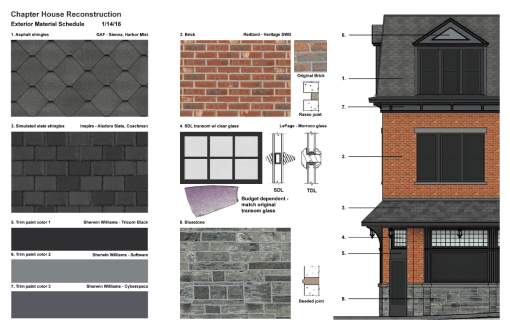
Looking at the Chapter house, the zinc roofing tiles have been replaced with asphalt, and two more paint colors will be included on the trim, which has gone from white to dark grey and black. The ILPC is doing what they do best, going over projects with a very fine toothed comb and debating every detail. Meanwhile, the current iteration of 406 Stewart Avenue calls for a 4-story apartment building with design features very similar to the previous 3-story building. That project still has some debates ahead of it, so we’ll see what happens moving forward.

Also on the agenda, discussion with the Planning Board about the DeWitt House/Old Library redevelopment, an update on repairs to 102 East Court Street, and some type of work being done at 210 Stewart Avenue (could be anything from paint color and shingle choices to major work; if it merits a post it’ll be included in a future update).

323taughannock_rev2_1

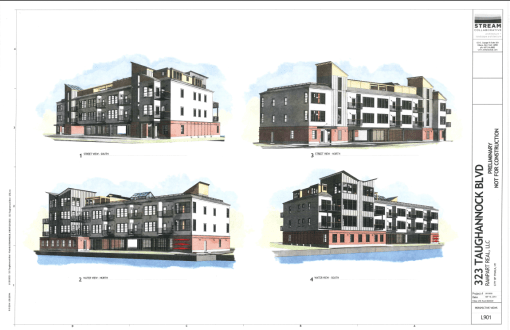
3. The Times’ Josh Brokaw wrote a nice summary of developments down at the Ithaca Waterfront, although I wish it hadn’t run when it did (re: HOLT update). Thanks to Josh, we have an idea of what’s going on with the approved but as-yet unbuilt 21-unit 323 Taughannock apartment project:

There was an “unexpected issue” that came up, Flash said, with the project, and so they must take “a sharper look at the engineering” to make the costs work.

I’m going to take a slightly educated guess – the soils were even crappier than anticipated. The high water table and easily-compacted soil in the West End and Waterfront pretty much mandate that multi-story projects have deep, expensive foundations to support the weight of structures. A soil issue was one of the problems that delayed the Lofts @ Six Mile project, and the reason why it’s built tall and narrow; also, since the Bloomfield/Schon has to pay for that deep foundation, it’s one of the reasons why the Lofts are so expensive. From the sounds of the Times article, balancing the deep foundation with adequate parking for the parcel is an issue. I’ll keep my fingers crossed, this project could be a real asset to that area.

Also, pretty sure that Cascadilla Landing still isn’t happening, and the Times has realized that. Anyway, it’s a good piece, and I’m not going to steal all of Josh’s thunder or his Myrick quotes, so spare two minutes and have a read through.

ith_big_plan_map_v2

4. For my moderate griping about timing with Josh’s Inlet Island development piece, I could note that this quote in the IURA Governance Commitee Agenda from city Planning and Economic Development Director JoAnn Cornish ties my article and his together:

“Cornish reported that the Planning and Economic Development Committee identified the Waterfront Neighborhood Plan as the Phase 2 plan of the Comprehensive Plan it would like to move forward with. Funding has been allocated for it. The plan would most likely be a hybrid Waterfront/West End neighborhood plan, in anticipation of significant development interest in that part of the city.”

In good news, affordable housing grants were thankfully saved in the federal budget, meaning that there will be a similar amount heading to NYS in 2016 as in 2015, and those funds would be available to future Ithaca projects should they jump through all the application hoops and be deemed worthy by Albany. The IURA is looking to smooth over any possible shortfalls by offering itself as a housing strategy consultant for the Waterfront/West End and Southside Phase II plans, and in the longer term, sales of parcels at the end of Cherry Street, at 410-426 Taughannock Boulevard, and Fire Station No. 9.

Also, the Argos Inn and Bandwagon Brewery/Restaurant have paid off their IURA loans. Proof that, although there have been failures (Finger Lakes Wine Center), the IURA can properly vet projects and be successful in its mission.

20160109_131947 20160109_132008

20160109_131909

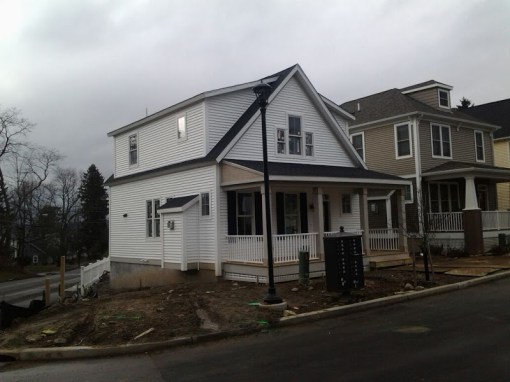
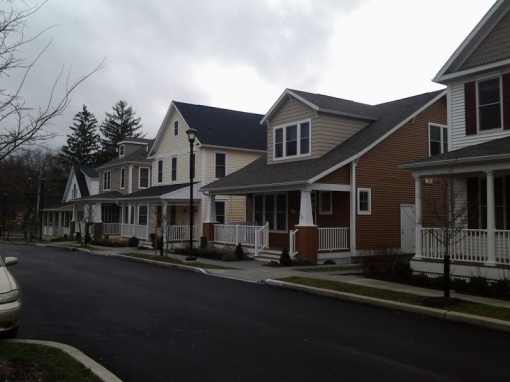
5. House of the week. 102 Walnut Street, town of Ithaca. the last of Agora Home LLC’s Belle Sherman Cottages is nearly complete, possibly to go on the market as a spec house. The house is a little small than its neighbors since the lot is smaller, but the unique design gives the street some extra diversity. Apart from landscaping, paving and some finish work (on the exterior trim at least, although being a Simplex modular means the inside is probably finishing up as well), the house is just about finished. Nice work Carina Construction.

6. Last but certainly not least, the Planning Board agenda for next Tuesday. It’s a big one.

I. Agenda Review
II. Public Comments
III. Special Order of Business – Chain Works District Redevelopment Project – Presentation of Draft Generic Envrionment Impact Statement (DGEIS) and Scheduling.

chain_works_rev1_1

It’s finally moving forward. The Chain Works District, which was last presented at a meeting in November 2014, is finally ready to discuss parts of its environmental review and timelines. Per the agenda, “The project is a mixed‐use development consisting of four primary phases: (1) the redevelopment of four existing buildings (21, 24, 33, & 34); (2) the repurposing of the remaining existing buildings; (3) potential future development within areas of the remainder of the site adjacent to the existing buildings/parking areas; and (4) future developments within remaining areas of the site.” This will merit its own piece, but in the interest of time, Ithaca Builds offers a great summary of the previous steps and the proposal itself.

IV. Subdivision Review – 101-107 Morris Avenue. Declaration of Lead agency, Public Hearing, Declaration of Environmental Significance and Recommendation to the Board of Zoning Appeals (BZA). This subdivision proposed to reconfigure a pair of vacant North Side lots to allow a duplex to be built by Habitat for Humanity. The two 1400 SF units would be sold to families with modest incomes. There’s a letter of support and the Board has already drafted a recommendation to the BZA giving their thumbs-up.

V. Site Plan Review

A. Cayuga Green Phase II (Lofts @ Six Mile Creek). The applicant proposes to omit a green screen on the parking garage. A letter from the developer asserts that the wall will be adequately masked by trees.

canopy_hampton_rev8_comparo

B. Hilton Canopy Hotel – Project Update, addressing conditions of Site Plan Approval and Requested Changes. Developer Neil Patel (and represented by Scott Whitham) requests to increase the number of hotel rooms from 123 to 131, and increase building size from 74,475 to 77,884 SF. Height would remain the same. Once again, this is something that could be the subject of its own post, but will have to keep it brief for the moment.

state_st_triangle_v6_1

C. State Street Triangle – Project update, no decisions planned. 9 stories, 96′, 180 units, 452 bedrooms, 12,300 SF ground-floor retail, including space for Ithaca Bakery and CTB. See Thursday night’s Voice article for more info. Smaller, shorter, and maybe palatable.

D. 424 Dryden, parking lot rearrangement, Declaration of Lead Agency

E. E-Hub, 409 College Avenue, renovations. While technically it doesn’t require review, Student Agencies and STREAM are asking for thoughtful feedback.

F. Sketch Plan – Elmira Savings Bank, Route 13. Pretty sure this is the one tied up in that PR disaster. WEDZ-1a Zoning allows up to 90% lot coverage, 5 floors and 65′, but given previous statements, the short-term work might just have to do with renovations of the former Pancho Villa restaurant, maybe a drive thru lane or other major exterior work. We’ll see. Background reading on the parcels themselves here.

G. Sketch Plan – Cherry Artspace. Developer: Performance Premises LLC/Samuel Buggeln. Cherry Artspace, a theater company, is located at (where else?) 102 Cherry Street on the city’s southwest side. The building was purchased in August 2015 for $240,000, it had previously housed Renovus Energy before the solar panel company decided to move out to more spacious digs in Ulysses. The theater company, directed by Sam Buggeln (pronounced “bug-ellen”), wishes to renovate the ca. 1980, 1,154 SF building into dedicated performing arts space.

VI. Zoning appeal recs for the Habitat duplex

VII. Planning Board Resolution to the BPW regarding Seneca Street Streetscape work, Cascadilla Street Railing Options, and potential rezoning of a section East State Street/MLK Blvd. from B-4 to the more restrictive and residential-focused R-3a. Glancing at the zoning map, only the north side of the 400 Block is B-4, so the downzoning is probably intended for the houses on the corner of E. State and Schuyler, 420 and 422-24 E.State/MLK, and 108 Schuyler Place.

travis_hude_libe_libe_v3

Also worth noting, the Travis Hyde Old Library project will be discussed separately with the ILPC. That meeting is at 6 PM at City Hall. The Planning Board meeting at City Hall starts at 6:45 PM.


619 West State Street Construction Update, 1/2016

21 01 2016

Now for something that is out of the ground, though it’s a renovation rather than a new build. McPherson Builders is continuing their work on HOLT Architects‘ new headquarters at 619 West State Street. HOLT, which has been at its North Aurora Street location for 30 years, is looking to move into the renovated, net-zero energy structure this spring.

In a change-up from the norm, this post also comes with quotes. I had to chance to speak with HOLT Principal Quay Thompson and HOLT President Graham Gillespie with regards to the renovation project and the firm’s interest in the West End neighborhood. The interview was mostly for another piece about businesses growing in West End; that and the TM-PUD writeup from the last news tidbits were supposed to appear in the Voice this week, but then the Times’ Josh Brokaw ran a very similar writeup about Inlet Island as part of their feature series this week. Cue the grumpy face. Rather than look like a “me too” article, the pieces, which are finished and submitted, will now be published early next week.

One of the quotes I really liked but found hard to fit in the West End piece was Quay Thompson’s description of the work underway on 619 West State. I think it’s fair to include the full breadth of that quote here.

Q: “This new building is supposed to be a net-zero space, correct? And there’s space for other tenants?”

Quay Thompson: “We’re renovating it to be a net-zero structure, and there’s space for two additional tenants. Sustainability is a key feature, the energy we put in, we want to keep in the building.

The building envelope is critical. We’re increasing the thermal performance in the walls by adding interior insulation, we’re also redoing the roof to increase its thermal performance. These older buildings have a lot of thermal issues, even the foundation slab, it just draws heat right out, so we had to renovate the slab.

Mechanically, we’re adding photovoltaics and working with Taitem [Engineering] to maximize efficiency. We did a lot of energy modeling and performance modeling to determine out energy needs. We’re looking to be truly carbon-neutral. Mostly LED lights inside, daylighting controls, even the studio frontloads are scheduled. There is some behavioral change and a learning curve involved with things like lighting timers. We’re excited about the opportunity, put our money where our mouth is.”

HOLT, through an LLC, is paying for the renovation with an $897,500 loan from Tompkins Trust Company.

From this month:

20160109_141950 20160109_142012 20160109_142046 20160109_142106

From November 2015:

20151108_140921 20151108_141001 20151108_141043 20151108_141118

619_w_state_st_1


News tidbits 1/16/2016: The Not-So-Best Laid Plans

16 01 2016

elmira_savings_1

1. It isn’t exactly a shock that Elmira Savings Bank is pursuing plans for the $1.7 million in properties it just acquired on the west 100 block of Meadow Street between West State and West Seneca Streets. That being said, sending out 30-day eviction notices wasn’t a very good idea from a public relations standpoint.

Technically, it’s all above the law – the three tenants affected were on month-to-month leases, according to Nick Reynolds over at the Journal, and one had an expired lease and was in the process of relocating. The bank wasn’t interested in renting out the properties and decided to clear them out. That is plausible, if a little brusque – even if they had put forth a proposal for something at the next Planning Board meeting, approval would take months, in which case they could eased the tenants out of the current property. But instead, they ended up with a petition that, while mostly reading like a speech from the Politburo, does make the valid point that this was conducted poorly. Then it hit the airwaves, and the bank has gone into major damage control mode, giving the tenants until the end of March and reimbursing them $1,000 for the trouble.

Looking at some of the comments on the Voice, there is a lot of outcry against gentrification, but there’s not a whole lot the city can do to prevent that – even if Elmira Savings Bank didn’t build a thing and sold the buildings to someone else, the rapidly rising property values around the city would push the renters out, albeit more subtly, and the city can’t make a law that says someone can’t move in. Plus, as seen during the 210 Hancock, Stone Quarry and Cayuga Ridge debates, there’s a lot of pushback locally against affordable housing. Arguably the best solution going forward is to work an inclusionary zoning ordinance into law so that when Elmira Savings Bank does decide to build (and it’s more of a when than an if), that a few of the units be made available to those on more modest incomes.

Just to touch on that real quick, according to the Journal, the old Pancho Villa building at 602 West State Street will become a bank branch for ESB in the short-term, and plans are being considered for a mixed-use project at some point down the line (two months, two years, who knows). The zoning is WEDZ-1a, allowing for a five story, 65′ building, but there might be tweaks to that depending on the inclusionary zoning ordinance.

tmpud_waterfront_1

2. Keeping a focus on the west side of the city, the Planning and Economic Development Committee voted to circulate a proposal for a “Temporary Mandatory Planned Urban Development” (TM-PUD) over the waterfront. The reason for this is one part proactive, and one part reactive.

What the TM-PUD does is, for an 18-month period starting the day of Common Council approval, it gives the Common Council the right to oversee and if necessary vote down projects that it thinks will not be appropriate for the waterfront. The study area is currently a mix of zones: Waterfront (WF-1, WF-2), Southwest Mixed-Use (SW-2), Park (P-1) and Industrial (I-1). When the Comprehensive Plan was passed in 2015, it promoted a more walkable, dense, mixed-use waterfront. Therefore, some of the zones are outdated.

The city’s planning department is still in the process of drawing up specifics for how to implement the Comprehensive Plan’s walkable urban waterfront, but in the meanwhile, some of the zones don’t match up with the direction the city wishes to proceed. Take, for example, the industrial space on Cherry Street and Carpenter Circle. By zoning, residential uses aren’t allowed, although the city would like to see mixed-uses with condos and apartments in their vicinity. The planning department needs time to figure out the what and where on zoning so that those uses can be proposed without a developer spending extra months in front of the Planning Board and BZA, which can drive up costs and make construction financing more uncertain.

So that’s the proactive, benign part – the city needs time to plan out the zoning laws for the dense waterfront they want. Now comes the reactive, cynical part.

It’s a not-so-secret secret at this point that the Maguires are looking hard at Carpenter Circle for their car dealership headquarters and multiple sales outlets. Since Carpenter Business Park is zoned industrial, and Ithaca city zoning allows commercial uses in industrial space so long as they’re two floors, there’s a good chance they could build dealerships without the need of the BZA, and it would be an uncomfortable position for the planning board to have to debate a project that is totally legal but is something the city and much of the community doesn’t really want. So as a way to stall for time, the city’s pursuing this TM-PUD and giving the Common Council the authority to shoot down any unwelcome plans should they arise.

For comparison’s sake, there’s a similar scenario that is playing out in Ithaca town. The College Crossings project on South Hill was welcomed under the zoning and previous iterations had been approved, but after the town passed its 2014 Comprehensive Plan and attended the Form Ithaca charettes last summer, the planning board realized that a shopping center with a couple apartments above and in the middle of a large parking lot wasn’t something they really wanted anymore. While the project has been withdrawn, the process and debate has created a lot of discomfort, confusion and uncertainty, which is rather problematic given the area’s housing shortage. The town hopes to have some form-based zoning code ready this year.

So, looking back to the city, the occupants of 108 E. Green Street want things that are still illegal in much of the study area, but they don’t want a full-on moratorium because some spots like the Waterfront zones actually do accommodate what the city and many of its constituents want. The TM-PUD is an attempt to stave off the legal but undesirable projects until the revised West End zoning can go into effect.

Worth pointing out, at the meeting the boundary was changed to midway through the Meadow Street and Fulton Street blocks, rather than along Fulton Street. It may or may not affect Elmira Savings Bank’s parcels as mentioned above, but those long-term plans are in alignment with the city’s, so probably not.

south-hill-area

3. On a related note, the town is holding workshop sessions for those interested in designing a ped-friendly, mixed-use community for South Hill. The meetings are planned for 6:30 p.m. to 8 p.m. Jan. 26 to 28 at the Country Inn and Suites hotel at 1100 Danby Road in Ithaca. An open office has also been scheduled for 12 p.m. to 1 p.m. Jan. 27. Form Ithaca will be in attendance at the sessions to help formulate the form-based character code proposed for the neighborhood.

815_s_aurora_4 815_s_aurora_1

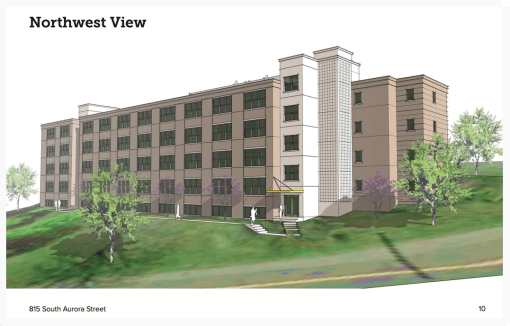
4. A revision to the cellphone tower law has taken one step closer to becoming reality. The city’s Planning and Economic Development Committee voted 4-1 to circulate a revised law that would reduce the size of the tower’s fall zone, where construction of any structures is prohibited. A revision to the current city law, which is twice the height of a tower, could potentially allow the 87-unit 815 South Aurora apartment project to proceed with planning board reviews and other BZA variances if necessary. Developers Todd Fox and Charlie O’Connor of local company Modern Living Rentals have been pushing for a fall zone radius of 180 feet for the 170-foot tall tower, rather than the 340 feet as the current law mandates.

From the discussion, it sounds like the concern has less to do with this parcel, and more to do with the possibility of cell phone companies pursuing towers on open land in the northern part of the city where spotty reception has to be weighed against the aesthetics of the lake shore. Anyway, we’ll be hearing more about possible changes to this law in a month, but for back reading, here’s the Voice article from a few months back.

5. In quick news, CBORD’s move to the South Hill Business Campus looks like a go. A $2.45 million construction loan was extended on the 8th by Tompkins Trust Company. CBORD, a software company founded in Ithaca in 1975, will move 245 employees into 41,000 square feet of freshly renovated SHBC space from the Cornell Business Park later this year. The project, which totals $3.7 million, was granted $296,000 worth of sales tax abatements.
409_college_avenue

ehub_1

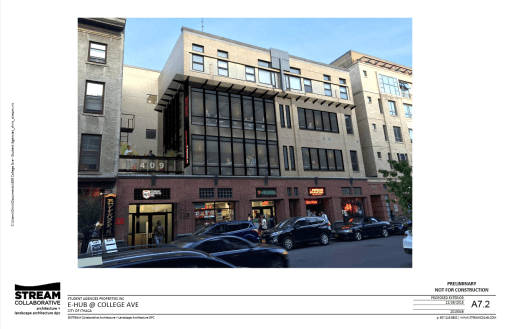
6. From the city’s Project Review Agenda next Tuesday, plans for a facadectomy of the 1980s Student Agencies Building at 409 College Avenue. Student Agencies, in collaboration with Cornell, plans on dropping $183k on the facade work, as well as the $2.8 million or so for the interior renovations of the second and third floors for the new eHub business incubator space. Prolific local architecture firm STREAM Collaborative is in charge of the design work, including the 9,660 SF of interior space. The work would go from January to April (the loan is already approved and most of the work is interior).

6-29-2014 163

If I may play armchair architecture critic, which I have no credentials to do, I think the patio area is great, but I’m opposed to the brise-soleil, the wing like feature that serves as a sunscreen. I feel like that its location above the third floor throws off the rhythm of the block, by being lower than the cornices on adjacent structures. It might be fine over the glass curtain wall alone, but as is it feels a little out-of-place. Just one blogger’s opinion.

20160109_135258 20160109_135338


228_w_spencer_1

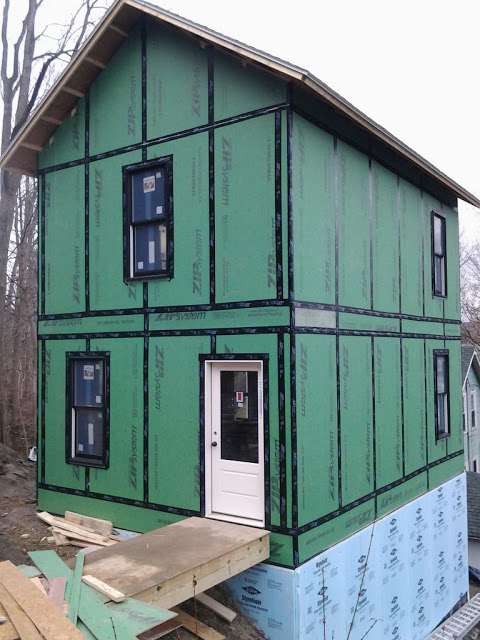
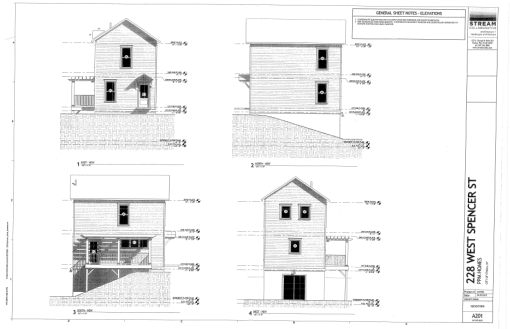
7. House of the week. 228 West Spencer Street in the city of Ithaca. Zero energy new construction, 2-bedrooms, on a rather difficult site. In the above photos from last weekend, the house has been framed and sheathed with Huber ZIP System plywood panels, the roof has been shingled, and doors and windoes have been fitted. The blue material on the concrete basement wall is Dow Styrofoam Tongue and Groove Insulation which protects against moisture and helps keep the heat loss to a minimum. The house should blend in nicely with its neighbors.

Ed Cope of PPM Homes is the developer, and Noah Demarest of STREAM Collaborative is the architect.


News Tidbits 12/12/15: Money Money Money Money

12 12 2015

canopy_hampton_rev4_1

1. Time to do a little rumor-killing. There’s been some confusion as to whether or not the Hilton Canopy is actually happening, since it was supposed to have started construction by this time and it hasn’t. There was also an article in the Ithaca Times that suggested that construction costs much higher than original estimates had caused the project to be cancelled.

Well, the project has definitely been delayed, but it looks like it will still be moving forward. According to a utility easement resolution at the Ithaca Urban Renewal Agency’s Economic Development Committee (IURA EDC) meeting, a project financing commitment has been secured and the developer of the Hilton (Neil Patel of Lighthouse Hotels LLC) is planning a construction start in the first quarter (Jan-Mar) of 2016, which would suggest a mid-2017 opening.

inhs_pride_design_v5_3

2. Also in financial news, INHS looks to have secured grant funding that will allow it to move forward with its 210 Hancock project in the next four months, according to INHS Executive Director Paul Mazzarella. The grants were officially awarded in an announcement from the governor’s office on Tuesday. $3.6 million will come from the state’s Housing and Community Renewal program, $500,000 from the state low-income housing tax credit (LIHTC) program, and $1.03 million from the U.S. Department of Housing and Urban Development’s LIHTC program. In total, the award is valued at $5.13 million, about a quarter of the estimated $20 million development cost. The project has received about $17 million in grants and tax credits to date.

The money awarded covers only the rental units – 54 apartments in the four-story mixed-use building, and five townhouses. The seven owner-occupied townhouses remain unfunded.

The apartments, which include a 30-child low-income daycare facility and commercial office space for non-profits, will welcome their first tenants in Summer 2017. They will rent from 27% to 105% of local median household income, depending on the unit. Descriptively, it’s a mixed-income project with residents’ incomes ranging from $25,000-$60,000 per year.
ith_big_plan_map_v2

3. From the Common Council’s Planning and Economic Development Committee, there are a few things of note this week –

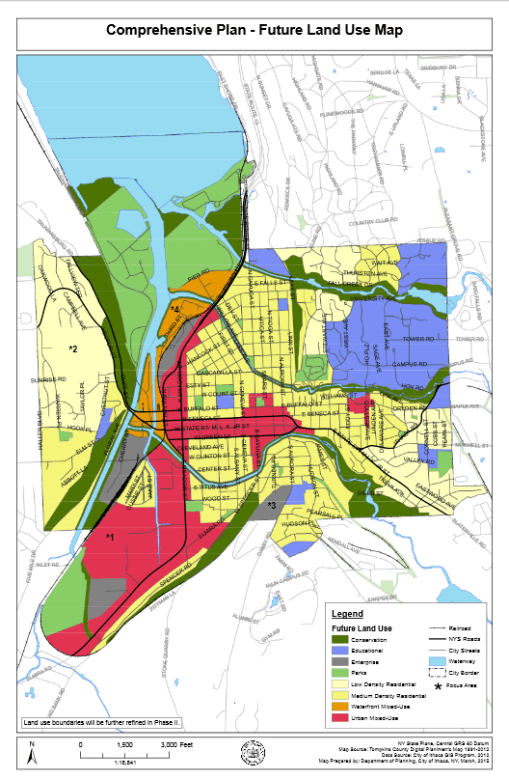
A. The city seems to be looking towards greater encouragement and flexibility with redevelopment of waterfront parcels by making WF-1 and WF-2 zones Planned Unit Developments (PUDs). What a PUD does is allow greater flexibility in uses and design by removing or loosening zoning constraints on site use, and being more accommodating to mixed-use projects (the Chain Works District proposal is a PUD, for example). Previously, PUDs could only be applied to industrial sites. The other stipulation, however, is that the applicant would have to work with the Common Council to determine appropriate development of the site.

The Waterfront Zoning allows up to 5 stories and 100% lot coverage. The PUD will give flexibility beyond that, dependent on what the Common Council is comfortable with for a given site and proposal.  So if Applicant X shows up with a huge apartment building or a big industrial building, it’s probably not going to get very far. But if it’s well designed and has affordable units? Maybe the council will grant a little more density or another floor. It depends on a developer showing up with something that they feel offers some kind of community benefit and fits with the Comprehensive Plan, and whether the Common Council agrees with the developer’s reasoning.

There is great potential in the waterfront – those views can fetch a premium (i.e. higher land values, and more tax dollars), it’s far enough removed from the colleges that students would be unlikely residents, and many of the properties are underutilized, with only marginal public benefit.  So potentially, if someone wants to work with the Common Council (one can count on at least 8 or 9 of the 10 being willing to cooperate), there could be some benefits in the long-term.

B. The Commons first-floor active-use zoning ordinance looks to be heading for a Common Council vote in January. More about that ordinance here, Item 5.

C. That damned backyard chickens thing again. Only this time, it might be moving forward with a pilot program involving 20 families.

D. Per the Times’ Josh Brokaw, expect incentive/inclusionary zoning to be up for PEDC review in January.

tfc_comparo

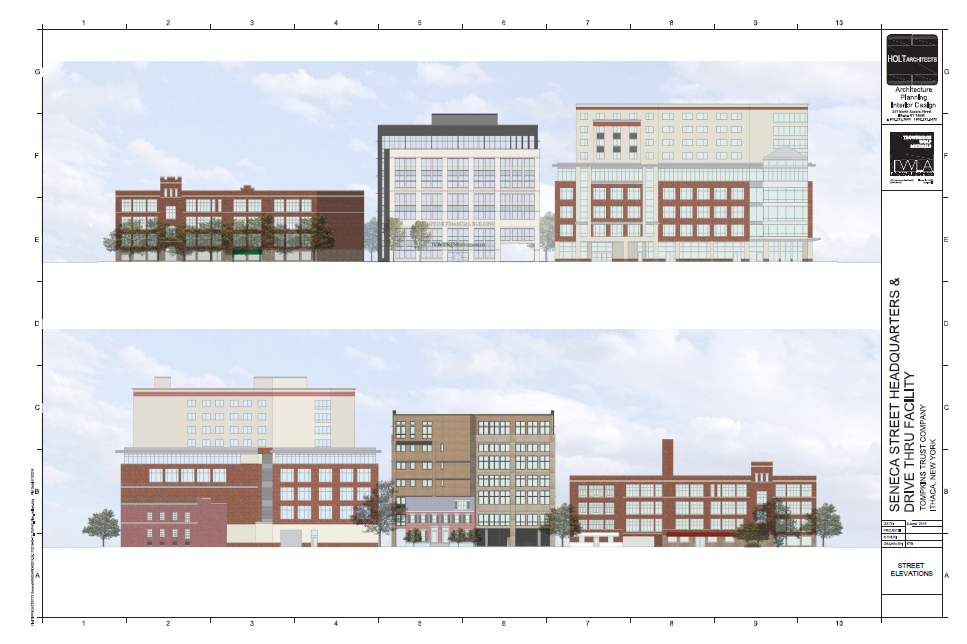
4. Hey look, this week’s eye candy. Tompkins Financial Corporation’s proposed downtown Ithaca Headquarters at 119 East Seneca Street will be reviewed for final project approval at this month’s Planning Board meeting. As part of that, here’s the final project design, part of the final Site Plan Review submission here.

From the front, it looks like some of the window layout has changed on the top floor and southwest corner, and there are fewer sunshades above the windows. There’s a third tree in the planting plan, and there’s variation in the cladding materials on the west wall facing the DeWitt Mall.

tfc_v3_1

In fact, it’s the non-primary facades that have changed the most, with different (and generally lighter-colored) brick and aluminum panels when compared to the previous rendition. Although there’s less glass than before, the lighter colors and greater variation in materials de-emphasize the bulk from the perspective of its townhouse neighbors at the rear. The 7-story, 110,000 SF commercial office building should begin construction in early 2016 with an eye towards completion the following spring.
elmira_savings_1

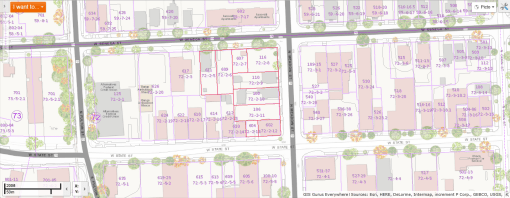
5. There was quite a sale on Ithaca’s West End last Friday. Nine properties outlined in red on the map above – 106, 108, 100 and 116 North Meadow Street, 607, 609 and 611 West Seneca Street, and 602 and 604 West State Street – were sold for $1,725,000 to Elmira Savings Bank.

Now, there are a few reasons why this is worthy of attention. For one, banks don’t typically shell out almost two million dollars without some kind of plan. For two, Elmira Saving Bank has been moving forward with expansion plans in the Ithaca area in hopes of capitalizing on the growing local economy. For three, there has been a lot of development in this neighborhood as of late – the Iacovelli Apartments (2013) and Planned Parenthood (2014) are right across the street, and it’s worth noting that the 18,000 SF HQ for Alternatives Federal Credit Union (2002) is on the other side of the block.

The properties are currently home to parking lots, several older, non-historic houses (most in poor condition) and a two-story 4,500 SF commercial building previously home to the Pancho Villa Mexican restaurant. The restaurant building had been on the market for $699,900.

The zoning here is all WEDZ-1a. West End Zone 1a allows for 2 to 5 story buildings, 90% lot coverage in the case of large assemblages such as this, and no off-street parking requirement. That means these parcels have a lot of potential. The previous owner had been rumored to be planning a mixed-use building on some of the properties, but nothing official ever came forth.

Two phone calls were placed to Elmira Savings Bank’s headquarters in Elmira, and two voicemails were left, but neither received a response. But these properties are definitely something to keep a close watch on over the following months.

6. That 9100 SF store being developed on the corner of East Shore and Cayuga Vista Drives in Lansing that was mentioned last week (here, Item 4)? It’s going to be a Dollar General. Not sure if that’s better than the auto/tire store speculated last week.
20151108_152102

7. Lest it be forgotten, it appears Lady Luck and some state bureaucrats smiled at the Southern Tier this week, awarded the region one of the three $500 million prizes of the Upstate Revitalization Initiative, known colloquially as the Upstate “Hunger Games”. Rochester/Finger Lakes and Syracuse/Central are the other $500 million winners. Seven regions competed, and the four losers will receive $80-$100 million for their priority projects. The money will be paid out in five annual installments of $100 million. A copy of the Southern Tier’s plan is here.

I wrote about Ithaca’s plans for its share on the Voice here. The first year projects alone will have a range of impacts, ranging from job creation and training to municipal construction projects to quality of life projects like museum expansions. Potentially, it could result in hundreds of jobs in Tompkins County, financial capital for several major projects, and make the area more attractive for investment for both local and external entities. As these projects move forward, they’ll receive their due write-ups here and on the Voice.

Of course, the key things are that the community can manage this monetary award, and that someone can track and guide these projects to completion – something the Southern Tier has struggled with, when one looks at the result of previous, much smaller awards.

8. The state’s just shoveling money into Ithaca this week. The New York State Office of Community Renewal (part of the state’s HUD equivalent, the Homes and Community Renewal agency) has awarded $500,000 towards the rehabilitation of the Masonic Temple at the corner of East Seneca and North Cayuga Streets in downtown Ithaca.

The Masonic Temple was built in 1926 and designated a local historic landmark in 1994. The property is owned by Ithaca Renting Company (Jason Fane), who purchased the building from the Masons in 1993. Fane’s never been a fan of the historic designation because the ILPC can be expensive and onerous to work with, nearly everyone else hasn’t been a fan of his long-deferred maintenance of the 90-year old building (if you have ever wondered why that CIITAP rule was added about an applicant being in building code compliance with all their other properties…now you know). A few years ago, Fane had not been shy in his interest in demolishing the building.

After rejecting a purchase offer to turn the building into a community center and space for the New Roots charter school, Fane decided to go the preservation route earlier this year and apply for a grant to renovate the interior and add an elevator to the building to make it ADA-compliant. This would make the building much more marketable to commercial tenants, many of which have shunned the 17,466 SF building. Fane laid out a few different options this past summer, including one where four commercial spaces (rental, office, restaurant) would be created. Based on the grant announcement, it looks like that will be the option pursued.

The Downtown Ithaca Alliance backed the application, as did the Common Council by unanimous vote at their July meeting.

The renovation will cost at least $1 million, and according to the grant announcement, seeks to start construction in summer 2016. Expect more info when it hits the ILPC and Planning Board at a later date.
20151205_121714 20151205_121736

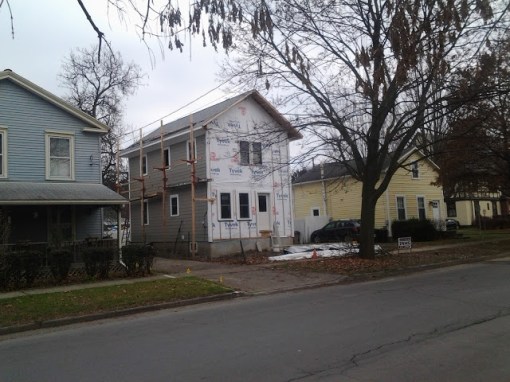
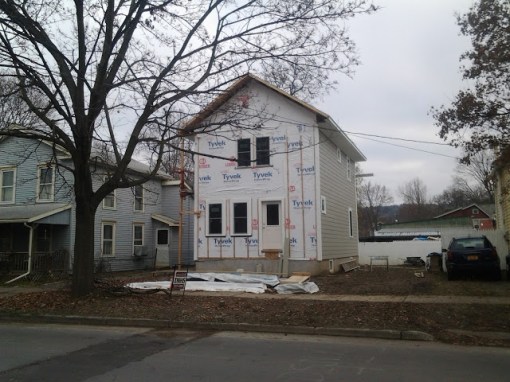
9. House of the week. This week, INHS’s new 2-bedroom, 1150 SF single-family home underway at 203 Third Street in the city of Ithaca’s Northside neighborhood. The house is framed, roofed and sheathed. Siding (Hardie board?) and trim is being attached on the sides, and one can expect a nice gracious porch to be attached once exterior materials are installed on the front. A home of the design was previously built at 507 Cascadilla Street.

203 Third Street was a vacant that the city seized in a tax foreclosure in 2011. It was transferred to the Ithaca Urban Renewal Agency, who sold it to INHS for $17,000 in December 2014. The process is pretty similar for a lot of the home lots that INHS builds on – the non-profit buys dilapidated or vacant properties from the IURA, which they build or renovate into affordable single-family and duplex houses. In the case of 203 Third Street, INHS competed for the site, outscoring Habitat for Humanity’s submission in an IURA examination of proposals.

As with all INHS homes, this one will be sold to a buyer of modest means, which means someone making at or a little less than the county’s median household income of $53k/year (I think 80% of MHI is the low bound offhand, so about $42k/year). The houses will be a part of INHS’s Community Housing Trust, limiting the price it can be sold for and requiring that if put up for sale, it is sold to another family of modest means. It may just be one house, but it will mean a lot to one family.

Claudia Brenner is the architect, with Rick May Construction and Mike Babbitt in charge of construction (thanks to Claudia for the builder info).


The De-Evolution of the Purity Project

29 10 2014

4-8-2013 252

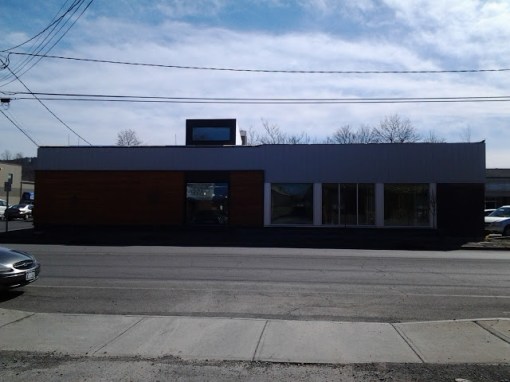
I figured that so much has happened with this one, that it merited its own post.

When the Purity Project was first proposed in November 2012, it was something of a surprise, and a welcome one. Developers Bruce and Heather Lane were proposing a five-story apartment building on the site, with purity on the ground-level. A mid-rise mixed-use building for the historically overlooked West End of the city. It seemed like win-win, and another sign of Ithaca’s burgeoning residential growth.

purity2

Then came the first downgrade. The apartment tower was gone, and the reasons weren’t explicitly stated at the time. In its place was a small second-story office addition of 2,600 sq ft. A disappointment, certainly. With some reservations (discussed in a great write-up by Jason at Ithaca Builds), the project was approved last December. The first phase, which was a renovation Purity’s customer service area, opened in May.

Purity_v2_1113

No we have the third version, which is another scaling back of the proposal (they use the term “value engineered”, which are curse words in my book). There are no additions; the letter from the project engineers say it would be better characterized as “a gut renovation”. According to their study, the soil on site, which is lake sediment, compresses very easily, and is so difficult to build on that just about any addition would be cost-prohibitive. The extent and severity of the soil issue only became apparent when detailed analysis was being conducted for the next phases. The soils/foundation issue was also a major factor in dooming the apartment tower.
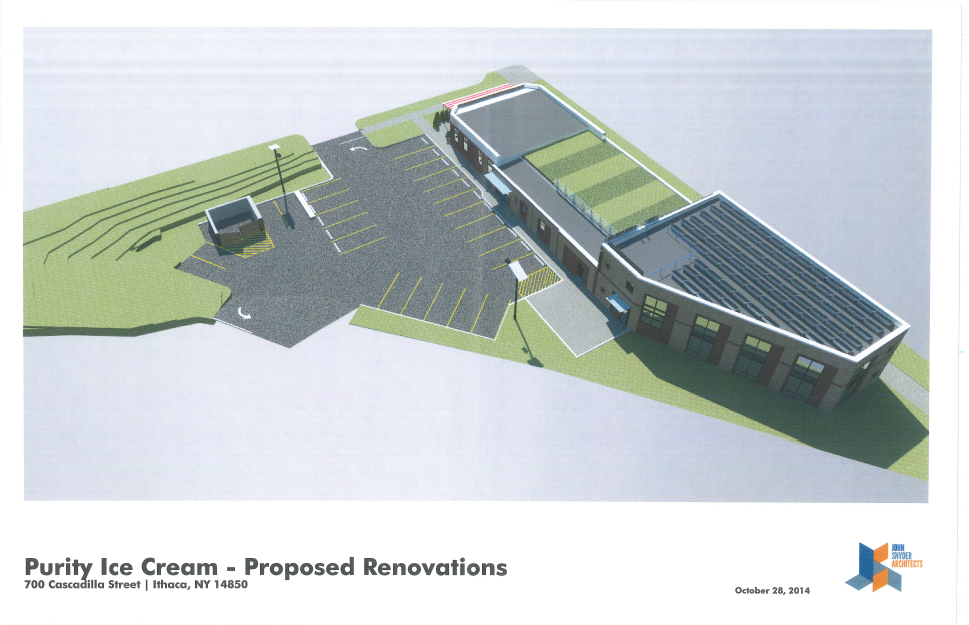
The latest iteration renovates the vacated western portion of the building for about 3,834 sq ft of office space (called “Cascadilla Corner”), which they anticipate being held by a tenant with 18-23 employees, according to the parking study. As someone that once worked in a 4,000 sq ft office with 20 others, that sounds about right to me. I do have concerns given Ithaca’s generally-lackluster office market, but the space is small enough that it’ll probably be easier to fill than the large floorplates once proposed by Harold’s Square.

purity_v3_1

purity_v3_2

Here are the latest renders. At least the renovated space will be nicer than the industrial warehouse’s present form.