News tidbits 12/24/16: Looking to the Future

24 12 2016

20161211_132440

20161211_132501

20161211_132542

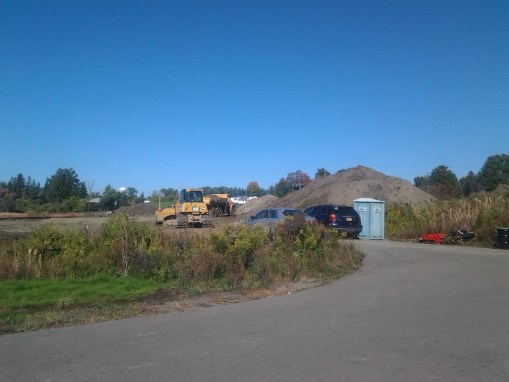
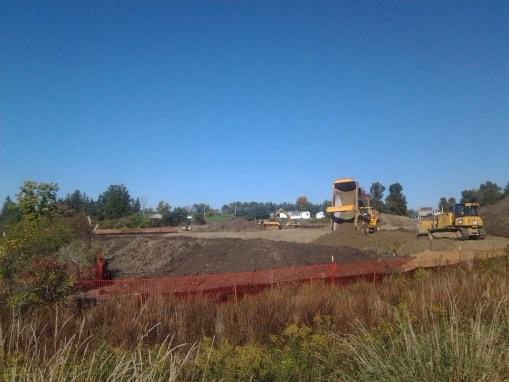
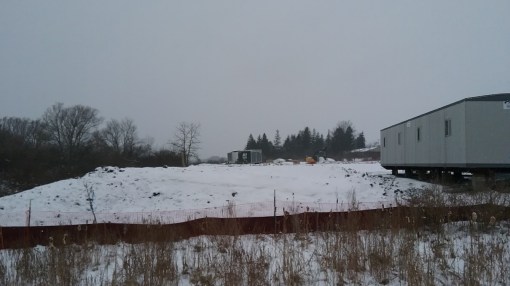
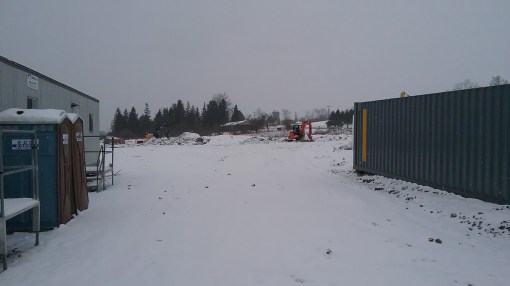
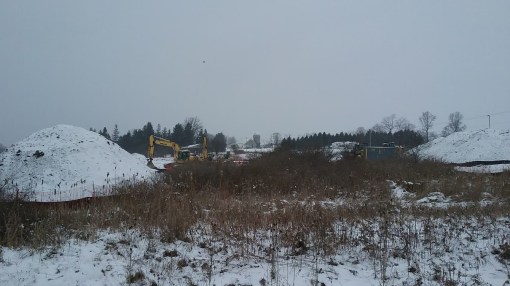
1. Going to take advantage of this light week to go through some of the photo stash. I thought of doing a Poet’s Landing update, but because LeChase is mostly working on site clearing/prep and excavation at this point, and given the snow on the ground, it didn’t seem like there was a whole lot to be gained from making a unique update. But, rest assured, it’s still underway, there’s just not a whole lot to see at the moment. Once the snow melts off, the slab foundations work should be visible, and there might even be some framing going up by mid-winter. The six new apartment buildings and their 48 units should be ready by the fall of 2017.

20161209_121337

2. 107 South Albany in the city is another one that doesn’t merit its own post just yet, but work should be taking place at some point soon. The building permits have been filed with the city for the 6-unit, 9-bedroom renovation and addition to the rear of the existing building, and from peering inside the existing windows, there’s the impression that interior demolition work could be underway – could explain the broken window on the second floor at least. There was no excavation work yet in the backyard, where the new wing will go. The Site Plan Review document says July 2016 to August 2017. Maybe there will be something to talk about by the next round of downtown updates.

3. Some folks might remember Phoenix Books, the hard-to-miss barn bookstore off of 366 as one approached Ithaca from Dryden. The store closed last year after 30 years of business, and the barn itself is about a century old. Now the property at 1608 Dryden Road is for sale. The barn, a small outbuilding, and 29.3 acres for $229,900. According to the Zillow posting, a sale is already pending.

4. From sales to sold. An industrial property in the Inlet Corridor of Ithaca town has exchanged hands. The property is at 142 Ithaca Beer Drive, next door to the growing brewery and restaurant. According to the listing with Pyramid Brokerage, the property consists of “Two commercial buildings totaling 6,812SF on 2.79 acres at south end and just off of Ithaca’s Elmira Road (NYS Route 13) commercial corridor. Ideal for combo of office (812SF) and industrial/warehouse (6,000SF) with lots of room to expand. All municipal services. Warehouse building has high ceilings, concrete floors, 2 overhead doors and more. Great opportunity for light industrial/manufacturing with array of flex space.”

The Iacovellis used it to house their construction equipment, and had it on the market for $409,000. It sold for just under that, a reasonable $400,000, to Greentree Garden Supply, which has operations a stone’s throw away from the property. Greentree makes their own soil products (potting soils, soil formula), so that may be a potential future use of the warehouse they just picked up. Good for them; they seem to be thriving as well as their garden plants.
58505e689f6ef-image

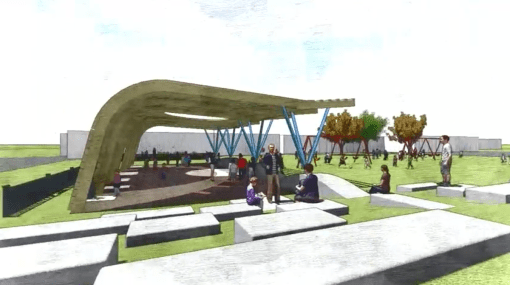
5. Here’s a cool idea – the Lansing School District is planning to build an outdoor classroom as part of $4.95 million in renovations. Cassandra Negley has the full story at the Times. The renovations were approved by a landslide 240-32 vote, which was helped by the fact that the project will be funded with grants and money from the school district’s reserve (rainy day) fund – no additional cost will be assumed by the taxpayers. In advocating for the project, school district staff noted that it would provide for “multi-sensory experiences”, a useful asset during the instruction of natural and environmental science topics, and cited studies that showed students performed better academically when given the opportunity to have classes in outdoor spaces. The space would be used as covered play space during recesses.
maplewood_v7_5

6. Going off into hand-waving territory here. Enter at your own risk.

You might have heard in the news this week that New York State, even though it added 104,500 jobs over the past year, is estimated to have recorded a population loss of about 1,800 people. That’s not a good thing for a number of reasons, but it’s a more acute issue upstate. New York City issued building permits for 101,705 residential units from 2013-2015, with another 13,000-14,000 estimated this year, and the city, just the boroughs and not even counting the suburbs, makes up nearly all the population growth (375,272 through July 2015, vs. 367,179 as the total gain for the state from 2010- July 2016). Upstate continues to hemorrhage people to other states. Not a surprise to anyone who’s travelled outside of Ithaca, Saratoga or the few other bright spots. What can we expect for Ithaca in a bad piece of news for Upstate?

Here are some off-the-cuff tallies for population growth. Ithaca’s estimated to be 30,788 as of July 2015, up 774 since 2010. The estimates due out early next year cover July 1, 2015 to July 1, 2016.  What opened in that time frame?

By my count, Stone Quarry (82 beds), the Lofts at Six Mile Creek (66 beds), 804 East State (18 beds), 707 East Seneca (18 beds), 206 Taughannock (10 beds), the Lehigh Valley House condos (6 units, will assume county average 1.7 occupants per unit, for 10 residents), 116 Catherine Street (17 beds), and the 140 College Avenue (12 bed addition). Allow another half dozen or so units with a dozen beds total, for accessory apartments or new single-family homes. Only one of these projects replaced existing housing units – a one-bedroom bungalow came down for 804 East State. The gross gain is about 244 people, if we assume the standard of one person per bedroom or studio unit.

Now let’s do some subtractions. Hughes Hall closed on Cornell’s campus. -47 off the bat, for 197. Now, the math can’t easily accommodate those who had a household member move in/be born, or move out/pass on. But trends suggest a 2% decrease per decade, so we’ll treat it as negligible. So, my baseline prediction for the 2016 estimate is 30,981.

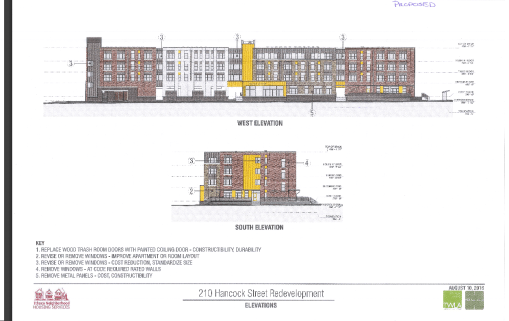
Just thinking offhand of the projects that have opened since July 1, 2016, expect at least 210 more for the July 1, 2017 estimate, and 670 in 2018, because that’s when Collegetown Terrace phase III (344 bedrooms), Novarr’s townhouses (net gain ~60 bedrooms), 210 Hancock (90 bedrooms) and Todd Fox’s latest trio (net gain ~110 bedrooms) are included in the figures. These drive-by numbers are based just on what’s underway, or approved and financed. The 2017, or more particularly the 2018 numbers could go up. So roughly, 30,981 in 2016, 31,191 in 2017, and 31,861 by July 1, 2018, assuming no major catastrophes and that the local economy’s growth and residential vacancy rate is consistent.

For the record, the purely mental figure I use for a 2020 census is 32,500. That would consider Harold’s Square (146 bedrooms), City Centre (250 bedrooms), the first phase of Chain Works (80+ bedrooms), as well as other proposals that may arise in the next year or two and open before April 1, 2020, the official census date. I do not factor in any new Cornell North Campus dorms in the estimate, since the new dorms will initially function as temporary replacements for existing space that will be concurrently closed and renovated.

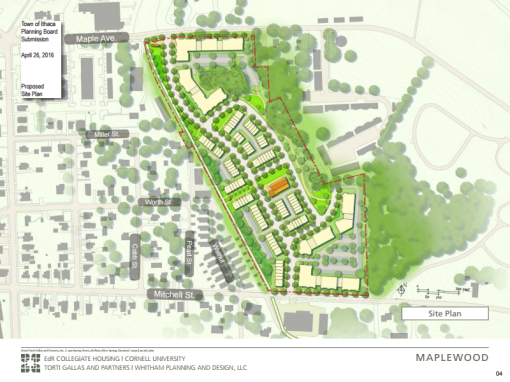
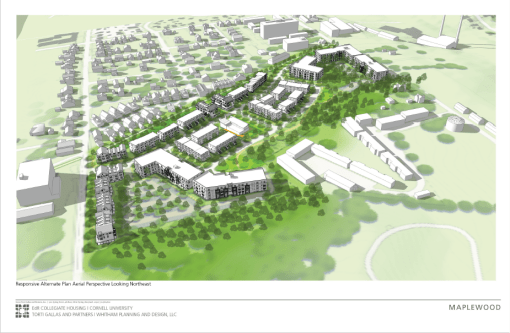
Now, when thinking about the town of Ithaca, things get really weird because of Maplewood – a loss of 370-380 beds. The town doesn’t have any large multifamily underway – my partially-imputed count from permit reports gives about five newly-occupied duplex units and 20 or so homes for the July 2015 – June 2016 period, and the 10 Belle Sherman townhouses. That’s probably 100-120 beds total. The town of Ithaca will likely show a decrease in population in the 2016 census estimate because of the Maplewood closure, and it will be bad optics because there’s all this talk of affordable housing issues, and seeing a decline in population in the news will inspire a negative kneejerk reaction – either “if it’s going down do we really need housing”, or “hey, it’s going down, then why are the rents so damned high”. Have that talking point ready, Ithaca town board.

For the 2017 count/2018 release, the partially-educated guess is an increase of 150 given Brookdale, but the 872 new Maplewood residents won’t come into count until the 2018-19 estimation period, at which point we’re pretty much at the next census. I’m thinking around 21,500 for 2020 (from 19,930 in 2010), if the current trends continue and major housing projects are completed.


902 Dryden Road Construction Update, 12/2016

19 12 2016

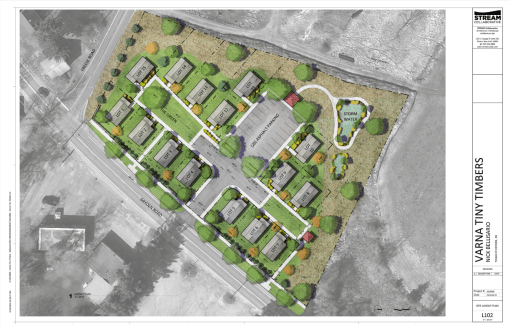
Varna has long been touted as one of those places where development is likely to happen. The hamlet, which has under 1,000 people, sits close to Cornell in the town of Dryden – land is cheaper than most parts of the city, but the area is served by the bus line, which opens it up to Cornell’s deep-pocketed student market. However, Varna can be a tough nut to crack – this far out, the demand is mostly driven by more cost-conscious grad students rather than free-spending undergrads, and the going price for a rental is lower. With a less captive market and less lucrative rents, Varna becomes a trickier prospect.

Plus, although the town itself is fairly accommodating, some members of the local neighborhood group, the Varna Community Association, have a disposition against rentals, preferring that any development that comes along be owner-occupied. Owner-occupied is possible as Tiny Timbers hopes to demonstrate, but it is more difficult to finance since a developer can’t guarantee income the same way they could with rentals.

Since the 1980s, one can find at least six projects proposed in Varna that never came to fruition – the latest and grandest being a massive 260-unit proposal by the Lucente family, which the town turned away from further consideration after concerns about quality of life, and significant pushback from members of the VCA. Concurrently, the town was looking at updating the hamlet’s zoning, and the issues with the Lucente plan helped formulate the new Varna comprehensive plan adopted in 2012, and revised zoning not long thereafter. The zoning identified areas for density and dvelopment (ideally, a walkable core), and preserving more rural lands beyond the main drag.

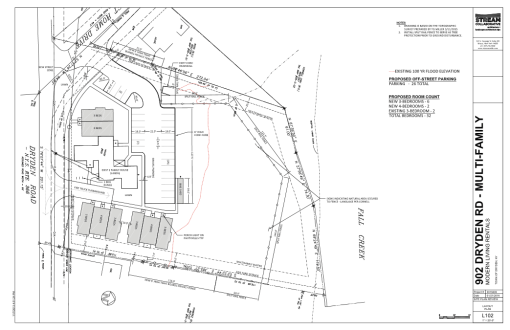
902 Dryden Road, first proposed in June 2015, was the first project to come along after those planning and zoning updates. It was somewhat unexpected by some residents, because a redevelopment of this property was not envisioned in the town’s 2012 plan (which shows that plans are guidelines, not prescriptions). Initially, it was a 15-unit, 42-bed proposal, rentals aimed towards grad students and Cornell staff. Two of the units, totaling six bedrooms, already exist. Modern Living Rentals, a partnership of local developers Charlie O’Connor and Todd Fox, purchased the property in June 2014 for $215,000. At the time, the units were going to be entirely solar-powered, aiming for net-zero energy (what is produced on-site is equal to or greater than what it consumed).

At this point in time, Fox and O’Connor had done some duplexes and the 6-unit apartment building at 707 East Seneca in the city, but 902 was going to their first “large” project. But, they hadn’t counted on strong opposition, not just from neighbors but from Cornell Plantations (now Cornell Botanical Gardens), who had concerns about the floodplain at the rear of the parcel, where it borders Fall Creek. The town was hesitant to move forward with approval unless there were revisions.

As time wore on and meetings were held with the town and VCA, the project was reduced in scale; the lot size used to determine maximum unit density was calculated incorrectly the first time and two units were removed, and then the project was scaled back further to reduce impacts on the floodplain, moving the gravel parking lot so that it wouldn’t infringe on the plain – the final count came out to 10 units and 32 bedrooms, or 8 units and 26 bedrooms if counting just the new structures. The solar panels had been on the flood plain as well, but were eliminated because they were no longer financially doable at 8 units; it was stated that the infrastructure would be built to support net-zero energy down the line, if power was purchased from off-site. The reduced-size project was acceptable to the town and to Cornell, and 902 Dryden was approved in March 2016.

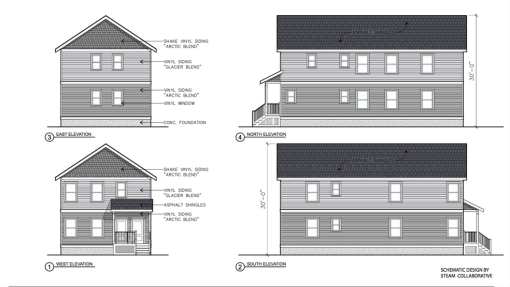
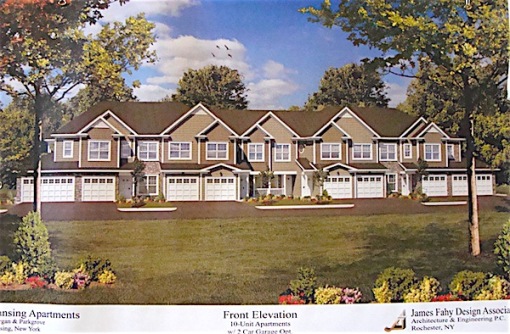
Along with the existing duplex, two new units will be built opposite a shared wall. Two three-unit clusters will also be built on the east side of the parcel. The middle units of the three-unit clusters will have four bedrooms with 1606 SF of living space; all the rest will be three-bedroom units, and about 1500 SF each. STREAM Collaborative is the project architect.

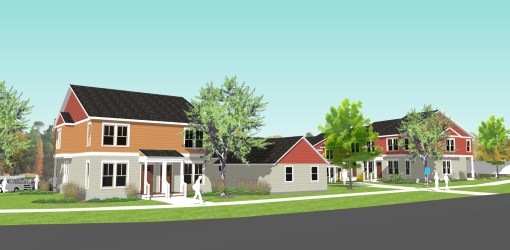
There are two separate groups of drawings floating around for the buildings, and I am not sure which is correct. The render below, from shortly after approval, shows warm colors. Renders on MLR’s website show what looks like blue, brown and white fiber cement panels. The unit rents range from $1500-$2000/month for the three-bedrooms, and $2600/month for the four-bedrooms. The project cost was estimated at about $1.5 million in early Site Plan Review docs.

It’s a bit of tricky site for photos- the site borders the intersection of 366 and Forest Home Drive, leaving a pull-off in front of the mobile home park, or at the spit of land where the roads split. But it looks like site clearing and foundation excavation are ongoing. If anyone knows who the contractor is, drop me a line in the comments.


20161211_130116

902_dryden_final 902_dryden_v4_1


News Tidbits 12/17/16: So Much In One Week

17 12 2016

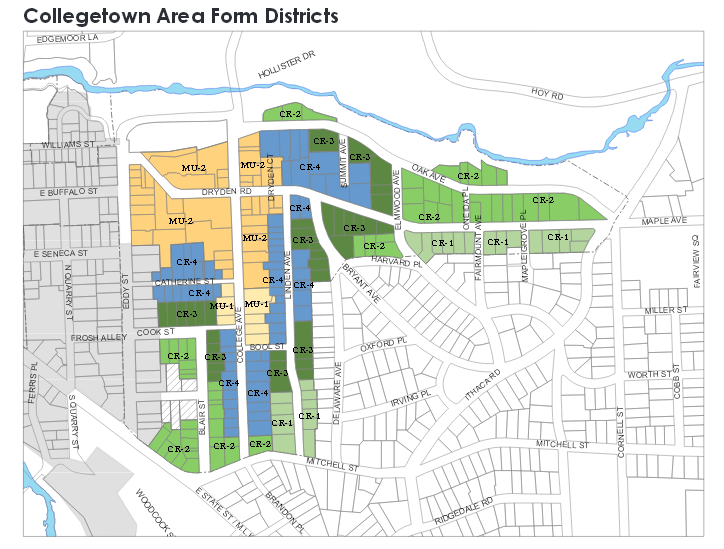
1. For the developers out there, it looks like your next opportunity just opened up in Collegetown. For sale are three houses on Linden Avenue – 6-unit, 8-bedroom 230 Linden, for sale at $675,000 (taxed at $350,000), neighboring 4-unit, 8-bedroom 228 Linden at $700,000 (taxed at $460,000), and two doors down, 2-unit, 11-bedroom 224 Linden at $525,000 (taxed at $400,000). All three are somewhat run-down student apartment houses on the cusp of inner and outer Collegetown – as such, their zoning is CR-4, which allows four floors, 50% lot coverage, and has no parking requirement.

The properties were all purchased in the mid-1970s by a small-time local landlord, who was killed in a car accident two years ago. According to the listings, the seller’s agent is a family member, and the units are leased until late 2017 or 2018, meaning that if one were to purchase with an eye towards rapid redevelopment, they would have to negotiate with the tenants, or wait it out. That being said, there’s a lot of potential here, particularly if a buyer combines 228 and 230 into one lot. The city designed the CR-4 zoning with Linden Avenue specifically in mind – the concept render is a northward perspective of a revitalized Linden Avenue. They’re a lot of money, but there could be some interesting news down the line.

210linden_126college

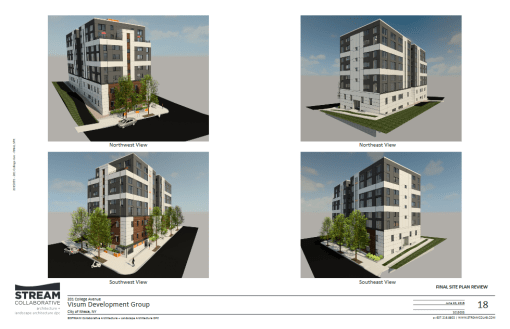
2. Also in Collegetown, here are a couple of concept color renders of 210 Linden Avenue (left) and 126 College Avenue, courtesy of Visum Development’s webpage (currently down, cached link here). I confess to be more of a warm colors person, but assuming these are fiber cement boards and wood trim (or fiber cement that looks like wood), they could turn out quite nice.

On a related note, Visum’s Fox and partner Charlie O’Connor have started earth moving for their townhouse project at 902 Dryden Road in Varna. As it turns out, it is a very difficult site to get photos of, despite its easily accessible location. I’ll do a more in-depth shortly, but the units should be ready by August.

20161211_131919 20161211_131943

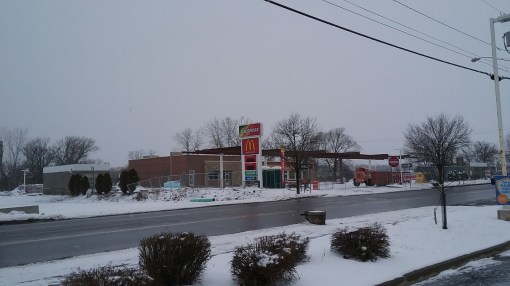
3. Fulfilling a promise to Fred, here’s the rather upscale McDonald’s/Fasttrak combo under construction North Road in the village. There is a billboard on 366 advertising for new hires for when they reopen, but unfortunately, it was too difficult to attempt a photo of the board and render. The building’s exterior is largely complete, and the gas station canopy is framed – late winter opening? The new construction has a price tag of about $500k. Honestly, for a roadside stop, it looks pretty nice.

20161211_131533

20161211_131514

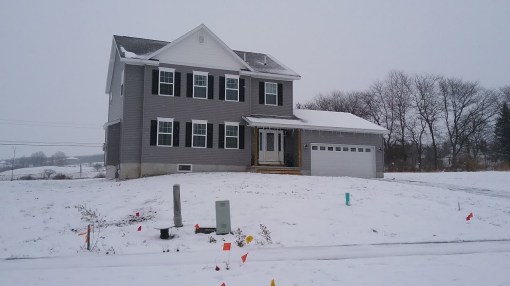
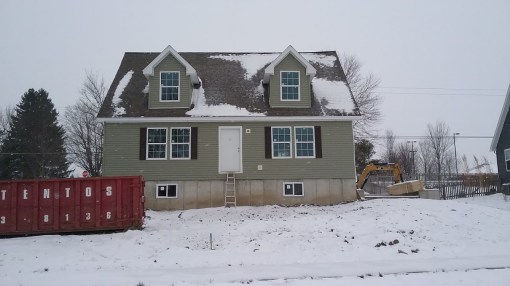
4. More on Dryden, with a couple houses of the week. Looks like some modulars are going into the Maple Ridge development – one recently completed, one in the works. The open space to the right of house number two, the Cape Cod, will host a garage. The land for house one sold to Kenn-Schl Inc, a regional modular home builder and seller, in June for $48k. House two’s land was sold to a Rochester man for $39k in October. At this rate, Maple Ridge is going to fill out their 15-lot phase one in another year or two. Although waylaid by the Great Recession, the big plan is for three phases and 51 lots.

20161211_133227

5. On the 15th, the construction loan for the William George Agency’s new 1-story, 24-unit dormitory was filed to the county records office. The $3 million loan comes courtesy of …. A trip to the property didn’t pan out, it didn’t look like anything was underway even though the building permits were filed with the town of Dryden a few months ago. Then again, as a facility for troubled youth, it’s not the most welcoming place for a random visitor to be taking photos.

maplewood_v7_4

6. So what’s being discussed by the towns? In the town of Ithaca next week, a lot line adjustment between two houses, and more Maplewood discussion, with consideration of preliminary site plan approval. Meanwhile, the town of Dryden has cell towers galore, as well as revised approvals for Storage Squad (1401 Dryden) and Tiny Timbers; plans are in the pipe line for a 7-lot subdivision of the Dryden Lake Golf Course, and a possible sewer extension study for NYS Route 366 east of the NYSEG building.

Image Property of HOLT Architects

7. Speaking of sewer, the town and village of Lansing are negotiating sewer deals so that the town can use village lines to help accommodate future growth. Dan Veaner at the Lansing Star has the story. the report says the town is asking for 700 units of capacity, where a unit is 328 gallons. 700 units would also put the Cayuga Heights plant at capacity. The town’s intent is to extend sewer capacity to encourage development along Triphammer Road (as in the town center concept shown above), with the reasoning that it’s a natural extension of established development, and would help grow the tax base in the event of the power plant closing. Not as grand as the plans that were shot down in 2007, but like the Warren Road sewer built a few years ago, it’s seen as a more organic and cost-efficient approach.

20161209_123851

20161209_123931

8. There might be some of movement on Jason Fane’s Bank Tower $4 million renovation from office space to 32 apartments. The windows were inspected and tagged recently, possibly to determine what needs to be replaced where. Most of the exterior of the Commons-facing building will receive a cleaning and re-freshening, with the bulk of the work geared towards the interior.

20161210_140231

9. In economic news, 24/7 Wall Street is reporting that Ithaca has the 25th best job growth in the nation from November 2015 – November 2016. 2,200 jobs equates to 4.4%, by their measure.

Hate to burst the bubble, but don’t buy into it just yet. Initial estimates can be way off due to statistically insignificant sample size for small communities. It may hold, it may not. Wait until March and see if the numbers get revised.

city-center-v4-1

10. Interesting meeting next week for the city Planning Board. Amici House and Maplewood are up for final approval, and a couple revitalized or new projects. Here’s the scoop:

1. Agenda Review 6:00
2. Privilege of the Floor
3. Site Plan Review

A. Project: Maplewood Redevelopment Project 6:10
Location: Veteran’s Ave. (between Maple Ave. & Mitchell St.)
Applicant: Scott Whitham, Whitham Planning & Design, LLC, for Cornell University
Actions: Adoption of Findings, Public Hearing, Consideration of Preliminary & Final Site Plan Approval

The Town Planning Board filed a Notice of Completion on November 30th, 2016, which can be viewed here: http://www.town.ithaca.ny.us/major-projects/maplewood. The Town Board will consider adoption of a Findings Statement on December 20, 2016.

The city will specifically sign off on the bus stop and landscaped area at the northwest corner. STREAM Collaborative is the landscape architect.

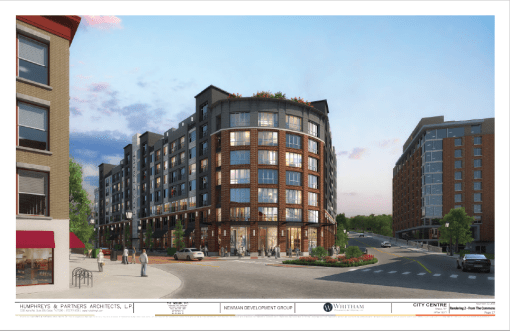
B. Project: City Centre — Mixed Use Project (Housing & Retail) 6:30
Location: 301 E. State/M.L.K., Jr. St.
Applicant: Jeff Smetana for Newman Development Group, LLC
Actions: Determination of Environmental Significance, Recommendation to BZA

amici_v3_1

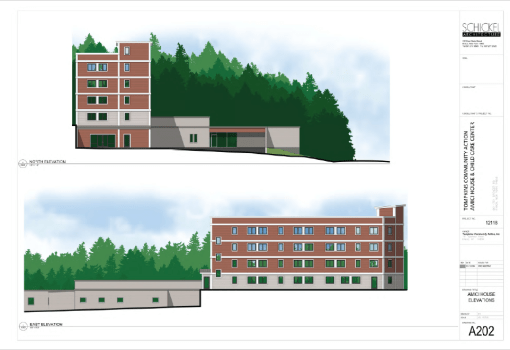
C. Project: Amici House & Childcare Center 6:50
Location: 661-701 Spencer Rd.
Applicant: Tom Schickel for Tompkins Community Action (“TCAction”)
Actions: Consideration of Preliminary & Final Approval

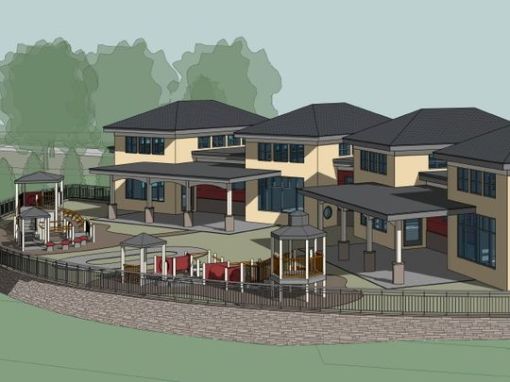
Tweaked since last time – a little more glass in the stairwell, and the roofline of the classroom building has been broken up with three distinct gables.

college_townhouses_v2_1

D. Project: College Townhouse Project 7:10
Location: 119, 121, & 125 College Ave.
Applicant: Kathryn Wolf, Trowbridge Wolf Michaels Landscape Architects, LLP
Actions: Public Hearing Determination of Environmental Significance

The big changes appears to be the switch from boxy bay window projections to curvy ones. Not sure if it works, given all the other boxiness. But on the bright side, we now know what the rear apartment building looks like:

college_townhouses_v2_2

E. Project: Apartments (5 Units) 7:30
Location: 126 College Ave
Applicant: Visum Development Group
Actions: Declaration of Lead Agency, Potential Determination of Environmental Significance

This is what I get for writing things over the week rather than all at once. Confirmed fiber cement panels (wood-like and Allura olive green) and a very light yellow Nichiha panel.

F. Project: Apartments (9 Units) 7:50
Location: 210 Linden Ave
Applicant: Visum Development Group
Actions: Declaration of Lead Agency, Potential Determination of Environmental Significance

Charcoal grey fiber cement panels, light grey panels, natural wood trim and red doors. The base will be stucco.

G. 323 Taughannock – Apartment (Redesign) – Sketch Plan 8:10

Steve Flash’s 21-unit apartment building for Inlet Island was approved two years ago, but has not moved forward due to soil issues and parking costs. This new version is still a housing proposal, but I’m hearing for-sale units that may be condo-like. The design will also be new, but the aesthetic will be similar – it will once again be crafted by STREAM Collaborative.
H. Ithaca Reuse Center – Sketch Plan 8:30

I know about this project because a county staffer emailed me by accident. But without official docs, I wasn’t about to report on anything. The plan calls for a mixed-use building, not unlike that seen in design concepts a couple of years ago. TCAction and INHS are involved, so there is an affordable housing component – probably looking at mixed-use overall.

4. Zoning Appeals 8:50
• 3053, Sign Variance, 310 Taughannock Blvd.
• 3055, Area Variance, 113 Farm St.
• 3056, Area Variance, 301 E State St.

5. Old/New Business:
A. Update — Chainworks DGEIS – Transportation Comments/Responses – yes, it’s still going.
B. Update — City/Town Joint Planning Board Meeting Jan 31, 2017 – Maplewood?
C. Update — Joint Planning Board/ILPC Meeting (DeWitt House) – Let’s see how this goes…


News Tidbits 11/19/16: Winter Is Coming

19 11 2016

executive-education-center-and-hotel-777x622

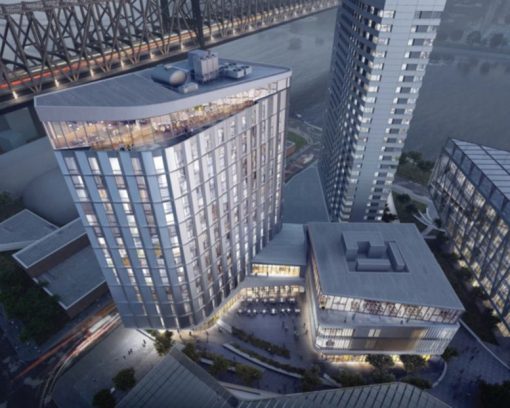
1. We’ll start off in the Big Apple this week. Cornell and its development team have released plans for the fourth and last building in the first phase of the Cornell Tech buildout. The Verizon Executive Education Center and Hotel consist of two buildings connected by a shared hall, and will include four 50-75 seat classrooms, small breakout rooms, and a 195-key hotel for visitors to the school. The plans also call for a restaurant, rooftop lounge and cafe – none of which sound very academic, but the building is meant to be an event center and gateway to the nascent school.

The exterior will be encased in aluminum and wood planks. There will be no parking, but there will be pedestrian courtyards, bike lanes and green space. The facilities are part of the campus’s first phase, which also includes a 26-story student and staff residential building; the Bridge, an incubator for researchers and small businesses; and the Bloomberg Center academic building. Those buildings will open in summer 2017, while the Verizon Center will probably be a 2018 opening, assuming the final designs are approved by the city of New York.

hopshire_1

2. Now to turn to something much closer to Ithaca. Dryden’s Hopshire Brewery is in the midst of a two-phase expansion, reports the Times. The first phase, shown above, consists of a 1,200 SF addition to the west side of the structure, and the new addition is already framed and closed up, with the expectation of being completed by the start of 2017. The space will be used to host events for as many as 100 attendees. the second phase, a 1,300 SF addition to the brewery and storage area, will start next year. The work is partially funded with an Empire State Development grant.

Speaking of drinks, the Watershed, a new bar and coffee lounge, will open by Thanksgiving. It replaces Rumble Seat Music at the former telephone exchange building at 121 West State Street in Downtown Ithaca. The Watershed owners expect to create eight living-wage jobs.

3. From county records, we can see just how much the Rodeway Inn renovation is going to cost local businessman Pratik Ahir – $2,095,000, but the hard costs are only $926,000. The difference is due to the existing mortgage on the property. The lender is Generations Bank, a small bank based out of the Seneca Falls. Anecdotally, we seem to be seeing an uptick in small upstate lenders looking to stake claims on the growing Ithaca market, which could be a real asset for the region – with a limited number of local lenders, financing is often a big hurdle with Ithaca-area projects.

maplewood-v7_8-planning-board maplewood-v7_6

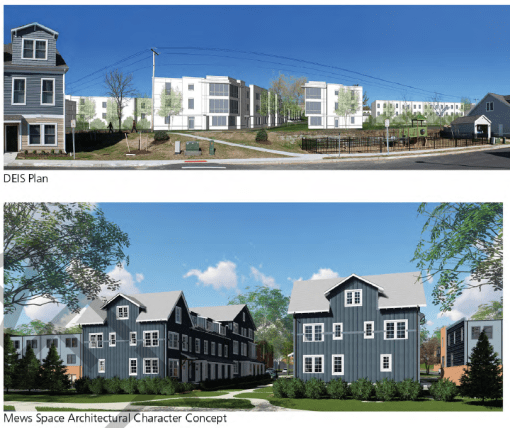
4. As noted earlier this week in the Voice, lots of new Maplewood renders to take a gander at. Going through all the emails from the public comment period, I’d say that overall most are positive and positive-constructive – there are a few sour grapes, but they’re in the minority. For this area, that’s actually a pretty big accomplishment, and it means Cornell and EdR have successfully addressed most of the concerns raised by neighbors and community members. The big changes in respone to public comment have been a a commitment to 50% off-site solar energy, $20,000 to the town for traffic calming measures on Mitchell Street (raised crosswalks, speed bumps), and the two townhouse strings facing Walnut Street and the Belle Sherman Cottages have been redesigned to look more traditional and fit in better with their non-student neighbors. We’re probably very close to the final design at this point, if not already there.

Once preliminary approval has been granted, demolition will start on the south side of the Maplewood property and make its way northward in four phases. The first townhouse strings and apartment buildings will begin construction on the south side of the property in the March-April timeframe, depending on overall progress and external factors. The first completed buildings will be ready by October/November 2017, but it looks like occupancy will happen all at once in August 2018.

wegmans_pad_parcel-1116

5. The City Planning Board Agenda is pretty busy next week – Todd Fox will be presenting two new mid-sized Collegetown projects, Wegman’s is seeking a renewal on the approvals for their pad parcel building, and several other projects had major or minor redesigns. Here’s the rundown on the Voice, and the schedule here:

AGENDA ITEM                 APPROX. START-TIME

1. Agenda Review              6:00

2. Privilege of the Floor   6:01

3. Site Plan Review
A. Project:  Maplewood Redevelopment Project                               6:10
Location: Veteran’s Ave. (between Maple Ave. & Mitchell St.)
Applicant: Scott Whitham, Whitham Planning & Design, LLC, for Cornell University
Actions: Update & Schedule
B. Project:  City Centre — Mixed Use Project (Housing & Retail)     6:25
Location: 301 E. State/M.L.K., Jr. St.
Applicant: Jeff Smetana for Newman Development Group, LLC
Actions: PUBLIC HEARING    Review of Full Environmental Assessment Form (FEAF), Part 3

C. Project:  Amici House & Childcare Center                                6:50
Location: 661-701 Spencer Rd.
Applicant: Tom Schickel for Tompkins Community Action (“TCAction”)
Actions: Declaration of Lead Agency, PUBLIC HEARING, Determination of Environmental Significance, Recommendation to BZA

D. Project:  Four Duplexes                                                         7:20
Location: 607 S. Aurora St.
Applicant: Charles O’Connor
Actions: Determination of Environmental Significance, Consideration of Preliminary Approval
E. Project:  College Townhouse Project                                      7:45
Location: 119, 121, & 125 College Ave.
Applicant: Kathryn Wolf, Trowbridge Wolf Michaels Landscape Architects, LLP
Actions: Declaration of Lead Agency, Review of Full Environmental Assessment Form (FEAF), Part 2
F. 126 College Ave. — Sketch Plan            8:00
G. 210 Linden Ave. — Sketch Plan              8:20
H. Wegmans Retail Building – Extension of Site Plan Approval     8:40
4. Zoning Appeals                                                                     8:50
• 3049, Special Permit, 908 N. Cayuga St.
• 3050, Area Variance, 528 W. Green St.
• 3051, Area Variance, 661-665 Spencer Rd.
• 3052, Area Variance & Special Permit, 701 Spencer Rd.
• 3054, Sign Permit, 222 Elmira Rd.
5. Old/New Business                                                                 9:00
A.  Special Planning Board Meeting: 11/29/16
B.  Update — City/Town Joint Planning Board Meeting
C.  Update — Joint Planning Board/ILPC Meeting (DeWitt House)
D.  Changes/Corrections to Collegetown Area Form Districts (CAFD)
E.  Building Materials — Discussion on Potential Restriction on Vinyl Siding
6. Reports                                                                                 9:20
A.  Planning Board Chair (verbal)
B.  Director of Planning & Development (verbal)
C.  Board of Public Works Liaison (verbal)

7. Approval of Minutes: May 24, 2016, June 28, 2016, July 26, 2016, and/or October 25, 2016 (time permitting)      9:30

8. Adjournment      9:31


Poet’s Landing Phase II Construction Update, 10/2016

22 10 2016

Site clearing and grading is underway for the second phase of the Poet’s Landing affordable housing in Dryden village. Developed by Rochester-based Conifer LLC (the same company developing Cayuga Meadows on West Hill), the plan is to build an additional 48 units of housing to complement the existing 72 units of housing built in the first phase. As with many of Conifer’s affordable housing projects, Rochester-based LeChase Construction serves as general contractor through a joint venture partnership, called Conifer-LeChase.

Plans for Poet’s Landing date back to at least 2010. The original plan called for a 72-unit first phase that was built out, but the second phase was initially planned as a 72-unit apartment building for those 55 and older, not unlike the Cayuga Meadows and Conifer at Ithaca projects. Conifer hasn’t publicly stated why the plan changed, but given that the company had major difficulties getting financing for Cayuga Meadows, they may have decided to go a different approach in Dryden and revised their plans to address general population affordable housing. Previous to Conifer’s proposal, there had been earlier talks for housing at the Freeville Road site, but plans did not move forward in part because during the 2000s, there was a moratorium on new water connections in Dryden village, which severely limited multi-family building development. Development potential is also limited by extensive wetlands towards the rear of the property – by state law, any wetlands removed would have to replaced, which is an expensive process. As a result, only 14 of the 46 acres are being developed. Although facing some opposition due to traffic, flooding and that it’s affordable housing, the plans were approved in January 2011 and the first phase opened in early 2013.

Poet’s Landing does suffer somewhat from a classic affordable housing conundrum – location. Generally, affordable housing is most effective when placed in locations with easy access to goods, services and community resources. But, because of land costs, stricter approvals processes and more intense neighbor opposition, affordable housing developers often procure rural properties, since they’re less expensive and easier to develop. However, that may force residents to maintain cars, which can be a burden on tight incomes. In extreme cases, it can also leave residents isolated and frustrated, leading to health and safety concerns. In the case of Poet’s Landing, it’s walkable to the village and its shops and services, but it’s not really integrated into the fabric of the village and its location isn’t all that pedestrian friendly. The affordable housing is certainly welcome, but this isn’t an ideal solution.

The project will consist of six 2-story, 8-unit buildings in two design layouts by NH Architecture. These are a standard pair of designs that Conifer uses with many of their new multifamily builds – these units will look just like Poet’s Landing Phase I, just like Linderman Creek, and just like the dozen or so other examples Conifer has built around the Northeast and Mid-Atlantic. As a result, proxy floorplans and interior shots can be found on apartments.com here. Although not as architecturally interesting, this helps them save on material costs and can help the contractor maintain high quality control because they have a strong familiarity with the design. Each unit will have its own exterior entrance, fully equipped kitchens, central air, closet-size storage unit, sliding glass doors and a small private balcony or patio. The residents will share the community center (exercise rooms, meeting rooms, laundry facilities and a computer lab) with the first phase residents.

Of the 48 units, 24 will be 1-bedroom, 16 2-bedroom, and 8 will be 3-bedroom units. Three units will be adapted for mobility-impaired residents, and a fourth unit will be adapted to individuals who are hearing or vision-impaired. According to a filing with the state as part of the grant application, the gross rents (rent plus utilities) will range from $724 to $1,070 a month, to be occupied by households with incomes 50% to 60% of area median income.

2015 AMI in Tompkins County is $54,100 for a single person, and $61,800 for a two-person household, and $69,500 for a three-person household. Therefore, the income limits are $27,050-$32,460 for a single person, $30,900-$37,080 for a two-person household, and $34,750-$41,700 for a three-person household. Assuming the project is completed on-time on or close to September 1, 2017, Conifer will likely start accepting applications and scheduling tenant interviews for the units sometime in the late spring or early summer.

The overall project cost is about $10.8 million. Financing for phase II comes from a variety of public and private sources – the ever-complicated jigsaw puzzle of affordable housing financing. $7,702,326 comes from Citibank. On the public end, Conifer was awarded $1.6 million in a Housing Trust Fund grant from the State of New York’s Homes and Community Renewal division, and $734,956 in low-income housing tax credits (LIHTCs) to help finance construction of the new apartments.


20161007_104907 20161007_104924 20161007_104932 20161007_105002


News Tidbits 10/22/16: Seal of Approval

22 10 2016

201_college_v4_1

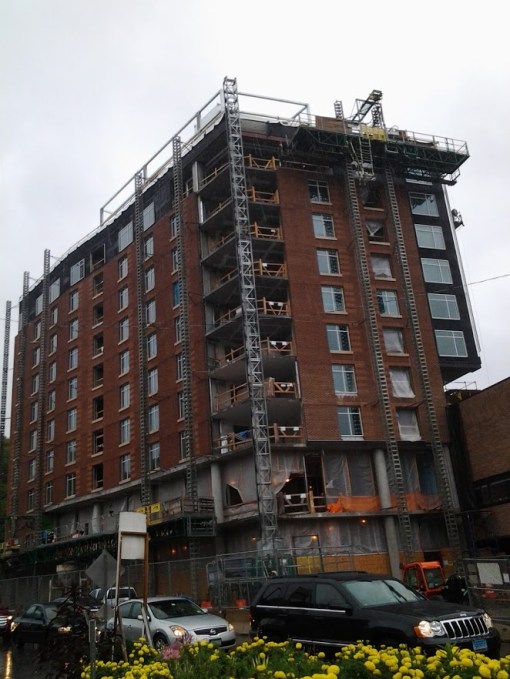
1. In yet another twist in the 201 College Avenue saga, the project will be moving forward. The Board of Zoning Appeals sided 3-1 with the city Zoning Director and denied the Planning Board’s consideration that the building be considered illegal due to facade length. According to a report from former Times reporter Josh Brokaw (now operating as an indy journalist),  the board was swayed by arguments of time and ambiguity in the code. Brokaw’s reading makes it sound like there’s still some raw feelings between staff and board. The way to solve the most pressing issue would be to clarify the code based on the facade debate, and have the common council ratify those changes over the next few months. All in all, the Form District code works pretty well, and a number of projects have been presented without big discussions over semantics. But in the case of 201, it’s clear that the CAFD wording and imagery could use further refinement, so that everyone is on the same page. With 201 resolved, now is a good time to do that.

Dunno what the completion date will be offhand (August 2017 would be a breakneck pace, but we’ll see). Neighbor Neil Golder has refiled his lawsuit, but the case isn’t especially strong.

elmira_savings_v2

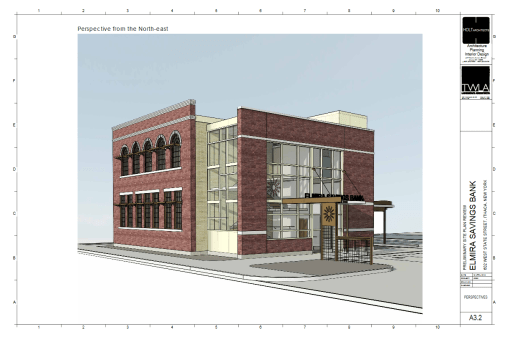
2. Also getting underway this week is the renovation of the former Pancho Villa restaurant at 602 West State Street into the West End branch of Elmira Savings Bank. This is quite a bit earlier than initially planned – Site Plan Review docs suggested a July-December 2017 construction/renovation. Edger Enterprises of Elmira will be the general contractor for the 6,600 SF, $1 million project, which is expected to be completed in March 2017.

evergreen_dryden_1

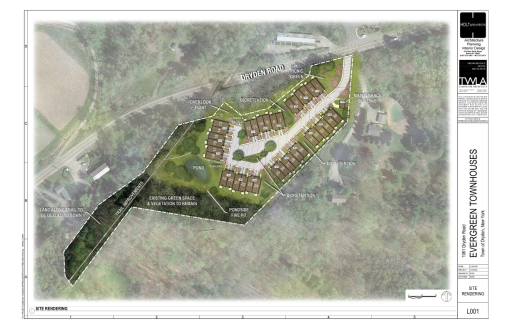
3. The Dryden town board has approved 4-1 the concept of the Evergreen Townhouses plan for 1061 Dryden Road just east of Varna. This means that they accept a PUD can be appropriately applied for the site, but the project will need to submit a formal, more detailed development plan before any final approvals will be considered. One of the major changes that is being requested is a 15-foot setback between the property line and the units at the southeast side of the parcel (25-36), so expect those to get a little trim off of the rear side (the dissenting vote, Councilwoman Linda Lavine, was because she preferred a 25-foot setback). If the setback and the other stipulations are accommodated, its chances of approval are pretty good. Developer and local businessman Gary Sloan has 270 days to submit detailed plans for review.

Meanwhile, Tiny Timbers will be up for Dryden Zoning Board of Appeals review in early November. Since an internal road will be used to access some of the home lots, the town board will be viewing the site as an “Open Development Area” (ODA), which by Dryden’s definition is development with no direct road access. The town board will hold their public meeting on the 20th to approve the ODA, the planning board’s acceptance on the 27th. The ZBA is the last or second-to-last step in the approvals process (not sure offhand if the town will need to vote again to give a final approval).

lansing_meadows_old

4. The senior housing next to the BJ’s in Lansing might finally be moving forward this spring. Dan Veaner has the full story here at the Lansing Star. The issue stems from working with the U.S. Army Corps of Engineers to determine what parts of the land can and cannot be developed – delineating the wetlands, basically. Apparently, the wetlands were created by an overflowing culvert back when the mall was built in the 1970s. But regardless of how they were created, the USACE deems they have to be protected, especially since it developed into a rare wetland environment called an “inland salt marsh”. Since then, it’s been back-and-forth on units – I’ve heard as few as 9 and as many as 18. A portion of the wetlands would still need to be relocated. The PDA boundaries were changed slightly by the board at the request of developer Eric Goetzmann earlier this month to accommodate the USACE determination. The tax break Goetzmann received to build BJ’s is contingent on the senior housing getting built, though at this point, one has to wonder just how much this wetlands tangle has cost him. Hope it was worth it.

maplewood_v7_3

5. From the sound of it, the Maplewood Park DEIS public hearing was fairly positive. Many of the neighbors are pleased with the changes, although some are still opposed to the density or have concerns about traffic. In response, it’s worth pointing out that the commute of Maplewood’s residents will almost entirely be bus, bike and foot during normal business/school hours, and its convenience to bus routes and services will also help minimize overall traffic impacts. As for density, well, if you want Cornell to house its students and reduce the burden on the open market, promoting density on the existing Maplewood site may result in a more sustainable, more cost efficient project if planned properly, with less of a neighborhood impact than building several hundred beds on an undeveloped parcel elsewhere (since the Maplewood site has been inhabited in some form since the 1940s, the growth in density would not be as prominent – about 490 beds, vs. 872 beds).

Should readers feel inclined, comments are still being accepted by town planners up until October 31st. The materials and submission email can be found here.

6. It looks like there were a couple big sales in the local real estate market this week. The first one was the Tops Plaza in big box land, just south of Wegmans. National retail developer DDR Corp. sold the property to another large firm, NYC-based DRA Advisors LLC, for $20 million on the 18th. The sale included three addresses – 710-734 South Meadow, 614 South Meadow, and 702 South Meadow – The Tops Plaza, The smaller strip to its south (called Threshold Plaza), and the pad parcels like Chili’s and Elmira Savings Bank. Perhaps the most notable part of this sale is that it’s slightly below the total assessed value of $20,941,000. However, DRA picked up the property as part of a bundle sale of 15 shopping centers in Western and Central New York, so maybe it was a bulk discount, or compensating for weaker properties.

The other big sale was between a long-time local landlord and a newer, rapidly growing one. The Lucente family (as Lucente Homes) sold 108, 116, 202 and 218 Sapsucker Woods Road to Viridius LLC for $1.276 million on the 18th. According to county records, each is a 4-unit building built in the 1970s and worth about $275k – meaning, Viridius just acquired 16 units for a little above the $1.1 million assessed. Viridius’s M.O. is to buy existing properties, do energy audits to determine what needs to be done where to maximize energy efficiency, disconnect them from fossil fuel heating and energy sources, install pellet stoves, heat pumps and the like, renovate/modernize the properties, and connect the more efficient house to a solar grid or other renewable energy sources. If Sustainable Tompkins were a developer, they’d look like Viridius.


7. This last one isn’t so much a big sale, but worth noting for future reference – 126 College Avenue sold for $510,000 on the 19th. The buyer was an LLC at an address owned by Visum Development’s Todd Fox.

126 College is a 2-story, 6-bedroom house that might have been attractive long ago, but someone’s beaten it with an ugly stick and paved much of the front lawn (growing up near Syracuse, we called paved front lawns “Italian lawns”, with my uncle one of the many offenders). The purchase price is a little below the asking price of $529k, but more than double the assessment. Zoning at the property is CR-4 – up to 50% lot coverage, 25% green space, up to 4 floors and 45 feet in height, a choice of pitched or flat roofs, and required front porches, stoops or recessed entries. This is the lowest-density zone for which no parking is required. The city describes the zoning as “an essential bridge” between higher and lower density, geared towards townhouses, small apartment buildings and apartment houses.

Granted, not everything Visum/MLR does is new, some of their work focuses on renovation. But given the location, and given that frequent design collaborator STREAM had “conceptual” CR-4 designs on display during the design crawl earlier this month, it’s not a big stretch of the imagination.

city_centre_v3_2

8. Interesting agenda for the city planning board next week, if nothing new. Here’s the schedule:

AGENDA ITEM                 APPROX. START-TIME

1. Agenda Review                6:00
2. Privilege of the Floor         6:01

3. Subdivision Review
A. Project:  Minor Subdivision           6:15
Location: 404 Wood St.
Actions: Consideration of Final Subdivision Approval
A minor subdivision to split a double-lot in Ithaca’s South Side neighborhood into two lots, one with the existing house and one that would be used for a new house or small apartment building. A variance for an existing rear year deficiency of the house would need to be approved (the rear deficiency wouldn’t be affected by the new lot which is on the east side, but it’s a legal technicality).
B. Project:  Minor Subdivision             6:25
Location: 123 & 125 Eddy St.
Actions:  Consideration of Final Subdivision Approval
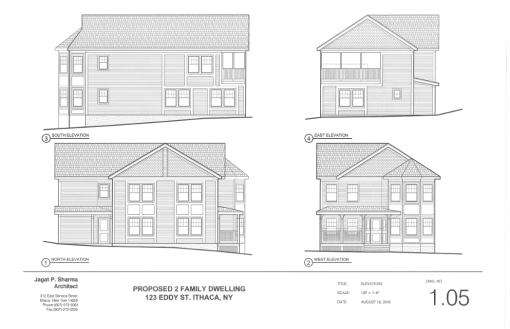
Collegetown landlord Nick Lambrou is planning subdivision of a double lot to build a new 2-unit, 6-bedroom house designed to be compatible with the East Hill Historic District. CEQR has been given neg dec (meaning, all’s mitigated and good to proceed), and zoning variances for deficient off-street parking have been granted.
C. Project:  Minor Subdivision                6:35
Location: 1001 N. Aurora St. (Tax Parcel # 12.-6-13)
Actions:  Consideration of Final Subdivision Approval
One of those small infill builds, this proposal in Fall Creek takes down an existing single-family home for two two-family homes on a subdivided lot. The design has been tweaked, with more windows, a belly band, more varied exterior materials, and additional gables to provide visual interest.

4. Site Plan Review

A. Project:  City Centre — Mixed Use Project (Housing & Retail)           6:45
Location: 301 E. State/M.L.K., Jr. St.
Applicant: Jeff Smetana for Newman Development Group, LLC
Actions:  Declaration of Lead Agency  │ Review of Full Environmental Assessment Form (FEAF), Part 2

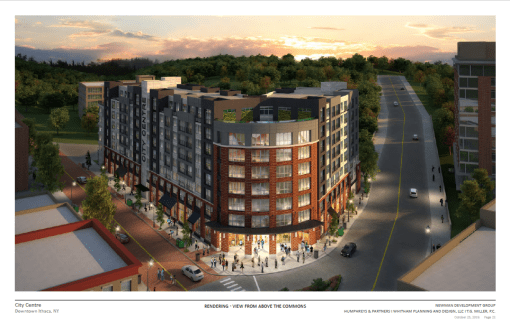
The 8-story mixed-use proposal for the Trebloc site. Comes with one letter of support, and a letter of opposition from Historic Ithaca, who have previously stated they will oppose anything greater than four floors on State Street, and six floors overall.
B. Project:  Amici House & Childcare Center            7:15
Location: 661-701 Spencer Rd.
Applicant: Tom Schickel for Tompkins Community Action (“TCAction”)
Actions: No Action — Review of Full Environmental Assessment Form (FEAF), Parts 2 & 3
C. Project:  Four Duplexes                               7:30
Location: 607 S. Aurora St.
Applicant: Charles O’Connor
Actions:  Declaration of Lead Agency  │ PUBLIC HEARING  │ Review of FEAF, Part 2
MLR’s four-building, 8-unit plan for South Hill. Comes with a letter of neighbor support saying the scale is appropriate.
D. 371 Elmira Rd. (Holiday Inn Express) — Approval of Project Changes      7:45
The debate over the Spencer Road staircase and rip-rap continues.
E. 312-314 Spencer Rd. — Satisfaction of Conditions: Building Materials   7:55
F. 119, 121, & 125 College Ave. (College Townhouse Project) — Update        8:05
Novarr’s 67-unit townhouse project geared towards Cornell faculty. No decisions planned, just an update on the project. Keeps your fingers crossed for some renders.
G. Maplewood Redevelopment Project — Planning Board Comments on Draft Generic Environmental Impact Statement (DGEIS)     8:20
The city’s deferred judgement to the town, but the board can still have their say. The comments will be recorded and addressed as part of the EIS review process.
5. Zoning Appeals                          8:35
• #3047, Area Variance, 123 Heights Court


News Tidbits 10/8/16: No Rain, But the Money’s Flowing

8 10 2016

sleep_inn_v2_1
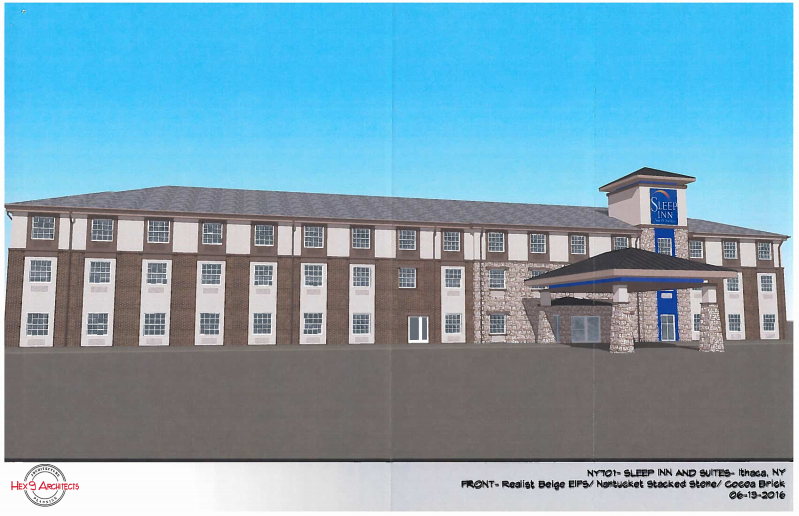
1. The Sleep Inn project at 635 Elmira Road went back to the town of Ithaca planning board last Tuesday. The initial write-up looked good – town planners were very pleased with the proposed changes, and the developer, local hotelier Pratik Ahir, proposed two different concepts to the board to see which one they were more comfortable with. The one that the board likes would be finalized in the plans and submitted for final approval later this year. No media were at the meeting, so I do not know which concept they preferred.

Both concepts by HEX 9 Architects attempt to maintain the rustic character that the town seeks to maintain for its part of the Inlet Valley Corridor. Concept one at top uses stone veneer (Elderado Stone), timber trusses, Hardie plank lap siding, and asphalt shingles. This design features balconies on both the front and rear of the building. Concept 2 incorporates a more varied roofline and building face, metal roof panels, stone veneer and a couple different types of Hardie Board. Concept 2 has less timber and no balconies. The town planning department felt that both concepts were unique enough and rustic enough to get its benediction in the SEQR analysis they sent over to the board. The concepts are a big improvement over the rendition we saw in August.

canopy_comparo_elevations_new_2
2. Looks like the Canopy Hilton is a go. The project secured a $19.5 million construction loan from ESL Federal Credit Union on Friday September 30th. ESL is a new face to the local market – “Eastman Savings and Loan” was founded in Rochester in 1920 to serve employees of former photography giant Eastman Kodak. The 7-story, 131-room hotel is expected to open in Spring 2018.

57e13f
3. Also funded this week – the second phase of Poet’s Landing out in the village of Dryden. Citibank is lending $7,702,326 to Rochester-based Confier LLC to build the 48 affordable apartment units across the street from Dryden High School, just west of 72-unit phase one. The documents were filed on Tuesday the 4th. The design of the second phase’s will be the same as phase one’s, an eight unit per building design by NH Architecture that is one of Conifer’s standard designs. The total project cost is $10.8 million, with the balance come from state affordable housing grants and tax credits. The build-out is expected to take about a year.

201_college_v5_1

4. So a few news bits about 201 College. The partially-deconstructed house at 201 College is now getting torn down, which had nothing to do with approval, and everything to do with break-ins and safety issues – there was evidence of squatters taking up residence, and the expense of a tear-down is worth avoiding a lawsuit or tragedy. Speaking of which, although a ruling on 201 College has yet to be issued and won’t be for a few weeks, Neil Golder’s lawsuit has already been re-filed. The court hearing is scheduled for December. According to an exchange with my colleague Mike Smith, Fox is planning rowhouses along Bool Street, within a 45-foot height limit but spanning the block, as it seems he has a purchase option on neighboring 202 Linden.

20161007_131502

5. According to Nick Reynolds at the Times (yes, he jumped papers), the buildings to be deconstructed for the Harold’s Square project are to be vacated by the end of October. Developer David Lubin plans to start the deconstruction process, which is a little more intensive and lengthier than a typical demolition, in November. Things have been complicated by the city’s decision to forego the project in the Restore NY grant application, where the $500,000 was allocated to pay for demolition, and must now be sourced from elsewhere. Once secured, the plan is to file for the permit, and by law they have up to 30 days to start deconstruction from the day the permit is issued. Construction should go for about 18 months, once the site is cleared.

607_s_aurora_2 607_s_aurora_1

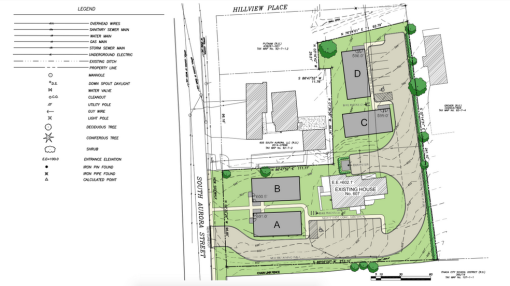
6. The 8-unit 607 South Aurora project will be seeking “Declaration of Lead Agency” at the Planning Board meeting, and materials have been filed with the city. Project narrative here, SPR application here, drawings here. The big changes since sketch plan were sidewalk and parking lot revisions, and rotating Building D to establish harmony with Hillview Place. The project is estimated to cost $1.5 million and aims for a construction timeline of March to September 2017. This is the next incremental step up for Charlie O’Connor of Modern Living Rentals, whose M.O. is to quietly pursue modestly-sized infill projects in less dense parts of the city (ex. the two duplexes planned for 312-314 Old Elmira). In a change of pace, the staff of Sharma Architecture are the designers this time around.

123_eddy_street_2

7. From the Board of Zoning Appeals meeting, the new two-family house at 123 Eddy Street has been granted zoning variances. Expect the Sharma-designed two-unit, six-bedroom rental property to start construction next year in time for the 2017-18 academic year.

20160918_155855 20160918_155910

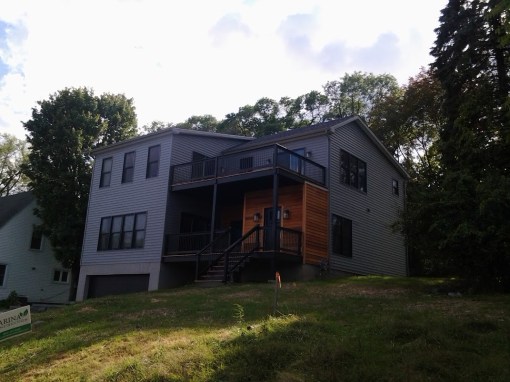
6. House of the week. Instead of one underway, this week will show two recent completions. Leading off is this house on West Hill’s Campbell Avenue, built by Carina Construction. This project came up in a weekly roundup back in late May – it’s a $320,000 project per the permit filing with the city, with $280,000 lent by Tompkins Trust. The contrast between the wood siding and the (fiber cement?) vinyl siding is a nice touch, as is the two-story porch. Definitely a unique house, and a showcase of just what kind of variety one can do with modular pieces if they’re willing to get creative.

20160918_162315 20160918_162648

Now for house number two. This isn’t a new build, but a very thorough renovation. Every time I take photos, I run into the owners, and normally I try to be as unobtrusive as possible. But, given that I’ve run into him twice, he’s familiar enough with me that we’ve had a conversation about his work.

20160109_151921

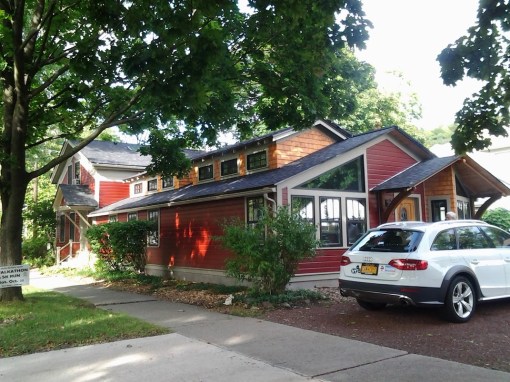
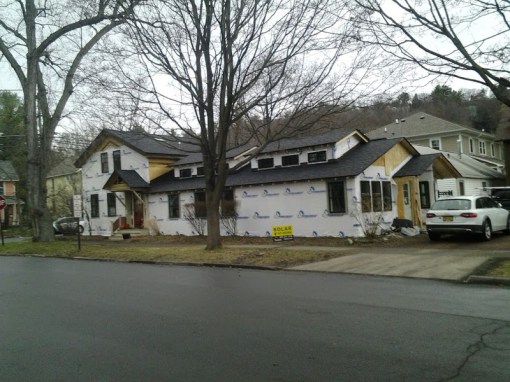
This is in Fall Creek on North Aurora. The couple who own this place moved in from Pennsylvania, they were just starting retirement when the wife’s father was no longer able to take care of it. It had been a duplex, but the other unit was more workshop space. The building was in good shape, but these folks wanted to modernize and refresh it, so they decided to do a to-the-studs renovation, basically turning it into a new home within an existing shell. Fiber cement, wood shingles, a few modern touches (the south bumpout, the unusual gable/shed hybrid dormers), a carriage house, a lot of work went into it over the past year and a half and it shows.


News Tidbits 10/1/16: Sketchy Details

1 10 2016

lansingapts600
1. Over in Lansing, it looks like Park Grove Realty is having a rough time getting their plans rolling. Legions of angry homeowners turned out at the village’s Board of Trustees meeting to protest a requested zoning change for a 20-acre Bomax Drive property that Park Grove seeks to build 140 apartments upon. The meeting wasn’t about the project, which will follow the zoning change once approved. For the record, the meeting was only about the zoning change, which is currently zoned for office park business/technology and has been owned by Cornell since 2008.

The unusual thing is that the primary opponent seems to be the Jonson family, of development company IthacaHome, formerly known as Forest City Realty. They built some of Lansing’s 1990s subdivisions and the Heights of Lansing project at the end of Bomax Drive, which is stalled out due to a lack of interest and Ivar Jonson’s passing. The claim from Janet Jonson is that if left commercial office/tech, then maybe an office building would be built and executives would build homes on some of their vacant lots. Even Larry Fabbroni was there to say an office building would generate less traffic than housing would. The meeting was very heated, according to the Lansing Star’s Dan Veaner.

The village planning board was there to listen, but not especially sympathetic. For one, there’s plenty of undeveloped commercially-zoned land; but there is a housing shortage. For two, although some complained “transients” would lower their housing values, these units will be going for $1,400-$1,900/month. The board’s not focused on the project just yet, that will come in due course. Meanwhile, the trustees moved to schedule public review for the zoning change, with that meeting planned for October 17th.

A couple miles away, Park Grove has also been getting flack for taking down willow trees as part of a plan to reduce root damage and mold issues, and to expand parking and add a 425 SF rental office on the Triphammer Apartments (former Chateau Claire) property. The heavy-handed approach was not well received. In short, Park Grove’s principals are the village pariahs at the moment, though they have brought some of it on themselves.

maplewood_v3_2

2. Just a brief check-up on the Maplewood Park redevelopment. The project team has been busy over the past month making revisions to the Draft Environmental Impact Statement (DEIS) as part of its determination of adequacy, and the DEIS was just accepted for public review as of the town of Ithaca planning board meeting on the 20th.

A digital copy of the revised DEIS can be found on the town’s website here. A public hearing will also take place on October 18th. The SEQR review period is 45 days from acceptance, so public comment will be accepted on the document up to 4 PM on Halloween.

100_1967

3. As part of their campus housing study, Cornell launched an extensive survey of their students. A summary and a link to the full results can be found on their webpage here. The university also held public forums this past week on campus to hear opinions from the community and explain what happens next (what needs work, how much campus housing is needed, where on campus, what student segments, strategies for the next 25 years, and so on).

Among the grad and professional (MBA/JD/MPH/etc) students, more anticipated living on campus when they arrived, than actually did – 32% vs. 18% of respondents. On average, G/P students felt they should pay about 7% less than they do. They want Wi-Fi, private bathrooms, on-site laundry and package/mail delivery. Outside, they want wider sidewalks and more frequent bus stops/service, and parking fees should be bundled in rent if parking is offered.

Those off campus preferred Downtown (26%) and Collegetown (24%). Grads and domestic students preferred Downtown, professional and international students preferred Collegetown. Grad students tended to be more satisfied with their housing than undergrads.

Similarly, more undergrad respondents want(ed) to live on campus – 56% do or have, 78% want/wanted to. That stat’s a little weird, since freshmen are required to live on campus. Only about 45% describe an apartment as ideal housing, vs 88% for grad/prof students. They also want Wi-Fi and laundry, as well as study areas and dining nearby. 49% selected Collegetown as their preferred housing choice, with another 36% preferring an on-campus location if available.

cornellspace-771x394

At the public forums, the university presented a few potential building sites for new campus housing. The goal was to have sites away from full-time residential areas (less hassle), easy to prepare (less physical hassle), accommodate 300-500 students (scale efficiencies) and be near existing facilities (quality of life and infrastructure). Three north campus locations were presented – CC parking lot, the side lot at RPCC, and the fields next to Appel Commons. The RPCC and CC locations show up on the 2008 Master Plan as well, 3-6 floors and up to 200,000 SF of space. So it seems those two locations have a more sustained interest. The city of Ithaca and the Village of Cayuga Heights have a boundary line that straddles those sites, a latitudinal line just south of Jessup Road. If something were proposed, most of the land is in the city, but the village would have to vote to defer decision-making to the city. That is a potential complication that Cornell has to keep in mind.

evergreen_dryden_1

4. The Evergreen Townhouses project in Dryden will be the subject of a special meeting of the town planning board on Wednesday October 5th at 7 PM at the Varna Community Center. The full suite of documents, including county review, planning board notes for the town board (recall that in Dryden, the town board votes to approve projects instead of the planning board), sewer capacity report and concept plan description can be found here. SEQR has been reviewed and a traffic study has been completed. The project will need a PUD approval, since 36 units exceeds what the zoning allows (28). If the PUD is approved, land will be deeded to the town for its recreational rail trail. Like the Park Grove project in Lansing, this rental proposal has seen a fair amount of opposition, due to traffic and concerns about renters, and the possibility of encouraging suburban sprawl east of Varna. Oddly enough, for being this far along in the process, there still haven’t been any detailed renders of the townhouses released to the public.
5. Here are a few details about the 607 South Aurora project. Readers might recall the sketch plan was presented at the August Planning Board meeting.

As I discovered this week, sketch plans are actually off the record. Meaning that a developer doesn’t have to give it to the city for publication if they don’t want to. Apparently, John Novarr is going this route – although images for his townhouse project on the 100 Block of College Avenue were presented last week, the city has no official record of them, and he said he has no intent to share plans until he’s ready for the city to declare itself lead agency. For what it’s worth, the project, geared towards Cornell faculty and staff, was well received by the Planning Board.

On the one hand, not sharing the sketch plan limits public exposure and the risk brought by exposure, and it allows the board to eliminate the most controversial aspects before the public can see them. On the other hand, it’s less transparent, and makes me an unhappy camper.

Back to the topic at hand, 607 South Aurora as initially conceived calls for 4, 2-family, 2-story houses on the property, while retaining the existing house. That’s a total of 8 units, and 24 bedrooms total. Parking would be in two sections tucked back from the street. The project is not unlike the one approved for 312-314 Old Elmira Road in Ithaca’s South Side neighborhood. Although STREAM Collaborative’s Noah Demarest presented the project at the August meeting, STREAM is not in charge of this proposal. The project is being designed by Collegetown favorite Jagat Sharma for local developer Charlie O’Connor.

607_s_aurora_1 607_s_aurora_2

Charlie O’Connor is a part of Modern Living Rentals, and regardless of how one might actually feel about their work, it is probably the most transparent development/rental company in the local market. True to form, a quick check of their website turned up images of 607 S. Aurora. It looks like the same general design will be used for each building, and each unit will be 3 bedrooms and about 1,122 feet. I hope they change up the exterior colors for variety’s sake. The board and planning department was fine with the buildings, but suggested revisions to the site plan, so the next iteration will likely have a different site layout.

20160918_164039 20160918_164106

6. Sorry, didn’t realize the lens was smudged. This very subtle duplex is underway in Ithaca’s South Side neighborhood, behind an existing duplex at 512-14 West Green Street. Because it fits in all the setbacks (it’s a very large, deep lot for an inner city parcel) and the rear of the property falls into the State Street Corridor’s CBD-60 zoning (i.e. no parking required), this project never needed more than staff-level approval from the city. Honestly, were it not for a small disturbed area at the curb-cut from construction vehicles moving in and out, one would never know this duplex was under construction.

The property is owned by the Ciaschi family, and appears to have been passed between family members since at least the 1960s. A building loan filed on June 17th indicates that Tompkins Trust lent $330,000 towards the project. As with many smaller builds, this a modular by Ithaca’s Carina Construction. Carina is supplied by Simplex Homes, and it looks like this 3-bedroom/2-unit is based off Simplex’s “Elkton IV” plan (but that could be wrong). Give how far along the outside is, it would not be a surprise if renters move in by the start of October.

147962

7. The near-death Black Oak Wind Farm could actually happen, if they pay Enfield the money they want for FOIL costs. Using the original EIS, they’ve reverted to the initial plan, including use of the landowners’ properties who tried to pull out in the face of the project’s rancorous opposition. The BOWF project team had been attempting to move two of the turbines to accommodate property owners who changed their mind about being associated with the project, but the Supplemental EIS had been caught in legal red tape with the town of Enfield and the town of Newfield to its south, where one of the alternative sites was planned. So the new plan is to just go forward with the original signed contracts and build what was proposed before the 2015 SEIS. The project team has requested final approval, but the town has said they want to be paid $19,000 for the cost of handling all the FOIL (Freedom of Information Laws) requests, of which they’re not sure who’s actually required to cover the cost.

This project and its manager, Marguerite Wells, have probably been put through a greater Hell than any other proposal in this county, which is really, really saying something. Let’s recall, apart from the opposition that has demonized the project manager and the investors (successfully, one could unfortunately argue), that when they considered the alternative site, Newfield’s town board rewrote their wind farm law to implicitly but effectively ban wind turbines from the town. The BOWF project has been incubating for nine or ten years.

According to Marguerite Wells, if they can’t get approval at the Enfield town board’s October 12th meeting, the wind farm proposal dies. And with it, pretty much any commercial wind turbine plans for Tompkins County (looking at Newfield, maybe single-family turbine plans as well – the way the 2016 revision is written, a homeowner can’t even hook up a little one to their roof, as it’s too close to an occupied structure).

8. Here’s a little kick in the pants to end the week. It was reported in Bloomberg of the five Ivies that have released results so far, Cornell’s endowment did the worst in the past year, with a -3.3% loss (which comes out to a drop of about $200 million). The university is taking reactive measures, including moving its investment offices to New York City. “The investment committee believes over the long term the relocation to New York City gives us even better access to potential staff who might not be willing to move to Ithaca,” said Cornell CFO Joanne DeStefano. That’s a bit deflating.


News Tidbits 9/24/16: The Implicit and the Explicit

24 09 2016

tiny_timbers_1

1. Over in the town of Dryden, it looks like Buzz Dolph and STREAM Collaborative’s Tiny Timbers project is up for preliminary approval. The site plan hasn’t changed much, just slight modifications for a dumpster/recycling enclosure and a bus pull-off. However, the home options have been expanded a bit. There will be five options, ranging from a 1-story 525 SF home starting at $99,500, to a 1,050 SF model priced at $184,500. Design specs (flooring, finishes, HVAC) can be found here.

Along with Tiny Timbers, Dolph is planning a similar, smaller project near his house on Quarry Road in Dryden town. That $800,000 project, called “Quarry Ridge Cooperative“, consists of two duplexes (four units), all owner-occupied. The homes will be connected to a shared driveway and carport through breezeways. Back of the envelope calculations suggest these units will be around 1,000 SF each. The 2.26 acres will be collectively owned by the four homeowners.

2. On a related note, another sister project to Tiny Timbers is being prepped for a site on the city’s portion of West Hill. Dolph et al. are looking to do a similar development to the one in Varna on a 5.45 acre parcel at the south end of the 400 Block of Campbell Avenue, which was noted in a weekly news roundup when it hit the market back for $195k in August 2015. The Journal’s Nick Reynolds touched on it in a through write-up he did earlier this week. The comprehensive plan calls this portion of West Hill low-density residential, less than 10 units per acre. Current zoning is R-1a, 10000 SF minimum lot size with mandatory off-street parking, although maybe a cluster subdivision would come into play here. The Varna property is a little over 6 units per acre. If one assumes a similar density to the Varna project, the ballpark is about 35 units, if sticking to the 10000 SF lot size, then 23 units.

On the one hand, expect some grumbling from neighbors who won’t be thrilled with development at the end of their dead-end street. On the other hand, these small houses are modestly-sized and priced, they’ll be owner-occupied, and if the Varna site is any indication, the landscaping and building design will be aesthetically pleasing.

201_college_v5_1

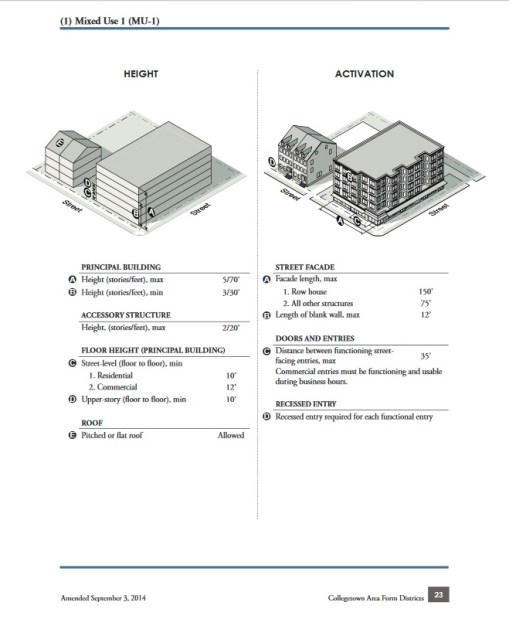
3. I dunno if I’ve ever seen such strenuous contention between the planning board and the city’s planning department. The planning board’s objected to Zoning Director Phyllis Radke’s determination that the project is legal per the Form District MU-1 Zoning.

The document put forth by John Schroeder and approved by the board rests on the following interpretations:
-in cases where the zoning isn’t explicitly stated in denser zones, it should rely on what is stated in less dense codes, and interpretations of the introductory “purpose and intent” section of the code, which qualifies similarities of form and scale if the numbers and dimensions for facade length aren’t explicitly stated.

-The argument also draws debate towards the unstated but implied interpretation of street facade, which refers to the building’s primary face, vs. building facades facing both streets. The board’s filing argues that the Bool Street facade was intended as a primary facade early on.

cafd_mu1

-Unlabeled parts of the diagram, such as MU-1’s, have no meaning. Even if they could give the impression of longer facades, it’s not the intent of the code.

The document goes on to say that Radke “invented claims unsupported by the text”, uses “tortured logic” and “silly conclusions”. Ouch.  Since interpretation is not a cut-and-dry matter of clear definitions, so we end up with an argument from both sides that relies on an interpretation of ambiguities, something more akin to a court room. A curious result of this discussion is that the Planning Board had to send out a letter to neighbors saying they would be arguing zoning determinations, which are going to be far out of most readers’ expertise, as the precise details and intent of the 2014 zoning will be the primary driver of this debate.

20160821_134831

4. The Ithacan is reporting a mid-to-late October opening for the Marriott, the Journal is reporting November. Presumably, one of them is correct. The delay from the original August opening is attributed to a labor shortage. Hiring is currently underway for the 159-room hotel and its restaurant, which according to the IJ, are expected to employ 50 to 60 in total. About 75% will be full-time, and wages are expected to run from $10/hr + tips for wait staff, to $18-$19/hour, with the hope that a premium paycheck compared to similar positions at other local hotels will translate to a premium experience for guests.

tc3_daycare

5. It looks like TC3’s Childcare facility is well on its way to reality. At least $4.5 million has been secured for the $5.5 million project and its scholarship endowment for students with children. $2.5 million for that was recently received in a set of state grant and funds, according to WHCU. Another $2 million comes from benefactor Arthur Kuckes, for whom the new facility will be named.

20160918_141051 20160918_141131

6. It’s been a while since I’ve done house of the week. So, here’s a new house underway on the 200 Block of Pearl Street in the city’s Bryant Park neighborhood. Ithaca’s Carina Construction is doing their modular magic here, the pieces have been assembled and most of the siding and roof trim has been attached. Not 100% sure if there will be a porch, the lack of siding above the door suggests it’s a possibility.
To be honest, when I was going through my list of single-families underway, I was mostly finding that Carina dominated the list. Since Avalon Homes went under, and most stick-builds are beaucoup bucks due to higher labor and materials costs, Carina’s offerings have broad appeal in Ithaca’s isolated, tight home market.

The lot was created four years ago by a subdivision of 222 Miller across the street. Since then, it exchanged hands a few times before a local realtor sold the property for $130,000 in July to a family who relocated to the area from Texas.

119_125_college_avenue

7. The Planning Board Agenda is up, and it’s the shortest in ages, thanks to that special meeting last week. Here’s the rundown:

1.  Agenda Review                                                      6:00
2.  Privilege of the Floor                                              6:01

 3.  Subdivision Review

A. Project:  Minor Subdivision                                      6:15
Location: 404 Wood St.
Actions: Declaration of Lead Agency  – PUBLIC HEARING – Determination of Environmental Significance – Recommendation to BZA

A minor subdivision to split a double-lot in Ithaca’s South Side neighborhood into two lots, one with the existing house and one that would be used for a new house or small apartment building. A variance for an existing rear year deficiency of the house would need to be approved (the rear deficiency wouldn’t be affected by the new lot which is on the east side, but it’s a legal technicality).
B. Project:  Minor Subdivision                                          6:30
Location: 1001 N. Aurora St. (Tax Parcel # 12.-6-13)
Actions: Declaration of Lead Agency – PUBLIC HEARING – Determination of Environmental Significance
Touched on this one last week. Deconstruction of an existing single-family home for two two-family homes, each on its lot.

4. Site Plan Review

A. Project:  Two Duplexes                                              6:45
Location: 1001 N. Aurora St. (Tax Parcel # 12.-6-13)
Applicant: Dan Hirtler for Stavros Stavropoulos
Actions: Declaration of Lead Agency – PUBLIC HEARING – Determination of Environmental Significance – Consideration of Preliminary & Final Site Plan Approval

B. SKETCH PLAN:  Townhomes & Apartments at 119-121 & 125 College Ave.        7:00

I’ve spilled some electronic ink on this project before – Novarr’s $10 million project for faculty townhomes and apartments. Rumor mill says “modern-looking” and “glassy”, which given Novarr’s fondness for ikon.5 architects (his guest house is on the main page of their portfolio), that isn’t a surprise. The three parcels are CR-4 zoning, so 4 stories and 50% lot coverage allowed. Previous estimates were for 50-60 units. I’d say the biggest uncertainty in approvals comes from the existing apartment houses, which haven’t been declared historic, but former councilwoman Mary Tomlan and the Planning Board’s John Schroeder recommended for consideration in 2009 (only 15 of the 31 suggestions were considered, and only 2 received historic designation, Snaith House and Grandview House). Novarr’s been amenable to compromises before (see Collegetown Terrace), so we’ll see what happens here.

5. Zoning Appeals
• #3044, Area Variance, 170 Pearsall Pl.
• #3046, Area Variance, 404 Wood St.
• #3048, Appeal of Zoning Determination, 201 College Ave.                                 7:30


News Tidbits 9/17/16: Point By Point

17 09 2016

maguirebirdseye-620x420
1. Starting this week off with the Maguires again. Although there was significant vocal opposition from planning committee members to the proposal, they decided to postpone the decision for another month. It would have been more merciful and understanding if they had just declined to continue, but the committee voted 4-1 against making a decision at their Wednesday night meeting, citing to need to process public comment. Most of the comments in favor of the proposal mostly spoke highly of the Maguires as employers and economic drivers (and even some of the opposition did as well), most of the opposition focused on the plan not meshing with visions for what they want the neighborhood to become. The board will consider a resolution against the project next month, but it sounds like the decision has already been made.

201_college_v5_1

2. This will be something of an unusual month. Along with the typical retinue of meetings, the Planning Board will have a special meeting next week to weigh in on the next round of Chain Works District EIS public comments, approve some slight revisions to 210 Hancock, and zoning determination for 201 College Avenue.

inhs_pride_design_v5_4 inhs_pride_design_v6_1

The changes to 210 Hancock are noticeable but minor. On the landscaping side, the concrete curb around the playground is proposed to be removed as a cost-saving measure, a fence separating the for-sale and for-rent townhouses will be removed and a fire lane put in, and the Lake Avenue paving will be changed up to match the waterfront trail. For the buildings, the 54-unit apartment building would have some windows tweaked or removed to standardize sizes (reduce cost) and fire safety concerns, and some of the yellow metal panels would be replaced with brick for cost and ease of installation. No changes are proposed to the townhouses.

As for 201 College, City Zoning Director Phyllis Radke issued a determination that 201 College is compliant and permitted by MU-1 zoning. She also states a number of concerns with the Planning Board’s handling of the review. Among the reasons cited are:

  • Pre-site plan review in November 2015 by zoning and planning concluded the project met CAFD guidelines.
  • Facade isn’t defined in the CAFD document. Building length and facade length can be interpreted as two separate measurements.
  • Facade length did not come up as a concern until July, four months after meetings began, after design review by the board, and after prelim site approval had been granted.
  • The building meets the conceptual guidelines provided in the zoning. While there are concerns about (yet unwritten) design standards and activation of both street facades, there’s nothing in the code for MU-1 that explicitly limits facade length on any side other than the primary face. There is, however, in MU-2. So secondary street facade length was stated in the code for one zone, but in no others. Even though it’s been argued as an ambiguity, the board did not consider secondary street facade length in its review of a CR-2 zoned duplex at 319 Oak Avenue in early 2015. The activation requirements apply only to the primary face for non MU-2 structures. If the board decided it was still ambiguous, Hess Realty Corp. vs. Town of Rotterdam (1993) says that ambiguities must be resolved in the favor of the property owner.
  • 201_college_vision_2009
  • The 2009 vision guidelines that people keep citing, and Neil uses on the “Save our Soul” facebook page – not only do they suggest taking down Neil’s house, they also have building lengths running the entirety of Bool Street.

With all that noted, even if it’s decided the project is in fact legal and doesn’t need a trip to the BZA, it likely won’t be moving forward this year, if at all. Visum couldn’t start in time for the desired August 2017 completion, and the project and site are for sale. For a potential buyer, though, it would be of significant benefit to have the zoning debate resolved before any sale occurs.

3. Out in the towns, there’s not a whole lot of development discussion in next week’s agendas. The town of Ithaca will continue its review of Maplewood Park (running behind schedule at this point) and issue a couple of lot subdivisions, neither of which are expected to be a big debate.  The town of Dryden received plans for a 10,500 SF self-storage facility for the vacant northeast corner of Freeville Road and Enterprise Drive. The 70′ x 150′ warehouse will house 121 units, and about 7,500 SF will be climate-controlled. The project will cost about $350,000. There also plans for an Open Development Area (ODA) on Dryden’s Scofield Road. ODA means an ROW or easement is required for building permits, and the town has to review the plans – nothing’s been filed yet.

20160821_145711

4. A pair of construction loan agreements worth noting this week. The first is Storage Squad’s facility going up at 1401 Dryden Road east of Varna. According to a filing on the 12th, the company received a construction loan of $1.4 million from Tompkins Trust. That money will be used to finance the build-out of their 79,600 SF storage facility already underway. The second is the Dollar General being built at the corner of Route 34/East Shore Drive and Cayuga Vista Drive in Lansing. Primax Properties (under the name Sea Mountain Ventures II LLC) received a $956,000 loan to build the 9,100 SF retail store, which is also under construction. that loan was also filed on the 12th. The lending institution is BB&T, a major regional bank in the Southeast. Primax is headquartered in Charlotte, and BB&T is headquartered just 90 minutes up the road in Winston-Salem, so in this case, it’s less about a bank being interested in Ithaca, and more about two major companies located near each other and having an established business relationship.

109-corn-1413-w-seneca-1

5. So the Ithaca Urban Renewal Agency’s Economic Development Committee selected the $3.7 million Seneca/Corn proposal to submit to the state for the Restore NY 4 grant. And I feel a bit embarrassed because the Voice story, comparing the Seneca/Corn proposal and the State Street rehabs, ran after the decision was made, so it comes off as a bit clueless thanks to timing. Anyway, the application will be looked at by the Planning Committee, and submitted in early October. If all goes well, funding could be granted by the beginning of next year, with the renovated Wyllie’s and the Ithaca Glass overbuild ready for tenants by early 2018. Ed Cope is the developer, STREAM Collaborative the architect.

corner_store_2016

6. For sale this week, and for the budding entrepreneur – 2,310 SF neighborhood commercial retail at 402-04 West Court Street in the Washington Park neighborhood. Talk about a change. When I started at Cornell ten years ago, this was “The Corner Store”, and it was severely run down. I don’t remember the florist sign, but everything else in the assessment photo below fits my memories from the mid 2000s.

corner_store_2000s

During the past ten years, the bump-out was renovated, then the building was repainted, and The Corner Store became the “Red and White Cafe“, a highly-regarded neighborhood fish fry and seafood restaurant. According to the listing, the major renovations came about three years ago. County records indicate the property last exchanged hands in 1988. Along with the retail space comes 432 SF of storage.

The listing is asking for $975,000, but that would be for building and business – the building and lot are valued at $120,000, so any potential buyer is going to be much more interested in the cafe than the building.