Cornell Law School Renovation Update, 1/2017

17 01 2017

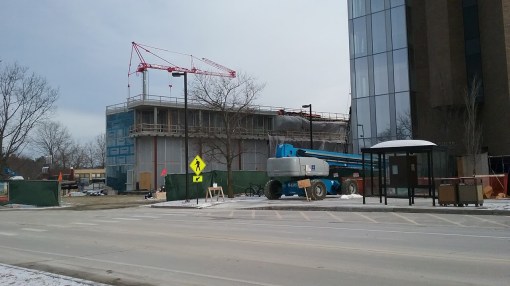
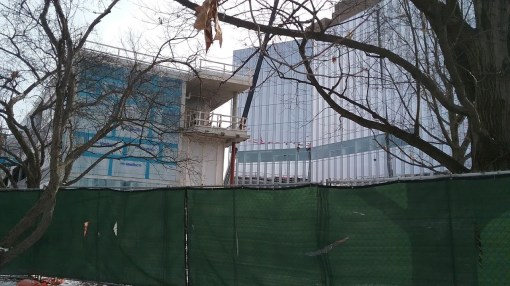
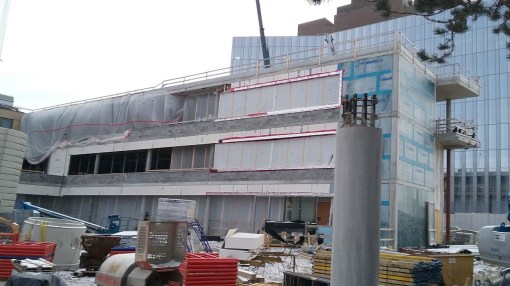
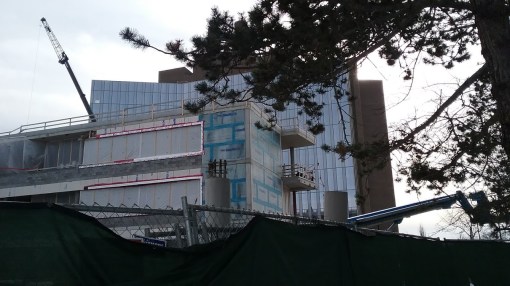
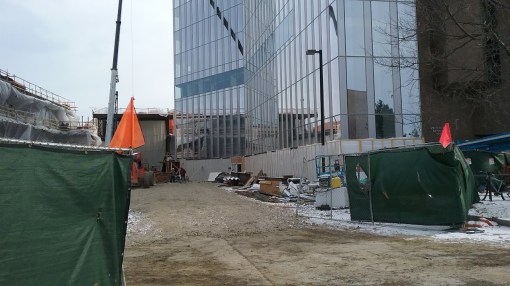
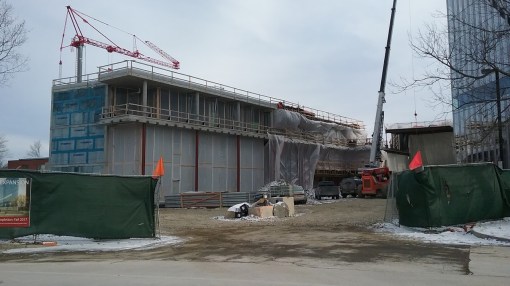
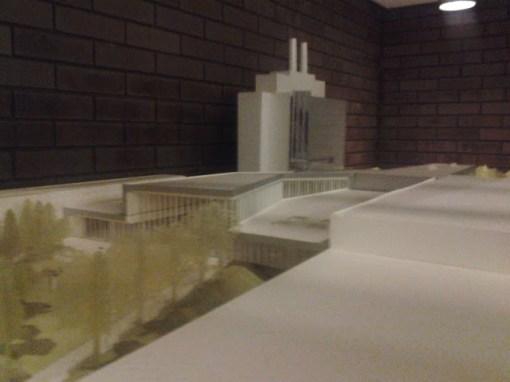
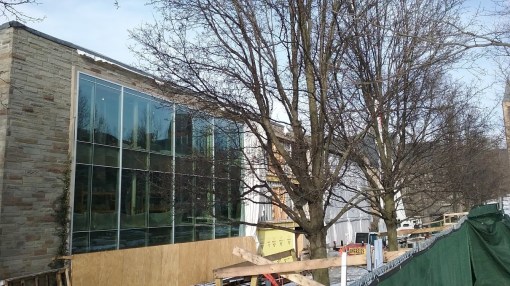
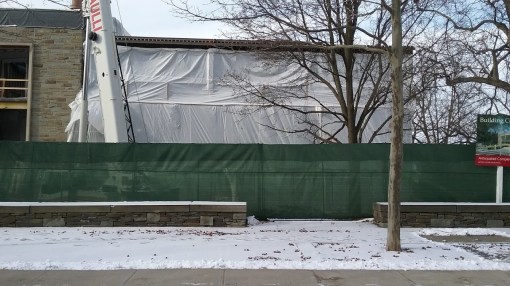
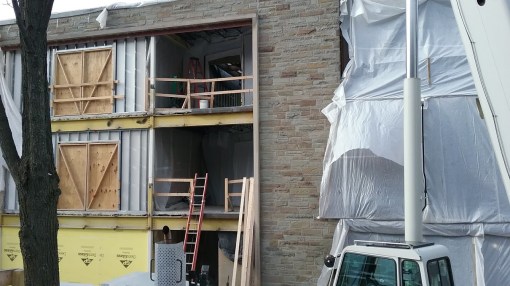
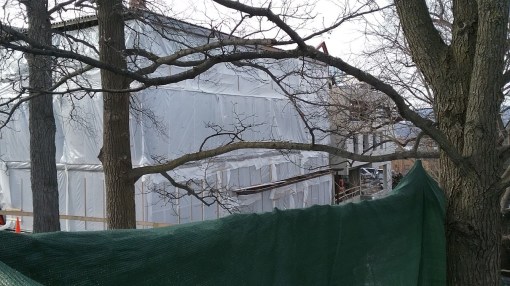
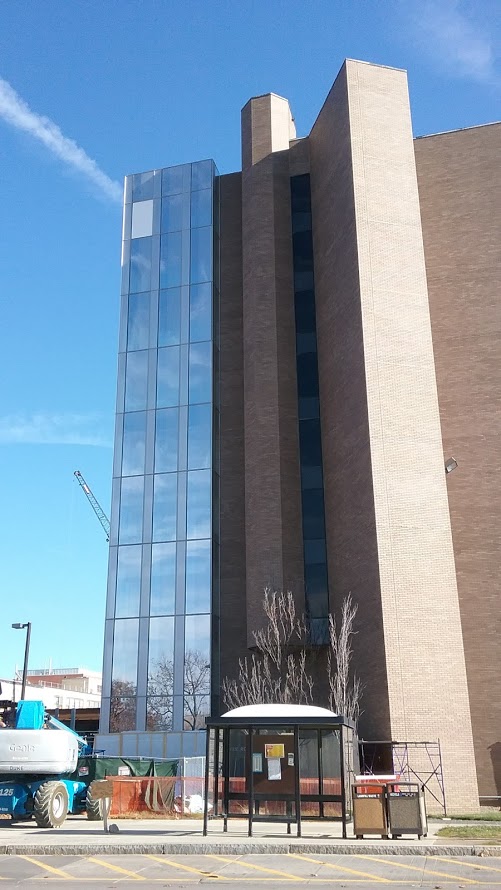
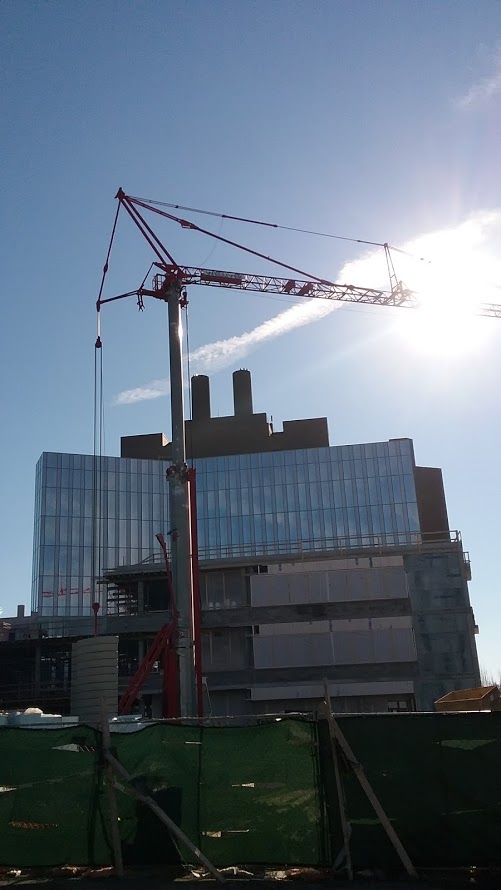
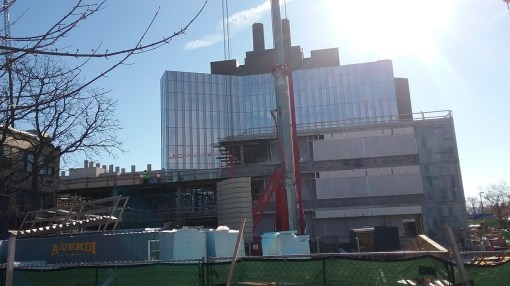
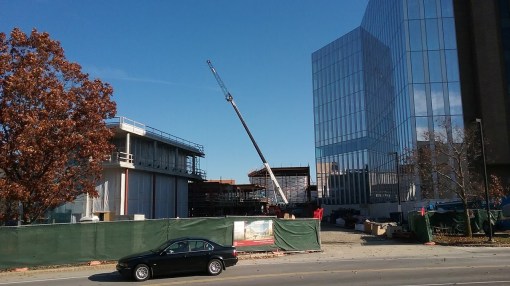
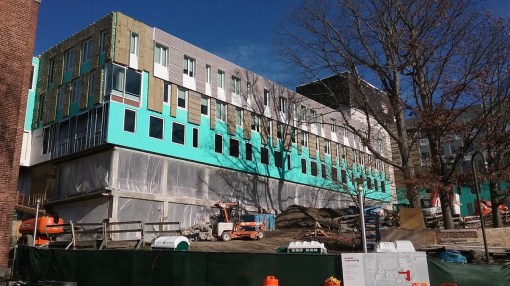
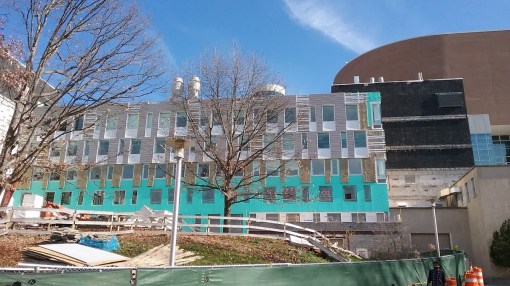
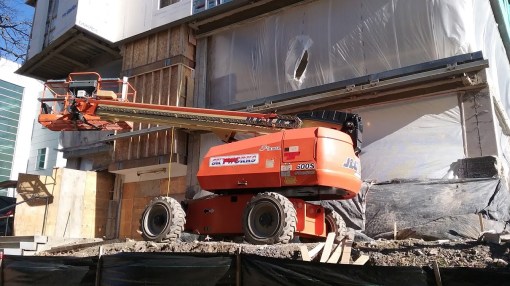
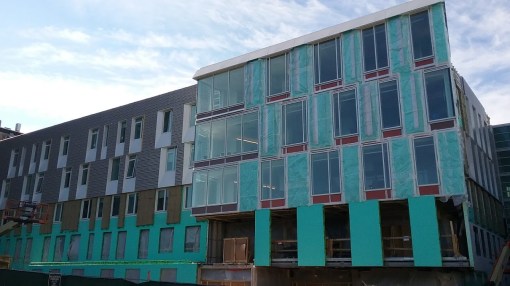
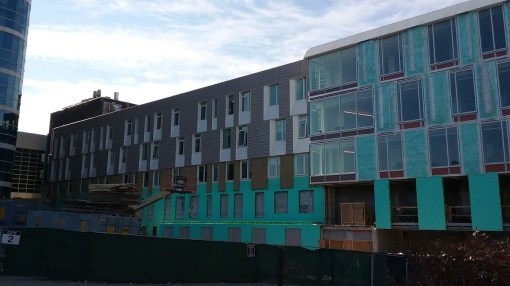
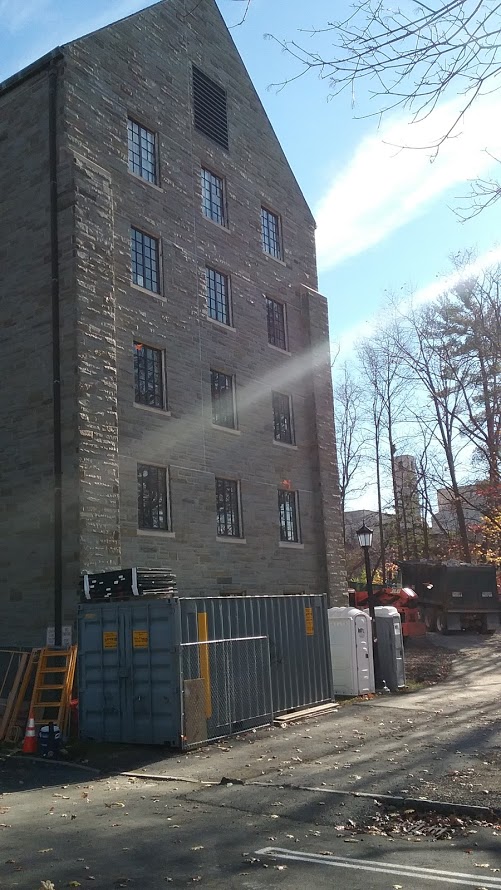
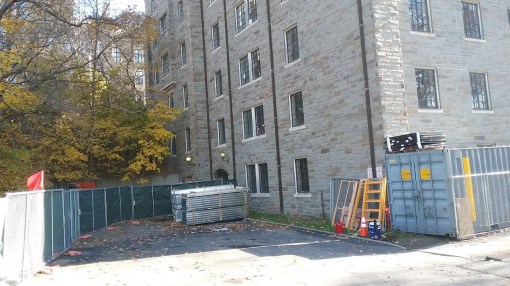
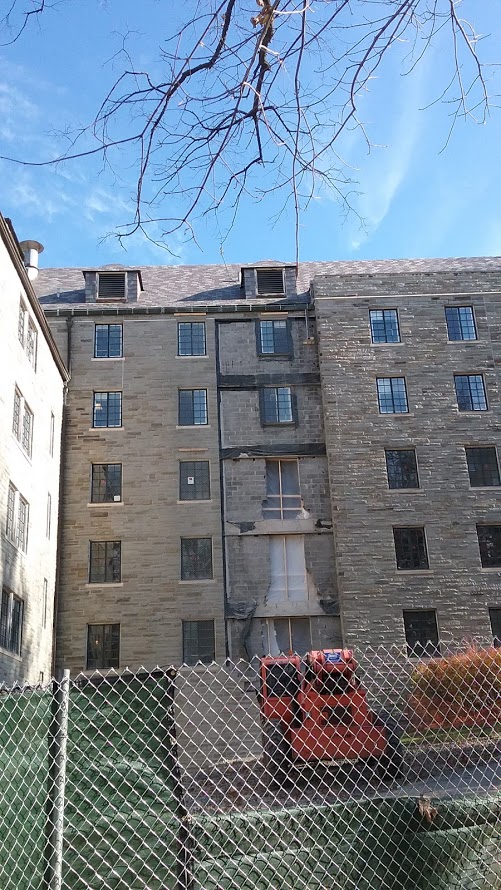
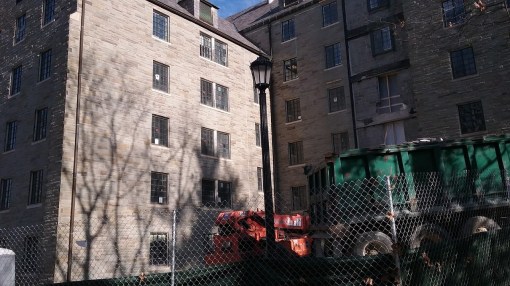
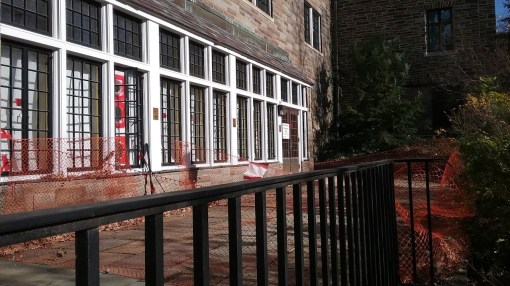
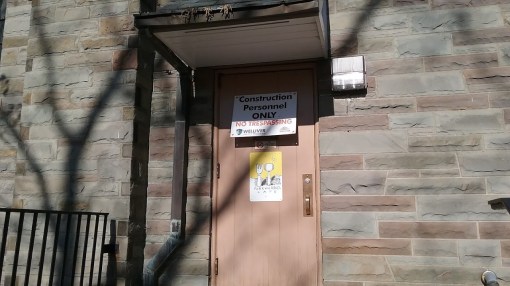
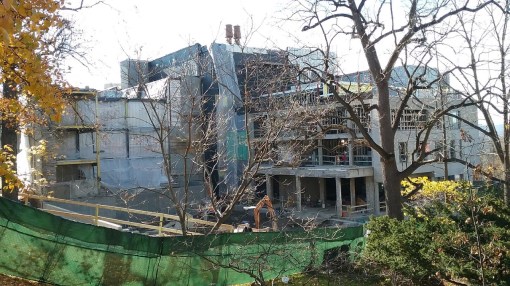
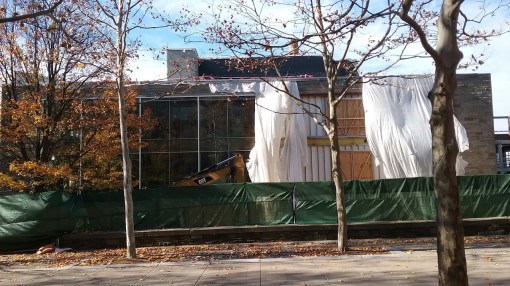
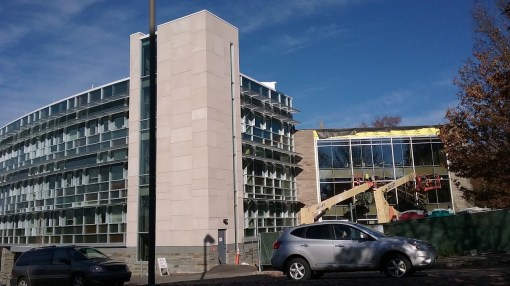
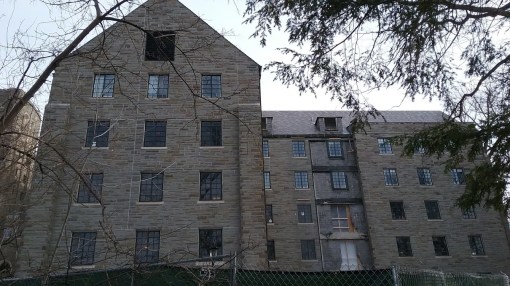
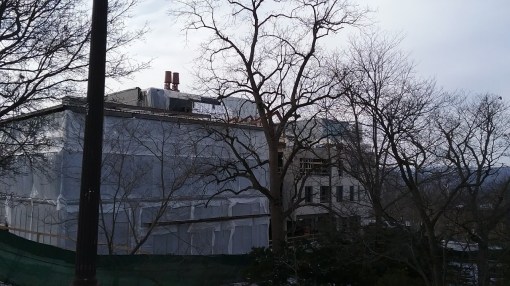
From the outside, it doesn’t look like much is happening. But, given all the steel beams on site, the safe bet is that the former dorms inside are still being gutted to nothing but the load-bearing walls, and those beams will become a part of the new interior partitions, new stud walls for the enhanced faculty office and professional space. This is by and large an interior renovation, but perhaps after the deepest cold of the season passes, we’ll see more progress towards enclosing the loggia and the new stairwell on the west face. The wire mesh over the exposed west wall is for safety reasons.

20170107_105312 20170107_105321 20170107_105342 20170107_105408 20170107_105424 20170107_105432 20170107_105542 20170107_105624

hughes_cornell_4 hughes_cornell_3


Cornell Veterinary School Expansion Construction Update, 1/2017

17 01 2017

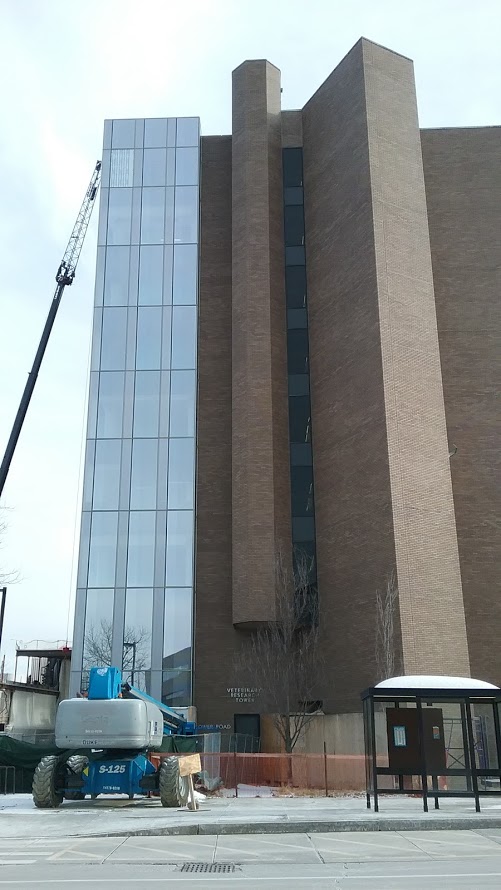
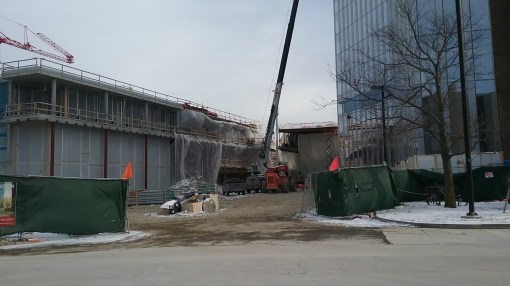
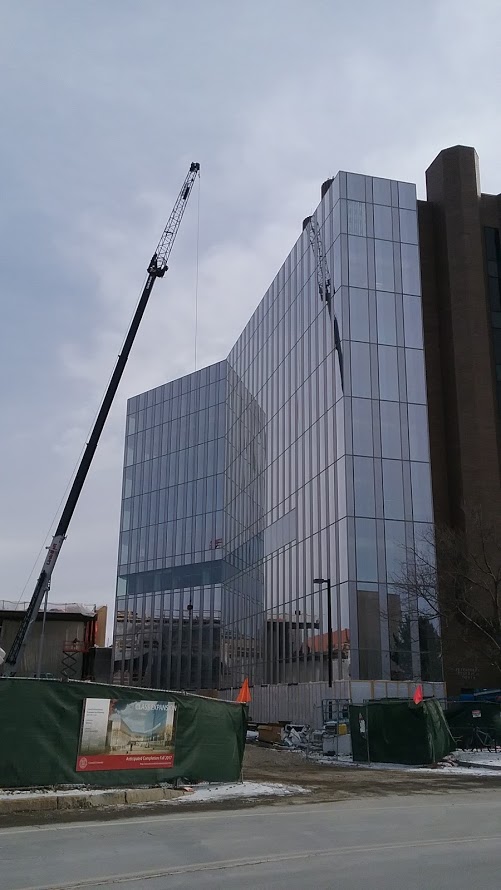
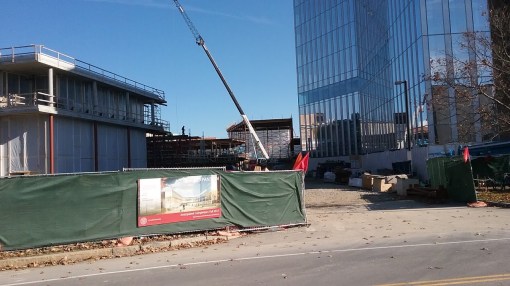
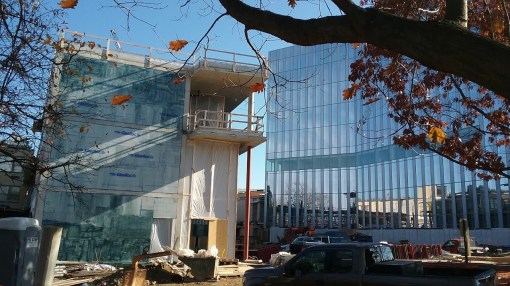
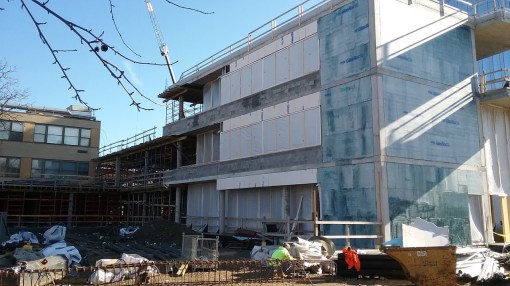
Starting to see more progress on the structural frame of the $74.1 million Vet School additions. The reinforced concrete frame of the new library and administrative offices now extends all the way back to the rest of the Vet School complex; the new section is draped over with plastic sheets. Also, as the new wing gets fleshed out, the rough openings of the windows are taking shape. It doesn’t look like there’s been too much exterior progress on the new atrium.

According to the project webpage (last updated two weeks ago), interior framing (metal stud walls probably) is underway, rough-ins are underway, and the new cafeteria is under construction. Welliver will have the new atrium and lecture hall fully closed up by the end of January. Most of the Vet Research Tower work has been completed, but new office layouts are still in the works for the sixth and seventh floors, and that work won’t get underway until this Spring.

The new $7 million ($4.9 million hard cost) Community Practice Service Building is out for bid, with a march demo planned for the Poultry Virus Building currently on site, and a March 2018 opening, about seven months after the bulk of the new Vet School structures. It is a wood-frame 12,000 SF building designed by HOLT Architects, and I still have yet to find an image of the design.

20170107_102456 20170107_102508 20170107_102521 20170107_102540 20170107_102615 20170107_102640 20170107_102646 20170107_102708 20170107_102740 20170107_102838 20170107_102846

cad048742a281097e5667382eced42333f5656954f5a3ef1021519c03b4abe9f

20160522_131445 20160522_131417 20160522_131344

20160522_131403


Gannett Health Center Construction Update, 1/2017

15 01 2017

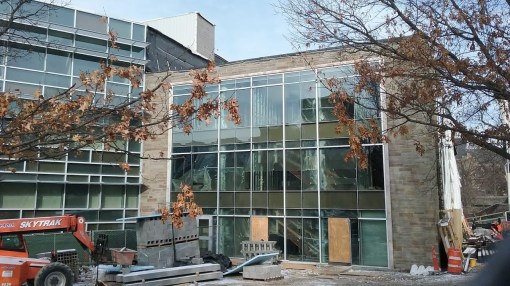
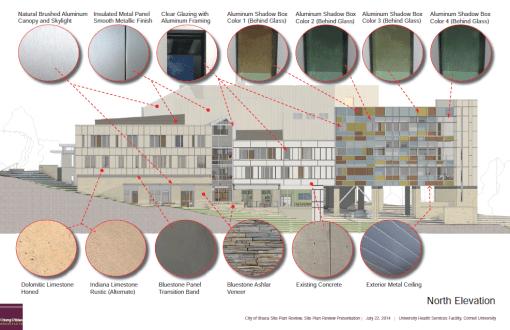
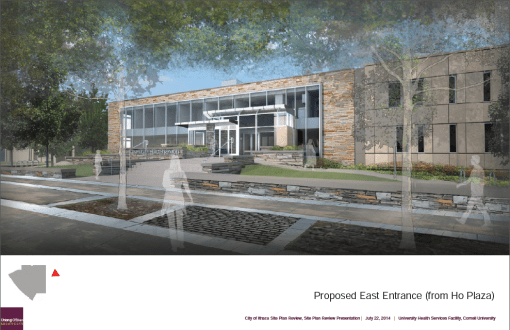
Okay, for as much as I miss the old banded concrete and glass, the large window panes, clear glazing and thin aluminum frames designed by Ithaca’s Chiang O’Brien Architects do have a certain modern chic going. However, this armchair critic still has yet to decide if he likes the offset between the outer and interior frames of the curtain wall. The windows have made their way north along the old east wing. Peering through, you can make out some of the new metal stud walls, so utilities rough-ins for the gutted 1950s structure are underway.

The new entry canopy has yet to be built out. Pike, the contractor, could soon insert the northernmost panes where the old east wing’s interior is exposed, but the curtain wall glazing won’t be finished until the canopy has been constructed.

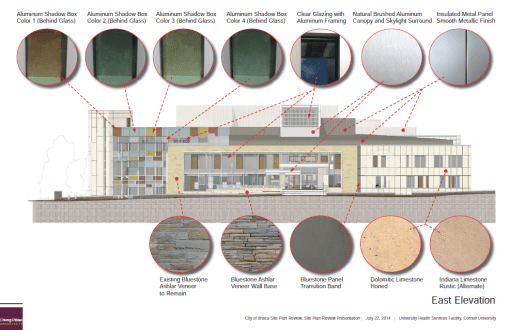
The new three-story 18,000 SF northeast wing, which replaces the former Ho Plaza entry, rose pretty quick – like the Breazzano Center, it’s wrapped up in plastic to limit workers’ exposure to the cold. The outside of the new wing will be faced in a couple types of limestone, with a bluestone transition panel and bluestone veneer at its base – the 1979 west wing is being updated so that the two will look similar, although the 1979 wing will retain its concrete exterior, giving the two wings some visual contrast.

According to Cornell’s revamped project website, the Gannett project is 70% complete. Whether that included the new addition that opened last year is not clear. The entire project should be finished by this fall.

20170107_105817 20170107_105841 20170107_105904 20170107_105908 20170107_105926 20170107_105950 20170107_110000 20170107_110007 20170107_110038 20170107_110100 20170107_110108

gannett_northeast_persp gannett_north_final gannett_eat_persp gannett_east_final gannett4


News Tidbits 1/7/17: Storage and Storefronts

7 01 2017

1. Like a phoenix, it looks like Wings Over Ithaca is coming back. The franchise, whose Ithaca location was shut down after the owner was charged with 26 counts of tax evasion, will be operated under a new ownership consisting of four young Cornell alumni from the New York City area. However, while the ownership is changing, the management team for the eatery will be largely the same. The new incarnation will also be in a new location – Wings, which called East Hill Plaza its home for fifteen years, will now be located in a 1,743 SF retail storefront at 119-121 Dryden Road in Inner Collegetown. The property, owned by Ithaca Renting, previously held a Greek restaurant and then a tobacco shop, but it’s been more often vacant than occupied over the past ten years. A new kitchen is being installed in the retail space to accommodate. Expect an early Spring opening.

distributed_sun

2. This sounds promising, but I’m not comfortable with the precision of the details. According to Cassie Negley over at the Times, Washington D.C.-based Distributed Sun LLC, a rapidly-expanding solar energy company, wants to build two large-scale solar installations in the town of Dryden. One would be on Cornell land south of Route 366 on Turkey Hill Road, the other near the Willow Glen Cemetery on non-Cornell private land. The company is familiar with the area, as they are Cornell’s partner on the large-scale array recently installed near the county airport. The company also has plans for seven arrays on four parcels in Spencer in Tioga County, and they’re working with Cornell on solar installations for the tech school down on NYC’s Roosevelt Island.

The topic of discussion is whether or not a PILOT (Payment In Lieu Of Taxes) could be reached for the installation – solar installations are already exempt from NYS taxes, but school districts and towns can levy their own. Since the Cornell property doesn’t pay taxes, a lump PILOT that covers both could actually pay more than taxing the non-exempt proposal at full value. The construction timeframe at present is April-October 2017; and, here’s the imprecise part, the arrays would create 200-250 local jobs and another 100 jobs nationwide – and, from the town minutes, that doesn’t appear to be a typo. Presumably, most of that is construction, and a few in maintenance. I’d like to see the numbers for permanent local jobs, because along with the renewable energy growth and reduced electricity costs for nearby residents, the permanent jobs would be one of the big economic selling points. Given the Mettler Toledo news a few months ago, new jobs in Dryden would be welcome.

100_13701

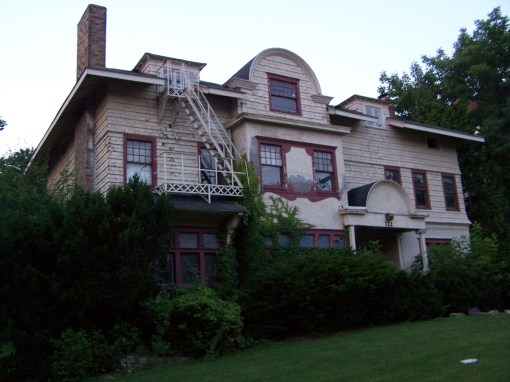
3. Time for some sad news – 722 University Avenue is gone. The university demolished the 5,738 SF, 116 year-old house it earlier this week. The property has a storied history as the home to several fraternities and sororities; it’s kind of a shame it wasn’t renovated to provide student housing. The university has no long-term plans to redevelop the lot.

20170101_152251 20170101_152310 20170101_152348 20170101_152359

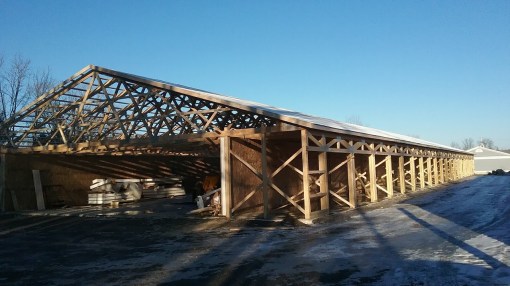
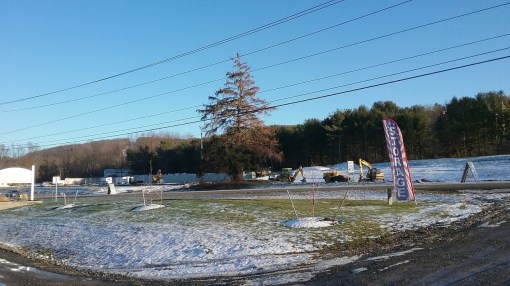
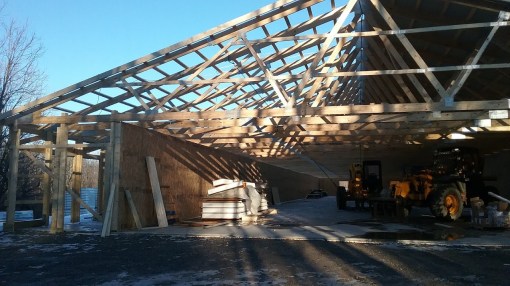
4. Dryden, the storage capital of Tompkins County. Across the street from the 79,000 SF Storage Squad self-storage facility under construction, 4 Season Storage is busy putting up their own addition. According to a loan filing on the 3rd, 4 Season’s new building is 12,000 SF, and the hard construction costs come in at $481,172. CFCU is the lender. The structure is already framed and is being roofed, the cross trusses already separate the exterior units (not sure if those will be climate-controlled like the interior ones). Storage Squad is further behind, a graded site and a couple of reinforced concrete walls at the moment.

20161119_145216

5. In case you were wondering, here are some of county administrator Joe Mareane’s planning and development goals for 2017 –

– Negotiate the purchase of the Tompkins Trust Building for use by the History Center and Heritage Education Center. Also, develop a “governance”, or operations, plan for how the facility will be managed and maintained; how space will be allocated; how rent will be determined, etc.
– Work with NYS DOT and local agencies (Planning and ITCTC) to secure funding for a Route 13 traffic study.
– Facilitate the development of a realistic business strategy that allows the Airport to continue to
serve the community and be financially self-sufficient.
– With TCAction, put plans in place for a new residential project aimed at providing a meaningful
amount of housing for the chronically homeless.
– Bring alternative plans to re-use the rear portion of the Human Services Annex to the Legislature; implement its recommendation.

There’s a possibility, based on the 2016 notes that follow, that the 24-unit Re-Use project and the housing for the chronically homeless may be two different projects – the Re-Use housing project is described as transitional re-entry housing, while the housing for the chronically homeless is said to be in the property acquisition phase – i.e. still scouting out sites, with the goal of construction within two years. They might be the same, they might not, it’s not 100% clear from the notes. As for the Human Services Annex, there have been talks for additional space for Cayuga Medical Center’s services, or space for courthouse functions, and a decision is expected in Q1 2017.


News Tidbits 12/31/16: For Ithaca, This Wasn’t A Half-Bad Year

31 12 2016

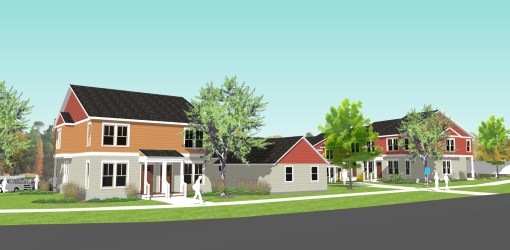
902_dryden_final
1. Another fairly quiet week for that Christmas-New Year’s lull. There wasn’t anything too noteworthy in real estate transactions, but thanks to a construction loan filing, we have a figure for the construction cost of Modern Living Rentals’ 902 Dryden Road project – $1,192,550. The 8-unit, 26-bedroom townhouse project is being financed by Elmira’s Chemung Canal Trust Company, a regional bank which has been looking to expand its presence in the growing Ithaca market. Most mid-sized building loans like this are financed by Tompkins Trust, and this appears to be the largest project CCTC has financed locally; checking the records for the past 12 months, they’ve previously financed a few single-family homes and that’s it. A larger loan like this might be a sign that they’re building confidence in the project and the market.
815_s_aurora_night

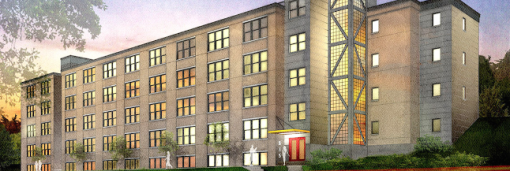
2. Sticking with MLR, a glance at their webpage gives an interesting detail – the 87-unit, 87-bedroom 815 South Aurora project is now described as having 125 bedrooms. The multi-story apartment project sought and persuaded the city to reduce cellphone tower no-build radii last spring so that it could be built near the South Hill telecommunications mast, but because the city only reduced to 120% of height instead of tower height plus 10 feet (meaning 206 feet instead of 180 feet in this case), the project has to be tweaked. No revised designs have been released, but should something come along, you’ll see it here.

Side note, the website has an easter egg – clicking on MLR’s Commons placeholder gives you the 2015 downtown market summary from the DIA.

cornellspace-771x394

3. For those interested in learning more about Cornell’s north campus plans, video from one of their meetings can be found online here. The key takeaways – the first building, when it is built, has to be larger enough to function as swing space for Balch Hall, which appears to be first in line for renovations. Balch has 437 bedrooms, to give an idea of the potential capacity of the first new dorms. Dickson is larger (527 beds), but its renovation will be split up over two summers, allowing for partial occupancy while renovations are underway. Lot CC could potentially be replaced with 1,000 beds in multiple buildings, as well as a dining facility (a new dining facility is seen as less urgent and would be further down the line). Those new dorms would eventually be geared towards sophomores, multi-story but “contextual” in height. It sounds like the first concrete plans are expected to be ready by the end of the 2016-17 academic year.

4. The Common Council will be voting on some bond issues next week that will fund several municipal projects. $500k for street reconstruction, $367k for municipal building renovations, $653k for street lights, $600k for a replacement water tank on Coddington Road, $101k for bridge inspections, $181k for the Stewart Park pavilion, $51k for site improvements to the Hangar Theatre property, $134k for design and scoping costs for the Brindley Street bridge replacement, $340k for the Cascadilla Creekway project and a replacement ped bridge at Sears Street, water mains, traffic lights, traffic calming, new police cars, all totaling $6,464,450. A separate measure calls for an additional $950k in bonds to cover the costs of the Stewart Avenue bridge repainting and reconstruction.

Some of the money covers design studies for intersections – of particular note is a study considering a roundabout at the “five corners” intersection at Oak Ave/Dryden Rd/Maple Ave, which could be a welcome change from that awkward traffic light currently there.

The city issues bonds twice a year, in January and July, to cover its various construction projects. Some of it gets reimbursed with state and federal dollars.
city-center-v4-1

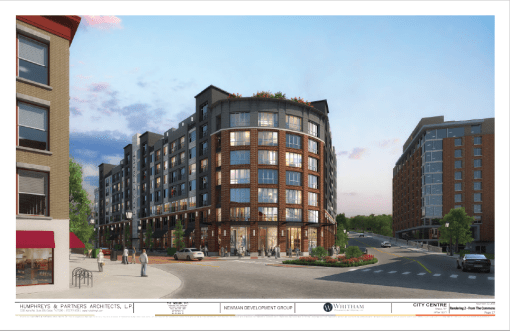
5. I cheaped out on my Voice summary of the top development stories of 2016 – there are only 5, but only because there was no way I had time to do ten this week. Here are five that missed the cut – the cancellation of State Street Triangle and the rise of its replacement, City Centre; the Tompkins County Housing Summit and the Danter Study, which are important but not really attention-grabbing; some progress in affordable housing, with Cayuga Meadows, 210 Hancock, Amici House and Poet’s Landing; the continued growth of Collegetown, with the opening of Dryden South, Dryden Eddy and Collegetown Crossing, and the entrance of the College Townhouses, 210 Linden and 126 College; and the growth of the local economy, which if the numbers hold up to revisions, 2015-2016 will have the second highest year-over-year gain in jobs since 2000 (#1 is 2011-2012).

When thinking about what’s in store next year, it’s a little sketchy because of impacts from the incoming Trump administration, and how that could impact the national economy – but if things stay consistent on a large-scale, than Ithaca can expect continued modest but steady growth, mostly in meds and eds, with a bit in tech and hospitality. We’ll probably see a couple new projects proposed in downtown and Collegetown, and maybe some smaller residential and commercial projects in other neighborhoods, like the Elmira Road strip and State Street Corridor. The town of Ithaca, it’ll depend on if they get their new zoning sorted out; if they do, there might be a burst of new proposals in some areas. The other towns, it’ll be hit or miss, maybe a larger proposal in Lansing or Dryden but otherwise scattered-site single-family, par for the course. Also, keep an eye out for more housing proposals from Cornell.

masonic_temple_1-771x595

6. It’s quiet week, so let’s finish this up with a little water cooler gossip. From the rumor mill, some of the potential tenants being discussed for the Masonic Temple include a microbrewer (good thing the city just updated their zoning to allow microbreweries), professional event space, and a church. That last one seems a little unusual, but to each their own. The renovation plans call for three rental spaces, one of which is geared towards restaurant tenants.



Cornell Veterinary School Expansion Construction Update, 11/2016

23 11 2016

Definitely seeing a lot of progress on the Vet School Expansion. The new glass curtain wall on the Vet Research Tower is nearly complete, and the final finishes are due to wrap up by the end of the month. The new library/dean’s wing by the front entrance is undergoing interior framing and utilities installation. The new atrium and lecture hall are now visible from the street, now that some of the structural steel has been erected. Floor slabs and roof decking are also being laid.

The new atrium and lecture hall are expected to be closed up by January, and the whole $74 million project is aiming for an August 2017 opening. The Community Practice Service Building, a separate $7 million project on the Vet School campus, is expected to start construction in early next year with a completion in late fall 2017.

20161119_111157 20161119_111208 20161119_111225 20161119_111243 20161119_111252 20161119_111334 20161119_111358 20161119_111436 20161119_111503 20161119_111514 20161119_111632

cad048742a281097e5667382eced42333f5656954f5a3ef1021519c03b4abe9f


Upson Hall Construction Update, 11/2016

22 11 2016

Because of the multi-phased, tiered buildout of Upson Hall’s renovation, it’s easy to miss the changes. For example, in the first photo, there really haven’t been any exterior changes to the fourth or fifth floor, but on the third floor, there’s been significant progress – the old stone has been removed, the new stud walls have been erected, gypsum-based glass mat sheathing has been laid and waterproofed, and new windows have been fitted. You can see the latest batch of exterior wall progress on the third floor of the west face, third photo below. The first and second floors have had their old exteriors stripped as well, but at the moment the frame is exposed. The interior has been gutted and new utilities rough-ins are being routed.
On the side facing the Engineering Quad, the progress has been similar – the third floor has seen the most work recently as the renovations work their way from top to bottom. Turning to the east face, sheathing extends to the bottom floor, and it looks like an aluminum roof cap has been installed on the new bump-out. The general contractor for Upson is The Pike Company, which is touting the project with computer-generated images of construction staging on its front webpage.
20161119_115304 20161119_115324 20161119_115359 20161119_115406 20161119_115453 20161119_115518 20161119_115541 20161119_115630 20161119_115651 20161119_115713 20161119_115733 upson-header-1920x700


Cornell Law School Renovation Update, 11/2016

22 11 2016

Introducing a new project to work into the rotation – work has begun on Cornell Law’s renovations of Hughes Hall. Coincidentally, I broke this story for the Voice almost a year ago to this date.

In Summer 2012, the Cornell Law program embarked on a three-phase renovation and expansion program to their facilities. The first phase was a 17,500 SF, mostly-subterranean addition of an auditorium space, two large-group classrooms. foyer space, and a renovated courtyard. Designed by Boston-based Ann Beha Architects and constructed by Welliver, that $23.8 million phase, certified LEED Platinum, was completed in late summer 2014. Plans for phase II came forth in November 2015, and were approved by the city this past March. Phase III, which calls for renovations to the law school library, has yet to be presented.

Hughes Hall was built by the university in 1963 and named for former professor Charles Evans Hughes. Hughes only spent two years at Cornell, partially because of the need to make better money from private practice, and partially because of familial pressures to leave behind a “one-horse town like Ithaca”. He would later serve as governor and a Chief Justice of the U.S. Supreme Court. Hughes was a source of inspiration for mid-20th century megadonor Myron Taylor, and so the new law school dorms were named in his honor. The building served as the dorm and dining facility for the law school until 2005, when the first and second floors were renovated for administrative and faculty office space.

The Hughes Hall remodeling will have three basic components: enclosing the open-air loggia that currently connects Hughes Hall with Myron Taylor Hall, adding a staircase to the west side of Hughes Hall, and repaving the dining terrace by the Fork and Gavel Café. Administrative offices and event spaces will be on the lower floors, and faculty offices on the upper floors. The renovations will be seeking LEED Silver certification – this is two levels lower than the LEED Platinum of phase one, but it’s a lot easier and cheaper to achieve energy savings when a project is underground.

As a result of the remodeling, the last law school dorm units, totaling 47 student beds, were removed. At the time this was announced, Maplewood had yet to come forth, and I did a rare editorial for the Voice calling Cornell out on a lack of planning and poor stewardship. Minor site plan and landscaping improvements are planned.

Design work is by KSS Architects, with offices in Princeton and Philadelphia. Frequent Cornell collaborator Welliver will serve as the general contractor. The project is expected to cost about $10.2 million and take about 13 months to complete. The project was initially slated to begin in June 2016 and wrap up in July 2017, but it appears the construction launch ended up being a few months later than anticipated.

In the photos below, some of the exterior stone veneer has been stripped from the wall, and on the lower levels the windows and some of the concrete masonry wall has been removed. This will be where the new glass-enclosed staircase will go. Work on closing up the loggia has yet to start.

20161119_114538 20161119_114624 20161119_114638 20161119_114820 20161119_114831 20161119_114847 20161119_114920 20161119_114925

hughes_cornell_4 hughes_cornell_3 hughes_cornell_2


Gannett Health Center Construction Update, 11/2016

21 11 2016

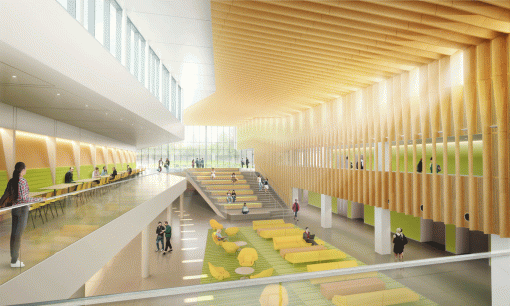
Phase II of Cornell Health is advancing. A lot of the progress in the couple of months has focused on retrofitting the existing 1957 and 1979 additions – there will be a new three-story wing on the northeast side of the building, but it looks like only the foundation and subsurface utilities have been completed. New steel has been built on the 1979 wing, and rough window openings have been punched into the northern face. Meanwhile, the 1957 wing sports some new and very big panes of glass – recall that the building used to sport three levels of window bands separated by beige concrete panels. These large panes give the effect of a squatter, smaller structure, even though the external dimensions of the wing haven’t changed. The new entrance is still being built out. Looking closely, one can see new steel stud walls going into the interior as the old wings get completely gutted to meet the needs of a 21st century health center.

The renovations and new 18,000 SF northeast wing should be complete by August 2017. The $55 million project is being built by The Pike Company’s Syracuse office.

20161119_114006 20161119_114034 20161119_114055 20161119_114120 20161119_114142 20161119_114154 20161119_114214 20161119_114256

gannett_northeast_persp gannett_eat_persp gannett_north_final


Cornell Ag Quad Rehabilitation Construction Update, 11/2016

21 11 2016

It’s that time of the month – construction updates will be forthcoming over the next several days.

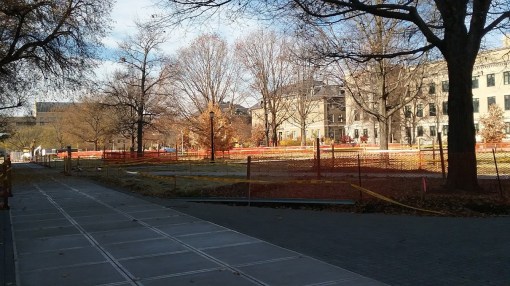
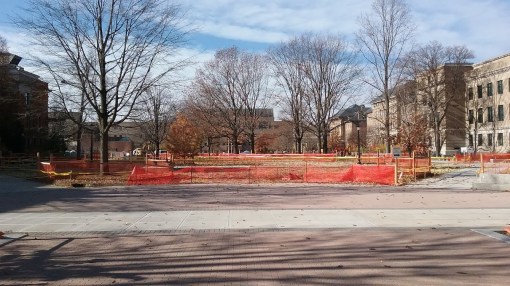
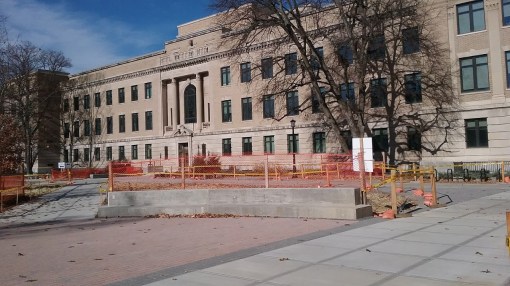
On Cornell’s campus, work on the Ag Quad renovation continues. The eastern half of the quad, closer to Mann Library, is mostly complete – phase one of two. There weren’t as many underground utilities to lay in the eastern half, so it was able to progress more quickly, limiting the risk of running into winter. The new pavers are being set into place, and hay has been thrown down to keep the fresh soil and seed from blowing away, and to provide a warmer, moister environment for it to germinate in when the time comes. Those big holes behind the new seating area are for new trees that have yet to be planted – best practices state that trees are most likely to survive if planted in early spring.

Meanwhile, on the western half of the property, most of the new utilities (electrical, steam, sewer and water) have been laid, and new lamppost mounts are in place. According to a worker on-site, that metal structure in the third-to-last photo is a protective barrier to keep soil from falling back in onto workers as they assemble and lay the new utility lines. The precast concrete blocks in the second-to-last photo are protective covers for the new steam pipes. The pipes are laid, the protective barriers are put into place over them, and the channel is backfilled with soil to bring it to ground level. Cosmetic surface work on the western half of the Ag Quad will have to wait until next spring, when the threat of winter storms has passed.

The $9.6 million project began during the summer, and is scheduled for a completion before the 2017-18 academic year. MKW & Associates LLC of New Jersey is the lead landscape architect, Over & Under Piping Contractors Inc. of Auburn is the GC, and Albany-based CHA Consulting Inc. is providing civil engineering expertise. Background information on the project can be found here.

20161119_112653 20161119_112722 20161119_112732 20161119_112807 20161119_112835 20161119_112911 20161119_112936 20161119_113029 20161119_113341