210 Hancock Construction Update, 4/2017

23 04 2017

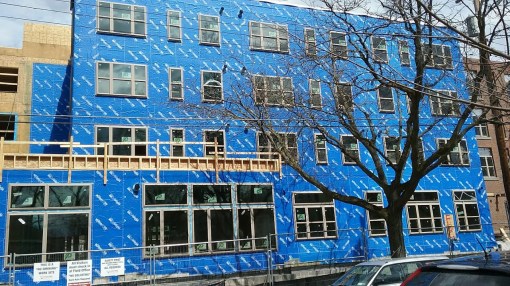
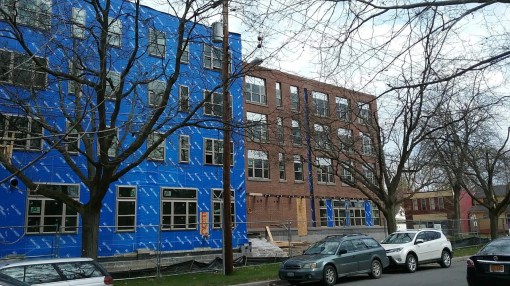
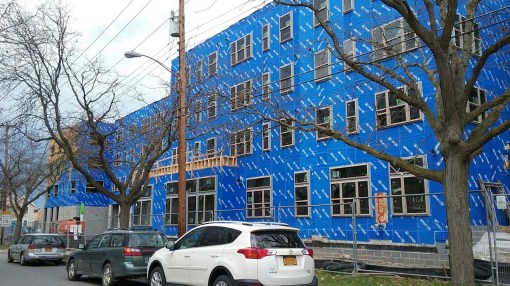
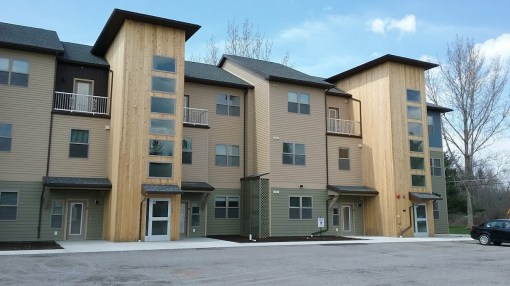
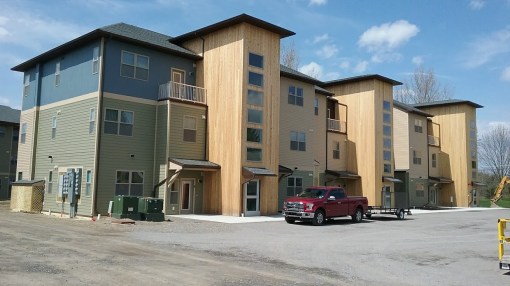
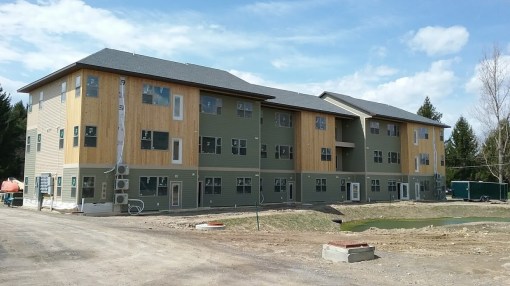
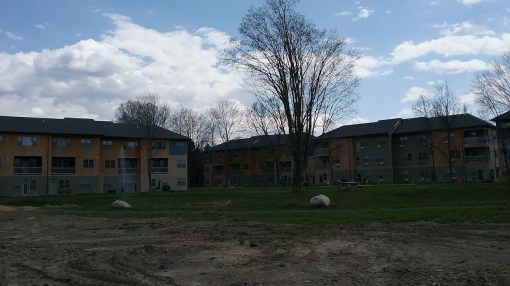
There is so much going on at INHS’s 210 Hancock site, this might be the record for most photos in a single construction update. Let’s go counterclockwise from the southwest corner, since that’s the order these photos were taken.

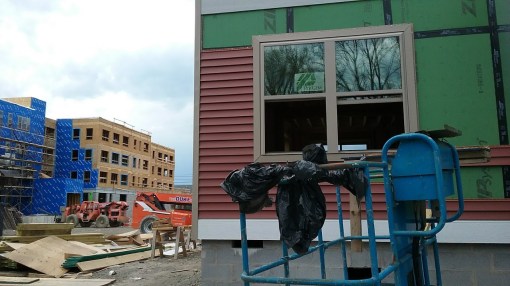
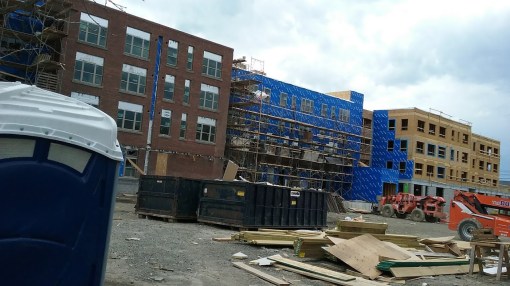
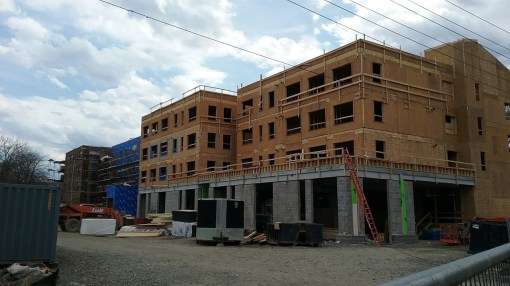
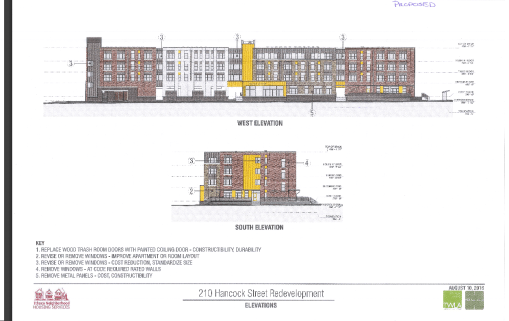
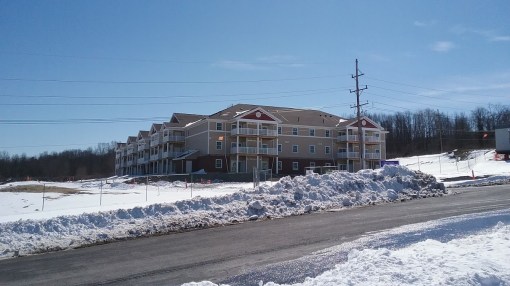
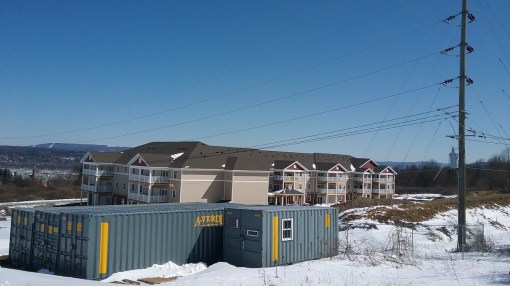
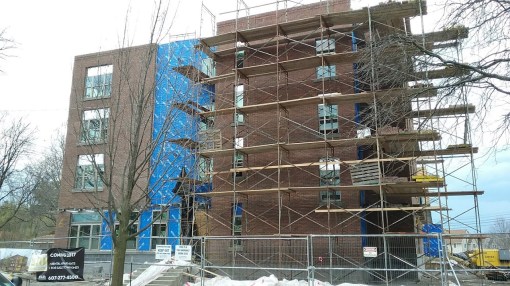
With the apartment building string, Section “A”‘s Blueskin has been mostly bricked over with Redland Heritage Brick. Some Blueskin remains exposed in areas that will be faced with Alpolic exterior metal panels. Fingers crossed that the mustard yellow shown in the elevations looks less jarring in person. It looks like an additional layer of thermal insulation was installed above the windows to go between the Blueskin and the metal panels (mostly dark grey, a few yellow…technically they’re called Alpolic Charcoal and EYL Yellow. the armchair architect in me really wants to harp on the yellow metal panels. I remember a Noah Demarest quote about yellow being a really hard exterior color to pull off. Why not a red or an orange-brown?). The roof is finished and interior fixtures and flooring are being installed.

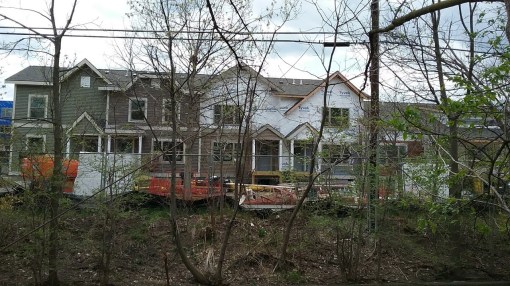
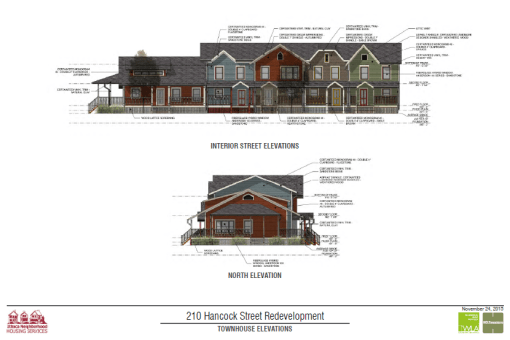
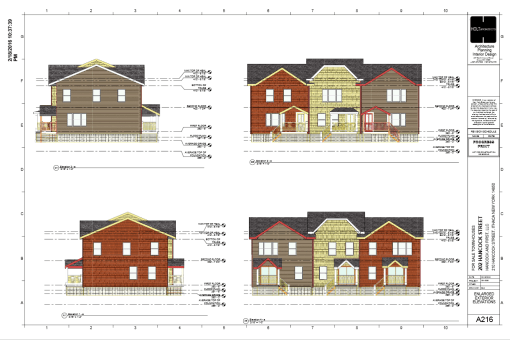
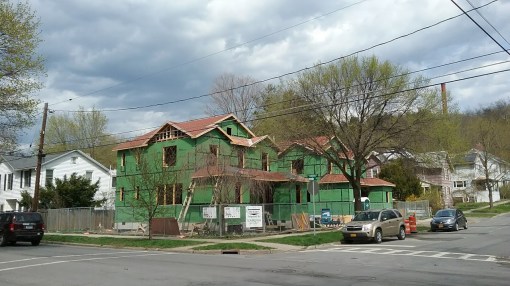
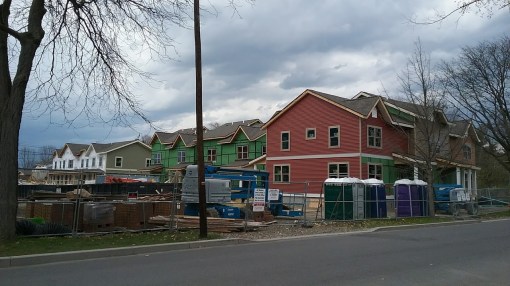
Then we get to the first string of three for-sale townhouses, which will have addresses for the 200 Block of Hancock (apart from 202, I’m forgetting the exact numbers). They look nothing like the elevations submitted for IURA review, and that is not a bad thing. INHS is using Certainteed clapboard siding on the exterior. The one on the west (left) is “Autumn Red”, and the one on the east (right) is “Mountain Cedar”, both of which were used on the Stone Quarry project. The shades of brown and grey are so similar it’s hard to tell what the middle one is, maybe “Hearthstone”. It looks like a mixture of sizes as well, maybe 4″ on the left and middle, and 7″ Mountain Cedar on the right. The trim pieces are Certainteed vinyl and vary slightly in color, neutral whitish or tannish shades like “Sandstone Beige”, “Natural Clay” and “Desert Tan”.

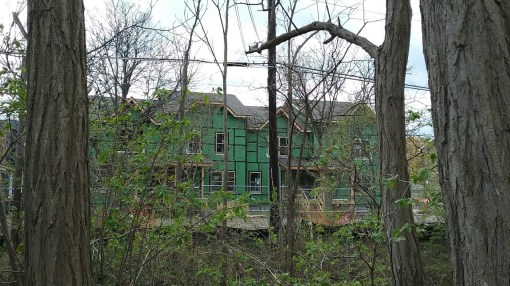
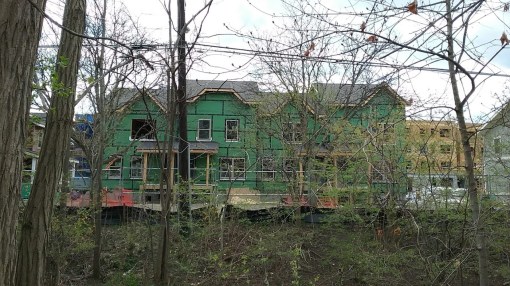
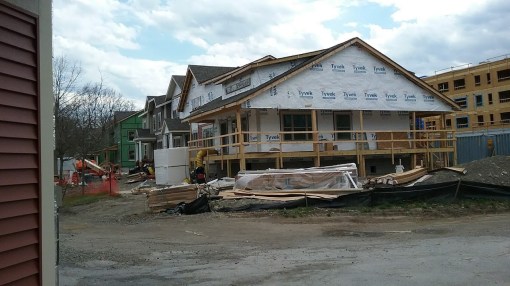
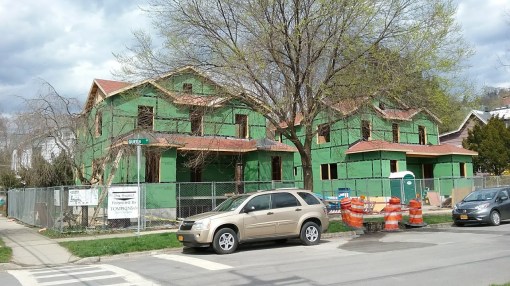
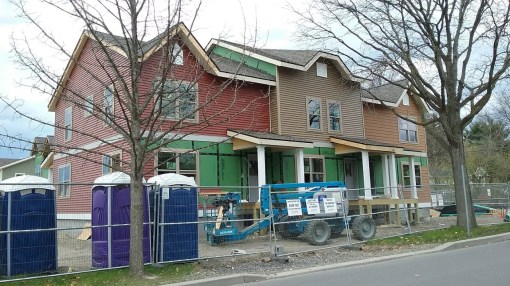
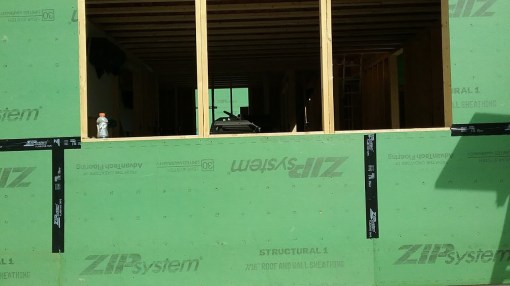
Circling around to the 400 Block of Lake Avenue highlights a construction contrast between the for-sale units and the five for-rent units further north. The for-sale units are wood-frame, plywood Huber ZIP sheathing, and exterior finishes. The for-rent units are wood-frame, standard plywood sheets, Tyvek Housewrap, and exterior finishes. The difference between the two is really a matter of preference – both are effective water-resistive barriers if installed properly. ZIP panels tend to be easier to install (lower labor cost), but more expensive as a product.

The Certainteed colors on the rentals are “Spruce”, “Sable Brown”, a split-level “Autumn Red/Hearthstone”, “Flagstone” and another “Autumn Red”. Some of these will be 4″ clapboard, others 7″ shingles – all Certainteed, all to give the impression of individual units so they play well with their older, detached neighbors. The Spruce Green unit looks a little odd with that big blank wall above the porch, and in the renders and elevation it appears to be bigger than the final product.

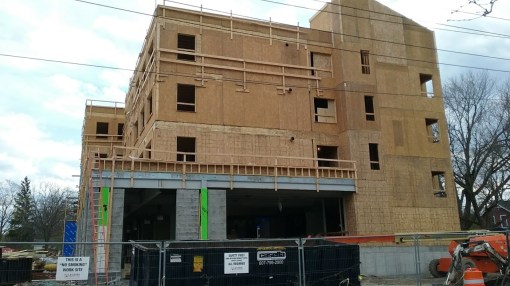
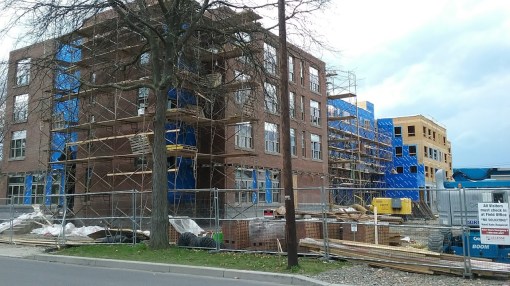
Apartment sections “C” and “D” are still being framed, and “B” has been fully skinned and fitted out with windows. “B” will be faced with will use Carolina Ceramics Teakwood Brick and Morin blue-grey corrugated steel with pearl, EYL yellow and charcoal Alpolic metal panels, “C” will use Redland Whitehall Brick (white brick) as well as Alpolic panels, and “D” will use the same Heritage Red brick as “A” but, with some corrugated steel on the stairwell. “C” and “D” also have a first-floor covered parking garage. The garage will be face in Barnes and Cone Masonry, but the city’s November 2015 filing makes reference to a product that doesn’t appear in their brochures.

The apartment will be ready by August 1st, and the for-sale units will be on the market by the fall. Lecesse Construction is the general contractor.

1001 North Aurora Street Construction Update, 4/2017

21 04 2017

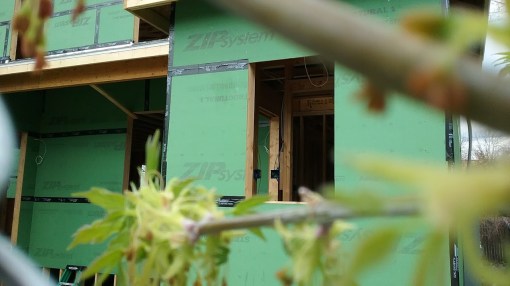
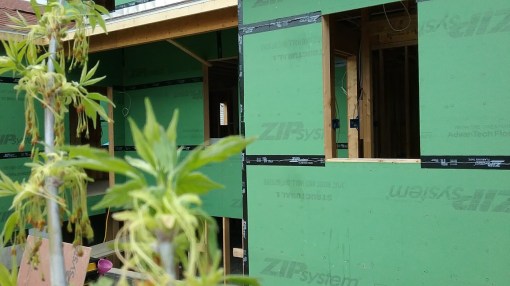
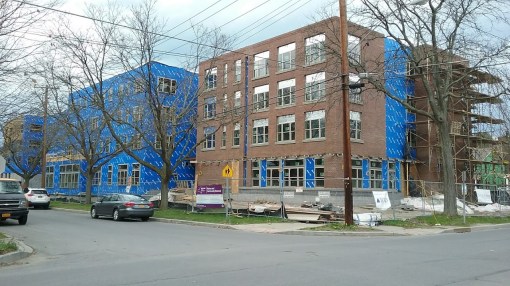
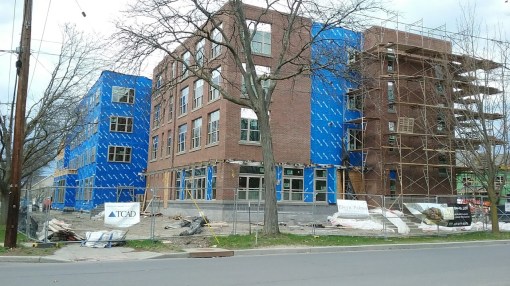
Some more progress on the two-building, four-unit 1001 North Aurora Street project in Fall Creek. Since February, the building have been framed out, roofed and shingled. For the record, the shingles are Owens Corning TruDefinition Duration Shingles, Terra Cotta color. Huber ZIP System plywood sheets are being attached to the exterior over the wood studs, and interior framing, rough-ins and drywall is underway.

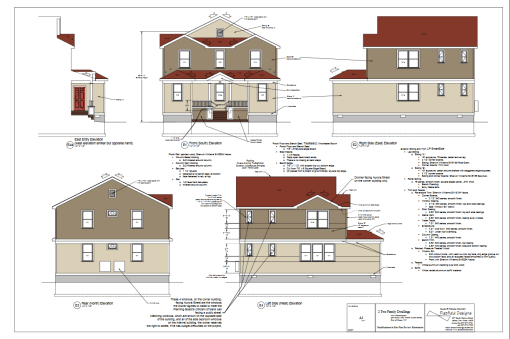
On a happy note, it looks like the side windows on the eastern building, which had the potential to be deleted as a cost-saving measure, are indeed going in based on the rough openings. The exterior will consist of two brownish shades of LP SmartSide cedar texture siding, with a white lap band and trim. Technically, that white is Sherwin-Williams “Nacre”, and these plebeian lips had to go to Google to figure out how that’s pronounced (NAY-ker). Because mother-of-pearl is just two darn pedestrian. The browns are “Rice Grain” and “Sawdust”.

Developer Stavros Stavropoulos (d/b/a Renting Ithaca) should be bringing these 3-bedroom rental units onto the market by the end of May, as 202 Queen Street and 206 Queen Street. Shortly thereafter, he and architect Daniel Hirtler which be launching into next project, and their biggest to date – a 3-story, 11-unit apartment building at 107 South Albany Street, just west of downtown.


201 College Avenue Construction Update, 4/2017

19 04 2017

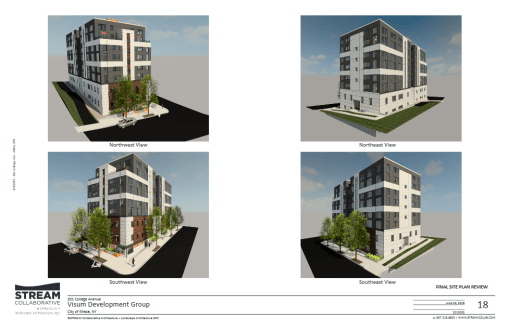
Dropping by Visum Development Group‘s 201 College Avenue project, I was a little surprised that one half of the building is so much further along than the other half.

201 College is a “H” or dumbbell-shaped structure – the bridge between the two halves hosts the elevator shaft and part of the circulation (hallway). The west wing has completed structural framing, the exterior stud walls are being installed, and even some of the sheathing (fire-rated GP DensGlass fiberglass mat gypsum) is up on the ground level. Peering inside, it looks like some of the interior stud walls have already been set.

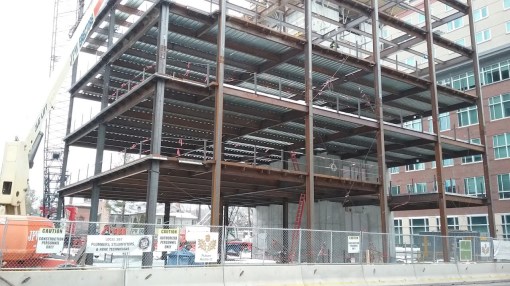
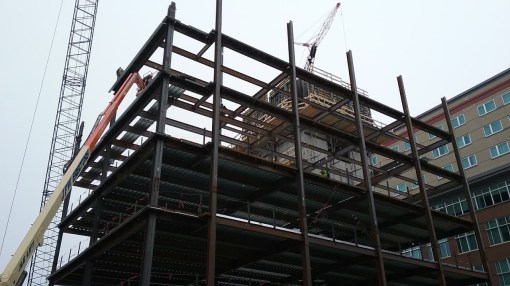
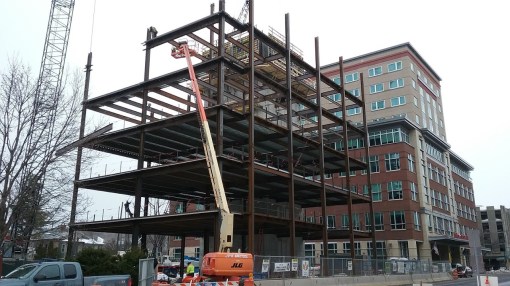
In contrast, the east wing isn’t that much further along than it was two months ago – the ground level masonry has been built-out, but the structural steel has not advanced since the February update. It’s not a sign of any difficulties, and other structures have taken or are taking similar approaches – Tompkins Trust’s new HQ has topped out, for example, but the north and east wings have yet to be built out beyond the elevator core. Still, it will take several weeks for the east wing to catch up when William H. Lane Inc. moves ahead with that side of the structure.

According to the construction loan docs filed with the county, the 33,398 SF project is being funded with a $7,870,673 loan from Pennsylvania-based S&T Bank, separate from the $2,640,000 from Visum and its backers that went towards purchase of the property. Hard costs, which are the construction materials and labor, comprise $6,841,038 of the loan, while soft costs comprise $506,984 (permits, legal, marketing, architect and engineering fee, liability insurance, financing costs such as loan fees/taxes/recording costs). An additional $300,000 serves as contingency (your “cover your butt” cash in case of unexpected expenses or poor occupancy rates), and $226,158 is set aside as interest reserve (a special savings account that pays the lender interest on the construction loan while the building is under construction – the objective is to get the building done and occupied before the reserve runs out).

The timeframe is quite tight on 201 College, with a planned August 2017 opening. The rest of the building should move along quickly over the next few months.


Village Solars Construction Update, 4/2017

19 04 2017

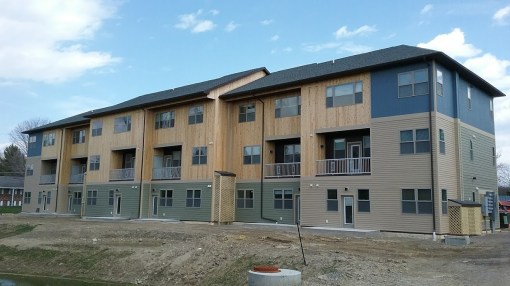
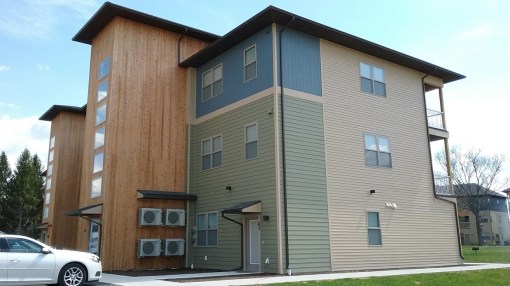
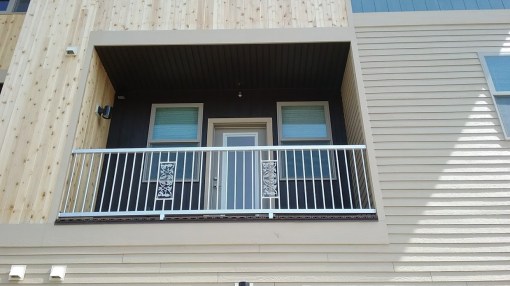
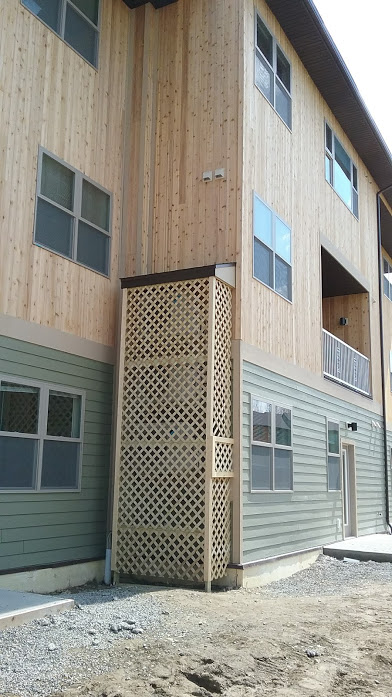
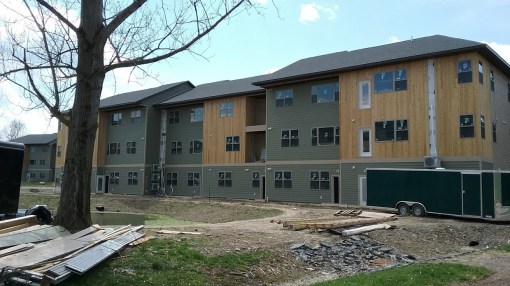
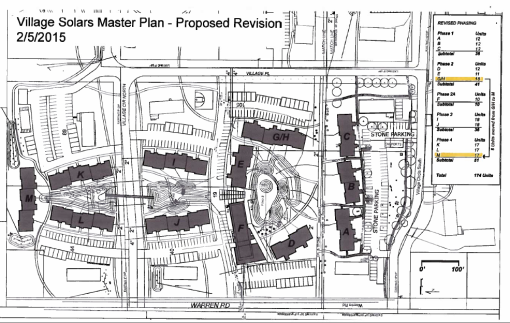
At the never-ending Village Solars apartment complex in Lansing, Building “I” is nearly complete from the outside. It sports a few details that make it stand apart from earlier phases – the balconies railings are a different design, a dark-colored fiber cement board is being used for some of the balcony alcoves, and the heat pumps have been hidden away under a wood lattice screen. Given how clean the immediate project site is, it would not be a surprise if this building is aiming for a May 1 occupancy.

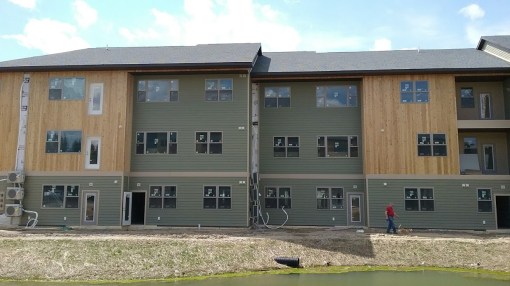
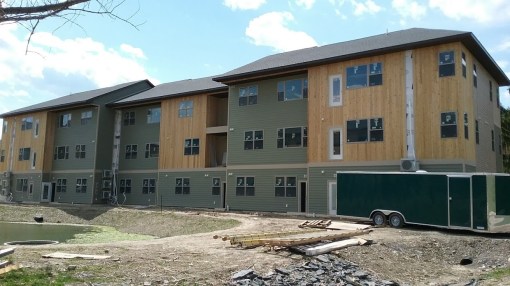
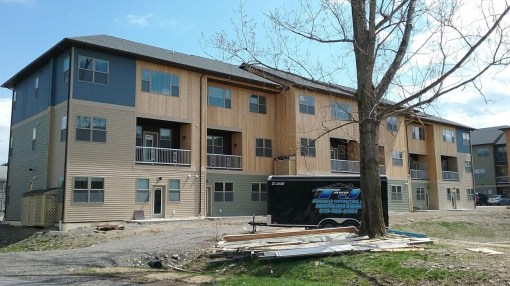
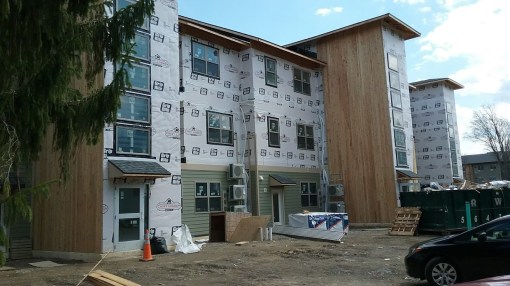
Meanwhile, Building “J” is a little further behind – the windows and doors have been fitted and the roofing is complete, but the exterior wood grain and fiber cement panels are still a work in progress, as is the building trim. The doors on the upper levels will likely lead to small juliette balconies like those seen here. Inside, it’s stud walls and rough-ins, and there did not appear to be any drywall hung yet.You can see the unscreened Daikin heat pumps in the fourth photo below. It looks like the roofing was done by T and J Associated Contractors out of Auburn.

It doesn’t look like work has started on Phase 4 yet, which should consist of the last three buildings in the first stage of build-out (“K”, “L”, and “M”). If it’s anything like the previous phases, the construction team will start with the Phase 4 site clearing this summer. The later stages of development call for multiple phases to the east, and possible replacement of some of the older 1970s apartment buildings with newer structures [3/22 Town Board Minutes]. Potentially, the complete build-out would be around 423 units, from 400 SF studio micro-units to 1,185 SF three-bedroom two-bath apartments. Keep in mind, that would be several years out, well into the next decade. Along with those units come community space, retail components, expanded trail and outdoor components and a bus stop.

Rents look to be in the middle of the market – the micro-unit studios start at $865/month, going all the way up to top-of-the-line three-bedroom units at $1680/month. One-bedrooms and two-bedrooms start at $950/month and $1260/month respectively.

While looking around, an older gentlemen walking his dog went in and out; dunno if it was a relative of the Lucente family (the owner/developers, d/b/a Lifestyle Properties), or a curious onlooker.


209-215 Dryden Road Construction Update, 4/2017

17 04 2017

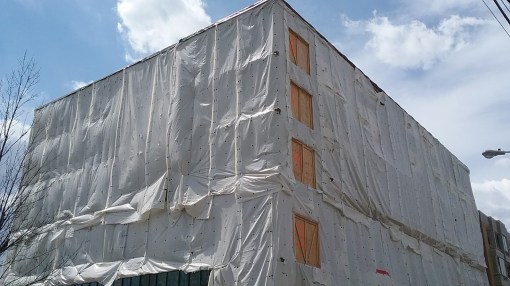
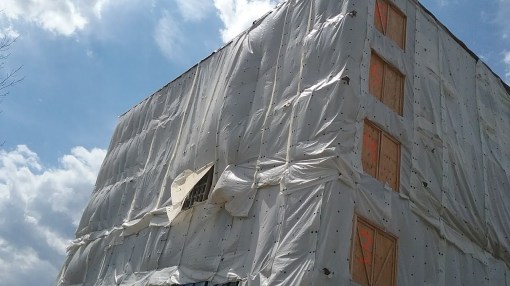
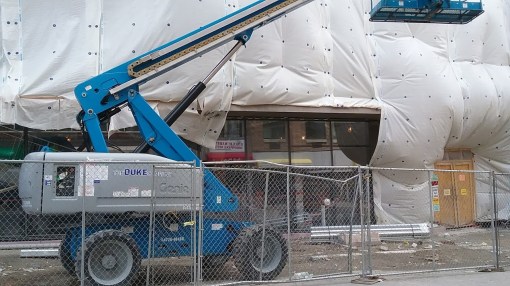
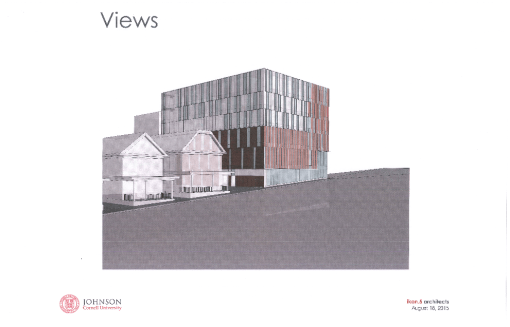
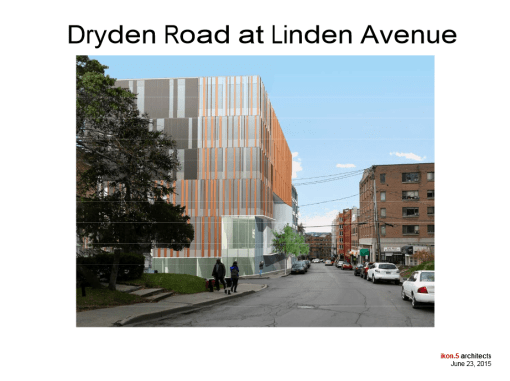
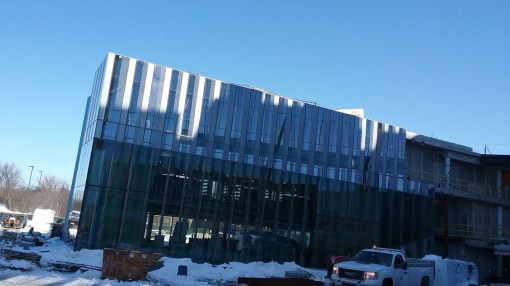
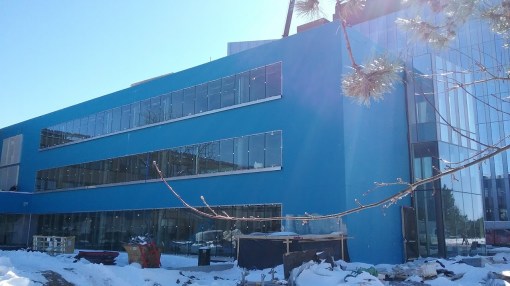
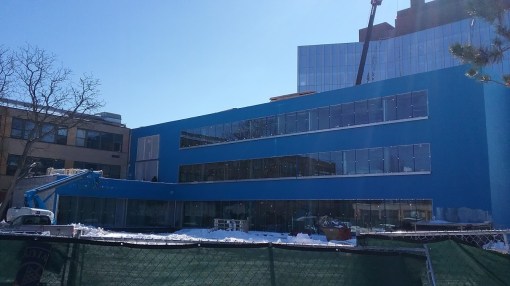
Work on the new Breazzano Center continues in Collegetown, with the exterior plastic sheets slowly being replaced by the metal and glass facade. On this particular windy day, the tarp was flapping enough to reveal a bit of the exterior metal stud walls underneath. On the rear of the building, the salmon-orange and dark grey panels now cover most of the exterior wall. The recently proposed 238 Linden townhouses will come up to about the top of the third floor, where the salmon panels change over to grey. 238 Linden will be roughly the same color as the lower-level panels, probably with the same metal finish. Note the clips on the exterior wall, which are for aluminum sunshades.

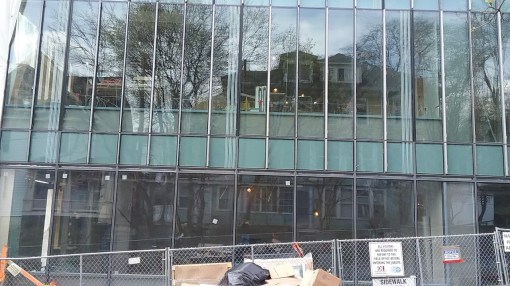
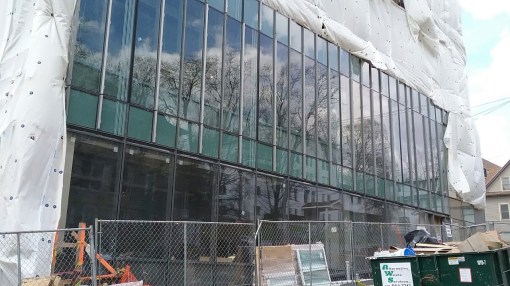
I’ve had contractors tell me that one of the ways you can tell the quality of the curtain wall glass is by how much distortion one sees in the reflection (optical distortion). Based off that criterion, the glass used on the entry level appears to be a fairly high grade. The opaque glass panels are called spandrel glass, and are used to conceal the floor slabs.  It looks like the thin vertical steel panels will be installed over the curtain wall, though not in all places – The northeast corner and ground floor will not have the steel panels, nor will the atrium at the front of the building.

One can barely see the interior work in these photos, but the interior stud walls were up and drywall has been hung on the lower floors, which means that most of the utilities rough-ins have been completed.

The last photo, which comes courtesy of Tom Schryver, gives an idea of the scale of the building in context – at six floors and 80 feet, it is the tallest that the Collegetown form zoning allows without a variance. At 76,200 SF, it’s the fifth-largest by square footage, after Cascadilla Hall (77,913 SF), The Schwartz Center (80,989 SF), Eddygate (95,000 SF) and 312 College Avenue (112,392 SF).


Upson Hall Construction Update, 3/2017

29 03 2017

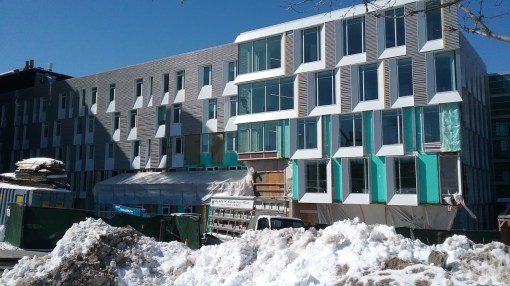
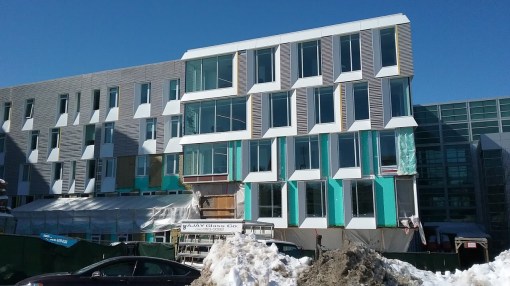
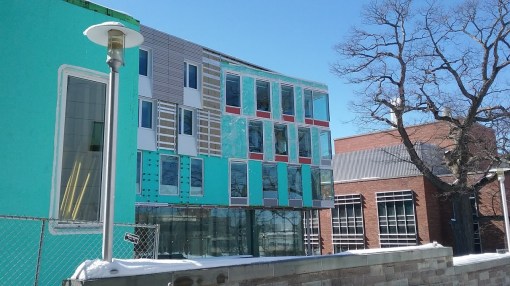
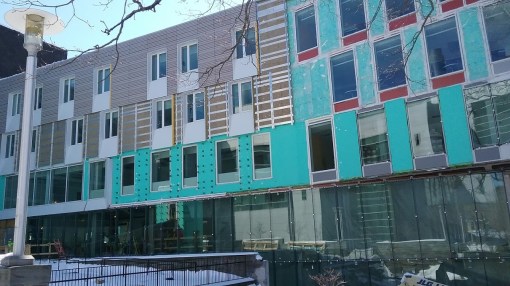
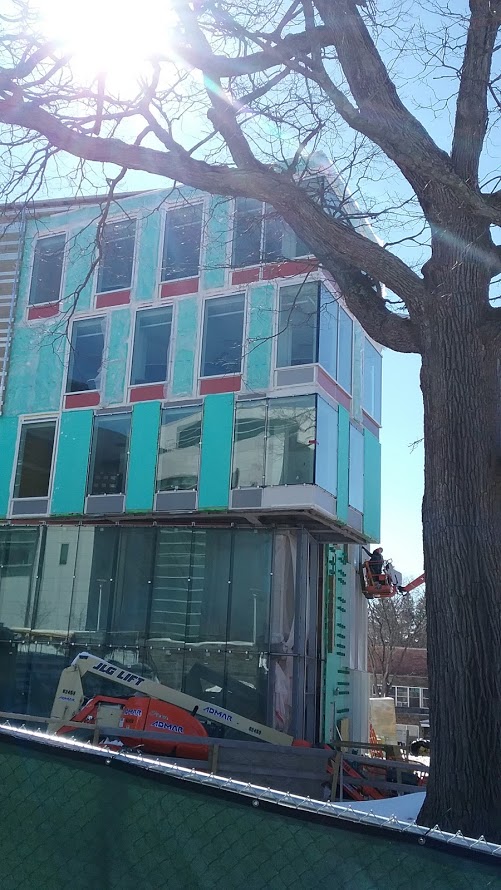
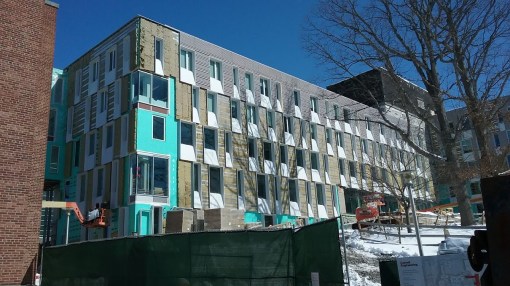
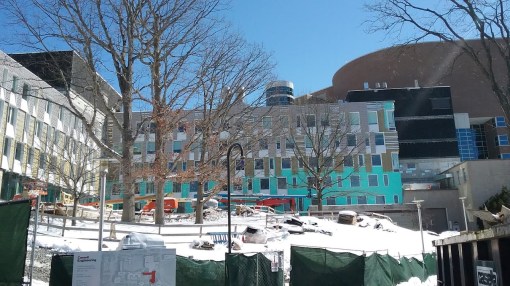
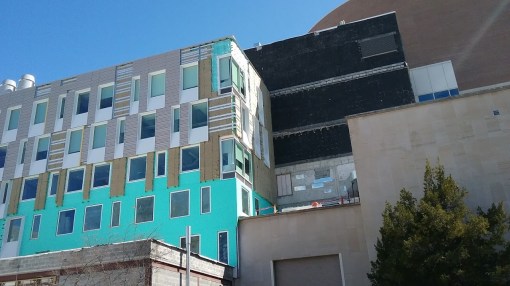
The new aluminum and terracotta facade is working its way down the lower floors. New window inserts and panels have been installed since the January update, although many sections are still bare, the turquoise water-resistive barrier the top layer for the time being. Slowly but surely, metal fasteners are being attached to the WRB, mineral wool insulation is attached, and the clips are completed with cross-sectional bars so that the terracotta can be put into place.

According to the last Upson construction update from Cornell Engineering, interior framing and drywall is underway on the lower floors, as well as new utilities rough-ins and mechanical piping. One can see a section of drywall through the new windows in the photos below.

The goal is to have the building completed by August, with temporary landscaping until the third phase has been funded. One has to applaud the Upson staff and students who have had to put up with the construction for what’s been almost two years at this point. The upper three floors were finished last summer, and the basement, first and second floors are being completed this year.


Cornell Law School Renovation Update, 3/2017

28 03 2017

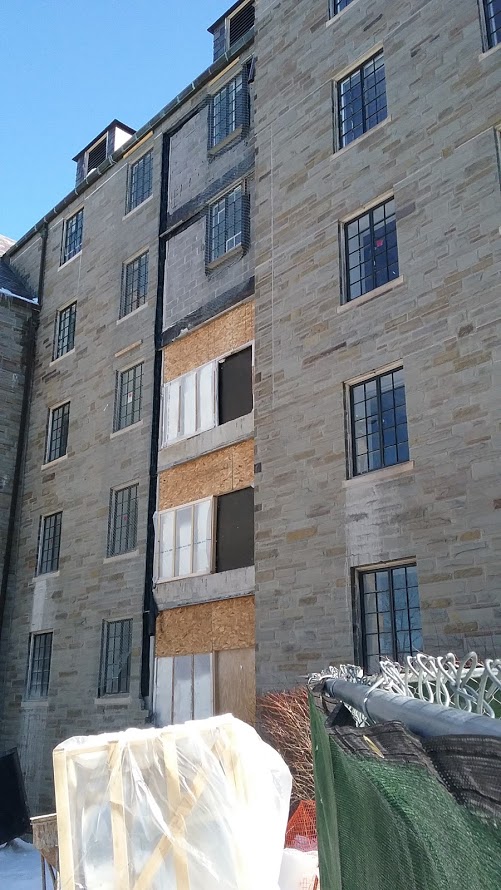
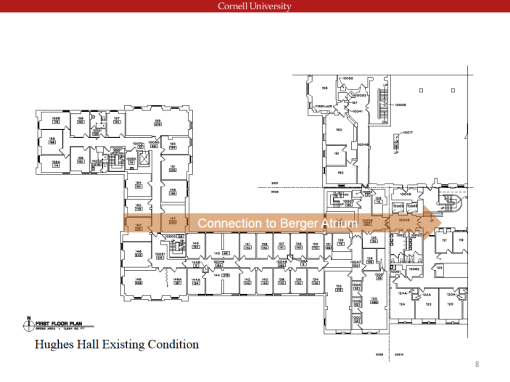
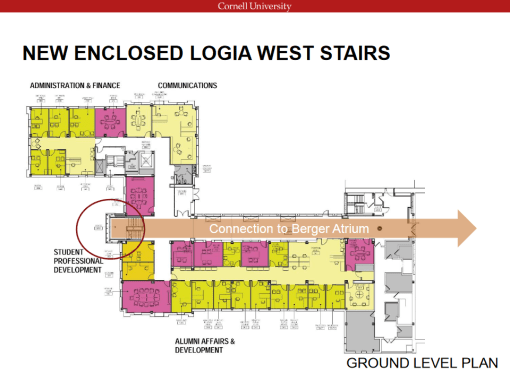
Finally starting to see a little bit of progressing on the renovations to Hughes Hall. The rest of the old masonry wall on the lower floors has been stripped out, and is covered with plastic and plywood for the time being. Eventually, the space will be opened as the new glass enclosure is built for the new west staircase. For the record. the stairwell is completely new; it replaces one that was slightly further to the east, on the inside corner of the building. This gut renovation is down to the studs, and then some. No work on enclosing the loggia just yet.

Design work is by KSS Architects, with offices in Princeton and Philadelphia. Frequent Cornell collaborator Welliver is the general contractor. The project is expected to cost about $10.2 million and take about 13 months to complete, meaning November 2017 if all goes to plan.


Cornell Veterinary School Expansion Construction Update, 3/2017

26 03 2017

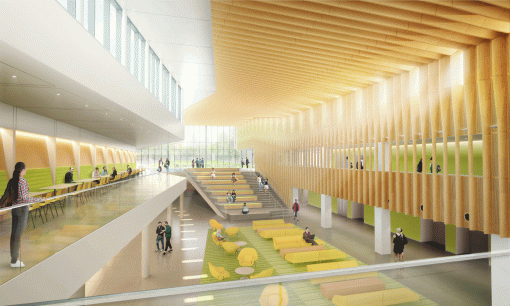
There’s been quite a bit of progress over at the Vet School. It looks like the exterior glass and aluminum are going on the new library and administrative wing. Windows and sheathing have been installed on the north face as well, with a water-resistive barrier applied over the sheathing. The new atrium is being framed out.

According to the Vet School’s construction update page, interior framing and utilities installations are underway in the new wing, and the new cafeteria is under construction – both are aiming for August completions. The new atrium and lecture hall will be closed off shortly, with interior work to launch in earnest once that occurs.

Thanks to Maria Livingston over at HOLT Architects, readers now know what the new Community Practice Service building will look like. Syracuse’s G. M. Crisalli and Associates Inc. has been selected as general contractor, and construction for the $7 million, 12,000 SF wood-frame structure is expected from March 2017- March 2018.


Tompkins Financial Corporation HQ Construction Update, 3/2017

25 03 2017

Apparently I forgot to to an update on the Tompkins Financial project last month? It must have slipped off the radar after the Voice received its spark notes version. Funny how it was about 60 F when the February photos were taken, and about 30 F when the March photos were snapped.

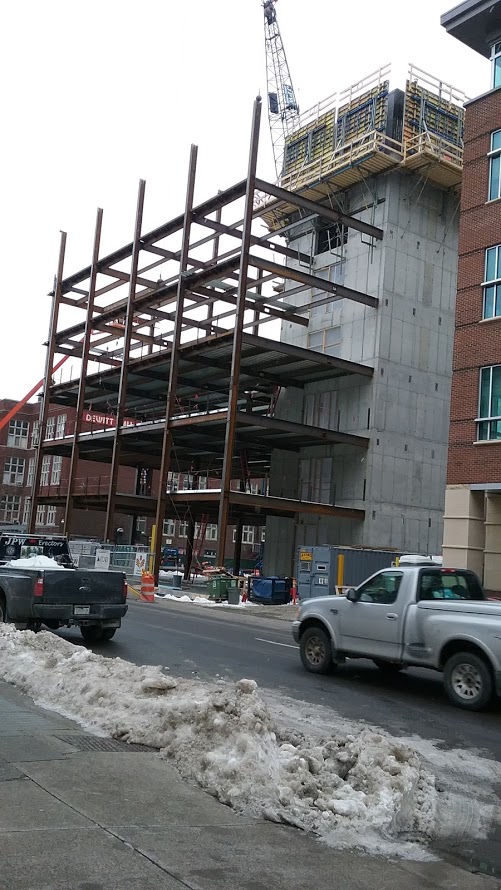
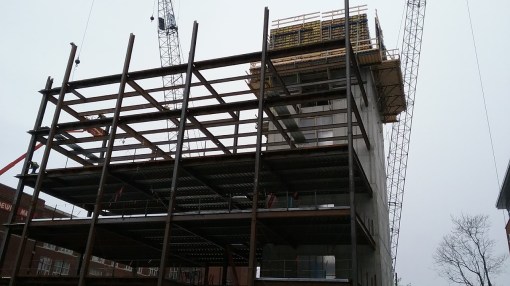
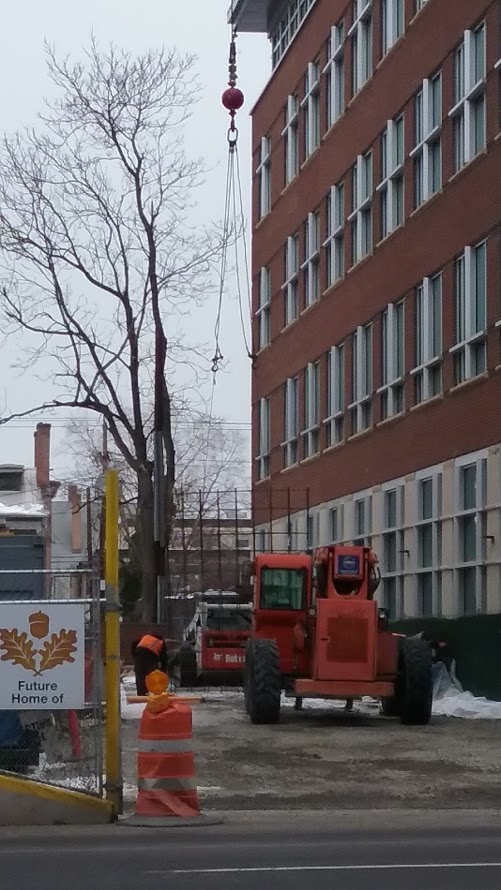
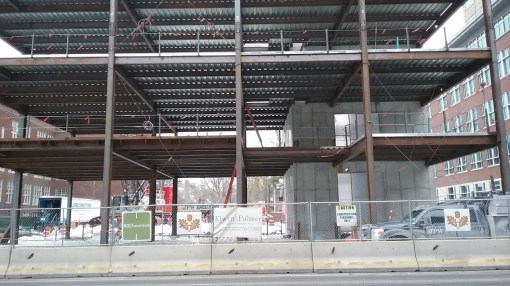
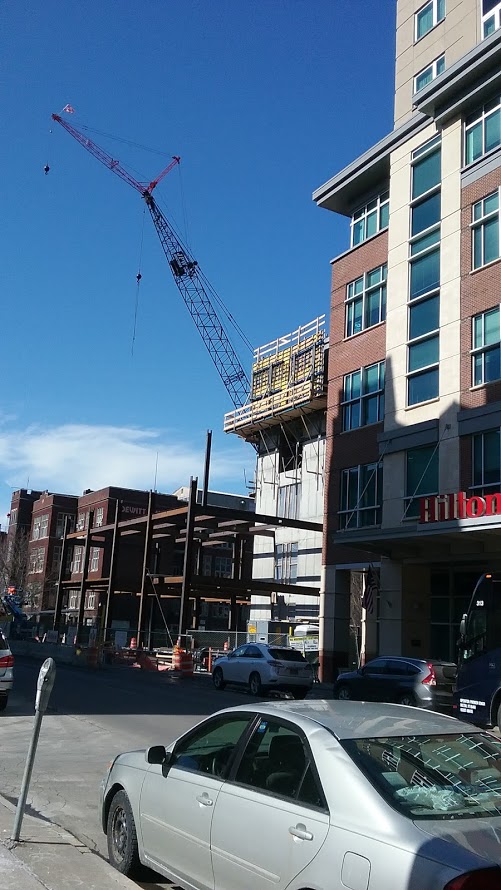
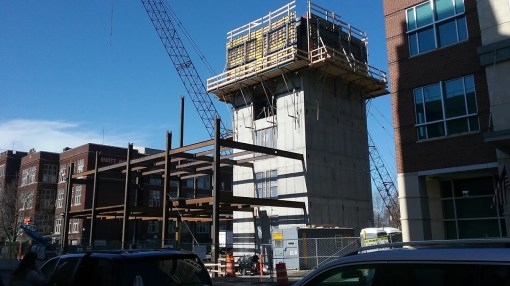
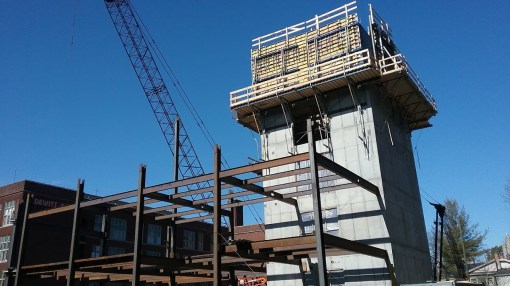
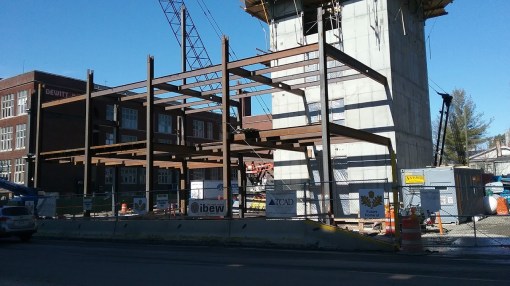
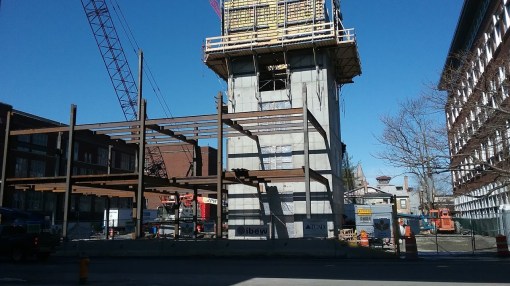
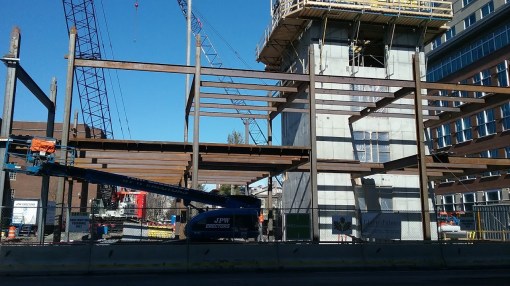
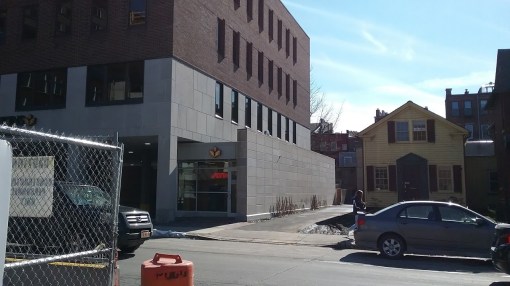
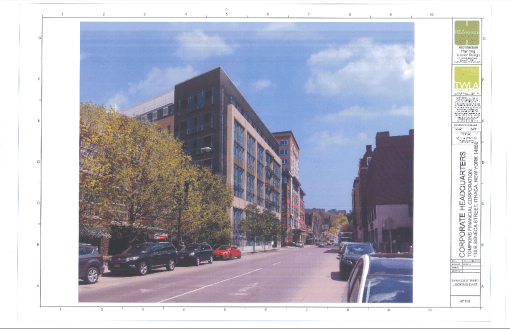
Anyway, structural steel framing is underway, giving an idea of the bulk of Tompkins Financial Corporation’s new 110,000 headquarters at 118 East Seneca Street. Framing has started for the first five floors of the seven story building, and mor beams will be built upward and outward – note the indents in the elevator core on the side facing Seneca Place, intended for future steel beams. The lowest floors have also received corrugated steel decking. There are still a couple of floors to go, as evidenced by the wood forms on the elevator shaft. The concrete will extend another two floors before it’s topped out. The building’s ground to rooftop height will be exactly 100 feet.

A May or early June topping out seems plausible. Occupancy is intended by March 2018. JPW Erectors, a division of the JPW Companies of Syracuse, is in charge of the framing, while LeChase Construction is the general contractor.
February 2017


Cayuga Meadows Construction Update, 3/2017

23 03 2017

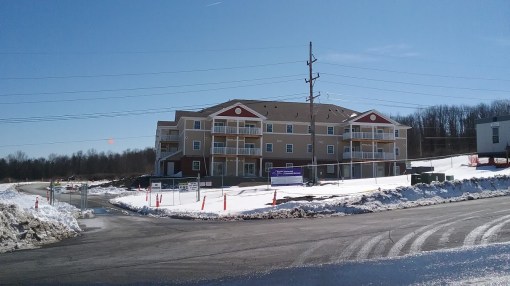
Another project is on the final stretch towards completion. Conifer LLC’s Cayuga Meadows affordable senior housing project is largely finished from the outside, with only some minor trim and landscaping left. Most of the work has transitioned to the interior, fitting out the units and finishing them out in time for their late summer occupancy. Leasing is underway. Here’s a copy of the rental ad:

Located in the heart of Ithaca, Conifer Village at Cayuga Meadows is a brand new senior apartment community offering energy efficient one and two bedroom apartments homes for individuals 55 and older. Cayuga Meadows has set aside nine units for those with disabilities and an additional three units for hearing and visually impaired. The community will offer many amenities along with breathtaking views of Cornell University and the hills of Ithaca. Occupancy by Summer 2017. 
Qualified Hurricane Irene or Tropical Storm Lee impacted residents will be given priority for the first 90 days of rent up.

That last part might seem a little odd, but it was a stipulation of their state grant funding, which was source from the Storm Recovery Act (not so much Ithaca, but the Southern Tier did receive substantial damage from the remnants of Tropical Storm Lee back in 2011).

Advertised features and amenities include:

Fully equipped kitchens with Energy Star rated appliances & fixtures
Dishwasher
Elevator
Great room with kitchenette
Laundry center
Fully equipped fitness room
Computer lab
Controlled building access
Professional on-site management
24 hour emergency maintenance
GREEN building (don’t think LEED certified though)
Accessible for people with disabilities (7 for mobility impaired, 3 for visually impaired)
Ample on-site parking (72 spaces offhand)
Community vegetable garden
Easy access to public transportation

Rents will go for $779 for a 1 bedroom, 1 bath (59 units available, 654-689 SF), and $929 for a 2 bedroom, 1-2 bath unit (9 units, 905 SF). Applicants must be 55+ and be income eligible, which at 60% of area median incomes means seniors making ~$30,840/year or less for a single person, or ~$35,280/year or less for a couple. If any readers here are on the cusp and unsure, it never hurts to ask – the general inquiry email is cayugameadows@coniferllc.com.