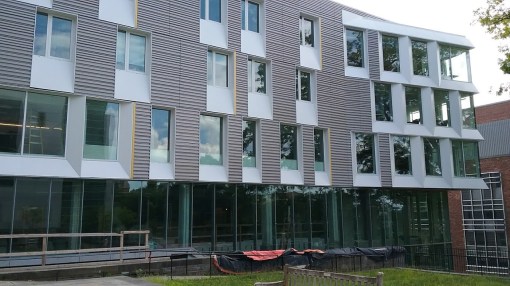
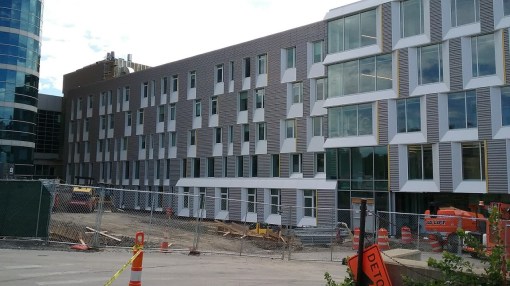
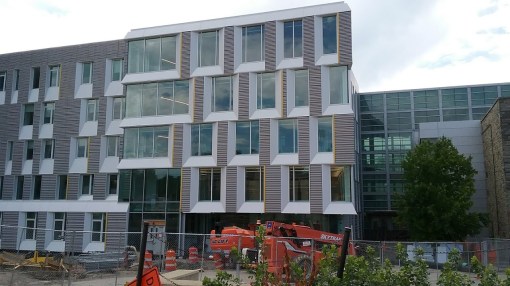
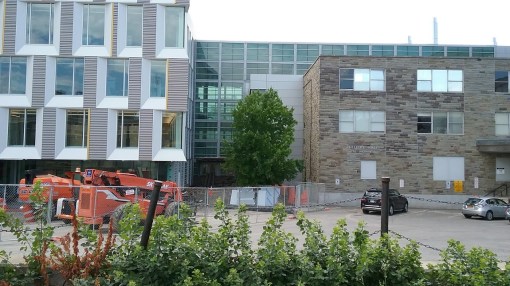
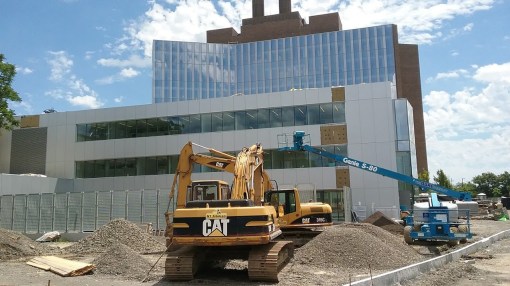
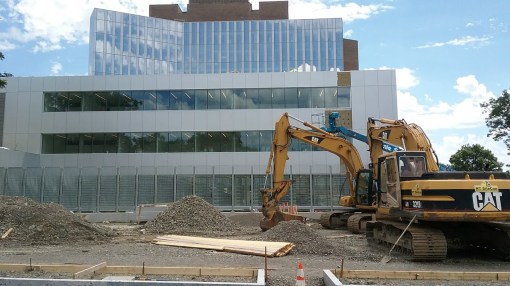
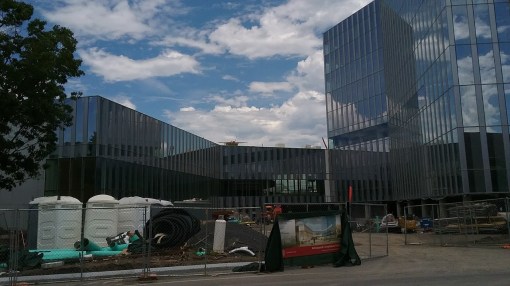
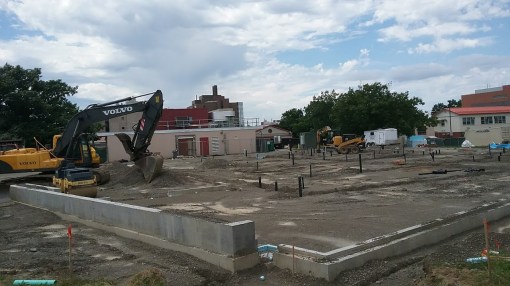
Chapter House / 406 Stewart Avenue Construction Update, 8/2017

17 08 2017

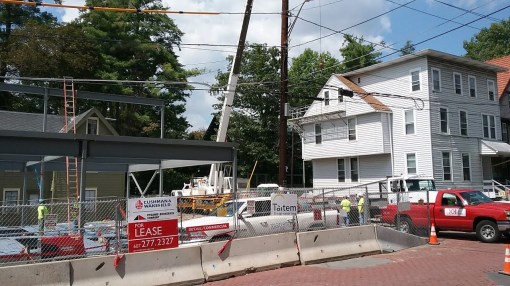
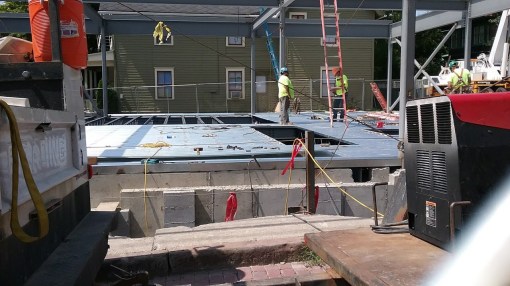
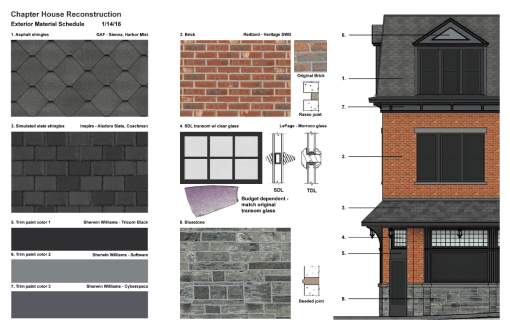
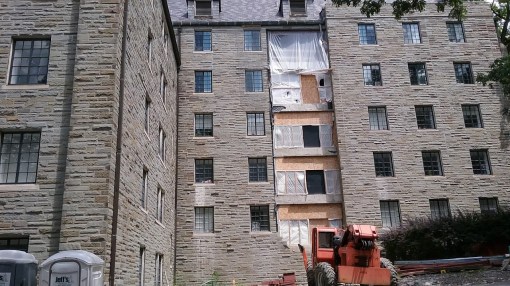
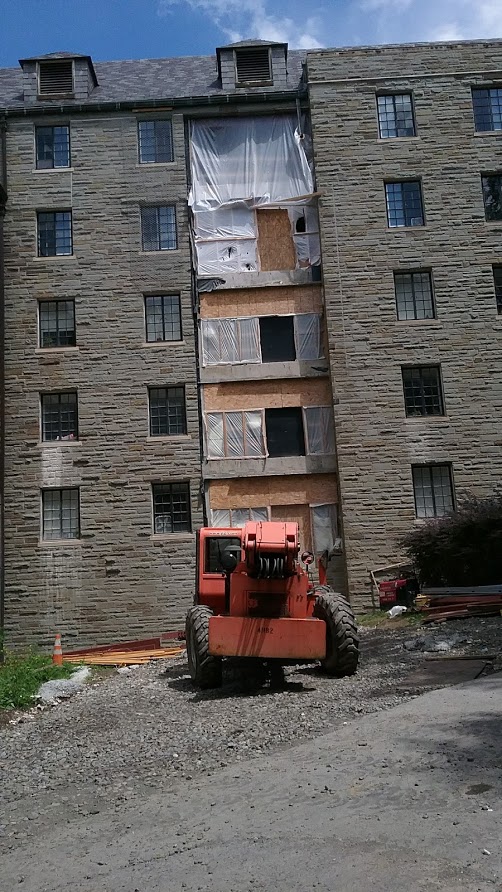
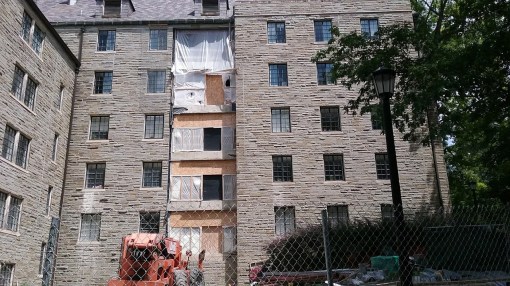
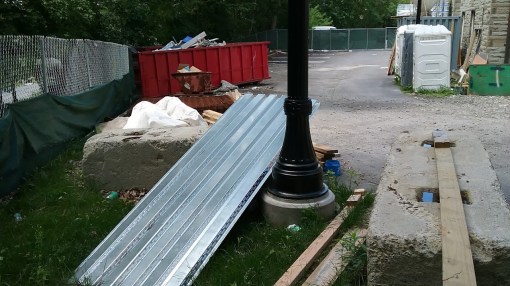
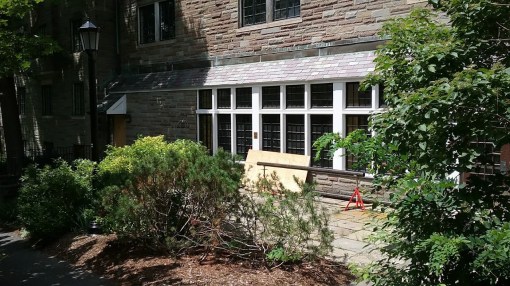
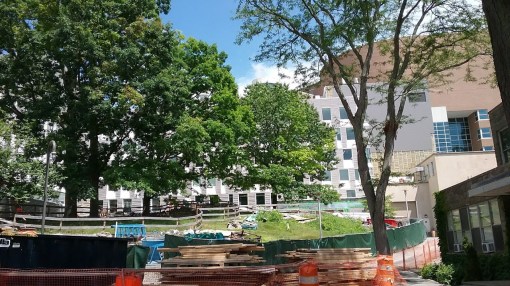
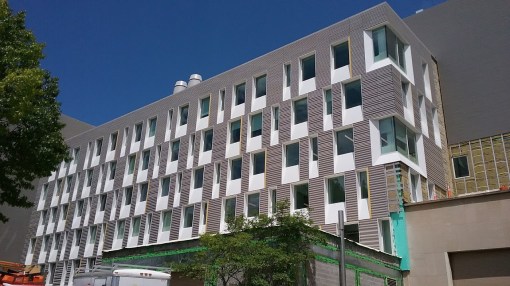
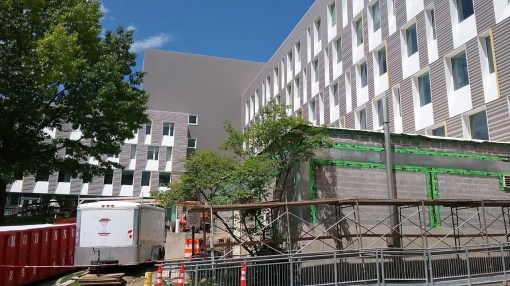
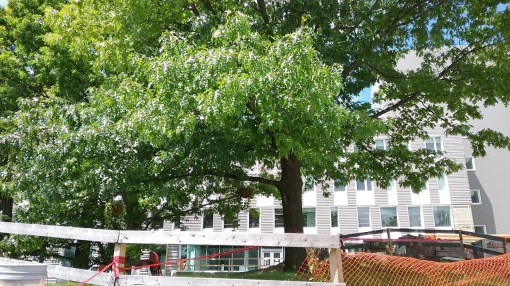
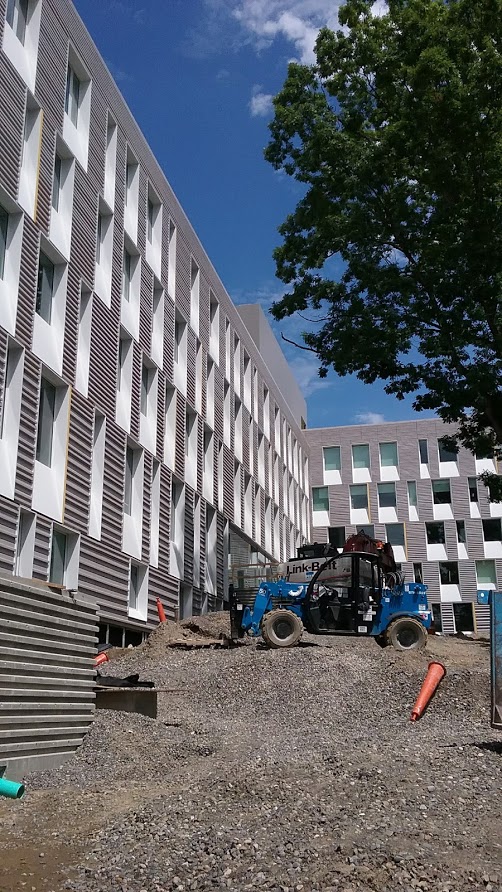
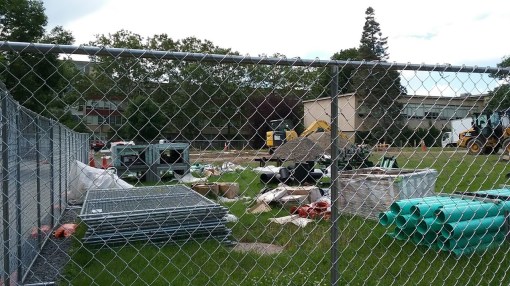
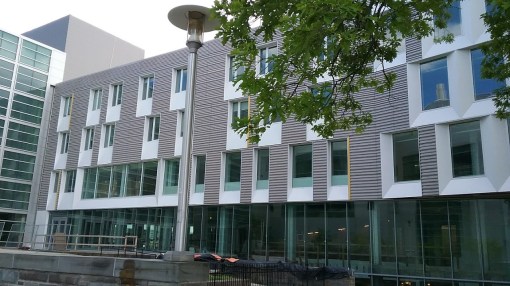
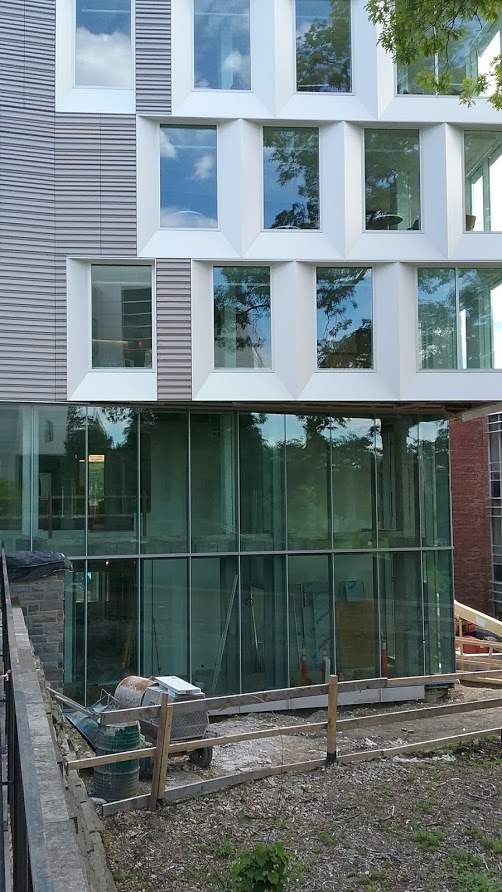
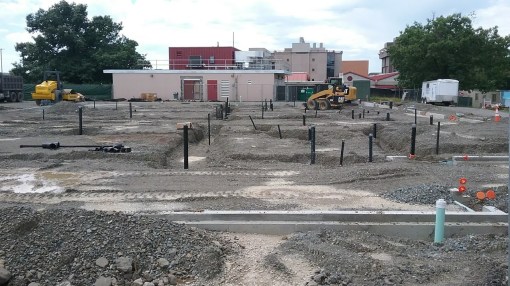
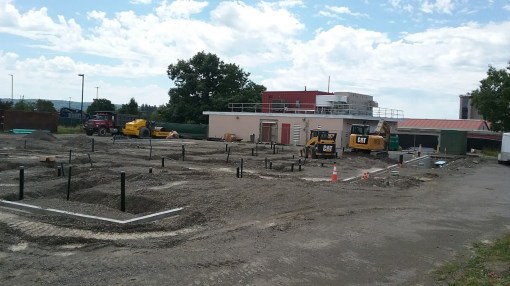
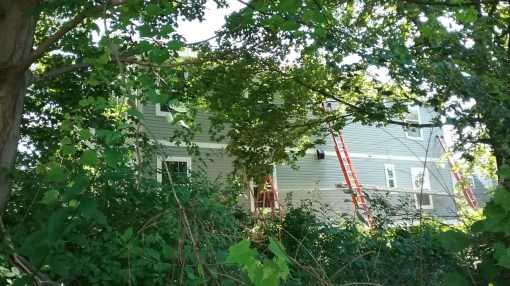
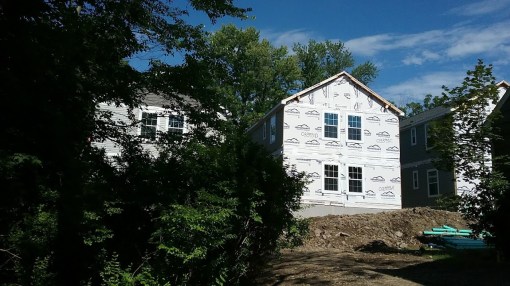
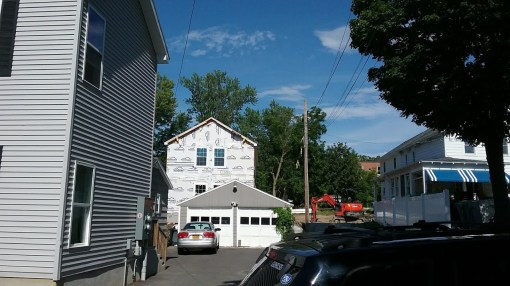
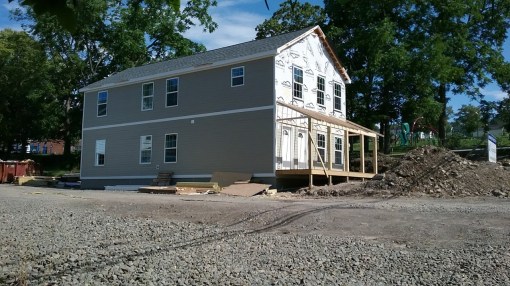
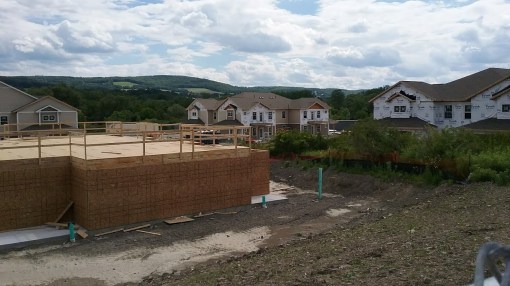
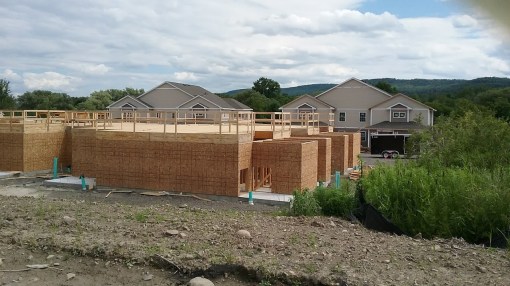
Some good news and some bad news. The good news is, the replacement building for 400-404 Stewart Avenue is well underway. No false starts, no rumor milling. The new structure is quite substantial for a modest three-story building – structural steel frame (currently up to the second floor), steel floor panels, finished basement, – all heavy duty, commercial grade construction, befitting for a mixed-use structure with possible food retail or general retail tenants on the 3,000 SF ground floor. Note the structural cross-beams; those well segments will not have windows. The exposed portion of the concrete foundation wall will be faced with bluestone later in the build-out. The fifth photo shows no concrete between the floor panels and foundation, presumably because the corner entrance will have an interior stairway that steps up to the ground level.

Now for the bad news. I chatted with a worker on the site, and when I said “the Chapter House site”, he chuckled, shook his head, and recommended I don’t use that phrase. “The Chapter House ain’t coming back,” he said before picking up a shovel. “People will forget all about it in four years anyway.” It hasn’t been a secret that the Chapter House likely isn’t making a return, but for many students and non-students, it’s still a disappointment to hear that.

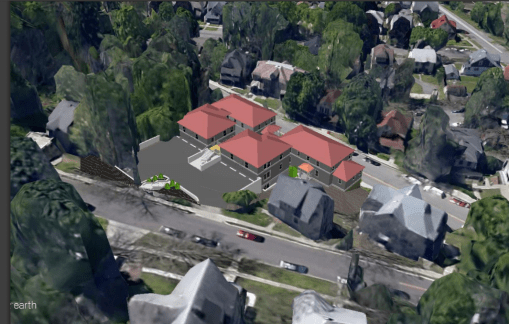
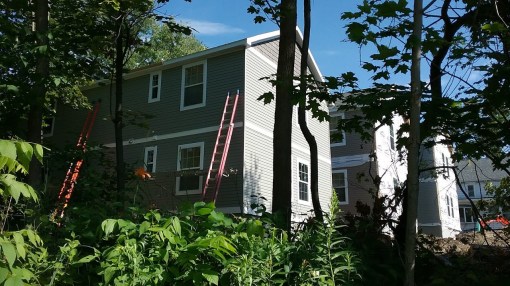
The construction timeline for 400-404 Stewart called for a completion this year, which seems generous. The apartment building at 406 Stewart Avenue has been graded, but construction will not start until later this fall. Hayner Hoyt is the general contractor, with Taitem in charge of the structural engineering.

UPDATE: In the comments, John Hoey, the proprietor of the Chapter House, has written in the comments that he intends to reopen the bar, if not here then elsewhere in Collegetown.


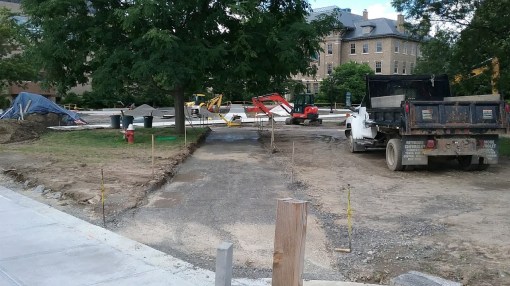
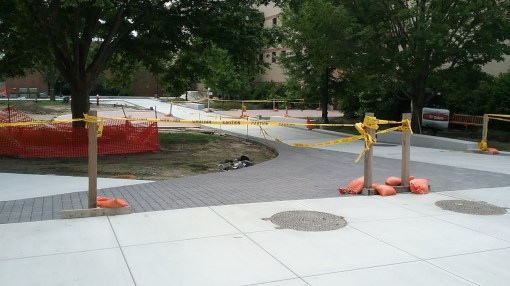
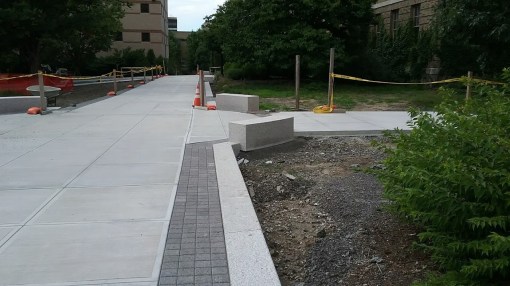
Cornell Ag Quad Rehabilitation Construction Update, 7/2017

1 08 2017

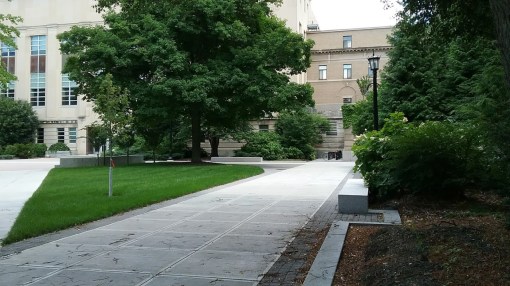
If common spaces are what make or break a campus, then it’s a wonderful thing that Cornell hosts one of the best landscape architecture programs in the world.

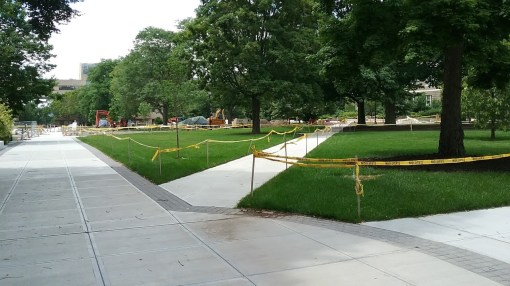
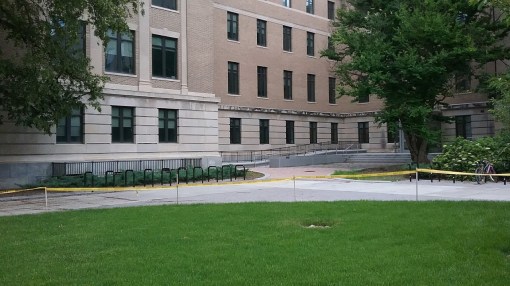
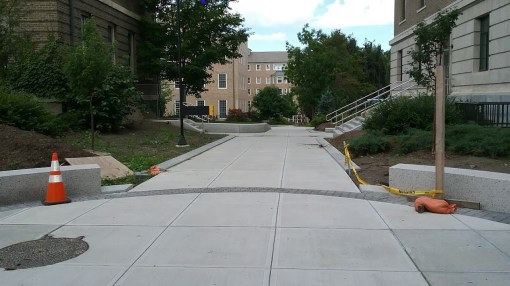
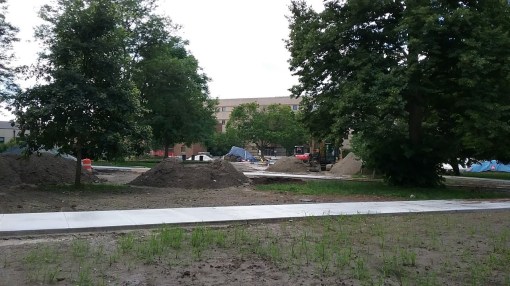
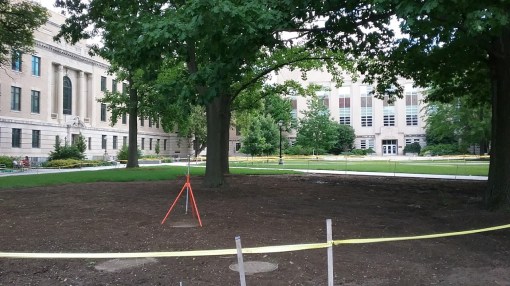
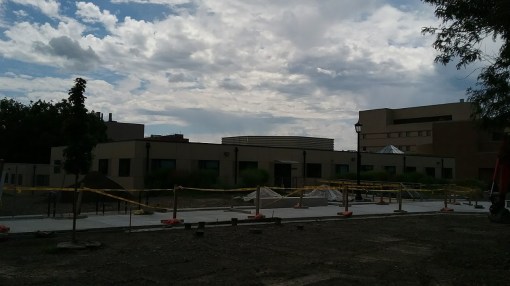
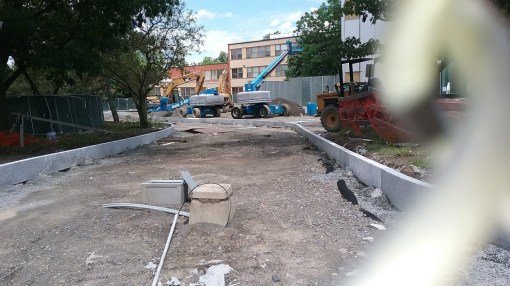
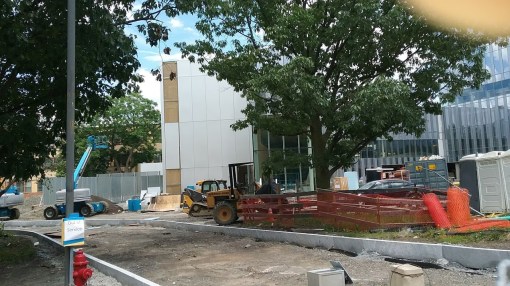
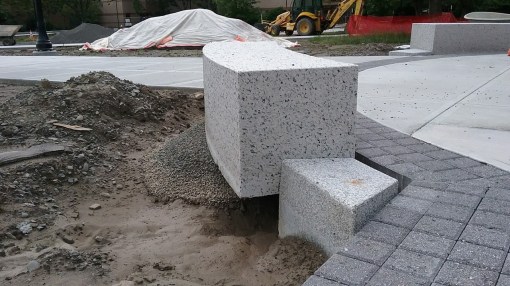
With the new underground utilities in place, the remaining work is at or close to surface level. This includes the installation of new plazas, sidewalks, decorative pavers, concrete slab benches, stairwalls, bike racks and seeding. New lamp posts have been erected, a rain garden has been added, and new saplings (54 total) were planted to replace the trees lost to the utilities work. The sidewalks were widened to allow easier emergency access. The east half was finished this past fall, but the west half could only finish utilities work before winter put the kibosh on concrete pours and landscape work.

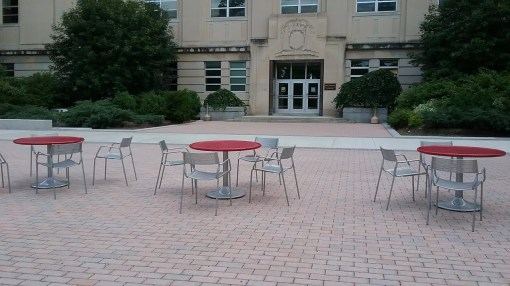
One of the goals of the refreshed ag quad is to make it a more inviting place to be during the warmer part of the year. By making use of removable furniture and adding seating areas along areas of high traffic and near buildings, the hope is that the space will be more lively and encourage social interaction among Cornell’s many students, faculty and staff. To be fair, it doesn’t look like a bad place to have an outdoor lunch.

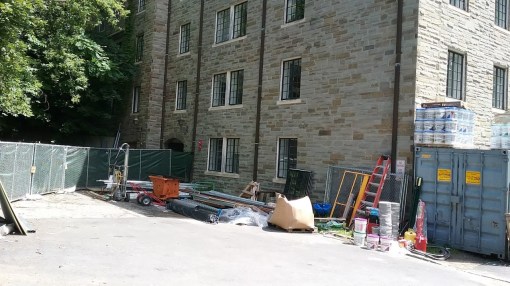
At some point, the two temporary structures between Kennedy and Plant Science will make way for a new permanent structure; as for when that happens, your guess is as good as mine. The Pleasant Grove Apartments were built on North Campus as temporary housing after World War II and the influx of students on the GI Bill, but parts of the complex were maintained until the mid 1990s.

The $9.6 million project began last summer, and is scheduled for a completion before the 2017-18 academic year. MKW & Associates LLC of New Jersey is the lead landscape architect, Over & Under Piping Contractors Inc. of Auburn is the GC, and Albany-based CHA Consulting Inc. is providing civil engineering expertise. Background information on the project can be found here.


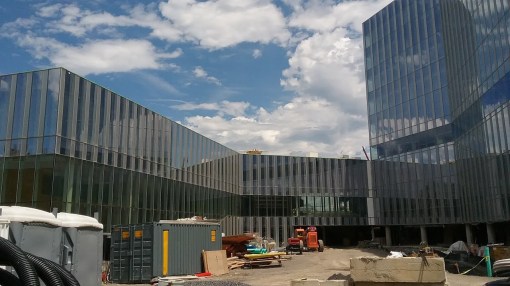
Cornell Law School Renovation Update, 7/2017

31 07 2017

On the outside, progress is modest – the windows and CMUs from the upper floors have been removed from the west face to make way for the future glass-encased stairwell. The steel beams sitting in the staging area are part of the Certainteed Drywall Suspension System and will be used in the construction of the new ceilings in the gutted interior, although some of the different gauges present may also be used for interior wall framing. There has been no visible progress on enclosing the loggia yet.


Upson Hall Construction Update, 7/2017

28 07 2017

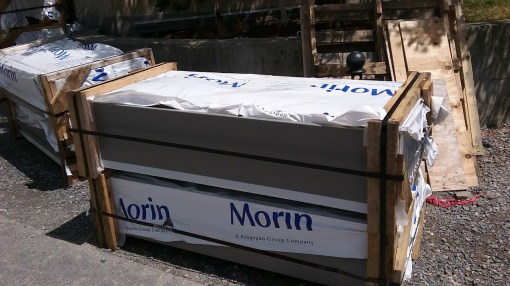
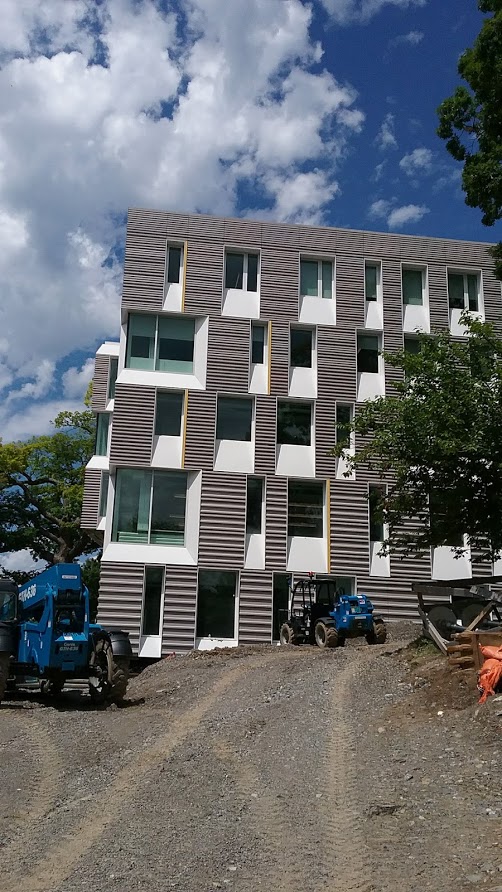
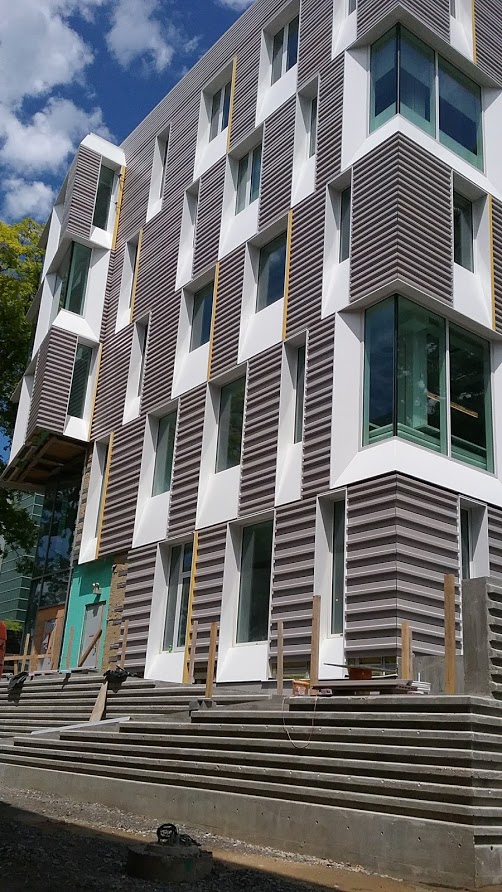
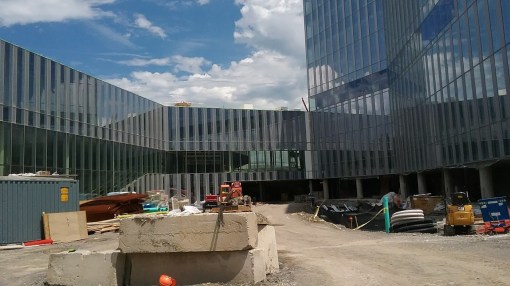
Cornell has several projects that are finishing up within the same short time frame. The renovation of Upson Hall will be one of them. Some of the Morin aluminum panels have yet to be clipped over the mineral wool, but the exterior is largely finished. It appears that the ribbing in the terra cotta panels becomes gradually finer from bottom to top. Interior work is still ongoing, from the windows it appears that drywall has been hung, but finishing work, such as interior railings, remains to be done.

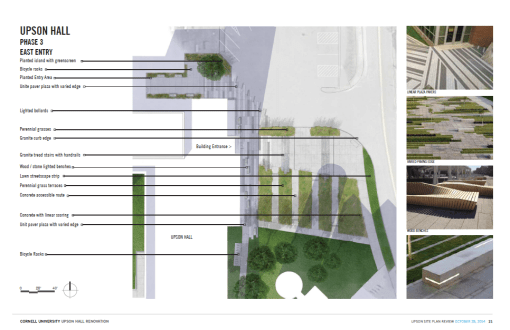
The timeline is to have the second phase completed by August, with an eventual third phase that will upgrade the landscaping from simple sidewalks and green space to more complex plaza areas with pavers, stone and wood benches and lighting effects. Given future plans to upgrade the Engineering Quad, the presence of heavy equipment and staging areas close by if not reused means that Cornell prefers to wait until all work is done on the buildings before upgrading the grounds (consider the Ag Quad for example).


Cornell Veterinary School Expansion Construction Update, 7/2017

25 07 2017

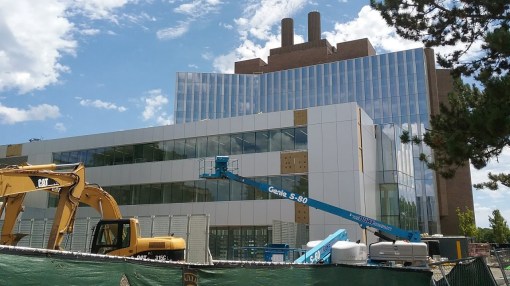
Just clearing out the photo stash – only a small sampling of the photos made it into the Voice round-up. The first set show the new administration and library wing finishing exterior aluminum panel installation, new curbing being laid, and the mostly finished entry and atrium area. The later photos are of the new Community Practice Service building, which is finishing underground utilities routing and foundation work – the new service facility will be one-story and wood-frame, which should allow the structural framing to move quickly.

The new vet school facilities will be open by late August, and the new CPS Building neat spring.


Ithaka Terraces Construction Update, 7/2017

21 07 2017

Some more progress on the Ithaka Terraces condo project at 215-221 West Spencer Street. Buildings “A” and “B” have had their porches built out and sheathed, with some of the decorative columns are in place (the architecture, penned by STREAM Collaborative, is supposed to take design curs from traditional Greek/Mediterranean hillside structures). The white coating visible from the uphill photos is the water-resistive barrier over which the stucco will be laid. Building “C” is framed and sheathed, but the roof isn’t fully shingled and many of the windows and doors have yet to be fitted. Long-awaited Building “D” has finally started construction, with excavation underway and some foundation forms in place. The grand central stairway is beginning to take shape. From what I was told by developer Ed Cope (PPM Homes), the model unit should be unveiled in the next few weeks.

The website has been updated to take inquiries, with unit sizes ranging from a 1,005 SF 2-bed, 2-bath, unit, to a 3-bedroom, 3-bath 1520 SF unit (3 bathrooms? For the family that hates sharing sinks and showers?). Nothing on the website states pricing, which was previously estimated in the $265k-$390k range.

Side note, I dropped by 413 West Seneca Street and 109 North Corn Street, a pair of projects Ed Cope is doing in Ithaca’s State Street corridor. Nothing to report yet.


607 South Aurora Street Construction Update, 7/2017

19 07 2017

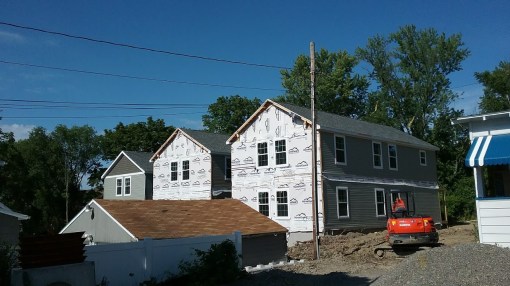
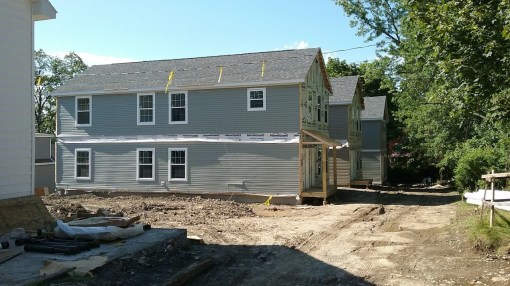
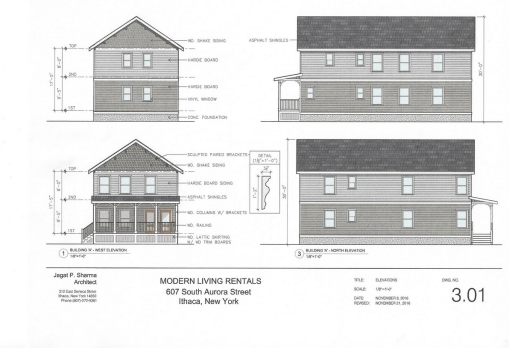
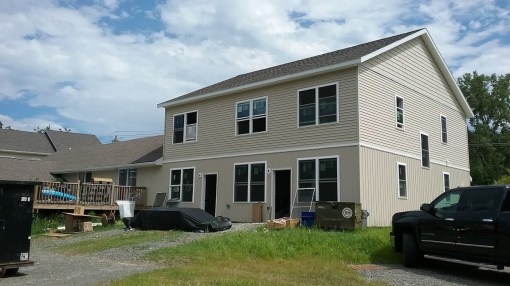
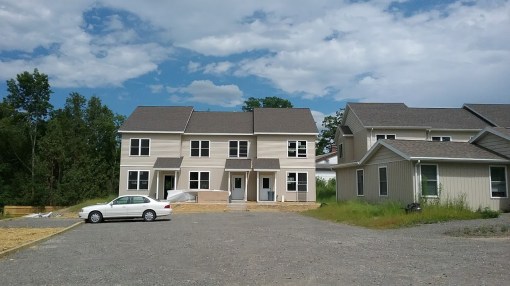
Thanks to the rapid turnaround time for modular units, the the duplexes at 607 South Aurora Street in the city’s South Hill neighborhood are galloping towards their completion date next month.

One thing to keep in mind is that, once the foundation has been built (Superior Walls here) and underground utilities are in place (water/sewer), it’s basically a matter of trucking in the boxes from the supplier and craning them into place. Per Ithaca Builds (the website is down but the pages are archived), they’re already framed, sheathed, utilities are mostly in, the interiors have drywall hung, windows and doors have been fitted, and even cabinetry, bathroom fixtures and countertops are in place. 80% of the construction work for the duplex is completed by craning four boxes into place and locking them together. The pros are better quality control, less waste, and a quicker turn around time. The cons to modular units is that there’s generally a limited set of designs and customization, although that has improved in recent years, particularly if a developer has a somewhat generous budget (see the Belle Sherman Cottages for example).

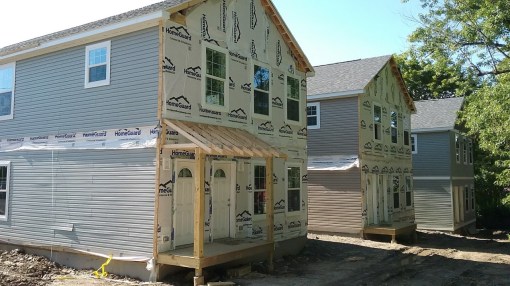
Once the boxes are craned and secured to the foundation and each other, the inside will undergo painting and finish work, while the outside gets faced with the exterior material of choice and porches, garages or other details are attached. Here, the rear three duplexes use vinyl siding, lap siding on the lower floors and shake siding on the gables, with decorative lap bands and color variations to give the outside some curb appeal. These units will have small porches with lattice skirts. The unit facing Aurora will receive nicer finishes since it’s the unit that will be seen the most by passing traffic. This includes fiber-cement siding, a full-width porch with decorative brackets (seen under construction below), and sculpted roof brackets.

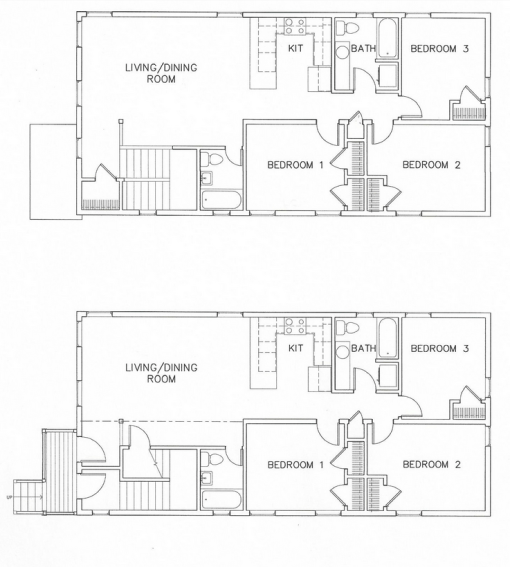
Note that the rear of the existing house at 607 South Aurora has been expanded, its roof raised slightly. The original five-bedroom house is being extensively renovated into two three-bedroom units. The eight new units will each be three-bedrooms, going for about $700 per bedroom. To quote the ad:

“This home has 3 bedrooms with 2 baths and everything is BRAND NEW!

Newly constructed in 2017, this home features stainless steel appliances, granite counter tops, LED lighting throughout the home, all oil bronze finishes, with large bedrooms and ample closet space. The home is equipped with its own washer and dryer, and can come fully furnished. This property is conveniently located less than one mile from Ithaca College, with off-street parking available, this unit is a beautiful place to call home! This property is pet friendly with the correct pet and owner. 

Other Features:
-Stainless steel dishwasher, refrigerator, range and hood vent.
-Luxury vinyl flooring throughout
-W/D in unit
-Beautiful tiled bathrooms
-Modern-Contemporary Style
-Bedroom Furnishings: includes bed frame, bed mattress, dresser, desk, and desk chair
-Dining Room/Kitchen Furnishings: offer seating for dinning
-Living Room Furnishings: includes a couch
-All Room Furnishings: includes curtains decorating all windows
-Located right up the street from the heartbeat of Ithaca, the Ithaca Commons! Magnificent place to eat, shop, and have fun in the Ithaca area
-The TCAT bus stops near the development.”

A couple blocks away, Modern Living Rentals picked up 217 Columbia Street, which has the potential for a rear unit, although it’s just as likely MLR will simply spruce up the existing two-family. The fact that the rentals are only until 5/31/2018 kinda leaves the door open for some construction work next summer.


902 Dryden Road Construction Update, 7/2017

17 07 2017

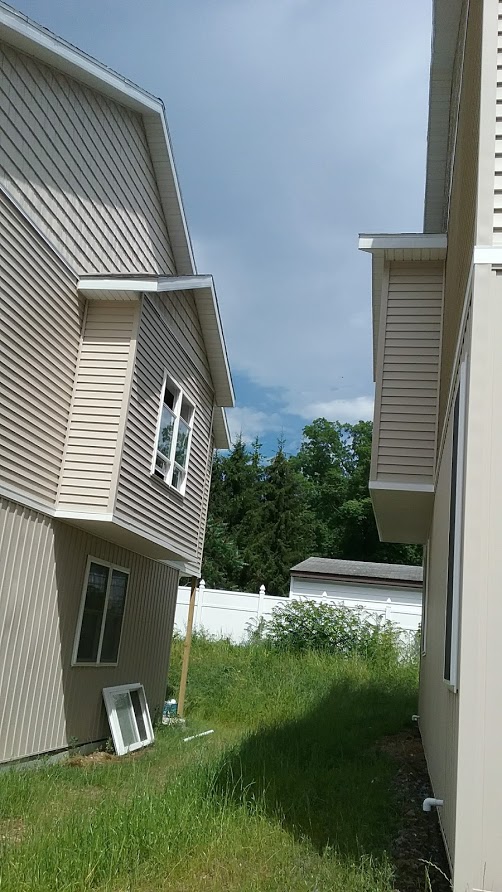
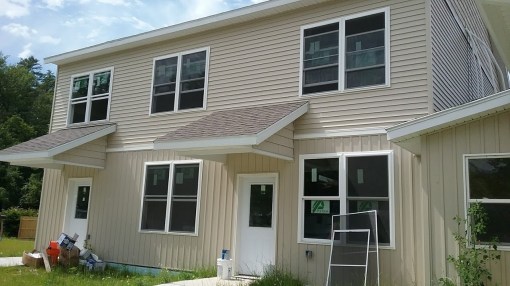
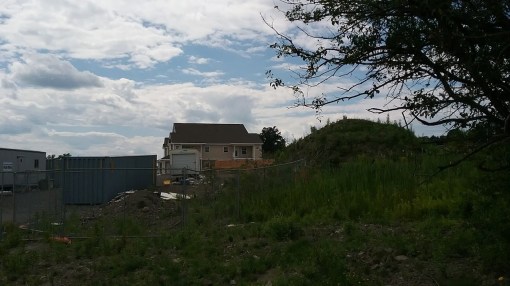
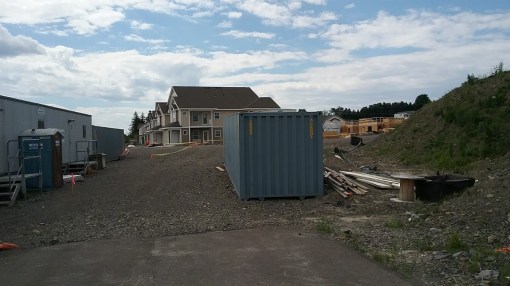
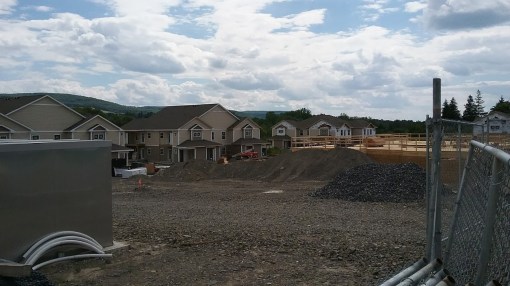
Seeing as these are expected to open for occupancy next month, this will probably be the final visit to the 902 Dryden site.

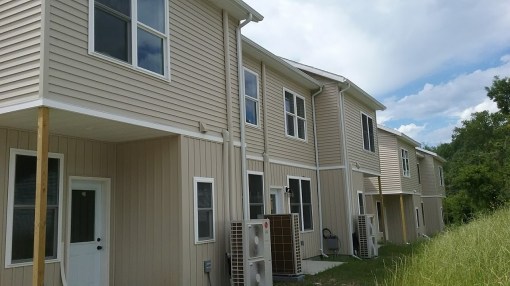
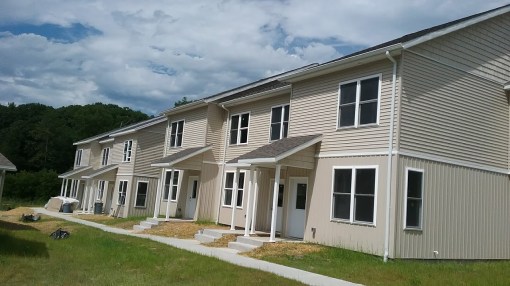
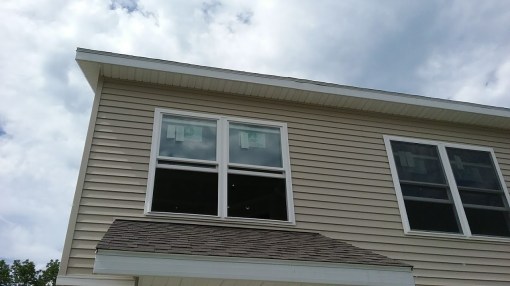
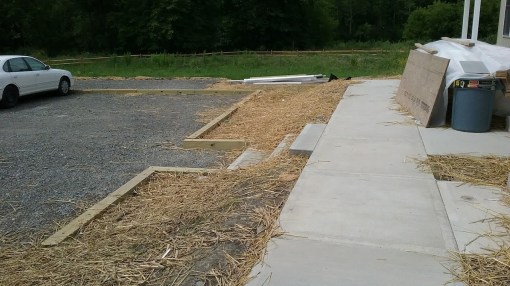
From the outside, these look to be complete. The landscaping is partially done. Grass is down and some of the parking area has been bordered with wood beams, but some sidewalk and plantings have yet to be poured/planted, and the bike shed will come towards the end.  About the only thing left for the buildings thesmelves are a few minor pieces of trim (trim boards, porch light fixtures). I’m still a bit disappointed that secondary colors were dropped in father of a color I like to call “bland oatmeal”, but the variation of shingle-style, lap and vertical siding makes up for it somewhat.

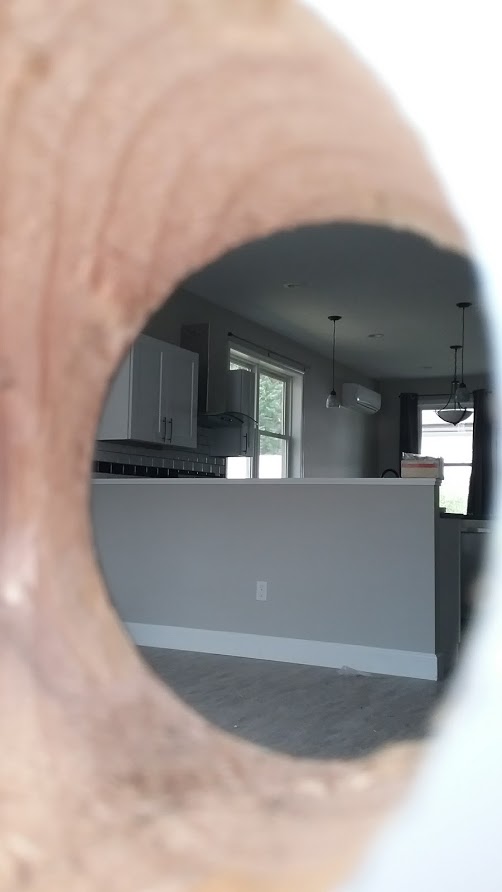
The inside of the units are in varying states of late-stage interior work – one of the end units was nearly showpiece ready with only some minor painting left. Working northward to units less further along, cabinetry and appliances were being installed, as were lighting fixtures, oven hoods and kitchen backslashes. Visum/Modern Living Rentals seems to strongly prefer neutral shades for interior colors, which is generally advisable when selling or renting a home. The appliances hanging up on the wall behind the kitchen counters are the air-source heat pumps.  The units closest to Forest Home Drive were still in the midst of drywall paint prep – there was a worker walking around on professional drywall stilts, which I did not take photos of because I wasn’t sure if they would see me and force me to go off-site. The drywall had been hung and appeared to be mudded, but not painted.

To quote the online ad:

These beautiful townhouses are a great place to call home!!
Brand new construction in late 2016 [sic?], has all the amenities needed! Brand new EVERYTHING, stainless steel appliances, granite counter tops, kitchen complete with a dishwasher! Great sized rooms with ample closet space, all custom tiles bathroom as well! Washer and dryer IN unit!

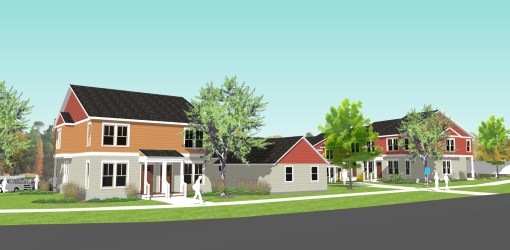
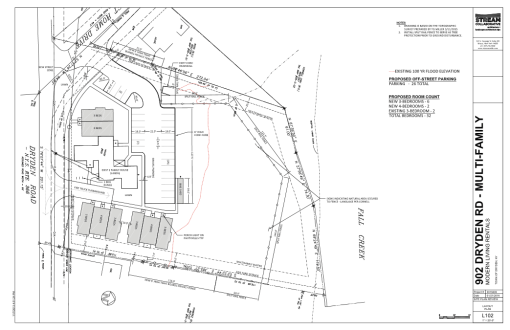
902 Dryden is not big or ostentatious. I wouldn’t call it out of place in rural Varna, and another 8 units and 26 bedrooms are welcome to the local rental market. Modern Living Rentals and Visum Development are bringing a pretty solid addition to the Varna market. Consider this a preview of MLR’s next project, the 42-unit rental complex they want to put in just a mile up the road at 802 Dryden.

Bella Faccia Construction is the general contractor, and STREAM Collaborative is the architect.


Poet’s Landing Phase II Construction Update, 7/2017

16 07 2017

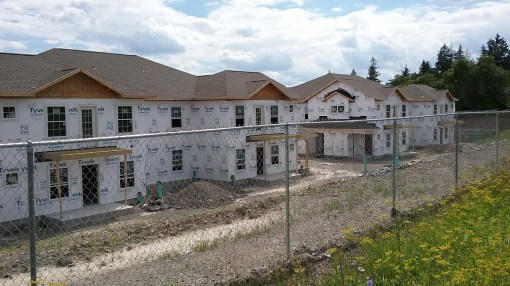
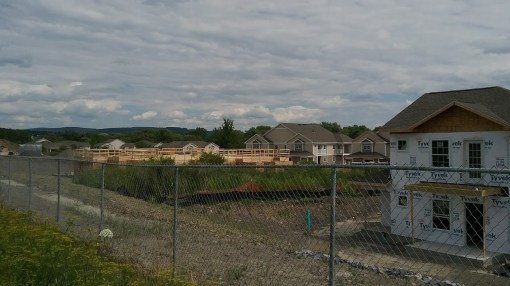
Over at the Poet’s Landing construction site, it looks like two of the buildings, previous dubbed “E” and “F” since I have no actual documentation of individual address, are pretty close to completion. “F’s” exterior work is almost complete, waiting for a few more trim pieces such as balcony and porch railings. It’s difficult to tell how far along the interior is; what looks like a gaping hole in the front at first glance, is actually a covered vestibule that leads to front doors, some of which appear to have been left open in photos seven and eight below. A typical build-out usually involves the interior being fairly far along by the time exterior trim is being attached – rough-ins complete, drywall hung, and probably the painting, utilities finish work and counters/cabinetry are underway. Building “E”, which is a little further behind on the trimwork, appeared to have some unpainted drywall visible just beyond the open front doors.

Stepping further back in the construction process, building “D” is in the midst of Certainteed vinyl siding attachment, and Building “C” has been shingled and fully wrapped in DuPont Tyvek, its balcony frames and porch columns just naked beams for now. Building “B” has yet to be fully wrapped, and “A” isn’t even fully framed yet. It looks like some of “A’s” roof trusses are sitting near Building “F”.

Although unsure offhand, if Conifer is planning to do a phased move-in, they could have Buildings “F” and “E” occupied by Labor Day, “D” and “C” before Halloween, and “B” and “A” before the end of the year. Building “F” was just getting its second story framed back in February, so another six months for “A” doesn’t seem unreasonable.

When finished, there will be 16 1-bedroom units, 24 2-bedroom units, and eight 3-bedroom units. Units will be rented to households making 60% of area median income or less, so less than $32k/year. Tenants will have an interview with management, and have to pass a background check. Given the dearth of affordable housing, not everyone interviewed and qualified will be offered a unit, but in that case, they will be offered a spot on a waiting list if desired. Those interested in units in the $10.8 million project can sign up for an “interest list” here, which will notify them as management interviews commence, giving them the chance to sign up and start the process.

So, this is something I’d like to expand on a bit, given some of the recent talk about Hamilton Square in Trumansburg. Some folks have cited Overlook at West Hill as an example of the crime and degeneracy that “these people” will bring to the village. This reminded me of the West Village piece I did for the Voice last year, where I argued successful affordable housing involves community engagement and respect, access to services, and proactive tenant management.

With any group of landlords, you have good ones, mediocre ones and bad ones. Overlook’s management leaves something to be desired, as has West Village’s. Omni Development, which manages West Village, seems to be taking a greater, more proactive role, although its history of hands-off behavior leaves many wary. Overlook is managed by Domain Companies, which is based out of New York City and New Orleans, and was developed in partnership with the Arker Companies. Back when it was proposed in 2003-04, INHS did advocate for the project during the town’s review process and obtain affordable housing loans. However, they are not and have never been Overlook’s property managers.

I can honestly say I have never heard of systemic issues with anything INHS or Conifer manages in Tompkins County. Rarely if ever is there a criminal complaint about the people who occupy Conifer’s Linderman Creek, Poet’s Landing I, The Meadows, or any of their other Tompkins County properties. That goes for the general affordable housing as well as the senior housing. I can say the same thing about INHS – through the Voice, which wouldn’t hesitate to cover crime since it drives clicks so well, there’s nothing I’ve seen about Stone Quarry’s residents being an issue, or the Henry St. John Apartments, Breckenridge Place or TowerView. I can come up with complaints for both (Conifer’s unfortunate choice of auto-centric sites with cookie-cutter units, INHS’s care-worn older stock), but neither of those has to do with tenant management.

If it were Domain/Arker or Omni pushing Hamilton Square, There would be reason for concern. But given that’s it’s INHS, mixed-market with owner occupied units, moderately sized and has convenient access to Trumansburg village, I strongly doubt management of the rentals is going to be a problem.


107 South Albany Street Construction Update, 6/2017

22 06 2017

Seems fair to move this one over into the construction column. Introducing 107 South Albany Street.

The State Street Corridor represents one of Ithaca’s best possibilities for infill development. It’s a mixed-use area with a hodge-podge of buildings and styles, from ornate century-old properties to commercial utilitarian structures. It has a number of sites that have easy access to downtown and amenities, permitting a walkable lifestyle. It’s also less expensive than downtown properties. With this in mind, the city rezoned much of it in 2013 to allow for 5-story buildings, up to 60 feet tall, with no need for parking. The zoning was a simple box overlay regardless of lot lines, which resulted in some “secret” infill opportunities like 512-514 West Green Street, whose rear yard was in the rezoned area, and as a result, owner Carmen Ciaschi was able to legally slip in a two-family home without adding additional parking.

107 South Albany Street was rezoned as a result of the 2013 overlay. The existing property was a mixed-use two-story home that had an apartment on the upper floors, and converted on the first floor to commercial office functions (law office). This presented an opportunity for the enterprising developer.

Enter Stavros (Nick) Stavropoulos. The West Hill native, whose family runs the State Street Diner, runs a small rental company, Renting Ithaca. However, Stavropoulos has slowly and steadily made his way from management to real estate development – first with additions to existing buildings like 318-320 Pleasant Street, and then entirely new properties like 514 Linn Street in 2015, and a project currently at 1001 North Aurora Street. His M.O. so far has been to find middling properties in desirable locations, and add inoffensive infill rental housing – nothing that stretches code, nothing that will anger the neighbors. Earlier projects were designed by Lucente family favorite Larry Fabbroni, but more recent projects have turned to a low-profile, longtime Ithaca architect named Daniel Hirtler, who runs Flatfield Designs. Stavropoulos picked up 107 South Albany Street for $236,000 in August 2015.

Seemingly, each project he takes on is larger than the last. 1001 North Aurora is a 4-unit project, 12 bedrooms with a hard cost of about $400,000. 107 South Albany is slated to be his latest and greatest yet. The original plan, as introduced in Spring 2016, was to build a new six-unit building at the rear of the existing house, and renovate the house into three apartment units, for one studio, six one-bedroom units, and two two-bedroom units. After a few months of planning board review and critique from the design committee, the 3,954 SF, $500,000 plan was approved and slated to start in July 2016.

However, that plan never moved forward. Instead, this past winter, Stavropoulos decided to submit a new set plans. The new plan called for eleven units and eleven bedrooms, but instead of retaining the existing house, it would be deconstructed and replaced with a new three-story, 8,427 SF building. With its neighbors including a former gas station-turned medical service and older, historic structures, the building’s design is an attempt to bridge the gap. The front sports a cornice, a brick veneer on the first floor, tan fiber cement lap siding above and a traditional window arrangement. In contrast, a stucco finish fiber cement stair tower in the middle of the structure serves as a visual interest for passerby on West State Street, and gives the building a modern touch. The building’s height is capped at 40 feet 5 inches, well below the constraints set by the zoning.

The building isn’t designed for active street use, with a recessed entry and bike storage area for privacy, and no first-floor windows on the front facade. However, in an attempt to create an attractive streetscape, the building uses lighted wall recesses on the exterior, the brick work will have decorative patterns, and a large semi-circular iron trellis that will be adorned with native twining vines. The project cost is $946,600, according to the city’s Site Plan Review document.

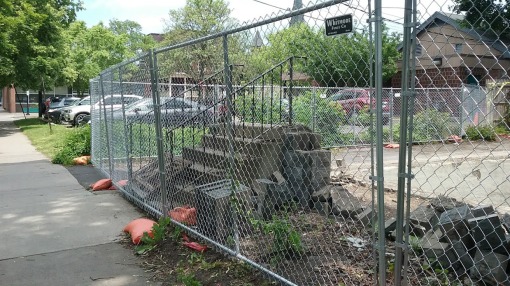
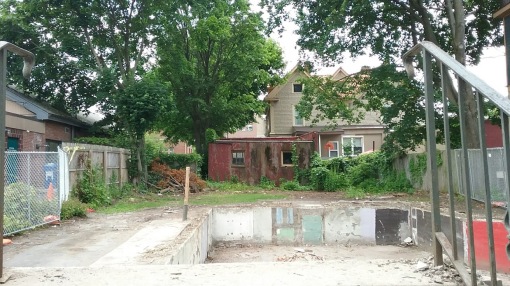
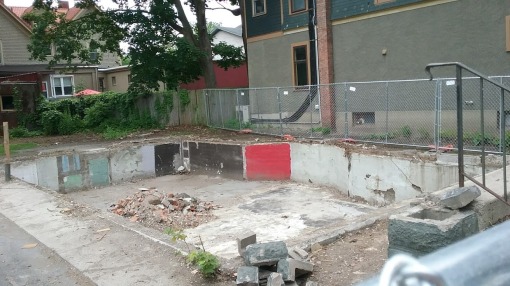
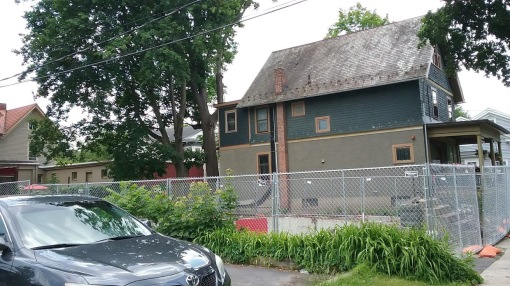
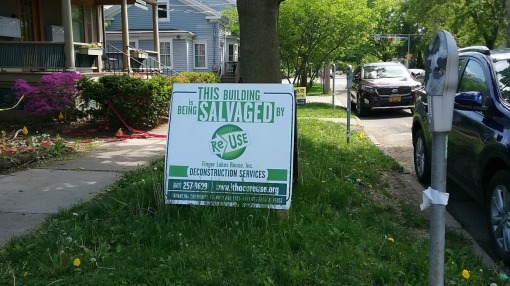
As of this month, Finger Lakes ReUse has deconstructed the existing house, cleaned and processed the salvaged materials, and has them for sale at their warehouse/store on Old Elmira Road. The foundation and front staircase are all that remain. The plan is to start construction on the new building in the September/October time frame, and to have it open for occupancy by summer 2018. No contractor or construction manager has been named as of yet.

From June:

From May:

Pre-development:
Isometric Plan and interior layout: