238 Linden Avenue Construction Update, 9/2018

9 10 2018

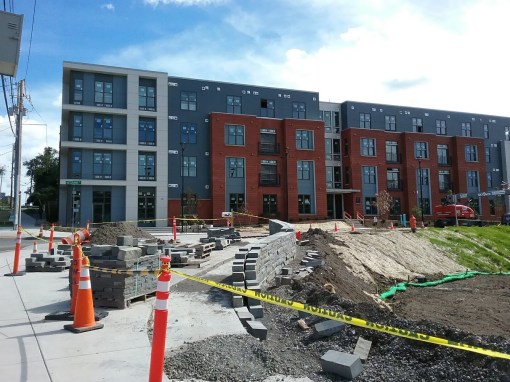
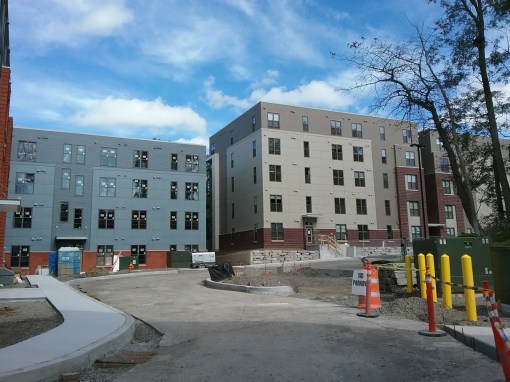
The foundation walls are being poured at Novarr-Mackesey’s 238 Linden Avenue project. The footers and some of the foundation walls are poured and cured, with steel rebar sticking out of the surface, waiting to be tied into the skeleton of the structure as it starts to be assembled. Other concrete walls are still being formed and poured. It looks like wood with steel bracing, my first thought was all wood but a closer look shows the bracing is thin steel, with the plywood from Pacific Wood Laminates and likely procured through a supplier, and the bracing probably from the same supplier. Forms are typically plywood, sometimes aluminum or steel, and are braced to resist the pressure from the concrete as it is poured to make the foundation walls – basically, to keep the walls in shape while they cure. And once the wall is cured and checked for any issues, workers move the forms to the next section until the walls are complete.

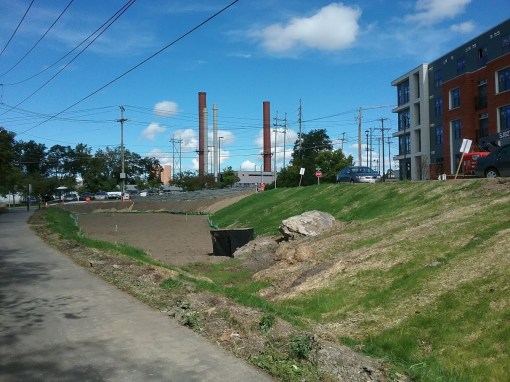
The sloping rear wall is probably not a part of the building foundation. Looking at the footprint of the building, it’s more likely a retaining wall intended to hold back the soil. 238 Linden will have a habitable basement with lower “courts” to let light and air below ground level (offhand, I think the layout is five studio units per floor on the four floors above ground level, and four studio apartments on the basement level, for a total of 24 units). The front retaining wall will have a similar slope as it is built out.


210 Linden Avenue Construction Update, 9/2018

6 10 2018

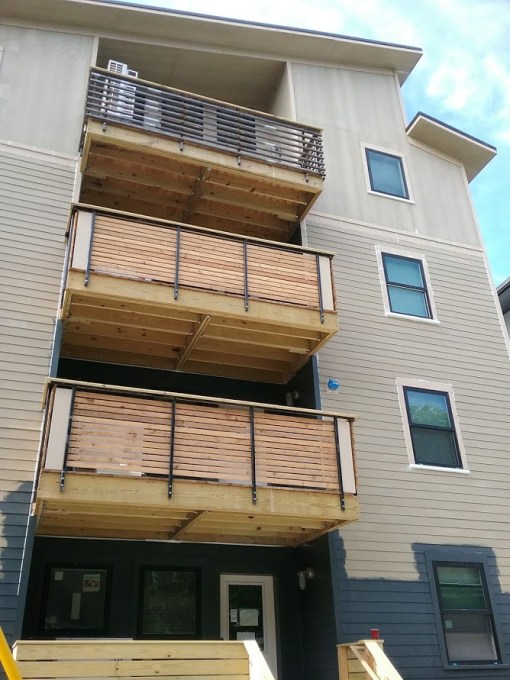
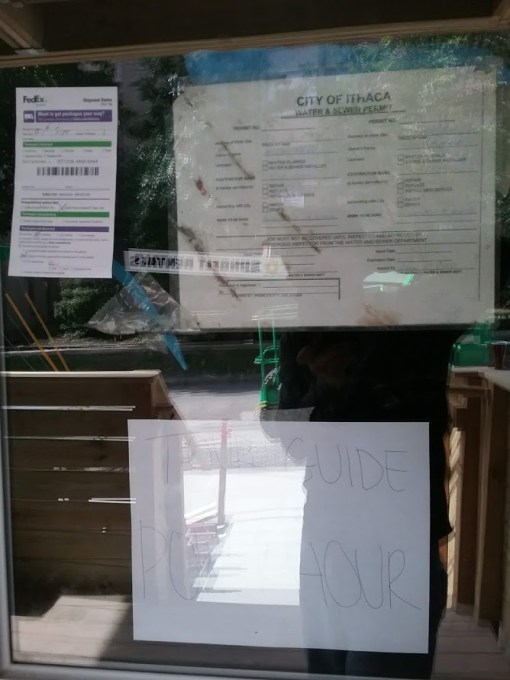
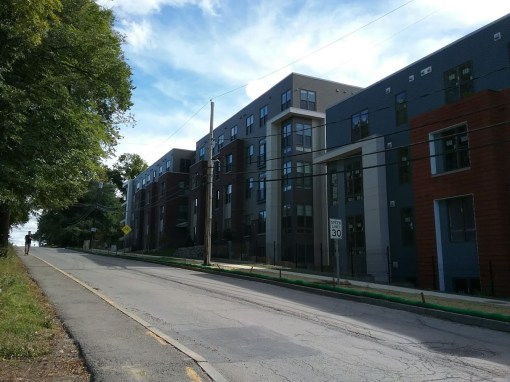
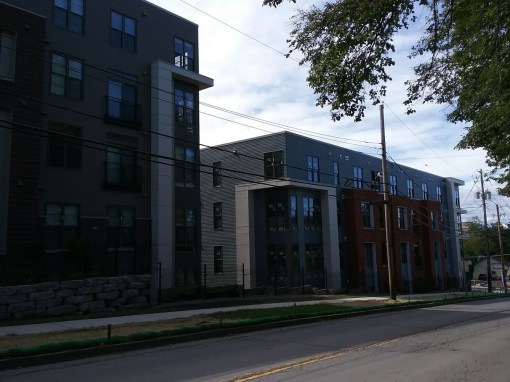
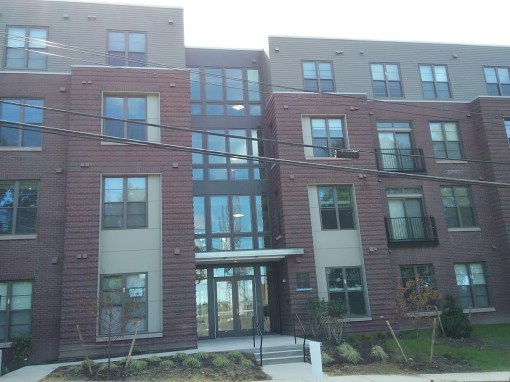
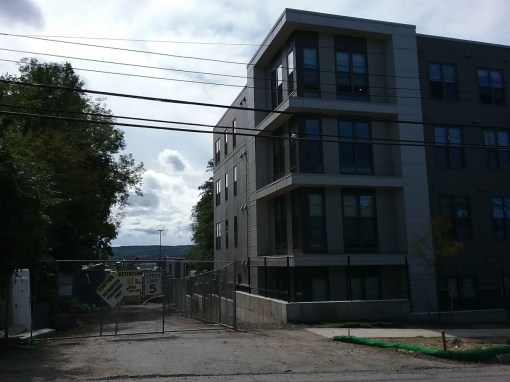
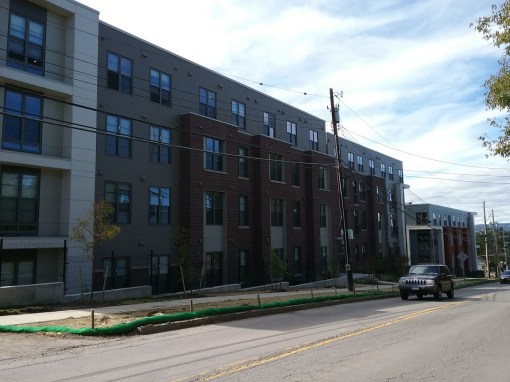
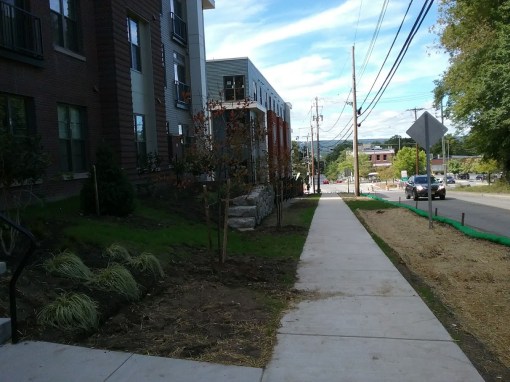
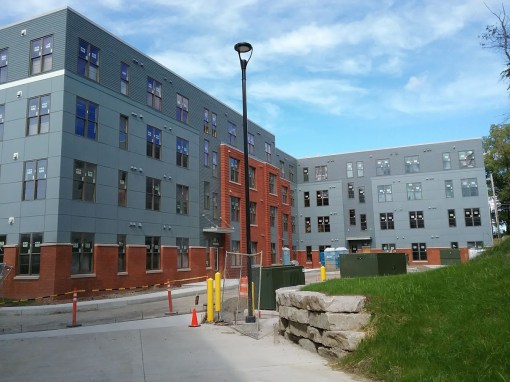
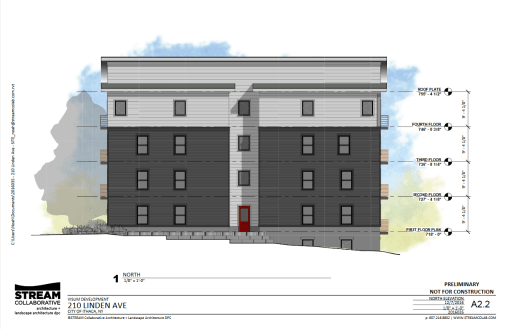
Tying into the 107 South Albany example from earlier this week, 210 Linden is not a finished building, but still certified for occpancy. My impression is that some units are ready for occupancy, but not all. Tenants of The Lux had emailed in to say that it wouldn’t be open until the Spring, and the Craigslist ads tout Spring 2019 leasing. But there are photos advertising units in the building that show the building is occupied; the front facade’s window arrangement is unique among Visum’s buildings, and can be clearly seen in this living room photo. I’m assuming that from the FedEx delivery slip and the “TOUR GUIDE POWER HOUR” are related to the residents.

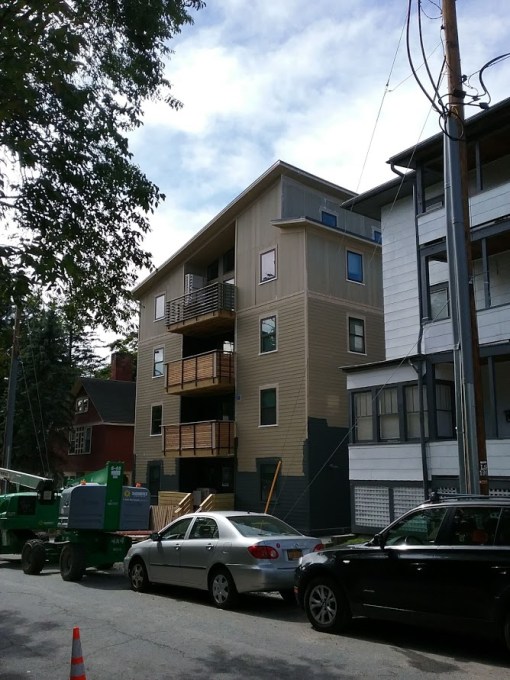
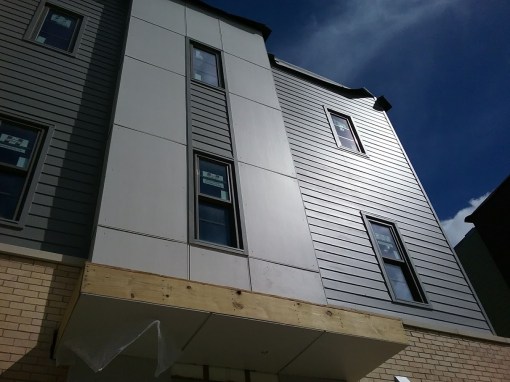
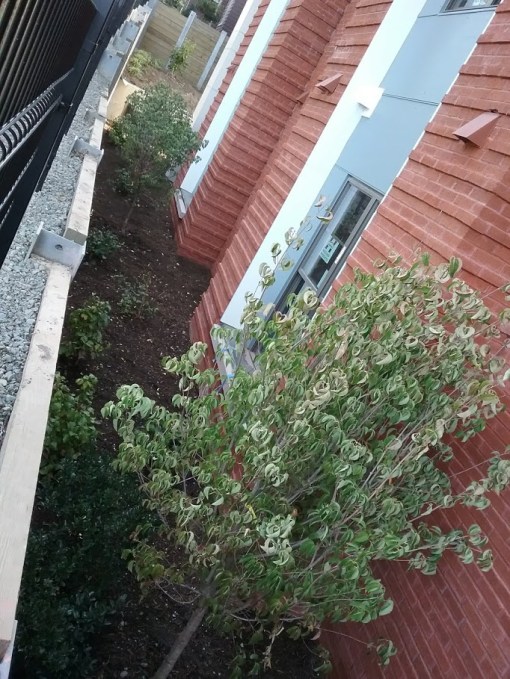
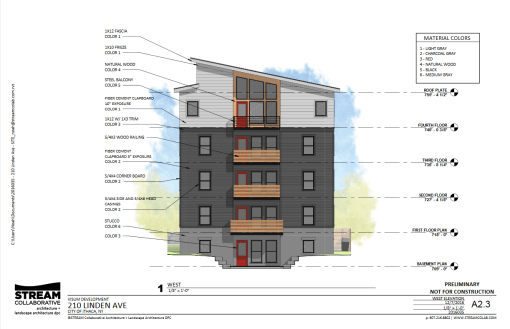
That noted, if the interior is largely complete, the exterior still needs fiber cement siding on the north and south walls, painting (the charcoal grey is going on now, with light grey presumed for the panels on the top floor), trim/finish work and seeding/landscaping. TYPAR is being used for the housewrap / weather resistant barrier to keep the sheathing from getting damaged by moisture, and wood rails atop the TYPAR are used to attach both the lap siding and the panel siding. the panels look to be another change on the fly, as the original renderings called for lap siding on the top floor as well. Interestingly, the balcony treatment is largely finished and accurate to renders – wood slats on the lower levels, and steel rails on the fourth floor. Not sure if that’s for visual interest, or to accommodate building codes.


The Lux (232-236 Dryden Road) Construction Update, 9/2018

4 10 2018

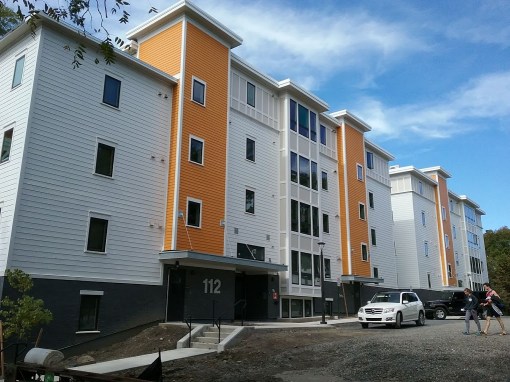
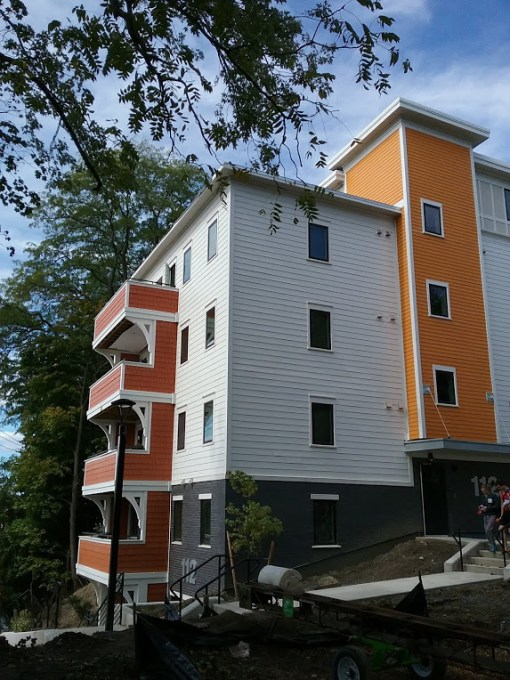
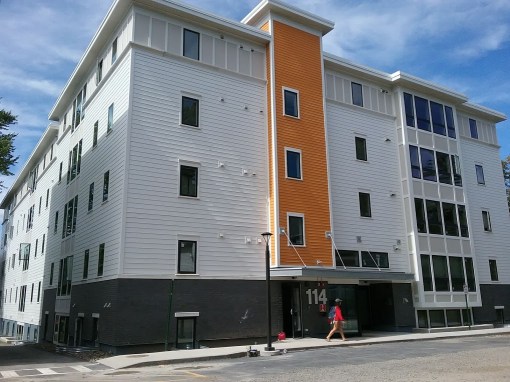
Just noting that this project is complete and updated in the Ithaca Project Map accordingly. A lot of folks may not be fans of high-end student housing, but at least the design is attractive (kudos to STREAM Collaborative, they’ve got an open house Friday evening if you want a sneak peak at their latest project designs) and it’s 206 wealthy college kids who won’t be driving the price up on existing housing units elsewhere. Interior shots of the common spaces (gym, study room, rooftop deck lounge) can be found here.

Quick aside, the official street addresses are 112 Summit Avenue for The Lux South, and 114 Summit Avenue for The Lux North.


View this post on Instagram


Collegetown’s 🆕 apartments! Link in bio for more details.

A post shared by The Lux (@theluxcornell) on

//www.instagram.com/embed.js


Chapter House / 406 Stewart Avenue Construction Update, 9/2018

2 10 2018

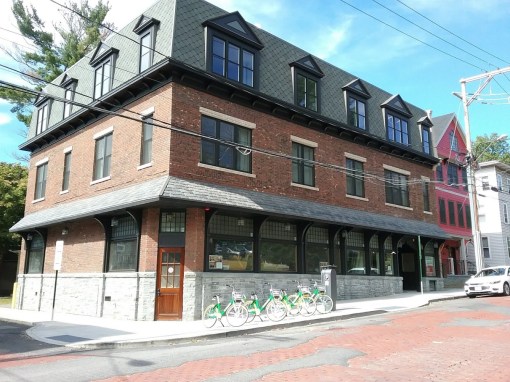
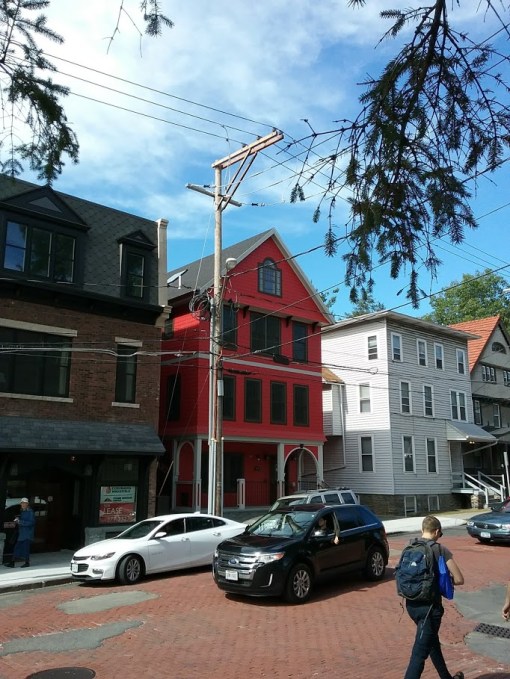
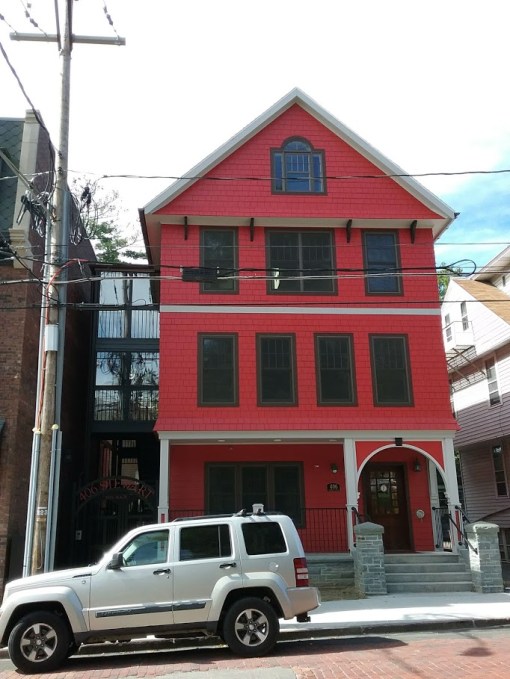
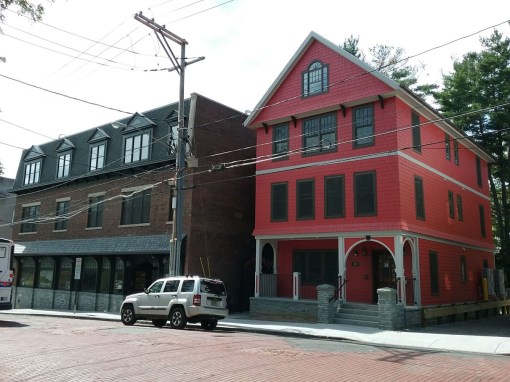
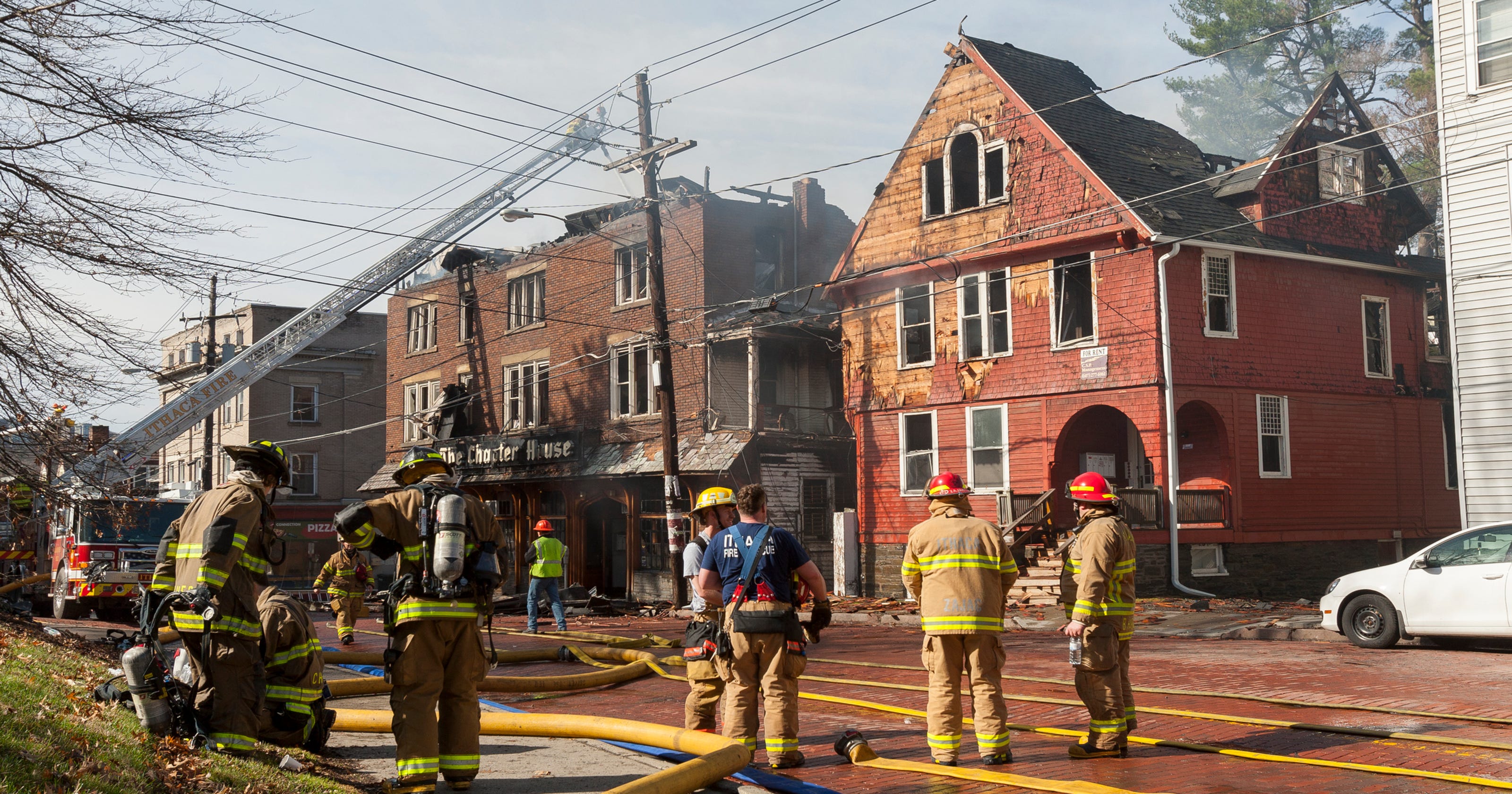
Just wrapping this one up with some final photos of the completed project. Both new buildings look nice. It’s a new chapter, without the Chapter House. Even if the storied bar ever did open back up on the corner (the 3,000 SF retail space is still available), it wouldn’t exactly be the same. But one can appreciate it for a design fitting in a historic district, replacement of housing lost in the fire, and at some point, a new commercial tenant to enliven Stewart Avenue.


Maplewood Construction Update, 9/2018

27 09 2018

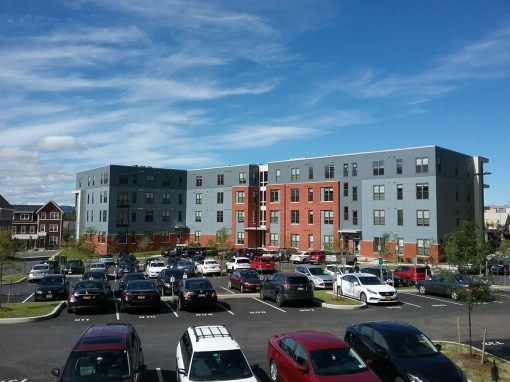
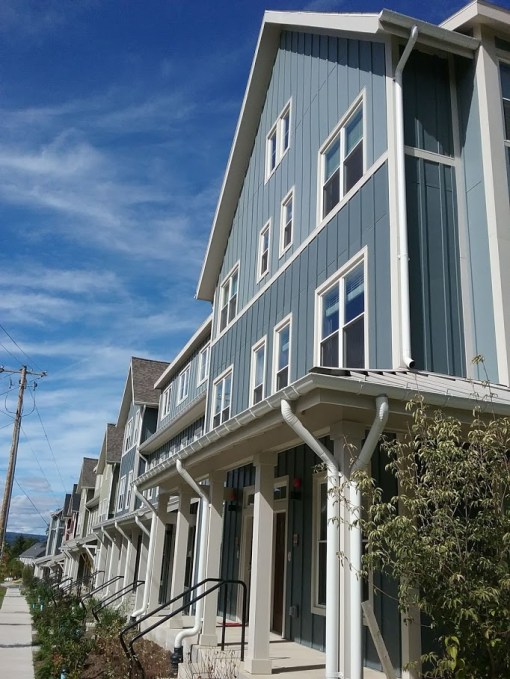
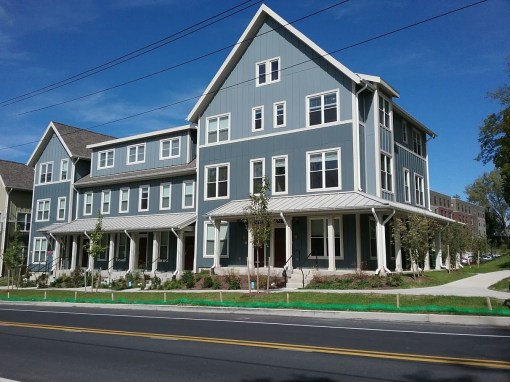
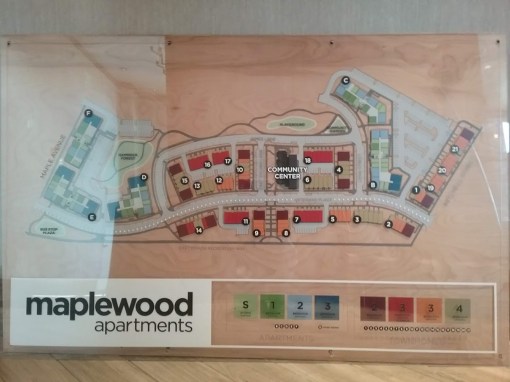
Maplewood is an example of a well-intentioned and thoughtfully-designed project whose execution hasn’t been so great. It was clear from the start that the timetable was aggressive, but with 20/20 hindsight, it has come clear just how overly optimistic it was – even with multiple daily and weekly work schedule extensions, six townhouse strings were so far behind they were never even marketed for the fall semester (At, Bt, Ct, Dt, Jt-1 and Kt-1 ~140 beds), and at least one apartment building (Building E, 106 beds) won’t be delivered for a few more weeks. The move-in of over 600 students was delayed. LeChase is taking subcontractors to court. The students aren’t happy, Cornell’s not happy, EdR’s not happy, the contractors aren’t happy, labor groups aren’t happy, local governments aren’t happy.

With the issues of construction well noted, I still think the project was a needed asset that increases the housing supply and provides some relief to the ongoing housing affordability issues. The design team was responsive during the development process and the EIS review was thorough. The project will pay 100% of its property value in taxes. The project uses air-source heat pumps, and is a “living laboratory” experiment because an all electric heat pump project of this scale had yet to be attempted in a colder climate like Ithaca’s. Basically, things started going wrong after approval was granted and the construction work went out for bid. For what it’s worth, the students seem to satisfied with the apartments, construction aside.

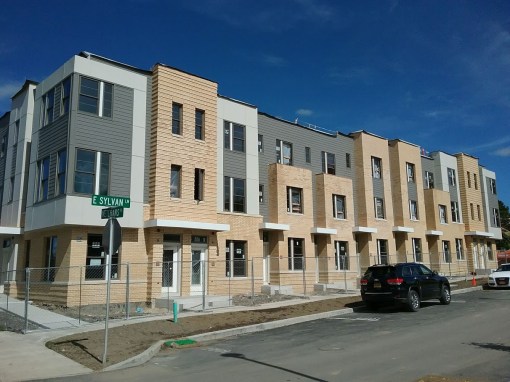
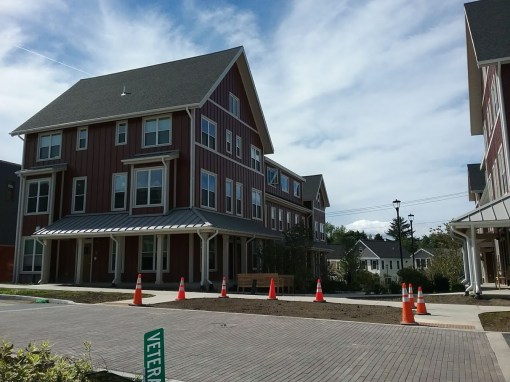
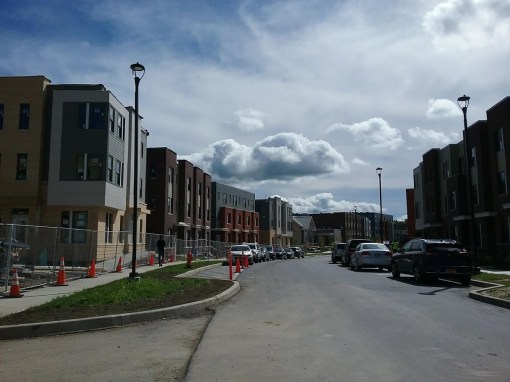
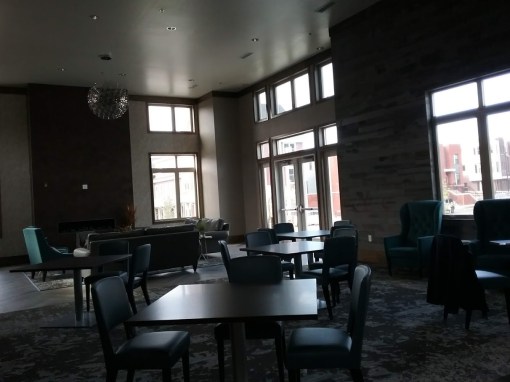
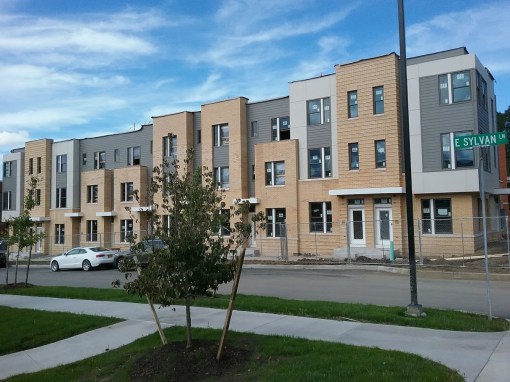
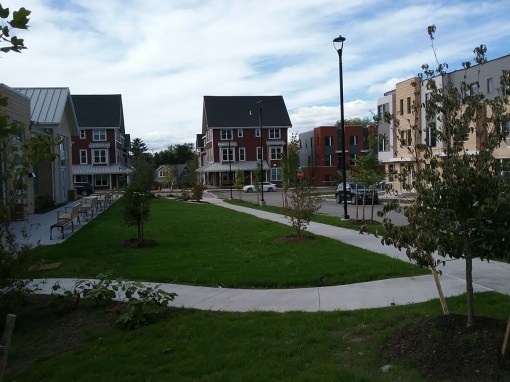
The 78 photos below (a blog record) go from south to north along Veterans Place, and back south along James Lane. Some of the units were just starting move-in, a couple strings of townhomes were undergoing a final cleaning, and others are still undergoing finish work on the inside and outside. The townhouses and apartment building E haven’t had all their windows fitted and the roof membrane isn’t complete, so they’re definitely still a few weeks out from completion. The bus stop plaza is still a work in progress with stone walls/seating areas underway, and the landscaping is really only complete south of Sylvan Mews, the small through street north of the Community Center. It’s unpolished and unfinished, but it’s coming along, albeit later than expected.

For project background and planning, click here.

For a site plan breakdown, click here.

For a construction timeline, click here.

Webcam link 1 here (updated ~15 minutes).

Webcam link 2 here (updated ~15 minutes).

Serious question – are these trees going to able to survive down here?

I think someone needs to recheck the base of this lightpole and see if it’s actually plumb.

This space will become a playground.


News Tidbits 9/18/18

19 09 2018

1. Unofficially, here are the Ithaca Urban Renewal Agency’s Economic Development Committee ratings for the four Green Street Garage proposals, with a screenshot courtesy of Councilor Steve Smith (D-4th Ward). I’m not quite sure how the total score was calculated, but overall, the Vecino Group’s proposal was the most highly rated, followed by the Visum/Newman Group submission. The general consensus was that the Harold’s Holdings plan was aesthetically pleasing but didn’t include enough of the benefits that the city was seeking, and the Ithaca-Peak proposal was underwhelming in terms of affordability and community benefits.

2. So here’s an interesting little item that came out of last week’s PEDC Meeting. A developer had apparently approached Committee Chair Seph Murtagh (D-2nd Ward) with the idea of redeveloping the Family Medicine site for an eight-story building. Murtagh did not state the intended mix of uses if any was stated (probably ground-level commercial with residential above), but he did express strong reservations for their plan, which would have required a PUD, the D-I-Y zoning the city uses to allow more flexible project design in exchange for community benefits signed off by the Common Council as well as the Planning Board.

Few would argue with the statement that the Family Medicine site, located on the 200 Block of West State Street just west of Downtown Ithaca, is underutilized. It’s a one-story ca. 1980 structure with surface parking. The Cornell Baker Program has used the site among others for student projects to come up with cost-efficient proposals in various parts of the city (officially for academic purposes, but no doubt the local development scene pays at least some attention to the final presentations). I remember one project that showed a seven-story building would be just enough of a return on investment to possibly entice redevelopment with Family Medicine remaining in the ground-level of the new structure. This theoretical proposal did make use of a tax abatement. By this argument, an eight-story proposal could be a better sell, or it could be the result of an attempt to work in an affordable housing component while still making enough money per square foot to appeal to lenders. Regardless of what the circumstances were to push eight floors, this idea likely won’t be coming to the planning board anytime soon.

3. It looks like the Ivy Ridge apartment project in Dryden has been sold to a new developer. An LLC associated with local real estate firm Modern Living Rentals (Charlie O’Connor) sold 802-812 Dryden Road for $2,075,000 on September 12th. Filed on the same day was a construction loan from M&T Bank to pay for construction of the project – a rather substantial $8.6 million for the 42-unit townhouse complex.

The buyer’s LLC could be traced back to a suburban Pittsburgh address for Matthew Durbin, and a little online searching indicates Durbin is a Cornell Johnson School (MBA) Alumnus, a former investment banker turned business executive. In short, he has a demonstrated familiarity with the Ithaca area, business acumen and the money to make things happen. Site prep is underway and no changes to the project design or timeline are indicated. As for O’Connor, he’s now a much wealthier man, and we’ll see if any of those recent gains are turned into equity for future MLR projects.

If anyone else is still looking for shovel-ready multi-family projects, 1061 Dryden is still for sale.

4. On a somewhat related note, 312 East Seneca Street was sold by Jagat Sharma (better known for his architecture firm, but 312 East Seneca house his office) for $800,000 on September 14th. The buyer was an LLC that traces back to the Stavropoulos Family on West Hill, who have undertaken a number of small to medium-sized development projects in the Ithaca area over the past several years.
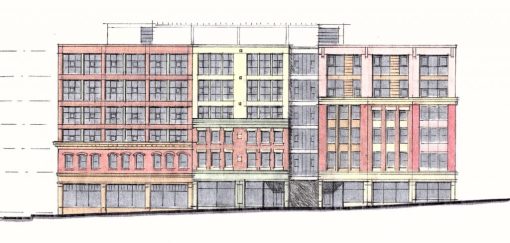
This purchase would impact MLR and Visum Development’s plan for Seneca Flats, a 42,000 SF multi-story mixed-use structure at the corner of East Seneca and North Aurora. The two firms based their initial drawings on the presumed purchase of this building. However, they had also drawn up floor plans for options that did not include 312 East Seneca – offhand, the plan with the site had 85 units, the plan without had 60 units. Basically, lop off the rightmost (northern) quarter of the above drawing. As for the Stavropouloses Stavropoli, they paid more than double the assessed value ($390,000), so there’s a good chance they have their own plans.
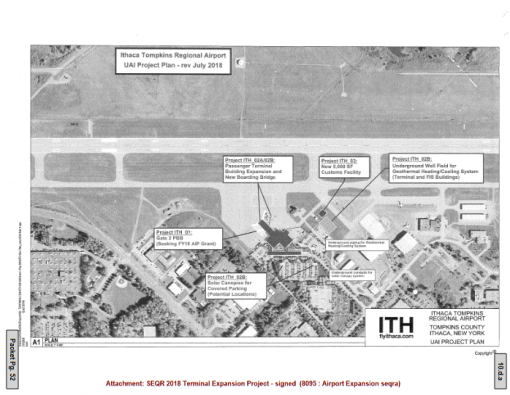
5. This blog gravitates towards hard/quantitative data, so here are a few facts about the airport expansion from the SEQRA environmental forms:

– The Passenger Terminal Expansion. will consist of three additions totaling 15,600 SF. 8.500 SF is an addition to the passenger holding area (which makes flying sound about as comfortable as it feels), 5,400 SF for additional bagging screening space and office space for the TSA and for airlines, and 1,700 SF by the main entrance for expanded passenger circulation and ticket counter space.

– Apron reconstruction, 40,000 SF. The apron is the area where planes park, refuel, and where some passenger loading/unloading takes place.

– Utilities replacement, interior “building enhancements”, one new passenger boarding bridge, and refurbishment of the existing boarding bridge.

– Installation of a geothermal heating and cooling system using 40 underground wells, 350-400 feet deep, and a closed-loop piping system. The operation is similar to a heat pump system, using the earth’s latent heat as a reservoir. The ground disturbance area to install the wells will be about 15,000 SF (~0.35 acres).

– Installation of overhead canopies with solar panels in the airport parking lot.

-Construction of a new 5,000 SF customs facility. The facility will be a one-story masonry structure with steel framing. The facility will accommodate no more than twenty passengers, and is exclusively tailored towards international business visitors – it’s been previously stated that business executives and Asian visitors, who often come in via Canada, have expressed a strong interest in private jet accommodations.

– Approximately ten new employees as a result of the terminal expansion, and six more from the construction of the new customs facility, for a total of sixteen new full-time jobs.
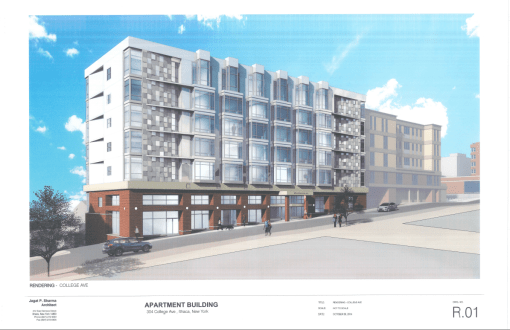
6. Thanks to reader Alec for this tip – a collection of contiguous Avramis Real Estate-owned Collegetown rental properties at 120 Catherine, 122 Catherine, 124 Catherine, 128 Catherine, 302 College, 304 College, and 306 College were not made available for rent for the 2019-2010 academic year. A check with sources indicates that according to the rumor mill, a buyer has them under contract, but the sale has yet to be finalized.

This is worth noting because we’re talking about a multi-million set of properties with 68 existing beds, but more importantly they have significant redevelopment potential – the lots can be consolidated into a large MU-2 zoned parcel (six floors, 100% lot coverage no parking) and a large CR-4 zoned parcel (four floors, 50% coverage, no parking)In fact, back in 2014, the Avramises proposed a two-building development that would have resulted in about 102 units and 202 beds. The Jagat Sharma-designed proposal never began formal review. The off-record commentary was that the Avramises got cold feet during the heat of the Collegetown building boom, though given their central location, these properties would be better insulated from a downturn in the student rental market than Outer Collegetown or fringe neighborhoods. Definitely worth keeping an eye on.
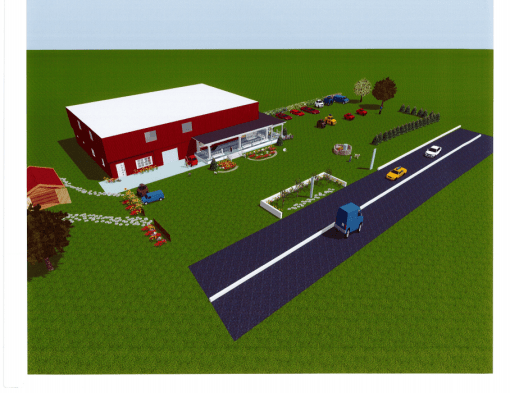
7. We’ll wrap this up with a pair of Dryden projects. The first, 1610 Dryden Road. Most folks better remember this barn as the former Phoenix Old Used and Rare Books, which closed in 2015 after a 30-year run. In early 2017, a proposal came along to use the barn as a trailer sales dealership, but it did not come to be. Now, for the second time in as many months, the proposal is a veterinary clinic, “Elemental Pet Vets”. Local veterinarian Curtis Dewey and his wife Janette are proposed to renovate the 6000 SF barn with accessory parking and landscaping. The property is zoned rural residential, so any commercial plan needs a Special Use Permit (SUP) from the town of Dryden. The town planning department is generally amenable to the reuse even if out of sync with zoning, so long as the parking and accessory structures are approved by the town, the curb cut meets NYS DOT regulations, and a landscaping buffer is in place. Ithacor of Cortland will be the general contractor.

The rendering is a bit…strange, so strange that I’m still not sure if they plan on taking down the pitched roof for a flat one, or if they decided thirty minutes in their late 1990s rendering software would convey enough to get approval. Seriously, this might be one of the worst renders I’ve seen for a project, and that’s saying a lot given the number of low budget drawings that go through the boards for small projects.

Meanwhile, as previous covered by the Journal, the Laser Brewer fashion boutique at 1384 Dryden Road has closed with the retirement of Peggy Laser after forty years of business, and her son Riley is expanding his Brew 22 coffee bar, kitchen and beer taproom to fill out the 3248 SF space. This project also requires an SUP because the younger Laser is adding a drive-through window (for the coffee and baked goods, brew-thrus are illegal in New York but okay in plenty of other states). Other than that and an exterior paint job, no further structural changes are planned.


238 Linden Avenue Construction Update, 7/2018

22 07 2018

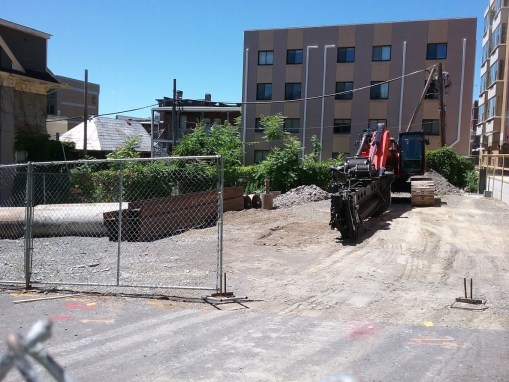
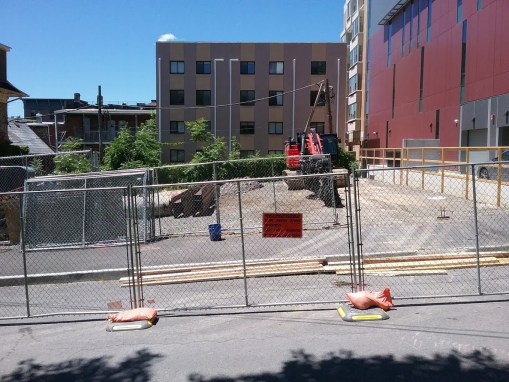
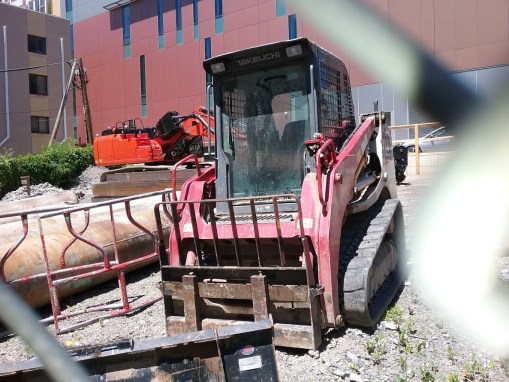
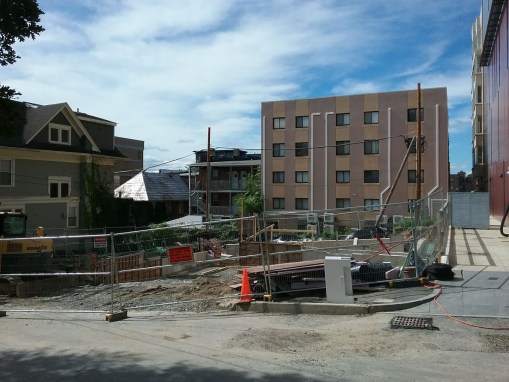
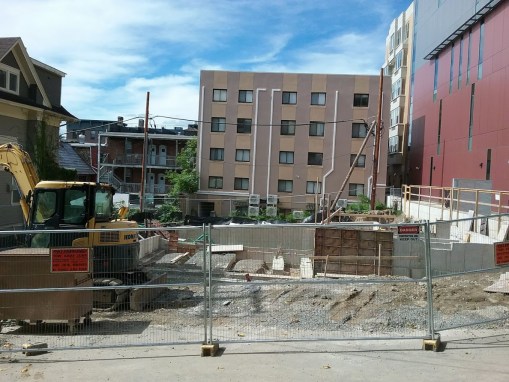
Might be jumping the gun a bit on this, but the fence encroachment into the street, pile driving equipment and steel/caisson tube liners on site are leading me to believe this one is in site prep.

Consider this project thr second half of a 2-for-1 package deal from developer John Novarr. Novarr and his business partner, Phil Proujansky, own a fairly large and widespread set of local properties, with the massive Collegetown Terrace project being the best known ($190 million investment, 1,250+ beds, 16 acres). Most of the rentals operate under Novarr-Mackesey Property Management. Their latest development was on behalf of Cornell, the 76,000 SF Breazzano Family Center for Business Education, which was dedicated last fall, an imposing six-story building at 209-215 College Avenue in Collegetown.

When Novarr first bought the properties that would be demolished to make way for the Breazzano, he bought a ramshackle six-bedroom house at 238 Linden Avenue for $1.35 million – this was in December 2010, before he had assembled his final, full group of properties (and realized Pat Kraft was flatly not interested in selling to him, later doing his own redevelopment at 205-07 Dryden), so the purchase of 238 Linden could be seen as a secondary purchase to give room for flexibility, and a place for construction staging in the notoriously tight spaces of inner Collegetown. In its last few years, Novarr did not rent out the house, which was in poor shape and torn down in June 2015. A redevelopment was always intended at some point, through it was only as the Breazzano plans were drafted did Novarr and Proujansky settle on a concept.

Inner Collegetown is a captive rental market – regardless of economic recessions, there will always be students willing to pay a premium to live near Cornell’s campus. The Breazzano project presented a unique opportunity – the project will serve up to 420 Executive Education students, who tend to be older, deep-pocketed, and infrequent visitors to campus, coming up for a few weeks of the year.

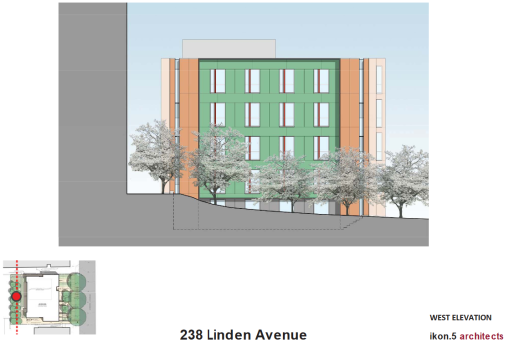
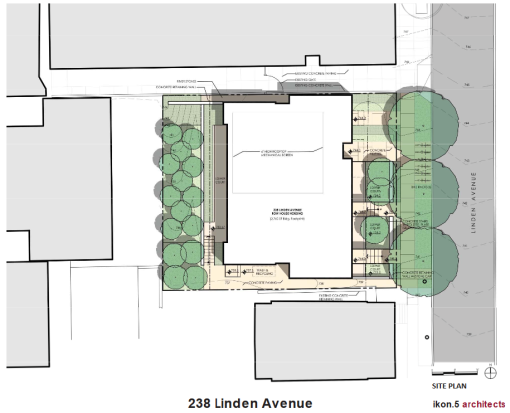
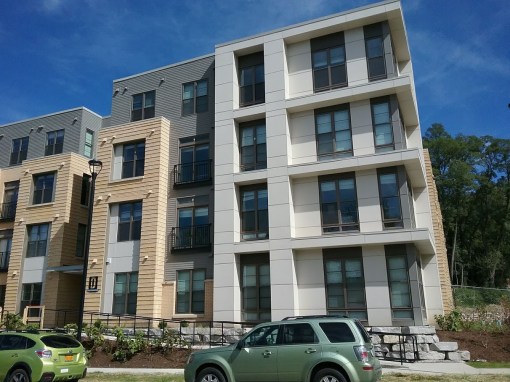
The new 238 Linden is designed to tap those Executive Education students who might come up more frequently, or prefer to have a second place to call home during their matriculation with the Johnson School. The project is a 13,715 square-foot building with 24 efficiency units (studios). It will be 4 stories with a habitable basement, just under 50% lot coverage, and is fully compatible with the site’s CR-4 zoning.  Each fully above-ground floor will host 5 efficiency units, with four in the partially-exposed basement. While intended for Johnson Executive Education students, it does not appear it would have provisions limiting the units to E-MBAs.

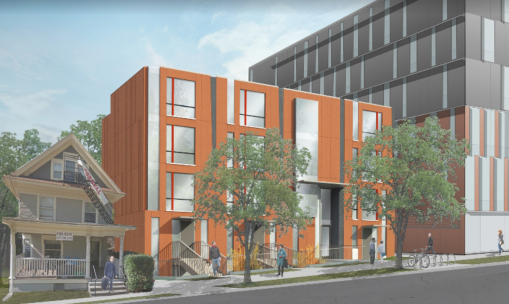
The design intent was to create a townhouse-like appearance, in form if not in function. The exterior includes fiber cement panels to complement the colors of the Breazzano, aluminum windows and a glass curtain wall with energy-efficient glazing. A number of green features are included in the project, such as LED lighting, low-water plumbing fixtures, and a sophisticated VRF high-efficency HVAC system, which uses air-source heat pumps.

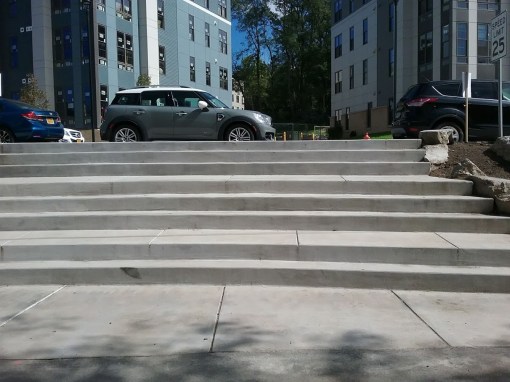
Plantings, walkways, steps and retaining walls are planned, with decorative entry stair bridges and little landscaped courtyards to provide a pleasing aesthetic for the basement units. As with all inner Collegetown projects, no parking is required so long as a transportation demand management plan (TDMP) is filed and approved by city planning staff. During Site Plan Review, the project cost was estimated to be about $2 million.

The project had a pretty quick trip through the planning board – it was proposed in March, there were very few suggested aesthetic changes, and since everything conforms with the size and intent of zoning, the board was pretty comfortable with the proposal. However, while it was approved in July 2017, the project was unable to move forward because of a change in state fire codes that essentially made construction along Linden Avenue illegal for any building taller than 30 feet (and 238 Linden is 45 feet tall), because Linden is too narrow. The way around this was to petition the city Board of Public Works to treat the parking space on the street in front as a loading zone, creating a “wider” street since a fire crew would no longer have to worry about parked cars along the street frontage. This made it easier for the project to obtain a fire code variance from the state. Normally, BPW would reject this, but 238 Linden and Visum Development’s 210 Linden had already been approved when the code was changed, so they got a special, rare accommodation. Suffice it to say, any other Linden project would be difficult if not impossible under the revised state fire code.

As with all of his other projects, the architect is ikon.5 of Princeton, with local firm Trowbridge Wolf Michaels Landscape Architecture serving as the project team representatives, and T.G. Miller P.C. providing the civil engineering work. The modern design may not be to everyone’s taste, but Novarr likes the architecture firm’s work so much, he asked them to design an addition to his property in Cayuga Heights. Beauty is in the eye of the wallet-holder. No word on who the general contractor will be, but Novarr has often turned to Welliver for his construction work. The original buildout period was estimated at ten months, so a plausible occupancy for 238 Linden would be complete by Summer 2019.


118 College Avenue Construction Update, 7/2018

16 07 2018

The last of Visum’s trio of Collegetown projects underway is the 5-unit, 28-bedroom building at 118 College Avenue. Officially, one other Visum project has city approvals and is permitted to start construction, a close fraternal twin to 118 College just a few houses up at 126 College Avenue. However, the existing house is rented out for the academic year, so any build-out there (and Visum seems to have deep enough pockets to eventually do it, all things considered) will not begin until June 2019 at the earliest.

As with 210 Linden, Romig General Contractors is in charge of the buildout, and Taitem Engineering is doing the structural engineering – as with Visum’s other projects designed by STREAM Collaborative, the building is built to be net-zero energy capable. Using electric heating and appliances, energy efficient fixtures, low-E windows, double-stud exterior walls and high grade insulation creates a very high degree of energy efficiency that they hope to tie into an off-site solar array, offsetting the carbon footprint of the building and its use.

118 College still has another floor to go before it’s topped out, and the mechanicals will be hidden inside the historically-inspired “Italianate cupola” penthouse. Water and sewer service was installed this past week. I’m uncertain this one will be ready in time for returning Cornell students late next month, though it’s not impossible given that it’s a relatively small wood-frame structure. So far, with the rough window openings I’m seeing one substantial difference from the renders – the windows on the wings of the front facade are smaller than originally planned.


Chapter House / 406 Stewart Avenue Construction Update, 7/2018

15 07 2018

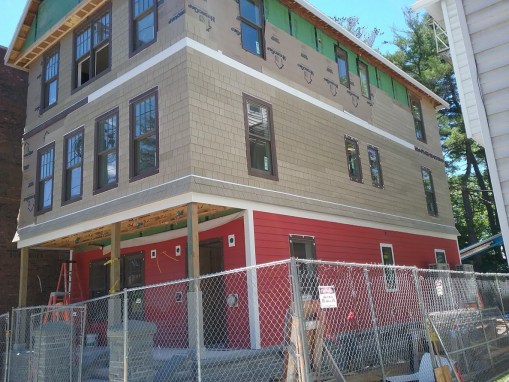
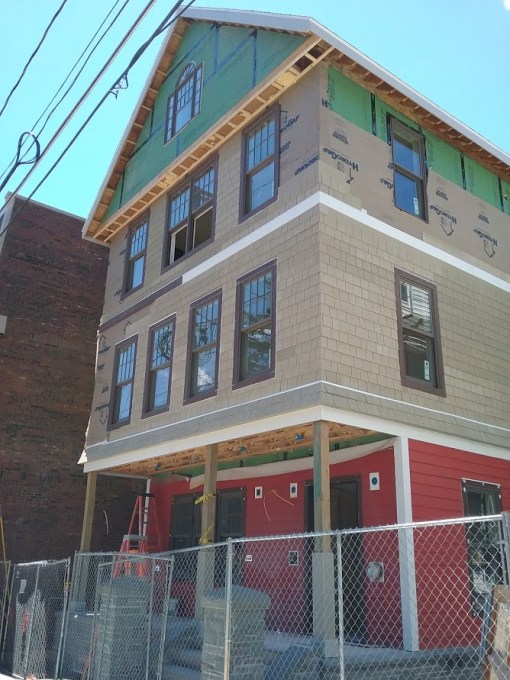
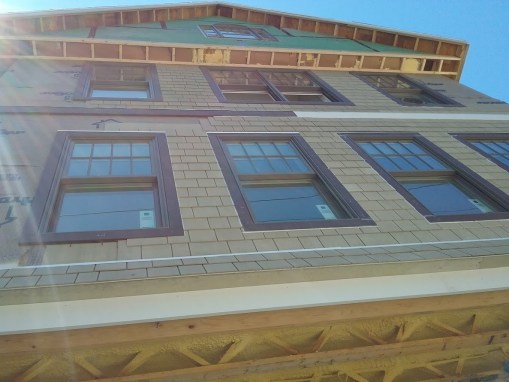
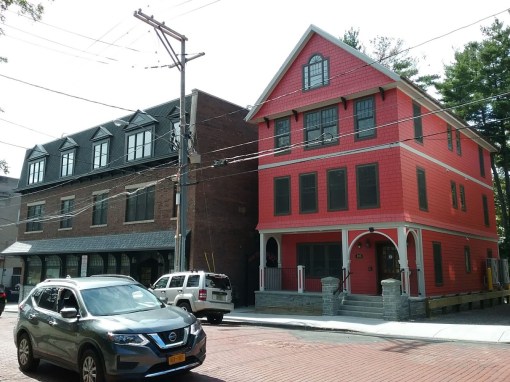
With 400-404 Stewart Avenue complete, developer Jim Goldman is focusing on the completion of the other half of his reconstruction, 406 Stewart Avenue. This is the property that Goldman originally owned and was destroyed in the spread of the fire that erupted at the Chapter House building. Architect Jason K. Demarest’s 3.5 story design is completely framed and sheathed in ZIP Panels; the panels are then covered in HydroGap, a premium grade housewrap to remove excess moisture while keeping new moisture from penetrating into the plywood sheathing. This is then layered over with (what I suspect are fiber cement) shakes, in contrast to the first floor’s lap siding.

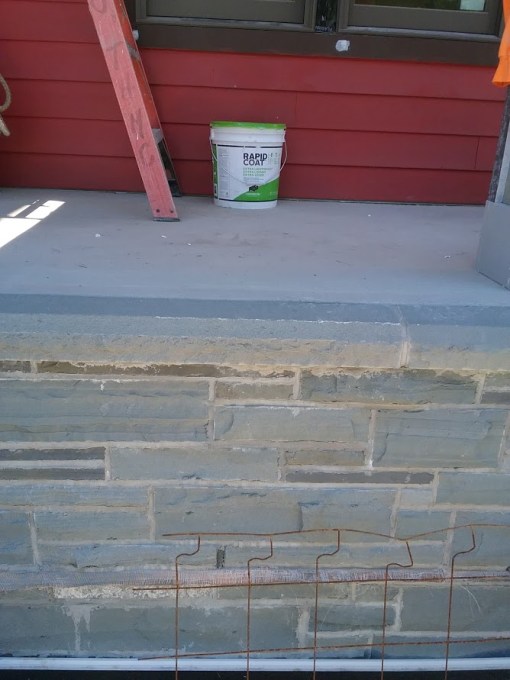
My first inclination was that they needed to be painted, but looking at the design render, it appears as if the project team decided to reverse the brown and red siding bands, so now the first floor is red like the original building, but the upper floors are brown. This is not the first major change to the design, which was approved by the ILPC, but any revisions may have been done out of committee view at the staff level. The fenestration on the third floor is different, and the dormer on the gable roof was deleted. Note the partially glazed-in access stair for the third floor apartments, and the quarried bluestone stair columns and base.
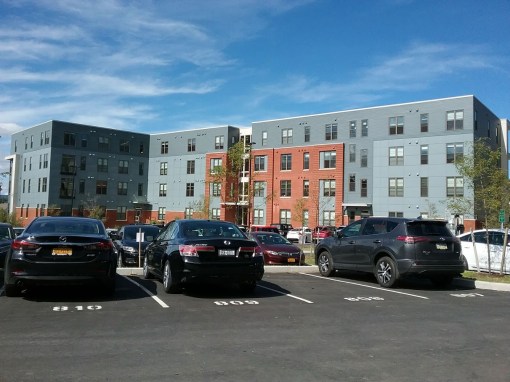
There’s still a fair amount of work to do on the exterior with facade installation, trim and finish pieces and the installation of a steel grate to access the enclosed stair column. The one inside shot shows drywall hung with doors and some trim in place, but some pieces are still missing, the wall needs to be painted and the floors have to be finished. However, it’s not an especially large building (four units and eleven bedrooms as-approved), so chances are pretty good this will be ready to go by mid-August.

As for the Chapter House, a few shots through the window glass show the carpeted staircase leading up to the eight apartment units, and an unfinished 3,000 SF commercial space still looking for a tenant.


210 Linden Avenue Construction Update 7/2018

13 07 2018

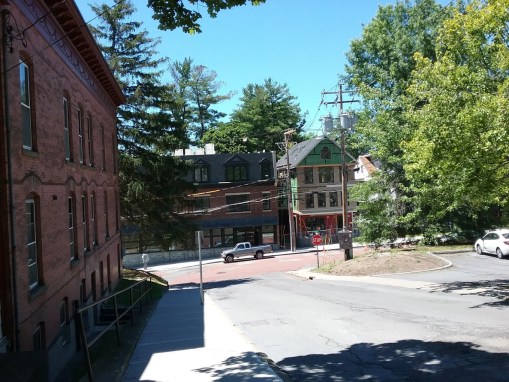
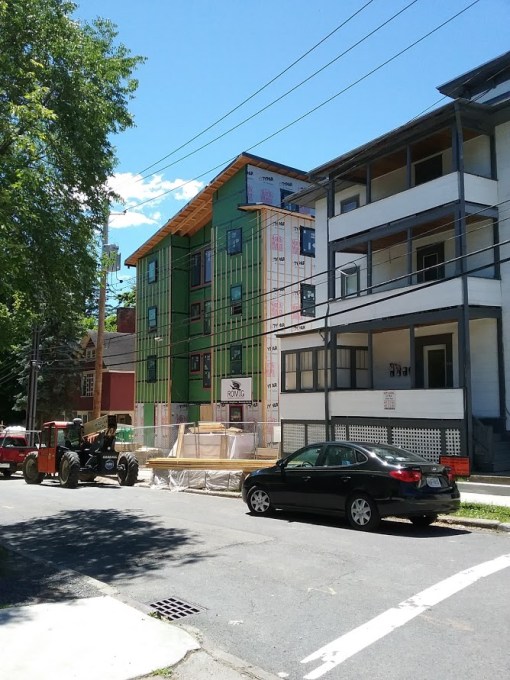
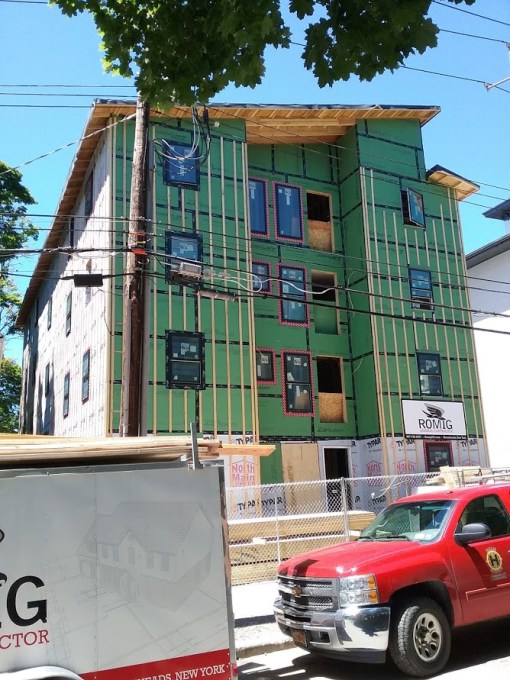
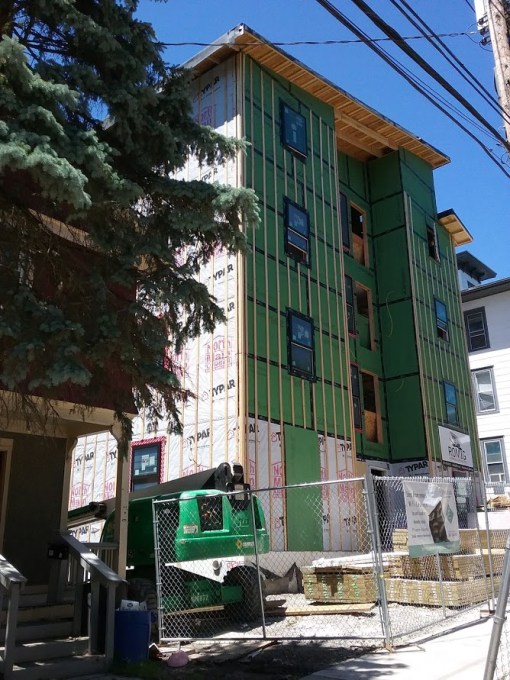
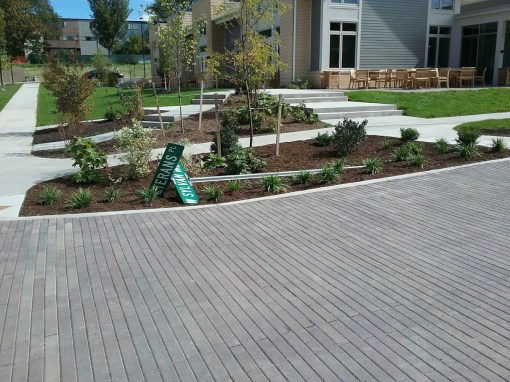
Time to take a look at Visum’s smaller Collegetown projects. 210 Linden is the largest and furthest along; the city allowed them to hook up to water and sewer service this week.

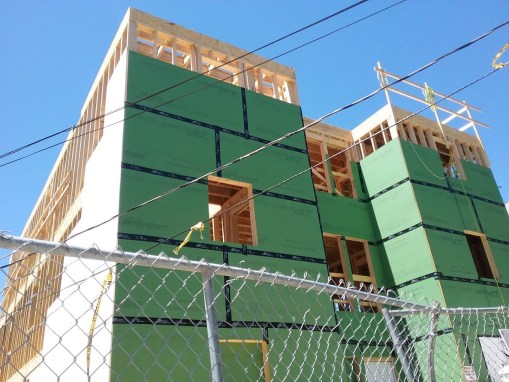
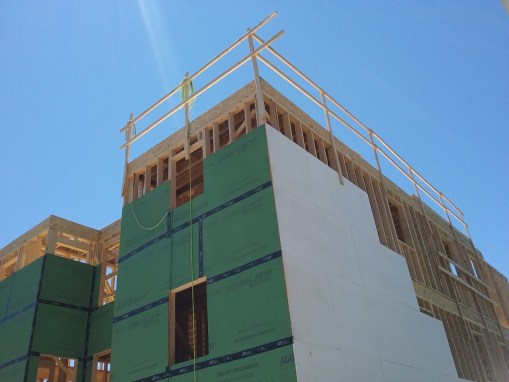
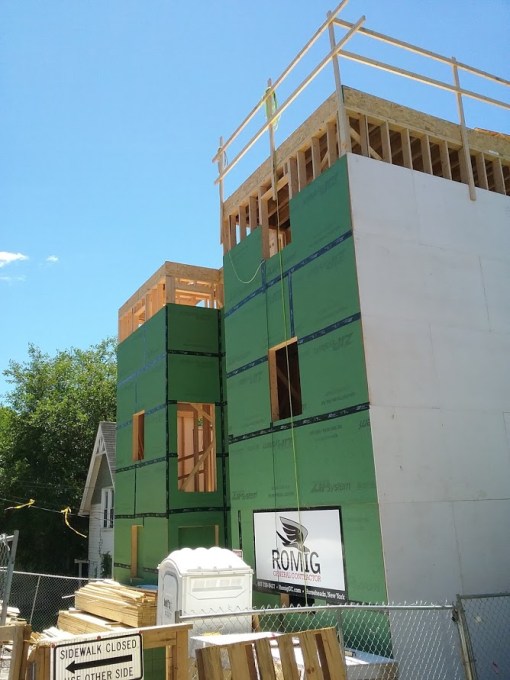
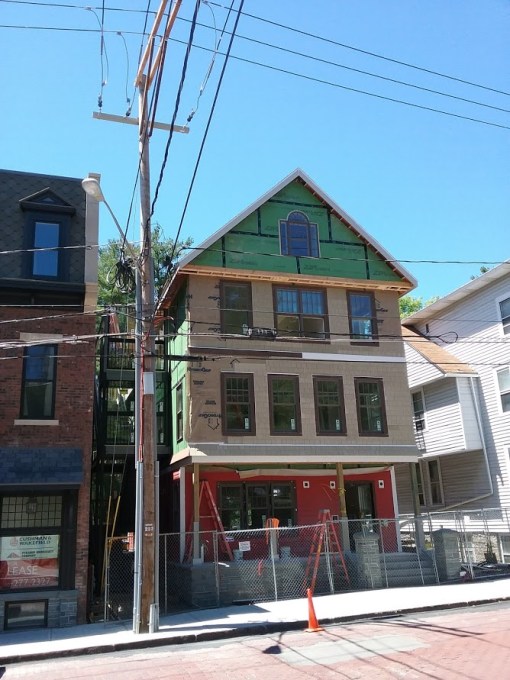
Note there are some clear differences between what was originally approved, and what’s being built. The fenestration is a different layout – the top floor windows originally did not line up with the window arrangement of the other floors. Secondly, the floor-to-ceiling multi-pane treatment on the top floor’s front (east) facade has been eliminated, given a similar if slightly glassier treatment as the other three floors, which had a balcony window reduced in size. The most likely guess is value engineering – save cost, save time, especially the latter since the building needs to be open by mid-August.

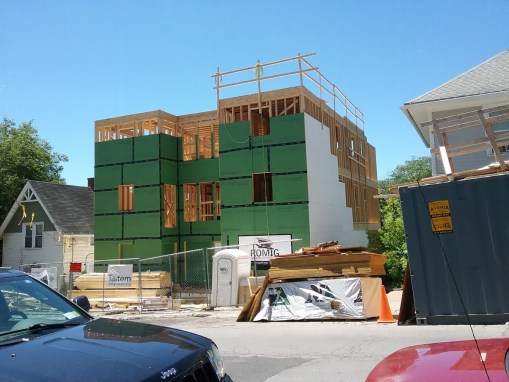
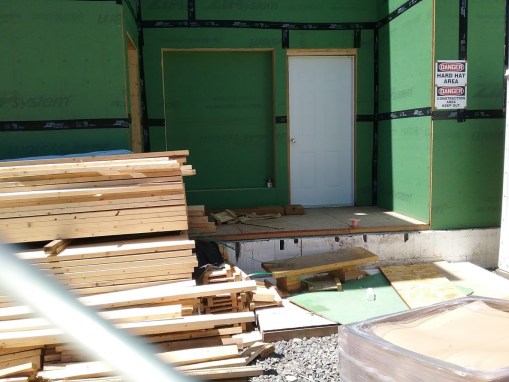
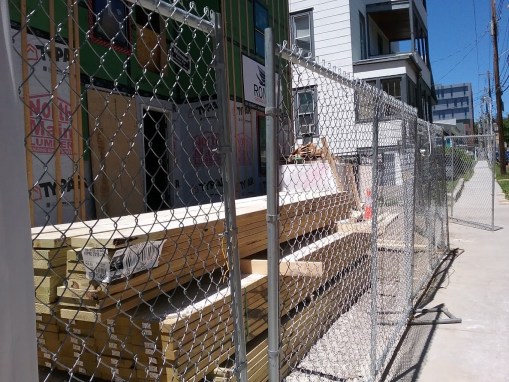
The overall shape remains the same, but with these changes it’s a bit of a question mark as to the appearance of the final materials – it’s probably the same as approved, since the vertical wood rails over the sheathing indicate the LP SmartSide fiber cement lap siding is coming at some point. The sheathing is a mix of Huber plywood zip panels with its specialized tape system, and TYPAR housewrap over plywood panels courtesy of North Main Lumber, a regional lumber sales chain. Romig General Contractor is doing the build-out, and their work with Visum is arguably the first multi-family project they’ve tackled in the Ithaca area.

Although 210 Linden is too small to host much in the way of amenities (it has a garbage collection room and bike room in the basement), its 37 residents will have full access to the amenities offered in The Lux just up the street. Connecting the dots, those were probably quartz countertops in the Lux update; seems plausible the same high-end fixtures, cabinetry and appliances would be used in both.

The background info/intro to 210 Linden can be found here.