327 Eddy Street (Dryden Eddy Apts) Construction Update, 6/2016

19 06 2016

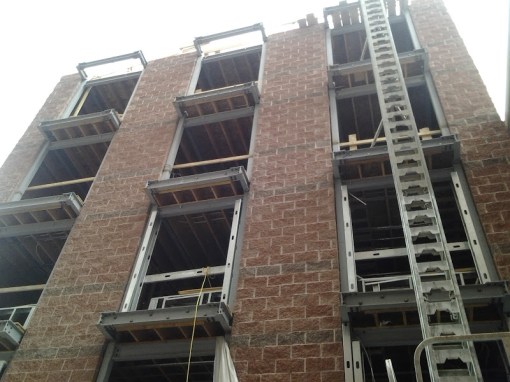
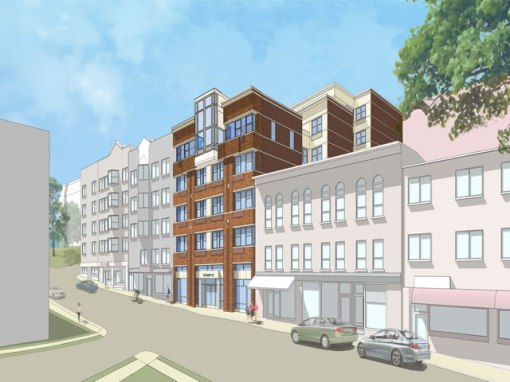
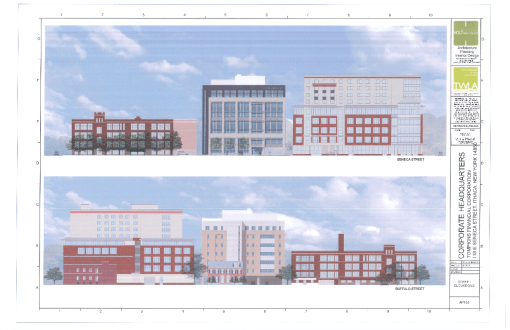
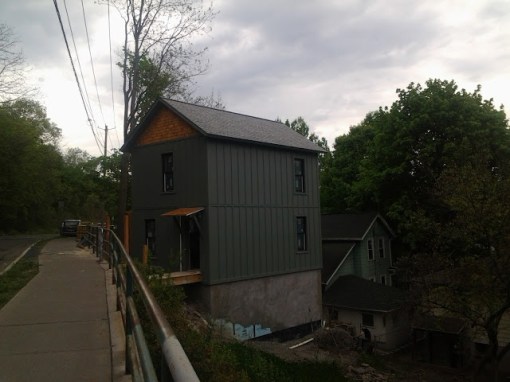
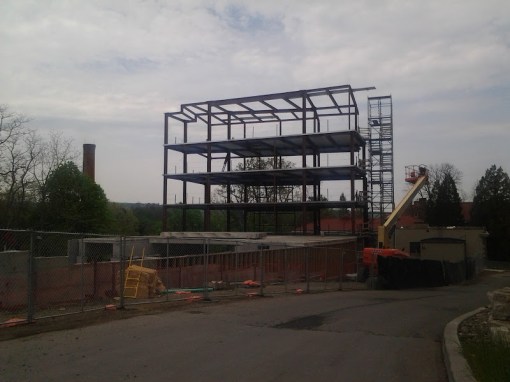
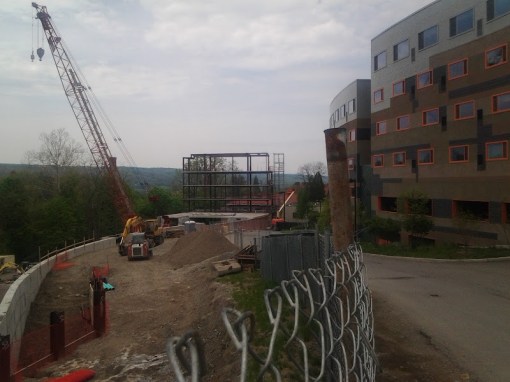
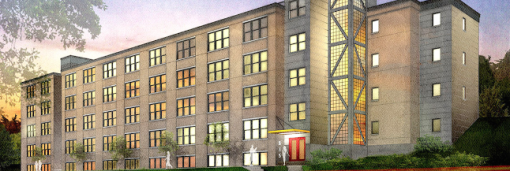
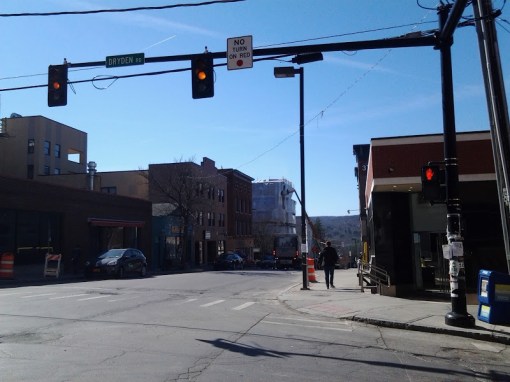
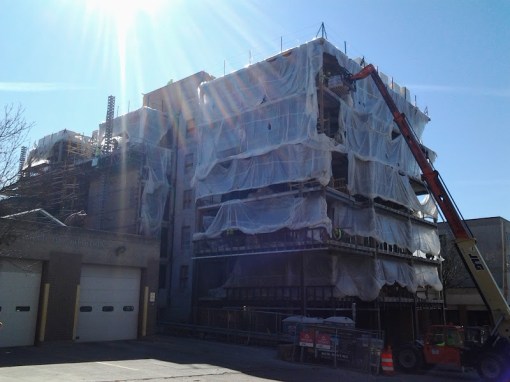
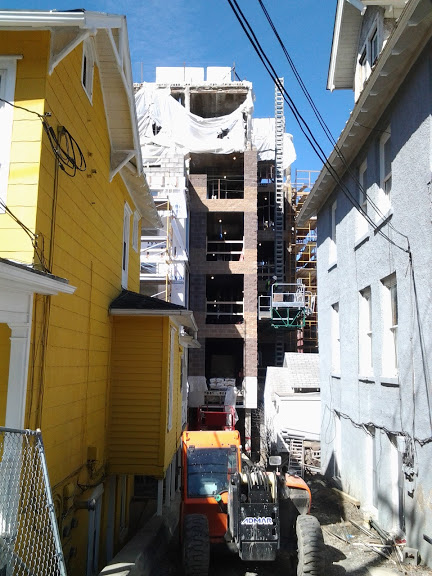
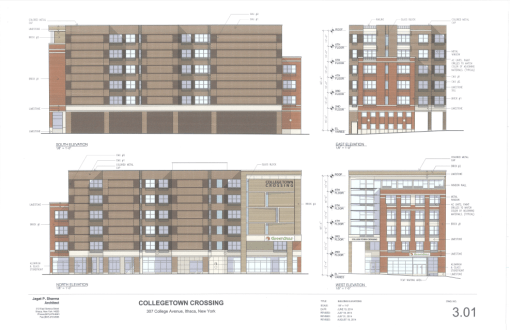
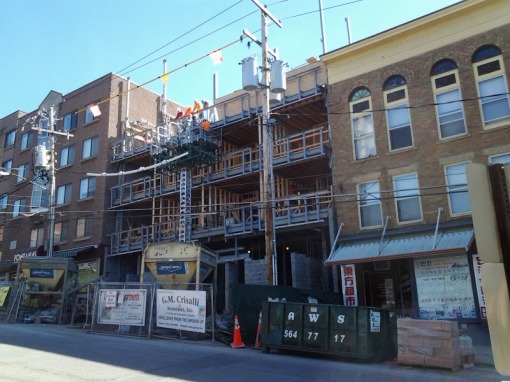
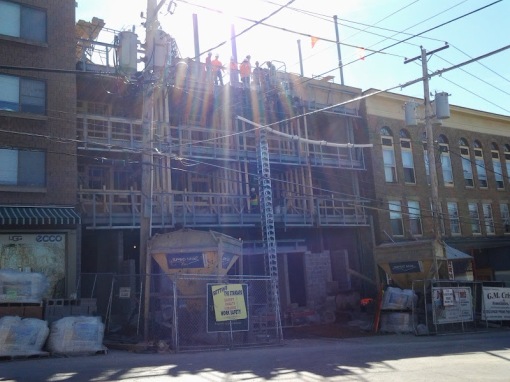
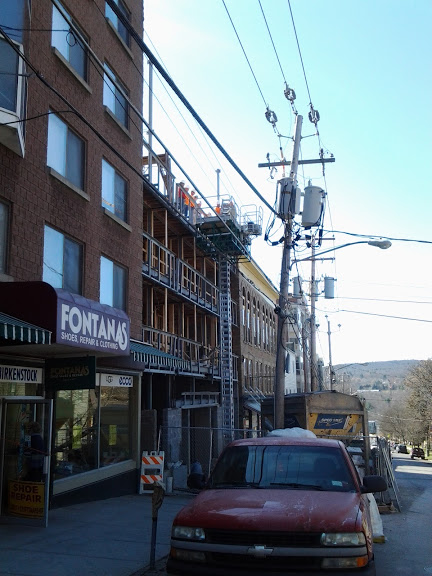
Steve Fontana’s mixed-use project at 327 Eddy Street has topped out since the April update. The exterior stud walls are up on the front facade, as is a little gypsum sheathing. The CMU Block rear portion is also topped out, although it appears that the design of the rear was also changed/value engineered such that it no longer have the larger band of windows on the top floor. The large window at top center is split between two units,  and using the wood stud walls as a guideline, one can kinda get the impression of soaring ceilings and a big, glassy open space. More interior wall faming can be seen from the rear of the building. Units range from studios to 5-bedroom apartments, with prices starting at $950/person and topping out at $1250/person for choice units.

While the apartments are able to command to premium price, Fontana has had issues finding a commercial tenant for the 1,800 SF first floor, and expressed his concerns at a city PEDC meeting where the active-use code for Collegetown was modified to match the slightly more flexible code used with the Commons.

Things should be moving right along for an August opening.

20160608_164146 20160608_164214 20160608_164236 20160608_164251 20160608_164449 20160608_164504 20160608_164509 20160608_164513

327_eddy_rev4_1

327_eddy_rev2_3


News Tidbits 6/18/16: Wit Fails Me After Eight Years

18 06 2016

201_college_v4_1 201_college_v4_2
1. Let’s start off with a brief update on 201 College Avenue. My colleague Mike Smith at the Voice did an encompassing article on the topic late last Friday, and there have been a couple more modest developments as of late. Apart from the multi-million dollar sale mentioned last week, the city’s Design Review Committee also gave their input on the project. They said they like the current form of thje building’s front (west) entrance, because it calls forth elements of Grandview House a few doors down. they also recommended darker or neutral grey colors to minimize the appearance of the fifth floor, more windows along College Avenue, warm accent colors, and tweaks to the window and cladding scheme. The resulting revisions were incorporated into the latest building design seen above, and for which additional images, material samples sheet and interior plans can be found here. The project will be discussed at the Project Review meeting next week, and the official Planning Board meeting Tuesday 6/28, at which the public hearing will be held, and consideration of preliminary approval.

107_s_albany_v2_2

107_s_albany_v2_1

2. Speaking of design review, 107 South Albany also went through the committee this week. Recommendations included projecting window sills, stucco all the way back to the rear balconies, and noting on docs that the large sign on the existing building would be removed during the renovation. Site Plan Review app here, drawings here, Full Environmental Assessment Form (FEAF) here, planting plan here.

The renovation and addition seems like a good example of re-use in a corridor that the city is targeting for new investment. It preserves the century-old structure and adds housing in such a way that, by location and design, doesn’t have a significant visual impact. By zoning, Nick Stavropoulos could have sought five floors if he wanted. This plan will be going through the whole shebang at the June meeting – Declaration of Lead Agency, Public Hearing, Determination of environmental Significance, and Prelim and Final Approval.

Among other things to be discussed at Project Review and the Planning Board meetings – Prelim/Final Approval for 602 West State Street (the Elmira Savings Bank project), signage for Collegetown Crossing, and a few minor zoning variances. New sketch plans, if any, will be announced on the PB Agenda next week.

3. This week in big sales – someone plunked down $680,000 on a house at 107 Catherine Street in Collegetown. I say somebody because they conducted the purchase through an LLC (aptly named “105-107 Catherine Street LLC”) registered by a local law firm last summer. Just like the Maguire purchase of the Carpenter Circle land, this effectively hides the buyer from public view. The same purchase bought 105 Catherine for $780,000 last November. It looks like 105 has 10 bedrooms and 107 has 7 bedrooms, based off assessment docs.

cafd1

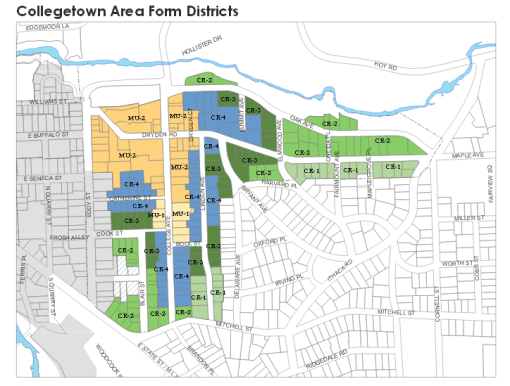
105 and 107 Catherine make up the edge of the CR-4 Form District. By zoning, an applicant could build up to four floors, no parking required. A development plan would likely consolidate lots. Something to keep an eye on. Collegetown is getting to be a very expensive place.

4. Meanwhile, here’s something that’s just hitting the market. For the budding landlords, 306 North Cayuga is up for sale. The “C. R. Williams House” was built in 1898 (interior/exterior photos from the early 1980s here). The current owner, Jeff Kalnitz, picked it up for $300k in 1997, had it on and off the market a couple of times, and then decided to do a thorough ILPC-approved renovation. The 12,500 SF property, which holds six high-end apartments and approvals for a seventh, is being offered at $1.45 million. It’s worth looking at the listing if only for the glamorous interior shots.

amici house 1 county
5. On Tuesday, the Tompkins County Legislature will vote on whether or not to take $118,000 from the county’s general fund to indirectly help build head start classrooms and a living facility for homeless young adults.

The $118,000 would be use to purchase a house at 661 Spencer, whose land would be incorporated into plans for a 23-person facility for homeless young adults (some with children) aged 18-25, and five classrooms. The classrooms would be built as one building, while the housing looks to be an addition to the TCAction building. The one-story house at 661 Spencer, built in 1950 and formerly formerly owned by the Amici family, would be removed.

The plan is the latest incarnation of TCAction’s Amici House project, slated to share their headquarters property at 701 Spencer Road on the southern edge of the city of Ithaca. TCAction first acquired their property with the help of the county back in 2001; the cost of the purchase is paid back to the county in the form of a 20-year lease.

If the legislature approves, the lease would be extended by two years so TCAction can pay them back for the up-front cost of buying 661 Spencer. The Amici House project would be completed by 2018.

6. Poet’s Landing in Dryden will be moving forward with its 48-unit second phase. The rentals, which are targeted at individuals making 60% of county median income, are expected to begin construction in August with a late summer 2017 opening. Phase I, which consisted of 72 units, opened in early 2013. The state awarded the project $1,600,000 from its Housing Trust Fund, and $734,956 in Low-Income Housing Tax Credits to help finance the apartments’ construction.

tfc_v2_1

7. Tompkins Trust held the official groundbreaking this Friday for it’s new 7-story headquarters. Plans were slightly delayed after some issues arose with NYSEG. The current plan is to have the 123,000 SF building ready for occupancy by March 2018. Costs have risen somewhat, from $26.5 million to $31.3 million.


News Tidbits 6/4/16: A Stormy Summer Start

4 06 2016

201_college_v3_1
1. We’ll start this week off with a follow-up on the 201 College Avenue debate. All discussions of planning philosophy noted, one solid request, as reported by Josh Brokaw at the Ithaca Times, was to try and reduce the bulk from the College Avenue side, if not necessarily the building footprint. The above drawing was submitted by STREAM Collaborative’s Rob Morache earlier this week, with a cover letter describing the changes here. The modification reduces the building by 2 bedrooms, to 74, which to go by Todd Fox’s comment in the Times article, puts the project at the borderline of financial feasibility. The middle still pops out a little because that’s where the fire stairs are located. Some minor details were changed with the accent panels, and recessing the windows slightly on the south and west facades. For the record, the panels are Nichiha and Allura fiber cement, with painted metalwork and fiberglass window sashes.

Although now outdated, a shadow study for the previous design has since been uploaded by the city. There are two versions, with and without neighboring building shadows, here and here respectively.

Expect further detail refinements; the building is set to go in front of the Design Review Committee Tuesday morning.

20160414_120418

2. WSKG did a segment earlier this week on micro-apartments, with an interview with Frost Travis and the Carey Building project wrapping up on East State Street. A few details worth noting from the segment – 5 of the 20 rental units (which range from $1,225/month for the microunits to $2,699/month for a high-end penthouse 2-bedroom) are already spoken for and the building’s not even finished yet. For some reason, Monica Sandreczki says there will be about 35 residents at full occupancy, which is a big stretch since there are 16 micro-units and 4 two-bedroom units – going one person per micro-unit and bedroom, a better estimate would be 24.

The news piece also notes that the 201 College project contains micro-apartments – which is true, given that the building is 44 units and 74 bedrooms, and at least the early plans had a number of split-level 410-670 SF studio units.

401_lake

3. And 401 Lake Street will bite the dust. The Common Council voted 8-1 last Wednesday night to have structure demolished and the tax-foreclosed properties be designated as parkland. Cynthia Brock (D-1st) voted against the measure and preferred a sale for tax reasons, and her ward counterpart George McGonigal (D-1st) argued that the city was destroying historic working-class housing, though he ultimately supported the measure. Brock did take a whack at new affordable housing in the city, commenting that INHS is getting $75,000 for each townhouse, and Habitat for Humanity getting $75,000 for a duplex even with its volunteer labor, when there was a potential, cost-efficient opportunity for affordable housing designation with this unit. Josephine Martell (D-5th) seemed to be the strongest proponent for demo, stating that the unique potential to enhance the Ithaca Falls Natural Area should be taken every opportunity of. The city bought the tax-foreclosed property from the county; the background on that is on the Voice here.

The funds for the demolition, estimated at $25,000, will come from the sale of IURA land to the Hilton Canopy project. That measure was approved 6-3, with Brock, McGonigal and Graham Kerslick (D-4th) opposed. With work on the Lake Street Bridge currently underway, demolition is not expected for at least a few months.

There was a thought exercise regarding the selling the falls’ parking lot to INHS for development of 3-9 units of affordable housing; it’s an interesting idea, since 401 and the adjacent are right next to the Falls, but the 0.55 acres of city property adjacent to the Lake and Lincoln Streets intersection is still over 200 feet away at its closest point.

4. The rare bit of news out of Enfield. A $612,000 building loan was issued by the Bank of Greene County to provide funds for renovating and expanding the volunteer fire station at 172 Enfield Main Road.

Give that Enfield issues no more than a handful of new construction permits each year, it’s about the only other thing going on apart from the Black Oak Wind Farm debate. One would think that arguments like “the wind does not blow as much as it used to” would be easily shot down and things would move forward, but instead it’s Marguerite Wells, the project manager for BOWF, getting raked over the coals. I don’t have a dog in this fight, but I do feel bad for her.

5. In case anyone was wondering – county planner Megan McDonald says the Denter housing study will be publicly available by late July.

arpt_pk_1

6. Here’s something intriguing from the county’s Facilities and Infrastructure Committee agenda – a proposal to “Prepare airport land for future development“, seeking $500,000. None of the money comes from the county; it appears to be dependent on grants, or an interested developer. Which, given the fact that this shows up in budget docs going back to 2014, doesn’t exactly seem to be generating many queries.

The parcels are described as the “Cherry Road and Agway parcels”, which must be owned by the county since they want to lease out the land – but checking the deed records of parcels adjacent to the airport, there’s no record of an Agway in any of the deed histories. The parcels may be related to the properties in the airport business park feasibility study, shown above and awarded to the team of Clark Patterson Lee and Camoin Associates this past winter.

7. It’s unusual to see Cornell buying property these days, but this Friday, the university purchased the house at 1250 Trumansburg Road on Ithaca’s West Hill for $157,000. The house is a 19th century fixer-upper on 1.21 acres – Cornell owns the land surrounding it, some of which is being subdivided off to build the Cayuga Meadows affordable senior housing project. The house is assessed at $215,000, but the real estate listing notes it needs some work, and it’s been off and on the market for five years.

Several years ago, Cornell expressed intent to develop the 35 acres it owns into a mixed-use complex with a hotel institute, housing, offices and medical services, but the only part of the plan that ever really moved forward was Conifer’s project. I haven’t seen the plans in years, but I remember the early plans (there were a couple versions) were very sprawly; six, eight years ago, walkability was not as valued as it is now.

By buying the house, Cornell reduces its need to work around a neighbor and can incorporate the property into potential plans. This purchase would seem to suggest that Cornell still has strong interest in developing the rest of the West Hill property at some point. In the meanwhile, Cornell might rent it out while the school figures out what it wants to do with the acreage.

20160522_151346 20160522_151417

8. House of the week. From the outside, 228 West Spencer Street is almost done, and the interior is fairly far along as well, with finishing work underway. Architect Noah Demarest says the house will be put up for sale in a few weeks, if everything goes as planned.


Collegetown Terrace Construction Update, 5/2016

31 05 2016

Just like in March, there are really two sets of photos here. The first set contains photos that I’ve taken from outside the fence. The second set of photos are from inside the fence, and come courtesy of Nick Robertson and Jocelyn Garrison at Welliver, the general contractor in charge of the project, and a big thanks goes out to them for taking and sharing photos from inside the fence.

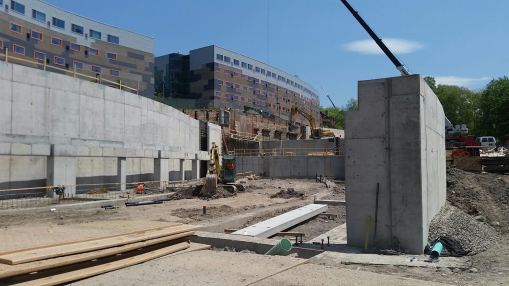
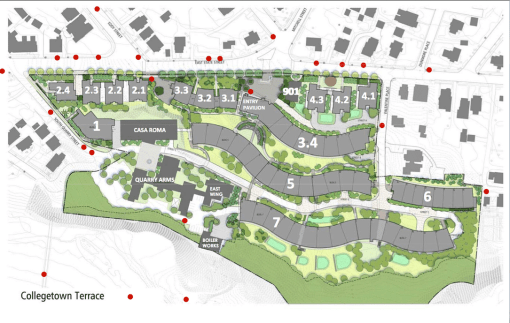
The erection of the steel frame has started on the westernmost portion of the building, and corrugated decking is being attached to each level. Work on the building is generally progressing from west to east, and  the sheer length of the building allows the western sections to be quite a bit further along than the eastern sections, where foundation walls are still being formed. The reinforced concrete sections visible in the last of the Welliver photos is where the parking garage will go; readers might remember that Novarr sought and received a zoning variance to remove a floor of parking space and turn it into less expensive dorm-style housing, citing the lack of utilization of existing parking, and a desire to appeal to a larger segment of the rental market.

20160522_141042 20160522_141058 20160522_141148 20160522_141154 20160522_141222 20160522_141228 20160522_141237

Set two:

index index2 index3

ctown_terr_phase3


News Tidbits 5/28/16: A Battle Between Neighbors

28 05 2016

201_college_v2_3

1. It seems the Planning Board had something of a philosophical crisis at their meeting, per the Times’ Josh Brokaw. The cause of the crisis is Neil Golder, Todd Fox and 201 College Avenue. Here’s the backstory.

201 College is a 2.5 story, 12-bedroom house on the corner of College and Bool. Local developer Todd Fox has a proposal on the boards for a 5-story apartment building (shown above). Neil Golder lives next door at 203. He moved into 203 in 1972 when he was a grad student at Cornell, bought the place in the early ’90s, lived there with his partner Kathy until she passed a couple of years ago. He still lives there, and rents out spare bedrooms.

201 and 203 were rezoned as part of the 2014 Collegetown rezoning to MU-1. This came only after years of debate, and Neil was one of the residents who pushed to have the properties rezoned in 2009 with a payment in lieu of parking scheme that upset a lot of the landlords, who mounted a significant legal challenge that prevented the rezoning from happening – more about that can be found in this Voice explainer.

For the record, Golder has never been much of a fan of development in Collegetown. His two big things have been that density is bad (but he seems to have mellowed on this issue since the parking push in 2009), and that Collegetown needed a grocery store. He was supportive of Collegetown Crossing because the developer (the Lowers) live next door at 205 and Greenstar will be opening a grocery store on the ground floor.

So, back to the zoning. There are nine MU-1 properties. The four between Catherine and Cook belong to Novarr – he has not expressed any intent to redevelop them. The other five are 215, 209, 205, 203 and 201 College Avenue. Novarr has expressed intent to redevelop 215 starting in late 2017. 209 is Grandview House, a historic landmark, and pretty much untouchable. 205 is Lower’s house, 203 is Golder, and then you have 201.

201 is the southernmost of the nine, and therefore most likely to stand out. The thing is, zoning consistent, when development happens organically, it means the parcel most likely to stand out isn’t necessarily the last one to get developed, nor will it necessarily be the smallest. In this case, the physical transition is from 2.5-3.5 story houses, to 5-story apartment, to 2.5 story house, and then a 3.5 story house and 5-story boarding house.

As of right, Todd Fox can build up to 5 floors and 70 feet tall as an average height. The site slopes slightly, so the building is shorter on the north side than the south side. The design fits the zoning – but it has to go to the BZA for a couple of minor area variances, one for entrances off of Bool, and the other, the board requested the project incorporate – the building was moved northward slightly to allow for street trees and a wider sidewalk on College Avenue. The May agenda noted that the Board had no concerns with either variance.

Golder has sent letters to the Times and the Voice (directly to my colleagues Mike and Jolene but not to me, interestingly), he has been stopping people on the street to sign his petition, he’s tried the ILPC, Planning Board, Historic Ithaca, friends in city government, even the city forester, everything and everyone he can to try and halt the current plans, but there has yet to be a compelling, objective counter-argument.

Countering some of the claims in his many letters, the individual pine trees at the front are not historic landmarks or city-owned, the city has to review and approve of construction plans anyway, and the traffic issue had already been discussed back during the rezoning. The developer has agreed to push the building back, which will give more visibility to Golder’s driveway, and a curb bump-out at the corner is proposed as part of the project. So that leaves the aesthetic argument of “I don’t like it”, which puts the Planning Board in a really difficult spot because as long as the form districts say the design is fine, that argument won’t stand up to a legal challenge.

There is a strong argument with his solar panels, which have been a part of broader discussion within the city. 201’s height would marginalize Golder’s solar panels, so in that case the project causes non-subjective hardship; this could be mitigated if 201 has solar panels (they are being considered) and shares electric, or by other compensation. Although, it might depend on when the panels went in, before or after rezoning. If people start rushing to put up solar panels as a back-door method to thwart development, the city’s going to step in.

So here’s the essence of the issue – after years of fighting over zoning, and finally settling on a compromise in 2014, the city is faced with a development that is legal, but it’s vehemently opposed by a venerable and high-profile neighbor, where the objections can be effectively mitigated, but not necessarily the way he wants them to be. A planning board member has to find the balance between allowing everyone to have their say, and acknowledging valid issues that should be addressed, without letting individuals exert too much control over their neighbors and infringing on property rights.

waterfront_foreclosure_parcels_0516

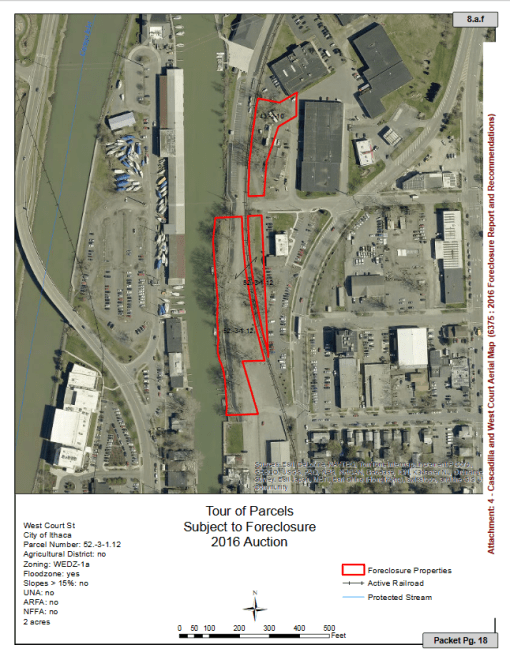
2. Okay, onto other things. The city might be acquiring a couple of sizable West End/Waterfront parcels from the county. The properties, which consist of a pier/boardwalk, informal parking and vacant land, are located at the end of West Court and Cascadilla Streets, and are being seized as a tax foreclosure. The county is looking at selling them to the city in exchange for the $42,844 in back taxes. The larger one is 2 acres, the smaller 0.6 acres, and in total they’re valued at $630,000. The owner, an LLC, picked them up for $156,625 in 1999.

If the city picks them up, they’ll be filed into the IURA’s holdings for potential sale down the line. As it is, the parcels have issues – the railway, accessibility, and soils down here are known for being difficult to build on. But in the long term, there’s potential for water-focused amenities, private development, or a combo of the two. It looks like a good investment given the city’s still-in-the-works plan to encourage redevelopment of the West End and Waterfront, so this is worth keeping an eye on as things move forward.

402_s_cayuga_st_boggsfernandez

3. The IURA reviewed funding proposals for affordable housing earlier this Spring, and the minutes are now online. the duplex at 622 West Clinton, and the affordable unit with the 4-unit 402 South Cayuga project were not funded. The IURA is encouraging 622’s applicant to re-submit for next year, and the minutes note that 402 is likely to still go forward, but without the affordable unit.

It’s also been noted that there is some discontent with INHS because the cost of their projects are coming in high, and that they would like more diversity in applying entities. However, the seven townhomes at 202 Hector and the single-family house at 304 Gector (all for-sale housing) are fully funded. The Habitat for Humanity duplex on the 200 Block of Third Street is also fully funded.

rumble_seat_1

4. Another piece of news from the IURA – the new occupant for the Rumble Seat Music building. It appears to be a drink bar called “Watershed Union“, serving coffee and juice by day and adult beverages by night. Five or six living wage jobs would be created. There might be some grumbling over the moral evils of alcohol, but the business plan has the support of neighboring businesses and the Downtown Ithaca Alliance.

Also, the Canopy Hilton is still moving forward. But are doing a minor LLC ownership change to allow another Patel family member to be a part of the ownership team.

5. Hitting the market this week, for all those big-potato investors out there – the Belmont Townhouses at 324 Spencer Road. The listing from local realtor Brent Katzmann has the price set at $2,595,000, for a 14-unit complex that opened in 1995. The posting mentions the possibility of a 1031 Exchange, which allows an individual to sell a currently-owned investment property, and buy a new investment property of equal or greater value while avoiding capital gains taxes – continuity of investment locks up the profit gained from sale.

20160522_160150 20160522_160211
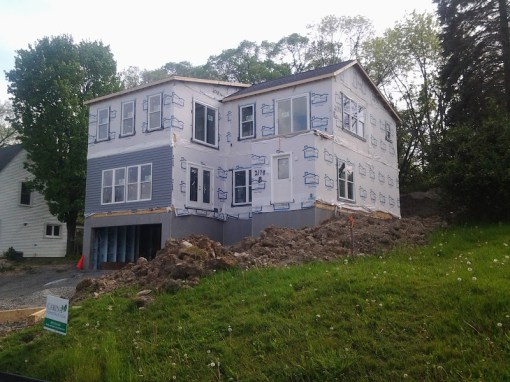
6. House of the week. This house is on the 100 Block of Campbell Avenue on Ithaca city’s portion of West Hill. This home is being built by Carina Construction, an Ithaca-based modular home specialist. The foundation and garage were poured and the pieces were probably craned on and locked together sometime in the past few weeks – a little bit of siding has started to show up on the front. The process is a lot like the one Carina used to assemble the Belle Sherman Cottages across town.

Color me impressed, the design is unique, and once exterior details like the porch and second-level deck go on, I imagine it’ll look really nice. Tompkins Trust lent $280,000 back in April, and the construction permits were issued not long thereafter (the total project cost is in the $320k range, per the permit filing). The land was created in a lot subdivision last year, and sold for $35,000 last August.


News Tidbits 5/7/16: Everything’s Political

7 05 2016

815_s_aurora_night

1. Let’s start with government. The city of Ithaca passed revisions to its cell phone tower law reducing the no-build fall radius from 200% of height, to 120% of height. The 120% was decided upon after a check of other municipalities, where it was generally the most common figure.

The change allows development to proceed on the grassy field at 815 South Aurora Street on South Hill, although as mentioned last week, the fall zone revision isn’t as much as developers Todd Fox and Charlie O’Connor had hoped for. But it’s still enough to work with; according to Josh Brokaw at the Times, a revised plan that meets the new guidelines could be going to the planning board for sketch plan review in June, possibly with more units than the 87 studio units initially planned. It was also reported that the local neighborhood group (South Hill Civic Association, SHCA) is comfortable with the initial plan, so this might be a relatively smooth process when the project is ready for review.

2. Meanwhile, while one thing moves forward, Dryden’s been hit with a major setback. The Pinckney Road parcel sale in Dryden was foiled when voters, in a 1188-936 vote, rejected the town’s plans to use recreation reserve funds to purchase the 15 acre property. The town would have spent about $56,800 of a fund that has over $300,000, and the county would have contributed $15,000, so that the town could have turned it into park space in the long-term. The town was prepared to buy the property, but residents opposed to the sale managed to get enough signatures on a petition to force to to go up for a vote.

It sounded like a worthy and reasonable plan. But I get the feeling that there were a lot of folks who figured it would pass by a wide margin, so they just didn’t vote. In a marketing course a while back in college, I remember the professor sharing an interesting statistic – versus feeling neutral, the general public is three times more likely to support an initiative when they really like something, and nine times more likely to vote or speak out when they’re really opposed. People are more driven by aversion than reward, and that’s probably what happened here.

20141227_134402

3. Sticking with local governments, the town of Ithaca is set to vote on a moratorium on duplexes, but with some modifications from the initial proposal. For one, given construction seasons revolving around the warm season, and the time it takes to plan and get permits, it was decided to make it only nine months (January 2017) instead of one year, so that they could limit the possibility of dragging it through two construction seasons. And although the town planning committee chair wasn’t on board with it, an exemption is in place if one of the units will be owner-occupied. If their goal is to revise the approach to student housing, then at least these amendments fix or lessen some of the bigger issues a moratorium would produce.

https://twitter.com/streamcolab/status/657329991827509248
4. Just a wee bit more info on the “Tim Timbers” planned for the corner of Freese and Dryden Roads in Varna. The tiny houses are small though not micro-sized – they’re expected to be about 800 square feet. Local architecture firm STREAM Collaborative is working with businessman Nick Bellisario on the 16-lot subdivision and home development.

waterfront_concept_aerial_1waterfront_concept_mf_th_SP_1

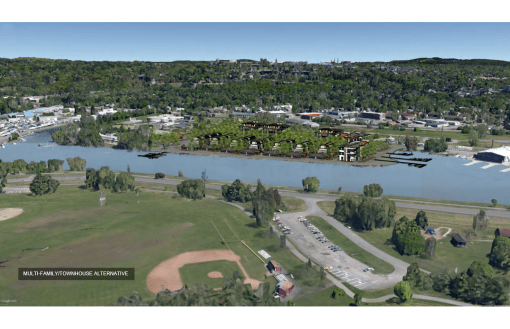
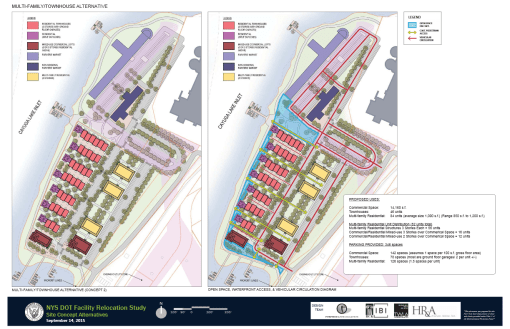
5. So the full 206-page, $78,000 NYS DOT waterfront redevelopment study by Fisher Associates is on the city’s website. The initial results were shared here back in October, but the final product has some additional, very interesting details.

waterfront_concept_timeline

One of those additions is a potential timeline for development. It calls for getting official support and commitments over the next several months, issuing an RFP later this year for the new DOT facility in Dryden, and issue an RFP for the NYSDOT waterfront site later this year, with review in Q1 2017 and developer selection in Q2 2017, assuming this doesn’t end up like the Old Library debate. The DOT would move to Dryden in Q3 2018, and the excess state land would be transferred to the county, sold in Q1 2019, and ready for occupancy by mid-2020.

The other really interesting new section is Appendix 5, stakeholder outreach. This consists of interviews with city officials and nearby property owners – Cornell (who say they have no plans for their waterfront properties), the Farmer’s Market, and some smaller businesses and organizations. The gist of the comments had more to do with Farmer’s Market than the DOT – namely, heavy traffic issues, needs more parking, and needs to physically expand to accommodate a waiting list of vendors and cool-season operations. There are early plans incubating for a nearby indoor market facility, if memory serves right. As for the DOT site, the mixed-use plan was deemed most favorable, and the stakeholders agreed that the site had great potential for redevelopment.

warren_medical_lansing_1

6. Looks like marketing has started for a proposed new medical office building in the village of Lansing. The new one-story building, which appears to be designed by Binghamton-based Keystone Associates, would be off of Warren Road, although it looks like the building would be accessed from a driveway coming off of Uptown Road. The 2.71 acre property is zoned “Human Health Services District” by the village, and borders undeveloped land owned by Cornell, and several other suburban medical office buildings built over the past few decades. The resolution on the attached site plan is too low to determine the square footage, though it looks to be in the low tens of thousands.

The property was purchased by Arleo Real Estate from Cornell for $378,600 in October 2014. Arleo Eye Associates owns and occupies the neighboring building to the south. Arleo built their 7,119 SF optometry office in 2007.


News Tidbits 4/30/16: Sticking to the Plan

30 04 2016

chapter_house_v4_1

1. So, let’s start off with the bad news. Chapter House might not be happening. Josh Brokaw at the Ithaca Times had the scoop, though not for a lack of trying on the Voice’s part – rumors had arrived in the inbox well before the Collegetown construction roundup article. I’ve reached out to Jerry Dietz, the building manager for the Chapter House project, four times over the past couple of weeks, without response. One of those was an in-person visit that went un-received. My Voice editor and colleague Jolene Almendarez has also been trying to do her share of contacting relevant parties, to no avail.

Anyway, personal discontent aside, The co-proprietor of the Chapter House (and the only one willing to say anything on record) says that he believes a sale of the 400-404 Stewart Avenue property is imminent, with the potential buyer being the next door neighbor of the also-destroyed 406 Stewart Avenue. The claim is that a more cost-efficient plan would be put forth, which could eliminate the Chapter House from its plans.

One thing to keep in mind is that the property is on the edge of the East Hill historic district – the Ithaca Landmarks Preservation Commission can control just about every aspect of the exterior, but they don’t have say over use any more than zoning permits. They can stipulate the extra expense of appropriate material and image, but they can’t stipulate a bar (and a lot of commission members would be uncomfortable with that anyway). Dunno how much the insurance money was, but the finances just may not work. It would be unfortunate, but as they do in golf, they’ll play the ball where it lies.

college_crossing_2

plan-1

2. Noting, briefly. Evan Monkemeyer, the developer behind the cancelled College Crossing project, might be partnering with another developer to create and put forward a plan for the corner of Route 96 and East King Road. This is according to the town of Ithaca’s planning staff. Monkemeyer has not hidden his discontent after his suburban-style mixed-use project became the subject of heavy debate because the site plan, originally approved in 2007, no longer meshed with the town’s interests, which had evolved to more New Urbanist formats put forth by the 2014 Comprehensive Plan and the Form Ithaca charrettes. Monkemeyer owns about 64 acres on the northeast side of the intersection, and more than 15 acres as part of Springwood on the southeast side of the corner. In other words, virtually all the divvied up land and conceptual buildings on the lower right side of the charrette image. This could be something to keep in eye on over the coming months.

maplewood_v3_2

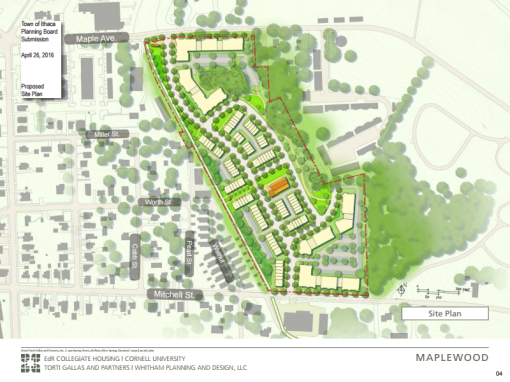
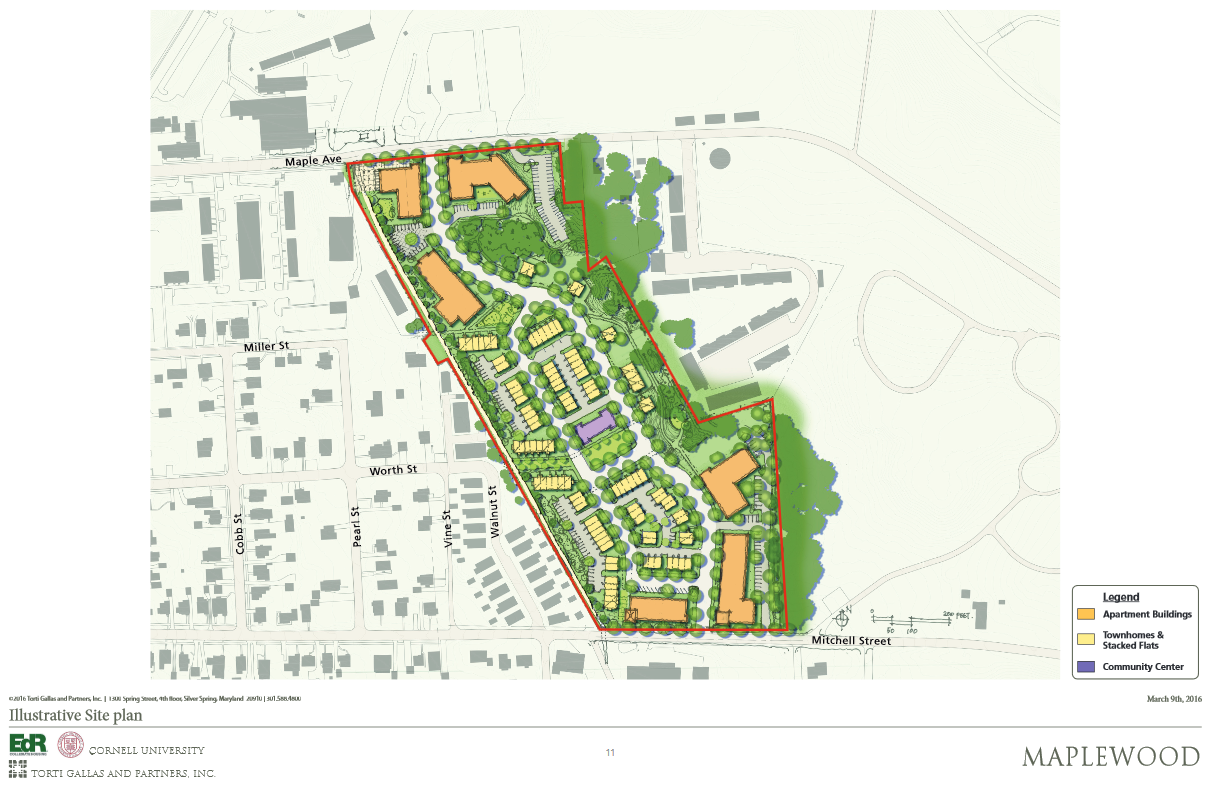
3. Here’s the latest iteration of the Maplewood Park site plan. A lot of changes from the previous version. To sum up the changes, the apartment buildings, 3-4 stories, have been pulled back from existing homes, the townhouses and stacked flats have are more centralized and closely clustered, and mixed-use retail/apartment planned for the city is now in the town, all the city has in its portion is green space and perhaps a small service area/ bus shelter.

Also note the secondary road that terminates right at the edge of the Maple Hill property. Chances are very good that would feed into a phase II that redevelops the Maple Hill property.

The large parking lot in the southeast corner doesn’t seem to jive with the rest of the plan, previous versions had the parking more dispersed. Since Cornell has an idea of the number of residents it wants for the project to be feasible to build and affordable on grad student stipends (850-975, centering around 925 beds in 500 units), if housing is decreased in one part of the parcel, they’re going to have their development team make up for it somewhere else. One of the bigger points of contention seems to be Cornell trying to avoid drawing traffic in by keeping larger buildings further out, while neighbors from various angles try and push the units as far away from them as possible.

maplewood_v3_3

Maplewood has a website up sharing meeting notes and presentation materials here. Future meeting information will also be posted to the Maplewood website. The project will be filling out an Environmental Impact Statement (EIS) not unlike Chain Works, because of the project size and potential for adverse impacts (and therefore the need for proper mitigation before plans can be approved). The scoping document for the EIS, which is an outline that says what will be written about where, is on the town’s website here.

maplewood_v3_4

Just for the record, the print version of a recent Maplewood write-up on the Times claimed to have a quote from me. It was not. The online version of the piece has the corrections. The quote wasn’t even something I would say, because I don’t think Cornell attempting to house a greater number of its graduate and professional students is an “unsustainable development goal”. Quite the opposite, it’s crucial they do that to relieve some of the pressure on the rest of the local housing market.

202_hancock_1

4. Looks like some of the IURA’s recommended funding Action Plan is out. Habitat for Humanity gets the full $75,000 request, as does INHS with the $100,000 requested for their new single-family build at 304 Hector Street. Most of the 202 Hancock project, the seven for-sale townhouses, was recommended for funding – $530,000 of $567,000, ~93.5% of the request.

815_s_aurora_4 815_s_aurora_1

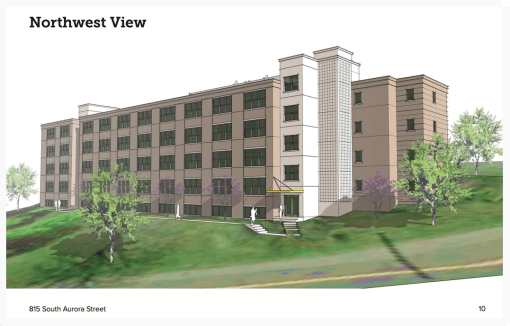
5. At the Common Council meeting next Wednesday, the city is set to vote on reducing the fall-zone radius for cell phone towers, from double the tower’s height (200% of tower height), to 120% of the tower’s height. The move will potentially allow an iteration of Modern Living Rentals’s 815 South Aurora project to move forward with further planning and review. The 87-unit project was planned on the assumption of 100% tower height plus ten feet, so in the case of the 170-foot South Hill cell tower in question, the law would call for a 204 ft. radius, not 180 ft. as the developer hoped. But still, it’s a lot less than the 340 ft. it currently is. The developer may seek a smaller project, build taller, a greatly-revised footprint, or other options. We’ll see how it plays out.

20160414_114709 20160414_114818

201_w_clinton_1

5. House of the week. Back in March, it wasn’t certain whether 201 West Clinton’s “sawn-and-batten wood” would be left unpainted, or painted yellow. Looks like the former is correct, based on the east face of the 1-bedroom carriage house. The ZIP panels were still exposed on the other faces when I shot these photos, but based off what could be seen through the windows, interior work is progressing nicely, and the garage door has been attached. Local architect Zac Boggs and partner Isabel Fernández are building the 520 SF addition atop an existing 1960s garage.


307 College Avenue (Collegetown Crossing) Construction Update, 4/2016

25 04 2016

Collegetown Crossing is starting to show its face. Windows are being installed, and the CMU walls are on display. The mostly glass front facade has yet to go on, and brickwork will eventually go over the Tyvek housewrap on the 4-story, CR-4 portion of the portion. As mentioned in the Voice piece, a construction worker on-site said that interior work is focused on interior wall framing, sheet-rock hanging, and electric rough-ins at the moment.

According to building developer Josh Lower of Urban Ithaca, the project is being included as a part of a city grant application related to public transit, though it’s not something I’ve heard much about. It definitely fits the bill – designated internal bus shelter and pull-off space for up to two buses, a pedestrian through-fare and pocket park that connects College Avenue and Linden Avenue, ample bike racks (12 spaces required, 24 being provided), 3,200 SF grocery store on the first floor and Ithaca Carshare is but a couple hundred feet away.

There are a couple smaller retail spaces included as part of the project, but there hasn’t been any indication as to whether they have tenants lines up.

Like Dryden South and the Dryden Eddy Apartments, Collegetown Crossing plans to open in time for the fall semester. Ithaca’s Jagat Sharma is the architect, and Hayner Hoyt Corporation out of Syracuse is in charge of the build-out.

20160415_102004 20160415_102109 20160415_102141 20160415_102216 20160415_102337 20160415_102359 20160415_102450 20160415_102754 20160415_104451

307_college_site_plan_final 307college_rev2_1

ctown_crossing_rev2_1


327 Eddy Street (Dryden Eddy Apts) Construction Update, 4/2016

25 04 2016

Here are the latest photos for Steve Fontana’s mixed-use project at 327 Eddy Street. Work is up to the fourth floor in the front, and it looks like interior wall framing is underway on the lower floors, along with utilities rough-ins on the lowest levels. The rear section is further behind, steel is rising but workers have yet to move beyond the first floor. Progress should be happening fairly quickly from here on out, as the building needs to be ready for occupancy by the start of the fall semester. According to Fontana’s website (conveniently linked with the shoe store), unit prices range from $930 to $1250 per bedroom. The website doesn’t give any indication on how many units have been reserved.

There seems to be a slight discrepancy as to whether the project has 53 or 56 bedrooms in its 22 units. Counting on the webpage didn’t help, and the floor plans on the city’s website date from the 6-story, 64-bedroom version. A quick check shows my source was a Cornell Sun article from February 2015, no longer online. If anyone knows which number is accurate, please chime in.

A little more info can be found in last week’s Voice round-up here.

20160415_103153 20160415_103222 20160415_103243 20160415_104011
327_eddy_rev4_1


News Tidbits 4/9/16: A Slippery Situation

9 04 2016

maplewood_site_plan_concept

maplewood_site_plan_concept_v2

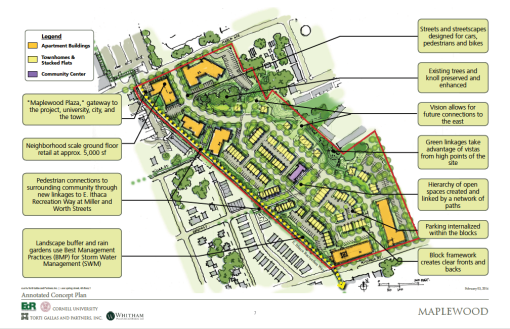
1. The town of Ithaca had their first substantive meeting about Cornell’s Maplewood Park Redevelopment, and later this month, the city of Ithaca will have their take on the 4.5% that sits within their boundaries (picture a line up Vine Street – that’s the city line). According to documents filed with the city, approvals from them will only be needed for one building. Application/SPR here, cover memo from Whitham Planning and Design here, Part I of the Full Environmental Assessment Form here, and narrative/drawings here.

From the SPR, the schedule as already been shifted slightly to an August 2018 completion rather than July – they also threw out a $3.67 million construction cost that doesn’t make much sense offhand. Edit: It looks like it’s just a basic estimate of 4.5% of the total project cost of $80 million.

The biggest change so far is a revision of the site plan. In response to community meetings, Cornell shifted smaller 2-3 story stacked flats and townhouses closer to the Belle Sherman Cottages, pulled back a couple of the larger apartment buildings, and added a new large apartment building to the southeast flank. Cornell has its goal of housing at least 850 in the redevelopment, so all design decisions revolve around accommodating those students with their families, while coming up with a design the community can live with.

The city will vote at its April meeting to defer Lead Agency to the Town of Ithaca, which will leave them with the ability to provide input, but the town board will be the ones voting on it.

2. It’s not often that a project gets undone by a single public commenter at a meeting. But the Journal’s Nick Reynolds got to experience such a momentous occasion at the town of Ithaca’s planning board meeting. He documents it on his Twitter account.

Someone that I didn’t cover because it wasn’t especially news-worthy is Cornell’s plan to replace the Peterson Parking Lot at the intersection of Tower and Judd Falls Roads with a cutting-edge 100% porous paved lot and a Cornell-created soil designed to promote rapid growth of trees in high traffic areas (a new island would be built in the middle of the lot). Basically, an eco-friendly, less-invasive parking lot, if there ever could be a thing.

Then Bruce Brittain, the Forest Home community historian, completely undid the plan with a contour map. Generations ago, the property was filled with debris and garbage, even old construction trucks. And while there may be a parking lot on it now, a porous lot, which would be heavier when watered, is liable to collapse right onto the Plantations below. Meaning, no porous lot, no green showcase. Back to the drawing board Cornell.

201_college_1

201_college_v2_1

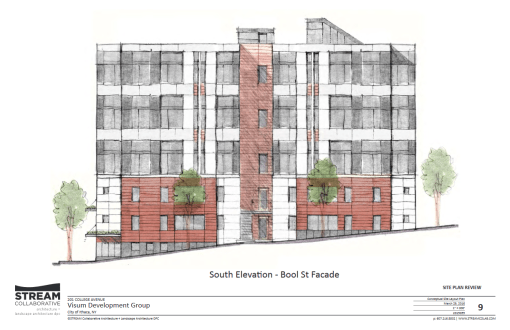
3. Here’s a little more information on the 5-story, 44-unit/76-bedroom apartment proposal for 201 College Avenue. SPR Application here, FEAF here, project narrative here, BZA worksheet here, drawings here , letter of discontent from Neil Golder here. Looking at the drawings, there have been some slight revisions, mostly with the College Avenue entrance and the materials and fenestration at street level. The SPR gives us a $6 million construction cost, and a proposed construction time frame of July 2016 – August 2017. Units will be a mix of 1 to 4 bedrooms (24 1-BD, 12 2-BD, 4 3-BD, 4 4-BD). While the project falls into the Collegetown Form District, an area variance will be required for a front yard setback from College Avenue, which the board feels will help the street be more like a boulevard.

The city planning board is expected to Declare itself Lead Agency for environmental review at the April meeting. Developer Todd Fox hopes to have approval by the end of the June meeting. STREAM Collaborative is the project architect.
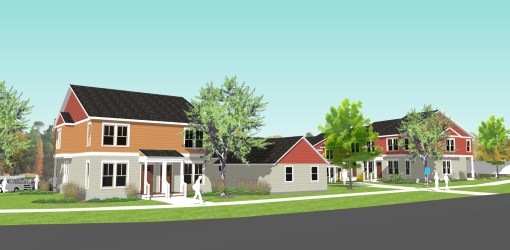
902_dryden_final

4. This week’s eye candy comes courtesy of Noah Demarest and Todd Fox (yes, they seem to be getting a lot of mentions this week). It had occurred to me that while an image of the revised 902 Dryden townhouses had been presented at the meeting where it was approved, the town never uploaded the copy. Noah and Todd were kind enough to send me a copy of the image presented at the meeting, and gave their permission to share it here. 8 new units, 26 new bedrooms. The duplex building in the middle already exists, but two new units will be built opposite a shared wall. Two three-unit clusters will be built on the east side of the parcel.

Cayuga-Meadows-Shot

5. It’s official as of March 28th. Construction permits have been issued for Conifer LLC’s 68-unit Cayuga Meadows project on West Hill in the town of Ithaca. Expect the first construction update, and a synopsis, when the first construction update comes around, which won’t be until mid-to-late May since West Hill projects get visits during odd-numbered months.

6. Just a couple minor city subdivisions to pass along. One, an application in outer Collegetown at 513-15 Dryden Road to separate the land into two parcels (513 and 515). The lot owner will then build himself a new house on the vacant lot. CR-1 Collegetown Form District, and it looks like no variances will be needed.

The other subdivision is on the city’s portion of West Hill. The property is a vacant lot that borders Westwood Knoll, Taylor Place and Campbell Avenue. The property owners, who live next door on Westwood, want to divide the vacant lot into two vacant lots to sell for single-family home construction. Once again, it looks like no zoning variances will be needed, just regulatory PB approval.

With the consolidation and realignment of 312-314 Spencer Road mentioned last week, this makes three subdivisions scheduled this month. That’s pretty unusual, as the city typically sees only one every 2 or 3 months on average.

7. Looks like someone made a tidy profit. Local landlord Ed Cope picked up 310 and 312 E. Buffalo Street for $885,000 on the 6th. 310 E. Buffalo is a 6-unit apartment building, 312 is a parking lot. The previous owner, a Philadelphia-based company, picked up the properties for $800,000 back in October 2014. So, $85,000 (+10.6%) for 18 months of ownership. The properties are part of the East Hill Historic District, where the Philly-based firm recently had a hell of an experience because the owners before them replaced the windows without notifying the city, and that was a big no-no as far as historic districts and the ILPC are concerned. They mandated the windows all be replaced with more historically-appropriate fittings. Hopefully that came up during the sales negotiations.

For what it’s worth, the parking lot is zoned R-3a – a 4 story building with 35% lot coverage. Since it’s in a historic district, a hypothetical proposal would likely look a lot like its neighbors.
11-24-2012 171

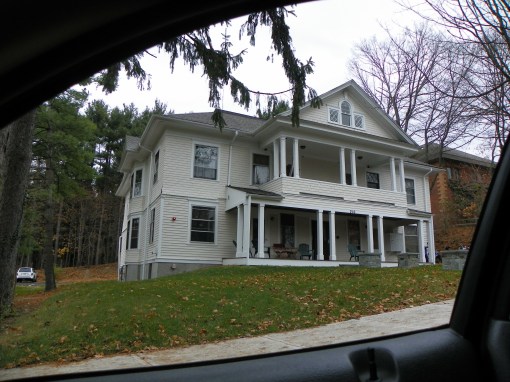
8. And another big sale this week, on Friday – the house at 210 Thurston sold for $2.5 million to the Alpha Chi Omega sorority. The house had been on the market since last November for $2.75 million. This actually sold relatively quick, given its large size and fairly unique nature. The seller purchased the property for $677,500 in December 2011, and renovated the property for use by the Cornell wrestling team.
Alpha Chi Omega has occupied the house at 509 Wyckoff Road for a number of years, but did not own the property – the owner, who picked up the property in 1971, is a business partner of Kimball Real Estate.