News Tidbits 1/27/18: The Shutterbug

28 01 2018

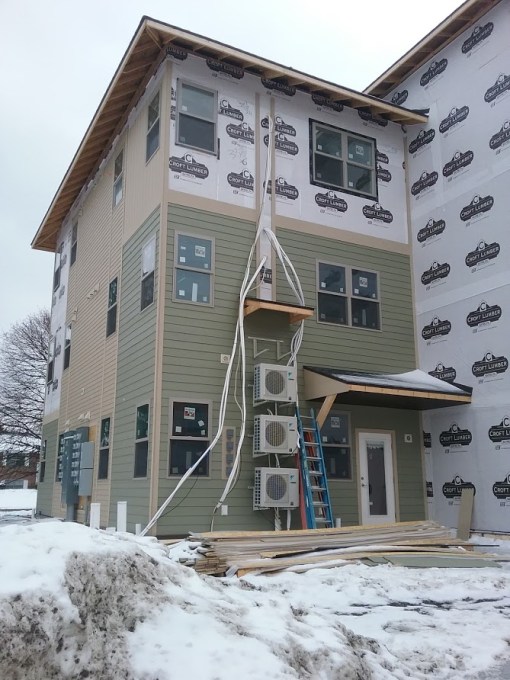
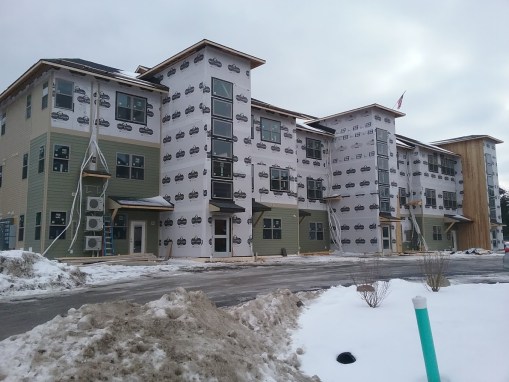
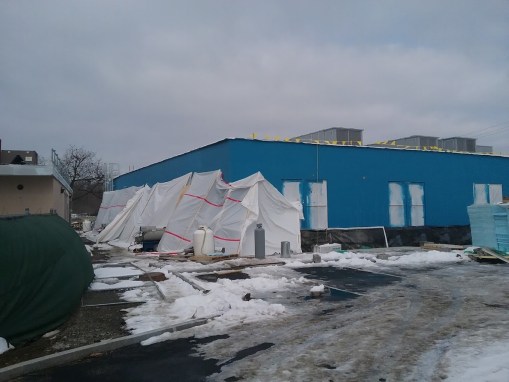
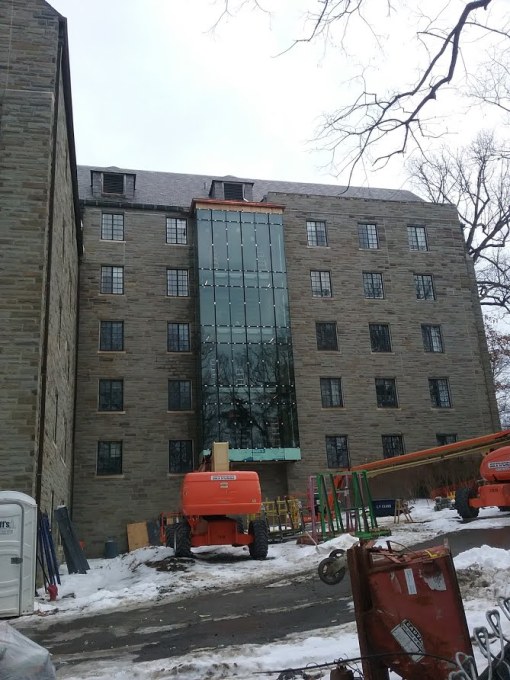
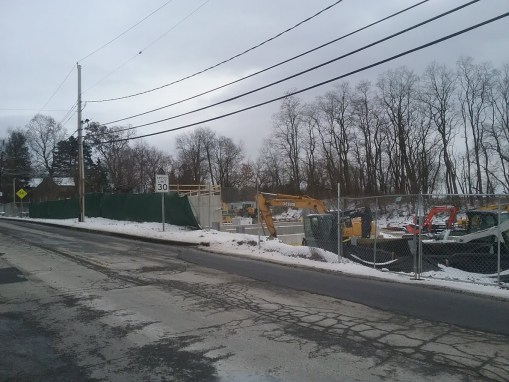
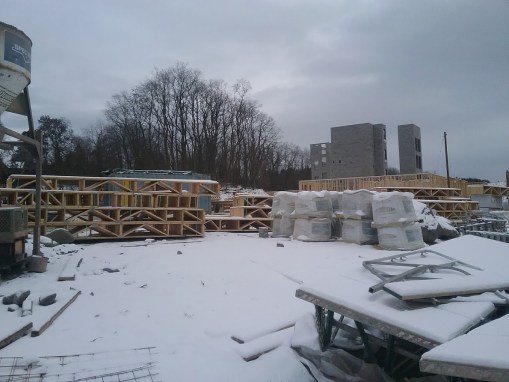
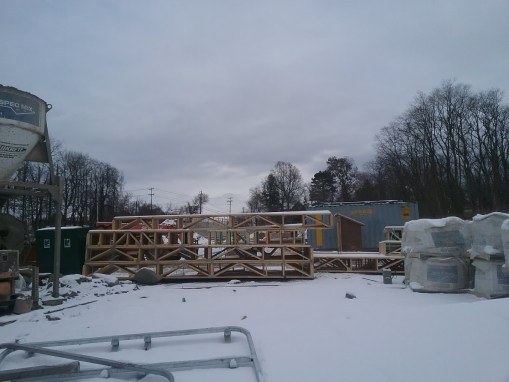
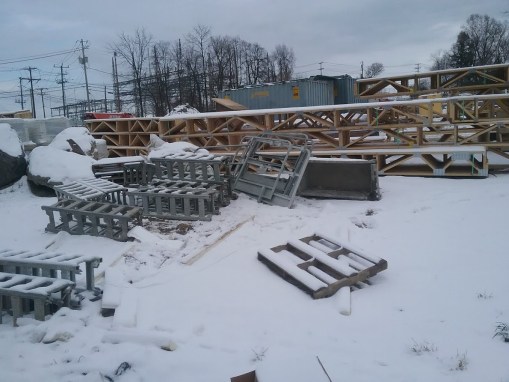
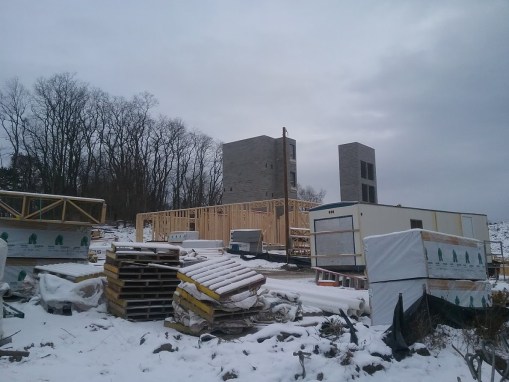
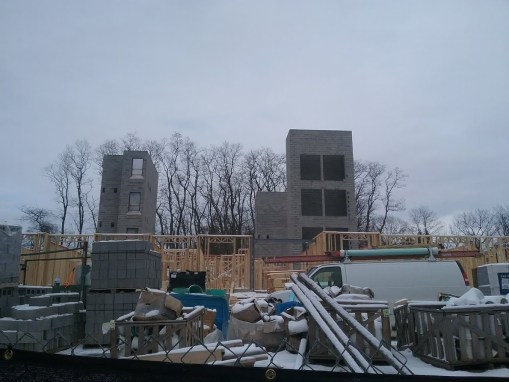
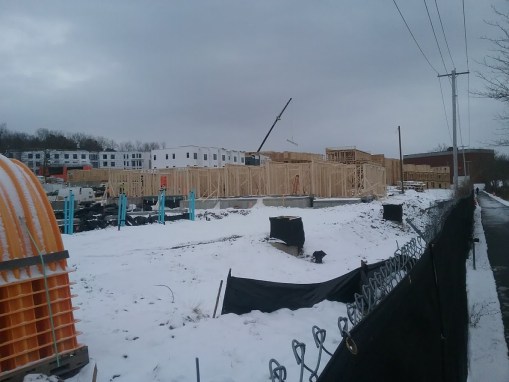
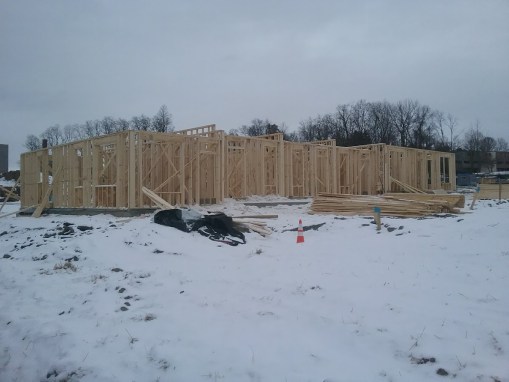
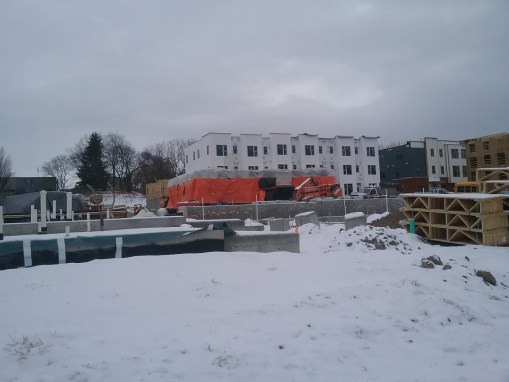
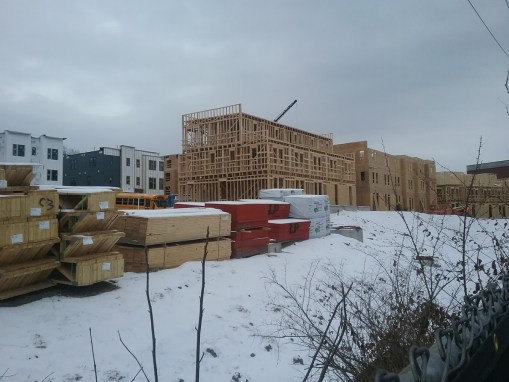
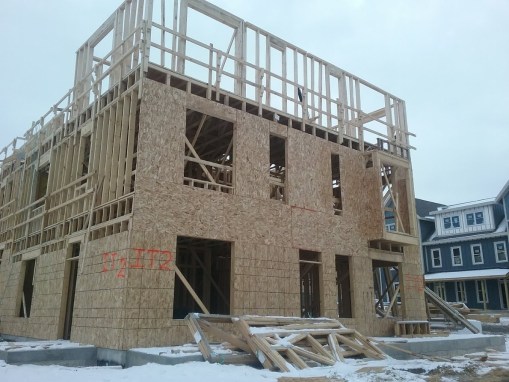
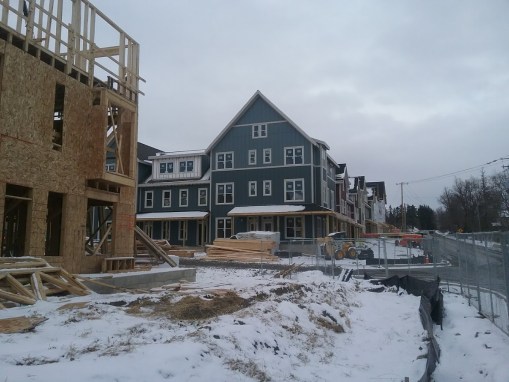
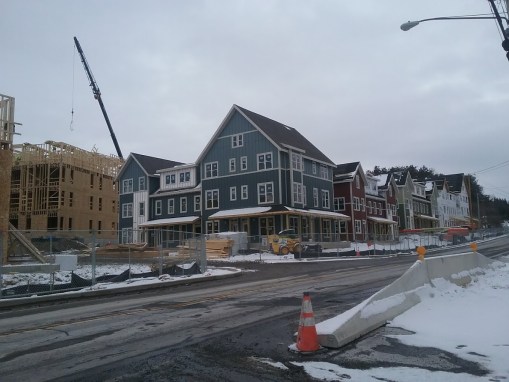
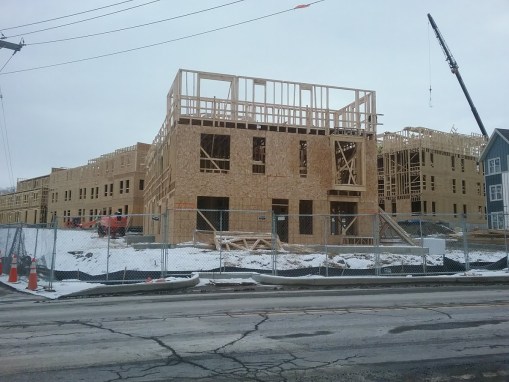
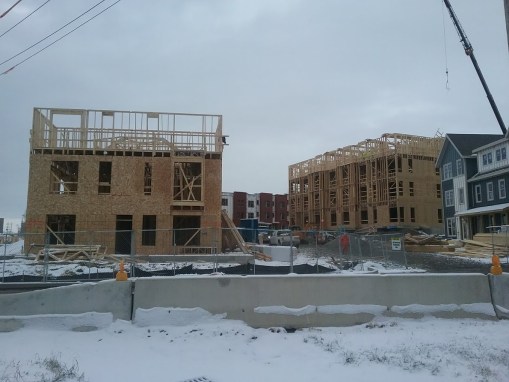
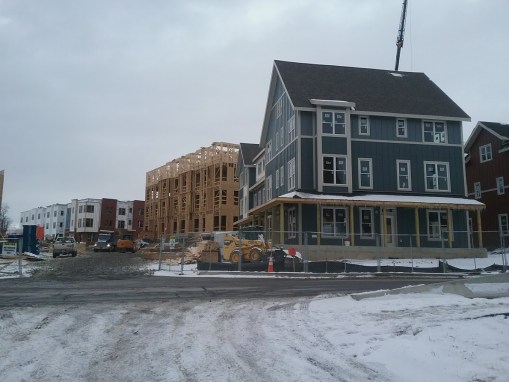
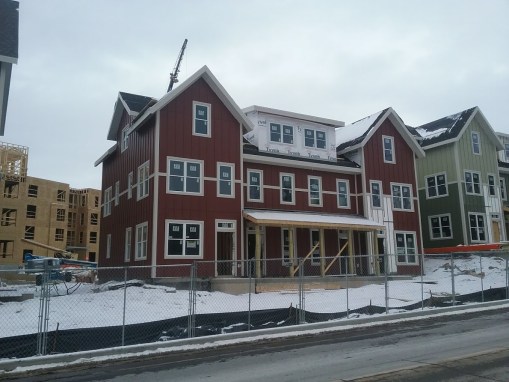
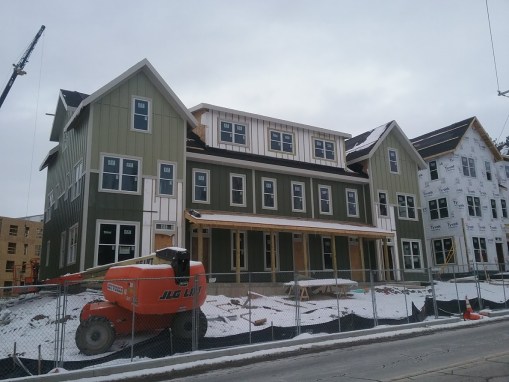
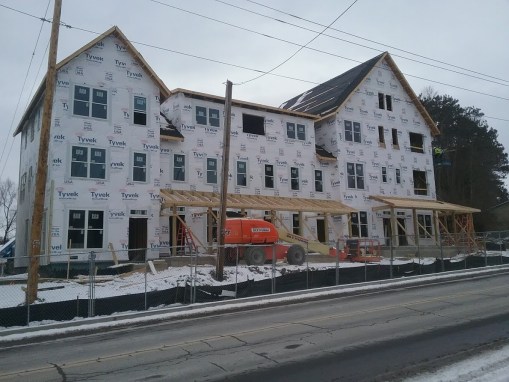
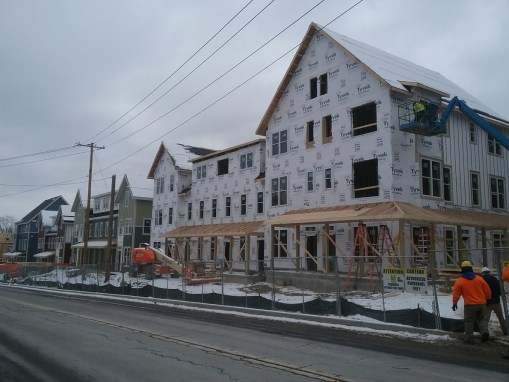
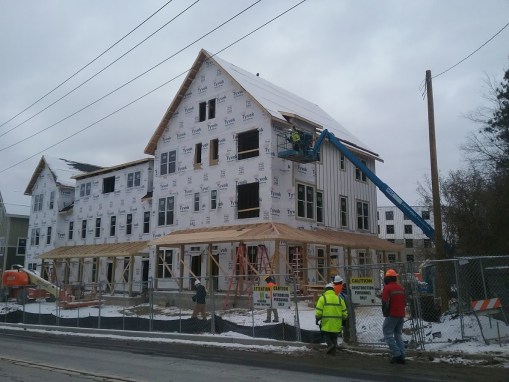
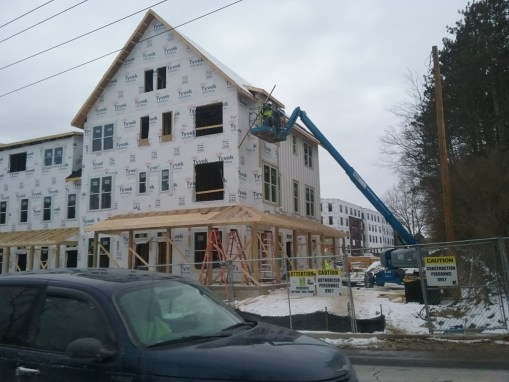
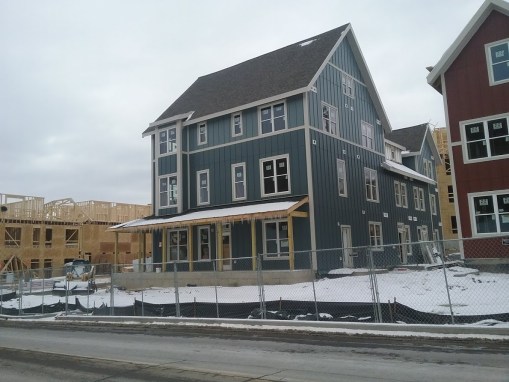
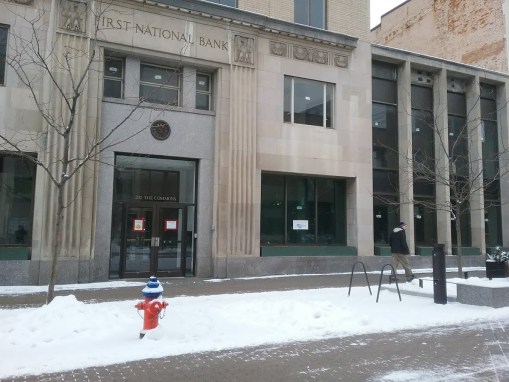
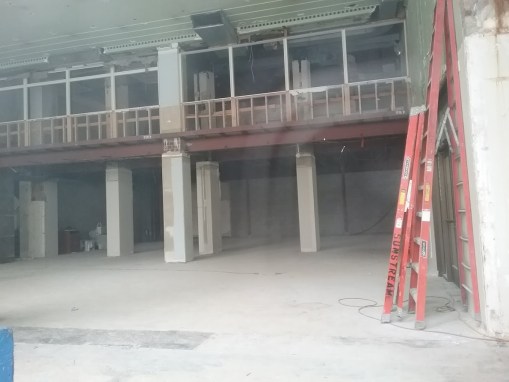
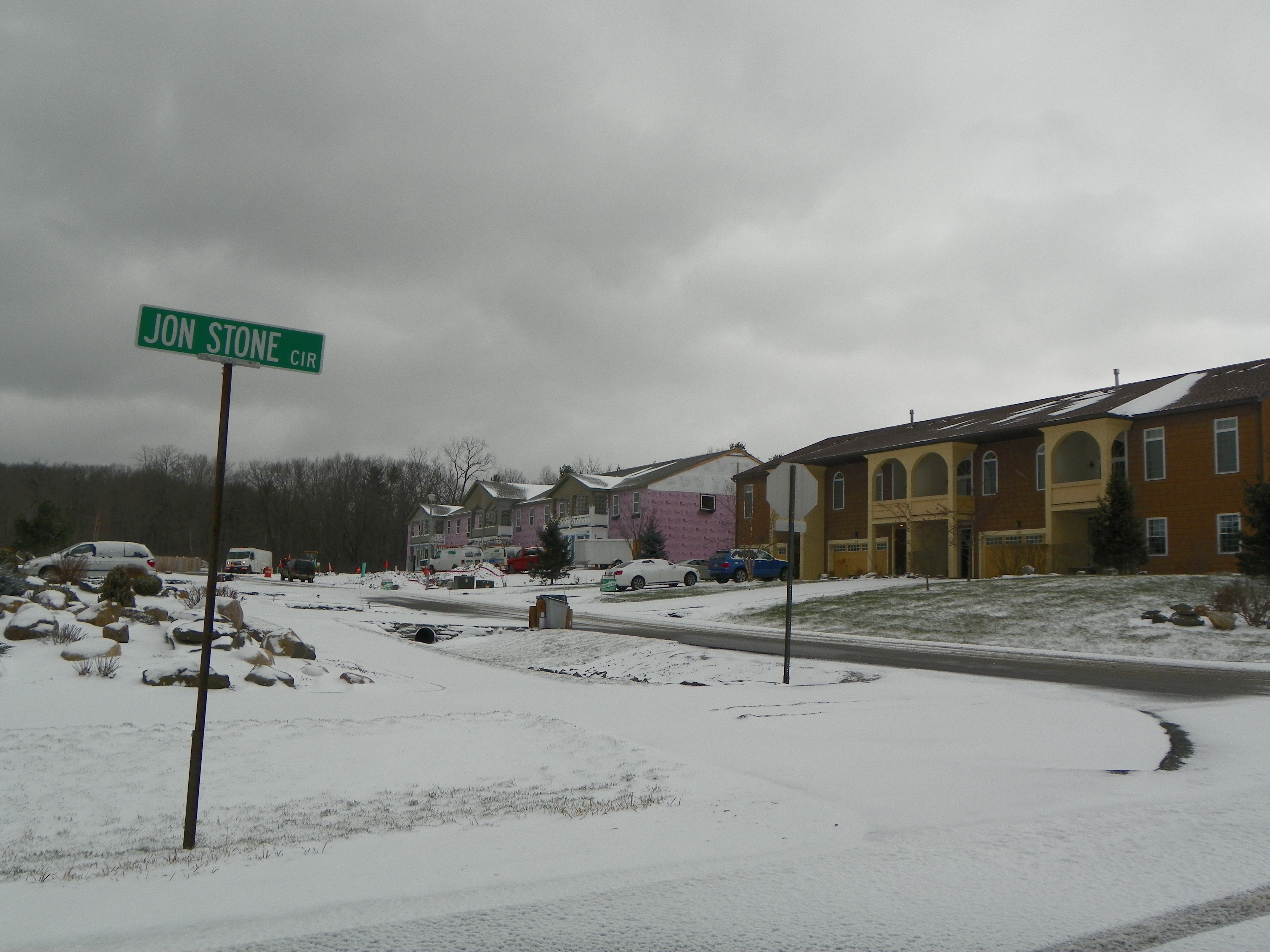
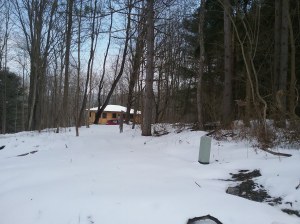
1. Let’s do some houses of the week. Above, the four new homes Tiny Timber has constructed at 1624 Ellis Hollow Road in Dryden. Each home lot is a little over an acre. The subdivision was approved last spring for the wooded parcel a couple miles east of Ithaca, and since then, Tiny Timbers has been busy selling units and lots to buyers. Two were sold in August, one in September, and the last in December. Therefore, this is 100% built out, since the last lot is a conservation lot at the rear (north) end of the property, designed to protect Cascadilla Creek. The units utilize a shared driveway, with spurs for each home. If you want to look at the homes more closely, click to enlarge the photos.

A similar plan is underway just up the road at 1540 Ellis Hollow Road, where Tiny Timbers will take a long, narrow undeveloped property and subdivide the land into five home lots and a rear (north) lot protected by a conservation easement. These homes will also be served by a common driveway. This proposal is still going through the review process, and when approved, the time frame for build-out will probably be similar. The home designs are the work of local architecture firm STREAM Collaborative.
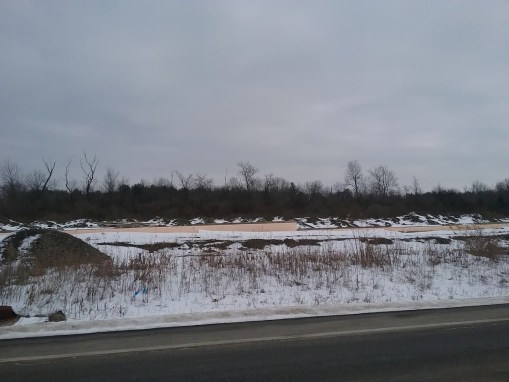
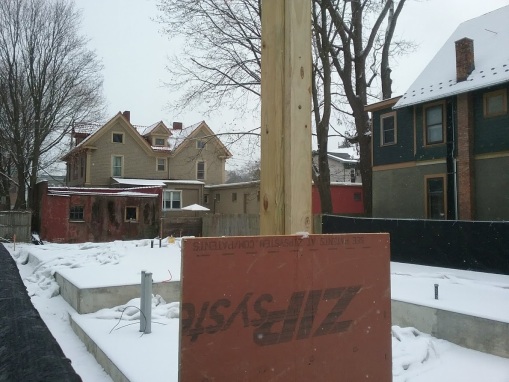
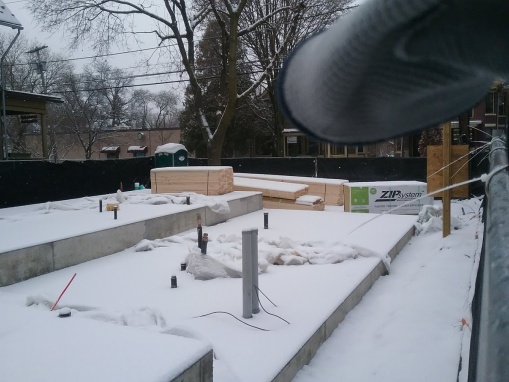
2. Over in the village of Lansing, work has started on the next six-unit (hexplex?) at the Heights of Lansing property off of Bomax Drive. It appears that the foundation slab and footers have been formed, poured and insulated with foam boards. This is the first new townhouse string to be built in the development in six years.

Several reasons have been given for the long pause. The developers have said that the natural gas moratorium disrupted and delayed build-out plans. Secondly, the patriarch of Forest City Realty/IJ Construction, Ivar Jonson, passed away in 2014. More recently, the Jonson family (his wife Janet and daughter Lisa Bonniwell) were embroiled in a lawsuit to prevent a zoning change that would allow a market-rate apartment complex to be built down the road. Bonniwell was incensed enough to run for mayor in 2017 in an effort to stop the proposal, but did not win the election. The zoning change has been approved and the apartments were approved in October, but the Park Grove project has yet to move forward.

The townhouses were approved along with the last single-family home permit; there were some rather testy exchanges regarding sewer line easements and the installation of street lighting in conjunction with those permits. The lighting has to be in by March 2019.

Assuming these are like the other townhouses, expect them to be 3-bedroom units, low 2000s SF with garages, and to go for $350-$450k when they’re finished several months from now.

3. Dryden’s new Rite Aid is coming along. Fully framed, and the plastic in the window openings is likely intended to allow construction crews to work indoors without exposure to the fierce winter elements. The curbing and paving is complete in the parking lot, and it looks like they install metal bollards all around the lot’s perimeter to keep the less-than-attentive from driving into the wall (something that happened to the Nice N’ Easy in my hometown no less than three times before they finally put some in). It is still planned to open in March.

4. Over in Fall Creek, it appears a small apartment building is in line for some major renovations. 1002 North Aurora, a four-unit building built in 1898, had been on the market for $395,000. The seller had owned the property for 24 years, and the price was only slightly above the assessed value of $375,000.

On Friday, the property sold for $400,000 to an LLC associated with local developer Modern Living Rentals (Charlie O’Connor et al.). The same day, a building loan agreement was filed from Tioga State Bank to the LLC for $712,000. A lot of that was going towards the land acquisition, and once soft costs are deducted as well, the loan is $287,000.

MLR tends to be very transparent about their plans, and a glance at their recently updated website shows the purchase and a ‘information on this project coming soon’. However, they already uploaded the interior renovation plans from STREAM Collaborative. It’s a very thorough interior renovation, and it appears to complete change interior floor plans, with new bedrooms (net gain of one?) as well as new kitchens, bathrooms, and fire rated ceilings. Exterior changes appear to include a renovated fire escape staircase, a couple new windows on the third (top) floor), and a new skylight. While old, this apartment building is a hodge-podge of additions from decades past, so let’s see what a renovation can do to clean things up. It’s plausible the renovations would be complete by August, so they can appeal to students as well as the general market.

Quick aside, MLR has a few other “future developments” posted, though none that readers here aren’t already aware of – the 42 townhouse units at 802 Dryden, the proposed 201 North Aurora / Seneca Flats that isn’t moving forward for a while yet, and 217 Columbia, the duplex that unintentionally set South Hill into an uproar. 217 Columbia should be completed this year, and 802 Dryden in summer 2019.

5. It looks like Amici House is finally moving forward. The project, located at 661-701 Spencer Road, received a $3,732,469 loan from the New York State Homeless Housing and Assistance Corporation. The money was announced back in April, and appears to be getting disbursed now.

The five-story, 20,710 SF (square-foot) project, approved by the city of Ithaca last January, calls for 23 studio housing units for homeless or vulnerable young individuals in the 18-25 age range. Along with the units and office/function space for local social services non-profit TCAction, the plan also calls for a 7,010 SF early heard start facility, called the “Harriet Gianellis Childcare Center”, that will house five classrooms, kitchen and restrooms, and an outdoor play area. The childcare facility will serve 48 low-to-moderate income families and create up to 21 jobs.
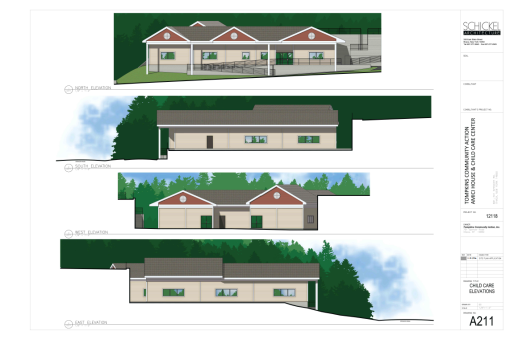
Recently, the HGCC applied for a low-interest loan from the IURA, $90,690 to help cover unanticipated moving expenses associated with the project. TCAction thought they could stay on-site during construction, but the contractor said otherwise, so they’ll be 609 W. Clinton while the new Amici House is built. The loan says it will generate three jobs, but that’s more a technical stipulation than an actual figure associated with the project. The funding for the childcare appears to be separate, $1,325,000 already approved by the state, $603,000 from M&T Bank, and $84,200 from a standing IURA loan. It is fully funded, although it is not completely clear if it will be built concurrently with the housing (the likely answer is yes).



Cayuga Medical Associates Construction Update, 1/2018

26 01 2018

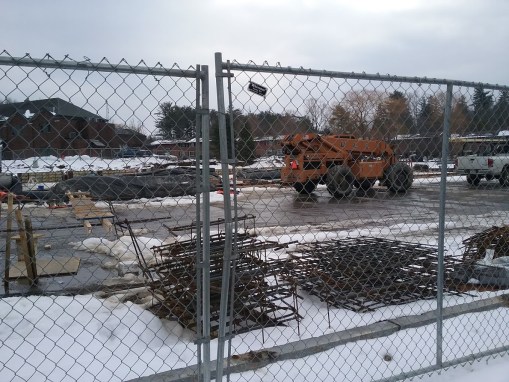
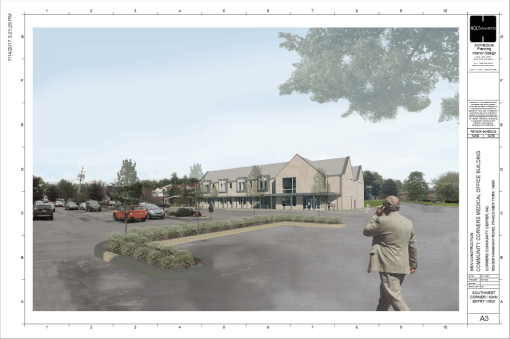
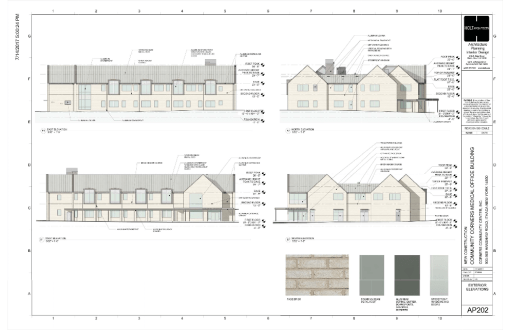
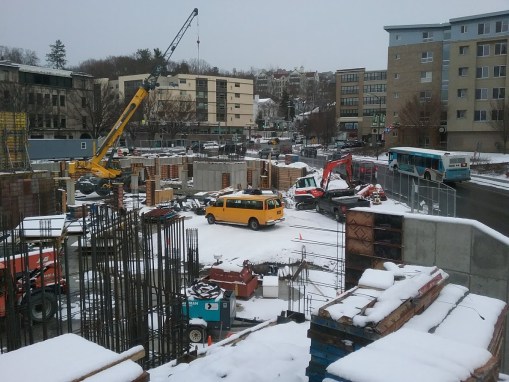
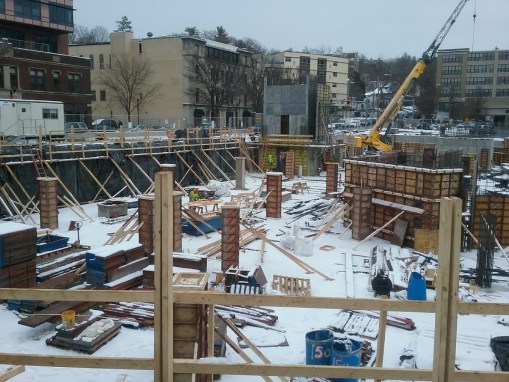
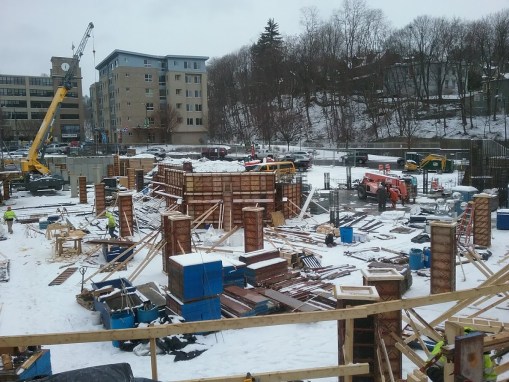
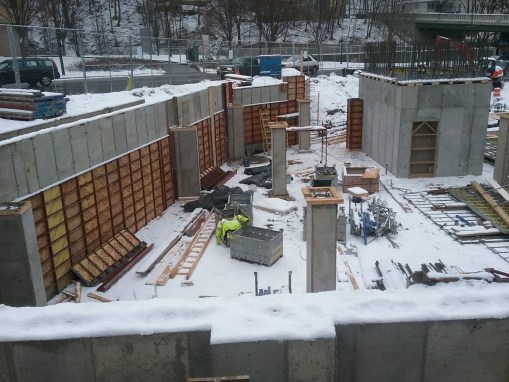
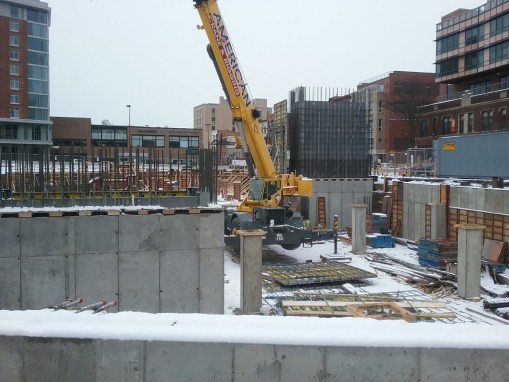
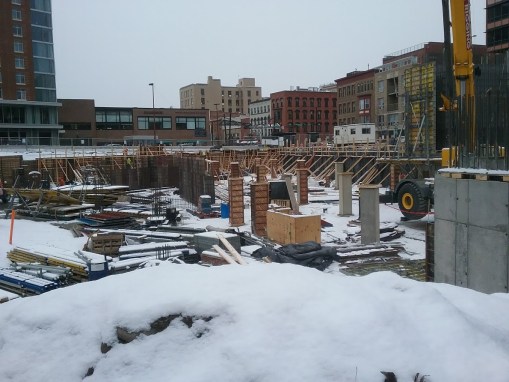
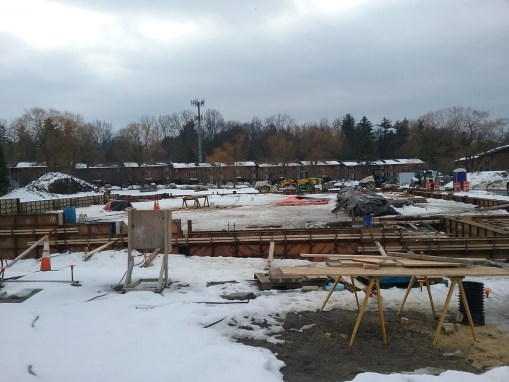
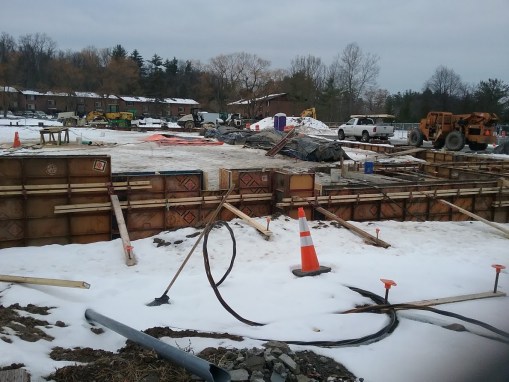
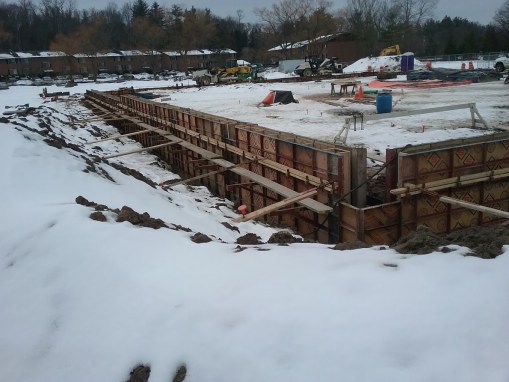
At the Cayuga Medical Associates site in Community Corners, the foundation has been excavated and the forms have been assembled. These are Symons Steel-Ply forms, steel with plywood facing that has been erected and braced along the perimeter of the building footprint.

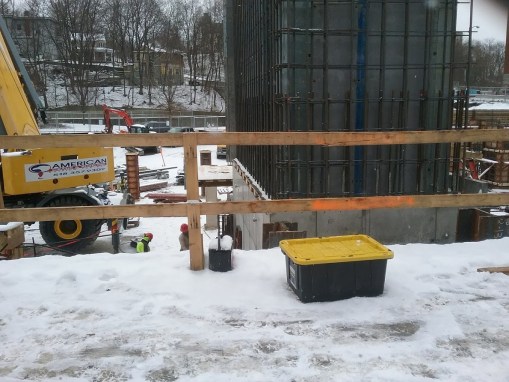
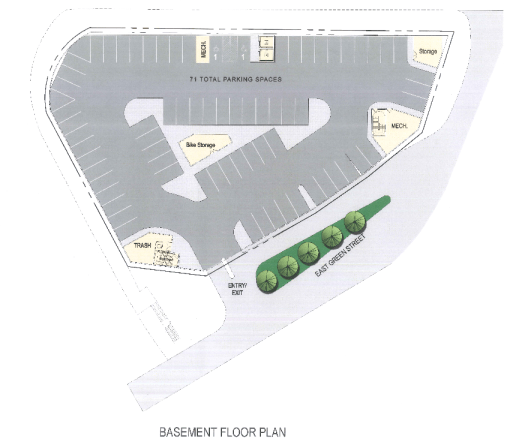
Unlike the downtown properties, the foundation here is a slab, so the footers will go in along the perimeter and the slab will be poured atop the cleared and leveled footprint of the structure, distributing the weight of the building. The steel rebar sitting along the fence will be laid within the building footprint and poured over with the concrete mix, providing additional strength to the concrete as it cures. It looks like some walls have already been poured, cured and interspersed with rebar topped with OSHA orange safety caps.

Meanwhile, it looks like the adjacent site where the former bank building was torn down has been fully cleared. This will be part of the parking lot, along with associated curbing and landscaping.


Village Solars Construction Update, 1/2018

24 01 2018

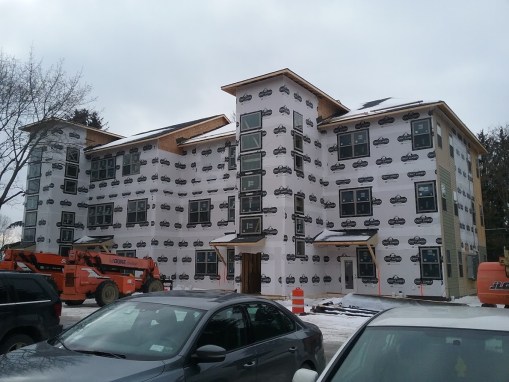
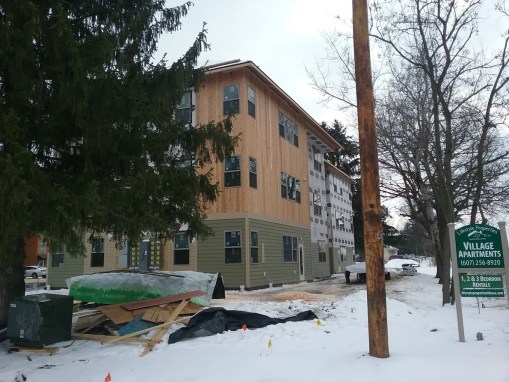
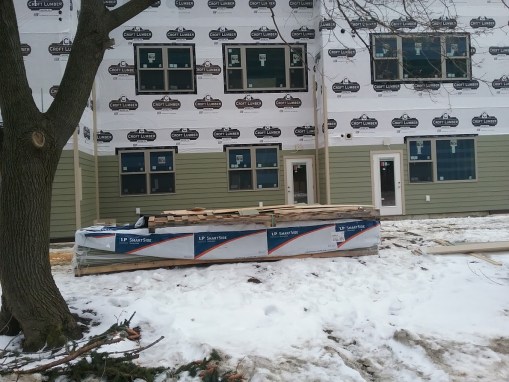
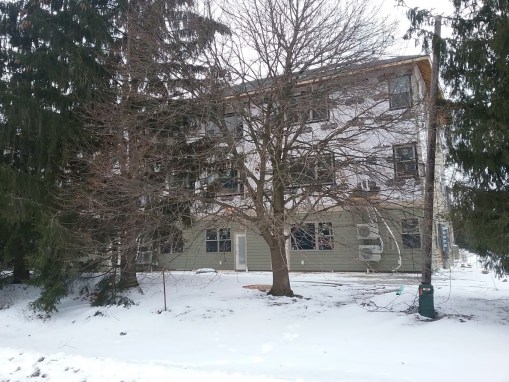
Work continues at the Village Solars apartment project in Lansing, though it’s mostly been interior construction these past couple months. 102 Village Place has had some of its composite wood siding applied (LP SmartSide treated and engineered wood siding), and the electrical wiring and air-source heat pump units are in place, though not fully connected just yet.

102 VP was already framed, roofed and fitted by the November visit, so chances are, they’ve already done utilities rough-ins and insulation, and they’ve moved on to drywall, baseboards and interior trim boards, priming and painting, and maybe some plumbing fixture and cabinetry installs. The three-story apartment building, which replaces a ten-unit 1970s structure, will have 24 units – 12 studios, three 1-bedroom, six 2-bedroom, and three 3-bedroom. If one wants to look at this from a population perspective, each of the ten units was a 1-bedroom, so the back of the envelope says there will be a net gain of 26 residents (one per bedroom, 36 – 10). And presumably, a couple million dollars in assessed value.

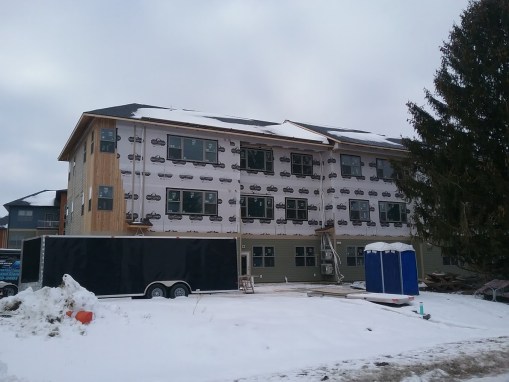
116 Village Place, the younger of the pair, is not as far along but has been fully framed, wrapped and shingled since November, and some siding has been attached. It looks like not all the windows have been fitted, given the wrapped rough opening on the third floor in the first photo below. Based off the open door in that same photo, it looks like framing, insulation and utilities rough-ins (plumbing, electrical, HVAC) are ongoing. 116 is the smaller building of the two, with 18 units, 12 studios and six 2-bedrooms. Like 102, it also replaces an older apartment building, an eight-unit structure of one-bedroom units (and 14 more residents on-site, using the same math as before).

Lifestyle Properties is the developer, with their in-house contractor in charge of construction. It doesn’t look like the new units are being marketed yet, but existing 2-bedrooms are going for $1,325/month, and 3-bedrooms for $1,375-$1,720/month. Anecdotally, Lifestyle has had an easier time filling the smaller units than the larger 3-bedroom units.


Cornell Veterinary School Expansion Construction Update, 1/2018

23 01 2018

At this point, the expansion is done, and the construction at hand is the new $7 million Community Practice Service Building at 107 Farrier Road, where the Poultry Virus Lab once stood. It looks like a waterproof spray coat was applied above the previously-applied water-resistive barrier, based on the overspray on the rough window openings. There are plastic sheets with ribbing up over some of the exterior walls and part of the front entrance – the rendering shows concrete walls with decorative finishes,  so what might be happening is that these are still curing, and the sheets are there to keep precipitation (whatever it may be this time of the year) from penetrating and changing the concrete and water mixing ratio, which can weaken the wall.

The roof equipment (HVAC commercial units) appears to be in place, but the synthetic rubber membrane has yet to be laid. A truck at the rear of the construction site suggests Michael A Ferrauilo Plumbing and Heating of Rochester is one of the subcontractors. They’ll be busy for a while yet; stacks of insulating form board and galvanized metal utility ducts suggest plenty of interior and exterior work still left to be done before the May opening.

Background info on the project can be found here.


Cornell Law School Renovation Update, 1/2018

22 01 2018

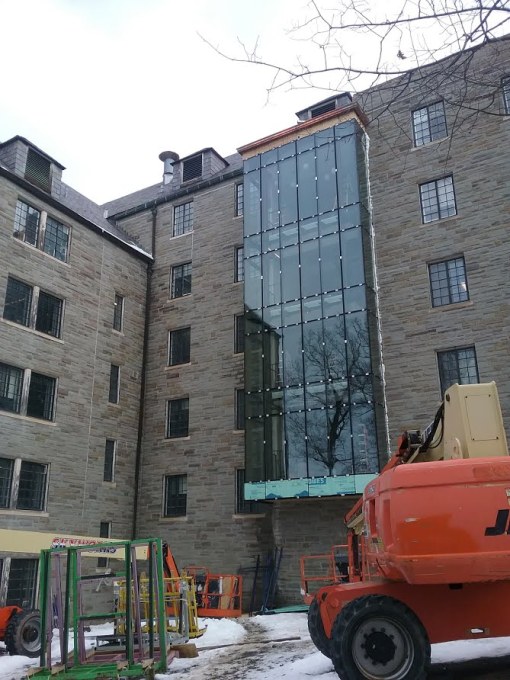
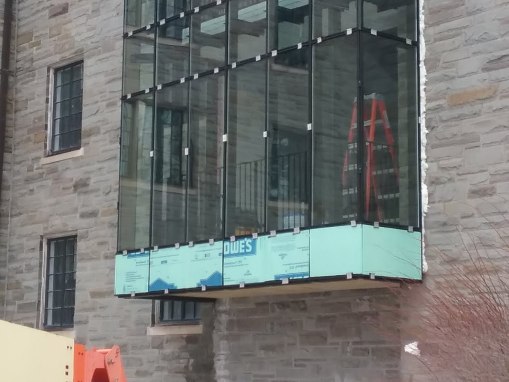
Finally, the glass for the new western staircase bump-out makes its debut. There appear to be visible brackets between glass panels in the curtain wall, so this is quite recent – the aluminum frames have yet to be finished. The copper flashing up top is nice and fresh, and if the renders are any indication, the wood panels just below that will be finished with steel panels. Peer inside closely and you can see the outline of the new staircase and the metal railings on each landing.

Worth noting, there is a major difference between the approved drawings and the built product – notice that the bump-out is four floors. The renderings show five, it was expected to extend down to ground level. That bottom section with the Lowes Green Guard (polystyrene foam insulating boards) might still be finished with steel panels and decorative “Cornell Law School” lettering, given its width; but, can’t be sure at this point.

With the newly-enclosed loggia already finished, this $10.2 million renovation project is in the home stretch; although a January 2018 was initially planned, a March completion seems fairly likely.

Background info on the project here.


Harold’s Square Construction Update, 12/2017

31 12 2017

Grab a cup of coffee or tea for this one, it’s a long introduction.

Touching on a familiar topic again, downtown and urban living has enjoyed a revived interest in the past fifteen years, and coincident with moderate but steady economic growth in Ithaca, it has created plenty of opportunities for those with assets and expertise. Succeeding in those opportunities is a slightly different story – money and a strong project team are important, but some projects have an easier go of it than others. Harold’s Square has experienced substantial obstacles in its long pre-construction period, but thanks to developer David Lubin’s flexibility and tenacity, as well as an accommodating local government and growing market, it has surmounted those challenges and is now underway.

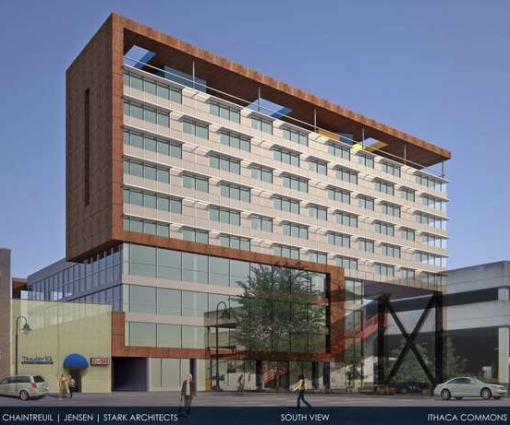
The first version of Harold Square at 123-139 The Commons was proposed back in October 2012. At the time, the plans called for first-floor retail, a few floors of office space, and 60-70 apartments on the upper floors of the 11-story building. The Sage Block (Benchwarmers) and W.H. Miller Building (Home Dairy) would be renovated, while three less historic buildings would be taken down to make way for the new development. The estimated price was $30 million and the plan was to have the 126,000 SF building finished by summer 2014. At that time, the building would have needed a fairly substantial zoning variance – the entire site was CBD-60, and it reached about 135 feet.

With the exception of the first-floor retail and Sage Block renovation, none of the other details have remained the same. However, the five major design iterations have all been by the same architect – CJS Architects (formerly Chaintreuil | Jensen | Stark Architects), with offices in Rochester and (later) Buffalo.

Lubin already had some familiarity with the project site – one of the storefronts to be removed used to be home to Harold’s Army Navy Store, a business started by his father and expanded to sixteen locations across the region. These stores were closed in the late 1990s as Lubin chose to focus on his development project and other business endeavors, like his computer recycling business. Harold’s Square is a nod to his father’s store, and the famed Herald Square of New York City.

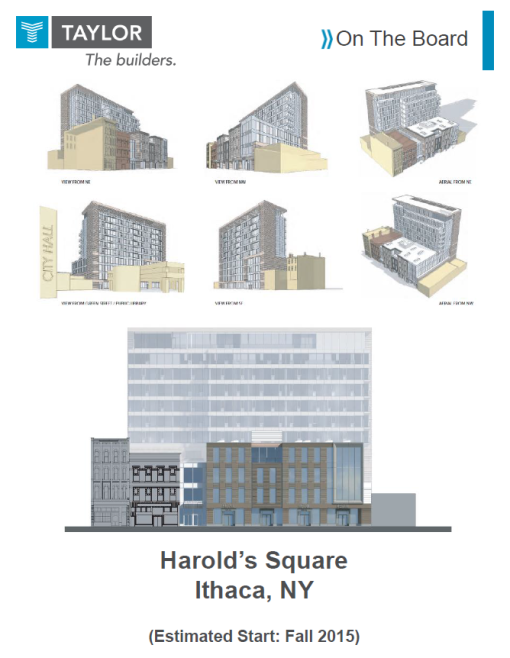
The project design was critiqued and reviewed thoroughly over the next ten months, which also produced the first major set of design changes – in fact, if you’re googling Harold’s Square without prior knowledge, images of this version, v02, turn up enough that even many current agencies and organizations (and even the posters on the construction fence) treat it as the final design. The 2015 image from the contractor’s website, Taylor the Builders, is shown above. It did away with some of the less-liked design features of v01, but retained a clean, contemporary profile with a curtain wall of glass, and terracotta panels that extended to the roof canopy. During this period, plans to acquire the W.H. Miller Building were dropped.

This was the version that was approved in August 2013, and received CIITAP tax abatements two months later in October 2013. It had 162,750 SF, with basement utilities/storage, ground-floor retail (20,670 SF), three floors of office space (56,855 SF) and 46 apartments on floors 5-10. The eleventh floor was a 5,000 SF penthouse for tenant use. The price tag was about $38 million.

At this point, post IDA approval, we kinda enter a publicly dormant period. Publicly, apart from the occasional reassurance from Lubin that the project was still alive, and the re-application for approval permits since those expire after two years, there didn’t appear to be much going on. Behind the scenes, it gets a little more interesting.

The project was having trouble securing a construction loan, and that was for a couple of reasons. For one, Lubin (as L Enterprises LLC) was having trouble securing a major office tenant, and office space made up about a third of the building. No one had any concerns about the apartments since the residential market was (and still is) strong, and retail is not hard to sell when it’s on The Commons, but office space is a different matter altogether. The demand for new space is modest, and often custom built for a tenant, rather than speculative space to be filled by tenants after it’s complete. So if we’re being fair but critical, the project team made a fair gamble but ended up overestimating the market for office space. Unless that space was spoken for, there would be no financing.

Re-examining the mix of uses, Lubin decided to revamp the project when seeking re-approvals in August 2015 – two floors of office space would be replaced with apartments. The first mention of this actually came through the New York Times, followed by the Voice and the Ithaca Times. With the drop in office space, the number of apartments jumped to 86. This also required some design changes, which were going to be reviewed by the city in Fall 2015. My notes show August 2016 ended up being the review date. We’ll call this version 3, v03.

Now Harold’s Square was 180,090 SF, with basement utility/storage space, ground-floor retail, second floor office space, and ten floors of apartments. The project had grown from 11 to 12 floors, but the height was nearly the same since residential floors have lower floor-to-ceiling heights than Class A office space. The total unit count was now 108, with 40 micro units (all the rage these days), 30 1-bedroom units, and 38 2-bedroom units. This version was approved in September 2016. By the time the project was up for re-approval, the city zoning had changed such that 140-foot buildings were allowed on-site, so no further height variance was needed.

With the space utilization issue worked out, the project was still seen as a sizable risk to potential lenders – it was at its inception the largest project proposed in downtown Ithaca since 2005’s Seneca Place, and Lubin had some experience with smaller projects, but nothing this size. Finding a partner to buy in to the plan would reduce the loan needed and add experience, making the project an easier sell to lenders. This is where McGuire Development, a major interest in the Buffalo market (3.5 million SF), came into play. They saw the potential in Lubin’s vision and the value in the Ithaca market, and agreed to buy in as a development partner. This appears to have been finalized in January 2017.

Fast forward to May 2017. With McGuire playing a role on the project team, major design iteration #4 (v04) removed the terracotta panels in favor of metal, and reconfigured the Commons storefront retail to use a common entrance, for “financial viability”. The enclosed atrium was removed and a mechanical penthouse added. It seems likely that McGuire wanted to ensure a certain return on investment. This version was approved without much further comment, except perhaps a bit of exasperation from city officials. Concurrently, the project team re-applied to the IDA for a revised tax abatement – the project’s price tag was now up to $42 million, and they were seeking revised, slightly more generous terms, which were granted with some grumbling. Complaints include a lack of explicitly affordable housing units, local labor concerns, and gentrification. The use of heat pumps and 60 kW of rooftop solar panels assuaged the sustainability crowd.

By October, the project was underway, courtesy of a construction loan from Norwich-based NBT Bank. The bank is a regional player with about 1.5x the assets of Tompkins Trust. This is new territory for NBT, which typically limits itself to single-family home loans in Tompkins, and has no service branches within county lines. The loan is for $33,842,000. L Enterprises and McGuire have each put up $5 million to cover the $43,842,000 cost of the project.

So here we are. The site has been cleared, and shoring and excavation by Paolangeli Contractor will take place over the next six weeks. After that comes ten days of pile driving, using a zero-resonance hammer to reduce vibration and noise – ostensibly, because is probably the second-most high-profile project site in the city after City Centre (which used the same method). Project completion is expected in Spring 2019. Sorry folks, but the Commons playground will remained cocooned and closed due to safety concerns.

The project team includes L Enterprises LLC (led by David Lubin) as lead developer, McGuire Development as co-developer, Taylor the Builders as the general contractor, CJS Architects, Fagan Engineers and Land Surveyors handling the application and civil/structural engineering work, and Brous Consulting for public relations. Those who want to follow the project without this blog as an intermediary can sign up for update on the project webpage here.

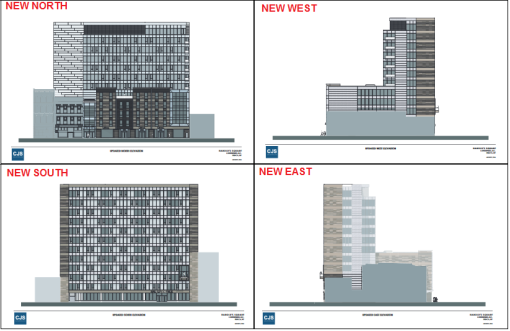
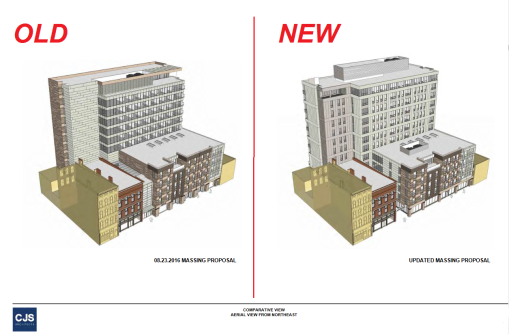
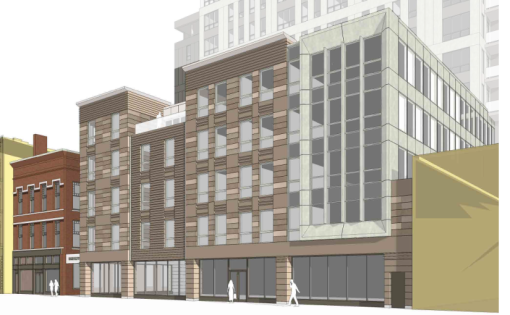
With the latest update on their webpage also comes the latest version of the project design, v05 – which doesn’t really affect the program space, but it does have several visual changes. The corner units now have exposed balconies vs enclosed rooms, the dark metal band on the top floor facing the Commons has been removed, and the retail frontage was reconfigured a bit on the Commons facade (the north module was stretched, one of the entry doors moved, and different fenestration patterns have been applied to some of the modules and the northwest face).

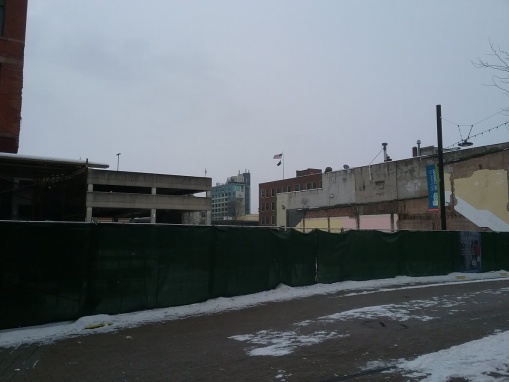
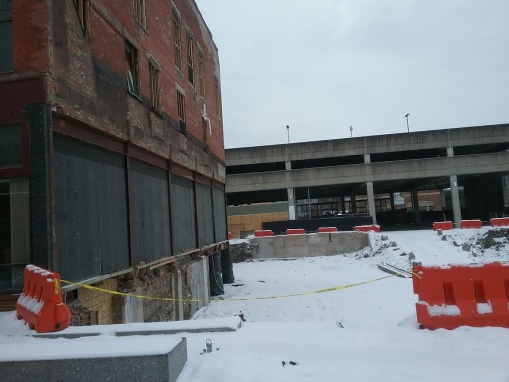
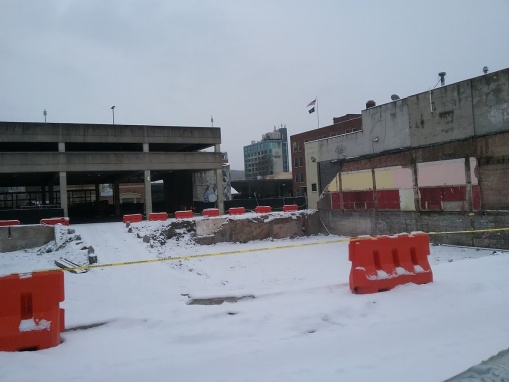
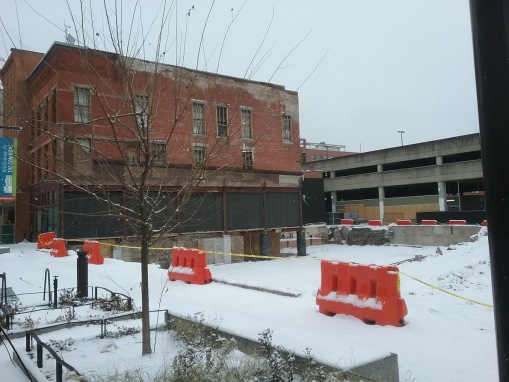
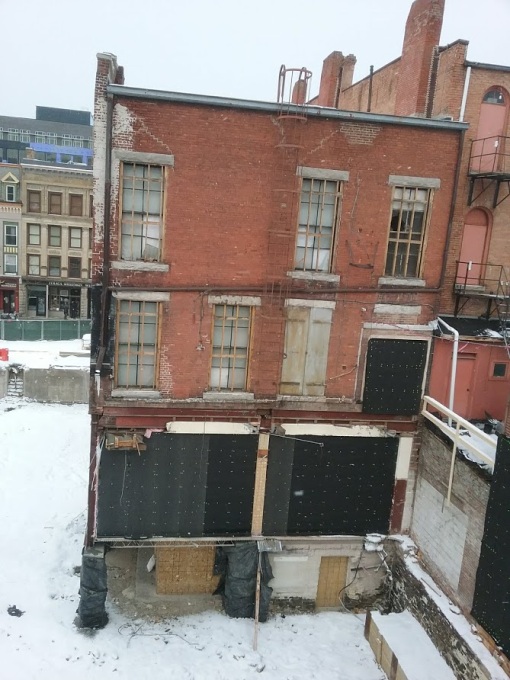
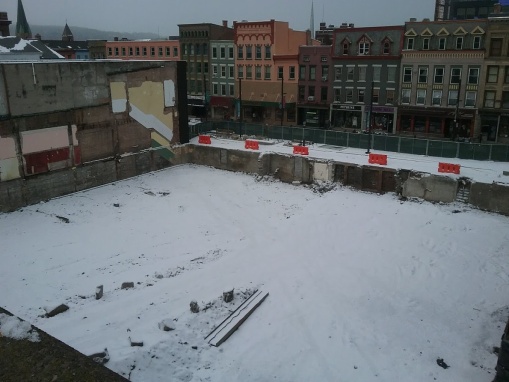
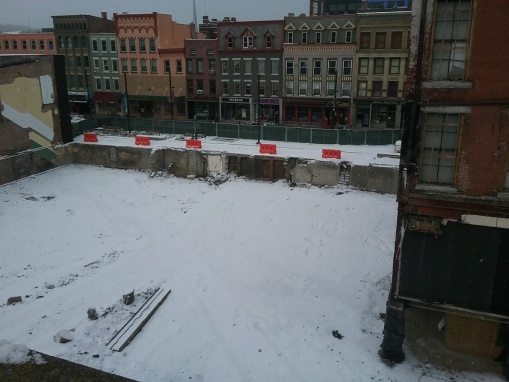
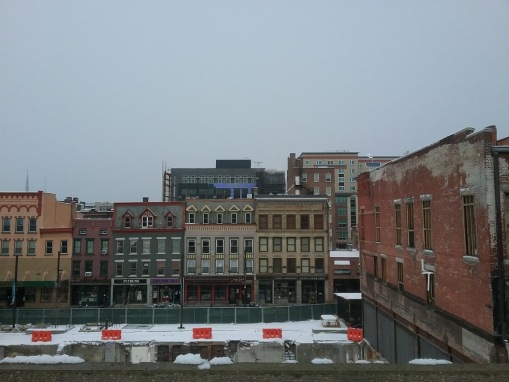
Pre-demo photo:


Maplewood Redevelopment Construction Update, 12/2017

29 12 2017

So there’s a lot going on. You can scroll through the 40+ photos below, or you can check out the conveniently placed webcam that EDR installed at all their projects. It seems like Mother Nature is out to stop this project at just about any cost – as explained by the Voice and the Times, EdR has lost 25 days of construction time due to weather (rain) delays, and that forced the project team to not only ask for extended hours earlier this year, but they also had to request earlier this month to be allowed to work on Saturdays. Now LeChase and their subcontractors have to contend with multiple days of subzero temperatures, in what is likely the longest and most severe cold snap in over a decade. It’s one complication after another. The webcams shows they’ve put up heavy-duty plastic sheeting to keep the extreme cold at bay as the crew continues work on the townhouse strings.

There are 27 buildings in some state of construction, from foundation work to framing to exterior facade application, and all manner of interior work from framing, to rough-ins, and for the furthest along, insulation and perhaps drywall hanging. Fixtures, primer coats of paint, and trim pieces (moldings, baseboard) will follow. There are have been some minor exterior design modifications (like the dormers in the buildings along Mitchell Street), but otherwise it’s as-approved.

More specifically:

Apartment Building B: Framing (top floor)

Apartment Building C: Framed, sheathed, windows fitted, some exterior facade materials attached

Apartment Building D: Foundation finished, stairwells erected, framing just starting

Apartment Building E: Foundation slab work

Apartment Building F: Foundation slab work

Townhouse Strings:

At, Bt, Ct, Dt, Ht1, Jt1, Jt2, Kt1, Community Center – unclear, not above ground level or readily visible

Et1 – slab

Ft, Gt2, Kt2 – framed, sheathed (partially for Gt-2), exterior facade work for Ft and Kt2

Gt1 – slab (in photos, now framing first floor based on webcam)

Ht2 – first floor framing

It1 – framed, sheathed, windows being fitted

It2 – framing

Lt, Mt – framing (top floor)

Nt, Ot, Pt – framed, windows fitted, fiber cement siding attached

I have to say, based off the work so far, I’m liking what I’m seeing, even with the tweaks the architectural designs and materials appear to be good quality. Here’s hoping the project team can maintain their tight schedule against the environmental odds.


Bank Tower Renovation Update, 12/2017

28 12 2017

Not everything can or should be new construction. Today, it’s a look at the Bank Tower renovation on the Ithaca Commons.

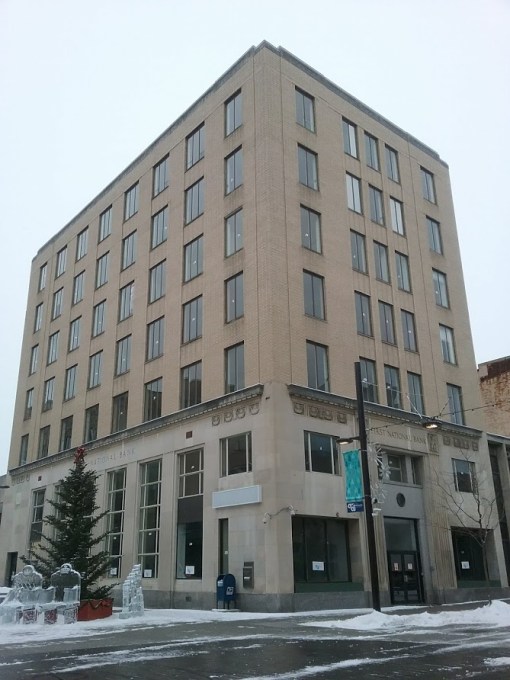
Bank Tower, a seven-story building located at 202 The Commons, dates from 1932, with two two-story additions from the mid-1960s. It suffered from a common issue with older office buildings – as they age, they become less suitable for the needs of today’s businesses. Reasons cited include smaller and less flexible floor plates, fewer amenities, less sustainable and ecologically-conscious structures, accessibility, and utility concerns (telecommunications/integrated wireless networks). A look at your typical office photo gives some insight to the changes –  rows of desks and file cabinets gave way to cubicles and desktops, and in many places those too are being replaced with portables and open office formats. That means that the owner either invests in significant updates to keep a building competitive to its newer peers, or letting it slip downmarket – from Class A (premium/prestige), to Class B (mid-market) and Class C (below-market) space.

However, the first question any owner asks when deciding whether or not to renovate is, will it be worth the investment? In the case of Bank Tower, that answer wasn’t clear. Over the past several years, Bank Tower had lost a number of tenants – law firm Miller Mayer moved into renovated space in the Rothschild Building, which left two floors vacant, and Bank of America sold its local presence to Chemung Canal Trust Company in 2013, which moved out of the building under acrimonious circumstances in the spring of 2016. The average office building is about 90% occupied, and Bank Tower was clocking in with far less than that.

It’s also important to look at the larger trends in the local market. In Ithaca’s case, office space is typically small-scale, and very little is built without a tenant already in mind. Ithaca’s economy is growing steadily, but since meds and eds just build their own space, and tech jobs tend to be “asset light”, the demand for rental office space isn’t growing much. Also, with Tompkins Trust Company building a new headquarters a couple blocks away, which would consolidate several rented spaces into their spacious new digs, it looked likely that there would be a glut of office space by the end of the decade.

The Fane Organization had purchased Bank Tower in 1997, and was well aware of the market’s challenges. They were also aware of the hot apartment rental market. The first plan, announced in July 2016, called for a $4 million conversion of Bank Tower into 32 units of housing with 51 bedrooms (mostly 1-bedroom and 2-bedroom units). Renovations typically don’t require planning board review, but any exterior changes, or changes visible to the inside from the outside, would require Ithaca Landmarks Preservation Council (ILPC) approval, since the building sits in the Downtown Historic District. John Snyder Architects has been retained to design the new interior floorplans. In accordance with the city’s zoning, the first floor has to remain an “active use”, generally retail or commercial services, but some traffic-generating public and community options are permitted.
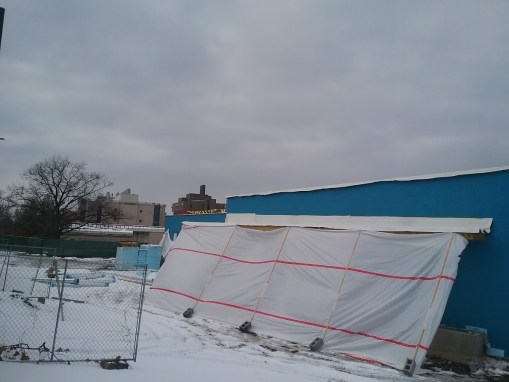
Around Spring 2017, rumors began to circulate that the residential conversion plan had been cancelled, and that the Fane Organization was in negotiations with a potential tenants. Those rumors panned out when CFCU Community Credit Union announced plans to move into a renovated Bank Tower next year, renting the building for use as their new headquarters. The credit union, established in the 1950s, has ten locations and about 184 staff, and has been in an expansion mode over the past several years. The move is expected to relocate 30 employees to downtown Ithaca from the current HQ in suburban Lansing, and create 20 new jobs as the credit union continues to expand.

According to a press release, the fourth and fifth floors will retain a traditional layout, while floors three, six and seven will move to an open-office format. CFCU will host a service branch on the ground floor. New windows, communications systems, and high-efficient utilities will be installed in the building. The sixth and seventh floors appear to be spec space, with tenants TBD.

On the ground and second floors, it appears the lobby area is being opened up to give it a more spacious feel, and interior demolition work continues, given the rubble chute off the side of 111 North Tioga Street.


107 South Albany Street Construction Update, 12/2017

22 12 2017

Since October, it looks like the foundation slab has been poured over the footers, and the construction crew is preparing to start work on framing. Judging from the materials on-site, it looks like wood-frame with Huber ZIP panels. Wood-frame structures tend to rise quickly, so once the project team is ready, it should go up at a rapid pace, and probably top out in within just a few weeks. The 11-unit, $1.1 million apartment building is expected to be ready for occupancy by July.

It’ll be interesting to find out what Stavros Stavropoulos’s next project is, since the plan for a pair of duplexes at 209 Hudson Street was kiboshed by the city after the South Hill zoning overlay went into effect. If he’s looking at other locations along the State Street Corridor, he’d likely find the planning department and Common Council more amenable. If his name shows up in any sales, I’ll note it in the round-up.

On that note, expect a brief holiday pause in the daily posts. They’ll be back next week.

For reference, project summary here.


City Centre Construction Update, 12/2017

21 12 2017

As with the Hilton Canopy Hotel under construction just across the street, City Centre is in the middle of foundation work. Steel forms with plywood facing have been erected and braced along the perimeter of the building footprint. In fact, it looks like the project team is using the same Symons Steel-Ply system being deployed at the Canopy site. The piles have been driven and the foundation slab is poured. The team is slowly making their way to the steel frame of each pile, encasing it within forms before pouring the concrete, letting it cure, and then removing the forms to reveal a concrete/steel column ready for vertical additions. The elevator cores and stairwell columns are also on the rise. – the elevator core facing East State Street appears to be the furthest along.

We finally have a named general contractor, and like the architect for the City Centre team (Humphreys & Partners of Dallas), its a new entrant to the Ithaca area – Purcell Construction Corporation, with offices in Richmond, Virginia and Watertown, New York (an hour’s drive north of Syracuse). It appears that they have plenty of experience with multi-story towers and large structures, which is no doubt an asset for the project team.
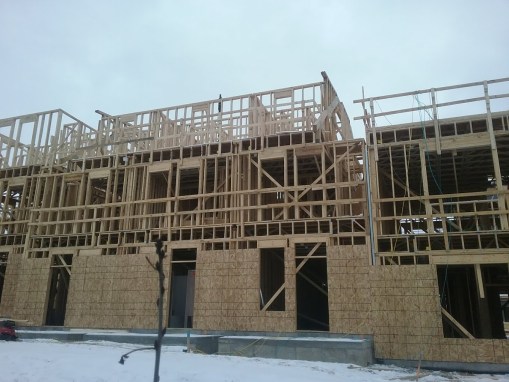
As I previously said, as structural steel takes height here and with the Canopy and Harold’s Square, downtown Ithaca is going to look like one big advertisement for TCAD.