News Tidbits 2/18/17: Credits and Loans

18 02 2017

warren_medical_lansing_1

1. Over in Lansing village, it looks like the new Arleo medical office building is starting to moving forward. A sketch plan of the project was presented at the village planning board’s meeting earlier this week. Although Lansing doesn’t upload accessory docs like site plans and elevations, this one has been floating around for the past several months in marketing material as “Cayuga Ridge”. Quoting the May 7th 2016 news roundup:

“The new one-story building, which appears to be designed by Binghamton-based Keystone Associates, would be off of Warren Road, although it looks like the building would be accessed from a driveway coming off of Uptown Road. The 2.71 acre property north of 100 Uptown Road is zoned “Human Health Services District” by the village, and borders undeveloped land owned by Cornell, and several other suburban medical office buildings built over the past few decades. The resolution on the attached site plan is too low to determine the square footage, though it looks to be in the low tens of thousands.”

labourgade-on-seneca-dormer2

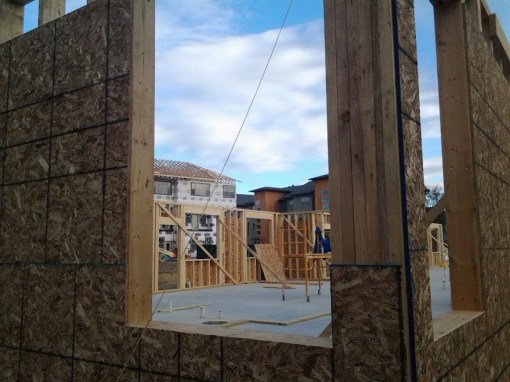
2. For those who like their cottages tiny – it looks like Schickel Construction has begun work on the spiritual successor to their 140-unit Boiceville Cottages project in Caroline. The 40-house rental development is called “La Bourgade on Seneca”, and is located in the town of Hector, in Schuyler County just outside of Burdett village. For the record, Bourgade is a French term for an unfortified village or settlement. More details can be found on the website here. There will be two cottage types available -, “The Classic”, a 2-bedroom, 900 SF plan that will rent at $1,495/month, and “The Spacious”, a 2-bedroom with a dormer loft space totaling 1,000 SF and renting at $1,695 month. The house very much like their Boiceville cousins, but with angled eaves (dunno what the correct term is and google’s not helping – if there’s an architect reading, please chime in). All units will have lake views.

Personally, I see this as a stretch for the Ithaca market, since it’s 25 miles west of the city. But it might tap into a more plebeian contingent the wine country crowd, the wealthier of whom have taken to building grand vacation or permanent homes along the Finger Lakes in recent years. The first 9 units, three clusters of three, are currently under construction, as is a community center. Delivery is expected in May 2017.

ic_master_plan_3

3. It looks like Ithaca College is putting some more thought into their housing needs. The college has been meeting with planning firm U3 Advisors to explore the possibility of new off-campus student housing.

U3 Advisors is already familiar with the area, as they are also under contract with Cornell to formulate their off-campus housing plan. Unlike Cornell, however, Ithaca College has no plans to grow enrollment – the master plan expects it to stay steady around 7,000. However, many of the dorms are reaching the end of their useful lives, meaning that the college can either sink a fair sum into renovation and replacement of utility systems, or tear down and build anew. An off-campus option could either be a private entity on private land, or a deal on IC-owned land like what Cornell and EdR are doing with Maplewood. A 200-300 bedroom off-campus option could mesh with the town of Ithaca’s visions for a walkable South Hill neighborhood on the intersection of Route 96 and King Road.

It’s still just studies and meetings at this point, but as the oldest dorms hit 50 years old on South Hill, there might be something fresh in the pipeline. We’ll see what happens.
cma_v2_2

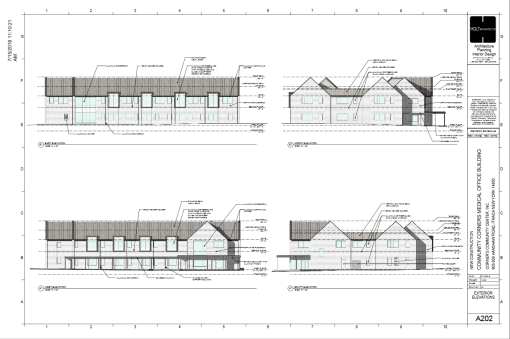
4. Ithaca’s West End will be welcoming a new tenant in the next couple months. Courtesy of Nick Reynolds over at the Times, the USDA is shifting its regional office out of Community Corners in Cayuga Heights, and into Fulton Meadows, a commercial office building at 225 South Fulton Street. the move is being undertaken in anticipation of the construction of Tim Ciaschi’s new Cayuga Medical Associates office building, which is set to get underway at Community Corners later this year.
201_college_v5_1

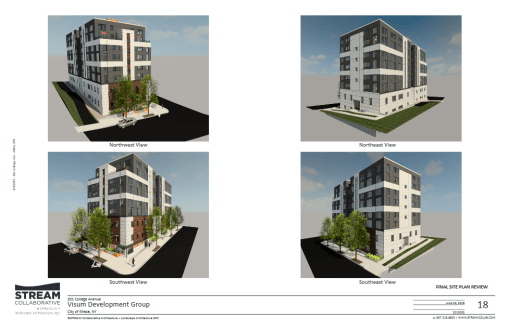
5. Looks like we have an idea of the price tag for Visum Development’s 201 College Avenue. According to a construction loan filed with the county on the 15th, S&T Bank loaned Todd Fox’s company $7,870,673 to help cover the costs of the project. The breakdown in the filing says $6,841,038 for hard construction costs (materials/equipment/labor), $507,000 in soft costs (permits/legal/marketing/financing fees), $300k in contigency and $226k in interest reserves. Add in the $2.64 million for the land purchase, and the total comes to $10,514,180.

That’s something of a premium because the project is on an accelerated schedule after the big hullabaloo with Neil Golder and the city Planning Board last fall. Note that the loan doesn’t cover all the costs and that there is money from other sources, like cash equity from Visum itself.

S&T Bank is a regional bank based out of Western Pennsylvania, but they’ve been making inroads into Ithaca’s commercial lending market. S&T Bank also financed the construction of the Holiday Inn Express that recently opened on Route 13, lending $5,973,750 to the hotel developers.

Quick aside, I think this is the first time I’m seeing the square footage calculated out – 201 College will be 33,398 SF.

20170106_160736

6. Hopefully this runs after by INHS refinancing explainer, so it makes more sense. Quick rehash, low income housing tax credits (LIHTCs) are sold to banks and similar financial institutions so that they get the tax credit, and the affordable housing developer gets the money they need to move forward with a project. With that in mind, here’s an interesting though unfortunate tidbit from INHS’s Paul Mazzarella:

“This following may be more than you want to include in this article, but it is relevant.  The pricing of tax credits exists in a marketplace where they rise and fall in value.  In past projects completed by INHS, we’ve received from $0.91 to $1.02 of equity investment for each dollar of tax credit.  The pricing of tax credits has recently plummeted because of the recent election and the uncertainty in DC.  This is mostly due to discussions about changing the corporate tax rate.  A lower corporate tax rate will mean that companies have less profits to shield from taxes and therefore the demand for tax credits will be reduced.  Even though no changes have yet been made to the corporate tax rate, just the discussion about this has reduced the pricing of tax credits to around $0.80.  What does this mean for INHS? It means that the project that we’ve been working on for several years suddenly has a funding gap that didn’t exist a few months ago, due entirely to investor’s fear of risk due to an uncertain future..  This is true for every tax credit project in the country and has all of us struggling to make the pro formas work.”

Sigh. Politics.

habitat_208_third_st


7. The Times has the first render for Habitat for Humanity’s two-family townhouse project at 208/210 Third Street on the city’s Northside. It looks to be the same architect as the 4-unit project for 402 South Cayuga – I can’t seem to find the architect offhand as a few designers have donated time and energy, but local planner George Frantz shepherded the project through the approvals process. Each unit is about 1500 SF. The plan for the $305,000 project is to break ground in April and have the move-in ceremony in Spring 2018. As with all local Habitat projects, a portion of the construction will come from volunteer labor, including 500 hours of “sweat equity”, and homeownership classes that the two recipient lower-income families (making 60% AMI or less, $32,000/year) will need to complete as part of the deal.

maplewood-v7_7-planning-board

8. Wrapping this up with the local agendas for next week – the town of Ithaca will be looking at a home B&B permit on Bostwick Road, a retaining wall for Ithaca College’s track, and finishes touches on the Maplewood approvals. The city’s project review meeting indicates the city plans to look at the subdivision at 109 Dearborn Place, Declaration of Lead Agency and Environmental Review for the 11-unit 107 South Albany Street plan,  and “Approval of Conditions” for City Centre, which is just making sure they’ve completed everything asked for in the final approval. In sum, nothing too exciting at the moment, but we’ll see if the city has any new projects coming up when the actual PB agenda comes out next week.

9. Quick note to wrap up – the woman behind the Rogues Harbor Inn in Lansing has purchased a prominent and historic building on Freeville’s main drag. Eileen Stout purchased 2 Main Street, a mixed-use building with restaurant space, a tile shop and three apartments, on Thursday for $132,000. The seller was Tompkins Trust and it’s well below assessment – doesn’t look like a foreclosure though. The bank bought the property for almost double the price in May 2016.



602 West State Street Construction Update, 1/2017

13 01 2017

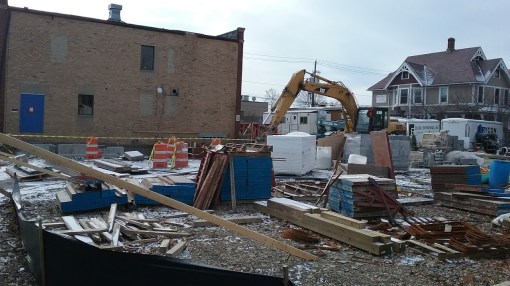
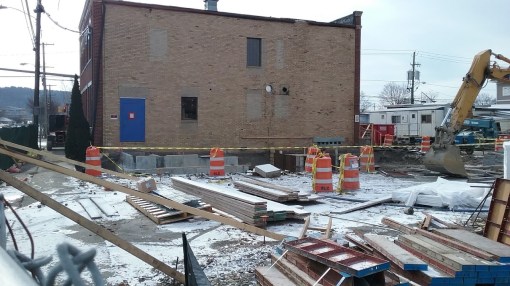
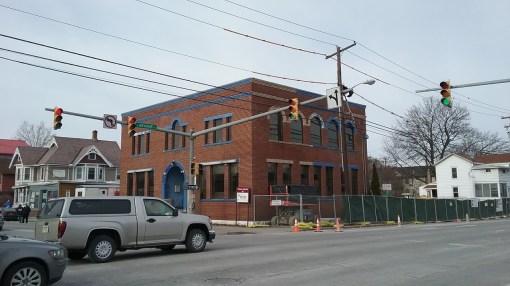
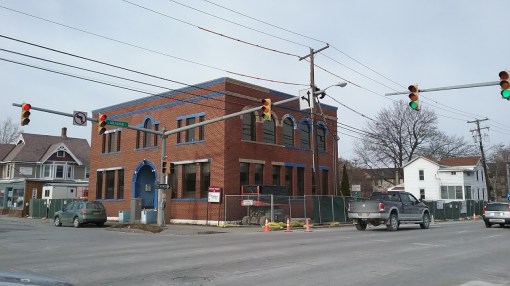
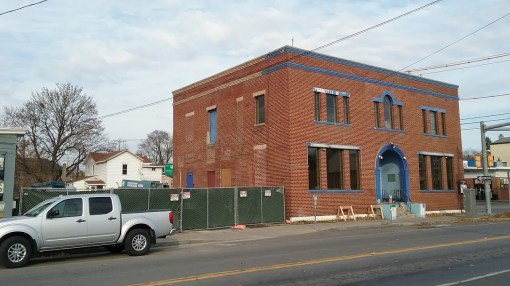
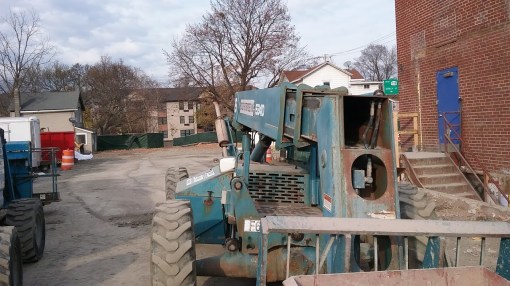
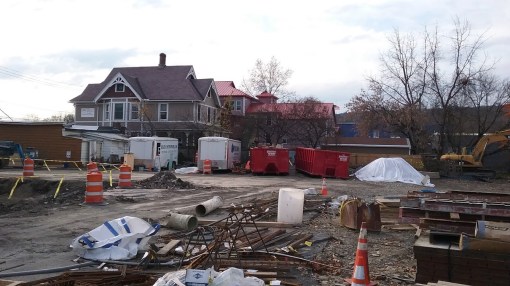
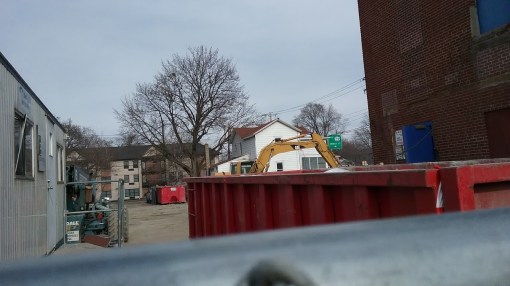
With the sidewalk along Meadow St closed off, getting up close to the Elmira Savings Bank project just became much more difficult. From the front, there hasn’t been much exterior work yet – judging from the dumpster, Edger Enterprises has been more focused on gutting the interior of the hundred year-old building. It does look like that, since November, some of the historically inaccurate blue paint has been stripped from the east facade. It doesn’t look like there’s been much progress on the new wing on the north side, the foundation looks about the same at it did two months ago. Dunno if they’ll be hitting that March 2017 completion date.

More info about the project can be found here.

20170107_114207 20170107_114322 20170107_114328 20170107_114404 20170107_114448 20170107_114515 20170107_114552 20170107_114603 20170107_114747 20170107_114801 20170107_114856


602 West State Street Construction Update, 11/2016

29 11 2016

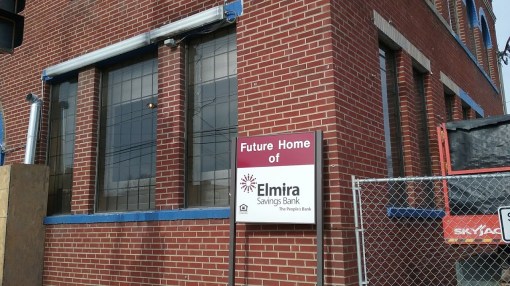
It’s been a busy period for construction starts. Elmira savings Bank has started work on their new branch office at 602 West State on Ithaca’s West End.

The project itself isn’t controversial. But the $1.75 million purchase in December 2015, followed by the very controversial eviction of three low-income families so that their homes could be turned into parking lots…well, that didn’t go over very well, nor should it have. Now with the chance to do some retrospective, it appears that the primary malefactor was the previous property owner, who signed new leases with the tenants but didn’t tell Elmira savings Bank when he sold them the properties. Elmira Savings Bank could have saved themselves many headaches if they had done some due diligence by meeting with the tenants of the properties they were purchasing, but, live and learn, sometimes the hard way.

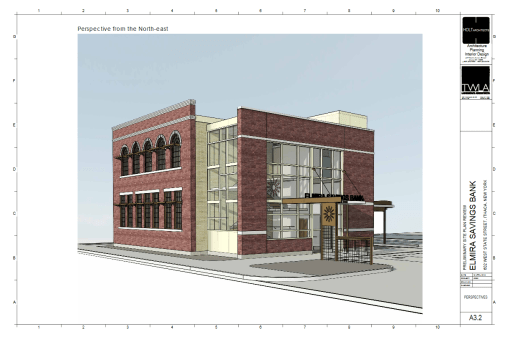
Plans call for renovating the 5,000 SF building that once housed the Pancho Villa restaurant, a 1,600 SF addition on the north side of the building, and a new drive-thru for bank customers. 16 parking spaces will be included. Edger Enterprises of Elmira will be the general contractor for the $1.7 million project, which is expected to be completed in March 2017. HOLT Architects, headquartered just across the street, is the design firm on record. The primary change during the review process was to limit the house demolitions – the board strongly encouraged ESB to find a partner to develop those lots rather than convert them to parking. At the moment, one of the houses has been torn down to make way for the drive-thru, but the other two will be left as-is and vacant for the time being.

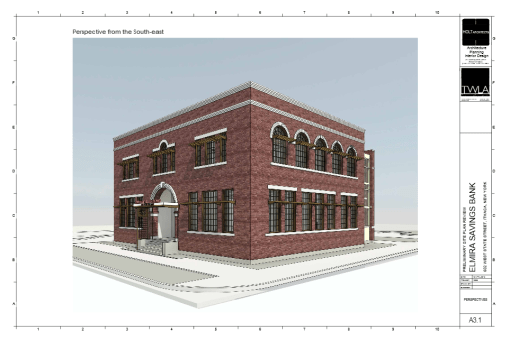
The new addition will incorporate a limestone base, red brick similar to that of the existing structure, Alucobond anodic satin mica colored metal panels above and below the aluminum window curtainwall, and Hickman sandstone-colored metal roof coping. The blue painted brick will be restored to more historically accurate grey-green, and the bricked-in windows will be restored. Bronze-colored metal sunshades will be installed over the windows, and the steel drive-thru canopy will be the same color. The roof will be a white single-ply membrane.

In the construction photos, the new addition has had its foundation excavated and it looks like the concrete is in the process of being formed and poured, with subsurface utility lines poking out in the excavated, yet to be poured portion. The small windowless addition and fire escape on the western wall of the existing structure have been removed as the building advances through renovation – the first and second-floor doors will be replaced with appropriately-sized and historically-accurate windows to match the bricked-in window towards the front.

20161119_135025 20161119_135052 20161119_135127 20161119_135139 20161119_135150 20161119_135156 20161119_135215 20161119_135225

elmira_savings_v2

esb_1 esb_3-1


The Cherry Artspace Construction Update, 11/2016

28 11 2016

I don’t mind doing these summary posts – I just wish that several projects didn’t start in the same two month span.

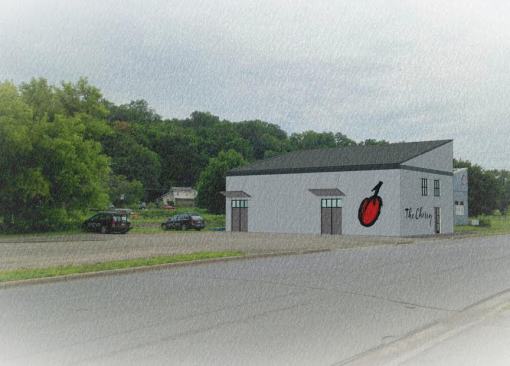
The Cherry Artspace, to be located at 102 Cherry Street in Ithaca city, is a multidisciplinary theatre and arts venue planned by The Cherry Arts, a performing arts non-profit led by Artistic Director Sam Buggeln (Bug-ellen). The building is intended to not only house performances by The Cherry Arts, but other local and traveling theater groups, concerts, poetry and jam sessions, and just about anything else in the name of creative arts and artistic expression. The building will join Ithaca’s active and productive performing arts scene, including venues such as The Hangar Theatre and the State Theatre. College towns like Ithaca love their arts, be they visual, spoken or both.

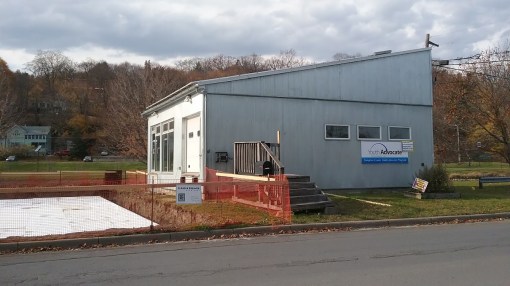
The plan is for a one-story, 1,900 SF space designed by local architect Claudia Brenner to blend in with the industrial architecture that comprises the Cherry Street corridor. To do this, the building is basically the big brother to the former Renovus Energy building next door – similar colors, similar materials, and a shed roof, which Renovus put on to make the 1,154 SF building more amenable to solar panels. The space on which it is being built previously housed parking spaces and a utility shed, since moved. Buggeln purchased the building and lot in August 2015 for $240,000, and the construction and furnishing costs for the Artspace are estimated at $375,000. The Cherry, which can host up to 180 patrons during performances, has a parking agreement with the business next door to use their parking spaces, and it works out since the two organizations will be busiest at different times of the day.

The approval process was a bit lengthy, all things considered. The city created its TM-PUD zone as a way to legally deter the Maguire car dealership proposal for the waterfront, but the Cherry Artspace fell into the waterfront zoning overlay as well, so it not only had to go through the Planning Board, but the Common Council. The Artspace held its public information meetings at the end of March and mid-April. It enjoyed fairly broad public support, but two of the eight voting councilmen still voted against its construction at the May meeting. One was concerned about noise, the other was kinda out of the blue. The project also had to apply for several zoning variances from the Board of Zoning Appeals.

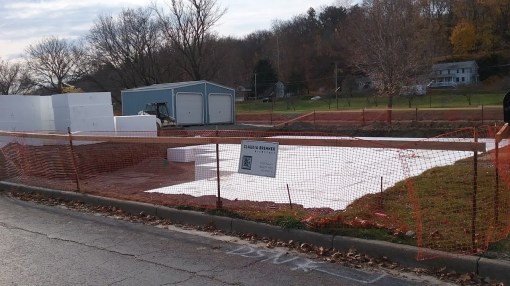
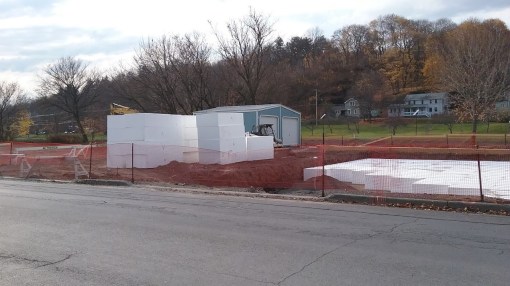
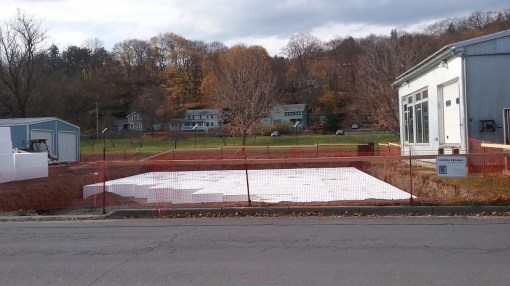
Construction on the Artspace officially began November 7th. This was a few months later than originally anticipated, and according to Buggeln it was due to contractor delays. I a rather unusual setup, that’s a slab foundation going in, but it’s made of styrofoam blocks – given the waterfront location and high water table, the relatively light building will “float” on top of the blocks.

20161119_134349 20161119_134359 20161119_134404 20161119_134409 20161119_134424

cherry_2


News Tidbits 11/12/16: Oof.

12 11 2016

lansingapts600

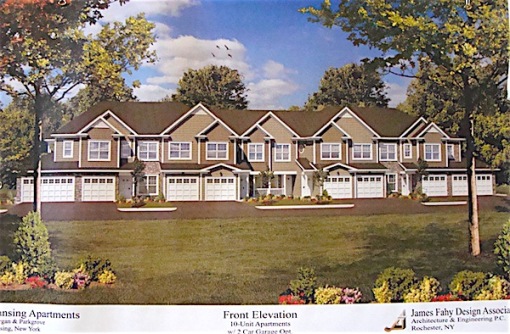
1. Starting off this week in Lansing, the village has okayed a zoning change that would allow the planning board to move forward with consideration of a 140-unit upscale apartment project on Bomax Drive. Neighbors came out to oppose the zoning change for the 19.5 acre parcel from office park business/tech to high-density residential, saying it would create additional traffic and hurt property values. The village board, however, responded in dissent, noting a lack of housing, a fit with the 2015 village comprehensive plan, and that this was about the zoning and not the project, which the planning board will critique as a separate action. The zoning change was approved unanimously. Park Grove Realty is now free to submit plans to the village, and planning board review will go from there. Expect it to take at least a few months.

therm_1

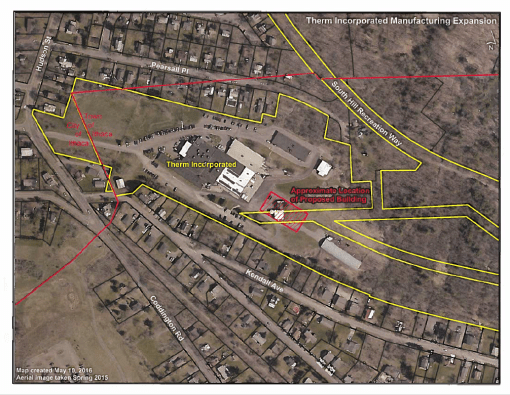
2. A couple quick notes from the town of Ithaca – Therm Inc. has commenced construction on their 20,000 SF addition at their South Hill plant. It’s a few months later than originally anticipated, but underway nevertheless. The $2.5 million project is expected to create 10 manufacturing jobs, according to the county IDA.

Also underway at this point is the renovation and expansion of the Rodeway Inn on Elmira Road. The plans call for expanding the existing 25 motel units, adding 2 new units on the ends of the main structure, and renovating a house on the property for a 1,146 SF community room to serve guests. Landscaping and lighting would also be updated. The town pegs the construction cost at about $679,000.

341_coddington_1

3. Here’s some good news – it looks like someone has taken up the Iacovellis on their offer of a free historic house at 341 Coddington Road, providing that the taker moves it. It appears NYSEG was creating some hangups since the power lines have to be moved out of the way (NYSEG is infamously difficult to work with), but with any luck, the house itself will be saved. My colleague Mike Smith is doing the legwork on a story, so hopefully more details on the “buyer” will come forth shortly.

4. Back in July, several West End properties owned by an out-of-area LLC hit the market. Now, at least one of them has sold. The duplex at 622 West Buffalo (blue in the map above) was sold for $90,000 to a gentleman from suburban Syracuse. Immediately after, paperwork was filed with the county for a $179,145 building loan courtesy of Seneca Federal Savings and Loan, a small regional bank out of Syracuse. The paperwork does not indicate if it will be renovations/additions to the existing building, or a new structure (sometimes the sale price is a part of the building loan, but in this case the buyer paid separately, with $171,187 set aside for hard costs).

20161007_163922

5. Sticking with county filings, the construction loan for the third phase of the Village Solars was filed with Tompkins County this week. $6 million is being lent by Tompkins Trust to fund construction of 42 units, 21 in each building. Initially they were slated to have 18 units each, but because the three-bedroom properties don’t have quite the same appeal as smaller one-bedroom and two-bedroom units, Lifestyle Properties (the Lucente family) has broken up the units without significantly changing the exterior appearance and layout. Actual Contractors LLC, another Lucente company, is the general contractor, with Albanese Plumbing, T. U. Electric, and Bomak Contractors (excavation/foundation) rounding out the construction team.

119_125_college_1

6. This is one of those unusual months were the city projects memo and the project review meeting agenda go out in the same week. Apart from the Collegetown Townhouse project, there are no new projects being presented, but there is new information and new renders.

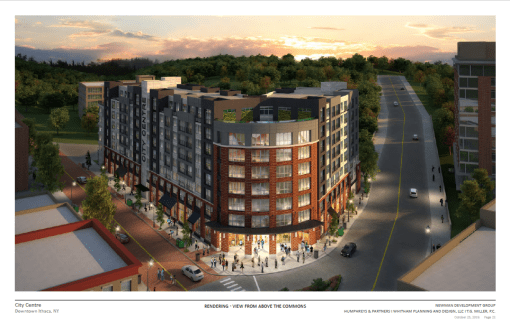
In the projects memo, Novarr’s project is the new shiny, while Amici House, the8-unit project at 607 South Aurora and City Centre are being carried over as old business. Regarding City Centre, it doesn’t look like any particular points of contention have been raised by city planning, the framework for mitigating Historic Ithaca’s design complaint is already included, and most of the other requests are for more information/paperwork. From the Design meeting, it looks like the debate on the townhouses project is minor, mostly with where to locate the trees out front, and window details. They will not be putting windows into the north face because it’s on the lot line, but they will vary the materials for visual interest. The Design Committee requested that City Centre insert more windows in some areas, and less signage, as well as consideration of decorative elements to highlight the curved facade facing Aurora and East State Streets.

The project review committee meeting has all of the above, plus updated submissions from the Maplewood project team. Although no substantial development will occur in the city, the Maplewood project crosses municipal boundaries and the city has deferred to the town for lead agency. The meeting will also have a few zoning variances to comment on. The only notable zoning variance is for local realtor Carol Bushberg, who wants to do a one-story 812 SF rear addition at her office at 528 West Green Street, which is in a WEDZ zone and requires two floors.

maplewood_v7_4

maplewood_v7_5

Looking at the Maplewood submission, the new dormer/gable style will be for the building strings that front Mitchell Street, and the two strings most visible from Walnut Street. More modern designs will be used for the remaining structures. Looking closely, the designs do vary from string to string, which will give the site some character and additional visual interest. The project timeline is pretty tight with submissions, meetings and approvals, aiming for preliminary approval from the town on December 20th, demolition to start immediately thereafter, and final site plan approval by January 3rd.

For links, here’s the Collegetown Townhouse updated submission, engineering narrative, site plan render, and cross section render. Here are the updated materials for 607 South Aurora (no significant changes, just a summary of submission materials),  here’s a new site survey for Amici House, and the project update for Maplewood.

7. Meanwhile, there’s nothing too exciting on any of the town boards next week. Lansing town will consider additions to a self-storage facility, a one-lot subdivision and a climbing wall facility next to The Rink. Ithaca town will be conducting their own analysis of Maplewood, and a one-lot subdivision.

Now, after this week’s election news, one might wonder if this has any impacts on local housing/development. Arguably, there are a few. Expect federal funds for affordable funding to be cut drastically, and grants for mass transit projects to also take a major hit. While those are major losses, the state has far greater control, so there will still be some funding available, but definitely not as much as would have been expected under a Democratic administration. Most land use and building issues are decided at the local level, so don’t expect significant impacts there.

More of a question would be infrastructure investments. The president elect wants to launch a massive rebuilding program, but the Republican Senate majority leader has already said that’s not something they’re interested in, so we’ll just have to see if he can force it through or not. If there’s any silver lining to all this, it might come in some form of deregulation, but while he might be a fan of urban environments, most of his cabinet will likely not. We also have to keep in mind the disdain for elite colleges like Cornell, so research funding, and the economy built off it, is probably going to take a hit. For the Ithaca area, the change in administrations is likely a net negative.


News Tidbits 10/22/16: Seal of Approval

22 10 2016

201_college_v4_1

1. In yet another twist in the 201 College Avenue saga, the project will be moving forward. The Board of Zoning Appeals sided 3-1 with the city Zoning Director and denied the Planning Board’s consideration that the building be considered illegal due to facade length. According to a report from former Times reporter Josh Brokaw (now operating as an indy journalist),  the board was swayed by arguments of time and ambiguity in the code. Brokaw’s reading makes it sound like there’s still some raw feelings between staff and board. The way to solve the most pressing issue would be to clarify the code based on the facade debate, and have the common council ratify those changes over the next few months. All in all, the Form District code works pretty well, and a number of projects have been presented without big discussions over semantics. But in the case of 201, it’s clear that the CAFD wording and imagery could use further refinement, so that everyone is on the same page. With 201 resolved, now is a good time to do that.

Dunno what the completion date will be offhand (August 2017 would be a breakneck pace, but we’ll see). Neighbor Neil Golder has refiled his lawsuit, but the case isn’t especially strong.

elmira_savings_v2

2. Also getting underway this week is the renovation of the former Pancho Villa restaurant at 602 West State Street into the West End branch of Elmira Savings Bank. This is quite a bit earlier than initially planned – Site Plan Review docs suggested a July-December 2017 construction/renovation. Edger Enterprises of Elmira will be the general contractor for the 6,600 SF, $1 million project, which is expected to be completed in March 2017.

evergreen_dryden_1

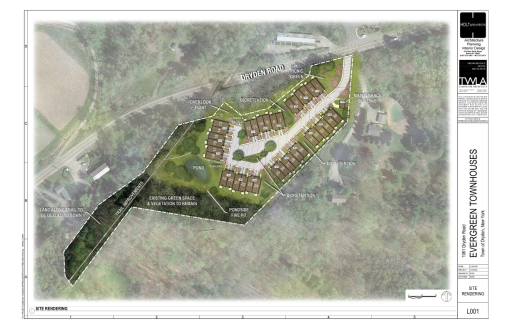
3. The Dryden town board has approved 4-1 the concept of the Evergreen Townhouses plan for 1061 Dryden Road just east of Varna. This means that they accept a PUD can be appropriately applied for the site, but the project will need to submit a formal, more detailed development plan before any final approvals will be considered. One of the major changes that is being requested is a 15-foot setback between the property line and the units at the southeast side of the parcel (25-36), so expect those to get a little trim off of the rear side (the dissenting vote, Councilwoman Linda Lavine, was because she preferred a 25-foot setback). If the setback and the other stipulations are accommodated, its chances of approval are pretty good. Developer and local businessman Gary Sloan has 270 days to submit detailed plans for review.

Meanwhile, Tiny Timbers will be up for Dryden Zoning Board of Appeals review in early November. Since an internal road will be used to access some of the home lots, the town board will be viewing the site as an “Open Development Area” (ODA), which by Dryden’s definition is development with no direct road access. The town board will hold their public meeting on the 20th to approve the ODA, the planning board’s acceptance on the 27th. The ZBA is the last or second-to-last step in the approvals process (not sure offhand if the town will need to vote again to give a final approval).

lansing_meadows_old

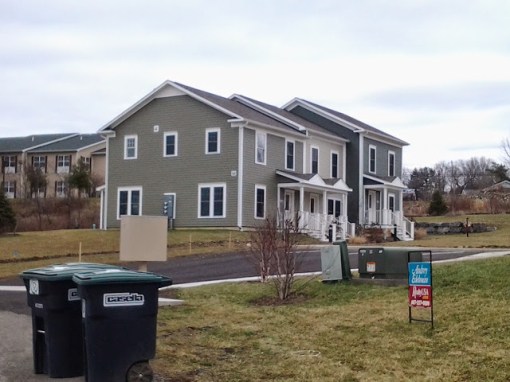
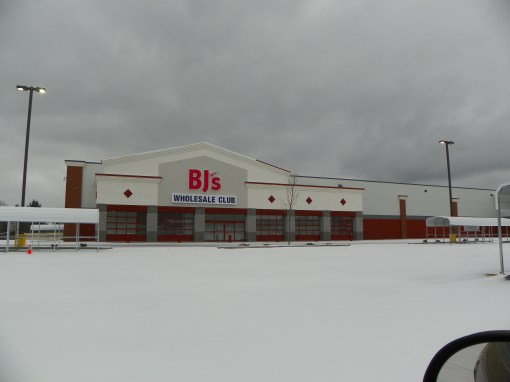
4. The senior housing next to the BJ’s in Lansing might finally be moving forward this spring. Dan Veaner has the full story here at the Lansing Star. The issue stems from working with the U.S. Army Corps of Engineers to determine what parts of the land can and cannot be developed – delineating the wetlands, basically. Apparently, the wetlands were created by an overflowing culvert back when the mall was built in the 1970s. But regardless of how they were created, the USACE deems they have to be protected, especially since it developed into a rare wetland environment called an “inland salt marsh”. Since then, it’s been back-and-forth on units – I’ve heard as few as 9 and as many as 18. A portion of the wetlands would still need to be relocated. The PDA boundaries were changed slightly by the board at the request of developer Eric Goetzmann earlier this month to accommodate the USACE determination. The tax break Goetzmann received to build BJ’s is contingent on the senior housing getting built, though at this point, one has to wonder just how much this wetlands tangle has cost him. Hope it was worth it.

maplewood_v7_3

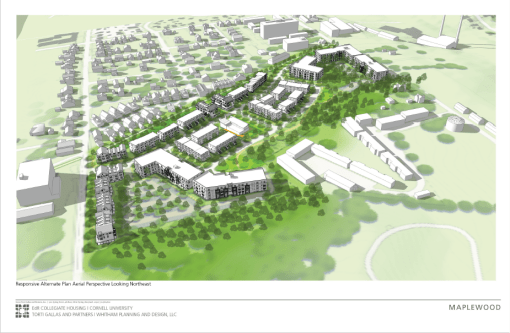
5. From the sound of it, the Maplewood Park DEIS public hearing was fairly positive. Many of the neighbors are pleased with the changes, although some are still opposed to the density or have concerns about traffic. In response, it’s worth pointing out that the commute of Maplewood’s residents will almost entirely be bus, bike and foot during normal business/school hours, and its convenience to bus routes and services will also help minimize overall traffic impacts. As for density, well, if you want Cornell to house its students and reduce the burden on the open market, promoting density on the existing Maplewood site may result in a more sustainable, more cost efficient project if planned properly, with less of a neighborhood impact than building several hundred beds on an undeveloped parcel elsewhere (since the Maplewood site has been inhabited in some form since the 1940s, the growth in density would not be as prominent – about 490 beds, vs. 872 beds).

Should readers feel inclined, comments are still being accepted by town planners up until October 31st. The materials and submission email can be found here.

6. It looks like there were a couple big sales in the local real estate market this week. The first one was the Tops Plaza in big box land, just south of Wegmans. National retail developer DDR Corp. sold the property to another large firm, NYC-based DRA Advisors LLC, for $20 million on the 18th. The sale included three addresses – 710-734 South Meadow, 614 South Meadow, and 702 South Meadow – The Tops Plaza, The smaller strip to its south (called Threshold Plaza), and the pad parcels like Chili’s and Elmira Savings Bank. Perhaps the most notable part of this sale is that it’s slightly below the total assessed value of $20,941,000. However, DRA picked up the property as part of a bundle sale of 15 shopping centers in Western and Central New York, so maybe it was a bulk discount, or compensating for weaker properties.

The other big sale was between a long-time local landlord and a newer, rapidly growing one. The Lucente family (as Lucente Homes) sold 108, 116, 202 and 218 Sapsucker Woods Road to Viridius LLC for $1.276 million on the 18th. According to county records, each is a 4-unit building built in the 1970s and worth about $275k – meaning, Viridius just acquired 16 units for a little above the $1.1 million assessed. Viridius’s M.O. is to buy existing properties, do energy audits to determine what needs to be done where to maximize energy efficiency, disconnect them from fossil fuel heating and energy sources, install pellet stoves, heat pumps and the like, renovate/modernize the properties, and connect the more efficient house to a solar grid or other renewable energy sources. If Sustainable Tompkins were a developer, they’d look like Viridius.


7. This last one isn’t so much a big sale, but worth noting for future reference – 126 College Avenue sold for $510,000 on the 19th. The buyer was an LLC at an address owned by Visum Development’s Todd Fox.

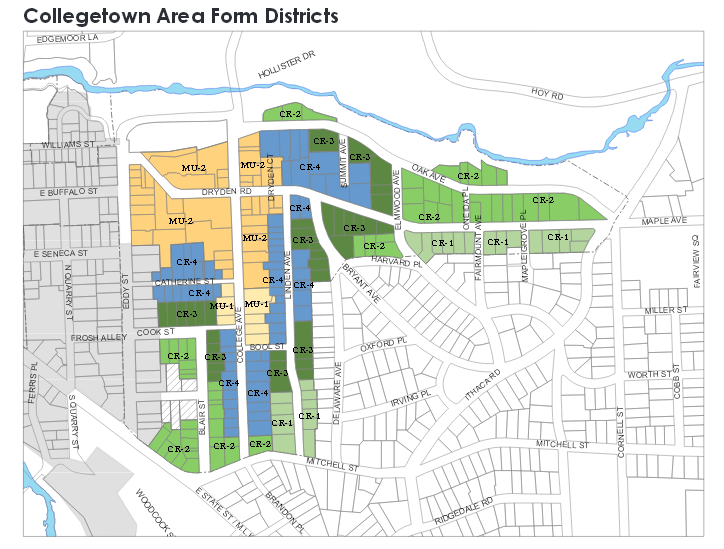
126 College is a 2-story, 6-bedroom house that might have been attractive long ago, but someone’s beaten it with an ugly stick and paved much of the front lawn (growing up near Syracuse, we called paved front lawns “Italian lawns”, with my uncle one of the many offenders). The purchase price is a little below the asking price of $529k, but more than double the assessment. Zoning at the property is CR-4 – up to 50% lot coverage, 25% green space, up to 4 floors and 45 feet in height, a choice of pitched or flat roofs, and required front porches, stoops or recessed entries. This is the lowest-density zone for which no parking is required. The city describes the zoning as “an essential bridge” between higher and lower density, geared towards townhouses, small apartment buildings and apartment houses.

Granted, not everything Visum/MLR does is new, some of their work focuses on renovation. But given the location, and given that frequent design collaborator STREAM had “conceptual” CR-4 designs on display during the design crawl earlier this month, it’s not a big stretch of the imagination.

city_centre_v3_2

8. Interesting agenda for the city planning board next week, if nothing new. Here’s the schedule:

AGENDA ITEM                 APPROX. START-TIME

1. Agenda Review                6:00
2. Privilege of the Floor         6:01

3. Subdivision Review
A. Project:  Minor Subdivision           6:15
Location: 404 Wood St.
Actions: Consideration of Final Subdivision Approval
A minor subdivision to split a double-lot in Ithaca’s South Side neighborhood into two lots, one with the existing house and one that would be used for a new house or small apartment building. A variance for an existing rear year deficiency of the house would need to be approved (the rear deficiency wouldn’t be affected by the new lot which is on the east side, but it’s a legal technicality).
B. Project:  Minor Subdivision             6:25
Location: 123 & 125 Eddy St.
Actions:  Consideration of Final Subdivision Approval
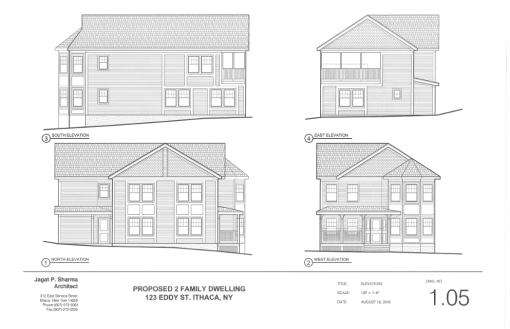
Collegetown landlord Nick Lambrou is planning subdivision of a double lot to build a new 2-unit, 6-bedroom house designed to be compatible with the East Hill Historic District. CEQR has been given neg dec (meaning, all’s mitigated and good to proceed), and zoning variances for deficient off-street parking have been granted.
C. Project:  Minor Subdivision                6:35
Location: 1001 N. Aurora St. (Tax Parcel # 12.-6-13)
Actions:  Consideration of Final Subdivision Approval
One of those small infill builds, this proposal in Fall Creek takes down an existing single-family home for two two-family homes on a subdivided lot. The design has been tweaked, with more windows, a belly band, more varied exterior materials, and additional gables to provide visual interest.

4. Site Plan Review

A. Project:  City Centre — Mixed Use Project (Housing & Retail)           6:45
Location: 301 E. State/M.L.K., Jr. St.
Applicant: Jeff Smetana for Newman Development Group, LLC
Actions:  Declaration of Lead Agency  │ Review of Full Environmental Assessment Form (FEAF), Part 2

The 8-story mixed-use proposal for the Trebloc site. Comes with one letter of support, and a letter of opposition from Historic Ithaca, who have previously stated they will oppose anything greater than four floors on State Street, and six floors overall.
B. Project:  Amici House & Childcare Center            7:15
Location: 661-701 Spencer Rd.
Applicant: Tom Schickel for Tompkins Community Action (“TCAction”)
Actions: No Action — Review of Full Environmental Assessment Form (FEAF), Parts 2 & 3
C. Project:  Four Duplexes                               7:30
Location: 607 S. Aurora St.
Applicant: Charles O’Connor
Actions:  Declaration of Lead Agency  │ PUBLIC HEARING  │ Review of FEAF, Part 2
MLR’s four-building, 8-unit plan for South Hill. Comes with a letter of neighbor support saying the scale is appropriate.
D. 371 Elmira Rd. (Holiday Inn Express) — Approval of Project Changes      7:45
The debate over the Spencer Road staircase and rip-rap continues.
E. 312-314 Spencer Rd. — Satisfaction of Conditions: Building Materials   7:55
F. 119, 121, & 125 College Ave. (College Townhouse Project) — Update        8:05
Novarr’s 67-unit townhouse project geared towards Cornell faculty. No decisions planned, just an update on the project. Keeps your fingers crossed for some renders.
G. Maplewood Redevelopment Project — Planning Board Comments on Draft Generic Environmental Impact Statement (DGEIS)     8:20
The city’s deferred judgement to the town, but the board can still have their say. The comments will be recorded and addressed as part of the EIS review process.
5. Zoning Appeals                          8:35
• #3047, Area Variance, 123 Heights Court


News Tidbits 8/27/16: A Week of Questions

28 08 2016

harolds_square_v4_new_comparo

1. Let’s start off with a planning board recap. The subdivision at 123-125 Eddy Street was reviewed. My Voice colleague Mike Smith called any proposal for that part of Eddy “masochist“, and the Journal’s Nick Reynolds had some fun with it as well. Councilman Graham Kerslick paid a visit on behalf of Orchard Place, both as a resident and as spearhead for the wealthy, owner-occupied enclave’s opposition to the two-unit house due to parking and concerns about renters. There’s virtually no process to stop lot subdivisions, since those do not have physical impacts. If the lot meets legal specs, the board is obligated to pass it. They can, however, request a site plan review for the house.

201 College’s discussion was interesting. It takes some moxy to say “Historically, Collegetown has always been a dump,” but the comment isn’t without merit. The neighborhood has effectively functioned as Cornell’s housing annex since the first boarding houses were built in the late 1800s, and owner-occupancy, never a strong presence to begin with, steadily disappeared after World War II. Many of the structures venerated now were seen as cheap and ugly in their early days. The argument provided by Fox was that historic character should be defined by the social fabric of the neighborhood, not by physical appearance. Collegetown has always been primarily a student neighborhood, and he feels his project offers a high-quality addition to maintain that student-centric social fabric. He even called out Neil Golder, the project’s primary opponent and a former student renter who eventually bought his house: “The only thing that’s out-of-character in the neighborhood is Neil’s house and demographically, Neil.”

What followed was essentially a debate on legal issues, which occasionally became heated. In the end, the board agreed to draft a zoning appeal, so now it’s onto consideration of final site plan approval, which hinges on Board of Zoning Appeal interpretation on whether or not the building is in compliance with the zoning code. In other words, on 9/6, the project team is basically going to ask, “hey does everything meet the code,” the BZA says “yes/no”, and if yes, final site plan approval is granted. Very convoluted.

On a happier note, Harold’s Square’s changes were approved, and developer David Lubin announced that with that in hand, he has the funding secured to begin construction this fall. There had been been some debate about the architecture beforehand, which threatened to derail the plans, but the issues were ironed out.

2. The Ithaca Urban Renewal Agency will be reviewing an application for a new microbrewery in the city’s West End neighborhood. Liquid State Brewing Company would be located in 5,000 SF of leased, renovated space in the Cornell Laundry Building at 521 West State Street. The brewery would initially focus on hoppy ales with a local distribution to stores and restaurants. There will be a taproom, outdoor patio, food truck events and a small amount of merchandise for sale.

Proposed by former Ithaca Beer brewer Ben Brotman and Jamey Tielens of Trumansburg, the project would create 2.5 jobs, over or just about living wage. The written paperwork includes the two brewers and a cellar specialist, for 5.5 jobs. If approved, the brewery would open in early 2017.

Liquid State is looking for a $70,000 loan towards their $620,000 project. For the record, there will be no link provided to the application because it contains sensitive tax and financial information about the applicants. The IURA tends to be a bit dicey about things with alcohol involved, but the locally-made aspect will help sell the project to the committee.

wyllie

3. Also on the IURA Agenda, the Restore NY grants. As written about in the Voice back in July, there were ten suggestions for nine projects. Four were dropped – Josh Cope’s hostel proposal, INHS’s Elm Street project, Novarr’s project, and the renovation of 224 West Spencer. 310 West State, 121 West State and 139 East State Street (part of Harold’s Square) were bundled into one grant application called the “State Street Historic Buildings Rehabilitation”, requesting $500,000 for $3.7 million in projects. The other application, for 109 North Corn Street (Wyllie’s, above) and 413-415 W. Seneca, are part of the “Seneca/Corn Street Buildings Rehabilitation”, $500,000 for $875,000 in projects. At a glance, the State Street plans look to have a pretty strong application, but we’ll see what the state thinks after they’re submitted this fall.

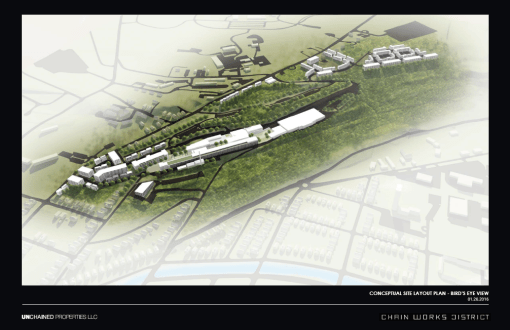
chain_works_rev3_3

4. Here are the 15 or so pages of comments received on the Chain Works District DEIS. Some are really good questions or comments, some aren’t, some conflict with each other – it’s the nature of the beast.  The Planning Board’s Special Meeting on Tuesday is mostly just to review comment summaries, and several more meetings will be scheduled through September and October.

mettler_toledo-1-771x372

5. So I had the unpleasant task of breaking the news this week of the largest single layoff or facility closure in Tompkins County in seven years. The loss of 185 well-paying jobs is not something to take lightly, even if this area is in general faring well economically. Even worse, the Journal is reporting that TCAD never even saw it coming, they were blindsided. At least with Emerson in 2009, the writing has been on the wall for several years, especially after they transferred their senior corporate jobs to Kentucky in 2007. Here, everyone’s just been blown back. Mettler Toledo Hi-Speed paid over $100k in taxes annually, and was a big supporter of the local United Way chapter, so it has a lot of negative impacts spread out on Dryden and the county. Not a good week.

If anything, this is a sobering reminder that economic development is multi-pronged – attracting new business with new job opportunities is the obvious part, but maintaining an environment that nurtures and supports the existing workforce is just as important.

20160821_134917

6. Giving credit where credit is due, the Journal’s Nick Reynolds did a nice write-up on the Carey Building overbuild on the 300 Block of East State Street. The article ends with a not-so-subtle teaser that Travis Hyde Properties might be bringing forward a residential proposal for the Ithaca Gun site some time next Spring, something that has been in the making in one form or another for a decade-plus (they’ve held off in the past couple of years because the city had to finish cleaning up adjacent soils).

One note of discomfort is that the article refers to the Ithaca Gun site as “its next project”. What is that saying about the Old County Library site?

7. Nothing too exciting in real estate sales this week. “SCF Realty Capital LLC” paid $6.6 million to Drake Petroleum for three gas stations – $1 million for the Sunoco on W. Main in Dryden village, $1.9 million for the Xtra Mart on Dryden Road, and $3.6 million for the recently-renovated Xtra Mart on Route 34B near the Lansing town offices. County tax assessors had them valued at $2.35 million collectively. I’m not familiar with the sales dynamics of convenience stores/gas stations, but that’s an impressive differential.

SCF stands for “Stonebriar Commercial Finance”, a company that specializes in middle-market commercial real estate finance over a wide spectrum of industries, with sale-leaseback options for clients. A copy of the deeds were sent to the corporate offices of Mirabito Energy, and a check online indicates Mirabito is buying 31 gas stations in three states, part of a corporate divestiture of locations by Drake’s parent company, Global Partners. So, the Xtra Marts are becoming Mirabitos.

Speaking of gas stations, land for sale at the Rte 13/Rte 34 split in Newfield sold this week to an LLC representing the Marshall Companies, a Weedsport company that runs Pyrus Energy and the Pit Stop Convenience Store chain.


News Tidbits 7/9/16: Land Ho

9 07 2016

waterfront_foreclosure_parcels_0516

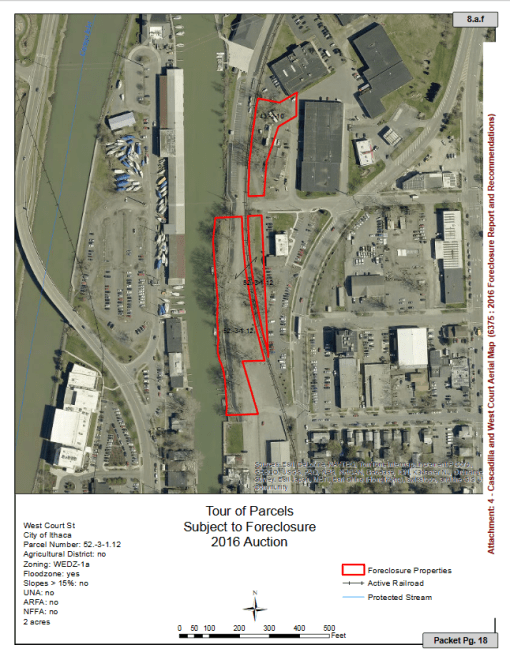
1. Starting off this week, a couple of new pieces regarding Ithaca’s waterfront. First, the city’s chances of picking up some prime waterfront real estate at a low, low price are gone, though not any fault of their own. Readers might recall that back in late May, the properties were about to be foreclosed on for unpaid taxes, and the county was discussing selling the parcels, worth over $630,000, to the city if the city paid off the $42,844 tax bill. Pretty sweet deal for the city, right?

But the owner, an LLC that has held the parcels since the late 1990s, managed to pay off the tax bill and an attached penalty fee, which means they get to keep the land. So, if the city had any plans for those parcels, they’ll be filing those away for a long while.

2. However, it looks like several properties are being put up for the sale in the city’s West End near the Waterfront. Local realtor Brent Katzmann has four properties listed – 321 N Fulton, a duplex on 0.11 acres for $144,800; 319 N Fulton, a single family on 0.04 acres for $109,875; 626 W Buffalo, a single family on a narrow and deep 0.15 acre lot, for $124,999; and 622 W Buffalo, a duplex on a narrow and deep 0.19 acre lot, for $134,800. The prices generally run at or up to 10% over the tax-assessed value ($130,000/$100,000/$125,000/$125,000). The currently owner is a Long Island-based LLC, led by a pair of New York City real estate lawyers, who acquired the properties from 2010-2012. Prior to them, many of the properties have been through a merry-go-round of owners over the past 10-15 years.

The properties are in fair to rough shape, and the marketing tactic being used isn’t renovation, but rather development potential. The four properties all fall within WEDZ-1a zoning, which is the city’s attempt at encouraging development on the West End. WEDZ-1a permits residential, commercial and mixed-use 2-5 story buildings, 90% lot coverage (100% if less than 50 feet on two sides – the Buffalo parcels and 319 N Fulton), and no parking requirement. The properties are not affected by the city’s TM-PUD.

The West Buffalo lots could be tough since the house in-between is owned by someone else, but deep lots and the corner of North Fulton and West Court offer some potential. Worth keeping an eye on, if only to see who they sell to.

20141227_140754

3. One less homebuilder around. Avalon Homes is closing up shop. The Ithaca-based company is selling off its lots and trying to wrap up the homes they have underway. Rumors abound as to why, but if firm, verifiable information can be obtained, there will be more to follow.

Avalon made its name doing stick-built built, with a focus on affordability and green construction. Avalon, a certified Living Wage employer, was the general contractor for INHS’s Holly Creek townhomes (shown above), and employed at least a dozen back in 2010.

old_library_thp_v4

old_libe_thp_holt_v6

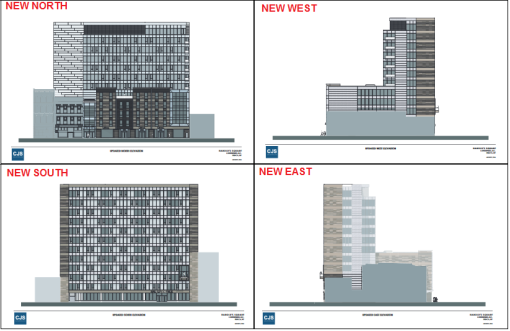
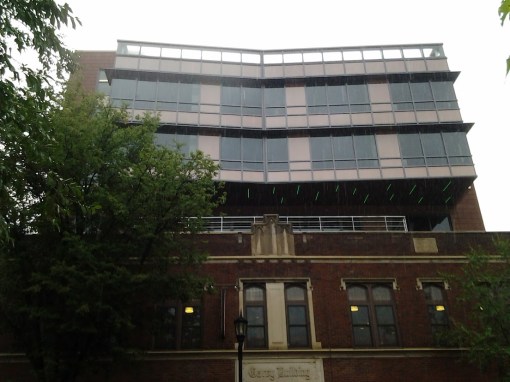
4. The Planning Board and the Ithaca Landmarks Preservation Commission will be conducting another joint meeting on Tuesday the 12th at 5:30 regarding the Travis Hyde Properties’ proposal for the Old Library. HOLT Architects responded to comments from the ILPC at its last meeting that the design needed to be “quiet” by submitting the revised elevations seen below.

Mission accomplished? Armchair architect comment here, but the revised design is too far the other way. There’s a joke about the color beige, coincidentally similar to the new brick, being an adjective for “dull, boring, indistinctive“. I like the previous design with its wood-like fiber cement and characterful roofline, and I wonder if perhaps a revised color palette of that design, with maybe a few less full-sized balconies, would be a happy medium.

5. As announced on city of Ithaca Mayor Svante Myrick’s Facebook page, the Namgyal Monastery Institute of Buddhist Studies will be the site of a library and museum of the Dalai Lamas, the first of its kind outside of Tibet. The facility would be located on the 28 acres Namgyal owns on South Hill at its Du Khor Choe Ling monastery complex. Architectural plans and costs are still being determined, but a quote from Ngawang Dhondup, administrator for Namgyal’s facility, says that it will be larger than Namgyal, which has been underway since 2007 and will be about 14,500 SF when completed.

All in all it’s a great feather in Ithaca’s cap, but two things to be a bit wary of moving forward are the reactions and possible opposition from neighbors to what will be a very high profile religious facility, and given geopolitical issues, the reception to the Library of the Dalai Lamas may not be so warm from some denizens of cosmopolitan Ithaca.

12-29-2011 003

6. Way back in 2010 and early 2011, when the BJ’s Wholesale club was proposed in Lansing, one of the components of the proposal was to build 12 units of senior housing on land north of the then-proposed store. The project also called for wetlands, walking trails and a bird sanctuary on the undeveloped portion of the 11-acre property. Developer Eric Goetzmann (Arrowhead Ventures/Triax Group) faced considerable opposition to the plan since it involved big box retail and was housing outside of the density corridor, but after the IDA initially voted the project down in December 2010, a revised application calling for a smaller PILOT was passed by the IDA in April 2011 (some of the logic being that the county was in a financial bind during the recession, and some increase in taxable property was better than none).

Well, the BJ’s was built and opened the following year, but the wetlands and housing have had a much longer slog. The U.S. Army Corps of Engineers in in charge of new wetland permits, and the process is a complex, arduous one (man-made wetlands are difficult to build, and the Army Corps would rather they be done right than done fast). Goetzmann teamed up with The Upper Susquehanna Coalition and The Wetland Trust to design the “Inland Salt Marsh Bank”, which was just approved by the Army Corps, and the final permits expected shortly. With the wetlands taken care of, Arrowhead can begin to look towards the housing component, which they plan to put forward later this year for a 2017 construction date. As part of these plans, they want a one-year extension on the legal construction start for the housing from the IDA. Given that Arrowhead has met the other criteria and can demonstrate proof of progress on the wetlands, this probably won’t face much opposition. But eventually, it looks as if the village of Lansing will finally get those 12 units of senior housing.

biggs_1

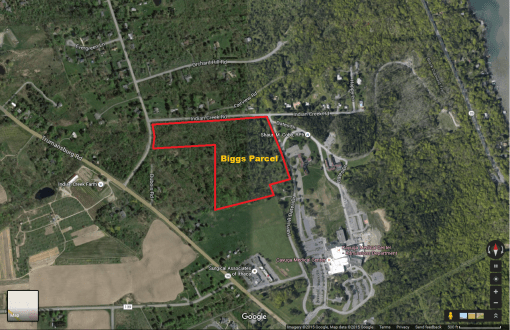
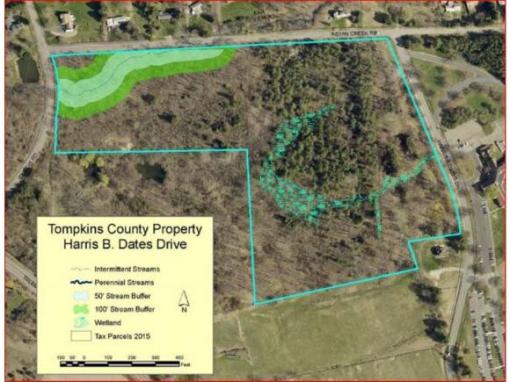
7 It looks like the Biggs Parcel is officially listed for sale. Local realtor CJ DelVecchio was selected by the county to manage the listing for the 25.52 acres near Cayuga Medical Center. The asking price is $275,000. The land comes with a conservation easement on the northwest side due to its proximity to a stream, and the wetlands near the center would be tricky to work with, because wetlands typically can’t be developed unless new wetlands are created, which is not cheap or easy to do.

c507

Readers might remember that this parcel has quite a history behind it. Declared surplus land by Tompkins County, the county had set up a tentative deal for a 58-unit affordable housing complex on the property, but the deal fell through after the wetlands were discovered to cover more area than previously thought.

Neighbors, via the Indian Creek Neighborhood Association (ICNA), have tried to force the county to hold onto the land to keep it from being developed. One of the big sticking points had been whether or not the 25.5 acres would be taxable – the county isn’t especially concerned at this point if the land gets developed or not, but they have made it clear that they want to sell it to a private owner that will pay taxes. The problem is, proposals to preserve the land often dovetailed with plans to donate it to an organization like Finger Lakes Land Trust, which would render the property tax-exempt. The ICNA did end up making a closed bid for the property, but the offer was rejected.

A neighbor to the south did propose reconfiguring the property to preserve the woods and build cottages on his back lot – by adding the Biggs land, he could have built more units under the regulations of the cluster zoning. But the plan fell through due to “size and complexity”, according to the ICNA’s Linda Grace-Kobas.

The land had been valued at $340,000 before the discovery of the additional wetlands, and the revised 2016 assessment brings that down to $240,000.


News Tidbits 5/28/16: A Battle Between Neighbors

28 05 2016

201_college_v2_3

1. It seems the Planning Board had something of a philosophical crisis at their meeting, per the Times’ Josh Brokaw. The cause of the crisis is Neil Golder, Todd Fox and 201 College Avenue. Here’s the backstory.

201 College is a 2.5 story, 12-bedroom house on the corner of College and Bool. Local developer Todd Fox has a proposal on the boards for a 5-story apartment building (shown above). Neil Golder lives next door at 203. He moved into 203 in 1972 when he was a grad student at Cornell, bought the place in the early ’90s, lived there with his partner Kathy until she passed a couple of years ago. He still lives there, and rents out spare bedrooms.

201 and 203 were rezoned as part of the 2014 Collegetown rezoning to MU-1. This came only after years of debate, and Neil was one of the residents who pushed to have the properties rezoned in 2009 with a payment in lieu of parking scheme that upset a lot of the landlords, who mounted a significant legal challenge that prevented the rezoning from happening – more about that can be found in this Voice explainer.

For the record, Golder has never been much of a fan of development in Collegetown. His two big things have been that density is bad (but he seems to have mellowed on this issue since the parking push in 2009), and that Collegetown needed a grocery store. He was supportive of Collegetown Crossing because the developer (the Lowers) live next door at 205 and Greenstar will be opening a grocery store on the ground floor.

So, back to the zoning. There are nine MU-1 properties. The four between Catherine and Cook belong to Novarr – he has not expressed any intent to redevelop them. The other five are 215, 209, 205, 203 and 201 College Avenue. Novarr has expressed intent to redevelop 215 starting in late 2017. 209 is Grandview House, a historic landmark, and pretty much untouchable. 205 is Lower’s house, 203 is Golder, and then you have 201.

201 is the southernmost of the nine, and therefore most likely to stand out. The thing is, zoning consistent, when development happens organically, it means the parcel most likely to stand out isn’t necessarily the last one to get developed, nor will it necessarily be the smallest. In this case, the physical transition is from 2.5-3.5 story houses, to 5-story apartment, to 2.5 story house, and then a 3.5 story house and 5-story boarding house.

As of right, Todd Fox can build up to 5 floors and 70 feet tall as an average height. The site slopes slightly, so the building is shorter on the north side than the south side. The design fits the zoning – but it has to go to the BZA for a couple of minor area variances, one for entrances off of Bool, and the other, the board requested the project incorporate – the building was moved northward slightly to allow for street trees and a wider sidewalk on College Avenue. The May agenda noted that the Board had no concerns with either variance.

Golder has sent letters to the Times and the Voice (directly to my colleagues Mike and Jolene but not to me, interestingly), he has been stopping people on the street to sign his petition, he’s tried the ILPC, Planning Board, Historic Ithaca, friends in city government, even the city forester, everything and everyone he can to try and halt the current plans, but there has yet to be a compelling, objective counter-argument.

Countering some of the claims in his many letters, the individual pine trees at the front are not historic landmarks or city-owned, the city has to review and approve of construction plans anyway, and the traffic issue had already been discussed back during the rezoning. The developer has agreed to push the building back, which will give more visibility to Golder’s driveway, and a curb bump-out at the corner is proposed as part of the project. So that leaves the aesthetic argument of “I don’t like it”, which puts the Planning Board in a really difficult spot because as long as the form districts say the design is fine, that argument won’t stand up to a legal challenge.

There is a strong argument with his solar panels, which have been a part of broader discussion within the city. 201’s height would marginalize Golder’s solar panels, so in that case the project causes non-subjective hardship; this could be mitigated if 201 has solar panels (they are being considered) and shares electric, or by other compensation. Although, it might depend on when the panels went in, before or after rezoning. If people start rushing to put up solar panels as a back-door method to thwart development, the city’s going to step in.

So here’s the essence of the issue – after years of fighting over zoning, and finally settling on a compromise in 2014, the city is faced with a development that is legal, but it’s vehemently opposed by a venerable and high-profile neighbor, where the objections can be effectively mitigated, but not necessarily the way he wants them to be. A planning board member has to find the balance between allowing everyone to have their say, and acknowledging valid issues that should be addressed, without letting individuals exert too much control over their neighbors and infringing on property rights.

waterfront_foreclosure_parcels_0516

2. Okay, onto other things. The city might be acquiring a couple of sizable West End/Waterfront parcels from the county. The properties, which consist of a pier/boardwalk, informal parking and vacant land, are located at the end of West Court and Cascadilla Streets, and are being seized as a tax foreclosure. The county is looking at selling them to the city in exchange for the $42,844 in back taxes. The larger one is 2 acres, the smaller 0.6 acres, and in total they’re valued at $630,000. The owner, an LLC, picked them up for $156,625 in 1999.

If the city picks them up, they’ll be filed into the IURA’s holdings for potential sale down the line. As it is, the parcels have issues – the railway, accessibility, and soils down here are known for being difficult to build on. But in the long term, there’s potential for water-focused amenities, private development, or a combo of the two. It looks like a good investment given the city’s still-in-the-works plan to encourage redevelopment of the West End and Waterfront, so this is worth keeping an eye on as things move forward.

402_s_cayuga_st_boggsfernandez

3. The IURA reviewed funding proposals for affordable housing earlier this Spring, and the minutes are now online. the duplex at 622 West Clinton, and the affordable unit with the 4-unit 402 South Cayuga project were not funded. The IURA is encouraging 622’s applicant to re-submit for next year, and the minutes note that 402 is likely to still go forward, but without the affordable unit.

It’s also been noted that there is some discontent with INHS because the cost of their projects are coming in high, and that they would like more diversity in applying entities. However, the seven townhomes at 202 Hector and the single-family house at 304 Gector (all for-sale housing) are fully funded. The Habitat for Humanity duplex on the 200 Block of Third Street is also fully funded.

rumble_seat_1

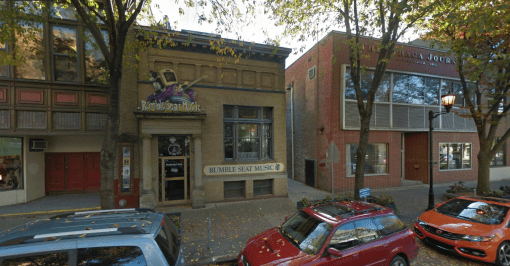
4. Another piece of news from the IURA – the new occupant for the Rumble Seat Music building. It appears to be a drink bar called “Watershed Union“, serving coffee and juice by day and adult beverages by night. Five or six living wage jobs would be created. There might be some grumbling over the moral evils of alcohol, but the business plan has the support of neighboring businesses and the Downtown Ithaca Alliance.

Also, the Canopy Hilton is still moving forward. But are doing a minor LLC ownership change to allow another Patel family member to be a part of the ownership team.

5. Hitting the market this week, for all those big-potato investors out there – the Belmont Townhouses at 324 Spencer Road. The listing from local realtor Brent Katzmann has the price set at $2,595,000, for a 14-unit complex that opened in 1995. The posting mentions the possibility of a 1031 Exchange, which allows an individual to sell a currently-owned investment property, and buy a new investment property of equal or greater value while avoiding capital gains taxes – continuity of investment locks up the profit gained from sale.

20160522_160150 20160522_160211
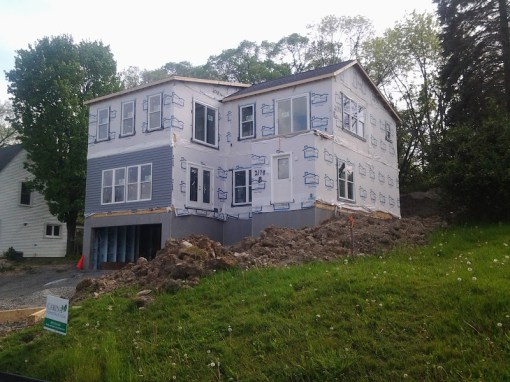
6. House of the week. This house is on the 100 Block of Campbell Avenue on Ithaca city’s portion of West Hill. This home is being built by Carina Construction, an Ithaca-based modular home specialist. The foundation and garage were poured and the pieces were probably craned on and locked together sometime in the past few weeks – a little bit of siding has started to show up on the front. The process is a lot like the one Carina used to assemble the Belle Sherman Cottages across town.

Color me impressed, the design is unique, and once exterior details like the porch and second-level deck go on, I imagine it’ll look really nice. Tompkins Trust lent $280,000 back in April, and the construction permits were issued not long thereafter (the total project cost is in the $320k range, per the permit filing). The land was created in a lot subdivision last year, and sold for $35,000 last August.


News Tidbits 4/16/16: The Real Estate Shopping Spree

16 04 2016

old_libe_thp_holt_v4

1. On Monday, the county’s Old Library Committee received an update from Travis Hyde Properties about the redevelopment. Perhaps the biggest development is that Lifelong is no longer moving into the building. Instead, they will sell keep their office at 119 W. Court Street, sell the historic building at 121 W. Court Street, and have free use of DeWitt House’s community room for classes and workshops. Lifelong would also be the administrator of the community room, so rental fees for use of the room by other organizations will be paid to Lifelong instead of Travis Hyde. Lifelong’s treasurer claims this arrangement will save them $50,000 vs. the original proposal.

According to the Ithaca Journal piece by Andrew Casler, law firms have expressed interest in the 121 West Court Street property, although other business and housing isn’t out of the question. 121 is just outside the DeWitt Park Historic District.

The number of units is down from 60 to 55 (though some of those are now 3-bedroom units…the Tines is reporting 57 units total), and parking spaces are down from 30 to 25, all internal to the building since Lifelong is no longer moving in. Frost Travis is quoted as saying he might be looking into expanding the age range of possible tenants (currently proposed as 55+), but that seems liable to garner significant blow-back from neighbors if pursued.

The current plan is to have approval by September, sale of the property by October, and after any final site plan approval tweaks, construction may begin next Spring.

20150727_145000

2. The Ithaca City PEDC had another crack at incentive zoning this past Wednesday. And the consensus is, everybody dislikes it for one reason for another. Some of the development community feels it doesn’t go far enough, while some local activists feels it goes way too far. Sounds like the plan is striking a good compromise if it’s ticking the stakeholders off for not being more like their way of thinking. But, proof would be in practice, and seeing if any developer would actually be interested in pursuing a plan that utilizes the incentive zoning.

On a related note, Svante Myrick deserve a laurel – when asked at the meeting why there’s a housing shortage in Ithaca, he pretty much nailed it – the growing economy, increasing student and retiree populations, and a renewed interest towards urban environments are driving demand higher than in decades past.

201_college_v2_3
3. For this week’s eye candy, here’s a perspective drawing of the multistory apartment building proposed at 201 College Avenue. One thing that stands out here that doesn’t in the elevations (the latest of which can be found here) is that the corners are stepped down, so the bulk of the building is lessened. The planning board is expected to agree to be the lead agency for environmental review at its April meeting.

4. So I’m mostly leaving this to my colleague and editor Jolene Almendarez, because she is much more familiar with the Elmira Savings Bank situation than I am. But it’s worth noting that Steven Wells, the Massachusetts man who sold ESB the properties, was on a buying spree this week. On Tuesday, Wells paid $224,000 for 508 West State Street (the old Felicia’s Atomic Lounge), $884,638 for 622 Cascadilla Street where Zaza’s is located, and $1.5 million for 402-410 Third Street, a commercial plaza home to Finger Lakes Physical Therapy.  Felicia’s was noted here on the blog when it went up for sale last August for $350k.

ith_big_plan_map_v2

They all have different owners, and they’re in varying physical conditions. The only thing that unites these three properties is all that are in areas the city as ripe for redevelopment for urban mixed-use in the Comprehensive Plan. Felicia’s was upzoned in June 2013 to CBD-60, permitting a 60-foot tall building, no parking required. 622 Cascadilla is WEDZ-1a, allowing for five floors and no off-street parking requirement. Lastly, 402-410 Third Street is B-4, 40′ max and 50% lot coverage, but allows virtually any kind of business outside of adult entertainment. Those are some of the city’s more accommodating zoning types, so we’ll see what happens moving forward. At the very least, the public relations game will be starting from behind the proverbial eight ball.

5. Out in Dryden, the William George Agency is seeking county legislature approval to issue $2.7 million in bonds to finance construction of a new 24-bed residence hall. The facility will affect about 1 acre, be about 15,000 square feet, and start construction this Spring, taking about one year to build.

As the county deems appropriate, they can approve the issuance of tax-exempt municipal bonds to finance construction projects. First the planning committee signs off on it, and then the general legislature takes it up for a vote. The non-profit residential treatment center secured a $2 million construction loan this past January to fund roof repairs and renovations to cafeteria area. The agency, established in the 1890s, employs over 340, making it one of the larger private employers in Tompkins County.