News Tidbits 10/1/16: Sketchy Details

1 10 2016

lansingapts600
1. Over in Lansing, it looks like Park Grove Realty is having a rough time getting their plans rolling. Legions of angry homeowners turned out at the village’s Board of Trustees meeting to protest a requested zoning change for a 20-acre Bomax Drive property that Park Grove seeks to build 140 apartments upon. The meeting wasn’t about the project, which will follow the zoning change once approved. For the record, the meeting was only about the zoning change, which is currently zoned for office park business/technology and has been owned by Cornell since 2008.

The unusual thing is that the primary opponent seems to be the Jonson family, of development company IthacaHome, formerly known as Forest City Realty. They built some of Lansing’s 1990s subdivisions and the Heights of Lansing project at the end of Bomax Drive, which is stalled out due to a lack of interest and Ivar Jonson’s passing. The claim from Janet Jonson is that if left commercial office/tech, then maybe an office building would be built and executives would build homes on some of their vacant lots. Even Larry Fabbroni was there to say an office building would generate less traffic than housing would. The meeting was very heated, according to the Lansing Star’s Dan Veaner.

The village planning board was there to listen, but not especially sympathetic. For one, there’s plenty of undeveloped commercially-zoned land; but there is a housing shortage. For two, although some complained “transients” would lower their housing values, these units will be going for $1,400-$1,900/month. The board’s not focused on the project just yet, that will come in due course. Meanwhile, the trustees moved to schedule public review for the zoning change, with that meeting planned for October 17th.

A couple miles away, Park Grove has also been getting flack for taking down willow trees as part of a plan to reduce root damage and mold issues, and to expand parking and add a 425 SF rental office on the Triphammer Apartments (former Chateau Claire) property. The heavy-handed approach was not well received. In short, Park Grove’s principals are the village pariahs at the moment, though they have brought some of it on themselves.
maplewood_v3_2

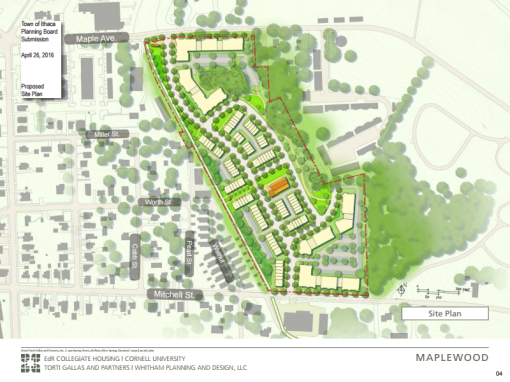
2. Just a brief check-up on the Maplewood Park redevelopment. The project team has been busy over the past month making revisions to the Draft Environmental Impact Statement (DEIS) as part of its determination of adequacy, and the DEIS was just accepted for public review as of the town of Ithaca planning board meeting on the 20th.

A digital copy of the revised DEIS can be found on the town’s website here. A public hearing will also take place on October 18th. The SEQR review period is 45 days from acceptance, so public comment will be accepted on the document up to 4 PM on Halloween.
100_1967

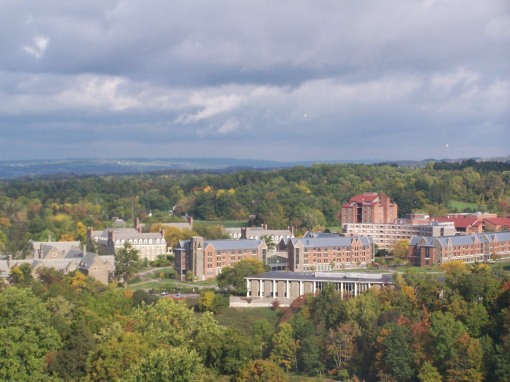
3. As part of their campus housing study, Cornell launched an extensive survey of their students. A summary and a link to the full results can be found on their webpage here. The university also held public forums this past week on campus to hear opinions from the community and explain what happens next (what needs work, how much campus housing is needed, where on campus, what student segments, strategies for the next 25 years, and so on).

Among the grad and professional (MBA/JD/MPH/etc) students, more anticipated living on campus when they arrived, than actually did – 32% vs. 18% of respondents. On average, G/P students felt they should pay about 7% less than they do. They want Wi-Fi, private bathrooms, on-site laundry and package/mail delivery. Outside, they want wider sidewalks and more frequent bus stops/service, and parking fees should be bundled in rent if parking is offered.

Those off campus preferred Downtown (26%) and Collegetown (24%). Grads and domestic students preferred Downtown, professional and international students preferred Collegetown. Grad students tended to be more satisfied with their housing than undergrads.

Similarly, more undergrad respondents want(ed) to live on campus – 56% do or have, 78% want/wanted to. That stat’s a little weird, since freshmen are required to live on campus. Only about 45% describe an apartment as ideal housing, vs 88% for grad/prof students. They also want Wi-Fi and laundry, as well as study areas and dining nearby. 49% selected Collegetown as their preferred housing choice, with another 36% preferring an on-campus location if available.

cornellspace-771x394

At the public forums, the university presented a few potential building sites for new campus housing. The goal was to have sites away from full-time residential areas (less hassle), easy to prepare (less physical hassle), accommodate 300-500 students (scale efficiencies) and be near existing facilities (quality of life and infrastructure). Three north campus locations were presented – CC parking lot, the side lot at RPCC, and the fields next to Appel Commons. The RPCC and CC locations show up on the 2008 Master Plan as well, 3-6 floors and up to 200,000 SF of space. So it seems those two locations have a more sustained interest. The city of Ithaca and the Village of Cayuga Heights have a boundary line that straddles those sites, a latitudinal line just south of Jessup Road. If something were proposed, most of the land is in the city, but the village would have to vote to defer decision-making to the city. That is a potential complication that Cornell has to keep in mind.
evergreen_dryden_1

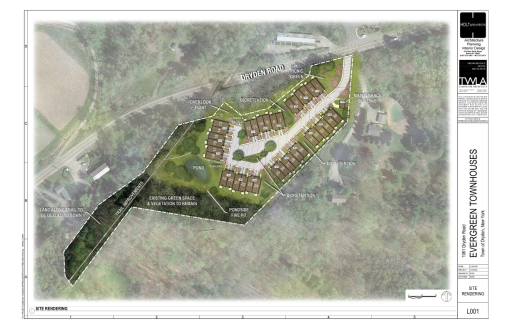
4. The Evergreen Townhouses project in Dryden will be the subject of a special meeting of the town planning board on Wednesday October 5th at 7 PM at the Varna Community Center. The full suite of documents, including county review, planning board notes for the town board (recall that in Dryden, the town board votes to approve projects instead of the planning board), sewer capacity report and concept plan description can be found here. SEQR has been reviewed and a traffic study has been completed. The project will need a PUD approval, since 36 units exceeds what the zoning allows (28). If the PUD is approved, land will be deeded to the town for its recreational rail trail. Like the Park Grove project in Lansing, this rental proposal has seen a fair amount of opposition, due to traffic and concerns about renters, and the possibility of encouraging suburban sprawl east of Varna. Oddly enough, for being this far along in the process, there still haven’t been any detailed renders of the townhouses released to the public.

5. Here are a few details about the 607 South Aurora project. Readers might recall the sketch plan was presented at the August Planning Board meeting.

As I discovered this week, sketch plans are actually off the record. Meaning that a developer doesn’t have to give it to the city for publication if they don’t want to. Apparently, John Novarr is going this route – although images for his townhouse project on the 100 Block of College Avenue were presented last week, the city has no official record of them, and he said he has no intent to share plans until he’s ready for the city to declare itself lead agency. For what it’s worth, the project, geared towards Cornell faculty and staff, was well received by the Planning Board.

On the one hand, not sharing the sketch plan limits public exposure and the risk brought by exposure, and it allows the board to eliminate the most controversial aspects before the public can see them. On the other hand, it’s less transparent, and makes me an unhappy camper.

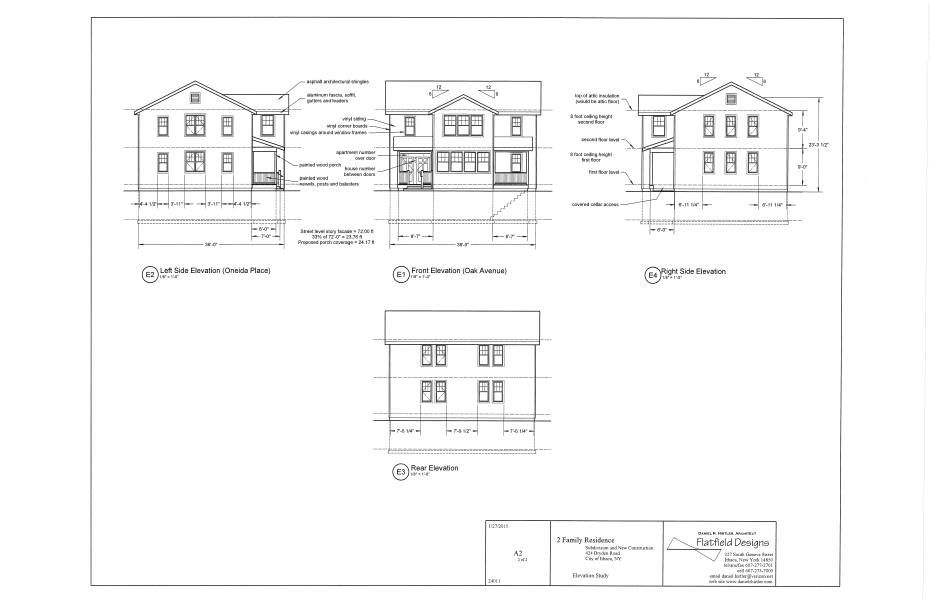
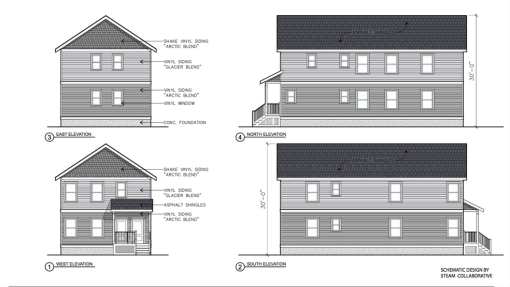
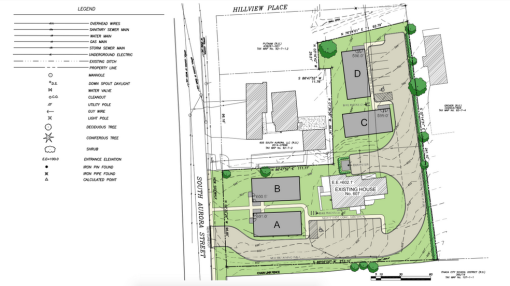
Back to the topic at hand, 607 South Aurora as initially conceived calls for 4, 2-family, 2-story houses on the property, while retaining the existing house. That’s a total of 8 units, and 24 bedrooms total. Parking would be in two sections tucked back from the street. The project is not unlike the one approved for 312-314 Old Elmira Road in Ithaca’s South Side neighborhood. Although STREAM Collaborative’s Noah Demarest presented the project at the August meeting, STREAM is not in charge of this proposal. The project is being designed by Collegetown favorite Jagat Sharma for local developer Charlie O’Connor.
607_s_aurora_1 607_s_aurora_2

Charlie O’Connor is a part of Modern Living Rentals, and regardless of how one might actually feel about their work, it is probably the most transparent development/rental company in the local market. True to form, a quick check of their website turned up images of 607 S. Aurora. It looks like the same general design will be used for each building, and each unit will be 3 bedrooms and about 1,122 feet. I hope they change up the exterior colors for variety’s sake. The board and planning department was fine with the buildings, but suggested revisions to the site plan, so the next iteration will likely have a different site layout.

20160918_164039 20160918_164106

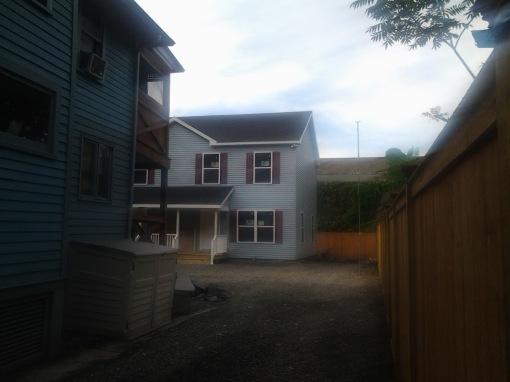
6. Sorry, didn’t realize the lens was smudged. This very subtle duplex is underway in Ithaca’s South Side neighborhood, behind an existing duplex at 512-14 West Green Street. Because it fits in all the setbacks (it’s a very large, deep lot for an inner city parcel) and the rear of the property falls into the State Street Corridor’s CBD-60 zoning (i.e. no parking required), this project never needed more than staff-level approval from the city. Honestly, were it not for a small disturbed area at the curb-cut from construction vehicles moving in and out, one would never know this duplex was under construction.

The property is owned by the Ciaschi family, and appears to have been passed between family members since at least the 1960s. A building loan filed on June 17th indicates that Tompkins Trust lent $330,000 towards the project. As with many smaller builds, this a modular by Ithaca’s Carina Construction. Carina is supplied by Simplex Homes, and it looks like this 3-bedroom/2-unit is based off Simplex’s “Elkton IV” plan (but that could be wrong). Give how far along the outside is, it would not be a surprise if renters move in by the start of October.

147962

7. The near-death Black Oak Wind Farm could actually happen, if they pay Enfield the money they want for FOIL costs. Using the original EIS, they’ve reverted to the initial plan, including use of the landowners’ properties who tried to pull out in the face of the project’s rancorous opposition. The BOWF project team had been attempting to move two of the turbines to accommodate property owners who changed their mind about being associated with the project, but the Supplemental EIS had been caught in legal red tape with the town of Enfield and the town of Newfield to its south, where one of the alternative sites was planned. So the new plan is to just go forward with the original signed contracts and build what was proposed before the 2015 SEIS. The project team has requested final approval, but the town has said they want to be paid $19,000 for the cost of handling all the FOIL (Freedom of Information Laws) requests, of which they’re not sure who’s actually required to cover the cost.

This project and its manager, Marguerite Wells, have probably been put through a greater Hell than any other proposal in this county, which is really, really saying something. Let’s recall, apart from the opposition that has demonized the project manager and the investors (successfully, one could unfortunately argue), that when they considered the alternative site, Newfield’s town board rewrote their wind farm law to implicitly but effectively ban wind turbines from the town. The BOWF project has been incubating for nine or ten years.

According to Marguerite Wells, if they can’t get approval at the Enfield town board’s October 12th meeting, the wind farm proposal dies. And with it, pretty much any commercial wind turbine plans for Tompkins County (looking at Newfield, maybe single-family turbine plans as well – the way the 2016 revision is written, a homeowner can’t even hook up a little one to their roof, as it’s too close to an occupied structure).

8. Here’s a little kick in the pants to end the week. It was reported in Bloomberg of the five Ivies that have released results so far, Cornell’s endowment did the worst in the past year, with a -3.3% loss (which comes out to a drop of about $200 million). The university is taking reactive measures, including moving its investment offices to New York City. “The investment committee believes over the long term the relocation to New York City gives us even better access to potential staff who might not be willing to move to Ithaca,” said Cornell CFO Joanne DeStefano. That’s a bit deflating.


Collegetown Terrace Construction Update, 9/2016

29 09 2016

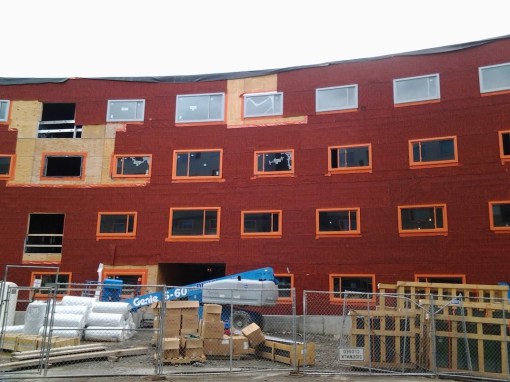
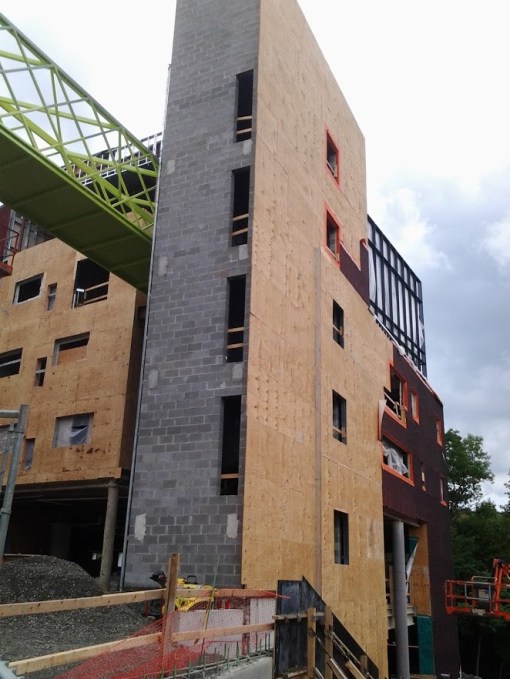
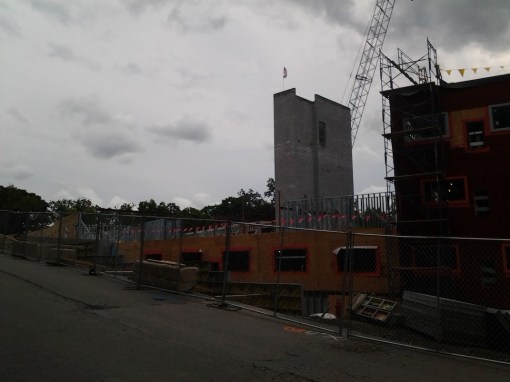
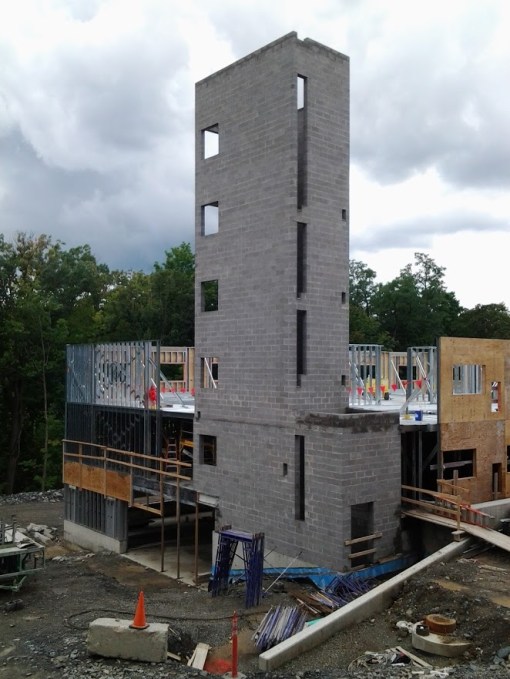
Novarr-Mackesey‘s curvilinear Collegetown Terrace is one of those projects that’s so big, we can see multiple steps of the construction process at once. In general, the further west one goes, the further along the building is. On the east end, the stairwell and elevator shaft stand high above the framing underway. Steel exterior stud walls are being sheathed with plywood with rough openings for windows. Some of the interior steel stud wall framing can be seen as well. In the next section further west, the framing and sheathing are further along, but still a few floors short of the stairwell/shaft. Some structural steel, which separates groups of units, is present as well. The westernmost third is fully framed and mostly sheathed, enough that the maroon-colored waterproof barrier has been applied to the plywood in most places, and windows have been fitted into many of the rough openings.

Continuing west, we come across the “fish scales” – yes, for better or worse, they’re going on Building 7, likely topped by the aluminum metal walls previously seen in Phase II. The side facing thr gorge has the same linear earth-tone facade that is present on Building 5. The westernmost end of the building is not a little further behind, possibly for ease of materials transport, or because of different architectural details that they have yet to bring to the site (based on the rough openings and the sheathed steel, both are plausible). It looks like the southwest corner will host a glass curtain wall section setback from the primary walls, based off of the steel framing.  An early render suggests the common spaces will be clustered along the west end of Building 7. Note that parking will be on the lowermost two floors, with dorm style units on the third floor, and regular apartment units on the upper three floors. The wood forms next to the western stairwell/shaft look to be for a new concrete staircase that will run alongside the west wall.

Montour Falls-based Welliver is in charge of the build-out, and CTT7 should be complete and ready for occupancy by August 2017. Princeton’s ikon.5 Architects are the building designers, and Baltimore’s Floura Teeter the landscape architect. Big league commercial real estate financial lender Walter & Dunlop Inc. provided the $70 million bridge loan.

A quick google search turns up a surprising number of AirBnB hits.

20160918_141746 20160918_141751 20160918_141758 20160918_142023 20160918_142027 20160918_142040 20160918_142046 20160918_142129 20160918_142148 20160918_142409 20160918_142442 20160918_142518 20160918_142738 20160918_142928 20160918_142944 20160918_142952


News Tidbits 9/17/16: Point By Point

17 09 2016

maguirebirdseye-620x420
1. Starting this week off with the Maguires again. Although there was significant vocal opposition from planning committee members to the proposal, they decided to postpone the decision for another month. It would have been more merciful and understanding if they had just declined to continue, but the committee voted 4-1 against making a decision at their Wednesday night meeting, citing to need to process public comment. Most of the comments in favor of the proposal mostly spoke highly of the Maguires as employers and economic drivers (and even some of the opposition did as well), most of the opposition focused on the plan not meshing with visions for what they want the neighborhood to become. The board will consider a resolution against the project next month, but it sounds like the decision has already been made.

201_college_v5_1

2. This will be something of an unusual month. Along with the typical retinue of meetings, the Planning Board will have a special meeting next week to weigh in on the next round of Chain Works District EIS public comments, approve some slight revisions to 210 Hancock, and zoning determination for 201 College Avenue.

inhs_pride_design_v5_4 inhs_pride_design_v6_1

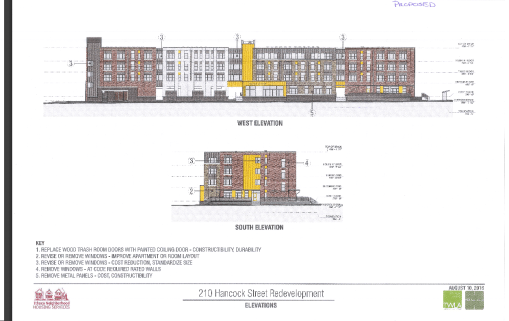
The changes to 210 Hancock are noticeable but minor. On the landscaping side, the concrete curb around the playground is proposed to be removed as a cost-saving measure, a fence separating the for-sale and for-rent townhouses will be removed and a fire lane put in, and the Lake Avenue paving will be changed up to match the waterfront trail. For the buildings, the 54-unit apartment building would have some windows tweaked or removed to standardize sizes (reduce cost) and fire safety concerns, and some of the yellow metal panels would be replaced with brick for cost and ease of installation. No changes are proposed to the townhouses.

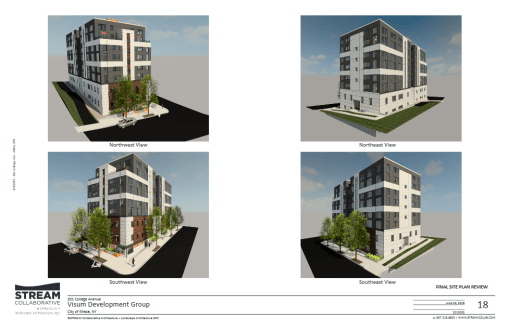
As for 201 College, City Zoning Director Phyllis Radke issued a determination that 201 College is compliant and permitted by MU-1 zoning. She also states a number of concerns with the Planning Board’s handling of the review. Among the reasons cited are:

  • Pre-site plan review in November 2015 by zoning and planning concluded the project met CAFD guidelines.
  • Facade isn’t defined in the CAFD document. Building length and facade length can be interpreted as two separate measurements.
  • Facade length did not come up as a concern until July, four months after meetings began, after design review by the board, and after prelim site approval had been granted.
  • The building meets the conceptual guidelines provided in the zoning. While there are concerns about (yet unwritten) design standards and activation of both street facades, there’s nothing in the code for MU-1 that explicitly limits facade length on any side other than the primary face. There is, however, in MU-2. So secondary street facade length was stated in the code for one zone, but in no others. Even though it’s been argued as an ambiguity, the board did not consider secondary street facade length in its review of a CR-2 zoned duplex at 319 Oak Avenue in early 2015. The activation requirements apply only to the primary face for non MU-2 structures. If the board decided it was still ambiguous, Hess Realty Corp. vs. Town of Rotterdam (1993) says that ambiguities must be resolved in the favor of the property owner.
  • 201_college_vision_2009
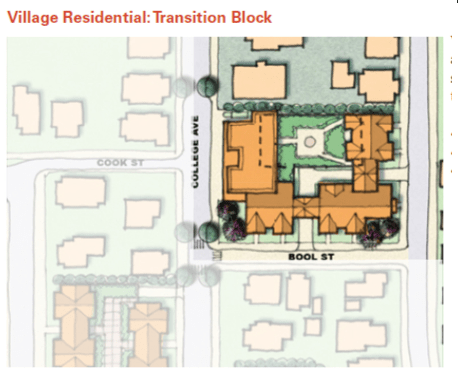
  • The 2009 vision guidelines that people keep citing, and Neil uses on the “Save our Soul” facebook page – not only do they suggest taking down Neil’s house, they also have building lengths running the entirety of Bool Street.

With all that noted, even if it’s decided the project is in fact legal and doesn’t need a trip to the BZA, it likely won’t be moving forward this year, if at all. Visum couldn’t start in time for the desired August 2017 completion, and the project and site are for sale. For a potential buyer, though, it would be of significant benefit to have the zoning debate resolved before any sale occurs.

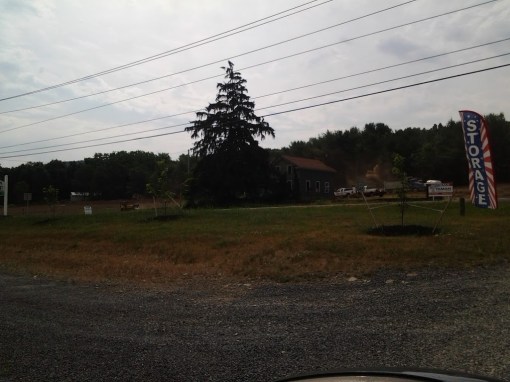
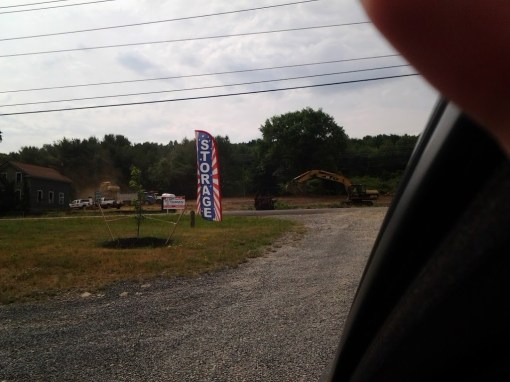
3. Out in the towns, there’s not a whole lot of development discussion in next week’s agendas. The town of Ithaca will continue its review of Maplewood Park (running behind schedule at this point) and issue a couple of lot subdivisions, neither of which are expected to be a big debate.  The town of Dryden received plans for a 10,500 SF self-storage facility for the vacant northeast corner of Freeville Road and Enterprise Drive. The 70′ x 150′ warehouse will house 121 units, and about 7,500 SF will be climate-controlled. The project will cost about $350,000. There also plans for an Open Development Area (ODA) on Dryden’s Scofield Road. ODA means an ROW or easement is required for building permits, and the town has to review the plans – nothing’s been filed yet.

20160821_145711

4. A pair of construction loan agreements worth noting this week. The first is Storage Squad’s facility going up at 1401 Dryden Road east of Varna. According to a filing on the 12th, the company received a construction loan of $1.4 million from Tompkins Trust. That money will be used to finance the build-out of their 79,600 SF storage facility already underway. The second is the Dollar General being built at the corner of Route 34/East Shore Drive and Cayuga Vista Drive in Lansing. Primax Properties (under the name Sea Mountain Ventures II LLC) received a $956,000 loan to build the 9,100 SF retail store, which is also under construction. that loan was also filed on the 12th. The lending institution is BB&T, a major regional bank in the Southeast. Primax is headquartered in Charlotte, and BB&T is headquartered just 90 minutes up the road in Winston-Salem, so in this case, it’s less about a bank being interested in Ithaca, and more about two major companies located near each other and having an established business relationship.

109-corn-1413-w-seneca-1

5. So the Ithaca Urban Renewal Agency’s Economic Development Committee selected the $3.7 million Seneca/Corn proposal to submit to the state for the Restore NY 4 grant. And I feel a bit embarrassed because the Voice story, comparing the Seneca/Corn proposal and the State Street rehabs, ran after the decision was made, so it comes off as a bit clueless thanks to timing. Anyway, the application will be looked at by the Planning Committee, and submitted in early October. If all goes well, funding could be granted by the beginning of next year, with the renovated Wyllie’s and the Ithaca Glass overbuild ready for tenants by early 2018. Ed Cope is the developer, STREAM Collaborative the architect.

corner_store_2016

6. For sale this week, and for the budding entrepreneur – 2,310 SF neighborhood commercial retail at 402-04 West Court Street in the Washington Park neighborhood. Talk about a change. When I started at Cornell ten years ago, this was “The Corner Store”, and it was severely run down. I don’t remember the florist sign, but everything else in the assessment photo below fits my memories from the mid 2000s.

corner_store_2000s

During the past ten years, the bump-out was renovated, then the building was repainted, and The Corner Store became the “Red and White Cafe“, a highly-regarded neighborhood fish fry and seafood restaurant. According to the listing, the major renovations came about three years ago. County records indicate the property last exchanged hands in 1988. Along with the retail space comes 432 SF of storage.

The listing is asking for $975,000, but that would be for building and business – the building and lot are valued at $120,000, so any potential buyer is going to be much more interested in the cafe than the building.


205 Dryden (Dryden South) Construction Update, 8/2016

25 08 2016

There will probably be one last follow-up group of photos. The exterior masonry work is ongoing, but according to owner/developer Patrick Kraft, the development team (Kraft, general contractor LeChase Construction, architect Jagat Sharma, etc.) is shooting for a Labor Day weekend completion. The ruminations and before/after photos can wait until that time. Meanwhile, the apartment units are occupied and the safety systems (fire alarm/sprinkler) are online.

The Cornell Daily Sun is reporting that the suites are occupied although there’s still some last-minute finishing work like painting, trim and custom window dressings. Common spaces such as the gym also have yet to be finished, according to 14850.com.

A quick glance shows that precast panels and AC units are being installed on the front of the building, while the back side appears to be completed. The steel rails between the rows of windows serve as heavy-duty anchors for the panels. The glass entryway for the first-floor retail space is still covered with plywood for the moment. No tenant has been announced for the 2,400 SF space, although Kraft hopes to land someone that will complement the Johnson School building going up next door.

20160821_103733 20160821_103754 20160821_103813 20160821_103834 20160821_123204

20160821_103604

205_dryden_-_rendering


327 Eddy Street (Dryden Eddy Apts) Construction Update, 8/2016

24 08 2016

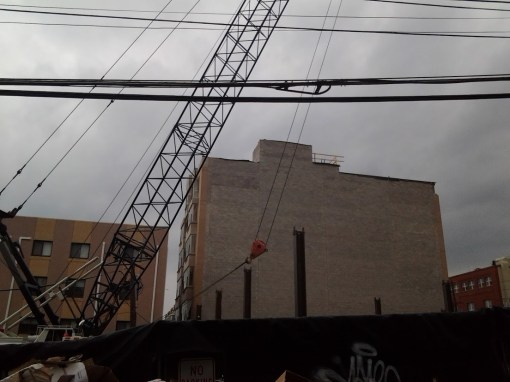
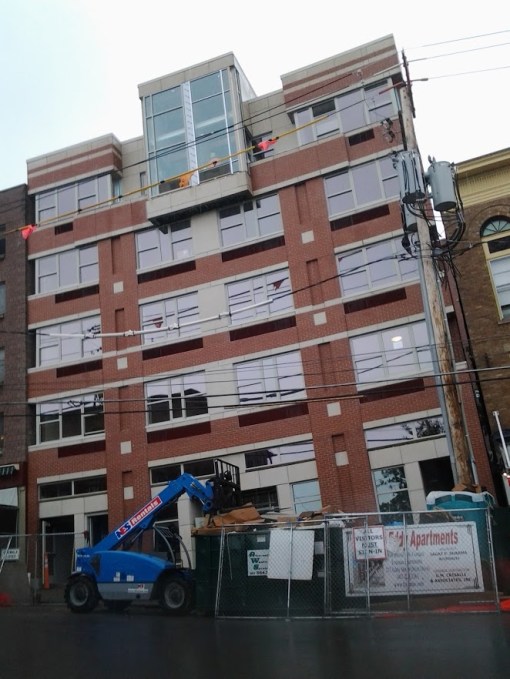
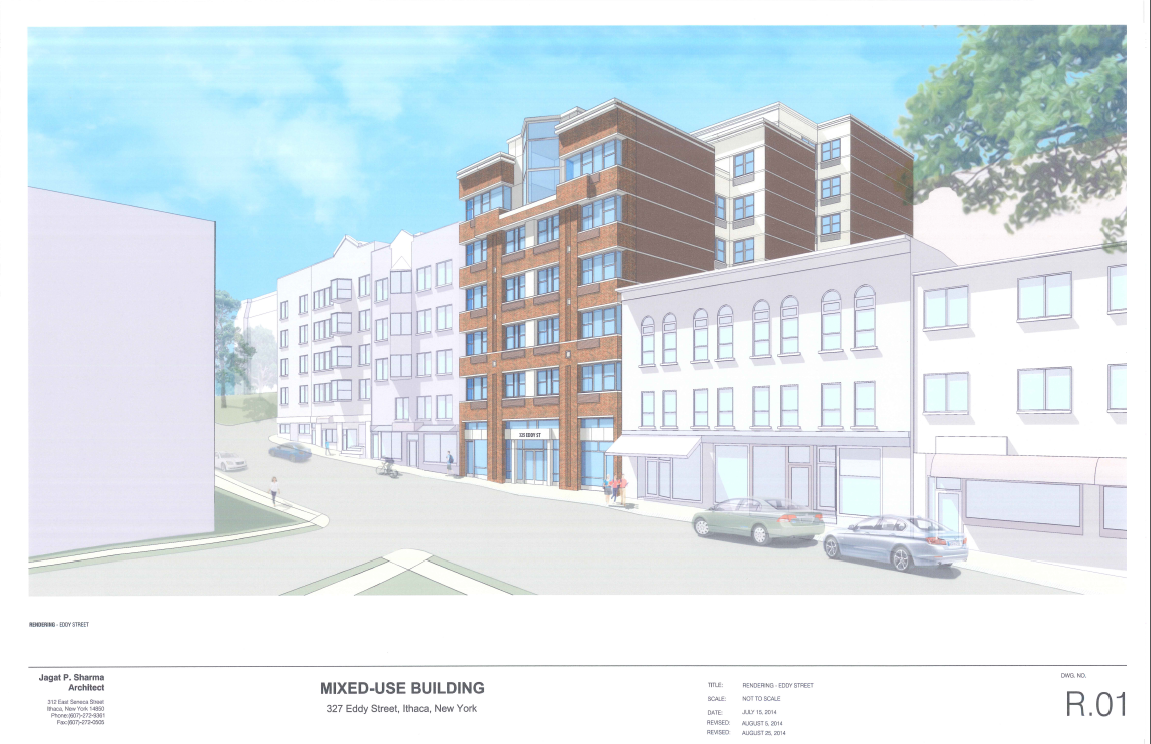
Number two on the follow-up of Collegetown mid-rises, the 22-unit, 53-bedroom Dryden Eddy Apartments should be open to tenants by this Friday. According to developer Steve Fontana, the issue was that the elevator had yet to be fully integrated with the fire alarm system, so the city couldn’t issue a certificate of occupancy until that was taken care of.

Also worth noting, Fontana has secured two tenants for the first-floor commercial space (originally it was supposed to be a gym, but those plans faded out at some point). The Papachryssanthos family, one of Collegetowns old greek families and the proprietors of the Souvlaki House two buildings down, will be splitting the 1800 SF into a liquor store (aptly named “Ithaca Wine and Spirits”) and a café called “Chatty Cathy”. The owners of the East Asian grocer Tung Fong retired, and the Pixel bar and Club Sudz laundromat have passed into memory.

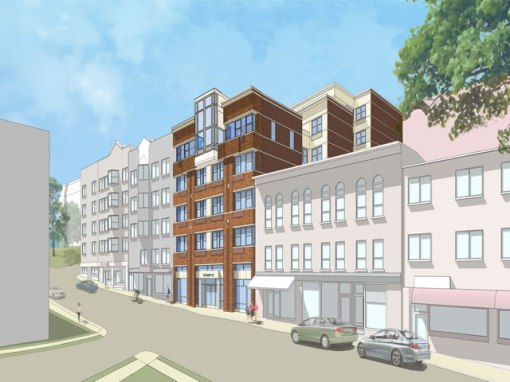
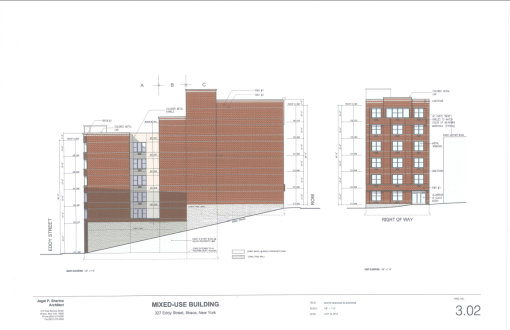
While not as ground-breaking as 307 College, 327 Eddy still serves as a useful addition to Collegetown, offering density in an appropriate location and maintaining a wall-to-wall streetscape with its neighbors. The density will be an asset by providing additional foot traffic to neighborhood businesses, and (back-of-the-envelope estimate) there will be an additional $160,000/year in property tax revenues for the city, county and school district. The final product fits in with a nice design, though I personally prefer the originally-approved plan, with one more floor and a crown set back from the face in the shape of a triangular prism. The rectangular crown makes it look too similar to its neighbor down the road at 309 Eddy. Something I had not realized until now was that the rear (east) face was totally reworked as well, with bay window projections instead of the smaller “punch-out” windows, which comparing the two, seems to be an improvement. But I digress, taste is subjective.

The construction cost was at least $4.824 million, with financing provided by Tompkins Trust Company. G.M. Crisalli and Associates of Syracuse served as general contractor for the project.

Before:
6-29-2014 158

After:

20160821_123606 20160821_123800 20160821_123751 20160821_123644 20160821_123624
20160821_123309 20160821_123334

327_eddy_rev4_1 327_eddy_rev2_1

327_eddy_rev1_3


307 College Avenue (Collegetown Crossing) Construction Update, 8/2016

24 08 2016

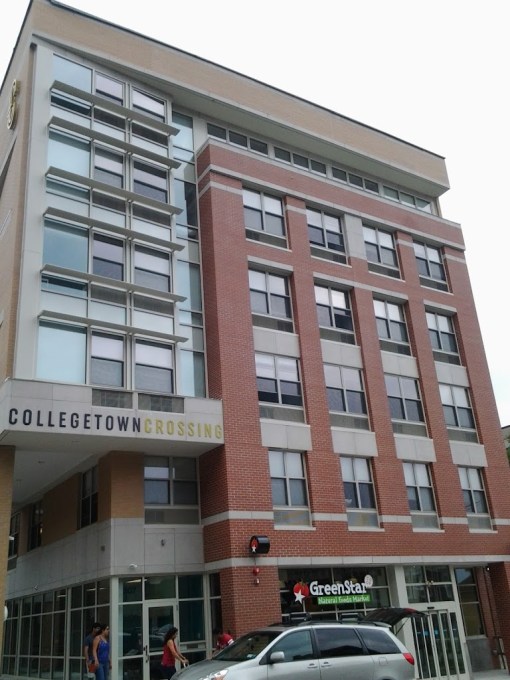
Although Greenstar had yet to open this weekend when these photos were taken (it opened Tuesday), it’s safe to say that this project is complete. The plantings and outdoor benches for the pedestrian walkway are seeking the planning board’s approval for tweaks (straight benches vs. curvy benches, large shrubs in place of trees), and assuming they’re granted, those will be installed and rooted in a few weeks.

We could look at this project as a lot of numbers. Four years of planning. Six floors. $10.5 million construction loan. 46 units. 96 bedrooms. $1,000/month rent. 3,200 SF grocery store. 14 living-wage jobs created by said store. Two bus pull-off spaces. One parking space for delivery. Zero parking spaces for residents.

We could also get qualitative with it. Collegetown Crossing really was the pioneer of the new urban movement that has become more popular in recent years, both from livability and walkability standpoints as well as the financial perspective. Students have trended away from vehicle ownership in the past 15 or so years, from 50% in 2000 to 27% in 2012. Concurrently, there’s been a bigger emphasis on denser, mixed-use neighborhoods – malls and suburban apartment complexes are less popular than they were, and street-front shops with apartments above are making a resurgence, as the Commons and downtown Ithaca are demonstrating. Collegetown Crossing really helped to catalyze the conversation already underway, and no doubt had an influence on Collegetown’s hybrid form-based zoning code that did away with parking in the valuable core of the neighborhood. So the other new apartment buildings with active-use ground floors, Cornell’s Breazzano Center, and whatever else comes forth, they owe a hat tip to Collegetown Crossing and its developer, Josh Lower.
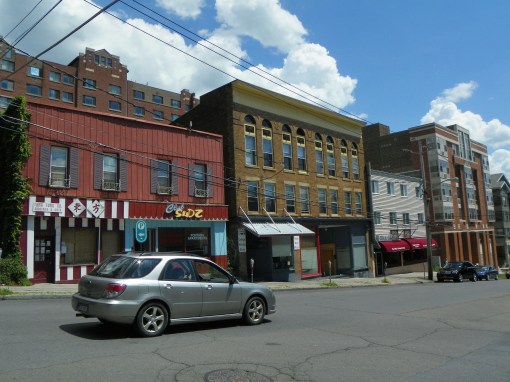
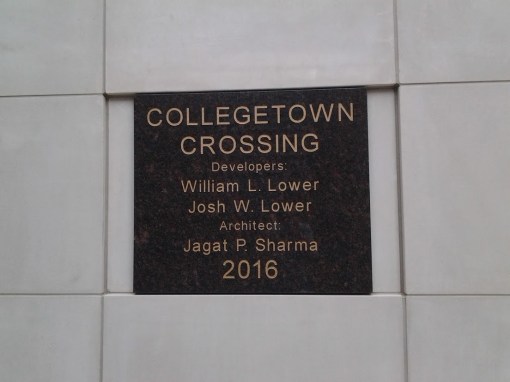
And speaking of hat tips, for all of the problems Hayner Hoyt has had this year, they deserve a big round of applause for finishing this project within its tight deadline, even with the other construction and logistical issues currently plaguing Collegetown. Jagat Sharma also deserves recognition for a project that looks pretty nice. When I was writing about the Collegetown delays in the Voice and speaking with Lower on the phone, he asked what I thought, and I said it came out better than I expected. Cue the awkward phone pause. What I meant was that the flat-looking perspective drawing doesn’t do the building justice, the built product is much more interesting to look at.

It looks good, the grocery and pedestrian alley enhance the quality of life for neighborhood residents, it replaces an unappealing two-story building, and it helps build the tax base. This project is a big positive.

Before:
12-29-2011 077

After:

20160821_104102 20160821_104245 20160821_104314 20160821_104339 20160821_104354 20160821_104602 20160821_104653 20160821_104721 20160821_104728 20160821_104854 20160821_105050

ctown_crossing_rev2_1


News Tidbits 7/30/16: The Unfortunate Surprise

30 07 2016

201_college_v5_1

201_college_site
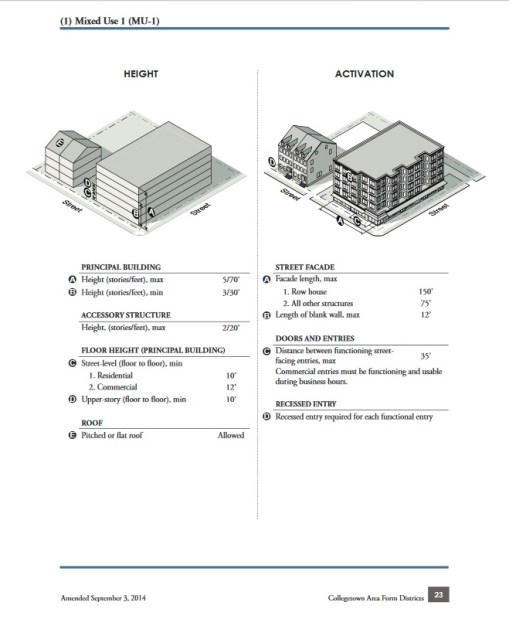
1. Pretty much everyone was caught off guard by the planning board’s decision to send 201 College Avenue to the Board of Zoning Appeals on a previously-undiscussed zoning technicality. The issue has to deal with facade height in connection to the length of a continuous wall – the argument being pushed by board member John Schroeder is that, since there are primary walls on College Avenue and Bool Street, the H-shaped proposal isn’t technically valid and the deep indentation actually has to be two separate buildings, one slightly shorter than the other since the site is on a slope. This was the subject of a prolonged and heated debate, since the code’s pretty ambiguous in that regard, and (as shown below) the design elements shown in the form district booklet demonstrate buildings with architectural indents/setbacks.

327_eddy_rev2_2

327_eddy_rev2_3

If recollection serves correctly, something similar came up in a previous discussion two years ago with 327 Eddy Street. The project fills the entirety of a sloped lot, but there was a hazy interpretation regarding one’s definition of floors and height where one could have called it 8 floors, so it had to be clarified and it became the average proposed height for cases with a sloped parcel. In this instance, there was one primary wall, on Eddy Street, which is why there’s just enough wiggle room left that a clarification request, however targeted it may be, is legally valid. The board agreed 4-3 to let the BZA issue a determination on 201 College, which could come anywhere from August 23rd to September 6th. That means a late September approval is maybe the best bet. That’s probably too late for an August 2017 opening, so whether or not the project would move forward (which could be immediately or in summer 2017 for a 2018 opening) if given approval is another question.

cafd_mu1

There is one other thing that is worrying from an impartiality standpoint. John Schroeder and Neil Golder served together as Collegetown’s Common Council reps in the 1990s. Although Schroeder’s not the biggest fan of Collegetown development, he hasn’t raised this much of a concern over other projects, and Neil has been very, very active in his outreach. There could be an argument that he should have recused himself from the decision-making process, or at least have formally acknowledged his longstanding professional relationship with the project’s primary opponent.

trebloc-future2-1-620x420

city_centre_site_options

2. Also from the Planning Board meeting, further discussion of the Trebloc project. Those following the IJ’s Nick Reynolds’ Twitter know that there was some talk about big changes with a lot of wonk talk, and this is what it has to do with. My thanks to my colleague Mike Smith for his notes.

Basically, Newman Development is floating a few different approaches to the site layout. One calls for a plaza area on State Street (the “accordion” approach”), one calls for green space (the “courtyard” approach), and the third actually breaks it up into two separate buildings. In these theoretical layouts, the square footage and number of units is kept roughly equal. All three also keep at least some emphasis on the corner facing the Commons, because that’s where the concentration of activity is, and that’s what’s going to appeal the most to first-floor retail/commercial tenants.

Each approach comes with pros and cons. The “accordion” approach opens up the sidewalk, but it opens away from the Commons (i.e. not appealing to pedestrians or retailers) and makes unit design tricky. The “courtyard” approach has public-ish green space, but it would be in unappealing, constant shadow – even if the building were just a few floors, the low angle of the sun in the cooler part of the year would keep light from reaching the courtyard. The two building approach offers an alley that could be interesting, but would likely not see much use since there’s very little activity towards that block of Green Street. Given the flaws in each, the inclination is to stay with the current “fish hook” shape, but the developers wanted to hear the planning board’s thought before committing to a layout.

Planning Board responses ran the gamut. A few members supported the State courtyard option, or stepping back the portion on State Street but building taller portions on Green if there’s a need to compensate (zoning’s 120 feet, so there’s perhaps two floors they could feasibly do that with, like an 11-story/9-story/7-story step down, without having to make a trip to the BZA and throwing additional, funding-jeopardizing uncertainty in there). One board member asked about a courtyard on the roof. The project will be pursuing tax abatements, with the hope that with those, density and smaller units, they can appeal to the middle of the rental market.

lansingapts600 lansingaptsmap600

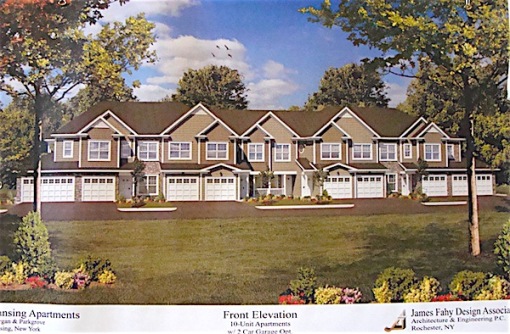
3. Thanks to Dan Veaner over at the Lansing Star, here’s a render and a site plan for the proposed Lansing Apartments / Parkgrove Apartments project for Bomax Drive in the village. The 19.46-acre property is currently owned by Cornell and is zoned to be part of its office/tech park. James Fahy Design Associates of Rochester is doing the design for the proposed 14-building, 140 unit project, and Park Grove LLC of Rochester is the developer, in tandem with retired Cornell Real Estate director and Lansing resident Tom Livigne.

According to the Star, “1,000 square foot one-bedroom apartments are anticipated to rent in the $1,300 to $1,400 range,  1,350 to 1,400 square foot two-bedroom apartments at around $1,600 to $1,700, and three-bedroom apartments up to 1,400 square feet would rent between $1,800 and $1,900.” The village of Lansing has to approve a zoning change from business to high-density residential in order for the project to move forward.

It’s a very auto-centric, premium-middle market project. For an area concerned about affordability and trying to move towards walkability and traditional neighborhoods, this really doesn’t seem like the most appropriate plan. It’s nothing against Livigne and Park Grove LLC, but I’m very critical of these kind of projects for just those reasons.

amabel_v4_1

4. It’s been a while since it’s last been discussed, but the 31-unit Amabel Project by New Earth Living’s Sue Cosentini has been approved by the state attorney general to start marketing units. According to a December presentation, the net-zero homes will range from 1600-2100 SF and market in the $385,000-$425,000 range. While that is a rather high price range, some of that cost would be paid off via energy savings, which could be up to a few thousand dollars per year compared to comparably-sized and priced older homes on the market, and other possible savings exist with water recycling and low-maintenance exterior materials. So the sales pitch becomes something of acknowledging the high up-front costs, but explaining the long-term savings.


5. The first of two state funding grants to not this week. Cayuga Addiction Recovery Services (CARS) has received a $1 million grant for a new 25-bed adult residential facility. The new facility will be built on the Trumansburg campus, which if these notes are correct, is actually two facilities, and this new one will be built adjacent to a 60-bed facility on Mecklenburg Road, near the county line a couple miles to the southwest of Trumansburg. An undisclosed number of jobs are expected to be created.

Founded in a Cornell U. fraternity house in 1972, CARS provides treatment, counseling, skills training and support services to help clients overcome addictions and rebuild lives. The current facility was opened in 2004.

Image Courtesy of Lansing Star

Image Courtesy of Lansing Star

6. Also in state grants, Ithaca-Tompkins Regional Airport received $619,935 to build a flight academy building for the East Hill Flying Club. The new facility is expected to be built in the next 2 to 3 years. When the EHFC has moved in to their new digs, the existing hangar will be offered up to rent to other tenants. The new building will offer more instructional space, the ability to engage in training for twin-engine aircraft, and what the flying academy née club hopes will include state-of-the-art flying simulators.


Collegetown Terrace Construction Update, 7/2016

19 07 2016

Things are moving along steadily at the Collegetown Terrace site off East State Street. Building 7  snakes it way through the site, with work progressing from west to east. Furthest east, the concrete for the parking area is still being poured and cured.

A little further west towards the middle, the enclosed and finished parking area gives way to steel interior stud walls and unsheathed plywood, with only the lower floors in the middle section, but the steel stud walls and plywood have been built to the full height of the building (fully framed up) in the westernmost part.

The frame of a new skybridge has been installed between buildings 5 and 7, connecting near the elevator shaft/stairwell. Some Paradigm windows have already been fitted into the exterior. Eventually, the exterior will be sheathed, and then the exterior facade materials can be applied. It would honestly not be a surprise if the whole building is fully framed before the first snow flies.

Welliver‘s the general contractor for Novarr-Mackesey’s 247-unit project.
20160717_125557 20160717_125607 20160717_125617 20160717_125747 20160717_125756 20160717_125833 20160717_125838 20160717_125915 20160717_125952


205 Dryden (Dryden South) Construction Update, 7/2016

11 07 2016

There were a lot more photos that did not make it into today’s Ithaca Voice piece. Developer and former Kraftee’s proprietor Patrick Kraft was kind enough to give a tour of the building as it goes through the furious final stretch of construction. On the outside, the decorative crown has been built out, and the housewrap and gypsum board will eventually be face with tan brick. On the inside, the lower the floor one is on, the further along the work is; a few brief descriptions are interspersed in the photos below.

Also, here’s some material from the interview with Kraft that didn’t make the final cut for the article. Definitely worth a read though.

Q: Are you concerned or excited about the Breazzano Center?

PK: Construction-wise, their impact is limited, they do their thing, we do ours. These [contractor] guys work together all the time. It hasn’t been much of a problem, our working relationship is pretty good. And Jagat [Sharma], he’s done a tremendous job, he’s a good guy. Jagat suggested doing a concrete building, and it turned out really well for us. These units are being furnished by Sam Peter, they met with Jagat, everything will match and be coordinated, even the lobby. Rich woods, the color scheme, stainless steel appliances, Most of the landlords around here are good guys, if I have a question they make time.

Q: During the 201 College debate, we saw a number of older residents express concerns about too much density in Collegetown, and too many students. Are the recent developments good or bad? What would you say to assuage the concerns of residents in Belle Sherman?

PK: I think there are a lot of positives to density, it centralizes the college students, and if you can do that, you get them out of the periphery, and higher density in the core could help get students out of Outer Collegetown and return homes to families and non-students. I have a friend who works at the Johnson, who lives just a block from Eddy Street. incoming faculty want walkability. People would have been incredulous ten years ago, but you know, people want to leave their car at home sometimes. I think that’s a good thing.
Q: With this new apartment building, have there been any issues or challenges? Or has everything been fairly smooth sailing?

PK: We’ve had our hiccups. The city does its inspections and has its variances, it’s not like we’re building a McDonald’s where every store looks alike. We haven’t had any major problems, just scheduling can be a major problem at times. I had to pay NYSEG to move the power lines, that was a 10-week delay.

20160630_125821 20160630_135113

According to Kraft, it was Jagat Sharma who insisted on reinforced concrete construction. This allowed the construction team to be flexible; handy for the structural tweaks (additional reinforcing) here in the light well, below the rough window openings. Kraft had nothing but praise for Sharma, even going as far as to say he gets an unfair rep because many of his buildings use CMU block in their exterior finish.

20160630_132859

Most of the sheetrock has been hung in the second floor units. Kraft also had a lot of compliments for LeChase, the general contractor. He noted occasional problems like a bad concrete pour (which LeChase redid at their own expense), but otherwise they’ve been doing good work and have adhered to the schedule quite well.

20160630_132824 20160630_132812 20160630_125850

Originally, there were small light shafts in the east face, but those were removed when the Breazzano Center was being finalized next door. The two buildings will stand just two inches apart.20160630_142231 20160630_142218

20160630_142206 20160630_142203 20160630_142145 20160630_143001 20160630_142619 20160630_142359 20160630_142304 20160630_142256 20160630_143423

Sixth floor, rear unit view – Kraft said it was favorite view.

20160630_143402

Doing work in the elevator shaft

20160630_143316

Steel interior stud walls on the sixth floor20160630_143310 20160630_143016

20160630_143946 20160630_143950

Framed closet spaces on the fourth floor20160630_144615

A tub fitting on the third floor

20160630_144929 20160630_145210

The brickwork on the backside is a little further along than the front, but the general appearances will be the same.

20160630_145213 20160630_145250 20160630_145359

Members of the construction crew in the first-floor commercial space.20160630_145512

The basement area, which will have a trash/recycling room, a tenant gym and storage.20160630_151521


News Tidbits 7/2/16: Not the (City Centre) of Attention

2 07 2016

201_college_v5_1
1. Let’s start this off with the big news of the week – the proposal for 201 College Avenue was approved by the Planning Board. The debate was spirited, to put it most politely; catty, to use the official write-up in the Voice; and in the follow-up phone call I had with my editor, who attended the meeting with a Voice summer intern, she described it by saying “both sides were pretty awful”. I am sympathetic to Neil’s predicament, although I think it’s also a fairly unique case; I hope some sort of arrangement with the solar panels is worked out.

The observations regarding age and view of the project is actually pretty similar to a conversation the Journal’s Nick Reynolds and I had on Twitter about the City Centre project – older Ithacans often have starkly different views on density and urban development than younger residents, who tend to be more pro-density and pro-urban infill/growth. The young aren’t naive and more so than the old are obsolete; but they are products of different times. Today’s older Ithacans are the same ones who were frowned upon by the old Ithacans of their youth (the Silent Generation and the Greatest Generation), who were much more politically conservative and made up the large majority of the city’s Republicans from when Ithaca was once a contested city, and the Boomers were moving in and tilting it leftward. A sociologist could probably make a good research paper studying Ithaca’s generational views of urban environments.

Anyway, construction on this project is supposed to start in short order; funding has already been secured, and Binghamton-based W. H. Lane Inc. will be the general contractor for the $6 million project.

trebloc-future
2. Meanwhile, City Centre’s sketch plan was also reviewed at the Planning Board meeting. The initial reaction seems muted, gauging from Nick Reynolds’ Twitter and the lack of comment from my Voice colleagues.
city_centre_1

city_centre_2


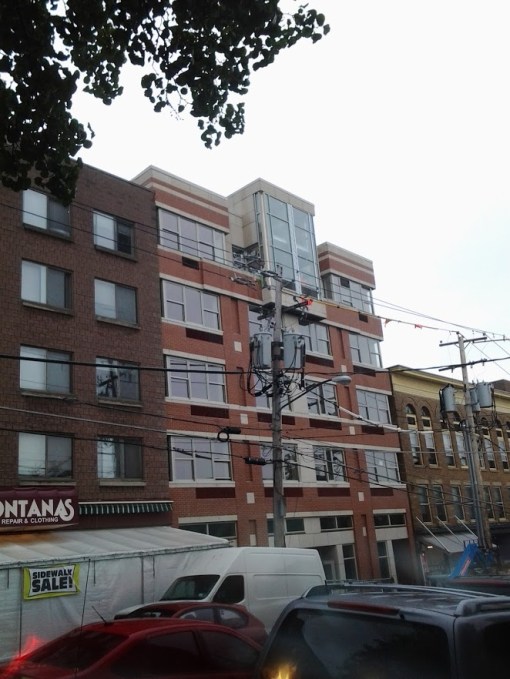
According to the sketch plan submission, the vast majority of units (240 of the 255) will be studios (120) ranging from 457-563 SF, and one-bedrooms (120) ranging from 580-754 SF. The other 15 will be two-bedroom units, eight 914 SF units and seven 1,370 SF units. All units are market-rate, with target demographics including young professionals and downsizing empty nesters. Students are allowed, though the units won’t be marketed to them. Ground floor retail will be 10,700 SF at the corner of State and Aurora. 7,220 SF fronting State Street will be “Leasing/Club Space” for building and tenant functions. The 71-space parking garage will be accessed via East Green Street, car share membership will be included in the rent, and there will be indoor bike racks.

With the mild initial reaction noted, we’ll see how the project details shape up as the summer progresses, and the board potentially launches formal project review (Declaration of Lead Agency) as soon as late July.


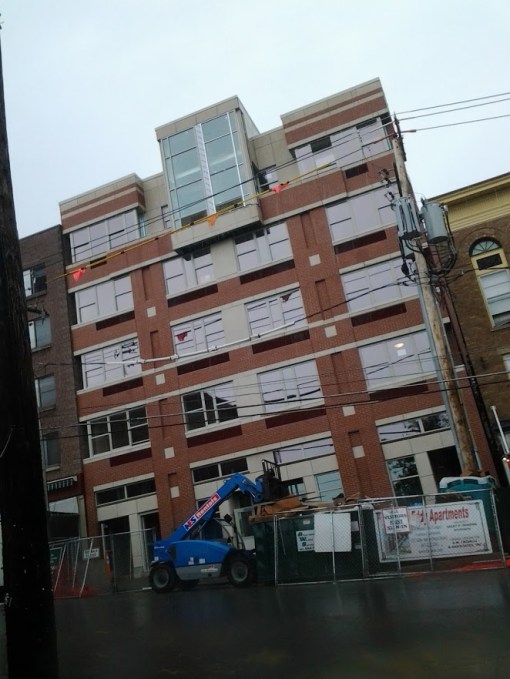
3. Hitting the market this week is a potential opportunity for the deep-pocketed investor/developer. The property is 2248 North Triphammer Road in the village of Lansing. The sale consists of two parcels totaling 3.42 acres – a 1.53 acre parcel with a 2,728 SF M&T Bank branch built in 1992 and holding a long-term triple-net (NNN) lease; the other, an undeveloped 1.89 acre parcel to the rear that the listing notes could be developed out into 13 housing units. The price for the pair is $2,125,000.
A triple-net lease means the tenant pays everything – insurance, maintenance and real estate taxes (formally, net insurance, net maitenance and net real estate taxes on the leased asset – the three nets).  Because of this, the rent is substantially lower than it otherwise might be. There are certain cases where a landowner might want to do triple-net – like when they’re a tax-exempt entity leasing out to a for-profit company. A quick check of the records shows the properties are owned by Cornell, and were acquired in 1953 and 1960. What the property has been to Cornell is a fairly safe investment (though with a lot of fine print to determine who pays for things like if a tornado hits or the foundation cracks), generating a modest amount of rent and functioning like an inflation-protected bond, but guaranteed by the lessee rather than the government. All the better when the tenant is stable and signed on for the long-term, as is the case here.

The county has the bank parcel assessed at $635,000, the undeveloped parcel at $140,000.  Lansing village zoning has Commercial High Traffic for the bank property, and High Density Residential for the vacant parcel. HDR zoning requires 6,000 SF of land per dwelling unit in a 35′ tall multi-unit building, and 1.89 acres = 82,215 SF, so that’s where the 13 units comes from. For comparison’s sake, single family is 12,000 SF, and duplexes 15,000 SF (or, doing the math, one could in theory carve out six home lots, or 5 duplex lots for 10 units, though with lot setbacks, the property’s triangular shape probably lowers those figures).

4. On the other end of the sales process, the former Maine’s supermarket has been sold. The six year-old, 26,146 SF building at 100 Commercial Avenue in the city of Ithaca was purchased for $4,150,000 on Thursday the 30th, by Illinois-based Agracel Inc., well above its $3.1 million assessment. Agracel is an industrial space and warehouse developer, fitting for a property once described as a “food and party warehouse”. The former Maine’s appears to be a little on the small side compared to the rest of their portfolio, but there is the possibility of expansion, or even a teardown and rebuild if they really felt the need.

Readers may recall that Maine’s closed its Ithaca store in February, which along with a closing in suburban Rochester reduced its stores from six to four.

20160701_095549

20160701_095552
5. Work on the new Storage Squad facility has begun on the 1400 Block of Dryden Road east of Varna. Right now, the focus is on site clearing; the house was used by local fire departments for training exercises, and will come down in a controlled burn later this summer. The 79,000 SF storage facility should be ready for use by February 2017. One full time and a few part-time jobs will be created.

And for the record, I think that’s my middle finger.

6. So this is curious. The city recently uploaded a couple of older documents detailing development plans off of Floral Avenue on the southern tip of Ithaca’s West Hill neighborhood.

The first dates from Febraury 1992, and is a filing to create a 27-lot cluster subdivision on 4.15 acres at 452 Floral Avenue. The paperwork indicates that the intent was affordable housing, by a company named House Craft Builders. The city’s then-Planning Director, H. Matthys Van Cort, wrote a recommendation for negative declaration of environmental significance, and the project was approved in June 1992, but it never moved forward, and 452 remains vacant land today. It appears House Craft was dissolved in 2012; the officer was an architect for Ecovillage who has since retired and moved out of state.

The second is a subdivision requested by INHS in 1987. The filing requested 236 Floral Road be split into two parcels, with the intent of renovating a decrepit 236 into a for-sale affordable single-family home, and build a new house on 224. This was approved, and eventually, 236 was renovated and transferred to its owner in 1996, and 224 was built in 1994.

Now, as interesting as this all is, the city doesn’t upload decades-old subdivision files just to amuse nerds. The $64,000 question is, why were they uploaded now?