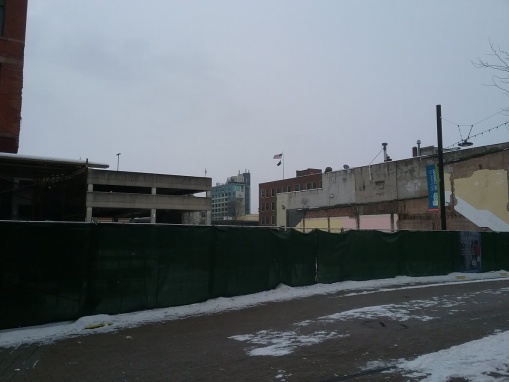
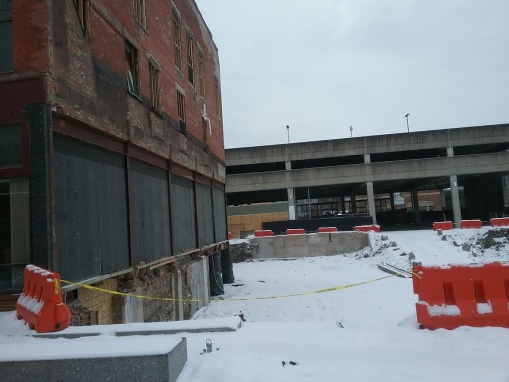
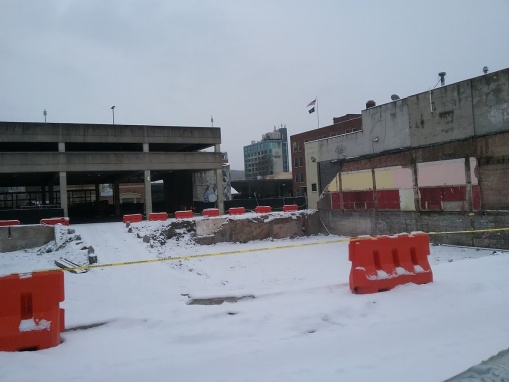
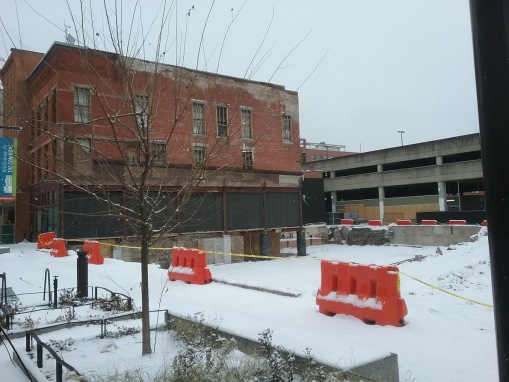
Harold’s Square Construction Update, 12/2017

31 12 2017

Grab a cup of coffee or tea for this one, it’s a long introduction.

Touching on a familiar topic again, downtown and urban living has enjoyed a revived interest in the past fifteen years, and coincident with moderate but steady economic growth in Ithaca, it has created plenty of opportunities for those with assets and expertise. Succeeding in those opportunities is a slightly different story – money and a strong project team are important, but some projects have an easier go of it than others. Harold’s Square has experienced substantial obstacles in its long pre-construction period, but thanks to developer David Lubin’s flexibility and tenacity, as well as an accommodating local government and growing market, it has surmounted those challenges and is now underway.
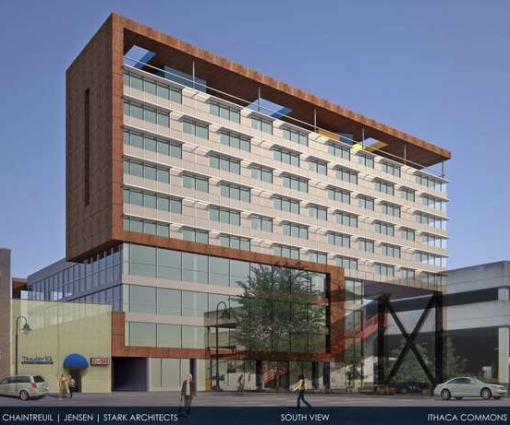
The first version of Harold Square at 123-139 The Commons was proposed back in October 2012. At the time, the plans called for first-floor retail, a few floors of office space, and 60-70 apartments on the upper floors of the 11-story building. The Sage Block (Benchwarmers) and W.H. Miller Building (Home Dairy) would be renovated, while three less historic buildings would be taken down to make way for the new development. The estimated price was $30 million and the plan was to have the 126,000 SF building finished by summer 2014. At that time, the building would have needed a fairly substantial zoning variance – the entire site was CBD-60, and it reached about 135 feet.

With the exception of the first-floor retail and Sage Block renovation, none of the other details have remained the same. However, the five major design iterations have all been by the same architect – CJS Architects (formerly Chaintreuil | Jensen | Stark Architects), with offices in Rochester and (later) Buffalo.

Lubin already had some familiarity with the project site – one of the storefronts to be removed used to be home to Harold’s Army Navy Store, a business started by his father and expanded to sixteen locations across the region. These stores were closed in the late 1990s as Lubin chose to focus on his development project and other business endeavors, like his computer recycling business. Harold’s Square is a nod to his father’s store, and the famed Herald Square of New York City.
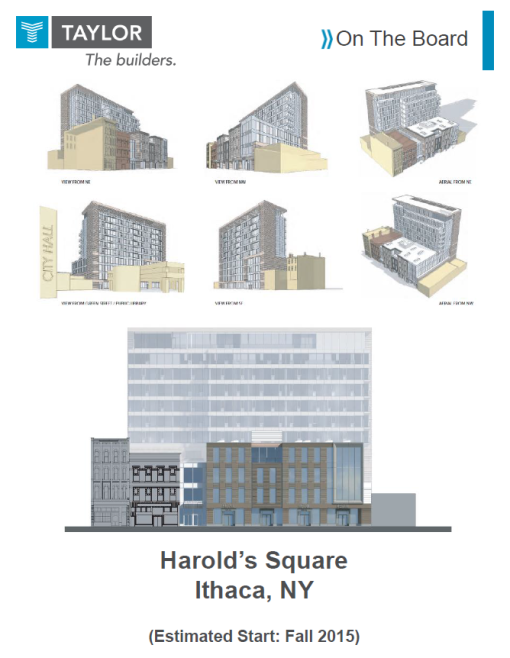
The project design was critiqued and reviewed thoroughly over the next ten months, which also produced the first major set of design changes – in fact, if you’re googling Harold’s Square without prior knowledge, images of this version, v02, turn up enough that even many current agencies and organizations (and even the posters on the construction fence) treat it as the final design. The 2015 image from the contractor’s website, Taylor the Builders, is shown above. It did away with some of the less-liked design features of v01, but retained a clean, contemporary profile with a curtain wall of glass, and terracotta panels that extended to the roof canopy. During this period, plans to acquire the W.H. Miller Building were dropped.

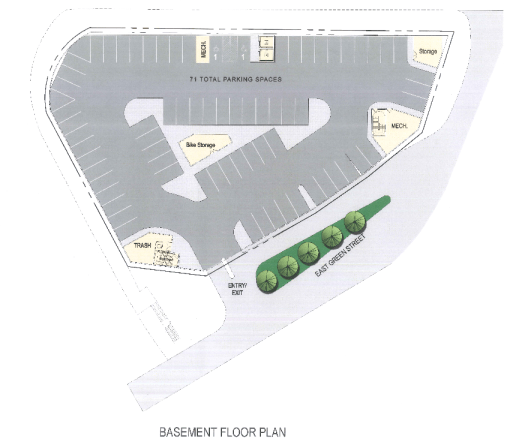
This was the version that was approved in August 2013, and received CIITAP tax abatements two months later in October 2013. It had 162,750 SF, with basement utilities/storage, ground-floor retail (20,670 SF), three floors of office space (56,855 SF) and 46 apartments on floors 5-10. The eleventh floor was a 5,000 SF penthouse for tenant use. The price tag was about $38 million.

At this point, post IDA approval, we kinda enter a publicly dormant period. Publicly, apart from the occasional reassurance from Lubin that the project was still alive, and the re-application for approval permits since those expire after two years, there didn’t appear to be much going on. Behind the scenes, it gets a little more interesting.

The project was having trouble securing a construction loan, and that was for a couple of reasons. For one, Lubin (as L Enterprises LLC) was having trouble securing a major office tenant, and office space made up about a third of the building. No one had any concerns about the apartments since the residential market was (and still is) strong, and retail is not hard to sell when it’s on The Commons, but office space is a different matter altogether. The demand for new space is modest, and often custom built for a tenant, rather than speculative space to be filled by tenants after it’s complete. So if we’re being fair but critical, the project team made a fair gamble but ended up overestimating the market for office space. Unless that space was spoken for, there would be no financing.
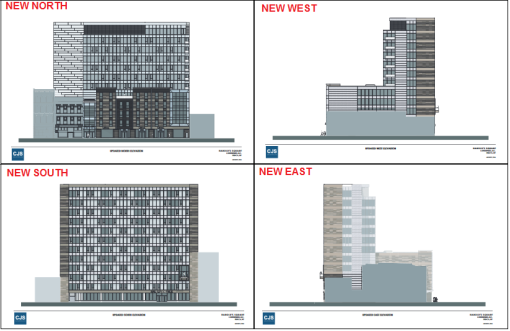
Re-examining the mix of uses, Lubin decided to revamp the project when seeking re-approvals in August 2015 – two floors of office space would be replaced with apartments. The first mention of this actually came through the New York Times, followed by the Voice and the Ithaca Times. With the drop in office space, the number of apartments jumped to 86. This also required some design changes, which were going to be reviewed by the city in Fall 2015. My notes show August 2016 ended up being the review date. We’ll call this version 3, v03.

Now Harold’s Square was 180,090 SF, with basement utility/storage space, ground-floor retail, second floor office space, and ten floors of apartments. The project had grown from 11 to 12 floors, but the height was nearly the same since residential floors have lower floor-to-ceiling heights than Class A office space. The total unit count was now 108, with 40 micro units (all the rage these days), 30 1-bedroom units, and 38 2-bedroom units. This version was approved in September 2016. By the time the project was up for re-approval, the city zoning had changed such that 140-foot buildings were allowed on-site, so no further height variance was needed.

With the space utilization issue worked out, the project was still seen as a sizable risk to potential lenders – it was at its inception the largest project proposed in downtown Ithaca since 2005’s Seneca Place, and Lubin had some experience with smaller projects, but nothing this size. Finding a partner to buy in to the plan would reduce the loan needed and add experience, making the project an easier sell to lenders. This is where McGuire Development, a major interest in the Buffalo market (3.5 million SF), came into play. They saw the potential in Lubin’s vision and the value in the Ithaca market, and agreed to buy in as a development partner. This appears to have been finalized in January 2017.
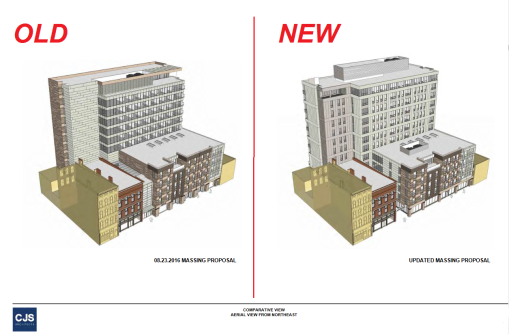
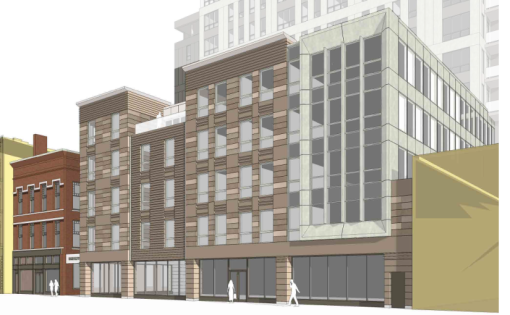
Fast forward to May 2017. With McGuire playing a role on the project team, major design iteration #4 (v04) removed the terracotta panels in favor of metal, and reconfigured the Commons storefront retail to use a common entrance, for “financial viability”. The enclosed atrium was removed and a mechanical penthouse added. It seems likely that McGuire wanted to ensure a certain return on investment. This version was approved without much further comment, except perhaps a bit of exasperation from city officials. Concurrently, the project team re-applied to the IDA for a revised tax abatement – the project’s price tag was now up to $42 million, and they were seeking revised, slightly more generous terms, which were granted with some grumbling. Complaints include a lack of explicitly affordable housing units, local labor concerns, and gentrification. The use of heat pumps and 60 kW of rooftop solar panels assuaged the sustainability crowd.

By October, the project was underway, courtesy of a construction loan from Norwich-based NBT Bank. The bank is a regional player with about 1.5x the assets of Tompkins Trust. This is new territory for NBT, which typically limits itself to single-family home loans in Tompkins, and has no service branches within county lines. The loan is for $33,842,000. L Enterprises and McGuire have each put up $5 million to cover the $43,842,000 cost of the project.

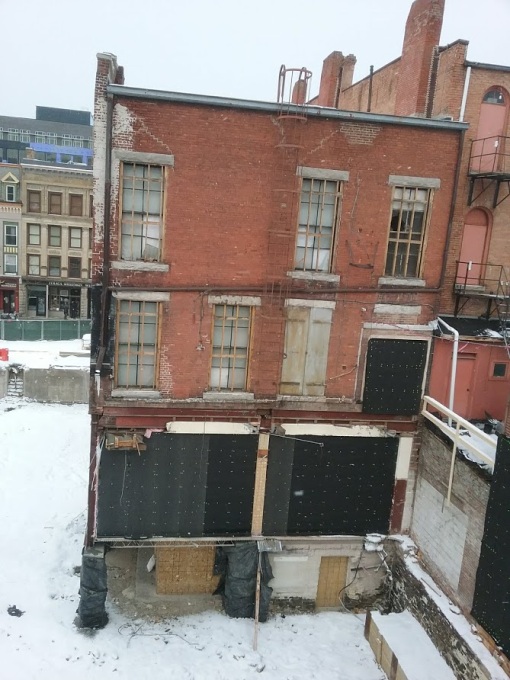
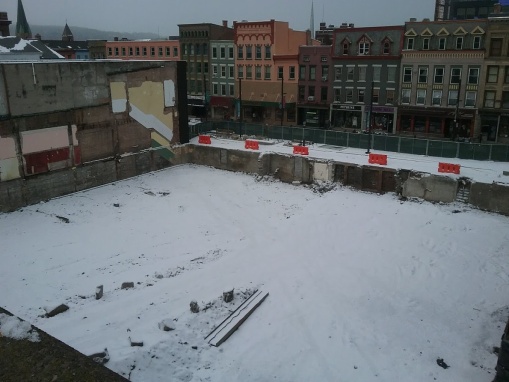
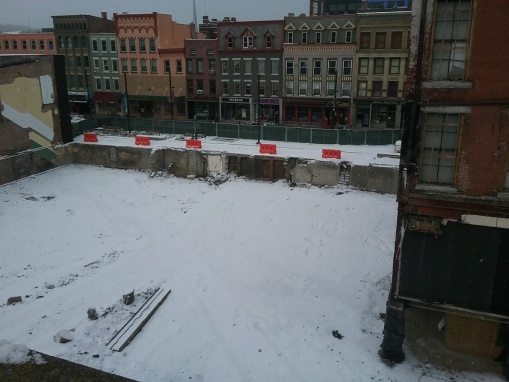
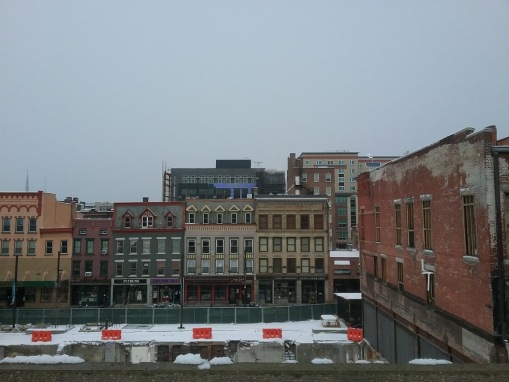
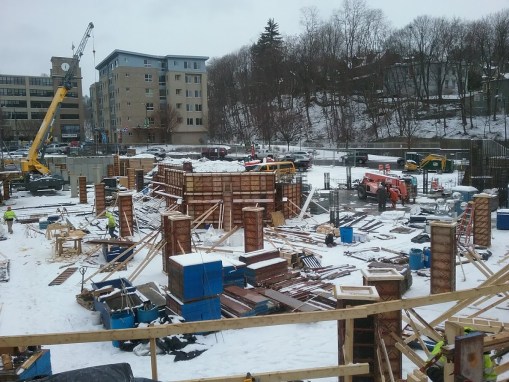
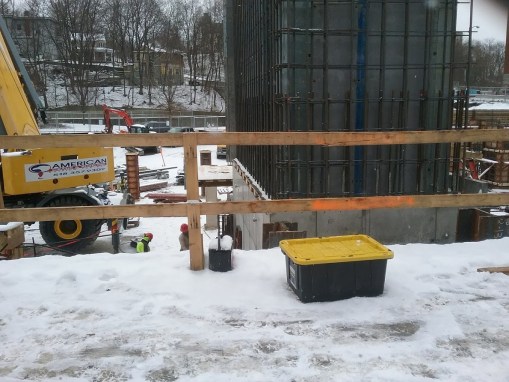
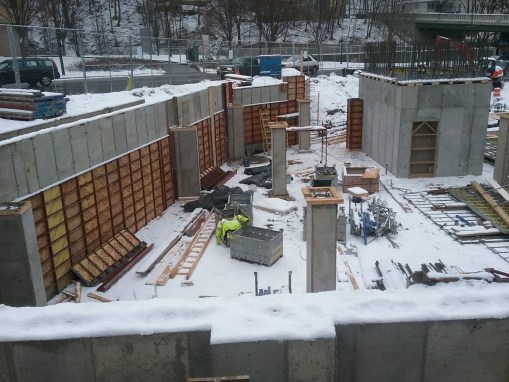
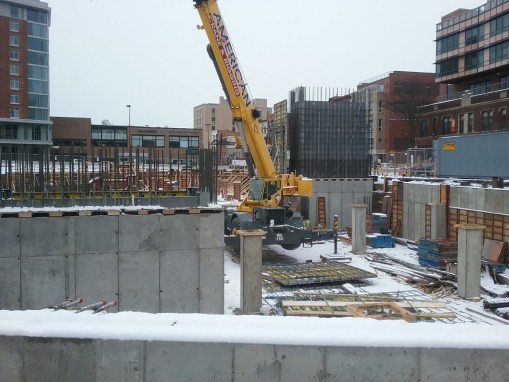
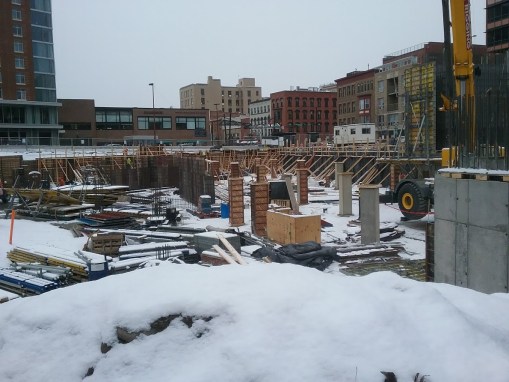
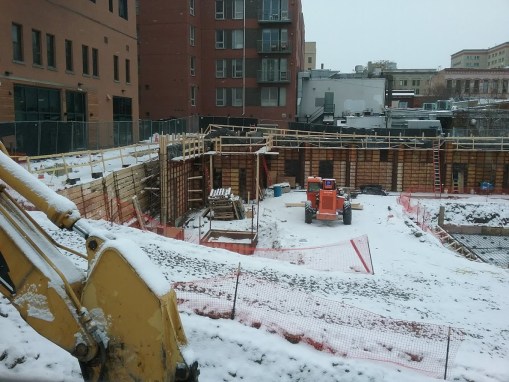
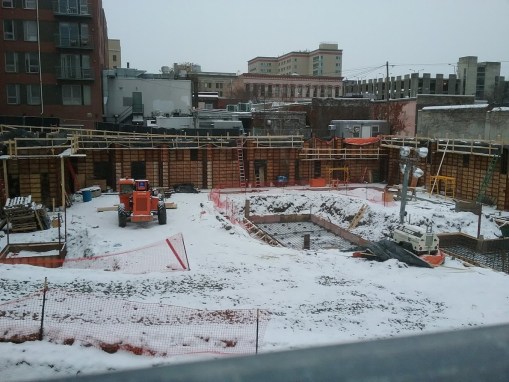
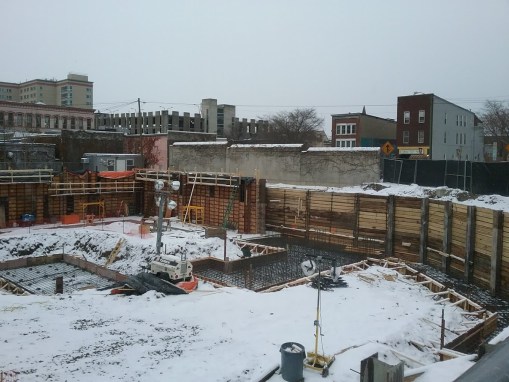
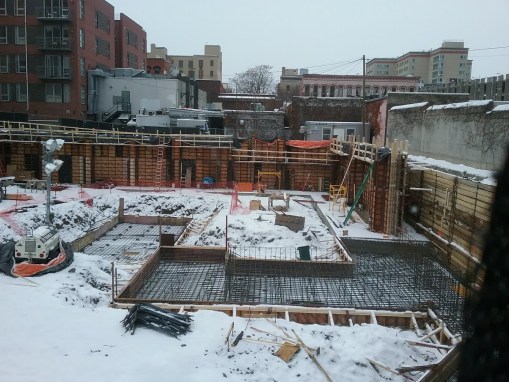
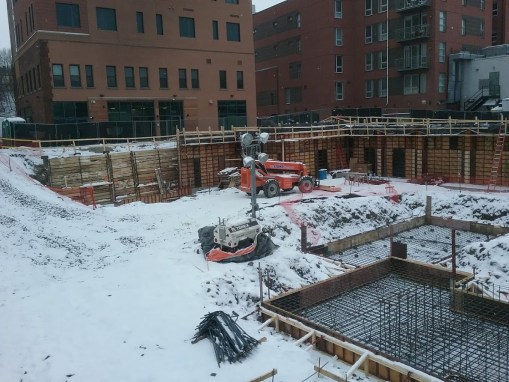
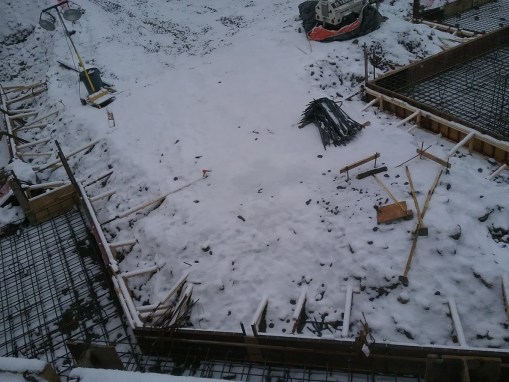
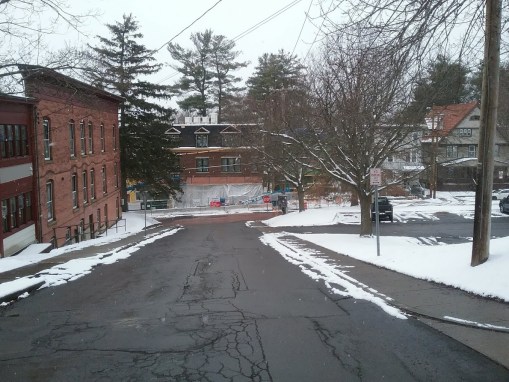
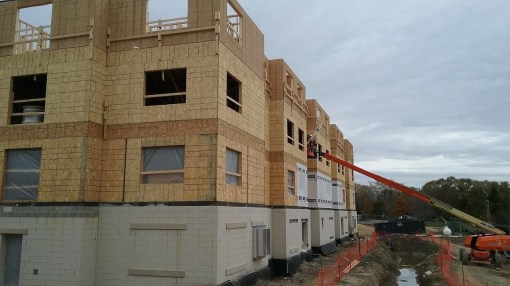
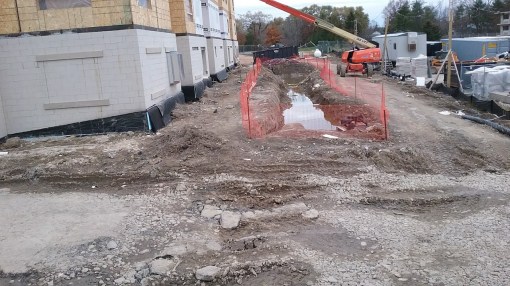
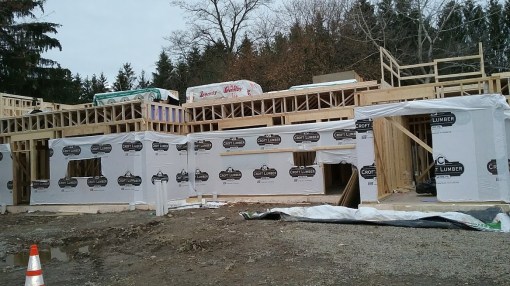
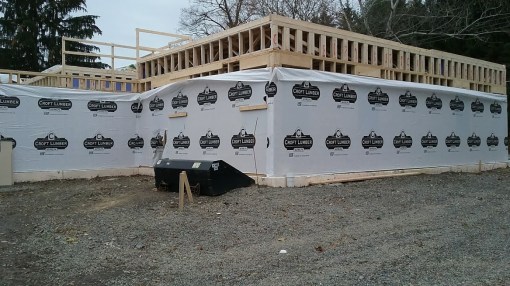
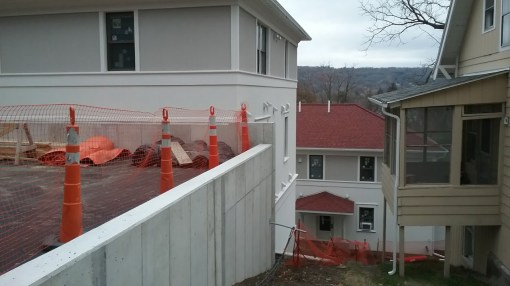
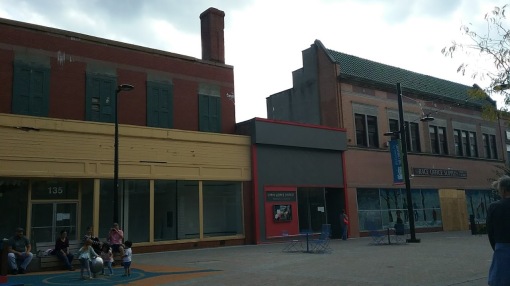
So here we are. The site has been cleared, and shoring and excavation by Paolangeli Contractor will take place over the next six weeks. After that comes ten days of pile driving, using a zero-resonance hammer to reduce vibration and noise – ostensibly, because is probably the second-most high-profile project site in the city after City Centre (which used the same method). Project completion is expected in Spring 2019. Sorry folks, but the Commons playground will remained cocooned and closed due to safety concerns.

The project team includes L Enterprises LLC (led by David Lubin) as lead developer, McGuire Development as co-developer, Taylor the Builders as the general contractor, CJS Architects, Fagan Engineers and Land Surveyors handling the application and civil/structural engineering work, and Brous Consulting for public relations. Those who want to follow the project without this blog as an intermediary can sign up for update on the project webpage here.

With the latest update on their webpage also comes the latest version of the project design, v05 – which doesn’t really affect the program space, but it does have several visual changes. The corner units now have exposed balconies vs enclosed rooms, the dark metal band on the top floor facing the Commons has been removed, and the retail frontage was reconfigured a bit on the Commons facade (the north module was stretched, one of the entry doors moved, and different fenestration patterns have been applied to some of the modules and the northwest face).

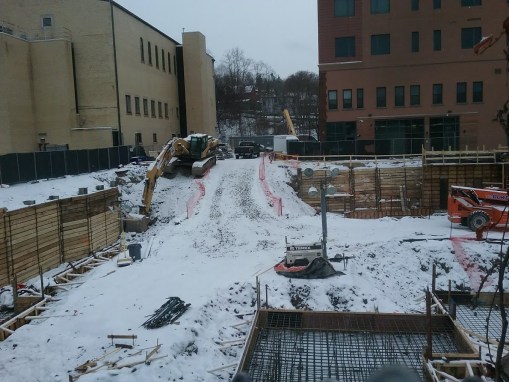
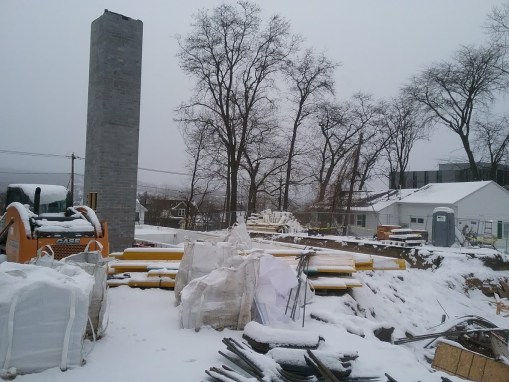
Pre-demo photo:


107 South Albany Street Construction Update, 12/2017

22 12 2017

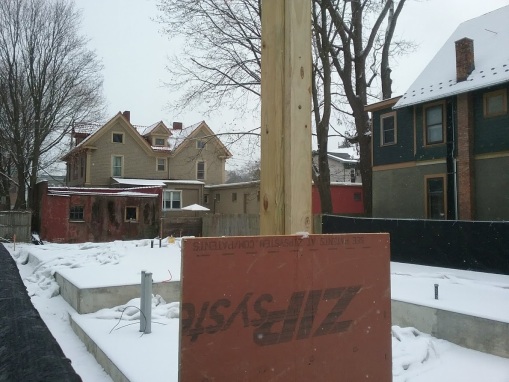
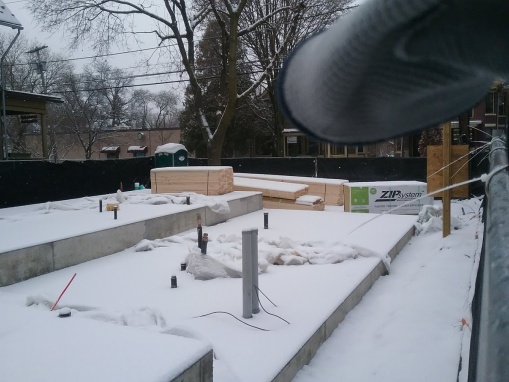
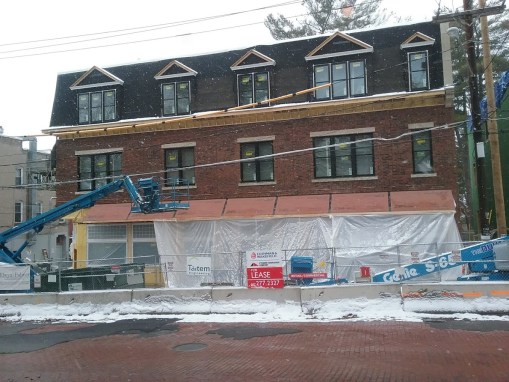
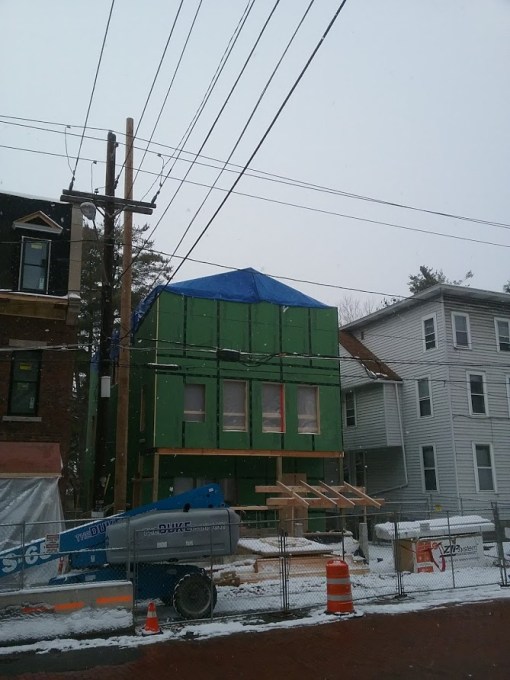
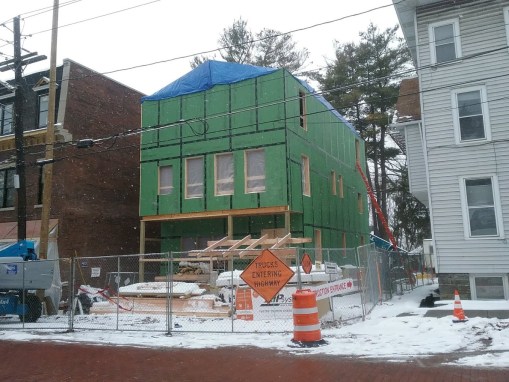
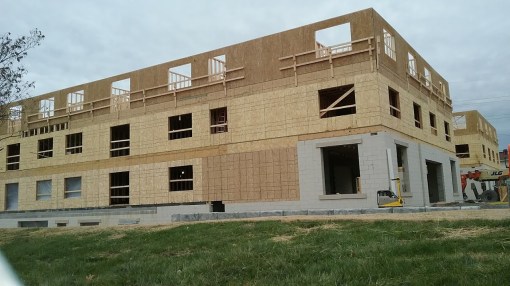
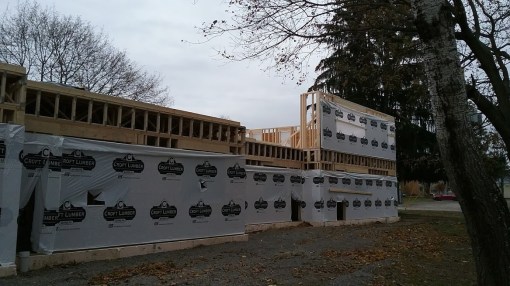
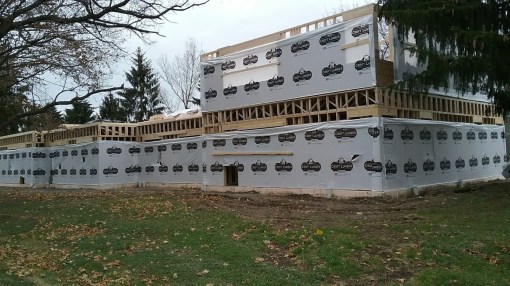
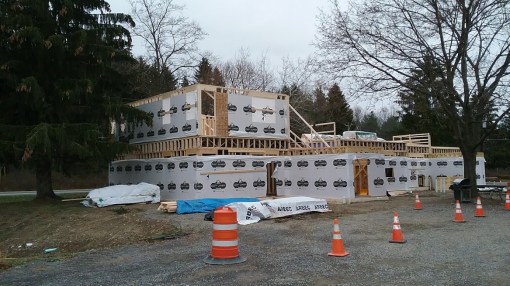
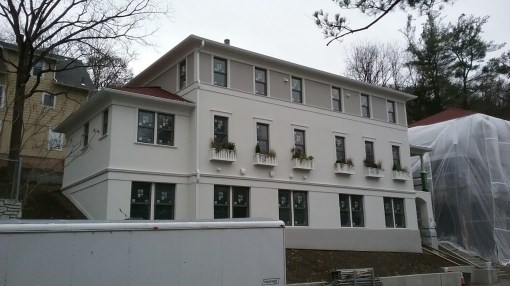
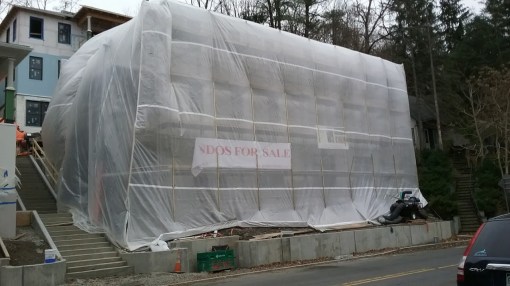
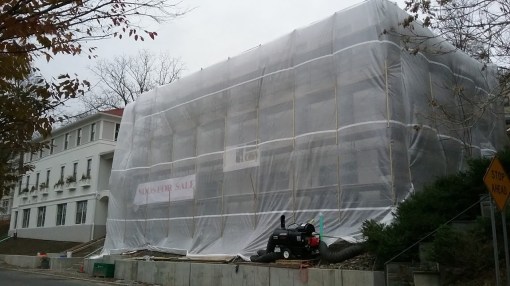
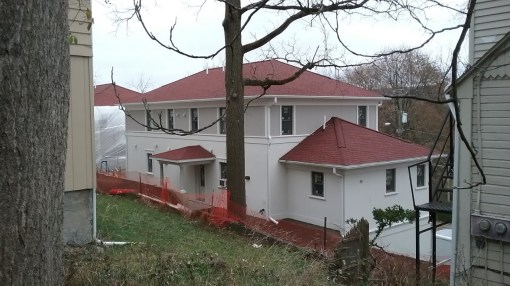
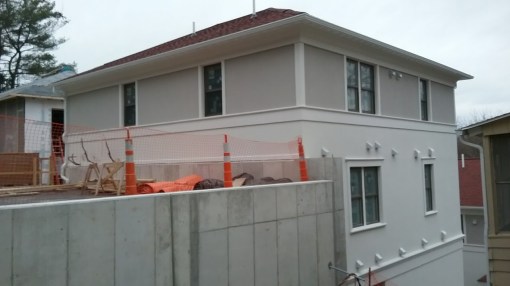
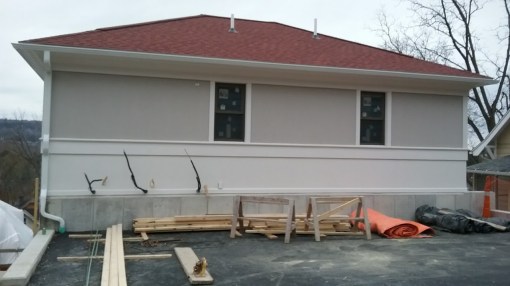
Since October, it looks like the foundation slab has been poured over the footers, and the construction crew is preparing to start work on framing. Judging from the materials on-site, it looks like wood-frame with Huber ZIP panels. Wood-frame structures tend to rise quickly, so once the project team is ready, it should go up at a rapid pace, and probably top out in within just a few weeks. The 11-unit, $1.1 million apartment building is expected to be ready for occupancy by July.

It’ll be interesting to find out what Stavros Stavropoulos’s next project is, since the plan for a pair of duplexes at 209 Hudson Street was kiboshed by the city after the South Hill zoning overlay went into effect. If he’s looking at other locations along the State Street Corridor, he’d likely find the planning department and Common Council more amenable. If his name shows up in any sales, I’ll note it in the round-up.

On that note, expect a brief holiday pause in the daily posts. They’ll be back next week.

For reference, project summary here.


City Centre Construction Update, 12/2017

21 12 2017

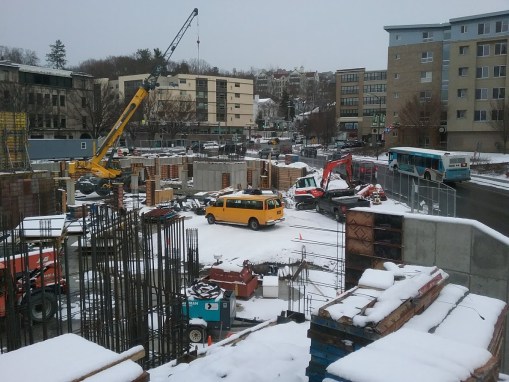
As with the Hilton Canopy Hotel under construction just across the street, City Centre is in the middle of foundation work. Steel forms with plywood facing have been erected and braced along the perimeter of the building footprint. In fact, it looks like the project team is using the same Symons Steel-Ply system being deployed at the Canopy site. The piles have been driven and the foundation slab is poured. The team is slowly making their way to the steel frame of each pile, encasing it within forms before pouring the concrete, letting it cure, and then removing the forms to reveal a concrete/steel column ready for vertical additions. The elevator cores and stairwell columns are also on the rise. – the elevator core facing East State Street appears to be the furthest along.

We finally have a named general contractor, and like the architect for the City Centre team (Humphreys & Partners of Dallas), its a new entrant to the Ithaca area – Purcell Construction Corporation, with offices in Richmond, Virginia and Watertown, New York (an hour’s drive north of Syracuse). It appears that they have plenty of experience with multi-story towers and large structures, which is no doubt an asset for the project team.

As I previously said, as structural steel takes height here and with the Canopy and Harold’s Square, downtown Ithaca is going to look like one big advertisement for TCAD.


Hilton Canopy Hotel Construction Update, 12/2017

20 12 2017

Given how long this project seemed to be be stuck in post-approval financial purgatory, it still surprised me when I see construction underway at the Hilton Canopy hotel site on the 300 Block of East State Street.

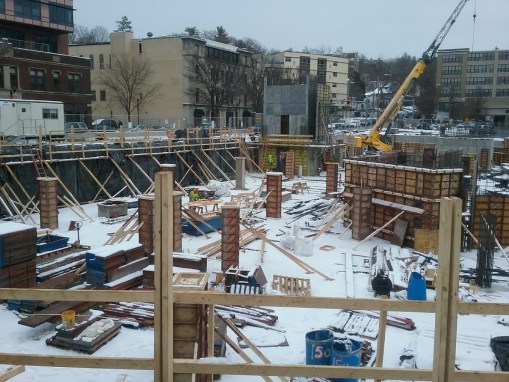
One imagines that summer 2018 will be a construction nerd’s paradise, as cranes for City Centre, Harold’s Square and the Hilton will dot the city’s skyline, no doubt making their way into future TCAD imagery. But for now, it’s subsurface work. The Canopy is excavated, lagging, H-beams and steel tiebacks have been erected to hold the soil back, and wooden forms are being assembled for the concrete pours. Forms are typically plywood, sometimes aluminum or steel, and are braced to resist the pressure from the concrete as it is poured to make the foundation walls. For commercial buildings like the Canopy, stronger steel forms with plywood sheet ply are used. In this case, since the walls are quite tall, workers have installed brackets and scaffolds along the forms so that they can stand and work higher up on the walls. Specifically, I think it’s a Symons Steel-Ply Forming System that is being used.

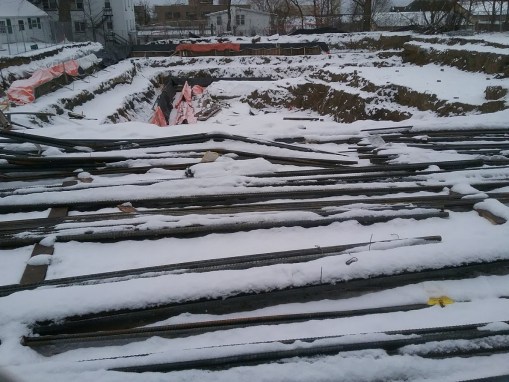
The footprint of the site also has some less imposing wood forms that have been assembled, and interior to those some steel rebar has been laid, to add strength to the concrete as it cures. Some of the basement concrete slab has already been poured along the perimeter, and some is being readied for pours. The elevator shaft and north stairwell will occupy some of the footprint of where the rebar grid is in the second and third photos below. The basement will consist of storage rooms, utility space, a fuel room, laundry facilities, housekeeping office, main offices for hotel staff and back-end operations, restrooms and a breakroom. The smaller forms with the square outline on the south side of the site look to be about where the money counting room and/or data/communications room will be.

Note the light rigging onsite – December’s short daylight hours are no conducive for outdoor construction. Floodlamps are a way around that.


The Lux (232-236 Dryden Road) Construction Update, 12/2017

18 12 2017

Some progress on Visum’s latest project, “The Lux” at 232-236 Dryden Road in Collegetown. 232 Dryden, the building closer to Dryden Road, has started work on exterior framing – the partially-above grade basement level, built into the slope of the site, appears to have been framed with Amvic insulated concrete forms (ICFs), similar to those seen at the Ithaka Terraces and the Fox Blocks at the Thurston Avenue Apartments. These are thermally insulated plastic blocks filled with concrete – they tend to be a more expensive approach, but they also tend to have a higher grade of insulation (higher R-value), making for a more energy-efficient structure. There has been talking of making the complex net-zero energy capable, provided that the energy of an off-site solar array can be procured. STREAM, the architect of The Lux, also did the Ithaka Terraces. The exterior walls will be assembled block by block, with new pours as rows of blocks are set in place. The rebar provides additional stability. It appears the cinder block elevator core/stairwell has been assembled as well.

232 Dryden might be the more visually prominent of the two building, but it is also the smaller one – it will have 20 units and 53 bedrooms. 236 Dryden will host 40 units and 138 bedrooms.

Speaking of 236 Dryden,  Welliver has the foundation excavated, and the steel piles are in. However, judging from the steel rebar sitting on the edge of the site, the concrete pours have yet to take place, and it looks like the wooden forms are just now being built on the far side of the footprint.

Pessimistically, I could note that this is one of the few Collegetown projects that was able to move forward after the building code change that brought multiple other projects to a halt – the power lines on Dryden Road aren’t close enough for the project to infringe on the new regulations. I had heard Visum might actually pay for the burial of power lines on the 200 Block of Linden Avenue, but even if they did, they would still have to deal with NYSEG’s slow schedule.


400-404 & 406 Stewart Avenue Construction Update, 12/2017

17 12 2017

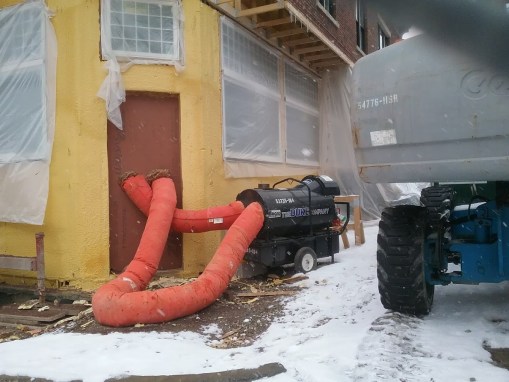
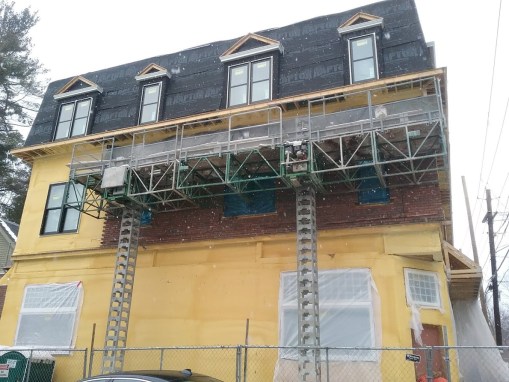
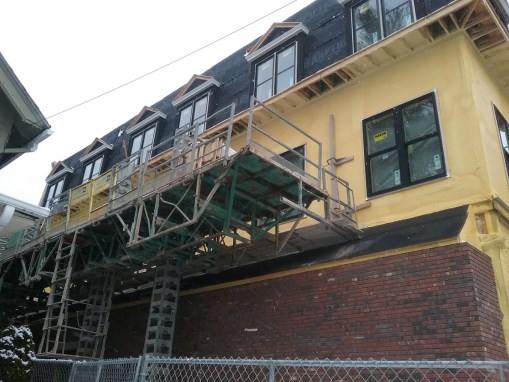
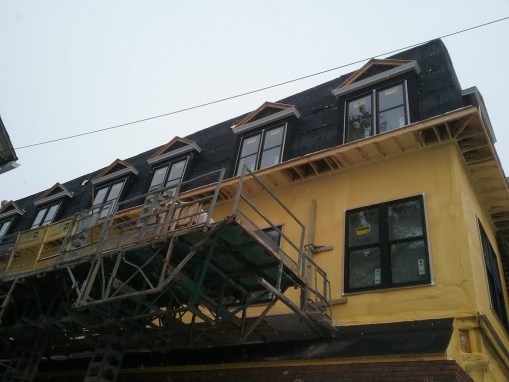
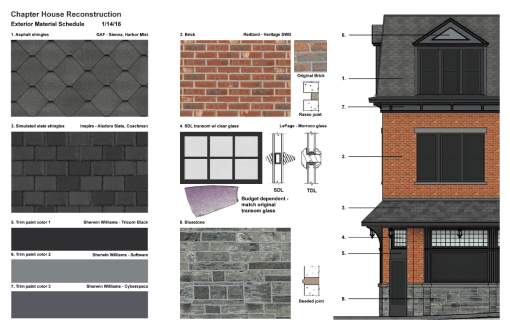
400-404 Stewart Avenue, a.k.a. the former Chapter House site, is fully framed and the brickwork is in progress. The brick veneer is Redland Brick Inc.’s Heritage SWB, and is similar in appearance to the original brick of the Chapter House, which was damaged beyond repair in an April 2015 fire. So the way this has gone is that yellow closed-cell spray foam was applied over the sheathing, probably by a subcontractor such as Goodale Spray Foam out of King Ferry. Closed-cell spray foam, made with polyurethane and applied a few inches thick, provides insulation under the brick. Brick is a tricky material in some ways – the plywood ZIP Panels are great for sealing a structure to make it air-tight, but brick absorbs moisture, so the spray foam not only serves as an insulator, it also provides a protective moisture barrier between the plywood and the brick. It’s typical to have a drainage gap underneath the brick so that they can dry out, otherwise the uninsulated brick is at risk of long-term moisture damage.

The roof looks to be covered in tar paper or similar material; this will eventually be layered over with chamfered asphalt shingles. The roof ZIP panels that make up the “awning” being built over the first floor will be covered in shingles as well, but those will be more expensive simulated slate. The trim pieces like the cornice may be cast stone or fiberglass over wood, and it looks like the window sills and heads might be cast stone. It looks like they’re using Marvin Windows for the windows themselves.

406 Stewart Avenue is still being framed with ZIP panels, now up to the third floor with just the roof trusses left. The drawings I have on file suggest the fenestration has been changed – the position and size of the second floor windows are different from the renderings, in particular the window on the far left of the front face, and one of the windows on the north side was moved further back from the street. It suggests some modest interior alterations, but the ILPC will be watching this like a hawk since these builds are under their jurisdiction (the East Hill Historic District).


Cayuga View Senior Living Construction Update, 11/2017

29 11 2017

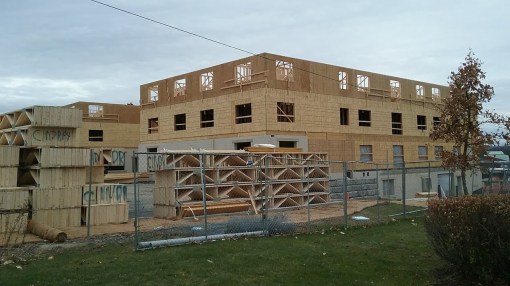
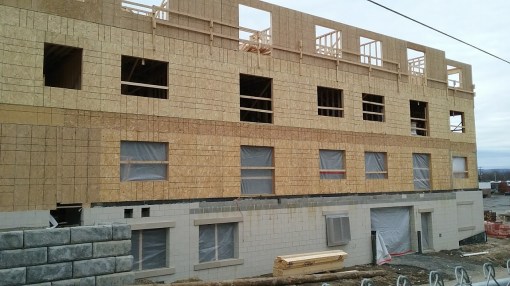
Framing for the new Cayuga View Senior Living building is one floor short of topping out. A stack of floor joists sits at the front of the construction site, as framing for the fourth floor continues. The last couple photos show how the joists are assembled between floors, typically attached to the exterior wall through joist hangers and braced with additional metal straps. Bracing has been temporarily built as the continuous plywood structural panel wall is nailed together. On the third floor they’ve started rough-ins (I see an industrial spool through the window, implying cables for electrical work), but the meat of the interior work is on the second, first and basement levels. A bit of housewrap has been applied to the rear face.

The commercial spaces are built out with masonry (CMU) walls, in contrast to the wood framing of the upper levels, and may be the result of fire code. The basement, also assembled with masonry blocks, will host utility space and some amenities. Decorative stonework provides aesthetic relief to the sloping site. Curbing has been extruded, and foundations for the light poles have been laid and wired. Not certain why there’s a moat at the rear of the building, although it may have something to do with underground utility lines.


Village Solars Construction Update, 11/2017

25 11 2017

Another redeveloped building is underway at the Village Solars property along the 1000 Block of Warren Road in Lansing. The original 8-unit, 8-bedroom 116 Village Circle is no longer of this world; the early 1970s structure was torn down to make way for a new three-story building with 6 2-bedroom units and 12 microunits (400-600 SF). Along with the framed and sheathed 102 Village Place, that means that Lifestyle Properties does in fact have two buildings underway at the site; perhaps the last visit in September just happened to catch the project during a brief lull.

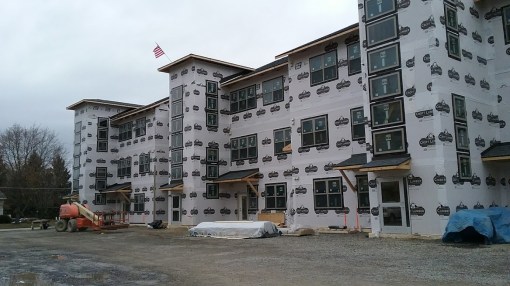
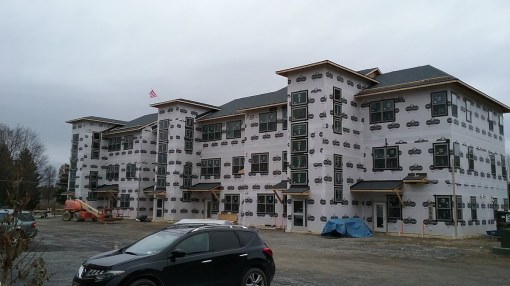
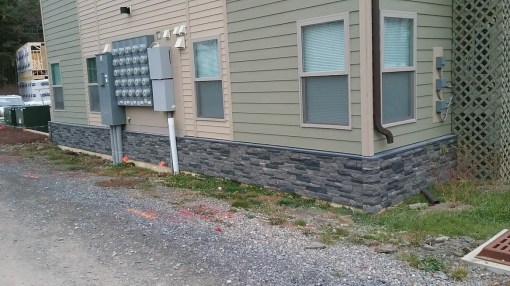
102 Village Place has been fully framed, sheathed, roofed, windows and doors have been fitted, and the fiber cement siding is just beginning to be installed (possibly by T&J Contractors of Auburn; most construction work by Lifestyle Property/the Lucente family is handled by an in-house crew). On the inside, expect electrical, plumbing, and HVAC to be underway; with no open doors or windows, it was not clear if they’re hanging drywall yet. In comparison to the “older” new apartment buildings, these new ones have different fenestration and even have stone veneer at the bases, though the overall building designs are generally similar. It’s not completely certain what the purpose of all the eaves (eavelets?) are on the walls of 102, though given the utility lines, it may have something to do with weather/ice protection for the air source heat pumps, which are shielded by small eaves and wood lattice on the latest completed apartment buildings.

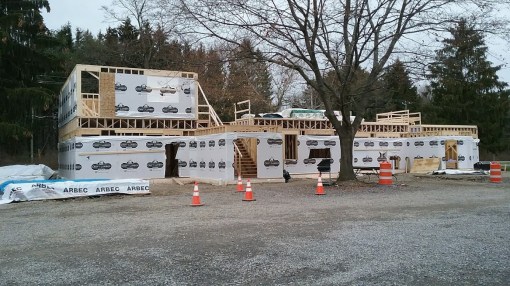
The replacement structure for 116 Village Circle is just starting the framework for the second floor. As previously noted, it’s not uncommon to just housewrap over the rough openings, and cut out the holes later. The excess will be trimmed off and the edges will be fastened back to the inside wall, allowing for a tight and complete wrapping of the rough opening. Taking a guess, 102 will probably be done by the end of March, and 116 the end of June perhaps.

Side note, I’ve never noticed the Village Solars construction crew put a flag up on topped-out structures before.


Ithaka Terraces Construction Update, 11/2017

23 11 2017

These are turning out quite nice. Building “A” is practically complete from the outside. The plant boxes outside the windows have even been stocked with small ornamentals. About the only thing left are the exterior finishes on the front facade columns. Building “C”, the smaller building to its east, is also nearly finished from the outside. I suspect the wiring coming out of Building “C” just above the parking area is for electric car charging stations.

Building “B”, the other large condo structure, is fully encased in plastic sheeting and wood ribbing. Stucco generally needs to be applied in dry, temperate weather conditions, above 40 F at a minimum. Given Ithaca Novembers, that means McPherson Builder has basically turned the building into a dry, heated bubble so that can apply the stucco properly. Building “D” is still being roofed, and is just getting its windows fitted. It looks like the scratch coat for the stucco is being applied over the water barrier, and the brown coat and the finish coat will come later, meaning that “D” will eventually be bubbled in as well.

Most of the concrete curbs and steps have been formed, poured and cured at this point. The grand staircase will make for a nice shortcut from South Cayuga Street to West Spencer Street.

The marketing material appears to be using the phrase “Arriving here is what you are destined for“. Tje website doesn’t indicate how many of the twelve units are spoken for (if any; the project is in the soft marketing stage, where they’re accepting inquiries but there aren’t any formal real estate listings). The two-bedroom and three-bedroom units go for $299-$434k, depending on size and location.


McDonald’s Rebuild Construction Update 11/2017

21 11 2017

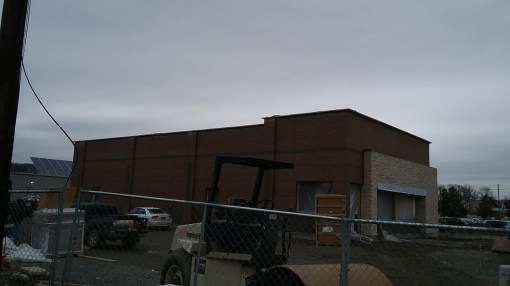
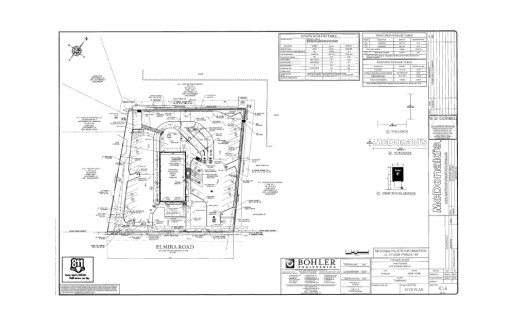
The new 4,552 SF Ithaca McDonald’s is framed, waterproofed and faced in a couple different shades of Belden Brick and Boral USA stone veneer. The aluminum metal accents have yet to be applied. Much of the work has shifted inward with plumbing, electrical and HVAC installation. The McDonald’s signage, including the modern take on the “golden arches”, will help to break up the blank spaces at the front (east) and side (north) faces. Shirt brick walls have also been mortared together for decorative landscaping, and to block off the parking and patio areas from South Meadow Street. Mulvey Construction seems to be motoring through this project quickly. The plumbing subcontractor appears to be Donofrio Mechanicals of Auburn.

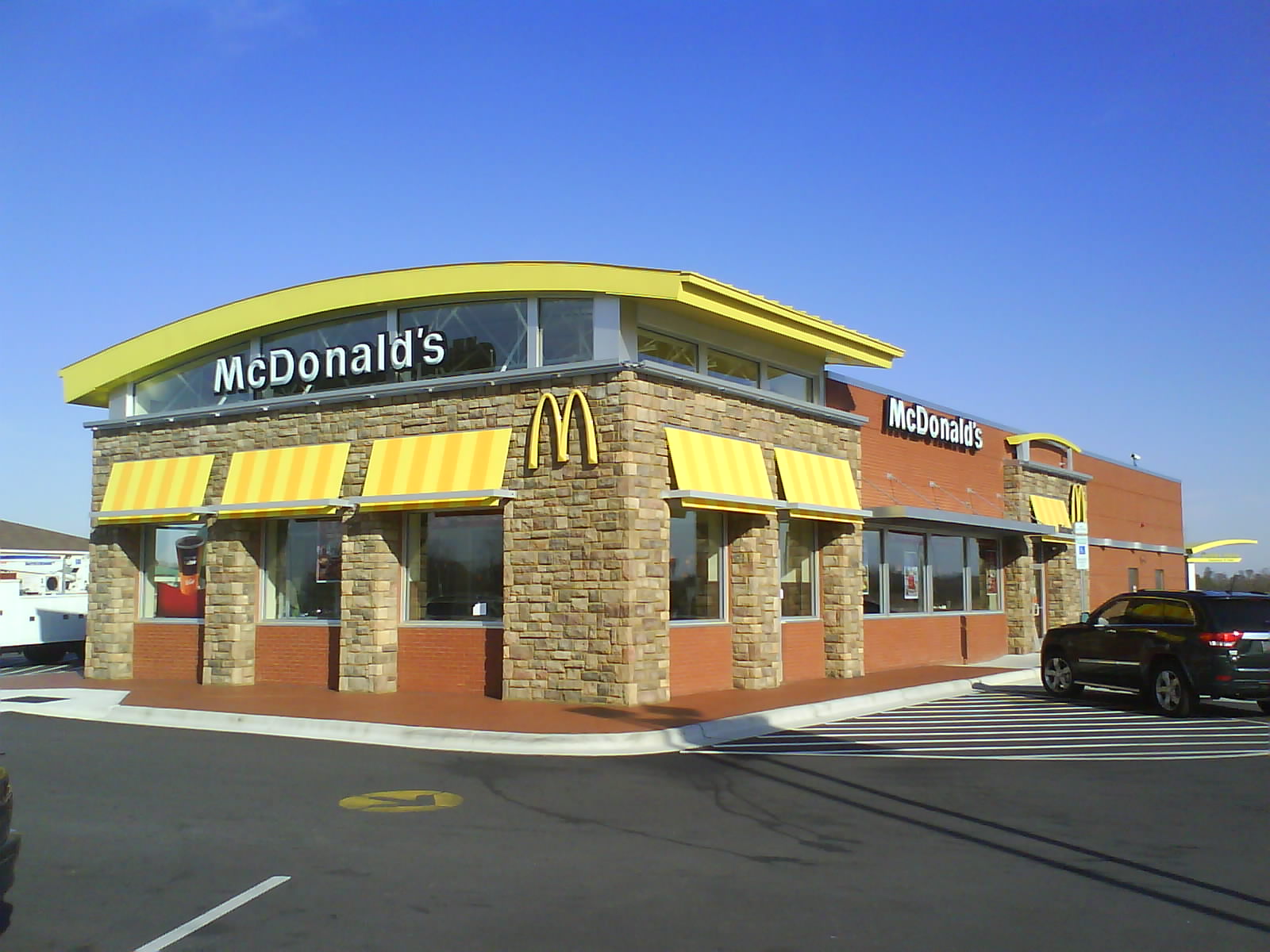
If one really wants to dig around for something that makes this McDonald’s unique from all the others with the new design language, it appears that many incorporate Dry-Vit (artificial stucco) or architectural aluminum panels, but neither of those finishes are present here. The version with an elevated arch canopy and glazing is a design language feature that didn’t make the cut for the Ithaca location. Maybe it’s just too cloudy.

The new $1.375 million restaurant should be open by Christmas. Project information can be found in the introductory post here.