News Tidbits 8/11/18

11 08 2018

News Tidbits 8/11/18

1. It looks like the Mettler-Toledo facility has a buyer. Ongweoweh Corporation bought the 27,000 SF property at 5 Barr Road in Dryden for $3.24 million on August 3rd. Readers may remember that Mettler-Toledo decided to consolidate the Hi-Speed Dryden plant with a new facility in the Tampa Bay metro, taking 185 jobs with it. Founded in 1978 in Spencer, Ongweoweh Corporation is a Native American-owned pallet management company providing pallet & packaging procurement and design services, recycling services and supply chain optimization programs. The firm had only recently bought its existing 17,577 SF headquarters at 767 Warren Road in Lansing, for $2 million in September 2016 – as Ongweoweh moves to the larger space, it’s putting 767 Warren up for sale for $2.3 million. It’s not clear if this physical expansion will add jobs, and a request for comment was not returned. The company employs a little over 100 people according to a third-party profile, and 58 are based in the Ithaca area.

2. Let’s talk about another business expansion – Emmy’s Organics. The organic cookie producer’s new warehouse and HQ came one step closer to reality this week when the city’s Planning Committee gave its approval to let the full Common Council vote on the sale of 2.601 acres of IURA land to Emmy’s for $242,000. The land is towards the south end of Cherry Street, it’ll be the terminus of the extended Cherry Street, which will be lengthened 400 feet and create two new one-acre lots to sell to business that contribute to the IURA’s goals of job creation for LMI individuals. Examples include drilling tech firm Vector Magnetics, lab electronics manufacturer Precision Filters and the Crossfit Pallas gym. A fourth lot on the west side of the newly extended road would be deeded to the city as a natural buffer between development and the waterfront/Black Diamond Trail.

The initial phase of the $1.25 million development includes 4,000 SF of office/breakroom/entrance area, a 4,500 SF production area, and a 5,500 SF warehouse (14,000 SF total). If growth continues as it has, the plan is to implement a second phase in 2-3 years for a 20,000 SF expansion. The new facility will create at least five new jobs (total staff 24), and the potential expansion would likely add at least another twenty given that phase two called for the parking lot to grow from 22 to 41 spaces.

The rendering of the new HQ above, which is a STREAM Collaborative design, shows both phases. The section in the foreground is phase one, the shed roof structure at back is phase two. The section of parking lot towards the left is a phase two addition as well. No zoning variances are required. Whitham Planning and Design is leading the project through the city review process.

3. Let’s linger on Whitham for a moment. From their website is likely one of the runner-up proposals for the North Campus Residential Expansion over at Cornell. They were partnered with Ann Beha Architects and Baltimore-based Design Collective for a competing design that was ultimately not selected. Cornell interviewed four development teams before going with their final choice, Integreated Acquisition and Development, a firm associated with John Novarr and Phil Proujansky who did the Breazzano in Collegetown. Although owned and operated by Cornell, there is a developer’s fee IAD will earn for developing the NRCE project on behalf of Cornell. That fee varies per project and is usually confidential, but 3-6% is common in commercial builds, and by that yardstick, for a $175 million project IAD stands to make several million dollars.

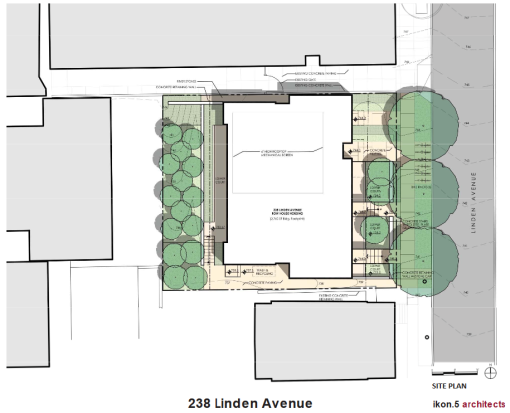
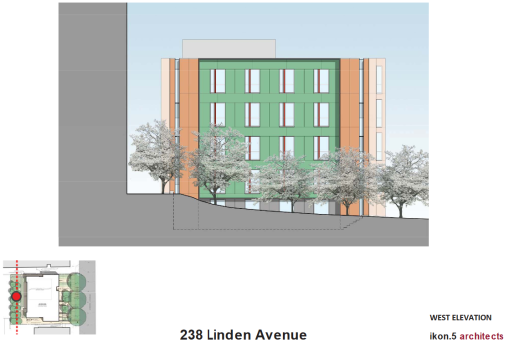
With nothing more than a site plan, I’d be willing to guess that given the team members, the plan would have been a contemporary design, though perhaps more conservative than ikon.5 – Ann Beha designed the elegant if subdued first phase of the Cornell Law School addition.

4. The Hotel Ithaca is moving forward with the next phase of plans for its South Cayuga Street property. The next project is to tear down the vacated south wing, a 2-story structure built in the 1970s, and replace it with a surface parking lot. At a glance, this is not at all a welcome proposal for a downtown street corner. However, it comes with some promise of a hotel addition down the line. A development pad will be created for a “future market-driven addition”, meaning that if business grows and they decide to expand the hotel, they’ll have a level, stable, shovel-ready site. Until then, it’s seventeen fewer parking spaces the hotel will need in the Cayuga Street parking garage. The $550,000 project would be carried out from August to November, and NH Architecture is handling the landscaping, refinishing of the tower wall and overall application on behalf of owner Hart Hotels.

5. Visum’s not wasting any time on its affordable housing proposal for 327 West Seneca Street. The three-story, 12-unit building is planned for an October start and an April 2019 finish, and will be going before the planning board this month Declaration of Lead Agency and review of Parts 2 and 3 of the Environmental Assessment Form.

The project is an interesting little case study of how maximum height isn’t necessarily optimal. The zoning allows four floors; they want to serve 70-80% area median income, which requires 18 bedrooms for economic feasibility at this site. But to have four floors, the materials need to be fire-rated, and the units would need either emergency exit stairs, or an elevator. Since it’s a small building lot, an elevator would eat into the square footage of units, about a bedroom per floor, so there’s no net gain in rentable space with a fourth floor, but there would be an increased project cost. One could save costs by putting in the stairs vs. the elevator, but the fourth floor units would be harder to fill because they would pose greater access difficulties – ask around and see how many people want to walk up four flights everyday. This is actually one of the major reasons why the Village Solars in Lansing are also three floors, the expense of elevators would have driven their budget higher than the mid-market segment Lifestyle Properties wanted to serve.

Net-zero energy use is being explored (electric heat pumps powered by off-site renewables), and yard and setback variances are being sought after the city seemed receptive to a variant sketch plan with a few more square feet in the units for the sake of livability. STREAM penned a traditional design fitting with the block, and the revisions added a few more windows into the sides of the structure.

Also in the projects memo for this month are final approval for Benderson’s 3,200 SF addition at 744 South Meadow Street and the Declaration of Lead Agency for Cornell’s new north campus dorms. The Benderson project’s landscaping plan was modified slightly, and a new rear exit door and front awning are being considered.

6. Out in the towns there’s not much going on next week. A special meeting of the Town of Ithaca’s Planning Board will decide whether or not to defer to the city as lead agency in the environmental review of Cornell’s north campus expansion. The town of Lansing will be holding public hearings for a one-lot subdivision and a four-lot subdivision for single-family homes.

7. The Lansing Village Cottages plan has its work cut out for it. The design has been tweaked such that the first two home clusters were combined, and the road connecting to Craft Road was realigned. The Millcroft Way connection will have a vegetative buffer and the road would be for emergency vehicle only. However, Millcroft Way residents are still seething – they have $500,000-$700,000, 2,500 SF+ homes locked under a covenant, while the same person who sold their lots is now selling to a developer planning 800-1200 SF cottages. Concerns include traffic, home values, density, and too many senior housing developments, which is a bit of an odd one. Logan’s Run isn’t just a street in Dryden.

The village is pretty hesitant to support this – the Board of Trustees sent the proposal back over to the Planning Board, hoping that they could make some recommendation as to whether it meets the goals of the village. On the one hand, that would seem an easy yes at a glance, it’s senior housing close to urban areas in an affordable price range. However, after shelling out close to $50,000 for lawyers to fight Lisa Bonniwell over her lawsuit to stop the East Pointe Apartments, money that won’t be paid back (perhaps indirectly in property taxes in a few years), the village is afraid of another Article 78 lawsuit, and the residents of Millcroft are very deep-pocketed and willing to go to court. This is vaguely reminiscent of a study that shows wealthier areas are much more adept at stopping density and new housing in general because they have more leverage – one of those being that a fear of costly litigation is a strong municipal deterrent.

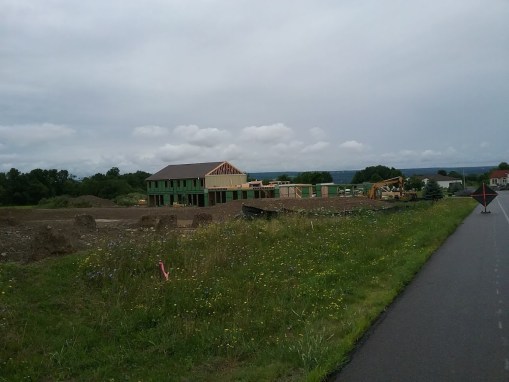
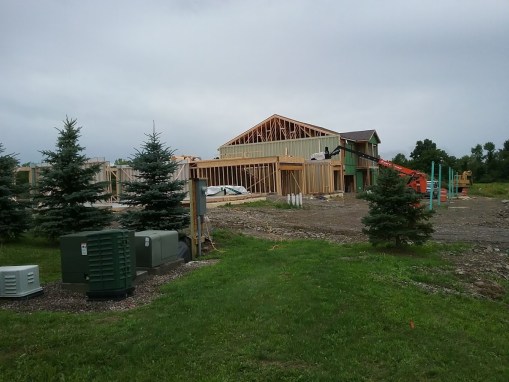
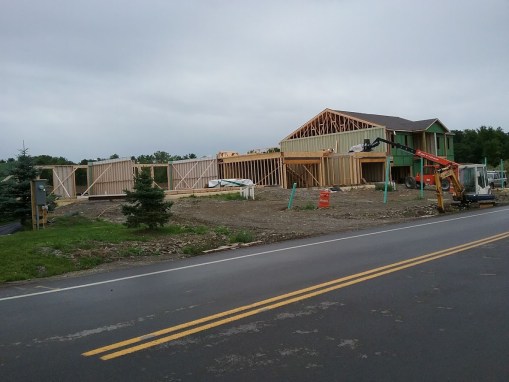
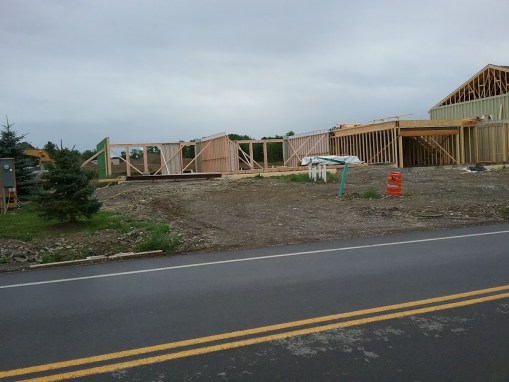
8. We’ll end on a positive note – after eight years of back and forth, it appears site prep has begun on the 20 senior housing units planned as part of the Lansing Meadows project. Since developer Eric Goetzmann had until July 31st or else face significant legal action (Goetzmann applied for and received a tax abatement for the BJ’s that was contingent on the housing, and it was at risk of being clawed back), I had dropped by August 3rd. After looking around, it did not seem to be under construction; a bit of upturned dirt and a bulldozer on site. The village decided it was, if barely, according to the Lansing Star:

Yes, he scratched the earth. Yes, he does have the soil fencing in,” {Village Code Enforcement Officer Adam} Robbs said. “He has hired a dedicated contractor at this time to do the site work. He has a culvert permit and approval to install a temporary culvert for construction use. I do have a preliminary set of plans. I am hesitant to say he has begun a significant amount of work… but he has begun work.”

>We’ll see if it merits an update in October.


Amici House Construction Update, 8/2018

10 08 2018

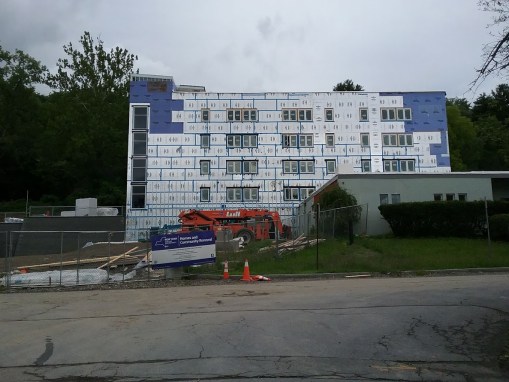
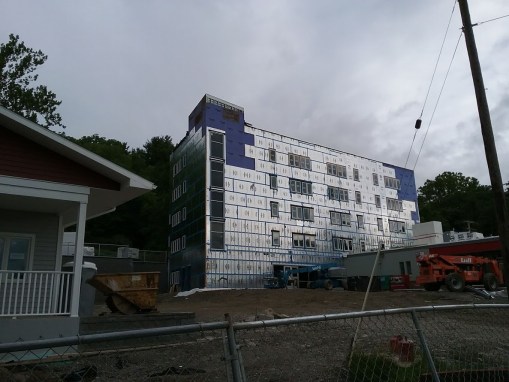
One of the things that stands out about the new Amici House project – or rather, doesn’t – is that the five-story residential building under construction doesn’t really stand out for a structure of its size. The hillside to the east keeps it from being prominent, and the section of Spencer Road on which its sits is tucked away from most neighboring structures – the building is hardly noticeable from South Meadow Street.

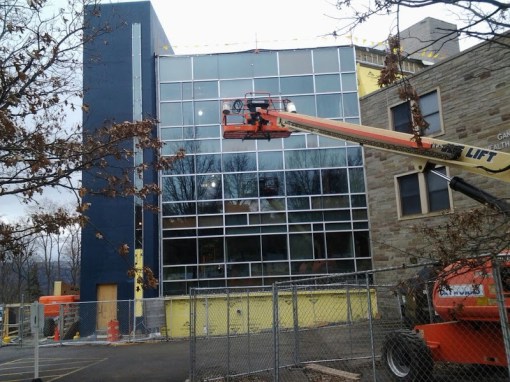
The structure is fully framed, nearly fully sheathed with fire-resistant National Gypsum eXP panels, and then layers with Dow Thermax panels, which stand out somewhat because of the reflective aluminum facer. The Thermax panels are glass-fiber reinforced polyiso insulation, a lighter duty but fire-resistant material, and bonus, it’s made at facilities powered by 100% renewable energy and has “zero ozone depleting potential”. The blue material is a liquid sealant to fill the spaces between panel edges (Dow LIQUIDARMOR), and it looks like metal rails are being attached at the ground level, where the exterior finish will be attached. I’ve kinda assumed this will be fiber cement panels, but to be honest I have not seen a materials sheet in the city’s online files.
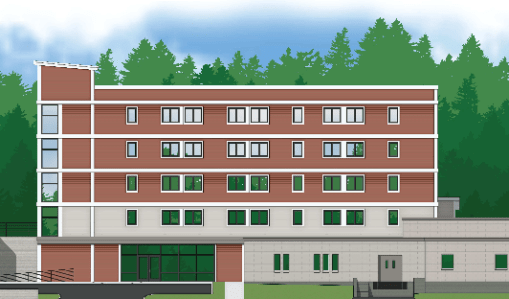
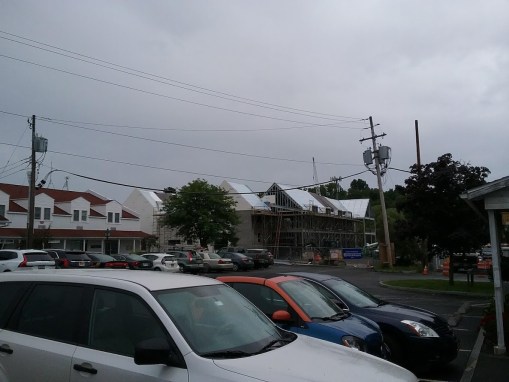
The same could be said for the new Harriet Giannelis Childcare Center, which looks nothing like the plans on file and presumably is filed somewhere, just not online. To be fair, it doesn’t look bad at all. Perhaps a bit plain, which isn’t a surprise given TCAction’s tight budget, but Schickel Architecture did attempt to dress it up by varying the colors and playing with the architectural details. Given the goals of the project, as long as its appearance doesn’t actively repel visitors and scare the kids, then it’s A-OK. Landscaping, colorful children’s projects and plantings will make it even better.

Note that one of the primary parking areas will be behind the new stone retaining wall at the rear of the property. Another will be along the section of Spencer Road across from the TCAction offices.

More info about the project can be found here.


Cayuga Medical Associates Construction Update, 8/2018

7 08 2018

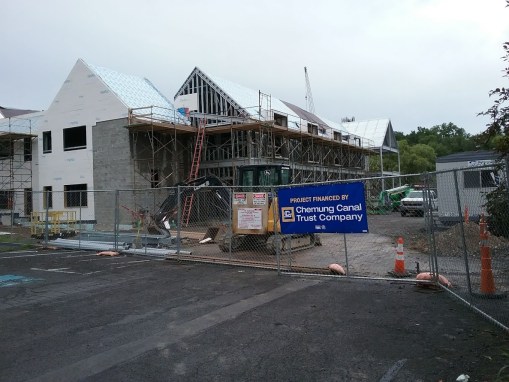
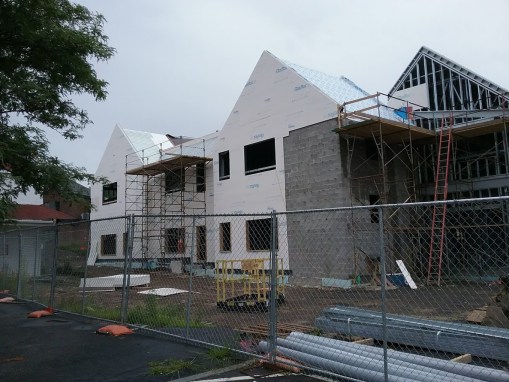
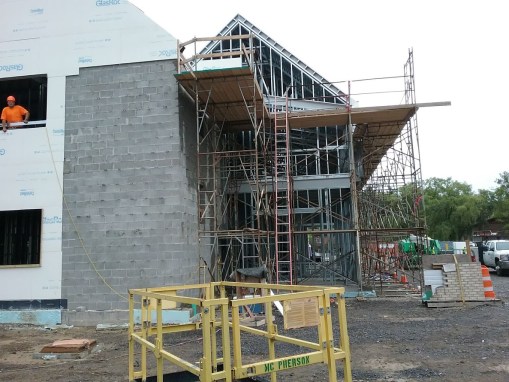
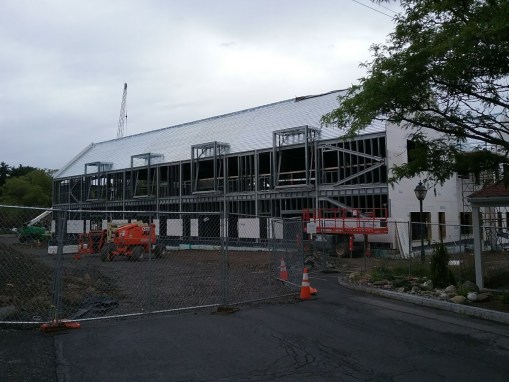
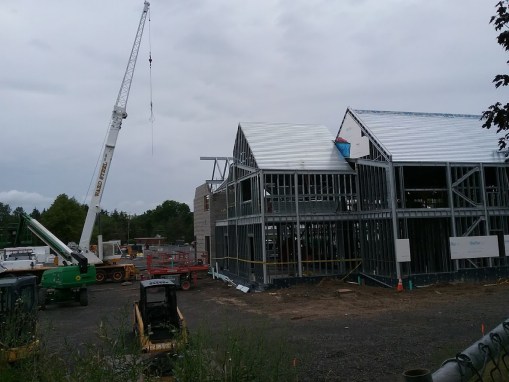
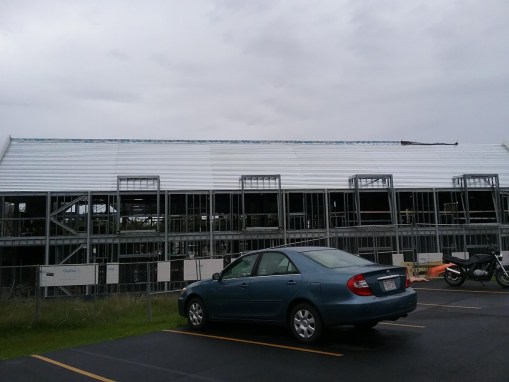
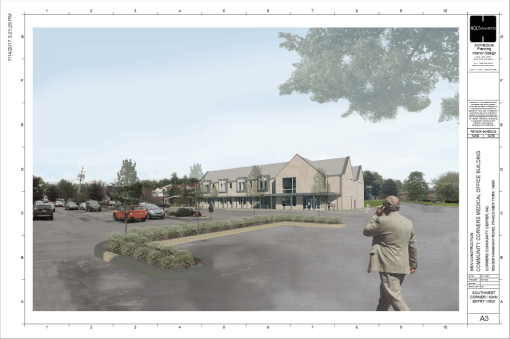
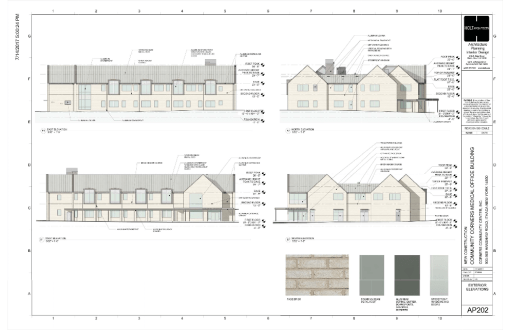
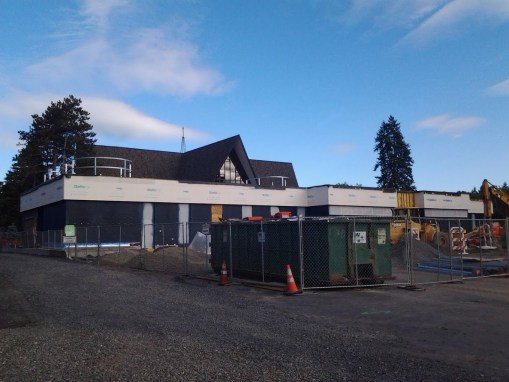
The new Cayuga Medical Associates office building at Community Corners is topped out – I’m a little hesitant to call it fully framed since it appears some minor work remains at the southwest corner of the new 28,000 SF building. Steel stud walls are being sheathed in Saint-Gobain CertainTeed GlasRoc, one of the major suppliers of fiberglass mat gypsum board. True to name, the boards consist of a sheet of woven fiberglass sandwiched between gypsum panels; brands like GladRoc and Georgia-Pacific DensGlass are fairly common for commercial construction where fire-rated walls are a necessity, like medical spaces, offices and hotels, and it does show up in some apartment buildings. The exterior will be finished with an off-white brick veneer, a nod to neighboring structures. Interestingly, the entirety of the gable roof sections appears to be standing seam metal over some kind of base layer. More expensive, but definitely making it such that in the event of fire, there is as minimal ability to spread and put vulnerable individuals at risk. Ward Steel of Liverpool appears to be the subcontractor for the structural steelwork.
The interior work doesn’t seem to be too far along yet, with interior framing underway, and maybe fireproofing of the structural steel or sprinkler installation underway. The construction work hanging out by the rough window opening in the photos below said that they hoped to have the building finished by late fall. McPherson Builders of Ithaca is the general contractor for this project, and Chemung Canal is financing it to the tune of $7.8 million – a better use of funds than the million bucks they had to pay out to Jason Fane when they lost the Bank Tower lawsuit last year.


Martin Y. Tang Welcome Center Update, 8/2018
6 08 2018

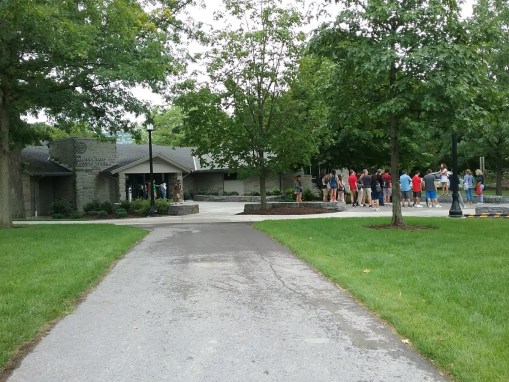
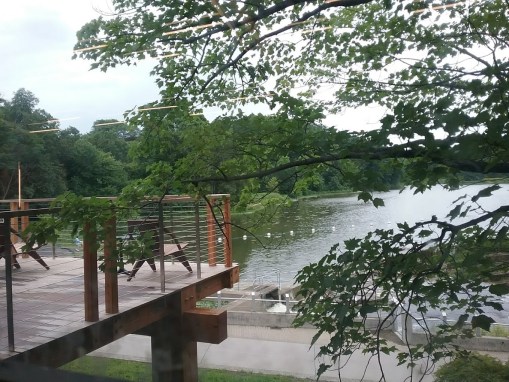
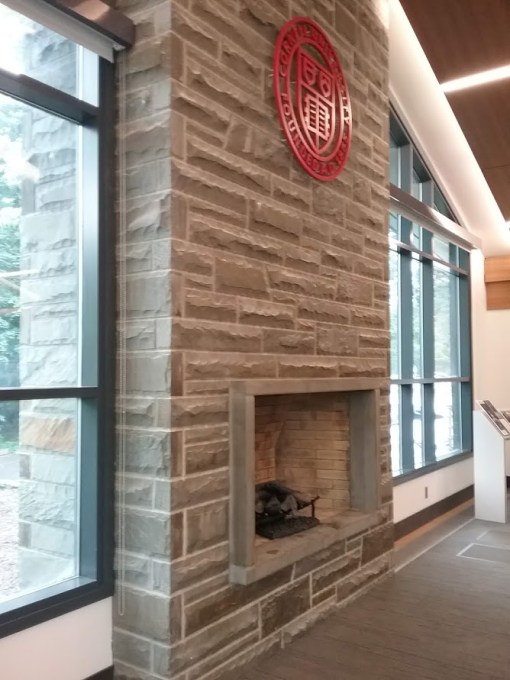
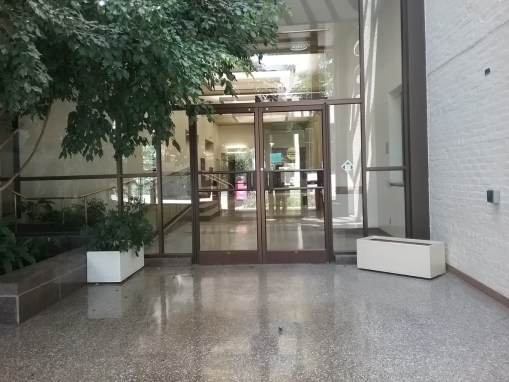
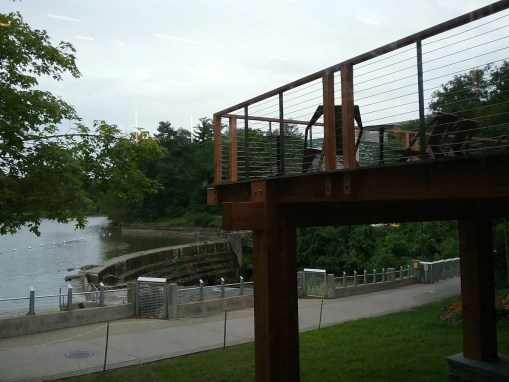
I don’t typically follow renovations, but figured I’d play the role of curious alumnus and drop in to the newly renovated Martin Y. Tang Welcome Center at Noyes Lodge on the north shores of Cornell’s Beebe Lake.

The 7,646 SF Noyes Lodge originally opened in 1958 as a womens’ dining hall, and over the years was re-purposed to become the Language Resource Center, with audio carrels and other equipment for those with linguistic coursework. Cornell decided to shift facilities, moving the LRC to Stimson Hall and renovating the lodge into a campus welcome center, which opened in June. This is now where student tour guides gather their broods, vs. the old days when they would congregate at Day Hall. The lower level hosts conference space, utility rooms and offices.

The Tang family have long been trustees and major donors to the university. The $3 million gift in October 2016 was in response to a challenge grant created by mega-donor Atlantic Philanthropies (funded by Charles Feeney ’56), which offered up to $3 million in matching funds to donations towards the new welcome center – so with $6 million secured, the renovation’s financing was secured and will be able to move forward. Cornell has long considered a reception and exhibition space by the gorges, having mulled over but ultimately backing away from a plan penned by architect Richard Meier in the late 1980s. Tang, Class of 1970 and now retired, was a venture capitalist based in Hong Kong, and the regional chairman of a recruitment firm for business executives.

JMZ Architects of Glens Falls, a favorite of the SUNY System, was the design firm in charge of the renovation and re-purposing. The exhibition space is the work of Poulin and Morris Inc. of New York City.

With that all said, here’s a story.

When I first visited Cornell, it was for Cornell Days: cold, windy and kinda desolate. My mother and my uncle made the trip with me, since I had just been accepted to the university – my family did not have the money or time to visit schools unless I was already given an offer. Out first stop was RPCC on North Campus. On a Powerpoint on a TV screen were two sailors kissing; it was part of a promotion for a campus LGBTQ organization.

Having come from a blue-collar and fairly conservative town north of Syracuse, my mother was shocked into silence, and my uncle proceeded to have a crisis of moral conscience on whether his nephew should attend such a school. You have to keep in mind, it was still controversial for many of our town’s older generation that the high school A.P. Government teacher was openly gay. The kids didn’t care, and I couldn’t have cared less that day either.

Anyway, what warmed my mom up to Cornell were “the castles”. Sage Hall. The Arts Quad. Uris Library. But as for me, I didn’t feel like I fit in. My tour group was a bunch of wealthy kids, one of whom loudly grumbled his disappointment that he didn’t get into Yale and his mother didn’t like Dartmouth. Why would a 17 year-old want the constant reminder that he’s not cut from that cloth or a part of that world?

So I wrote out a deposit check with my money from waiting tables to SUNY Geneseo. And Geneseo was the check that had been put out in the mail. Until my mom took the envelope out of the mailbox and tore it up, putting one out to Cornell in its place. We had some fights after that. She wanted me to give “that big money Ivy League school” a chance, I was not as keen.

When I first arrived at Cornell, I was pretty sure I’d transfer to Geneseo after the first semester. I didn’t feel comfortable there. But then I started to meet other people who didn’t feel comfortable there or fit that upper-crust Cornell image, and we became friends. Suddenly, the urge to leave was much weaker. Mom had resigned herself to the idea of me transferring by Thanksgiving, but when she found out I hadn’t completed the paperwork, she was pretty happy.

As for me, well, I was required to attend a fancy dinner a few weeks earlier where an older gentleman who had funded one of my scholarships urged me to visit his old Cornell fraternity, and I went to their Thanksgiving dinner as a polite gesture. I found it to be a down-to-earth place filled with people with backgrounds like mine, that’s how I ended up coming back for rush week and in Greek life – something I managed to hide from my mom until graduation day. I steadily came to know more people, get involved in different activities on campus, and things went from there. And a growing fascination with “the castles” and their history led to Ithacating. I guess in some sense it all worked out eventually.


South Meadow Square Construction Update, 8/2018

6 08 2018

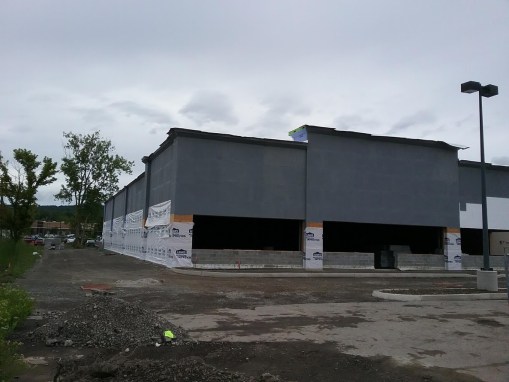
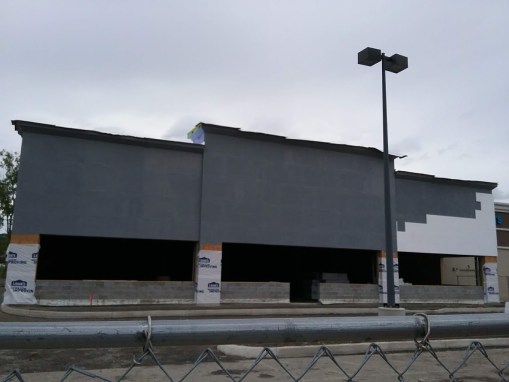
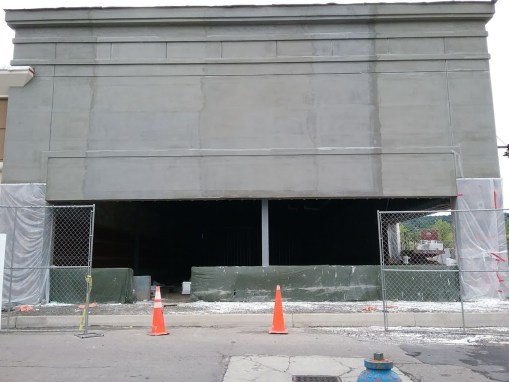
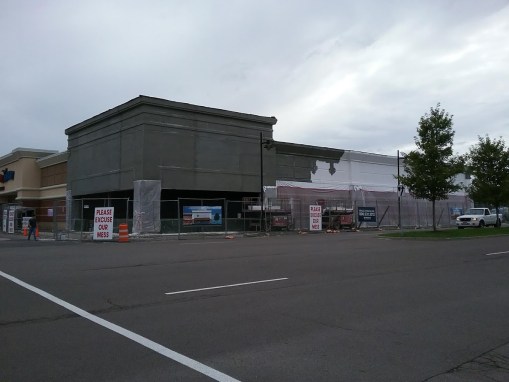
It looks like the new south retail endcap is using a standard EIFS (Exterior Insulation Finishing System) for the exteriors. EIFS, also known as synthetic stucco or by the brand name Dryvit, is a pretty common choice for commercial builds. Readers might remember when it was used with the Holiday Inn Express built a couple of years ago on Elmira Road. Over the plywood there’s a dark grey moisture barrier. This is being overlaid with an adhesive and insulation board, which will then get a reinforcing mesh, base/scratch coat, and a finish coat. Drainage cavities are then built over the barrier to allow water that has penetrated the surface to exit the wall without wrecking it (a big problem with early EIFS systems).  The north endcap looks like it already has insulation boards in place, as well as a base coat for the primary moisture barrier, and a white coat that might be a primer for the finish coat. New curbing, lighting and a fire hydrant have been installed.

Although the south endcap is 14,744 SF, the listing on commercial real estate website Loopnet says there are two spaces, one about 15,000 SF, and a second 3,400 SF. The property doesn’t show a 3,500 SF space, and the north endcap is 7,315 SF, so it’s not clear what that refers to. It could be the 3,200 SF space that is planned for a the pad parcel next to Firehouse Subs, but that hasn’t started yet. If that is the case, however, that implies Benderson Development may have a tenant under contract for the north endcap that they just haven’t yet announced.


East Pointe Apartments Construction Update, 8/2018

6 08 2018

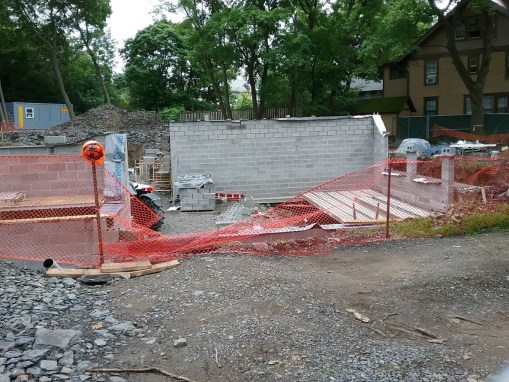
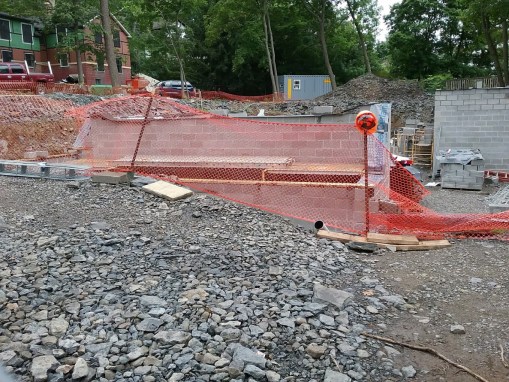
No one can say DGA Builders is wasting time. A visit on Friday showed three sets of CMU foundation walls have been assembled and mortared, each for a ten-unit townhouse string. A few crewmen kept an eye on a material placement truck, also known as a stone slinger, as it launched rocks into the footprint encased by the foundation walls. This may be a crushed stone base (hardfill) for a concrete slab pour, given the stacks of rebar with surface rust sitting nearby. A shallow foundation would work fine here because two-story buildings aren’t especially heavy as structures go, and it would be less expensive and time consuming than a deep foundation. Elsewhere around the site one sees PVC sanitation pipes (sea green), water pipes (blue), and pieces for utility junctions.

Meanwhile just a stone’s sling away on Nor Way, Forest City realty continues work on the six-unit string (hexplex?) of townhouses. Two are fully framed and roofed, two have had their first floor framed though not fully sheathed, and the other two are only partially framed on the first floor. As with all the townhouse strings, these will incorporated some unique design features while keeping the general unit layout the same. I know they’re not happy about the East Pointe townhomes, but it could be a good synergy – the price points ($1,400-$2,000/month fr East Pointe, $350k for the Heights of Lansing townhouses) are such that renters who may wish to stay in that neighborhood may look at the Heights townhomes as an option.

A website is now up and running for East Pointe. It’s mostly stock images and bland corporate-speak, but they do have floor plans and some new renders. Here’s the advertising pitch:

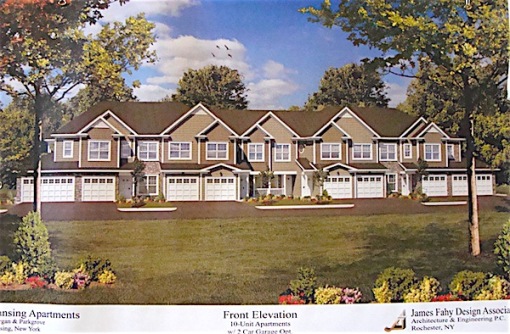
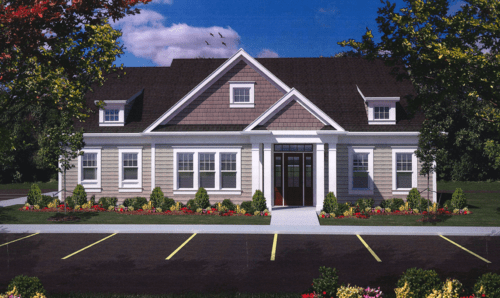
“This apartment community is located on 20 acres in Lansing, NY, which is part of the Ithaca, NY, market. This is new construction of 140 state-of-the-art apartments. There will be 36 one-bedroom units, 90 two-bedroom units, and 14 three-bedroom units. The project will include fourteen apartment buildings with 10 units in each building that will be walk-up garden style with private entrances and a community building. All units will have high end finishes and amenities, including stainless finish appliances, microwave, dishwasher, washer and dryer, ice maker, granite counter tops, wood cabinets, vinyl plank flooring and wall-to-wall carpeting, tile showers, high end plumbing fixtures and lighting fixtures. All apartments will include a patio or deck. The community building will include the leasing and maintenance office, Great Room and warming kitchen for gatherings, and a fitness center. The project also includes an outdoor pool with changing rooms and shower.”

I have no idea what a warming kitchen is, but my very Sicilian mother is pretty good at turning kitchens into warming spaces around the holidays. A photo of the community center is included below.

UPDATE: I’m just going to add this here since the timing was ever so slightly off- on Monday the 6th, the construction loan was filed with the county. M&T Bank is lending Park Grove (represented by an LLC) $22.6 million for construction of the East Pointe project.


802 Dryden Road Construction Update, 8/2018

5 08 2018

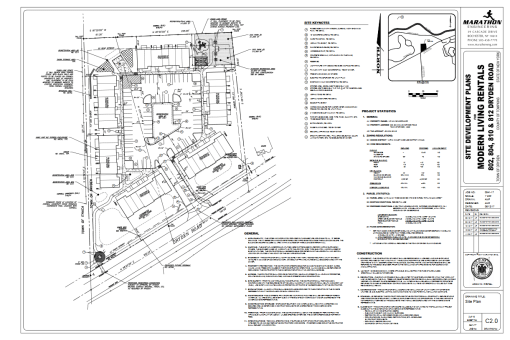
Not a high-profile project here, but sizable. 802 Dryden Road, also called “Ivy Ridge”, is the latest project to come out of Modern Living Rentals (MLR). MLR is led by local developer Charlie O’Connor, and as I noted previously, “[h]e is arguably one of the most reticent developers in Ithaca, preferring unobtrusive projects that he hopes will create as little debate as possible. It’s kinda funny in a way, because although he’s a business partner with Todd Fox (Visum’s property management is handled by MLR), the two of them are near-opposites in that regard.”

True to form, while 802 Dryden is a sizable 50,000 SF, $7.5 million project, it was the subject of relatively little public debate during its approvals process. It’s located next to arboretum, replaces four rental houses and a motorcycle repair shop, and the number of residences within 500 feet could be counted on two hands. The project consists of 42 two-story townhouse rental units on three acres, six strings of seven units in a right trapezoid layout. Each string contains four two-bedroom units, two three-bedroom units and a four-bedroom unit (108 beds total). It’s a two-minute drive from the east end of Cornell’s campus (B Lot), and an easy sell to students and staff looking to live in a quieter location near campus.

Zoning on the site is fairly dense, all things considered. Although rather far from Varna’s core, the project does fall under Varna Hamlet Mixed Use District zoning, which allows ten units per acre. A redevelopment bonus of dilapidated properties gave another two units per acre, and a green bonus of two units an acre was also permitted. The green features part required some debate and confirmation. The project seeks LEED Certification and will apply LEED standards for neighborhood design.

The project was first proposed in June 2017. At the time, its design was a virtual clone of another MLR project, 902 Dryden Road, albeit with different colors. The designs were revised at least three times. The design work was passed from STREAM Collaborative to John Snyder Architects, who did substantial alterations, and then again, and then STREAM once again did some work on it. The final set of renders are here, with the site plan docs here. Originally there were three townhouse string designs, but it looks like it was reduced to two in the final round. The six buildings are generally but not exactly the same – the gables are mirrored, some additional trim pieces are used on the gables for the Dryden Road pair, and they alternate between a dark blue vertical fiber cement panel (probably HardieBoard), and a dark green panel. Original approvals may have been issued in November 2017, but the last revisions were approved this past May.

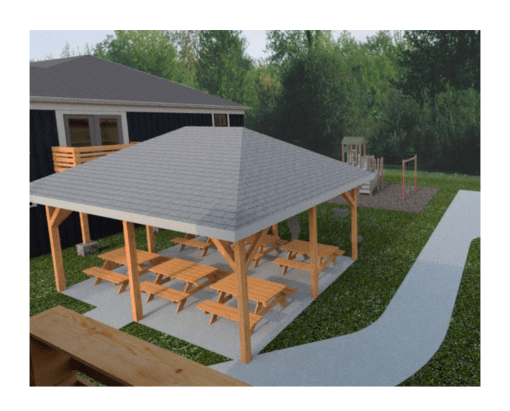
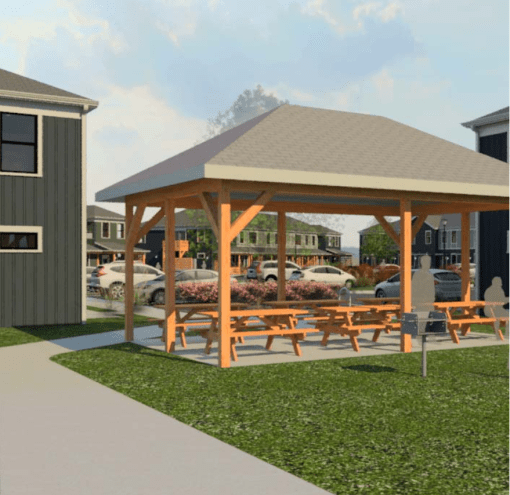
Exterior features include 70 parking spaces, bike racks, trash/recycling enclosure, stormwater ponds, bioretention areas, signage, a childrens’ playground, pavilion and a dog park split up for large and small breeds. Planned interior features include granite counter tops, stainless steel appliances, a washer and dryer in each unit, contemporary lighting, and marble tile. Expect these to be in the same price range as the other recent MLR units, which have been in the $650-$750/bedroom range. The units are expected to be ready for occupancy by June 2019.

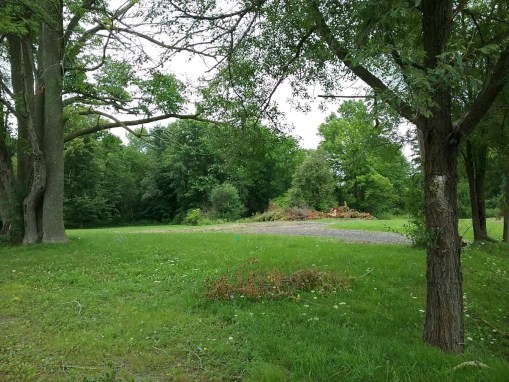
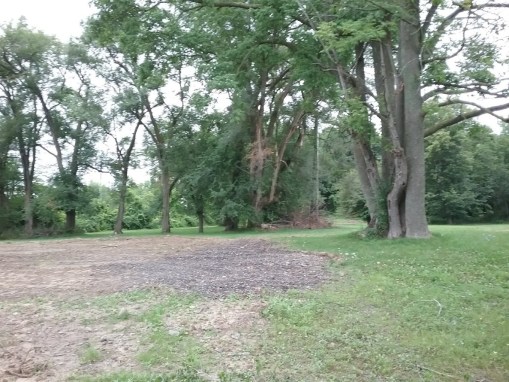
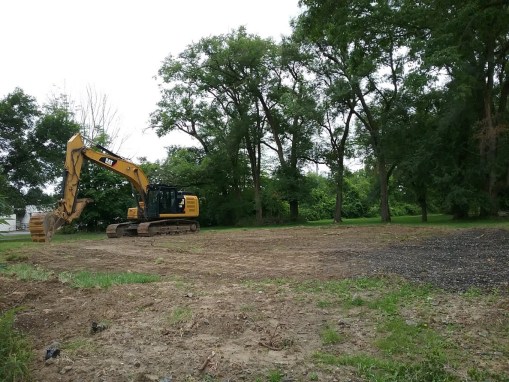
There’s a little bit of pre-building infrastructure work that had to take place before construction, because this is a sort of no man’s land between the settled parts of the town of Ithaca and the town of Dryden where no municipal water service was available. The public water main had to be extended to service the project, and the main will be deeded over to the town. At this time, the existing buildings have been removed, but the land has yet to be cleared; we’re really just at the initial phases of the project.

Along with MLR, STREAM and John Snyder Architects, GMB Consulting Services did the LEED score analysis, T.G. Miller P.C. handled land surveying and Marathon Engineering tackled the civil engineering work – Marathon’s Adam Fishel shepherded the project through the town boards. I don’t have a contractor listed, but will share it when I do.

Pre-construction (Google Maps, Nov. 2015)

Renders:

August 3rd:


105 Dearborn Place Construction Update, 8/2018

4 08 2018

It’s no secret that people are living longer. In 2014, residents of Tompkins County could expect to live to 81.21 years, an increase of about 7% from 75.92 years in 1980. It’s also no secret that the population in general is getting older – the Cornell Population and Demographics unit estimates that Tompkins County’s population over the age of 65 has gone from 9,301 in 2000, to 14,454 in 2017, an increase of 55.4%.

From a business perspective, this creates opportunities for various forms of senior housing, housing designed to allow matured individuals to age in place. However, there are cases where specialized, skilled care may become a necessity. This can include specialty facilities like Brookdale (memory care), nursing homes like Beechtree and Cayuga Ridge, and premium personalized care options like Kendal and Bridges Cornell Heights.

Founded in 2001, Bridges Cornell Heights occupies three expansive homes in the historic Cornell Heights neighborhood north of Cornell campus – one was built new in 2005, and the other two are renovations, the last being just a few years ago on Kelvin Place. Each house has sixteen residents or less, and to be frank they could be described as a luxury retirement homes – a high degree of personalized care and a commensurate price tag.

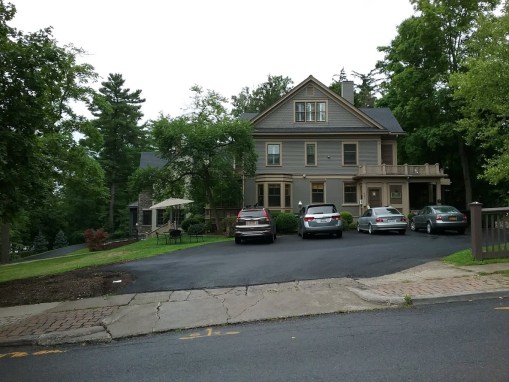
With full occupancy and a waiting list in hand, Bridges has decided to move forward with plans for a fourth house in Cornell Heights, and the second all-new home. The property will be located on the southeast corner of Wyckoff Avenue and Dearborn Place, a small vacant field recently sub-divided from the former Palentological Research Institute next door (which is separately being renovated into a two-family home by Classen Ambrose’s husband). According to the 1928 Cornell Map, the property was once home to the neighborhood school, but the school and its building ceased to be many years ago.

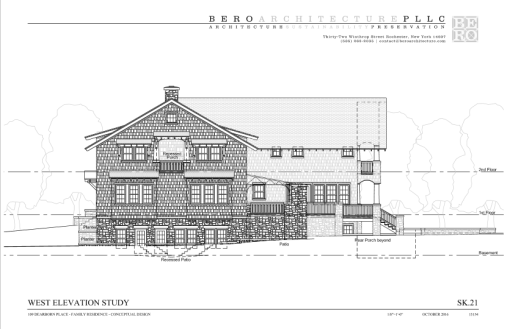
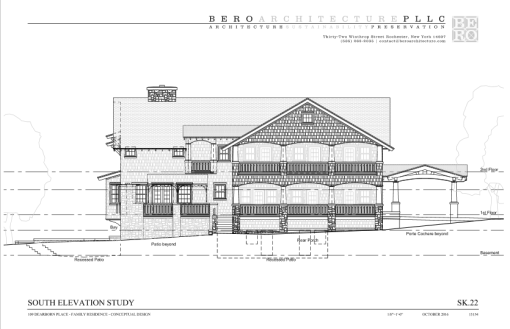
Given that Cornell Heights’ century-old architecture is defined by high-end, visually unique homes, the new property is seeking the same qualifications. Rochester-based Bero Architecture, which specializes in historic design, has been retained and early drawings show an imposing 10,930 SF two-story cultured stone and cedar-shingle Craftsman-style home with 12 bedrooms (four of the bedrooms will be designed for double occupancy for couples). The landscaping will be similarly fitting and designed by Cornell landscape architecture professor Paula Horrigan. Exterior features include a porte cochere, porous driveway and courtyard parking for nine vehicles (all residents, staff are given pre-paid parking off-site at a nearby fraternity and walk over), as well as three patios, walkways and lush plantings (500+ perennials, 127-140 shrubs, and 35 trees).

Since Cornell Heights is a historic district, the Ithaca Landmarks Preservation Commission was required to sign off on any new construction visible from the outside. The design of the house changed very little from start to finish in the approvals process – Bero is good at what they do, and the ILPC was amenable to the design, though some requested tweaks were made to landscaping and parking along the way. They also requested a dated plaque to ensure no one mistakes the new build for an older structure. The project was proposed in May 2017, and approved in October, generally smooth sailing. I can remember when I did the Bridges article for the Voice, Classen Ambrose was very worried about the neighbors reacting negatively. To that credit, some of the full-time neighbors opposed the project, and it’s not often one sees a “senior living operators are converting and destroying the neighborhood” argument. But overall, the opposition was minor. The house is contextual, and the environmental impacts are fairly modest once the mitigation measures (parking off-site, new trees) are considered.

Classen Ambrose has said that the house will programmatically be a little different from the existing trio of homes in that it will be independent living instead of the enhanced assisted living employed at the other homes. That means a lower level of care – residents may receive assistance in housekeeping and cooking, but they are otherwise capable of managing their day-to-day activities. The new facility will also add at least four more staff to Bridges’ payroll, which is in the low/mid 40s and has been seeking living wage certification.

Side note, although it’s been replaced with newer videos, Mack Travis, the founder of Ithaca Rentals and renovations (now Travis Hyde Properties under his son and son-in-law) once did a testimonial in a short video extolling Bridges’ service for his family members. Now years later, Bridges will be providing services to residents of THP’s DeWitt House senior living project.

This is a high-end development where no expense is being spared. Tompkins Trust Company extended a $4.2 million loan, filed with the county on July 20th. Construction is expected to take about a year, with local firm Schickel Construction in charge of the buildout. Alongside with Bero and Horrigan, T. G. Miller P.C. did the civil engineering work for the project.

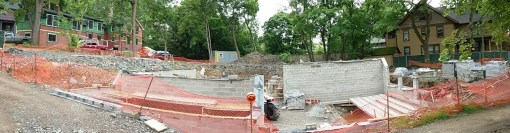
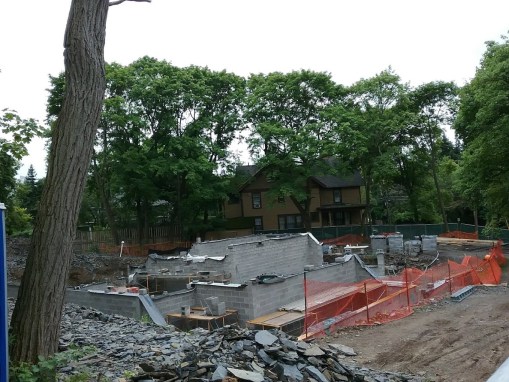
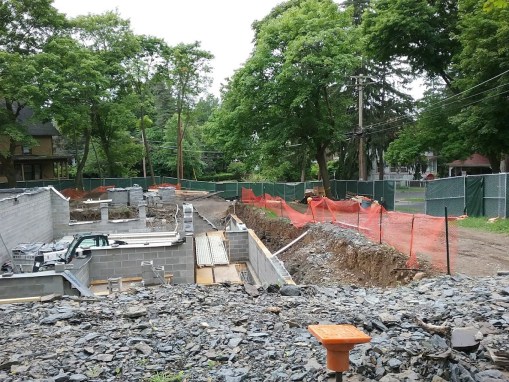
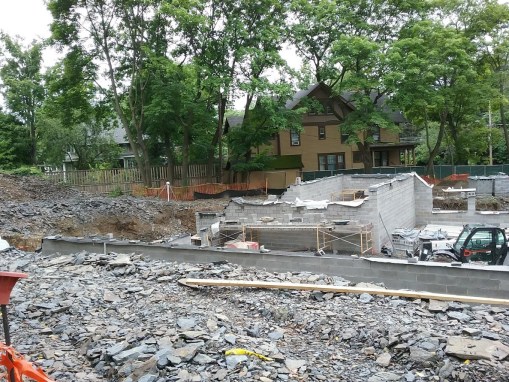
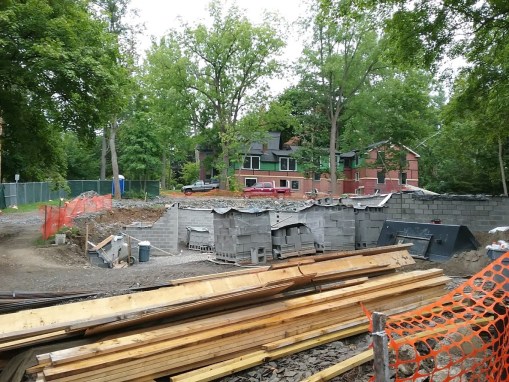
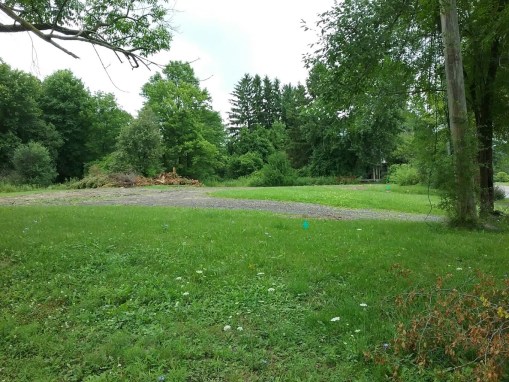
The project does include a finished basement, and it appears the site has been cleared, excavated, and concrete masonry (cinder block) walls are being assembled at present. Construction will be a traditional wood-frame approach. Note the ZIP panels on the neighbor at 109 Dearborn, as it goes from a dull 1930s office/storage space and becomes a two-family home, also designed by Bero Architects.

Pre-construction (Sep 2017 Google Street View)

August 2018


Drawings:


Tompkins Center for History and Culture Construction Update, 7/2018

2 08 2018

I don’t usually spend much time covering renovations, but here’s a major project that deserves a good summary.

Let’s start this off with a little self-promotion by linking to the summary and project team interviews I did for the Voice pack in February. The History Center (THC) is a non-profit that celebrates Tompkins County’s past, with an eye towards improving its future. It’s a source for genealogists, historians, teachers, archivists, and many of the old-timey photos that the Voice, Times and other news outlets share with intrigued readers. The History Center has been renting space at 401 East State Street (Gateway Center) on a 25-year lease, due to expire this year.

When weighing their options, there were a couple of reasons why a move was looking better than a renewal of the lease. For one, it would give them a chance to find a more visible place to call home – a higher-profile location would give them more opportunity to be seen, and hopefully be heard. For two, the rent on their existing space was set to go up quite a bit, nearly doubling to $90,000/year.

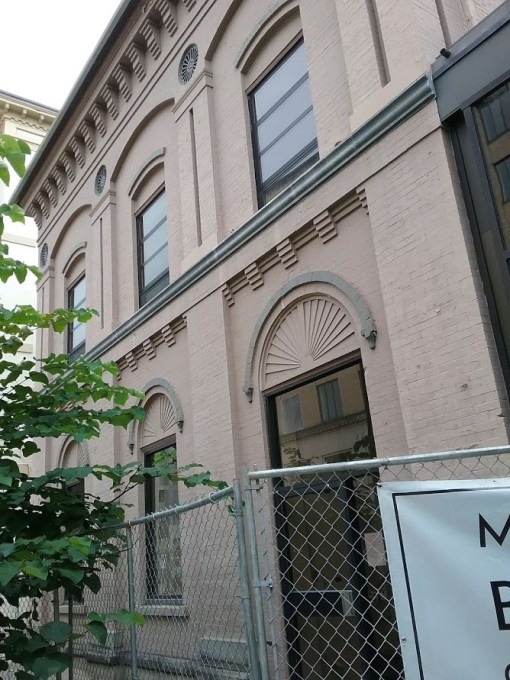
It happened that Tompkins Trust was in the midst of building its new headquarters, so there was potentially some space opening up in the downtown area. A prime site availed itself in a pair of buildings along the pedestrian-only block of 100 North Tioga Street, better known as “Bank Alley” since nearly all the buildings along it were occupied by banks. 106 North Tioga Street, the shorter brick building, was the county clerk’s office when it was built back in 1863. Its neighbor at 112 is relatively young, built for the predecessors of Tompkins Financial in 1895. 106 was acquired by the bank in 1949, and various renovations from the 1950s through 1980s brought the buildings together as a bank complex with a modern connector space between them. After initial discussions in 2015, Tompkins Financial said it was open to a sale of the 18,826 square-foot space, and the county, who helps covers The History Center’s expenses, paid for a $15,000 feasibility study.

The first public discussion of the plan, then dubbed “The Tompkins County Heritage Education Center”, was in October 2016. The feasibility study checked out, so in January 2017, The History Center, in conjunction with other non-profits, requested $35,500 from the County Tourism Program for early stage development costs – a capital campaign, branding and marketing materials, and architectural drawings.

The project could be described as part “heritage tourism”, part visitor’s bureau and information center, and part non-profit office space. The Tompkins Center for History and Culture will house the CVB’s Downtown Visitors Center (part of the Tompkins County Chamber of Commerce) and The History Center on the first floor. The Wharton Studio Museum, the Dorothy Cotton Institute, and the Community Arts Partnership will also be major components of the project. Historic Ithaca and the Discovery Trail will also be affiliated with the Center, and a newly rebuilt “Tommy” bi-plane will be on permanent loan in the exhibit area. Most project partners will have office space on the second and third floors. The History Center is promoting the TCHC as a co-working space that would allow non-profit partner organizations to work together more efficiently, enabling them to share the costs of administrative functions, and tackle and divvy up larger grants and projects.

The Tompkins Center for History and Culture was a bit of an effort to name. It was initially turned down by the county legislature last summer because they wanted The History Center to do community outreach and make sure people were okay with the moniker. And two legislators still opposed the new name, one for not having the exact phrase of “Tompkins County” in it. To be honest, it’s a mouthful even now.

The project’s costs are estimated at about $3.75 million, but the enumerated amount is $3,345,100. Originally, the cost was $2.9 million. The county paid $2 million for the property, about $400,000 below assessment. The other $900,000 was for hard and soft costs related to the renovation itself. As for recuperating some those costs, $1.365 million is being paid for by a pair of NYS grants, a $1.06 million arts and culture grant, and a $305,000 economic development grant, which were awarded as part of the state’s economic development competition in December 2017. An earlier state grant gave $28,500 towards planning costs of the project. Another portion ($100,000) will be covered through some of the hotel room tax. Another $450,000 or so will come out of the $1.75 million being raised in the a capital campaign supported by individual and institutional private donors.

The county initially expected to be on the hook for $350,000. But in May, The TCHC requested and received an extra $445,100 in appropriations, which the county would have to cover in the short-term. The extra cost, raising the renovation’s price tag to $1,345,100, was attributed to bids coming in over projections and additional design costs. The legislature is hoping the expense is justified through the boost in tourism (30,000 visitors, a mix of local and non-local, will walk through its doors annually after it opens) as well as the modest rent it will charge the non-profits for the office space.

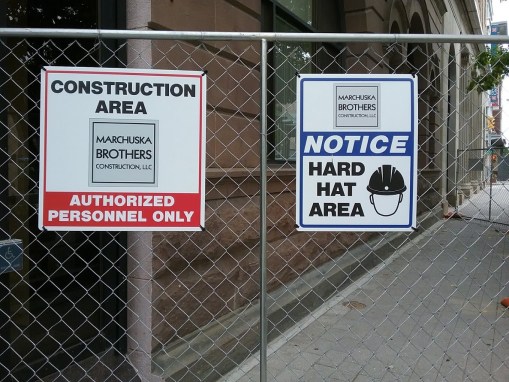
STREAM Collaborative is doing the design work, Tetra Tech did the structural engineering, New York’s Tessellate Studio is designing the new exhibit area and Iron Design developed the logo, website and marketing material. On the construction side, Marchuska Brothers Construction, LLC, of Endicott, has the the General Work Contract ($561,000); Johnson Controls, Inc., of Rochester, won the Mechanical Contract ($502,638); and Richardson Brothers Electrical Contractors, Inc., of Ithaca, earned the Electrical Contract ($135,550). Marchuska is a fairly recent addition to the Ithaca area, and just finished a gut renovation of a manufacturing facility into medical offices in Lansing village.

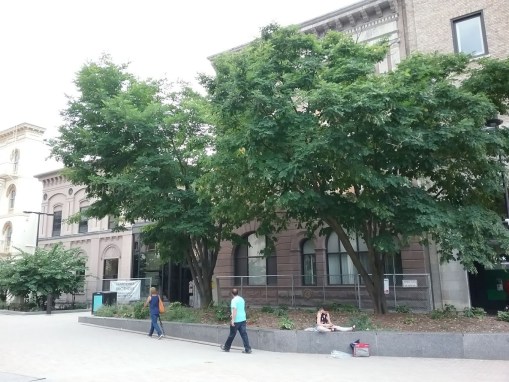
With Tompkins Financial now in its new HQ and out of Bank Alley, construction could proceed and the formal “groundbreaking” for renovation was last month, Tompkins Center for History and Culture is expected to open in early 2019. The website for TCHC can be found here.

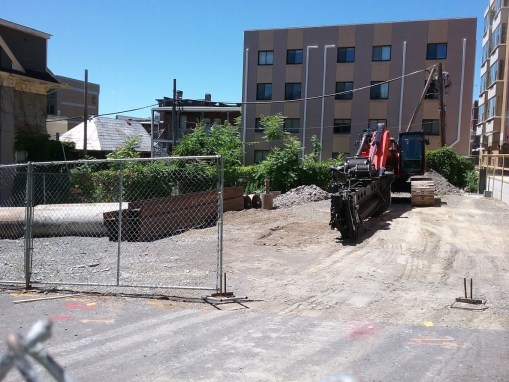
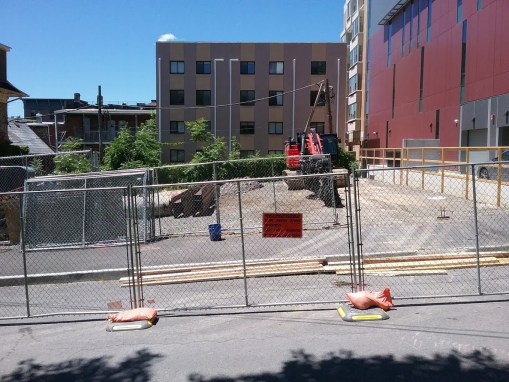
At this point, asbestos removal by LCP Group has been finished, and some of the windows have been removed in 112 North Tioga while non-load bearing interior walls are removed and the interior space is reconfigured for its new tenants. Exterior work will generally be limited to murals, lighting and signage.

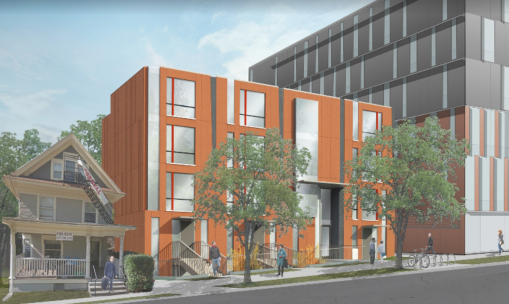
Render:

July 7th:

July 27th:


238 Linden Avenue Construction Update, 7/2018

22 07 2018

Might be jumping the gun a bit on this, but the fence encroachment into the street, pile driving equipment and steel/caisson tube liners on site are leading me to believe this one is in site prep.

Consider this project thr second half of a 2-for-1 package deal from developer John Novarr. Novarr and his business partner, Phil Proujansky, own a fairly large and widespread set of local properties, with the massive Collegetown Terrace project being the best known ($190 million investment, 1,250+ beds, 16 acres). Most of the rentals operate under Novarr-Mackesey Property Management. Their latest development was on behalf of Cornell, the 76,000 SF Breazzano Family Center for Business Education, which was dedicated last fall, an imposing six-story building at 209-215 College Avenue in Collegetown.

When Novarr first bought the properties that would be demolished to make way for the Breazzano, he bought a ramshackle six-bedroom house at 238 Linden Avenue for $1.35 million – this was in December 2010, before he had assembled his final, full group of properties (and realized Pat Kraft was flatly not interested in selling to him, later doing his own redevelopment at 205-07 Dryden), so the purchase of 238 Linden could be seen as a secondary purchase to give room for flexibility, and a place for construction staging in the notoriously tight spaces of inner Collegetown. In its last few years, Novarr did not rent out the house, which was in poor shape and torn down in June 2015. A redevelopment was always intended at some point, through it was only as the Breazzano plans were drafted did Novarr and Proujansky settle on a concept.

Inner Collegetown is a captive rental market – regardless of economic recessions, there will always be students willing to pay a premium to live near Cornell’s campus. The Breazzano project presented a unique opportunity – the project will serve up to 420 Executive Education students, who tend to be older, deep-pocketed, and infrequent visitors to campus, coming up for a few weeks of the year.

The new 238 Linden is designed to tap those Executive Education students who might come up more frequently, or prefer to have a second place to call home during their matriculation with the Johnson School. The project is a 13,715 square-foot building with 24 efficiency units (studios). It will be 4 stories with a habitable basement, just under 50% lot coverage, and is fully compatible with the site’s CR-4 zoning.  Each fully above-ground floor will host 5 efficiency units, with four in the partially-exposed basement. While intended for Johnson Executive Education students, it does not appear it would have provisions limiting the units to E-MBAs.

The design intent was to create a townhouse-like appearance, in form if not in function. The exterior includes fiber cement panels to complement the colors of the Breazzano, aluminum windows and a glass curtain wall with energy-efficient glazing. A number of green features are included in the project, such as LED lighting, low-water plumbing fixtures, and a sophisticated VRF high-efficency HVAC system, which uses air-source heat pumps.

Plantings, walkways, steps and retaining walls are planned, with decorative entry stair bridges and little landscaped courtyards to provide a pleasing aesthetic for the basement units. As with all inner Collegetown projects, no parking is required so long as a transportation demand management plan (TDMP) is filed and approved by city planning staff. During Site Plan Review, the project cost was estimated to be about $2 million.

The project had a pretty quick trip through the planning board – it was proposed in March, there were very few suggested aesthetic changes, and since everything conforms with the size and intent of zoning, the board was pretty comfortable with the proposal. However, while it was approved in July 2017, the project was unable to move forward because of a change in state fire codes that essentially made construction along Linden Avenue illegal for any building taller than 30 feet (and 238 Linden is 45 feet tall), because Linden is too narrow. The way around this was to petition the city Board of Public Works to treat the parking space on the street in front as a loading zone, creating a “wider” street since a fire crew would no longer have to worry about parked cars along the street frontage. This made it easier for the project to obtain a fire code variance from the state. Normally, BPW would reject this, but 238 Linden and Visum Development’s 210 Linden had already been approved when the code was changed, so they got a special, rare accommodation. Suffice it to say, any other Linden project would be difficult if not impossible under the revised state fire code.

As with all of his other projects, the architect is ikon.5 of Princeton, with local firm Trowbridge Wolf Michaels Landscape Architecture serving as the project team representatives, and T.G. Miller P.C. providing the civil engineering work. The modern design may not be to everyone’s taste, but Novarr likes the architecture firm’s work so much, he asked them to design an addition to his property in Cayuga Heights. Beauty is in the eye of the wallet-holder. No word on who the general contractor will be, but Novarr has often turned to Welliver for his construction work. The original buildout period was estimated at ten months, so a plausible occupancy for 238 Linden would be complete by Summer 2019.