News Tidbits 5/6/17: Starting Small and Dreaming Big

6 05 2017

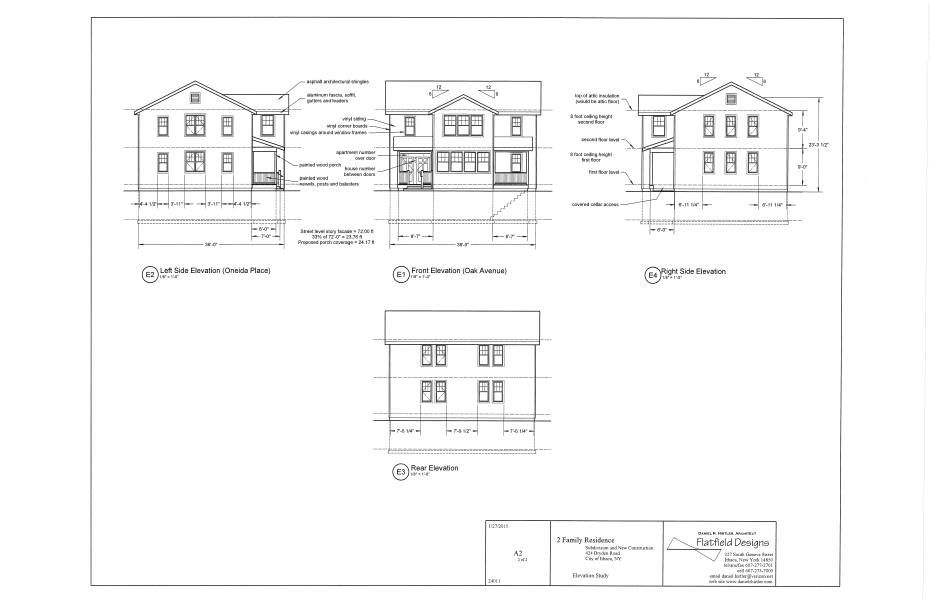
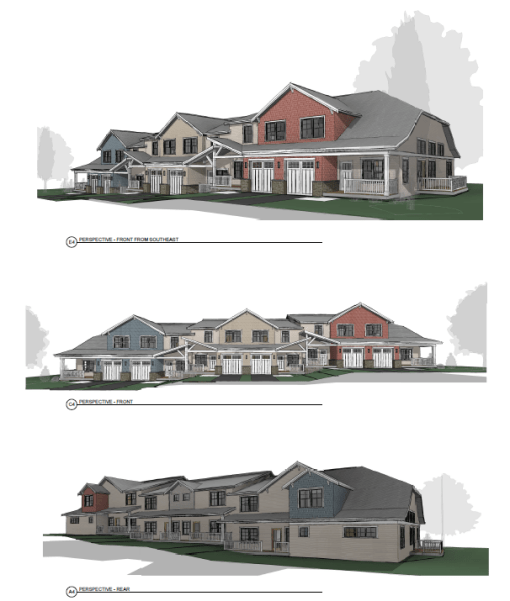
1. The Evergreen Townhouses in Varna was hotly debated at the last town board meeting, per the Times’ Cassie Negley. Linda Lavine, one of the town board members, was particularly fierce in her criticism, calling the solar panels “useless”, and others in attendance expressed concern about appropriate room for amenities.

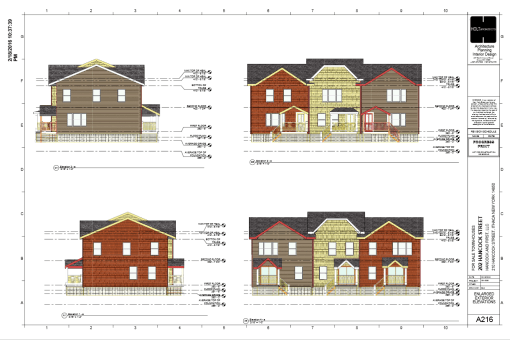
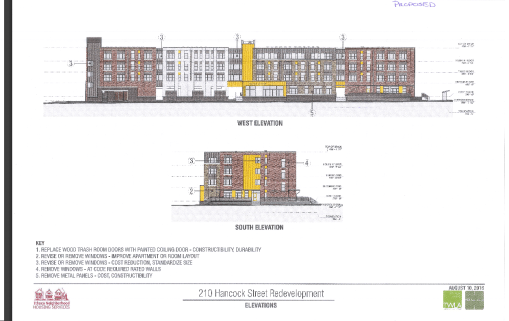
However, it also seems one of the phrases bandied about was that it wasn’t “family-friendly”. If you’re reading this and one of those folks, do yourself a favor and stop using that term. It’s an enormously baited phrase, historically used to fight affordable housing as a racist/classist euphemism, because people of a certain class or color were apparently less appropriate for families to be around. For an unfortunate example, it was a phrase used with the INHS 210 Hancock affordable housing plan in Ithaca. Think of it as the equivalent of a religious group claiming a TV show isn’t “family-friendly” because it has a same-sex couple, or feminists.

Although this project is market-rate, deciding whether or not something is “family-friendly” is subjective and potentially baited. It gives others the wrong idea on how to discuss the pros and cons of a project, which should be about features, or lack thereof. TL;DR, find a different phrase.

Oh, and on another note – Planning Board member Don Scutt. For someone claiming Dryden is getting an anti-business reputation, your work fighting the solar panels isn’t doing the town any favors. I don’t always (often?) agree with your mirror opposite and board colleague Joe Wilson, but at least I can say he’s consistent in his views.

Anyway, off soapbox. It looks like the public hearing was left open as the project may potentially pursue a modified plan of some form, so we’ll just have to see what happens.
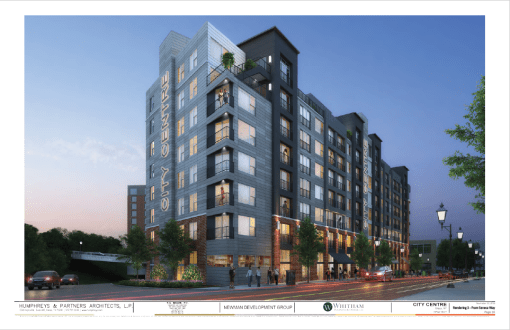
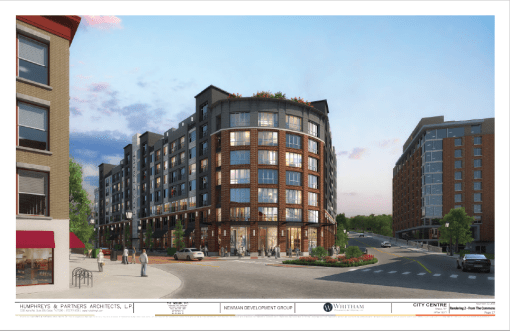
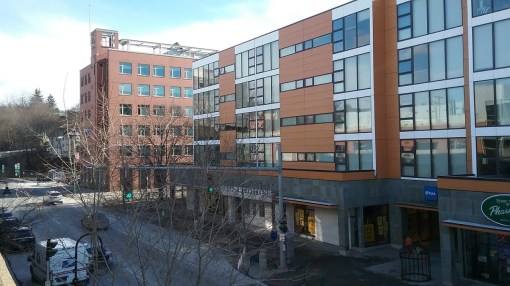
2. The Trebloc property, future home of City Centre, has exchanged hands. 301 East State Street sold for $6,800,000 on April 28th. The seller was “Trebloc Development Company”, the company of developer Rob Colbert. The buyer was “City Centre Associates LLC”, a limited-liability entity created Newman Development. This brings the 8-story, 218,211 SF mixed-use project one step closer to getting underway.
3. A couple of news notes from the Tompkins County PEDEEQ (planning/dev catch-all) Committee meeting:

I. OAR’s transitional housing at 626 West Buffalo Street will be called “Endeavor House”.

II. The county is set to start work on its draft housing strategy. The annual goal figures through 2025 include:

–580 “workforce units” per year, of which 280 are rentals going for 50-100% area median income, and 300 would be for-sale, with 80 of those condos.

–student beds, either dorms or student housing developers, commensurate with enrollment growth

–special needs beds to those making 50% or less of AMI. No quantitative descriptor is given.

–350 units in the urban core, 50-100 in “emerging and established nodes”, 30 in rural centers and 100-150 in “other areas”, which includes suburban Lansing.

https://www.facebook.com/plugins/post.php?href=https%3A%2F%2Fwww.facebook.com%2Fmedia%2Fset%2F%3Fset%3Da.1518721884836040.1073741852.772959889412247%26type%3D3&width=500

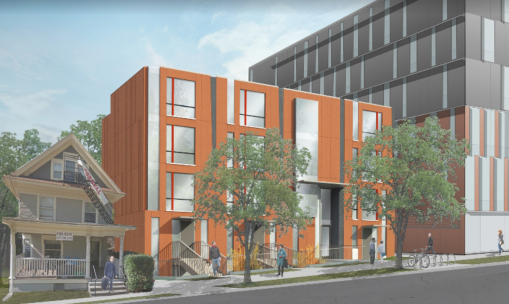
4. 607 South Aurora Street is officially underway. Modern Living Rentals posted an update to their facebook page showing site prep for their infill residential project in the city of Ithaca’s South Hill neighborhood. The four new buildings will be two-family units with three-beds each (24 total), similar to those recently completed at 125 and 139 Old Elmira Road. If the statistics are correct, the existing house will be renovated into a two family house – the banner suggests a 4-bed unit and a 2-bed unit to bring the total to 30 beds. This project will get a full write-up later this month, and its progress will be tracked as it heads for an August completion.
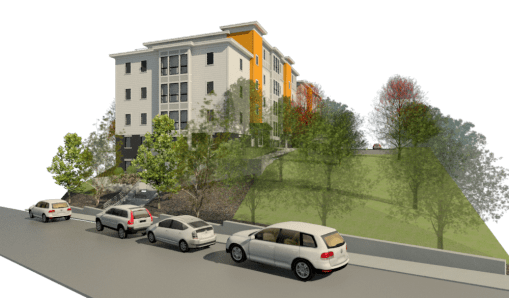
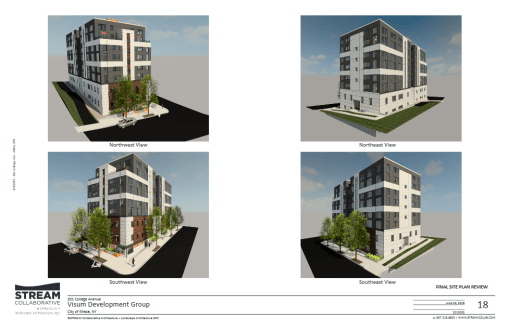
5. Looking at the city of Ithaca’s projects memo, it doesn’t look like anything brand new will be coming up. The formal review process is set to begin on Visum Development’s 232-236 Dryden Road project. I’m kinda confused on STREAM’s project description because it references both 191 bedrooms and 206 bedrooms, and some of the numbers don’t match the parenthetical figures -for example, thirty-seven (42) bike spaces. Going off the FEAF, it looks like the number of beds has in fact been increased to 206. The construction timeframe is August 2017 – August 2018, and it looks like both buildings will comprise one phase. Deep foundation, so apologies in advance to the neighbors who may be hearing a a pile driver this fall. The developer is exploring net-zero energy options.
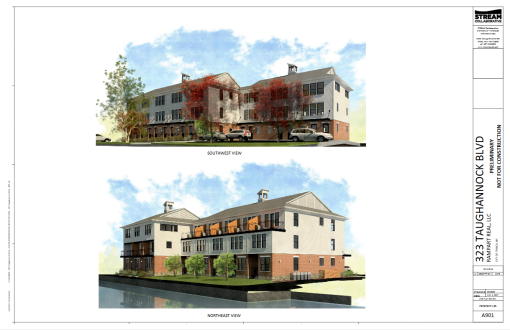
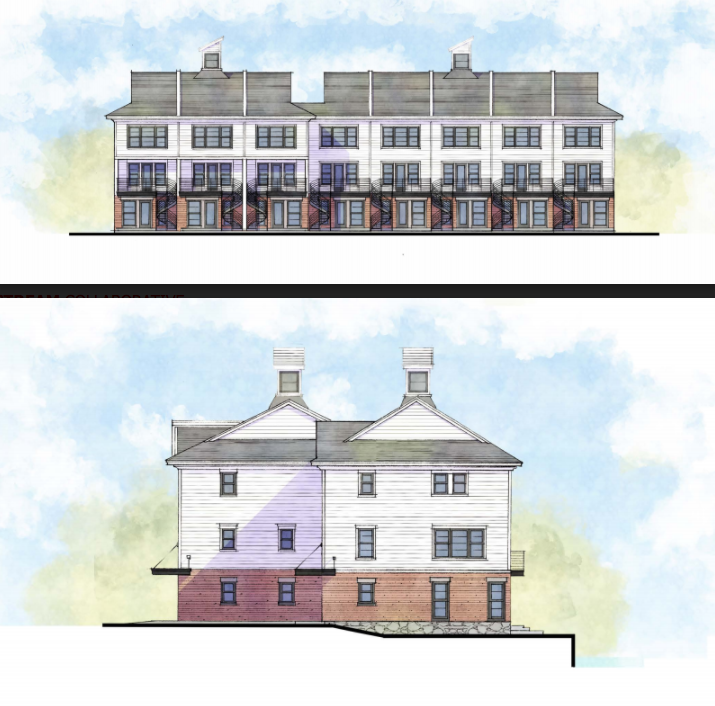
Also of note, 323 Taughannock received some visual tweaks. Gone are the cute sprial staircases leading to the waterfront, and in their place are more standard treatments. The group of five will now have their balconies on the third floor instead of the second floor. The changes on the front are more subtle, with the window fenestration now centered on each unit, and the front doors rearranged (old version here). Overall, the design is still roughly the same, it’s just a revision of a lot of details. Worth noting, given the crap soils on Inlet Island these will be on a timber pile foundation designed by Taitem Engineering. 238 Linden Avenue, 118 College Avenue and Benderson’s 7,313 SF retail addition are up for final approval this month.

6. Meanwhile, from the ILPC, it looks like there are a couple of density-expanding projects planned in the city’s historic districts. The first will renovate a garage at 339 South Geneva Street in the Henry St. John Historic District (part of Southside) into a one-bedroom carriage house. It’s infill, the garage is non-contributing and the design is an improvement, and it looks like a good if small project.
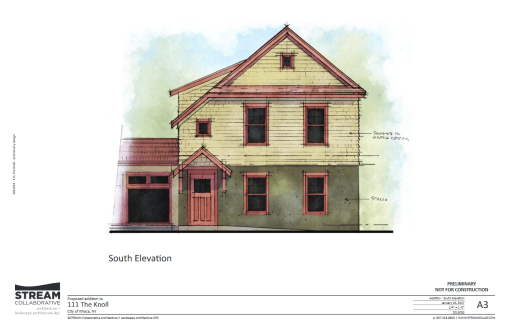
The other is a renovation of a classic Cornell Heights Mansion at 111 The Knoll into group housing for “Sophia House”, a Cornell Christian organization for women. The men’s equivalent, “Chesterton House”, is next door. The plan calls for renovating the five-bedroom, legal for eight-persons house into a 15-bed home. Part of that would entail demolishing the 1950s garage, which is connected by a breezeway to the ca. 1910 house, and replacing the garage with a four-bed addition, still connected through the breezeway.

Both designs are by STREAM Collaborative, as are 232-236 Dryden and 323 Taughannock. Can’t fault STREAM for being good at what they do – if a developer wants modern like 201 College, they get modern. If one wants traditional like the above examples, Noah Demarest and his team can do that too. They know the market and what works in terms of design. Unlike many local architecture firms, STREAM’s business is almost completely in Tompkins County – they did some concept design work in Rome and Utica, and some of the Tiny Timbers kits have been sold outside the county, but otherwise everything else is in or close to Ithaca. Business is good.
harolds_square_v4_new_comparo

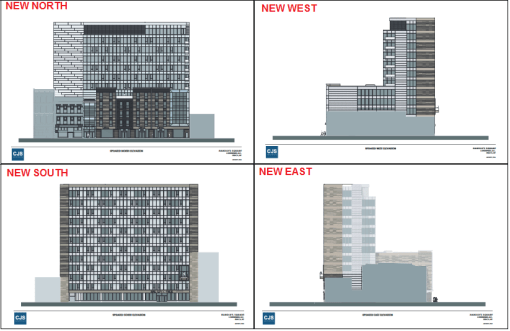
7. Admittedly, this is beating a dead horse, but Harold’s Square will eventually get underway. It appears the problem right now is that the tax abatement approved by the county is insufficient because of the increase in project costs (up 12% to $42.9 million), so the project team is heading back to the IDA to get the abatement revised (the Hilton Canopy did the same thing a few months ago). The project was previously approved for a 7-year abatement, but this time around they are seeking the 10-year abatement. Combined property, sales and mortgage tax abatement would come out to $5.089 million. New property taxes generated over the 10-year period would be $3.4 million (note that is on top of what’s already paid; IDA abatements use the current taxes as the baseline).

The office space and retail space look higher than previously stated (33k vs 25k, and 16k vs 12k), but it looks like that’s because the Sage Building renovations are included in the IDA numbers. The apartment count remains the same (108), although it looks like one 1-bedroom unit has been replaced with a 2-bedroom unit.

Two reasons are cited for the delay- issues with getting the office and retail space occupied, and a premium price on construction workers as a result of the increased local activity. The pre-development costs are clocking in around $800,000, so if it fails to get approval from the IDA’s board, that will be a pretty big cost to swallow.

Should it be approved, the construction timeline is stated as June 2017 through Q1 2019.
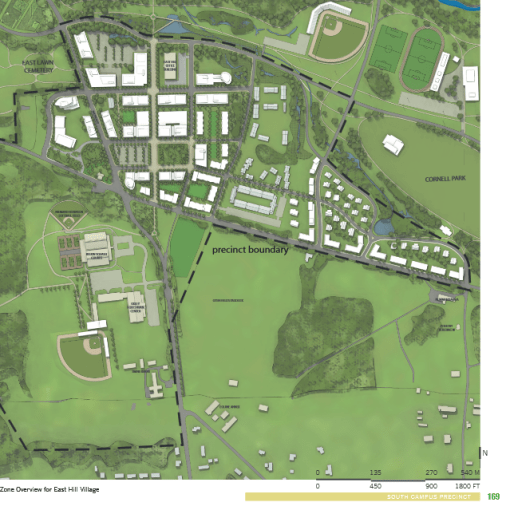
8. Just throwing this in for the sake of throwing this in – mark your calendars for May 17th, when Cornell hosts a forum about the new East Hill Village neighborhood from 5:30-7:30 PM at the East Hill Office Building at 395 Pine Tree Rd. The project website notes that it will start with a 30-minute presentation, followed by breakout groups to brainstorm what people do and don’t want included in the building plans – certain retail uses, housing components, general visions for the site. There will be more meetings over the next several months – the goal is an Autumn 2017 exhibition for the preliminary plans.


News Tidbits 4/29/17: Happy Birthday Mom

29 04 2017

1. The Times’ Matt Butler has written a great summary of almost everything you wanted to know about the Ithaca development approvals process (formally called entitlements). Basically, Ithaca’s high standards and arduous review process come with pros and cons. On a positive note, the city is more likely to get a nice product, the drawback is that it scares developers off. For those who do give the city a spin, the city is a desirable investment for a number of reasons (affluent residents, steadily growing economy), but the lengthy process generates uncertainties (bad for financing) and requires more money (bad for affordability).

There’s nothing wrong with high standards, but it really helps if the city gives developers a set of guidelines for what they’re looking for in a design, rather than forcing them to rely on antiquated zoning. Design guidelines were recently approved for Downtown and Collegetown, which should help, although an overhaul of the zoning would be much welcomed. However, in a city famous for its activism, even the most well-orchestrated plans can be broadsided by NIMBY grassroots, so even with these heavily-structured guidelines, building in Ithaca is likely to have uncertainties and challenges into the foreseeable future.

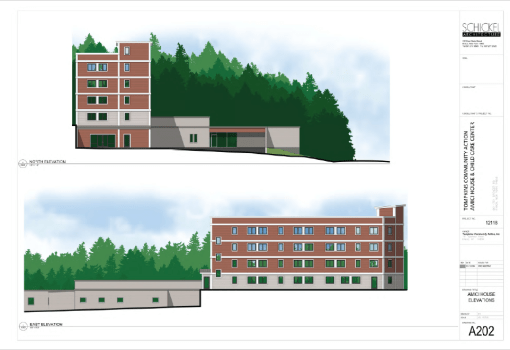
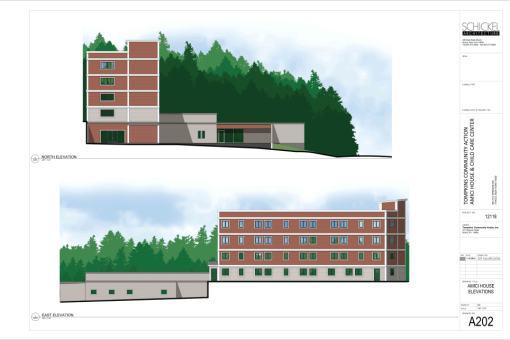
2. A couple of grants worth noting – Tompkins Community Action was awarded $3.7 million by the state to go towards construction of their Amici House project at 661-701 Spencer Road in Ithaca. The funds will cover about 45% of the $8.25 million construction cost. Work is supposed to begin this summer on the mixed-use project, which includes 23 studio units for vulnerable or previously homeless youth, and a 7,010 SF daycare/early education facility.

In other news,the Alcohol & Drug Council of Tompkins County was awarded $500,000 by the Care Compass Network Innovation Fund to use towards the establishment and operation of a 20-24 bed detox facility, much needed resource as the heroin epidemic continues to grip the nation. CCN is a non-profit consortium funded by Southern Tier health centers like Guthrie, Cayuga Med and Binghamton General. ADC-TC is a non-profit that focuses on substance abuse education, prevention and outpatient treatment. No facility was named in the announcement.

On a third note, the sale of 626 West Buffalo Street was completed. Tompkins County Opportunities, Alternatives, and Resources (OAR) intends to renovate the house into five beds of transitional housing for those getting out of jail and trying to get back on their feet. The intent is to provide, safe, secure housing to better help with the transition process, which can include education, job training and mental health and/or addiction treatment. The house was purchased for $95,000, and an additional $60,000 would be spent on renovations. The county voted to provide $100,000 in a one-time allotment – the rest of the money ($55,000) comes from grants, donations and a mortgage. Ultimately, the goal is to provide decent housing that helps reduce the recidivism rate (convicted persons committing more crimes), ideally saving the county on future court and incarceration costs, as well as what they hope pans out to a lower crime rate.

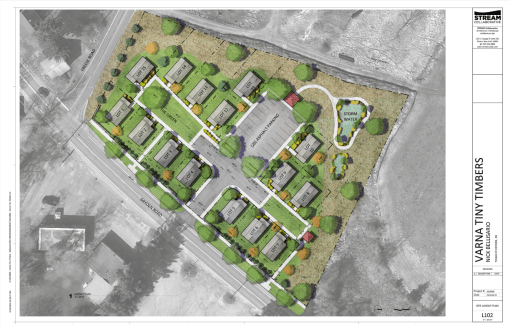
3. Tiny Timbers seems to be to a good start. The fledging modular timber-frame company run by the Dolph Family has added several members to its construction crew, and they will build the frame components out their newly-adapted warehouse-mill on Hall Road in Dryden. The house in Hector is nearly complete, two more are being prepared (both big cubes), and the gravel road is being constructed for their just-approved five-lot subdivision at 1624 Ellis Hollow Road. Going off the wording of their last blog post, it looks like three of those lots are already reserved or purchased (one lot is a conservation area).

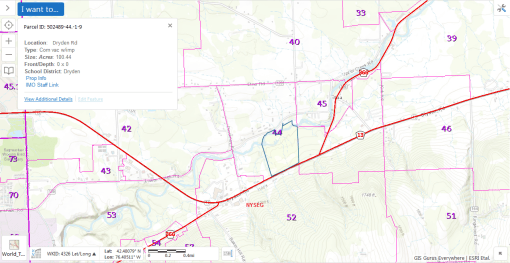
4. Let’s not beat around the bush – you’re coming here for a bit of inside information, not just a news round-up. One of the reasons Dryden and Tompkins County have each committed $1,750 to an infrastructure study of the Route 13 corridor is that there is a concept proposal on the table from INHS for a mixed-use development with retail and 250 affordable housing units, on approximately 50 acres of a 100 acre parcel – half of it is north of the rail trail and would be conserved, possibly through Finger Lakes Land Trust. At 5 units/acre, it’s below Varna’s highest densities, but it’s about the rural threshold of about 2 units/acre.

As it so happens, a quick check of the county’s property tax map shows a 100.44 acre parcel of vacant farmland across the street from 1477 Dryden Road, outlined in blue above. The back half is Fall Creek, so given buffers and general environment concerns, it’s good sense to leave it alone. The land has been owned by the Leonardo Family (the ones who ran The Palms) since 1942.

I asked Dryden Town Planning Director Ray Burger about it, and he knew only what the county said. But it’s something to keep an eye on as the town figures out whether or not to extend sewer to that parcel.

5. It seems like there’s quite the tempest going on in Lansing. Let’s review. All this comes courtesy of the Lansing Star (not for lack of trying on my part. Almost all Lansing staff and officials ignore my phone calls and emails, except zoning officer Marty Moseley. Thanks Marty.).

I. Over in the village, the “Preservation Party” lost the village election by a large margin to the incumbent Community Party by a roughly 75/25 split (240 votes vs 80 votes). This result should settle the Bomax Drive rezoning from commercial tech space to residential once and for all.

Image courtesy of the Lansing Star

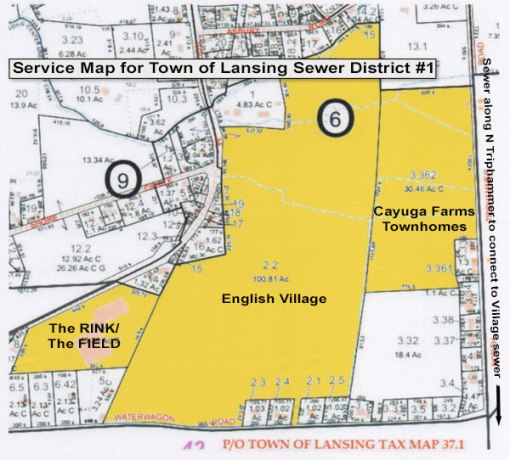
II. Lansing town has inked an MOU with Cayuga Heights and Lansing village to install a sewer line up Triphammer Road to create a small sewer district. However, it’s impacts would be substantial – it would have three primary users – the 102-unit Cayuga Farms project, the 117-unit English Village project, and the RINK, which is expanding its facility. The developers want the sewer so much, they’re paying for it in what town supervisor Ed LaVigne is calling a “public/private partnership”. Properties that do not hook up would not be hit with an increased assessment, according to LaVigne and county assessor Jay Franklin.

A back of the envelope estimate suggests $50-$60 million in increased land assessment, and $1.5 million+ in property taxes. Perfect for offsetting a rapidly devaluing power plant that was once your town’s biggest taxpayer. The village boards still need to sign off on the MOU, but Lansing town is desperate to make a deal.

III. The Lansing Meadows senior housing seems to be worked out, and it includes the  small community-focused food retail component desired by developer Eric Goetzmann. The public hearing is on the 1st; if approved next month, the construction bids will be posted shortly thereafter with an intended summer start on the 20-unit mixed-use project.

IV. Just…wow. On the one hand, LaVigne et al. have a right to be upset. Their town’s biggest taxpayer is faltering, they’re trying encourage as much development as they can to offset the plunge in property taxes, and with debates like the West Dryden pipeline, they have a right to be frustrated. But to say the county’s sabotaging your town is a whole different ball game. To say “[r]ight now The County is on the sh** list as far as I’m concerned,” well…

He deserves sympathy. There’s a lot of BS mixed in with the good of Tompkins County, and his town and its schools are in a real bind. Poo pooing them isn’t helping anybody. But…he can’t magically change how people in Dryden or Ithaca think. Ask solar companies if they’d be interested in town properties, find a way to make residential heat pumps and renewables work. Hell, work with TCAD, talk with Heather McDaniel and the green groups and come up with ideas. I had a professor in grad school tell me that “you lure more flies with honey than vinegar”. LaVigne has a right to be upset, but this isn’t a good look.

6. Now that a few people at INHS and County Planning have been annoyed (sorry guys), back to the news. The Journal is reporting that the town of Ulysses has acquired three Jacksonville properties from Exxon Mobil, in what they hope is the next step in closing a disastrous chapter in the town’s history. Back in the 1970s, the former Mobil gas station at the corner of Jacksonville Road and Route 96 leaked enormous amounts of gasoline and poisoned the hamlet’s groundwater – one report says a person passed out from noxious fumes when they turned on their shower.

The state DEC became involved and ordered Exxon Mobil to clean up the mess, which was carried out from 1984 to 1988, and the multinational gas company purchased most of the affected properties and demolished them – an 1827 church was left intact. The DEC’s case file was finally closed in 2005 after the test levels had receded to more acceptable readings, but Exxon Mobil has continued to own the property, letting the church fall into disrepair.

The town is buying the church at 5020 Jacksonville Road, a 0.275 acre vacant lot at 5036 Jacksonville Road, and a 0.656 acre vacant lot at 1853 Trumansburg Road for $5,001 (the trio’s total assessed value is $84,700). The plan is to install a septic for the church at 5036, renovate the church just enough to keep it from rotting out, and once the building is stable, the plan is to resell to someone looking for a unique fixer-upper. If no buyer is found, the town plans to eventually restore the church on their own. The larger lot on Trumansburg Road is being considered for resale towards private development, or use as a TCAT park-and-ride.

7. Is the Canopy Hilton underway or isn’t it underway? Still kinda hard to tell.

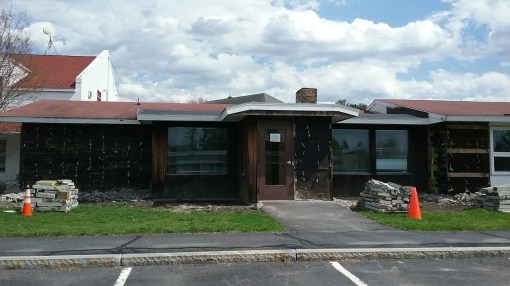
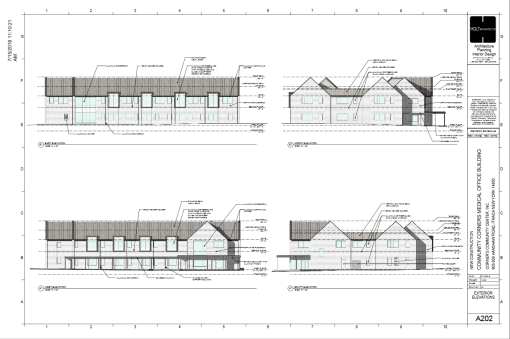
8. On the other hand, it looks like the new medical office building planned for Community Corners in Cayuga Heights, is starting demo work. The stone is being stripped from the existing buildings, to be reused on other structures. The Cayuga Medical Associates plan calls for a $5.6 million medical office building at 903-909 Hanshaw Road, 2 floors and 28,000 SF (square-feet), of which 23,200 SF will be lease-able space.

9. Nothing too exciting from the planning board agendas around the county – Lansing has nothing up, Cayuga Heights has nothing of note. Over in the town of Ithaca, Cornell plans to try again with its Peterson Parking Lot replacement (after the disastrous first try last April), the 15-lot Monkemeyer subdivision on East King Road continues review, and a 2-lot modification is up for consideration. In Dryden, the advisory planning board will continue review for the Tiny Timbers Ellis Hollow subdivision mentioned earlier, and a 7-lot subdivision of the former Dryden Lake golf course; there will also be some solar panel discussion, and possibly some info on the ~20 unit Pineridge Cottages project planned for Mineah Road.


News Tidbits 4/1/17: High Energy Debates

1 04 2017

1. There might be yet another potential hang-up with the Lansing Meadows project. Previously, developer Eric Goetzmann presented planned to the Lansing village Board of Trustees to densify the initial 12-unit plan and add a small retail component, such as a coffee shop, diner or similar gathering venue. The idea was well received, and so Goetzmann approached the planning board with 20 senior housing units and a small commercial lot TBD, where it was A) news to them, and B) not-so-well received.

According to the Lansing Star, the objection is not to the housing; in fact, the planning board said they’d prefer another four housing units rather than commercial. But they’re not comfortable with the sudden change, and Goetzmann’s looking at the additional costs of revised plans because the Board of Trustees and the Planning Board were not on the same page. It is kind of a weird situation, although not unprecedented (it bears some similarity to the 201 College debate in Ithaca city last year, where the Planning Department and Planning Board were not on the same page). The boards are supposed to meet in early April to retify their differences so Goetzmann knows what he can move forward with, hopefully by this summer.

Looking at the screenshot above, Salem R. LaHood of suburban Syracuse is the architect; apart from being a design partner for some high-end outlet malls, I can’t find much else on his resume.

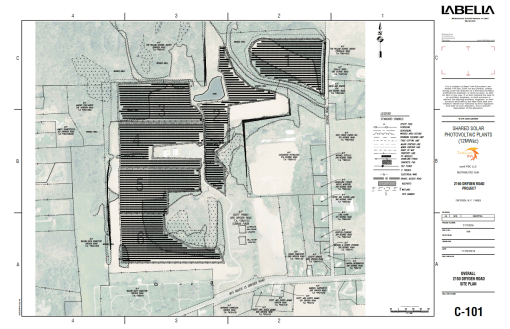
2. The solar arrays planned in Dryden are getting are less-than-welcome reception, per Cassandra Negley at the Ithaca Times. The argument is pretty similar to the one often used on affordable housing – “we know it’s needed and we like it in concept, but we don’t want it anywhere near us”. But then far from one person is close to another; and it results in lackluster solutions, like affordable housing so far out that it’s isolated from needed goods and services.

One of the biggest sources of opposition is from family and friends of those interred at the Willow Glen Cemetery, which is the landscaped area south of the panels in the image above. Although many of the opposed do not even live in New York, let alone Dryden, it’s argued that the project is “sneaky back-room industrial solar” and will “destroy the atmosphere” (coincidentally, the land across the road from Willow Glen is zoned for and being marketed to roadside commercial tenants). It’s fine to be concerned, but looking at this particular site, the anger is a little overblown – there is sufficient room for a green screen of hedges and trees between the panels and the cemetery, which could easily be included as a stipulation as part of the approvals. Sustainable Tompkins is attempting to push back against some of the criticism, but on the balance, the public comment on the Dryden solar arrays is negative.

Let me approach this with an overarching view. Dryden is strongly opposed to an increase in natural gas (much to Lansing’s chagrin). Wind energy has been vociferously opposed just over the valley in Enfield, and Newfield essentially outlawed wind turbines. Solar panels are also being fought in Ulysses and Newfield. In Ithaca, there have been onerous battles over allowing panels on rooftops in historic districts. The energy to power homes and businesses has to come from somewhere; the preference seems to be for a sustainable option, rather than oil or gas piped in from Pennsylvania or beyond. Every choice is going to have its pros and cons – gas is cheap but environmentally unsound; wind turbines are tall and highly visible; solar panels need space for their cells. Frankly, a lightly-populated area on untaxed land owned by Cornell, which would then pay a PILOT fee for the solar panels, seems like a reasonable option. Someone has to step up and lead by example. Why not the town that fought fracking and won?

Anyway, the town pushed their meeting on the project back by one week to digest the onslaught of criticism. The meeting will be held at the town hall on Thursday April 6th at 7 PM.

UPDATE: The April 6th meeting has been cancelled and cannot be rescheduled until additional paperwork about the project has been received.

3. On the topic of energy, it looks like Cornell wants to move ahead with a trial run of its experimental geothermal project. Per the Times, the initial test phases of the “Earth Source Heating” project could take up to six years and $12-$15 million, which is a lot of money given that no one is certain if it will ultimately be a viable source of renewable energy. Some concern is being expressed that the project is too similar to fracking, but unlike the fracking process, where water is used to shatter shale beneath the surface to extract natural gas, the water used here is much lower pressure and kept in a closed loop, in comparison to fracking’s constant expansion of extraction sites. For the time being, the naysayers are assuaged, so now comes years of designing the project and permitting; an extensive Envrionmental Impact Statement (EIS) seems almost certain. ESH would be groundbreaking in more ways than one, if successful.

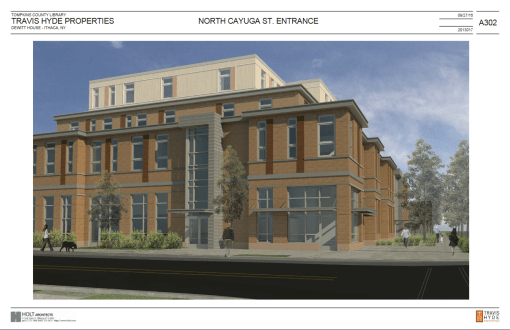
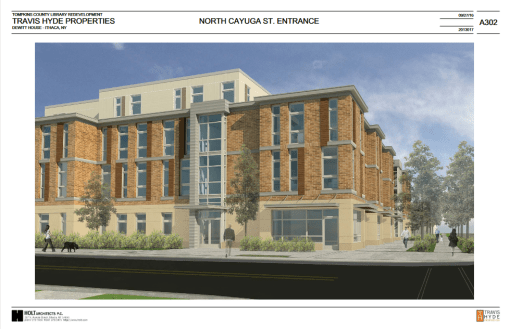
4. It looks like the major hurdles to the Travis Hyde Properties Old Library redevelopment have been cleared. With the historic district Certificiate of Appropriateness granted from the city’s ILPC, it’s now a matter of going through site plan review – the developer is hoping for an expedited process that’s settled by May, which given the joint meetings between the Planning Board and ILPC, may be possible. The design review is already complete as is most of the documentation, so at this point, it’s just a matter of making sure there are adequate environmental mitigations in place. After that, it’s time for the county to draft up their docs for the $925,000 sale of the property, and hopefully THP can get the mixed-use project underway later this year. The 73,600 SF project will host 58 market-rate units for the 55+ crowd, community space administered by senior services nonprofit Lifelong, and 1,250 SF of street-front commercial.

5. The Tompkins County IDA held its public hearing for the City Centre tax abatements. As expected, the reactions were mixed. A couple of developers not associated with the project (Frost Travis and Todd Fox) came out and spoke in support, which is really great. For one, these guys are invested in the city and knowledgeable about the market, so they should have an idea on whether City Centre would be a welcome economic addition or detraction. For two, it’s nice to see members of the same real estate community standing up for each other. There are cases now and in the not-so-distant past where developers went out of their way to fight other projects, with the parochial scope that as few units as possible would mean as high rents (revenue) as possible. I’m not necessarily saying every project is great and they need to stick up for it, but it’s heartening to see some are taking a broader scope and speaking on behalf of the ones they recognize as beneficial to the community.

The detractors seem less upset about the project itself than the abatements, and there is the fundamental misunderstanding that taxpayers are “paying” for this project. There is no paying; it just phases in the new property taxes on top of the existing value and taxes for the parcel, rather than one big lump increase from the moment of completion. For the sake of example, if they’re paying $100,000 in taxes now, and a given project will bring it up to $1,000,000 in taxes, an abatement means they’ll still pay $100,000 until the site’s developed, then $200,000 right after completion, then $300,000 the following year, and so on until $1,000,000 (plus inflation) is attained. I’ve tried to explain this in the Voice, the Times has tried to explain this, but it’s still a problem.

6. Two Collegetown projects were brought to light at last week’s planning board meeting. 232-236 Dryden, a Visum Development project, would replace a large surface parking lot and rundown 30-unit apartment building with a 191-bed, 2-building complex. 238 Linden, a Novarr-Mackesey infill project, replaces a 10-bed, non-historic apartment house with 24 studio units in a townhouse-format structure designed by his favorite firm, ikon.5 Architects of Princeton. The target market is Johnson students, particularly Executive MBAs who may want to be closer to the university. One of the neat features is that the rear will have a treated “chameleon-like” surface that will change color depending on viewing angle, not unlike the pearl metallics used on some custom cars.

The plan is to have both 232-236 Dryden and 238 Linden underway late this year. Both are likely to have August 2018 openings, although 232-236 Dryden might be a two-phase project, with the second structure coming online in August 2019.

Keen readers will note that the Times has the sole coverage of 238 Linden right now, and this was not in the Voice; Nick Reynolds was at the meeting, I was not, and while I’ve been trying to get renders, I have yet to come through with one. I’d rather play catch-up than sacrifice integrity. I’ll follow up in the Voice eventually, but in the meanwhile, the blog is fair game because I make no money from it.

7. The town of Ithaca planning board looks to have a fairly quiet agenda for next week. Renewing some temporary modular structures at Cornell, construction signage for Maplewood, and An 11-lot subdivision on South Hill, “Ithaca Estates III” featuring Lilium Lane, Monarda Way and Rock Cress Road.

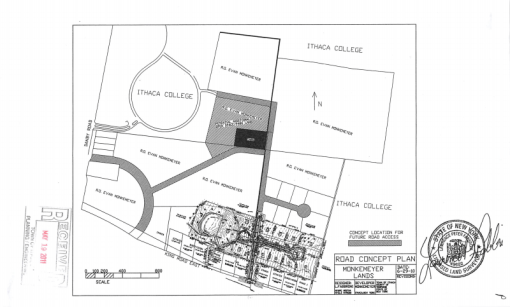
Unfortunately, it’s the Monkemeyer property, where the town has been entertaining ideas of a new urban neighborhood since its new Comprehensive Plan was passed in 2014. Evan Monkemeyer chose to revive a plan from 2010 for two cul-de-sacs off of a new arterial road that would cut through the property; and given the long-term build-out schematic shown above, there would be more cul-de-sacs to come, for a fairly conventional 1990s era suburban layout. Even though he’s apparently mowed the future roads in place on satellite, this doesn’t match up with the town’s Form Ithaca-inspired visions at all. The issue isn’t the housing, it’s the layout. The town’s planning push has been moving away from cul-de-sacs and towards connected streets.

Monkemeyer’s gone down this road before. It didn’t work out very well. Reviving a seven year-old plan that doesn’t fit with the town’s more recent Comprehensive Plan is not, and shouldn’t be, something that is going to sail through the planning board. Token future park space isn’t going to change that. Of course, then he’ll just whine to Rep. Tom Reed again. To Monkemeyer’s credit, the town has been taken uncomfortably long with formulating their new zoning code, it looks like some of the multi-year delay was the town’s fault over who was responsible for a water easement – but given the 6+ years since the issue was raised, it doesn’t appear he was pushing the matter much.


News Tidbits 2/18/17: Credits and Loans

18 02 2017

warren_medical_lansing_1

1. Over in Lansing village, it looks like the new Arleo medical office building is starting to moving forward. A sketch plan of the project was presented at the village planning board’s meeting earlier this week. Although Lansing doesn’t upload accessory docs like site plans and elevations, this one has been floating around for the past several months in marketing material as “Cayuga Ridge”. Quoting the May 7th 2016 news roundup:

“The new one-story building, which appears to be designed by Binghamton-based Keystone Associates, would be off of Warren Road, although it looks like the building would be accessed from a driveway coming off of Uptown Road. The 2.71 acre property north of 100 Uptown Road is zoned “Human Health Services District” by the village, and borders undeveloped land owned by Cornell, and several other suburban medical office buildings built over the past few decades. The resolution on the attached site plan is too low to determine the square footage, though it looks to be in the low tens of thousands.”

labourgade-on-seneca-dormer2

2. For those who like their cottages tiny – it looks like Schickel Construction has begun work on the spiritual successor to their 140-unit Boiceville Cottages project in Caroline. The 40-house rental development is called “La Bourgade on Seneca”, and is located in the town of Hector, in Schuyler County just outside of Burdett village. For the record, Bourgade is a French term for an unfortified village or settlement. More details can be found on the website here. There will be two cottage types available -, “The Classic”, a 2-bedroom, 900 SF plan that will rent at $1,495/month, and “The Spacious”, a 2-bedroom with a dormer loft space totaling 1,000 SF and renting at $1,695 month. The house very much like their Boiceville cousins, but with angled eaves (dunno what the correct term is and google’s not helping – if there’s an architect reading, please chime in). All units will have lake views.

Personally, I see this as a stretch for the Ithaca market, since it’s 25 miles west of the city. But it might tap into a more plebeian contingent the wine country crowd, the wealthier of whom have taken to building grand vacation or permanent homes along the Finger Lakes in recent years. The first 9 units, three clusters of three, are currently under construction, as is a community center. Delivery is expected in May 2017.

ic_master_plan_3

3. It looks like Ithaca College is putting some more thought into their housing needs. The college has been meeting with planning firm U3 Advisors to explore the possibility of new off-campus student housing.

U3 Advisors is already familiar with the area, as they are also under contract with Cornell to formulate their off-campus housing plan. Unlike Cornell, however, Ithaca College has no plans to grow enrollment – the master plan expects it to stay steady around 7,000. However, many of the dorms are reaching the end of their useful lives, meaning that the college can either sink a fair sum into renovation and replacement of utility systems, or tear down and build anew. An off-campus option could either be a private entity on private land, or a deal on IC-owned land like what Cornell and EdR are doing with Maplewood. A 200-300 bedroom off-campus option could mesh with the town of Ithaca’s visions for a walkable South Hill neighborhood on the intersection of Route 96 and King Road.

It’s still just studies and meetings at this point, but as the oldest dorms hit 50 years old on South Hill, there might be something fresh in the pipeline. We’ll see what happens.

cma_v2_2

4. Ithaca’s West End will be welcoming a new tenant in the next couple months. Courtesy of Nick Reynolds over at the Times, the USDA is shifting its regional office out of Community Corners in Cayuga Heights, and into Fulton Meadows, a commercial office building at 225 South Fulton Street. the move is being undertaken in anticipation of the construction of Tim Ciaschi’s new Cayuga Medical Associates office building, which is set to get underway at Community Corners later this year.

201_college_v5_1

5. Looks like we have an idea of the price tag for Visum Development’s 201 College Avenue. According to a construction loan filed with the county on the 15th, S&T Bank loaned Todd Fox’s company $7,870,673 to help cover the costs of the project. The breakdown in the filing says $6,841,038 for hard construction costs (materials/equipment/labor), $507,000 in soft costs (permits/legal/marketing/financing fees), $300k in contigency and $226k in interest reserves. Add in the $2.64 million for the land purchase, and the total comes to $10,514,180.

That’s something of a premium because the project is on an accelerated schedule after the big hullabaloo with Neil Golder and the city Planning Board last fall. Note that the loan doesn’t cover all the costs and that there is money from other sources, like cash equity from Visum itself.

S&T Bank is a regional bank based out of Western Pennsylvania, but they’ve been making inroads into Ithaca’s commercial lending market. S&T Bank also financed the construction of the Holiday Inn Express that recently opened on Route 13, lending $5,973,750 to the hotel developers.

Quick aside, I think this is the first time I’m seeing the square footage calculated out – 201 College will be 33,398 SF.

20170106_160736

6. Hopefully this runs after by INHS refinancing explainer, so it makes more sense. Quick rehash, low income housing tax credits (LIHTCs) are sold to banks and similar financial institutions so that they get the tax credit, and the affordable housing developer gets the money they need to move forward with a project. With that in mind, here’s an interesting though unfortunate tidbit from INHS’s Paul Mazzarella:

“This following may be more than you want to include in this article, but it is relevant.  The pricing of tax credits exists in a marketplace where they rise and fall in value.  In past projects completed by INHS, we’ve received from $0.91 to $1.02 of equity investment for each dollar of tax credit.  The pricing of tax credits has recently plummeted because of the recent election and the uncertainty in DC.  This is mostly due to discussions about changing the corporate tax rate.  A lower corporate tax rate will mean that companies have less profits to shield from taxes and therefore the demand for tax credits will be reduced.  Even though no changes have yet been made to the corporate tax rate, just the discussion about this has reduced the pricing of tax credits to around $0.80.  What does this mean for INHS? It means that the project that we’ve been working on for several years suddenly has a funding gap that didn’t exist a few months ago, due entirely to investor’s fear of risk due to an uncertain future..  This is true for every tax credit project in the country and has all of us struggling to make the pro formas work.”

Sigh. Politics.

habitat_208_third_st


7. The Times has the first render for Habitat for Humanity’s two-family townhouse project at 208/210 Third Street on the city’s Northside. It looks to be the same architect as the 4-unit project for 402 South Cayuga – I can’t seem to find the architect offhand as a few designers have donated time and energy, but local planner George Frantz shepherded the project through the approvals process. Each unit is about 1500 SF. The plan for the $305,000 project is to break ground in April and have the move-in ceremony in Spring 2018. As with all local Habitat projects, a portion of the construction will come from volunteer labor, including 500 hours of “sweat equity”, and homeownership classes that the two recipient lower-income families (making 60% AMI or less, $32,000/year) will need to complete as part of the deal.

maplewood-v7_7-planning-board

8. Wrapping this up with the local agendas for next week – the town of Ithaca will be looking at a home B&B permit on Bostwick Road, a retaining wall for Ithaca College’s track, and finishes touches on the Maplewood approvals. The city’s project review meeting indicates the city plans to look at the subdivision at 109 Dearborn Place, Declaration of Lead Agency and Environmental Review for the 11-unit 107 South Albany Street plan,  and “Approval of Conditions” for City Centre, which is just making sure they’ve completed everything asked for in the final approval. In sum, nothing too exciting at the moment, but we’ll see if the city has any new projects coming up when the actual PB agenda comes out next week.

9. Quick note to wrap up – the woman behind the Rogues Harbor Inn in Lansing has purchased a prominent and historic building on Freeville’s main drag. Eileen Stout purchased 2 Main Street, a mixed-use building with restaurant space, a tile shop and three apartments, on Thursday for $132,000. The seller was Tompkins Trust and it’s well below assessment – doesn’t look like a foreclosure though. The bank bought the property for almost double the price in May 2016.


News Tidbits 1/20/17: A Week Late and A Day Early

20 01 2017

1. In the town of Ulysses, work continues on a rezoning and reimagining of the hamlet of Jacksonville. The town held a meeting for public feedback this past Thursday. For those who are unfamiliar, Jacksonville is a cluster of a few dozen houses and a few small businesses about two-thirds of the way up Route 96 from Ithaca to Trumansburg. The town is working with local urban planning firm Randall + West to redevelop the hamlet, which has been plagued in recent decades with not just the standard rural upstate flight, but total disinvestment in some parts as a result of a massive gas spill in the late 1970s that poisoned the wells of neighboring properties, which Exxon bought and left in a state of low, sporadic maintenance.

However, some areas are served by municipal water systems, and the town is looking at expanding the hamlet zone, and creating a hamlet center zone in the hopes that they can give the hamlet “quality growth” and a Trumansburg-like flavor – small shops and density at the core, and somewhat walkable for basic errands, with sidewalks and interconnected streets. It’s a bit reminiscent the old “nodes” concept pushed by the county about a decade ago, but with more emphasis on walkability. The zoning brief shows participants have expressed a preference towards small-lot houses and 2-4 floor mixed use. With the latest public meeting completed, the plan is to have a zoning draft ready by March.

For the record, Ulysses permited 11 new homes in 2016, so even if the revised Jacksonville hamlet zoning becomes more accommodating, don’t expect a boomtown.

402_s_cayuga_habitat_2 402_s_cayuga_habitat_3

2. From the IURA Neighborhood Investment Committee agenda, a few more details about Habitat for Humanity’s plans for 402 South Cayuga Street. Four units, $720,000 construction cost, about $799,500 with soft costs. Savings from volunteer labor reduce the cost to $709,500. Funding comes from $100k in cash equity attained by the sale of the Morris Avenue townhouses, $300k in grants and $120k in HUD funding. Private donors and grants are expected to contribute about $189k. The initial design and land purchases expenses are being covered with funds from the $50,000 sale of a 32-acre parcel in Trumansburg for public green space. With multiple transactions required before anything can move forward, the plan is to break ground in June 2018 with construction lasting from 18-24 months.

The units will be sold to families making 30-60% of local AMI (i.e. $16-$32k/year) who put in the requisite sweat labor and take approved home-ownership and finance courses. The units will be solar-capable, though they’re still debating if the panels will be installed by Habitat or the responsibility of owners. By the way, the bright colors of the units are intentional.

The committee has said this project pretty much checks off every box on their want list, and Habitat for Humanity has been named preferred developer; contingent on approvals, the IURA will sell the property to the non-profit for $32,000.

amici_v3_1

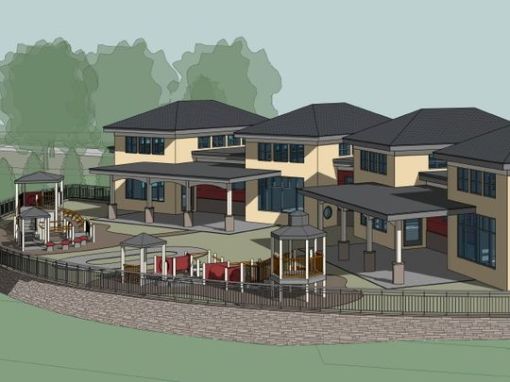
3. For those that might have missed it, the Times’ new journo, Matt Butler, did a nice piece on TCAction’s Amici House development. The 23-unit project will be up for prelim approval at this month’s Planning Board meeting. In the piece, TCAction Director Lee Dillon notes that it’s not strictly for drug rehab, it’s for homeless youth regardless of the presence of addiction. The project also provides a low-cost childcare center with five HeadStart classrooms able to support 40-45 kids. Apart from a couple of concerns and complaint, reactions have been generally receptive to the plan, which will be located at 701 Spencer Road on the southern edge of the city.

As a former Head Start student, I never knew it was geared towards low-income families until I was in high school. There’s a lot of real, tangible value to Head Start as an early education program, especially in a community like Ithaca where the school district the kids enter into is capable and well-regarded. I applaud the Amici House project and look forward to its construction.

tiny_tims_7 unnamed

4. Tiny Timbers is getting quite creative. In addition to the five existing designs, Buzz Dolph’s team, working with architect Noah Demarest, have rolled out two new designs. The first is a one-story, two-bedroom house which looks to be in the 630 SF range, with the option of deleting the second bedroom available. The second design is called “big cube”, with a 21′ x 21′ footprint (two stories, 882 SF), slightly larger than the 18′ x 18′ regular cube. The website seems to be down for an update at the moment, but the 3D panorama still works.

The town of Dryden has granted approval to the Varna site, so at this point marketing and sales of the home sites should be getting underway soon. If successful, Tiny Timbers could be a solution to meeting an underserved and difficult-to-serve segment of the Ithaca market – new, modestly-priced homes.

20161119_145216

5. Here’s the funding application for the first stages of the Tompkins County Heritage Center. The request is for $35,500 from the legislature. That would cover community presentations, legal fees for partnership agreements, a retail space plan, branding language and design, concept overview, website, floor plans, exhibit design and the launch of a capital campaign later this year (May for the silent campaign, October for the public campaign). Along with the capital campaign, primary funding may come in part from the $500 million URI fund that the state awarded to the Southern Tier back in 2015. The History Center and its partners are exploring some of the way they can reuse the 18,000 SF space currently occupied by Tompkins Trust; for example, multimedia presentations in the former bank vaults. STREAM Collaborative is in charge of the new floor plans, STREAM will work with St. John Design Group to do the branding, and Todd Zwigard Architects will handle exhibit design. The Solstice Group will be providing guidance in assembling and running the capital campaign.

To be frank, I’m still not sold on the idea of the Heritage Center being a driver of tourism itself, but I could see it being an enhancement to downtown Ithaca’s other offerings, as well as a gateway for visitors staying at the new hotels near or soon to be open within a couple blocks of the site: “Come for the colleges, wineries and gorges, but check this out while you’re here, you just might find other things you want to do and see”.

20170107_124807

6. The initial December 2016 jobs reading of 73,800 rounds out the 2016 jobs reports. Tallying up the average, the initial estimate for the Ithaca metro for 2016 is 71,600, an increase of 1.7% from last year’s average of 70,400. As always, take the initial estimates with a grain of salt, since they’re liable to be adjusted a fair amount in the big March revision. However, should they hold up, it gives Ithaca the highest percent growth of any New York State metro in the past year (although for the record, NYC added 1.1%, or 109,000 jobs in the past 12 months, basically an Ithaca and a half). For reference, the 2011 jobs average was 66,200, and the 2006 estimate was 62,600.

With the exception of those neighborhoods closest to the universities, the biggest driver of the housing affordability crisis is not student population growth, which was about 196 over the past year (+285 Cornell, -89 IC). It’s the people relocating to/near Ithaca for work. That doesn’t capture the imagination and emotion as much as saying the city’s being overrun by obnoxious 20-year olds.

20161209_121807

7. Not everything recorded in an interview makes it into Voice articles due to space constraints. Here are some transcribed notes from the “State of the State Theatre” piece that didn’t make the final cut:

Q: Where do you see things going in the next 15 years? What will the State Theatre of 2030 be like?

Doug Levine: We’d be fresh off celebrating our hundred year anniversary! They don’t build theaters like this anymore, we’ve made a lot of improvements to the building, we’ve completely renovated the restrooms. Technologically, we’ll be a lot more advanced, paperless ticketing will be a seamless transaction. We want to maintain the building charm, it’s just a grand palace, but behind the scenes, we’re getting more efficient and innovative, we’ve upgraded to LEDs, and the stage sound and lights will be a lot more cutting-edge, and we’d like to be more energy efficient. I would like to see more flexible seating in 15 years. We’d stay with DSP [Dan Smalls Presents] long-term, that’s worked out really well for us. We’re going in a good direction and I want to keep building on that success.

Q: Dovetailing off that, Ithaca is one of the few growing areas of upstate, and it’s increasingly seen as a tourism and leisure destination. Do you see ways for the State to tap into that? What other opportunities do you see (I noticed something called Ticketfly)?

DL: Conferences are a growing opportunity, the growing economy has led to a spike in conferences from all over the state wanting to come here, and those thinking creatively reach out to us, we had 2-3 last year and [we have] more planned, they’ll use us and Cinemapolis, it’s never going to be a big component but it’s nice to have those groups coming in. We average over 50,000 a year through our doors, 40% from beyond Tompkins County – New York, Philadelphia, Canada.

20151108_154139

8. It looks like the town of Ithaca wants to extend their two-family home moratorium beyond the initial 9 months. 9 months was explicitly chosen after considerable concern from developers and homebuilders last Spring stemming from the initially-proposed 12 months, which would have impacted two construction seasons. The town doesn’t even provide a new timeline, it leaves a blank next to 2017. Really burning through the goodwill here.


college_townhouses_v2_1

8. Looks like a rather luckluster agenda for the planning board next Tuesday. A bunch of projects up for preliminary and/or final approval. These meetings could start becoming very light on substance if there isn’t more in the pipeline. Here’s the schedule:

1. Agenda Review              6:00

2. Privilege of the Floor    6:01

3. Site Plan Review
A. Project:  Amici House & Childcare Center                               6:10
Location: 661-701 Spencer Rd.
Applicant: Tom Schickel for Tompkins Community Action (TC Action)
Actions: Consideration of Preliminary & Final Approval
B. Project: City Centre — Mixed Use Project (Housing & Retail)       6:30
Location: 301 E. State/M.L.K., Jr. St.
Applicant: Jeff Smetana for Newman Development Group, LLC
Actions: Public Hearing, Potential Consideration of Preliminary Approval

C. Project: College Townhouse Project 7:00
Location: 119, 121, & 125 College Ave.
Applicant: Kathryn Wolf, Trowbridge Wolf Michaels Landscape Architects, LLP
Actions: Approval of Trans. Demand Management Plan, Consideration of Preliminary & Final Approval

D. Project: Apartments (5 Units) 7:30
Location: 126 College Ave
Applicant: Visum Development Group
Actions: Public Hearing, Approval of Trans. Demand Management Plan, Consideration of Preliminary
& Final Approval

E. Project: Apartments (9 Units) 7:50
Location:210 Linden Ave
Applicant: Visum Development Group
Actions: Public Hearing, Approval of Trans. Demand Management Plan, Consideration of Preliminary
& Final Approval

F. 107 S Albany St – Sketch Plan 8:10
Presumably, the Stavropouloses are heading back for some type of major revision to their 6-unit, 9-bedroom proposal. The previous plan was an addition onto the back of the existing century-old property. We’ll see what is changed, and by how much. Zoning is CBD-60 – five floors, no parking.
G. 821 Cliff Street – Parking for Business in a Residential Zone 8:30

Parking for the medical office building at 821 Cliff Street; perhaps an expansion to help market it, as I see postings for its space scattered throughout commercial listings. Nearby properties are vacant land.

4. Zoning Appeal: 8:50
#3056, Area Variance, 301 E State St.

5.Old/New Business:
A. Sidewalk on Worth Street -Planning Board Resolution to Board of Public Works
B. 2017 Planning Division Work Plan – Planning Board Comments
C. Update — Joint Planning Board/ILPC Meeting (DeWitt House)

Regarding 5B., Apparently the city is still having discussions with Fane regarding a development of 330 College Avenue, the former Green Cafe on the SW corner of College Avenue and Dryden Road in inner Collegetown. I write “a” redevelopment because the previous 12-story proposal didn’t look like it was going to make friends and influence people. Also on the long-term agenda are the Maguire plans for the Carpenter Business Park, Ithaca Gun, and Chain Works, which is still undergoing environmental review. Those are going to be long slogs, so don’t worry about missing anything.


News Tidbits 12/4/2016: Not Forgotten

4 12 2016

old_libe_v7_1

1. It looks like the Old Library proposal will be coming up to bat one last time. Developer Travis Hyde Properties and its project team will present one last major revision at the January Ithaca Landmarks Preservation Commission (ILPC) meeting. Things are well behind schedule at this point, as the ILPC continues to take issue with the old library proposal – which at last check, has had seven separate designs proposed and shot down for one reason or another. The Times reports that senior services non-profit Lifelong is one again involved in the project, although it had never really left – they will control the community room on the first floor, and will receive the revenues generated from renting it to outside entities. The last iteration may once again include first-floor interior parking, since that was the sticking point at the October ILPC meeting – the plan for design #8 is to increase parking from the proposed 10 spaces, to 25-30 spaces. If the January concept is acceptable, or at least close to ILPC approval, Travis Hyde will pursue the 55-60 unit plan; otherwise, it’s over.

The county had hoped that the sale of the property would generate $925,000 at the outset, as well as future tax revenues; the current building’s mechanical systems are past their useful life and in need of replacement, a cost likely to exceed a million dollars. With no sale, and a perceived “toxic” site for development due to opposition both during the RFP stage and during this review process, the county and city will be in a less than enviable position if things fall through.

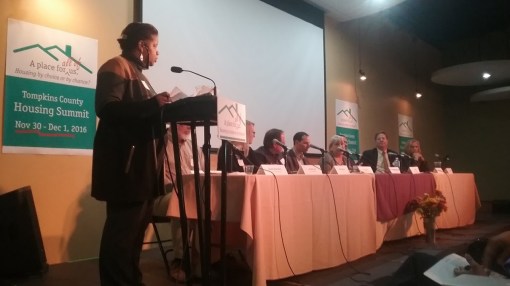
At the housing summit, the old library came up as a point of concern and contention; JoAnn Cornish, the city’s planning director, suggested at one that if the county had been willing to part with the property for a token $1, than the need to build up on the site wouldn’t be so great. I happened to be taking notes next to a county legislator and Old Library Committee member who muttered that that was a terrible idea and Cornish had no idea what she was talking about. Anyone looking for common ground is going to have a real hard time finding it.

cma_v2_2

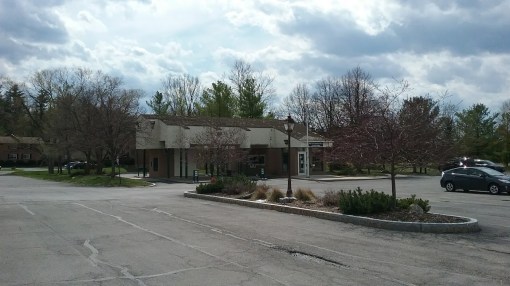
2. It looks like Cayuga Medical Associates’ plan for Community Heights is nearly good to go. Only a couple minor revisions were presented at the Cayuga Heights Planning Board’s meeting on the 28th – a rear (east) driveway, sidewalk work and a detention basin. Cover letter here, updated site plan here, and a letter noting a potential change in hosted medical specialties here. The $5.6 million medical office building at 903-909 Hanshaw Road is 2 floors and 28,000 SF (square-feet), of which 23,200 SF will be lease-able space. The initial presentation in March called for a 3-story, 39,500 SF structure. Two buildings, a one-story office building and a vacant drive-thru bank branch, would be demolished.

chapter_house_reconst_v5_1
3. Now for something that’s a little less certain – the 400-406 Stewart Avenue reconstruction. One can’t call it the Chapter House reconstruction, because there’s no certainty that that is what will happen. Nick Reynolds has the full story over at the Times. The Chapter House’s intended space on the first floor is being advertised by Pyramid Brokerage for $35/SF, double the bar’s rent from before the fire. The owner of the Chapter House referred to all this pre-development as a “money pit” as the building still has no anchor tenant, but he was still open to being a part of the rebuild. In short, it looks like we’re seeing some bickering between the developer and potential tenant spill out into the public domain, and we’ll see how it plays out.

amici_house_v3_1

4. At the city planning board meeting last week, preliminary approval was granted to Charlie O’Connor’s four two-family homes at 607 South Aurora. City Centre also continued with its review, with comments focusing on sustainability and solar panels. Changes to the project are minor at this point, and we’re probably close to the final product at this stage. Amici House was also debated, with neighbors expressing concerns about the size, and uncertainty on whether TCAction can handle 23 homeless or vulnerable youth.

I’ll register a small complaint – the north stairwell of the residential building. I’d encourage TCAction and Schickel Architecture to explore using smoked or tinted glass to reduce glare, rather than bricking it in. It makes the building look cold and industrial, which seems just as unfriendly to neighbors as glare would be.

The board also went ahead with lead agency on Novarr’s College Townhouses project, and was shown brief presentation on two Visum Development Group projects, 126 College and 210 Linden. More on those here.

20160630_142619

5. The Times included a quick Collegetown construction rundown about a week and a half ago. Two quick addendums –
A. Still no plan for 330 College Avenue, since Fane did the development version of trolling by proposing a 12-story building in a 6-story zone, and was told there was “no way in hell” it would happen;
B. Nothing scheduled for 302-306 College Avenue, aka “Avenue 102”, until at least mid-2018. The rumor mill says the Avramis family, who proposed a two-building, 102-unit sketch plan in October 2014, are concerned about market saturation. Given Cornell’s plans to increase their enrollment by raising their incoming freshman class size from 3250 to 3500, it might be worth another look.

downtown_design_guidelines_1

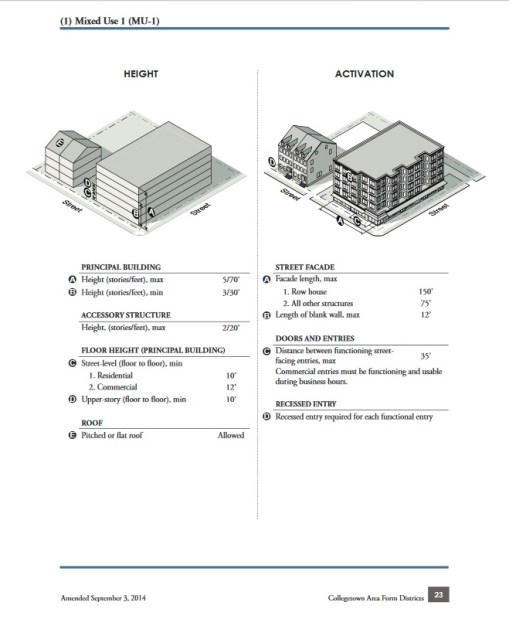
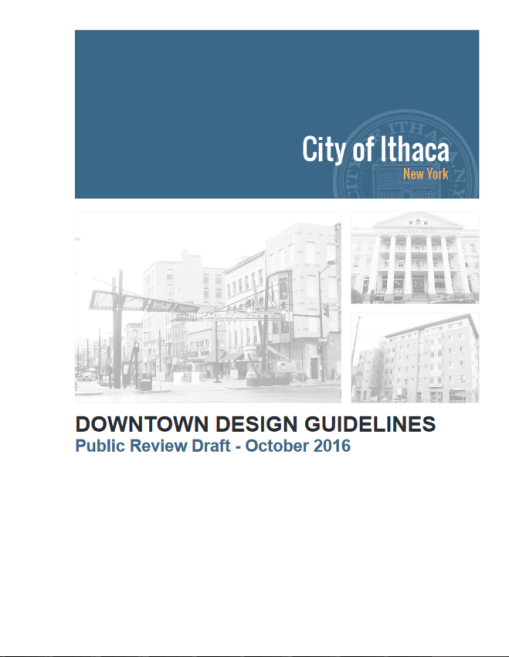
6. The city has released the preliminary design guidelines from Winter & Company. The Collegetown guidelines are here, Downtown’s here. Although there are suggested rather than mandatory, in theory, a project team could use these guidelines to formulate plans that would be less likely to get hung up in the city’s project review process – one could call it “form-based code lite”. There’s nothing particularly groundbreaking in here, but the guidelines do promote urban-friendly and contextual designs. These are draft open to public comment – those who would like to can send their thoughts to city planner Megan Wilson at mwilson*at*cityofithaca.org by December 15th. there are some differences between existing zoning and these guidelines (for example, setbacks) that will need to be addressed at some point – the revised drafts will roll out in mid-January.

20161201_121840

7. Now that the county housing summit is behind us, I think that while there wasn’t any sort of huge breakthrough at the event, it was helpful to the community to have the obstacles and suggested goals shared with a large audience. Although, as county legislator Anna Kelles pointed out, it wasn’t necessarily a wide audience – renters, younger residents and lower-income individuals were not well-represented. At least for me, the big, exciting news was Cornell’s plans for new housing, which I will be writing about for the Voice later this week. While not perfect, the event did bring to light certain issues – NIMBYism can be a delicate topic in an audience like this, but one of the points that was stressed at the summit was, if you support a project, then let the governing body in charge know you support it and why. Heck, JoAnn Cornish was saying the city gets opposition emails from residents of California and Oregon. A little support from local residents, even students, reminds city staff and board members that there a variety of opinions.

I can definitely say that not everyone who attended was pro-development – after the woman behind me asked if I was a reporter (I said yes, for the Voice), she kept passing me notes like “since when did development bring property taxes down”, “developers are just in it for the money” and “Ithaca shouldn’t have to change”. I don’t think she liked my replies – the first one I wrote back a response about spreading the tax burden out with new infill development, the second I wrote “strictly speaking perhaps, but they don’t want to turn out a terrible product”, and the last, I perhaps unkindly wrote “[t]ell that to the families being priced out. Something has to change.” She got up and left shortly afterward.


News Tidbits 11/5/16: Condemnation and Praise

5 11 2016

maguirebirdseye-620x420

1. The Maguire waterfront plan has been rejected. By an 8-2 vote, the Ithaca city Common Council voted to discontinue consideration of the state-of-the-art Ford/Lincoln/Nissan dealership, with most citing concerns about the project’s marginal or poor fit with the city’s comprehensive plan, which calls for an urban mixed-use form of development in the Carpenter Circle area where this dealership is proposed. The votes in favor of the proposal, from the third ward’s Donna Fleming and first ward’s George McGonigal, cited ways it could be conceived as fitting with the plan (greener alternative, local business expansion), and challenges the site offers to the city’s urban plan (poor soils, trains, chemical storage, power lines).

Although this shuts down the current proposal, this may not be the last we hear from the Maguires or the Carpenter Business Park site. At the meeting, company President Phil Maguire offered a teaser, saying they may partially liquidate their land holdings to bring in mixed-use development that would share the CBP space with the dealership. Given the heavy alterations that would need to occur, the council decided to vote down the existing proposal and send a message that it doesn’t fit the city’s goals. However, the council said they and the planning department would expedite review of an amended proposal, should it come forth.

20150613_175047

2. If you’ve ever wanted some explicit discussion of the challenges of doing affordable housing in Tompkins County, here’s a great summary courtesy of the the town of Ithaca. Back in August, the town’s Planning Committee (of town board members, similar to the city’s PEDC Committee) met with Ithaca Neighborhood Housing Services Director Paul Mazzarella for a Q&A. The town is considering regulations for inclusionary housing, and after INHS’s Greenways project fell through, they would like guidance and input on to make an effective code that promotes affordable housing without killing all residential development. Here are some of the highlights:

– Ithaca is a market of smaller builders. Local developers aren’t able or interested in doing huge projects, and most outsiders don’t see Tompkins County as a big enough or profitable enough market to tap into. So that leaves it to smaller builders who don’t have scale efficiencies, and are inclined to build luxury housing because the return on investment is more likely (i.e. less risky). The strong local economy also means that the local construction labor pool is largely tapped out, and additional crews have to be imported.

– Mandated affordable housing tends to work best in expensive, hot markets where the Return on Investment (ROI) for the market-rate units is more likely – your Seattles, San Franciscos and New Yorks. Even there, it is often paired with incentives such as height or square footage. Mazzarella noted he doesn’t think the city’s voluntary program will work very well. One thing to note with mixed-income projects is that the market-rate units will often be higher priced to cover the cost of lower-priced units. Simplified example – say you’re building ten houses for a sale price of $250,000. To meet an affordable mandate you sell two at $200,000, but to still obtain adequate ROI, that $100,000 is going to spread among the other eight – so you have two for sale at at $200,000, and eight at $262,500.

– We talk about modular homes as lower-cost alternatives, and for rural locations they often are, due to materials and labor costs. However, INHS found that in their experience for sites in the city and town, the cost is comparable to stick-built, although at larger scales, cost efficiencies may be achieved (ex. the Belle Sherman Cottages).

Another interesting read is the committee’s September meeting with city historic preservation planner Bryan McCracken and Historic Ithaca’s Christine O’Malley about protecting historical resources. As it turns out, the city cannot designate an individual landmark without the owner’s permission, and historic districts require the approval of 60% of affected property owners.

hipped_roof_tinytimbers

3. Seems like Tiny Timbers had a well-attended open house. On their blog, the Dolphs have shared a cross-sectional diagram of an exterior wall – beneath the hemlock siding and copper trim will be ZIP sheathing and polyiso (thermoset plastic foam) insulation. ZIP is everywhere in residential construction, polyiso less common – locally, it was used extensively with the Boiceville Cottages in Caroline. On the inside, one has sheetrock and bamboo flooring. Exposed hemlock posts and ceilings will complement the sheetrock.

Also being rolled out is a fifth home design, a larger two-bedroom, two-bath home with a hipped roof. Variety is the space of life, as the saying goes.

119_125_college_1

4. It was exciting to finally see the release of renderings for John Novarr’s College Townhouses project at 119-125 College Avenue. Links to the Site Plan Review document, historical documentation and drawings can be found in the Voice write-up here. There have yet to be images released for the garden apartment building to be built at the rear of the property, but look for the same general design features as the rowhouses. As expected from ikon.5 Architects, the design is modern and glassy, and given the Facebook comments and a couple of emails that came in, some neighbors are less than happy about that. However, this isn’t a historic district, so long as it meets zoning regulations, Novarr is free to hire whoever he darn well pleases. As mentioned in previous write-ups, he had ikon.5 design his guest house, so this isn’t strictly a cost thing, he genuinely likes their work. It was a bit surprising but interesting to see the well-researched history of the three 19th century boarding houses currently on the property, and it makes me wonder if that was a requirement. Novarr’s proven to be accommodating in the past, perhaps he’ll deconstruct rather than demolish, and the salvageable parts can be reused.

The project team will meet with members of the Planning Board on Tuesday afternoon for Design Review – about the only thing that stands out at initial glance is the lack of windows or visual interest with the north face, barely noticeable in the rendering. That probably won’t fly with the board, but we’ll see if it gets changed up as it goes through review. City Centre, the 8-story Trebloc site redevelopment, will also undergo further design review at the meeting.

chapter_house_reconst_v5_1

5. The Chapter House is going to the Ithaca Landmarks Preservation Commission (ILPC) yet again. The changes are subtle and few, but the rules are the rules. A service door will be added to the west (rear) wall, the inset vestibule is being reconfigured a bit, and the third-floor dormer windows are being changed from double-hung to casement – meaning that instead of sliding up and down, they’ll open with a crank. The ILPC will vote on the changes in November, which will probably sail through without much debate, and hopefully, just maybe, quite possibly, the Chapter House project can get underway.

sleep_inn_v2_1
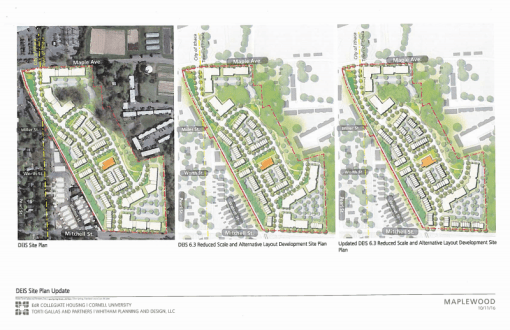
6. A couple quick updates from the town of Ithaca Planning Board minutes – after some discussion and a bit of praise for the redesign effort, the board opted for timber-trimmed Design “A” for the Sleep Inn proposal on Elmira Road. The minutes from Maplewood’s EIS meeting were also uploaded, and it is rare to see this much positivity in discussion of a project – not to say there weren’t dissenters, but the alternative energy source and efficiency initiative, use of local labor, and softening of the design on Mitchell Street won most of the speaking audience over. Public comment closed on Halloween, and now the project team must respond to all the reasonable comments received as part of the review process.


News Tidbits 10/15/16: Stoops and Stumbles, Growth and Gables

15 10 2016

maguirebirdseye-620x420

1. The Maguire proposal for Carpenter Business Park will be heading to the Common Council next month, but the prognosis isn’t good. The city council’s Planning Committee voted 4-0 to say that the proposal didn’t fit with the city’s Comprehensive Plan for the near-Waterfront property – the plan calls for walkable, urban mixed-uses, preferably with residential components. The discussion wasn’t unanimous in its logic – 2nd Ward Councilmen Nguyen and Murtagh were stronger adherents to the plan, while the 1st Ward’s Cynthia Brock doesn’t think housing is appropriate – but they all disagreed with the multi-brand car dealership plan as-is. Maguire has asked for a delay in vote so that the plan could be tweaked, but the Committee voted to move forward.

Because of the 18-month TMPUD in place, the Common Council has to vote to approve all projects in the waterfront area, so the resolution to decline further review of the project will be voted on at the next non-budget Council meeting. It will not be unanimous – the 3rd Ward’s Donna Fleming wrote a letter of support for the project, and the 1st Ward’s George McGonigal voiced support for the concept though not this particular plan. But the chances of approval are pretty slim at this point.

119_125_college_avenue_2

2. Judging from the site photos John Novarr’s project team sent along, it looks like environmental remediation has already commenced at the site of his faculty townhouse project at 119-125 College Avenue in Collegetown. 121 College, in particular, is already in the early stages of remediation. It’s a pretty extensive photo documentation, one that might have to do with historic preservation aspects, like determining what can be salvaged and reused. It’s pretty clear that the properties, which were recently acquired from an Endicott-based landlord who held the properties for decades, are in rough shape. Novarr seems to have a preference for prepping sites before plans are approved (ex. 209-215 Dryden), so it’s uncertain how much time these three boarding houses have left.

202_hancock_1

3. Courtesy of the Ithaca Urban Renewal Agency’s Neighborhood Investment Committee, we get to see a pretty thorough breakdown of the expenses and revenues of an owner-occupied affordable housing project.

The details come as part of INHS’s application for $314,125 in Federal HUD HOME funds, to be used for the 7 for-sale townhouse units included with the 210 Hancock project, collectively called 202 Hancock. The funds would be used to cover soft costs, like project management, engineering and architecture fees, legal fees, and site inspections.

inhs_202_financials

The 202 Hancock project construction cost is estimated at $1,754,860, about $344,000 per unit, or about $198/SF. That’s expensive, but not unusual – 203 Third Street was about $190/SF. The cost is high due to rapidly rising construction costs, and due to federal guidelines and lender specifications, INHS is required to hire contractors with extensive insurance. Add in soft costs and it jumps to $2,408.371.

Now let’s consider the sales. The five two-bedroom units are expected to sell for $130,052 to a household making no more than $38,046. The two three-bedrooms will sell for $164,979, to households making $42,428/year or less. Those incomes don’t meet the rule-of-thumb of 3.4x annual income, but HOME funds cover part of the cost ($24,000 for the 2-bedrooms, $36,000 for the three-bedrooms). INHS gets $960,218 in the project sales – and that’s the same amount Tompkins Trust Company is willing to cover with a construction loan. So the initial gap is $1,448,155. Now we’re starting to see why new housing can be so expensive.

INHS gets $7,000 in revenue from Energy Star rebates on appliances, and has up to $351,153 equity they can put towards the project, most of that being the value the of 202 Hancock’s land. The IURA would issue a low-interest bond for $215,875 to be paid back by INHS, and the non-profit has secured $280,000 in grants directly from the state (NYS AHC), and $280,000 in NYS CDBG funds awarded by local governments (this tactic is known as “subsidy layering“). This complicated puzzle of funding sources is why so many developers are not interested in doing affordable housing.

Side note, one of the pre-development costs is market analysis. Might seem silly, but grant reviewers want proof the housing crisis isn’t just bluster, and that these units won’t sit empty. An analysis by Randall/West determined that at a sale price of $136,000 for a 2-bedroom, and $162,000 for a 3-bedroom, qualified buyers would be found and under contract within 4.6 months. The units should be available for occupancy by June 2017.

202_hancock_2

Secondly, thanks to a legal settlement between the state and Morgan Stanley, a $4 million affordable housing grant is available for renovations of existing INHS scattered site rentals (98 units in 44 buildings across the city). Most of these units are rented to individuals making 60% or less of the area’s median income (about or less than $32k/yr). The funds would go towards major, long-term renovations, such as new roofs, windows, siding, and energy efficiency improvements. INHS could also use the funds, disbursed via the city, to refinance its portfolio, acquiring some of the properties and paying off $1.8 million in loans on already-purchased properties.

Here’s the short of it – the goal is to buy/pay off the scattered rental sites they manage, renovate and make them energy efficient and comfortable, lock them into the Community Housing Trust so that they become permanently affordable, transfer the land to a wholly-owned Housing Development Fund Corporation, and then sell some of the buildings to an LLC while INHS continues as property manager. The funds from sales would finance new affordable housing. This is all set up as it is to take advantage of legal and tax benefits of different corporate tax structures, while minimizing the drawbacks. Potentially, the Morgan Stanley settlement money could be used to leverage an additional $15 million in tax credits and affordable housing grants from the state.

Correction, per INHS’s Scott Reynolds in the comments section: rentals aren’t in the Community Housing Trust, but affordability would be required for 50 years.

Rochester-based SWBR would be in charge of renovation design plans, and 2+4 Construction will be general contractor. Tenants may need to be relocated as renovations occur, which will be coordinated by INHS staff. The goal is to have the settlement money accepted by the city by the end of the year, financing by April 2017, and renovations completed by the end of 2018.

cwd_bldg24_1

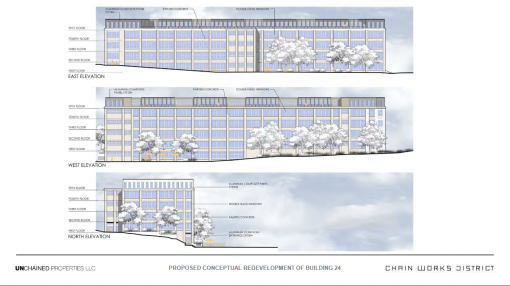
4. It’s another one of those special meetings – the city Planning Board will be sitting down next Tuesday to go over comments and sort another batch of public comments regarding the Chain Works DEIS, this time on public health. Once you get past the few pages of “this will never work and don’t bother trying”, there’s actually some interesting back and forth about remediation and what that entails. Also on the agenda are revisions to the Holiday Inn Express down in Southwest Ithaca – namely, they’re trying to avoid building the stairs to Spencer Road, as well as some other landscaping issues. At the second meeting later this month, the board is expected to Declare Lead Agency, open public hearings and review parts of the FEAF for TCAction’s Amici House, 8-unit 607 South Aurora, and the 8-story City Centre project on the Trebloc site downtown.

maplewood_v7_1

5. The plans for Maplewood have been modified yet again, in a change that the project team hopes will please neighbors and the town of Ithaca planning board. In revised plans submitted this past Wednesday, the 4-story apartment building planned for Mitchell Road has been replaced with a few sets of 2.5 and 3.5-story townhouses and stacked flats, and Building B to its north was extended slightly to compensate for the loss of bedrooms. Even so, the accompanying letter from Scott Whitham states that the unit and bed count have decreased slightly, from 473 units and 887 beds, to 442 units and 872 beds.

maplewood_v7_2 maplewood_v7_3

Also modified was their appearance – stoops, porches, dormers and gable roofs were added to give them a more harmonious appearance with the rest of the neighborhood. It’s not clear if the rest of the units were aesthetically modified as well.


News Tidbits 9/24/16: The Implicit and the Explicit

24 09 2016

tiny_timbers_1

1. Over in the town of Dryden, it looks like Buzz Dolph and STREAM Collaborative’s Tiny Timbers project is up for preliminary approval. The site plan hasn’t changed much, just slight modifications for a dumpster/recycling enclosure and a bus pull-off. However, the home options have been expanded a bit. There will be five options, ranging from a 1-story 525 SF home starting at $99,500, to a 1,050 SF model priced at $184,500. Design specs (flooring, finishes, HVAC) can be found here.

Along with Tiny Timbers, Dolph is planning a similar, smaller project near his house on Quarry Road in Dryden town. That $800,000 project, called “Quarry Ridge Cooperative“, consists of two duplexes (four units), all owner-occupied. The homes will be connected to a shared driveway and carport through breezeways. Back of the envelope calculations suggest these units will be around 1,000 SF each. The 2.26 acres will be collectively owned by the four homeowners.

2. On a related note, another sister project to Tiny Timbers is being prepped for a site on the city’s portion of West Hill. Dolph et al. are looking to do a similar development to the one in Varna on a 5.45 acre parcel at the south end of the 400 Block of Campbell Avenue, which was noted in a weekly news roundup when it hit the market back for $195k in August 2015. The Journal’s Nick Reynolds touched on it in a through write-up he did earlier this week. The comprehensive plan calls this portion of West Hill low-density residential, less than 10 units per acre. Current zoning is R-1a, 10000 SF minimum lot size with mandatory off-street parking, although maybe a cluster subdivision would come into play here. The Varna property is a little over 6 units per acre. If one assumes a similar density to the Varna project, the ballpark is about 35 units, if sticking to the 10000 SF lot size, then 23 units.

On the one hand, expect some grumbling from neighbors who won’t be thrilled with development at the end of their dead-end street. On the other hand, these small houses are modestly-sized and priced, they’ll be owner-occupied, and if the Varna site is any indication, the landscaping and building design will be aesthetically pleasing.

201_college_v5_1

3. I dunno if I’ve ever seen such strenuous contention between the planning board and the city’s planning department. The planning board’s objected to Zoning Director Phyllis Radke’s determination that the project is legal per the Form District MU-1 Zoning.

The document put forth by John Schroeder and approved by the board rests on the following interpretations:
-in cases where the zoning isn’t explicitly stated in denser zones, it should rely on what is stated in less dense codes, and interpretations of the introductory “purpose and intent” section of the code, which qualifies similarities of form and scale if the numbers and dimensions for facade length aren’t explicitly stated.

-The argument also draws debate towards the unstated but implied interpretation of street facade, which refers to the building’s primary face, vs. building facades facing both streets. The board’s filing argues that the Bool Street facade was intended as a primary facade early on.

cafd_mu1

-Unlabeled parts of the diagram, such as MU-1’s, have no meaning. Even if they could give the impression of longer facades, it’s not the intent of the code.

The document goes on to say that Radke “invented claims unsupported by the text”, uses “tortured logic” and “silly conclusions”. Ouch.  Since interpretation is not a cut-and-dry matter of clear definitions, so we end up with an argument from both sides that relies on an interpretation of ambiguities, something more akin to a court room. A curious result of this discussion is that the Planning Board had to send out a letter to neighbors saying they would be arguing zoning determinations, which are going to be far out of most readers’ expertise, as the precise details and intent of the 2014 zoning will be the primary driver of this debate.

20160821_134831

4. The Ithacan is reporting a mid-to-late October opening for the Marriott, the Journal is reporting November. Presumably, one of them is correct. The delay from the original August opening is attributed to a labor shortage. Hiring is currently underway for the 159-room hotel and its restaurant, which according to the IJ, are expected to employ 50 to 60 in total. About 75% will be full-time, and wages are expected to run from $10/hr + tips for wait staff, to $18-$19/hour, with the hope that a premium paycheck compared to similar positions at other local hotels will translate to a premium experience for guests.

tc3_daycare

5. It looks like TC3’s Childcare facility is well on its way to reality. At least $4.5 million has been secured for the $5.5 million project and its scholarship endowment for students with children. $2.5 million for that was recently received in a set of state grant and funds, according to WHCU. Another $2 million comes from benefactor Arthur Kuckes, for whom the new facility will be named.

20160918_141051 20160918_141131

6. It’s been a while since I’ve done house of the week. So, here’s a new house underway on the 200 Block of Pearl Street in the city’s Bryant Park neighborhood. Ithaca’s Carina Construction is doing their modular magic here, the pieces have been assembled and most of the siding and roof trim has been attached. Not 100% sure if there will be a porch, the lack of siding above the door suggests it’s a possibility.

To be honest, when I was going through my list of single-families underway, I was mostly finding that Carina dominated the list. Since Avalon Homes went under, and most stick-builds are beaucoup bucks due to higher labor and materials costs, Carina’s offerings have broad appeal in Ithaca’s isolated, tight home market.

The lot was created four years ago by a subdivision of 222 Miller across the street. Since then, it exchanged hands a few times before a local realtor sold the property for $130,000 in July to a family who relocated to the area from Texas.

119_125_college_avenue

7. The Planning Board Agenda is up, and it’s the shortest in ages, thanks to that special meeting last week. Here’s the rundown:

1.  Agenda Review                                                      6:00
2.  Privilege of the Floor                                              6:01

 3.  Subdivision Review

A. Project:  Minor Subdivision                                      6:15
Location: 404 Wood St.
Actions: Declaration of Lead Agency  – PUBLIC HEARING – Determination of Environmental Significance – Recommendation to BZA

A minor subdivision to split a double-lot in Ithaca’s South Side neighborhood into two lots, one with the existing house and one that would be used for a new house or small apartment building. A variance for an existing rear year deficiency of the house would need to be approved (the rear deficiency wouldn’t be affected by the new lot which is on the east side, but it’s a legal technicality).
B. Project:  Minor Subdivision                                          6:30
Location: 1001 N. Aurora St. (Tax Parcel # 12.-6-13)
Actions: Declaration of Lead Agency – PUBLIC HEARING – Determination of Environmental Significance
Touched on this one last week. Deconstruction of an existing single-family home for two two-family homes, each on its lot.

4. Site Plan Review

A. Project:  Two Duplexes                                              6:45
Location: 1001 N. Aurora St. (Tax Parcel # 12.-6-13)
Applicant: Dan Hirtler for Stavros Stavropoulos
Actions: Declaration of Lead Agency – PUBLIC HEARING – Determination of Environmental Significance – Consideration of Preliminary & Final Site Plan Approval

B. SKETCH PLAN:  Townhomes & Apartments at 119-121 & 125 College Ave.        7:00

I’ve spilled some electronic ink on this project before – Novarr’s $10 million project for faculty townhomes and apartments. Rumor mill says “modern-looking” and “glassy”, which given Novarr’s fondness for ikon.5 architects (his guest house is on the main page of their portfolio), that isn’t a surprise. The three parcels are CR-4 zoning, so 4 stories and 50% lot coverage allowed. Previous estimates were for 50-60 units. I’d say the biggest uncertainty in approvals comes from the existing apartment houses, which haven’t been declared historic, but former councilwoman Mary Tomlan and the Planning Board’s John Schroeder recommended for consideration in 2009 (only 15 of the 31 suggestions were considered, and only 2 received historic designation, Snaith House and Grandview House). Novarr’s been amenable to compromises before (see Collegetown Terrace), so we’ll see what happens here.

5. Zoning Appeals
• #3044, Area Variance, 170 Pearsall Pl.
• #3046, Area Variance, 404 Wood St.
• #3048, Appeal of Zoning Determination, 201 College Ave.                                 7:30


News Tidbits 9/17/16: Point By Point

17 09 2016

maguirebirdseye-620x420
1. Starting this week off with the Maguires again. Although there was significant vocal opposition from planning committee members to the proposal, they decided to postpone the decision for another month. It would have been more merciful and understanding if they had just declined to continue, but the committee voted 4-1 against making a decision at their Wednesday night meeting, citing to need to process public comment. Most of the comments in favor of the proposal mostly spoke highly of the Maguires as employers and economic drivers (and even some of the opposition did as well), most of the opposition focused on the plan not meshing with visions for what they want the neighborhood to become. The board will consider a resolution against the project next month, but it sounds like the decision has already been made.

201_college_v5_1

2. This will be something of an unusual month. Along with the typical retinue of meetings, the Planning Board will have a special meeting next week to weigh in on the next round of Chain Works District EIS public comments, approve some slight revisions to 210 Hancock, and zoning determination for 201 College Avenue.

inhs_pride_design_v5_4 inhs_pride_design_v6_1

The changes to 210 Hancock are noticeable but minor. On the landscaping side, the concrete curb around the playground is proposed to be removed as a cost-saving measure, a fence separating the for-sale and for-rent townhouses will be removed and a fire lane put in, and the Lake Avenue paving will be changed up to match the waterfront trail. For the buildings, the 54-unit apartment building would have some windows tweaked or removed to standardize sizes (reduce cost) and fire safety concerns, and some of the yellow metal panels would be replaced with brick for cost and ease of installation. No changes are proposed to the townhouses.

As for 201 College, City Zoning Director Phyllis Radke issued a determination that 201 College is compliant and permitted by MU-1 zoning. She also states a number of concerns with the Planning Board’s handling of the review. Among the reasons cited are:

  • Pre-site plan review in November 2015 by zoning and planning concluded the project met CAFD guidelines.
  • Facade isn’t defined in the CAFD document. Building length and facade length can be interpreted as two separate measurements.
  • Facade length did not come up as a concern until July, four months after meetings began, after design review by the board, and after prelim site approval had been granted.
  • The building meets the conceptual guidelines provided in the zoning. While there are concerns about (yet unwritten) design standards and activation of both street facades, there’s nothing in the code for MU-1 that explicitly limits facade length on any side other than the primary face. There is, however, in MU-2. So secondary street facade length was stated in the code for one zone, but in no others. Even though it’s been argued as an ambiguity, the board did not consider secondary street facade length in its review of a CR-2 zoned duplex at 319 Oak Avenue in early 2015. The activation requirements apply only to the primary face for non MU-2 structures. If the board decided it was still ambiguous, Hess Realty Corp. vs. Town of Rotterdam (1993) says that ambiguities must be resolved in the favor of the property owner.
  • 201_college_vision_2009
  • The 2009 vision guidelines that people keep citing, and Neil uses on the “Save our Soul” facebook page – not only do they suggest taking down Neil’s house, they also have building lengths running the entirety of Bool Street.

With all that noted, even if it’s decided the project is in fact legal and doesn’t need a trip to the BZA, it likely won’t be moving forward this year, if at all. Visum couldn’t start in time for the desired August 2017 completion, and the project and site are for sale. For a potential buyer, though, it would be of significant benefit to have the zoning debate resolved before any sale occurs.

3. Out in the towns, there’s not a whole lot of development discussion in next week’s agendas. The town of Ithaca will continue its review of Maplewood Park (running behind schedule at this point) and issue a couple of lot subdivisions, neither of which are expected to be a big debate.  The town of Dryden received plans for a 10,500 SF self-storage facility for the vacant northeast corner of Freeville Road and Enterprise Drive. The 70′ x 150′ warehouse will house 121 units, and about 7,500 SF will be climate-controlled. The project will cost about $350,000. There also plans for an Open Development Area (ODA) on Dryden’s Scofield Road. ODA means an ROW or easement is required for building permits, and the town has to review the plans – nothing’s been filed yet.

20160821_145711

4. A pair of construction loan agreements worth noting this week. The first is Storage Squad’s facility going up at 1401 Dryden Road east of Varna. According to a filing on the 12th, the company received a construction loan of $1.4 million from Tompkins Trust. That money will be used to finance the build-out of their 79,600 SF storage facility already underway. The second is the Dollar General being built at the corner of Route 34/East Shore Drive and Cayuga Vista Drive in Lansing. Primax Properties (under the name Sea Mountain Ventures II LLC) received a $956,000 loan to build the 9,100 SF retail store, which is also under construction. that loan was also filed on the 12th. The lending institution is BB&T, a major regional bank in the Southeast. Primax is headquartered in Charlotte, and BB&T is headquartered just 90 minutes up the road in Winston-Salem, so in this case, it’s less about a bank being interested in Ithaca, and more about two major companies located near each other and having an established business relationship.

109-corn-1413-w-seneca-1

5. So the Ithaca Urban Renewal Agency’s Economic Development Committee selected the $3.7 million Seneca/Corn proposal to submit to the state for the Restore NY 4 grant. And I feel a bit embarrassed because the Voice story, comparing the Seneca/Corn proposal and the State Street rehabs, ran after the decision was made, so it comes off as a bit clueless thanks to timing. Anyway, the application will be looked at by the Planning Committee, and submitted in early October. If all goes well, funding could be granted by the beginning of next year, with the renovated Wyllie’s and the Ithaca Glass overbuild ready for tenants by early 2018. Ed Cope is the developer, STREAM Collaborative the architect.

corner_store_2016

6. For sale this week, and for the budding entrepreneur – 2,310 SF neighborhood commercial retail at 402-04 West Court Street in the Washington Park neighborhood. Talk about a change. When I started at Cornell ten years ago, this was “The Corner Store”, and it was severely run down. I don’t remember the florist sign, but everything else in the assessment photo below fits my memories from the mid 2000s.

corner_store_2000s

During the past ten years, the bump-out was renovated, then the building was repainted, and The Corner Store became the “Red and White Cafe“, a highly-regarded neighborhood fish fry and seafood restaurant. According to the listing, the major renovations came about three years ago. County records indicate the property last exchanged hands in 1988. Along with the retail space comes 432 SF of storage.

The listing is asking for $975,000, but that would be for building and business – the building and lot are valued at $120,000, so any potential buyer is going to be much more interested in the cafe than the building.