Press Bay Court Construction Update, 12/2018

21 12 2018

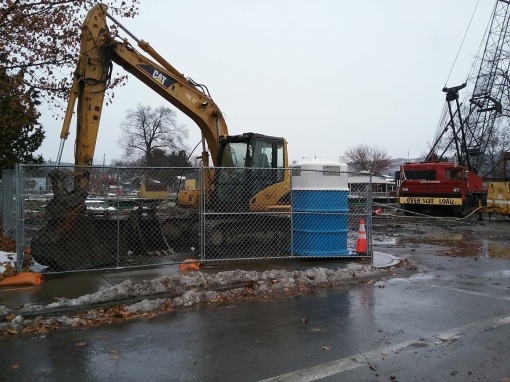
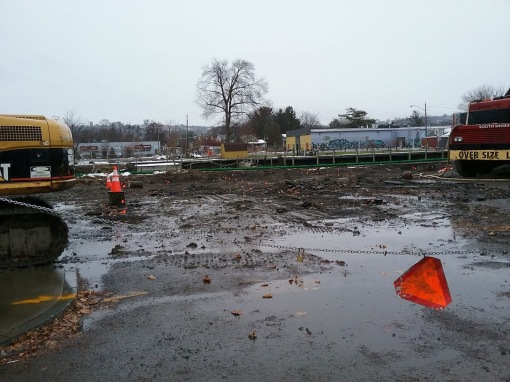
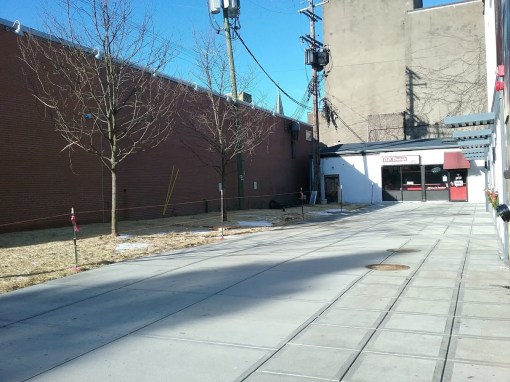
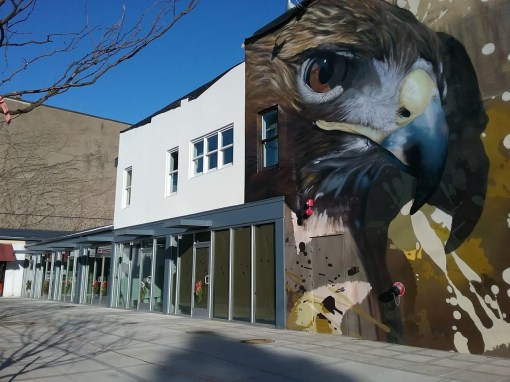
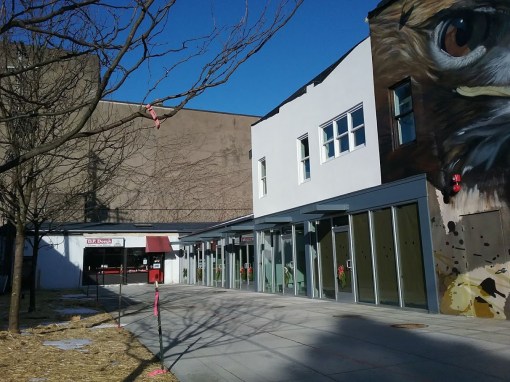
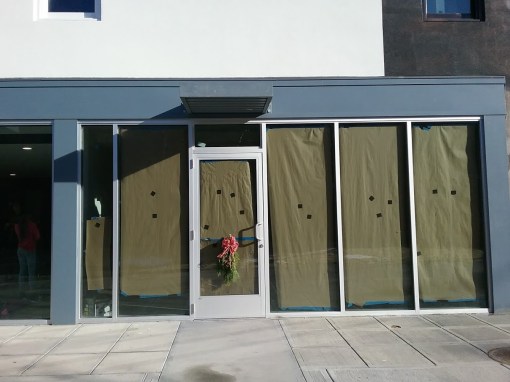
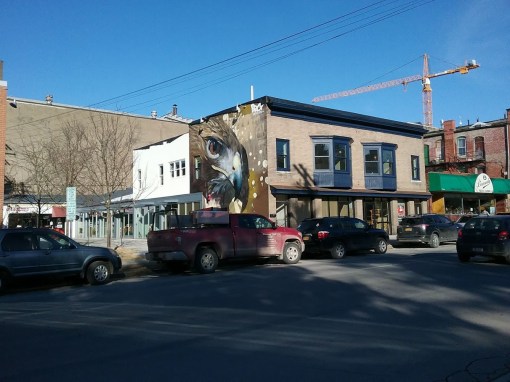
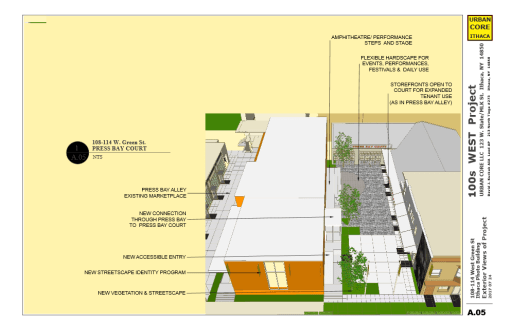
For practical purposes, I’m calling this one complete as of the end of this year. At least one of the new stores was set up and ready for opening (Gee June Bridal) while a couple others were just starting to fit out their spaces with equipment for their own launches. Among them will be Halal Meat and Groceries, One Ring Donuts, Hair • Color • Art and Bramble, an herbal retailer, moving from its Press Bay Alley slot. Calzone restaurant D.P. Dough will move from the rear storefront to the front of the 108-114 West Green retail strip, right along West Green Street in the former Hausner’s Garage. The hawk mural was given a touch up courtesy of Connecticut-based street artist Ryan ‘ARCY’ Christenson.

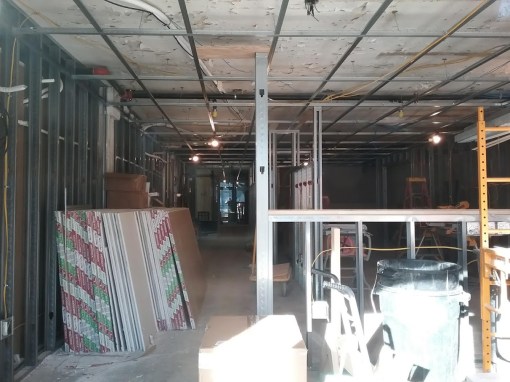
The fitting out of the West Green Street retail units is ongoing, but the four apartment units are nearly complete with only minor finishing details left, and based off Press Bay Alley’s Instagram, it’s quite the transformation. From their facebook page:

Beautiful historic spaces with modern amenities. These apartments are truly unique. Original 1914 wood rafters and exposed wood deck ceilings, steel beams, and brick surfaces paired with completely new utilities and modern design features

• super-efficient air source heat pumps (heat and AC)
• all LED lighting
• brand new appliances (including dish washer and garbage disposal)
• tasteful modern cabinets with soft close hardware
• beautiful tile bathrooms with modern frameless glass shower enclosures
• freshly refinished original distressed hardwood floors
• Air tight spray foam insulation and high-performance rigid foam on the roof
• Sprinkler system for fire safety

Prices range from $1200-1300/month plus electric*

Included in the rent:

• WiFi Internet**
• Garbage and recycling disposal
• Water service

Apartments are substantially complete and available for a January 1 occupancy

*heat/AC and cooking are all electric, this is a fossil fuel free building

**building is NOT equipped with cable, internet is provided by high speed fiber optic line

$1200-$1300/month is more than the 75% AMI below-market units they were originally aiming for, but not by much – $1200/month works out to $48k-$52k/year, or 80-90% of the local AMI of $59k. “Workforce housing”, to borrow a Visum Development Group term for the 80-90% bracket.

The biggest deviation from the plans appears to be that the passage into the former Ithaca Journal press building has not been built, and instead of vegetation and hardscaping for the amphitheater and court pavers, it’s only vegetation. It’s not clear if the amphitheater and west entry to the press building will be built at a later time.

All in all, this is a great project to have in Ithaca’s Downtown. It extends the vitality of the Commons westward in a form sympathetic to the neighborhood and physical surroundings, making use of a vacant building. It also enhances Press Bay Alley by generating more foot traffic next door. It will provide complementary attractions to make downtown a more engaging place for visitors, and supplies a bit of new moderate-income housing. A big win for the city of gorges.

More info on the development of the project can be found here.

//www.instagram.com/embed.js


Hilton Canopy Hotel Construction Update, 12/2018

20 12 2018

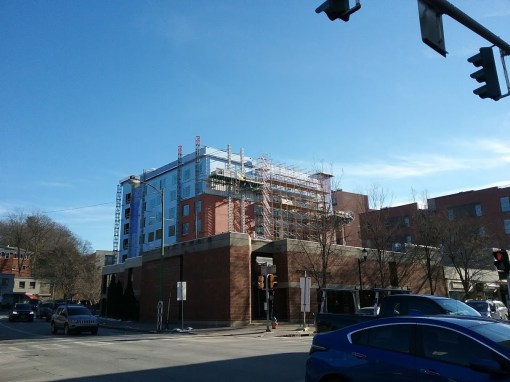
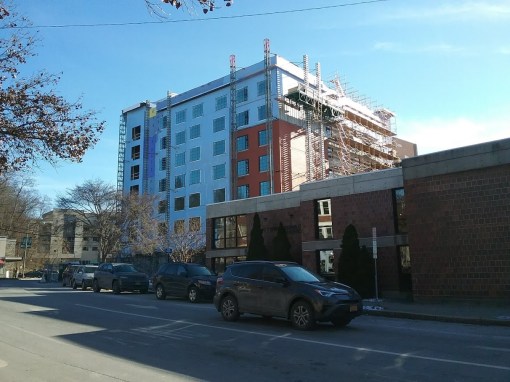
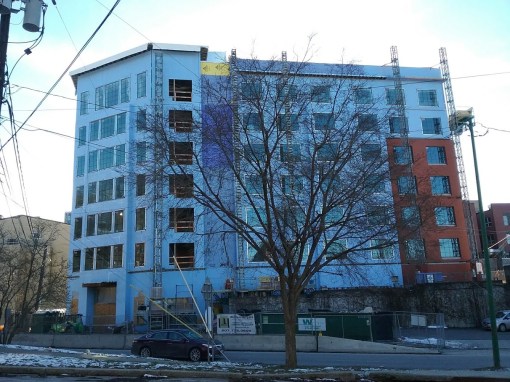
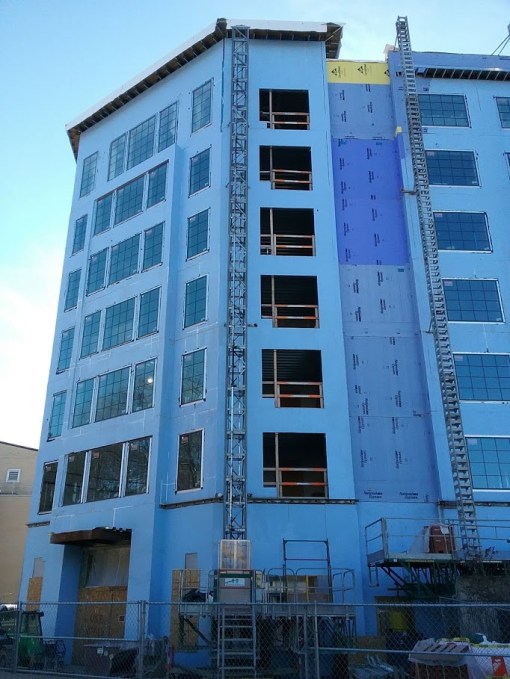
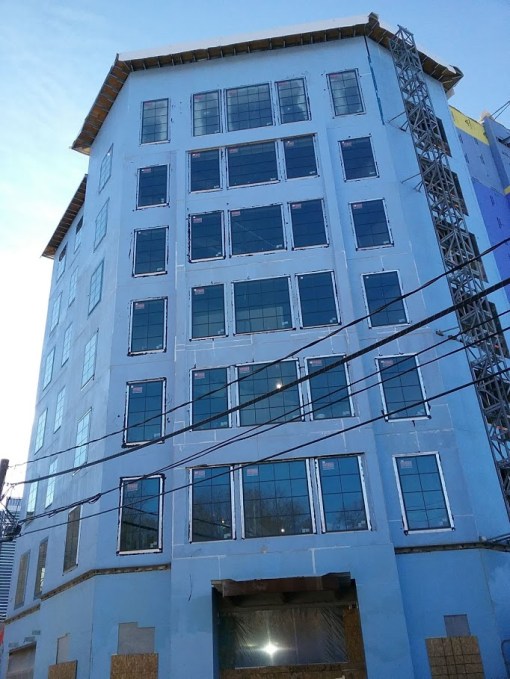
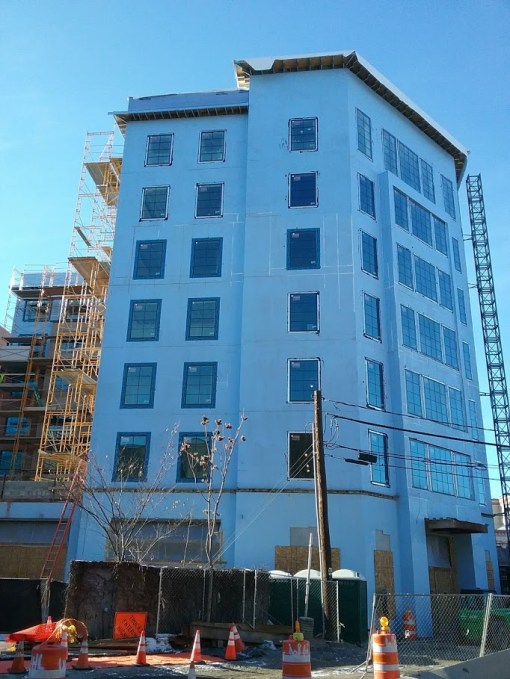
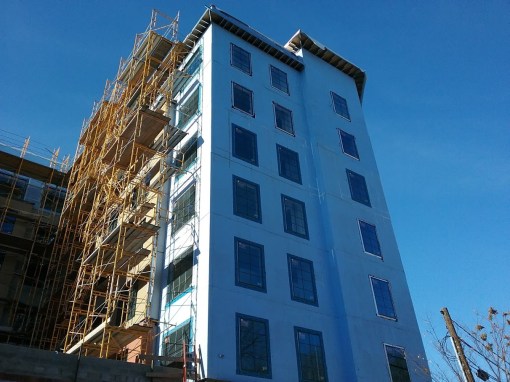
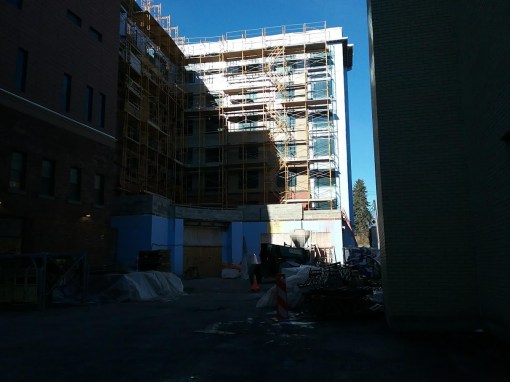
We’re starting to see some of the face materials being attached to the Canopy Hilton’s exterior.The brick veneer is Bowerston Shale Company Red Smooth blend. The bumpout with the industrial-style bay windows will use a darker and browner blend called “Pioneer Smooth”. Some of the “Sauteed Mushroom” fiber cement panels are also visible underneath the scaffolding. “Rockport Grey” and “Dark Ash” (light grey and dark grey) fiber cement panels will be used on the upper levels and to provide visual interest being the bricked spaces. Most of the sheathing is in place, as are most of the windows.The bridge blue bands around some of the windows is probably sealant/waterproofing material.

An interesting little detail here – during the excavation, some remnant fragments were found from the former Stand Theater, which occupied the site from 1917 until its demolition in 1993. It was a grand building in its time, designed in an Egyptian Revival theme (which the Carey Building emulated when it was built a few years later) and capable of sitting 1,650 in golden age splendor. But the theater was never well designed for the transition from stage to screen, and after decades of decay, it closed first in 1976, and then reopened for a few years at the end of the 1970s into the 1980s for live shows, but the expense of maintenance proved a burden on shoestring budgets. Although on the tail end of urban renewal, the car was still king in the early 1990s, and a parking lot was deemed a better alternative to a decaying theater whose revitalization attempts had failed. A few of the more decorative pieces that were found will be put on display in an exhibit inside the hotel lobby.

The 131-room hotel, on the east end of Downtown on the 300 Block of East State Street, is expected to open in 2019. Baywood Hotels, the developer, has been quite busy lately, purchasing the five year-old Fairfield Inn at 359 Elmira Road a few weeks ago. Rather curiously, the $5.9 million purchase of the 106-room hotel was $1.1 million below assessment. The sale used a “bargain and sale deed”, which one often sees with foreclosures. Bargain and sale deeds are riskier than standard deeds. It basically means that if the property has an issue or unpaid bill, you’re on the hook, not the seller.

The curious details of that sale makes me think of a never-completed story the Voice was working on involving the Fairfield. Not long after the Voice launched, the then-owners reached out in an email, saying they had constructed and opened the Fairfield, and after being open almost two years, “we can attest that there is no need for hotel rooms since demand is on a downward slide and we are having trouble servicing our debt. We also feel the Ithaca City officials are artificially generating demand hype to attract more hotel developers along with promises of tax abatement.” We had worked out this idea where their story would be part one, and getting the city and business officials to respond would be part two.

I did an interview with the Fairfield owner and manager, but to prove their claim wasn’t just their hotel and that it was a citywide/regional problem, we needed hard data, proprietary information on occupancy rates and things like Revenue Per Available Room (RevPAR). The regional data of all hotels combined did not back up the claim, and with none of the Fairfield’s peer hotels were willing to take part or even support or refute the Fairfield owners’ claims, there was an inability to expand the story beyond the Fairfield’s anecdotal experience, and so it never moved beyond a first draft. It was the first in-depth story I had worked on that failed to pan out.

In retrospect, I suspect the truth was somewhere in the middle. Given that one of the boutique hotels was cancelled, and how much time was needed for the new downtown hotels to obtain financing, there was clearly some concern from lenders about what the market could support. But because those new hotels are opening over a period of a few years, and local economic growth has continued, the worst fears of the hotel “boom” have been avoided.

Further information on the Canopy hotel can be found here.


119-125 College Avenue (College Townhouses) Construction Update, 12/2018

16 12 2018

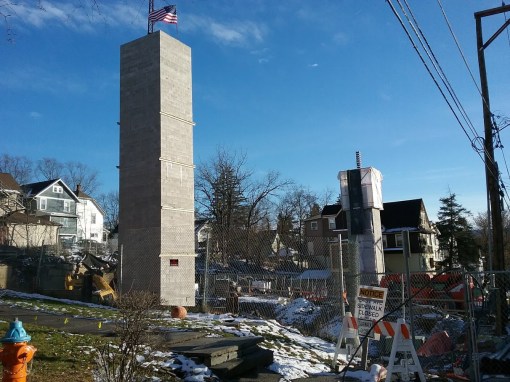
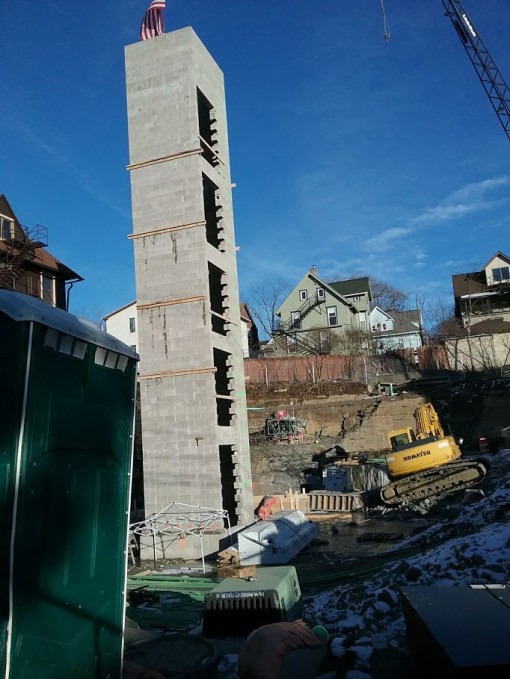
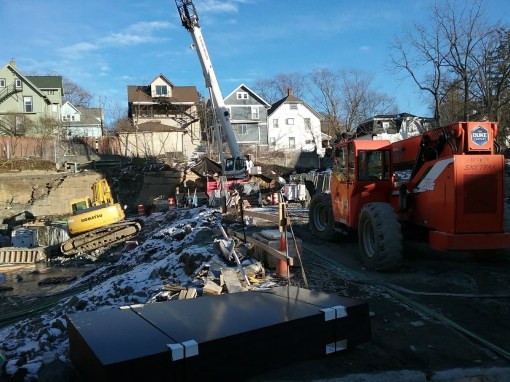
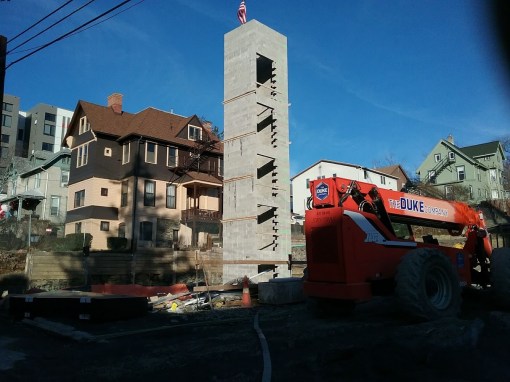
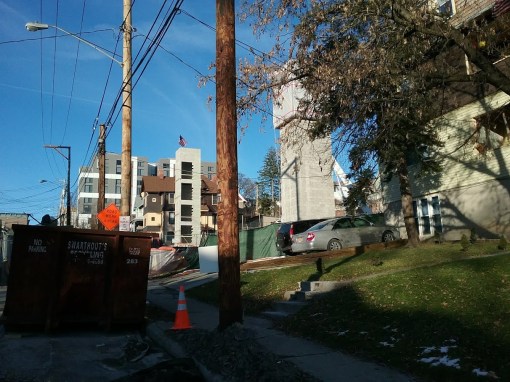
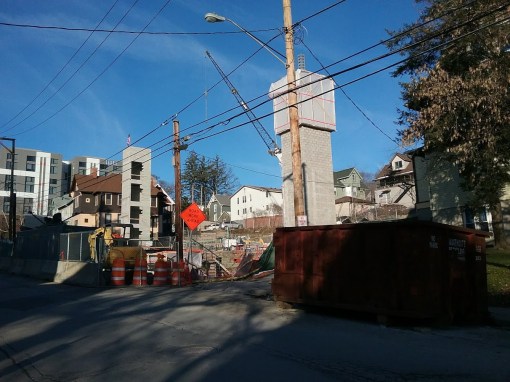
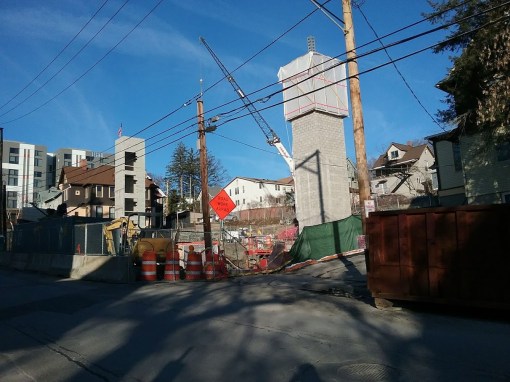
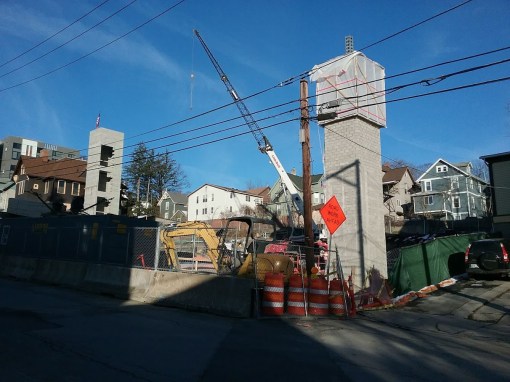
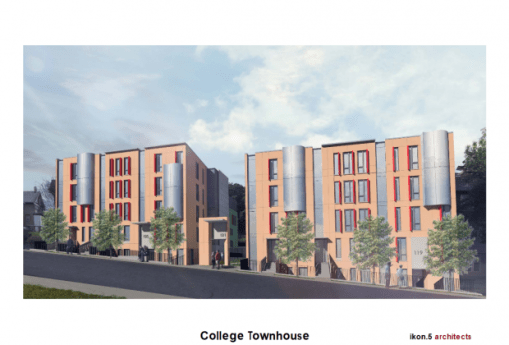
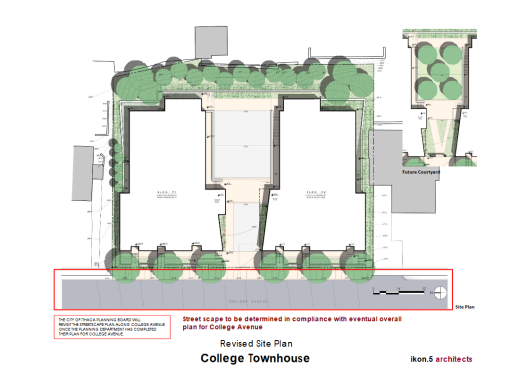
The CMU (concrete masonry unit) elevator/stairwell cores are being assembled for Novarr and Proujansky’s Cornell visiting faculty and staff housing at 119-125 College Avenue. The North Building’s core tower is complete and capped with an American flag courtesy of Welliver (who are proudly displaying their involvement with Cornell’s North Campus Residential Initiative on their homepage, and is co-developed by Novarr and Proujansky). It’s kinda intuitive from the east tower, but workers work their way up along the inside, using the steel girder in the center. The plastic sheeting offers some basic weather protection as the cinder blocks are mortared and laid into place in a running bond pattern. These cores give an idea of how tall the finished buildings will be, though keep in mind the lowest exit/entry opening is the basement, which will be built out and backfilled up to ground level as construction progresses.

One of the reasons why the hot gossip swirls around Novarr’s Collegetown plans is that he enjoys a very close relationship to Cornell, so if the university determines it wants to do something Collegetown, they can turn to someone who has a lot of developable property and a strong relationship with the school. Rather than deal with the potentially damaging public blowback of a tax-exempt property, Novarr and Proujansky keep it on the tax rolls and create a welcome degree of separation. Most of their properties are fully taxed – the Breazzano, which serves an academic function rather than ancillary function like housing or student services, has a PILOT agreement for fifty years.

Apart from the excavated sites and elevator cores, the concrete foundation work (footers, slab pours, foundation walls) is ongoing, mostly at the south building. It doesn’t look like the north building is quite as far along, even though the elevator core is complete.

Project information and history can be found here.


Stewart Park Inclusive Playground Construction Update, 12/2018

15 12 2018

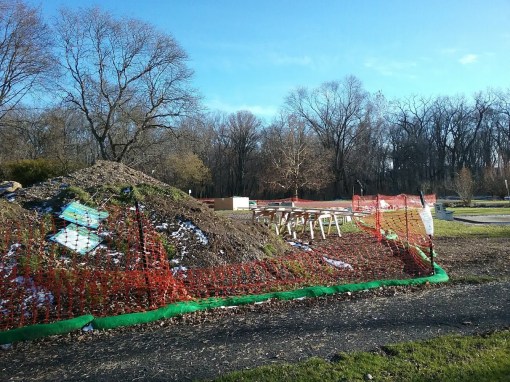
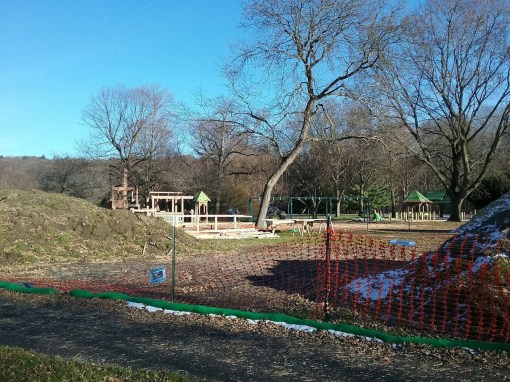
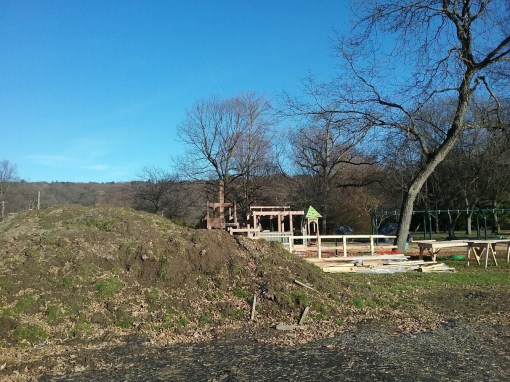
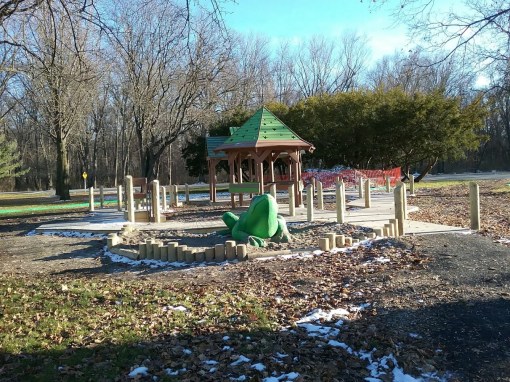
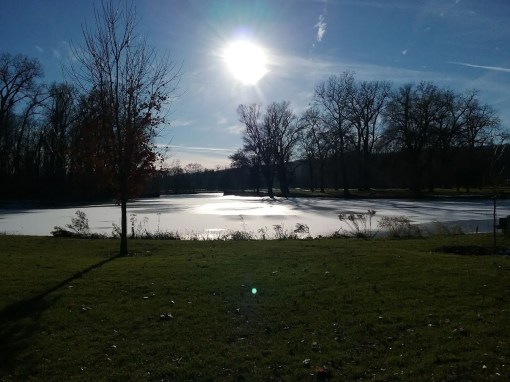
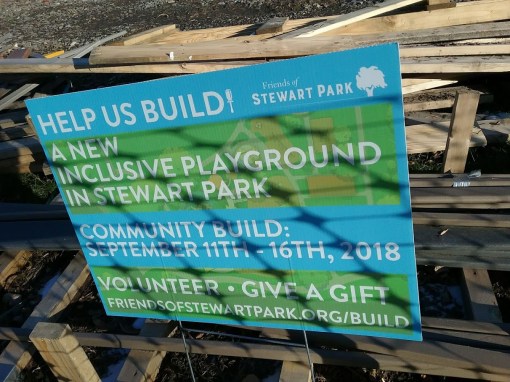
Here’s a look at the Stewart Park Inclusive Playground project. Overseen by the non-profit Friends of Stewart Park (FSP), the two-phase plan was approved by the city earlier this year, and started construction in September for a May 2019 completion. Plans for the project date back to at least 2015, with formal planning board review moving forward in late 2017. Among the features planned are (from the website):

  • A new, accessible splash pad that will conserve water.
  • Specially designed school-age and pre-school play structures.
  • An accessible berm  that provides children a starting point for exciting play experiences for all children.
  • The use of native plants and sustainable building materials and site design strategies to make the playground a model for green playground design.
  • Educational opportunities to interpret the natural environment of the park – the vegetation, birds, fish and wildlife that make this site so special.
  • Natural play areas including a music garden and sand play area.
  • Numerous swings and climbing structures, shaded seating areas and many benches for relaxing.
  • New accessible bathrooms and changing stalls adjacent to the playground and carousel.
  • A restored and accessible Carousel (completed).
  • Accessible walkways and paths linking to the Cayuga Waterfront Trail and other areas of the park and Ithaca’s waterfront.

When FSP refers to an inclusive playground, it means that it offers something for kids of all abilities – it offers a full sensory experience with lots to touch, to see and to hear. Disabled children will be able to access and enjoy much of the equipment, as well as the gardens and play areas.

Complementary additions will include a parking lot addition, benches, and bathrooms. The cost of the new and improved facilities is $1.7 million ($1,517,500 in hard construction costs like materials and labor, $182,100 for soft costs like design fees, legal and permitting, and a $50,000 annual maintenance fund). The project will take about nine months to construct, and be built through a combination of traditional paid construction crews, and volunteer community builds.

As previously reported, the location of the new structures is between the splash pad on the west end of the park and the carousel to the east, south of the transmission lines, with a total area of about 1.65 acres. The area north of the power lines is envisioned as an open play and picnicking area. With the exception of the large swings, the existing equipment will eventually be removed to near the DPW maintenance building and the ‘Whirly Bug’. The older play structure near the carousel will be moved, to another park if possible.

Three playground design and landscaping firms are involved with FSP’s plans – Parkitects, Play by Design and EarthPlay are coordinated designs and features to maximize the play value and amenities, while giving a nod to local features like rock formations and the steamboats that used to come down the lake. T.G. Miller is handling the more technical details like grading and stormwater management, and STREAM Collaborative designed the 900 square-foot storage and bathroom building.

The first phase, which includes the pre-school play area, is open, much of it thanks to the work of over a thousand of volunteers back in September, and participating organizations who sponsored volunteers and support services during the intense six-day build. Phase II will start next year, once the worst of winter has passed.

On the funding side, $1 million was received in a state grant spearheaded by Ithaca’s state Assemblywoman, Barbara Lifton (D-125th). The remaining $700,000 is being raised through a capital campaign. At last update, $658,082 had been committed by private sources. The big donors are listed here, and if you want to help close the gap in the home stretch, the donation link is here. A specialized fundraiser for the new accessible surfacing materials (a safe, durable material on which wheelchairs can move) for the playground is here.


238 Linden Avenue Construction Update, 12/2018

14 12 2018

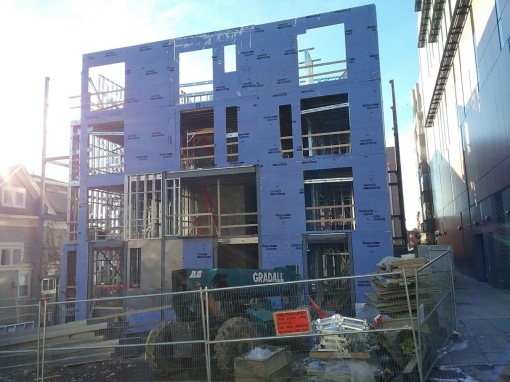
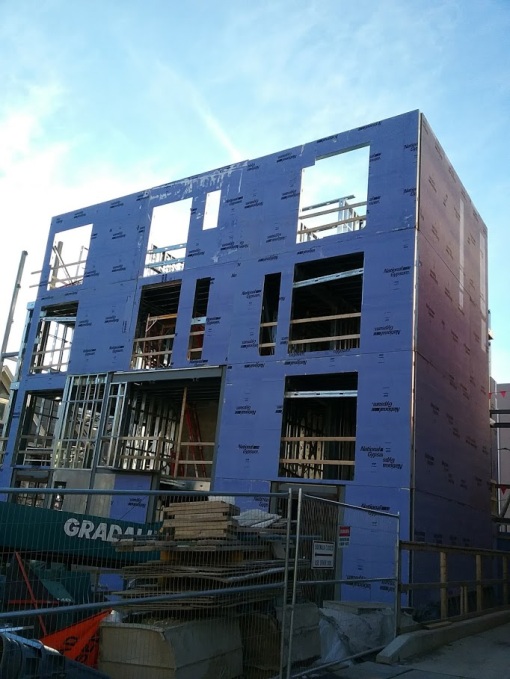
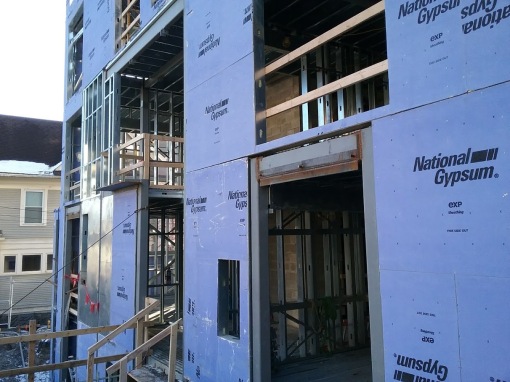
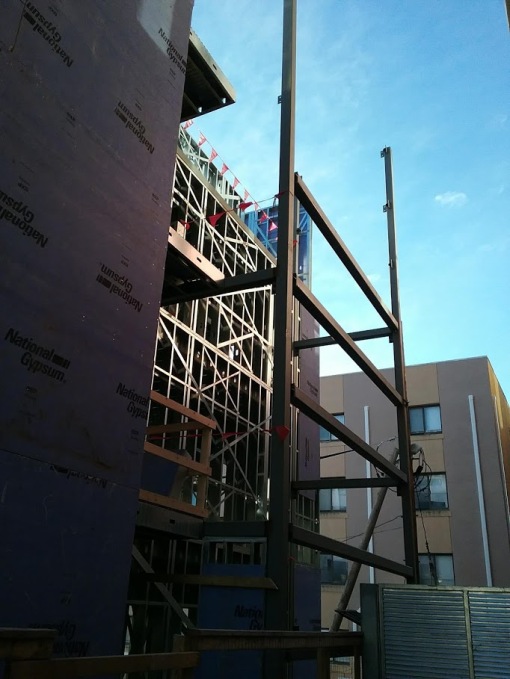
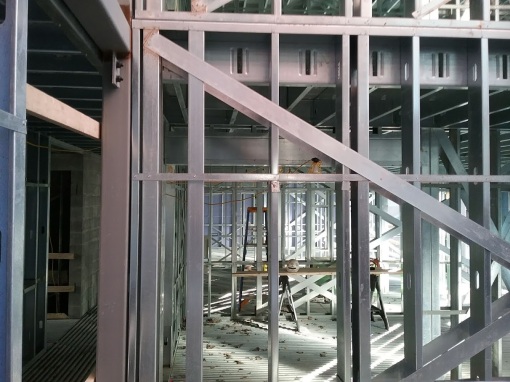
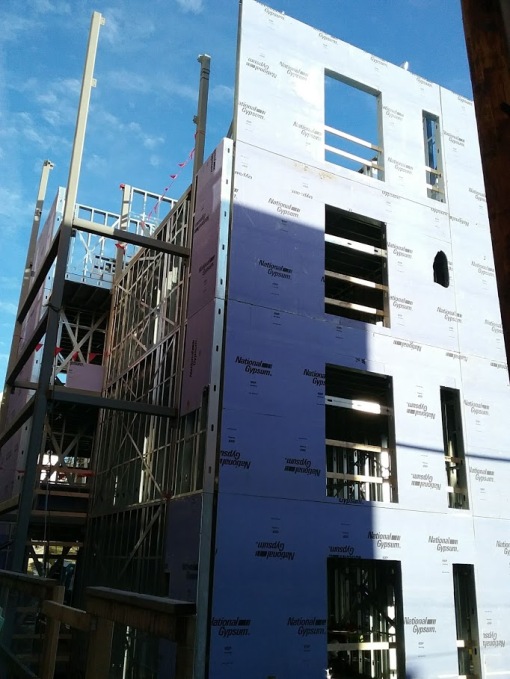
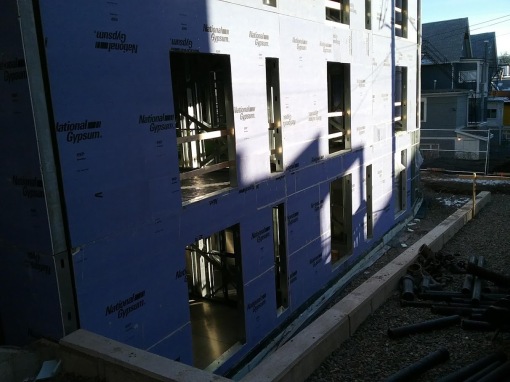
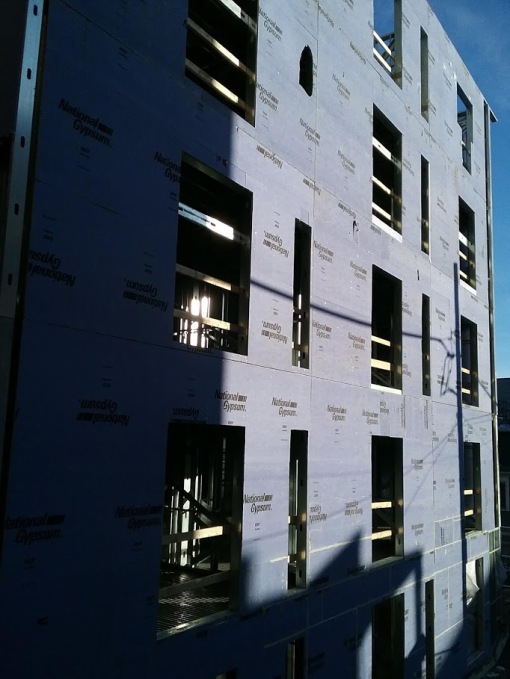
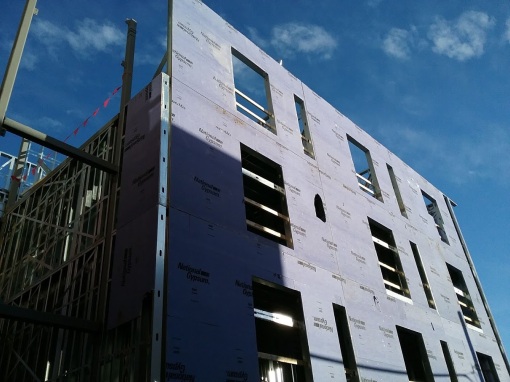
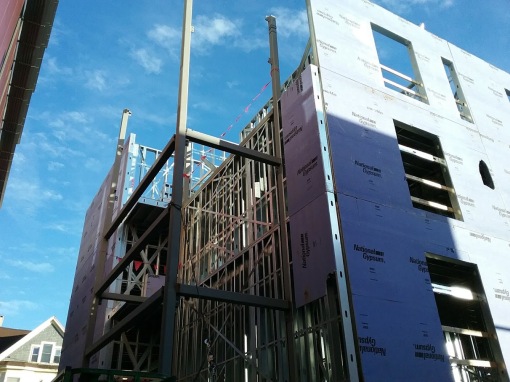
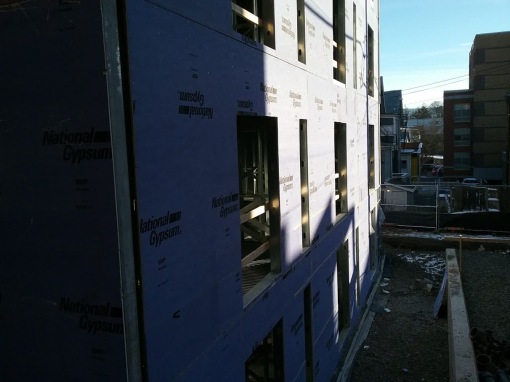
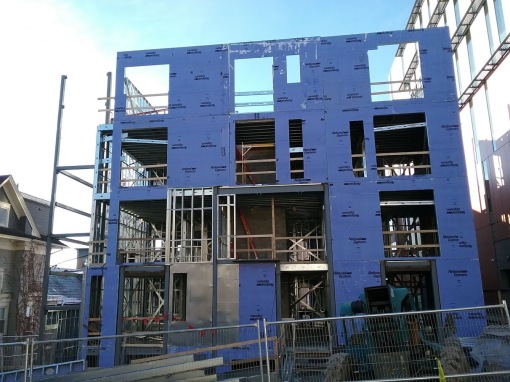
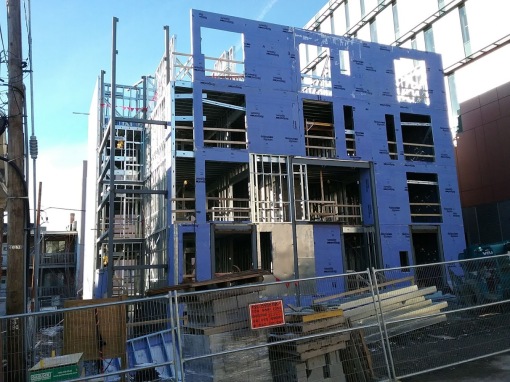
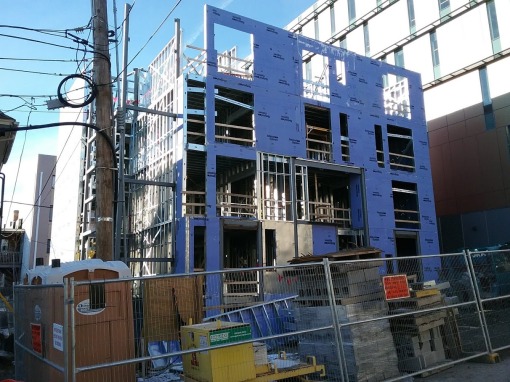
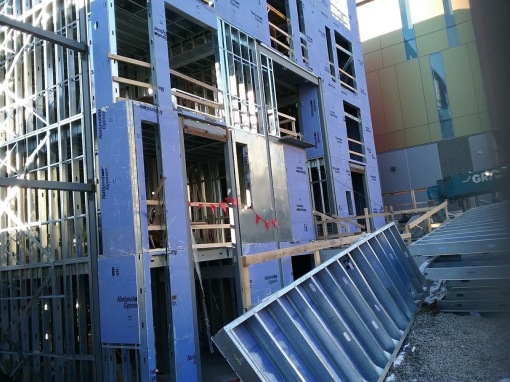
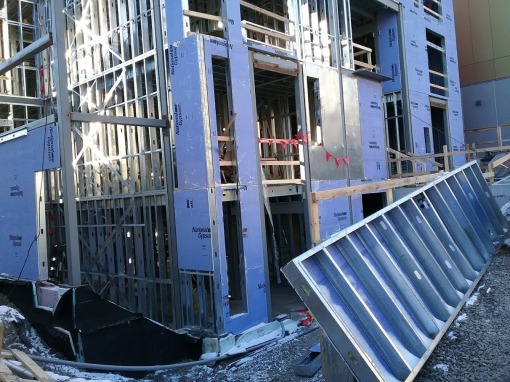
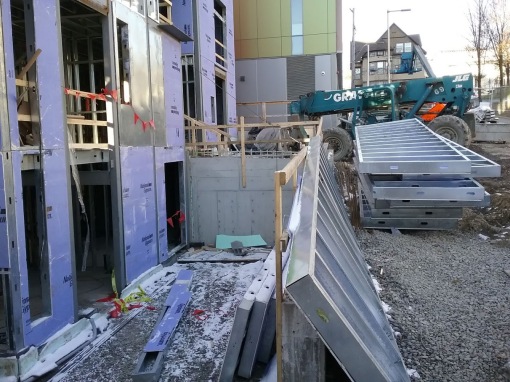
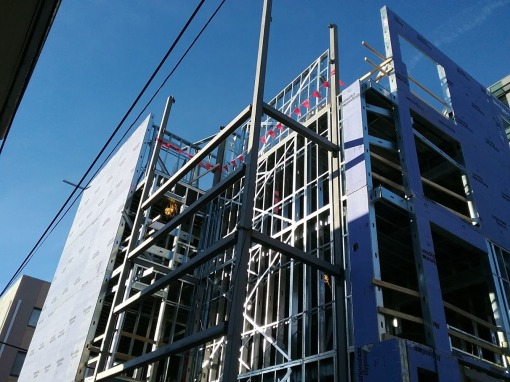
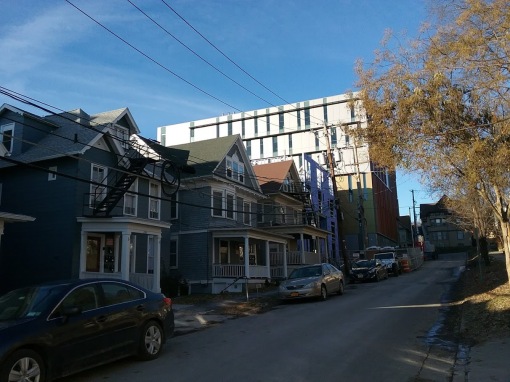
John Novarr and Phil Proujansky’s project at 238 Linden Avenue is moving right along. For an all-residential construction, this is a heavy-duty building. It uses a steel frame with steel stud walls and gypsum sheathing – unlike wood-framed structures that could go up in smoke, this building is designed to be durable and withstand and potential fire-related calamities. It may be related to the fire code issues that delayed the project?

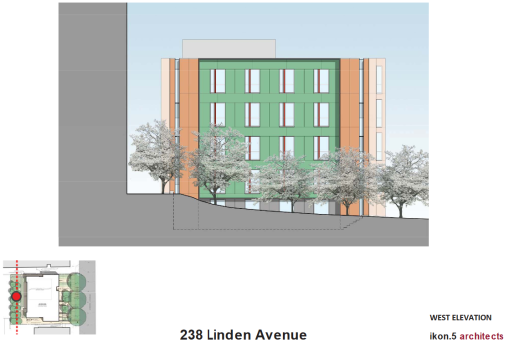
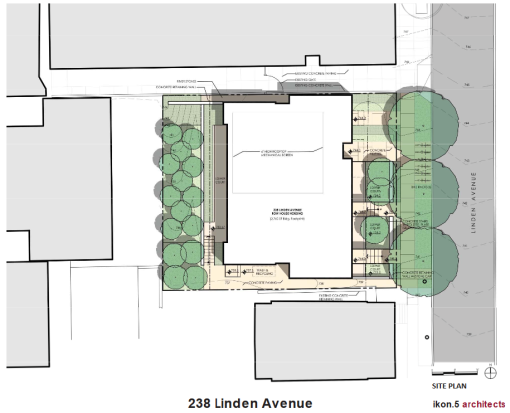
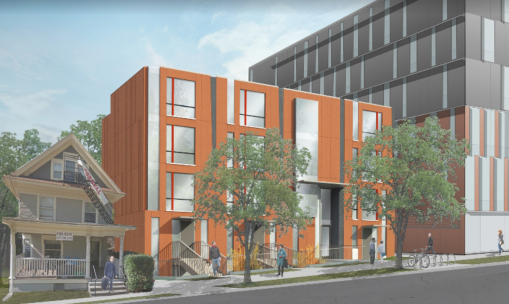
It looks like the design is similar, but not exact to the renders below. While some of the rough window openings are still being carved out of the gypsum panels, it’s not the same fenestration pattern. The sunken rear courtyard remains – it will be nice during the summer, but every leaf in Collegetown will seem to find its way in there by November.

The 13,715 square-foot building, which will house 24 studios, is topped out but not yet fully framed. Corrugated steel decking is in place and some interior framing has occurred as well. Based off the demolition plan submitted for 325 College Avenue around the corner, the targeted completion date for this structure is sometime next summer – given it’s designed to serve Executive MBA students at the Breazzano next door, that makes good sense.

Briefly, to touch on that 325 College Avenue site – the rumor mill does not know what’s planned, but the only consistent detail is that it will not be student housing. The market is too weak, and many Collegetown landlords are holding off on projects until the impacts of Maplewood, and potentially Cornell’s North Campus, have been fully absorbed. It’s not a situation where anyone seems to be going bankrupt, but the big Collegetown players have taken a more conservative approach as a result of Cornell’s new housing. As to what they could plan other than student housing, we’ll see. Faculty/staff housing, a hotel, another Cornell-related institutional use…plenty of options.

A history and overall description of the 238 Linden Avenue project can be found here.


118 College Avenue Construction Update, 12/2018

14 12 2018

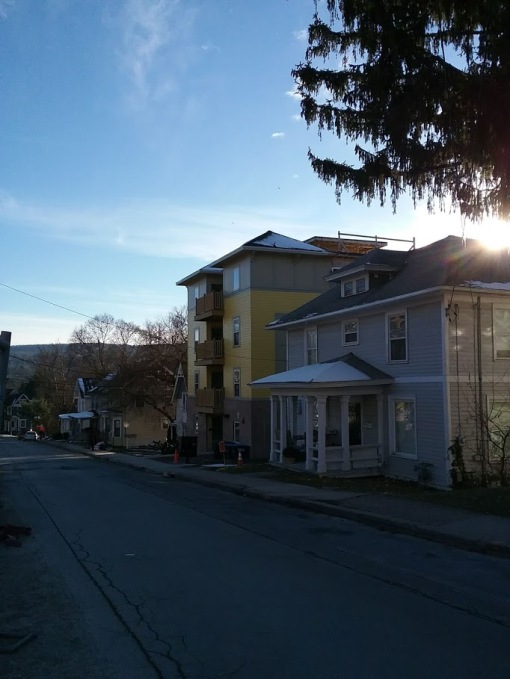
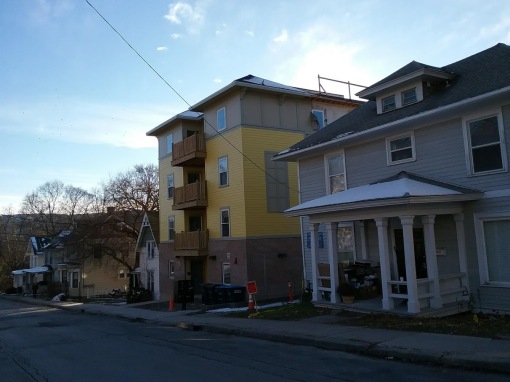
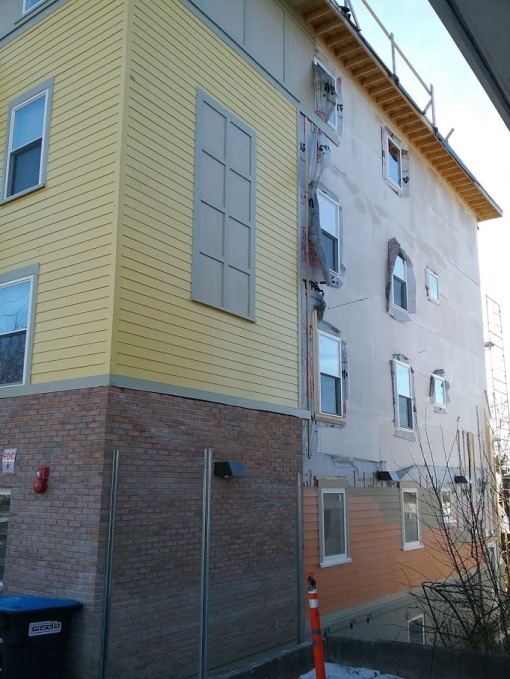
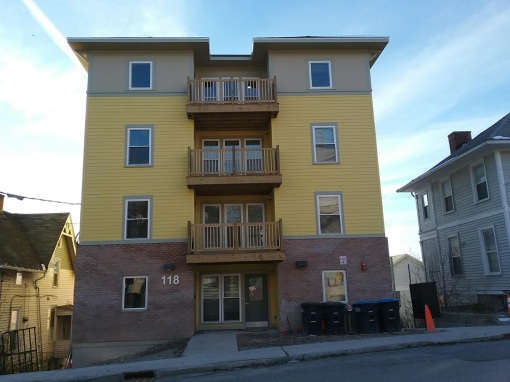
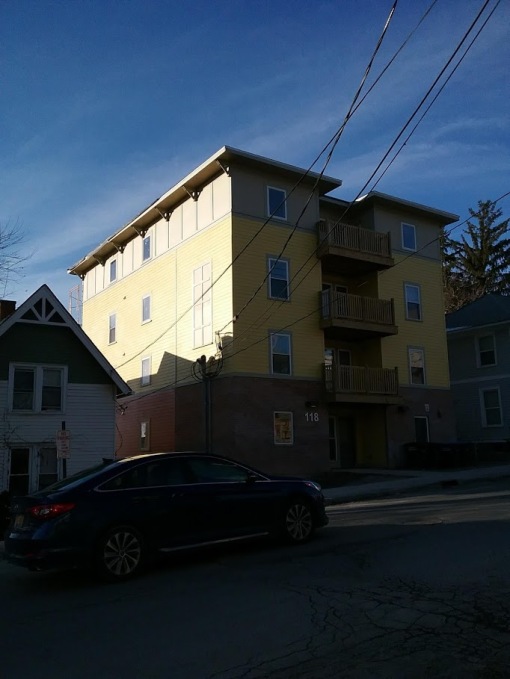
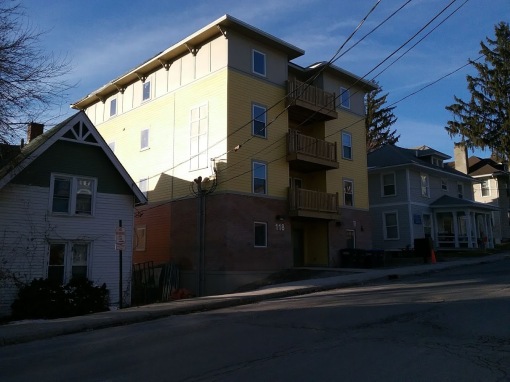
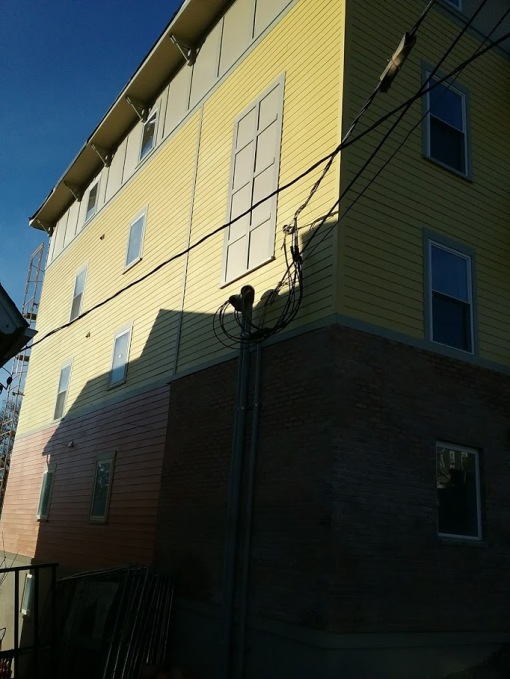
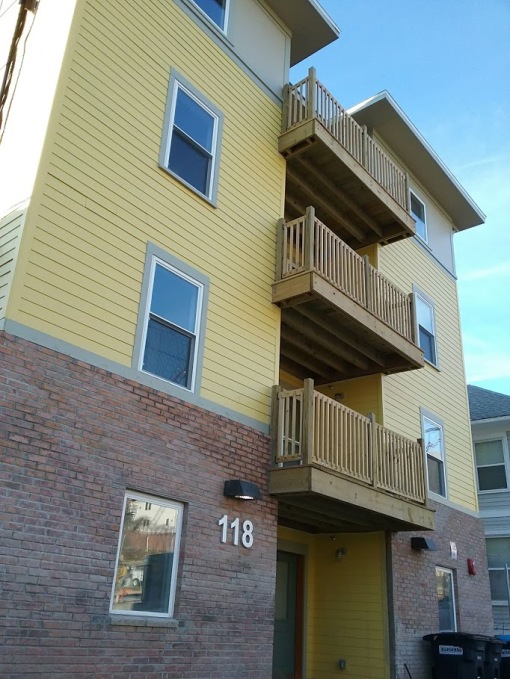
This is another case of where the exterior of the building isn’t finished, but the interior is complete enough such that a certificate of occupancy may be issued. Visum Development has been advertising the units online, and they’re not cheap, $1200-$1300/bedroom. 118 College has 5 units, four six-bedroom and one four-bedroom unit. For that high-end price, they come fully furnished, and with washer/dryer, stainless steel appliances, microwaves, dishwashers, quartz countertops and private balconies. Wi-fi is including in the rent, and tenants can use the fitness center and media lounge at Visum’s property at 201 College at no extra cost. The units are all smoke-free, which might seem quirky to older readers, but it was already pretty common by my Cornell stint in the late 2000s. Interior photos can be found here. This one moves into the “complete” column on the Ithaca/Tompkins County project map.

The yellow fiber cement siding really makes this building pop. The basement-level is finished with stucco mixed with Sherwin-Williams (S-W) “Sawdust” paint, the first level is a combination of Belden face brick (Belcrest) and S-W “Truepenny” fiber cement clapboards, more fiber cement clapboard on the mid-section in S-W “Overjoy“, trimboards, balcony trim and window casing colored S-W “Svelte Sage”, black window frames, stucco (in S-W “Favorite Tan”) with more fiber cement trim and frieze boards on the top level, and the pyramidal roof caps will be standing seam metal, Pac-Clad “Aged Copper”.

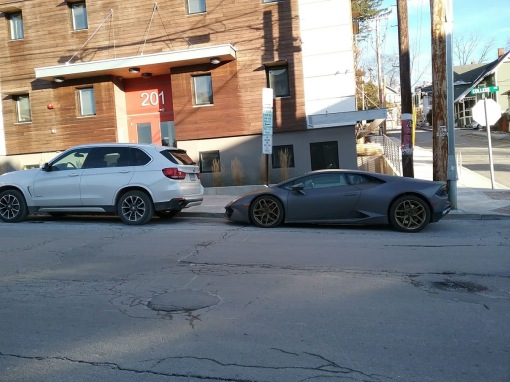
As a related, humble opinion, the bamboo siding on 201 College is not ageing gracefully. The rain shadows just don’t reflect well for a luxury building. Also note the Lambo Huracan. 99% of the Lamborghinis I’ve seen in my life have been in architectural renders with no hope of matching such opulence in the final product. At $200k, that car is worth as much as a well appointed, local starter home.

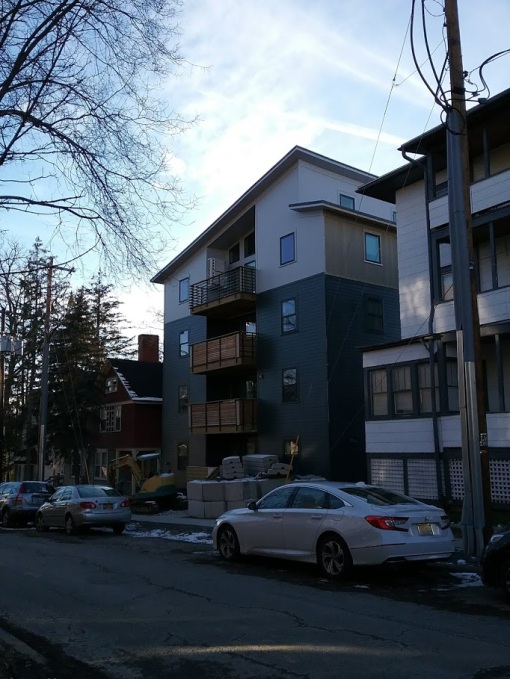
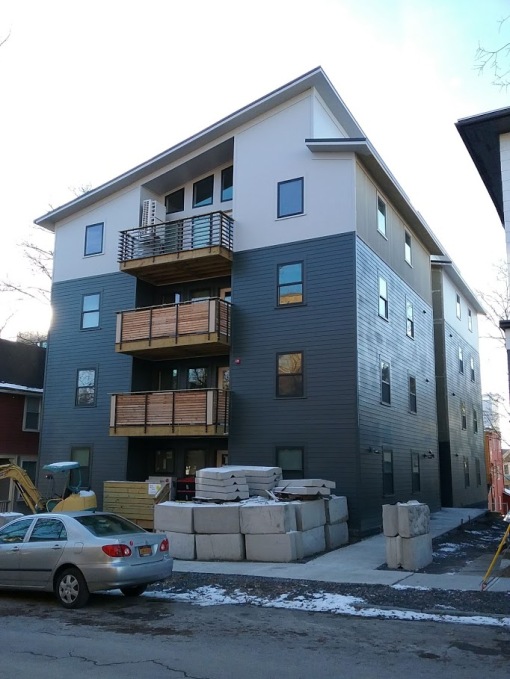
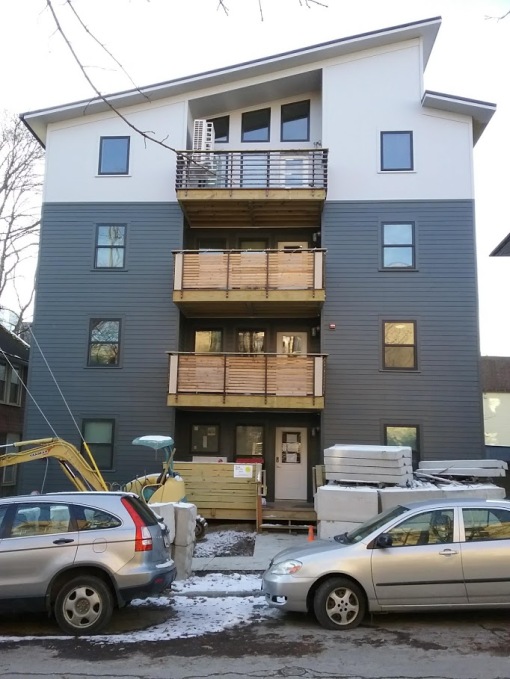
210 Linden Avenue is, like 118 College, still finishing up on the exterior work, but further along. The landscaping won’t go in until the spring, which given the winter weather, is probably when the building will be truly complete.

All the building designs and eventual landscaping designs are courtesy of STREAM Collaborative, and the construction itself is the work of Romig General Contractors.


323 Taughannock Boulevard Construction Update, 12/2018

3 12 2018

Some projects have clear, concise histories. This is not one of them.

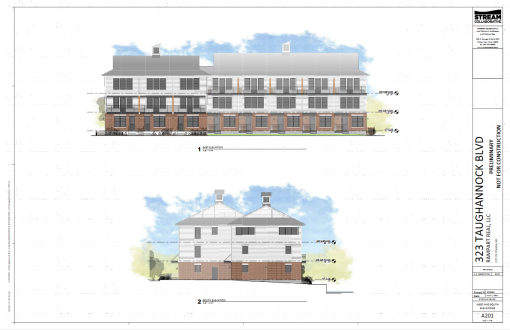
323 Taughannock started off in the summer of 2014 as a $3.5 million, 23,000 SF mixed-use building with ground-level office, 18 covered parking spaces, and 20 apartment units on the three stories above (total of four stories, 50′ height). The firm proposing the building was Rampart Real LLC, managed by local lawyer Steve Flash, who partnered with businesswoman Anne Chernish to develop the plan.

Flash had long had an interest in Inlet Island. He was an original co-owner of the Boatyard Grill restaurant on the island, and is an owner and co-manager of the nearby Finger Lakes Boating Center. In 2007, he sought to build a five-story condo/hotel on Inlet Island, and was shot down. If you think Ithacans are opposed to development now, take a look at the previous link. Current affairs don’t hold a candle to how anti-development the community and many local elected officials were for much of the 2000s. But Flash continue to scout out opportunities where he might be able to do something in time. He picked up the vacant, rundown former bar at 323 Taughannock Boulevard for $280,000 in July 2011.

The apartment plans, which were designed by STREAM Collaborative, were reviewed, revised, and approved by the city. Although the original plan was to build the apartments out from January – August 2015, the project had been unable to move off of the drawing board and into reality due to cost concerns related to “parking, soft soil, and relatively tight space,” according to Flash. Being on the waterfront means that the soils have a high water table and are easily compressed, making multi-story construction difficult. The challenges faced with the apartment building were complicated by the proposed first-floor parking, which posed constraints on the building’s structuring, and raised construction costs beyond feasibility. Long story short, although the approvals were in place, the cost projections became too steep for the developers to follow through, and the site sat quiet.

With the original plan no longer feasible, a replacement development plan was submitted in December 2016. This was a proposal for eight for-sale townhouses. Totaling 20,174 SF it’s effectively 16 units in eight townhomes – the first floor will consist of 8 studio type apartments that could also be used as commercial space. The second and third floors, which have separate entrances, will be occupied by 8 townhome style 2-story units. The original idea was that they could be live/work spaces, or that renters would live in the studio units and their rents would help cover the mortgages of the townhouse owners. Offhand, I remember they were to be in the upper 300s to low 400s price range.

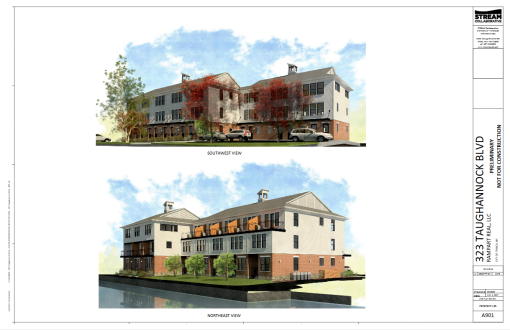
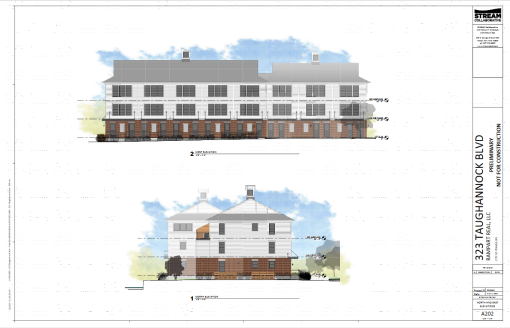
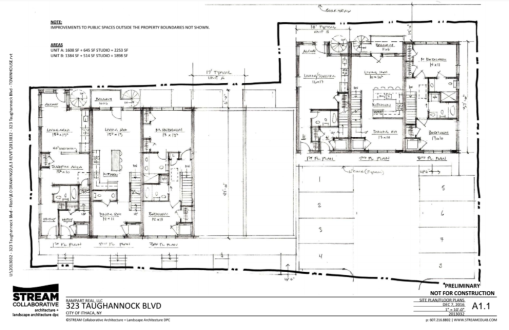
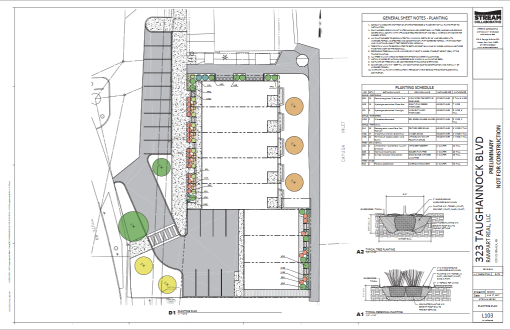
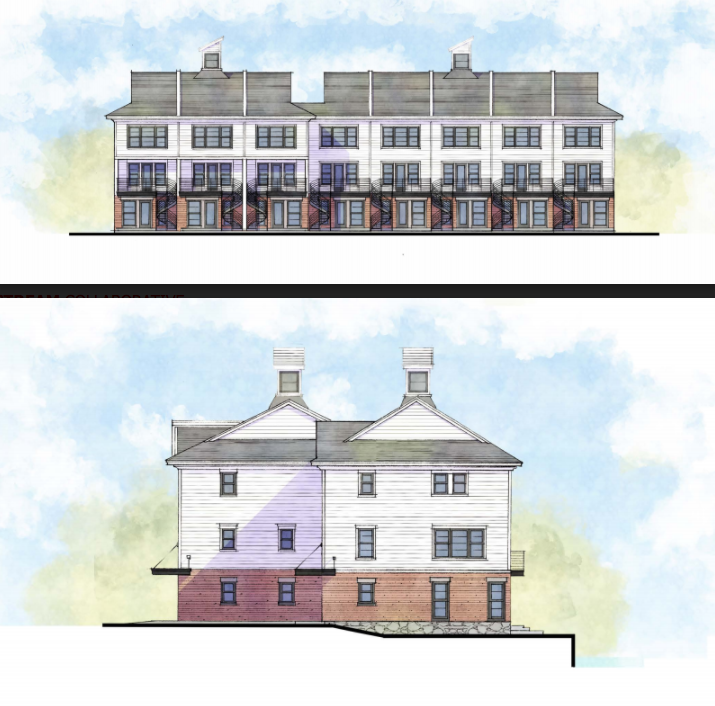
The general aesthetics of the design remained the same – as with the apartments, the for-sale townhouses are being designed by local architecture firm STREAM Collaborative. The facade “features historic and contemporary elements of rustic bricks, steel, traditional clapboard siding, and window casings”, per STREAM’s website. Five of the townhomes are larger – 645 SF studios with 2 bed/2 bath 1,608 SF units above, for a total of 2,253 SF in the “Unit A” townhouses. “Unit B”, with three examples, is a little smaller, with 514 SF studios and 2 bed/2 bath 1,384 SF upper-level units, for a total of 1,898 SF (the IDA application shows slightly different square footages for each unit, probably due to design revisions). Four units will have private elevators. The property will be landscaped and include eight on-site parking spaces with access to nine more next door. The public will have access to the waterfront on a paved promenade.

During this second round of review, 323 Taughannock received some visual tweaks. Gone are the cute sprial staircases leading to the waterfront, and in their place are more standard treatments. The group of five had their balconies moved from the second floor to the third floor. The changes on the front are more subtle, with the window fenestration now centered on each unit, and the front doors rearranged (old version here). Overall, the design was still roughly the same, the changes were only in the details.

The second set of reviews did get drawn out a bit because the project was caught up in the city’s TM-PUD affair, their fight to keep the Maguires from moving forward with their dealership at Carpenter Business Park. But the design fit zoning and was in line with the city’s desire for a more active, denser waterfront. The project was approved in May 2017.

Six months later in November, Flash and Chernish sold a $203,000 stake in 323 Taughannock plan to Arnot Realty of Elmira, who own the Arnot Mall and some commercial and multi-family properties in the Elmira/Horseheads area. As 323T LLC, the new joint venture gave Arnot a 75% stake to Flash and Chernish’s 25%, meaning Arnot is now the primary developer. For Flash and Chernish, it gives them a much bigger partner with experience and connections to contractors; for Arnot, it gives them a toehold in the burgeoning Ithaca market, their first step into the city.

One of the decisions made in this change of ownership was that the units went back to being rentals – very expensive rentals, to the tune of $3,400-3,500/month for the upper-level units. By HUD guidelines, that’s affordable to someone making $140,000/year. The studios will go for $1,400-$1,500/month. Seeking a ten-year tax abatement, sales tax exemptions and mortgage tax exemptions proved to be the most controversial part of this project, and to be fair, it’s a tough sell from a public relations perspective to say your ultra-luxury units deserve a $605,855 tax abatement. But the IDA decided that the long-term property tax increase would be worth it, and the project could potential spur development elsewhere on the island and the West End, and granted the exemptions in January 2018. One of the people who raked the developers and the IDA over the coals was Amanda Kirchgessner, back when she was a well-meaning citizen and before she became a highly controversial state senatorial candidate.

Tompkins Trust Company has lent the development team $4.061 million to finance work on the 16-unit townhouse project on Inlet Island. 323 T LLC partner equity was expected to be $1.153 million at the time of the IDA application, but that may have changed, since the bank loan was only expected to be $3.461 million at the time – total project cost was $4.615 million.

Ithaca’s Taitem Engineering is in charge of mechanical, electrical, plumbing, and structural design services. The builder looks like a newcomer – Benson Woodworking Company, working with applicant contractor D Squared Inc. (Doug Boles and Doug Dake) of Lansing. Benson’s primary work is as a modular and timber-frame builder for properties in and around southern New Hampshire where they’re based. With 323, the wood-frame wall system will actually be framed and sheathed off site by Benson, and transported over to be assembled by D Squared like pieces of a puzzle. The modular approach potentially saves on materials and labor costs makes the construction itself more energy efficient, and may make the logistics of the construction site easier to manage. The plan is to have the project be “nearly net-zero”, meaning it’s efficient in its energy use, and close to having all of its energy needs met by renewable sources (the project will be powered by an off-site solar array). For the record, yes it will use heat pumps.

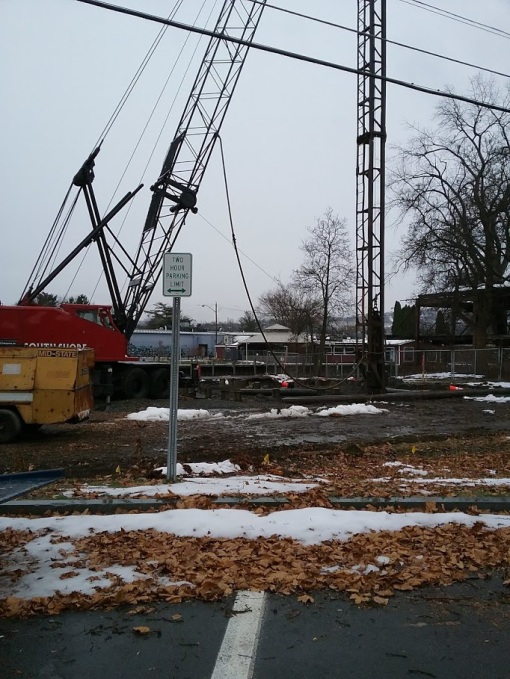
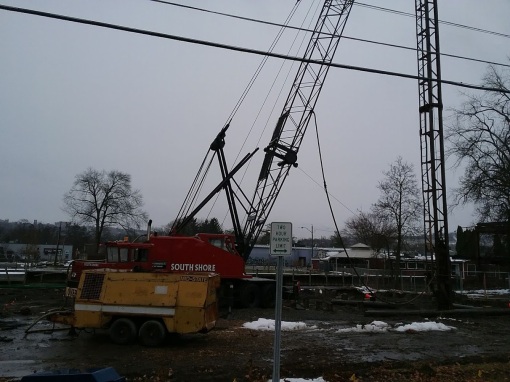
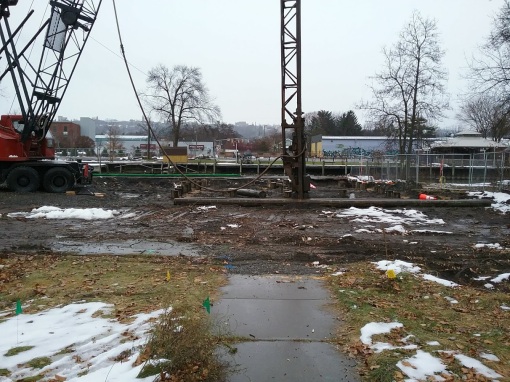
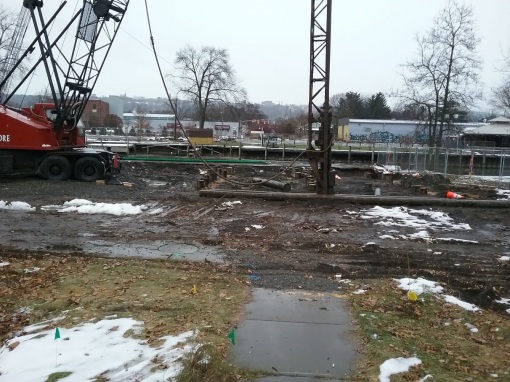
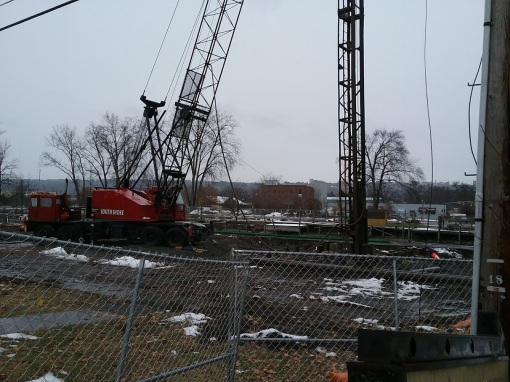
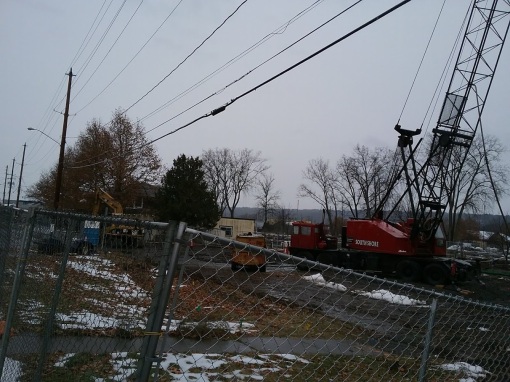
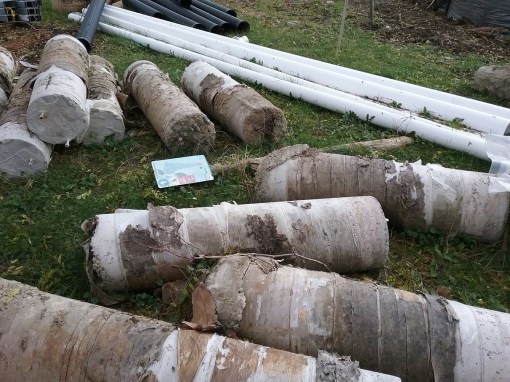
Taitem also designed the rather unusual timber-based pile system deployed at the project site. The project itself is relatively light as building go, but because of the waterlogged soils, a deep foundation is still required for structural stability. Instead of heavy-duty steel, treated timber can do the job for a fairly modestly sized project like this, an affordable, lighter-load alternative. As long as the timber isn’t exposed to high levels of oxygen (open air, there isn’t enough dissolved in groundwater), they can last for hundreds of years. You can see the piles in the photos below, and watch the pile driving process in the embedded Twitter video courtesy of Ithaca second ward councilman Ducson Nguyen. All the piles are in place, and a 6″ concrete slab will be formed and poured over the top.

Construction is expected to take about eight months, roughly placing a timeline for completion at summer 2019.

Before:


https://platform.twitter.com/widgets.js


Amici House Construction Update, 11/2018

26 11 2018

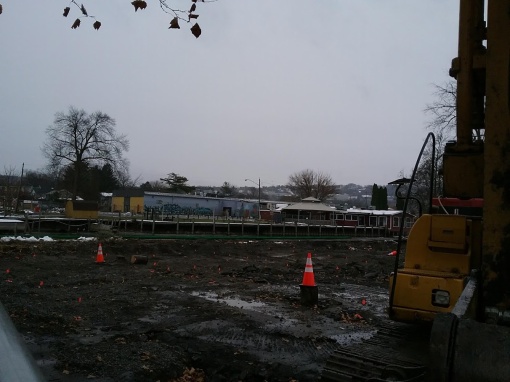
Apart from some exterior landscaping, finish work and last-minute tidying up, it looks like the residential portion of TCAction’s new Amici House complex is nearly ready for occupancy. It’s not clear if the fiber cement boards are to be painted, and I’m wondering if the interior layout was changed post-approval, since the window arrangement doesn’t match that seen in the renderings, and there appears to be another bump-out (mechanical penthouse, most likely) on the roof that wasn’t present in the renderings either.
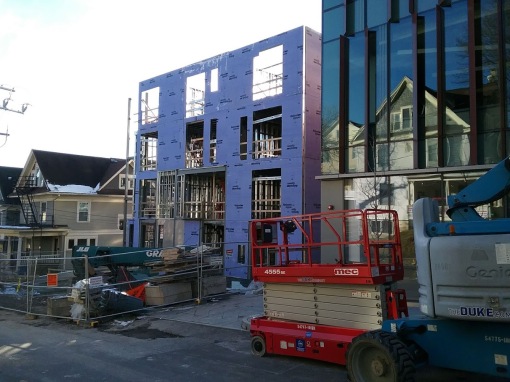
With the exception of some information about the Head Start program, there doesn’t appear to be much online regarding the Amici House facility or its housing. The 23 studios for vulnerable / formerly homeless young adults (18-25) are expected to be ready for occupancy by late winter.

General information and development history bout the project can be found here.


South Meadow Square Construction Update, 11/2018

25 11 2018

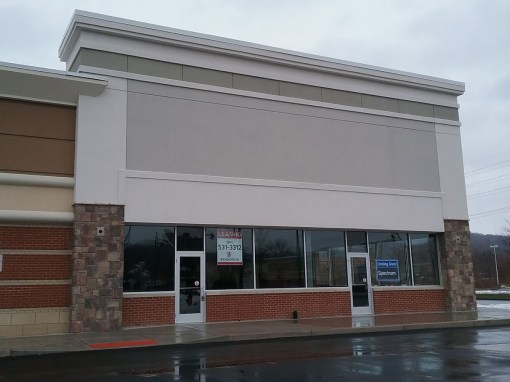
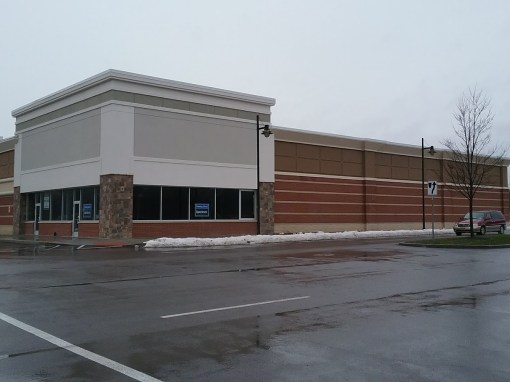
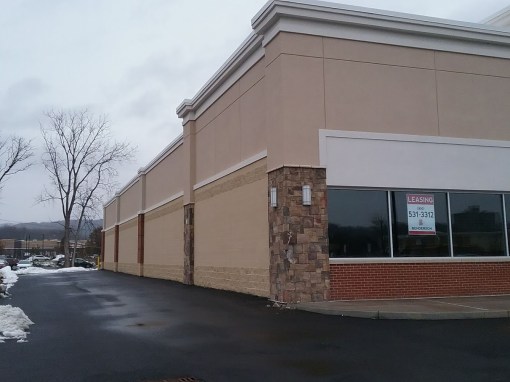
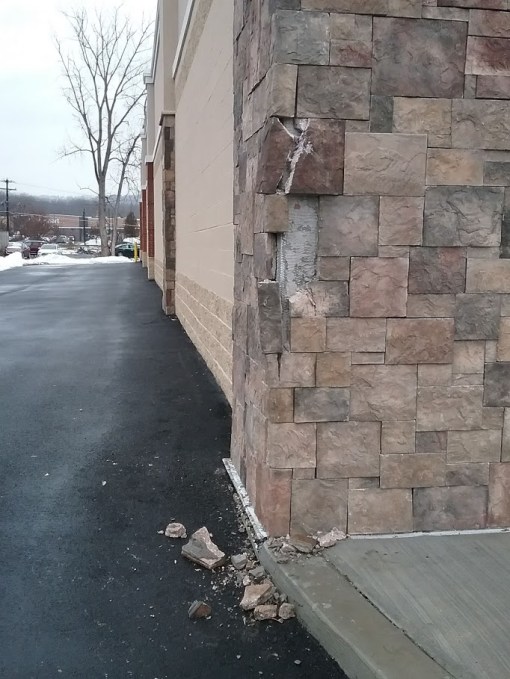
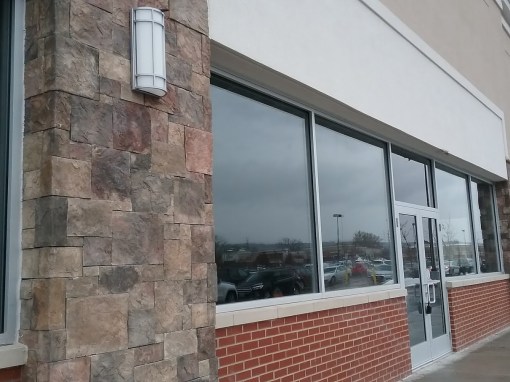
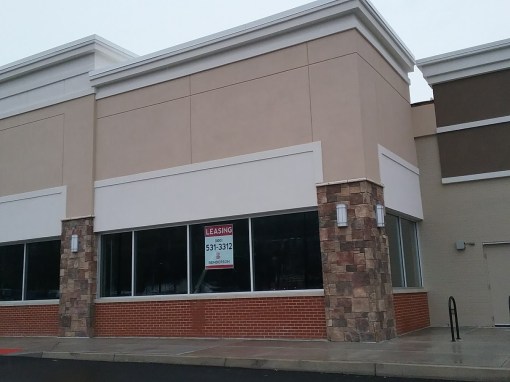
From the outside, these are practically completed, except for some decorative elements. Some exterior lighting mounts are missing from the smaller north endcap, and the south endcap is substantially complete – except for the part where it appears a large truck tried to navigate the tight turn around the building and took out part of the stone veneer, exposing the scratch coat and lath (backing material for the plaster scratch coat). The variety of materials – brick veneer, stone veneer, EIFS and metal flashing/windows attempts to create some visual interest and unique identities among the storefront spaces.

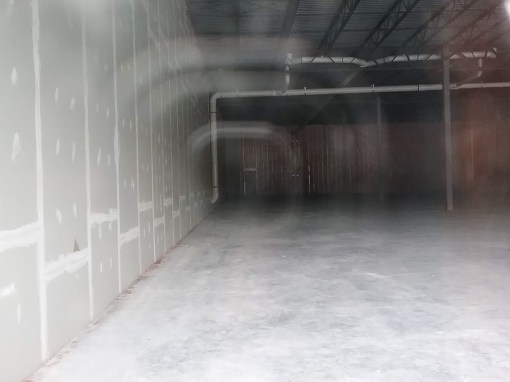
Note that in commercial retail, it’s pretty common to build the exterior (shell) and basic interior structural components (core), but leave the interior unfinished. A tenant interested in the space will fit-out the space to their needs, finishing out and furnishing the interior as they see fit. The costs of fit-out vary depending on the terms negotiated by the landlord (in this case, Benderson Development) and the tenant.

Interestingly, the north endcap, with 7,315 SF of rentable space, has two entrances, but the interior doesn’t show a non-structural split between units, so it’s not clear if it just has two entrances or if it will be two separate retail fronts. Spectrum has confirmed it will be a tenant when the building is fitted out. Spectrum, the cable and internet provider currently located at 519 West State Street, was previously Time Warner Cable until the firm was bought by Charter Communications in 2016. Spectrum and its predecessor are very controversial companies, both for local reasons and for macro-scale reasons (horrendous reputations for poor service, often ranking among the most hated companies in the country). Locally, Spectrum has engendered significant controversy by replacing WSKG, the Binghamton-based PBS affiliate, with WCNY, the Syracuse-based PBS affiliate, for its Tompkins and Cortland County customers. This would be fine, if WCNY had much Ithaca-Cortland coverage, or was interested in providing it, and as a result the local TV news and media coverage has been greatly reduced. For-profit WENY of Elmira had been dropped by Time Warner a couple years earlier, as Ithaca/Tompkins has been increasingly tied into the Syracuse broadcast market.

This drop in coverage led to significant pushback from community groups and local elected officials, and with some negotiating, they were successful in bringing a TV news affiliate back to Ithaca. WENY’s “New York Local Ithaca” opened its doors at 112 West State Street a couple of weeks ago, and is carried on Spectrum’s Channel 11. Most of the broadcast is Elmira rehash with local weather, but Tompkins-centered programs are in the works, including partnerships with Ithaca College and Cornell to provide formal news coverage (how this affect ICTV is unclear).

The north end cap, which clocks in at 14,744 SF, is still available. The 3,200 SF endcap space on the smaller retail strip next to Firehouse Subs has yet to begin construction.


TC3 Arthur Kuckes Childcare Center Construction Update, 11/2018

24 11 2018

Normally I’m a little more on top of construction starts, but Tompkins-Cortland Community College (TC3) is somewhat isolated, so I rarely check it out. This time it paid off.

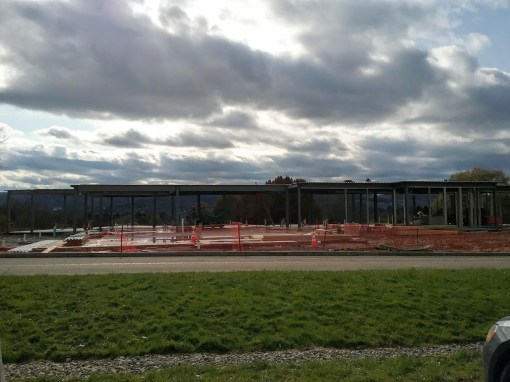
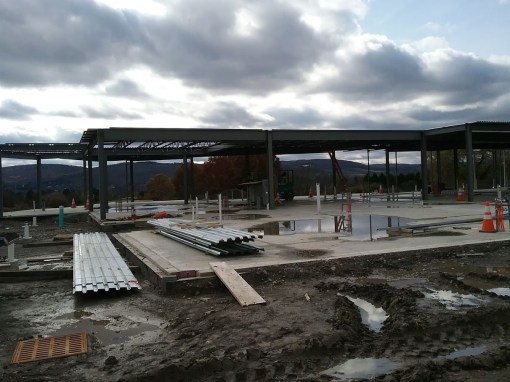
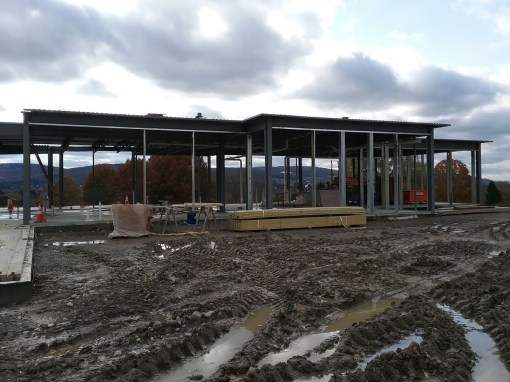
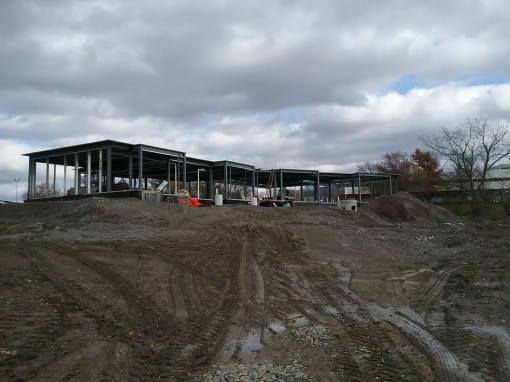
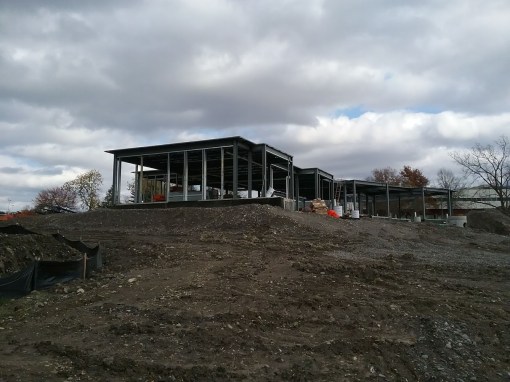
Over at TC3, the footers are in, the foundation slab has been poured and the steel frame is being assembled for what will be the newest addition to the college’s campus, a $6.5 million, 9,875 SF daycare and early education facility. The construction costs are about $4.5 million, covered in part by $2.5 million in state grants and a $2 million donation from Arthur Kuckes, the founder of local firm Vector Magnetics, and a longtime supporter of the college. The funding goal was 50% state sources, and 50% private donors. The remainder of the funds will be used to pay for equipment purchases to outfit the facility, and to set up an operating endowment. The previously vacant project site was selected for its easy vehicular access and picturesque views.

The purpose of the building is multi-pronged. For one, it provides a much-needed daycare option for students with infants and young children, giving parents more flexibility to take classes while their kids are in a safe, stimulating environment nearby (it’s also open to the children of faculty and staff). A 2014 feasibility study commissioned by the college found that about 5,400 children in Tompkins and Cortland Counties are in need of third-party childcare, and that existing providers, ranging from formal childcare facilities to babysitters, serve about 3,000 children in the study area, meaning a 45% deficiency and by extension, a lack of affordable childcare options. The existing on-site daycare can care for 33 children, and does not have the capacity for infants. The new facility is expected to serve up to eighty children in two infant rooms and six early childhood classrooms, and create a dozen jobs. The college expects about 90% of the enrollees will be the children of students, with a small number of faculty and staff children. If there are still openings (few if any are expected outside the TC3 community), members of the greater Tompkins-Cortland community may apply.

Secondly, it gives students in the Early Childhood education program a greater chance to develop hands-on experience. The Early Childhood program also expects to increase its number of on-site student interns from 14 in the current campus daycare, to 45-50 students over the course of a typical year.

The project was first publicly announced in February 2016, with a somewhat grander design that was toned down (value engineered) in an effort to stay withing budget and start construction sooner rather than later. The fundraising campaign launched in June of that year, and the project went out for construction bids in February 2018. The project expenses still increased somewhat in the few years from conception to execution, growing from about $5.5 million to $6.5 million. The groundbreaking in May suggested an opening by the end of 2018, but Stormwater Pollution Protection Plan (SWPPP) stated August 2019.

According to the construction documents (all 702 pages of them), local architect Claudia Brenner designed the new facility, with Lansing’s Dende Engineering on board as a structural engineering consultant, T.G. Miller for surveying and civil engineering work, Jade Stone Engineering PLLC of Watertown for mechanical, electrical and plumbing design and engineering, Ithaca’s TWMLA for landscape architecture and Albany’s Ran Fire Protection Engineering for the sprinklers and other fire suppression systems.

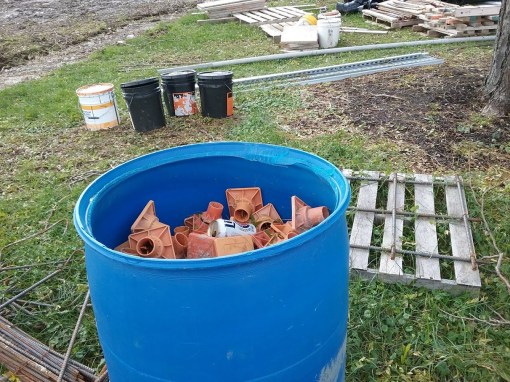
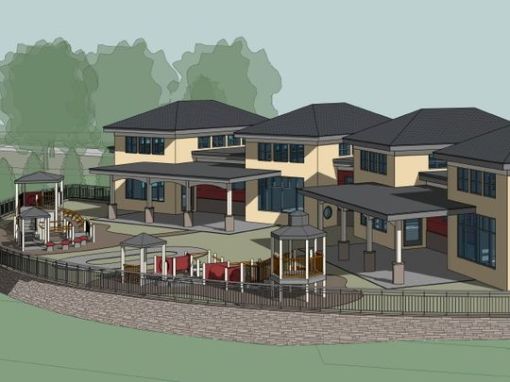
The foundation is a standard concrete slab-on-grade shallow foundation, and given the immense need for fire protection for a facility like this, the frame will be fireproofed steels, with extensive fire suppression systems (fire-rated doors, sprinkler system), and fire-rated gypsum board sheathing. Finishes will include masonry, fiber cement, and metal exterior panels, and asphalt and metal roof materials. Windows will be typical commercial-grade aluminum frame, and the trim will include wood and metal flashing. Note that the exterior play areas will include not one, not two, but three play areas, for infants, toddlers and pre-schoolers respectively. In the photos brlow, the foundation appears to be finished, with some rebar and orange rebar safety caps still on-site. The steel skeleton is still being assembled, with some roof trusses and corrugated steel decking sitting near the structure, ready to be hoisted into place.

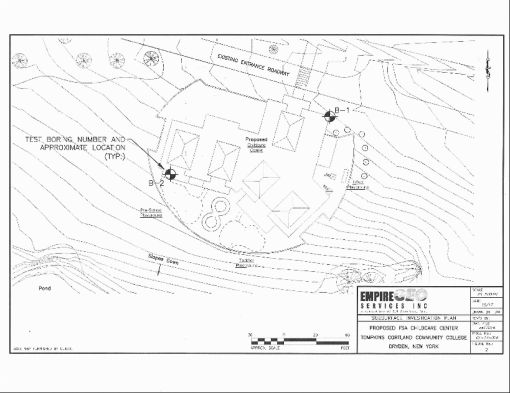
Site plan, as seen in the geotechnical report.

Interior render.

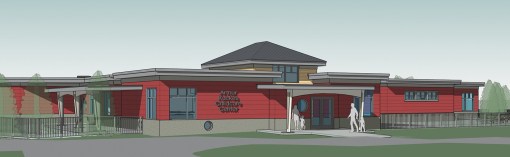
Current design, front entrance.

Older design, rear wings with the pre-school and toddler playgrounds.