News Tidbits 7/15/17: Ess Ess, Dee Dee

15 07 2017

1. Hamilton Square. There’s a lot to say here.

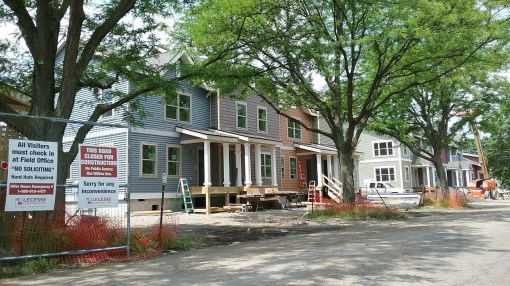
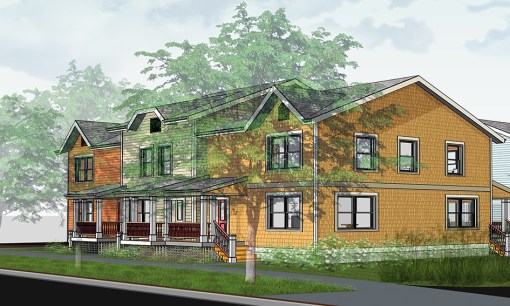
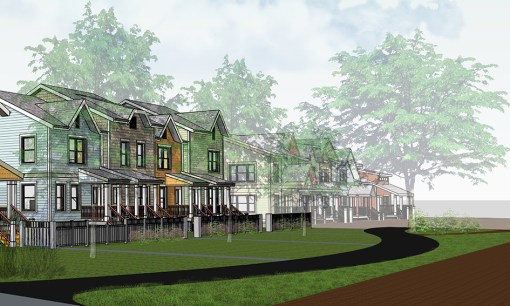
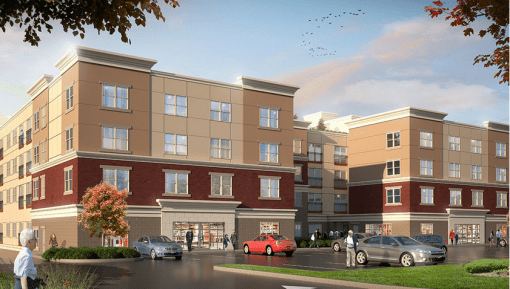
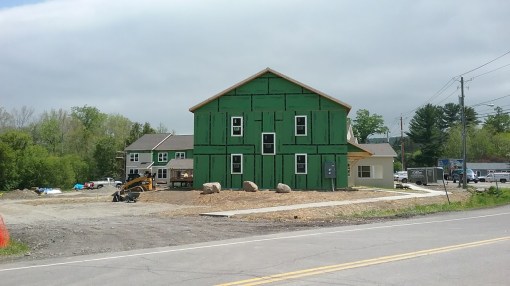
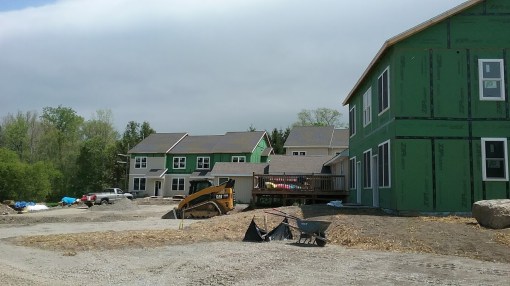
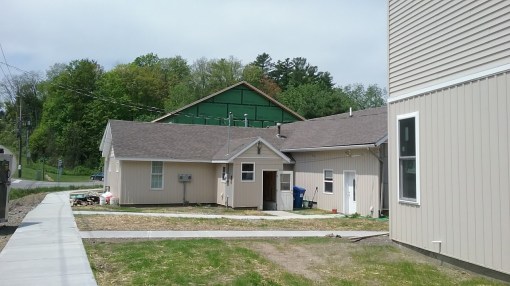
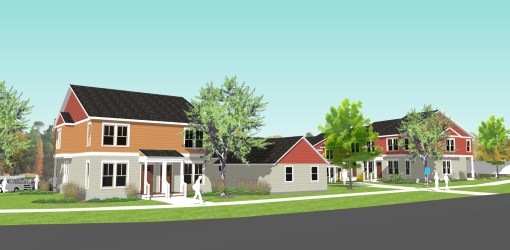
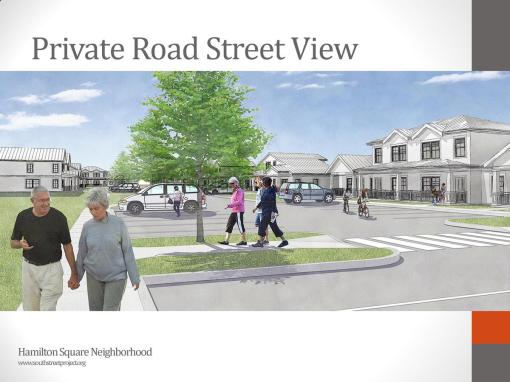
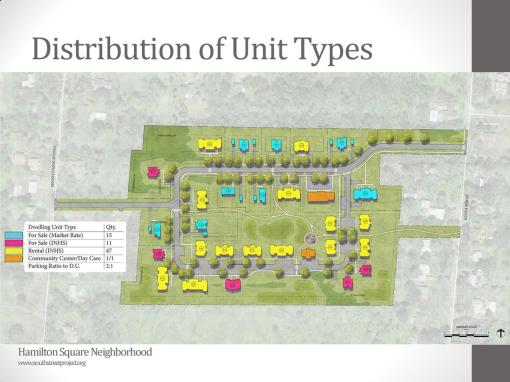
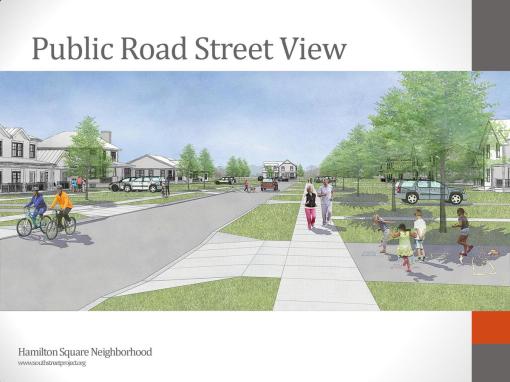
First, the neutral segment. The website is up, www.southstreetproject.org. Plenty of renders (definitely not cookie-cutter), site plans, housing prices, everything one needs for a fair assessment. The units are no more than 2 floors, mostly townhouse format. 47 affordable rentals units, 11 affordable for-sale units, and 15 market-rate for-sale units for a total of 73 on a 19 acre site. That’s less than 4 units per acre (0.26 acres/unit, comparable to the older 0.25-0.5 acre lots on Pennsylvania and South Streets), and fits zoning. The units are interspersed throughout the property. Parking ratio is 2 spaces per units, units are a mix of 1-3 bedrooms. There will be aging-in-place and energy efficient home options for sale, as well as in the rentals. The project will host a playground and nursery/daycare facility geared towards low and moderate-income households. Much of this comes from the result of constructive community feedback.

But what started off on a polite note is getting really ugly, really quickly. It is not a good sign when my editor calls me and tells me that, as a person of color, she felt uncomfortable at the latest meeting.

Given the transparency of this process, which still hasn’t even been submitted for formal planning board review, I find comments about this being “hidden” or rushed through to be a stretch. The project hasn’t submitted anything for formal review yet. Nothing but a sketch plan has been done, and multiple community meetings, and 30-minute small group listening sessions. It really does not get much more personal than that.

One of the questions that was raised was that people are unable there are many more affordable rentals than for-sale units. There are two reasons why that is. For one, funding for purchasable units is more difficult to get. The government is more likely to disburse a grant if it knows there are buyers waiting in the wings. That’s why the buildout for the for-sale units is 2-8 years. For two, for low and moderate-income households often don’t have much money saved for a big expense such as down-payment, and far more are capable of renting versus buying.

There are valid concerns that need to be addressed. For example, traffic. A study is being conducted with a third party. The typical thing I hear, affordable housing, or any project really, is that “they’ll lie, they’re in XYZ’s pocket”. If no one trusts you to do your job properly, no municipal board will sign off on accepting your study, and you’re finished as a firm. Likewise with stormwater analysis and civil engineering. School system capacity is checked with the district, which basically just sends a letter saying “yes, we have room” or “no, we don’t have room”. The study is being conducted and will be made public long before any approvals are granted, people can weigh in after reading it to say whether it’s comprehensive and adequate, and feel free to say something and explain why it may not be. That’s the purpose of SEQR, to determine impacts and mitigate unavoidable impacts.

On a related note, a board’s job is to review the objective components of a project. It is not appropriate, or legal, to decide on a subjective trait like whether the people who will live there fit the “Trumansburg way of life” or that the project is “too Ithacan”. Who decides what those things are? Because too quickly, it degenerates into a look or an image, and a train of thought that should never be a part of any development conversation. Because it’s subjective, those terms meant something quite different in 1997, and something quite different in 1977.

Also, there seems to be this idea that poor people in urban neighborhoods will be forced out here, and they will be a burden on TrumansburgThere are plenty of people who live and work in Trumansburg who need affordable options in a rapidly-appreciating real estate market. The one bedrooms will be rented to individuals making $22k-$48k. That could be a store manager, a barista, a school teacher or a retiree. Tenants are screened, visited at their current home and interviewed before being offered a unit. Qualified affordable home buyers will mostly be in the $42k-$64k range (80-120% AMI). Think nurses, office workers, tradespeople (following INHS’s sales deeds, I actually see a lot of ICSD teachers). The market rate units will offer whatever the market allows price-wise; new townhouse-style housing in Trumansburg would likely fetch $250k+, so think upper-middle income.

It would be nonsensical to make people in Ithaca move into housing in Trumansburg that they don’t want and would drive up their costs; however, those who want to live there, whether because they admire Trumansburg, work there, or both, will seek the opportunities it provides.

For a county that seems keenly aware of its housing issues, there tends to be an uncomfortable amount of pushback against affordable housing, whether it be Fall Creek, South Hill, Lansing or Trumansburg. Does that qualify as being “too Ithacan”?

2. Taking a look at the county’s records this week, it looks like 210 Linden Avenue’s construction loan has been filed. Elmira Savings Bank is lending Visum Development (Todd Fox and associates) $3.15 million, with $2,358,783 towards the hard costs (materials/labor) of replacing the existing 12-bedroom student apartment house with a 9-unit, 36-bedroom apartment building. Elmira Savings Bank is one of the biggest single-family construction loan lenders in Tompkins, but they have only been the lender for a few multi-family projects. The only other multi-million project in the past few years was the 18-unit Rabco Apartments at 312 Thurston Avenue in Cornell Heights – a project that, along with the cancelled 1 Ridgewood, so incensed deep-pocketed permanent residents nearby that they petitioned and succeeded in getting the city to downgrade the zoning.

Also filed this week was a $415,000 construction loan from Tompkins Trust to the owner of Hancock Plaza on the 300 Block of Third Street in Ithaca’s Northside neighborhood. The 19,584 SF shopping plaza, built in 1985, is assessed at $1.485 million and has been under its current ownership since 2002. Most might know it for the DMV, but it also hosts Istanbul restaurant, a bookkeeping service, and a gas station and convenience store that opened in renovated space in 2015. There’s no indication in the loan as to what kind of work will be performed, about $363,000 has been set aside for hard costs like materials and labor, and the work is required to be finished by March 2018.

3. Also filed in both sales and construction loans this week was paperwork for 306 North Cayuga Street, right next to DeWitt Park on the edge of Ithaca’s downtown. Also known as the C. R. Williams House, the 8,798 SF, ca. 1898 property was assessed at $900,000 and on the market for $1.4 million last year. The sale price was $1.3 million.

I was privy to an email chain that engaged an out-of-state condo developer to look at the property, but that person was not the buyer.  The LLC traces back to Travis Hyde Properties, just a few blocks away.

According to Frost Travis of THP, the plan is to renovate the live/work space to allow for more space for THP, which is outgrowing its North Tioga Street location, and four apartment units. Exterior changes will only be cosmetic, but any substantial changes will be subject to ILPC approval, as the property sits in the DeWitt Park Historic District. Elmira Savings Bank is lending $1.24 million for the renovation, of which $1,204,752 is going towards the actual construction (so apparently, this was a big week for ESB). The project is expected to be complete by next summer, according to the loan filing.

4. For the aspiring homebuilder or developer – new to the market this week, a run-down though salvageable 1830 home at 1975 Dryden Road just east of Dryden village, and 101 acres of developable vacant land currently rented out for agricultural use. The sale price is $795,000. The county GIS lists the property at 112.4 acres, but without a map in the listing, it’s hard to tell if there’s a typo or if there might be a subdivision somewhere. The assessment is for $531,900, $401,300 of which is the land. It appears the property has been in the ownership of the same family since 1968. The property is listed as a rural agricultural district, which is geared towards ag uses, but permits office, one-family and two-family homes as-of-right; multi-family and box retail require special use permits. Zoning is one unit per two acres, but in the case of a conservation subdivision that preserves open/natural space, it’s one unit per acre – either way, only about 50 units allowed here. Technically, a PUD (aka DIY zoning) is also an option, but would need adequate justification. Kinda hoping it doesn’t become conventional suburban sprawl, but will reserve judgement for when this sells.


5. Ithaca is once again competing for $10 million in state funds as part of the regional Downtown Redevelopment Initiative. The funds are intended to spark investment in urban cores and improve infrastructure for communities throughout the state, ten cities selected each year, one in each region. Readers may recall Elmira won last year. This year, Ithaca is competing against two of its Southern Tier peers – Watkins Glen, with which it competing with last year as well, and Endicott, a struggling satellite city over by Binghamton, that is entering the competition for the first time. Reports suggest the Ithaca submission is largely the same as last year’s. Winners will be announced in the fall.


News Tidbits 7/8/17: Watching the Fireworks

8 07 2017

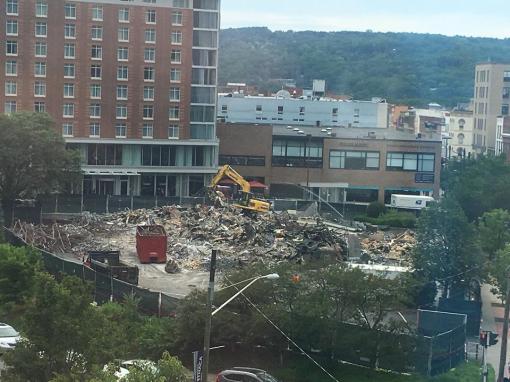
1. A pair of major downtown projects are starting to get a move on site-prep and demolition. The Trebloc Building has been torn down to make way for the 187,000 SF, $32.9 million City Centre project.

Photo from C. Hadley Smith Collection

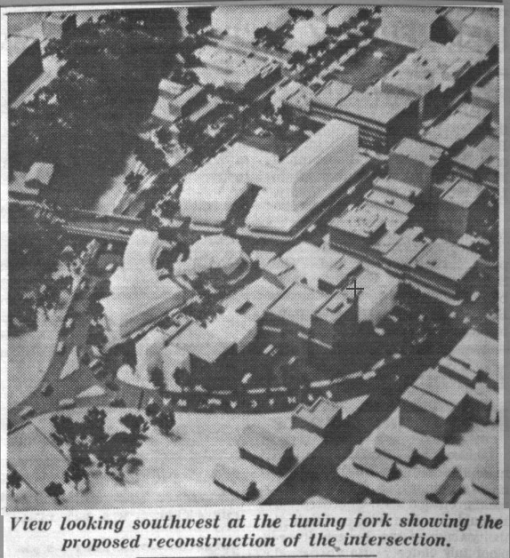
For a bit of historical perspective, the Trebloc Building was a sort of monument to municipal desperation. Up until 1967, the site housed several 2-5 story buildings from the late 1800s and early 1900s. Then along came urban renewal. The city had made plans to demolish the buildings and sell the lot to a bank tenant, who would build a new office and help revitalize the city’s run-down downtown. But after demolishing the building, the potential bank tenant never followed through on its original intent, and the city spend years trying to sell the lot, which was used for makeshift parking in the interim. Finally, they found a buyer in the Colbert Family doing business as the Trebloc Development Company. The Trebloc Building was originally planned to have two floors, but financial troubles had reduced it to one before it finally opened for business in 1974.

One could argue that nothing quite represented the nadir of Ithaca’s downtown quite like the struggling, unloved and unlovely Trebloc Building did. There are some buildings worth fighting for, and even some mediocre ones that come down with a bittersweet sentiment. This was neither.

Perhaps unhappily for downtown businesses, City Centre will be under construction for quite some time; adjusting the estimate given to the IDA, late 2019 or even early 2020 is possible.

Meanwhile, just a couple blocks west, Harold’s Square is also gearing up for demolition of 123-135 East State Street. Unlike the Trebloc teardown, Developer David Lubin will be deconstructing the existing structures, so that their components can be re-used (the process will be managed by Finger Lake Re-Use). I’ve always been kinda partial to the green tile on the former Race Office Supply, so hopefully that goes to a good home. 137-139 East State will be renovated as part of the Harold’s Square project. Harold’s Square, a 180,000 SF building with a hard construction cost of $32.6 million, is expected to take about 18 months, opening in Q1 2019. Dunno why City Centre’s construction schedule is a year longer, although with the underground garage, the project is a little larger (211,200 SF), and more structurally complex. It could also just be a very generous estimate.

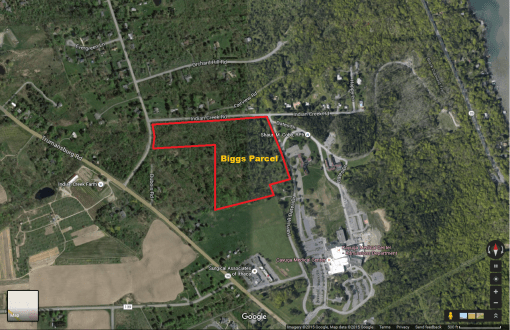
2. Tompkins County will be hosting a meeting at the Museum of the Earth on July 19th at 7:30 PM to discuss plans for the Biggs Parcel on the town of Ithaca’s portion of West Hill. As covered previously, the 25.5 acre parcel, which has something of a long news history, has been for sale since last summer, but without any firm offers, the county ended its realtor contract and has been trying to figure out with to do with the property. Although there are some streams and wetlands, there are some development possibilities; neighbors have been pushing for it to be a county-owned natural preserve, but the county wants an option that will pay taxes, whether that be a multi-family development, private estate or otherwise.

While the county did not identify this parcel as a high environmental protection priority, they are busy working with Finger Lakes Land Trust to protect a 125-acre property in Caroline, and there are ongoing discussions regarding a 324-acre property in Dryden.

3. As with nearly every sizable project in Tompkins County, the Inn at Taughannock expansion is being met with some resistance from neighbors. As relayed by the Times’ Jamie Swinnerton, arguments cited include traffic, view sheds, size, neighborhood character (which seems a bit weird, given there’s not much of a neighborhood nearby), and most frequently, noise, which the town could help resolve by asking for an acoustical counsultant’s report like what Ben Rosenblum submitted in Ithaca for his cancelled proposal for a jazz bar at 418 East State Street. The addition, which calls for a new restaurant, event space and five guest rooms, would create about 25 jobs if built and opened as planned. The often-joked but actually rarely-seen email calling me a “thoughtless corporatist” arrived in the inbox after the first write-up, which indicates this fireworks show may not be over for a little while.

4. In a bit of a weird hang-up, the Heritage Center project attempted to give itself a formal name, but the name was shot down by the County Legislature. The proposed moniker of “Tompkins Center for History and Culture” was defeated in a 7 yes -3 no vote (8 yes votes required) because a few of the legislators felt there hadn’t been enough time to gauge community reaction. Personally, I thought “Tompkins County Heritage Center” was fine, but to each their own.

5. Thankfully, the county’s endorsement of the Housing Strategy was unanimous. This is but a baby step in solving the county’s housing woes, but it’s an important step. The county now has a sort of guiding document to help address issues in adding and improving the local housing stock.

There are a few key things that the county will need to adhere to when moving forward. First is working with communities to identify suitable areas for development, and making updates to infrastructure and zoning to guide developers towards those properties instead of far-flung, natural areas where acquisition costs are low and there are fewer neighbors to contend with. Second is bridging the affordability gap – some of this can be done by encouraging new housing at market-rate, but the county will need to be constructively engaging and reliable when helping affordable housing plans apply for grants or exploring tax incentives to help make their proposals feasible.

The third, and arguably the most controversial point here, is standing firm in the face of opposition. Many Tompkins residents are averse to new housing (or really, new anything) near them. For example, consider the Tiny Timbers plan recently announced for Lansing Town Center. The plan checks a lot of boxes – at $175-$225k, it’s fairly affordable owner-occupied new housing, with a smaller ecological footprint than many detached single-family homes. Yet, in the Voice comments, it was dumped on as both a glorified trailer park and unaffordable at the same time, and the neighbor who tried and failed to buy the property from the town to prevent development was trying to scare people from small house living (which at 1000-1500 SF, these aren’t really “tiny” houses anyway). The county should listen for the sake of good government, but after weighing the argument, unless a project is truly a detriment to a community’s quality of life, the county and local boards will need a firm backbone in withstanding criticism. It also helps if people who like a project give their two cents in an email or meeting.

So, good first step, but there’s a lot of work ahead. Fingers crossed.


News Tidbits 6/25/17: Lazy Sunday

25 06 2017

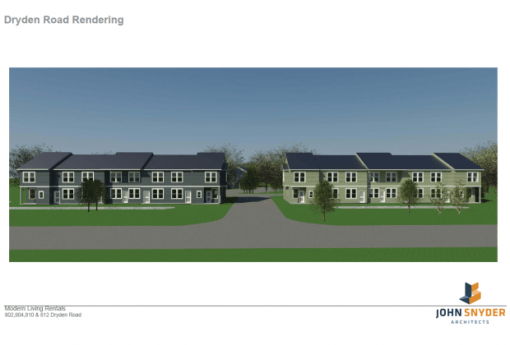
1. Starting off with the new project of the week: 42-unit, 108-bedroom 802 Dryden Road. As relayed on the Voice, the parcel currently hosts several rental properties in varying condition. The project is Modern Living Rentals’ largest to date, partly because developer Charlie O’Connor tends to focus more on smaller infill in urban areas.

Although no time table has been given for the $7.5 million project, a likely prospect is approval by the end of the year, with a spring 2018 groundbreaking, and a summer 2019 opening. While John Snyder Architects is in charge of design modifications, the townhouse designs are recycled from STREAM Collaborative’s 902 Dryden plan currently finishing up down the road. Marathon Engineering’s Adam Fishel will be shepherding the project through the approvals process, just as he did the Sleep Inn for Elmira Road.

Location-wise, it’s on a bus route but most everything will need some kind of vehicular transport, so it’s fairly auto-centric. There isn’t a lot of lot nearby apart from a few small rentals and single-family homes, and Cornell farm fields. On the other hand, few neighbors means fewer people likely to raise a fuss at planning board and town board meetings. As long as they provide town favorites like heat pumps, don’t expect big hangups as this plan moves through municipal review.

2. So here’s something out of the blue. Recently, the house at 2124 Mecklenburg Road in Enfield was sold to “The Broadway Group LLC d/b/a TBG Alabama LLC”, and a $998,000 construction loan agreement was filed shortly afterwards. One does not normally see million-dollar projects in Enfield, but a look at the filing yielding no information other than to suggest it was a retail building.

A little further digging indicates The Broadway Group, based out of Huntsville, Alabama, specializes in the development and construction of Dollar General stores. The lender, Southern States Bank, headquartered in Anniston, Alabama, is a preferred commercial lender for TBG. So this is a similar case to the Dollar General recently built in Lansing by Primax Properties –  it’s less about a bank being interested in Ithaca, and more about two major companies located near each other and having an established business relationship. A check of Enfield’s Planning Board reveals that the applicant took great pains not to reveal the name of the tenant, saying only a stand-alone variety dry goods store. A confidentiality clause with client limits what they could say, and TBG will technically own the metal building for a year until it transfers over to Dollar General. Expect a Q4 2017 and with it, 10-12 retail jobs.

I’ll be candid on this one – I sent out an email before writing anything up for the Voice asking if there were enough Enfield/West Hill readers who would care enough to justify an article being written. Jolene encouraged it, the piece went up, and the traffic on the article was actually pretty good, somewhat above average in fact.

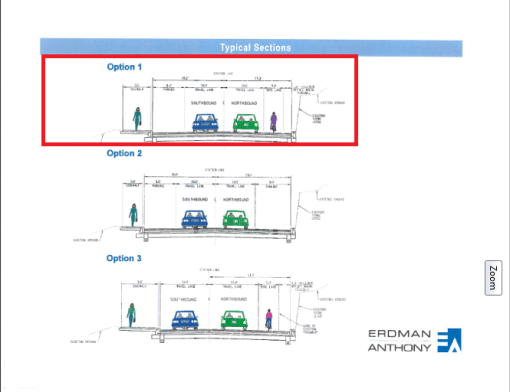
3. The city has decided which option it wants to pursue for its rework of University Avenue. Basically, say goodbye to the northbound parking aisle and say hello to a new bike lane. The southbound parking aisle will remain, along with a 7-foot wide sidewalk and 10-foot travel lanes.

4. It looks like plans for the next Press Bay Alley are moving forward. 110-112 West Green Street was sold to Urban Core LLC (John Guttridge / David Kuckuk) for $650,000 on the 19th, and a $581,250 construction loan from Tompkins Trust was filed the same day. Technically, some of the construction loan is actually for the purchase; according to the IURA breakdown, the renovation into micro-retail, office and two 500 SF apartments will only cost about $207,500, plus $40,000 for soft costs like architectural plans, engineering and legal expenses. As part of the $200,000 loan extended to Urban Core LLC by the IURA, the project needs to create at least 6 full-time jobs at full occupancy. On the Press Bay Alley Facebook page, the developers have announced plans for a spring opening, and issued a call for active-use tenants looking for anywhere from 300-2,000 SF.

5. Cincinnati-based Bloomfield Schon has arranged to sell the Cayuga Green complex, lofts, apartments and all. The developer would sell the buildings to Laureate House Ithaca Management LLC. Upon the intended purchase date of August 1st, Laureate House would pay the IURA loan balance ($733,130 at the moment with a $4,880 monthly payment) off in full. That would be about 21 years earlier than anticipated. Laureate House appears to be a start-up real estate firm backed by three wealthy Cornell alums; although the literature says they seek to launch 55+ communities for active seniors in college towns, there don’t appear to be changes in use or commercial/residential tenant mix planned with the purchase of Cayuga Green.

6. Been meaning to note this, but it appears 210 Linden Avenue is undergoing asbestos remediation, which means that the building is being prepped for deconstruction. It looks like Visum Development will be moving forward soon with their plans for a 9-unit, 36-bedroom student apartment building on the property. I did not seen any outward indication of similar work being performed on 118 College or 126 College Avenue at last check, though it’s been a couple weeks.

7. Here’s a look at the city of Ithaca’s Planning Board agenda for next week. Harold Square and 323 Taughannock will have their latest revisions checked for satisfaction of final approval (various paperwork submissions, and of samples of exterior materials to make sure they’re acceptable). 238 Linden Avenue, 232-236 Dryden Road and the DeWitt House old library redevelopment are up for final approval, and the McDonald’s and Finger Lakes ReUse’s supportive housing projects will be reviewed for determination of environmental significance, which basically means that potential impacts have been addressed and if necessary, properly mitigated.

There is also one semi-new project, which is 709-713 Court Street  – that would be the street address for Lakeview’s $20 million mixed-use affordable housing plan on Ithaca’s West End. From previous paperwork, it is known that it’s 5 floors with 50 units of affordable housing, 25 of which will be set aside for Lakeview clients with psychiatric disability. There will be 6,171 SF of commercial space on the first floor, and 17 parking spaces. PLAN Architectural Studios of Rochester will be the architect. Apart from a rough outline, there have been no renders shared of the project, so that’s the “semi-new” part.

AGENDA ITEM Approx. Start Time

  1. Agenda Review 6:00
  2. Privilege of the Floor 6:01
  3. Site Plan Review

A. Project: Mixed Use Apartments – Harold Square 6:10

Location: 123-129 E State/ MLK St (the Commons)

Applicant: L Enterprises LLC

Actions: Satisfaction of Conditions

Project Description: The Board approved project changes with conditions on May 23, 2017. The Applicant was asked submit revised materials to return to satisfy the conditions in June.

B. Project: Apartments (Short-Term Rental) 6:30

Location: 238 Linden Ave

Applicant: Trowbridge Wolf Michaels for DRY-LIN Inc.

Actions: Public Hearing Determination of Environmental Significance, Preliminary & Final Approval, Approval of Transportation Demand Management Plan

C. Project: McDonalds Rebuild 6:50

Location: 372 Elmira Road

Applicant: McDonalds USA LLC

Actions: Declaration of Lead Agency, Public Hearing, Determination of Environmental Significance, Recommendation to BZA

D. Project: Residential Mixed Use (DeWitt House) 7:00

Location: 310-314 N Cayuga Street

Applicant: Kimberly Michaels, Trowbridge Wolf Michaels for Frost Travis, Owner

Actions: Preliminary and Final Approval

E. Project: Apartments 7:20

Location: 323 Taughannock Blvd

Applicant: Noah Demarest for Rampart Real LLC

Actions: Satisfaction of Conditions

Project Description: The Board approved the project with conditions on May 23, 2017. The Applicant was asked to submit revised materials to return to satisfy the conditions in June.

F. Project: Finger Lakes ReUse Commercial Expansion and Supportive Apartments 7:40

Location: 214 Elmira Road

Applicant: Finger Lakes ReUse

Actions:  Public Hearing  Determination of Environmental Significance

G. Project: Apartments (60 Units) 8:00

Location: 232-236 Dryden Road

Applicant: Noah Demarest of Stream Collaborative for Visum Development Group

Actions: Determination of Environmental Significance, Preliminary and Final Approval, Approval of

Transportation Demand Management Plan

H. 709-713 Court Street – Housing – Sketch Plan 8:20

  1. Zoning Appeals 8:45
  1. Old/New Business
  2. Planning Board Comments on the Proposal to Rezone Areas of the Waterfront 8:50
  1. Reports
  2. Planning Board Chair (verbal)

9:10

  1. Director of Planning & Development (verbal)
  2. Board of Public Works Liaison (verbal)
  3. Approval of Minutes: May 23, 2017, April 25, 2017, and November 22, 2016 (time permitting) 9:30
  4. Adjournment 9:35


107 South Albany Street Construction Update, 6/2017

22 06 2017

Seems fair to move this one over into the construction column. Introducing 107 South Albany Street.

The State Street Corridor represents one of Ithaca’s best possibilities for infill development. It’s a mixed-use area with a hodge-podge of buildings and styles, from ornate century-old properties to commercial utilitarian structures. It has a number of sites that have easy access to downtown and amenities, permitting a walkable lifestyle. It’s also less expensive than downtown properties. With this in mind, the city rezoned much of it in 2013 to allow for 5-story buildings, up to 60 feet tall, with no need for parking. The zoning was a simple box overlay regardless of lot lines, which resulted in some “secret” infill opportunities like 512-514 West Green Street, whose rear yard was in the rezoned area, and as a result, owner Carmen Ciaschi was able to legally slip in a two-family home without adding additional parking.

107 South Albany Street was rezoned as a result of the 2013 overlay. The existing property was a mixed-use two-story home that had an apartment on the upper floors, and converted on the first floor to commercial office functions (law office). This presented an opportunity for the enterprising developer.

Enter Stavros (Nick) Stavropoulos. The West Hill native, whose family runs the State Street Diner, runs a small rental company, Renting Ithaca. However, Stavropoulos has slowly and steadily made his way from management to real estate development – first with additions to existing buildings like 318-320 Pleasant Street, and then entirely new properties like 514 Linn Street in 2015, and a project currently at 1001 North Aurora Street. His M.O. so far has been to find middling properties in desirable locations, and add inoffensive infill rental housing – nothing that stretches code, nothing that will anger the neighbors. Earlier projects were designed by Lucente family favorite Larry Fabbroni, but more recent projects have turned to a low-profile, longtime Ithaca architect named Daniel Hirtler, who runs Flatfield Designs. Stavropoulos picked up 107 South Albany Street for $236,000 in August 2015.

Seemingly, each project he takes on is larger than the last. 1001 North Aurora is a 4-unit project, 12 bedrooms with a hard cost of about $400,000. 107 South Albany is slated to be his latest and greatest yet. The original plan, as introduced in Spring 2016, was to build a new six-unit building at the rear of the existing house, and renovate the house into three apartment units, for one studio, six one-bedroom units, and two two-bedroom units. After a few months of planning board review and critique from the design committee, the 3,954 SF, $500,000 plan was approved and slated to start in July 2016.

However, that plan never moved forward. Instead, this past winter, Stavropoulos decided to submit a new set plans. The new plan called for eleven units and eleven bedrooms, but instead of retaining the existing house, it would be deconstructed and replaced with a new three-story, 8,427 SF building. With its neighbors including a former gas station-turned medical service and older, historic structures, the building’s design is an attempt to bridge the gap. The front sports a cornice, a brick veneer on the first floor, tan fiber cement lap siding above and a traditional window arrangement. In contrast, a stucco finish fiber cement stair tower in the middle of the structure serves as a visual interest for passerby on West State Street, and gives the building a modern touch. The building’s height is capped at 40 feet 5 inches, well below the constraints set by the zoning.

The building isn’t designed for active street use, with a recessed entry and bike storage area for privacy, and no first-floor windows on the front facade. However, in an attempt to create an attractive streetscape, the building uses lighted wall recesses on the exterior, the brick work will have decorative patterns, and a large semi-circular iron trellis that will be adorned with native twining vines. The project cost is $946,600, according to the city’s Site Plan Review document.

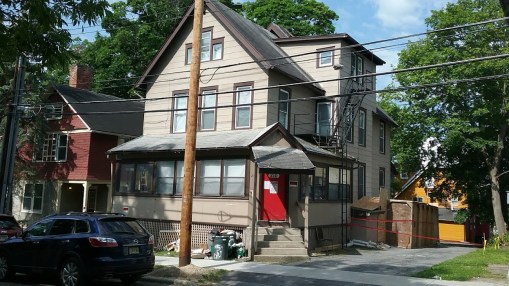
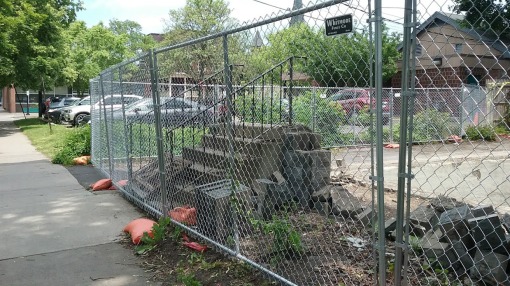
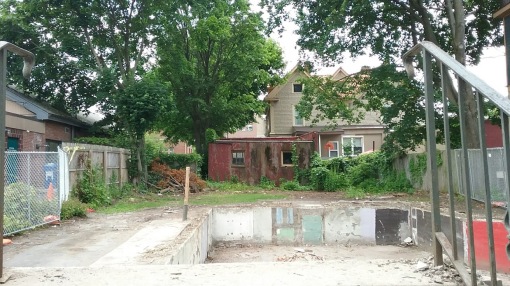
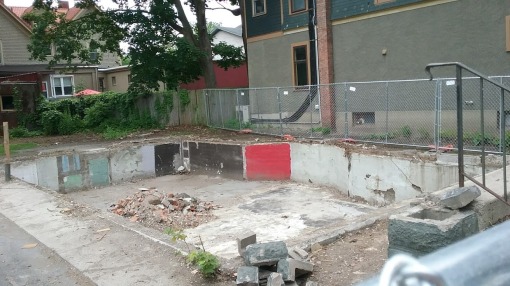
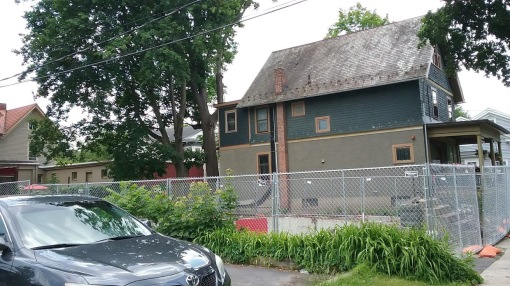
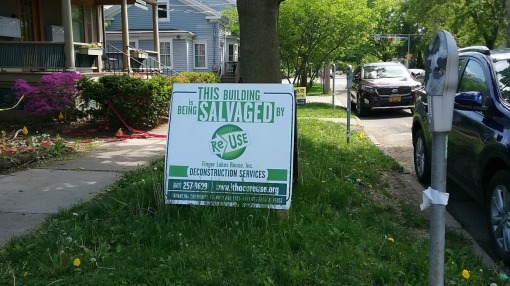
As of this month, Finger Lakes ReUse has deconstructed the existing house, cleaned and processed the salvaged materials, and has them for sale at their warehouse/store on Old Elmira Road. The foundation and front staircase are all that remain. The plan is to start construction on the new building in the September/October time frame, and to have it open for occupancy by summer 2018. No contractor or construction manager has been named as of yet.

From June:

From May:

Pre-development:

Isometric Plan and interior layout:


Tompkins Financial Corporation HQ Construction Update, 6/2017

20 06 2017

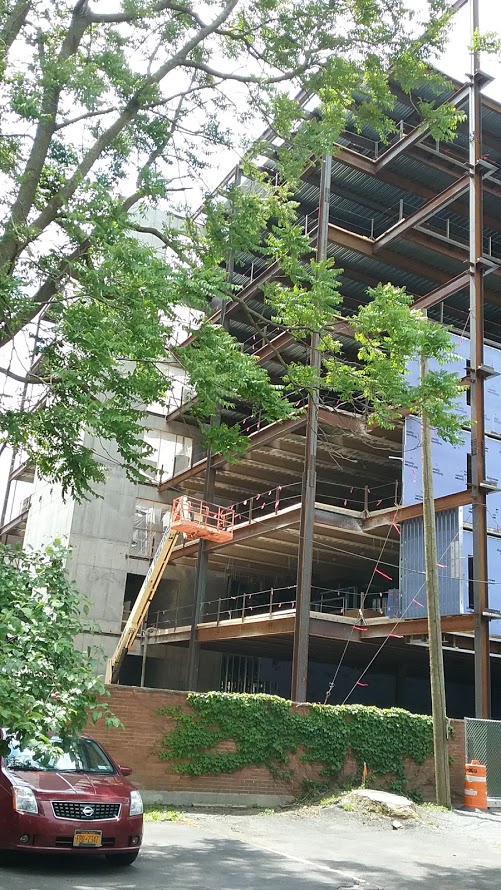
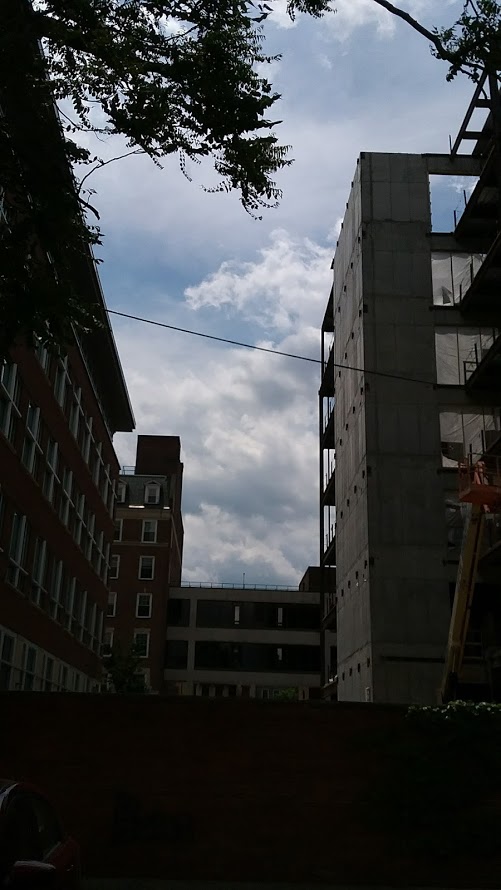
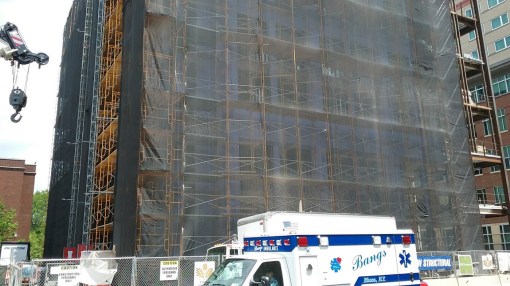
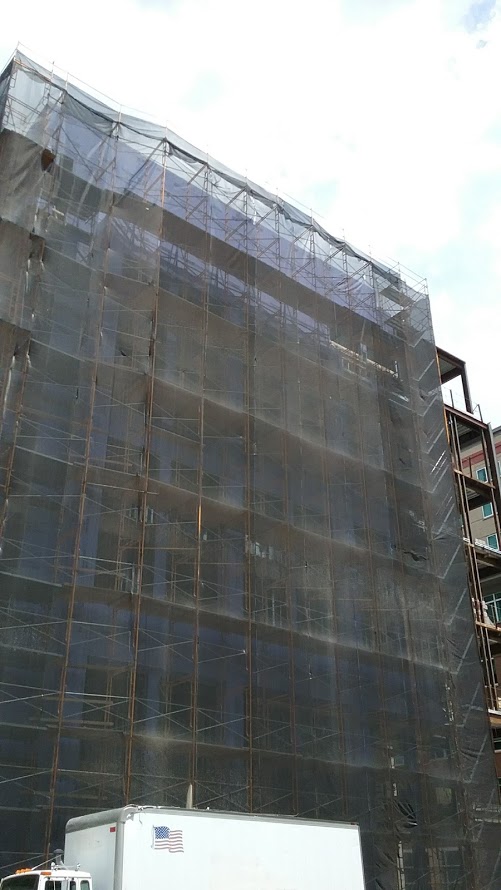
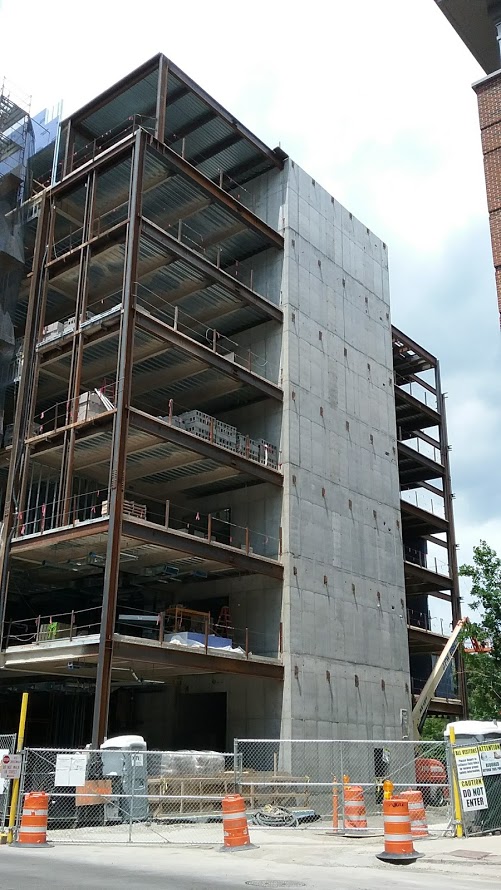
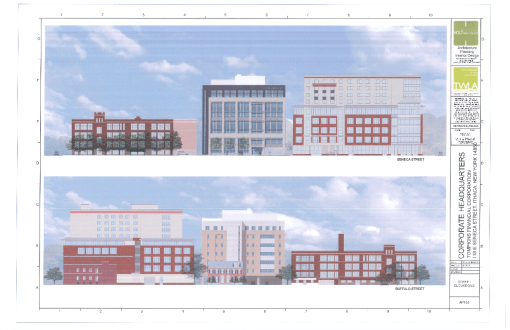
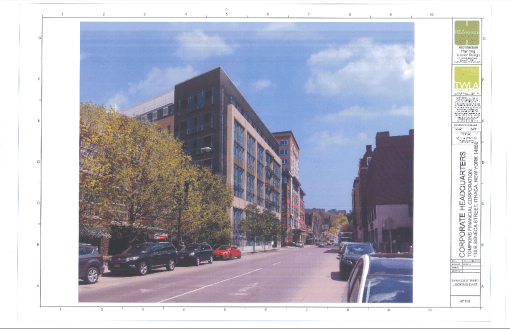
Over to the Tompkins Financial HQ. The rear face is a bit strange-looking at first glance because there’s a set of steel beams projecting right next to the first layers of gypsum sheathing, so it’s not clear where the back of the building is. A look at the plans indicates that the rear steel extension outlines a future stairwell, which projects a little further back from the main body of the building. The eastern segment of the skeleton has yet to be built past the elevator core, and consequently the rest of the rear/north wall projection has yet to be erected. As the rest of the structural steel is bolted into place, that will be boxed up, decked and sheathed.

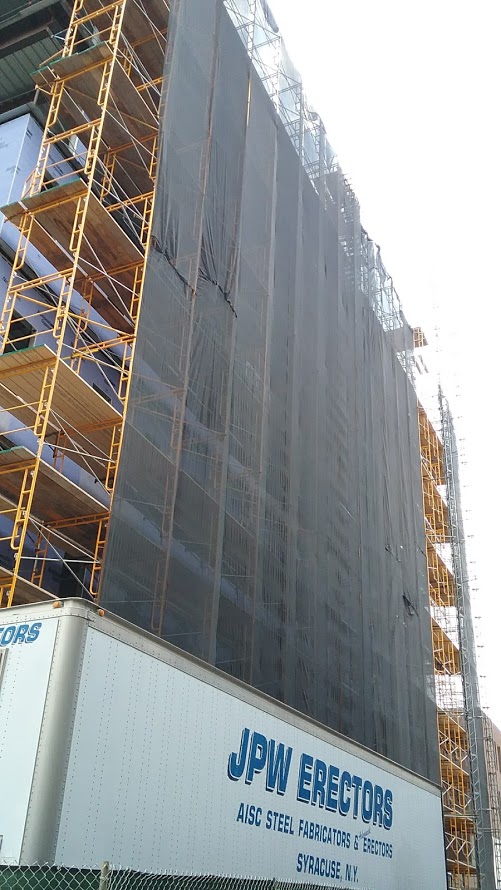
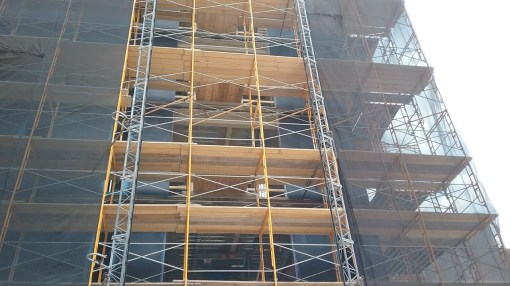
The lower floors have been sprayed with an undercoat of fireproofing, and are starting interior build-out with steel stud walls and concrete masonry units (cinder blocks). Under the safety cover, the fire-proof gypsum panels extend the full height of the building, with rough openings for future windows. Note that the top floor is set back a little bit from the lower floors, which can seen a little better in April’s update; this will be faced with a black brick veneer, while the projecting wall of the lower floors will be faced with a lighter stone. This feature was designed to make the building’s bulk a bit more subtle, and to respect the size and fenestration (window arrangement) of the DeWitt Mall next door.

Still a ways out from its March 2018 delivery date, but it looks like LeChase has things on track.


1001 North Aurora Street Construction Update, 6/2017

19 06 2017

Admittedly, at the moment this pair of two-family homes looks rather bland from Aurora Street, and slapdash from Queen Street. However, it looks like the painting is just starting. The LP SmartSide wood siding will be painted with Sherwin-Williams “Rice Grain” on the first floor and dormer, and the second floor will use S-W “Sawdust”. The swatches of wood shingle on the eastern building have the darker color on both the second floor and dormer, which doesn’t match the city’s filing, but paint typically isn’t the type of detail that will get you in trouble unless it was a stipulation of approval. The short of it is, it’s not clear if anything has changed with the paint scheme, but it might have. The trim boards will be painted S-W “Nacre”.

Another task still on the to-do list is building the porches that both units in the building will share. It’s a T-configuration – residents will step out and down their own step onto a shared landing at the top of the front steps. The porches will have decorative columns and banisters, and access panels below the porch landing. Most of the porch will be built with pressure-treated wood and painted in off-white “Nacre”, there will be dark brown steps (treated wood?), and the access panels will match the siding. About the only thing not wood will be the handrails, which will be steel.

A peek inside shows that the drywall has been hung. The next steps are typically flooring, cabinetry, bathroom fixtures and tiling, interior trim boards (baseboards, crown moulding) and painting. After that will come appliances and the finish work.

The 3-bedroom, 1.5 bath units at 202 and 206 Queen Street should be ready for occupancy later this summer. There were going for $2325/month ($775/bedroom) on Craigslist, and there haven’t been any ads lately, so it’s probably safe to assume all four units have been rented. Stavros (Nick) Stavropoulos is the developer, and Daniel Hirtler is the architect.


News Tidbits 6/10/17: In High Demand

10 06 2017

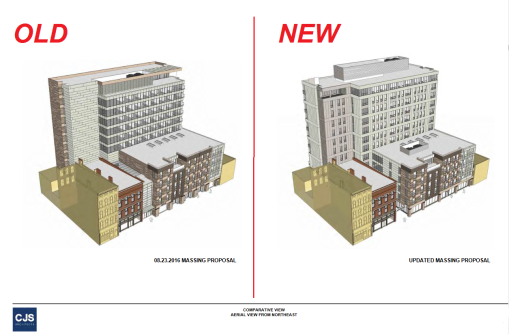
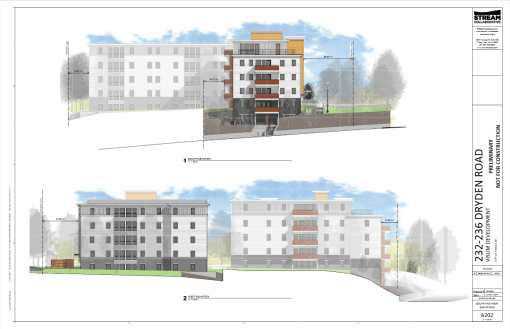
1. Start off this week with some eye candy. Here are the latest renders for Visum Development’s 191-bed, 60-unit project at 232-236 Dryden Road. The biggest change here is the Dryden Road facade – revised fenestration, and the addition of shingle-style balconies. STREAM Collaborative’s intent is to give the south building a little more historical sensitivity – when the Cascadilla school still had a dorm in the late 1800s and early 1900s, it included a 4-story shingle-style dormitory complete with dining room and gym. The balconies are throwbacks to the dormitory’s balconies.

However, given that this building will date open in 2018 and not 1898, instead of wood shingle, the balconies will use Allura “Redwood” fiber cement shinglewood pulp mixed with sand and cement, shaped for a wood-like appearance, but with the durability of concrete. Fiber cement is also more expensive to buy and install vs. materials like vinyl, which is why only more expensive or visible structures tend to use it. Other planned materials include Endicott manganese ironspot velour brick veneer, fiber cement panels with LP smart trim painted in Sherwin-Williams Pure White and Anonymous (actual name), lap siding in SW Pure White and Marigold, granite grey stucco (*real* stucco, not DryVit), a metal canopy and Andersen windows.

2. Business is good for STREAM Collaborative. So good that they’re expanding both in staff and space. The young, prolific architecture firm led by Noah Demarest will be moving out from its location in the City Hall Annex at 123 Sough Cayuga Street, and into a larger downtown space in the ca. 1872 Gregg Block at 108-112 West State Street, across from the State Theatre. The new digs are being renovated now, and are expected to be ready for occupancy by July 1st.

On another note, the owner of the city hall annex has taken to advertising the office space on Cragislist, which seems like the wrong choice to me. An apartment, sure. A house for sale or offices to rent? My impression is that folks prefer a more professional medium than what Craigslist offers. Kinda the same with jobs – servers or dog-sitters, sure. Accountants or architects? Ehh.

Maybe I’m just behind the times. Here’s the posting for the former Hal’s Deli on the 100 Block North Aurora Street. $5500/month.

3. WHCU is reporting that INHS has had no shortage of applicants for the 210 Hancock rentals. After receiving over 200 applications, they set up a lottery in which 122 “made it through” , and then selected the top 60 (there are 59 rental units though…might be a just in case there’s a drop-out, or it could just be conversational rounding). If it’s anything like New York City’s lottery, what happens is that each application is validated, sorted for requested unit type, and is assigned a randomized log number – those who get 1-48 for the one-bedroom subset, and 1-11 for the two-bedrooms subset, are awarded dibs on a unit, so long as they pass the income check and background check. Unit occupancy is expected late this summer, and marketing for the seven for-sale units will start…

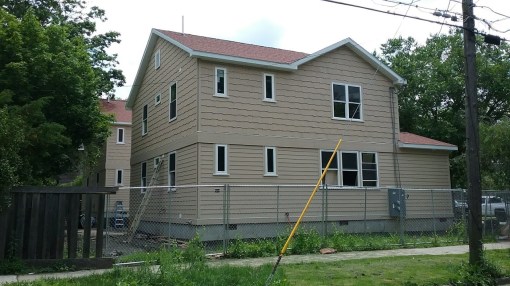
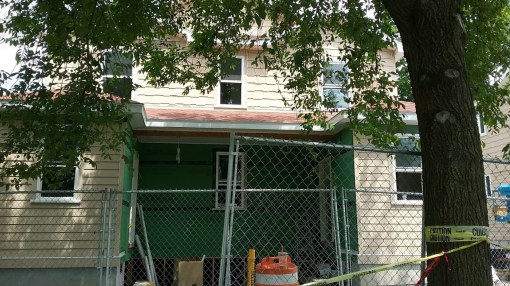
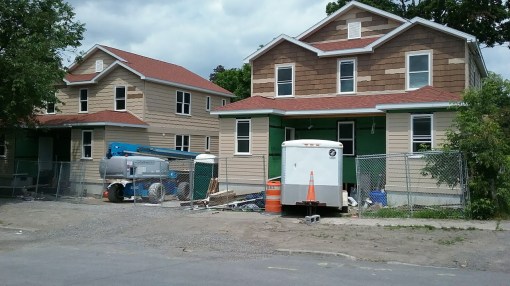
4. …pretty much now. The three units in the first image are 204, 206 and 208 Hancock Street, the four for-sales in image two are from L to R, 406, 408, 410 and 412 Lake Street. 206 Hancock, 408 Lake and 410 Lake will be 910 SF 2 bedroom, 1.5 bath units that will sell for $112,000 to qualified buyers. 406 Lake and 412 are 1088 SF, 2 bed 1.5 bath units priced at $129,000. The largest units, 204 Hancock and 208 Hancock, are 1300 SF, 3 bed 1.5 bath units that will sell for $145,000. The plan is to have buyers lined up for all seven units by the end of the year.

5. The county legislature has approved the Heritage Center acquisition. The county will pay $2 million for the 18,500 SF property, about $400,000 below assessment. Tompkins Financial Corporation is parting with its former offices next spring as it moves into a new HQ a block away. The plan is to have the heritage center, which will host tourism and history-focused non-profits, open for occupancy by the end of 2018, just as The History Center’s lease at 406 E. State runs out.

6. Seems like Lakeview is serious about their West End mixed-use project. The mental health services organization just purchased three properties on Thursday the 8th – 326 North Meadow for $150,000, 711-13 West Court Street for $525,000, and 329 North Meadow and 709 West Court (same owner) for $550,000.

Lakeview is planning a mixed-use 5-story building with a small amount of first-floor retail and 50 apartment units, all of which would be affordable, and half of which would be set aside for those with mental health ailments who are generally independent, but will have Lakeview staff to turn to in times of need. The project team requested $250,000 from the city IURA to help finance the $20.1 million project, but were only awarded $50,000 since it’s still at a relatively stage without detailed plans. The project team expects to submit their project for review later this year, with a 2018 construction start.

7. Tiny Timbers is doing well. In an update to their website, they note the completion of their first house, a “lofted L” model just over the county line in Hector, and a new house planned in Enfield (given that Enfield permitted just one new house last year, there’s probably a joke in there somewhere). There is another home just getting underway in Lansing’s Farm Pond Circle development, and a fourth will start soon on Grandview Drive in the city of Ithaca’s portion of South Hill. All the new units will be “big cubes” like the render shown above.

8. Looking at the city of Ithaca’s planning department memo this month, there’s nothing new to note for June. Smaller projects tend to show up in the memo, since the sketch plan for feedback isn’t as big of a deal for a small proposal, like a new store or a modest apartment building. Finger Lakes ReUse’s 22 studio units for vulnerable/formerly homeless populations will have its public hearing and Determination of Environmental Significant (step before prelim approval), the McDonald’s rebuild will have Declaration of Lead Agency, public hearing, BZA recs and DoES, 232-236 Dryden will have its DoES vote, and the Old Library redevelopment and 238 Linden will be up for approval.

9. Finishing off this week with a word of approval – the Dryden town board gave approval to Gary Sloan’s 36-unit Evergreen Townhouses at 1061 Dryden Road, per Cassie Negley at the Ithaca Times. At the boards’ (both planning and town) encouragement, the solar panels were replaced with electric heat pumps, which could utilize off-site solar and open up the possibility of a more environmentally sustainable project overall, given the proliferation of solar arrays underway in Tompkins and the region (my off the cuff estimate has at least enough solar arrays planned in Tompkins in the next 18 months to power over 10,000 homes). A play structure and 11 more parking spaces were also added.


News Tidbits 6/5/17: The Return, Part III

5 06 2017

1. The Ithaca Gun site is almost in the clear, according to the NYS Department of Environmental Conservation (DEC). The state is proposing a “no further action” status for remediation of the Lake Street site along Fall Creek gorge, where the factory maintained a presence from 1885 to 1986. Testing the guns with lead bullets for decades had the unfortunate result of contaminating the gorge with toxic levels of lead and heavy metals, and the area has been under remediation in some form for almost 20 years. The first round of cleanup for the Superfund was from 2002-2004, but insufficient cleaning resulted in a second round of cleaning in 2014. A third round to excavate more contaminated soil along the steep slopes of the gorge was undertaken by the federal EPA over the past couple of years.

To quote: “Based on the results of the investigations at the site, the interim remedial measures and post-IRM screening that have been performed, the NYSDEC is proposing No Further Action as the remedy for the site…Periodic site inspections and reporting, which include additional removals of lead shot as needed, will ensure continued protection for the environment and public health.”

Note that this only impacts the part of the site that was donated to the city as parkland. A separate remediation plan has been crafted by Travis Hyde Properties as part of their plans to build 45 units of housing on the former factory site, the “Ithaca Falls Residences“. The completion of work on the city land would allow THP to put the finishing touches on their plan, and potentially move forward with their long-incubating housing proposal.

2. There was one detail that was initially missed when going over the failed candidacy of Lisa Bonniwell to the village of Lansing Board of Trustees. While her family’s housing development, the “Heights of Lansing”, has been in perpetual stall with only about 22 of the 80 units built since approval in 2005 (and the last townhouses in 2011-12, shown above), they do plan to start work on another “six-plex” string of luxury townhouses this year – Bonniwell cast blame on the gas moratorium for the holdup. Gives them something else to focus on after their lawsuit over the Park Grove Apartments re-zoning down the road, in which the courts decided in the village’s favor.

The existing units are 3 bedrooms, 2,297-2,400 SF and sell for about $350,000-375,000. Expect the next batch to be fairly similar, though with different exterior details – each string’s exterior finishes are unique.

3. Sticking with Lansing, the Cayuga Farms townhouses are planning some modest changes – the buildings will be smaller, which will allow 20% green space and the construction of a community clubhouse. There will still be 102 units with 3 bedrooms each, 1500-1800 SF, in the upper-middle (“premium”) market segment. The plan has been held up for years while trying to find appropriate ways to address wastewater/sewage, initially floating a pricey Orenco modular site-specific plan. However, with the likelihood of a sewer main being routed up North Triphammer Road in the near-future, that would render the sewage treatment issue a moot point and allow the already-approved project to move forward with permit requests.

4. Nothing too exciting with the local planning boards at the moment. The town of Ithaca is reviewing adjustments to the Westview subdivision that would allow homebuilder to have building permits open for more than two houses at any given time, and to allow him to build houses from different project phases (locations) so long as they have road frontage, sewer and water. Apparently the 2004 stipulations have created a headache with his newest home lots.

Meanwhile in Ulysses, the town planning board will be reviewing plans for additions to the Taughannock Inn at 2030 Gorge Road. The rather whimsical structure designed by architect Jason Demarest would add a “gatehouse/stable”, with five guest rooms, a check-in area, a bar and dining space, ice cream parlor, tent space, reflecting pools and whatever else that makes it sort of romantic events center for weddings, banquets and reunions. The 1870s inn will receive a new cupola, and the projects needs several zoning variance and a noise law revisions so that they can create to 90 dB until 1:30 AM.

5. Lansing’s 1020 Craft Road was picked up by an LLC tied to a construction company out of Endicott for $615,000 back in April, so that was was a strong indicator that something was planned. That plan looks like a gut renovation and 4,410 SF in additions, as well as a paved and landscaped parking lot. Pyramid Brokerage is already advertising professional office space in the 10,500 SF building, which was built around 1980 and used for manufacturing (sheet metal fabrication), and it was looking pretty run down by the time it was purchased. The lease is for $18.00/SF, with a minimum available space of 5,250 SF, which would be a pretty good sized office. Depending on the finishes though, it might have appeal for those looking for a suburban location with easy parking – CFCU’s headquarters is next door, and several other firms are housed in neighboring buildings.

6. The county released its report of potential tax foreclosures. The long story short is that if property taxes aren’t paid, the county may seize a property (courtesy says they give a couple warning first), which may then be sold by the county at auction to pay off the back taxes, or it may be given to a municipality if the community wants it, or it may be withheld completely if it is deemed to have special ecologic value (biodiversity, wetland, “Unique Natural Areas”, etc.)

There doesn’t appear to be anything too exciting in this year’s batch. The city almost got some prime waterfront real estate at a bargain price last year, but the owner was able to pay the tax bill before the city could claim it. This year, we see several rural properties that the county would like to put deed restrictions on for stream buffers and conservation options, a pair of industrial properties in Caroline and Dryden, and a handful of single-family homes around the area. Nothing that looks especially tempting to the ambitious, although there are a handful of individuals who scoop these properties up at auction and then market them at a much higher price (with some success).


News Tidbits 6/3/17: The Return, Part I

3 06 2017

My apologies for the lack of a weekly round-up. My day job has been busier than usual, and the list of topics just kept growing, making it an even more daunting task. Gonna try and work through a few at a time until everything’s caught up.

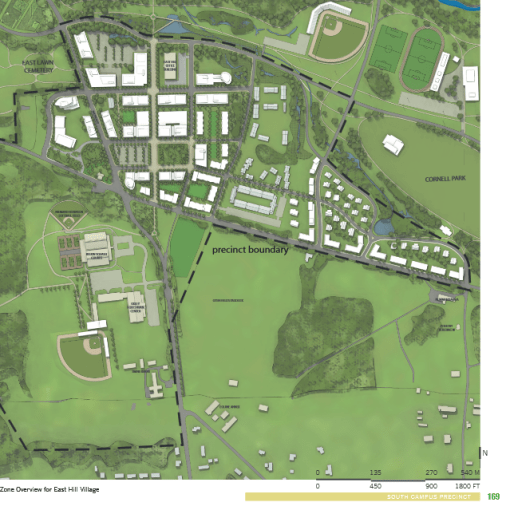
1. Cornell and EHVP’s East Hill Village webpage has started to flesh out their Q&A regarding the mixed-use megaproject slated to replace East Hill Plaza. Here are a few details:

– Cornell wants to make it clear that all images to date, include the conceptual from the master plan above, are strictly conceptual and have little bearing on the final product. The more realistic and nuanced take is that Cornell has an idea of what they want and the program format they want it in, for broad concepts like housing capacity, commercial/research space and general urban planning. In terms of an actual layout or tenant specifics, they probably don’t have much.

– Perhaps in response to a Voice commenter and former Ithaca town planning board member who accused the university of segmentation (meaning, during environmental review they illegally broke up a project into phases to avoid a greater analyses and to downplay impact), the FAQ notes that they didn’t really have this fleshed out and it’s separate from Maplewood. Given the size, scale, that it’s a physically separated set of properties, and vague goals they’re walking into this with, that’s a fair statement. If this were, say, a replacement for Ithaca East, which borders Maplewood, it’d be a different story.

– The current thinking is to keep the main retail strip, which was requested at the first community meeting. However, they may take down a portion of it to create a through-street, and reconfigure/relocate the parking.

– They haven’t written off pursuing a PILOT or tax abatement. They are exploring an affordable housing component. Eco-features like solar arrays, heat pumps and net-zero structures are being considered.

– Meetings will continue through the summer, with concept plans prepared for the town by the fall. Construction on the first phase would begin in 2019. It will be multi-phase.

No second meeting has been posted yet, but keep an eye out for updates.

2. Making its round around local governments and news outlets is a recently-published study by local structural engineering firm Taitem that tells of good news for heat pumps, and maybe serve to county one of the town of Lansing’s arguments regarding the West Dryden natural gas pipeline. Although the firm is a promoter of green initiatives, their study indicated that financially, the technological advancement in heat pumps over the past several years has made them competitive with natural gas, although each has pros and cons. For smaller units, a 1,500 SF townhouse in the study, it was found that an air-source heat pump was slightly less in annual cost than a natural gas furnace – for a modeled 4,000 SF detached custom home, it was a few percent more. Ground-source pumps were more expensive (but slightly “greener” than air pumps), and propane was the most costly, as well as the biggest carbon emitter. Although contractors are still adapting to heat pumps, the cost is decreasing somewhat as their use spreads and familiarity grows.

However, not everything is roses, at least not yet. For large-scale commercial and industrial operations whose heating needs are substantially greater, it appears that heat pumps have yet to be competitive, and even Taitem’s Ian Shapiro acknowledges that’s likely the case at present. But while the pipeline will continue to be an issue for larger commercial enterprises, homebuilders and residential developers should be able to adapt without too much additional financial burden or risk.

For the sake of example, the Village Solars charged a modest premium on rents when they went with pumps a few years ago (due to installation costs rather than operating costs), but having a strong product makes up for the extra short-term investment, the costs will potentially balance out over a few decades, and frankly, it makes for good marketing in eco-conscious Tompkins County.

I’ll admit to being skeptical over the past few years, and I still have concerns for economic impacts like the MACOM decision, but at least from a residential construction standpoint, the Village Solars and this study are making a strong statement.

3. Move this one into the “construction” column – Cayuga View Senior Living has secured a construction loan. The mixed-use, 60-unit senior housing project at 25 Cinema Drive in Lansing village has been in stall mode for a year as financing remained elusive. However, according to a construction loan filed on May 25th, Five Star Bank is loaning the Thaler family and their associates $10.88 million to make their project become reality. Along with the loan, the Thalers and their business partners will be putting up $1,796,450 in equity to move the project forward, bring total costs to $12,676,450.

Here’s a cost breakdown – individual figures are blocked out to avoid potential legal issues. But for the sake of illustration, here is the breakdown of the finances. Source of funds to the left, breakdown of hard and soft costs to the right. Breaking down the terms, we’ll start with the hard costs: easements are the legal right to use someone else’s land for your own use – often seen with utilities, they can also be used for private improvements like sewer, solar, paths or driveways/parking. Site improvements include landscaping, driveways, and drainage. Building Cons. costs are actual materials/labor expenses, and tenant improvements are the costs of fitting out retail space as part of a lease agreement. Lastly, general conditions are a catch-all for non-construction labor costs, including site management like porto-potty rental and temp utilities, material transport costs and project management – for this project, site management falls under the general contractor, Taylor the Builders of Rochester.

Soft costs include contigency (cover your rear allowance),  overhead developer profit (the amount needed to compensate the development team, which isn’t necessarily the exact same group as those putting up equity, for taking on this project), construction interest and LOC [Line of Credit] fees to the lender, and other line items that are either self-explanatory or too vague to ascribe. At $145/SF, the cost is a fair 10% less than a similar project in Ithaca city (offhand, 210 Hancock’s apartments are ~$160/SF), which can be explained in part by lower land costs and a less complicated site to work within, and to get in and out of.

Five Star Bank is a regional bank based out of Wyoming County in the western part of the state. They hold a few local mortgages, but this appears to be their first construction loan recorded in Tompkins County.

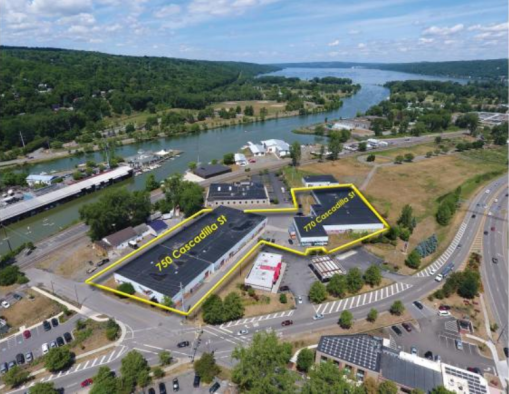
4. I’ll wrap up “Part 1” with a piece of interesting news – Cornell found a buyer for their printing facility and warehouse on Ithaca’s West End. According to a county filing on June 2nd, Guthrie Clinic is paying $2.85 million for the properties at 750 and 770 Cascadilla Street, which is over the asking price of $2.7 million. For that they get 3.12 acres, a 37,422 SF warehouse built in 1980, and a 30,000 SF storage facility built in 1988 and currently leased out.

Guthrie is a regional healthcare provider based out of Sayre, Pennsylvania – their premier facility is the 254-bed Robert Packer Memorial Hospital, which Ithacans might know as one of two locations someone is likely to be transported to in the event of a severe injury (the other being University Hospital up in Syracuse). For the record, Cayuga Medical Center has 204 beds.

Guthrie’s presence in Tompkins County includes some specialty offices and an existing 25,000 SF clinic at 1780 Hanshaw Road in Dryden. That building first opened in 1995, with an addition in 2000. Guthrie has been a building spree as of late, with a 25-bed hospital in Troy, PA that opened in 2013, and a 65-bed hospital in Corning that opened in 2014.

As for what they want to do on Ithaca’s West End, well, I’m working on figuring that one out. I’m hoping the Times writers who follow the blog will cut me some slack and let me try to unravel this one.


902 Dryden Road Construction Update, 5/2017

27 05 2017

Visum Development/Modern Living Rentals’ project at 902 Dryden Road in Varna is coming along. Dropping by the site a few days ago, one of the things that stands out to be is that the design of the pair of townhouses closest to Forest Home Drive have been redesigned from the render that was shown when the project was approved by the Dryden town board in March 2016. Legally, this isn’t a big deal, since as long as the board stipulations have been met and it doesn’t affect the SEQR determination, then the modification is allowed. To be 100% honest, this armchair critic likes the redesign more, since it avoids the blank space near the party wall. Comparing the render to the other townhouse strings, it looks like there were some elevation adjustments and changes in fenestration, but the general appearance remains the same as approved.

However, one thing that I’m a little concerned about is the siding being all one color. It’s not a critical issue, but I think the monochrome makes the project bland and less pleasing to the eye. All the renders I’ve seen have shown a mixed palate, whether it be the grey/red/orange below, or the beige/blue/brown combination shown on MLR’s website. The mixed forms of siding – vertical, lap and shingle – but I hope that this isn’t the final exterior color.

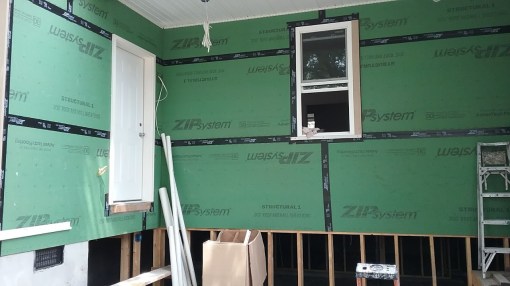
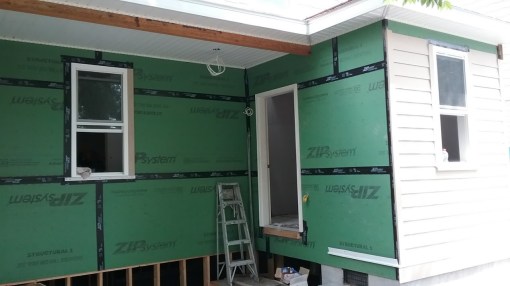
Anyway, the buildings have all been roofed and sheathed with ZIP panels, doors and windows have been fitted, the interior stud walls are good to go and rough-ins are underway. On the older strings, some of the siding is up and trim boards have been attached. The wiring and tubes coming out of the eaves on the rear face are connections for the electric air-source heat pumps. Although not a part of the initial build-out, Visum is exploring the installation of an offsite photovoltaic grid that would make the project net-zero energy, meaning that all the energy used is generated from renewable resources.

The site will have 26 parking spaces for its 32 bedrooms (2 existing 3-bedroom units, 6 new 3-bedroom units, 2 new 4-bedroom units), well above the one parking space per unit required by zoning. The site will also be a “flag stop” for TCAT buses and have bike racks to serve 20-24 bikes. The units, which are going for about $600-$700/bedroom, will be ready for occupancy in time for the 2017-18 academic year. Bella Faccia Construction, who did 707 East Seneca, is the general contractor, and STREAM Collaborative is the architect. AJH Design and Fine Line Construction also serve on the project team.

Side note, Bella Faccia’s website claims they’re doing a Cici’s Pizza in Ithaca – that would have been news to me, and my editor at the Voice would have been over the moon, but it turns out it was a typo and they meant Horseheads.