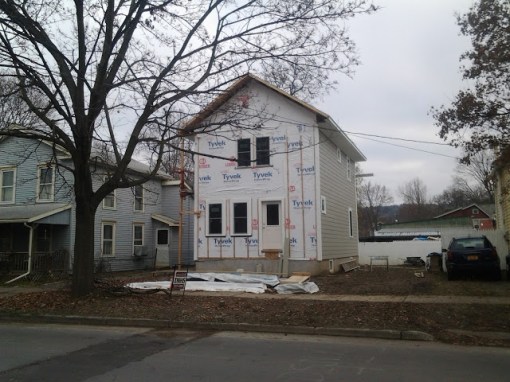
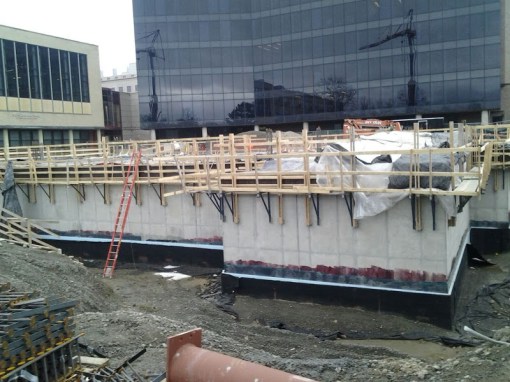
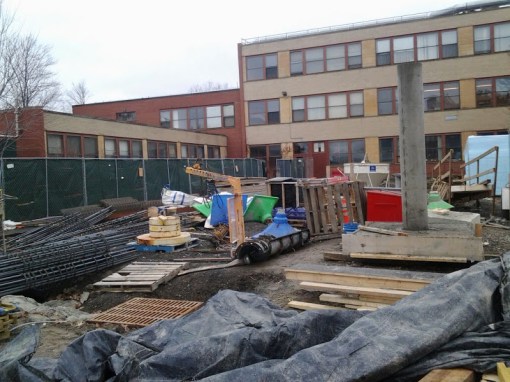
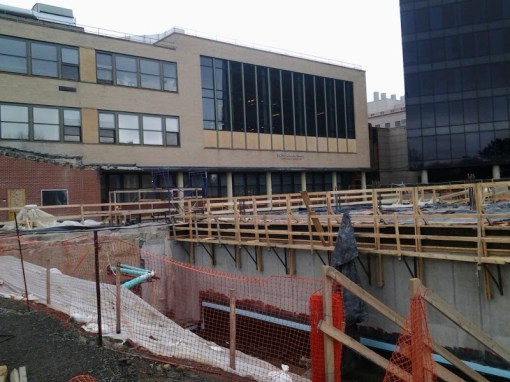
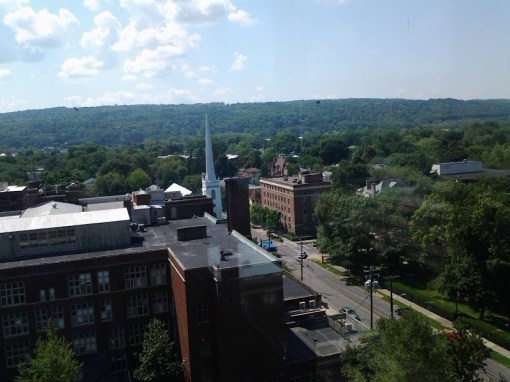
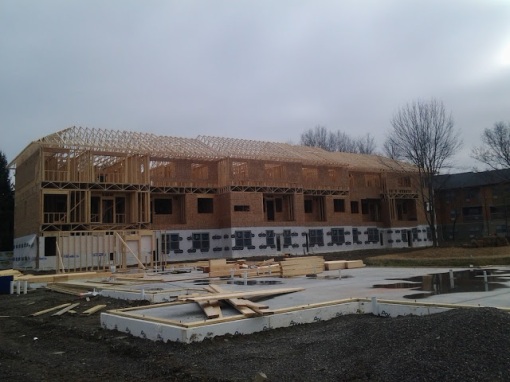
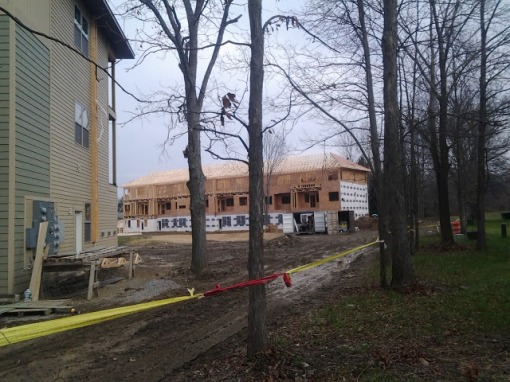
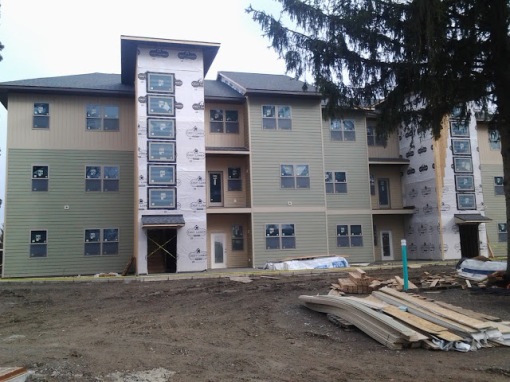
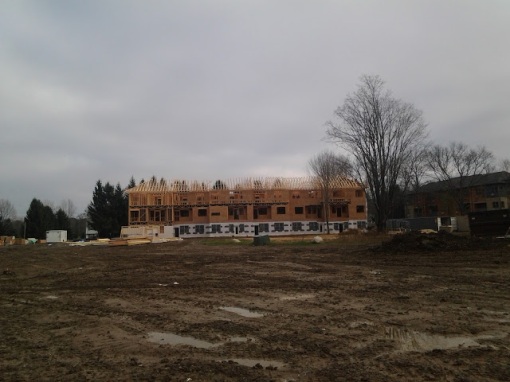
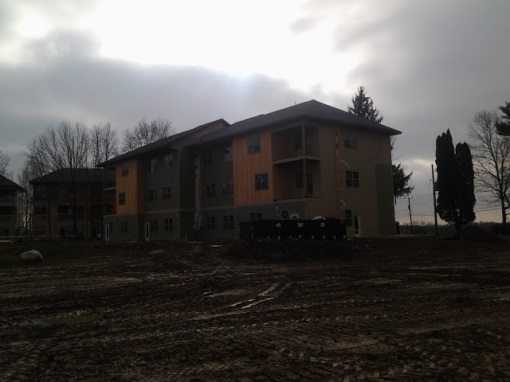
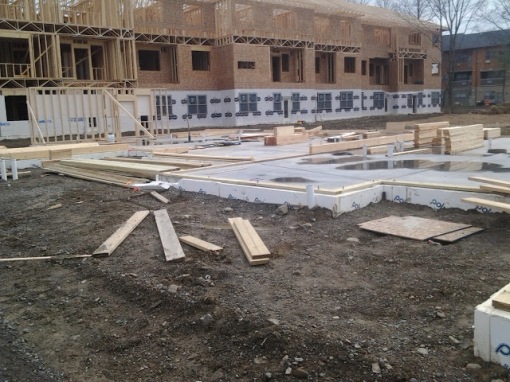
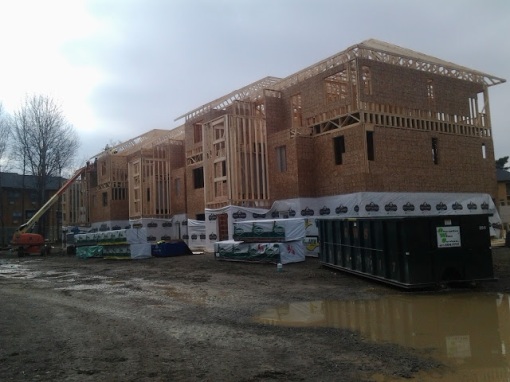
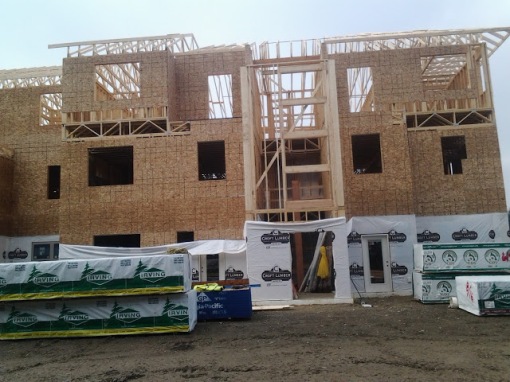
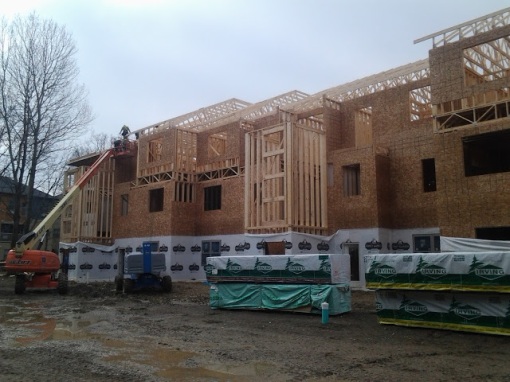
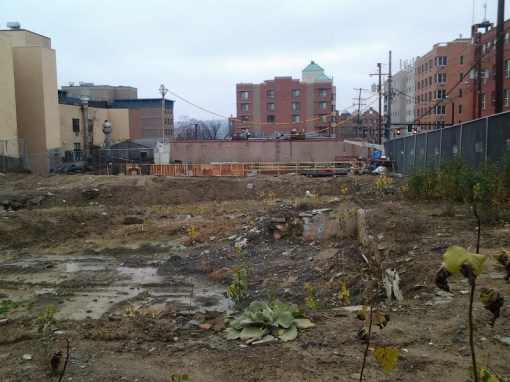
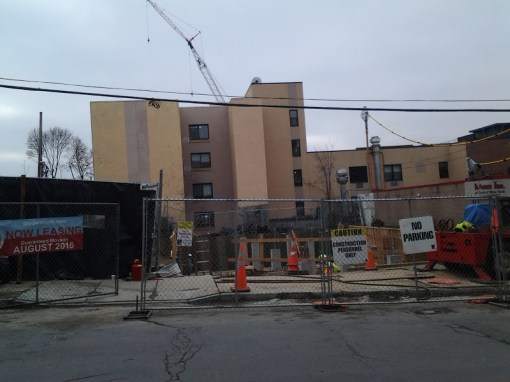
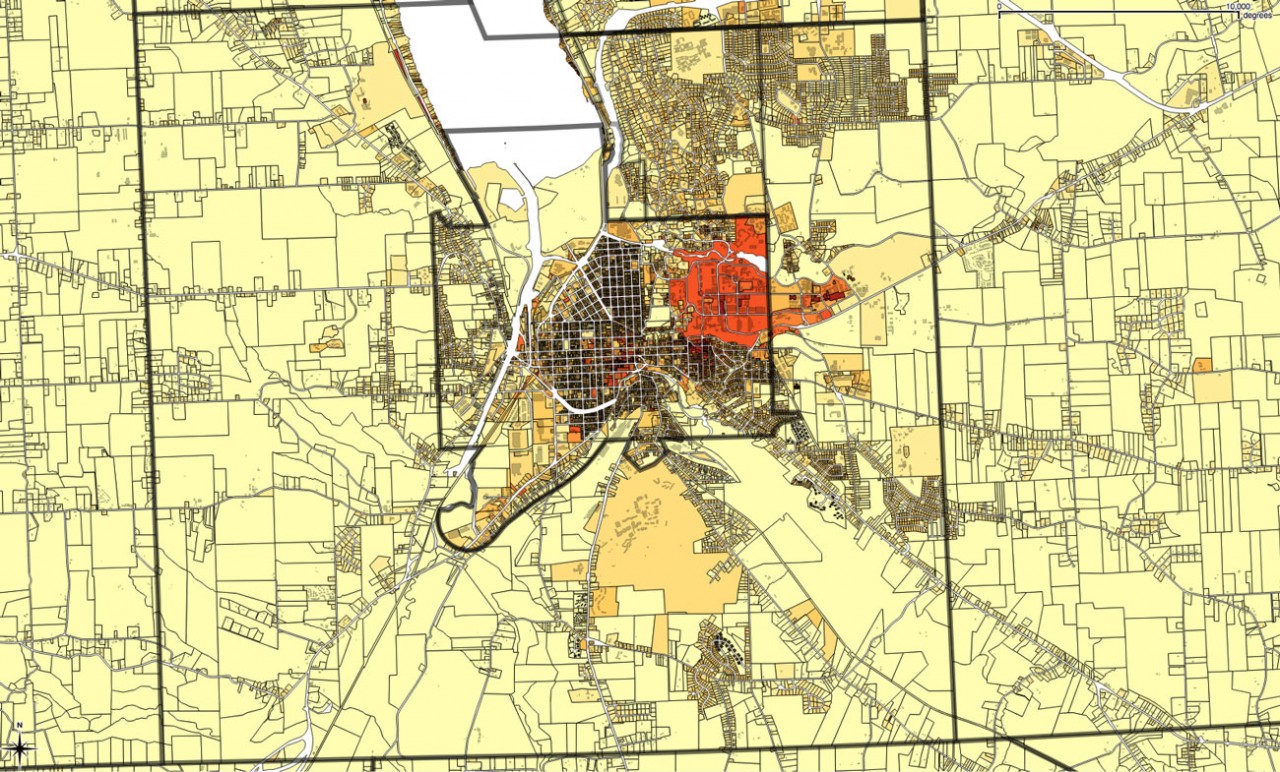
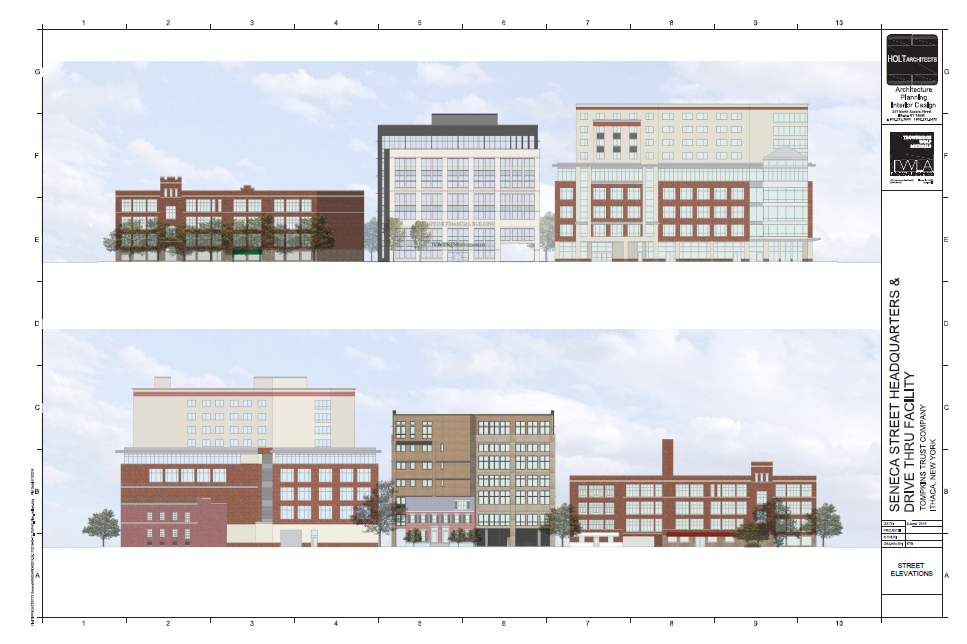
Over at the Vet School, it looks like the expansion project is now at surface level. With the foundation completed, the only direction for the project to go is up, which the Manitowoc Potain self-erecting crane should help with. Phase I interior renovations should be completed by this time, and the Phase II new construction will be moving ahead to a June 2017 completion. Like Klarman Hall, Welliver is the general contractor of this $74.1 million construction project.
Cornell Veterinary School Expansion Construction Update, 1/2016
12 01 2016Comments : Leave a Comment »
Tags: academic buildings, construction, construction (planned), ithaca, news, photos, vet school
Categories : academic buildings, construction, construction (planned), Cornell, ithaca, news
News Tidbits 1/9/2016: Better Late Than Never
9 01 2016Call it the big news round-up. This is what I get for not writing my weekly roundup last week.
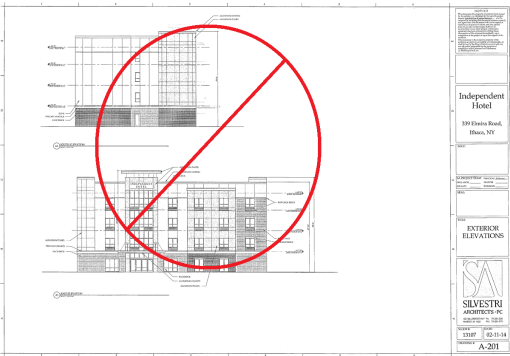
1. We’ll start off with some bad news. The plans for a boutique hotel at 339 Elmira are very likely done and over with. The 37-room, 6,468 SF hotel announced in February 2014 was planned for the 0.59 acre former Salvation Army property on the Southwest side of the city. For whatever their reasons were, the developer, (Rudra Management and Rosewood Hotels of Buffalo, decided put the property up for sale for $395,000. After several months, it finally sold at the discounted price of $300,000 to its next door neighbor, Arizona-based Amerco Real Estate, the parent company of U-Haul. Discounted is a relative term, by the way – Rudra had acquired the vacant property for $143,000 in a land auction in 2013. Back when Salvation Army was still there in 2009, the site sold for $175,000.
So with that sale to Amerco, it’s likely the property will be used for an expanded U-Haul parking lot. It’s unfortunate, but them’s the breaks. For what it’s worth, Rudra has commenced work with the other hotel they had planned, the 79-room Holiday Express at 371 Elmira Road, just down the street.
2. In modest but notable projects, the William George Agency in Dryden received a $2 million construction loan to conduct renovations and roof repairs to its cafeteria area. The non-profit residential treatment center for adolescents had secured building material sales tax abatements from the county to help cover their expenses (the project has originally been planned to start in Q1 2015). The agency, established in the 1890s, employs over 340, making it one of the larger private employers in Tompkins County.
3. Thanks to Nick Reynolds over at the Journal for reminding readers that not every construction project is private. Noted in his writeup of projects that the city intends to fund this year – $430k in road repair projects, another $407k for parking stations, $1.3 million to replace Cass Park rink’s roof, $214k for design work for the new North Aurora street bridge, and $735k for design work for city dam reconstructions.
Perhaps most interesting to readers here will be the $500k that the city intends to spend on design and planning the new Station No. 9. With the awarding of funding from the Upstate Revitalization Initiative, the city can formally explore the possibility of a new fire station on a Cornell parking lot at 120 Maple Avenue. Once a new station is complete, the city could then sell the current Station No. 9, nearly 50 years old and in need of major renovations, to a private developer for redevelopment (the developer who expressed interest in the site is still unknown, but given Collegetown’s expensive real estate market, they must have really deep pockets).
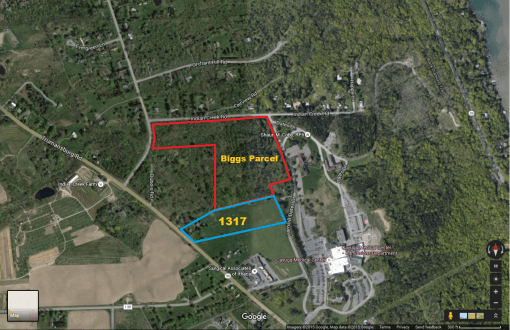
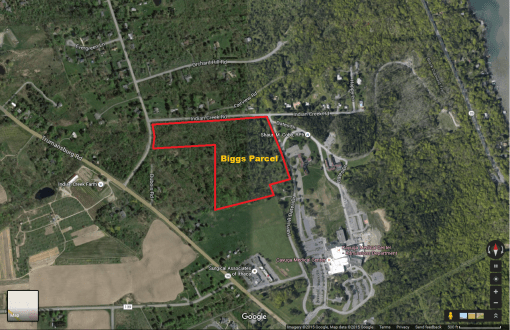
4. More talk of the Biggs Parcel. Jaime Cone at the Ithaca Times provides more details regarding neighbor Roy Luft’s proposal to build for-sale senior housing using the site. Luft is arguing his project is more environmentally friendly than the NRP project, it would take two to three years to come to fruition, that the units would be 700-1,000 SF, and he’s serious about building the senior housing, which is an under-served market. The Indian Creek Neighborhood Association, which has actively fought any sale, seems to at least be open to the idea, if not necessarily a fan of it.
For the record, since the ICNA doesn’t clarify it in their blog post, the county didn’t develop the NRP project. The county put out a request for proposals (RFP) just like they do with every other large development study or offering. Better Housing for Tompkins County and NRP happened to think they had a good project idea and responded to the RFP. It’s been made clear, multiple times, that the county has approached neighbors, Cayuga Medical, INHS and others for months, shopping the land around, and no one has made offers. To be completely honest, even if this land hit the real estate listings, it’s not as if anyone is clamoring to snatch this up; there’s demand to live in and near Ithaca, but land still takes several months to sell on average, and it’s not a stretch to think that developers would avoid this one after the NRP flaying. The county plans to start the listing process later this month if the ICNA doesn’t make an offer by the 15th.
Just a thought, but if $340,000/25.52 acres = $13,333/acre, and the acreage closest to Dates Road is probably developable, than shouldn’t that allow a ballpark fair-value estimate? I know NRP was to pay $500,000, but that had some transit and pedestrian cotingencies attached. Has the ICNA contacted NRP to ask how extensive the wetlands were, is the information on file with the county?
1317 Trumansburg is 10.17 acres, The Biggs parcel 25.52. Combined, they would be 35.69 acres. From the sound of it, Luft would like to reform the parcel boundaries to let his project, however big it may be, to move forward. The site is zoned low-density residential, which means a cluster subdivision can be 2.3 units/acre at maximum. Each structure can have up to 6 units. Taking a guess here, but Luft may be looking at more than 20 units, because anything less than 20 could be done with a subdivision of his current property. For comparison’s sake, the BHTC/NRP project was 58 units.
There is at least the potential that the county gets additional tax dollars from Luft’s project, and the woods would be protected, and there would be a happy ending to this story. But that’s dependent on both sides’ goodwill. Given the years of acrimony, that’s a big leap of faith.
5. For the restaurant-goers out there – Fine Line Bistro’s old spot at 404 West State has a new tenant called “The Rook” opening this month. Mark Anbinder provides the foodie rundown at 14850.com. Mid-tier American bistro/pub fare.
More importantly to this blog is the economic rundown, provided thanks to their application for a loan courtesy of the Ithaca Urban Renewal Agency (IURA). The three co-owners, all local restaurateurs, are seeking a $40,000 loan (3.5% interest, 6 year length) to complement their own dollars and a private loan. 8 hired staff (cooks/servers/dishwasher), but none living wage. With cash flow statements, restaurant plans, the menu, loan filings and resumes of the owners, this looks like a Cornell Hotelie’s senior class project.
It’s the IURA’s decision make, but at least it’s nice to know that good restaurant space in Ithaca is in strong demand.
6. Out for bid, Cornell’s Ag Quad renovations. The bid filing estimates the budget at $6.6-6.8 million, and a construction timetable of late March 2016 to Summer 2017. Quoting the first write up from October:
“The $9.6 million project will be broken down into two phases, one that focuses on infrastructure, and one phase on landscape improvements (and being that much of the infrastructure is underground utilities, phase one could be described as churning up the ground, and phase two is making the upturned dirt pretty again). The renovations, which are set to start next summer and run through 2017, will include additional emergency phones, a rain garden, and outdoor gathering spaces in front of Mann Library and Roberts Hall (upper right and lower left in the above render).”
7. Folks love a good rumor, and the Times’ Josh Brokaw had an interesting one to report in his 2016 futurecast regarding State Street Triangle –
“Don’t think that the Austin-based developer is abandoning Ithaca, though a look at their previous projects shows this sort of downtown, mixed-use development is a new frontier for a company accustomed to building student housing mostly in green fields in the South and Midwest. CEO Mike Peter was spotted downtown at Mercado in December talking to consultant Scott Whitham; it wouldn’t surprise if the company came back this year with something conceptually similar—lots of rooms, ground-floor retail—but a much different look.”
Brokaw makes a reference to the inclusionary zoning slated for discussion next month, which is rumored to mandate affordable units in return for a larger footprint (rundown of how that works here). I also wonder if it will make reference to the “pillar” that Myrick mentioned previously – a taller, skinnier building, not as massive and perhaps only 3-4 floors over most of the site, and maybe a quarter of the site has a taller tower that’s 12 or 13 floors, whatever is permitted by the inclusionary zoning (strictly hypothetical, just one guess of many). Campus Advantage has plenty of time since they missed their original start date, but maybe later this year in the spring.
8. It’s always a brow-turner when a real estate listing is advertised as “a large corner lot ideal for a multi-unit development“. In this case, it’s a 0.2 acre double lot at 404 Wood Street in Ithaca’s South Side neighborhood. The listing offers the ca. 1938 house and lot for $250,000 (tax rolls say the property is assessed at $125,000; the current owner picked it up for just $34,000 in 1993).
Playing with some numbers a little bit, there are a couple of options if a buyer wanted to build something. The first and probably easier option would be to subdivide the lot and build on the vacant corner parcel. That would give, per R-3b zoning regulations of 40% lot coverage and 4 floors, about 1400 SF per floor. That gives 5600 SF, and if one assumes 15% off for circulation/utilities and 850 SF per unit, you get a 5 or 6 unit building at theoretical maximum.
If one were more brazen and tear down the 1938 house, one gets about 3,485 SF per floor, 13,940 SF at max height. That allows about 14 units using the same figures as above. But that might be tougher for neighbors to swallow. Anyway, if it sells and it looks like there’s a possibility, it’ll get a followup in a future news post.
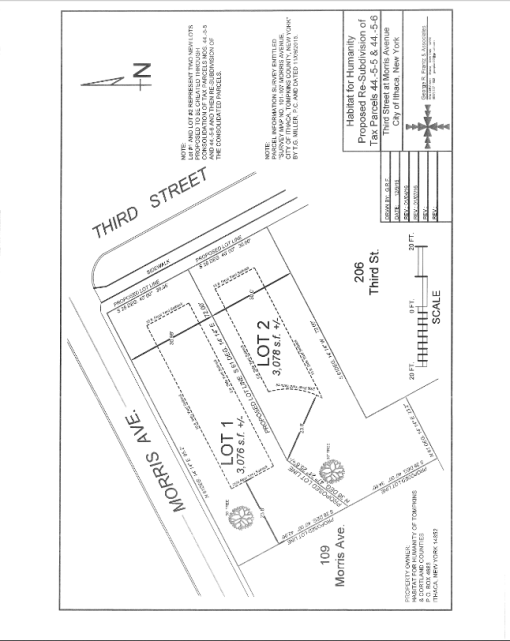
9. Nothing to exciting on municipal planning agendas this week. The town of Lansing cancelled their meeting, and all the town of Ithaca had was a cell phone tower on West Hill. The city has a little more interesting. The duplex at 424 Dryden is examining unusual parking arrangements to save trees, and Habitat for Humanity is planning an affordable-housing owner-occupied duplex for vacant lots at 101-107 Morris Avenue in the city’s North Side neighborhood.
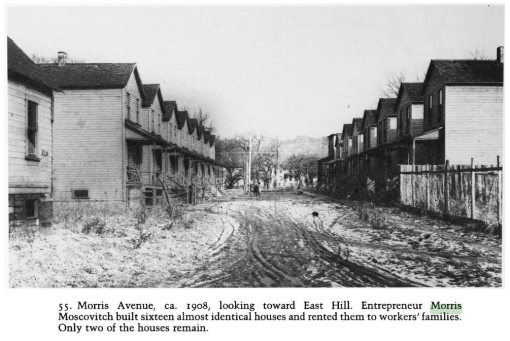
Morris Avenue has always had a focus on worker housing. As described in Ithaca’s Neighborhoods by Carol Sisler (1988), local businessman Morris Moscovitch built 16 nearly identical houses in 1908 to house worker’s families. But, with the effects of urban decay and urban renewal, only one of those 812 SF houses (109 Morris) is still standing today.
What Habitat for Humanity is proposing is to take the vacant lots at 101-105 Morris and 107 Morris (total 0.138 acres), combine them and create two new lots that will face Third Street. The new lots would need a zoning variance since they’re not wide enough (30′ and 30.98′, 35′ required). Being Habitat, these might take a little while to build and they probably won’t wow anyone design-wise, but there’s a lot of value to be placed in their “sweat equity” approach, and affordable owner-occupied housing is in severe need in Ithaca. Planner George Frantz is handling the application.
10. Lastly, for what is a very long post, the Hotel Ithaca’s revised CIITAP application to the Tompkins County IDA. Now that the project is approved by the city, they can work on a revised tax deal. According to the project memo, the sales, mortgage and property tax abatements will total $1.781 million on the $15 million project. The property tax abatement is the standard 7-year abatement, and will generate almost $1 million in new tax revenue during the abatement period. The project would retain 71 positions and create 21 new jobs, most of which appear to be less than living wage. The application does note, perhaps ominously, that non-approval would result in functional obsolescence – the hotel shuts down. The IDA plans to examine the application at their meeting in the county office building next Thursday.
Comments : 8 Comments »
Tags: affordable housing, ag quad, biggs parcel, collegetown, Cornell, fire station No. 9, hotels, ithaca, news, senior housing, suburbia, tompkins county
Categories : affordable housing, collegetown, Cornell, hotels, ithaca, news, rumor mill, senior housing, Tompkins County
Ithaca Projects Map
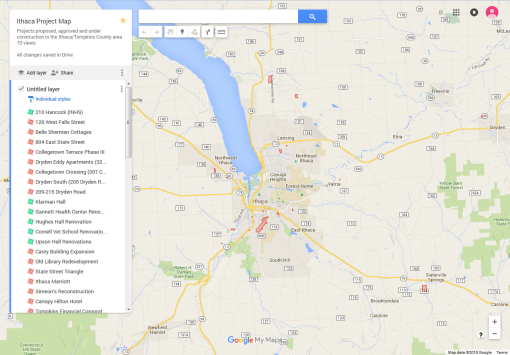
5 01 2016Soft roll-out on this little project, but one that will hopefully be useful. New for 2016, the Ithaca Projects Map. The map can be reached with this link, or by clicking the label next to the Welcome tag at the top of the blog column.
Taking a page from Jason Henderson over at Ithaca Builds, the map is color coded by for-profit (red), not-for-profit (green) and public projects (blue). A couple further details –
~Single family home and duplex sites are not included. There are well over 100 houses under construction in Tompkins County in a given year. Given their number and individually limited impacts, it wouldn’t be a good use of time to try and track them.
~For now, I’m leaving off recently completed projects. I’m also leaving off informal rumors or projects still in the early stages of development. The map only shows formal proposals, approved projects, and projects currently under construction. If a project is confirmed to be cancelled (ex. INHS’s Greenways, Collegetown Crossings on South Hill), it will be removed from the map.
~The information presented when you click on each polygon is a brief project description, the developer, and the project status. Links are provided to background reading on a given project.
~ Disclaimer: While I make an effort to make sure everything is accurate, there are possibilities that renders are outdated (old versions) or something may otherwise be incorrect. If you have questions or comments, leave a comment or shoot an email to ithacating*at*gmail.com.
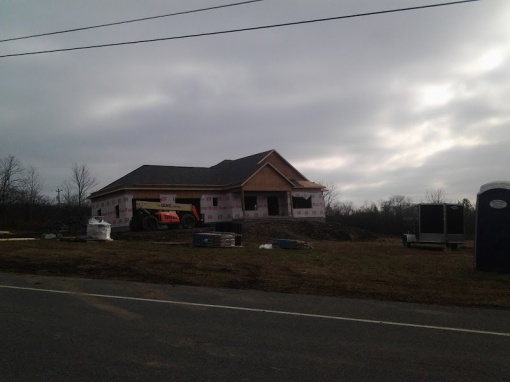
Now for part II – clearing out my photo stash. Sometimes, I end up with photos that I never use, mostly massive single-family homes in established subdivisions. Along with modulars on the fringes of the county and the occasional large-acreage stick-built, these homes make up the large portion of the new single-family home builds in Tompkins County. Not the most environmentally friendly, and questionable urban/land planning, but it’s what zoning allows and what’s easiest to build.
There’s a few for reasons for that – on the builder/developer’s end, the Return on Investment (ROI) tends to be greatest on luxury home builds, and land’s cheaper in rural areas. On the municipal/community end, one-lot single-families don’t need board review unless they require zoning variances, and as a general rule of thumb, smaller projects, more rural projects, and projects targeting wealthier buyers face less neighbor opposition (the wealth effect is somewhat muted with rentals).
Larisa Lane, Town of Ithaca (Westview Partners LLC)
Southwoods Drive, Town of Ithaca (Heritage Builders)

Old Gorge Road, Town of Ithaca (J. Clark Construction)
Larisa Lane, Town of Ithaca (Westview Partners LLC)

Blackchin Boulevard, Village of Lansing (Avalon Homes)

Birdseye View Drive, Town of Ithaca (Birds-Eye View Properties, LLC)

Southwoods Drive, Town of Ithaca (Heritage Builders)
Beardsley Lane, Town of Danby (Westview Partners LLC)

Loomis Court, Town of Danby (Jepsen Romig Development Inc.)

Eldridge Circle, Town of Ithaca (TRJ Properties LLC)
Comments : 2 Comments »
Tags: construction, general housing, photos, project map, suburbia, tompkins county
Categories : construction, general housing, news, photos, Tompkins County
Are Rents (Finally) Dropping in Ithaca?
29 12 2015So here’s something that one doesn’t see very often. Real estate information company RealtyTrac, in its recently-released study of rental affordability, is calling for the Ithaca metro (a.k.a. Tompkins County) to have one of the biggest rent year-to-year decreases in rent nationwide from 2015 to 2016.
Are the economic woes and job losses real? Has their been progress made by new units hitting the market? Are fewer people renting?
Maybe. But before jumping to any conclusions, let’s take a look at the way the numbers were created. According to RealtyTrac, the rent numbers were based off of 50th percentile rents (median) for Fiscal Year 2015 and Fiscal Year 2016 estimates on 3-bedroom properties.
That it’s limited to 3-bedroom units should probably be caution light number one. In most urban markets, 3-bedrooms make up 10-15% percent of the rental market. In Ithaca the number of all rental units with 3-bedrooms or more was 19.1% in 2011. In the Ithaca market especially, units with a higher number of bedrooms tend to be marketed to undergrads in neighborhoods like Collegetown. In other words, RealtyTrac’s numbers might not be getting a good reflection of the local market, and maybe a rough idea of the student market at best.
So that’s the initial impression. Now to go straight to the source. Here’s the Federal HUD rental data for 2015 and 2016 in Ithaca:
Ithaca 2015 Monthly Rent 50th Percentile
Studio $852
1 Bedroom $1044
2 Bedroom $1251
3 Bedroom $1733
4 bedroom+ $1739
Ithaca Anticipated 2016 Monthly Rent 50th Percentile
Studio $903 (+6.0%)
1 Bedroom $1035 (-0.9%)
2 Bedroom $1198(-4.2%)
3 Bedroom $1554 (-10.3%)
4 bedroom+ $1776 (+2.1%)
For the sake of acknowledgement, according to the HUD Docs, when determining rents for units above 4 bedrooms, the agency adds 15% to the 4-bedroom rent for each additional bedroom, so a 5-bedroom rent is 115% of the 4-bedroom rent and a 6-bedroom unit is 130%. The 50th percentile rent for Single Room Occupancy is 75% of the 0-bedroom (studio) rent.
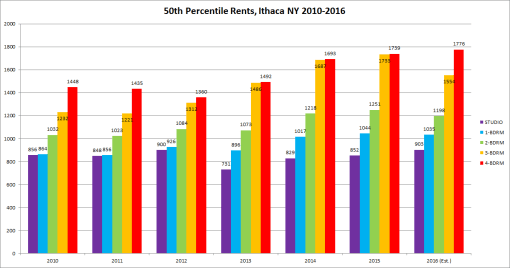
The gut feeling looking at this is that something really odd happened with those 2016 estimates. The calculated median rent for 3-bedroom dropped over 10%. Digging in a little further, let’s pull the 50th percentile (median) rent data for 2010 to 2016 and see how the bigger picture looks.

Looking at the past several years, there are a few cases of numbers dropping slightly. Studios from 2012-2013 and 4-bedrooms from 2011-2012 show bigger drops, but there’s also fewer units in those categories, they make up much smaller percentages of the Ithaca rental market. The 1 and 2 bedroom units, which make up the lion’s share of apartments on the market, show the occasional year-to-year drop, but the effect is slight and the overall trend is steadily upwards – from 2010-2015, the median rent on a 1-bedroom increased 20.8%, and a 2-bedroom increased 21.2%, well above wage gains.
As for 3-bedrooms, from 2010-2015 the median rent increased from $1,232 to $1,733, 24.4%. While not impossible, a 10% drop in the average rent for 3-bedroom units to $1,554 seems unlikely.
And that’s fine. The HUD released the 2016 numbers as estimates. They will be revised and finalized next spring.
But being estimates, they’re prone to error. One that RealtyTrac incorporated into their analysis, and leading to what’s likely an incorrect conclusion, though not any fault of their own.
So, not to be the bearer of bad news, but this housing crisis doesn’t look like it’s abating just yet. Though, there’s always the chance that the rents are actually dropping fast. We’ll just have to wait to see if the revised numbers back this conclusion up, or prove it wrong.
Comments : 4 Comments »
Tags: affordable housing, economy, ithaca, news, statistics
Categories : news
News Tidbits 12/26/15: Do You Hear What I Hear
26 12 20151. Not as visible, but still important – Student Agencies Inc. has secured a $3 million construction loan from Tompkins Trust Company for a major renovation of its building at 409 College Avenue. Although details about the project itself are a bit scarce in the paperwork filed on the 18th, it is likely the eHub entrepreneurial space being built for Cornell students, faculty and staff. The eHub space will include space for PopShop (a space for student business planning and development), the eLab business incubator, conference space, mentors-in-residence, and basically all the physical space and things a budding businessperson would like to help them succeed.
According to a previous write-up by the Cornell Chronicle, the lab should be open later this Spring, with 10,000 SF on the second and third floors of 409 College Avenue, and 4,000 SF of space in Kennedy Hall on the Ag Quad. STREAM Collaborative of Ithaca will be the interior architect for 409 College, and Ithaca-based Morse Project Management LLC is the general contractor.
Now, this could be a great thing for Ithaca, because it leverages Cornell’s presence to foster business development. Sort of like a Cornell-centric Rev. And Rev, for what it’s worth, has had several successful associated firms in the past couple of years – Ursa Space Systems was named a STARTUP-NY partner and will be hiring 22 people, and Ithaca Hummus is looking at hiring 50 over the next five years. Even the Ithaca Voice grew from what was basically a one-person operation when it launched in June 2014 (hat-tip to Jeff Stein), to having several full-time staff as well as giving Ithaca a higher profile through viral hits like the Key West promotion and the Harry Potter Wizarding Weekend.
Anything that allows Ithaca to grow and diversify its economy is a great thing, and if it can utilize Cornell’s presence to help that cause, all the better.
2. The Lansing Star is reporting that 2015 was a banner year in Lansing, with 200 single-family homes, apartments and townhouse in the works. Along with the 20 or so plans reviewed, the town is also looking at revising its Comprehensive Plan, and the town may even consider the adoption of form-based codes in certain locations such as the proposed and stalled Lansing Town Center.
One caveat I’d add is that the key word is reviewed, meaning approved. Not underway. The 102-townhome Cayuga Farms project still had major issues to work out with its proposed package sewer system. If one were to look at permits, it’d probably be 36 or so units with the Village Solars, and probably as many with scattered single-family homes and duplexes, which would make for an average-to-above average year – final 2015 values will be available from the HUD in March. The village could see a big boost from its usual single-digit permit total, if the Cayuga View project gets its construction permit this year.
3. Speaking of Cayuga View, the price point came up at a Lansing village meetings, the minutes of which came online this week. Drumroll please—
The targeted price point is $1600/month for a one-bedroom, one-bath unit (of which there will be 12), and $2700/month for a 2-bedroom, 2-bath unit (of which there will be 48).
That’s quite a high figure. Applying the standard 30% affordability threshold, the targeted income bracket for seniors is $64,000-$108,000/year. That’s comparable, or a little more than, the Lofts @ Six Mile Creek. It also draws parallels to inner Collegetown projects like Dryden South, where rents will be $1350/bedroom. But those projects fall in traditionally high land-value areas.
If it’s financed, then a lender must believe there’s a market for it, and given the general difficulty in financing projects in this region, that really is saying something. Increased affluence and number of retirees moving in? Hoping to capture the older, richer Cornell faculty/staff crowd? Bad judgement? Who knows.
4. In the briefest of blurbs, the Times’ Josh Brokaw, who I applaud for attending even the less interesting city Planning Board meetings, reports that the Tompkins Trust HQ has been approved, with a permit likely once they get a minor curb-cut issue worked out. The contentious Printing Press Lounge debate also received the Planning Board’s go-ahead, if not necessarily its blessing. Expect a late winter or early spring construction start with the Tompkins Trust HQ, with completion the following year.
5. A couple of interesting developments for the Biggs Parcel in Ithaca town. According to the Times’ Jaime Cone (new writer, guys?), a member of the ICNA, Roy Luft, is prepared to make an offer for the Biggs Parcel that would preserve the vast majority of the land. Luft owns a 10-acre parcel to the south (street address 1317 Trumansburg Road). He proposes to take a non-wetland portion on the southern end of the Biggs Parcel, combine it with the open field behind his house, and pursue a cluster subdivision of homes intended as owner-occupied senior housing, which on the surface seems like a decent plan and location, given that owner-occupied senior housing is in demand and the land is adjacent to Cayuga Medical.
With this offer aired, the county, in a 4-1 vote, is giving the ICNA until January 15th to make an offer, otherwise they’ll put the land for sale on the general market. There is no assessment figure publicly available (though a new value has been determined); the ICNA says that’s unfair, while the county legislators have countered by saying not having the assessment value doesn’t stop the ICNA from making an offer, and that the neighbor group has already had a year and a half to make an offer.
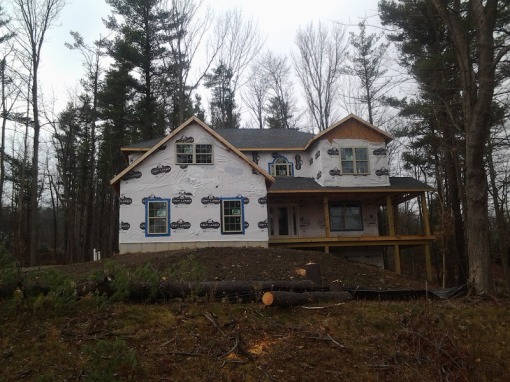
6. Once again, a double-feature house of the week. The theme of this week – high-end homes. Here we have home #1, 8 Pleasant Grove Lane in Cayuga Heights. The house has been mostly framed and the sides have been sheathed, but from the looks of the exposed roof trusses, if would seem that when this photo was taken a couple of weeks ago, the dormers still needed to be decked and the interior was still just stud walls and rough openings.
Design-wise, the home seems to fit in pretty well with its neighbors, which were mostly built in the late 1970s and early 1980s. The property was purchased in 2012 for $132,500 by an LLC traceable to a coach for a Cornell athletics team. Previously, the lot had been owned by its Pleasant Grove Road neighbors, and was sold in an estate sale.
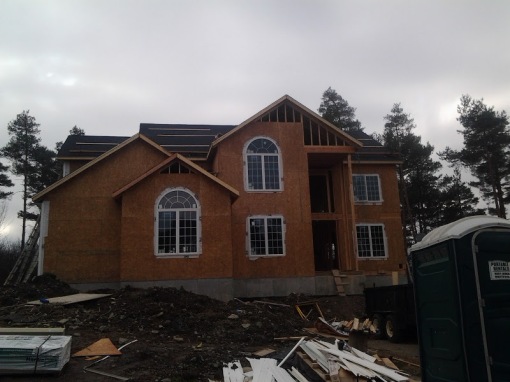
7. House of the week #2. I couldn’t pass up the chance to see the one house under construction that seems to have the entire lakefront mansion community so utterly pissed off. For the record, this house on the Captains Walk cul-de-sac has been under construction for years – you can see it in the satellite imagery for Google maps, which dates from 2013. It also appears to be even larger than many of its million-dollar neighbors. Three-car garage? Check. Courtyard-type entry? Check. Windows have been fitted, the roof has been shingled and the exterior has been sheathed with Huber ZIP System panels. A spring finish would be a good guess. Records indicate a couple from Pennsylvania, the founders of a chain of assisted care facilities, bought the undeveloped parcel for $213,800 in 2013.
Comments : 1 Comment »
Tags: biggs parcel, cayuga heights, cinema drive housing, collegetown, construction, construction (planned), downtown ithaca, economy, ithaca, lansing, news, suburbia, tompkins county, tompkins financial corporation hq
Categories : news
News Tidbits 12/19/15: So New Even the Pavement Shines
19 12 20151. We’ll start off this week with some eye candy. Over in Lansing village, the planning board is hammering out details regarding signage and covenants related to the Cinema Drive senior housing project. But it also gives the project a new name – from C.U. Suites to “Cayuga View Senior Living“. Lo and behold, one types that into Google and up comes the following partially-finished website. The name sounded familiar, and as it turns out there’s a good reason for that – Cayuga View is also the name of a portion of the Linderman Creek apartment complex in the town of Ithaca.
According to the website, the 55+ (“55 and BETTER”, as they tout on the page) apartment building at 50 Cinema Drive will contain 48 2-bedroom units and 12 1-bedroom units with four different four plans. The 4-story apartment building will have retail space on the first floor, “and will offer underground parking and storage, wireless internet, cable, business center, fitness center, rooftop garden, and scenic views. A companion dog or cat under 30 pounds will be allowed.”
No word on the project architect, but the project is being developed by the Thaler family, and Taylor the Builders out of suburban Rochester is the general contractor. The site was originally conceived as an office building several years ago, and then around 2012 it was proposed as a 39-unit mixed-use apartment building with an eye towards graduate students.
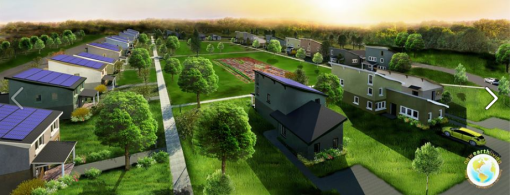
2. Sticking with residential development and fancy renders, here’s the latest render for New Earth Living LLC’s Amabel housing development, courtesy of their Facebook page. Final approval was granted just this week by the town of Ithaca. The 31-unit eco-friendly housing development (consisting of one standing farmhouse and 30 new homes facing inward from a loop road) will be located on undeveloped grass/woodland behind 619 Five Mile Drive. In the project literature, the site is said to be designed around a “pocket neighborhood” concept, with the houses facing towards each other for interaction, and away from the street for privacy. The houses may not be everyone’s cup of tea, but are designed for net-zero efficiency. Houses range from 1-3 bedrooms and 1,200-2,100 SF. No specific prices yet, but expect marketing to begin sometime early next year.
3. For the aspiring developer who wants to get a head start on planning – the 11.71 acre Bella Vista site at 901-999 Cliff Street in the city’s West Hill neighborhood is for sale for $395,000. As the advertisement on Homefinder notes, the project has received approvals for a 44-unit apartment or condo building (what it doesn’t say is that those would have to be renewed via a reaffirming vote by the planning board, since the project was approved more than two years ago). The property is currently assessed for $210,000.
Primary Developers Inc., a company founded by local businessman Mauro Marinelli, purchased the land for $175,000 in 2002 and received approvals for the 44-unit Bella Vista project in 2007, and the units were marketed by local realtors as condominiums. But as the recession set in, sales foundered and the project never moved forward. Primary Developers Inc. sold the medical office building on the adjacent southern parcel and two other neighboring parcels of land to another local real estate company for $945,000 earlier this year.
4. Some minor tweaks to the Chapter House project since its November sketch plan presentation to the Ithaca city planning board, which looks to mostly be a slightly lighter brick color and a little more detail on the rear wall. From top to bottom, the Chapter House reconstruction proposes Rheinzink zinc shingles, white trim of unknown material, a Redland Brick Heritage SWB bricks, Inspire Roofing Aldeora Slate Coachman (790) simulated slate shingles over the first floor bump-out, SDL (Simulated Divided Lites) transom windows with LePage Morocco textured glass glazing over the picture windows, Sherwin Williams “Tricorn Black” paint on the Chapter House bar exterior trim, and genuine bluestone not unlike the famous Llenroc bluestone used in many of Ithaca’s historic buildings. As far as they look online, they appear to be attractive, premium finishes.
The owner, Sebastian Mascaro of Florida and represented by Jerry Dietz of CSP Management, hopes to start construction in late January or early February for an August 2016 opening.
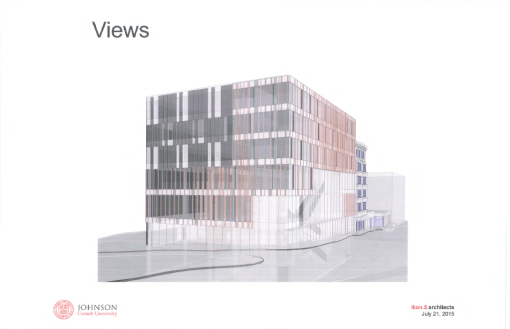
5. Note that there was ever much doubt, but it looks like local developers John Novarr and Philip Proujansky have secured the construction loan(s) needed to build 209-215 Dryden Road in Collegetown, a six-story academic and office building in which Cornell has committed to occupy 100% of the space for use in its Executive MBA program. According to loan documents filed with the county, there were two loans, one for $6,482,295.33 and the other for $9,430,528 (for a total of $15,912,823.33). Wells Fargo Northwest was the lender, and it looks like some of the funds are going through a “pass-through” trust.
The 73,000 SF building will host about 420 Cornell MBA students and staff when it opens in late Spring 2017, later increasing to 600 as Cornell fills out the rest of the square footage. Hayner Hoyt Corporation of Syracuse will be the general contractor. Ikon.5 of Princeton is the project architect.
6. Going to do a double-feature for house of the week this week, mostly because I have a backlog of images. Here’s number one.
The last house is underway at the Belle Sherman Cottages. After not hearing anything about it, I had presumed they had just decided not to build Lot #9, which is smaller than the other lots and was going to have a unique “cottage” design. Well, color me surprised. The town of Ithaca issued a permit in early November, and by the 5th of this month, the CMU block foundation was excavated and poured. Looking at builder Carina Construction’s facebook page, the modular units have since arrived and have been hoisted onto the foundation, assembled and secured. Custom interior finishes, porch framing, siding, backfilling and landscaping will follow as the house moves towards completion.
No renders for the finished house, unfortunately, although I suppose STREAM Collaborative might have something on file. Agora Home LLC of Skaneateles is the developer of the Belle Sherman Cottages, which includes 18 other single-family homes and 10 townhouses, all of which have been completed and sold.
7. Now for House of the Week #2. 424 Dryden Road’s subdivision earlier this year turned the rear parking lot into a second lot, and the owners, William and Angie Chen of Lansing, decided to build a duplex on the land, which has been bestowed the address of 319 Oak Avenue.
It seems a little odd that the trim already seems to be applied to the house when the windows haven’t been fitted yet. The standard Huber ZIP System sheathing is being covered with a mahogany-colored vinyl siding. Wooden wall studs can be seen from the rough window openings and there appears to be electrical wiring on the rear of the house, so it’s a fair guess that utilities rough-ins are probably underway.
Local architect Daniel R. Hirtler of Flatfield Designs penned the design, and according to the construction loan agreement on file with the county, Tompkins Trust Company lent the Chens $400,000 to help bring their duplex from the drawing board to reality.
8. For those hoping for something new and exciting in next week’s Planning Board agenda, it’s going to be a downer month. Here’s what’s planned.
A. Revisions to the internal sidewalk plans at 804 East State Street to allow stripped asphalt vs. concrete.
B. Tweaks to the signage for the downtown Marriott currently under construction.
C. The “Printing Press” bar debate at 416-18 E. State Street, again.
D. Final approval for Tompkins Financial Corporation’s new HQ.
The agenda also includes a couple zoning variance reviews for house additions at 105 First Street in North Side, and 116 West Falls Street in Fall Creek. The board is planning a joint meeting with the ILPC to review and comment on the Travis Hyde plan for the Old Library site, tentatively scheduled for January 12th.
Comments : 3 Comments »
Tags: 209-215 Dryden Road, amabel, belle sherman cottages, chapter house, chapter house rebuild, cinema drive housing, collegetown, general housing, ithaca, lansing, news, senior housing, tompkins county, west hill
Categories : collegetown, construction, construction (planned), general housing, ithaca, news, senior housing, student housing, Tompkins County
Village Solars Apartments Construction Update, 12/2015
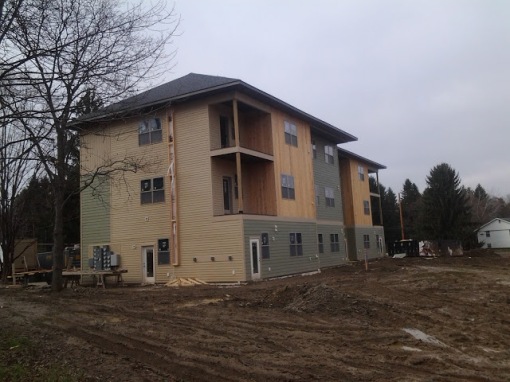
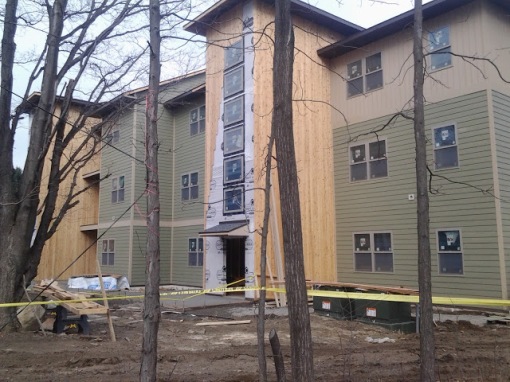
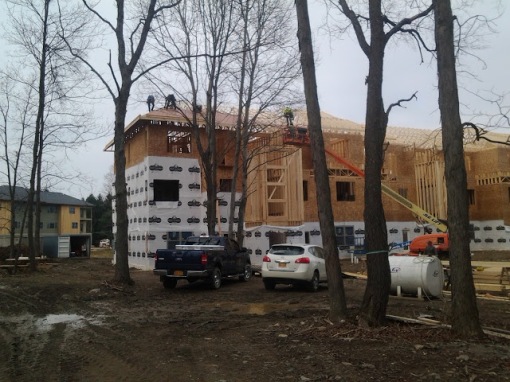
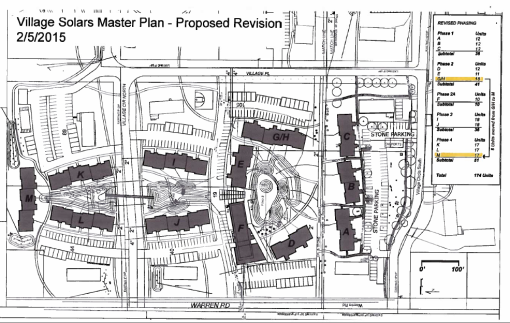
13 12 2015There’s been a fair amount of progress during the late fall at the Village Solars apartment complex site off of the 1000 Block of Warren Road in the town of Lansing. 12-unit Building “D” is finish up attachment of its exterior facade, which like buildings A-C, looks to be a combination of a wood grain board and earth-toned fiber cement board. Balcony railings and trim still have yet to be attached. I didn’t look inside, but based on the photos, it looks like the wood stud walls are still exposed near the entry doors on the first floor.
Across the future pond, 18-unit Building “G/H” (backstory here) has been framed out and some Tyvek-type sheathing has been attached (the material is labelled “Croft Lumber“, which is a building supply store down in Sayre, PA). Some first floor windows and doors have been fitted, but most of the future windows and doors are still rough openings. The roof trusses are all in place, and workers were installing ZIP system plywood sheathing while these photos were being taken.
11-unit Building “E” has had its foundation poured and is only just beginning framing, with just one standing exterior stud wall.
Comments : Leave a Comment »
Tags: construction, construction (planned), lansing, news, photos, tompkins county, village solars
Categories : construction, construction (planned), news, photos, Tompkins County
News Tidbits 12/12/15: Money Money Money Money
12 12 20151. Time to do a little rumor-killing. There’s been some confusion as to whether or not the Hilton Canopy is actually happening, since it was supposed to have started construction by this time and it hasn’t. There was also an article in the Ithaca Times that suggested that construction costs much higher than original estimates had caused the project to be cancelled.
Well, the project has definitely been delayed, but it looks like it will still be moving forward. According to a utility easement resolution at the Ithaca Urban Renewal Agency’s Economic Development Committee (IURA EDC) meeting, a project financing commitment has been secured and the developer of the Hilton (Neil Patel of Lighthouse Hotels LLC) is planning a construction start in the first quarter (Jan-Mar) of 2016, which would suggest a mid-2017 opening.
2. Also in financial news, INHS looks to have secured grant funding that will allow it to move forward with its 210 Hancock project in the next four months, according to INHS Executive Director Paul Mazzarella. The grants were officially awarded in an announcement from the governor’s office on Tuesday. $3.6 million will come from the state’s Housing and Community Renewal program, $500,000 from the state low-income housing tax credit (LIHTC) program, and $1.03 million from the U.S. Department of Housing and Urban Development’s LIHTC program. In total, the award is valued at $5.13 million, about a quarter of the estimated $20 million development cost. The project has received about $17 million in grants and tax credits to date.
The money awarded covers only the rental units – 54 apartments in the four-story mixed-use building, and five townhouses. The seven owner-occupied townhouses remain unfunded.
The apartments, which include a 30-child low-income daycare facility and commercial office space for non-profits, will welcome their first tenants in Summer 2017. They will rent from 27% to 105% of local median household income, depending on the unit. Descriptively, it’s a mixed-income project with residents’ incomes ranging from $25,000-$60,000 per year.
3. From the Common Council’s Planning and Economic Development Committee, there are a few things of note this week –
A. The city seems to be looking towards greater encouragement and flexibility with redevelopment of waterfront parcels by making WF-1 and WF-2 zones Planned Unit Developments (PUDs). What a PUD does is allow greater flexibility in uses and design by removing or loosening zoning constraints on site use, and being more accommodating to mixed-use projects (the Chain Works District proposal is a PUD, for example). Previously, PUDs could only be applied to industrial sites. The other stipulation, however, is that the applicant would have to work with the Common Council to determine appropriate development of the site.
The Waterfront Zoning allows up to 5 stories and 100% lot coverage. The PUD will give flexibility beyond that, dependent on what the Common Council is comfortable with for a given site and proposal. So if Applicant X shows up with a huge apartment building or a big industrial building, it’s probably not going to get very far. But if it’s well designed and has affordable units? Maybe the council will grant a little more density or another floor. It depends on a developer showing up with something that they feel offers some kind of community benefit and fits with the Comprehensive Plan, and whether the Common Council agrees with the developer’s reasoning.
There is great potential in the waterfront – those views can fetch a premium (i.e. higher land values, and more tax dollars), it’s far enough removed from the colleges that students would be unlikely residents, and many of the properties are underutilized, with only marginal public benefit. So potentially, if someone wants to work with the Common Council (one can count on at least 8 or 9 of the 10 being willing to cooperate), there could be some benefits in the long-term.
B. The Commons first-floor active-use zoning ordinance looks to be heading for a Common Council vote in January. More about that ordinance here, Item 5.
C. That damned backyard chickens thing again. Only this time, it might be moving forward with a pilot program involving 20 families.
D. Per the Times’ Josh Brokaw, expect incentive/inclusionary zoning to be up for PEDC review in January.
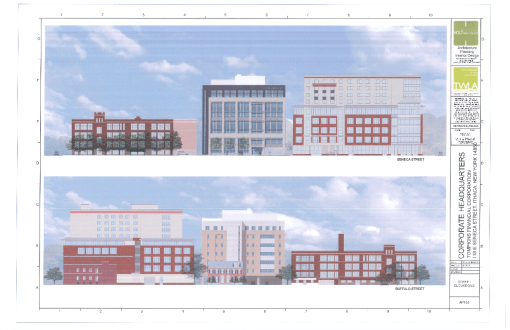
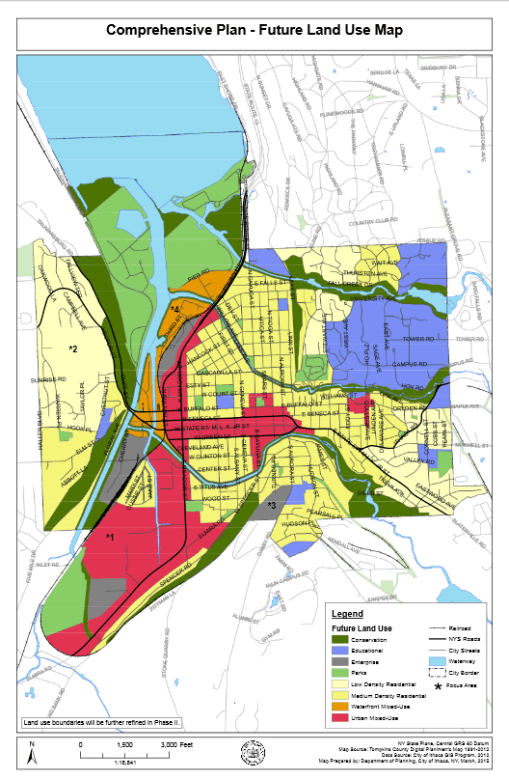
4. Hey look, this week’s eye candy. Tompkins Financial Corporation’s proposed downtown Ithaca Headquarters at 119 East Seneca Street will be reviewed for final project approval at this month’s Planning Board meeting. As part of that, here’s the final project design, part of the final Site Plan Review submission here.
From the front, it looks like some of the window layout has changed on the top floor and southwest corner, and there are fewer sunshades above the windows. There’s a third tree in the planting plan, and there’s variation in the cladding materials on the west wall facing the DeWitt Mall.
In fact, it’s the non-primary facades that have changed the most, with different (and generally lighter-colored) brick and aluminum panels when compared to the previous rendition. Although there’s less glass than before, the lighter colors and greater variation in materials de-emphasize the bulk from the perspective of its townhouse neighbors at the rear. The 7-story, 110,000 SF commercial office building should begin construction in early 2016 with an eye towards completion the following spring.
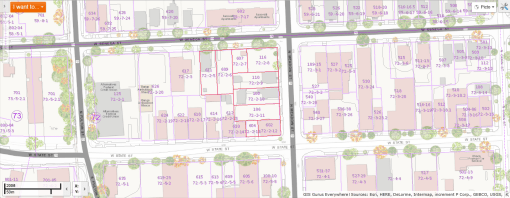
5. There was quite a sale on Ithaca’s West End last Friday. Nine properties outlined in red on the map above – 106, 108, 100 and 116 North Meadow Street, 607, 609 and 611 West Seneca Street, and 602 and 604 West State Street – were sold for $1,725,000 to Elmira Savings Bank.
Now, there are a few reasons why this is worthy of attention. For one, banks don’t typically shell out almost two million dollars without some kind of plan. For two, Elmira Saving Bank has been moving forward with expansion plans in the Ithaca area in hopes of capitalizing on the growing local economy. For three, there has been a lot of development in this neighborhood as of late – the Iacovelli Apartments (2013) and Planned Parenthood (2014) are right across the street, and it’s worth noting that the 18,000 SF HQ for Alternatives Federal Credit Union (2002) is on the other side of the block.
The properties are currently home to parking lots, several older, non-historic houses (most in poor condition) and a two-story 4,500 SF commercial building previously home to the Pancho Villa Mexican restaurant. The restaurant building had been on the market for $699,900.
The zoning here is all WEDZ-1a. West End Zone 1a allows for 2 to 5 story buildings, 90% lot coverage in the case of large assemblages such as this, and no off-street parking requirement. That means these parcels have a lot of potential. The previous owner had been rumored to be planning a mixed-use building on some of the properties, but nothing official ever came forth.
Two phone calls were placed to Elmira Savings Bank’s headquarters in Elmira, and two voicemails were left, but neither received a response. But these properties are definitely something to keep a close watch on over the following months.
6. That 9100 SF store being developed on the corner of East Shore and Cayuga Vista Drives in Lansing that was mentioned last week (here, Item 4)? It’s going to be a Dollar General. Not sure if that’s better than the auto/tire store speculated last week.
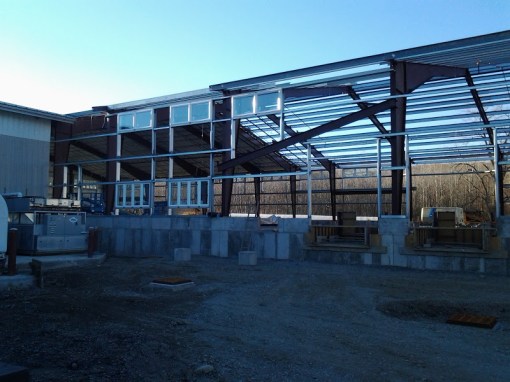
7. Lest it be forgotten, it appears Lady Luck and some state bureaucrats smiled at the Southern Tier this week, awarded the region one of the three $500 million prizes of the Upstate Revitalization Initiative, known colloquially as the Upstate “Hunger Games”. Rochester/Finger Lakes and Syracuse/Central are the other $500 million winners. Seven regions competed, and the four losers will receive $80-$100 million for their priority projects. The money will be paid out in five annual installments of $100 million. A copy of the Southern Tier’s plan is here.
I wrote about Ithaca’s plans for its share on the Voice here. The first year projects alone will have a range of impacts, ranging from job creation and training to municipal construction projects to quality of life projects like museum expansions. Potentially, it could result in hundreds of jobs in Tompkins County, financial capital for several major projects, and make the area more attractive for investment for both local and external entities. As these projects move forward, they’ll receive their due write-ups here and on the Voice.
Of course, the key things are that the community can manage this monetary award, and that someone can track and guide these projects to completion – something the Southern Tier has struggled with, when one looks at the result of previous, much smaller awards.
8. The state’s just shoveling money into Ithaca this week. The New York State Office of Community Renewal (part of the state’s HUD equivalent, the Homes and Community Renewal agency) has awarded $500,000 towards the rehabilitation of the Masonic Temple at the corner of East Seneca and North Cayuga Streets in downtown Ithaca.
The Masonic Temple was built in 1926 and designated a local historic landmark in 1994. The property is owned by Ithaca Renting Company (Jason Fane), who purchased the building from the Masons in 1993. Fane’s never been a fan of the historic designation because the ILPC can be expensive and onerous to work with, nearly everyone else hasn’t been a fan of his long-deferred maintenance of the 90-year old building (if you have ever wondered why that CIITAP rule was added about an applicant being in building code compliance with all their other properties…now you know). A few years ago, Fane had not been shy in his interest in demolishing the building.
After rejecting a purchase offer to turn the building into a community center and space for the New Roots charter school, Fane decided to go the preservation route earlier this year and apply for a grant to renovate the interior and add an elevator to the building to make it ADA-compliant. This would make the building much more marketable to commercial tenants, many of which have shunned the 17,466 SF building. Fane laid out a few different options this past summer, including one where four commercial spaces (rental, office, restaurant) would be created. Based on the grant announcement, it looks like that will be the option pursued.
The Downtown Ithaca Alliance backed the application, as did the Common Council by unanimous vote at their July meeting.
The renovation will cost at least $1 million, and according to the grant announcement, seeks to start construction in summer 2016. Expect more info when it hits the ILPC and Planning Board at a later date.
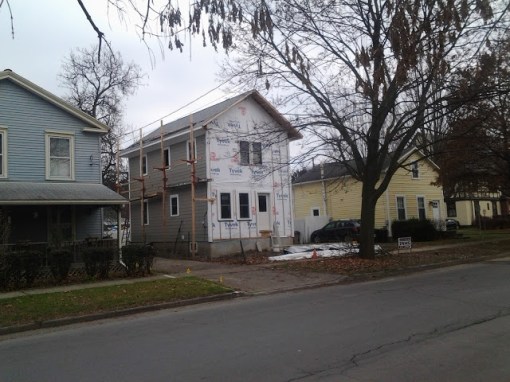
9. House of the week. This week, INHS’s new 2-bedroom, 1150 SF single-family home underway at 203 Third Street in the city of Ithaca’s Northside neighborhood. The house is framed, roofed and sheathed. Siding (Hardie board?) and trim is being attached on the sides, and one can expect a nice gracious porch to be attached once exterior materials are installed on the front. A home of the design was previously built at 507 Cascadilla Street.
203 Third Street was a vacant that the city seized in a tax foreclosure in 2011. It was transferred to the Ithaca Urban Renewal Agency, who sold it to INHS for $17,000 in December 2014. The process is pretty similar for a lot of the home lots that INHS builds on – the non-profit buys dilapidated or vacant properties from the IURA, which they build or renovate into affordable single-family and duplex houses. In the case of 203 Third Street, INHS competed for the site, outscoring Habitat for Humanity’s submission in an IURA examination of proposals.
As with all INHS homes, this one will be sold to a buyer of modest means, which means someone making at or a little less than the county’s median household income of $53k/year (I think 80% of MHI is the low bound offhand, so about $42k/year). The houses will be a part of INHS’s Community Housing Trust, limiting the price it can be sold for and requiring that if put up for sale, it is sold to another family of modest means. It may just be one house, but it will mean a lot to one family.
Claudia Brenner is the architect, with Rick May Construction and Mike Babbitt in charge of construction (thanks to Claudia for the builder info).
Comments : 4 Comments »
Tags: canopy hilton, downtown ithaca, economy, elmra savings bank, hotels, inhs, ithaca, neighborhood pride site, news, tompkins financial corporation hq, urban planning, waterfront, west end, zoning
Categories : affordable housing, hotels, ithaca, news, urban planning
205 Dryden Road (Dryden South) Construction Update, 12/2015
9 12 2015As with 327 Eddy a couple of blocks away, Pat Kraft’s 6-story building underway at 205 Dryden, called “Dryden South”, has yet to reach street level, but it’s close to going vertical. It was a little difficult to get to this site due to traffic, but the last photo shows what appear to be columns rising from a shallow mat slab foundation. Unlike the low-lying parts of Ithaca, the soil on East Hill is amenable to shallow foundations for a medium-sized building like this; all the better for the developer, since shallow foundations are cheaper than deep foundations. The steel rods at the top of the concrete columns will tie-in to the structural steel – the weight of the upper floors will be channeled down into the columns, which will then transfer the weight to the rebar mesh and concrete slab at the base (basement bottom) of the new building. The rebar mesh helps to distribute the weight of the building evenly across the slab. The thicker the mat slab is, the more weight it can support.
On a side note, it doesn’t look like John Novarr’s project at 209-215 Dryden is underway just yet, though it was originally slated to start last month. But given that Cornell has already signed up to occupy the whole building, Novarr’s project has a very good chance of moving forward, it’s just a matter of time.
Dryden South will bring 10 4-bedroom apartments to market when it opens in August 2016. The ground floor will hold 2,400 SF of retail space for Kraftee’s book and apparel store. The $6.4 million project is being built by LeChase Construction, and the design is by local architect Jagat Sharma.
Comments : 5 Comments »
Tags: collegetown, construction, dryden south, ithaca, photos, student housing
Categories : collegetown, construction, ithaca, news, student housing
News Tidbits 12/5/15: Stamp of Approval
5 12 2015
1. Over in downtown, The Journal’s Nick Reynolds attended a rather quiet CIITAP meeting for the revised Hotel Ithaca project. There were only five attendees outside of those who had to be there, and it doesn’t seem like any big issues arose during the hearing. A quibble was raised about the lack of parking on site, but city officials it’s across the street from the Cayuga Street parking garage, and downtown workers don’t usually overlap with the hours that hotel guests will be using the garage (a 9-5 crowd vs. a 5-9 crowd).
To be fair, this wasn’t expected to be a big news-maker, since a previous iteration of the project received CIITAP approvals in 2013 (since it wasn’t built, the abatement was never applied). It’s also not a big impact on the city – the 5-story, 90-room addition mostly replaces an existing two-story wing of hotel rooms currently on that part of the site. In fact, it’s a decrease in the total number of rooms at the Hotel Ithaca, from 180 to 170. An earlier write-up on the project can be found on the Voice here, the CIITAP application here.
Developer Hart Hotels of Buffalo hopes the $11.5 million project will receive the new abatement at the county IDA’s December meeting, after which construction is expected to run either from January 2016 to May 2017 (presumably in time for the graduation crowds), or March 2016 to March 2017 per Josh Brokaw at the Ithaca Times.
2. Speaking of Josh Brokaw, he provides a nice rundown of last Tuesday’s Planning Board meeting in the city of Ithaca. Salient details are as follows:
– DeWitt House (the Travis Hyde proposal for the Old Library site) still looks the same, but now has a little more covered parking on site, 55 spaces. The 60 units are still shooting for middle-market, 55+ individuals. Much of the library foundation will be reused.
– There’s a few more details about the Chapter House and Simeon’s both of which have shown up on the Voice in recent weeks. Simeon’s is shooting for an April opening, with the apartments sometime later.
– 215-221 West Spencer Street was approved. Expect a Q1-Q3 2016 construction timeframe.
– The debate about the Printing Press Lounge continues. With all due sympathy towards the one speaker’s early bedtime, there might be a double-standard here, as she’s had spirited meetings with the Town of Ithaca’s ZBA about a new house and other investments at her lakefront property, angering her future neighbors in the process.
3. The town of Ithaca will have an interesting development discussion next week. The South Hill Business Campus (SHBC) at 950 Danby Road is looking to “broaden and clarify” the legal uses in its Planned Development PDZ, which was established in 2005. the PDZ establishes strict guidelines on site uses, but gives the SHBC greater autonomy from the zoning code, useful when you have a variety of commercial and industrial tenants. Along with adding the capacity for greenhouses and outdoor event gatherings, there are some minor occupational clarifications, like adding wellness centers to the definition of medical facilities. But most importantly, the owners want to legalize residential uses in the PDZ.
To provide a quick background on SHBC, the complex as a manufacturing center for National Cash Register in 1957, with the addition of a new wing for offices in 1975. At one point, NCR employed over 1,000 people at the site. However, in 1991, NCR was acquired by AT&T, who sold the Ithaca facility to French company Axiohm three years later. Workforce reductions and outsourcing had emptied most of the building, and Axiohm accepted an offer to sell the facility to a group of local investors headed by businessman Andy Sciarabba. The complex was renovated in the 2000s into a multi-tenant business center – SHBC. Axiohm, now Cognitive TPG, continues to occupy space as a tenant.
Before the late 2000s recession, SHBC, with 90% occupancy, presented sketch plans to the town to construct several new commercial and industrial buildings and create a business park, but those plans were discontinued as tenants closed or moved out during those hard economic times. There has been some “rebound”, but not enough to justify new work spaces as of yet. They would still be an option even if residential options are approved.
The current building isn’t permitted for residential – 40 years of manufacturing left the building environmentally compromised. It’s been re-mediated enough for business use, but not residential use. Any residential on the 56.6 acre site would have to be in new buildings.
There are certainly some favorable factors to an Emerson/Chain Works-type of redevelopment to complement SHBC. It’s close to major employers downtown, across the street from Ithaca College, there’s room for parking and amenities, and the town has had an eye towards encouraging development along that section of 96B and South Hill, by engaging with Form Ithaca to come up with ideas, and through the Route 96B pedestrian corridor study.
There’s nothing firm on the table, but the revisions in the PDZ language would certainly open the door wide for future development. We’ll see what the town board thinks of the idea next Tuesday.
4. Out in the town of Lansing, it looks like the town of Lansing will soon be looking at plans for a 9,100 SF retail store at the intersection of East Shore Drive and Cayuga Vista Drive. Although details haven’t been given (only that a plan was submitted in November, according to the 11/23 minutes), we might be able to guess what’s on it’s way. Both corner lots of the T-inersection are currently undeveloped fields – the southeastern parcel is owned by Freeville-based Fingerlakes Tire & Auto (purchased 1994), the northeastern parcel is owned by a local dentist and her husband and was purchased in 2010. Retail being retail, it seems most likely to be a tire or auto supply store.
5. House of the week. A duplex being built at 214 Pennsylvania Avenue, just a couple blocks from Ithaca’ front entrance. These photos are a few weeks old now, so there might be more than a concrete foundation wall with rough window openings by this time. No need to guess on how it will look, though – the Iacovelli family is building the duplex, and they’ve reused the same basic design for at least 15 years, seen in the second image of a house further up the street. Each unit will have 2 bedrooms and about 1100 SF. The building permit was issued in late September.
Comments : 1 Comment »
Categories : news