210 Hancock Construction Update, 4/2017

23 04 2017

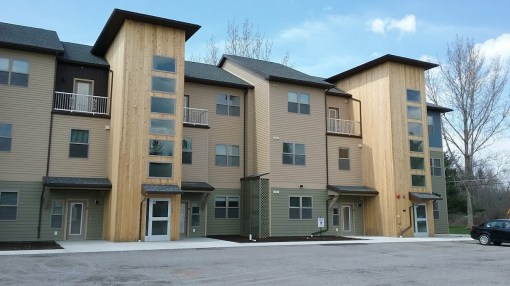
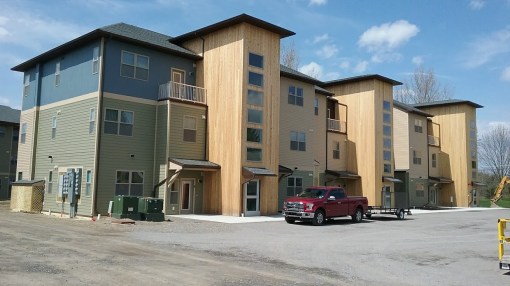
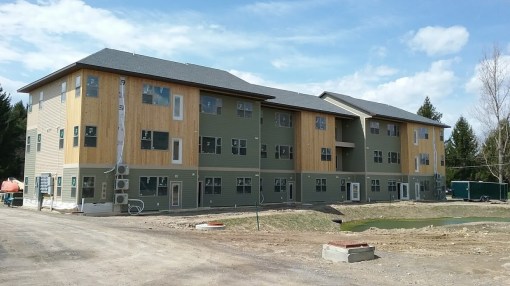
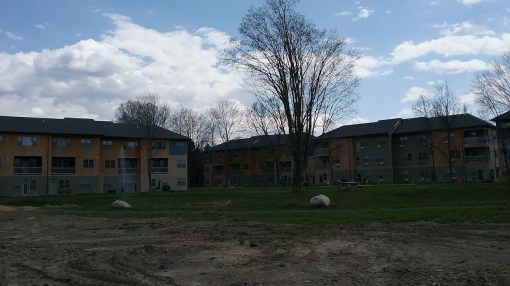
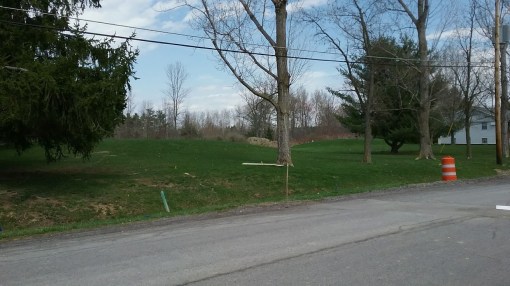
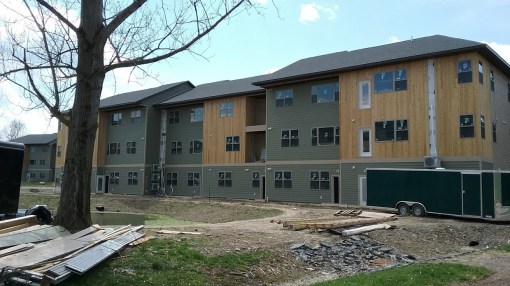
There is so much going on at INHS’s 210 Hancock site, this might be the record for most photos in a single construction update. Let’s go counterclockwise from the southwest corner, since that’s the order these photos were taken.

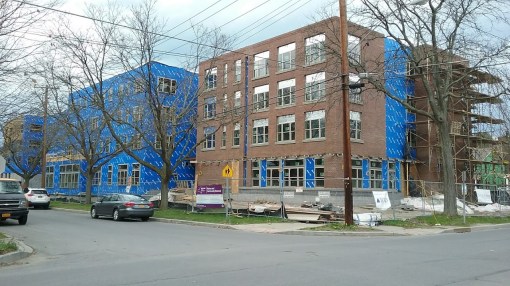
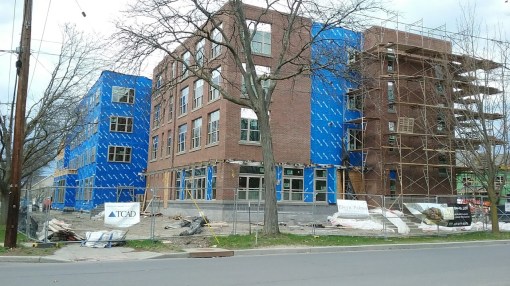
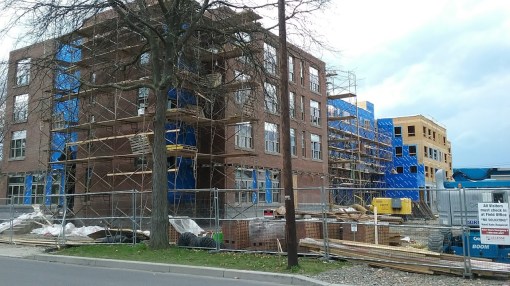
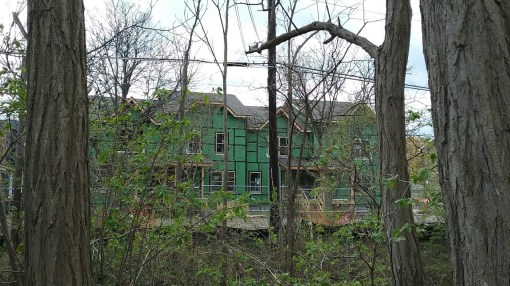
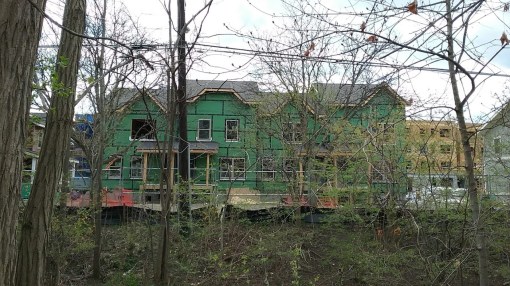
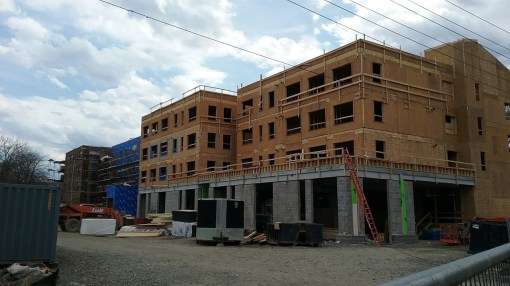
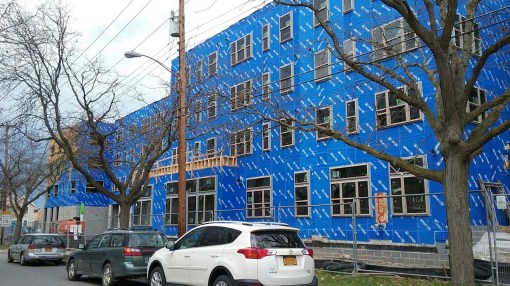
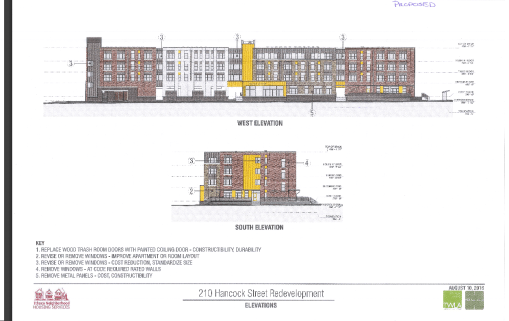
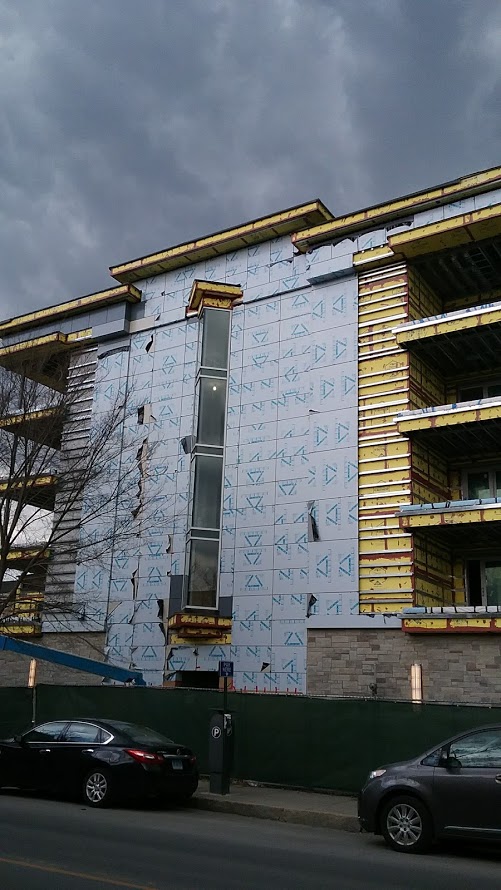
With the apartment building string, Section “A”‘s Blueskin has been mostly bricked over with Redland Heritage Brick. Some Blueskin remains exposed in areas that will be faced with Alpolic exterior metal panels. Fingers crossed that the mustard yellow shown in the elevations looks less jarring in person. It looks like an additional layer of thermal insulation was installed above the windows to go between the Blueskin and the metal panels (mostly dark grey, a few yellow…technically they’re called Alpolic Charcoal and EYL Yellow. the armchair architect in me really wants to harp on the yellow metal panels. I remember a Noah Demarest quote about yellow being a really hard exterior color to pull off. Why not a red or an orange-brown?). The roof is finished and interior fixtures and flooring are being installed.

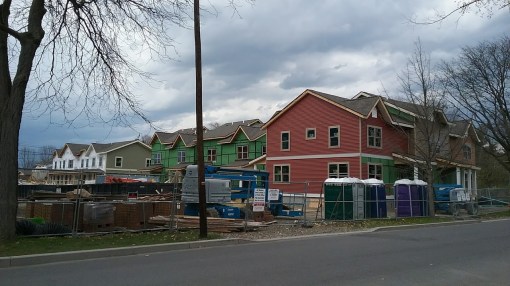
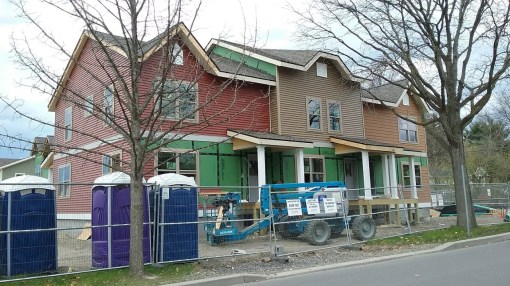
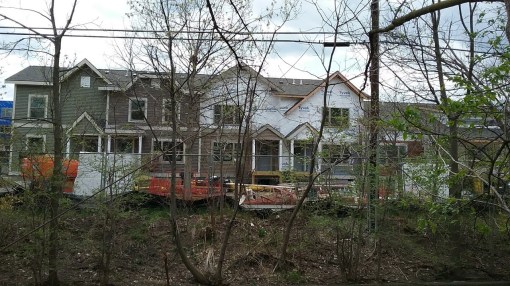
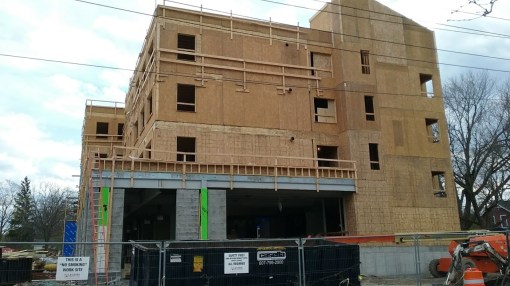
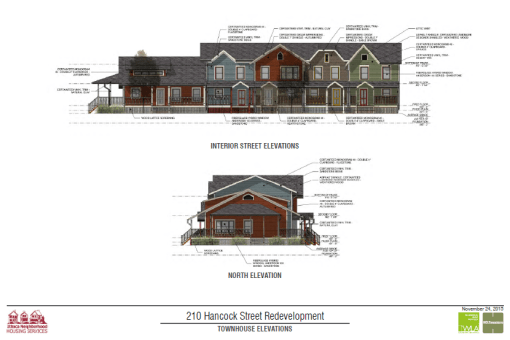
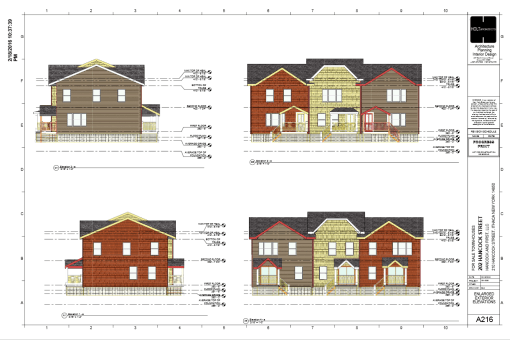
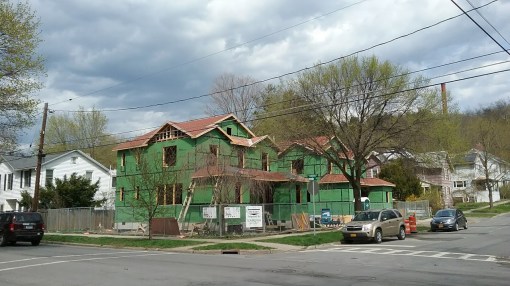
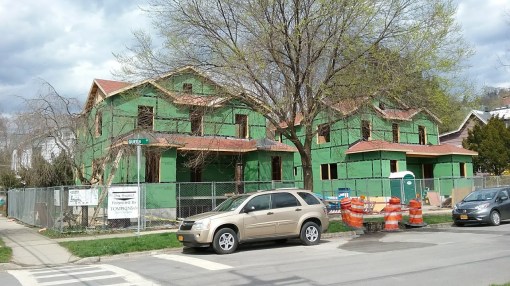
Then we get to the first string of three for-sale townhouses, which will have addresses for the 200 Block of Hancock (apart from 202, I’m forgetting the exact numbers). They look nothing like the elevations submitted for IURA review, and that is not a bad thing. INHS is using Certainteed clapboard siding on the exterior. The one on the west (left) is “Autumn Red”, and the one on the east (right) is “Mountain Cedar”, both of which were used on the Stone Quarry project. The shades of brown and grey are so similar it’s hard to tell what the middle one is, maybe “Hearthstone”. It looks like a mixture of sizes as well, maybe 4″ on the left and middle, and 7″ Mountain Cedar on the right. The trim pieces are Certainteed vinyl and vary slightly in color, neutral whitish or tannish shades like “Sandstone Beige”, “Natural Clay” and “Desert Tan”.

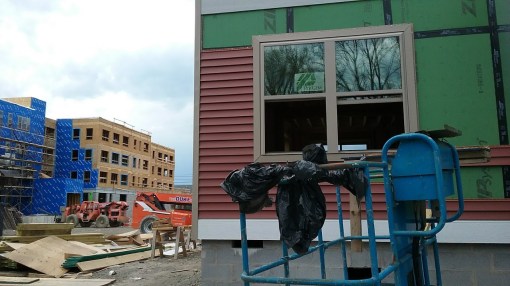
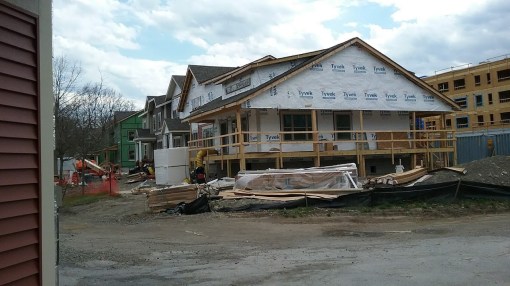
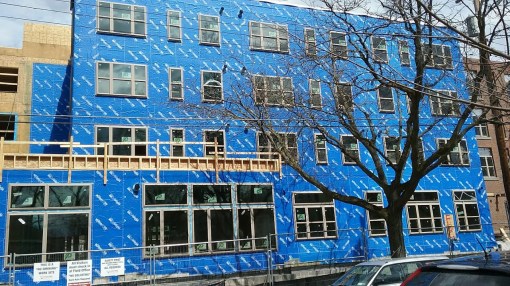
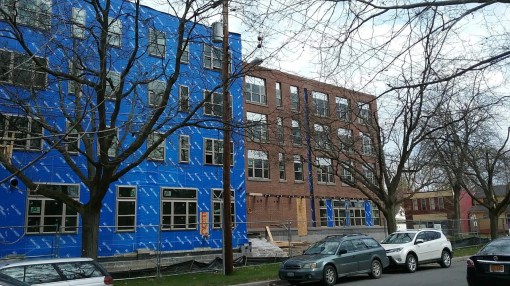
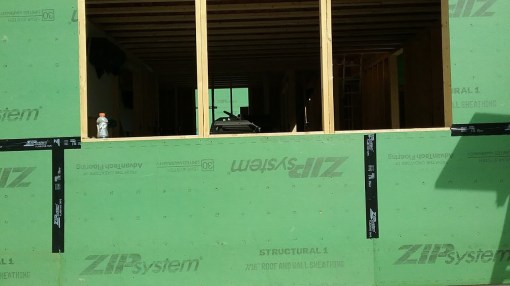
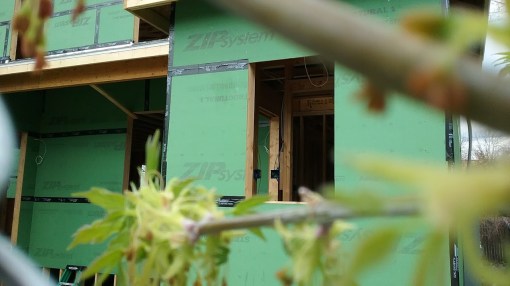
Circling around to the 400 Block of Lake Avenue highlights a construction contrast between the for-sale units and the five for-rent units further north. The for-sale units are wood-frame, plywood Huber ZIP sheathing, and exterior finishes. The for-rent units are wood-frame, standard plywood sheets, Tyvek Housewrap, and exterior finishes. The difference between the two is really a matter of preference – both are effective water-resistive barriers if installed properly. ZIP panels tend to be easier to install (lower labor cost), but more expensive as a product.

The Certainteed colors on the rentals are “Spruce”, “Sable Brown”, a split-level “Autumn Red/Hearthstone”, “Flagstone” and another “Autumn Red”. Some of these will be 4″ clapboard, others 7″ shingles – all Certainteed, all to give the impression of individual units so they play well with their older, detached neighbors. The Spruce Green unit looks a little odd with that big blank wall above the porch, and in the renders and elevation it appears to be bigger than the final product.

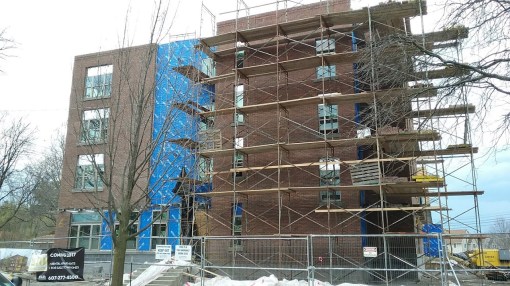
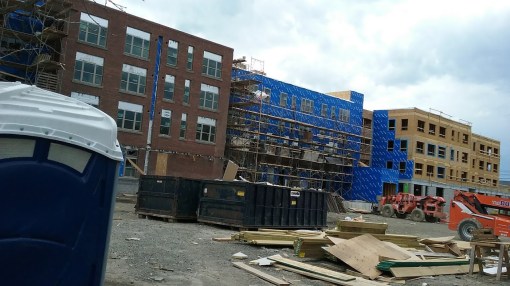
Apartment sections “C” and “D” are still being framed, and “B” has been fully skinned and fitted out with windows. “B” will be faced with will use Carolina Ceramics Teakwood Brick and Morin blue-grey corrugated steel with pearl, EYL yellow and charcoal Alpolic metal panels, “C” will use Redland Whitehall Brick (white brick) as well as Alpolic panels, and “D” will use the same Heritage Red brick as “A” but, with some corrugated steel on the stairwell. “C” and “D” also have a first-floor covered parking garage. The garage will be face in Barnes and Cone Masonry, but the city’s November 2015 filing makes reference to a product that doesn’t appear in their brochures.

The apartment will be ready by August 1st, and the for-sale units will be on the market by the fall. Lecesse Construction is the general contractor.


Hotel Ithaca Construction Update, 4/2017

23 04 2017

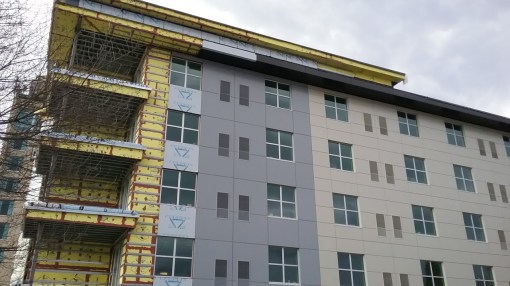
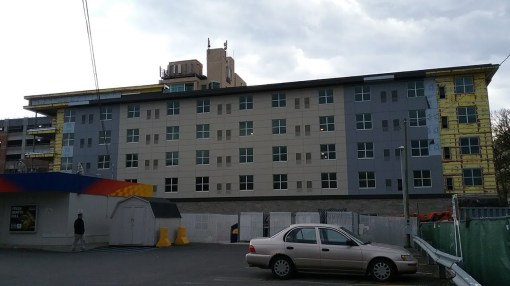
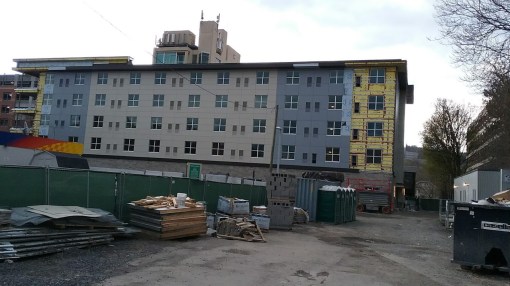
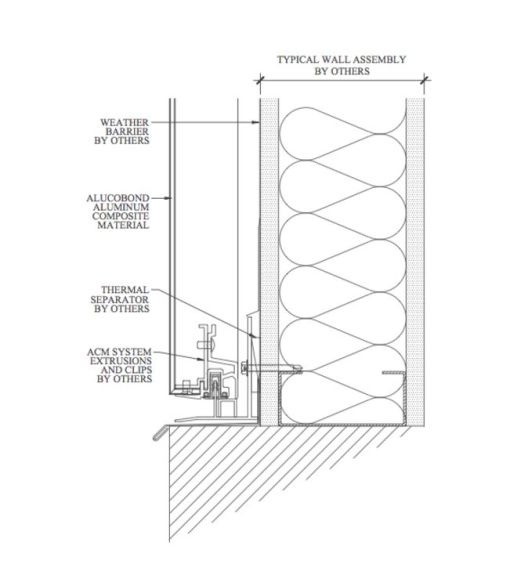
The exterior finishing is further along on the new wing of the Hotel Ithaca. For most of the hotel, the exterior wall construction goes something like this – the steel stud walls are erected, RMax polyiso insulation boards are attached, and the fire-rated GP DensElement fiberglass mat gypsum sheathing panels go over the boards – the maroon sealant is PROSOCO R-Guard FastFlash liquid flashing. DensElement is different from other GP DensGlass products in that the water-resistive barrier (WRB) is integrated into the fiberglass mat, so there shouldn’t be the need to place a barrier over the sheathing. But some parts of the sheathing do appear to have an exterior WRB (compare the southeast and northeast balconies in the first photo below), so make of it what you will.

Once the fiberglass mats are installed and sealed tight, metal clips are adhered to the sheathing, and then Alucobond panels are fastened to the clips. Alucobond is an aluminum panel that is sometimes used as an exterior finish because it’s lightweight and fairly dent-resistant (and aesthetically, metal panels are used for a modern, clean look). The drawbacks are cost, and potential waterproofing issues if not installed correctly. Along the ground floor, stone veneer was applied over the sheathing.

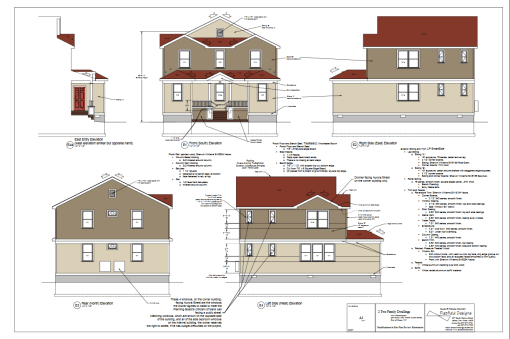
Side note, the initial design called for diamond-shaped panels, which were rejected by the Planning Board with extreme prejudice – one member called it “strip mall architecture“. Although, the strange part of all this is, the final product appears to be a blend of what was initially proposed, and what was approved – the exterior and window elements resemble the final render, but the final submission didn’t have a doorway on the east end of the wing, while the initial design did. The end of this update has a copy of each for comparison.

It looks like the roof is finished and the trim is going on, so with the exception of the remaining metal panels, doors and trim pieces like the balcony railings, the exterior is nearly complete. Hart is aiming for an opening by graduation weekend, so things should move at a fast clip over the next few weeks. Krog Corp, a frequent partner of owner Hart Hotels, is the general contractor.


1001 North Aurora Street Construction Update, 4/2017

21 04 2017

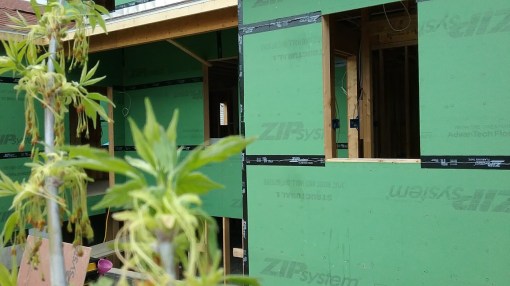
Some more progress on the two-building, four-unit 1001 North Aurora Street project in Fall Creek. Since February, the building have been framed out, roofed and shingled. For the record, the shingles are Owens Corning TruDefinition Duration Shingles, Terra Cotta color. Huber ZIP System plywood sheets are being attached to the exterior over the wood studs, and interior framing, rough-ins and drywall is underway.

On a happy note, it looks like the side windows on the eastern building, which had the potential to be deleted as a cost-saving measure, are indeed going in based on the rough openings. The exterior will consist of two brownish shades of LP SmartSide cedar texture siding, with a white lap band and trim. Technically, that white is Sherwin-Williams “Nacre”, and these plebeian lips had to go to Google to figure out how that’s pronounced (NAY-ker). Because mother-of-pearl is just two darn pedestrian. The browns are “Rice Grain” and “Sawdust”.

Developer Stavros Stavropoulos (d/b/a Renting Ithaca) should be bringing these 3-bedroom rental units onto the market by the end of May, as 202 Queen Street and 206 Queen Street. Shortly thereafter, he and architect Daniel Hirtler which be launching into next project, and their biggest to date – a 3-story, 11-unit apartment building at 107 South Albany Street, just west of downtown.


201 College Avenue Construction Update, 4/2017

19 04 2017

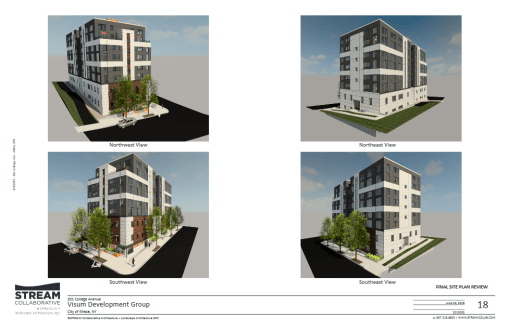
Dropping by Visum Development Group‘s 201 College Avenue project, I was a little surprised that one half of the building is so much further along than the other half.

201 College is a “H” or dumbbell-shaped structure – the bridge between the two halves hosts the elevator shaft and part of the circulation (hallway). The west wing has completed structural framing, the exterior stud walls are being installed, and even some of the sheathing (fire-rated GP DensGlass fiberglass mat gypsum) is up on the ground level. Peering inside, it looks like some of the interior stud walls have already been set.

In contrast, the east wing isn’t that much further along than it was two months ago – the ground level masonry has been built-out, but the structural steel has not advanced since the February update. It’s not a sign of any difficulties, and other structures have taken or are taking similar approaches – Tompkins Trust’s new HQ has topped out, for example, but the north and east wings have yet to be built out beyond the elevator core. Still, it will take several weeks for the east wing to catch up when William H. Lane Inc. moves ahead with that side of the structure.

According to the construction loan docs filed with the county, the 33,398 SF project is being funded with a $7,870,673 loan from Pennsylvania-based S&T Bank, separate from the $2,640,000 from Visum and its backers that went towards purchase of the property. Hard costs, which are the construction materials and labor, comprise $6,841,038 of the loan, while soft costs comprise $506,984 (permits, legal, marketing, architect and engineering fee, liability insurance, financing costs such as loan fees/taxes/recording costs). An additional $300,000 serves as contingency (your “cover your butt” cash in case of unexpected expenses or poor occupancy rates), and $226,158 is set aside as interest reserve (a special savings account that pays the lender interest on the construction loan while the building is under construction – the objective is to get the building done and occupied before the reserve runs out).

The timeframe is quite tight on 201 College, with a planned August 2017 opening. The rest of the building should move along quickly over the next few months.


Village Solars Construction Update, 4/2017

19 04 2017

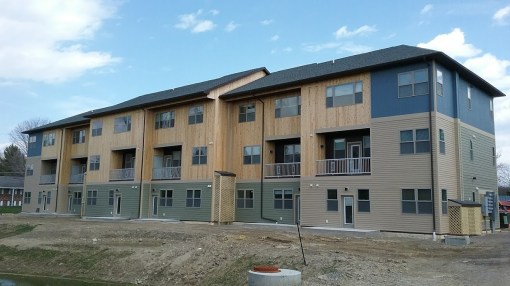
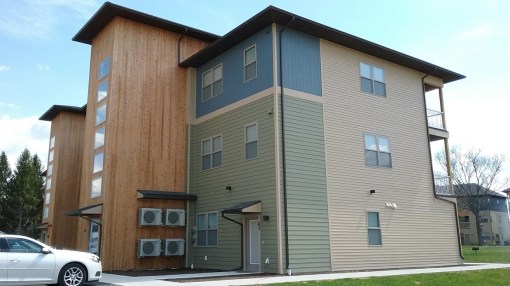
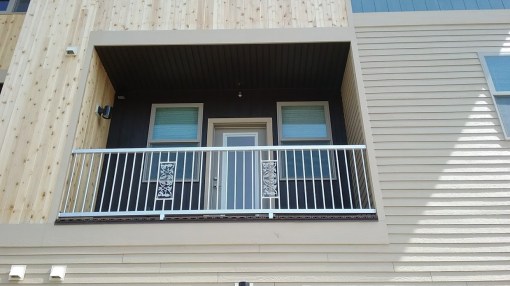
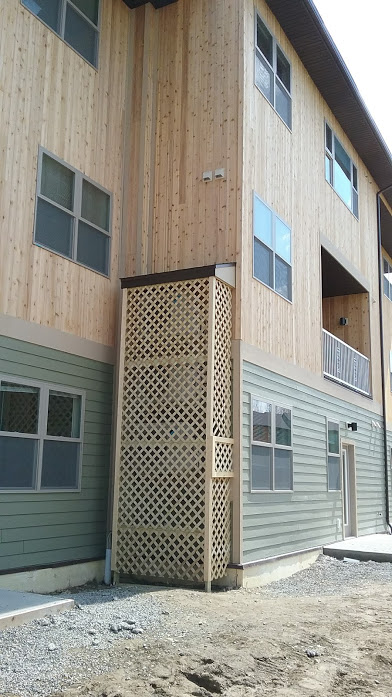
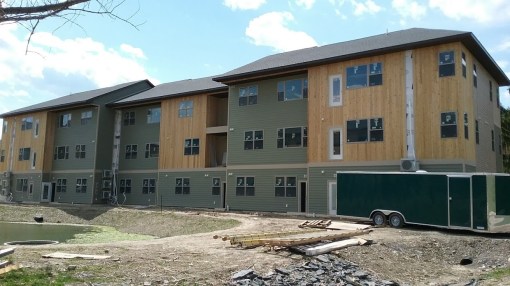
At the never-ending Village Solars apartment complex in Lansing, Building “I” is nearly complete from the outside. It sports a few details that make it stand apart from earlier phases – the balconies railings are a different design, a dark-colored fiber cement board is being used for some of the balcony alcoves, and the heat pumps have been hidden away under a wood lattice screen. Given how clean the immediate project site is, it would not be a surprise if this building is aiming for a May 1 occupancy.

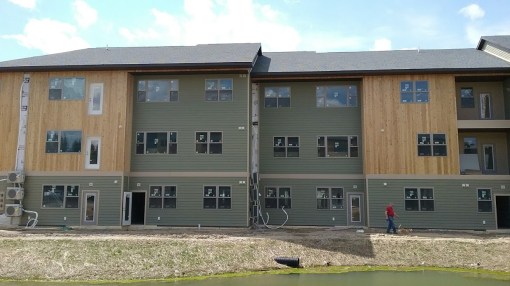
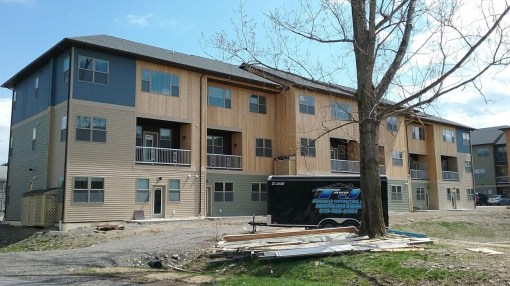
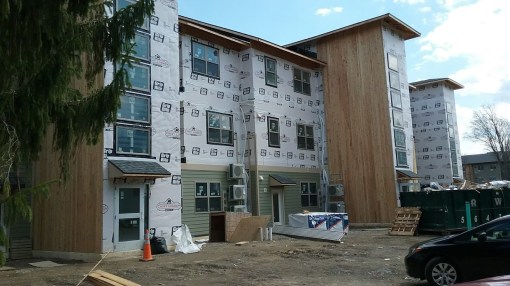
Meanwhile, Building “J” is a little further behind – the windows and doors have been fitted and the roofing is complete, but the exterior wood grain and fiber cement panels are still a work in progress, as is the building trim. The doors on the upper levels will likely lead to small juliette balconies like those seen here. Inside, it’s stud walls and rough-ins, and there did not appear to be any drywall hung yet.You can see the unscreened Daikin heat pumps in the fourth photo below. It looks like the roofing was done by T and J Associated Contractors out of Auburn.

It doesn’t look like work has started on Phase 4 yet, which should consist of the last three buildings in the first stage of build-out (“K”, “L”, and “M”). If it’s anything like the previous phases, the construction team will start with the Phase 4 site clearing this summer. The later stages of development call for multiple phases to the east, and possible replacement of some of the older 1970s apartment buildings with newer structures [3/22 Town Board Minutes]. Potentially, the complete build-out would be around 423 units, from 400 SF studio micro-units to 1,185 SF three-bedroom two-bath apartments. Keep in mind, that would be several years out, well into the next decade. Along with those units come community space, retail components, expanded trail and outdoor components and a bus stop.

Rents look to be in the middle of the market – the micro-unit studios start at $865/month, going all the way up to top-of-the-line three-bedroom units at $1680/month. One-bedrooms and two-bedrooms start at $950/month and $1260/month respectively.

While looking around, an older gentlemen walking his dog went in and out; dunno if it was a relative of the Lucente family (the owner/developers, d/b/a Lifestyle Properties), or a curious onlooker.


209-215 Dryden Road Construction Update, 4/2017

17 04 2017

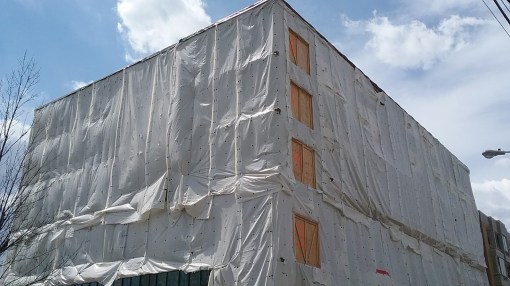
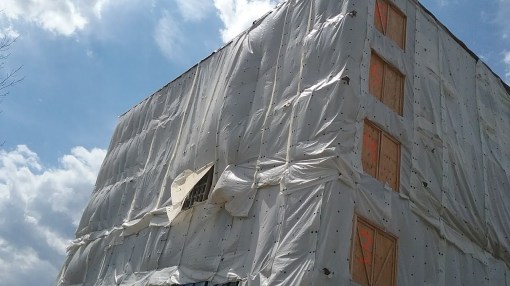
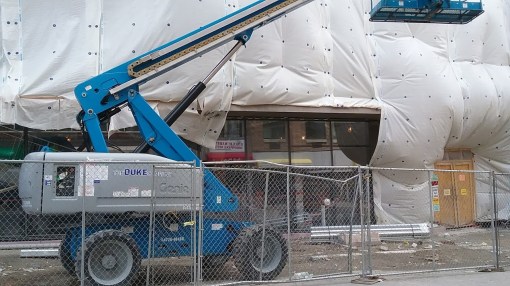
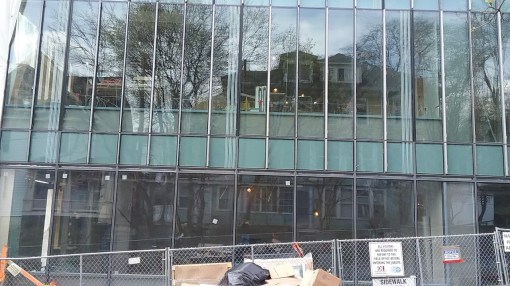
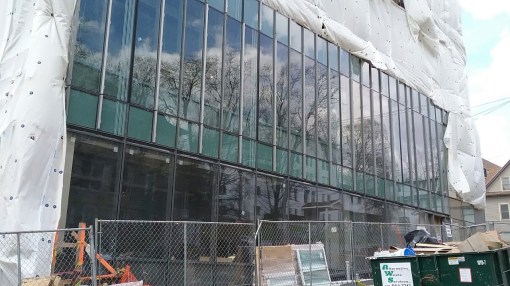
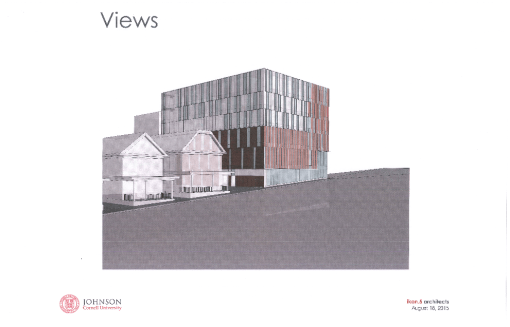
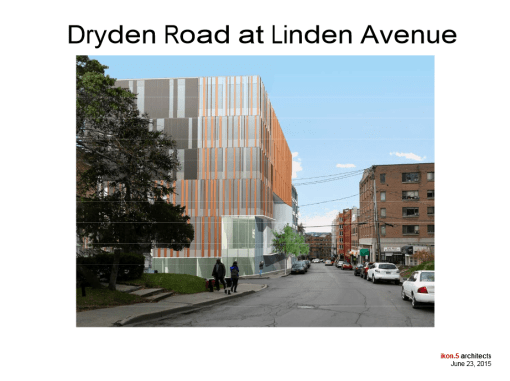
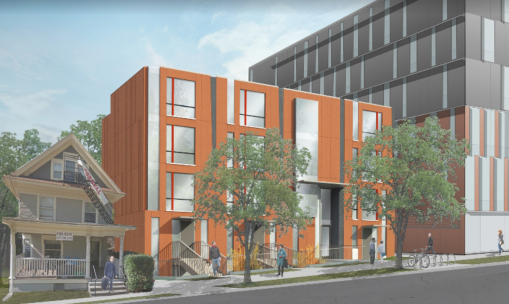
Work on the new Breazzano Center continues in Collegetown, with the exterior plastic sheets slowly being replaced by the metal and glass facade. On this particular windy day, the tarp was flapping enough to reveal a bit of the exterior metal stud walls underneath. On the rear of the building, the salmon-orange and dark grey panels now cover most of the exterior wall. The recently proposed 238 Linden townhouses will come up to about the top of the third floor, where the salmon panels change over to grey. 238 Linden will be roughly the same color as the lower-level panels, probably with the same metal finish. Note the clips on the exterior wall, which are for aluminum sunshades.

I’ve had contractors tell me that one of the ways you can tell the quality of the curtain wall glass is by how much distortion one sees in the reflection (optical distortion). Based off that criterion, the glass used on the entry level appears to be a fairly high grade. The opaque glass panels are called spandrel glass, and are used to conceal the floor slabs.  It looks like the thin vertical steel panels will be installed over the curtain wall, though not in all places – The northeast corner and ground floor will not have the steel panels, nor will the atrium at the front of the building.

One can barely see the interior work in these photos, but the interior stud walls were up and drywall has been hung on the lower floors, which means that most of the utilities rough-ins have been completed.

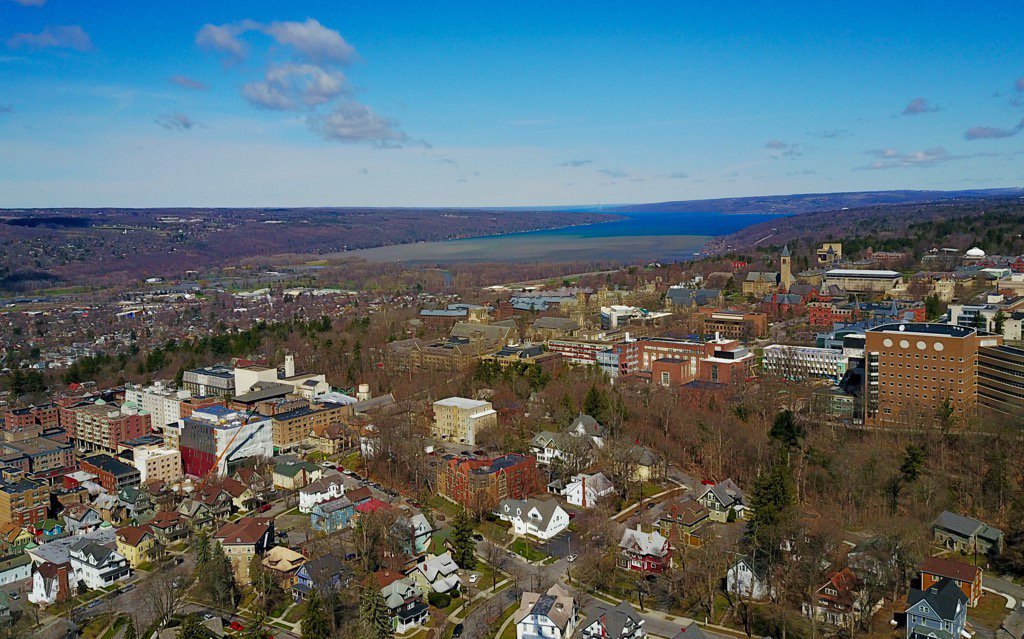
The last photo, which comes courtesy of Tom Schryver, gives an idea of the scale of the building in context – at six floors and 80 feet, it is the tallest that the Collegetown form zoning allows without a variance. At 76,200 SF, it’s the fifth-largest by square footage, after Cascadilla Hall (77,913 SF), The Schwartz Center (80,989 SF), Eddygate (95,000 SF) and 312 College Avenue (112,392 SF).


News Tidbits 4/15/17: Good and Bad Decisions

15 04 2017

1. It looks like the Lansing Meadows issue is being resolved. Village mayor Don Hartill has issued a sort of mea culpa for not sending the project to the Planning Board before inviting it to the Village board of Trustees, saying the Planning Board was caught off guard and it was his and the village attorney’s fault. So the project will visit the Planning Board with Hartill and developer Eric Gortzmann on hand to answer any questions the planning board might have. A workable solution is possible – the planning board isn’t necessarily opposed, they would prefer more housing but could be willing to hear out a commercial component so long as it’s set back from the road and screened from the homes by foliage. Optimistically, the cafe/diner and twenty senior housing units might be good to go within a month.

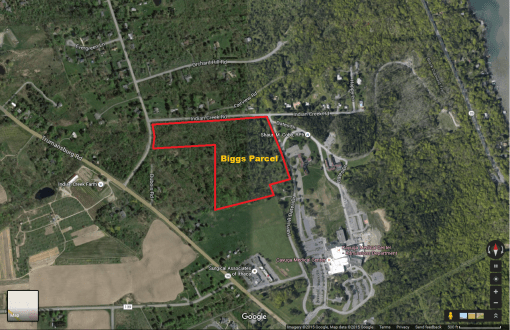
2. The Biggs Parcel is up in the air. There have been no offers since going on sale last July, and the contract with realtor CJ DelVecchio has expired. The county has decided not to renew while they weigh options. Options being weighed for the three-month hold include a smaller housing development on eight of the acres on the corner of Indian Creek and Harris B Dates Drive, and/or a solar farm, which may split neighbors between a low-intensity, eco-friendly project, and losing a portion of the woods so that the solar panels could operate. There is no plan for another Cayuga Trails-type project like what NRP proposed before the discovery of more extensive wetlands convinced them to cancell the project in September 2014.

3. The town of Ithaca has selected its firm of choice to conduct the economic development study and strategic plan for its Inlet Valey corridor southwest of the cityConsultEcon, Inc. of Cambridge, in partnership with Behan Planning and Design of Saratoga, was selected from six applications. Behan has previous experience in the area; in fact, they won an award for their work on the 2012 Varna Master Plan over in Dryden. The town will pay $30,000, and the state will pay $30,000 through its Empire State Development division. Although not state in the town agenda, I believe the time frame to perform and submit the study is six months.

According to Ithaca town’s 2014 Comprehensive Plan, the goal is to turn Inlet Valley from an auto-centric hodge-podge with no overarching character, to a semi-rural neighborhood with an agribusiness, “artisanal industrial”, and tourism focus, capitalizing on Ithaca Beer and the existing and proposed lodging. The Sleep Inn proposal submitted a potential rustic streetscape that gives an idea of the aesthetic the town seems to be going for.

4. From the PEDC, the Southside housing plan is ongoing, and the IURA has hired their new planner after Lynn Truame left for INHS. There was considerable discussion over the Waterfront rezoning, with general conceptual support, although the First Ward councilors are not fans of mixing housing with light industrial areas, or forcing businesses to compete with housing developers for waterfront sites. Councilwoman Brock (D-1st) was opposed to housing in the Cherry Street Corridor. The proposal was granted by vote the permission to circulate for review and comment, so there’s still time for thoughts and opinions to be contemplated and discussed.

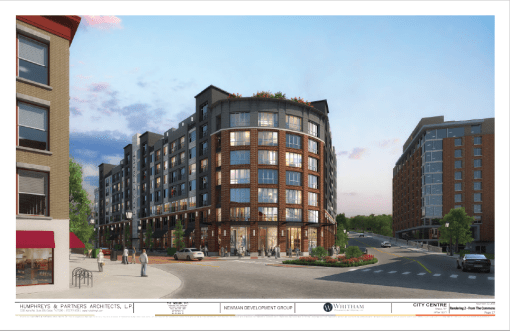
5. On another note, many of the speakers at the PEDC meeting were there to speak out against the City Centre project at 301 East State Street, not because they didn’t like the building (well, most of them), but because it didn’t have affordable units, which they felt should be a requirement for abatements.

I support that to a degree, but I’m also aware that, all other things equal, the revenue loss from the affordable units has to be made up for somewhere, usually by passing the costs on to the other tenants. In that case, the city ends up with a lack of units for those with middle incomes. I like the idea of modestly more generous zoning as a tradeoff to the inclusionary housing component, but as a proposal, that didn’t go over so well – developers didn’t like it (because to build more they need bigger loans, so it hurts smaller developers), anti-development folks didn’t like it (because affordable or not, it’s more of what they don’t like), and there was significant uncertainty on whether it’d be effective.

The county IDA had its vote for the sales/mortgage/property tax abatements the following day, and they decided to grant the abatements 5-1, with legislator Will Burbank opposed. The 192-unit mixed-use project is expected to begin construction with the next couple of months, for an early 2019 completion.

6. Once in a while, you get a project so despised by neighbors, they decide to run for office as single-issue candidates – namely, to stop the project. That’s what happening in Lansing village. Mayor Donald Hartill and two incumbent trustees, Ronny Hardaway and Patricia O’Rourke, are being challenged in the May election by mayoral candidate Lisa Bonniwell and two trustee candidates, Gregory Eells and John LaVine. Their goal is to overturn the rezoning of the Park Grove property on Bomax Drive, which rezoned commercial/tech office space to multi-family, enabling a 140-unit apartment project to move forward with planning board review.

This is not the first time something like this has happened in Lansing. When the Lansing Reserve affordable housing project was proposed in 2011, two residents opposed to the project, Yasamin Miller and Brian Goodell, ran against incumbent trustees on a single-issue platform of stopping the project. They lost by 2:1 margins, but Lansing Reserve never moved forward, and since then the land has been bought by the village for park space.

Although in a Voice capacity I can’t formally take sides, I have big issues with the challenger’s platform. I’m not a big fan of the Park Grove as a project, but the rezoning makes sense. As the county’s airport business park study demonstrated, the demand for new commercial and industrial space is very limited, while from the Denter study, it is clear the demand for housing is quite strong (5,000 units in the next decade). It amazes me that the challengers are saying the project will lower property values in a village with substantial price appreciation and major affordability issues (but as noted by the Star, Bonniwell’s family developed the expensive and still incomplete Heights of Lansing project nearby, so she has a vested interest in limiting housing).

Not only that, in the interview with the Lansing Star, challenger LaVine suggests the village should look at eventually merging with the town of Lansing, which is completely contrary to the village’s formation in 1974 as a reaction to the mall, when residents demanded for stricter zoning that the town didn’t want to accommodate. The town has much looser zoning than the village. If voters think for one moment that the town wouldn’t seek to change zoning in the village to build up the tax base and cope with the likely loss of the power plant, they’re in for a rude surprise.

7. On the agendas, nothing too exciting this week. The town has a couple of telecom towers and a 600,000 gallon water tank for Hungerford Hill Road. Over in the city, it’s project review week, but zoning variances suggest another nicely-detailed garage from STREAM Collaborative (STREAM does really nice garages), a couple of home additions, and a new 1,695 SF house at 412 Worth Street in Belle Sherman designed by Jason Demarest. The property is a flag lot that straddles the city-town line, so it would be neigh impossible to do anything without a variance. Ulysses will just be discussing zoning, and the other towns and village will be doing their regular meetings later in the month.


News Tidbits 4/8/17: Please Don’t Document-Dump on Fridays

8 04 2017

1. Let’s start off with some bad news. The town of Dryden planning board did not take too kindly to the Evergreen Townhouses proposal at 1061 Dryden Road outside Varna. The board denied recommendation for approval unless some stipulations are met first; some might be easier, like a vegetative buffer with the neighbors and a shared driveway. Others will be trickier – the board recommended removing all the solar panels and replacing them with electric heat pumps, and board members strongly encouraged reducing the number of units.

Not to downplay the value of heat pumps since they’ve become the preferred sustainable feature for projects going before local boards these days, but there is a substantial initial cost involved for their installation, and it takes a few decades for the energy savings to pay off. Some of the cost for the pumps can be balanced out through density of units, because some flat development costs (for example, the cost of land acquisition) can be distributed out; but fewer units with a more expensive feature is the classic “do more with less money” conundrum.

Let’s take a look at some numbers. Disclaimer, these are ballpark figures and every project has its nuances or other factors to consider, like tax rates, contractor bids and logistical costs.

The Village Solars heat pumps are a $50,000-$60,000 cost, $4,000-$5,000 per unit. Phase 1 didn’t have the heat pumps, but the later phases do, and those later phases are about $2 million-$3 million per 15,000-20,000 square-foot building, with 12-22 units depending on configuration. In the case of 1061 Dryden, each 6-unit string is about 10,800 SF (1800 SF per unit, no common areas), and given the $4.5 million total cost, we’re talking a ballpark estimate of around $750,000 per townhome string. If one assumes proportional costs for the heat pumps based off square footage, that’s $30,000-$40,000 per 6-unit string. So it is a higher incremental cost per string, and more of a burden per tenant. The Village Solars rent for $1600-$1650 for a three-bedroom, and the going rate for new units in Varna is about $1950 for a 3-bedroom, if the new townhomes at 902 Dryden is any indicator. The rent increase for the Village Solars was about $50/unit, but those units are smaller, so you’re probably looking at a larger amount, conservatively $75/unit, for the Evergreen units.

Going off those numbers, it looks like heat pumps are possible, although the units will likely be somewhat less affordable as a result. It isn’t clear if that disables the proposal, because it depends on imputed vacancy rates at different income levels, and whatever the required income is to make the necessary Return on Investment. However, the project would become less feasible if there are substantially fewer units and the construction cost per unit shoots up – because of the combination of flat vs. incremental expenses, taking away six units won’t drop the cost $750,000, it’ll be less. The cost of the solar panels is also an unknown, as are the costs of doing these revisions to please the board. The development team was not at the meeting, which is unfortunate; we’ll have to wait and see how this moves forward.
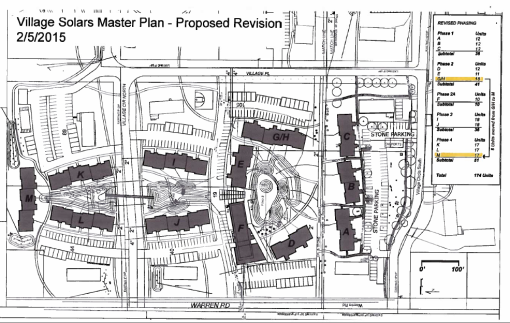
2. Speaking of the Village Solars, according to the latest minutes from the Lansing Town Board, Lifestyle Properties is exploring taking down some of the old Village Circle Apartments, and replacing them with new buildings. These older, 8,000-12,000 SF structures date from the early 1970s through the early 1980s, and have 8-10 units per building. Since the newer buildings are about 15,000-20,000 SF and tend to have 18-22 units, that could explain where the 423 units statistic came from last month – some of it comes from buildings on new sites, some are replacement buildings for existing structures.

3. The city Common Council held their monthly meeting, and signed off on the IURA sale of 402 South Cayuga to Habitat for Humanity with little debate, and while the TM-PUD for 323 Taughannock was a bit problematic due to some confusion with the minutes from the public hearing, the approval was carried unanimously. The project is now free to go before the Planning Board for State/City Envrionmental Quality Review, and the Design Review is considered complete.

Side note, the city’s four fire stations were renumbered. The old numbers hailed from the days before the stations consolidated in the 1960s and 1980s, and were confusing for many. Fire Station No. 9 (309 College Avenue in Collegetown) is now No. 2, insert joke here. Central Station (310 West Green Street) becomes Station 1- Central, Station 5 (965 Danby Road) becomes Station 3- South Hill, and Station 6 (1240 Trumansburg Road) becomes Station 4- West Hill.

4. Bucket list objective achieved – an interview with Jagat Sharma. Some will be in the Voice, maybe Friday afternoon of Monday morning; but rather than leave the excess on the proverbial cutting room floor, here were some portions left out of the piece for the sake of brevity, or because they’re too technical for the general audience:

Q: So, what’s your thought process when designing a building? Apart from necessities like zoning and client requirements, do you take cue from surrounding buildings, the environment…what are you thinking about as you sketch the first concepts of a new building?

JS: For infill projects, the sites are very narrow. My project at 409 Eddy, if I recall correctly, is a very narrow site. My clients had never hired an architect before, and it was a challenge to convince them. Most of them, they think how many rooms they can rent, so you give them a number, and you work it out, and you figure out the design from the surrounding context, how the buildings line up, how the window patterns line up, symmetry, scale. You lay out a plan for how the windows would fall, how would it match with the existing window lines on surrounding buildings. Frankly, back then (409 Eddy was built in the mid-1980s) there was not much context, many buildings were in poor condition, you had some brick buildings, but otherwise not much. You try to relate it to what you’ve done before, the streetscape, you try to change up things with color, bay windows, you play with that, organize everything in a symmetrical way. Later on, my later buildings in the past 10-12 years, I’ve begun to take more liberty, play with them [the designs] more, 3-D effects, projections, penthouses, balconies, corner windows and more glass. And at the street level, they’re more urban, they have colonnades, like 309 Eddy, it looks very nice. But all of them…if you’re the only actor on the stage, you’re playing your own thing. If you look at Collegetown, Eddy Street and up, 309, 303, 301, some are angled, they’re different materials – if you’re in the middle of those, you feel like you’re in a hill town, it’s a good feeling.

Q: And how would you describe your experience with working with the city and its various interests?

JS: You earn respect from them by being honest and sincere. I deliver what I say I do, we don’t change things at the last minute. The city is happy with that. I have a good relationship with the Planning Board, what they are looking for, they want good materials, detailing. The building department wants to make sure you meet the codes; we sit down and meet if we have different interpretations on how the code reads – but you have to work on it from day one. It takes time, building inspectors, commissioners come and go and you have to earn their respect each time by doing the right thing, don’t hide anything.

5. According to Matt Butler over at the Times, Lakeview Ithaca might be a little larger than initially anticipated. In a report on homelessness, he mentions a meeting attended by Lakeview’s CEO, who said the new building would have 56 affordable units (vs. the 50 previously reported in the IURA application), with 28 reserved for those with mental disability. A time frame of fall 2018 – fall 2019 is given for construction, somewhat slower than the April 2018 start reported in the IURA application.

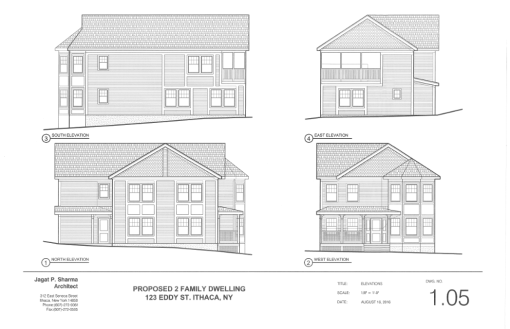
6. A couple of interesting things to note from the ILPC Agenda for next Tuesday, apart from the usual stairs, porches and windows. One, 123 Eddy got a revamp in accordance with the commission’s design guidance – gone is the porch, and more detail was strongly encouraged. I still prefer the previously-approved design, but this is an improvement from the Craigslist ad.

Meanwhile, downstate businessman Fei Qi is finally heading back to the board with a plan for the historically significant but structurally deficient 310 West State/MLK Street. Previously, he wanted to do 3,800 SF of office space in a renovation partially financed by state tax credits, but it wasn’t funded and the office market is a bit lackluster in Ithaca anyway. At the time, residential was ruled out due to fire safety issues.

However, this new plan is a residential project. It’s a proposed 12-bedroom “co-op” living arrangement (Co-op? SRO [Single Room Occupancy]? Neither one is a terrible idea, although SROs have negative connotations). JSC Architects of suburban NYC (Fresh Meadows) would remove a rear chimney, put in new shingles, add a wheelchair ramp and skylights, along with the to-the-studs internal renovation. It’s an interesting plan, though the ILPC might be iffy on some of the details. We’ll see how it goes over.
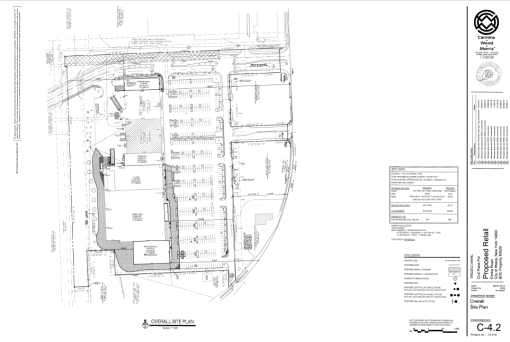
7. If you all could pardon me on this, the city document-dumped Friday morning, and I don’t have the time at the moment for a full write-up. But the projects memo is one of the busiest I’ve ever seen. Here’s the brief summary:

A. McDonald’s would replace their existing 4,800 SF restaurant at 372 Elmira Road with a new 4,400 SF building.

B. Benderson Development wishes to renew approvals for a 14,744 SF addition to their shopping plaza at 744 South Meadow Street (this would be on the south end next to Hobby Lobby, where KMart’s garden center was years ago), and build a new 7,313 SF addition at the north end of the strip. Apparently, Ithaca’s a safe harbor in the ongoing “retail apocalypse”.

C. 323 Taughannock as noted above

D. DeWitt House is moving forward. With ILPC Design Approval (Certificate of Appropriateness) in hand, envrionmental review still needs to be conducted. Site plan review docs note it’s a $17 million project with a December 2017 – March 2019 construction timeframe.

E. Novarr/Proujansky’s 24-unit 238 Linden apartment project

F. 118 College Avenue, carried over from the previous month, and

G. Finger Lakes Re-Use, carried over from the previous month.


News Tidbits 4/1/17: High Energy Debates

1 04 2017

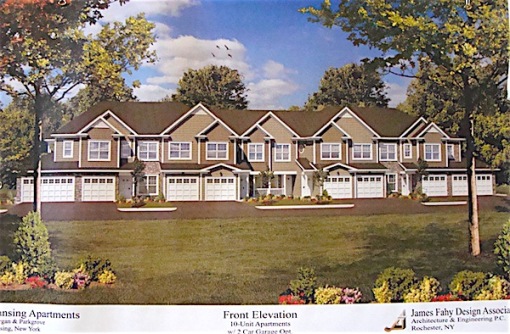
1. There might be yet another potential hang-up with the Lansing Meadows project. Previously, developer Eric Goetzmann presented planned to the Lansing village Board of Trustees to densify the initial 12-unit plan and add a small retail component, such as a coffee shop, diner or similar gathering venue. The idea was well received, and so Goetzmann approached the planning board with 20 senior housing units and a small commercial lot TBD, where it was A) news to them, and B) not-so-well received.

According to the Lansing Star, the objection is not to the housing; in fact, the planning board said they’d prefer another four housing units rather than commercial. But they’re not comfortable with the sudden change, and Goetzmann’s looking at the additional costs of revised plans because the Board of Trustees and the Planning Board were not on the same page. It is kind of a weird situation, although not unprecedented (it bears some similarity to the 201 College debate in Ithaca city last year, where the Planning Department and Planning Board were not on the same page). The boards are supposed to meet in early April to retify their differences so Goetzmann knows what he can move forward with, hopefully by this summer.

Looking at the screenshot above, Salem R. LaHood of suburban Syracuse is the architect; apart from being a design partner for some high-end outlet malls, I can’t find much else on his resume.

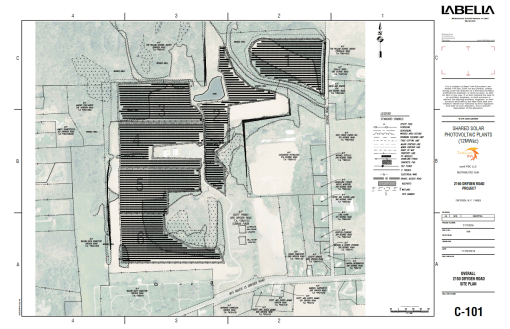
2. The solar arrays planned in Dryden are getting are less-than-welcome reception, per Cassandra Negley at the Ithaca Times. The argument is pretty similar to the one often used on affordable housing – “we know it’s needed and we like it in concept, but we don’t want it anywhere near us”. But then far from one person is close to another; and it results in lackluster solutions, like affordable housing so far out that it’s isolated from needed goods and services.

One of the biggest sources of opposition is from family and friends of those interred at the Willow Glen Cemetery, which is the landscaped area south of the panels in the image above. Although many of the opposed do not even live in New York, let alone Dryden, it’s argued that the project is “sneaky back-room industrial solar” and will “destroy the atmosphere” (coincidentally, the land across the road from Willow Glen is zoned for and being marketed to roadside commercial tenants). It’s fine to be concerned, but looking at this particular site, the anger is a little overblown – there is sufficient room for a green screen of hedges and trees between the panels and the cemetery, which could easily be included as a stipulation as part of the approvals. Sustainable Tompkins is attempting to push back against some of the criticism, but on the balance, the public comment on the Dryden solar arrays is negative.

Let me approach this with an overarching view. Dryden is strongly opposed to an increase in natural gas (much to Lansing’s chagrin). Wind energy has been vociferously opposed just over the valley in Enfield, and Newfield essentially outlawed wind turbines. Solar panels are also being fought in Ulysses and Newfield. In Ithaca, there have been onerous battles over allowing panels on rooftops in historic districts. The energy to power homes and businesses has to come from somewhere; the preference seems to be for a sustainable option, rather than oil or gas piped in from Pennsylvania or beyond. Every choice is going to have its pros and cons – gas is cheap but environmentally unsound; wind turbines are tall and highly visible; solar panels need space for their cells. Frankly, a lightly-populated area on untaxed land owned by Cornell, which would then pay a PILOT fee for the solar panels, seems like a reasonable option. Someone has to step up and lead by example. Why not the town that fought fracking and won?

Anyway, the town pushed their meeting on the project back by one week to digest the onslaught of criticism. The meeting will be held at the town hall on Thursday April 6th at 7 PM.

UPDATE: The April 6th meeting has been cancelled and cannot be rescheduled until additional paperwork about the project has been received.

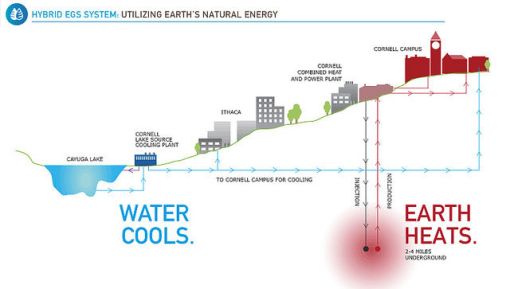
3. On the topic of energy, it looks like Cornell wants to move ahead with a trial run of its experimental geothermal project. Per the Times, the initial test phases of the “Earth Source Heating” project could take up to six years and $12-$15 million, which is a lot of money given that no one is certain if it will ultimately be a viable source of renewable energy. Some concern is being expressed that the project is too similar to fracking, but unlike the fracking process, where water is used to shatter shale beneath the surface to extract natural gas, the water used here is much lower pressure and kept in a closed loop, in comparison to fracking’s constant expansion of extraction sites. For the time being, the naysayers are assuaged, so now comes years of designing the project and permitting; an extensive Envrionmental Impact Statement (EIS) seems almost certain. ESH would be groundbreaking in more ways than one, if successful.

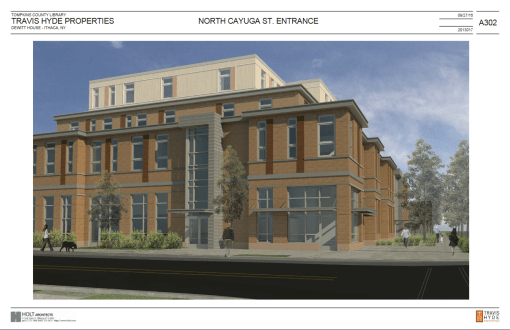
4. It looks like the major hurdles to the Travis Hyde Properties Old Library redevelopment have been cleared. With the historic district Certificiate of Appropriateness granted from the city’s ILPC, it’s now a matter of going through site plan review – the developer is hoping for an expedited process that’s settled by May, which given the joint meetings between the Planning Board and ILPC, may be possible. The design review is already complete as is most of the documentation, so at this point, it’s just a matter of making sure there are adequate environmental mitigations in place. After that, it’s time for the county to draft up their docs for the $925,000 sale of the property, and hopefully THP can get the mixed-use project underway later this year. The 73,600 SF project will host 58 market-rate units for the 55+ crowd, community space administered by senior services nonprofit Lifelong, and 1,250 SF of street-front commercial.

5. The Tompkins County IDA held its public hearing for the City Centre tax abatements. As expected, the reactions were mixed. A couple of developers not associated with the project (Frost Travis and Todd Fox) came out and spoke in support, which is really great. For one, these guys are invested in the city and knowledgeable about the market, so they should have an idea on whether City Centre would be a welcome economic addition or detraction. For two, it’s nice to see members of the same real estate community standing up for each other. There are cases now and in the not-so-distant past where developers went out of their way to fight other projects, with the parochial scope that as few units as possible would mean as high rents (revenue) as possible. I’m not necessarily saying every project is great and they need to stick up for it, but it’s heartening to see some are taking a broader scope and speaking on behalf of the ones they recognize as beneficial to the community.

The detractors seem less upset about the project itself than the abatements, and there is the fundamental misunderstanding that taxpayers are “paying” for this project. There is no paying; it just phases in the new property taxes on top of the existing value and taxes for the parcel, rather than one big lump increase from the moment of completion. For the sake of example, if they’re paying $100,000 in taxes now, and a given project will bring it up to $1,000,000 in taxes, an abatement means they’ll still pay $100,000 until the site’s developed, then $200,000 right after completion, then $300,000 the following year, and so on until $1,000,000 (plus inflation) is attained. I’ve tried to explain this in the Voice, the Times has tried to explain this, but it’s still a problem.

6. Two Collegetown projects were brought to light at last week’s planning board meeting. 232-236 Dryden, a Visum Development project, would replace a large surface parking lot and rundown 30-unit apartment building with a 191-bed, 2-building complex. 238 Linden, a Novarr-Mackesey infill project, replaces a 10-bed, non-historic apartment house with 24 studio units in a townhouse-format structure designed by his favorite firm, ikon.5 Architects of Princeton. The target market is Johnson students, particularly Executive MBAs who may want to be closer to the university. One of the neat features is that the rear will have a treated “chameleon-like” surface that will change color depending on viewing angle, not unlike the pearl metallics used on some custom cars.

The plan is to have both 232-236 Dryden and 238 Linden underway late this year. Both are likely to have August 2018 openings, although 232-236 Dryden might be a two-phase project, with the second structure coming online in August 2019.

Keen readers will note that the Times has the sole coverage of 238 Linden right now, and this was not in the Voice; Nick Reynolds was at the meeting, I was not, and while I’ve been trying to get renders, I have yet to come through with one. I’d rather play catch-up than sacrifice integrity. I’ll follow up in the Voice eventually, but in the meanwhile, the blog is fair game because I make no money from it.

7. The town of Ithaca planning board looks to have a fairly quiet agenda for next week. Renewing some temporary modular structures at Cornell, construction signage for Maplewood, and An 11-lot subdivision on South Hill, “Ithaca Estates III” featuring Lilium Lane, Monarda Way and Rock Cress Road.

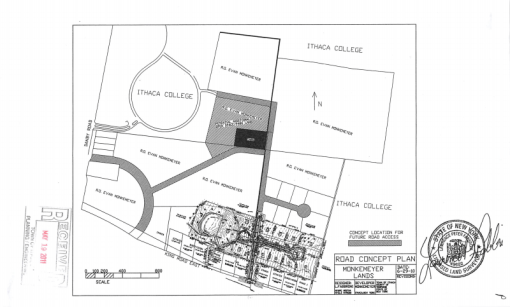
Unfortunately, it’s the Monkemeyer property, where the town has been entertaining ideas of a new urban neighborhood since its new Comprehensive Plan was passed in 2014. Evan Monkemeyer chose to revive a plan from 2010 for two cul-de-sacs off of a new arterial road that would cut through the property; and given the long-term build-out schematic shown above, there would be more cul-de-sacs to come, for a fairly conventional 1990s era suburban layout. Even though he’s apparently mowed the future roads in place on satellite, this doesn’t match up with the town’s Form Ithaca-inspired visions at all. The issue isn’t the housing, it’s the layout. The town’s planning push has been moving away from cul-de-sacs and towards connected streets.

Monkemeyer’s gone down this road before. It didn’t work out very well. Reviving a seven year-old plan that doesn’t fit with the town’s more recent Comprehensive Plan is not, and shouldn’t be, something that is going to sail through the planning board. Token future park space isn’t going to change that. Of course, then he’ll just whine to Rep. Tom Reed again. To Monkemeyer’s credit, the town has been taken uncomfortably long with formulating their new zoning code, it looks like some of the multi-year delay was the town’s fault over who was responsible for a water easement – but given the 6+ years since the issue was raised, it doesn’t appear he was pushing the matter much.


Upson Hall Construction Update, 3/2017

29 03 2017

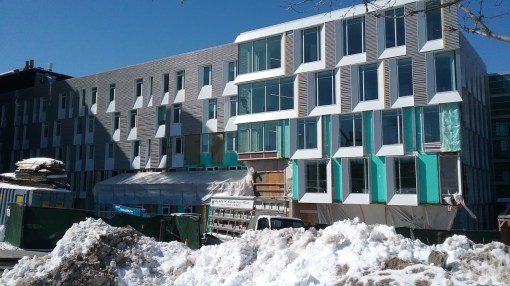
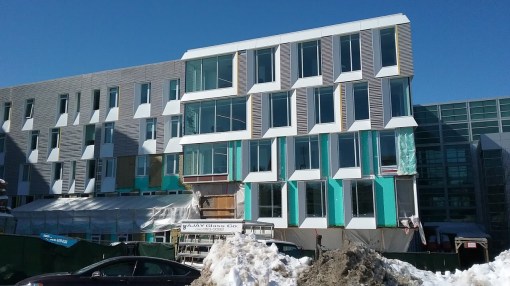
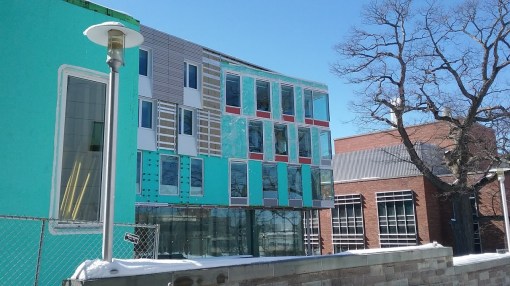
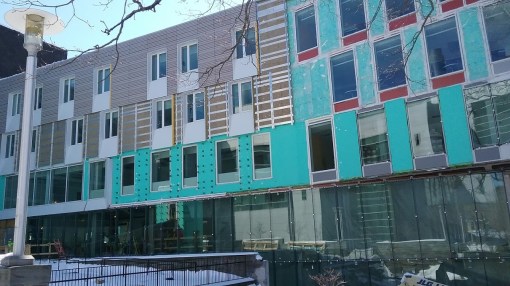
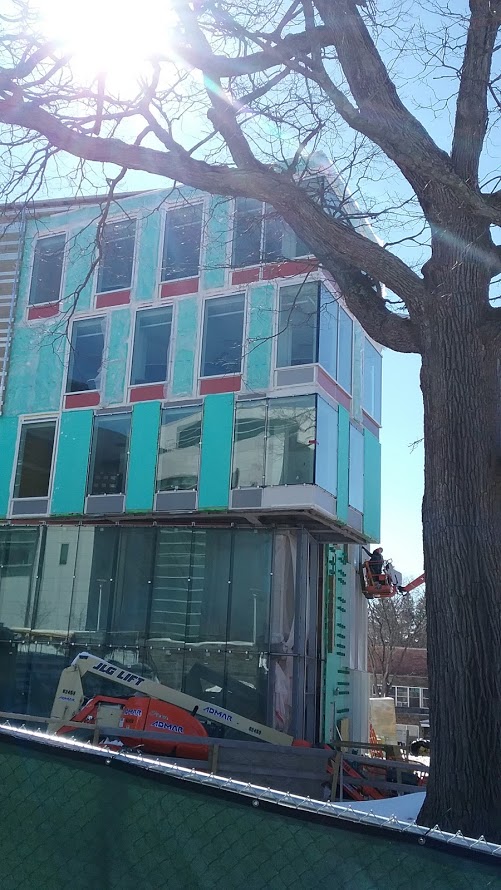
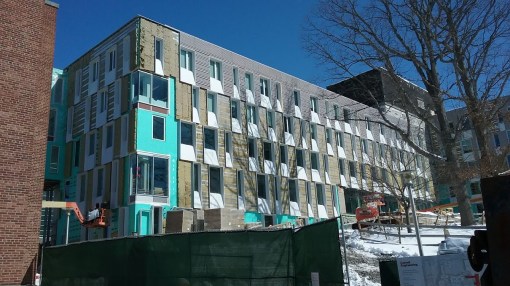
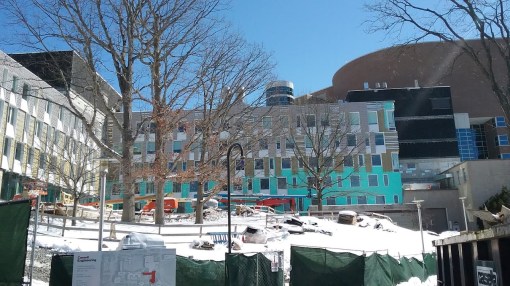
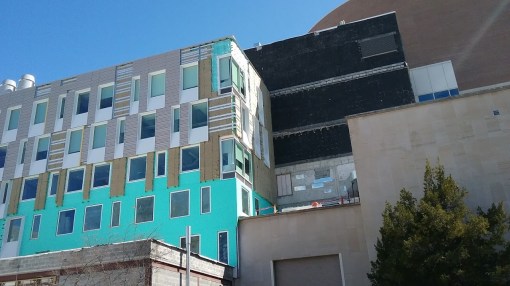
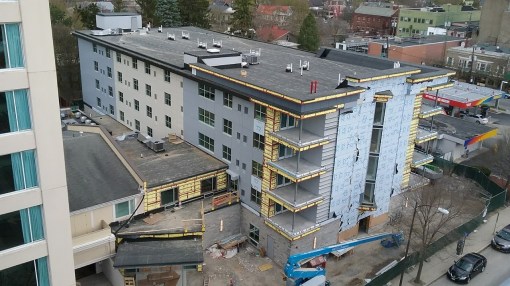
The new aluminum and terracotta facade is working its way down the lower floors. New window inserts and panels have been installed since the January update, although many sections are still bare, the turquoise water-resistive barrier the top layer for the time being. Slowly but surely, metal fasteners are being attached to the WRB, mineral wool insulation is attached, and the clips are completed with cross-sectional bars so that the terracotta can be put into place.

According to the last Upson construction update from Cornell Engineering, interior framing and drywall is underway on the lower floors, as well as new utilities rough-ins and mechanical piping. One can see a section of drywall through the new windows in the photos below.

The goal is to have the building completed by August, with temporary landscaping until the third phase has been funded. One has to applaud the Upson staff and students who have had to put up with the construction for what’s been almost two years at this point. The upper three floors were finished last summer, and the basement, first and second floors are being completed this year.