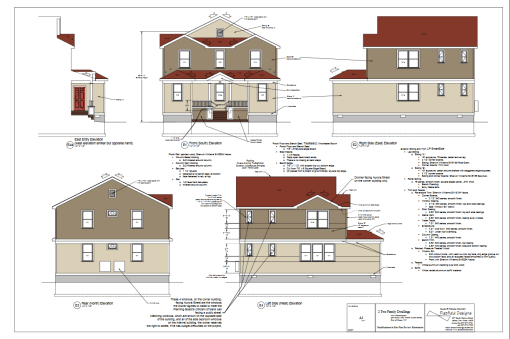
Poet’s Landing Phase II Construction Update, 7/2017

16 07 2017

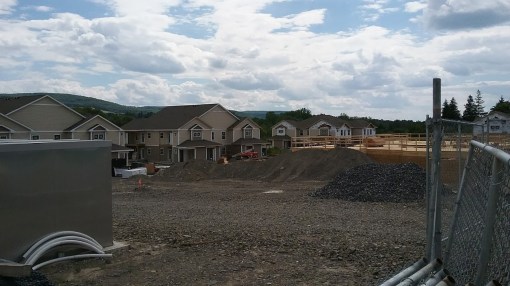
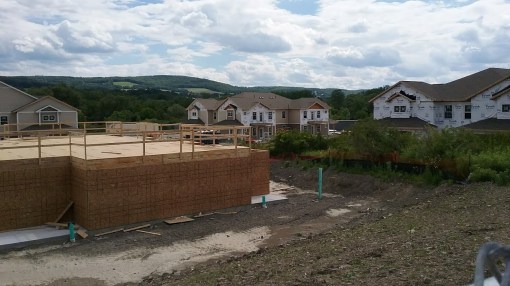
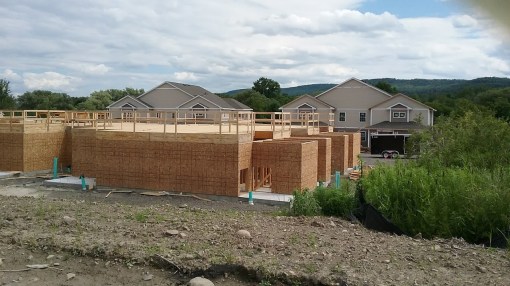
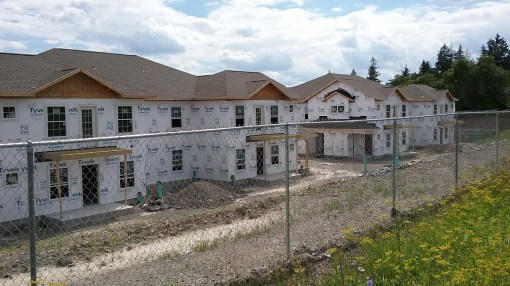
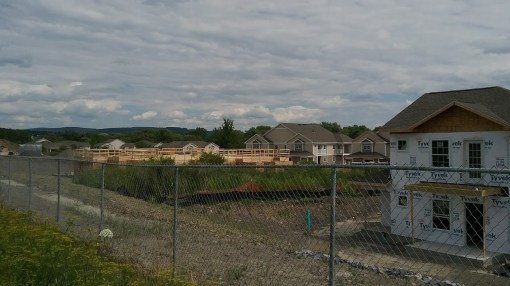
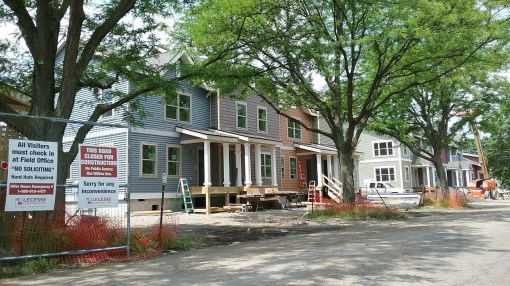
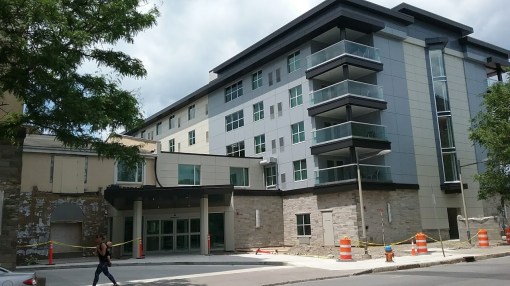
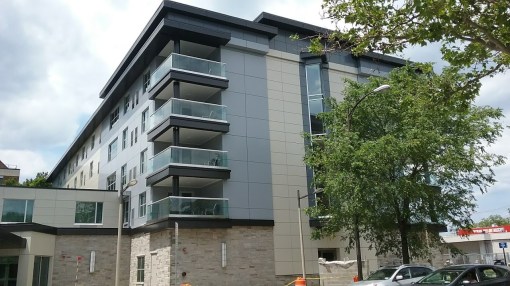
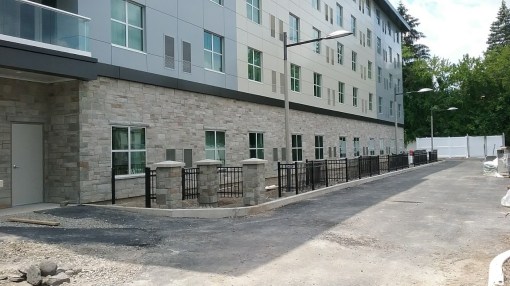
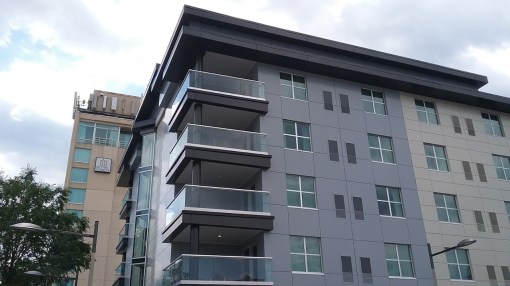
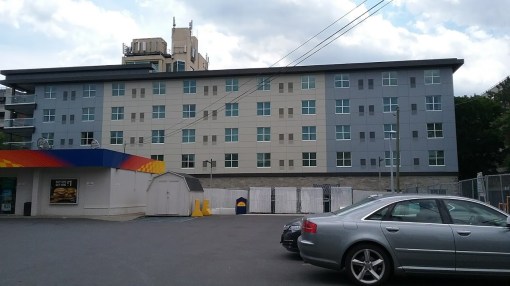
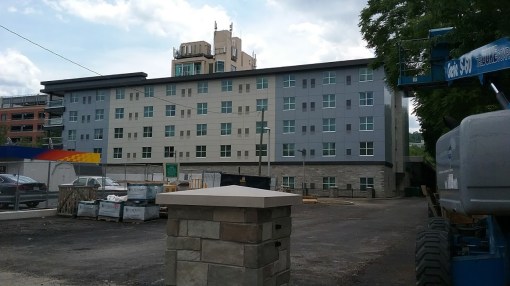
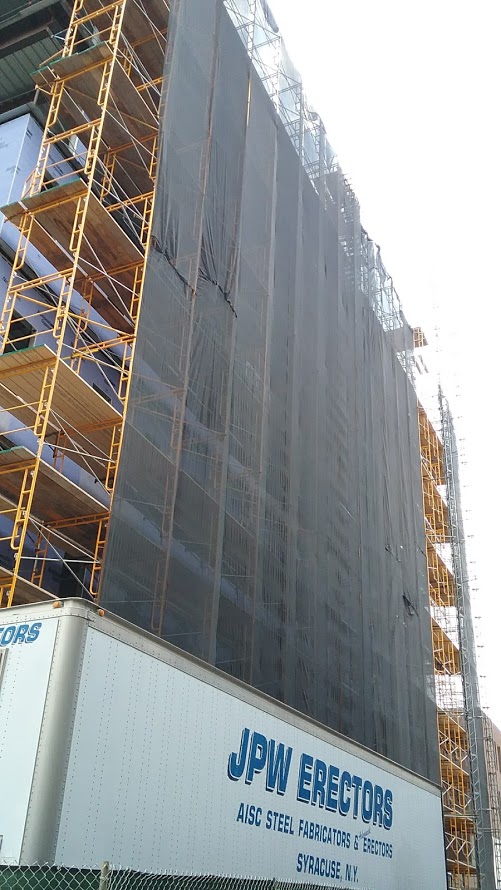
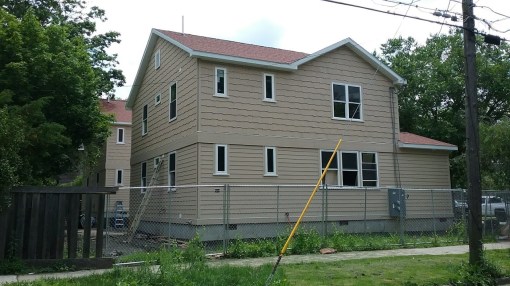
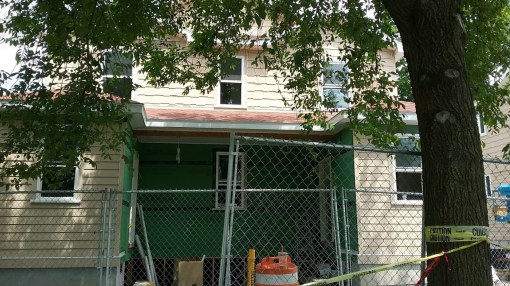
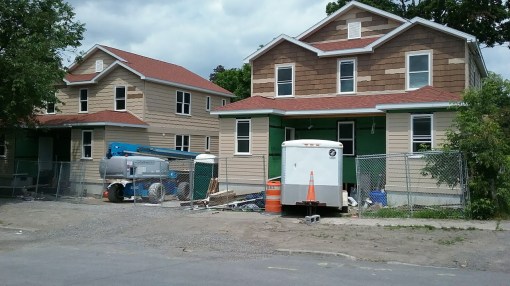
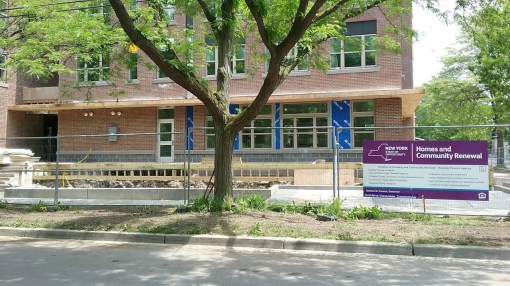
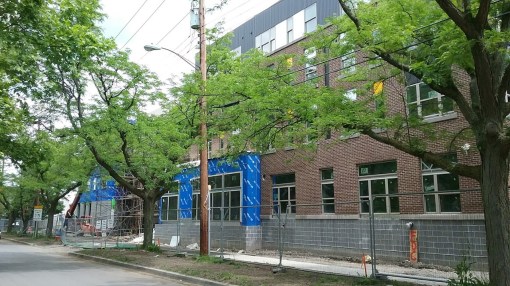
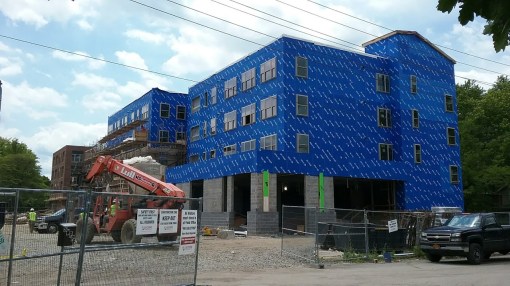
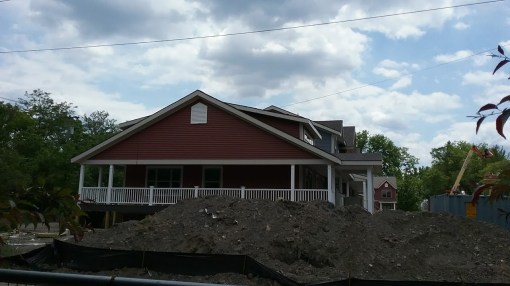
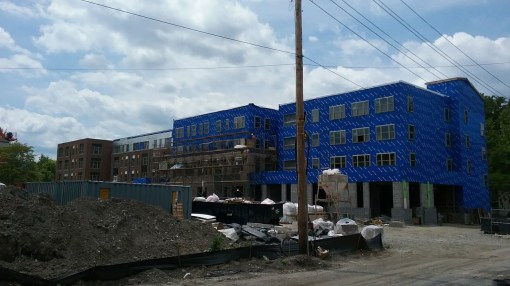
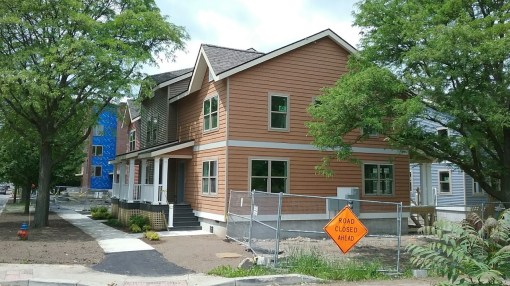
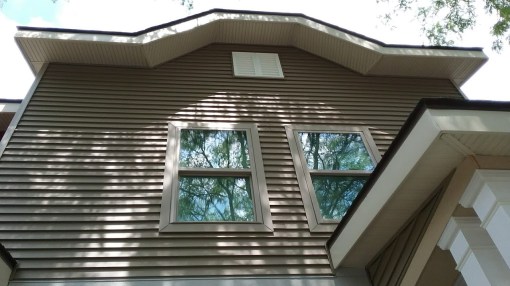
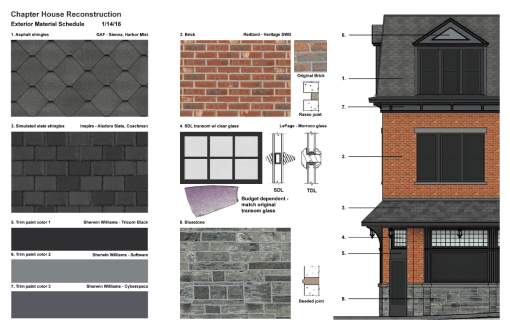
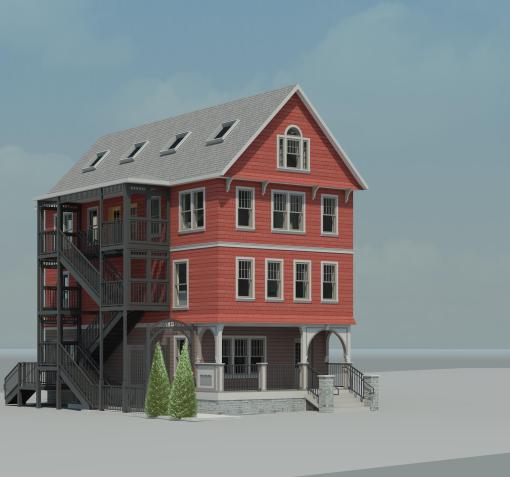
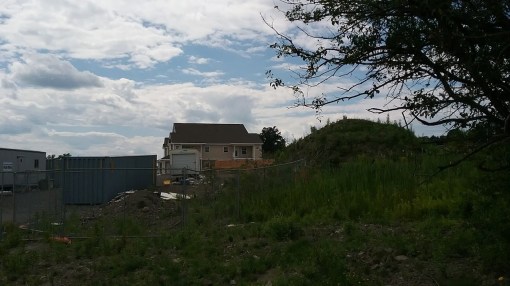
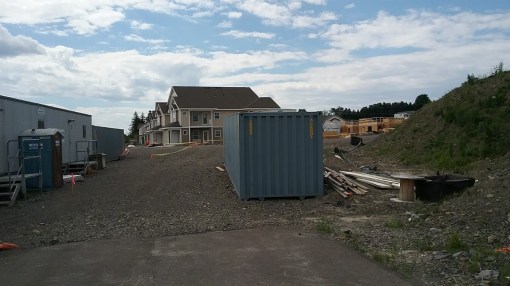
Over at the Poet’s Landing construction site, it looks like two of the buildings, previous dubbed “E” and “F” since I have no actual documentation of individual address, are pretty close to completion. “F’s” exterior work is almost complete, waiting for a few more trim pieces such as balcony and porch railings. It’s difficult to tell how far along the interior is; what looks like a gaping hole in the front at first glance, is actually a covered vestibule that leads to front doors, some of which appear to have been left open in photos seven and eight below. A typical build-out usually involves the interior being fairly far along by the time exterior trim is being attached – rough-ins complete, drywall hung, and probably the painting, utilities finish work and counters/cabinetry are underway. Building “E”, which is a little further behind on the trimwork, appeared to have some unpainted drywall visible just beyond the open front doors.

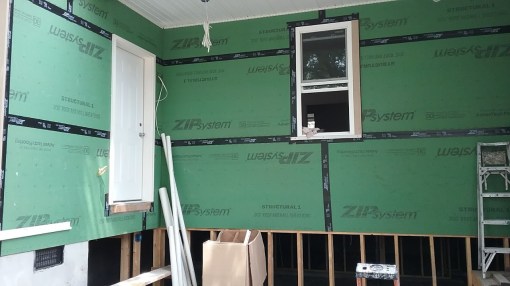
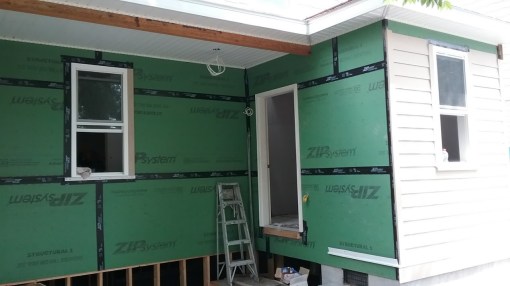
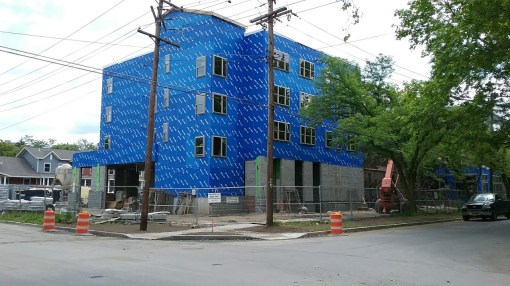
Stepping further back in the construction process, building “D” is in the midst of Certainteed vinyl siding attachment, and Building “C” has been shingled and fully wrapped in DuPont Tyvek, its balcony frames and porch columns just naked beams for now. Building “B” has yet to be fully wrapped, and “A” isn’t even fully framed yet. It looks like some of “A’s” roof trusses are sitting near Building “F”.

Although unsure offhand, if Conifer is planning to do a phased move-in, they could have Buildings “F” and “E” occupied by Labor Day, “D” and “C” before Halloween, and “B” and “A” before the end of the year. Building “F” was just getting its second story framed back in February, so another six months for “A” doesn’t seem unreasonable.

When finished, there will be 16 1-bedroom units, 24 2-bedroom units, and eight 3-bedroom units. Units will be rented to households making 60% of area median income or less, so less than $32k/year. Tenants will have an interview with management, and have to pass a background check. Given the dearth of affordable housing, not everyone interviewed and qualified will be offered a unit, but in that case, they will be offered a spot on a waiting list if desired. Those interested in units in the $10.8 million project can sign up for an “interest list” here, which will notify them as management interviews commence, giving them the chance to sign up and start the process.

So, this is something I’d like to expand on a bit, given some of the recent talk about Hamilton Square in Trumansburg. Some folks have cited Overlook at West Hill as an example of the crime and degeneracy that “these people” will bring to the village. This reminded me of the West Village piece I did for the Voice last year, where I argued successful affordable housing involves community engagement and respect, access to services, and proactive tenant management.

With any group of landlords, you have good ones, mediocre ones and bad ones. Overlook’s management leaves something to be desired, as has West Village’s. Omni Development, which manages West Village, seems to be taking a greater, more proactive role, although its history of hands-off behavior leaves many wary. Overlook is managed by Domain Companies, which is based out of New York City and New Orleans, and was developed in partnership with the Arker Companies. Back when it was proposed in 2003-04, INHS did advocate for the project during the town’s review process and obtain affordable housing loans. However, they are not and have never been Overlook’s property managers.

I can honestly say I have never heard of systemic issues with anything INHS or Conifer manages in Tompkins County. Rarely if ever is there a criminal complaint about the people who occupy Conifer’s Linderman Creek, Poet’s Landing I, The Meadows, or any of their other Tompkins County properties. That goes for the general affordable housing as well as the senior housing. I can say the same thing about INHS – through the Voice, which wouldn’t hesitate to cover crime since it drives clicks so well, there’s nothing I’ve seen about Stone Quarry’s residents being an issue, or the Henry St. John Apartments, Breckenridge Place or TowerView. I can come up with complaints for both (Conifer’s unfortunate choice of auto-centric sites with cookie-cutter units, INHS’s care-worn older stock), but neither of those has to do with tenant management.

If it were Domain/Arker or Omni pushing Hamilton Square, There would be reason for concern. But given that’s it’s INHS, mixed-market with owner occupied units, moderately sized and has convenient access to Trumansburg village, I strongly doubt management of the rentals is going to be a problem.



News Tidbits 7/15/17: Ess Ess, Dee Dee

15 07 2017

1. Hamilton Square. There’s a lot to say here.

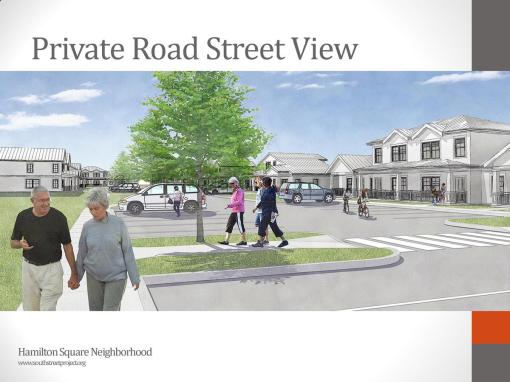
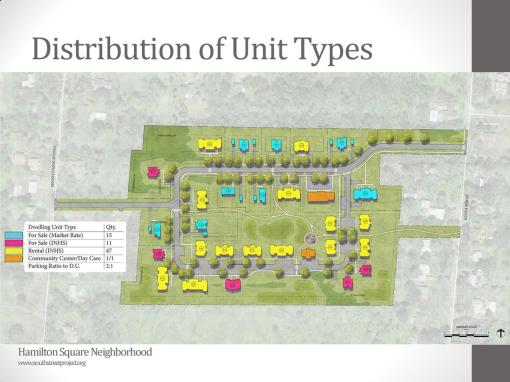
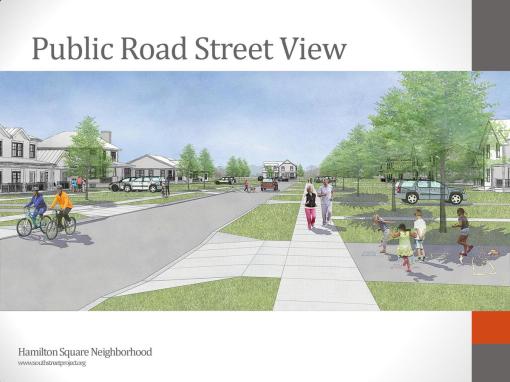
First, the neutral segment. The website is up, www.southstreetproject.org. Plenty of renders (definitely not cookie-cutter), site plans, housing prices, everything one needs for a fair assessment. The units are no more than 2 floors, mostly townhouse format. 47 affordable rentals units, 11 affordable for-sale units, and 15 market-rate for-sale units for a total of 73 on a 19 acre site. That’s less than 4 units per acre (0.26 acres/unit, comparable to the older 0.25-0.5 acre lots on Pennsylvania and South Streets), and fits zoning. The units are interspersed throughout the property. Parking ratio is 2 spaces per units, units are a mix of 1-3 bedrooms. There will be aging-in-place and energy efficient home options for sale, as well as in the rentals. The project will host a playground and nursery/daycare facility geared towards low and moderate-income households. Much of this comes from the result of constructive community feedback.

But what started off on a polite note is getting really ugly, really quickly. It is not a good sign when my editor calls me and tells me that, as a person of color, she felt uncomfortable at the latest meeting.

Given the transparency of this process, which still hasn’t even been submitted for formal planning board review, I find comments about this being “hidden” or rushed through to be a stretch. The project hasn’t submitted anything for formal review yet. Nothing but a sketch plan has been done, and multiple community meetings, and 30-minute small group listening sessions. It really does not get much more personal than that.

One of the questions that was raised was that people are unable there are many more affordable rentals than for-sale units. There are two reasons why that is. For one, funding for purchasable units is more difficult to get. The government is more likely to disburse a grant if it knows there are buyers waiting in the wings. That’s why the buildout for the for-sale units is 2-8 years. For two, for low and moderate-income households often don’t have much money saved for a big expense such as down-payment, and far more are capable of renting versus buying.

There are valid concerns that need to be addressed. For example, traffic. A study is being conducted with a third party. The typical thing I hear, affordable housing, or any project really, is that “they’ll lie, they’re in XYZ’s pocket”. If no one trusts you to do your job properly, no municipal board will sign off on accepting your study, and you’re finished as a firm. Likewise with stormwater analysis and civil engineering. School system capacity is checked with the district, which basically just sends a letter saying “yes, we have room” or “no, we don’t have room”. The study is being conducted and will be made public long before any approvals are granted, people can weigh in after reading it to say whether it’s comprehensive and adequate, and feel free to say something and explain why it may not be. That’s the purpose of SEQR, to determine impacts and mitigate unavoidable impacts.

On a related note, a board’s job is to review the objective components of a project. It is not appropriate, or legal, to decide on a subjective trait like whether the people who will live there fit the “Trumansburg way of life” or that the project is “too Ithacan”. Who decides what those things are? Because too quickly, it degenerates into a look or an image, and a train of thought that should never be a part of any development conversation. Because it’s subjective, those terms meant something quite different in 1997, and something quite different in 1977.

Also, there seems to be this idea that poor people in urban neighborhoods will be forced out here, and they will be a burden on TrumansburgThere are plenty of people who live and work in Trumansburg who need affordable options in a rapidly-appreciating real estate market. The one bedrooms will be rented to individuals making $22k-$48k. That could be a store manager, a barista, a school teacher or a retiree. Tenants are screened, visited at their current home and interviewed before being offered a unit. Qualified affordable home buyers will mostly be in the $42k-$64k range (80-120% AMI). Think nurses, office workers, tradespeople (following INHS’s sales deeds, I actually see a lot of ICSD teachers). The market rate units will offer whatever the market allows price-wise; new townhouse-style housing in Trumansburg would likely fetch $250k+, so think upper-middle income.

It would be nonsensical to make people in Ithaca move into housing in Trumansburg that they don’t want and would drive up their costs; however, those who want to live there, whether because they admire Trumansburg, work there, or both, will seek the opportunities it provides.

For a county that seems keenly aware of its housing issues, there tends to be an uncomfortable amount of pushback against affordable housing, whether it be Fall Creek, South Hill, Lansing or Trumansburg. Does that qualify as being “too Ithacan”?

2. Taking a look at the county’s records this week, it looks like 210 Linden Avenue’s construction loan has been filed. Elmira Savings Bank is lending Visum Development (Todd Fox and associates) $3.15 million, with $2,358,783 towards the hard costs (materials/labor) of replacing the existing 12-bedroom student apartment house with a 9-unit, 36-bedroom apartment building. Elmira Savings Bank is one of the biggest single-family construction loan lenders in Tompkins, but they have only been the lender for a few multi-family projects. The only other multi-million project in the past few years was the 18-unit Rabco Apartments at 312 Thurston Avenue in Cornell Heights – a project that, along with the cancelled 1 Ridgewood, so incensed deep-pocketed permanent residents nearby that they petitioned and succeeded in getting the city to downgrade the zoning.

Also filed this week was a $415,000 construction loan from Tompkins Trust to the owner of Hancock Plaza on the 300 Block of Third Street in Ithaca’s Northside neighborhood. The 19,584 SF shopping plaza, built in 1985, is assessed at $1.485 million and has been under its current ownership since 2002. Most might know it for the DMV, but it also hosts Istanbul restaurant, a bookkeeping service, and a gas station and convenience store that opened in renovated space in 2015. There’s no indication in the loan as to what kind of work will be performed, about $363,000 has been set aside for hard costs like materials and labor, and the work is required to be finished by March 2018.

3. Also filed in both sales and construction loans this week was paperwork for 306 North Cayuga Street, right next to DeWitt Park on the edge of Ithaca’s downtown. Also known as the C. R. Williams House, the 8,798 SF, ca. 1898 property was assessed at $900,000 and on the market for $1.4 million last year. The sale price was $1.3 million.

I was privy to an email chain that engaged an out-of-state condo developer to look at the property, but that person was not the buyer.  The LLC traces back to Travis Hyde Properties, just a few blocks away.

According to Frost Travis of THP, the plan is to renovate the live/work space to allow for more space for THP, which is outgrowing its North Tioga Street location, and four apartment units. Exterior changes will only be cosmetic, but any substantial changes will be subject to ILPC approval, as the property sits in the DeWitt Park Historic District. Elmira Savings Bank is lending $1.24 million for the renovation, of which $1,204,752 is going towards the actual construction (so apparently, this was a big week for ESB). The project is expected to be complete by next summer, according to the loan filing.

4. For the aspiring homebuilder or developer – new to the market this week, a run-down though salvageable 1830 home at 1975 Dryden Road just east of Dryden village, and 101 acres of developable vacant land currently rented out for agricultural use. The sale price is $795,000. The county GIS lists the property at 112.4 acres, but without a map in the listing, it’s hard to tell if there’s a typo or if there might be a subdivision somewhere. The assessment is for $531,900, $401,300 of which is the land. It appears the property has been in the ownership of the same family since 1968. The property is listed as a rural agricultural district, which is geared towards ag uses, but permits office, one-family and two-family homes as-of-right; multi-family and box retail require special use permits. Zoning is one unit per two acres, but in the case of a conservation subdivision that preserves open/natural space, it’s one unit per acre – either way, only about 50 units allowed here. Technically, a PUD (aka DIY zoning) is also an option, but would need adequate justification. Kinda hoping it doesn’t become conventional suburban sprawl, but will reserve judgement for when this sells.


5. Ithaca is once again competing for $10 million in state funds as part of the regional Downtown Redevelopment Initiative. The funds are intended to spark investment in urban cores and improve infrastructure for communities throughout the state, ten cities selected each year, one in each region. Readers may recall Elmira won last year. This year, Ithaca is competing against two of its Southern Tier peers – Watkins Glen, with which it competing with last year as well, and Endicott, a struggling satellite city over by Binghamton, that is entering the competition for the first time. Reports suggest the Ithaca submission is largely the same as last year’s. Winners will be announced in the fall.


News Tidbits 7/8/17: Watching the Fireworks

8 07 2017

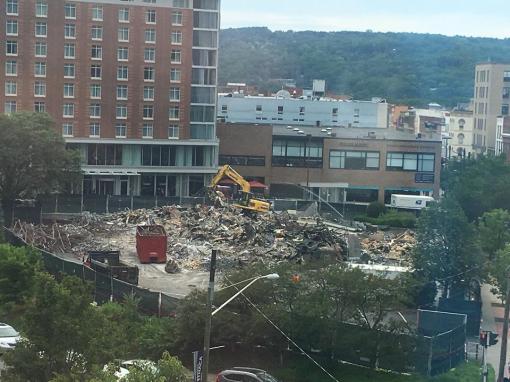
1. A pair of major downtown projects are starting to get a move on site-prep and demolition. The Trebloc Building has been torn down to make way for the 187,000 SF, $32.9 million City Centre project.

Photo from C. Hadley Smith Collection

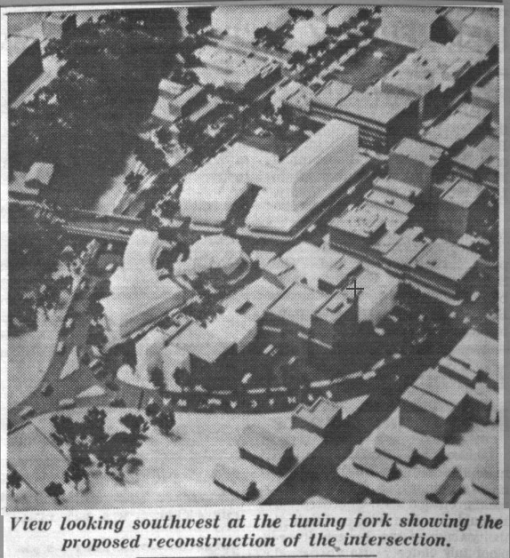
For a bit of historical perspective, the Trebloc Building was a sort of monument to municipal desperation. Up until 1967, the site housed several 2-5 story buildings from the late 1800s and early 1900s. Then along came urban renewal. The city had made plans to demolish the buildings and sell the lot to a bank tenant, who would build a new office and help revitalize the city’s run-down downtown. But after demolishing the building, the potential bank tenant never followed through on its original intent, and the city spend years trying to sell the lot, which was used for makeshift parking in the interim. Finally, they found a buyer in the Colbert Family doing business as the Trebloc Development Company. The Trebloc Building was originally planned to have two floors, but financial troubles had reduced it to one before it finally opened for business in 1974.

One could argue that nothing quite represented the nadir of Ithaca’s downtown quite like the struggling, unloved and unlovely Trebloc Building did. There are some buildings worth fighting for, and even some mediocre ones that come down with a bittersweet sentiment. This was neither.

Perhaps unhappily for downtown businesses, City Centre will be under construction for quite some time; adjusting the estimate given to the IDA, late 2019 or even early 2020 is possible.

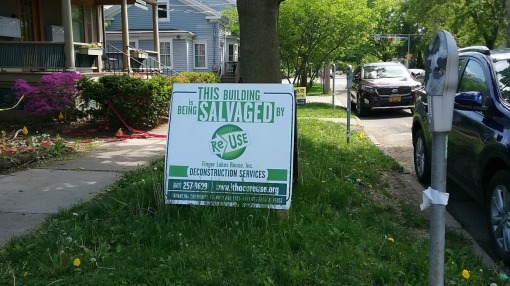
Meanwhile, just a couple blocks west, Harold’s Square is also gearing up for demolition of 123-135 East State Street. Unlike the Trebloc teardown, Developer David Lubin will be deconstructing the existing structures, so that their components can be re-used (the process will be managed by Finger Lake Re-Use). I’ve always been kinda partial to the green tile on the former Race Office Supply, so hopefully that goes to a good home. 137-139 East State will be renovated as part of the Harold’s Square project. Harold’s Square, a 180,000 SF building with a hard construction cost of $32.6 million, is expected to take about 18 months, opening in Q1 2019. Dunno why City Centre’s construction schedule is a year longer, although with the underground garage, the project is a little larger (211,200 SF), and more structurally complex. It could also just be a very generous estimate.

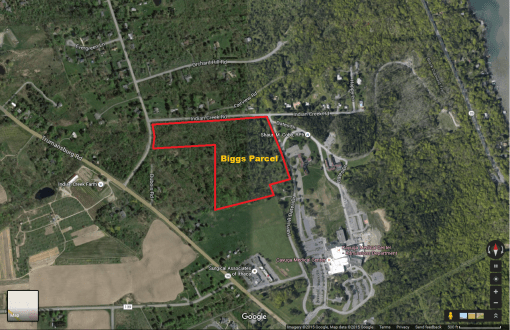
2. Tompkins County will be hosting a meeting at the Museum of the Earth on July 19th at 7:30 PM to discuss plans for the Biggs Parcel on the town of Ithaca’s portion of West Hill. As covered previously, the 25.5 acre parcel, which has something of a long news history, has been for sale since last summer, but without any firm offers, the county ended its realtor contract and has been trying to figure out with to do with the property. Although there are some streams and wetlands, there are some development possibilities; neighbors have been pushing for it to be a county-owned natural preserve, but the county wants an option that will pay taxes, whether that be a multi-family development, private estate or otherwise.

While the county did not identify this parcel as a high environmental protection priority, they are busy working with Finger Lakes Land Trust to protect a 125-acre property in Caroline, and there are ongoing discussions regarding a 324-acre property in Dryden.

3. As with nearly every sizable project in Tompkins County, the Inn at Taughannock expansion is being met with some resistance from neighbors. As relayed by the Times’ Jamie Swinnerton, arguments cited include traffic, view sheds, size, neighborhood character (which seems a bit weird, given there’s not much of a neighborhood nearby), and most frequently, noise, which the town could help resolve by asking for an acoustical counsultant’s report like what Ben Rosenblum submitted in Ithaca for his cancelled proposal for a jazz bar at 418 East State Street. The addition, which calls for a new restaurant, event space and five guest rooms, would create about 25 jobs if built and opened as planned. The often-joked but actually rarely-seen email calling me a “thoughtless corporatist” arrived in the inbox after the first write-up, which indicates this fireworks show may not be over for a little while.

4. In a bit of a weird hang-up, the Heritage Center project attempted to give itself a formal name, but the name was shot down by the County Legislature. The proposed moniker of “Tompkins Center for History and Culture” was defeated in a 7 yes -3 no vote (8 yes votes required) because a few of the legislators felt there hadn’t been enough time to gauge community reaction. Personally, I thought “Tompkins County Heritage Center” was fine, but to each their own.

5. Thankfully, the county’s endorsement of the Housing Strategy was unanimous. This is but a baby step in solving the county’s housing woes, but it’s an important step. The county now has a sort of guiding document to help address issues in adding and improving the local housing stock.

There are a few key things that the county will need to adhere to when moving forward. First is working with communities to identify suitable areas for development, and making updates to infrastructure and zoning to guide developers towards those properties instead of far-flung, natural areas where acquisition costs are low and there are fewer neighbors to contend with. Second is bridging the affordability gap – some of this can be done by encouraging new housing at market-rate, but the county will need to be constructively engaging and reliable when helping affordable housing plans apply for grants or exploring tax incentives to help make their proposals feasible.

The third, and arguably the most controversial point here, is standing firm in the face of opposition. Many Tompkins residents are averse to new housing (or really, new anything) near them. For example, consider the Tiny Timbers plan recently announced for Lansing Town Center. The plan checks a lot of boxes – at $175-$225k, it’s fairly affordable owner-occupied new housing, with a smaller ecological footprint than many detached single-family homes. Yet, in the Voice comments, it was dumped on as both a glorified trailer park and unaffordable at the same time, and the neighbor who tried and failed to buy the property from the town to prevent development was trying to scare people from small house living (which at 1000-1500 SF, these aren’t really “tiny” houses anyway). The county should listen for the sake of good government, but after weighing the argument, unless a project is truly a detriment to a community’s quality of life, the county and local boards will need a firm backbone in withstanding criticism. It also helps if people who like a project give their two cents in an email or meeting.
So, good first step, but there’s a lot of work ahead. Fingers crossed.


News Tidbits 6/25/17: Lazy Sunday

25 06 2017

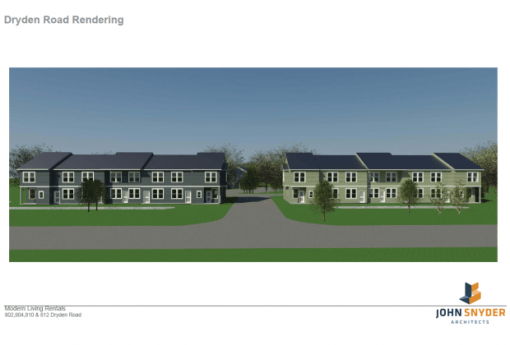
1. Starting off with the new project of the week: 42-unit, 108-bedroom 802 Dryden Road. As relayed on the Voice, the parcel currently hosts several rental properties in varying condition. The project is Modern Living Rentals’ largest to date, partly because developer Charlie O’Connor tends to focus more on smaller infill in urban areas.

Although no time table has been given for the $7.5 million project, a likely prospect is approval by the end of the year, with a spring 2018 groundbreaking, and a summer 2019 opening. While John Snyder Architects is in charge of design modifications, the townhouse designs are recycled from STREAM Collaborative’s 902 Dryden plan currently finishing up down the road. Marathon Engineering’s Adam Fishel will be shepherding the project through the approvals process, just as he did the Sleep Inn for Elmira Road.

Location-wise, it’s on a bus route but most everything will need some kind of vehicular transport, so it’s fairly auto-centric. There isn’t a lot of lot nearby apart from a few small rentals and single-family homes, and Cornell farm fields. On the other hand, few neighbors means fewer people likely to raise a fuss at planning board and town board meetings. As long as they provide town favorites like heat pumps, don’t expect big hangups as this plan moves through municipal review.

2. So here’s something out of the blue. Recently, the house at 2124 Mecklenburg Road in Enfield was sold to “The Broadway Group LLC d/b/a TBG Alabama LLC”, and a $998,000 construction loan agreement was filed shortly afterwards. One does not normally see million-dollar projects in Enfield, but a look at the filing yielding no information other than to suggest it was a retail building.

A little further digging indicates The Broadway Group, based out of Huntsville, Alabama, specializes in the development and construction of Dollar General stores. The lender, Southern States Bank, headquartered in Anniston, Alabama, is a preferred commercial lender for TBG. So this is a similar case to the Dollar General recently built in Lansing by Primax Properties –  it’s less about a bank being interested in Ithaca, and more about two major companies located near each other and having an established business relationship. A check of Enfield’s Planning Board reveals that the applicant took great pains not to reveal the name of the tenant, saying only a stand-alone variety dry goods store. A confidentiality clause with client limits what they could say, and TBG will technically own the metal building for a year until it transfers over to Dollar General. Expect a Q4 2017 and with it, 10-12 retail jobs.

I’ll be candid on this one – I sent out an email before writing anything up for the Voice asking if there were enough Enfield/West Hill readers who would care enough to justify an article being written. Jolene encouraged it, the piece went up, and the traffic on the article was actually pretty good, somewhat above average in fact.

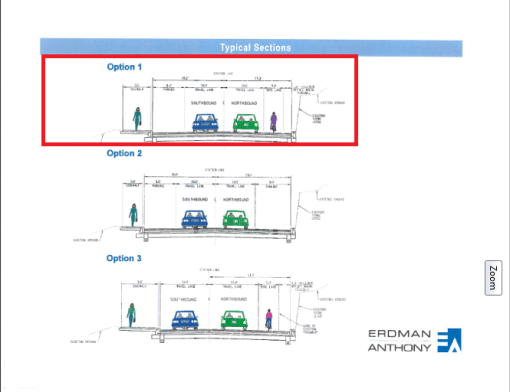
3. The city has decided which option it wants to pursue for its rework of University Avenue. Basically, say goodbye to the northbound parking aisle and say hello to a new bike lane. The southbound parking aisle will remain, along with a 7-foot wide sidewalk and 10-foot travel lanes.

4. It looks like plans for the next Press Bay Alley are moving forward. 110-112 West Green Street was sold to Urban Core LLC (John Guttridge / David Kuckuk) for $650,000 on the 19th, and a $581,250 construction loan from Tompkins Trust was filed the same day. Technically, some of the construction loan is actually for the purchase; according to the IURA breakdown, the renovation into micro-retail, office and two 500 SF apartments will only cost about $207,500, plus $40,000 for soft costs like architectural plans, engineering and legal expenses. As part of the $200,000 loan extended to Urban Core LLC by the IURA, the project needs to create at least 6 full-time jobs at full occupancy. On the Press Bay Alley Facebook page, the developers have announced plans for a spring opening, and issued a call for active-use tenants looking for anywhere from 300-2,000 SF.

5. Cincinnati-based Bloomfield Schon has arranged to sell the Cayuga Green complex, lofts, apartments and all. The developer would sell the buildings to Laureate House Ithaca Management LLC. Upon the intended purchase date of August 1st, Laureate House would pay the IURA loan balance ($733,130 at the moment with a $4,880 monthly payment) off in full. That would be about 21 years earlier than anticipated. Laureate House appears to be a start-up real estate firm backed by three wealthy Cornell alums; although the literature says they seek to launch 55+ communities for active seniors in college towns, there don’t appear to be changes in use or commercial/residential tenant mix planned with the purchase of Cayuga Green.

6. Been meaning to note this, but it appears 210 Linden Avenue is undergoing asbestos remediation, which means that the building is being prepped for deconstruction. It looks like Visum Development will be moving forward soon with their plans for a 9-unit, 36-bedroom student apartment building on the property. I did not seen any outward indication of similar work being performed on 118 College or 126 College Avenue at last check, though it’s been a couple weeks.

7. Here’s a look at the city of Ithaca’s Planning Board agenda for next week. Harold Square and 323 Taughannock will have their latest revisions checked for satisfaction of final approval (various paperwork submissions, and of samples of exterior materials to make sure they’re acceptable). 238 Linden Avenue, 232-236 Dryden Road and the DeWitt House old library redevelopment are up for final approval, and the McDonald’s and Finger Lakes ReUse’s supportive housing projects will be reviewed for determination of environmental significance, which basically means that potential impacts have been addressed and if necessary, properly mitigated.

There is also one semi-new project, which is 709-713 Court Street  – that would be the street address for Lakeview’s $20 million mixed-use affordable housing plan on Ithaca’s West End. From previous paperwork, it is known that it’s 5 floors with 50 units of affordable housing, 25 of which will be set aside for Lakeview clients with psychiatric disability. There will be 6,171 SF of commercial space on the first floor, and 17 parking spaces. PLAN Architectural Studios of Rochester will be the architect. Apart from a rough outline, there have been no renders shared of the project, so that’s the “semi-new” part.

AGENDA ITEM Approx. Start Time

  1. Agenda Review 6:00
  2. Privilege of the Floor 6:01
  3. Site Plan Review

A. Project: Mixed Use Apartments – Harold Square 6:10

Location: 123-129 E State/ MLK St (the Commons)

Applicant: L Enterprises LLC

Actions: Satisfaction of Conditions

Project Description: The Board approved project changes with conditions on May 23, 2017. The Applicant was asked submit revised materials to return to satisfy the conditions in June.

B. Project: Apartments (Short-Term Rental) 6:30

Location: 238 Linden Ave

Applicant: Trowbridge Wolf Michaels for DRY-LIN Inc.

Actions: Public Hearing Determination of Environmental Significance, Preliminary & Final Approval, Approval of Transportation Demand Management Plan

C. Project: McDonalds Rebuild 6:50

Location: 372 Elmira Road

Applicant: McDonalds USA LLC

Actions: Declaration of Lead Agency, Public Hearing, Determination of Environmental Significance, Recommendation to BZA

D. Project: Residential Mixed Use (DeWitt House) 7:00

Location: 310-314 N Cayuga Street

Applicant: Kimberly Michaels, Trowbridge Wolf Michaels for Frost Travis, Owner

Actions: Preliminary and Final Approval

E. Project: Apartments 7:20

Location: 323 Taughannock Blvd

Applicant: Noah Demarest for Rampart Real LLC

Actions: Satisfaction of Conditions

Project Description: The Board approved the project with conditions on May 23, 2017. The Applicant was asked to submit revised materials to return to satisfy the conditions in June.

F. Project: Finger Lakes ReUse Commercial Expansion and Supportive Apartments 7:40

Location: 214 Elmira Road

Applicant: Finger Lakes ReUse

Actions:  Public Hearing  Determination of Environmental Significance

G. Project: Apartments (60 Units) 8:00

Location: 232-236 Dryden Road

Applicant: Noah Demarest of Stream Collaborative for Visum Development Group

Actions: Determination of Environmental Significance, Preliminary and Final Approval, Approval of

Transportation Demand Management Plan

H. 709-713 Court Street – Housing – Sketch Plan 8:20

  1. Zoning Appeals 8:45
  1. Old/New Business
  2. Planning Board Comments on the Proposal to Rezone Areas of the Waterfront 8:50
  1. Reports
  2. Planning Board Chair (verbal)

9:10

  1. Director of Planning & Development (verbal)
  2. Board of Public Works Liaison (verbal)
  3. Approval of Minutes: May 23, 2017, April 25, 2017, and November 22, 2016 (time permitting) 9:30
  4. Adjournment 9:35


107 South Albany Street Construction Update, 6/2017

22 06 2017

Seems fair to move this one over into the construction column. Introducing 107 South Albany Street.

The State Street Corridor represents one of Ithaca’s best possibilities for infill development. It’s a mixed-use area with a hodge-podge of buildings and styles, from ornate century-old properties to commercial utilitarian structures. It has a number of sites that have easy access to downtown and amenities, permitting a walkable lifestyle. It’s also less expensive than downtown properties. With this in mind, the city rezoned much of it in 2013 to allow for 5-story buildings, up to 60 feet tall, with no need for parking. The zoning was a simple box overlay regardless of lot lines, which resulted in some “secret” infill opportunities like 512-514 West Green Street, whose rear yard was in the rezoned area, and as a result, owner Carmen Ciaschi was able to legally slip in a two-family home without adding additional parking.

107 South Albany Street was rezoned as a result of the 2013 overlay. The existing property was a mixed-use two-story home that had an apartment on the upper floors, and converted on the first floor to commercial office functions (law office). This presented an opportunity for the enterprising developer.

Enter Stavros (Nick) Stavropoulos. The West Hill native, whose family runs the State Street Diner, runs a small rental company, Renting Ithaca. However, Stavropoulos has slowly and steadily made his way from management to real estate development – first with additions to existing buildings like 318-320 Pleasant Street, and then entirely new properties like 514 Linn Street in 2015, and a project currently at 1001 North Aurora Street. His M.O. so far has been to find middling properties in desirable locations, and add inoffensive infill rental housing – nothing that stretches code, nothing that will anger the neighbors. Earlier projects were designed by Lucente family favorite Larry Fabbroni, but more recent projects have turned to a low-profile, longtime Ithaca architect named Daniel Hirtler, who runs Flatfield Designs. Stavropoulos picked up 107 South Albany Street for $236,000 in August 2015.

Seemingly, each project he takes on is larger than the last. 1001 North Aurora is a 4-unit project, 12 bedrooms with a hard cost of about $400,000. 107 South Albany is slated to be his latest and greatest yet. The original plan, as introduced in Spring 2016, was to build a new six-unit building at the rear of the existing house, and renovate the house into three apartment units, for one studio, six one-bedroom units, and two two-bedroom units. After a few months of planning board review and critique from the design committee, the 3,954 SF, $500,000 plan was approved and slated to start in July 2016.

However, that plan never moved forward. Instead, this past winter, Stavropoulos decided to submit a new set plans. The new plan called for eleven units and eleven bedrooms, but instead of retaining the existing house, it would be deconstructed and replaced with a new three-story, 8,427 SF building. With its neighbors including a former gas station-turned medical service and older, historic structures, the building’s design is an attempt to bridge the gap. The front sports a cornice, a brick veneer on the first floor, tan fiber cement lap siding above and a traditional window arrangement. In contrast, a stucco finish fiber cement stair tower in the middle of the structure serves as a visual interest for passerby on West State Street, and gives the building a modern touch. The building’s height is capped at 40 feet 5 inches, well below the constraints set by the zoning.

The building isn’t designed for active street use, with a recessed entry and bike storage area for privacy, and no first-floor windows on the front facade. However, in an attempt to create an attractive streetscape, the building uses lighted wall recesses on the exterior, the brick work will have decorative patterns, and a large semi-circular iron trellis that will be adorned with native twining vines. The project cost is $946,600, according to the city’s Site Plan Review document.

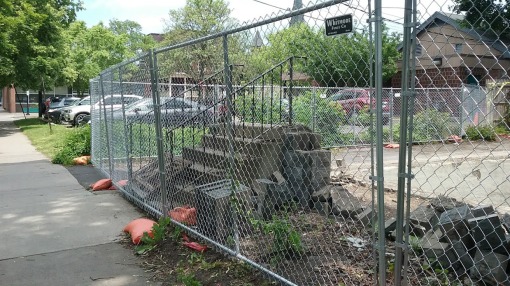
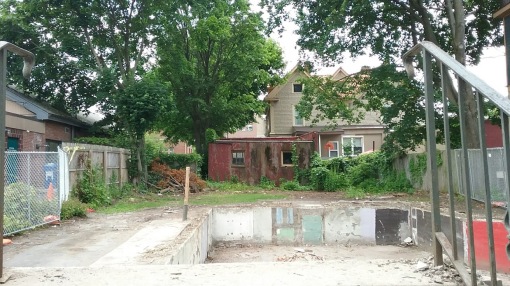
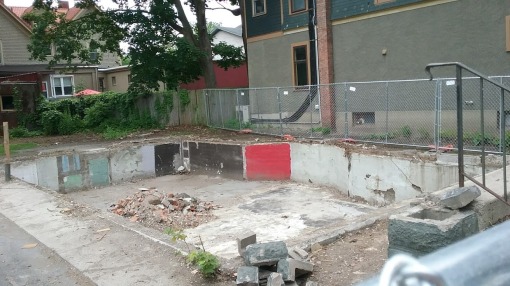
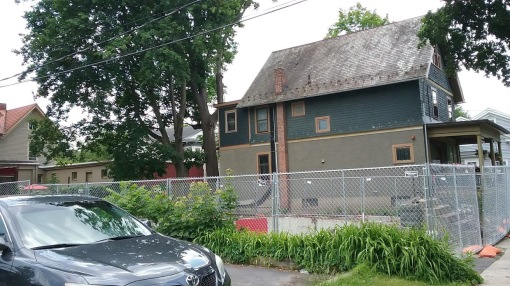
As of this month, Finger Lakes ReUse has deconstructed the existing house, cleaned and processed the salvaged materials, and has them for sale at their warehouse/store on Old Elmira Road. The foundation and front staircase are all that remain. The plan is to start construction on the new building in the September/October time frame, and to have it open for occupancy by summer 2018. No contractor or construction manager has been named as of yet.

From June:

From May:

Pre-development:

Isometric Plan and interior layout:


Hotel Ithaca Construction Update, 6/2017

21 06 2017

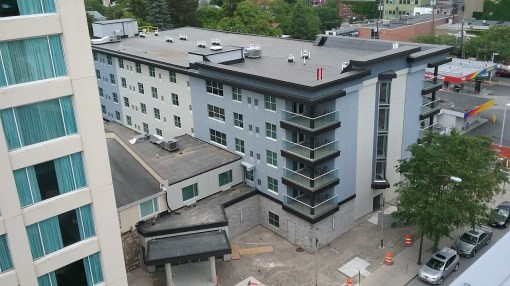
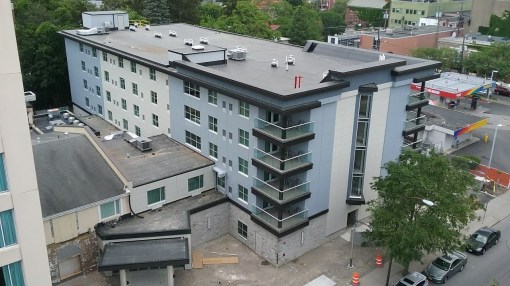
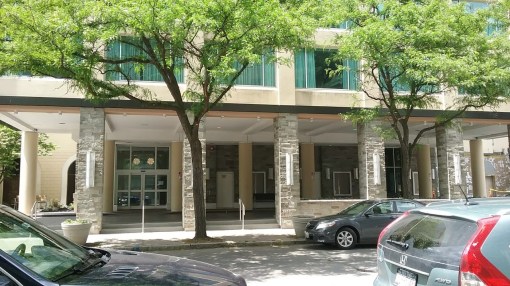
This project isn’t 100% complete – some stone veneer still needs to be applied, and the landscaping needs to be seeded – but for practical purposes, the new wing is ready for occupancy and this project is done. The first hotel guests in the new wing are unpacking their bags this month, and already there are chairs out on the balconies. The project began in March 2016, which gives a period of about 15 months from launch to opening. Interior and balcony photos can be found on The Hotel Ithaca’s twitter account.

As a project, it’s not inspiring architecture, and rather than market growth, it’s more about keeping the Hotel Ithaca successful in Ithaca’s upward trending downtown market. But it adds a few jobs, it’s a $15 million investment, and it demonstrates strong, sustained support for Ithaca’s leisure and hospitality market.

Hart Hotels of Buffalo, founded by David Hart in 1985 and operating locally under the name Lenroc L.P., was the project developer. Krog Corporation, also of Buffalo and a favorite of Hart Hotels, was the general contractor. NH Architecture of Rochester, another frequent partner of Hart Hotels, was the project architect. NH Architecture is rather busy lately, as architect for both Dryden’s Poet’s Landing, and Lansing’s Cayuga View Senior Housing.

Side note – I’ve heard through the rumor mill that the owners of the Sunoco next door have been offered very lucrative sums to sell their gas station, as it’s on a choice corner for development close to the Commons, and allows a 100-foot tall building. But alas, the owners have had no interest in selling.


Tompkins Financial Corporation HQ Construction Update, 6/2017

20 06 2017

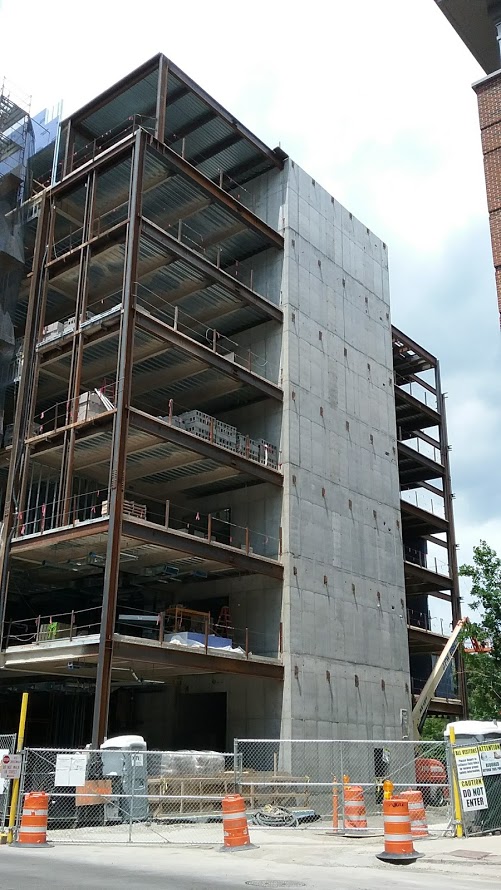
Over to the Tompkins Financial HQ. The rear face is a bit strange-looking at first glance because there’s a set of steel beams projecting right next to the first layers of gypsum sheathing, so it’s not clear where the back of the building is. A look at the plans indicates that the rear steel extension outlines a future stairwell, which projects a little further back from the main body of the building. The eastern segment of the skeleton has yet to be built past the elevator core, and consequently the rest of the rear/north wall projection has yet to be erected. As the rest of the structural steel is bolted into place, that will be boxed up, decked and sheathed.

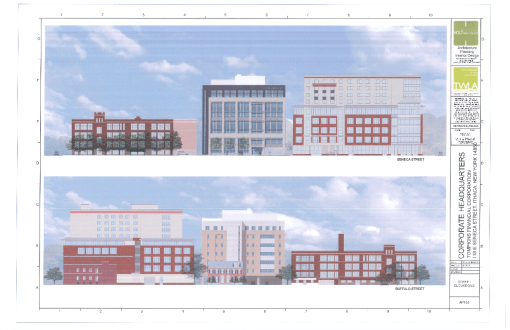
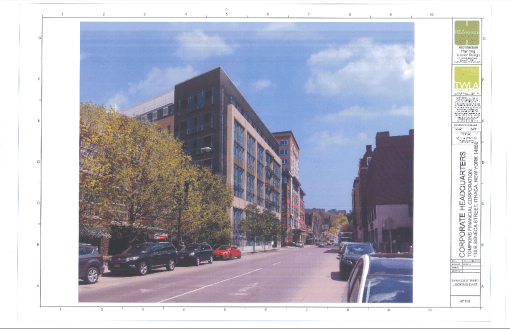
The lower floors have been sprayed with an undercoat of fireproofing, and are starting interior build-out with steel stud walls and concrete masonry units (cinder blocks). Under the safety cover, the fire-proof gypsum panels extend the full height of the building, with rough openings for future windows. Note that the top floor is set back a little bit from the lower floors, which can seen a little better in April’s update; this will be faced with a black brick veneer, while the projecting wall of the lower floors will be faced with a lighter stone. This feature was designed to make the building’s bulk a bit more subtle, and to respect the size and fenestration (window arrangement) of the DeWitt Mall next door.

Still a ways out from its March 2018 delivery date, but it looks like LeChase has things on track.


1001 North Aurora Street Construction Update, 6/2017

19 06 2017

Admittedly, at the moment this pair of two-family homes looks rather bland from Aurora Street, and slapdash from Queen Street. However, it looks like the painting is just starting. The LP SmartSide wood siding will be painted with Sherwin-Williams “Rice Grain” on the first floor and dormer, and the second floor will use S-W “Sawdust”. The swatches of wood shingle on the eastern building have the darker color on both the second floor and dormer, which doesn’t match the city’s filing, but paint typically isn’t the type of detail that will get you in trouble unless it was a stipulation of approval. The short of it is, it’s not clear if anything has changed with the paint scheme, but it might have. The trim boards will be painted S-W “Nacre”.

Another task still on the to-do list is building the porches that both units in the building will share. It’s a T-configuration – residents will step out and down their own step onto a shared landing at the top of the front steps. The porches will have decorative columns and banisters, and access panels below the porch landing. Most of the porch will be built with pressure-treated wood and painted in off-white “Nacre”, there will be dark brown steps (treated wood?), and the access panels will match the siding. About the only thing not wood will be the handrails, which will be steel.

A peek inside shows that the drywall has been hung. The next steps are typically flooring, cabinetry, bathroom fixtures and tiling, interior trim boards (baseboards, crown moulding) and painting. After that will come appliances and the finish work.

The 3-bedroom, 1.5 bath units at 202 and 206 Queen Street should be ready for occupancy later this summer. There were going for $2325/month ($775/bedroom) on Craigslist, and there haven’t been any ads lately, so it’s probably safe to assume all four units have been rented. Stavros (Nick) Stavropoulos is the developer, and Daniel Hirtler is the architect.


210 Hancock Construction Update, 6/2017

18 06 2017

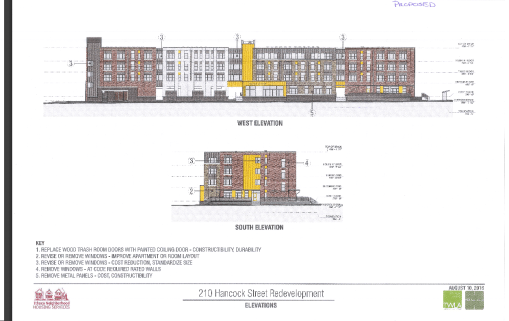
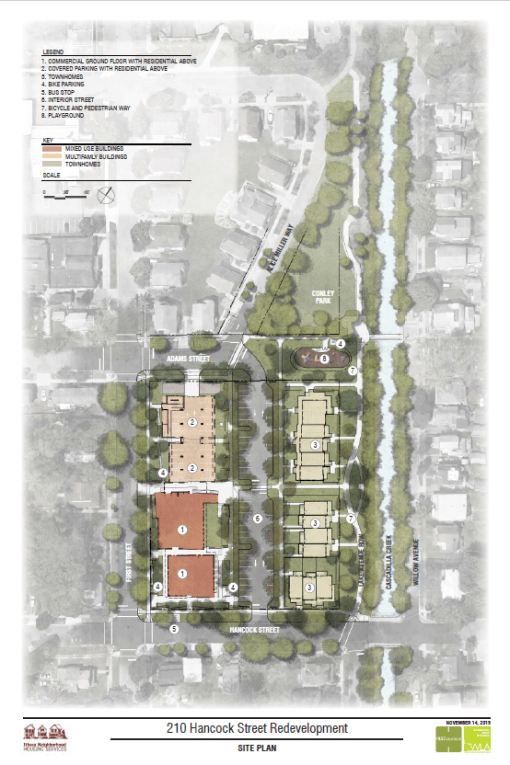
210 Hancock is chugging towards completion later this summer. Lecesse Construction has all four sub-components of the apartment building have been framed and sheathed. Building A is almost finished from the outside, with some exterior finished and trim still on the to-do list. The Blueskin will be faced with Alpolic aluminum panels, some of which have already been installed. Masonry work is underway on Building C, using Redland Whitehall Brick (it’s not often one sees unpainted white brick). More information on the exterior materials can be found in April’s post.

Note that the buildings are all elevated at least a few feet from ground level, and it’s particular noticeable with the five rental townhouses on the northeast corner. This is because of floodplain restrictions – several blocks of Fall Creek and Northside have the unfortunate luck of being in the 100-year floodplain, and most of Northside except for few blocks around Lewis and Jay Streets are in the 500-year floodplain. This approximated frequency is at risk of decreasing as the inlet gets clogged and layered with fresh silt, and with less volume and capacity, the un-dredged inlet would be more likely to have a high water event overflow its banks. It’s one of many reasons why the city is pressing for state dredging of the inlet before disaster strikes.

WHCU reported a few weeks ago that INHS has had no shortage of applicants for the 210 Hancock rentals. After receiving over 200 applications, they set up a lottery in which 122 “made it through” , and then selected the top 60 (there are 59 rental units though…might be a just in case there’s a drop-out, or it could just be conversational rounding). If it’s anything like New York City’s lottery, what happens is that each application is validated, sorted for requested unit type, and is assigned a randomized log number – those who get 1-48 for the one-bedroom subset, and 1-11 for the two-bedrooms subset, are awarded dibs on a unit, so long as they pass the income check and background check. In previous measures, about 86% of rental applicants, six out of every seven, came from inside Tompkins County, with just under half from other parts of the city of Ithaca.

The seven for-sale units are also just beginning sales marketing. The three on Hancock are, from east to west, 204, 206 and 208 Hancock Street, and the four for-sale units on Lake Street going south to north are 406, 408, 410 and 412 Lake Street. 206 Hancock, 408 Lake and 410 Lake will be 910 SF 2 bedroom, 1.5 bath units that will sell for $112,000 to qualified buyers. 406 Lake and 412 are 1088 SF, 2 bed 1.5 bath units priced at $129,000. The largest units, 204 Hancock and 208 Hancock, are 1300 SF, 3 bed 1.5 bath units that will sell for $145,000. The plan is to have buyers lined up for all seven units by the end of the year.


Chapter House / 406 Stewart Avenue Construction Update, 6/2017

16 06 2017

The funny thing about this project is, I already did the synopsis back in February 2016, the first time that it seemed to be under construction.

At the time, the construction seemed ready to move forward, but then, well…it didn’t. Former 400-404 Stewart Avenue owner Sebastian Mascaro sold the property and plans over to neighbor Jim Goldman, who intended to carry them forward. However, citing unfavorable cost estimates, Goldman decided to wait, and only recently has the project obtained favorable terms that would allow it to proceed.

The plans are still the same, although the project manager has changed. CSP Management (Jerry Dietz) will still manage the apartment rentals, but the commercial component is under the control of Pyramid Brokerage, Syracuse-based Hayner Hoyt will be the general contractor, and the construction manager representing Goldman is not with Hayner Hoyt and does not appear to be from the Ithaca area.

As a frank aside, it has been a rare degree of frustration to dig up information about this project. Goldman, for whatever reason, is incredibly publicity-averse, and everyone involved with the Chapter House has been asked or told to not talk about it. The little bit of information the Voice and 14850 have been able to get has come from CSP Management, which in itself comes with lots of cautions and uncertain language. The one occasion I spoke with Goldman, he told me he knew nothing and no longer owned the site, which if true, isn’t in the county’s records.

Here’s what is known. 406 Stewart Avenue will be 4 units, 7 bedrooms, replacing a similar-looking 1898 structure destroyed by fire in April 2015. 400-404 Stewart Avenue is about 9,000 SF with first floor retail with two floors of apartments – the number of bedrooms and units is not clear, as the number has been in flux. Note that calling it “the Chapter House project” is inaccurate – John Hoey, who owns the right to the Chapter House name, has not committed to reopening on the site, and the first-floor is being offered at a rather hefty $35/SF. For comparison’s sake, most downtown rates I’ve seen come in at about half that, although Pyramid is playing up its proximity to Cornell and the inner Collegetown market. A potential interior layout for a bar is included in the marketing material.

The current plan is to have 400-404 Stewart open by the end of the year, and 406 Stewart by Summer 2018. Jason K. Demarest is the architect for both buildings.

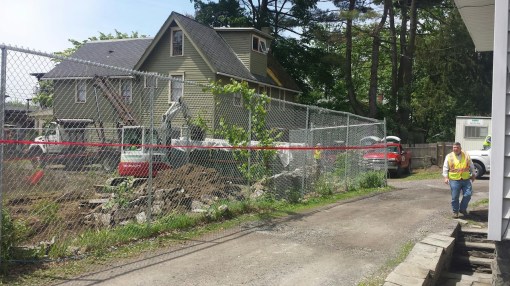
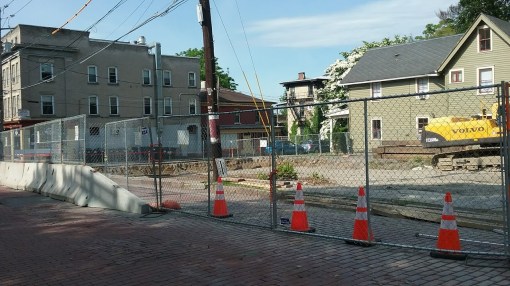
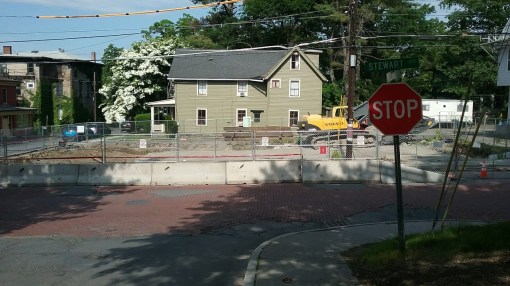
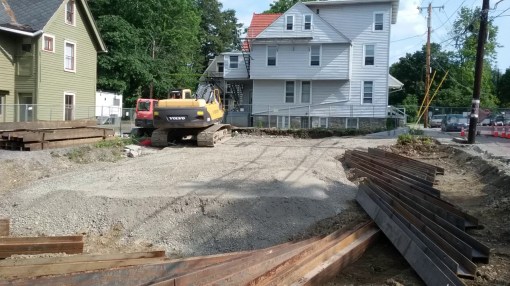
The first photo below is from my colleague Mike Blaney on May 23rd, as environmental remediation company ERSI was finishing clean-up of the fire-damaged site. In the following photos from this past weekend, the property has been leveled and graded, and a foundation is being excavated. The steel H-beams will be used as support for a retaining wall to shore up the soil, protecting the foundation and providing stability as the concrete is poured and cured.