Cayuga View Senior Living Construction Update, 3/2018

20 03 2018

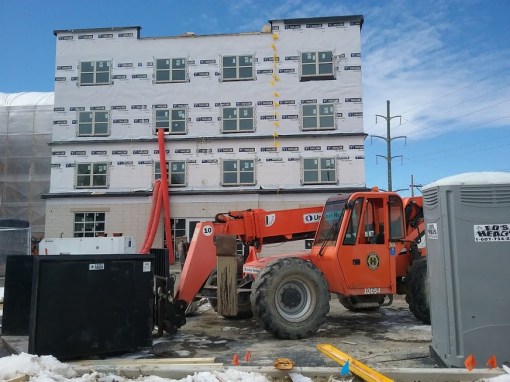
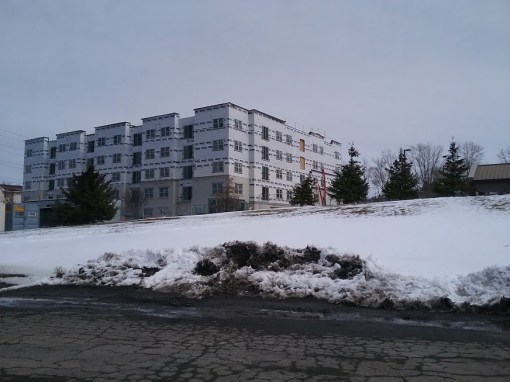
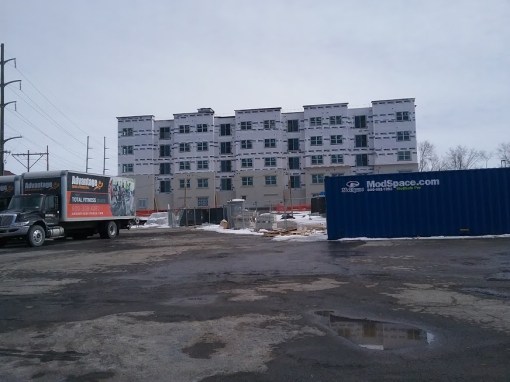
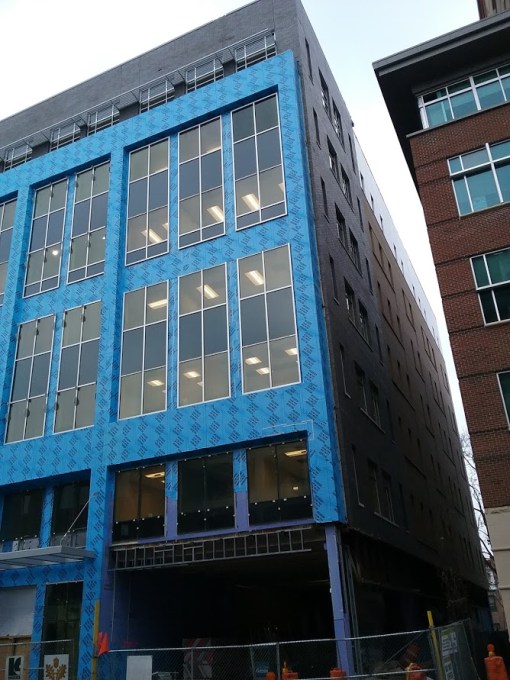
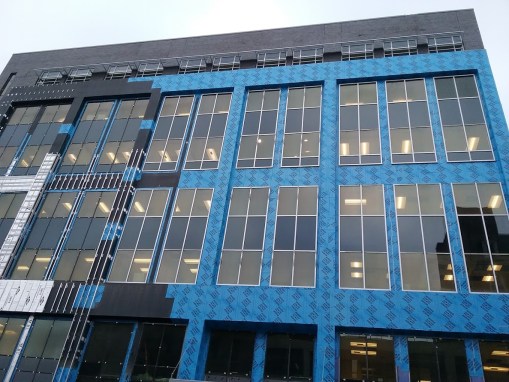
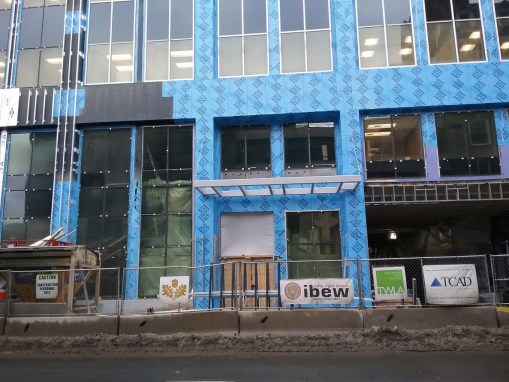
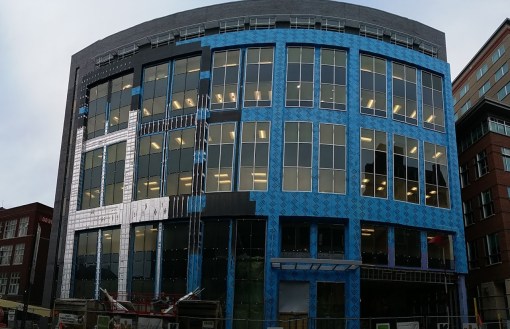
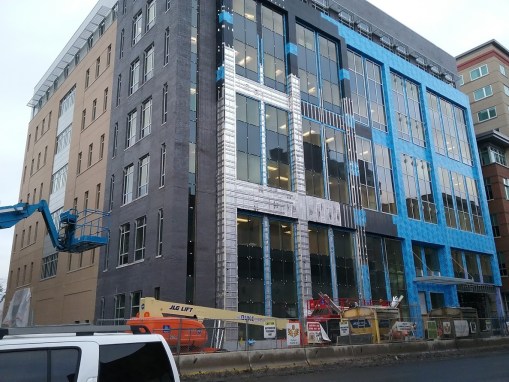
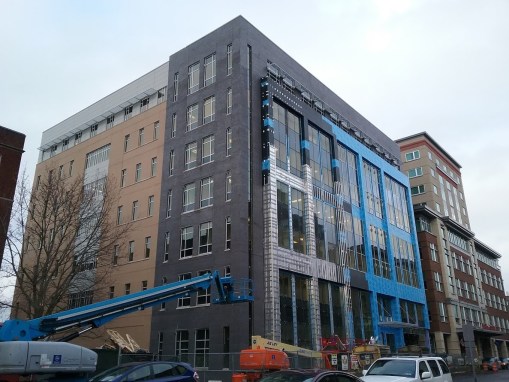
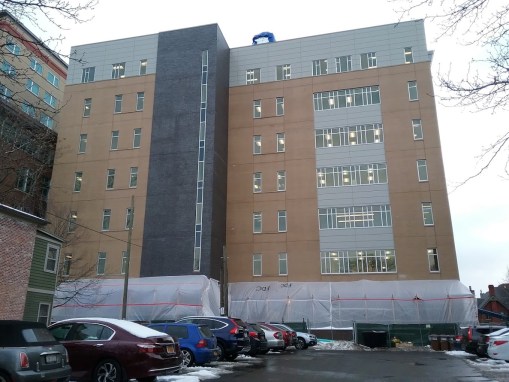
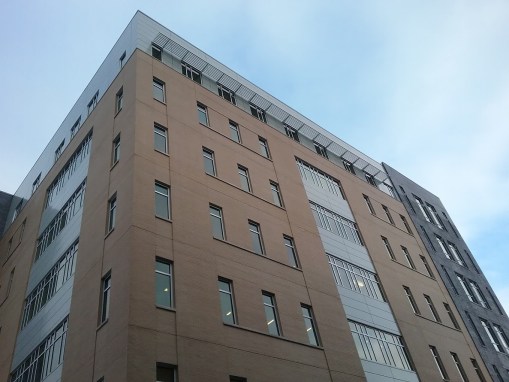
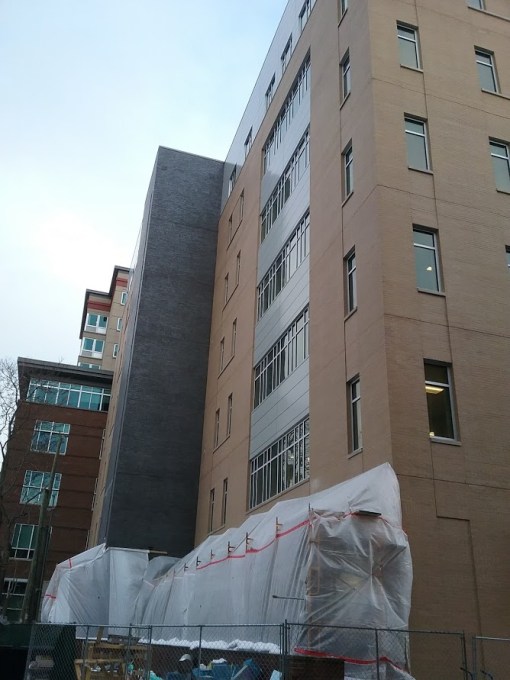
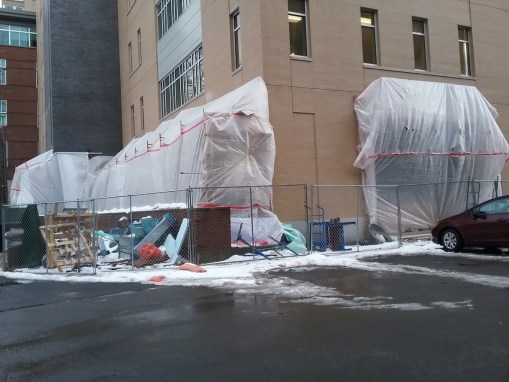
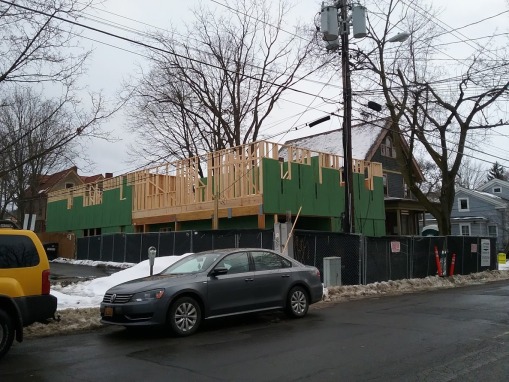
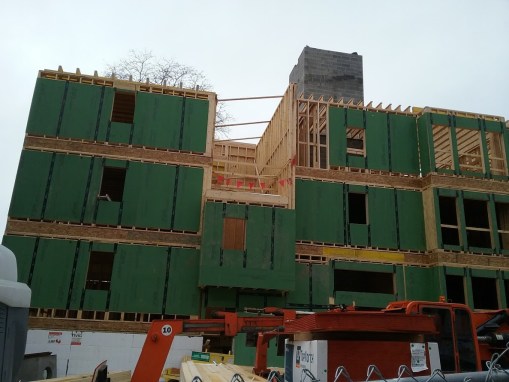
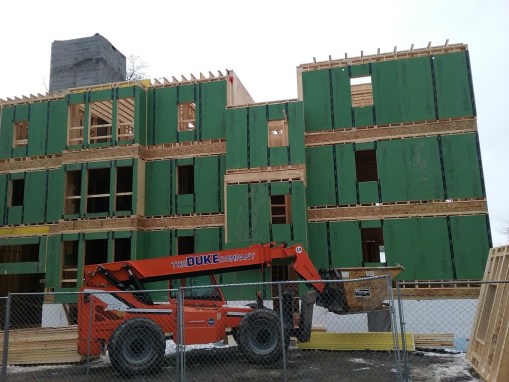
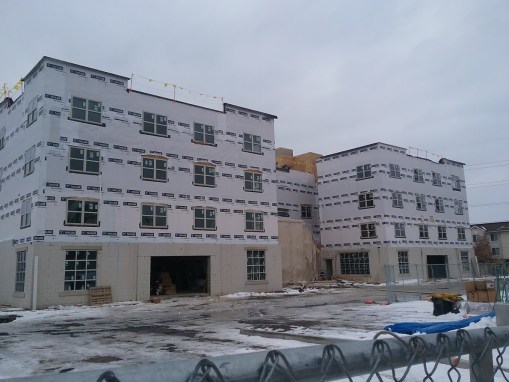
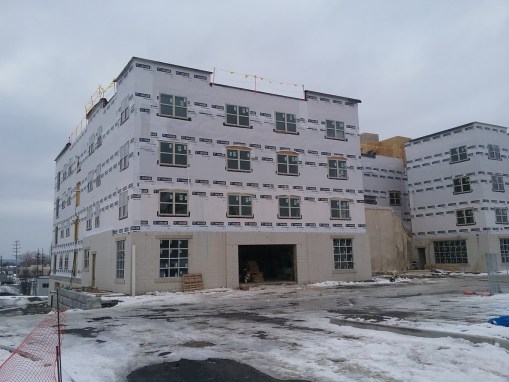
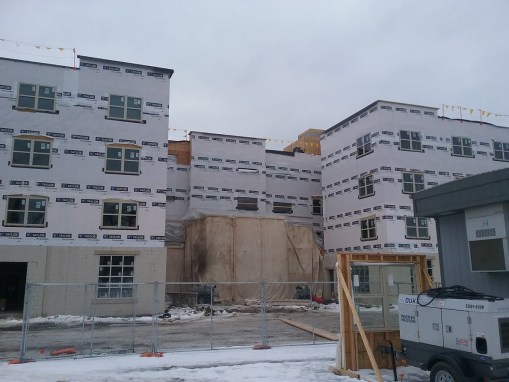
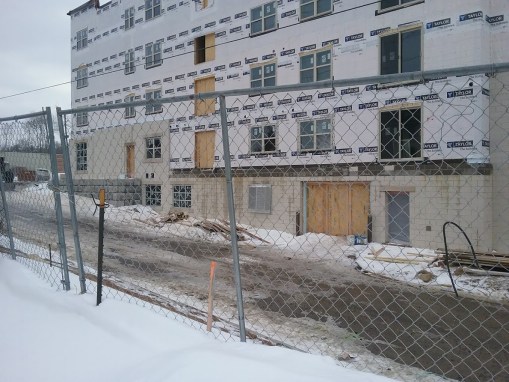
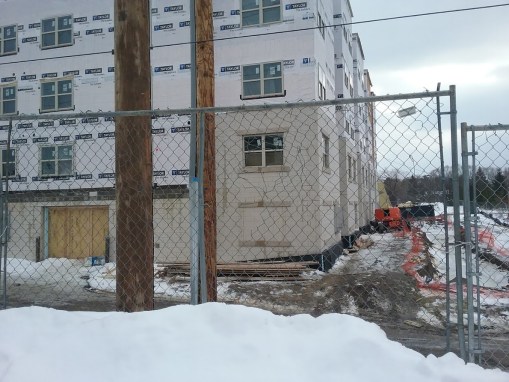
It looks like Taylor the Builders has started attaching exterior finishes to the Cayuga View Senior Living apartment building. That includes decorative cornices, brick veneer, and what appears to be a few different shades of EIFS panels. EIFS (Exterior Insulation Finishing System), sometimes called synthetic stucco or by commercial brand names such as DryVit, is a lightweight, waterproof finishing material – usually it’s two-inch thick polystyrene (rigid foam) insulating panels with an acrylic finish to mimic the appearance of stucco, along with adhesive and drainage structures. EIFS is low-maintenance; it gained popularity in the 1970s and 1980s, but developed an infamous reputation for water damage due to improper installation, which is why so many building codes are stringent about adequate drainage systems for new builds. The boards can also be damaged fairly easily by blunt-force impacts. It tends to be more common on commercial buildings than residential structures, but it is not an uncommon choice of finishes for wood-frame multi-family buildings. Other recent builds using EIFS include the Holiday Inn Express on Elmira Road, and the Seneca Way Apartments on the edge of Downtown Ithaca.

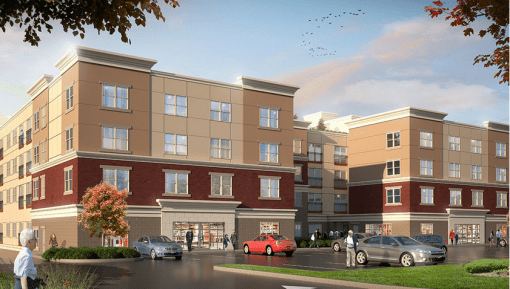
Interestingly, the top floor’s panel boards are a lighter color than the third floor – renderings have them both being the same color.

Also, note the poles and flags on the roof – that’s a good indicator that some material is being applied, probably EPDM, which is a synthetic rubber. The project team recently announced that the 87,500 SF building will not only host a rooftop garden, but a 46kW, 151-panel solar array courtesy of installer SunCommon NY of Rochester.

Current plans call for the first occupants to begin moving into its 60 apartments by the end of May (the website advertises a summer occupancy, and a leasing office is present on-site). Cornerstone Group, also of Rochester, has been selected to manage the building, whose units are reserved for those aged 55+. I’ve been in touch with the project team, and there might be a sneak preview article in the Voice a few weeks before opening.


City Centre Construction Update, 2/2018

27 02 2018

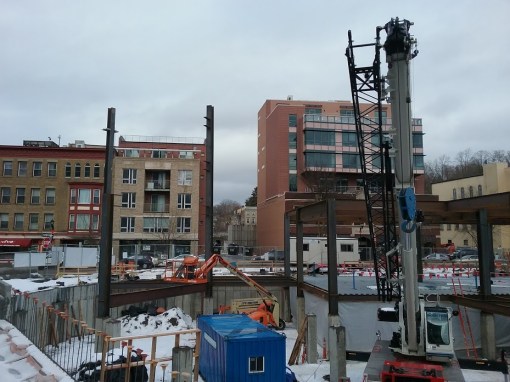
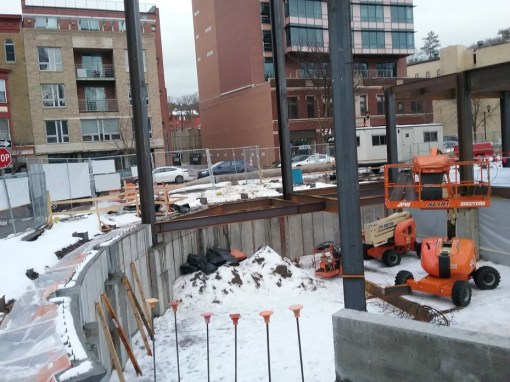
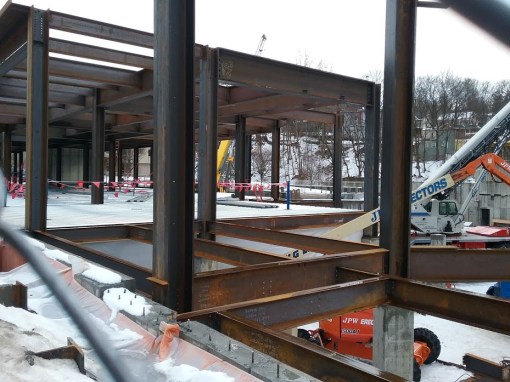
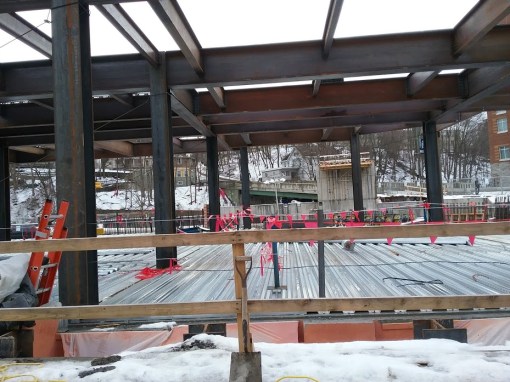
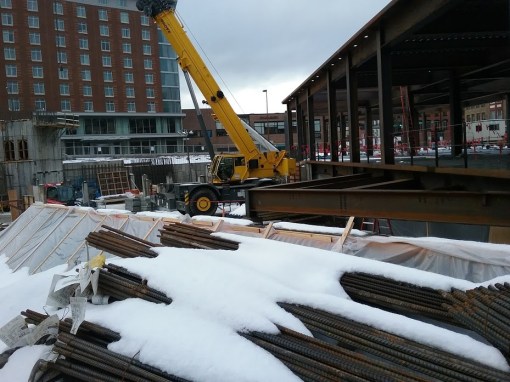
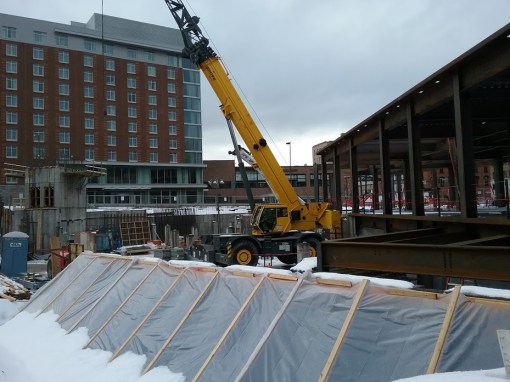
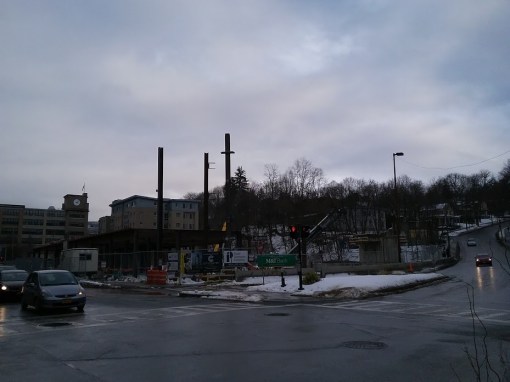
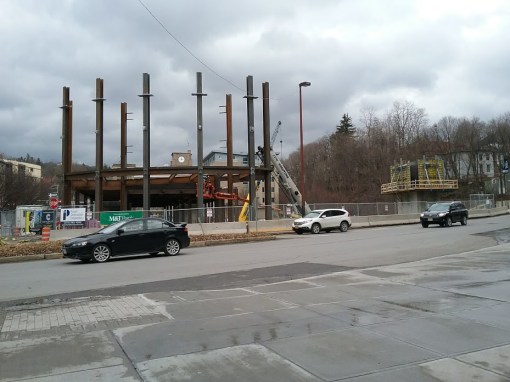
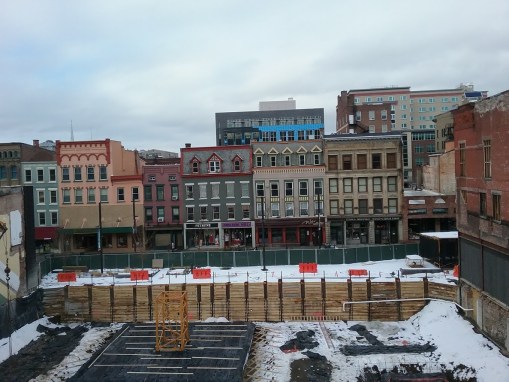
Looks like the real fun is just starting over at the City Centre construction site on the 300 Block of East State Street. With the piles in and foundation slab poured, work is starting to head skyward. The structural steel frame is being assembled, generally from east to west, beam by beam, and bolted into the concrete-encased structural support columns that will transfer the weight of the upper floors into the foundation and bedrock. Some of the exterior foundation walls are still being formed, but where it’s more further along, the steelwork has progressed far enough with its columns and cross beams that corrugated steel decking has been laid. Meanwhile, work continues on forming and pouring the concrete for the stairwell and elevator columns.

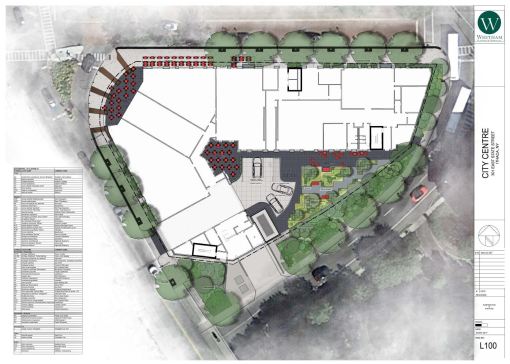
The entrance to the underground parking garage is pretty close to where the Green Street construction entrance is. The ground level will have a courtyard driveway accessed from South Aurora Street, but will not have a direct connection to the garage below (the armchair cynic suspects that will mess around with people for years to come).


Purcell Construction has a webcam set up, which shows the construction progress to date. Steel is rising rapidly on the curved northwest corner. It’s pretty fascinating to watch months of construction in 51 seconds.


One week later (2/18):

city_ctr_final_site_plan


Hilton Canopy Hotel Construction Update, 2/2018

24 02 2018

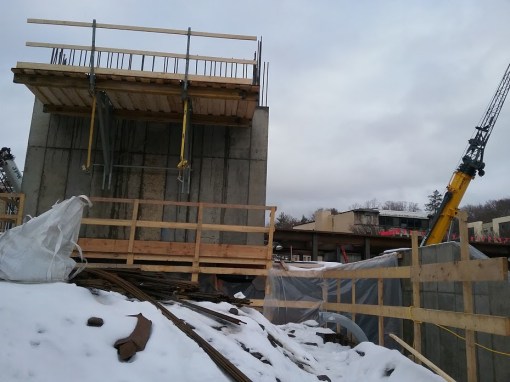
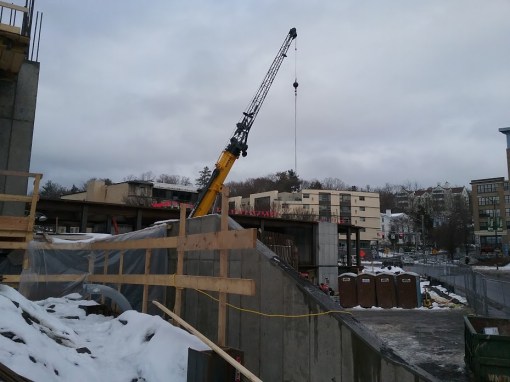
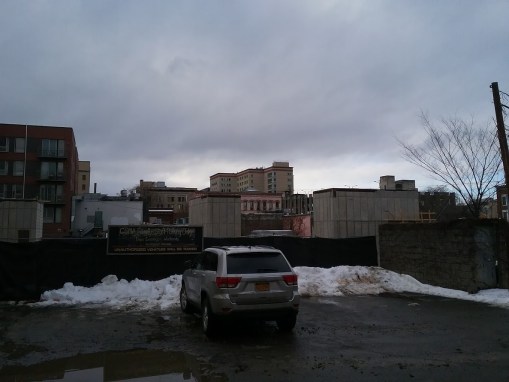
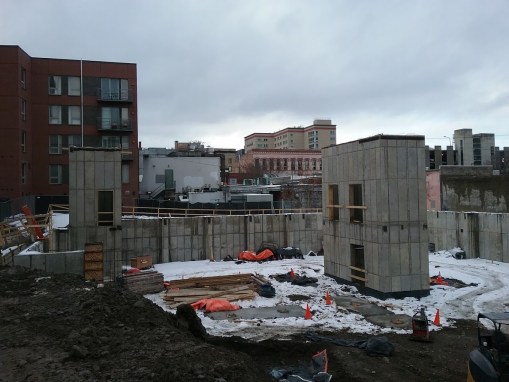
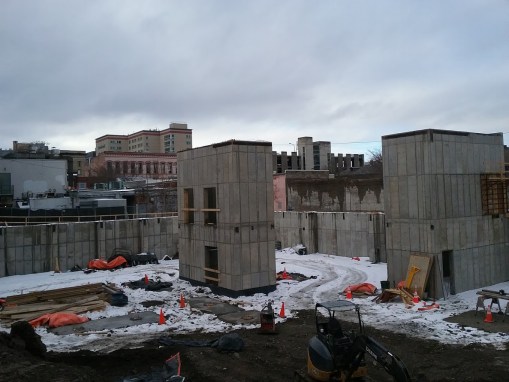
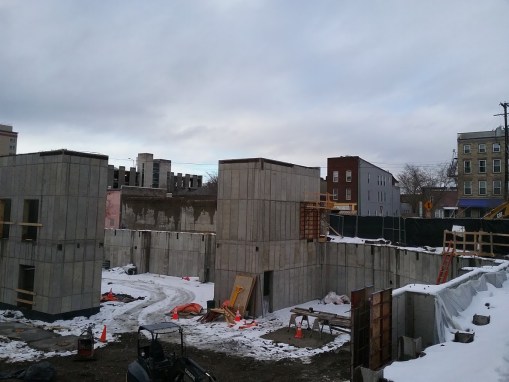
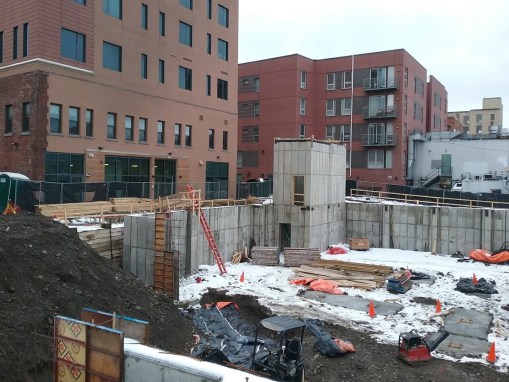
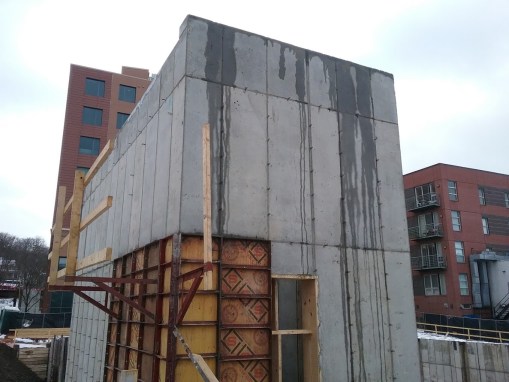
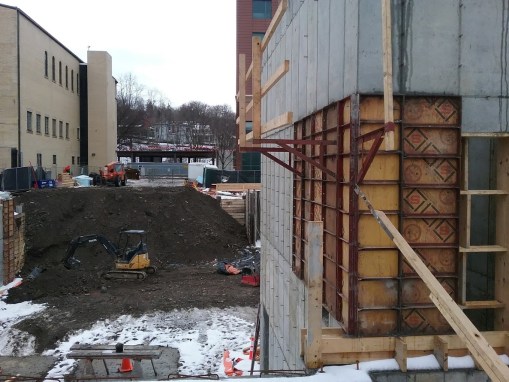
The concrete elevator core and stairwells are on the rise at the Hilton Canopy site on Seneca Way. The center one is the elevator core, the two adjacent to the foundation walls are stair columns. The foundation walls aren’t fully complete yet, forms are in place for future pours towards the southwest corner of the building’s footprint. But all in all, moving along fairly well, and the start of steel structural framing is probably not too far off.

Fun side note, it appears the Canopy brand has a dog-friendly policy. Convenient for the visitor with a four-legged fur child. Canopy, as a “neighborhood-focused lifestyle brand”, is designed to appeal to upscale travelers. It’s described as having a more contemporary focus, with an emphasis on tech-friendliness and local services beyond the hotels themselves. You probably won’t see a Canopy at a suburban highway exit. Urban spaces with a lot of street life are their key geographic segment.


Tompkins Financial Corporation HQ Construction Update, 2/2018

23 02 2018

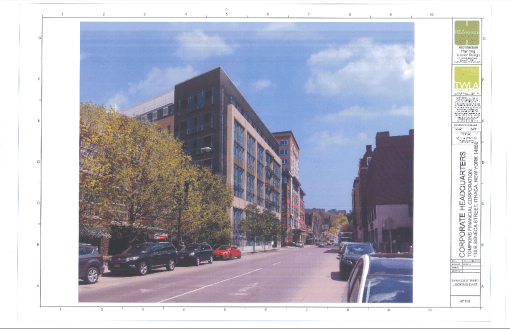
About the only major exterior facade work left on Tompkins Financial’s new headquarters is the stone veneer on the front face. I don’t have information on file on what kind of stone it is apart from a generic “stone veneer” description. It may be cast stone, a concrete masonry product mixed and molded to resemble natural-cut stone.

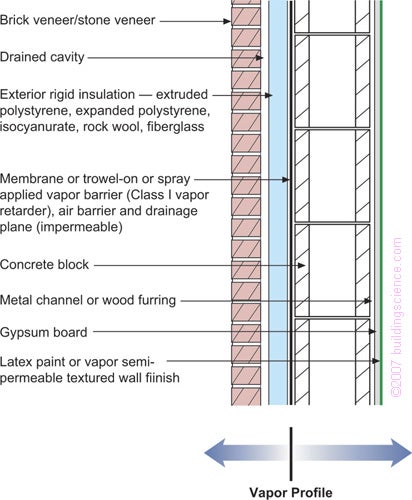
Over the blue and black air/vapor barriers, Dow TUFF-R polyiso rigid foam insulating boards are being laid between rails. Atop those, a second set of steel rails, called continuous anchors, are attached to the building. When the polyiso is attached and the rails are screwed on, the stone panels are slid into place, and then they’re mortared or caulked with silicone. There will be a gap between the polyiso and the stone that serves as a drainage cavity for water that gets absorbed and needs to be eliminated. The whole process is about keeping moisture from seeping inward and damaging the more sensitive building materials like the gypsum boards, while allowing any latent moisture in the materials (having been exposed to the elements during construction) to escape outward.

The entrance canopy is up, and steel clasps for the sunshade installs on the front are ready for when the facade is nearing completion. The lights are on, and one can presume that with three months left in the schedule, most of the big interior tasks (utilities, drywall, fixtures) have been completed. Parts of the granite base appear to be in place, but most of the ground floor and its parking area remain a work in progress.


Harold’s Square Construction Update, 2/2018

22 02 2018

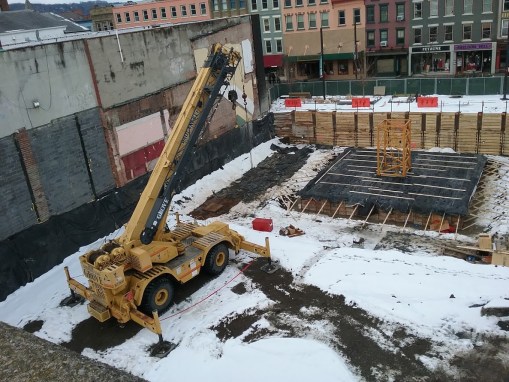
Not all cranes come on wheels. Many larger cranes are assembled and disassembled on site. A concrete crane pad is formed and poured to provide a base for the crane, with the pieces assembled upward from the base. That’s what you can see in the photos below. The size can vary depending on the size of the crane required, whether it’s free-standing or tied-in, whether there are rock anchors that can be used, and the soil upon which it and the pad will rest. Here, the crane pad will rest on a thick, firm mud layer beneath, and the concrete will be reinforced with a tied-in (meaning the grid bars are tied together) steel rebar grid. According to the Harold’s Square website, the crane pad itself will rest on a 4’6″ deep concrete, 38′ x 38′. Keep in mind, there will actually be two cranes on-site. The one mounted here will be the heavy-duty 300-ton crane, but they construction team will use a mobile 55-ton crane as well. The elevator pits are also being boxed and formed.

All the piles have been driven in at this point, and the sides of the site have been shored up as necessary with lagging and steel H-beams. The low-rise Commons-facing portion of the building will utilize an 18″ rebar-reinforced mat slab foundation, while the tower portion will have a 30″ rebar-reinforced mat slab. These pours should happen by mid-March. The structure will be anchored into the foundation, which will evenly distribute the weight and support the floors above. After the foundation is in, the only way to go is up.


107 South Albany Street Construction Update, 2/2018

20 02 2018

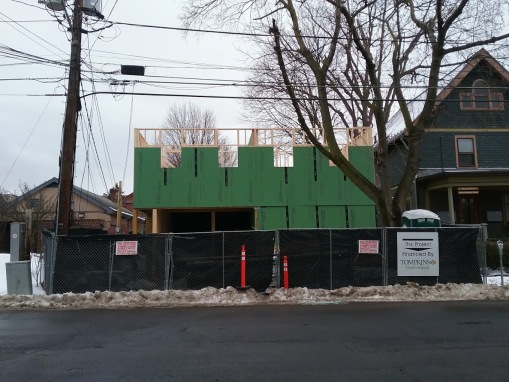
The wood frame for the eleven-unit 107 South Albany Street project is now up to the second floor. ZIP panel sheathing has started to be attached and interior stud walls have been erected. It does not appear utilities rough-ins have started on the ground floor yet.

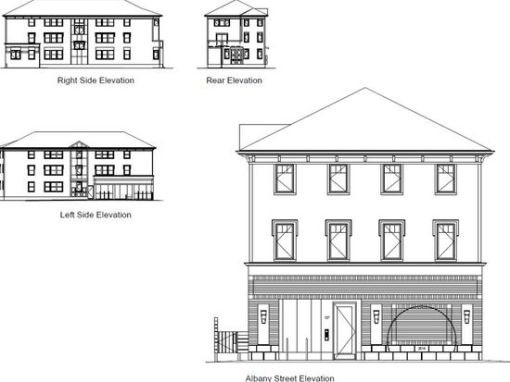
The project recently underwent a last-second but substantial design change. It doesn’t affect the interior square footage (something that would have sent it back to the Planning Board), but the aesthetic have changed up quite a bit.  The tall mid-building stair column and flat roof with cornice have been ditched in favor of a less prominent stairwell with a small gable, and a large hipped roof. The fenestration and ground floor details remain largely the same. Before and after renders are at the bottom of this post.

Marketing for the eleven one-bedroom units has started, with units starting at $1,395/month – pricey, but not Collegetown pricey. The advertisement for a “luxury unit” reads as such:

“Brand new luxury 1 bedroom apartment in Ithaca’s newest development available August 1, 2018. One block from the Ithaca Commons and a bus stop with multiple routes at your door.

The Unit:
– Is beautifully furnished
– Boasts high end finishes throughout including: custom cabinetry, quartz counter-tops, stainless appliances and a beautiful tiled bath.
– Has laundry in building
– Includes indoor bike storage
– Water, high speed internet, common area maintenance and snow removal included in this professionally managed 11-unit building

The exterior, with cornice and orthodox windows are additional architecturally designed items that add to the beauty of the building. No detail has been overlooked. A must see as downtown Ithaca continues to grow. Photos are from other recent projects and are for illustrative purposes. They represent the types of finishes you will find within apartment.”

It’s a bit of a risk, since the real estate waters are generally untested west of Ithaca’s downtown, although a couple other small projects are planned along the State Street Corridor. Long-time residents also worry about gentrification encroaching on the edge of the Southside neighborhood. However, city planners are pushing development westward from the downtown core, and the possibility of a government center on the Central Fire Station site a block away means that there may soon be a large employer practically at its doorstep. The Facebook ads are pitched with an eye to students, but that seems a stretch; even with the buses, this is a bit too far out for many Cornell or Ithaca College kids to consider, and it’s double the per bedroom price of shared South Hill, Fall Creek or outer Collegetown units.

The developers, the Stavropoulos family, don’t seem especially inclined towards any one neighborhood. Previous projects include a pair of duplexes in Fall Creek, a new home on Linn Street, and home additions on South Hill. The Stavropoulos family’s next project after this would potentially be the duplex pair at 209 Hudson Street on South Hill, if approvals are granted. Arguably, South Hill is a safer bet financially thanks to Ithaca College, though becoming less amenable due to the concerns from permanent residents regarding quality-of-life manners, which has led to a new zoning overlay to rein in infill in that neighborhood.


The Lux (232-236 Dryden Road) Construction Update, 2/2018

19 02 2018

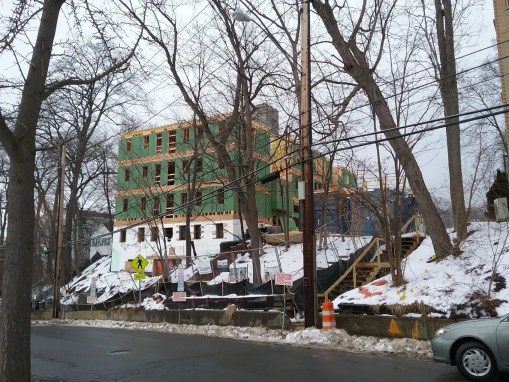
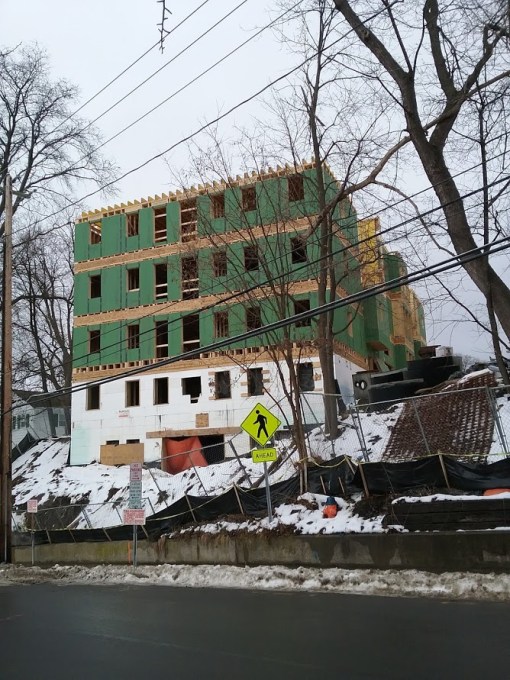
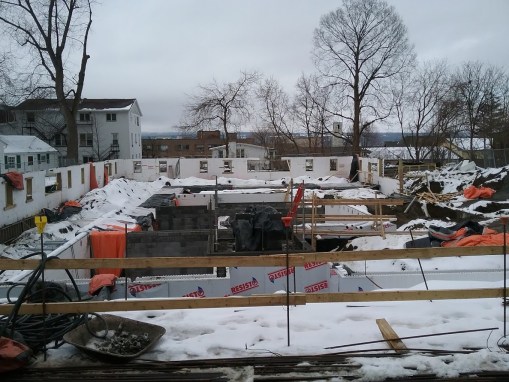
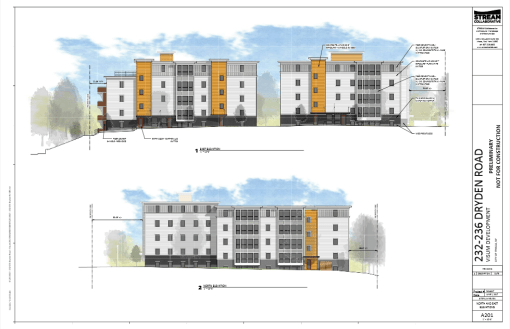
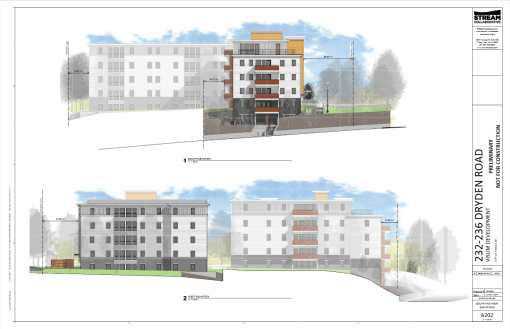
Things continue to move at a good clip over at “The Lux” at 232-236 Dryden Road. It looks like the insulated concrete forms (ICFs) have acquiesced to standard wood framing and ZIP panels on the upper floors. The building facing Dryden Road, 232/The Lux South, has commenced with framing of four of its five floors, and the elevator core/stairwell stands at full height (zoning only allows four floors/45 feet, but its a sloped site, so technically that bottom floor is a partially exposed basement level). 236/The Lux North has begun work on its basement level with the construction of ICFs covered with a vapor and water-resistant barrier (Resisto), and it appears that the first blocks for an elevator core/stair column are being assembled.

There might have been some internal reconfiguration. Site plan review documents noted that 232 Dryden will have 20 units and 53 bedrooms, and 236 Dryden will host 40 units and 138 bedrooms. But, a recent post on Visum’s facebook page suggests the project will have 207 bedrooms, not 191 as originally conceived. Everything appears to be on track for an August 2018 occupancy.

Even with the expected Cornell dorm additions in the next three years, the Lux’s location in inner Collegetown gives it an advantage over more remote housing options – students/parents with deep pockets will often pay more to be next to campus, while the amenities and worry-free living help seal the deal (worry-free in the sense that there’s no “deferred maintenance” to be concerned with when the units are brand new). Rents here are going for $1,200-$1,300 per bedroom, though they have a promotional running right now for 10% off rent for the first month.

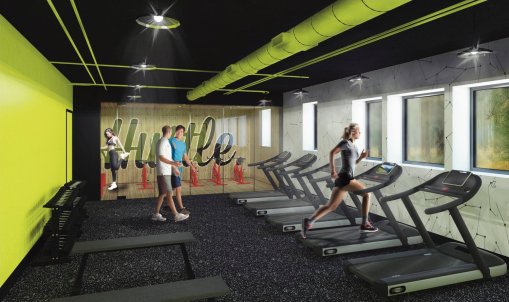
It appears there was an unusual but interesting contest held by Visum that invited students to compose interior designs for the three common rooms in the complex. Registered applicants (individual or group) received floor plans and interior documents to aid in their designs, and had about eight weeks to submit their final plans (December 2nd – January 21st). The winning team gets $2,500 and a building lounge will be named in their honor. Snagged from the website and included below are some mockups of the gym, a study room and a commons space.


210 Linden Construction Update, 2/2018

18 02 2018

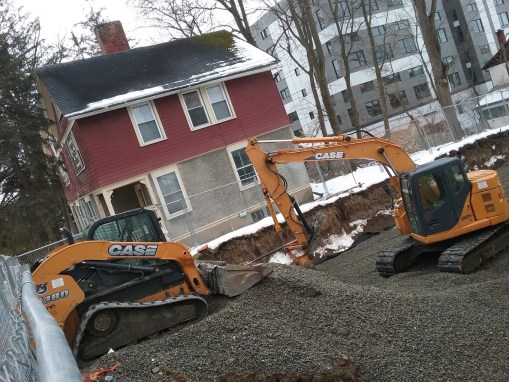
So here’s some good news – 210 Linden Avenue is moving forward once again. The city’s Board of Public Works (BPW) held a special meeting on the 30th that would create a loading zone in front of 210 Linden Avenue. This is important because the new state fire code restrictions say no construction can occur along Linden since the street is no longer considered wide enough. By eliminating the parking space in front of 210 Linden and replacing it with a loading zone, it created a “wider” street since a fire crew would no longer have to worry about parked cars along the street frontage. This made it easier for the project to obtain a fire code variance from the state.

BPW is ostensibly not a fan of the arrangement, but given that the developer (Visum) was notified by the city of the change after the existing building had been torn down, they were willing to grant the loading zone given the unique circumstances.

Well, mostly unique. One other project was subject to the the same issue under very similar circumstances – Novarr-Mackesey’s 238 Linden Avenue. That project team is also asking for a loading zone during this month’s BPW meeting, and hopes to be granted a state fire code variance as well (and 210 Linden gives them reason to be optimistic). While every future project planned for Linden is now in limbo, it appears likely these two will be able to move forward.

Also in the good news category, a state fire code variance was granted for another Visum project, 118 College Avenue, under the expectation that the city and NYSEG will follow through with their plans to bury the power lines on College Avenue in the next two years. With the lines to be buried relatively soon, the state felt comfortable granting the variance for a building taller than 30 feet (118 College is just under 45 feet).

The buildings are aiming for an August 2018 completion. They are wood-framed structures, which in comparable economic circumstances, can move along faster than a concrete or steel. Even then, it’s still going to be a tight deadline for William H. Lane Inc.

A glance at Zillow shows that the basement 1-bedroom unit appears to be spoken for (the basement unit was a modification to the original plan, perhaps because many amenities will be shared with its siblings 201 College and “The Lux” at 232-236 Dryden Road), but the nine 4-bedrooms/2-bath units (1,365-1,440 SF) have not. Zillow says there are ten 4-bedroom units – that doesn’t seem correct. They are going for $4,400 apiece, or $1,100 a bedroom. That’s actually a sizable price drop from the $5,000/month they were being offered for before the fire code debacle.


Cayuga View Senior Living Construction Update, 1/2018

3 02 2018

Somehow, these sat in my drafts folder for a week after they slipped off the radar. Anyway, Cayuga View Senior Living is topped out, most of the windows and entryways have been fitted, and much of the exterior has been wrapped. Exterior finishes include concrete masonry unit (CMU), face brick and fiber cement panels.

Worth a quick note, the property management here will be from Cornerstone Group of Rochester, the same firm developing the 72-unit Milton Meadows affordable housing at the Lansing town center. Some properties they own and manage, others like Cayuga View are managed on behalf of a client (the Thalers, in this case).

Touted amenities include “Hot Water, Basic/Standard Cable, Designer Kitchens, Energy Efficient New Construction, Trash Removal, Rooftop Garden Access, 24/7 Maintenance, Community Room, Fitness Center, Library/Computer Room, Secure Intercom, Wi-Fi Campus, [and] 24/7 Site Monitoring”, under the marketing moniker “Discover New Freedom”. One of the senior sub-markets the Thalers hope to target are snowbirds (like themselves), for whom they expect to rent the units year-round but only spend the warmer months and holidays up in Lansing. For $1,500-$2,775/month, that’s a lot of money to give up for a place to not live in all-year round. But that’s just one millennial’s shallow-pocketed perspective.

Taylor the Builders plans to deliver the 87,359 SF, 60-unit building sometime this spring – probably later in the season, perhaps May or June. No details are publicly available on the percent of units pre-leased, or for occupants of the twin 1,340 SF commercial spaces on the first floor. Background info on the project can be found here.


News Tidbits 1/27/18: The Shutterbug

28 01 2018

1. Let’s do some houses of the week. Above, the four new homes Tiny Timber has constructed at 1624 Ellis Hollow Road in Dryden. Each home lot is a little over an acre. The subdivision was approved last spring for the wooded parcel a couple miles east of Ithaca, and since then, Tiny Timbers has been busy selling units and lots to buyers. Two were sold in August, one in September, and the last in December. Therefore, this is 100% built out, since the last lot is a conservation lot at the rear (north) end of the property, designed to protect Cascadilla Creek. The units utilize a shared driveway, with spurs for each home. If you want to look at the homes more closely, click to enlarge the photos.

A similar plan is underway just up the road at 1540 Ellis Hollow Road, where Tiny Timbers will take a long, narrow undeveloped property and subdivide the land into five home lots and a rear (north) lot protected by a conservation easement. These homes will also be served by a common driveway. This proposal is still going through the review process, and when approved, the time frame for build-out will probably be similar. The home designs are the work of local architecture firm STREAM Collaborative.
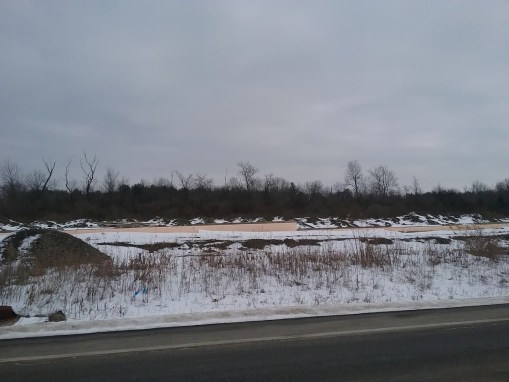
2. Over in the village of Lansing, work has started on the next six-unit (hexplex?) at the Heights of Lansing property off of Bomax Drive. It appears that the foundation slab and footers have been formed, poured and insulated with foam boards. This is the first new townhouse string to be built in the development in six years.

Several reasons have been given for the long pause. The developers have said that the natural gas moratorium disrupted and delayed build-out plans. Secondly, the patriarch of Forest City Realty/IJ Construction, Ivar Jonson, passed away in 2014. More recently, the Jonson family (his wife Janet and daughter Lisa Bonniwell) were embroiled in a lawsuit to prevent a zoning change that would allow a market-rate apartment complex to be built down the road. Bonniwell was incensed enough to run for mayor in 2017 in an effort to stop the proposal, but did not win the election. The zoning change has been approved and the apartments were approved in October, but the Park Grove project has yet to move forward.

The townhouses were approved along with the last single-family home permit; there were some rather testy exchanges regarding sewer line easements and the installation of street lighting in conjunction with those permits. The lighting has to be in by March 2019.

Assuming these are like the other townhouses, expect them to be 3-bedroom units, low 2000s SF with garages, and to go for $350-$450k when they’re finished several months from now.

3. Dryden’s new Rite Aid is coming along. Fully framed, and the plastic in the window openings is likely intended to allow construction crews to work indoors without exposure to the fierce winter elements. The curbing and paving is complete in the parking lot, and it looks like they install metal bollards all around the lot’s perimeter to keep the less-than-attentive from driving into the wall (something that happened to the Nice N’ Easy in my hometown no less than three times before they finally put some in). It is still planned to open in March.

4. Over in Fall Creek, it appears a small apartment building is in line for some major renovations. 1002 North Aurora, a four-unit building built in 1898, had been on the market for $395,000. The seller had owned the property for 24 years, and the price was only slightly above the assessed value of $375,000.

On Friday, the property sold for $400,000 to an LLC associated with local developer Modern Living Rentals (Charlie O’Connor et al.). The same day, a building loan agreement was filed from Tioga State Bank to the LLC for $712,000. A lot of that was going towards the land acquisition, and once soft costs are deducted as well, the loan is $287,000.

MLR tends to be very transparent about their plans, and a glance at their recently updated website shows the purchase and a ‘information on this project coming soon’. However, they already uploaded the interior renovation plans from STREAM Collaborative. It’s a very thorough interior renovation, and it appears to complete change interior floor plans, with new bedrooms (net gain of one?) as well as new kitchens, bathrooms, and fire rated ceilings. Exterior changes appear to include a renovated fire escape staircase, a couple new windows on the third (top) floor), and a new skylight. While old, this apartment building is a hodge-podge of additions from decades past, so let’s see what a renovation can do to clean things up. It’s plausible the renovations would be complete by August, so they can appeal to students as well as the general market.

Quick aside, MLR has a few other “future developments” posted, though none that readers here aren’t already aware of – the 42 townhouse units at 802 Dryden, the proposed 201 North Aurora / Seneca Flats that isn’t moving forward for a while yet, and 217 Columbia, the duplex that unintentionally set South Hill into an uproar. 217 Columbia should be completed this year, and 802 Dryden in summer 2019.

5. It looks like Amici House is finally moving forward. The project, located at 661-701 Spencer Road, received a $3,732,469 loan from the New York State Homeless Housing and Assistance Corporation. The money was announced back in April, and appears to be getting disbursed now.

The five-story, 20,710 SF (square-foot) project, approved by the city of Ithaca last January, calls for 23 studio housing units for homeless or vulnerable young individuals in the 18-25 age range. Along with the units and office/function space for local social services non-profit TCAction, the plan also calls for a 7,010 SF early heard start facility, called the “Harriet Gianellis Childcare Center”, that will house five classrooms, kitchen and restrooms, and an outdoor play area. The childcare facility will serve 48 low-to-moderate income families and create up to 21 jobs.
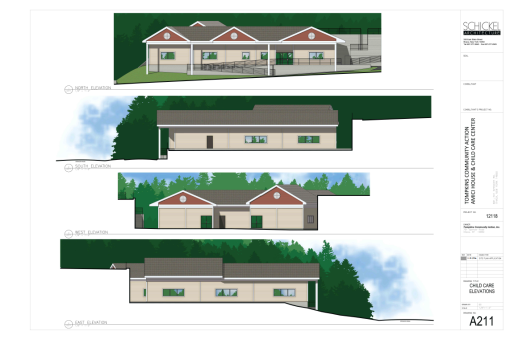
Recently, the HGCC applied for a low-interest loan from the IURA, $90,690 to help cover unanticipated moving expenses associated with the project. TCAction thought they could stay on-site during construction, but the contractor said otherwise, so they’ll be 609 W. Clinton while the new Amici House is built. The loan says it will generate three jobs, but that’s more a technical stipulation than an actual figure associated with the project. The funding for the childcare appears to be separate, $1,325,000 already approved by the state, $603,000 from M&T Bank, and $84,200 from a standing IURA loan. It is fully funded, although it is not completely clear if it will be built concurrently with the housing (the likely answer is yes).