802 Dryden Road Construction Update, 11/2018

21 11 2018

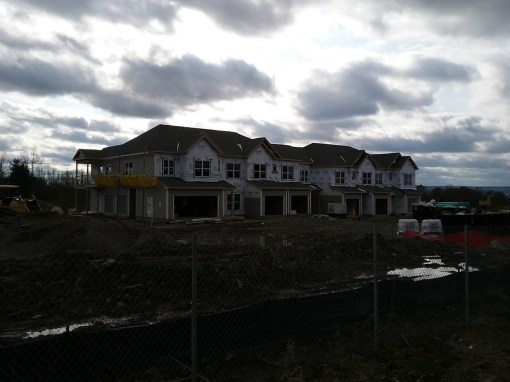
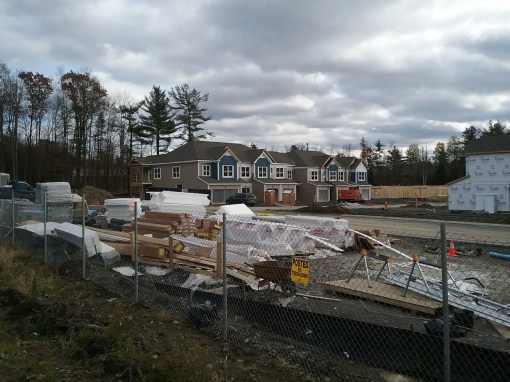
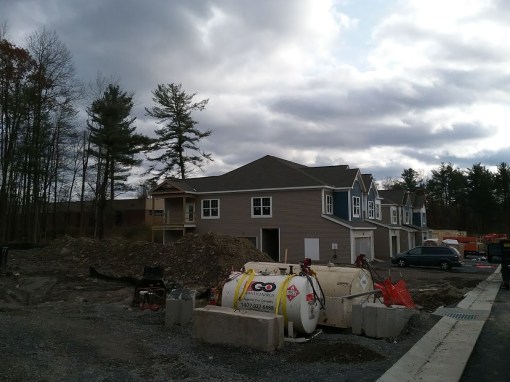
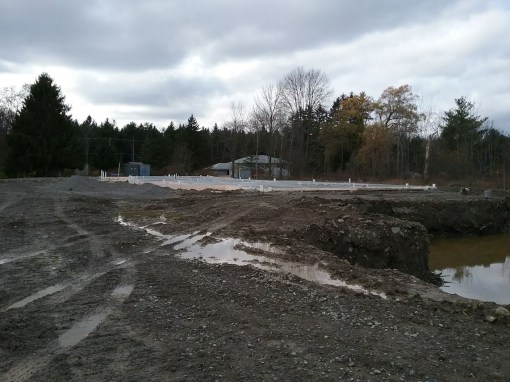
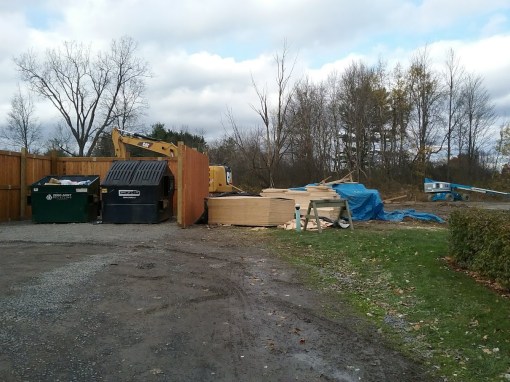
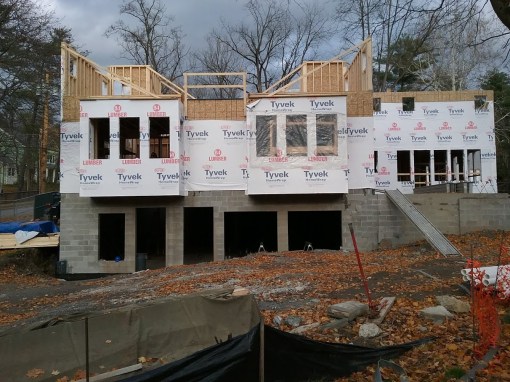
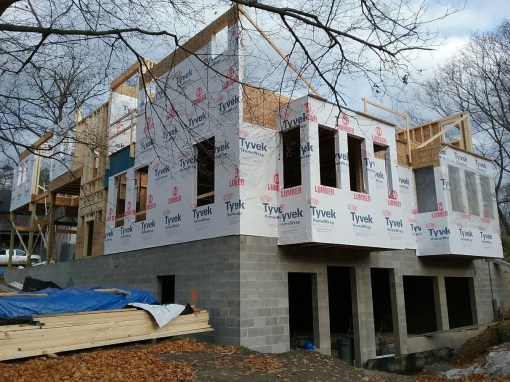
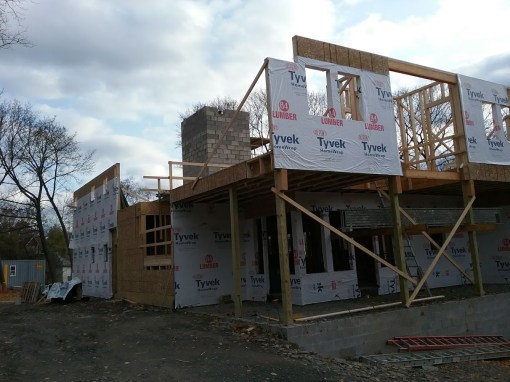
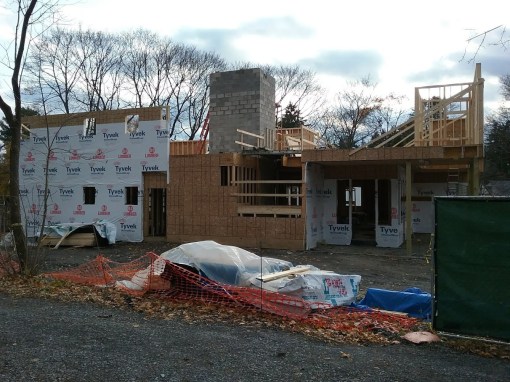
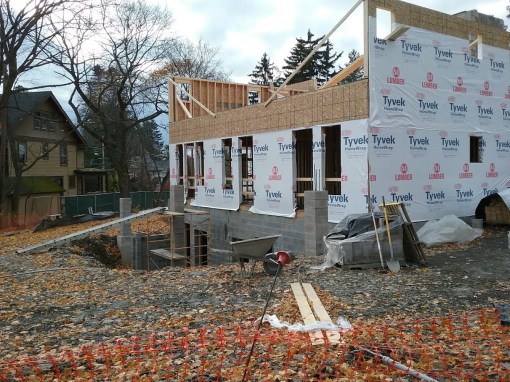
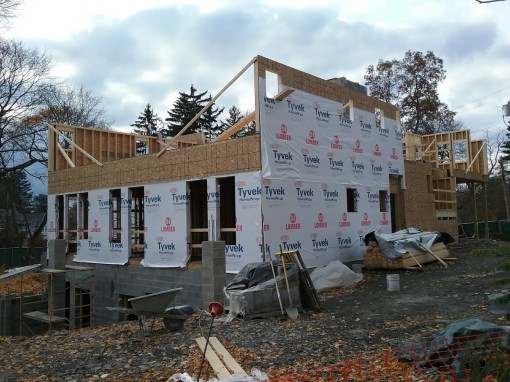
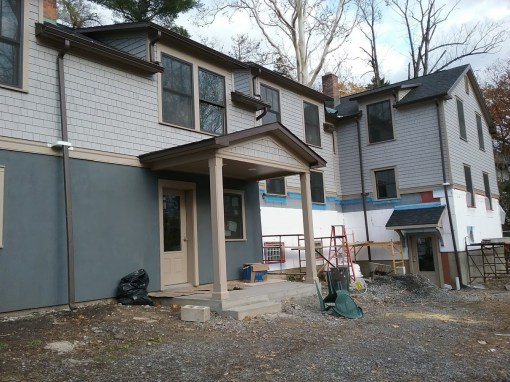
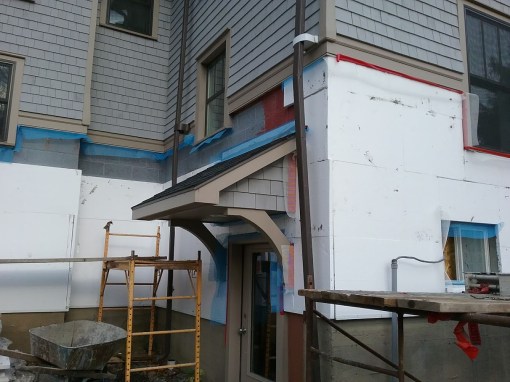
802 Dryden Road, also called “Ivy Ridge”, was originally the product of local developer Charlie O’Connor, CEO of Modern Living Rentals. However, just as site preparation and underground utility installations were getting underway late last summer, the project changed hands. On September 12th, the site and construction plans were sold for $2.075 million. Filed on the same day was a construction loan from M&T Bank to pay for construction of the project – a rather substantial $8.6 million for the 42-unit, 108-bedroom townhouse complex. The buyer’s LLC was linked to a suburban Pittsburgh address for Matthew Durbin, and a little online searching indicates Durbin is a Cornell Johnson School (MBA) Alumnus, a former investment banker turned business executive. In short, an outside investor but with a demonstrated familiarity with the Ithaca area, business acumen and the money to make things happen. The sale does not appear to have altered the plans (any revisions would need to be approved by the town of Dryden) or the timeline.

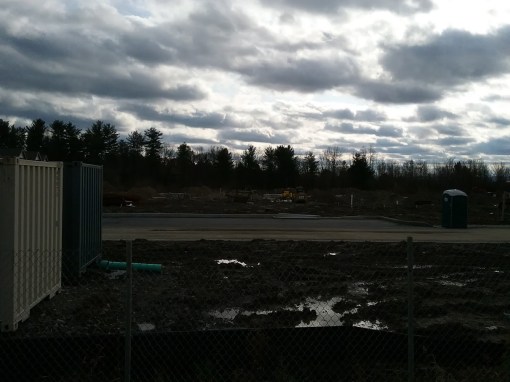
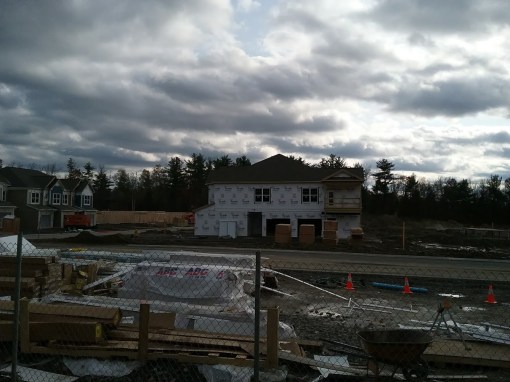
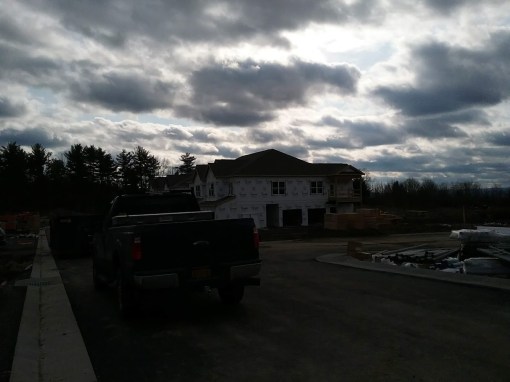
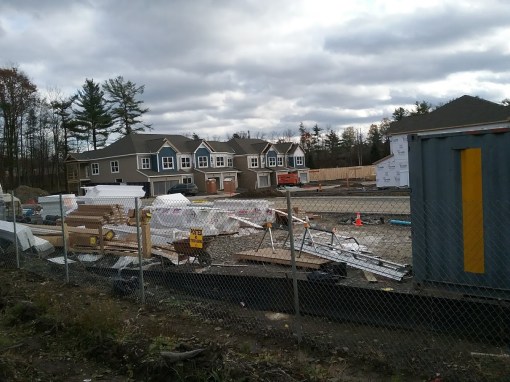
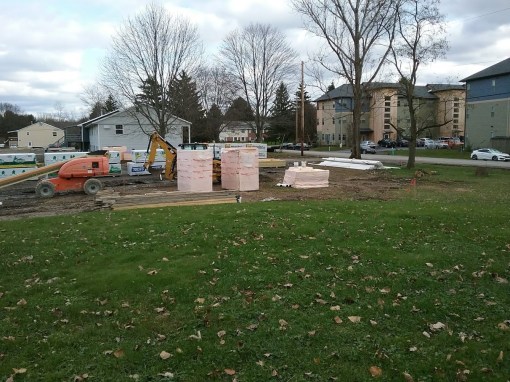
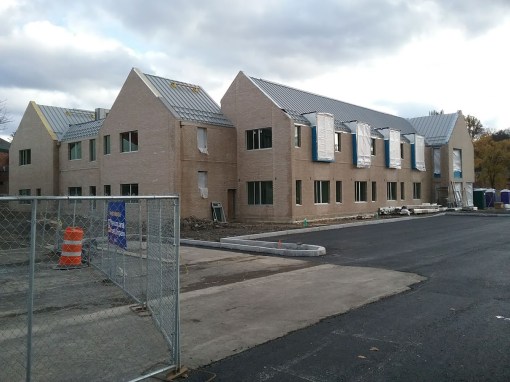
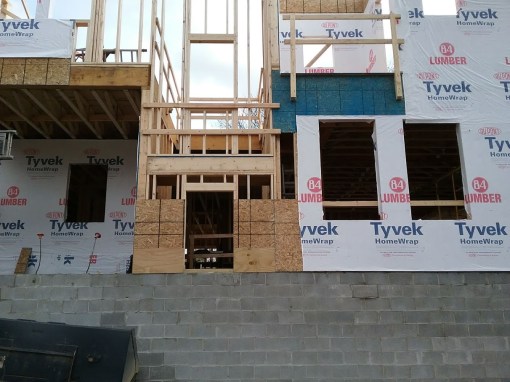
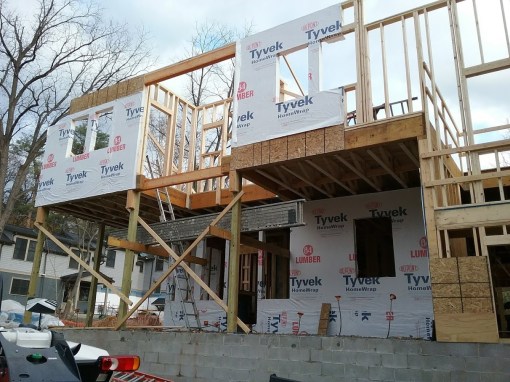
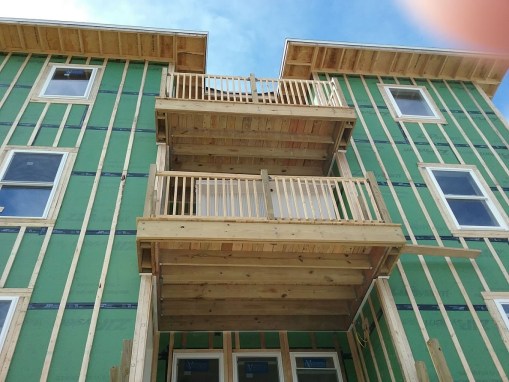
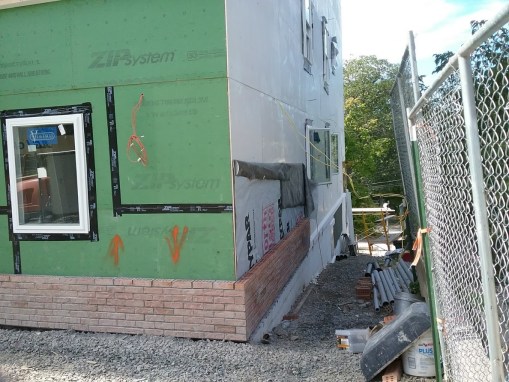
Framing has started on one of the townhouse strings (each string is seven units apiece) and foundation work has started on a second. The plan is to have the units ready for occupancy in time for the Fall 2019 academic semester – being right next to the Cornell Arboretum, it’s a literal stone’s throw from the edge of Cornell campus, and is intended to appeal to graduate or professional students (especially students of the veterinary school, whose location on the eastern edge of Cornell campus has left them with few walkable options). STREAM Collaborative designed the units, Taitem Engineering is on board as a structural engineer, and Granger Construction of East Syracuse is the general contractor.

A full description of the project and its history can be found here.


East Pointe Apartments Construction Update, 11/2018

21 11 2018

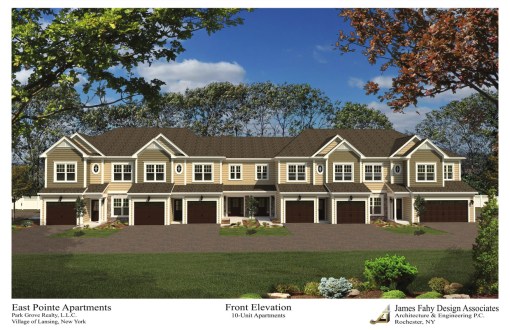
The design of the townhouse strings underwent some pretty substantial changes. This was what was originally proposed and approved, on Park Grove Realty’s website:

And this is what’s being built, according to the apartments.com listing:

The new render was posted online Monday at 10:30 AM according to the image properties, so this is quite literally “hot off the press”. It would appear that active marketing for the apartment began on several real estate websites (Zillow, Trulia, Realtor.com) this week.

Same architect, but very different designs. The number of units remains the same per string (ten each), but it’s not clear if the unit counts by bedroom has been modified. According to the rental advertisements, the prices will be in the upper/premium side of the market, though not as high as some of the luxury units in Ithaca: one-bedrooms will be $1,695-$1,795/month, two-bedrooms $1,875-$1,975/month, and three-bedrooms $2,345/month. Units come with fiber optic internet connections, cable TV, USB ports in outlets, vinyl plank flooring, 42 inch cabinets, fitness room and lounge access, pool/clubhouse, granite countertops, stainless steel appliances, washer/dryer, ample parking and smaller dogs and cats (for a $299 initial fee plus another $35/month).

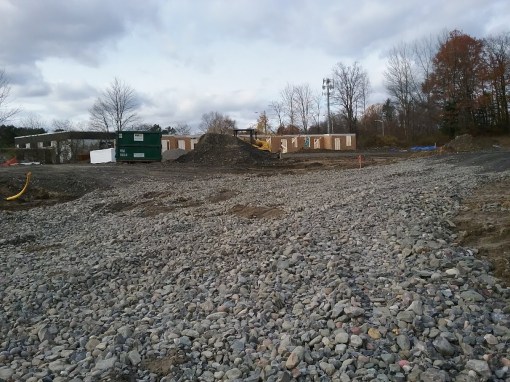
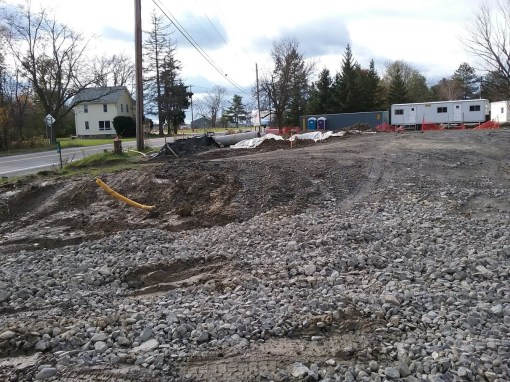
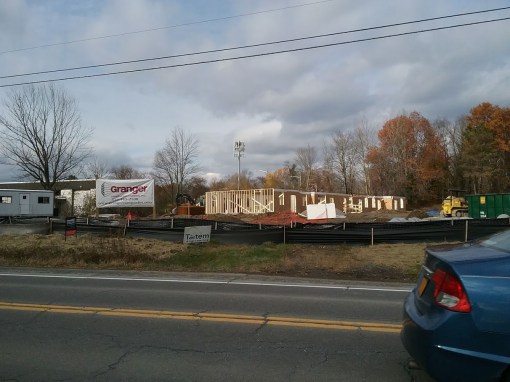
DGA Builders has continued building these out at a very quick pace. It appears that at least three of the ten-unit apartment buildings have been fully framed, a fourth is starting framework, and at least a few more have foundation work or site grading underway. The loop road (named “East Pointe Drive”) is partially complete, and the underground utilities (sewer, water) appear to be in place. Given the units that have been built, it looks like the only significant distinguishing factor between strings will be the secondary vinyl siding color – noting the Spruce Green in the render and Pacific Blue in the most complete townhouse string. Most likely, this is Saint-Gobain Certainteed vinyl siding. The first units in the 140-unit townhouse complex are expected to hit the rental market this April.

A full description of the project and its history can be found here.

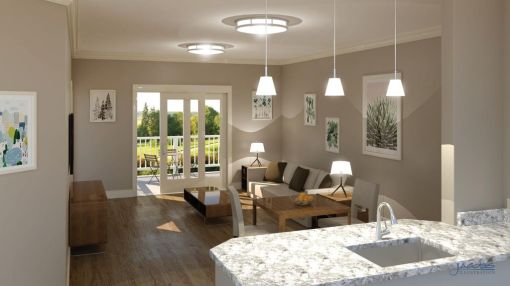
Interior renders:


Village Solars Construction Update, 11/2018

21 11 2018

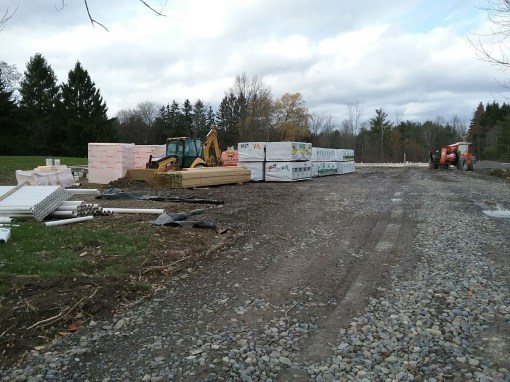
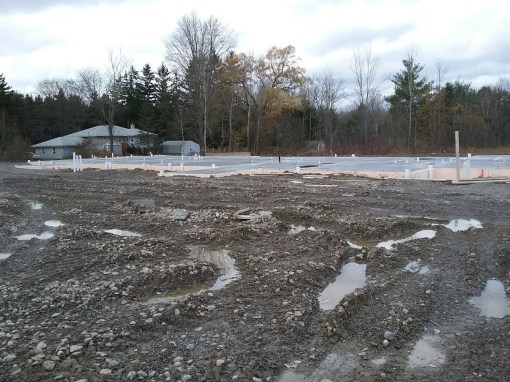
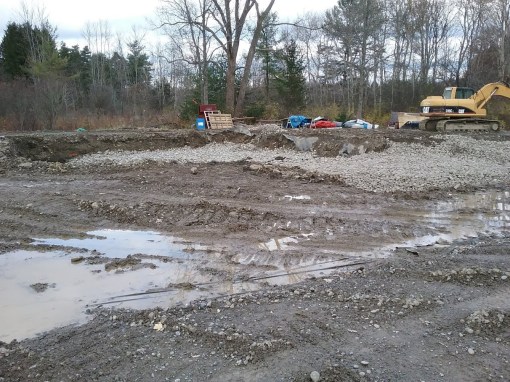
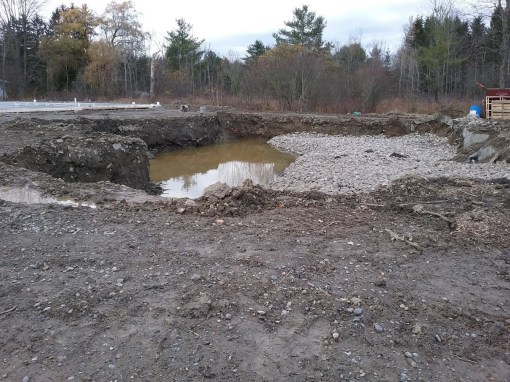
The Village Solars complex is a development project that never truly stops. Lifestyle Properties (the Lucente family) only builds two or three new apartment buildings each year, but after four years of construction, it has resulted in quite a large development. A visit to the site shows the next buildings are just getting underway – based off the latest site plan, it appears to be Building “L” and Building “K”, which is a little out-of-order in that these two were supposed to built in 2020-2021, after another phase that so far remains unbuilt. Building L’s foundation has been formed and poured, with all the utilities poking out of the concrete, to be routed into the framing as the building goes up; Building “K” looks like it’s still in the excavation stage. The crushed stone helps with drainage, site leveling and preventing cracks in the concrete due to settling. That water will be pumped out before the footers are poured.

Each of the two buildings, which have slightly different designs, is designed to host 24 units – 3 three-bedroom, 6 two-bedroom, 3 one-bedroom, and 12 of the one-bedroom “micro-units”, which are 400-500 square feet. Expect a mid-2019 opening for the pair. Next year’s phase likely involves one more apartment building in Phase “4”, as well as the construction on their mixed-use community center building (Building “F”), which will go in that empty space in the last photo. The town of Lansing’s Village Solars amended PDA law (#6 of 2016, to be technical) says the developers are only allowed one more building to be built before the community center must be constructed, and that the center must be built by the end of 2020.


Cayuga Medical Associates Construction Update, 11/2018

14 11 2018

Okay, let’s be frank. Given the original plan to open to open this project in Summer 2018, the new Cayuga Medical Associates building is running well behind schedule. It’ll be a substantial effort to have it ready for occupancy by the start of 2019, and given all that still needs to be done, early spring may be more likely for the 28,200 SF medical office building.

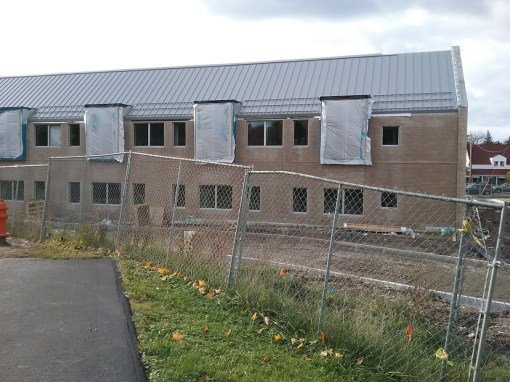
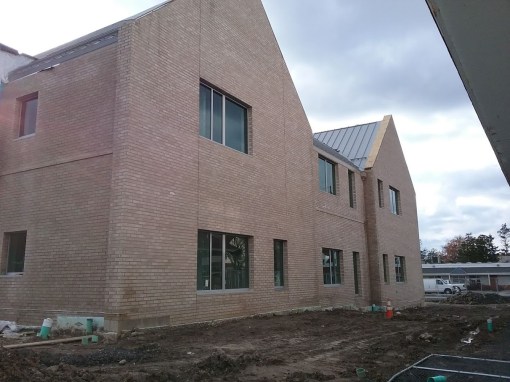
Most of the smaller windows are in place, but the storefront-style windows, with expansive panes of clear and translucent glass, have yet to be installed. None of the doors appear to have been installed yet either. Some of the aluminum coping has been attached to the edges of the roof, and most but not all of the standing seam metal roof is in place. The entrance canopy is also on the to-do list. Note that the blue waterproofing around the window openings will be covered over with the same dark grey aluminum coping used on the roof, while those waterproofed areas within the rough window openings will be faced with spandrel glass.

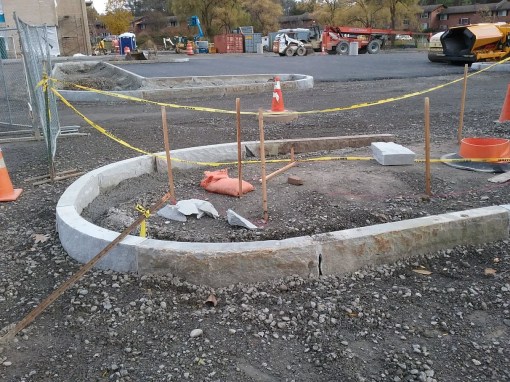
The off-white face brick does seem to make the building appear less imposing. Its size was one of the major concerns when going through the Cayuga Heights planning board. It’s hard to say how the interior is coming along, but I’d guess most utilities rough-ins are either complete or in progress (and many of the rough openings are sheathed in plastic to limit the chill and disruption of November’s winds). Most of the curbing and some of the new parking lot paving has been finished, but no plantings are in place yet, and at this late, cold point inthe season, the development team may just wait until early spring to fill out the landscaping.

Reminds me of my brother’s cars. Don’t drive like my brother.


105 Dearborn Place Construction Update, 11/2018

12 11 2018

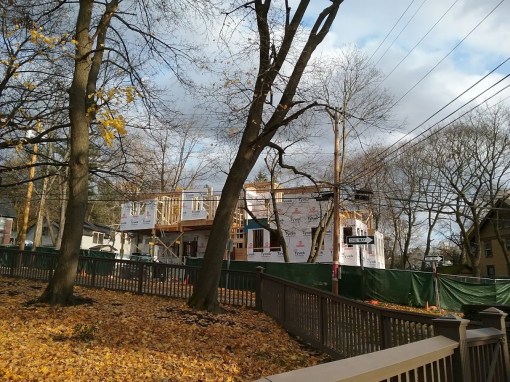
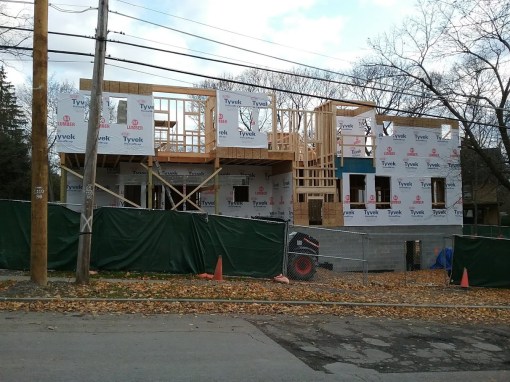
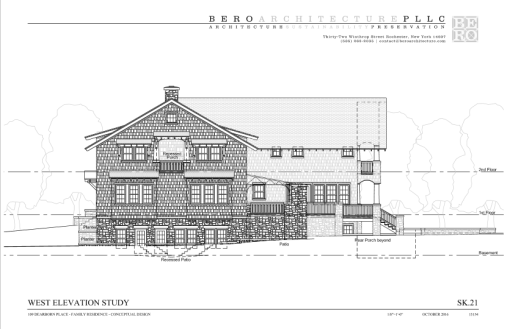
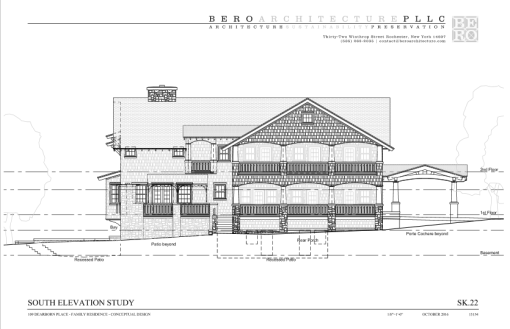
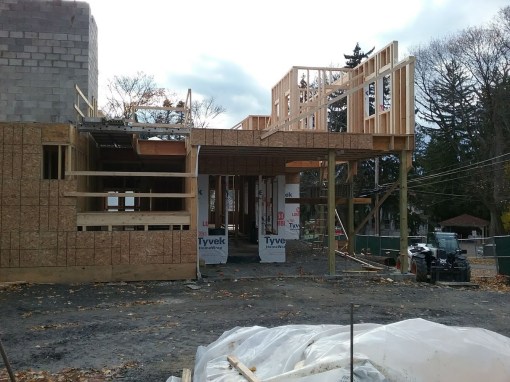
Framing continues on the future 105 Dearborn Place. Being a large Craftsman-style structure, and because rough openings are sometimes covered by housewrap until it’s trimmed and stapled, it can be a bit tricky to see how the built product compares to renders – best advice is to wait until framing is complete to see if there are any design changes. Many contractors have made the switch over to ZIP Panels for sheathing, but it looks like Schickel Construction is using traditional wood sheathing with Tyvek housewrap – each has its pros and cons, so it boils down to what the builder is comfortable with given the needs and budget for a project. Housewrap would arguably offer more flexibility, but it may be a slower process overall, leaving it susceptible to wind damage if not completely fastened.

Most of the structure is wood-framed, but the basement level uses concrete masonry walls, as does the fireproof stairwell. If this were a skilled-care facility (for example, a nursing home), state code would require the whole building would need to be built of fireproof materials like gypsum. But since this is independent living, the presumption is that residents are coherent and mobile, able to recognize danger and escape to safety in the event of a fire emergency. The masonry base will be faced with a cultured stone veneer, and the upper levels will be covered with cedar shakes after the building is fully framed and wrapped. Background info and further details on the 12-bedroom/16-bed  senior living facility can be found here.

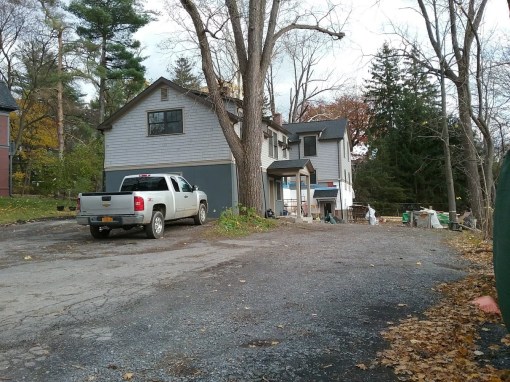
As a bonus to this post, a few photos of 109 Dearborn are included at the end. The new dormers are in and the siding is going on – cedar shakes not unlike those to be used on 105 Dearborn. It looks like the original masonry walls are being sheathed in foam insulation board. Historical note here, 109 Dearborn was a former accessory apartment and storage space being converted into a two-family home, and only the apartment portion may have been insulated. It’s a shame the new ground-floor bump-out was dropped, the first floor seems a little drab when compared to the second floor.


119-125 College Avenue (College Townhouses) Construction Update, 9/2018

16 10 2018

A little late in coming, but better than nothing at all.

119-125 College Avenue is developer John Novarr’s attempt to add something to Collegetown that’s not explicitly student housing. The plan is housing for Cornell faculty and staff, ideally visiting faculty who are in need of housing close to the university.

Most developers would probably have played their cards a little more conservatively in Ithaca’s most student-focused and most expensive neighborhood, but Novarr and his partners, doing business as the Novarr-Mackesey Development Company, have assets worth in the few hundreds of millions, so they can afford to be a little adventurous. Among Novarr’s local holdings are 1001 West Seneca Street (the Signworks Building), the Casa Roma Apartments, the Breazzano Center (on a fifty-year lease to Cornell), 312 College Avenue and the crown jewel of his holdings, Collegetown Terrace. he’s entering his mid 70s, but has no intent on slowing down; with the Breazzano wrapped up, work has commenced on 238 Linden Avenue and 119-125 College Avenue.

The first official word of this project was leaked, in a way. It was listed in July 2016 as a potential project to be sponsored for a Restore NY state grant. At the time, only a site outline was available, the plan was estimated to cost about $10 million, and the project was looking at an October 2016 site plan application with a Spring 2018 completion.

It was very early in the timeline; in fact, the sale of the existing three apartment houses hadn’t even closed yet. The three boarding houses dated from the late 19th century. A historical analysis by Bero Architecture stated that the white Queen Anne-style house at 119 College Avenue was built as a boarding house in the early 1890s, the white Italianate-style house at 121 College Avenue was built as a personal residence in the early 1870s, and the stucco-coated house at 125 College Avenue was constructed as a personal residence in the 1870s. The three properties fell under the same ownership in the 1960s, and had been owned by the Hills family for over forty years before their sale to a Novarr-associated LLC in July 2016. According to the deed filed with Tompkins County, the sale price was $4.75 million, far more than their combined tax assessment of $1.655 million.

The project has since its inception met the requirement of the zoning for the site – the three continent properties are CR-4, which allows up to 50% lot coverage, 25% green space, up to 4 floors and 45 feet in height, a choice of pitched or flat roofs, and requires front porches, stoops or recessed entries. This is the lowest-density zone for which no parking is required. The city describes the zoning as “an essential bridge” between higher and lower density, geared towards townhouses, small apartment buildings and apartment houses.

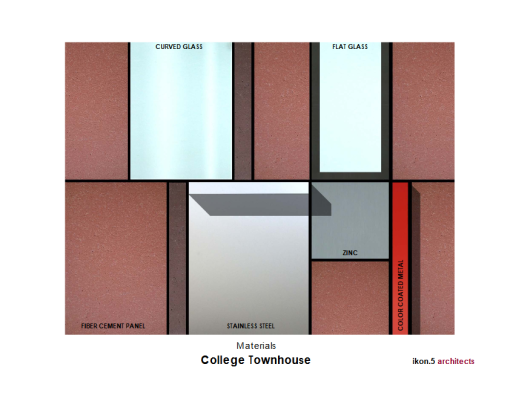
The original plan, first presented in October 2016, consisted of three buildingsthe two buildings at the front of the parcel were designed to emulate rowhouses, and a third building located in the rear of the property would have contained garden apartments. The two rowhouse buildings and rear apartment structure would have been separated by an internal courtyard, and terraced modestly to account for the site’s slope. Counting basement space, the built space would have come in at 49,278 square feet. The 67 units were a combination of studios, one-bedroom and two-bedroom units. The project was called the “College Townhouse” or “College Townhouses”, but strictly speaking, these weren’t townhouses, the buildings only resembled townhouses by having multiple entries and stoops. The design incorporated a modern motif with glass expanses and a few different shades of colored metal and fiber cement panels.

The proposal made it through planning board review with only minor changes – for example, to give a little more visual interest, the squared-off bay windows were replaced with curving glass. The approvals process was fairly straight-forward, with site plan approval granted in January 2017.

This is where things go off the beaten path. The site had already been cleared (Novarr often seeks to clear sites before he has approvals, something that has caused consternation before), and then…it remained quiet. A vacant patch with only a temporary fence and only patchy meadow grass. This was not going to plan.

The issue turned out to be the result of revisions to the New York State Fire Prevention and Building Code. The revisions, passed in November 2016, prevented construction of buildings taller than 30 feet in the presence of above-ground power lines. It just so happens that above-ground power lines pass in front of the site. The code also made the rear garden apartment building illegal because it couldn’t be reached from the street by aerial apparatus. City staff weren’t aware the code changed until after site plan approvals were granted, someone dropped the ball on communicating the changes. The College Townhouses project no longer met code because the code had changed, and so the project team had to seek a variance from the state in November 2017, under the advisement that the power lines on College Avenue were likely to be buried in the next couple of years anyway. The argument win the state over, so it was back to the drawing board.
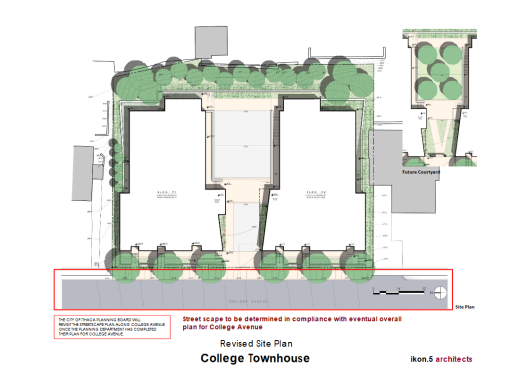
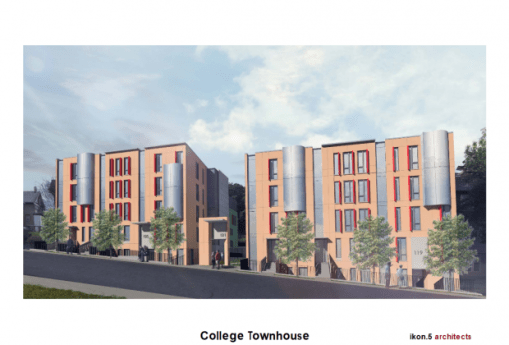
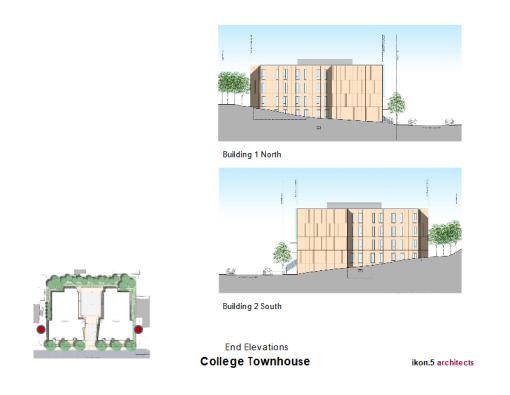
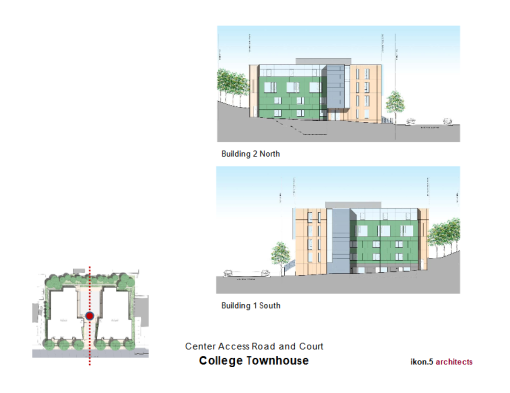
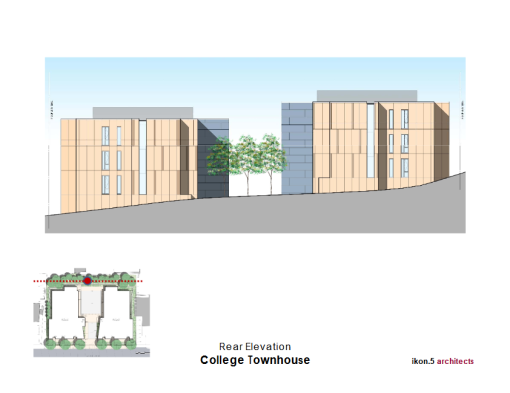
The revised design, showcased in February 2018, removed the rear building, and reshaped the front buildings to be narrower and deeper, separated by a large courtyard that a fire truck can navigate. Access to the courtyard comes via a mountable curb. If the day comes that the power lines are buried (in 2020 or so), the plan is to turn the courtyard into landscaped green space. The decorative entry shown in the above rendering would be built after the power lines are buried. While the footprint was greatly altered, the plan kept the same design motif as before (the new design added stainless steel and zinc panels on the walls facing the courtyard, not unlike the similarly-designed 238 Linden project), and still includes 67 housing units (90 new residents, assuming one per bedroom). Revised approvals were granted at the end of February.

Just a little clarification edit here: the power lines were one issue, and the rear building was a second issue. Both had the potential to interfere with a fire truck’s ladder or lift, and with the result of changes in the code, not only did the rear building became illegal, the buildings were now also too tall for a block with above-ground power lines, 45 ft vs the 30 ft allowed. So the design team consolidated the three buildings into two structures, separated by a large courtyard that can be entered and exited by a fire truck – the truck can just pass under the lines now to reach the back of the property.

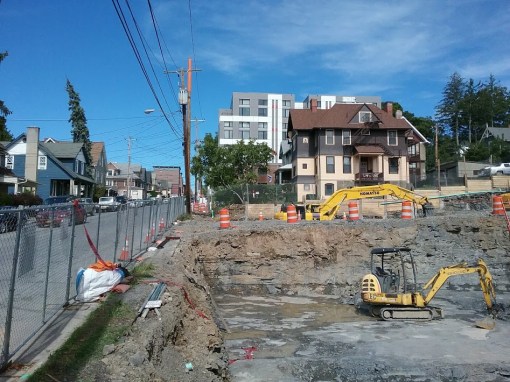
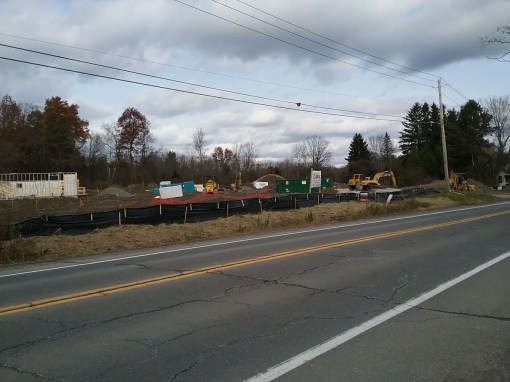
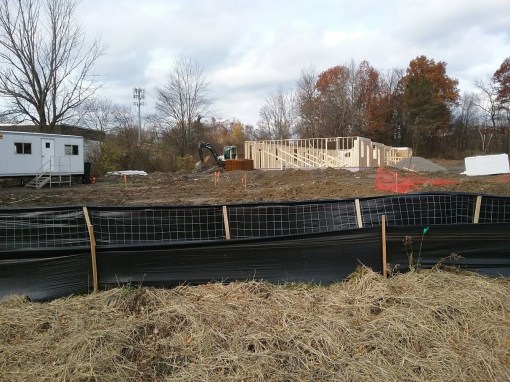
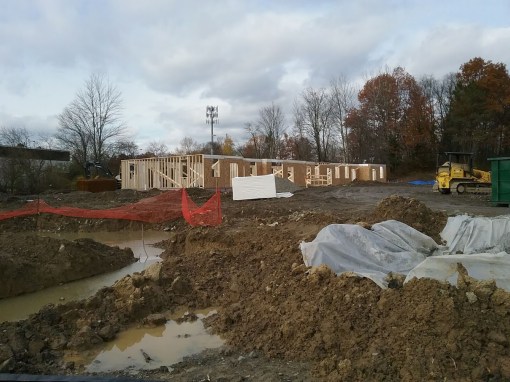
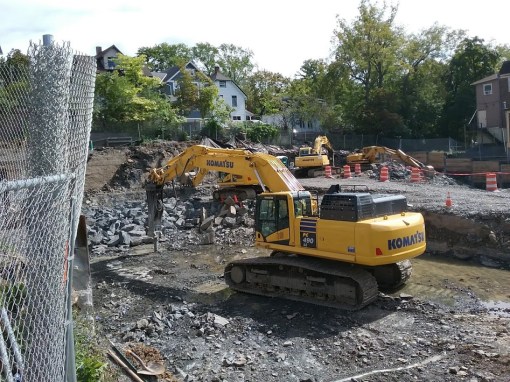
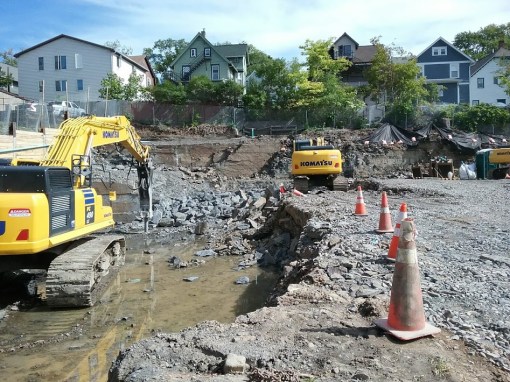
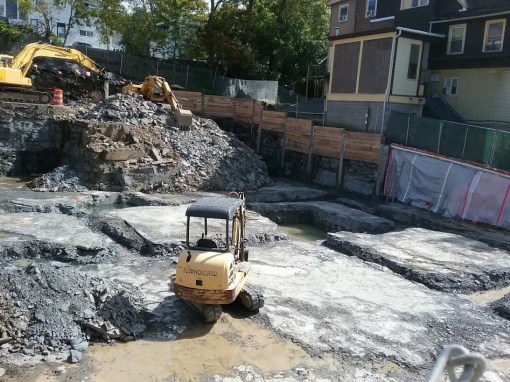
It has taken some time to finally get underway, but it looks like ground was broken around late August. Excavation was well underway by late September, with shoring walls in place (steel H-beams with wood lagging in between) to hold the adjacent soil in place.

Local landscape design firm Trowbridge Wolf Michaels Landscape Architecture guided the apartment project through the review process, but the designer of the buildings is Princeton-based ikon.5 Architects, the same firm that designed Collegetown Terrace. Welliver is the general contractor for the project, which given the 12-14 month timeline of earlier reports, is likely looking at an August 2019 completion.



118 College Avenue Construction Update, 9/2018

10 10 2018

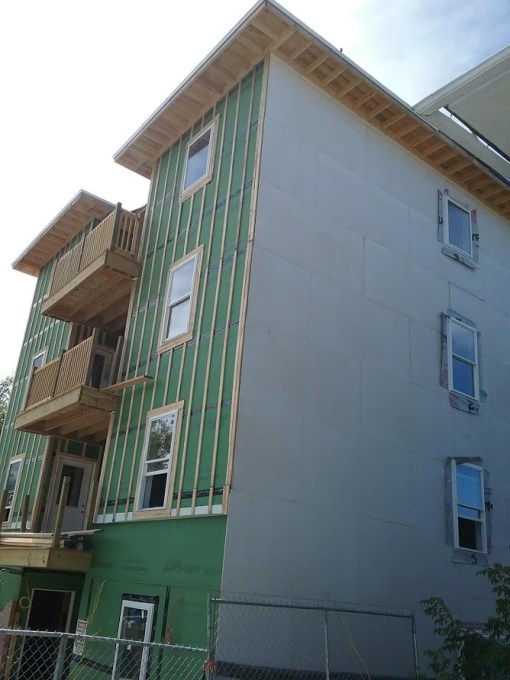
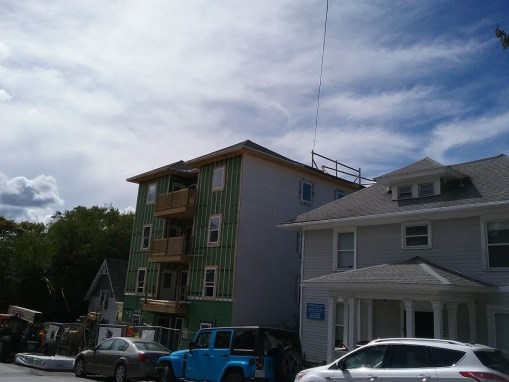
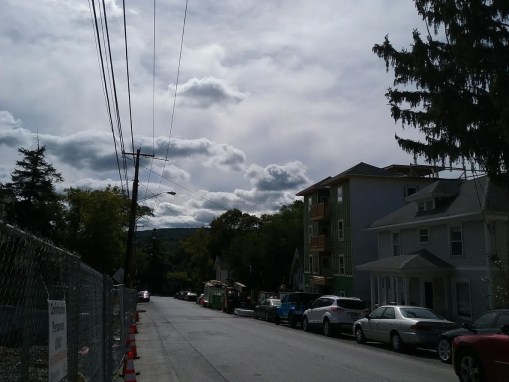
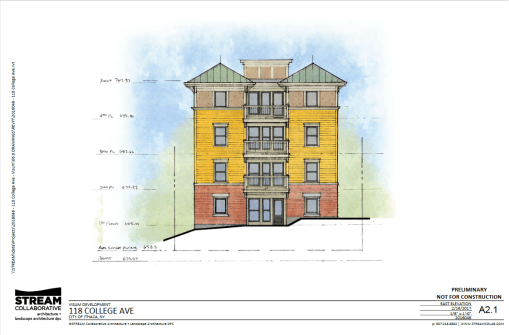
The last of Visum‘s projects from the September photos batch is the 5-unit, 28-bedroom 118 College Avenue in Collegetown. The student-focused apartment building is topped out, fully framed, and sheathed. The mechanical penthouse, which STREAM Collaborative designed to emulate an Italianate cupola, appears to be framed but not closed in. The windows and doors have been fitted, and the balconies are partially complete. Some of the face brick can be seen on the first floor, and like the other Visum projects, the wood rails nailed over the ZIP panels will be used for attachment of the fiber cement siding. The original plans has a small top floor setback on the north face, and the projecting bays at the front (east face) were originally bumped out slightly from the side walls, but both of those features were value engineered out. At a glance, not much has changed on the outside since final approval was granted, a good sign that the project has stayed within budget – bravo to STREAM, Romig Construction and Taitem Engineering for helping Visum bring this project to fruition.

As with other inner Collegetown projects, rent will be fairly steep – $1,200 – $1,300 per bedroom per month. Visum’s property management page, Live More Ithaca, has an August 2019 availability, but I suspect this building will be finished in time for the spring semester, given how far along it is. Maybe there are renters already secured for a shorter lease period – it’s hard to imagine the building would be left newly finished but vacant for that long.


238 Linden Avenue Construction Update, 9/2018

9 10 2018

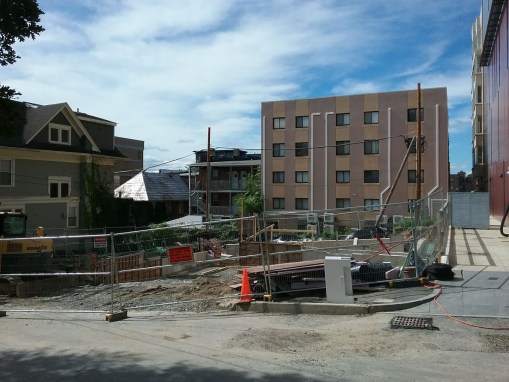
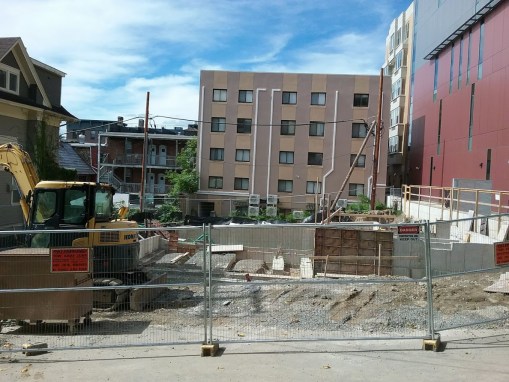
The foundation walls are being poured at Novarr-Mackesey’s 238 Linden Avenue project. The footers and some of the foundation walls are poured and cured, with steel rebar sticking out of the surface, waiting to be tied into the skeleton of the structure as it starts to be assembled. Other concrete walls are still being formed and poured. It looks like wood with steel bracing, my first thought was all wood but a closer look shows the bracing is thin steel, with the plywood from Pacific Wood Laminates and likely procured through a supplier, and the bracing probably from the same supplier. Forms are typically plywood, sometimes aluminum or steel, and are braced to resist the pressure from the concrete as it is poured to make the foundation walls – basically, to keep the walls in shape while they cure. And once the wall is cured and checked for any issues, workers move the forms to the next section until the walls are complete.

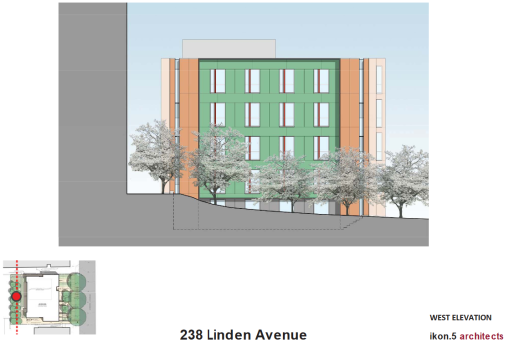
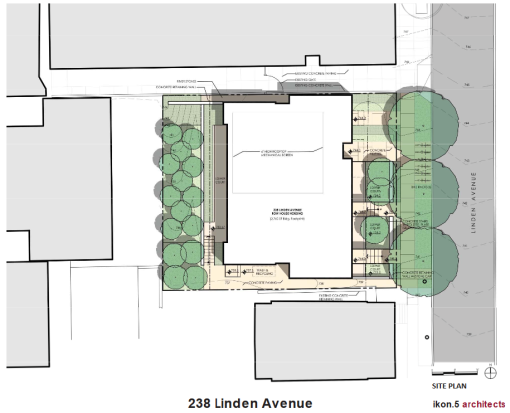
The sloping rear wall is probably not a part of the building foundation. Looking at the footprint of the building, it’s more likely a retaining wall intended to hold back the soil. 238 Linden will have a habitable basement with lower “courts” to let light and air below ground level (offhand, I think the layout is five studio units per floor on the four floors above ground level, and four studio apartments on the basement level, for a total of 24 units). The front retaining wall will have a similar slope as it is built out.


210 Linden Avenue Construction Update, 9/2018

6 10 2018

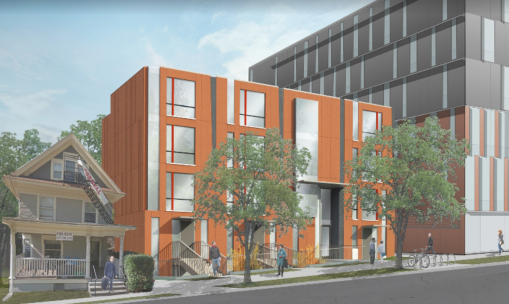
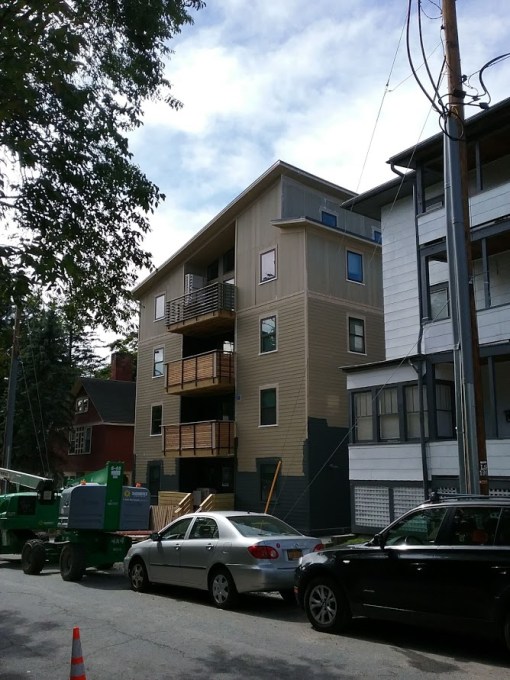
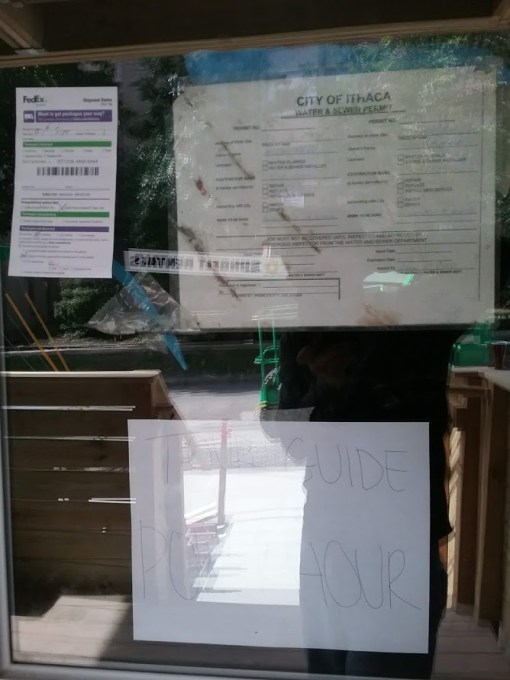
Tying into the 107 South Albany example from earlier this week, 210 Linden is not a finished building, but still certified for occpancy. My impression is that some units are ready for occupancy, but not all. Tenants of The Lux had emailed in to say that it wouldn’t be open until the Spring, and the Craigslist ads tout Spring 2019 leasing. But there are photos advertising units in the building that show the building is occupied; the front facade’s window arrangement is unique among Visum’s buildings, and can be clearly seen in this living room photo. I’m assuming that from the FedEx delivery slip and the “TOUR GUIDE POWER HOUR” are related to the residents.

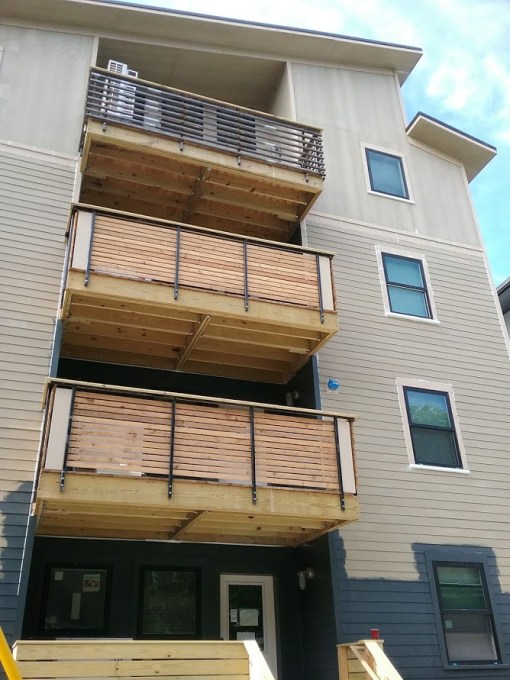
That noted, if the interior is largely complete, the exterior still needs fiber cement siding on the north and south walls, painting (the charcoal grey is going on now, with light grey presumed for the panels on the top floor), trim/finish work and seeding/landscaping. TYPAR is being used for the housewrap / weather resistant barrier to keep the sheathing from getting damaged by moisture, and wood rails atop the TYPAR are used to attach both the lap siding and the panel siding. the panels look to be another change on the fly, as the original renderings called for lap siding on the top floor as well. Interestingly, the balcony treatment is largely finished and accurate to renders – wood slats on the lower levels, and steel rails on the fourth floor. Not sure if that’s for visual interest, or to accommodate building codes.


Press Bay Court Construction Update, 9/2018

3 10 2018

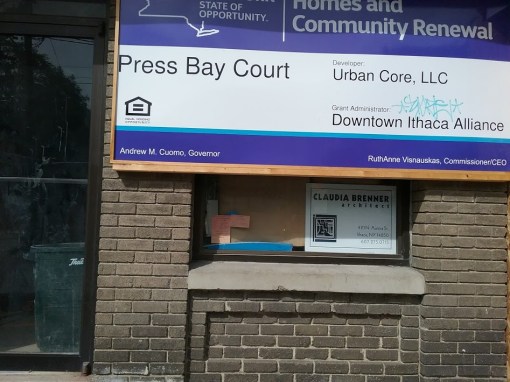
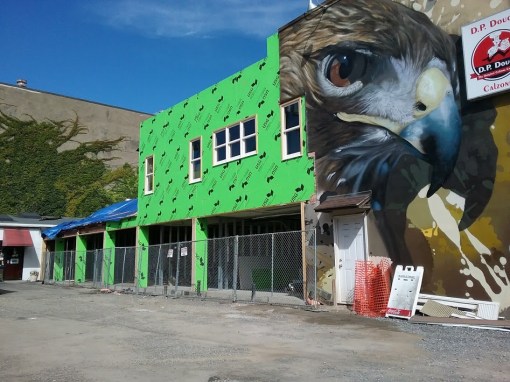
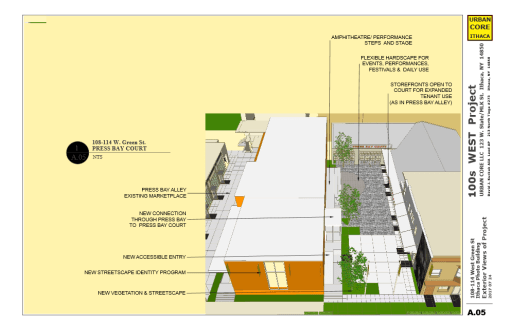
Press Bay Court, a project by local businessmen John Guttridge and David Kuckuk d/b/a Urban Core LLC, is moving along at a good clip. In what could be seen as an expansion of Press Bay Alley, the plan reuses a dilapidated 1920s building and renovates it into several small-scale retail spaces, ranging from 320 – 2,200 square-feet. Among them will be Halal Meat and Groceries, One Ring Donuts, Gee June Bridal Shop and Hair • Color • Art. Bramble, an herbal retailer, will move from its Press Bay Alley slot into one of the Press Bay Court storefonts.

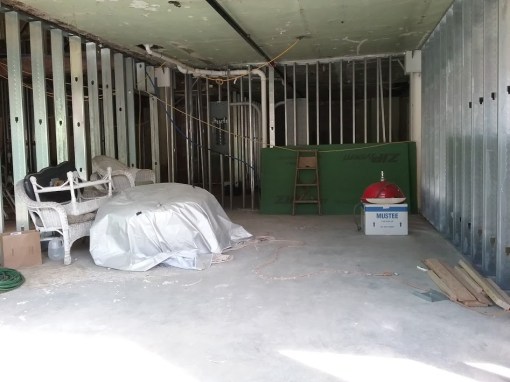
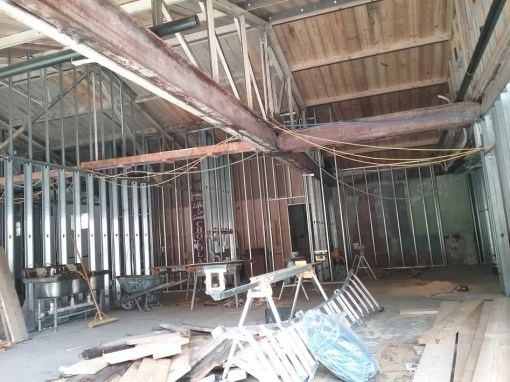
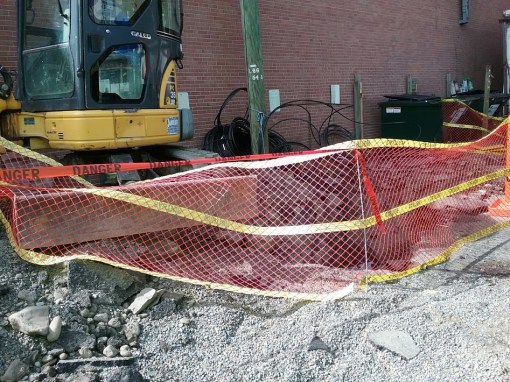
The business websites for Gee June and Hair • Color • Art both indicate October 2018 openings in Press Bay Court (October 16th, in Gee June’s announcement), and there’s a lot of work to be done between now and then. The interior of the building was gutted and new steel stud walls have been erected, as well as fresh gypsum sheathing on the outside. The four second floor one-bedroom apartments are also being renovated, which will be rented at below-market rates (Urban Core is aiming for 75% area median income, which roughly equates to a household salary in the $42,000/year range for a single person, $48,500 for couple). Expansive windows will be installed at ground level to provide a better sense of the activity indoors, and an awning will be erected as the exterior is finished out. The exterior parking lot will be turned into a landscaped pedestrian gathering space for impromptu social events as well as festivals and small concerts or shows.
//www.instagram.com/embed.js


View this post on Instagram


These are going to be the coolest apartments in downtown…

A post shared by PressBayAlley (@pressbayalley) on

//www.instagram.com/embed.js