The Cherry Artspace Construction Update, 11/2016

28 11 2016

I don’t mind doing these summary posts – I just wish that several projects didn’t start in the same two month span.

The Cherry Artspace, to be located at 102 Cherry Street in Ithaca city, is a multidisciplinary theatre and arts venue planned by The Cherry Arts, a performing arts non-profit led by Artistic Director Sam Buggeln (Bug-ellen). The building is intended to not only house performances by The Cherry Arts, but other local and traveling theater groups, concerts, poetry and jam sessions, and just about anything else in the name of creative arts and artistic expression. The building will join Ithaca’s active and productive performing arts scene, including venues such as The Hangar Theatre and the State Theatre. College towns like Ithaca love their arts, be they visual, spoken or both.

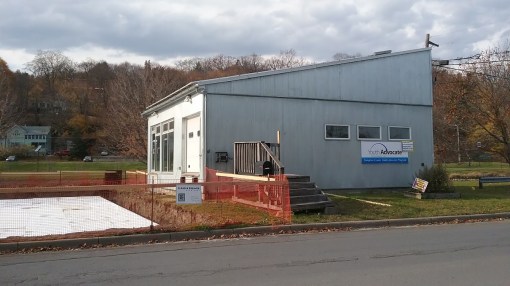
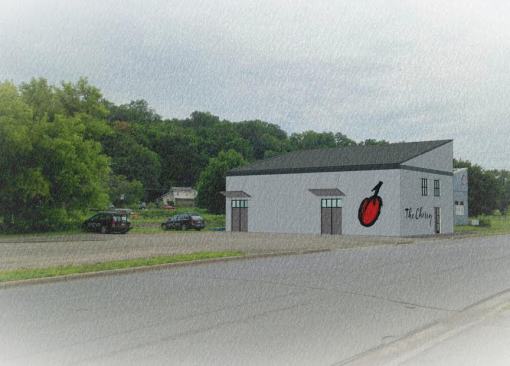
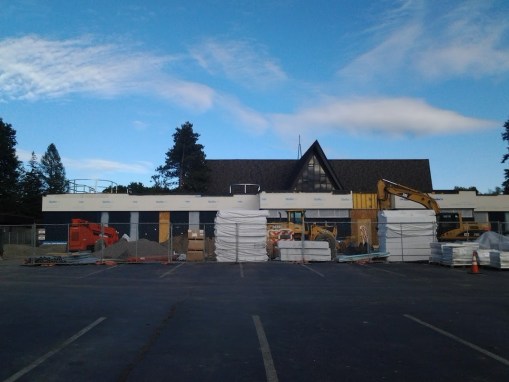
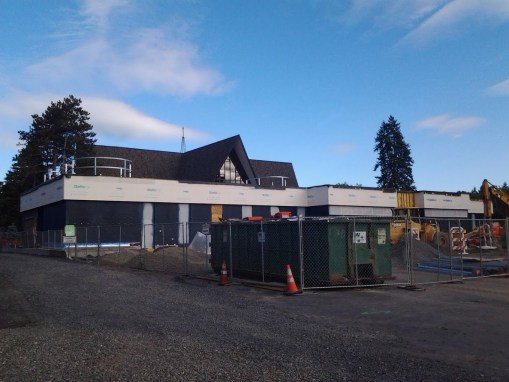
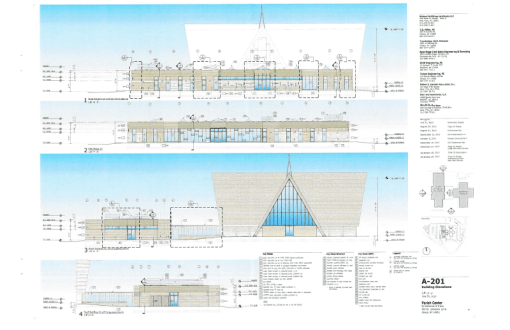
The plan is for a one-story, 1,900 SF space designed by local architect Claudia Brenner to blend in with the industrial architecture that comprises the Cherry Street corridor. To do this, the building is basically the big brother to the former Renovus Energy building next door – similar colors, similar materials, and a shed roof, which Renovus put on to make the 1,154 SF building more amenable to solar panels. The space on which it is being built previously housed parking spaces and a utility shed, since moved. Buggeln purchased the building and lot in August 2015 for $240,000, and the construction and furnishing costs for the Artspace are estimated at $375,000. The Cherry, which can host up to 180 patrons during performances, has a parking agreement with the business next door to use their parking spaces, and it works out since the two organizations will be busiest at different times of the day.

The approval process was a bit lengthy, all things considered. The city created its TM-PUD zone as a way to legally deter the Maguire car dealership proposal for the waterfront, but the Cherry Artspace fell into the waterfront zoning overlay as well, so it not only had to go through the Planning Board, but the Common Council. The Artspace held its public information meetings at the end of March and mid-April. It enjoyed fairly broad public support, but two of the eight voting councilmen still voted against its construction at the May meeting. One was concerned about noise, the other was kinda out of the blue. The project also had to apply for several zoning variances from the Board of Zoning Appeals.

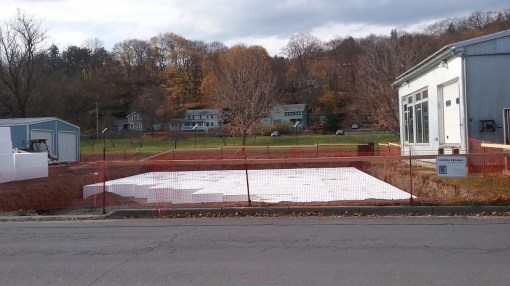
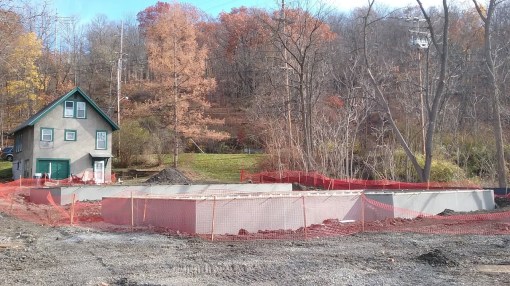
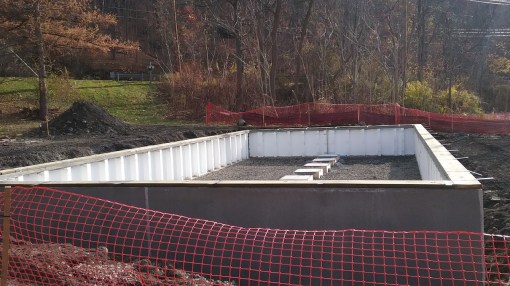
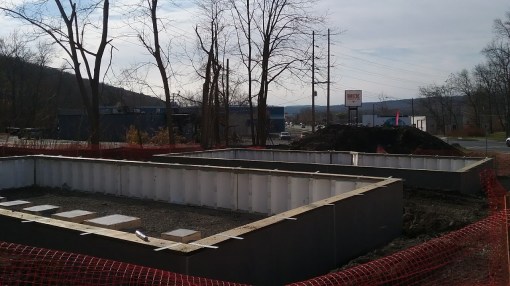
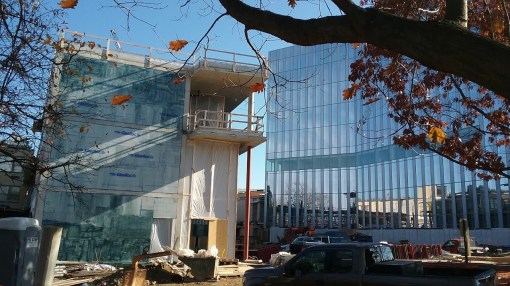
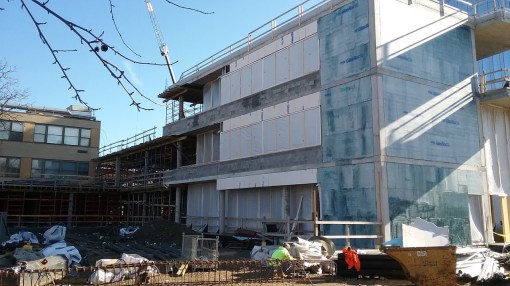
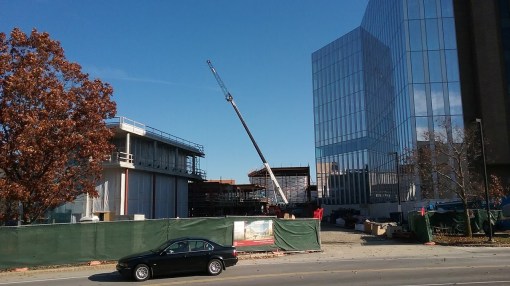
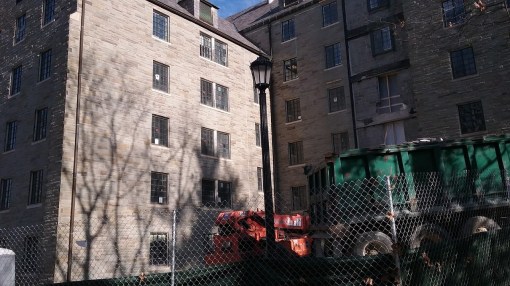
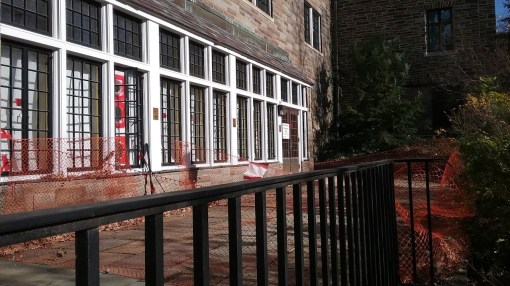
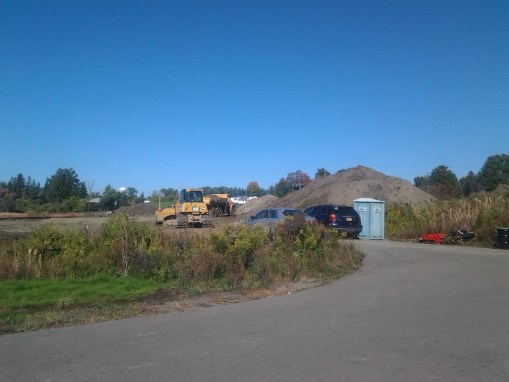
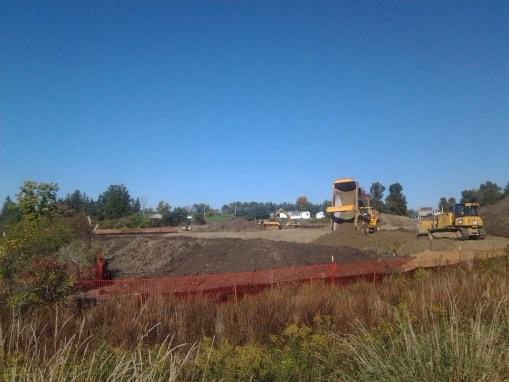
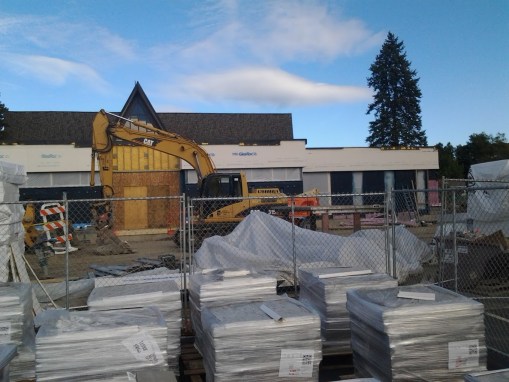
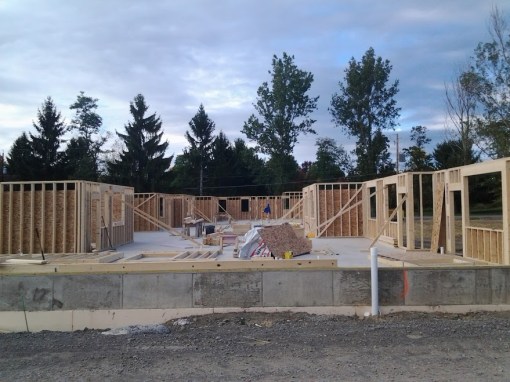
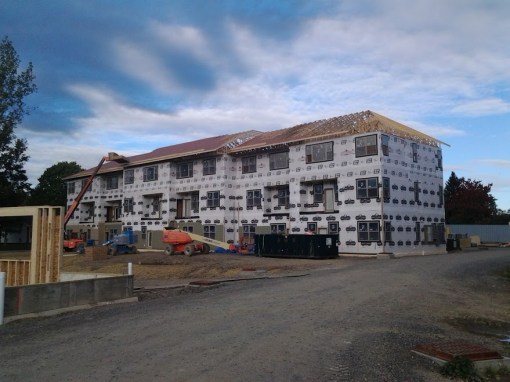
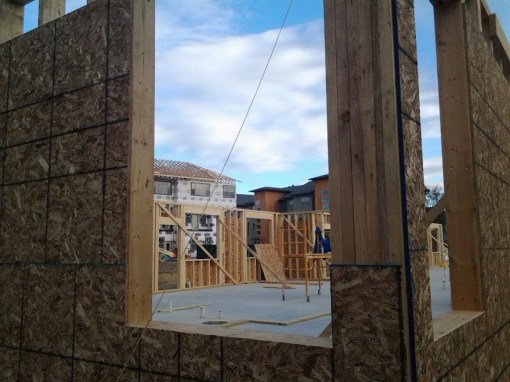
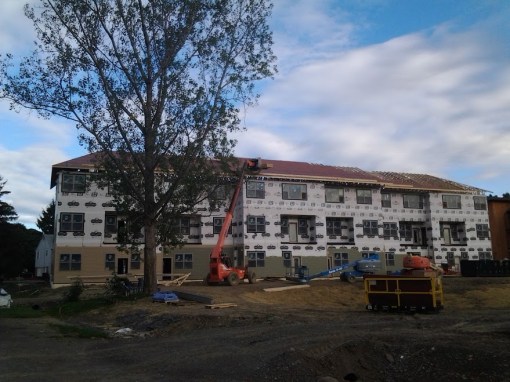
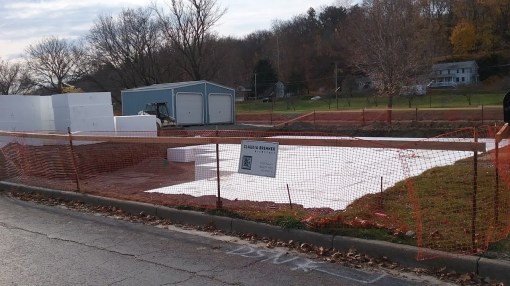
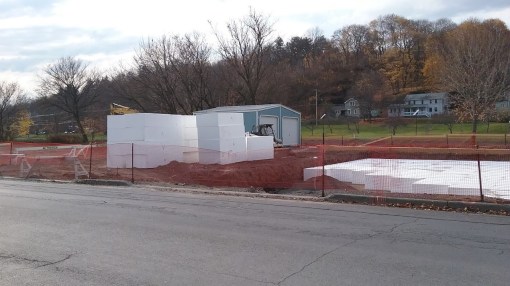
Construction on the Artspace officially began November 7th. This was a few months later than originally anticipated, and according to Buggeln it was due to contractor delays. I a rather unusual setup, that’s a slab foundation going in, but it’s made of styrofoam blocks – given the waterfront location and high water table, the relatively light building will “float” on top of the blocks.
20161119_134349 20161119_134359 20161119_134404 20161119_134409 20161119_134424

cherry_2


312-314 Spencer Road Construction Update, 11/2016

28 11 2016

I’ll start off by saying I struggle with how to title this project. It has no official name, and the street address for the two new two-family homes has yet to be determined – presumably, they would be assigned addresses for the 200 block of Old Elmira Road. The developer, Charlie O’Connor of Modern Living Rentals, uses the address of the properties from which there were subdivided from – 312 and 314 Spencer Road, the two houses in the rear of the first photo.

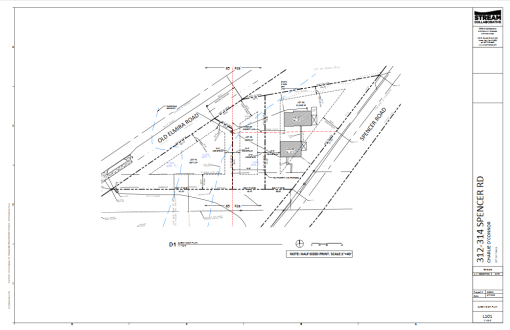
Originally, 312 and 314 had three lots with some pretty unusual lot lines, but with .607 acres, there was a lot of unused backyard space, especially for city parcels. Seeing an opportunity, O’Connor negotiated a purchase agreement with property owner Giuliano Lucatelli, who ran a restaurant in the building adjacent to the houses (and perhaps a couple of readers remember Lucatelli’s Ristorante). With the benediction of the city, the project team consolidated the three parcels together, and then subdivided the newly-created parcel to create two buildable lots facing Old Elmira Road, and a third lot containing the two existing houses. The plans were approved back in June, and O’Connor officially purchased the houses and land for $193,000 in mid-July. On November 1st, the project received a $500,000 construction loan from local businessman Bryan Warren of Warren Real Estate. That would seem to cover most of the hard costs; the site plan review application estimated the construction cost at $513,000.
Plans call for two two-story houses with footprints of 23.5 feet by 48 feet (1,128 SF). Each floor will contain a three-bedroom, two-bath unit. The houses, designed by prolific local architect Noah Demarest of STREAM Collaborative, have been fashioned to blend into the early 20th century homes that comprise most of Ithaca’s South Side neighborhood – gable roofs, window bay projections, shake and lap siding, and modest porches. An earlier design shown on Modern Living Rentals’ website shows a larger and more contemporary window design on the buildings’ front faces, but it looks like that was scaled back to two more-traditional looking windows as the project went through planning board review.

To accommodate the new homes, some trees were removed, but as a mitigation measure, new trees will be planted closer to the street. The western tip of the properties intrudes into the 100-year flood zone, but that part should remain undisturbed. Each three-bedroom unit will have one parking space, in line with the city’s R-2a zoning (one space per three bedrooms).

An ad on Craigslist suggests the 3-bedroom units will be run for $1700 total, a premium price point as new units often are, but well below the prices that one would see in Downtown or Collegetown. Advertised features include stainless steel appliances, granite counter tops, in-unit washer/dryer, ample closet space and custom-tiled bathrooms. Parking will be in off-street gravel lots.

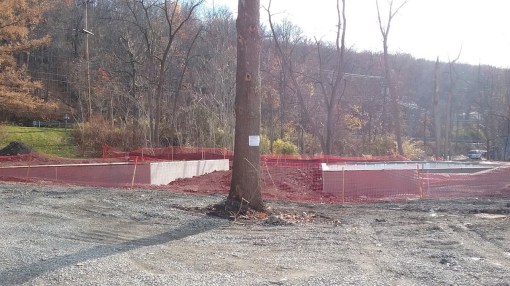
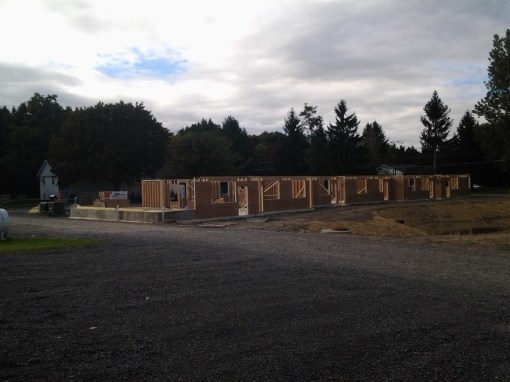
If the photos below are any indication, those tiled bathrooms and granite counter tops are still a ways off. The foundations have been excavated, formed and poured, but the framing has yet to begin. Subterranean utilities have been laid and prepped. Note that the foundation of the western house includes a bump-out for a window bay projection, but the eastern house does not.

20161119_125716 20161119_125729 20161119_125744 20161119_125800 20161119_125813 20161119_125831

312_spencer 312_spencer_2 312_spencer_3


Ithaka Terraces (215-221 West Spencer Street) Construction Update, 11/2016

26 11 2016

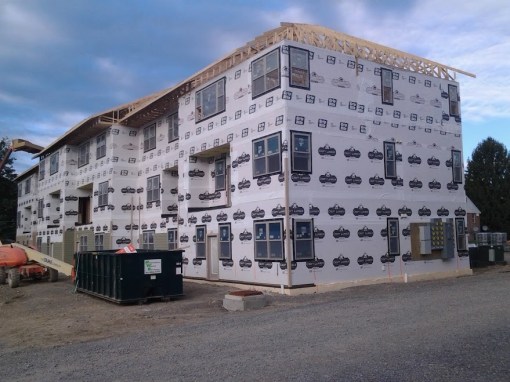
Ed Cope’s Ithaka Terraces have made modest but noticeable progress in the past couple of months. Building A is up to the third floor, while Building C is undergoing foundation work. The other two buildings, B and D, will come along in later stages.

Since the 12-unit South Hill condo project is going for net-zero capability, its construction is a little different from the norm. Quoting the sales website:

“The building features nominal 12 inch thick double stud exterior walls with a total of R39 continuous dense packed cellulous insulation and 18 inches of R63 loose fill cellulous insulation in the attic. The walls and attic are completely air sealed with Zip sheathing with all seams taped to prevent vapor migration through the walls and ceiling.”

The exterior walls are a combination of thick wood stud walls, thermal plastic filled with concrete and Huber Zip sheathing. In between the cavities of the stud walls, local contractor AquaZephyr will be blowing in dense cellulose insulation (pictures of that process here). This will allow the condos to achieve a very high degree of energy efficiency, and assist in making the project net-zero capable.

More info on the project can be found here.

20161119_125056 20161119_125109 20161119_125122 20161119_125128 20161119_125148 20161119_125208 20161119_125219 20161119_125229 20161119_132737

215-221_spencer_v3_1


Cornell Veterinary School Expansion Construction Update, 11/2016

23 11 2016

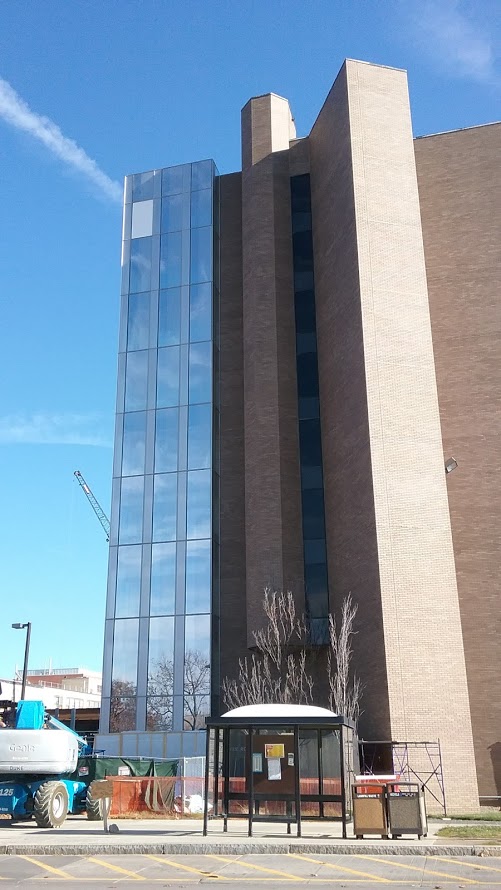
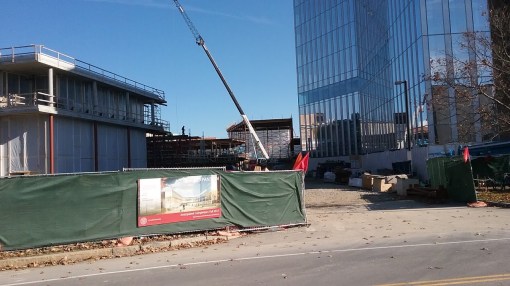
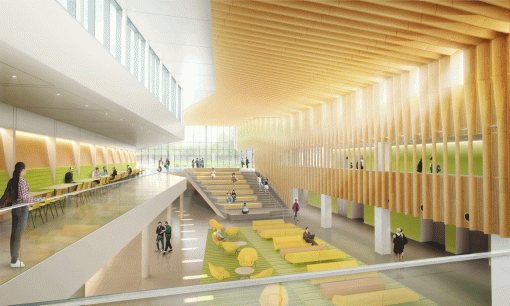
Definitely seeing a lot of progress on the Vet School Expansion. The new glass curtain wall on the Vet Research Tower is nearly complete, and the final finishes are due to wrap up by the end of the month. The new library/dean’s wing by the front entrance is undergoing interior framing and utilities installation. The new atrium and lecture hall are now visible from the street, now that some of the structural steel has been erected. Floor slabs and roof decking are also being laid.

The new atrium and lecture hall are expected to be closed up by January, and the whole $74 million project is aiming for an August 2017 opening. The Community Practice Service Building, a separate $7 million project on the Vet School campus, is expected to start construction in early next year with a completion in late fall 2017.

20161119_111157 20161119_111208 20161119_111225 20161119_111243 20161119_111252 20161119_111334 20161119_111358 20161119_111436 20161119_111503 20161119_111514 20161119_111632

cad048742a281097e5667382eced42333f5656954f5a3ef1021519c03b4abe9f


Upson Hall Construction Update, 11/2016

22 11 2016

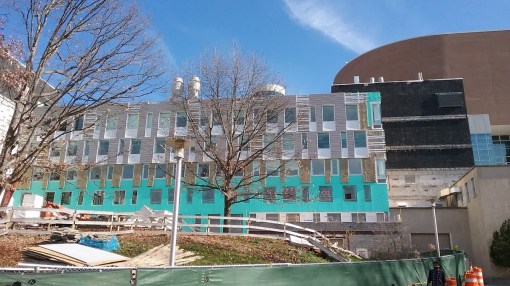
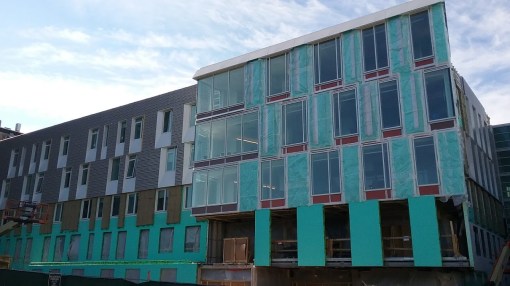
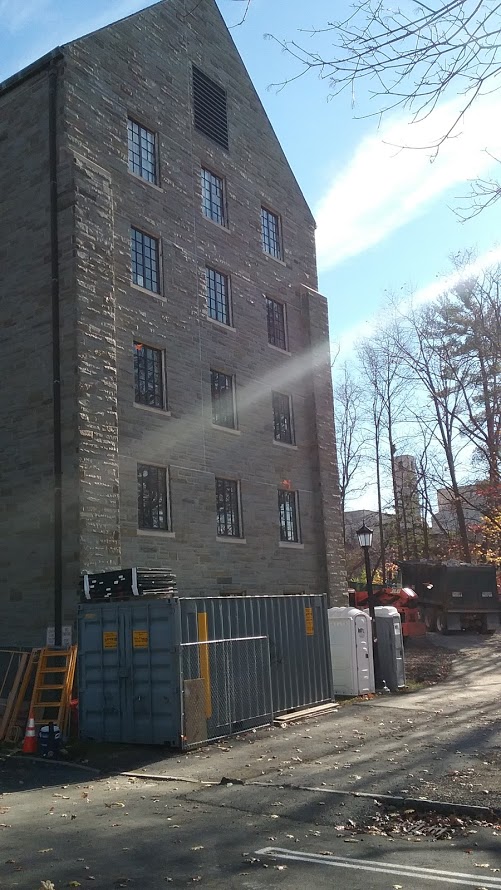
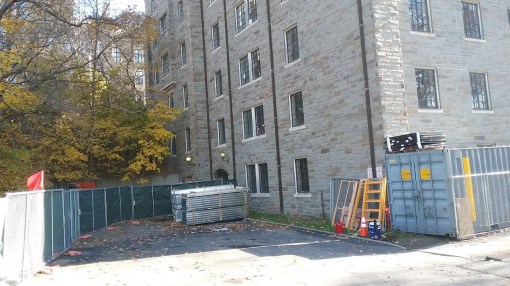
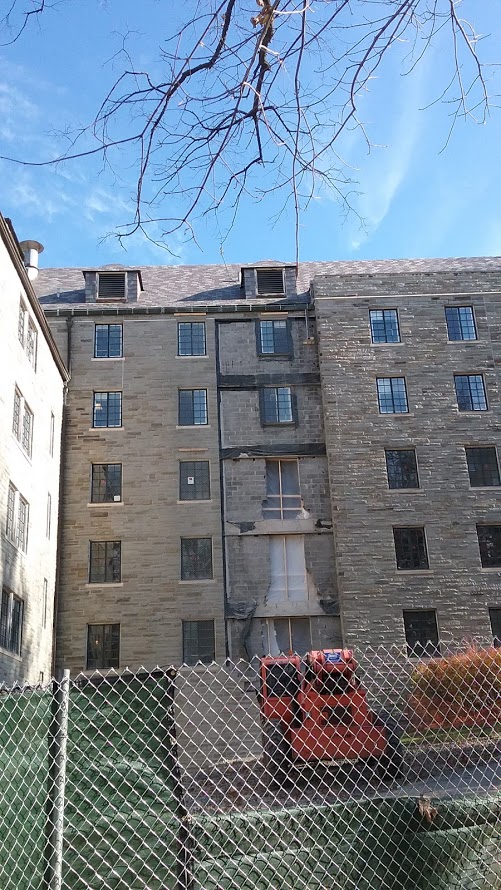
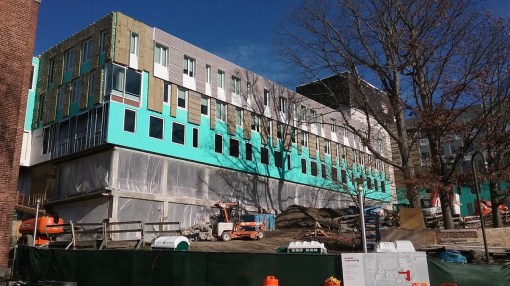
Because of the multi-phased, tiered buildout of Upson Hall’s renovation, it’s easy to miss the changes. For example, in the first photo, there really haven’t been any exterior changes to the fourth or fifth floor, but on the third floor, there’s been significant progress – the old stone has been removed, the new stud walls have been erected, gypsum-based glass mat sheathing has been laid and waterproofed, and new windows have been fitted. You can see the latest batch of exterior wall progress on the third floor of the west face, third photo below. The first and second floors have had their old exteriors stripped as well, but at the moment the frame is exposed. The interior has been gutted and new utilities rough-ins are being routed.

On the side facing the Engineering Quad, the progress has been similar – the third floor has seen the most work recently as the renovations work their way from top to bottom. Turning to the east face, sheathing extends to the bottom floor, and it looks like an aluminum roof cap has been installed on the new bump-out. The general contractor for Upson is The Pike Company, which is touting the project with computer-generated images of construction staging on its front webpage.
20161119_115304 20161119_115324 20161119_115359 20161119_115406 20161119_115453 20161119_115518 20161119_115541 20161119_115630 20161119_115651 20161119_115713 20161119_115733 upson-header-1920x700


Cornell Law School Renovation Update, 11/2016

22 11 2016

Introducing a new project to work into the rotation – work has begun on Cornell Law’s renovations of Hughes Hall. Coincidentally, I broke this story for the Voice almost a year ago to this date.

In Summer 2012, the Cornell Law program embarked on a three-phase renovation and expansion program to their facilities. The first phase was a 17,500 SF, mostly-subterranean addition of an auditorium space, two large-group classrooms. foyer space, and a renovated courtyard. Designed by Boston-based Ann Beha Architects and constructed by Welliver, that $23.8 million phase, certified LEED Platinum, was completed in late summer 2014. Plans for phase II came forth in November 2015, and were approved by the city this past March. Phase III, which calls for renovations to the law school library, has yet to be presented.

Hughes Hall was built by the university in 1963 and named for former professor Charles Evans Hughes. Hughes only spent two years at Cornell, partially because of the need to make better money from private practice, and partially because of familial pressures to leave behind a “one-horse town like Ithaca”. He would later serve as governor and a Chief Justice of the U.S. Supreme Court. Hughes was a source of inspiration for mid-20th century megadonor Myron Taylor, and so the new law school dorms were named in his honor. The building served as the dorm and dining facility for the law school until 2005, when the first and second floors were renovated for administrative and faculty office space.

The Hughes Hall remodeling will have three basic components: enclosing the open-air loggia that currently connects Hughes Hall with Myron Taylor Hall, adding a staircase to the west side of Hughes Hall, and repaving the dining terrace by the Fork and Gavel Café. Administrative offices and event spaces will be on the lower floors, and faculty offices on the upper floors. The renovations will be seeking LEED Silver certification – this is two levels lower than the LEED Platinum of phase one, but it’s a lot easier and cheaper to achieve energy savings when a project is underground.

As a result of the remodeling, the last law school dorm units, totaling 47 student beds, were removed. At the time this was announced, Maplewood had yet to come forth, and I did a rare editorial for the Voice calling Cornell out on a lack of planning and poor stewardship. Minor site plan and landscaping improvements are planned.

Design work is by KSS Architects, with offices in Princeton and Philadelphia. Frequent Cornell collaborator Welliver will serve as the general contractor. The project is expected to cost about $10.2 million and take about 13 months to complete. The project was initially slated to begin in June 2016 and wrap up in July 2017, but it appears the construction launch ended up being a few months later than anticipated.

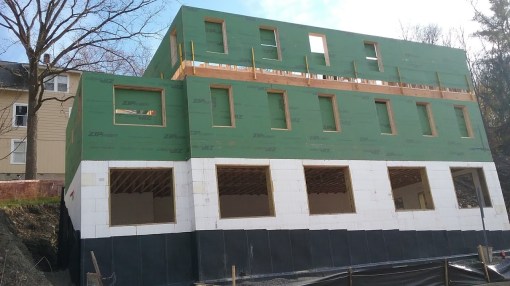
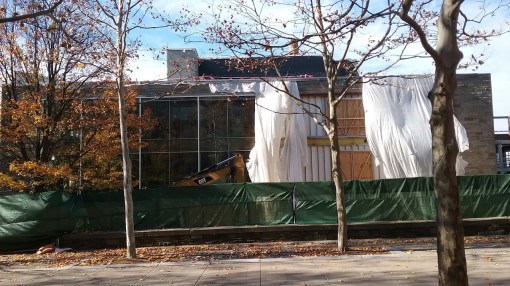
In the photos below, some of the exterior stone veneer has been stripped from the wall, and on the lower levels the windows and some of the concrete masonry wall has been removed. This will be where the new glass-enclosed staircase will go. Work on closing up the loggia has yet to start.

20161119_114538 20161119_114624 20161119_114638 20161119_114820 20161119_114831 20161119_114847 20161119_114920 20161119_114925

hughes_cornell_4 hughes_cornell_3 hughes_cornell_2


Gannett Health Center Construction Update, 11/2016

21 11 2016

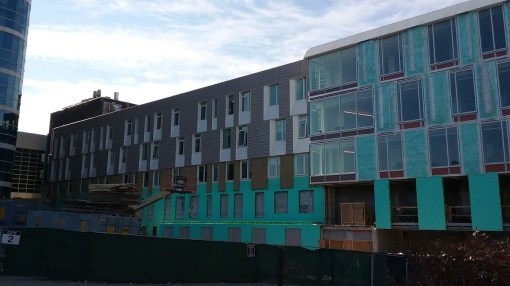
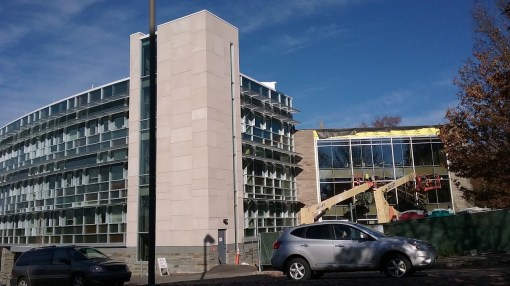
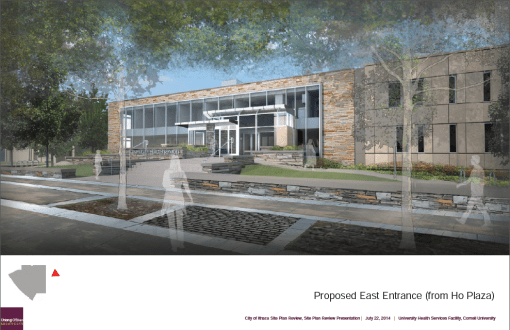
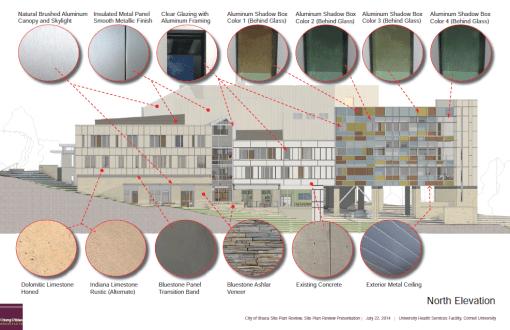
Phase II of Cornell Health is advancing. A lot of the progress in the couple of months has focused on retrofitting the existing 1957 and 1979 additions – there will be a new three-story wing on the northeast side of the building, but it looks like only the foundation and subsurface utilities have been completed. New steel has been built on the 1979 wing, and rough window openings have been punched into the northern face. Meanwhile, the 1957 wing sports some new and very big panes of glass – recall that the building used to sport three levels of window bands separated by beige concrete panels. These large panes give the effect of a squatter, smaller structure, even though the external dimensions of the wing haven’t changed. The new entrance is still being built out. Looking closely, one can see new steel stud walls going into the interior as the old wings get completely gutted to meet the needs of a 21st century health center.

The renovations and new 18,000 SF northeast wing should be complete by August 2017. The $55 million project is being built by The Pike Company’s Syracuse office.

20161119_114006 20161119_114034 20161119_114055 20161119_114120 20161119_114142 20161119_114154 20161119_114214 20161119_114256

gannett_northeast_persp gannett_eat_persp gannett_north_final


Poet’s Landing Phase II Construction Update, 10/2016

22 10 2016

Site clearing and grading is underway for the second phase of the Poet’s Landing affordable housing in Dryden village. Developed by Rochester-based Conifer LLC (the same company developing Cayuga Meadows on West Hill), the plan is to build an additional 48 units of housing to complement the existing 72 units of housing built in the first phase. As with many of Conifer’s affordable housing projects, Rochester-based LeChase Construction serves as general contractor through a joint venture partnership, called Conifer-LeChase.

Plans for Poet’s Landing date back to at least 2010. The original plan called for a 72-unit first phase that was built out, but the second phase was initially planned as a 72-unit apartment building for those 55 and older, not unlike the Cayuga Meadows and Conifer at Ithaca projects. Conifer hasn’t publicly stated why the plan changed, but given that the company had major difficulties getting financing for Cayuga Meadows, they may have decided to go a different approach in Dryden and revised their plans to address general population affordable housing. Previous to Conifer’s proposal, there had been earlier talks for housing at the Freeville Road site, but plans did not move forward in part because during the 2000s, there was a moratorium on new water connections in Dryden village, which severely limited multi-family building development. Development potential is also limited by extensive wetlands towards the rear of the property – by state law, any wetlands removed would have to replaced, which is an expensive process. As a result, only 14 of the 46 acres are being developed. Although facing some opposition due to traffic, flooding and that it’s affordable housing, the plans were approved in January 2011 and the first phase opened in early 2013.

Poet’s Landing does suffer somewhat from a classic affordable housing conundrum – location. Generally, affordable housing is most effective when placed in locations with easy access to goods, services and community resources. But, because of land costs, stricter approvals processes and more intense neighbor opposition, affordable housing developers often procure rural properties, since they’re less expensive and easier to develop. However, that may force residents to maintain cars, which can be a burden on tight incomes. In extreme cases, it can also leave residents isolated and frustrated, leading to health and safety concerns. In the case of Poet’s Landing, it’s walkable to the village and its shops and services, but it’s not really integrated into the fabric of the village and its location isn’t all that pedestrian friendly. The affordable housing is certainly welcome, but this isn’t an ideal solution.

The project will consist of six 2-story, 8-unit buildings in two design layouts by NH Architecture. These are a standard pair of designs that Conifer uses with many of their new multifamily builds – these units will look just like Poet’s Landing Phase I, just like Linderman Creek, and just like the dozen or so other examples Conifer has built around the Northeast and Mid-Atlantic. As a result, proxy floorplans and interior shots can be found on apartments.com here. Although not as architecturally interesting, this helps them save on material costs and can help the contractor maintain high quality control because they have a strong familiarity with the design. Each unit will have its own exterior entrance, fully equipped kitchens, central air, closet-size storage unit, sliding glass doors and a small private balcony or patio. The residents will share the community center (exercise rooms, meeting rooms, laundry facilities and a computer lab) with the first phase residents.

Of the 48 units, 24 will be 1-bedroom, 16 2-bedroom, and 8 will be 3-bedroom units. Three units will be adapted for mobility-impaired residents, and a fourth unit will be adapted to individuals who are hearing or vision-impaired. According to a filing with the state as part of the grant application, the gross rents (rent plus utilities) will range from $724 to $1,070 a month, to be occupied by households with incomes 50% to 60% of area median income.

2015 AMI in Tompkins County is $54,100 for a single person, and $61,800 for a two-person household, and $69,500 for a three-person household. Therefore, the income limits are $27,050-$32,460 for a single person, $30,900-$37,080 for a two-person household, and $34,750-$41,700 for a three-person household. Assuming the project is completed on-time on or close to September 1, 2017, Conifer will likely start accepting applications and scheduling tenant interviews for the units sometime in the late spring or early summer.

The overall project cost is about $10.8 million. Financing for phase II comes from a variety of public and private sources – the ever-complicated jigsaw puzzle of affordable housing financing. $7,702,326 comes from Citibank. On the public end, Conifer was awarded $1.6 million in a Housing Trust Fund grant from the State of New York’s Homes and Community Renewal division, and $734,956 in low-income housing tax credits (LIHTCs) to help finance construction of the new apartments.


20161007_104907 20161007_104924 20161007_104932 20161007_105002


St. Catherine of Siena Parish Center Construction Update, 10/2016

19 10 2016

Work continues on the new Parish Center for St. Catherine of Siena in Northeast Ithaca. Edger Enterprises of Elmira has framed the structure, and a water-resistant spray barrier has been applied. Windows still have yet to be fitted. It looks like sheathing is going on over the water barrier, and then the stone veneer is attached. The white boards are GlasRoc fiberglass mats layered with gypsum, over metal stud walls with cavities filled by spray insulation. The exposed plywood section will eventually be replaced with a floor-to-ceiling glass entryway.

Although the diocese doesn’t allow the parish to carry long-term debt, Tompkins Trust lent the church $3 million earlier this month.

20161007_162128 20161007_162132 20161007_162203 20161007_162236 20161007_162258 20161007_162313 20161007_162538

st_catherine_v2


Villages Solars Construction Update, 10/2016

18 10 2016

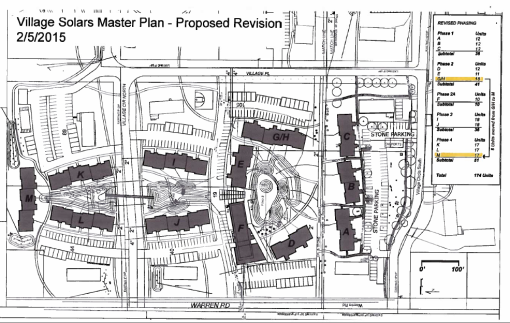
Due to picture constraints with non-gallery Voice articles, the blog ends up being the photo repository for all the photos that don’t make the article [here]. There’s not too much more to add beyond the voice write-up. The project is in the midst of phase III, 18-unit Building “I” and 18-unit Building “J”. Those numbers are estimates and subject to change – Lifestyle Properties converted a couple of larger units into smaller units (hopping on the micro-apartment trend), so the final total for phase II ended up being 43 instead of 41.

Phase I had 36 units, and phase IV will be the largest single phase, 51 units in three 17-unit apartment buildings – they’re likely to start after these two wrap up next year. Around 2017, we may also see plans come forward for the second neighborhood, which would add another 130+ units to the complex.

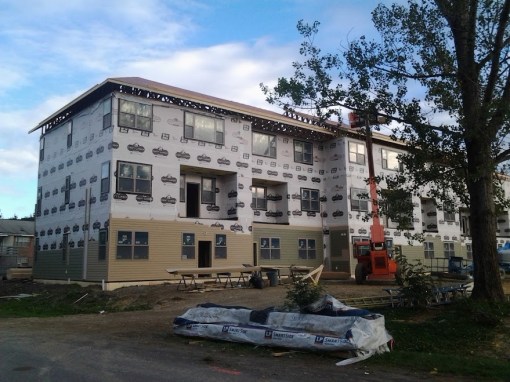
In the meanwhile, Building “I” is framed and sheathed in housewrap, but the building has yet to be closed up. Building “J” is just starting framing of the first floor, although rather curiously there appears to be an elevated concrete wall on the south end, separate from the foundation. It doesn’t appear that slope is a factor, so what’s actually going on there is anyone’s guess. Ballparking it here, but since the 12-unit buildings cost about $2 million each, it doesn’t seem unreasonable to guess these 18-unit structures cost about $3 million each. The buildings are 15,000-20,000 SF.

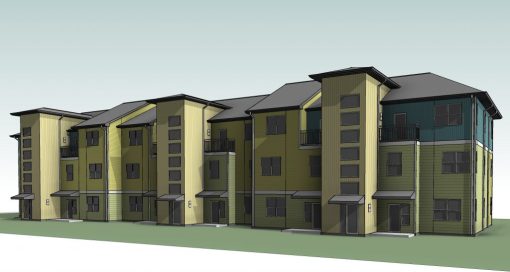
Rather unusually, local architect Larry Fabbroni partnered with a Salt Lake City, Utah firm to help design the buildings. That firm, Process Studio PLLC, notes that the community center and retail stores (Phase 2A, mixed-use building “F”) will follow in later phases, and that the Lucentes are looking to extend bus routes to a new transit stop to be located within the apartment complex. Here’s a description of the design overview from Process Studio’s website:

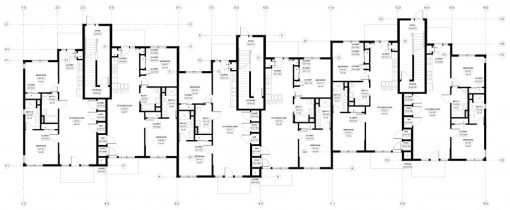
“Each building is designed as a series of standard modules containing two units per floor on three floors.  The modules are then shifted off of one another and manipulated to create interest and variation.  Stair towers become the feature elements for each module, connecting the floors both physically and visually.”

20161007_163426 20161007_163502 20161007_163523 20161007_163544 20161007_163555 20161007_163619 20161007_163739 20161007_163842 20161007_163922 20161007_163936 20161007_163955 20161007_163959 20161007_164032

village_solars_2 village_solars

exterior-1024x548 plan-01-1024x423