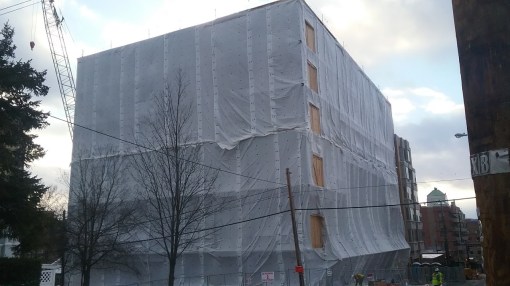
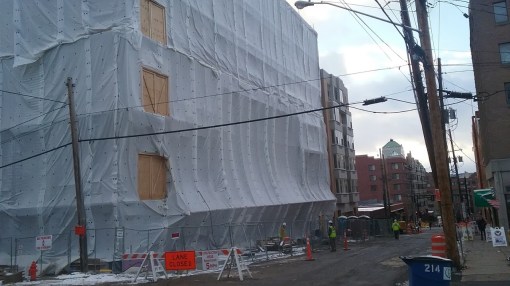
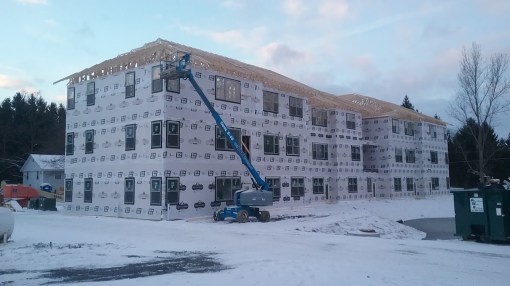
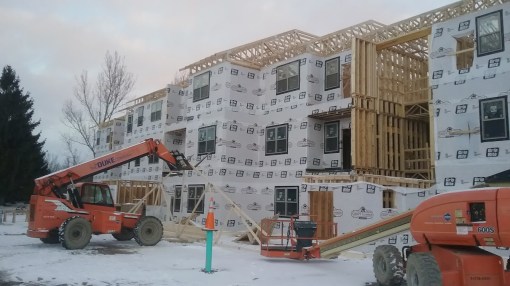
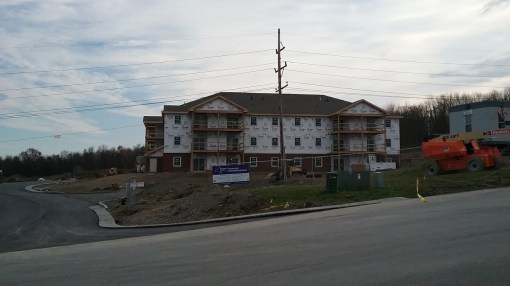
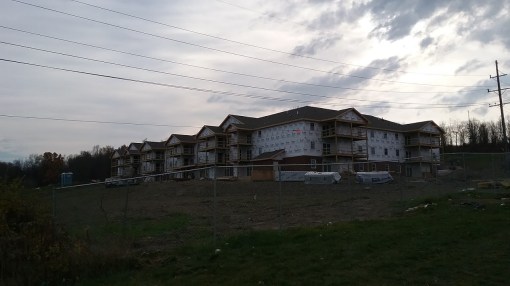
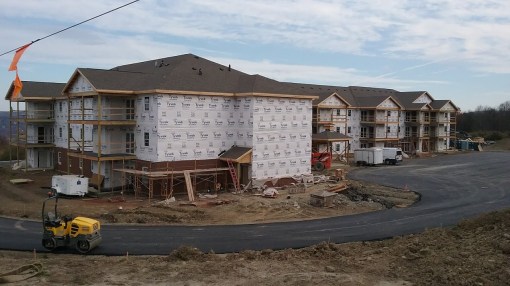
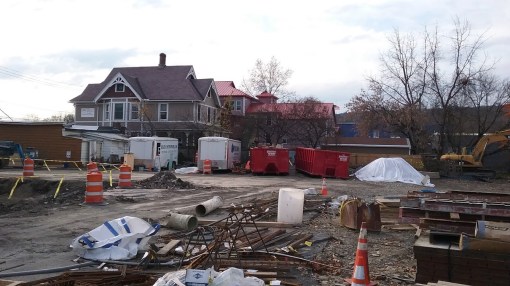
902 Dryden Road Construction Update, 12/2016

19 12 2016

Varna has long been touted as one of those places where development is likely to happen. The hamlet, which has under 1,000 people, sits close to Cornell in the town of Dryden – land is cheaper than most parts of the city, but the area is served by the bus line, which opens it up to Cornell’s deep-pocketed student market. However, Varna can be a tough nut to crack – this far out, the demand is mostly driven by more cost-conscious grad students rather than free-spending undergrads, and the going price for a rental is lower. With a less captive market and less lucrative rents, Varna becomes a trickier prospect.

Plus, although the town itself is fairly accommodating, some members of the local neighborhood group, the Varna Community Association, have a disposition against rentals, preferring that any development that comes along be owner-occupied. Owner-occupied is possible as Tiny Timbers hopes to demonstrate, but it is more difficult to finance since a developer can’t guarantee income the same way they could with rentals.

Since the 1980s, one can find at least six projects proposed in Varna that never came to fruition – the latest and grandest being a massive 260-unit proposal by the Lucente family, which the town turned away from further consideration after concerns about quality of life, and significant pushback from members of the VCA. Concurrently, the town was looking at updating the hamlet’s zoning, and the issues with the Lucente plan helped formulate the new Varna comprehensive plan adopted in 2012, and revised zoning not long thereafter. The zoning identified areas for density and dvelopment (ideally, a walkable core), and preserving more rural lands beyond the main drag.

902 Dryden Road, first proposed in June 2015, was the first project to come along after those planning and zoning updates. It was somewhat unexpected by some residents, because a redevelopment of this property was not envisioned in the town’s 2012 plan (which shows that plans are guidelines, not prescriptions). Initially, it was a 15-unit, 42-bed proposal, rentals aimed towards grad students and Cornell staff. Two of the units, totaling six bedrooms, already exist. Modern Living Rentals, a partnership of local developers Charlie O’Connor and Todd Fox, purchased the property in June 2014 for $215,000. At the time, the units were going to be entirely solar-powered, aiming for net-zero energy (what is produced on-site is equal to or greater than what it consumed).

At this point in time, Fox and O’Connor had done some duplexes and the 6-unit apartment building at 707 East Seneca in the city, but 902 was going to their first “large” project. But, they hadn’t counted on strong opposition, not just from neighbors but from Cornell Plantations (now Cornell Botanical Gardens), who had concerns about the floodplain at the rear of the parcel, where it borders Fall Creek. The town was hesitant to move forward with approval unless there were revisions.

As time wore on and meetings were held with the town and VCA, the project was reduced in scale; the lot size used to determine maximum unit density was calculated incorrectly the first time and two units were removed, and then the project was scaled back further to reduce impacts on the floodplain, moving the gravel parking lot so that it wouldn’t infringe on the plain – the final count came out to 10 units and 32 bedrooms, or 8 units and 26 bedrooms if counting just the new structures. The solar panels had been on the flood plain as well, but were eliminated because they were no longer financially doable at 8 units; it was stated that the infrastructure would be built to support net-zero energy down the line, if power was purchased from off-site. The reduced-size project was acceptable to the town and to Cornell, and 902 Dryden was approved in March 2016.

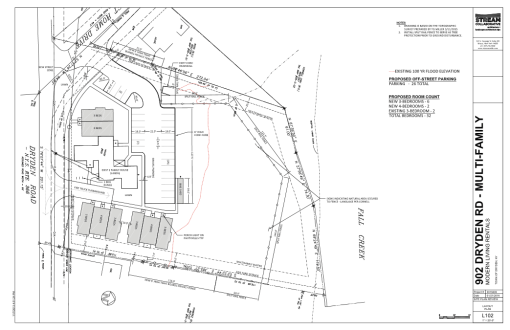
Along with the existing duplex, two new units will be built opposite a shared wall. Two three-unit clusters will also be built on the east side of the parcel. The middle units of the three-unit clusters will have four bedrooms with 1606 SF of living space; all the rest will be three-bedroom units, and about 1500 SF each. STREAM Collaborative is the project architect.

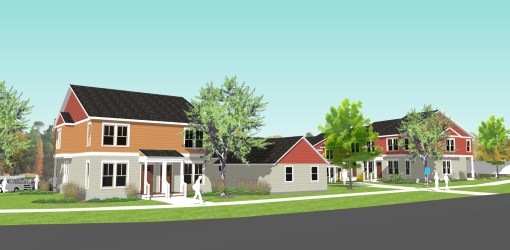
There are two separate groups of drawings floating around for the buildings, and I am not sure which is correct. The render below, from shortly after approval, shows warm colors. Renders on MLR’s website show what looks like blue, brown and white fiber cement panels. The unit rents range from $1500-$2000/month for the three-bedrooms, and $2600/month for the four-bedrooms. The project cost was estimated at about $1.5 million in early Site Plan Review docs.

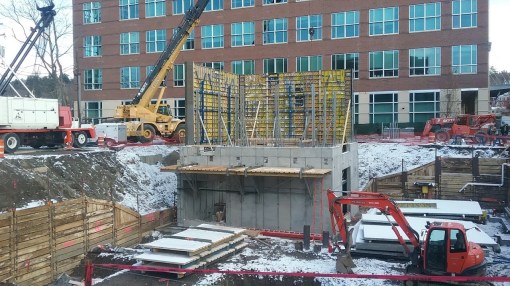
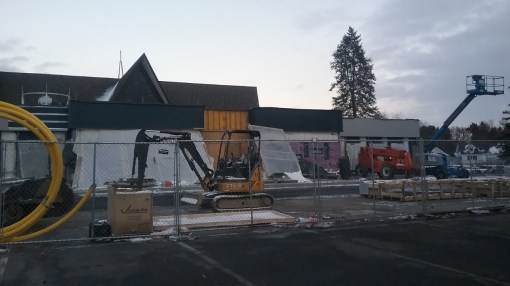
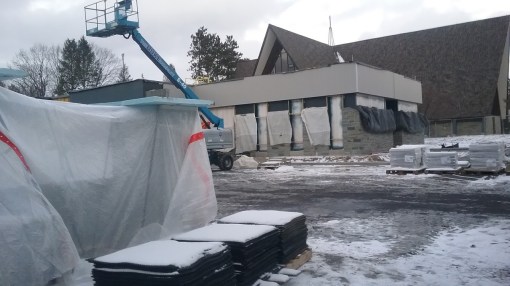
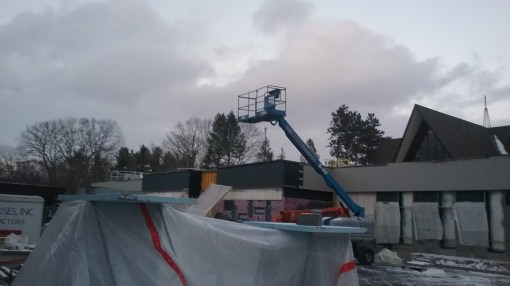
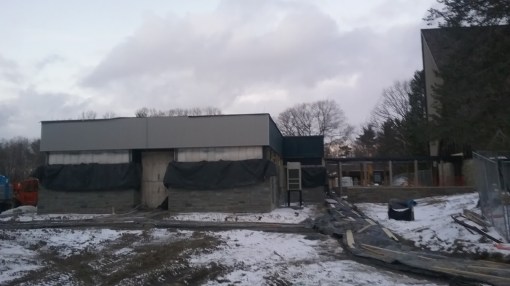
It’s a bit of tricky site for photos- the site borders the intersection of 366 and Forest Home Drive, leaving a pull-off in front of the mobile home park, or at the spit of land where the roads split. But it looks like site clearing and foundation excavation are ongoing. If anyone knows who the contractor is, drop me a line in the comments.

20161211_130116

902_dryden_final 902_dryden_v4_1


201 College Avenue Construction Update, 12/2016

18 12 2016

The Collegetown construction boom continues. In 2017, the city can expect at least five projects to open in the neighborhood, with a net gain of about 118 beds and $16 million in assessed tax value** – a two-family house at 123 Eddy Street; Cornell’s, 6-story, 76,000 SF Breazzano Center for its Executive MBA Program; the 5-unit, 28-bed 126 College Avenue;  the 9-unit, 36-bed 210 Linden Avenue; and lastly, the 5-story, 74 bed 201 College Avenue. Which has also been by far the most contentious one.

The project was first proposed in March – and from beginning to end, the only substantial change was a mild revision to its upper floors to create a setback as a modern deference to the Grandview House further up the block. That resulted in a loss of two bedrooms, dropping the plan from 76 to 74 beds.

For Todd Fox, who proposed the building through his company Visum Development Group, there wasn’t much room for revisions. He was going to, and paid, a premium on the property – $2.65 million, formally deeded in June by its previous owner, a small-scale local landlord who owned it for about seven years prior. The site held an early 1900s apartment house with three large spruce trees at the front, which became another source of contention during the debate.

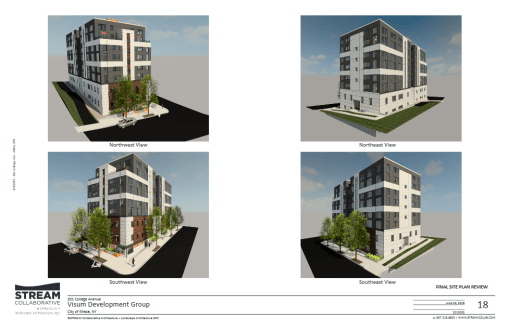
To make the project financially feasible, he needed to build to the maximum 5 floors and 70 feet allowed by the site’s MU-1 zoning (the project would have been outright impossible before the 2014 CAFD zoning overhaul, due to the parking requirement), and building micro-units with mezzanines would make the project pencil out – the profit value of the vertical space was effectively maximized. Working with architect Noah Demarest of STREAM Collaborative, he proposed a fairly modern building with fiber-cement panels, woven bamboo boards and cedar accents.
However, one thing that did not factor in to the calculations was the neighbor of 201, 203 College’s Neil Golder. Neil is a 44-year resident of Collegetown, having moved in in 1972, and buying his house in the early 1990s. As the kitchen manager for Loaves and Fishes and a former Common Councilor for the 4th Ward, he’s well known among the Ithaca community and is well connected to its grassroots organizations, as well as the political movers and shakers. By any account, Neil and his late partner Kathy Yoselson are beloved stalwarts of Ithaca’s progressive scene. However, Neil has generally not been a fan of development, particularly Collegetown’s (with one notable exception – 307 College).

What 201’s debate boils down to is a clash of two strong personalities. Todd Fox, who is probably the most gung-ho and financially adept developer one will find in the city of gorges; and Neil Golder, who was determined as hell to stop the project planned for the house next door, which wasn’t just a development, it was a project that he deeply felt would be a major detriment to his quality of life. Hence, Neil launched the group “Save the Soul of Collegetown“, under the auspices of protecting all of Collegetown, but mostly as a personal vehicle to drum up support to battle Fox and his apartment building.

The point of this summary isn’t to summarize every detail. You can read the 580+ page summary from the city, or all the Voice articles here. But there are a few key plot points.
After review and a negative declaration of environmental significance (meaning, effectively mitigated), he project received preliminary approval in June, and the city and the planning board were promptly slapped with a lawsuit by Golder. The stated case was that the environmental assessment was inadequate and that the project needed an EIS. Although it was quite a stretch given past precedent, it did make the planning board quite uncomfortable. John Schroeder, a longtime board member who served with Neil on the council, did a very deep analysis of the 2014 zoning code and determined that the building may be illegal on technicality.

That technicality was about building facade length, and whether Bool Street was a primary facade – if it was, it would legally have been required to be two separate buildings for having too long of a continuous face to the street. The zoning code, however, illustrated that an approach with indents such as 201’s were acceptable, and the city planning department, in their pre-site plan review assessment and meetings with Fox, had signed off on the plan as legal and acceptable. And they maintained that it was acceptable. So there ended up being a battle between the planning board, which is appointed though knowledgeable community members, and the planning department, which consists of vetted city staff. These kinds of battles are extremely rare, and it is likely that 201 was the first in decades.

While this debate raged, the building far exceeded its intended start date of July 2016. As a result, the site went on the market, and the plans were cast into jeopardy.

Although Fox and his team wanted to avoid a trip to the Board of Zoning Appeals, it was determined by the board to be the only legitimate course of action. The BZA had to decide whether or not the project was legal. And, in a 3-1 decision in October, they decided it was legal, due to ambiguity in the code, and a lack of timeliness on the part of the planning board, as the legality was not considered until after months of review, after preliminary approval was granted. After the BZA ruling, work on the building began the next day.

No one walked away from this one looking good; One reader emailed in and compared it to a Clinton vs. Trump vote. The debate sent a chill down the development community, and created additional bitterness for some of the old-timers who felt Ithaca was selling out to developers and student interests. The planning department and board were also left with some resentment towards the other; now that the code has been clarified, one can hope further battles like this can be avoided.
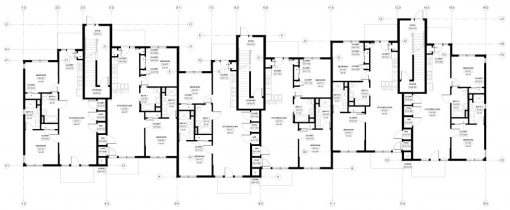
Anyway, the building itself. Here are the floorplans. The mechanical room, a trash room, interior bike storage, gym and storage space occupy the basement. Four three-bedroom and four four-bedoom units (28 beds), with about 1,000 SF each, occupy the first and second floors. The third and fourth floors have micro-units, 16 of which will be about 392 SF studios, 8 of which will be 670 SF with two bedrooms, give or take a few feet for each (32 beds). The top floor has nearly the same layout as three and fourth, with eight micro-units of about 392 SF and 2 two-bedrooms of about 670 SF. However, the westernmost two units are studios, which have balconies and are about 400 SF each. So, 14 beds on the top floor, for a total of 74. The smaller units make use of mezzanine spaces and netting to increase usable space.
Fox’s rental company, Modern Living Rentals, is handling the leases. The units are currently listed from $1,670/month to $4,170/month, depending on size and location.

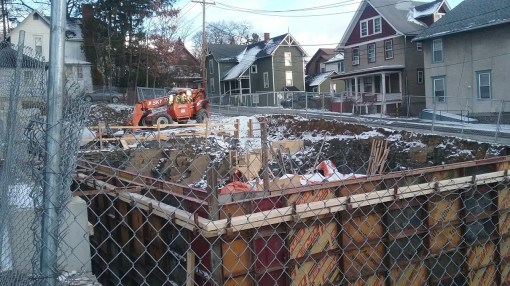
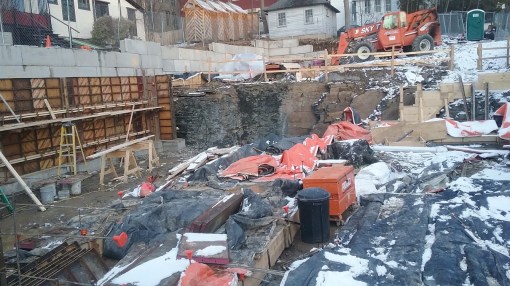
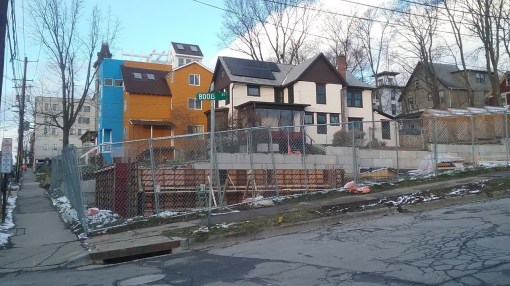
In the photos below, note that the excavated portion is only half of the building footprint – the basement only occupies the western half of the structure. The eastern half is slab-on-grade (Collegetown has more stable soils than most of the valley locations, so multi-story slab foundation buildings are feasible). The elevator core will be in the middle bridge of the “H”-shaped structure. Foundation forms are up and the concrete is being poured – through the fence, you can see one of the concrete footers already in place.

William H. Lane Inc. of Binghamton, who just finished up the Marriott downtown, is the general contractor for the approximately $6 million project, which is paying a premium to meet the opening date of August 2017.

**If you add in Phase III of Collegetown Terrace, which is on the fringe of what’s normally considered Collegetown, raise those numbers to 462 beds and $71 million.

20161209_153319

20161209_153332

20161209_153341

20161209_153350

20161209_153402

20161209_153706

201_college_site 201_college_v5_1


Tompkins Financial Corporation HQ Construction Update, 12/2016

18 12 2016

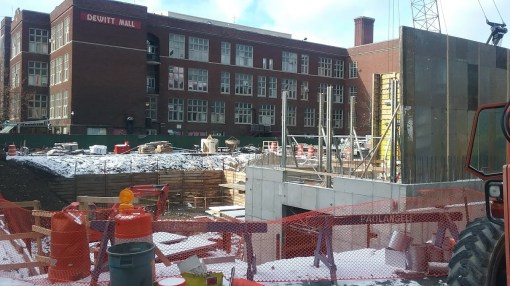
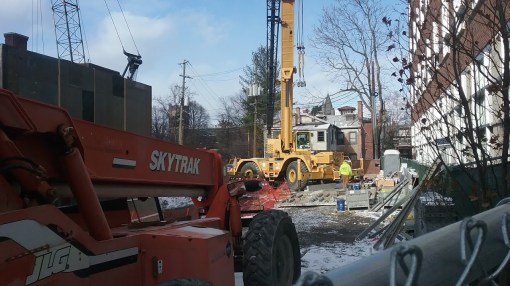
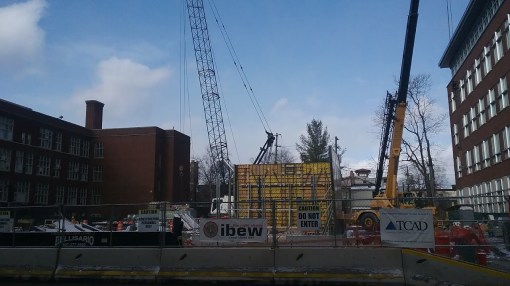
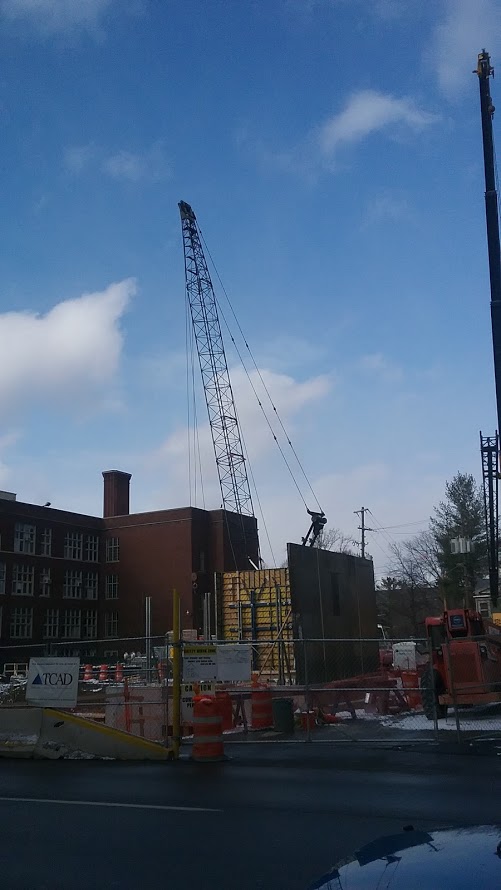
The future headquarters of Tompkins Financial Corporation is starting to rise from the ground at 118 East Seneca Street. The elevator core and south stairwell are being poured section by section. Forms are being put into place to build the next level of the core. It looks like structural steel surrounded by concrete fortified with steel rods (rebar). The small holes within the elevator core are where the structual steel of the superstructure will tie in. The basement appears to be fully excavated with all the wood lagging in place. The four H-shaped steel bars next to the elevator core are piles, which will carry the building load. More on those in a minute.

The basement for the TFC HQ is a bit of an unusual setup. The excavated portion (12-13 feet deep) only encompasses the floor plate for the basement and ground floor. The second to seventh floors will have larger floor plates. The elevator core actually sits at the northeast corner of the ground floor’s floor plate – the area between it and the Hilton Garden Inn will be the driveway, and behind it, the customer parking lot. Stairwells to the upper levels will also rise on the northeastern boundary of the property, and the northwest corner of the first floor, close to the parcel’s lot line with the DeWitt Mall. The upper floors will have the support of additional load-bearing columns along the perimeter of the property (they will tie into the end-bearing steel foundation piles seen here in August, which seem to be capped and at ground level now).

Along with the perimeter piles and the piles within the ground floor plate, four support columns will rise from through the parking area to the floors above. Those appear to be pile caps for two of those support columns in the second to last photo. The four H-shaped steel bars are capped with a thick block of concrete from which the support columns will tie into, and use as their base. The weight of the building will be transferred through the steel structure, through the pile cap and evenly distribute the weight into those piles, which will transfer the load down into very firm soil 65-70 feet below ground level. This is what will give the building its stability.

Anyway, seems like I forgot to take photos of the drive-thru bank branch under construction across the street – which is probably close to completion at this point, if not already. The $31.3 million office building will open in March 2018. LeChase Construction is the general contractor, and HOLT Architects is responsible for the design.

20161209_125159 20161209_125207 20161209_125228 20161209_125243 20161209_125309 20161209_125322 20161209_125401 20161209_125416

tfc_hq_first_floor_plan

tfc_hq_profile


Hotel Ithaca Construction Update, 12/2016

15 12 2016

The Hotel Ithaca addition at 222 South Cayuga is topped off and has taken the shape of the final product. Most of the new windows have been fitted into the exterior walls. Air conditioning units will be installed in the smaller openings. Peering inside, it looks like the interior framing is all set, and utilities rough-ins are underway.

In most places, the DensGlass fiberglass mat sheathing is being sealed up with R-Guard FastFlash liquid flashing, to close up the seams, joints and fasteners. Some of the newer sections, like the south wall, have yet to be sealed – in fact, workers were cutring and installing the DensGlass boards on the balconies while these photos were being taken. Since the balconies aren’t meant for full-time occupancy, the fiberglass mats are going directly onto the steel studs, without the R-Max polyiso. Taking a guess here, the gray coat on the front (east) wall might be a primer material for the exterior facade.

Along with general contractor and frequent Hart Hotels partner Krog Corp, it looks like Henderson Johnson Inc. of Syracuse was tapped for some subcontracting, and IBEW-sponsored John Mills Electric of Ithaca is handling the electrical rough-ins for the new wing.

The new $13.77 million addition should open in May 2017, just in time for the big graduation weekends. More background info on the Hotel Ithaca project can be found here.
20161209_122235 20161209_122240 20161209_122252 20161209_122341 20161209_122350 20161209_122356 20161209_122509 20161209_122807 20161209_122819 20161209_122840

hotel_ithaca_final_1


209-215 Dryden Road Construction Update, 12/2016

14 12 2016

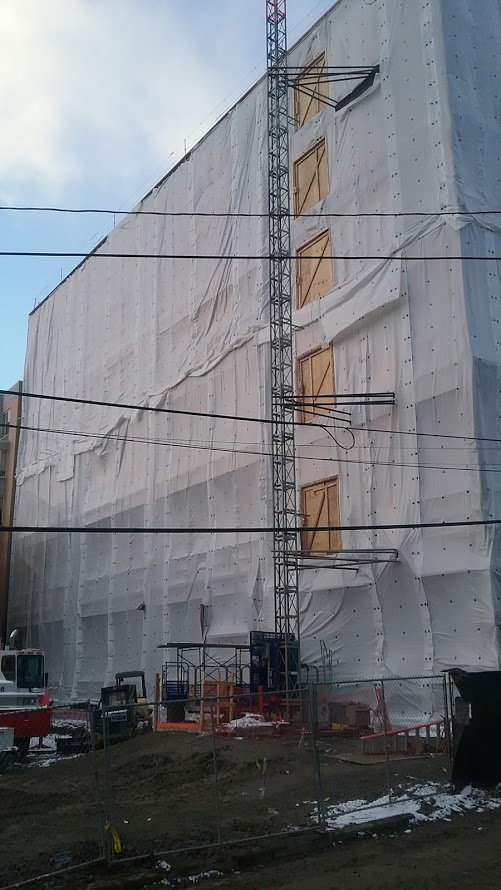
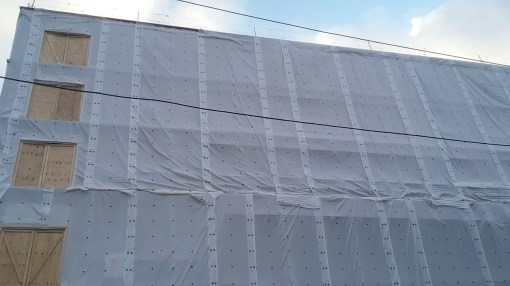
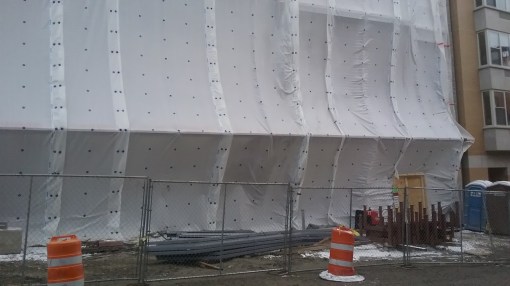
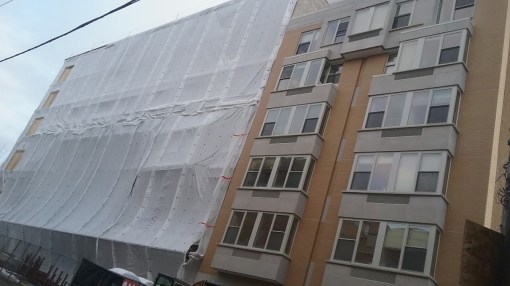
Cornell’s Breazzano Family Center at 209-215 Dryden Road is closed up for the winter. Literally, with white plastic sheeting, as a protective measure against the elements while interior work moves along. The plywood holes on the front and back sides are removable so that a lift can deliver materials to different floors of the 6-story building. One can make out the dramatic entry foyer above the steel stretching out the sheeting above the ground floor. Note that the height of the building, 80 feet, is the maximum permitted under Collegetown’s form zoning (MU-2, up to 6 floors or up to 80 feet).

The plan is to have the new 76,300 SF building open by Summer 2017. Hayner Hoyt Corporation of Syracuse is the general contractor.

After the last Breazzano update a couple months ago, I had contacted Cornell to do a piece about the expanding Executive MBA program, what’s driving the growth, why Collegetown, and so on…but after being led around or misled by several emails over a few weeks, I gave up on the piece. For what it’s worth, Poets and Quants did a thoughtful article and interview here with the Johnson School Dean, Soumitra Dutta, talking about the future of the MBA program and the business school merger with the Dyson/AEM program and the Hotel School. Maybe I’d have had better luck if I just sidestepped Cornell’s PR unit.

20161209_155004 20161209_155019 20161209_155104 20161209_155204 20161209_155215 20161209_155234 20161209_155258

209-215_2


Village Solars Construction Update, 12/2016

13 12 2016

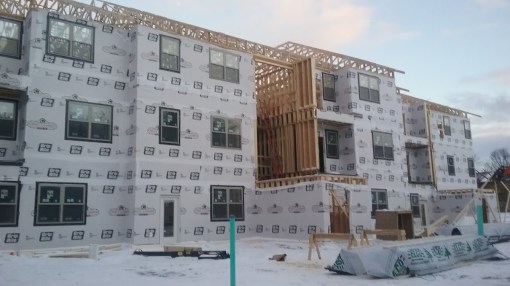
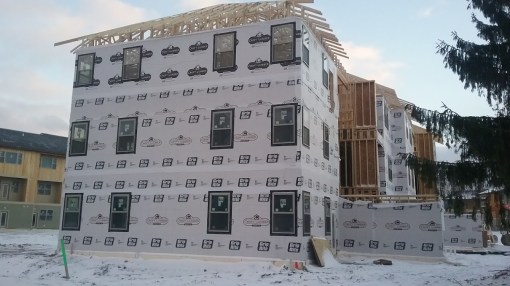
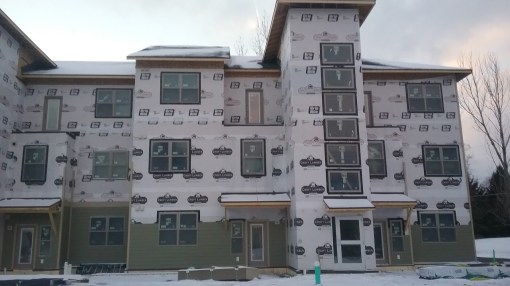
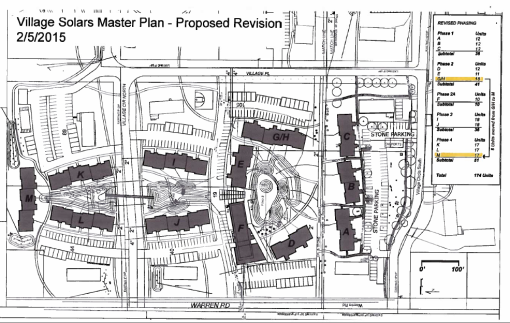
The latest two buildings at the Village Solars apartment complex are moving along. Building J is nearly fully framed, the roof trusses are being lifted (literally, by a lift) into place, and the lower floors have been covered in housewrap, with windows fitted into their openings. You get the idea of how the exterior buildout process works by looking at Building J – the exterior wood frame is built, plywood sheets are sealed over the top of the stud walls, housewrap gets applied as a moisture barrier, and then the exterior finishes go on over the house wrap. One can just make out some of the interior wood stud walls through the panes.

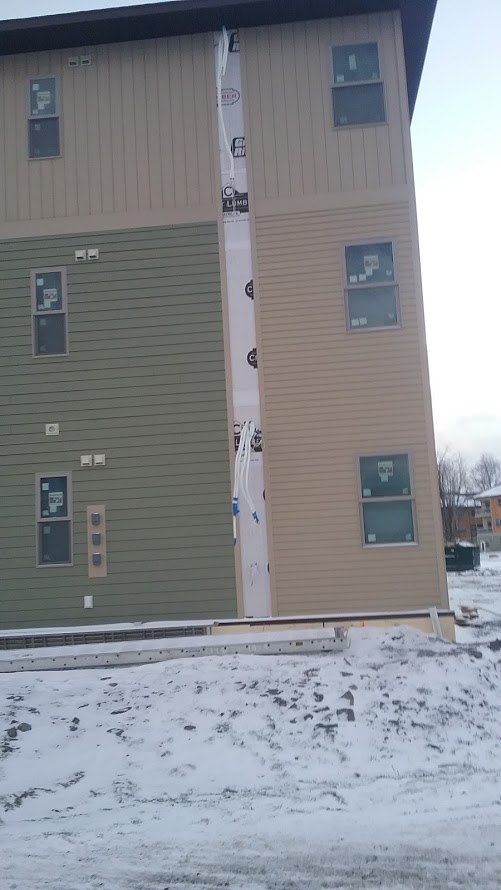
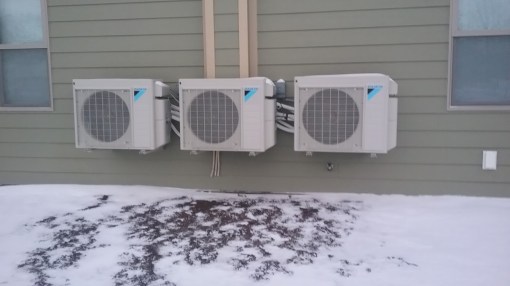
Meanwhile, Building “I” is a little further along, but it tells us how the roofing process goes. First the roof trusses are attached, then the Huber ZIP sheets are set into place and the eaves are closed up, the underlayment and tar paper goes on, and finally shingles and trim boards. The wires dangling from the side of Building “I” are electrical wires for the Daikin wall-mounted heat pumps.

Initially, the plans called for 36 units, but with the splitting of some of the larger three-bedroom units into smaller arrangements, the actual number is likely higher. The Lansing town board approved changes to the complex that raised the number of units permitted/to be built from 174 to 206, although the change in overall square footage is negligible. Although not listed on Lifestyles Properties’ webpage, units range from $1050-$1650/month, depending on size and location. Craigslist tends to have the most up-to-date info, but those links stop working when the ad expires.

As with the other phases, the buildout for phase III received a $6 million loan from Tompkins Trust Company. According to the architects’ website, after phase III opens, work is expected to commence on a community building, retail options and walking paths. A bus stop is also in the works.
20161209_161503 20161209_161529 20161209_161539 20161209_161603 20161209_161611 20161209_161622 20161209_161638 20161209_161649 20161209_161717 20161209_161752 20161209_161805 20161209_161827 20161209_161843 20161209_161915 20161209_161936 20161209_161941 20161209_162003 20161209_162022 20161209_162030

village_solars_2exterior-1024x548 plan-01-1024x423


St. Catherine of Siena Parish Center Construction Update, 12/2016

12 12 2016

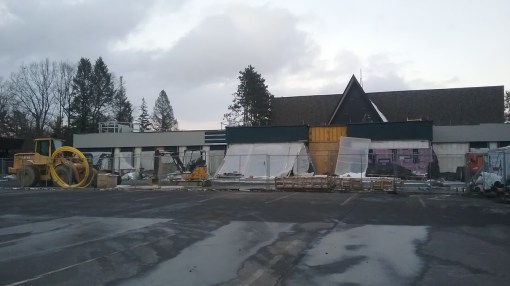
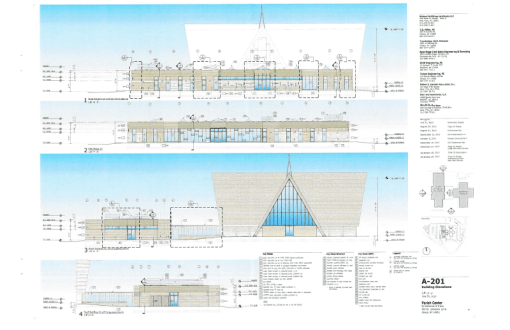
Over at St. Catherine of Siena’s new parish center, it looks like the GlasRoc sheathing towards the roof has been sprayed with the dark blue waterproofing, some “continuous anchors” (metal rails) have been attached, and the exterior panels are being attached. The renders show a different color and possibly material, so it’s not 100% clear on whether this is the final appearance.

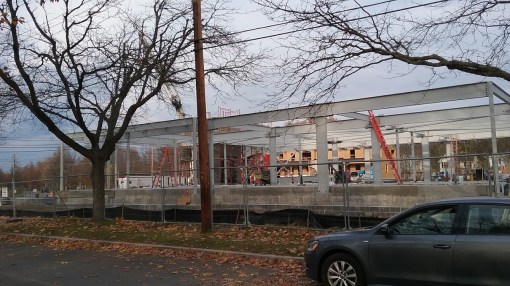
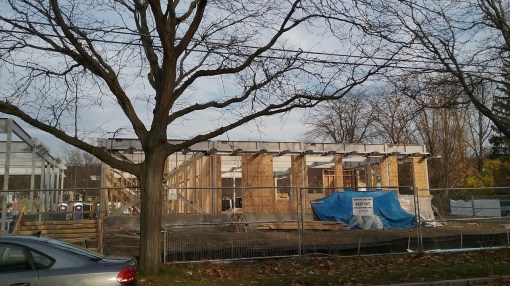
Below that, the stone veneer is progressing, and most of the gypsum sheathing has been waterproofed. Only a few of the smaller windows have been installed, the rest still have yet to be fitted. In the second to last photo, the new enclosed walkway from the parish center to the church is coming along, framed but not yet outfitted with its expansive glass walls.

20161209_162951 20161209_163002 20161209_163043 20161209_163048 20161209_163128 20161209_163150 20161209_163302

st_catherine_v2


210 Hancock Construction Update, 11/2016

2 12 2016

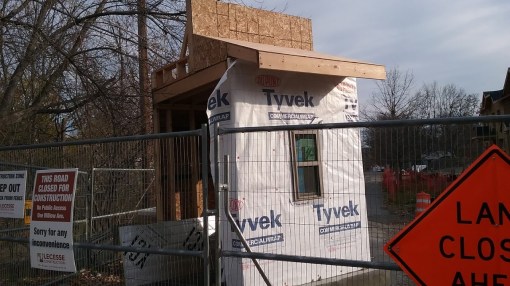
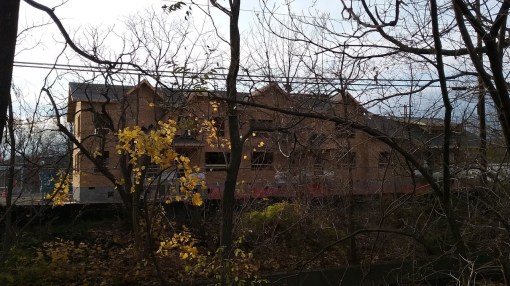
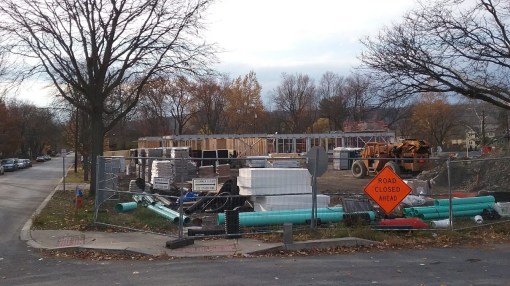
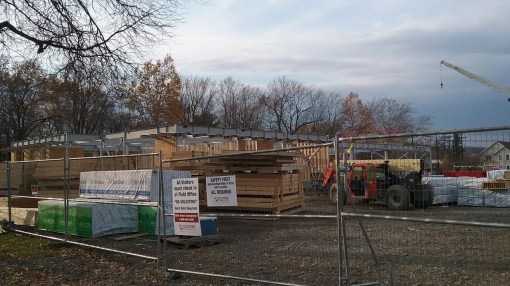
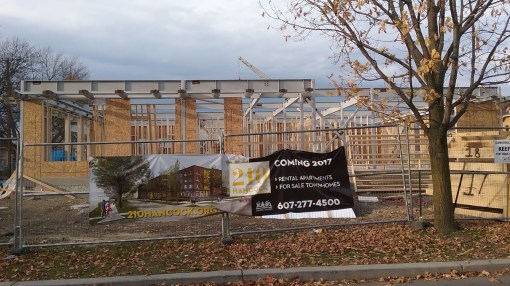
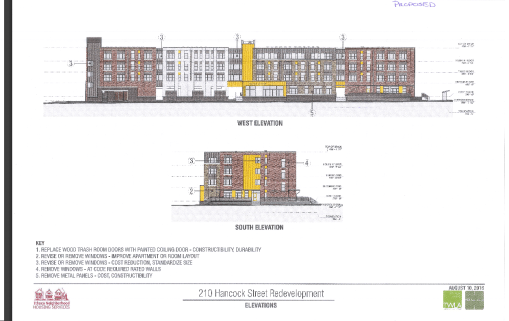
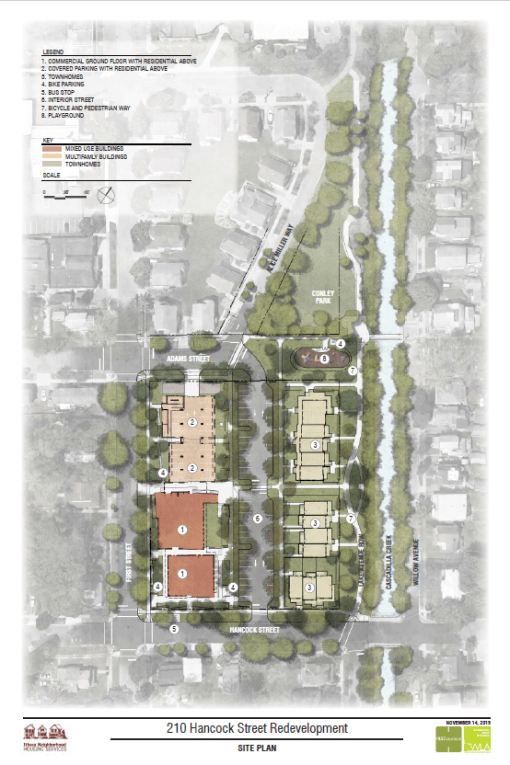
Plenty of progress at 210 Hancock. LeCesse has the foundation completed and the apartment building is out of the ground. The northern two segments have a parking garage on the first floor, hence the paving. Rebar poking out of the CMUs will tie into the steel structure. The southern two segments are a little further along. Steelwork is underway for both, with the first floor framed out. The southernmost structure, which will house the affordable daycare space, already has interior stud walls going up, as well as plywood with rough openings for doors and windows.

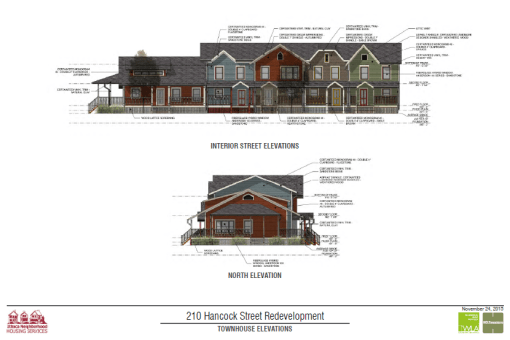
The five for-rent townhouses are much further along than I had anticipated. They are fully framed and it looks like tar paper is being applied to the rooftops. Looking at the sample wall at the corner of the property, there were a couple different housewraps in display – one was standard DuPont Tyvek commercial wrap, the other was Henry BlueSkin, which I’ve never before seen in a project around Ithaca. A little research suggests BlueSkin is a newer and more expensive product, but it seems to have its proponents. With fewer staples or button caps involved, it’s less labor-intensive to install, and less fastening comes with less of a risk of the vapor barrier being torn open and compromising its waterproofing abilities.

Both are fully synthetic plastic wraps with microscopic holes that allow moisture to breathe out without letting moisture in from the outside, preventing mold and wood rot. But in order for Tyvek to work effectively, all the joints and seams have to be taped tight to keep water from seeping in at the edges. Blueskin is created with an adhesive so that it doesn’t have to be taped down. However, BlueSkin still has to be fastened at window and door openings, the application surface has to be clean and dry, and it’s more difficult to apply in temperatures less than 40 degrees F – keep in mind, we’re at the onset of a northeast winter. I’m not sure which barrier will be applied where, but we’ll find out soon.
20161119_142839 20161119_142845 20161119_142917 20161119_142951 20161119_143026 20161119_143048 20161119_143138 20161119_143223 20161119_143351 20161119_143446 20161119_143453 20161119_143532 20161119_143604

20161119_143253

inhs_pride_design_v6_1 inhs_pride_design_v5_3 inhs_pride_design_v5_2 inhs_pride_design_v5_1


Cayuga Meadows Construction Update, 11/2016

30 11 2016

At the Cayuga Meadows site on West Hill, LeChase Construction has fully framed the new 68-unit apartment building. Windows and doors have been fitted into the wood stud walls. The roof looks to be pretty much complete, with the exception of trim pieces.The first floor is getting a brick veneer, and the balconies are built out but are also lacking their trim for the moment. The Tyvek waterproof housewrap will be covered over with Certainteed fiber cement “Savannah Wicker” Dutch Lap Siding and “Cypress Spruce” cedar-like shingle siding. Basically, beige and grey-green. Looks like the new access road has also been paved.

It might not be the most exciting design, but it’s one of Conifer LLC’s tried-and-proven approaches – an L-shaped structure with bumpouts, typically hosting small private balconies. One need only go a couple miles south to Conifer Village at Ithaca to see a similar example, albeit with some different material finishes. While Cayuga Meadows might not be especially unique, it does have its advantages – LeChase, who does nearly all of Conifer’s work through a partnership, has extensive experience with the design, and that familiarity should help with producing a high-quality and on-time product.

20161119_140224 20161119_140252 20161119_140343 20161119_140508 20161119_140529 20161119_140603

Cayuga-Meadows-2 Cayuga-Meadows-Shot


602 West State Street Construction Update, 11/2016

29 11 2016

It’s been a busy period for construction starts. Elmira savings Bank has started work on their new branch office at 602 West State on Ithaca’s West End.
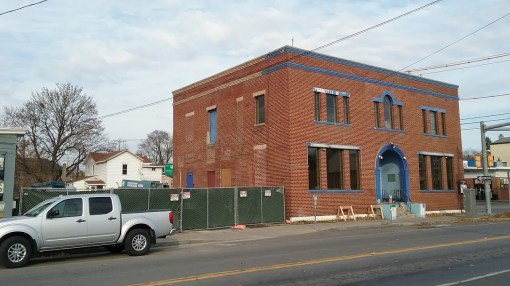
The project itself isn’t controversial. But the $1.75 million purchase in December 2015, followed by the very controversial eviction of three low-income families so that their homes could be turned into parking lots…well, that didn’t go over very well, nor should it have. Now with the chance to do some retrospective, it appears that the primary malefactor was the previous property owner, who signed new leases with the tenants but didn’t tell Elmira savings Bank when he sold them the properties. Elmira Savings Bank could have saved themselves many headaches if they had done some due diligence by meeting with the tenants of the properties they were purchasing, but, live and learn, sometimes the hard way.
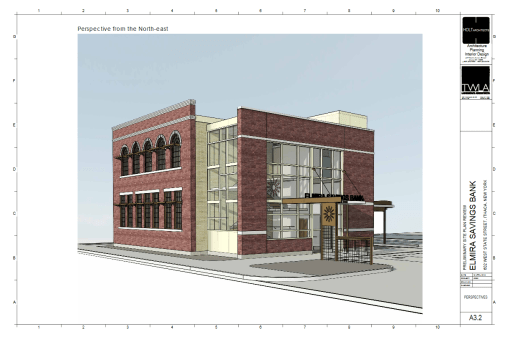
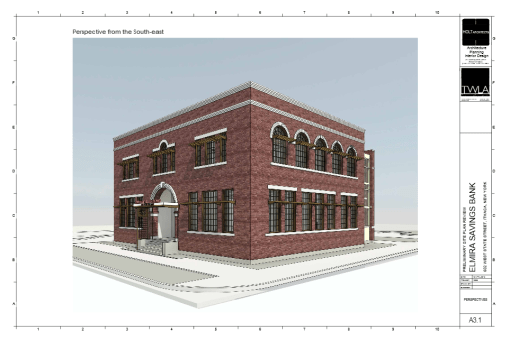
Plans call for renovating the 5,000 SF building that once housed the Pancho Villa restaurant, a 1,600 SF addition on the north side of the building, and a new drive-thru for bank customers. 16 parking spaces will be included. Edger Enterprises of Elmira will be the general contractor for the $1.7 million project, which is expected to be completed in March 2017. HOLT Architects, headquartered just across the street, is the design firm on record. The primary change during the review process was to limit the house demolitions – the board strongly encouraged ESB to find a partner to develop those lots rather than convert them to parking. At the moment, one of the houses has been torn down to make way for the drive-thru, but the other two will be left as-is and vacant for the time being.

The new addition will incorporate a limestone base, red brick similar to that of the existing structure, Alucobond anodic satin mica colored metal panels above and below the aluminum window curtainwall, and Hickman sandstone-colored metal roof coping. The blue painted brick will be restored to more historically accurate grey-green, and the bricked-in windows will be restored. Bronze-colored metal sunshades will be installed over the windows, and the steel drive-thru canopy will be the same color. The roof will be a white single-ply membrane.

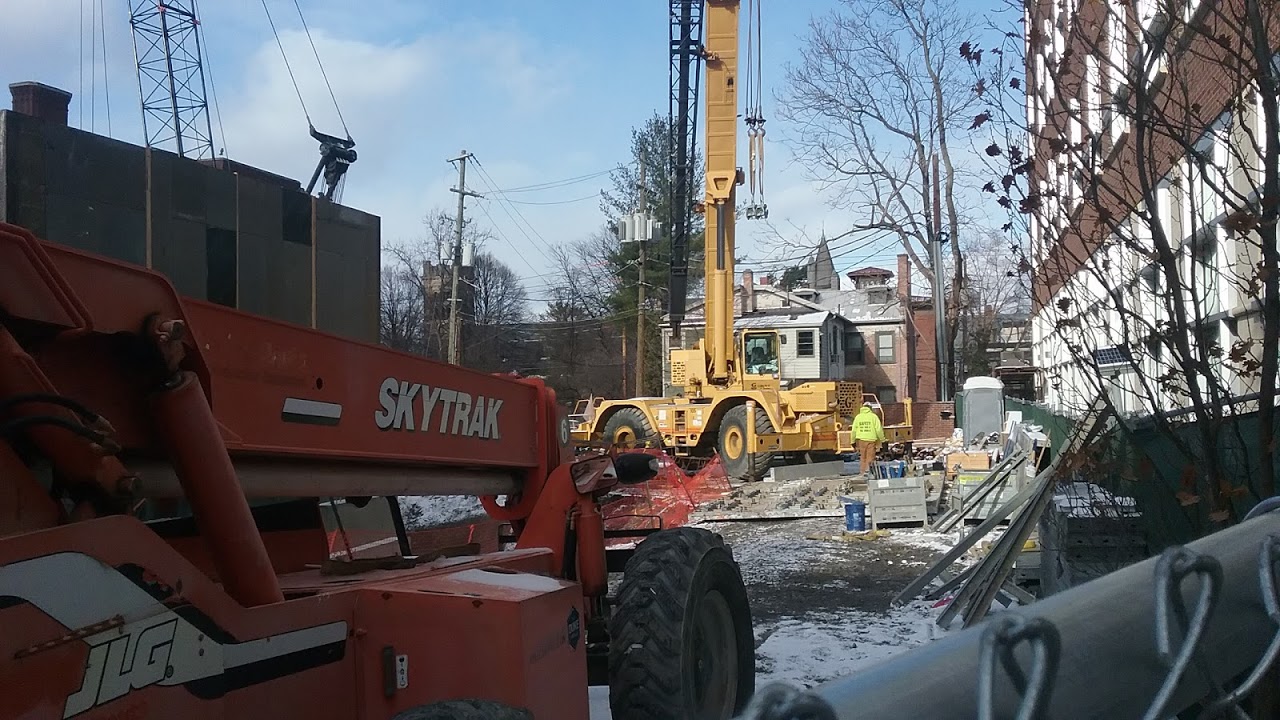
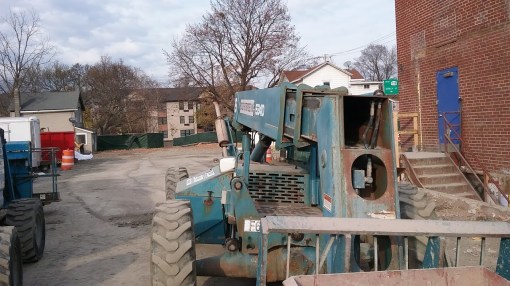
In the construction photos, the new addition has had its foundation excavated and it looks like the concrete is in the process of being formed and poured, with subsurface utility lines poking out in the excavated, yet to be poured portion. The small windowless addition and fire escape on the western wall of the existing structure have been removed as the building advances through renovation – the first and second-floor doors will be replaced with appropriately-sized and historically-accurate windows to match the bricked-in window towards the front.

20161119_135025 20161119_135052 20161119_135127 20161119_135139 20161119_135150 20161119_135156 20161119_135215 20161119_135225

elmira_savings_v2

esb_1 esb_3-1