1325 Taughannock Boulevard Construction Update, 3/2016

25 03 2016

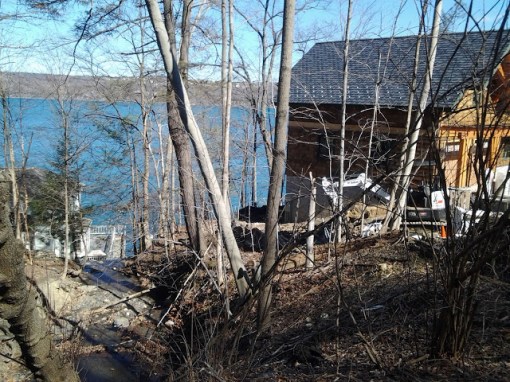
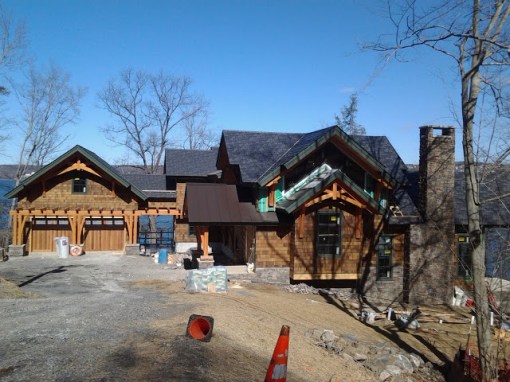
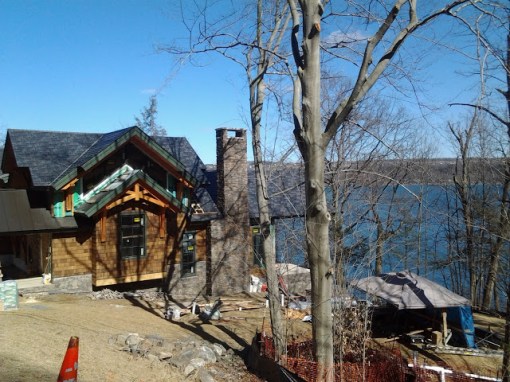
It occurred to me, while taking photos of the “Lake House project”, a mansion underway at 1325 Taughannock last weekend, that there’s a babbling brook just north of the garage, with a small waterfall.

It’s okay to be jealous. I am.

Since January, most of the wood shingle siding has been attached, although some of the Green Guard Housewrap is still visible. Some sections of the foundation and concrete column bases have been covered with stone veneer, but the large, partially chiseled rock on-site suggests some genuine stone is also being used (when one can afford to take out a $2.25 million construction loan for a single-family home, why not splurge). The front door is still a plywood sheet, but windows have been fully fitted from what could be seen from the road. A small section of the roof remains exposed felt paper, but will be finished with what are likely to be metal sheets, based off of New Energy Works‘ render.

Quoting a press release from New Energy Works:

“Settled on a cliff above Cayuga Lake, the Lake House project is a full timber frame home which will use over 500 timbers to create 4,880 square feet of living space for a growing family. The interior frame will be crafted of kiln-dried Douglas Fir, while the exterior will use fresh sawn Douglas Fir with kiln-dried curves. Two distinct bowstring trusses with steel bottom chords are featured in the kitchen to support the second floor above.”

Photos from the timber frame raising last summer can be found here. If anything, the side that faces the lake is even more impressive. Here’s a render of the “back side”, the view from the lake:

LAKESIDE

This will probably be the last visit. The house should be completed by the end of May, and it’ll be a little unsettling to take photos when it’s occupied. I’m not sure a feature in the Voice, even if permitted by the owner, would have the allure of “The Lifestyles of the Rich and Famous“, or just piss readers off. At least two comparably grand lakeside homes are planned along Taughannock Boulevard and Maplewood Road.

20160319_150241 20160319_150308 20160319_150330 20160319_150340 20160319_150345 20160319_150424

20151108_144517

image001

ithaca_lakeside_timber_frame

great_room_ithaca_timber_frame_web


Texas Roadhouse Construction Update, 3/2016

24 03 2016

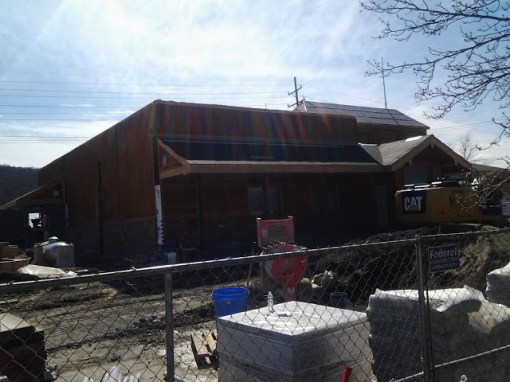
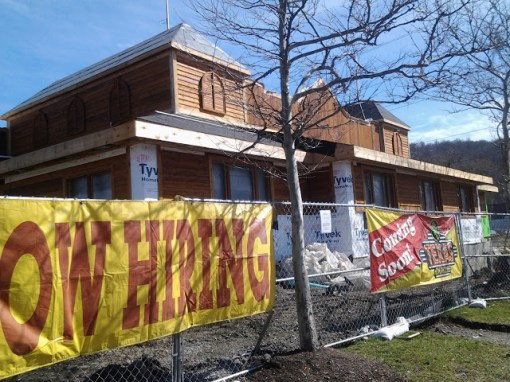
Some readers love it, others hate it, but Texas Roadhouse is well on its way to a May opening. The steakhouse chain has made pretty good progress on their 7,193 SF restaurant on Elmira Road across from Ollie’s and the Vitamin Shoppe. In fact, a small temporary space next to the Vitamin Shoppe is where Texas Roadhouse is conducting interviews for the 170 staff it plans to have at opening.

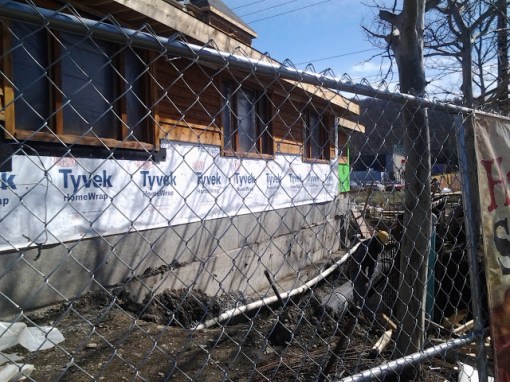
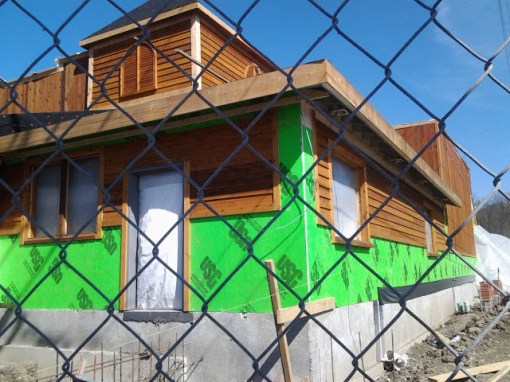
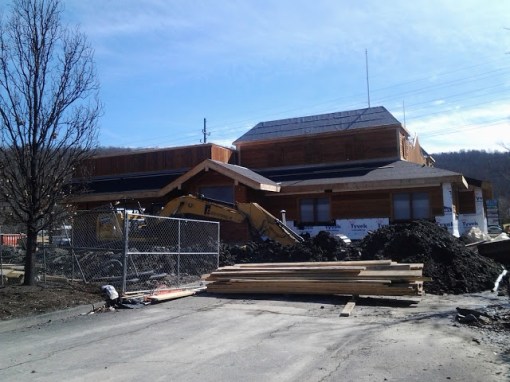
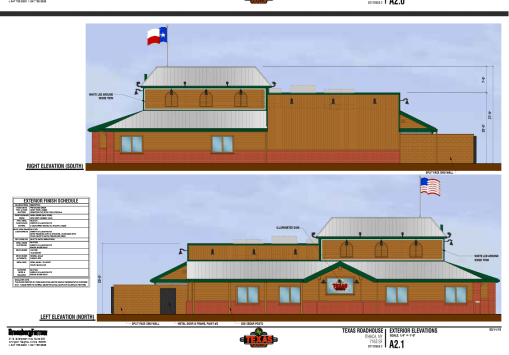
The lap cedar siding is coming along, covering up the Tyvek housewrap from most angles (brick and metal flashing will cover what’s left). USG Securock glass-mat sheathing has been applied to the exterior walls facing and near the kitchen/food prep area for fire safety – the sheets are noncombustible and serve as a form of passive fire protection. The roof has been covered with felt paper, but no shingles have been attached yet. Closer to the ground, brick veneer has been applied to the base of the eastern and northern walls. I’m not sure what’s going on next to the street-facing foundation wall; but that is where the entrance ramp will be going.

Texas Roadhouse corporate is developing the site, leasing the land from plaza owner DDR Corp. of Ohio. GreenbergFarrow of suburban Chicago is serving as an architectural consultant for the project, and Edger Enterprises of Elmira is the general contractor.

20160319_142826 20160319_142829 20160319_142905 20160319_142942 20160319_142954 20160319_143020 20160319_143205

texas_roadhouse_v3_1 texas_roadhouse__v2_1

texas_roadhouse_2


619 West State Street Construction Update, 3/2016

23 03 2016

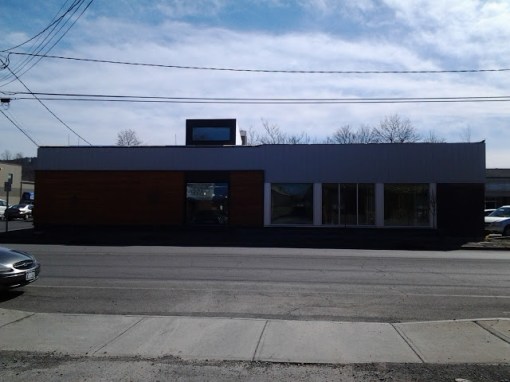
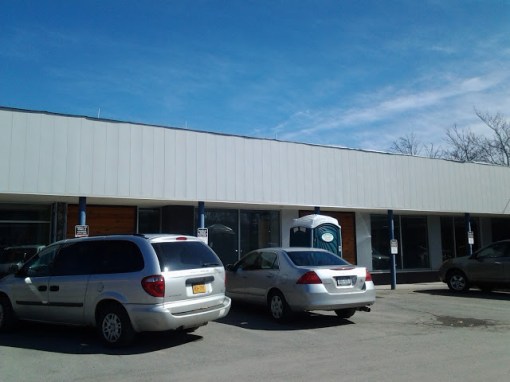
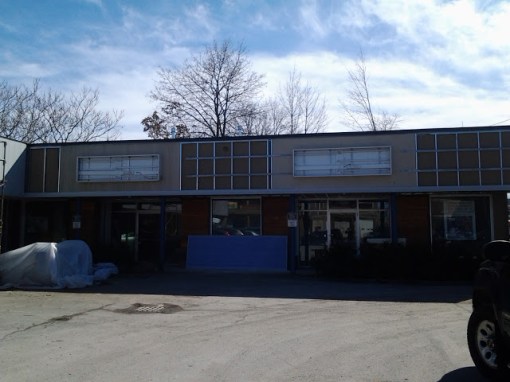
Not much left to go here. 619 West State Street, the future home of HOLT Architects, is near the finish line. The wood siding has been attached, although it’s hard to tell if the (dormer? periscope window?) will be sided with wood or the off-white metal paneling like most of the plaza. It doesn’t look like the rooftop solar panels have been installed yet, but they’re on the to-do list. Exterior and interior work is a little further behind on the rental portions of the building, where two smaller commercial spaces will be available to tenants. Someone from HOLT feel free to comment, but I think one of the spaces is already spoken for.

I can vouch from being that that HOLT’s interior space is nearly complete, and looks great. The lime green paint in the entrance area stands out and gives it a certain liveliness. I was tempted to take photos, but there were multiple people working inside finishing up HOLT’s space last Saturday, and I felt uneasy with the idea of interrupting for an impromptu tour. So I was that guy, staring inside, awkwardly holding his camera phone, before giving in to preconceived social mores and leaving them be. I guess I’m a lot more comfortable bothering people when they’re outdoors.

Tompkins Trust Company is providing the financing, and local company McPherson Builders is in charge of general construction. The project cost for the net-zero energy structure comes in at about $482,500, based off the construction loan on file with the county. More discussion about the net-zero features can be found here, and HOLT’s move to the West End here.

20160319_144706 20160319_144734 20160319_144737 20160319_144811 20160319_144822


619_w_state_st_1


Holiday Inn Express Construction Update, 3/2016

22 03 2016

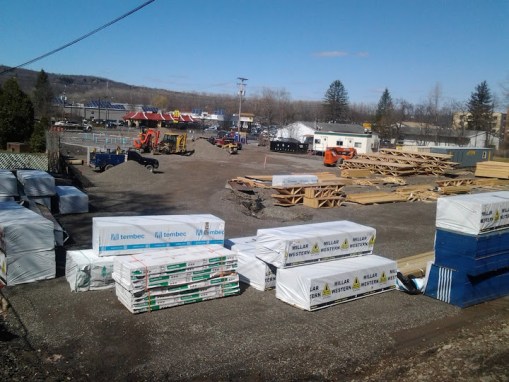
Work on the new Holiday Inn Express at 371 Elmira Road is progressing. the foundation work is currently underway. It looks like they’re going with a shallow, slab-on-grade foundation that spreads the weight of a building all around the concrete slab. The formwork’s been done, and rebar criss-crosses the yet-to-be-poured concrete. The rebar mesh is a reinforcement for the concrete when it gets poured, helping to prevent cracks that may form in the concrete from spreading throughout the foundation and causing major damage. The blue tubes are a part of the under-slab utilities. Elsewhere on the site, it looks like stacks of Tembec and Millar Western Canadian lumber are being used to assemble wood trusses that will be used in the hotel’s wooden frame.

The 4-story, 79-room hotel is expected to open late this summer. Rudra Management and Rosewood Hotels (Jayesh Patel) of suburban Buffalo is the developer.

20160319_141548 20160319_141636 20160319_141959 20160319_142012 20160319_142018

holiday_inn_express_v2

holiday-inn-express-original-1


Boiceville Cottages Construction Update, 3/2016

21 03 2016

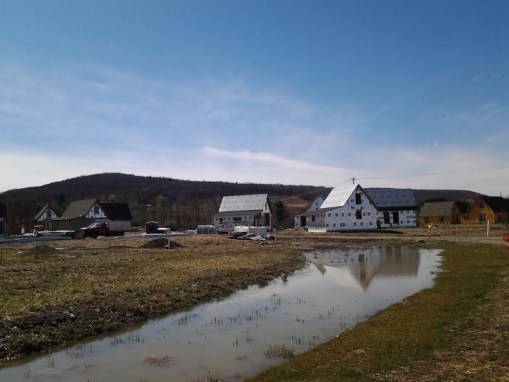
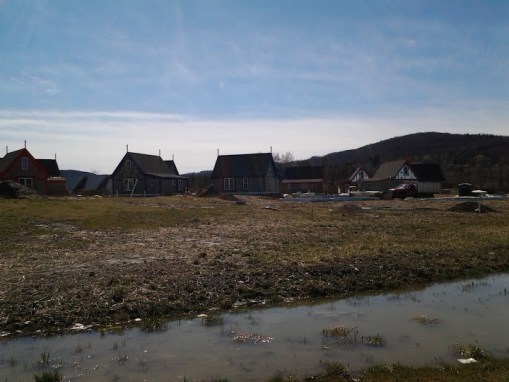
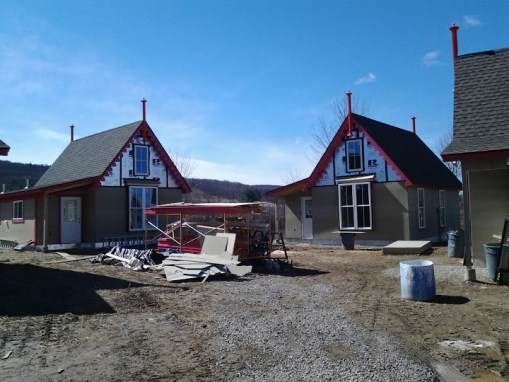
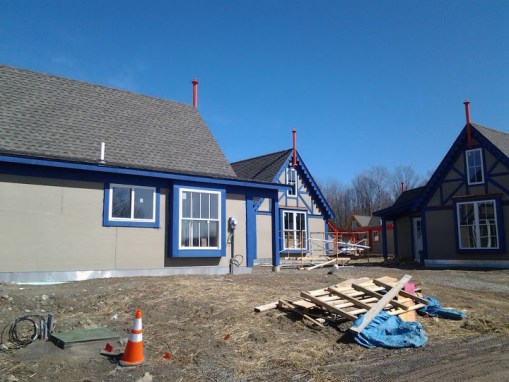
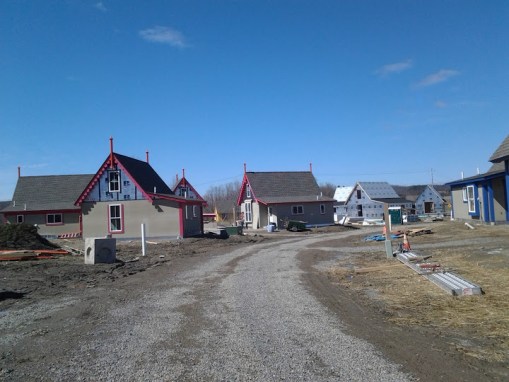
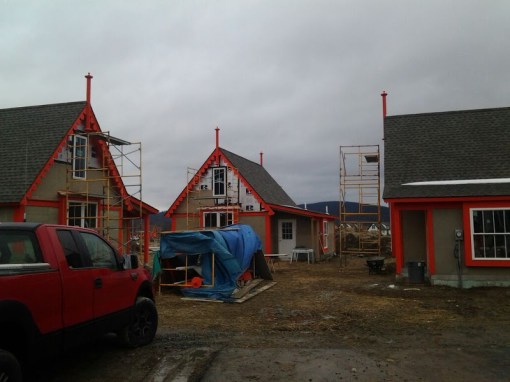
Some good progress has been made with the new cottages over at the Boiceville Cottages site. the cottages with the red-orange trim appear to be fully finished and occupied, while those with the blue trim have some interior finish work left before they can be rented out to tenants.

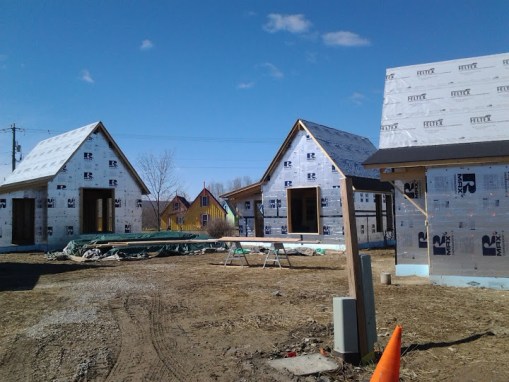
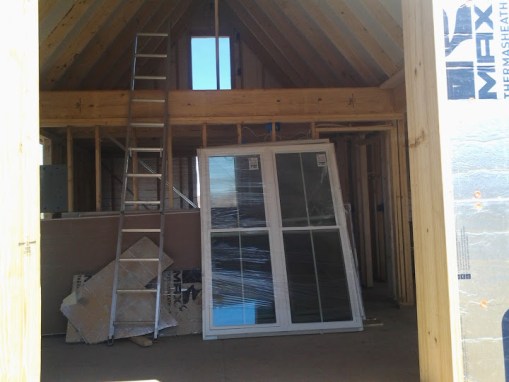
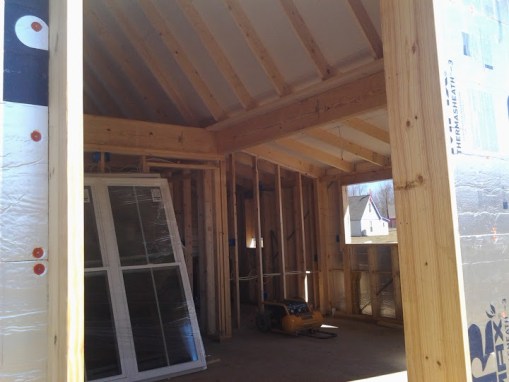
Newly risen since the last visit in January are a set of fuchsia-trimmed cottages that have been framed, sheathed, and partially stucco’d, and a fourth set of cottages that are still at the sheathing stage. Peering inside, you can see the interior stud walls and windows yet to be fitted into their openings.

That leaves a fifth and final batch of cottages that remain foundation slabs for the time being, but will likely start construction as we head through spring. Rents for the houses range from $1,095-$1,725/month, depending on the unit.

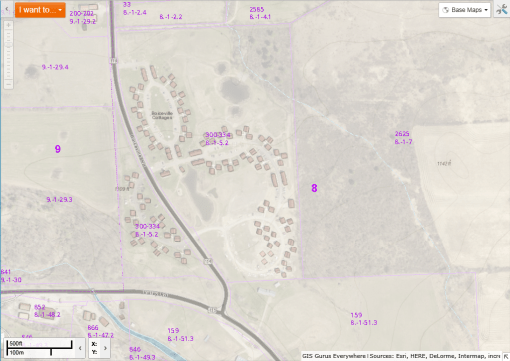
Bruno Schickel hosted congressman Tom Reed on a visit to the construction site a couple of weeks ago (more about that here and here). The $2.2 million last phase, which consists of 17 cottages, is expected to be completed this summer, bringing the total number of units on the site to 140. The cottages have been built in phases – 36 in 1996/97, 24 in 2006/07, and about 80 in multiple sub-phases since 2012.

Once the project wraps up, Schickel Construction plans to turn their attention to finishing their newly-acquired Farm Pond Circle project in Lansing.

20160319_123813 20160319_123819 20160319_123922 20160319_123930 20160319_123949 20160319_124119 20160319_124140 20160319_124150 20160319_124200 20160319_124228 20160319_124237 20160319_124241 20160319_124319 20160319_124455 20160319_124500

boiceville_1


News Tidbits 3/19/16: A Taxing Problem

19 03 2016

20160109_115414

1. Apart from controversial presidential endorsement, Congressman Tom Reed paid a visit to the development community last week at the Boiceville Cottages project out in Caroline. According to Dan Veaner at the Lansing Star, the meeting was touted as an opportunity for developers, builders and contractors to express their concerns with onerous government procedures, specifically the local level.

Bruno Schickel, speaking at the event, noted that Boiceville could only have been done in Caroline because the 3,000 person town has no zoning (but they do have some type of commission that acts as a planning board). The lack of layers and conflicting comments from different interests allowed Schickel to get the latest 75-unit expansion approved in just two meetings back in 2012, something that he notes would have likely taken two years in other municipalities.

Then there’s this quote from another developer.

“After the site tour Reed spent time chatting with builders about regulations, mandates and costs that prevent some projects from ever being built.  One developer told Reed about an incident that killed a project before it even got started.

‘I tried to build a mixed use residential retail commercial building and I needed more residential units to make the economics work for lending,’ he said.  ‘I wanted six more apartments and the Town of Ithaca wanted an environmental impact statement.  the deal with these impact statements is that you pay an expert $20,000 so he can produce a 50 page report.  They look at it and read it and if they don’t like it they want to hire their own expert and they make the developer pay for it.  I backed out right away.  I pulled the plug and walked out of the meeting.'”

In case anyone was wondering, that was Evan Monkemeyer and his never built College Crossings project on the corner of 96 and East King Road. Which, to be honest, didn’t get re-approved because the window of opportunity closed as soon as the town updated its Comprehensive Plan and decided it wanted dense mixed-use. It’s an uncomfortable situation for all parties.

Obviously, there are two sides. Schickel is a very thoughtful and responsible builder/developer, but others may not be, which is why guidelines need to be in place. But, having watched the battles over affordable housing, and seeing the battles over wind and solar power now erupting in the western half of the county, it does give pause. I never thought I’d hear Black Oak investors such as County Legislator Dooley Kiefer and Caroline town board member Irene Weiser described like greedy Wall Street corporate villains, but that’s the current state of affairs. Using the same point from last week, the county can’t afford to be self-defeating, and having too many rules and regulations can keep a lot of good things, like green energy and affordable housing, from happening. The big, hotly-debated question is, where is the balance?

On a final note, the Star confirms that Schickel will finish build-out of the late Jack Jensen’s Farm Pond Circle project in Lansing, as soon as the Boiceville Cottages are finished later this year.

20151011_134147

2. It’s that time of the year for property re-assessment. The county gives a rundown of their process and goals for this year here. Most places handle assessment on the city/town/village level, so being that Tompkins County is solely responsible here makes it unique in the state.

tc_assessment_1

The report notes that high demand and low supply has kept sales prices on an uptick, and as those get factored into assessments, the values of property are due to go up as well. There aren’t as many sales as in the mid 2000s, but county home values are appreciating at an uncomfortably fast clip – median price went up 4.2% in just the past year, much greater than wage growth. The Voice has gotten some emails from people extremely upset that the county is doubling their land value, and there have been similar emails getting shared on neighborhood e-mail listserves, so there will probably be a story coming out on that soon.

Certain areas are facing certain challenges. For example, Collegetown’s land value is so high that it’s often worth more than the building that sits upon it, making much of the neighborhood a redevelopment target. Fall Creek is seeing home value appreciation much faster than the rest of the county, making it ground-zero for rapid gentrification. The county’s not pulling these values out of the ether; assessments are based in part on what people will pay for similar neighborhood properties. Fall Creek is walkable, centralized and a strong fit to the rustic, crunchy vibe buyers are often looking for in Ithaca. There are signs that the North Side and South Side neighborhoods are seeing similar impacts, but they’re not as noticeable because those neighborhoods were traditionally less well-off, so the gross home values aren’t as high, even if they’re appreciating at similar rates.

Out in the towns, the county feels Caroline is being under-assessed, which they hope to change in 2017, and there have been wildly high-priced sales in Ulysses that the county attributes to “excited” lakefront buyers. About the only area where the county is concerned about falling land values is Groton, where poorly-maintained properties are taking their toll on the tax base.

On the commercial end, Commons businesses and county hotels can expect a 5% assessment increase.

east_hill_master_plan

3. Looks like the town of Ithaca released their annual planning board summary. Only 15 new of modified proposals were reviewed in 2015, down from 27 in 2014, and 32 and 41 in 2012 and 2011 (2013 is excluded for some reason). Nevertheless, the town’s planning department has been busy trying to translate the 2014 Comprehensive Plan into form-based zoning code, at least some of which they hope to roll out this year. A couple sources seem to have taken to referring to it as the “Ithacode”.

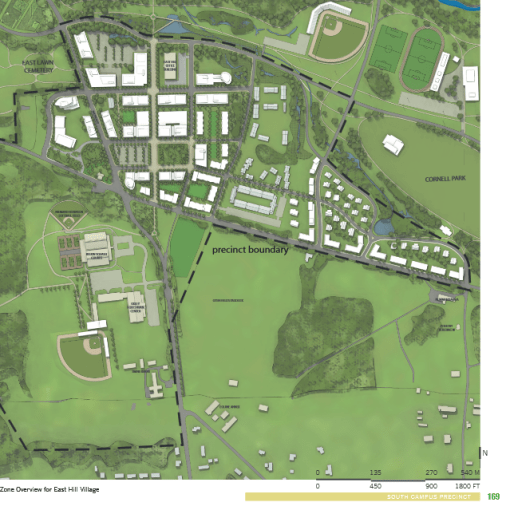
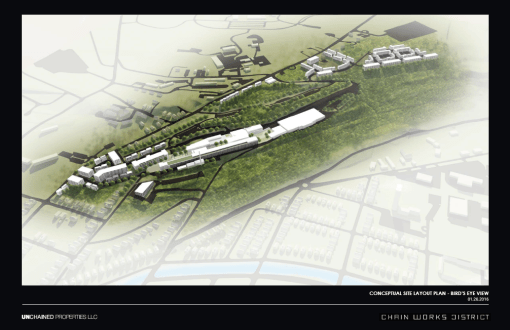
Also in the pipeline – reviewing Maplewood (with the city as secondary), reviewing Chain Works (with the city as primary), and possibly, Cornell rolling out plans for East Hill Village (early design concept shown above), the first phases of which are expected to be unveiled within the next year.

902_dryden_v4_1

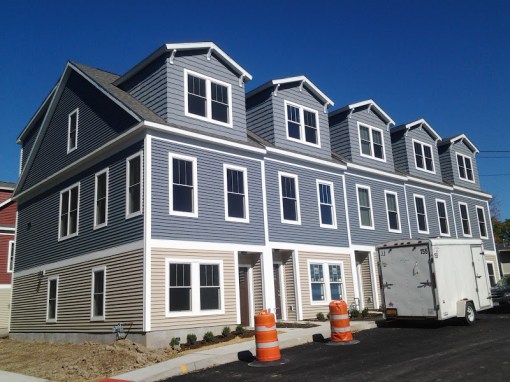
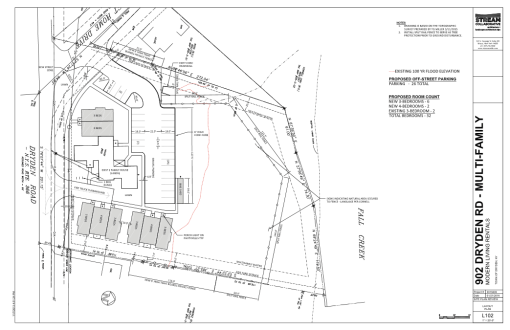
4. The townhouses at 902 Dryden Road in Varna have been approved. The Dryden town board voted 4-0 to approve the project at their meeting on the 17th. The 8 new units and 26 new bedrooms should begin construction this July and be completed by June 2017. Local company Modern Living Rentals will be developing the site, and the townhouses (no updated render, sorry) are being designed by STREAM Collaborative.

Also relevant to the Varna discussion, the planning department memo notes a pre-application meeting was held for a proposal to subdivide and build 16 “small homes” at the corner of Freese Road and Dryden Road currently owned by Dryden businessman Nick Bellisario. No other information is currently available about the project.

hughes_cornell_3

5. Let’s wrap this up with a look at the city of Ithaca Planning Board agenda next week. Quick reminder, the general order is: sketch plan, Declaration of Lead Agency, Public Hearing, Declaration of Environmental Significance, BZA if necessary, prelim approval, final approval. Here’s the formal rundown:

Site Plan Review
A. 210 Hancock – project update, no decisions
B. 424 Dryden, rear parking lot for 5 cars – prelim and final approval
C. Hughes Hall Renovations, Cornell University – Determination of Environmental Significance, prelim and final approval
D. Ag Quad Renovations, Cornell University – Determination of Environmental Significance, prelim and final approval
E. The Cherry Artspace, 102 Cherry St. – Declaration of Lead Agency and Public Hearing

F. Sketch Plan – 301 E. State Street, the Trebloc Building.

Don’t know if this is a continuation of State Street Triangle or something else (it would be a surprise if someone could create a new plan in such a short time), but we’ll find out on Tuesday. Zoning is CBD-120, meaning commercial or mixed-use, no parking required, up to 120 feet in height.

G. Sketch Plan – 201 College Avenue

201 College Avenue sits on the corner of College Avenue and Bool Street in inner Collegetown, and is presently occupied by a well-maintained though unremarkable 12-bedroom student apartment house owned by an LLC associated with the director of a local non-profit recreational center. The property is currently assessed at $545k. Zoning for the property is Collegetown MU-1, allowing for a 5-story, 70′ tall building with no on-site parking required. A quick check of neighboring properties indicates that the owner only owns this property, so whatever is planned will likely be limited to just this house.


News Tidbits 3/12/16: After Much Discussion, Even More Discussion

12 03 2016

maplewood_site_plan_concept

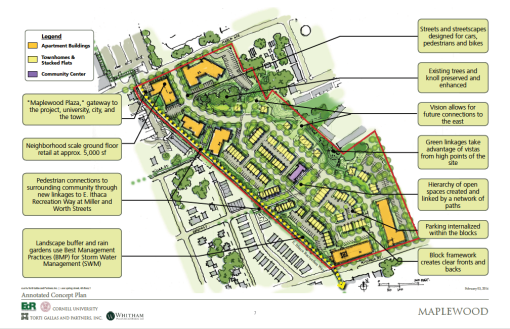
1. The community meetings have begun for Maplewood Park’s replacement. The Cornell and Professional Graduate Student Assembly (GPSA) held a discussion with the developer EdR and project architects Torti Gallas this past Monday. According to the Sun, some of the features planned in the new graduate housing development include-

“[S]omething like the Big Red Barn but on a smaller scale as a community room so you can open it up and have events…there will also be a business center for group projects and work. We are also planning an outdoor recreational space like tot lots for people who have families and volleyball courts.”

Concerns about affordability were raised, but the developer said that rent prices are still being sorted out. From the meeting, the four big goals of the project are “affordability, walkability, sustainability and community,” with streets that also serve as public gathering spaces, and a variety of unit sizes and types. Definitely something to keep an eye on as plans are fleshed out.

On the bureaucratic end, the Maplewood Park sketch plan is set to be presented to the Ithaca town planning board next Tuesday by Scott Whitham of Whitham Planning and Design. A sketch plan has no votes involved and is merely an informational session, and an opportunity for the board to give preliminary thoughts and input. The board will also be hearing a much less interesting proposal for a new bus shelter in B Lot.

dryden_south_rev_1
2. Looks like Kraftee’s in Collegetown will be shutting its doors. According to the Cornell Daily Sun, the book and apparel store, which opened its Ithaca location in 2002, will be closing for good at the end of the month. Owner Pat Kraft did have plans to move the store into the first floor of the Dryden South mixed-use project currently under construction at 205 Dryden Road, but now with Cornell’s new Executive MBA building underway on the lot next door, he plans to “explore other more complementary uses for the commercial space.” Since the project is in MU-2 zoning, Kraft is legally obligated to have “active use” commercial on the 2,400 SF first floor: hotel, bank, theater, retail, and/or food service.

20150829_125449

3. The city’s CIITAP production at the Wednesday PEDC meeting was productive. The board seemed comfortable with the pre-payment option preferred by the IURA. The question now comes down to what length abatements to offer. The 10-year has strong support, but there was discussion on whether or not to offer the 7-year option (only used once by the Hotel Ithaca) and the 12-year option with the enhanced benefits. So while this a few months of discussion left ahead of it, there’s a better idea of what the revised CIITAP will look like. For the record, the 1% fund payout would be based on hard construction costs only, not soft costs. So for example, the Marriott currently underway, it would have paid 1% of $19 million instead of $32 million (would it have still moved forward? Dunno).

20150727_145641

4. Also at the PEDC meeting, the development policy topic du jour finally moved forward – incentive inclusionary zoning. Discussion on the law here, and a primer on the topic here. So, stemming from a debate with the Times’ Josh Brokaw on Twitter, my initial reading of this law was mandatory. But I was mistaken, it’s voluntary and the city will want a couple years to gauge its effectiveness.

The Sun writeup is here, but eventually you;ll be able to find live video archived from the meeting here. I think Mayor Myrick pretty much nailed it with this quote –

“This proposal is an opportunity for those of us who claim to care about affordable housing but oppose large-scale subsidized housing.”

The unpleasant truth is, classism reared its ugly head during the 210 Hancock debate, and thanks to the online petition, everyone saw it. After all the prep and community meetings that went into the project before it was even proposed, there were still people who said it was unsafe, uncivilized, would breed trouble, that the residents would cause crime, they’d all be on welfare…pretty unnerving commentary from a community that considers itself progressive. Abhorrent as it is, these comments aren’t going to go away. Many of these folks are older, some have been here for decades, and they’re set in their beliefs. It’s regrettable to say this, but the more subtle and intermixed the affordable housing is, the less likely it is to face neighborhood opposition.

Along with the removal of parking requirements and +1 floor option in certain neighborhoods, the reduced site plan review option (only affecting the plan layout and design, not the environmental aspects) was judged to be the most appealing by developers. To be fair, a project redesign based on board input can be expensive, so reducing that prospect in neighborhoods with pre-established form guidelines (currently only Collegetown, but the Waterfront is likely to have its own form-based hybrid code in a year or two) is a big positive.

The PEDC voted to circulate the law for review, with only 1st Ward Councilwoman Cynthia Brock dissenting. There will be more typed about this law as it moves forward.

On a semi-related note, it looks like the town of Ithaca is now starting to look into some kind of inclusive or incentive zoning as well.
old_libe_thp_holt_v3

5. For this week’s eye candy, here’s the latest revision for Travis Hyde Properties’ DeWitt House senior apartment project at the Old Library site.  This was the version presented at the March 8th meeting. HOLT Architects has been tuning in to both the ILPC’s and the Planning Board’s comments (the two have been conducting joint meetings to avoid extra bureaucracy and contradicting each other) and is trying to hem down the general design idea such that SEQR and SPR and the rest of the approval process paperwork can begin.

As can be seen, the design is quite a bit different from the original plan with the “dorky roof” as one county legislator called it (for the record, I liked the dorky roof). This is an idea of where the design is going, but not the final revision, since the ILPC and Planning Board still plan on commenting further. For those still simmering over the decision last summer, just remember that even if the Franklin/STREAM proposal for condos had been selected, the ILPC and Planning Board would have had a heavy hand in that design process as well. The design for DeWitt House will continue to evolve, and updated images will be shared as they become public.

20160219_145406

6. Meanwhile, out in Lansing, lawmakers are under pressure because NYSEG cannot accept any new gas service requests because the current pipeline is fully tapped. About half of homes nationally and many commercial and industrial structures use natural gas an an energy source, so this could potentially put the kibosh on a lot of home and commercial construction. Definitely not welcome at a time when the town and village are at high risk of losing their biggest taxpayer.

NYSEG is still actively pursuing construction of a new gas pipeline from Freeville, one that has garnered considerable opposition from Dryden and some eco-activists. The environmental advocates have pushed for renewables, but the recent opposition to the Black Oak wind farm in Enfield, and to solar panels in Ulysses for the Sciencenter have created yet another complication to the county meeting its green energy goals, let alone overall energy needs. The area can’t afford to be self-defeating.

The Lansing Star is reporting that NYSEG has obtained about half the easements it needs, and could eminent domain the rest as a last resort. It’s a tense and complicated situation.

20160219_17504020160219_175113

7. Wrap this up with a quick house of the week update on INHS’s 203 Third Street affordable home project. These photos are a couple weeks old now, but most of the trim has been attached with the exception of the porch, and with that, finish-out of the interior and landscaping, this 2-bed, 1.080 SF house will be good for sale. INHS is asking $129,000 from qualified moderate-income homeseekers (buyers making 70-80% of Area Median Income, I think offhand), and is expected to change hands this summer. Claudia Brenner did the design, and Rick May Construction did the buildout.


Coming Up: Yet Another Round for CIITAP Revisions

9 03 2016

The city is trying yet another approach to CIITAP. This one involves cash payments.

Previously, the city considered a multi-faceted set of revisions, but a number of issues were raised – namely, there isn’t good documentation on stats such as the proportion of local labor typically involved in a CIITAP project. While the IDA voted in February to adopt a labor policy that requires solicitation of bids from local contractors and local labor participation in CIITAP projects, that’s more to provide future guidance after some projects have submitted documentation, and doesn’t achieve any near-term changes in CIITAP as requested from some corners.

So here comes the latest iteration, a lump sum deposit into a “community benefit fund” for general use (hopefully a formalized HOME/CDBG type of disbursement and not just a grab-bag for different programs). The idea was raised at the last PEDC meeting and the IURA explored options.

The overlying theme is to select a plan that doesn’t change affect bottom lines – not to make any easier on developers (the accusations of the current CIITAP being too easy is what brought about this revision in the first place), but to not chase them out to a hay field in Lansing either, costing the city a fund payment, jobs and future tax revenue, not to mention encouraging suburban sprawl. The IURA looked at a bunch of different proposals, shown below.

ciitap_revision_round2

The preferred option goes for a 1% upfront cost and a total abatement on increased property taxes for three years, and then moving to a 70% abatement on new construction for year 4, tapering to full taxation after year 10. This option was determined to have the least impact on a project’s financial feasibility.

ciitap_revision_round2_2

There’s a positive and a negative to this approach. If a developer is proposing a $20 million project, forking over $200,000 to the city right off the bat could be a major obstacle towards getting a loan and bringing an approved project into reality. But it might be overcome if they can effectively explain to an investor or potential lender the tax benefits in the financial analysis. It definitely makes the development picture more complicated, but this might be the only way to keep the current version of CIITAP, which has done a lot to help redevelop downtown. The Common Council members will share their at their Wednesday meeting.


Affordable Housing Week 2016

8 03 2016

Expanding on last year’s theme, it’s affordable housing week. The Ithaca Urban Renewal Agency will be holding public hearings on March 24th and 28th as part of the process to determine who will receive money from the Housing and Urban Development (HUD) grants awarded to the city. The 25 applicants (up from 21 last year) range from jobs training to community services to the development of affordable housing. All summed up, there’s $1.85 million requested, and $1.56 million available, so that means an 84% chance of funding, all parameters being equal. For comparison, in 2015, $1.78 million was requested out of $1.215 million available, just a little over two-thirds of the total. The chances for funding have gone up this year.

Part of the reason for the better chances this year is unfortunate – the return of $273,869 in 2014 HOME funding meant for INHS’s 402 South Cayuga project that has not come to fruition. Although HOME funds can be awarded for rental projects, the funding was awarded by the city specifically for owner-occupied housing, so the money comes back into play. There’s also about $26,300 left over from last year that went unallocated.

Without discounting the value of the other applications, the focus here will be on the real estate development projects. For the record, writing about a project is neither an endorsement or opposition from this blog.

202_hancock_1

202_hancock_2

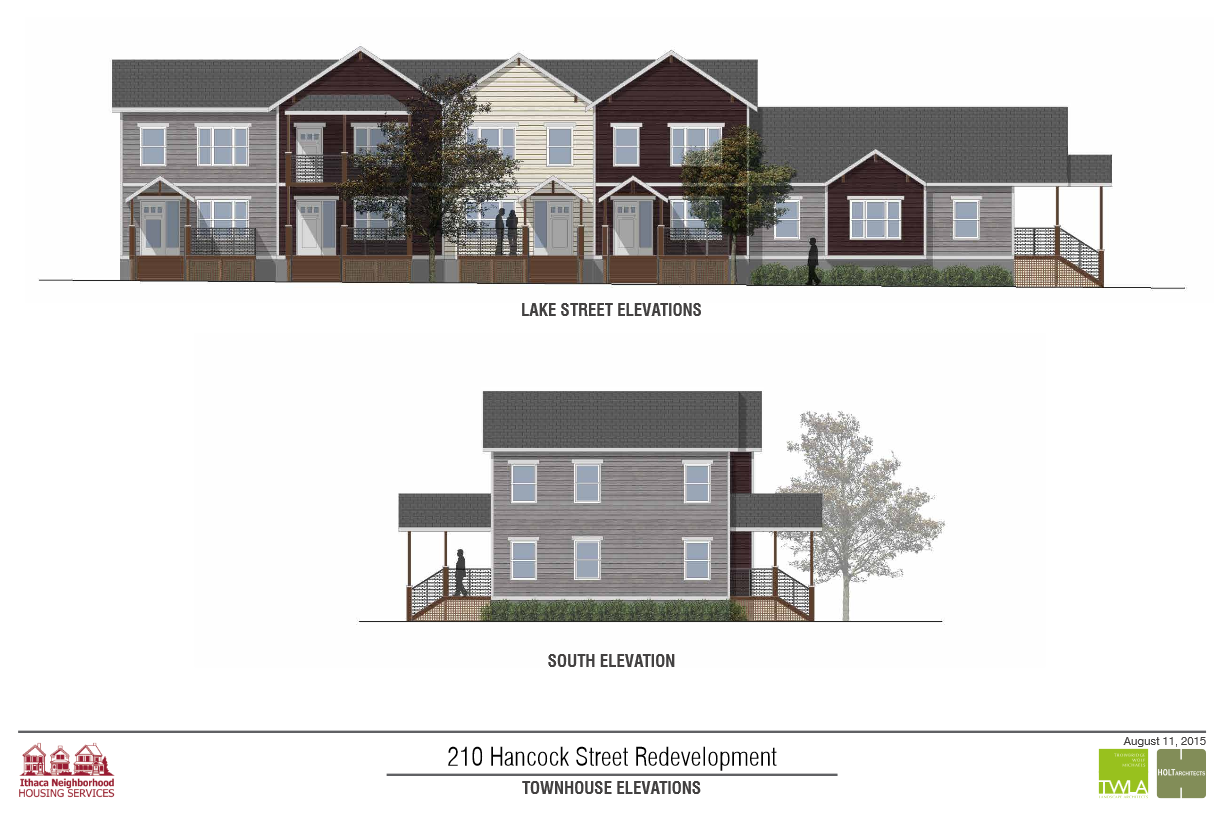
1. Last year, INHS applied for and received almost $458k for 210 Hancock, for which site prep is currently underway. This year, they’re applying for funding for two projects – seven owner-occupied units at 202 Hancock (new tax parcel), and the single-family home planned for 304 Hector Street.

The 202 Hancock townhouses are requesting $567,000 towards a total project cost of $2,359,013. This is a high figure, but it also seems like it would address the recent, very major issue of rapidly rising construction costs derailing multiple affordable housing projects. INHS will be putting up $550,000 of its own money, and already has received a $280,000 city/county/Cornell grant (Community Housing Development Fund) towards the project. The rest comes from bonds, the state, land equity and the buyers themselves.

202_hancock_3

Doing the math ($1,438,640 construction cost, 8,463 SF total), the construction cost budgeted is $170/SF, a little less than the $190/SF they paid for 203 Third Street, but not impossible. Perhaps a larger project of townhouses can utilize cost efficiencies to keep the price down a bit.

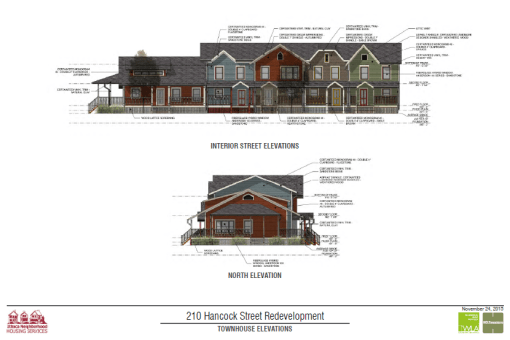
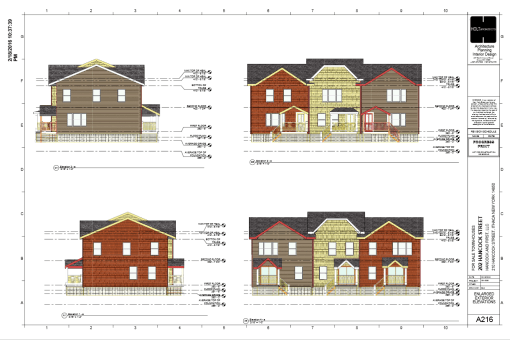
The two-story wood frame townhouses would be LEED Certified. Five two bedroom units (1,147 SF) would be sold for about $114,000, and the two three-bedroom units (1,364 SF) for $136,000, available to those making 60-80% of local AMI, or $37,000-$49,000/year. The townhouses would be a part of the Community Housing Trust (CHT), keeping them affordable even as they are sold to others in later years. the anticipated construction period is November 2016 – June 2017. HOLT Architects of Ithaca is designing the townhomes.

Design wise, they look halfway between the first iteration of the rental townhouses, and the approved version.
304_hector_inhs

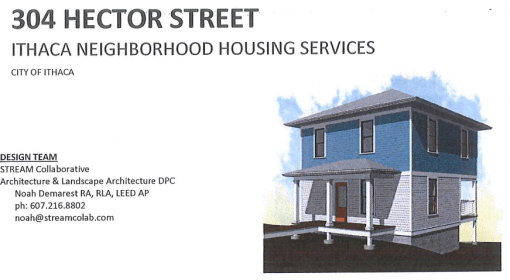
2. Also from INHS, the 304 Hector application. The amount requested is $100,000 towards a $369,294 project. This seems remarkably high. In the application, INHS notes the construction costs of $262,000 are from actual bids received from Rick May Construction (who is also doing 203 Third Street) and subcontractors. The math comes out to about $191.50/SF. One of the reasons for the very high cost is that INHS is required to hire contractors with enough liability insurance to cover any major accidents, and a lot of smaller builders don’t have enough insurance. $40,000 has already been granted towards the project from the CHDF.

The house would sell for $142,000 to a family making $37,000-$49,000/year (60-80% AMI), the same parameters as the 202 Hancock townhouses. The house would also be a part of the CHT. An April 2017 – January 2018 construction is planned. Local company STREAM Collaborative is the house’s architect.

402_s_cayuga_st_boggsfernandez

3. Meanwhile, at the 402 South Cayuga Street site, developer/architect Zac Boggs and Isabel Fernandez are requesting $105,000 towards their 4-unit townhouse project, priced out at $1,020,000, of which $820,000 is for construction. Of the 4 units, one two-bedroom unit will be available to a family making 80% AMI or less (i.e. $49,000/year or less), selling at $150,000. The other three units, 2 2-bedroom and 1 3-bedroom, would be rented out for 2-5 years, and then sold on the “lower-end of market-rate”, which is estimated in the mid to upper $200s. The units would follow LEED standards, and the affordable unit would be put into the CHT.

Precision Builders of Ithaca would construct the project. A May 2016 – June 2017 build-out is planned, though it doesn’t appear to factor in the planning board approval process.

Aside from the grant, most of the funds for the project will come from a bank loan, with $120,000 of their own money and $40,000 in county bond funds. Assuming these are the same size as the 2 and 3-bedroom INHS townhouses, the construction cost comes out to about $170/SF.

One thing that comes to mind in the context of the inclusionary zoning debate is that this might be the only way to really go in the long-term. If INHS gets priced out of feasibility in the city, trying to cover the cost of affordable units with substantially more expensive market units might be the only option, which is a rather uncomfortable thought. One of the issues with inclusionary zoning is that it prices out the middle; developers have to make up the cost somewhere, and the market-rate units are the scapegoats. Communities end up with a small portion of affordable housing, but mostly expensive housing. With this project, part of the money is being recuperated by renting the other units for at least a few years, which some may scoff at, but costs are, what they are.

habitat_2

4. Habitat for Humanity is requesting $75,000 towards their $305,500 duplex project at 101-107 Morris Street (to be redesignated 202-204 Third Street) on the Northside. Each unit will sell to a familiar making less than 60% AMI ($36,750/year), and the families will have to put in “sweat equity”, helping to build the houses (350 hours of labor). To keep costs down, labor is volunteer-based and materials are donated – as a result, the project only has a $180,000 construction cost, a little over $60/SF.

The units will be two-story, have porches and designed to fit into the neighborhood. The state has given the project a $70,000 grant already, and the city/county/Cornell CHDF has given $80,000. the rest is covered by corporate grants (Cargill, Lowe’s, M&T Bank) and individual donations. A timeline of April 2017 – April 2018 is anticipated.

No renders, but the above site plan was included in the application.
622_w_clinton

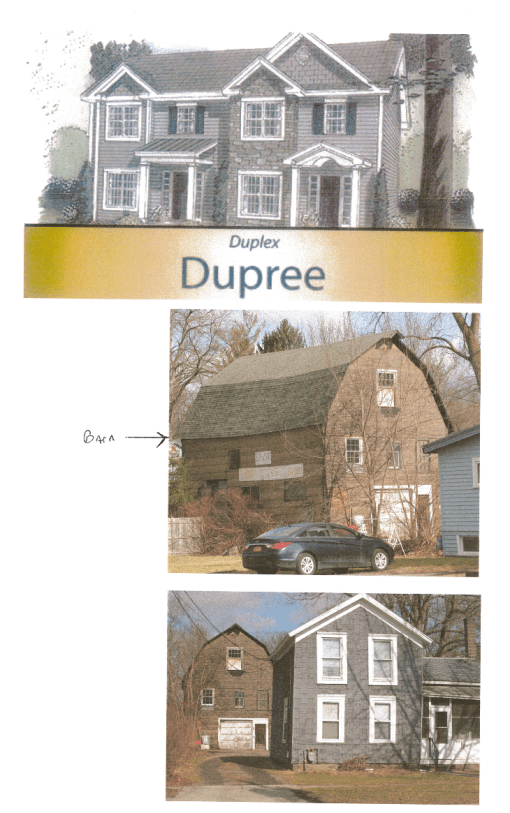
5. Last, the only truly new project for this post. 622 West Clinton Street in the South Side neighborhood. The applicant, Jerame Hawkins, proposes deconstructing a decaying barn at the rear of the property and replacing it with an affordable owner-occupied duplex. Hawkins, who runs the county’s Youth Advocate Program, would make each unit available to a family making 60% AMI or less ($36,750/year or less), in particular Section 8. The duplex would be modular, 3-beds and 1,561 SF each, with Carina Construction and Finger Lakes ReUse working with Hawkins on the project. The construction cost of $292k works out to about $93/SF.

The house at the front of the property, which dates from the late 1800s, would be renovated and retained as affordable housing. Hawkins is requesting a grant of $135,000 towards the $364,634 project. A project timeline of October 2016 – January 2017 is given in the application.

The one potential red flag I’m seeing is a line in the app that says “retaining for a minimal [sic] of 1 year”. Either that gets clarified and extended, or the IURA won’t be interested this proposal on account of it not being affordable for long enough a period of time.


News Tidbits 3/5/16: Here Comes the Papierkrieg

5 03 2016

chapteR_house_reconst_v4_2chapter_house_v4_1
1. Let’s start off with something that led to a couple of worked up messages and emails to the Voice inbox – a potentially controversial revision to the Chapter House proposal that would replace the north eave of the building with a wall (bottom image). In the documentation, there’s no written explanation as to why the change is being requested from the approved plan (top image); but I wonder if it has to do with fire safety regulations or zoning issues between the Chapter House and the rebuild being prepared for 406 Stewart next door. Architect Jason Demarest is working on both projects for their respective owners (400-404 Stewart’s Sebastian Mascaro and 406 Stewart’s Jim Goldman), so he’ll be representing both projects at the Landmarks meeting next Tuesday the 8th at 5:30 PM. Also on the agenda are a couple of minor renovations, discussion about potential work to The Nines at 311 College Avenue, and discussion of an expansion to the East Hill Historic District.  This might just be for the Orchard Place properties that are locally historic but not nationally recognized, but we’ll find out for certain next week.

1401_dryden_1

2. Some of your might be wondering what happened with the 902 Dryden vote. Well, the vote still has yet to be taken. Moldern Living Rentals was still work on the last details of the Stormwater Pollution Prevention Plan for runoff (SWPPP), so the town of Dryden won’t be taking a vote until their March meeting, which has yet to be posted to their website (most likely it’s Thursday the 10th, or Thursday the 17th). The next-door neighbors still took time out to call the 40% downsized project a travesty and that it wasn’t shown in the 2012 Comprehensive Plan. Veering into editorial territory, my original comment from last month still stands:

“[A] master plan is not an exact thing; if it shows for three sets of five townhouses on a parcel, that’s not what may necessarily may happen. It just indicates the kind of density and scale of development the plan deems appropriate. 902 Dryden isn’t drawn on the master plan, but the plan welcomes the idea of townhouses on Forest Home Drive, which 902 abuts. So a vote in favor of the 8 new townhouses is, indirectly, a vote of support in the Varna Master Plan.”

I would give more weight to Todd Bittner’s objective concerns about stormwater than subjective comments of character, especially when they’re from someone who said they were disgusted by the thought of rentals. When Bittner checks out the revised SWPPP, if it looks acceptable, I think the project should be approved.

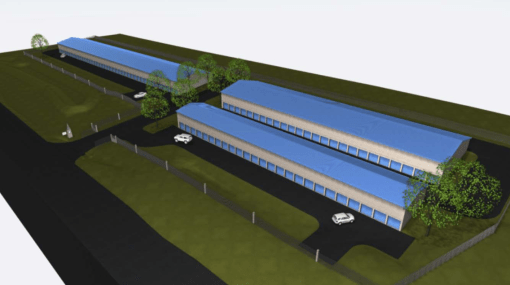
On another note, 1401 Dryden, the Storage Squad project (pictured above), seems to have lost a lot of its charm after getting caught in red tape last fall. The owners had to squeeze into a smaller area to satisfy the revised, expensive SWPPP. They’re hoping to hide most of it with landscaping.

dewitt_house_v3_1 dewitt_house_v3_2

3. Just a quick update on the Travis Hyde Properties Old Library proposal. The ILPC and Planning Board had their joint meeting, project team partners HOLT Architects and TWMLA landscape architects have incorporated their comments, and here is the current product. Sorry, no renderings, just site plans. Previous plan here. Overall, the site layout hasn’t changed too much, a courtyard and green space will be next to the DeWitt Park Inn, and the building is set back to maintain rhythm with its neighbors. The exterior is supposed to have more projections and recesses, the top floor set back 6 feet, and incorporation of balconies on the upper floors (not sure how this will affect the plan for the inverted roof). Unit count is 21 1-bedroom, 24 2-bedroom, and 9 3-bedroom, 54 instead of the original 60 (39 1-bedroom, 21 2-bedroom). The addition of 3-bedrooms is surprising for senior apartments; from what I’ve been told, typically the large majority of demand is with 1 and 2-bedroom units. The Planning Board and ILPC have another shared meeting at City Hall on the 8th.

chain_works_rev3_3

4. The Chain Works review process is chugging along. At its meeting on the 8th, the Planning Board’s special meeting will decide whether the Draft Generic Environmental Impact Statement is ready for public review (not expected to be controversial). Then on the 9th, Cornish et al. will be giving a report to the Common Council’s Planning Committee about the timeline and current status. Another staff progress report will be presented at the Planning Board meeting on the 22nd, and the next day on the 23rd, the city CC and town board Planning Committees will meet review proposed draft PUD zoning for the massive mixed-use project. With adequacy being agreed upon, the project can begin project review 15 or so days later; first public meeting is tentatively scheduled for March 29th.

The city just uploaded the comments of reviewers on the DGEIS – most are relevant, some are pretty good suggestions and critiques. Then there’s “Reviewer 3”, most of whom’s comments were put aside as they’re not relevant to adequacy. Those are but a preview of the potential flare-ups to expect at the public meeting.

12366349_10153784612864664_8478297861508040090_n

5. Stumbled on this by chance, but it seems to verify initial suspicions from a few months back; a project proposal goes with the sale of multiple parcels of land totaling 9.2 acres off Park Lane and Slaterville Road in the town of Ithaca. The property, for sale at $995,000, is being marketed by Carol Bushberg Real Estate, which doesn’t have the render on their listing page or their Youtube video, but they do on facebook. The conveyed plans call for a 26-lot subdivision, and given the proposed lot lines, it doesn’t look like it would be affected by the town’s moratorium on 2-unit structures, because each unit has its own lot even though some of them share a wall. It also meshes with the town’s Comprehensive Plan, which calls for 2-4 units per acre in this area (in the site plan, it’s just under 3 per acre). So to all you would-be home developers, here’s an opportunity.

20151108_154213

6. Speaking of the 2-unit moratorium in the town of Ithaca, it looks like that’s going forward to the Town Board to schedule a public hearing. The Planning Committee decided it was a good idea. The documentation says it would last at least a year, by which time the town hopes to have its new form-based, anti-student special zoning in place. Editorializing again, I still oppose this proposed law not because of the issue with low-end student housing, but because it’s too broad, affecting the whole town. The last 2-unit approved in Ithaca town wasn’t a student special – it was a 3-bedroom house with an accessory 1-bedroom apartment off Calkins Road. The husband and wife building the house will be living in the larger unit. I don’t think the whole town should be subject to a law that’s only been written to address a South Hill issue (the law’s language claims it’s a concern in East Ithaca as well, but I haven’t seen or heard of a new student-oriented rental in East Ithaca in at least the past few years). Anyway, whether for or against it, comments can be sent to Town Clerk at townclerk@town.ithaca.ny.us. The town meeting will be at the town hall on Monday the 7th at 5:30.

202_hancock_1
7. Here’s a preview of next week’s mid-week post: A look at some of the affordable housing proposals and plans that applied to the city for grant funding this year. INHS applied for their owner-occupied townhouses, the Boggs/ Fernández proposal for 402 South Cayuga is there, Habitat’s duplex, 304 Hector, and a new plan by a private citizen for an owner-occupied affordable duplex behind the house at 622 Center Street in the South Side neighborhood. Keep an eye out for that Monday night or Tuesday morning.

maguire_carpenter_2

8. From the other news outlets now; the Times is reporting that the sketch plan for the Maguire auto dealership proposal for the Carpenter Business Park actually had a warm reception from the Planning Board. In particular, board stalwart John Schroeder was impressed with the sidewalk along 13 (which would help transition the Waterfront and nearby environs to mixed-use) and public amenities. The board is cognizant of the site’s issues and the city’s hopes for the area, so those do play into the thought process – perhaps part of it is that Maguire’s jobs and features could work as a draw for mixed-use development of nearby parcels that don’t have so many issues. The board’s role stops at this point, with the just passed TM-PUD now front and center – unless Common Council okays the project, it won’t be back again. But Maguire did ask for a letter of support if the board was willing; we’ll see.

texas_roadhouse_v3_1

9. Meanwhile, the Journal is reporting that Texas Roadhouse will be opening May 23rd. No doubt the relatively dry and mild winter helped keep this project moving along (February construction update here). The 7,163 SF restaurant expects to hire 170 to 200 employees, of which 80 will be full time. That number astounds me just a bit because I worked at a steakhouse in high school, and although we were maybe half the square footage, we only had a staff of about 40. Even in Ithaca’s crowded restaurant scene, there aren’t many options for the red meat lovers that don’t cost an arm and a leg, and chances are good this will appeal to a different crowd than most, and be something of a draw from the nearby rural areas. Best of luck to them and their staff.

20160219_134003 20160219_134057

201_w_clinton_1

10. Let’s wrap this up with House of the Week. Quick update on Zac Boggs and Isabel Fernández’s 201 West Clinton Street carriage house. Fully shetathed (Huber ZIP system panels), fully roofed and shingled, and fully fitted with windows, the exterior work left will focus on exterior siding attachment and refinishing the original 1960s garage to match the historically-inspired vertical addition. The exterior calls for sawn board-and-batten wood fitting, though it’s unclear if it will be unpainted wood, or painted yellow. The 1 bedroom, 520 SF space looks like it could be ready for occupancy by late spring.