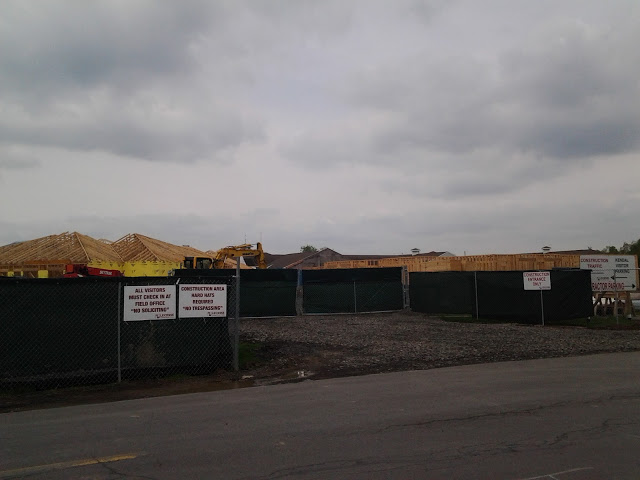
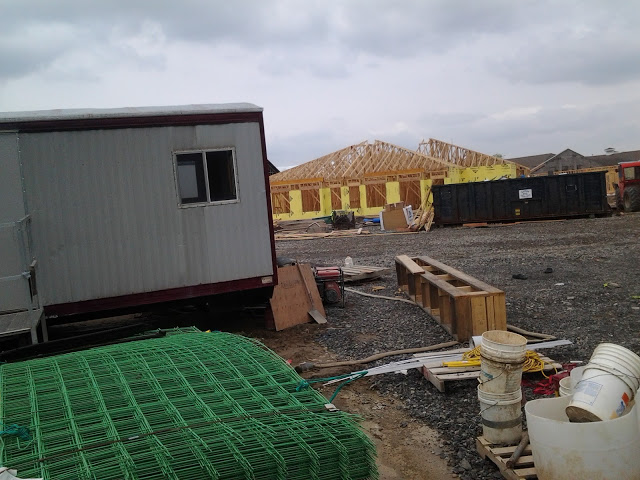
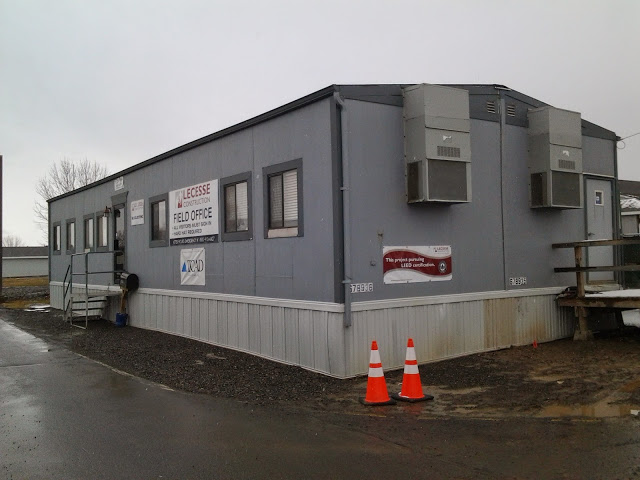
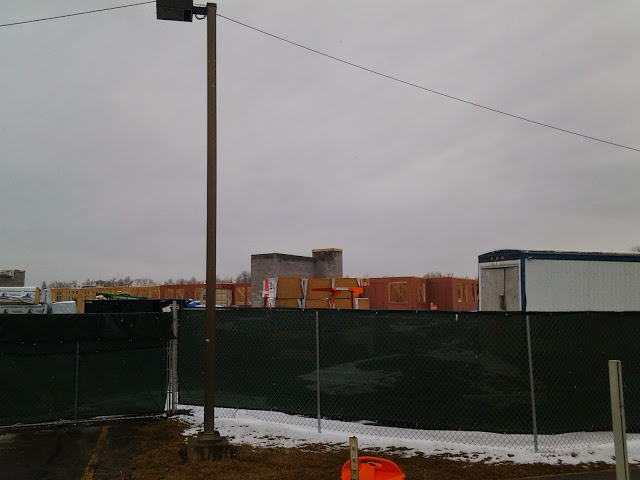
Kendal at Ithaca Construction Update, 6/2015

22 06 2015

There’s a bit of a story behind this one. Originally, there was photo update planned for April, but it was going to be an article for the Voice. The plan was to do an interview with the operators of Kendal. Photos were taken and the bare bones were drafted, but then after the initial phone call, there was no response. Finally shrugging my shoulder (and the Voice having moved on to other article ideas), the photos were going to be posted here.

That was when the marketing director responded. She gave a bunch of dates that worked for her, I tried to select a date, but she never responded back. But I did take a second round of photos in prep for the second interview. And now all the photos are finally going up.

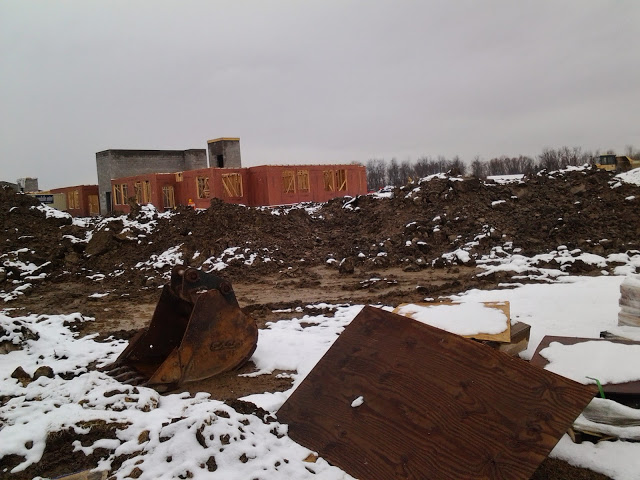
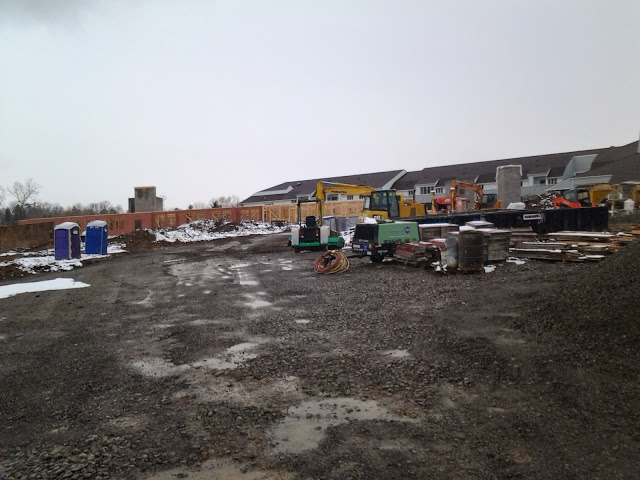
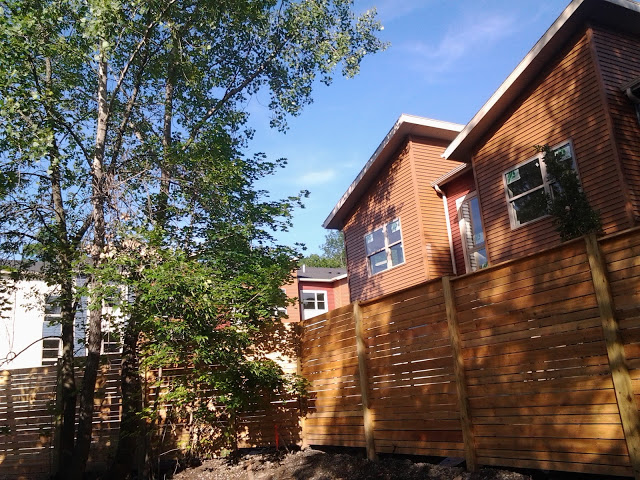
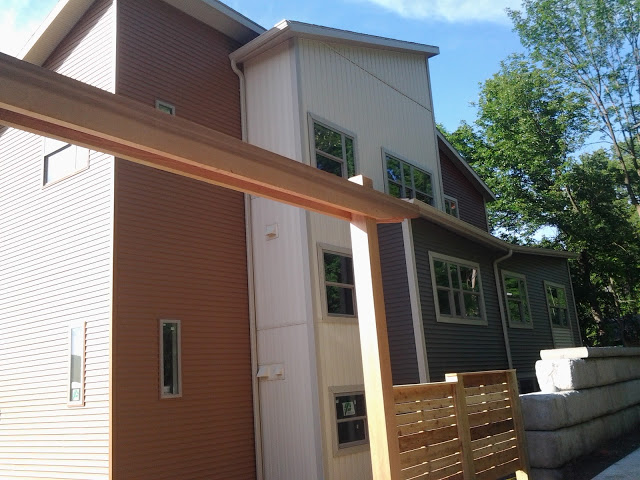
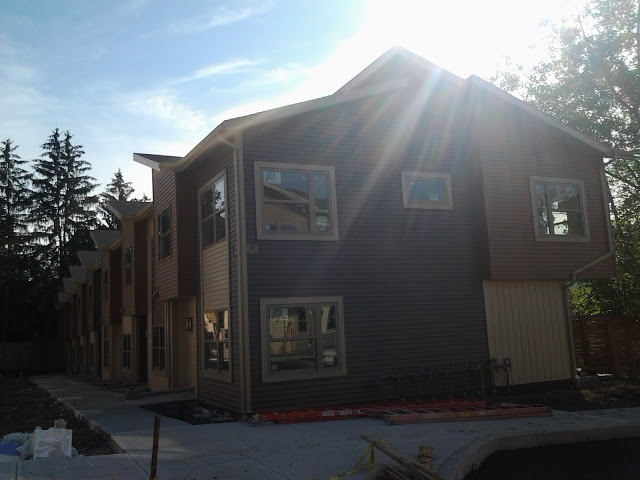
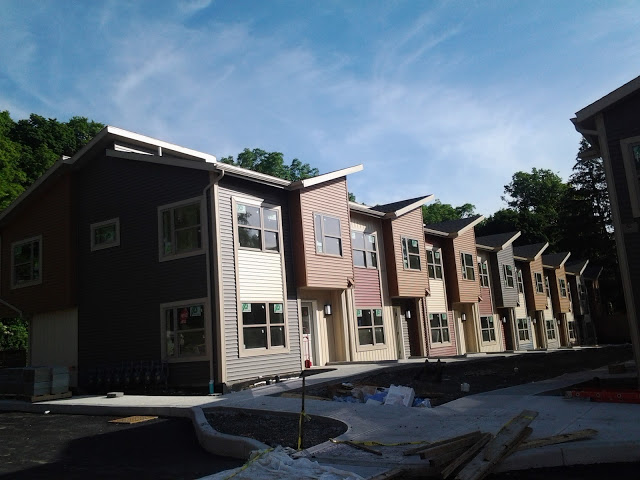
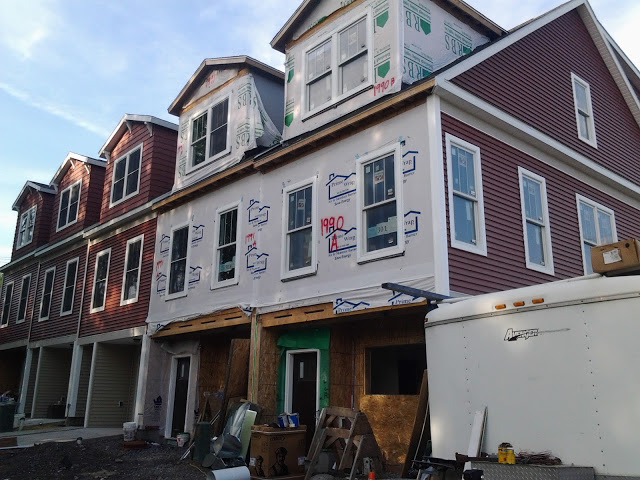
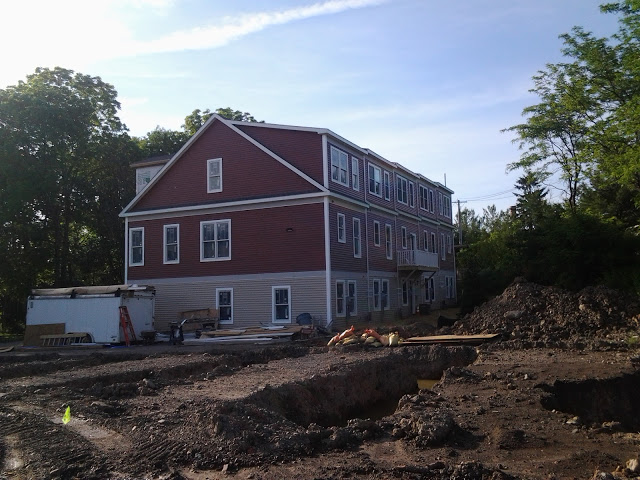
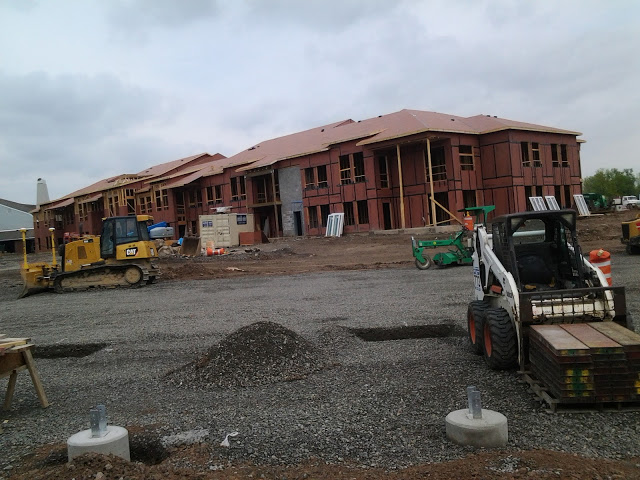
The neat thing about these photos is that, since the construction schedule for the new wings is staggered, multiple stages of construction can be seen at once.

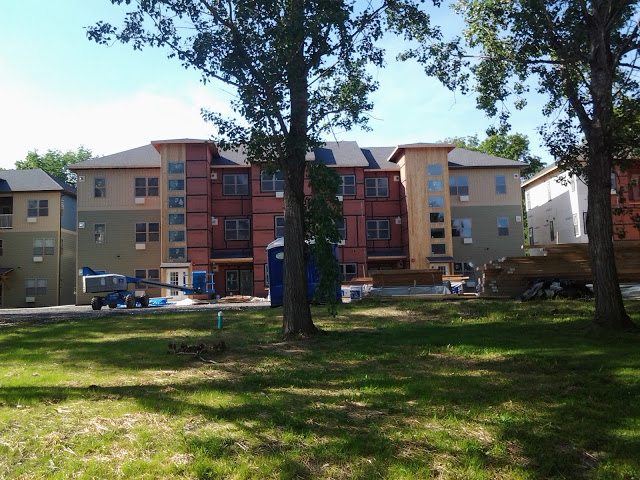
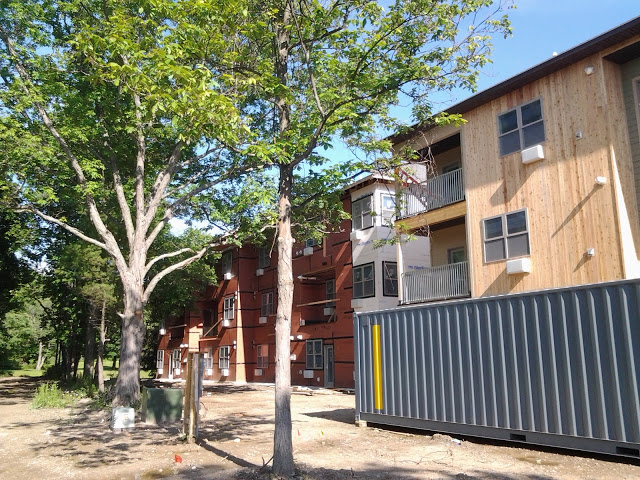
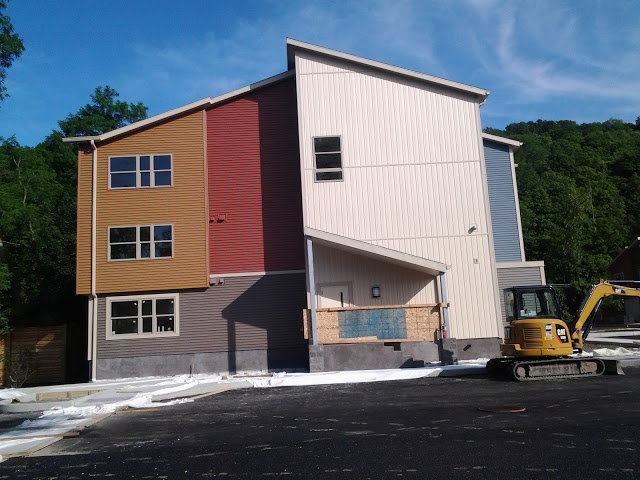
First, there’s the initial wood framing, followed by the installation of the roof trusses. This is followed by what appear to be two separate types of sheathing. One is Georgia-Pacific DensGlass sheathing, the yellow boards seen below. These are gypsum panels coated with fiberglass mats, designed to limit heat loss and keep moisture out. The dark red panels are plywood ZIP system roof and wall sheathing, which uses seams and tape to save time vs. traditional sheathing such as Tyvek housewrap.  The difference between the two appears to be that gypsum is fire-rated. The Kendal expansion has both apartments for independent seniors, and a skilled nursing facility (comparable to a nursing home in its level of care; the three degrees of independence are independent living, assisted living, and skilled nursing). It seems likely that regulations mandate fire-rated construction for skilled nursing facilities, but not so in the case of senior apartments for independent living. Hence the two different sheathing types.

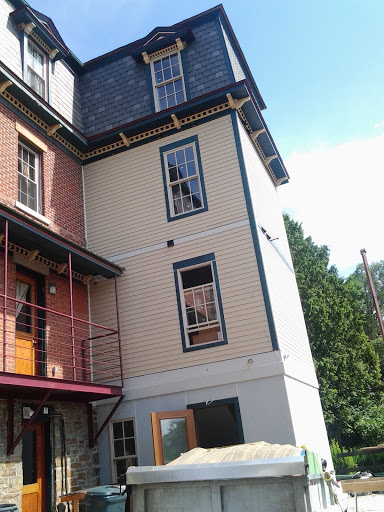
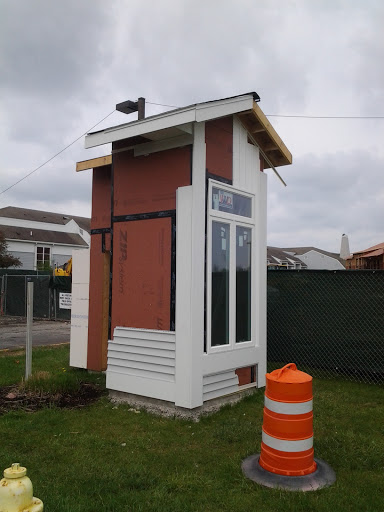
A sample wall on-site shows how the window installation and siding will look – the new addition will be designed to blend in with the original 20 year-old building. The newer photos are about a month old now, and since then many more windows have likely been installed in the rough openings of the apartment wing, and interior rough-in will kick in as the walls are framed out.

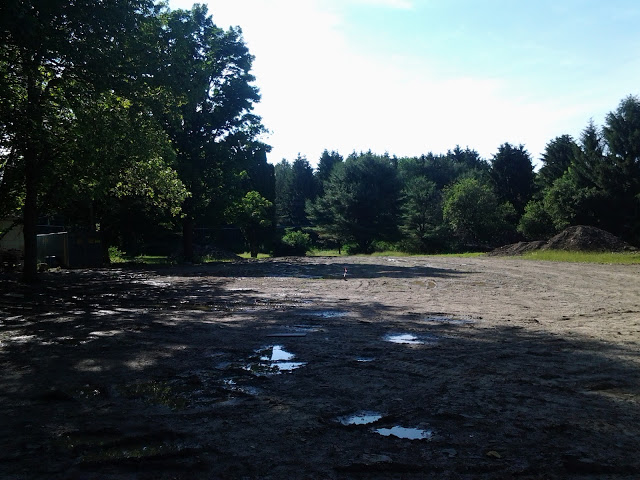
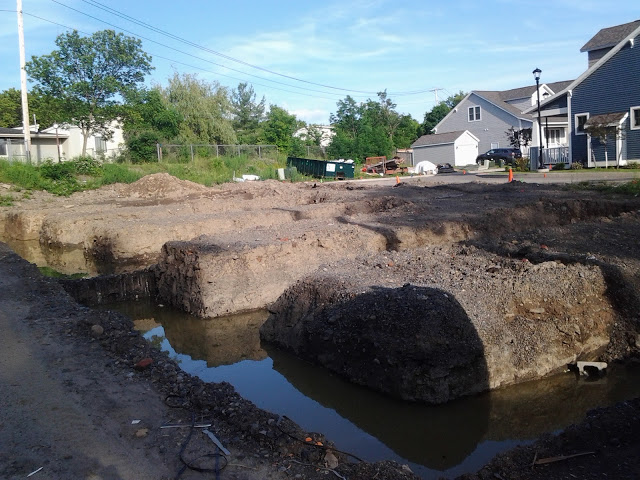
In the earlier photos from April, cinder block stairwells poke out from the first floor of framed and sheathed walls. The skilled nursing wing had yet to rise from ground-level.

Kendal at Ithaca is currently in the midst of a $29.3 million expansion. Three new wings will be built on the northeast side of the property as part of a new 48-bed skilled nursing center, an increase from the 35 beds currently available. On the southeast side of the complex, a new 2-story, 24-unit apartment complex is being built for independent seniors. A new entrance, cafe, fitness center, and health center are also included in the additions, as well as major interior renovations. Landscaping additions and a 26-car parking lot are also planned.The construction project is aiming to achieve LEED Gold certification.

Construction began this past January, and is supposed to wrap up in January 2016. An estimated 20 to 25 new jobs will be created by the expansion, most of those in service positions that pay $24-$45k.

Kendal was granted the privilege to issue tax-exempt municipal bonds by the county legislature to finance the construction of their new wings, but is not seeking any property tax abatement.

Local architecture firm Chiang O’Brien has partnered with the NYC office of Perkins Eastman to design the Kendal expansion. National contractor Lecesse Construction, with an office out of suburban Rochester, is in charge of general construction.

20150516_115330 20150516_115418 20150516_115433  20150516_115629 20150516_115740 20150516_115830 20150516_115903 20150516_115935 20150516_115938 20150516_120141 20150516_120225

Photos from April 5th:

20150405_154833 20150405_154858 20150405_154907 20150405_154954 20150405_155025 20150405_155135 20150405_155345 20150405_155356 20150405_155409 20150405_155413


News Tidbits 6/20/15: Big and Far, Small and Near

20 06 2015

Cornell Tech Passive Residential Building
1. In something not Ithaca but Ithaca-related, it seems like Cornell’s New York City-based Tech school is having quite a good week. Cornell announced that construction began earlier this month on a $115 million residential building at the Cornell Tech campus. the 26-story, 270′ tower is being built to passive house standards, the largest passive house building in the world.

According to an article in the New York Times –

“That means the building is able to maintain a comfortable interior climate without active heating or cooling systems, through the use of, among other things, an airtight envelope and a ventilator system that exchanges indoor and outdoor air. In climates like that of New York, however, standards allow small heating and cooling systems.

Making the Roosevelt Island tower airtight — creating what is essentially a giant thermos — was one of the biggest challenges, said Blake Middleton, the principal in charge and partner at Handel Architects, the building’s designer.”

The 350-unit, 530-bed building will house mostly graduate students, with some research staff and faculty also living in the tower. The apartments, designed by Handel Architects of NYC, are due to be completed sometime in 2017.

cornell_tech_v2

As noted at Curbed, to celebrate the groundbreaking, partner/developer Forest City Ratner released new renders of “The Bridge“, the tech incubator building on the right that looks like and ice cube cleaved into two pieces. As one might imagine, the new renders come with token florid language and eye-rolling descriptions (“an ecosystem of companies”). The Bridge, designed by New-York based Cornell alums Weiss/Manfredi, is being designed to LEED Silver standards, which is still better than about 99.5% of Ithaca. Construction permits were filed in January.

tech1

Last but not least, the $100 million Bloomberg donation, to name the first building “The Bloomberg Center”. The Bloomberg Center, designed by Thom Mayne of Morphosis Architects, will also open in 2017. To date (i.e. about three years since inception), philanthropy to the tech campus has totaled $685 million – and absolutely none of them care where you think the money would be better spent. Cornell hopes to raise $ 1 billion ($1,000,000,000) for the school by 2021.

For comparison’s sake, all of Cornell, Ithaca campus, Weill and Tech, raised $546.1 million in donations in 2014, and $474.9 million in 2013.
dibellas_v2_2

dibellas_v2_1

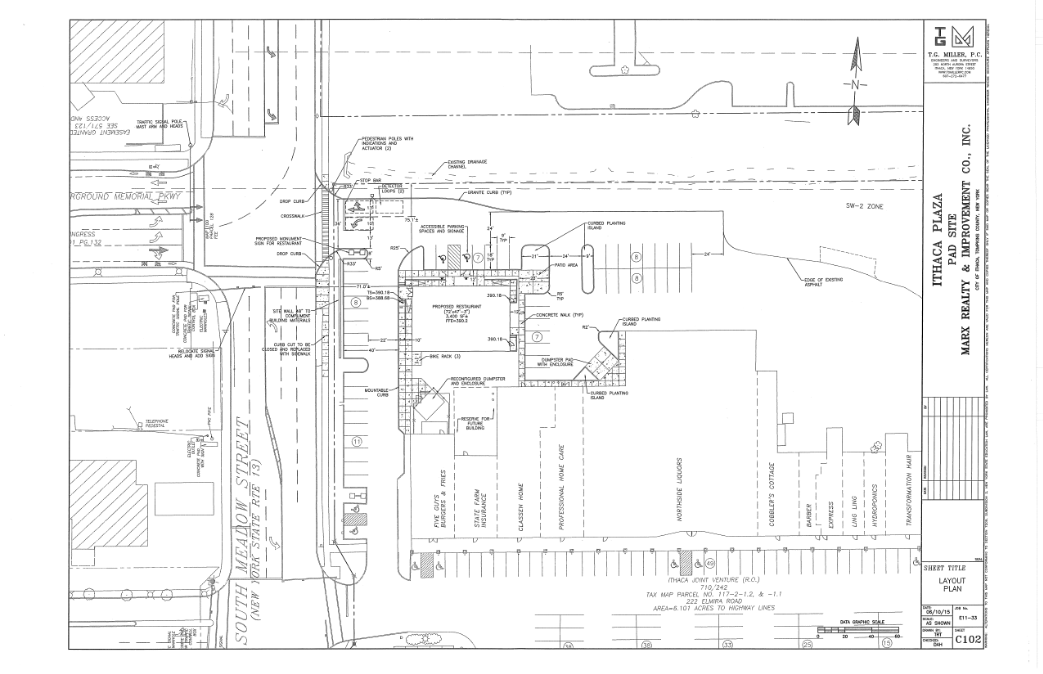
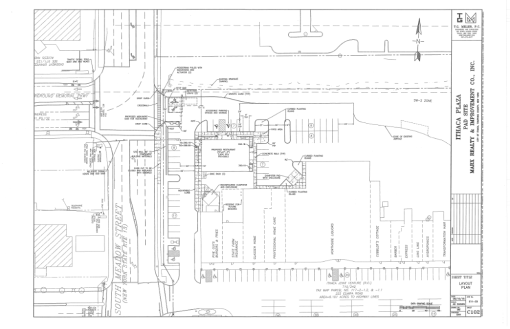
2. Now to go from something big and far away to something small and local.  It’s been a while since we’ve heard about DiBella’s, the Rochester-based sub sandwich chain that had been eying Ithaca last November. They’re back, and the proposal has has some pretty substantial tweaks.

The building itself is still about the same size (~3,400 sq ft), but the design of the building has been reworked to a brick facade with an asymmetrical door/window configuration. The building is now contiguous with the main shopping strip, no longer isolated from the rest of the stores by a driveway. No decisions are expected to be made at the June Planning Board meeting, it’s more of an update for the board as to what’s going on, and to solicit input.

Marx Realty of NYC is developing the pad property, and local architect Jason Demarest (brother of STREAM Collaborative’s Noah Demarest) is handling the design.

3. Shifting out to Dryden now; I don’t tend to write much about Dryden, since a lot of the local development is limited to single-family homes in semi-rural areas (and separately, bad things happen when I write about Dryden).

First, Dryden village. The village has seen quite a jump in population in the past couple of years thanks to the opening of the 72-unit Poet’s Landing affordable housing complex (affordable here meaning that it’s income restricted and rents range from the $600s/month for a 1-bedroom to about $900/month for a 3-bedroom). At least as far back as 2010, a second phase, at the time a 72-unit senior apartment building, was planned by Rochester-based developer Conifer LLC.

Glancing at the village’s outdated webpage, there were meetings in October about phase II. A little searching online shows the negative SEQR determination (meaning no major adverse impacts expected) was issued in February of this year. The determination announcement says that 48 more apartment units are planned for the land directly west of the current complex. The Poet’s Landing facebook page says that funding wasn’t allocated for the expansion this year, but they are hopeful for 2016.

It’s not the best location; affordable housing developments often vie for land outside of developed areas simply because the land is cheaper, but the trade-off is that residents are often isolated, especially if they don’t have money to maintain a car. Here at least the village’s main drag is close enough that residents aren’t totally isolated. And any affordable housing in Tompkins County is welcome.

4. Meanwhile, in Dryden town, there are a couple of projects going on. One involves the construction of 8 duplexes (16 units) at a 5 acre parcel on Asbury Road. Working with that piece of information, there was only one parcel that met the provided description – a property just east of the Lansing-Dryden town line that sold for $30k last August to “SDM Rentals”. Scott Morgan is given as the developer in the town documents.

SDM Rentals does have at least one other recently-developed property, the Meadowbrook Apartments, a set of at least 7 duplexes at 393 Peruville Road in Lansing for which he received a $1,000,000 construction loan in 2013 (2 were built in 2010), and rent for $995/month. The ones on Asbury Road will probably look similar.

The town notes that although the SEQR is still being prepared, the site was already being prepped with dirt fill, resulting in not one but two stop work orders. Looking online, it appears Morgan has a history of being a problem for local government, including a case in Lansing town where he was using a broken-down school bus for a pig barn.

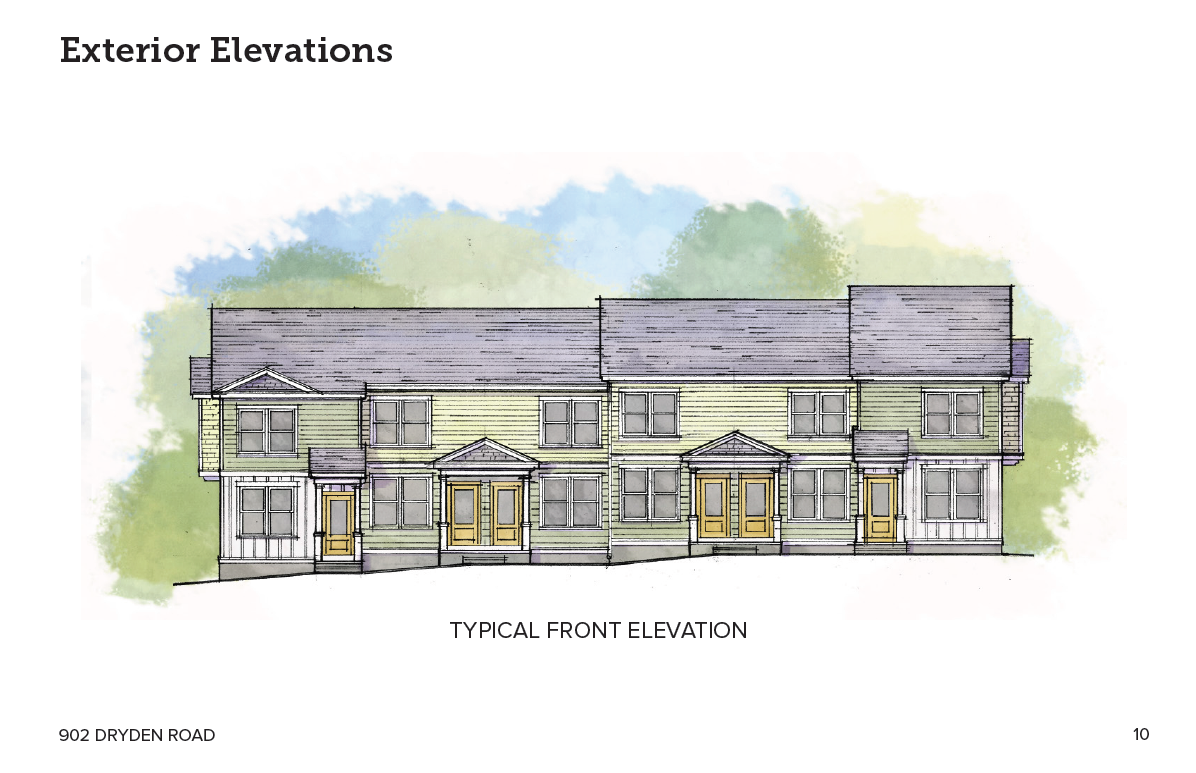
5. Now for project two, a multi-unit project at 902 Dryden Road. I’m just going to link to the Ithaca Voice article in an effort to save time. 15 units, (2 renovated, 13 new), 42 beds, and a $1.5 million investment.

902_dryden_2

I plan on touching on a couple of other minor Modern Living Rental projects at some point, but we’ll save those for a slower week.

20150613_180636 20150613_180659

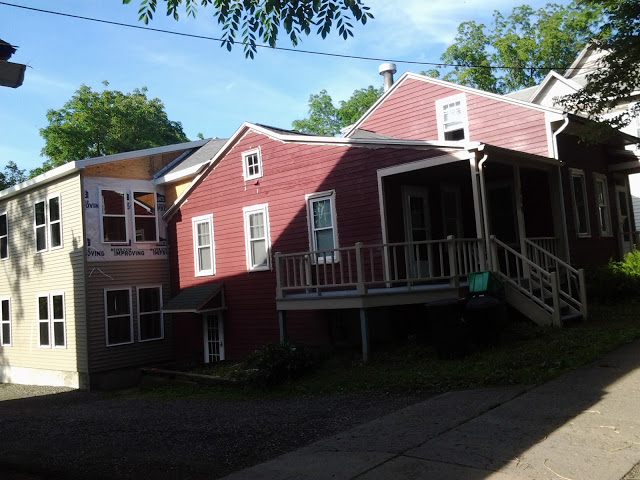
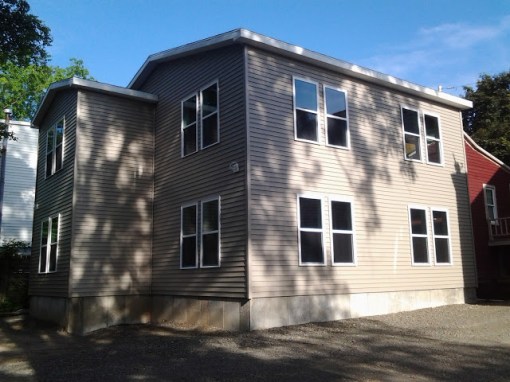
6. This week’s house of the week feature is 318-320 Pleasant Street on South Hill. The rear portion (foreground) is an addition, a duplex with 3 bedrooms each. Exterior siding is nearly complete, though some housewrap and plywood is still visible on the south (front) wall of the addition. A peek inside the interior showed that the drywall has been hung-up, but final details like carpeting have yet to be installed (several rolls of neutral-colored carpets lay stacked on the floor).  The owners of the 105-year old house are members of the Stavropoulos family, who run the Renting Ithaca rental company and the State Street Diner.

On a side note, the 200 Block of Pleasant Street must be one of the worst hills in the city. Walking it must be terrifying on icy days.
oldlibe_franklin_proposal

travis_hude_libe_libe_v3

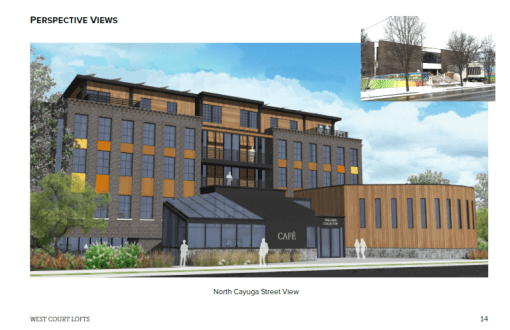
7. The Old Library vote made quite a splash in this week’s news. With a 6-6 hung vote, everything’s up in the air. This is what I feared would happen.

There’s a couple of options to break this. Two legislators, Kathy Luz Herrera (D- District 2, Ithaca City/Fall Creek and Cornell Heights) and Peter Stein (D-District 11, Ithaca Town/East Ithaca), weren’t in attendance, and could call the measure back up for a vote. Herrera’s District is two blocks from the Old Library site, and Stein’s a retired Cornell professor, so although I shouldn’t be guessing people’s judgement, I don’t think it’s a stretch to imagine which of the two projects they’ll be swayed by. But if either one of them decides they dislike all three options, or if they split their votes, then everything will be stuck in limbo. At that point, it’s anyone’s guess – the building could be mothballed, or given that its HVAC and utility systems are at the end of their mechanical lives, it could even be demolished as a long-term cost-saving measure.

If the county does decide in favor of one proposal, it’s still a long road ahead – ILPC approval, Ithaca city planning board approval, and a variety of other measures, which could break the winning proposal. Both projects have potential challenges – with Travis Hyde, ILPC or the Planning Board may try and whittle down its units, removing the density lauded by some legislators, and perhaps the project will no longer be financially feasible. With the condos, one starts with a building that’s had asbestos and air quality issues in the past – one bad surprise in the renovation, and the project could be jeopardized, or at least priced well above the quoted $240-$400k. There are a lot of variables in either equation, and since they can’t all be quantified, both will have their risks.

I’m just going to hope that someone is able to bring new life to the site. I don’t want to see two years go to waste.

state_st_triangle_3

8. Almost to the end. Here’s your monthly look at the Planning Board Agenda for next Tuesday:

– No subdivisions this month, but there will be a 15-minute public comment period on the city’s new Comprehensive Plan.

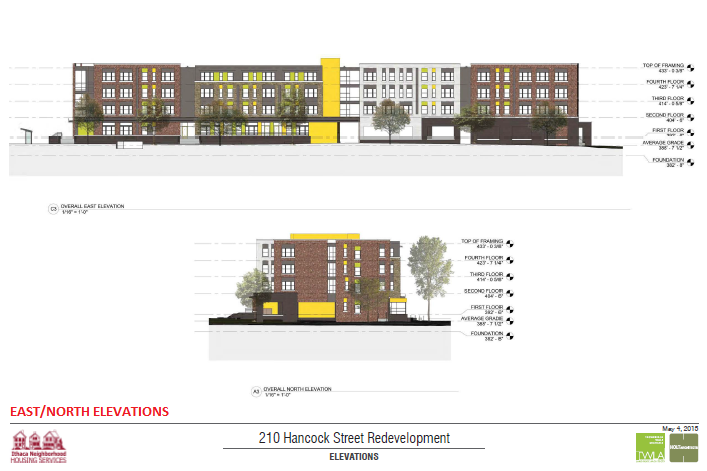
A. 210 Hancock will be giving an update on its plan and up for recommendation for the Board of Zoning Appeals for parking (64 spaces vs. 84 required) and height variances (46.5 feet vs. the legal 40 feet). Quoting the pre-prepared document, “The Board strongly recommends granting the requested variances.”

B. An update on DiBella’s as described above

C. Tompkins Financial Corp’s Headquarters will be open for public comment, determination of environmental significance (SEQR negative/positive), and preliminary approval for both phases

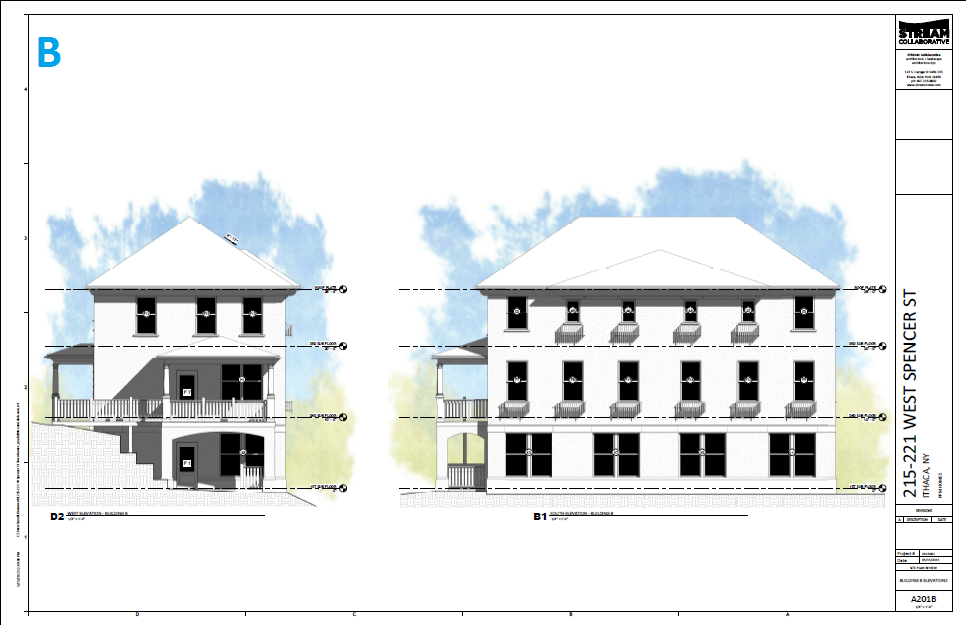
D. 215-221 W. Spencer will be reviewed for Declaration of Lead Agency (Planning Board agrees to conduct of State Environmental Quality Review)

E. “Collegetown Housing Project at Dryden and Linden – Update”. A.k.a. whatever John Novarr’s planning for that five-building stretch of Dryden and Linden he just deconstructed. Readers might remember this site was part of his Collegetown Dryden project proposed last July, but there’s no indication if it’s a revision of that, or a totally different approach. The one thing that is constant is the zoning – MU-2 for the three properties on Dryden and 240 Linden, and CR-4 for 238 Linden. Neither zone requires parking, MU-2 allows six floors and necessitates mixed-use (often interpreted as ground-floor commercial), and CR-4 does not have mixed-use requirements but the height is limited to four floors. Expect an urban-friendly six-story building fronting Dryden with a four-story setback on Linden.

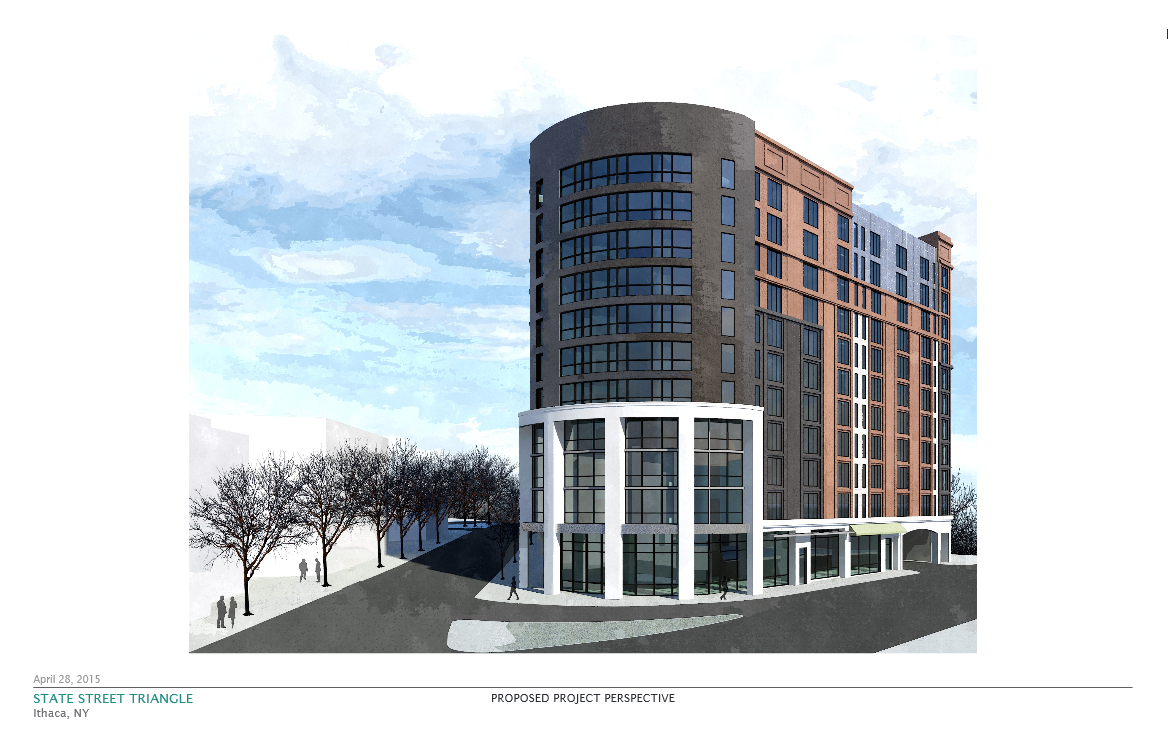
F. “State Street Triangle (Trebloc) Mixed-Use Project – Update” Anything could happen. Height decrease, site redesign, fewer units, major design changes…we’ll just have to wait and see how the 11-story, 600-bedroom tower has evolved given the initial recommendations of the Planning Board.
simeons_v2_1

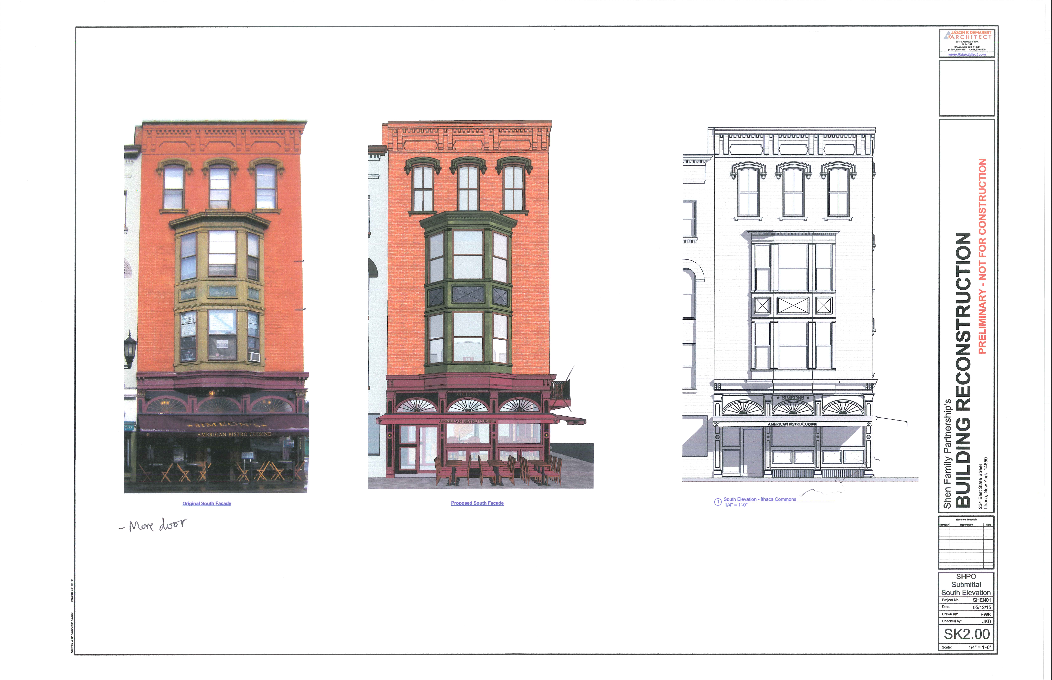
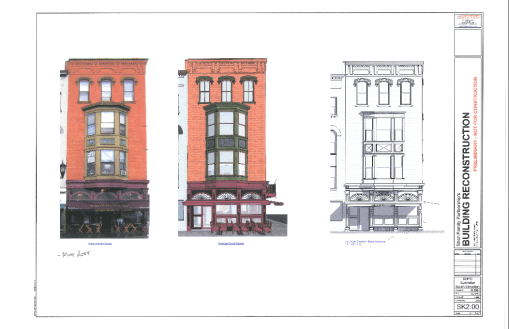
9. We’ll end this week on a happy note. Shen Properties LLC plans on launching their Simeon’s rebuild shortly; first and second floor restaurant space for Simeon’s, and five luxury apartments. The exterior will be a near-replica of the original facade of the Griffin Building, but the interior will be renovated to hold an elevator and a sprinkler system. In a quote to the Journal, property manager Jerry Dietz says to look for a reopening in the very late 2015 or early 2016 timeframe.



Village Solars Apartments Construction Update, 6/2015

19 06 2015

Out in Lansing, the first phase of the Village Solars Apartments is starting to allow tenants to move in. Building “A” looks to be substantially complete, with tenant vehicles parked in the gravel lot, and a guy preparing a grill session out back. The unvarnished wood siding was a bit of a surprise, but it goes well with the natural color tones of the siding. Building “B” in the middle is due to receive its first tenants around July 1st, and building “C” on the east end might be planning an August 1st move-in date, based off the dates in the rental advertisements. These dates have been pushed back from the May and June dates that were noted back in the February post, and those had already been a push back from original dates in March and April. Further pushbacks are unlikely, if only because the developers risk losing out on the large and lucrative student market, which revolves around the start of the fall semester in late August.

Building “B” still has some sheathing showing, but is quickly attaching the remaining exterior trim, and building “C”, which is the same configuration as “A”, is still bare sheathing and waterproof wrap, but all of the windows and doors have been fitted. Without looking inside, I’d imagine “B” is polishing up the last interior finishes, while “C” is still installing appliances, flooring and the like. Interior rough-in probably wrapped up during the spring.

Judging from the revised Craigslist postings, Lifestyle Properties has had some success with filling the units, with some of the floor plans sold out. The one-bedroom units will rent for $1050-$1145, two-bedroom unis rent for $1235-$1369, and three-bedroom units will rent for $1565-$1650. Prices vary a little depending on what floor the unit is on, the higher up the more it costs.

Currently, some of the land has been cleared for the next phase (2 and possibly 21, which have 41 units and 10 units respectively). I checked with someone familiar with the project to ask when phase two would begin construction, and they said that there’s been talk of starting the second phase, but he wasn’t sure when it would start.

The Village Solars apartments are a large apartment complex located in the town of Lansing off of Warren Road near the county airport. The complex takes its name from what the Craigslist sales pitch calls “their passive solar design and energy saving features”. The four-phase project calls for an initial build-out of 174 apartment units, with a second addition yet to be approved that would bring the total number of units over 300. With the third phase of Collegetown Terrace yet to start, this is currently the largest residential project under construction in Tompkins County.

The Village Solars are being developed by local company Lifestyle Properties. Lifestyle is run by Steve Lucente of the Lucente family, who have been major builder/developers in Ithaca since the 1950s. No word on the architect. Upstate Contractors of Syracuse appears to be handling the construction work.

20150613_171008 20150613_171012 20150613_171016 20150613_171053 20150613_171106 20150613_171248 20150613_171254 20150613_171316 20150613_171331

village_solars_2

village_solars


Stone Quarry Apartments Construction Update, 6/2015

17 06 2015

Here’s another project that’s in the home stretch – INHS’s 35-unit Stone Quarry Apartments project on Spencer Road. On the outside, the buildings themselves are pretty much done. A small playground has been installed and the asphalt for the parking area has been laid. A few sidewalk slabs still need to be poured, light poles still need to be erected and the landscaping still needs to be finished out, but otherwise, this is very close to the final product.

A look at the interior of one of the townhome units (not included because the image also included my reflection in the glass) showed that the drywall has been hung, but carpeting and interior finishes are still on the to-do list. Tenants can expect to move in during September 2015.

As this project wraps up, INHS will still be carrying a full schedule for the near future – their townhouse project in East Ithaca, Greenways, will be starting construction shortly. And while Greenways builds out its three phases over the next few years, work will begin on 210 Hancock‘s 53 apartments at some time well into 2016 (assuming no big hangups occur).

___

The Stone Quarry project consists of 16 two-story townhouses (2 rows, 8 each), and a 19-unit, 3-story apartment building on the northern third of the property. Specifically, the breakdown of unit sizes is follows:

16 three-bedroom Townhouses
2 three-bedroom Apartments
11 two-bedroom Apartments
6 one-bedroom Apartments

As with all projects by INHS, the units are targeted towards individuals with modest incomes, with rents of $375-$1250/month depending on unit size and resident income. While affordable housing is generally welcome and sorely needed, Stone Quarry had a number of complaints due to size, location and lingering environmental concerns.

The build-out is being handled by LeCesse Construction, a nationwide contractor with an office in suburban Rochester. The design is by local firms HOLT Architects and Trowbridge Wolf Michaels Landscape Architects.

20150613_174416 20150613_174450 20150613_174818 20150613_174932 20150613_174956 20150613_175009 20150613_175034 20150613_175047 20150613_175126 20150613_175143 20150613_175158


Belle Sherman Cottages Construction Update, 6/2015

16 06 2015

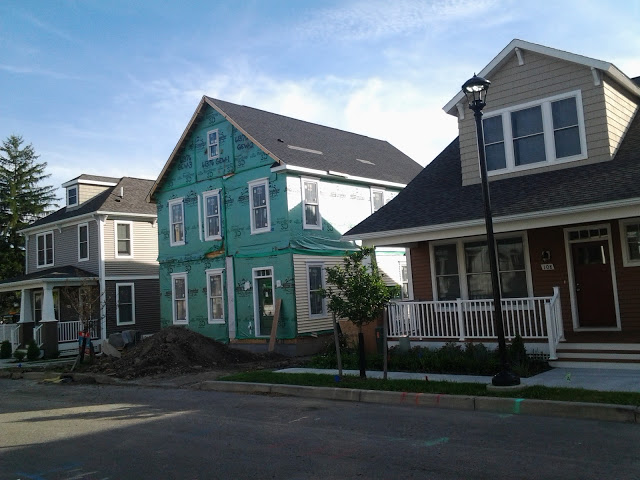
At the Belle Sherman Cottages project site, the first five townhouses (lots 25-29) have had their modular units delivered and craned into place. Waterproofing sheathing can be seen on some of the dormers where the “Autumn Red” and “Savannah Wicker” Certainteed clapboard siding has yet to be installed. and some of the front-facing garages still have unsheathed plywood showing, with rough garage openings. taking a guess, it looks like the work crews are working from north to south (29 to 25) on the two-bedroom townhomes.

The units have a slightly staggered elevation, with the units decreasing a few inches as the row progresses southward. The change in profile makes each unit a little more visually distinct.

A couple walking by as I was taking photos pointed out how curious it was that only the center unit, lot 27, has a rear deck. But, optional features are optional features; que sera sera.

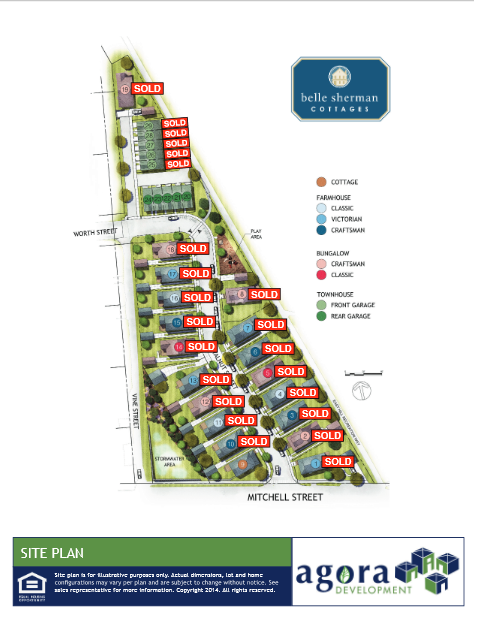
Next to lots 25-29 are the lots for the second set of townhouses, 20-24. The foundation for those homes has been excavated, and at some point soon, the water will be pumped out, footers poured, and the CMU block foundations will be laid for the new units.

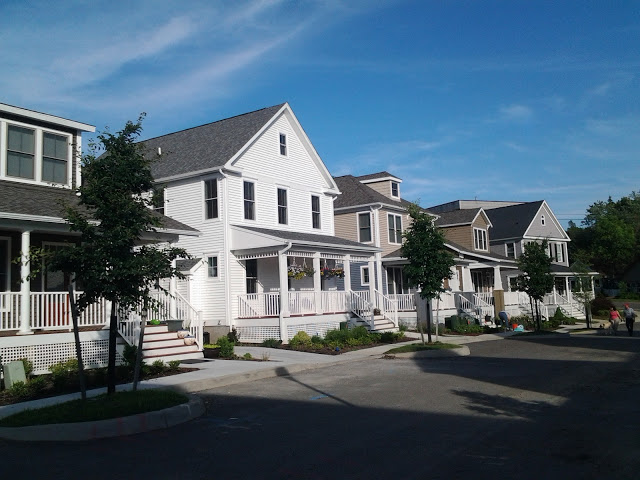
On the other side of the property, the last of the marketed homes is under construction. Lot 11 is a “Classic Farmhouse” with Autumn yellow siding and the usual white trim. The four Simplex modular units have been delivered and hoisted onto the foundation (Jason at Ithaca Builds offers a great rundown of the modular units here). Over the next few weeks, the house will be sided, the interiors will be finished out, and the porch and remaining trim will be attached.

The first set of townhomes should be ready for occupancy this summer, and the second set might be ready by August but that seems like a stretch; I’d wager that early fall is more likely. One more single-family house, lot 9, is due to be marketed and built at some point in the near future; the project will then be fully built out, about 3.5 years after the model house was built.

The Belle Sherman Cottages project on East Hill consists of 19 single-family detached homes and 10 townhouses, developed by Skaneateles-based Agora Development and built by local company Carina Construction.

20150613_182058 20150613_182122 20150613_182129 20150613_182209 20150613_182323 20150613_182343

belle_sherman_townhouses_2

belle_sherman_cottages_102714


Carey Building Construction Update, 6/2015

15 06 2015

At a quick stop at the Carey Building Friday before last, workers at the Carey Building site were busy preparing a utility duct line for the new Hilton Canopy Hotel next door, according to one gentleman I spoke with at the site. Building contractor LeChase Construction has completed the underpinning work on the Carey Building, strengthening the foundation to support the five-floor vertical addition. LeChase will also be handling the construction of the Canopy Hotel next door.

The Carey Building itself has sidewalk scaffolding up, and a section of the rear facade has been removed. I think that would be for the construction hoist, and the swing cab telescoping boom construction crane in the second photo is the one that’s being used for assembly of the structural steel. Quick disclaimer, if I’m wrong, please call me out. My day job of studying pollutants and puffy clouds isn’t helpful here.

I also had the good fortune to run into developer Frost Travis while having lunch, and he happily stated that steelwork would begin the week of June 8th (which is about two weeks behind schedule, but let’s not begrudge him given that whole issue with the building design that arose a couple months back).

So of course, swinging by to take updated photos was a must. One week later, there’s steel columns five stories high (the height of the addition), with steel crossbars for stability, and joining plates to secure the steel framing for the floors. My marginally-educated guess is that this is the frame for the elevator shaft, based off the floor plans.

The Carey Building addition will add a third floor and 4,200 sq ft to the Rev business incubator (nearly doubling it to 8,700 sq ft), and on floors 4-7, there will be 20 apartments. Floors 4 and 5 will have 16 studio apartment units that average only 400-500 sq ft, their small size enabling them to be rented at a lower price. The 4 units on floors 6 and 7 will be larger 2-bedroom units. The $4.1 million project is being developed by local firm Travis Hyde Companies.

Expect this project to finish sometime in the very late summer-early fall timeframe.

20150605_114119 20150605_114225 20150605_114248 20150605_114328

20150613_181342

20150613_181351


Ithaca Marriott Construction Update, 6/2015

14 06 2015

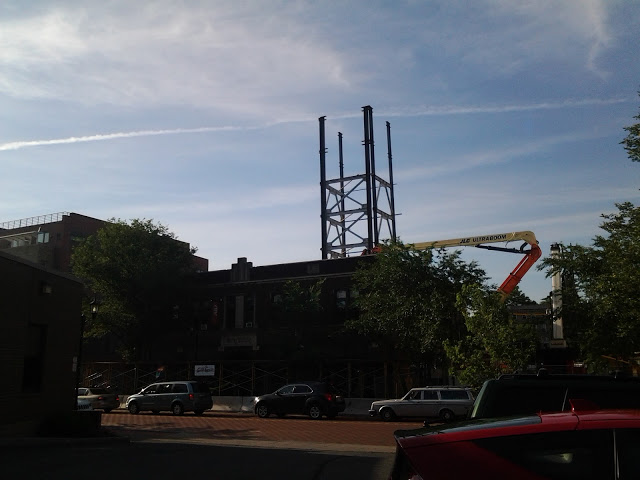
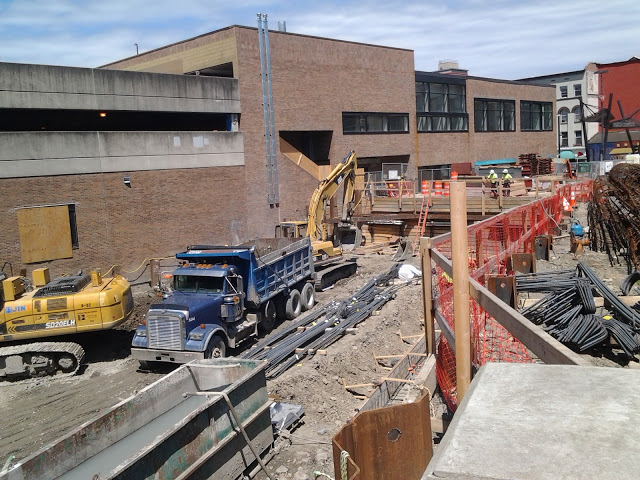
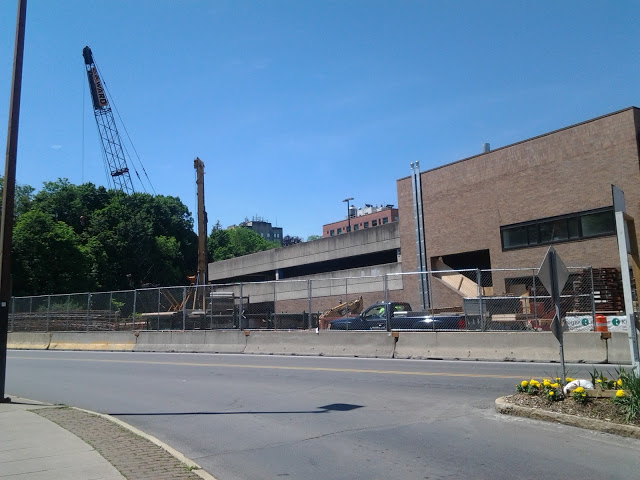
The pile driving work continues at the Marriott project site downtown. Quoting an anonymous source familiar with the project, about 10 more caissons are left to be piled, and grade beams are being built.  Per wikipedia, a grade beam is a reinforced concrete beam that transmits the load from a bearing wall into spaced foundations such as pile caps or caissons; a grade beam spans the the space between the caissons, distributing the weight among the caissons and ensuring the hotel’s structural stability. In image three, you can see the pile driver at work drilling a caisson, using a rotary bore so that it can more easily penetrate deep into the soil. The expectation is that the project will begin to rise starting in just a couple weeks, and builds its way skyward over the course of the summer and fall.

On a side note, check out that new window inserted into the Rothschild Building. Much better than the blank brick wall that was previously there.

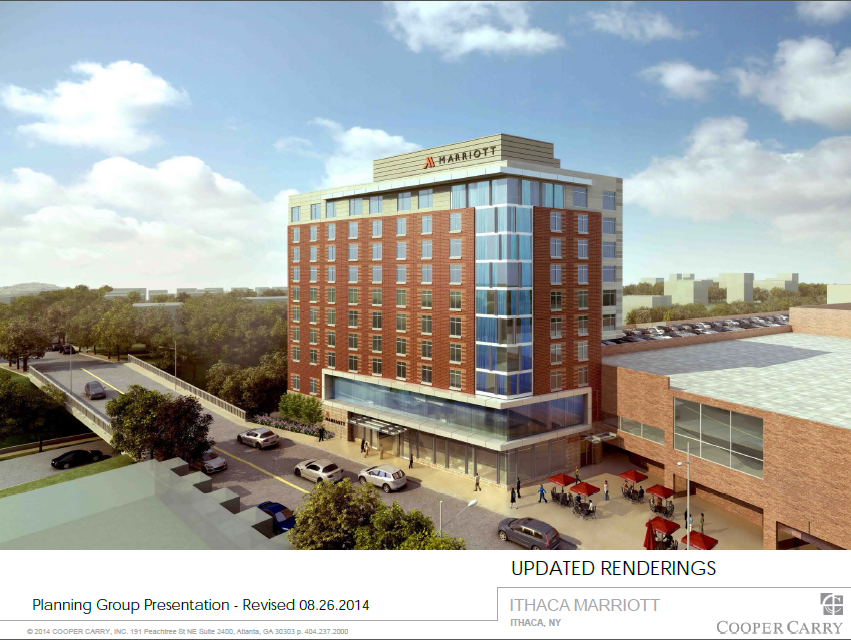
The $32 million, 10-story, 159-room hotel is slated for an opening in Q3 of 2016 (July-September). The hotel will include a fitness center, a restaurant with indoor and outdoor seating, and 3,000 sq ft of meeting space.

The hotel has been designed by Atlanta-based Cooper Carry Architecture and development is a joint venture of Urgo Hotels of Bethesda and Ensemble Hotel Partners, a division of Ensemble Investments. Urgo’s portfolio includes at least 32 other hotels totaling 4,500 hotel rooms. Interior design will be handled by Design Continuum, W.H. Lane of Binghamton is the general contractor, and Rimland Development contributed the land to the joint venture and is a partner. Long Island-based Rimland was the original firm that pitched the project in 2008 as the “Hotel Ithaca”, before the old Holiday Inn downtown went independent.

20150605_114642 20150605_114629 20150605_114501 20150605_114439 20150605_114431 20150605_114345

marriott_rev1_1


News Tidbits 6/13/15: Things that make you go Hmm

13 06 2015

travis_hude_libe_libe_v3

1. We’ll start this week’s round-up with the 800-pound gorilla in the room – the Old Library decision. The general, non-partisan rundown can be found in the article I did for the Voice. Rather than rehash that, I’ll give my own thoughts and opinions here.
In what should be no surprise to anyone, there’s a lot of acrimony flying around. The unavoidable problem here is that everyone has a different expectation for the site. To be honest, I was a little surprised that the Travis Hyde proposal was the winner. The Cornerstone and Franklin proposals were running about even when it came to public sentiment – many of the Voice commenters were stressing the need for affordable senior housing, just like the county did in the RFEI. Others used online petitions to push for the condos and saving the old library, but I personally felt that that was always going to be a stretch simply because the condos are a double-edged sword; they’re a needed commodity, but that “air of elitism” associated with the sale of a public asset for high-end homes would hound the legislators all the way to the voting booth.

The truth is, the RFP was designed to be unattainable, and I called it out for that last fall. There was no way a project was going to incorporate all the things it requested. Franklin couldn’t renovate the building and make their units at the affordable level. Cornerstone was able to make their units affordable but wasn’t as environmentally friendly as the others (it also requested a large PILOT). And I guess Travis Hyde was in the middle. Which on that 0-5 scale they used to score the projects, gives a simplified sort of 5-0 (2.5), 0-5 (2.5), 3-3 (3). With unrealistic expectations, of course the legislators were going to be disappointed, and they set up everyone else to be disappointed too. But the thought of holding onto a vacant building with its mechanical systems at the end of their useful lives, ready to put the county on the hook for hundreds of thousands of dollars in replacement costs, is probably the worst option out there.

TL;DR: There was going to a large contingent angry with the legislature’s decision, whatever it was. It’s times like this I wonder if the county should’ve just sold the site to the highest bidder.

Just for the record, because the three proposals were so different, and I thought all of three of them were good community assets, I honestly didn’t have a favorite. I had a slight preference towards DPI early on, but when they dropped out I became neutral about the whole process. But it’s only the Franklin supporters that are accusing me of subversively undermining them in the Voice write-ups, and it’s making me really cold to their cause.

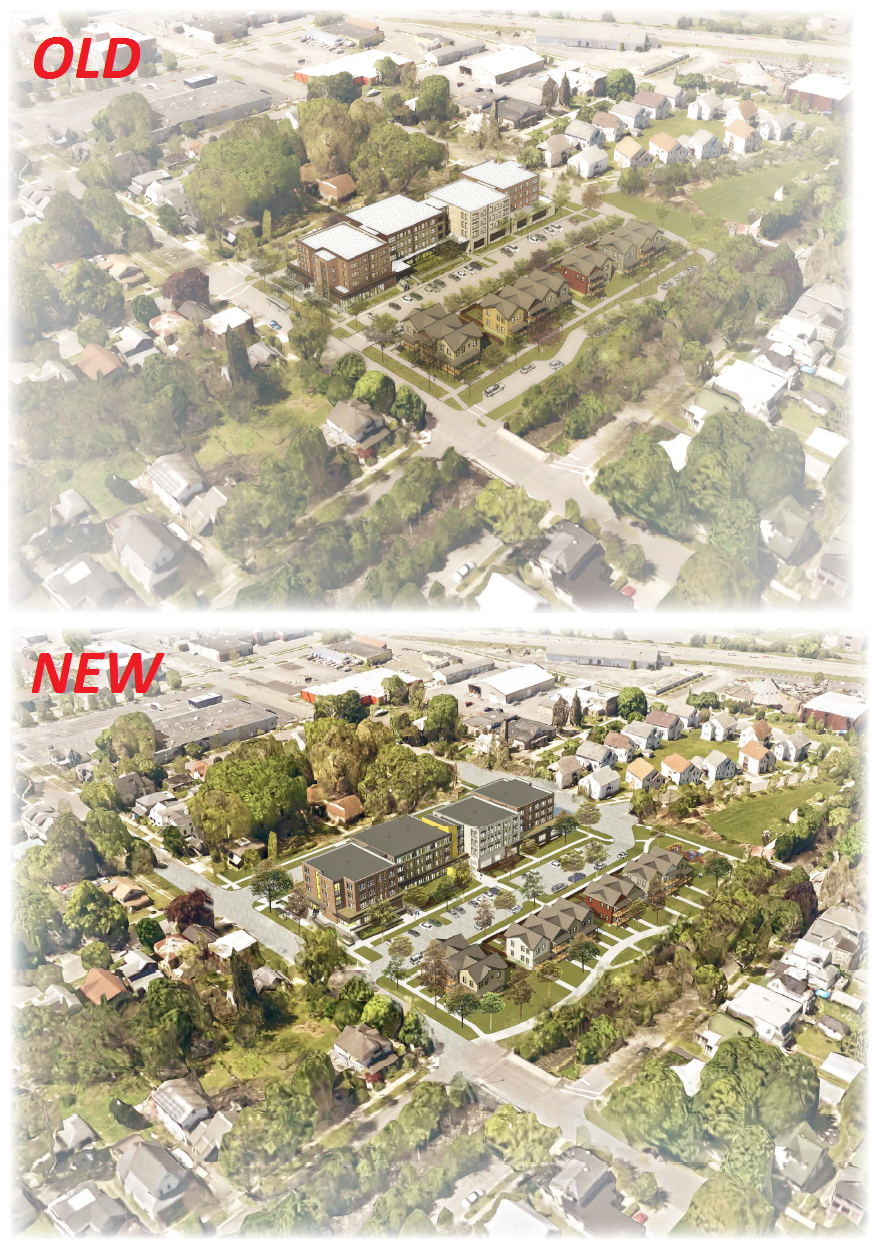
inhs_pride_v3_elevations_2

2. From the Common Council’s Planning and Economic Development Committee (PEDC) agenda, more talk this week about removing the setbacks from Nate’s Floral Estates (more on that in a moment), and a Memorandum of Understanding that both the city and Cornell will be chipping in $100k from their affordable housing funds to help finance INHS’s 210 Hancock affordable housing project (specifically, the 53 apartments – the 12 for-sale townhomes are being financed separately).

As covered by Jeff in the Voice, concerns have been raised that the site is unfit for new development due to the possibility of environmental contamination. Nate’s is partially on the site of the old city landfill, and has been for 40 years. But concerns raised by Ithaca city councilwoman Cynthia Brock, Ithaca town board member Rich DePaolo, and environmental activist Walter Hang have tabled the zoning change for now until the Department of Health can re-review their previous correspondence on the park’s expansion and determine if the extra 30 feet is safe to build on. The expansion may still happen, and we’ll just have to wait on the DOH’s decision before any zoning changes move forward.

On a separate note, there’s this line from the March minutes, which are rolled into the agenda for approval:

Alderperson Brock would like to see an increase in owner-occupied housing in the City. She does agree that affordable housing is needed, but the need is for “for sale” housing.

The last I checked, Ithaca is the 11th most expensive city in the country for rents as a proportion of income. The city needs affordable housing, for-sale housing, and affordable for-sale housing.

tfc_v3_1

tfc_v3_2

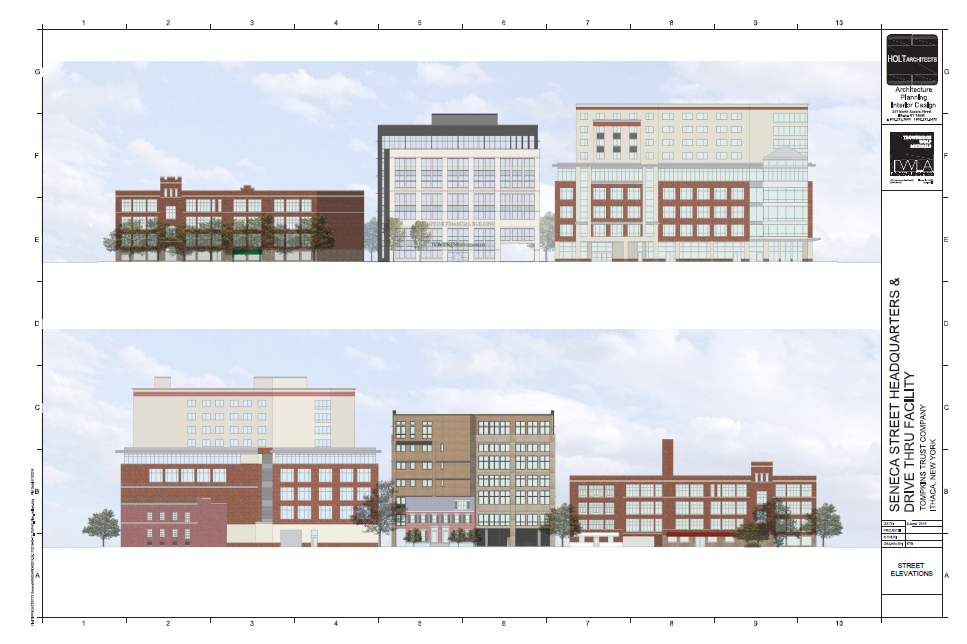
3. Fresh renders of the Tompkins Financial HQ. This one’s had some pretty substantial revisions from the initial bland brick box. A little more character and a more varied use of materials. More drawings here, cover letter here. This project’s just scooting right along, the applicants hope to have preliminary site approval granted at the June 23rd Planning and Development Board meeting. Construction is now expected to start in August and wrap up in February 2017.

A traffic study conducted by SRF Associates of Rochester determined that with only 20 employees moving from the suburbs into downtown, that the impact to the vehicular traffic on East Seneca (thousands of cars per day) will be negligible. A long-term increase in traffic is likely if other entities move into the rented space TFC vacates, but that’s well outside the scope of a traffic study.

The initial work calls for site clearing, demo of the existing drive-thru branch on site, then excavation down to the first sub-floor, thenceforth pile driving shall commence. It’s anticipated the sandy soils will make the pile-driving move along faster, but the other buildings nearby will necessitate temporary support installations during the excavation process.

On a related note, Tompkins Financial has filed an application with the IDA for a 10-year tax abatement. The application for the $35 million project (of which $28 million is for construction of the new building) states that the requested abatement would save the project $4.06 million in property taxes, and $2.112 million in sales taxes. New taxes generated and paid over the same time period would equal $3.782 million.

In the application, TFC states that it would be a few million dollars cheaper to build at “a generic rural site”, and in order to make downtown headquarters more financially acceptable, they decided to apply for tax breaks.

The application only suggests 6 new jobs over the next three years, paying $37k-$84k annually. Given previous estimates of 77 new jobs over 10 years, this lack of major job growth early on forces the later years to pick up the slack.

tfc_v3_3

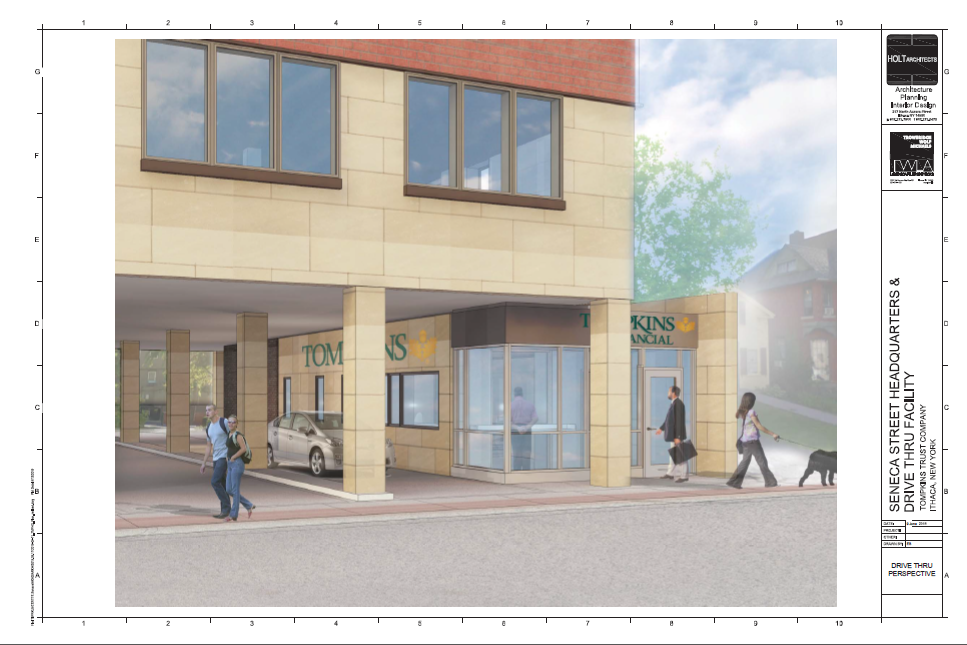
Of course, we also have a render of the new drive-thru across the street, which is nice but not nearly as exciting.

20150607_090520 20150607_090534

4. Sometimes I feel like I should do a random house of the week feature. Here we have a modular home being built on the 200 Block of Eastern Heights Drive in the town of Ithaca. It looks nearly finished at this point; permits for the home were filed back in March, so this one seems to have followed a normal building schedule with no major hangups.

Some modular homes are done on the cheap and look the part; others, like the Belle Sherman Cottages, do a great job with the finishes. This one may not look as great the Belle Sherman project, but it looks like a decent infill home for the Eastern Heights neighborhood. And it has great views to boot.

5. According to the town of Ithaca’s May 11th minutes, a developer has expressed interest in buying fire Station No. 9 at 309 College Avenue in Collegetown. An appraisal has been done and the City has hired a consultant to look into it. Fire Station No. 9 was built in 1968 to replace the original station, which is now The Nines. It sits in Collegetown’s densest zone, MU-2, so a potential replacement could be six floors with no parking requirement. There’s a lot to be looked at here, especially with the potential public safety impacts. But it’s something worth paying attention to over the next several months.

120_brindley_1

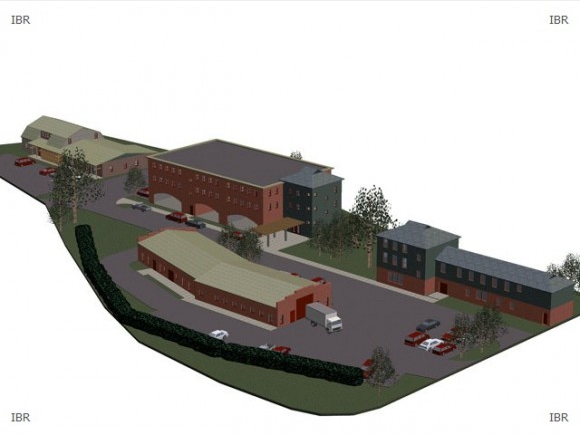
6. It’s unusual in Ithaca to see real estate advertisements posted with speculative commercial build-out plans. The above computer drawing is from the online posting for the sale of 120-140 Brindley Street in the West End. The three smaller buildings already exist – the “Aeroplane Factory” on the right and the other two properties comprise ~18,000 sq ft of flex office space. The drawing also shows an unbuilt 3-story office building; I don’t know how serious plans were for it, but it’s probably just conceptual. The real estate ad itself notes that a live/work building is possible, as well as a 6-story building of 25,000 sq ft.  The 2.38 acre site’s for sale for $2.79 million.


140 College Avenue Construction Update, 6/2015

11 06 2015

Just up the street from 114 Catherine and a couple blocks from 202 Eddy is 140 College Avenue, also known as the John Snaith House. Since last fall, work has been underway on a 3,800 sq ft, 12-bedroom addition to the 1874 structure.

John Snaith was an English builder, stone cutter and architect who came to Ithaca in 1869 to do work on Ezra Cornell’s Llenroc mansion (under construction at the time) and other buildings for the nascent university. Snaith lived in Ithaca for over a decade. He built the original Ithaca High School (destroyed by fire in 1912) and did work on the Sage Mansion, where he was fired by the ever-impatient Henry Sage.

After Snaith moved to Albany, the house was used as a boarding house, a B&B in the 1980s, and a private single-family home. The house was rented out to a landlady and her boarders when it was partially destroyed by fire in 1894. Snaith rebuilt the home shortly before his passing in 1896, but redesigned the top floor with mansard trusses and added dormer windows. Today, it’s student-oriented housing.

The addition is a sympathetic design approved by the Ithaca Landmarks Preservation Council (the house was designated a historic structure in 2011), separated from the original house by a glass “hyphen” connector. In the photos below, the exterior work is virtually complete, with the lap siding fully installed, as are all the windows and doors. Interior finishing is seemingly all that is left. This one should be ready for its first 12 occupants shortly. As someone who had reservations about the addition, I will admit that it came out nice.

The project is designed by local architect Jason Demarest and developed by Po Family Realty, a smaller Collegetown landlord.

None of the larger projects in Collegetown are underway just yet. Hopefully in the next few months we’ll see work start at 307 College (96 beds), 327 Eddy (64 beds) and 205 Dryden (40 beds), and Collegetown Terrace is expected to start construction of its 300+ bed phase III this year. A quick check of the neighborhood showed that construction has not yet started on a 6-bedroom duplex planned behind 424 Dryden.

Then of course, we have Novarr’s demolition work on the 200 Block of Dryden Avenue. Once demolition is complete, the site will remain empty until whatever he proposes is approved and financed.

20150605_155313 20150605_155333 20150605_155416 20150605_155435


News Tidbits 6/6/15: I Give This Week A Frowny Face

6 06 2015

215-221_spencer_v2_2

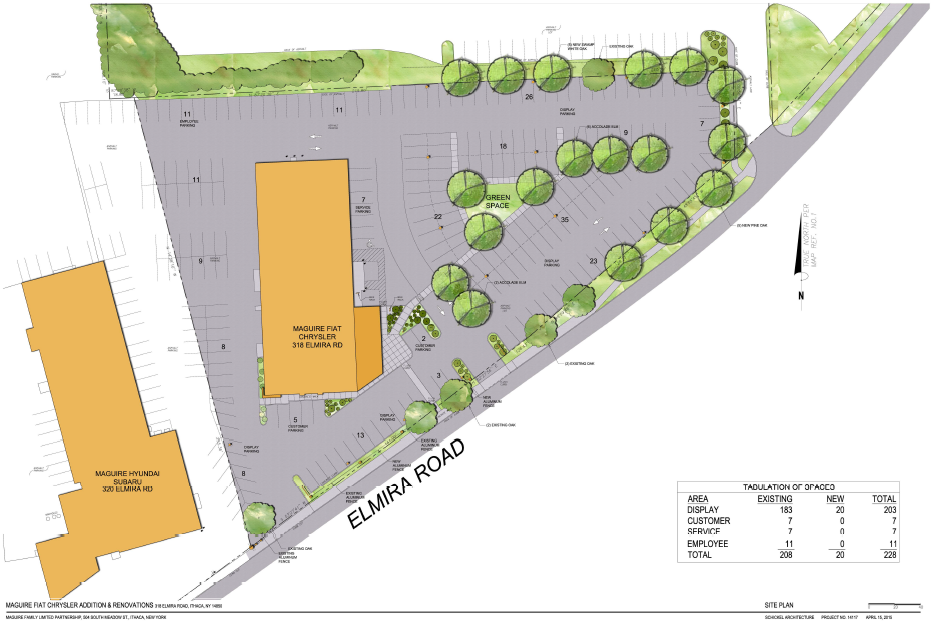
1. I’m thinking there is a genuine lull in the pipeline at the moment. The city’s projects memo, which is the document that city departments receive and comment on before the actual Planning Board meeting, doesn’t have much for consideration for this upcoming month. The one projects that is being “newly” considered is the 12-unit, 26-bedroom PPM Homes proposal at 215-221 W. Spencer Street. That project is expected to receive declaration of lead agency (in other words, the planning board formally agrees to review it) at the June meeting. Being carried over from the previous months are the two duplexes for 804 E. State Street, the Tompkins Financial HQ, INHS’s 210 Hancock project and the Maguire Fiat/Chrysler expansion. None of those are up for final approval.

Smaller projects and subdivisions will often first show up in the memo ahead of the meeting, but not this month. What will be, will be.

tfc_v2_1

2. On the other end of the scale, this looks to be a busy month for the Ithaca Landmarks Preservation Council. Most of their agenda focuses on window repairs and other minor details, but they will be reviewing the Tompkins Financial HQ and the new drive-thru across the street. Although neither is within a historic district, I suppose it’s being reviewed for the sake of feedback and the possibility of a visual impact on the skyline as seen from historic districts.

Cayuga-Meadows-Shot

3. In Old Library news, a decision was expected last Tuesday…but, the decision was postponed. After committee members started sharing their differences in opinion. Pardon my cynicism, but that’s a perfect microcosm of those whole process. Frequently delayed and bound to infuriate someone come decision time.

In a perfect world, all three of those would be built in the city, because they all address different housing needs in Ithaca, and they would all likely be successful. But of course, there can only be one. We’ll find out next Tuesday morning.

4. The Ithaca town Planning Committee is verifying two things already noted in previous news round-ups. One, the 68-unit Cayuga Meadows project hopes to begin construction in the very near future, and two, the Troy Road housing project is dead.

The committee also brought up the possibility of a moratorium for certain parts of town – two areas described as having significant student populations. One is almost certainly the area of South Hill next to IC, the other is not stated (but likely has to do with Cornell). This is part of a larger conversation to keep IC students from living off-campus in student rentals. Students aren’t a protected class, so whatever extra bureaucracy or laws the town wants to adopt are technically fair game. I would imagine, however, it would much easier to do that to IC’s undergrads than the professional and doctoral students attending Cornell. Looking at the numbers, one has been increasing much more than the other, and it’s not the undergrads. This, I suspect, is where potential laws become problematic.

Anyway, the moratorium is seen as a last-ditch effort. But the possibility of it should be enough to raise eyebrows.

815_s_aurora_1

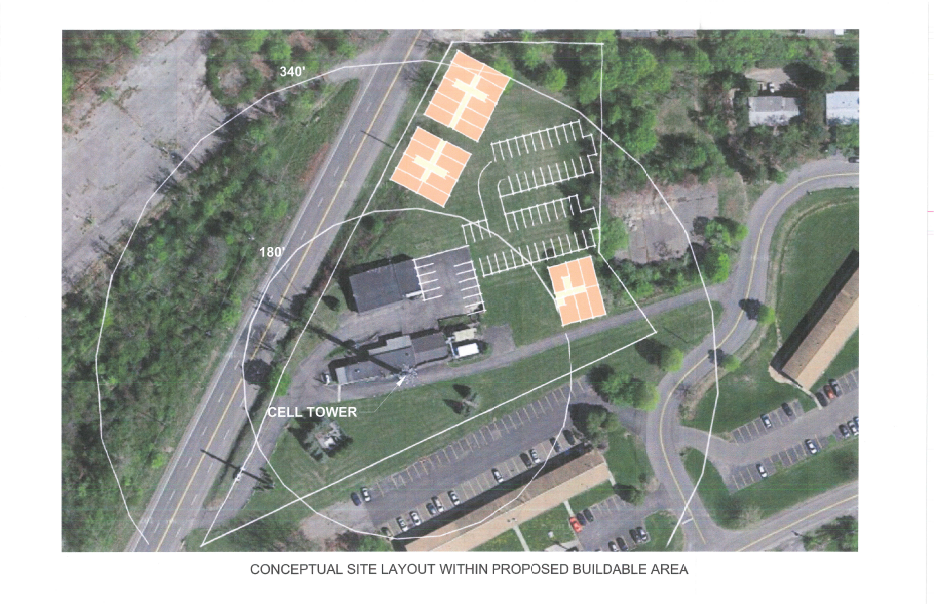
5. Time for some more unhappy – the city Board of Zoning Appeals isn’t touching the 815 South Aurora Street application.  To recapitulate the salient details, local developer Todd Fox would like to build apartments on the land but can’t because the vast majority of the property is within the “fall zone” of a cell tower, which the city defines as twice the height of the tower. At 815 South Aurora, a 170′ tower creates a 340′ radius of no-man’s land (outer circle above), making the parcel virtually undevelopable. Fox had two private engineering companies (TAITEM Engineering and Spec Consulting) analysis the case and they determined that an appropriate fall zone is the height of the tower plus 10 feet for a little wind/bounce – so 180′ total. With this info in hand, Fox is trying to get the city to refine the zoning to allow the decrease in fall zone and therefore permit the land to be open for development.

The BZA said it was acting on the city attorney’s advice that the committee can’t override a council-approved law. Which means that Noah Demarest, the architect appearing on behalf of Todd Fox, will either have to go to the Council to have the law amended, or he and Fox will have to go through a full sketch plan and review process, and apply for an area variance for whatever firm plans they have proposed. Meeting with the BZA was seen as way to avoid having to shell out all that time and money and risk still being rejected because of the cell tower issue. There’s a risk with moving forward at this point, and it’ll depend on just how much risk the developer is willing to take on this potential project.

6. We’ll wrap up with something positive – FormIthaca, the citizen group advocating for form-based zoning, is doing their design charettes this week. I’m writing this on Thursday night since I will be doing 5-year Cornell reunion stuff on Friday, but I do plan on being in attendance Friday afternoon meeting and am looking forward to seeing/hearing what ideas the presenters have to share.

I can assure a certain town of Ithaca board member that I have a personal preference to small street setbacks, and it sure as hell isn’t because they’re “hipper”.