Ithaca Tompkins Regional Airport Construction Update, 5/2019

27 05 2019

U.S. Senator Chuck Schumer dropped by earlier this month to make the formal announcement that the U.S. Department of Transportation had awarded the Ithaca-Tompkins Airport a $9,999,990 grant toward the airport renovation and expansion project. This money was not unexpected, though never a given; along with the $14.4 million New York State grant, the county’s portion of the bill is expected to only be about $260,000 (out of $24.7 million) assuming costs remain stable.

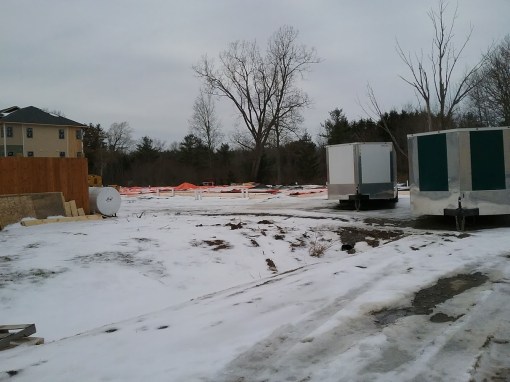
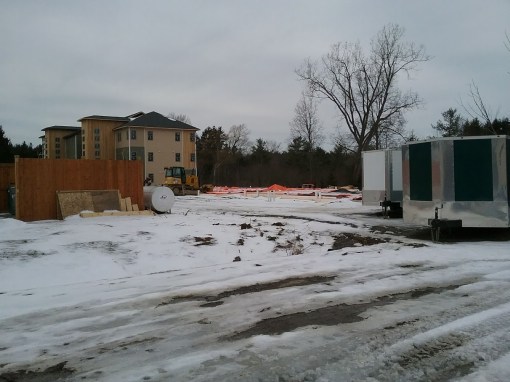
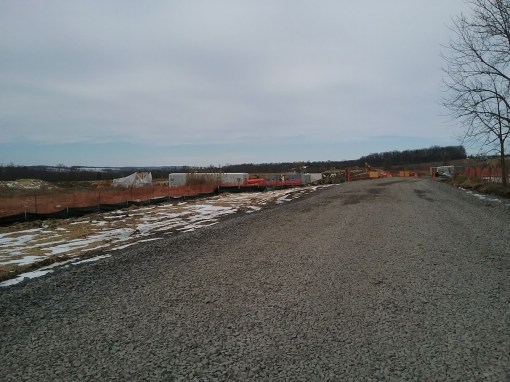
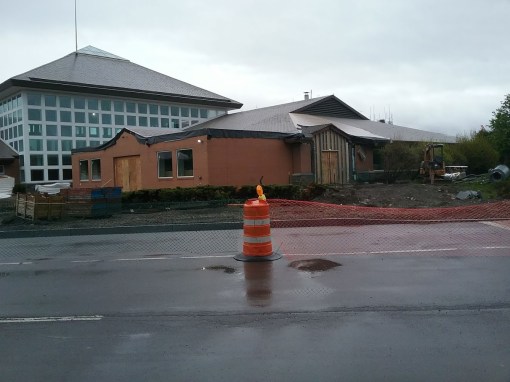
Now underway is Phase 2 of the project, which involves renovation and expansion of the passenger screening checkpoint of the departure lounge and the terminal’s gate area. Gone is the airport entrance canopy, and coming soon are a new concourse for arrivals and departures, and new jet bridges to contribute to the 6 gates that will operate at ITH. (Want more details? Click here). Streeter Associates of Elmira, who built Phase 1, will also be in charge of the buildout of Phase 2. The airport project is expected to be finished before the end of the year.

Oof. Hope you have a jack kit in the trunk.


Village Solars Construction Update 5/2019

25 05 2019

From the Voice, with light editing:

“Quietly plodding along off the 1000 Block of Warren Road, Lifestyle Properties’ Village Solars Apartments continues its steady buildout. This is one of the largest projects in Tompkins County, with 277 apartments approved, with potentially more in the works on the adjacent property to the east. So why doesn’t it get much attention? They build a couple of apartment buildings each year, they don’t have tax abatements or any high-profile review process because they were approved by the town as a Planned Development Area (flexible “D-I-Y” zoning), and they’re in a less-trafficked part of the county north of the airport. They’re low profile, physically and programmatically.

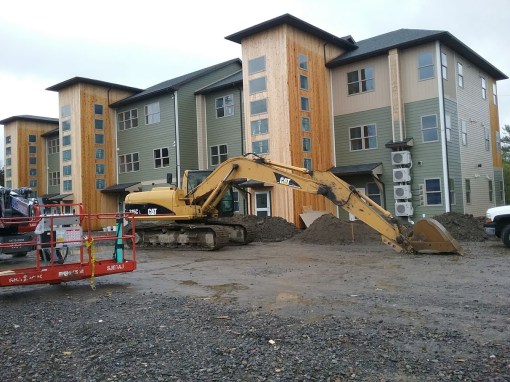
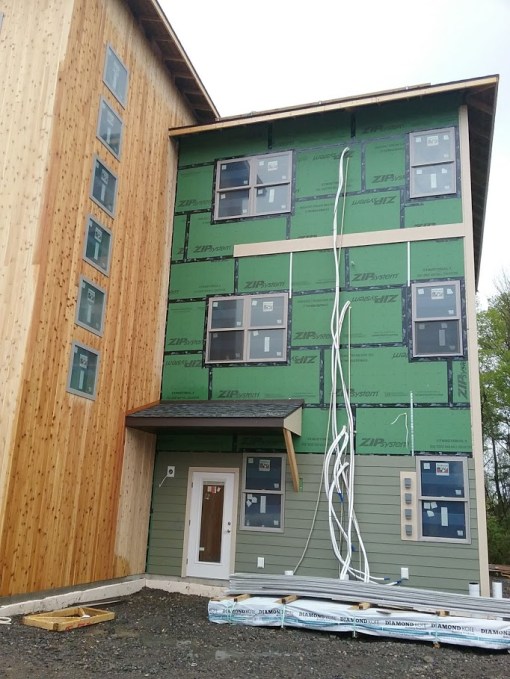
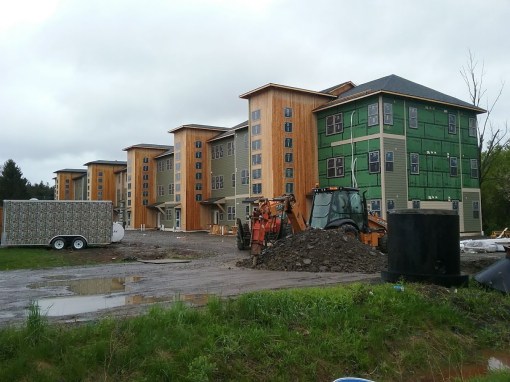
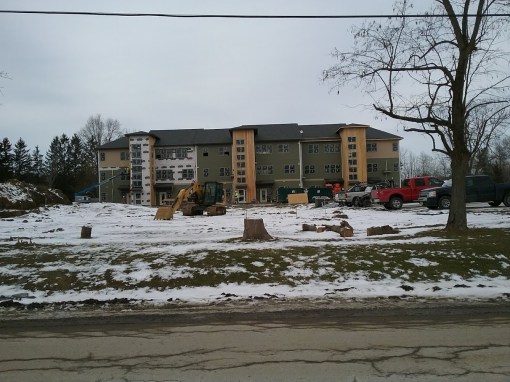
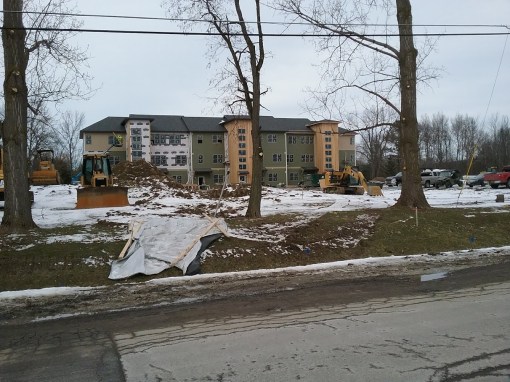
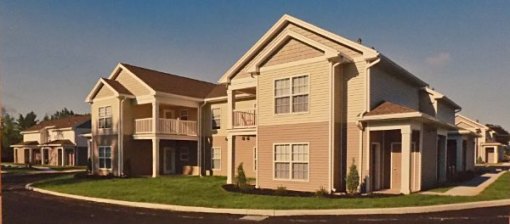
Under construction right now are Buildings “K” (113 Village Circle) and “L” (40 Village Place), which make the 11th and 12th buildings to have been built in the past five years. The 24-unit Building “K” is mostly complete from the outside, and likely to open for occupancy later this spring, adding another 3 three-bedrooms, 6 two-bedrooms, 3 one-bedrooms and 12 studios to the market. 24-unit Building “L”, just to its east, isn’t as far along. It’s framed, sheathed and has had its windows and doors fitted, but the fiber cement siding is only partially finished, and exposed interior stud walls are visible through the windows. If you’re wondering what the rat’s nest of white cables are, those are connections for the air-source electric heat pumps – the units are installed towards the bottom, and the cables are framed in by a bump-out for aesthetic purposes.

The latest two buildings are being funded courtesy of a $5.6 million construction loan extended by Elmira Savings Bank. According to the loan filing, both buildings are expected to be completed and ready for their first tenants by the end of September. But more realistically, given that the local rental market revolves around the academic cycle and that some graduate and professional students make their homes here, expect the new apartments to be ready for occupancy no later than mid-August.”

***

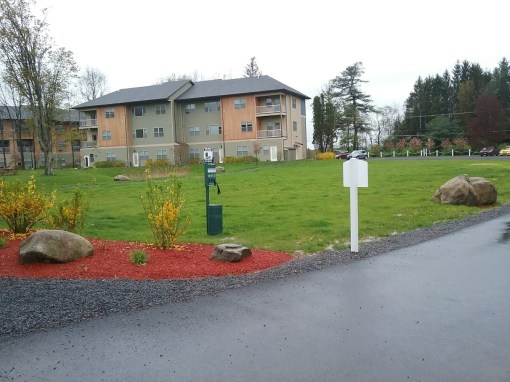
I must have missed the part when “Equinox Way”, the new through road was named. Still waiting a construction start on Building “F”, as seen below the site is just grass at the moment. Offhand, Lifestyle Properties can start one more building before they have to build the mixed-use community building, and regardless, the community center must be complete by the end of 2020.

The timeline and plans for each phase is out of whack because the redevelopment of the existing apartment 1970s buildings was expected before new sites were to get underway. I’d venture a guess the 2019-2020 phase would be 18-unit Building “M” and the Community Center, for an August 2020 completion.

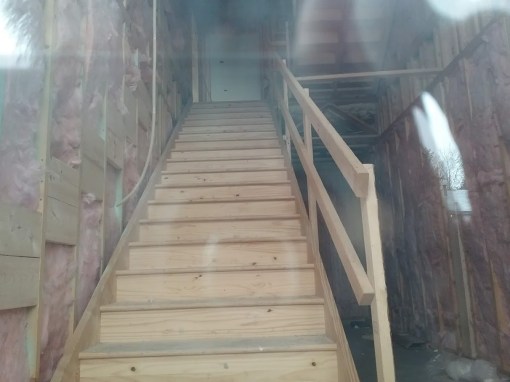
Giving credit where credit is due – the in-house construction crew is moving fast with these. Building “L” hardly had its site cleared and wood foundation forms in back in February. Years of practice pays off, perhaps. Interior walls and insulation is in, but drywall has yet to be hung, so completion is still a couple of months away.


Milton Meadows Construction Update, 5/2019

25 05 2019

From the Voice:

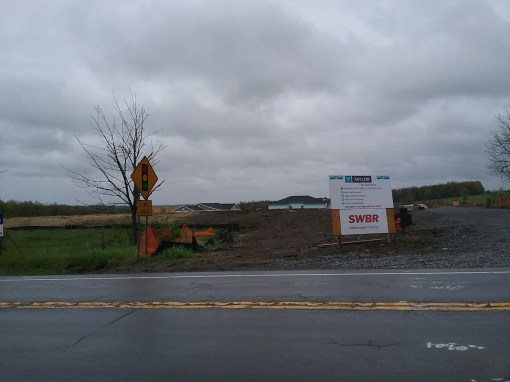
At the site of the future Lansing Town Center, the Milton Meadows affordable housing apartment complex is well underway. Cornerstone Development Group of Rochester is developing the 72-unit, $17.3 million project, which consists of 10 buildings, nine eight-unit apartment buildings, and a community center. The project is being built by Taylor the Builders and was designed by SWBR Architects, both of Rochester.

Gross rents (rent plus utilities) will range from $680 to $1,400 a month, with 64 units for households with incomes 50 to 80 percent of the area median income ($29,500-$47,200/year for a single person, $33,700-$53,900 for a two-person household). The remaining seven units are expected to rent at market rate, with the final one reserved for the live-in property manager. Along with military service veterans’ preference (first dibs) on all available units, five apartments will be set aside for service veterans with physical disabilities. More specifically, expected rent ranges are $680 to $750 for one bedroom units, $835 to $850 for two bedroom apartments, and about $950 to $1,100 for three bedrooms. Market rate units will max out at about $1,400 for a three bedroom unit.

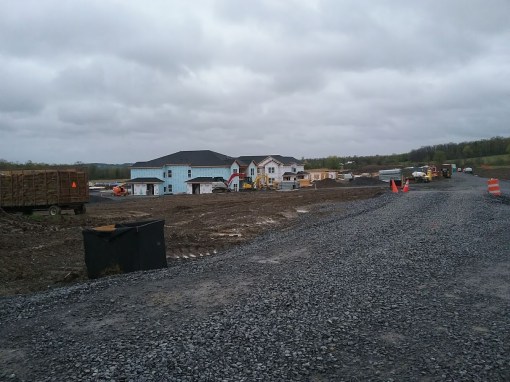
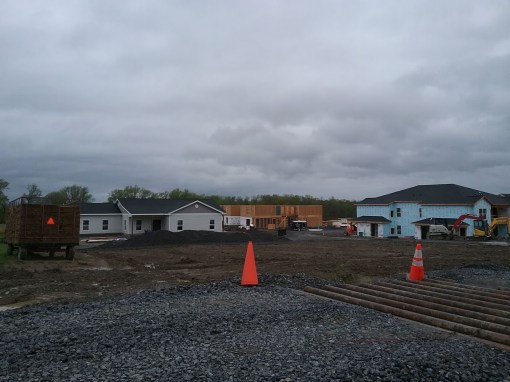
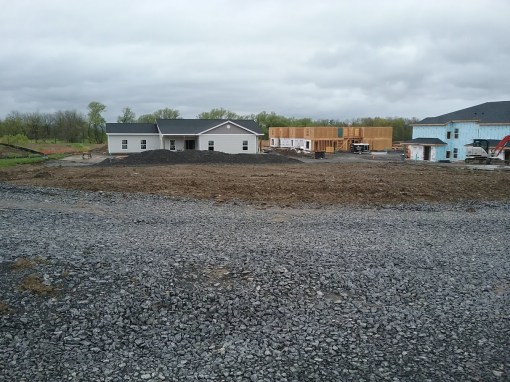
Construction on the property launched last November and is moving along at a fast pace. The community center building is framed, sheathed and has been faced with siding and white trim boards. Two of the apartment buildings are framed and sheathed with windows fitted and Tyvek wrapped, two more buildings are being framed, and foundation work was underway on at least one more building. The unfinished Louise Bement Lane is the only road close to the project site and offers just a limited line of sight, so more apartment buildings could be undergoing excavation or foundation pours.

Cornerstone and Taylor have deployed this design in other towns, so they have a familiarity with it, and that allows for a more efficient deployment of labor, a quicker construction timeline, and a higher fit and finish because they know the design’s quirks and where they’ve had issues in the past. Expect the apartments to start hitting the market this summer, and for completion of the project before the end of the year.

***

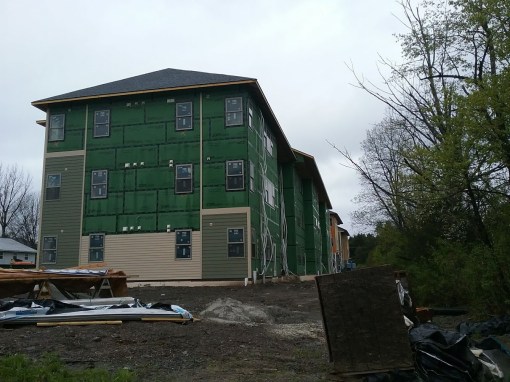
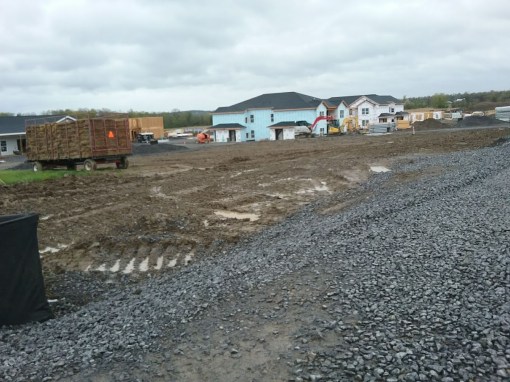
Perhaps to add a little more, the building in the foreground with the blue water-resistive barrier is all one-bedrooms, and the one to its north is all two-bedrooms. There are three separate building layouts, one with 8 one-bedroom units, one with 8 two-bedroom units, and one with 8 three-bedroom units (the first of which is being framed to the west/middle of photo four). There will be three of each design here, and you can see what the finished examples look like at the webpage for the practically-identical Frances Apartments in the town of Sweden here.

Note that Woodsedge Drive has yet to be realigned to make a proper four-way intersection with Louise Bement Lane. It’s on the to-do list for this summer. I do not know what the grid of embedded steel pipes on the roadway is used for, as the site plan doesn’t indicate anything unusual here. Maybe it’s where underground utilities diverge from Bement Lane and into the project site.

More information about the Milton Meadows project, including site plan details and project history can be found here.


News Tidbits 4/27/19

27 04 2019

1. Matt Butler at the Times is providing an in-depth check-up on the mall this week. This was a story the Voice had laid groundwork for as well, so it’s nice that one of the local news orgs was able to make hay of it. The mall, like many middle-class local malls across the country has been struggling in the age of Amazon and the retail meltdown. The overall economy might be humming along, but retail closures continue to spike nationwide, with over 6,100 closures planned this year alone, more than the 5,900 announced in all of 2018. With planned new store openings numbering 2,100, it’s practically two stores closing for every one that opens. Retail mega-landlord Cushman and Wakefield estimates 9,000 stores will close in 2019, and over 12,000 in 2020. In the Ithaca Mall, Gertrude Hawk is gone, American Eagle closed up last year, Ultimate Athletics shut its doors, the Bon-Ton closed as part of the shutdown of the whole chain, and the Sears Hometown store is kaput. The mall’s manager cited a variety of reasons, including chain downsizing, poor performance, and some just stopped paying rent.

This has major economic impacts; the mall’s property value has declined by over 60% since the start of the decade, and the village, the county and the schools have to make up those hundreds of thousands of dollars in property tax revenue somewhere (and the county and schools have). County legislator Deborah Dawson, who represents the mall’s district, suggested doing something similar to the DeWitt Mall downtown, a mix of local businesses, but the mall is a much bigger space to fill (622,500 SF vs. 117,500 SF in the DeWitt Mall), and DeWitt Mall is mixed-use (retail and 45 apartments). Local businesses and experiential outlets can be part of the solution as Running 2 Places is showing with their 18,000 SF theater this spring, but it’s one component of a solution. Residential could be a component, but some legal and logistic issues would need to be sorted out, which owner Namdar Realty has never shown much interest in; the village has also been lukewarm to the idea. About 40 apartment units were floated for a section of the parking lot (west/on the backside of the mall if I remember right), but that idea died during the Great Recession.

There is so silver bullet here. The owner needs to be more proactive then holding a proverbial gun to its’ tenants heads in order to get them to stay. Local governing bodies also have to keep an open mind for redevelopment ideas – if parts of the mall were torn down and replaced with residential, for example. As it is, the only plans on the horizon are an unnamed tenant for the former Bon-Ton space, and the extended stay hotel planned for the parking lot behind (west) of the Ramada Inn. The future of the mall is hazy; like a species faced with a steadily changing habitat, it’s either adapt and evolve, or perish.
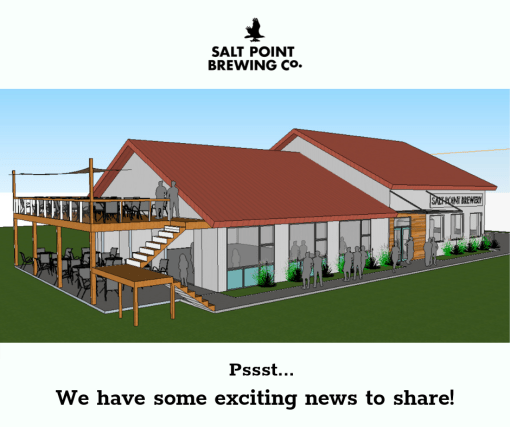
2. Courtesy of their Facebook page, here’s a sketch render of what Salt Point Brewing Compant’s new brewery and taproom would look like. It’s a fairly unobtrusive one-story structure with a gable roof and two wings, presumably the taller one for the brewing tanks and the smaller one for service functions. On the outside are wood accents and a two-story deck for outdoor drinking and possibly dining, if the restaurant option is pursued.

The building, as well as associated landscaping and parking improvements, would be located on about three of the five acres sold as Parcel “D” in the Lansing Town Center development. The remaining two acres are wetlands and would be left undisturbed. Salt Point paid $75,000 for the land, and will bring its project forth to the town planning board in the coming months. No word on any job creation figures yet.
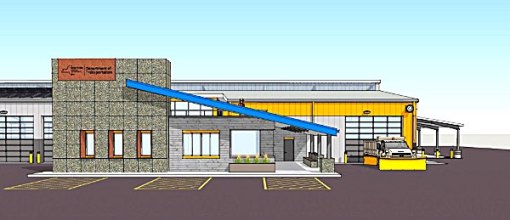
3. The NYS DOT county facility plans are moving forward. The state bought its 15 acres from Tompkins County for $840,000 according to a deed filed on April 24th. The building is classified as a sub-residency facility, a step below a primary regional facility (the main office for Region 3 is in Syracuse).

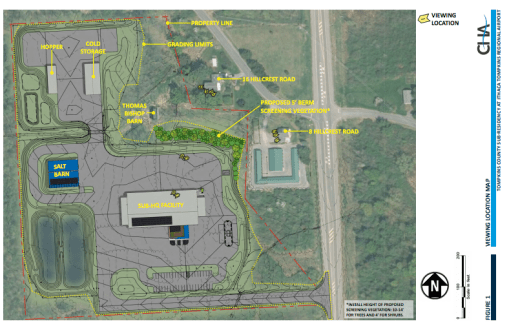
To review, the plans consist of the 30,000 SF sub-residency maintenance building, a 5,000 SF Cold Storage unit, an 8,200 SF salt barn, and a 2,500 square foot hopper building (covered lean-to). The proposed maintenance building will have vehicle storage for 10 trucks, a loader and tow plow, with one additional double depth mechanical bay and single depth, drive-thru truck washing bay. It also includes an office area (three rooms), lunch/break room (30 people), toilet/shower/locker rooms, storage rooms and mechanical/electrical rooms. The site will also contain stockpile areas for pipe, stone and millings, and ancillary site features include parking for 40 vehicles, and stormwater management facilities. A new access drive will be constructed from Warren Road.

The town has been less than pleased with the project, which is not bound to zoning code because it’s a public resource facility owned and operated by a government entity. Rather than voice approval, the planning board voted to acknowledge that they simply had no authority to control the project. Some modifications were made to the plans at the town’s request, such as the fueling station being moved onto airport property across Warren Road, but neighbors are still unhappy that snowplows and heavy-duty maintenance vehicles are about to be their next door neighbors.

The facility is expected to be open by the end of the end of the year. Once all staff and equipment have been moved in, the county may pursue a request for proposals/request for expression of interest for the current DOT property on the shores of the inlet near the Farmer’s Market. A 2015 feasibility analysis found that the site could conceivably host a $40+ million mixed-use project, and the site has became more amenable towards redevelopment with the enhanced density and use provisions made to the city’s waterfront zoning in 2017.

4. The Ithaca city planning board granted a negative declaration of environmental review to the 124-unit Arthaus affordable housing project at 130 Cherry Street. According to my editor Kelsey O’Connor, the latest revisions propose a five-story building that would include a gallery, office and affordable rental space. It would include parking for about 36 vehicles and 7,600 square feet of potential retail or office and amenity space geared toward artists. All of the units would be restricted to renters earning 50 to 80% of the area median income, or about $30,000 to $45,000. The north end of the property will also include a publicly accessible path leading to the inlet.

Speaking in favor of the project were neighborhood business owners and non-profits, and in opposition was councilman George McGonigal, who said both in a letter and in person that it was too big for the site and threatened the industrial character of the neighborhood. They have bigger concerns than housing nearby. Cherry Street is difficult to access with large trucks and commercial vehicles, the Brindley Street and Cecil Malone Drive bridges are small and in poor shape. Secondly, Cherry Street doesn’t provide much room for operations to expand, so that hinders their long-term operational planning. It’s not just lot size, but also the soil – the Emmy’s Organics project fell through because of poor soil not amenable for warehouse and other light industrial functions that rely on a concrete slab. Thirdly, the city’s strict environmental laws, fees and higher property taxes make an urban site less appealing. They can get more land with a lighter tax burden in Lansing, Dryden, or any of the other outlying towns. With these issues in mind, many of the industrial businesses down there now aren’t looking to stick around. Several have already sold or made purchase options with developers as they seek areas with lower taxes, easier access to highways and less strict environmental ordinances.

The unanimous approval by the city planning board allows the project to move forward with consideration for preliminary approval. The goal is to gain approval at next month’s meeting, and once affordable housing funds have been secured, to start construction of the project, likely in December of this year.
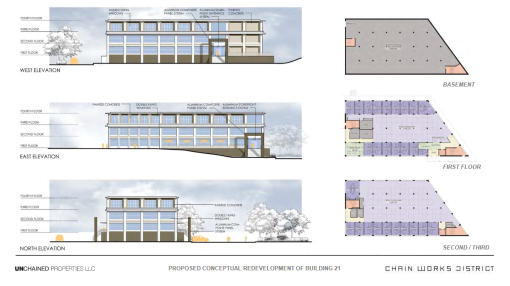
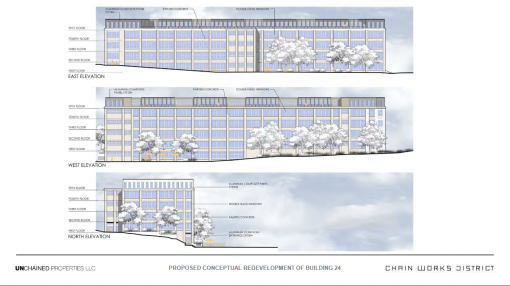
5. The Chain Works District presented plans for phase one at the Planning Board meeting. There are four buildings in phase one, of which two are in the city. 43,400 SF Building 21 would be renovated into a commercial office building. The work here is limited to replacing walled-up window openings with new windows, exterior cleaning and painting, and new signage and entrance canopies. Building 24 is a combination of renovation and expansion. The partially built-out basement and first floor would be renovated for commercial office space, the second and third story would be residential, and a new fourth floor would be built for residential uses, for a total of 135,450 SF across 4.5 floors. As with Building 21, new windows would be installed, and the exterior cleaned and painted. New landscaping, sidewalk and parking areas are also planned.

At a glance, the residential in the first phase would host 60 market-rate rental units. Each floor will have one studio unit, nine one-bedroom units, nine two-bedroom units, and one four-bedroom unit. According to the Site Plan Review document, the project would begin renovation in October, and be open by August 2020. The other two building in phase one are renovations of industrial and manufacturing spaces in the town, Buildings 33 and 34. These will retain industrial uses.

This meeting was only for the purpose of sharing and discussing plans, with no voting at this time. According to Edwin Viera at the Times, the board was reluctant to approve any plans without more information about who will be occupying them. That seems a bit odd, because projects are analyzed for their physical impacts, not the tenants, but the Times article says parking and landscaping may change slightly depending on the tenant. According to project representative Jamie Gensel, the USDA is considering renting out some of the office space. The USDA maintains a research facility inside the Holley Center on Cornell’s campus, and there were plans in the late 2000s to build an addition, which were later shelved during the Great Recession. It’s not clear how much space they’re seeking. Not sure what to make of that writeup, honestly, or being told to move the buildings into a different phase (personally, I’d like to be renovations before any new builds happen).
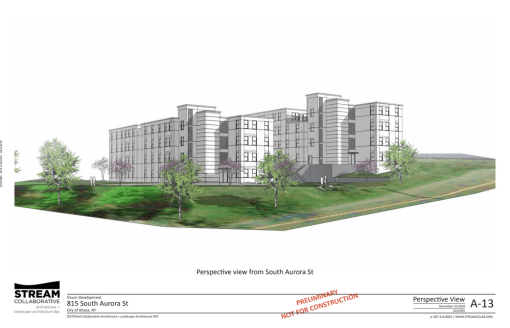
6. 815 South Aurora Street, aka “Overlook”, also continued its review at the planning board meeting. There were some minor design tweaks, seen in the before image (above) and after image (below). Changes in exterior colors, panels, ground-level entrances and fenestration, particularly on the side facing South Aurora Street. The fire trucks are  to indicate that emergency vehicles will be able to safely pull in and out from the road. Overall, project size remains at 49 units and 141 bedrooms.

There’s been some pushback from neighbors regarding size and neighborhood character. There’s an argument that these are dependent on Chain Works, but that argument doesn’t pass the smell test – if Chain Works didn’t happen, fewer units on the South Hill market would make the project even more appealing to Visum Development and Modern Living Rentals. The planning department wants more geotechnical information and bedrock to be removed, details about the new planting and landscaping, and energy systems. Documents submitted indicate the all-residential development will use electric heat pumps. The board has requested a shadow study and flesh out the environmental impacts, which is a common request for larger developments.
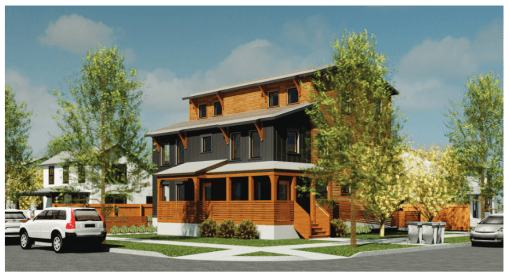
7. At least one project is fully approved. Although it seems at least one planning board member asked for affordable housing, the four-unit market-rate Perdita Flats infill at 224 Fair Street was granted preliminary site plan approval. The project is intended to be a sustainable building showcase of eco-friendly features, a net-zero energy showcase of what can be done with environmentally sustainable multifamily housing. The owner/developers, Courtney Royal and Umit Sirt, will be applying for incentives from the NYSERDA Low-Rise Residential New Construction Program and are hoping to attain the Zero Carbon Petal of the Living Building Challenge.


Village Solars Construction Update, 2/2019

3 03 2019

It was with some surprise that the latest trip to the never-ending Village Solars construction site yielded significant progress on only one apartment building, instead of the usual two or three. The 24-unit Building “L” is mostly complete from the outside, and likely to open for occupancy this spring, adding another 3 three-bedrooms, 6 two-bedrooms, 3 one-bedrooms and 12 studios to the market. 24-unit Building “K”, just to its east (right, in the photos), appears to have not made much progress; excavation was completed, and it looks like there are wood forms for the foundation on site, though with the snow and active work underway, it was hard to tell if the concrete slab had been poured – judging from the dirt piles, that’s a no.
Local Law #6 (2017) of the Village Solars PDA permitted three additional buildings to be built before Lifestyle Properties (the Lucente Property) was legally obligated to build the community center building (Building “F”), which is to contain a small amount of commercial space (restaurant), service space (gym, laundry, rental office) and up to twenty one-bedroom units. If “L” and “K” are completed this year, that will allow one more building to receive a building permit before the community center must be built and receive a certificate of occupancy (i.e. habitable and practically complete). Until then, no additional building permits are allowed. The law also stipulates that the community center has to be completed, regardless of the status of other apartment buildings, by the end of 2020.  Like other apartments, it won’t be subject to site plan review, bu any potential commercial applicant would have to undergo site plan review.


Milton Meadows Construction Update, 2/2019

24 02 2019

Out to Lansing for this latest addition to Tompkins County’s deeply underserved affordable housing market.

Here are the spark notes: Milton Meadows, a project by Cornerstone Development Group of Rochester, is a 72-unit, $17.3 million affordable housing complex in the Lansing Town Center consisting of ten buildings, nine eight-unit apartment buildings and a community center. 71 of the units will be set aside for individuals making 50-80% of area median income, and the last unit is for a live-in property manager. Veterans who meet the income guidelines will get preference in the application process. The project will use electric heat pumps and be built to LEED Silver standards.

Now for the in-depth. This apartment project, to be built on 13.5 acres, is the first development to get underway at the 156-acre Lansing Town Center, across from the town hall and near the intersection of Triphammer Road and Route 34B. This location comes with its pros and cons – the pro is, the town’s pretty keen on getting the land developed into a tax-generating, mixed-use environment, and has been generally supportive of development in this area, even though it dropped the ball with the first attempt several years ago. The con is that Milton Meadows is the only project underway, and looks to be the only project underway for some time yet. That means there is not much nearby- the Lansing Market the town library, a gas station, and a few other homes and small businesses.

This puts up in the affordable housing conundrum. It’s easier to get approval in rural areas where there are fewer neighbors, but it also isolates residents from needed goods and services, and often forces them to own and maintain a car, which makes living in these developments on the suburban fringe that much less affordable. However, when your alternatives are Trumansburg residents advocating the village seize land through eminent domain to prevent affordable housing, or going through the wringer down in Ithaca, one can understand why something this far out in Lansing might have some appeal.

This project is a little hard to follow through Google, because its name changed three times. It debuted as Lansing Commons in August 2017, changed to Lansing Trails in September, and then to Milton Meadows a few months later. Milton was actually the original name for Lansing, indirectly – Milton was changed to Genoa in 1808, and Lansing was split off from Genoa in 1817, the same year Tompkins County was established. It’s worth noting that “Lansing Commons” is the name of the housing development at the end of Woodsedge Drive, and “Lansing Meadows” is already taken.

For the sake of pointing it out, there was plenty of opposition here. The chairman of the town of Lansing Planning Board, typically one of the easiest boards to get approval from in the whole county, voted against the customary declaration of lead agency on the affordable apartment complex The reasoning was a fear that its lower-income occupants would create more crime. More appropriate commentary was made about taxes and increases in student enrollment. The chairman recused himself from further discussions after that outburst. Town supervisor Ed LaVigne has spoken in favor of the project as needed workforce housing by a responsible developer and property manager, and the project was approved last November.

Substantial funds were awarded by the state in May, and Cornerstone paid the town $337,500 for 22 acres at the end of October (for the approved phase and potential second phase). Construction work began in December.

Plans for a second phase of 56 units were shelved during the review process; Cornerstone can always revive it later, but it will be a second approvals process if/when that time comes. The reason for this was to provide space for the on-site sewage treatment field. The project will eventually hook into the town sewer when built, which will allows plans for the second phase to move ahead, expected in 3-5 years.

Gross rents (rent plus utilities) will range from $680 to $1,400 a month, with 64 units for households with incomes 50 to 80 percent of the area median income ($29,500-$47,200/year for a single person, $33,700-$53,900 for a two-person household). The remaining units are expected to rent at market rate. Along with veteran’s preference on all available units, five apartments will be set aside for veterans with physical disabilities. More specifically, expected rent ranges are $680 to $750 for one bedroom units, $835 to $850 for two bedroom apartments, and about $950 to $1,100 for three bedrooms. Market rate units may rent as high as $1,400 for a three bedroom unit.

Nine of the structures will be apartment buildings ranging from 6,600-10,200 square feet (SF), with 8 apartment units apiece. The buildings are designed so that all the units in a structure are the same size range, so all one-bedroom buildings (4), all two-bedroom buildings (3), and all three-bedroom buildings (2). The last building would be a 3,100 SF community center with a computer room, laundry room and gym. Also included are 139 parking spaces, a community garden, sidewalks, playground, and stormwater management facilities. SWBR Architects of Rochester is the architect. Cornerstone and its general contractor, Taylor the Builders of Rochester, have deployed this design in other towns, so they have a familiarity with the design, which allows for more efficient deployment of labor and a higher fit and finish because they know the design’s quirks, and where they’ve had issues in the past. Passero Associates served as project engineer.

As it often is for affordable housing, the financing comes from a variety of public and private sources. The project is supported by a NYS Homes and Community Renewal award of federal low-income housing tax credits (LIHTC) that generated about $9.9 million (from $5.1 million in credits; quick rehash, LIHTCs are sold to banks and similar financial institutions so that they get the tax credit, and the affordable housing developer gets the money they need to move forward with a project), and a $4.05 million loan from the Housing Trust Fund. The Community Preservation Corporation is providing a $2 million permanent loan through its funding agreement with the New York State Common Retirement Fund. Additionally, the Tompkins County Community Housing Development Fund is providing $256,875; NYSERDA is providing $63,200; and private firm Column Financial is providing a loan of $850,000.

Separately, Woodsedge Road, just to the south of the project, will be reconfigured to make a four-way intersection with the development. This is a $75,000 grant with in-kind labor from the town.

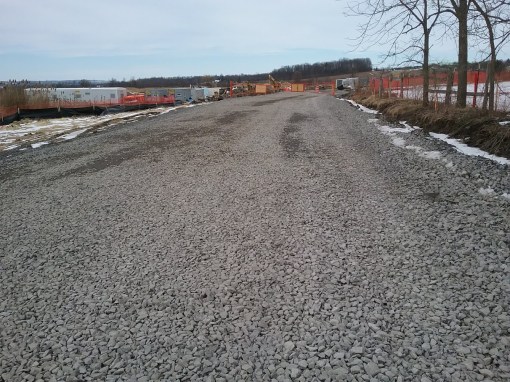
Site grading and prep work is currently underway at the project site. The access road is crushed stone for now, the asphalt planned are closed for the winter season. It will be paved in the spring, and christened “Louise Bement Lane” after the longtime town historian. The access road will be built by Cornerstone to town standards, and deeded over to the town for public use after the apartments have been finished. The internal road for the apartments will be Robin’s Way, after Robin Rubado, Cornerstone’s Vice-President of Housing. The prep for the interior roads is underway, but it will not be paved until most of the buildings are built. The first buildings will be opened by the end of June, with full occupancy by the end of September 2019.

More formation about the Milton Meadows project canbe found here.

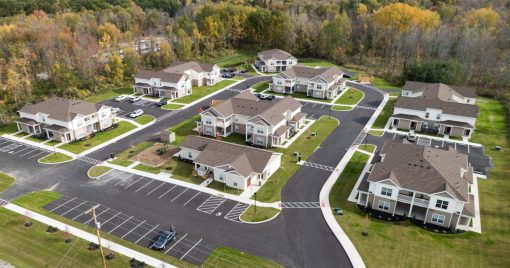
The Frances Apartments in the town of Sweden, a nearly identical design.


News Tidbits 1/20/2019

21 01 2019

Now to start digging into the odds and ends:

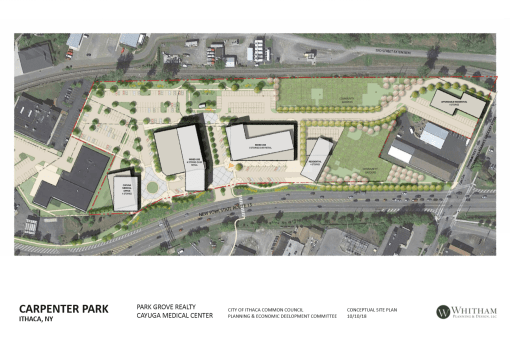
1. For those interested in learning more about the Carpenter Business Park proposal, Northside United, the neighborhood group that represents the Northside Neighborhood, will be hosting the development team for a presentation and Q&A on Monday, February 4th 6pm at the Quaker Meeting House on 120 Third Street. Here’s the project breakdown as provided in email by Northside United:

Affordable Housing. A 4-story building with 42 one and two-bedroom units of working family housing will be sited near Farmer’s Market and 3rd Street and targeted at those in the 50-60% of area median income ($30,000-$35,000 household income range). The affordable units are in a separate 4-story building from the market rate units, they say due to federal/state requirements for low-income housing tax credits. Park Grove Realty (with staff formerly associated with Conifer) will manage the affordable units.

Market Rate Housing. In addition to the building affordable housing, two other 4-6 story buildings in the development will be targeted at market rate rents (and also include commercial/retail).  Maybe 150 or so units of market rate housing.

CMC Medical Office Building. This 4-story building, at the east end of site near Cascadilla Street, is slated to be mostly medical/specialist offices and a still to be defined “healthcare location,” but not a “convenient-care” type facility.

Commercial Space. Tentatively there will also be approximately 20,000 feet of commercial space in the development.

Neighborhood Design and Features. They talk about this being a small “new neighborhood” of its own, but knitted together with our existing Northside neighborhood.

Community Gardens. Ithaca Community Garden retains its current size (following a land swap) and becomes permanent (pending agreement with Gardens and City). As this is being negotiated with the Gardens and City, NU probably does not need to spend time on it.

Opening Fifth Street to Rt. 13 is being considered.  

Northside United participants have asked the development team consider an urgent care or dental clinic on-site, screening the parking from the rode, better pedestrian and bike access (with reference to Form Ithaca’s boulevard concept), consider townhomes vs. multistory buildings, making the Fifth Street access pedestrian/bike only, well-designed green space, include a local committee of officials, residents and developers to guide the design process, and satisfaction with the affordable component, though they’d like it mixed with other buildings. That last one is always tough, because state-administered affordable housing grants don’t allow this out of concern the market-rate section goes bankrupt; so if they were in the same building, they would still have to be one contiguous entity within the building, as with Visum’s Green Street proposal.

Kind word of advice – if you want to attend but are not a Northside resident, be as respectful like you’re a guest invited to someone else’s house. In the 210 Hancock debate, Fall Creek was strongly negative to the affordable housing proposal, which was in neighboring Northside and better received in Northside. But Fall Creekers had a habit of steering the conversation, which created tensions with Northside United.

2. Dryden’s Tiny Timber Homes has been keeping busy. The firm is rolling out a new line of smaller homes in an effort to better meet the needs of the middle-income housing market. The first home shown above is their first truly tiny timber – a 330 SF home that sells for about $75,000 fully finished. The second example is a U-shaped ranch home being built on Landon Road in the town of Caroline; that 2-bedroom, 856 SF home on 1.2 acres is selling for $199,000, which is practically the maximum buying power of the median family income in Tompkins County (3.4 * $59,000 = $200.6k). The new line of homes will include designs ranging from the 330 SF example, to 1,100 SF, which can be built for $150-$200/SF depending on the home model, location and features.

Tiny Timbers has also rolled out its next cluster development, a 20-home development on 6 acres on a vacant West Hill at the dead end of Campbell Avenue. Plans call for screened parking, a community garden and a multi-use trail. As reported by my Voice colleague Devon Magliozzi, the Planning Board was enthusiastic but cautioned that West Hill was generally averse to any new development. I dunno if that is totally true in this case; I had a conversation with George McGonigal a few years ago when Tiny Timbers bought the property, and he was cautiously optimistic for owner-occupied housing as long as they weren’t “packed like sardines”; dunno if ~3 units/acre passes the test. This would be their second such development, following the Tiny Timbers Varna plan, “The Cottages at Fall Creek Crossing”, which has sold at least four of its fifteen lots (the website shows three sold, but it’s not clear when the webpage was last updated) and is undergoing site prep for the new homes. The homes here would likely be similarly priced, in the $200k-$275k range, and 850 SF – 2,000 SF.

3. Here’s a look at the New York State Department of Transportation’s plan for a new regional facility on Warren Road in the town of Lansing. Here’s a description of the plan as reported by the Lansing Star, per DOT representatives at the meetings to the county and town last week:

“Buildings on the site will include a 30,000 square foot ‘sub-residency’ maintenance building, a 5,000 square foot Cold Storage, a 8,200 square foot Salt Barn, and a 2,500 square foot Hopper Building (covered lean-to). The proposed maintenance building will have vehicle storage for 10 trucks, a loader and tow plow, with one additional double depth mechanical bay and single depth, drive-thru truck washing bay. It also includes an office area (three rooms), lunch/break room (30 people), toilet/shower/locker rooms, storage rooms and mechanical/electrical rooms. The site will also contain stockpile areas for pipe, stone and millings, and ancillary site features including a fueling station, parking for 40 vehicles, and stormwater management facilities. The project will require construction of an access drive from Warren Road and the extension of utilities.”

As is often the case with high-priority state projects, the construction time frame is fast – the governor’s office wants the site built and fully operational by the end of the year. Also, much to the chagrin of some very unhappy neighbors who don’t want a DOT facility nearby, the town of Lansing is not Lead Agency in environmental review – the Federal Aviation Agency (FAA) is, given proximity to the airport (the county sold the 15.5 acres of land to the airport last September). Public resource projects by the state, like state-owned office buildings, state maintenance facilities and labs, are generally excluded from local zoning codes and do not have nearly as lengthy of an approval process. The nearly 1,000 page Environmental Site Assessment report can be found on the DOT website here. CHA Companies (formerly  Clough Harbor and Associates) of Albany, a prominent state contractor, did the assessment on behalf of the state.

There’s always going to be a bit of limitation in where the state can go with a project like this. The state wants out of the waterfront, not just because the county wants the land to be redeveloped, but because the salt and vehicle fluids could pose risks to the water quality of the inlet and lake (and DOT doesn’t want to be on the hook for that), access to 13 is more difficult due to urban traffic, the location isn’t efficient to where the state plows state roads previously handled by the town, and lastly, the state has simply outgrown the waterfront site -it needs more land, and taking the railroad’s or the Farmers Market’s is not a viable option. The state did originally plan using a site in Dryden on Ellis Drive, but the state determined that response time to urban areas was too long, and since some of the land was federally designated as wetland, the site was too small.

4. In the county’s deed filings, one of the more common recordings is the easements filed by NYSEG, often for new line connections to the power grid. Once in a blue moon, they turn up something interesting. The above site sketch comes courtesy of one of those filings. Scott Morgan owns 543 Asbury Road, and in 2015 he had proposed eight duplexes on the property, but the town had issues with that much density on a rural lot, so Morgan shelved the plan and the town amended the code to prevent such density on rural parcels. In turn, it appears that Morgan subdivided the 5-acre lot into four parcels, and is building a duplex on each. If they’re like his Lansing rentals, expect them to be ranch-style units with two bedrooms each.