News Tidbits 2/6/16: Good Ideas and Bad Ideas

6 02 2016

maplewood_site_plan_concept
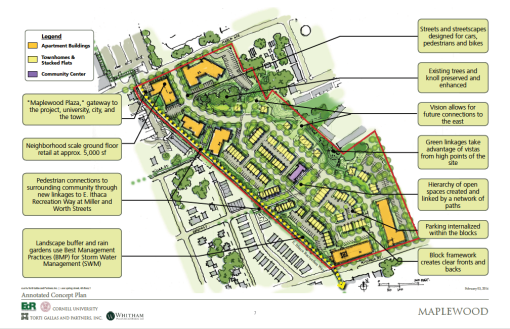
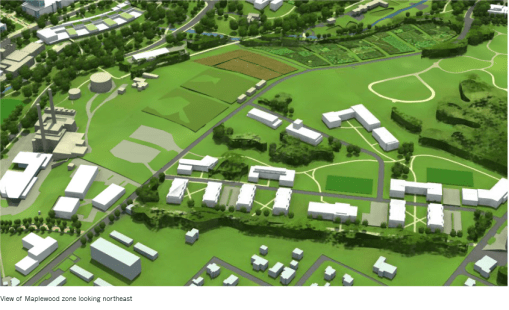
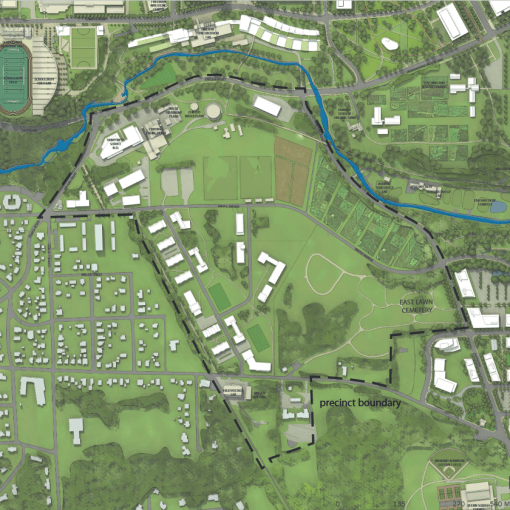
1. Let’s start with the big news this week, Cornell’s long-incubating plans to redevelop Maplewood Park. Official write-up on the Voice here. Personally, looking at the viewer stats, I’m a little disappointed that this has gotten as little attention as it has, since it’s a very large, very important project. But I suppose it’s a double-edged sword, because invariably, when a project does get a lot of attention, it’s because it’s a huge controversy (State Street Triangle, Black Oak wind farm, 210 Hancock, and so on).

There’s a lot to like about the plan (found here on the town’s website). Dense, walkable, a little mixed-use (more office or retail would be nice, but given that it’s tax exempt space, the more space there is the more controversial this project would likely be). Buildings aren’t too likely to cause controversy, since they’re 4 floors at most and they’ll be designed to blend in (“echo the surrounding neighborhood with the use of contemporary features”, per the narrative). Most of the comments on the Voice article describe Cornell as the great Satan, but one reader did express desire for the bigger, taller buildings to be central to the parcel, with townhouses on the outside. As a relatively untrained observer, it would seem that would be best from the perspective of trying to minimize appearance as much as possible, but it would also encourage vehicular traffic towards the center of the parcel, and negatively impact its pedestrian orientation. I haven’t seen any reactions from local planners, but I am curious what their first impressions are.

When writing up Tuesday’s article, my thought was that this was “Phase I”, Ithaca East/Maple Hill was “Phase II”, and East Hill Plaza/East Hill Village was “Phase III” with a 2019 or later start; but the rumor mill is circulating that work on the first parts of East Hill Village may be concurrent with Maplewood Park. We’ll see what arises in the coming months.
304_hector_inhs

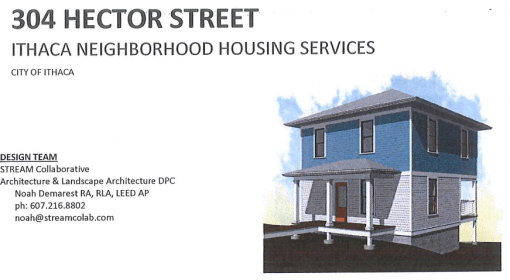
2. When those units come online in 2018, it’ll be a big step towards reducing the deep housing deficit. But in the meanwhile, the housing market will be uncomfortably tight. Which is why it’s good to see some pooled city/county/Cornell money being disbursed for affordable owner-occupied housing. The Community Housing Development Fund proposes that the city give $80,000 towards Habitat for Humanity‘s “Breaking Ground” duplex at 101-107 Morris Avenue in Northside (208/201 Third Street), and $85,000 to INHS for the seven moderate-income owner-occupied townhouses at 210 Hancock, and an affordable 1368 SF single-family home at 304 Hector Street on West Hill. Cornell will give $235,000 towards the townhouses and Hector Street home, but $100,000 of that is a re-allocation of funds from the cancelled Greenways project. The county is giving $100,000 towards six rental units at 210 Hancock.

Claudia Brenner has designed most of INHS’s homes in recent years, but this time around it looks like Noah Demarest of  STREAM Collaborative penned the home design. This is a revision of the previous render, if memory serves correctly; INHS had wanted to build the home last year, but construction costs as high as they are, the non-profit held off.
biggs_2

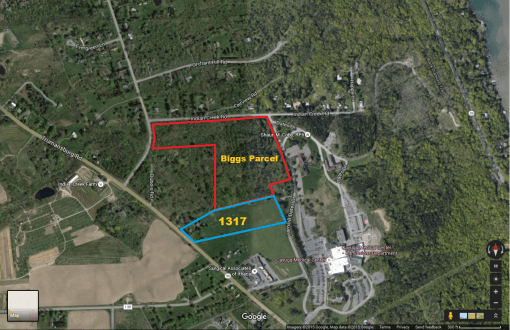
3. In other news, the county’s Government Operations Committee was to make a decision on the Biggs Parcel this week, but decided not to. It’s set to the return to the county’s agenda at the meeting on March 2nd. The ICNA has submitted a purchase offer (sum undisclosed) for the 25.5 acre parcel. The offer from Roy Luft to combine the parcel’s cluster zoning rights to build senior housing on his property at 1317 Trumansburg Road still stands, as far as I’m aware. Update – From the ICNA’s Linda Grace-Kobas, the Luft proposal has been dropped due to “size and complexity”.

Pg-3-Rendering

ag_quad_2

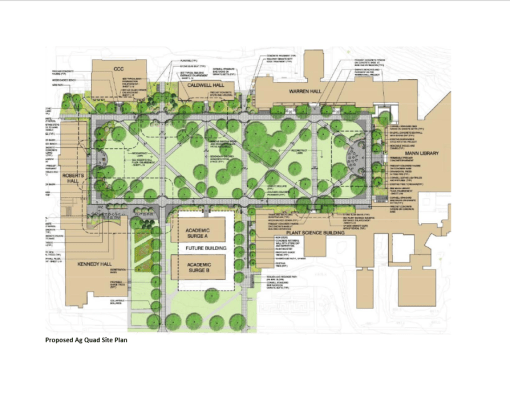
4. Courtesy of the city, some more details on Cornell’s Ag Quad renovation. Site Plan Review (SPR) application here, Full Environmental Assessment Form (FEAF) here, project specs here, drawings here. Formally, the project is referred to as the “Cornell Ag Quad Utility & Landscape Project”, since the project also involved major utility upgrades and repairs under the quad. The work planned calls for new steam lines, a telecom duct bank, new sanitary piping and water lines underground, and above ground there will be new paths, light posts, pedestrian plazas with stone benches, fire apparatus access path, blue light phones and a loosening of the soil compacted by other construction projects (such as the staging area for Warren Hall while it was under renovation). Most trees will be preserved, except for a few that stand where the new utilities and fire lane will go.

The project cost is $3 million on the SPR, with a rehabilitation period from April 2016 to July 2017, divided into two phases. No new permanent jobs, but about 25 construction jobs will be created. MKW + Associates LLC of New Jersey is serving as the consulting landscape architect.

On a side note, at least we can be fairly sure now that Cornell does plan on taking down the surge academic buildings at some point for a future permanent building.

5. Ithaca wants to build bridges. Physically, anyway. The city will hold a public information meeting next week 2 PM Wednesday on replacing the deteriorated single-lane Brindley Street bridge on the west side of the city. The bridge, which dates from 1938 and was last modified in 1952, is functionally obsolete and in dire need of rehabilitation.

Currently, the city is weighing two plans – a $2.43 million replacement of the old one-lane steel bridge with a two-lane bridge with sidewalks and shoulders for walkers and bikers, and a $2.59 million plan that extends two-lane Taughannock Boulevard through a parking lot, over a wider span and intersecting with Taber Street, leaving Brindley a single-lane bridge. While more expensive, this option diverts most traffic away from the awkward six-way intersection Brindley has with West Seneca and West State Streets. The nitty-gritty can be found in the design report here. It would also be of significant benefit to the Cherry Street industrial park and future waterfront development by improving access to the area.

Whichever plan moves forward will be decided by April, with construction from May-November 2017. Most of the project costs will be covered with federal funds, with some state funds and municipal bonds covering the balance (80/15/5% respectively).

902_dryden_v3
6. Some progress on 902 Dryden, perhaps. From the town of Dryden Town Board minutes, The number of new units is down, from 12 to 8, and only 26 new bedrooms from the previous 38. The overall square footage is also down, from 18,000 to 11,000 SF, with 26 parking spaces, 1 per bed. So that render above from December is outdated (although the color scheme is nice and bright, hopefully that carried over), there are two units on the right and six on the left, as well as the existing duplex.

As a result of the smaller project, one of the casualties is the net-zero aspect, because the initial cost for installing the solar panels outweighs the decreased revenue. Heat will be all-electric with the opportunity to install solar at a later date, if it pencils out. As for the opposition, it definitely sounds more muted in the town minutes, one neighbor seems intent on forcing enough site studies to break the bank, but overall the commentary reads muted to positive. The minutes don’t indicate if the public meeting is finally closed and if a vote to approve the project can be taken later this month.

7. Looks like Josh Brokaw at the Ithaca Times was able to get the Maguires to open up about their plans for Caprenter Business Park. In a phone call with Brokaw, Phil Maguire confirmed plans for a $12 million, 40,000 SF Ford/Lincoln/Nissan dealership, which will then allow them to proceed with renovations of their properties down by Wegmans. While they estimate about 70 jobs would be created and that it will be designed to be “inlet-worthy”, the problem remains that a car dealership flies in the face of the mixed-use urban environment that the city had been envisioning for the waterfront. One valid point does get raised though – side-by-side NYSEG power lines overhead would have to be buried for many building projects on the Circle (but not for parking lots), which gives any developer an extra several hundred thousand dollar expense in the development process.

Sketch plans are expected to be shown at the March Planning Board meeting later this month, about the same time the Common Council is expected to adopt the temporary PUD zoning that would give them say over any projects proposed in the waterfront area. Expect this dealership proposal to be a very heated and occasionally uncomfortable debate.
cherry_2

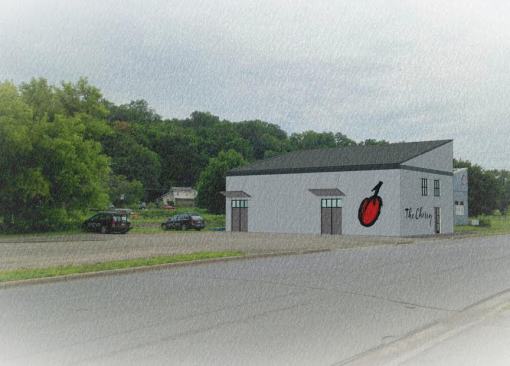
8. What’s on the agenda for next week? Not a whole lot new. The city’s projects memo doesn’t have any new projects, unless you count Island Fitness redoing their parking lot. There are a few more renders for the Cherry Artspace, as well as some project details – $200,000 construction cost, 1,944 SF building by Claudia Brenner with seating for up to 164 on the lower level, 2 jobs created, May – October 2016 buildout.

The Ithaca Landmarks Preservation Commission has some minor old business to attend to, and what likes some discussion over the recently-purchased home at 410 North Cayuga will be introduced (chances are, it’s something like window or roof replacement, maybe an add-on room). Discussion is planned for 311 College Avenue, the old firehouse home of the Nines, but this is also likely to be minor.

The town of Lansing’s planning board also has a meeting next week, but the only item of discussion is the Mirabito petroleum storage facility on Town Barn Road.


Cornell Finally Moving Forward on Maplewood Plan

3 02 2016

maplewood
Finally, finally, some real news. Cornell, through its Chronicle news outlet, has issued a statement regarding plans for the Maplewood Park Apartments replacement. Let’s look at the most important details.

– Cornell will be partnering with collegiate housing developer EdR. Cornell will own the land, but EdR will finance, construct and manage the development.

– Groundbreaking is expected this fall, with a summer (August) 2018 opening.

– Approximately 850 bedrooms are anticipated in the first phase, which is only for graduate and professional students. No undergrads here.

– Designs and unit mix are not yet finalized

– To quote Jeremy Thomas, Cornell’s senior director of real estate: ““Our goals for this site are to foster a close-knit neighborhood feel, while connecting this community through walkways and outdoor spaces to the university and surrounding neighborhoods, including the East Hill Plaza area where we are planning future mixed-use development.”

– EdR and Cornell will be meeting with neighborhood groups, the local landlords’ association, and since the project will contain a sizable portion of family housing, the ICSD.

Now, with all that acknowledged, let’s do a little more research. First, the developer. EdR (formerly Education Realty Trust) is a Memphis-based student housing developer following in the steps of Campus Advantage, CA-Ventures, and others who have tried and failed to make their way into the Ithaca market. The difference is, apart from EdR also being a Real Estate Investment Trust that finances its own projects (REITCampus Advantage was not, nor was Campus Acquisitions before it was bought), the company has Cornell’s blessing and the proposal is on Cornell land, which are very, very important cards in their hand. It would take a huge flaw to make local officials come out against this project, which will address a critical student housing shortage at the university.

EdR has been through upstate a few times before, though not in Ithaca. They developed and manage student housing for SUNY ESF in Syracuse (454-bed Centennial Hall), and developed two private apartment complexes adjacent to Syracuse University, the mixed-use 312-bed Campus West project, and the 423-bed University Village Apartments. They have a mix of arrangements with different schools – the SU projects are totally private, but Centennial Hall is owned by ESF and managed by EdR, an arrangement that sounds pretty similar to what Cornell will be doing.

Looking at the profile, I can’t find too much of a pattern in the choice of architects. In many cases, they’re local (the Univ. of Kentucky projects used Sherman Carter Barnhart, a Lexington firm, while University Village and Campus West used Holmes King Kallquist, a Syracuse firm), but there’s a few wild cards from outside a region – Centennial Hall used WTW Architects of Pittsburgh. In sum, it looks there might be a slight preference towards firms local to a project site, but apart from that, the chosen designers are literally and figuratively all over the map. EdR looks to have focused on mixed-use, compact and urban-friendly projects with their more recent partnerships.

As for price range, we’re talking some serious coin being tossed around. The Syracuse projects, which are half the size of Cornell’s project, cost $28-$30 million. EDR, in its own press release yesterday, estimates the project will cost about $80 million. Or course, it will be tax-exempt, but that much money translates to a lot of construction jobs, and Cornell is a strong supporter of trade unions. Local companies might get in as subcontractors, but with a project this large, one of Cornell’s preferred circle of general contractors (Welliver, Pike, LeChase) will most likely tackle the overall buildout.

Now, thinking about the project itself, if it’s 850 beds (rough assumption of one bedroom per person), that’s almost twice the capacity of Maplewood and its 394 units/480 beds. Maplewood is 109,000 SF of usable space (122,000 SF gross) and sits on 16.02 acres. So the current density is about 24.6 units/acre, or 30 beds/acre, in one-story buildings that cover the vast majority of the site.

maplewood_3

The 2008 Master plan, if it’s any indication, calls for 15-30 units per acre (the number of beds is left up to interpretation) and up to 400,000 SF of space in 2-4 story buildings, creating a more campus-like appearance by going vertical instead of spreading out as the current Maplewood does. While the layout in the plan was totally conjecture, the specs are not. The town of Ithaca zoning (High Density Residential) caps it at 36 feet, but Cornell could probably get a floor or two of variance without much difficulty – the town’s 2014 Comprehensive Plan recognizes Maplewood as one of the appropriate sites for “Traditional Neighborhood Development High Density“, dense mixed-use thoroughly integrated into the surrounding street fabric, 6-30 units/acre but averaging 8-16 units/acre with 10-20% open space.

There’s one last detail to mull over in all of this. According to the city, Cornell will be exercising its right to take back the Ithaca East apartments to the east and northeast of Maplewood (I spoke/emailed with Abbott about this a few days ago when the city docs were released, so…convenient timing). According to property manager Bruce Abbott, Cornell renews every June and he has two years to finish out his management of the property, so Cornell won’t take over Ithaca East until June 2018 at the earliest – which would be just in time for a second phase if Cornell desires, right as phase one is finishing up. Cornell also purchased the homes between Maplewood and Ithaca East, in 1998 and 2013. So looking further ahead, here’s an adjacent 8.2 acres that seems likely to fall under the Big Red development radar in the next couple years, not to mention future plans for East Hill Plaza. EdR is going to be very busy over these next few years.


News Tidbits 1/23/2016: A Doozy of A Week Ahead

23 01 2016

1. Over in the town of Ithaca, an update is being considered for the Rodeway Inn budget motel at 654 Elmira Road. Previously, the motel had been approved for renovations that would expand the size of the 25 existing units and provide 2 new inside corner units, along with the associated landscape and site improvements. This proposal was originally approved by the town in December 2013, but then the project never went forward, partially because the Maguire group was looking at buying the property and tearing it down to make way for their artisanal car dealerships and headquarters. With the Maguire’s plan filed away in the circular drawer, the owners of the Rodeway Inn have decided to reconsider the renovation project.

rodeway_1
Along with the room expansion, the new plan also calls for renovating an existing on-site residence into a new office by building an 1146 SF addition, while the existing motel office is renovated into a community room to serve travelers. Variances for side-yard setbacks granted for the previous proposal must also be re-approved, since zoning variances in the town of Ithaca are only valid if construction starts within 18 months of being granted (in other words, the variance expired last June).

Pennsylvania-based HEX 9 Architects is in charge of design, and JAMNA Hospitality is the developer.

chapteR_house_reconst_v4_2

chapteR_house_reconst_v4_1

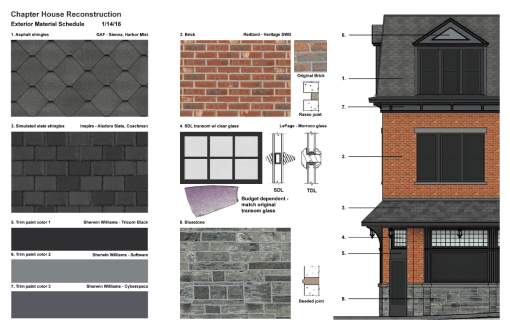
2. From the city of Ithaca Landmarks Preservation Council agenda next Tuesday, the latest iteration of the design plans for the Chapter House replacement and its neighbor at 406 Stewart Avenue. The Chapter House looks to be in the last stages of ILPC approval, while the apartment house next door is still in the early design review stage.

Looking at the Chapter house, the zinc roofing tiles have been replaced with asphalt, and two more paint colors will be included on the trim, which has gone from white to dark grey and black. The ILPC is doing what they do best, going over projects with a very fine toothed comb and debating every detail. Meanwhile, the current iteration of 406 Stewart Avenue calls for a 4-story apartment building with design features very similar to the previous 3-story building. That project still has some debates ahead of it, so we’ll see what happens moving forward.

Also on the agenda, discussion with the Planning Board about the DeWitt House/Old Library redevelopment, an update on repairs to 102 East Court Street, and some type of work being done at 210 Stewart Avenue (could be anything from paint color and shingle choices to major work; if it merits a post it’ll be included in a future update).
323taughannock_rev2_1

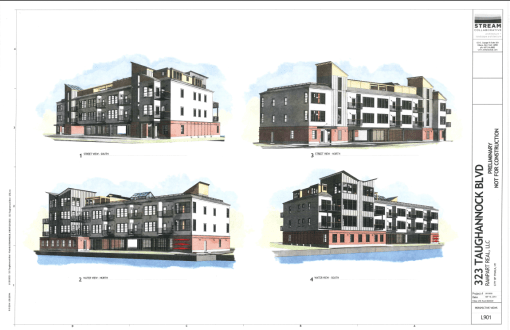
3. The Times’ Josh Brokaw wrote a nice summary of developments down at the Ithaca Waterfront, although I wish it hadn’t run when it did (re: HOLT update). Thanks to Josh, we have an idea of what’s going on with the approved but as-yet unbuilt 21-unit 323 Taughannock apartment project:

There was an “unexpected issue” that came up, Flash said, with the project, and so they must take “a sharper look at the engineering” to make the costs work.

I’m going to take a slightly educated guess – the soils were even crappier than anticipated. The high water table and easily-compacted soil in the West End and Waterfront pretty much mandate that multi-story projects have deep, expensive foundations to support the weight of structures. A soil issue was one of the problems that delayed the Lofts @ Six Mile project, and the reason why it’s built tall and narrow; also, since the Bloomfield/Schon has to pay for that deep foundation, it’s one of the reasons why the Lofts are so expensive. From the sounds of the Times article, balancing the deep foundation with adequate parking for the parcel is an issue. I’ll keep my fingers crossed, this project could be a real asset to that area.

Also, pretty sure that Cascadilla Landing still isn’t happening, and the Times has realized that. Anyway, it’s a good piece, and I’m not going to steal all of Josh’s thunder or his Myrick quotes, so spare two minutes and have a read through.

ith_big_plan_map_v2

4. For my moderate griping about timing with Josh’s Inlet Island development piece, I could note that this quote in the IURA Governance Commitee Agenda from city Planning and Economic Development Director JoAnn Cornish ties my article and his together:

“Cornish reported that the Planning and Economic Development Committee identified the Waterfront Neighborhood Plan as the Phase 2 plan of the Comprehensive Plan it would like to move forward with. Funding has been allocated for it. The plan would most likely be a hybrid Waterfront/West End neighborhood plan, in anticipation of significant development interest in that part of the city.”

In good news, affordable housing grants were thankfully saved in the federal budget, meaning that there will be a similar amount heading to NYS in 2016 as in 2015, and those funds would be available to future Ithaca projects should they jump through all the application hoops and be deemed worthy by Albany. The IURA is looking to smooth over any possible shortfalls by offering itself as a housing strategy consultant for the Waterfront/West End and Southside Phase II plans, and in the longer term, sales of parcels at the end of Cherry Street, at 410-426 Taughannock Boulevard, and Fire Station No. 9.

Also, the Argos Inn and Bandwagon Brewery/Restaurant have paid off their IURA loans. Proof that, although there have been failures (Finger Lakes Wine Center), the IURA can properly vet projects and be successful in its mission.

20160109_131947 20160109_132008

20160109_131909

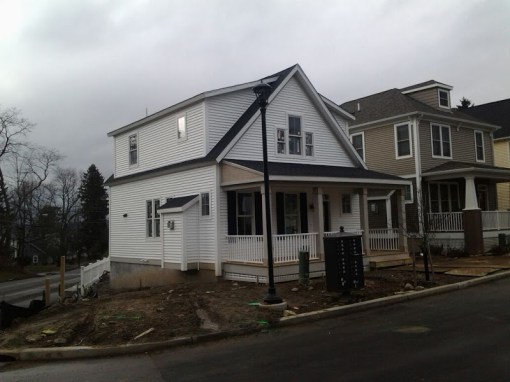
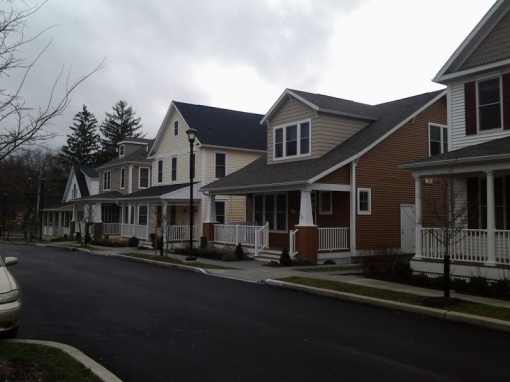
5. House of the week. 102 Walnut Street, town of Ithaca. the last of Agora Home LLC’s Belle Sherman Cottages is nearly complete, possibly to go on the market as a spec house. The house is a little small than its neighbors since the lot is smaller, but the unique design gives the street some extra diversity. Apart from landscaping, paving and some finish work (on the exterior trim at least, although being a Simplex modular means the inside is probably finishing up as well), the house is just about finished. Nice work Carina Construction.

6. Last but certainly not least, the Planning Board agenda for next Tuesday. It’s a big one.

I. Agenda Review
II. Public Comments
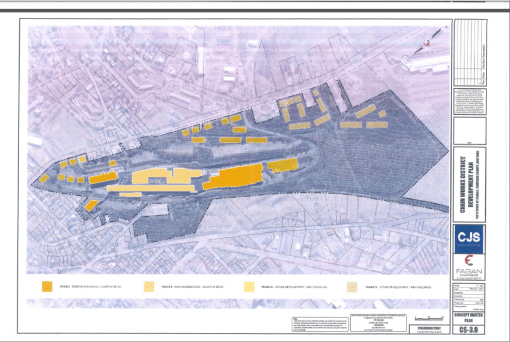
III. Special Order of Business – Chain Works District Redevelopment Project – Presentation of Draft Generic Envrionment Impact Statement (DGEIS) and Scheduling.

chain_works_rev1_1

It’s finally moving forward. The Chain Works District, which was last presented at a meeting in November 2014, is finally ready to discuss parts of its environmental review and timelines. Per the agenda, “The project is a mixed‐use development consisting of four primary phases: (1) the redevelopment of four existing buildings (21, 24, 33, & 34); (2) the repurposing of the remaining existing buildings; (3) potential future development within areas of the remainder of the site adjacent to the existing buildings/parking areas; and (4) future developments within remaining areas of the site.” This will merit its own piece, but in the interest of time, Ithaca Builds offers a great summary of the previous steps and the proposal itself.

IV. Subdivision Review – 101-107 Morris Avenue. Declaration of Lead agency, Public Hearing, Declaration of Environmental Significance and Recommendation to the Board of Zoning Appeals (BZA). This subdivision proposed to reconfigure a pair of vacant North Side lots to allow a duplex to be built by Habitat for Humanity. The two 1400 SF units would be sold to families with modest incomes. There’s a letter of support and the Board has already drafted a recommendation to the BZA giving their thumbs-up.

V. Site Plan Review

A. Cayuga Green Phase II (Lofts @ Six Mile Creek). The applicant proposes to omit a green screen on the parking garage. A letter from the developer asserts that the wall will be adequately masked by trees.

canopy_hampton_rev8_comparo

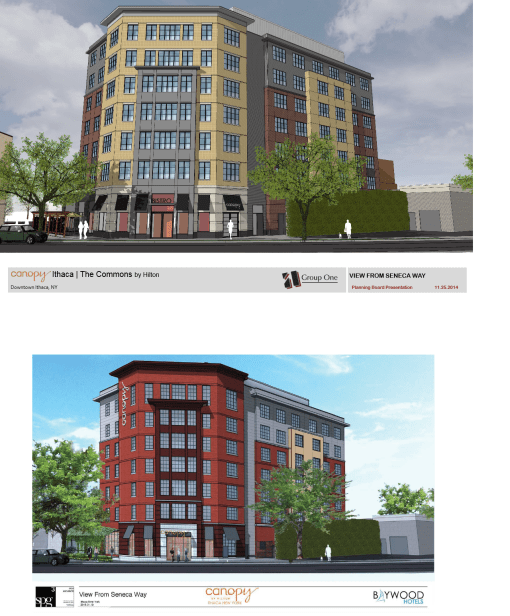
B. Hilton Canopy Hotel – Project Update, addressing conditions of Site Plan Approval and Requested Changes. Developer Neil Patel (and represented by Scott Whitham) requests to increase the number of hotel rooms from 123 to 131, and increase building size from 74,475 to 77,884 SF. Height would remain the same. Once again, this is something that could be the subject of its own post, but will have to keep it brief for the moment.

state_st_triangle_v6_1

C. State Street Triangle – Project update, no decisions planned. 9 stories, 96′, 180 units, 452 bedrooms, 12,300 SF ground-floor retail, including space for Ithaca Bakery and CTB. See Thursday night’s Voice article for more info. Smaller, shorter, and maybe palatable.

D. 424 Dryden, parking lot rearrangement, Declaration of Lead Agency

E. E-Hub, 409 College Avenue, renovations. While technically it doesn’t require review, Student Agencies and STREAM are asking for thoughtful feedback.

F. Sketch Plan – Elmira Savings Bank, Route 13. Pretty sure this is the one tied up in that PR disaster. WEDZ-1a Zoning allows up to 90% lot coverage, 5 floors and 65′, but given previous statements, the short-term work might just have to do with renovations of the former Pancho Villa restaurant, maybe a drive thru lane or other major exterior work. We’ll see. Background reading on the parcels themselves here.

G. Sketch Plan – Cherry Artspace. Developer: Performance Premises LLC/Samuel Buggeln. Cherry Artspace, a theater company, is located at (where else?) 102 Cherry Street on the city’s southwest side. The building was purchased in August 2015 for $240,000, it had previously housed Renovus Energy before the solar panel company decided to move out to more spacious digs in Ulysses. The theater company, directed by Sam Buggeln (pronounced “bug-ellen”), wishes to renovate the ca. 1980, 1,154 SF building into dedicated performing arts space.

VI. Zoning appeal recs for the Habitat duplex

VII. Planning Board Resolution to the BPW regarding Seneca Street Streetscape work, Cascadilla Street Railing Options, and potential rezoning of a section East State Street/MLK Blvd. from B-4 to the more restrictive and residential-focused R-3a. Glancing at the zoning map, only the north side of the 400 Block is B-4, so the downzoning is probably intended for the houses on the corner of E. State and Schuyler, 420 and 422-24 E.State/MLK, and 108 Schuyler Place.

travis_hude_libe_libe_v3

Also worth noting, the Travis Hyde Old Library project will be discussed separately with the ILPC. That meeting is at 6 PM at City Hall. The Planning Board meeting at City Hall starts at 6:45 PM.


619 West State Street Construction Update, 1/2016

21 01 2016

Now for something that is out of the ground, though it’s a renovation rather than a new build. McPherson Builders is continuing their work on HOLT Architects‘ new headquarters at 619 West State Street. HOLT, which has been at its North Aurora Street location for 30 years, is looking to move into the renovated, net-zero energy structure this spring.

In a change-up from the norm, this post also comes with quotes. I had to chance to speak with HOLT Principal Quay Thompson and HOLT President Graham Gillespie with regards to the renovation project and the firm’s interest in the West End neighborhood. The interview was mostly for another piece about businesses growing in West End; that and the TM-PUD writeup from the last news tidbits were supposed to appear in the Voice this week, but then the Times’ Josh Brokaw ran a very similar writeup about Inlet Island as part of their feature series this week. Cue the grumpy face. Rather than look like a “me too” article, the pieces, which are finished and submitted, will now be published early next week.

One of the quotes I really liked but found hard to fit in the West End piece was Quay Thompson’s description of the work underway on 619 West State. I think it’s fair to include the full breadth of that quote here.

Q: “This new building is supposed to be a net-zero space, correct? And there’s space for other tenants?”

Quay Thompson: “We’re renovating it to be a net-zero structure, and there’s space for two additional tenants. Sustainability is a key feature, the energy we put in, we want to keep in the building.

The building envelope is critical. We’re increasing the thermal performance in the walls by adding interior insulation, we’re also redoing the roof to increase its thermal performance. These older buildings have a lot of thermal issues, even the foundation slab, it just draws heat right out, so we had to renovate the slab.

Mechanically, we’re adding photovoltaics and working with Taitem [Engineering] to maximize efficiency. We did a lot of energy modeling and performance modeling to determine out energy needs. We’re looking to be truly carbon-neutral. Mostly LED lights inside, daylighting controls, even the studio frontloads are scheduled. There is some behavioral change and a learning curve involved with things like lighting timers. We’re excited about the opportunity, put our money where our mouth is.”

HOLT, through an LLC, is paying for the renovation with an $897,500 loan from Tompkins Trust Company.

From this month:

20160109_141950 20160109_142012 20160109_142046 20160109_142106

From November 2015:

20151108_140921 20151108_141001 20151108_141043 20151108_141118

619_w_state_st_1


Gannett Health Center Construction Update, 1/2016

14 01 2016

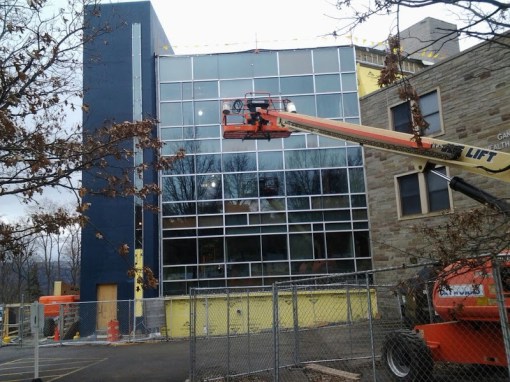
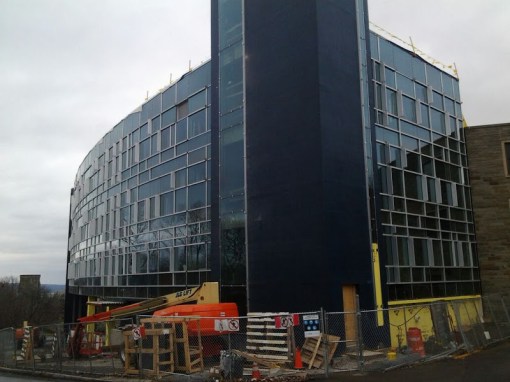
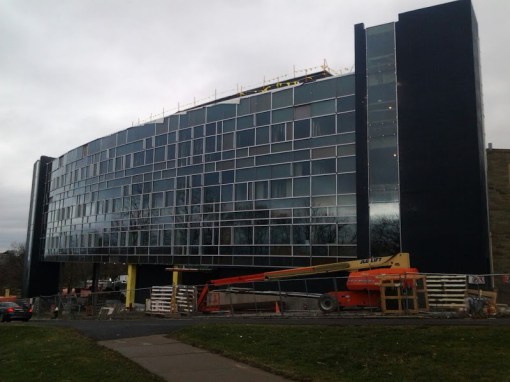
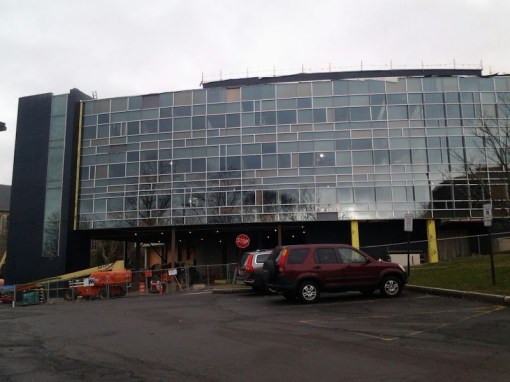
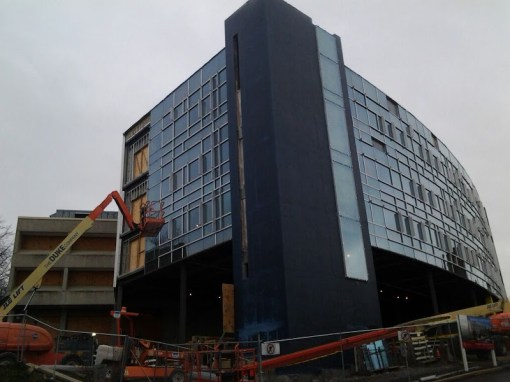
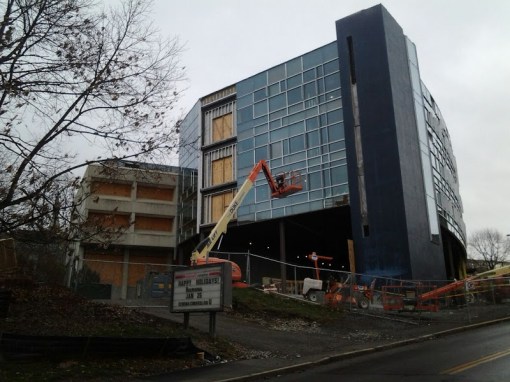
Maybe it’s just the grey January skies, but the multi-colored glazing on the outside of the new Gannett Health Center is more subtle than the renders would suggest. Work is continuing on Phase I of the $55 million project, which is planning to open this summer. Once it does, Gannett’s services will shift over into the new structure, so that phase II, renovations to the original 1956 building and the 1979 addition can take place. The building project is expected to wrap up in August 2017, and a phase III focusing on the Ho Plaza entrance and landscaping will be underway from June to October of 2017, after which the project will finally be completed. The project will increase Gannett’s size from 35,000 SF to 96,000 SF.

Most of the windows have been installed, although some yellow DensGlass gypsum sheathing and metal exterior wall studs can still be seen from many angles. According to the Site Plan Review docs, the curtain wall “suggests an abstracted quilt pattern” meant to conjure up images of care-giving and recovery. Other exterior cladding materials, including a native bluestone veneer and limestone panels, have yet to be installed.

Organizations working on the design include local architecture firm Chiang | O’Brien Architects, TG Miller P.C.Engineers and Surveyors, and Ryan Briggs Structural Engineers. The Pike Company is serving as the general contractor.
20160109_123831 20160109_123902 20160109_123930 20160109_124003 20160109_124038 20160109_124057 20160109_124136 20160109_124210 20160109_124230 20160109_124331

gannett5 gannett3

gannett2

Gannett-Health-Services-Building-SPR


Upson Hall Construction Update, 1/2016

13 01 2016

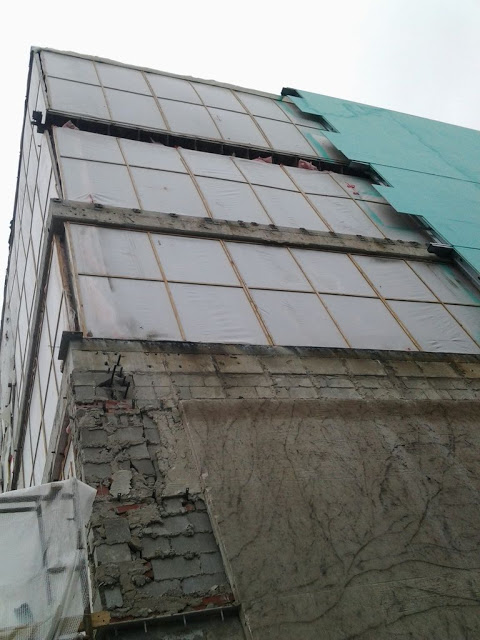
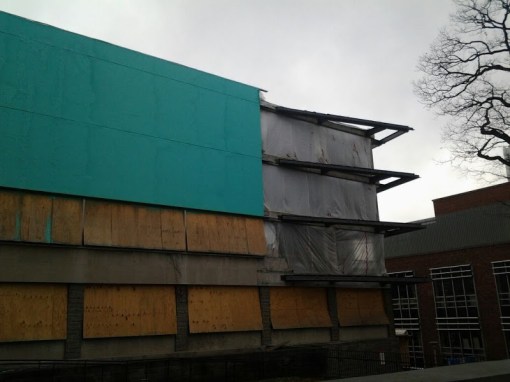
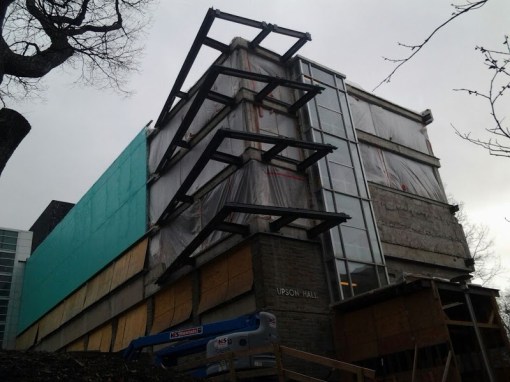
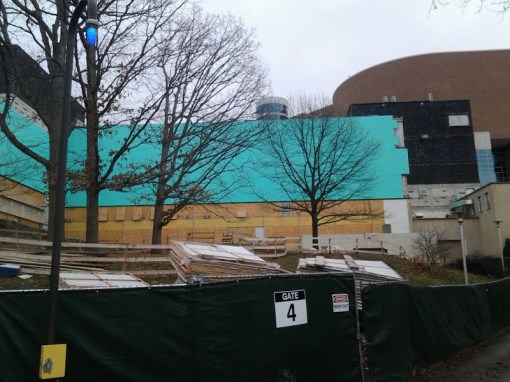
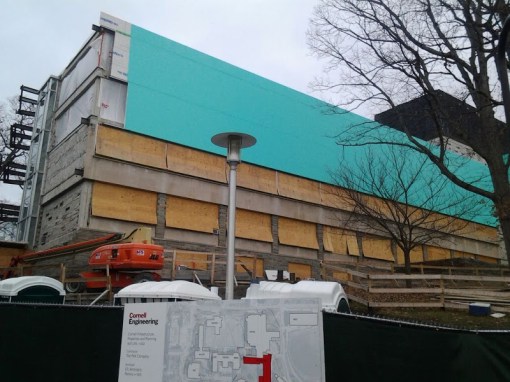
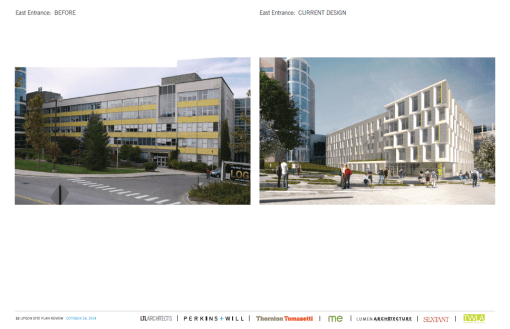
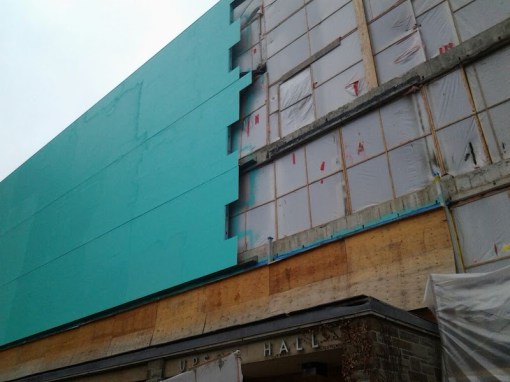
Upson Hall’s bright turquoise walls stand out among the winter greys. Students and staff can thank (or curse) the spray-on moisture barrier for the splash of color. To see what the sheathing looks like without the barrier, photo #9 below shows a little bit of the white gypsum board in the upper left, near the southwest corner of Upson.

The unsheathed, unsprayed section on the northeast corner remains uncovered so that the new structural steel for the bump-out can be erected, while the steel for the northwest bump-out has already been assembled and installed. The plastic is still up over the exterior walls, keeping the winter winds at bay.

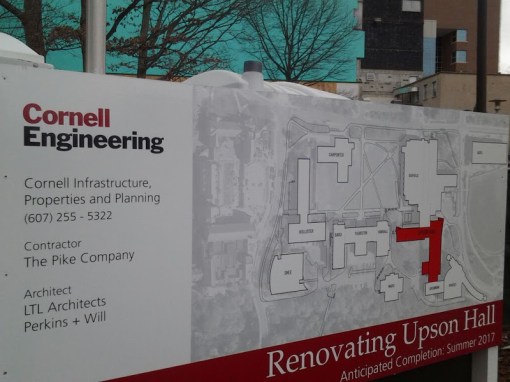
According to the project website, general contractor The Pike Company (Rochester office) is cutting/coring shafts through the first floor to the fifth floor, and demolition activities are underway in the basement. The shafts not only serve as ingress/egress, they’re designed to serve as social spaces and integrate the floors of the building. Utilities rough-ins, framing and drywall installation are underway on the upper three floors where interior work is further along, while work on the first and second floors won’t begin major work until August 2016. Part of the basement will be finished in the first year of construction, and the rest of the basement in the second year. Basically, half the building is still occupied at any given time during construction.

The $74.5 million dollar project is part of a larger series of renovations to the Engineering Quad that will result in $300 million in improvements over a decade. While the project will only add about 4,000 SF to the 156,000 SF building, the renovation are expected to help the engineering school adapt to changing academic space needs and technology, and make the building much more energy efficient. The college is paying for the project with a mix of philanthropy and operating funds. A full FAQ is available on Cornell Engineering’s website here.

Along with Cornell’s internal project management team, the project is designed by New York City firms LTL Architects, Perkins+Will, and Thornton Tomasetti.

20160109_123031 20160109_123105 20160109_123129 20160109_123259 20160109_123309 20160109_123338 20160109_123417 20160109_123504 20160109_123509 20160109_123516 20160109_123528

upson_3 upson_2


Cornell Veterinary School Expansion Construction Update, 1/2016

12 01 2016

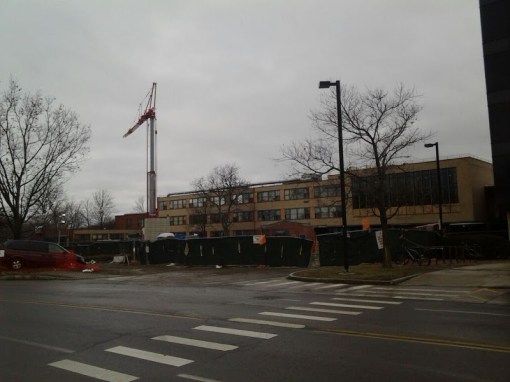
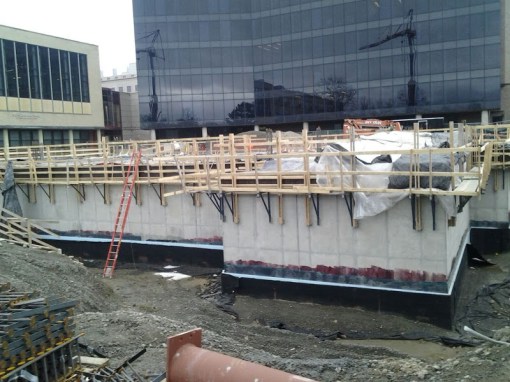
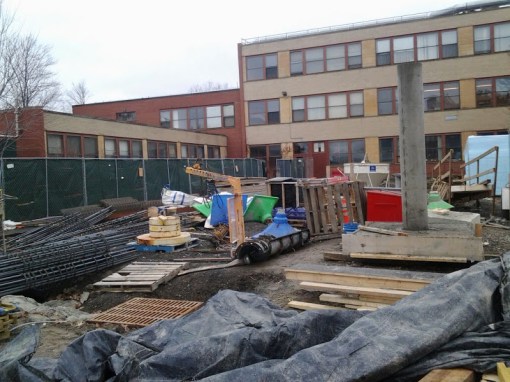
Over at the Vet School, it looks like the expansion project is now at surface level. With the foundation completed, the only direction for the project to go is up, which the Manitowoc Potain self-erecting crane should help with. Phase I interior renovations should be completed by this time, and the Phase II new construction will be moving ahead to a June 2017 completion. Like Klarman Hall, Welliver is the general contractor of this $74.1 million construction project.

20160109_121541 20160109_121607 20160109_121617 20160109_121646 20160109_121718 20160109_121739 20160109_121743 20160109_121756 20160109_121825


Klarman Hall Interior Photos

11 01 2016

Otherwise known as what $61 million gets you. Wrapping up the Klarman Hall updates with some interior shots of the nearly-finished building. Some staff and classroom spaces have already been occupied, as is the new Temple of Zeus cafe. While inside, I struck up a conversation with the one other person present, an employee of sub-contractor Cook Painting doing touch-ups, and he told me all about how he’s worked on multiple Cornell buildings and Klarman was his favorite so far, and that although he was disappointed the roof had an opaque cover, he’d seen the sun come through the sides in the morning and “the whole place just lights up like a Christmas tree”.  Unfortunately, it was cloudy a little after noon when these photos were taken, so no such effect here.

In Klarman’s 33,250 SF of usable space, Cornell will host spaces and meeting rooms for approximately 200 faculty and staff, a 350-seat auditorium, and the 7,700 SF glass atrium, which is arguably the centerpiece of the new structure. Accordingly to the friendly painter, Cornell will do a formal event to celebrate Klarman Hall’s completion later this year. No doubt its namesake, billionaire hedge fund manager Seth Klarman ’79, will be in attendance. The Groos family, multi-generational Cornellians, were also significant donors to the project.

Klarman was due to be complete in December 2015 when the project first began construction in summer 2013, so all in all Cornell and the contractors did a pretty good job staying close to schedule, even with the last couple cold and stormy winters. Hats off to the construction workers and for making that happen.

Boston-based Koetter | Kim and Associates is the building architect (they also did the recently-built Physical Sciences Building), and Welliver served as general contractor. Klarman Hall is seeking LEED Platinum certification, which is the highest level possible.

20160109_124823 20160109_124828 20160109_124844 20160109_124855 20160109_124910 20160109_124937 20160109_124957 20160109_125023 20160109_125032 20160109_125037 20160109_125128 20160109_125137 20160109_125218 20160109_125224

20160109_125246

20160109_125303 20160109_130220 20160109_130248 klarman_atrium_render


News Tidbits 1/9/2016: Better Late Than Never

9 01 2016

Call it the big news round-up. This is what I get for not writing my weekly roundup last week.

339-Elmira-Road-cancel

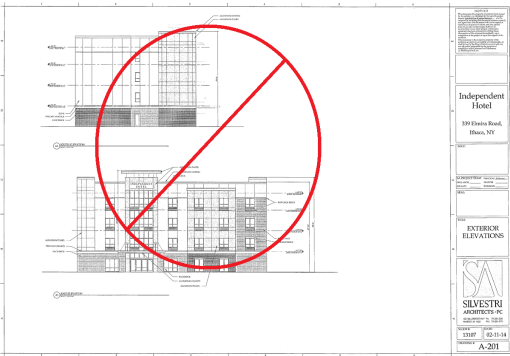
1. We’ll start off with some bad news. The plans for a boutique hotel at 339 Elmira are very likely done and over with. The 37-room, 6,468 SF hotel announced in February 2014 was planned for the 0.59 acre former Salvation Army property on the Southwest side of the city. For whatever their reasons were, the developer, (Rudra Management and Rosewood Hotels of Buffalo, decided put the property up for sale for $395,000. After several months, it finally sold at the discounted price of $300,000 to its next door neighbor, Arizona-based Amerco Real Estate, the parent company of U-Haul. Discounted is a relative term, by the way – Rudra had acquired the vacant property for $143,000 in a land auction in 2013. Back when Salvation Army was still there in 2009, the site sold for $175,000.

So with that sale to Amerco, it’s likely the property will be used for an expanded U-Haul parking lot. It’s unfortunate, but them’s the breaks. For what it’s worth, Rudra has commenced work with the other hotel they had planned, the 79-room Holiday Express at 371 Elmira Road, just down the street.

2. In modest but notable projects, the William George Agency in Dryden received a $2 million construction loan to conduct renovations and roof repairs to its cafeteria area. The non-profit residential treatment center for adolescents had secured building material sales tax abatements from the county to help cover their expenses (the project has originally been planned to start in Q1 2015). The agency, established in the 1890s, employs over 340, making it one of the larger private employers in Tompkins County.

20150613_194544

3. Thanks to Nick Reynolds over at the Journal for reminding readers that not every construction project is private. Noted in his writeup of projects that the city intends to fund this year – $430k in road repair projects, another $407k for parking stations, $1.3 million to replace Cass Park rink’s roof, $214k for design work for the new North Aurora street bridge, and $735k for design work for city dam reconstructions.

Perhaps most interesting to readers here will be the $500k that the city intends to spend on design and planning the new Station No. 9. With the awarding of funding from the Upstate Revitalization Initiative, the city can formally explore the possibility of a new fire station on a Cornell parking lot at 120 Maple Avenue. Once a new station is complete, the city could then sell the current Station No. 9, nearly 50 years old and in need of major renovations, to a private developer for redevelopment (the developer who expressed interest in the site is still unknown, but given Collegetown’s expensive real estate market, they must have really deep pockets).

biggs_2

4. More talk of the Biggs Parcel. Jaime Cone at the Ithaca Times provides more details regarding neighbor Roy Luft’s proposal to build for-sale senior housing using the site. Luft is arguing his project is more environmentally friendly than the NRP project, it would take two to three years to come to fruition, that the units would be 700-1,000 SF, and he’s serious about building the senior housing, which is an under-served market. The Indian Creek Neighborhood Association, which has actively fought any sale, seems to at least be open to the idea, if not necessarily a fan of it.

For the record, since the ICNA doesn’t clarify it in their blog post, the county didn’t develop the NRP project. The county put out a request for proposals (RFP) just like they do with every other large development study or offering. Better Housing for Tompkins County and NRP happened to think they had a good project idea and responded to the RFP. It’s been made clear, multiple times, that the county has approached neighbors, Cayuga Medical, INHS and others for months, shopping the land around, and no one has made offers. To be completely honest, even if this land hit the real estate listings, it’s not as if anyone is clamoring to snatch this up; there’s demand to live in and near Ithaca, but land still takes several months to sell on average, and it’s not a stretch to think that developers would avoid this one after the NRP flaying. The county plans to start the listing process later this month if the ICNA doesn’t make an offer by the 15th.

Just a thought, but if $340,000/25.52 acres = $13,333/acre, and the acreage closest to Dates Road is probably developable, than shouldn’t that allow a ballpark fair-value estimate? I know NRP was to pay $500,000, but that had some transit and pedestrian cotingencies attached. Has the ICNA contacted NRP to ask how extensive the wetlands were, is the information on file with the county?

1317 Trumansburg is 10.17 acres, The Biggs parcel 25.52. Combined, they would be 35.69 acres. From the sound of it, Luft would like to reform the parcel boundaries to let his project, however big it may be, to move forward. The site is zoned low-density residential, which means a cluster subdivision can be 2.3 units/acre at maximum. Each structure can have up to 6 units. Taking a guess here, but Luft may be looking at more than 20 units, because anything less than 20 could be done with a subdivision of his current property. For comparison’s sake, the BHTC/NRP project was 58 units.

There is at least the potential that the county gets additional tax dollars from Luft’s project, and the woods would be protected, and there would be a happy ending to this story. But that’s dependent on both sides’ goodwill. Given the years of acrimony, that’s a big leap of faith.

5. For the restaurant-goers out there – Fine Line Bistro’s old spot at 404 West State has a new tenant called “The Rook” opening this month. Mark Anbinder provides the foodie rundown at 14850.com. Mid-tier American bistro/pub fare.

More importantly to this blog is the economic rundown, provided thanks to their application for a loan courtesy of the Ithaca Urban Renewal Agency (IURA). The three co-owners, all local restaurateurs, are seeking a $40,000 loan (3.5% interest, 6 year length) to complement their own dollars and a private loan. 8 hired staff (cooks/servers/dishwasher), but none living wage. With cash flow statements, restaurant plans, the menu, loan filings and resumes of the owners, this looks like a Cornell Hotelie’s senior class project.

It’s the IURA’s decision make, but at least it’s nice to know that good restaurant space in Ithaca is in strong demand.

Pg-3-Rendering

6. Out for bid, Cornell’s Ag Quad renovations. The bid filing estimates the budget at $6.6-6.8 million, and a construction timetable of late March 2016 to Summer 2017. Quoting the first write up from October:

“The $9.6 million project will be broken down into two phases, one that focuses on infrastructure, and one phase on landscape improvements (and being that much of the infrastructure is underground utilities, phase one could be described as churning up the ground, and phase two is making the upturned dirt pretty again). The renovations, which are set to start next summer and run through 2017, will include additional emergency phones, a rain garden, and outdoor gathering spaces in front of Mann Library and Roberts Hall (upper right and lower left in the above render).”

state_st_triangle_v5_1

7. Folks love a good rumor, and the Times’ Josh Brokaw had an interesting one to report in his 2016 futurecast regarding State Street Triangle

“Don’t think that the Austin-based developer is abandoning Ithaca, though a look at their previous projects shows this sort of downtown, mixed-use development is a new frontier for a company accustomed to building student housing mostly in green fields in the South and Midwest. CEO Mike Peter was spotted downtown at Mercado in December talking to consultant Scott Whitham; it wouldn’t surprise if the company came back this year with something conceptually similar—lots of rooms, ground-floor retail—but a much different look.”

Brokaw makes a reference to the inclusionary zoning slated for discussion next month, which is rumored to mandate affordable units in return for a larger footprint (rundown of how that works here). I also wonder if it will make reference to the “pillar” that Myrick mentioned previously – a taller, skinnier building, not as massive and perhaps only 3-4 floors over most of the site, and maybe a quarter of the site has a taller tower that’s 12 or 13 floors, whatever is permitted by the inclusionary zoning (strictly hypothetical, just one guess of many). Campus Advantage has plenty of time since they missed their original start date, but maybe later this year in the spring.

8. It’s always a brow-turner when a real estate listing is advertised as “a large corner lot ideal for a multi-unit development. In this case, it’s a 0.2 acre double lot at 404 Wood Street in Ithaca’s South Side neighborhood. The listing offers the ca. 1938 house and lot for $250,000 (tax rolls say the property is assessed at $125,000; the current owner picked it up for just $34,000 in 1993).

Playing with some numbers a little bit, there are a couple of options if a buyer wanted to build something. The first and probably easier option would be to subdivide the lot and build on the vacant corner parcel. That would give, per R-3b zoning regulations of 40% lot coverage and 4 floors, about 1400 SF per floor. That gives 5600 SF, and if one assumes 15% off for circulation/utilities and 850 SF per unit, you get a 5 or 6 unit building at theoretical maximum.

If one were more brazen and tear down the 1938 house, one gets about 3,485 SF per floor, 13,940 SF at max height. That allows about 14 units using the same figures as above. But that might be tougher for neighbors to swallow. Anyway, if it sells and it looks like there’s a possibility, it’ll get a followup in a future news post.

morris_avenue_2

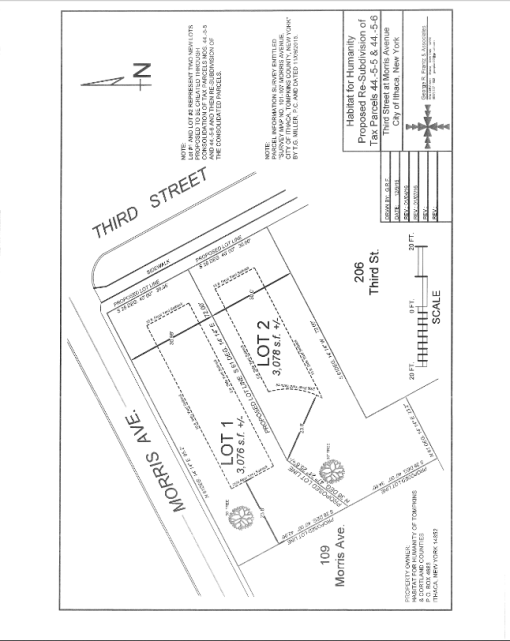
9. Nothing to exciting on municipal planning agendas this week. The town of Lansing cancelled their meeting, and all the town of Ithaca had was a cell phone tower on West Hill. The city has a little more interesting. The duplex at 424 Dryden is examining unusual parking arrangements to save trees, and Habitat for Humanity is planning an affordable-housing owner-occupied duplex for vacant lots at 101-107 Morris Avenue in the city’s North Side neighborhood.

morris_avenue_1

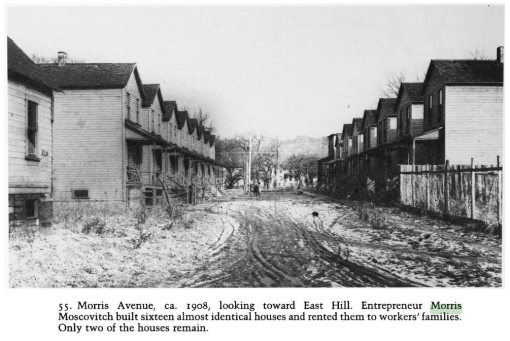
Morris Avenue has always had a focus on worker housing. As described in Ithaca’s Neighborhoods by Carol Sisler (1988), local businessman Morris Moscovitch built 16 nearly identical houses in 1908 to house worker’s families. But, with the effects of urban decay and urban renewal, only one of those 812 SF houses (109 Morris) is still standing today.

What Habitat for Humanity is proposing is to take the vacant lots at 101-105 Morris and 107 Morris (total 0.138 acres), combine them and create two new lots that will face Third Street. The new lots would need a zoning variance since they’re not wide enough (30′ and 30.98′, 35′ required). Being Habitat, these might take a little while to build and they probably won’t wow anyone design-wise, but there’s a lot of value to be placed in their “sweat equity” approach, and affordable owner-occupied housing is in severe need in Ithaca. Planner George Frantz is handling the application.

hotel_ithaca_final_1

10. Lastly, for what is a very long post, the Hotel Ithaca’s revised CIITAP application to the Tompkins County IDA. Now that the project is approved by the city, they can work on a revised tax deal. According to the project memo, the sales, mortgage and property tax abatements will total $1.781 million on the $15 million project. The property tax abatement is the standard 7-year abatement, and will generate almost $1 million in new tax revenue during the abatement period. The project would retain 71 positions and create 21 new jobs, most of which appear to be less than living wage. The application does note, perhaps ominously, that non-approval would result in functional obsolescence – the hotel shuts down. The IDA plans to examine the application at their meeting in the county office building next Thursday.


Are Rents (Finally) Dropping in Ithaca?

29 12 2015

20150727_145641

So here’s something that one doesn’t see very often. Real estate information company RealtyTrac, in its recently-released study of rental affordability, is calling for the Ithaca metro (a.k.a. Tompkins County) to have one of the biggest rent year-to-year decreases in rent nationwide from 2015 to 2016.

Are the economic woes and job losses real? Has their been progress made by new units hitting the market? Are fewer people renting?

Maybe. But before jumping to any conclusions, let’s take a look at the way the numbers were created. According to RealtyTrac, the rent numbers were based off of 50th percentile rents (median) for Fiscal Year 2015 and Fiscal Year 2016 estimates on 3-bedroom properties.

That it’s limited to 3-bedroom units should probably be caution light number one. In most urban markets, 3-bedrooms make up 10-15% percent of the rental market. In Ithaca the number of all rental units with 3-bedrooms or more was 19.1% in 2011. In the Ithaca market especially, units with a higher number of bedrooms tend to be marketed to undergrads in neighborhoods like Collegetown. In other words, RealtyTrac’s numbers might not be getting a good reflection of the local market, and maybe a rough idea of the student market at best.

So that’s the initial impression. Now to go straight to the source. Here’s the Federal HUD rental data for 2015 and 2016 in Ithaca:

Ithaca 2015 Monthly Rent 50th Percentile

Studio $852

1 Bedroom $1044

2 Bedroom $1251

3 Bedroom $1733

4 bedroom+ $1739

Ithaca Anticipated 2016 Monthly Rent 50th Percentile

Studio $903 (+6.0%)

1 Bedroom $1035 (-0.9%)

2 Bedroom $1198(-4.2%)

3 Bedroom $1554 (-10.3%)

4 bedroom+ $1776 (+2.1%)

For the sake of acknowledgement, according to the HUD Docs, when determining rents for units above 4 bedrooms, the agency adds 15% to the 4-bedroom rent for each additional bedroom, so a 5-bedroom rent is 115% of the 4-bedroom rent and a 6-bedroom unit is 130%. The 50th percentile rent for Single Room Occupancy is 75% of the 0-bedroom (studio) rent.

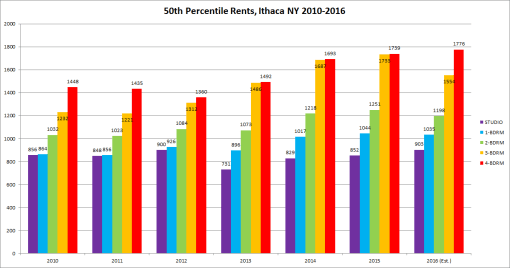
The gut feeling looking at this is that something really odd happened with those 2016 estimates. The calculated median rent for 3-bedroom dropped over 10%. Digging in a little further, let’s pull the 50th percentile (median) rent data for 2010 to 2016 and see how the bigger picture looks.
ith_median_rent_2010_2016

Looking at the past several years, there are a few cases of numbers dropping slightly. Studios from 2012-2013 and 4-bedrooms from 2011-2012 show bigger drops, but there’s also fewer units in those categories, they make up much smaller percentages of the Ithaca rental market. The 1 and 2 bedroom units, which make up the lion’s share of apartments on the market, show the occasional year-to-year drop, but the effect is slight and the overall trend is steadily upwards – from 2010-2015, the median rent on a 1-bedroom increased 20.8%, and a 2-bedroom increased 21.2%, well above wage gains.

As for 3-bedrooms, from 2010-2015 the median rent increased from $1,232 to $1,733, 24.4%. While not impossible, a 10% drop in the average rent for 3-bedroom units to $1,554 seems unlikely.

And that’s fine. The HUD released the 2016 numbers as estimates. They will be revised and finalized next spring.

But being estimates, they’re prone to error. One that RealtyTrac incorporated into their analysis, and leading to what’s likely an incorrect conclusion, though not any fault of their own.

So, not to be the bearer of bad news, but this housing crisis doesn’t look like it’s abating just yet. Though, there’s always the chance that the rents are actually dropping fast. We’ll just have to wait to see if the revised numbers back this conclusion up, or prove it wrong.