News Tidbits 7/7/2018

7 07 2018

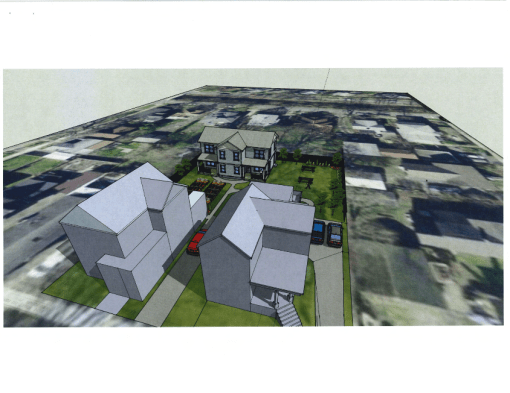
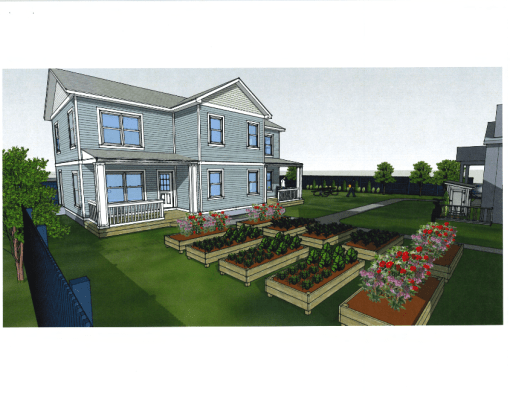
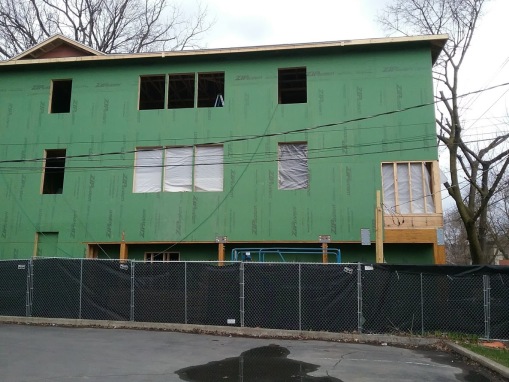
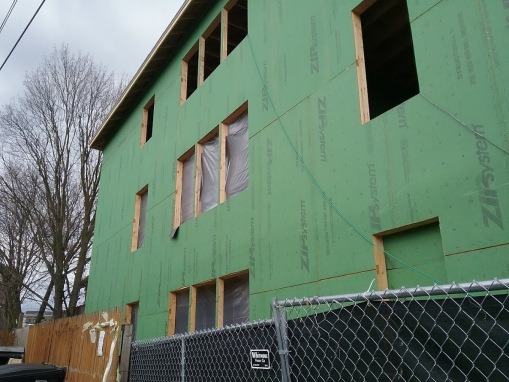
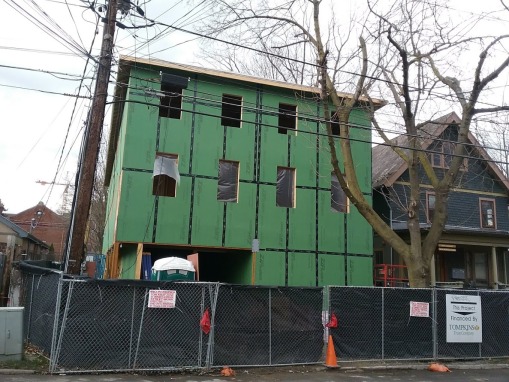
1. The infill project at 209 Hudson has been revised and reduced in size. The new plan from the Stavropoulos family of developers calls for just one new duplex at this time, on the existing lawn and swimming pool of the extra-large lot. The rear duplex was eliminated in the revised plan. A small zoning variance is still required for the subdivision (side yard deficiency), but it’s less likely to catch the ire of BZA members this time around because more mature trees are preserved in this reduced-size iteration. Modest bay window projections, fiber cement panels and wood trim will help create a higher quality product.

The duplex would be a quick build since it’s modular, but it’s not going to be ready in time for fall semester – spring (January) would be feasible, if the individual units are assembled before the snow flies. The Planning Board will make their recommendation this month, and the BZA will have their vote in early August, with potential final approval in late August. Quick note, as this has fallen under the threshold for the Ithaca project map (3 units or more), it has been removed.

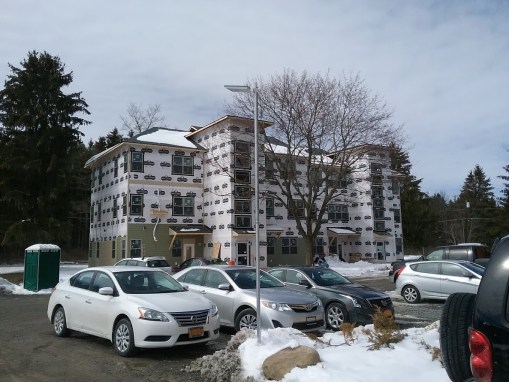
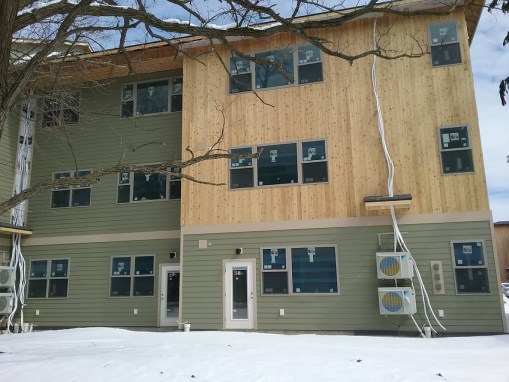
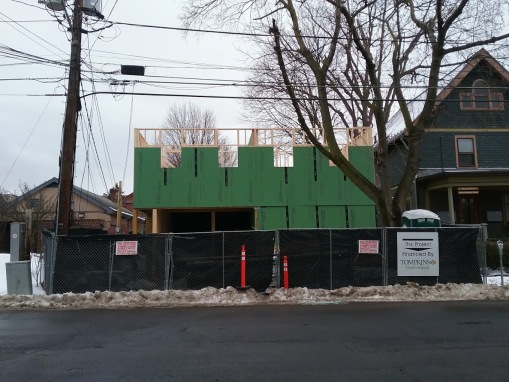
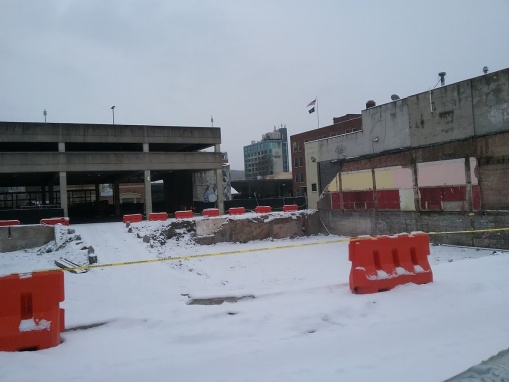
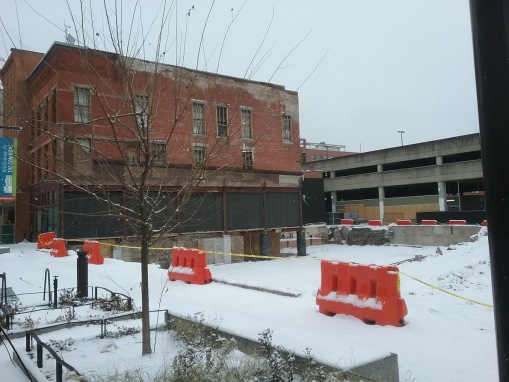
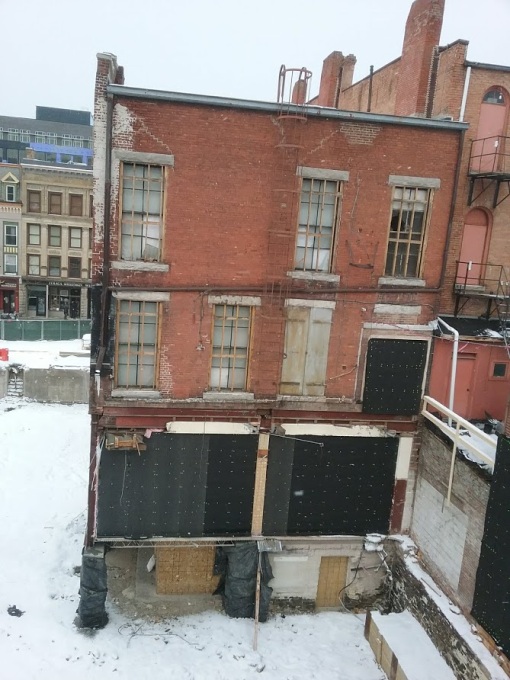
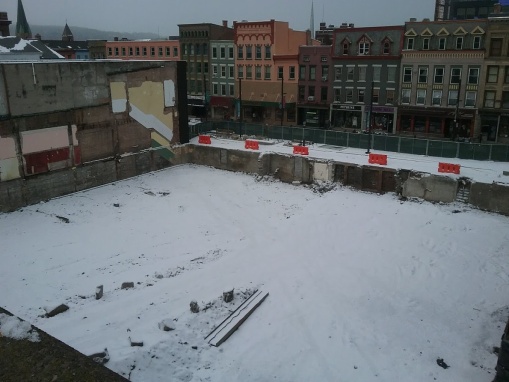
Also due for review this month are final approvals for 128 West Falls Street (above) and a 3,200 SF endcap addition at South Meadow Square, and approval of a subdivision at 508-512 Edgewood Place.

2. Recently, Visum Development posted photos on their Facebook/Instagram taken during setup for an interview with Park Productions, and Ithaca College student media group. Normally, that’s not something to write about, but this caught my attention:

327 West Seneca is the new all-affordable project they introduced at last month’s planning board meeting. As for the others, I don’t have much of a clue. Ithaca does not have a Main Street, so that’s likely another community. 409 State may refer to an older building at 409 West State or 409 East State, but 409 East State is Travis Hyde’s Gateway Center property (and who at last check had no plans to sell).

As for the others, it looks like the first number was erased. Also of note, there is no East Cayuga, it’s just North and South. So I dunno quite what to make of it – hints of projects with some red herrings, it seems. Worth a look, but it’s not much to work with just yet.

3. Time for a little more speculation. A vacant lot east of 404 Wood Street in the city of Ithaca’s Southside neighborhood sold for $70,000 on June 26th. The buyers were a husband-and-wife pair who also happen to work for Taitem Engineering, a prominent local consulting engineering firm with specialties in structural engineering and associated branches in the context of green/sustainable building operation. The pair previously did a LEED Platinum, net-zero energy home in Ulysses two years ago. The likely guess here is that they’ll be building their next net-zero energy residence on this lot.

As previously noted when the property went up for sale in January 2016 (it was later subdivided from 404 Wood, which was sold a while ago), “(p)laying with some numbers a little bit, there are a couple of options if a buyer wanted to build something. The first and probably easier option would be to subdivide the lot and build on the vacant corner parcel. That would give, per R-3b zoning regulations of 40% lot coverage and 4 floors, about 1400 SF per floor. That gives 5600 SF, and if one assumes 15% off for circulation/utilities and 850 SF per unit, you get a 5 or 6 unit building at theoretical maximum.”

TL;DR – if they want to do a small infill net-zero apartment building, they can. If they want to do a sizable single-family residence, they can do that as well. We’ll just have to wait and see what happens.

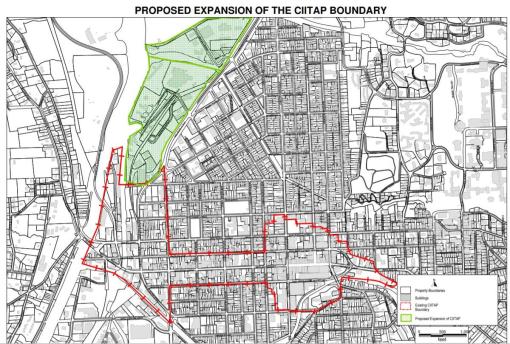
4. On the policy side, the Ithaca Common Council voted Wednesday night to move forward with a CIITAP stipulation stating projects pursuing the tax abatement must have a mandatory affordable housing component of 20%, available to those making 75% Area Median Income, affected all residential projects with ten units or more.The extension of CIITAP applicable properties along the Waterfront was also approved.

The policy comes forth after considerable debate over the right percentage and right income to apply. It’s the Goldilocks principle – too little and you don’t add an appreciable amount of affordable housing and may even decrease the amount once redevelopment occurs in lower-income blocks, too much and developers just won’t build (the Portland problem), and those who stick around will renovate existing buildings instead, meaning less supply overall, fewer existing lower-income units and accelerated gentrification. Among things discussed Wednesday night, a proposal to modify the mandatory size requirement of affordable units from a minimum of 80% the square-footage of the market-rate to 100% failed 5-4 (needed six), the % of affordable units went from 10% to 25% (the 25% was the First Ward’s George McGonigal, who has a history of being opposed to new market-rate and affordable housing, and did not get a second to open discussion).

It’s too early to say if this is too much or not enough – the City Harbor folks were in attendance for the discussion (they were at the meeting for a different topic), but didn’t raise concerns to 20%, so it seems likely their project is able to continue. The county IDA is the grantee of abatements with the city in an advisory role only, so they’ll have the final say on the application of the new law.

5. Tompkins Cortland Community College’s Childcare Center has the funds it needs to move forward. The project, first proposed in February 2016, calls for an 8,000 SF, $4 million building, plus a $1.5 million endowment for operating costs. State funds support much of the cost, as well as a $2 million donation from Ithaca CEO and major TC3 donor Arthur Kuckes, for whom the center will be named.

According to Jamie Swinnerton over at Tompkins Weekly, the project includes six classrooms with two infant rooms, three playgrounds, and be, in part, staffed by students studying to be teachers and childcare providers. 12 jobs will be created, and since it’s for faculty, students and staff, those jobs are expected to be full-time and all year-round. The building is expected to be partially opened by the start of the Spring semester, and fully occupied by the Fall 2019 semester.

Design-wise, the latest design in Tompkins Weekly shows smaller windows and the loss of some hipped roof bumpouts at the rear of the building (older version here). Value engineering noted, but the goal of helping students with children stay in school, and get the degrees they want to build their professional foundations on outweighs any shade thrown at the design changes.

6. Also finally moving forward – Lansing Meadows. There was an 11th-hour holdup for the 20-unit senior housing project when the village expressed discomfort with accepting future ownership of Lansing Meadows Drive, feeling the turns were too sharp and posed a liability. Developer Eric Goetzmann relented and agreed to maintain the road as a private road, and the village board approved the project 3-2; there are still a lot of sore feelings about the often-delayed and arguably underwhelming final proposal. Goetzmann has until July 31st to obtain permits to begin construction, or else the county IDA will recommence seeking clawback reparations from abated taxes, most of which went toward the BJ’s that was built in 2011-12.

7. Let’s slay some inbox rumors. East Hill Village is not cancelled. Nor is Trinitas’ Dryden Townhomes project. I checked with the project teams – both are still active projects. However, East Hill Village is waiting on the town of Ithaca to finish updating its zoning to a more form-based code, and the project will not move forward until that happens.
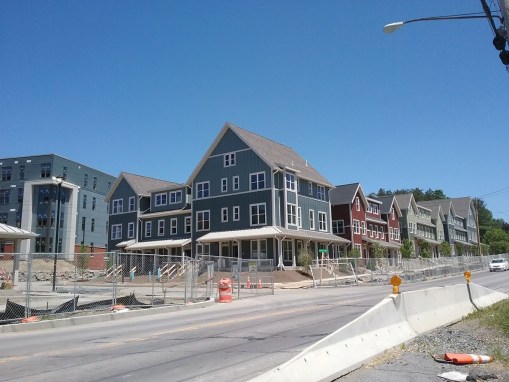
8. For fun: here’s a Google Docs spreadsheet on how the Ithaca metropolitan area lines up with other metros on new home construction permits since 1980. Key takeways – Ithaca/Tompkins County was in the top 10% of metros in 2017 for multi-family housing permits per capita (30th of 381), but it lags quite a bit in the construction of single-family homes, so its overall rank is only the 64th percentile (137th of 381). Even then, it’s still one of the fastest growing housing markets per capita in the Northeastern United States. 2016 and 2017 have been strong years, while 2015 and earlier were generally well below the national average.

The multi-family number per capita is arguably skewed higher than a typical year thanks to large projects like 441-unit/872-bed Maplewood, but the message seems to be that the community is seeing real results from its push for housing. However, with a lack of single-family being built, Ithaca and Tompkins County need to figure out ways to compensate for what single-family provides (i.e. home ownership). It’s not necessarily “we should build more single-family homes” although that is part of the answer. It’s also encouraging suitable single-home substitutes (condos) in desirable areas while maintaining a strong, steady flow of new units as the local economy continues to grow.


East Pointe Apartments Construction Update, 6/2018

24 06 2018

If the name doesn’t sound familiar, that’s okay. For the past two years, the common reference to these was either “The Bomax Drive Apartments” or the “Park Grove Realty Apartments”, either of which was used interchangeably. The official name according to Park Grove Realty’s webpage is “East Pointe Apartments”. East of what, I dunno.

Park Grove Realty is a new company headed by a group of long-time developers and real estate professionals. Andrew Crossed and Andrew Bodewes cut their teeth at Conifer Realty, a regional affordable housing developer based out of Rochester (readers might be familiar with some of their local projects, including Linderman Creek, Cayuga Meadows, and Poet’s Landing). They knew their way around development and had familiarity with the area. Not only that, they were working with Tom LiVigne, who has been on the board of many local projects and recently retired as the president of real estate operations at Cornell.

While LiVigne was at Cornell in 2008, the university purchased a 19.46 acre parcel on Bomax Drive. The property was zoned for business and technology, which is intended for commercial office, warehousing or tech-focused industrial space, which is what Cornell originally had in mind. But, with the onset of the Great Recession, and a re-assessment of Cornell’s needs, nothing ever came forth for the property.

A little bit of speculating here, but because Conifer’s Cayuga Meadows had been floating around since the late 2000s, LiVigne would have been professionally familiar with Crossed and Bodewes. It seems likely that as LiVigne retired in early 2015, and Crossed and Bodewes launched their company a few months later, they might have approached him with the idea of an Ithaca project, knowing the market’s strong economics and housing deficit. LiVigne was familiar with Cornell’s excess holdings, and whatever discussions he had with Park Grove post-retirement led to the idea of a project on this property.

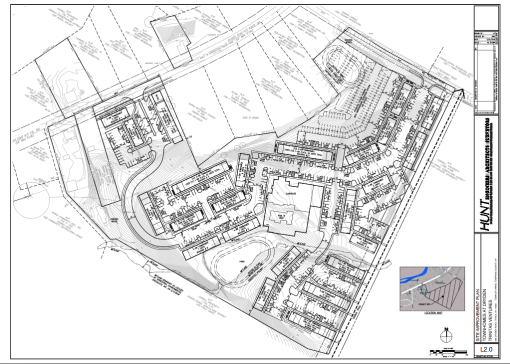
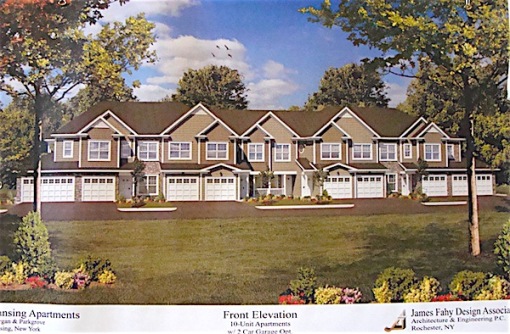
The project was first conceived and brought before the village of Lansing in July 2016. East Pointe is a 140-unit townhouse complex, fourteen strings of ten units, plus a community building, situated on a wooded vacant parcel on Bomax Drive. The intent was to explicitly avoid Collegetown and Downtown, and do a project geared towards the upper-middle class market segment, more specifically empty nesters and young professionals who may be moving in for work, but have yet to buy a house (this is exactly the same sub-market and words used by the developers of the 102-unit Cayuga Orchard project over in the town of Lansing, and even bears a passing resemblance). Arguably, a modest slice of graduate/professional students is possible as well.

To make the project possible, the zoning would have to be changed to high-density residential – the village planning board wanted a traffic study and wasn’t excited that there was no affordable housing here (the project team argued the asking price Cornell wanted made affordable housing infeasible), but was otherwise open to the idea of the zoning change; no one had developed a business and technology space since 2005, and residential was seen as a downzoning from what could have been done there, should Cornell have really pushed for a large office of research building. The neighboring developer, however, was not okay with the rezoning.

I don’t intend to rehash Forest City Realty and the Jonson family’s attempt to stop the project, but the argument was that it was a “spot rezoning” and that it was illegal. The Jonsons felt the units would decrease the desirability of their own project, the luxury for-sale townhomes in the Heights of Lansing. It became so impassioned that Lisa Bonniwell (Ivar and Janet Jonson’s daughter) ran herself and allies to try and take over the village Board of Trustees and mayorship last year in an effort to stop the proposal – they lost by a large margin. They also took the village to state court, lost, appealed, and lost again. The village estimates, with considerable distaste, that although they won, the court cases cost them close to $50,000.

It’s because of the lawsuit that the timeline gets a little muddled. The rezoning request was filed in September 2016, the public hearing in October, and the zoning change was made in November 2016 – to make it clear, that was the rezoning, not the project. The project wasn’t approved until November 2017, after the lawsuit was rejected and had gone to an appeals court. For a little while, Park Grove had a “continue at your own risk” for preparing final drawings and legal paperwork, given that the appeal was not declined by the state court until February 2nd 2018. The first real sign the project was moving forward came on March 16th of this year, when Cornell sold the land to Park Grove for $1.5 million, $300,000 more than what the university paid in August 2008.

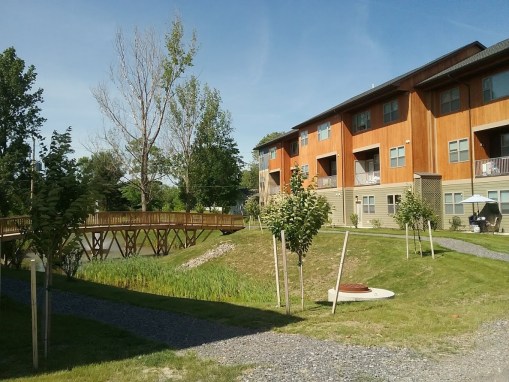
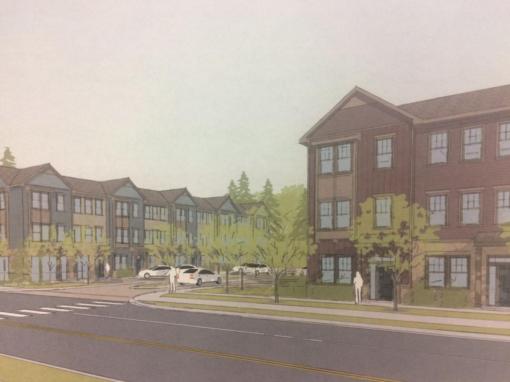
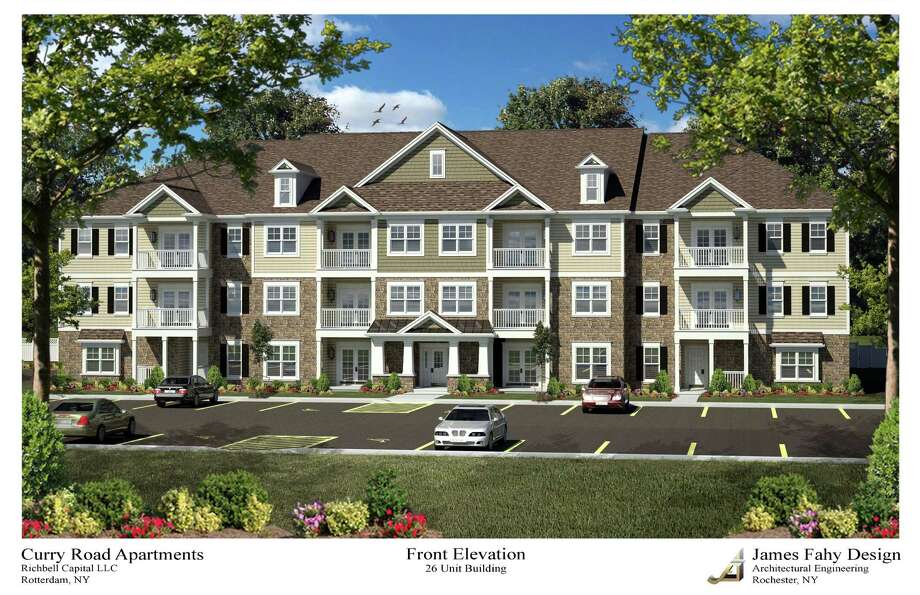
Each string will have four units on the first floor, and six units on the second floor. Each unit has their own entrance, and the project is being described by the developer as “walk-up garden style“. The mix of units is 36 one-bedroom units, 90 two-bedroom units, and 14 three-bedroom units – since 36 and 90 don’t break down evenly by 14, I’d expect slightly difference unit mixes per building, and perhaps that will result in some slight design differences for things like window and door placement. However, they’ve only ever shown one apartment string in their official renders. The renders above are from early in the process (top), and the one they uploaded to the company website last week (bottom) – note the differences in the end garages and in the second floor/roof on the right side of the image. it may be a change in design, or it may be two different building designs they plan to utilize depending on unit layout. Have to wait and see on that one.

The one-bedrooms will be about 900 square feet and go for $1,400/month, according to an early interview with the Ithaca Times. The 1,300 SF two-bedroom units will go for $1,700/month, and the three-bedrooms, which will be about 1,400 SF, will for $1,900/month. The Lansing Star gives similar stats. Renters will get “high end finishes and amenities”, with possible amenities including  the community building with swimming pool, bocce ball court, walking trails, a community garden and a dog park.

I have not seen any building costs or local lending activity associated with the project, but if it’s in the ballpark of the nearby Village Solars (which is $2-$3 million per building), then it would not be unreasonable to expect something in the range of $30 million (of course, I am not the county tax assessor, so don’t take my word as gospel).

The architect, James Fahy Design Associates of Rochester, has a lot of experience with newer suburban developments, both single-family and multi-family. A google search (their website hasn’t been updated) shows similar gable-loving, shake siding and stone veneer embracing projects in the Buffalo, Rochester, Syracuse and Albany areas. Jess Sudol of Passero Associates is the engineering consultant.

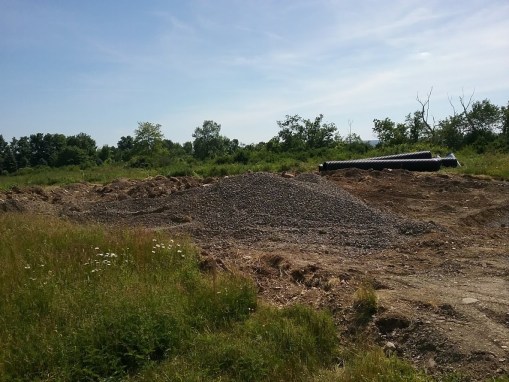
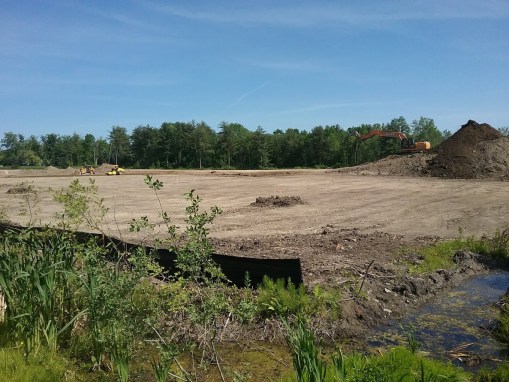
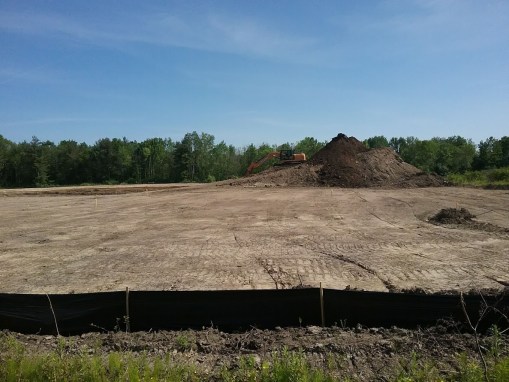
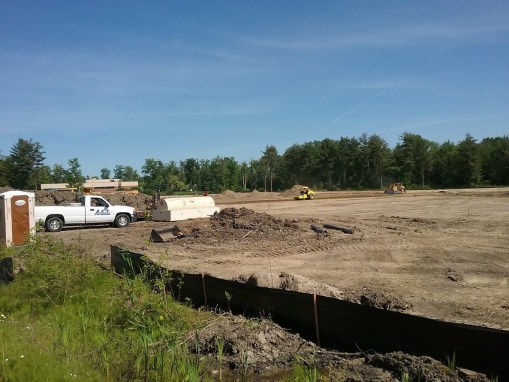
Right now, the site is being cleared and graded, with subterranean utilities installs (water/sewer) and early foundation excavation work is underway. The first two apartment strings are expected to be ready by Spring 2019. DGA Builders of Pittsford (suburban Rochester), a division of Pennsylvania-based DGA Construction Group, appears to be the general contractor, and A.E.Y. Enterprises of Macedon (Wayne County) is the site work subcontractor.


Village Solars Construction Update, 6/2018

16 06 2018

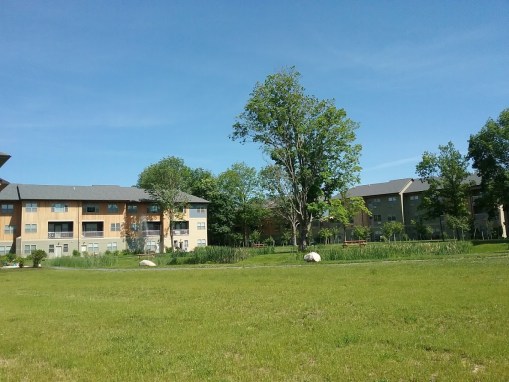
It looks like there’s a lull in the construction at the moment. Both 102 Village Place and 116 Village Circle appear to be complete, though a quick guess would be that 102 Village Place is already occupied, and 116 Village Circle will be ready for its first tenants at the end of the month. The two have a total of 42 units, 24 in the former and 18 in the latter. TCAT is in discussions to add or modify a bus route to service the growing apartment complex, which has already added a couple hundred residents to the area since 2013, with plans for hundreds more over the next several years.

According to the phasing plan, the next phase is to replace 2 Village Circle and 22 Village Circle with a pair of 18-unit buildings. Those would be twelve studios and six two-bedrooms each, replacing two ten one-bedroom unit buildings (net gain of 28 residents, for those keeping in track). Demolition has not yet started on the existing structure, but the most likely plan is to start a little later in the early summer, and have the new pair of buildings ready for a spring 2019 occupancy.


News Tidbits 6/9/2018

9 06 2018

1. Let’s start off with some eye candy. Behold, the latest and probably last major revisions to Modern Living Rental’s planned apartment complex at 802 Dryden Road. We also have a name for the 42-unit apartment complex to be built there – “Ivy Ridge“. This latest design received a little bit of STREAM’s touch to complement the work previously undertaken by John Snyder Architects. The six building are generally but not exactly the same – the gables are mirrored, some additional trim piece are used on the gables for the Dryden Road pair, and they alternate between a dark blue vertical fiber cement panel (probably HardieBoard), and a dark green panel (it’s a little sad they reworked the profiles and did away with the visually interesting mix of hipped and gabled roofs). Units were downsized about 35 square-feet per unit per floor, and overall the town planner thought the buildings looked “a lot more friendly”. Some more renders can be found here. Units are a mix of 24 2-bedrooms, 12 3-bedrooms and six 4-bedrooms, for a total of 108 bedrooms.

There’s a little bit of pre-building infrastructure work that needs to take place, because this is a sort of no man’s land between the settled parts of the town of Ithaca and the town of Dryden where no municipal water service was available. The public water main will be extended to service the project, and the main will be deeded over to the town. This will go under Dryden Road, so the DOT is in the loop. The planned buildout is August 2018 – August 2019.

2. Staying in Dryden for the moment, a bit eastward to Varna – I have not spoken to a single person who thought highly of Trinitas first swing at the Lucente property on Dryden and Mount Pleasant Roads. The building scale seems okay for Varna’s core, and the Varna Plan actually okays this kind of layout and says the community was comfortable with it on arguably a smaller overall project scale, something that caught me by surprise when I did my writeup for the Voice. The issue is that it’s a lot to see at once, and it makes me wonder if Trinitas really had its eyes open and ears listening and just went forward anyway, or if they were caught off guard. After swings and misses in Ann Arbor and Ames, I’d hope Trinitas would be a little more cautious.

This is asking a lot of Dryden, 224 units with 663 beds at the moment. However, I’m doubtful a moratorium is the answer. I think there is potential to have more conversations if both sides are willing to talk, and Trinitas should be firmly aware that this plan is not likely to go through as currently proposed. I don’t know what the financial statement looks like here, but elsewhere Trinitas has tried (if unsuccessfully) with incorporating affordable housing with its market-rate units, and they also do have projects that seem more like the Varna Plan’s thoughts for that parcel, like their Pullman project, which is a combination of townhouse strings and duplex buildings. The town of Ithaca and EdR agreed to have EdR fund local road improvements as part of the Maplewood project, so that’s another idea.

One of the reasons cited for a potential moratorium in Dryden is the need to balance the rental development with for-sale housing. It is very tough to effectively encourage owner-occupied housing at a price range affordable to middle-income households. For one, no tax breaks – state law says it is illegal for the IDA to give tax abatements to owner-occupied developments (for-sale homes, condos). Building codes and complicated condo rules drive up housing costs and make existing state subsidies for affordable for-sale ineffective, and for-sale housing is seen with greater uncertainty by lenders (there are more people able and willing to rent than to buy, especially in a college-centric community). It’s difficult! That’s why the county’s Housing Committee is keenly focused on trying to come up with solutions. There’s a fantastic senior research project by newly-minted Cornell graduate Adam Bronfin that looks at the condo problem in excellent detail, and a PDF of that study can be found here.

The other suggestion, making rental housing more difficult to do, comes with its own perils – namely, by cutting off the supply while demand continues to grow, you force out lower-income households in an attempt of trying to limit the student rentals. There is conceptual discussion of affordable for-sale and rental mixes (similar to Trumansburg’s Hamilton Square) being talked about east of Varna, and it would be really unfortunate if a town law gets drafted up that inadvertently but effectively prevents those kind of projects from happening.

Another risk is that strictly limiting development in Varna only encourages it on rural parcels to the east, or even in Cortland County, promoting sprawl and its detrimental environmental impacts (tax burden of new infrastructure, traffic, additional commuter burden on the Freese Road Bridge, loss of farms and natural space to low-density housing, etc). One can push laws that prohibit students either through zoning, but smaller mom-and-pop landlords may feel the pain and it might get argued in court as an illegal attempt at “spot zoning”.

The TL;DR is that there is no easy answer, but the county is trying. Since it’s so difficult on the brand new side, the county is looking at incentives to encourage renovation of existing rental housing into for-sale units, which would need state approval.

Lastly, I don’t really understand the argument that tacitly advocates for capping Varna’s population. The sewer is a limit, but more capacity could be negotiated if necessary or prudent. The argument over Varna should be focused on quality of new additions, not an argument that the Sierra Club rejected because of its association with racial and income-based eugenics.

3. Surprise, surprise. An infill project in Fall Creek has been revived three and a half years after it was approved. The project calls for five rental buildings, three single-family homes and a duplex. The developer is Heritage Homes, led by Ron Ronsvalle; Ronsvalle was badly injured in an accident, and the injuries left him paralyzed and unable to use his limbs; he is reliant on assistance and voice commands. It was a shame as the project been heralded as a successful example of meeting with neighbors and redesigning a plan to address their concerns; didn’t win over everyone, but a lot of them were satisfied with the approved February 2015 plan. As the letter from project architect/engineer Larry Fabbroni states, “certain life events prevented the owner from resuming full business activities until a support system was running smoothly.”

With a support system in place, Ronsvalle intends to move forward with the approved plan. The project does have to go back before the Planning Board and Zoning Board of Approvals because approvals expire after two years (i.e. February 2017). With nothing changed, the project is likely to sail through re-approval.

The revised SPR states $665,000 in hard costs with a construction period of August 2018 to August 2020 – basically, a couple homes in year one, and a couple in year two.

4. This is rather odd, but in Northside, there seems to be a push for a moratorium because they’re unhappy with the possibility of multiple primary structures on a single lot, which is what local developer David Barken is proposing with the lot consolidation and addition of a two-family home at the rear of 207 and 209 First Street. The concerns cited are similar to South Hill’s, loss of character and increases in density, and came up during the marathon public comment period at the last Common Council meeting.

This seems…baffling? South Hill’s made sense because of the high number of student rentals being built, which was leading to major quality of life issues. Northside doesn’t have that issue, it’s too far from the Cornell and Ithaca College campuses. For evidence, here’s the Cornell map of where students live, taken from their 2016 housing study. A handful of grad students live near the creek, but otherwise not much, and undergrads are virtually non-existent. It and West End and West Hill just tend to be too far away for students’ convenience.

To be honest, 207-209 First Street actually seems like a thoughtful project – similar to the Aurora Street pocket neighborhood by New Earth Living. The infill is scaled appropriately, it has features like the raised beds that enhance residents’ quality of life, and it doesn’t tear down existing housing. To my knowledge, there isn’t anything on the radar for Northside unless one counts Immaculate Conception in adjacent Washington Park being converted to housing at some point. It’s not clear what a moratorium or a South Hill-like overlay would achieve here. If anything, students aren’t the risk for Northside – the risk is gentrification spilling over from Fall Creek. This would encourage that, so…this is counterproductive.

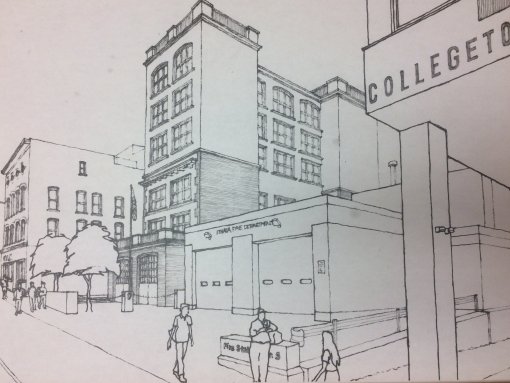
5. With the contentious 309 College Avenue / No. 9 fire station debate having met its dramatic conclusion, this render of a proposed redevelopment has been released by its owners. It would appear that the plaza and newer west (front) wing has its exterior walls retained while the rest of the structure is removed, a facadectomy. One could argue this is better than Visum’s plans because it saves large portions of the original structure, vs. the complete removal in Visum’s first version, and emulation of elements in the second. This iteration has decorative roof elements, arched windows in the shape of the fire engine bay doors, and a dumbbell shape characteristic of New York City “Old Law Tenement” buildings built in the late 1800s. The armchair architecture critic typing here would ask for elements of visual interest in the blank walls of the addition, but overall this looks like a good first swing. This is probably intended as first-floor commercial restaurant/retail with apartments above. No architect is listed with the sketch.


Harold’s Square Construction Update, 4/2018

10 05 2018

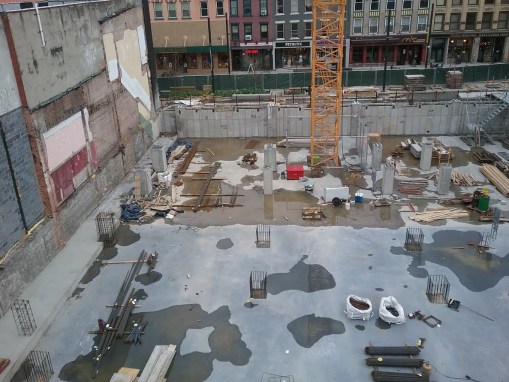
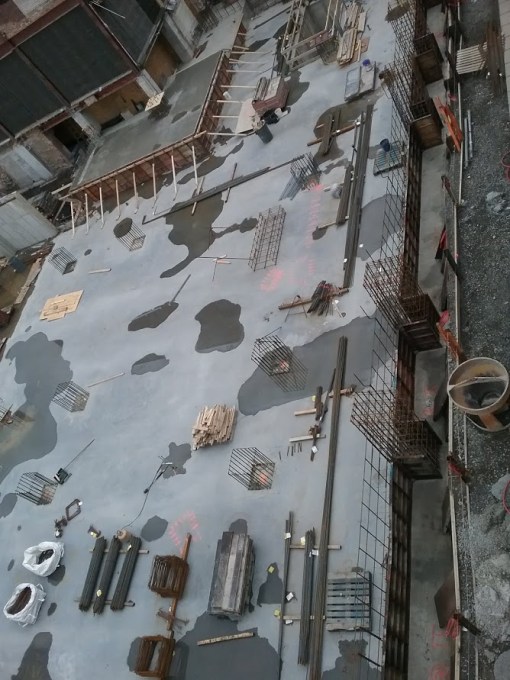
Ithaca weather is not accommodating. Originally, the pour for the concrete slab was supposed to take place on April 3rd. It’s tricky, because this is a large footprint and the building is very heavy, necessitating a thick slab – 30 inches thick. That has to all be poured at once, without any potential interruptions like rain or snow, which can weaken the concrete as it cures (upsets the mix and water balance). That was rescheduled the first time due to winter weather, and was expected to take place on the 11th, which was rained out. 4/16 was also cancelled due to winter weather. Finally the concrete was able to be poured on the 23rd.

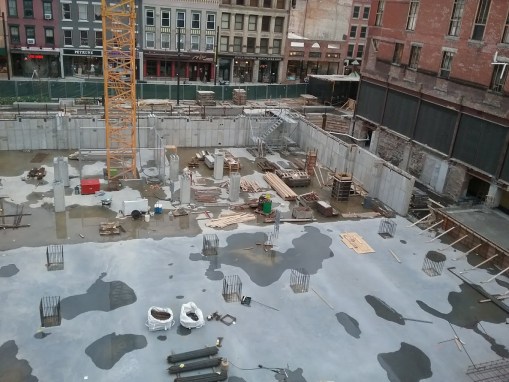
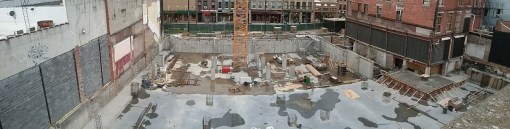
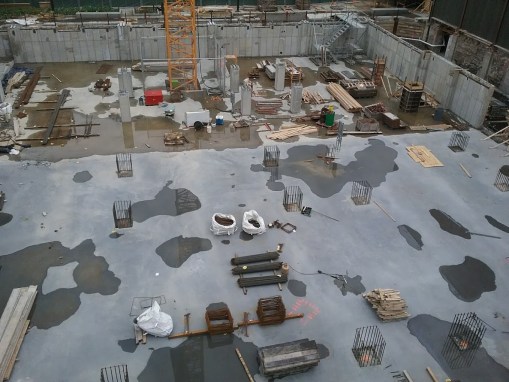
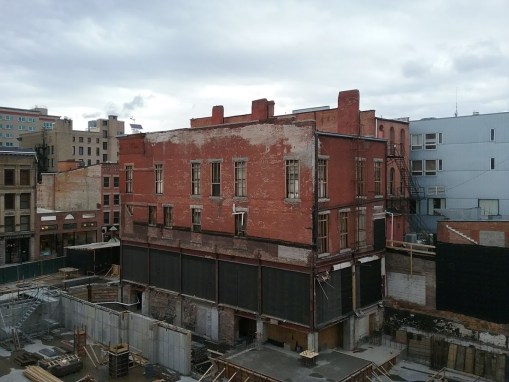
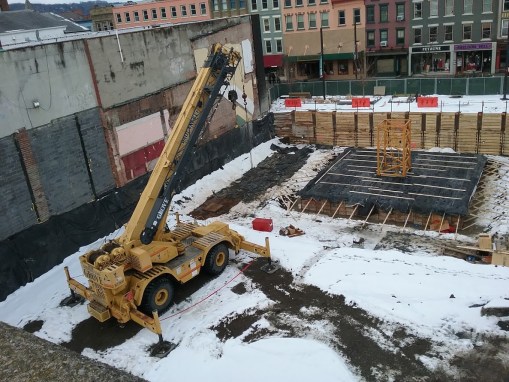
In the photos below, you can see some wood forms are still in place for smaller sections (entryway, lower right of site). The vertical concrete column bases are being poured (note the squares of vertical rebar in the sections yet to be encased), with steel plates atop the finished column to tie into the steel beams. The hole in the lower right (southeast) corner is for one of the elevator cores. Taylor the Builders will have this heading skyward in short order.


107 South Albany Street Construction Update, 4/2018

4 05 2018

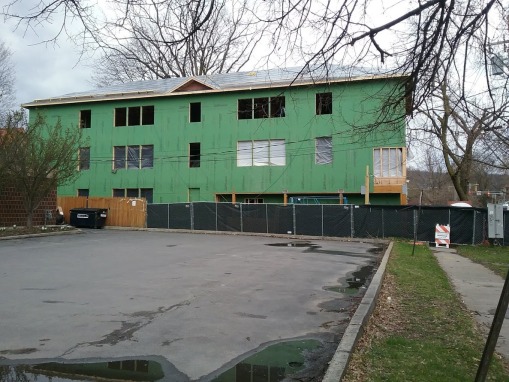
The new 11-unit apartment building at 107 South Albany Street is fully framed and roofed. It looks like the roof underlayment is down and the shingles are starting to go on -the photos below show plumbing and electrical boxes already installed on the first floor. Most of the sheathing is in place, and given the plastic, utilities roughs-ins are likely ongoing inside the new structure. From the listing on Zillow:

“Brand new luxury 1 bedroom apartment in Ithaca’s newest development available August 1, 2018. One block from the Ithaca Commons and a bus stop with multiple routes at your door.
The Unit:
– Is beautifully furnished
– Boasts high end finishes throughout including: custom cabinetry, quartz counter-tops, stainless appliances and a beautiful tiled bath.
– Has laundry in building
– Includes indoor bike storage
– Water, high speed internet, common area maintenance and snow removal included in this professionally managed 11-unit building
The exterior, with cornice and orthodox windows are additional architecturally designed items that add to the beauty of the building. No detail has been overlooked. A must see as downtown Ithaca continues to grow. Photos are from other recent projects and are for illustrative purposes. They represent the types of finishes you will find within apartment.”
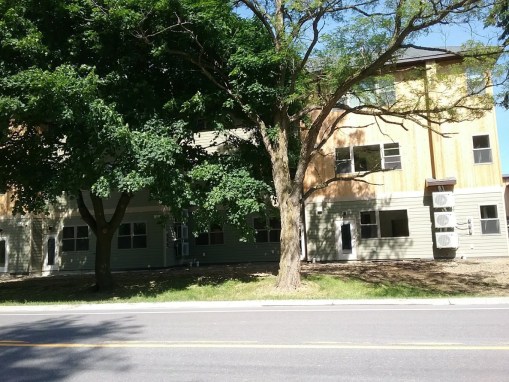
 

I have never heard the phrase “orthodox windows” unless the topic was a church.

An August 1st opening means this building’s going to have to move at a fairly quick pace over the next few months. I don’t see any current information on rent, but the last I had seen was $1,100/month for a 1-bedroom, which isn’t Collegetown extreme, but it’s premium-priced for the State Street Corridor, and not unusual for new construction. Apartments.com seems to suggests that all the units are spoken for.

Background information on the project and its specifications can be found here. Renting Ithaca (Nick Stavropoulos) is the developer, and Flatfield Designs (Daniel Hirtler) is the architect.


Village Solars Construction Update, 3/2018

24 03 2018

It looks like 102 Village Place is just about complete from the outside, with only some minor finishing work like trim boards remaining on the to-do list. Its peer, 116 Village Circle, is a little further behind, with rough-ins, insulation and drywall in place inside, and exterior facade work underway. The air-source heat pumps have been installed, but not fully hooked up yet. The 42 units in these two (24 and 18 respectively) should be ready for occupancy by the end of the spring.

I never caught it before, but the project docs say the developer, Lifestyles Properties (the Lucente family), will plant over 500 cherry trees on the property as phases concludes and the land is no longer disturbed. Perhaps a few of the saplings below are included in that figure.

According to the phasing plan, the next phase is to replace 2 Village Circle and 22 Village Circle with a pair of 18-unit buildings. Those would be twelve studios and six two-bedrooms each, replacing two ten one-bedroom unit buildings (net gain of 28 residents, for those keeping in track). These would likely start later this year for a 2019 completion.

After that time, Phase 3b, a 20-unit, 20-bedroom mixed-use community building (building “F”, all-new), would also start construction, with the start of phase 4, the 24-unit replacement of 36 Village Circle, to follow in the 2019-2020 timeframe. 3b has to start before Phase 4 if even just one day sooner, as that was added as a stipulation by the town planning board before any new phases commence (presumably, it would also have to be completed in reasonable time). Lifestyle Properties says the two buildings per year phase-in works well for Tompkins Trust Company as lender (its market segment and location can comfortably absorb another 42 or so units every year), and for the in-house construction team and preferred subcontractors. Spring 2022 is the practical conclusion, but there are plans for additional buildings east of the current site, which could add a few hundred more units throughout the 2020s.

Just as a subjective observation, there has definitely been a change in Lansing’s development pattern. It’s still fairly suburban, but the numerous 3,000 SF Cardamone homes that seemed to be ever-underway on cul-de-sacs in the mid 2000s have now been reduced to a trickle – I never see more than 2 or 3 underway at any one time these days, and driving through Cayuga Way, Woodland Park and Whispering Pines is often a waste of gas. However, multi-family is taking off in areas with sewer access, like here at the Village Solars, and with the English Village / Cayuga Orchard properties between East Shore Drive and Triphammer Road. Likewise, the village is getting plenty of infill on its vacant parcels, from large projects like the Bomax Drive Apartments and Cayuga View Senior Living, to smaller ones like Triphammer Row.

There’s some evidence to back that up – according to the federal HUD Building Permits Database, from 2003-2006, Lansing town and village approved 187 single-family homes and not a single multi-family unit. From 2013-2016 (the latest available), the two approved 92 single-family homes and 148 multi-family units.


Harold’s Square Construction Update, 2/2018

22 02 2018

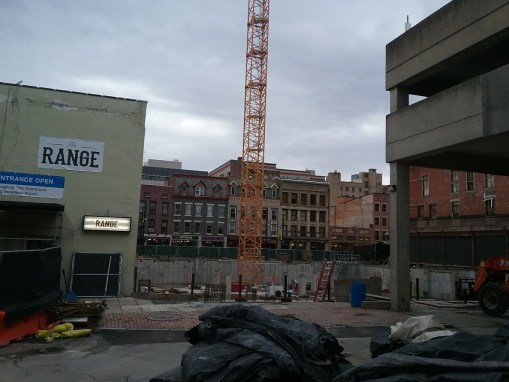
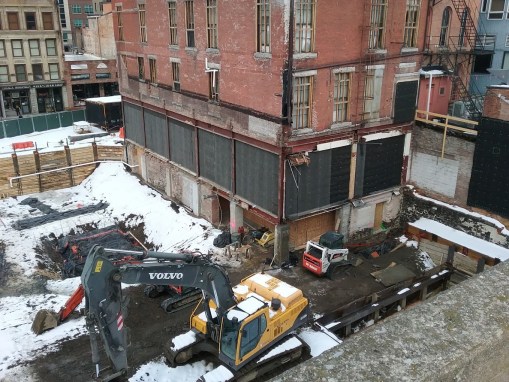
Not all cranes come on wheels. Many larger cranes are assembled and disassembled on site. A concrete crane pad is formed and poured to provide a base for the crane, with the pieces assembled upward from the base. That’s what you can see in the photos below. The size can vary depending on the size of the crane required, whether it’s free-standing or tied-in, whether there are rock anchors that can be used, and the soil upon which it and the pad will rest. Here, the crane pad will rest on a thick, firm mud layer beneath, and the concrete will be reinforced with a tied-in (meaning the grid bars are tied together) steel rebar grid. According to the Harold’s Square website, the crane pad itself will rest on a 4’6″ deep concrete, 38′ x 38′. Keep in mind, there will actually be two cranes on-site. The one mounted here will be the heavy-duty 300-ton crane, but they construction team will use a mobile 55-ton crane as well. The elevator pits are also being boxed and formed.

All the piles have been driven in at this point, and the sides of the site have been shored up as necessary with lagging and steel H-beams. The low-rise Commons-facing portion of the building will utilize an 18″ rebar-reinforced mat slab foundation, while the tower portion will have a 30″ rebar-reinforced mat slab. These pours should happen by mid-March. The structure will be anchored into the foundation, which will evenly distribute the weight and support the floors above. After the foundation is in, the only way to go is up.


107 South Albany Street Construction Update, 2/2018

20 02 2018

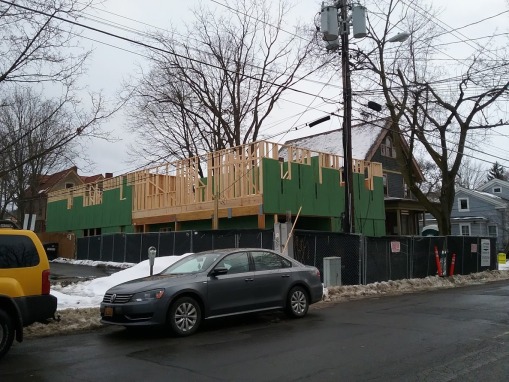
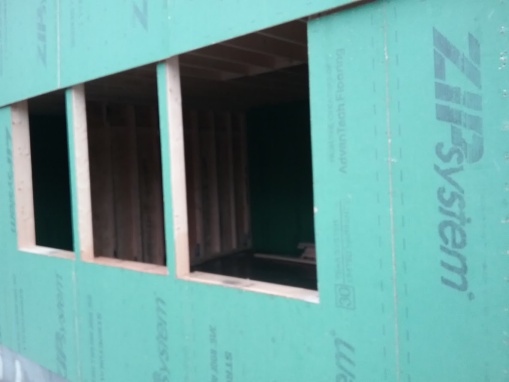
The wood frame for the eleven-unit 107 South Albany Street project is now up to the second floor. ZIP panel sheathing has started to be attached and interior stud walls have been erected. It does not appear utilities rough-ins have started on the ground floor yet.

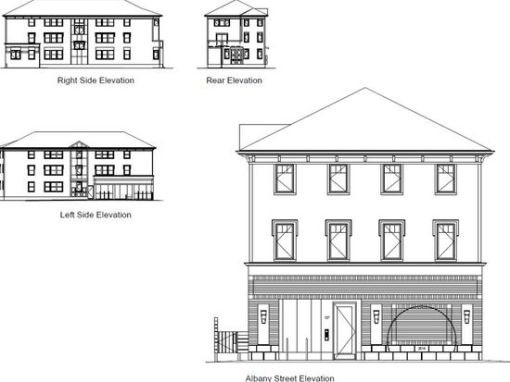
The project recently underwent a last-second but substantial design change. It doesn’t affect the interior square footage (something that would have sent it back to the Planning Board), but the aesthetic have changed up quite a bit.  The tall mid-building stair column and flat roof with cornice have been ditched in favor of a less prominent stairwell with a small gable, and a large hipped roof. The fenestration and ground floor details remain largely the same. Before and after renders are at the bottom of this post.

Marketing for the eleven one-bedroom units has started, with units starting at $1,395/month – pricey, but not Collegetown pricey. The advertisement for a “luxury unit” reads as such:

“Brand new luxury 1 bedroom apartment in Ithaca’s newest development available August 1, 2018. One block from the Ithaca Commons and a bus stop with multiple routes at your door.

The Unit:
– Is beautifully furnished
– Boasts high end finishes throughout including: custom cabinetry, quartz counter-tops, stainless appliances and a beautiful tiled bath.
– Has laundry in building
– Includes indoor bike storage
– Water, high speed internet, common area maintenance and snow removal included in this professionally managed 11-unit building

The exterior, with cornice and orthodox windows are additional architecturally designed items that add to the beauty of the building. No detail has been overlooked. A must see as downtown Ithaca continues to grow. Photos are from other recent projects and are for illustrative purposes. They represent the types of finishes you will find within apartment.”

It’s a bit of a risk, since the real estate waters are generally untested west of Ithaca’s downtown, although a couple other small projects are planned along the State Street Corridor. Long-time residents also worry about gentrification encroaching on the edge of the Southside neighborhood. However, city planners are pushing development westward from the downtown core, and the possibility of a government center on the Central Fire Station site a block away means that there may soon be a large employer practically at its doorstep. The Facebook ads are pitched with an eye to students, but that seems a stretch; even with the buses, this is a bit too far out for many Cornell or Ithaca College kids to consider, and it’s double the per bedroom price of shared South Hill, Fall Creek or outer Collegetown units.
The developers, the Stavropoulos family, don’t seem especially inclined towards any one neighborhood. Previous projects include a pair of duplexes in Fall Creek, a new home on Linn Street, and home additions on South Hill. The Stavropoulos family’s next project after this would potentially be the duplex pair at 209 Hudson Street on South Hill, if approvals are granted. Arguably, South Hill is a safer bet financially thanks to Ithaca College, though becoming less amenable due to the concerns from permanent residents regarding quality-of-life manners, which has led to a new zoning overlay to rein in infill in that neighborhood.


Harold’s Square Construction Update, 12/2017

31 12 2017

Grab a cup of coffee or tea for this one, it’s a long introduction.

Touching on a familiar topic again, downtown and urban living has enjoyed a revived interest in the past fifteen years, and coincident with moderate but steady economic growth in Ithaca, it has created plenty of opportunities for those with assets and expertise. Succeeding in those opportunities is a slightly different story – money and a strong project team are important, but some projects have an easier go of it than others. Harold’s Square has experienced substantial obstacles in its long pre-construction period, but thanks to developer David Lubin’s flexibility and tenacity, as well as an accommodating local government and growing market, it has surmounted those challenges and is now underway.

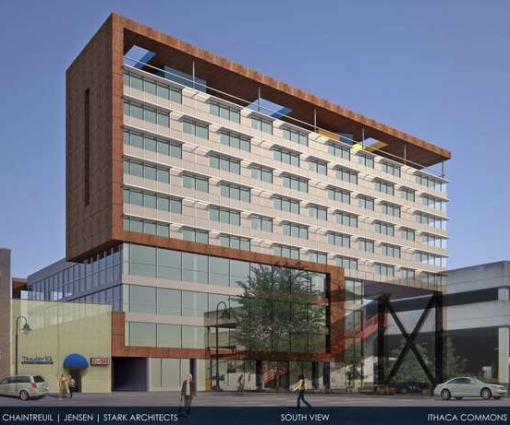
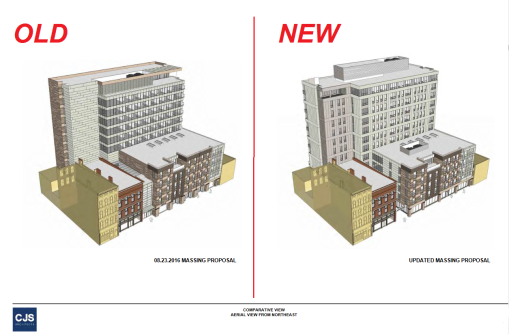
The first version of Harold Square at 123-139 The Commons was proposed back in October 2012. At the time, the plans called for first-floor retail, a few floors of office space, and 60-70 apartments on the upper floors of the 11-story building. The Sage Block (Benchwarmers) and W.H. Miller Building (Home Dairy) would be renovated, while three less historic buildings would be taken down to make way for the new development. The estimated price was $30 million and the plan was to have the 126,000 SF building finished by summer 2014. At that time, the building would have needed a fairly substantial zoning variance – the entire site was CBD-60, and it reached about 135 feet.

With the exception of the first-floor retail and Sage Block renovation, none of the other details have remained the same. However, the five major design iterations have all been by the same architect – CJS Architects (formerly Chaintreuil | Jensen | Stark Architects), with offices in Rochester and (later) Buffalo.

Lubin already had some familiarity with the project site – one of the storefronts to be removed used to be home to Harold’s Army Navy Store, a business started by his father and expanded to sixteen locations across the region. These stores were closed in the late 1990s as Lubin chose to focus on his development project and other business endeavors, like his computer recycling business. Harold’s Square is a nod to his father’s store, and the famed Herald Square of New York City.

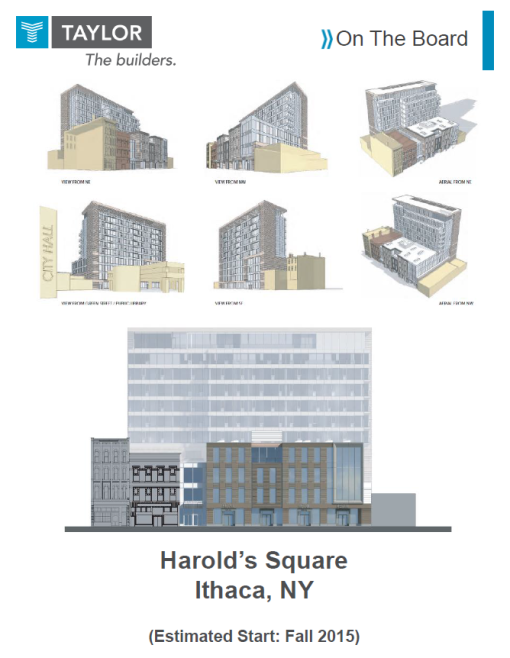
The project design was critiqued and reviewed thoroughly over the next ten months, which also produced the first major set of design changes – in fact, if you’re googling Harold’s Square without prior knowledge, images of this version, v02, turn up enough that even many current agencies and organizations (and even the posters on the construction fence) treat it as the final design. The 2015 image from the contractor’s website, Taylor the Builders, is shown above. It did away with some of the less-liked design features of v01, but retained a clean, contemporary profile with a curtain wall of glass, and terracotta panels that extended to the roof canopy. During this period, plans to acquire the W.H. Miller Building were dropped.

This was the version that was approved in August 2013, and received CIITAP tax abatements two months later in October 2013. It had 162,750 SF, with basement utilities/storage, ground-floor retail (20,670 SF), three floors of office space (56,855 SF) and 46 apartments on floors 5-10. The eleventh floor was a 5,000 SF penthouse for tenant use. The price tag was about $38 million.

At this point, post IDA approval, we kinda enter a publicly dormant period. Publicly, apart from the occasional reassurance from Lubin that the project was still alive, and the re-application for approval permits since those expire after two years, there didn’t appear to be much going on. Behind the scenes, it gets a little more interesting.

The project was having trouble securing a construction loan, and that was for a couple of reasons. For one, Lubin (as L Enterprises LLC) was having trouble securing a major office tenant, and office space made up about a third of the building. No one had any concerns about the apartments since the residential market was (and still is) strong, and retail is not hard to sell when it’s on The Commons, but office space is a different matter altogether. The demand for new space is modest, and often custom built for a tenant, rather than speculative space to be filled by tenants after it’s complete. So if we’re being fair but critical, the project team made a fair gamble but ended up overestimating the market for office space. Unless that space was spoken for, there would be no financing.

Re-examining the mix of uses, Lubin decided to revamp the project when seeking re-approvals in August 2015 – two floors of office space would be replaced with apartments. The first mention of this actually came through the New York Times, followed by the Voice and the Ithaca Times. With the drop in office space, the number of apartments jumped to 86. This also required some design changes, which were going to be reviewed by the city in Fall 2015. My notes show August 2016 ended up being the review date. We’ll call this version 3, v03.

Now Harold’s Square was 180,090 SF, with basement utility/storage space, ground-floor retail, second floor office space, and ten floors of apartments. The project had grown from 11 to 12 floors, but the height was nearly the same since residential floors have lower floor-to-ceiling heights than Class A office space. The total unit count was now 108, with 40 micro units (all the rage these days), 30 1-bedroom units, and 38 2-bedroom units. This version was approved in September 2016. By the time the project was up for re-approval, the city zoning had changed such that 140-foot buildings were allowed on-site, so no further height variance was needed.

With the space utilization issue worked out, the project was still seen as a sizable risk to potential lenders – it was at its inception the largest project proposed in downtown Ithaca since 2005’s Seneca Place, and Lubin had some experience with smaller projects, but nothing this size. Finding a partner to buy in to the plan would reduce the loan needed and add experience, making the project an easier sell to lenders. This is where McGuire Development, a major interest in the Buffalo market (3.5 million SF), came into play. They saw the potential in Lubin’s vision and the value in the Ithaca market, and agreed to buy in as a development partner. This appears to have been finalized in January 2017.

Fast forward to May 2017. With McGuire playing a role on the project team, major design iteration #4 (v04) removed the terracotta panels in favor of metal, and reconfigured the Commons storefront retail to use a common entrance, for “financial viability”. The enclosed atrium was removed and a mechanical penthouse added. It seems likely that McGuire wanted to ensure a certain return on investment. This version was approved without much further comment, except perhaps a bit of exasperation from city officials. Concurrently, the project team re-applied to the IDA for a revised tax abatement – the project’s price tag was now up to $42 million, and they were seeking revised, slightly more generous terms, which were granted with some grumbling. Complaints include a lack of explicitly affordable housing units, local labor concerns, and gentrification. The use of heat pumps and 60 kW of rooftop solar panels assuaged the sustainability crowd.

By October, the project was underway, courtesy of a construction loan from Norwich-based NBT Bank. The bank is a regional player with about 1.5x the assets of Tompkins Trust. This is new territory for NBT, which typically limits itself to single-family home loans in Tompkins, and has no service branches within county lines. The loan is for $33,842,000. L Enterprises and McGuire have each put up $5 million to cover the $43,842,000 cost of the project.

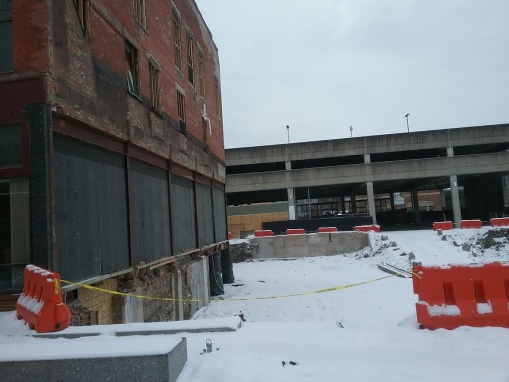
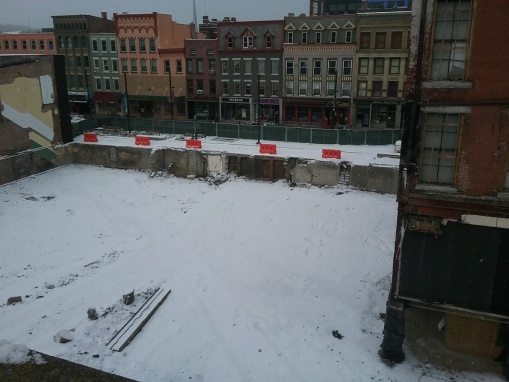
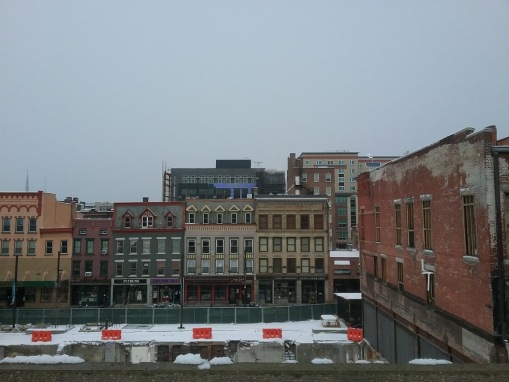
So here we are. The site has been cleared, and shoring and excavation by Paolangeli Contractor will take place over the next six weeks. After that comes ten days of pile driving, using a zero-resonance hammer to reduce vibration and noise – ostensibly, because is probably the second-most high-profile project site in the city after City Centre (which used the same method). Project completion is expected in Spring 2019. Sorry folks, but the Commons playground will remained cocooned and closed due to safety concerns.

The project team includes L Enterprises LLC (led by David Lubin) as lead developer, McGuire Development as co-developer, Taylor the Builders as the general contractor, CJS Architects, Fagan Engineers and Land Surveyors handling the application and civil/structural engineering work, and Brous Consulting for public relations. Those who want to follow the project without this blog as an intermediary can sign up for update on the project webpage here.

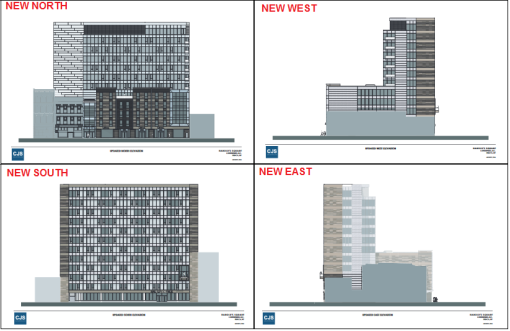
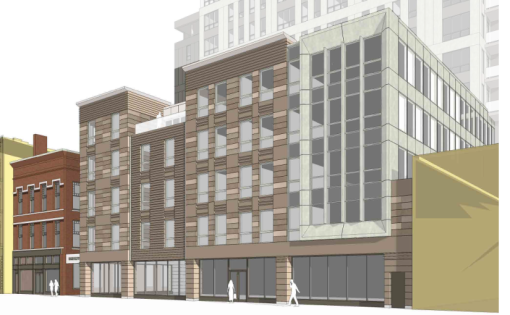
With the latest update on their webpage also comes the latest version of the project design, v05 – which doesn’t really affect the program space, but it does have several visual changes. The corner units now have exposed balconies vs enclosed rooms, the dark metal band on the top floor facing the Commons has been removed, and the retail frontage was reconfigured a bit on the Commons facade (the north module was stretched, one of the entry doors moved, and different fenestration patterns have been applied to some of the modules and the northwest face).

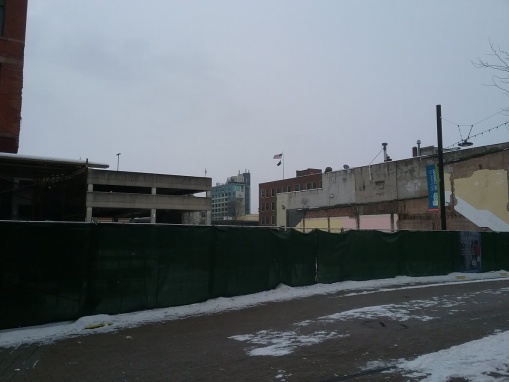
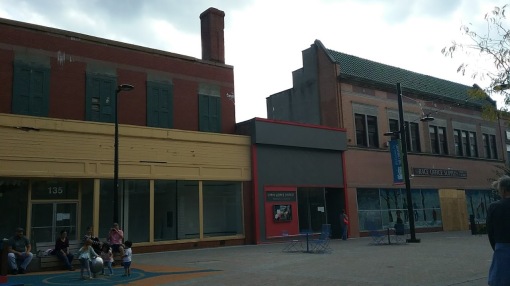
Pre-demo photo: