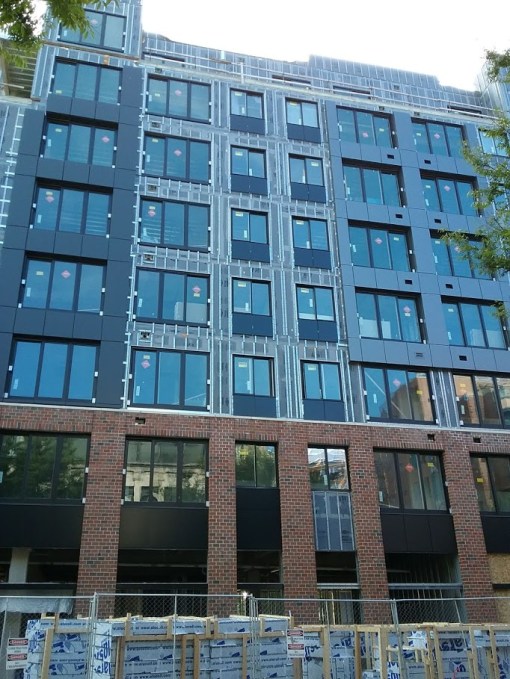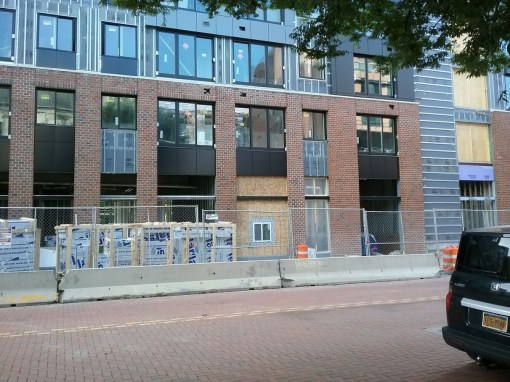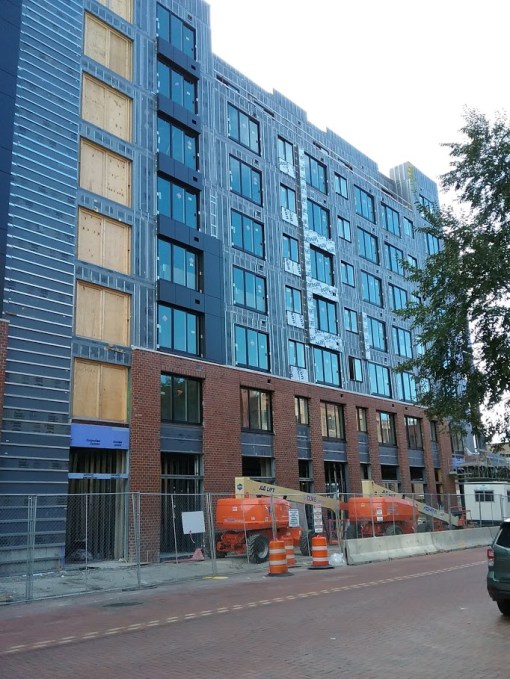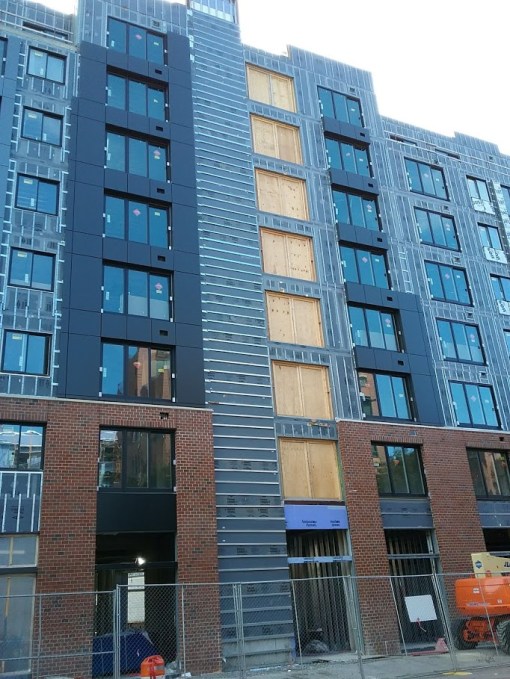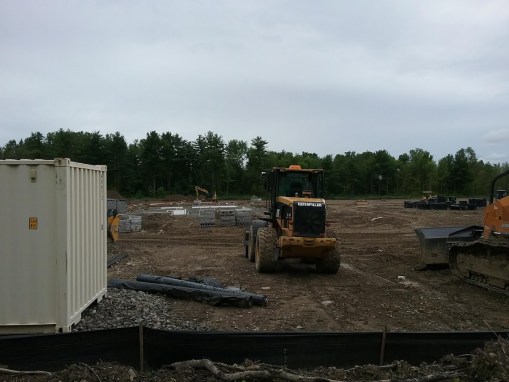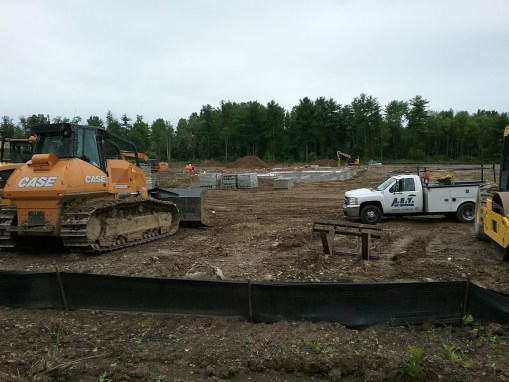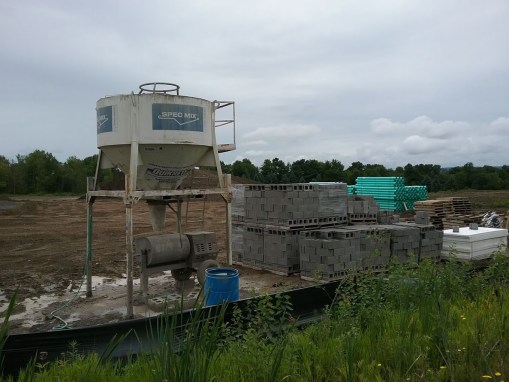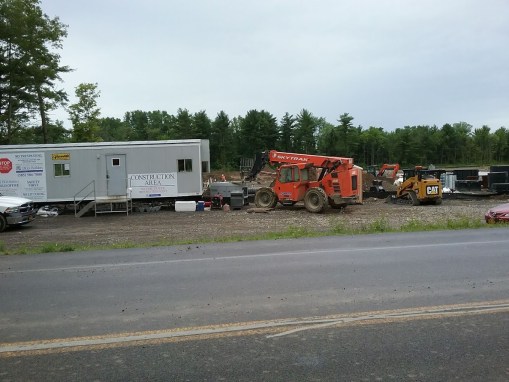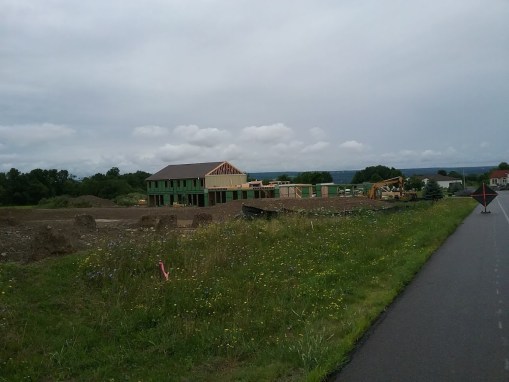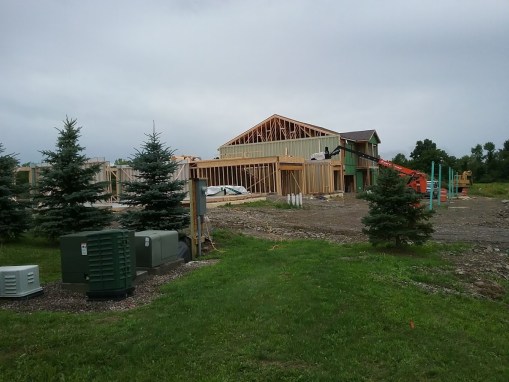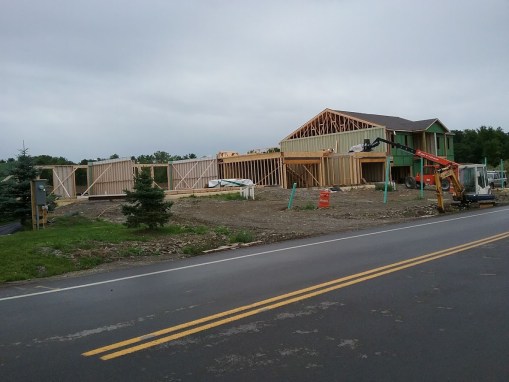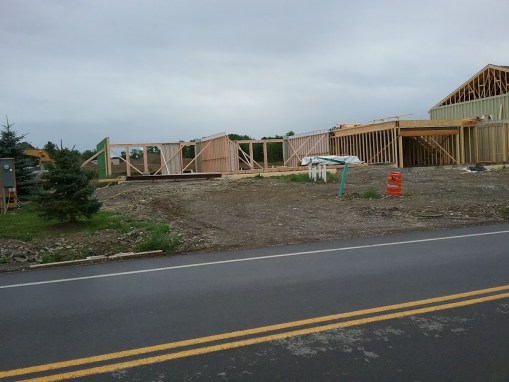
802 Dryden Road Construction Update, 11/2018

21 11 2018

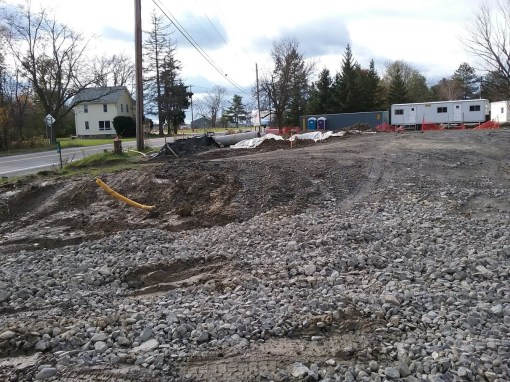
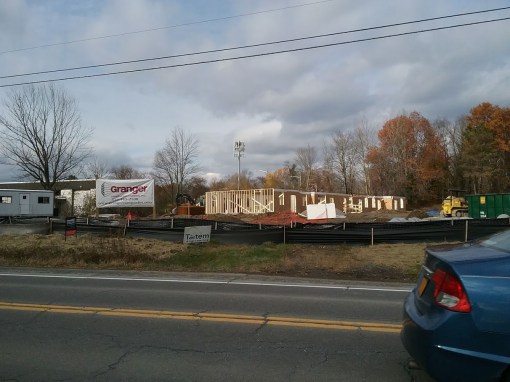
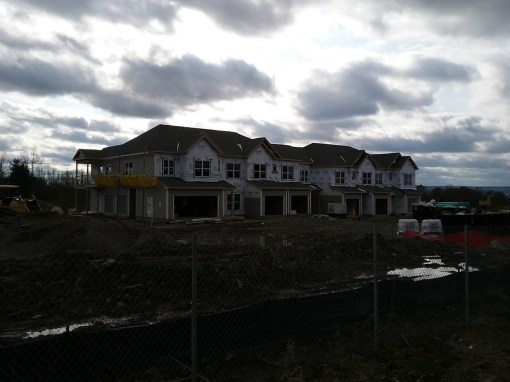
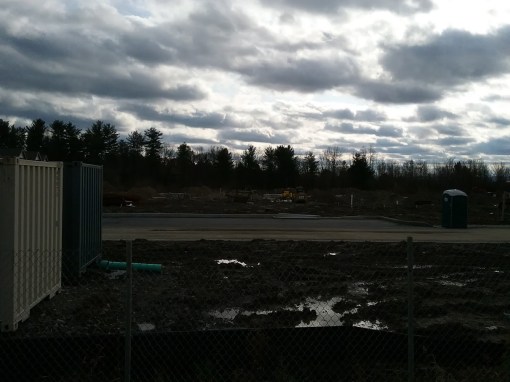
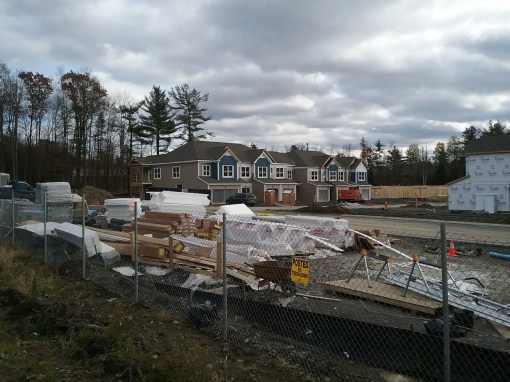
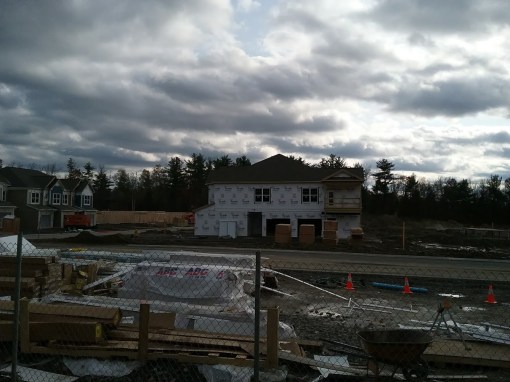
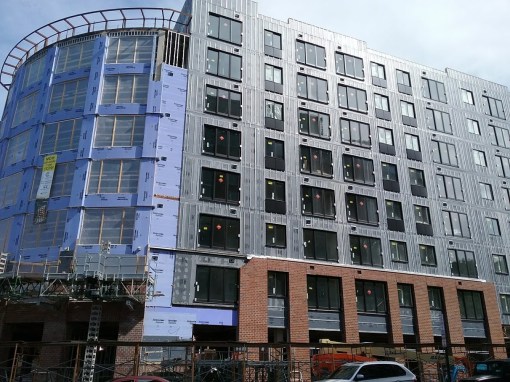
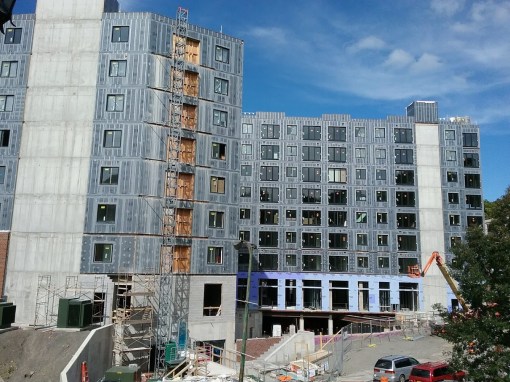
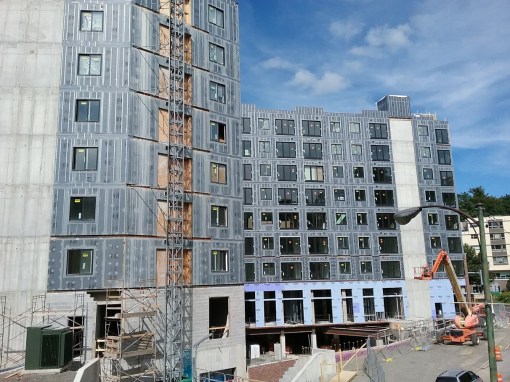
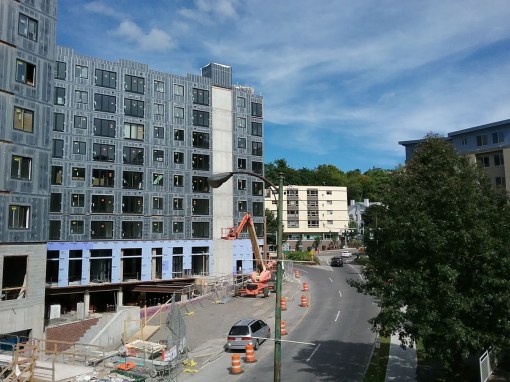
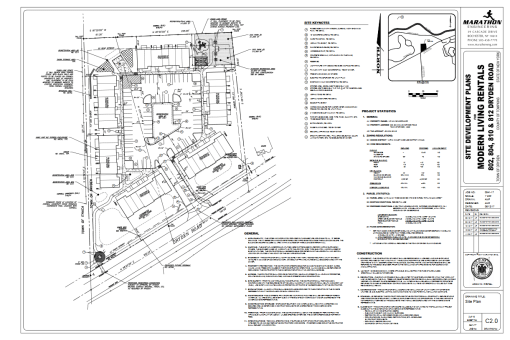
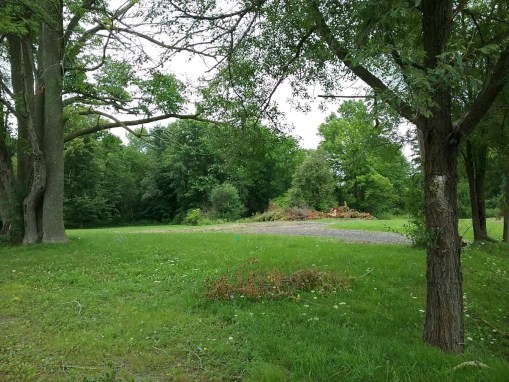
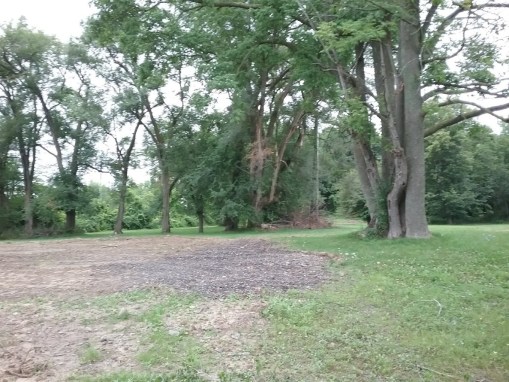
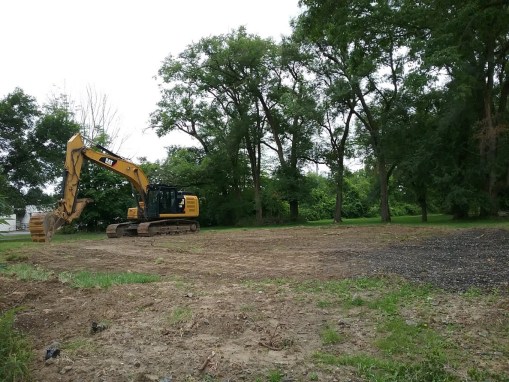
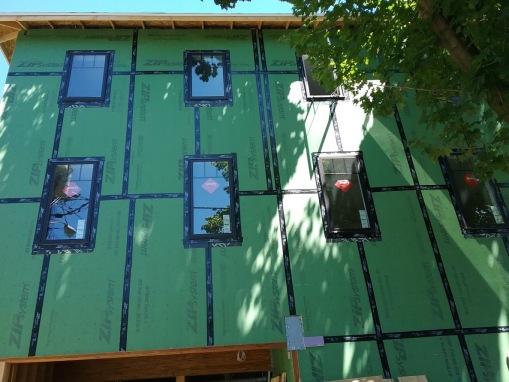
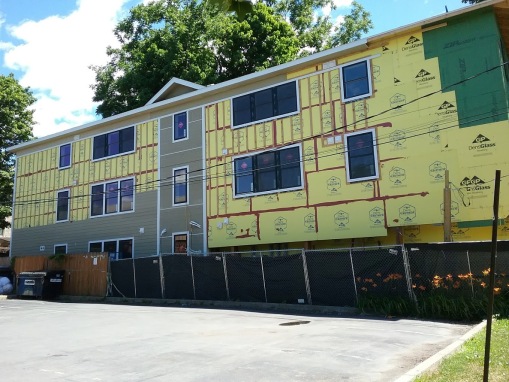
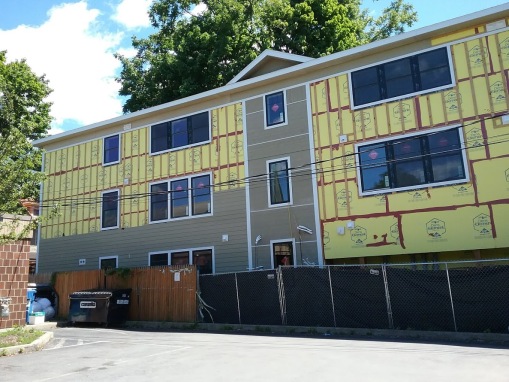
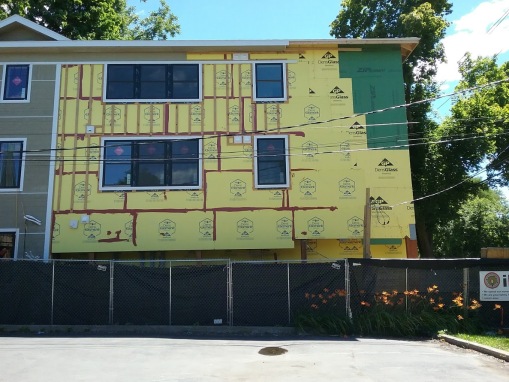
802 Dryden Road, also called “Ivy Ridge”, was originally the product of local developer Charlie O’Connor, CEO of Modern Living Rentals. However, just as site preparation and underground utility installations were getting underway late last summer, the project changed hands. On September 12th, the site and construction plans were sold for $2.075 million. Filed on the same day was a construction loan from M&T Bank to pay for construction of the project – a rather substantial $8.6 million for the 42-unit, 108-bedroom townhouse complex. The buyer’s LLC was linked to a suburban Pittsburgh address for Matthew Durbin, and a little online searching indicates Durbin is a Cornell Johnson School (MBA) Alumnus, a former investment banker turned business executive. In short, an outside investor but with a demonstrated familiarity with the Ithaca area, business acumen and the money to make things happen. The sale does not appear to have altered the plans (any revisions would need to be approved by the town of Dryden) or the timeline.

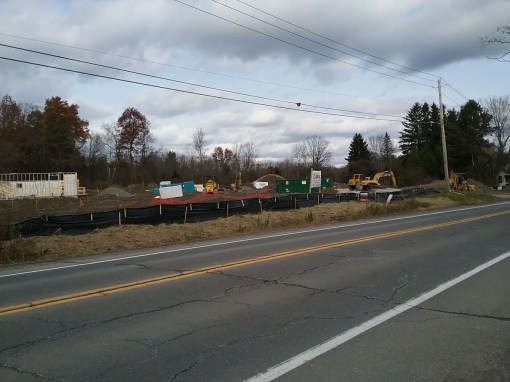
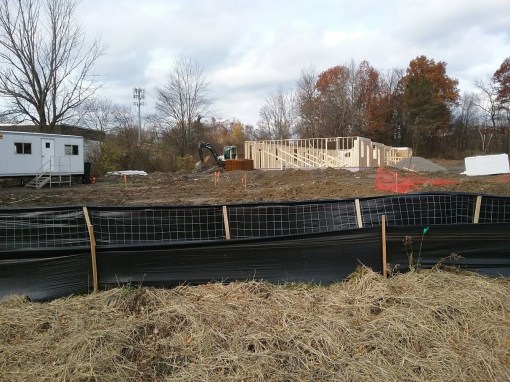
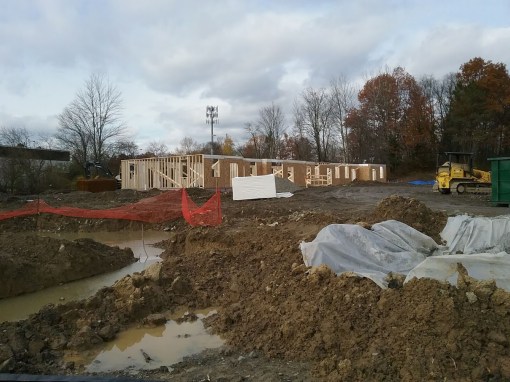
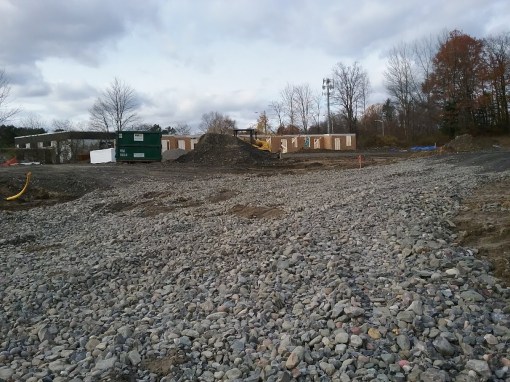
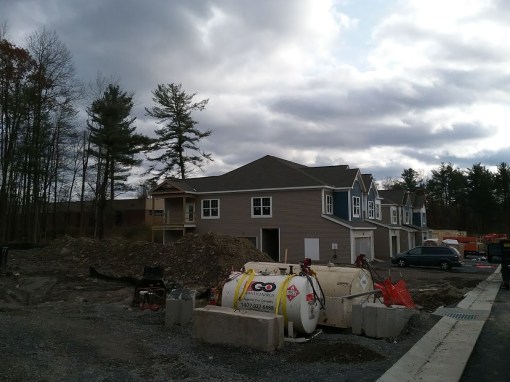
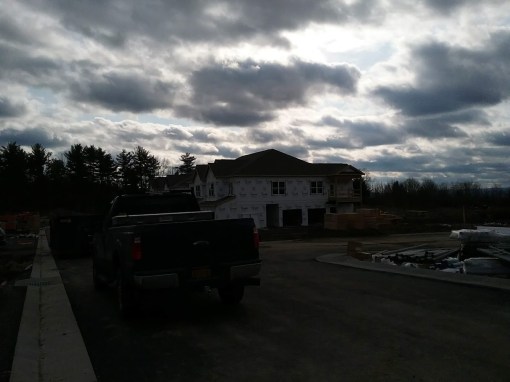
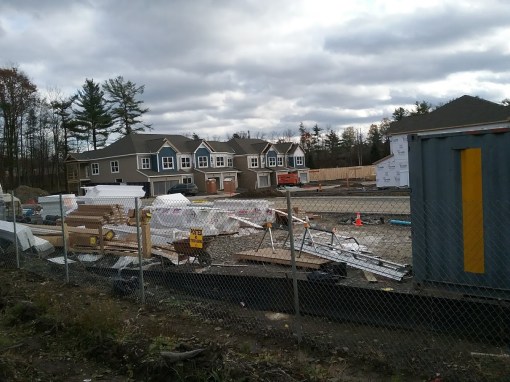
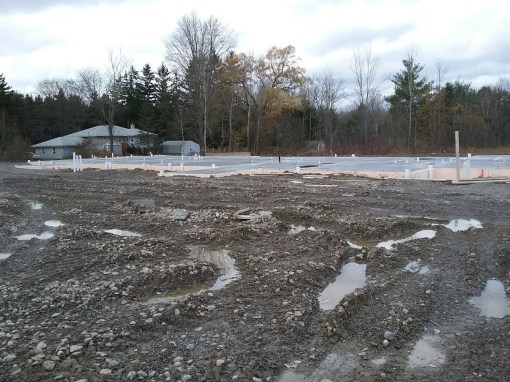
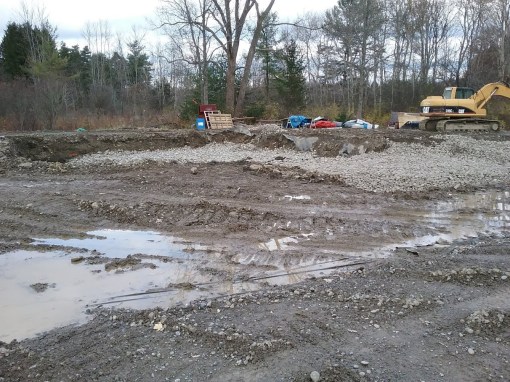
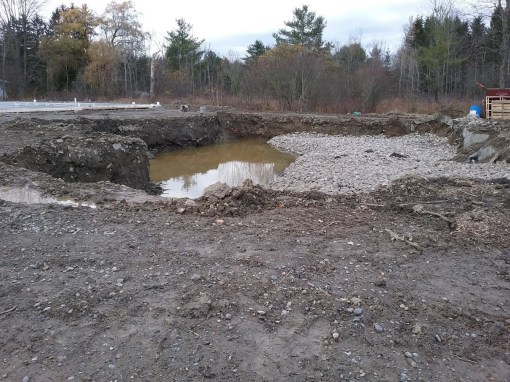
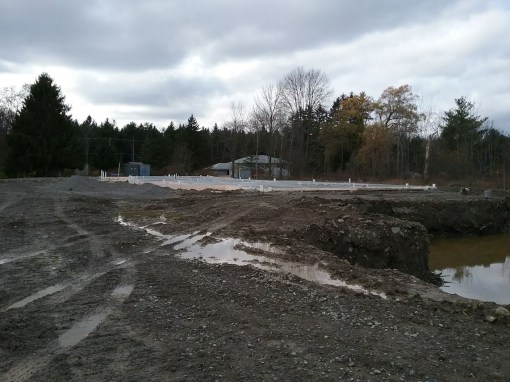
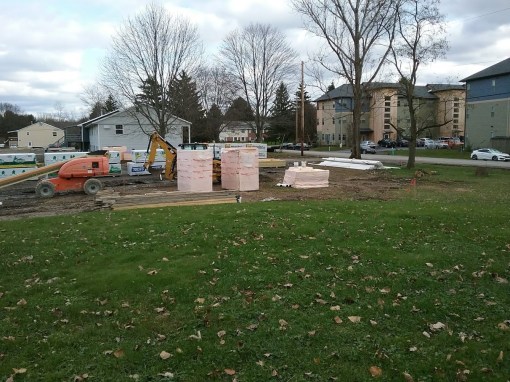
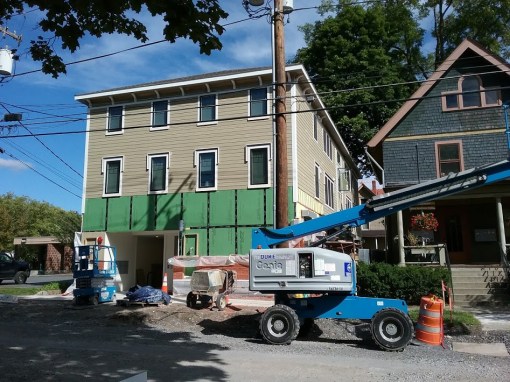
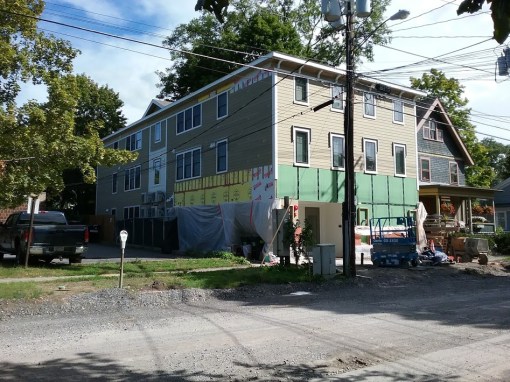
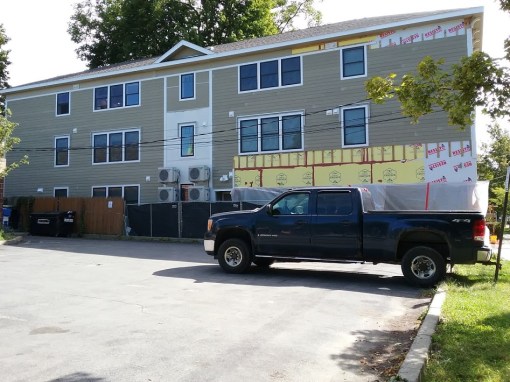
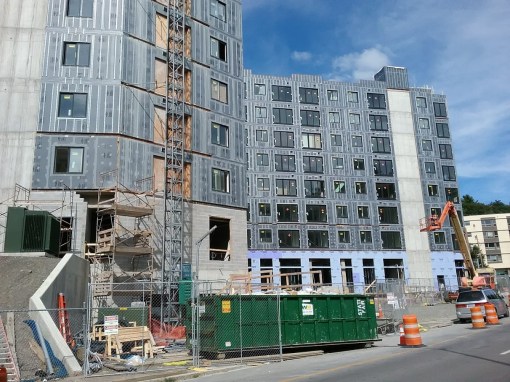
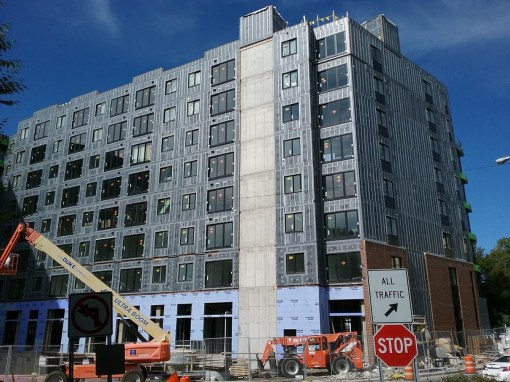
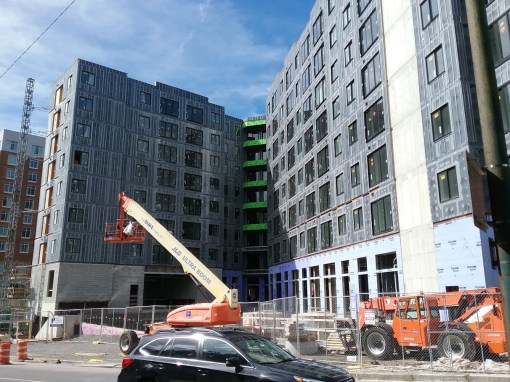
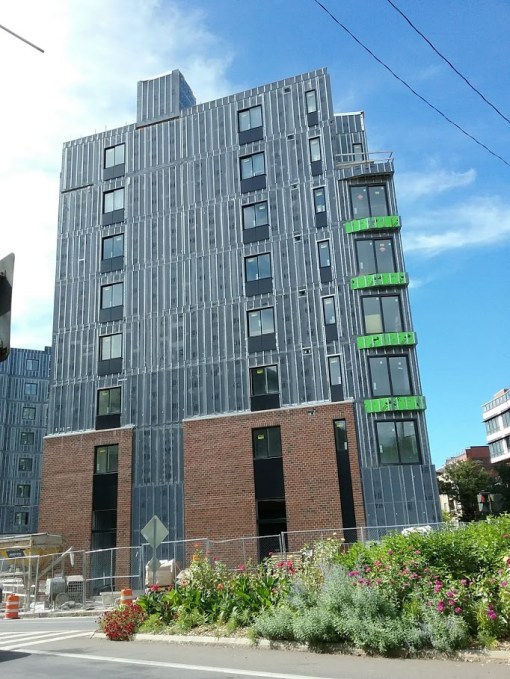
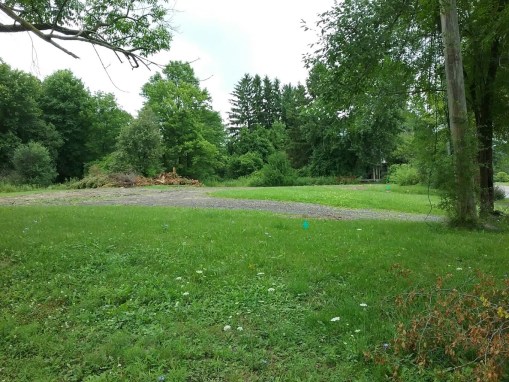
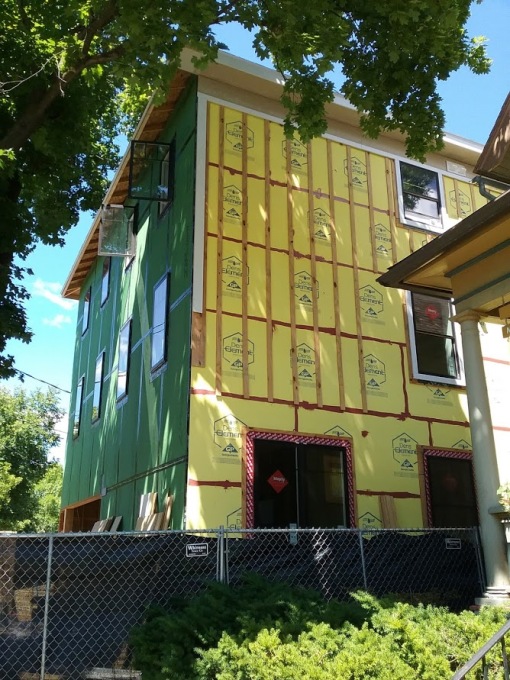
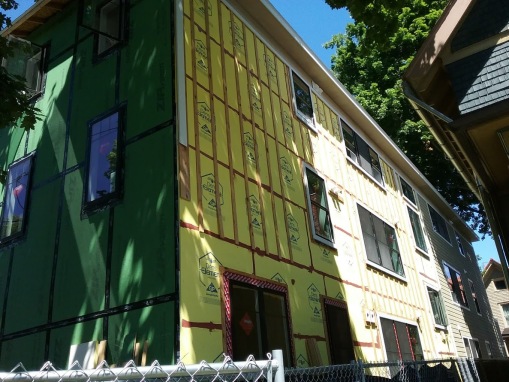
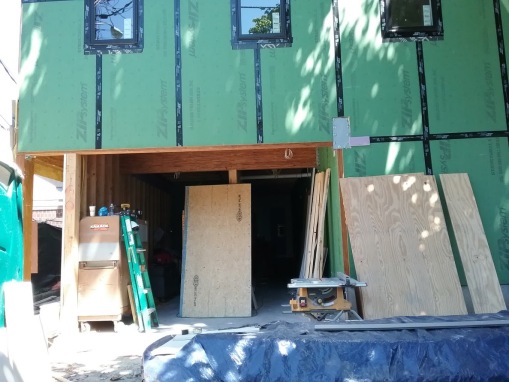
Framing has started on one of the townhouse strings (each string is seven units apiece) and foundation work has started on a second. The plan is to have the units ready for occupancy in time for the Fall 2019 academic semester – being right next to the Cornell Arboretum, it’s a literal stone’s throw from the edge of Cornell campus, and is intended to appeal to graduate or professional students (especially students of the veterinary school, whose location on the eastern edge of Cornell campus has left them with few walkable options). STREAM Collaborative designed the units, Taitem Engineering is on board as a structural engineer, and Granger Construction of East Syracuse is the general contractor.

A full description of the project and its history can be found here.


East Pointe Apartments Construction Update, 11/2018

21 11 2018

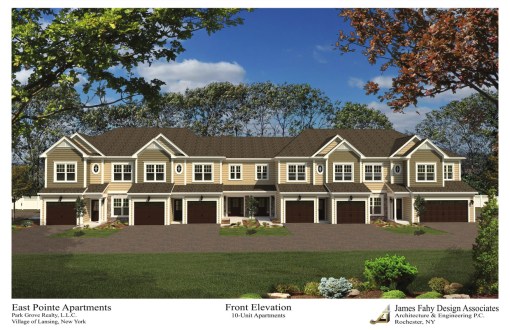
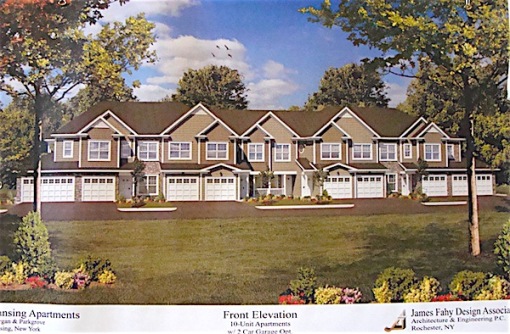
The design of the townhouse strings underwent some pretty substantial changes. This was what was originally proposed and approved, on Park Grove Realty’s website:

And this is what’s being built, according to the apartments.com listing:

The new render was posted online Monday at 10:30 AM according to the image properties, so this is quite literally “hot off the press”. It would appear that active marketing for the apartment began on several real estate websites (Zillow, Trulia, Realtor.com) this week.

Same architect, but very different designs. The number of units remains the same per string (ten each), but it’s not clear if the unit counts by bedroom has been modified. According to the rental advertisements, the prices will be in the upper/premium side of the market, though not as high as some of the luxury units in Ithaca: one-bedrooms will be $1,695-$1,795/month, two-bedrooms $1,875-$1,975/month, and three-bedrooms $2,345/month. Units come with fiber optic internet connections, cable TV, USB ports in outlets, vinyl plank flooring, 42 inch cabinets, fitness room and lounge access, pool/clubhouse, granite countertops, stainless steel appliances, washer/dryer, ample parking and smaller dogs and cats (for a $299 initial fee plus another $35/month).

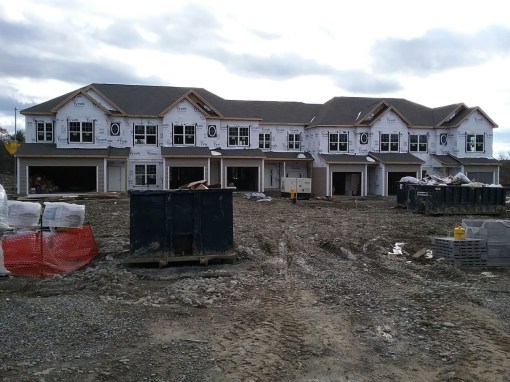
DGA Builders has continued building these out at a very quick pace. It appears that at least three of the ten-unit apartment buildings have been fully framed, a fourth is starting framework, and at least a few more have foundation work or site grading underway. The loop road (named “East Pointe Drive”) is partially complete, and the underground utilities (sewer, water) appear to be in place. Given the units that have been built, it looks like the only significant distinguishing factor between strings will be the secondary vinyl siding color – noting the Spruce Green in the render and Pacific Blue in the most complete townhouse string. Most likely, this is Saint-Gobain Certainteed vinyl siding. The first units in the 140-unit townhouse complex are expected to hit the rental market this April.

A full description of the project and its history can be found here.

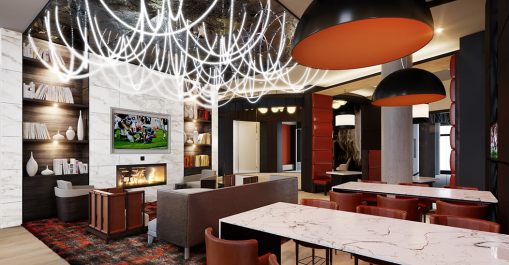
Interior renders:


Village Solars Construction Update, 11/2018

21 11 2018

The Village Solars complex is a development project that never truly stops. Lifestyle Properties (the Lucente family) only builds two or three new apartment buildings each year, but after four years of construction, it has resulted in quite a large development. A visit to the site shows the next buildings are just getting underway – based off the latest site plan, it appears to be Building “L” and Building “K”, which is a little out-of-order in that these two were supposed to built in 2020-2021, after another phase that so far remains unbuilt. Building L’s foundation has been formed and poured, with all the utilities poking out of the concrete, to be routed into the framing as the building goes up; Building “K” looks like it’s still in the excavation stage. The crushed stone helps with drainage, site leveling and preventing cracks in the concrete due to settling. That water will be pumped out before the footers are poured.

Each of the two buildings, which have slightly different designs, is designed to host 24 units – 3 three-bedroom, 6 two-bedroom, 3 one-bedroom, and 12 of the one-bedroom “micro-units”, which are 400-500 square feet. Expect a mid-2019 opening for the pair. Next year’s phase likely involves one more apartment building in Phase “4”, as well as the construction on their mixed-use community center building (Building “F”), which will go in that empty space in the last photo. The town of Lansing’s Village Solars amended PDA law (#6 of 2016, to be technical) says the developers are only allowed one more building to be built before the community center must be constructed, and that the center must be built by the end of 2020.


News Tidbits 11/17/2018

18 11 2018

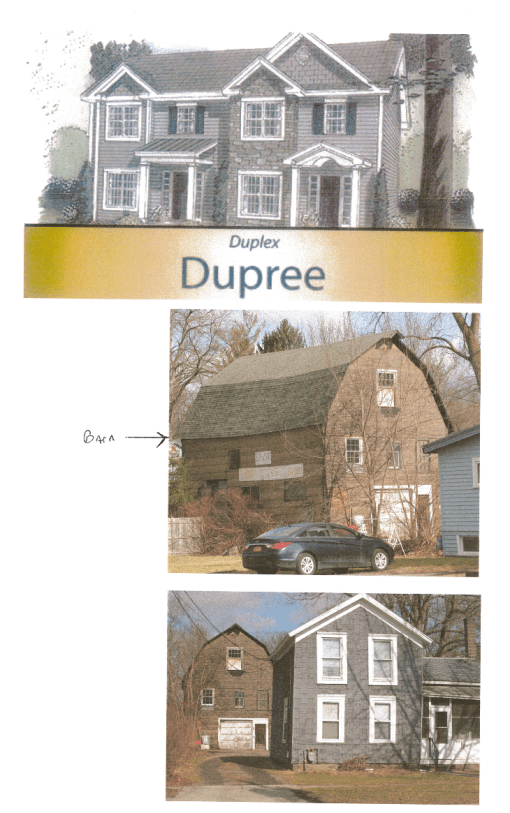
X. Let’s start this off with a look at a couple of new projects that will be coming forward to the city of Ithaca Planning Board later this month. The first is 815-17 North Aurora Street. Back in June, when the existing property went on the market, I noted that zoning could conceivably allow the dilapidated house currently on the lot to be taken down and redeveloped into two two-family homes. Lo and behold, that is exactly the plan.

Although the listing has been pulled, no sale has been completed, so it’s not clear what kind of premium they are willing to pay for a double-lot development opportunity in trendy Fall Creek. But thanks to the Site Plan Review (SPR) documents, we at least know who the pending owner/developer is – the Stavropoulos family of West Hill, who own the State Street Diner and a growing portfolio of rental units under the name “Renting Ithaca”. The Stavropoli have redeveloped several properties in the past few years, including 1001 North Aurora Street (4 units), 107 South Albany Street (11 units), a two-family home at 514 Linn Street and a two-family unit planned for 209 Hudson Street (they originally applied to build two two-family buildings, but reduced it to one after neighborhood pushback). Their M.O. is basically small-scale rental infill, nothing especially large or ostentatious, and with that they go under the radar for the most part. In short, this R2b-zoned site is a perfect fit for them.

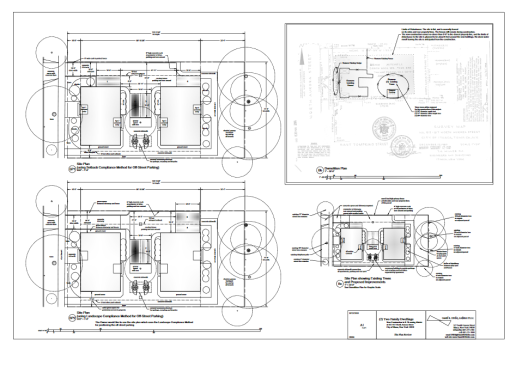
The plan is to tear down the vacant property, and replace it with two two-family structures, four units total. Each will be three bedrooms and 1,290 SF. Their usual architect of choice, Daniel Hirtler, has designed the structures to fit in with the Fall Creek vernacular, with recessed entries and aesthetic details (such as a transition between fiber cement shakes and clapboard siding) for visual interest. The buildings are positioned so that one is in the front of the lot, one at the rear, and only the front structure is visible from most public viewsheds. The site will include four parking spaces with new landscaping and utilities. Heating will come from electric heat pumps, and while the roofs will be capable of hosting solar panels, those aren’t expected to be included as part of the initial build. LED lighting, energy efficient appliances and water heaters, and high-efficiency spray foam insulation are included. This project would very likely meet the new Green Building Policy Requirements if in place. Given recent news in Fall Creek, it should be noted that the old building does contain asbestos (as do most in Fall Creek), but a demolition/deconstruction plan has yet to be filed.

The $627,000 project would be built from January to August 2019, which is a clear nod to having the units ready in time for the next academic year. Fall Creek tends to be less desirable to undergrads at Cornell because of the distance (<1% of total population), but graduate and professional students often rent in the neighborhood (~9% of graduate/professional students at Cornell live in Fall Creek). The planning board is expected to declare itself Lead Agency for project review this month, with approval in December of January, assuming demolition plans, excavation plans and other needed information has been received and approved.
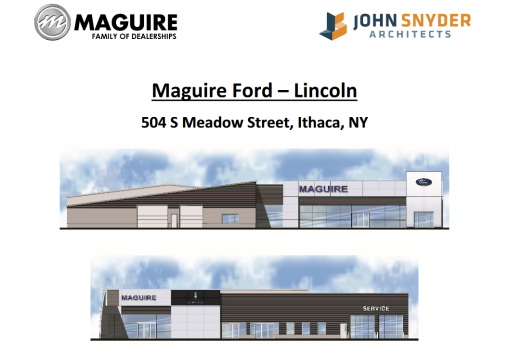
The other new plan to be reviewed this month is for a renovation and expansion of the Maguire Ford Lincoln property at 504 South Meadow Street, just south of Wegmans and the Econo Lodge. Now, for the news savvy, you might be asking, “isn’t Maguire supposed to be moving to Southwest Park?” The answer is two-fold; for one, Ford-Lincoln was not a part of that plan. For two, there hasn’t been much in the way of formal movement on that plan, and the city is hesitant to move forward with a deal because part of the site will serve as a spoils drying area for the inlet dredging, and because of the homeless encampment, which the city would rather not disturb at this time. The evictions didn’t work out so well last time, and members of the Human Services Coalition’s Homeless Task Force are advocating for the city to create a permanent housing solution on-site.

What this all means is that Maguire has to focus on its existing properties to keep them modern and fresh for the time being, both by their own requirements and by Ford’s  – new car dealers must renovate frequently, since carmakers force them to update or risk losing their exclusive rights to sell new vehicles.
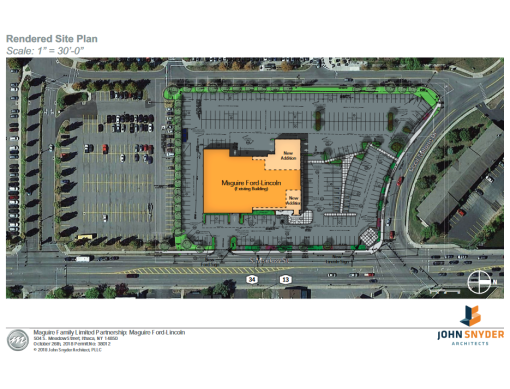
Local firm John Snyder Architects is in charge of design for the $1.5 million project, and while some eco-advocates will kvetch that a car dealer can never be green or sustainable, the building itself is designed to fit Ithaca’s yet-to-be enacted Green Building Policy. The second floor will be expanded with new offices, new customer bathrooms will be installed and the parts and customer waiting areas will be renovated and expanded. The showroom will also be expanded, and it will be slightly closer to Meadow Street than permitted in bib box land, so a zoning variance for front yard setback will be required. As a quick aside, JSA doing a car dealership is an interesting change – usually, car dealership design work has gone to Schickel Architecture.

The additions, which will result in a net increase of 5,610 SF, will be steel-framed, with concrete slab foundations, and faced with a couple variations of aluminum metal panels for a contemporary exterior finish. Apparently, that curved thing at the entrance is called a “foil”. Ithaca’s Elwyn & Palmer is assisting with the structural engineering. While there will be landscaping and circulation improvements, and the amount of green space will be increased from the existing site layout, the project will not meet impervious surface zoning restrictions, and will need a second variance to allow the proposed plan.
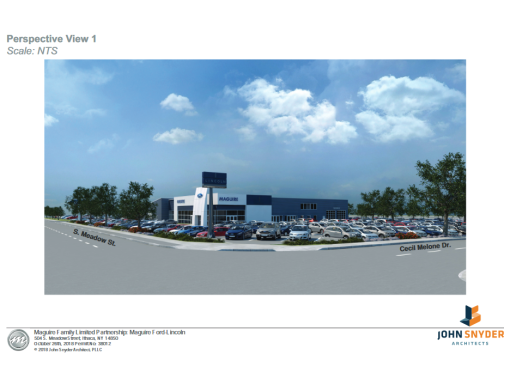
It’s not 100% clear what the proposed design is, since the elevation drawings don’t match the renders. Note the second-floor windows near the service area and the differences in the panel colors and elements (vertical ribs vs. rectangular panels) in the render.

The plan is to have approvals by January for a March to September 2019 build-out. Because of a tight corporate deadline from Ford, and since the Board of Zoning Appeals is not having a December meeting, and possibly not a January meeting either (expected lack of quorum?), the project team wants to discuss some sort of bundling of review and zoning variances in the review.
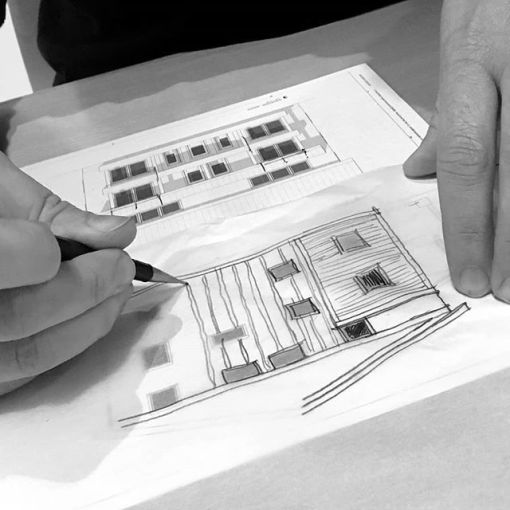
3. Ithaca-based architecture firm STREAM Collaborative is cooking up their latest project design, and posted hints of this “Net Zero” energy building on Twitter. There’s a very high chance this small multi-family Net Zero project is local, given STREAM’s nearly-singular focus on the Tompkins County market. Also, given that it’s a three-story building with what appears to be 4-6 units, I’d take a guess at a more settled, primarily residential urban area. Not Downtown Ithaca, but maybe one of the village centers or one of Ithaca’s more residential inner neighborhoods. If it’s an Ithaca-area rental, given the August-August academic calendar that the local apartment market revolves around, I suspect we’ll see more about this project in the next few months if the developer is aiming for fall 2019 occupancy.
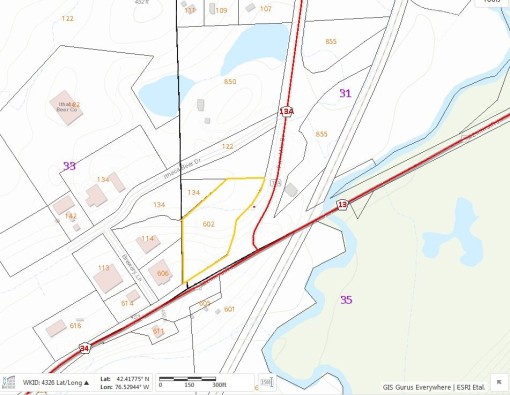
4. Something to keep an eye on for the future. 602 Elmira Road sold for $690,000 on October 24th. Not only was the buyer was a New York-based hotelier, but the price paid is far above assessment – the three-acre parcel was only valued at $150,000, and had sold for $140,000 back in September 2014, from the realtor who subdivided it, to another hotel developer, Guru Hotels LLC. So it’s distinctly possible that Guru Hotels developed a plan, designs and all, but decided to not move forward with it and found another interested hotel developer to take over on the development, which would explain much of the premium on the sales price. Of course, those plans have never been brought forward to the town of Ithaca planning board, so buyer beware.

The location has some desirable factors – along Route 13 just beyond city limits, near Ithaca Beer, and within the town of Ithaca’s proposed Inlet Valley agri-business and tourism Corridor. The town as been a bit scattered on how it sees this swath of land next to 13A – the Comprehensive Plan saw it as natural space, current zoning is light industrial, and the Inlet Valley zoning and design guideline study is okay with either of those, an agriculture-related business or something tourism-focused, which a hotel would fit under. Stylistically though, a typical chain hotel will not e approved here – like with the nearby Sleep Inn project, it will have to embrace the ‘rustic look’ the town wants here.
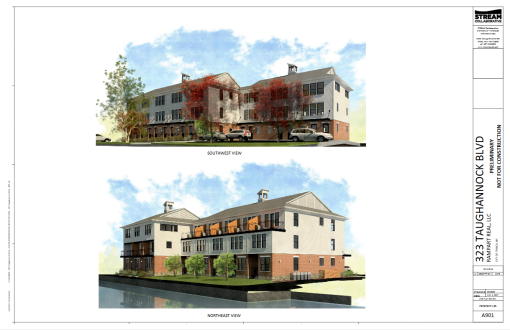
5. 323 Taughannock has its construction loan. Tompkins Trust Company lent the development team $4.061 million to finance work on the 16-unit townhouse project on Inlet Island. The builder looks like a newcomer – Benson Woodworking Company. The firm normally does business as a modular and timber-frame builder based out of New Hampshire. I suspect given the choice of firms that the townhouse units will actually be framed and sheathed off site, and transported over to be assembled like pieces of a puzzle. It’s an unusual project for a firm that mostly does higher-end vacation homes and cabins, but 323 is a wood-frame structure, and the project has already had issues with the poor on-site soils and spiraling costs – a modular approach would potentially save on costs and make the logistics of the construction site easier to manage.

6. Cayuga Ridge has also received a construction loan, a set of them to finance its renovation plans. Three loans, for $12,558,750, $2,216,250 and $1,500,000, were received from CIBC Bank USA (the U.S. division of Canadian Imperial Bank of Commerce, based out or Toronto with the main U.S. office in Chicago). The fourth loan, for $3 million, came from Metropolitan Commercial Bank out of New York. The owners of Cayuga Ridge are based out of the New York area, so perhaps that would explain the choice of lenders. The loans cover $19.275 million of the $21 million renovation, which will thoroughly update the interior layout with updated utilities and enhanced patient services. The renovation is expected to result in 49 new jobs at the nursing and rehabilitation center, mostly new nurses and nurses’ aides.
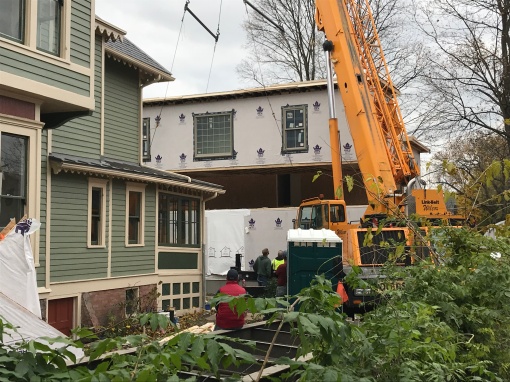
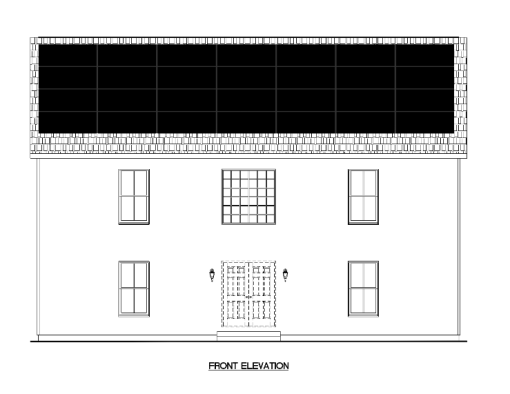
7. It’s a few weeks old now, but the infill housing behind 310 West State Street is coming along. These are the modular pieces of the new six-bedroom rental being craned into place. Also, the renovation of 310 West State is coming along, soon to be a “co-op” for young professionals. The renovation to the existing home is being paid for through a combination of private funds and a RESTORE NY state grant, while the rear infill is all private equity.


107 South Albany Street Construction Update, 9/2018

3 10 2018

I briefly touched on this in the Voice write-up, but a Certificate of Occupancy doesn’t require a property to be finished with construction work – only that it be safe for tenants and meeting codes and standards, meaning utilities are on, interiors are complete to a satisfactory degree, and the exterior work poses no regular threat, neither outside of work hours or during the course of normal labor. It’s not uncommon to see this in Collegetown thanks to the hard deadline of student tenants (and the dread of paying for alternative accommodations if a CO can’t be obtained), but 107 South Albany is a rare case outside of the more student-heavy neighborhoods.

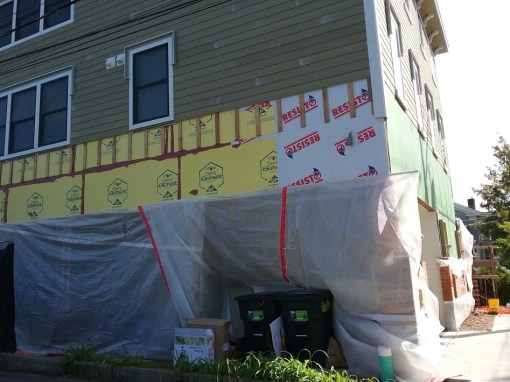
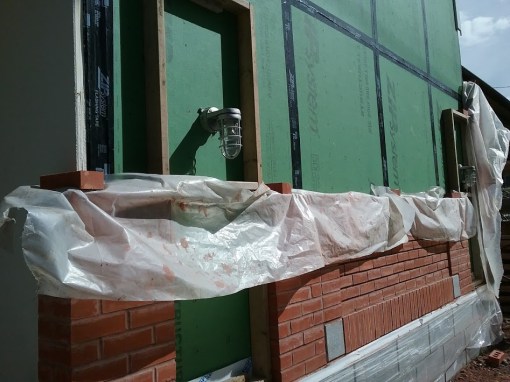
The lights are on and a glance through the common space window suggest that the building is largely complete on the inside. Clearly, work continues on the outside, with fiber cement boards going over the plywood sheathing (both George Pacific and Huber ZIP plywood sheathing varieties, some of which is covered with a Resisto air/vapor barrier). The brick facade work on the front ground-level continues. I’d expect both to be finished before the first snow flies.

Renting Ithaca (Nick Stavropoulos) is the developer, and Flatfield Designs (Daniel Hirtler) is the architect. This is not likely to be their last project. The Stavropoulos Family has undertaken several progressively larger projects over the past several years, and purchased the Alley Cat Cafe building at 312 East Seneca Street for $800,000 in mid-July.

While I can’t say I’m a fan of the demolition of the previous structure, I can appreciate the subtle densification and addition of housing of the State Street Corridor with a contextually-appropriate structure. There will likely be more to come, so if this is setting the bar, it’s a good standard to have. The introductory article, and background about the project, can be found in the June 2017 post here.


City Centre Construction Update, 9/2018

2 10 2018

Along with the usual bevy of construction photos, I popped inside the sales office, which opened on the Commons last month. There might have been a little reservation from the two guys staffing the office when I introduced myself and said “I’ve been reporting on the project and do a real estate and construction blog on the side”, but once one of the leasing representatives, Anthony, mentioned he had checked out a blog called “Ithacating” to help him prepare for the job, we hit it off pretty well.

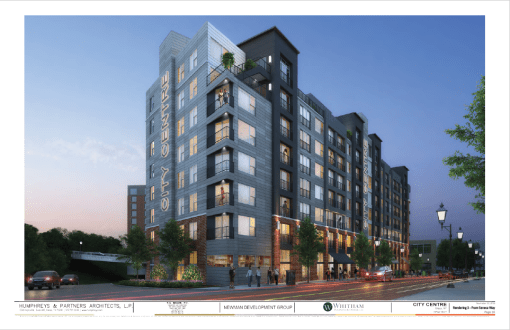
The second photo shows the reserved apartments as of September 23rd. As mentioned in the Voice article, every one of those top-end $3,265/month two-bedroom units facing the Commons are taken, and the project is still over eight months out from completion. 47 of the 192 units have deposits down, about 25% of total. A disproportionate number of those are two-bedroom units, 16 of 39 (41%). According to Anthony, the tenant mix is fairly diverse – some students, some young working professionals with downtown or Cornell jobs, and a substantial number of seniors looking to downsize and be downtown. The office has received a number of calls inquiring if the units are for sale, but unfortunately for those interested, condos are scarce in Ithaca.

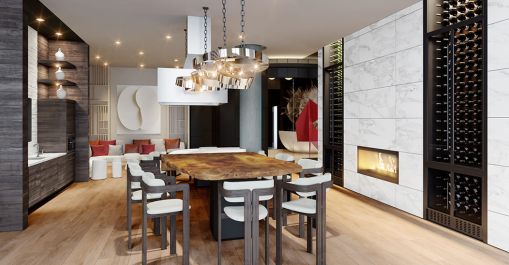
The project website has been updated to include a number of interior renderings, included here at the end of the post. The first four in the set are apartment interior images, showing two bathroom finishes (modern aesthetic with a neutral palette), a larger unit’s living room and kitchen, and a studio unit, which they market as a “junior apartment”. The last three images are common spaces, two lounge spaces and the lobby. The lobby will in fact have a circular reception area, as shown in the ground-level floor plan.

Newman Development Group (NDG) had previously mentioned in a response to Green Street Garage questions that they had secured tenants for all three ground-level commercial spaces, the Ale House restaurant and two other tenants whom Anthony was not allowed to discuss per confidentiality agreements, but they hope to go public with the future tenants “in about a month”. The spaces clock in around 10.600 square-feet in total.

“NDG has recently signed three superior quality tenants for the City Centre project and had a high level of interest from a number of additional tenants that had to be turned away. NDG believes that these and other prospective tenants seeking 3,000 to 5,000 square foot spaces will find the Green Street location to be highly attractive based on the high traffic counts, pedestrian activity, mass transit access, proximity to The Commons, adjacency to significant downtown residential neighborhoods and availability of convenient parking, ” said NDG in the Green Street Q&A.

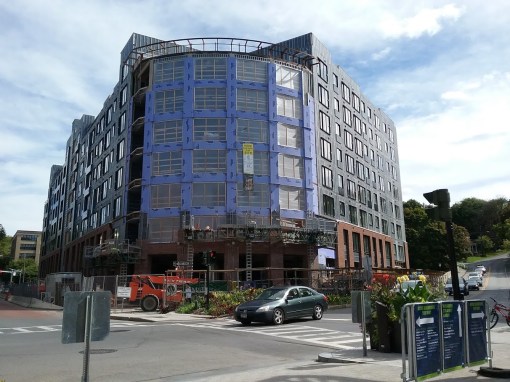
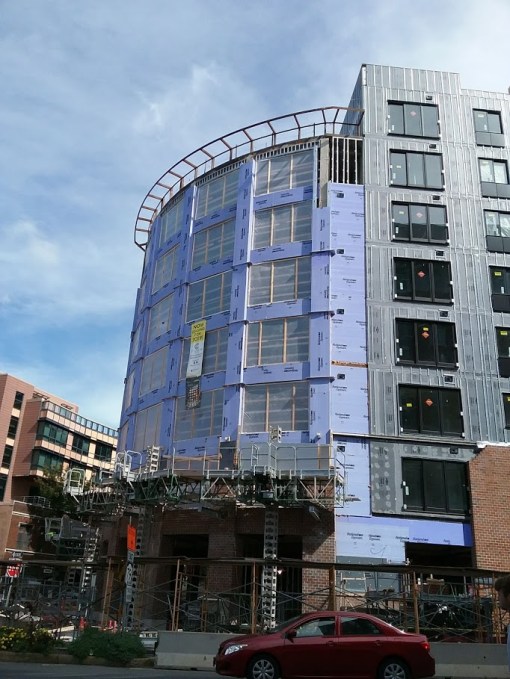
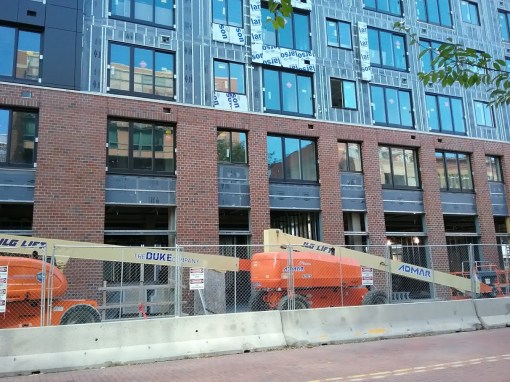
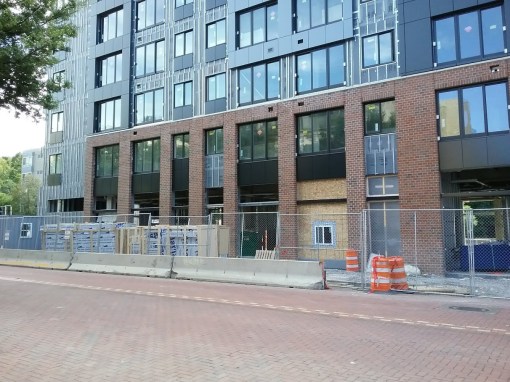
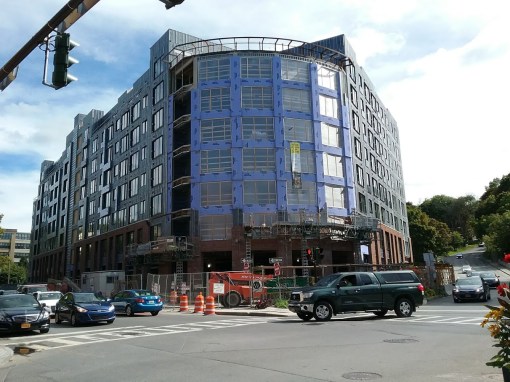
Construction is moving along at a good clip, with most of the windows fitted and work continuing on the aluminum panels and brickwork that will comprise most of the facade. For the sake of brevity, we’ll dig more into the exterior finishes and details in the next update in November.

Side note to the Ithacan – the effort is appreciated in your downtown write-up, but you guys flubbed one critical detail. City Centre and State Street Triangle were two separate projects with two separate development teams. The only common bond is location. The story that I’m familiar with is that the Colberts, who owned the Trebloc site, dropped Campus Advantage as a partner because CA wanted a lower sale price for the land when they were forced to submit smaller project designs, while NDG was willing to pay the premium, and so they were able to snatch themselves the purchase option for the site when it opened for renegotiation.

In keeping with the theme of development controversy, here it’s been the high price of the units – $1,545 – 1,625/month for a studio, $1,745 – 2,595/month for a one bedroom unit, and $2,460 – 3,265/month for a two-bedroom unit. There has been substantial blowback from some local activists and community groups as a result, and even other landlords have expressed off-record that they are incredulous of the asking prices Newman Development Group was aiming for with the City Centre project. So far, however, lease-up seems to be going well. City Centre will open for occupancy in June 2019.


East Pointe Apartments Construction Update, 8/2018

6 08 2018

No one can say DGA Builders is wasting time. A visit on Friday showed three sets of CMU foundation walls have been assembled and mortared, each for a ten-unit townhouse string. A few crewmen kept an eye on a material placement truck, also known as a stone slinger, as it launched rocks into the footprint encased by the foundation walls. This may be a crushed stone base (hardfill) for a concrete slab pour, given the stacks of rebar with surface rust sitting nearby. A shallow foundation would work fine here because two-story buildings aren’t especially heavy as structures go, and it would be less expensive and time consuming than a deep foundation. Elsewhere around the site one sees PVC sanitation pipes (sea green), water pipes (blue), and pieces for utility junctions.

Meanwhile just a stone’s sling away on Nor Way, Forest City realty continues work on the six-unit string (hexplex?) of townhouses. Two are fully framed and roofed, two have had their first floor framed though not fully sheathed, and the other two are only partially framed on the first floor. As with all the townhouse strings, these will incorporated some unique design features while keeping the general unit layout the same. I know they’re not happy about the East Pointe townhomes, but it could be a good synergy – the price points ($1,400-$2,000/month fr East Pointe, $350k for the Heights of Lansing townhouses) are such that renters who may wish to stay in that neighborhood may look at the Heights townhomes as an option.

A website is now up and running for East Pointe. It’s mostly stock images and bland corporate-speak, but they do have floor plans and some new renders. Here’s the advertising pitch:

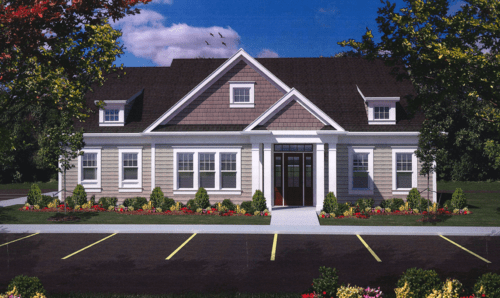
“This apartment community is located on 20 acres in Lansing, NY, which is part of the Ithaca, NY, market. This is new construction of 140 state-of-the-art apartments. There will be 36 one-bedroom units, 90 two-bedroom units, and 14 three-bedroom units. The project will include fourteen apartment buildings with 10 units in each building that will be walk-up garden style with private entrances and a community building. All units will have high end finishes and amenities, including stainless finish appliances, microwave, dishwasher, washer and dryer, ice maker, granite counter tops, wood cabinets, vinyl plank flooring and wall-to-wall carpeting, tile showers, high end plumbing fixtures and lighting fixtures. All apartments will include a patio or deck. The community building will include the leasing and maintenance office, Great Room and warming kitchen for gatherings, and a fitness center. The project also includes an outdoor pool with changing rooms and shower.”

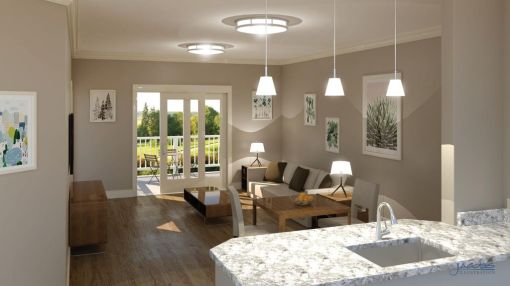
I have no idea what a warming kitchen is, but my very Sicilian mother is pretty good at turning kitchens into warming spaces around the holidays. A photo of the community center is included below.

UPDATE: I’m just going to add this here since the timing was ever so slightly off- on Monday the 6th, the construction loan was filed with the county. M&T Bank is lending Park Grove (represented by an LLC) $22.6 million for construction of the East Pointe project.


802 Dryden Road Construction Update, 8/2018

5 08 2018

Not a high-profile project here, but sizable. 802 Dryden Road, also called “Ivy Ridge”, is the latest project to come out of Modern Living Rentals (MLR). MLR is led by local developer Charlie O’Connor, and as I noted previously, “[h]e is arguably one of the most reticent developers in Ithaca, preferring unobtrusive projects that he hopes will create as little debate as possible. It’s kinda funny in a way, because although he’s a business partner with Todd Fox (Visum’s property management is handled by MLR), the two of them are near-opposites in that regard.”

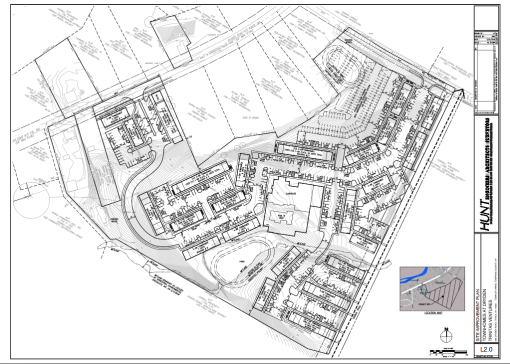
True to form, while 802 Dryden is a sizable 50,000 SF, $7.5 million project, it was the subject of relatively little public debate during its approvals process. It’s located next to arboretum, replaces four rental houses and a motorcycle repair shop, and the number of residences within 500 feet could be counted on two hands. The project consists of 42 two-story townhouse rental units on three acres, six strings of seven units in a right trapezoid layout. Each string contains four two-bedroom units, two three-bedroom units and a four-bedroom unit (108 beds total). It’s a two-minute drive from the east end of Cornell’s campus (B Lot), and an easy sell to students and staff looking to live in a quieter location near campus.

Zoning on the site is fairly dense, all things considered. Although rather far from Varna’s core, the project does fall under Varna Hamlet Mixed Use District zoning, which allows ten units per acre. A redevelopment bonus of dilapidated properties gave another two units per acre, and a green bonus of two units an acre was also permitted. The green features part required some debate and confirmation. The project seeks LEED Certification and will apply LEED standards for neighborhood design.

The project was first proposed in June 2017. At the time, its design was a virtual clone of another MLR project, 902 Dryden Road, albeit with different colors. The designs were revised at least three times. The design work was passed from STREAM Collaborative to John Snyder Architects, who did substantial alterations, and then again, and then STREAM once again did some work on it. The final set of renders are here, with the site plan docs here. Originally there were three townhouse string designs, but it looks like it was reduced to two in the final round. The six buildings are generally but not exactly the same – the gables are mirrored, some additional trim pieces are used on the gables for the Dryden Road pair, and they alternate between a dark blue vertical fiber cement panel (probably HardieBoard), and a dark green panel. Original approvals may have been issued in November 2017, but the last revisions were approved this past May.

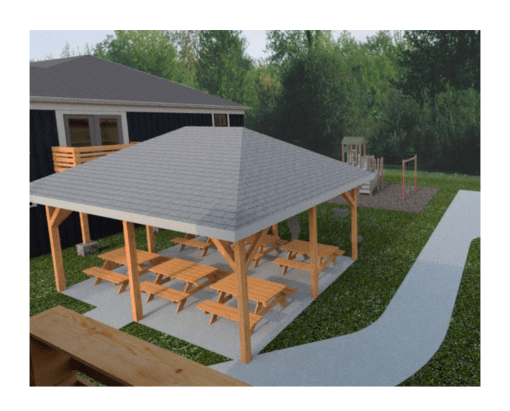
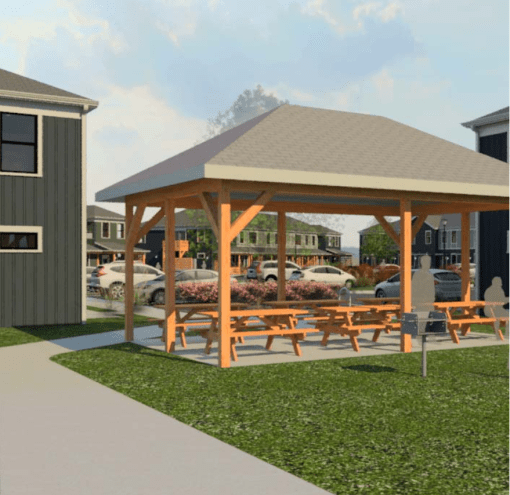
Exterior features include 70 parking spaces, bike racks, trash/recycling enclosure, stormwater ponds, bioretention areas, signage, a childrens’ playground, pavilion and a dog park split up for large and small breeds. Planned interior features include granite counter tops, stainless steel appliances, a washer and dryer in each unit, contemporary lighting, and marble tile. Expect these to be in the same price range as the other recent MLR units, which have been in the $650-$750/bedroom range. The units are expected to be ready for occupancy by June 2019.
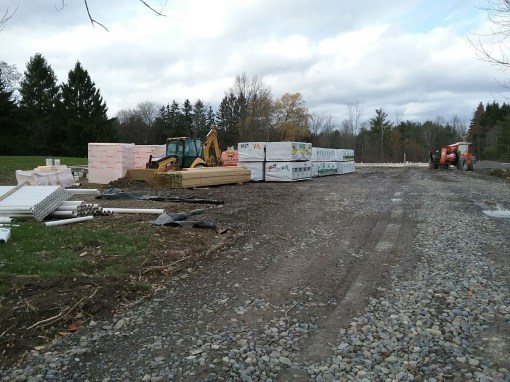
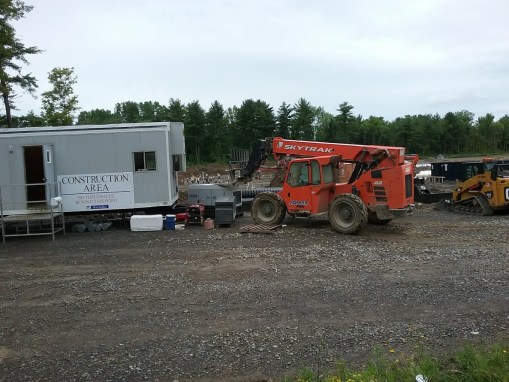
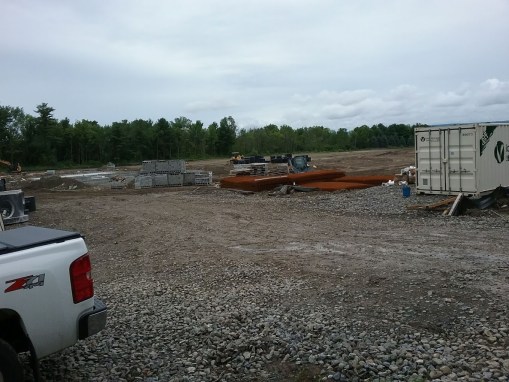
There’s a little bit of pre-building infrastructure work that had to take place before construction, because this is a sort of no man’s land between the settled parts of the town of Ithaca and the town of Dryden where no municipal water service was available. The public water main had to be extended to service the project, and the main will be deeded over to the town. At this time, the existing buildings have been removed, but the land has yet to be cleared; we’re really just at the initial phases of the project.

Along with MLR, STREAM and John Snyder Architects, GMB Consulting Services did the LEED score analysis, T.G. Miller P.C. handled land surveying and Marathon Engineering tackled the civil engineering work – Marathon’s Adam Fishel shepherded the project through the town boards. I don’t have a contractor listed, but will share it when I do.

Pre-construction (Google Maps, Nov. 2015)

Renders:

August 3rd:


107 South Albany Street Construction Update, 7/2018

18 07 2018

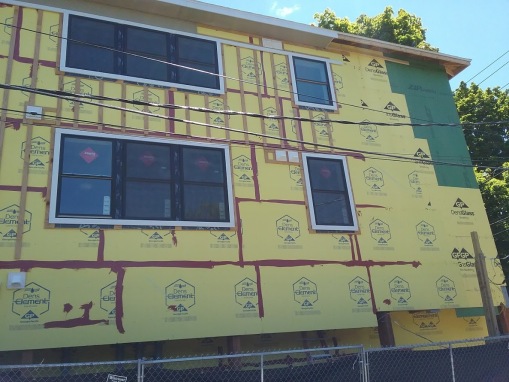
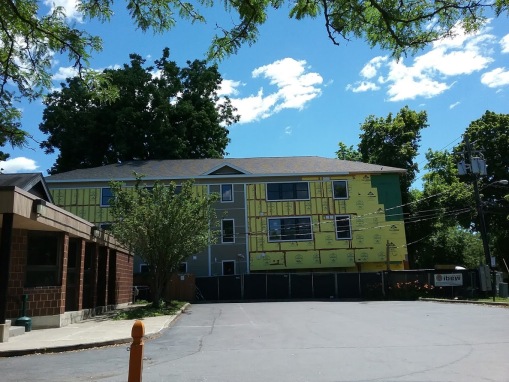
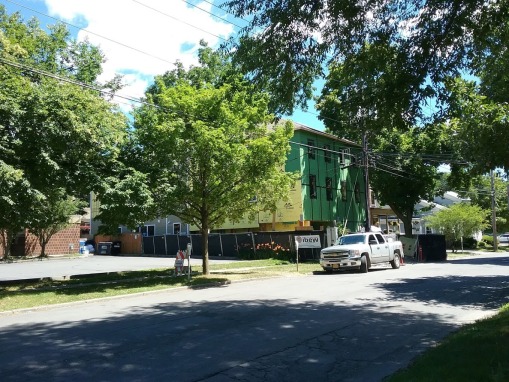
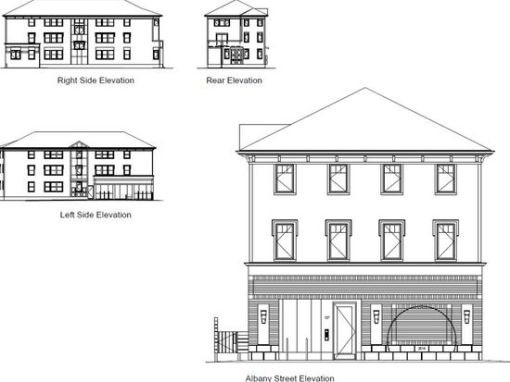
107 South Albany is a curious mix of sheathing. The front and part of the sides consists of standard Huber ZIP System plywood panels, while the sides use GP DensElement fiberglass mat sheets with maroon liquid flashing. Atop that, wood furring is being attached, and trimboards and fiber cement lap siding (or panels, for the wall next to the central staircase) are added to finish out the exterior. The front entry will have a brick veneer, but only on the first floor, so that doesn’t explain the difference in sheathing. The windows are fitted, but the front entry is not.

These apartments should be open for occupancy in time for the new academic semester. Advertisements say August 1st, but that might be a stretch. Still, these are coming in at a more modest cost than other new market additions ($1,100/month), and adds some density to the State Street Corridor.

Background information on the project and its specifications can be found here. Renting Ithaca (Nick Stavropoulos) is the developer, and Flatfield Designs (Daniel Hirtler) is the architect.


News Tidbits 7/14/2018

14 07 2018

1. We’ll start of in Dryden with some revisions to the Trinitas project. This project has slowly but steadily been winnowed down in size. The original proposal in late May was 224 units and 663 beds. The June revisions dropped that figure to 22 units and 649 beds. Now with the latest set of revisions, the unit and bed count has fallen to 220 units and 610 beds. In other words, capacity has dropped by about 8% so far. A copy of the presentation Trinitas gave to the town board last month can be found in their minutes on the town website here.

From a site plan perspective, you can see a number of substantial changes – some townhouse buildings were lengthened in the southern corner, other strings shortened or broken up, the clubhouse/community building is now a mixed-use structure, and a couple of townhouse strings were deleted outright. About the only portion that was unchanged was the trio of structures closest to Dryden Road.

The early working name for this project was “Fall Creek Village”, which while referencing Fall Creek just to its north, may not have been a wise choice given the neighborhood of Fall Creek in Ithaca, which has been the epicenter for Ithaca’s gentrification. It was suggested they change the name, ideally to something with “Varna” in it. There’s about a hundred other pros, cons and general thoughts shared during the meeting, which can be read here. The project team would like to have approvals by the end of the fall, for a Spring 2019 – August 2020 construction period. As all the paperwork is filed, reviewed and discussed, expect more revisions to the project before any final approval is considered and granted.

2. Tompkins Financial may have relocated all its operations to its new headquarters, but that doesn’t mean its the end of the road for its old properties. 1051 Craft Road, formerly home to the Tompkins Insurance Agency, was sold to Ithaca Dermatology Associates of Ithaca on June 5th for $1.2 million. The 7,541 SF building was built in 1995 and assessed at $990,000, so Tompkins Trust did okay with the sale price – they purchased the building for $965,000 in 2007.

The new chapter is, as you might’ve already guessed, medical office and service space. With the assistance of a $1.5 million construction loan from Tompkins Trust, the Ithaca Dermatology is renovating the building for its new clinic. The hard cost of the renovations (materials/labor) is $1.025 million, and the spruced up facilities are expected to be open by January. Local architecture firm Chiang O’Brien, who have a specialty in medical facilities (they did Cornell Health’s new building and Planned Parenthood’s new regional HQ) is designing the renovated space, and Hammond Heating and Plumbing is the contractor.
3. If you’re looking for something interesting in local planning board agenda, there isn’t much to see at the moment. The town of Ithaca’s PB will be looking at a vacant lot subdivision between 721 and 817 Elmira Road (no future plans stated), and a lot subdivision on Enfield Falls Road to create three home lots and a large wooded parcel to be conveyed to the state as a conserved natural area. Over in Lansing, they’ll be looking at a plan for five micro-sized rental cottages at 16 Hillcrest Road.

4. The near-waterfront office building at 798 Cascadilla Street has been sold. 798 Cascadilla LLC made a deal with the too-similarly named Cascadilla 798 LLC for $2.55 million on Thursday the 12th.  As reported when then building went on sale, the 18,271 SF office building is home to Palisade Corporation, a software firm specializing in decision making/risk analysis tools. 798 Cascadilla LLC is the managing company for Palisade co-founder Sam McLafferty, who recently passed away. Cascadilla 798 LLC is a bit of a question mark – they were created in May and registered to this address, so maybe someone else associated with Palisade is buying it. The asking price for 798 Cascadilla was $2.7 million, and the tax assessment is for $2 million. Pyramid Brokerage’s David Huckle conducted the sale.

5. Maybe something the infill folks in the city want to watch – 622 West Clinton Street just sold to Jerame Hawkins, who two years ago wanted to do an affordable duplex (60% Area Median Income) to replace the old barn (yes, barn) at the rear of the property, as well as keep the existing house locked in as affordable housing. Carina would have supplied the modular units for the three-bedroom townhomes, and Finger Lakes ReUse would have salvaged the barn. Hawkins had applied for $135k in IURA federal grant funds, but the proposal was not funded. However, his purchase of the property now makes a potential affordable infill project somewhat more likely, though we’ll have to wait and see.

6. Color me intrigued – does Pat Kraft have a tenant lined up for the ground level of his Dryden South building at 205 Dryden Road? I have yet to see paperwork, but we’ll see.

7. It appears the Stavropoulos family, local landlords who have undertaken several smaller-scale projects in recent years, are about to add to their holdings. It would appear they are buying out Jagat Sharma’s properties as the well-known Collegetown architect heads into retirement (since he’s almost 80, I can’t blame him). The Stavropoulos purchased a four-unit house at 208-210 Prospect Street from Sharma this week (for $480k, well above the $350k assessed), and an LLC notice was posted recently for 312 East Seneca LLC, which is registered to the Stavropouloses’ home address. 312 East Seneca is also the office of Sharma Architecture (and the cat cafe), and was eyed as a potential Visum acquisition for its Seneca Flats mixed-use plan at 201 North Aurora Street (Visum has conceptual plans for versions with and without Sharma’s lot, so this sale doesn’t kill their plans, though not having the property shrinks it somewhat).

Slowly but steadily, the Stavropoulos are buying and building their way to significantly-sized landlords. Current projects include the 11-unit building finishing up at 107 North Albany Street, and the infill duplex planned for 209 Hudson Street. Last year, they developed four units at 1001 North Aurora Street, and they have a dozen other properties throughout the city under the business name “Renting Ithaca“.

8. We’ll leave this off with some thoughts from the Tompkins County Housing Committee, with four initiatives it will be pursuing to help address the lack of affordable housing in Ithaca and its surrounding environs:

I. Solicit the state attorney general for ways it might be able to legally expand or enhance its Community Housing Development Fund with Cornell and the city of Ithaca. The CHDF is the only way the county can fund housing development since it can’t legally fund housing development directly, but CHDF is relatively limited in its scale and abilities.

II. Develop a proposal for a municipal matching fund to help with grant writing for affordable housing, zoning improvement and infrastructure to serve affordable housing.

III. Planning staff will conduct an infill site analysis in development focus areas (Downtown, State Street Corridor). This would potentially find opportunities in surplus or underused county property that may be developed as affordable housing through an RFP process.

IV. Planning Staff will participate in the Policy Lab Study (“Jennifer and George’s Study”) to provide data and help inform the client committee. I honestly have no idea what this refers to.