News Tidbits 11/17/2018

18 11 2018

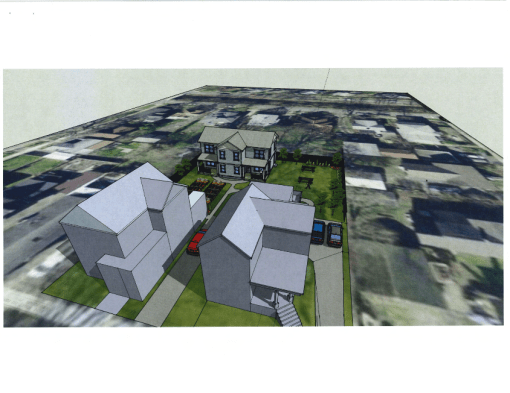
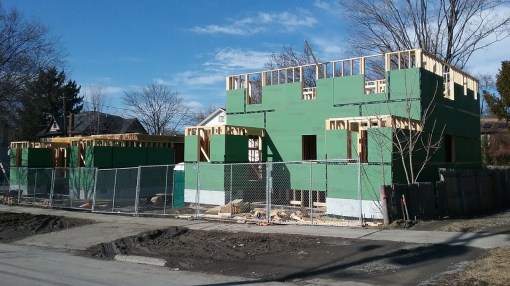
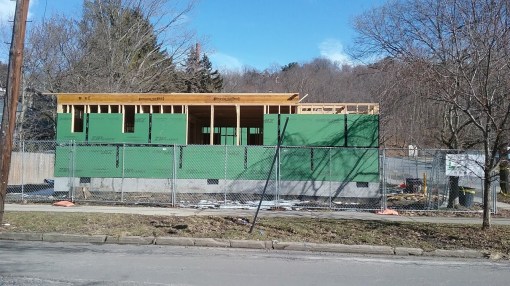
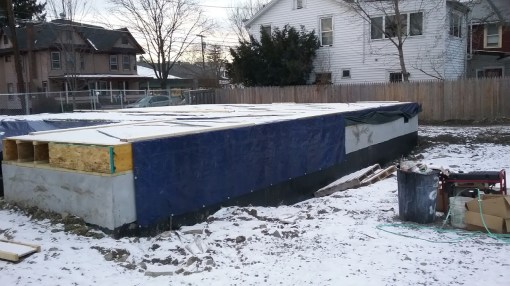
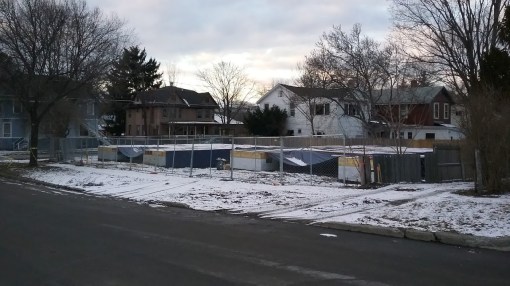
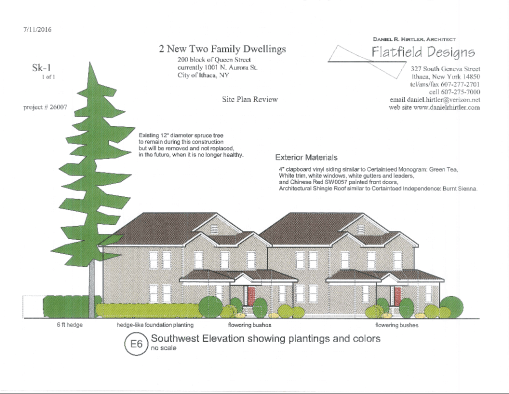
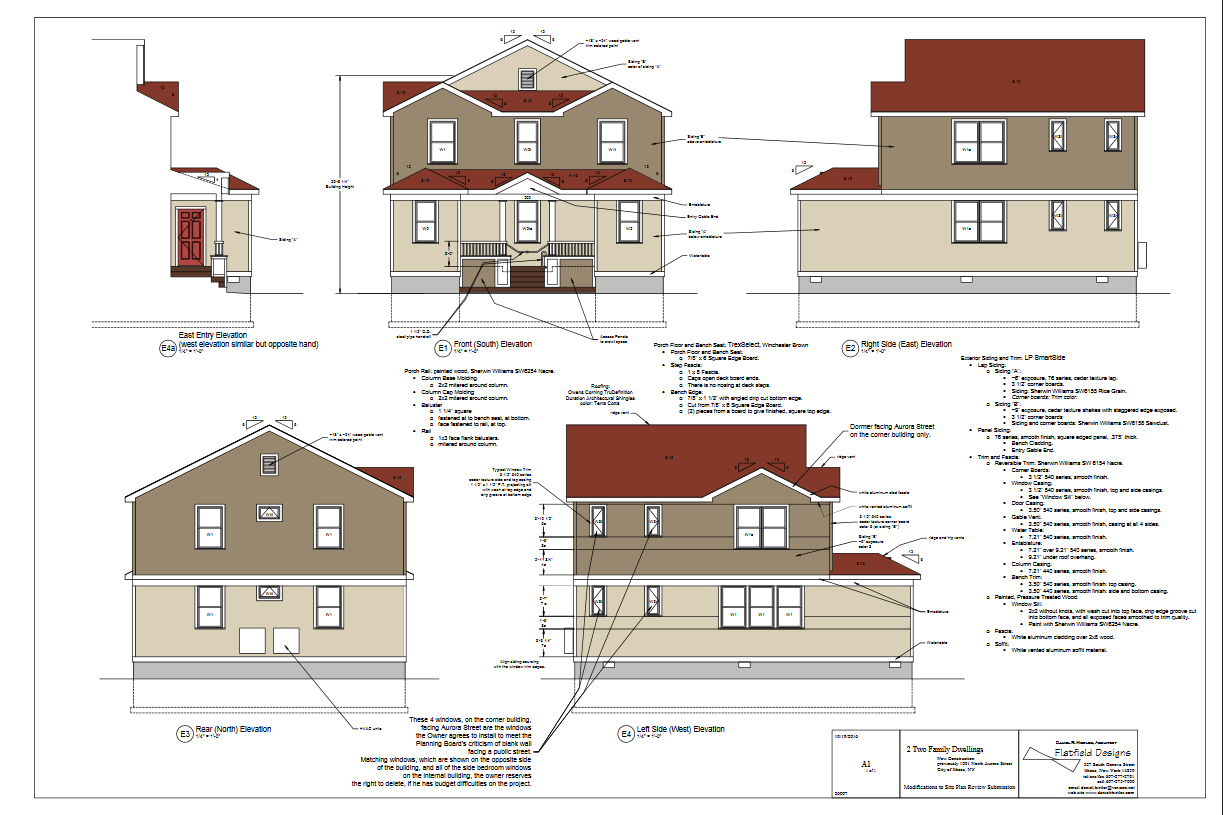
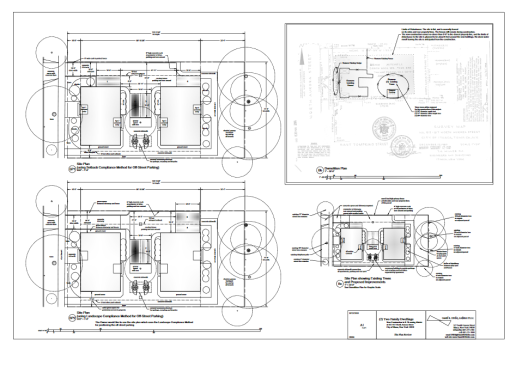
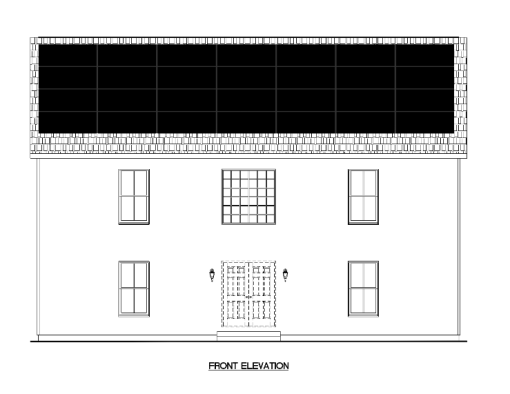
X. Let’s start this off with a look at a couple of new projects that will be coming forward to the city of Ithaca Planning Board later this month. The first is 815-17 North Aurora Street. Back in June, when the existing property went on the market, I noted that zoning could conceivably allow the dilapidated house currently on the lot to be taken down and redeveloped into two two-family homes. Lo and behold, that is exactly the plan.

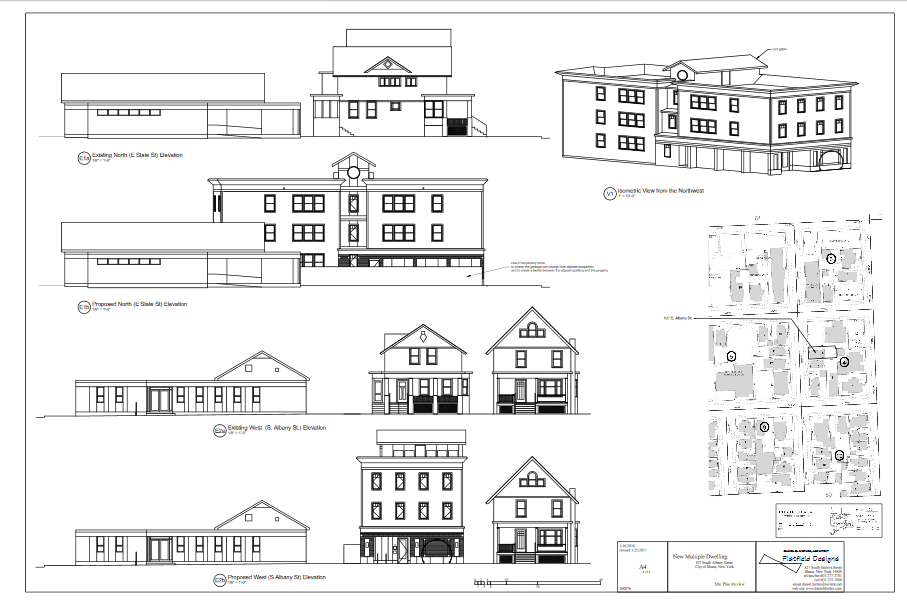
Although the listing has been pulled, no sale has been completed, so it’s not clear what kind of premium they are willing to pay for a double-lot development opportunity in trendy Fall Creek. But thanks to the Site Plan Review (SPR) documents, we at least know who the pending owner/developer is – the Stavropoulos family of West Hill, who own the State Street Diner and a growing portfolio of rental units under the name “Renting Ithaca”. The Stavropoli have redeveloped several properties in the past few years, including 1001 North Aurora Street (4 units), 107 South Albany Street (11 units), a two-family home at 514 Linn Street and a two-family unit planned for 209 Hudson Street (they originally applied to build two two-family buildings, but reduced it to one after neighborhood pushback). Their M.O. is basically small-scale rental infill, nothing especially large or ostentatious, and with that they go under the radar for the most part. In short, this R2b-zoned site is a perfect fit for them.

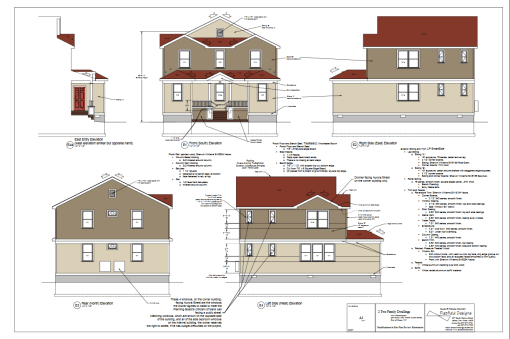
The plan is to tear down the vacant property, and replace it with two two-family structures, four units total. Each will be three bedrooms and 1,290 SF. Their usual architect of choice, Daniel Hirtler, has designed the structures to fit in with the Fall Creek vernacular, with recessed entries and aesthetic details (such as a transition between fiber cement shakes and clapboard siding) for visual interest. The buildings are positioned so that one is in the front of the lot, one at the rear, and only the front structure is visible from most public viewsheds. The site will include four parking spaces with new landscaping and utilities. Heating will come from electric heat pumps, and while the roofs will be capable of hosting solar panels, those aren’t expected to be included as part of the initial build. LED lighting, energy efficient appliances and water heaters, and high-efficiency spray foam insulation are included. This project would very likely meet the new Green Building Policy Requirements if in place. Given recent news in Fall Creek, it should be noted that the old building does contain asbestos (as do most in Fall Creek), but a demolition/deconstruction plan has yet to be filed.

The $627,000 project would be built from January to August 2019, which is a clear nod to having the units ready in time for the next academic year. Fall Creek tends to be less desirable to undergrads at Cornell because of the distance (<1% of total population), but graduate and professional students often rent in the neighborhood (~9% of graduate/professional students at Cornell live in Fall Creek). The planning board is expected to declare itself Lead Agency for project review this month, with approval in December of January, assuming demolition plans, excavation plans and other needed information has been received and approved.
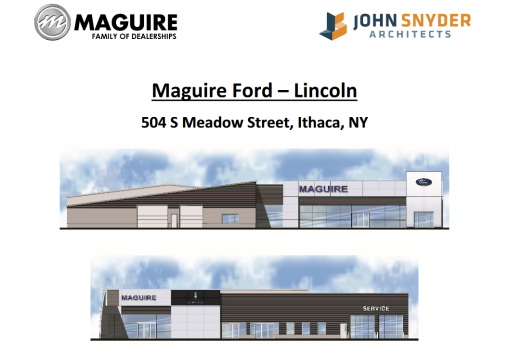
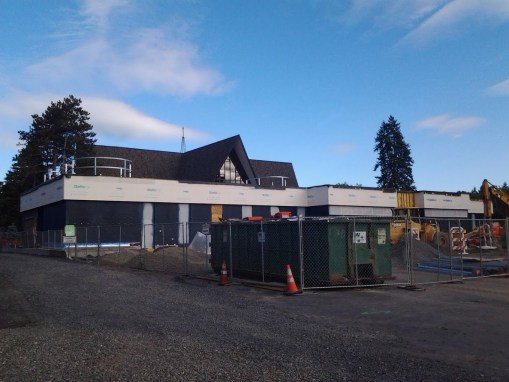
The other new plan to be reviewed this month is for a renovation and expansion of the Maguire Ford Lincoln property at 504 South Meadow Street, just south of Wegmans and the Econo Lodge. Now, for the news savvy, you might be asking, “isn’t Maguire supposed to be moving to Southwest Park?” The answer is two-fold; for one, Ford-Lincoln was not a part of that plan. For two, there hasn’t been much in the way of formal movement on that plan, and the city is hesitant to move forward with a deal because part of the site will serve as a spoils drying area for the inlet dredging, and because of the homeless encampment, which the city would rather not disturb at this time. The evictions didn’t work out so well last time, and members of the Human Services Coalition’s Homeless Task Force are advocating for the city to create a permanent housing solution on-site.

What this all means is that Maguire has to focus on its existing properties to keep them modern and fresh for the time being, both by their own requirements and by Ford’s  – new car dealers must renovate frequently, since carmakers force them to update or risk losing their exclusive rights to sell new vehicles.
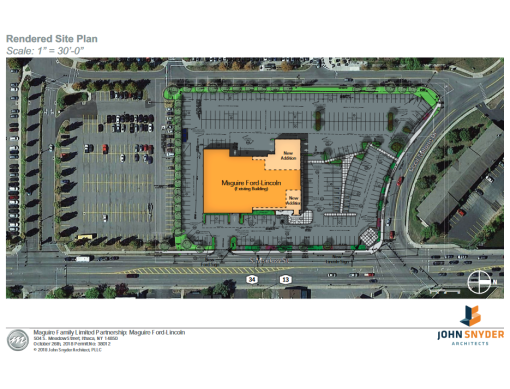
Local firm John Snyder Architects is in charge of design for the $1.5 million project, and while some eco-advocates will kvetch that a car dealer can never be green or sustainable, the building itself is designed to fit Ithaca’s yet-to-be enacted Green Building Policy. The second floor will be expanded with new offices, new customer bathrooms will be installed and the parts and customer waiting areas will be renovated and expanded. The showroom will also be expanded, and it will be slightly closer to Meadow Street than permitted in bib box land, so a zoning variance for front yard setback will be required. As a quick aside, JSA doing a car dealership is an interesting change – usually, car dealership design work has gone to Schickel Architecture.

The additions, which will result in a net increase of 5,610 SF, will be steel-framed, with concrete slab foundations, and faced with a couple variations of aluminum metal panels for a contemporary exterior finish. Apparently, that curved thing at the entrance is called a “foil”. Ithaca’s Elwyn & Palmer is assisting with the structural engineering. While there will be landscaping and circulation improvements, and the amount of green space will be increased from the existing site layout, the project will not meet impervious surface zoning restrictions, and will need a second variance to allow the proposed plan.
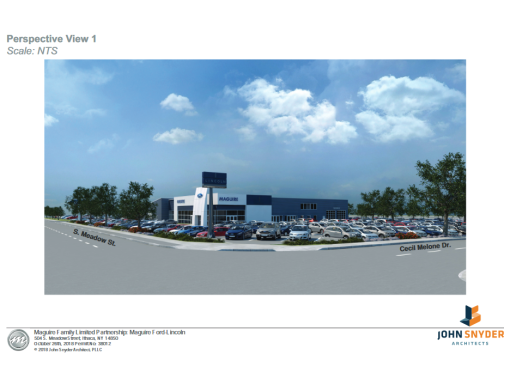
It’s not 100% clear what the proposed design is, since the elevation drawings don’t match the renders. Note the second-floor windows near the service area and the differences in the panel colors and elements (vertical ribs vs. rectangular panels) in the render.

The plan is to have approvals by January for a March to September 2019 build-out. Because of a tight corporate deadline from Ford, and since the Board of Zoning Appeals is not having a December meeting, and possibly not a January meeting either (expected lack of quorum?), the project team wants to discuss some sort of bundling of review and zoning variances in the review.
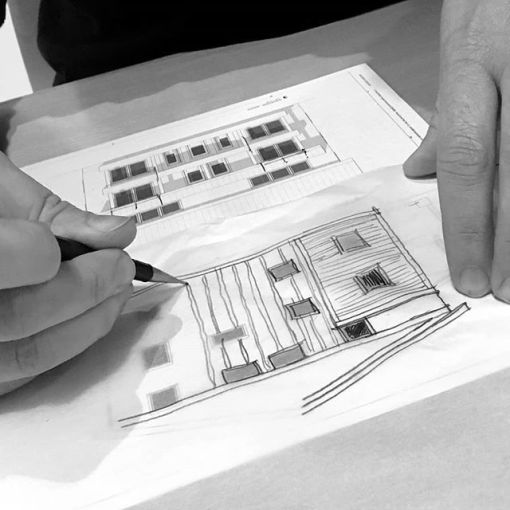
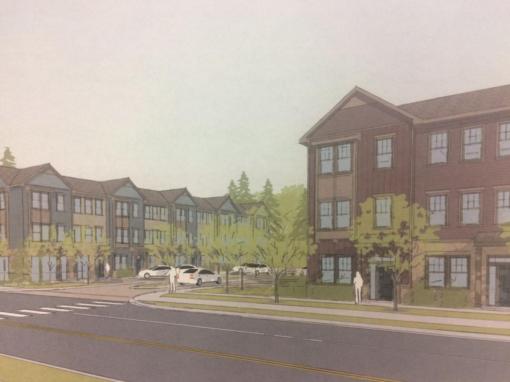
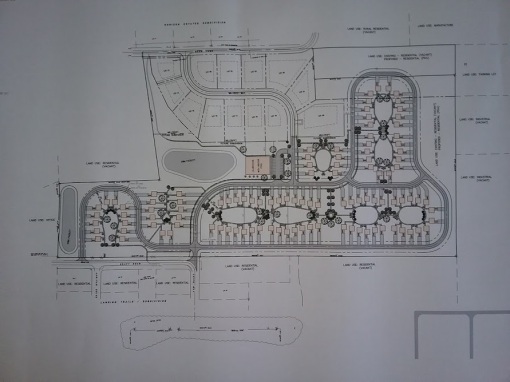
3. Ithaca-based architecture firm STREAM Collaborative is cooking up their latest project design, and posted hints of this “Net Zero” energy building on Twitter. There’s a very high chance this small multi-family Net Zero project is local, given STREAM’s nearly-singular focus on the Tompkins County market. Also, given that it’s a three-story building with what appears to be 4-6 units, I’d take a guess at a more settled, primarily residential urban area. Not Downtown Ithaca, but maybe one of the village centers or one of Ithaca’s more residential inner neighborhoods. If it’s an Ithaca-area rental, given the August-August academic calendar that the local apartment market revolves around, I suspect we’ll see more about this project in the next few months if the developer is aiming for fall 2019 occupancy.
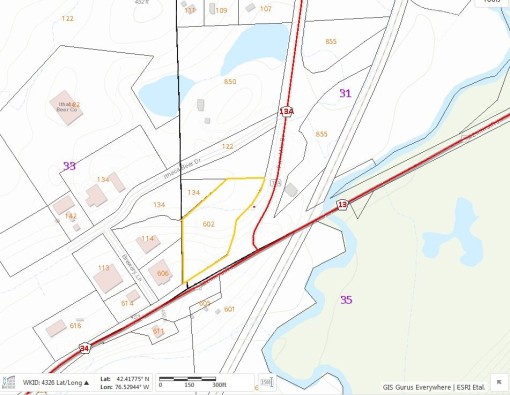
4. Something to keep an eye on for the future. 602 Elmira Road sold for $690,000 on October 24th. Not only was the buyer was a New York-based hotelier, but the price paid is far above assessment – the three-acre parcel was only valued at $150,000, and had sold for $140,000 back in September 2014, from the realtor who subdivided it, to another hotel developer, Guru Hotels LLC. So it’s distinctly possible that Guru Hotels developed a plan, designs and all, but decided to not move forward with it and found another interested hotel developer to take over on the development, which would explain much of the premium on the sales price. Of course, those plans have never been brought forward to the town of Ithaca planning board, so buyer beware.

The location has some desirable factors – along Route 13 just beyond city limits, near Ithaca Beer, and within the town of Ithaca’s proposed Inlet Valley agri-business and tourism Corridor. The town as been a bit scattered on how it sees this swath of land next to 13A – the Comprehensive Plan saw it as natural space, current zoning is light industrial, and the Inlet Valley zoning and design guideline study is okay with either of those, an agriculture-related business or something tourism-focused, which a hotel would fit under. Stylistically though, a typical chain hotel will not e approved here – like with the nearby Sleep Inn project, it will have to embrace the ‘rustic look’ the town wants here.
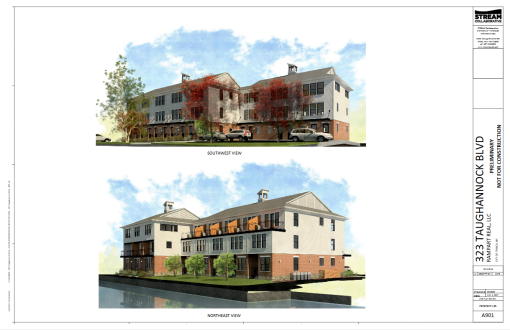
5. 323 Taughannock has its construction loan. Tompkins Trust Company lent the development team $4.061 million to finance work on the 16-unit townhouse project on Inlet Island. The builder looks like a newcomer – Benson Woodworking Company. The firm normally does business as a modular and timber-frame builder based out of New Hampshire. I suspect given the choice of firms that the townhouse units will actually be framed and sheathed off site, and transported over to be assembled like pieces of a puzzle. It’s an unusual project for a firm that mostly does higher-end vacation homes and cabins, but 323 is a wood-frame structure, and the project has already had issues with the poor on-site soils and spiraling costs – a modular approach would potentially save on costs and make the logistics of the construction site easier to manage.

6. Cayuga Ridge has also received a construction loan, a set of them to finance its renovation plans. Three loans, for $12,558,750, $2,216,250 and $1,500,000, were received from CIBC Bank USA (the U.S. division of Canadian Imperial Bank of Commerce, based out or Toronto with the main U.S. office in Chicago). The fourth loan, for $3 million, came from Metropolitan Commercial Bank out of New York. The owners of Cayuga Ridge are based out of the New York area, so perhaps that would explain the choice of lenders. The loans cover $19.275 million of the $21 million renovation, which will thoroughly update the interior layout with updated utilities and enhanced patient services. The renovation is expected to result in 49 new jobs at the nursing and rehabilitation center, mostly new nurses and nurses’ aides.
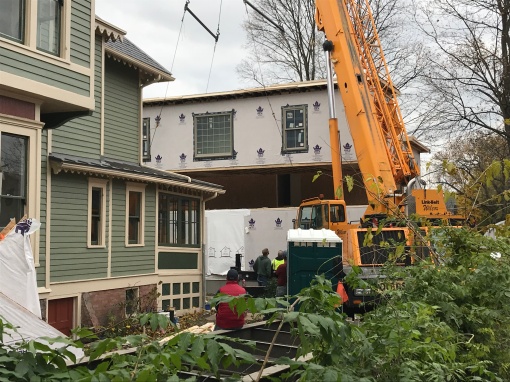
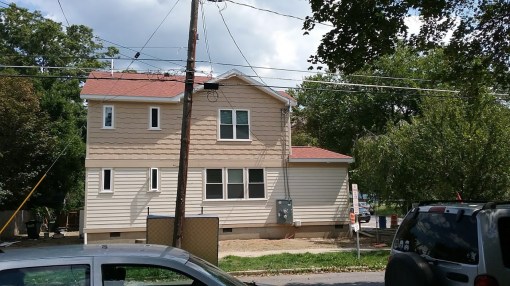
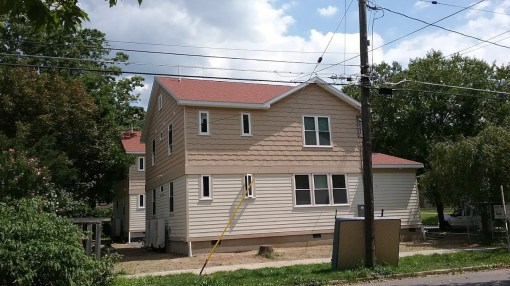
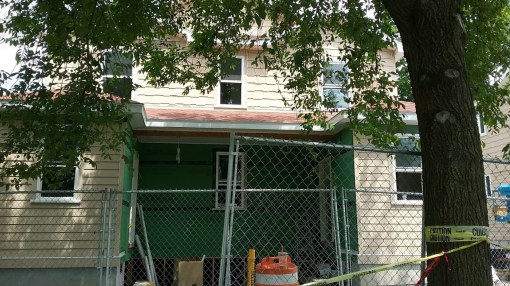
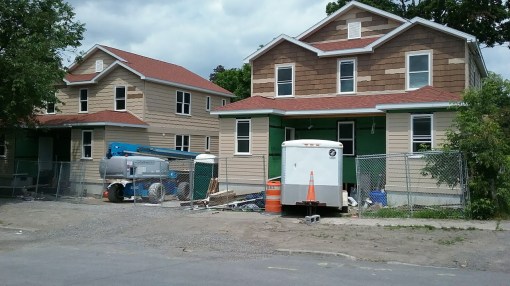
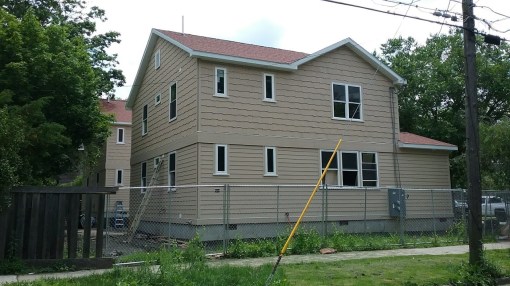
7. It’s a few weeks old now, but the infill housing behind 310 West State Street is coming along. These are the modular pieces of the new six-bedroom rental being craned into place. Also, the renovation of 310 West State is coming along, soon to be a “co-op” for young professionals. The renovation to the existing home is being paid for through a combination of private funds and a RESTORE NY state grant, while the rear infill is all private equity.


News Tidbits 6/23/2018

23 06 2018

1. The Town of Dryden has rejected the Planning Board’s suggestion for a Varna moratorium. The vote was 3-1, with one absent. This means that Trinitas may continue with the project review process – it does not mean Trinitas will automatically be able to build their proposal as currently drawn up, since planning board review, town board approval (Special Use Permit) and zoning board approval are still required.

Unfortunately no members of the press were present at the meeting – I found out through reader email. Most were covering the Democratic Party NY-23 candidate forum, and the first mention of the moratorium vote online was in the uploaded board agenda that went up just a day earlier.

Image courtesy of the Lansing Star

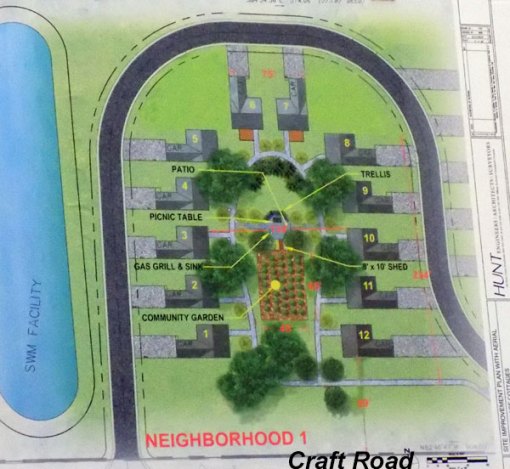
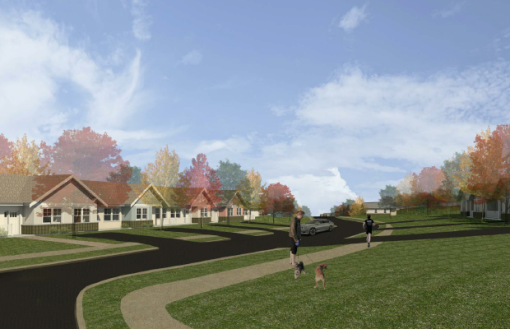
2. When I first broke the Lansing Senior Cottages story for the Voice, there was something I was concerned would happen, but didn’t include in the write-up, because speculating gets me in trouble. But these are homes looking at middle-class seniors, placed next to $500,000-$700,000 homes. The residents of those luxury homes aren’t happy, as reported by Dan Veaner at the Lansing Star.

They’re angry, which is fair in the perspective that when the property was plated, there was no sewer available here, and the plan was to keep it all high-end 2500+ square-foot homes. But the owner/developer of the land is selling off the future phases without any of the old covenants in place, meaning it’s subject to standard village zoning. 800-1200 SF cottages for seniors, some of which may potentially be for sale, is a welcome proposal to the eyes of the county. It seems unlikely this is going to hurt their home values; this is mid-market senior housing, not college student apartments (the only beer on the front lawn you’re going to see is if developer Beer Properties puts up signage). Plus, if you’re going to poll public opinion on this one, wealthy homeowners vs. middle-class seniors is not going to engender support for the homeowners. They could try a lawsuit against the landowner, but I’m doubtful it’s much of a case unless their covenants explicitly said what the undeveloped land would be used for.

The project is currently 107 units over multiple phases, about twenty more than allowed by zoning as-of-right, so it will need to go through a PDA with the village Board of Trustees’ consent, and Planning Board approval.

3. The Crossroads Life Center planned for the 100 Block of Lansing’s Graham Road is no longer alive. The project, which called for a meeting and retreat space to be owned and maintained by the Cornell International Christian Fellowship, fell through, and the land it was proposed for is once again up for sale. The 9.35 acre property (about 3-4 acres were to have been subdivided for the project) is for sale for $239,000. A couple half-acre home lots could be easily subdivided off along Dart Drive, but further development would have to address an old family cemetery towards the rear of the property. Zoning is medium density residential. Maximum buildout without special planned development area (PDA) rules is about 20 units under the village’s Medium Density Residential zoning.

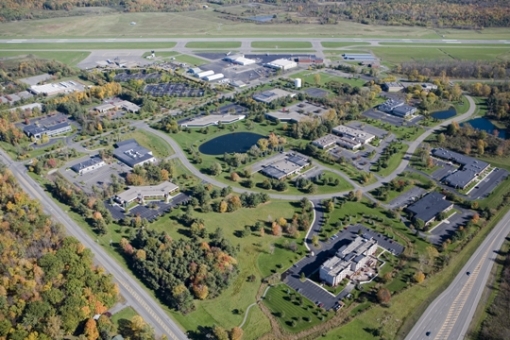
4. Speaking of land for sale in Lansing, Cornell is actively marketing the remaining vacant parcels in its Business Park. Most of the park was built out in the 1980s and 1990s, with only a few building additions in recent years. A 5-acre parcel is available between 20 and 33 Thornwood (foreground in the aerial) for $63,000, and a 22-acre parcel is available for $276,000 (it may be subdivided further), and a 6.89 acre parcel next to airport is available for $86,500.  Lansing zoning doesn’t allow housing here, and so a commercial or industrial project will need to deal with the gas moratorium. A run-of-the-mill office building might be able to make the finances work, but an industrial or lab building with high energy needs is probably is out of the question until some gas is freed up (i.e. the airport renovation), or energy alternatives become more cost efficient.  The county is working on financing a Business Energy Navigator Program to help interested businesses determine their needs and options. Should something happen up here, look for an update.

5. The town of Ithaca is looking at expanding their Public Works Facility at 106 Seven Mile Drive “to better accommodate [their] growing employee base”, and is doing a feasiblity study to see how much and what costs they can expect. The study would be conducted by HOLT Architects with several engineering and landscaping partners (the usual retinue of T. G. Miller (Civil Engineering), Elwyn Palmer (Structural Engineering), TWMLA Landscape Architects, and a mechanical/electrical engineering firm, Sack Associates), and is projected to cost about $21k for all parties. The town board will vote to authorize the study next Tuesday.

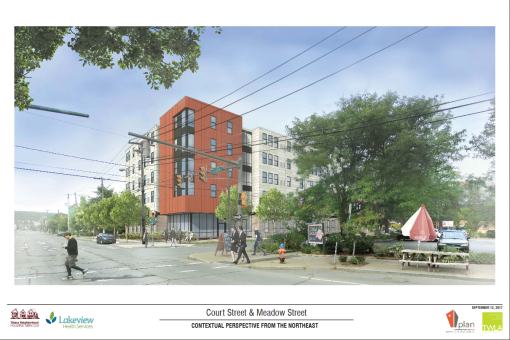
6. The good news for the county was that the state gave Milton Meadows a big grant to move forward. The bad news is, they were hoping for three grants, the others for NRP’s Ithaca Townhouses and Lakeview’s West End Heights (709-713 West Court Street). The county is trying to find other funding streams with which to get these affordable housing projects to move forward this year.

The Ithaca Townhomes would add 106 units in two phases near Cayuga Medical Center. West End Heights would add 60 units, including units for those with special mental health needs, and units for those currently experiencing homelessness.

7. Not a big city planning board agenda meeting this month, but still some interesting details. Here’s the rundown.

1. Agenda Review 6:00
2. Privilege of the Floor 6:01

3. Subdivision Review

A. Project: Minor Subdivision 6:15
Location: 508-512 Edgewood Place
Actions: PUBLIC HEARING – Potential Determination of Environmental Significance – Potential consideration of Preliminary and Final Approval

This subdivision at the end of a private street in the East Hill neighborhood would re-subdivide a double lot that had been consolidated after the original house burnt down in the late 1930s. Any news structure on the newly created .326 acre lot would be subject to Ithaca Landmarks Preservation Commission design review. No specific plans are on file.

B. Project: Minor Subdivision 6:30
Location: 101 Pier Road
Actions: PUBLIC HEARING – Determination of Environmental Significance – Potential consideration of Preliminary and Final Approval

This subdivision is to partition out the square of land Guthrie Clinic would be using for their new medical office building as part of the City Harbor development – they want to own their own building and parcel.

4. Site Plan Review

A. Project: Major Subdivision (3 Lots), Two Duplexes, One Single Family Home & Site Improvements 6:45
Location: 128 West Falls Street
Applicant: Ron Ronsvalle
Actions: PUBLIC HEARING – Consideration of Preliminary Subdivision Approval – Recommendation to BZA

This project came up earlier this month in a previous news roundup – a five-unit infill project in Fall Creek, originally approved in February 2015, and revived now that the developer has found a way to continue working after a debilitating accident. Don’t foresee any issues here.

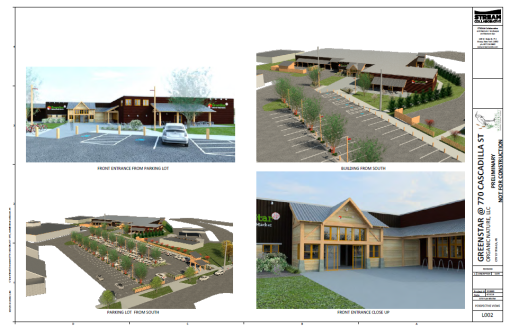
B. Project: GreenStar Cooperative Market 7:15
Location: 750-770 Cascadilla Street
Applicant: Noah Demarest for the Guthrie Clinic (Guthrie owns the land)
Actions: Consideration of Preliminary and Final Site Plan Approval

Since the last round, plantings were added, the lighting and front entrance was revised, and the project team is in discussions with the gas station next door to add planting and landscaping there as well.

C. Project: Apartments (60 units) 7:35
Location: 232-236 Dryden Road
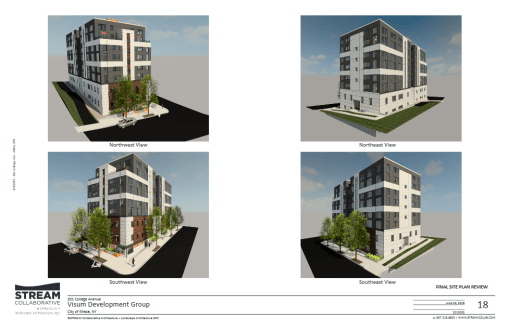
Applicant: STREAM Collaborative for Visum Development Group
Actions: Consideration of Approval of Revised Transportation Demand Management Plan

“The applicant has revised the site plan such that the previously proposed off-site parking is no longer included in the project and has updated the TDMP narrative to reflect this.”
D. 327 W Seneca St- Housing 7:45
The new shiny. 327 West Seneca is a B-2d-zoned property on the edge of the State Street Corridor – B-2d allows multi-family housing up to 4 floors and 40 feet with 75% lot coverage. It is currently a nondescript 3-unit apartment building, that’s been for-sale for almost a year now (asking price $264,900).
A cursory search of LLC filings finds 327 W. Seneca LLC was recently registered in Tompkins County, and the address it is registered to, is the business office of Todd Fox, CEO of Visum Development Group. This may be the project alluded to in the New York Main Street grant to be written by the Downtown Ithaca Alliance, which talks about a 12-unit project by Visum planned somewhere in the State Street Corridor. No guarantees, but this seems likely to be that project.
5. Zoning Appeals 8:10
#3099, 314 Taylor St, Special Permit
#3100, 128 Falls St., Area Variance
#3101, 437 N Aurora St, Area Variance


News Tidbits 6/9/2018

9 06 2018

1. Let’s start off with some eye candy. Behold, the latest and probably last major revisions to Modern Living Rental’s planned apartment complex at 802 Dryden Road. We also have a name for the 42-unit apartment complex to be built there – “Ivy Ridge“. This latest design received a little bit of STREAM’s touch to complement the work previously undertaken by John Snyder Architects. The six building are generally but not exactly the same – the gables are mirrored, some additional trim piece are used on the gables for the Dryden Road pair, and they alternate between a dark blue vertical fiber cement panel (probably HardieBoard), and a dark green panel (it’s a little sad they reworked the profiles and did away with the visually interesting mix of hipped and gabled roofs). Units were downsized about 35 square-feet per unit per floor, and overall the town planner thought the buildings looked “a lot more friendly”. Some more renders can be found here. Units are a mix of 24 2-bedrooms, 12 3-bedrooms and six 4-bedrooms, for a total of 108 bedrooms.

There’s a little bit of pre-building infrastructure work that needs to take place, because this is a sort of no man’s land between the settled parts of the town of Ithaca and the town of Dryden where no municipal water service was available. The public water main will be extended to service the project, and the main will be deeded over to the town. This will go under Dryden Road, so the DOT is in the loop. The planned buildout is August 2018 – August 2019.

2. Staying in Dryden for the moment, a bit eastward to Varna – I have not spoken to a single person who thought highly of Trinitas first swing at the Lucente property on Dryden and Mount Pleasant Roads. The building scale seems okay for Varna’s core, and the Varna Plan actually okays this kind of layout and says the community was comfortable with it on arguably a smaller overall project scale, something that caught me by surprise when I did my writeup for the Voice. The issue is that it’s a lot to see at once, and it makes me wonder if Trinitas really had its eyes open and ears listening and just went forward anyway, or if they were caught off guard. After swings and misses in Ann Arbor and Ames, I’d hope Trinitas would be a little more cautious.

This is asking a lot of Dryden, 224 units with 663 beds at the moment. However, I’m doubtful a moratorium is the answer. I think there is potential to have more conversations if both sides are willing to talk, and Trinitas should be firmly aware that this plan is not likely to go through as currently proposed. I don’t know what the financial statement looks like here, but elsewhere Trinitas has tried (if unsuccessfully) with incorporating affordable housing with its market-rate units, and they also do have projects that seem more like the Varna Plan’s thoughts for that parcel, like their Pullman project, which is a combination of townhouse strings and duplex buildings. The town of Ithaca and EdR agreed to have EdR fund local road improvements as part of the Maplewood project, so that’s another idea.

One of the reasons cited for a potential moratorium in Dryden is the need to balance the rental development with for-sale housing. It is very tough to effectively encourage owner-occupied housing at a price range affordable to middle-income households. For one, no tax breaks – state law says it is illegal for the IDA to give tax abatements to owner-occupied developments (for-sale homes, condos). Building codes and complicated condo rules drive up housing costs and make existing state subsidies for affordable for-sale ineffective, and for-sale housing is seen with greater uncertainty by lenders (there are more people able and willing to rent than to buy, especially in a college-centric community). It’s difficult! That’s why the county’s Housing Committee is keenly focused on trying to come up with solutions. There’s a fantastic senior research project by newly-minted Cornell graduate Adam Bronfin that looks at the condo problem in excellent detail, and a PDF of that study can be found here.

The other suggestion, making rental housing more difficult to do, comes with its own perils – namely, by cutting off the supply while demand continues to grow, you force out lower-income households in an attempt of trying to limit the student rentals. There is conceptual discussion of affordable for-sale and rental mixes (similar to Trumansburg’s Hamilton Square) being talked about east of Varna, and it would be really unfortunate if a town law gets drafted up that inadvertently but effectively prevents those kind of projects from happening.

Another risk is that strictly limiting development in Varna only encourages it on rural parcels to the east, or even in Cortland County, promoting sprawl and its detrimental environmental impacts (tax burden of new infrastructure, traffic, additional commuter burden on the Freese Road Bridge, loss of farms and natural space to low-density housing, etc). One can push laws that prohibit students either through zoning, but smaller mom-and-pop landlords may feel the pain and it might get argued in court as an illegal attempt at “spot zoning”.

The TL;DR is that there is no easy answer, but the county is trying. Since it’s so difficult on the brand new side, the county is looking at incentives to encourage renovation of existing rental housing into for-sale units, which would need state approval.

Lastly, I don’t really understand the argument that tacitly advocates for capping Varna’s population. The sewer is a limit, but more capacity could be negotiated if necessary or prudent. The argument over Varna should be focused on quality of new additions, not an argument that the Sierra Club rejected because of its association with racial and income-based eugenics.

3. Surprise, surprise. An infill project in Fall Creek has been revived three and a half years after it was approved. The project calls for five rental buildings, three single-family homes and a duplex. The developer is Heritage Homes, led by Ron Ronsvalle; Ronsvalle was badly injured in an accident, and the injuries left him paralyzed and unable to use his limbs; he is reliant on assistance and voice commands. It was a shame as the project been heralded as a successful example of meeting with neighbors and redesigning a plan to address their concerns; didn’t win over everyone, but a lot of them were satisfied with the approved February 2015 plan. As the letter from project architect/engineer Larry Fabbroni states, “certain life events prevented the owner from resuming full business activities until a support system was running smoothly.”

With a support system in place, Ronsvalle intends to move forward with the approved plan. The project does have to go back before the Planning Board and Zoning Board of Approvals because approvals expire after two years (i.e. February 2017). With nothing changed, the project is likely to sail through re-approval.

The revised SPR states $665,000 in hard costs with a construction period of August 2018 to August 2020 – basically, a couple homes in year one, and a couple in year two.

4. This is rather odd, but in Northside, there seems to be a push for a moratorium because they’re unhappy with the possibility of multiple primary structures on a single lot, which is what local developer David Barken is proposing with the lot consolidation and addition of a two-family home at the rear of 207 and 209 First Street. The concerns cited are similar to South Hill’s, loss of character and increases in density, and came up during the marathon public comment period at the last Common Council meeting.

This seems…baffling? South Hill’s made sense because of the high number of student rentals being built, which was leading to major quality of life issues. Northside doesn’t have that issue, it’s too far from the Cornell and Ithaca College campuses. For evidence, here’s the Cornell map of where students live, taken from their 2016 housing study. A handful of grad students live near the creek, but otherwise not much, and undergrads are virtually non-existent. It and West End and West Hill just tend to be too far away for students’ convenience.

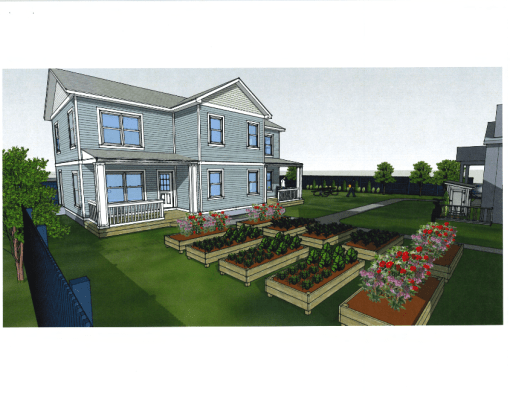
To be honest, 207-209 First Street actually seems like a thoughtful project – similar to the Aurora Street pocket neighborhood by New Earth Living. The infill is scaled appropriately, it has features like the raised beds that enhance residents’ quality of life, and it doesn’t tear down existing housing. To my knowledge, there isn’t anything on the radar for Northside unless one counts Immaculate Conception in adjacent Washington Park being converted to housing at some point. It’s not clear what a moratorium or a South Hill-like overlay would achieve here. If anything, students aren’t the risk for Northside – the risk is gentrification spilling over from Fall Creek. This would encourage that, so…this is counterproductive.

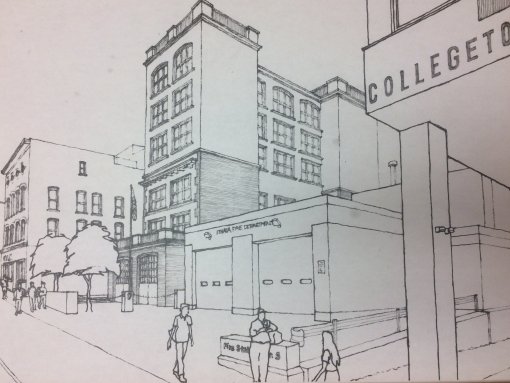
5. With the contentious 309 College Avenue / No. 9 fire station debate having met its dramatic conclusion, this render of a proposed redevelopment has been released by its owners. It would appear that the plaza and newer west (front) wing has its exterior walls retained while the rest of the structure is removed, a facadectomy. One could argue this is better than Visum’s plans because it saves large portions of the original structure, vs. the complete removal in Visum’s first version, and emulation of elements in the second. This iteration has decorative roof elements, arched windows in the shape of the fire engine bay doors, and a dumbbell shape characteristic of New York City “Old Law Tenement” buildings built in the late 1800s. The armchair architecture critic typing here would ask for elements of visual interest in the blank walls of the addition, but overall this looks like a good first swing. This is probably intended as first-floor commercial restaurant/retail with apartments above. No architect is listed with the sketch.


News Tidbits 1/27/18: The Shutterbug

28 01 2018

1. Let’s do some houses of the week. Above, the four new homes Tiny Timber has constructed at 1624 Ellis Hollow Road in Dryden. Each home lot is a little over an acre. The subdivision was approved last spring for the wooded parcel a couple miles east of Ithaca, and since then, Tiny Timbers has been busy selling units and lots to buyers. Two were sold in August, one in September, and the last in December. Therefore, this is 100% built out, since the last lot is a conservation lot at the rear (north) end of the property, designed to protect Cascadilla Creek. The units utilize a shared driveway, with spurs for each home. If you want to look at the homes more closely, click to enlarge the photos.

A similar plan is underway just up the road at 1540 Ellis Hollow Road, where Tiny Timbers will take a long, narrow undeveloped property and subdivide the land into five home lots and a rear (north) lot protected by a conservation easement. These homes will also be served by a common driveway. This proposal is still going through the review process, and when approved, the time frame for build-out will probably be similar. The home designs are the work of local architecture firm STREAM Collaborative.

2. Over in the village of Lansing, work has started on the next six-unit (hexplex?) at the Heights of Lansing property off of Bomax Drive. It appears that the foundation slab and footers have been formed, poured and insulated with foam boards. This is the first new townhouse string to be built in the development in six years.

Several reasons have been given for the long pause. The developers have said that the natural gas moratorium disrupted and delayed build-out plans. Secondly, the patriarch of Forest City Realty/IJ Construction, Ivar Jonson, passed away in 2014. More recently, the Jonson family (his wife Janet and daughter Lisa Bonniwell) were embroiled in a lawsuit to prevent a zoning change that would allow a market-rate apartment complex to be built down the road. Bonniwell was incensed enough to run for mayor in 2017 in an effort to stop the proposal, but did not win the election. The zoning change has been approved and the apartments were approved in October, but the Park Grove project has yet to move forward.

The townhouses were approved along with the last single-family home permit; there were some rather testy exchanges regarding sewer line easements and the installation of street lighting in conjunction with those permits. The lighting has to be in by March 2019.

Assuming these are like the other townhouses, expect them to be 3-bedroom units, low 2000s SF with garages, and to go for $350-$450k when they’re finished several months from now.

3. Dryden’s new Rite Aid is coming along. Fully framed, and the plastic in the window openings is likely intended to allow construction crews to work indoors without exposure to the fierce winter elements. The curbing and paving is complete in the parking lot, and it looks like they install metal bollards all around the lot’s perimeter to keep the less-than-attentive from driving into the wall (something that happened to the Nice N’ Easy in my hometown no less than three times before they finally put some in). It is still planned to open in March.

4. Over in Fall Creek, it appears a small apartment building is in line for some major renovations. 1002 North Aurora, a four-unit building built in 1898, had been on the market for $395,000. The seller had owned the property for 24 years, and the price was only slightly above the assessed value of $375,000.

On Friday, the property sold for $400,000 to an LLC associated with local developer Modern Living Rentals (Charlie O’Connor et al.). The same day, a building loan agreement was filed from Tioga State Bank to the LLC for $712,000. A lot of that was going towards the land acquisition, and once soft costs are deducted as well, the loan is $287,000.

MLR tends to be very transparent about their plans, and a glance at their recently updated website shows the purchase and a ‘information on this project coming soon’. However, they already uploaded the interior renovation plans from STREAM Collaborative. It’s a very thorough interior renovation, and it appears to complete change interior floor plans, with new bedrooms (net gain of one?) as well as new kitchens, bathrooms, and fire rated ceilings. Exterior changes appear to include a renovated fire escape staircase, a couple new windows on the third (top) floor), and a new skylight. While old, this apartment building is a hodge-podge of additions from decades past, so let’s see what a renovation can do to clean things up. It’s plausible the renovations would be complete by August, so they can appeal to students as well as the general market.

Quick aside, MLR has a few other “future developments” posted, though none that readers here aren’t already aware of – the 42 townhouse units at 802 Dryden, the proposed 201 North Aurora / Seneca Flats that isn’t moving forward for a while yet, and 217 Columbia, the duplex that unintentionally set South Hill into an uproar. 217 Columbia should be completed this year, and 802 Dryden in summer 2019.

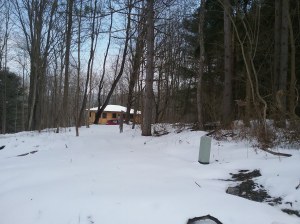
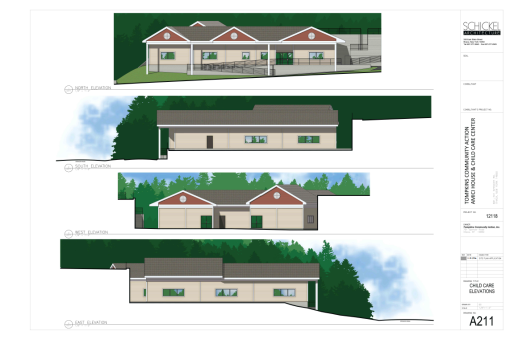
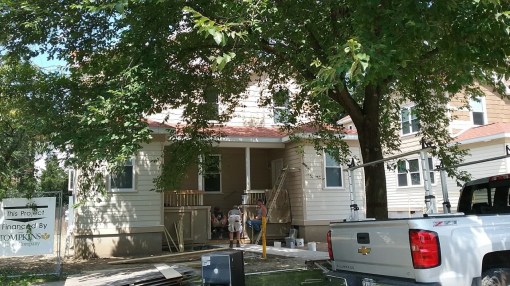
5. It looks like Amici House is finally moving forward. The project, located at 661-701 Spencer Road, received a $3,732,469 loan from the New York State Homeless Housing and Assistance Corporation. The money was announced back in April, and appears to be getting disbursed now.

The five-story, 20,710 SF (square-foot) project, approved by the city of Ithaca last January, calls for 23 studio housing units for homeless or vulnerable young individuals in the 18-25 age range. Along with the units and office/function space for local social services non-profit TCAction, the plan also calls for a 7,010 SF early heard start facility, called the “Harriet Gianellis Childcare Center”, that will house five classrooms, kitchen and restrooms, and an outdoor play area. The childcare facility will serve 48 low-to-moderate income families and create up to 21 jobs.

Recently, the HGCC applied for a low-interest loan from the IURA, $90,690 to help cover unanticipated moving expenses associated with the project. TCAction thought they could stay on-site during construction, but the contractor said otherwise, so they’ll be 609 W. Clinton while the new Amici House is built. The loan says it will generate three jobs, but that’s more a technical stipulation than an actual figure associated with the project. The funding for the childcare appears to be separate, $1,325,000 already approved by the state, $603,000 from M&T Bank, and $84,200 from a standing IURA loan. It is fully funded, although it is not completely clear if it will be built concurrently with the housing (the likely answer is yes).


1001 North Aurora Street Construction Update, 8/2017

20 08 2017

This small infill project in Ithaca’s Fall Creek is just about done. Tenants have already moved into the four three-bedroom units, and it looks like all that’s left on the outside is grass seeding and a coat of paint. According to the guys working on the duplexes, the mismatch in the second floor LP SmartSide wood siding was because the store they bought them (think they said Home Depot offhand) from had ran out, so they just bought what was available with the intent of painting over it when they were ready. It looks like the first floor has been painted, so that’s a good sign. It is nice to see that, although they were threatened for deletion if expenses came too high, the side windows on the inward-facing walls of the units (east side of 202, west side of 206) were retained.

This is a small, unassuming project. It replaced an older single-family home with four units that fit in with the neighborhood. It’s a bump in density without garnering too much attention. To be candid, it’s probably the only feasible way to add density to Fall Creek – scout out the few vacant lots, or buildings with less historic or aesthetic value, and try to design something that fits in (the only other one I’m aware of is the Heritage Builders infill project on West Falls Street, but at this point it would need re-approval from the planning board).

The three guys out front said that once these are complete, they expect to start work on developer Stavros (Nick) Stavropoulos’ next project at 107 South Albany Street. That site has not changed much over the summer, all that is there at the moment is the fenced-off foundation of the old building. The 11-unit apartment building slated for that site is expected to be completed by summer 2018.


1001 North Aurora Street Construction Update, 6/2017

19 06 2017

Admittedly, at the moment this pair of two-family homes looks rather bland from Aurora Street, and slapdash from Queen Street. However, it looks like the painting is just starting. The LP SmartSide wood siding will be painted with Sherwin-Williams “Rice Grain” on the first floor and dormer, and the second floor will use S-W “Sawdust”. The swatches of wood shingle on the eastern building have the darker color on both the second floor and dormer, which doesn’t match the city’s filing, but paint typically isn’t the type of detail that will get you in trouble unless it was a stipulation of approval. The short of it is, it’s not clear if anything has changed with the paint scheme, but it might have. The trim boards will be painted S-W “Nacre”.

Another task still on the to-do list is building the porches that both units in the building will share. It’s a T-configuration – residents will step out and down their own step onto a shared landing at the top of the front steps. The porches will have decorative columns and banisters, and access panels below the porch landing. Most of the porch will be built with pressure-treated wood and painted in off-white “Nacre”, there will be dark brown steps (treated wood?), and the access panels will match the siding. About the only thing not wood will be the handrails, which will be steel.

A peek inside shows that the drywall has been hung. The next steps are typically flooring, cabinetry, bathroom fixtures and tiling, interior trim boards (baseboards, crown moulding) and painting. After that will come appliances and the finish work.

The 3-bedroom, 1.5 bath units at 202 and 206 Queen Street should be ready for occupancy later this summer. There were going for $2325/month ($775/bedroom) on Craigslist, and there haven’t been any ads lately, so it’s probably safe to assume all four units have been rented. Stavros (Nick) Stavropoulos is the developer, and Daniel Hirtler is the architect.


1001 North Aurora Street Construction Update, 4/2017

21 04 2017

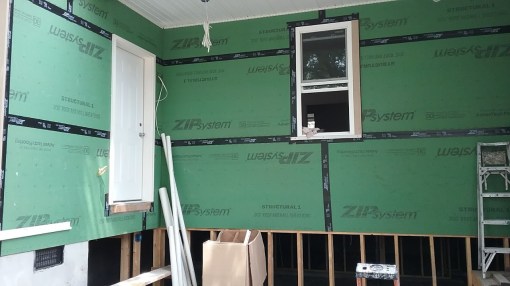
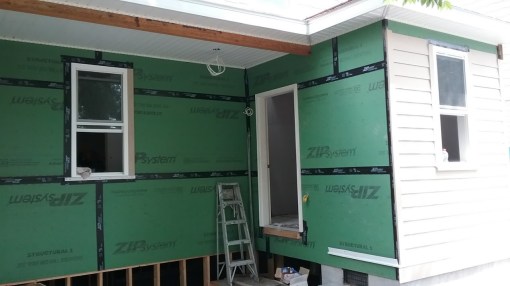
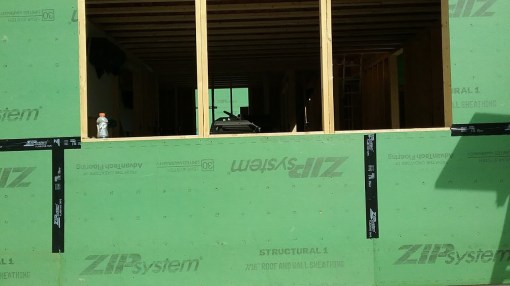
Some more progress on the two-building, four-unit 1001 North Aurora Street project in Fall Creek. Since February, the building have been framed out, roofed and shingled. For the record, the shingles are Owens Corning TruDefinition Duration Shingles, Terra Cotta color. Huber ZIP System plywood sheets are being attached to the exterior over the wood studs, and interior framing, rough-ins and drywall is underway.

On a happy note, it looks like the side windows on the eastern building, which had the potential to be deleted as a cost-saving measure, are indeed going in based on the rough openings. The exterior will consist of two brownish shades of LP SmartSide cedar texture siding, with a white lap band and trim. Technically, that white is Sherwin-Williams “Nacre”, and these plebeian lips had to go to Google to figure out how that’s pronounced (NAY-ker). Because mother-of-pearl is just two darn pedestrian. The browns are “Rice Grain” and “Sawdust”.

Developer Stavros Stavropoulos (d/b/a Renting Ithaca) should be bringing these 3-bedroom rental units onto the market by the end of May, as 202 Queen Street and 206 Queen Street. Shortly thereafter, he and architect Daniel Hirtler which be launching into next project, and their biggest to date – a 3-story, 11-unit apartment building at 107 South Albany Street, just west of downtown.


1001 North Aurora Street Construction Update, 2/2017

20 02 2017

Another project making rapid progress in a short time. The two two-family homes at 1001 N. Aurora Street are being framed out. Going over the wood studs are Huber ZIP sheathing plywood panels, like all the cool kids are using in residential wood-frame construction.

There are pros and cons to each approach. DuPont, in sales literature for its Tyvek Housewrap, touts easier installation, more durability during installation, and claims superior waterproofing. The ZIP system, however, has made significant inroads into the construction market because it does an excellent job at allowing moisture to escape while keeping external water from getting in, and although it requires a little more care to work with (taping), it’s still fairly easy to work with. ZIP panels also tend to be more expensive. Liquid water-resistant barrier (WRB) sprays like the ones you see used on commercial buildings and at Cornell tend to provide the best waterproofing, but they are the most expensive option. So if one drew a scale weighing cost and performance, they could have housewraps at the low end of cost and relative performance, ZIP panels in the middle, and WRB sprays at the top.

Anyway, these duplexes will be known as 202 Queen Street and 206 Queen Street. In the signage on the site, the bottom design is what was approved (quick tip – do not use old renders on signage). They replace a single-family home. Stavros Stavropoulos is the developer, and Daniel Hirtler the architect – the two are also behind the plans for the new 11-unit apartment building at 107 South Albany Street.

20170218_133909 20170218_133914 20170218_133932 20170218_133947 20170218_134030 20170218_134045 20170218_134115


1001 North Aurora Street Construction Update, 1/2017

11 01 2017

This is another one of those modest-sized infill projects where if you blink, you might just miss it.

1001 North Aurora is on the north end of Fall Creek, across the street from the elementary school. The plan replaces an old though not especially historic single-family home with twom two-family homes, each unit with three bedrooms for a total twelve. Four parking spaces are included. The project was approved in October 2016 by the city planning board; the lot subdivision that triggered board review.

Over the course of review, the board requested a little more character in the house designs, including more windows, two different shades of lap siding (which will be LP SmartSide wood siding, painted Sherwin-Williams “Rice Grain” and “Sawdust”), and dormers. The materials also include Owens Corning TruDefinition “Terra Cotta” shingles and S-W “Nacre” trim boards. The initial design looked like this, and the final is shown below. The eastern building will not have the dormer, and may not have the pocket windows in the west wall either, as those were stated to be cost-dependent. The side facing Aurora, however, has to put them in as a stipulation of the approvals; after some recent issues with other projects, the board’s been getting a little more assertive when it comes to building details being built as approved.

The developer is Stavros Stavropoulos. The Stavropoulos family is perhaps best known for running State Street Diner, but recently they’ve been wading deeper into the development pool, building a new two-family home at 514 Linn Street and a two-family addition onto 318-320 Pleasant Street. Tompkins Trust gave a $400,000 construction loan to this project back in August.

Each unit will ring in at about 1200 square feet. Local architect Daniel R. Hirtler, fresh off of another duplex on the corner of Oak Avenue and Oneida Place in Collegetown, is in charge of design. Construction is expected to wrap up by the end of May 2017. According to Craigslist, the units are renting for about $2325 each ($775/bedroom), and two of the four units are already rented. Quote:

“New duplexes featuring 3 bedroom, 1.5 bath apartments. Open floor plans, ductless heating and cooling in every room, hardwood floors, stainless steel appliances, corian counter tops, stackable washer and dryer, fully furnished, off street parking and much more.”

You’ll notice in the photos below that the completed foundation slab sits a little above the ground – the northern part of Fall Creek has a high water table, so to help avoid water/flooding issues, the buildings are raised slightly. Wood framing is just beginning, so look for these to take shape as we finish out the winter and head into spring.

Quick final detail – 1001 North Aurora Street was the old address. These properties will use addresses on the 200 Block of Queen Street.

20170106_161844 20170106_161904 20170106_161928  20170106_161955 20170106_162000 20170106_162032

1001_n_aurora_v2_1


News Tidbits 9/10/16: Situations To Be Avoided

10 09 2016

Pardon the week hiatus. Sometimes, by the time there’s enough news to share, it’s already the weekend, so it just makes more sense to fun a longer feature the following week.

maguirebirdseye-620x420

1. The Maguire dealership proposal for Carpenter Business Park had a lukewarm reception at its public info session a week and a half ago. A copy of the application can be found here, and Second Ward Councilman Ducson Nguyen was kind enough to upload a 90-minute video of the meeting on his facebook page, and a transcript of the meeting can be found here. A second public info meeting will be held on the 14th.

You might recall news of the project broke last winter, followed shortly thereafter by a vote of the city Common Council to subject waterfront and waterfront-vicinity properties to a “Temporary Mandatory Planned Unit Development” (TM-PUD), meaning that any building proposal would be subject to a vote of the Common Council as a stipulation of approval (typically, projects only need the Planning Board’s consent, plus the BZA and/or ILPC if needed). One other project has gone through the TM-PUD process since then, the Cherry Artspace performing arts building. The small experimental theater held its public info meetings at the end of March and mid-April. It enjoyed fairly broad  public support, but two of the eight voting councilmen still voted against its construction at the May meeting. If a a project with widespread support has some trouble getting passage, you can already guess what will happen with the Maguire proposal.

There’s only about a year left in that TM-PUD. But for the Maguires, it was too late as soon as the TM-PUD was passed. Perhaps more concerning, this is creating one of those cases where everybody’s opinion is coming out of the woodwork – some demand it be a park, some say industrial space only, Form Ithaca advocates walkable mixed-uses, and then there was that verbal brawl on the Ithaca West list-serve about the evils of the Ithaca Community Garden. A lot of folks think their idea is the only reasonable option, so if this plays out like the old library site, there’s going to be a lot of acrimony in the long run. Hopefully when the TM-PUD expires, the city will have the new urban mixed-use zoning ready for implementation, so situations like this can be avoided in the future.

20160821_123800

2. Can’t help but feel just a little sympathetic towards Steve Fontana – he tried to have this project open for move-in, and everything that could go wrong, was going wrong. The Journal’s Nick Reynolds reports that first it was a safety systems issue with the elevator holding up the certificate of occupancy, and then a water main burst. The latest planned opening date is September 9th, when the initial date was August 1st. Now it’s a financial issue, a public relations issue, and a mess for all involved. This could be used as an example of why Todd Fox put the 201 College site up for sale – it became clear that August 2017 opening wasn’t going to happen.

201_college_v5_1

3. On that note, I’m going touch on 201 College real quick. Given the amount of time that went into the Collegetown Form District – six years – this just looks bad all around. On the one hand, Todd Fox could benefit from more patience (granted, we don’t know what the financing situation was), and the character attack on Neil Golder in his supporting documentation turned some people off to his cause. But what John Schroeder did also deserves strong scrutiny. It’s odd to claim a zoning code issue when the MU-1 code is only three pages, and he helped write it. He was also aware that 201 College went through pre-site plan review with the city’s Planning Department, and they gave it the okay to proceed with review. This looks very suspiciously like Schroeder was explicitly looking for anything he could to help out his old colleague Neil, and that small ambiguity was the best he could do, which he was able to parlay with success.

This continues an uncomfortable pattern we’ve seen with other projects like the Old Library where one government body gives the OK, and another stops it after the consent is given. The whole point of these laborious review processes is to prevent controversy from arising. Who wants to take on the risk of proposing condos, mixed-use and affordable housing when, given that many projects require the approvals of multiple boards and committees, there’s a track record of mixed signals?

Rezoning has come up as an idea, but it’s not as simple as it sounds. Spot rezoning (single-lot rezoning) would likely be deemed illegal because the current zoning is consistent with the recently-passed Comprehensive Plan, something the courts look for in zoning lawsuits. Thinking slightly broader, Collegetown’s MU-1 is nine parcels – Fox, Josh Lower and John Novarr, all major local developers, own seven of them. If 20% of those affected by a rezoning proposal file a protest petition, a super-majority of the Common Council – 75%, 8 of 10 in practice – is required for rezoning approval. That is what stopped the first Collegetown rezoning during the Peterson administration. If it couldn’t pass then, a similar super-majority event is unlikely to pass now.

4. On the edge of Ithaca’s South Side neighborhood, the CVS Pharmacy sold for a pretty penny – or rather, $4.09 million, on the 1st. The property is assessed at $1.8 million, but sold for $3.6 million in 2006. The buyer is an LLC traceable to a suburban Boston firm with a broad retail space portfolio, so whether they plan to keep things as they are, or propose something new, is anyone’s guess.

trebloc-future2-1-620x420

5. Finally, a copy of the Site Plan Review application for Newman Development Group’s City Centre project at 301 East State Street in Downtown Ithaca. Keep in mind, this is from the June filing, so things are likely to have been updated or revised in response to the planning board. The 9 story building tops out at 96 feet. The approximate construction cost at the time of the filing was $32 million, with a proposed build-out from February 2017 to October 2019, which seems lengthy, and in another part of the document it says construction will last only 20 months. 400 construction jobs, 50 permanent jobs by tenants in the 10,600 SF of first floor retail, and building service staff. Overall square footage isn’t given, but given the retail and 7,225 SF of amenity space, 160,000 SF probably isn’t a bad first guess. For comparison, State Street Triangle was 288,000 SF, later reduced to the same height and similar dimensions as City Centre. In a sense, City Centre started off where SST required months to get to. Hopefully that bodes well for the proposal.

arpt_pk_1

6. Remember that airport business park study from a while back? There’s no strong demand for a business park. But the NYS DOT wants to move their waterfront office and storage facility to the site. So removing those salt sheds and replacing them with mixed-use waterfront property won’t happen until the state buys whatever it needs here, builds and moves in to a new facility. Not sure what they’ll do with the property on Ellis Drive in Dryden that they’ve owned for the past decade; presumably sell it as surplus, but who knows?
chain_works_rev3_3

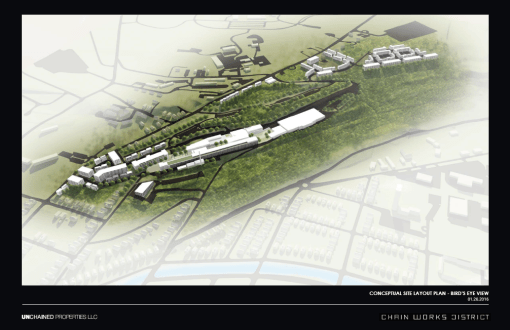
7. From the Ithaca Times: The Al-Huda Islamic Center hopes to start construction on their Graham Road mosque in 2017, and then obtain land for burials later this decade. In other news, new Times reporter Lori Sanken is reporting on the Chain Works progress, the Planning Board requesting color changes, careful consideration of heights, and debates about forest [preservation and Route 96B. Developer Dave Lubin of UnChained Properties wants to do renovations to existing buildings first, but seeing as they have yet to have the state sign off on a remediation place, they’re considering the construction of new buildings first, if NYS DEC approval for remediation gets delayed. And Catholic Charities and non-profit group Ithaca Welcomes Refugees are actively trying to procure affordable living space for 50 refugees who will be arriving in the Ithaca area after October 1st.

pinney_peruville_1
8. It’s been incubating for a while, but it looks like former Lansing town supervisor A. Scott Pinney’s plan for 15 duplexes (30 units) is moving forward. A gravel road will be extended from 4 existing duplexes at 390 Peruville Road (NYS 34B), looping through the property from Scofield to Peruville. The “Developer’s Conference” to talk about the project will be a part of the Lansing town planning board’s meeting next Monday. Also up for discussion are slight revisions to the Village Solars PDA, related to the community center and first-floor commercial space in the proposed Building F.

1001_n_aurora_1

9. From the Ithaca city Projects Memo for September, it looks like there’s a couple of subdivisions planned. One is for 404 Wood Street in the South Side neighborhood, where the owner wants to subdivide a double-lot he has for sale, allowing the vacant lot to be developed for a house or small apartment building. Quoting the application, “Instead of an empty grassy lot, there would be a building on it”. Points for simplicity.

The other is a double lot at 1001 North Aurora Street in Fall Creek. This came up a couple of weeks ago in a weekly tidbits round-up, because the new owner, Stavros Stavropoulos, received a $400,000 loan to build a duplex. Turns out it’s actually two duplexes, which require a lot subdivision, and will trigger planning board review. The application notes that even with the density increase, it’s still less than the surrounding neighborhood. The two two-family homes with have 3 bedrooms and about 1200 SF per unit, and are designed by local architect Daniel R. Hirtler to fit in with the neighborhood. Unusually, the application includes documentation of the previous owner signing off on the redevelopment plan. Construction is estimated to run from this month through May 2017.